
Non-Invasive Urine-Based Diagnostic Technologies for Early Bladder Cancer


Abstract
1. Introduction
2. AI Empowered Urine Cytological Detection
2.1. Single-Cell Level Classification
2.2. Patient-Level Diagnostics
3. Detection Technologies of Urine Genome Technology
3.1. Detection Technologies of Urine DNA
3.1.1. Polymerase Chain Reaction (PCR) Detection Technology
3.1.2. Next-Generation Sequencing (NGS) Technology
3.2. Urine DNA Methylation Detection Technologies
3.2.1. Methylation-Specific PCR (MSP) Technology
3.2.2. DNA Methylation Detection Technology
3.2.3. DNA NGS Technology
3.3. Urine RNA Detection Technologies
3.3.1. mRNA Detection Technology
3.3.2. miRNA Detection Technology
3.3.3. lncRNA Detection Technology
4. Protein/Peptide Biomarker Detection Technology
4.1. Proteomic Technologies
4.2. Surface-Enhanced Raman Scattering (SERS) Sensors
5. Metabolomic Diagnostic Technologies
5.1. High-Performance Liquid Chromatography–Mass Spectrometry (HPLC-MS) Technology
5.2. Gas Chromatography–Mass Spectrometry (GC-MS) Technology
5.3. Gas Chromatography–Ion Mobility Spectrometry (GC-IMS) Technology
6. Conclusions and Outlook
Author Contributions
Funding
Data Availability Statement
Acknowledgments
Conflicts of Interest
Abbreviations
| AI | Artificial Intelligence |
| ML | Machine Learning |
| DL | Deep Learning |
| ANN | Artificial Neural Network |
| CNN | Convolutional Neural Network |
| BCa | Bladder Cancer |
| NMIBC | Non-Muscle Invasive Bladder Cancer |
| MIBC | Muscle Invasive Bladder Cancer |
| UTUC | Upper Tract Urothelial Carcinoma |
| PCR | Polymerase Chain Reaction |
| qPCR | Quantitative Polymerase Chain Reaction |
| NGS | Next-Generation Sequencing |
| WGS | Whole-Genome Sequencing |
| sWGS | Shallow Whole-Genome Sequencing |
| LC-WGS | Low-Coverage Whole-Genome Sequencing |
| CNV | Copy Number Variation |
| MSP | Methylation-Specific PCR |
| ELISA | Enzyme-Linked Immunosorbent Assigmnt |
| SERS | Surface-Enhanced Raman Scattering |
| HPLC-MS | High-Performance Liquid Chromatography–Mass Spectrometry |
| GC-MS | Gas Chromatography–Mass Spectrometry |
| GC-IMS | Gas Chromatography–Ion Mobility Spectrometry |
| DNA | Deoxyribonucleic Acid |
| RNA | Ribonucleic Acid |
| mRNA | Messenger RNA |
| miRNA | MicroRNA |
| lncRNA | Long Non-Coding RNA |
| cfDNA | Cell-Free DNA |
| AUC | Area Under the Curve |
| NPV | Negative Predictive Value |
| PPV | Positive Predictive Value |
| ROC | Receiver Operating Characteristic |
| EV | Extracellular Vesicle |
| POC | Point-of-Care |
References
- Filho, A.M.; Briganti, A.; Jemal, A.; Bray, F. Bladder Cancer Incidence and Mortality: A Global Overview and Recent Trends. Eur. Urol. 2025; in press. [Google Scholar] [CrossRef]
- Farling, K.B. Bladder cancer: Risk factors, diagnosis, and management. Nurse Pract. 2017, 42, 26–33. [Google Scholar] [CrossRef] [PubMed]
- McNall, S.; Hooper, K.; Sullivan, T.; Rieger-Christ, K.; Clements, M. Treatment Modalities for Non-Muscle Invasive Bladder Cancer: An Updated Review. Cancers 2024, 16, 1843. [Google Scholar] [CrossRef] [PubMed]
- Griebsch, I.; Juul, K.; Bottomley, A.; Sherafat-Kazemzadeh, R.; Pemment, J.; Brooks, T.; Adiutori, R.; Bothorel, S. Life after radical cystectomy: A mixed-methods targeted review of patient-reported quality of life following bladder removal. BJUI Compass 2025, 6, e70049. [Google Scholar] [CrossRef]
- Longoni, M.; Scilipoti, P.; Soria, F.; Pradere, B.; Krajewski, W.; D’Andrea, D.; Mari, A.; Del Giudice, F.; Pichler, R.; Subiela, J.D.; et al. Oncological Outcomes in Bacillus Calmette-Guérin-naïve High-risk Non-muscle-invasive Bladder Cancer Patients: A Systematic Review on Current Treatment Strategies and Future Perspectives. Eur. Urol. Oncol. 2025, 8, 1375–1392. [Google Scholar] [CrossRef]
- Ślusarczyk, A.; Zapała, P.; Zapała, Ł.; Borkowski, T.; Radziszewski, P. Cancer-Specific Survival of Patients with Non-Muscle-Invasive Bladder Cancer: A Population-Based Analysis. Ann. Surg. Oncol. 2023, 30, 7892–7902. [Google Scholar] [CrossRef]
- Necchi, A.; Galsky, M.D.; Dizman, N.; Aggen, D.H.; Agarwal, N.; Al-Ahmadie, H.; Apolo, A.B.; Ballas, L.; Bangs, R.; Black, P.C.; et al. End Points for the Next-Generation Bladder-Sparing Perioperative Trials for Patients with Muscle-Invasive Bladder Cancer. J. Clin. Oncol. 2025, 43, 3536–3544. [Google Scholar] [CrossRef]
- Del Bene, G.; Calabrò, F.; Giannarelli, D.; Plimack, E.R.; Harshman, L.C.; Yu, E.Y.; Crabb, S.J.; Pal, S.K.; Alva, A.S.; Powles, T.; et al. Neoadjuvant vs. Adjuvant Chemotherapy in Muscle Invasive Bladder Cancer (MIBC): Analysis From the RISC Database. Front. Oncol. 2018, 8, 463. [Google Scholar] [CrossRef]
- Krabbe, L.M.; Gakis, G.; Lotan, Y. Clinical Utility of Bladder Cancer Biomarkers. Soc. Int. Urol. J. 2020, 1, 62–67. [Google Scholar] [CrossRef]
- Flaig, T.W.; Spiess, P.E.; Abern, M.; Agarwal, N.; Bangs, R.; Buyyounouski, M.K.; Chan, K.; Chang, S.S.; Chang, P.; Friedlander, T.; et al. NCCN Guidelines® Insights: Bladder Cancer, Version 3.2024. J. Natl. Compr. Canc. Netw. 2024, 22, 216–225. [Google Scholar] [CrossRef]
- Zhang, L.; Zhong, Y.; Yang, G.; Huang, L.; Deng, A.; Ao, M.; Li, J. Artificial intelligence-assisted diagnosis and histopathological grading of bladder cancer: Current status, challenges, and future directions. Front. Digit. Health 2026, 8, 1708289. [Google Scholar] [CrossRef]
- Tortora, F.; Guastaferro, A.; Barbato, S.; Febbraio, F.; Cimmino, A. New Challenges in Bladder Cancer Diagnosis: How Biosensing Tools Can Lead to Population Screening Opportunities. Sensors 2024, 24, 7873. [Google Scholar] [CrossRef] [PubMed]
- Bisharah, S.; Raap, M.; Abbas, M. Urine Cytological Diagnostics: Possibilities and Limitations-A 25-Year Review and Overview at Hannover Medical School. Clin. Pract. 2025, 15, 234. [Google Scholar] [CrossRef]
- Wojcik, E.M. The Paris system for reporting urinary cytology: What worked and what still needs to be improved. Histopathology 2026, 88, 131–136. [Google Scholar] [CrossRef] [PubMed]
- Feiertag, N.; Barry, E.; Abramson, M.; Park, J.Y.; Kovac, E.; Aboumohamed, A.; Watts, K.; Sankin, A. Urine Cytology Rarely Escalates Clinical Management in the Surveillance of Non-muscle-Invasive Bladder Cancer. Clin. Genitourin. Cancer 2023, 21, 258–264. [Google Scholar] [CrossRef]
- Tan, W.S.; Sarpong, R.; Khetrapal, P.; Rodney, S.; Mostafid, H.; Cresswell, J.; Watson, D.; Rane, A.; Hicks, J.; Hellawell, G.; et al. Does urinary cytology have a role in haematuria investigations? BJU Int. 2019, 123, 74–81. [Google Scholar] [CrossRef]
- Pan, T.; Lehman, E.; Raman, J.D. Performance characteristics of urinary cytology in patients presenting with gross and microscopic hematuria. Am. J. Clin. Exp. Urol. 2021, 9, 384–389. [Google Scholar]
- Allison, D.B.; Zhang, M.L.; Vohra, P.; VandenBussche, C.J. The Diagnostic Dilemma of Urothelial Tissue Fragments in Urinary Tract Cytology Specimens. Diagnostics 2022, 12, 931. [Google Scholar] [CrossRef]
- Velez Torres, J.M.; Gonzalez, M.L.; Duarte, E.M.; Zein-Sabatto, B.; Aron, M.; Gupta, N.S.; Kerr, D.A.; Netto, G.J.; Jorda, M.; Kryvenko, O.N. Urine Cytology Findings in Cases of Pseudocarcinomatous Urothelial Hyperplasia of the Bladder Often Represent a Diagnostic Challenge. Arch. Pathol. Lab. Med. 2023, 147, 716–721. [Google Scholar] [CrossRef]
- Lee, P.J.; Owens, C.L.; Lithgow, M.Y.; Jiang, Z.; Fischer, A.H. Causes of false-negative for high-grade urothelial carcinoma in urine cytology. Diagn. Cytopathol. 2016, 44, 994–999. [Google Scholar] [CrossRef] [PubMed]
- Flores Monar, G.V.; Reynolds, T.; Gordon, M.; Moon, D.; Moon, C. Molecular Markers for Bladder Cancer Screening: An Insight into Bladder Cancer and FDA-Approved Biomarkers. Int. J. Mol. Sci. 2023, 24, 14374. [Google Scholar] [CrossRef]
- Li, H.X.; Wang, M.R.; Zhao, H.; Cao, J.; Li, C.L.; Pan, Q.J. Comparison of fluorescence in situ hybridization, NMP22 bladderchek, and urinary liquid-based cytology in the detection of bladder urothelial carcinoma. Diagn. Cytopathol. 2013, 41, 852–857. [Google Scholar] [CrossRef]
- Zippe, C.; Pandrangi, L.; Agarwal, A. NMP22 is a sensitive, cost-effective test in patients at risk for bladder cancer. J. Urol. 1999, 161, 62–65. [Google Scholar] [CrossRef]
- Maas, M.; Todenhöfer, T.; Black, P.C. Urine biomarkers in bladder cancer–current status and future perspectives. Nat. Rev. Urol. 2023, 20, 597–614. [Google Scholar] [CrossRef]
- Chou, R.; Gore, J.L.; Buckley, D.; Fu, R.; Gustafson, K.; Griffin, J.C.; Grusing, S.; Selph, S. Urinary Biomarkers for Diagnosis of Bladder Cancer: A Systematic Review and Meta-analysis. Ann. Intern. Med. 2015, 163, 922–931. [Google Scholar] [CrossRef]
- Sarosdy, M.F. The use of the BTA Test in the detection of persistent or recurrent transitional-cell cancer of the bladder. World J. Urol. 1997, 15, 103–106. [Google Scholar] [CrossRef]
- Soorojebally, Y.; Neuzillet, Y.; Roumiguié, M.; Lamy, P.J.; Allory, Y.; Descotes, F.; Ferlicot, S.; Kassab-Chahmi, D.; Oudard, S.; Rébillard, X.; et al. Urinary biomarkers for bladder cancer diagnosis and NMIBC follow-up: A systematic review. World J. Urol. 2023, 41, 345–359. [Google Scholar] [CrossRef]
- Laukhtina, E.; Shim, S.R.; Mori, K.; D’Andrea, D.; Soria, F.; Rajwa, P.; Mostafaei, H.; Compérat, E.; Cimadamore, A.; Moschini, M.; et al. Diagnostic Accuracy of Novel Urinary Biomarker Tests in Non-muscle-invasive Bladder Cancer: A Systematic Review and Network Meta-analysis. Eur. Urol. Oncol. 2021, 4, 927–942. [Google Scholar] [CrossRef]
- Bhat, A.; Ritch, C.R. Urinary biomarkers in bladder cancer: Where do we stand? Curr. Opin. Urol. 2019, 29, 203–209. [Google Scholar] [CrossRef]
- Ma, X.; Zhang, Q.; He, L.; Liu, X.; Xiao, Y.; Hu, J.; Cai, S.; Cai, H.; Yu, B. Artificial intelligence application in the diagnosis and treatment of bladder cancer: Advance, challenges, and opportunities. Front. Oncol. 2024, 14, 1487676. [Google Scholar] [CrossRef]
- Kaneko, M.; Tsuji, K.; Masuda, K.; Ueno, K.; Henmi, K.; Nakagawa, S.; Fujita, R.; Suzuki, K.; Inoue, Y.; Teramukai, S.; et al. Urine cell image recognition using a deep-learning model for an automated slide evaluation system. BJU Int. 2022, 130, 235–243. [Google Scholar] [CrossRef] [PubMed]
- Sanghvi, A.B.; Allen, E.Z.; Callenberg, K.M.; Pantanowitz, L. Performance of an artificial intelligence algorithm for reporting urine cytopathology. Cancer Cytopathol. 2019, 127, 658–666. [Google Scholar] [CrossRef]
- Muralidaran, C.; Dey, P.; Nijhawan, R.; Kakkar, N. Artificial neural network in diagnosis of urothelial cell carcinoma in urine cytology. Diagn. Cytopathol. 2015, 43, 443–449. [Google Scholar] [CrossRef]
- Nojima, S.; Terayama, K.; Shimoura, S.; Hijiki, S.; Nonomura, N.; Morii, E.; Okuno, Y.; Fujita, K. A deep learning system to diagnose the malignant potential of urothelial carcinoma cells in cytology specimens. Cancer Cytopathol. 2021, 129, 984–995. [Google Scholar] [CrossRef]
- Zhang, Z.; Fu, X.; Liu, J.; Huang, Z.; Liu, N.; Fang, F.; Rao, J. Developing a Machine Learning Algorithm for Identifying Abnormal Urothelial Cells: A Feasibility Study. Acta Cytol. 2021, 65, 335–341. [Google Scholar] [CrossRef]
- Chen, C.C.; Yen, T.H.; Li, J.R.; Chen, C.J.; Yang, C.S.; Lai, J.Y.; Lin, S.J.; Yeh, C.H.; Hsu, S.W.; Lin, M.Y.; et al. Artificial intelligence algorithms enhance urine cytology reporting confidence in postoperative follow-up for upper urinary tract urothelial carcinoma. Int. Urol. Nephrol. 2024, 57, 801–808. [Google Scholar] [CrossRef]
- Liu, T.J.; Yang, W.C.; Huang, S.M.; Yang, W.L.; Wu, H.J.; Ho, H.W.; Hsu, S.W.; Yeh, C.H.; Lin, M.Y.; Hwang, Y.T.; et al. Evaluating artificial intelligence-enhanced digital urine cytology for bladder cancer diagnosis. Cancer Cytopathol. 2024, 132, 686–695. [Google Scholar] [CrossRef]
- Ferro, M.; Falagario, U.G.; Barone, B.; Maggi, M.; Crocetto, F.; Busetto, G.M.; Giudice, F.D.; Terracciano, D.; Lucarelli, G.; Lasorsa, F.; et al. Artificial Intelligence in the Advanced Diagnosis of Bladder Cancer-Comprehensive Literature Review and Future Advancement. Diagnostics 2023, 13, 2308. [Google Scholar] [CrossRef]
- Luo, Z.; Du, S.; Zhang, Z.; Lv, F.; Hong, Q.; Lai, M. Artificial Neural Network Based on Memristive Circuit for High-Speed Equalization. IEEE Trans. Circuits Syst. I Regul. Pap. 2024, 71, 1745–1756. [Google Scholar] [CrossRef]
- Chavlis, S.; Poirazi, P. Dendrites endow artificial neural networks with accurate, robust and parameter-efficient learning. Nat. Commun. 2025, 16, 943. [Google Scholar] [CrossRef] [PubMed]
- Roberts, D.; Yaida, S.; Hanin, B. The Principles of Deep Learning Theory: An Effective Theory Approach to Understanding Neural Networks; Cambridge University Press: Cambridge, UK, 2022. [Google Scholar]
- Indolia, S.; Goswami, A.K.; Mishra, S.P.; Asopa, P. Conceptual Understanding of Convolutional Neural Network- A Deep Learning Approach. Procedia Comput. Sci. 2018, 132, 679–688. [Google Scholar] [CrossRef]
- Wu, S.; Shen, R.; Hong, G.; Luo, Y.; Wan, H.; Feng, J.; Chen, Z.; Jiang, F.; Wang, Y.; Liao, C.; et al. Development and validation of an artificial intelligence-based model for detecting urothelial carcinoma using urine cytology images: A multicentre, diagnostic study with prospective validation. eClinicalMedicine 2024, 71, 102566. [Google Scholar] [CrossRef] [PubMed]
- Liu, Y.; Jin, S.; Shen, Q.; Chang, L.; Fang, S.; Fan, Y.; Peng, H.; Yu, W. A Deep Learning System to Predict the Histopathological Results From Urine Cytopathological Images. Front. Oncol. 2022, 12, 901586. [Google Scholar] [CrossRef]
- Tsuji, K.; Kaneko, M.; Harada, Y.; Fujihara, A.; Ueno, K.; Nakanishi, M.; Konishi, E.; Takamatsu, T.; Horiguchi, G.; Teramukai, S.; et al. A Fully Automated Artificial Intelligence System to Assist Pathologists’ Diagnosis to Predict Histologically High-grade Urothelial Carcinoma from Digitized Urine Cytology Slides Using Deep Learning. Eur. Urol. Oncol. 2024, 7, 258–265. [Google Scholar] [CrossRef] [PubMed]
- Vorontsov, E.; Bozkurt, A.; Casson, A.; Shaikovski, G.; Zelechowski, M.; Severson, K.; Zimmermann, E.; Hall, J.; Tenenholtz, N.; Fusi, N.; et al. A foundation model for clinical-grade computational pathology and rare cancers detection. Nat. Med. 2024, 30, 2924–2935. [Google Scholar] [CrossRef] [PubMed]
- Lebret, T.; Pignot, G.; Colombel, M.; Guy, L.; Rebillard, X.; Savareux, L.; Roumigue, M.; Nivet, S.; Coutade Saidi, M.; Piaton, E.; et al. Artificial intelligence to improve cytology performances in bladder carcinoma detection: Results of the VisioCyt test. BJU Int. 2022, 129, 356–363. [Google Scholar] [CrossRef]
- Ou, Y.C.; Tsao, T.Y.; Chang, M.C.; Lin, Y.S.; Yang, W.L.; Hang, J.F.; Li, C.B.; Lee, C.M.; Yeh, C.H.; Liu, T.J. Evaluation of an artificial intelligence algorithm for assisting the Paris System in reporting urinary cytology: A pilot study. Cancer Cytopathol. 2022, 130, 872–880. [Google Scholar] [CrossRef]
- Nikanjam, M.; Kato, S.; Kurzrock, R. Liquid biopsy: Current technology and clinical applications. J. Hematol. Oncol. 2022, 15, 131. [Google Scholar] [CrossRef]
- Chen, C.K.; Liao, J.; Li, M.S.; Khoo, B.L. Urine biopsy technologies: Cancer and beyond. Theranostics 2020, 10, 7872–7888. [Google Scholar] [CrossRef]
- Cheng, T.H.T.; Jiang, P.; Tam, J.C.W.; Sun, X.; Lee, W.S.; Yu, S.C.Y.; Teoh, J.Y.C.; Chiu, P.K.F.; Ng, C.F.; Chow, K.M.; et al. Genomewide bisulfite sequencing reveals the origin and time-dependent fragmentation of urinary cfDNA. Clin. Biochem. 2017, 50, 496–501. [Google Scholar] [CrossRef] [PubMed]
- Xu, Y.; Kim, Y.H.; Jeong, P.; Piao, X.M.; Byun, Y.J.; Kang, H.W.; Kim, W.T.; Lee, J.Y.; Kim, I.Y.; Moon, S.K.; et al. Diagnostic value of combined IQGAP3/BMP4 and IQGAP3/FAM107A expression ratios in urinary cell-free DNA for discriminating bladder cancer from hematuria. Urol. Oncol. 2019, 37, 86–96. [Google Scholar] [CrossRef]
- Xu, Y.; Kim, Y.H.; Jeong, P.; Piao, X.M.; Byun, Y.J.; Seo, S.P.; Kang, H.W.; Kim, W.T.; Lee, J.Y.; Ryu, D.H.; et al. Urinary Cell-Free DNA IQGAP3/BMP4 Ratio as a Prognostic Marker for Non-Muscle-Invasive Bladder Cancer. Clin. Genitourin. Cancer 2019, 17, e704–e711. [Google Scholar] [CrossRef] [PubMed]
- Vinagre, J.; Almeida, A.; Pópulo, H.; Batista, R.; Lyra, J.; Pinto, V.; Coelho, R.; Celestino, R.; Prazeres, H.; Lima, L.; et al. Frequency of TERT promoter mutations in human cancers. Nat. Commun. 2013, 4, 2185. [Google Scholar] [CrossRef]
- Stasik, S.; Salomo, K.; Heberling, U.; Froehner, M.; Sommer, U.; Baretton, G.B.; Ehninger, G.; Wirth, M.P.; Thiede, C.; Fuessel, S. Evaluation of TERT promoter mutations in urinary cell-free DNA and sediment DNA for detection of bladder cancer. Clin. Biochem. 2019, 64, 60–63. [Google Scholar] [CrossRef] [PubMed]
- Darwiche, F.; Parekh, D.J.; Gonzalgo, M.L. Biomarkers for non-muscle invasive bladder cancer: Current tests and future promise. Indian J. Urol. 2015, 31, 273–282. [Google Scholar] [CrossRef]
- Christensen, E.; Birkenkamp-Demtröder, K.; Nordentoft, I.; Høyer, S.; van der Keur, K.; van Kessel, K.; Zwarthoff, E.; Agerbæk, M.; Ørntoft, T.F.; Jensen, J.B.; et al. Liquid Biopsy Analysis of FGFR3 and PIK3CA Hotspot Mutations for Disease Surveillance in Bladder Cancer. Eur. Urol. 2017, 71, 961–969. [Google Scholar] [CrossRef] [PubMed]
- van Kessel, K.E.; Van Neste, L.; Lurkin, I.; Zwarthoff, E.C.; Van Criekinge, W. Evaluation of an Epigenetic Profile for the Detection of Bladder Cancer in Patients with Hematuria. J. Urol. 2016, 195, 601–607. [Google Scholar] [CrossRef] [PubMed]
- de Jong, F.C.; Iflé, I.G.; van der Made, A.C.; Kooper, D.; de Jong, J.J.; Franckena, M.; Zuiverloon, T.C.M.; van Criekinge, W.; Incrocci, L.; Zwarthoff, E.C.; et al. A Genomic Urine Assay for Surveillance of Patients with Bladder Cancer Treated with Radiotherapy. Eur. Urol. Open. Sci. 2024, 62, 131–139. [Google Scholar] [CrossRef]
- Beukers, W.; van der Keur, K.A.; Kandimalla, R.; Vergouwe, Y.; Steyerberg, E.W.; Boormans, J.L.; Jensen, J.B.; Lorente, J.A.; Real, F.X.; Segersten, U.; et al. FGFR3, TERT and OTX1 as a Urinary Biomarker Combination for Surveillance of Patients with Bladder Cancer in a Large Prospective Multicenter Study. J. Urol. 2017, 197, 1410–1418. [Google Scholar] [CrossRef]
- Batista, R.; Vinagre, J.; Prazeres, H.; Sampaio, C.; Peralta, P.; Conceição, P.; Sismeiro, A.; Leão, R.; Gomes, A.; Furriel, F.; et al. Validation of a Novel, Sensitive, and Specific Urine-Based Test for Recurrence Surveillance of Patients With Non-Muscle-Invasive Bladder Cancer in a Comprehensive Multicenter Study. Front. Genet. 2019, 10, 1237. [Google Scholar] [CrossRef]
- Ou, Z.; Li, K.; Yang, T.; Dai, Y.; Chandra, M.; Ning, J.; Wang, Y.; Xu, R.; Gao, T.; Xie, Y.; et al. Detection of bladder cancer using urinary cell-free DNA and cellular DNA. Clin. Transl. Med. 2020, 9, 4. [Google Scholar] [CrossRef] [PubMed]
- Sieverink, C.A.; Batista, R.P.M.; Prazeres, H.J.M.; Vinagre, J.; Sampaio, C.; Leão, R.R.; Máximo, V.; Witjes, J.A.; Soares, P. Clinical Validation of a Urine Test (Uromonitor-V2®) for the Surveillance of Non-Muscle-Invasive Bladder Cancer Patients. Diagnostics 2020, 10, 745. [Google Scholar] [CrossRef] [PubMed]
- Azawi, N.; Vásquez, J.L.; Dreyer, T.; Guldhammer, C.S.; Saber Al-Juboori, R.M.; Nielsen, A.M.; Jensen, J.B. Surveillance of Low-Grade Non-Muscle Invasive Bladder Tumors Using Uromonitor: SOLUSION Trial. Cancers 2023, 15, 2341. [Google Scholar] [CrossRef]
- Marziali, A.; Akeson, M. New DNA sequencing methods. Annu. Rev. Biomed. Eng. 2001, 3, 195–223. [Google Scholar] [CrossRef]
- McCombie, W.R.; McPherson, J.D.; Mardis, E.R. Next-Generation Sequencing Technologies. Cold Spring Harb. Perspect. Med. 2019, 9, a036798. [Google Scholar] [CrossRef]
- Kok, J.; Buist, G.; Zomer, A.L.; van Hijum, S.A.; Kuipers, O.P. Comparative and functional genomics of lactococci. FEMS Microbiol. Rev. 2005, 29, 411–433. [Google Scholar] [CrossRef]
- Diamandis, M.; White, N.M.; Yousef, G.M. Personalized medicine: Marking a new epoch in cancer patient management. Mol. Cancer Res. 2010, 8, 1175–1187. [Google Scholar] [CrossRef]
- Springer, S.U.; Chen, C.H.; Rodriguez Pena, M.D.C.; Li, L.; Douville, C.; Wang, Y.; Cohen, J.D.; Taheri, D.; Silliman, N.; Schaefer, J.; et al. Non-invasive detection of urothelial cancer through the analysis of driver gene mutations and aneuploidy. eLife 2018, 7, e32143. [Google Scholar] [CrossRef]
- Eich, M.L.; Rodriguez Pena, M.D.C.; Springer, S.U.; Taheri, D.; Tregnago, A.C.; Salles, D.C.; Bezerra, S.M.; Cunha, I.W.; Fujita, K.; Ertoy, D.; et al. Incidence and distribution of UroSEEK gene panel in a multi-institutional cohort of bladder urothelial carcinoma. Mod. Pathol. 2019, 32, 1544–1550. [Google Scholar] [CrossRef]
- Crampton-Platt, A.; Yu, D.W.; Zhou, X.; Vogler, A.P. Mitochondrial metagenomics: Letting the genes out of the bottle. GigaScience 2016, 5, 15. [Google Scholar] [CrossRef] [PubMed]
- Lau, T.K.; Cheung, S.W.; Lo, P.S.; Pursley, A.N.; Chan, M.K.; Jiang, F.; Zhang, H.; Wang, W.; Jong, L.F.; Yuen, O.K.; et al. Non-invasive prenatal testing for fetal chromosomal abnormalities by low-coverage whole-genome sequencing of maternal plasma DNA: Review of 1982 consecutive cases in a single center. Ultrasound Obstet. Gynecol. 2014, 43, 254–264. [Google Scholar] [CrossRef]
- Oellerich, M.; Schütz, E.; Beck, J.; Kanzow, P.; Plowman, P.N.; Weiss, G.J.; Walson, P.D. Using circulating cell-free DNA to monitor personalized cancer therapy. Crit. Rev. Clin. Lab. Sci. 2017, 54, 205–218. [Google Scholar] [CrossRef] [PubMed]
- Ge, G.; Peng, D.; Guan, B.; Zhou, Y.; Gong, Y.; Shi, Y.; Hao, X.; Xu, Z.; Qi, J.; Lu, H.; et al. Urothelial Carcinoma Detection Based on Copy Number Profiles of Urinary Cell-Free DNA by Shallow Whole-Genome Sequencing. Clin. Chem. 2020, 66, 188–198. [Google Scholar] [CrossRef]
- Wang, P.; Shi, Y.; Zhang, J.; Shou, J.; Zhang, M.; Zou, D.; Liang, Y.; Li, J.; Tan, Y.; Zhang, M.; et al. UCseek: Ultrasensitive early detection and recurrence monitoring of urothelial carcinoma by shallow-depth genome-wide bisulfite sequencing of urinary sediment DNA. eBioMedicine 2023, 89, 104437. [Google Scholar] [CrossRef]
- Zeng, S.; Ying, Y.; Xing, N.; Wang, B.; Qian, Z.; Zhou, Z.; Zhang, Z.; Xu, W.; Wang, H.; Dai, L.; et al. Noninvasive Detection of Urothelial Carcinoma by Cost-effective Low-coverage Whole-genome Sequencing from Urine-Exfoliated Cell DNA. Clin. Cancer Res. 2020, 26, 5646–5654. [Google Scholar] [CrossRef] [PubMed]
- Schmidt, B.; Hildebrandt, A. Deep learning in next-generation sequencing. Drug Discov. Today 2021, 26, 173–180. [Google Scholar] [CrossRef] [PubMed]
- Robasky, K.; Lewis, N.E.; Church, G.M. The role of replicates for error mitigation in next-generation sequencing. Nat. Rev. Genet. 2014, 15, 56–62. [Google Scholar] [CrossRef]
- Vyas, A.; Kumar, K.; Sharma, A.; Verma, D.; Bhatia, D.; Wahi, N.; Yadav, A.K. Advancing the frontier of artificial intelligence on emerging technologies to redefine cancer diagnosis and care. Comput. Biol. Med. 2025, 191, 110178. [Google Scholar] [CrossRef]
- Jin, R.; Zhang, L. AI applications in HIV research: Advances and future directions. Front. Microbiol. 2025, 16, 1541942. [Google Scholar] [CrossRef]
- Paz, M.; Moratorio, G. Deep mutational scanning and CRISPR-engineered viruses: Tools for evolutionary and functional genomics studies. mSphere 2025, 10, e0050824. [Google Scholar] [CrossRef]
- Rausch, T.; Marschall, T.; Korbel, J.O. The impact of long-read sequencing on human population-scale genomics. Genome Res. 2025, 35, 593–598. [Google Scholar] [CrossRef]
- Ward, D.G.; Baxter, L.; Ott, S.; Gordon, N.S.; Wang, J.; Patel, P.; Piechocki, K.; Silcock, L.; Sale, C.; Zeegers, M.P.; et al. Highly Sensitive and Specific Detection of Bladder Cancer via Targeted Ultra-deep Sequencing of Urinary DNA. Eur. Urol. Oncol. 2023, 6, 67–75. [Google Scholar] [CrossRef]
- Chauhan, P.S.; Chen, K.; Babbra, R.K.; Feng, W.; Pejovic, N.; Nallicheri, A.; Harris, P.K.; Dienstbach, K.; Atkocius, A.; Maguire, L.; et al. Urine tumor DNA detection of minimal residual disease in muscle-invasive bladder cancer treated with curative-intent radical cystectomy: A cohort study. PLoS Med. 2021, 18, e1003732. [Google Scholar] [CrossRef]
- Chauhan, P.S.; Shiang, A.; Alahi, I.; Sundby, R.T.; Feng, W.; Gungoren, B.; Nawaf, C.; Chen, K.; Babbra, R.K.; Harris, P.K.; et al. Urine cell-free DNA multi-omics to detect MRD and predict survival in bladder cancer patients. NPJ Precis. Oncol. 2023, 7, 6. [Google Scholar] [CrossRef]
- Lee, E.J.; Luo, J.; Wilson, J.M.; Shi, H. Analyzing the cancer methylome through targeted bisulfite sequencing. Cancer Lett. 2013, 340, 171–178. [Google Scholar] [CrossRef]
- Mijnes, J.; Veeck, J.; Gaisa, N.T.; Burghardt, E.; de Ruijter, T.C.; Gostek, S.; Dahl, E.; Pfister, D.; Schmid, S.C.; Knüchel, R.; et al. Promoter methylation of DNA damage repair (DDR) genes in human tumor entities: RBBP8/CtIP is almost exclusively methylated in bladder cancer. Clin. Epigenetics 2018, 10, 15. [Google Scholar] [CrossRef] [PubMed]
- Steinbach, D.; Kaufmann, M.; Hippe, J.; Gajda, M.; Grimm, M.O. High Detection Rate for Non-Muscle-Invasive Bladder Cancer Using an Approved DNA Methylation Signature Test. Clin. Genitourin. Cancer 2020, 18, 210–221. [Google Scholar] [CrossRef] [PubMed]
- Deng, L.; Chao, H.; Deng, H.; Yu, Z.; Zhao, R.; Huang, L.; Gong, Y.; Zhu, Y.; Wang, Q.; Li, F.; et al. A novel and sensitive DNA methylation marker for the urine-based liquid biopsies to detect bladder cancer. BMC Cancer 2022, 22, 510. [Google Scholar] [CrossRef]
- Wu, Y.; Jiang, G.; Zhang, N.; Liu, S.; Lin, X.; Perschon, C.; Zheng, S.L.; Ding, Q.; Wang, X.; Na, R.; et al. HOXA9, PCDH17, POU4F2, and ONECUT2 as a Urinary Biomarker Combination for the Detection of Bladder Cancer in Chinese Patients with Hematuria. Eur. Urol. Focus 2020, 6, 284–291. [Google Scholar] [CrossRef]
- Ruan, W.; Chen, X.; Huang, M.; Wang, H.; Chen, J.; Liang, Z.; Zhang, J.; Yu, Y.; Chen, S.; Xu, S.; et al. A urine-based DNA methylation assay to facilitate early detection and risk stratification of bladder cancer. Clin. Epigenetics 2021, 13, 91. [Google Scholar] [CrossRef] [PubMed]
- van Kessel, K.E.; Beukers, W.; Lurkin, I.; Ziel-van der Made, A.; van der Keur, K.A.; Boormans, J.L.; Dyrskjøt, L.; Márquez, M.; Ørntoft, T.F.; Real, F.X.; et al. Validation of a DNA Methylation-Mutation Urine Assay to Select Patients with Hematuria for Cystoscopy. J. Urol. 2017, 197, 590–595. [Google Scholar] [CrossRef]
- Zhang, J.; Xu, R.; Lu, Q.; Xu, Z.; Liu, J.; Li, P.; Zhang, Y.; Zhou, C.; Luo, L.; Tang, W.; et al. A Novel Methylation Marker NRN1 plus TERT and FGFR3 Mutation Using Urine Sediment Enables the Detection of Urothelial Bladder Carcinoma. Cancers 2023, 15, 615. [Google Scholar] [CrossRef] [PubMed]
- Pierconti, F.; Martini, M.; Cenci, T.; Fiorentino, V.; Gianfrancesco, L.D.; Ragonese, M.; Bientinesi, R.; Rossi, E.; Larocca, L.M.; Racioppi, M.; et al. The bladder epicheck test and cytology in the follow-up of patients with non-muscle-invasive high grade bladder carcinoma. Urol. Oncol. 2022, 40, 108.e19–108.e25. [Google Scholar] [CrossRef]
- Pierconti, F.; Rossi, E.D.; Cenci, T.; Carlino, A.; Fiorentino, V.; Totaro, A.; Sacco, E.; Palermo, G.; Iacovelli, R.; Larocca, L.M.; et al. DNA methylation analysis in urinary samples: A useful method to predict the risk of neoplastic recurrence in patients with urothelial carcinoma of the bladder in the high-risk group. Cancer Cytopathol. 2023, 131, 158–164. [Google Scholar] [CrossRef] [PubMed]
- Pierconti, F.; Martini, M.; Cenci, T.; Fiorentino, V.; Sacco, E.; Bientinesi, R.; Pugliese, D.; Iacovelli, R.; Schinzari, G.; Larocca, L.M.; et al. Methylation study of the Paris system for reporting urinary (TPS) categories. J. Clin. Pathol. 2021, 74, 102–105. [Google Scholar] [CrossRef]
- Pierconti, F.; Martini, M.; Fiorentino, V.; Cenci, T.; Capodimonti, S.; Straccia, P.; Sacco, E.; Pugliese, D.; Cindolo, L.; Larocca, L.M.; et al. The combination cytology/epichek test in non muscle invasive bladder carcinoma follow-up: Effective tool or useless expence? Urol. Oncol. 2021, 39, 131.e17–131.e21. [Google Scholar] [CrossRef]
- Trenti, E.; D’Elia, C.; Mian, C.; Schwienbacher, C.; Hanspeter, E.; Pycha, A.; Kafka, M.; Degener, S.; Danuser, H.; Roth, S.; et al. Diagnostic predictive value of the Bladder EpiCheck test in the follow-up of patients with non-muscle-invasive bladder cancer. Cancer Cytopathol. 2019, 127, 465–469. [Google Scholar] [CrossRef]
- D’Andrea, D.; Soria, F.; Zehetmayer, S.; Gust, K.M.; Korn, S.; Witjes, J.A.; Shariat, S.F. Diagnostic accuracy, clinical utility and influence on decision-making of a methylation urine biomarker test in the surveillance of non-muscle-invasive bladder cancer. BJU Int. 2019, 123, 959–967. [Google Scholar] [CrossRef]
- Witjes, J.A.; Morote, J.; Cornel, E.B.; Gakis, G.; van Valenberg, F.J.P.; Lozano, F.; Sternberg, I.A.; Willemsen, E.; Hegemann, M.L.; Paitan, Y.; et al. Performance of the Bladder EpiCheck™ Methylation Test for Patients Under Surveillance for Non-muscle-invasive Bladder Cancer: Results of a Multicenter, Prospective, Blinded Clinical Trial. Eur. Urol. Oncol. 2018, 1, 307–313. [Google Scholar] [CrossRef]
- Su, S.F.; de Castro Abreu, A.L.; Chihara, Y.; Tsai, Y.; Andreu-Vieyra, C.; Daneshmand, S.; Skinner, E.C.; Jones, P.A.; Siegmund, K.D.; Liang, G. A panel of three markers hyper- and hypomethylated in urine sediments accurately predicts bladder cancer recurrence. Clin. Cancer Res. 2014, 20, 1978–1989. [Google Scholar] [CrossRef] [PubMed]
- Varol, N.; Keles, İ.; Yildiz, H.; Karaosmanoglu, C.; Karalar, M.; Zengin, K.; Sarici, H.; Tokyol, C. Methylation analysis of histone 4-related gene HIST1H4F and its effect on gene expression in bladder cancer. Gene 2023, 866, 147352. [Google Scholar] [CrossRef] [PubMed]
- de Jong, J.J.; Pijpers, O.M.; van Kessel, K.E.M.; Boormans, J.L.; Van Criekinge, W.; Zwarthoff, E.C.; Lotan, Y. A Urine-based Genomic Assay Improves Risk Stratification for Patients with High-risk Hematuria Stratified According to the American Urological Association Guidelines. Eur. Urol. Oncol. 2023, 6, 183–189. [Google Scholar] [CrossRef]
- Olkhov-Mitsel, E.; Savio, A.J.; Kron, K.J.; Pethe, V.V.; Hermanns, T.; Fleshner, N.E.; van Rhijn, B.W.; van der Kwast, T.H.; Zlotta, A.R.; Bapat, B. Epigenome-Wide DNA Methylation Profiling Identifies Differential Methylation Biomarkers in High-Grade Bladder Cancer. Transl. Oncol. 2017, 10, 168–177. [Google Scholar] [CrossRef]
- Xu, Z.; Ge, G.; Guan, B.; Lei, Z.; Hao, X.; Zhou, Y.; Shi, Y.; Lu, H.; Wang, J.; Peng, D.; et al. Noninvasive Detection and Localization of Genitourinary Cancers Using Urinary Sediment DNA Methylomes and Copy Number Profiles. Eur. Urol. 2020, 77, 288–290. [Google Scholar] [CrossRef]
- Feber, A.; Dhami, P.; Dong, L.; de Winter, P.; Tan, W.S.; Martínez-Fernández, M.; Paul, D.S.; Hynes-Allen, A.; Rezaee, S.; Gurung, P.; et al. UroMark-a urinary biomarker assay for the detection of bladder cancer. Clin. Epigenetics 2017, 9, 8. [Google Scholar] [CrossRef]
- Zhou, Q.; Kang, G.; Jiang, P.; Qiao, R.; Lam, W.K.J.; Yu, S.C.Y.; Ma, M.L.; Ji, L.; Cheng, S.H.; Gai, W.; et al. Epigenetic analysis of cell-free DNA by fragmentomic profiling. Proc. Natl. Acad. Sci. USA 2022, 119, e2209852119. [Google Scholar] [CrossRef]
- Hanke, M.; Kausch, I.; Dahmen, G.; Jocham, D.; Warnecke, J.M. Detailed technical analysis of urine RNA-based tumor diagnostics reveals ETS2/urokinase plasminogen activator to be a novel marker for bladder cancer. Clin. Chem. 2007, 53, 2070–2077. [Google Scholar] [CrossRef]
- Ribal, M.J.; Mengual, L.; Lozano, J.J.; Ingelmo-Torres, M.; Palou, J.; Rodríguez-Faba, O.; Witjes, J.A.; Van der Heijden, A.G.; Medina, R.; Conde, J.M.; et al. Gene expression test for the non-invasive diagnosis of bladder cancer: A prospective, blinded, international and multicenter validation study. Eur. J. Cancer 2016, 54, 131–138. [Google Scholar] [CrossRef]
- Malentacchi, F.; Vinci, S.; Melina, A.D.; Kuncova, J.; Villari, D.; Nesi, G.; Selli, C.; Orlando, C.; Pazzagli, M.; Pinzani, P. Urinary carbonic anhydrase IX splicing messenger RNA variants in urogenital cancers. Urol. Oncol. 2016, 34, 292.e9–292.e16. [Google Scholar] [CrossRef] [PubMed]
- Zhang, M.; Ren, B.; Li, Z.; Niu, W.; Wang, Y. Expression of N-Myc Downstream-Regulated Gene 2 in Bladder Cancer and Its Potential Utility as a Urinary Diagnostic Biomarker. Med. Sci. Monit. 2017, 23, 4644–4649. [Google Scholar] [CrossRef] [PubMed]
- Lotan, Y.; O’Sullivan, P.; Raman, J.D.; Shariat, S.F.; Kavalieris, L.; Frampton, C.; Guilford, P.; Luxmanan, C.; Suttie, J.; Crist, H.; et al. Clinical comparison of noninvasive urine tests for ruling out recurrent urothelial carcinoma. Urol. Oncol. 2017, 35, 531.e15–531.e22. [Google Scholar] [CrossRef] [PubMed]
- Montalbo, R.; Lozano, J.J.; Izquierdo, L.; Ingelmo-Torres, M.; BaÑos, C.; Palou, J.; Van der Heijden, A.G.; Medina, R.; Schmidbauer, J.; Prat, A.; et al. Ability of a urine gene expression classifier to reduce the number of follow-up cystoscopies in bladder cancer patients. Transl. Res. 2019, 208, 73–84. [Google Scholar] [CrossRef] [PubMed]
- Wang, Q.; Hu, L.; Ma, W.; Meng, Z.; Li, P.; Zhang, X.; Wang, Y.; Lu, Y.; Sun, Y.; Wu, Y.; et al. UriBLAD: A Urine-Based Gene Expression Assay for Noninvasive Detection of Bladder Cancer. J. Mol. Diagn. 2021, 23, 61–70. [Google Scholar] [CrossRef]
- Ratert, N.; Meyer, H.A.; Jung, M.; Lioudmer, P.; Mollenkopf, H.J.; Wagner, I.; Miller, K.; Kilic, E.; Erbersdobler, A.; Weikert, S.; et al. miRNA profiling identifies candidate mirnas for bladder cancer diagnosis and clinical outcome. J. Mol. Diagn. 2013, 15, 695–705. [Google Scholar] [CrossRef]
- Tölle, A.; Jung, M.; Rabenhorst, S.; Kilic, E.; Jung, K.; Weikert, S. Identification of microRNAs in blood and urine as tumour markers for the detection of urinary bladder cancer. Oncol. Rep. 2013, 30, 1949–1956. [Google Scholar] [CrossRef] [PubMed]
- Pardini, B.; Cordero, F.; Naccarati, A.; Viberti, C.; Birolo, G.; Oderda, M.; Di Gaetano, C.; Arigoni, M.; Martina, F.; Calogero, R.A.; et al. microRNA profiles in urine by next-generation sequencing can stratify bladder cancer subtypes. Oncotarget 2018, 9, 20658–20669. [Google Scholar] [CrossRef]
- Duan, R.; Zhang, Z.; Zheng, F.; Wang, L.; Guo, J.; Zhang, T.; Dai, X.; Zhang, S.; Yang, D.; Kuang, R.; et al. Combining Protein and miRNA Quantification for Bladder Cancer Analysis. ACS Appl. Mater. Interfaces 2017, 9, 23420–23427. [Google Scholar] [CrossRef]
- Moisoiu, T.; Dragomir, M.P.; Iancu, S.D.; Schallenberg, S.; Birolo, G.; Ferrero, G.; Burghelea, D.; Stefancu, A.; Cozan, R.G.; Licarete, E.; et al. Combined miRNA and SERS urine liquid biopsy for the point-of-care diagnosis and molecular stratification of bladder cancer. Mol. Med. 2022, 28, 39. [Google Scholar] [CrossRef]
- Matsuzaki, K.; Fujita, K.; Jingushi, K.; Kawashima, A.; Ujike, T.; Nagahara, A.; Ueda, Y.; Tanigawa, G.; Yoshioka, I.; Ueda, K.; et al. MiR-21-5p in urinary extracellular vesicles is a novel biomarker of urothelial carcinoma. Oncotarget 2017, 8, 24668–24678. [Google Scholar] [CrossRef]
- Hofbauer, S.L.; de Martino, M.; Lucca, I.; Haitel, A.; Susani, M.; Shariat, S.F.; Klatte, T. A urinary microRNA (miR) signature for diagnosis of bladder cancer. Urol. Oncol. 2018, 36, 531.e1–531.e8. [Google Scholar] [CrossRef]
- Ye, Q.; Wang, J.; Xu, D.; Liu, Y.; Zhang, D.; Ye, J.; Li, H. Diagnostic performance of urine and blood microRNAs for bladder cancer: A meta-analysis. Expert Rev. Anticancer. Ther. 2022, 22, 1357–1369. [Google Scholar] [CrossRef]
- Eissa, S.; Matboli, M.; Essawy, N.O.; Shehta, M.; Kotb, Y.M. Rapid detection of urinary long non-coding RNA urothelial carcinoma associated one using a PCR-free nanoparticle-based assay. Biomarkers 2015, 20, 212–217. [Google Scholar] [CrossRef] [PubMed]
- Du, L.; Duan, W.; Jiang, X.; Zhao, L.; Li, J.; Wang, R.; Yan, S.; Xie, Y.; Yan, K.; Wang, Q.; et al. Cell-free lncRNA expression signatures in urine serve as novel non-invasive biomarkers for diagnosis and recurrence prediction of bladder cancer. J. Cell. Mol. Med. 2018, 22, 2838–2845. [Google Scholar] [CrossRef] [PubMed]
- Wang, J.; Gao, Y.; Wang, X.; Gao, Y.; Li, L.; Zhang, J.; Zhang, L.; Che, F. Circulating lncRNAs as noninvasive biomarkers in bladder cancer: A diagnostic meta-analysis based on 15 published articles. Int. J. Biol. Markers 2020, 35, 40–48. [Google Scholar] [CrossRef] [PubMed]
- Wu, H.; Zhang, Z.Y.; Zhang, Z.; Xiao, X.Y.; Gao, S.L.; Lu, C.; Zuo, L.; Zhang, L.F. Prediction of bladder cancer outcome by identifying and validating a mutation-derived genomic instability-associated long noncoding RNA (lncRNA) signature. Bioengineered 2021, 12, 1725–1738. [Google Scholar] [CrossRef]
- Ecke, T.H.; Meisl, C.J.; Schlomm, T.P.; Rabien, A.; Labonté, F.; Rong, D.; Hofbauer, S.; Friedersdorff, F.P.; Sommerfeldt, L.; Gagel, N.; et al. BTA stat®, NMP22® BladderChek®, UBC® Rapid Test, and CancerCheck® UBC® rapid VISUAL as urinary marker for bladder cancer: Final results of a German multicenter study. Urol. Oncol. 2023, 41, 484.e17–484.e26. [Google Scholar] [CrossRef]
- Li, X.; Wang, Y.; Xu, J.; Zhang, Q. Sandwich ELISA for detecting urinary Survivin in bladder cancer. Chin. J. Cancer Res. 2013, 25, 375–381. [Google Scholar] [CrossRef] [PubMed]
- Karpiuk, K.R.; Młynarczyk, G.; Matowicka-Karna, J.; Darewicz, B. Emerging Biomarkers in Urological Cancers: Angiogenesis and Damage-Associated Molecular Pattern Signaling. Int. J. Mol. Sci. 2025, 26, 9130. [Google Scholar] [CrossRef] [PubMed]
- Chen, L.M.; Chang, M.; Dai, Y.; Chai, K.X.; Dyrskjøt, L.; Sanchez-Carbayo, M.; Szarvas, T.; Zwarthoff, E.C.; Lokeshwar, V.; Jeronimo, C.; et al. External validation of a multiplex urinary protein panel for the detection of bladder cancer in a multicenter cohort. Cancer Epidemiol. Biomark. Prev. 2014, 23, 1804–1812. [Google Scholar] [CrossRef]
- Furuya, H.; Sakatani, T.; Tanaka, S.; Murakami, K.; Waldron, R.T.; Hogrefe, W.; Rosser, C.J. Bladder cancer risk stratification with the Oncuria 10-plex bead-based urinalysis assay using three different Luminex xMAP instrumentation platforms. J. Transl. Med. 2024, 22, 8. [Google Scholar] [CrossRef]
- Guo, H.; Jin, B.; Zhu, Z.; Dai, X.; Wang, M.; Xie, Y.; Xu, C.; Wang, Z.; Liu, Y.; Tan, W. Nanoparticle-Protein Corona Boosted Cancer Diagnosis with Proteomic Transfer Learning. ACS Nano 2025, 19, 23592–23605. [Google Scholar] [CrossRef] [PubMed]
- Chen, S.; Zhu, S.; Cui, X.; Xu, W.; Kong, C.; Zhang, Z.; Qian, W. Identifying non-muscle-invasive and muscle-invasive bladder cancer based on blood serum surface-enhanced Raman spectroscopy. Biomed. Opt. Express 2019, 10, 3533–3544. [Google Scholar] [CrossRef] [PubMed]
- Lee, S.; Jue, M.; Lee, K.; Paulson, B.; Oh, J.; Cho, M.; Kim, J.K. Early-stage diagnosis of bladder cancer using surface-enhanced Raman spectroscopy combined with machine learning algorithms in a rat model. Biosens. Bioelectron. 2024, 246, 115915. [Google Scholar] [CrossRef]
- Lu, Y.; Wang, J.; Bi, X.; Qian, H.; Pan, J.; Ye, J. Non-invasive and rapid diagnosis of low-grade bladder cancer via SERSomes of urine. Nanoscale 2025, 17, 7303–7312. [Google Scholar] [CrossRef]
- Zhong, Q.; Shao, L.; Yao, Y.; Chen, S.; Lv, X.; Liu, Z.; Zhu, S.; Yan, Z. Urine-based SERS and multivariate statistical analysis for identification of non-muscle-invasive bladder cancer and muscle-invasive bladder cancer. Anal. Bioanal. Chem. 2024, 416, 6973–6984. [Google Scholar] [CrossRef]
- Bizzarri, F.P.; Campetella, M.; Russo, P.; Palermo, G.; Moosavi, S.K.; Rossi, F.; D’Amico, L.; Cretì, A.; Gavi, F.; Panio, E.; et al. Prognostic Value of PLR, SIRI, PIV, SII, and NLR in Non-Muscle Invasive Bladder Cancer: Can Inflammatory Factors Influence Pathogenesis and Outcomes? Cancers 2025, 17, 2189. [Google Scholar] [CrossRef] [PubMed]
- Keum, C.; Yeom, H.; Noh, T.I.; Yi, S.Y.; Jin, S.; Kim, C.; Shim, J.S.; Yoon, S.G.; Kim, H.; Lee, K.H.; et al. Diagnosis of early-stage bladder cancer via unprocessed urine samples at the point of care. Nat. Biomed. Eng. 2025, 9, 1026–1038. [Google Scholar] [CrossRef]
- Johnson, C.H.; Ivanisevic, J.; Siuzdak, G. Metabolomics: Beyond biomarkers and towards mechanisms. Nat. Rev. Mol. Cell Biol. 2016, 17, 451–459. [Google Scholar] [CrossRef]
- Issaq, H.J.; Nativ, O.; Waybright, T.; Luke, B.; Veenstra, T.D.; Issaq, E.J.; Kravstov, A.; Mullerad, M. Detection of bladder cancer in human urine by metabolomic profiling using high performance liquid chromatography/mass spectrometry. J. Urol. 2008, 179, 2422–2426. [Google Scholar] [CrossRef]
- Li, J.; Cheng, B.; Xie, H.; Zhan, C.; Li, S.; Bai, P. Bladder cancer biomarker screening based on non-targeted urine metabolomics. Int. Urol. Nephrol. 2022, 54, 23–29. [Google Scholar] [CrossRef]
- Oto, J.; Fernández-Pardo, Á.; Roca, M.; Plana, E.; Cana, F.; Herranz, R.; Pérez-Ardavín, J.; Vera-Donoso, C.D.; Martínez-Sarmiento, M.; Medina, P. LC-MS metabolomics of urine reveals distinct profiles for non-muscle-invasive and muscle-invasive bladder cancer. World J. Urol. 2022, 40, 2387–2398. [Google Scholar] [CrossRef]
- Wang, R.; Kang, H.; Zhang, X.; Nie, Q.; Wang, H.; Wang, C.; Zhou, S. Urinary metabolomics for discovering metabolic biomarkers of bladder cancer by UPLC-MS. BMC Cancer 2022, 22, 214. [Google Scholar] [CrossRef]
- Lett, L.; George, M.; Slater, R.; De Lacy Costello, B.; Ratcliffe, N.; García-Fiñana, M.; Lazarowicz, H.; Probert, C. Investigation of urinary volatile organic compounds as novel diagnostic and surveillance biomarkers of bladder cancer. Br. J. Cancer 2022, 127, 329–336. [Google Scholar] [CrossRef] [PubMed]
- Tyagi, H.; Daulton, E.; Bannaga, A.S.; Arasaradnam, R.P.; Covington, J.A. Urinary Volatiles and Chemical Characterisation for the Non-Invasive Detection of Prostate and Bladder Cancers. Biosensors 2021, 11, 437. [Google Scholar] [CrossRef] [PubMed]
- Riccio, G.; Baroni, S.; Urbani, A.; Greco, V. Mapping of Urinary Volatile Organic Compounds by a Rapid Analytical Method Using Gas Chromatography Coupled to Ion Mobility Spectrometry (GC-IMS). Metabolites 2022, 12, 1072. [Google Scholar] [CrossRef] [PubMed]
- Wen, Q.; Boshier, P.; Myridakis, A.; Belluomo, I.; Hanna, G.B. Urinary Volatile Organic Compound Analysis for the Diagnosis of Cancer: A Systematic Literature Review and Quality Assessment. Metabolites 2020, 11, 17. [Google Scholar] [CrossRef]



| Technology Category | Core Detection Target/Principle | Key Advantages | Limitations | Clinical Role (Screening/Monitoring) | Refs. |
|---|---|---|---|---|---|
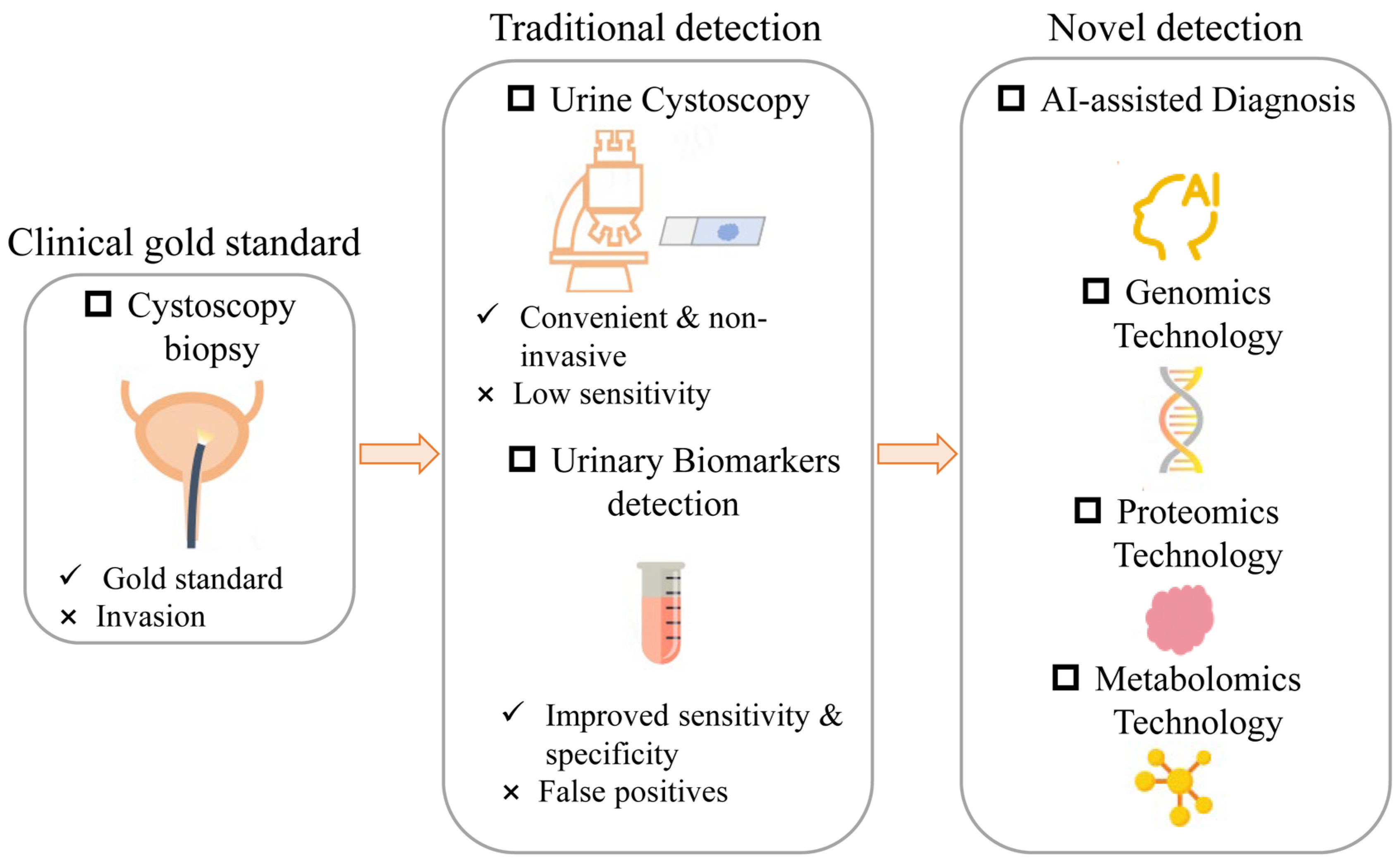
| Cystoscopy Combined with Tissue Biopsy | Direct visualization of bladder mucosa; pathological confirmation of suspicious lesions via biopsy | Gold standard for confirming BCa diagnosis; high diagnostic reliability | Invasive; potential complications (e.g., hematuria, infection); high cost; patient discomfort | Monitoring (high-risk/post-treatment patients) | [10] |
| Conventional Urine Cytology | Microscopic examination of urinary cells to identify malignant or suspicious morphological features | Non-invasive; simple operation; low-cost; specificity >90% | Low sensitivity (≈42% for early/low-grade tumors); high subjectivity; inconsistent protocols across institutions | Preliminary screening; auxiliary monitoring (post-treatment) | [10,13] |
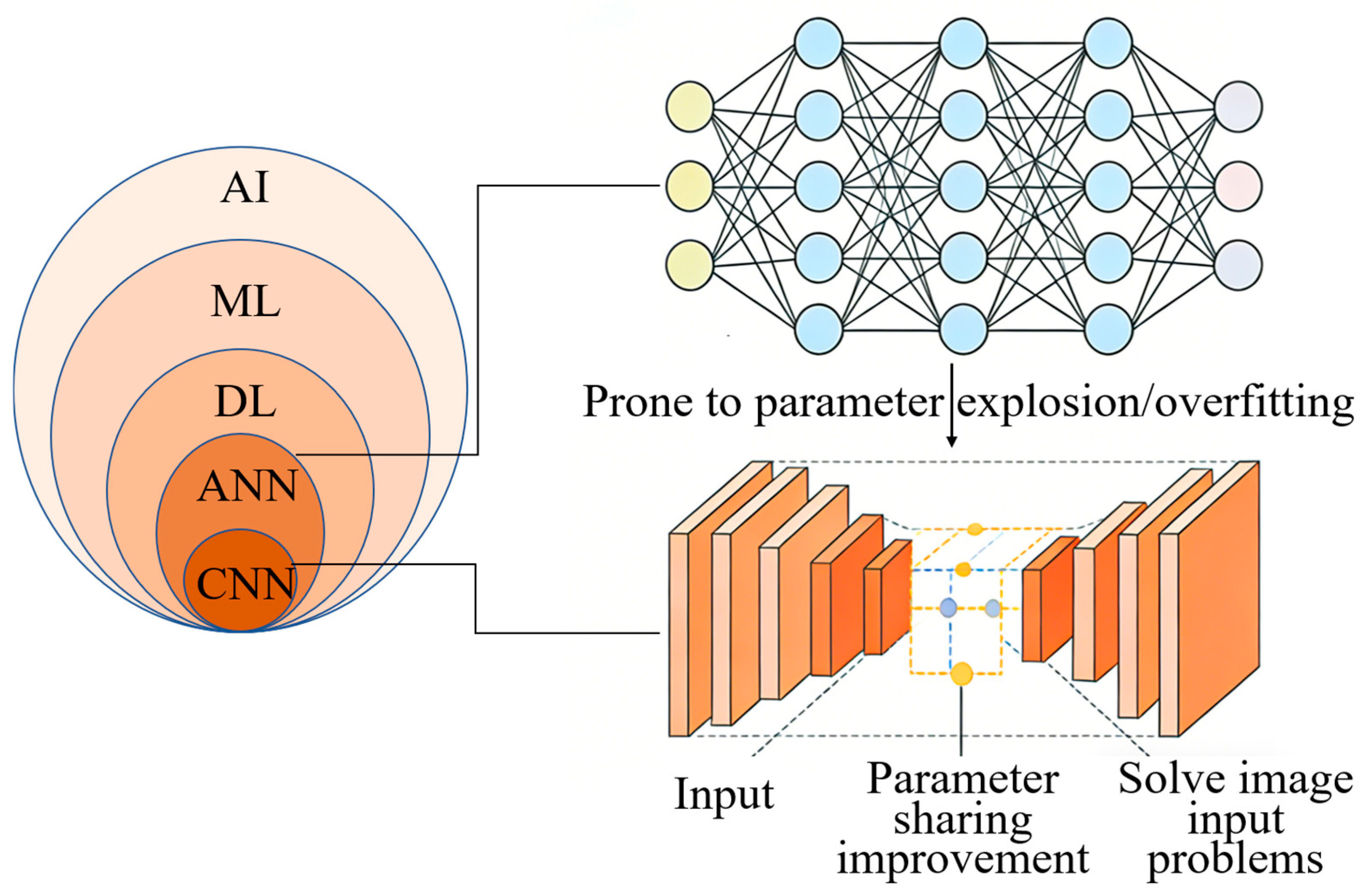
| AI-based Urine Cytological Detection Technology | Automated classification of benign/malignant cells by analyzing urine cytological morphology (nuclear–cytoplasmic ratio, chromatin abnormalities, etc.) using CNN and other algorithms | Non-invasive; reduces subjectivity; improves sensitivity for low-grade tumors (VisioCyt reaches 77%); high diagnostic efficiency | Lack of standardized training/validation protocols; reliance on high-quality image datasets | Screening + Monitoring (postoperative recurrence) | [30,31,32,33,34,35,36,37,38,43,44,45,47,48] |
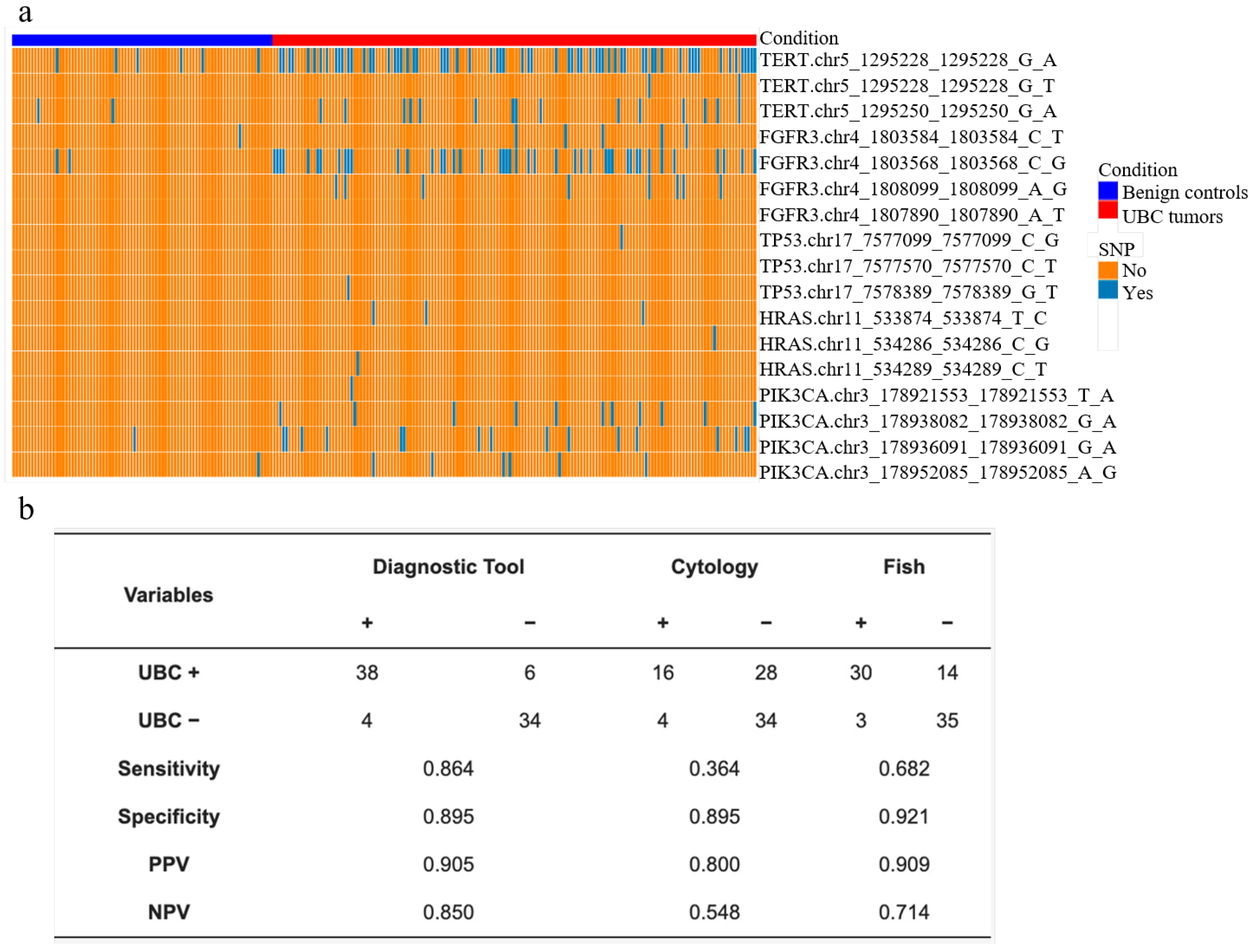
| Urine Genomic Detection Technology | 1. DNA level: Gene mutations (TERT, FGFR3), Copy Number Variations (CNVs) (PCR/NGS); 2. Methylation: Methylation status of target genes (MSP, WGBS) | Non-invasive; high specificity; capable of detecting early micro-tumors; Uromonitor® has a Negative Predictive Value (NPV) of 98.8% | High detection cost; complex experimental procedures; requires professional technical support | Screening (high-risk populations) + Monitoring (recurrence) | [59,61,63,64,74,75,85,89] |
| Urine RNA Detection Technology | mRNA (ETS2/uPA, IGF2), miRNA (miR-21-5p, 6-miRNA signature), lncRNA (UCA1, uc004cox.4) | Stable biomarkers; multi-gene combination improves accuracy; some technologies enable rapid detection (within 30 min) | Lack of standardization in sample processing and detection platforms; insufficient enrichment efficiency for extremely early micro-tumors | Screening + Monitoring (prognostic stratification) | [108,111,115,124,125] |
| Proteomic Detection Technology | Targeted detection of specific urinary proteins (BTA, NMP22), peptides; single-molecule level detection by SERS; integrated analysis of multi-protein panels | Non-invasive; simple and rapid operation; SERS achieves a detection limit of 0.1 pg/mL; low-cost of Point-of-Care (POC) systems ($2.5 per test) | Low specificity; susceptible to interference from benign urological diseases (infections, stones); some technologies rely on high-end equipment | Screening (primary care) + Monitoring (treatment efficacy) | [132,134,138] |
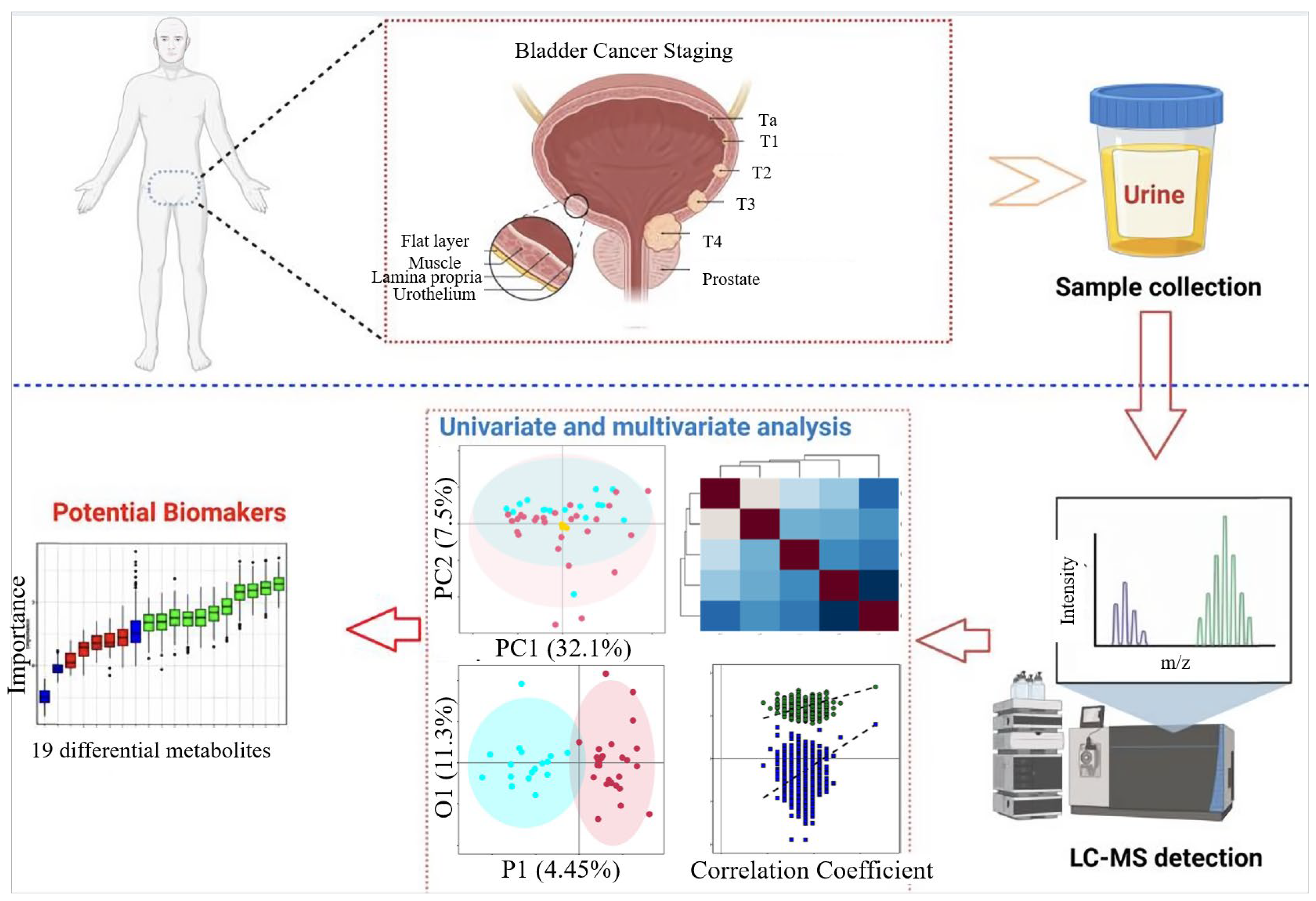
| Metabolomic Diagnostic Technology | Detection of differential urinary metabolites (VOCs, p-cresol glucuronide, etc.) based on HPLC-MS/GC-IMS and other technologies | Non-invasive; real-time reflection of tumor metabolic status; rapid detection by GC-IMS (<30 min) | Lack of standardized detection protocols; susceptible to interference from diet and medications; insufficient large-scale clinical validation | Screening (high-risk populations) + Monitoring (recurrence) | [143,145,147] |
Disclaimer/Publisher’s Note: The statements, opinions and data contained in all publications are solely those of the individual author(s) and contributor(s) and not of MDPI and/or the editor(s). MDPI and/or the editor(s) disclaim responsibility for any injury to people or property resulting from any ideas, methods, instructions or products referred to in the content. |
© 2026 by the authors. Licensee MDPI, Basel, Switzerland. This article is an open access article distributed under the terms and conditions of the Creative Commons Attribution (CC BY) license.
Share and Cite
Hao, Z.; Yue, S.; Yao, L.; Gong, Y.; Yu, J.; Zhou, L. Non-Invasive Urine-Based Diagnostic Technologies for Early Bladder Cancer. Biosensors 2026, 16, 171. https://doi.org/10.3390/bios16030171
Hao Z, Yue S, Yao L, Gong Y, Yu J, Zhou L. Non-Invasive Urine-Based Diagnostic Technologies for Early Bladder Cancer. Biosensors. 2026; 16(3):171. https://doi.org/10.3390/bios16030171
Chicago/Turabian StyleHao, Zhe, Shuhua Yue, Lin Yao, Yanqing Gong, Jian Yu, and Liqun Zhou. 2026. "Non-Invasive Urine-Based Diagnostic Technologies for Early Bladder Cancer" Biosensors 16, no. 3: 171. https://doi.org/10.3390/bios16030171
APA StyleHao, Z., Yue, S., Yao, L., Gong, Y., Yu, J., & Zhou, L. (2026). Non-Invasive Urine-Based Diagnostic Technologies for Early Bladder Cancer. Biosensors, 16(3), 171. https://doi.org/10.3390/bios16030171