Smart Biosensing Nanomaterials for Alzheimer’s Disease: Advances in Design and Drug Delivery Strategies to Overcome the Blood–Brain Barrier

 ,
,  ,
,  ,
,  ,
,  , and
, and
Abstract
1. Introduction
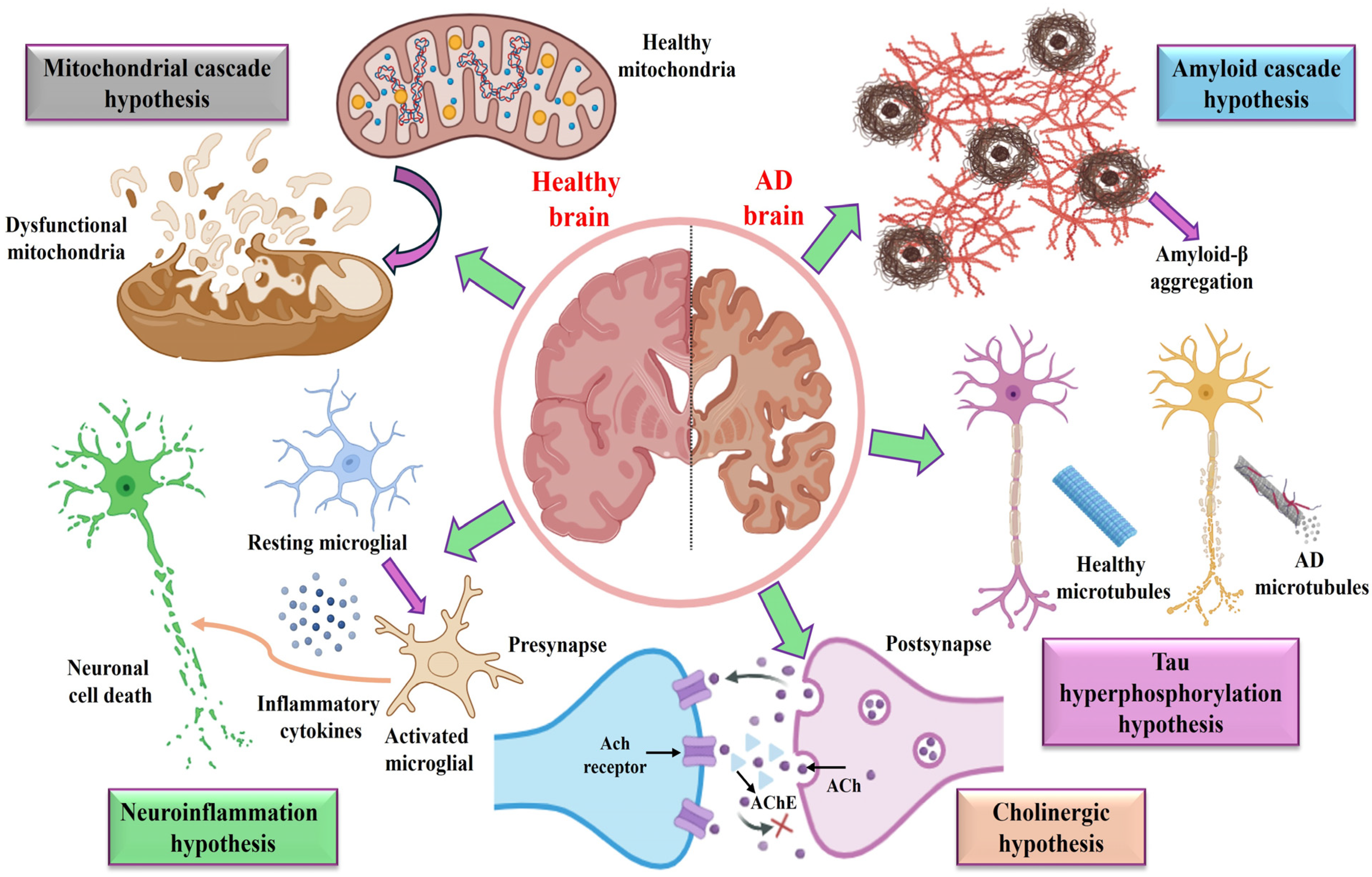
2. Risk Factors, Challenges, and Hypothesis of AD
2.1. Amyloid Cascade Hypothesis
2.2. Tau Hypothesis
2.3. Cholinergic Hypothesis
2.4. Oxidative Stress, Neuroinflammatory, and Mitochondrial Cascade Hypotheses
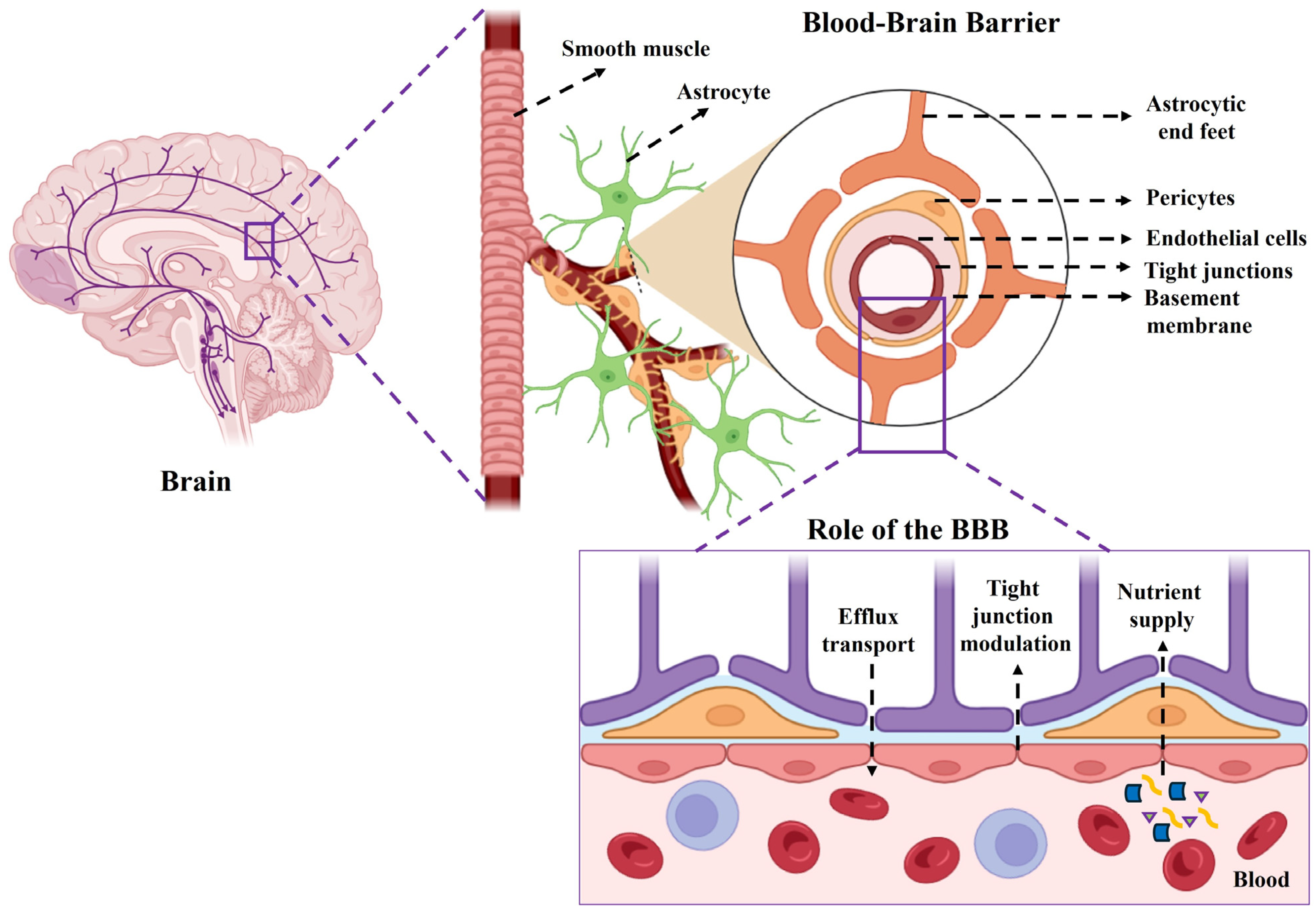
3. Blood–Brain Barrier
4. Current Treatments and Limitations of AD
5. Significance of Smart Nanoparticles
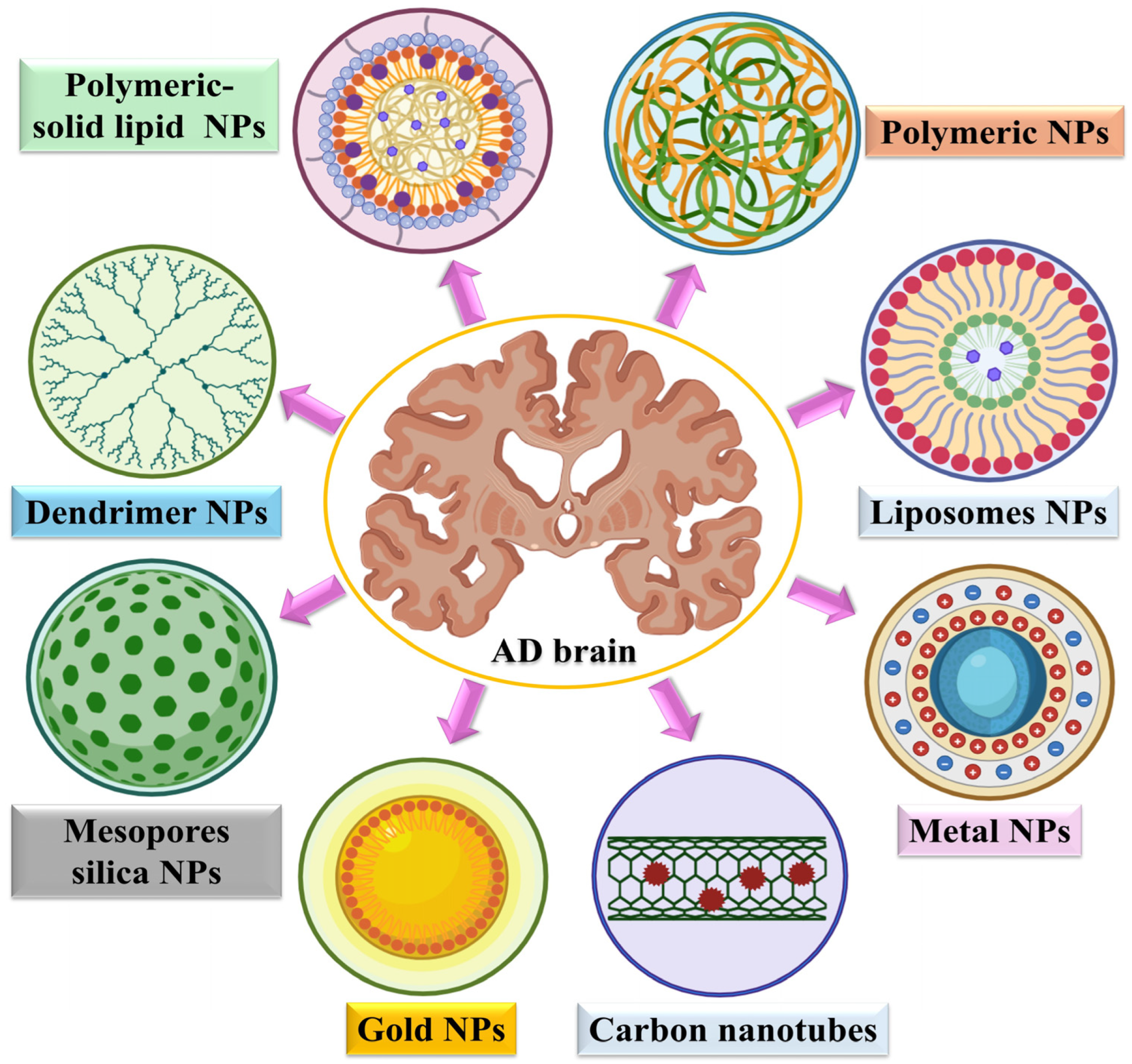
6. Design and Importance of Nano-Drug Delivery Systems for AD
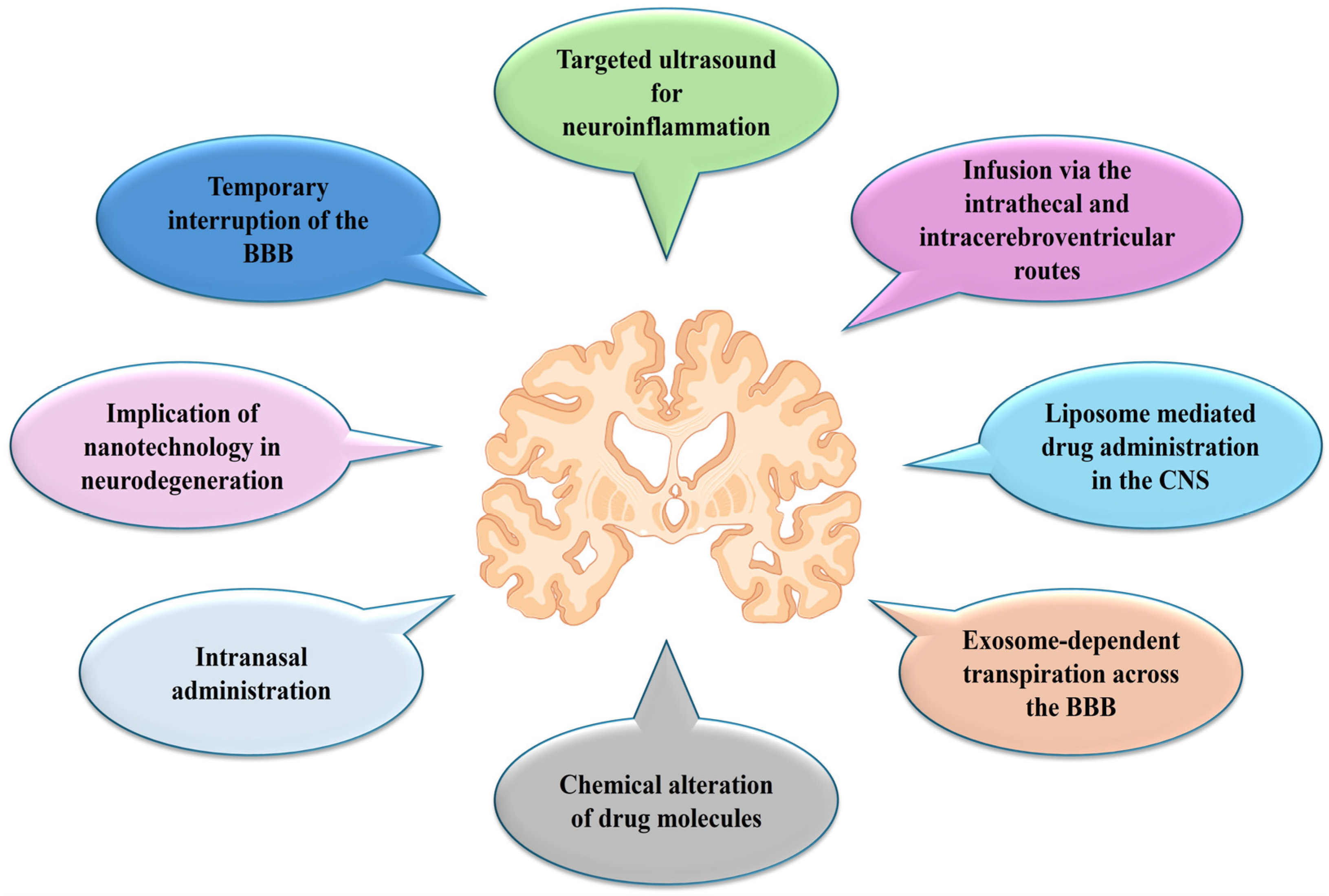
7. Strategies for NDS in AD
7.1. Polymeric Nanoparticles for TDD in AD
7.2. Lipid Nanoparticles for TDD in AD
7.3. Metal-Based Nanoparticles for TDD in AD
8. Clinical Trials, Limitations, and Challenges in Drug Delivery for AD
9. Conclusions and Future Perspectives
Author Contributions
Funding
Institutional Review Board Statement
Informed Consent Statement
Data Availability Statement
Acknowledgments
Conflicts of Interest
References
- Sighencea, M.G.; Popescu, R.Ș.; Trifu, S.C. From fundamentals to innovation in Alzheimer’s disease: Molecular findings and revolutionary therapies. Int. J. Mol. Sci. 2024, 25, 12311. [Google Scholar] [CrossRef]
- Twiss, E.; McPherson, C.; Weaver, D.F. Global Diseases Deserve Global Solutions: Alzheimer’s Disease. Neurol. Int. 2025, 17, 92. [Google Scholar] [CrossRef]
- Ren, C.; Li, D.; Zhou, Q.; Hu, X. Mitochondria-targeted TPP-MoS2 with dual enzyme activity provides efficient neuroprotection through M1/M2 microglial polarization in an Alzheimer’s disease model. Biomaterials 2020, 232, 119752. [Google Scholar] [CrossRef]
- Fanlo-Ucar, H.; Picón-Pagès, P.; Herrera-Fernández, V.; Ill-Raga, G.; Muñoz, F.J. The dual role of amyloid Beta-Peptide in oxidative stress and inflammation: Unveiling their connections in Alzheimer’s disease etiopathology. Antioxidants 2024, 13, 1208. [Google Scholar] [CrossRef] [PubMed]
- Di Caro, V.; Williams, C.; North, H.A.; Hamby, M.E. Biomarkers in CNS drug discovery, drug development, and clinical implementation. In Trends in CNS Drug Discovery; Wiley: Weinheim, Germany, 2025; pp. 161–197. [Google Scholar] [CrossRef]
- Almeida, Z.L.; Vaz, D.C.; Brito, R.M. Morphological and molecular profiling of amyloid-β species in Alzheimer’s pathogenesis. Mol. Neurobiol. 2025, 62, 4391–4419. [Google Scholar] [CrossRef]
- Cardillo, M.; Katam, K.; Suravajhala, P. Advancements in multi-omics research to address challenges in Alzheimer’s disease: A systems biology approach utilizing molecular biomarkers and innovative strategies. Front. Aging Neurosci. 2025, 17, 1591796. [Google Scholar] [CrossRef] [PubMed]
- Ferrari, I.; Limiti, E.; Giannitelli, S.M.; Trombetta, M.; Rainer, A.; D’Amelio, M.; La Barbera, L.; Gori, M. Microfluidic-Based Technologies for Crossing the Blood–Brain Barrier Against Alzheimer’s Disease: Novel Strategies and Challenges. Int. J. Mol. Sci. 2025, 26, 9478. [Google Scholar] [CrossRef] [PubMed]
- Julius, A.; Renuka, R.R.; Pothireddy, R.B. Multi-target drugs to control the progression of age-related neurodegenerative disorders. Aging Med. Healthc. 2024, 15, 4–7. [Google Scholar] [CrossRef]
- Kotarba, S.; Kozłowska, M.; Scios, M.; Saramowicz, K.; Barczuk, J.; Granek, Z.; Siwecka, N.; Wiese, W.; Golberg, M.; Galita, G.; et al. Potential Mechanisms of Tunneling Nanotube Formation and Their Role in Pathology Spread in Alzheimer’s Disease and Other Proteinopathies. Int. J. Mol. Sci. 2024, 25, 10797. [Google Scholar] [CrossRef]
- Yu, P.; Shen, L.; Tang, L. Multimodal DTI-ALPS and Hippocampal Microstructural Signatures Unveil Stage-Specific Pathways in Alzheimer’s Disease Progression. Front. Aging Neurosci. 2025, 17, 1609793. [Google Scholar] [CrossRef]
- Alqudah, A.; Aljabali, A.A.; Gammoh, O.; Tambuwala, M.M. Advancements in neurotherapeutics: Nanoparticles overcoming the blood–brain barrier for precise CNS targeting. J. Nanoparticle Res. 2024, 26, 123. [Google Scholar] [CrossRef]
- Abduljawad, A.A.; Alkinani, K.B.; Zaakan, A.; AlGhamdi, A.S.; Hamdoon, A.A.E.; Alshanbari, B.H.; Alshehri, A.A.; Alluhaybi, B.B.; Alqashi, S.O.I.; Abduljawad, R.A. Targeting Amyloid-β Proteins as Potential Alzheimer’s Disease Therapeutics: Anti-Amyloid Drug Discovery, Emerging Therapeutics, Clinical Trials and Implications for Public Health. Pharmaceuticals 2025, 18, 1731. [Google Scholar] [CrossRef] [PubMed]
- Benjamin, S.R.; Lima, F.D.; Nunes, P.I.G.; Dutra, R.F.; Andrade, G.M.D.; Oriá, R.B. Advanced Biosensing Technologies: Leading Innovations in Alzheimer’s Disease Diagnosis. Chemosensors 2025, 13, 220. [Google Scholar] [CrossRef]
- Joshi, K.M.; Salve, S.; Dhanwade, D.; Chavhan, M.; Jagtap, S.; Shinde, M.; Holkar, R.; Patil, R.; Chabukswar, V. Advancing Protein Biosensors: Redefining Detection through Innovations in Materials, Mechanisms, and Applications for Precision Medicine and Global Diagnostics. RSC Adv. 2025, 15, 11523–11536. [Google Scholar] [CrossRef]
- Razavi, R.; Khajouei, G.; Divsalar, F.; Dawi, E.; Amiri, M. Recent advances on brain drug delivery via nanoparticles: Alternative future materials for neuroscience applications; a review. Rev. Neurosci. 2025, 36, 405–430. [Google Scholar] [CrossRef]
- Jang, Y.J.; Kang, S.J.; Park, H.S.; Lee, D.H.; Kim, J.H.; Kim, J.E.; Kim, D.I.; Chung, C.H.; Yoon, J.K.; Bhang, S.H. Drug delivery strategies with lipid-based nanoparticles for Alzheimer’s disease treatment. J. Nanobiotechnol. 2025, 23, 99. [Google Scholar] [CrossRef]
- Dong, N.; Ali-Khiavi, P.; Ghavamikia, N.; Pakmehr, S.; Sotoudegan, F.; Hjazi, A.; Gargari, M.K.; Gargari, H.K.; Behnamrad, P.; Rajabi, M.; et al. Nanomedicine in the Treatment of Alzheimer’s Disease: Bypassing the Blood–Brain Barrier with Cutting-Edge Nanotechnology. Neurol. Sci. 2025, 46, 1489–1507. [Google Scholar] [CrossRef] [PubMed]
- Lanoiselée, H.M.; Nicolas, G.; Wallon, D.; Rovelet-Lecrux, A.; Lacour, M.; Rousseau, S.; Richard, A.C.; Pasquier, F.; Rollin-Sillaire, A.; Martinaud, O.; et al. APP, PSEN1, and PSEN2 Mutations in Early-Onset Alzheimer Disease: A Genetic Screening Study of Familial and Sporadic Cases. PLoS Med. 2017, 14, e1002270. [Google Scholar] [CrossRef] [PubMed]
- Dhapola, R.; Sharma, P.; Kumari, S.; Bhatti, J.S.; HariKrishnaReddy, D. Environmental toxins and Alzheimer’s disease: A comprehensive analysis of pathogenic mechanisms and therapeutic modulation. Mol. Neurobiol. 2024, 61, 3657–3677. [Google Scholar] [CrossRef]
- Yan, Q.; Qin, Q.; Zhang, S.; Chen, F.; Ru, Y.; Zhong, Y.; Wu, G. Glial Cell Nutrient Sensing: Mechanisms of Nutrients Regulating Alzheimer’s Pathogenesis and Precision Intervention. Crit. Rev. Food Sci. Nutr. 2025, 1–17. [Google Scholar] [CrossRef]
- Contador, I.; Buch-Vicente, B.; Del Ser, T.; Llamas-Velasco, S.; Villarejo-Galende, A.; Benito-León, J.; Bermejo-Pareja, F. Charting Alzheimer’s disease and dementia: Epidemiological insights, risk factors and prevention pathways. J. Clin. Med. 2024, 13, 4100. [Google Scholar] [CrossRef] [PubMed]
- Padmanaban, A.; Taarika, G.; Geetha, R.V.; Royapuram, P. Attenuation of oxidative stress and anti-Alzheimer effect of ursolic acid. Texila Int. J. Public Health 2025, 13, 940–948. [Google Scholar]
- Daly, T. A philosophy of science approach to the amyloid hypothesis of Alzheimer’s disease. Eur. J. Neurosci. 2024, 60, 4707–4722. [Google Scholar] [CrossRef]
- Rajkumar, M.; Vimala, K.; Tamiliniyan, D.D.; Thangaraj, R.; Jaganathan, R.; Kumaradhas, P.; Kannan, S. Gelatin/Polyvinyl Alcohol-Loaded Magnesium Hydroxide Nanocomposite Attenuates Neurotoxicity and Oxidative Stress in Alzheimer’s Disease-Induced Rats. Int. J. Biol. Macromol. 2022, 222, 2122–2143. [Google Scholar] [CrossRef]
- Tondo, G.; De Marchi, F.; Bonardi, F.; Menegon, F.; Verrini, G.; Aprile, D.; Anselmi, M.; Mazzini, L.; Comi, C. Novel therapeutic strategies in Alzheimer’s disease: Pitfalls and challenges of anti-amyloid therapies and beyond. J. Clin. Med. 2024, 13, 3098. [Google Scholar] [CrossRef]
- Shin, M.K.; Schuck, A.; Kang, M.; Kim, Y.S. Electrochemical Analysis of Amyloid Plaques and ApoE4 with Chitosan-Coated Gold Nanostars for Alzheimer’s Detection. Biosensors 2024, 14, 510. [Google Scholar] [CrossRef] [PubMed]
- Patwekar, M.; Patwekar, F.; Khan, S.; Sharma, R.; Kumar, D. Navigating the Alzheimer’s Treatment Landscape: Unraveling Amyloid-beta Complexities and Pioneering Precision Medicine Approaches. Curr. Top. Med. Chem. 2024, 24, 1665–1682. [Google Scholar] [CrossRef]
- Jiang, G.; Xie, G.; Li, X.; Xiong, J. Cytoskeletal Proteins and Alzheimer’s Disease Pathogenesis: Focusing on the Interplay with Tau Pathology. Biomolecules 2025, 15, 831. [Google Scholar] [CrossRef]
- Di Lorenzo, D. Tau Protein and Tauopathies: Exploring Tau Protein—Protein and Microtubule Interactions, Cross-Interactions and Therapeutic Strategies. ChemMedChem 2024, 19, e202400180. [Google Scholar] [CrossRef]
- Grewal, A.; Raikundalia, S.; Zaia, J.; Sethi, M.K. Overview of Proteomic Analysis of Amyloid Plaques and Neurofibrillary Tangles in Alzheimer’s Disease. Biomolecules 2025, 15, 1310. [Google Scholar] [CrossRef] [PubMed]
- Abukuri, D.N. Novel biomarkers for Alzheimer’s disease: Plasma neurofilament light and cerebrospinal fluid. Int. J. Alzheimer’s Dis. 2024, 2024, 6668159. [Google Scholar] [CrossRef] [PubMed]
- Nasb, M.; Tao, W.; Chen, N. Alzheimer’s disease puzzle: Delving into pathogenesis hypotheses. Aging Dis. 2024, 15, 43. [Google Scholar]
- Tsimpili, H.; Zoidis, G. A New Era of Muscarinic Acetylcholine Receptor Modulators in Neurological Diseases, Cancer and Drug Abuse. Pharmaceuticals 2025, 18, 369. [Google Scholar] [CrossRef]
- Singh, R.; Panghal, A.; Jadhav, K.; Thakur, A.; Verma, R.K.; Singh, C.; Goyal, M.; Kumar, J.; Namdeo, A.G. Recent advances in targeting transition metals (Copper, Iron, and Zinc) in Alzheimer’s disease. Mol. Neurobiol. 2024, 61, 10916–10940. [Google Scholar] [CrossRef]
- Rajkumar, M.; Sakthivel, M.; Senthilkumar, K.; Thangaraj, R.; Kannan, S. Galantamine-Tethered Hydrogel as a Novel Therapeutic Target for Streptozotocin-Induced Alzheimer’s Disease in Wistar Rats. Curr. Res. Pharmacol. Drug Discov. 2022, 3, 100100. [Google Scholar] [CrossRef]
- Mazur, T.; Malik, M.; Bieńko, D.C. The impact of chelating compounds on Cu2+, Fe2+/3+, and Zn2+ ions in Alzheimer’s disease treatment. J. Inorg. Biochem. 2024, 257, 112601. [Google Scholar] [CrossRef]
- Gogna, T.; Housden, B.E.; Houldsworth, A. Exploring the role of reactive oxygen species in the pathogenesis and pathophysiology of Alzheimer’s and Parkinson’s disease and the efficacy of antioxidant treatment. Antioxidants 2024, 13, 1138. [Google Scholar] [CrossRef] [PubMed]
- Parameswari, R.P.; Ramesh, G.; Chidambaram, S.B.; Thangavelu, L. Oxidative stress mediated neuroinflammation induced by chronic sleep restriction as triggers for Alzheimer’s disease. Alzheimer’s Dement. 2022, 18, e059016. [Google Scholar]
- Şak, B.; Sousa, H.B.; Prior, J.A. Carbon Nanomaterial-Based Electrochemical Biosensors for Alzheimer’s Disease Biomarkers: Progress, Challenges, and Future Perspectives. Biosensors 2025, 15, 684. [Google Scholar] [CrossRef] [PubMed]
- Spina, E.; Ferrari, R.R.; Pellegrini, E.; Colombo, M.; Poloni, T.E.; Guaita, A.; Davin, A. Mitochondrial Alterations, Oxidative Stress, and Therapeutic Implications in Alzheimer’s Disease: A Narrative Review. Cells 2025, 14, 229. [Google Scholar] [CrossRef]
- Qi, W.; Zhu, X.; Wang, B.; Shi, Y.; Dong, C.; Shen, S.; Li, J.; Zhang, K.; He, Y.; Zhao, M.; et al. Alzheimer’s Disease Digital Biomarkers Multidimensional Landscape and AI Model Scoping Review. npj Digit. Med. 2025, 8, 366. [Google Scholar] [CrossRef]
- Zhang, X.; Fu, M.; Wang, Y.; Wu, T. Strategies for Delivering Drugs across the Blood–Brain Barrier for the Treatment of Neurodegenerative Diseases. Front. Drug Deliv. 2025, 5, 1644633. [Google Scholar] [CrossRef] [PubMed]
- Bor, G.; Hosta-Rigau, L. Next Generation of Brain Cancer Nanomedicines to Overcome the Blood–Brain Barrier (BBB): Insights on Transcytosis, Perivascular Tumor Growth, and BBB Models. Adv. Ther. 2023, 6, 2300161. [Google Scholar] [CrossRef]
- Li, Y.; Liu, R.; Zhao, Z. Targeting brain drug delivery with macromolecules through receptor-mediated transcytosis. Pharmaceutics 2025, 17, 109. [Google Scholar] [CrossRef]
- Fang, J.; Zhang, L.; Wang, Y.; Chen, M.; He, Y.; Zhang, C.Y.; Zhang, Y.; Jiang, X.; Li, J. Selective Peptide-Guided Transcytosis Enhances Extracellular Vesicle-Mediated siRNA Delivery Across the Blood–Brain Barrier. J. Biol. Chem. 2025, 302, 110942. [Google Scholar] [CrossRef] [PubMed]
- Hanumanthappa, R.; Parthasarathy, A.; Heggannavar, G.B.; Pc, K.; Nanjaiah, H.; Kumbhar, R.; Devaraju, K.S. Recent advances in therapeutic strategies for Alzheimer’s and Parkinson’s disease using protein/peptide co-modified polymer nanoparticles. Neuroprotection 2024, 2, 255–275. [Google Scholar] [CrossRef]
- Xiang, Y.; Gu, Q.; Liu, D. Brain Endothelial Cells in Blood—Brain Barrier Regulation and Neurological Therapy. Int. J. Mol. Sci. 2025, 26, 5843. [Google Scholar] [CrossRef]
- Bashir, D.J.; Bhat, K.A.; Bashir, M. Deciphering Alzheimer’s Disease: Molecular Mechanisms, Preclinical Models and Strategies to Overcome the Blood–Brain Barrier. Brain Res. 2025, 1863, 149828. [Google Scholar] [CrossRef] [PubMed]
- Ashirov, O.; Azimova, S.; Angelov, B.; Angelova, A. Engineering Liposomes for Neurodegenerative Diseases: Targeted Delivery and Regenerative Potential. ChemNanoMat 2025, 12, e202500258. [Google Scholar] [CrossRef]
- Chen, J.H.; Zhan, L.J.; Lv, C.M.; Teng, J.B.; Cao, C.Y. Advances and Challenges in Adeno-Associated Virus Gene Therapy Applications of Localized Delivery Strategies. Curr. Med. Sci. 2025, 45, 683–698. [Google Scholar] [CrossRef]
- Awlqadr, F.H.; Noreen, S.; Altemimi, A.B.; Mohammed, O.A.; Qadir, S.A.; Ahmed, D.H.; Alkanan, Z.T.; Tsakali, E.; Van Impe, J.F.; Kozak, D.; et al. Advancement in nanobubble technology: Enhancing drug and nutraceutical delivery with focus on bioavailability, targeted therapy, safety, and sustainability. Front. Nanotechnol. 2025, 7, 1548593. [Google Scholar] [CrossRef]
- Eldufani, J.; Blaise, G. The Role of Acetylcholinesterase Inhibitors Such as Neostigmine and Rivastigmine on Chronic Pain and Cognitive Function in Aging: A Review of Recent Clinical Applications. Alzheimer’s Dement. Transl. Res. Clin. Interv. 2019, 5, 175–183. [Google Scholar] [CrossRef] [PubMed]
- Liu, L.; He, H.; Du, B.; He, Y. Nanoscale drug formulations for the treatment of Alzheimer’s disease progression. RSC Adv. 2025, 15, 4031–4078. [Google Scholar] [CrossRef]
- Egunlusi, A.O.; Joubert, J. NMDA receptor antagonists: Emerging insights into molecular mechanisms and clinical applications in neurological disorders. Pharmaceuticals 2024, 17, 639. [Google Scholar] [CrossRef]
- Haddad, H.W.; Malone, G.W.; Comardelle, N.J.; Degueure, A.E.; Kaye, A.M.; Kaye, A.D. Aducanumab, a novel anti-amyloid monoclonal antibody, for the treatment of Alzheimer’s disease: A comprehensive review. Health Psychol. Res. 2022, 10, 31925. [Google Scholar] [CrossRef]
- Birajdar, S.V.; Mazahir, F.; Alam, M.I.; Kumar, A.; Yadav, A.K. Repurposing and clinical attributes of antidiabetic drugs for the treatment of neurodegenerative disorders. Eur. J. Pharmacol. 2023, 961, 176117. [Google Scholar] [CrossRef] [PubMed]
- Grabowska, W.; Bijak, M.; Szelenberger, R.; Gorniak, L.; Podogrocki, M.; Harmata, P.; Cichon, N. Acetylcholinesterase as a multifunctional target in amyloid-driven neurodegeneration: From dual-site inhibitors to anti-aggregation strategies. Int. J. Mol. Sci. 2025, 26, 8726. [Google Scholar] [CrossRef] [PubMed]
- Skoczeń, A.; Rutecka, N.; Kaczmarek, B.; Kuśnierz-Gibała, A.; Kruk, A.; Kulesza, M.; Wawrzynów, W.; Miłoś, M.; Dorosz, A.; Jakubowska, M.M. Advancements in Alzheimer’s disease therapy: The role of anti-amyloid monoclonal antibodies—A literature review. J. Educ. Health Sport 2025, 79, 58362. [Google Scholar] [CrossRef]
- Aljuhani, M.; Ashraf, A.; Edison, P. Evaluating clinical meaningfulness of anti-β-amyloid therapies amidst amyloid-related imaging abnormalities concern in Alzheimer’s disease. Brain Commun. 2024, 6, fcae435. [Google Scholar] [CrossRef]
- Ashmawy, R.E.; Okesanya, O.J.; Ukoaka, B.M.; Daniel, F.M.; Ezedigwe, S.G.; Agboola, A.O.; Ahmed, M.M.; Ogaya, J.B.; Amisu, B.O.; Adigun, O.A.; et al. Exploring the efficacy and safety of lecanemab in early Alzheimer’s disease: A systematic review of clinical evidence. J. Alzheimer’s Dis. 2025, 105, 714–728. [Google Scholar] [CrossRef]
- Palaniyappan, R.; Arthanari, S.; Subramanian, M.; Periyasamy, P.; Pethappachetty, P.; Ganesan, R.; Prakash, M.; Govindaraj, A. Nanotechnology-driven approaches in overcoming drug delivery challenges for neurodegenerative diseases. Indian J. Pharm. Educ. Res. 2024, 58, s1185–s1200. [Google Scholar] [CrossRef]
- Sharma, D.K. Nanotechnology-driven approaches for early detection and targeted treatment of Alzheimer’s disease. J. Drug Target. 2025, 19, 1–18. [Google Scholar] [CrossRef] [PubMed]
- Harwansh, R.K.; Deshmukh, R.; Barkat, M.A.; Rahman, M.A. Bioinspired Polymeric-Based Core–Shell Smart Nano-Systems. Pharm. Nanotechnol. 2019, 7, 181–205. [Google Scholar] [CrossRef]
- Guo, Y.; Li, N.; Zhang, D.; Gu, J.; Liao, Z.; Teng, Z.; Du, X.; Timashev, P.S.; Chen, S.; Huo, S. Advancing Design Strategies in Smart Stimulus-Responsive Liposomes for Drug Release and Nanomedicine. BMEMat 2025, e70045. [Google Scholar] [CrossRef]
- Lombardo, D.; Kiselev, M.A.; Caccamo, M.T. Smart Nanoparticles for Drug Delivery Application: Development of Versatile Nanocarrier Platforms in Biotechnology and Nanomedicine. J. Nanomater. 2019, 2019, 3702518. [Google Scholar] [CrossRef]
- Bchkol, D.H.K.; Mohammed, O.S. Review of controlled drug delivery methods, dosage form categorization, and therapeutic impact on the human body. Span. J. Innov. Integr. 2025, 39, 88–109. [Google Scholar]
- Cojocaru, E.; Petriș, O.R.; Cojocaru, C. Nanoparticle-Based Drug Delivery Systems in Inhaled Therapy: Improving Respiratory Medicine. Pharmaceuticals 2024, 17, 1059. [Google Scholar] [CrossRef]
- Liu, Q.; Chen, Z.; Guiseppi-Elie, A.; Meng, F.; Luo, L. Recent progress on nanotechnologies for enhancing blood–brain barrier permeability. Smart Mol. 2025, 3, e20240052. [Google Scholar] [CrossRef]
- Haro-Martínez, E.; Muscolino, E.; Moral, N.; Duran, J.; Fornaguera, C. Crossing the blood–brain barrier: Nanoparticle-based strategies for neurodegenerative disease therapy. Drug Deliv. Transl. Res. 2025, 1–28. [Google Scholar] [CrossRef] [PubMed]
- Zhou, M.; Wen, K.; Bi, Y.; Lu, H.; Chen, J.; Hu, Y.; Chai, Z. The Application of Stimuli-Responsive Nanocarriers for Targeted Drug Delivery. Curr. Top. Med. Chem. 2017, 17, 2319–2334. [Google Scholar] [CrossRef]
- Dehghani, P.; Rad, M.E.; Zarepour, A.; Sivakumar, P.M.; Zarrabi, A. An Insight into the Polymeric Nanoparticles Applications in Diabetes Diagnosis and Treatment. Mini Rev. Med. Chem. 2023, 23, 192–216. [Google Scholar]
- Ciftci, F.; Özarslan, A.C.; Kantarci, I.C.; Yelkenci, A.; Tavukcuoglu, O.; Ghorbanpour, M. Advances in drug targeting, drug delivery, and nanotechnology applications: Therapeutic significance in cancer treatment. Pharmaceutics 2025, 17, 121. [Google Scholar] [CrossRef]
- Kirit, E.; Gokce, C.; Altun, B.; Yilmazer, A. Nanotherapeutic strategies for overcoming the blood–brain barrier: Applications in disease modeling and drug delivery. ACS Omega 2025, 10, 32606–32625. [Google Scholar] [CrossRef]
- Isik, S.; Osman, S.; Yeman-Kiyak, B.; Shamshir, S.R.M.; Sanchez, N.M.E. Advances in neurodegenerative disease therapy: Stem cell clinical trials and promise of engineered exosomes. CNS Neurosci. Ther. 2025, 31, e70577. [Google Scholar] [CrossRef]
- Li, C.; Yao, S.; Li, Z.; Gao, Y. Application of novel drug-delivery strategies in neurological disorders. Adv. Mater. 2025, 37, 2503646. [Google Scholar] [CrossRef]
- Elsayed, L.A.; Saif, A.M.; Elghol, S.E.; Zayed, M.N.; Amin, Y.M.; Omran, M.H.; Ragab, M.A.; Althobiti, R.A.; Ali, G.A. A comprehensive review of promising phytoconstituents as anti-cancer agents: Biological mechanisms and applications across different cancers. Curr. Nanosci. 2025, 21, 613–639. [Google Scholar] [CrossRef]
- Patel, M.; Minglani, V.V.; Vaddadi, H.; Jha, L.L.; Patel, L.D.; Huanbutta, K.; Sangnim, T. Advancements in nanotherapeutics for the treatment of depression via intranasal pathway: A review. Int. J. Nanomed. 2025, 20, 7323–7342. [Google Scholar] [CrossRef] [PubMed]
- Hassan, A.A.; Ramadan, E.; Kristó, K.; Regdon, G., Jr.; Sovány, T. Lipid–polymer hybrid nanoparticles as a smart drug delivery system for peptide/protein delivery. Pharmaceutics 2025, 17, 797. [Google Scholar] [CrossRef] [PubMed]
- Islam, A.; Mehwish, S.; Riaz, F.; Khan, A.U. Applications and safety of biosynthesized nanoparticles in neurological disorders. In Expanding Nanobiotechnology: Applications and Commercialization; CRC Press: Boca Raton, FL, USA, 2025; pp. 212–227. [Google Scholar]
- Liu, G.; Sun, Y. Harnessing nanoparticles for Alzheimer’s disease: Innovations in drug delivery and pathology-specific treatments. J. Alzheimer’s Dis. 2025, 107, 1374–1399. [Google Scholar] [CrossRef]
- Nguyen, T.T.L.; Duong, V.A. Advancements in nanocarrier systems for nose-to-brain drug delivery. Pharmaceuticals 2025, 18, 615. [Google Scholar] [CrossRef]
- Modgil, M.; Sharma, A. Emerging era in colloidal carriers approach for enhanced transdermal drug delivery. Curr. Nanosci. 2025, 21, 218–241. [Google Scholar] [CrossRef]
- Pinkiewicz, M.; Zaczyński, A.; Walecki, J.; Zawadzki, M. Beyond the walls of Troy: A scoping review on pharmacological strategies to enhance drug delivery across the blood–brain barrier and blood–tumor barrier. Int. J. Mol. Sci. 2025, 26, 7050. [Google Scholar] [CrossRef]
- Zou, Y.; Zhang, J.; Chen, L.; Xu, Q.; Yao, S.; Chen, H. Targeting neuroinflammation in central nervous system diseases by oral delivery of lipid nanoparticles. Pharmaceutics 2025, 17, 388. [Google Scholar] [CrossRef]
- Kochman, U.; Sitka, H.; Kuźniar, J.; Czaja, M.; Kozubek, P.; Beszłej, J.A.; Leszek, J. Targeted Nanoparticles for Drug Delivery across the Blood–Brain Barrier in Early and Late Stages of Alzheimer’s Disease: A Review. Mol. Neurobiol. 2026, 63, 75. [Google Scholar] [CrossRef] [PubMed]
- Kalra, V.; Silakari, O.; Tiwary, A.K. Intranasal administration of in silico designed Rivastigmine mucoadhesive nanoparticles ameliorates scopolamine-induced Alzheimer’s symptoms in mice: Pharmacokinetic and pharmacodynamic evidence. Int. J. Pharm. 2025, 677, 125635. [Google Scholar] [CrossRef] [PubMed]
- Maurya, R.; Vikal, A.; Patel, P.; Narang, R.K.; Kurmi, B.D. Enhancing Oral Drug Absorption: Overcoming Physiological and Pharmaceutical Barriers for Improved Bioavailability. AAPS PharmSciTech 2024, 25, 228. [Google Scholar] [CrossRef]
- Tayyab, S.; Feroz, S.R. Serum Albumin: Clinical Significance of Drug Binding and Development as Drug Delivery Vehicle. Adv. Protein Chem. Struct. Biol. 2021, 123, 193–218. [Google Scholar]
- De Gaetano, F.; Totaro, N.; Ventura, C.A. Cyclodextrin-based formulations as a promising strategy to overcome the blood–brain barrier: Historical overview and prospects in glioblastoma treatment. Pharmaceuticals 2025, 18, 1626. [Google Scholar] [CrossRef] [PubMed]
- Kumar, A.; Shukla, R. Current strategic arsenal and advances in nose-to-brain nanotheranostics for therapeutic intervention of glioblastoma multiforme. J. Biomater. Sci. Polym. Ed. 2025, 36, 212–246. [Google Scholar] [CrossRef]
- Ding, L.; Kshirsagar, P.; Agrawal, P.; Murry, D.J. Crossing the blood–brain barrier: Innovations in receptor- and transporter-mediated transcytosis strategies. Pharmaceutics 2025, 17, 706. [Google Scholar] [CrossRef]
- Liu, S.; Jin, X.; Ge, Y.; Dong, J.; Liu, X.; Pei, X.; Wang, P.; Wang, B.; Chang, Y.; Yu, X.A. Advances in brain-targeted delivery strategies and natural product-mediated enhancement of blood–brain barrier permeability. J. Nanobiotechnol. 2025, 23, 382. [Google Scholar] [CrossRef] [PubMed]
- Sangavi, R.; Khute, S.; Subash, P. Advances in novel drug delivery systems: A focus on nanoparticles and mucoadhesive technologies. Drug Dev. Ind. Pharm. 2025, 51, 1673–1688. [Google Scholar] [CrossRef]
- Sabzehali, S. Nanomaterials in drug delivery systems: Challenges and perspectives. Eurasian J. Chem. Med. Pet. Res. 2025, 4, 48–62. [Google Scholar]
- Zamanian, M.Y.; Khachatryan, L.G.; Heidari, M.; Darabi, R.; Golmohammadi, M.; Al-Aouadi, R.F.A.; Akkol, E.K. The therapeutic potential of flavonols in Alzheimer’s disease: Inhibiting amyloid-β, oxidative stress, and neuroinflammation. BioFactors 2025, 51, e70047. [Google Scholar] [CrossRef] [PubMed]
- Mouhamed, A.A.; Orensa, K.; Mekhail, M.O.; Abdelaziz, N.I.; Mahmoud, A.M.; El Mously, D.A. Synthesis and characterization of core–shell mussel-inspired magnetic molecularly imprinted polymer nanoparticles for the solid-phase extraction of levofloxacin in human plasma. BMC Chem. 2025, 19, 280. [Google Scholar] [CrossRef] [PubMed]
- Mehandole, A.; Walke, N.; Mahajan, S.; Aalhate, M.; Maji, I.; Gupta, U.; Mehra, N.K.; Singh, P.K. Core–shell type lipidic and polymeric nanocapsules: The transformative multifaceted delivery systems. AAPS PharmSciTech 2023, 24, 50. [Google Scholar] [CrossRef]
- Rajkumar, M.; Govindaraj, P.; Vimala, K.; Thangaraj, R.; Kannan, S. Chitosan/PLA-Loaded Magnesium Oxide Nanocomposite to Attenuate Oxidative Stress, Neuroinflammation and Neurotoxicity in Rat Models of Alzheimer’s Disease. Metab. Brain Dis. 2024, 39, 487–508. [Google Scholar] [CrossRef]
- Bramhe, P.; Waghmare, S.; Rarokar, N.; Sabale, P.; Khedekar, P.; Sabale, V.; Potey, L. Polymer Blends Innovation: Advancement in Novel Drug Delivery. Int. J. Polym. Mater. Polym. Biomater. 2025, 74, 957–974. [Google Scholar] [CrossRef]
- Espinoza, S.M.; Patil, H.I.; San Martin Martinez, E.; Casanas Pimentel, R.; Ige, P.P. Poly-ε-caprolactone (PCL), a promising polymer for pharmaceutical and biomedical applications: Focus on nanomedicine in cancer. Int. J. Polym. Mater. Polym. Biomater. 2020, 69, 85–126. [Google Scholar] [CrossRef]
- Eltaib, L. Polymeric nanoparticles in targeted drug delivery: Unveiling the impact of polymer characterization and fabrication. Polymers 2025, 17, 833. [Google Scholar] [CrossRef]
- Phuna, Z.X.; Vijayabalan, S.; Panda, B.P.; Shivashekaregowda, N.K.H.; Shaikh, M.F.; Madhavan, P. Improved cognition and memory via PLGA nanoparticle-mediated delivery of curcumin and piperine in an in vivo Alzheimer’s disease model. Drug Deliv. Transl. Res. 2025, 15, 4314–4337. [Google Scholar] [CrossRef]
- Youssef, Y.A.; Tammam, S.N.; Elshenawy, B.M.; Ilyas, S.; Gad, A.A.; Farag, K.S.; Mathur, S.; Abdel-Kader, R.M. Peptide-loaded chitosan nanoparticles improve mitochondrial and cognitive functions via inhibition of Aβ-ABAD interaction in Alzheimer’s disease. Eur. J. Pharm. Biopharm. 2025, 214, 114778. [Google Scholar] [CrossRef] [PubMed]
- Kömür, M.; Kıyan, H.T.; Öztürk, A.A. Development of donepezil hydrochloride-loaded PLGA-based nanoparticles for Alzheimer’s disease treatment. Sci. Rep. 2025, 15, 13184. [Google Scholar] [CrossRef] [PubMed]
- Kouhjani, M.; Jaafari, M.R.; Saberi, A.; Gholami, L.; Tafaghodi, M. Nose to brain delivery of insulin loaded in PLGA and chitosan-coated PLGA nanoparticles: A promising approach for Alzheimer’s disease therapy. J. Drug Deliv. Sci. Technol. 2025, 108, 106857. [Google Scholar] [CrossRef]
- Pawar, S.; Suvarna, V. Curcumin-loaded PEG-functionalized carbon nanotubes: A novel strategy for Alzheimer’s management. Ther. Deliv. 2025, 16, 755–763. [Google Scholar] [CrossRef]
- Qian, K.; Bao, X.; Li, Y.; Wang, P.; Guo, Q.; Yang, P.; Xu, S.; Yu, F.; Meng, R.; Cheng, Y.; et al. Cholinergic neuron targeting nanosystem delivering hybrid peptide for combinatorial mitochondrial therapy in Alzheimer’s disease. ACS Nano 2022, 16, 11455–11472. [Google Scholar] [CrossRef]
- Imam, F.; Mukhopadhyay, S.; Kothiyal, P.; Alshehri, S.; Alharbi, K.S.; Afzal, M.; Iqbal, M.; Khan, M.R.; Anwer, M.K.; Alanazi, A.A.H.; et al. Formulation and characterization of polymeric nanoparticle of Rivastigmine for effective management of Alzheimer’s disease. Saudi Pharm. J. 2024, 32, 102048. [Google Scholar] [CrossRef] [PubMed]
- Mahanta, A.K.; Chaulagain, B.; Trivedi, R.; Singh, J. Mannose-functionalized chitosan-coated PLGA nanoparticles for brain-targeted codelivery of CBD and BDNF for the treatment of Alzheimer’s disease. ACS Chem. Neurosci. 2024, 15, 4021–4032. [Google Scholar] [CrossRef]
- Mohammadbaghban, E.; Taravati, A.; Najafzadehvarzi, H.; Khaleghzadeh-Ahangar, H.; Tohidi, F. Oral administration of encapsulated catechin in chitosan–alginate nanoparticles improves cognitive function and neurodegeneration in an aluminum chloride-induced rat model of Alzheimer’s disease. Physiol. Rep. 2024, 12, e16095. [Google Scholar] [CrossRef]
- Zameer, S.; Ali, J.; Vohora, D.; Najmi, A.K.; Akhtar, M. Development, Optimisation and Evaluation of Chitosan Nanoparticles of Alendronate against Alzheimer’s Disease in Intracerebroventricular Streptozotocin Model for Brain Delivery. J. Drug Target. 2021, 29, 199–216. [Google Scholar] [CrossRef]
- Shahidi, S.; Asl, S.S.; Gholamigeravand, B.; Afshar, S.; Hashemi-Firouzi, N.; Samzadeh-Kermani, A.; Majidi, M.; Amiri, K. Effect of Mesenchymal Stem Cells and Polyvinyl Alcohol-Coated Selenium Nanoparticles on Rats with Alzheimer-Like Phenotypes. Iran. J. Basic Med. Sci. 2024, 27, 1268–1275. [Google Scholar] [PubMed]
- Hashemi-Firouzi, N.; Afshar, S.; Asl, S.S.; Samzadeh-Kermani, A.; Gholamigeravand, B.; Amiri, K.; Majidi, M.; Shahidi, S. The Effects of Polyvinyl Alcohol-Coated Selenium Nanoparticles on Memory Impairment in Rats. Metab. Brain Dis. 2022, 37, 3011–3021. [Google Scholar] [CrossRef]
- Oliveira Silva, R.; Counil, H.; Rabanel, J.-M.; Haddad, M.; Zaouter, C.; Ben Khedher, M.R.; Patten, S.A.; Ramassamy, C. Donepezil-loaded nanocarriers for the treatment of Alzheimer’s disease: Superior efficacy of extracellular vesicles over polymeric nanoparticles. Int. J. Nanomed. 2024, 19, 1077–1096. [Google Scholar] [CrossRef] [PubMed]
- Ediriweera, G.R.; Chen, L.; Yerbury, J.J.; Thurecht, K.J.; Vine, K.L. Non-viral vector-mediated gene therapy for ALS: Challenges and future perspectives. Mol. Pharm. 2021, 18, 2142–2160. [Google Scholar] [CrossRef]
- Kushawaha, S.K.; Ashawat, M.S.; Arora, R.; Baldi, A. Auranofin-loaded PLGA nanoparticles for neuroprotection against aluminium-induced Alzheimer’s disease. Curr. Pharm. Des. 2025, 31, 1402–1415. [Google Scholar] [CrossRef]
- Handa, M.; Sanap, S.N.; Bhatta, R.S.; Patil, G.P.; Ghose, S.; Singh, D.P.; Shukla, R. Combining donepezil and memantine via mannosylated PLGA nanoparticles for intranasal delivery: Characterization and preclinical studies. Biomater. Adv. 2023, 154, 213663. [Google Scholar] [CrossRef] [PubMed]
- Puri, A.; Mohite, P.; Munde, S.; Ade, N.; Ramole, A.; Pillai, D.; Nagare, S.; Mahadik, S.; Singh, S. Unlocking the Multifaceted Potential of Lipid-Based Dispersion as a Drug Carrier: Targeted Applications and Stability Improvement Strategies. J. Dispers. Sci. Technol. 2025, 1–33. [Google Scholar] [CrossRef]
- Kim, W.; Han, J.; Chauhan, S.; Lee, J.W. Cell-Free Protein Synthesis and Vesicle Systems for Programmable Therapeutic Manufacturing and Delivery. J. Biol. Eng. 2025, 19, 55. [Google Scholar] [CrossRef]
- Song, Q.; Li, J.; Li, T.; Li, H.W. Nanomaterials That Aid in the Diagnosis and Treatment of Alzheimer’s Disease, Resolving Blood–Brain Barrier Crossing Ability. Adv. Sci. 2024, 11, 2403473. [Google Scholar] [CrossRef]
- Senapati, S.; Tripathi, K.; Awad, K.; Rahimipour, S. Multifunctional liposomes targeting amyloid-β oligomers for early diagnosis and therapy of Alzheimer’s disease. Small 2024, 20, 2311670. [Google Scholar] [CrossRef]
- He, X.; Peng, Y.; Huang, S.; Xiao, Z.; Li, G.; Zuo, Z.; Zhang, L.; Shuai, X.; Zheng, H.; Hu, X. Blood–brain barrier-crossing delivery of felodipine nanodrug ameliorates anxiety-like behavior and cognitive impairment in Alzheimer’s disease. Adv. Sci. 2024, 11, 2401731. [Google Scholar] [CrossRef]
- Xu, Y.; Ye, X.; Du, Y.; Yang, W.; Tong, F.; Li, W.; Huang, Q.; Chen, Y.; Li, H.; Gao, H.; et al. Nose-to-brain delivery of targeted lipid nanoparticles as two-pronged β-amyloid nanoscavenger for Alzheimer’s disease therapy. Acta Pharm. Sin. B 2025, 15, 2884–2899. [Google Scholar] [CrossRef]
- Attia, R.T.; Fahmy, S.A.; Abdel-Latif, R.T.; Ateyya, H.; Fayed, T.W.; El-Abhar, H.S. Cationic lipid-based nanoparticles-formulated artesunate as a neurotherapeutic agent in Alzheimer’s disease: Targeting inflammasome activation and pyroptosis pathway. J. Drug Deliv. Sci. Technol. 2025, 107, 106803. [Google Scholar] [CrossRef]
- Abla, K.K.; Torossian, T.; Ammar, J.; Karam, M.; Fawaz, M.; Debian, R.; Mehanna, M.; Daou, A.; Mhanna, R. Double-layered nanovesicular chitosan-coated liposomal system loaded with donepezil cargo for Alzheimer’s disease: Design, optimization, and in vivo evaluation. Int. J. Biol. Macromol. 2025, 332, 148548. [Google Scholar] [CrossRef] [PubMed]
- Zhang, H.; Jiang, W.; Zhao, Y.; Song, T.; Xi, Y.; Han, G.; Jin, Y.; Song, M.; Bai, K.; Zhou, J.; et al. Lipoprotein-inspired nanoscavenger for the three-pronged modulation of microglia-derived neuroinflammation in Alzheimer’s disease therapy. Nano Lett. 2022, 22, 2450–2460. [Google Scholar] [CrossRef]
- Lin, R.R.; Jin, L.L.; Xue, Y.Y.; Zhang, Z.S.; Huang, H.F.; Chen, D.F.; Liu, Q.; Mao, Z.W.; Wu, Z.Y.; Tao, Q.Q. Hybrid membrane-coated nanoparticles for precise targeting and synergistic therapy in Alzheimer’s disease. Adv. Sci. 2024, 11, 2306675. [Google Scholar] [CrossRef] [PubMed]
- Far, B.F.; Safaei, M.; Pourmolaei, A.; Adibamini, S.; Shirdel, S.; Shirdel, S.; Emadi, R.; Kaushik, A.K. Exploring curcumin-loaded lipid-based nanomedicine as efficient targeted therapy for Alzheimer’s disease. ACS Appl. Bio Mater. 2024, 7, 3535–3555. [Google Scholar] [CrossRef]
- Shan, Q.; Zhi, Y.; Chen, Y.; Yao, W.; Zhou, H.; Che, J.; Bai, F. Intranasal liposomes co-delivery of Aβ-targeted KLVFF and ROS-responsive ceria for synergistic therapy of Alzheimer’s disease. Chem. Eng. J. 2024, 494, 153210. [Google Scholar] [CrossRef]
- Zhang, Q.; Zhang, X.; Yang, B.; Li, Y.; Sun, X.H.; Li, X.; Sui, P.; Wang, Y.B.; Tian, S.Y.; Wang, C.Y. Ligustilide-loaded liposome ameliorates mitochondrial impairments and improves cognitive function via the PKA/AKAP1 signaling pathway in a mouse model of Alzheimer’s disease. CNS Neurosci. Ther. 2024, 30, e14460. [Google Scholar] [CrossRef] [PubMed]
- Su, D.; Chen, Z.; An, X.; Yang, J.; Yang, J.; Wang, X.; Qu, Y.; Gong, C.; Chai, Y.; Liu, X.; et al. MicroRNA-195 liposomes for therapy of Alzheimer’s disease. J. Control. Release 2024, 365, 583–601. [Google Scholar] [CrossRef]
- Meng, R.; Yang, X.; Li, Y.; Zhang, Q. Extending Dual-Targeting Upper-Limit in Liposomal Delivery of Lithospermic Acid B for Alzheimer’s Mitochondrial Revitalization. J. Control. Release 2024, 367, 604–619. [Google Scholar] [CrossRef]
- Andrade, S.; Pereira, M.C.; Loureiro, J.A. Caffeic acid loaded into engineered lipid nanoparticles for Alzheimer’s disease therapy. Colloids Surf. B Biointerfaces 2023, 225, 113270. [Google Scholar] [CrossRef]
- Ullah, A.; Khan, M.; Zhang, Y.; Shafiq, M.; Ullah, M.; Abbas, A.; Xianxiang, X.; Chen, G.; Diao, Y. Advancing therapeutic strategies with polymeric drug conjugates for nucleic acid delivery and treatment. Int. J. Nanomed. 2025, 20, 25–52. [Google Scholar] [CrossRef] [PubMed]
- Gul, R.; Jan, H.; Lalay, G.; Andleeb, A.; Usman, H.; Zainab, R.; Qamar, Z.; Hano, C.; Abbasi, B.H. Medicinal plants and biogenic metal oxide nanoparticles: A paradigm shift to treat Alzheimer’s disease. Coatings 2021, 11, 717. [Google Scholar] [CrossRef]
- Bagherpour, I.; Mozafari, M.R.; Naghib, S.M. Inorganic nanoparticles-based drug delivery systems for neurodegenerative diseases therapy. Curr. Pharm. Des. 2025, 31, 1998–2024. [Google Scholar] [CrossRef]
- Mumtaz; Unnithan, D.; Bano, A.; Chauhan, A.P.S.; Ali, J.; Khan, M.A. Targeting Alzheimer’s disease pathology: Influence of nano-based drug delivery systems loaded with a combination of herbal and synthetic drugs. Expert Opin. Drug Deliv. 2025, 22, 1155–1170. [Google Scholar] [CrossRef]
- Zhang, L.; Cao, K.; Xie, J.; Liang, X.; Gong, H.; Luo, Q.; Luo, H. Aβ42 and ROS dual-targeted multifunctional nanocomposite for combination therapy of Alzheimer’s disease. J. Nanobiotechnol. 2024, 22, 278. [Google Scholar] [CrossRef] [PubMed]
- Chang, Y.J.; Chien, Y.H.; Chang, C.C.; Wang, P.N.; Chen, Y.R.; Chang, Y.C. Detection of femtomolar amyloid-β peptides for early-stage identification of Alzheimer’s amyloid-β aggregation with functionalized gold nanoparticles. ACS Appl. Mater. Interfaces 2024, 16, 3819–3828. [Google Scholar] [CrossRef]
- Xu, L.; Guo, M.; Hung, C.T.; Shi, X.L.; Yuan, Y.; Zhang, X.; Jin, R.H.; Li, W.; Dong, Q.; Zhao, D. Chiral skeletons of mesoporous silica nanospheres to mitigate Alzheimer’s β-amyloid aggregation. J. Am. Chem. Soc. 2023, 145, 7810–7819. [Google Scholar] [CrossRef]
- Yin, X.; Zhou, H.; Cao, T.; Yang, X.; Meng, F.; Dai, X.; Wang, Y.; Li, S.; Zhai, W.; Yang, Z.; et al. Rational design of dual-functionalized Gd@C82 nanoparticles to relieve neuronal cytotoxicity in Alzheimer’s disease via inhibition of Aβ aggregation. ACS Nano 2024, 18, 15416–15431. [Google Scholar] [CrossRef]
- Wang, Y.; Wang, X.; Xie, R.; Burger, J.C.; Tong, Y.; Gong, S. Overcoming the Blood–Brain Barrier for Gene Therapy via Systemic Administration of GSH-Responsive Silica Nanocapsules. Adv. Mater. 2023, 35, 2208018. [Google Scholar] [CrossRef]
- Noor, N.A.; Hosny, E.N.; Khadrawy, Y.A.; Mourad, I.M.; Othman, A.I.; Aboul Ezz, H.S.; Mohammed, H.S. Effect of Curcumin Nanoparticles on Streptozotocin-Induced Male Wistar Rat Model of Alzheimer’s Disease. Metab. Brain Dis. 2022, 37, 343–357. [Google Scholar] [CrossRef]
- Liu, L.; Liu, W.; Sun, Y.; Dong, X. Serum albumin-embedding copper nanoclusters inhibit Alzheimer’s β-amyloid fibrillogenesis and neuroinflammation. J. Colloid Interface Sci. 2024, 672, 53–62. [Google Scholar] [CrossRef]
- Yin, X.; Zhou, H.; Zhang, M.; Su, J.; Wang, X.; Li, S.; Yang, Z.; Kang, Z.; Zhou, R. C3N Nanodots Inhibit Aβ Peptides Aggregation Pathogenic Path in Alzheimer’s Disease. Nat. Commun. 2023, 14, 5718. [Google Scholar] [CrossRef]
- Yin, Z.; Zhang, Z.; Gao, D.; Luo, G.; Ma, T.; Wang, Y.; Lu, L.; Gao, X. Stepwise Coordination-Driven Metal–Phenolic Nanoparticle as a Neuroprotection Enhancer for Alzheimer’s Disease Therapy. ACS Appl. Mater. Interfaces 2022, 15, 524–540. [Google Scholar] [CrossRef] [PubMed]
- Yang, L.; Cui, Y.; Liang, H.; Li, Z.; Wang, N.; Wang, Y.; Zheng, G. Multifunctional selenium nanoparticles with different surface modifications ameliorate neuroinflammation via the gut microbiota–NLRP3 inflammasome–brain axis in APP/PS1 mice. ACS Appl. Mater. Interfaces 2022, 14, 30557–30570. [Google Scholar] [CrossRef]
- Ruan, Y.; Xiong, Y.; Fang, W.; Yu, Q.; Mai, Y.; Cao, Z.; Wang, K.; Lei, M.; Xu, J.; Liu, Y.; et al. Highly sensitive curcumin-conjugated nanotheranostic platform for detecting amyloid-beta plaques by MRI and reversing cognitive deficits via NLRP3 inhibition. J. Nanobiotechnol. 2022, 20, 322. [Google Scholar] [CrossRef] [PubMed]
- Li, Q.Y.; Yu, X.; Li, X.; Bao, L.N.; Zhang, Y.; Xie, M.J.; Jiang, M.; Wang, Y.Q.; Huang, K.; Xu, L. Silicon–carbon dots-loaded mesoporous silica nanocomposites (mSiO2@SiCDs): An efficient dual inhibitor of Cu2⁺-mediated oxidative stress and Aβ aggregation for Alzheimer’s disease. ACS Appl. Mater. Interfaces 2023, 15, 54221–54233. [Google Scholar] [CrossRef]
- Ge, K.; Mu, Y.; Liu, M.; Bai, Z.; Liu, Z.; Geng, D.; Gao, F. Gold nanorods with spatial separation of CeO2 deposition for plasmonic-enhanced antioxidant stress and photothermal therapy of Alzheimer’s disease. ACS Appl. Mater. Interfaces 2022, 14, 3662–3674. [Google Scholar] [CrossRef]
- Zhang, X.; Li, Y.; Hu, Y. Green Synthesis of Silver Nanoparticles and Their Preventive Effect in Deficits in Recognition and Spatial Memory in Sporadic Alzheimer’s Rat Model. Colloids Surf. A Physicochem. Eng. Asp. 2020, 605, 125288. [Google Scholar] [CrossRef]
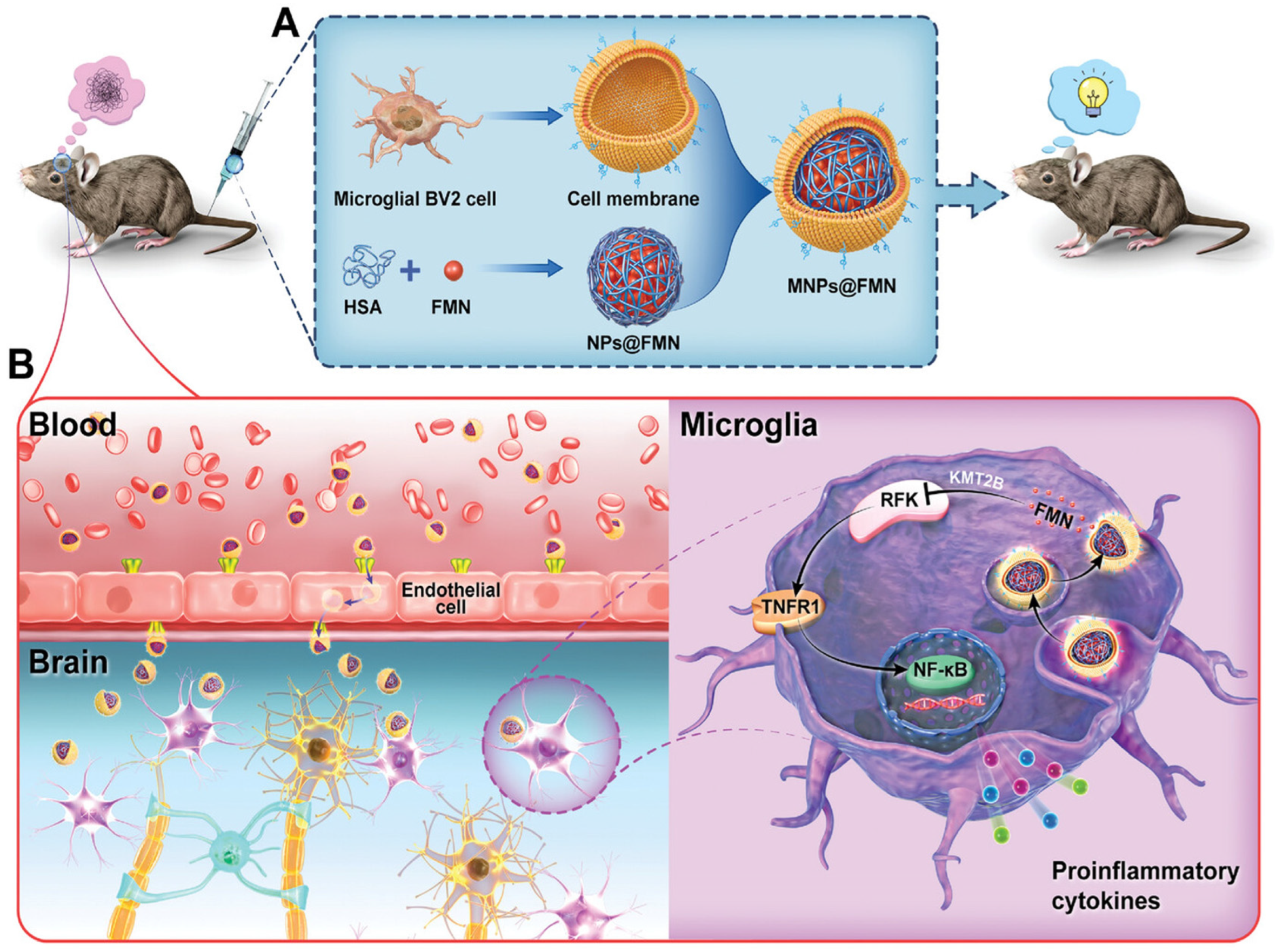
- Zhang, M.; Chen, H.; Zhang, W.; Liu, Y.; Ding, L.; Gong, J.; Ma, R.; Zheng, S.; Zhang, Y. Biomimetic Remodeling of Microglial Riboflavin Metabolism Ameliorates Cognitive Impairment by Modulating Neuroinflammation. Adv. Sci. 2023, 10, 2300180. [Google Scholar] [CrossRef] [PubMed]
- Li, C.; Wang, N.; Zheng, G.; Yang, L. Oral administration of resveratrol–selenium–peptide nanocomposites alleviates Alzheimer’s disease-like pathogenesis by inhibiting Aβ aggregation and regulating gut microbiota. ACS Appl. Mater. Interfaces 2021, 13, 46406–46420. [Google Scholar] [CrossRef] [PubMed]
- Boyuklieva, R.; Zahariev, N.; Simeonov, P.; Penkov, D.; Katsarov, P. Next-generation drug delivery for neurotherapeutics: The promise of stimuli-triggered nanocarriers. Biomedicines 2025, 13, 1464. [Google Scholar] [CrossRef]
- Hermann, D.M.; Bacigaluppi, M.; Bassetti, C.L.; Bassotti, G.; Boltze, J.; Chan, A.; Dalkara, T.; Denes, A.; Diez-Tejedor, E.; Dodel, R.; et al. Most Prominent Challenges in Translational Neuroscience and Strategic Solutions to Bridge the Gaps: Perspectives from an Editorial Board Interrogation. Explor. Neurosci. 2025, 4, 1006106. [Google Scholar] [CrossRef] [PubMed]
- Lu, J.; Dou, D.; Wang, Y.; Shu, J.; Lei, Z.; Huo, Y.; Gong, X. Enhanced Pre- and Postnatal Developmental Toxicity (ePPND) Study in Non-Human Primates: Necessity, Strategic Approaches, and Critical Considerations. Regul. Toxicol. Pharmacol. 2025, 159, 105814. [Google Scholar] [CrossRef]
- Mangrulkar, S.V.; Dabhekar, S.V.; Neje, P.; Parkarwar, N.; Turankar, A.; Taksande, B.G.; Umekar, M.J.; Nakhate, K.T. In Vivo Animal Models Development and Their Limitations for Brain Research. In Application of Nanocarriers in Brain Delivery of Therapeutics; Springer Nature: Singapore, 2024; pp. 315–339. [Google Scholar]
- Gao, Y.; Liu, Y.; Li, Y. Safety and Efficacy of Acetylcholinesterase Inhibitors for Alzheimer’s Disease: A Systematic Review and Meta-Analysis. Adv. Clin. Exp. Med. 2024, 33, 1179–1187. [Google Scholar] [CrossRef]
- Chavan, A.K.; Tatiya, A.U. Development of Novel Carrier System: A Key Approach to Enhance Bioavailability of Herbal Medicines. Pharmacogn. Res. 2025, 17, 1. [Google Scholar] [CrossRef]
- Wang, K.; Yang, R.; Li, J.; Wang, H.; Wan, L.; He, J. Nanocarrier-Based Targeted Drug Delivery for Alzheimer’s Disease: Addressing Neuroinflammation and Enhancing Clinical Translation. Front. Pharmacol. 2025, 16, 1591438. [Google Scholar] [CrossRef]
- Georgieva, D.; Bogdanova, I.; Mihaylova, R.; Alexandrova, M.; Bozhilova, S.; Christova, D.; Kostova, B. Orodispersible Hydrogel Film Technology for Optimized Galantamine Delivery in the Treatment of Alzheimer’s Disease. Gels 2025, 11, 629. [Google Scholar] [CrossRef]
- Tomar, S.; Yadav, R.K.; Shah, K.; Dewangan, H.K. A Comprehensive Review on Carrier-Mediated Nose-to-Brain Targeting: Emphasis on Molecular Targets, Current Trends, Future Prospects, and Challenges. Int. J. Polym. Mater. Polym. Biomater. 2024, 73, 91–103. [Google Scholar] [CrossRef]
- Graham, U.M.; Pinto, J.M.; Weuve, J.; Dozier, A.K.; Rogers, R.; Nag, M.D.; Schneider, J.; Kaufman, J.D.; Bennett, D.A.; Oberdörster, G. Nose to Brain Translocation of Inhaled Ultrafine Elongated Particles: Facts and Mysteries. Front. Toxicol. 2025, 7, 1655149. [Google Scholar] [CrossRef] [PubMed]
- Kuzuya, M. Effect of Drugs on Nutritional Status and Drug–Nutrition Interactions in Older Patients. Geriatr. Gerontol. Int. 2023, 23, 465–477. [Google Scholar] [CrossRef] [PubMed]
- Grover, P.; Thakur, K.; Bhardwaj, M.; Mehta, L.; Raina, S.N.; Rajpal, V.R. Phytotherapeutics in Cancer: From Potential Drug Candidates to Clinical Translation. Curr. Top. Med. Chem. 2024, 24, 1050–1074. [Google Scholar] [CrossRef] [PubMed]
- Kumarasamy, R.V.; Natarajan, P.M.; Umapathy, V.R.; Roy, J.R.; Mironescu, M.; Palanisamy, C.P. Clinical Applications and Therapeutic Potentials of Advanced Nanoparticles: A Comprehensive Review on Completed Human Clinical Trials. Front. Nanotechnol. 2024, 6, 1479993. [Google Scholar] [CrossRef]



| S. No. | NPs/NCs Type | Loaded Drug/Agent | AD Target | Functions | Mechanism | Therapeutic Effects | References |
|---|---|---|---|---|---|---|---|
| 1. | Polymeric NPs (PLGA) | Rivastigmine | AChE deficit | Brain delivery, sustained release | Improved AChE inhibition | Better cognition | [109] |
| 2. | Extracellular vesicles | Donepezil | AChE | BBB crossing, targeted | Enhanced AChE inhibition | Improved cognition | [115] |
| 3. | PLGA | Curcumin + Piperine | Aβ, oxidative stress | Antioxidant, anti-amyloid | Improved brain uptake | Cognitive improvement | [103] |
| 4. | PLGA | Donepezil HCl | Cholinergic | Controlled release | Higher brain exposure | Enhanced cognitive effects | [105] |
| 5. | Mucoadhesive polymeric NP | Rivastigmine | Cholinergic | Nasal delivery | Better CNS PK/PD | Improved cognition | [87] |
| 6. | MWCNT (PEG) | Curcumin | Aβ, oxidative stress | Antioxidant delivery | Enhanced uptake | Neuroprotection | [107] |
| 7. | PLGA/chitosan | Insulin | Insulin signaling | Nose-brain delivery | Restored signaling | Cognitive improvement | [106] |
| 8. | Mannose-CS-PLGA | CBD + BDNF | Neuroinflammation | Targeted neurotrophic | BDNF signaling | Reduced inflammation | [110] |
| 9. | PLGA | Auranofin | Oxidative stress | Neuroprotective | Anti-inflammatory | Neuroprotection | [117] |
| 10. | Mannosylated PLGA | Donepezil + Memantine | Cholinergic + NMDA | Combination delivery | Dual mechanism | Cognitive improvement | [118] |
| 11. | Chitosan–Alginate | Catechin | Oxidative stress | Antioxidant | Reduced ROS | Improved cognition | [111] |
| 12. | Liposomal Nanodrug | Felodipine | Mitochondria | BBB-crossing | Mitochondrial restoration | Cognitive benefit | [123] |
| 13. | Lipid NPs | Lactoferrin | Aβ | Nanoscavenging | Aβ clearance | Reduced plaques | [124] |
| 14. | Cationic lipid NPs | Artesunate | Inflammasome | Anti-inflammatory | NLRP3 inhibition | Neuroprotection | [125] |
| 15. | Chitosan liposomes | Donepezil | AChE | Sustained nasal | Improved targeting | Behavioral improvement | [126] |
| 16. | Lipid-like scavenger | Curcumin | Microglia/Aβ | Anti-inflammatory | Modulates microglia | Neuroprotection | [127] |
| 17. | Liposomes+CeO2 | KLVFF | Aβ + ROS | Dual-target | Peptide binding + ROS scavenging | Reduced plaques | [130] |
| 18. | Liposome | Ligustilide | Aβ42 + ROS | Anti-amyloid | ROS + Aβ inhibition | Behavior improvement | [131] |
| 19. | Mesoporous silica | Si–C dots | Cu2+/Aβ | Chelation | Inhibits Cu-Aβ oxidative stress | Reduced pathology | [150] |
| 20. | Gold–CeO2 hybrid | Plasmonic system | Oxidative stress | Photothermal + antioxidant | Reduced ROS | Neuroprotective | [151] |
Disclaimer/Publisher’s Note: The statements, opinions and data contained in all publications are solely those of the individual author(s) and contributor(s) and not of MDPI and/or the editor(s). MDPI and/or the editor(s) disclaim responsibility for any injury to people or property resulting from any ideas, methods, instructions or products referred to in the content. |
© 2026 by the authors. Licensee MDPI, Basel, Switzerland. This article is an open access article distributed under the terms and conditions of the Creative Commons Attribution (CC BY) license.
Share and Cite
Rajkumar, M.; Tian, F.; Javed, B.; Prajapati, B.G.; Deepak, P.; Girigoswami, K.; Karmegam, N. Smart Biosensing Nanomaterials for Alzheimer’s Disease: Advances in Design and Drug Delivery Strategies to Overcome the Blood–Brain Barrier. Biosensors 2026, 16, 66. https://doi.org/10.3390/bios16010066
Rajkumar M, Tian F, Javed B, Prajapati BG, Deepak P, Girigoswami K, Karmegam N. Smart Biosensing Nanomaterials for Alzheimer’s Disease: Advances in Design and Drug Delivery Strategies to Overcome the Blood–Brain Barrier. Biosensors. 2026; 16(1):66. https://doi.org/10.3390/bios16010066
Chicago/Turabian StyleRajkumar, Manickam, Furong Tian, Bilal Javed, Bhupendra G. Prajapati, Paramasivam Deepak, Koyeli Girigoswami, and Natchimuthu Karmegam. 2026. "Smart Biosensing Nanomaterials for Alzheimer’s Disease: Advances in Design and Drug Delivery Strategies to Overcome the Blood–Brain Barrier" Biosensors 16, no. 1: 66. https://doi.org/10.3390/bios16010066
APA StyleRajkumar, M., Tian, F., Javed, B., Prajapati, B. G., Deepak, P., Girigoswami, K., & Karmegam, N. (2026). Smart Biosensing Nanomaterials for Alzheimer’s Disease: Advances in Design and Drug Delivery Strategies to Overcome the Blood–Brain Barrier. Biosensors, 16(1), 66. https://doi.org/10.3390/bios16010066