Machine Learning Inversion Method for Elastoplastic Constitutive Parameters of Encapsulation Materials

 , ,
, ,
Abstract
1. Introduction
2. Methodology
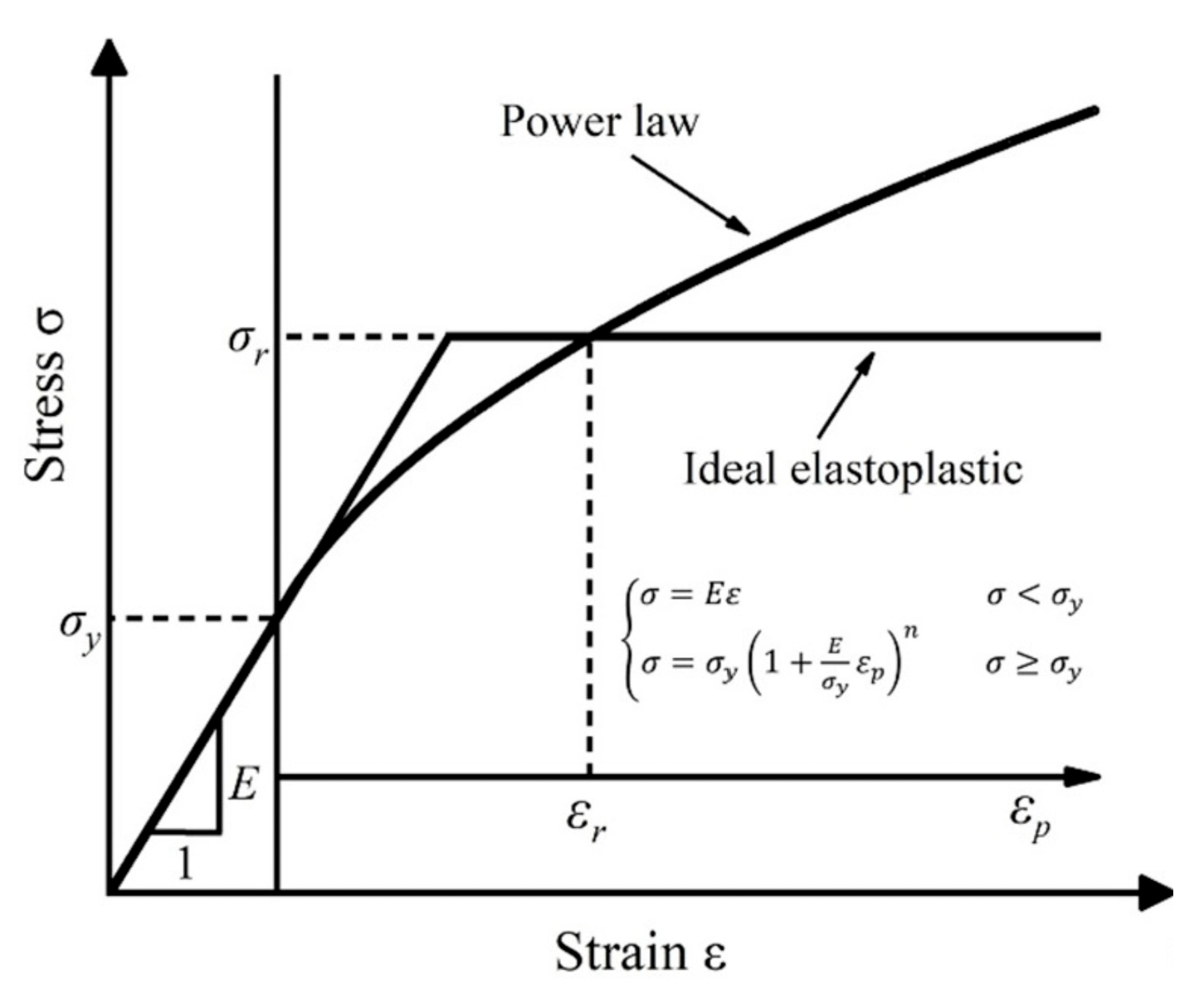
2.1. Constitutive Model
- R is the strength (Pa);
- σy is the yield strength (Pa);
- ε is the total strain;
- εp is the plastic strain;
- n is the strain strengthening index.
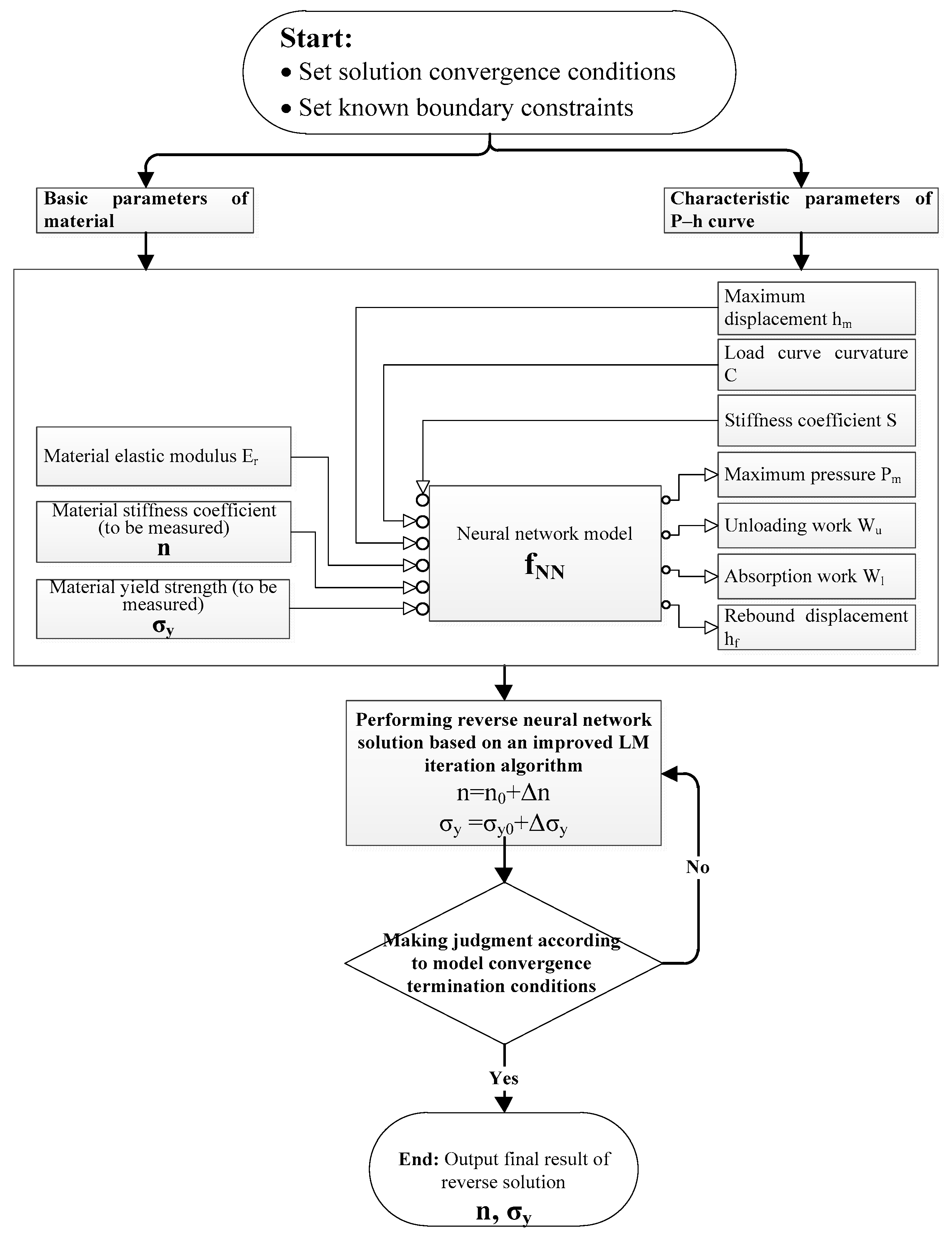
2.2. Reverse Analysis Framework
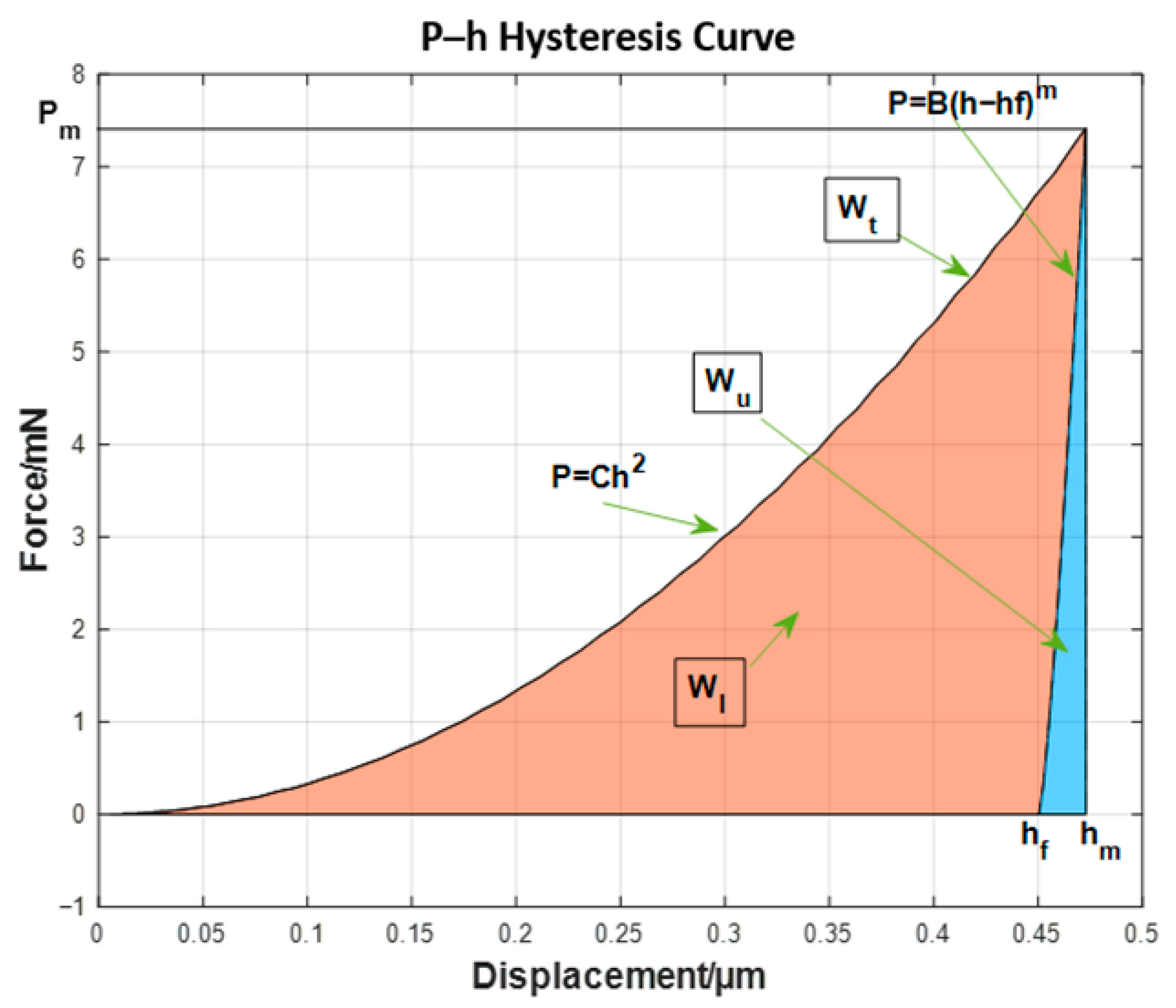
- (a)
- Pm is the maximum pressure, mN.
- (b)
- hm is the maximum displacement, μm.
- (c)
- hf is the residual displacement, μm.
- (d)
- C is the loading curvature, calculated using the equation .
- (e)
- S is the stiffness coefficient, defined and calculated using Equation (2) based on the unloading curve, where parameters B and m are obtained through fitting according to the unloading power function. The stiffness coefficient can also be obtained directly using a nanoindentation instrument; thus, m and B can be calculated directly using Equations (3) and (4):
- (f)
- Wt is the total indentation work, which is the area under the P–h curve when the indentation reaches its maximum displacement. It can be calculated using Equation (5):
- (g)
- Wu is the unloading work, which is the area under the unloading curve. It can be calculated using Equation (6):
- (h)
- Wl is the absorption work, .
2.3. Neural Network Structure and Training Algorithm
2.4. Reverse Solution Algorithm
- (1)
- Definition of the reverse solution model
- (2)
- Improvement of the inversion objective function
- (3)
- Improvement of the inversion iteration algorithm
3. Application Verification and Discussion
3.1. Model Evaluation
3.2. Physical Rationality and Accuracy Verification of Solution
3.3. Computational Efficiency
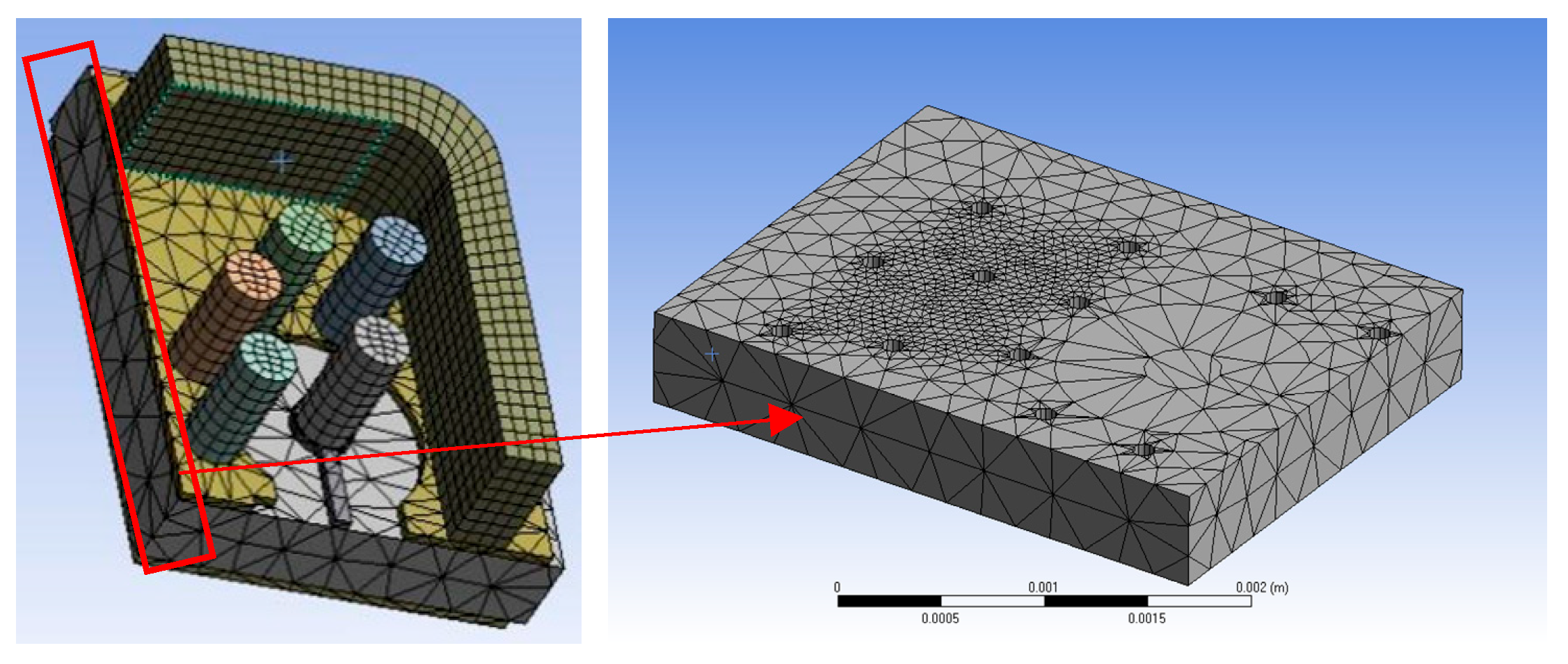
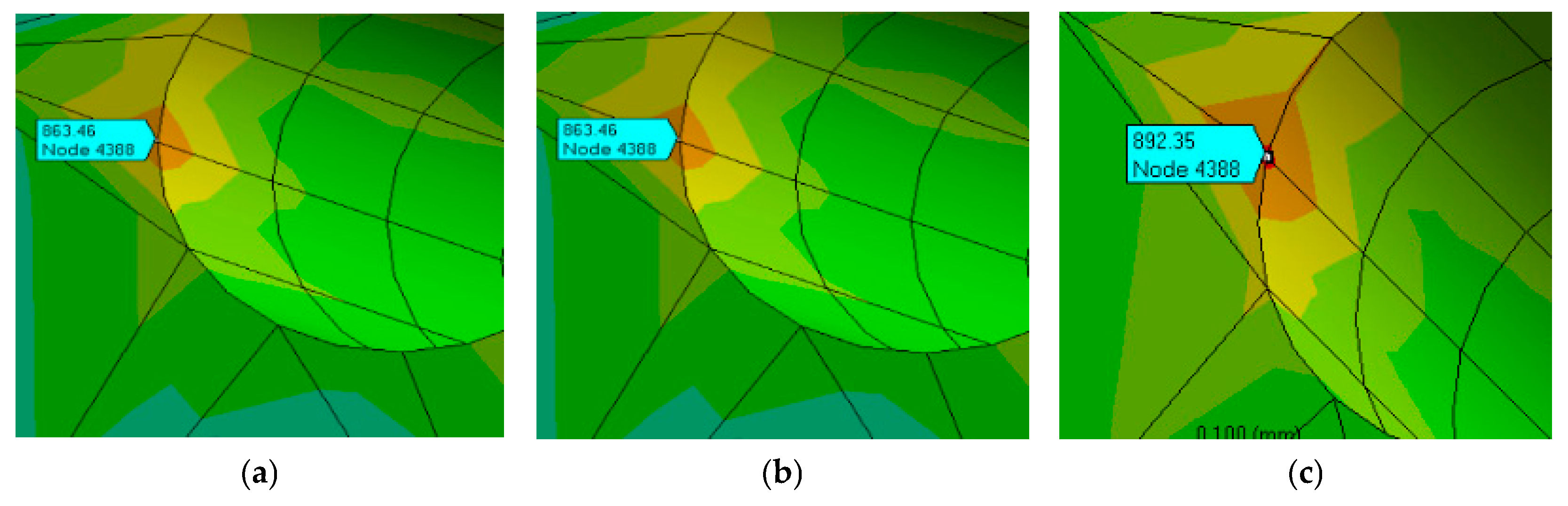
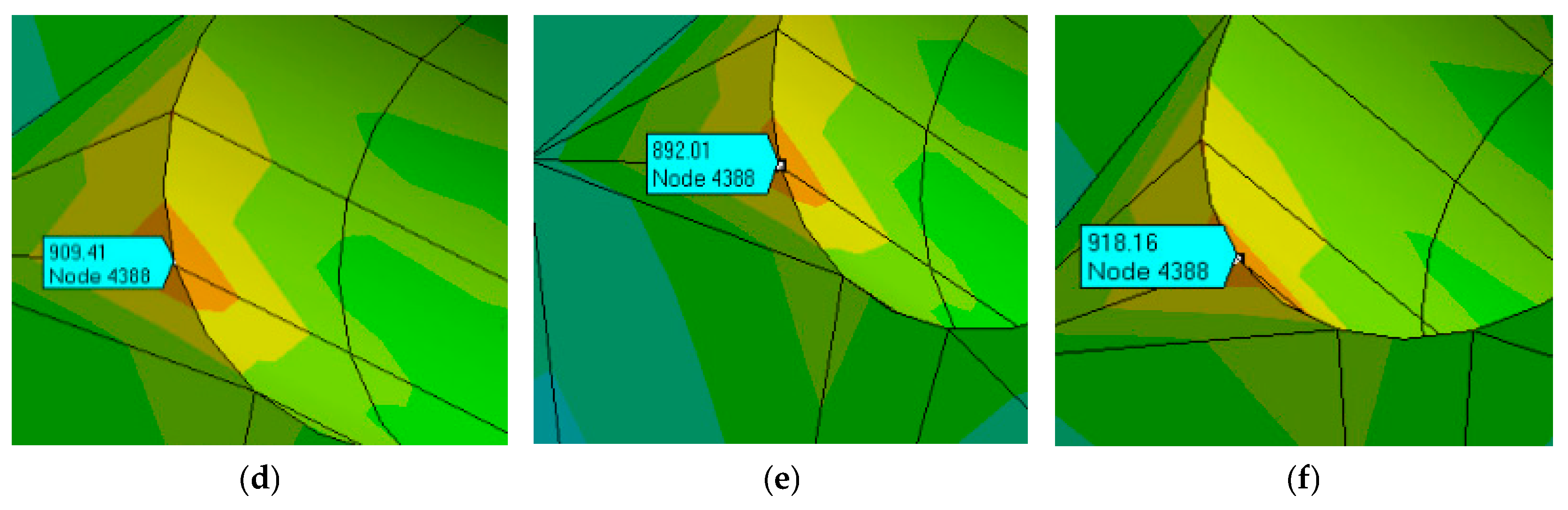
3.4. Comparison of 3D Packaging Stress
4. Conclusions
Author Contributions
Funding
Data Availability Statement
Conflicts of Interest
References
- Ozdemir, Y.B.; Okudur, O.O.; Gonzalez, M.; Merckling, C. Predictive Modeling of Thin Film Yield Stress Using Machine Learning: A Simulation-Based Approach. In Proceedings of the 2024 25th International Conference on Thermal, Mechanical and Multi-Physics Simulation and Experiments in Microelectronics and Microsystems (EuroSimE), Catania, Italy, 7–10 April 2024; pp. 1–6. [Google Scholar] [CrossRef]
- Wang, Z.X.; Zhao, H.W. Micro- and nanoindentation testing techniques: Development and application. Acta Aeronaut. Astronaut. Sin. 2021, 42, 524815. [Google Scholar] [CrossRef]
- Long, X.; Shen, Z.Y.; Jia, Q.P.; Li, J.; Chen, C.T.; Liu, Y.C.; Su, Y.T. Dimensionless analysis of the elastoplastic constitutive properties of single/multilayered films under nanoindentation. Sci. Sin. Phys. Mech. Astron. 2023, 53, 214606. [Google Scholar] [CrossRef]
- Long, X.; Lu, C.; Shen, Z.; Su, Y. Identification of Mechanical Properties of Thin-Film Elastoplastic Materials by Machine Learning. Acta Mech. Solida Sin. 2023, 36, 13–21. [Google Scholar] [CrossRef]
- Qin, F.; Xiang, M.; Wu, W. The Stress-Strain Relationship of TSV-Cu Determined by Nanoindentation. Acta Metall. Sin. 2014, 50, 722–726. Available online: https://www.ams.org.cn/CN/10.3724/SP.J.1037.2013.00782 (accessed on 9 December 2025).
- Albrecht, J.; Weissbach, M.; Auersperg, J.; Rzepka, S. Method for Assessing the Delamination Risk in BEoL Stacks around Copper TSV Applying Nanoindentation and Finite Element Simulation. In Proceedings of the 2017 19th Electronics Packaging Technology Conference (EPTC), Singapore, 6–9 December 2017; pp. 400–405. [Google Scholar] [CrossRef]
- Li, Y.; Chen, P.; Qin, F. The Effect of Annealing Time on the Mechanical Properties of TSV-Cu. In Proceedings of the 2021 22nd International Conference on Electronic Packaging Technology (ICEPT), Xiamen, China, 14–17 September 2021; pp. 1–5. [Google Scholar] [CrossRef]
- Pan, K.; Xu, J.F.; Lai, Y.Y.; Park, S.; Okoro, C.; Joshi, D.; Pollard, S. In-Situ Temperature-Dependent Characterization of Copper Through Glass Via (TGV). Microelectron. Reliab. 2022, 129, 114487. [Google Scholar] [CrossRef]
- Kim, S.-H.; Kim, Y.-C.; Lee, S.; Kim, J.-Y. Evaluation of Tensile Stress-Strain Curve of Electroplated Copper Film by Characterizing Indentation Size Effect with a Single Nanoindentation. Met. Mater. Int. 2017, 23, 76–81. [Google Scholar] [CrossRef]
- Fan, J.J.; Jiang, D.W.; Zhang, H.; Hu, D.; Liu, X.; Fan, X.J.; Zhang, G.Q. High-Temperature Nanoindentation Characterization of Sintered Nano-Copper Particles Used in High Power Electronics Packaging. Results Phys. 2022, 33, 105168. [Google Scholar] [CrossRef]
- Long, X.; Jia, Q.P.; Li, Z.; Wen, S.X. Reverse Analysis of Constitutive Properties of Sintered Silver Particles from Nanoindentations. Int. J. Solids Struct. 2020, 191–192, 351–362. [Google Scholar] [CrossRef]
- Oliver, W.C.; Pharr, G.M. An Improved Technique for Determining Hardness and Elastic Modulus Using Load and Displacement Sensing Indentation Experiments. J. Mater. Res. 1992, 7, 1564–1583. [Google Scholar] [CrossRef]
- Cheng, Y.-T.; Cheng, C.-M. Relationships Between Hardness, Elastic Modulus, and the Work of Indentation. Appl. Phys. Lett. 1998, 73, 614–616. [Google Scholar] [CrossRef]
- ISO 14577:2015; Metallic Materials—Instrumented Indentation Test for Hardness and Materials Parameters. International Organization for Standardization: Geneva, Switzerland, 2015.
- Tabor, D. The Hardness of Solids. Rev. Phys. Technol. 1970, 1, 145–179. [Google Scholar] [CrossRef]
- Pelletier, H. Predictive Model to Estimate the Stress–Strain Curves of Bulk Metals Using Nanoindentation. Tribol. Int. 2006, 39, 593–606. [Google Scholar] [CrossRef]
- Antunes, J.M.; Fernandes, J.V.; Menezes, L.F.; Chaparro, B.M. A New Approach for Reverse Analyses in Depth-Sensing Indentation Using Numerical Simulation. Acta Mater. 2007, 55, 69–81. [Google Scholar] [CrossRef]
- Dao, M.; Chollacoop, N.; Van Vliet, K.J.; Venkatesh, T.A.; Suresh, S. Computational Modeling of the Forward and Reverse Problems in Instrumented Sharp Indentation. Acta Mater. 2001, 49, 3899–3918. [Google Scholar] [CrossRef]
- Li, Y.D.; Chen, P.; Qin, F.; An, T.; Dai, Y.W.; Zhang, M.; Jin, Y.F. Constitutive Modelling of Annealing Behavior in Through Silicon Vias-Copper. Mater. Charact. 2021, 179, 111359. [Google Scholar] [CrossRef]
- Puchi-Cabrera, E.S.; Rossi, E.; Sansonetti, G.; Sebastiani, M.; Bemporad, E. Machine Learning Aided Nanoindentation: A Review of the Current State and Future Perspectives. Curr. Opin. Solid State Mater. Sci. 2023, 27, 101091. [Google Scholar] [CrossRef]
- Marimuthu, K.P.; Lee, H. Physics-Informed Neural Networks for Spherical Indentation Problems. Mater. Des. 2023, 236, 112494. [Google Scholar] [CrossRef]
- Park, S.; Fonseca, J.H.; Marimuthu, K.P.; Jeong, C.; Lee, S.; Lee, H. Determination of Material Properties of Bulk Metallic Glass Using Nanoindentation and Artificial Neural Network. Intermetallics 2022, 144, 107492. [Google Scholar] [CrossRef]
- Lu, L.; Dao, M.; Kumar, P.; Ramamurty, U.; Karniadakis, G.E.; Suresh, S. Extraction of Mechanical Properties of Materials through Deep Learning from Instrumented Indentation. Proc. Natl. Acad. Sci. USA 2020, 117, 7052–7062. [Google Scholar] [CrossRef]
- Trost, C.O.W.; Zak, S.; Schaffer, S.; Saringer, C.; Exl, L.; Cordill, M.J. Bridging Fidelities to Predict Nanoindentation Tip Radii Using Interpretable Deep Learning Models. JOM 2022, 74, 2195–2205. [Google Scholar] [CrossRef]
- Jiao, Q.; Chen, Y.C.; Kim, J.-H.; Han, C.-F.; Chang, C.-H.; Vlassak, J.J. A Machine Learning Perspective on the Inverse Indentation Problem: Uniqueness, Surrogate Modeling, and Learning Elasto-Plastic Properties from Pile-Up. J. Mech. Phys. Solids 2024, 185, 105557. [Google Scholar] [CrossRef]
- Pöhl, F. Determination of Unique Plastic Properties from Sharp Indentation. Int. J. Solids Struct. 2019, 171, 174–180. [Google Scholar] [CrossRef]
- Choi, I.S.; Dao, M.; Suresh, S. Mechanics of Indentation of Plastically Graded Materials—I: Analysis. J. Mech. Phys. Solids 2008, 56, 157–171. [Google Scholar] [CrossRef]
- Long, X.; Ding, X.Y.; Li, J.; Dong, R.P.; Su, Y.T.; Chang, C. Indentation Reverse Algorithm of Mechanical Response for Elastoplastic Coatings Based on LSTM Deep Learning. Materials 2023, 16, 2617. [Google Scholar] [CrossRef]
- MacKay, D.J.C. Bayesian Interpolation. Neural Comput. 1992, 4, 415–447. [Google Scholar] [CrossRef]
- Foresee, F.D.; Hagan, M.T. Gauss-Newton Approximation to Bayesian Learning. In Proceedings of the International Joint Conference on Neural Networks, Houston, TX, USA, 12 June 1997; pp. 1930–1935. [Google Scholar] [CrossRef]
- Marquardt, D.W. An Algorithm for Least-Squares Estimation of Nonlinear Parameters. J. Soc. Ind. Appl. Math. 1963, 11, 431–441. [Google Scholar] [CrossRef]
- Hagan, M.T.; Menhaj, M.B. Training Feedforward Networks with the Marquardt Algorithm. IEEE Trans. Neural Netw. 1994, 5, 989–993. [Google Scholar] [CrossRef]
- Zhang, Y.M.; Dong, L.; Li, Y.; Li, Y.Y. Sensitivity Analysis of Process Parameters Based on Adjoint Partial Derivative Network. In Proceedings of the 2022 23rd International Conference on Electronic Packaging Technology (ICEPT), Dalian, China, 10–13 August 2022; pp. 1–6. [Google Scholar] [CrossRef]
- Wu, W.; Qin, F.; An, T.; Chen, P. Experimental and Numerical Investigation of Mechanical Properties of Electroplating Copper Filled in Through Silicon Vias. IEEE Trans. Compon. Packag. Manuf. Technol. 2016, 6, 22–30. [Google Scholar] [CrossRef]
- Zhang, M.; Qin, F.; Chen, S.; Dai, Y.; Jin, Y.; Chen, P.; An, T.; Gong, Y.P. Holding Time Effect on Mechanical Properties and Protrusion Behaviors of Through Silicon Via Copper under Various Annealing Processes. Mater. Sci. Semicond. Process. 2023, 158, 107353. [Google Scholar] [CrossRef]



| Simulation Parameter | Unit | Minimum Value | Maximum Value | Number of Factor Levels |
|---|---|---|---|---|
| Elastic modulus (E) | GPa | 60 | 160 | 6 |
| Yield strength (σy) | MPa | 40 | 260 | 12 |
| Strain strengthening index (n) | / | 0 | 0.6 | 7 |
| Displacement (h) | μm | 0.3 | 0.6 | 4 |
| Input Parameter | Original Value Range | Uniform Normalization Range | Independent Normalization Range |
|---|---|---|---|
| Er (Pa) | 6 × 10¹⁰~16 × 1010 | −1~1 | −0.5~0.5 |
| n | 0~0.6 | −1~1 | −0.5~0.5 |
| σy (Pa) | 40 × 106~260 × 106 | −1~1 | −0.2~0.2 |
| hm (μm) | −0.6~−0.3 | −1~1 | −1~1 |
| C (mN/μm2) | 4.3~132 | −1~1 | −1~1 |
| S (mN/μm) | 92.9~847.4 | −1~1 | −0.2~0.2 |
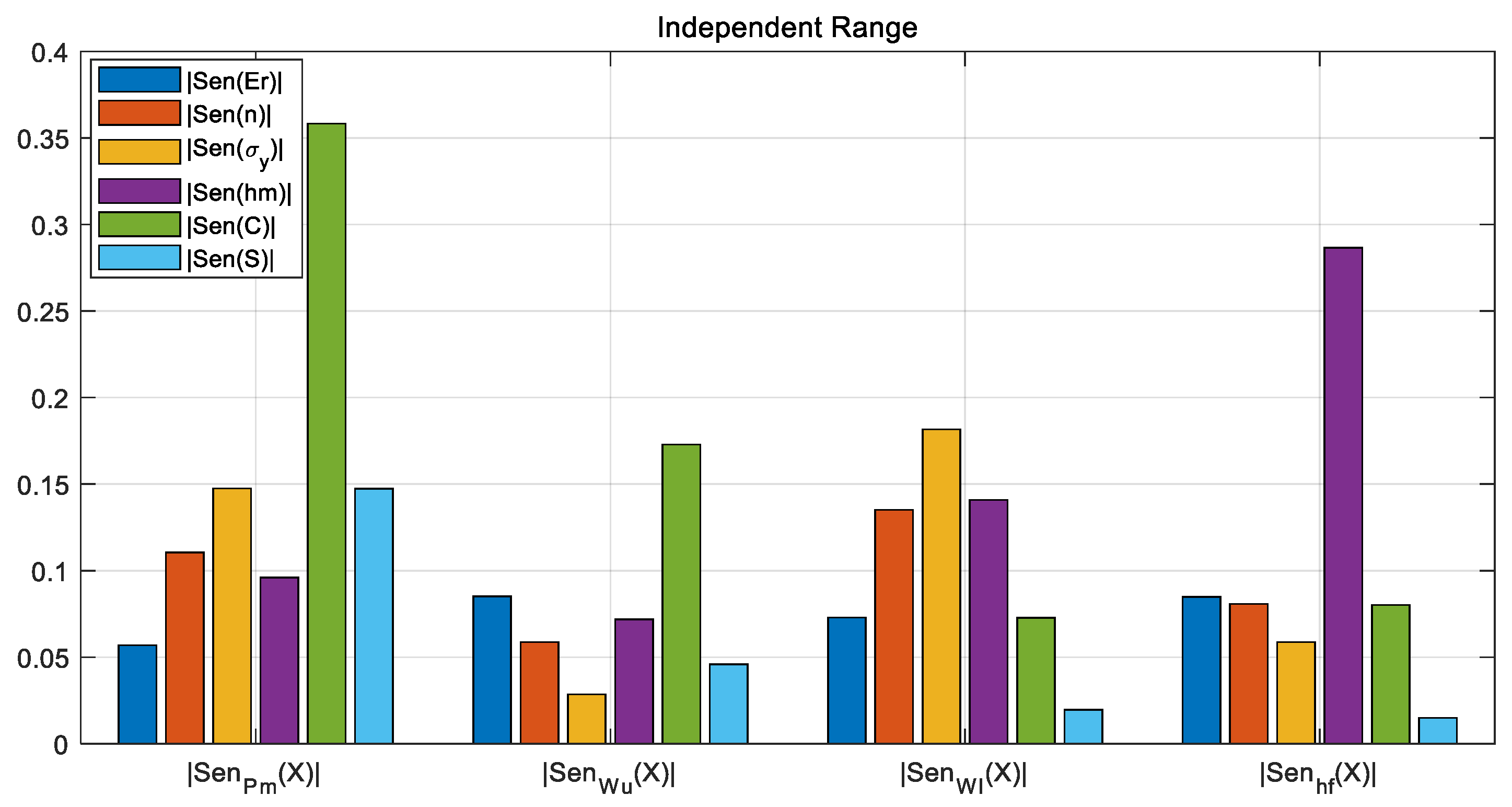
| Output Parameters of Unbalanced Sensitivity (Same Normalization Range) | Output Parameters of Balanced Sensitivity (Different Normalization Ranges) | ||||||||
|---|---|---|---|---|---|---|---|---|---|
| Pm (mN) | Wu (mN·μm) | Wl (mN·μm) | hf (μm) | Pm (mN) | Wu (mN·μm) | Wl (mN·μm) | hf (μm) | ||
| Input Parameters | S (mN/μm) | 0.019 | 0.0286 | 0.0096 | 0.0035 | 0.1474 | 0.0459 | 0.0195 | 0.0149 |
| C (mN/μm2) | 0.2535 | 0.3037 | 0.1785 | 0.0947 | 0.3583 | 0.1728 | 0.0728 | 0.0802 | |
| hm (μm) | 0.1158 | 0.1854 | 0.3312 | 0.6012 | 0.096 | 0.0719 | 0.1409 | 0.2865 | |
| σy (Pa) | 0.0232 | 0.0264 | 0.088 | 0.0248 | 0.1475 | 0.0285 | 0.1816 | 0.0587 | |
| n | 0.0495 | 0.1024 | 0.1251 | 0.0725 | 0.1105 | 0.0586 | 0.1351 | 0.0808 | |
| Er (Pa) | 0.0271 | 0.0982 | 0.0814 | 0.0653 | 0.0569 | 0.0851 | 0.0729 | 0.0849 | |
| Parameter | n | σy (MPa) | σRr (MPa, n = 0 Inversion) | σEr (MPa, Calculated Using the Stress–Strain Intersection Formula) | Percentage Error (σRr − σEr)/σEr |
|---|---|---|---|---|---|
| Sample 1 | 0.5529 | 46.14 | 47.75 | 51.29 | 6.9% |
| Sample 2 | 0.5665 | 40.78 | 48.57 | 52.32 | 7.2% |
| Sample 3 | 0.4830 | 86.45 | 48.48 | 53.24 | 8.9% |
| Sample 4 | 0.5467 | 39.06 | 42.37 | 42.10 | −0.6% |
| Sample 5 | 0.5492 | 35.70 | 43.95 | 43.71 | −0.6% |
| Data Source | Hardening Exponent (n) | Yield Strength σy (MPa) |
|---|---|---|
| [19] | 0.5212 | 42.83 |
| [34] | 0.4892 | 47.91 |
| [35] | 0.5093 | 51.83 |
| This Study (Samples 1–5) | 0.4830~0.5665 (Mean: 0.5397) | 35.70~86.45 (Sample 3: 86.45; Mean of Others: 40.42) |
| Parameter | Characteristic Parameters of P–h Indentation Curve | Material Parameters Obtained Through Inversion | ||||||||
|---|---|---|---|---|---|---|---|---|---|---|
| fm (μm) | C (mN/um2) | S (mN/μm) | Pm (mN) | Wl (mN·μm) | Wu (mN·μm) | hf (μm) | n | σy (MPa) | ||
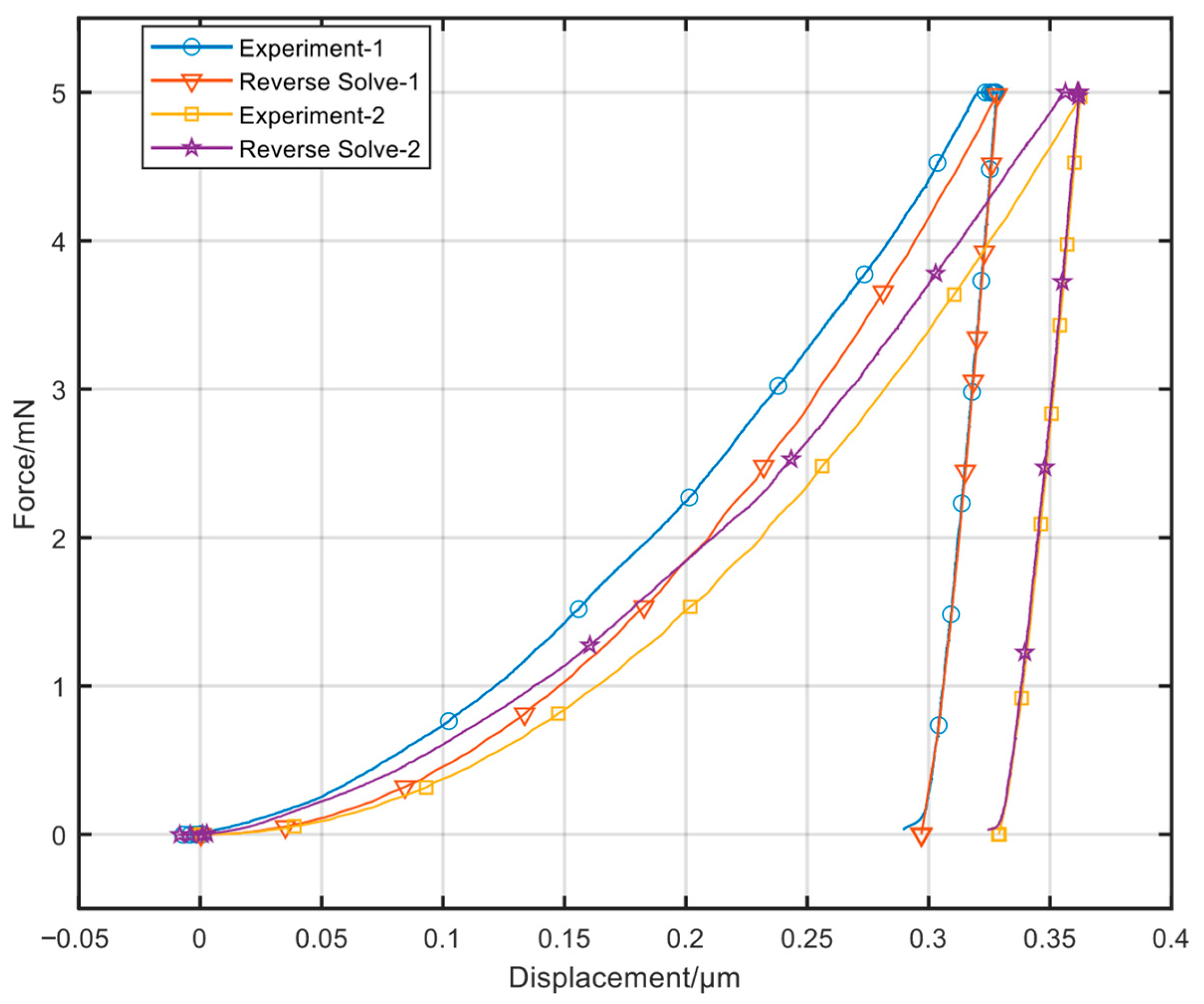
| Sample 1 | Exp. | 0.3281 | 46.44 | 202.4 | 4.999 | 0.4793 | 0.0675 | 0.2971 | — | — |
| RS | 0.3281 | 46.44 | 202.4 | 4.995 | 0.4787 | 0.0671 | 0.2971 | 0.5529 | 46.14 | |
| FEA | 0.3283 | 46.67 | 200.4 | 4.981 | 0.4747 | 0.0673 | 0.2970 | 0.5529 | 46.14 | |
| relEr. | −0.06% | −0.49% | 1.00% | 0.28% | 0.84% | −0.30% | 0.03% | |||
| Sample 2 | Exp. | 0.3619 | 38.17 | 176.6 | 4.999 | 0.5303 | 0.0728 | 0.3287 | — | — |
| RS | 0.3619 | 38.17 | 176.6 | 4.981 | 0.5290 | 0.0718 | 0.3287 | 0.5492 | 35.70 | |
| FEA | 0.3624 | 38.18 | 178.5 | 4.971 | 0.5255 | 0.0722 | 0.3290 | 0.5492 | 35.70 | |
| relEr. | −0.14% | −0.03% | −1.06% | 0.20% | 0.67% | −0.55% | −0.09% | |||
| Method Type | Time Per Forward Calculation | Number of Iterations Per Inversion | Total Inversion Time (Single Sample) | Test Environment |
|---|---|---|---|---|
| Traditional FEM Iterative Optimization [11] | ~10 min | Dozens to hundreds | Hours to tens of hours | Single-core 2.4 GHz |
| NN-LM Method (This Study) | Millisecond scale (forward prediction) | Average 200 | <10 s | Single-core 2.4 GHz |
| Group Number | Cu Material Model | Maximum Principal Stress of Node (MPa) | Normalized Value | |
|---|---|---|---|---|
| (1) | Power law model PowerLaw (n = 0.545, σy = 5.83 × 10⁷) | 811.51 | 0.88 | |
| (2) | Multilinear model | pad Cu Multilinear | 863.59 | 0.94 |
| (3) | pad Cu MultilinearSC-7 | 892.35 | 0.97 | |
| (4) | pad Cu MultilinearSC-7-2 | 909.41 | 0.99 | |
| (5) | pad Cu WEIKAO-11 | 892.01 | 0.97 | |
| (6) | Bilinear model pad Cu Bilinear (normalized reference) | 918.16 | 1.00 | |
Disclaimer/Publisher’s Note: The statements, opinions and data contained in all publications are solely those of the individual author(s) and contributor(s) and not of MDPI and/or the editor(s). MDPI and/or the editor(s) disclaim responsibility for any injury to people or property resulting from any ideas, methods, instructions or products referred to in the content. |
© 2026 by the authors. Licensee MDPI, Basel, Switzerland. This article is an open access article distributed under the terms and conditions of the Creative Commons Attribution (CC BY) license.
Share and Cite
Gao, M.; Hu, T.; Zhang, Y.; Zhang, Y.; Lei, D.; Wang, Y.; Li, Y.; Zhang, J.; Zeng, C. Machine Learning Inversion Method for Elastoplastic Constitutive Parameters of Encapsulation Materials. Nanomaterials 2026, 16, 161. https://doi.org/10.3390/nano16030161
Gao M, Hu T, Zhang Y, Zhang Y, Lei D, Wang Y, Li Y, Zhang J, Zeng C. Machine Learning Inversion Method for Elastoplastic Constitutive Parameters of Encapsulation Materials. Nanomaterials. 2026; 16(3):161. https://doi.org/10.3390/nano16030161
Chicago/Turabian StyleGao, Mingqi, Tong Hu, Yagang Zhang, Yanming Zhang, Dongyang Lei, You Wang, Yangyang Li, Jian Zhang, and Ce Zeng. 2026. "Machine Learning Inversion Method for Elastoplastic Constitutive Parameters of Encapsulation Materials" Nanomaterials 16, no. 3: 161. https://doi.org/10.3390/nano16030161
APA StyleGao, M., Hu, T., Zhang, Y., Zhang, Y., Lei, D., Wang, Y., Li, Y., Zhang, J., & Zeng, C. (2026). Machine Learning Inversion Method for Elastoplastic Constitutive Parameters of Encapsulation Materials. Nanomaterials, 16(3), 161. https://doi.org/10.3390/nano16030161