Graphene/Chalcogenide Heterojunctions for Enhanced Electric-Field-Sensitive Dielectric Performance: Combining DFT and Experimental Study

Abstract
1. Introduction
2. Experimental and DFT Calculation Methods
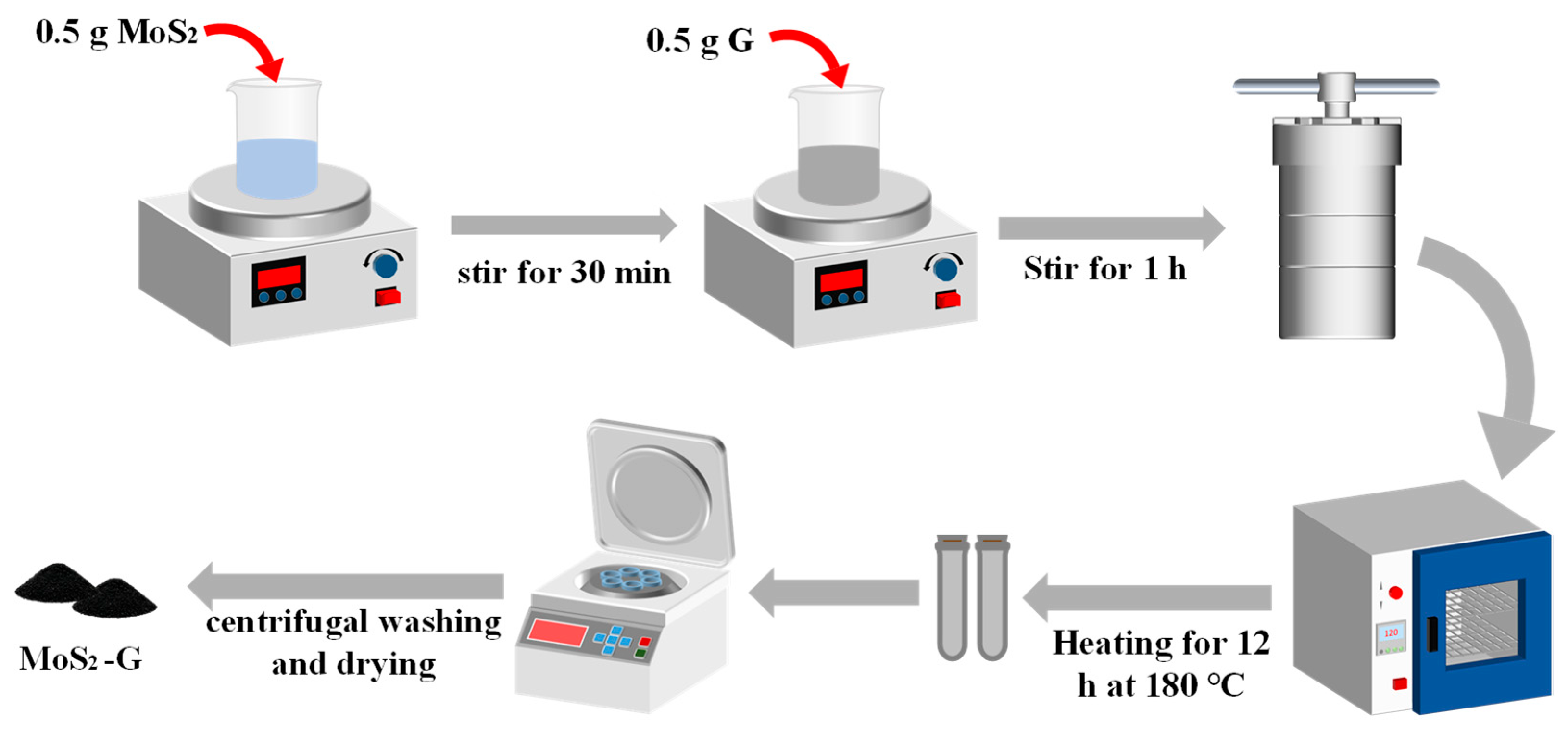
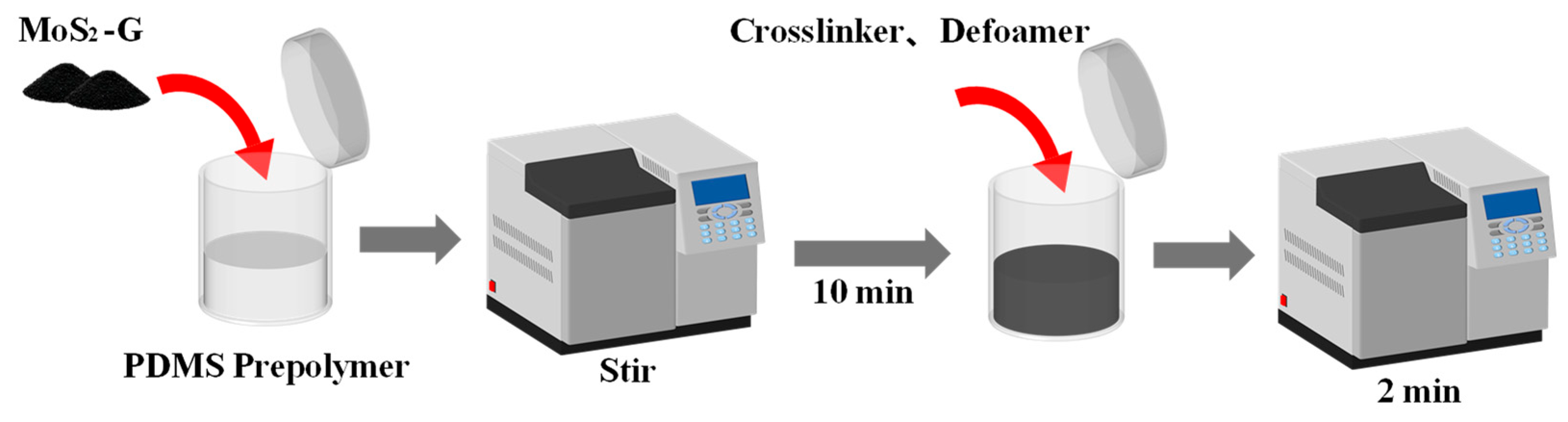
2.1. Materials Synthesis
2.2. Material Characterization
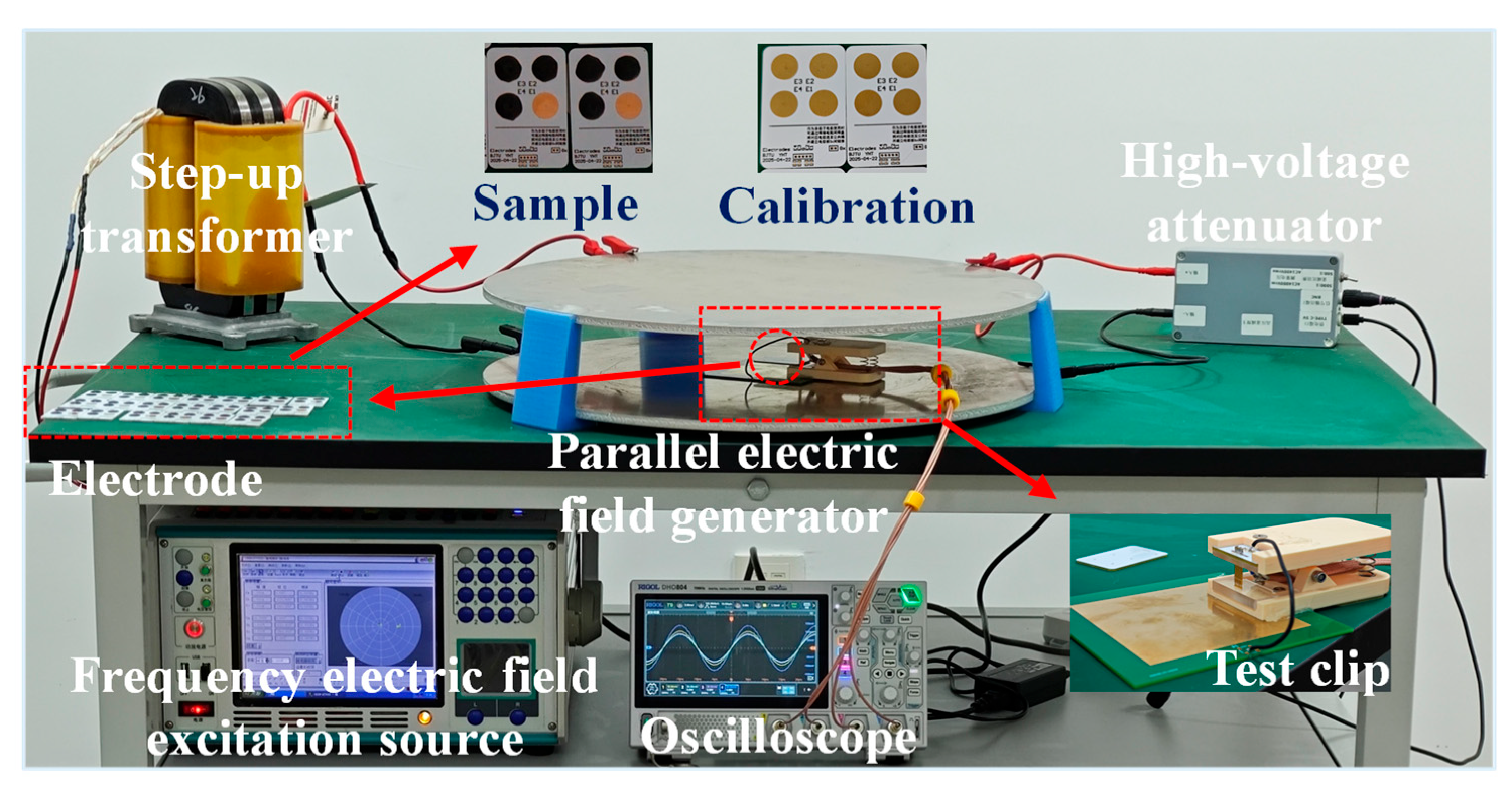
2.3. Dielectric Spectroscopy and Electric-Field Sensing Tests
2.4. DFT Calculations Details
3. Results and Discussions
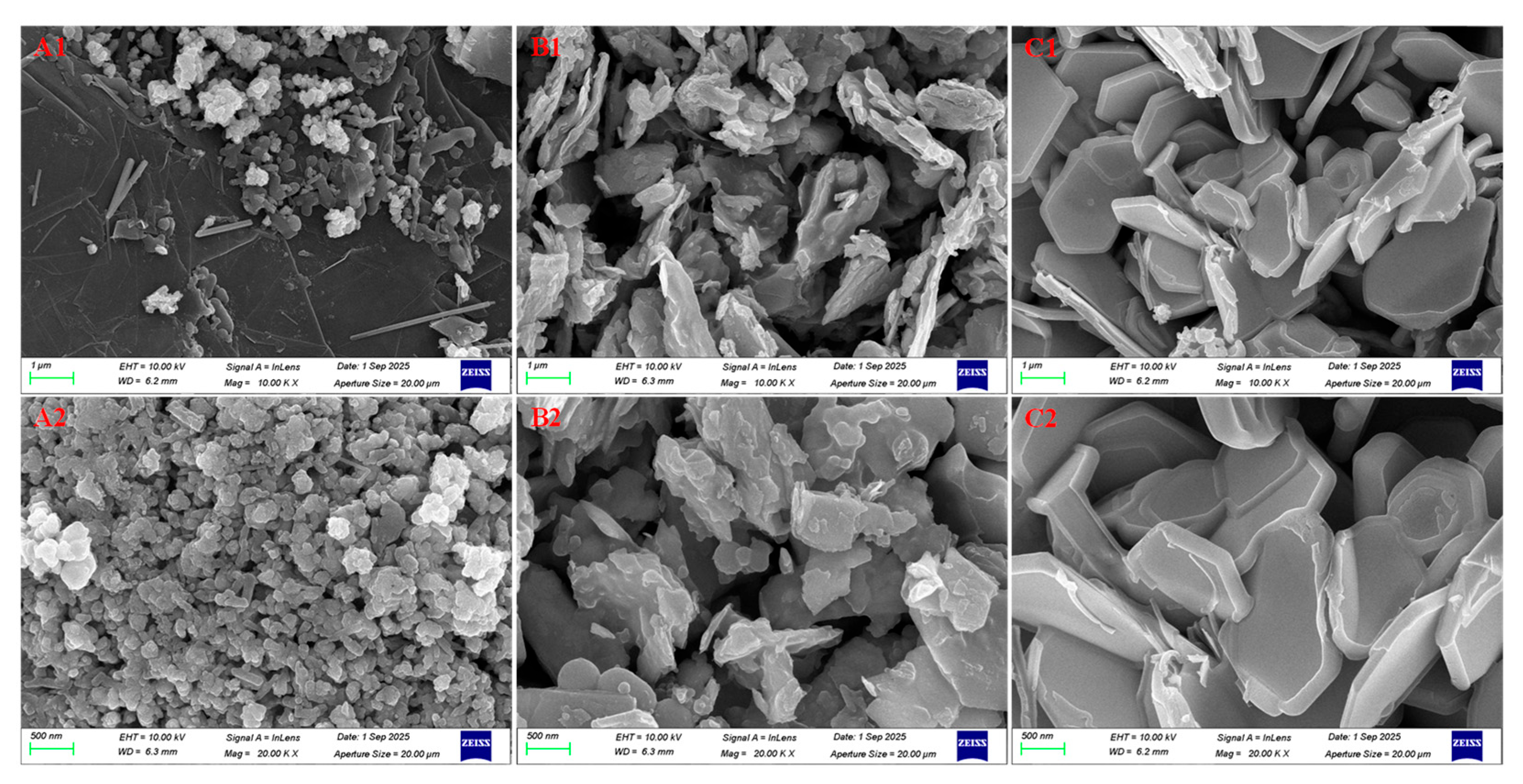
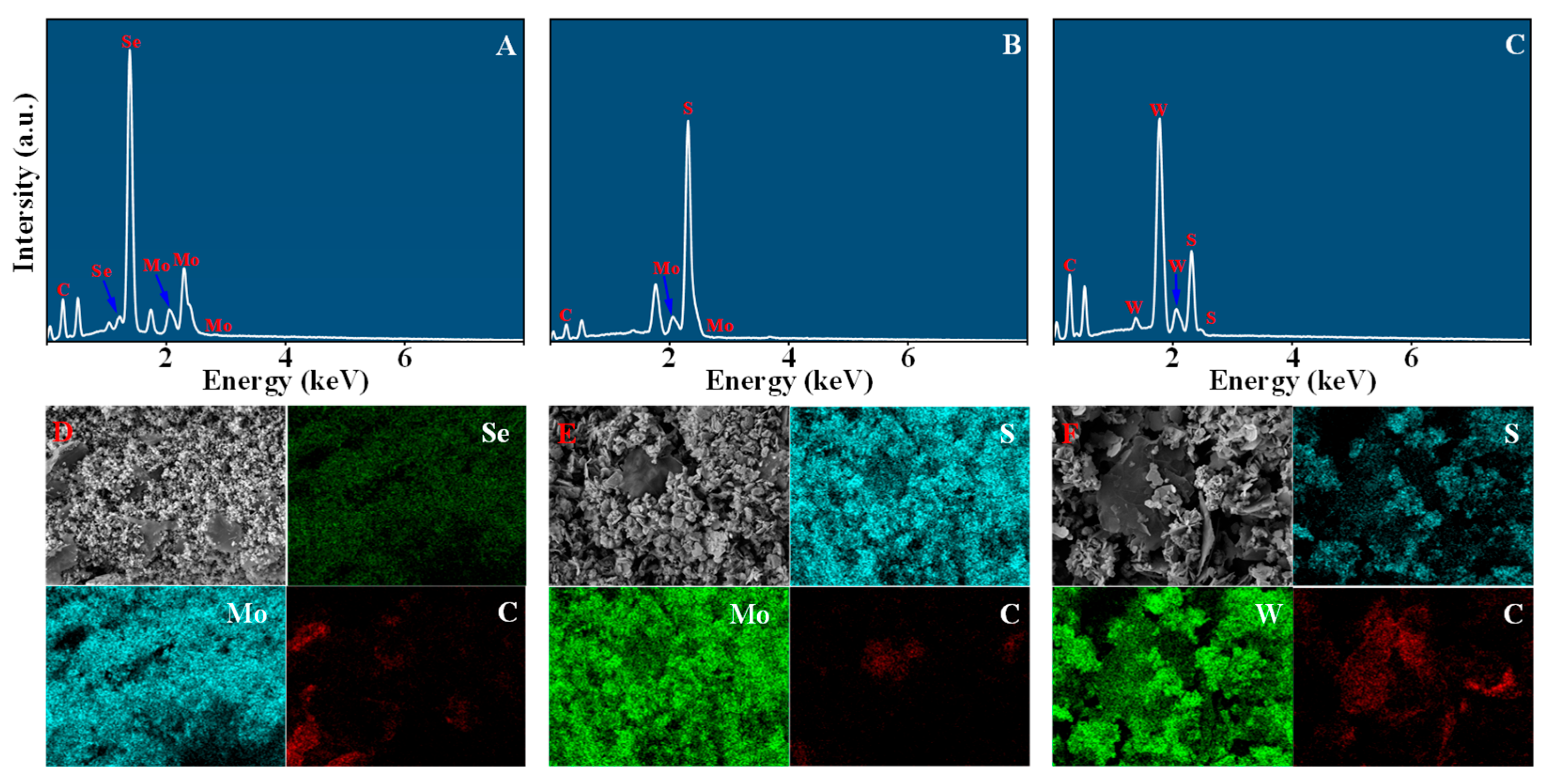
3.1. Characterization of Material Properties
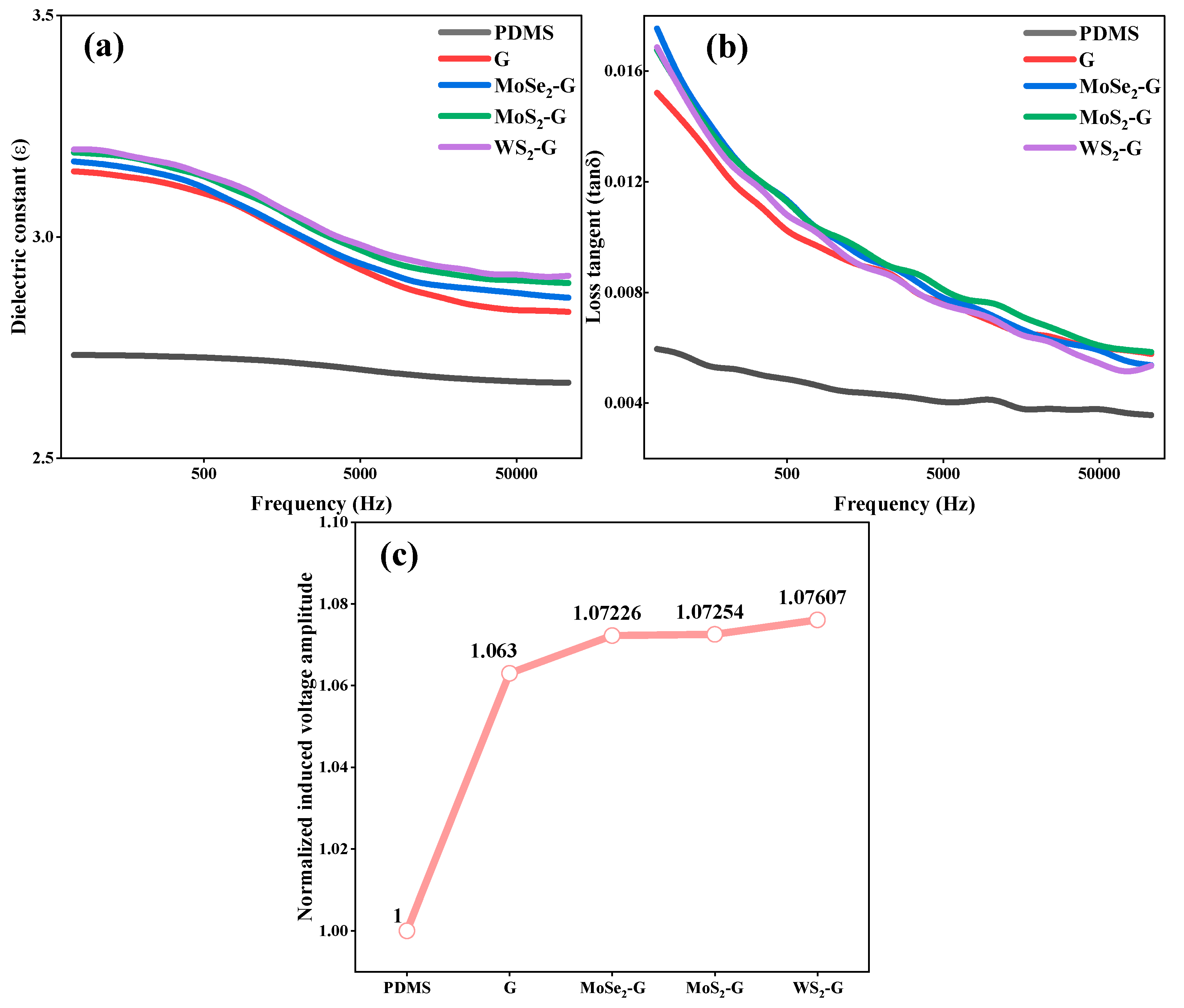
3.2. Dielectric and Electric-Field Performance Test Results
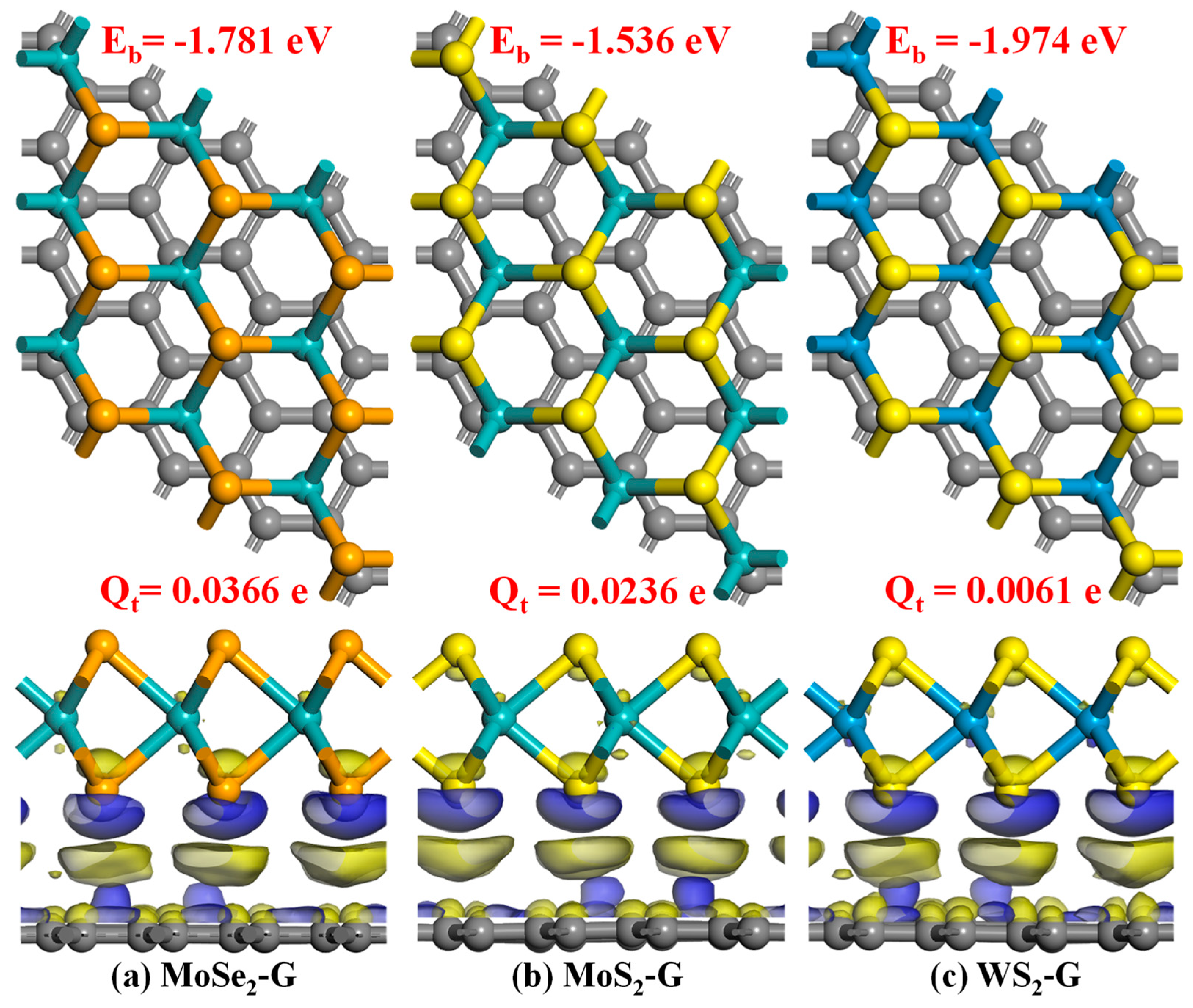
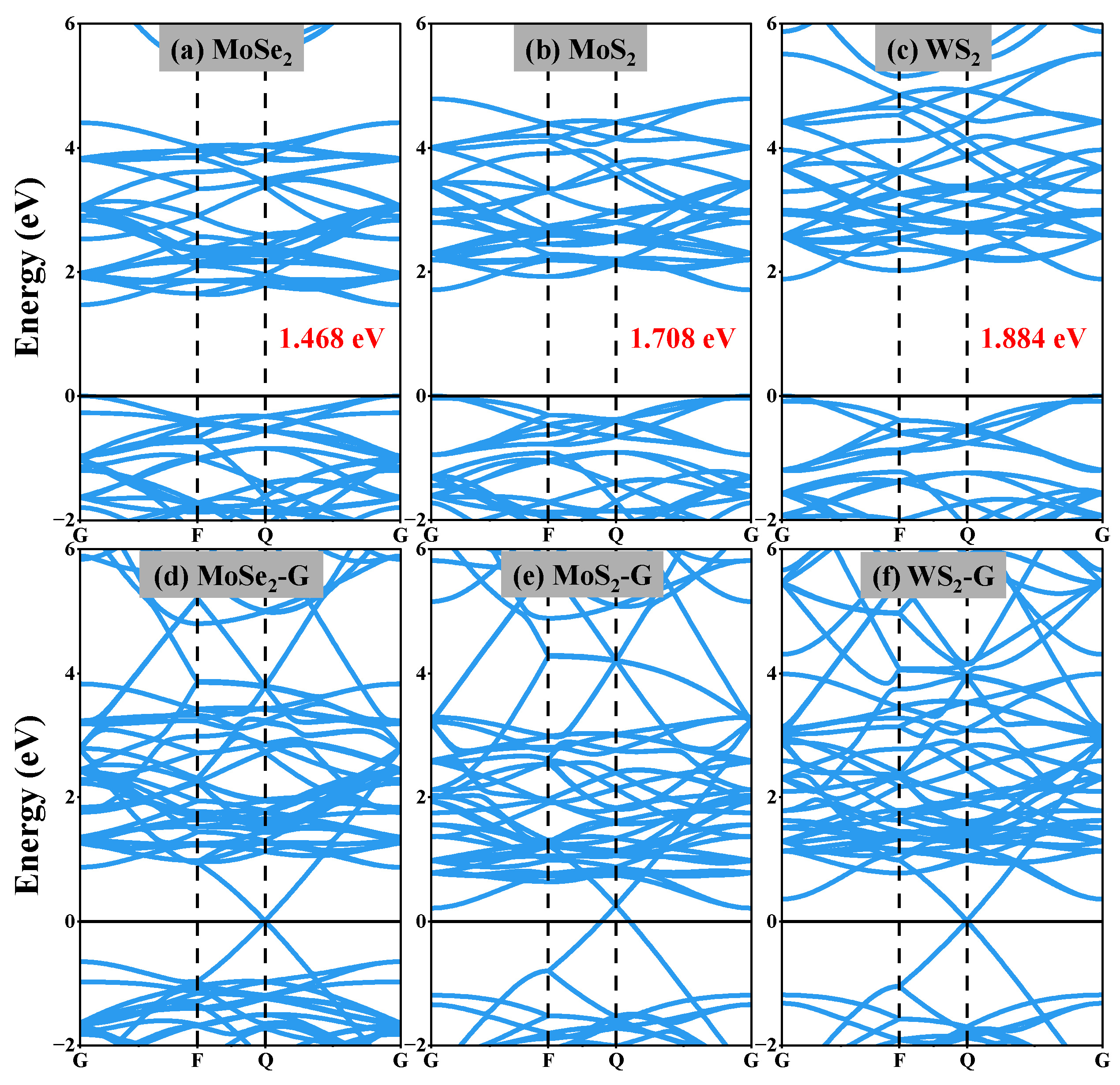
3.3. Analysis of Calculation Results
4. Conclusions
Author Contributions
Funding
Data Availability Statement
Conflicts of Interest
References
- Li, X.; Gu, Y.; Li, Z.; He, Z.; Yang, P.; Peng, C. A Review of Three-Dimensional Electric Field Sensors. Micromachines 2025, 16, 737. [Google Scholar] [CrossRef]
- Probst, F.L.; Beltle, M.; Tenbohlen, S. Measurement of transient overvoltages by capacitive electric field sensors. Sensors 2024, 24, 1357. [Google Scholar] [CrossRef]
- Xiao, D.; Ma, Q.; Xie, Y.; Zheng, Q.; Zhang, Z. A power-frequency electric field sensor for portable measurement. Sensors 2018, 18, 1053. [Google Scholar] [CrossRef] [PubMed]
- Pandey, J.C.; Singh, M. Dielectric polymer nanocomposites: Past advances and future prospects in electrical insulation perspective. SPE Polym. 2021, 2, 236–256. [Google Scholar] [CrossRef]
- Shanmugasundram, H.P.P.V.; Jayamani, E.; Soon, K.H. A comprehensive review on dielectric composites: Classification of dielectric composites. Renew. Sustain. Energy Rev. 2022, 157, 112075. [Google Scholar] [CrossRef]
- Samet, M.; Kallel, A.; Serghei, A. Maxwell-Wagner-Sillars interfacial polarization in dielectric spectra of composite materials: Scaling laws and applications. J. Compos. Mater. 2022, 56, 3197–3217. [Google Scholar] [CrossRef]
- Romasanta, L.J.; Hernández, M.; López-Manchado, M.A.; Verdejo, R. Functionalised graphene sheets as effective high dielectric constant fillers. Nanoscale Res. Lett. 2011, 6, 508. [Google Scholar] [CrossRef]
- Rajitha, G.; Dash, R.K. Optically transparent and high dielectric constant reduced graphene oxide (RGO)-PDMS based flexible composite for wearable and flexible sensors. Sens. Actuators A Phys. 2018, 277, 26–34. [Google Scholar] [CrossRef]
- Panahi-Sarmad, M.; Razzaghi-Kashani, M. Actuation behavior of PDMS dielectric elastomer composites containing optimized graphene oxide. Smart Mater. Struct. 2018, 27, 085021. [Google Scholar] [CrossRef]
- Geim, A.K.; Grigorieva, I.V. Van der Waals heterostructures. Nature 2013, 499, 419–425. [Google Scholar] [CrossRef]
- Chhowalla, M.; Shin, H.S.; Eda, G.; Li, L.J.; Loh, K.P.; Zhang, H. The chemistry of two-dimensional layered transition metal dichalcogenide nanosheets. Nat. Chem. 2013, 5, 263–275. [Google Scholar] [CrossRef]
- Wang, Q.H.; Kalantar-Zadeh, K.; Kis, A.; Coleman, J.N.; Strano, M.S. Electronics and optoelectronics of two-dimensional transition metal dichalcogenides. Nat. Nanotechnol. 2012, 7, 699–712. [Google Scholar] [CrossRef] [PubMed]
- Mak, K.F.; Lee, C.; Hone, J.; Shan, J.; Heinz, T.F. Atomically thin MoS2: A new direct-gap semiconductor. Phys. Rev. Lett. 2010, 105, 136805. [Google Scholar] [CrossRef] [PubMed]
- Splendiani, A.; Sun, L.; Zhang, Y.; Li, T.; Kim, J.; Chim, C.Y.; Galli, G.; Wang, F. Emerging photoluminescence in monolayer MoS2. Nano Lett. 2010, 10, 1271–1275. [Google Scholar] [CrossRef] [PubMed]
- Pierucci, D.; Henck, H.; Avila, J.; Balan, A.; Naylor, C.H.; Patriarche, G.; Dappe, Y.J.; Silly, M.G.; Sirotti, F.; Johnson, A.T.C.; et al. Band alignment and minigaps in monolayer MoS2-graphene van der Waals heterostructures. Nano Lett. 2016, 16, 4054–4061. [Google Scholar] [CrossRef]
- Sun, J.; Lin, N.; Tang, C.; Wang, H.; Ren, H.; Zhao, X. First principles studies on electronic and transport properties of edge contact graphene-MoS2 heterostructure. Comput. Mater. Sci. 2017, 133, 137–144. [Google Scholar] [CrossRef]
- Ameer, M.F.; Hussain, M.; Abbas, K.; Sufyan, M.; Khan, S.U.; Kolsi, L. Graphene and post-transition metal sulfide-based photodetectors for enhanced visible light photodetection: A review. Phys. Scr. 2024. [Google Scholar] [CrossRef]
- Jahangir, I.; Uddin, M.A.; Singh, A.K.; Chandrashekhar, M.V.S.; Koley, G. Graphene/MoS2 Thin Film Based Two Dimensional Barristors with Tunable Schottky Barrier for Sensing Applications. IEEE Sens. J. 2021, 21, 26549–26555. [Google Scholar] [CrossRef]
- Liu, W.; Ullah, B.; Kuo, C.C.; Cai, X. Two-dimensional nanomaterials-based polymer composites: Fabrication and energy storage applications. Adv. Polym. Technol. 2019, 2019, 4294306. [Google Scholar] [CrossRef]
- Shakil, M.; Shehzadi, I.; Gillani, S.S.A.; Al-Buriahi, M.S.; Katubi, K.M.; Alrowaili, Z.A. GeSe/MoS2 van der Waal heterostructure a potential photocatalyst candidate for overall water splitting: A DFT study. Phys. B Condens. Matter 2023, 663, 415008. [Google Scholar] [CrossRef]
- Wu, H.; Fang, J.; Yuan, S.; Liu, Y.; Zeng, J.; Jiang, T. Exploration on the application of copper oxide particles doped janus ZrSSe in detecting dissolved gases in oil-immersed transformers: A DFT study. Mater. Today Chem. 2024, 38, 102038. [Google Scholar] [CrossRef]
- Wu, H.; Fang, J.; Yuan, S.; Liu, Y.; Zeng, J.; Jiang, T. Adsorption and gas sensing properties of Cun and Pdn (n = 1–3) clusters modified MoSe2 for lithium battery thermal runaway gases. Appl. Surf. Sci. 2024, 648, 158963. [Google Scholar] [CrossRef]
- Jiang, T.; Wu, H.; Luo, Z.; Liu, Y.; Chen, X.; Bi, M. Density function theory study of TM (Pt, Pd, Ag) decorated ZrSSe for SF6 decomposition products. Chem. Phys. Lett. 2023, 831, 140858. [Google Scholar] [CrossRef]
- Wu, H.; Zhang, W.; Yuan, H.; Lin, G.; Xie, H.; Jiang, T. Enhanced H2 sensing performance of Pd decorated MoS2: Experimental and DFT Insights. J. Alloys Compd. 2025, 1010, 178139. [Google Scholar] [CrossRef]
- Wu, H.; Lin, G.; Xie, H.; Li, S.; He, H.; Jiang, T. Adsorption and sensing properties of Janus MoSTe materials for characteristic gases (CO, C2H2, C2H4, CH4) in power transformers: A DFT study. Int. J. Hydrogen Energy 2025, 102, 1253–1266. [Google Scholar] [CrossRef]
- Lin, S.; Wang, C.; Xu, K. PtS2/WSe2 heterostructure for thermoelectric and Li-ion battery Applications: A First-Principles study. Chem. Phys. 2023, 574, 112041. [Google Scholar] [CrossRef]
- Sivasamy, R.; Quero, F.; Paredes-Gil, K.; Batoo, K.M.; Hadi, M.; Raslam, E.H. Comparison of the electronic, optical and photocatalytic properties of MoSe2, InN, and MoSe2/InN heterostructure nanosheet-A first-principle study. Mater. Sci. Semicond. Process. 2021, 131, 105861. [Google Scholar] [CrossRef]
- Mishra, N.; Pandey, B.P.; Kumar, S. Impact of N2O gas adsorption upon electronic properties of 2D MoSe2 monolayer: A DFT approach. IEEE Sens. J. 2021, 21, 9756–9762. [Google Scholar] [CrossRef]
- He, X.; Gui, Y.; Xie, J.; Liu, X.; Wang, Q.; Tang, C. A DFT study of dissolved gas (C2H2, H2, CH4) detection in oil on CuO-modified BNNT. Appl. Surf. Sci. 2020, 500, 144030. [Google Scholar] [CrossRef]
- Wei, H.; Gui, Y.; Kang, J.; Wang, W.; Tang, C. A DFT study on the adsorption of H2S and SO2 on Ni doped MoS2 monolayer. Nanomaterials 2018, 8, 646. [Google Scholar] [CrossRef]


Disclaimer/Publisher’s Note: The statements, opinions and data contained in all publications are solely those of the individual author(s) and contributor(s) and not of MDPI and/or the editor(s). MDPI and/or the editor(s) disclaim responsibility for any injury to people or property resulting from any ideas, methods, instructions or products referred to in the content. |
© 2026 by the authors. Licensee MDPI, Basel, Switzerland. This article is an open access article distributed under the terms and conditions of the Creative Commons Attribution (CC BY) license.
Share and Cite
Li, B.; Zhang, N.; Lei, Y.; Zhu, M.; Yang, H. Graphene/Chalcogenide Heterojunctions for Enhanced Electric-Field-Sensitive Dielectric Performance: Combining DFT and Experimental Study. Nanomaterials 2026, 16, 128. https://doi.org/10.3390/nano16020128
Li B, Zhang N, Lei Y, Zhu M, Yang H. Graphene/Chalcogenide Heterojunctions for Enhanced Electric-Field-Sensitive Dielectric Performance: Combining DFT and Experimental Study. Nanomaterials. 2026; 16(2):128. https://doi.org/10.3390/nano16020128
Chicago/Turabian StyleLi, Bo, Nanhui Zhang, Yuxing Lei, Mengmeng Zhu, and Haitao Yang. 2026. "Graphene/Chalcogenide Heterojunctions for Enhanced Electric-Field-Sensitive Dielectric Performance: Combining DFT and Experimental Study" Nanomaterials 16, no. 2: 128. https://doi.org/10.3390/nano16020128
APA StyleLi, B., Zhang, N., Lei, Y., Zhu, M., & Yang, H. (2026). Graphene/Chalcogenide Heterojunctions for Enhanced Electric-Field-Sensitive Dielectric Performance: Combining DFT and Experimental Study. Nanomaterials, 16(2), 128. https://doi.org/10.3390/nano16020128