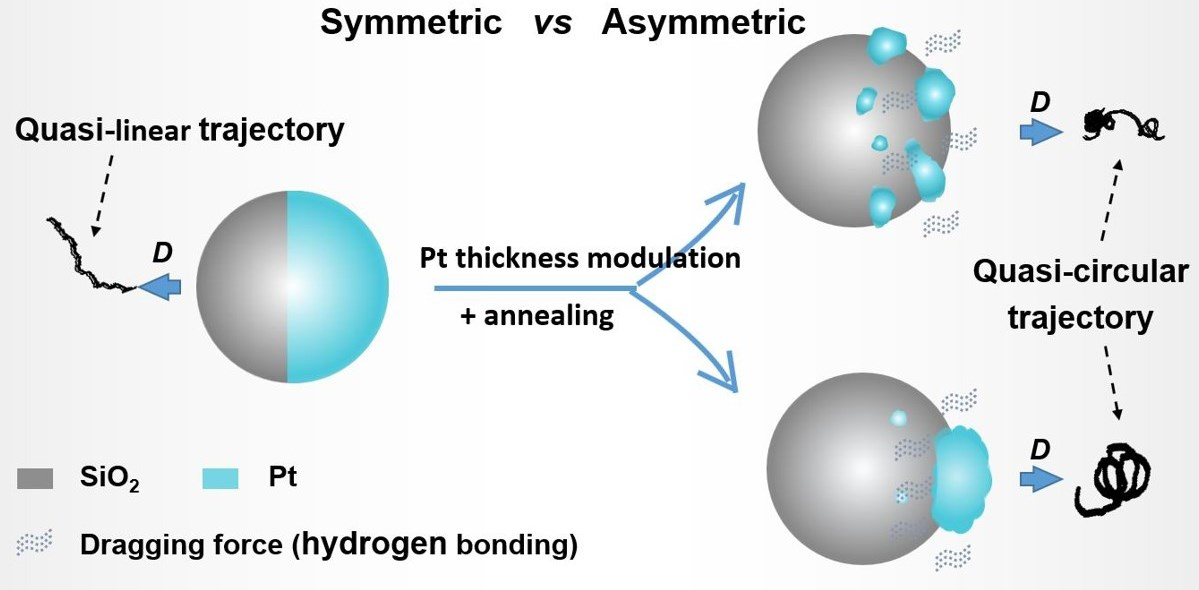
Structurally Dependent Self-Propulsion Behaviors of Pt-SiO2 Micromotors



Abstract
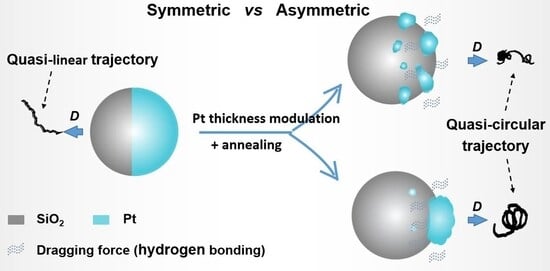
1. Introduction
2. Experimental Section
2.1. Materials and Chemicals
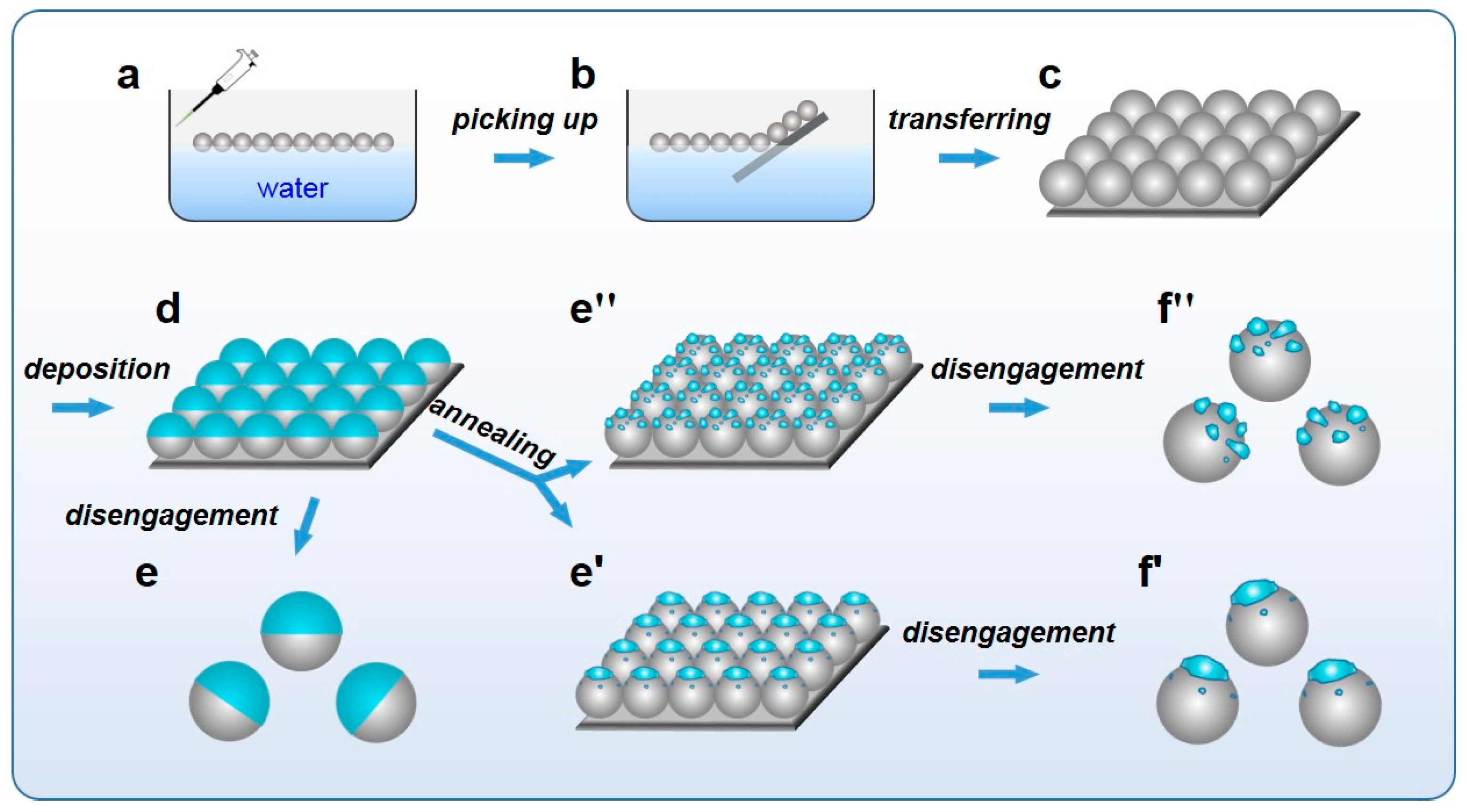
2.2. Preparation of Pt-SiO2 Micromotors with Various Structures
2.3. Characterizations and Motion Observations
3. Results and Discussion
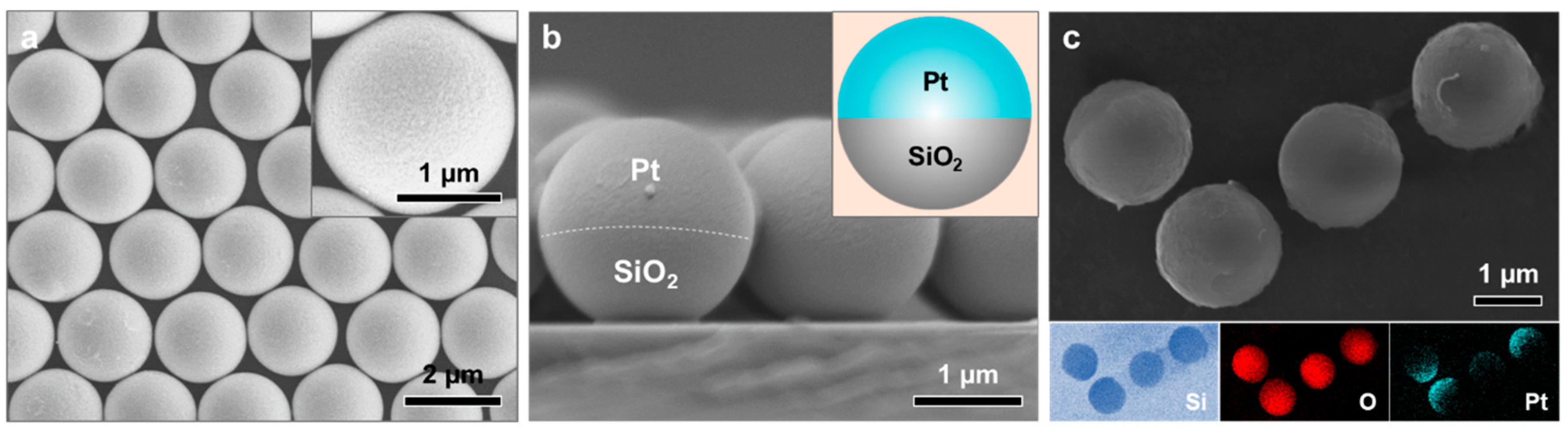
3.1. Morphology and Structure of Micromotors
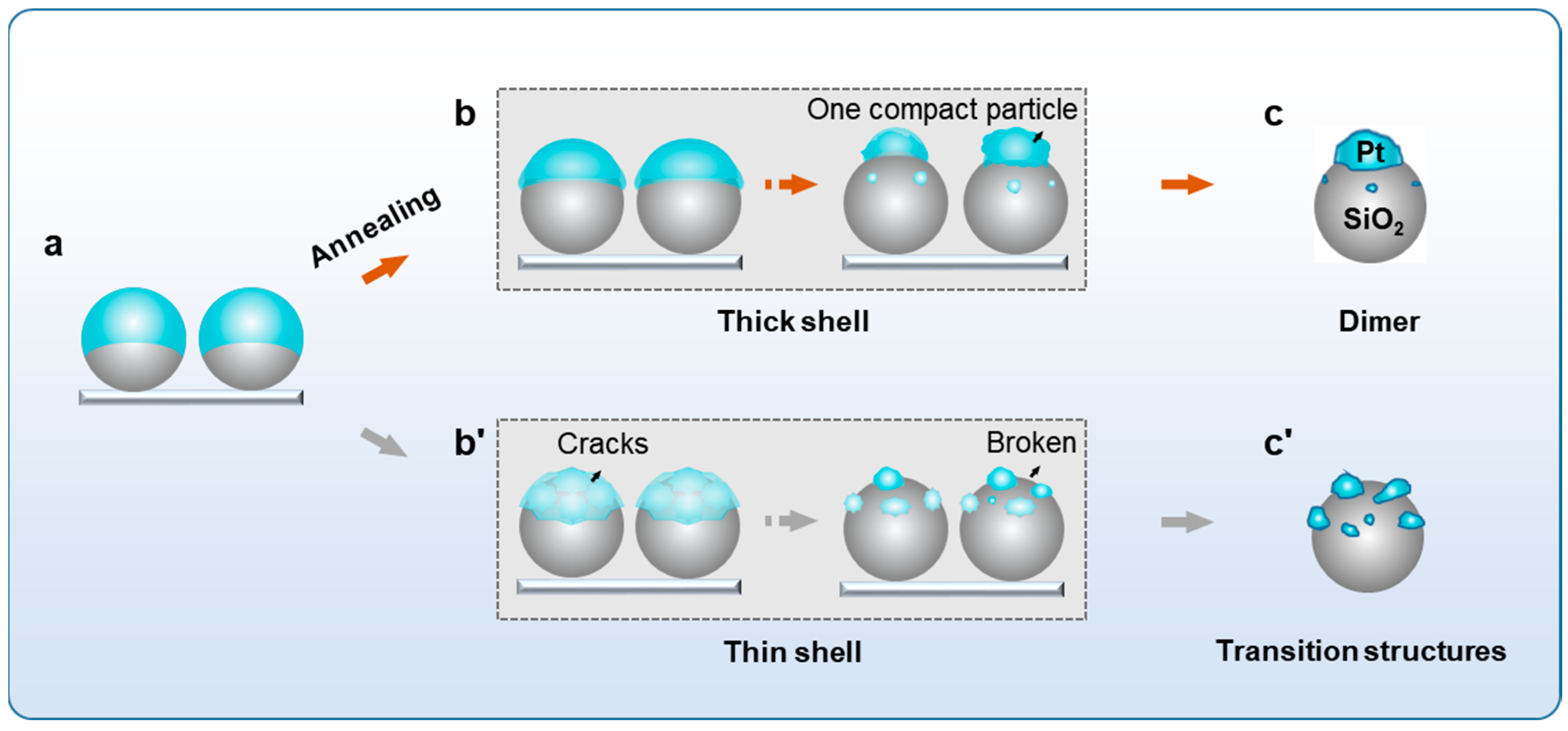
3.2. Surface/Interface Tension-Induced Pt Shell’s Shrinking Mechanism
3.3. Structurally Dependent Self-Propelled Behaviors
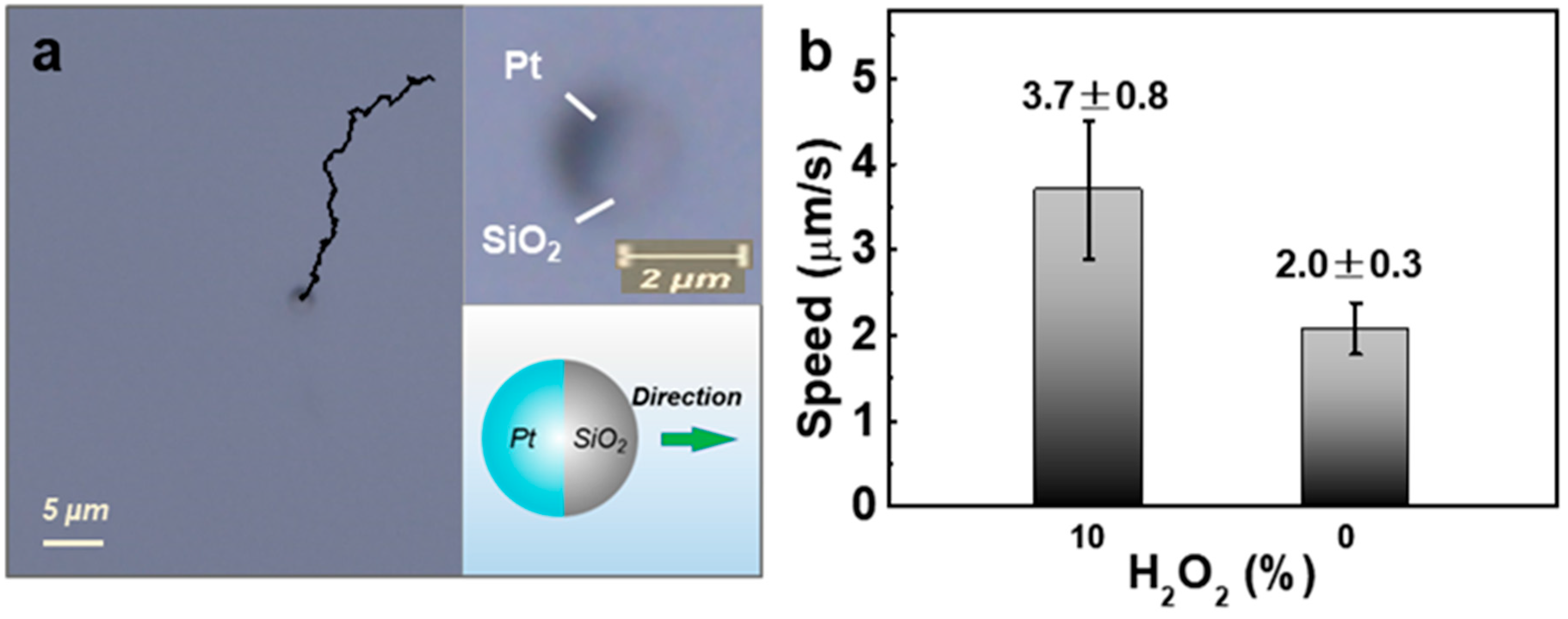
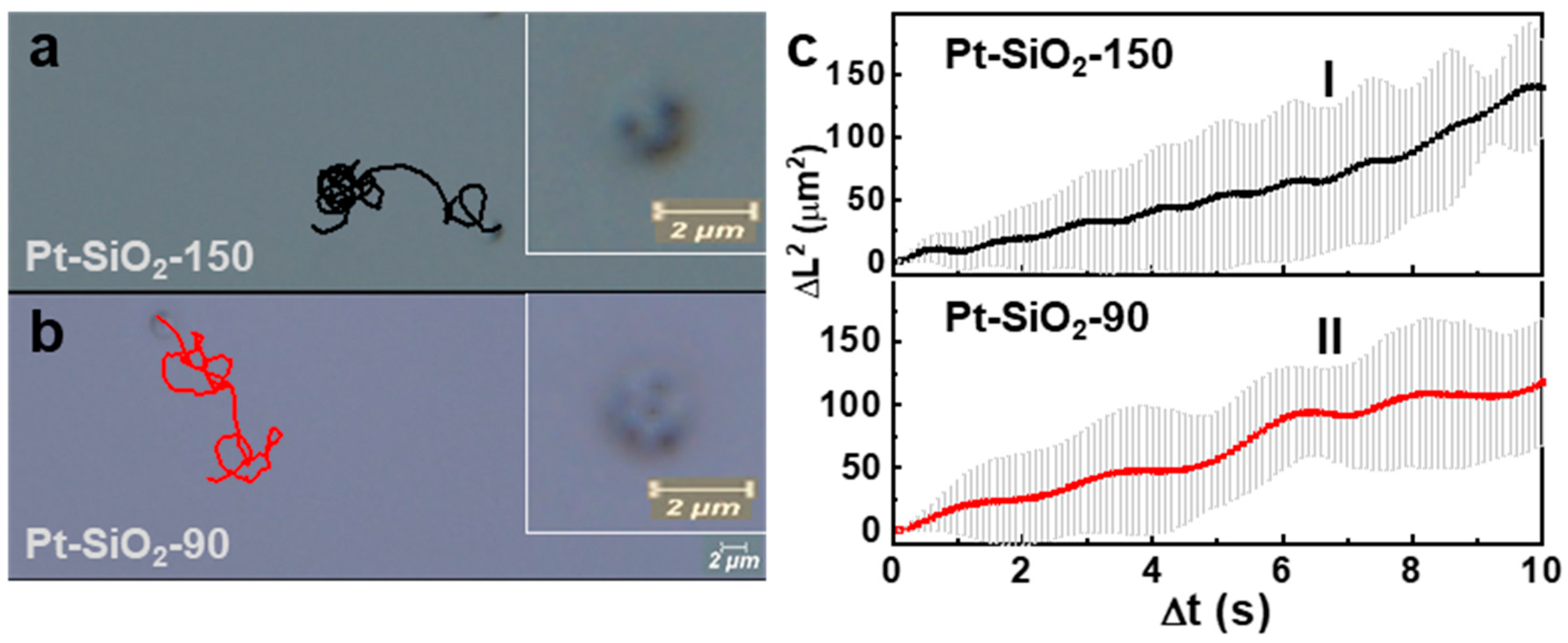
3.3.1. Pt-SiO2 Janus Micromotors
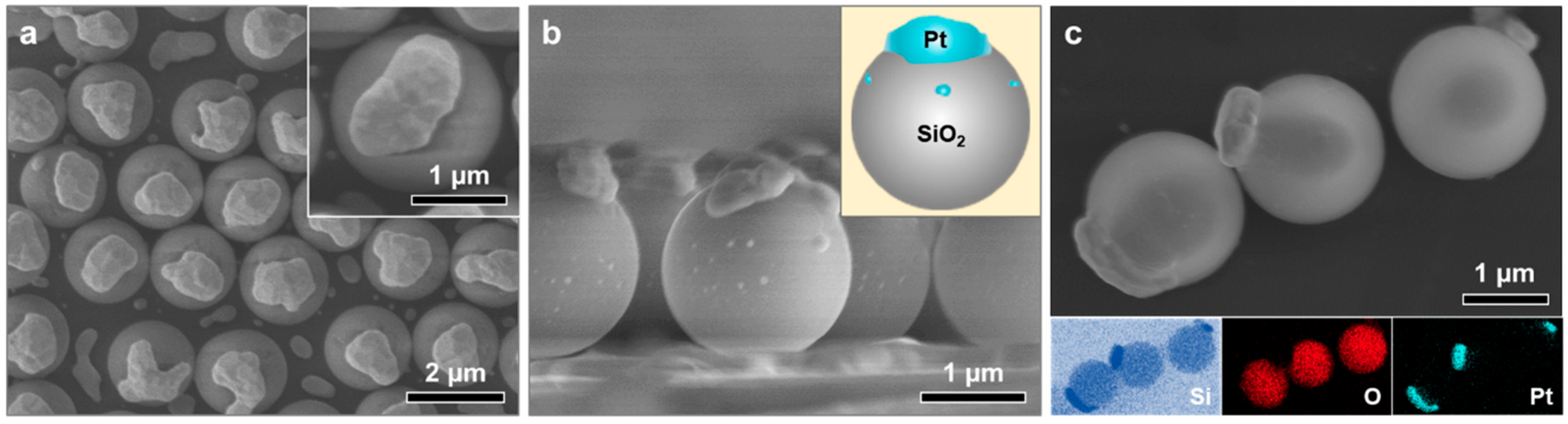
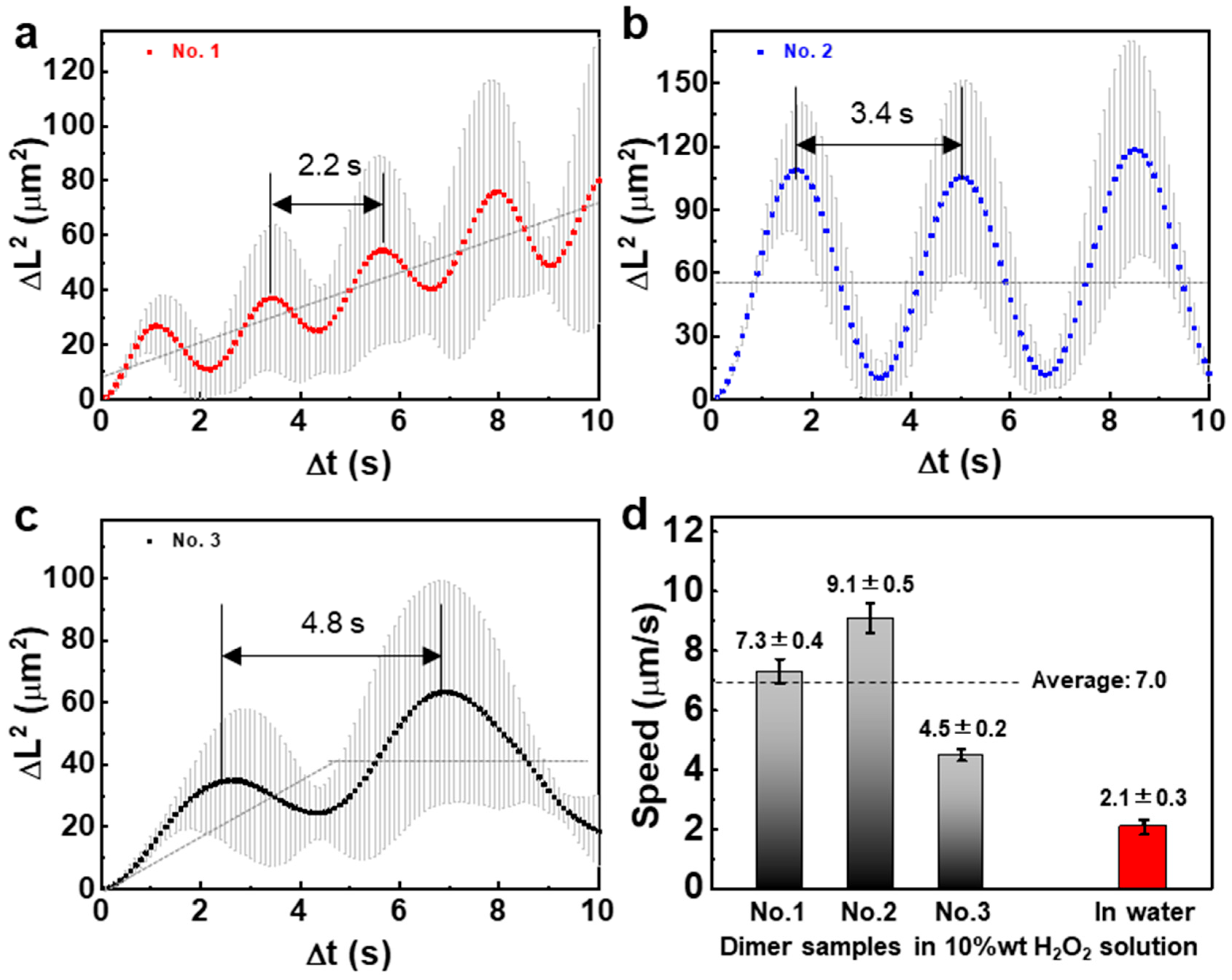
3.3.2. Pt-SiO2 Dimer Micromotors
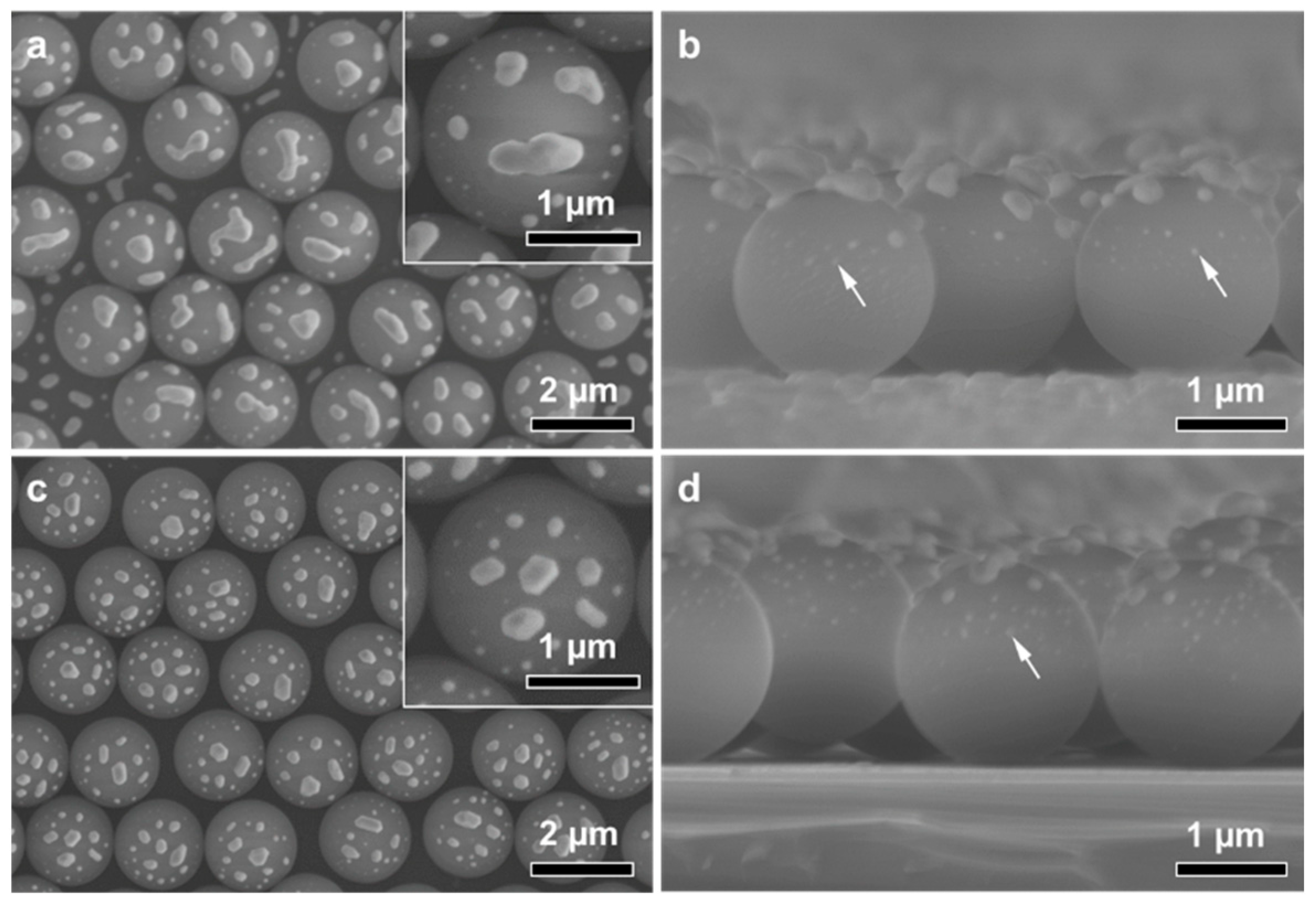
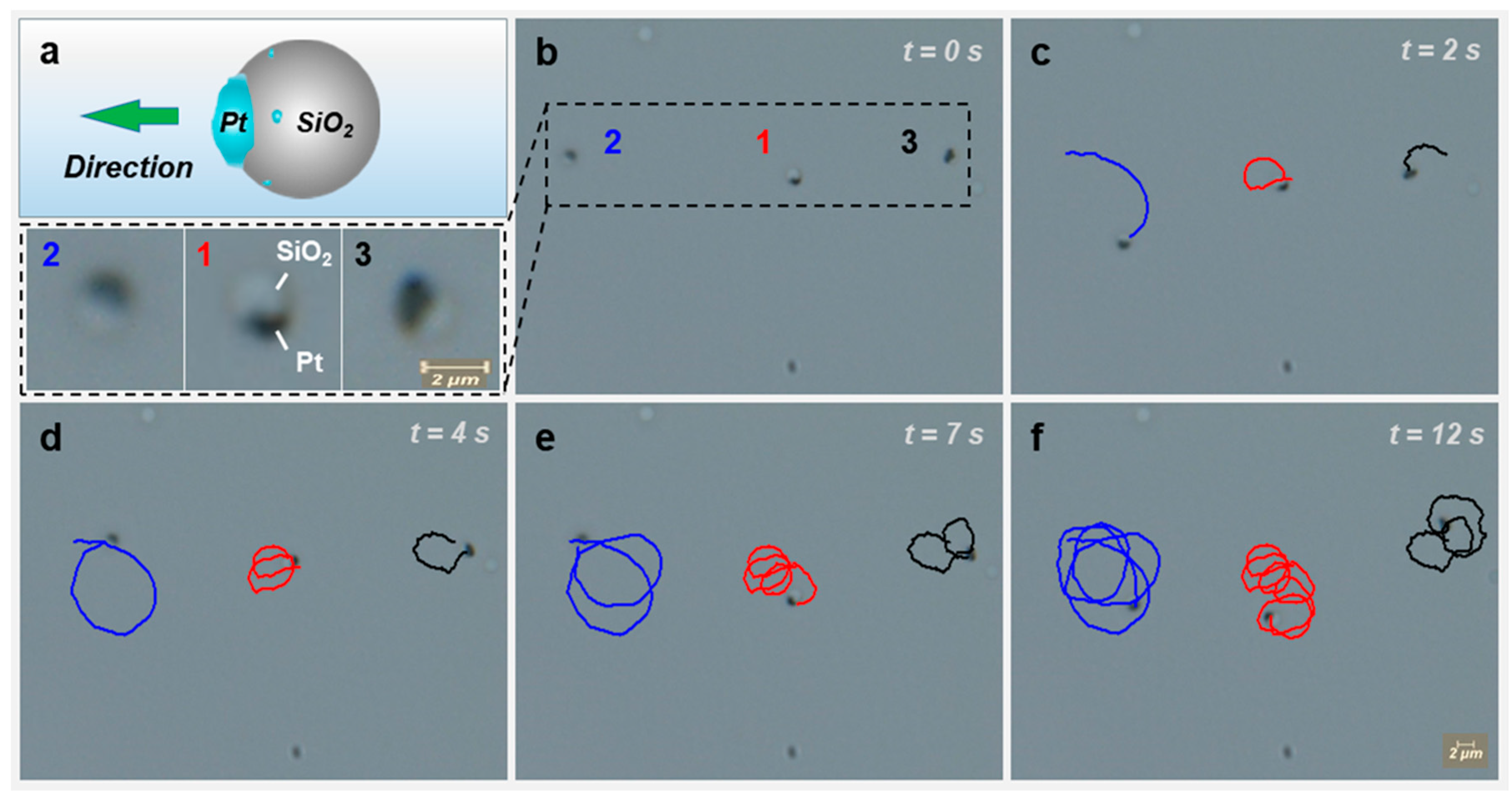
3.3.3. Pt-SiO2 Micromotors with Various Transition Structures
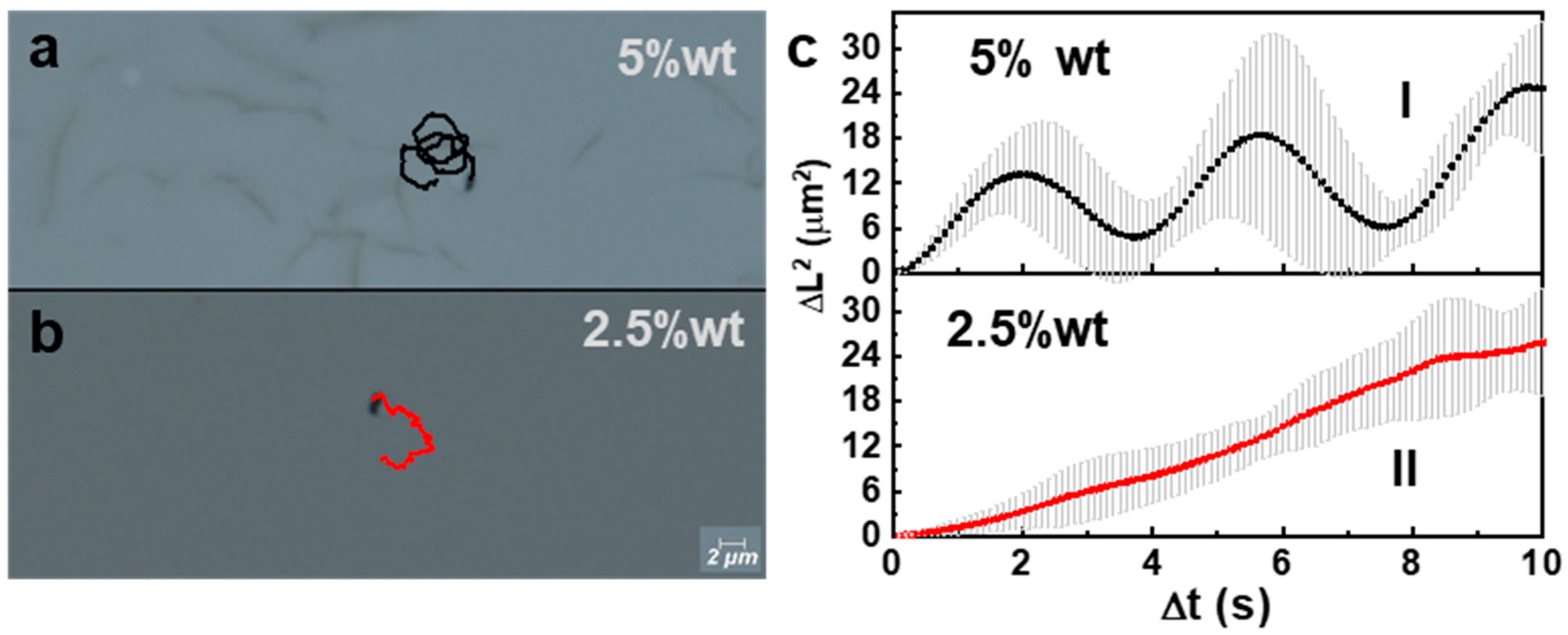
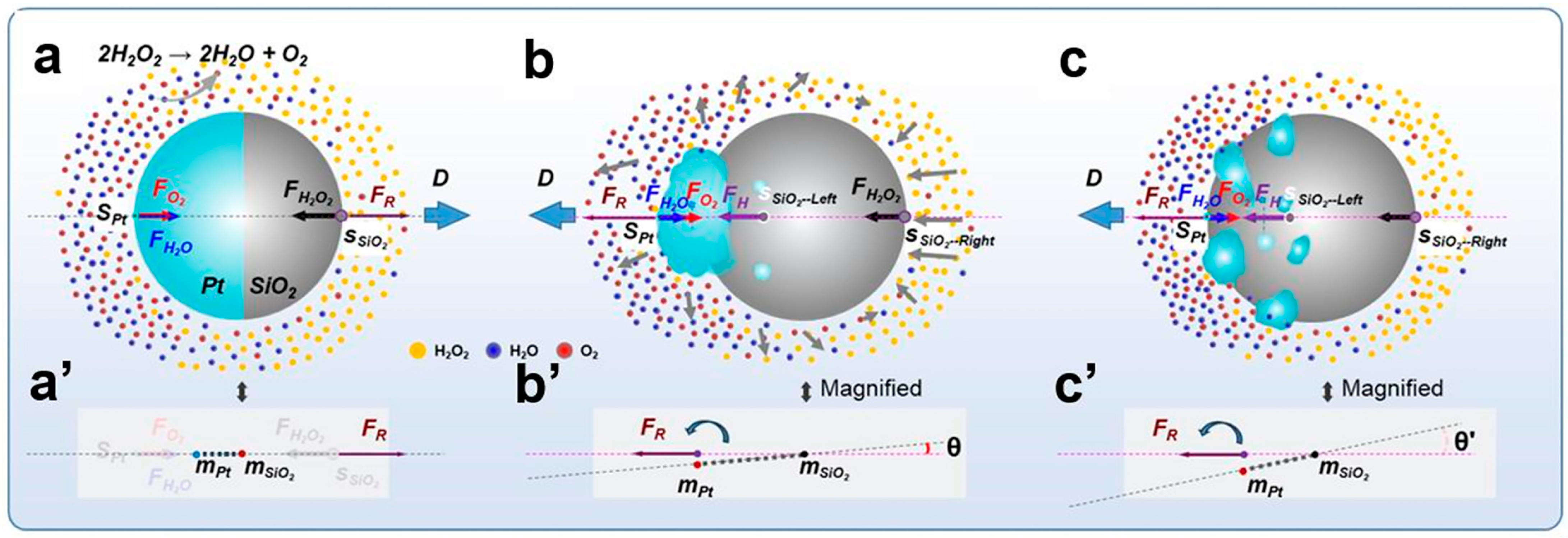
3.4. Pt Distribution-Induced Motion Mode Variation
4. Conclusions
Supplementary Materials
Author Contributions
Funding
Data Availability Statement
Conflicts of Interest
References
- Gao, W.; Wang, J. The Environmental Impact of Micro/Nanomachines: A Review. ACS Nano 2014, 8, 3170–3180. [Google Scholar] [CrossRef]
- Lin, Z.; Wu, Z.; Lin, X.; He, Q. Catalytic Polymer Multilayer Shell Motors for Separation of Organics. Chem. Eur. J. 2016, 22, 1587–1591. [Google Scholar] [CrossRef] [PubMed]
- Tesař, J.; Ussia, M.; Alduhaish, O.; Pumera, M. Autonomous Self-Propelled MnO2 Micromotors for Hormones Removal and Degradation. Appl. Mater. Today 2022, 26, 101312. [Google Scholar] [CrossRef]
- Peng, X.; Urso, M.; Ussia, M.; Pumera, M. Shape-Controlled Self-Assembly of Light-Powered Microrobots into Ordered Microchains for Cells Transport and Water Remediation. ACS Nano 2022, 16, 7615–7625. [Google Scholar] [CrossRef]
- Sun, X.D.; Yang, H.; Liang, Y.; Yan, K.; Liu, L.; Gao, D.; Ma, J. Light-Propelled Super-Hydrophobic Sponge Motor and its Application in Oil–Water Separation. ACS Appl. Mater. Interfaces 2023, 15, 43205–43215. [Google Scholar] [CrossRef]
- Srivastava, S.K.; Medina-Sánchez, M.; Koch, B.; Schmidt, O.G. Medibots: Dual-Action Biogenic Microdaggers for Single-Cell Surgery and Drug Release. Adv. Mater. 2016, 28, 832–837. [Google Scholar] [CrossRef]
- Zhang, H.; Li, Z.; Gao, C.; Fan, X.; Pang, Y.; Li, T.; Wu, Z.; Xie, H.; He, Q. Dual-Responsive Biohybrid Neutrobots for Active Target Delivery. Sci. Robot. 2021, 6, eaaz9519. [Google Scholar] [CrossRef]
- Zhang, J.; Song, J.; Mou, F.; Guan, J.; Sen, A. Titania-Based Micro/Nanomotors: Design Principles, Biomimetic Collective Behavior, and Applications. Trends. Chem. 2021, 3, 387–401. [Google Scholar] [CrossRef]
- Jancik-Prochazkova, A.; Michalkova, H.; Cihalova, K.; Heger, Z.; Pumera, M. Microrobots for Antibiotic-Resistant Staphylococcus aureus Skin Colony Eradication. ACS Appl. Mater. Interfaces 2025, 17, 39340–39348. [Google Scholar] [CrossRef]
- Li, J.; Gao, W.; Dong, R.; Pei, A.; Sattayasamitsathit, S.; Wang, J. Nanomotor Lithography. Nat. Commun. 2014, 5, 5026. [Google Scholar] [CrossRef] [PubMed]
- Che, S.; Zhang, J.; Mou, F.; Guo, X.; Kauffman, J.E.; Sen, A.; Guan, J. Light-Programmable Assemblies of Isotropic Micromotors. Research 2022, 2020, 9816562. [Google Scholar] [CrossRef]
- Wu, Y.; Wu, Z.; Lin, X.; He, Q.; Li, J. Autonomous Movement of Controllable Assembled Janus Capsule Motors. ACS Nano 2012, 6, 10910–10916. [Google Scholar] [CrossRef]
- Solovev, A.A.; Mei, Y.; Bermúdez Ureña, E.; Huang, G.; Schmidt, O.G. Catalytic Microtubular Jet Engines Self-Propelled by Accumulated Gas Bubbles. Small 2009, 5, 1688–1692. [Google Scholar] [CrossRef] [PubMed]
- Wang, H.; Zhao, G.; Pumera, M. Beyond Platinum: Bubble-Propelled Micromotors Based on Ag and MnO2 Catalysts. J. Am. Chem. Soc. 2014, 136, 2719–2722. [Google Scholar] [CrossRef]
- Paxton, W.F.; Baker, P.T.; Kline, T.R.; Wang, Y.; Mallouk, T.E.; Sen, A. Catalytically Induced Electrokinetics for Motors and Micropumps. J. Am. Chem. Soc. 2006, 128, 14881–14888. [Google Scholar] [CrossRef] [PubMed]
- Liu, R.; Sen, A. Autonomous Nanomotor Based on Copper–Platinum Segmented Nanobattery. J. Am. Chem. Soc. 2011, 133, 20064–20067. [Google Scholar] [CrossRef] [PubMed]
- Ma, X.; Hahn, K.; Sanchez, S. Catalytic Mesoporous Janus Nanomotors for Active Cargo Delivery. J. Am. Chem. Soc. 2015, 137, 4976–4979. [Google Scholar] [CrossRef]
- Howse, J.R.; Jones, R.A.L.; Ryan, A.J.; Gough, T.; Vafabakhsh, R.; Golestanian, R. Self-Motile Colloidal Particles: From Directed Propulsion to Random Walk. Phys. Rev. Lett. 2007, 99, 048102. [Google Scholar] [CrossRef] [PubMed]
- Ebbens, S.J.; Howse, J.R. Direct Observation of the Direction of Motion for Spherical Catalytic Swimmers. Langmuir 2011, 27, 12293–12296. [Google Scholar] [CrossRef]
- Baraban, L.; Tasinkevych, M.; Popescu, M.N.; Sanchez, S.; Dietrich, S.; Schmidt, O.G. Transport of Cargo by Catalytic Janus Micro-Motors. Soft Matter 2012, 8, 48–52. [Google Scholar] [CrossRef]
- Ahmed, S.; Wang, W.; Bai, L.; Gentekos, D.T.; Hoyos, M.; Mallouk, T.E. Density and Shape Effects in the Acoustic Ppropulsion of Bimetallic Nanorod Motors. ACS Nano 2016, 10, 4763–4769. [Google Scholar] [CrossRef] [PubMed]
- Wang, W.; Wu, Z.; Lin, X.; Si, T.; He, Q. Gold-Nanoshell-Functionalized Polymer Nanoswimmer for Photomechanical Poration of Single-Cell Membrane. J. Am. Chem. Soc. 2019, 141, 6601–6608. [Google Scholar] [CrossRef]
- Zheng, L.; Hart, N.; Zeng, Y. Micro-/Nanoscale Robotics for Chemical and Biological Sensing. Lab Chip 2023, 23, 3741–3767. [Google Scholar] [CrossRef] [PubMed]
- Gao, W.; D’Agostino, M.; Garcia-Gradilla, V.; Orozco, J.; Wang, J. Multi-Fuel Driven Janus Micromotors. Small 2013, 9, 467–471. [Google Scholar] [CrossRef] [PubMed]
- Chen, C.; Tang, S.; Teymourian, H.; Karshalev, E.; Zhang, F.; Li, J.; Mou, F.; Liang, Y.; Guan, J.; Wang, J. Chemical/Light-Powered Hybrid Micromotors with “On-the-Fly” Optical Brakes. Angew. Chem. Int. Ed. 2018, 130, 8242–8246. [Google Scholar] [CrossRef]
- Xiao, Z.; Duan, S.; Xu, P.; Cui, J.; Zhang, H.; Wang, W. Synergistic Speed Enhancement of an Electric-Photochemical Hybrid Micromotor by Tilt Rectification. ACS Nano 2020, 14, 8658–8667. [Google Scholar] [CrossRef]
- Ji, Y.; Ji, Y.; Lin, X.; Zhang, H.; Wu, Y.; Li, J.; He, Q. Thermoresponsive Polymer Brush Modulation on the Direction of Motion of Phoretically Driven Janus Micromotors. Angew. Chem. Int. Ed. 2019, 131, 4228–4232. [Google Scholar] [CrossRef]
- Zhou, C.; Zhu, P.; Tian, Y.; Xu, M.; Wang, L. Engineering Micromotors with Droplet Microfluidics. ACS Nano 2019, 13, 6319–6329. [Google Scholar] [CrossRef]
- Valadares, L.F.; Tao, Y.G.; Zacharia, N.S.; Kitaev, V.; Galembeck, F.; Kapral, R.; Ozin, G.A. Catalytic Nanomotors: Self-Propelled Sphere Dimers. Small 2010, 6, 565–572. [Google Scholar] [CrossRef]
- Dai, Z.; Jia, L.; Duan, G.; Li, Y.; Zhang, H.; Wang, J.; Hu, J.; Cai, W. Crack-Free Periodic Porous Thin Films Assisted by Plasma Irradiation at Low Temperature and Their Enhanced Gas-Sensing Performance. Chem. Eur. J. 2013, 19, 13387–13395. [Google Scholar] [CrossRef]
- Lu, Y.; Yang, X.; Bao, H.; Lei, B.; Chen, K.; Wei, Y.; Zhao, Q.; Zhang, H.; Cai, W. Vortex Engineering on Oxide Bowl-Coated Oxide/Gold Dual-Layer Array for Dual Electrical/Spectroscopic Monitoring of Volatile Organic Compounds. Adv. Funct. Mater. 2024, 34, 2402173. [Google Scholar] [CrossRef]
- Zhang, J.; Zheng, X.; Cui, H.; Silber-Li, Z. The Self-Propulsion of the Spherical Pt-SiO2 Janus Micro-Motor. Micromachines 2017, 8, 123. [Google Scholar] [CrossRef]
- Katuri, J.; Caballero, D.; Voituriez, R.; Samitier, J.; Sanchez, S. Directed Flow of Micromotors through Alignment Interactions with Micropatterned Ratchets. ACS Nano 2018, 12, 7282−7291. [Google Scholar] [CrossRef] [PubMed]
- Suzuki, S.; Nakajima, A.; Yoshida, N.; Sakai, M.; Hashimoto, A.; Kameshima, Y.; Okada, K. Hydrophobicity and freezing of a aater droplet on fluoroalkylsilane coatings with different roughnesses. Langmuir 2007, 23, 8674–8677. [Google Scholar] [CrossRef] [PubMed]
- Saengkaew, J.; Le, D.; Samart, C.; Sawada, H.; Nishida, M.; Chanlek, N.; Kongparakul, S.; Kiatkamjornwong, S. Superhydrophobic coating from fluoroalkylsilane modified natural rubber encapsulated SiO2 composites for self-driven oil/water separation. Appl. Surf. Sci. 2018, 462, 164–174. [Google Scholar] [CrossRef]


Disclaimer/Publisher’s Note: The statements, opinions and data contained in all publications are solely those of the individual author(s) and contributor(s) and not of MDPI and/or the editor(s). MDPI and/or the editor(s) disclaim responsibility for any injury to people or property resulting from any ideas, methods, instructions or products referred to in the content. |
© 2026 by the authors. Licensee MDPI, Basel, Switzerland. This article is an open access article distributed under the terms and conditions of the Creative Commons Attribution (CC BY) license.
Share and Cite
Zhou, L.; Zhao, Q.; Zhang, H.; Bao, H.; Cai, W. Structurally Dependent Self-Propulsion Behaviors of Pt-SiO2 Micromotors. Nanomaterials 2026, 16, 73. https://doi.org/10.3390/nano16010073
Zhou L, Zhao Q, Zhang H, Bao H, Cai W. Structurally Dependent Self-Propulsion Behaviors of Pt-SiO2 Micromotors. Nanomaterials. 2026; 16(1):73. https://doi.org/10.3390/nano16010073
Chicago/Turabian StyleZhou, Le, Qian Zhao, Hongwen Zhang, Haoming Bao, and Weiping Cai. 2026. "Structurally Dependent Self-Propulsion Behaviors of Pt-SiO2 Micromotors" Nanomaterials 16, no. 1: 73. https://doi.org/10.3390/nano16010073
APA StyleZhou, L., Zhao, Q., Zhang, H., Bao, H., & Cai, W. (2026). Structurally Dependent Self-Propulsion Behaviors of Pt-SiO2 Micromotors. Nanomaterials, 16(1), 73. https://doi.org/10.3390/nano16010073