
Review

Rare-Earth Oxide Nanoparticles: A New Weapon Against Multidrug-Resistant Pathogens with Potential Wound Healing Treatment

by
Albert Donald Luong
1,
Moorthy Maruthapandi
2,
Aharon Gedanken
2 and
John H. T. Luong
3,*
1
Innovative Wound Care (IWC), Fresno, CA 93710, USA
2
Department of Chemistry, Bar-Ilan Institute for Nanotechnology and Advanced Materials, Bar-Ilan University, Ramat-Gan 52900, Israel
3
School of Chemistry, University College Cork, T12 YN60 Cork, Ireland
*
Author to whom correspondence should be addressed.
Nanomaterials 2025, 15(24), 1862; https://doi.org/10.3390/nano15241862
Submission received: 22 November 2025 / Revised: 6 December 2025 / Accepted: 9 December 2025 / Published: 11 December 2025

Abstract

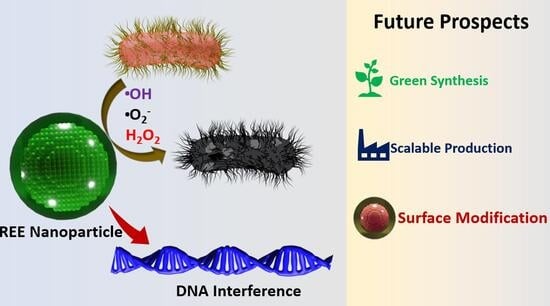
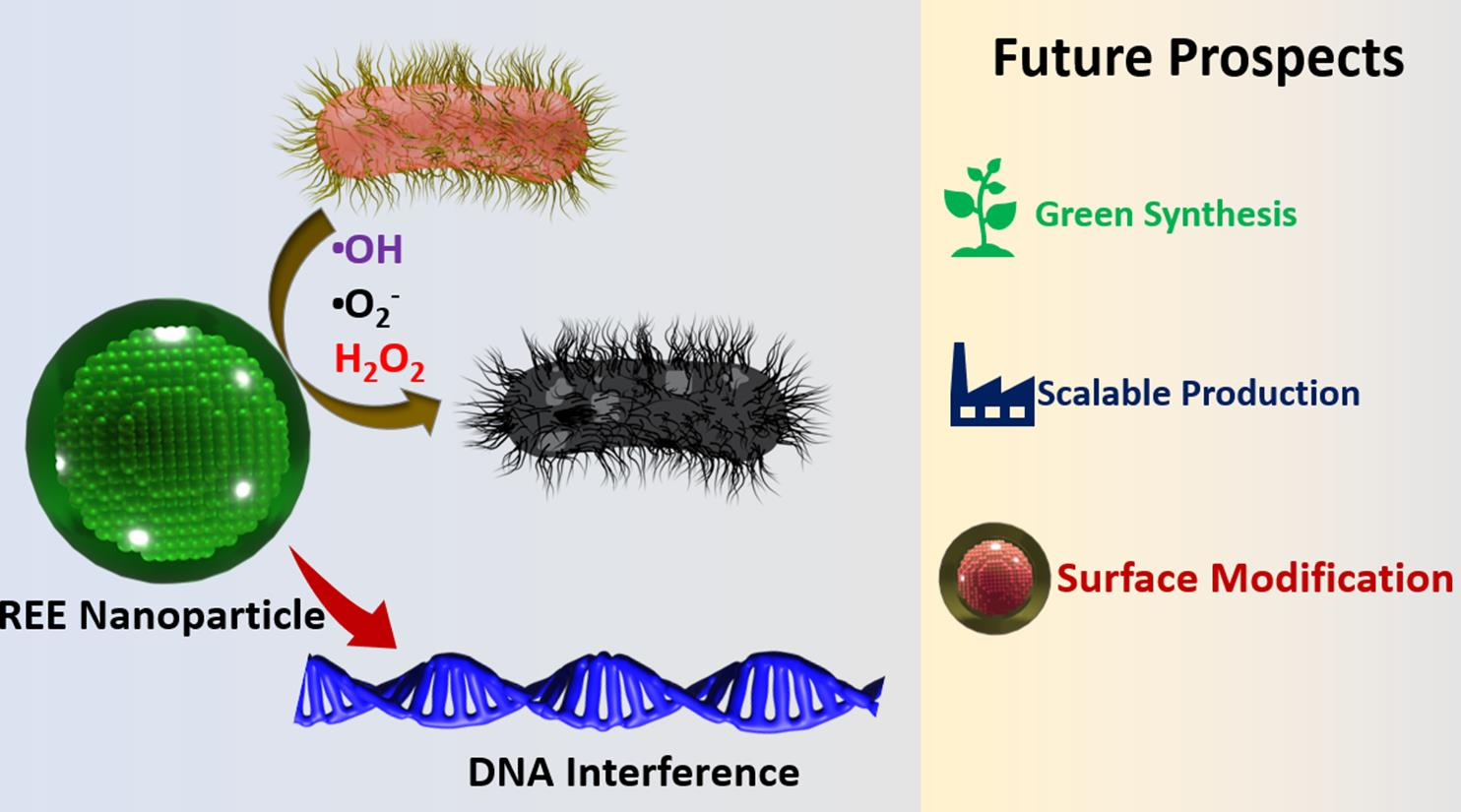
Rare-earth oxide (REO) nanoparticles (NPs)—such as cerium (CeO2), samarium (Sm2O3), neodymium (Nd2O3), terbium (Tb4O7), and praseodymium (Pr2O3)—have demonstrated strong antimicrobial activity against multidrug-resistant bacteria. Their effectiveness is attributed to unique physicochemical properties, including oxygen vacancies and redox cycling, which facilitate the generation of reactive oxygen species (ROS) that damage microbial membranes and biomolecules. Additionally, electrostatic interactions with microbial surfaces and sustained ion release contribute to membrane disruption and long-term antimicrobial effects. REOs also inhibit bacterial enzymes, DNA, and protein synthesis, providing broad-spectrum activity against Gram-positive, Gram-negative, and fungal pathogens. However, dose-dependent cytotoxicity to mammalian cells—primarily due to excessive ROS generation—and nanoparticle aggregation in biological media remain challenges. Surface functionalization with polymers, peptides, or metal dopants (e.g., Ag, Zn, and Cu) can mitigate cytotoxicity and enhance selectivity. Scalable and sustainable synthesis remains a challenge due to high synthesis costs and scalability issues in industrial production. Green and biogenic routes using plant or microbial extracts can produce REOs at lower cost and with improved safety. Advanced continuous flow and microwave-assisted synthesis offer improved particle uniformity and production yields. Biomedical applications include antimicrobial coatings, wound dressings, and hybrid nanozyme systems for oxidative disinfection. However, comprehensive and intensive toxicological evaluations, along with regulatory frameworks, are required before clinical deployment.

Graphical Abstract

1. Introduction

Rare-earth elements (REEs) comprise 17 elements: the 15 lanthanides (La–Lu), scandium (Sc), and yttrium (Y), which share similar chemical properties and often occur in the same ore deposits as the lanthanides. Although REEs are relatively abundant in the Earth’s crust, they are seldom found in economically viable concentrations. REEs are classified as light (LREEs: e.g., La, Ce, Nd) or heavy (HREEs: e.g., Dy, Er, Lu) based on their atomic structure, which influences their physical and chemical properties. REEs are valued for their magnetic, luminescent, and catalytic characteristics, enabling diverse applications in electronics, optoelectronics, magnets, energy technologies, glass, ceramics, defense, aerospace, and medicine [1] (Table 1). Not all REEs are in pure metal form, and several purification steps are needed to separate them. Promethium, the rarest, only occurs in trace quantities in natural materials with no long-lived or stable isotopes [2]. Notably, their roles in advanced devices for space, defense, and green technologies are well established, while their use in surgical lasers, MRI, and PET imaging is less recognized. Their unique optical and redox properties support applications in biosensing, medical imaging (e.g., Gd-based MRI contrast agents), cancer therapy (e.g., Lu-177, Ho, Y), and laser surgery (Er, Ho). Promethium (Pm) is distinct among REEs due to its radioactivity and extreme scarcity. All promethium isotopes are radioactive [3], with the most stable (Pm-145) having a half-life of 17.7 years. Natural promethium is virtually absent, and its synthesis requires nuclear reactors, limiting its use to specialized applications such as nuclear batteries for satellites and scientific research.
Beyond their antimicrobial properties, rare-earth elements exhibit antioxidant, regenerative, antidiabetic, and antitumor activities for important medical applications [4], as shown in Table 2. This review focuses on the production methods, antimicrobial mechanisms, and potential applications of selected REO-NPs as novel antimicrobial agents.

2. Mechanisms of Antimicrobial Properties

Rare-earth elements (REEs), including the lanthanides (La–Lu), scandium (Sc), and yttrium (Y), are increasingly recognized for their antimicrobial effects against bacteria and fungi. Although the exact mechanisms are still under investigation, they are known to disrupt microbial function through several key pathways:
  • Cell Membrane Disruption: REEs such as La3+, Ce3+, Gd3+, Y3+, and their oxides interact with negatively charged phospholipids, lipopolysaccharides, peptidoglycan of bacterial membranes, increasing permeability and causing leakage of cellular contents, ultimately leading to cell lysis [5]. Similarly, La3+, Ce3+, and Gd3+ bind to cell membranes, changing surface charge and causing permeability loss [6]. This is like the action of heavy metals like Ag+ and Cu2+. Considering electrostatic interaction, REE cations should have a strong affinity for the negatively charged phosphate backbone of DNA and RNA. This interaction can alter the structure and stability of nucleic acids (e.g., stabilizing certain DNA secondary structures or inducing DNA compaction) to disrupt the normal machinery of gene expression.
  • Ion Substitution: Due to their chemical similarity to essential metal ions (Ca2+, Mg2+, and Fe3+), REEs can replace these ions in enzyme active sites or membrane stabilization sites, resulting in enzyme inactivation and structural destabilization [5]. This disrupts critical cellular processes such as ATPase activity, transport, and cell wall biosynthesis. By occupying metal cofactor binding sites, REEs can also induce protein denaturation and inhibit key metabolic pathways such as glycolysis, the TCA cycle, and oxidative phosphorylation.
  • Generation of Reactive Oxygen Species (ROS): Ce3+/Ce4+ catalyze the formation of ROS (superoxide, hydroxyl radicals, and hydrogen peroxide), which induce oxidative damage to DNA, lipids, and proteins, leading to cell death [7,8,9]. CeO2 nanoparticles (Nanoceria) are considered a classical nanozyme with a high peroxidase activity-based nanozyme–H2O2 system that would be very efficient for bacterial disinfection. CeO2 NPs also possess high superoxide dismutase activity and antioxidant activity, which can act as a ROS scavenger [10].
  • Biofilm Disruption: REEs, especially La3+ and Ce3+, can interfere with quorum sensing and extracellular polymeric substance (EPS) production, reducing biofilm formation or promoting biofilm detachment [11].
The mechanisms and primary effects of some selected REEs are shown in Table 3.

3. Synthesis of Rare-Earth Oxide Nanoparticles (REO-NPs)

Rare-earth oxide nanoparticles (REO-NPs), such as CeO2, La2O3, and Nd2O3, are widely utilized in medicine and antimicrobial coatings. Several established methods enable the controlled synthesis of these nanoparticles.
  • Precipitation/Co-precipitation: Hydroxides or carbonates of rare-earth elements are precipitated from aqueous solutions and subsequently calcined to form oxides. This scalable method allows particle size control through adjustments in pH, temperature, and concentration. For example, homogeneous precipitation of CeO2 nanoparticles using ammonium cerium nitrate and urea yields particles around 8 nm [12].
  • Sol–Gel Method: Rare-earth alkoxides or nitrates undergo hydrolysis and condensation to form a gel, which is then calcined to produce oxides [13]. The use of complexing agents (e.g., citric acid, ethylene glycol) enables precise control over particle size and composition, resulting in highly pure and uniform nanoparticles.
  • Hydrothermal or solvothermal method: A precursor solution is heated in a Teflon-lined autoclave at 150–200 °C for 6–24 h, promoting crystallization without the need for high-temperature calcination. This method yields crystalline nanoparticles with well-defined morphology and tunable size [14]. CeO2 NPs with an average size of 14 ± 3 nm were synthesized by a hydrothermal method using cerium (III) nitrate hexahydrate as the starting material [15].
  • Combustion or flame synthesis: Rare-earth nitrates react with fuels such as urea or glycine, rapidly forming oxide nanoparticles [16]. This energy-efficient process produces highly porous particles, typically in the 20–30 nm range [17], though calcination may be required to remove residual carbon.
  • Green or biogenic synthesis (eco-friendly). This method uses plant extracts, bacteria, or polysaccharides as reducing/stabilizing agents [18]. Plants are the most efficient source for the green synthesis of nanoparticles because they are a rich source of reducing and stabilizing agents such as phenols, ketones, ascorbic acid, and carboxylic acids. As an example, RE nitrate is mixed with tea, aloe vera, or bacterial extract and heated to form nanoparticles. Biomolecules from the above reducing/stabilizing agents will cap and stabilize particles for controlling aggregation. Biocompatible nanoparticles are suitable for antimicrobial/medical applications. For the preparation of CeO2 NPs, cerium nitrate hexahydrate was added to the Moringa oleifera leaf extract [19]. The average size of the CeO2 NPs was 17 nm, comparable with that of CeO2 NPs synthesized using the leaf extracts of Origanum majorana (20 nm) [20]. CeO2 NPs have been synthesized from Ce(NO3)3 and seeds extract of Salvia macrosiphon Boiss [21]; flower extract of Calotropis procera (a particle size of 21 nm) [22]; Ziziphus jujube fruit (18–25 nm) [23]; the aqueous extract of Acorus calamus rhizome [24]; Aloe barbadensis miller gel [25], Hibiscus sabdariffa flower [26], Moringa oleifera peel [27], Hyphaene thebaica fruit [28], citrus limon peel [29], and Linum usitatissimum L. seeds [30].
Spherical-shaped CeO2 NPs with an average crystallite size of about 8 nm have been synthesized by the extracellular supernatant of B. subtilis [31]. Similarly, spherical-shaped CeO2 NPs with an average size of 24.5 nm were synthesized by the filtrate of Fusarium solani species culture media [32]. The Aspergillus niger culture filtrate was used to synthesize CeO2 NPs with particle sizes ranging from 5 to 20 nm [33].
In addition to laboratory-scale synthesis routes, a scalable roll-to-roll Sono chemical coating platform has recently been demonstrated for depositing rare-earth oxide nanoparticles onto fabrics and other flexible substrates. The method relies on acoustic cavitation to nucleate and anchor nanoparticles directly on the fiber surface, resulting in unusually strong particle–substrate adhesion. Industrial trials have shown that the coated fabrics retain ≈80% of their nanoparticle loading even after repeated wash cycles at room and elevated temperatures, and continuous coating has been operated for hours on an industrial prototype machine. The scalability and durability of this approach illustrate that sonochemistry can serve not only as a nanoparticle synthesis method but also as a direct surface-functionalization technology for REO-based antibacterial and antiviral materials [34,35,36]. Advantages and challenges to produce REE oxide nanoparticles are summarized in Table 4.

4. Diameter and Crystallinity

The average diameters of rare-earth oxide nanoparticles (REO-NPs) depend strongly on the synthesis method, precursor chemistry, and post-treatment (especially calcination temperature). Elevated calcination temperatures lead to increased crystallite size, while higher precursor concentrations result in larger particle formation due to accelerated nucleation rates.
For the precipitation method, higher pH produces smaller, more uniform NPs due to rapid nucleation. Ethanol–water mixtures yield smaller NPs than pure water and the combustion temperature affect crystallite growth (the combustion method). The use of capping agents such as citric acid, PVP, PEG, etc., prevents aggregation and results in smaller, monodisperse particles. Most rare-earth oxide nanoparticles prepared by wet-chemical or sol–gel routes fall in the 5–20 nm range, while higher-temperature or green synthesis routes can produce 20–60 nm particles. A careful control of calcination, pH, and complexing agents allows fine size tuning.
Crystallinity is a crucial parameter for rare-earth oxide (REEO) nanoparticles because it directly affects their surface reactivity, defect density, catalytic and antimicrobial behavior, and cytotoxicity. Table 5 shows a detailed overview of crystallinity characteristics for representative REE oxides, including structure type, typical crystallite size, and implications for bioapplications.

5. Antimicrobial Properties of REE-NPS

In view of such combined antimicrobial mechanisms, it is almost impossible for pathogens to develop resistance against the attack of REEs due to the multiple, simultaneous mechanisms of action employed by nanoparticles. Within this scenario, REEs could be used alone or together with antibiotics to combat multidrug resistant (MDR) bacteria.

5.1. CeO2 NPs

Spherical CeO2 NPs with an average size of 17 nm were synthesized by a green, eco-friendly method of “rapid precipitation”, using Moringa oleifera leaf extract as a natural reducing and stabilizing agent [19]. The synthesized CeO2 NPs demonstrated high antimicrobial activity against S. aureus, E. coli, and P. aeruginosa, as well as antifungal activity against C. albicans and A. fumigatus [19]. Based on an inhibition zone ranging from 15 to 31 mm, this study suggests potential applications of CeO2 NPs as antimicrobial agents.
CeO2 NPs with an average size of 22.03 nm synthesized using Acorus calamus extract [24] show their antibiofilm activity against S. aureus and P. aeruginosa. CeO2 NPs exhibited significant inhibition zones in disk diffusion assays. The biofilms of the test bacteria were inhibited by more than 75% by the treatment with CeO2 -NPs. Biofilm assays (crystal violet method) showed marked biofilm disruption and inhibition at increasing NP concentrations. The mechanism was attributed to electrostatic interaction between positively charged CeO2 surfaces and bacterial cell walls, and the release of OH and O2•− to damage bacterial membranes and EPS matrix.
CeO2 NPs with an average size of 3.8 nm were synthesized by the hydrothermal method and tested against the selected ESKAPE pathogens [45]. Using agar-well diffusion with 50 µg/mL CeO2 NPs, the inhibition zone ranged from 7.53 ± 0.30 mm to 22.25 ± 0.13 mm: S. aureus 19.40 ± 0.05, P. aeruginosa 17.83 ± 0.21, K. pneumoniae 17.45 ± 0.01, and A. baumannii 8.86 ± 0.03.
CeO2 NPs were synthesized by wet chemical/oxalate (hydrolysis/thermal) and tested against four pathogens [46]. Based on a paper disk assay with 50 µg/mL of CeO2 NPs, the reported ZOI values (mm) were E. coli = 9 ± 0.05, S. typhimurium = 12 ± 0.02, L. monocytogenes = 10 ± 0.04, S. aureus = 5 ± 0.02, and B. cereus = 7 ± 0.05.
Green/biosynthesized CeO2 NPs (17 nm) were tested against three bacteria and two fungi [47]. The inhibition zones of CeO2 NP (100 mg/mL) antibacterial test against S. aureus, P. aeruginosa, and E. coli bacteria were 22, 16, and 15 mm, respectively, compared with 20 mm for C. albicans and 26 mm for A. fumigatus.
Pure CeO2 NPs were produced by pulsed laser ablation in liquid using an Nd:YAG laser [37]. The particles were nearly spherical with an average size of 10–30 nm and a Zeta potential around –25 mV, indicating moderate colloidal stability. Antibacterial activity increased with nanoparticle concentration. At 100 µg/mL, they exhibited antibacterial activities against E. coli and S. aureus with an inhibition zone diameter of 16 ± 0.4 mm and 14 ± 0.3 mm, respectively. The killing mechanism was attributed to ROS generation (O2•− and H2O2) to cause bacterial membrane disruption.
The hybrid chitosan CeO2 NPs were prepared using plant leaf extract [38]. The formation of Ce-O bonds and chitosan main chains were affected by the COC and CO groups. The prepared hybrid chitosan-CeO2 NPs were predominantly uniform in size, spherical with particles size ranging from 3.61 nm to 24.40 nm. The Ce3+/Ce4+ redox cycle at the nanoparticle surface generated ROS such as superoxide radicals (O2−•) and hydroxyl radicals (OH) to damage cell membranes, proteins, and DNA in bacteria. Chitosan carries positive amino groups (–NH3+) that interact with negatively charged bacterial membranes, increasing membrane permeability and leakage of intracellular contents. Chitosan helps in the uniform dispersion of CeO2 NPs and enhances cell adhesion, while CeO2 catalyzes oxidative stress that kills the bacteria. Quantitative inhibition zone data shows the antibacterial efficacy of the hybrid chitosan–CeO2 nanoparticles compared with chitosan alone and pure CeO2 nanoparticles (Table 6).
The antibacterial effect of cerium oxide nanoparticles (CeO2 NPs) and CeO2 NPs incorporated into nanofiber scaffolds (Scaffold@ CeO2 NPs) against P. aeruginosa was assessed [48]. The MIC (Minimum Inhibitory Concentrations) for bare CeO2 NPs was 12.5 µg/mL and 6.25 µg/mL for Scaffold@ CeO2 NPs, while MBC (Minimum Bactericidal Concentration) values were 50 µg/mL for both. At the highest concentration of CeO2 NPs in the scaffold (200 µg/mL), 97% of human fibroblast cells survived, indicating low toxicity at concentrations effective for bacterial inhibition.
The antimicrobial activity of nanocrystalline CeO2 was evaluated against Pseudomonas aeruginosa, a common hospital-acquired pathogen [49]. This activity is primarily attributed to the physicochemical properties of CeO2 nanoparticles, specifically the presence of oxygen vacancies and the ability of cerium ions to alternate between Ce3+ and Ce4+ oxidation states. This redox cycle promotes the generation of reactive oxygen species (ROS), which damage bacterial components and disrupt essential processes such as respiration and DNA replication. At an optimal concentration of 10−3 M, Nanoceria inhibited E. coli growth by 48–95% after 24 to 48 h of incubation, depending on the concentration used.
The antimicrobial activity of cerium oxide nanoparticles (CeO2 NPs) against periodontal pathogens demonstrated a dose-dependent reduction in the proliferation of Porphyromonas gingivalis and Prevotella intermedia [50]. A 2 mg/mL concentration of a 5% CeO2 sample reduced P. gingivalis cells by 94.6% ± 7.7% but only reduced P. intermedia by 70% ± 0.8%. CeO2 NPs are biocompatible with human periodontal ligament cells, promote osteogenic differentiation and cell proliferation, and exhibit antimicrobial properties, particularly against P. gingivalis. They could be an excellent choice for use in clinical practices, such as in dental implant surface modifications.
Cerium dioxide-dextran nanocomposites exhibit a bacteriostatic effect against E. coli [51]. The formulation (cerium nitrate to dextran ratio 1:2), at a concentration of 10−3 M, reduces the rate of microorganism multiplication by three to four times. After 48 h of incubation, all tested nanocomposite formulations suppressed the multiplication of E. coli by 58–77% compared to the control group. The dose-dependent effect was also confirmed, as after 48 h, E. coli multiplication was inhibited by 47% at 10−5 M and up to 80% at 10−2 M. This antimicrobial effect is a key characteristic for fostering nanocomposites into a medical product for wound healing.

5.2. Er2O3 NPs

An ionic liquid, 1-butyl-3-methylimidazolium hexafluorophosphate (BMIM-PF6) (“BMIM-PF6 IL”) serves as a templating/capping agent in the polyol synthesis of Er2O3 NPs [52]. The IL-Er2O3 NPs achieved inhibition zones of ~12 mm for S. aureus and ~14 mm for E. coli at a concentration of 25 µg/mL. It was proposed that IL-mediated NPs generate more oxygen vacancies (defects), which in turn help produce reactive oxygen species (ROS) like singlet oxygen (1O2), superoxide (O2), and hydroxyl radicals (OH). Er2O3 NPs bind to the cell surface via van der Waals interactions to disrupt bacterial membranes and cause the generation of intracellular ROS to damage mitochondrial DNA, DNA sugar backbone, lipids, and proteins, leading to cell lysis. The increased oxygen vacancies and ROS generation capacity of the IL-NPs contribute to their enhanced bioactivity.
The antibacterial properties and aquatic toxicity of three rare-earth oxide nanoparticles (REOs), Gd2O3, Sm2O3, and Er2O3, have been investigated [40] to assess whether these nanoparticles exhibit antibacterial activity under daylight illumination (photoinduced effect). Under daylight, the nanoparticles generated reactive oxygen species (ROS), which caused oxidative stress and bacterial cell damage. In the dark, antibacterial activity was negligible or minimal. Gd2O3 showed the strongest antibacterial effect, followed by Sm2O3, then Er2O3. The lowest MICs were 5.6 mg mL−1 against E. coli and P. aeruginosa, which is high compared to other strong antimicrobial agents.

5.3. Eu2O3 NPs

Eu2O3 nanoparticles were mixed into methyl cellulose (MC) solutions at several weight percentages (0.0, 0.50, 0.75, 1.00, 1.25, and 1.50 wt%) and cast as films. MC films loaded with europium oxide (Eu2O3) nanoparticles reduced the survival and attachment of common foodborne bacteria (E. coli, S. typhimurium, and S. aureus) and so could be useful as antimicrobial food-packaging films. MC films doped with Eu2O3 produced significantly lower viable counts of E. coli, S. typhimurium, and S. aureus compared with the pure MC film [53]. The attachment/adherence assays indicated weaker bacterial attachment to Eu2O3-doped films vs. plain MC. Antibacterial efficacy rose nearly linearly with increasing Eu2O3 nanoparticle loading. The 1.25–1.50 wt% films achieved ~3 log reductions (99.9%) in viable counts of Salmonella and S. aureus, and nearly 3 log for E. coli. Adherence/attachment of all three pathogens dropped by ~50–60% at the highest doping level, confirming reduced bacterial colonization of the film surfaces.

5.4. La2O3 NPs

The green synthesis of lanthanum oxide nanoparticles (La2O3 NPs) can be performed using Couroupita guianensis (Cannonball tree) leaf extract as a natural reducing and stabilizing agent [54]. Aqueous leaf extract was simply mixed with lanthanum nitrate solution and heated to form La2O3 NPs with an average size of ~20–30 nm. The particles were capped with phenols, flavonoids, and carboxylic acids. The La2O3 NPs exhibited noticeable zones of inhibition (ZOI), approximately 14–18 mm E. coli and S. aureus using the agar well diffusion method. The antibacterial effect was attributed to reactive oxygen species (ROS) generation and interaction with bacterial membranes.
La2O3 NPs (size: ~35 nm) were evaluated for their effects on the growth, lipid accumulation, oxidative stress, and cell integrity of the biodiesel-related fungus Moniliella wahieum Y12T [55]. La2O3 NPs exhibited strong, concentration-dependent antifungal toxicity against Moniliella wahieum Y12T. Even at 50 mg/L, La2O3 NPs disrupted growth (~25% reduction) and lipid accumulation (~15% reduction) through oxidative stress and membrane damage.

5.5. Nd2O3 NPs

Nd2O3 nanoparticles synthesized via ionic liquid–assisted green methods using Couroupita guianensis leaf extract are biocompatible and highly pure, with a crystallite size of 25–30 nm [56]. They show strong antimicrobial activity: S. aureus (ZOI: 15 mm, MIC: 100 µg/mL), E. coli (17 mm, 75 µg/mL), P. aeruginosa (13 mm, 125 µg/mL), and C. albicans (12 mm, 100 µg/mL). The mechanism involves ROS generation and ionic disruption, damaging microbial membranes and DNA. Superoxide and hydroxyl radicals damage membranes and DNA. Nd2O3 NPs adsorb electrostatically onto bacterial cell surfaces. Nd3+ ions may displace essential divalent cations, disrupting metabolic processes. Nd2O3 is especially effective against Gram-negative bacteria due to easier cell wall penetration.

5.6. Pr2O3 NPs

The study evaluated the toxicity and biocompatibility of bare praseodymium oxide nanoparticles (Pr2O3 NPs) and those functionalized with non-ionic surfactants (Tween-20, Tween-80, and Triton X-100) [3]. Cytotoxicity (in vitro) was tested on L929 fibroblast and HEK293 kidney cell lines. In vivo toxicity was tested on a zebrafish embryo model. Surface modification with non-ionic surfactants reduced Pr2O3 NP toxicity by enhancing stability and lowering oxidative stress. Functionalized Pr2O3 NPs may be biocompatible for biomedical and environmental applications if properly surface treated. Toxic effects are mainly mediated through ROS generation and oxidative stress pathways. Toxicity ranking: Bare > Triton X-100- > Tween-20- > Tween-80-functionalized NPs.

5.7. Sc2O3 NPs

Electrospun PCL/PVP nanofiber membranes were loaded with nano-textured Sc2O3-MgO (0–3 wt% loadings) [57]. With 2.0 wt% loading, they achieved smooth, bead-free fibers (avg diameter ~250 nm) and achieved complete inhibition of E. coli under their test conditions (100% antibacterial rate). The composites also show acceptable preliminary biosafety. The study suggests promises for antibacterial wound dressings or tissue engineering scaffolds, though further work is needed to elucidate the mechanism and bacterial spectrum, in vivo testing, and longer-term biocompatibility. Sc2O3–MgO/PCL/PVP membranes exhibit the highest antibacterial performance (100%) at a relatively low oxide loading (2 wt%)—outperforming most other single-oxide systems. Hybrid polymer matrices (like chitosan, PCL, and PVP) generally enhance dispersion and surface contact, amplifying oxide activity. Overall, the Sc-MgO system achieves strong inhibition while maintaining fibrous biocompatibility and structural stability, positioning it as a next-generation antibacterial dressing candidate.

5.8. Sm2O3 NPs

Samarium oxide nanoparticles (Sm2O3 NPs) were synthesized and their effects on biofilm, virulence factors, and motility of MDR P. aeruginosa were evaluated [58]. The Sm2O3 nanoparticles were green synthesized using curcumin as a reducing/stabilizing agent. The average particle size is ≈20 nm and Sm2O3 NPs have an MIC of 250 µg/mL and inhibit biofilm formation (49–61% reduction); pyocyanin synthesis (33–55% reduction), protease production (24–45% reduction), hemolytic activity (2–41% reduction), and motility (reduction 40–60%). Sub-MIC levels could be ≤125 µg/mL, indicating that Sm2O3 NPs act mainly as anti-virulence and anti-biofilm agents rather than direct bactericidal materials at lower concentrations, suggesting a quorum-sensing-interference mechanism.
Sm2O3 NPs were synthesized via a green hydrothermal method using the leaf extract of Andrographis paniculata plus an ionic liquid, 1-butyl-3-methylimidazolium hexafluorophosphate (BMIM PF6), as a capping/stabilizing agent [59]. The particles exhibited body-centered cubic structure with an average particle size of about 30–50 nm. The plant extract provides reducing/stabilizing phytochemicals; the ionic liquid helps control morphology and stability. The IL-assisted Sm2O3 NPs (IL-Sm2O3) showed a higher inhibition rate in E. coli than S. aureus and this result was somewhat unexpected as Gram-negative bacteria are more resistant to antibiotics.
Gram-positive bacteria have a thick peptidoglycan cell wall and a single cell membrane, retaining crystal violet to appear purple; Gram-negative bacteria have a thin peptidoglycan layer plus an outer lipid membrane containing lipopolysaccharides (LPS) and porins, appearing pink/red after staining due to the outer membrane blocking the primary stain. This extra outer membrane makes Gram-negative bacteria more resistant to antibiotics.
The IL-assisted Sm2O3 NPs exhibited a higher inhibition rate to the standard amikacin against E. coli and S. aureus bacterial systems. The killing mechanism was attributed to the generation of ROS to cause oxidative stress in bacteria, whereas cationic Sm3+ interactions damaged DNA and cell membranes.
Of note is the green synthesis of samarium oxide/silver core–shell nanoparticles (Sm2O3@Ag NPs) using onion peel waste extract as a reducing and stabilizing agent, aiming to develop an eco-friendly material with enhanced antimicrobial activity [60]. Samarium nitrate was first converted to Sm2O3 nanoparticles via thermal treatment, followed by Ag shell deposition using silver nitrate reduced by onion peel phytochemicals. The particles with an average particle size of 25–35 nm had a crystalline cubic Sm2O3 core and a face-centered cubic Ag shell with functional groups (–OH, C=O, phenolics). Sm2O3@Ag NPs exhibited significantly larger ZOIs (25–35 mm) compared to bare Sm2O3 (12–16 mm) or Ag NPs alone (~20 mm) for all tested bacteria: Staphylococcus aureus, B. subtilis, E. coli, and P. aeruginosa. The MIC values range between 12.5 and 25 µg/mL, depending on the strain. Their antifungal activity was notable against C. albicans and A. niger with a ZOI up to 28 mm. The core–shell structure demonstrated synergistic antibacterial effects, likely due to reactive oxygen species (ROS) generation and silver ion release.

5.9. Tb4O7 NPs

Commercial Tb4O7 (terbium oxide) NPs have a hydrodynamic size ~400 nm, core size ~200 nm), and a zeta potential ~ +31.6 mV in water [61]. Tb4O7 NPs could oxidize ascorbic acid (AA) (a bacterial antioxidant) and generate H2O2 in situ; further, they catalyzed H2O2 → OH. In vitro, Tb4O7 NPs showed concentration-dependent killing of bacteria: S. aureus at 100 µg/mL were about ~90% killed, and E. coli showed a similar trend. Intracellular ROS levels in bacteria increased significantly with NP treatment (DCFH-DA fluorescence). In vivo wound healing: In the treated mice, wounds shrank faster: by day 7, wounds treated with Tb4O7 NPs were nearly healed, whereas the control still had an obvious scab. Bacterial numbers in wound tissue on day 7 were significantly lower in NP-treated vs. control mice.

5.10. Tm2O3 NPs

Thulium nanoparticles (Tm2O3 NPs) are represented by oxide and hexacyanoferrate II. Thulium oxide (Tm2O3) nanoparticles were synthesized and tested ROS generation under ultrasound and antibacterial activity vs. common bacteria [62]. Ultrasound triggered ROS production and measurable antibacterial activity. NaYF4: Yb,Tm upconversion nanoparticles (UCNPs) were prepared and coated/assembled with a poly(selenoviologen) photosensitizer to produce both ROS (PDT) and heat (PTT) under 980 nm NIR and tested in vitro and in vivo against MRSA, showing high efficiency in killing MRSA both in vitro and in vivo [63]. β-NaYF4:Yb,Tm UCNPs were prepared and converted to β-NaYF4:Yb,Tm@ZnO to use NIR→UV upconversion to activate ZnO and generate ROS and were tested against S. aureus and S. aureus small colony variants (SCV). NIR-activated UCNP@ZnO produced 0.67 log CFU reductions in S. aureus (WCH-SK2) and 0.76 log CFU reductions in the SCV formed under their test conditions [64]. NaYF4:Yb,Tm-based UCNPs were built and coupled to TiO2/Ag3PO4 photocatalysts to extend visible/NIR response and were tested on their photocatalytic degradation of pollutants and pathogen inactivation [65].
There is a comprehensive review of UCNP platforms (including Tm-doped systems like NaYF4:Yb,Tm) used to drive photodynamic/photothermal antibacterial therapies, mechanisms (NIR→UV/vis upconversion to activate photosensitizers or photocatalysts), and typical reported outcomes (inactivation percentages, log-CFU reductions, in vitro and some in vivo results) [66]. The review compiles many studies and reports typical bacterial inactivation results ranging from modest log reductions (0.5–2 log) up to near-complete inactivation depending on the UCNP hybrid, light dose, and photosensitizer; exact numbers depend highly on material and conditions.

6. Cytotoxicity, In Vivo Safety, Pharmacokinetics, and Long-Term Biological Effects

Rare-earth oxide nanoparticles (REO-NPs) exhibit dose-dependent cytotoxicity that varies with composition, particle size, surface chemistry, and cell type. Smaller particles (<10 nm), uncoated oxides, and high-defect surfaces tend to generate more reactive oxygen species (ROS), contributing to mitochondrial dysfunction, membrane damage, and apoptosis. At moderate sizes (15–50 nm), most REO-NPs—including CeO2, La2O3, Sm2O3, Nd2O3, and Gd2O3—show relatively low cytotoxicity toward fibroblasts and epithelial cells at ≤100 µg/mL. Surface functionalization (PEG, PVP, polysaccharides, and chitosan) consistently reduces oxidative reactivity and enhances biocompatibility by limiting ion dissolution and stabilizing surface charge.
Cytotoxicity values (IC50) for REO-NPs typically range between 50 and 300 µg/mL depending on the oxide and cell line. CeO2 exhibits the most favorable cytotoxicity profile due to its ability to alternate between Ce3+ and Ce4+, allowing it to act as either a ROS generator in bacteria or a ROS scavenger in mammalian cells. Heavier REOs such as Er2O3 or Tm2O3 tend to induce more oxidative stress at equivalent doses. The values of IC50 are inversely related to toxicity for versus cell lines, as listed in Table 7.

6.1. In Vivo Biodistribution, Clearance, and Long-Term Safety

Following systemic administration, REO-NPs generally accumulate in the liver and spleen due to uptake by mononuclear phagocyte system macrophages [74]. Larger particles (>15–20 nm) undergo slow hepatobiliary clearance and may persist for weeks, whereas particles approaching the renal filtration threshold (<8–10 nm) demonstrate partial urinary excretion [75]. Dissolved RE3+ ions may be complex with endogenous phosphates, influencing their long-term fate and reducing free-ion toxicity. Surface coatings (PEGylation and protein coronas) extend circulation time but reduce nonspecific organ uptake and reactivity [76].
In vivo toxicology studies indicate that REO-NPs are well-tolerated at therapeutic antimicrobial doses, although chronic exposure can elevate liver enzymes, inflammatory cytokines, and oxidative biomarkers [77]. La2O3 and Gd2O3 may exhibit higher organ-level reactivity due to ion release. Long-term safety data remain limited, and comprehensive toxicology—including genotoxicity, immune activation, and biodegradation—is required for regulatory consideration.

6.2. Stability and Aggregation in Biological Media

Colloidal stability is a critical determinant of antimicrobial efficacy and biological interactions. In physiological fluids, electrolytes compress the electrical double layer and promote aggregation [78]. Proteins such as albumin, fibrinogen, and wound exudate components readily form coronas around REO-NPs, altering surface charge and blocking catalytic redox sites. Aggregation decreases oxygen-vacancy accessibility and reduces ROS-dependent antimicrobial activity.
Surface modification provides a means of controlling stability:
  • PEG/PVP coatings improve colloidal stability but may mask active surface sites.
  • Chitosan/polysaccharide coatings enhance bacterial adhesion and improve antimicrobial effects, though they may compromise long-term dispersion stability.
  • Metal dopants (Ag, Zn, and Cu) increase antimicrobial potency but may raise cytotoxicity concerns.
For antimicrobial applications—especially in chronic wound environments—REO-NPs require stable dispersion for at least 24–48 h under high-salt, protein-rich conditions [79]. Optimal stability is associated with zeta potentials |ζ| ≥ 25 mV, minimal corona formation, and controlled Ce3+/Ce4+ surface chemistry.

6.3. Industrial Scalability, GMP Manufacturing, and Environmental Considerations

Most laboratory synthesis methods including sol–gel, hydrothermal, precipitation, and green biogenic routes produce high-quality REO-NPs but are not directly scalable. Green synthesis offers improved biocompatibility but suffers from batch-to-batch chemical variability. Hydrothermal and solvothermal methods are energy-intensive and typically limited to small-batch production. Sol–gel approaches require high-temperature calcination and produce solvent waste.
Emerging strategies for industrial-scale manufacturing include the following:
-
Continuous-flow reactors that ensure uniform nucleation and narrow size distribution.
-
Microwave-assisted synthesis, enabling rapid crystallization with reduced energy input.
-
Spray pyrolysis and flame spray pyrolysis, which offer kilogram-scale production for medical-grade powders
-
Sono-chemical roll-to-roll coating, which enables direct deposition on wound dressings and textiles.
For clinical use, Good Manufacturing Practice (GMP) requirements include endotoxin-free production, closed-system processing, batch documentation, and stringent control of particle size, crystallinity, and surface chemistry. Long-term stability and toxicology data must accompany each production lot.
Environmental considerations remain important: REE extraction is energy-intensive and may produce acidic and fluorinated waste streams. Sustainable manufacturing demands hydrometallurgical recovery, reduced reagent consumption, solvent recycling, and energy-efficient reactors.

7. Trends and Future Directions

Rare-earth oxide nanoparticles (REO-NPs) exhibit strong antimicrobial activity against Gram-negative and Gram-positive bacteria through multifactorial mechanisms, including ROS generation, membrane disruption, and ion exchange. Antibacterial efficacy generally improves with smaller particle size, higher surface oxygen-vacancy density, and optimized surface charge. CeO2 remains the most promising REE oxide due to its favorable balance of antibacterial performance and mammalian biocompatibility. Most REO-NPs achieve meaningful antimicrobial effects at concentrations of 25–75 µg/mL, while higher doses may increase cytotoxicity depending on composition, size, and surface chemistry.
For future development, improved surface functionalization (e.g., chitosan, PEG, and citrate) will be crucial for enhancing antimicrobial selectivity while minimizing mammalian cell toxicity. Hybrid structures—such as CeO2@chitosan or La2O3-based composites—offer synergistic antibacterial responses and may overcome limitations of individual oxides. Standardized MIC/ZOI testing, cytotoxicity protocols, and long-term in vivo safety assessments are needed to ensure comparability across studies and to guide translational development.
Scalability remains a major barrier. Laboratory synthesis methods such as sol–gel, hydrothermal, and green biogenic routes provide excellent control of size and morphology but are difficult to scale to industrial volumes. Continuous-flow microreactor synthesis, spray pyrolysis, and microwave-assisted crystallization represent realistic routes to industrial-scale production with improved reproducibility. For clinical translation, GMP manufacturing will require endotoxin-free processes, closed reactors, and strict control of particle size distribution, crystallinity, and surface chemistry.
Environmental sustainability also remains a challenge. REE extraction and oxide synthesis are energy-intensive and may generate acidic and fluorinated waste streams. A combination of cleaner hydrometallurgical recovery reduced solvent consumption, and energy-efficient reactors will be necessary to minimize environmental impacts. Overall, REO-NPs hold considerable promises for antimicrobial coatings, wound dressings, implant surface modification, and catalytic disinfection platforms. Advancements in scalable synthesis, surface engineering, and comprehensive toxicological evaluation will be pivotal in enabling their safe and effective integration into biomedical applications.

8. Conclusions

For the synthesis of rare-earth element oxides, future trends will focus on the development of continuous-flow reactors, which are scalable and reproducible under green conditions. Bioreactor-based microbial synthesis (yeast, fungi, and cyanobacteria) is still experimental but promising for green scale-up. The recovery of REEs from electronic waste for sustainable nanoparticle production might be considered. The development of hybrid composites for synergistic effects and surface functionalization of rare-earth oxides is needed to enhance selectivity and reduce cytotoxicity. Rare-earth oxide nanoparticles represent a new frontier in the fight against multidrug-resistant pathogens. To fully realize the clinical potential of rare-earth oxide nanoparticles, it is essential to address toxicity, scalability of production, and long-term biosafety. Key biomedical applications include antimicrobial coatings, wound dressings, and hybrid nanozyme systems for oxidative disinfection.

Funding

This research received no external funding.

Conflicts of Interest

The authors declare no conflict of interest.

References

  1. Balaram, V. Rare Earth Elements: A Review of Applications, Occurrence, Exploration, Analysis, Recycling, and Environmental Impact. Geosci. Front. 2019, 10, 1285–1303. [Google Scholar] [CrossRef]
  2. Chakhmouradian, A.R.; Zaitsev, A.N. Rare Earth Mineralization in Igneous Rocks: Sources and Processes. Elements 2012, 8, 347–353. [Google Scholar] [CrossRef]
  3. Sharma, P.; Kaur, S.; Chaudhary, S.; Umar, A.; Kumar, R. Bare and Nonionic Surfactant-Functionalized Praseodymium Oxide Nanoparticles: Toxicological Studies. Chemosphere 2018, 209, 1007–1020. [Google Scholar] [CrossRef] [PubMed]
  4. Titova, S.A.; Kruglova, M.P.; Stupin, V.A.; Manturova, N.E.; Silina, E.V. Potential Applications of Rare Earth Metal Nanoparticles in Biomedicine. Pharmaceuticals 2025, 18, 154. [Google Scholar] [CrossRef]
  5. Wang, L.; Hu, C.; Shao, L. The Antimicrobial Activity of Nanoparticles: Present Situation and Prospects for the Future. Int. J. Nanomedicine 2017, 12, 1227–1249. [Google Scholar] [CrossRef] [PubMed]
  6. Zhao, Y.; Liang, J.; Meng, H.; Yin, Y.; Zhen, H.; Zheng, X.; Shi, H.; Wu, X.; Zu, Y.; Wang, B.; et al. Rare Earth Elements Lanthanum and Praseodymium Adversely Affect Neural and Cardiovascular Development in Zebrafish (Danio Rerio). Environ. Sci. Technol. 2020, 55, 1155–1166. [Google Scholar] [CrossRef] [PubMed]
  7. Nanoceria Exhibit Redox State-Dependent Catalase Mimetic Activity. Chem. Commun. 2010, 46, 2736–2738. [CrossRef]
  8. Celardo, I.; Pedersen, J.Z.; Traversa, E.; Ghibelli, L. Pharmacological Potential of Cerium Oxide Nanoparticles. Nanoscale 2011, 3, 1411–1420. [Google Scholar] [CrossRef]
  9. Pulido-Reyes, G.; Rodea-Palomares, I.; Das, S.; Sakthivel, T.S.; Leganes, F.; Rosal, R.; Seal, S.; Fernández-Pinãs, F. Untangling the Biological Effects of Cerium Oxide Nanoparticles: The Role of Surface Valence States. Sci. Rep. 2015, 5, 15613. [Google Scholar] [CrossRef]
  10. Zhu, W.; Wang, L.; Li, Q.; Jiao, L.; Yu, X.; Gao, X.; Qiu, H.; Zhang, Z.; Bing, W. Will the Bacteria Survive in the CeO2 Nanozyme-H2O2 System? Molecules 2021, 26, 3747. [Google Scholar] [CrossRef]
  11. Xu, Y.; Luo, W.; Deng, H.; Hu, X.; Zhang, J.; Wang, Y. Robust Antibacterial Activity of Rare-Earth Ions on Planktonic and Biofilm Bacteria. Biomed. Mater. 2024, 19, 045014. [Google Scholar] [CrossRef]
  12. Tsai, M.S. Powder Synthesis of Nano Grade Cerium Oxide via Homogenous Precipitation and Its Polishing Performance. Mater. Sci. Eng. B 2004, 110, 132–134. [Google Scholar] [CrossRef]
  13. Kuang, Q.; Lin, Z.W.; Lian, W.; Jiang, Z.Y.; Xie, Z.X.; Huang, R.B.; Zheng, L.S. Syntheses of Rare-Earth Metal Oxide Nanotubes by the Sol–Gel Method Assisted with Porous Anodic Aluminum Oxide Templates. J. Solid State Chem. 2007, 180, 1236–1242. [Google Scholar] [CrossRef]
  14. Li, C.; Liu, H.; Yang, J. A Facile Hydrothermal Approach to the Synthesis of Nanoscale Rare Earth Hydroxides. Nanoscale Res. Lett. 2015, 10, 144. [Google Scholar] [CrossRef]
  15. Zhou, Y.C.; Rahaman, M.N. Hydrothermal Synthesis and Sintering of Ultrafine CeO2 Powders. J. Mater Res. 1993, 8, 1680–1686. [Google Scholar] [CrossRef]
  16. Emil-Kaya, E.; Stopic, S.; Gürmen, S.; Friedrich, B. Production of Rare Earth Element Oxide Powders by Solution Combustion: A New Approach for Recycling of NdFeB Magnets. RSC Adv. 2022, 12, 31478–31488. [Google Scholar] [CrossRef]
  17. Zarezadeh Mehrizi, M.; Ahmadi, S.; Beygi, R.; Asadi, M. Fabrication of Cerium Oxide Nanoparticles by Solution Combustion Synthesis and Their Cytotoxicity Evaluation. Russ. J. Non-Ferr. Met. 2018, 59, 111–116. [Google Scholar] [CrossRef]
  18. Anis, N.; Gamal, A.A.; Emam, N.; Fadl, M.G.; Abd El Fatah, A.I.L. Biogenic Synthesis and Antimicrobial Properties of Rare-Earth Element Nanoparticles Using Moringa Oleifera. RSC Adv. 2025, 15, 36490–36503. [Google Scholar] [CrossRef]
  19. Eka Putri, G.; Rilda, Y.; Syukri, S.; Labanni, A.; Arief, S. Highly Antimicrobial Activity of Cerium Oxide Nanoparticles Synthesized Using Moringa Oleifera Leaf Extract by a Rapid Green Precipitation Method. J. Mater. Res. Technol. 2021, 15, 2355–2364. [Google Scholar] [CrossRef]
  20. Aseyd Nezhad, S.; Es-haghi, A.; Tabrizi, M.H. Green Synthesis of Cerium Oxide Nanoparticle Using Origanum majorana L. Leaf Extract, Its Characterization and Biological Activities. Appl. Organomet. Chem. 2020, 34, e5314. [Google Scholar] [CrossRef]
  21. Elahi, B.; Mirzaee, M.; Darroudi, M.; Kazemi Oskuee, R.; Sadri, K.; Amiri, M.S. Preparation of Cerium Oxide Nanoparticles in Salvia Macrosiphon Boiss Seeds Extract and Investigation of Their Photo-Catalytic Activities. Ceram. Int. 2019, 45, 4790–4797. [Google Scholar] [CrossRef]
  22. Muthuvel, A.; Jothibas, M.; Mohana, V.; Manoharan, C. Green Synthesis of Cerium Oxide Nanoparticles Using Calotropis Procera Flower Extract and Their Photocatalytic Degradation and Antibacterial Activity. Inorg. Chem. Commun. 2020, 119, 108086. [Google Scholar] [CrossRef]
  23. Miri, A.; Akbarpour Birjandi, S.; Sarani, M. Survey of Cytotoxic and UV Protection Effects of Biosynthesized Cerium Oxide Nanoparticles. J. Biochem. Mol. Toxicol. 2020, 34, e22475. [Google Scholar] [CrossRef]
  24. Altaf, M.; Manoharadas, S.; Zeyad, M.T. Green Synthesis of Cerium Oxide Nanoparticles Using Acorus Calamus Extract and Their Antibiofilm Activity against Bacterial Pathogens. Microsc. Res. Tech. 2021, 84, 1638–1648. [Google Scholar] [CrossRef]
  25. Kanneganti, A.; Rao, K.V.; Priya, G.S.; Kumar, K.A.; Rao, K.V.; Bykkam, S. Bio Synthesis of Cerium Oxide Nanoparticles Using Aloe Barbadensis Miller Gel. Int. J. Sci. Res. Publ. 2014, 4, 199–224. [Google Scholar]
  26. Thovhogi, N.; Diallo, A.; Gurib-Fakim, A.; Maaza, M. Nanoparticles Green Synthesis by Hibiscus Sabdariffa Flower Extract: Main Physical Properties. J. Alloys Compd. 2015, 647, 392–396. [Google Scholar] [CrossRef]
  27. Surendra, T.V.; Roopan, S.M. Photocatalytic and Antibacterial Properties of Phytosynthesized CeO2 NPs Using Moringa Oleifera Peel Extract. J. Photochem. Photobiol. B 2016, 161, 122–128. [Google Scholar] [CrossRef]
  28. Mohamed, H.E.A.; Afridi, S.; Khalil, A.T.; Ali, M.; Zohra, T.; Akhtar, R.; Ikram, A.; Shinwari, Z.K.; Maaza, M. Promising Antiviral, Antimicrobial and Therapeutic Properties of Green Nanoceria. Nanomedicine 2020, 15, 467–488. [Google Scholar] [CrossRef]
  29. Kashyap, K.; Khan, F.; Verma, D.K.; Agrawal, S. Effective Removal of Uranium from Aqueous Solution by Using Cerium Oxide Nanoparticles Derived from Citrus Limon Peel Extract. J. Radioanal. Nucl. Chem. 2022, 332, 2435–2445. [Google Scholar] [CrossRef]
  30. Elahi, B.; Mirzaee, M.; Darroudi, M.; Sadri, K.; Kazemi Oskuee, R. Bio-Based Synthesis of Nano-Ceria and Evaluation of Its Bio-Distribution and Biological Properties. Colloids Surf. B Biointerfaces 2019, 181, 830–836. [Google Scholar] [CrossRef]
  31. Krishnaveni, P.; Priya, M.L. Biosynthesis of nanoceria from bacillus subtilis: Characterization and antioxidant potential. Life Sci. Inform. Publ. 2019, 5, 644. [Google Scholar] [CrossRef]
  32. Venkatesh, K.S.; Gopinath, K.; Palani, N.S.; Arumugam, A.; Jose, S.P.; Bahadur, S.A.; Ilangovan, R. Plant pathogenic fungus F. solani mediated biosynthesis of nanoceria: Antibacterial and antibiofilm activity. RSC Adv. 2016, 6, 42720–42729. [Google Scholar] [CrossRef]
  33. Gopinath, K.; Karthika, V.; Sundaravadivelan, C.; Gowri, S.; Arumugam, A. Mycogenesis of Cerium Oxide Nanoparticles Using Aspergillus Niger Culture Filtrate and Their Applications for Antibacterial and Larvicidal Activities. J. Nanostructure Chem. 2015, 5, 295–303. [Google Scholar] [CrossRef]
  34. Perelshtein, I.; Perkas, N.; Gedanken, A. The Sonochemical Functionalization of Textiles. In The Impact and Prospects of Green Chemistry for Textile Technology; Woodhead Publishing: Cambridge, UK, 2019; pp. 161–198. [Google Scholar] [CrossRef]
  35. Perelshtein, I.; Lipovsky, A.; Perkas, N.; Tzanov, T.; Arguirova, M.; Leseva, M.; Gedanken, A. Making the Hospital a Safer Place by Sonochemical Coating of All Its Textiles with Antibacterial Nanoparticles. Ultrason. Sonochem. 2015, 25, 82–88. [Google Scholar] [CrossRef]
  36. Perelshtein, I.; Singh, G.; Vinatoru, M.; Ruderman, Y.; Perkas, N.; Beddow, J.; Joyce, E.; Mason, T.J.; Blanes, M.; Mollá, K.; et al. The Sonochemical Coating of Cotton Withstands 65 Washing Cycles at Hospital Washing Standards and Retains Its Antibacterial Properties. Cellulose 2013, 20, 1215–1221. [Google Scholar] [CrossRef]
  37. Abid, S.A.; Taha, A.A.; Ismail, R.A.; Mohsin, M.H. Antibacterial and Cytotoxic Activities of Cerium Oxide Nanoparticles Prepared by Laser Ablation in Liquid. Environ. Sci. Pollut. Res. 2020, 27, 30479–30489. [Google Scholar] [CrossRef]
  38. Senthilkumar, R.P.; Bhuvaneshwari, V.; Ranjithkumar, R.; Sathiyavimal, S.; Malayaman, V.; Chandarshekar, B. Synthesis, Characterization and Antibacterial Activity of Hybrid Chitosan-Cerium Oxide Nanoparticles: As a Bionanomaterials. Int. J. Biol. Macromol. 2017, 104, 1746–1752. [Google Scholar] [CrossRef]
  39. Kumar, S. Synthesis and Biological Applications of Lanthanum-Based Nanoparticles: A Review. Biochem. Cell. Arch. 2024, 24, 575–586. [Google Scholar] [CrossRef]
  40. Dědková, K.; Kuzníková, K.; Pavelek, L.; Matějová, K.; Kupková, J.; Čech Barabaszová, K.; Váňa, R.; Burda, J.; Vlček, J.; Cvejn, D.; et al. Daylight Induced Antibacterial Activity of Gadolinium Oxide, Samarium Oxide and Erbium Oxide Nanoparticles and Their Aquatic Toxicity. Mater. Chem. Phys. 2017, 197, 226–235. [Google Scholar] [CrossRef]
  41. Sun, X.; Kou, B. Biocompatibility and Potential Anticancer Activity of Gadolinium Oxide (Gd2O3) Nanoparticles against Nasal Squamous Cell Carcinoma. BMC Biotechnol. 2024, 24, 53. [Google Scholar] [CrossRef]
  42. Mansour, A.M.; Abou Hammad, A.B.; El Nahrawy, A.M. Synthesis and Optical Properties of Erbium-Doped Sodium Silicate in Sol-Gel Matrix. Silicon 2024, 16, 3719–3727. [Google Scholar] [CrossRef]
  43. Nexha, A.; Díaz, F.; Aguiló, M.; Pujol, M.C.; Carvajal, J.J. Engineering Yttrium Oxide Antioxidant Nanoagents. J. Alloys Compd. 2024, 980, 173565. [Google Scholar] [CrossRef]
  44. Borchert, Y.; Sonström, P.; Wilhelm, M.; Borchert, H.; Bäumer, M. Nanostructured Praseodymium Oxide: Preparation, Structure, and Catalytic Properties. J. Phys. Chem. C 2008, 112, 3054–3063. [Google Scholar] [CrossRef]
  45. Dar, M.A.; Gul, R.; Karuppiah, P.; Al-Dhabi, N.A.; Alfadda, A.A. Antibacterial Activity of Cerium Oxide Nanoparticles against ESKAPE Pathogens. Crystals 2022, 12, 179. [Google Scholar] [CrossRef]
  46. Pop, O.L.; Mesaros, A.; Vodnar, D.C.; Suharoschi, R.; Tăbăran, F.; Magerușan, L.; Tódor, I.S.; Diaconeasa, Z.; Balint, A.; Ciontea, L.; et al. Cerium Oxide Nanoparticles and Their Efficient Antibacterial Application In Vitro against Gram-Positive and Gram-Negative Pathogens. Nanomaterials 2020, 10, 1614. [Google Scholar] [CrossRef]
  47. Humaira; Bukhari, S.A.R.; Shakir, H.A.; Khan, M.; Saeed, S.; Ahmad, I.; Irfan, M. Biosynthesized Cerium Oxide Nanoparticles CeO2NPs: Recent Progress and Medical Applications. Curr. Pharm. Biotechnol. 2022, 24, 766–779. [Google Scholar] [CrossRef]
  48. Zamani, K.; Allah-Bakhshi, N.; Akhavan, F.; Yousefi, M.; Golmoradi, R.; Ramezani, M.; Bach, H.; Razavi, S.; Irajian, G.R.; Gerami, M.; et al. Antibacterial Effect of Cerium Oxide Nanoparticle against Pseudomonas Aeruginosa. BMC Biotechnol. 2021, 21, 68. [Google Scholar] [CrossRef]
  49. Silina, E.V.; Stupin, V.A.; Manturova, N.E.; Chuvilina, E.L.; Gasanov, A.A.; Ostrovskaya, A.A.; Andreeva, O.I.; Tabachkova, N.Y.; Abakumov, M.A.; Nikitin, A.A.; et al. Development of Technology for the Synthesis of Nanocrystalline Cerium Oxide Under Production Conditions with the Best Regenerative Activity and Biocompatibility for Further Creation of Wound-Healing Agents. Pharmaceutics 2024, 16, 1365. [Google Scholar] [CrossRef]
  50. Chatzimentor, I.; Tsamesidis, I.; Ioannou, M.E.; Pouroutzidou, G.K.; Beketova, A.; Giourieva, V.; Papi, R.; Kontonasaki, E. Study of Biological Behavior and Antimicrobial Properties of Cerium Oxide Nanoparticles. Pharmaceutics 2023, 15, 2509. [Google Scholar] [CrossRef]
  51. Silina, E.V.; Manturova, N.E.; Ivanova, O.S.; Baranchikov, A.E.; Artyushkova, E.B.; Medvedeva, O.A.; Kryukov, A.A.; Dodonova, S.A.; Gladchenko, M.P.; Vorsina, E.S.; et al. Cerium Dioxide–Dextran Nanocomposites in the Development of a Medical Product for Wound Healing: Physical, Chemical and Biomedical Characteristics. Molecules 2024, 29, 2853. [Google Scholar] [CrossRef]
  52. Azhagar, S.; Chinnalagu, D.K.; Mayakrishnan, A.; Sundrarajan, M. Study on the Therapeutic Activity of [BMIM]-PF6-IL Assisted Er2O3 NPs Synthesized by Polyol Method against Pathogenic Bacterium as Well as MCF-7 Breast Tumor Cells. Inorg. Chem. Commun. 2023, 155, 110988. [Google Scholar] [CrossRef]
  53. Abd Elkader, M.F.; Almogbel, M.S.; Elabbasy, M.T. Survival and Reduction in Foodborne Bacteria Using Methyl Cellulose Film Doped with Europium Oxide Nanoparticles. Food Sci. Nutr. 2020, 8, 291–298. [Google Scholar] [CrossRef]
  54. Muthulakshmi, V.; Dhilip Kumar, C.; Sundrarajan, M. Biological Applications of Green Synthesized Lanthanum Oxide Nanoparticles via Couroupita Guianensis Abul Leaves Extract. Anal. Biochem. 2022, 638, 114482. [Google Scholar] [CrossRef]
  55. Zhang, L.; Zhou, L.; Li, Q.X.; Liang, H.; Qin, H.; Masutani, S.; Yoza, B. Toxicity of Lanthanum Oxide Nanoparticles to the Fungus Moniliella Wahieum Y12T Isolated from Biodiesel. Chemosphere 2018, 199, 495–501. [Google Scholar] [CrossRef]
  56. Muthulakshmi, V.; Kumar, C.D.; Sundrarajan, M. Green Synthesis of Ionic Liquid Mediated Neodymium Oxide Nanoparticles via Couroupita Guianensis Abul Leaves Extract with Its Biological Applications. J. Biomater. Sci. Polym. Ed. 2022, 33, 1063–1082. [Google Scholar] [CrossRef]
  57. Liu, Y.; Li, X.; Liu, Y.; Huang, Y.; Wang, F.; Qian, Y.; Wang, Y. Preparation and Properties of (Sc2O3-MgO)/Pcl/Pvp Electrospun Nanofiber Membranes for the Inhibition of Escherichia Coli Infections. Int. J. Mol. Sci. 2023, 24, 7649. [Google Scholar] [CrossRef]
  58. Zahmatkesh, H.; Mirpour, M.; Zamani, H.; Rasti, B.; Rahmani, F.A.; Padasht, N. Effect of Samarium Oxide Nanoparticles on Virulence Factors and Motility of Multi-Drug-Resistant Pseudomonas Aeruginosa. World J. Microbiol. Biotechnol. 2022, 38, 209. [Google Scholar] [CrossRef]
  59. Muthulakshmi, V.; Balaji, M.; Sundrarajan, M. Biomedical Applications of Ionic Liquid Mediated Samarium Oxide Nanoparticles by Andrographis Paniculata Leaves Extract. Mater. Chem. Phys. 2020, 242, 122483. [Google Scholar] [CrossRef]
  60. Alshahrani, A.A.; Alqarni, L.S.; Alghamdi, M.D.; Alotaibi, N.F.; Moustafa, S.M.N.; Nassar, A.M. Phytosynthesis via Wasted Onion Peel Extract of Samarium Oxide/Silver Core/Shell Nanoparticles for Excellent Inhibition of Microbes. Heliyon 2024, 10, e24815. [Google Scholar] [CrossRef]
  61. Li, C.; Sun, Y.; Li, X.; Fan, S.; Liu, Y.; Jiang, X.; Boudreau, M.D.; Pan, Y.; Tian, X.; Yin, J.J. Bactericidal Effects and Accelerated Wound Healing Using Tb4O7 Nanoparticles with Intrinsic Oxidase-like Activity. J. Nanobiotechnology 2019, 17, 54. [Google Scholar] [CrossRef]
  62. Zhang, Y.; Liu, J.; Li, S.; Zhou, J.; Liu, J.; Huang, Y. PH-Triggered CS@ZnO2 Nanocomposites: Self-Activated ROS Generation for Efficient Bacterial Eradication. Front. Bioeng. Biotechnol. 2025, 13, 1608188. [Google Scholar] [CrossRef]
  63. Zhou, K.; Qiu, X.; Xu, L.; Li, G.; Rao, B.; Guo, B.; Pei, D.; Li, A.; He, G.; He, G. Poly(Selenoviologen)-Assembled Upconversion Nanoparticles for Low-Power Single-NIR Light-Triggered Synergistic Photodynamic and Photothermal Antibacterial Therapy. ACS Appl. Mater Interfaces 2020, 12, 26432–26443. [Google Scholar] [CrossRef]
  64. Li, H.; Chen, M.; Zhao, Y.; Zhang, T.; Li, X.; Chen, T.; Zhou, S.; Shi, D.; Yang, Z.; Yang, D.; et al. Rapid Visible Light-Driven Water Disinfection with CTAB-Modified UiO-66-NH2. Environ. Sci. Technol. 2025, 59, 20143–20155. [Google Scholar] [CrossRef]
  65. Linghu, X.; Shu, Y.; Liu, L.; Zhang, J.; Chen, Z.; Zhao, Y.; Wu, Y.; Ning, P.; Shan, D.; Wang, B. Enhanced Photocatalytic Degradation of Organic Pollutants and Pathogens in Wastewater Using a Full-Spectrum Response NaYF4:Yb,Tm@TiO2/Ag3PO4 Nanoheterojunction. Environ. Technol. Innov. 2022, 28, 102927. [Google Scholar] [CrossRef]
  66. Lv, H.; Liu, J.; Wang, Y.; Xia, X.; Li, Y.; Hou, W.; Li, F.; Guo, L.; Li, X. Upconversion Nanoparticles and Its Based Photodynamic Therapy for Antibacterial Applications: A State-of-the-Art Review. Front. Chem. 2022, 10, 996264. [Google Scholar] [CrossRef]
  67. Singh, K.R.; Nayak, V.; Sarkar, T.; Singh, R.P. Cerium oxide nanoparticles: Properties, biosynthesis and biomedical application. RSC Adv. 2020, 10, 27194–27214. [Google Scholar] [CrossRef]
  68. Li, M.; Gao, J.; Yao, L.; Zhang, L.; Li, D.; Li, Z.; Wu, Q.; Wang, S.; Ding, J.; Liu, Y.; et al. Determining Toxicity of Europium Oxide Nanoparticles in Immune Cell Components and Hematopoiesis in Dominant Organs in Mice: Role of Lysosomal Fluid Interaction. Sci. Total Environ. 2024, 937, 173482. [Google Scholar] [CrossRef]
  69. Kumar, R.A.; Gayathri, T.; Sundaram, N.M.; Kumar, R.A. Gadolinium Oxide Nanoparticles for Magnetic Resonance Imaging and Cancer Theranostics. Artic. J. Bionanoscience 2015, 9, 409–423. [Google Scholar] [CrossRef]
  70. Malvandi, A.M.; Shahba, S.; Mohammadipour, A.; Rastegar-Moghaddam, S.H.; Abudayyak, M. Cell and Molecular Toxicity of Lanthanum Nanoparticles: Are There Possible Risks to Humans? Nanotoxicology 2021, 15, 951–972. [Google Scholar] [CrossRef]
  71. Vijayan, V.; Sreekumar, S.; Singh, F.; Srivatsan, K.V.; Lakra, R.; Sai, K.P.; Kiran, M.S. Nanotized Praseodymium Oxide Collagen 3-D pro-Vasculogenic Biomatrix for Soft Tissue Engineering. Nanomedicine 2021, 33, 102364. [Google Scholar] [CrossRef]
  72. Mohanto, S.; Biswas, A.; Gholap, A.D.; Wahab, S.; Bhunia, A.; Nag, S.; Ahmed, M.G. Potential Biomedical Applications of Terbium-Based Nanoparticles (TbNPs): A Review on Recent Advancement. ACS Biomater. Sci. Eng. 2024, 10, 2703–2724. [Google Scholar] [CrossRef]
  73. Egbuna, C.; Parmar, V.K.; Jeevanandam, J.; Ezzat, S.M.; Patrick-Iwuanyanwu, K.C.; Adetunji, C.O.; Khan, J.; Onyeike, E.N.; Uche, C.Z.; Akram, M.; et al. Toxicity of Nanoparticles in Biomedical Application: Nanotoxicology. J. Toxicol. 2021, 2021, 9954443. [Google Scholar] [CrossRef]
  74. Walkey, C.D.; Olsen, J.B.; Guo, H.; Emili, A.; Chan, W.C.W. Nanoparticle Size and Surface Chemistry Determine Serum Protein Adsorption and Macrophage Uptake. ACS Nano 2012, 6, 6399–6409. [Google Scholar] [CrossRef] [PubMed]
  75. Longmire, M.; Choyke, P.L.; Kobayashi, H. Clearance Properties of Nano-Sized Particles and Molecules as Imaging Agents: Considerations and Caveats. Nanomedicine 2008, 3, 703–717. [Google Scholar] [CrossRef] [PubMed]
  76. Salvati, A.; Pitek, A.S.; Monopoli, M.P.; Prapainop, K.; Bombelli, F.B.; Hristov, D.R.; Kelly, P.M.; Åberg, C.; Mahon, E.; Dawson, K.A. Transferrin-Functionalized Nanoparticles Lose Their Targeting Capabilities When a Biomolecule Corona Adsorbs on the Surface. Nat. Nanotechnol. 2013, 8, 137–143. [Google Scholar] [CrossRef] [PubMed]
  77. Yue, H.; Wei, W.; Yue, Z.; Wang, B.; Luo, N.; Gao, Y.; Ma, D.; Ma, G.; Su, Z. The Role of the Lateral Size of Graphene Oxide in the Regulation of Cellular Responses. Biomaterials 2012, 33, 4013–4021. [Google Scholar] [CrossRef]
  78. Tenzer, S.; Docter, D.; Kuharev, J.; Musyanovych, A.; Fetz, V.; Hecht, R.; Schlenk, F.; Fischer, D.; Kiouptsi, K.; Reinhardt, C.; et al. Rapid Formation of Plasma Protein Corona Critically Affects Nanoparticle Pathophysiology. Nat. Nanotechnol. 2013, 8, 772–781. [Google Scholar] [CrossRef]
  79. Bhattacharjee, S. DLS and Zeta Potential—What They Are and What They Are Not? J. Control. Release 2016, 235, 337–351. [Google Scholar] [CrossRef]

Table 1. Seventeen rare-earth metals, common oxidation state, and key applications.
Atomic Number, Element, SymbolOxidation StateKey Applications
21   Scandium (Sc)+3Aerospace alloys, sports equipment
39  Yttrium (Y)+3LEDs, superconductors, phosphors
57  Lanthanum (La)+3Camera lenses, hybrid car batteries
58  Cerium (Ce)+3/+4Catalytic converters, glass polishing
59  Praseodymium (Pr)+3Magnets, aircraft engines, glass coloring
60  Neodymium (Nd)+3Strong magnets (NdFeB), lasers
61  Promethium (Pm)+3Radioisotope batteries, research (rare, radioactive)
62  Samarium (Sm)+3Samarium–cobalt magnets, nuclear control rods
63  Europium (Eu)+2/+3Red and blue phosphors in TV and LED screens
64  Gadolinium (Gd)+3MRI contrast agents, neutron shields
65  Terbium (Tb)+3Green phosphors, solid-state devices
66  Dysprosium (Dy)+3Magnets, laser materials, nuclear reactors
67  Holmium (Ho)+3Lasers, magnets
68  Erbium (Er) +3Optical fibers, lasers, glass tinting
69  Thulium (Tm)+3X-ray machines, portable lasers
70  Ytterbium (Yb)+3Fiber optics, stress gauges, semiconductors
71  Lutetium (Lu)+3PET scan detectors, catalysts
Table 2. Key properties of the rare-earth elements (REE) with important properties for medical/biomedical applications [4].
RREAntitumorAntioxidantAntidiabeticContrasting AgentRegenerative
Cerium (Ce)XX X (X = positive)
Dysprosium (Dy)X X
Erbium (Er)X XX
Europium (Eu)X XX
Gadolinium (Gd)X XX
Holmium (Ho)XXX
Lanthanum (La)XX
Lutetium (Lu)X
Neodymium (Nd)XXX
Praseodymium (Pr)XX
Promethium (Pm)N/AN/AN/AN/A (not available)N/A
Samarium (Sm)XXX
Scandium (Sc) X
Terbium (Tb)XXX
Thulium (Tm)X
Ytterbium (Yb)XXX
Yttrium (Y)XXX
Table 3. The primary effects of some selected REEs and their oxide nanoparticles against pathogens.
MechanismPrimary Effect
Involved
Key Elements
Membrane disruptionLeakage, lysisLa3+, Ce3+, Gd3+
Ion substitutionEnzyme/membrane dysfunctionLa3+, Y3+, Nd3+
ROS generationOxidative stressCe3+/Ce4+
DNA/protein bindingReplication/enzyme inhibitionLa3+, Eu3+
Enzyme inhibitionMetabolic arrestGd3+, Y3+
Biofilm interferenceAnti-quorum sensingLa3+, Ce3+
Nanoparticle redox effectsDynamic antimicrobial activityCeO2, La2O3
Table 4. A comparison of different methods to produce REE oxide nanoparticles.
MethodTypical Scale PotentialAdvantagesChallenges
Precipitation/Co-precipitationHigh (industrial)Simple, low cost, aqueousPoor control of morphology, agglomeration
Sol–gel/PechiniModerateHomogeneous mixing, high purityOrganic residue removal, energy-intensive calcination
Spray pyrolysis/Flame sprayIndustrialContinuous, tunableHigh energy use, limited for “green” applications
Hydrothermal/SolvothermalLab to pilotGood crystal controlPressure reactors, batch process
Microemulsion/Reverse micelleLabFine size controlCostly surfactants, low yield
Green/Biogenic synthesis (plant or microbial mediated)Low to moderateLow toxicity, mild conditionsBatch variability, slower, scale-up difficult
Table 5. Crystallinity and structural characteristics of rare-earth oxides (REOs).
REOsCrystal System/PhaseTypical Crystallite Size (nm)Dominant XRD PeaksBioimpact/CytotoxicityRefs.
CeO2Cubic (Fm3̅m)5–50(111), (200), (220), (311)High ROS via Ce3+/Ce4+ redox; strong antibacterial but may induce cytotoxicity at high defect levels.[37,38]
La2O3Hexagonal (P63/mmc) → Monoclinic (C2/m)10–80(100), (002), (101)Low ROS; mild antimicrobial and low cytotoxicity.[39]
Nd2O3Cubic (Ia3̅)/Hexagonal (P63/mmc)15–60(222), (400), (440)Moderate crystallinity; stable, moderate antimicrobial effect.[40]
Gd2O3Cubic (Ia3̅)5–40(222), (400), (440)Highly crystalline; good for MRI and photodynamic therapy; biocompatible at <25 nm.[41]
Sm2O3Cubic (Ia3̅) → Monoclinic (C2/m)10–50(222), (400), (440)Intermediate ROS generation; moderate antimicrobial activity.[42]
Er2O3Cubic (Ia3̅)8–35(222), (400), (440)Stable cubic phase; low cytotoxicity, moderate antimicrobial effect.[42]
Y2O3Cubic (Ia3̅)10–30(222), (400), (440)High stability, inert, low toxicity, used in coatings and tracers.[43]
Pr6O11Mixed cubic + hexagonal5–25(200), (220), (311)Strong ROS producer; potent antibacterial but higher cytotoxicity risk.[44]
Table 6. Inhibition zone diameter (mm) obtained by the agar well diffusion method, 100 µg/mL concentration [38].
Bacterial StrainChitosanCeO2 NPsChitosan–CeO2 NPs
S. aureus (Gram +)10 ± 0.512 ± 0.418 ± 0.6
E. coli (Gram –)9 ± 0.311 ± 0.517 ± 0.5
P. aeruginosa (Gram –)8 ± 0.410 ± 0.515 ± 0.4
Table 7. A comparison of the cytotoxicity of different REE oxides.
OxideIC50/Toxicity
µg/mL
Cell Line(s)Main ObservationsRef.
CeO2~110 (moderate)HeLa, L929,
A549
Generally low cytotoxicity due to Ce3+/Ce4+ redox cycling and ROS scavenging; sometimes protective at low dose.[67]
Er2O33.2 (high)L929 fibroblastsPronounced toxicity at low concentration; ROS generation implicated.[40]
Eu2O3≈50–80 (moderate)HepG2, HeLaModerate oxidative stress, mitochondrial damage at higher doses.[68]
Gd2O3304 (low)A549, HepG2Low toxicity; internalized slowly; used safely as MRI contrast precursor.[69]
La2O3300 (low)L929, A549Minimal cytotoxicity below 200 µg/mL; surface hydroxylation reduces reactivity.[70]
Nd2O3~200 (low)MCF-7, A549Moderate toxicity: ionic dissolution contributes to stress.[71]
Pr6O11>250 (low)L929Very low cytotoxicity; surface inertness limits interaction.[3]
Sm2O3>200 (low)L929Comparable to La2O3; minimal oxidative effect.[40,58]
Sc2O3~180 (low–moderate)NIH-3T3Generally biocompatible but may produce ROS under UV illumination.[57]
Tb4O7~90 (moderate)HepG2Mild cytotoxicity; oxidative stress at high concentrations.[72]
Tm2O3~150 (low–moderate)HeLaMild toxicity; photoluminescent but stable.[73]
Disclaimer/Publisher’s Note: The statements, opinions and data contained in all publications are solely those of the individual author(s) and contributor(s) and not of MDPI and/or the editor(s). MDPI and/or the editor(s) disclaim responsibility for any injury to people or property resulting from any ideas, methods, instructions or products referred to in the content.