

Engineering a Nanostructured Hybrid Gel System with Sodium Humate for Enhanced Wound Healing

 ,
,  , , ,
, , ,  ,
,  ,
,  ,
, 
Abstract
1. Introduction
2. Materials and Methods
2.1. Preparation of Ultra-Deformable Vesicles (UDVs)
2.2. Characterization of UDVs
2.3. Preparation of Bigel Formulations
2.4. Characterization of Bigel Formulations
2.4.1. Optical Microscopy
2.4.2. Centrifugation Test
2.4.3. Temperature Stability Test
2.4.4. Determination of pH
2.4.5. Spreadability
2.4.6. Rheological Studies
2.5. In Vivo Wound Healing Analysis
2.5.1. Animals and Treatment
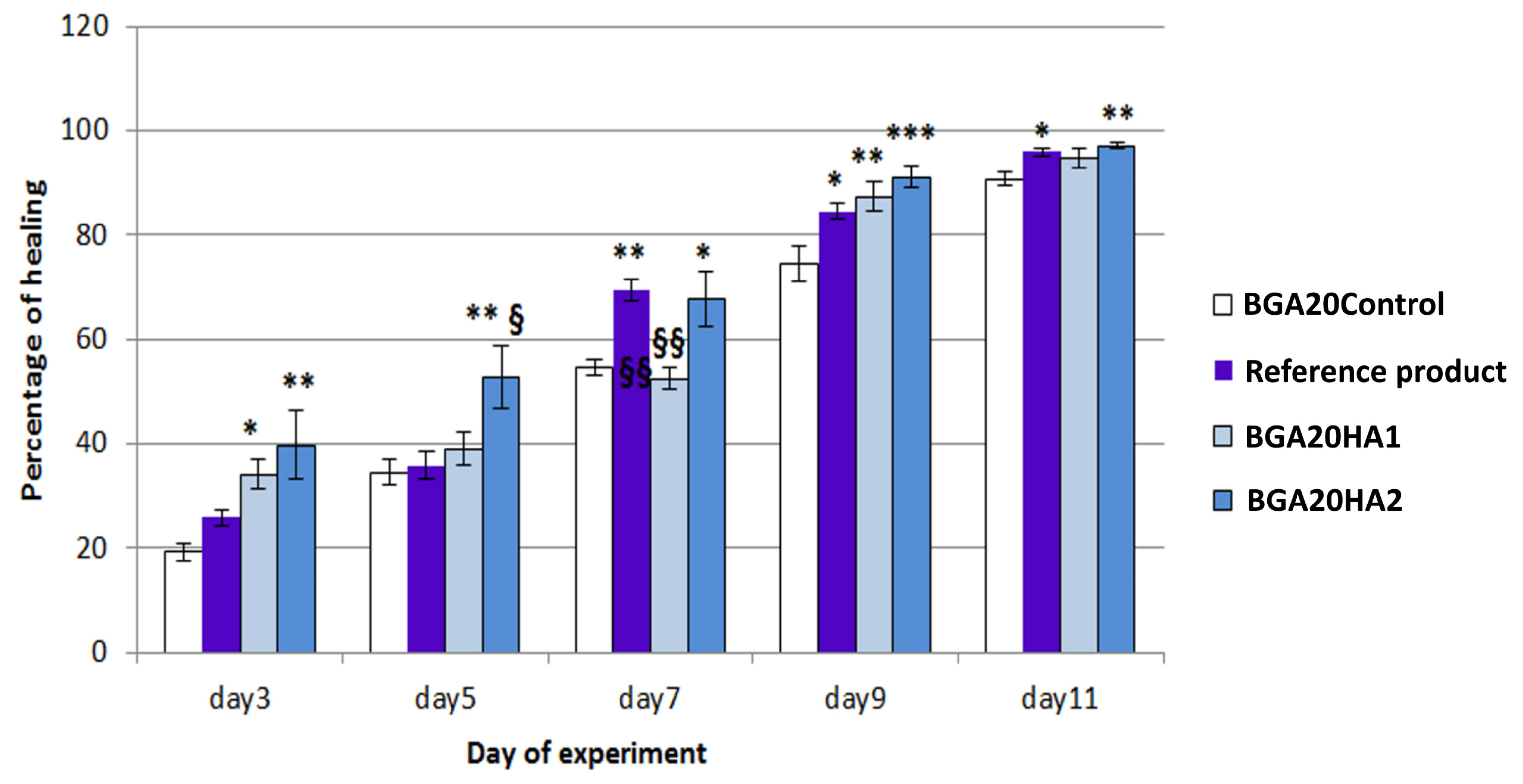
2.5.2. Determination of Wound Healing Percentage
2.5.3. Histopathological Observation
2.6. Statistical Analysis
3. Results
3.1. Preparation of Sodium Humate-Loaded Ultra-Deformable Vesicles (UDVs)
3.2. Preparation and Characterization of the Bigel Formulations
3.2.1. Visual Appearance and Microstructural Analysis
3.2.2. Stability and pH Evaluation
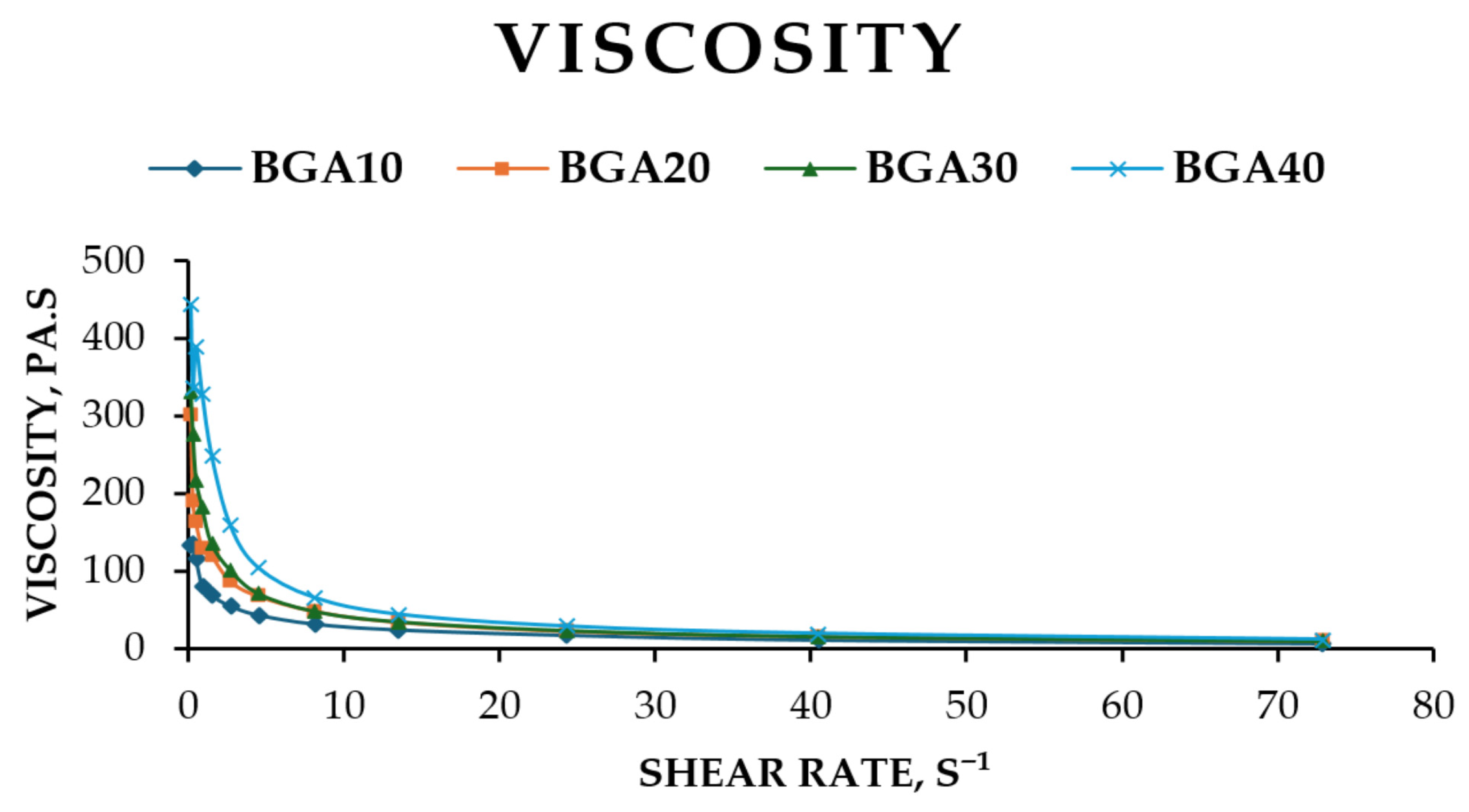
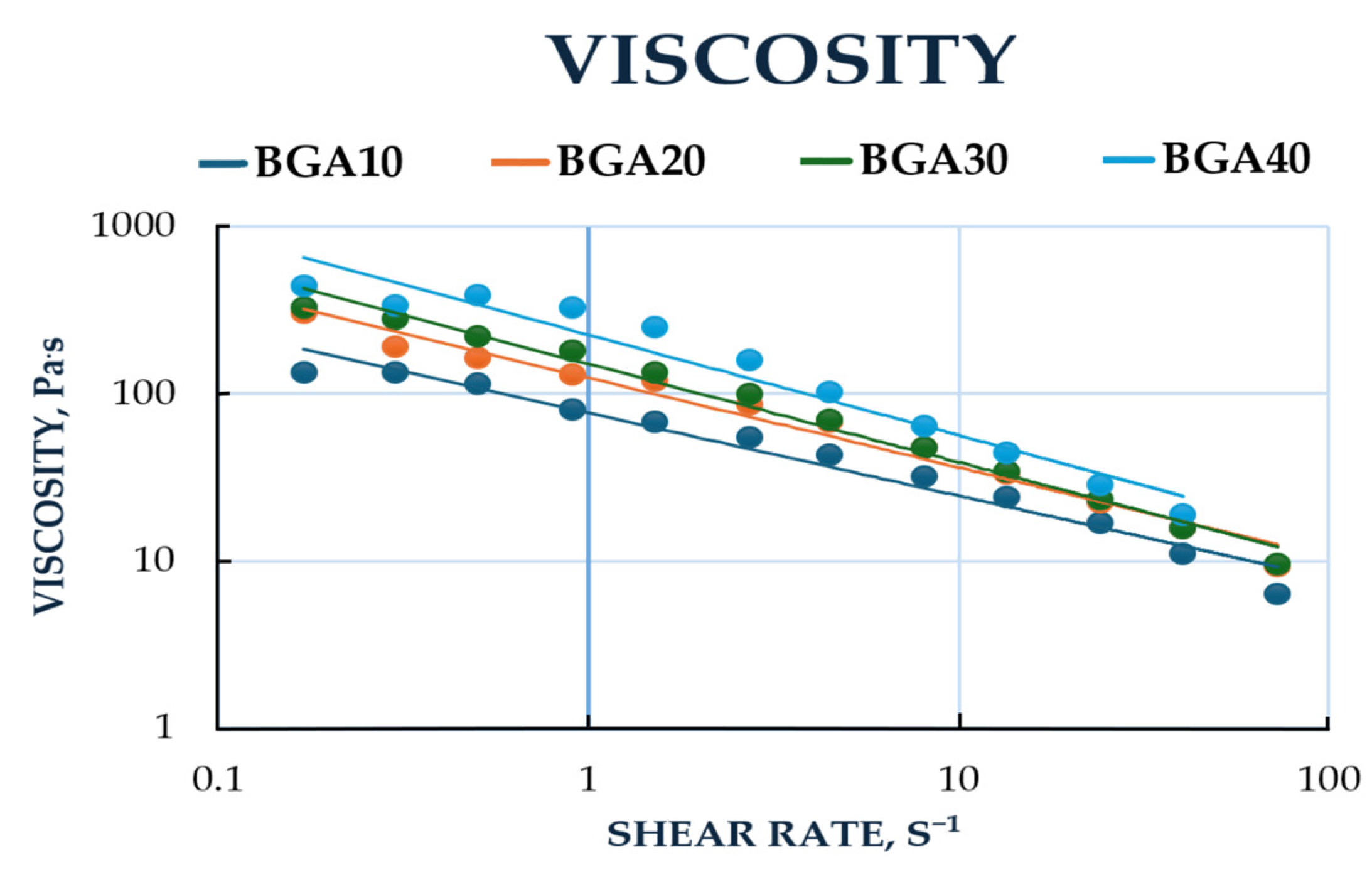
3.2.3. Spreadability and Rheological Studies
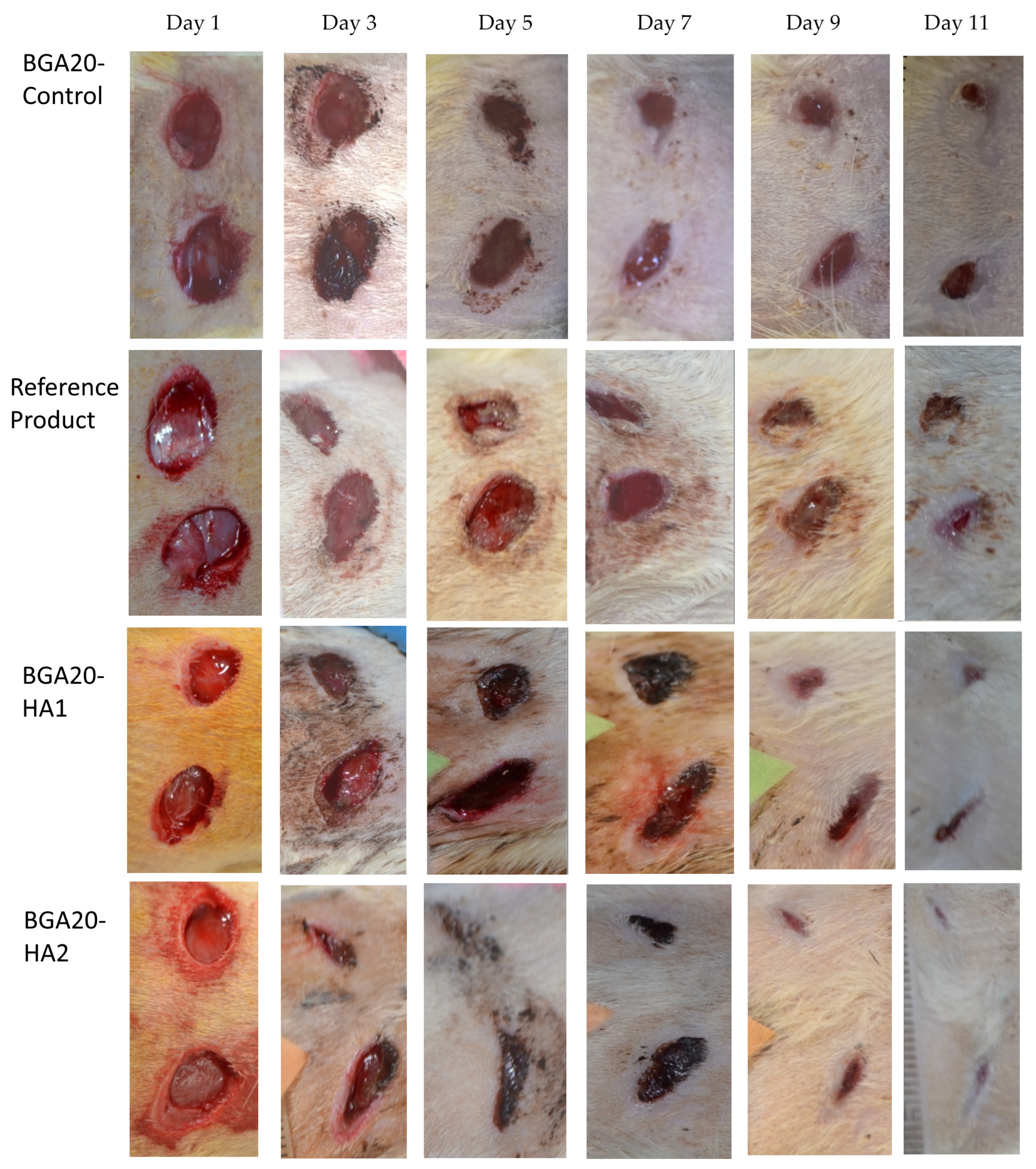
3.3. In Vivo Evaluation of the Bigel Formulations
4. Discussion
4.1. Assessment of Technological Variables and Optimization of UDV Formulations
4.2. Optimization and Characterization of the Bigel Formulation
4.3. Wound Healing Assessment
5. Conclusions
Supplementary Materials
Author Contributions
Funding
Institutional Review Board Statement
Informed Consent Statement
Data Availability Statement
Conflicts of Interest
Abbreviations
| EE | Entrapment Efficiency |
| HPMC | Hydroxypropyl Methylcellulose |
| PBS | Phosphate Buffer Saline |
| SD | Standard Deviation |
| TGF-β | Transforming Growth Factor-β |
| UDVs | Ultra-deformable Vesicles |
References
- Tottoli, E.M.; Dorati, R.; Genta, I.; Chiesa, E.; Pisani, S.; Conti, B. Skin Wound Healing Process and New Emerging Technologies for Skin Wound Care and Regeneration. Pharmaceutics 2020, 12, 735. [Google Scholar] [CrossRef]
- Kolimi, P.; Narala, S.; Nyavanandi, D.; Youssef, A.A.A.; Dudhipala, N. Innovative Treatment Strategies to Accelerate Wound Healing: Trajectory and Recent Advancements. Cells 2022, 11, 2439. [Google Scholar] [CrossRef]
- Raziyeva, K.; Kim, Y.; Zharkinbekov, Z.; Kassymbek, K.; Jimi, S.; Saparov, A. Immunology of Acute and Chronic Wound Healing. Biomolecules 2021, 11, 700. [Google Scholar] [CrossRef] [PubMed]
- Tavakoli, S.; Klar, A.S. Advanced Hydrogels as Wound Dressings. Biomolecules 2020, 10, 1169. [Google Scholar] [CrossRef] [PubMed]
- Zhao, R.; Liang, H.; Clarke, E.; Jackson, C.; Xue, M. Inflammation in Chronic Wounds. Int. J. Mol. Sci. 2016, 17, 2085. [Google Scholar] [CrossRef] [PubMed]
- Veličković, V.; Janković, D. Challenges around quantifying uncertainty in a holistic approach to hard-to-heal wound management: Health economic perspective. Int. Wound J. 2022, 20, 792–798. [Google Scholar] [CrossRef]
- Jodheea-Jutton, A.; Hindocha, S.; Bhaw-Luximon, A. Health economics of diabetic foot ulcer and recent trends to accelerate treatment. Foot 2022, 52, 101909. [Google Scholar] [CrossRef]
- Gounden, V.; Singh, M. Hydrogels and Wound Healing: Current and Future Prospects. Gels 2024, 10, 43. [Google Scholar] [CrossRef]
- Kamoun, E.A.; Kenawy, E.R.S.; Chen, X. A review on polymeric hydrogel membranes for wound dressing applications: PVA-based hydrogel dressings. J. Adv. Res. 2017, 8, 217–233. [Google Scholar] [CrossRef]
- Das Kurmi, B.; Tekchandani, P.; Paliwal, R.; Rai Paliwal, S. Transdermal drug delivery: Opportunities and challenges for controlled delivery of therapeutic agents using nanocarriers. Curr. Drug Metab. 2017, 18, 481–495. [Google Scholar] [CrossRef]
- Martins, A.; Silva, P.; Maciel, F.; Pastrana, L.; Cunha, R.; Cerqueira, M.; Vicente, A. Hybrid gels: Influence of oleogel/hydrogel ratio on rheological and textural properties. Food. Res. Int. 2019, 116, 1298–1305. [Google Scholar] [CrossRef]
- Martin-Illana, A.; Notario-Perez, F.; Cazorla-Luna, R.; Ruiz-Caro, R.; Bonferoni, M.; Tamayo, A.; Veiga, M. Bigels as drug delivery systems: From their components to their applications. Drug Discov. Today 2022, 27, 1008–1026. [Google Scholar] [CrossRef] [PubMed]
- Behera, B.; Sagiri, S.S.; Singh, V.K.; Pal, K.; Anis, A. Mechanical properties and delivery of drug/probiotics from starch and non-starch based novel bigels: A comparative study. Starch–Starke 2014, 66, 865–879. [Google Scholar] [CrossRef]
- Shakeel, A.; Lupi, F.R.; Gabriele, D.; Baldino, N.; De Cindio, B. Bigels: A unique class of materials for drug delivery applications. Soft Mater. 2018, 16, 77–93. [Google Scholar] [CrossRef]
- Almeida, I.F.; Fernandes, A.R.; Fernandes, L.; Pena Ferreira, M.R.; Costa, P.C.; Bahia, M.F. Moisturizing effect of oleogel/hydrogel mixtures. Pharm. Dev. Technol. 2008, 13, 487–494. [Google Scholar] [CrossRef] [PubMed]
- Sotirova, Y.; Kiselova-Kaneva, Y.; Vankova, D.; Tasinov, O.; Ivanova, D.; Popov, H.; Hristova, M.; Nikolova, K.; Andonova, V. Tissue Regeneration and Remodeling in Rat Models after Application of Hypericum perforatum L. Extract-Loaded Bigels. Gels 2024, 10, 341. [Google Scholar] [CrossRef]
- Krishnappa, M.; Abraham, S.; Furtado, S.C.; Krishnamurthy, S.; Rifaya, A.; Asiri, Y.I.; Chidambaram, K.; Pavadai, P. An Integrated Computational and Experimental Approach to Formulate Tamanu Oil Bigels as Anti-Scarring Agent. Pharmaceuticals 2024, 17, 102. [Google Scholar] [CrossRef]
- Vlad, R.-A.; Pintea, A.; Pintea, C.; Rédai, E.-M.; Antonoaea, P.; Bîrsan, M.; Ciurba, A. Hydroxypropyl Methylcellulose—A Key Excipient in Pharmaceutical Drug Delivery Systems. Pharmaceutics 2025, 17, 784. [Google Scholar] [CrossRef]
- Segneanu, A.-E.; Bejenaru, L.E.; Bejenaru, C.; Blendea, A.; Mogoşanu, G.D.; Biţă, A.; Boia, E.R. Advancements in Hydrogels: A Comprehensive Review of Natural and Synthetic Innovations for Biomedical Applications. Polymers 2025, 17, 2026. [Google Scholar] [CrossRef]
- Zanchetta, F.C.; De Wever, P.; Morari, J.; Gaspar, R.C.; Prado, T.P.d.; De Maeseneer, T.; Cardinaels, R.; Araújo, E.P.; Lima, M.H.M.; Fardim, P. In Vitro and In Vivo Evaluation of Chitosan/HPMC/Insulin Hydrogel for Wound Healing Applications. Bioengineering 2024, 11, 168. [Google Scholar] [CrossRef]
- Zhao, B.; Ren, Y.; Zhang, K.; Dong, Y.; Wang, K.; Zhang, N.; Li, J.; Yuan, M.; Wang, J.; Tu, Q. Hydroxypropyl methylcellulose reinforced bilayer hydrogel dressings containing L-arginine-modified polyoxometalate nanoclusters to promote healing of chronic diabetic wounds. Carbohydr. Polym. 2024, 342, 122396. [Google Scholar] [CrossRef]
- Amanzholkyzy, A.; Zhumagaliyeva, S.; Sultanova, N.; Abilov, Z.; Ongalbek, D.; Donbayeva, E.; Niyazbekova, A.; Mukazhanova, Z. Hydrogel Delivery Systems for Biological Active Substances: Properties and the Role of HPMC as a Carrier. Molecules 2025, 30, 1354. [Google Scholar] [CrossRef]
- Olteanu, G.; Neacșu, S.M.; Joița, F.A.; Musuc, A.M.; Lupu, E.C.; Ioniță-Mîndrican, C.-B.; Lupuliasa, D.; Mititelu, M. Advancements in Regenerative Hydrogels in Skin Wound Treatment: A Comprehensive Review. Int. J. Mol. Sci. 2024, 25, 3849. [Google Scholar] [CrossRef] [PubMed]
- Alberts, A.; Bratu, A.G.; Niculescu, A.-G.; Grumezescu, A.M. New Perspectives of Hydrogels in Chronic Wound Management. Molecules 2025, 30, 686. [Google Scholar] [CrossRef] [PubMed]
- Gupta, A.; Kowalczuk, M.; Heaselgrave, W.; Britland, S.T.; Martin, C.; Radecka, I. The production and application of hydrogels for wound management: A review. Eur. Polym. J. 2019, 111, 134–151. [Google Scholar] [CrossRef]
- Ambrozin, A.; Leite, A.; Bueno, F.; Vieira, P.; Fernandes, J.; Bueno, O.; da Silva, M.F.d.G.F.; Pagnocca, F.; Hebling, M.; Bacci, M., Jr. Limonoids from andiroba oil and Cedrela fissilis and their insecticidal activity. J. Braz. Chem. Soc. 2006, 17, 542–547. [Google Scholar] [CrossRef]
- De Brito Leal, A.; Hackbart, H.; Macueia, F.; Rombaldi, C. Andiroba oil (Carapa guianensis): Descriptive analysis and applicability. Ind. Crops Prod. 2023, 202, 117004. [Google Scholar] [CrossRef]
- Chia, C.; Medeiros, A.; Corraes, A.; Manso, J.; da Silva, C.; Takiya, C.; Vanz, R. Healing effect of andiroba-based emulsion in cutaneous wound healing via modulation of inflammation and transforming growth factor beta 3. Acta Cir. Bras. 2018, 33, 1000–1015. [Google Scholar] [CrossRef]
- Morikawa, T.; Nagatomo, A.; Kitazawa, K.; Muraoka, O.; Kikuchi, T.; Yamada, T.; Tanaka, R.; Ninomiya, K. Collagen Synthesis-Promoting Effects of Andiroba Oil and its Limonoid Constituents in Normal Human Dermal Fibroblasts. J. Oleo Sci. 2018, 67, 1271–1277. [Google Scholar] [CrossRef]
- Da Fonseca, A.; Monteiro, I.; dos Santos, C.; Carneiro, M.; Morais, S.; Araújo, P.; Santana, T.; Joanitti, G. Effects of andiroba oil (Carapa guianensis aublet) on the immune system in inflammation and wound healing: A scoping review. J. Ethnopharmacol. 2024, 327, 118004. [Google Scholar] [CrossRef]
- Da Silva, V.; Brito, L.; Marques, A.; Camillo, F.; Figueiredo, M. Bioactive limonoids from Carapa guianensis seeds oil and the sustainable use of its by-products. Curr. Res. Toxicol. 2023, 4, 100104. [Google Scholar] [CrossRef]
- Monteiro, I.d.S.; Fonseca, A.S.A.; dos Santos, C.R.; de Carvalho, J.P.S.; da Silva, S.W.; Veiga-Junior, V.F.; Ribeiro, R.; Vieira, I.J.C.; Nogueira, T.S.R.; da Costa, C.A.R.; et al. The Development and Characterization of an Andiroba Oil-Based Nanoemulsion (Carapa guianensis, Aubl.): Insights into Its Physico-Chemical Features and In Vitro Potential Healing Effects. Pharmaceutics 2025, 17, 498. [Google Scholar] [CrossRef] [PubMed]
- Araujo, A.L.; Teixeira, F.A.; Lacerda, T.F.; Flecher, M.C.; Souza, V.R.C.; Coelho, C.S. Effects of topical application of pure and ozonized andiroba oil on experimentally induced wounds in horses. Braz. J. Vet. Res. Anim. Sci. 2017, 54, 66–74. [Google Scholar] [CrossRef][Green Version]
- Williamson, D.A.; Carter, G.P.; Howden, B.P. Current and emerging topical antibacterials and antiseptics: Agents, action, and resistance patterns. Clin. Microbiol. Rev. 2017, 30, 827–860. [Google Scholar] [CrossRef] [PubMed]
- Gvozdeva, Y.; Peneva, P.; Katsarov, P. Biomedical Applications of Humic Substances: From Natural Biopolymers to Therapeutic Agents. Antioxidants 2025, 14, 1139. [Google Scholar] [CrossRef]
- Vašková, J.; Stupák, M.; Vidová Ugurbaş, M.; Žatko, D.; Vaško, L. Therapeutic Efficiency of Humic Acids in Intoxications. Life 2023, 13, 971. [Google Scholar] [CrossRef]
- Verrillo, M.; Parisi, M.; Savy, D.; Caiazzo, G.; Di Caprio, R.; Luciano, M.; Cacciapuoti, S.; Fabbrocini, G.; Piccolo, A. Antiflammatory activity and potential dermatological applications of characterized humic acids from a lignite and a green compost. Sci. Rep. 2022, 12, 2152. [Google Scholar] [CrossRef]
- Gheibi, N.; Samiee-Rad, F.; Sofiabadi, M.; Mosayebi, E.; Shalbaf, Z. The effect of combining humic and fulvic acids poultice on wound healing in male rats. J. Cutan. Aesthet. Surg. 2024, 17, 105–111. [Google Scholar] [CrossRef]
- Samiee-Rad, F.; Ghasemi, F.; Bahadoran, E.; Sofiabadi, M.; Shalbaf, Z.; Taherkhani, A.; Gheibi, N. The effect of topical 0.5% humic acid gel on male rats with skin ulcer. J. Cutan. Aesthet. Surg. 2024, 17, 131–136. [Google Scholar] [CrossRef]
- Vijaykumar, V.; Saikiran, M.; Bharathy, V.R.; Ubaidulla, U. Formulation Challenges in Dermal Drug Delivery Systems: A Comprehensive Review of Physicochemical Properties and Advanced Delivery Strategies. Int. J. Drug Deliv. Technol. 2024, 14, 1124–1129. [Google Scholar] [CrossRef]
- Jacob, K.K.; Kj, P.P.; Chandramohanakumar, N. Humic substances as a potent biomaterials for therapeutic and drug delivery system-a review. Int. J. Appl. Pharm. 2019, 11, 1–4. [Google Scholar] [CrossRef]
- Nayak, D.; Rathnanand, M.; Tippavajhala, V.K. Navigating Skin Delivery Horizon: An Innovative Approach in Pioneering Surface Modification of Ultradeformable Vesicles. AAPS PharmSciTech 2024, 25, 126. [Google Scholar] [CrossRef] [PubMed]
- Bhattacharya, V.; Alagusundaram, M. Ultra-Deformable Transethosomes: A Novel Tool to Strengthen Transdermic Drug Delivery an Overview. Res. J. Pharm. Technol. 2025, 18, 3352–3357. [Google Scholar] [CrossRef]
- Rani, D.; Sharma, V.; Manchanda, R.; Chaurasia, H. Formulation, design and optimization of glycerosomes for topical delivery of minoxidil. Res. J. Pharm. Technol. 2021, 14, 2367–2374. [Google Scholar] [CrossRef]
- Ahmed, Z.; Yusoff, M.S.; Mokhtar Kamal, N.H.; Abdul Aziz, H.; Roulia, M. Spectroscopic and Microscopic Analysis of Humic Acid Isolated from Stabilized Leachate HSs Fractionation. Agronomy 2023, 13, 1160. [Google Scholar] [CrossRef]
- Micić, V.; Schmid, D.; Bossa, N.; Gondikas, A.; Velimirovic, M.; Von Der Kammer, F.; Wiesner, M.R.; Hofmann, T. Impact of Sodium Humate Coating on Collector Surfaces on Deposition of Polymer-Coated Nanoiron Particles. Environ. Sci. Technol. 2017, 51, 9202–9209. [Google Scholar] [CrossRef]
- Shaikh, H.M.; Anis, A.; Poulose, A.M.; Madhar, N.A.; Al-Zahrani, S.M. Development of Bi-gels Based on Date Palm-Derived Cellulose Nanocrystal-Reinforced Guar Gum Hydrogel and Sesame Oil/Candelilla Wax Oleogel as Delivery Vehicles for Moxifloxacin. Gels 2022, 8, 330. [Google Scholar] [CrossRef]
- Bikiaris, R.; Paczkowska-Walendowska, M.; Koumentakou, I.; Niti, A.; Cielecka-Piontek, J.; Kyzas, G. Bioactivity and physicochemical characterization of Centella asiatica and Marigold extract serums: Antioxidant, anti-inflammatory, anti-tyrosinase and skin barrier function insights. Int. J. Cosm. Sci. 2025, 47, 1070–1084. [Google Scholar] [CrossRef]
- Agarwal, M.; Sachdeva, M.; Sharma, P.K. Development and Characterization of novel bigel of loxoprofen for topical drug delivery. J. Drug Deliv. Ther. 2022, 12, 46–54. [Google Scholar] [CrossRef]
- Bashkurina, E.O.; Anurova, M.O.; Zavalniy, M.S.; Demina, N.B.; Bardakov, A.I.; Krasnyuk, I.I. Dermatologic gels spreadability measuring methods comparative study. Int. J. Appl. Pharm. 2022, 14, 164–168. [Google Scholar] [CrossRef]
- Al-Barghouthy, E.Y.; Hamed, S.; Mehyar, G.F.; AlKhatib, H.S. Comparative Evaluation of Spreadability Measurement Methods for Topical Semisolid Formulations/A Scoping Review. Gels 2025, 11, 1006. [Google Scholar] [CrossRef] [PubMed]
- Pereira Beserra, F.; Sérgio Gushiken, L.F.; Vieira, A.J.; Augusto Bérgamo, D.; Luísa Bérgamo, P.; Oliveira De Souza, M.; Alberto Hussni, C.; Kiomi Takahira, R.; Henrique Nóbrega, R.; Monteiro Martinez, E.R.; et al. From Inflammation to Cutaneous Repair: Topical Application of Lupeol Improves Skin Wound Healing in Rats by Modulating the Cytokine Levels, NF-κB, Ki-67, Growth Factor Expression, and Distribution of Collagen Fibers. Int. J. Mol. Sci. 2020, 21, 4952. [Google Scholar] [CrossRef] [PubMed]
- Kant, V.; Jangir, B.L.; Kumar, V.; Nigam, A.; Sharma, V. Quercetin Accelerated Cutaneous Wound Healing in Rats by Modulation of Different Cytokines and Growth Factors. Growth Factors 2020, 38, 105–119. [Google Scholar] [CrossRef] [PubMed]
- Wu, X.; Luo, X.; Gu, S.; Xu, J. The Effects of Polygonum Cuspidatum Extract on Wound Healing in Rats. J. Ethnopharmacol. 2012, 141, 934–937. [Google Scholar] [CrossRef]
- Apostolova, E.; Stavrakeva, K.; Kokova, V.; Dimov, I.; Choneva, M.; Delev, D.; Kostadinov, I.; Bivolarski, I.; Koleva, M.; Mladenov, R.; et al. Protective Effects of Methanolic Extract of Micromeria Frivaldszkyana (Degen) Velen Against Acetaminophen-Induced Liver Toxicity in Male Wistar Rats. Int. J. Mol. Sci. 2025, 26, 9112. [Google Scholar] [CrossRef]
- Katsarov, P.; Simeonov, P.; Apostolova, E.; Gvozdeva, Y.; Boyuklieva, R.; Lukova, P.; Bivolarski, I.; Koleva, M.; Delattre, C.; Kokova, V. Design, Characterization, and Wound-Healing Evaluation of Sodium Humate Transferosome-Loaded Alginate/HPMC Dermal Patches. Pharmaceutics 2026, 18, 290. [Google Scholar] [CrossRef]
- Soni, K.; Gour, V.; Agrawal, P.; Haider, T.; Kanwar, I.L.; Bakshi, A.; Soni, V. Carbopol-olive oil-based bigel drug delivery system of doxycycline hyclate for the treatment of acne. Drug Dev. Ind. Pharm. 2021, 47, 954–962. [Google Scholar] [CrossRef]
- Peréz-Salas, J.L.; Moreno-Jiménez, M.R.; Medina-Torres, L.; Rocha-Guzmán, N.E.; Bernad-Bernad, M.J.; González-Laredo, R.F.; Gallegos-Infante, J.A. Development and Characterization of Bigels for the Topical Delivery of Curcumin. Sci. Pharm. 2025, 93, 28. [Google Scholar] [CrossRef]
- Liston, L.S.; Phanapithakkun, S.; Pimsarn, N.; Dangkaokhia, N.; Nakasan, T.; Yoon, A.; Todo, H.; Srichana, T.; Sawatdee, S.; See, G.; et al. Formulation Development and Characterization of Bigels Containing Curcumin for Topical Skin Delivery. AAPS PharmSciTech 2025, 26, 175. [Google Scholar] [CrossRef]
- Yürüsoy, M.; Pakdemirli, M. Group classification of a non-Newtonian fluid model using classical approach and equivalence transformations. Int. J. Non Linear Mech. 1999, 34, 341–346. [Google Scholar] [CrossRef]
- Ji, Y.; Zhang, A.; Chen, X.; Che, X.; Zhou, K.; Wang, Z. Sodium humate accelerates cutaneous wound healing by activating TGF-β/Smads signaling pathway in rats. Acta Pharm. Sin. B 2016, 6, 132–140. [Google Scholar] [CrossRef] [PubMed]
- Zhang, K.; Zhang, Y.; Li, Z.; Li, N.; Feng, N. Essential oil-mediated glycerosomes increase transdermal paeoniflorin delivery: Optimization, characterization, and evaluation In Vitro and In Vivo. Int. J. Nanomed. 2017, 12, 3521–3532. [Google Scholar] [CrossRef] [PubMed]
- Salem, H.F.; Kharshoum, R.M.; Sayed, O.M.; Abdel Hakim, L.F. Formulation design and optimization of novel soft glycerosomes for enhanced topical delivery of celecoxib and cupferron by Box–Behnken statistical design. Drug Dev. Ind. Pharm. 2018, 44, 1871–1884. [Google Scholar] [CrossRef] [PubMed]
- Richardson, E.S.; Pitt, W.G.; Woodbury, D.J. The role of cavitation in liposome formation. Biophys. J. 2007, 93, 4100–4107. [Google Scholar] [CrossRef]
- Abou-Saleh, R.H.; McLaughlan, J.R.; Bushby, R.J.; Johnson, B.R.; Freear, S.; Evans, S.D.; Thomson, N.H. Molecular effects of glycerol on lipid monolayers at the gas–liquid interface: Impact on microbubble physical and mechanical properties. Langmuir 2019, 35, 10097–10105. [Google Scholar] [CrossRef]
- Xu, X.; Costa, A.; Burgess, D.J. Protein encapsulation in unilamellar liposomes: High encapsulation efficiency and a novel technique to assess lipid-protein interaction. Pharm. Res. 2012, 29, 1919–1931. [Google Scholar] [CrossRef]
- Zampouni, K.; Dimakopoulou-Papazoglou, D.; Katsanidis, E. Food-Grade Bigel Systems: Formulation, Characterization, and Applications for Novel Food Product Development. Gels 2024, 10, 712. [Google Scholar] [CrossRef]
- Santos, J.; Trujillo-Cayado, L.A.; Carrillo, F.; López-Castejón, M.L.; Alfaro-Rodríguez, M.C. Relation between Droplet Size Distributions and Physical Stability for Zein Microfluidized Emulsions. Polymers 2022, 14, 2195. [Google Scholar] [CrossRef]
- Liu, Y.; Zhang, H.; Chen, X.-W.; Yang, T.; Sun, C.; Sun, S. Fabrication and characterization of novel thermoresponsive emulsion gels and oleogels stabilizied by assembling nanofibrous from dual natural triterpenoid saponins. Food Chem. X 2023, 18, 100751. [Google Scholar] [CrossRef]
- Kasparaviciene, G.; Maslii, Y.; Herbina, N.; Kazlauskiene, D.; Marksa, M.; Bernatoniene, J. Development and Evaluation of Two-Phase Gel Formulations for Enhanced Delivery of Active Ingredients: Sodium Diclofenac and Camphor. Pharmaceutics 2024, 16, 366. [Google Scholar] [CrossRef]
- Brooks, S.; Mahmoud, R.; Lin, R.; Fluhr, J.; Yosipovitch, G. The Skin Acid Mantle: An Update on Skin pH. J. Investig. Dermat. 2025, 145, 509–521. [Google Scholar] [CrossRef] [PubMed]
- Ilić, T.; Pantelić, I.; Savić, S. The Implications of Regulatory Framework for Topical Semisolid Drug Products: From Critical Quality and Performance Attributes towards Establishing Bioequivalence. Pharmaceutics 2021, 13, 710. [Google Scholar] [CrossRef] [PubMed]
- Zhao, L.; Chen, J.; Bai, B.; Song, G.; Zhang, J.; Yu, H.; Huang, S.; Wang, Z.; Lu, G. Topical drug delivery strategies for enhancing drug effectiveness by skin barriers, drug delivery systems and individualized dosing. Front. Pharmacol. 2024, 14, 1333986. [Google Scholar] [CrossRef] [PubMed]
- Lardy, F.; Vennat, B.; Pouget, M.P.; Pourrat, A. Functionalization of hydrocolloids: Principal component analysis applied to the study of correlations between parameters describing the consistency of hydrogels. Drug Dev. Ind. Pharm. 2000, 26, 715–721. [Google Scholar] [CrossRef]
- Yang, J.; Zheng, H.; Mo, Y.; Gao, Y.; Mao, L. Structural characterization of hydrogel-oleogel biphasic systems as affected by oleogelators. Food Res. Int. 2022, 158, 111536. [Google Scholar] [CrossRef]
- Chorilli, M.; Prestes, P.S.; Rigon, R.B.; Leonardi, G.R.; Chiavacci, L.A.; Sarmento, V.; Oliveira, A.; Scarpa, M. Structural characterization and in vivo evaluation of retinyl palmitate in non-ionic lamellar liquid crystalline system. Colloids Surf. B Biointerfaces 2011, 85, 182–188. [Google Scholar] [CrossRef]
- Calienni, M.N.; Martínez, L.M.; Izquierdo, M.C.; Alonso, S.d.V.; Montanari, J. Rheological and Viscoelastic Analysis of Hybrid Formulations for Topical Application. Pharmaceutics 2023, 15, 2392. [Google Scholar] [CrossRef]
- Esad, M.; Dimov, I.; Choneva, M.; Popova, M.; Kokova, V.; Apostolova, E.; Bivolarska, A. Molecular Mecha-840 nisms of Wound Healing: The Role of Medicinal Plants. Life 2025, 15, 1748. [Google Scholar] [CrossRef]
- Esad, M.; Popova, M.; Apostolova, E.; Bivolarska, A. Signal Transduction in Wound Healing: The Effects of 842 Plant-Derived Biologically Active Substances. Pharmacia 2024, 71, 1–7. [Google Scholar] [CrossRef]





| Hydrophilic Phase (Hydrogel Phase) | Lipophilic Phase (Oleogel Phase) | ||
|---|---|---|---|
| Content | Amount (g) | Content | Amount (g) |
| Methocel K100M premium hydroxypropyl | 2.5 | Andiroba oil (Carapa guianensis Aubletet) | 84.0 |
| Purified water/UDVs aqueous suspension | 97.5 | Span®60 | 16.0 |
| Score | Evaluation |
|---|---|
| 1–3 | Indicates the absence or minimal presence of fibroblast accumulation, with no evidence of granulation tissue formation or epithelial migration. |
| 4–6 | Represents a thin, early granulation matrix which is primarily composed of inflammatory cells, with few fibroblasts, minimal capillary formation and collagen deposition, and only slight epithelial migration. |
| 7–9 | Indicates a moderately developed granulation tissue characterized by abundant inflammatory cells, an increased number of fibroblasts, more extensive collagen deposition, pronounced neovascularization, and minimal-to-moderate epithelial migration. |
| 10–12 | Represents a well-formed, highly vascular granulation tissue characterized by a substantial presence of fibroblasts and significant collagen deposition, along with epithelial coverage extending from partial to complete closure of the wound surface. |
| Model | Phospholipid Concentration | Glycerol Concentration | Sonication Time | Average Size | ζ-Potential | EE Sod. Humate | |||
|---|---|---|---|---|---|---|---|---|---|
| Level | mM | Level | %, v/v | Level | min | nm ± SD | mV ± SD | % ± SD | |
| UDVs1 | −1 | 1.0 | −1 | 10 | −1 | 5 | 471.92 ± 12.58 | −49.83 ± 0.27 | 47.80 ± 3.06 |
| UDVs2 | +1 | 10.0 | −1 | 10 | −1 | 5 | 516.79 ± 6.83 | −46.28 ± 0.53 | 68.42 ± 3.01 |
| UDVs3 | −1 | 1.0 | +1 | 30 | −1 | 5 | 561.36 ± 32.25 | −35.11 ± 0.04 | 58.97 ± 2.32 |
| UDVs4 | +1 | 10.0 | +1 | 30 | −1 | 5 | 643.35 ± 4.52 | −40.48 ± 0.63 | 82.12 ± 2.60 |
| UDVs5 | −1 | 1.0 | −1 | 10 | +1 | 15 | 133.59 ± 6.23 | −39.84 ± 0.18 | 31.50 ± 1.80 |
| UDVs6 | +1 | 10.0 | −1 | 10 | +1 | 15 | 203.88 ± 9.72 | −42.65 ± 0.20 | 54.84 ± 1.68 |
| UDVs7 | −1 | 1.0 | +1 | 30 | +1 | 15 | 159.28 ± 11.60 | −40.61 ± 0.81 | 46.68 ± 0.76 |
| UDVs8 | +1 | 10.0 | +1 | 30 | +1 | 15 | 215.46 ± 11.48 | −46.83 ± 0.97 | 55.75 ± 2.71 |
| UDVs9 | 0 | 5.5 | 0 | 20 | 0 | 10 | 361.26 ± 3.39 | −45.13 ± 0.54 | 59.90 ± 2.68 |
| Term | Influence over the Average Size | Influence over the Entrapment Efficiency | ||||||||||
|---|---|---|---|---|---|---|---|---|---|---|---|---|
| Effect | Coef | SE Coef | T-Value | p-Value | VIF | Effect | Coef | SE Coef | T-Value | p-Value | VIF | |
| Constant | 363.20 | 3.41 | 106.45 | <0.001 | 57.009 | 0.599 | 95.14 | <0.001 | ||||
| Variable I | 63.34 | 31.67 | 3.41 | 9.28 | <0.001 | 1.00 | 21.547 | 10.773 | 0.599 | 17.98 | <0.001 | 1.00 |
| Variable II | 63.32 | 31.66 | 3.41 | 9.28 | <0.001 | 1.00 | 12.742 | 6.371 | 0.599 | 10.63 | <0.001 | 1.00 |
| Variable III | −370.30 | −185.15 | 3.41 | −54.27 | <0.001 | 1.00 | −14.637 | −7.318 | 0.599 | −12.21 | <0.001 | 1.00 |
| Variables I*II | 5.75 | 2.88 | 3.41 | 0.84 | 0.410 | 1.00 | −0.433 | −0.217 | 0.599 | −0.36 | 0.722 | 1.00 |
| Variables I*III | −0.09 | −0.05 | 3.41 | −0.01 | 0.989 | 1.00 | −0.342 | −0.171 | 0.599 | −0.29 | 0.779 | 1.00 |
| Variables II*III | −44.68 | −22.34 | 3.41 | −6.55 | <0.001 | 1.00 | −0.303 | 0.152 | 0.599 | 0.25 | 0.803 | 1.00 |
| Variables I*II*III | −12.81 | −6.40 | 3.41 | −1.88 | 0.077 | 1.00 | −1.698 | −0.849 | 0.599 | −1.42 | 0.174 | 1.00 |
| Ct Pt | −1.9 | 10.2 | −0.19 | 0.852 | 1.00 | 2.89 | 1.80 | 1.61 | 0.126 | 1.00 | ||
| Batch | Oleogel (%) | Mean Diameter ± SD (µm) | Droplet Size Range (µm) |
|---|---|---|---|
| BGA10 | 10 | 15.25 ± 3.69 | 7.5–20.5 |
| BGA20 | 20 | 12.27 ± 3.41 | 6.5–18.0 |
| BGA30 | 30 | 11.08 ± 4.33 | 4.0–17.0 |
| BGA40 | 40 | 19.37 ± 7.29 | 5.5–34.5 |
| BGA10 | BGA20 | BGA30 | BGA40 | |
|---|---|---|---|---|
| pH value | 6.25 ± 0.01 | 5.96 ± 0.02 | 5.83 ± 0.02 | 5.78 ± 0.03 |
| Formulation | Spreading Diameter, Ø (mm) |
|---|---|
| BGA10 | 49.5 ± 0.15 |
| BGA20 | 47.1 ± 0.02 |
| BGA30 | 46.7 ± 0.08 |
| BGA40 | 43.4 ± 0.23 |
| Sample | Coefficient Values | ||
|---|---|---|---|
| K | n | R2 | |
| BGA10 | 76.808 | 0.494 | 0.967 |
| BGA20 | 124.69 | 0.535 | 0.977 |
| BGA30 | 150.64 | 0.587 | 0.984 |
| BGA40 | 225.55 | 0.601 | 0.948 |
| Score | ||||
|---|---|---|---|---|
| Group | 1–3 | 4–6 | 7–9 | 10–12 |
| BGA20Control | 2 | 6 | - | - |
| Reference product | - | 2 | 5 | 1 |
| BGA20HA1 | - | 4 | 4 | - |
| BGA20HA2 | - | - | 2 | 6 |
Disclaimer/Publisher’s Note: The statements, opinions and data contained in all publications are solely those of the individual author(s) and contributor(s) and not of MDPI and/or the editor(s). MDPI and/or the editor(s) disclaim responsibility for any injury to people or property resulting from any ideas, methods, instructions or products referred to in the content. |
© 2026 by the authors. Licensee MDPI, Basel, Switzerland. This article is an open access article distributed under the terms and conditions of the Creative Commons Attribution (CC BY) license.
Share and Cite
Peneva, P.; Kokova, V.; Apostolova, E.; Simeonov, P.; Zahariev, N.; Gvozdeva, Y.; Penkov, D.; Hadjikinova, R.; Bivolarski, I.; Koleva, M.; et al. Engineering a Nanostructured Hybrid Gel System with Sodium Humate for Enhanced Wound Healing. J. Funct. Biomater. 2026, 17, 175. https://doi.org/10.3390/jfb17040175
Peneva P, Kokova V, Apostolova E, Simeonov P, Zahariev N, Gvozdeva Y, Penkov D, Hadjikinova R, Bivolarski I, Koleva M, et al. Engineering a Nanostructured Hybrid Gel System with Sodium Humate for Enhanced Wound Healing. Journal of Functional Biomaterials. 2026; 17(4):175. https://doi.org/10.3390/jfb17040175
Chicago/Turabian StylePeneva, Petya, Vesela Kokova, Elisaveta Apostolova, Plamen Simeonov, Nikolay Zahariev, Yana Gvozdeva, Dimitar Penkov, Rayna Hadjikinova, Ilia Bivolarski, Maria Koleva, and et al. 2026. "Engineering a Nanostructured Hybrid Gel System with Sodium Humate for Enhanced Wound Healing" Journal of Functional Biomaterials 17, no. 4: 175. https://doi.org/10.3390/jfb17040175
APA StylePeneva, P., Kokova, V., Apostolova, E., Simeonov, P., Zahariev, N., Gvozdeva, Y., Penkov, D., Hadjikinova, R., Bivolarski, I., Koleva, M., & Katsarov, P. (2026). Engineering a Nanostructured Hybrid Gel System with Sodium Humate for Enhanced Wound Healing. Journal of Functional Biomaterials, 17(4), 175. https://doi.org/10.3390/jfb17040175