1. Introduction
Quadrotor unmanned aerial vehicles (QUAVs) have attracted considerable attention from both academia and industry due to their simple mechanical structure, vertical take-off and landing capability, and high maneuverability [
1]. These features have made them suitable for a wide range of applications, including infrastructure inspection, environmental monitoring, precision agriculture, surveillance, and search-and-rescue missions [
2]. As the operational scenarios for QUAVs become increasingly complex, developing reliable control strategies that ensure accurate trajectory tracking and robust closed-loop performance remains an active and challenging research topic [
3].
The control of QUAVs remains a challenging task due to the strongly nonlinear and underactuated nature of their dynamics. In particular, the translational and rotational motions are intrinsically coupled; so, variations in the vehicle attitude directly affect its position dynamics, increasing the complexity of controller design [
4]. Furthermore, practical implementations are inevitably influenced by modeling inaccuracies, external disturbances, and measurement noise, which may deteriorate tracking accuracy and reduce the robustness margins of the closed-loop system [
5]. These challenges have motivated the development of robust nonlinear control methodologies capable of handling such adverse conditions [
5].
Among the nonlinear control methodologies proposed for QUAVs, backstepping control has received considerable attention because it exploits the cascaded structure of the vehicle dynamics, allowing for the systematic construction of stabilizing control laws [
6]. Its application to QUAVs has demonstrated satisfactory tracking performance under nominal conditions. Nevertheless, the performance of backstepping controllers degrades under model uncertainties and external disturbances, since the design strongly depends on the knowledge of the system dynamics and the availability of state measurements [
7]. To address these limitations, sliding mode control (SMC) has been integrated with backstepping frameworks, leading to backstepping sliding mode control (BSMC) schemes that combine the recursive stabilization properties of backstepping with the inherent disturbance rejection capability of sliding mode techniques [
8].
BSMC strategies have demonstrated remarkable capabilities for improving disturbance rejection and achieving finite-time convergence in QUAV control applications [
9]. However, their practical implementation remains affected by the well-known chattering phenomenon associated with the discontinuous nature of the switching action [
10]. Excessively large switching gains, commonly adopted to preserve robustness, may excite unmodeled dynamics, amplify measurement noise, and accelerate actuator degradation [
11]. Several approaches have been proposed to mitigate this issue, including continuous approximations of the switching function, adaptive gain tuning, and higher-order sliding mode techniques such as the super-twisting algorithm [
12]. Recent developments have mainly focused on improving the trade-off between robustness and control smoothness. For instance, in [
13], a global fast terminal sliding mode control (GFTSMC) scheme was proposed to improve convergence speed and disturbance rejection, achieving faster steady-state response and reducing tracking errors compared to classical SMC formulations. In [
14], an adaptive fast nonsingular terminal sliding mode strategy, combined with a super-twisting reaching law, was introduced to enhance tracking accuracy and attenuate chattering under time-varying disturbances. Along the same direction, the adaptive super-twisting controller introduced in [
15] exploited gain adaptation to preserve robustness while generating smoother control actions. Although these approaches demonstrate improved performance in terms of convergence speed, disturbance rejection, and chattering attenuation, they generally require more elaborate controller architectures, additional tuning parameters, or partial knowledge of the disturbance characteristics, which may complicate their practical implementation [
16].
The limitations associated with many advanced sliding mode strategies have motivated the exploration of alternative mathematical frameworks capable of improving robustness without significantly increasing controller complexity. In this context, fractional-order calculus (FOC), which generalizes classical differentiation and integration to non-integer orders, has attracted growing interest in the control community [
17]. Unlike conventional integer-order models, fractional operators inherently capture memory effects and nonlocal interactions, allowing for a more accurate representation of systems whose behavior depends not only on their current state but also on their past evolution [
18]. This additional degree of freedom provides a richer dynamic representation and has been successfully exploited to model and control nonlinear systems affected by uncertainties, disturbances, and partially known dynamics [
19].
Recent research on QUAV control has increasingly considered fractional-order extensions of conventional control strategies [
20]. In [
21], a fractional-order sliding mode control scheme with time-varying state constraints was developed, with the translational and rotational subsystems treated separately to guarantee asymptotic stability and constraint satisfaction under wind disturbances. However, the method relies on accurate constraint definition and does not explicitly address measurement noise or chattering mitigation. In [
22], a fractional-order adaptive fixed-time sliding mode fault-tolerant controller was proposed to handle actuator faults and external disturbances simultaneously, ensuring convergence within a predefined time bound. Despite its robustness, the approach introduces multiple adaptive mechanisms and increases parameter tuning complexity. A fractional-order sliding mode controller combined with active disturbance rejection control was presented in [
23], achieving improved disturbance rejection and reduced chattering through a dual-loop structure. Nevertheless, the multi-layer architecture increases implementation complexity.
Several works have focused on enhancing convergence properties through terminal sliding mode formulations. In [
24], an adaptive fractional-order nonsingular fast terminal sliding mode controller was designed to ensure finite-time convergence under stochastic disturbances, achieving high tracking accuracy. Similarly, in [
25], a fractional-order fast terminal backstepping sliding mode control strategy was introduced for QUAV position and attitude regulation, demonstrating improved robustness and convergence speed under disturbances. However, these approaches require complex sliding surface design and adaptive tuning laws, which may limit their practical deployment. Alternative designs include high-order fractional PID–SMC controllers [
26], which improve steady-state and transient performance but introduce additional controller parameters, and event-triggered fractional-order sliding mode control strategies [
27], which reduce computational burden at the cost of increased implementation complexity due to triggering conditions. Furthermore, improved adaptive fractional-order integral terminal sliding mode controllers [
28] have been proposed to enhance robustness against time-varying disturbances. However, they rely on multiple adaptive loops and increased structural complexity.
In parallel, fractional-order backstepping-based approaches have also been investigated. In [
29], a neural-network-based fractional-order backstepping controller was proposed to address unknown nonlinear dynamics, achieving improved tracking performance through online approximation. However, the reliance on neural networks increases computational cost and requires training and tuning procedures. From an estimation perspective, fractional-order observer designs have demonstrated notable robustness improvements. In [
30], a fractional-order sliding mode observer based on the Caputo definition was developed for actuator fault estimation in QUAVs, demonstrating enhanced robustness to noise, chattering, and initial-condition variations compared to classical observers.
Despite the considerable progress achieved in fractional-order sliding mode control, most existing approaches share a common characteristic: the fractional operator is incorporated into the controller, either through the sliding manifold, the reaching law, or the control algorithm itself, whereas the mathematical model of the plant remains unchanged. As a result, the performance improvements reported in previous studies arise from the combined effect of the modified controller and the fractional formulation, making it difficult to distinguish the contribution of the system dynamics from that of the control strategy.
The present work follows a different perspective. Rather than introducing the fractional operator into the control law, the proposed formulation incorporates fractional dynamics directly into the QUAV model while preserving the original structure of the BSMC. Consequently, the controller synthesis remains unchanged, whereas the state variables used for feedback evolve according to fractional-order dynamics. This separation makes it possible to evaluate the influence of the fractional dynamic model independently of additional modifications to the controller.
Based on this formulation, a fractional-order backstepping sliding mode controller (FO-BSMC) is developed for QUAV trajectory tracking. The fractional dynamics are represented through the Caputo derivative and numerically implemented using the Grünwald–Letnikov approximation. The resulting controller preserves the recursive design of the conventional BSMC while operating with the fractional-order state trajectories generated by the proposed dynamic model. This formulation provides a direct framework for assessing the influence of fractional dynamics on the closed-loop performance without introducing additional modifications into the controller architecture.
The main contributions of this work are summarized as follows:
A fractional-order dynamic formulation of the QUAV based on the Caputo derivative definition.
A novel FO-BSMC architecture in which the fractional-order behavior is introduced directly into the QUAV dynamics rather than through fractional sliding manifolds or fractional reaching laws.
A comparative robustness analysis between the proposed FO-BSMC and the classical integer-order BSMC.
A theoretical analysis including the Lyapunov stability proof of the conventional BSMC and a fractional Lyapunov–Mittag–Leffler stability proof for the proposed FO-BSMC.
The effectiveness of the proposed FO-BSMC strategy is evaluated through a comparative study against the conventional integer-order BSMC. The fractional differentiation order is selected using the Particle Swarm Optimization (PSO) algorithm based on trajectory-tracking performance. Both controllers are assessed under identical operating conditions, considering trajectory tracking in the presence of external disturbances, perturbed initial conditions, and noisy measurements. Furthermore, Monte Carlo simulations are performed to evaluate the robustness of the closed-loop system under variations in the initial conditions. The control performance is quantitatively assessed using the integral absolute error (IAE) and the integral squared error (ISE), while the smoothness of the control signals and the chattering attenuation capability are analyzed qualitatively.
The remainder of this paper is organized as follows:
Section 2 presents the fundamental concepts of fractional-order calculus.
Section 3 introduces the QUAV mathematical model, the design of the classical BSMC and its Lyapunov-based stability analysis, followed by the proposed FO-SMC formulation together with its corresponding fractional-order stability analysis.
Section 4 presents the simulation scenarios and discusses the obtained results. Finally,
Section 5 summarizes the main conclusions of this study.
2. Fractional Calculus Preliminaries
Fractional calculus generalizes classical differential and integral operators by extending their order from integers to real (or even complex) numbers. This generalization provides a flexible mathematical framework capable of capturing memory effects and hereditary properties that naturally arise in a wide class of physical and engineering systems [
31]. As a result, fractional-order operators have proven particularly well-suited for modeling and analyzing dynamical systems exhibiting nonlocal or history-dependent behavior [
17].
Several equivalent formulations of fractional-order operators have been reported in the literature. Among them, the Riemann–Liouville (RL), Grünwald–Letnikov (GL), and Caputo definitions are the most widely adopted in control-oriented applications [
32]. For completeness, the main definitions employed in this work are summarized below [
31].
Let
be a sufficiently smooth function. The RLfractional integral of order
is defined as follows:
where
denotes Euler’s Gamma function, given by:
It is worth noting that RL integral in Equation (1) reduces to the classical integral operator when .
Based on the same framework, the RLfractional derivative of order
is defined as follows:
where
, and
denote the integer part of
. As expected, when
is 1, the RL derivative is just like the classical derivative. In control applications, the Caputo definition is often preferred due to its compatibility with physically meaningful initial conditions [
18]. The Caputo fractional derivative of order
is defined as follows:
for
, this expression coincides with the standard first-order derivative.
Numerical Approximation of Fractional-Order Operators
Analytical solutions of fractional-order differential equations are available only for a limited class of problems. Consequently, numerical approximation techniques play a central role in their practical implementation. In this work, the Grünwald–Letnikov (GL) approach is adopted due to its conceptual simplicity and direct suitability for time-domain simulations [
30].
The GL fractional derivative of order
is defined as follows:
where
denotes the discretization step and
represents the generalized binomial coefficient. This coefficient can be expressed using the Gamma function as follows:
For , definition in Equation (5) corresponds to a fractional integral, whereas for , it represents a fractional derivative.
Consider the fractional-order dynamical system:
Its numerical implementation using the GL approximation leads to the recursive expression:
where the coefficients
are computed recursively as follows:
The summation term in Equation (8) accounts explicitly for the memory effect inherent to fractional-order systems and is commonly referred to as the intrinsic memory contribution.
4. Simulations Results
This section presents a comparative evaluation of the conventional backstepping sliding-mode controller (BSMC) and the proposed fractional-order backstepping sliding-mode controller (FO-BSMC) for the trajectory-tracking problem of a quadrotor unmanned aerial vehicle (QUAV). The objective is to assess the influence of the fractional-order dynamic formulation on closed-loop performance across different operating conditions, while maintaining the same controller structure and tuning parameters for both approaches.
The proposed FO-BSMC was implemented using the fractional-order QUAV model developed in
Section 3.4, where the Caputo fractional derivative was numerically approximated through the Grünwald–Letnikov discretization. Since the fractional differentiation order significantly influences the system dynamics, its value was determined through the Particle Swarm Optimization (PSO) algorithm rather than selected empirically. The optimization process was formulated to minimize the trajectory-tracking error under identical operating conditions while keeping the controller gains fixed. The optimization converged to the fractional order
, which was subsequently adopted in all simulation scenarios presented in this section.
Both control strategies were implemented in MATLAB R2025a using a fixed integration step equal to 0.001 s, and a total simulation time of 15 s. Unless otherwise stated, identical controller gains were employed for both BSMC and FO-BSMC (, and ) to ensure a fair comparison. Moreover, the discontinuous sign function was replaced by a hyperbolic tangent approximation in the control law to obtain smoother control signals and reduce chattering during numerical simulations.
The QUAV parameters employed throughout this study are listed in
Table 1. To assess the tracking performance under continuously varying operating conditions, the desired attitude and position references
were defined as
.
The comparative study comprises three simulation scenarios. In the first scenario, trajectory tracking is evaluated in the presence of bounded external disturbances acting on both the translational and rotational dynamics. The second scenario investigates robustness against variations in the initial conditions by perturbing the initial state of the QUAV. To further quantify the influence of the initial conditions on the closed-loop response, Monte Carlo simulations are performed using randomly generated initial states within predefined bounds. Finally, the third scenario evaluates the robustness of both controllers under measurement noise affecting all measurable state variables, with particular emphasis on tracking performance, control smoothness, and chattering attenuation.
The performance of both controllers (BSMC and FO-BSMC) is quantified using standard evaluation metrics, including the integral squared error (ISE) and the integral absolute error (IAE), defined as follows:
where
is the tracking error vector,
is the desired state vector,
represents the actual state vector, and
is the total simulation time.
4.1. Case 1—Robustness to External Disturbances
In the first simulation scenario, the disturbance-rejection capability of the conventional BSMC and the proposed FO-BSMC is evaluated by introducing bounded external disturbances to the translational and rotational dynamics of the QUAV. Both controllers are implemented using identical system parameters, controller gains, and reference trajectories to ensure a fair comparison. The simulations start from zero initial conditions. For the proposed FO-BSMC, the optimized fractional order obtained using the PSO algorithm is employed throughout the simulation.
The disturbance applied to each controlled channel is defined as follows:
where
denotes an additive disturbance acting on the corresponding acceleration equation. This disturbance is continuously applied over the entire simulation interval to evaluate the capability of both controllers to maintain accurate trajectory tracking under sustained external perturbations.
Figure 1 compares the attitude and position-tracking responses obtained using the conventional BSMC and the proposed FO-BSMC under Case 1. Both controllers are able to follow the prescribed reference trajectories while maintaining stable closed-loop behavior throughout the simulation. However, the proposed FO-BSMC exhibits smaller tracking deviations, particularly in the translational state variables, resulting in a closer agreement with the reference signals. The rotational responses also present slight improvements with respect to the conventional BSMC, although the differences are less pronounced.
Figure 2 shows the three-dimensional trajectories generated by the conventional BSMC and the proposed FO-BSMC under Case 1. Both controllers closely follow the desired reference path, a smooth helical trajectory with increasing altitude. However, the proposed FO-BSMC reaches the reference path more quickly, with a shorter transient phase before converging. Once converged, both controllers maintain accurate trajectory tracking with only minor deviations despite continuous external disturbances.
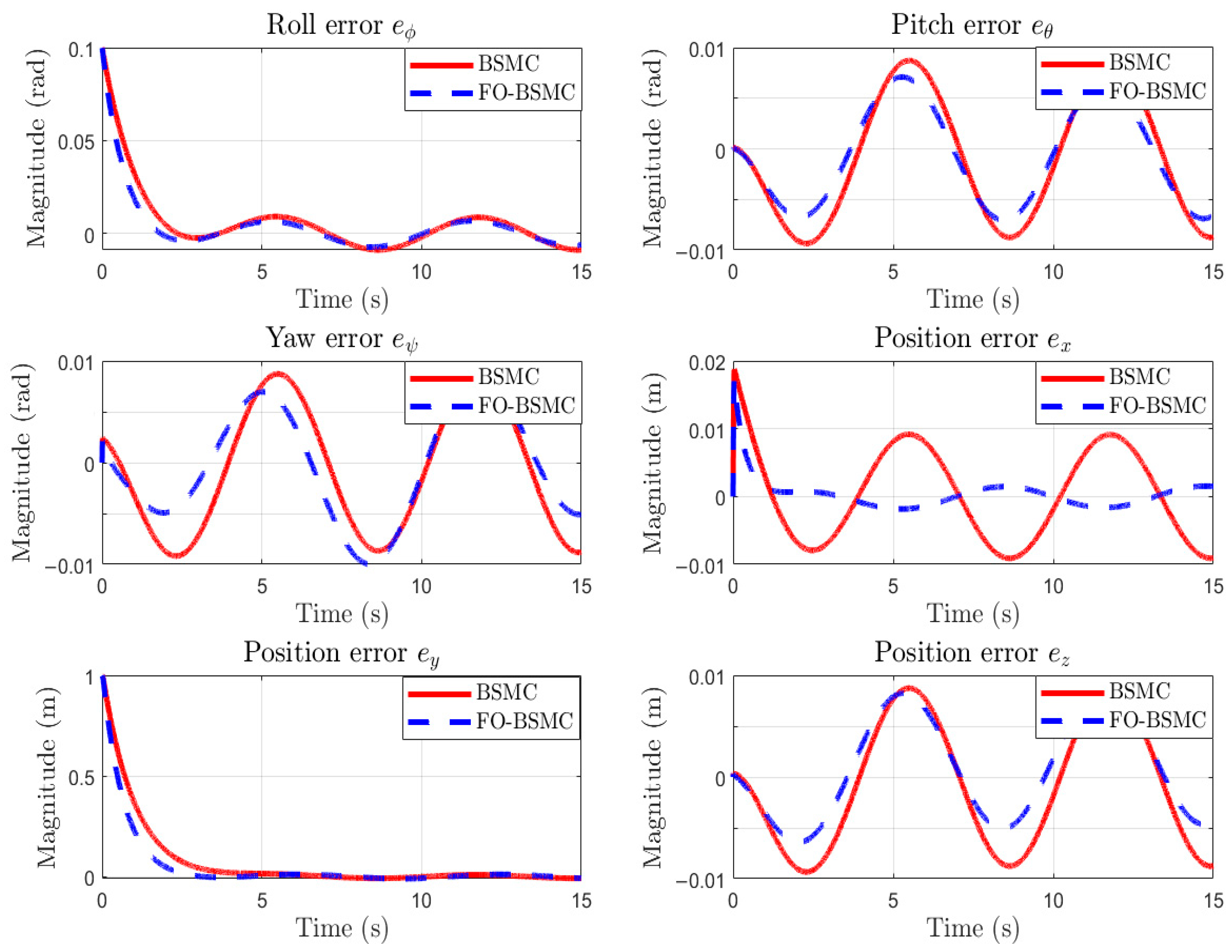
Figure 3 presents the attitude and position tracking errors obtained under Case 1. As observer, the roll error converges more rapidly with the proposed FO-BSMC during the initial transient, whereas both controllers exhibit comparable periodic error profiles once the transient response has vanished. Similar behavior is observed for the pitch and yaw motions, where only slight differences in the error amplitude are noticeable. The most evident improvement is obtained in the translational dynamics. In particular, the error along the
-axis remains confined to a substantially narrower band around zero under the proposed controller, while the conventional BSMC exhibits persistent oscillations throughout the simulation. For the
-axis, the FO-BSMC shortens the transient stage before reaching the periodic tracking regime, whereas, along the
-axis, both controllers produce comparable responses, with the proposed approach exhibiting a slight reduction in the oscillation amplitude.
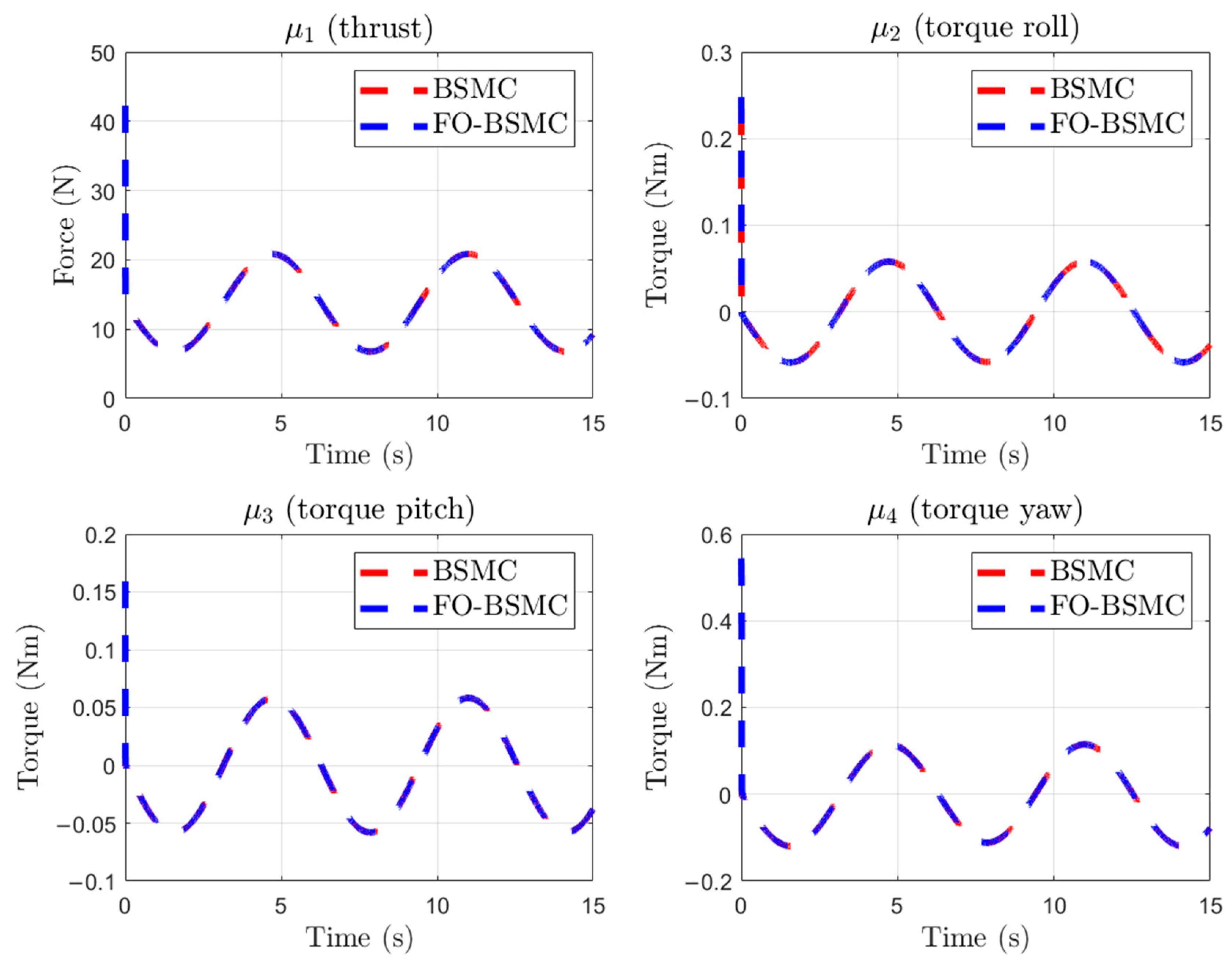
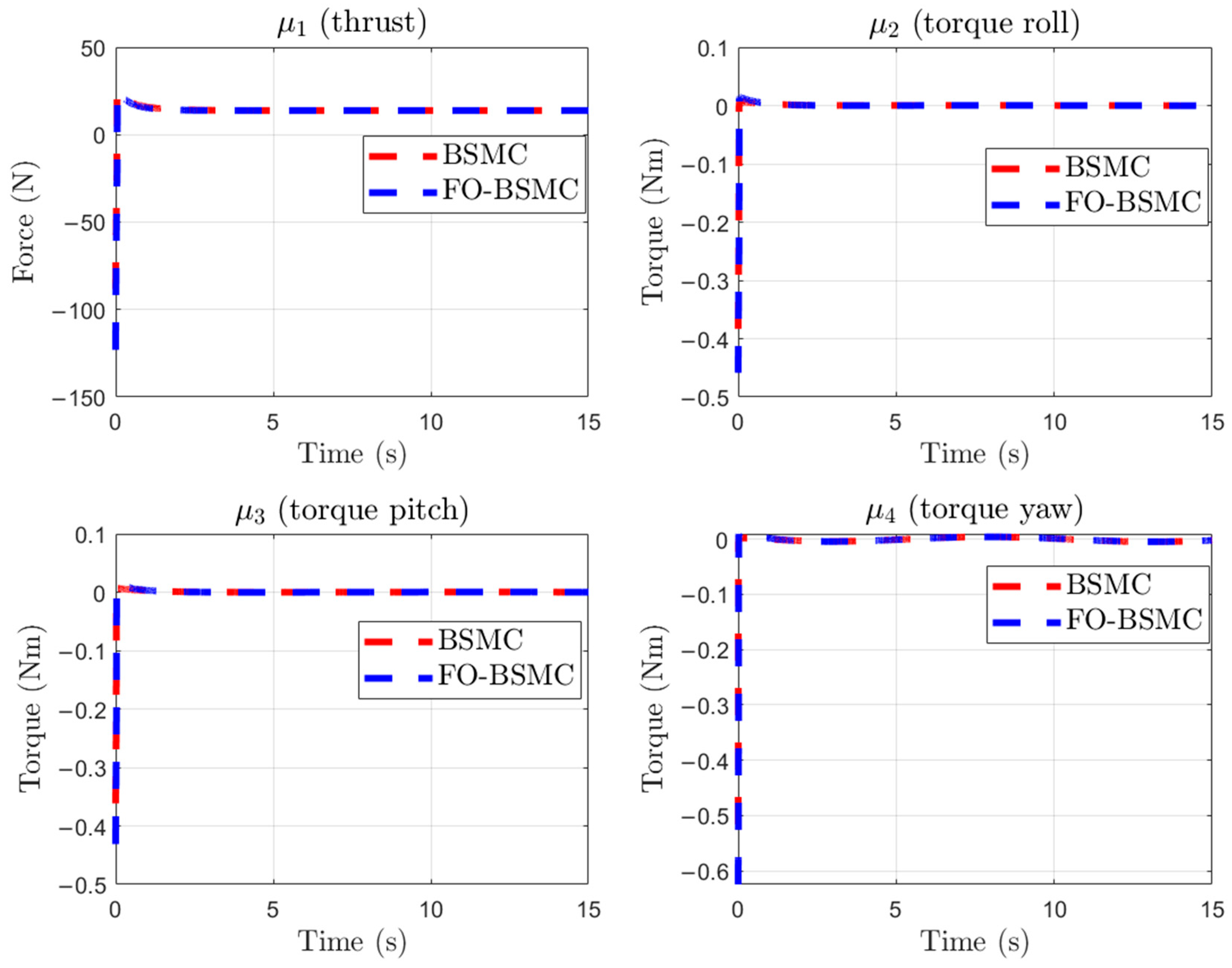
Figure 4 presents the control inputs generated by the conventional BSMC and the proposed FO-BSMC under Case 1, where the discontinuous switching term is approximated by the hyperbolic tangent function. The thrust and torque commands produced by both controllers exhibit nearly identical time responses, with comparable amplitudes, transient characteristics, and periodic behavior. All control inputs remain continuous and bounded throughout the simulation, and no high-frequency oscillations are observed. As expected, the hyperbolic tangent approximation yields smooth control signals for both controllers while preserving their overall dynamic response.
Table 2 presents the tracking performance of both controllers under nominal operation in the presence of external disturbances by means of the ISE and IAE performance indices. Overall, the proposed FO-BSMC consistently achieves lower error values than the conventional BSMC for all attitude and position variables, indicating an improved trajectory-tracking performance under persistent perturbations. The most significant improvement is observed in the translational motion along the
-axis, where both the ISE and IAE are substantially reduced. Noticeable reductions are also obtained for the
-axis position, which represents the most demanding translational channel in this scenario. For the rotational variables, the improvements are more moderate but remain consistent for the roll, pitch, and yaw motions.
4.2. Case 2—Robustness to Initial Condition
The second simulation scenario evaluates the sensitivity of the conventional BSMC and the proposed FO-BSMC to variations in the initial conditions. The initial state vector is selected as representing a large initial tracking error in both the attitude and position variables. All remaining simulation settings are identical to those considered in Case 1, including the controller gains, reference trajectories, and the hyperbolic tangent approximation employed in the sliding-mode term. For the proposed FO-BSMC, the optimized fractional order obtained using the PSO algorithm is employed throughout the simulation.
To complement the deterministic analysis, a Monte Carlo study consisting of 100 independent simulations is performed. In each realization, the initial attitude and position state variables are randomly sampled within predefined operating ranges, while both controllers are evaluated under the same initial conditions. The corresponding ISE and IAE performance indices are computed for every simulation, providing a statistical assessment of the sensitivity of both control strategies to variations in the initial state.
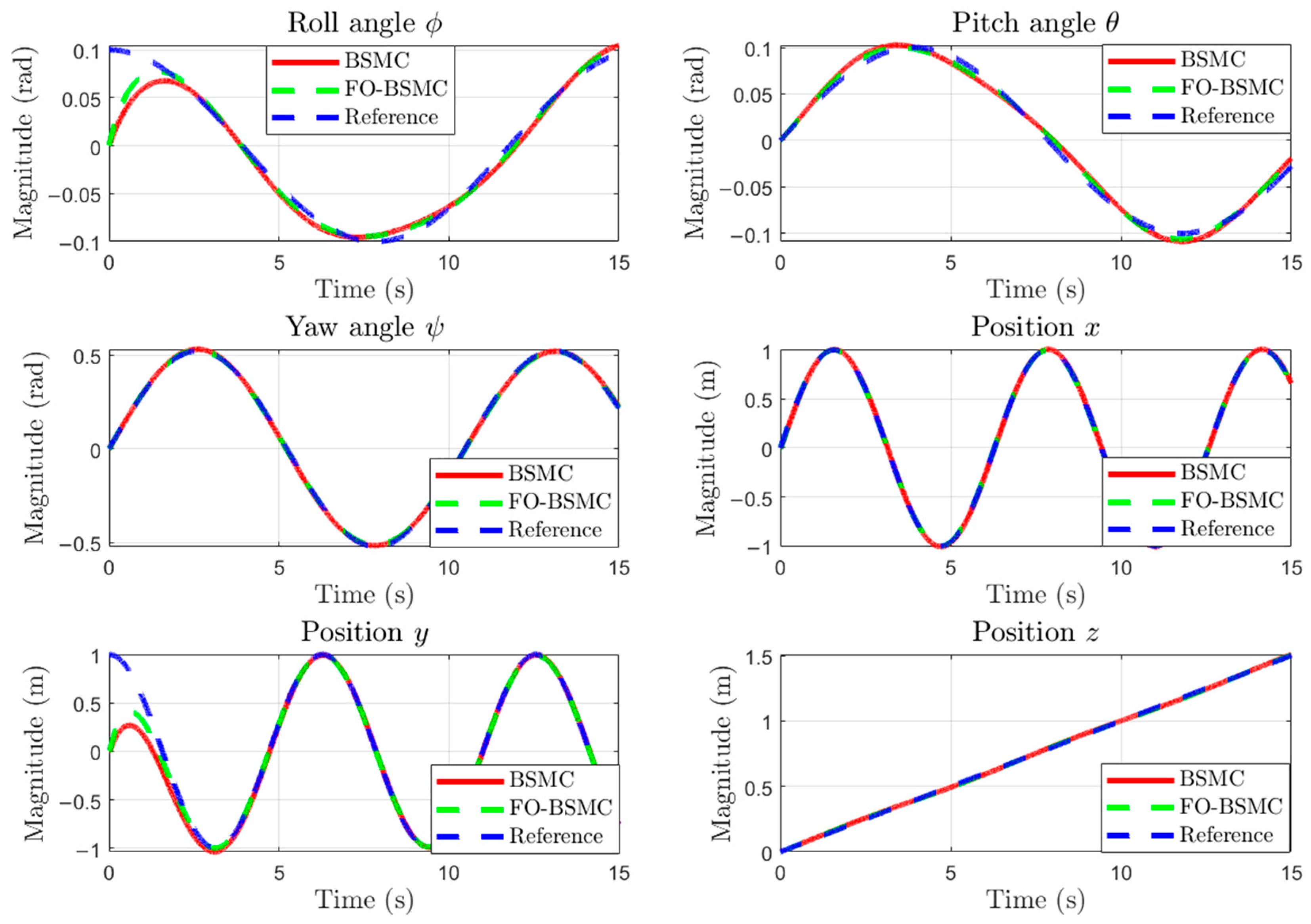
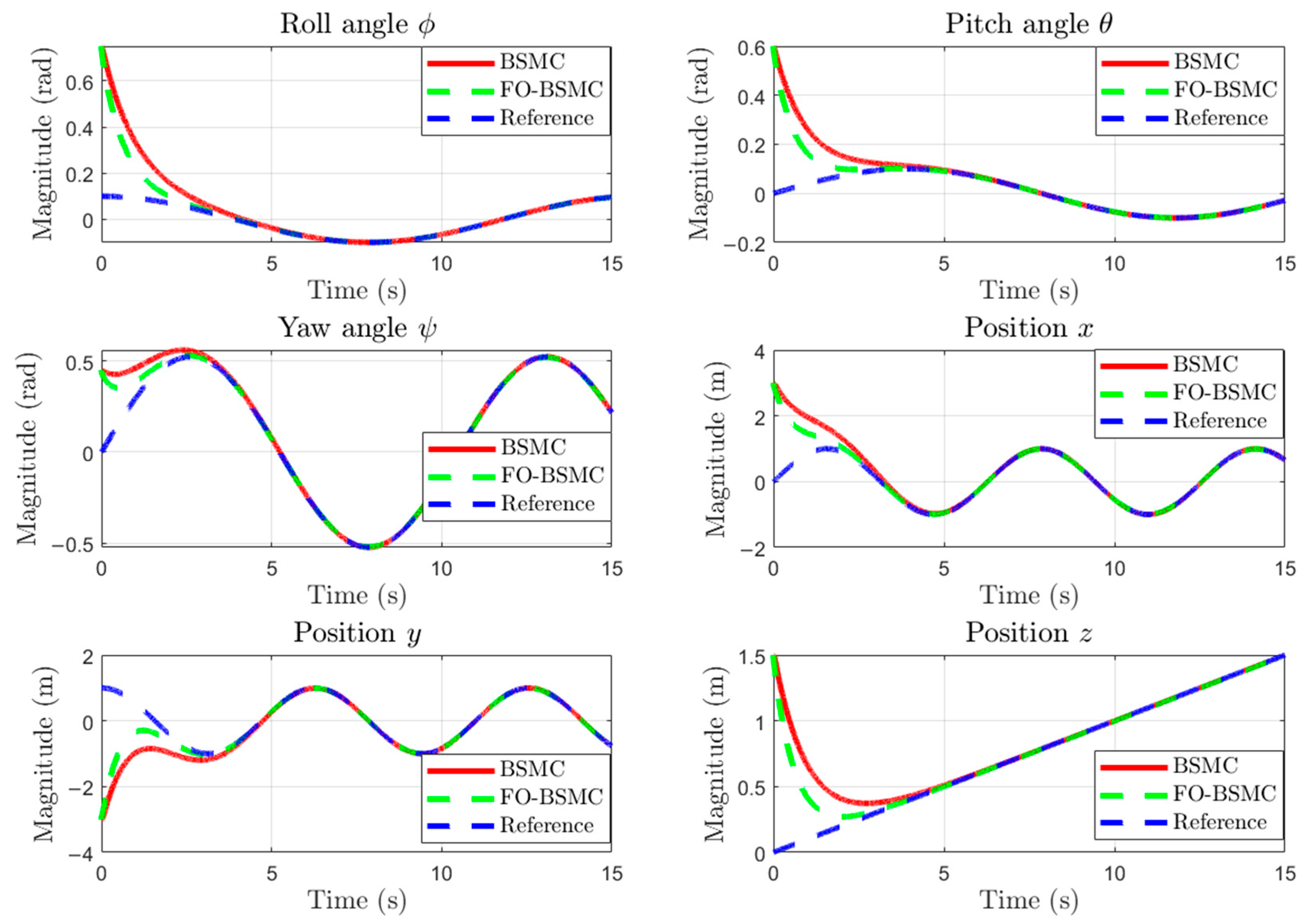
Figure 5 presents the attitude and position responses obtained under Case 2, where both controllers are subjected to large initial tracking errors. The proposed FO-BSMC reaches the reference trajectories more rapidly than the conventional BSMC in both the rotational and translational motions. This difference is particularly evident during the initial transient, where the fractional-order formulation exhibits a faster reduction in the initial tracking error and a shorter settling stage. After the transient response, both controllers accurately follow the prescribed trajectories.
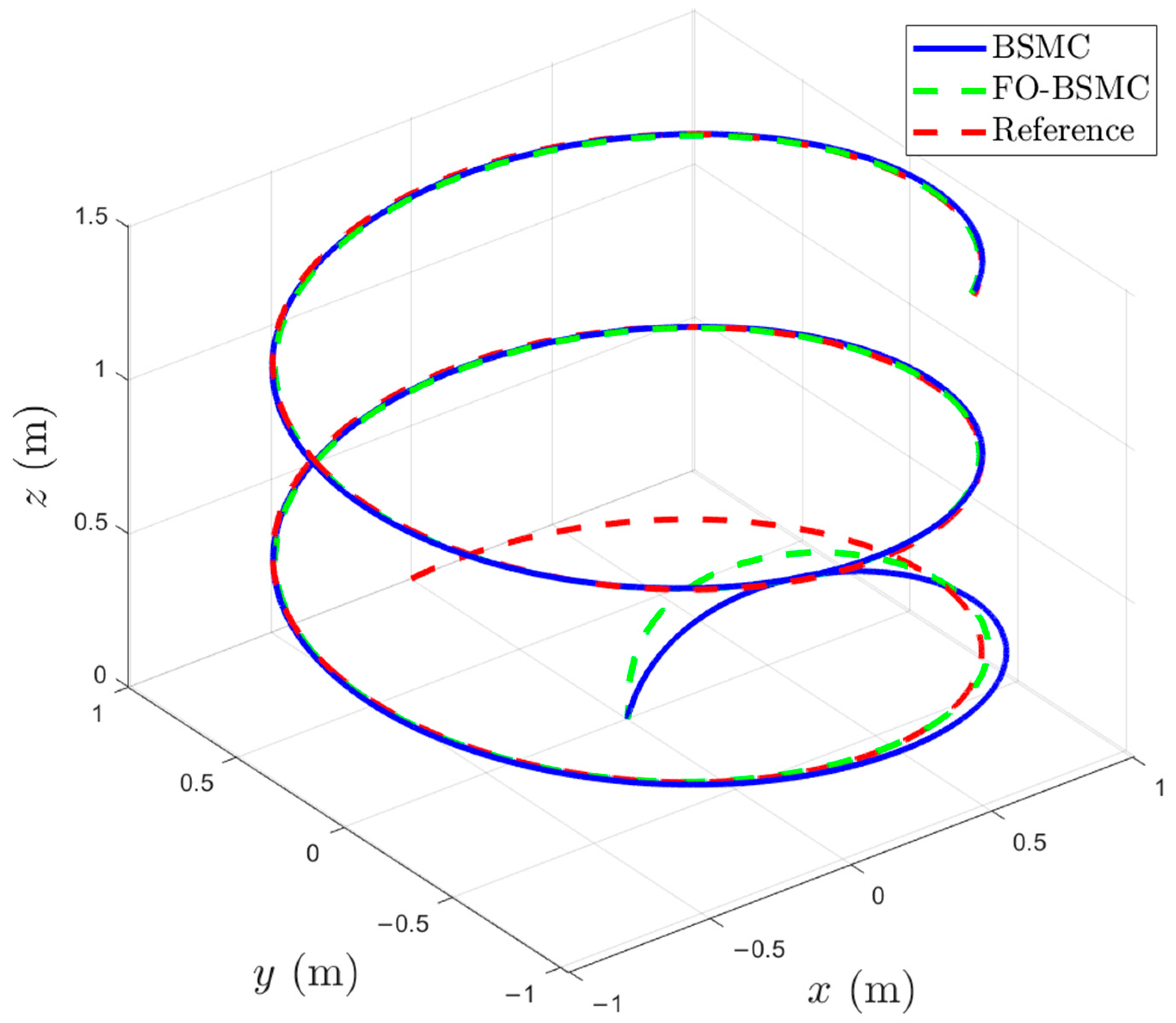
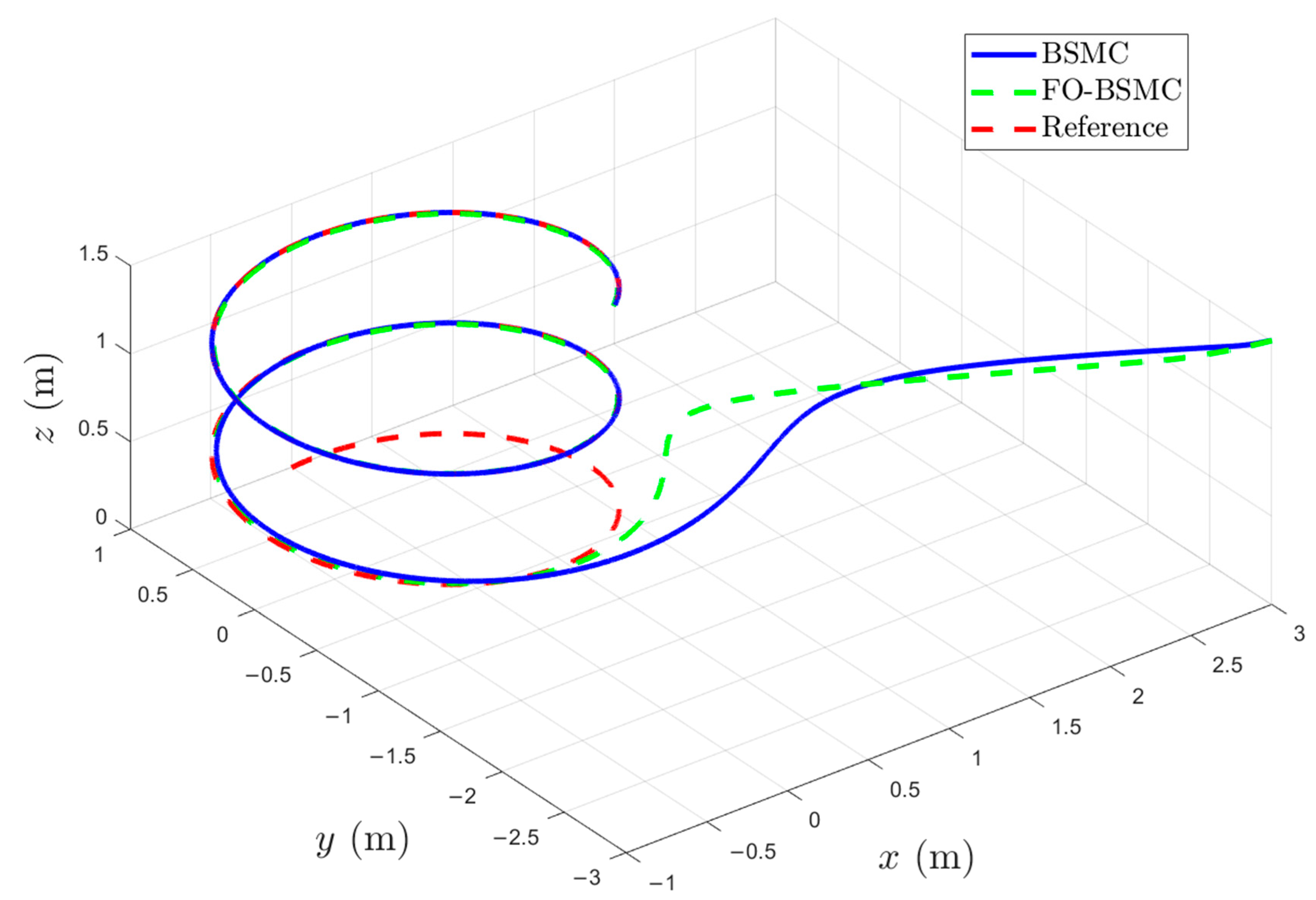
Figure 6 illustrates the three-dimensional trajectory of the QUAV under Case 2. Due to the large initial tracking error, both controllers start from positions considerably displaced from the reference trajectory. The proposed FO-BSMC approaches the reference path more rapidly, reducing the distance to the desired trajectory during the initial stage of motion. In contrast, the conventional BSMC requires a longer transient before reaching the same trajectory. Once the transient has elapsed, both controllers follow the prescribed three-dimensional path with comparable accuracy, although the proposed FO-BSMC reaches the tracking regime earlier.
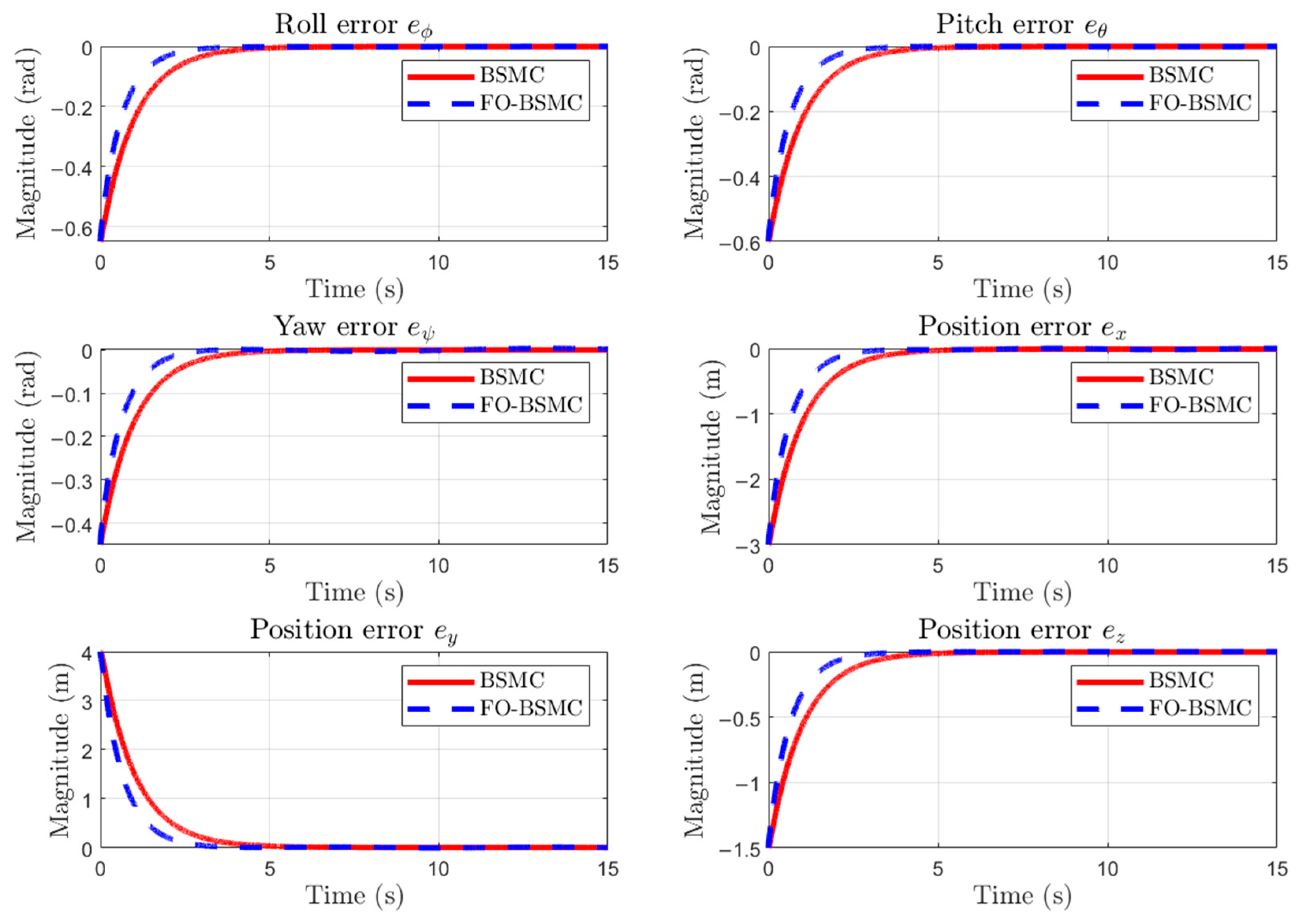
Figure 7 presents the attitude and position tracking errors obtained under Case 2. For all state variables, the proposed FO-BSMC exhibits a faster decay of the initial tracking errors than the conventional BSMC, resulting in a shorter transient response. This behavior is consistently observed in both the rotational and translational dynamics, where the proposed controller approaches the reference more rapidly during the first seconds of the simulation. As the transient response vanishes, the tracking errors of both controllers converge to values close to zero and remain bounded throughout the remainder of the simulation.
Figure 8 compares the control inputs produced by the BSMC and the proposed FO-BSMC under the conditions of Case 2. The thrust and attitude torque commands remain smooth, continuous, and well-bounded throughout the simulation. Both controllers exhibit nearly identical control amplitudes and similar transient behavior, with only minor differences during the initial response. No oscillatory or chattering phenomena are observed, confirming the effectiveness of the tanh-based sliding function in generating continuous control actions. These results indicate that the superior tracking performance achieved by the FO-BSMC is not accompanied by an increase in control effort, but rather results from a more effective exploitation of the system dynamics through the fractional-order formulation.
Table 3 summarizes the tracking error indices obtained under Case 2. The proposed FO-BSMC consistently produces lower ISE and IAE values than the conventional BSMC for all attitude and position variables. For the rotational dynamics, the reductions observed in the roll, pitch, and yaw responses indicate a more effective attenuation of the initial tracking errors during the transient stage. The same trend is observed in the translational dynamics, where the proposed controller yields lower error indices along all three position axes. The most pronounced improvements are obtained in the
- and
-axis motions, reflecting a faster recovery from large initial state deviations.
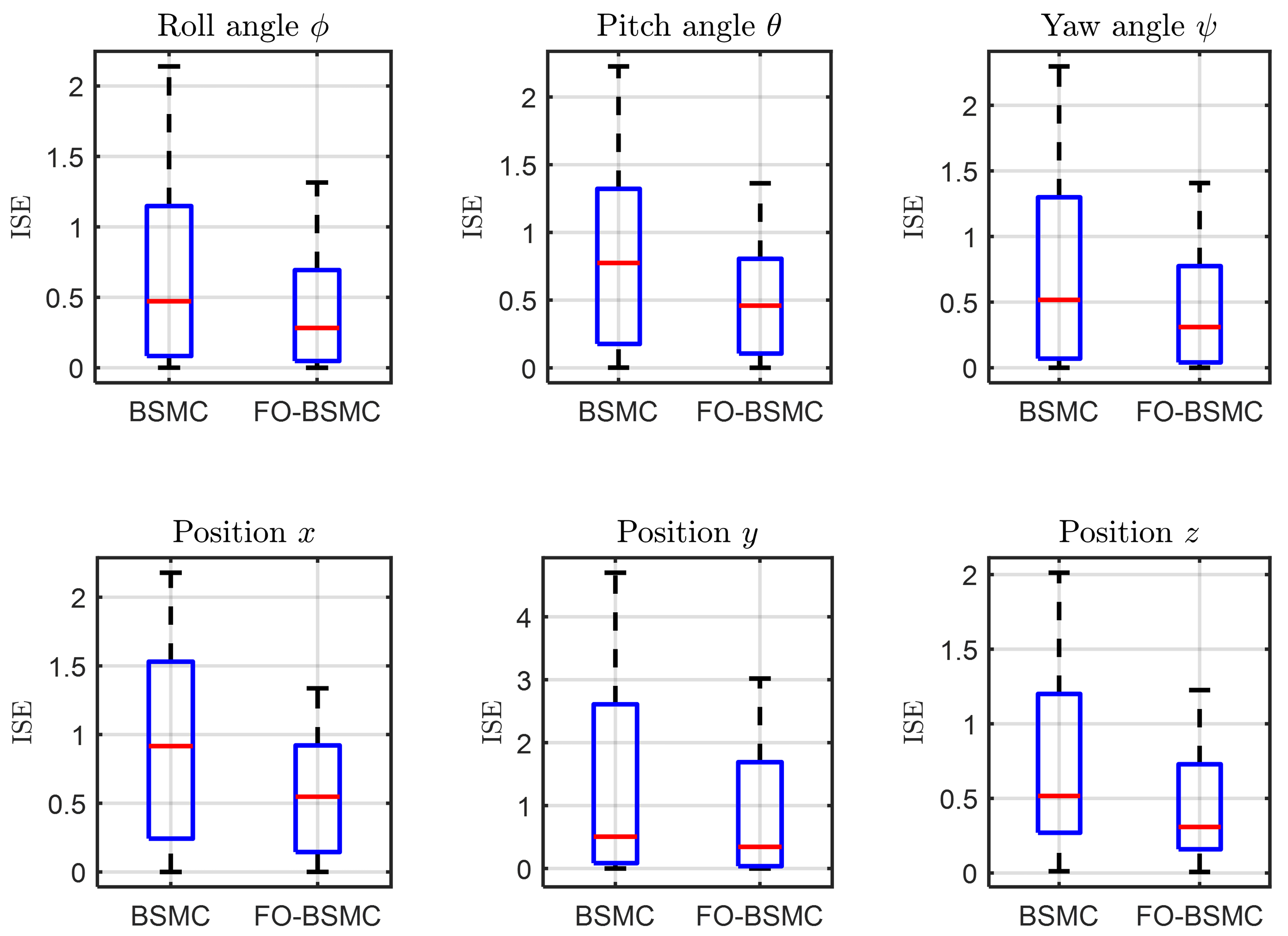
Figure 9 presents the statistical distribution of the ISE obtained from the Monte Carlo analysis under varying initial conditions. Each boxplot summarizes the dispersion of the performance index across multiple simulations for the six evaluated state variables. As observed, the FO-BSMC consistently exhibits lower ISE values than the classical BSMC across all state variables, as evidenced by the downward shift in the corresponding boxplots. In addition to the reduction in median values, the interquartile ranges associated with the FO-BSMC are generally narrower, indicating a more concentrated distribution and reduced variability in performance.
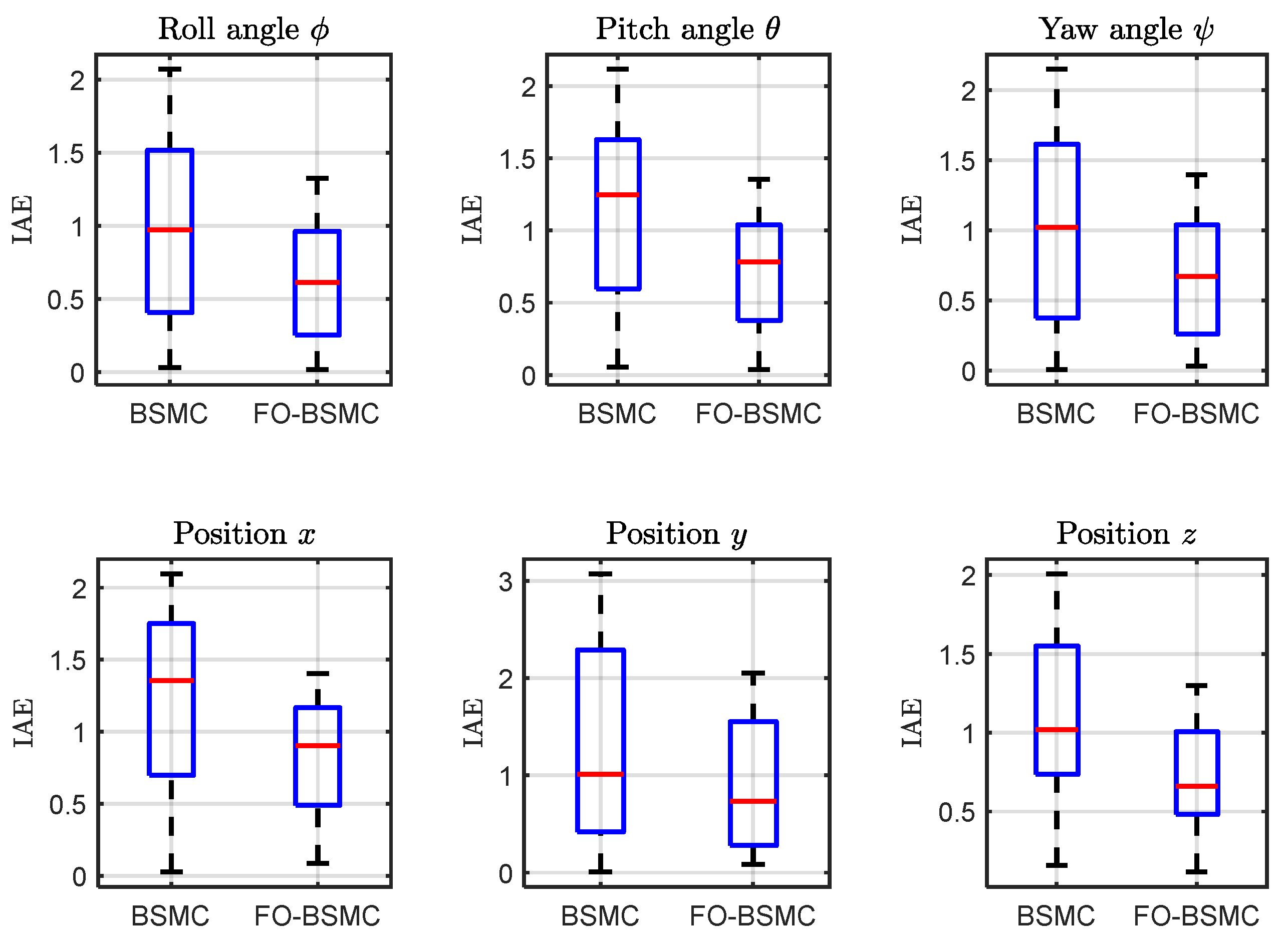
Figure 10 shows the distribution of the IAE obtained from the Monte Carlo simulations for all evaluated state variables. A consistent trend can be observed across the six variables. The FO-BSMC yields lower accumulated absolute error than the classical BSMC. This is reflected in the position of the boxplots, where the central tendency of the FO-BSMC results is systematically shifted toward smaller values. Moreover, the spread of the distributions is generally reduced, indicating a more uniform behavior across different initial conditions. This behavior suggests that the fractional-order controller not only improves overall tracking accuracy, as measured by accumulated squared error, but also yields a more consistent response across different initial conditions.
4.3. Case 3—Robustness to Noise
The third simulation scenario evaluates the robustness of the conventional BSMC and the proposed FO-BSMC when the available state measurements are affected by sensor noise. Unlike the previous cases, measurement uncertainty is introduced into all measurable state variables to emulate realistic operating conditions. Since the control actions are computed directly from the measured states, the injected noise propagates to the control inputs and directly influences the closed-loop response.
Measurement uncertainty is modeled as additive zero-mean Gaussian white noise independently applied to each measurable state variable. The generated noise has a standard deviation of , corresponding to a variance of 4 × 10⁻⁶, and remains statistically identical for all measurement channels. To ensure a fair comparison, the same realization of the noise sequence is applied to both the conventional BSMC and the proposed FO-BSMC throughout the simulations.
The QUAV parameters, controller gains, reference trajectories, and optimized fractional order are identical to those adopted in the previous simulation scenarios. Unlike Case 1, no external disturbances are introduced in this case. Consistent with Case 1, all state variables are initialized at zero, allowing the influence of measurement noise on the closed-loop performance to be assessed independently.
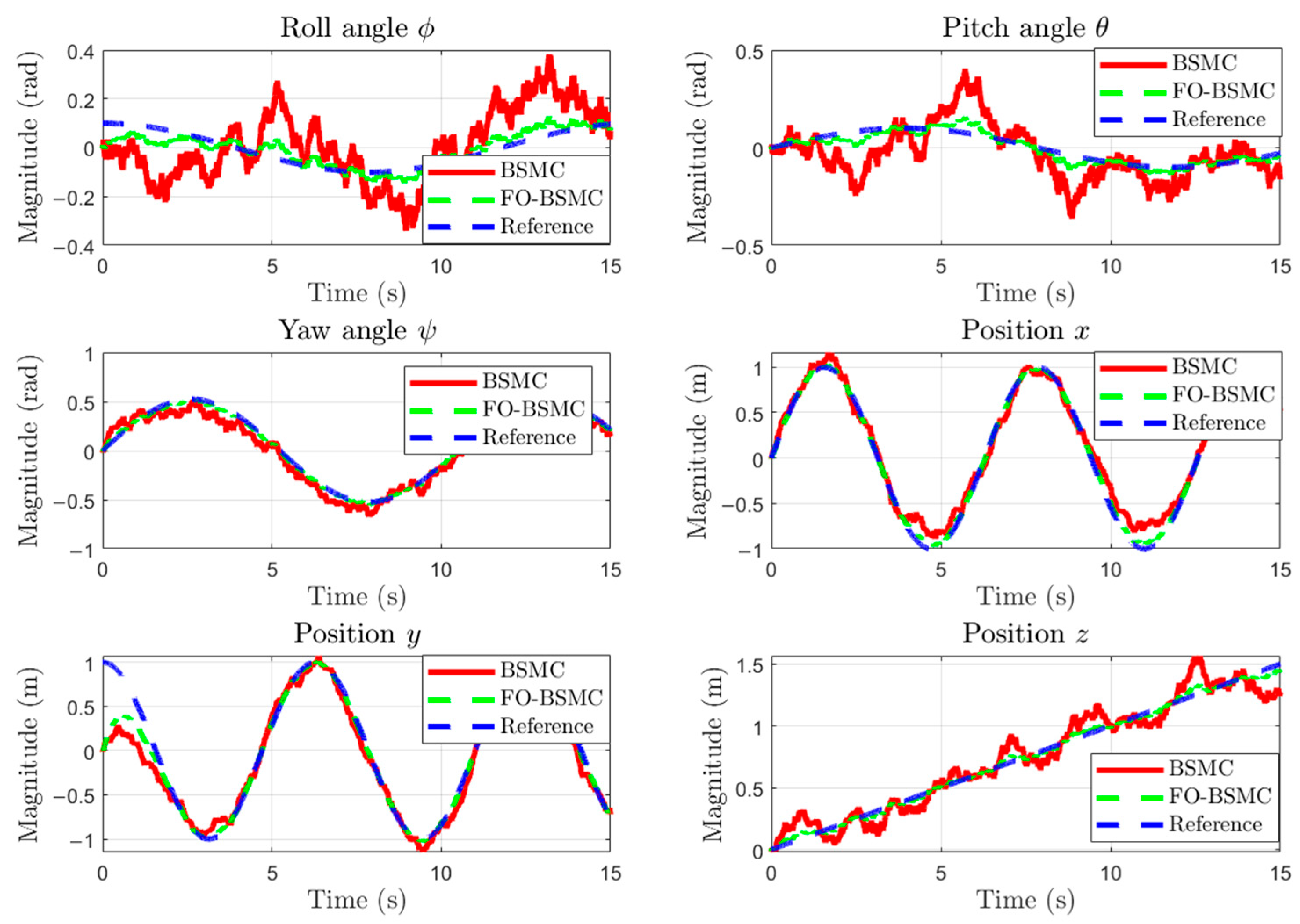
Figure 11 illustrates the trajectory-tracking performance of the QUAV under the measurement-noise scenario. As expected, the presence of measurement noise introduces fluctuations in both the attitude and position responses. For the attitude dynamics, the proposed FO-BSMC maintains the roll and pitch responses closer to their corresponding reference trajectories, exhibiting smaller deviations than the conventional BSMC. In the yaw response, both controllers provide comparable tracking performance, although the FO-BSMC preserves a slightly smoother response throughout the simulation. For the translational dynamics, both controllers successfully follow the prescribed reference trajectories despite the measurement disturbances. The differences are more evident in the vertical motion, where the proposed FO-BSMC exhibits smaller tracking deviations than the conventional BSMC, whereas the responses along the
- and
-axes remain similar, with a slight improvement achieved by the fractional-order controller.
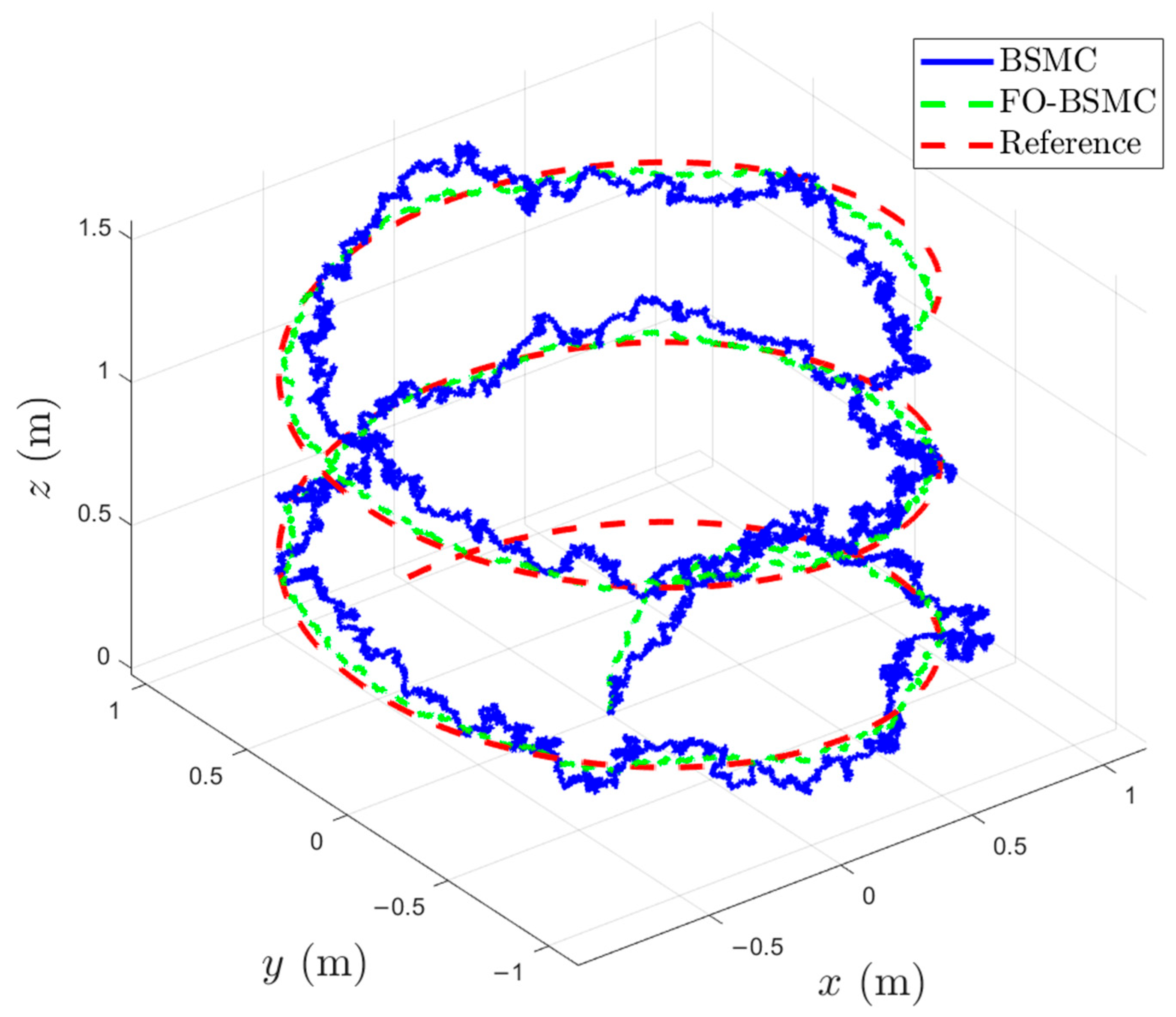
Figure 12 presents the three-dimensional trajectory-tracking results obtained under Case 3. Both controllers are able to follow the prescribed helical reference trajectory throughout the simulation, preserving its overall geometry despite the presence of measurement noise. Nevertheless, differences can be observed in the deviation from the reference trajectory. The path generated by the conventional BSMC exhibits larger deviations from the desired helix over most of the maneuver, whereas the trajectory produced by the proposed FO-BSMC remains closer to the reference. This difference is particularly noticeable in the upper turns of the helix, where the conventional BSMC departs further from the reference trajectory, while the FO-BSMC follows the desired path more closely.
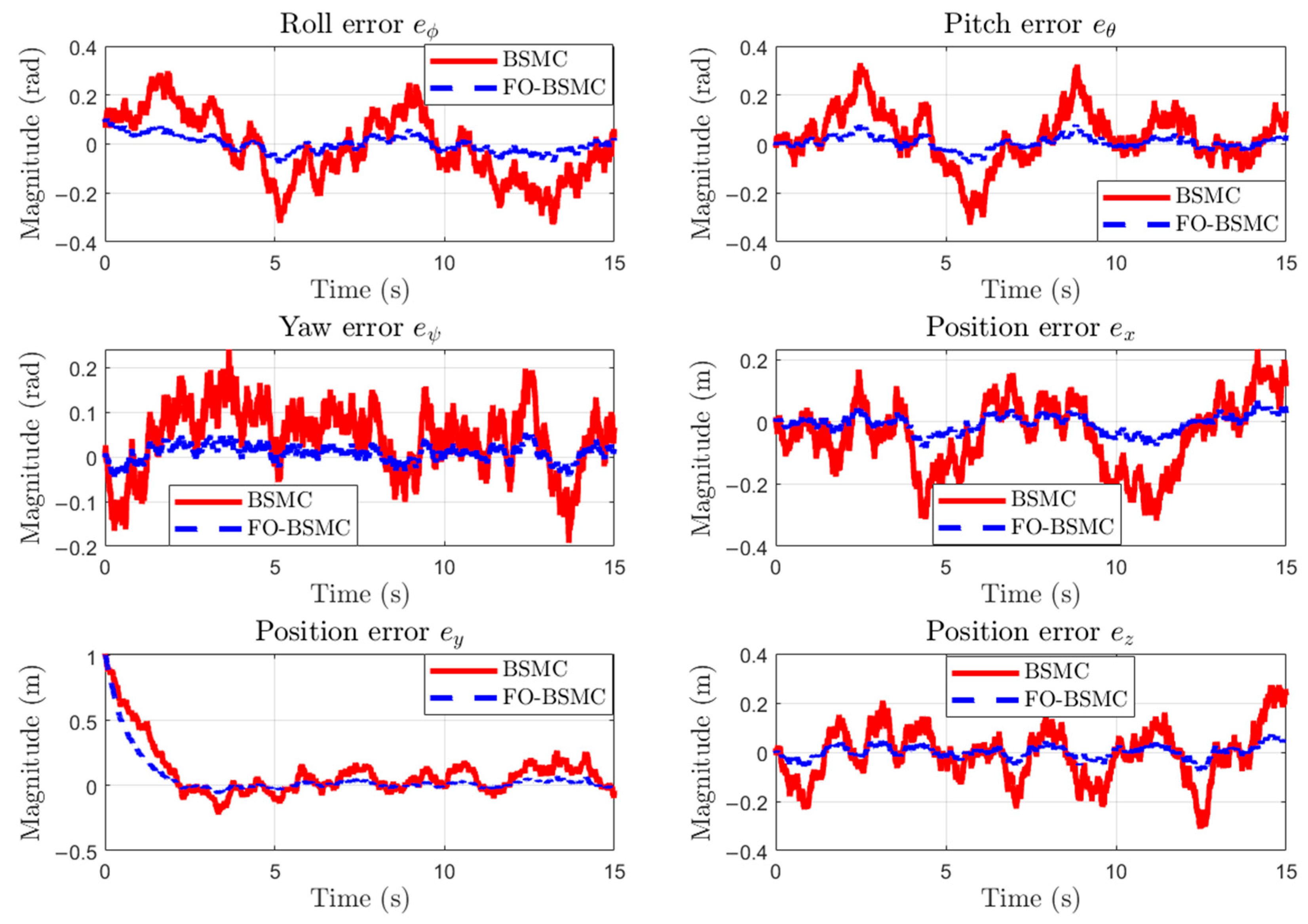
Figure 13 presents the tracking error signals under measurement noise. As expected, all errors fluctuate randomly around zero due to the stochastic perturbations in the feedback signals. Across the attitude variables, the FO-BSMC exhibits a clear reduction in error amplitude, with smoother and more confined variations compared to the classical BSMC, indicating an improved attenuation of noise-induced effects. A similar trend is observed in the
position. However, for the
and
positions, both controllers show comparable error amplitudes, suggesting that the benefit of the fractional-order formulation is less pronounced in these variables. Despite this, the overall error profiles generated by the FO-BSMC remain less oscillatory and more regular. These observations confirm that, in the presence of measurement noise, the fractional-order controller provides a more robust and stable error response.
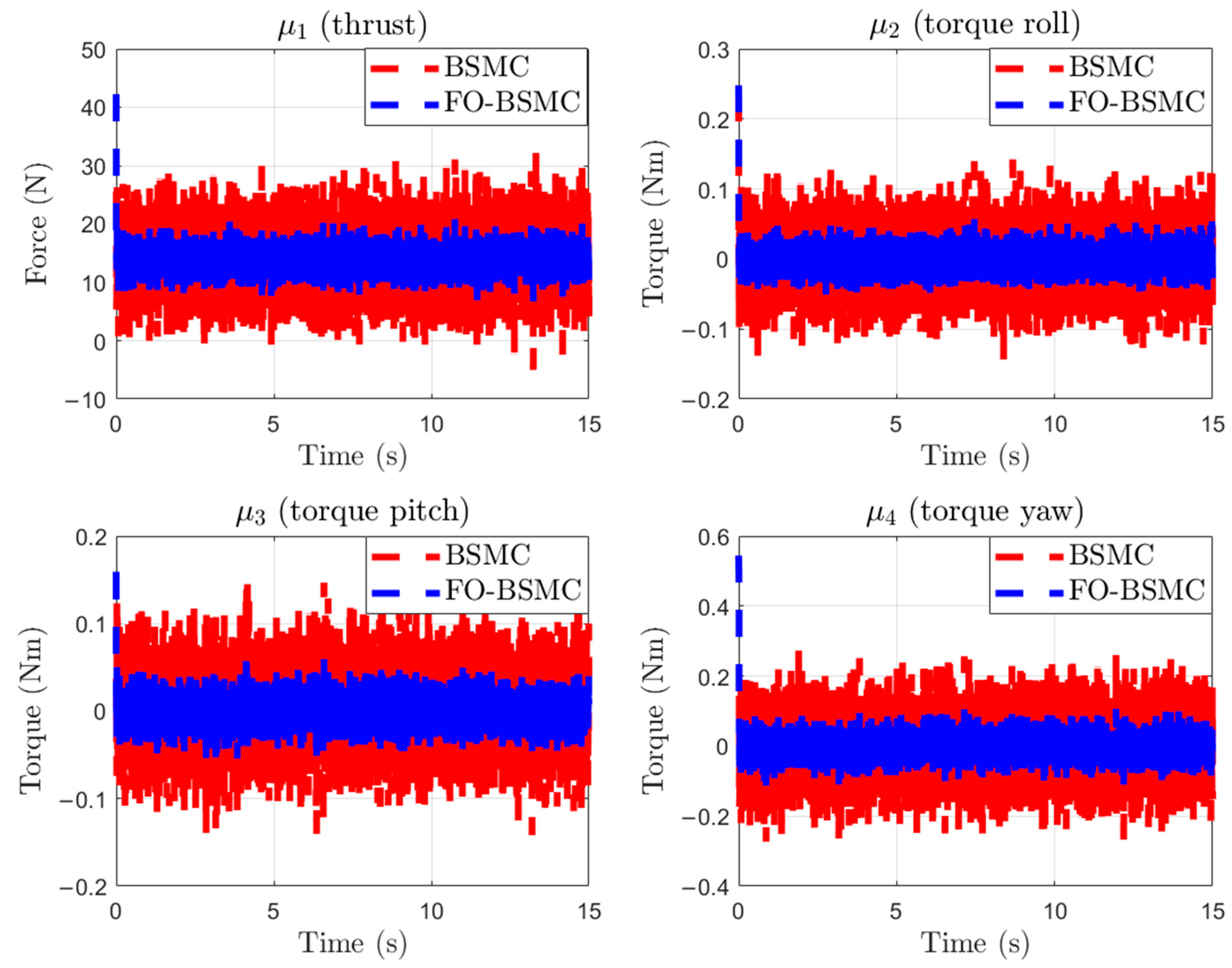
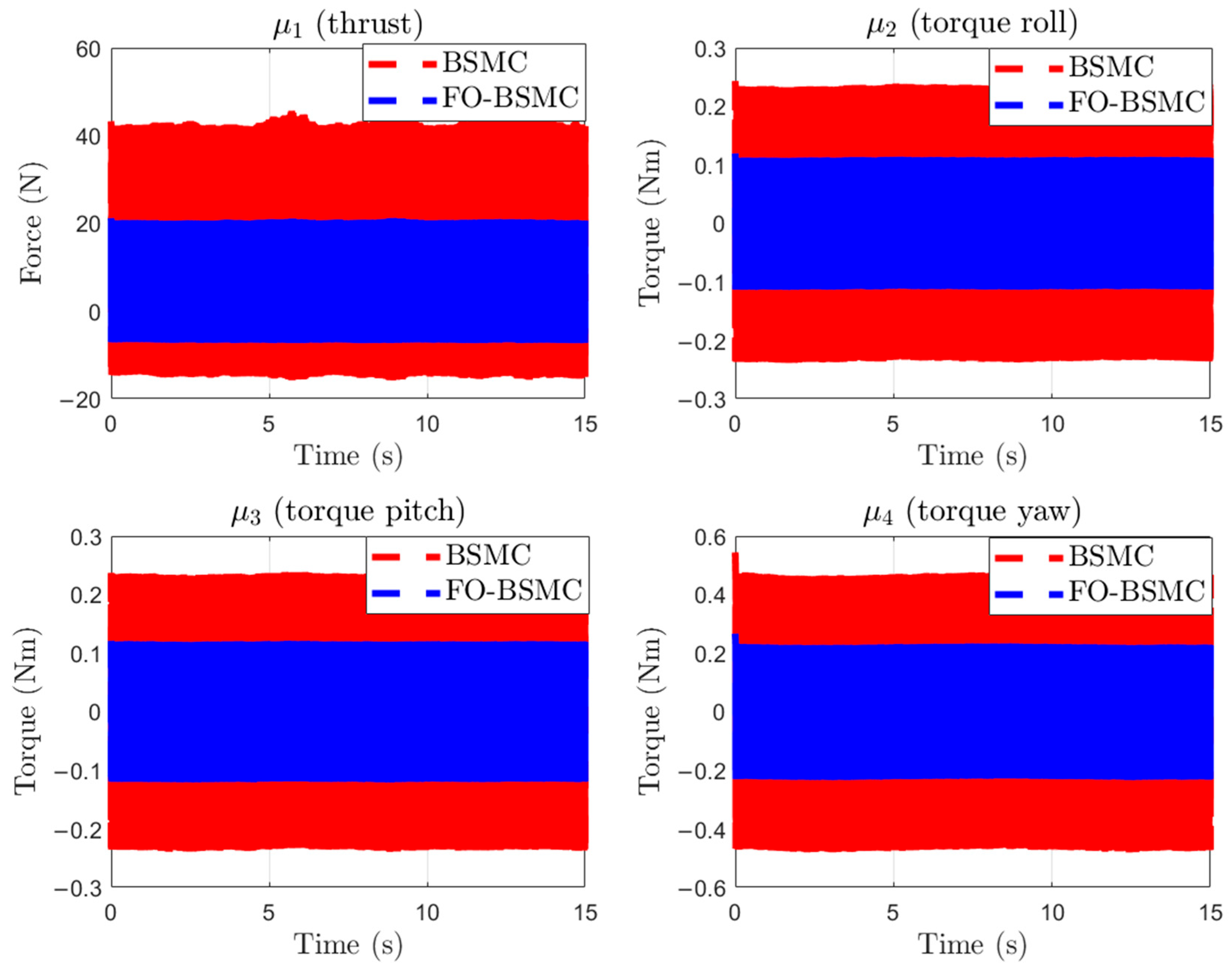
Figure 14 depicts the control inputs generated by both controllers in the presence of measurement noise. Although the use of the smooth hyperbolic tangent function already mitigates high-frequency switching, noticeable differences can still be observed between the two control strategies. The control signals associated with the classical BSMC exhibit more pronounced oscillations. In contrast, the FO-BSMC produces visibly smoother control inputs, with a significant reduction in the amplitude of the fluctuations, which appears to be on the order of roughly half when compared to the classical approach.
The smoother control profiles observed for the FO-BSMC indicate that the fractional-order structure naturally mitigates the influence of measurement noise, likely due to its inherent memory effect. As a result, the control action exhibits fewer high-frequency oscillations while preserving the desired closed-loop behavior. From a practical perspective, the smoother control profiles produced by the FO-BSMC are expected to reduce actuator wear and unnecessary energy expenditure, making the proposed approach more suitable for real-world implementations where measurement noise and actuator limitations are unavoidable.
Figure 15 compares the control inputs generated by the conventional BSMC and the proposed FO-BSMC using the discontinuous sign function under Case 3. The discontinuous implementation makes the inherent switching behavior of sliding-mode control directly observable. Because measurement noise continuously perturbs the sliding variable, the switching activity is significantly intensified, allowing the chattering characteristics of both controllers to be clearly distinguished. The proposed FO-BSMC produces consistently smaller oscillation amplitudes in all four control channels than the conventional BSMC. It is important to note that this reduction in chattering is only observed in the noisy scenario; under the conditions considered in Cases 1 and 2, both controllers exhibit similar high-frequency switching, making a meaningful visual comparison impractical.
Table 4 summarizes the tracking error indices obtained under Case 3. The proposed FO-BSMC consistently produces lower ISE and IAE values than the conventional BSMC for all attitude and position errors in the presence of measurement noise. For the rotational dynamics, the reductions observed in the roll, pitch, and yaw responses indicate that the proposed controller is less affected by measurement disturbances, resulting in smaller accumulated tracking errors throughout the simulation. A similar trend is observed in the translational dynamics, where the proposed controller also yields lower error indices along the three position axes. The largest improvements are obtained for the
- and
-axis motions, whereas the reductions along the
-axis are comparatively smaller. These results indicate that the proposed fractional-order formulation preserves more accurate trajectory tracking under noisy operating conditions.
5. Conclusions
This paper presented an FO-BSMC strategy for trajectory tracking of a QUAV. Unlike conventional fractional-order sliding mode approaches, the proposed methodology incorporates the fractional-order behavior directly into the QUAV dynamic model while preserving the original BSMC structure. The fractional order was selected using the PSO algorithm and employed throughout the comparative evaluation.
The comparative study demonstrated that the proposed FO-BSMC provides improved robustness under external disturbances, large initial-condition variations, and measurement noise while maintaining accurate trajectory-tracking performance. Across the evaluated scenarios, the proposed controller consistently reduced the tracking errors and improved the overall closed-loop performance compared with the conventional BSMC. The most significant improvements were observed in the presence of external disturbances and perturbed initial conditions, where the FO-BSMC exhibited faster convergence, lower ISE and IAE values, and a more consistent closed-loop response, as further confirmed by the Monte Carlo analysis. Under measurement noise, the proposed controller also reduced the effect of noise on the tracking errors while producing smoother control actions with reduced chattering.
The obtained results indicate that introducing fractional-order dynamics into the QUAV model constitutes an effective alternative for enhancing the robustness of the conventional BSMC without modifying its original control structure. The observed performance improvements are therefore attributed to the fractional-order dynamic representation rather than to changes in the tracking-error formulation, sliding surfaces, or reaching laws.
Although the proposed formulation has been validated through extensive numerical simulations, experimental verification remains an important step toward assessing its practical applicability. Future work will focus on real-time implementation, adaptive online selection of the fractional order, and the evaluation of the proposed approach under additional sources of uncertainty, including parameter variations and actuator faults.




 ,
,