


Abstract
This systematic literature review analyzes the role of dynamic difficulty adaptation (DDA) in serious games (SGs) to provide an overview of current trends and identify research gaps. The purpose of the study is to contextualize how DDA is being employed in SGs to enhance their learning outcomes, effectiveness, and game enjoyment. The review included studies published over the past five years that implemented specific DDA methods within SGs. Publications were identified through Google Scholar (searched up to 10 November 2025) and screened for relevance, resulting in 75 relevant papers. No formal risk-of-bias assessment was conducted. These studies were analyzed by publication year, source, application domain, DDA type, and effectiveness. The results indicate a growing interest in adaptive SGs across domains, including rehabilitation and education, with DDA methods ranging from rule-based (e.g., fuzzy logic) and player modeling (using performance, physiological, or emotional metrics) to various machine learning techniques (reinforcement learning, genetic algorithms, neural networks). Newly emerging trends, such as the integration of generative artificial intelligence for DDA, were also identified. Evidence suggests that DDA can enhance learning outcomes and game experience, although study differences, limited evaluation metrics, and unexplored opportunities for adaptive SGs highlight the need for further research.
1. Introduction
One of the first definitions of serious games (SGs) was made in 1970 by Clark C. Abt in his book titled “Serious Games”, stating that “these games have an explicit and carefully thought-out educational purpose and are not intended to be played primarily for amusement” [1]. Since then, the genre has expanded over the years, leading to the creation of various use cases for serious games, such as rehabilitation [2,3], education [4], and conveying messages on important topics like environmental concerns [5]. While there are slightly varying understandings of the genre nowadays compared to Abt’s definition, one of the most popular definitions describes the genre as “(digital) games used for purposes other than mere entertainment” [6]. As SGs continuously adapt and evolve, more studies have begun to discuss various new approaches to further enhance the learning process and benefits provided by SGs.
An example of a promising concept for enhancing SGs, the game experience, and their individual learning process is dynamic difficulty adjustment (DDA), which refers to a game’s ability to dynamically adapt its difficulty based on various player modeling strategies. Examples of player assessment strategies can involve in-game performance or more advanced metrics such as the player’s physiological or emotional state [7]. By automatically adjusting the difficulty, games avoid the need for further manual adjustments, ensuring a steady and engaging experience for their audience. Additionally, DDA ensures that players remain immersed in the game by aligning the game’s difficulty to the player’s skills to guarantee that they can experience the so-called flow state, a phenomenon that was first defined by Csikszentmihalyi in his flow theory [8]. According to this theory, the game experience can be drastically improved by ensuring that a player’s skills and the game’s difficulty are well-balanced, allowing the player to remain fully focused on the game and thus enter this ideal “flow state”. Since SGs can risk becoming too complex or boring for players due to their serious topics, they can benefit from integrated DDA systems, which ensure a balance between difficulty and perceived player skills, thereby maximizing the game experience and learning outcome.
The research regarding DDA in SGs is vast, and there are many different approaches to DDA, stretching from machine learning-based technologies and procedural content generation to simple rule-based or heuristics-based systems [9,10,11]. Due to the extensive amount of literature on the topic, it is necessary to thoroughly analyze and review the current state of the literature in order to identify current trends and research gaps for future studies, especially since DDA technology still holds considerable unexplored potential and is not frequently utilized in most games. While other literature reviews exist on the topic, most either cover the usage of DDA in entertainment games [12,13,14], use outdated timeframes [7,15], or specialize themselves in specific subtopics, such as adaptive SGs for rehabilitation [16]. Particularly when using outdated timeframes, literature reviews such as Sajjadi et al. [7], which analyzed literature from 2007 to 2019, and Aydin et al. [15], analyzing relevant literature from 2000 to 2021, often fail to highlight newly arising technologies over recent years that could be relevant to the field. For this purpose, this paper aims to conduct a systematic literature review to analyze relevant literature published between 2020 and 2025 regarding the overall usage of DDA systems in SGs, making an important contribution to the current research. In order to address and highlight current and newly arising trends and to provide a basis for further research in more prominent and promising research gaps, this review thus focuses on providing a broad overview of the whole adaptive research genre and its content, rather than limiting itself to certain subtopics or directions, and thus analyzes a total of 75 papers that have been deemed suitable. The chosen papers all generally discuss and present some form of DDA method that has been applied in a specific SG use case. The key research questions (RQs) guiding this systematic literature review are the following:
- RQ1: What research trends can be identified in the current research on DDA in SGs with regard to the publication year, publishing sources, and SG application areas?
- RQ2: What DDA approaches have been implemented and evaluated in SGs, and how effective were they in terms of improving the game experience?
- RQ3: What limitations and research gaps can be identified in the current state of research on DDA in SGs that warrant further investigation and research in the future?
2. Materials and Methods
The conducted procedure for this systematic literature review was inspired by the PRISMA flow diagram (Preferred Reporting Items for Systematic reviews and Meta-Analyses) [17] and thus was conducted in accordance with the PRISMA 2020 guidelines. This review specifically focuses on literature published between 2020 and 2025 to obtain a recent and relevant dataset from the last five years that can support future research on the topic. The following subsections showcase the detailed methodology to warrant a transparent research basis.
2.1. Identifying Relevant Literature
This review utilized the scientific database Google Scholar to collect the relevant literature and publications based on several defined criteria. The main search term that was chosen for this is the following: (“serious games” OR “serious game” OR “educational games” OR “educational game” OR “serious gaming”) AND (“dynamic difficulty” OR “automatic difficulty” OR “difficulty adjustment” OR “DDA” OR “difficulty adaptation” OR “difficulty balancing” OR “dynamic difficulty adjustment”). As this term ensures the presence of at least one synonym for SGs and one synonym for DDA, the search primarily yields relevant publications that discuss the use of DDA in SGs. Additionally, the term also ensures that papers discussing DDA in games in general, without a specific focus on serious games, are filtered out or are less likely to appear.
After limiting the search to the last five years, approximately 2180 results were found as of 10 November 2025, which were automatically sorted by relevance through Google Scholar. Due to the high number of results from this search term, the first 350 papers sorted by relevance through Google Scholar were considered for further analysis and screening, creating a sample dataset for this review. While limiting the screening to the top 350 results can potentially exclude some relevant studies, this decision was made to balance feasibility and coverage, as further manual checks indicated that papers beyond this point showed very low relevance for this review, e.g., not discussing DDA or SGs. Thus, this specific limit for the sample set was determined by observing the steadily decreasing relevance of the publications, as defined by the inclusion and exclusion criteria. The specific inclusion and exclusion criteria were defined as follows:
- The provided paper and its title must be written in English.
- Literature reviews or other types of aggregations of different pieces of literature focusing on various use cases were excluded.
- The publication must discuss the use of DDA in SGs in particular. Literature discussing DDA in entertainment games was excluded.
- Authors have to explicitly refer to the presented game as a “serious game” or use other similar terms, e.g., “educational game” or “exergame”. The same applies to the term “DDA” and its possible synonyms, such as “dynamic difficulty adjustment” or “difficulty adaptation.”
- The paper must include a specific use case for the applied DDA type. If a paper lacked the presentation of a use case covering the usage of the DDA method in a specific SG or SG area, it was excluded.
To determine eligibility according to the criteria, titles and abstracts were initially screened for the necessary information, and full texts were consulted once additional information was needed. After applying these inclusion and exclusion criteria to the 350 publications and removing all duplicates, precisely 75 pieces of literature were deemed relevant for this literature review. Figure 1 depicts the described workflow of this review visually for better understanding and clarity. The 75 resulting publications underwent a thorough analysis of their properties and contents to gain valuable insights into the current state of research on the matter. Additionally, no formal risk-of-bias assessment was conducted. All publications were screened, selected, and analyzed by a single author, and no automation tools were used in the process. Data extraction was also performed by the same author, and no additional information was sought out beyond what was reported in the included studies.
Figure 1.
PRISMA 2020 flow diagram depicting the selection process of this literature review.
2.2. Data Collection and Analysis
In order to gain a proper understanding of the current state of research on DDA in SGs, the 75 identified papers were reviewed for more detailed information and narratively synthesized, as they showed a wide variety of results in their designs, DDA methods, and the other collected metrics. The collected information consisted of the following:
- The general data regarding the paper, such as the title, author, publication year, and the publishing source.
- The application area of the discussed adaptive SG, in order to analyze the popularity of different adaptive SG use cases.
- The details regarding the discussed DDA methods, which were classified into different categories. Specifically, they were distributed into the groups: “player modeling,” covering various player modeling and assessment approaches; “machine learning (ML),” for systems incorporating ML-based technologies; “rule-based or heuristic” approaches; “procedural content generation (PCG)” technologies; “NPCs” for DDA systems utilizing non-player characters (NPCs); and “other”, for specialized systems not fitting into the previous groups.
- Lastly, the primary evaluated effectiveness of the employed DDA methods, if such evaluations were provided in the paper. Missing evaluations were recorded as “N/E”.
By scanning the publications for this specific content, this literature review effectively highlights underlying research trends and directions, as well as identifies current research gaps that can be expanded upon in the future. All collected data and relevant trends were illustrated using tables and figures and are presented in Section 3. As this review scans for a broad spectrum of information, it is thus possible to achieve a thorough and relevant analysis of the current state of research.
3. Results
The analyzed papers and their descriptive data are presented in Table 1, which includes all the screened data, providing transparency for this literature review and highlighting the characteristics and groupings of the analyzed studies. As this review did not conduct a risk of bias assessment, the results mainly rely on self-reported outcomes by the authors. During the selection process, some studies initially appeared as eligible but were excluded after closer examination, as they did not meet the criteria. Examples include the work of Orozco-Mora et al. [18], which discusses first-person shooter games, and that of De Oliveira et al. [19], discussing fighting games, both of which do not cover SGs. Additional examples are the work of Bontchev et al. [20], which discusses a DDA workflow for SGs but does not present a specific SG use case, and Daoudi et al. [21], which presents an affective assessment approach in a crisis management SG but lacks an implemented DDA system. The publications that meet the inclusion criteria are discussed by the chosen categories, e.g., SG application area, DDA method, effectiveness, and presented in the following sections.
Table 1.
Overview of analyzed literature.
3.1. Research Question RQ1
When addressing research question RQ1, the first aspect that was gathered was the distribution of publication years among the 60 analyzed papers. Figure 2 depicts the resulting distribution, showing a mostly steady increase in papers published over the years regarding the topic of DDA in SGs. The year with the lowest amount of published papers is 2021 (), whereas 2024 and 2025 are tied as the years with the highest number of papers (). This indicates a steady increase in the number of papers published on the topic of DDA in SGs over the past five years. Additionally, as the year 2025 has not yet concluded at the time of this study, it is possible that further relevant papers may be published in 2025 that have not been included, which could further highlight an increase in papers on this topic over time and the increasing popularity of adaptive SGs overall.
Figure 2.
Distribution of publication years for the analyzed papers.
To address the aspect of publishing sources for the papers, this review specifically focused on identifying whether a paper was part of a journal or conference in order to detect common origins and research backgrounds. In total, 33 papers were published in journals, 29 were conference papers, whereas the remaining 13 papers were neither, being either identified as theses (), published in books (), or accessed as preprints that have not yet been fully published (). When examining the number of papers published in each journal and conference to identify the most common origins, only a limited number of papers actually shared publishing sources, as shown in Table 2. The most common source among the publications, with a maximum of four papers, was the “International Conference on Human-Computer Interaction (HCII)” published by Springer. Following this, the next two common sources were the “Conference on Games (CoG)” and the “International Conference on Serious Games and Applications for Health (SeGAH)”, both published by IEEE, which contained three relevant papers each. The remaining sources, which contained two papers each, are listed in the table. All other sources not included in the table did not contain more than one of the analyzed papers. Therefore, the data does not show a common origin of the papers but instead shows widespread research on DDA for SGs over a broad variety of origins, publishers, and use cases, spreading from more specialized sources such as the “International Conference on Serious Games and Applications for Health (SeGAH)” by IEEE to overall technical journals and conferences such as “Multimedia Tools and Application” by Springer. This could further highlight the potential and versatility of DDA in SGs and games in general, due to the broad application and usage of the concept in many fields.
Table 2.
Journals/conferences containing more than one analyzed paper.
Moving on to the data regarding the application areas of the presented adaptive SG use cases, Figure 3 showcases the final distribution result. Here, most papers discuss the usage of adaptive SGs in rehabilitation (), followed by educational SGs (). The papers in the rehabilitation category generally discussed a wide variety of topics in the field, such as stroke rehabilitation [68,71,78,81], hand rehabilitation [50,69], neuro-rehabilitation [57,61], various forms of therapy [27,46,48,79,82,89], and many others. Generally, the SGs in this category used a wide variety of DDA methods ranging from different ML-based methods like reinforcement learning (RL) [51,73,79] and approaches involving generative artificial intelligence (GenAI) [68,91], to rule-based methods, including fuzzy logic [50,69]. Additionally, these papers employed several player modeling approaches, incorporating, e.g., performance-based [46,56] or emotion-based [45,69] player assessment metrics, as players require a high level of individualization in rehabilitation games in order to maximize the gain from the presented SGs. The application of different DDA approaches shows the versatility of difficulty adjustment in this field and its potential for future applications.
Figure 3.
Number of papers discussing different SG application areas.
Comparably, the papers that cover educational games have also been found to address a broad spectrum of topics, such as improving nautical skills [74], assisting in the education of preschoolers [44,80], and many other matters. Similar to the previous category, the analyzed educational SGs employ a wide range of different DDA approaches, including fuzzy logic and ML-based methods such as RL and Hidden Markov Models (HMMs). For player assessment, educational SGs also utilized Elo-rating systems, particularly to evaluate player performance in this field [25,37,47]. Vanbecelaere et al. [37] specifically stress the increase in learning effectiveness in children who played an adaptive version of their SG, as they “spent significantly less time compared to children who played the nonadaptive version”, and thus “show that children learn with different paces, and that adaptive educational games can offer solace in terms of the need for differentiation”. Other papers in this category show similar results, proving that adaptivity in educational SGs can have benefits for players, e.g., in effectiveness [37], motivation [26,36,80], and supporting game completion [49], as these games manage to teach new knowledge and skills in a more fun and personalized way.
The next application areas that show decent popularity are adaptive SGs addressing cognitive matters () and exergames (). The classification of “cognitive” SGs comprises papers discussing various cognitive skills, such as memory [35,54,76], pattern recognition [67], and hand-eye coordination [23], as well as papers aimed at aiding individuals with learning difficulties [10,70,83]. Shohieb et al. [10] and Freitas et al. [70] specifically focus on supporting players with Autism Spectrum Disorder and aim to assist in personalizing their learning experience, highlighting yet another important adaptive SG use case. As cognitive games often discuss topics and skills that differ from person to person, these papers have overall evaluated that DDA offers a suitable and convenient approach to ensuring the necessary individualization and adaptability in the SG without requiring manual intervention, which would break the game immersion.
A similar conclusion was reached in the papers that propose adaptable exergames. Here, six focused on promoting physical exercise and one’s well-being through exercising [32,38,39,43,62,84], three discussed exergames for rehabilitation purposes [28,55,65], and the final one specifically “aimed at improving the motor and cognitive functionality of the elderly” [40]. Despite the purpose of some of the discussed SGs being rehabilitation, it was decided that they would still be classified in the “exergame” category if referred to as an exergame by the authors, in order to further analyze the popularity of DDA in such interactive games. As exergames generally require the game to adapt to the player in order to provide the best training and learning outcomes while ensuring sufficient player motivation, these papers have deemed DDA as a suitable method for adapting the game’s difficulty. Additionally, some papers have utilized DDA in combination with various media such as virtual reality (VR) [32,62] or augmented reality (AR) [39], enabling an even more immersive experience of the exergames.
Some of the less common, yet effective, SG use cases are management SGs (), which cover topics such as business management [22,34], time management [42], crisis management [88], and simple administration skills [64,85]. Out of these six papers, five show positive improvements in enhancing player engagement through DDA, whereas the last one lacks the necessary evaluations. As a majority of evaluations in this field yield positive results, DDA could prove to be a promising method for enhancing player engagement in management SGs.
The least common use cases consist of SGs covering security concerns (), discussing cybersecurity [24,58] or surveillance [66], environmental matters () [5,52,72], and cultural heritage () [77]. Both the security SGs and the paper discussing an SG for cultural heritage show promising or successful results in their evaluations of the effectiveness of the utilized DDA methods, showcasing good usability of DDA in these areas. In comparison, the papers on adaptive SGs for addressing environmental concerns either lack an evaluation of the applied DDA method or, in the case of Bjørner [52], even show negative results, stating that the study “included findings with no (or not always) positive effects for using real-time EEG data as dynamic difficulty adjustments”, highlighting difficulties with the electroencephalography (EEG) measuring equipment, which had been used as a metric for the SG’s player assessment. Thus, no further details could be derived on the effectiveness of DDA in environmental SGs.
3.2. Research Question RQ2
After analyzing and collecting data on the applied DDA methods in the reviewed literature, the resulting distribution is presented in Figure 4. Generally, as some papers did not fully disclose their employed DDA system, this review screened every occurrence of DDA methods in the analyzed literature. As some papers may have combined different DDA approaches while others only focused on one aspect of DDA, the total number of papers in which each approach was discussed is visible in Figure 4, rather than a one-to-one distribution to each paper. According to this distribution, the most discussed and researched DDA approach consisted of player modeling, which was discussed in a total of 36 papers. The most popular metric for player modeling was performance-based modeling, with 17 papers incorporating this approach in their DDA system. Following that, eight papers used physiological parameters such as EEG [24,52], heart rate [84], and facial expression analysis (FEA) [36,63,76]. Less common approaches to player assessment include emotions-based modeling () [27,45,48,62], usage of Elo-rating systems () [25,37,47], and the incorporation of human digital twins (HDTs) () [71]. The remaining three papers merely stated the usage of player modeling but did not specify it further [30,34,78]. A similar distribution has been found in Sajjadi et al. [7], a literature review that specifically analyzed player modeling metrics, as it also highlights the popularity of performance-based modeling and states that “aspects pertaining to physiological states (e.g., attention, stress) or personal traits (e.g., learning style, intelligence) are less studied”.
Figure 4.
Overview of the discussed DDA methods from the analyzed literature.
Following this, the next prominent DDA method consisted of various ML-based approaches, e.g., reinforcement learning (), different forms of neural networks (NN) () [43,57,63], various clusterization approaches () [31,63], Pareto-based algorithms () [55,89], genetic algorithms () [29,60,65], or more novel technologies such as large language models (LLMs) () [60,72,91], generative adversarial networks (GANs) () [68], Bayesian networks () [36], and HMMs [33]. Thus, the most prominent ML-based approach is RL, due to the method’s high adaptability to the players, whereas more complex and specialized approaches, such as those using GenAI [60,68,72,91], Bayesian networks [36], or HMMs [33], are less common.
The next DDA category discussed in a decent number of papers would be rule-based and heuristic-related DDA systems (). Specifically, fuzzy logic showed decent popularity as it was included in seven use cases, followed by three heuristic-based studies [10,43,77]. The remaining eight papers did not provide further details regarding their DDA approach, except for stating that it was rule-based. According to the evaluations of these papers, it appears that these DDA methods can prove useful for implementing a simple DDA system. However, ML-based approaches still yield slightly better results in terms of the game’s adaptability than rule-based approaches, due to the limited adaptability of predefined rules and heuristics. For instance, Aguilar et al. [43] compared two implementations of an exergame, one using heuristics and one with ML-based DDA methods, and found that the latter yielded slightly better results, showing a “greater impact on the aspect referring to the recommendation of the application as a tool for promoting PA”. This suggests that while rule-based and heuristic approaches can be used for DDA, they could be less beneficial than more adaptive methods. In comparison, other papers employed combined approaches that integrated both rule-based and ML-based methods to achieve better results. An example of this is Annisa Damastuti et al. [64], which used fuzzy logic in combination with an RL algorithm, in order to allow the system to react more adequately and “control the inherent uncertainty and unpredictability in player behavior”, showcasing a successful combination of the two DDA approaches in terms of increasing adaptability.
Less common DDA methods seem to be PCG () [29,32,44,60] and the usage of NPCs for adaptability purposes () [22,26,28]. In general, the papers discussing PCG for DDA used the approach of procedurally generating different game content in order to alter the game’s difficulty dynamically, such as generating different levels [32], challenges [44], rules [60], or “new NPCs, based on user choices and game progress” [29]. Mitsis et al. [29] specifically combined their approach with a genetic algorithm to “adjust difficulty levels and present educational content tailored to the user’s needs”. The SGs utilizing PCG discuss various application areas, such as rehabilitation [29], exergames [32], and education [44,60], showcasing a successful or at least encouraging application of PCG for various purposes and topics, as all papers except for Volden et al. [60] contain evaluations that show improvements in the game experience.
When analyzing the three NPC-based adaptive SGs, it was found that two utilized NPCs in a competitive environment to adapt the games’ difficulties dynamically [22,26], whereas the last used a supportive rehabilitation bot as a virtual assistant for the presented exergame [28]. The application areas of the presented SGs vary, as Kristan et al. [22] utilized the NPCs as competitive opponents in a business-related SG and Nebel et al. [26] used the competitive agents in an educational game to analyze their effect on players. The latter, in particular, stressed the positive effect of social competitors in their SG, as players were observed to experience “lowered feeling of shame, increased empathy, and behavioral engagement” [26] during the game, showcasing an overall positive effect of using NPCs for DDA in this field.
Lastly, only two papers discussed more specialized approaches to implementing DDA in SGs, such as a Flow Optimizer Framework [61] and an Activity Theory Model [53], which were summarized in Figure 4 under the “Other” category. Lobo et al. [61], for instance, presented a framework for DDA systems for games on neurorehabilitation, stating that the presented SG managed to successfully “induce the state of flow”. On the other hand, Nugroho et al. [53] did not include an evaluation of the presented activity theory model, thus hindering statements regarding the usability and effectiveness of the model. Generally, as the number of specialized DDA methods is rather limited, it can be said that most publications seem to prefer more common and popular approaches, such as RL and rule-based methods.
Finally, when shifting the focus to the overall effectiveness of the DDA methods, Figure 5 displays the overall distribution of the estimated effectiveness results across the papers. Publications were categorized into five categories depending on their evaluation, or lack thereof. Papers stating that they have witnessed clear improvements in the game experience, player engagement, motivation, performance, learning outcome, or other aspects defined in their DDA evaluations were deemed successful and thus put in the “Success” category. As these results differ and are not directly comparable due to outcome definitions and reported evaluation approaches, this category serves as an aggregation of reported positive outcomes across papers, rather than a fully generalizable effectiveness metric of the analyzed literature. Literature where authors specifically stated that the results were “promising” or “encouraging” with some improvements in the game experience, while stating that there were necessary changes for future studies to fully enhance the SG and gain the desired results, was categorized as “Promising”. Furthermore, publications that failed to show any sort of improvements through DDA were classified as a “Fail”, whereas papers that could not be clearly classified into either category due to different circumstances being classified as “Unclear”. Lastly, literature that lacked specific DDA evaluations and statements regarding the effectiveness of the applied DDA method was categorized as “N/E”.
Figure 5.
Overview of the effectiveness evaluations of the papers.
As visible in Figure 5, the vast majority of papers yielded successful results, with the “Success” category containing 35 papers (), and the “Promising” category consisting of 23 publications (). In comparison, only three papers showed failed results () and only two showed unclear results (≈2.67%). The remaining twelve publications () did not include an evaluation of the introduced DDA methods, thus not providing clear data about the effectiveness of those DDA systems.
Generally, publications that were deemed as “successful” stated that the chosen DDA systems “rendered challenges much more motivating for the human players, who were now engaged for longer periods” [22] and that “users can be challenged at their respective ability levels, thus maintaining their optimal state of flow” [35], showcasing the various benefits of DDA in SGs. Additionally, successes have been achieved through various DDA approaches, showcasing positive results in, e.g., ML-based approaches like RL [23,35,54,79], rule-based methods [11,49,67,81], NPC-driven DDA systems [22,26,28], and many others. Overall, the DDA approaches that yielded the most successful results were either ML-based methods or approaches involving player modeling. This could also be explained by the high popularity of these methods overall, as visible in Figure 4.
Similar results can be seen when switching focus to literature showing promising results, as the vast majority also consists of ML-based and player modeling-centered DDA systems. Examples of studies deemed as promising are Yildirim et al. [9], which discusses the use of adaptive SGs for children with specific learning difficulties, and Huber et al. [32], which presents an adaptive VR exergame utilizing PCG for its DDA system. The first study evaluated the applied adaptability approaches in five games across various cognitive skills and concluded that the adapted SGs provide “promising results for the future” [9], although further work is needed due to the limited number of adjusted parameters in the current tests. The latter publication follows a similar argumentation, reasoning that their DDA system, which uses RL and PCG for generating adapted levels for the players, “can indeed adapt both the required physical and cognitive effort [needed for the levels] according to the player’s capabilities” [32], while highlighting further necessary improvements in the DDA system to be addressed in future studies. Thus, studies yielding positive results seem to generally use common and effective DDA approaches that can be witnessed across the analyzed literature. A majority of positive results can also be observed across all application domains of SGs, except for papers discussing environmental concerns, due to the limited number of studies and lack of evaluations in this area. The other areas all show a decent amount of either successful or promising results overall.
As stated previously, only three studies [25,50,52] failed to show any improvements in the game experience through the applied DDA methods when comparing non-adaptive game versions to the adaptive ones. Vargas-Bustos et al. [50], presenting an SG for hand rehabilitation, and Vanbecelaere et al. [25], which discuss educational adaptive SGs, failed to show any differences between their included game versions, stating that there were no significant differences between the adaptive and non-adaptive versions in regard to measured playtime, collected rewards, and “‘game engagement questionnaire’ score” [50], as well as “motivation and self-concept” [25]. Although the reason for the unsuccessful result presented in Vargas-Bustos et al. [50] is not fully clear, it could be caused by the small number of evaluation participants, as the paper evaluated its effectiveness only on four people, which is a fairly small sample size, making generalization difficult. Meanwhile, Vanbecelaere et al. [25] theorized that the “training period was not intensive enough to observe differences between the conditions”, which could possibly result in no observable improvement between the two game versions. Bjørner [52], which discusses an environmental SG on the plastic pollution of oceans, even shows better in-game performance among the players of the non-adaptive group in terms of gained knowledge and attentiveness. Instead, the adaptive group merely showed “perceived lost track of time” [52] and a higher willingness to replay the presented environmental game. The author states that the reason for the given unsuccessful results was most likely also due to a limited number of test participants, as well as some accuracy and consistency issues due to problems with the EEG measurement equipment. Thus, these publications contrast with the previous results by highlighting the limitations of the studies.
The papers deemed as “unclear” are Kostkova et al. [51], which includes an adaptive SG for Cerebral Visual Impairment therapy, and Schlette [56], which aims to “improv[e] attention control for Parkinson Disease patients in the context of Musical Attention Control Training”. The reason for the classification of Kostkova et al. [51] stems from the fact that the study presents an ongoing randomized controlled trial and thus only presents the already available data without a full evaluation, as more data is being collected. In comparison, Schlette [56] was classified in this category due to not providing conclusive results during the evaluation of the SG’s ability to adapt properly to the player. The author specifically stated that “the current difficulty system was too limited” and that “a more precise approach could indicate a better representative change in level with a more precise measurement” [56], providing limited results on the effectiveness of the applied DDA method due to a lack of difficulty adjustment levels.
Lastly, twelve publications did not provide evaluations of the applied DDA methods, limiting statements regarding their effectiveness. Some examples of such papers presented less common approaches, such as utilizing LLMs [72], an HMM [33], or combinations of DDA techniques like LLMs, PCG, and genetic algorithms [60], for their DDA systems. Therefore, some of the papers in this category seem to serve as concept proposals rather than presentations of fully implemented systems, possibly due to the complexity of these less common DDA methods.
4. Discussion
Overall, the results of Figure 2 and Table 2 suggest that DDA in SGs exhibits rising popularity over the last few years, due to the increasing amount of literature on the topic and its widespread origins, showcasing the continuous evolution and expansion of the genre. Additionally, SGs demonstrate high usability and versatility, as evident in both Figure 3, which highlights the application areas of the presented SGs, and in Figure 4, which displays the different presented DDA methods. While more common SG areas, such as rehabilitation and education, have the most publications, other areas, e.g., cultural heritage, security concerns, and management, also show high potential for further expansion due to the overall rather positive results of the DDA evaluations, thus contributing to answering research question RQ3. As the papers discussing environmental concerns were limited and either did not provide full evaluations of the DDA systems’ effectiveness or showed negative results, it would also be beneficial to evaluate and analyze more adaptive environmental SGs to further assess the effectiveness of DDA systems in this particular SG use case.
When analyzing the player modeling approaches for DDA, the results show a high popularity of performance-based approaches, whereas the other assessment metrics prove to be less popular. Similar results have been reported in other literature reviews, highlighting ongoing trends in this field. Sajjadi et al. [7], who present a review of different player assessment metrics, also mention an increased interest in performance-based adaptations, whereas assessment metrics such as physiological parameters are less used. This could be due to the higher maintenance effort required and the obtrusiveness of the measurement devices for physiological data, as players need to be actively assessed during the game. An example of a failed application of these physiological measurements can be seen in Bjørner [52], which presents an environmental SG using EEG measurements for DDA, where the author mentions that they encountered issues with the EEG measurement equipment during the SG evaluation. However, despite the difficulty of measuring physiological data or emotional player states, these metrics still show high potential in various studies for assessing the player in more detail for the DDA system [24,38,45,62], highlighting a research gap that could be expanded upon in the future. In comparison, SGs can easily measure in-game performance based on various defined metrics that can easily be monitored throughout the game without the need for further intervention. An example of this can be the measured accuracy when completing various game tasks [40,46], which can easily be screened through various game parameters. This convenience appears to be the key factor driving the success of this player modeling technique, particularly when compared to other metrics.
As shown in Section 3.2, RL is the most popular ML-based DDA method, whereas other ML-based approaches show fewer applications. Other reviews, such as Lopes et al. [93], which discuss DDA in “rehabilitation and entertainment games”, also showcase the growing popularity of DDA systems based on RL within the rehabilitation field specifically. As RL is defined as “the problem faced by an agent that learns behavior through trial-and-error interactions with a dynamic environment” [94], its high popularity in this field can be explained by the adaptable nature of this approach. Due to the dynamic learning and adaptation achievable by RL-driven DDA systems, games can adjust to the player in real-time based on various predefined metrics. In comparison, approaches utilizing less adaptable methods, such as rule-based systems or heuristic-based methods, which rely on rigid and predefined rules, could limit the system’s adaptability. Thus, while the creation of rule-based or heuristics-based DDA systems can be easier as they merely require the definition of suitable adaptability rules, these rules can also pose a limit to the DDA system’s flexibility. Therefore, it is likely that RL is slightly more popular due to its flexible and adjustable nature across various fields compared to these simpler approaches. However, rule-based systems, particularly those utilizing fuzzy logic, also show a decent level of popularity across studies, most likely due to their relatively simple implementation effort and costs. This shows that there is an existing trade-off between the flexibility of DDA systems and the implementation effort required to design them, with some authors preferring one over the other or managing to balance both adequately to fit their use case.
Additionally, further literature reviews like Aydin et al. [15], which address “adaptation components in serious games”, also highlight other ML-based DDA methods that are also observable in this review, e.g., “Bayesian networks, artificial neural networks, fuzzy logic, deep learning”, among others. These publications thus support the findings of this systematic literature review, highlighting that some promising yet less common methods, such as HMMs, Bayesian networks, and Pareto-based algorithms, warrant further research in future studies. The reason for their lower usage rate could once again originate from the requirements such systems pose, as these ML-based approaches can require lots of data processing and training in order to be utilized properly within adaptable SGs. This can result in high implementation costs as well as strained development timelines. Testing more complex DDA systems can also become resource-intensive and lead to costly evaluations, which may explain why these ML-based technologies often lack proper evaluations.
In particular, newly emerging technologies involving GenAI, such as LLMs and GANs, can also be witnessed in the presented review, which could prove beneficial for SGs in the future, given the growing popularity of GenAI and the increasing amount of research on the topic. When comparing these results to previous DDA reviews in SGs, this newly emerging popularity of GenAI in DDA has not previously been documented, indicating that this is likely a newly emerging trend, probably due to the recent surge in popularity and research of GenAI in general. Due to the lack of evaluations of these technologies in the field of adaptable SGs, it is also possible to assume that the evaluation of such models could be either too costly or still in development, as they have proven to be a relatively new trend. Other specialized approaches, such as PCG, different frameworks, and the inclusion of NPCs in DDA systems, also prove to be highly effective, despite the limited number of studies discussing these DDA methods, which highlights even more opportunities for future research. As more niche approaches also appear to lack evaluations of the effectiveness of the applied DDA method, possibly due to limitations in testing or cost issues, it is also vital to test the presented SGs in more detail to allow for further speculation regarding adaptive SGs and their potential.
Thus it seems that DDA approaches that show high adaptability while entailing a reasonable implementation effort seem the most popular, e.g., RL, performance-based player modeling. In comparison, more rigid approaches that offer less adaptability, such as rule- and heuristics-based approaches, show slightly less usage in DDA systems. Other niche methods, which generally show promising results but have been scarcely used, e.g., PCG, GenAI, and Bayesian networks, probably require a higher effort and more resources to implement these systems, possibly making other methods more appealing. Particularly, GenAI and PCG can prove to be challenging to implement in terms of effort and resources required, as extensive testing and training are needed.
Overall, due to the high percentage of positive and encouraging evaluations of the effectiveness of DDA (), it can be said that DDA can significantly enhance the game experience and increase player enjoyment. The majority of papers that documented successful or promising results used ML-based methods or approaches involving player modeling. This can be attributed to the high usability and popularity of these two approaches, as mentioned earlier. As successful papers utilized various approaches to DDA in SGs, this shows the versatility of such systems and their potential for further application in future studies. Papers that were deemed as unsuccessful generally seemed to yield these results either due to equipment issues [52], a limited number of participants for the evaluation [50], or a limited testing period that made it difficult to fully observe possible improvements [25]. Furthermore, as about of the analyzed publications lacked proper evaluations, more data is still needed to make final statements regarding the full potential of DDA, although the results already indicate a high usability of adaptable SGs.
When explicitly comparing this review’s findings to other existing literature reviews on DDA in games and SGs, it is possible to see confirmations of previous data as well as extensions through newly acquired data. DDA approaches, such as performance-based player modeling and RL, remain dominant approaches within the field, which is a trend observed in prior reviews. However, while these findings align, this review extends them by discussing the different practical and methodological differences and limitations within the analyzed literature, as well as the underlying factors driving these trends. Examples include the effort required to assess certain metrics, the costs of complex systems such as ML-based DDA systems, and other challenges entailed with different approaches. Additionally, unlike previous reviews that analyzed outdated timeframes, this review successfully captures newly emerging DDA approaches, such as systems involving GenAI, which have not yet been systematically discussed in similar literature reviews. Moreover, the difficulty of comparing the evaluation practices among different papers remains evident, as other literature reviews such as Sajjadi et al. [7] also report findings across various effectiveness domains, thus indicating a methodological gap in assessing the DDA effectiveness in a standardized way and the limitations in generalizability across SGs overall.
With that, the research question RQ3 was successfully answered, as this literature managed to highlight several research gaps in various areas of adaptive gaming, such as promising yet less common fields for adaptive SGs, e.g., cultural heritage, management, and security, as well as different approaches to DDA that have not yet been used broadly despite showing good usability and expansion potential, e.g., GenAI, PCG, NPCs, and several others. Overall, more evaluations of existing adaptable SGs are needed to provide more data on their full effectiveness and impact on the player, warranting more future work. Additionally, as most of the analyzed publications originated from various sources rather than being published in a shared journal or conference, it could be beneficial to summarize research on adaptive SGs in a single journal or conference in the future, allowing for a concise and comprehensive literature source. Moreover, since DDA has already demonstrated high effectiveness in improving the game experience and supporting the learning outcomes of SGs, it could also be beneficial to further incorporate other technologies or approaches to increase the immersiveness of these games through, e.g., VR or AR. While some studies have already successfully used these technologies, such as Han et al. [62] and Huber et al. [32], which both discuss the inclusion of VR in adaptive exergames, as well as Warriar [39], which presents an AR exergame, more use cases could benefit from such immersive technologies, as they could contribute to making SGs more engaging.
5. Limitations
Overall, there are some limits in terms of comparability and generalizability of the analyzed papers. As they each employed different approaches to DDA in SGs, thus collectively offering a broad view on the topic, several factors make it difficult to make generalizations. Examples of such factors include the chosen game designs, the implemented DDA methods, and their estimated effectiveness. As stated before, due to the lack of estimations of effectiveness in about of papers, further conclusions are limited. The approaches to estimating effectiveness can also differ according to various factors, such as the evaluation method, reported outcomes, and sample size of test players, which vary widely across papers. For instance, Zhang et al. [35] included 378 participants in their second user study, which “investigates the performance of the proposed DDA algorithm during online gameplay” and managed to successfully highlight “effective personalizing of task difficulty in the visual memory game platform” through the DDA system. In comparison, papers such as Bjørner [52], which failed to show an increase in adaptability in an environmental SG, instead conducted an experimental study with only 34 participants, highlighting differences in sample size and limitations in comparability.
Additionally, the chosen effectiveness categories include and summarize a variety of different reported outcomes, which are not directly generalizable or comparable due to their differences. An example of this is the “success” category, which includes papers that have managed to improve learning outcomes, engagement, flow experience, or other effects in their SGs, all of which are not directly comparable. Therefore, the effectiveness evaluation of these papers primarily serves as a qualitative aggregation of reported outcomes, rather than a standardized measure of effectiveness across all analyzed papers.
Further limitations of this review include its sole focus on the search engine Google Scholar and the restriction of the search to studies from the last five years, thus covering only a recent and smaller subset of data. Using Google Scholar as the primary database could potentially introduce a selection bias, possibly leading to the omission of relevant literature and contributions that could alter the study results. To address this issue, future iterations or reviews should incorporate the use of multiple databases to achieve broader results and screen all resulting literature. Additionally, this review employed a narrative synthesis approach and did not perform any risk-of-bias assessments, which could introduce further bias and limit the full generalizability of the findings, as the study relies solely on the self-reported results of the authors. Another limitation of this review is that study screening, selection, and data extraction were conducted by a single author, which could potentially lead to data extraction errors or an additional risk of selection bias.
Lastly, some papers did not disclose their full DDA approach, rarely stating both the player assessment metrics and the adjustment components utilized in the DDA system. Therefore, this review was merely able to record the occurrences of DDA methods that were explicitly stated and discussed in the analyzed literature, providing a rough estimate of the discussion of DDA in SGs within current literature, rather than a complete representation of the current state of research.
6. Conclusions
In summary, this literature review provides an in-depth base for future research, highlighting current trends in publication year, publishing sources, SG application areas, utilized DDA methods, and their effectiveness within the adaptive SGs genre. Results show an increasing popularity of DDA in SGs over the past five years and some prevalent use cases for adaptive SGs, such as rehabilitation and education. The results also demonstrate the versatility of DDA, as illustrated by the various DDA methods observed in this systematic literature review, e.g., PCG, rule-based approaches, various player modeling methods, and ML-based DDA systems using different technologies. Although most publications prefer to use performance-based player modeling and RL-based DDA systems, the results also managed to highlight newly arising technologies for DDA, such as GenAI. Additionally, further possible research gaps and current limitations have been highlighted and discussed. These gaps and limitations of DDA can be filled and addressed in future research to expand the adaptive SG genre and maximize the benefits gained from adaptive SGs. Thus, despite the broad research base, further studies are needed to enhance the current DDA systems and incorporate more novel and newly emerging DDA approaches into the serious gaming genre, especially as the field of adaptive SGs continuously develops and evolves.
Supplementary Materials
The following supporting information can be downloaded at: https://www.mdpi.com/article/10.3390/info17010096/s1. PRISMA 2020 Checklist. Reference [95] is cited in the Supplementary Materials.
Author Contributions
Investigation, L.V.; data curation, L.V.; writing—original draft preparation, L.V.; writing—review and editing, C.E., J.P., and D.A.P.; supervision, D.A.P. All authors have read and agreed to the published version of the manuscript.
Funding
This research received no external funding.
Institutional Review Board Statement
Not applicable.
Informed Consent Statement
Not applicable.
Data Availability Statement
The original contributions presented in this study are included in the article/Supplementary Material. Further inquiries can be directed to the corresponding author.
Conflicts of Interest
The authors declare no conflicts of interest.
Abbreviations
The following abbreviations are used in this manuscript:
| AR | Augmented reality |
| DDA | Dynamic difficulty adjustment |
| EEG | Electroencephalography |
| FEA | Facial expression analysis |
| GAN | Generative adversarial network |
| GenAI | Generative artificial intelligence |
| HDT | Human digital twin |
| HMM | Hidden Markov Model |
| LLM | Large language model |
| ML | Machine learning |
| NN | Neural networks |
| NPC | Non-player character |
| PCG | Procedural content generation |
| RL | Reinforcement learning |
| RQ | Research question |
| SG | Serious game |
| VR | Virtual reality |
References
- Abt, C.C. Serious Games; University Press of America: Lanham, MD, USA, 1987. [Google Scholar]
- Bonnechère, B. Serious Games in Rehabilitation. In Serious Games in Physical Rehabilitation: From Theory to Practice; Springer International Publishing: Cham, Switzerland, 2018; pp. 41–109. [Google Scholar] [CrossRef] [Scilit]
- Proença, J.P.; Quaresma, C.; Vieira, P. Serious games for upper limb rehabilitation: A systematic review. Disabil. Rehabil. Assist. Technol. 2018, 13, 95–100. [Google Scholar] [CrossRef] [Scilit] [PubMed]
- Gloria, A.D.; Bellotti, F.; Berta, R. Serious Games for education and training. Int. J. Serious Games 2014, 1. [Google Scholar] [CrossRef] [Scilit]
- de Sá Escudeiro, P.E.M.; Campos, M.; Escudeiro, N. Eco tetris: A serious game on sustainability. In Proceedings of the European Conference on Games Based Learning, Lisbon, Portugal, 6–7 October 2022; Volume 16, pp. 684–692. [Google Scholar] [CrossRef] [Scilit]
- Susi, T.; Johannesson, M.; Backlund, P. Serious Games: An Overview; Technical Report; Institutionen för Kommunikation och Information: Skövde, Sweden, 2007; Available online: https://urn.kb.se/resolve?urn=urn:nbn:se:his:diva-1279 (accessed on 13 November 2025).
- Sajjadi, P.; Ewais, A.; De Troyer, O. Individualization in serious games: A systematic review of the literature on the aspects of the players to adapt to. Entertain. Comput. 2022, 41, 100468. [Google Scholar] [CrossRef] [Scilit]
- Csikszentmihalyi, M. Flow: The Psychology of Optimal Experience; Harper & Row: New York, NY, USA, 1990. [Google Scholar]
- Yildirim, O.; Surer, E. Developing Adaptive Serious Games for Children with Specific Learning Difficulties: A Two-phase Usability and Technology Acceptance Study. JMIR Serious Games 2021, 9, e25997. [Google Scholar] [CrossRef] [Scilit]
- Shohieb, S.M.; Doenyas, C.; Elhady, A.M. Dynamic difficulty adjustment technique-based mobile vocabulary learning game for children with autism spectrum disorder. Entertain. Comput. 2022, 42, 100495. [Google Scholar] [CrossRef] [Scilit]
- Eun, S.J.; Kim, E.J.; Kim, J. Artificial intelligence-based personalized serious game for enhancing the physical and cognitive abilities of the elderly. Future Gener. Comput. Syst. 2023, 141, 713–722. [Google Scholar] [CrossRef] [Scilit]
- Mortazavi, F.; Moradi, H.; Vahabie, A.H. Dynamic difficulty adjustment approaches in video games: A systematic literature review. Multimed. Tools Appl. 2024, 83, 83227–83274. [Google Scholar] [CrossRef] [Scilit]
- Paraschos, P.D.; Koulouriotis, D.E. Game Difficulty Adaptation and Experience Personalization: A Literature Review. Int. J. Hum.–Comput. Interact. 2023, 39, 1–22. [Google Scholar] [CrossRef] [Scilit]
- Harefa, S.N.; Soumury, J.B.; Gunawan, A.A.S.; Syahputra, M.E. Analysis on Adaptive Difficulty Adjustment for Player Satisfaction in Game: A Systematic Literature Review. In Proceedings of the 2024 International Seminar on Application for Technology of Information and Communication (iSemantic), Semarang, Indonesia, 21–22 September 2024; pp. 569–574. [Google Scholar] [CrossRef] [Scilit]
- Aydin, M.; Karal, H.; Nabiyev, V. Examination of adaptation components in serious games: A systematic review study. Educ. Inf. Technol. 2023, 28, 6541–6562. [Google Scholar] [CrossRef] [Scilit]
- Li, A.; Chai, I.; Ng, K.W. Dynamic Difficulty Adjustment in Video Games for Encouraging Physical Exercise: A Review and Theoretical Framework. In Proceedings of the 3rd International Conference on Creative Multimedia 2023 (ICCM 2023), Cyberjaya, Malaysia, 26–28 July 2023; Atlantis Press: Dordrecht, The Netherlands, 2023; pp. 113–121. [Google Scholar] [CrossRef] [Scilit]
- PRISMA. PRISMA Statement. 2020. Available online: https://www.prisma-statement.org/ (accessed on 10 November 2025).
- Orozco-Mora, C.E.; Fuentes-Aguilar, R.Q.; Hernández-Melgarejo, G. Dynamic Difficulty Adaptation Based on Stress Detection for a Virtual Reality Video Game: A Pilot Study. Electronics 2024, 13, 2324. [Google Scholar] [CrossRef] [Scilit]
- De Oliveira, T.N.; Chaimowicz, L. Investigating Reinforcement Learning for Dynamic Difficulty Adjustment. In Proceedings of the 22nd Brazilian Symposium on Games and Digital Entertainment, New York, NY, USA, 6–9 November 2024; SBGames ’23. pp. 66–75. [Google Scholar] [CrossRef] [Scilit]
- Bontchev, B.; Naydenov, I.; Adamov, I. Controlling Adaptation in Affective Serious Games. In Proceedings of the 2021 International Conference Automatics and Informatics (ICAI), Varna, Bulgaria, 30 September–2 October 2021; pp. 159–162. [Google Scholar] [CrossRef] [Scilit]
- Daoudi, I.; Chebil, R.; Tranvouez, E.; Lejouad Chaari, W.; Espinasse, B. Improving Learners’ Assessment and Evaluation in Crisis Management Serious Games: An Emotion-based Educational Data Mining Approach. Entertain. Comput. 2021, 38, 100428. [Google Scholar] [CrossRef] [Scilit]
- Kristan, D.; Bessa, P.; Costa, R.; Vaz de Carvalho, C. Creating competitive opponents for serious games through Dynamic Difficulty Adjustment. Information 2020, 11, 156. [Google Scholar] [CrossRef] [Scilit]
- Cardia da Cruz, L.; Sierra-Franco, C.A.; Silva-Calpa, G.F.M.; Barbosa Raposo, A. A Self-adaptive Serious Game for Eye-Hand Coordination Training. In HCI in Games, Proceedings of the Second International Conference, HCI-Games 2020, Held as Part of the 22nd HCI International Conference, HCII 2020, Copenhagen, Denmark, 19–24 July 2020; Fang, X., Ed.; Springer International Publishing: Cham, Switzerland, 2020; pp. 385–397. [Google Scholar] [CrossRef] [Scilit]
- Thornton, D.; Turley, F. Dynamic Difficulty Adjustment in Cybersecurity Awareness Games. In Innovations in Cybersecurity Education; Daimi, K., Francia, G., III, Eds.; Springer International Publishing: Cham, Switzerland, 2020; pp. 3–17. [Google Scholar] [CrossRef] [Scilit]
- Vanbecelaere, S.; Van den Berghe, K.; Cornillie, F.; Sasanguie, D.; Reynvoet, B.; Depaepe, F. The effectiveness of adaptive versus non-adaptive learning with digital educational games. J. Comput. Assist. Learn. 2020, 36, 502–513. [Google Scholar] [CrossRef] [Scilit]
- Nebel, S.; Beege, M.; Schneider, S.; Rey, G.D. Competitive Agents and Adaptive Difficulty Within Educational Video Games. Front. Educ. 2020, 5, 129. [Google Scholar] [CrossRef] [Scilit]
- Kamkuimo K., S.A.; Girard, B.; Menelas, B.A.J. Dynamic Difficulty Adjustment Through Real-Time Physiological Feedback for a More Adapted Virtual Reality Exposure Therapy. In Games and Learning Alliance, Proceedings of the 9th International Conference, GALA 2020, Laval, France, 9–10 December 2020; Marfisi-Schottman, I., Bellotti, F., Hamon, L., Klemke, R., Eds.; Springer International Publishing: Cham, Switzerland, 2020; pp. 102–111. [Google Scholar] [CrossRef] [Scilit]
- Afyouni, I.; Murad, A.; Einea, A. Adaptive Rehabilitation Bots in Serious Games. Sensors 2020, 20, 7037. [Google Scholar] [CrossRef] [Scilit]
- Mitsis, K.; Kalafatis, E.; Zarkogianni, K.; Mourkousis, G.; Nikita, K.S. Procedural content generation based on a genetic algorithm in a serious game for obstructive sleep apnea. In Proceedings of the 2020 IEEE Conference on Games (CoG), Osaka, Japan, 24–27 August 2020; pp. 694–697. [Google Scholar] [CrossRef] [Scilit]
- Miljanovic, M.A.; Bradbury, J.S. GidgetML: An adaptive serious game for enhancing first year programming labs. In Proceedings of the ACM/IEEE 42nd International Conference on Software Engineering: Software Engineering Education and Training. Association for Computing Machinery, ICSE-SEET ’20, Seoul, Republic of Korea, 27 June–19 July 2020; pp. 184–192. [Google Scholar] [CrossRef] [Scilit]
- Miljanovic, M.A. Adaptive Serious Games for Computer Science Education. Master’s Thesis, Ontario Tech University, Oshawa, Canada, 2020. Available online: https://ontariotechu.scholaris.ca/items/a368cb25-9d75-491e-8af9-f53d0823d681 (accessed on 7 November 2025).
- Huber, T.; Mertes, S.; Rangelova, S.; Flutura, S.; André, E. Dynamic Difficulty Adjustment in Virtual Reality Exergames through Experience-driven Procedural Content Generation. In Proceedings of the 2021 IEEE Symposium Series on Computational Intelligence (SSCI), Virtual, 5–7 December 2021; pp. 1–8. [Google Scholar] [CrossRef] [Scilit]
- Falck, V.; Lilleberg, L.; Madsen, K. Development of Dynamic Difficulty Adaptation Using Hidden Markov Models in Learning Games. Bachelor’s Thesis, Norwegian University of Science and Technology (NTNU), Trondheim, Norway, 2021. Available online: https://ntnuopen.ntnu.no/ntnu-xmlui/handle/11250/2777979 (accessed on 3 June 2025).
- Streicher, A.; Busch, J.; Roller, W. Dynamic Cognitive Modeling for Adaptive Serious Games. In Adaptive Instructional Systems. Adaptation Strategies and Methods, Proceedings of the Third International Conference, AIS 2021, Held as Part of the 23rd HCI International Conference, HCII 2021, Virtual Event, 24–29 July 2021; Sottilare, R.A., Schwarz, J., Eds.; Springer International Publishing: Cham, Switzerland, 2021; pp. 167–184. [Google Scholar] [CrossRef] [Scilit]
- Zhang, Y.; Goh, W.B. Personalized task difficulty adaptation based on Reinforcement Learning. User Model. User-Adapt. Interact. 2021, 31, 753–784. [Google Scholar] [CrossRef] [Scilit]
- Verma, V.; Craig, S.D.; Levy, R.; Bansal, A.; Amresh, A. Domain Knowledge and Adaptive Serious Games: Exploring the Relationship of Learner Ability and Affect Adaptability. J. Educ. Comput. Res. 2021, 60, 406–432. [Google Scholar] [CrossRef] [Scilit]
- Vanbecelaere, S.; Cornillie, F.; Sasanguie, D.; Reynvoet, B.; Depaepe, F. The effectiveness of an adaptive digital educational game for the training of early numerical abilities in terms of cognitive, noncognitive and efficiency outcomes. Br. J. Educ. Technol. 2021, 52, 112–124. [Google Scholar] [CrossRef] [Scilit]
- Ramasamy, P.; Das, S.; Kurita, Y. Ski for Squat: A Squat Exergame with Pneumatic Gel Muscle-Based Dynamic Difficulty Adjustment. In Universal Access in Human-Computer Interaction. Access to Media, Learning and Assistive Environments, Proceedings of the 15th International Conference, UAHCI 2021, Held as Part of the 23rd HCI International Conference, HCII 2021, Virtual Event, 24–29 July 2021; Antona, M., Stephanidis, C., Eds.; Springer International Publishing: Cham, Switzerland, 2021; pp. 449–467. [Google Scholar] [CrossRef] [Scilit]
- Warriar, V.R. Experience-Driven MAR Games: Personalising Mobile Augmented Reality Games Using Player Models. Ph.D. Thesis, Queen Mary University of London, London, UK, 2021. Available online: https://qmro.qmul.ac.uk/xmlui/handle/123456789/77336 (accessed on 6 November 2025).
- Danousis, M.; Goumopoulos, C.; Fakis, A. Exergames in the GAME2AWE Platform with Dynamic Difficulty Adjustment. In Entertainment Computing—ICEC, Proceedings of the 21st IFIP TC 14 International Conference, ICEC 2022, Bremen, Germany, 1–3 November 2022; Göbl, B., van der Spek, E., Baalsrud Hauge, J., McCall, R., Eds.; Springer International Publishing: Cham, Switzerland, 2022; pp. 214–223. [Google Scholar] [CrossRef] [Scilit]
- Bonti, A.; Palaparthi, M.; Jiang, X.; Pham, T. TuneIn: Framework Design and Implementation for Education Using Dynamic Difficulty Adjustment Based on Deep Reinforcement Learning and Mathematical Approach. In Ad Hoc Networks and Tools for IT, Proceedings of the 13th EAI International Conference, ADHOCNETS 2021, Virtual Event, 6–7 December 2021, and 16th EAI International Conference, TRIDENTCOM 2021, Virtual Event, 24 November 2021; Bao, W., Yuan, X., Gao, L., Luan, T.H., Choi, D.B.J., Eds.; Springer International Publishing: Cham, Switzerland, 2022; pp. 229–241. [Google Scholar] [CrossRef] [Scilit]
- Karavidas, L.; Apostolidis, H.; Tsiatsos, T. Usability Evaluation of an Adaptive Serious Game Prototype Based on Affective Feedback. Information 2022, 13, 425. [Google Scholar] [CrossRef] [Scilit]
- Aguilar, J.D.; Guzmán, D.E.; Rengifo, C.F.; Chalapud, L.M.; Guzmán, J.D. Proposal of a Game with Dynamic Difficulty Adjustment from Physiological Signals in the Context of an Exergame. In Proceedings of the 2022 IEEE 40th Central America and Panama Convention (CONCAPAN), Panama City, Panama, 9–12 November 2022; pp. 1–6. [Google Scholar] [CrossRef] [Scilit]
- Nugraha, M.R.; Rosmansyah, Y.; Mulyani, E.D.; Mufizar, T.; Anwar, D.S.; Hidayat, C.R. A serious game for improving reading skill of preschoolers. Elinvo (Electron. Inform. Vocat. Educ.) 2022, 7, 84–91. [Google Scholar] [CrossRef] [Scilit]
- Aranha, R.V.; Chaim, M.L.; Monteiro, C.B.M.; Silva, T.D.; Guerreiro, F.A.A.C.; Silva, W.S.; Nunes, F.L.S. EasyAffecta: A framework to develop serious games for virtual rehabilitation with affective adaptation. Multimed. Tools Appl. 2022, 82, 2303–2328. [Google Scholar] [CrossRef] [Scilit]
- Martins, S.; Cavaco, S. Customizable Serious Speech Therapy Games with Dynamic Difficulty Adjustment for Children with Sigmatism. In MEDINFO 2021, Proceedings of the 18th World Congress on Medical and Health Informatics, Virtual Event, 2–4 October 2021; Studies in Health Technology and Informatics; IOS Press: Amsterdam, The Netherlands, 2022; Volume 290, pp. 924–928. [Google Scholar] [CrossRef] [Scilit]
- Neto, N.; Galasso, B.; Esdras, D.; Escudeiro, P. Development of an Inclusive Multiplayer Serious Game for Deaf and Blind. ATHENA Res. Book 2022, 1, 105–124. [Google Scholar] [CrossRef] [Scilit]
- Hocine, N.; Gouaich, A.; Di Loreto, I.; Joab, M. Motivation Based Difficulty Adaptation for Therapeutic Games. In Proceedings of the 1st International Conference on Serious Games and Applications for Health (SeGAH), Braga, Portugal, 16–18 November 2011. [Google Scholar] [CrossRef] [Scilit]
- Chrysafiadi, K.; Kamitsios, M.; Virvou, M. Fuzzy-based dynamic difficulty adjustment of an educational 3D-game. Multimed. Tools Appl. 2023, 82, 27525–27549. [Google Scholar] [CrossRef] [Scilit]
- Vargas-Bustos, J.I.; Rechy-Ramirez, E.J. Dynamic Difficulty Adjustment (DDA) on a Serious Game Used for Hand Rehabilitation. In Perspectives and Considerations on the Evolution of Smart Systems; Habib, M., Ed.; IGI Global: Palmdale, PA, USA, 2023; pp. 35–66. [Google Scholar] [CrossRef] [Scilit]
- Kostkova, K.; Ben Itzhak, N.; Stijnen, L.; Ortibus, E.; Jansen, B. Dynamic difficulty adjustment in serious games for Cerebral Visual Impairment. In Proceedings of the 2023 IEEE 11th International Conference on Serious Games and Applications for Health (SeGAH), Athens, Greece, 28–30 August 2023; pp. 1–8. [Google Scholar] [CrossRef] [Scilit]
- Bjørner, T. Using EEG data as Dynamic Difficulty Adjustment in a serious game about the plastic pollution in the oceans. In Proceedings of the GoodIT ’23: 2023 ACM Conference on Information Technology for Social Good, Lisbon, Portugal, 6–8 September 2023; Association for Computing Machinery: New York, NY, USA, 2023; pp. 6–15. [Google Scholar] [CrossRef] [Scilit]
- Nugroho, F.; Basid, P.M.N.S.A.; Bahtiar, F.S.; Buditjahjanto, I.G.P.A. Dynamic Difficulty Adjustment of Serious-Game Based on Synthetic Fog using Activity Theory Model. Int. J. Adv. Comput. Sci. Appl. 2023, 14, 564–573. [Google Scholar] [CrossRef] [Scilit]
- Rahimi, M.; Moradi, H.; hossein Vahabie, A.; Kebriaei, H. Continuous Reinforcement Learning-based Dynamic Difficulty Adjustment in a Visual Working Memory Game. arXiv 2023, arXiv:2308.12726. Available online: https://arxiv.org/abs/2308.12726 (accessed on 3 June 2025).
- Ajani, O.S.; Mallipeddi, R. Pareto-based Dynamic Difficulty Adjustment of a competitive exergame for arm rehabilitation. Int. J. Hum.-Comput. Stud. 2023, 178, 103100. [Google Scholar] [CrossRef] [Scilit]
- Schlette, L. Increasing Engagement in a MACT Game Through Feedback and Adaptability. Master’s Thesis, Utrecht University, Utrecht, The Netherlands, 2023. Available online: https://studenttheses.uu.nl/handle/20.500.12932/43448 (accessed on 13 November 2025).
- Baldisseri, F.; Montecchiani, E.; Maiani, A.; Menegatti, D.; Giuseppi, A.; Pietrabissa, A.; Fogliati, V.; Priscoli, F.D. Behavioural Cloning for Serious Games in Support of Pediatric Neurorehabilitation. In Proceedings of the 2023 31st Mediterranean Conference on Control and Automation (MED), Limassol, Cyprus, 26–29 June 2023; pp. 487–492. [Google Scholar] [CrossRef] [Scilit]
- Firdaous, B. Enhancing Cybersecurity Awareness Through Educational Games: Design of an Adaptive Visual Novel Game. Master’s Thesis, Université de Montréal, Montreal, Canada, 2023. Available online: https://umontreal.scholaris.ca/items/dd952f44-d3d4-481f-ac91-491e4e4cc640 (accessed on 3 June 2025).
- Fernandes, J.; Brandão, T.; Almeida, S.M.; Santana, P. An Educational Game to Teach Children about Air Quality Using Augmented Reality and Tangible Interaction with Sensors. Int. J. Environ. Res. Public Health 2023, 20, 3814. [Google Scholar] [CrossRef] [Scilit]
- Volden, T.; Grbic, D.; Burelli, P. Procedurally generating rules to adapt difficulty for narrative puzzle games. In Proceedings of the 2023 IEEE Conference on Games (CoG), Boston, MA, USA, 21–24 August 2023; pp. 1–4. [Google Scholar] [CrossRef] [Scilit]
- Lobo, P.; Lima, R.; Branco, D.; Bermúdez i Badia, S. Flow Optimizer: A Dynamic Difficulty Adjustment Framework for Serious Games in Neurorehabilitation. In Proceedings of the 2024 IEEE 12th International Conference on Serious Games and Applications for Health (SeGAH), Funchal, Portugal, 7–9 August 2024; pp. 1–8. [Google Scholar] [CrossRef] [Scilit]
- Han, R.; Lee, B.G.; Towey, D.; Yao, Y.; Pike, M. Exploring Emotional Responses with Dynamic Difficulty Adjustment Adaptation in Immersive Virtual Reality Exergaming. In Proceedings of the 2024 IEEE 48th Annual Computers, Software, and Applications Conference (COMPSAC), Osaka, Japan, 2–4 July 2024; pp. 621–627. [Google Scholar] [CrossRef] [Scilit]
- Bontchev, B.; Naydenov, I.; Adamov, I. Intelligent Adaptation of Difficulty and NPC Behavior in Serious Video Games for Learning. In IFAC-PapersOnLine, Proceedings of the 22nd IFAC Conference on Technology, Culture and International Stability TECIS 2024, Waterford, Ireland, 29–31 May 2024; Elsevier: Amsterdam, The Netherlands, 2024; pp. 187–192. [Google Scholar] [CrossRef] [Scilit]
- Annisa Damastuti, F.; Firmansyah, K.; Miftachul Arif, Y.; Dutono, T.; Barakbah, A.; Hariadi, M. Dynamic Level of Difficulties Using Q-Learning and Fuzzy Logic. IEEE Access 2024, 12, 137775–137789. [Google Scholar] [CrossRef] [Scilit]
- Martinez-Pascual, D.; Catalán, J.M.; Lledó, L.D.; Blanco-Ivorra, A.; Vales, Y.; Garcia-Aracil, N. A genetic algorithm-based method to modulate the difficulty of serious games along consecutive robot-assisted therapy sessions. Comput. Biol. Med. 2024, 181, 109033. [Google Scholar] [CrossRef] [Scilit]
- Seyderhelm, A.; Blackmore, K.L. Dynamic Adaptive Surveillance Training in a Virtual Environment Using Real-Time Cognitive Load and Performance. Int. J. Serious Games 2024, 11, 109–133. [Google Scholar] [CrossRef] [Scilit]
- Troussas, C.; Krouska, A.; Papakostas, C.; Mylonas, P.; Sgouropoulou, C. Utilizing Fuzzy Weights to Model Logical Reasoning in Digital Escape Rooms: Dynamic Difficulty Adjustment for Enhanced Digital Skill Development. In Proceedings of the 2024 19th International Workshop on Semantic and Social Media Adaptation & Personalization (SMAP), Athens, Greece, 21–22 November 2024; pp. 98–104. [Google Scholar] [CrossRef] [Scilit]
- Chen, K.; Vinjamuri, R.; Wang, H.; Kadiyala, S.P. Generative AI-Based Difficulty Level Design of Serious Games for Stroke Rehabilitation. IEEE Internet Things J. 2024, 11, 39560–39569. [Google Scholar] [CrossRef] [Scilit]
- García-Ramón, R.D.; Rechy-Ramirez, E.J.; Alonso-Valerdi, L.M.; Marin-Hernandez, A. Engagement Analysis Using Electroencephalography Signals in Games for Hand Rehabilitation with Dynamic and Random Difficulty Adjustments. Appl. Sci. 2024, 14, 8464. [Google Scholar] [CrossRef] [Scilit]
- Valter da Silva Freitas, E.; Antonio Campos Panceri, J.; Da Luz Schreider, S.; Maria de Oliveira Caldeira, E.; Freire Bastos Filho, T. Cognitive serious games dynamically modulated as a therapeutic tool for applied behavior analysis therapy in children with autism spectrum disorder. Int. J. Emerg. Technol. Learn. (iJET) 2024, 19, 80–92. [Google Scholar] [CrossRef] [Scilit]
- Lauer-Schmaltz, M.W.; Cash, P.; Paulin Hansen, J.; Das, N. Human Digital Twins in Rehabilitation: A Case Study on Exoskeleton and Serious-Game-Based Stroke Rehabilitation Using the ETHICA Methodology. IEEE Access 2024, 12, 180968–180991. [Google Scholar] [CrossRef] [Scilit]
- Bonetti, F.; Bucchiarone, A.; Wanick, V. Using LLMs to Adapt Serious Games with Educators in the Loop. In Games and Learning Alliance, Proceedings of the 13th International Conference, GALA 2024, Berlin, Germany, 20–22 November 2024, Proceedings; Lecture Notes in Computer Science; Springer: Cham, Switzerland, 2024; Volume 15348, pp. 68–77. [Google Scholar] [CrossRef] [Scilit]
- Stasolla, F.; Akbar, K.; Passaro, A.; Dragone, M.; Di Gioia, M.; Zullo, A. Integrating reinforcement learning and serious games to support people with rare genetic diseases and neurodevelopmental disorders: Outcomes on parents and caregivers. Front. Psychol. 2024, 15, 1372769. [Google Scholar] [CrossRef] [Scilit]
- DiArchangel, K.; Louis, S.J. A Serious Game for Target Angle Recognition. In Proceedings of the 2024 IEEE Conference on Games (CoG), Milan, Italy, 5–8 August 2024; pp. 1–4. [Google Scholar] [CrossRef] [Scilit]
- Tselepatiotis, M.; Alepis, E. Adaptive Learning in Mobile Serious Games: A Personalized Approach Using AI for General Knowledge Quizzes. In Proceedings of the 2024 15th International Conference on Information, Intelligence, Systems & Applications (IISA), Chania, Crete, Greece, 17–20 July 2024; pp. 1–8. [Google Scholar] [CrossRef] [Scilit]
- Freitas, É.; Panceri, J.; Schreider, S.; Caldeira, E.; Bastos-Filho, T. Memô the Game: Serious Game for Development of Memorization in Children with Autistic Spectrum Disorder. In IX Latin American Congress on Biomedical Engineering and XXVIII Brazilian Congress on Biomedical Engineering, Proceedings of the CLAIB and CBEB 2022, Florianópolis, Brazil, 24–28 October 2022; Marques, J.L.B., Rodrigues, C.R., Suzuki, D.O.H., Marino Neto, J., García Ojeda, R., Eds.; Springer: Cham, Switzerland, 2024; pp. 562–572. [Google Scholar] [CrossRef] [Scilit]
- Giariskanis, F.; Kritikos, Y.; Protopapadaki, E.; Papanastasiou, A.; Papadopoulou, E.; Mania, K. Dynamic Difficulty Adjustment in Audio Augmented Reality Games. J. Comput. Cult. Herit. 2025, 18, 1–19. [Google Scholar] [CrossRef] [Scilit]
- Doumas, I.; Lejeune, T.; Edwards, M.; Stoquart, G.; Vandermeeren, Y.; Dehez, B.; Dehem, S. Clinical validation of an individualized auto-adaptative serious game for combined cognitive and upper limb motor robotic rehabilitation after stroke. J. Neuroeng. Rehabil. 2025, 22, 10. [Google Scholar] [CrossRef] [Scilit]
- Fiscale, V. Integrating Dynamic Difficulty Adjustment and Alien Motion in Virtual Reality for Cognitive Rehabilitation Therapy. In CHI EA ’25: Proceedings of the Extended Abstracts of the CHI Conference on Human Factors in Computing Systems, Yokohama Japan, 26 April–1 May 2025; Association for Computing Machinery: New York, NY, USA, 2025. [Google Scholar] [CrossRef] [Scilit]
- Zhao, Q.; Fang, X.; Zhou, Z.; Huang, W. Serious Game Design for Preschool Children’s Allergy Knowledge Based on Dynamic Difficulty Adjustment. In HCI in Games, Proceedings of the 7th International Conference, HCI-Games 2025, Held as Part of the 27th HCI International Conference, HCII 2025, Gothenburg, Sweden, 22–27 June 2025; Fang, X., Ed.; Springer Nature: Cham, Switzerland, 2025; pp. 440–454. [Google Scholar] [CrossRef] [Scilit]
- Andersson, H.; Häggblom, J. Adaptive Versus Non-Adaptive Difficulty Level Progression in a Mixed Reality Game: A Comparative Experiment with Seniors Based on Self-Evaluations of Perceived Challenge. Master’s Thesis, Umeå University, Umeå, Sweden, 2025. Available online: https://urn.kb.se/resolve?urn=urn:nbn:se:umu:diva-240550 (accessed on 6 November 2025).
- Tao, X.; Chen, P.; Tsami, M.; Khayati, F.; Eckert, M. Design Process of a Self Adaptive Smart Serious Games Ecosystem. arXiv 2025, arXiv:2510.04615. Available online: https://arxiv.org/abs/2510.04615 (accessed on 6 November 2025).
- Loizou, S.; Andreou, A.S. A Framework for Standardizing the Development of Serious Games with Real-Time Self-Adaptation Capabilities Using Digital Twins. Technologies 2025, 13, 369. [Google Scholar] [CrossRef] [Scilit]
- Chorrojprasert, S.; Kirman, B.; Aung, M.T.; Denisova, A. Exploring the Effects of Dynamic Difficulty Adjustment Functions on Player Experience and Physical Effort in a Running Exergame. 2025. Available online: https://ssrn.com/abstract=5312627 (accessed on 13 November 2025).
- Damastuti, F.A. Smart Environmental Response Using Recommender System for Serious Game. Master’s Thesis, Institut Teknologi Sepuluh Nopember, Surabaya, Indonesia, 2025. Available online: https://repository.its.ac.id/117011/ (accessed on 6 November 2025).
- Gamal, M.; Aboulhassan, A.; Hassan, Y.M. Machine Learning Based Dynamic Difficulty Adaptation for Chess. In Proceedings of the 2025 International Mobile, Intelligent, and Ubiquitous Computing Conference (MIUCC), Cairo, Egypt, 17–18 September 2025; pp. 9–14. [Google Scholar] [CrossRef] [Scilit]
- Shang, Y.; Bahrami, S.; Gaardsmoe, S.; Johnson, A.; Johnson, M.J.; Diefenbach, P. General Purpose Haptic/Biometric-Based Dynamic Difficulty Adjustment for Post-Stroke Upper-Limb Rehabilitation Games. In Proceedings of the 2025 International Conference On Rehabilitation Robotics (ICORR), Chicago, IL, USA, 12–16 May 2025; pp. 248–253. [Google Scholar] [CrossRef] [Scilit]
- Shohieb, M.S.; Bakhit, H.S.; Mohammed, E.; Elhady, M.A. Empowering Children with Down Syndrome by Enhancing Emergency Preparedness Through Serious Games: Quasi-Experimental Study with a Between-Group Design. JMIR Serious Games 2025, 13, e73690. [Google Scholar] [CrossRef] [Scilit]
- Li, A.; Li, J.; Geng, Y.; Qiang, Y.; Zhao, J. Coordinating Challenge and Engagement: A Cross-Domain Virtual Reality Intervention with Adaptive Difficulty for Cognitive and Physical Enhancement in Cognitively Impaired Older Adults. Int. J. Hum.–Comput. Interact. 2025, 1–23. [Google Scholar] [CrossRef] [Scilit]
- Forgiarini, A.; De Maria, E.; Buttussi, F. Probabilistic Modeling and Verification of an Adaptive VR Serious Game for Patients with Cognitive Impairment. In Artificial Intelligence in Medicine, Proceedings of the 23rd International Conference, AIME 2025, Pavia, Italy, 23–26 June 2025; Bellazzi, R., Juarez Herrero, J.M., Sacchi, L., Zupan, B., Eds.; Springer: Cham, Switzerland, 2025; pp. 160–164. [Google Scholar] [CrossRef] [Scilit]
- Mostachetti, I.; Vitali, A.; Regazzoni, D.; Rizzi, C.; Salvi, G.P. LLM-Driven Adjustments in Serious Games: A Feasibility Analysis. Stud. Health Technol. Inform. 2025, 324, 164–169. [Google Scholar] [CrossRef] [Scilit]
- Nugroho, F.; Ridho, M.; Melani, R.I.; Pebrianti, D.; Hammad, J.A.; Lestari, T.M.; Maharani, D.; Nurrahma, A.N. Adaptive Maze-Based Islamic Educational Games Using MOORA Method. J. Nas. Pendidik. Tek. Inform. JANAPATI 2025, 14, 471–486. [Google Scholar] [CrossRef] [Scilit]
- Lopes, J.C.; Lopes, R.P. A Review of Dynamic Difficulty Adjustment Methods for Serious Games. In Optimization, Learning Algorithms and Applications, Proceedings of the Second International Conference, OL2A 2022, Póvoa de Varzim, Portugal, 24–25 October 2022; Pereira, A.I., Košir, A., Fernandes, F.P., Pacheco, M.F., Teixeira, J.P., Lopes, R.P., Eds.; Springer: Cham, Switzerland, 2022; pp. 144–159. [Google Scholar] [CrossRef] [Scilit]
- Kaelbling, L.P.; Littman, M.L.; Moore, A.W. Reinforcement learning: A survey. J. Artif. Intell. Res. 1996, 4, 237–285. [Google Scholar] [CrossRef] [Scilit]
- Page, M.J.; McKenzie, J.E.; Bossuyt, P.M.; Boutron, I.; Hoffmann, T.C.; Mulrow, C.D.; Shamseer, L.; Tetzlaff, J.M.; Akl, E.A.; Brennan, S.E.; et al. The PRISMA 2020 statement: An updated guideline for reporting systematic reviews. BMJ 2021, 372, n71. [Google Scholar] [CrossRef] [Scilit]
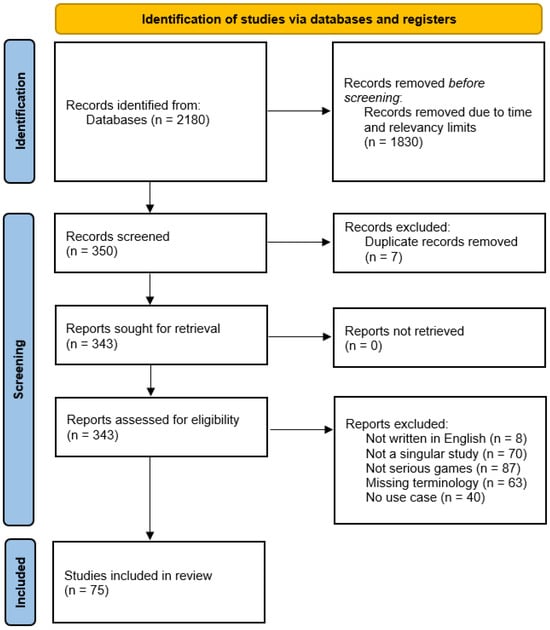
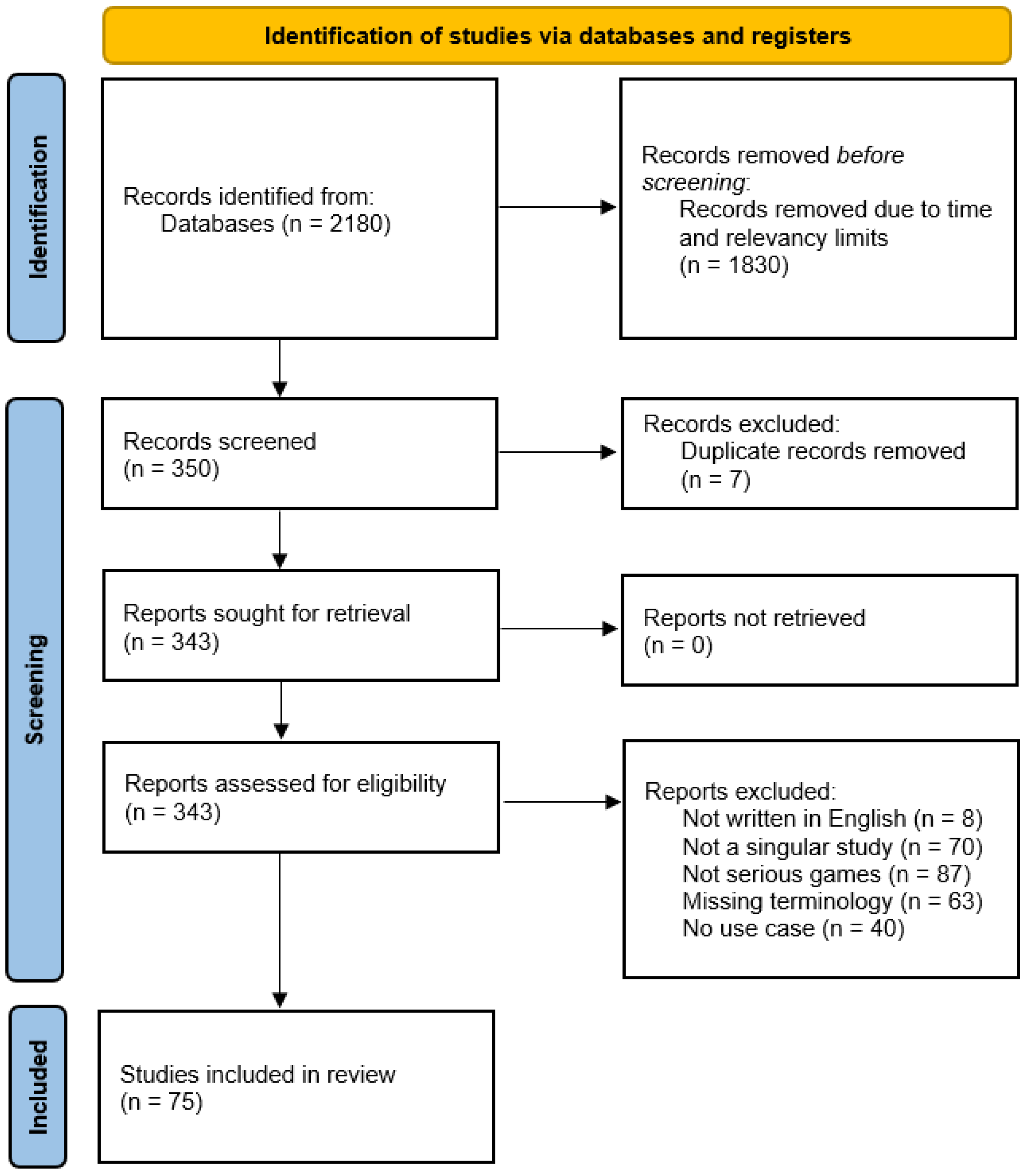
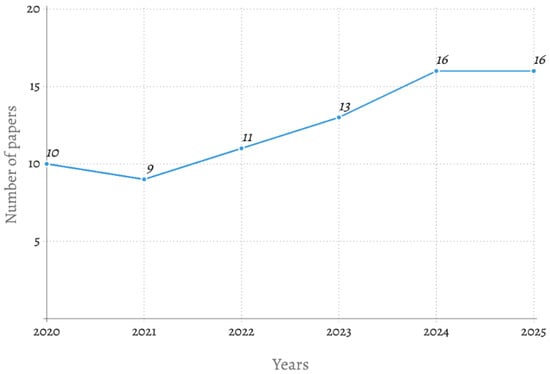
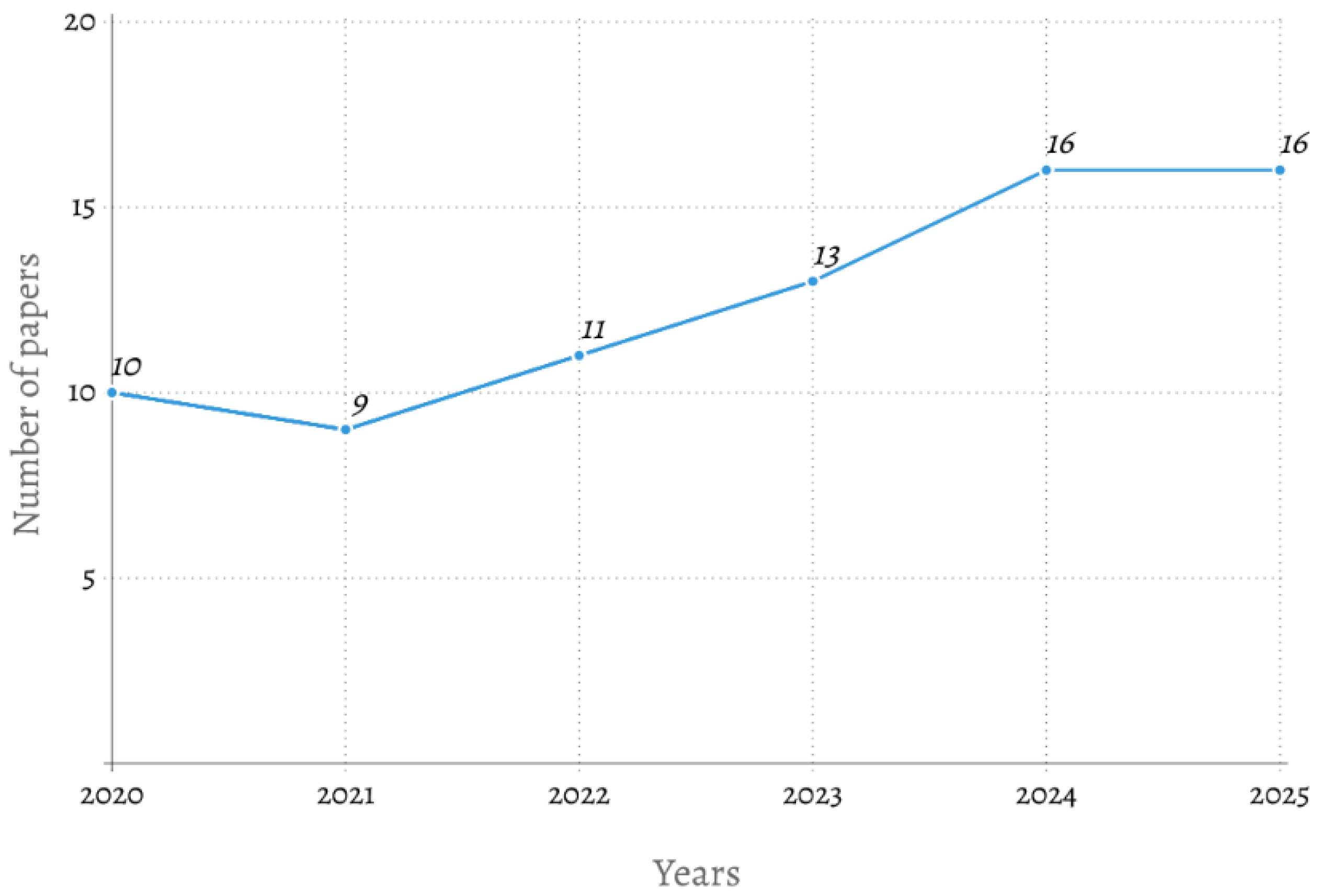
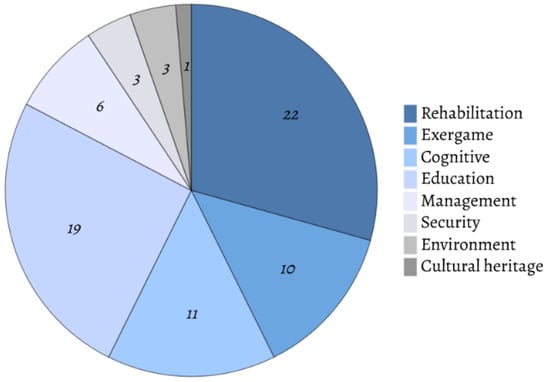
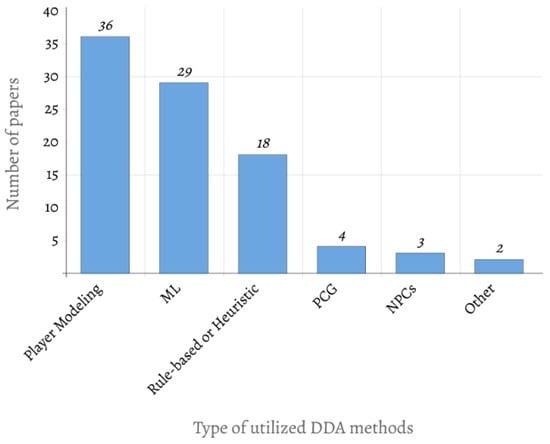
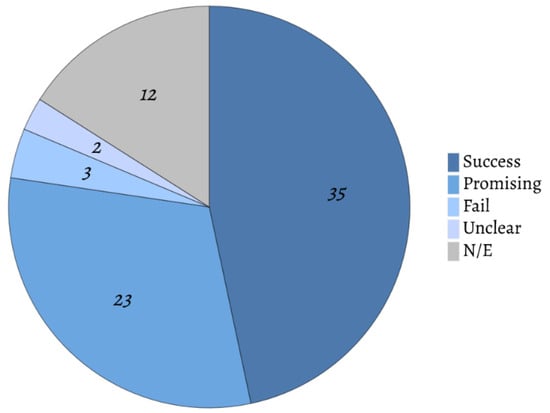
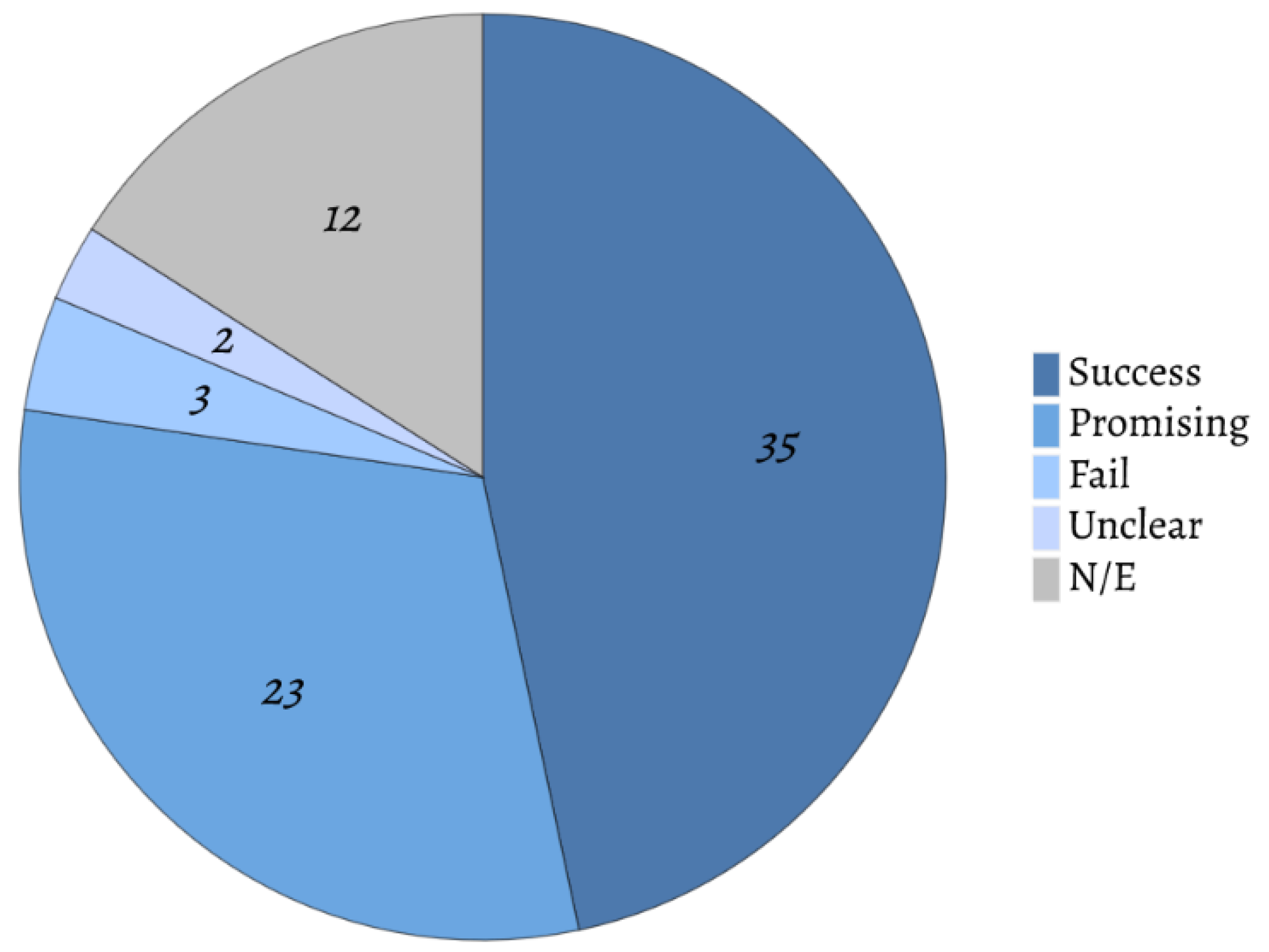

Disclaimer/Publisher’s Note: The statements, opinions and data contained in all publications are solely those of the individual author(s) and contributor(s) and not of MDPI and/or the editor(s). MDPI and/or the editor(s) disclaim responsibility for any injury to people or property resulting from any ideas, methods, instructions or products referred to in the content. |
© 2026 by the authors. Licensee MDPI, Basel, Switzerland. This article is an open access article distributed under the terms and conditions of the Creative Commons Attribution (CC BY) license.