Article

Network Traffic Anomaly Detection via Deep Learning


by
Konstantina Fotiadou
1,*,
Terpsichori-Helen Velivassaki
1,
Artemis Voulkidis
1,
Dimitrios Skias
2,
Sofia Tsekeridou
3 and
Theodore Zahariadis
1
1
Synelixis Solutions S.A., 34100 Chalkida, Greece
2
Intrasoft International S.A., L-1253 Luxembourg, Luxembourg
3
Intrasoft International S.A., 19002 Athens, Greece
*
Author to whom correspondence should be addressed.
Information 2021, 12(5), 215; https://doi.org/10.3390/info12050215
Submission received: 18 April 2021 / Revised: 14 May 2021 / Accepted: 15 May 2021 / Published: 19 May 2021
(This article belongs to the Section Information and Communications Technology)

Abstract

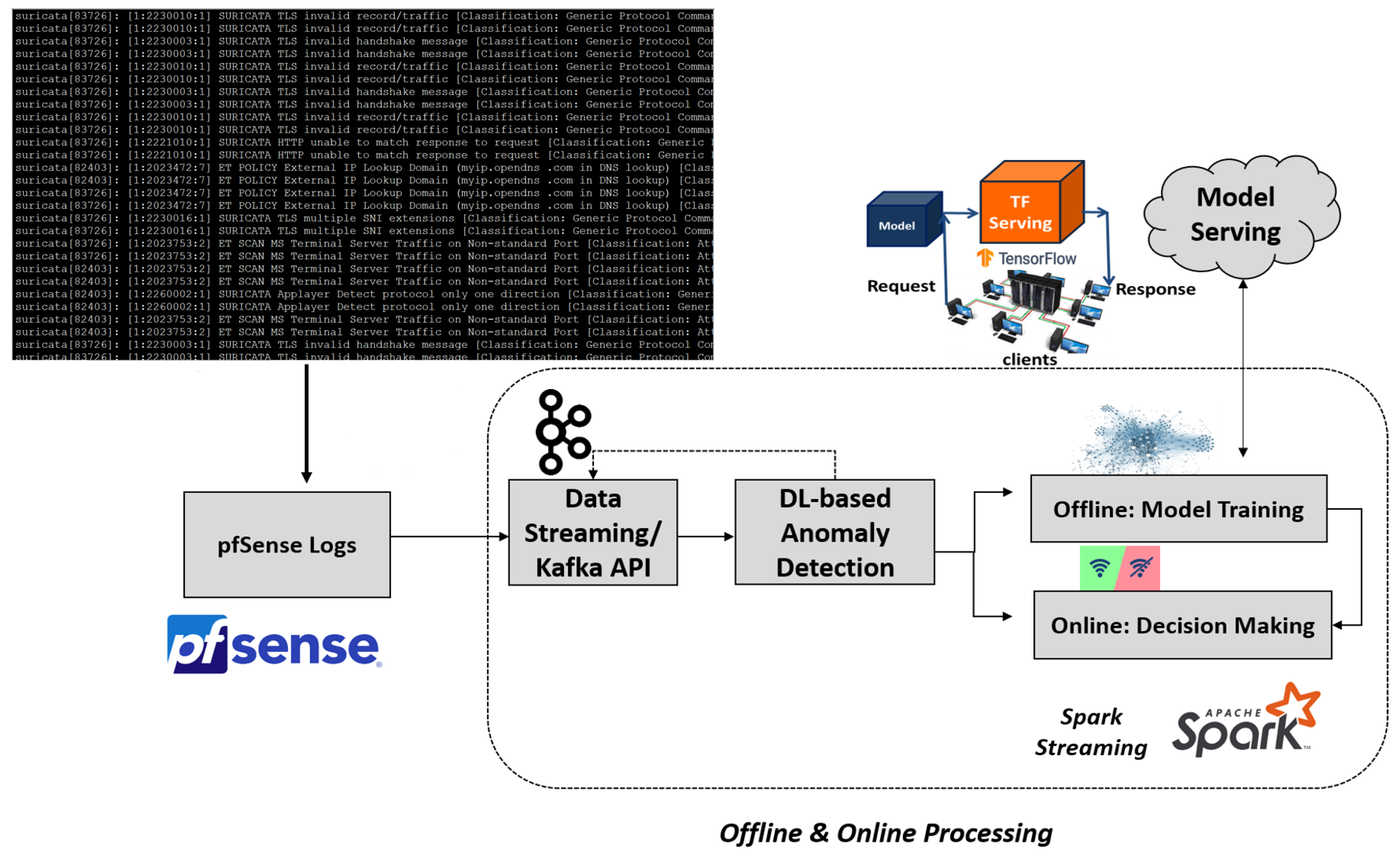
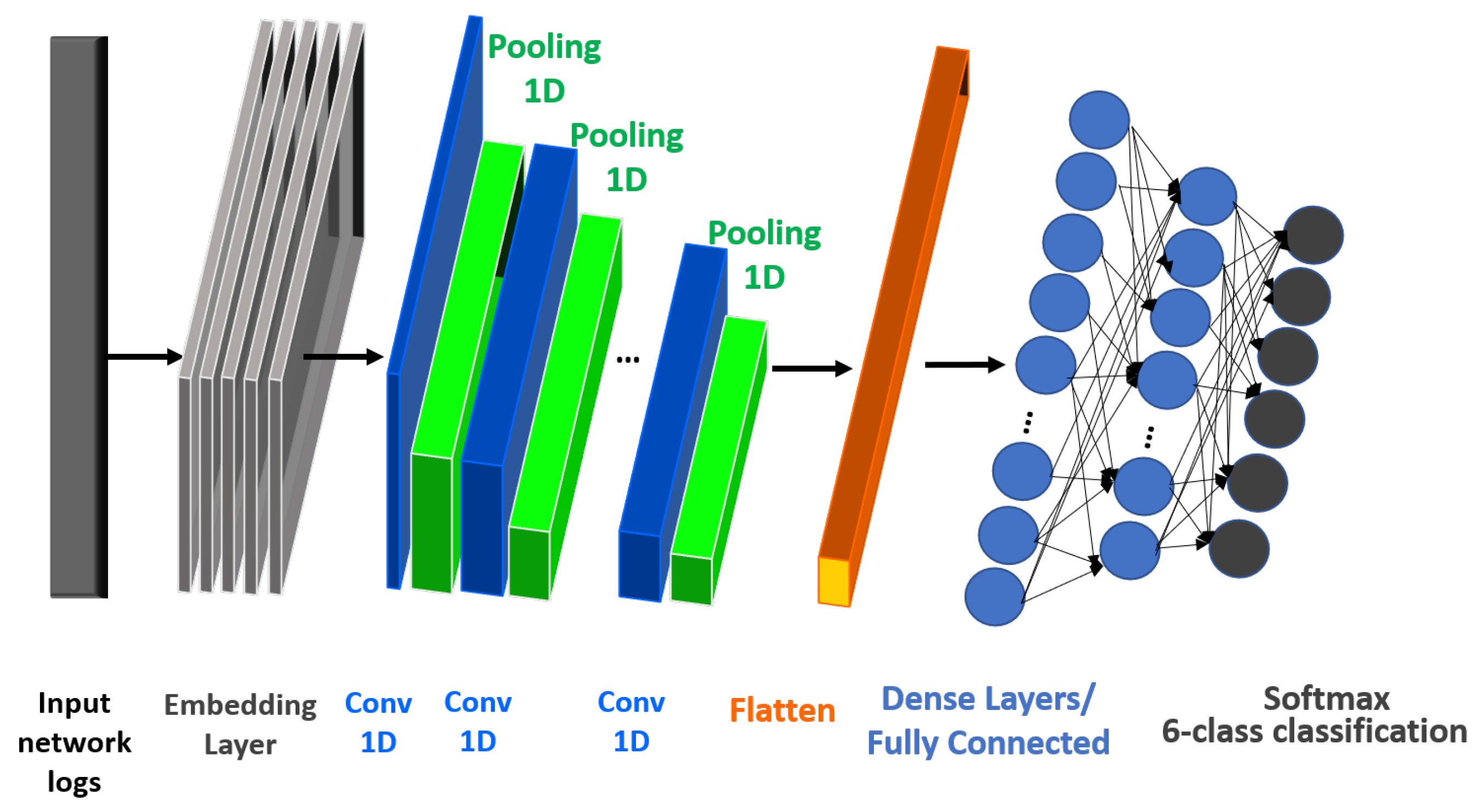
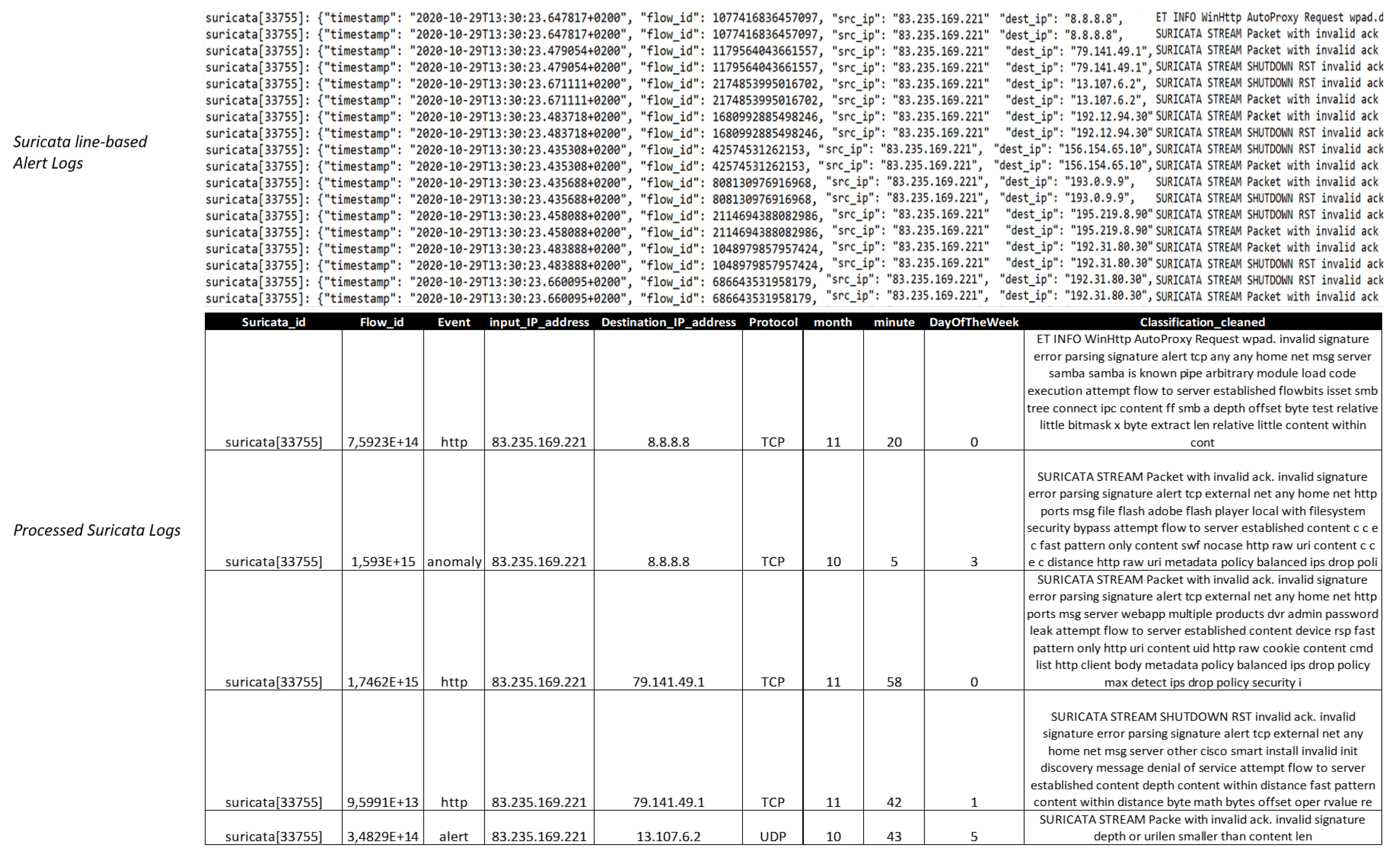
Network intrusion detection is a key pillar towards the sustainability and normal operation of information systems. Complex threat patterns and malicious actors are able to cause severe damages to cyber-systems. In this work, we propose novel Deep Learning formulations for detecting threats and alerts on network logs that were acquired by pfSense, an open-source software that acts as firewall on FreeBSD operating system. pfSense integrates several powerful security services such as firewall, URL filtering, and virtual private networking among others. The main goal of this study is to analyse the logs that were acquired by a local installation of pfSense software, in order to provide a powerful and efficient solution that controls traffic flow based on patterns that are automatically learnt via the proposed, challenging DL architectures. For this purpose, we exploit the Convolutional Neural Networks (CNNs), and the Long Short Term Memory Networks (LSTMs) in order to construct robust multi-class classifiers, able to assign each new network log instance that reaches our system into its corresponding category. The performance of our scheme is evaluated by conducting several quantitative experiments, and by comparing to state-of-the-art formulations.
Keywords: pfSense software; semi-supervised anomaly detection; deep feature learning; long short term memory networks; convolutional neural networks; pfSense software; suricata network logs anomaly detection pfSense software; semi-supervised anomaly detection; deep feature learning; long short term memory networks; convolutional neural networks; pfSense software; suricata network logs anomaly detection