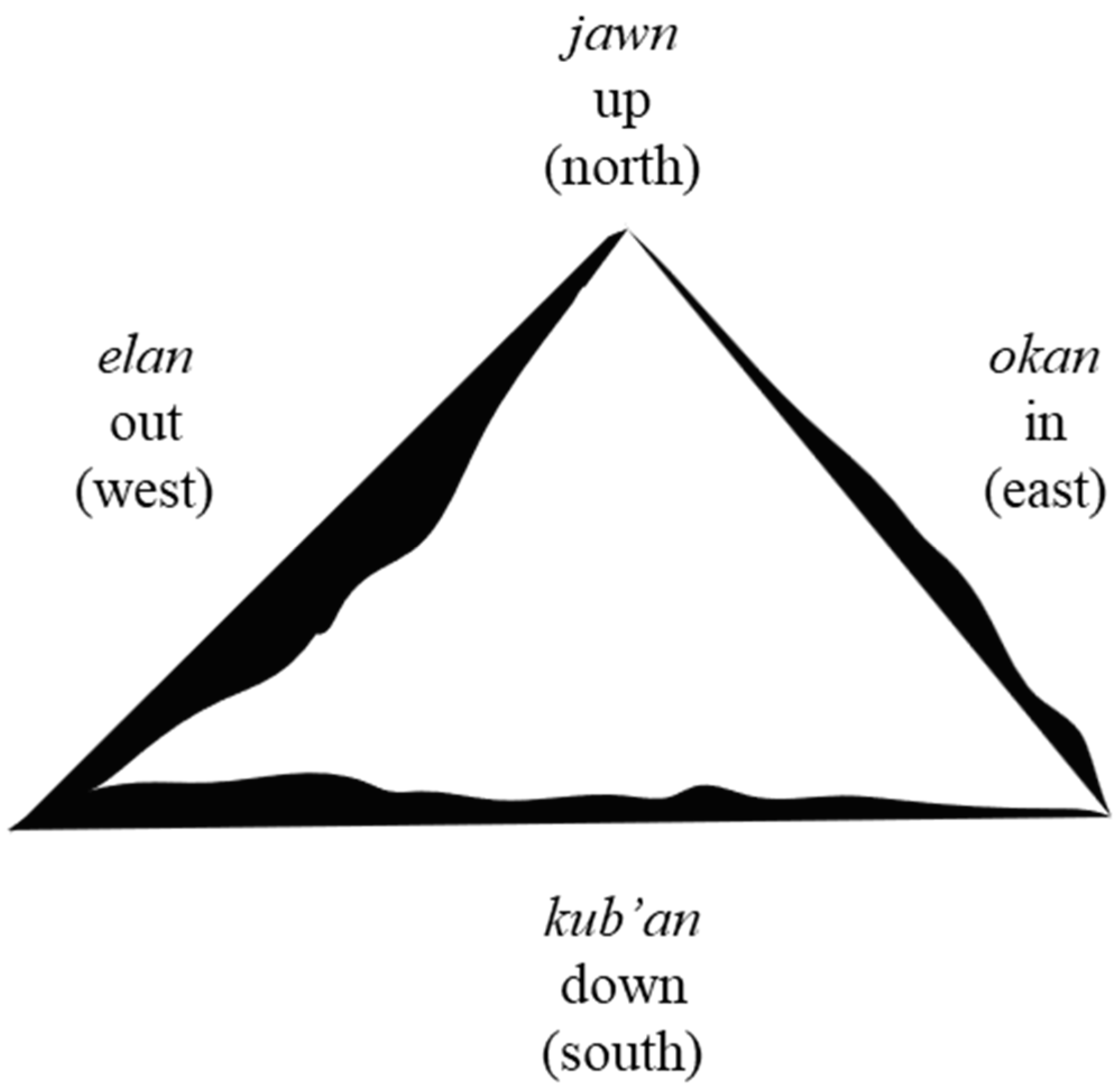
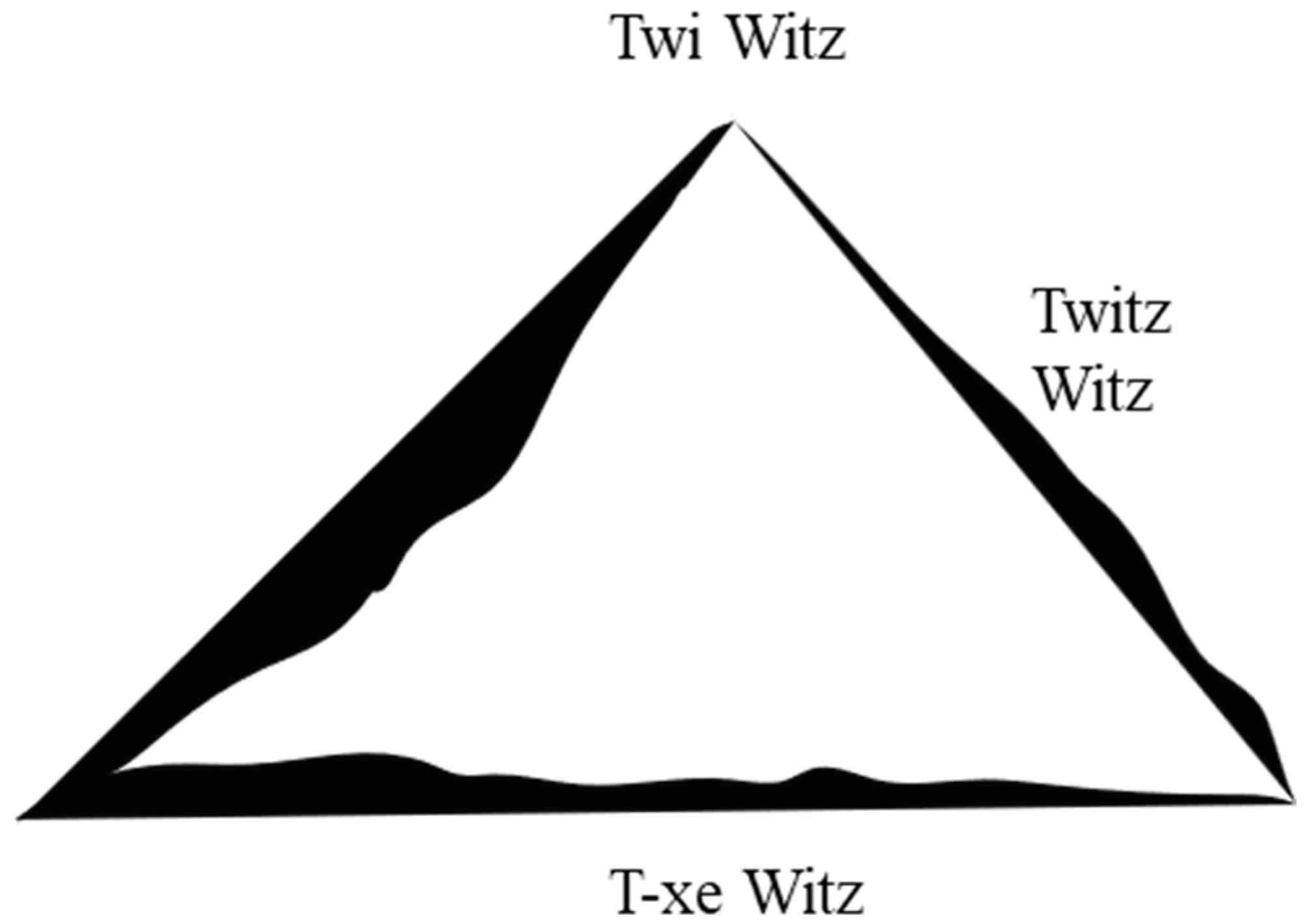
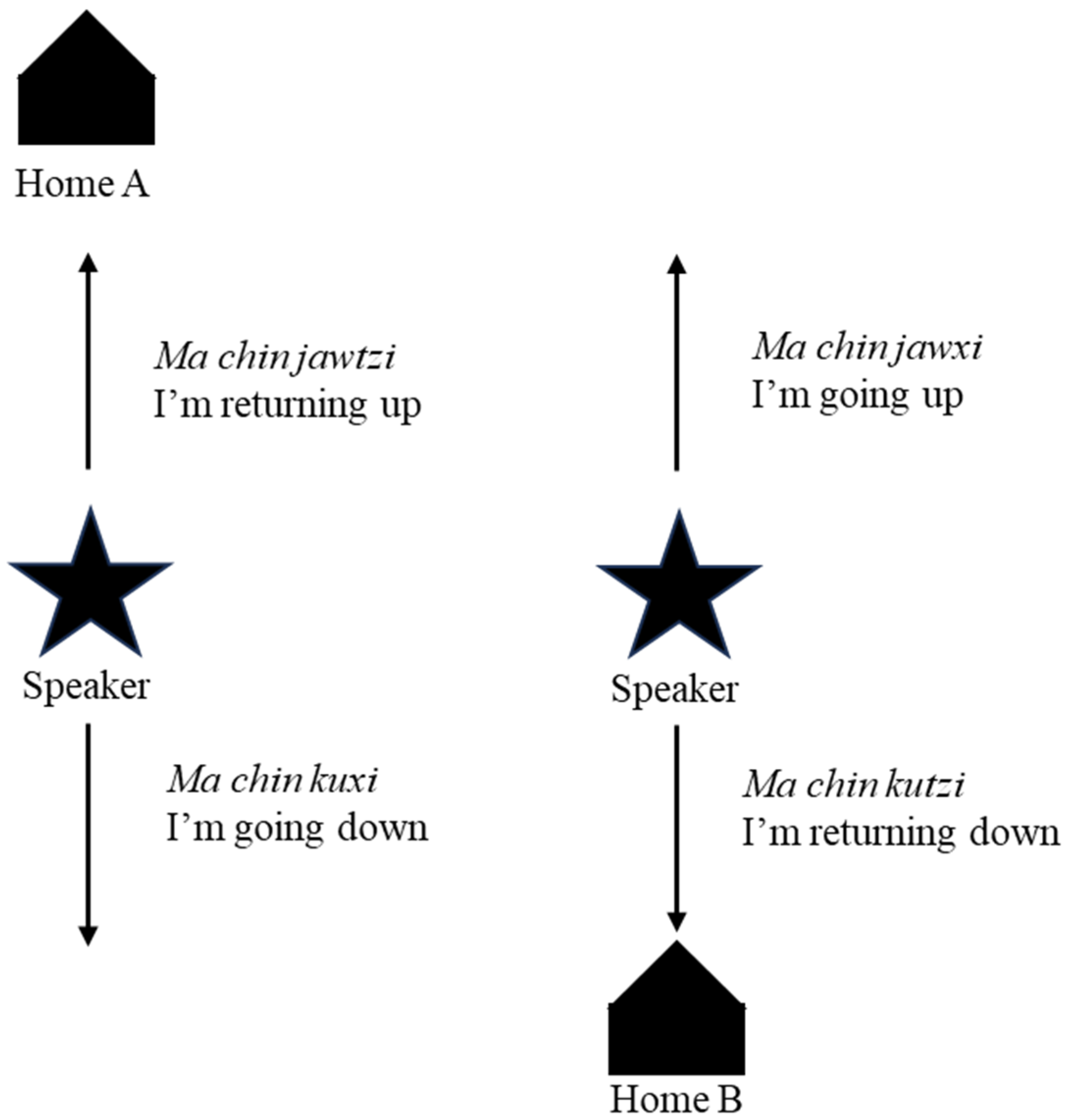
1. Introduction
“For that reason, we go to the mountaintops to pray.” Alejandro’s mother-in-law interjected this as he described why people like him die in the desert, trying to enter the United States. Alejandro had attempted five times to cross the desert, and each time was thwarted by drones, dogs, ATVS, and other technologies of surveillance and capture. His cousins and brothers had all successfully migrated to the U.S. from Guatemala, leaving Alejandro the only young man in his family still living in San Juan Atitán. He had recently moved into his uncle’s house as a caretaker, making us neighbors, which in turn led to an invitation to share a meal. Sitting by the warm hearth after dinner, Alejandro told me of the existential challenges his family faced. His mother-in-law was dealing with life threatening health issues, requiring the family to navigate the Guatemalan healthcare system with their limited Spanish language abilities. His father recently passed away, leaving him the oldest adult man to provide for his household. It was in this context that his mother-in-law described the necessity of prayer.
This paper sets out to describe the ontology—in terms of categories and kinds (following
Kockelman 2011,
2024)—and cultural logic—in terms of practices and norms (following
Fischer 1999,
2001) that connect mountains, migration, and prayer as so succinctly expressed by the Mam elder’s interjection. Mountaintop prayer rituals practiced by Mam Maya Christians have become a ubiquitous feature of life in San Juan Atitán, a Mam Maya township in the Cuchumatán highlands of Huehuetenango, Guatemala. As an anthropologist, I conducted two years of ethnographic fieldwork in San Juan Atitán and its diaspora in Oakland, California. Through analysis of data gathered from participant observation of prayer rituals and everyday life and interviews about migration experiences, I trace the connection between mountains, prayer, and migration across three linguistic and cultural domains: grammar, discourse, and ritual. These features of linguistic and cultural life constitute a theological praxis from what mujerista theologian
Isasi-Díaz (
2002) terms “lo cotidiano” or Martell-Otero terms “Abuelita Theology” (
Martell-Otero et al. 2013; see also
Armas 2021): the everyday practices of life where theological concepts are discursively practiced, constructed, and revised, though regularly ignored by formal theology. Following Lakotan theologian
Twiss (
2015,
2011), when Mam Mayans connect migration to mountaintop prayer, they practice a form of “decolonial contextualization” of Christian belief, reinterpreting an ancient Hebrew cosmology of mountains, as developed in the Bible (
Clifford 1972;
Levenson 1987;
Maier 2008;
Morales 2024), through Mayan categories.
That the Indigenous people of the Americas reinterpret Christianity through their cosmologies and ontologies is well documented in the historic and ethnographic record (
Hanks 2010;
Tavárez 2017;
Bender and Belt 2025). In Guatemala, the first 400 years of contact between western Christianity and Indigenous belief systems took place almost exclusively in the context of Roman Catholicism. Scholars summarize the response of Maya communities to the repeated violent incursions into their lives as one of strategic survival, in which tradition was regularly innovated upon (
Batz 2024;
Farriss 1992;
Watanabe 1990). In many Mam Maya communities, the Catholic Church was integrated into the ritual system (e.g.,
Wagley 1949;
La Farge 1947). The ritual specialists, called
aj q’ij (meaning “day person”) or
chman (meaning “grandfather”)
1 were often involved in the Catholic church, and called upon Jesus as well as mountain deities in their divinations; although there has always been observed a diversity of beliefs across Maya communities, in which some emphasize a more orthodox Catholicism and some wish to separate Maya religious practice from Christianity (
Watanabe 1992). However, in the last half century there has been a rapid transformation in Guatemala, which has one of the highest rates of conversion to Protestantism among anywhere in Latin America (
Pew Research Center 2014). While many of the Ladino-majority urban spaces of the country remain mostly Catholic, many Indigenous-majority rural spaces have become mostly Evangelical (
Turek 2022). The reasons for this rapid transition are multifaceted, but the history is deeply intertwined with U.S. destabilization of the Guatemalan government and support of Ríos Montt, a military leader and “born again” Evangelical supported by Ronald Reagan (
Garrard-Burnett 1998). Under the U.S.’s influence, the work of Catholic priests in Indigenous communities was suspect for its ties to Marxism, while Evangelical missionaries were freely allowed to enter the country. Many Indigenous communities converted to Evangelicalism during this time as a tactic of survival, hoping that the military would not associate them with Marxists or guerilleros (
Manz 2004). In the years following the armed conflict, international migration has become an important source of livelihood, especially in rural indigenous communities impacted by violence. (
Loucky and Moors 2000;
Hagan 1994). The new transnational nature of social life in Mayan communities has reconfigured Mayan rituals and traditions, including textiles (
Kellog 2005), festivals (
Burrell 2005), and, as is taken up here, religion.
Given this historical context, some scholars have viewed Evangelicalism as a destructive force in Maya culture and community, leading Maya people to abandon their language, dress, rituals, and traditions.
Hawkins (
2021) and
Carlsen (
2011), for example, argue that the adoption of Evangelicalism is the direct result of the disintegration of a local ritual economy based on maize subsistence agriculture. Others, however, have shown that Maya communities navigate the issues of identity and livelihood through the religious pluralism of traditional, Catholic, and Protestant religion (
MacKenzie 2016) such that Evangelicalism, as much as the other available religious belief systems, can be used to “re-enchant” Maya identities and communities (
Samson 2011). This latter vein of scholarship aligns with the assessment of Evangelicalism held by my interlocutors in San Juan Atitán. San Juan Atitán’s neighbors once knew it as a particularly religiously conservative township where the majority of its residents had little connection to the Catholic church, instead going to
aj q’ij for their existential problems. Many of those same
aj q’ij are themselves now elders in small Evangelical church congregations. When explaining the critiques of Evangelicalism to them, they turned the critique on its head—saying that the Catholic church was tied to colonization, while Evangelicalism did not even arrive with white men, but with Mam speakers from the surrounding areas that had been taught to read the Bible in Mam at a Mam seminary. I talked to old men and women who described Evangelicalism as deepening their relationships to their environment, their family, and their cultural identity while leaving behind negative aspects of tradition, like alcoholism and dependence on both patron saints and plantation owners for their livelihoods (both a saint and an employer being called
patrón). At the same time, I saw Evangelical churches spend hard earned money on invited Spanish-speaking preachers that belittle Indigenous culture, and I spoke with Catholics and
aj q’ij who thought Evangelicals were abandoning important parts of Sanjuanero tradition, even as many Catholics have adopted aspects of Evangelical prayer rituals. Despite local practitioners’ largely positive analysis, the history of Evangelicalism in Guatemala is mired in violence and U.S. imperialism. In the following analysis I suspend my judgement on the effects of Evangelicalism on Maya culture and tradition, instead describing the categories and practices that animate life for contemporary Maya Christians. This approach allows for an evaluation of the effects of Evangelicalism from the terms expressed by Mayans themselves.
The paper develops as follows: First I examine a selection of form classes in Mam grammar that reference mountains: directional relational nouns, intransitive verbs of motion, and embodied relational nouns. Building from
Hanks’s (
1990) definitive analysis of spatial reference, or deixis, in Yucatec Mayan grammar, I show how mountaintops feature as ubiquitous sites of reference in Mam deixis. In this section I develop the Mam ontology of mountains as tractable through the grammatical and lexical categories that reference mountains. Second, I examine the discourse pattern that links mountaintops to prayer in the context of migration, of which the Mam elder’s interjection that begins this paper is an example. I identify the lexical patterns that associate mountaintops with prayer in the context of migration, as well as the kinds of people who participate in this discourse. Third, I examine the ritual of mountaintop prayer itself, identifying the possible events that the prayer is about, the participant structure that animates it, and the ways this ritual is coopted and resisted. In this section I develop the cultural logic of mountaintops as tractable through the structure and context of mountaintop prayer. Taken together, the analysis of these three domains—grammar, discourse, and ritual—illuminates how Mam Mayans make sense of mountaintops as the most important venue of action under the risks of international migration. Following other anthropological studies of form classes across sociolinguistic domains (
Kockelman 2007), I do not claim for there to be perfect conceptual unity across these domains, or for one to hierarchically emerge from the other. Rather, I show how, in each of these domains, mountaintops are configured as central to the Mam lifeworld, even an increasingly transnational one. I avoid the technical jargon of semiotics and linguistic anthropology in favor of an analytical language accessible to an interdisciplinary audience. For this reason, I opt for a line-by-line translation of Mam speech rather than a more technically accurate interlinear translation.
Following this analysis, I conclude by discussing the resonance between the connections Mam Mayans draw between mountaintops, prayer, and migration and the broader discursive relationship between Christianity and Indigenous survivance. Throughout, I treat the ritual specialists, smugglers, pastors, and grandmothers whose utterances I analyze as local theologians who read the Bible from the margins through their everyday practices of mountaintop prayer.
3. Discourse Patterns of Mountaintop Prayer
When asking Sanjuaneros why they go to the mountaintops to pray, their answers were rarely extensive. Most commonly, I was told that it is
costumbre, or the custom, a term that in other Maya contexts refers to traditional religious practices (see
De la Cruz 2017;
MacKenzie 2016) but in San Juan Atitán is used to articulate the motivation for a wide range of actions, from agricultural techniques to economic agreements to ritual traditions. Other times I was told that mountaintops are
txub’txj—pleasant, nice, enjoyable. More theologically, I was sometimes told that they go to the mountains because Jesus and Elijah went to the mountains to pray—a difficult argument to contest. It was indeed difficult to explain to my interlocutors that not all Christians ascend sacred mountaintops to pray to God.
However, in other moments of conversation in which we were not talking about the abstract principle of mountaintop prayer, but the practical challenges that Sanjuaneros face, from landslides to migration, Sanjuaneros elaborated on the reasons they ascend to the mountaintops to pray. Below I draw from three examples, one being a shamanic incantation that is spoken within the context of an oral narrative, one being from a Mam coyote, or smuggler, and one being from an Evangelical pastor. I treat these three kinds of people, which are three statuses central to Mam social life, as local theologians who mediate the relationship between their Mam speaking communities, divine entities, and the risks of the outside world.
The following incantation draws from a common form of prayer practiced by
aj q‘ij. This particular formulation of the incantation was recorded from an oral history familiar to all Sanjuaneros about a landslide that destroyed a large part of San Juan Atitán following the visit of a spiritual being from Chiapas called “the Chiapaneco”.
4 I choose this as an example because, insofar as it appears within a a broadly circulated narrative, it provides a view of the general discursive understanding of
aj q’ij’s practices. In the narrative, Sanjuaneros turn to their
aj q’ij following the destruction of their church by a landslide. The
aj q’ij ask four divine mountains to the east and west of San Juan Atitán, addressing them in this way:
1 Qman B’ak jatum njawil q’ij
2 Qman Xlach’e jatum nkux q’ij
3 Qman Ma’tx jatum nex qe tqan a’
4 Qman Q’u jatum ntzaj kyqiq’
1 Our Father B’ak where the sun goes up
2 Our Father Xlach’e where the sun goes down
3 Our Father Ma’tx from where the water springs flow
4 Our Father Q’u from where the wind arrives
Notice that four directionals discussed above,
jaw,
kub’,
xi,
tzaj, are associated with each of the four mountains, such that the sun
goes up and
goes down, water springs
go away from, and wind
comes toward. In this instance, the mountains that serve as the implicit points of deictic reference in everyday life are named explicitly—B’ak, Xlach’e, Ma’tx, and Q’u. Related to the discussion in the previous section, while Sanjuaneros do not use the directionals
elan and
okan to track the movement of the sun, the movement of the sun is nonetheless an organizing principle that relates mountains in the east to mountains in the west. Moreover, the idea of a relational conception of four cardinal directions is emphasized here, where “up” and “down” are not paired with “in” and “out”, but “away from” and “toward”. Notably, the mountain Ma’tx, like the mountain Xlach’e, is located on the western side of San Juan Atitán, and the mountain Q’u, like the mountain B’ak, is located on the eastern side, matching
Hanks’s (
1990, p. 299) argument that Mayan cardinal directions are relational, not absolute.
This example draws from the historic register in which mountains have been discussed in Mam life—as not only geographic features, but spiritual beings with agency over the natural and social world, such that in the wake of a natural disaster like a large landslide, the township goes to the
aj q’ij to pray to these mountains about what to do next. The animacy of mountains is a central feature of Maya cosmology, as has been well-researched (
Kapusta 2022,
2024;
MacKenzie 2016). These
aj q’ijs’ incantations, that pray
to mountains, are also uttered
on mountaintops. While with the conversion to Evangelical Christianity, many Mam Mayans now reject the idea that mountains should be prayed
to, they do not question the assumption that mountains should be prayed
on. Moreover, conversion to Evangelicalism and migration to the U.S. has shifted the relevant people that Sanjuaneros consider experts in handling the risks and precarities of the outside world. While
aj q’ij were once important ritual specialists that mediated the curses and diseases sent by malevolent non-indigenous volcano spirits to steal away Sanjuanero souls and make them toil on the plantations beneath the earth (see
Wagley 1949;
Watanabe 1992), smugglers, often called
coyotes, are now important migration specialists that mediate the migration journey, where gangs and cartels desire to kidnap Sanjuaneros and demand a ransom from their families (c.f. Honduran experiences of coyotes in
De León 2025). Despite this transformation in economic, religious, and social life, mountaintops remain an important site for addressing risk and precarity. In the following example, a Mam smuggler explained to me how he helps his Mam clients migrate to the US. These data were taken from a recorded interview with a Mam smuggler who became a trusted interlocutor and friend, and was thus willing to disclose aspects of his sensitive work to me. Without my elicitation of mountains or
aj q’ij during the interview, he began to talk to me about mountaintop prayer as an essential feature of his work as a smuggler, with comparison to shamanic mountaintop rituals. Given the dangers and risks he and his clients undergo during migration, he ascends mountaintops with his clients before their journey through Mexico and into the U.S.
1 At xjal qo chi qiy tuj qyol Xjan Xwan,
2 at xjal okslal, b’ix at xjal chman-ch, tons apart.
3 Tkyaqil no’k kyu’n qa xjal te Xjan Xwan tzluw,
4 nchjo’n qa
5 tu’n me’n tok accidente,
6 tu’n cheb’ pon xjal max tuj Estados Unidos
7 nok na’j Dios.
8 Nchjex xjal na’l Dios twi witz.
9 Ikyx qa chman también,
10 nchjex chman aq’nal,
11 digamos, poml qo chiwtl.
12 Nchjexqa twi witz
13 tu’n me’n nxi’ palt te xjal,
14 tu’n me’n txi xjal tu’n le’
15 tu’n me’n tok accidente,
16 tu’n me’n… jun montón tkyaqil jken,
17 tu’n b’an tpon xjal max tuj Estados Unidos
1 There are people, we say in the language of San Juan,
2 There are believers and there are shamanists, they are different.
3 All of these people in San Juan here,
4 they ask
5 for no accident to occur,
6 for safe arrival in the United States,
7 praying to God.
8 People go pray to God on top of mountains.
9 It is the same with the shamans,
10 shamans go to do [ritual] work,
11 with what we call poml
12 They go to mountaintops
13 for no person to be left to die,
14 for no people to be robbed,
15 for no accident to occur,
16 for no… many of these sorts of things,
17 for people to arrive well in the United States
This smuggler’s utterance is structured as follows: After identifying two kinds of people, he begins with “They ask”, an intransitive verb phrase with the progressive aspect marker “n-”—an aspect that marks ongoing action, whether in the past, present, or future. Following this phrase are two dependent clauses (5 and 6) that begin with the relational noun tu’n, meaning ‘for’, ‘in order that’, ‘so that’. The first of these clauses is for the negation of a bad thing, a Spanish word “accident”, and the second is for the completion of a good thing, safe arrival in the U.S. He then clarifies that the phrase “They ask” refers to praying to God (7). He further clarifies that this asking and praying happens when people go to mountaintops (8). Then, in contrast with his introduction about shaminists and Evangelicals being different, he says that aj q’ij are the same insofar as they also go to mountaintops, although they “work” with ritual incense rather than “pray”.
In the next sentence, the smuggler follows the same structure as 4–8, beginning with an intransitive verb phrase, this time using an intransitive verb of motion derived from the directional xi. In this phrase, Nchjexqa twi witz, going to mountaintops stands in for prayer and petition, as said in 7. He then continues with five dependent clauses that all begin with tu’n. The first four all involve the negation of the precarities that might occur during migration—death, robbing, accidents. The final clause repeats the final clause of his first sentence, for the completion of safe arrival.
In the above statement, the smuggler does not draw upon the symbolic patterning of four cardinal directions and four mountains associated with the divinatory chants of ritual specialists. Rather, the smuggler draws from a discourse pattern that centers mountains conceptually, but in the context of a different ritual form—Evangelical prayers of petition rather than esoteric chants of aj q’ij. I now turn to a different status that, from the perspective of the anglophone world, may seem a surprising one to pair with smugglers: that of the Evangelical pastor. However, as shown below, the smuggler and the pastor draw from the same discourse pattern about mountaintop prayer. The following data is taken from a recorded interview with a Mam Maya pastor. During the interview, he began to tell me about the struggles that his congregants go through—struggles akin to the issues of sickness and migration that began this article. As with the smuggler, I did not bring up mountaintops, but he told me that his congregants respond to their struggles in this way:
1 Nchjex aj xjal twi witz,
2 nchjex aj xjal tu’n na’l Dios,
3 nok tu’n me’n tzaj yab’l te xjal,
4 tu’n me’n tjaw tolj xjal,
5 tu’n twan xjal,
6 tu’n… nti’ jun tijil tuj tchwinqlal xjal,
7 pues atzan til te witz
8 na’n xjal Dios.
1 People go to mountain tops,
2 people go to pray to God,
3 for no sickness to come to people,
4 for people not to fall,
5 for people’s food,
6 for… there is not just one thing in a person’s life,
7 well, that’s how it is with mountains,
8 people pray to God.
This pastor’s words follow a similar structure to the smuggler, except that his utterance loosely follows a structure of parallel couples, a form deeply embedded in Mayan speech (e.g.,
Haviland 1988). He first begins with two intransitive verb phrases based in the combination of
xi (away from) and
aj (returning here from there). In the first phrase, people go-return to a place: the top of mountains. In the second, people go-return to pray to God. As with the smuggler’s words, “prayer” and “mountaintops” are interchangeable concepts in this pattern. In the second phrase (3 and 4), the pastor continues with two clauses about the negation of bad things—sickness and moral failings (metaphorically referred to as “to fall”). The next phrase (5 and 6) includes two clauses for the completion of good things—for food, and for everything else (since there is not just ‘one thing’ to be prayed for). He concludes with a summary about the nature of mountains as sites of prayer.
Continuing our conversation, the pastor began to talk about Sanjuaneros who migrate to the US, and congregants he has prayed with on mountaintops.
1 Ma chjex qox twi witz na’l tuk’l xjal.
2 Nti’ jun tijil ch’ixb’aj xjal tuj jun desierto,
3 jatum nti’ a’,
4 jatum nti’ wab’j.
5 At xjal nb’et unos cinco, seis días tuj desierto.
6 Ya ma chjex xjal.
7 Per com at jun Dios nkeyn kye xjal,
8 o txi kyq’an xjal tnel te Dios,
9 nti’ jun tijil,
10 cheb’ nxi pon b’aj xjal.
11 Yatzan xjal nti’ ma xi twi witz,
12 ntzaj tb’is xjal,
13 nim xjal ma kyej kyim xjal,
14 ma kyej kyim xjal, ma kyej kyim xjal.
1 We went atop mountains to pray with people.
2 There is not a thing for people to find in the desert,
3 where there is no water,
4 where there is no food.
5 There are people who walk five, six days in the desert.
6 Already the people went.
7 But since there is a God watching those people,
8 since those people asked God first,
9 there is not a thing (i.e., a problem),
10 they safely arrive.
11 As for people that didn’t go to mountain tops,
12 they suffer,
13 many people have died,
14 people have died, people have died.
At this point, the pattern diverges from the smuggler’s utterance of an intransitive verb phrase pertaining to mountaintop prayer followed by dependent verb clauses about the kinds of petitions. He continues in loosely paired phrases that narrate the relationship between mountaintop prayers and the dangers of the desert—the conceptual connection that began this paper. Here the pastor compares those who ask God, referencing the dependent “tu’n” clauses above, and safely pass through the desert with those who do not go to mountaintops, and suffer as a result.
That a smuggler, who spends much of his time navigating the illicit networks of police, gangs, and cartels across Mexico, and a pastor, who has never set foot outside of Guatemala, can speak about the relationship between mountaintops and prayer using the same discourse pattern points to the importance Sanjuaneros place on this practice. Similarly to how
Fischer (
1999) describes the semantic domain for the Kaqchikel terms of heart and soul in order to describe the way in which these terms animate their “cultural logic”, I have shown how the semantic domain of
witz is employed in the connections between mountaintops, prayer, and migration. As is analyzed next, a defining feature of mountaintop prayer that distinguishes it from the divination practices of
aj q’ij is that everyone can participate on equal footing, without the need of a ritual specialist. While this means that some of the direct resonances between spatial reference in grammatical categories and discourse patterns are lost, as when the
aj q’ij petition four mountains using four cardinal verbs of motion, mountaintops are nonetheless emphasized as the most important venue for addressing life’s most difficult issues.
4. Mountaintop Prayer Rituals
Evangelical mountaintop prayers differ from the esoteric chants of
aj q’ij and the memorized liturgies of Catholicism. They exhibit a participant structure in which everyone prays aloud all at once, often leading to moments of loud exuberant emotion. This kind of prayer is shared by Evangelical and Pentecostal Christians throughout the world (
Harkness 2021;
Hansen 2018;
Luhrmann 2012), though Mam Mayans have a particular emphasis on practicing this form of prayer on the mountaintop. Below I summarize the kinds of events that lead to mountaintop prayer, provide an ethnographic description of the participant structure of the prayer ritual, and then discuss the ways this ritual is coopted and resisted.
Over the course of fieldwork, I encountered many reasons why Sanjuaneros went to the mountaintop to pray as I conducted participant observation in both a Catholic and Evangelical congregation and conducted interviews with congregants. The following list, organized by domain, shows the range and scope of mountaintop prayer practices recorded in my field notes:
To discern the kinds of sickness one has
To ask for secret words used in traditional healing practices
To ask for healing while sick
To reduce the effects of envy on one’s family
To ask for money and food when poor and hungry
To give thanks for miraculous or natural healing
To discern why a harvest failed
To ask for a source of water when water springs dry out
To petition for the coming of the rainy season
To give thanks for a good harvest
To discern whether or not to migrate
To petition for a safe future migration journey (oftentimes with a smuggler)
To petition for another’s current migrant journey
To petition for someone who has been detained while crossing into the U.S.
To give thanks for a friend or family member’s safe arrival in the U.S.
To give thanks for a remittance a family member sent back
To give thanks after successfully returning to Guatemala from the U.S.
Whereas health, wellbeing, climate, and agriculture were once the domains of greatest uncertainty in Sanjuanero life, and hence the object of prayers and shamanic divinations (e.g.,
Wagley 1949), migration has become, for many, the dominant theme of mountaintop prayer. Note that the entire life cycle of the migration journey—from the decision, to the journey across Mexico, to arrival, to the sending of remittances, to return to Guatemala—are marked by mountaintop prayer. Decisions to migrate are deeply personal choices in San Juan Atitán, such that a prospective migrant only tells their closest family members beforehand.
5 As a result, prospective migrants have few opportunities to discuss their decision, yet the mountaintop becomes a place where, before the divine, a prospective migrant can fully express their worries and anxieties. Sometimes this prayer includes just a few people—a married couple, or the mother and sister of a migrant—while other times it includes entire church congregations. Moreover, these prayers have real consequences in the decisions prospective migrants make. When facing economic challenges, prospective migrants will go to the mountaintops to pray, and depending on the sense they are given by God, they will decide to stay or to migrate.
A typical mountaintop prayer ritual unfolds as follows:
Arriving at the mountaintop, the faithful take off their bags and take a moment to catch their breath. Those who have brought flowers as an offering begin to arrange them on the ground in the middle of where everyone is congregated. Many sit on the ground or lean on a stone or tree while chatting among themselves. Then, the person who has convened the prayer addresses everyone, stating the reasons they have come to pray to God today on this mountaintop. The leader of the prayer, who may be the person who has convened it, or a pastor, or an elder in the church, addresses everyone, saying
“Qo na’l Dios, erman”—“Let us pray, brothers and sisters”. This phrase signals what
Goffman (
1981) would call a change in footing. Whatever positions the individuals took before, whatever small conversations were still being whispered at the edge of the congregation, now all present either stand or kneel on the ground. From this moment on, spoken words are addressed to the divine rather than each other. The leader begins loudly and confidently with a litany of thanks:
1 Qman Dios,
2 tokxi tuj tkawb’li
3 b’anchal kya’j
4 ex b’anchal te tkyaqil at twitz tx’otx’.
5 Chjonti tu’n t-xta’lb’li quk’li
6 ex chjonti tu’n junt q’ij ntzaj tq’on qiy.
7 B’anchami xtalb’l
8 k’amonxi jun tq’ajel qwiy.
9 Chjonti tu’n kyaqil qa qway, qk’ay, ex qxb’alni ntzaj tq’oni.
1 Our Father God,
2 bring your kingdom,
3 you made the sky
4 and you made everything on the face of the earth.
5 Thank you for your patience with us,
6 and thank you for another day you have given to us.
7 Please be patient,
8 receive our voices.
9 Thank you for all of our food, our drink, and our clothes you give us.
However, most of this introductory line is inaudible to all but those who stand or kneel closest to the prayer leader, as a short moment after the prayer begins, everyone present begins to say their own prayers. Conceptually, each individual prayer mirrors the others, following the set of concerns or the event that was the motivation for the meeting. But each person is free to express these concepts as they want between themselves and God. Common repeated phrases can sometimes be tracked above the noise:
1 Keyntzi tat,
2 Ontzi tipan, ontzi tnab’l
3 Keyntzi Dios
1 Look after them, dad
2 Give them strength, give them wisdom.
3 Look after them, God
As the prayer continues, there emerges a shift in affect. Emotion intensifies, and along with it the volume of the prayers, as some begin to almost shout. The quality of the voices also changes, as the participants’ words crack and strain at the edge of crying. Some participants, overcome by emotion, interject Ay Dios, as a half sung, half shouted line with a descending tone. As more participants are overtaken by emotion, the cries of Ay Dios, Ay Qman Dios begin to overlap in sporadic call and responses. This may last for a few minutes or more than half an hour. Eventually there is a slow decrescendo, as some participants cease speaking and others reduce their prayers to a whisper. Sometimes this moment of lower energy may last for a while, with just a few participants continuing aloud. Finally, the last person left praying aloud is the leader who began the prayer. Their prayer to God becomes once again comprehensible. They may repeat some of the key requests to God for everyone to hear, or simply finish the prayer with the following statement:
1 Q’oni onbi’l ma,
2 xe q’an te tq’ab’i tuj vid jal tuj kya’j,
3 tuj t-vid tkwali Jesu Cristo tb’i,
4 tuj tipumal xewb’aj xjan. Amen
1 Give us help Father,
2 we ask for your hand in life today in the sky
3 in the life of your son named Jesus Christ,
4 in the power of the Holy Spirit. Amen
At this “Amen”, each individual begins to greet every other individual present, walking around to take each person by the hand. This transitions the footing back to everyday speech rather than speech towards God. Individuals who a moment before were crying profusely, with tears rolling down their cheeks, chat with each other about whatever they were talking about before the prayer.
It is often in the contexts of intense emotional prayers that glossolalia is observed (see
Harkness 2021). While glossolalia has been studied in other Maya Evangelical settings, it is not a feature of prayer in San Juan Atitán. Even without glossolalia, this form of prayer matches a globalized Christian ritual practice, in which the content of the prayer is often more inspired by the language of the Bible than the symbolic system of Mayan cosmology. This form does not require a ritual specialist, allowing for a more horizontal participation structure in the content of ritual speech. Watanabe terms this participation structure as “collective individuation” (
Watanabe 2021), in which “the Holy Spirit powerfully answers the felt need for individual self-affirmation before the mystifying fluctuations of work and wages, production and profit in global marketplaces, and the indifference (if not corruption) of state regulators and enforcers” (ibid., p. xvii).
Hawkins (
2021) labels this participant structure as a “Pentecostal wail” that responds to the angst of cultural collapse. Hawkins’s account of Pentecostalism’s rise in both the Maya and global context is that it offers a sense of agency amidst “cultural collapse” and the disintegration of Maya society. For Hawkins, Mayan cultural collapse is rooted in what he calls the “failure of the Maya corn culture covenant” (ibid., p. 197), in which the rising Maya population mixed with the incursions of European and ladino landowners who sought land for coffee meant that Maya communities were increasingly unable to subsist off of local maize production during the 20th century.
The connection of cultural collapse to the persistent crisis of subsistence production has been a concern of some scholars of the Maya (
Annis 1987). However, these scholars’ accounts contradict the analysis that Mam Mayans give of their own history. When presenting the results of my fieldwork to focus groups in San Juan Atitán, I was told that to frame the challenges they faced as cultural collapse or disintegration would be to fundamentally misunderstand my experience of living among them. The corn covenant that Hawkins begins from was itself the strategic reinterpretation of a Pre-columbian ontology under the violent constraints of the post-conquest colonial world, a historical process described in detail by
Lovell (
1992) and
Batz (
2024). Sanjuaneros told me that change and collapse are not the same, such that while some aspects of the Maya lifeworld are lost in the adoption of Christianity, they also are strategically reinterpreting Maya ontologies into Evangelical Christianity. In other words, from the perspective of Mam Mayans, these mountaintop prayer rituals are a reinterpretation of their ancestor’s beliefs, rather than a break from them. Nonetheless, as a nascent ritual form, it is still being contested, evaluated, and reinterpreted. Indeed, within the churches in the diaspora, there is a growing fundamentalist strain of Christianity that pushes Mayans to detach themselves from their cultural backgrounds, including mountaintop prayer.
As a nascent ritual form practiced by marginalized people, mountaintop prayer also has the potential to be coopted or resisted by those who come across it. Take the following two examples:
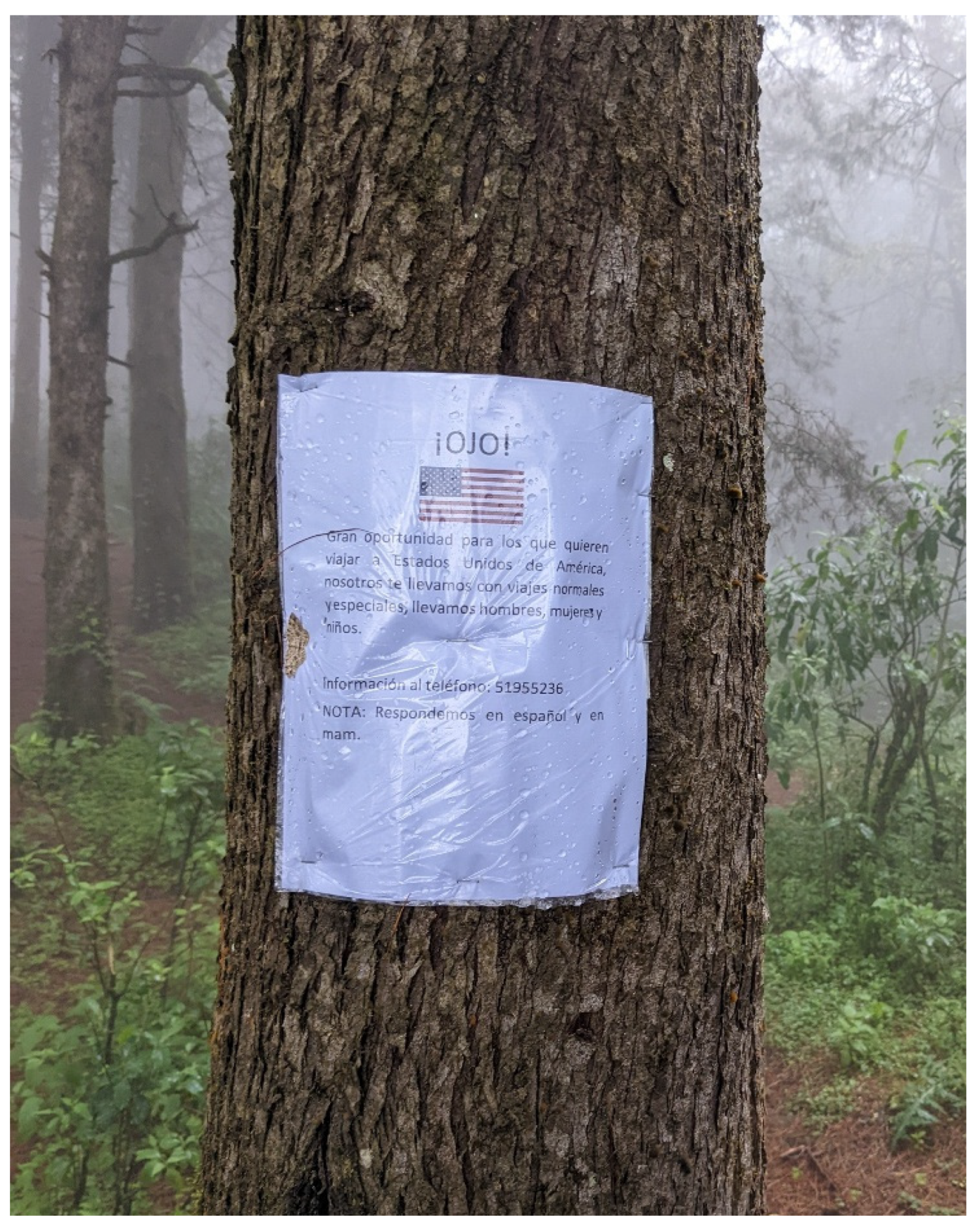
The first is a sign stapled to a tree on a sacred mountaintop in San Juan Atitán (
Figure 4). The sign, in Spanish, says “Look! Great opportunity for those who want to travel to the USA, we take you with normal and special trips, and we take men, women, and children. Take note: We respond in Spanish and Mam.” In this instance, an irreputable smuggler is attempting to bypass the normal route of finding clients through the built trust of kinship and community relations. Because mountaintop prayers are widely understood to be the most important venue in which migrants make decisions, the irreputable smuggler attempts to catch the attention of someone desperate to migrate and praying on the mountain.
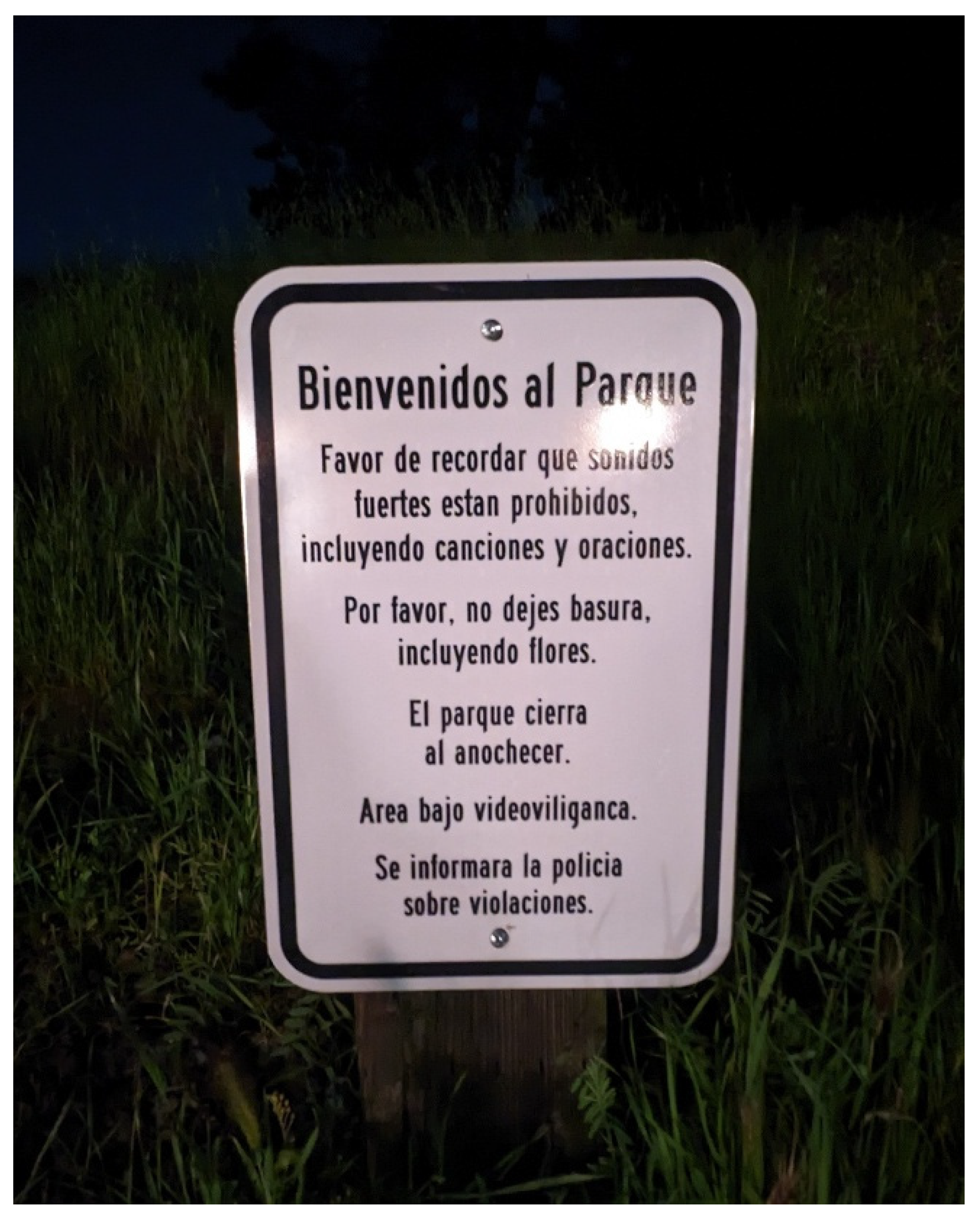
The second is a different sort of sign, posted at the entrance to a park in Oakland Hills (
Figure 5). Just as Mam deixis is transposable to the geography of Oakland, so is the ritual of mountaintop prayer. Oakland is the primary destination for migrating Sanjuaneros, and is home to a large Mam speaking migrant population. As the immigrant community grew, Mam Christians began to seek out nearby mountain or hilltop places to pray. The parks in Oakland Hills, being the nearest and most visible place, have become a common site of Mam prayer ritual. However, the conception of a park as a site of recreation, as is common in the U.S., clashes with the conception of the park as a sacred prayer site. The sign says, in Spanish: “Welcome to the park. Please remember that loud sounds are prohibited, including songs and prayers. Please, do not leave trash, including flowers. The park closes at sunset. Area under video surveillance. Police are informed of violations.” I saw this sign when I had come to the park with a Mam family to violate every specific rule written there—to enter at night, to pray loudly, and to leave flowers.