Sacred Spaces in a World of Movement


The Alternative Natural Philosophy Association, Manchester M4 1LG, UK
Religions 2026, 17(3), 314; https://doi.org/10.3390/rel17030314
Submission received: 15 December 2025
/
Revised: 11 February 2026
/
Accepted: 24 February 2026
/
Published: 4 March 2026
Abstract
In the social sciences, the mobilities paradigm studies people in movement in contrast to a sedentary paradigm that treats dwelling as being at peace and at home. If the world of movement in places such as stations, hotels, motorways, resorts, and airports is seen as parallel to the sedentary world, it raises a question of whether there are any forms of sacred space equivalent to those found in fixed settlements. In the world of movement, in general, religious activity is lacking or takes attenuated or simplified forms. Sacred affordances can, however, be found in unexpected places. Dedicated sacred space is mostly absent except for multifaith spaces (MFS), a new form of sacred space that has evolved since the year 2000. One way to understand MFS is to see them as adapted to the mobile world in the same way that other services have been commodified for universal use in a world in motion.
1. Introduction
The mobility paradigm originated in sociology (Sheller and Urry 2006, 2016; Urry 2007; Everuss 2021) and has been applied in many allied fields, including anthropology and cultural studies. Let us add to that list by looking at the sacred aspects of the mobile environment, looking particularly at if and how sacred space exists within it. My question is, what sacred affordances does the world of movement provide? I will answer this based on a literature search and observation of how the sacred manifests itself in the mobile world in places such as airports and shopping centres using both Eastern and Western examples. In the case studies, I focus particularly on multifaith spaces (MFS), a novel and unusual form of sacred space primarily found in Western countries. In Crompton (2013), MFS are categorized into two types: positive and negative.1 It is the negative type that interests me, and those I visited, listed in Note 3, are examples of this kind of MFS. They were selected as typical from Crompton’s global database of 350 MFS instances, supplemented by cases I investigated myself.
This research aims to explain how the ideas underlying MFS, of sharing a nondescript space, are in sympathy with the mobile world and reflect its values and understanding of the sacred. To understand this conformity, I compare MFS with forms of shared non-syncretic space that can be found in the East, such as the Ghost Festival in Chinese urban areas, so that the idea underlying MFS can be seen in other cultural contexts.
In current research on MFS, numerous scholars categorise MFS as a form of multi-religious spaces, which are ‘top-down’ projects led by social elites, aiming to provide possibilities for interfaith dialogue and multiculturalism (Burchardt and Giorda 2021; Fabretti 2025). This certainly applies to some large projects such as Berlin’s House of One. However, I have a different perspective. My findings indicate that the spatial practices and the religious experiences within most MFS reveal a phenomenon more characteristic of ‘bottom-up’ dynamics: superficial negotiations between individuals and strangers, akin to navigating an indifferent mobile environment. This surface-level interaction primarily serves the practical purposes of convenient space utilization and mutual self-interest, rather than deep theological, religious, cultural, or ethical conversation. In other words, the new type of sacred space known as MFS belongs to the mobile world with all its superficiality.
Space can be understood as sacred in several different ways: either as a container, as socially produced, or as a material and symbolic assemblage. I observe that MFS, in different ways, satisfy all of these criteria. First, they are sealed boxes, often without windows, by means of which religious activities can be confined out of sight. Second, their bland design only becomes sacred when animated by the faith of whoever occupies the space. Third, many MFS contain collections of sacred objects which can be displayed or not according to the wishes of the user.
I will look at MFS in contrast to the idea of sacred space given in Eliade (1959), as a centre of the world. Being religious can be seen as a spatial enterprise: as Tweed (2006, pp. 73–74) points out, when we say religion orientates and positions us through life, we use a spatial model. He goes on to use the geographical notions of dwelling and crossing to describe religious life (Tweed 2006, pp. 123–63). These ideas take a literal form in a pilgrimage, with hostels and a succession of places of prayer. This is easy to understand, but suppose we look at journeys made in the modern mobile world. They raise a question: can they also metaphorically be seen as religious? In general, the answer is no; the atmosphere of airports, stations and so forth with all their distractions, crowds and commerce seem to be alien to a religious sensibility. I hope to show, however, that the mobile environment is not completely profane, as it does have sacred affordances. Most remarkably, it has produced a radically new type of sacred space, the multifaith room, which is the particular thing I would like to understand and the subject of this paper.
Travel limits the ways in which we interact. The ‘Mobility Social Environment’ is made up of people who are travelling and who do not form stable relationships with one another. Tired from the journey, travellers gather in a space where they are made to wait, such as airports. The vast majority of them are strangers to each other and likely do not even share a common cultural background. They meet and leave each other in a hurry, just like passing through life. We avoid interacting with other people except in a superficial way. On planes, we all face in the same direction and there is little eye contact with each other. Instead, we watch films or look at goods in shops or images of them in magazines.
Not only are we indifferent to each other, but the globalised mobile environment is indifferent to us. It belongs to no-one in particular and in general does not have any display of faith. Places that happen to be named after sacred things or people—St James Square, St Pancras Station, etc.—are not in fact ever treated as sacred. This world of travel is more or less hostile to religion to the extent that its ethos, ambient music, distractions, interruptions, and social complexity undermine the common religious impulse to be quiet. Nonetheless, so I hope to show, faith survives in small ways. There are sacred traces in the mobile environment in the form of portable, personalised items and behaviours. During the process of travelling, these scattered sacred traces occasionally intertwine, even if we are rather limited in the way we interact.
The mobility environment is normative and cosmopolitan. This means renouncing what is local in character in order to accept a universal identity. This erasure jeopardises the stability and cohesion of local societies because it undermines the norms, traditions and customs of what is local or national (Appiah 2005, p. 239). These local norms, however, survive in ways that are somewhat secret and personal, and they include sacred things that would otherwise have no place in the mobile world. This eclectic and dialectical understanding between cosmopolitanism and nationalism is sometimes called ‘Rooted Cosmopolitanism’.
This paradoxical expression expresses how we survive in the mobile world, in which we are both ‘home everywhere’ and ‘home nowhere’, and to that extent out of touch with our roots (Werbner 2018, p. 14). Urry contrasts this uprooted living in the mobile world with sedentarist theories, which he derives loosely from Heidegger, for whom dwelling means to stay content in one place (Sheller and Urry 2006, p. 208). The same contrast can be extended to sacred spaces. A sedentarist model, such as that given in Eliade, sees sacred space as something permanent, fixed, and at the centre of the world. This is contrasted with a metaphorical journey of faith, which can literally be a pilgrimage. Travel is not necessarily profane, nor is it always a burden; it can be an opportunity to do new things, to escape routine, read, talk to strangers, or be alone with one’s thoughts (Wigley 2017). All these can easily lead to reflection. There are parallels between pilgrimages and travel where encounter provides spiritual affordances. Therefore, it is hardly surprising if travel retains a sacred aspect. Travel for pleasure and holidays developed in the West from holy days. Moreover, from ancient times, long-distance trade was often accompanied by the spread and exchange of religions (Curtin 1984, p. 11). Religion might be diminished, but it can take new active forms in the mobile world.
2. Traces of the Sacred
In a mobile world, the web of encounters, meetings, and the moments of quiet in between can be part of a personal reflective story. Headphones can be used to create a personal acoustic space; reading books or papers can be used to isolate oneself from others. Events that provide spiritual affordances can be found. Wigley (2017) writes about people who are commuting and travelling finding opportunities to be quiet, and to exercise patience, and to be kind. Woodhead (2013) calls these sorts of encounters ‘tactical religion’. In them, the person and their belongings, rather than some fixed place, becomes central to the analysis of spiritual experience. Hierotopy (the creation of sacred space through human creative acts) suggests that any environment, including a hotel room, can become sacred through a performative act. Sacredness is created through human activity rather than being something intrinsic to the space, as explained, for instance, in Smith (1987, p. 105). Sacred space is a model of space. Some examples follow.
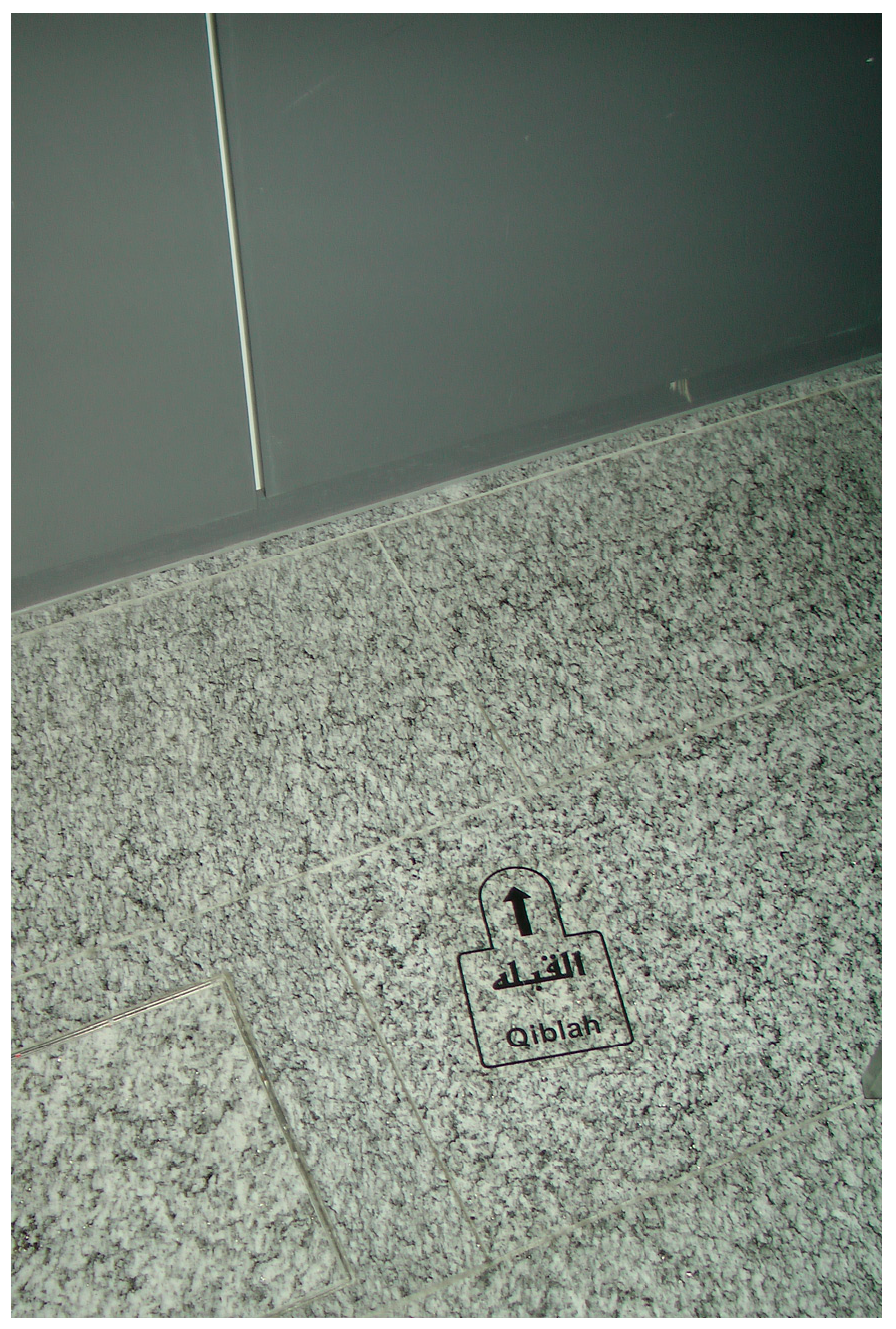
(i). Hotel rooms are places of cleaning, washing, and renewal. As private places, hotel rooms can be sites of reflection and prayer and, in their blandness, share many features with MFS. Most famously, Alcoholics Anonymous was founded following a religious experience while alone in a hotel room. Organisations such as the Gideons placed a Bible in every room, ready when needed. Today, most hotel chains with an international clientele have removed them, but some memory persists. Citizen M Hotels, a modern Dutch chain, contain a few books from The School of Life organisation, with a theme of self-understanding, with titles such as Calm, How to Be Alone, How to Travel, etc. (see Figure 1). Other signs of the possibility of hotel rooms as places of prayer are qiblas in drawers. In many MFS, the only explicit religious symbol is also a qibla (see Figure 2); its presence has become a sign that a space has sacred possibilities.
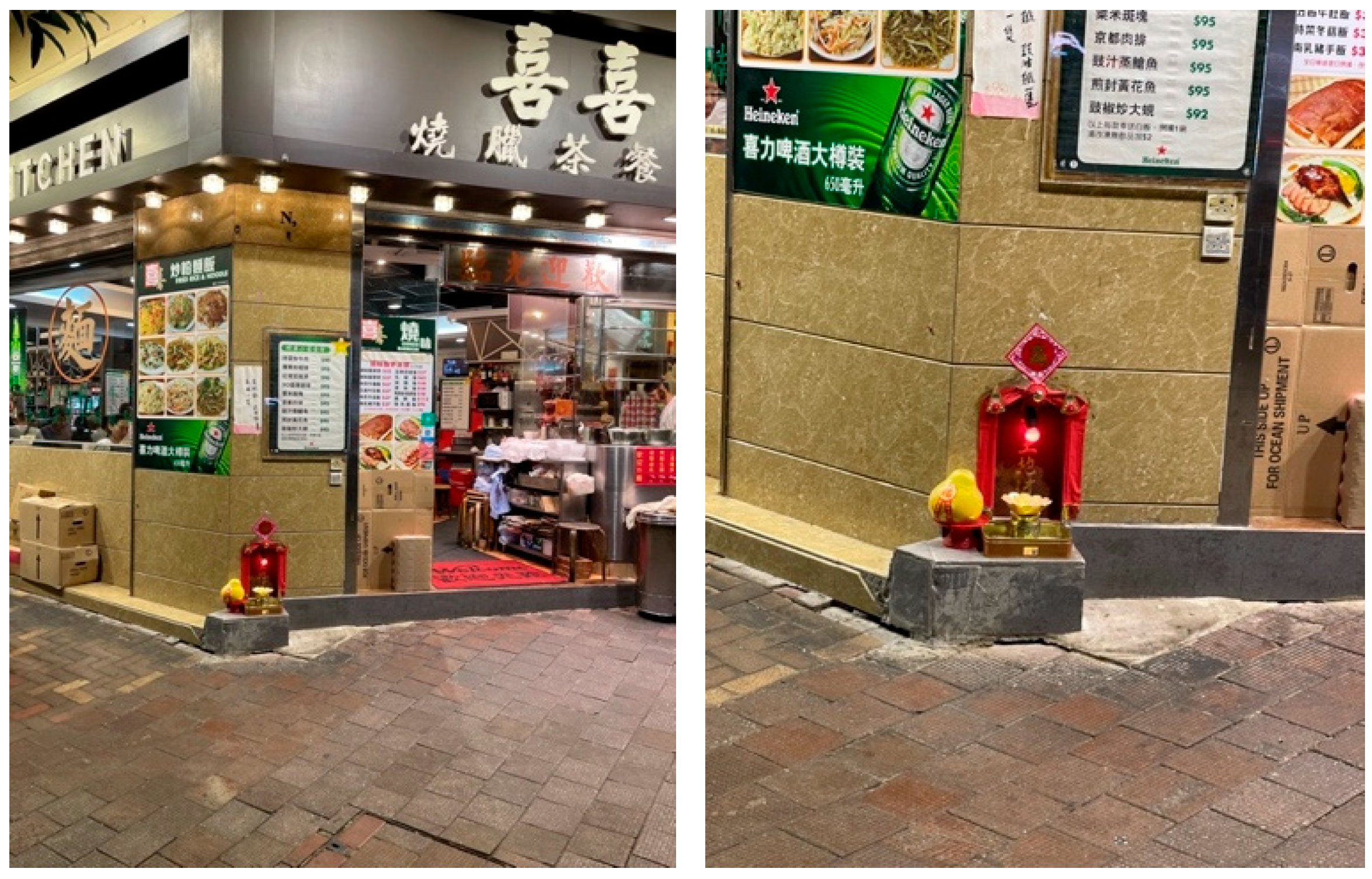
(ii). Workplace: Sacred objects in the workplace are common. For example, in Hong Kong, it is not difficult to find Chinese restaurants that have a small shrine hanging at the entrance of the restaurant (see Figure 3). Employees at Muslim restaurants perform their daily prayers in their kitchens. Connections between work and virtue have been common knowledge since Max Weber’s The Protestant Ethic and the Spirit of Capitalism, and this has now extended into the connections between shopping and virtuous activity if it takes on a ritual quality, or involves goods with a transformative or redemptive quality, eco-friendliness, recyclability, etc.
(iii). Portable religious artefacts: Travellers find ways to be private; we bury ourselves in a newspaper or book. Novels were printed in paperback travel editions for reading on trains, resulting in new compact formats. These pocket books have been largely replaced with hand-held reading devices such as phones and pads (Nelson et al. 2014). These diversions can be put to religious use: portable sacred texts, phylacteries, books of hours, etc., were made small for carrying on the person. Electronic devices can be put to similar use. For instance, there are apps to regulate prayer; Mirshahvalad (2025) describes ways how Shia communities in Italy use smartphone communities keep sacred time alive. The press of other people can be particularly oppressive in air travel, where objects used to isolate oneself include headphones, blinds, and pillows. Wigley (2018) has other examples. Finding quiet places to be alone or pray is not always easy. In airports, staircases serve this purpose, as do special prayer rooms for travellers. Usually these are designed as multifaith spaces. Prayer in public is problematic; one of the motives for MFS is to remove it from the pubic gaze.2
(iv). Tradition and urbanization in the mobile world: Cities may likewise be regarded as belonging to a world of mobility when, in pursuit of employment opportunities, individuals leave their hometowns to establish new connections in unfamiliar communities. This also means that traditional religious practices face the challenges of urbanisation. Particularly for Chinese traditions, ancestor worship rituals must be readjusted. Originally conducted as private family rites, ancestor worship has been transformed by urbanisation. Modern city layouts, housing design, and diminished private ritual spaces have changed the ceremony somewhat. Chinese families now share public ceremonial areas with neighbours from other families (Kiong and Kong 2000, p. 36). Figure 4 captures contemporary Chinese residents spontaneously building temporary public ritual spaces on their community streets with their neighbours during the Ghost Festival. The burnt ashes are what is left after the ritual is complete. Residents wash them away at the end of the ceremony.
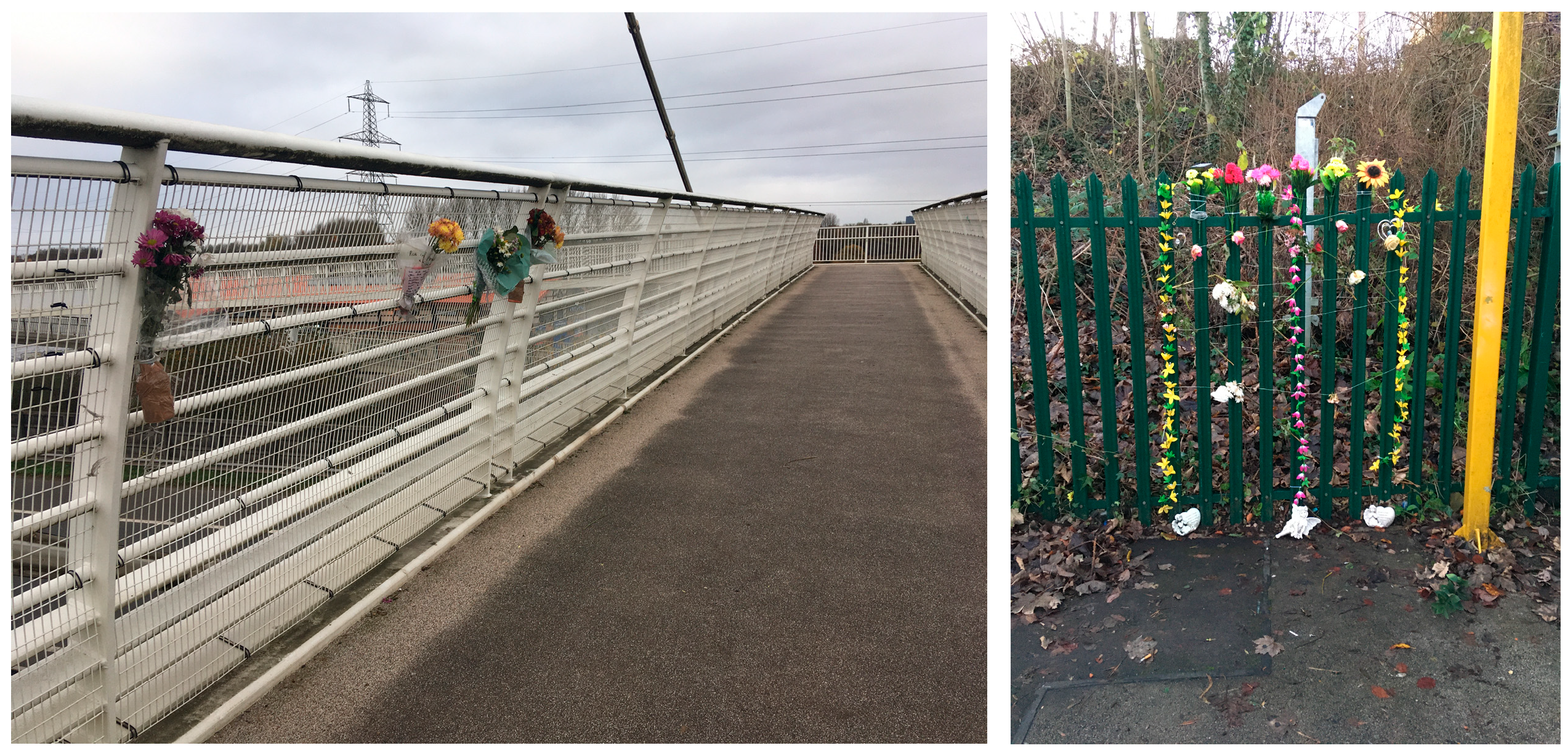
(v). Wayside Shrines: Some of the most personal and poignant examples of transient sacred objects are wayside shrines (see Figure 5). They often commemorate loss or bereavement. They are a place marked with flowers, labels, cards, and sentimental objects such as teddy bears, often tied in place. Sometimes they use graffiti. These prosaic objects become meaningful by being out of place outdoors. They are managed by the authorities; they have a brief life, then are swept away. They share some characteristics with MFS. For instance, there is a more or less standard format: handwritten notes in plastic bags or flowers fixed with cable ties. They are recognised for what they are without the need for close examination. They are open-ended, and one can add (but not take away) objects. They can be semi-official, as when flowers are left at plaques and memorials. Ultimately, they are managed by the authorities who remove them after a time. In this accumulation and cleaning out, they resemble MFS that are reset by managers.
These examples of how the sacred inserts itself into the mobile world are not so different to how religion adapts to any new environment. There are many studies of how diaspora communities establish themselves in new places, often unseen, through constructing sacred places out of what is at hand, though bricolage and making do. These examples are all bottom-up rather than top-down. They create the sacred in transient ways, but with multifaith spaces, it is not one religion that does this, but many, and this is the reason multifaith spaces seem spontaneous and somewhat temporary. This is made easier by the fact that, at least in the UK, as Hewson and Crompton (2015) report, there is no organisation setting general multifaith standards. Therefore, if we look for the origins of multifaith spaces as a place where different faiths follow a similar path, this is where to find it. This will help us to understand multifaith spaces, as I now hope to show.
3. Sacred Spaces in the Mobility Social Environment
Today, the most substantial sacred spaces in the mobile environment are multifaith spaces. These are places to escape the profane aspect of travel, and even these are often given secular names such as ‘Reflection Room’ or ‘Quiet Room’ (Biddington 2021, p. 113). These euphemistic names do not specify the function of the space; rather, they avoid associating the MFS with a particular denomination. They are often anonymous and bland. They are found in prisons, hospitals, and schools—in other words, in spaces that are indirectly governed by the mobility paradigm, places that one moves through, however slowly. The most typical and familiar examples are found today in airports. Strange to say, transportation hubs for international travel have also become assemblies of religious buildings. In 1969, Heathrow Airport had a single ecumenical chapel; in 2012, it had 13 multifaith spaces; today, in 2025, there are 40 such spaces. Perhaps there is nothing new here. The establishment of religious spaces and service spaces for religious ceremonies at transportation hubs has existed throughout history. Travelling merchants not only brought goods to these transportation hub cities but also brought their religions and cultures (Curtin 1984, p. 11). For example, in Quanzhou, an eastern port on the medieval Maritime Silk Road, merchants from all over the world built hundreds of different sacred spaces in this port city, such as churches, mosques, Hindu temples, synagogues, Buddhist temples, Taoist temples, Confucian temples, small shrines on community streets, public cemeteries, and family ancestral halls. Quanzhou is like a vast MFS with ‘Positive Style’. The city becomes multifaith.
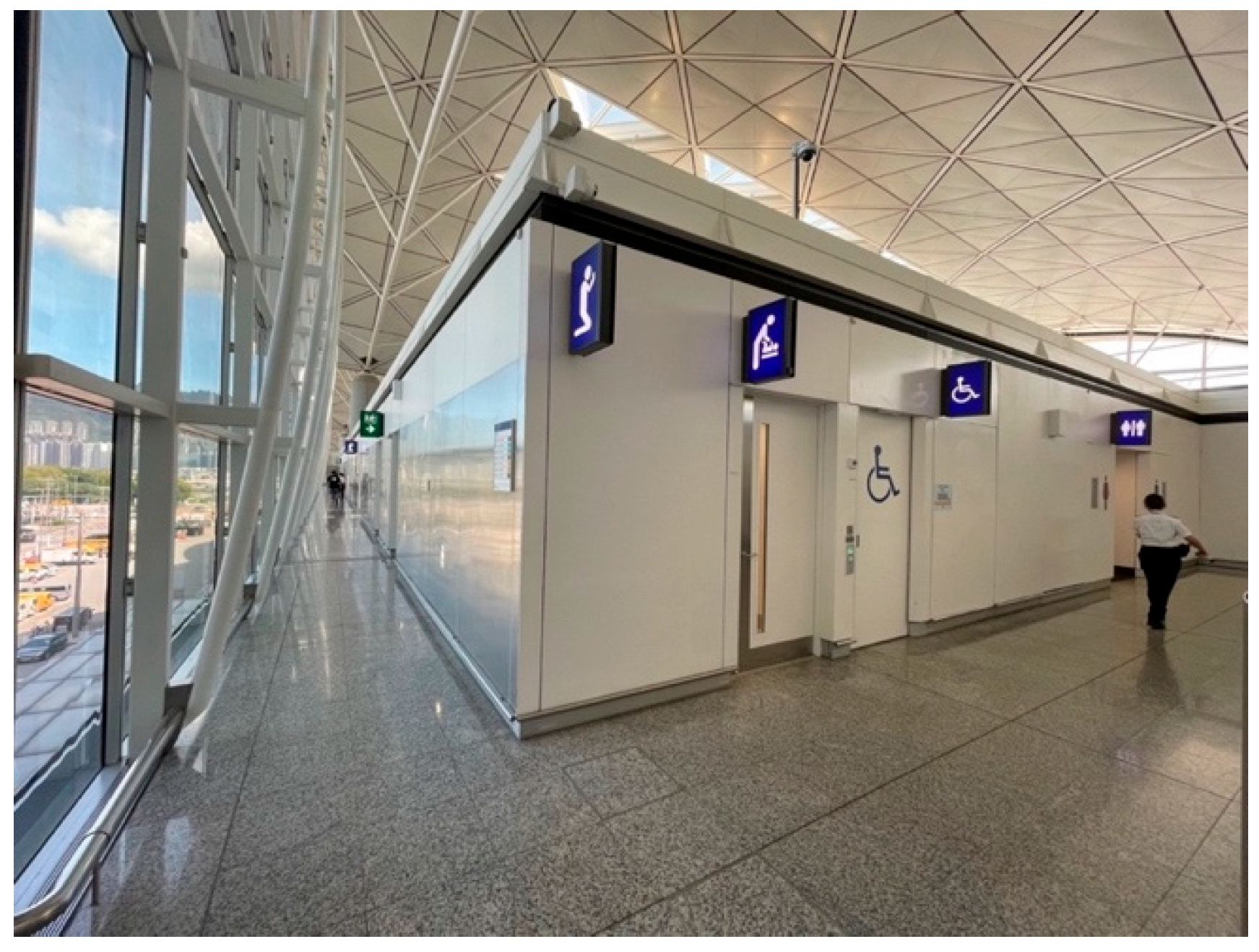
MFS are rarely conspicuous; they are often located out of view, so you have to go around few corners to find them. In airports, for example, they are often next to toilets or nurseries (see Figure 6). In shopping centres, they will be near the car park, never with the shops. They are worth looking for. They are special spaces where you can have some quiet time without worrying about whether your faith identity is different from others.3
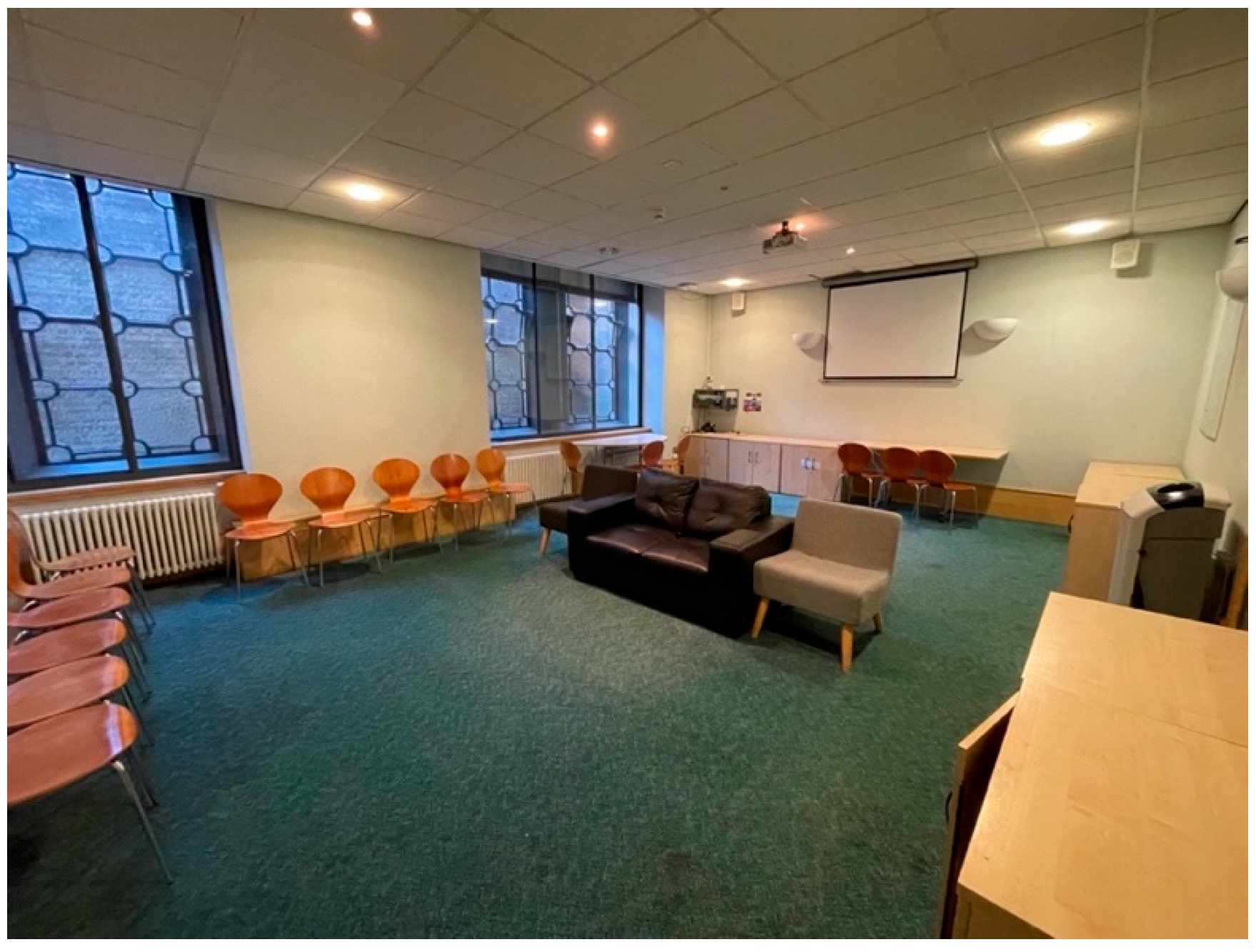
Figure 7.
MFS at Hong Kong International Airport, Hong Kong, China, 2023.
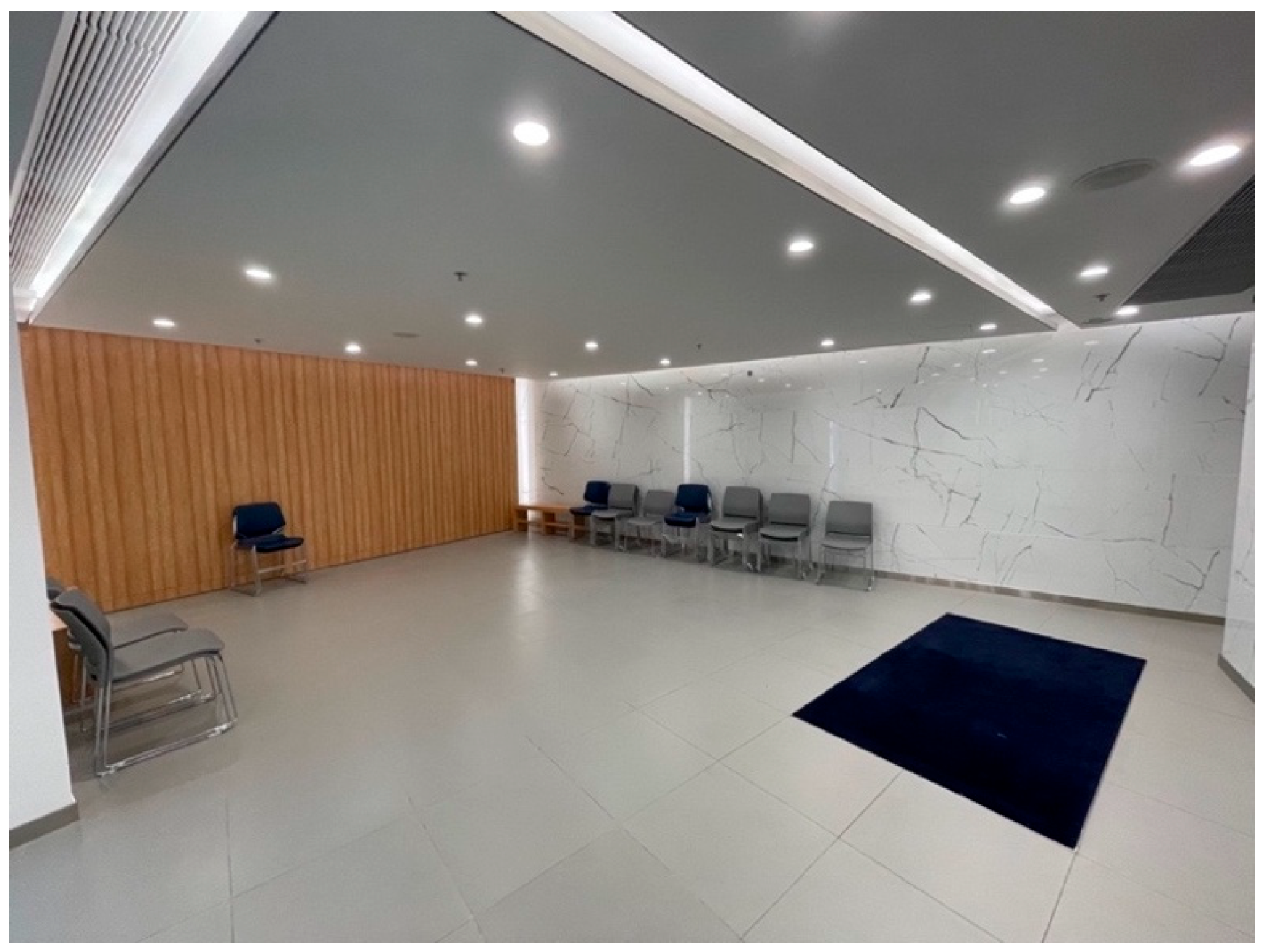
Figure 8.
MFS at the University of Glasgow, Glasgow, UK, 2023.

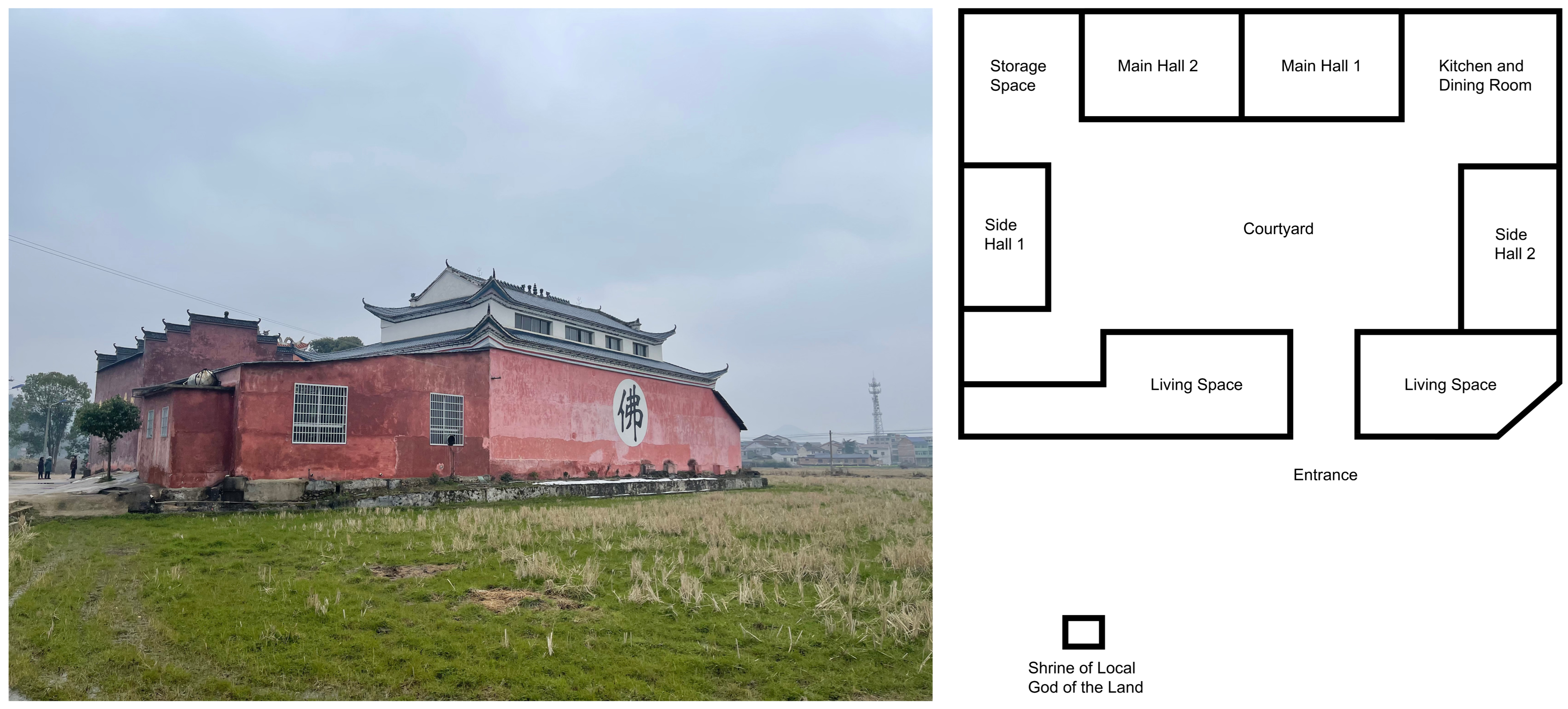
In many MFS, especially small ones, different religions share the same space; otherwise there is some separation, such as Christianity at one end of the room, Islam in the other, as happens at Manchester Royal Infirmary (UK). In better-appointed facilities, such as at Coventry Hospital, (UK), different religions each have their own room, and it is the corridor that links them that is the multifaith space (Crompton 2013). This model of clustered faith spaces is not only found in the West. As places of refuge, they have similarities with hostels on pilgrimage routes, such as the example in Figure 9, which the author discovered in a village in southern China. Due to the long journey to their sacred mountain, 12 pilgrims of different faiths, with the consent of the local villagers, built a hotel-style temple in 1945. This temple is not only filled with statues of deities from Confucianism, Buddhism, Taoism, and folk beliefs, but also provides a place of rest, dining, and accommodation for pilgrims. The building was built for pilgrims and does not belong to any individual religious sect, such as Buddhism, Taoism, or Confucianism. The plan is like a Chinese traditional quadrangle dwelling (四合院), but adapted for multiple users. In this, it resembles those multifaith spaces that are made of collections of rooms with one for each faith.
At least theoretically, the designers of MFS want a space that can house the rituals of several different traditions, and to accommodate the mutual inclusion of opposing doctrines or worldviews: individual–group, noise–quiet, movement–stillness, permissible and impermissible objects, male–female, idolatry and non-idolatry, ritual–rest (Biddington 2021, p. 93). Therefore, MFS tend to include the following four main features of architectural design (Crompton 2013, p. 474): (a) MFS are different from traditional religious space, as MFS are not attributed to a certain religion or a certain denomination. This leads to the fact that MFS do not have a deep unity and a sublime expression of faith, and individual religions are only a special form of expression. (b) In MFS, the cleavage between the secular and the religious is not evident. This results in MFS not looking like a church, mosque, synagogue or temple, nor should they have a thematic style associated with non-religion, such as a modernist style or a secular scientific theme. In other words, having a distinct stylistic identity is not what MFS are looking for. (c) Since MFS are not explicitly of a particular religion or denomination or of a clear religious or secular stance, this has caused the prayer space to be designed as an empty house. Symbols, objects, books, and holy relics that could represent either position are normally stowed away from permanent display. Only when someone uses the MFS are these symbols representing positions put on temporary display. (d) If we distinguish between multifaith and interfaith, the emergence of MFS seems to have been a spontaneous phenomenon without any organisation promoting or setting standards for it. Spaces are often built without the involvement of architects.
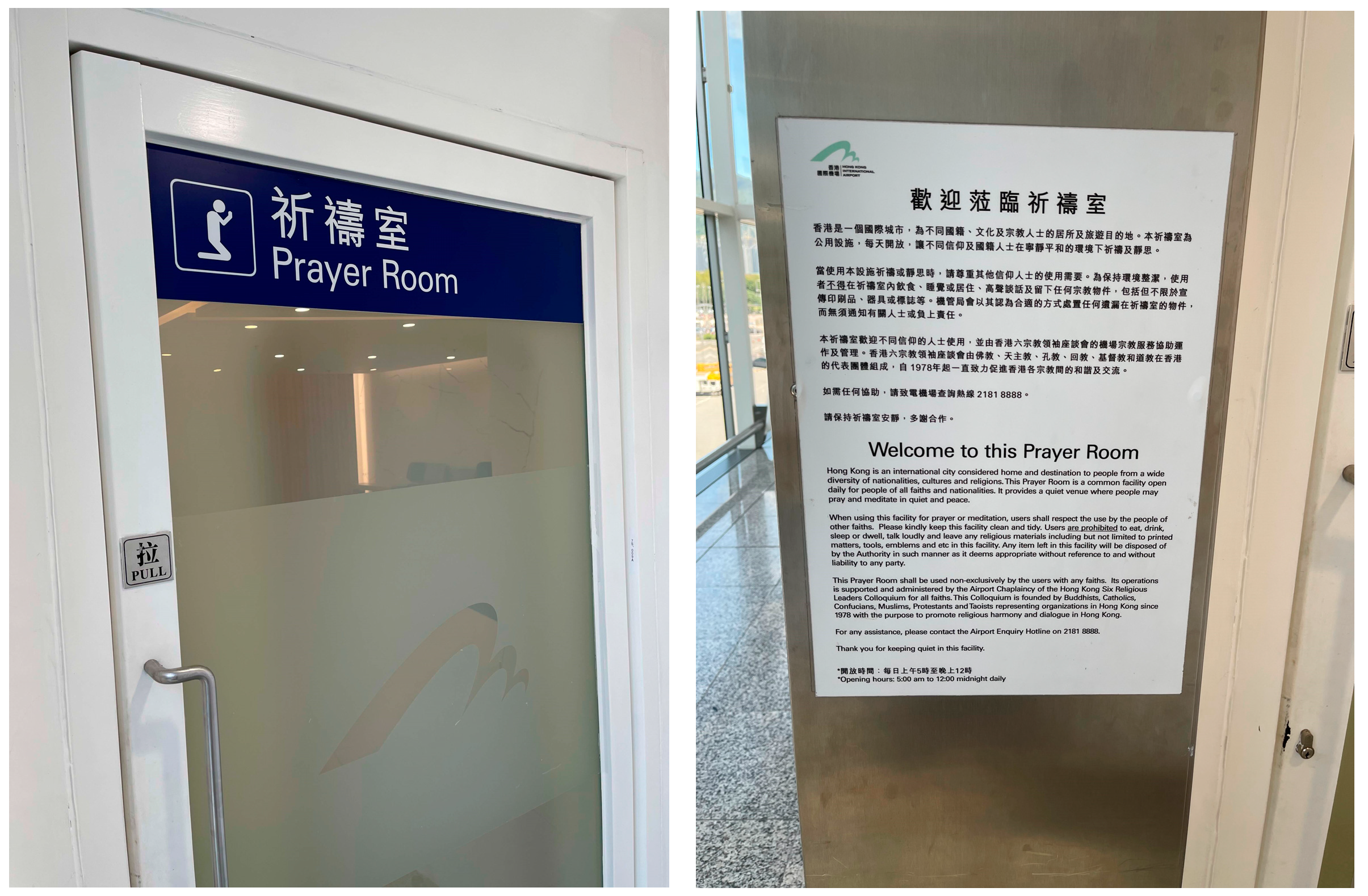
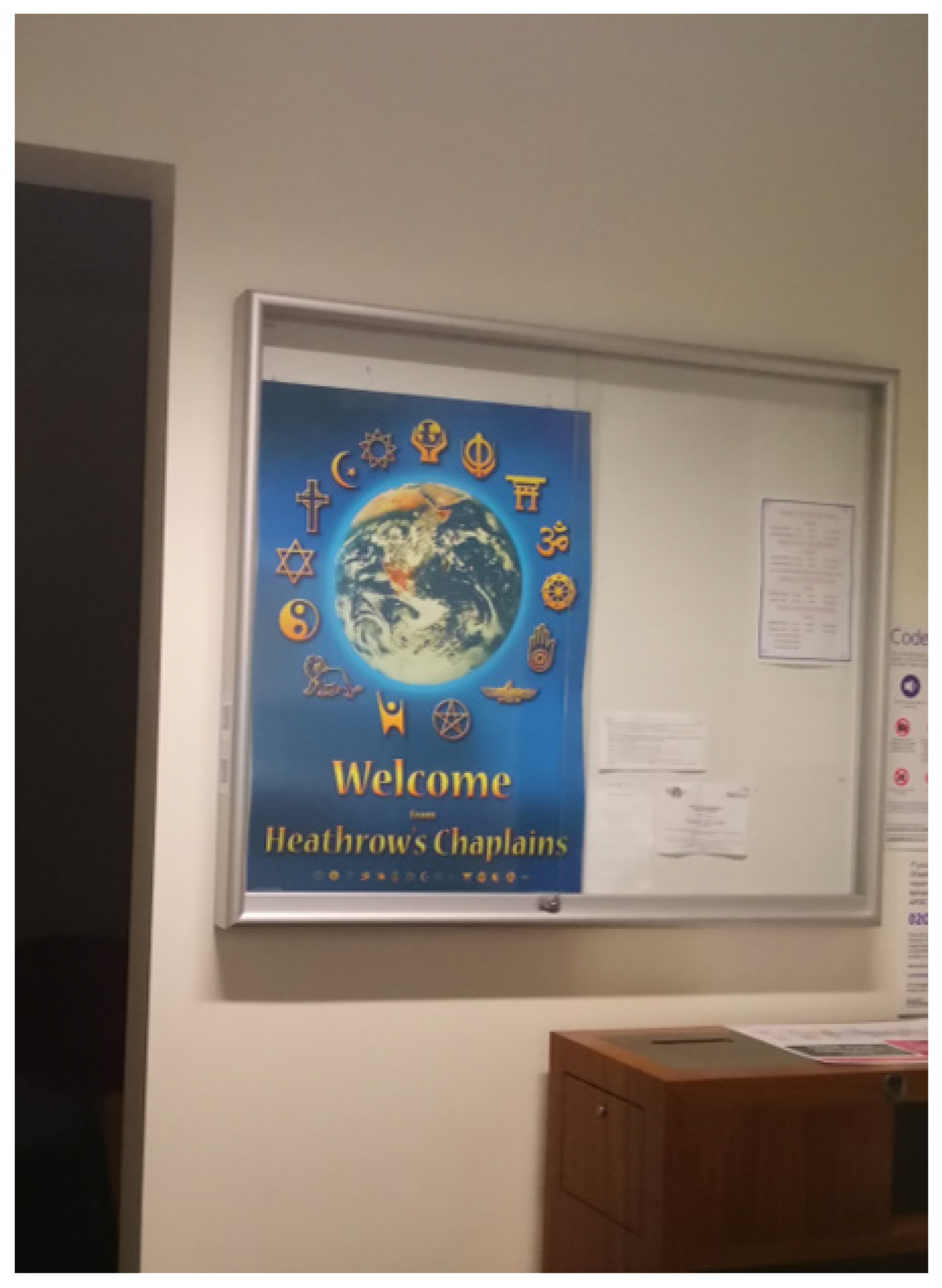
Some MFS display a common prayer posture logo accompanied by text to explain the meaning and function of the space, such as this example at Hong Kong Airport (see Figure 10). Notably, another MFS logo design typically represents a ring comprising the symbols of a number of religions, rather than a single religious symbol, as shown in Figure 11. It is clear that these logos were designed to present elements of different faiths within a single space and to show the diversity, equality and inclusiveness of faiths.
Being part of buildings with a grid fixed by site and other functions, MFS are usually not orientated in a specific direction. Many older MFS have an altar that naturally provides an axis, such the direction of Mecca, shown by a qibla, nearly always at an angle to the walls. Different religious traditions have their own directions of prayer; for example, Muslims pray in the direction of the city of Mecca. However, the interior decoration of MFS does not normally indicate or imply its spatial orientation but rather points to a specific orientation by means of a compass or a removable paper sign. The presence of this arrow has become a sign that one is in a sacred space. Many Muslims, however, use an app, so even this is not always needed. In an unusual compromise, the Glasgow airport MFS was configured so that the qibla and Christian axis align, even though that axis is at an angle to the grid of the building in which they are situated.
Multifaith spaces will not normally display an object or icon for a particular faith group on a permanent basis. Objects specific to particular religions will be taken out or stored depending on who is using the place. Books or icons can be withdrawn by the user from specialized storage cupboards and bins as the need arises. When users finish their prayers, the symbols representing their exclusive beliefs are stored in their designated places and the whole prayer space is left blank (Xia et al. 2023, p. 633).
Generally, multifaith prayer spaces will be kept as empty as possible. The furniture will be limited to just a few chairs, a selection of prayer mats or a low table. Furniture is mass-produced and nondescript, often from Ikea. This is not necessarily because it is cheap, but because it is so common and so ordinary that it will not be associated with any religious character. The design features of MFS can be clearly seen as characteristic of spaces described by the mobility paradigm.
First, users are alone and free in the MFS; the empty room does not provide a sense of belonging to a community, even as it allows them the freedom to pray and meditate in one’s own way. The orientation of the MFS and its interior artefacts and furniture come across as featureless, indifferent and impersonal, like an office that has nothing to do with religion, even if the consideration behind its design is respect for different faiths, religions, and cultural traditions. Seeing space as dynamic is a prerequisite for temporal coexistence as pluralism and possibility (Pierce 2022, p. 26). Empty, unadorned, indifferent space is like a blank sheet of paper, giving the user a fair chance to write his or her own language. Movable and storable furniture, icons, and scriptures make it possible to return the scribbled-on space to the white paper state. The prayers and meditators who come to MFS are constantly changing MFS from an indifferent void to a ritual space imbued with a sense of belonging and back again. Mobile, dynamic, flexible, shifting and indefinable design characteristics make MFS inclusive and diverse.
Second, users of different faiths, even if they are unfamiliar with each other’s traditions, will be aware of each other simply through realising that others pray in the same space. This results in a social order in MFS that is fluid, bottom-up, and requires dialogue, negotiation, meetings, and reasonable time allocation schedules in order to satisfy this most impersonal of mesh systems or structures. MFS users comply with the unified order imposed by the environment while remaining loyal to their own traditions, which is a dialectic that can support both positions at the same time. Harmony and conflict coexist. The unified order derived from the environment is occasionally broken, and conflicts between faiths have not disappeared. The naming of MFS and the design of the MFS logo is the embodiment of a mesh of multiple faith symbols, an organic composition between diversity and unity.
4. Multifaith Spaces as Mobile Places
The mobility paradigm helps us understand MFS. If they are interpreted in terms of a static paradigm, they seem to be a paradoxical mixture of incompatible sacred forms. They make more sense when seen as sacred in time, not in space. This is similar to the way that paradoxical states are treated cybernetically, in which objects can be both X and not-X when they oscillate between those states (Kauffman 2017; Luhmann 2002, p. 84). In the philosophical context, metaphysics is often understood as a mode of thinking that views things in a static and isolated manner, which stands in opposition to the dynamic, developmental, and interconnected perspective emphasized by dialectics (Whitehead 1978). Multifaith is more easily understood in terms of a process philosophy than as something fixed, and therefore is more easily understood in China than in the West.
We observe that, in the world of movement, people’s religious behaviour tends to be easy, portable and free of cumbersome religious rituals. The same applies to sacred spaces in the world of movement. People can pray and meditate for a short time in a simple, quiet space with no elaborate decorations. Sacred spaces in a world of movement are inherently part of the environment, indifferent and without a sense of belonging. Therefore, MFS are designed to be a part of the mobile environment rather than to represent some sort of centre of the world. It is how travellers use the spaces that makes them sacred, rather than any intrinsic fixed property they possess. If we try to understand MFS using the mobility paradigm, we find that the various opposing differences that its features exhibit can be accounted for. Their oppositions can be unified; nature and man interact; religion and secularism interact; sacred and profane interact; different religions interact; and the interior furnishings of the MFS space will never cease to change, as there is no fixed shrine. However paradoxical this is to a Western model of sacred space, it is quite reasonable from a Chinese point of view (Xia et al. 2023, p. 626).
The geometry of sacred space in the sedentarist model is culture-specific and is centered on, or leads to, a particular point. This explains why there are no standard shapes for MFS—no geometry of MFS, so to speak. Some MFS are circular or egg-shaped, but the centre does not seem to be celebrated as special. The enclosure represents sitting in a circle, an image of a community rather than a cosmology based on being at the navel of the world. Sometimes the geometry is an open form, (such as a spiral in Arboix-Alió and Rodà 2024). In any case, the geometry of space in a mobile world is not based on closed forms—rather, it is better described by paths, lines, networks, nodes, crossings. The static paradigm is accustomed to understanding the universe in terms of oppositions in a dualistic way, where man and nature, religion and secularism, sacred and profane, reason and sensibility, spirit and matter, are essentially divided, antagonistic, and unrelated to each other. For example, the logic of Emile Durkheim’s understanding that the world is divided into secular and sacred categories and that humans are subordinate to the sacred (Durkheim 1995, p. 34) is no longer valid. The inclusiveness demonstrated by MFS as a dynamic oscillating form takes into account both sacred and secular elements. In this case, a threshold between sacred and profane space makes less sense than in traditional sacred buildings.
In MFS, there is no absolute opposition between religions, beliefs, and traditions, only relative differences. When people with different beliefs mix, despite differences in dress and posture, etc., they can hardly avoid the idea that they are all doing something similar. There is no complete separation and opposition between man and environment, religion and secularism, sacred and profane, rationality and sensibility, spirituality and materiality, but mutual influence.
The development of MFS is continuous: organic; spontaneous; contingent; changing; here is no standard theory of multifaith. The mobile paradigm is a dynamic cosmology that tends to deny the complete opposition between I and the world, mind and body, man and man, spaces and travellers. Differences are relative, not absolute differences that are completely cleaved off. In them, as in the mobile environment, things are stirred together. The sacred, the term whose definition is rewritten in MFS, is not a purified element opposed to the profane, but rather a web of understanding constructed by the intertwining of the users, the material space and the environment.
5. Thoughts on the Mobile Environment
This lack of deep engagement in the mobility environment is well described by Marc Augé’s (1995) concept of ‘Non-Place’. In his view, this is the spatial form that exists before the person enters, which is abstract (waiting to be concretized), potential (waiting to be activated), and neutral (waiting to be natured). Once the individual person enters, the spatial state changes: it becomes a ‘Place’ that is unique to the individual, provided that the individual is invested in emotions and experiences, encountering events, and meeting people. ‘Place’ and ‘Non-Place’ are intertransformative: the former can never be completely erased, and the latter can never be completely finished (Augé 1995, p. 79). Since ‘Place’ consists of three characteristics—identical, relational and historical—then for ‘Non-Place’, the opposite is required. In the case of ‘Non-Place’, the three opposite aspects need to be fulfilled: the lack of identification with the environment, the inability of people to produce relations in the environment, and the lack of historicity of the environment (Augé 1995, pp. 77–78). Airports, shopping streets, supermarkets, office buildings and executive hotels are typical Non-Places, as they lack a specific identity or any historical connection with their surroundings. From Augé’s perspective, these places are produced under conditions of ‘hypermodernity’ and carry a range of thematic qualities. In these places, non-verbal communication predominates, encourages ‘solitary individuality’, and is characterised by its ephemeral nature (Trigg 2017, p. 128).
The mobility social environment provides only transient spaces for people to stay, so it is impossible for people to form long-lasting relationships with their surrounding environments. The relationship between the individual and the environment resembles being situated in a Non-Place—human activity shapes temporary, transitional spaces within the void by employing personalised language, customs, culture, and beliefs. Whereas anthropological places create an organic, unified society, Non-Places promote human isolation and individual freedom.
If the mobility social environment is a Non-Place which becomes meaningful through its users observing each other, it becomes a ‘space of fashion’ as described by Charles Taylor in his book, A Secular Age (Taylor 2007). In a space of fashion, people display their individuality to each other. It has a horizontal, co-temporal structure of mutual presence rather than a social structure of joint action. In the space of fashion, for each individual, people act in a way that they witness each other and thus co-determine the meaning of their actions. Participants are simultaneously actors and audience. The space of fashion plays an increasingly important role in modern urban society. People who do not know each other, who don’t have anything to do with each other, still manage to influence each other, forming an inescapable social environment in each other’s lives (Taylor 2007, p. 482) In that case, we can look at MFS as doing something similar: they are spaces where differences in religious behaviour and dress encounter each other.
A rooted cosmopolitanism which sustains the inner social order of mobility social environment is not, however, a static or closed intercultural dialogue. Rooted cosmopolitanism, i.e., not completely cosmopolitan and not so completely nationalistic, is able to support both standpoints at the same time; in other words, it does not require a strong theoretical consensus to ensure shared practice (Appiah 2005, p. 256). Rooted cosmopolitanism is liberal; it is nationalistic and individualistic. It is an identification of self-worth and self-identity with the environment and national culture in which one was raised. Rooted cosmopolitanism aptly addresses the need for human self-dignity and does not require sacrificing personal identity in order to preserve the inclusive fulfilment that comes with cosmopolitanism (Appiah 2005, pp. 267–68).
In the mobile environment we can observe a scale of human relations that ranges from people that are alone and isolated to those who influence each other for a short time even if they do not know each other. The social order in such an environment is contingent, bottom-up, and needs to be satisfied through dialogue and negotiation, rather than being something imposed. Rooted cosmopolitanism is a synonym for the ethics of mobility social environments, which are neither completely cosmopolitan nor entirely nationalistic, but dialectically supportive of both positions (Beck 2003, pp. 16–17). It turns out that people do not need a strong theoretical consensus to ensure shared practice. It is exactly this sort of position we see in MFS.
Anyone who compares the architectural characteristics of MFS with the defining features of the mobility social environment will be struck by their similarity: (1) MFS constitute a potential, abstract neutral space, an example of a Non-Place, a space that is briefly encountered and passed through. Individuals project their personal narratives onto the space, rendering it tangible, animated, and imbued with emotion, thus transforming it into a Place rather than a Non-Place. Yet, when the performance ends and the travellers depart, then the space reverts to a neutral state. (2) Within MFS, participants exist within the ‘space of fashion’, as they are unfamiliar with each other’s faiths and remain unconnected, engaging only in fleeting eye contact to witness others’ religious practices. (3) The order within MFS is variable and emerges bottom-up, requiring dialogue, negotiation, meetings, and rational time allocation plans to fulfil this most impersonal networked system or structure. This system operates without organisational control, arising from local agreements, and thus possesses transience and mutability. (4) The stance within MFS is dialectical: it can simultaneously accommodate belief positions rooted in individual characteristics while also asserting universal values of neutrality. Users can realise shared spatial practices without requiring strong theoretical consensus.
6. Discussion and Conclusions
We observe that, in the world of movement, during a journey, the spatial environment cannot consistently provide sacred meanings to travellers. People’s religious behavior tends to be easy, portable, and free of cumbersome religious rituals. The same applies to sacred spaces in the world of movement. The travelers leave their sacred footprints in the indifferent journey as a way to combat their surroundings and to bring psychological comfort to themselves. Muslims pray in the corridors of airports while waiting for their flights; the interior design of MFS tends to be simple and blank. In the experience of MFS, some religious practitioners merely seek to escape clamour and enter quiet spaces; others actively cultivate shared sacred spaces akin to traditional places of worship. Amongst the users are both internationalists who embrace those of other faiths, and individuals who wait for others to leave.
Sacredness is introduced into a neutral material space (MFS) through the flow of travellers: their temporary religious experiences during the journey and portable religious artefacts. This emphasises that sacredness is unrelated to the material space of MFS themselves, but rather is carried by people’s mobility, bringing the sacred into MFS as a spatial vessel. The sacredness of the space will be interpreted by its users. Space (MFS)—it is merely a container devoid of any sacred meaning, unrelated to religious symbols or signs. Sacred meaning is dynamic and transient, blossoming within the MFS vessel through human carriers. Therefore, MFS is merely a stopover on the journey, not the final destination. Furthermore, MFS form a stark contrast to traditional sacred spaces. Traditional sacred spaces are typically designed as the centre of faith, the centre of the world and the destination for pilgrims. To express the sacredness of the space, architects often employ rich sacred imagery, symbols, or religious narratives to imbue the space itself.
In this paper, I have looked at the sacred affordances of mobile social environments, and observed that they are not explicit, but created in an ad hoc way through personal acts of imagination and creativity. Sacred spaces within mobility social environments manifest religious experiences that appear incidental, individualised, networked, complex and contradictory. However, their inherent order is neither wholly random nor chaotic. This intricate order of mobility emerges through the interplay of multiple spatial elements rather than through any singular universal logic or centralised hierarchical system.
Where sacred spaces exist explicitly as MFS, they are simple, accessible, convenient and chiefly consist of opportunities to be alone. They are not sacred through taking some traditional form such as having an altar or being ordered like a chapel. In their fittings and decoration, many could be mistaken for offices; their sacredness is introduced by travellers themselves. It is easy to see MFS as an economical solution to a problem in places such as hospitals, airports and universities where there are insufficient resources to create multiple different sacred spaces. But to see them as cheap, undesigned, or anti-architectural might be to miss the point. It seems to me that in the 21st century, more and more people are living in transient social environments, and we need to adapt to living with differences, as well as the silent rebellion against the indifferent environment we share. In their ambiguous, undefined state, MFS are entirely appropriate for the mobile world. They are a new type of religious space adapted to a world of movement, where people coexist in dynamic equilibrium.
Funding
This research received no external funding.
Institutional Review Board Statement
This research does not involve human or animal subjects. Therefore, it is not applicable.
Informed Consent Statement
This research does not involve human or animal subjects. Therefore, it is not applicable.
Data Availability Statement
No new data were created or analyzed in this study. Data sharing is not applicable to this article.
Acknowledgments
Conflicts of Interest
The author declares no conflicts of interest.
| 1 | Negative spaces are empty rooms, positive spaces are adapted for one religion and hospitably shared, or are collections of rooms each decorated for one faith. |
| 2 | As observed and from interview with airport chaplain (Andrew Crompton personal communication). |
| 3 | These remarks are based on observation and literature of MFS including: The Sacred Space at Kelowna General Hospital, Canada; Multifaith Space, Manchester Royal Infirmary, England, UK; A Hospice Reflection Room, Newcastle upon Tyne, UK; A Sanctuary Space at the Royal Infirmary, Bristol, UK; ‘Rum för Stillhet’, Karolinska University Hospital, Stockholm, Sweden; Northeastern University’s Center for Spirituality, Dialogue and Service, Boston, Massachusetts, USA; The MIT Chapel at the campus of the Massachusetts Institute of Technology in Cambridge, Massachusetts, USA; The House of Religions, Bern, Switzerland; Multifaith Prayer Room at Heathrow Airport, London, UK; Prayer Room at Hong Kong Airport, Hong Kong, China (see Figure 7); Interfaith Chaplaincy in the University of Glasgow, Glasgow, UK (see Figure 8). |
References
- Appiah, Anthony. 2005. The Ethics of Identity. Oxfordshire: Princeton University Press. [Google Scholar]
- Arboix-Alió, Alba, and Oriol Ventura Rodà. 2024. Multifaith Room for Pediatric Cancer Center of Barcelona—An Intrahospital Public Space in the City. Religions 15: 922. [Google Scholar] [CrossRef]
- Augé, Marc. 1995. Non-Places. Translated by John Howe. London: Verso. [Google Scholar]
- Beck, Ulrich. 2003. Rooted Cosmopolitanism: Emerging from a Rivalry of Distinctions. In Global America? The Cultural Consequences of Globalization. Edited by Ulrich Beck, Natan Sznaider and Rainer Winter. Liverpool: Liverpool University Press. [Google Scholar]
- Biddington, Terry. 2021. Multifaith Spaces: History, Development, Design and Practice. London: Jessica Kingsley Publishers. [Google Scholar]
- Burchardt, Marian, and Maria Chiara Giorda, eds. 2021. Geographies of Encounter: The Making and Unmaking of Multi-Religious Spaces—An Introduction. In Geographies of Encounter. Cham: Palgrave Macmillan. [Google Scholar]
- Crompton, Andrew. 2013. The Architecture of Multifaith Spaces: God Leaves the Building. The Journal of Architecture 18: 474–96. [Google Scholar] [CrossRef]
- Curtin, Philip D. 1984. Cross-Cultural Trade in World History. Studies in Comparative World History. Cambridge: Cambridge University Press. [Google Scholar]
- Durkheim, Emile. 1995. The Elementary Forms of Religious Life. Translated by Karen E. Fields. New York: The Free Press. [Google Scholar]
- Eliade, Mircea. 1959. The Sacred and Profane: The Nature of Religion. Translated by Willard R. Trask. New York: Harcourt, Brace & World, Inc. [Google Scholar]
- Everuss, Louis. 2021. The New Mobilities Paradigm and Social Theory. In Routledge Handbook of Social and Cultural Theory, 2nd ed. Edited by Anthony Elliott. London and New York: Routledge. [Google Scholar] [CrossRef]
- Fabretti, Valeria. 2025. Reconsidering the Value of Multi-Religious Spaces Based on the Notion of Religious Cultural Heritage: Beyond a Purely Symbolic or Entirely Utilitarian Function. Religions 16: 295. [Google Scholar] [CrossRef]
- Hewson, Chris, and Andrew Crompton. 2015. Managing Multifaith Spaces: The Chaplain as Entrepreneur. In A Handbook of Chaplaincy Studies: Understanding Spiritual Care in Public Places. Edited by Chris Swift, Mark Cobb and Andrew Todd. Farnham: Ashgate. [Google Scholar]
- Kauffman, Louis H. 2017. Imaginary Values. Cybernetics and Human Knowing 24: 189–224. [Google Scholar]
- Kiong, Tong Chee, and Lily Kong. 2000. Religion and Modernity: Ritual Transformations and the Reconstruction of Space and Time. Social & Cultural Geography 1: 29–44. [Google Scholar] [CrossRef]
- Luhmann, Niklas. 2002. Theories of Distinction: Redescribing the Descriptions of Modernity. Edited by William Rasch. Redwood City: Stanford University Press. [Google Scholar]
- Mirshahvalad, Minoo. 2025. Transcending the ‘Profane’: Shias’ Space-Making in Italy. Culture and Religion, 1–22. Available online: https://www.tandfonline.com/doi/full/10.1080/14755610.2025.2522657 (accessed on 2 February 2026). [CrossRef]
- Nelson, Brent, Robert Imes, and Jon Bath. 2014. Small Books, Small Screens: From the Phylactery to the Cellphone. Papers of The Bibliographical Society of Canada 51: 221–42. [Google Scholar]
- Pierce, Joseph. 2022. How Can We Share Space? Ontologies of Spatial Pluralism in Lefebvre, Butler, and Massey. Space and Culture 25: 20–32. [Google Scholar] [CrossRef]
- Sheller, Mimi, and John Urry. 2006. The New Mobilities Paradigm. Environment and Planning A: Economy and Space 38: 207–26. [Google Scholar] [CrossRef]
- Sheller, Mimi, and John Urry. 2016. Mobilizing the New Mobilities Paradigm. Applied Mobilities 1: 10–25. [Google Scholar] [CrossRef]
- Smith, Jonathan Z. 1987. To Take Place: Toward Theory in Ritual. Chicago and London: University of Chicago Press. [Google Scholar]
- Taylor, Charles. 2007. A Secular Age. Cambridge: The Belknap Press of Harvard University Press. [Google Scholar]
- Trigg, Dylan. 2017. Place and Non-Place: A Phenomenological Perspective. In Place, Space and Hermeneutics. Edited by Bruce B. Janz. Contributions to Hermeneutics. Cham: Springer International Publishing, vol. 5. [Google Scholar] [CrossRef]
- Tweed, Thomas A. 2006. Crossing and Dwelling: A Theory of Religion. Cambridge: Harvard University Press. [Google Scholar]
- Urry, John. 2007. Mobilities. Cambridge: Polity Press. [Google Scholar]
- Werbner, Pnina. 2018. Anthropology and the New Ethical Cosmopolitanism. In Routledge International Handbook of Cosmopolitanism Studies, 2nd ed. Edited by Gerard Delanty. New York: Routledge. [Google Scholar]
- Whitehead, Alfred North. 1978. Process and Reality: An Essay in Cosmology, Corrected ed. Gifford Lectures 1927–28. Cambridge: Free Press. [Google Scholar]
- Wigley, Edward. 2017. Constructing Subjective Spiritual Geographies in Everyday Mobilities: The Practice of Prayer and Meditation in Corporeal Travel. Social & Cultural Geography 19: 984–1005. [Google Scholar] [CrossRef]
- Wigley, Edward. 2018. Everyday mobilities and the construction of subjective spiritual geographies in “Non-places”. Mobilities 13: 411–25. [Google Scholar] [CrossRef]
- Woodhead, Linda. 2013. Tactical and Strategic Religion. Everyday Lived Islam in Europe, 9–22. [Google Scholar]
- Xia, Tianyin, Terry Biddington, and Andrew Crompton. 2023. The Middle Way of Multifaith. Architecture and Culture 10: 626–42. [Google Scholar] [CrossRef]
Figure 1.
Secular life-improving literature in Citizen M Hotels, between contrasting bookends.
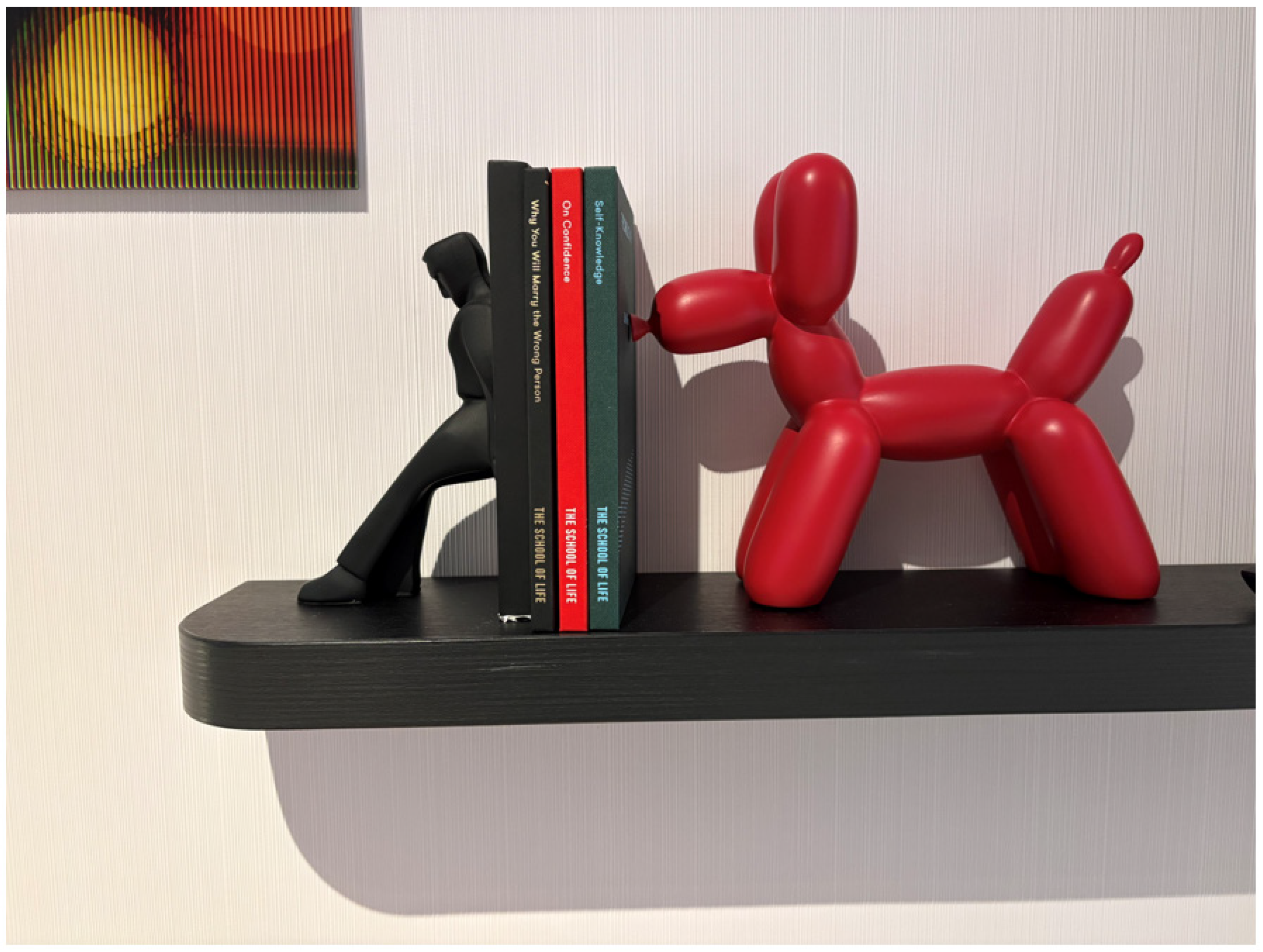
Figure 2.
Qiblas on floor in Zurich Airport.

Figure 3.
A small shrine at the entrance of a Chinese restaurant in Hong Kong, China, 2023.

Figure 4.
Rituals performed in a street in Huangcai Town, Ningxiang, Hunan Province, China, 2025.
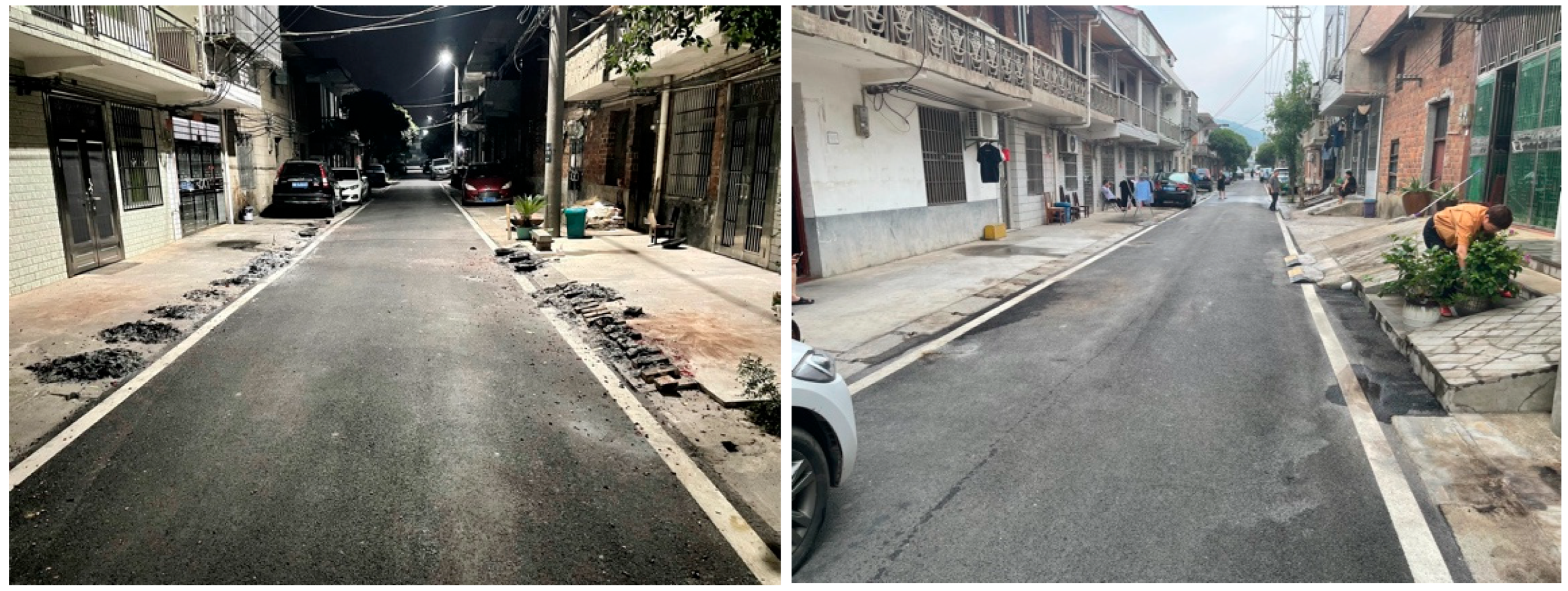
Figure 5.
Roadside memorials, Manchester, UK, 2024.

Figure 6.
Multifaith prayer room next to the nursery and toilet at Hong Kong International Airport, Hong Kong, China, 2023.
Figure 6.
Multifaith prayer room next to the nursery and toilet at Hong Kong International Airport, Hong Kong, China, 2023.

Figure 9.
The hostel on pilgrimage routes (left), in Huangcai Town, Ningxiang, Hunan Province, China, 2023. Floor plan, drawn by the author in 2023 (right).
Figure 9.
The hostel on pilgrimage routes (left), in Huangcai Town, Ningxiang, Hunan Province, China, 2023. Floor plan, drawn by the author in 2023 (right).

Figure 10.
The entrance of MFS at Hong Kong International Airport, Hong Kong, China, 2023.

Figure 11.
The entrance of the MFS at Heathrow Airport, UK.
Disclaimer/Publisher’s Note: The statements, opinions and data contained in all publications are solely those of the individual author(s) and contributor(s) and not of MDPI and/or the editor(s). MDPI and/or the editor(s) disclaim responsibility for any injury to people or property resulting from any ideas, methods, instructions or products referred to in the content. |
© 2026 by the author. Licensee MDPI, Basel, Switzerland. This article is an open access article distributed under the terms and conditions of the Creative Commons Attribution (CC BY) license.
Share and Cite
MDPI and ACS Style
Xia, T. Sacred Spaces in a World of Movement. Religions 2026, 17, 314. https://doi.org/10.3390/rel17030314
AMA Style
Xia T. Sacred Spaces in a World of Movement. Religions. 2026; 17(3):314. https://doi.org/10.3390/rel17030314
Chicago/Turabian StyleXia, Tianyin. 2026. "Sacred Spaces in a World of Movement" Religions 17, no. 3: 314. https://doi.org/10.3390/rel17030314
APA StyleXia, T. (2026). Sacred Spaces in a World of Movement. Religions, 17(3), 314. https://doi.org/10.3390/rel17030314
Note that from the first issue of 2016, this journal uses article numbers instead of page numbers. See further details here.