Article

Religion as a Factor in the Sustainable Functioning of Emigrant Families: Between Continuity and Modification of Identity in the Context of Catholic Communities in Scotland

1
Department of Finance and Accounting, The John Paul II Catholic University of Lublin, 20-950 Lublin, Poland
2
Department of Economic Policy and Banking, The John Paul II Catholic University of Lublin, 20-950 Lublin, Poland
3
Faculty of Philosophy and Social Sciences, Nicolaus Copernicus University in Toruń, 87-100 Torun, Poland
*
Author to whom correspondence should be addressed.
Religions 2026, 17(3), 292; https://doi.org/10.3390/rel17030292
Submission received: 30 December 2025 / Revised: 23 February 2026 / Accepted: 24 February 2026 / Published: 26 February 2026

Abstract

The subject of this article falls within the field of research on emigrants, particularly Polish emigrants in Scotland. Specifically, it analyses the impact of religion on the sustainable functioning of emigrant households. The article tests the following research hypotheses: (1) emigrants’ religiosity influences the ongoing sustainable functioning of their households, including economic decisions; economic decisions made in emigrant households are determined by the importance of Christian values professed by their members; (2) the religious community and commitment to it constitute a significant source of emigrant social identity; (3) the dynamics of cultural identity transformation (inculturation) in emigrant households depend on household type and relationships within the household. The test was conducted within the paradigm of quantitative social research, using the diagnostic survey method. The research technique employed was an online survey conducted in the CAWI (Computer-Assisted Web Interviewing) format.

1. Introduction

Labour migration is one of the most important social phenomenon in contemporary Europe, influencing both the biographical trajectories of individuals and the functioning of their families. Research on transnational families indicates that changing residence necessitates the reorganization of everyday life, the renegotiation of roles, and the adaptation of family relationships to the conditions of spatial dispersion (Budginaitė-Mačkinė et al. 2025; Valtolina and Zanfrini 2023). Migrant families forming a household strive to ensure the well-being of each member, including the continuity of patterns built on social, cultural, national, and religious identity (Van Hook and Glick 2020; Chowdhury 2024). The durability and cohesion of family life in emigration are determined not so much by material conditions themselves, but by their connection to the axionormative and symbolic order that determines the meaning, norms, and interpretations of everyday choices (Fleischmann 2022; Otiso 2022). A crucial element of this order is religion, providing support for finding a balance between the “here and now” and the “there, then.”
Religion performs important functions (cultural and social), especially in communities living outside their home country. It enables the creation of an intra-group system of values, sometimes defining the boundaries of private homelands (Babiński 1999). Religion is conceptualized as a dynamic axiological, normative, and relational resource, encompassing religious practices and their communal forms of expression, and also functioning as a symbolic reference point for identity (symbolic boundary) (Trittler 2017; Müller and Rosta 2025). In the context of migration, this resource influences cultural identity as well as the relationships, decisions, and adaptive strategies of households.
In the case of Polish migration to Scotland, this process is often described as “family-oriented” (Moskal 2011). Families function as emotional, economic, and cultural points of reference, sustaining language, traditions, and religious practices (Garapich 2016). The sustainable functioning in migrant families can be understood as the ability of households to maintain relative stability in relationships, norms, and everyday practices amidst the structural change brought about by migration (Massironi 2022). This sustainability does not mean the absence of tensions or conflicts, but rather the ability to regulate them through adaptive strategies combining axionormative continuity with organizational flexibility. In practice, it may involve maintaining the coherence of family roles despite economic and spatial changes, maintaining shared rituals and interpretive frameworks (including religious ones), while simultaneously adapting their forms to the new cultural context (Baumert et al. 2024). It also involves the ability to integrate external resources, such as the religious community, support networks, and institutions of the host country, with the internal logic of family life. From this perspective, sustainable functioning in migrant families is revealed as a dynamic process based on the negotiation of meanings, norms, and practices, which allows the household to maintain agency, a sense of identity continuity, and relative psychosocial stability amidst the uncertainty of migration (Migrant Ministry Reports 2025).
In the context of migration, access to economic support is closely linked to the creation and maintenance of networks that enable migrants to navigate unfamiliar institutional and cultural environments. According to Berry’s acculturation model (Berry 1997), migrants’ well-being depends not only on structural opportunities but also on supportive social and institutional relationships. Bonding and bridging social capital (Bourdieu 1986; Coleman 1988; Putnam 2000), embedded in these relationships (Ryan et al. 2008), constitutes an important element of the sustainable functioning of migrant households.
This article addresses the issue of the influence of religion on the sustainable functioning of emigrant households. The background for the discussion and empirical analysis is the experience of Polish emigrant families in Scotland, where the long-standing presence of migration and the enduring infrastructure of Catholic communities create particularly interesting conditions for diagnosing the influence of religion on the functioning of households (Palacz 2022), the perception of cultural identity by their members, and their involvement in the life of the Church. Operating in an environment of cultural and religious pluralism, religious communities become a space where the processes of maintaining tradition, reinterpreting religious practices, and adapting to new frameworks and conditions of social life intersect.
The aim of the article is to analyze the influence of religion and the religiosity of Polish migrants on the sustainable functioning of households, understood as adaptive capacity that ensures the maintenance of relative coherence of relationships and norms within social and cultural identity, modified through practices adjusting to life under conditions of migration. The article will test the following research hypotheses:
H1. 
Emigrants’ religiosity influences the ongoing sustainable functioning of their households, including economic decisions,
H2. 
Religious community and commitment to it constitute a significant source of emigrant social identity,
H3. 
The dynamics of cultural identity transformation (inculturation) in emigrant households depend on household type and the relationships within it.
The research gap this study seeks to address is the insufficient understanding of how religion influences the sustainable functioning of emigrant households. The article combines a processual identity perspective with an analysis of households and the value of the religious community as a resource in the lives of Polish emigrants in Scotland. The structure of the study is determined by the content of the hypotheses, which are tested within the paradigm of quantitative social research, using a diagnostic survey method and a CAWI online survey technique. The paper is structured as follows: Section 1 provides an introduction, Section 2 presents a comprehensive literature review, Section 3 explains the research method and variables, Section 4 presents the empirical results, and Section 5 contains conclusions.

2. Literature Review

2.1. Religious Identity as a Dynamic and Relational Process

Identity may be understood as a process of becoming and of finding one’s place as an individual or as a family within the surrounding world, rooted in a particular order and normative framework. It is constructed in relation to others (Hannerz 2006) and results in an awareness of distinctiveness and uniqueness (Jas 2018). Identity constitutes a multidimensional whole that combines elements of an individual’s personal value system with the core values of the culture of the group to which they belong, as well as with their conscious participation in the timeless values of European and global culture (Nikitorowicz 2001).
Religious identity, sometimes understood as a cultural space (Sobecki 2018), is a multifaceted way of understanding and shaping one’s existence and the surrounding reality through the prism of personal experience of faith and the communal ways of expressing it in rituals and messages—that is, the religion to which one belongs (Różańska 2015a). For emigrants, the process of creating this identity will manifest itself in tensions between the desire to maintain continuity and the pressure for change. Religion—present in both individual beliefs and communal practices—can foster the preservation of a coherent cultural identity, despite processes of adaptation and modification within it. Contemporary research on migration and religion indicates that migrants’ susceptibility to fragmentation or deconstruction of cultural identity varies and depends on the structure of the household and its degree of religious embeddedness (Kapinos 2018; Szułczyński 2024). It is therefore postulated that migrants build an open religious identity based on in-depth knowledge of their own religious tradition, identifying with it, and being open to others (Mazur 2023). The process of creating this identity should involve a skillful integration of the richness of what has been (the past), hope for what will be (the future), and a reflective reading of what is (the present) (Hryniewicz 1994).
Identity is not merely a declaration, but the result of a confluence of social relations, institutional influences, and everyday practices, which change with the cultural context and can therefore be subject to transformation (Moreno-Kamińska 2023). Perspectives inspired by Gallagher and Trzebiatowska’s (2017) research emphasize that migrants’ religious and cultural identity is shaped by a dynamic relationship between individual experience and the social and institutional environment in which religion is lived in an everyday and practical manner. In this sense, religion may constitute an important source of embeddedness and biographical continuity, although its significance is subject to negotiation under conditions of migration and pluralism.
Consistent with this approach is the classical distinction between identity as “continuity” (sameness) and “distinctiveness,” which allows for the analysis of identity at both the individual and collective levels (Jacobson-Widding 1983). In the context of migration, this means that migrant households—as the primary environment for the transmission of values and practices—simultaneously maintain inherited elements (such as rituals, symbols, and norms) and modify the ways in which they are realized in new social conditions.

2.2. Catholic Church and Pastoral Care in Migrant Contexts

The issue of migration—directly inspired by Christ’s words: ‘I was a stranger and you welcomed me’ (Matthew 25:35; NAB 2012), but in essence continuing the Old Testament reflection—occupies a special place in the teaching of the Catholic Church. From the beginning, it has been implemented in the spirit of Samaritan (Luke 10:25–37) love for one’s neighbour who needs support and help, but also with the awareness that the Church community is universal, uniting believers in a common (and therefore also in-dependent of nationality) path to holiness. At the same time, it reflects the historical maturity of philosophical and theological reflection on the phenomenon of man and the community of the Church (Marchetto 1989; Castillo Guerra 2015; Ahn 2024; Cekiera and Włosek 2024). Although the World Day of Migrants was established only in 1914 by Pope Benedict XV, the issue of migrants had already been recognized by his predecessors. Pope Pius IX pointed to the necessity of providing care for migrants (Sanfilippo 2018), while Pope Leo XIII emphasized the Church’s responsibility for emigrants (Leon XIII 1888).
From the perspective of migrants and the pastoral role of the Catholic Church in their context, a key document was the Apostolic Constitution Exsul Familia (Pius XII 1952), issued on 1 August 1952 by Pope Pius XII (the successor of Benedict XV). This document is known as the “Magna Carta of migrant pastoral care”. Following the Second Vatican Council, this perspective was further developed in the encyclical of Pope Paul VI, which treated migration as a consequence of global inequalities (Paul VI 1967). The successors of Pope Paul VI most frequently addressed migration issues in their messages on the occasion of the World Day of Migrants and Refugees or the World Day of Peace (John Paul II 2001; Benedict XVI 2011; Francis 2018; Leon XIV 2025). Migration issues have also been explicitly incorporated into the strategies of numerous religious congregations of brothers and sisters (e.g., the Scalabrinian Fathers, a missionary congregation whose aim is to strengthen faith among Italian immigrants) (De Paolis 1981).
In the scholarly literature on the relationship between the Catholic Church and migrants, Tessarolo (1962) addressed these issues as early as 1962. After the Second Vatican Council, such topics were frequently discussed by authors publishing in the journal Studi Emigrazione (e.g., C. Zanconato) (Zanconato 1969). A seminal work on the role of the Catholic Church in the pastoral care of migrants was published in 1985 (Favero and Tassello 1985).
In modern times, the basic framework for reflection on pastoral influence in the context of emigration is, of course, linked to the teachings of the Second Vatican Council, which in its Dogmatic Constitution on the Church, Lumen Gentium, specifies the nature and mission of the Church, referring to the messianic people of God, who are ‘a lasting and sure seed of unity, hope and salvation for the whole human race’ (Vatican Council II 1964). And while concern for migrants has been a constant reference point in Christian practice, especially since Spanish scholastics explicitly formulated the right to change one’s place of residence (De Soto [1545] 2022), its forms have obviously changed (Hajduk 2018; Kerwin 2024). When John Paul II realistically notes that eco-nomic migration is sometimes a necessary evil, he clarifies the basis for pastoral involvement among migrants, writing that: ‘Everything should be done (…) to prevent this material evil from causing greater moral harm; indeed every possible effort should be made to ensure that it may bring benefit to the emigrant’s personal, family and social life, both for the country to which he goes and the country which he leaves’ (John Paul II 1981, p. 23). Ultimately, this leads to the recognition that migration is a specific mission field for the Church, posing challenges for the practical witness of Christian love, while respecting the inviolable dignity of the human being as a child of God (Pontifical Council for the Pastoral Care of Migrants and Itinerant People, Pontifical Council Cor Unum 2013).
Although the pressure to adapt to the demands of the environment necessitates changes in the institutional forms of support (for example, in 2017 the newly established Dicastery for Promoting Integral Human Development assumed the competences of several Pontifical Councils, including Iustitia et Pax, which focuses on teaching on issues of peace and justice as well as on the pastoral care of migrants and travellers (Dicastery for Promoting Integral Human Development 2022)), its theological source remains unchanged. It is rooted in the conviction of the dignity of the human person, whose goal is salvation, and whose means are the goods bestowed by the Creator, used to actualise human potential, especially in fulfilling the call to holiness (Groody 2009, 2022; Heyer 2012).
The Catholic Church conceptualizes migrants as relational subjects, capable of actively co-creating communal life rather than merely as recipients of pastoral care, while pastoral concern for migrants constitutes a normative obligation of the Church. Within this framework, the personal parish and migrant pastoral care function not only as communities but also as legal institutions that mediate between the household and the broader social context of migration. This understanding of community provides an interpretative framework for empirical analysis, allowing data to be examined from a relational and communal perspective rather than solely through the lens of individual religiosity (Pontifical Council for the Pastoral Care of Migrants and Itinerant People 2004).
Pastoral care for migrants in the Catholic Church constitutes a normative obligation rooted in canon law and ecclesiology. The development of legal–pastoral structures (including personal parishes, missiones cum cura animarum, and chaplaincies) enables the preservation of migrants’ religious identity while simultaneously supporting their process of integration. This framework affirms the understanding of migrants as active subjects of ecclesial life rather than merely beneficiaries of pastoral care (Beyer 1985; De Paolis 2003; Sabbarese 2018a, 2018b; Magezi 2019; Němec 2021; Alcover 2025).

2.3. Religion and Religiosity of Migrants

Religion, and particularly its communal dimension, plays a significant role in the lives of emigrants. Religiosity encompasses both internal subjective acts and external acts and practices (Mariański 1986). Experienced and practiced in everyday life, it manifests itself in individual, familial, and social dimensions (Mariański 2016; Rydz et al. 2017). It is a source of comfort. It helps build an individual’s worldview and moral compass (Engelhardt 2015), contributing to the formation of their personal and sociocultural identity. Its cultivation is facilitated by a community that provides a sense of security and support to its members (Walesa 2005).
Research indicates that religious communities in emigration are not merely places of worship. They are spaces for social integration, relationship-building, and symbolic rooting for migrants (Otiso 2022; Wiktor-Mach et al. 2024). Participation in the life of a religious community and personal commitment to it can strengthen a sense of social and cultural belonging and simultaneously serve as a significant point of reference for defining one’s identity in the context of migration. However, the strength of this influence depends on factors such as the structure of the emigrants’ household, the form of residence, and the stability of the relationships within it (Valtolina and Zanfrini 2023). Religion can be a stabilizing resource for household members, but its “strength” and mode of influence determine the type of household and the relationships within it.
Numerous studies indicate that migration transforms religious practices, selectively reinterpreting them, but does not weaken them (Gallagher and Trzebiatowska 2017; Kapinos 2018). Migration experiences change forms of religiosity. The continuity of religious and cultural identity is revealed in the ability to transfer meanings and values into new frameworks of everyday life. Emigrants’ religiosity can become more reflective, adapted to new social conditions, allowing it to serve as a dynamic resource supporting both the preservation of elements of cultural continuity and the process of adaptation to the host society (Müller and Rosta 2025; Wódka et al. 2020). This is particularly evident in the contemporary Catholic Church, which emphasizes building communities across divisions.
In the twentieth century, the Catholic Church underwent an intensive reflection on its own identity, a key element of which was a renewed theological consideration of the Christian image of God. Within theological reflection, the Trinitarian dimension regained prominence, emphasizing the personal and relational character of God, which in turn led to a new understanding of the Church—not merely as an institution, but above all as a personal and relational reality (Pek 2009). This way of thinking was accompanied by a call to build unity in diversity and by an interpretation of the Church as a “community of communities,” an approach that found expression both in theological reflection and in pastoral and missionary practice.
As a consequence, greater emphasis was placed on the relational dimension of ecclesial life, dialogue, and the co-responsibility of the faithful, while the development of Church communities came to be understood not as a uniform and linear process, but as a differentiated dynamic of relationships, strongly conditioned by cultural and social contexts (Castillo Guerra 2015). The renewal of the image of God as personal and relational also had significant anthropological implications. By emphasizing human dignity, subjectivity, and relational nature, it revealed the social potential of Christianity, expressed in the understanding of the ecclesial community as a space of personal encounter, mutual responsibility, and solidarity (Van den Brink 2014).
This theological–anthropological framework constitutes an important background for research on migration, as it allows religion to be interpreted not merely as a set of beliefs, but as a relational resource of communal rootedness, particularly significant under conditions of mobility and experiences of uprooting. Simultaneously, in the social sciences and humanities, research on family, religion, and identity has, in recent decades, shifted from static conceptions of culture towards processual perspectives that more adequately capture life under conditions of migration, pluralism, and transnationality. This approach finds its normative complement in the reflections of Castillo Guerra (2015), who emphasizes the role of Catholic social teaching as an ethical point of reference in relation to migration, focusing on the protection of migrants’ dignity and on the construction of a culture of solidarity and encounter.

2.4. Family and Household Are Religions in the Context of Shaping the Identity of Emigrants

Within this broad field of research, there is a relative consensus that the family—alongside other social environments—plays a crucial role in processes of moral and religious identity formation. Educational research indicates that being rooted in a system of values, tradition, and social relationships fosters a sense of stability, security, and agency, while identity is constructed in a relational manner through interactions with others and embeddedness in a specific cultural context (Jas 2018). A normative and pedagogical complement to this perspective can be found in the analyses of Lewandowski (2024), which draw on the thought of Stefan Wyszyński and conceptualize the family as the first, natural, and irreplaceable educational community. From this perspective, it is within the family that a child’s holistic identity—personal, moral, religious, and social—is formed, and education is understood as the formation of the “whole person” encompassing the physical, intellectual, volitional, and spiritual spheres. An educational relationship grounded in love, authority, and responsibility facilitates the internalization of norms and the development of a stable, relationally rooted identity that is resilient to ideological pressure and axiological disorientation. Importantly, Wyszyński links family upbringing directly with social and economic order, arguing that civic attitudes, ethical approaches to work and property, and the capacity for social solidarity have their roots in the quality of family socialization (Lewandowski 2024).
In turn, the religious education approach emphasizes the need to develop an “open religious identity,” understood as a combination of rootedness in religious tradition with the competence of dialogue, reflectivity, and the ability to function in a pluralistic environment (Mazur 2023; Różańska 2015b). The common denominator of these approaches is the recognition of the importance of primary socialization environments, including the family, as important channels of axionormative transmission. Differences, however, concern the mechanisms of identity stabilization. Some approaches emphasize continuity, authority, and the reproduction of tradition, while others emphasize the role of reflectivity, dialogue, and the negotiation of meanings in conditions of pluralism and multiculturalism.
An important extension of this discussion is provided by migration studies concerning Polish Catholics in the United Kingdom, Ireland, and Scotland, which portray religiosity as a significant identity resource that nonetheless undergoes processes of reconfiguration under conditions of migration. Kapinos (2018) demonstrates that the religiosity of Polish migrants in the United Kingdom remains strongly linked to socio-cultural identity, with its significance manifesting primarily in practices, customs, and symbols that sustain a sense of cultural continuity in a new environment. Gallagher and Trzebiatowska (2017), by contrast, show that the experience of migration fosters a more reflective form of religiosity. Denominational affiliation and religious practices increasingly become matters of individual choice, reinterpretation, and the negotiation of meanings, rather than functioning as a “cultural given” supported by a homogeneous social environment. Sadlon (2022), in turn, analyses the religiosity of Polish migrants in Ireland in relation to their social activity, indicating that religion may serve as a relational resource and a form of social capital that encourages engagement in community and civic life, rather than being confined solely to the sphere of private piety. In the Scottish context, Szułczyński (2024) shows that religious and moral values in Polish migrant families are largely maintained yet simultaneously subjected to adaptive pressures resulting from the new cultural context. The author also highlights the differentiation of strategies of value transmission, degrees of embeddedness in religious practices, and the intensity of participation in communal life.
The multidimensionality of identification is particularly evident in these studies. Religion functions as one of the axes of self-identification, coexisting with national, regional, and supranational affiliation, with individual identifications potentially cumulating and intertwining, creating a multi-layered structure of sociocultural identity (Sobecki 2018).
From a migration perspective, it is important to note that the carrier of identity stabilization and continuity is not only the family or household, but also the parish community, which performs a mediating function between the private sphere of the household and the broader social context of the host country. A normative articulation of this role can be found in the instruction Erga migrants caritas Christi, which emphasizes the importance of structures of migrant pastoral care and of the ecclesial community in sustaining migrants’ religious, social, and cultural ties. In this sense, the parish may be conceptualized as a significant environment of rootedness, integration, and social mediation (Pontifical Council for the Pastoral Care of Migrants and Itinerant People 2004).
The literature also includes research indicating that religion in the family is not solely a factor of integration and stabilization. Analyses of interfaith families show that decisions regarding children’s religious affiliation, as well as pressure from the extended family, are among the most common sources of tension and conflict. In such contexts, children’s and adolescents’ experiences may take the form of ambiguous or tense religious identifications, shaped by competing norms and expectations (Tilahun et al. 2025).
Analyses of cases in which one spouse changes religious affiliation likewise indicate that a crisis in family relationships is not an automatic consequence of the act of conversion itself but rather results primarily from difficulties in negotiating differences in everyday practices, the celebration of holidays, child-rearing, and moral norms. From a legal perspective, emphasis is placed on the importance of communication and the capacity to reconcile divergent normative systems in order to maintain the coherence of family life (Jakuszewicz 2024). In this sense, religion may function as an integrative resource provided that a minimum level of normative coherence and adequate dialogical competencies are present. In situations of pronounced worldview divergence, however, it may instead intensify tensions and burden processes of family integration.
In recent years, a perspective has also become increasingly prominent according to which religious socialization within the family does not necessarily lead to lasting religious identification but nevertheless leaves a durable “cultural trace.” Breskaya (2025) demonstrates that even young people who distance themselves from religious institutions often retain elements of a religious cultural residue that shape their understanding of meaning, dignity, and autonomy of choice. In this context, the quality of family relationships—dialogue, conversations about religion, shared celebrations, and symbolism—proves to be a more decisive factor than formal religious practices alone.
Similar conclusions emerge from analyses concerning young people in borderland regions, where religiosity assumes a more individualized and negotiated character, yet the family continues to function as a primary point of reference and a “starting base” for processes of identification (Shakhova et al. 2025). These findings deepen the understanding of processes of religious identity deconstruction, indicating that they are not a simple consequence of pluralism or migration, but rather depend on the configuration of family relationships, styles of socialization, and the availability of dialogical resources.
A synthesis of the research findings leads to two conclusions regarding the current state of analysis. First, the literature is consistent in recognizing that religion may serve as a resource of continuity and rootedness—through the family, the parish, and community networks—while simultaneously revealing its negotiated and context-dependent influence on migrant households (Gallagher and Trzebiatowska 2017; Kapinos 2018; Sadlon 2022; Szułczyński 2024). Second, differences emerge with regard to what is identified as the primary mechanism of stabilization: some approaches emphasize continuity and intergenerational socialization, while others highlight reflexivity, dialogue, and the “choosability” of practices under conditions of pluralism.
In the light of the above findings, the literature concerning Western European societies draws attention to the weakening of intergenerational transmission of religiosity within the majority culture, which raises the question of the extent to which similar processes may, in the long term, also affect migrant communities functioning within the same social environment. Studies conducted in the Scottish context indicate that the dynamics of maintaining or weakening migrants’ religiosity are not limited to a single national or confessional community, but are also observed across various migrant environments representing different religious traditions, including other Christian immigrant groups as well as diverse religious communities, not limited to Muslim communities alone. These analyses emphasize the importance of the local, relatively secular social context of Scotland, which influences the forms of religious practice as well as the processes of their intergenerational transmission. In this sense, the experience of Polish Catholic migrants may be interpreted as part of broader processes of religious transformation occurring under conditions of migration.


3. Materials and Methods

The study focused on families of Polish emigrants in Scotland. Family was approached from two perspectives: first, as an environment (space) for transmitting values, norms, and patterns of interpreting reality—a relational community with a theological and sociological dimension. Second, as a group of people who share a household and meet their needs—a household that reveals its agency in organizing daily life and making pragmatic decisions. From the perspective of the sociology of religion and theological reflection, it is within the family environment that the fundamental process of religious and moral socialization takes place, which takes on particular significance in the context of emigration (Szułczyński 2024). This detachment from the familiar cultural and institutional context allows religion to serve as one of the main points of reference, organizing daily experience, imbuing it with meaning, and ensuring a sense of biographical continuity (Valtolina and Zanfrini 2023).
In their research, the authors seek to account for the evolution of the family model (the transition from the nuclear family to patchwork families and other cohabitation structures, in which, alongside marital relationships, partner relationships in informal unions are identified). For this reason, they employ the more appropriate term “household,” understood in the context of an economic or managing unit.
The study was conducted within the paradigm of quantitative social research, using the diagnostic survey method. An online questionnaire was employed as the research technique, administered in the CAWI (Computer-Assisted Web Interview) format, which made it possible to reach respondents living abroad and ensured the standardization of the data collection process. Random sampling was carried out without entry barriers through a survey conducted within a defined time window in response to an open invitation. The invitation was addressed to the emigrant community by interviewers residing in Scotland.
The study had a cross-sectional design and recorded respondents’ declarations within a specific time frame. It was conducted between 12 September 2025 and 6 October 2025. In total, the study covered 70 households of Polish emigrants residing in Scotland.
The research tool was a standardized online survey questionnaire. It comprised thematic blocks addressing: plans to return to Poland; assessments of children’s life prospects and their perceptions of the future while residing in Scotland; the perceived influence of Christian values on respondents’ everyday and economic decisions; the perceived role of faith and religion in daily life in emigration; identification with and involvement in a religious community as a source of belonging and social identity, including children’s participation in community initiatives; and declared cultural identity.
In this study, the concept of sustainable functioning is approached through selected proxy indicators captured in the questionnaire, reflecting the perceived influence of Christian values on economic decisions, the perceived impact of faith and religion on everyday life in the context of migration, and involvement in a religious community.
The independent variables in the analysis primarily included the household model (three basic types were distinguished: households with a child or children, jointly managed single-generation households, and single-generation households managed individually) and respondents’ declared migration plans. The dependent variables encompassed opinions and attitudes concerning children’s life prospects, the role of religion and Christian values in everyday life and economic decision-making, as well as cultural and religious identification.
Data analysis was conducted using descriptive statistics. It included calculating the frequency and percentage distribution of responses, as well as constructing contingency tables, allowing for the analysis of co-occurrence of characteristics and comparisons between the identified household types. The analytical results were presented in the form of tables and structured summaries, enabling a synthetic interpretation of the diversity of opinions within the study population. While the method used does not allow for the formulation of causal conclusions, it does allow for the identification of significant interdependencies and trends within the study population.

4. Results

4.1. Analysis of the Relationship Between Emigrants’ Religiosity and Sustainable Household Functioning

As many as 48.6% of respondents acknowledge the influence of values promoted by Christianity (such as solidarity or mutual assistance) on their own economic decisions, which in this respect leads to an almost equal, dichotomous division of the surveyed population (Table 1). However, this pattern is confirmed only within the group of households with a child or children. While in the group of jointly managed single-generation households the majority of respondents are convinced of the influence of Christian values on economic decisions (20 households, i.e., 57.1%, compared to 42.9% of households rejecting such an influence), the proportions are reversed in the group of individually managed single-generation households. In this category, only eight households (34.8%) declare such an influence, whereas 65.2% deny it.
It may be assumed that in individually managed households, economic decisions are primarily shaped by individual coping strategies and self-reliance rather than by the collective negotiation patterns characteristic of multi-person households. Such attitudes are less evident in households, even single-generation ones, which are nevertheless based on reciprocal relationships between spouses or partners. Christianity, even when it addresses the notion of self-love, does so within a framework of responsibility towards the community. This responsibility also applies to individuals running their own households independently. Within this group, the need to focus on oneself and one’s own needs may at times take the form of pressure, particularly when the immediate social environment is composed of households of a similar nature, lacking broader family relationships.
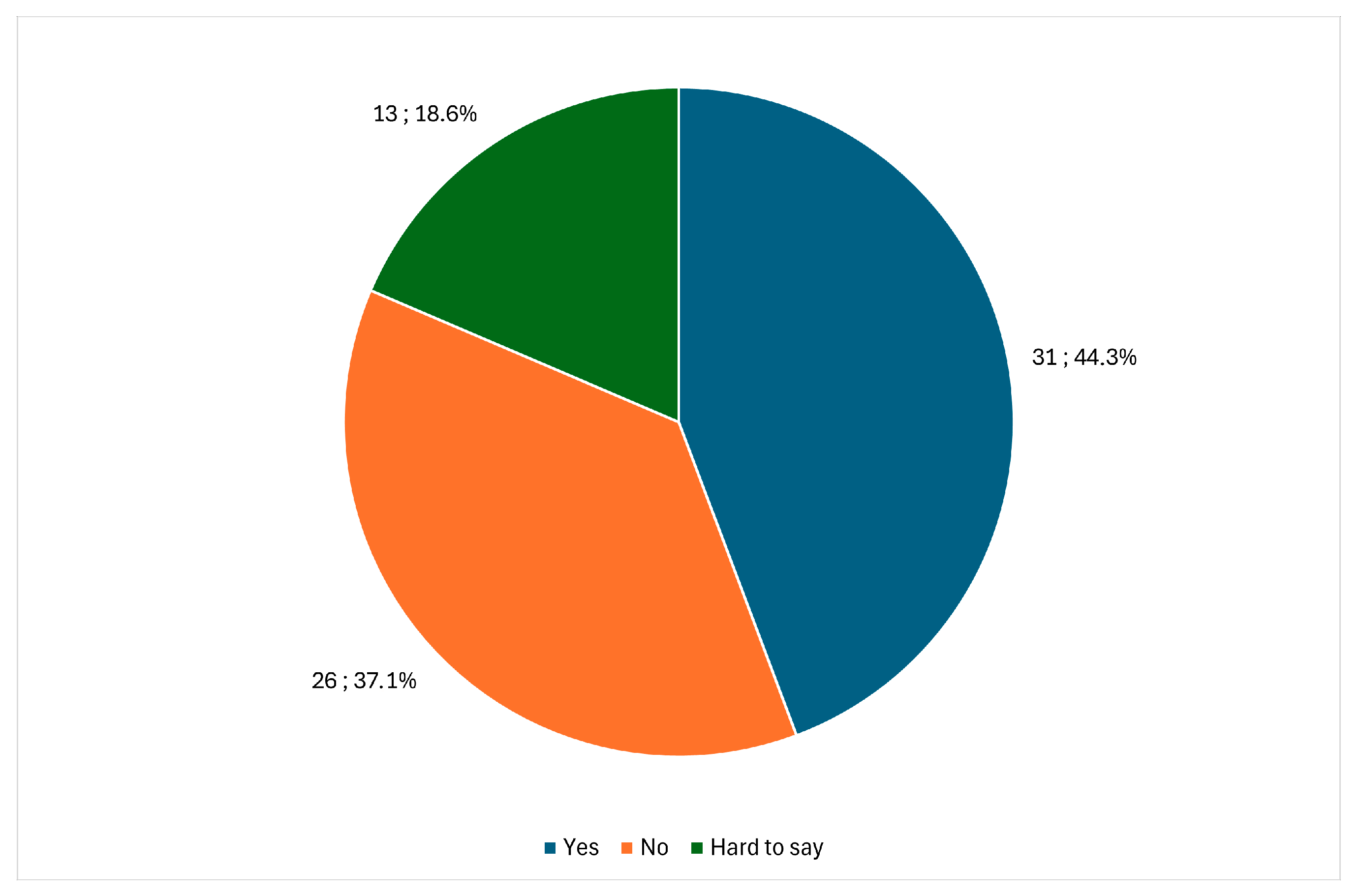
While a roughly similar number of people (44.3%) are convinced of the influence of faith and religion on everyday life in emigration (Figure 1), those unconvinced are divided into: (1) those who confirm the lack of influence of faith and religion on everyday life in emigration (with a share of 37.1% of the total population) and (2) those who do not have a clear opinion on this matter (with a collective share of as much as 18.6%). With regard to building an identity based on faith and religion, the lack of a clear opinion may indicate ambiguity, uncertainty, or a diminishing role of religion as a primary reference point in everyday life. This, in turn, means that its actual confirmation depends more on external factors (such as pastoral adjustments) than on the a priori attitudes of the emigrants themselves.
The impact of faith on everyday life (Table 2) is rejected by 2 of the 12 respondents (16.7%) in households with a child or children, while 6 of the 12 (50%) report such an impact. Among jointly managed single-generation households, 14 of 35 respondents (40.0%) do not perceive an influence of faith on everyday life, whereas 16 of 35 (45.7%) report such an influence. In the group of independently managed households, 10 of 23 respondents (43.5%) report no perceived impact, compared with 9 of 23 (39.1%) who report a positive impact.
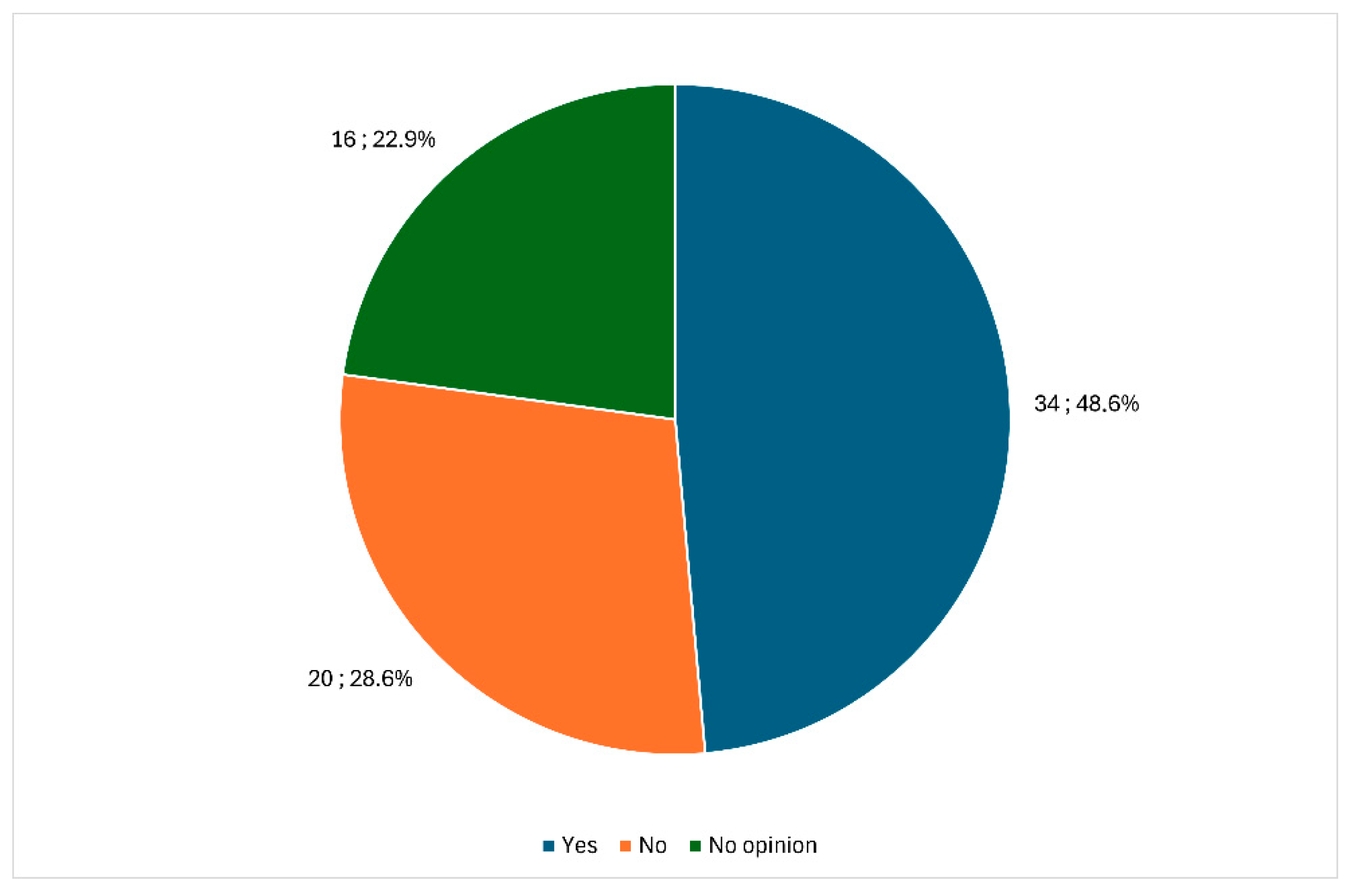
The legitimacy of interpreting ambiguous responses assessing the influence of faith and religion on everyday life (“hard to say”) as openness to confirming such an influence is reinforced by a subsequent question that directly addressed the recognition of the religious community as a source of social identity (belonging). This relationship is explicitly affirmed by 48.6% of respondents representing households. By contrast, only 28.6% reject such a linkage, while 22.9% refrain from making a clear declaration on this matter (no opinion; Figure 2).
The smallest proportion of respondents opposing confessional sources of social identity is found among households with children; at the same time, this group displays the highest share of respondents who do not hold an opinion on this issue (5 of 12 respondents, which is 41.7%) (Table 3). It may be assumed that this is due to the greater openness of this group of households to contacts with the surrounding social environment—resulting from educational obligations—which is itself diversified in terms of social identity.

4.2. Examination of Engagement in Religious Community and Social Identity

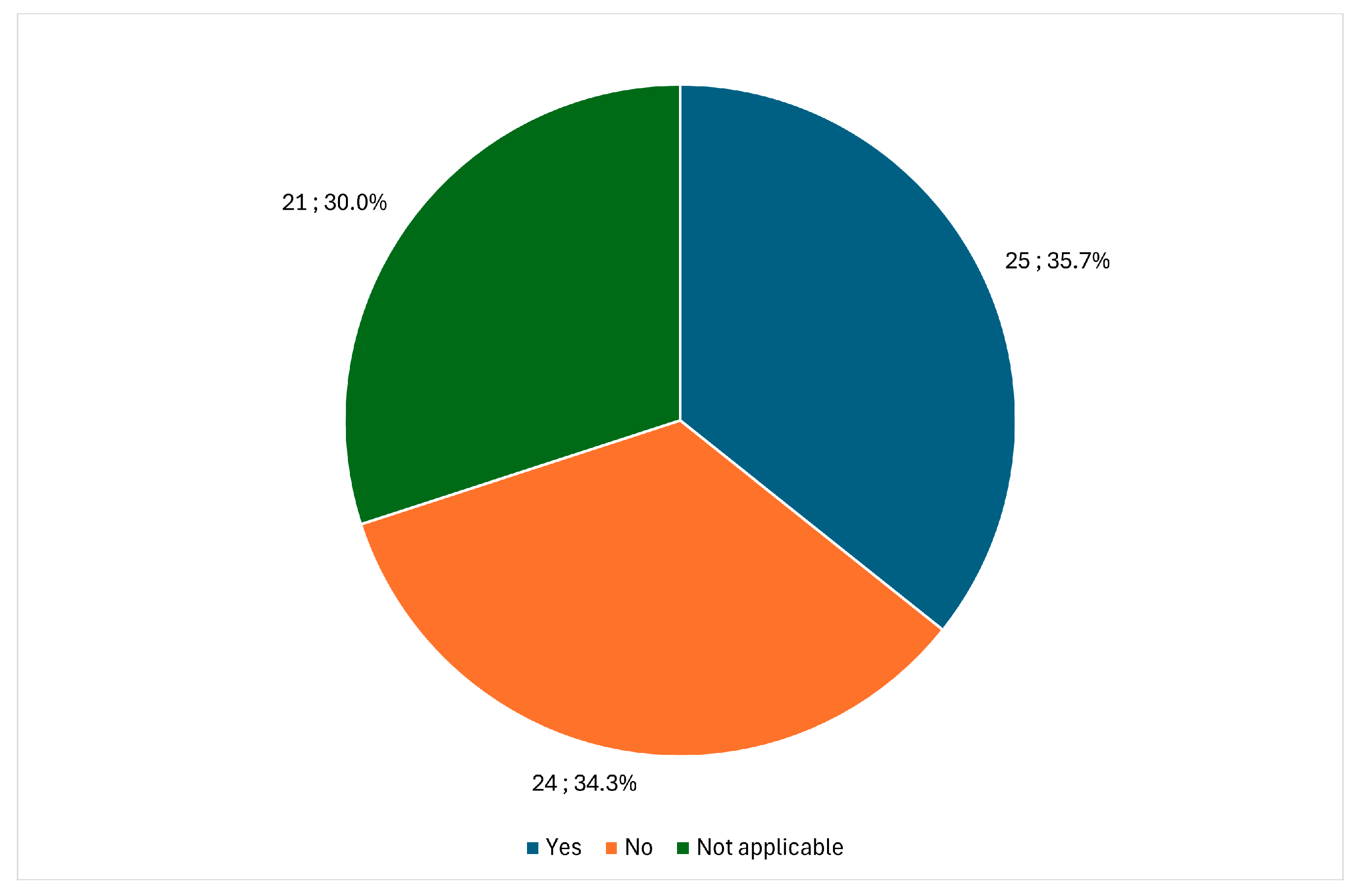
As many as 52.9% of respondents declare engagement in the life of a religious community (Table 4). Further exploration of the reasons for the lack of engagement among the remaining part of the surveyed population would make it possible to identify barriers underlying the indecisiveness of migrants, both with regard to their assessment of the influence of faith and religiosity on everyday life and their uncertainty concerning religious inspirations of social identity that shape social (including economic) attitudes within groups and communities. Interestingly, similar conclusions apply to the assessment of children’s participation in initiatives of the religious community. Among respondents who consider this issue relevant and worthy of direct assessment (with 30% indicating that the issue does not apply to them), the population is likewise divided into two numerically comparable groups (Figure 3).
As expected, active participation in the life of a religious community at a level of approximately 50% of the surveyed population is confirmed across all household types (Table 5). The rates of confirmed participation—58.3% (7 of 12 respondents) among households with children and 54.2% (19 of 35 respondents) among jointly managed single-generation households—are very high when compared with levels of practical religiosity in the non-migrant population. At the same time, this constitutes a challenge for subsequent generations, due to the natural pressure toward loosening ties with the community among children. This is evidenced by the fact that 6 of 12 respondents (50%) from households with children declare that their children do not participate in educational and cultural initiatives undertaken by the religious community. Lower proportions of similar declarations in the remaining household groups should be regarded as informationally biased, for the reasons indicated earlier (it is likely that in part they are descriptive in nature, referring to now-adult children, and in part they represent projections whose actual realization cannot be determined).

4.3. Patterns of Cultural Identity Transformation in Different Household Types

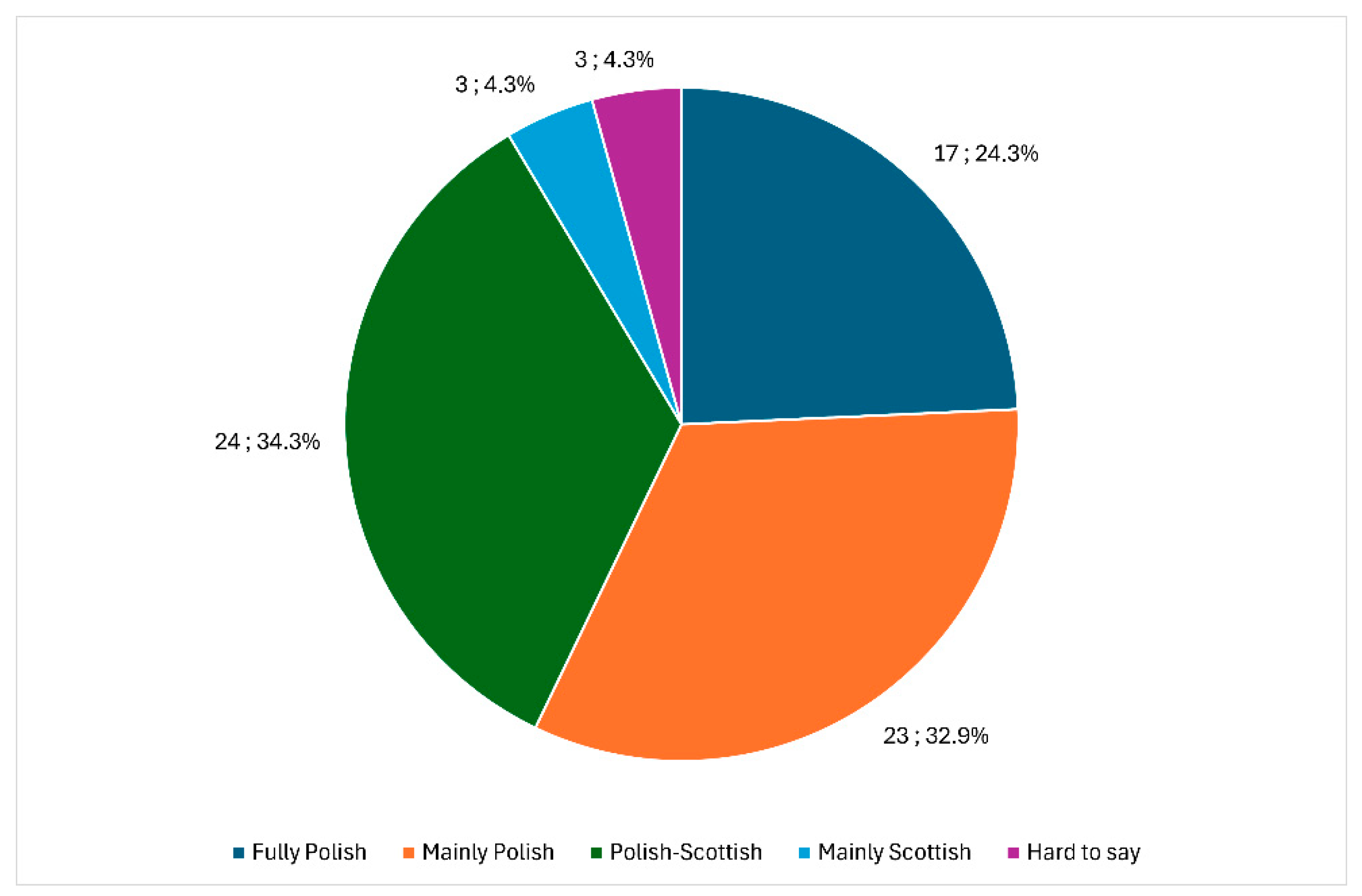
With regard to cultural identity (Figure 4), a clear predominance of national patterns and norms (fully Polish or predominantly Polish) is declared by a total of 57.1% of respondents. A substantial group, accounting for 34.3% of surveyed households, acknowledges the influence of inculturation, describing their identity as Polish–Scottish. Only a marginal share (4.3%) is represented by respondents engaged in the construction of new foundations of cultural identity, with a similarly small proportion (also 4.3%) consisting of respondents who remain undecided.
The unambiguity in terms of cultural affiliation, primarily focused on Polish norms, is primarily emphasized in the group of households with children—as much as 9 of 12 respondents collectively (75%) (Table 6). In this group, enculturation is also the weakest (indicated by only one household, i.e., 8.3% of the group), with 2 of 12 respondents (16.7%) having difficulty with a clear declaration (“hard to say”). A substantial share (60%, i.e., 21 of 35 survey participants) of cultural identity rooted in Polish origins is also declared in the group of jointly managed single-generation households. However, within this group 11 of 35 respondents (31.4%) already acknowledge the influence of inculturation, while 2 of 35 (5.7%) explicitly declare Scottish affiliation, with only 1 (2.8%) confirming indecision.

5. Conclusions

The aim of the article was to analyze the impact of religion and religiosity among Polish emigrants in Scotland on the sustainable functioning of households under conditions of migration. The study focused on three research hypotheses concerning the role of religiosity in economic decision-making, the formation of social identity, and the durability of cultural identity.
Hypothesis H1, which assumed that emigrants’ religiosity affects the current sustainable functioning of households, including economic decision-making, was examined first. The results partially support this hypothesis. The influence of values promoted by Christianity on economic decisions was declared by 34 out of 70 respondents (48.6%), with this relationship being more pronounced in households with a child or children and in jointly managed single-generation households. In independently managed single-generation households, this influence was more frequently rejected. A similar, inconclusive distribution of responses was observed with regard to the impact of faith and religion on everyday life in emigration. Such an impact was reported by 31 respondents (44.3%), rejected by 26 respondents (37.1%), while 13 respondents (18.6%) selected the response “hard to say.” The highest proportion of respondents reporting the influence of faith and religion on everyday life was found in households with a child or children (6 of 12 respondents), whereas in independently managed single-generation households the combined share of negative and ambivalent (“hard to say”) responses amounted to 60.8% (14 of 23 respondents).
Subsequently, hypothesis H2 was addressed, according to which the religious community and engagement in its activities constitute an important source of emigrants’ social identity. The results support this hypothesis. More than half of the respondents declared involvement in the life of a religious community, and 48.6% of respondents identified with the religious community as a source of belonging and social identity.
Finally, hypothesis H3 was examined, focusing on the dynamics of cultural identity transformation (inculturation) in emigrant households in relation to household type and intra-household relationships. The findings suggest patterns consistent with this hypothesis. Households with children most frequently declared a clearly defined Polish cultural identity, whereas independently managed single-generation households exhibited higher levels of inculturation and greater openness to changes in cultural identity.
The conclusions presented above are complemented by an identification of the limitations of the study. These include the relatively small sample size and its structural heterogeneity, which limit the generalizability of the findings. An additional limitation is the declarative nature of the data, as well as the presence of a substantial proportion of ambiguous responses.
At the same time, the identified limitations point to potential directions for further research. Future studies should include an in-depth analysis of the reasons for the lack of engagement of some migrants in the life of religious communities, qualitative research into the mechanisms of identity formation in different types of households, and intergenerational analyses that take into account the role of children in the processes of religious and cultural transmission in the context of migration.
In this perspective, a valuable direction for future research would be the development of a mixed-methods approach combining quantitative data with qualitative methods. The inclusion of in-depth interviews, observation, or research diaries could enable a more comprehensive understanding of the mechanisms underlying the relationships identified in the present study, particularly with regard to household practices, economic decisions, identity formation, and the intergenerational transmission of religiosity, thereby allowing for a deeper exploration of the dynamics identified in Hypothesis 1. Such an approach would allow for a deeper contextualisation of the quantitative findings without altering their exploratory character.

Author Contributions

Conceptualization, J.K., A.S., K.P., Z.A.B., P.M., and P.K.; methodology, J.K., A.S., K.P., Z.A.B., P.M., and P.K.; software, J.K., A.S., K.P., Z.A.B., P.M., and P.K.; validation, J.K., A.S., K.P., Z.A.B., P.M., and P.K.; formal analysis, J.K., A.S., K.P., Z.A.B., P.M., and P.K.; investigation, J.K., A.S., K.P., Z.A.B., P.M., and P.K.; resources, J.K., A.S., K.P., Z.A.B., P.M., and P.K.; data curation, J.K., A.S., K.P., Z.A.B., P.M., and P.K.; writing—original draft preparation, J.K., A.S., K.P., Z.A.B., P.M., and P.K.; writing—review and editing, J.K., A.S., K.P., Z.A.B., P.M., and P.K.; visualization, J.K., A.S., K.P., Z.A.B., P.M., and P.K.; supervision, J.K., A.S., K.P., Z.A.B., P.M., and P.K.; project administration, J.K., A.S., K.P., Z.A.B., P.M., and P.K. All authors have read and agreed to the published version of the manuscript.

Funding

This research received no external funding.

Data Availability Statement

The raw data supporting the conclusions of this article will be made available by the authors on request.

Conflicts of Interest

The authors declare no conflict of interest.

Abbreviations

The following abbreviations are used in this manuscript:
CAWIComputer-Assisted Web Interviewing

References

  1. Ahn, Ilsup. 2024. Migration and Christian Theology. In St Andrews Encyclopaedia of Theology. Edited by Brendan N. Wolfe, Steve Holmes, Andrew Mein, Judith Wolfe, Nicholas T. Wright, Maria Dakake, Lejla Demiri, Timothy Winter, Rachel Adelman, Alan Brill and et al. St Andrews: University of St Andrews. Available online: https://www.saet.ac.uk/Christianity/MigrationandChristianTheology (accessed on 16 January 2026).
  2. Alcover, Tirso. 2025. Misja rogacjonistów wśród emigrantów filipińskich w Polsce. Warszawskie Studia Pastoralne 59: 159–79. [Google Scholar]
  3. Babiński, Grzegorz. 1999. Religia i tożsamość narodowa—Zmieniające się relacje. In Religia i Kultura w Globalizującym się Świecie. Edited by Marian Kempny and Grażyna Woroniecka. Kraków: Zakład Wydawniczy “Nomos”. [Google Scholar]
  4. Baumert, Jürgen, Michael Becker, Malte Jansen, and Olaf Köller. 2024. Cultural Identity and the Academic, Social, and Psychological Adjustment of Adolescents with Immigration Background. Journal of Youth and Adolescence 53: 294–315. [Google Scholar] [CrossRef] [Scilit]
  5. Benedict XVI. 2011. Message of His Holiness Pope Benedict XVI for the Celebration of The World Day Of Peace. Religious Freedom, The Path to Peace. Available online: https://www.vatican.va/content/benedict-xvi/en/messages/peace/documents/hf_ben-xvi_mes_20101208_xliv-world-day-peace.html (accessed on 23 February 2026).
  6. Berry, John W. 1997. Immigration, Acculturation, and Adaptation. Applied Psychology 46: 5–34. [Google Scholar]
  7. Beyer, Jean. 1985. Fondamento ecclesiale della pastorale dell’emigrazione. In Migrazioni. Studi Interdisciplinari. Edited by Jean Beyer and Marcelo Semeraro. Roma: Centro Studi Emigrazioni, Vol. II, pp. 9–33. [Google Scholar]
  8. Bourdieu, Pierre. 1986. The Forms of Capital. In Handbook of Theory and Research for the Sociology of Education. Edited by John G. Richardson. New York, Westport, Connecticut and London: Greenwood Press, pp. 241–58. [Google Scholar]
  9. Breskaya, Olga. 2025. Religious upbringing in the family and individual autonomy of “Nones”: A comparative study of youth in Italy and Russia. International Journal of Sociology and Social Policy 45: 725–42. [Google Scholar] [CrossRef] [Scilit]
  10. Budginaitė-Mačkinė, Irma, Isabelle Albert, Miekie Schrooten, Dragan Stanojević, and Anna Wojtyńska. 2025. Defining transnational families across countries and time: An analysis of academic discourse on the phenomenon between 2003 and 2023. Journal of Family Studies 32: 9–28. [Google Scholar] [CrossRef] [Scilit]
  11. Castillo Guerra, John E. 2015. Contributions of the Social Teaching of the Roman Catholic Church on Migration: From a ‘Culture of Rejection’to a ‘Culture of Encounter’. Exchange. Journal of Contemporary Christianities in Context 44: 403–27. [Google Scholar]
  12. Cekiera, Rafał, and Mateusz Włosek. 2024. The Catholic Church and its approach towards refugees and migrants: An analysis of the presence of migration issues in the Synod’s syntheses on synodality. Religions 15: 1237. [Google Scholar] [CrossRef] [Scilit]
  13. Chowdhury, Farzana Y. 2024. Family values, culture maintenance and identity. A narrative inquiry into Bangladeshi migrants in Southeast Queensland, Australia. International Journal of Language and Culture 11: 262–95. [Google Scholar] [CrossRef] [Scilit]
  14. Coleman, James S. 1988. Social Capital in the Creation of Human Capital. American Journal of Sociology 94: S95–S120. Available online: http://www.jstor.org/stable/2780243 (accessed on 23 February 2026). [CrossRef] [Scilit]
  15. De Paolis, Velasio. 1981. De cura pastorali migratorum. Periodica 70: 141–74. [Google Scholar]
  16. De Paolis, Velasio. 2003. La chiesa e le migrazioni nei secoli XIX e XX. Ius Canonicum 43: 13–49. [Google Scholar] [CrossRef] [Scilit]
  17. De Soto, Domingo. 2022. Deliberation on the Cause of the Poor. Edited by Wim Decock. Grand Rapids: Clp Academic. First published 1545. [Google Scholar]
  18. Dicastery for Promoting Integral Human Development. 2022. Pastoral Orientations on Intercultural Migrant Ministry. Vatican City: Dicastery for Promoting Integral Human Development. [Google Scholar]
  19. Engelhardt, Jeffers. 2015. Singing the Right Way: Orthodox Christians and Secular Enchantment in Estonia. Oxford: Oxford University Press. [Google Scholar]
  20. Favero, Luigi, and Graziano Tassello. 1985. Chiesa e Mobilità Umana. Documenti Della Santa Sede dal 1883 al 1983. Roma: Centro Studi Emigrazione. [Google Scholar]
  21. Fleischmann, Fenella. 2022. Researching religion and migration 20 years after ‘9/11’: Taking stock and looking ahead. Zeitschrift für Religion, Gesellschaft und Politik 6: 347–72. [Google Scholar] [CrossRef] [Scilit]
  22. Francis. 2018. Message of His Holiness Pope Francis for the 104th World Day of Migrants and Refugees 2018. Welcoming, Protecting, Promoting and Integrating Migrants and Refugees. Available online: https://www.vatican.va/content/francesco/en/messages/migration/documents/papa-francesco_20170815_world-migrants-day-2018.html (accessed on 23 February 2026).
  23. Gallagher, Kerry, and Marta Trzebiatowska. 2017. Becoming a ‘real’Catholic: Polish migrants and lived religiosity in the UK and Ireland. Journal of Contemporary Religion 32: 431–45. [Google Scholar] [CrossRef] [Scilit]
  24. Garapich, Michał P. 2016. London’s Polish Borders: Transnationalizing Class and Ethnicity among Polish Migrants in London. New York: Columbia University Press. [Google Scholar]
  25. Groody, Daniel G. 2009. Crossing the Divide: Foundations of a Theology of Migration and Refugees. Theological Studies 3: 638–67. [Google Scholar] [CrossRef] [Scilit]
  26. Groody, Daniel G. 2022. A Theology of Migration: The Bodies of Refugees and the Body of Christ. Maryknoll: Orbis Books. [Google Scholar]
  27. Hajduk, Łukasz. 2018. Migration Issues in the Teaching of Pope Francis. In Civic Education in the Context of Migration. Edited by Ewa Bobrowska, Dorota Gierszewski and Julia Kluzowicz. Kraków: Jagiellonian University Press, pp. 131–43. [Google Scholar]
  28. Hannerz, Ulf. 2006. Powiązania Transnarodowe. Kultura, Ludzie, Miejsca. Translated by Katarzyna Franek. Kraków: Wydawnictwo Uniwersytetu Jagiellońskiego. [Google Scholar]
  29. Heyer, Kristin E. 2012. Kinship Across Borders: A Christian Ethic of Immigration. Washington, DC: Georgetown University Press. [Google Scholar]
  30. Hryniewicz, Wacław. 1994. Tożsamość chrześcijańska dzisiaj. Od konfesjonalizmu do tożsamości otwartej. Znak 5: 4–14. [Google Scholar]
  31. Jacobson-Widding, Anita. 1983. Introduction. In Identity: Personal and Socio-Cultural. Edited by Anita Jacobson-Widding. Uppsala Studies in Cultural Anthropology. Uppsala: Acta Universitatis Upsaliensis, vol. 5, pp. 13–52. [Google Scholar]
  32. Jakuszewicz, Adam. 2024. Change of religion by a spouse as a culpable cause of the breakdown of marital life. A constitutional-law perspective. Dyskurs Prawniczy i Administracyjny 1: 39–56. [Google Scholar] [CrossRef] [Scilit]
  33. Jas, Katarzyna. 2018. Środowisko lokalne jako czynnik kształtowania (się) tożsamości osób w wieku późnej dorosłości na przykładzie Śląska Cieszyńskiego. Edukacja Międzykulturowa 9: 229–42. [Google Scholar] [CrossRef] [Scilit]
  34. John Paul II. 1981. Encyclical Letter: Laborem Exercens. Available online: https://www.vatican.va/content/john-paul-ii/en/encyclicals/documents/hf_jp-ii_enc_14091981_laborem-exercens.html (accessed on 23 February 2026).
  35. John Paul II. 2001. Message of His Holiness Pope John Paul II for the Celebration of The World Day of Peace. Available online: https://www.vatican.va/content/john-paul-ii/en/messages/peace/documents/hf_jp-ii_mes_20001208_xxxiv-world-day-for-peace.html (accessed on 23 February 2026).
  36. Kapinos, Seweryn. 2018. Religijność–Zwyczaje–Identyfikacja. Polscy migranci w Wielkiej Brytanii i ich tożsamość społeczno-kulturowa. Łódzkie Studia Teologiczne 27: 175–97. [Google Scholar]
  37. Kerwin, Donald M. 2024. Christianity and the Law of Migration. In The Oxford Handbook of Christianity and Law. Edited by John Witte, Jr. and Domingo Rafael. Oxford: Oxford University Press, pp. 664–79. [Google Scholar]
  38. Leon XIII. 1888. Quam Aerumnosa Encyclical of Pope Leo XIII on Italian Immigrants. Available online: https://www.vatican.va/content/leo-xiii/en/encyclicals/documents/hf_l-xiii_enc_10121888_quam-aerumnosa.html (accessed on 23 February 2026).
  39. Leon XIV. 2025. Message of Pope Leo XIV for the 111th World Day of Migrants and Refugees 2025. Available online: https://www.vatican.va/content/leo-xiv/en/messages/migration/documents/20250725-world-migrants-day-2025.html (accessed on 23 February 2026).
  40. Lewandowski, Paweł. 2024. Upbringing of children and youth according to Stefan Wyszyński on the basis of publications in “Ład Boży”. Catholic Pedagogy 35: 54–65. [Google Scholar] [CrossRef] [Scilit]
  41. Magezi, Vhumani. 2019. Pastoral care to migrants as care at the ‘in-between’ and ‘liminal’ home away from home: Towards public pastoral care to migrants. Verbum et Ecclesia 40: a1990. [Google Scholar] [CrossRef] [Scilit]
  42. Marchetto, Ezio. 1989. The Catholic Church and the Phenomenon of Migration—An Overview. New York: Center for Migration Studies. [Google Scholar]
  43. Mariański, Janusz. 1986. Religijność młodzieży naszego czasu i środowiska, Seminare. Poszukiwania Naukowe 8: 9–38. [Google Scholar] [CrossRef] [Scilit]
  44. Mariański, Janusz. 2016. Religia i religijność w zsekularyzowanych społeczeństwach. Zeszyty Naukowe KUL 59: 3–25. [Google Scholar]
  45. Massironi, Sergio. 2022. Final Report Europe/Mediterranean (2022). Doing Theology from the Existential Peripheries. Report of Dicastery for Promoting Integral Human Development. Available online: https://migrants-refugees.va/resource-center/publications/ (accessed on 23 February 2026).
  46. Mazur, Radosław. 2023. Kształtowanie otwartej tożsamości religijnej jako szansa dla edukacji religijnej wobec współczesnych wyzwań. Edukacja 1: 4–16. [Google Scholar] [CrossRef] [Scilit]
  47. Migrant Ministry Reports. 2025. Good Practices Migrants and Refugees: 2024. Pastoral Reports of Dicastery for Promoting Integral Human Development. Available online: https://www.humandevelopment.va/en/risorse/documenti/buone-pratiche-migranti-e-rifugiati-2024.html (accessed on 23 February 2026).
  48. Moreno-Kamińska, Natalie. 2023. Trzy tożsamości. Badanie tożsamości kulturowej–analiza wybranych szlaków kulturowych w Polsce i we Francji. Doctoral dissertation, University of Lodz, Lodz, Poland. Available online: https://dspace.uni.lodz.pl:8443/xmlui/handle/11089/50289 (accessed on 23 February 2026).
  49. Moskal, Marta. 2011. Transnationalism and the role of family and children in intra-European labour migration. European Societies 13: 29–50. [Google Scholar] [CrossRef] [Scilit]
  50. Müller, Olaf, and Gergely Rosta. 2025. National Identity, Religion, and Religiosity in Central and Eastern Europe: Types, Patterns, and Correlations. Religions 16: 1527. [Google Scholar] [CrossRef] [Scilit]
  51. NAB. 2012. The New American Bible (NAB), rev. ed. The Leading Catholic Resource for Understanding Holy Scripture. New York: Harper Collins Publishers. [Google Scholar]
  52. Němec, Damián. 2021. Pastoral care of migrants in the Catholic Church in the Czech Republic. Ecumeny and Law 9: 71–89. [Google Scholar] [CrossRef] [Scilit]
  53. Nikitorowicz, Jerzy. 2001. Wielopłaszczyznowa i ustawicznie kreująca się tożsamość w społeczeństwie wielokulturowym a edukacja międzykulturowa. In Kultury Tradycyjne a Kultura Globalna. Konteksty Edukacji Międzykulturowej. Edited by Jerzy Nikitorowicz, Mirosław Sobecki and Dorota Misiejuk. Białystok: Trans Humana, pp. 15–35. [Google Scholar]
  54. Otiso, Richard O. 2022. Literature Review of Migration, Religion and Integration among Immigrants in the 21st Century. European Journal of Social Sciences Studies 8: 1–23. [Google Scholar] [CrossRef] [Scilit]
  55. Palacz, Michał A. 2022. Polish Diasporic Catholicism in Scotland. In The Bloomsbury Handbook of Religion and Migration, 1st ed. Edited by Rubina Ramji and Alison Marshall. London: Bloomsbury Academic, pp. 55–72. [Google Scholar]
  56. Paul VI. 1967. Populorum Progressio Encyclical of Pope Paul VI on the Development of Peoples. Available online: https://www.vatican.va/content/paul-vi/en/encyclicals/documents/hf_p-vi_enc_26031967_populorum.html (accessed on 23 February 2026).
  57. Pek, Kazimierz. 2009. Deus Semper Maior: Teologiczny Obraz Boga w Mariologii Polskiej XX Wieku. Lublin: Wydawnictwo KUL. [Google Scholar]
  58. Pius XII. 1952. Exsul Familia de Spirituali Emigrantium Cura. Available online: https://www.vatican.va/content/pius-xii/la/apost_constitutions/documents/hf_p-xii_apc_19520801_exsul-familia.html (accessed on 23 February 2026).
  59. Pontifical Council for the Pastoral Care of Migrants and Itinerant People. 2004. Instruction: Erga Migrantes Caritas Christi: (The Love of Christ Towards Migrants). Available online: https://migrants-refugees.va/wp-content/uploads/2019/11/Erga-Migrantes_EN.pdf (accessed on 23 February 2026).
  60. Pontifical Council for the Pastoral Care of Migrants and Itinerant People, Pontifical Council Cor Unum. 2013. Welcoming Christ in Refugees and Forcibly Displaced Persons. Pastoral Guidelines. Vatican City: Pontifical Council for the Pastoral Care of Migrants and Itinerant People, Pontifical Council Cor Unum. Available online: https://www.vatican.va/roman_curia/pontifical_councils/corunum/corunum_en/pubblicazioni_en/Rifugiati-2013-INGL.pdf (accessed on 23 February 2026).
  61. Putnam, Robert D. 2000. Bowling Alone: The Collapse and Revival of American Community. New York: Simon & Schuster. [Google Scholar]
  62. Różańska, Aniela. 2015a. Edukacja Religijna Młodzieży w Warunkach Pluralizmu Religijnego w Wybranych Krajach Europy Środkowo-Wschodniej (Grupa Wyszehradzka: Polska, Czechy, Słowacja, Węgry) Studium Porównawcze. Toruń: Wydawnictwo Adam Marszałek. [Google Scholar]
  63. Różańska, Aniela. 2015b. Wkład Kościoła ewangelickiego w kształtowanie otwartej tożsamości religijnej młodzieży zaolziańskiej. Edukacja Międzykulturowa 4: 55–70. [Google Scholar]
  64. Ryan, Louise, Rosemary Sales, Mary Tilki, and Bernadetta Siara. 2008. Social networks, social support and social capital: The experiences of recent Polish migrants in London. Sociology 42: 672–90. [Google Scholar] [CrossRef] [Scilit]
  65. Rydz, Elżbieta, Czesław Walesa, and Małgorzata Tatala. 2017. Structure and level of religiosity test. Polish Psychological Bulletin 48: 20–27. [Google Scholar] [CrossRef] [Scilit]
  66. Sabbarese, Luigi. 2018a. Cura dei migranti tra pastorale della mobilità e mobilità della pastorale. Revista de Investigación de la Cátedra Internacional Conjunta Inocencio III 7: 123–49. [Google Scholar]
  67. Sabbarese, Luigi. 2018b. Riesame dell’«Ordinamento giuridico-pastorale» dell’istruzione Erga migrantes caritas Christi. Tra vecchi e nuovi modelli. Eastern Canon Law 7: 89–114. [Google Scholar]
  68. Sadlon, Wojciech. 2022. The social activity of polish migrants in the Republic of Ireland from the perspective of their religiosity. Review of Religious Research 64: 907–32. [Google Scholar] [CrossRef] [Scilit]
  69. Sanfilippo, Matteo. 2018. L’emigrazione Nei Documenti Pontifici. Testimonianze e Esperienze Delle Migrazioni 22. Roma: Fondazione Migrantes. [Google Scholar]
  70. Shakhova, Ekaterina V., Daria K. Scheglova, Aleksandrovich S. Kashchenko, and Victoria M. Maksimova. 2025. Religious Identity of Youth in the Border Regions of Siberia: Education and Practices of Participation in Religious Communities in the Conditions of the New Postsecular Reality. Society and Security Insights 8: 65–83. [Google Scholar] [CrossRef] [Scilit]
  71. Sobecki, Mirosław. 2018. Wielowymiarowe poczucie tożsamości społeczno-kulturowej. Idea i badanie. Perspektywa pedagogiczna. Kultura i Edukacja 3: 85–103. [Google Scholar]
  72. Szułczyński, Andrzej. 2024. Wartości religijno-moralne rodzin migrantów polskich. Studium empiryczne na podstawie badań własnych w wybranych środowiskach polonijnych w Szkocji w latach 2009–2013. Doctoral dissertation, The Pontifical University of John Paul II in Kraków, Kraków, Poland. Available online: https://repozytorium.upjp2.edu.pl/items/c4915b37-9479-408f-adbe-585a0cbe178c (accessed on 23 February 2026).
  73. Tessarolo, Giulivo. 1962. The Church’s Magna Charta for Migrants. Staten Island: St. Charles Seminary. [Google Scholar]
  74. Tilahun, Mulune A., Mellese M. Gatisso, and Abdu M. Ali. 2025. Love beyond religious conviction: The challenges of interreligious marriage in South Wollo, Ethiopia. Discover Global Society 3: 74. [Google Scholar] [CrossRef] [Scilit]
  75. Trittler, Sabine. 2017. Explaining Differences in the Salience of Religion as a Symbolic Boundary of National Belonging in Europe. European Sociological Review 33: 708–20. [Google Scholar] [CrossRef] [Scilit]
  76. Valtolina, Giovani G., and Laura Zanfrini. 2023. Migrants, Families, and Religion: An Intriguing Research Agenda. In Migrant Families and Religious Belonging. Amsterdam: IOS Press, pp. 1–31. [Google Scholar] [CrossRef] [Scilit]
  77. Van den Brink, Gijsbert. 2014. Social Trinitarianism: A discussion of some recent theological criticisms. International Journal of Systematic Theology 16: 331–50. [Google Scholar] [CrossRef] [Scilit]
  78. Van Hook, Jennifer, and Jennifer E. Glick. 2020. Spanning Borders, Cultures, and Generations: A Decade of Research on Immigrant Families. Journal of Marriage and Family 82: 224–43. [Google Scholar] [CrossRef] [Scilit] [PubMed]
  79. Vatican Council II. 1964. Dogmatic Constitution on the Church: Lumen Gentium. Available online: https://www.vatican.va/archive/hist_councils/ii_vatican_council/documents/vat-ii_const_19641121_lumen-gentium_en.html (accessed on 23 February 2026).
  80. Walesa, Czesław. 2005. Rozwój Religii Człowieka. Tom I: Dziecko. Lublin: Wydawnictwo KUL. [Google Scholar]
  81. Wiktor-Mach, Dobrosława, Patrycja Trzeszczyńska, and Konrad Pędziwiatr. 2024. The Responses of Religious Communities to Migration and the Transformation of a Quasi-Monopolistic Religious Market. Studia Religiologica 55: 171–91. [Google Scholar] [CrossRef] [Scilit]
  82. Wódka, Marek, Stanisław Fel, and Jarosław Kozak. 2020. Religiosity of Polish Catholics in the UK: Attitude towards Faith, Affiliation, Membership and Religious Practices. Religions 11: 422. [Google Scholar] [CrossRef] [Scilit]
  83. Zanconato, Cesare. 1969. Pastorale emigratoria alla luce del Concilio. Studi Emigrazione 16: 273–82. [Google Scholar]
Figure 1. The influence of faith and religion on everyday life in emigration.
Religions 17 00292 g001
Figure 2. Opinions of emigrants about the communal-religious source of belonging/social identity.
Religions 17 00292 g002
Figure 3. Emigrants’ opinions on children’s participation in religious community initiatives.
Religions 17 00292 g003
Figure 4. Emigrants’ opinions on cultural identity.
Religions 17 00292 g004
Table 1. Assessment of the influence of values promoted by Christianity on the economic decisions of emigrants.
Question: Do the Values Promoted by Christianity (e.g., Solidarity, Mutual Aid) Have a Decisive Influence on Your Economic Decisions?
AnswerFrequencyPercentageCumulative Percentage
Yes3448.648.6
No3651.4100
Total70100
Table 2. Opinions on the influence of values on economic decisions and of faith on everyday life in migration.
Model of the Household
Household with Child/ChildrenJointly Managed Single-Generation HouseholdsSingle-Generation Households Managed IndividuallyTotal
Do the values promoted by Christianity have a decisive influence on your economic decisions?Yes620834
No6151536
Total12352370
Do faith and religion influence your everyday life in emigration?Yes616931
No2141026
Hard to say45413
Total12352370
Table 3. Opinions on the religious community as a source of social belonging/identity.
Model of the Household
Household with Child/ChildrenJointly Managed Single-Generation HouseholdsSingle-Generation Households Managed IndividuallyTotal
Do you identify with your religious community as a source of belonging/social identity?Yes5191034
No210820
I have no opinion56516
Total12352370
Table 4. Opinions on emigrants’ involvement in the life of their religious community.
Question: Do You Actively Participate in the Life of the Religious Community in Scotland?
AnswerFrequencyPercentageCumulative Percentage
Yes3752.952.9
No3347.1100
Total70100
Table 5. Opinions on active participation in the life of the religious community in Scotland and the participation of children in initiatives undertaken by the religious community.
Model of the Household
Household with Child/ChildrenJointly Managed Single-Generation HouseholdsSingle-Generation Households Managed IndividuallyTotal
Do you actively participate in the life of the religious community in Scotland?Yes7191137
No5161233
Total12352370
Do children participate in educational/cultural initiatives undertaken by the religious community?Yes317525
No613524
Hard to say351321
Total12352370
Table 6. Opinions of emigrants on the national sources of their own cultural identity.
Model of the Household
Household with Child/ChildrenJointly Managed Single-Generation HouseholdsSingle-Generation Households Managed IndividuallyTotal
How do you perceive your cultural identity?Fully Polish49417
Mostly Polish512623
Polish–Scottish1111224
Mostly Scottish0213
It is hard to say2103
Total12352370
Disclaimer/Publisher’s Note: The statements, opinions and data contained in all publications are solely those of the individual author(s) and contributor(s) and not of MDPI and/or the editor(s). MDPI and/or the editor(s) disclaim responsibility for any injury to people or property resulting from any ideas, methods, instructions or products referred to in the content.