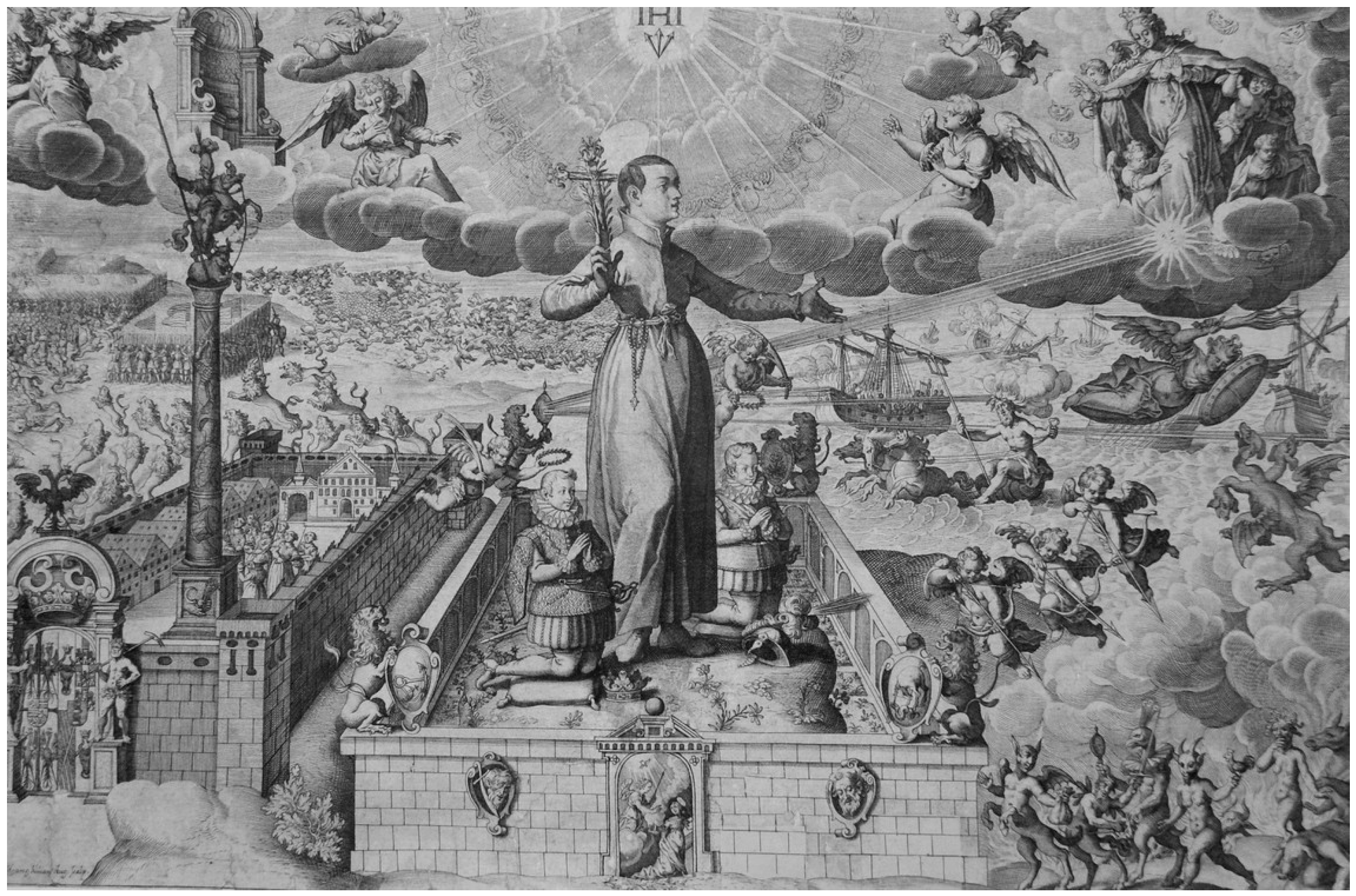
The Earliest Artistic Representations of Blessed Luigi Gonzaga (1568–1591): Devotion, Spirituality, and Family Patronage


Abstract
1. Introduction
[…] Intesa la morte di questo giovane [Luigi Gonzaga] Eleonora [Gonzaga] disse molte cose in lode d’esso, replicando, era un giovane santo, è morto un santo […].1(Folcario 1598, p. 329)
[…] Paragonate, vi prego, quell’innocenza di Luigi [Gonzaga] con l’integrità di Bibiana [von Pernestein], quelle lagrime con questo pianto, quelle funicelle con queste discipline e cilicci, quelle spronelle con queste catenelle di ferro, al sicuro direte che precorse Luigi con l’età, seguitollo Bibiana con l’industria […].2(Mascardi 1616, p. 23)
2. The Blessed: Lineage, Kinship Networks, and Key Biographical Milestones
3. Devotion to the Newly Beatified Saint in the Early Seventeenth Century: “A Family Affair”
4. Devotional Prints Commissioned by the Gonzaga Family: Bibiana von Pernstein, Princess of Castiglione delle Stiviere
5. Liturgical Objects and Furnishings Related to the Blessed Aloysius Gonzaga
6. Promoting the Canonization of Blessed Aloysius: Francesco Gonzaga and Bibiana von Pernstein, Princes of Castiglione
“[…] I rejoice exceedingly with Your Excellency that yesterday, in the public Rota, the matter of hope and charity of Blessed Luigi was dispatched, and this certainly through the great labours and diligence of Father Virgilio, which truly fills me with astonishment. I beg Your Excellency to grant me this favour, namely to thank the said Father with a few lines of your own hand, for beyond the infinite satisfaction it will give him, it will also serve as further encouragement. Now attention will turn to proving that he never committed a mortal sin, to his contemplations and mortifications, and then to the miracles; in all of this may the Lord God be praised, and the said glorious Blessed […]”.(Botturi 2019, p. 181)
“[…] It is advisable to keep the matter of Blessed Luigi secret, because here the Fathers of the Society raise great opposition; but I say this to Your Excellency in the strictest confidence, for they would wish to put forward not only Blessed Xavier but also Blessed Stanislaus […]”(Botturi 2019, pp. 89–90).35
7. Conclusions
Funding
Institutional Review Board Statement
Informed Consent Statement
Data Availability Statement
Conflicts of Interest
Abbreviations
| AHN | Archivo Histórico Nacional, Madrid (Spain) |
| ASM | Archivio di Stato di Mantova, Italy |
| ASMn | Archivio Storico Comune di Mantova, Italy |
| 1 | “[…] Upon hearing of the death of this young man [Luigi Gonzaga], Eleonora [Gonzaga] spoke at length in his praise, repeatedly affirming that he was a holy young man and that he had died a saint […]”. |
| 2 | “[…] Compare, I beg you, the innocence of Luigi [Gonzaga] with the integrity of Bibiana [von Pernestein], those tears with this weeping, those cords with these disciplines and hairshirts, those little spurs with these small iron chains; you will surely say that Luigi outstripped her in age, while Bibiana followed him through diligence […]”. |
| 3 | Marta Tana was born in Chieri (Piedmont), the daughter of Baron Baldassarre Tana and Anna della Rovere, the latter a cousin of Cardinal Girolamo della Rovere, Archbishop of Turin. |
| 4 | Rodolfo was murdered in the church of San Erasmo in Castel Goffredo, one of the family’s fiefs. In 1588, he had secretly married Elena Aliprandi, an unequal union that was later ratified by his brother Luigi, Il Santo, acting as head of the family following the death of Ferrante Gonzaga. From this marriage were born Cinzia, Olimpia, and Gridonia, all of whom, by virtue of their sex, were excluded from succession to the marquisate; nevertheless, they became the founders of the Collegio delle Vergini di Gesù in Castiglione delle Stiviere, an institution intended to preserve and promote the spirituality of their uncle, Saint Aloysius Gonzaga. |
| 5 | In 1593, following the death of his brother Rodolfo without male issue, Francesco inherited the title of Marquis of Castiglione delle Stiviere, which was elevated to a principality in 1610 at the behest of Philip III. In 1598 he married Bibiana von Pernstein. Both the couple and their descendants lived in close proximity to, and were deeply shaped by, the spirituality of Blessed Aloysius. |
| 6 | Cristierno Gonzaga married Marcella Malaspina in 1605; from this union were born three children, among them Carlo, Prince of Castiglione delle Stiviere and Marquis of Solferino; Carlo Antonio, a Capuchin friar; and a Jesuit who bore the same name as his uncle, Blessed Aloysius Gonzaga. |
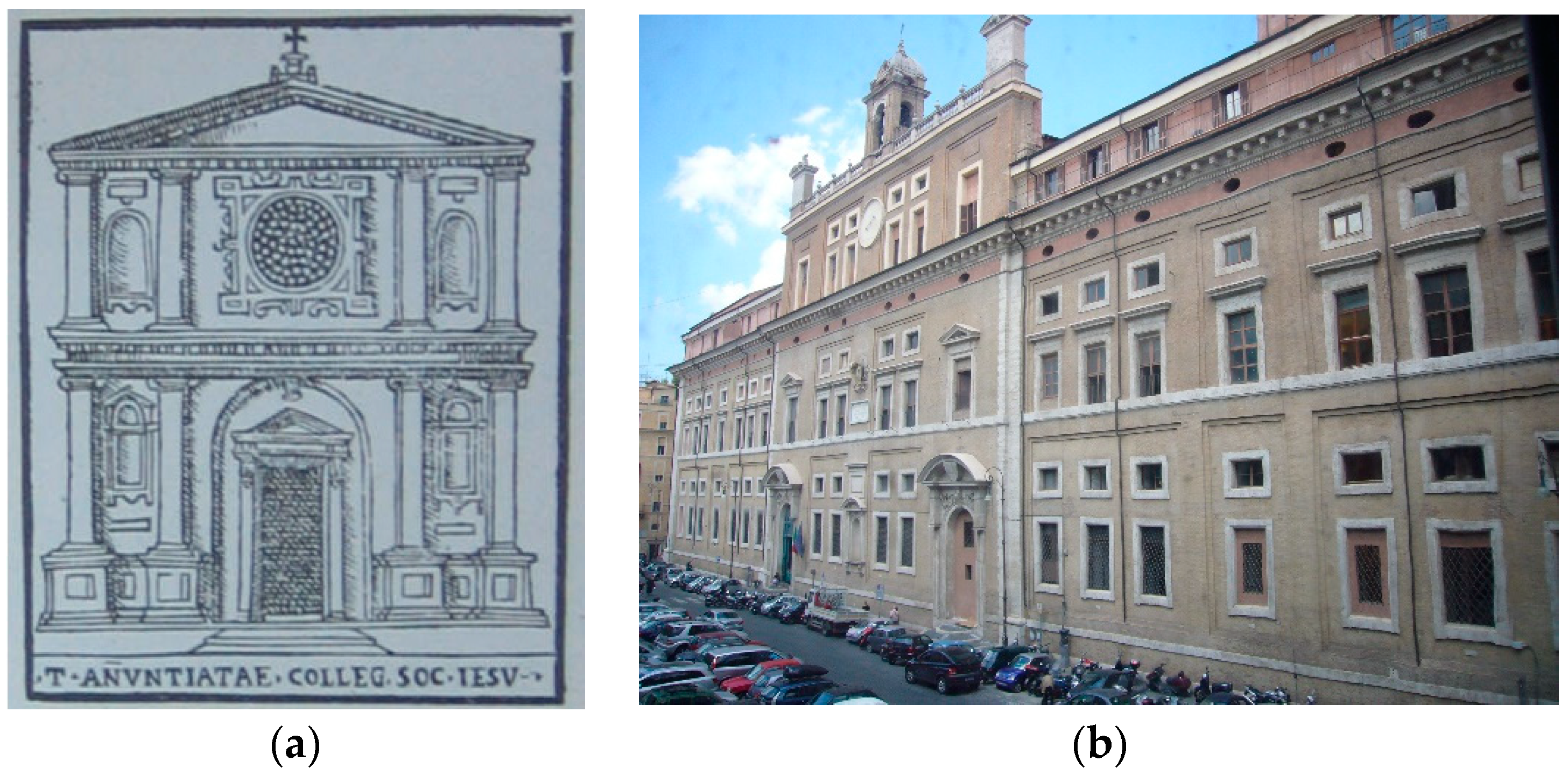
| 7 | Referred to in contemporary sources as the “Chiesa di San Giovannino”. |
| 8 | From the last quarter of the sixteenth century onwards, the Dukes of Tuscany commissioned copies of the fresco from local painters and sent them to kings, aristocrats—both men and women—and religious orders, among them Philip II. Ownership of such a replica signified membership in a restricted circle of individuals loyal to the Medici dynasty and to the family’s interests, while at the same time sharing in a devotion cultivated by an elite. |
| 9 | A chapel was installed in the same room and, subsequently, four additional chapels were also constructed on each side of the novitiate church in honour of the Jesuit saint. A study by Father Fidel Fita and Jerónimo de la Quintana, based on a codex of the Society of Jesus recounting the foundation of the novitiate, brought to light the Gonzaga family’s residence in Madrid between 1581 and 1583 in the house of Doctor Cristóbal de Espinosa, the owner of the novitiate building. See also AHN, Clero, Jesuitas, leg. 11, no. 2, fol. 30: letter from Francisco Robledillo to Mutio Vitelleschi, Superior General of the Society, written in Madrid on 8 September 1634 (de Quintana 1629, p. 431). |
| 10 | The issue of inheritance was even more complex, for Aloysius Gonzaga was also required to renounce his rights of succession to his paternal uncles: Alfonso, lord of Castel Giuffré, and Orazio, lord of Solferino. |
| 11 | Giovanni Pescatore, who died in 1588, achieved considerable renown as a writer on the life and death of the legendary Ruggiero, a pagan knight, and on his love for Bradamante, a Christian warrior, whose story was popularized by Ludovico Ariosto in the chivalric epic poem Orlando Furioso in the early sixteenth century, a work that attained universal circulation. |
| 12 | Aloysius Gonzaga met Father Vázquez in Alcalá de Henares during his stay at the court of Philip II. |
| 13 | The novice also took responsibility, in his capacity as head of the family, for approving the unequal marriage of his brother Rodolfo, the new holder of the fief, to Elena Aliprandi. |
| 14 | Specific studies of these spaces are still lacking. Created after Aloysius Gonzaga’s death, they were conceived and designed with an explicitly emulative purpose for the young students of the Society of Jesus. |
| 15 | Between 1612 and 1618, the Congregation of Rites examined fifteen miracles. |
| 16 | The biography incorporated the notes taken by Father Girolamo Piatti, a friend of the deceased. |
| 17 | The portrait, an oil on paper, measures 13.5 × 10.5 cm. |
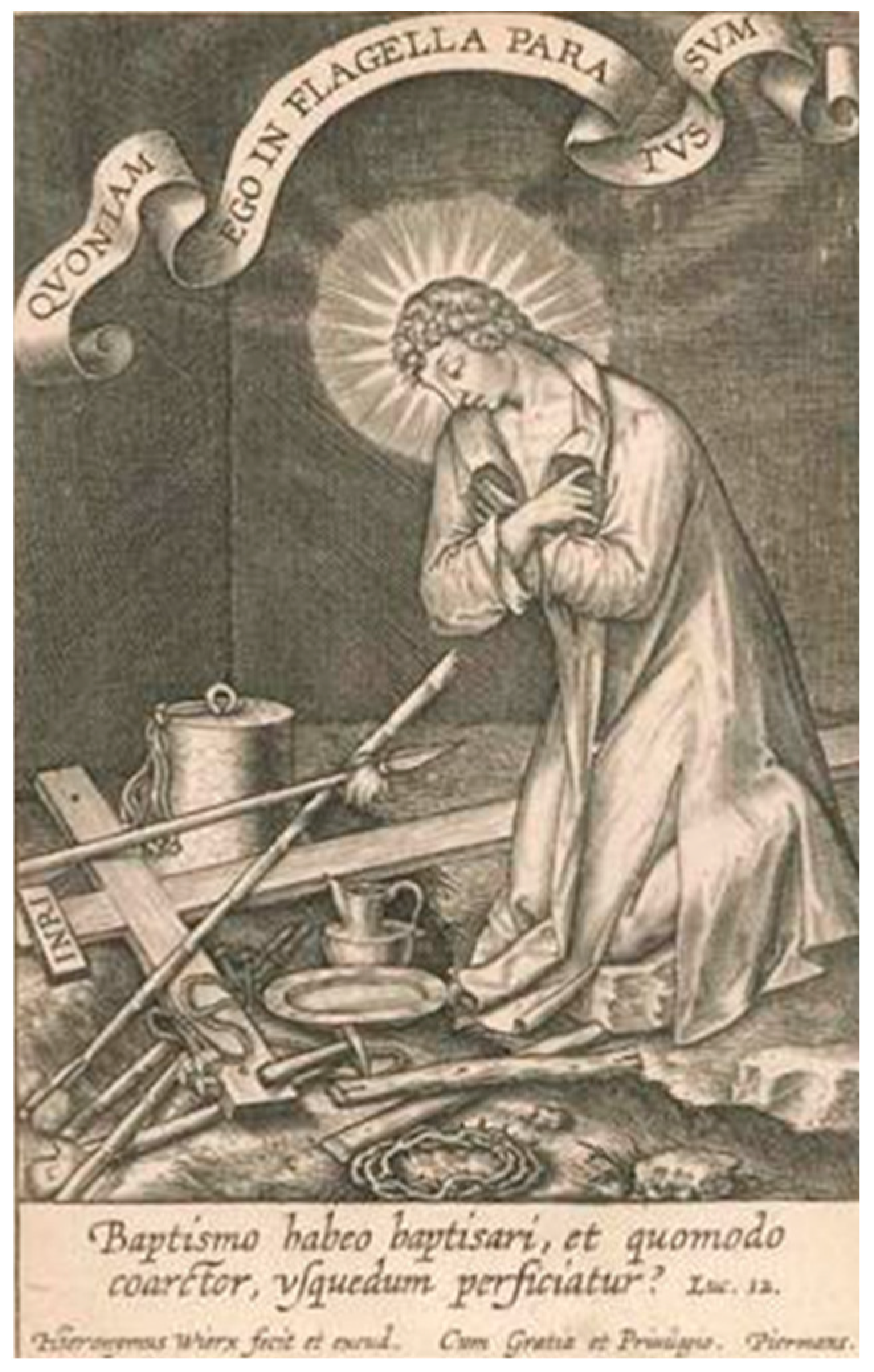
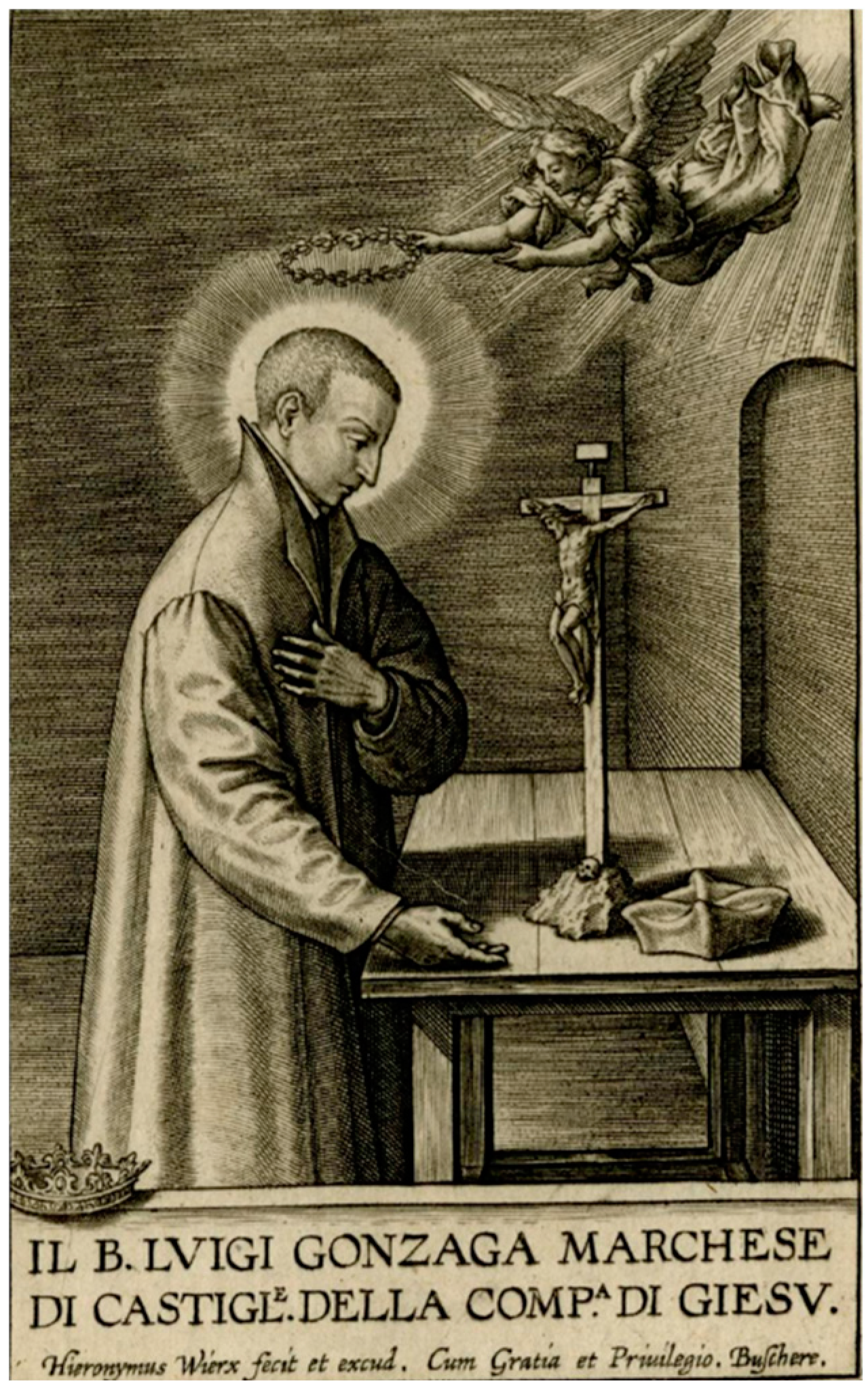
| 18 | For the purposes of this article, the print preserved at the National Gallery of Art, Washington (inv. no. 1980.45.2260; 10.1 × 6.5 cm) has been examined. Other variants of the engraving exist, as noted by Zsuzsanna van Ruyven-Zeman and Marjolein Leesberg in their 2004 publication. Both authors reject the possibility of identifying the figure depicted here with Blessed Aloysius Gonzaga, as previously proposed by Alvin in 1866, owing to the absence of physiognomic resemblance to the young man in other portraits produced by the Wierix workshop. In our view, however, the aim was to present an idealized image of Blessed Gonzaga; the design of the print likely coincided with the phase of consolidation of his visual likeness between 1605 and 1607. |
| 19 | Recent scholarship has indicated that Bishop Francesco Gonzaga commissioned the altar with a painting of the Blessed, a fact to which Carlo Magni alluded in a letter to his brother Giovanni, ambassador of the Duke of Mantua in Rome. See the following note. |
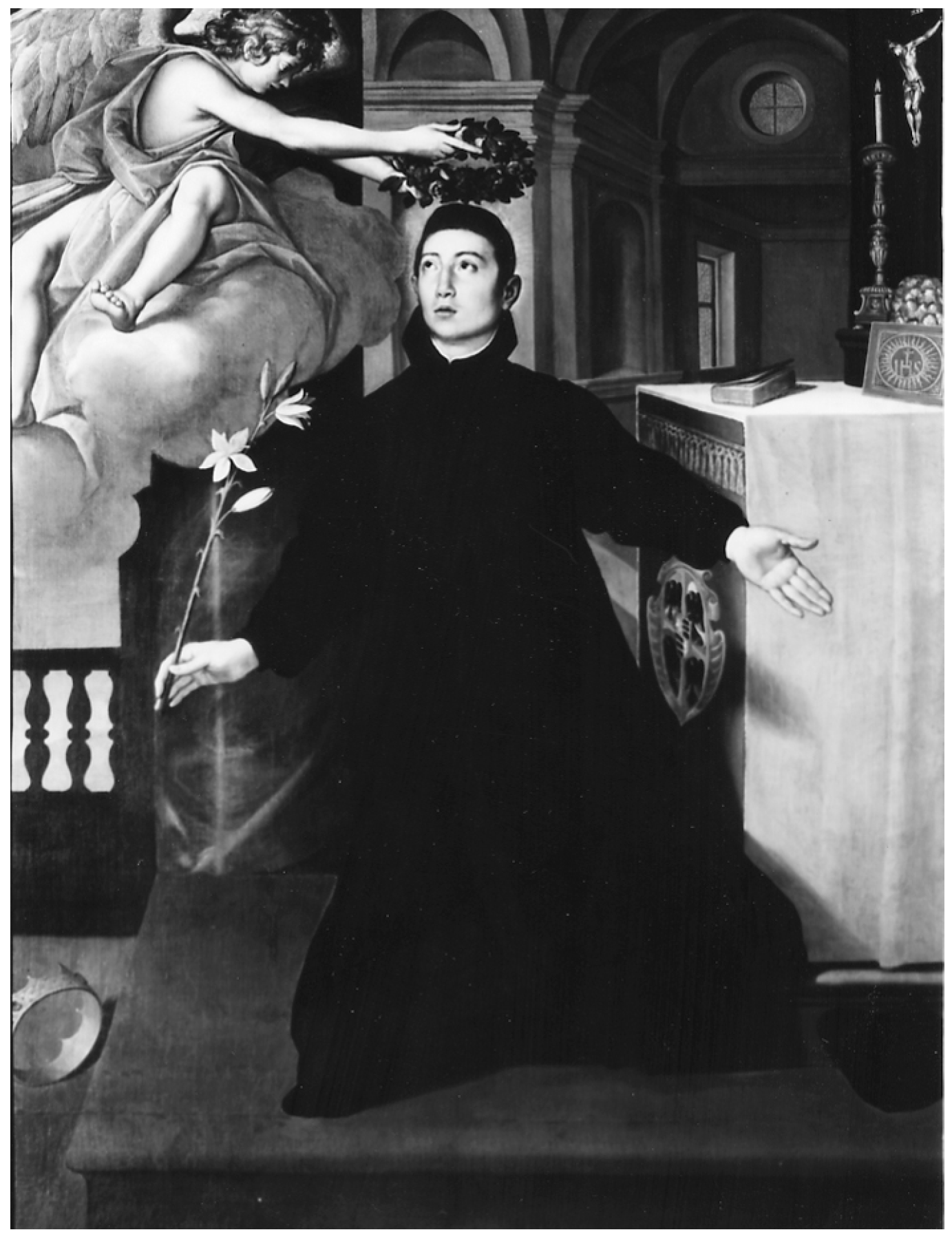
| 20 | Oil painting on canvas, 200 × 155 cm, now located in the second chapel on the right of Mantua Cathedral. |
| 21 | The devotional practices of the family may be interpreted in light of a painting depicting a family portrait during a celebration officiated by Francesco Gonzaga (oil on canvas, 110 × 159 cm), now preserved in a private collection. |
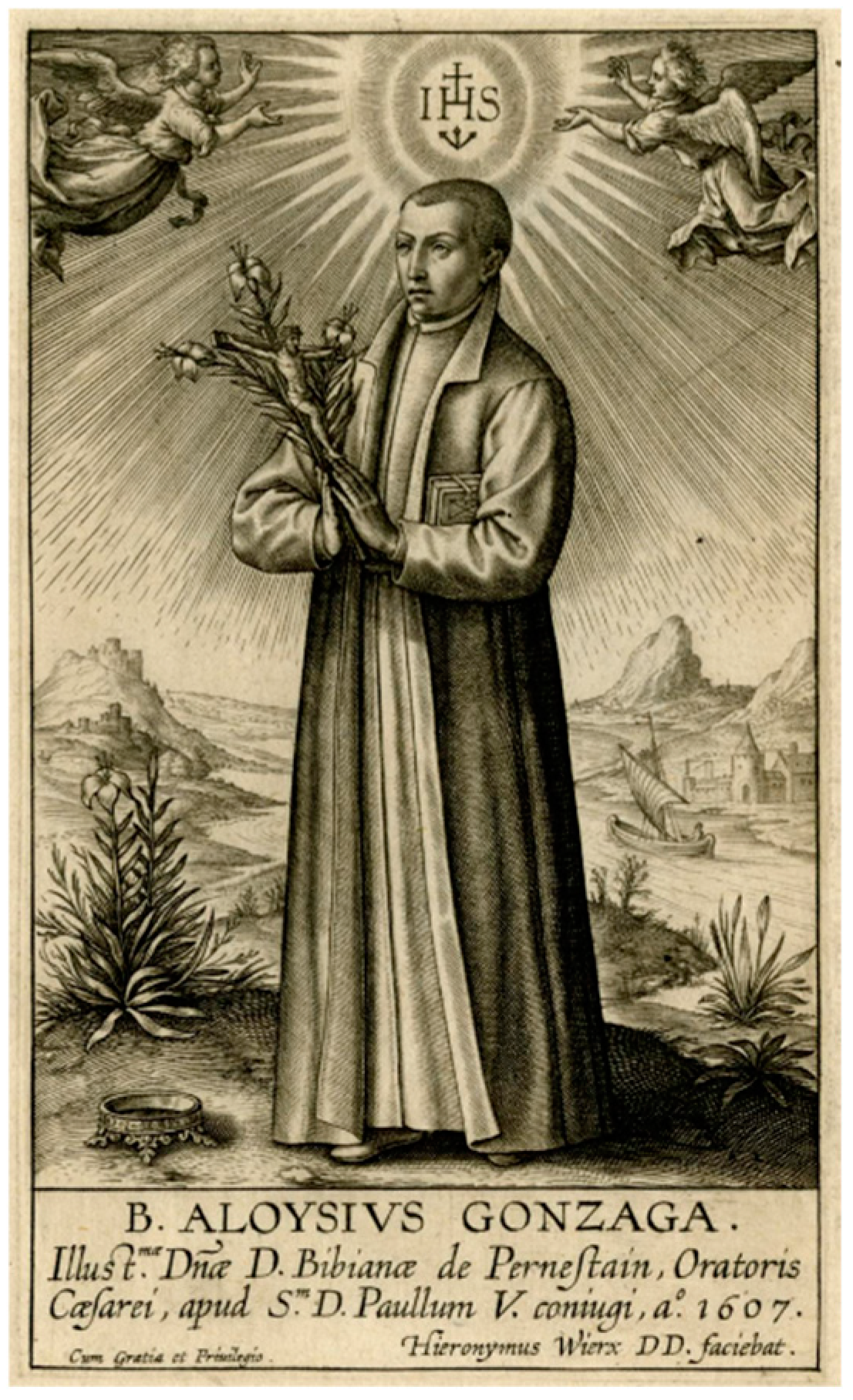
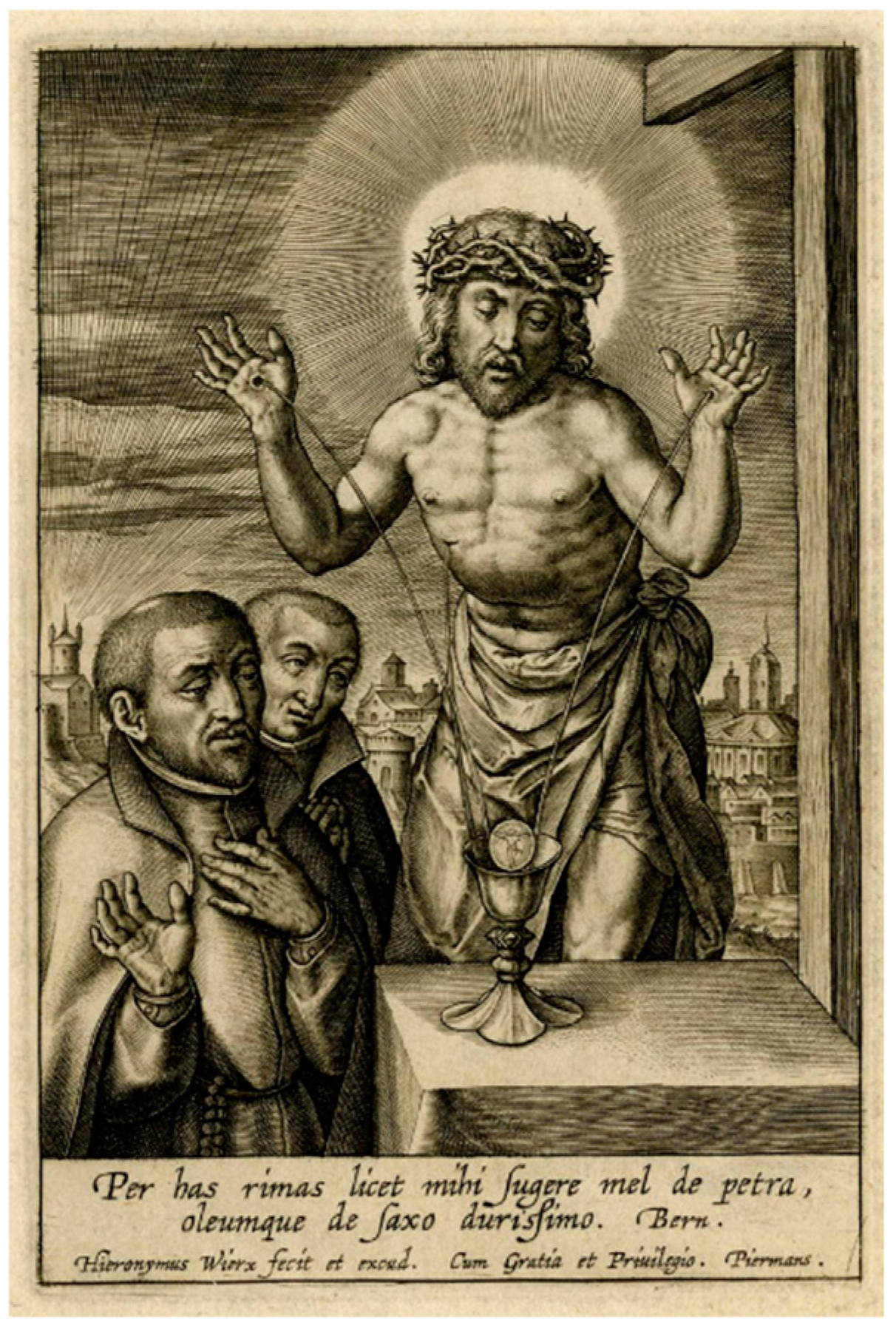
| 22 | For the purposes of this article, the print preserved in the British Museum (inv. no. 1859,0709.3168; 116 × 78 mm) has been examined. The British Museum also holds a version lacking the lower inscription; see inv. no. 1857,0411.9. A further variant of the engraving has been identified, as noted by Zsuzsanna van Ruyven-Zeman and Marjolein Leesberg. In addition, the Wierix workshop published a closely related version in which the two Jesuits are replaced by angels. These conclusions have been highlighted by Zsuzsanna van Ruyven-Zeman and Marjolein Leesberg in Part IV of the volume devoted to The Wierix Family (Rotterdam, 2003), see cat. no. 735. |
| 23 | For the purposes of this article, the print preserved in the British Museum (inv. no. 1859,0709.3168; 13.6 × 8.0 cm) has been examined. A copy was produced by Justus Sadeler, as noted by Zsuzsanna van Ruyven-Zeman and Marjolein Leesberg. |
| 24 | The nuns of the religious order founded by Luisa Torelli, Countess of Guastalla, were particularly receptive to the charism of Blessed Aloysius and, until the Napoleonic suppression of the convent in 1808, consistently had spiritual directors from the Society of Jesus. A fourth daughter of Francesco and Bibiana, Giovanna, lived for a time at the Collegio delle Vergini di Gesù founded by her cousins in Castiglione delle Stiviere, before marrying the Bohemian nobleman Jiří Adamz Martinic and, in a second marriage, Diego Zapata de Mendoza y Sidonia. Their male descendants, Luigi and Ferdinando, inherited the family fiefs. |
| 25 | This biographical profile, together with that of his wife Bibiana, was republished in the volume Orazioni, issued by Mascardi in 1622, and in the work Prose volgari of 1625 (Mascardi 1624, 1625). These panegyrics and their subsequent reprints contributed, indirectly, to the dissemination of the virtues and spirituality of Blessed Aloysius. |
| 26 | For the purposes of this article, the print preserved in the British Museum (inv. no. 1859,0709.3167; 10.9 × 7.1 cm) has been examined. Zsuzsanna van Ruyven-Zeman and Marjolein Leesberg have highlighted the existence of two versions of this engraving. |
| 27 | A study of Wolfgang Kilian’s activity as an engraver and printer in Mantua is still lacking. |
| 28 | We are grateful to Professor Oskar Jacek Rojewski for his assistance in locating one of the versions of the engraving at the Muzeum im. ks. Józefa Jarzębowskiego MIC w Licheniu Starym (inv. ML/G/XVII/176). Likewise, a family from Castiglione delle Stiviere owns another version, which we were unable to examine for the purposes of this study. |
| 29 | As indicated by the lower inscription, this work was commissioned by Maria Fugger, Baroness of Kirchheim and Weißenhorn, née Countess of Schwarzenberg, in 1611. She was an aristocrat of the same social standing as Bibiana and likewise a benefactress of the Society of Jesus. |
| 30 | The museum does not have a printed or online catalogue raisonné. As a reference, this study has relied on the brief descriptions of each object provided in the online records of the Catalogo Generale dei Beni Culturali. Available online: https://catalogo.beniculturali.it/adv-search (accessed on 10 November 2025). |
| 31 | ASM, b. 164, fols. 203r–206v: Instrumento di consegna della Sacra Reliquia del Beato Luigi Gonzaga mandata in Valtellina per disposizione del Sig. Francesco Gonzaga, Marchese di Castiglione, 31 October 1609. |
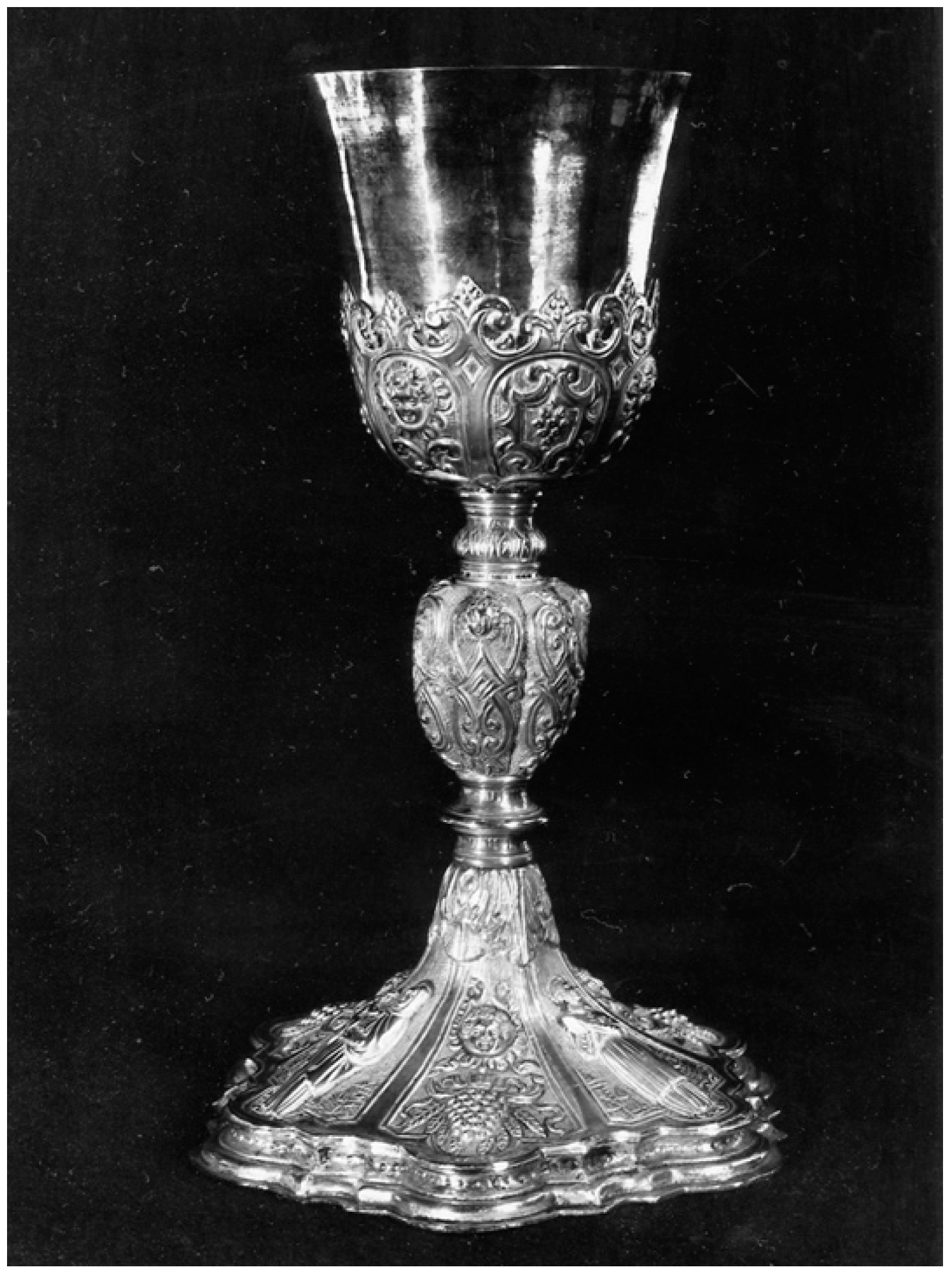
| 32 | The foot of the chalice bears the inscription: “Iulius Plantanida, Archipresbiter Sancti Laurentii Maioris Mediolani, B. Aloysii Gonz(agae) condiscipulus donavit”. |
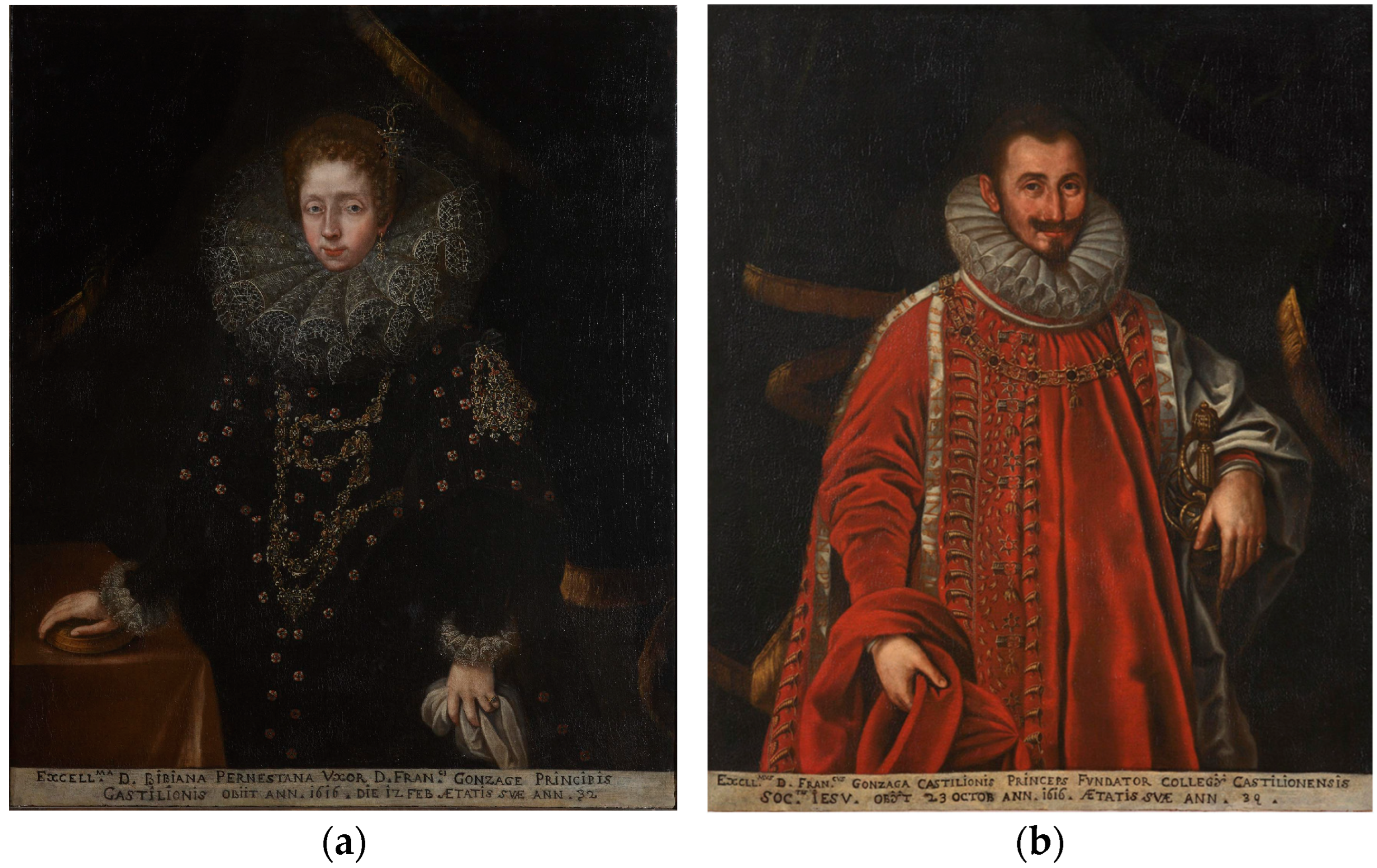
| 33 | Her mother, María Manrique de Lara, served as chief lady-in-waiting to Empress Maria in Vienna, but did not accompany her when she chose to travel to Madrid together with the parents of Aloysius Gonzaga—and Bibiana’s future in-laws—Ferrante Gonzaga and Marta Tana. |
| 34 | Her sister Juana married Fernando de Gurrea y Aragón, sixth Duke of Villahermosa; Isabel married Albrecht I von Fürstenberg; Juan married his cousin Ana María Manrique de Lara; Francisca married Andrea Matteo IV Acquaviva d’Aragona; and Polisena married Zdeněk Adalbert von Lobkowicz, Chancellor of the Kingdom of Bohemia. |
| 35 | ASMn, AGCS, b. 225: Camillo Cattaneo to Bibiana von Pernstein, Rome, 4 November 1614. |
| 36 | ASMn, AGCS, b. 257, cop. 1614, fol. 61v: Francesco Gonzaga to Camillo Cattaneo, Castiglione, 11 December 1614: “[…] Since he sees that the matter of Blessed Luigi is destined to be protracted.” |
References
- Alsteens, Stijn. 2026. Federico Zuccaro’s Lost Fresco for Santa Maria Annunziata in Rome and its Netherlandish Afterlife. In Federico Zuccari “Artista Universale”. Edited by Vita Segreto. Roma: Accademia di Belle Arti. [Google Scholar]
- Alvin, Louis. 1866. Catalogue raisonné de l’oeuvre des trois frères Wierix. Bruxelles: T.J.I. Arnold. [Google Scholar]
- Arcari, Gianluigi, and Umberto Padovani. 1997. L’immagini a stampa di san Luigi Gonzaga. Mantova: Gianluigi Arcari, vols. 1–2. [Google Scholar]
- Arias Martínez, Manuel, Escardiel González Estévez, Juan Luis González García, and Cécile Vincent-Cassy. 2021. Extraña devoción: De reliquias y relicarios. Catálogo de la exposición, Museo Nacional de Escultura de Valladolid. Madrid: Serper. Artes Gráficas Catálogo de Publicaciones del Ministerio. [Google Scholar]
- Arlati, Fabio. 2024. «A maggior gloria di Dio». Le gesuitesse in Italia tra Cinque e Seicento. Firenze: Firenze University Press. [Google Scholar]
- Askew, Pamela. 1968. The Question of Fetti as Fresco Painter: A Reattribution to Andreasi of Frescoes in the Cathedral and Sant’Andrea at Mantua. The Art Bulletin 50: 1–10. [Google Scholar] [CrossRef]
- Aznar Sánchez, Tomás José. 2021. La Compañía de Jesús y la Corte: El noviciado de San Ignacio en Madrid (1602–1767). Ph.D. thesis, Universidad Complutense de Madrid, Madrid, Spain. Available online: https://hdl.handle.net/20.500.14352/5595 (accessed on 27 November 2025).
- Bandera, S. J. Giovanni. 1991. Marta Tana Gonzaga. Marchesa di Castiglione delle Stiviere. Castel Goffredo: Cassa Rurale ed Artigiana di Castel Goffredo. [Google Scholar]
- Bellini, Eraldo. 2002. Agostino Mascardi tra “ars poetica” e “ars historica”. Milano: Vita e Pensiero. [Google Scholar]
- Bertelli, Paolo. 2022. Alfonsina Gonzaga di Novellara: Intorno alla sua immagine dipinta. E altri appunti di iconografia ducale. In Atti della Accademia Roveretana degli Agiati serie 10. Edited by Maurizio Dapor. Rovereto: Accademia Roveretana degli Agiati, vols. 4–5, pp. 327–60. [Google Scholar]
- Berzaghi, Renato. 1998. Ippolito Andreasi (1548–1608). In Manierismo a Mantova. La pittura da Giulio Romano all’età di Rubens. Edited by Sergio Marinelli. Verona: Cariverona, pp. 160–71. [Google Scholar]
- Bosio, Luigi. 1968. Mostra Iconografica Aloisiana. Mantova: Catalogo. [Google Scholar]
- Botturi, Camillo. 1996. Le orazioni funebri del padre Agostino Mascardi in lode di Bibiana e Francesco Gonzaga. In Castiglione delle Stiviere. Un principato imperiale nell’Italia padana (sec. XVI–XVIII). Edited by Massimo Marocchi. Roma: Bulzoni, pp. 173–201. [Google Scholar]
- Botturi, Camillo. 2019. Al servizio del principe e della chiesa. L’esperienza di Camillo Cattaneo, abate di Castiglione delle Stiviere (1573–1644). Mantova: Accademia Nazionale virgiliana di Scienze, Lettere e Arti. [Google Scholar]
- Bösel, Richard. 2004. Orazio Grassi, Architetto e Matematico Gesuita. Roma: Argos. [Google Scholar]
- Brunelli, Roberto. 1986. Diocesi di Mantova. Brescia: La Scuola. [Google Scholar]
- Ceñal Lorente, S. J. Rafael. 1983. Viaje de la emperatriz María de Austria a España: Con estancia prolongada en las Descalzas Reales. Reales Sitios: Revista del Patrimonio Nacional 75: 49–56. [Google Scholar]
- Ceñal Lorente, S. J. Rafael. 1991. La emperatriz de Austria; su personalidad política y religiosa. Ph.D. thesis, Universidad Complutense de Madrid, Madrid, Spain. [Google Scholar]
- Cepari, Virgilio. 1862. Della vita di san Luigi Gonzaga della Compagnia di Gesù. Roma: Tipografia Forense. Available online: https://datos.bne.es/edicion/bimo0000657855.html (accessed on 27 November 2025).
- Contardi, Bruno. 1991. Il modello di Andrea Pozzo per l’altare del beato Luigi Gonzaga in Sant’Ignazio. In Urbe Architectus; modelli, disegni, misure. La professione dell’architetto a Roma, 1680–1750. Edited by Bruno Contardi and Giovanna Curcio. Roma: Argos, pp. 23–40. [Google Scholar]
- Contardi, Bruno. 1996. L’altare di San Luigi Gonzaga in Sant’Ignazio. In Andrea Pozzo. Edited by Alberta Battisti. Milano: Luni Editrice, pp. 97–120. [Google Scholar]
- Coutinho Pereira, Maria João. 2022. Arquitetura e ornamento nas festas da canonização dos jesuítas Estanislau Kostka e Luis Gonzaga em Portugal (1727). Quintana, revista do Departamento de Historia da Arte 21: 1–24. [Google Scholar] [CrossRef]
- Croce, Maria Antonietta. 2013. Le stanze di San Luigi, Patrono di giovani e studenti. La Gregoriana 45: 40–43. [Google Scholar]
- de León Pinelo, Antonio. 1931. Anales de Madrid. Reinado de Felipe III, años 1598 a 1621. Madrid: Estanislao Maestre. Available online: https://bibliotecadigital.jcyl.es/es/consulta/registro.do?id=33096 (accessed on 27 November 2025).
- de Loarte, Gaspar. 1573. Instruttione per meditare il rosario della Madonna. Roma: Vincentio Accolti. Available online: https://edit16.iccu.sbn.it/resultset-titoli/-/titoli/detail/CNCE49324 (accessed on 27 November 2025).
- de Paoli, Massimo. 2013. La chiesa sul colle. Il Duomo di Castiglione delle Stiviere dall’antica collegiata alla riedificazione neoclassica. Calcinato: Acherdo Edizioni. [Google Scholar]
- de Quintana, Gerónimo. 1629. A la muy antigua, noble y coronada Villa de Madrid. Historia de su antigüedad, nobleza y grandeza. Madrid: Imprenta del Reino. Available online: https://bibliotecavirtualmadrid.comunidad.madrid/bvmadrid_publicacion/es/consulta/registro.do?id=422 (accessed on 27 November 2025).
- Deelen Porta, Emily. 2024. Servir y prosperar. Mecanismos de integración y asimilación de la nobleza femenina extranjera en la cámara de Margarita de Austria (1598–1611). Tiempos Modernos: Revista Electrónica de Historia Moderna 46: 41–57. [Google Scholar]
- di Feo, Vittorio. 1996. Le cappelle e gli altari. In Andrea Pozzo. Edited by Alberta Battisti. Milano: Luni Editrice, pp. 24–41. [Google Scholar]
- Donesmondi, Ippolito. 1616. Dell’Istoria ecclesiastica di Mantova. Mantova: Aurelio, & Lodouico Osanna fratelli. [Google Scholar]
- Donesmondi, Ippolito. 1625. Vita dell Illustrissmo et Reverendiss. Monsignor F. Francesco Gonzaga, Vescovo di Manttova. Venezia: Giacomo Sarzina. [Google Scholar]
- Fernández Martín, Luis. 1977. San Luis Gonzaga y su familia en la documentación del Archivo de Simancas. Archivum Historicum Societatis Iesu 91: 3–48. [Google Scholar]
- Ferri, Edgarda. 1991. Luigi Gonzaga (1568–1591). Roma: Paoline. [Google Scholar]
- Folcario, S. J. Antonio. 1598. Vita della Serenissima Elonora Arciduchessa d’Austria, duchessa di Mantova et di Monferrato. Mantova: Francesco Osanna. Available online: https://bibliotecavirtualmadrid.comunidad.madrid/bvmadrid_publicacion/es/consulta/registro.do?id=502734 (accessed on 27 November 2025).
- Francino, Girolamo. 1610. Trattato nuovo delle cose meravigliose dell’alma città di Roma, ornato di molte figure nel quale si discorre de’ trecento & più chiese. Roma: Bartolomeo Zannetti. [Google Scholar]
- Furlotti, Barbara. 2019. Santi Ghetti, Orazio Grassi e il primo altare di san Luigi Gonzaga nella chiesa della Nunziata presso il Collegio romano. In Itinera chartarum 150 anni dell’Archivio di Stato di Mantova. Edited by Roberta Piccinelli, Deanna Shemek and Luisa Onesta Tamassia. Milano: Silvana Editore, pp. 257–62. [Google Scholar]
- Gamberini, Cecilia. 2024. Sofonisba Anguissola. London: Lund Humphries Publishers. [Google Scholar]
- Giachi, S. J. Gualberto. 1990. Luigi Gonzaga. Lettere e scritti. Roma: Edizioni Città Nuova. [Google Scholar]
- Giordano, Silvano. 2006. Luigi Gonzaga, santo. In Dizionario Biografico degli Italiani. Roma: Istituto della Enciclopedia Italiana, vol. 66, p. 499. [Google Scholar]
- González Cuerva, Rubén. 2021. Maria of Austria, Holy Roman Empress (1528–1603). Dynastic Networker. Oxfordshire: Routledge. [Google Scholar]
- Grendler, Paul. 2009. The University of Mantua, the Gonzaga, and the Jesuits, 1584–1630. Baltimore: Johns Hopkins University Press. [Google Scholar]
- Hollstein, F. W. H. 1949. Dutch and Flemish etchings, engravings and woodcuts, ca. 1450–1700. Amsterdam: Menno Hertzberger, vols. 1–15, 18, 19. [Google Scholar]
- Logan, Oliver. 2011. San Luigi Gonzaga: Princeling-Jesuit and model for catholic youth. In Saints and Sanctity. Edited by Peter Clarke and Tony Claydon. Oxford: Ecclesiastical History Society, vol. 47, pp. 248–56. [Google Scholar]
- Marín Perellón, Francisco José. 2009. La manzana del noviciado entre los siglos XVI y XIX. In El Noviciado de la Universidad en Madrid: 1836–1846. Edited by Javier Ortega Vidal. Madrid: Consorcio Urbanístico de la Ciudad Universitaria, pp. 51–54. [Google Scholar]
- Martínez Hernández, Santiago. 2011. “Reyna esclarecida, Cynthia clara, hermosa luna”: El aprendizaje político y cortesano de la infanta Isabel Clara Eugenia. In Isabel Clara Eugenia: Soberanía femenina en las cortes de Madrid y Bruselas. Edited by Cordula Van Wyhe. Madrid: Centro de Estudios Europa Hispánica, pp. 20–59. [Google Scholar]
- Martínez Millán, José. 2019. Isabel Clara Eugenia, ¿una infanta castellana? In Docta y sabia Atenea. Studia in honorem Lía Schwartz. Edited by En Sagrario López Poza, Nieves Pena Sueiro, Mariano de la Campa, Isabel Pérez Cuenca and Susan Byrne y Almudena Vidorreta. A Coruña: Servizo de Publicacións Universidade da Coruña, pp. 491–543. [Google Scholar]
- Mascardi, S. J. Agostino. 1616. Delle lodi della Illustrissima et Eccellentissima Signora Bibiana Pernestana Gonzaga, principessa di Castiglione. Modena: Stamperia di Giulian Cassani. [Google Scholar]
- Mascardi, S. J. Agostino. 1617. Delle lodi dell’illustriss. & eccellentiss. sig. D. Francesco Gonzaga principe d’Imperio, e di Castiglione. Modena: Stamperia di Giulian Cassani. [Google Scholar]
- Mascardi, S. J. Agostino. 1624. Orazioni. Venecia: Bartolomeo Fontana. [Google Scholar]
- Mascardi, S. J. Agostino. 1625. Prose volgari. Venecia: Bartolomeo Fontana. [Google Scholar]
- Mauquoy-Hendrickx, Marie. 1979. Les Estampes des Wierix. Bruxelles: Bibliothèque Royale Albert Ier. [Google Scholar]
- Moralejo Ortega, Macarena. 2021. Copies emulating Federico Zuccari’s model for the Annunziata Church in Rome (1570–1600). In Copies of Flemish Masters in the Hispanic World (1500–1700). Edited by Eduardo Lamas and David García Cueto. Turnhout: Brépols, pp. 149–60. [Google Scholar]
- Moralejo Ortega, Macarena. 2024. Coleccionismo devocional y oratorios de las mujeres de la familia Medici. El impacto de La Nunziata en la península ibérica y en el virreinato de Nápoles (siglos XVI-XVII). In Prácticas femeninas en la Edad Moderna: Entre el arte y el poder. Edited by Esther Alegre Carvajal. Madrid: UNED, pp. 139–60. [Google Scholar]
- Morselli, Rafaella. 2002. Gonzaga. La celeste galleria. Catálogo de la exposición, Palazzo Te. Milano: Skira. [Google Scholar]
- Paganella, Manlio. 1994. Cinzia, Olimpia e Gridonia Gonzaga. Profilo storico del collegio delle Vergini di Gesù di Castiglione delle Stiviere. Castel Goffredo: Cassa Rurale ed Artigiana di Castel Goffredo. [Google Scholar]
- Rodríguez de la Flor, Fernando. 2012. La “fabricación de los (nuevos) santos. El modelo jesuita tardobarroco. In Mundo simbólico: Poética, política y teúrgia en el Barroco Hispano. Madrid: Akal, pp. 197–224. [Google Scholar]
- Růžička, Jindřich, and Charlotte Fritz. 1974. El matrimonio español de Wratislao de Pernestán de 1555. Ibero-Americana Pragensia 8: 163–69. [Google Scholar]
- Sacco, Cesare. 1624. Vita e sante attioni dell’Ill.mo et Rev.mo Monsignor F. Francesco Gonzaga. Mantova: Aurelio & Lodouico Osanna fratelli. [Google Scholar]
- Salvarini, Renata. 2004. Potere signorili e ordini religiosi a Castiglione delle Stiviere in Età Moderna: L’esempio dei Gesuiti. In La regola e lo spazio. Potere politico e insediamenti cittadini di ordini religiosi. Edited by Renata Salvarini and Giancarlo Andenna. Brescia: Cesimb, pp. 99–119. [Google Scholar]
- Scalisi, Lina. 2024. Ferdinando Paternò ascesa, successi ed oblio di un gesuita del Cinquecento. Rivista di Storia, Scienze Umane e Cultural Heritage 9–10: 155–68. [Google Scholar]
- Schena, Gisi. 2013. La precoce diffusione del culto di San Luigi Gonzaga. Valtellina. Bollettino Storico Alta Valtellina 16: 145–72. [Google Scholar]
- Testa, Luca. 2002. Fondazione e primo sviluppo del collegio romano (1565–1608). Roma: Pontificia Università Gregoriana. [Google Scholar]
- Tipton, Susan. 2024. Lucas Kilian I, II. In The New Hollstein German Engravings, Etchings and Woodcuts 1400–1700. Edited by Hans-Martin Kaulbach. Atlanta: Sound & Vision Interactive, Inc. Available online: https://www.hollstein.com/new_german/lucas-kilian-i.html (accessed on 28 November 2025).
- Tipton, Susan. 2025a. Wolfgang Kilian I. In The New Hollstein German Engravings, Etchings and Woodcuts 1400–1700. Edited by Hans-Martin Kaulbach. Atlanta: Sound & Vision Interactive, Inc. Available online: https://www.hollstein.com/new_german/wolfgang-kilian-i.html (accessed on 28 November 2025).
- Tipton, Susan. 2025b. Wolfgang Kilian II. In The New Hollstein German Engravings, Etchings and Woodcuts 1400–1700. Edited by Hans-Martin Kaulbach. Atlanta: Sound & Vision Interactive, Inc. Available online: https://www.hollstein.com/new_german/wolfgang-kilian-ii.html (accessed on 28 November 2025).
- Tipton, Susan. 2025c. Lucas Kilian III. In The New Hollstein German Engravings, Etchings and Woodcuts 1400–1700. Edited by Hans-Martin Kaulbach. Atlanta: Sound & Vision Interactive, Inc. Available online: https://www.hollstein.com/new_german/lucas-kilian-iii-8674.html (accessed on 28 November 2025).
- Tipton, Susan. 2025d. Lucas Kilian IV. In The New Hollstein German Engravings, Etchings and Woodcuts 1400–1700. Edited by Hans-Martin Kaulbach. Atlanta: Sound & Vision Interactive, Inc. Available online: https://www.hollstein.com/new_german/lucas-kilian-iv-8674.html (accessed on 28 November 2025).
- Tipton, Susan. 2025e. Lucas Kilian V. In The New Hollstein German Engravings, Etchings and Woodcuts 1400–1700. Edited by Hans-Martin Kaulbach. Atlanta: Sound & Vision Interactive, Inc. Available online: https://www.hollstein.com/new_german/lucas-kilian-v.html (accessed on 28 November 2025).
- Van Ruyven-Zeman, Zsuzsanna, and Marjolein Leesberg. 2004. The Wierix Family. Rotterdam: Sound & Vision Publishers. [Google Scholar]
- Vetere, Benedetto, and Alessandro Ippoliti. 2003. Il collegio romano. Storia di una costruzione. Roma: Gangemi. [Google Scholar]
- Vigna, Guido. 1991. Il santo dei Gonzaga: San Luigi e il suo tempo. Milano: Camunia. [Google Scholar]
- Zwyssig, Philipp. 2024. From the Alps to Rome Cult and Miracles of Saint Aloysius (Luigi) Gonzaga in the Valtelline in the Context of his Canonization. In Making Saints in a “Glocal” Religion. Practices of Holiness in Early Modern Catholicism Cultures of Christianity. Edited by Christian Windler, Samuel Weber, Daniel Sidler and Birgit Emich. Colonia: Brill, pp. 357–73. Available online: https://library.oapen.org/handle/20.500.12657/105013 (accessed on 27 November 2025).





Disclaimer/Publisher’s Note: The statements, opinions and data contained in all publications are solely those of the individual author(s) and contributor(s) and not of MDPI and/or the editor(s). MDPI and/or the editor(s) disclaim responsibility for any injury to people or property resulting from any ideas, methods, instructions or products referred to in the content. |
© 2026 by the author. Licensee MDPI, Basel, Switzerland. This article is an open access article distributed under the terms and conditions of the Creative Commons Attribution (CC BY) license.
Share and Cite
Moralejo Ortega, M.M. The Earliest Artistic Representations of Blessed Luigi Gonzaga (1568–1591): Devotion, Spirituality, and Family Patronage. Religions 2026, 17, 185. https://doi.org/10.3390/rel17020185
Moralejo Ortega MM. The Earliest Artistic Representations of Blessed Luigi Gonzaga (1568–1591): Devotion, Spirituality, and Family Patronage. Religions. 2026; 17(2):185. https://doi.org/10.3390/rel17020185
Chicago/Turabian StyleMoralejo Ortega, Macarena Maria. 2026. "The Earliest Artistic Representations of Blessed Luigi Gonzaga (1568–1591): Devotion, Spirituality, and Family Patronage" Religions 17, no. 2: 185. https://doi.org/10.3390/rel17020185
APA StyleMoralejo Ortega, M. M. (2026). The Earliest Artistic Representations of Blessed Luigi Gonzaga (1568–1591): Devotion, Spirituality, and Family Patronage. Religions, 17(2), 185. https://doi.org/10.3390/rel17020185