2. Research Context
The earliest Christian presence in Malay Peninsula can be traced to possible Nestorian settlements in the seventh century, located in the northwestern part of the peninsula. When Melaka emerged as a major trading hub in the fifteenth century, its diverse mercantile community included people from various countries and religions—among them, Christians from the Eastern Churches of West Asia, particularly Armenians and Persians (
Roxborogh 1992).
A new era of Christian influence began with the arrival of the Portuguese. On 1 July 1511, a fleet of 19 ships led by Afonso de Albuquerque, carrying 800 Portuguese and 600 Indian troops, arrived in Melaka. Among the passengers were eight military chaplains—six Franciscans, one Dominican, and one secular priest (
Roxborogh 1992). Following the Portuguese victory on 24 August 1511, a church named Our Lady of the Annunciation was constructed in December 1511, marking the beginning of Roman Catholic influence in the region. Ten years later, in 1521, the first church built on a hill was erected and named Our Lady of the Mount (
Roxborogh 1992). Consequently, the Roman Catholic Church became the oldest and largest Christian denomination in Malaysia.
The spread of Methodism in Malaysia took place during the British colonisation. Between 1874 and 1946, large parts of Malaysia were under British colonial rule. This colonial context facilitated the spread of Protestant missions, particularly Methodism, whose early growth in Malaysia was closely linked with developments in Singapore. In 1885, the first Methodist missionaries—Rev. and Mrs. James Thoburn and Rev. William Oldham—arrived in Singapore. They were sent by the Northern branch of the American Methodist Episcopal Church, which had previously conducted missionary work in India during the nineteenth century. The following year, in 1886, the first Methodist Episcopal Church was officially founded in Singapore (
Hwa and Hunt 1992). Building its success there, Methodism expanded into Malaysia in the following years: Penang in 1891, Ipoh in 1895, and Kuala Lumpur in 1897.
In East Malaysia, the Brooke family played a significant role in shaping the development of Christian missionary activity in Sarawak. The family ruled Sarawak as a hereditary monarchy for a century, from 1841 to 1941. Beginning with the reign of the first Rajah, James Brooke (1841–1868), Christian missionary activity in Sarawak was permitted only with official approval from the Brooke administration. The earliest Christian mission to establish its work in Sarawak was the Anglican mission in 1848, followed by the Roman Catholic mission in 1881 and the Methodist mission in 1901 (
Tan 2012).
Under the leadership of Charles Brooke (1868–1917), nephew of James Brooke, missionary policy became more open and inclusive. Charles Brooke emphasized the importance of patient and culturally sensitive missionary engagement, advocating that missionaries should “live among the natives, show interest in them, learn their ways, be acquainted with their way of thinking, respect their customs without losing their self-respect and without abusing them as infidels” (
Brooke 1866, cited in
Tan 2012, p. 323). In contrast to James Brooke, who largely discouraged Christian missions other than the Anglicans, Charles Brooke permitted both Roman Catholic and Methodist missions to enter and expand their work in Sarawak.
It was in this context that the Chinese Methodist Church in Sarawak (CMCS) was founded in 1901. Over its 125-year history, the CMCS has grown into one of the largest and most influential Christian denominations in the region. According to 2024 statistics compiled by the Sarawak Chinese Annual Conference, the denomination comprises 100 churches and 20 preaching centres with 28,583 active members (
The Journal of the 49th Session of the Sarawak Chinese Annual Conference 2024). The establishment of the CMCS is deeply rooted in three key historical developments: the American Methodist Episcopal Church (North) and its extensive missionary work in China, particularly in Fujian Province; the expansion of Methodist missions in Singapore and Malaya, which offered administrative and missionary support; and the emigration of Chinese Methodist Christians from Fujian to Sarawak during the late Qing dynasty (1644–1912), in response to both economic hardship and religious opportunity (
Liong 2003).
The Malaysia mission of the Methodist Episcopal Church, newly organized in 1889, soon opened its mission in Borneo, the island on which Sarawak is located. This set the stage for Methodist expansion in the region. In 1901, the first wave of Foochow Methodist emigrants from the Foochow Conference in Fujian, China, settled in Sibu, Sarawak. A second group of immigrants arrived in Singapore in March 1901, en route to Sarawak. They were accompanied by Bishop Frank W. Warne of the Malaysia Mission Conference. Upon arrival in Sibu on Saturday, 16 March 1901, they held their first Sunday worship services at Seduan on the following day, conducting both morning and evening services (
Liong 2003). This event marked the founding of what is now known as the Sing Ang Tong Methodist Church.
It is important to acknowledge my positionality as a professional ritual musician, conductor, and organist deeply embedded in the musical life of the CMCS, and as an educator at the Methodist Theological School in Sibu. This positionality has shaped both the introduction of Gregorian chant to the CMCS and the design and execution of the present study.
I conducted a pilot study at Sing Ang Tong Methodist Church, located in the town of Sibu, Sarawak, near Sungai Merah (Red River). As the oldest Methodist congregation in Sarawak, the church has a moderate-sized membership. Sing Ang Tong Methodist Church is selected not only for its historical significance but also for its accessibility, as I am a fourth-generation Christian raised in this congregation and an active member of the church. This choice facilitates sustained participant observation and engagement.
Sing Ang Tong Methodist Church holds the distinction of being the first church established by the Chinese Methodist Church in Sarawak region of Malaysia. Founded in 1901, as mentioned earlier, Sing Ang Tong played a foundational role in the spread of Methodism in the region, and thus it occupies a significant place in the spiritual and historical development of the Foochow Methodist community (
Sing Ang Tong Methodist Church Centennial Celebration Publication 2001). The current church building, a modern structure that reflects both tradition and progress, was completed in 2013 (
Figure 1). Today, it stands not only as a place of worship but also as a symbol of the enduring legacy and continued growth of the Foochow and Chinese Methodist community in Sarawak. This church was selected for the pilot study not merely for its historical and spiritual significance, but also because of my personal connection and active involvement in its ministry. Serving within this congregation provides both an insider’s perspective and an appreciation of its influential role within the wider Methodist community, making it a meaningful and strategic choice for this research.
4. Pilot Study
My pilot study not only tested the feasibility of performing Gregorian chant within this context but also laid the foundation for the creation of a performance edition tailored to the needs of the Chinese Methodist congregants. It played a crucial role in shaping the edition to be used in my expanded research project. Having analyzed the music of the Sunday service, I decided that the most appropriate position in the service to introduce Gregorian chant would be during the taking of communion (the ritual reception of bread and wine). The Sunday worship service on the first Sunday of each month in the CMCS is designated as Holy Communion Sunday. The structure of this service is consistent across all CMCS congregations, following a traditional liturgical format. Unlike regular Sunday services, Holy Communion Sunday entirely excludes contemporary music, adhering strictly to a more formal and solemn style of worship. The intention of this deliberate choice is to create an atmosphere of reverence and meditation, aligning with the sacred nature of the sacrament. Therefore, it was viewed as most appropriate to sing Gregorian chant on Holy Communion Sunday.
I selected Gustate et videte as the focal chant for the pilot study due to its textual and theological appropriateness for any season in the Christian year. The chant’s text, drawn from Psalm 34:8 (33:9 in the Vulgate), invites the faithful to “taste and see that the Lord is good.” This message resonates with the central meaning of the Holy Communion, emphasizing the tangible encounter with Christ through the bread and wine.
4.1. Creating Chant Editions
One of the primary challenges in introducing Gregorian chant to the singers was bridging the gap between the modern Western musical notation commonly used in the CMCS and the square notation typically used in printed chant editions (not to mention the neumatic notation of medieval chant manuscripts). Recognizing that square notation might be challenging or overwhelming for the singers, I sought a more accessible approach that would gradually ease their transition into the chant tradition. To achieve this, I investigated different transcription methods and created three distinct editions of the communion chant
Gustate et videte, each derived from the square notation of the
Graduale Triplex (
1979), an edition of the music for Mass that includes medieval neumes alongside modern square notation.
My editions adopted three different manners of visually displaying the rhythmic interpretation of the notation. These three editions were introduced to seven singers at Sing Ang Tong Methodist Church as part of the pilot study. The objective was to determine which transcription style would be the most suitable for the singers, both in terms of readability and performance, as I expanded my research.
The rhythmic interpretation that I sought to achieve across all three editions was deduced following the principles of
Semiologie Grégorienne developed by
Cardine (
1982). Cardine’s method, based on a detailed study of medieval manuscripts, emphasizes the subtle rhythmic nuances inherent in the neume shapes and their accompanying signs. Rather than imposing fixed metric values, this approach encourages a more flexible and expressive performance style, guided by the natural flow of the text and the indications found in the manuscript notation.
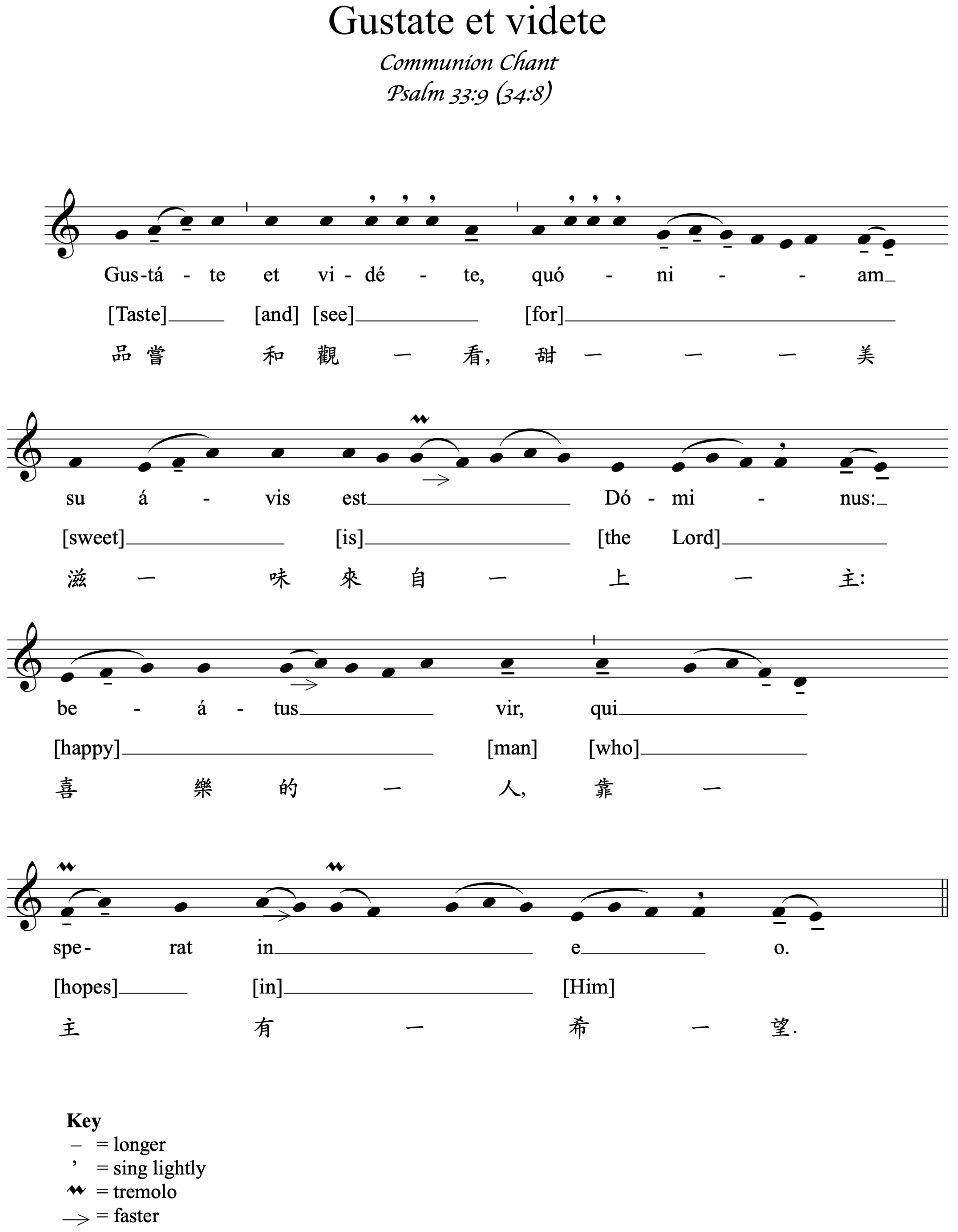
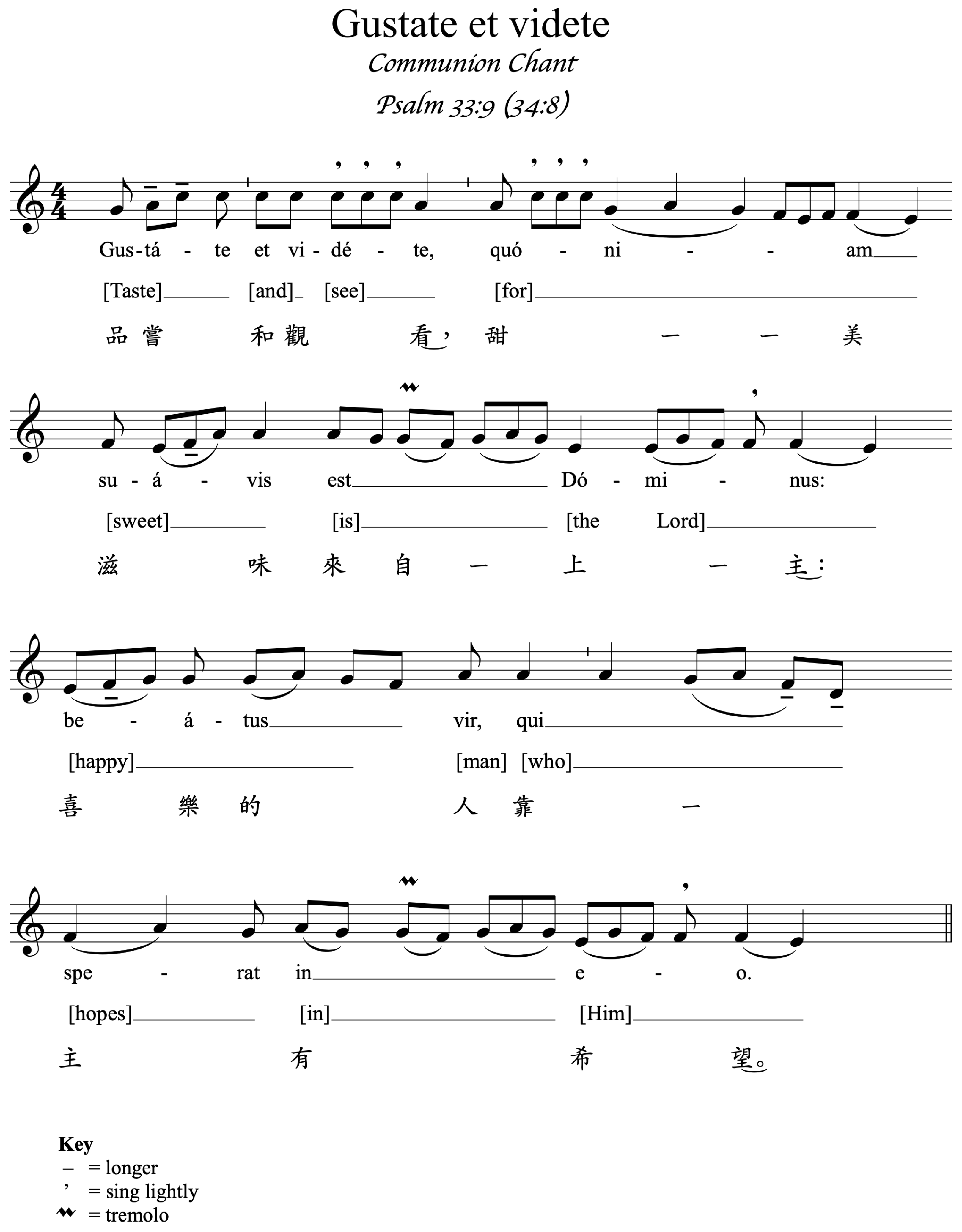
In the first edition,
noteheads with rhythmic indications, I used round note-heads to which I added modern musical symbols that conveyed rhythmic implications of the original neumes (
Figure 2). Specifically, the dash sign or tenuto mark represents the
episema (a mark used in medieval neumatic notation indicating lengthening), the apostrophe sign represents the notes that were originally written as
strophae (indicating light repetition over a vowel), the arrow is used where the medieval notation had the direction
celeriter (quickly), and the mordent symbol represents both the
oriscus and the
quilisma (ornamental notes that seemingly indicated some form of vocal shaking, with subtle rhythmic distinctions). The transcription employs note heads without stems to indicate pitches, allowing the singers to focus on the melodic contour without the constraints of fixed rhythmic values. This edition aimed to introduce the singers to a historically informed performance practice, rooted in the rhythmic flexibility of medieval chant.
The second edition,
notation in quavers and crotchets, was designed to help the singers read the music in a manner more familiar to their background in modern Western music (
Figure 3). Visually, this edition is akin to those made by André Mocquereau, a leading figure in the Solesmes school of chant restoration (
Brunner 1982). However, my editions were still based on Cardine’s rhythmic interpretation: to make the rhythmic interpretation more tangible for my singers, I transcribed the chant using quaver notes to represent regular speed and crotchet notes to indicate lengthened notes. Additional musical symbols were applied to convey rhythmic nuances, similar to those used in the first edition. This transcription aimed to strike a balance between rhythmic flexibility and structured guidance, making the chant more accessible to the singers.
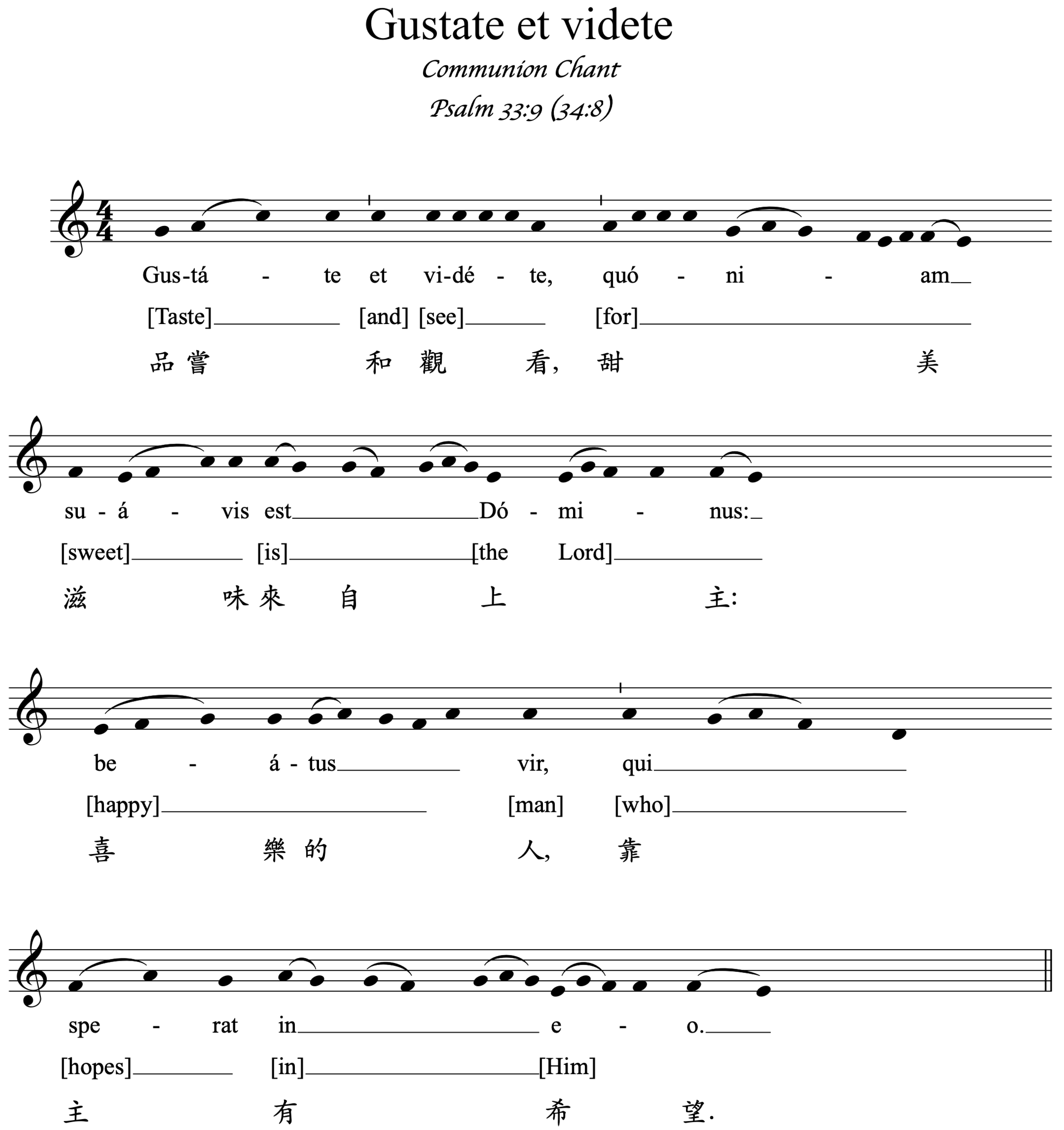
The third edition,
notation with spaced noteheads, was designed to prioritize ease of reading and ensemble coordination (
Figure 4). The notation consists solely of note heads without stems. Rhythmic differentiation is conveyed through the spacing between the notes: regular speed notes are spaced as quaver notes, lengthened notes as crotchet notes, and ornamental notes such as the
strophae and
celeriter as semiquaver notes. By eliminating all rhythmic symbols, this edition aimed to remove any barriers to sight-reading and allow the singers to focus entirely on the melodic line and ensemble blend.
The practice of singing translated Gregorian chants in liturgical worship is well established within the Catholic Church in Asia. As Cho, Wong, and Geem observe, “the efforts of Catholic missionaries in promoting Latin language translation and the use of translated chants in places such as Japan, China, [Korea,] and other Asian states” have played a significant role in embedding chant within local liturgical contexts (
Cho et al. 2021, p. 1034).
Therefore, in addition to transcribing the chant into modern notation, I also undertook the translation of its Latin text into Chinese, enabling the singers in this pilot study to learn and perform the chant in both its original Latin and the translated Chinese version. For the translation, I referred to the Union Version Chinese Bible, ensuring that the text remained a faithful and direct rendering of the Latin. This dual approach served two complementary purposes: singing in Latin provided a direct engagement with the historical and liturgical authenticity of Gregorian chant, while the Chinese version offered accessibility and contextual relevance for the local congregation.
To guide this process, I examined
The American Gradual (
Ford 2020) and
The Plainchant Gradual (
Palmer and Burgess 1965) which served as valuable reference points for understanding how Gregorian chant can be effectively translated and adapted into vernacular language contexts. These comparative sources ensured that the chant retained both its historical authenticity and musical integrity, while allowing for thoughtful and practical adaptation to contemporary congregational settings.
A key insight drawn from The American Gradual is the flexible approach in aligning the English text with the original Gregorian melodies. Since Latin and English differ significantly in terms of syllabic structure, stress patterns, and syntax, a direct one-to-one mapping of text to melody is often unfeasible. To address this, the editors of The American Gradual employed techniques such as the strategic omission of certain musical notes when the English text required fewer syllables, or the insertion of additional notes to accommodate longer or more complex phrases. These modifications are carefully made to retain the chant’s natural phrasing and modal character while ensuring that the translated text fits smoothly into the musical framework.
Similarly,
The Plainchant Gradual served as an essential reference for cross-checking both melodic transcription and textual translation. Through comparison with
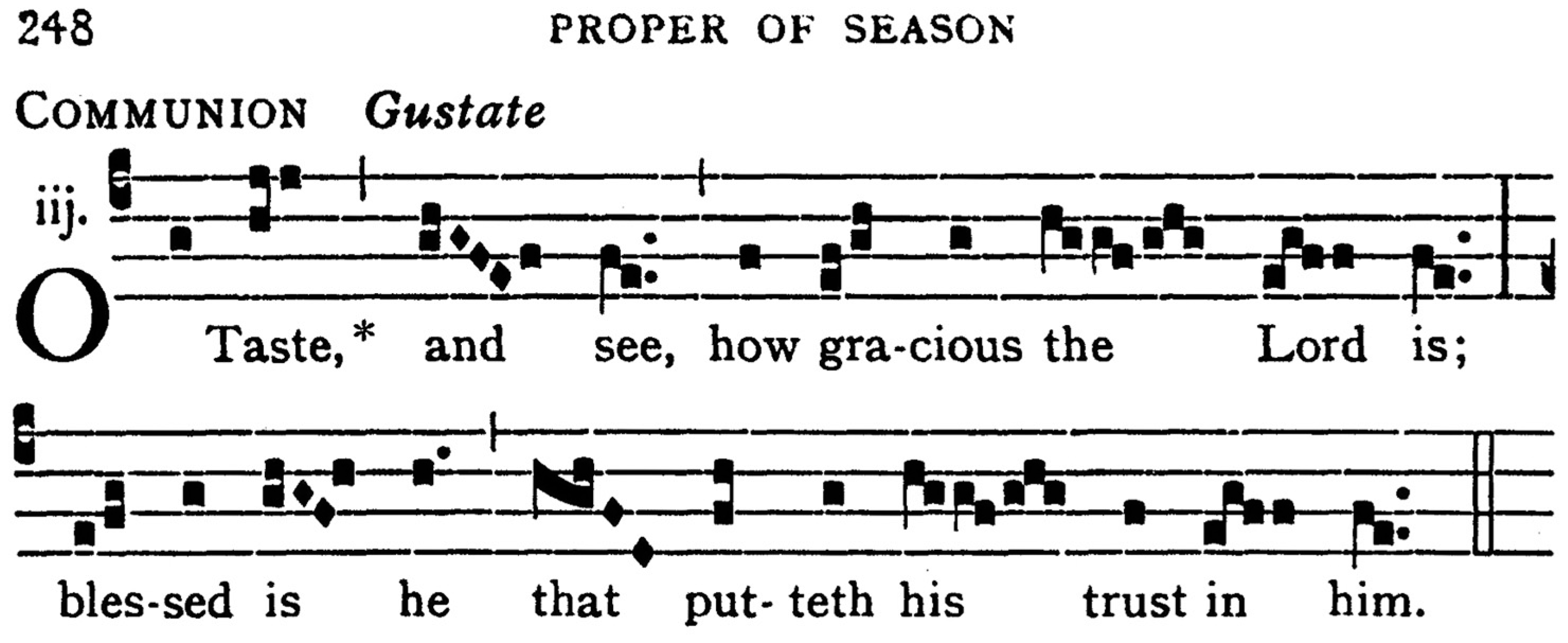
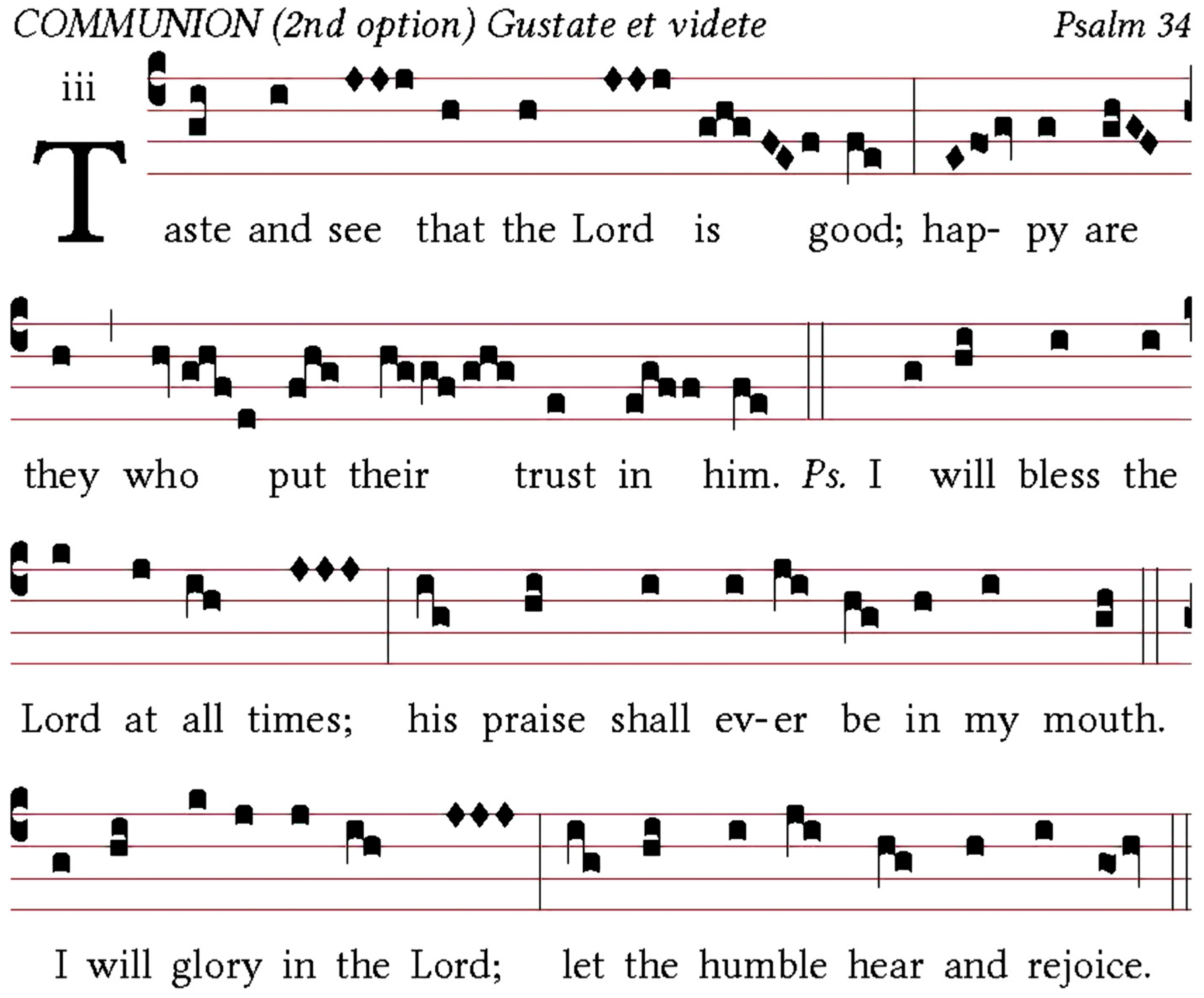
The American Gradual, I gained valuable insights into how chant melodies can be adapted to accommodate the linguistic structure of vernacular languages. One key observation is that the adaptation process largely depends on the syllabic content of the target language. For instance, when an English translation of a Latin word contains fewer syllables than the original, certain neumes may be omitted to preserve musical coherence. However, such reductions must be done judiciously to preserve the phrasing and rhythmic integrity of the chant. In
The American Gradual, non-essential words such as “and” or “that” are often set more simply (
Figure 5), with multi-note neumes replaced by single note figures such as the
virga or
tractulus, effectively reducing melismatic complexity while preserving the chant’s expressive character.
Since the chant in my edition will be sung in both Latin and Chinese, I have decided not to modify the melody for either language. Instead, I allow the Chinese translation to contain either more or fewer words, as needed, to fit the melodic structure. The essential principle is that key or meaningful words in the Chinese text must align with the corresponding neumatic positions that carry musical emphasis. This ensures that the chant remains musically coherent while respecting the semantic and liturgical significance of the text in both languages.
The creation of these three editions reflects a pedagogical strategy that accommodates different levels of musical experience and varying approaches to rhythm in Gregorian chant. The pilot study sought to evaluate how the singers responded to each edition, both in terms of their ability to read the music and their overall musical expression. The findings from this study would ultimately guide the selection of the most suitable transcription style for the expanded research project, ensuring that the introduction of Gregorian chant would be both accessible and musically enriching for the congregation.
4.2. Introducing the Chant at Sing Ang Tong Methodist Church
Seven singers formed the musical ensemble for the pilot study; they comprised one organist, three choir conductors, and three assistant singers who regularly served in worship services at Sing Ang Tong Methodist Church. This group was selected due to their familiarity with the church’s liturgical practices and their prior musical training, making them well-suited for exploring a new musical tradition. Three rehearsals led by me were carefully structured to provide both practical vocal instruction and a gradual introduction to Gregorian chant, which was entirely unfamiliar to the participants.
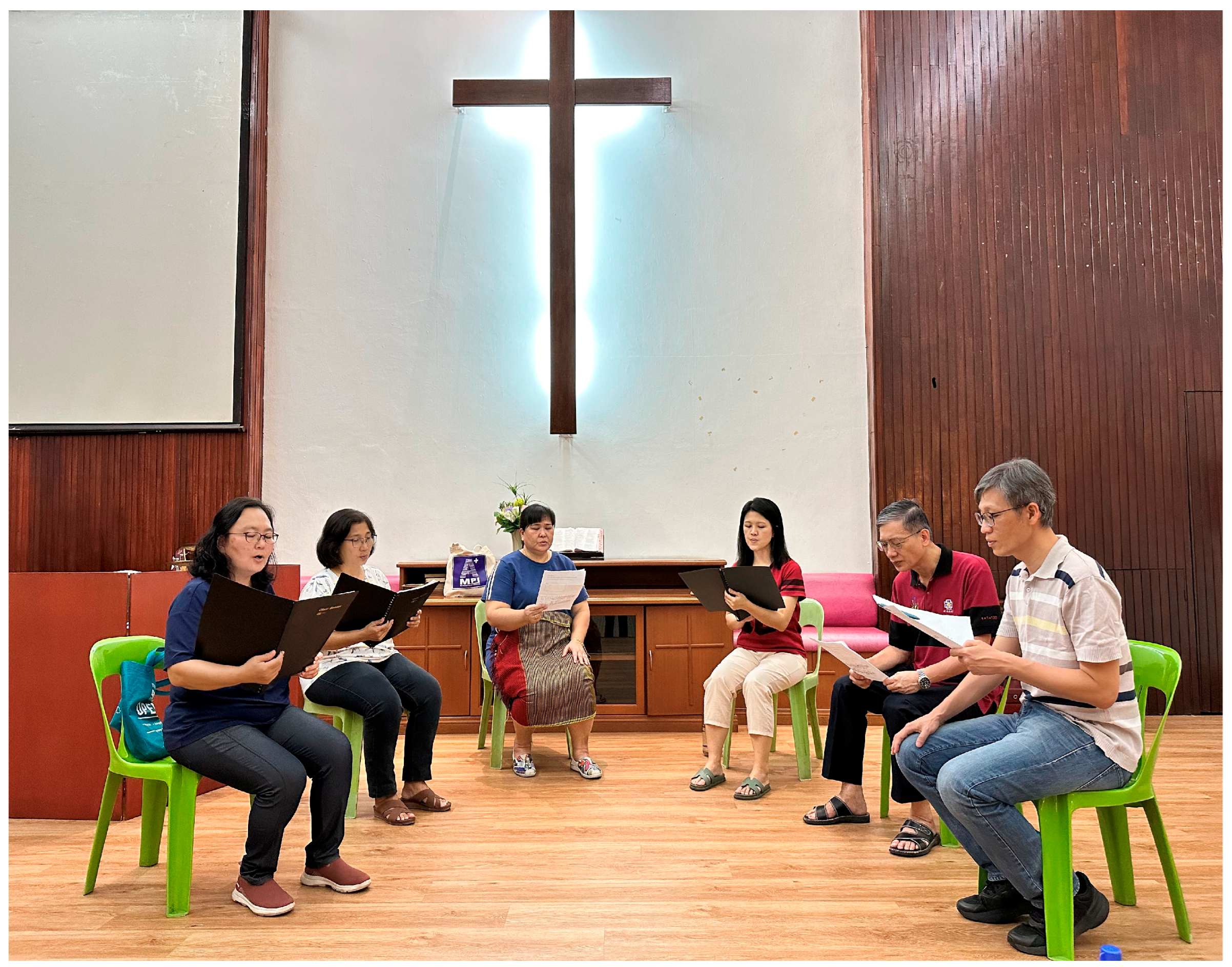
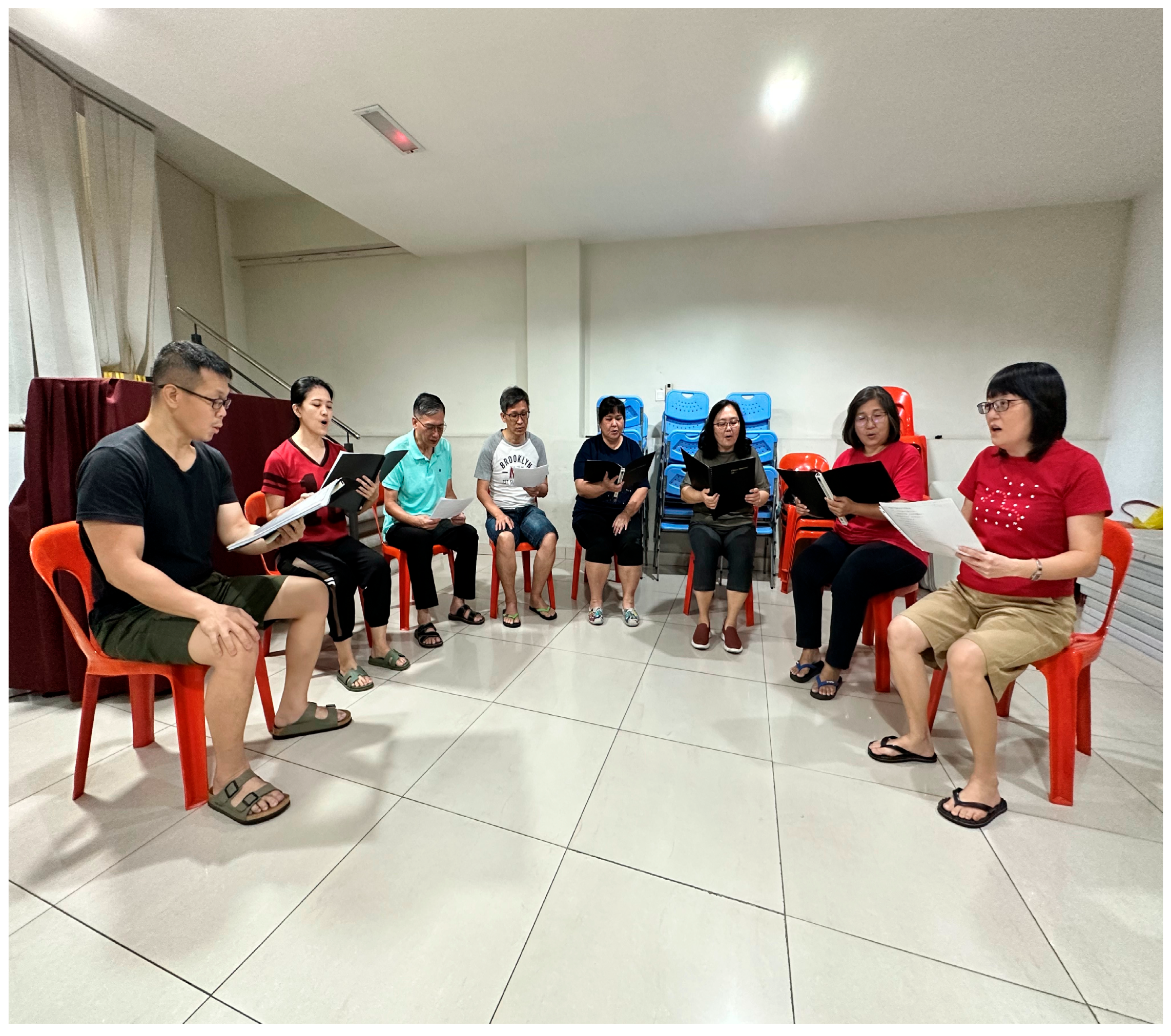
The first rehearsal took place on 21 June 2022 in the choir practice room (
Figure 6). I began the session with a series of warm-up exercises, including breathing exercises to promote breath control and vocalizing exercises to improve vocal production. With these preparatory exercises I aimed to help the singers develop the physical and mental focus necessary for the sustained, flowing lines characteristic of Gregorian chant. Following the warm-up, I provided a brief introduction to Gregorian chant, explaining its historical significance, liturgical function, and unique musical characteristics. This overview aimed to situate the chant within the broader context of Christian worship and prepare the singers for a different aesthetic experience from the metrical hymns and anthems to which they were accustomed.
To introduce the chant, I adopted a step-by-step teaching method, dividing it into two phrases: the first phrase comprised the first two lines, and the second phrase included the third and fourth lines. The first phrase of Gustate et videte was divided into seven shorter sub-phrases, which were taught through call-and-response repetition, without any sheet music. The singers began by imitating short melodic phrases sung on the neutral vowel “oo,” a technique designed to help them internalize the melodic contour without the added complexity of text. Once the singers demonstrated confidence in the melodic line, they progressed to singing the phrase with the Latin text. Only after mastering each shorter phrase with the text were they given the transcription. For this rehearsal, the first edition was used. After noticing the singers having difficulty to remember the melody of the chant while singing in Latin, I guided the singers to sing the chant with solfège syllables, ensuring they mastered the melody and the text before returning to the Latin text and eventually singing the chant with the Chinese text. Using solfége syllables is the most common method in CMCS for learning new melodies.
Before concluding the rehearsal, I invited the singers to share their initial impressions of the chant. Their responses revealed a mixture of curiosity and ambivalence. One singer described the chant as “plain,” reflecting the stark simplicity of the unaccompanied melody. Another singer remarked that the chant resembled “a Muslim prayer” (fieldnotes from the rehearsal, 21 June 2022), suggesting that the unfamiliar melodic style evoked associations with non-Western religious traditions.
During the first rehearsal, I noticed the sound in the choir room was very dead, unable to create the resonant sound found in cathedrals. Therefore, I decided to hold the second rehearsal in the chapel because it happens that it has a space with a higher ceiling and more resonant acoustics (
Figure 7). The rehearsal was held on 4 July 2022. Singing in the more spacious acoustic environment of the chapel had a profound impact on the singers’ perception of the chant. When invited to share their impressions, several participants described the music as “mysterious, pure, peaceful, clear, heavenly, and alive” (Fieldnotes from the rehearsal, 4 July 2022).
The third and final rehearsal took place on 18 July 2022, again in the chapel. This session introduced the third edition with spaced noteheads. Before beginning the chant, I explained that the varying spacing between the notes represented rhythmic lengthening, similar to the first transcription. The singers were encouraged to approach this edition with the same rhythmic freedom they had learned in the previous rehearsals. To deepen their understanding of Gregorian chant performance, I introduced several features of neumatic notation and their corresponding musical symbols, including the episema, strophae, oriscus, quilisma, and celeriter. The singers practiced the entire chant several times in Latin before switching to the Chinese text.
At this stage, the singers exhibited greater confidence and musical cohesion. To enhance their listening skills, I divided the group into two smaller ensembles. Each group took turns singing while the other group listened, fostering a heightened awareness of ensemble, balance and musical phrasing. This exercise revealed how the chant’s flowing lines and lack of regular meter encouraged a sense of collective breathing and shared musical intention.
During the final sharing session, the singers expressed more positive impressions of the chant. They described the music as “homey and stable, prayerful, peaceful and placid, clean and clear, and reverent” (Fieldnotes from the rehearsal, 18 July 2022). Several participants remarked that the chant was easier to sing than they had initially expected. However, some noted that the acceptance of Gregorian chant in liturgical worship might be age-related, with older congregants potentially more receptive to its meditative quality. One singer commented on the chant’s mystical sound, suggesting that it might foster mysticism. Others drew comparisons between Gregorian chant and Buddhist mantras or indigenous music traditions such as Iban (Sarawak’s indigenous people) music, reflecting the chant’s capacity to evoke spiritual associations across different cultural traditions. The rehearsal concluded with audio recordings of the singers performing Gustate et videte in both Latin and Chinese. These recordings not only documented the group’s progress but also served as a reference for future analysis.
4.3. Focus Group Findings
After introducing Gustate et videte but before it was performed in a service, I conducted a focus group on 8 August 2022 in the choir room of Sing Ang Tong Methodist Church. The objective was to gather qualitative feedback from the singers regarding their experiences of learning and performing Gustate et videte. This focus group sought to explore the singers’ perceptions of Gregorian chant, their emotional responses, and the challenges they encountered throughout the rehearsal process.
Although a few participants had encountered and studied Gregorian chant during their university music education, their exposure remained largely theoretical, without the opportunity to learn or practice singing chant. After learning to sing Gustate et videte, most participants reported having similar experiences regarding the musical aspects of the chant. They acknowledged that the chant was particularly challenging due to its unfamiliar melodic structure. Unlike the tonal harmonies of Western hymns and choral music they were accustomed to, the modal nature of Gregorian chant required a completely different approach to phrasing and musical interpretation:
Since it is new to us as we are accustomed only to the modern style of melody, it is quite difficult to master it.
(Wong)
The greatest challenge for the singers in learning Gregorian chant lay not only in mastering the unfamiliar melody but also in adapting to its distinctive free-flowing unmetered pace. While they made efforts to sing in free rhythm, the resulting performance often reverted to a more rigid, measured style. This tendency stemmed from their prior musical experience, where strict rhythmic patterns and regular meter were the norm. Consequently, what was intended to be a flowing and flexible interpretation of the chant was instead rendered with a sense of precision and constraint. Rather than experiencing the chant as a liberating and meditative form of singing, many participants initially perceived it as limiting and restrictive.
Most participants had little difficulty in pronouncing and singing the Latin text, as many had been performing Latin choral music for years, either during their university studies or in church choirs. Their prior exposure to Latin texts provided them with a solid foundation in pronunciation. Additionally, the similarity between Latin and Chinese vowel sounds further facilitated their ease with articulation. However, the primary challenge they faced was singing the Latin text with an understanding of its meaning:
I sing in Latin in the church choir quite early in my life. I may not know the meaning of the text, but the pronunciation is like the Chinese pronunciation. Singing in Latin is not that difficult for me.
(Wong)
A particularly new aspect of the pilot study was the use of the Chinese text for the chant. All participants confirmed that this was their first time singing Gregorian chant in Chinese, adding an additional layer of complexity to the learning process. Despite this challenge, the singers expressed appreciation for the opportunity to engage with the chant in their native language, which fostered a deeper personal connection to the music and its spiritual meaning:
Singing it was the first-ever for me. Today, I saw it in the Chinese version for the first time.
(Pau)
Nevertheless, there were differing perspectives among the participants regarding whether Gregorian chant should be sung in the Chinese translation, the original Latin, or both languages. One singer expressed strong disagreement with singing the chant in Chinese. She argued that Gregorian chant originated in the medieval period, during which Latin was the primary liturgical language. From her perspective, Latin is not only the most historically authentic language for this sacred music but also an essential element that preserves the chant’s spiritual and cultural integrity. She believed that singing the chant in its original language maintains its connection to the tradition, while translating it into another language risks diminishing its authenticity and sacredness:
I think the Gregorian chant is from that [medieval] period. During that period, people were using Latin. Therefore, this kind of music is suitable in Latin.
(Lee)
However, another singer expressed a different perspective, emphasizing the significance of both the Latin and Chinese texts. He explained that while singing in Latin preserves the historical authenticity and sacred tradition of Gregorian chant, incorporating the Chinese text plays a crucial role in making the chant more accessible and meaningful to the congregation and singers. By singing in Chinese, the participants could better understand the text’s meaning, allowing for a more profound spiritual connection to the chant:
Chinese is very important too. It is through seeing Chinese text that you understand the meaning. Although singing in Chinese doesn’t sound good, it helps us to understand it. Therefore, my opinion is we must sing in both languages.
(Pau)
The choice of singing in Latin, Chinese, or both languages emerged as the most contentious issue among singers in Sing Ang Tong Methodist Church. This debate reflected the tension between preserving the authenticity of the Gregorian chant tradition and meeting the spiritual needs of the local congregation. As Chinese worshippers, the singers emphasized that the foremost priority in singing hymns, songs, or chants during worship is the ability to understand and internalize the meaning of the text. From this perspective, singing the chant in Chinese is essential, as it allows both singers and the congregation to engage with the message on a deeper spiritual level.
However, many participants also recognized that the musical essence of Gregorian chant is inseparably tied to its original Latin text. The Latin language not only carries historical significance but also contributes to the distinctive melodic phrasing and aesthetic beauty of the chant. Therefore, to uphold the chant’s musical integrity while making it accessible, most of the singers acknowledged, agreed and decided that singing in both Chinese and Latin would be the most inclusive approach. This bilingual practice would accommodate the diverse needs of the congregation, offering a balance between comprehension and preserving the chant’s rich liturgical tradition.
Regarding the notation, the majority of participants expressed a clear preference for the second edition, which featured rhythmic notation but did not impose a strict measured rhythm. The singers found that this notation provided them with a sense of security, as it offered guidance on phrasing and articulation while still allowing for the natural flow of Gregorian chant. Additionally, they felt that this edition was more aligned with modern scholarly transcriptions of medieval chant manuscripts, which prioritize the fluidity and expressive quality of the original notation:
The rhythm must have fast and slow (short and long)—with a quaver beat—as in the second version. That version is the most helpful.
(Pau)
The singers were so accustomed to performing music with measured rhythm that the absence of strict rhythmic structure in Gregorian chant introduced feelings of uneasiness and posed significant challenges. Their musical background, rooted in regular metric patterns, made it difficult for them to embrace the fluid, unmeasured rhythm characteristic of chant. When asked about the key values of singing Gregorian chant, the participants offered a range of perspectives, reflecting their diverse musical backgrounds and experiences. Their insights highlighted how the chant’s significance extended beyond mere musical practice. For some, the primary value lay in its deep spiritual connection, as the chant created a sense of reverence and sacredness in worship. Others emphasized its historical importance, recognizing Gregorian chant as an ancient tradition that links present-day worship to the early Church:
When I listen to the text, I feel my inner spiritual life is tuned by it. My inner spirit is blessed by it. I receive the completeness from the word of God. It brings me inner peace.
(Chou)
I think when singing and listening to Gregorian chant, I will be able to experience how the ancient people worshipped God. The second reason is that the sound itself is calling people to come to worship.
(Pau)
A shared perspective emerged among the singers regarding the use of Gregorian chant in worship services. They unanimously agreed that Gregorian chant was particularly well-suited for creating a solemn and contemplative atmosphere during sacred ceremonies. The singers expressed that its meditative and reverent qualities made it an ideal musical choice for worship services that emphasize reflection and spirituality. They felt that Gregorian chant would enhance the prayerful ambiance of special occasions such as prayer meetings, Good Friday services, Holy Communion, and Baptism:
Besides Holy Communion, we can sing it during the Baptism. I think it is quite solemn if we sing it during Baptism.
(Pau)
If we intend to use it, perhaps we can do so during prayer meetings and Good Friday. These are more solemn occasions, maybe we can use chants.
(Lee)
4.4. Performance of the Chant
Prior to the Sunday worship service performance, the singers gathered for a final rehearsal on the evening of 1 October 2022. This rehearsal took place in the sanctuary, utilizing the sound system with added reverberation effects to simulate the acoustics of a cathedral-like space, as the sanctuary’s natural acoustics were dry and lifeless. The use of artificial reverberation aimed to create a more resonant and immersive sound environment, enhancing the chant’s inherent meditative and mystical qualities.
During this rehearsal, a debate emerged among the singers regarding whether the chant should be performed live. Some singers suggested recording the chant and playing the recording during the worship service, citing concerns about the challenging nature of live performance and the unpredictability of the acoustics. However, others argued that the authenticity and spiritual significance of Gregorian chant would be best conveyed through live performance, embracing the challenge as a form of spiritual offering. Eventually, after further discussion, all the singers unanimously agreed to sing live during the Sunday worship services, demonstrating their commitment to the project and their faith in the transformative power of the chant.
The historic first-ever performance of Gregorian chant at Sing Ang Tong Methodist Church took place on 2 October 2022, during the Holy Communion Sunday service—a fitting occasion for the Communion chant Gustate et videte. The chant was performed at two morning services: the 7:00 a.m. service and the 9:30 a.m. service. The singers were divided into two groups of three, with each group assigned to one service. The first group comprised two female singers and one male singer, while the second group consisted of two male singers and one female singer. The seventh singer, however, did not feel confident singing in the worship service and requested not to take part in the performance. Recognizing that participation in worship music should stem from a sense of willingness and spiritual readiness rather than obligation, I respected her decision and did not compel her to join.
Both groups designed their own sequence of performance, reflecting their musical interpretations and preferences. The sequence of the first group was as follows: all singers in Latin, all singers in Chinese, female solo in Latin, male solo in Chinese, a scriptural reading of Psalm 33:9, all singers in Latin, and concluding with all singers in Chinese. The second group’s sequence was: male solo in Latin, female solo in Chinese, all singers in Latin, all singers in Chinese, a scriptural reading of Psalm 33:9, female solo in Latin, male solo in Chinese, and concluding with all singers in Latin. Allowing the singers to create their own performance sequence fostered a sense of ownership and agency, enhancing their connection to the music.
After completing the first round of singing, the singers experienced a boost in confidence. The solo performances were particularly well-received, and I noticed the sound was clear, confident, and flowing. However, the ensemble singing required further refinement, as some moments of unsteadiness, uneasiness, and disharmony were observed.
The feedback from the congregation was diverse and thought-provoking (Fieldnotes from performance, 2 October 2022). Many congregants expressed that the chant created a “calm and prayerful atmosphere,” enhancing their experience of Holy Communion. One congregant, who served as the liturgist that day, shared, “The chant enabled me to deeply meditate on Christ’s sacrifice, especially during the moments of waiting for the conclusion of the Holy Communion.” Another congregant described how the music facilitated a “sense of spiritual communion with the Lord,” drawing her into a more intimate and contemplative prayer experience. The senior pastor praised the performance, describing it as “excellent and spiritually uplifting.” She encouraged the singers to repeat the performance in the following month’s Holy Communion service, affirming the chant’s suitability for the liturgical context.
However, not all feedback was positive. One congregant approached a pastor to express her “discomfort,” questioning why the church was singing music that felt foreign and alien to the congregation’s worship tradition. The pastor responded by explaining that the chant represents traditional church music with deep historical roots, akin to incorporating African or indigenous church music into worship. This analogy helped contextualize the chant within the broader tapestry of global Christian traditions, emphasizing the diversity and universality of sacred music.
The performance of Gustate et videte at Sing Ang Tong Methodist Church marked a significant milestone in the introduction of Gregorian chant to the CMCS. The mixed responses highlighted both the potential and challenges of integrating this ancient musical tradition into a contemporary worship setting.
4.5. Cultural and Theological Implications
Within Methodism, congregational singing lies at the heart of worship practice, reflecting a theological commitment to active participation, communal identity, and the formation of faith through song. As singing people, Methodists have demonstrated openness to a wide range of musical expressions, provided that such music is theologically sound and firmly grounded in Scripture. When liturgical music meets these criteria, receptiveness to musical and liturgical forms drawn from different cultures or Christian traditions is significantly broadened.
Gregorian chant is one of the oldest forms of Christian liturgical music in the Western tradition, with Latin serving as its original and normative language. In contemporary worship settings, however, the careful use of education and contextual explanation can enable the adoption of bilingual chant practices—combining Latin with vernacular languages such as Chinese—thereby negotiating a balance between fidelity to liturgical tradition and sensitivity to local cultural contexts.
Furthermore, the experience of encountering spiritual peace and contemplative depth is a crucial element shaping CMCS responses to worship music, particularly within multicultural Christian communities. The meditative and prayerful character of Gregorian chant can offer a distinctive spiritual experience that resonates with Methodist worshippers. For this reason, the integration of Gregorian chant into CMCS worship may be widely accepted, not as a replacement for established practices, but as a complementary form that enriches the spiritual and liturgical life of the CMCS.