Are Humans Alone in the Cosmos?


1
Reasons to Believe, Covina, CA 91724, USA
2
College of Arts & Science, Regent University, Virginia Beach, VA 23464, USA
Religions 2025, 16(12), 1589; https://doi.org/10.3390/rel16121589
Submission received: 31 October 2025
/
Revised: 9 December 2025
/
Accepted: 11 December 2025
/
Published: 17 December 2025
(This article belongs to the Special Issue Humans, Science, and Faith)
Abstract
For millennia, theologians and philosophers debated whether extraterrestrial intelligent life (ETI) exists in the universe. Some theologians concluded God enjoys creating so much he would not stop at one planet. Others argue God limits his miracles to those needed to achieve his purposes, which require only one planet with intelligent life. Thanks to exponential advances in observational astrophysics, scientists now are weighing in on the “are we alone in the cosmos” debate. Though far from resolving all the debate’s components, they now are able to provide definitive answers or steps towards definitive answers to several of the theological/philosophical issues. These answers arise from the following research endeavors: (1) search for ETI (SETI) efforts, results, and determined odds; (2) interplanetary panspermia; (3) ETI planetary habitability requirements; (4) ETI stellar habitability requirements; (5) ETI galactic habitability requirements; (6) “hard steps” in the evolution of life from non-life; (7); “hard steps” in ETI evolution from simple life; (8) interstellar space travel and exploration limitations; (9) nature of UAPs lacking natural or human-made explanations; and (10) nature of non-physical reality. The resultant answers increasingly are creating arenas of common agreement plus opening up avenues of dialog among theologians and scientists. This dialog on ‘are we alone in the cosmos’ is shedding additional light on humanity’s role and purposes in the cosmos.
1. Introduction
Today, people think the question, are we alone—the only physical intelligent species—in the universe, is a scientific debate. However, during the millennia that preceded the twentieth century the debate, at an academic limit, was owned by theologians and philosophers (Crowe 2008). That there was an active ongoing debate among theologians that delved into a rich tapestry of beliefs about the existence of intelligent beings on other planets in the universe frequently is lost upon present-day atheists, agnostics, skeptics, and even many deists and theists, including Christians.
The pre-twentieth century debate on extraterrestrial life was not limited to academia. Previous to World War I, more than 140 books on extraterrestrial life written for a broad audience had appeared (Crowe 2008, p. 159).
The assertions of nearly all present-day non-theistic and agnostic scholars has been that the discovery of life of any kind, let alone intelligent life, would be catastrophic to religious beliefs (Bertka 2013). Their assertions are based on the belief that the discovery of life on multiple planets would prove the origin of life from a suitable prebiotic soup of chemical compounds must be so straightforward and easy that it is not necessary to invoke God as a causal agent. These non-theists and agnostic skeptics likewise assert that the discovery of ETI would prove that the evolution of intelligent life from primitive microbes must be so straightforward and easy that no God is necessary to explain it.
Many non-theists and agnostic skeptics conclude that all religious people and especially religious leaders and scholars would be threatened by evidence for extraterrestrial intelligent life (ETI). Therefore, they presume that among theistic scholars there never has been a debate about ETI, that necessarily all of them believe and have believed that physical intelligent life exists on only one body in the universe—planet Earth.
Theologians and others have countered that if life’s origin and evolution really were so straightforward and easy, we should see it occurring in real time. That we do not, they argue, implies that these steps are too hard for natural processes to achieve. As further evidence, they point out that if the origin of life really was so straightforward and easy, biochemists would have created life in the lab long ago and several times over (Rana 2011; Richert 2018). The fact that even the most knowledgeable, intelligent, skilled, and technologically equipped biochemists are unable to assemble any more than 50 amino acids, let alone a functional protein, and are incapable of manufacturing an RNA or DNA molecule from scratch implies that someone much more knowledgeable, intelligent, and powerful than our best biochemists must have created life.
Many theologians conclude, therefore, that God and only God must have created life. If God has done it on Earth, there is no reason, they say, why he could not have done it on another planet or moon. Some theologians argue that God’s character implies he has created life in diverse forms on a great many planets and/or moons. Others cite theological reasons why God would limit his creating life on just one or a few planets.
Theologians have posed another counter toward atheists and agnostic skeptics. They point out that a scientific determination that physical life in the universe only exists on Earth would be problematic for non-theistic and agnostic beliefs. Such a determination either would suggest or show that only Earth possesses the exceptionally fine-tuned physical and chemical features that life requires and/or that the origin of life from non-life is far from an easy naturalistic step. The bottom line is that materialists need ET and ETI to exist, whereas theists can have it either way.
Of interest to theologians and scientists of all philosophical persuasions is how revelations from science about life or the absence of life beyond Earth could illuminate humanity’s purpose and place with the cosmos. At a minimum, such revelations could help bridge gaps between scientific exploration and theological inquiry, fostering a dialog that enriches both fields and enhances our understanding of existence itself.
2. The Theological Debate
From a Christian creationist perspective, as contrasted with a variety of theistic evolutionary perspectives, we humans are here on Earth, according to the Bible, because God supernaturally intervened at multiple times and in multiple different ways with perfect timing at each incident to ensure that within a brief time window we could exist and rapidly develop a global high-technology civilization. God, of course, could perform the same set of miracles on one or more other planets in the universe. At no point does the Bible state or imply that there is another race elsewhere in the universe or that there is not. Therefore, from a biblical Christian perspective the probability of a search for extraterrestrial intelligent life (SETI) success may be greater than zero. However, Christian theologians, based on different biblical texts, have debated for two millennia whether God has created life, including intelligent beings, on multiple bodies in the universe or only on Earth. Notable examples include Origen [185–254 AD] (Origen 2013, pp. 103–15), Augustine [354–430 AD] (Augustine of Hippo 1909a, 1909b, 1909c), Bonaventure [1221–1274 AD] (McColley and Miller 1937), Thomas Aquinas [1225–1274 AD] (Aquinas 2006), Francis of Meyronnes [1280–1328 AD] (McColley and Miller 1937), William Vorilong [1390–1463 AD] (McColley and Miller 1937), Nicholas of Cusa [1401–1464 AD] (Wilpert 1967), Tomasso Campanella [1568–1634 AD] (Campanella 1994), Philip Melanchthon [1497–1560 AD] (Melanchthon 1563), Ralph Waldo Emerson [1803–1882 AD] (Emerson 1989), and Ellen G. White [1827–1915 AD] (White 1948), This debate also included whether extraterrestrial intelligent beings, if they exist, could be strictly physical creatures lacking any awareness of God, sin, or an afterlife.
Christian scholars first point out that the Bible clearly and repeatedly proclaims God is the only one who can create life and who has created life. They point to Bible passages like Genesis 1, Job 39–41, Psalm 104, and Isaiah 44. Therefore, they conclude the discovery of life on another planet beyond Earth, whatever form that life might possess, would simply demonstrate that God has created life on more than one of the observable universe’s approximately trillion trillion planets.
In fact, the Bible explicitly declares God has indeed created ET, specifically ETI. These extraterrestrial intelligent beings are angels. They are described in 38 of the Bible’s 66 books. Angels, according to the Bible, differ from human beings in that they are not constrained by the universe’s laws of physics or the universe’s space-time dimensions. They predominantly live in a realm distinct from the physical universe. However, God has granted them the power, according to the Bible, to occasionally leave their realm and enter into our physical realm for brief episodes. They can enter either in physical or nonphysical form.
The existence of ETI—whether physical beings constrained by the physics and dimensions of the universe or beings who are not constrained by the physics and dimensions of the universe—poses no threat to the Christian faith. Christianity, at a minimum, teaches the existence of angelic ETI. It also is open to the possibility of God creating ET and/or ETI who, like us, are constrained by the universe’s dimensions and laws of physics.
From a Christian perspective we humans are not alone. God exists. Angels exist. What is open for debate is whether or not God has created one or more species of life on other planets who are intelligently and technologically capable, yet confined by the cosmos’s physics. This is the debate that Christian scholars have engaged one another since Christianity’s birth two millennia ago.
Several Christian thinkers have pointed out there are no Bible passages that would constrain God from creating life on other planets. In fact, the creation psalm, Psalm 104, declares that God has created life on Earth with enormous abundance and diversity. It states there is nowhere one can go on Earth’s surface, in Earth’s ocean depths, or on Earth’s mountain heights and not find life-forms God has created. Psalm 104, the other seven creation psalms (Psalm 8, 29, 33, 65, 139, 145, 148), Job 12:7–10, 38:36–41:34, and Isaiah 42:5, 44:23-24, 45:18 proclaim how abundantly and joyfully God has created all manner of life.
Several Christian scholars have cited God’s manifest, pervasive exuberance for creating life as strong evidence that physical ETI like us must be prevalent throughout the universe. Such belief explains why this kind of ETI shows up so frequently in science fiction literature written by famous Christian authors such as C. S. Lewis, J. R. R. Tolkien, and Madeleine L. Engle.
Other Christian scholars have countered that if, indeed, God has created physical, human-like ETI on multiple bodies throughout the universe, it seems odd that the Bible would be totally silent about such beings. This silence is all the more bizarre, such scholars declare, given how much the Bible says about angels (Origen 2013, pp. 161–71; Crowe 2008).
A response to this counter is that the Bible is demonstrably silent on several topics and issues that have no bearing on how humans can be saved from their sin and enter into an eternal, loving relationship with their Creator. Consequently, if extraterrestrial beings have not sinned and, therefore, are not in need of a divine Savior, these Christians conclude there would be no need for the Bible to make any mention of them.
Christian scholars who have maintained we humans are alone—the only intelligent physical species in the cosmos—point out that the New Testament gospels reveal a God who is purposeful, selective, and conservative in the miracles he performs (Aquinas 2006; O’Meara 1999). The gospel accounts tell of several instances where the crowds, Pharisees, and even the disciples (Matthew 12:38–42, Luke 9:51–56, John 2:14–20, 6:30) asked Jesus to perform a miracle. At Jesus’ trial, King Herod hoped to see Jesus perform a miracle (Luke 23:6–11). In every such occurrence, Jesus refused to perform a miracle. These events serve to illustrate that God apparently limits the miracles he performs to those that are necessary to fulfill his intended purposes.
This economy of divine miracles principle may apply to ETI in the following way: God needs technologically capable, intelligent physical beings endowed with spirit natures on only one planet in the universe to achieve his ultimate purpose of populating the new creation with intelligent free-will beings whom he has redeemed from sin and evil. To get this one planet, given the laws of physics God has chosen for a variety of reasons to govern the universe (Ross 2008), the universe must be exactly as massive and large as it is. These intelligent creatures whom God has eternally redeemed and delivered from sin will spend eternity expressing love to and receiving love from God and one another. This is the biblically stated purpose for God creating human beings.
The one possible biblical constraint on ETI is in Hebrews 10:12, 14: “This priest [Jesus Christ] had offered for all time one sacrifice for sins … by one sacrifice he has made perfect forever those who are made holy.” This passage appears to rule out a Creator-Savior visiting multiple planets to sacrifice himself over and over for the sins of beings like us living on multiple planets. However, it does not rule out microbes, plants, or dolphins on other planets. It does not rule out beings like us who have never thought, expressed, or done anything evil.
Some theologians, for example, Origen, Guillaumme de Vaurouillon [1392–1463], and Joseph Pohle [1852–1922] have argued that Hebrew 10 does not even rule out the possibility Jesus’s one sacrifice on Earth somehow atoned for the sins of beings like us on more than one planet (McColley 1936). They point out just as humans today can read about Christ’s incarnation, sacrifice, and resurrection and verify the historical evidence for these events, physical-spiritual beings on another planet conceivably could learn about and verify the same events.
From a biblical perspective, Christians have a range of options on what they can hypothesize and believe about ET, ETI, and extraterrestrial civilizations. They can believe one or more of these extraterrestrial options exist on one or more planets or that physical life, constrained by the physics of the universe. exists on only one cosmic body.
From a naturalistic perspective, though, nontheists have limited options. They are compelled to believe there are no naturalistic barriers to (1) the existence of cosmic bodies with features similar to the Sun’s, Moon’s, and Earth’s, and many of the features of the other seven solar system planets at numerous Milky Way Galaxy sites and in many sites in all other galaxies in the universe, (2) the origin of life, and (3) a naturalistic evolution of the equivalent of humans from a simple bacterium. The conclusion that physical life in the universe only exists on Earth would be problematic to non-theistic and agnostic beliefs. For nontheists the universe ought to be filled with habitable planets and many of these habitable planets should host life, both unintelligent and intelligent. However, multiple naturalistic barriers appear to exist for all three (see Section 6, Section 7, Section 8, Section 10 and Section 11).
For several millennia, the debate over are we alone in the universe was a strictly theological/philosophical debate. In the late twentieth century, scientists began to weigh in on the debate. Now, at the close of the first quarter of the twenty-first century, scientific exploration of the universe has reached a point where several of the debate issues are approaching resolution. Science now is determining which theological/philosophical positions on the “are we alone” question are valid and which are not.
3. Search for Extraterrestrial Intelligent Life (SETI)
SETI missions have been nearly continuously conducted since 1960 when a young astronomer, Frank Drake initiated Project Ozma. Drake used a 26 m (85-foot) diameter radio telescope to search for intelligent signals near 1420 megahertz from the star systems Tau Ceti and Epsilon Eridani. He detected no intelligent signals (Drake 1961).
Drake advocated for expanding the SETI window to cover the entirety of the “water hole.” In radio astronomy, the water hole is the range of frequencies between the neutral hydrogen (H) emission line at 1420 megahertz and the hydroxyl (OH) radical line at 1612 megahertz. Since water is essential for all conceivable forms of physical life and the frequency range 1420–1612 megahertz is relatively unimpeded in interstellar space, Drake concluded that nearly all interstellar communicating intelligent civilizations would choose to broadcast their presence to other civilizations in the water hole.
The Ohio State University Radio Observatory permitted piecemeal SETI observing runs on its Big Ear radio telescope, which had four times the signal collecting area of Project Ozma’s radio telescope, during its all-sky survey of extraterrestrial radio sources conducted from 1965–1971. From 1973–1995, the Big Ear was dedicated full-time to a continuous SETI survey.
From 1983–1985, Project Sentinel simultaneously searched for intelligent extraterrestrial signals in 131,000 narrow radio band receiving channels on the 26 m (85-foot) diameter radio telescope at Harvard University’s Oak Ridge Observatory. In 1985, Project Sentinel was replaced by Project META (Megachannel Extra-Terrestrial Assay) which had an 8.4 million channel spectrum analyzer and received substantial funding from movie director Steven Spielberg. In 1995, Project BETA (Billion-channel Extraterrestrial Assay) replaced Project META. Project BETA was equipped with two adjacent receiving beams so that candidate signals could be rapidly re-observed. On 23 March 1999, a violent windstorm destroyed the Oak Ridge Observatory radio telescope, terminating Project BETA.
From 1992–1993, NASA conducted the Microwave Observing Program (MOP), a SETI project with a 15 million channel spectrum analyzer used alternately on the three 76 m (250-foot) diameter antennae of NASA’s Deep Space Network, the 305 m (1000-foot) Arecibo radio telescope, and the 43 m (140-foot) Green Bank, West Virginia radio telescope. When the U.S. Congress canceled MOP’s funding, the nonprofit SETI Institute raised private funding to resurrect MOP under the name Project Phoenix. Project Phoenix ran from 1995 to 2015 where the 64 m (210-foot) Parkes radio telescope in Australia replaced the three NASA Deep Space Network antennae. Over the 20-year period Project Phoenix searched for intelligent signals from about a thousand nearby solar-analog stars.
To a lesser degree, astronomers carried out radio SETI searches using the Low Frequency Array (LOFAR) spread across seven European nations, the Murchison Widefield Array (MWA) in Australia, and the 76 m (250-foot) Lovell telescope in the United Kingdom. SERENDIP (Search of Extraterrestrial Radio Emissions from Nearby Developed Intelligent Populations) is a piggy-back program where data from astrophysical observing programs on large radio telescopes around the world is analyzed in the hope of discovering serendipitous intelligent signals. Several optical SETI programs now are progressing. These programs are searching for laser signals targeting the solar system.
The Allen Telescope Array, named after benefactor billionaire Paul Allen, consists of an array of 6.1 m (20-foot) radio telescopes that simultaneously search for intelligent signals while astronomers conduct their observations of radio sources. However, so far, only 42 of the planned 350 radio telescopes have been built and are operational.
The most ambitious SETI project is being conducted on China’s 500 m (1640-foot) Aperture Spherical Telescope (FAST). FAST is the world’s largest single-dish radio telescope with a diameter five times larger than the second place Effelsberg telescope in Germany. FAST is the first large radio telescope built with SETI as the primary goal. Astronomers have conducted SETI observations using FAST since 2019.
4. SETI Results
Russian astronomer Gennady Sholomitskii claimed his observations during the early 1960s of the radio source CTA 102 showed a flux variation of 25–40 percent with a periodicity of 100 days (Sholomitskii 1965; Sholomitskii et al. 1965). He interpreted the periodicity as a beacon signal from an extraterrestrial intelligent civilization. However, observations of CTA 102 made during the same time period by two different teams of astronomers found no evidence for Sholomitskii’s claimed variations (Caswell and Wills 1965; Maltby and Moffet 1965), nor did observations in 1965 by a third team (Bologna et al. 1966).
In 1967, pulsing signals from the first discovered pulsar were nicknamed by discoverers, Jocelyn Bell and Anthony Hewish, as LGM-1 for “little green men.” However, speculation that the observed pulses were SETI signals soon were squashed by the discovery of several more pulsars and theoretical physicists Thomas Gold and Franco Pacini explaining that the observed pulses are well explained by rapidly rotating neutron stars (Gold 1968; Pacini 1968).
The Big Ear detected a strong narrowband signal, lasting 72 s, on 15 August 1977, that astronomer Jerry Ehman labeled Wow! However, despite multiple attempts by Ehman and other astronomers, the Wow signal has not been detected since. Astronomers concluded the signal either was natural or from a human-generated source.
Project META found eleven “extrastatistical” signals (signals that appear to be more than just background noise) that had the expected features of signals from extraterrestrial transmitters, except they did not repeat. Follow up analysis led astronomers to conclude the META candidates do not indicate “transmissions from intrinsically steady sources” (Lazio et al. 2002).
SETI observations by FAST detected one unusual signal that piqued the interests of the participating astronomers (Luan et al. 2025). However, the astronomers, based on the signal’s polarization, frequency, and beam coverage, eliminated the possibility of the signal’s extraterrestrial origin.
So far, not a single extrastatistical signal detected in SETI programs has been observed to repeat. Given the variety of ways single extrastatistical signals can be generated (interference from Earth-based technology, interference from satellites and spacecraft, natural flares/pulses from radio sources, phenomena in Earth’s ionosphere and magnetosphere, scintillation of radio sources), astronomers have concluded that all SETI programs conducted so far have produced null results. That is, SETI results are consistent with Earth being the only cosmic body that hosts intelligent physical life capable of interstellar communication.
5. Interplanetary Panspermia
Astrobiology, the study of life beyond Earth, presently is a data free scientific discipline. In spite of much funding and decades of dedicated research endeavors, astrobiologists have yet to find any undisputed evidence of life beyond Earth. However, it is likely that it is only a matter of time before they do.
Specifically, in the relatively near future astrobiologists will discover the remains of life on another solar system body besides Earth. The reason why is that meteoritic bombardment of Earth has exported Earth’s microbes throughout the solar system. For example, astronomers calculated that meteoritic bombardment has delivered an average of 20,000 kg of Earth soil to every 100 square kilometers of the Moon’s surface (Armstrong et al. 2002; Armstrong 2010). For Mars, the calculated delivery is 200 kg per 100 square kilometers. For the upper atmosphere of Venus, it is approximately 1000 kg per 100 square kilometers. For all other solar system bodies, besides the Sun, the delivery rate is less than a kilogram per 100 square kilometers.
One ton of Earth soil contains about 100 quadrillion microbes. Given the 3.8-billion-year history of abundant microbial life on Earth, a lot of Earth’s life has been exported throughout the solar system. Given that Earth was bombarded much more heavily during the first billion years of life history than it is now, most of the life exported from Earth will be the first microbes that existed on Earth.
In the example of the Moon, research affirms that these first microbes would have arrived via low-velocity, oblique-angle trajectories (Crawford 2008). Therefore, future lunar explorer missions have the opportunity of finding nearly pristine fossils of Earth’s first life. While Earth’s geological activity has destroyed the fossils of Earth’s first life, the Moon’s geological dormancy has preserved them. Lunar missions in the near future realistically could discover the fossils of Earth’s first life and deliver them to origin-of-life research labs on Earth.
These fossils could settle several long-standing debates on what or who is responsible for the origin of Earth’s first life (see Section 10). While interplanetary panspermia is a possibility, for many reasons interstellar panspermia likely is not (Ross 2023a). See also Section 11.
6. ETI Planetary Habitability Requirements
Three separate research studies conducted by astrobiology research teams have estimated the number of potentially habitable planets in the Milky Way Galaxy. One team claimed that 100 billion habitable, Earth-like planets exist in the Milky Way Galaxy (Abe et al. 2013; Anthony 2013). A second team said 45.5 billion such planets exist (Guo et al. 2009). A third study put the number at 40 billion (Petigura et al. 2013; Overbye 2013). These numbers have been cited in numerous web articles, videos, and podcasts.
These large numbers presume planetary systems throughout our galaxy are just as abundant as they are in our solar neighborhood. Also, all three studies consider only the liquid water habitable zone and only the broadest definition of the liquid water habitable zone. Rather than defining the liquid water habitable zone as that in which liquid water exists on the planet’s surface continuously for at least two billion years (the minimum requirement for microbes to chemically transform the planet’s atmosphere, crust, and soil so that ETI can exist (Schwartzman and Volk 1989)), it is defined as possessing liquid water on at least a tiny fraction of its surface for at least a tiny fraction of its existence.
To date, astronomers have discovered 16 planetary habitable zones and 5 galactic habitable zones. As the following lists show, for a planet to be habitable it must reside in all 21 of the known habitable zones plus all of the yet to be discovered habitable zones. The known planetary habitable zones are as follows:
6.1. Liquid Water Habitable Zone
All astrobiologists agree liquid water is essential for the existence of any conceivable kind of physical life. The liquid water planetary habitable zone is the distance range from the planet’s host star where liquid water could exist on the planet’s surface. For liquid water to remain on the planet’s surface requires just-right levels of atmospheric pressure, quantities of greenhouse gases in its atmosphere, and albedo (surface reflectivity).
The assertions that 40–100 billion habitable planets exist in our galaxy is based on efforts to make the liquid water habitable zone as broad as conceivably possible. For example, making the planet’s surface highly reflective, its quantity of atmospheric greenhouse gases very low, its atmospheric humidity no greater than 1 percent, its rotation axis tilt zero with no water transport from high latitudes to low latitudes so that tiny amounts of liquid water could persist near the planet’s poles would permit a planet orbiting a Sun-like star to possess a small quantity of surface liquid water even if it orbited at 0.5 astronomical units (0.5 AU) (Abe et al. 2011; Leconte et al. 2013; Zsom et al. 2013). (An astronomical unit, AU equals the distance Earth orbits the Sun). On the other hand, making the planet as dark as the Moon (7 percent surface reflectivity), its quantity of greenhouse gases very high, its atmospheric humidity no lower than 95 percent, and filling it with geothermal hotspots would permit a planet orbiting a Sun-like star to possess some surface liquid water even if it orbited at 1.67 AU (Abbot et al. 2012; Ueta and Sasaki 2013).
A liquid water habitable zone as broad as 0.50–1.67 AU for a planet orbiting a Sun-like star would include planets that possess a tiny amount of surface liquid water on a miniscule fraction of planet’s surface for a fleeting moment of the planet’s history. For a planet to possess an adequate quantity of surface liquid water for a long enough time that complex life could exist requires a much narrower liquid water habitable zone. It requires a zone narrow enough that frozen water, liquid water, and water vapor can stably exist simultaneously on the planet’s surface over long time periods. It also requires the zone to be narrow enough that water efficiently transitions from one of its states to the other two. These prerequisites limit the liquid water habitable zone for planets orbiting Sun-like stars to 0.99–1.70 AU (Kopparapu et al. 2013). The 1.70 AU limit presumes life can tolerate atmospheric carbon dioxide levels of several bars. However, the upper limit for aerobic animal ecosystems is 0.00095 bars (see Section 6.13), which limits the liquid water habitable zone to 0.99–1.05 AU.
For planets orbiting fainter stars than the Sun, the liquid water habitable zone is closer to the star and for planets orbiting stars brighter than the Sun the liquid water habitable zone is farther from the star. The liquid water habitable zone in these cases, however, is more restrictive than it is for Sun-like stars. Stars fainter than the Sun emit many deadly flares and lack luminosity stability. Stars brighter than the Sun burn through their nuclear fuel more rapidly and become hotter at a more rapid rate.
6.2. Ultraviolet Habitable Zone
Neither the origin of life nor the survival of life is possible unless ultraviolet (uv) radiation reaches a planet’s surface. The reason why is that the synthesis of many life-essential biochemical compounds requires a minimum level of incident uv radiation (Buccino et al. 2006). Too much incident uv radiation, however, will prevent the origin of life and damage or destroy land-based lifeforms. Both the quantity and the wavelength of incident uv radiation must fall within certain narrow ranges for life to originate or survive, and even narrower ranges, for life to flourish.
For hydrogen-burning host stars with effective temperatures below 4600 Kelvin (Celsius degrees above absolute zero), the outer edge of the uv habitable zone falls closer to the star than the inner edge of the liquid water habitable zone (Guo et al. 2010). For hydrogen-burning host stars with effective temperatures greater than 7100 Kelvin, the inner edge of the uv habitable zone sits farther from the host star than the outer edge of the liquid water habitable zone (Guo et al. 2010). (For comparison, the Sun’s effective temperature is 5778 Kelvin). For stars that have completed their hydrogen-burning phase, the uv habitable zone is ten times more distant from the host star than the liquid water habitable zone (Guo et al. 2010).
The uv habitable zone width also is dependent on the host star’s metallicity, Z (fraction of the star’s mass comprising elements heavier than helium) (Oishi and Kamaya 2016). It is widest when Z = 0.020. Only very near this metallicity can life persist on a planet for as long as 4 billion years. For the Sun, Z = 0.0196 ± 0.0014 (von Steiger and Zurbuchen 2016). For Z < 0.020, the chance for the existence of persistent life dramatically declines with decreasing Z. About 80 percent of all stars have a metallicity <0.020. For Z > 0.020, the exposure of the host star’s planets’ surfaces to intense, deadly uv radiation increases with Z (Shapiro et al. 2023).
The astronomers who established that the width of the uv habitable zone depends upon the host’s star’s metallicity also showed the host star’s mass is an important factor (Oishi and Kamaya 2016). They demonstrated that for all metallicity values of host stars, a region of overlap of the liquid water and uv habitable zones exists only for stars as massive as or more massive than the Sun. This new lower stellar mass limit—for the liquid water and uv habitable zones to overlap for a significant time period—leaves only about 1.5 percent of the Milky Way Galaxy’s stars as candidates for habitability. Also including the metallicity requirements leaves less than 1 percent of stars as candidates. This percentage presumes that the host star’s candidate habitable planet(s) possess intact stable stratospheric ozone shield(s).
These candidate limits for possible habitability are for microbes only. For plants and animals to possibly exist on a planet the uv habitable zone is much narrower and there is even less possibility of overlap with the liquid water habitable zone. The constraints are more confining yet for advanced life and especially so for advanced life maintaining a high-technology civilization. (Advanced life has more severe uv radiation constraints. High-technology civilization requires near global occupation of the planet).
The fact that the liquid water and uv habitable zones must overlap for both the origin and survival of life (Buccino et al. 2006) eliminates nearly all planetary systems as possible candidates for hosting any kind of physical life. This requirement rules out all planetary systems hosted by M-dwarf and K-dwarf stars (stars less than 0.9 times the Sun’s mass), as well as all O-, B-, and A-type stars (stars more massive than 1.6 times the Sun’s mass). All that remain are F-dwarf stars (stars ranging in mass from 1.1–1.6 times the Sun’s mass) much younger than the Sun, G-dwarf stars (stars ranging in mass from 0.9–1.1 times the Sun’s mass) no older and no less massive than the Sun. (Dwarf or main-sequence stars are stars where nearly all their energy comes from the fusion of hydrogen into helium).
In the Milky Way Galaxy, 75 percent of stars residing at a distance from the galactic center where life can possibly exist are older than the Sun (Lineweaver et al. 2004). Therefore, based on the liquid water and uv habitable zones alone, less than 1 percent of Milky Way Galaxy stars are possible hosts for planets or moons on which life could survive for more than a brief time.
6.3. Photosynthetic Habitable Zone
This zone is an extension of the uv habitable zone. Nearly all multicellular life on Earth is photosynthetic or critically depends on photosynthetic life. Non-photosynthetic lifeforms and lifeforms not dependent on photosynthetic life have low metabolic rates that range from twenty times to many millions of times less than that of photosynthetic life and lifeforms dependent on photosynthetic life (Suarez 1992; D’Hondt et al. 2002; Canfield et al. 2006; Colwell and D’Hondt 2013). Without photosynthetic life no active, complex, or large-bodied lifeforms would be possible.
Photosynthetic life requires a narrower uv habitable zone than non-photosynthetic life. Advanced photosynthetic lifeforms, such as land plants, trees, and flowering plants require yet a narrower uv habitable zone. Even a star like the Sun, which possesses the widest possible photosynthetic habitable zone, cannot sustain advanced photosynthetic lifeforms for longer than a half billion years (see Section 8).
Previous to 3 billion years ago, incident uv radiation levels from the Sun on Earth’s surface were at least a thousand times higher than present levels (Cnossen et al. 2007). These levels explain why only microbes existed on Earth previous to 3 billion years ago. Likewise, not until a half billion years ago was incident uv radiation from the Sun at a low enough level to permit the existence of land plants and trees and, later, advanced flowering plants.
6.4. Tidal Habitable Zone
A star’s gravity exerts a stronger pull on the near sides of its surrounding planets than on the far sides. Tidal force describes the difference between the near-side tug and the far-side tug. The tidal force a star exerts on a planet is inversely proportional to the third power of the distance between them. Thus, shrinking the distance by one half increases the tidal force by eight times.
Where a planet orbits its star too closely, it become rigidly tidally locked, with one hemisphere permanently facing its star. A familiar example is the Moon where one hemisphere always faces Earth. For planets orbiting several times more closely to the host stars, the star’s tidal forces can compel a planet’s rotation period to be within a factor of three or less of its orbital period. This is the case for Mercury, with a rotation period of 59 Earth days and revolution period of 88 Earth days, and Venus, with a retrograde rotation period of 243 Earth days and an orbital period of 225 Earth days.
For both rigid and non-rigid tidal locking, one hemisphere of the planet would receive an unrelenting flow of stellar radiation for many Earth days while the opposite hemisphere would receive none. The difference between maximum daytime temperatures and minimum nighttime temperatures would be far too extreme for any kind of life to exist.
The only apparent hope for life on a rigidly tidally locked planet would be in the planet’s twilight zone—the narrow longitudinal sliver between permanent light and permanent darkness. However, if such a planet resided in the liquid water habitable zone and possessed an atmosphere, atmospheric transport would move all the planet’s surface water from the day side to the night side where it would be permanently trapped as ice (Menou 2013). For life to exist on either a rigid or non-rigid tidally locked planet, it would need to be unicellular, with an extremely low metabolic rate, located much below the planet’s surface.
For enduring complex life to be possible on a planet, it must experience a specified low level of tidal interaction either with its star, one or more of its moons, or both. On Earth, for example, the complex interaction of solar and lunar tides sustains a huge biomass and biodiversity on its seashores and continental shelves. These tides also are optimal for recycling nutrients and wastes. They provide a rror role in maximizing rich, diverse, and abundant ecosystems.
If a planet orbits its star too closely, tidal forces relatively quickly will drive the planet’s rotation axis tilt to less than 5° (Heller et al. 2011). Seasons on the planet either will be non-existent or minimal. This lack of seasons would radically shrink the planet’s habitable surface area and potential biomass and biodiversity.
Tidal locking takes time to develop. A planet’s initial rotation rate gradually slows to equal its rate of revolution. By far the most important factor on tidal locking time is the planet’s distance from its host star. Much less significant factors are the planet’s radius, orbital eccentricity, mass, and initial rotation rate. The rate at which a planet becomes tidally locked to its star is inversely proportional to the sixth power of its distance from the star. Therefore, even the slightest change in a planet’s distance from its star, as little as 1 percent, can place it outside the tidal habitable zone. Tidal forces exerted on Earth, for example, have slowed its rotation from 3–4 h-per-day at the time of the Moon-forming event 4.47 billion years ago to about 21 h per day 488 million years ago, as evidenced by coral reef banding (Wells 1963; Zhang 2010), to the current 24 h-day rate that optimally meets the needs of human civilization. (A 25 h rotation rate would generate diurnal temperature differences beyond what outdoor humans and their animals can tolerate (Karzani et al. 2022). A 23 h rotation rate would generate more laminar cloud and weather patterns resulting in less even precipitation over Earth’s surface (Yang et al. 2014)).
For a planet to be both in the liquid water and tidal habitable zones so that complex life can exist for more than a brief time, its host star must possess a highly fine-tuned mass. Another factor is that the lesser a star’s mass the closer a habitable planet must orbit the star and the greater will be the erosion of the planet’s rotation axis tilt. To avoid the eradication of seasons on the planet, the host star’s mass must be greater than 0.9 times the Sun’s mass for abundant microbial life to be possible (Heller et al. 2011) and likely greater than 0.98 times the Sun’s mass for abundant advanced life to be possible. The latter figure is a consequence of the star’s tidal forces slowing down the planet’s rotation rate to a degree intolerable for advanced life by the time advanced life can appear on the planet.
The luminosity of stars rises with the fourth power of their masses. Thus, stars even slightly more massive than the Sun will burn through nuclear fuel much more rapidly and will exhibit more radical luminosity variations. They also emit more ultraviolet radiation deadly for life.
6.5. Ozone Habitable Zone
This zone is the range of distances from a host star where a planet potentially can form an ozone shield, a layer with a high concentration of ozone molecules (O3), in its upper atmosphere. Such an ozone shield is necessary to block out the deadly-for-life short wavelength ultraviolet (uv) radiation from the host star. This ozone shield requires an oxygen-rich atmosphere plus a just-right amount of incident ultraviolet radiation (uv) at a just-right range of wavelengths from the planet’s host star. That just-right amount of incident uv radiation at just-right wavelengths impinging upon a just-right amount of oxygen in the planet’s atmosphere will establish a stable ozone-oxygen cycle.
In such a cycle, ozone is created by uv light striking ordinary oxygen molecules (O2) to form individual oxygen atoms where these atoms react with unbroken O2 molecules to form O3. The resulting O3 molecules are unstable. Uv light will strike some of the O3 molecules splitting them into O2 and O. A stable ozone shield forms when there is a balance between the production of O3 and the destruction of O3.
Extremely short uv radiation (10–100 nanometers) exterminates all lifeforms. However, if a sufficient amount of nitrogen exists in a planet’s atmosphere, it screens out this radiation. Even a thin ozone shield, such as what Earth possessed beginning 2.4 billion years ago when the atmospheric oxygen level reached 0.1 percent (Lyons et al. 2014), screens out all uv-C radiation (100–280 nanometers), permitting most microbial lifeforms to exist both in the oceans and on land (Ruiz et al. 2023). A thick ozone shield, such as what Earth possessed beginning 538 million years ago when the atmospheric oxygen level reached 10 percent (Lyons et al. 2014), screens out all but long wavelength uv-B radiation (280–315 nanometers), permitting the existence of plants and animals (Lyons et al. 2021). An even thicker ozone shield such as what formed in Earth’s atmosphere 330 million years ago, when the atmospheric oxygen level reached 20 percent (Krause et al. 2018), screens out all uv-B radiation shorter than 305 nanometers. Uv-B radiation 305–315 nanometers is crucial for the skin’s production of vitamin D in mammals. Thus, for mammals to exist, the host planet must possess an exquisitely fine-tuned ozone shield.
Atmospheric ozone levels also impact a planet’s surface temperature. When ozone is absent in a planet’s upper atmosphere, that absence makes the upper atmosphere colder and, hence, drier, which weakens the greenhouse effect. For Earth, the ozone shield warms the surface temperature by 3.5 °C (6.3 °F) (Deitrick and Goldblatt 2023). Therefore, the ozone habitable zone alters the liquid water, ultraviolet, and photosynthetic habitable zones by substantial degrees.
6.6. Astrosphere Habitable Zone
A star’s “wind” (photon and particle radiation emission) pushes against cosmic radiation, radiation emanating from its galaxy’s core and from nearby supernova explosions. This stellar wind creates a “cocoon” of charged particles around the star. For a planet inside the cocoon, the astrosphere will protect the planet’s atmosphere and surface from high-energy cosmic radiation that would be deadly to life.
A powerful stellar wind will produce a large plasma cocoon (astrosphere). However, stellar radiation within the cocoon could kill or seriously limit prospects for life on planets within the cocoon. On the other hand, a weak stellar wind will produce a small plasma cocoon that inadequately shields a star’s potentially habitable planet from deadly cosmic radiation.
An astrosphere’s protection depends on the star’s mass and age and the density of the interstellar medium in which the star resides. Since stars orbit around their galaxy’s center, the interstellar medium density they encounter will vary. A planet’s habitability requires the star’s astrosphere to cover the planet’s orbit about its star, with the just-right level of protection—neither too much stellar radiation for life nor too little, all within a region that simultaneously and continuously overlaps the liquid water, ultraviolet, photosynthetic, ozone, and tidal habitable zones.
For a solar-mass star, a close encounter with a dense molecular cloud will at least temporarily shrink that star’s astrosphere to a size smaller than the overlapping set of habitable zones (Smith and Scalo 2009). Such encounters may explain some of the mass extinction events in Earth’s fossil record.
6.7. Electric Wind Habitable Zone
The Venus Express spacecraft measured the electric potential in Venus’ ionosphere (Collinson et al. 2016). It was 10 volts. As Collinson and his colleagues demonstrated, this electric potential is sufficient by itself to expel all Venus’ atmospheric ions lighter than atomic weight 18 into interplanetary space. These ions include O+ and all water group ions. While the solar wind and a runaway greenhouse effect contributed to making Venus bone dry, Venus’ atmospheric electric field proves to be the dominant desiccating factor.
The Venus Express research team showed that Venus’ proximity to the Sun explains its strong atmospheric electric field. Venus receives twice as much solar uv radiation as does Earth. This radiation produces a high density of free electrons and ions in the Venusian atmosphere, which produces the strong electric field. As the team noted, such a strong electric ionospheric field “has profound implications for our understanding of atmospheric loss processes for all planets” (Collinson et al. 2016, p. 5931). All planets with atmospheres that receive more uv radiation from its host star than Earth receives from the Sun will experience some degree of oxygen and water loss. Moreover, this desiccation likely will occur before the host star’s luminosity is sufficiently stable and its radiation and wind sufficiently benign for life to possibly exist on the planet.
All planets orbiting M- and K-type stars within the liquid water habitable zone lie outside the electric wind habitable zone. This criterion alone eliminates 88 percent of all stars from possibly hosting habitable planets (Ledrew 2001).
6.8. Eccentricity Habitable Zone
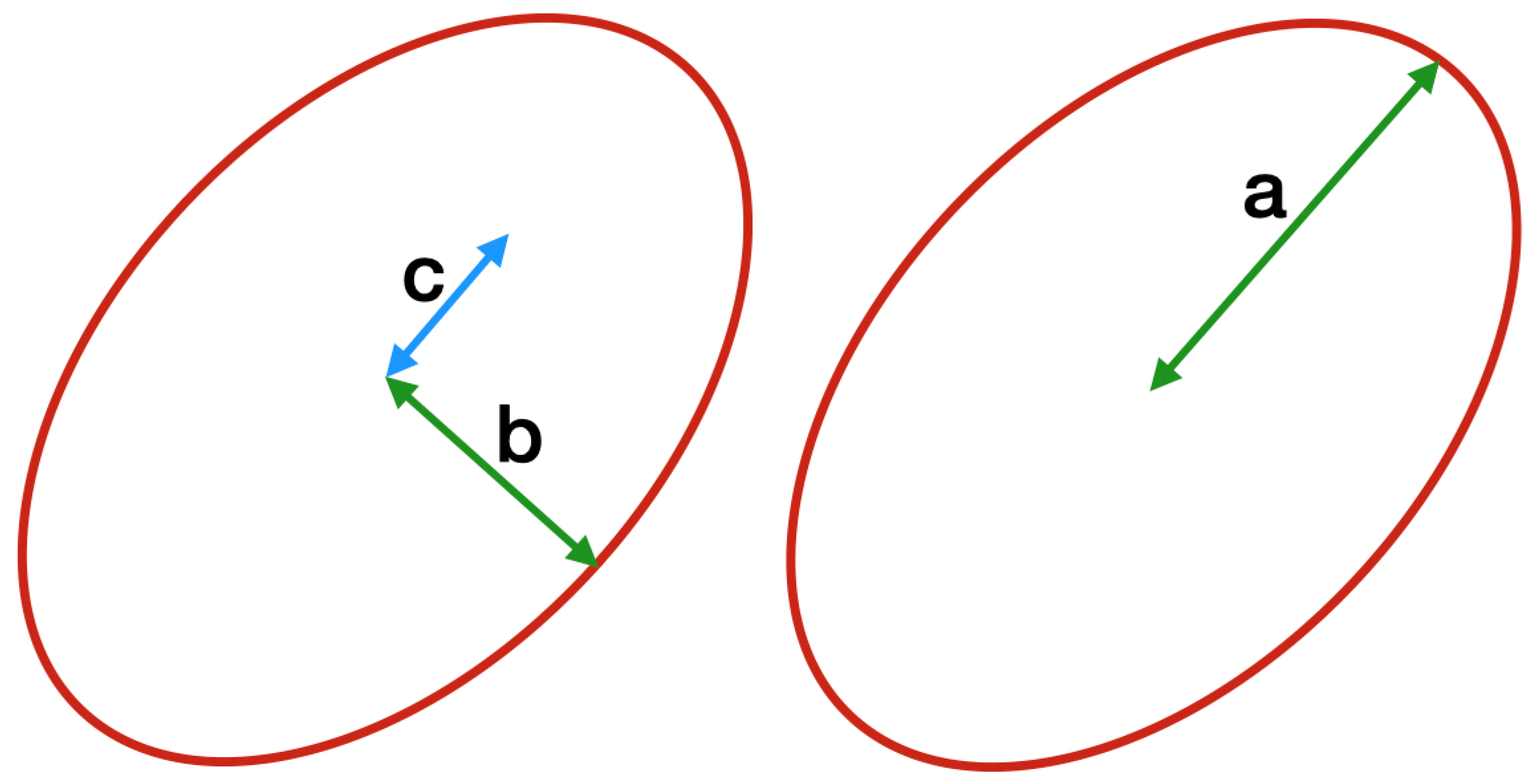
All planets orbit their host stars along an elliptical path. All moons orbit their host planets on elliptical paths. Eccentricity is defined as the departure of the orbital ellipse from circularity. For a perfect circle, the eccentricity equals zero. For a parabola, it equals one. For an ellipse, the eccentricity equals the distance from the center of the ellipse to one of the foci divided by the semi-major axis of the ellipse (see Figure 1).
The orbital eccentricity affects the amount of radiation a planet receives from its host star at different points along the orbit. Planets with orbital eccentricities greater than 0.06 cannot simultaneously remain in the liquid water, ultraviolet, tidal, astrosphere, photosynthetic, and ozone habitable zones throughout their orbit, where habitability is defined as what is necessary for the existence of complex animal life (see Section 6.1, Section 6.2, Section 6.3, Section 6.4, Section 6.5 and Section 6.6). For eccentricities beyond 0.06, the greater the eccentricity the longer the time per orbit a planet resides outside one or more habitable zones.
The latest encyclopedia of known planets outside the solar system (exoplanets) has 7884 entries (Exoplanet TEAM 2025). The number of planets in the catalog with measured or estimated orbital eccentricities is 3397. Of these 3397, 53 percent possess orbital eccentricities greater than or equal to 0.06 and 43 percent greater than or equal to 0.10.
6.9. Rotation Rate Habitable Zone
A planet’s rotation rate affects the reflectivity of its clouds, which determines how much of the host star’s heat and light reaches the planetary surface. The more rapidly a planet rotates the narrower the bands of clouds at low latitudes (Yang et al. 2014). These narrower equatorial cloud belts reflect less of the host star’s heat and light. Thus, they cause the planet’s surface to reach higher average temperatures.
A planet’s rotation rate, therefore, alters the positions and widths of other habitable zones. For example, the faster the rotation rate, the more distant from the host star the liquid water, ultraviolet, photosynthetic, and ozone habitable zones.
6.10. Obliquity Habitable Zone
Obliquity is the tilt of a planet’s rotation axis relative to its orbital axis. Climate simulation studies show that the higher the obliquity, the warmer the planet’s global mean surface temperature (Jenkins 2000). For planets with oceans and continents, high obliquity warms the oceans while cooling the continents.
As with a planet’s rotation rate, its obliquity alters the positions and widths of other habitable zones. For example, greater planetary obliquity pushes the liquid water, ultraviolet, photosynthetic, and ozone habitable zones outward from the host star.
6.11. Obliquity Stability Habitable Zone
Computer simulations of obliquity variations for known and hypothetical exoplanets found that the greater the differences in orbital inclinations (angle between a planet’s orbital plane and the host star’s equatorial plane) among the planets in a planetary system the greater the obliquity variations in the individual planets (Deitrick et al. 2018b). The simulations also revealed that the larger a planet’s initial orbital inclination and/or initial orbital eccentricity the greater were future obliquity variations. In the common event where one or more planets is ejected from the planetary system by gravitational disturbances from another planet or a passing star, the inclinations and orbital eccentricities of the remaining planets are boosted, resulting in their obliquity variations becoming greater.
For planets closer to their host stars than 0.5 AU, the obliquity variations can be small enough not to threaten the long-term existence of life. However, for a planet to reside in the liquid water, ultraviolet, tidal, astrosphere, and electric wind habitable zones, it must orbit more distantly than 0.9 AU. At that distance it is almost impossible for a planet small enough to be habitable to experience obliquity variations less than ±10°. Mars, for example, has obliquity variations ±16° (Holo et al. 2018).
Earth’s obliquity variations are remarkably tiny, only ±1.2° over the past half billion years. This obliquity stability would not be possible unless Earth was orbited by a single gigantic, nearby moon such that the Moon’s tidal forces exerted on Earth’s equatorial bulge are about double that of the Sun’s. Even so, a small change in the Moon’s mass, up or down, would induce obliquity variations that would rule out diverse ecosystems, a large human population, and global civilization (Waltham 2004). These consequences occur for obliquity variations as small as ±2.4°.
While a single large moon orbiting nearby a relatively small planet is a requirement for obliquity stability, it is not a sufficient requirement. Multiple features of the planet’s planetary system must also be fine-tuned (Deitrick et al. 2018b).
The most significant consequence when obliquity variations for an otherwise habitable planet exceed ±2.4° is that they “cause the ice edge, the lowest latitude extent of the ice caps, to become unstable and grow to the equator” (Deitrick et al. 2018a, p. 1). The planet is doomed to experience a runaway glaciation where the planet’s entire surface gets covered in ice. Since ice reflects the host star’s light and heat more efficiently than any other planetary surface cover, the glaciation likely will remain even when changes in the planet’s obliquity otherwise would warm the planet. The exception is where the planet’s obliquity variation is so large that the planet oscillates between all its surface water being evaporated into steam and all its surface water being frozen into ice. This scenario rules out habitability.
6.12. Orbital Eccentricity Stability Habitable Zone
Another set of computer simulations on known and hypothetical exoplanets showed that large orbital eccentricity variations for potentially habitable planets will be just as frequently generated as large obliquity variations (Deitrick et al. 2018a, p. 1). A consequence of Kepler’s second law of motion (a line connecting a planet to its star sweeps out equal areas during equal time intervals) implies a planet moves faster when it is closer to its star and slower when it is farther away. Thus, a planet will spend more time when its orbital distance is farthest from its star than when it is nearest. In situations when the orbital eccentricity becomes large, the planet can completely freeze over when it is most distant from its star.
It is not either or. Large orbital eccentricity variations will be accompanied by large obliquity variations (Deitrick et al. 2018a). Obliquity variations typically disturb a planet’s climate cycles more than orbital eccentricity variations. The exception is when eccentricity variations exceed ±0.1. For potentially habitable planets, large obliquity and/or orbital eccentricity variations will generate severe climate change on time scales of a few years. The obliquity and orbital eccentricity variations either will eradicate or severely narrow the liquid water habitable zone. Our solar system is exceptionally rare in that initial planetary orbital inclinations and eccentricities, spin–orbit resonances, and gravitational perturbations have not generated obliquity and orbital eccentricity variations large enough to make its one potentially habitable planet uninhabitable.
6.13. Carbon Dioxide Habitable Zone
Certain microbes can tolerate a wide range of carbon dioxide (CO2) concentrations in their planet’s atmosphere. However, complex aerobic life, especially animals cannot.
Photosynthesis shuts down when atmospheric CO2 levels dip below 0.000153 bar (1 bar = 0.987 of atmospheric pressure of Earth at sea level). Large-bodied mammals and birds will starve to death at atmospheric CO2 levels below 0.00018 bar. On the other hand, exposure to atmospheric CO2 levels above 0.0051 bar, even for half a day, prove deleterious for mammals (Occupational Safety and Health Administration 2021). Respiratory acidosis, ion buffering changes in internal body fluids, and circulatory arrest are just three biological consequences of elevated CO2 levels (Azzam et al. 2010). For marine ecosystems, atmospheric CO2 levels as low as 0.00095 bar will generate acidification that will cause corals, echinoderms, mollusks, crustaceans, and fish to disappear (Wittmann and Pörtner 2013).
The claim that the liquid water habitable zone can be very wide presumes atmospheric CO2 can range from 0–20 bars (Schwieterman et al. 2019). However, the range for aerobic animal ecosystems is limited to 0.00018–0.00095 bars. Therefore, for such life to possibly exist the liquid water habitable zone must be very narrow. For it to exist for more than a hundred million years requires an extraordinarily fine-tuned carbonate-silicate cycle to draw down atmospheric CO2 at a near continuous fixed rate to compensate for the increasing brightness of the host star (Kasting 2025). This fine-tuned draw down appears to only be possible for Earth-like planets with orbital distances between 0.982 and 1.18 AU (Bonati and Ramirez 2021; Levenson 2021; Graham and Pierrehumbert 2024), high mantle abundances of thorium and uranium (Oosterloo et al. 2021), and an ocean-to-land-area ratio comparable to the present Earth (Höning and Spohn 2023).
6.14. Carbon Monoxide Habitable Zone
For animals with circulatory systems, carbon monoxide (CO) is highly toxic even at abundance levels as low as 9 parts per million (Townsend and Maynard 2002). Neither can such animals exist with an atmospheric molecular oxygen level below 0.10 bar.
Planets orbiting stars less massive than the Sun will receive less near-uv radiation. With this deficit, even with no more than 0.10 bar of oxygen and low CO2 levels in the atmosphere and even with abundant surface liquid water, so little OH (hydroxide) is produced in the atmosphere that the CO lifetime is greatly lengthened (Schwieterman et al. 2019). Thus, for planets orbiting stars only slightly less massive than the Sun, there will be higher atmospheric CO levels than is the case for Earth.
Making this problem worse is the fact that certain simple lifeforms that must be abundant for complex aerobic life to exist produce CO (Fichot and Miller 2010). Biomass burning (Andreae and Merlet 2001; Andreae 2019) and photolysis of dissolved organic matter in surface layers of oceans and lakes also pump CO into the atmosphere (Conte et al. 2019). Consequently, planets orbiting stars less massive than the Sun will be uninhabitable for complex aerobic life.
6.15. Stellar Flares Habitable Zone
X-ray and ultraviolet (xuv) radiation from flares emitted by a planet’s host star can result in massive hydrogen loss via thermal escape and equally massive oxygen loss via non-thermal escape from a planet’s surface and atmosphere (Airapetian et al. 2017). These losses can render an otherwise habitable planet bone dry within a few tens to hundreds of millions of years. These losses are especially substantial for planets with orbital distances less than 1.0 AU.
All stars within a half billion years after their birth emit frequent powerful xuv flares. Absent a robust, enduring powerful magnetosphere enveloping a potentially habitable planet, flares from its host star will erode away most of its atmosphere and all its surface and atmospheric water before the planet is even a half billion years old. (A magnetosphere, created by an active, stable interior dynamo, is the region of space surrounding an astronomical body in which charged particles are influenced by its magnetic field).
6.16. Coupled Magnetosphere Habitable Zone
This habitable zone is the most restrictive of all known habitable zones. Not only do stars during their first half billion years emit intense gamma-ray, X-ray and uv radiation, they also discharge streams of energetic particles. The combination of this radiation and particles efficiently and rapidly sputters away the atmosphere and surface water of any potentially habitable planet that is not enveloped by a powerful magnetosphere. Analysis of 9+ years of data from the Mars Atmosphere and Volatile Evolution (MAVEN) spacecraft that orbits in Mars upper atmosphere and ionosphere showed that sputtering rates are more than four times higher than stellar model predictions and are especially elevated during stellar storm events (Curry et al. 2025). Measurements of stellar activity levels reveal that the Sun has the lowest sputtering rate of any known star (Maehara et al. 2012; Reinhold et al. 2020).
Earth possesses a powerful magnetosphere, but even its magnetosphere is not up to the task of protecting Earth’s atmosphere and surface water from being sputtered away by the youthful Sun. What allowed Earth to eventually host life was the extraordinary Moon-forming event and the coupling, that is, joining together, of the magnetospheres of Earth and the Moon during the first half billion years of the Earth-Moon system.
Earth’s moon did not form like other moons. It formed as an outcome of the collision-merger between Theia, the solar system’s fifth rocky planet that was about twice Mars’ mass, and the proto-Earth (Canup and Asphaug 2001; Canup et al. 2023). The residual heat from that collision-merger kept the Moon’s iron core in a liquid state up until 3.9 billion years ago.
The Moon’s proximity to Earth during its first half billion years provided the convection currents to circulate the liquid iron in its core. The pull of Earth’s gravity on the Moon’s near side was substantially stronger than on its far side. This difference caused the Moon to wobble. (A much smaller wobble persists to this day). This wobbling circulated the liquid iron in the lunar core, producing the Moon’s early strong magnetic field and enshrouding magnetosphere. Analysis of lunar rocks has affirmed that 4.4–3.9 billion years ago the Moon’s maximum magnetic field strength was the same as Earth’s (Mighani et al. 2020). Similarly, the pull of the Moon’s gravity on Earth circulated the liquid iron in Earth’s core. Consequently, both the youthful Earth and Moon were enshrouded by powerful magnetospheres.
While the present-day Moon is separated from Earth by 384,000 km or 30 Earth diameters, some 4.0 billion years ago, the two bodies were separated by a mere 114,700 km or 9 Earth diameters (Zharkov 2000; Farhat et al. 2022; Farhat et al. 2023). The proximity of the Moon and Earth to one another before 4.0 billion years ago brought about a coupling of the two bodies’ magnetospheres (Green et al. 2020).
The coupling of the magnetospheres of Earth and the Moon provided a magnetic shield of sufficient strength and size to prevent the blast of particles and radiation from the Sun previous to 4.0 billion years ago from sputtering away all Earth’s atmosphere and surface water. Without the added boost from joining forces with the Moon’s magnetosphere, Earth’s magnetosphere would have been too weak to a protect the young planet.
After 3.9 billion years ago, the Moon’s magnetic field became too weak and the Moon too distant from Earth to provide significant magnetospheric protection for Earth’s atmosphere, hydrosphere, and life. However, since 3.9 billion years ago, the protection necessary to retain these life essentials had lessened considerably. The Sun’s flaring activity, particle outflows, and intensities of gamma-ray, X-ray, and ultraviolet emission had dramatically declined to levels so that Earth’s magnetosphere, by itself, provided adequate protection.
The team that discovered and determined the nature of the early Earth-Moon coupled magnetosphere concluded that it is “relevant not only for the study of the early Earth and Moon but also for the habitability of exoplanets” (Green et al. 2020, p. 4). The implication of the coupled magnetosphere habitable zone is that for any planet to host life more complex than a few primitive microbial species for more than a few million years, it needs to be part of a planet-moon configuration nearly identical to the Earth-Moon system with a nearly identical dynamical and magnetic history. It is important to add that such a planet-moon system also must orbit a star with a mass nearly equal to the Sun’s, given that stars more massive or less massive than the Sun pose a significantly greater risk to the sputtering away of any nearby planet’s atmosphere, hydrosphere, and, thus, to life.
7. ETI Galactic Habitability Requirements
Just as there are known planetary habitable zones, there are known galactic habitable zones. A galactic habitable zone is a region within a galaxy where a planet or moon must reside for that planet or moon to possibly host life (Gonzalez et al. 2001; Lineweaver et al. 2004). As with planetary habitable zones, the galactic habitable zones are very much smaller for advanced life than for microbial life. Likewise, for a planet or moon to be truly habitable it must simultaneously reside in all the known galactic habitable zones.
So far, astronomers have discovered 5 galactic habitable zones:
7.1. Co-Rotation Distance Habitable Zone
The first discovered galactic habitable zone was the co-rotation distance habitable zone. Newton’s laws of motion determine the rate at which stars revolve around a galaxy’s center. The greater a star’s distance from the center the longer it takes to make one revolution around it. Galactic density waves (Feitzinger and Schmidt-Kaler 1980; Bobylev et al. 2008; Griv et al. 2025) determine the rotation rate of the spiral arm structure.
The farther is a star from the galaxy’s co-rotation radius (the distance from the galactic center where stars revolve at the same rate as the spiral structure rotates), the more frequently that star crosses a spiral arm. Spiral arm crossings are hazardous to life. Spiral arms are filled with young supergiant stars, giant molecular clouds, and star-forming nebulae that shower their vicinities with deadly radiation. These stars, clouds, and nebulae also gravitationally disturb any nearby planetary system’s asteroid-comet belts, unleashing an enhanced bombardment on those planets. Only stars near the co-rotation radius avoid frequent spiral arm crossings.
The co-rotation radius is different for each spiral galaxy. It depends upon the galaxy’s total mass, stellar mass, gas mass, bulge mass, magnetic field, and stellar disk dimensions. For the Milky Way Galaxy (MWG), the co-rotation radius is far enough from the galactic center that planetary systems near the co-rotation radius will not be exposed to sterilizing radiation from the galactic nucleus. However, any planetary system forming much farther out from the co-rotation radius will be unable to accrete sufficient quantities of life-essential heavy elements. The reasons why are that the density of matter in the galactic disk decreases with distance from the galactic center and the ratio of heavy-to-light elements varies with distance from the galactic center in a complex manner (Mishurov et al. 2002).
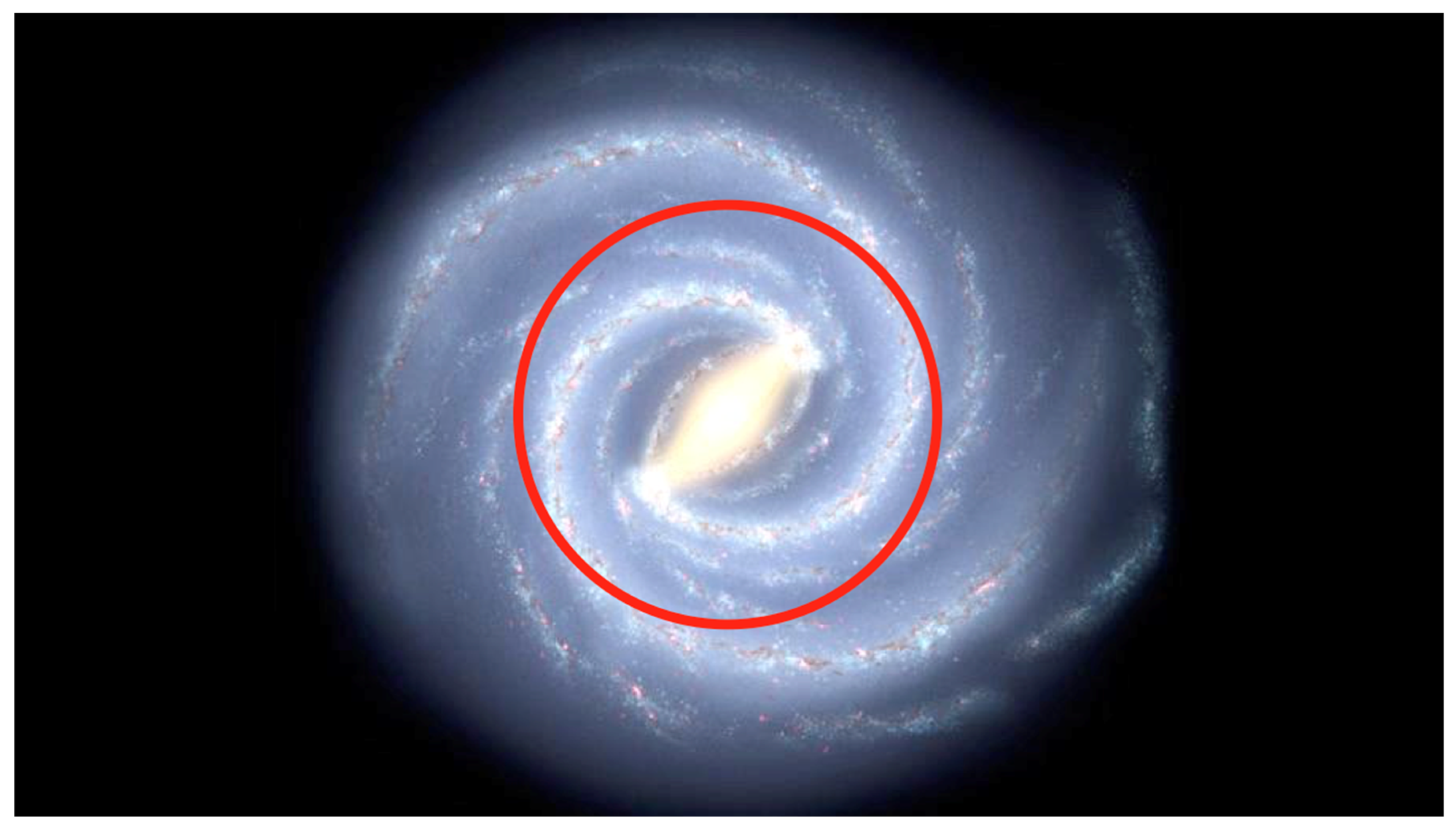
The safest place for life would not be exactly at the co-rotation distance. A planetary system in that precise place would experience chaos from destructive mean-motion resonances (Voglis et al. 2006). The safest orbital distance would be just inside the co-rotation radius. The Sun orbits the center of the MWG at 98 percent of the co-rotation radius (Dias et al. 2019) (see Figure 2).
Just inside the co-rotation radius the star density is at a minimum (Barros et al. 2013; Barros and Lépine 2014). This is the optimal location for intelligent physical life to launch and sustain civilization.
7.2. Black Holes Habitable Zones
Advanced life requires a safe distance from the supermassive black hole (SMBH) that resides in the nucleus of every large galaxy. For the MWG the safe distance is anywhere beyond just inside the co-rotation radius. Advanced life also requires safe distances from stellar-mass black holes that are consuming matter. For spiral galaxies, nearly all such black holes reside either in the arms or the nucleus.
Animals cannot exist without r-process elements. R-process elements form when lighter elements rapidly capture neutrons (Lee et al. 2022). Such rapid neutron capture needs a dense stream of fast-moving neutrons that only core-collapse supernovae and neutron star merging events provide. The larger the initial masses of merging neutron stars, the greater the production of r-process elements. Neutron star mergers where the combined mass of the merging neutron stars exceeds 2.5 times the Sun’s mass, considerably less where the neutrons stars’ interiors are elastic, result in black holes (Bauswein et al. 2020).
Stars with masses greater than 25 times the Sun’s mass will enter the core-collapse phase and end up as black holes (Heger et al. 2003; Côté et al. 2016). Stars with masses 10–25 times the Sun’s mass have a high likelihood of entering the core-collapse phase and in doing so will eject much greater quantities of r-process elements into the interstellar medium than stars more massive than 25 times the Sun’s mass (Yutaka et al. 2014).
Essential for animals’ existence are adequate quantities of nickel, copper, zinc, arsenic, selenium, molybdenum, iodine, and tin. For such quantities of these elements to be available for animals it is crucial that the host planet or moon form in a region of the galaxy where black hole forming events (neutron star mergers and/or core collapse supernovae) are frequent and nearby. Roughly, the greater the distance from the galactic center the fewer the number of core collapse supernovae and neutron star merging events. Therefore, for animal life to be possible, the host planet or moon must form in the inner, not the outer, part of its galaxy.
For all galaxies, the black hole habitable zone and the co-rotation distance habitable zone fail by a wide margin to overlap. For example, in the MWG the region where a planet can be adequately enriched with the r-process elements that animals need is considerably interior to the co-rotation radius. Nevertheless, the solar system is far more enriched with r-process elements than its present location in the MWG would permit. (Heavy element abundance takes a significant dip at the co-rotation radius (Mishurov et al. 2002)).
The solution to this enigma is that the black hole habitable zone is not one zone, but two zones separated in time and space. The condition that the host planet be adequately enriched with r-process elements must be met before the origin of life. The condition that the host planet be distant from deadly radiation from neutron star merging events, core collapse supernova events, and black holes must be met after the origin of life. The two conditions can be met if the host planetary system forms inside the zone rich in r-process elements and migrates shortly thereafter into the co-rotation distance habitable zone that also happens to be sufficiently distant from deadly radiation from black holes, neutron star mergers, and core collapse supernova events.
This scenario requires a spiral galaxy fine-tuned in size, mass, stellar population, and stellar distribution. It also requires a planetary system to form at a fine-tuned location in the galaxy and after being enriched in r-process elements to migrate from its birth location to just inside the co-rotation distance and remain at that location undisturbed for a few billion years.
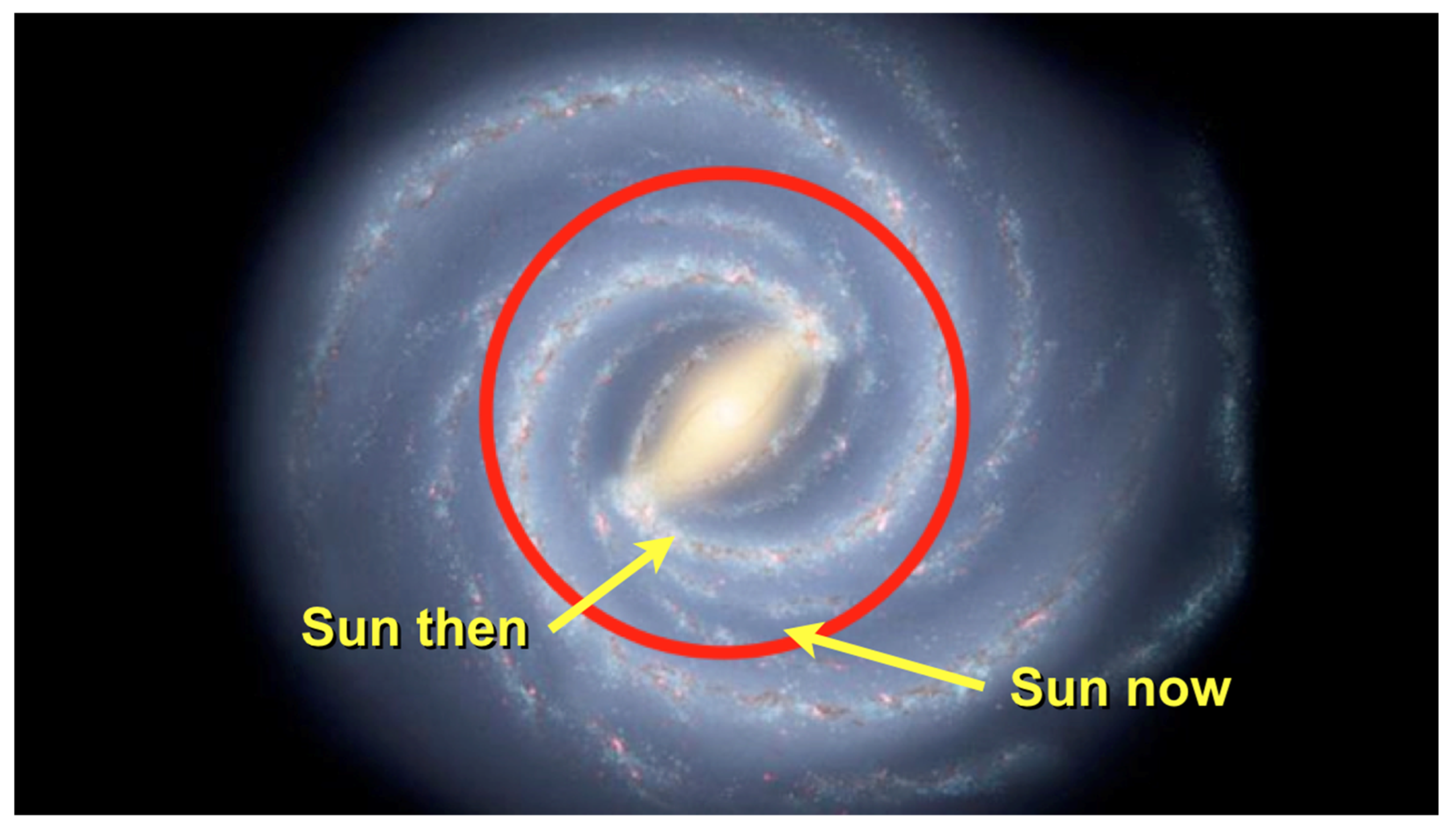
Astronomical observations and research studies affirm that this scenario was played out for the solar system. The Sun is part of the G-dwarf problem. In the Sun’s local neighborhood there are two diverse populations of G-dwarf stars (Jorgensen 2000; Caimmi 2008). One has a distinctly low abundance of heavy elements that show similarities with stars in our galaxy’s halo. The second, like the Sun, has a distinctly high abundance that show similarities with stars in our galaxy’s central bulge (Caimmi 2008). The second population also is older on average than the first population. This age difference makes the elemental abundance difference greater since our galaxy’s heavy element abundance increases with its age. The difference in heavy element abundance indicates that the two populations did not form in the same region of the galaxy. The first population apparently formed in a region of our galaxy where few, if any, neutron star merging and core collapse supernova events occurred, while the second population apparently formed in a different region of our galaxy where many neutron star merging and core collapse supernova events occurred. This scenario is well explained if the majority population formed where they are presently located just inside the co-rotation distance and if the minority population formed in a dense cluster of about 20,000 stars (Arakawa and Kokubo 2023) just beyond our galaxy’s central bulge and got strongly ejected from the cluster shortly after they were enriched with heavy elements to end up in their present location (Schönrich and Binney 2009; Minchev and Famaey 2010; Wang and Zhao 2013). This scenario also explains how Earth ended up with such an extreme abundance of the r-process elements uranium and thorium. Figure 3 shows the required migration route. For advanced life to be possible on any other planetary system, something similar to this scenario must have played out.
7.3. Ejection Distance Habitable Zone
This galactic habitable zone is a consequence of the black hole galactic habitable zone. For advanced life to be possible, the host planetary system needs to form at a distance from the galactic center where the planet can be adequately enriched in r-process elements. Once the required enrichment has been achieved, the planetary system must be ejected from that location then stop and settle in just inside the co-rotation distance, on the condition that for the host galaxy, just inside the co-rotation distance also is a region distant enough from radiation sources problematic for animals and intelligent physical life.
The timing of the ejection must be fine-tuned. The ejection distance also must be fine-tuned.
7.4. Star Density Habitable Zone
The density of stars in a spiral galaxy decreases with distance from the galactic center. For advanced life to be possible in a planetary system, the system must be distant from regions with high star density and reside in a region of exceptionally low star density. Only then can the planetary system be isolated from radiation and gravitational disturbances that would be survival issues for animals and intelligent physical life. While these conditions are met in the outskirts of spiral galaxies, those outskirt locations are well outside the co-rotation distance, black hole distance, and ejection distance habitable zones.
7.5. Bubble Habitable Zone
This galactic habitable zone is a consequence of the star density habitable zone and the co-rotation distance habitable zone plus the need for protection from cosmic rays. For galaxies where the co-rotation distance, black hole distance, and ejection distance habitable zones overlap one another and are all compatible with one another, the star density habitability criterion requires that the planetary system sit inside in a large bubble that resides just inside the co-rotation distance.
Magnetized cavities, termed galactic bubbles, are voids of exceptionally low gas and dust density that are a few hundred light years in diameter. These bubbles are carved out by co-moving groups of near simultaneous supernova eruptions (Fuchs et al. 2006; Pelgrims et al. 2020). By impacting the directionality of cosmic rays and producing cosmic ray diffusion (Gebauer et al. 2015), the magnetized bubbles mitigate to a substantial degree damage to advanced life from cosmic radiation. The bubbles, though, are temporary, lasting just a few tens of millions of years (Fuchs et al. 2006; Zucker et al. 2022; Siegert et al. 2024). For an advanced civilization to be possible the host planet must reside in such a bubble at the just-right time where the bubble is situated just inside the co-rotation distance.
Other galactic features can impact the planetary habitable zones. For example, nearby supernovae, supergiant stars, magnetically active stars, and/or stellar mass black holes can shrink the ultraviolet planetary habitable zone.
8. ETI Stellar Habitability Requirements
For advanced life to exist, its host star’s age must fall within a narrow range. Human beings or their functional equivalents need fine-tuned atmospheric oxygen, carbon dioxide, nitrogen, and water vapor levels. They need plentiful vegetation with efficient photosynthesis. They need their planet to be richly endowed in biodeposits, for example, topsoil, limestone, gypsum, coal, oil, and natural gas. They need surface metal deposits to be largely insoluble, not soluble, which requires at least a 2-billion-year period of an enormous abundance and diversity of sulfate-reducing bacteria (Logan et al. 1995; Ross 2016, pp. 132–34; Sabuda et al. 2020). They need radiation from potassium-40, uranium-235, uranium-238, and thorium-232 in their planet’s crust to decay to a level neither too high nor too low for large-bodied mammals with long lifespans (Upton 2001; Mitchel et al. 2003; Liu 2006; Doss 2018; Sosin et al. 2024; Sutou 2025). All these needs imply a 3+ billion-year-history of non-advanced life that precedes advanced life.
All stars get progressively brighter as their nuclear furnaces fuse hydrogen into helium. For example, presently the Sun is about 23% brighter than at the time of life’s origin. However, life can tolerate at most only a 2% change in the host star’s brightness before being driven to permanent extinction (Hart 1979). On Earth, this catastrophe was avoided because different life at different times in Earth’s history regulated the rate at which the silicate-carbonate cycle removed heat-trapping greenhouse gases from the atmosphere (Ross 2016, pp. 159–64; Hakim et al. 2019). As the Sun brightened, the reduction in greenhouse gases in Earth’s atmosphere perfectly compensated for the Sun’s brightening so that Earth’s surface temperature remained optimal for life.
Future compensation, though, will require the reduction in atmospheric carbon dioxide to a level below that which is minimal to sustain photosynthesis. Advanced life cannot be sustained without photosynthetic vegetation. Within only a few million years Earth’s surface either will be too warm for large-bodied advanced animals or contain too little atmospheric carbon dioxide to host abundant photosynthetic vegetation.
There also is a looming atmospheric oxygen problem. Future deoxygenation of Earth’s atmosphere and the atmospheres of Earth-like planets is an inevitable consequence of nuclear-burning stars becoming increasingly more luminous (Ozaki and Reinhard 2021).
Therefore, for a star to host a planet on which advanced intelligent life can exist, its age must be within about 100 million years of the Sun’s present age. For advanced intelligent life that sustains global civilization the host star’s age must be within about 10 million years of the Sun’s. This age range constraint is a consequence of intelligent life and its civilization requiring a host star with exceptional luminosity stability (required for planetary climate stability) and minimal flaring activity (see the following five paragraphs and Figure 4 and Figure 5).
All nuclear burning stars produce flares, powerful explosions from the release of magnetic energy near starspots. An exhaustive analysis of catalogs of solar and stellar flares shows that the Sun and solar-type stars share the same physical process in the spot-to-flare activity (Takuno et al. 2025). Extensive stellar flaring activity observations reveal that for stars similar in age to the Sun, both those more and less massive exhibit much greater flaring activity. These observations demonstrate that the most important factors in flaring activity are a star’s mass and its age. Minimal flaring activity occurs when the star is almost exactly at its nuclear burning midpoint (see Figure 4).
Compared to other stars the Sun exhibits exceptional luminosity stability and an extremely low flaring activity level. With the goal of determining how extraordinary is the Sun, astronomers analyzed data from the Kepler Space Telescope on the luminosity variability of 83,000 G-dwarf (Sun-like) stars (Maehara et al. 2012). Over a 120-day period they detected 365 flares with energy levels 30–30,000 times greater than the most energetic solar flare ever detected, the 1859 Carrington Event (Maehara et al. 2012, p. 480). In a subsample of 14,000 stars with effective temperatures of 5000–6000 Kelvin and rotation rates similar to the Sun’s (a star’s rotation rate correlates with its age) they detected 14 high-energy flares, which indicates on average each of the 14,000 stars emits a flare 400 times more energetic than the Carrington Event every 350 years.
For context, if a solar flare 10 times more energetic than the Carrington Event were to make contact with Earth, it would shut down the world’s electric power grids, disrupt space-based communication and navigation, and cause an internet apocalypse. Restoration costs would be in the tens of trillions of dollars and would take years (Maynard et al. 2013). With so much of humanity’s present food supply dependent on electricity, the death toll could be in the hundreds of millions.
Another team of astronomers combined data from the Gaia and Kepler spacecraft to compare the Sun’s luminosity variations with 369 stars that most closely matched the Sun’s age (4–5 billion years), effective temperature (5500–6000 Kelvin), mass, surface gravity, rotation period, and metallicity (abundance of elements heavier than helium) (Reinhold et al. 2020). Over a 4-year period the average luminosity variability for the 369 stars was five times greater than the Sun’s over the same time period.
Figure 5 shows, to scale, the Sun’s luminosity variations compared to three of the solar-like stars that represent the range of luminosity variations in the 369 stars. The Sun’s present luminosity stability is 2.6 times superior to the most stable stars in the sample. While such stability is not needed for the existence of intelligent physical life, it is necessary for that life to have the global temperature stability to sustain high-technology civilization.
In several other respects, the Sun is an outlier among Sun-like stars (Solheim 2013; Saders et al. 2016; Metcalfe 2018). While the 70-year-long quest to find a true solar twin continues, so far, the quest is providing ever stronger scientific evidence that the Sun may be unique in its capacity to host a planet on which intelligent physical life and civilization can exist.
The most outstanding features of the Sun compared to stars most like the Sun is the Sun’s relative abundances of elements heavier than helium plus its system of rocky planets. Astronomers classify elements heavier than helium into two categories: volatile and refractory. Volatile elements are those that can be readily vaporized. Examples would be carbon, nitrogen, and oxygen. Refractory elements are those with high melting points, density, and hardness. Examples would be titanium, iron, and molybdenum.
Two studies comparing the Sun’s elemental abundances, one with 21 Sun-like stars and another with 79 Sun-like stars, found that the Sun’s ratio of refractory-to-volatile elements is 20 percent lower (Meléndez et al. 2009). The Sun’s element that most stands out relative to Sun-like stars is lithium. The Sun is extraordinarily lithium deficient for its age.
Analysis of primitive solar system meteorites establishes that lithium was relatively abundant in the gas cloud from which the Sun and its planets formed. However, the lithium abundance on the Sun’s surface is below that of the primordial solar system, by a factor of 170 times (Krankowsky and Müller 1967; Nichiporuk and Moore 1974; Day et al. 2016; Carlos et al. 2019).
Observations establish a strong inverse correlation between stellar rotation rate and lithium depletion. The higher the rotation rate, the more effectively stellar material in a star’s convection zone, in the form of penetrating plumes, is blocked from entering the radiative zone where temperatures are high enough to destroy lithium.
The older a star, the more its rotation slows, and the less lithium remains in the star’s photosphere (surface). However, the Sun’s surface lithium abundance proved far below that of any star in its age range, 4.1–5.1 billion years (Carlos et al. 2019). The combination of the Sun’s mass, age, and unique low abundances of lithium and refractory elements explains why the Sun’s present flaring activity level and levels of short ultraviolet and X-ray radiation are so extremely low (Takeda et al. 2010; Katsova et al. 2016).
In the samples of Sun-like stars astronomers noted a correlation: the greater the lithium depletion, the fewer refractory elements. They discovered why. The greater lithium depletion is the outcome of angular momentum transfer from a star to its protoplanetary disk and eventual planets (Israelian et al. 2009). The main effect of this transfer is a slowing down of the star’s rotation rate and the increasing size of its planets’ orbits.
In three independent studies on different samples of Sun-like stars, astronomers affirmed that planet-hosting Sun-like stars display greater lithium depletion, often more than 10 times as much, than stars without planets (Chen and Zhao 2006; Israelian et al. 2009; Rathsman et al. 2023). The key difference maker is not just whether a star hosts planets but what kinds of planets it hosts (Carlos et al. 2019). Compared to the 4608 other currently known planetary systems (Exoplanet TEAM 2025), the solar system is unique in that it hosts big, high-density rocky planets orbiting at large distances.
No other known planetary system has rocky planets orbiting their host stars more distantly than 0.45 AU, an outcome that cannot be attributed to instrument detection limitations. The solar system has three orbiting at 0.72, 1.00, and 1.52 AU. The average orbital distance for the Sun’s rocky planets is 15 times greater than the average for all other known rocky planets.
The solar system has the highest total mass of rocky planets of any known planetary system. (The TRAPPIST-1 system was once thought to contain seven rocky planets, but five now are known to possess “envelopes of volatiles in the form of thick atmospheres, oceans, or ice” (Grimm et al. 2018)).
The closer a planet is to its host star the more of its volatiles will be blasted away by the star’s heat. The smaller a planet’s mass the less able the planet’s gravity can prevent gravitational escape of its volatiles. Therefore, the solar system’s rocky planets should be loaded with volatiles and, consequently, possess low densities. However, the average density of the solar system’s rocky planets is 21 percent greater than the average for all other known rocky planets.
Astronomers now understand that the Sun’s exceptionally low abundance of lithium and refractory elements explains the Sun’s unique system of rocky planets. The Sun gained its matchless elemental properties via an enormous transfer of angular momentum and refractory elements to its rocky planets. The angular momentum transfer greatly enlarged the rocky planets’ orbits while the transfer of refractory elements greatly increased the rocky planets’ densities. Only because Earth is so extraordinarily massive and dense and orbits the Sun at such a great distance can humans, or the functional equivalent of humans, exist and launch global high-technology civilization.
9. ET, ETI, and SETI Implications
So far, SETI research efforts have focused on exoplanets residing in the liquid water habitable zone. The sheer number of such planets substantially dilutes research efforts. However, habitability, even at the microbial level, requires the planet to simultaneously reside in at least 7 (6.1, 6:2, 6.4, 6.7, 6.8, 6.12, 6.16) of the 16 so far discovered planetary habitable zones and for intelligent physical life all 16 of the known planetary habitable zones (see Section 6).
For existing telescopes and spacecraft to determine whether an exoplanet resides in all 16 planetary habitable zones is extremely challenging for 10 of planetary habitable zones and impossible for the other 6. On the other hand, it is observationally much simpler and far less expensive, in both observing time and required telescope power, to measure the properties of the host star. Furthermore, the potential database of stars for which life-essential characteristics can be determined is thousands of times larger than the database of planets.
If the goal is to determine whether another habitable planet or extraterrestrial intelligent life exists, the most efficient research strategy would be to first find stars that possess the required known features to possibly host planets or moons on which microbial life or physical intelligent life conceivably could exist. Only then, should astronomers dedicate specialized spacecraft and telescopes to detecting and measuring possible life-sustaining characteristics of planets orbiting those stars.
10. Hard Steps in the Evolution of Life from Non-Life
So far, surveys conducted in 2024 of 521 astrobiologists and 534 physicists, geologists, and biologists who were not directly involved in astrobiology research found that of the 995 who were willing to express an opinion on the matter 97.8 percent agreed or strongly agreed that extraterrestrial life exists (Vickers et al. 2025). One possible reason for such a high percentage agreeing abiogenesis (naturalistic origin of life from nonlife) has occurred on Earth and on many other planets is that life arose on Earth at the moment conditions first permitted the possible existence of life. As evolutionary biologist Niles Eldredge wrote, “In the very oldest rocks that stand a chance of showing signs of life, we find those signs—those vestiges—of life. Life is intrinsic to the Earth! (Eldridge 2000)”.
Does the rapidity of life’s appearance on Earth imply the origin of life is inevitable wherever habitable conditions exist? Earth has been habitable throughout the past 4 billion years, yet scientists have not found any evidence that life arose from nonlife more than once. Even under pristine laboratory conditions, where biochemists ensure only chemical reactions productive towards the origin of life operate and that they operate only under the most optimal conditions, scientists have replicated only the simplest chemical steps necessary for life’s origin.
For example, biochemists have succeeded in producing a few variants of polypeptides under highly controlled laboratory conditions that contain 40–50 amino acids, but were unable to remove these polypeptides from the clay substrates used in their manufacture. For comparison, the shortest known protein, insulin, contains 51 amino acids while titin, the longest known protein, contains 33,423 amino acids. The average protein length for eukaryotic life (all animals, plants, fungi, seaweeds, and many unicellular organisms) is 472 proteins (Tiessen et al. 2012).
Origin-of-life chemist Clemens Richert coined a phrase for experimenter intervention: “the Hand of God dilemma” (Richert 2018). Intervention by highly skilled, knowledgeable, and technologically equipped experimenters, Richert explains, is akin to claiming God did it. Richert exhorted his peers to state in their published papers how many times and in what ways they committed the Hand of God dilemma in their origin-of-life experiments.
The Hand of God dilemma and the single origin of life on Earth strongly suggests that abiogenesis is not inevitable on habitable planets. Origin of life research has demonstrated seven other scientific reasons to doubt abiogenesis.
10.1. Fine-Tuned Relative Abundances of Elements
Twenty-one elements in the periodic table are vital poisons. They are essential for life to exist, but if overly abundant, the element proves lethal or toxic to life. If underabundant, the same element also proves lethal or toxic to life. Earth is the only known astronomical body that possesses all the vital poison elements at relative abundance levels at anywhere close to what is necessary to permit physical life to exist (see Table 1).
Are the astoundingly fine-tuned relative abundances in Table 1 simply truisms testifying that extreme improbable outcomes did occur? After all, we would not be here unless chance produced all these precise outcomes. Philosophers Richard Swinburne and William Lane Craig responded with a firing squad analogy (Swinburne 1990; Craig 1988). In the analogy, 100 sharpshooters line up about 10 m away from a sentenced man to execute him. The condemned man survives. For the man to conclude he is alive because all the sharpshooters by chance missed is irrational. The rational conclusion is that he is alive because someone put blanks in all the sharpshooters’ rifles or that all 100 sharpshooters deliberately missed. Likewise, the rational conclusion to draw from the fine-tuning in Table 1 and throughout most of this paper is a theological one: Someone purposed we should live.
10.2. Surface Liquid Water Abundance
A little less than 0.03 percent of Earth’s total mass is water. The rest of the universe by comparison is soaking wet. Water is the third most abundant molecule in the universe after H2 and H3. More than 10% of the volume of the solar system moons, Ganymede, Callisto, Europa, and Enceladus, is water (Vance et al. 2018). For exoplanets where astronomers are able to measure or estimate the water content, the water fraction by mass ranges from about 8 to 50% (Charbonneau et al. 2009; Zeng et al. 2019; Kim et al. 2021). Thus, the quantity of Earth’s water is about 250 times less than what a planet of Earth’s mass and distance from its host Sun-like should possess. Earth lost nearly all its primordial water due to a collision 4.46 billion years ago by the solar system’s fifth rocky planet, Theia (Canup and Asphaug 2001; Canup 2008; Pringle and Moynier 2017; Asphaug et al. 2021; Render et al. 2023; Canup et al. 2023). This collision would not have resulted in forming the Moon or increasing Earth’s mass and density unless the primordial Earth had an ocean about a thousand kilometers deep (Genda and Abe 2005).
Earth-like planets possessing the normal quantity of water will have pervasive oceans about a thousand kilometers deep. The extreme pressure at the bottom of that ocean will form an ice layer that permanently separates the planet’s liquid water from its rocky interior. That is, there will be no chemical exchange between liquid water and the rocky material (see Figure 6), rendering both the origin and existence of life infeasible.
Another problem with water world planets is that their oceans will be acidic, with a pH of 2–4 (Levi and Sasselov 2018). While certain extremophile microbes can survive under such acidity, life cannot originate under such conditions.
10.3. No Prebiotic Soup
Life originated on Earth without the benefit of a prebiotic soup. Abiotic carbonaceous substances manifest distinctly higher ratios of carbon-13 to carbon-12, nitrogen-15 to nitrogen-14, and sulfur-34 to sulfur-32 than carbonaceous substances from the decay products of once-living organisms. Isotope measurements on Earth’s most ancient carbonaceous deposits all show they are the remains of once living organisms. None show evidence of being prebiotic (Rosing 1999; Harding et al. 2024). This is an obstacle for abiogenesis models since they all depend on a liquid water reservoir densely packed with prebiotic carbonaceous molecules.
10.4. Oxygen-Ultraviolet Paradox
The oxygen-ultraviolet paradox explains why Earth has no record of prebiotic carbonaceous substances and why none would be expected on any other potentially habitable planet. Oxygen’s presence, either in the atmosphere, oceans, lakes, rivers, or subterranean water, stymies prebiotic chemistry (Fox and Dose 1972). However, the lack of oxygen means no ozone shield will form in a planet’s atmosphere to prevent short wavelength ultraviolet radiation penetration from the planet’s host star and nearby bright stars. Short wavelength ultraviolet radiation breaks apart chemical bonds in prebiotic molecules. Either way, oxygen’s presence or oxygen’s absence shuts down the formation of prebiotic molecules.
10.5. Missing Building Block Molecules
Many essential building-block molecules for life’s origin are missing in abiotic realms. Astronomers have yet to discover a bioactive amino acid (the simple building block molecule of proteins) or a nucleobase (the simple building block molecule of DNA and RNA) in interstellar molecular clouds, even at abundance levels as low as several parts per billion. Ten of the twenty bioactive amino acids are missing in meteorites (Koga and Naraoka 2017), though fourteen have been detected in return samples from the asteroid Bennu (Majarro et al. 2025).
Lab experiments reveal that different physical and chemical conditions are needed to produce the full suite of bioactive amino acids (Elsila et al. 2007). That is, no single process and, hence, no single location and time, cosmic or terrestrial, can generate all the needed amino acids. Ultraviolet radiation and fast-moving electrons manufacture amino acids and nucleobases, but they also rapidly destroy them, explaining the brief lifetimes of both amino acids and nucleobases.
Two essential bioactive amino acids, arginine and lysine, apparently defy naturalistic manufacture. A wide range of highly controlled laboratory prebiotic synthesis experiments at temperatures ranging from 0 °C to 700 °C failed to produce any arginine or lysine (McDonald and Stormie-Lombardi 2010). These chemical barriers explain why arginine and lysine have not been found outside of organisms or the decay products of organisms.
10.6. Homochirality Dilemma
Another barrier to a naturalistic origin of life is the homochirality dilemma. Amino acids cannot be linked together to make functional proteins unless all nineteen of the chiral bioactive amino acids have the same single-handed configuration. While left- and right-handed amino acids can be linked together to make peptides (short chains of two or more amino acids), the resulting peptides are unstable and tend to clump. The biological machinery for creating life-essential proteins only works if all the amino acids share the same handedness. For all known proteins all the chiral amino acids are left-handed.
Neither can nucleobases be linked together to make DNA and RNA unless they are connected by right-handed configured ribose sugars. In theory, it is chemically possible to link left- and right-handed ribose sugars together. However, such forced linkage results in polymers with irregular, distorted structures that make the complementary binding needed to form the stable double-helix structure of DNA and the complex folding of RNA impossible. Outside of organisms and organisms’ decay products, amino acids and ribose exist in racemic, that is, random, mixtures of left- and right-handed configurations. No natural source or mechanism has been found or even reasonably hypothesized to explain the homochirality of amino acids and ribose sugars (Boyd et al. 2018; Ross 2018; Rana and Ross 2014).
10.7. No Single Assembly Location
All the physical and chemical conditions essential for a naturalistic origin of life do not simultaneously exist at any single location. One example is that some of the critical chemical reactions for assembling the building block molecules needed for the synthesis of proteins, membranes, DNA, and RNA require temperatures near or below 0 °C and will not occur at temperatures near 100 °C (Islas et al. 2003; Attwater et al. 2010; Rana 2010; Feller 2017), while other critical reactions require temperatures near 100 °C and will not occur at temperatures near or below 0 °C (Holm and Andersson 2005; Takahashi and Sugimoto 2023).
Another example is nickel. This metal is essential for life-critical H2 and CO oxidation and CO2 fixation. However, at concentrations even slightly above those needed for these life-critical processes, nickel can be extremely toxic to life (Fontecilla-Camps 2022). As origin-of-life researcher Leslie Orgel stated in a paper on biochemical cycles, “To postulate one fortuitously catalyzed reaction, perhaps catalyzed by a metal ion, might be reasonable, but to postulate a suite of them is to appeal to magic” (Orgel 2000).
All the following conditions must exist at a specific location and time for any naturalistic life’s origin scenario to be feasible:
- All the starting materials for the necessary chemical reactions must be present on the early Earth.
- Starting materials must occur at just-right abundance levels and just-right abundance ratios relative to one another.
- Energy sources and/or catalysts must be present to drive the needed prebiotic reactions.
- The temperature, pressure, humidity, salinity, pH, and radiation levels must be continuously sustained within the narrow ranges needed for the essential reactions.
- Chemical products formed by these reactions must remain stable and sufficiently concentrated long enough for subsequent essential chemical steps to be possible.
- Chemical interference by other prebiotic compounds must not occur.
- Destructive chemical reactions must occur at rates very much less than constructive chemical reactions.
- Conditions must ensure that any life that does arise is not dead on arrival.
11. Hard Steps in the Evolution of ETI from Simple Life
In 1983, physicist Brandon Carter proposed the hard-steps model for physical intelligent life (Carter 1983). He was the first scientist to show in a scientific paper that several highly improbable steps must occur for bacteria to evolve into physical intelligent beings capable of launching civilization. He also noted that the minimum time for all these steps to occur was roughly equal to the maximum time a planet’s host star would permit life to exist on the planet. Carter argued that the rough equality implied that humanity’s origin was intrinsically highly unlikely and that human-like observers beyond Earth must be very rare.
Today, we know that Carter’s rough equality is not rough. It is equal to 3–4 decimal places, implying that physical ETI is even rarer than Carter considered.
In 1986, physicists John Barrow and Frank Tipler in their book, The Anthropic Cosmological Principle, provided 10 hard steps (Barrow and Tipler 1986). Like Carter, they defined a hard step as one that is essential for the emergence of humans or ETI and is highly improbable for natural processes to produce within the maximum allotted time. Table 2 lists 20 hard steps that scientists so far have identified.
There has been some scientific debate over the relative hardness of each of the 20 steps in Table 2. There also has been debate over the completeness of the list. Nevertheless, scientists who have seriously considered all 20 steps conclude that humans may indeed be the only physical intelligent species in the universe (Snyder-Beattie et al. 2021). It appears we are alone in the cosmos.
One notable exception to the conclusion that these hard steps imply we are alone in the cosmos is a recent paper published by four astrobiologists (Mills et al. 2025). The four pointed out that every hard step occurred at the moment physical and chemical conditions on Earth permitted their appearance. Hence, they concluded that each of the steps must be easy and naturalistically straightforward and rapid. However, they overlooked that lab experiments, field observations, and naturalistic mechanisms consistently establish that the naturalistic evolution of life is marginally productive and extremely slow. That is, all the scientific evidence reveals that the steps indeed appear to be hard.
A rational explanation for the steps is that a Mind knowing the desired outcome—physical intelligent life—allows no pauses. At each instance, the Mind hypernaturally intervenes at the moment conditions permit. (A hypernatural intervention is where the Mind performs miracles by manipulating the natural laws and natural resources rather than by supernaturally overriding the natural laws and resources). Given the physical difficulty/improbability of these steps, the question about the existence of ETI appears to be a theological one, not a scientific one.
12. Interstellar Space Travel Limitations
If humanity serves as an indicator of what intelligent life is like, the desire to explore as far as possible seems a likely ETI feature. We humans already have walked on the Moon’s surface and sent spacecraft to all the solar system’s planets and to several of its asteroids and comets. Two of our spacecraft Voyager 1 and Voyager 2 now are traveling through interstellar space. Pioneer 10 and Pioneer 11 likely also are in interstellar space, though contact was lost with both spacecraft before they entered interstellar space. Voyager 1, as of November 2025, is 25.4 billion kilometers from Earth. If ETI exists, a question then becomes how far can it travel, assuming it is much more technologically advanced and endowed with many more resources than Earthlings.
Even the most optimistic SETI astronomers acknowledge that one must travel at least 200 light-years (1900 trillion kilometers) from Earth to possibly find another planet on which ETI conceivably could survive. As noted already, such optimism is unjustified. The Sun remains the only known star with all the needed characteristics to host a planet on which ETI could exist. None of the 7884 planets astronomers have discovered beyond the solar system reside in more than three of the sixteen known planetary habitable zones (Exoplanet TEAM 2025). Realistically, if ETI wants to visit us, it must travel at least 1000 light years. To get here in any reasonable time frame (less than 10,000 years), ETI’s spacecraft need to achieve sustained velocities above 0.1c, where c is the velocity of light.
Using traditional impulse drives to reach 0.1c+ velocities presents logistical challenges in fuel and energy requirements, making conventional travel impractical. A feasible and much more economic approach is to employ laser-pushed light sails. Scientists performed experiments demonstrating the feasibility of such a spacecraft propulsion system on 13–20 December 1999 (Myrabo et al. 2000).
Astrophysicists have proposed several different laser-pushed light sail propulsion systems that could send small spacecraft to the nearest planets beyond the solar system at presently realistic funding levels (Kipping 2017; Ilic et al. 2018; Salary and Mosallaei 2020; Campbell et al. 2022). The problem is not the technology or the funding but the damage risks to the spacecrafts and everything they contain. These risks also apply to the much more expensive and energy intensive options.
Interstellar space is not empty. It is filled with gas, dust, and radiation. The gas component is comprising 90 percent protons, 8 percent helium, and 2 percent other elements with carbon, nitrogen, oxygen, and iron dominating.
Interstellar dust grains in the local interstellar medium (LIM) range in size from 10−6 to 1 micrometer (µm) (Hirashita and Il’in 2022). However, dust grains larger than 10 µm are not rare. Radar observations have identified an incoming population of interstellar dust grains with masses > 3 × 10⁻¹⁰ kg, corresponding to diameters greater than 60 µm (Taylor et al. 1996; Landgraf et al. 2000). Since the LIM is a dust-poor region of the MWG, travel outside the LIM will pose significantly greater risks.
Cosmic rays permeate all interstellar space. Their energy levels range from 108 to 3 × 10²⁰ electron volts per particle. Pebbles, rocks, and comets are rare in interstellar space except when one is within 1.0 light year of a star (Correa-Otto and Calandra 2019).
The gas, dust, and cosmic radiation pervading interstellar space pose serious risks to the survivability and operation of any spacecraft. A key component of the spacecraft radiation environment is radiation produced within the spacecraft upon impacts with interstellar medium particles like protons, heavy element nuclei, and dust grains (Hoang et al. 2017). Damage incurred by interstellar spacecraft rises with the square of the spacecraft’s velocity. Thus, a spacecraft traveling at 0.3c will suffer nine times the damage of a spacecraft traveling at 0.1c.
The larger a spaceship’s cross section, the more damage it will suffer from space particles, dust, and debris. The number of impacts rises with the square of the spaceship’s cross section. So, a spaceship with a cross section of 100 m will be struck by a hundred times as many impacts as one with 10 m. It also will be a hundred times more likely to be struck by the largest interstellar dust grains.
At spacecraft velocities above 0.05c the particle impact kinetic energy is dominated by the spacecraft velocity, not by the velocities of particles and dust grains. At such velocities interstellar gas becomes a flow of relativistic nucleons continually bombarding the spacecraft and everything onboard. When the spacecraft encounters gas clumps, collisions with interstellar gas can so heat the spacecraft as to damage its internal electronics, especially for spacecraft constructed of high thermal conductivity materials (Hoang et al. 2017). Protons can damage the spacecraft surface to a depth of a few millimeters; iron nuclei to more than a centimeter.
Planetary astronomer Ian Crawford calculated that over a 6-light-year flight at 0.1c a spacecraft would receive between 2 and 200 impacts per square meter from dust grains larger than 60 µm (Crawford 2011). The collision with a single 100 µm dust grain would be equivalent to 1 kg mass impacting at a velocity of 11,000 km per hour, sufficient to destroy even the most heavily shielded spacecraft anyone can imagine. Even ignoring impacts from such large dust grains, Crawford determined that interstellar dust would erode about 5 kg/meter2 of spacecraft shielding material over a six-light-year flight at 0.1c and about 20 kg/meter2 at 0.2c. In his words, “Clearly these shielding masses are starting to become significant” (Crawford 2011, p. 696).
Damage to an interstellar spacecraft from interstellar gas and dust increases with the square of the spacecraft’s leading cross section. At velocities above 0.05c the leading cross section cannot be anywhere near as large as 100 or 10 m, or even 1 m. At those sizes it is inevitable that an interstellar spacecraft will be punctured multiple times by dust grains large enough to totally destroy the spacecraft.
Interstellar spacecraft must be small enough to at least have a possibility of not being rendered completely nonfunctional by collisions with interstellar dust. Astronomers acknowledge this limitation in their proposals to send spacecraft to explore the nearest planet beyond our solar system, Proxima Centauri b, 4.2 light years away (Crawford 2011; Hein et al. 2017; Hoang et al. 2017). Their design proposals call for the necessary electronics and detectors to be squeezed into a craft that measures no more than 5 cm long and 0.3 cm wide and high. That is, the spacecraft cannot be much larger than a matchstick. They acknowledge a spacecraft that small only will be able to accomplish flyby missions. That is, there will be no possibility of slowing down the spacecraft as it approaches Proxima Centauri b. They also acknowledge that much of the spacecraft’s mass will need to be devoted to shielding, leaving even less mass that can be devoted to electronics and detectors. Even then, hundreds, if not thousands, of such spacecraft must be sent to ensure at least one will be sufficiently functional to return some useful information about Proxima Centauri b.
Star Trek fans like to speculate about force fields surrounding large spaceships that deflect away all interstellar particles, dust grains, pebbles, and rocks no matter how fast the spaceships are traveling. However, if the spaceships are physical entities with physical beings on board, both the spaceships and beings will be subject to the laws of physics.
Physicist Lawrence Krauss’s best-selling book, The Physics of Star Trek, explains the limitations the laws of physics impose on deflector shields (Krauss 2007). Such shields require power sources that produce the enormous amounts of energy to create the needed electromagnetic fields. The bigger the spaceship, the bigger the required power source. The problem is that the power source(s) would fill the ship’s entire volume and then some. The shields in Star Trek use gravitational energy so that space objects get bent around the ship. But, as Krause explains, the Sun at a million times Earth’s mass bends light around it by less than a thousandth of a degree. So, it is inconceivable that an onboard power generator could produce the gravitational energy to swerve away interstellar space particles, dust, and rocks by 90 degrees! Krauss argues that the only feasible shields are those that detect, target, and destroy the incoming objects. However, that would require detecting, targeting, and destroying at safe distances 1–100 µm dust grains with incoming velocities greater than 0.1c.
Size limitations on physical interstellar spacecraft imply that even if physical ETI exists there is likely is no practical way they can visit us or we visit them. For all practical purposes we are alone, whether or not they exist.
Interstellar spacecraft size limitations furthermore imply that we are cut off from all forms of physical extraterrestrial life. A spacecraft a few centimeters long might be large enough to house a tiny ant, but it would be far too small to provide the food, water, and oxygen such a creature would need for a space trip of 40+ years. A far bigger problem is presented by the deadly radiation environment of interstellar space (Curtis and Letaw 1989; Kumar et al. 2018; Lubin et al. 2022).
13. UAPs?
Millions of people all over the world cite their personal encounters with unidentified flying objects (UFOs) and what now national governments term as unidentified anomalous phenomena (UAPs) as evidence that ETI is making deliberate contact with humans. However, the majority of what people claim to be UFOs/UAPs are explained, or at least conceivably can be explained, by natural or human-generated phenomena. Nevertheless, the number of UAPs that cannot be so explained is far from a small number.
Astronomer J. Allen Hynek, put the number at 20 percent (Hynek and Vallée 1975, p. x). Alan Baker, author of the Encyclopedia of Alien Encounters, conservatively estimated that 10 percent of a much larger sample of UAP reports would fall into this residual category (Baker 1999, p. 7). Jacques Vallée noted that the total number of RUAPs “on record worldwide is well in excess of 100,000” (Vallée 1990a, p. 18) and that the actual number must be much higher given that “only one witness in ten comes forward with a report” (Vallée 1990a, p. 18).
There are now hundreds of well-documented cases of these residual UAPs (RUAPs) flying through Earth’s atmosphere and landing or crashing. For example, a member of the Academy of Sciences in the former Soviet Union reported at a scientific meeting, “We have a catalog of thirty landings recorded between August and November 1989 in the single region of Nicolayev near the Black Sea” (Vallée and Castello 1992, p.157). In contrast to NASA’s Space Shuttle reentering Earth’s atmosphere, human observers witnessing UAP flights through Earth’s atmosphere never report sonic booms from the apparently hypersonic UAPs or the appearance of any heat friction when these UAPs encounter the atmosphere.
At the landing and crash sites there are no artifacts or debris from the RUAPs. Nothing physical from RUAPs has ever been recovered. While there are “claims” of recovered RUAP artifacts and debris, nothing has ever been produced for public display or scientific investigation. A notable contrast are the Apollo lunar rocks. These rocks have been displayed in numerous museums. They have been the subject of several dozen peer-reviewed scientific papers. There is no rational basis for denying the reality of Apollo lunar rocks. On the other hand, there is no rational basis for accepting the reality of UAP artifacts or debris.
While no provable tangible evidence of RUAP artifacts or debris exists, there is a wealth of evidence of physical trauma at the RUAP landing and crash sites. Observers note that rocks, soil, and/or plants at the crash sites have suffered major disturbance or damage.
RUAP researchers have cataloged about 800 scorched, denuded circles of land related to landing marks or depressions from observed RUAP landings and crashes plus soil depressions consistent with the observed RUAP “landing pods” (Phillips 1975; Vallée and Castello 1992, pp. 56–57; Baker 1999, pp. 58–59; Hall 2001, pp. 261–66). The general pattern is either “a circular patch, uniformly depressed, burned, or dehydrated,” or a narrow ring, from one to three feet wide and with a thirty-foot (or larger) diameter (Hynek 1972, p. 148). Some patches and rings have remained barren for weeks, months, even years, and tracks as deep as eight inches have been confirmed (Hall 2001, p. 261). At one reported landing site, soil compression, including crushed rock, matches that of an impact from a thirty-ton object (Baker 1999, pp. 56–58). At another landing site, grass was flattened over an area consistent with the observed size of the RUAP and “the soil had turned to the consistency of stone” (Vallée and Castello 1992) Indicators of heat from the crashes include melted snow and ice, brittle or molten rock, calcined materials, metallic slag of unusual composition, and altered soil and rock chemistry (Velasco 1990; Vallée 1990a, pp. 91–100; 1990b, 1998; Sturrock et al. 1998, pp. 196–99, 202–4; Baker 1999, pp. 57, 66–68, 86–88). At some RUAP crash and landing sites trees and plants are scorched or blighted (Bounias 1990; Velasco 1990; Vallée 1990a, pp. 91–100; Vallée 1990b; Hynek 1972, pp. 126–50; Sturrock et al. 1998, pp. 204–6; Hall 2001, pp. 261–66). In a few cases, trees and plants took over year to recover from the RUAP crash.
In one exceptional case, grass and weeds at the RUAP crash site grew to double or triple the size of identical plants in adjacent areas and maintained this extraordinary growth for two years following the crash (Vallée 1990a, pp. 92–93). In another case, nearby witnesses confirmed that a hovering RUAP, which emitted no discernable heat nor sound, cooked and desiccated the plants beneath it (Sturrock et al. 1998, pp. 205–6). At a RUAP landing site in Voronezh, Russia, the measured radiation at the site was 30–37 microroentgens per hour which contrasted with 10–15 microroentgens per hour in the surrounding area (Vallée and Castello 1992, 56).
In the famous RUAP incident at Trans-en Provence, France on 8 July 1981 RUAP investigators established that at the crash site both RUAP-marred leaves and leaves that sprouted shortly after the sighting showed signs of extreme aging. The toxicologist who studied the leaves ruled out chemical poisoning as the cause and noted that microwave radiation could not be the primary cause (Bounias 1990; Sturrock et al. 1998, pp. 204–6). He concluded that the leaf damage could not be caused by any known natural or man-made agent.
At a RUAP sighting in Voronezh, Russia, “The object projected beams of light that melted the asphalt before block #5 of the nuclear power plant. There were many witnesses. The Voronezh group took pieces of the asphalt for analysis” (Vallée and Castello 1992, p. 175).
These RUAP landings and crashes imply that RUAPs are real but not physical. They leave behind no artifacts or debris but damage the vegetation and ground at the landing/crash sites. They violate the laws of physics.
The only common feature shared by all known RUAPs is that every RUAP is different from all other RUAPs. All serious RUAP researchers acknowledge the enormous variability in RUAP observations.
The extreme diversity of RUAP features stands as a powerful argument against materialistic explanations for RUAPs. If indeed RUAPs are material spacecraft, why is there no evidence of any assembly line manufacture? As John Alexander, U. S. army colonel with a doctorate in education and founder of the Advanced Theoretical Physics Project, commented, “There are just too many varieties of craft to accommodate any single simple solution. Positing little grey guys from Zeta Reticula, who have come to collect sperm, or more perversely, conduct anal probes, just won’t do it” (Alexander 2016).
While RUAPs never have left any physical artifacts behind or any evidence they are physical entities, they have disturbed people, their infants, animals, machinery, and instruments in ways that leave no doubt of their reality. For example, lights, power lines, radios, television sets, and vehicular engines and batteries temporarily or permanently malfunction (Hynek and Vallée 1975, pp. xiv–xv, 4–5, 11, 51, 159; Rodeghier 1981; Hynek 1972, pp. 110, 115–29, 132–46; Sturrock et al. 1998, pp. 196–99; Hall 2001, pp. 247–60, 272–78). Humans who have had close encounters experience persistent fear, hysteria, antisocial behavior, memory impairment, missing time (RUAP witnesses reporting that time passed much faster or slower than experience(s) indicate) followed by acute anxiety, depression, physical fatigue, and/or inability to make decisions (McCampbell 1986; Hopkins 1988). These disturbances are especially common when RUAPs make close encounters (proximity less than 500 feet) with people.
RUAPs imply a reality beyond the physical universe. The Polish-Russian rocket scientist Konstantin Tsiolkovsky (1857–1935) concluded that RUAPs imply space and time are multidimensional and that ethereal beings live in a parallel dimension to ours. Vallée in 1988 wrote that RUAP phenomena “represents evidence for other dimensions beyond spacetime” (Vallée 1988, p. 129) He added that RUAPs come “from a multiverse which is all around us, and which we have stubbornly refused to consider the disturbing reality in spite of the evidence available to us for centuries” (Vallée 1988, p. 157).
A nearly universal response from people who have had close encounters with RUAPs is that the RUAP appears to be a living, sentient being. UAP researcher John Keel in his book, Why UFOs: Operation Trojan Horse, wrote, “Over and over again, witnesses have told me in hushed tones. ‘You know, I don’t think that thing I saw was mechanical at all. I got the distinct impression that it was alive’” (Keel 1976). In interviewing a man who witnessed a RUAP just 70 feet away, Vallée wrote, “He had the intense feeling of being under observation” (Vallée 1988, p. 157).
As Hynek and Vallée have extensively documented, though RUAPs can intermittently invade the human realm and bring on lasting consequences of their visitations to both their crash/landing sites and their human contactees, they are not of the human realm. Vallée, for example, concluded in his book, Dimensions: A Casebook of Alien Contact, “What we see here is not an alien invasion. It is a spiritual system that acts on humans and uses humans” (Vallée 1988, p. 253).
14. Nature and Supernature
Astronomer Carl Sagan in his famous Cosmos television/video series and in his book by the same title declared, “The universe is all that is or ever was or ever will be” (Sagan 1980). Fred Hoyle wrote, “The Universe is everything” and to suggest otherwise is “crackpot” (Hoyle 1952, 1982) Many astronomers and physicists in their research papers and books capitalize the word universe to make their point that the universe is the totality of reality, that nothing exists beyond the physical universe.
The spacetime theorems refute Sagan and Hoyle’s declarations. These theorems proved that the cosmic beginning is not just a beginning of matter and energy but also the beginning of space and time (Hawking and Penrose 1970; Borde et al. 2003). However, what was proven was the beginning of space and time that we can measure. As Vilenkin pointed out, the theorem he coauthored with Borde and Guth proves that the expansion of the universe had a beginning, that cosmic inflation cannot be eternal into the past, and that spacetime has been stretching out since it began as an infinitesimal volume (Afshordi and Halper 2025, p. 293). The spacetime theorems leave open the possibility that other dimensions of space and time, besides the cosmic ones we can observe, may exist. What the spacetime theorems demonstrate is that the cause/cause of the universe must be a reality or realities that exists beyond the physical universe that we conceivably can observe.
Some theoretical physicists propose cosmic models without a beginning of the cosmic spacetime dimensions. These models take one of two forms. They either invoke physical conditions that would not allow physical life to exist at any time or anywhere in the universe, such as violations of the second law of thermodynamics, or a universe that does not, on average, expand. Alternately, they propose the existence of dimensions, forces, constants of physics, known forces and constants of physics with radically different values before the beginning we can observe, or entities beyond what astronomers and physicists can see or measure (Borde et al. 2003; Afshordi and Halper 2025). The former is proven incorrect by the unmistakable existence of physical life in the universe. The latter presumes the existence of reality beyond the physical universe that we can see and measure.
Whether the spacetime theorems hold under all conditions or the existence of dimensions, forces, constants of physics, changed physics, or entities beyond what astronomers and physicists can see or measure provides a loophole, the implication is that something beyond the physical universe appears to exist. To quote from Hebrews 11:3 in the Bible, “The universe that we can see [detect] did not come from that which we can see [detect]”.
Apparently, there is some kind of supernature beyond the natural realm that we are capable of observing. This supernature plus the real but non-physical characteristics and aftereffects of RUAPs indicates that ETI likely does exist, but it exists beyond the spacetime dimensions and laws of physics that we can detect. While it appears that indeed we are likely alone as the only physical, intelligent species bound by the physics and dimensions of the universe, we are not alone in the grand scheme of everything created by the transcendent Creator.
15. Spirit Realm
Since the beginning of written languages more than 5000 years ago, human authors have penned tens of thousands of books on the spirit realm and spirit beings that inhabit the spirit realm. My reading of several hundred of the best known of these books is that one book stands out among all the others in providing an accurate, testable description of both the natural realm and the spirit realm. That book is the Bible.
I found the Bible to be the only ancient text I studied that showed itself 100 percent accurate about every scientific issue it addressed. It stood alone in accurately predicting scientific discoveries made by research scientists, often thousands of years in advance of the discoveries. Some examples included Genesis 1 correctly describing and placing in the correct chronological order the major events in the history of Earth and Earth’s life (Ross 2006, 2014) and the Bible correctly describing four of the fundamental features of the cosmic big bang (Ross 2023b). Nor am I alone in recognizing that the Bible has supplied many ideas and prompters which have been conducive to furthering successful scientific research (Kaiser 1997).
The Bible’s precision in describing hundreds of future scientific discoveries and hundreds of future events in human history centuries, even millennia, in advance of their fulfillment to me established that its message originated from a Source beyond the universe’s time dimension. Affirming this origin is the Bible’s unique descriptions of doctrines that cannot be visualized or understood within the dimensions of length, width, height, and time (Ross 2017). Therefore, I concluded that the Bible stood alone in providing a trustworthy description about the spirit realm.
The Bible declares the existence of two distinct spiritual creatures: humans and angels. The Bible states that humans are unique among all lifeforms on Earth in that they are spirit beings. As such, they possess awareness of a spiritual realm. They also possess some spiritual capabilities. However, while in a physically alive state, they are constrained by the dimensions of the universe and the physical laws governing the universe.
Angels are described in 38 of the Bible’s 66 books. Angels, according to the Bible, reside in a spiritual realm and possess several more spiritual capabilities than do humans. They are not bound by either the dimensions or physical laws of the universe. They have the power to come and go from their spiritual realm into the human earthly realm. According to the Bible, they can enter into the human earthly realm in a wide variety of forms.
The existence of angels and the God that created both humans and angels means that we are not alone. The Bible repeatedly declares that God alone has the power to create life, implying that if ET exists, it exists because of the will and operation of God. This biblical implication is consistent with everything astronomers have observed and discovered about the universe.
If indeed we humans possess both a physical nature and a spiritual nature, that implies it may be possible for us to communicate at least to some degree with God and angels. The Bible gives instructions and how to develop such communications and, most importantly, how to gain an eternal, loving relationship with God and God’s followers and total deliverance from all evil and sin.
16. Conclusions
The inquiry are we alone in the universe, once solely the domain of theologians and philosophers, has increasingly engaged the scientific community, contributing to a richer dialog that bridges faith and reason. The accumulating scientific evidence suggests that while the universe is vast and teeming with planets, the specific conditions required for the emergence of intelligent life are exceedingly rare.
Multiple SETI endeavors over the past six decades have come up empty. Biochemical laboratory experiments have revealed several apparently impassable barriers toward demonstrating all the needed naturalistic pathways for the origin of life. Multiple experimenter interventions are needed for even the simplest known chemical steps in life’s origin. Nor does scientific research support simple life naturalistically evolving into intelligent life. If ET and/or ETI exist, it apparently exists because of the intervention and operation of a divine Being. The discovery of 16 planetary habitable zones and 5 galactic habitable zones, with the realistic potential to discover several more, plus comprehensive observations of the characteristics of planets, stars, and galaxies, indicate that there likely are no known sites beyond Earth where ETI, bound by the dimensions and physics of the universe, could exist. For example, none of the 7884 exoplanets discovered so far (Exoplanet TEAM 2025) meet all the known habitability requirements.
Even if ETI physical beings were to exist, the known physical conditions of interstellar space likely prevents them from traveling from one planetary system to another. The universe’s physics apparently restricts practical interstellar spacecraft size to not significantly larger than a matchstick.
While we likely are alone, in that contact with physical ETI appears not to be possible, contact with non-physical ETI remains a possibility. We now have an extensive and well-documented database of UAPs that lack any known natural or human-made explanation. This database supports the conclusion that these UAP events involved real but non-physical intelligent beings. This conclusion can be well accounted for by the existence of a divine Being who has created two distinct species of intelligent life: one constrained by the dimensions and physical laws of the universe and another not so constrained.
While current scientific evidence leans toward the conclusion that humans occupy a singular position in the universe, it does not negate the possibility of divine creativity beyond our understanding. As we continue to search the cosmos, both scientifically and spiritually, we are invited to reflect on our unique place in creation, the nature of existence, and the possibility of encountering other forms of life.
These inquiries not only enrich our understanding of the universe but also challenge us to consider our responsibilities as stewards of Earth and bearers of intelligence in a vast cosmos. Such obligations urge us to seek knowledge, foster dialog, and embrace the wonders of creation in all its forms.
Funding
This research received no external funding.
Data Availability Statement
No new data were created or analyzed in this study.
Conflicts of Interest
The author declares no conflict of interest.
References
- Abbot, Dorian S., Nicolas B. Cowan, and Fred J. Ciesla. 2012. Indication of Insensitivity of Planetary Weathering Behavior and Habitable Zone to Surface-Land Fraction. Astrophysical Journal 756: 178. [Google Scholar] [CrossRef]
- Abe, Fumio, Charlotte Airey, Ellen Barnard, Julie Baudry, Christine Botzler, Dimitri Douchin, Matthew Freeman, Patricia Larsen, Anna Niemic, Yvette Perrott, and et al. 2013. Extending the Planetary Mass Function to Earth Mass by Microlensing at Moderately High Magnification. Monthly Notices of the Royal Astronomical Society 431: 2975–85. [Google Scholar] [CrossRef]
- Abe, Yutaka, Ayako Abe-Ouchi, Norman H. Sleep, and Kevin J. Zahnle. 2011. Habitable Zone Limits for Dry Planets. Astrobiology 11: 443–60. [Google Scholar] [CrossRef]
- Afshordi, Niayesh, and Phil Halper. 2025. Battle of the Big Bang: The New Tales of Our Cosmic Origins. Chicago: University of Chicago Press. [Google Scholar]
- Airapetian, Vladimir S., George V. Khazanov, R. O. Parke Loyd, Kevin France, Jan Sojka, William C. Danchi, and Michael W. Liemohn. 2017. How Hospitable Are Space Weather Affected Habitable Zones? The Role of Ion Escape. Astrophysical Journal Letters 836: L3. [Google Scholar] [CrossRef]
- Alexander, John B. 2016. Triangular UFOs: An Estimate of the Situation by Dave Marler. Journal of Scientific Exploration 30: 279. [Google Scholar]
- Andreae, Meinrat O. 2019. Emission of Trace Gases and Aerosols from Biomass Burning—An Updated Assessment. Atmospheric Chemistry and Physics 19: 8523–46. [Google Scholar] [CrossRef]
- Andreae, Meinrat O., and Pierre Merlet. 2001. Emission of Trace Gases and Aerosols from Biomass Burning. Global Geochemical Cycles 15: 955–66. [Google Scholar] [CrossRef]
- Anthony, Sebastion. 2013. Astronomers Estimate 100 Billion Habitable Earth-Like Planets in the Milky Way, 50 Sextillion in the Universe. ExtremeTech. Available online: https://www.extremetech.com/extreme/152573-astronomers-estimate-100-billion-habitable-earth-like-planets-in-the-milky-way-50-sextillion-in-the-universe (accessed on 30 June 2025).
- Aquinas, Thomas. 2006. The Summa Theologica Part I (Prima Pars), Translated by Fathers of the English Dominican Province (New York: Benziger Brothers, Project Gutenberg): Question 47, Article 3. pp. 309–10. Available online: https://web.documentacatholicaomnia.eu/03d/1225-1274,_Thomas_Aquinas,_Summa_Theologiae-Prima_Pars_Edente,_EN.pdf (accessed on 9 December 2025).
- Arakawa, Sota, and Eiichiro Kokubo. 2023. Number of Stars in the Sun’s Birth Cluster Revisited. Astronomy & Astrophysics 670: A105. [Google Scholar] [CrossRef]
- Armstrong, John C. 2010. Distribution of Impact Locations and Velocities of Earth Meteorites on the Moon. Earth, Moon, and Planets 107: 43–54. [Google Scholar] [CrossRef]
- Armstrong, John C., Llyd E. Wells, and Guillermo Gonzalez. 2002. Rummaging Through Earth’s Attic for the Remains of Ancient Life. Icarus 160: 183–96. [Google Scholar] [CrossRef]
- Asphaug, Erik, Alexandre Emsenhuber, Saverio Cambioni, Travis S. J. Gabriel, and Stephen R. Schwartz. 2021. Collision Chains Among the Terrestrial Planets. III. Formation of the Moon. The Planetary Science Journal 2: 200. [Google Scholar] [CrossRef]
- Attwater, James, Aniela Wochner, Vitor B. Pinheiro, Alan Coulson, and Philipp Holliger. 2010. Ice as a Protocellular Medium for RNA Replication. Nature Communications 1: 1076. [Google Scholar] [CrossRef] [PubMed]
- Augustine of Hippo. 1909a. The City of God (De Civitate Dei). Translated by John Healey. Edinburgh: John Grant, book 11, chap. 5. pp. 316–17. [Google Scholar]
- Augustine of Hippo. 1909b. The City of God (De Civitate Dei). Translated by John Healey. Edinburgh: John Grant, book 12, chap. 11. pp. 351–52. [Google Scholar]
- Augustine of Hippo. 1909c. The City of God (De Civitate Dei). Translated by John Healey. Edinburgh: John Grant, book 12, chap. 19. pp. 359–60. [Google Scholar]
- Ayers, Thomas R., Alexander Brown, Graham M. Harper, Rachel A. Osten, Jeffrey L. Linsky, Brian E. Wood, and Seth Redfield. 2003. Space Telescope Imaging Spectrograph Survey of Far-Ultraviolet Coronal Forbidden Lines in Late-Type Stars. Astrophysical Journal 583: 963–84. [Google Scholar] [CrossRef]
- Azzam, Zaher, Kfir Sharabi, Julia Guetta, Erin M. Bank, and Yosef Gruenbaum. 2010. The Physiological and Molecular Effects of Elevated CO2 Levels. Cell Cycle 9: 128–1532. [Google Scholar] [CrossRef]
- Baker, Alan. 1999. UFO Sightings. New York: TV Books. [Google Scholar]
- Barros, Douglas A., and Jacques Raymond Daniel Lépine. 2014. A Minimum of Stellar Density at the Corotation Radius of the Milky Way Spiral Pattern. In Structure and Dynamics of Disk Galaxies, Proceedings of the Conference held August 12–16, 2013 at the Winthrop Rockefeller Institute, Petit Jean Mountain, Arkansas. Edited by Marc S. Seigar and Patrick Treuthardt. Astronomical Society of the Pacific Conference Series. San Francisco: Astronomical Society of the Pacific, vol. 480, pp. 23–29. [Google Scholar]
- Barros, Douglas A., Jacques Raymond Daniel Lépine, and Thiago C. Junqueira. 2013. A Galactic Ring of Minimum Stellar Density Near the Solar Orbit Radius. Monthly Notices of the Royal Astronomical Society 435: 2299–321. [Google Scholar] [CrossRef]
- Barrow, John D., and Frank J. Tipler. 1986. The Anthropic Cosmological Principle. Oxford: Oxford University Press, pp. 560–66. [Google Scholar]
- Bauswein, Andreas, Sebastian Blacker, Vimal Vijayan, Nikolaos Stergioulas, Katerina Chatziioannou, James A. Clark, Niels-Uwe F. Bastian, David B. Blaschke, Mateusz Cierniak, Tobias Fischer, and et al. 2020. Equation of State Constraints from the Threshold Binary Mass for Prompt Collapse of Neutron Star Mergers. Physical Review Letters 125: 141103. [Google Scholar] [CrossRef]
- Benton, Michael. J. 1995. Diversification and Extinction in the History of Life. Science 268: 52–58. [Google Scholar] [CrossRef]
- Bernstein, Harris, Frederic A. Hopf, and Richard E. Michod. 1987. The Molecular Basis of the Evolution of Sex. Advances in Genetics 24: 323–70. [Google Scholar] [CrossRef]
- Bertka, Constance M. 2013. Christianity’s Response to the Discovery of Extraterrestrial Intelligent Life: Insights from Science and Religion and the Sociology of Religion. In Astrobiology, History, and Society: Advances in Astrobiology and Biogeophysics. Berlin and Heidelberg: Springer, pp. 329–40. [Google Scholar] [CrossRef]
- Biggin, Andy J., Elisa J. Piispa, R. Holme Pesonen, Grieg A. Paterson, Toni Veikkolainen, and Lisa Tauxe. 2015. Palaeomagnetic Field Intensity Variations Suggest Mesoproterozoic Inner-Core Nucleation. Nature 526: 245–48. [Google Scholar] [CrossRef]
- Bobylev, Vadim V., Anisa T. Bajkova, and Alexander S. Stepanishchev. 2008. Galactic Rotation Curve and the Effect of Density Waves from Data on Young Objects. Astronomy Letters 34: 515–28. [Google Scholar] [CrossRef]
- Bologna, J. M., Edward F. McClain, and Russell M. Sloanaker. 1966. Absence of Short-Term Variability of CTA 102. Science 153: 294–95. [Google Scholar] [CrossRef]
- Bonati, Irene, and Ramses M. Ramirez. 2021. The Influence of Surface CO2 Condensation on the Evolution of Warm and Cold Rocky Planets Orbiting Sun-Like Stars. Monthly Notices of the Royal Astronomical Society 504: 1029–38. [Google Scholar] [CrossRef]
- Borde, Arvind, Alan H. Guth, and Alexander Alexander Vilenkin. 2003. Inflationary Spacetimes Are Incomplete in Past Directions. Physical Review Letters 90: 151031. [Google Scholar] [CrossRef] [PubMed]
- Bounias, Michel C. L. 1990. Biochemical Traumatology as a Potent Tool for Identifying Actual Stresses Elicited by Unidentified Sources: Evidence for Plant Metabolic Disorders in Correlation with a UFO Landing. Journal of Scientific Exploration 4: 1–18. [Google Scholar]
- Boyd, Richard N., Michael A. Famiano, Takashi Onaka, and Toshitaka Kajino. 2018. Sites That Can Produce Left-Handed Amino Acids in the Supernova Neutrino Amino Acid Processing Model. Astrophysical Journal 856: 26. [Google Scholar] [CrossRef]
- Buccino, Andrea P., Guillermo A. Lemarchand, and Pablo J. D. Mauas. 2006. Ultraviolet Radiation Constraints Around the Circumstellar Habitable Zones. Icarus 183: 491–503. [Google Scholar] [CrossRef]
- Caimmi, Roberto. 2008. The G-Dwarf Problem in the Galaxy. New Astronomy 13: 314–39. [Google Scholar] [CrossRef]
- Campanella, Tomasso. 1994. A Defense of Galileo. Notre Dame: University of Notre Dame Press, p. 112. [Google Scholar]
- Campbell, Matthew F., John Brewer, Deep Jariwala, Aaswath P. Raman, and Igor Bargatin. 2022. Relativistic Light Sails Need to Billow. Nano Letters 22: 90–96. [Google Scholar] [CrossRef]
- Canfield, Don E., Minik T. Rosing, and Christian Bjerrum. 2006. Early Anaerobic Metabolisms. Philosophical Transactions of the Royal Society B Biological Science 361: 1819–34. [Google Scholar] [CrossRef]
- Canup, Robin M. 2008. Lunar-Forming Collisions with Pre-Impact Rotation. Icarus 196: 518–38. [Google Scholar] [CrossRef]
- Canup, Robin M., and Erik Asphaug. 2001. Origin of the Moon in a Giant Impact Near the End of the Earth’s Formation. Nature 412: 708–12. [Google Scholar] [CrossRef] [PubMed]
- Canup, Robin M., Kevin Righter, Nicolas Dauphas, Kaveh Pahlevan, Matija Cuk, Simon J. Lock, Sarah T. Stewart, Julien Salmon, Raluca Rufu, Miki Nakajima, and et al. 2023. Origin of the Moon. Reviews in Mineralogy and Geochemistry 89: 53–102. [Google Scholar] [CrossRef]
- Carlos, Maríla, Jorge Meléndez, Lorenzo Spina, Leonardo A. dos Santos, Megan Bedell, Ivan Ramirez, Martin Asplund, Jacob L. Bean, J. Yana Galarza, and A. Alves-Brito. 2019. The Li-Age Correlation: The Sun Is Unusually Li Deficient for Its Age. Monthly Notices of the Royal Astronomical Society 485: 4052–59. [Google Scholar] [CrossRef]
- Carter, Brandon. 1983. The Anthropic Principle and Its Implications for Biological Evolution. Philosophical Transactions of the Royal Society of London. Series A, Mathematical and Physical Sciences 310: 347–63. [Google Scholar] [CrossRef]
- Carter, Brandon. 2008. Five or Six-Step Scenario for Evolution? International Journal of Astrobiology 7: 177–82. [Google Scholar] [CrossRef]
- Caswell, James L., and Dereck Wills. 1965. Flux Density of the Radio Source CTA 102. Nature 206: 1241. [Google Scholar] [CrossRef]
- Charbonneau, David, Zachory K. Berta, Jonathan Irwin, Christopher J. Burke, Philip Nutzman Nutzman, Lars A. Buchhave, Christophe Lovis, Xavier Bonfils, David W. Latham, Stéphane Udry, and et al. 2009. A Super-Earth Transiting a Nearby Low-Mass Star. Nature 462: 891–94. [Google Scholar] [CrossRef]
- Chen, Yuqin Q., and Gang Zhao. 2006. A Comparative Study on Lithium Abundances in Solar Type Stars With and Without Planets. Astronomical Journal 131: 1816–21. [Google Scholar] [CrossRef][Green Version]
- Cnossen, Ingrid, Jorge Sanz-Forcada, Fabio Favata, Olivier Witasse, Tanja Zegers, and Neil F. Arnold. 2007. Habitat of Early Life: Solar X-Ray and UV Radiation at Earth’s Surface 4-3.5 Billion Years Ago. Journal of Geophysical Research 112: E02008. [Google Scholar] [CrossRef]
- Collinson, Glyn, Rudy A. Frahm, Alex Glocer, Andrew J. Coates, Joseph M. Grebowsky, Stas Barabash, Shawn D. Domagal-Goldman, Andrei Federov, Yoshifumi Futaana, Lin K. Gilbert, and et al. 2016. The Electric Wind of Venus: A Global and Persistent ‘Polar Wind’-Like Ambipolar Electric Field Sufficient for the Direct Escape of Heavy Ionospheric Ions: Venus Has Potential. Geophysical Research Letters 43: 5926–34. [Google Scholar] [CrossRef]
- Colwell, Frederick S., and Steven D’Hondt. 2013. Nature and Extent of the Deep Biosphere. Reviews in Mineralogy & Geochemistry 75: 547–74. [Google Scholar] [CrossRef]
- Conte, Ludivine, Sophie Szopa, Roland Séférian, and Laurent Bopp. 2019. The Oceanic Cycle of Carbon Monoxide and Its Emissions to the Atmosphere. Biogeosciences 16: 881–902. [Google Scholar] [CrossRef]
- Correa-Otto, J. A., and M. F. Calandra. 2019. Stability in the Most External Region of the Oort Cloud: Evolution of the Ejected Comets. Monthly Notices of the Royal Astronomical Society 490: 2495–506. [Google Scholar] [CrossRef]
- Côté, Benoit, Christopher West, Alexander Heger, Christian Ritter, Brain W. O’Shea, Falk Herwig, Claudia Travaglio, and Sara Bisterzo. 2016. Mass and Metallicity Requirement in Stellar Models for Galactic Chemical Evolution Applications. Monthly Notices of the Royal Astronomical Society 463: 3755–67. [Google Scholar] [CrossRef]
- Craig, William Lane. 1988. Barrow and Tipler on the Anthropic Principle vs. Divine Design. British Journal for the Philosophy of Science 38: 392. [Google Scholar] [CrossRef]
- Crawford, Ian A. 2008. On the Survivability of Detectability of Terrestrial Meteorites on the Moon. Astrobiology 8: 242–52. [Google Scholar] [CrossRef]
- Crawford, Ian A. 2011. Project Icarus: A Review of Local Interstellar Medium Properties of Relevance for Space Missions to the Nearest Stars. Acta Astronautica 68: 691–99. [Google Scholar] [CrossRef]
- Crowe, Michael J., ed. 2008. The Extraterrestrial Life Debate Antiquity to 1915: A Source Book. Notre Dame: University of Notre Dame Press. [Google Scholar]
- Curry, Shannon M., Takuya Hara, Janet G. Luhmann, Francois Leblanc, Rebecca Jolitz, David Mitchell, Ronan Modolo, David A. Brain, Jared Espley, Mehdi Benna, and et al. 2025. First Observations of Atmospheric Sputtering at Mars. Science Advances 11: eadt1538. [Google Scholar] [CrossRef]
- Curtis, Stanley B., and John R. Letaw. 1989. Galactic Cosmic Rays and Cell-Hit Frequencies Outside the Magnetosphere. Advances in Space Research 9: 293–98. [Google Scholar] [CrossRef]
- Day, James M. D., Lin Qiu, Richard D. Ash, William F. McDonough, Fang-Zhen Teng, Roberta L. Rudnick, and Lawrence A. Taylor. 2016. Evidence for High-Temperature Fractionation of Lithium Isotopes During Differentiation of the Moon. Meteoritics & Planetary Science 51: 1046–62. [Google Scholar] [CrossRef]
- Deitrick, Russell, and Colin Goldblatt. 2023. Effects of Ozone Levels on Climate Through Earth History. Climate of the Past 19: 1201–18. [Google Scholar] [CrossRef]
- Deitrick, Russell, Rory Barnes, Cecilia Bitz, David Fleming, Benjamin Charnay, Victory Meadows, Caitlyn Wilhelm, John Armstrong, and Thomas R. Quinn. 2018a. Exo-Milankovitch Cycles. II. Climates of G-Dwarf Planets in Dynamically Hot Systems. Astronomical Journal 155: 266. [Google Scholar] [CrossRef]
- Deitrick, Russell, Rory Barnes, Thomas R. Quinn, John Armstrong, Benjamin Charnay, and Caitlyn Wilhelm. 2018b. Exo-Milankovitch Cycles. I. Orbits and Rotation States. Astronomical Journal 155: 60. [Google Scholar] [CrossRef]
- D’Hondt, Steven, Scott Rutherford, and Arthur J. Spivack. 2002. Metabolic Activity of Subsurface Life in Deep-Sea Sediments. Science 295: 2067–70. [Google Scholar] [CrossRef] [PubMed]
- Dias, Wilton S., Hektor Monteiro, Jacques Raymond Daniel Lépine, and Douglas A. Barros. 2019. The Spiral Pattern Rotation Speed of the Galaxy and the Corotation Radius with Gaia DR2. Monthly Notices of the Royal Astronomical Society 486: 5726–36. [Google Scholar] [CrossRef]
- Doss, Mohan. 2018. Are We Approaching the End of the Linear No-Threshold Era? Journal of Nuclear Medicine 59: 1786–93. [Google Scholar] [CrossRef]
- Drake, Frank D. 1961. Project Ozma. Physics Today 14: 40. [Google Scholar] [CrossRef]
- Eldridge, Niles. 2000. The Triumph of Evolution and the Failure of Creationism. Dallas: Freeman, p. 36. [Google Scholar]
- Elsila, Jamie E., Jason P. Dworkin, Max P. Berstein, Mildred P. Martin, and Scott A. Sandford. 2007. Mechanisms of Amino Acid Formation in Interstellar Ice Analogs. Astrophysical Journal 660: 911–18. [Google Scholar] [CrossRef]
- Emerson, Ralph Waldo. 1989. Sermon CLVII. In The Complete Sermons of Ralph Waldo Emerson. Edited by Wesley T. Mott. Columbia: University of Missouri, vol. 4, p. 158. [Google Scholar]
- Exoplanet TEAM. 2025. Catalogue of Exoplanets. Encyclopaedia of Exoplanetary Systems. Available online: https://exoplanet.eu/catalog/ (accessed on 6 December 2025).
- Farhat, Mohammad, Pierre Auclair-Desrotour, Gwenaël Boué, and Jacques Laskar. 2022. The Resonant Tidal Evolution of the Earth-Moon Distance. Astronomy & Astrophysics 665: L1. [Google Scholar] [CrossRef]
- Farhat, Mohammad, Pierre Auclair-Desrotour, Gwenaël Boué, and Jacques Laskar. 2023. The Resonant Tidal Evolution of the Earth-Moon Distance. Paper presented at EGU23, 25th EGU General Assembly, Vienna, Austria, April 23–28. EGI-14664. [Google Scholar] [CrossRef]
- Feitzinger, Johannes V., and Theodor Schmidt-Kaler. 1980. Contributions to the Theory of Spiral Structure. I—Energy and Lifetime of Density Waves and the Classification of Spiral Galaxies. Astronomy & Astrophysics 88: 41–51. [Google Scholar]
- Feller, Georges. 2017. Cryosphere and Psychrophiles: Insights into a Cold Origin of Life? Life 7: 25. [Google Scholar] [CrossRef] [PubMed]
- Fichot, Cédric G., and William L. Miller. 2010. An Approach to Quantify Depth-Resolved Marine Photochemical Fluxes Using Remote Sensing: Application to Carbon Monoxide (CO) Photoproduction. Remote Sensing of Environment 114: 1363–77. [Google Scholar] [CrossRef]
- Fontecilla-Camps, Juan C. 2022. Nickel and the Origin and Early Evolution of Life. Metallomics 14: mfac016. [Google Scholar] [CrossRef] [PubMed]
- Fox, Sidney W., and Klaus Dose. 1972. Molecular Evolution and the Origin of Life. San Francisco: Freeman, pp. 44–45. [Google Scholar]
- Fuchs, Benjamin, Dieter Breitschwerdt, Miguel A. De Avillez, Christian Dettbarn, and Chris Flynn. 2006. The Search for the Origin of the Local Bubble Redivivus. Monthly Notices of the Royal Astronomical Society 373: 993–1003. [Google Scholar] [CrossRef]
- Gebauer, Iris, Matthias Weinreuter, Simon Kunz, and Daniele Gaggero. 2015. The Local Bubble as a Cosmic-Ray Isotropizer. ASTRA Proceedings 2: 1–3. [Google Scholar] [CrossRef][Green Version]
- Genda, Hidenori, and Yutaka Abe. 2005. Enhanced Atmospheric Loss on Protoplanets at the Giant Impact Phase in the Presence of Oceans. Nature 433: 842–44. [Google Scholar] [CrossRef]
- Gold, Thomas. 1968. Rotating Neutron Stars as the Origin of the Pulsating Radio Sources. Nature 218: 731–32. [Google Scholar] [CrossRef]
- Gonzalez, Guillermo, Donald Brownlee, and Peter Ward. 2001. The Galactic Habitable Zone: Galactic Chemical Evolution. Icarus 152: 185–200. [Google Scholar] [CrossRef]
- Goodenough, Ursula, and Joseph Heitman. 2014. Origins of Eukaryotic Sexual Reproduction. Cold Spring Harbor Perspectives in Biology 6: a016154. [Google Scholar] [CrossRef]
- Graham, Robert J., and Raymond T. Pierrehumbert. 2024. Carbon Cycle Instability for High-CO2 Exoplanets: Implications for Habitability. Astrophysical Journal 970: 32. [Google Scholar] [CrossRef]
- Green, James, David Draper, Scott Boardsen, and Chuanfei Dong. 2020. When the Moon Had a Magnetosphere. Science Advances 6: eabc0865. [Google Scholar] [CrossRef]
- Grimm, Simon L., Brice-Olivier Demory, Michael Gillon, Caroline Dorn, Eric Agol, Arten Burdanov, Laititia Deirez, Marko Sestovic, Amaury H. M. J. Triaud, Martin Turbet, and et al. 2018. The Nature of the TRAPPIST-1 Exoplanets. Astronomy & Astrophysics 613: A68. [Google Scholar] [CrossRef]
- Griv, Evgeny, Michael Gedalin, Luis Martinez-Medina, Angeles Pérez-Villegas, and Ing-Guey Jiang. 2025. Characterizing the Spiral Lin-Shu Type Density Wave Structure of the Milky Way in the 3-kpc-Scale Solar Neighborhood: Astrophysical Conclusions. New Astronomy 116: 102340. [Google Scholar] [CrossRef]
- Guo, Jianpo, Fenghui Zhang, Xuefei Chen, and Zhanwen Han. 2009. Probability Distribution of Terrestrial Planets in Habitable Zones Around Host Stars. Astrophysics and Space Science 323: 367–73. [Google Scholar] [CrossRef]
- Guo, Jianpo, Fenghui Zhang, Xuefei Chen, and Zhanwen Han. 2010. Habitable Zones and UV Habitable Zones Around Host Stars. Astrophysics and Space Science 325: 25–30. [Google Scholar] [CrossRef]
- Guo, Meng, and Jun Korenaga. 2020. Argon Constraints on the Early Growth of Felsic Continental Crust. Science Advances 6: eaaqz6234. [Google Scholar] [CrossRef]
- Hakim, Kaustubh, Pierre Auclair-Desrotour, Russell Deitrick, Daniel Kitzmann, Dan J. Bower, Caroline Dorn, and Kevin Heng. 2019. Geochemistry of Carbon Cycles on Rocky Exoplanets. Bulletin of the American Astronomical Society. 52. Extreme Solar Systems 4, id. 331.05. [Google Scholar]
- Hall, Richard H. 2001. The UFO Evidence: A Thirty-Year Report 2. Lanham: Scarecrow Press. [Google Scholar]
- Harding, Magnus August Ravn, Austin Jari Boyd, Sandra Siljeström, Abhay Shivayogimath, Madina Shamsuyeva, Pooyan Aliuos, Minik T. Rosing, and Tue Hassenkam. 2024. Amide Groups in 3.7 Billion Years Old Liquid Inclusions. Science Reports 14: 23189. [Google Scholar] [CrossRef]
- Hart, Michael. 1979. Habitable Zones About Main Sequence Stars. Icarus 37: 351–57. [Google Scholar] [CrossRef]
- Hawking, Stephen, and Roger Penrose. 1970. The Singularities of Gravitational Collapse and Cosmology. Proceedings of the Royal Society A 314: 529–48. [Google Scholar] [CrossRef]
- Heger, Alexander, Chris L. Fryer, Stanford E. Woosley, Norbert Langer, and Dieter H. Hartmann. 2003. How Massive Single Stars End Their Life. Astrophysical Journal 591: 288–300. [Google Scholar] [CrossRef]
- Hein, Andreas M., Kevin F. Long, Dan Fries, Nikolaos Perakis, Angelo Genovese, Stefan Zeidler, Martin Langer, Richard Osborne, Rob Swinney, John Davies, and et al. 2017. The Andromeda Study: A Femto-Spacecraft Mission to Alpha Centauri. arXiv arXiv:1708.03555. [Google Scholar] [CrossRef]
- Heller, Réne, Jérémy Leconte, and Rory Barnes. 2011. Tidal Obliquity Evolution of Potentially Habitable Planets. Astronomy & Astrophysics 528: A27. [Google Scholar] [CrossRef]
- Hirashita, Hiroyuki, and Vladimir B. II’in. 2022. Evolution of Dust Grain Size Distribution and Grain Porosity in Galaxies. Monthly Notices of the Royal Astronomical Society 509: 5771–89. [Google Scholar] [CrossRef]
- Hoang, Thiem, A. Lazarian, Blakesley Burkhart, and Abraham Loeb. 2017. The Interaction of Relativistic Spacecrafts with the Interstellar Medium. Astrophysical Journal 837: 5. [Google Scholar] [CrossRef]
- Holm, Nils G., and Eva Andersson. 2005. Hydrothermal Simulation Experiments as a Tool for Studies of the Origin of Life on Earth and Other Terrestrial Planets: A Review. Astrobiology 5: 444–60. [Google Scholar] [CrossRef]
- Holo, Samuel J., Edwin S. Kite, and Stuart J. Robbins. 2018. Mars Obliquity History Constrained by Elliptic Crater Orientations. Earth and Planetary Science Letters 496: 206–14. [Google Scholar] [CrossRef]
- Hopkins, Budd. 1988. Missing Time. New York: Ballantine Books. [Google Scholar]
- Hoyle, Fred. 1952. The Nature of the Universe, 2nd ed. Oxford: Basil Blackwell, p. 111. [Google Scholar]
- Hoyle, Fred. 1982. The Universe: Past and Present Reflections. Annual Review of Astronomy and Astrophysics 20: 1–36. [Google Scholar] [CrossRef]
- Höning, Dennis, and Tilman Spohn. 2023. Land Fraction Diversity on Earth-Like Planets and Implications for Their Habitability. Astrobiology 23: 372–94. [Google Scholar] [CrossRef]
- Husson, Jon M., and Shanan E. Peters. 2017. Atmospheric Oxygenation Driven by Unsteady Growth of the Continental Sedimentary Reservoir. Earth and Planetary Science Letters 460: 68–75. [Google Scholar] [CrossRef]
- Hynek, J. Allen. 1972. The UFO Experience: A Scientific Inquiry. New York: Ballantine Books. [Google Scholar]
- Hynek, J. Allen, and Jacques Vallée. 1975. The Edge of Reality: A Progress Report on Unidentified Flying Objects. Chicago: Henry Regnery. [Google Scholar]
- Ilic, Ognjen, Cora M. Went, and Harry A. Atwater. 2018. Nanophotonic Heterostructures for Efficient Propulsion and Radiative Coolin of Relativistic Light Sails. Nano Letters 18: 5583–89. [Google Scholar] [CrossRef]
- Islas, Sara, Ana M. Velasco, Arturo Becarra, Luis Delaye, and Antonio Lazcano. 2003. Hyperthermophily and the Origin and Earliest Evolution of Life. International Microbiology 6: 87–94. [Google Scholar] [CrossRef]
- Israelian, Garik, Elisa Delgado Mena, Nuno C. Santos, Sergio G. Sousa, Michel Mayor, Stephane Udry, Carolina Domínguez Cerdena, Rafael Rebolo, and Sofia Randich. 2009. Enhanced Lithium Depletion in Sun-Like Stars with Orbiting Planets. Nature 462: 189–91. [Google Scholar] [CrossRef]
- Jenkins, Gregory S. 2000. Global Climate Model High-Obliquity Solutions to the Ancient Climate Puzzles of the Faint-Young Sun Paradox and the Low Latitude Proterozoic Glaciation. Journal of Geophysical Research: Atmospheres 105: 7357–70. [Google Scholar] [CrossRef]
- Johnstone, Colin P., Michael Bartel, and Manuel Güdel. 2021. The Active Lives of Stars: A Complete Description of the Rotation and XUV Evolution of F, G, K, and M Dwarfs. Astronomy & Astrophysics 649: A96. [Google Scholar] [CrossRef]
- Jorgensen, Bjarne Rosenkilde. 2000. The G Dwarf Problem. Analysis of a New Data Set. Astronomy & Astrophysics 363: 947–57. [Google Scholar]
- Kaiser, Christopher B. 1997. Creational Theology and the History of Physical Science: The Creationist Tradition from Basil to Bohr. Leiden: Brill. [Google Scholar]
- Karzani, Marziye, Yousef Ghavidel, and Manuchehr Farajzadeh. 2022. Temporal Changes in Lethal Temperatures Above 50 °C in the Northern Hemisphere. Pure and Applied Geophysics 179: 3377–90. [Google Scholar] [CrossRef]
- Kasting, James F. 2025. The Evolution of Atmospheric Composition and Climate: Why Earth Is a Habitable Planet. Geochemical Perspectives 14: 1–149. [Google Scholar] [CrossRef]
- Katsova, Maria M., Moisey A. Livshits, Tamara V. Mishenina, and Bulat A. Nizamov. 2016. Superflare G and K Stars and the Lithium Abundance. Paper presented at the 19th Cambridge Workshop on Cool Stars, Stellar Systems, and the Sun (CS19), Uppsala, Sweden, June 6–10; p. 124. [Google Scholar] [CrossRef]
- Keel, John. 1976. Why UFOs: Operation Trojan Horse. Malahide: Manor Books, p. 132. [Google Scholar]
- Keller, C. Brenhin, Jon M. Husson, Ross N. Mitchell, and Shanan E. Peters. 2019. Neoproterozoic Glacial Origin of the Great Unconformity. Proceedings of the National Academy of Sciences USA 116: 1136–45. [Google Scholar] [CrossRef]
- Kim, Taehyun, Stella Chariton, Vitali Prakapenka, Anna Pakhomova, Hanns-Peter Liermann, Zhenxian Liu, Sergio Speziale, Sang-Heon Shim, and Yongjae Lee. 2021. Atomic-Scale Mixing Between MgO and H2O in the Deep Interiors of Water-Rich Planets. Nature Astronomy 5: 815–21. [Google Scholar] [CrossRef]
- Kipping, David. 2017. Relativistic Light Sails. Astronomical Journal 153: 277. [Google Scholar] [CrossRef]
- Koga, Toshiki, and Hiroshi Naraoka. 2017. A New Family of Extraterrestrial Amino Acids in the Murchison Meteorite. Scientific Reports 7: 636. [Google Scholar] [CrossRef]
- Kopparapu, Ravi Kumar, Ramses Ramirez, James F. Kasting, Vincent Eymet, Tyler D. Robinson, Suvrath Mahadevan, Ryan C. Terrien, Shawn Domagal-Goldman, Victoria Meadows, and Rohit Deshphande. 2013. Habitable Zones Around Main-Sequence Stars: New Estimates. Astrophysical Journal 765: 131, Erratum in Astrophysical Journal 770: 82. https://doi.org/10.1088/0004-637X/770/1/82. [Google Scholar] [CrossRef]
- Krankowsky, D., and O. Müller. 1967. Isotopic Composition and Abundance of Lithium in Meteoritic Matter. Geochimica et Cosmochimica Acta 31: 1833–42. [Google Scholar] [CrossRef]
- Krause, Alexander J., Benjamin J. W. Mills, Shuang Zhang, Noah J. Planavsky, Timothy M. Lenton, and Simon W. Poulton. 2018. Stepwise Oxygenation of the Paleozoic Atmosphere. Nature Communications 9: 4081. [Google Scholar] [CrossRef]
- Krauss, Lawrence M. 2007. The Physics of Star Trek. New York: Basic Books, pp. 67–79. [Google Scholar]
- Kumar, Santosh, Shubhankar Suman, Albert I. Fornace, Jr., and Kamal Datta. 2018. Space Radiation Triggers Persistent Stress Response, Increases Senescent Signaling, and Decreases Cell Migration in Mouse Intestine. Proceedings of the National Academy of Sciences USA 115: E9832–E9841. [Google Scholar] [CrossRef]
- Landgraf, Markus, William J. Baggaley, Eberhard Grün, Harald Krüger, and Gudrun Linkert. 2000. Aspects of the Mass Distribution of Interstellar Dust Grains in the Solar System from in situ Measurements. Journal of Geophysical Research: Space Physics 105: 10343–52. [Google Scholar] [CrossRef]
- Lazio, T. Joseph W., Jill Tarter, and Peter R. Backus. 2002. Megachannel Extraterrestrial Assay Candidates: No Transmissions from Intrinsically Steady Sources. Astronomical Journal 124: 560–64. [Google Scholar] [CrossRef]
- Leconte, Jérémy, Francois Forget, Benjamin Charnay, Robin Wordsworth, and Alizée Pottier. 2013. Increased Insolation Threshold for Runaway Greenhouse Processes on Earth-Like Planets. Nature 504: 268–71. [Google Scholar] [CrossRef]
- Ledrew, Glenn. 2001. The Real Starry Night. Journal of the Royal Astronomical Society of Canada 95: 32. [Google Scholar]
- Lee, Kyung-Hwan, Imre Bartos, Avery Eddins, Alessandra Corsi, Zsuzsa Márka, George C. Privon, and Szabolcs Márka. 2022. Radio Constraints on r-process Nucleosynthesis by Collapsars. Astrophysical Journal Letters 934: L5. [Google Scholar] [CrossRef]
- Levenson, Barton Paul. 2021. Habitable Zones with and Earth Climate History Model. Planetary and Space Science 206: 105318. [Google Scholar] [CrossRef]
- Levi, A., and D. Sasselov. 2018. A New Desalination Pump Helps Define the pH of Ocean Worlds. Astrophysical Journal 857: 65. [Google Scholar] [CrossRef]
- Levinton, Jeffrey S. 2008. The Cambrian Explosion: How Do We Use the Evidence? BioScience 58: 855–64. [Google Scholar] [CrossRef]
- Lineweaver, Charles H., Yeshe Fenner, and Brad K. Gibson. 2004. The Galactic Habitable Zone and the Age Distribution of Complex Life in the Milky Way. Science 303: 59–62. [Google Scholar] [CrossRef]
- Liu, Shu-Zheng. 2006. Cancer Control Related to Stimulation of Immunity by Low-Dose Radiation. Dose-Response 5: 39–47. [Google Scholar] [CrossRef]
- Logan, Graham A., John M. Hayes, Glenn B. Hieshima, and Roger E. Summons. 1995. Terminal Proterozoic Reorganization of Biogeochemical Cycles. Nature 376: 53–56. [Google Scholar] [CrossRef]
- Luan, Xiao-Hang, Bo-Lun Huang, Zhen-Zhao Tao, Yan Cui, Tong-Jie Zhang, and Pei Wang. 2025. Multibeam SETI Observations Toward Nearby M Dwarfs with FAST. Astronomical Journal 169: 217. [Google Scholar] [CrossRef]
- Lubin, Philip, Alexander N. Cohen, and Jacob Erlikhman. 2022. Radiation Effects from the Interstellar Medium and Cosmic Ray Particle Impacts on Relativistic Spacecraft. Astrophysical Journal 932: 134. [Google Scholar] [CrossRef]
- Lyons, Timothy W., Charles W. Diamond, Noah J. Planavsky, Christopher T. Reinhard, and Chao Li. 2021. Oxygenation, Life, and the Planetary System During Earth’s Middle History: An Overview. Astrobiology 21: 906–23. [Google Scholar] [CrossRef]
- Lyons, Timothy W., Christopher T. Reinhart, and Noah J. Planavsky. 2014. The Rise of Oxygen in Earth’s Early Ocean and Atmosphere. Nature 506: 307–15. [Google Scholar] [CrossRef] [PubMed]
- Maehara, Hiroyuki, Takuya Shibayama, Shota Notsu, Yuta Notsu, Takashi Nagao, Satoshi Kusaba, Satoshi Honda, Daisaku Nogami, and Kazunari Shibata. 2012. Superflares on Solar-Type Stars. Nature 485: 478–81. [Google Scholar] [CrossRef] [PubMed]
- Majarro, Angel, José C. Aponte, Jason P. Dworkin, Jamie E. Elsila, Daniel P. Glavin, Harold C. Connolly, Jr., and Dante S. Lauretta. 2025. Prebiotic Organic Compounds in Samples of Asteroid Bennu Indicate Heterogeneous Aqueous Alteration. Proceedings of the National Academy of Sciences USA 122: e2512461122. [Google Scholar] [CrossRef] [PubMed]
- Maltby, Per, and Alan T. Moffet. 1965. Time Dependence of the Radio Emission from CTA 21 and CTA 102. Astrophysical Journal 142: 409–12. [Google Scholar] [CrossRef]
- Maynard, Trevor, Neil Smith, and Sandra Gonzalez. 2013. Solar Storm Risk to the North American Electric Grid. Atmospheric and Environmental Research and Lloyd’s of London Report. Available online: https://www.lloyds.com/news-and-insights/risk-reports/library/solar-storm/ (accessed on 30 October 2025).
- McCampbell, James. 1986. Effects of UFOs Upon People. Paper presented at Mutual UFO Network Symposium: Bridging the Gap, Sonora, CA, USA, October 11–12; pp. 67–85. Available online: https://www.ufocasebook.com/pdf/ufoeffects.pdf (accessed on 31 July 2025).
- McColley, Grant. 1936. The Seventeenth Century Doctrine of a Plurality of Worlds. Annals of Science 1: 385–430. [Google Scholar] [CrossRef]
- McColley, Grant, and H. W. Miller. 1937. Saint Bonaventure, Francis Mayron, William Vorilong, and the Doctrine of a Plurality of Worlds. Speculum 12: 386–89. [Google Scholar] [CrossRef]
- McDonald, Gene D., and Michael C. Stormie-Lombardi. 2010. Biochemical Constraints in a Prebiotic Earth Devoid of Basic Amino Acids: The ‘BAA(-) World. Astrobiology 10: 989–1000. [Google Scholar] [CrossRef]
- McKay, C. P. 1996. Time for Intelligence on Other Planets. In Circumstellar Habitable Zones: Proceedings of the First International Conference. Edited by L. R. Doyle. Menlo Park: Travis House Publications, p. 405419. [Google Scholar]
- Melanchthon, Philipp. 1563. Initia Doctrinae Physicae (Beginnings of Physical Instruction): Dictata in Academia VVitebergensi. Wittenberg: Lipsiae, pp. 29–37. Available online: https://archive.org/details/initiadoctrinae00mela/page/n75/mode/2up (accessed on 30 October 2025).
- Meléndez, Jorge, Martin Asplund, Bengt Gustafsson, and David Yong. 2009. The Peculiar Solar Composition and Its Possible Relation to Planet Formation. Astrophysical Journal Letters 704: L66–L70. [Google Scholar] [CrossRef]
- Menou, Kristen. 2013. Water-Trapped Worlds. Astrophysical Journal 774: 51. [Google Scholar] [CrossRef]
- Metcalfe, Travis S. 2018. A Stellar Perspective on the Magnetic Future of the Sun. Proceedings of the International Astronomical Union, IAU Symposium 340: 213–16. [Google Scholar] [CrossRef]
- Mészáros, Szabolcs, Andrea K. Dupree, and Tamás Szalai. 2009. Mass Outflow and Chromospheric Activity of Red Giant Stars in Globular Clusters. II. M13 and M92. Astronomical Journal 137: 4282–95. [Google Scholar] [CrossRef]
- Mighani, Saied, Huapei Wang, David L. Shuster, Caué S. Borlina, Claire I. O. Nichols, and Benjamin P. Weiss. 2020. The End of the Lunar Dynamo. Science Advances 6: eaax0883. [Google Scholar] [CrossRef] [PubMed]
- Mills, Daniel B., Jennifer L. Macalady, Adam Frank, and Jason T. Wright. 2025. A Reassessment of the ‘Hard-Steps’ Model for the Evolution of Intelligent Life. Science Advances 11: eads5698. [Google Scholar] [CrossRef] [PubMed]
- Minchev, Ivan, and Benoit Famaey. 2010. A New Mechanism for Radial Migration in Galactic Disks: Spiral-Bar Resonance Overlap. Astrophysical Journal 722: 122–21. [Google Scholar] [CrossRef]
- Mishurov, Yu N., Jacques Raymond Daniel Lépine, and Irina A. Acharova. 2002. Corotation: Its Influence on the Chemical Abundance Pattern of the Galaxy. Astrophysical Journal Letters 571: L113–L115. [Google Scholar] [CrossRef][Green Version]
- Mitchel, Ronald E. J., J. S. Jackson, D. P. Morrison, and Sara M. Carlisle. 2003. Low Doses of Radiation Increase the Latency of Spontaneous Lymphomas and Spinal Osteosarcomas in Cancer-Prone, Radiation-Sensitive Trp53 Heterozygous Mice. Radiation Research 159: 320–27. [Google Scholar] [CrossRef]
- Mittal, Tushar, Nicholas Knezek, Sarah M. Arveson, Chris P. McGuire, Curtis D. Williams, Timothy D. Jones, and Jie Li. 2020. Precipitation of Multiple Light Elements to Power Earth’s Early Dynamo. Earth and Planetary Science Letters 532: 116030. [Google Scholar] [CrossRef]
- Myrabo, Leik N., Timothy R. Knowles, John O. Bagford, and Daniel B. Seibert, II. 2000. Experimental Investigation of Laser-Pushed Light Sails in a Vacuum. Proceedings of the SPIE 4065: 521–32. [Google Scholar] [CrossRef]
- Nichiporuk, Walter, and Carleton B. Moore. 1974. Lithium. Sodium, and Potassium Abundances in Carbonaceous Chrondrites. Geochimica et Cosmochimica Acta 38: 1691–94. [Google Scholar] [CrossRef]
- Occupational Safety and Health Administration, United States Department of Labor. 2021. Permissible Exposure Limits/OSHA Annotated Table Z-1. November 15. Available online: https://www.osha.gov/annotated-pels/table-z-1 (accessed on 30 October 2025).
- Oishi, Midori, and Hideyuki Kamaya. 2016. A Simple Evolutional Model of the UV Habitable Zone and the Possibility of the Persistent Life Existence: The Effects of Mass and Metallicity. Astrophysical Journal 833: 293. [Google Scholar] [CrossRef]
- Oláh, Katalin, Bálint Seli, Zsolt Kövári, Levente Kriskovics, and Kristián Vida. 2022. Characteristics of Flares on Giant Stars. Astronomy & Astrophysics 668: A101. [Google Scholar] [CrossRef]
- O’Meara, Thomas F. 1999. Christian Theology and Extraterrestrial Intelligent Life. Theological Studies 60: 3–30. [Google Scholar] [CrossRef]
- Oosterloo, Mark, Dennis Höning, Inga E. E. Kamp, and van der Floris F. S. Tak. 2021. The Role of Planetary Interior in the Long-Term Evolution of Atmospheric CO2 on Earth-Like Exoplanets. Astronomy & Astrophysics 649: A15. [Google Scholar] [CrossRef]
- Orgel, Leslie E. 2000. Self-Organizing Biochemical Cycles. Proceedings of the National Academy of Sciences USA 97: 12504–5. [Google Scholar] [CrossRef]
- Origen. 2013. On First Principles. Book II, chap. III, The Beginning of the World. Notre Dame: Christian Classics, pp. 103–15. [Google Scholar]
- Overbye, Dennis. 2013. Far-Off Planets Like the Earth Dot the Galaxy. Space and Cosmos, New York Times, November 4. Available online: https://www.sott.net/article/268459-Far-off-planets-like-the-Earth-dot-the-galaxy (accessed on 30 October 2025).
- Ozaki, Kazumi, and Christopher T. Reinhard. 2021. The Future Lifespan of Earth’s Oxygenated Atmosphere. Nature Geoscience 14: 138–42. [Google Scholar] [CrossRef]
- Pacini, Franco. 1968. Rotating Neutron Stars, Pulsars and Supernova Remnants. Nature 219: 145–46. [Google Scholar] [CrossRef]
- Pelgrims, V., K. Ferriere, F. Boulanger, R. Lallement, and L. Montier. 2020. Modeling the Magnetized Local Bubble from Dust Data. Astronomy & Astrophysics 636: A17. [Google Scholar] [CrossRef]
- Peterson, Kevin J., Michael R. Dietrich, and Mark A. McPeek. 2009. MicroRNAs and Metazoan Macroevolution: Insights into Canalization, Complexity, and the Cambrian Explosion. BioEssays 31: 736–47. [Google Scholar] [CrossRef]
- Petigura, Erik A., Andrew W. Howard, and Geoffrey W. Marcy. 2013. Prevalence of Earth-Size Planets Orbiting Sun-Like Stars. Proceedings of the National Academy of Sciences USA 110: 19273–78. [Google Scholar] [CrossRef]
- Phillips, Ted., Jr. 1975. Physical Traces Associated with UFO Sightings. Chicago: Center for UFO Studies. [Google Scholar]
- Pringle, Emily A., and Frédéric Moynier. 2017. Rubidium Isotopic Composition of the Earth, Meteorites, and the Moon: Evidence for eth Origin of Volatile Loss During Planetary Accretion. Earth and Planetary Science Letters 473: 62–70. [Google Scholar] [CrossRef]
- Rana, Fazale. 2010. Do the Latest Advances in Origin-of-Life Research Put the Case for Intelligent Design on Ice? The Cell’s Design, November 18. Available online: https://reasons.org/explore/publications/articles/do-the-latest-advances-in-origin-of-life-research-put-the-case-for-intelligent-design-on-ice (accessed on 30 October 2025).
- Rana, Fazale. 2011. Creating Life in the Lab. Grand Rapids: Baker Books. [Google Scholar]
- Rana, Fazale, and Hugh Ross. 2014. Origins of Life. Covina: RTB Press, pp. 125–36. [Google Scholar]
- Rathsman, Anne, Jorge Meléndez, and Garbriela Carvalho-Silva. 2023. Lithium Depletion in Solar Analogs: Age and Mass Effects. Monthly Notices of the Royal Astronomical Society 525: 4642–56. [Google Scholar] [CrossRef]
- Reinhold, Timo, Alexander I. Shapiro, Sami K. Solanki, Benjamin T. Montet, Natalie A. Krivova, Robert H. Cameron, and Eliana M. Amazo-Gómez. 2020. The Sun Is Less Active Than Other Solar-like Stars. Science 368: 518–21. [Google Scholar] [CrossRef] [PubMed]
- Render, Jan, Josh Wimpenny, and Lars Borg. 2023. Gallium Isotopic Constraints for the Origin of the Earth-Moon System. Earth and Planetary Science Letters 611: 118146. [Google Scholar] [CrossRef]
- Richert, Clemens. 2018. Prebiotic Chemistry and Human Intervention. Nature Communications 9: 5177. [Google Scholar] [CrossRef] [PubMed]
- Rodeghier, Mark. 1981. UFO Reports Involving Vehicle Interference. Chicago: Center for UFO Studies. [Google Scholar]
- Rosing, Minik T. 1999. 13C-Depleted Carbon Microparticles in >3700-Ma Sea Floor Sedimentary Rocks from West Greenland. Science 283: 674–76. [Google Scholar] [CrossRef]
- Ross, Hugh. 2006. Genesis One: A Scientific Perspective. Covina: RTB Press. [Google Scholar]
- Ross, Hugh. 2008. Why the Universe Is the Way It Is. Grand Rapis: Baker Books, pp. 154–63. [Google Scholar]
- Ross, Hugh. 2014. Navigating Genesis: A Scientist’s Journey Through Genesis 1–11. Covina: RTB Press, pp. 15–108. [Google Scholar]
- Ross, Hugh. 2016. Improbable Planet: How Earth Became Humanity’s Home. Grand Rapids: Baker Books. [Google Scholar]
- Ross, Hugh. 2017. Beyond the Cosmos: The Trans-Dimensionality of God, 3rd ed. Covina: RTB Press. [Google Scholar]
- Ross, Hugh. 2018. Natural Source of Life’s Homochiral Molecules? Today’s New Reason to Believe, Reasons to Believe, April 30. Available online: https://reasons.org/explore/blogs/todays-new-reason-to-believe/natural-source-of-life-s-homochiral-molecules (accessed on 30 October 2025).
- Ross, Hugh. 2023a. Biblical Perspectives as a Guide to Research on Life’s Origin and History. Religions 14: 547. [Google Scholar] [CrossRef]
- Ross, Hugh. 2023b. What Does the Bible Say about the Big Bang? Today’s New Reason to Believe, February 6. Available online: https://reasons.org/explore/blogs/todays-new-reason-to-believe/what-does-the-bible-say-about-the-big-bang (accessed on 30 October 2025).
- Ruiz, Daniel Garduna, Colin Goldblatt, and Anne-Sofie Ahm. 2023. Climate Shapes the Oxygenation of Earth’s Atmosphere Across the Great Oxidation Event. Earth and Planetary Science Letters 607: 118071. [Google Scholar] [CrossRef]
- Sabuda, Mary C., William J. Brazelton, Lindsay I. Putman, Tom M. McCollom, Tori M. Hoehler, Michael D. Y. Kubo, Dawn Cardace, and Matthew O. Schrenk. 2020. A Dynamic Microbial Sulfur Cycle in a Serpentinizing Continental Ophiolite. Environmental Microbiology 22: 2329–45. [Google Scholar] [CrossRef]
- Saders, Jennifer L. van, Tugdual Ceillier, Travis S. Metcalfe, Victor Silva Aguirre, Marc H. Pinsonneault, Rafael A. Garcia, Savita Mathur, and Guy R. Davies. 2016. Weakened Magnetic Braking as the Origin of Anomalously Rapid Rotation in Old Field Stars. Nature 529: 181–84. [Google Scholar] [CrossRef]
- Sagan, Carl. 1980. Cosmos (New York: Random House, 1980): 4. This quote is the opening sentence in Carl Sagan’s book and the opening comment in his 13-episode Cosmos series that was first broadcast in 1980 on the Public Broadcasting Service television network and remastered and visually updated as a DVD set: Cosmos. 2002. Los Angeles: C Cosmos Studios. [Google Scholar]
- Salary, Mohammed Mahdi, and Hossein Mosallaei. 2020. Photonic Metasurfaces as Relativistic Light Sails for Doppler-Broadened Stable Beam-Riding and Radiative Cooling. Laser & Photonic Reviews 14: 1900311. [Google Scholar] [CrossRef]
- Schönrich, Ralph, and James Binney. 2009. Chemical Evolution with Radial Mixing. Monthly Notices of the Royal Astronomical Society 396: 203–22. [Google Scholar] [CrossRef]
- Schurko, Andrew M., Maurine Neiman, and John M. Logsdon, Jr. 2009. Signs of Sex: What We Know and How We Know It. Trends in Ecology & Evolution 24: 208–17. [Google Scholar] [CrossRef] [PubMed]
- Schwartzman, David W., and Tyler Volk. 1989. Biotic Enhancement of Weathering and the Habitability of Earth. Nature 340: 457–60. [Google Scholar] [CrossRef]
- Schwieterman, Edward W., Christopher T. Reinhard, Stephanie L. Olson, Kazumi Ozaki, Chester E. Harman, Peng K. Hong, and Timothy W. Lyons. 2019. Rethinking CO Antibiosignatures in the Search for Life Beyond the Solar System. Astrophysical Journal 874: 9. [Google Scholar] [CrossRef]
- Sedlacek, Alexa R. C., Matthew R. Saltzman, Thomas J. Algeo, Micha Horacek, Rainer Brandner, Kenneth Foland, and Rhawn F. Denniston. 2014. 87Sr/86Sr Stratigraphy from the Early Triassic of Zal, Iran: Linking Temperature to Weathering Rates and the Tempo of Ecosystem Recovery. Geology 42: 779–82. [Google Scholar] [CrossRef]
- Shapiro, Anna V., Christoph Brühl, Klaus Klingmüller, Benedikt Steil, Alexander I. Shapiro, Veronika Witzke, Nadiia Kostogryz, Laurent Gizon, Sami K. Solanki, and Jos Lelieveld. 2023. Metal-Rich Stars Are Less Suitable for the Evolution of Life on Their Planets. Nature Communications 14: 1893. [Google Scholar] [CrossRef]
- Shi, Crystal Y., Li Zhang, Wenge Wang, Yijin Liu, Junyue Wang, Yue Meng, Joy C. Andrews, and Wendy L. Mao. 2013. Formation of an Interconnected Network of Iron Melt at Earth’s Lower Mantle Conditions. Nature Geoscience 6: 971–75. [Google Scholar] [CrossRef]
- Sholomitskii, Gennady B. 1965. Variability of the Radio Source CTA-102. I.A.U. Information Bulletin on Variable Stars, Communication 27 of the International Astronomical Union, no. 83. [Google Scholar]
- Sholomitskii, Gennady B., V. N. Kuril’chik, Leonid I. Matveenko, and Gavriil S. Khromov. 1965. Astronomicheskii Zhurnal. 41, p. 832 (translation: 1965. Soviet Astronomy–AJ 8, p. 660). [Google Scholar]
- Siegert, Thomas, Michael M. Schulreich, Niklas Bauer, Rudi Reinhardt, Saurabh Mittal, and Hiroki Yoneda. 2024. Gamma-Ray Emission from the Local Bubble. Astronomy & Astrophysics 689: A2. [Google Scholar] [CrossRef]
- Sindhu, N., Annapurni Subramaniam, and C. Anu Radha. 2018. Ultraviolet Stellar Population of the Old Open Cluster M67 (NGC 2682). Monthly Notices of the Royal Astronomical Society 481: 226–43. [Google Scholar] [CrossRef]
- Smith, David S., and John M. Scalo. 2009. Habitable Zones Exposed: Astrosphere Collapse Frequency as a Function of Stellar Mass. Astrobiology 9: 673–81. [Google Scholar] [CrossRef]
- Snyder-Beattie, Andrew E., Anders Sandberg, K. Eric Drexler, and Michael B. Bonsall. 2021. The Timing of Evolutionary Transitions Suggests Intelligent Life Is Rare. Astrobiology 21: 265–78. [Google Scholar] [CrossRef] [PubMed]
- Solheim, Jan-Erik. 2013. The Sunspot Cycle Length—Modulated by Planets? Pattern Recognition in Physics 1: 159–64. [Google Scholar] [CrossRef]
- Sosin, Dimitry Vitalievich, Denis S. Baranovskii, Denis Niolaevich Nechaev, Mariya Aleksandrovna Sosina, Alexander Vladimirovich Shaposhnikov, Georgy Aleksandrovich Trusov, Anastasia Germanovna Titova, Boris Feorovich Krasnikov, Alexey Nikolaevich Lomov, Valentin Vladimrovich Makarov, and et al. 2024. Population Studies and Molecular Mechanisms of Human Radioadaptive Capabilities: Is It Time to Rethink Radiation Safety Standards? International Journal of Molecular Sciences 25: 13543. [Google Scholar] [CrossRef] [PubMed]
- Stixrude, Lars, Roberto Scipioni, and Michael P. Desjariais. 2020. A Silicate Dynamo in the Early Earth. Nature Communications 11: 935. [Google Scholar] [CrossRef] [PubMed]
- Sturrock, Peter A., V. R. Eshleman, T. E. Holzer, J. R. Jokiph, J. J. Papike, F. Louange, H. J. Melosh, G. Reitz, C. R. Tolbert, and B. Veyret. 1998. Physical Evidence Related to UFO Reports: The Proceedings of a Workshop Held at the Pocantico Conference Center, Tarrytown, New York, September 29–October 4, 1997. Journal of Scientific Exploration 12: 179–229. [Google Scholar]
- Suarez, R. K. 1992. Hummingbird Flight: Sustaining the Highest Mass-Specific Metabolic Rates Among Vertebrates. Experientia 48: 565–70. [Google Scholar] [CrossRef]
- Sun, Yadong, Michael M. Joachimski, Paul B. Wignall, Chunbo Yan, Yanlong Chen, Haishui Jiang, Lina Wang, and Xulong Lai. 2012. Lethally Hot Temperatures During the Early Triassic Greenhouse. Science 338: 366–70. [Google Scholar] [CrossRef]
- Sutou, Shizuyo. 2025. Questioning the Linear No-Threshold Model (LNT): Lessons from Hiroshima/Nagasaki and Fukushima. Dose-Response 23: 15593258251367588. [Google Scholar] [CrossRef]
- Swinburne, Richard. 1990. Argument from the Fine-Tuning of the Universe. In Physical Cosmology and Philosophy. Edited by John Leslie. New York: Macmillan, p. 165. [Google Scholar]
- Takahashi, Shuntaro, and Naoki Sugimoto. 2023. Pressure-Temperature Control of Activity of RNA Polymerase Ribozyme. Biophysical Chemistry 292: 106914. [Google Scholar] [CrossRef]
- Takeda, Yoichi, Satoshi Kawanomoto, Satoshi Honda, Hiroyasu Ando, and Takashi Sakurai. 2010. Behavior of Li Abundances in Solar-Analog Stars, II. Evidence of the Connection with Rotation and Stellar Activity. Astronomy & Astrophysics 515: A93. [Google Scholar] [CrossRef][Green Version]
- Takuno, Takato, Kosuke Namekata, Hiroyuki Maehara, and Shin Toriumi. 2025. Temporal Variation of Flare Occurrence Rates Via the Spot Evolution on the Sun and Solar-Type Stars. Astrophysical Journal 985: 158. [Google Scholar] [CrossRef]
- Taylor, A. D., William J. Baggaley, and Duncan I. Steel. 1996. Discovery of Interstellar Dust Entering the Earth’s Atmosphere. Nature 380: 323–25. [Google Scholar] [CrossRef]
- Tiessen, Axel, Paulino Pérez-Rodriguez, and Luis José Delaye-Arredondo. 2012. Mathematical Modeling and Comparison of Protein Size Distribution in Different Plant, Animal, Fungal, and Microbial Species Reveals a Negative Correlation Between Protein Size and Protein Number, Thus Providing Insight into the Evolution of Proteomes. BMC Research Notes 5: 85. [Google Scholar] [CrossRef] [PubMed]
- Townsend, C. L., and Robert L. Maynard. 2002. Effects on Health of Prolonged Exposure to Low Concentrations of Carbon Monoxide. Occupational and Environmental Medicine 59: 708–11. [Google Scholar] [CrossRef]
- Turck-Chieze, Sylvaine, Laurent Piau, and Sébastien Couvidat. 2011. The Solar Energetic Balance Revisited by Young Solar Analogs, Helioseismology, and Neutrinos. Astrophysical Journal Letters 731: L29. [Google Scholar] [CrossRef][Green Version]
- Ueta, Shoji, and Takanori Sasaki. 2013. The Structure of Surface H2O Layers of Ice-Covered Planets with High-Pressure Ice. Astrophysical Journal 775: 96. [Google Scholar] [CrossRef]
- Upton, Arthur C. 2001. Radiation Hormesis: Data and Interpretations. Critical Reviews in Toxicology 31: 681–95. [Google Scholar] [CrossRef]
- Vallée, Jacques. 1988. Dimensions: A Casebook of Alien Contact. New York: Ballantine Books. Available online: https://archive.org/details/jacques-vallee-dimensions-a-casebook-of-alien-contact/page/n74/mode/2up (accessed on 30 October 2025).
- Vallée, Jacques. 1990a. Confrontations: A Scientist’s Search for Alien Contact. New York: Ballantine Books. [Google Scholar]
- Vallée, Jacques. 1990b. Return to Trans-en-Provence. Journal of Scientific Exploration 4: 19–25. [Google Scholar]
- Vallée, Jacques. 1998. Physical Analyses in Ten Cases of Unexplained Aerial Objects with Material Samples. Journal of Scientific Exploration 12: 359–75. [Google Scholar]
- Vallée, Jacques, and Martine Castello. 1992. UFO Chronicles of the Soviet Union: A Cosmic Samizdat. New York: Ballantine Books. [Google Scholar]
- Vance, Steven D., Mark P. Panning, Simon Stähler, Fabio Cammarano, Bruce G. Bills, Gabriel Tobie, Shunichi Kamata, Sharon Kedar, Christophe Sotin, William T. Pike, and et al. 2018. Geophysical Investigations of Habitability in Ice-Covered Ocean Worlds. Journal of Geophysical Research: Planets 123: 180–205. [Google Scholar] [CrossRef]
- Velasco, Jean-Jacques. 1990. Report on the Analysis of Anomalous Physical Traces: The 1981 Trans-en Provence UFO Case. Journal of Scientific Exploration 4: 27–48. [Google Scholar]
- Vickers, Peter, Emma Gardiner, Catherine Gillen, Bryon Hyde, Cyrille Jeancolas, Samantha Michell Finnigan, Julie Nekola Nováková, Henning Strandin, Ufuk Tasdan, Henry Taylor, and et al. 2025. Surveys of the Scientific Community on the Existence of Extraterrestrial Life. Nature Astronomy 9: 16–18. [Google Scholar] [CrossRef]
- Voglis, Nikos, Ioannis Stavropoulos, and Constantinos Kalapotharakos. 2006. Chaotic Motion and Spiral Structure in Self-Consistent Models of Rotating Galaxies. Monthly Notices of the Royal Astronomical Society 372: 901–22. [Google Scholar] [CrossRef]
- von Steiger, Rudolf, and Thomas H. Zurbuchen. 2016. Solar Metallicity Derived from In Situ Solar Wind Composition. Astrophysical Journal 816: 13. [Google Scholar] [CrossRef]
- Waltham, Dave. 2004. Anthropic Selection for the Moon’s Mass. Astrobiology 4: 460–61. [Google Scholar] [CrossRef]
- Wang, Yue, and Gang Zhao. 2013. The Influence of Radial Stellar Migration on the Chemical Evolution of the Milky Way. Astrophysical Journal 769: 4. [Google Scholar] [CrossRef]
- Wells, John W. 1963. Coral Growth and Geochronology. Nature 197: 948–50. [Google Scholar] [CrossRef]
- White, Ellen. 1948. The Story of the Patriarchs and Prophets. Mountain View: Pacific, p. 69. [Google Scholar]
- Wilpert, Paul, ed. 1967. De Docta Ignorantia (Of Learned Ignorance) 2.12. In Nikolaus von Kues, Werke. Berlin: De Gruyter, vol. 1, p. 65. [Google Scholar]
- Wittmann, Astrid C., and Hans-O. Pörtner. 2013. Sensitivities of Extant Animal Taxa to Ocean Acidification. Nature Climate Change 3: 995–1001. [Google Scholar] [CrossRef]
- Wray, Gregory A. 1992. Rates of Evolution in Developmental Processes. American Zoologist 32: 123–34. [Google Scholar] [CrossRef]
- Yang, Jun, Gwenaël Boué, Daniel C. Fabrycky, and Dorian S. Abbot. 2014. Strong Dependence of the Inner Edge of the Habitable Zone on Planetary Rotation Rate. Astrophysical Journal Letters 787: L2. [Google Scholar] [CrossRef]
- Yutaka, Komiya, Yamada Shimako, Suda Takuma, and Fujimoto Masayuki. 2014. The New Model of Chemical Evolution of r-process Elements Based on the Hierarchical Galaxy Formation. I. Ba and Eu. Astrophysical Journal 783: 132. [Google Scholar] [CrossRef]
- Zeng, Li, Stein B. Jacobsen, Dimitar D. Sasselov, and Robin D. Wordsworth. 2019. Growth Model Interpretation of Planet Size Distribution. Proceedings of the National Academy of Sciences USA 116: 9723–28. [Google Scholar] [CrossRef]
- Zhang, Weija. 2010. Daily and Lunar Growth Features in Fossil Corals from Xinjiang and Guangxi: Information About Ancient Earth’s Rotation and Huge Impacts. Paper presented at Astrobiology Science Conference 2010: Evolution and Life: Surviving Catastrophes and Extremes on Earth and Beyond, League City, TX, USA, April 20–26; LPI Contribution No. 1538 (April 2010). p. 5198. Available online: https://www.lpi.usra.edu/meetings/abscicon2010/pdf/5198.pdf (accessed on 2 July 2025).
- Zhang, Zhen-Jie, Guo-Xiong Chen, Jie Yang, and Qiu-Ming Cheng. 2023. Lithospheric Thickness Records Tectonic Evolution by Controlling Metamorphic Conditions. Science Advances 9: eadi2134. [Google Scholar] [CrossRef]
- Zharkov, Vladimir N. 2000. On the History of the Lunar Orbit. Solar System Research 34: 1. [Google Scholar]
- Zsom, Andras, Sara Seager, de Julien Wit, and Vlada Stamenkovic. 2013. Toward the Minimum Inner Edge Distance of the Habitable Zone. Astrophysical Journal 778: 109. [Google Scholar] [CrossRef]
- Zucker, Catherine, Alyssa A. Goodman, Joao Alves, Shmuel Bialy, Michael Foley, Joshua S. Speagle, Josefa Grobschedl, Douglas P. Finkbeiner, Andreas Burkert, Diana Khimey, and et al. 2022. Star Formation Near the Sun Is Driven by Expansion of the Local Bubble. Nature 601: 334–37. [Google Scholar] [CrossRef]
Figure 1.
Eccentricity in Elliptical Orbits. (Left) b is the semi-minor axis and c is half the distance between the two foci. (Right) a is the semi-major axis. The eccentricity e = c/a. Credit: author.
Figure 1.
Eccentricity in Elliptical Orbits. (Left) b is the semi-minor axis and c is half the distance between the two foci. (Right) a is the semi-major axis. The eccentricity e = c/a. Credit: author.

Figure 2.
Co-Rotation Radius (represented by the circle) of the Milky Way Galaxy. Image credit: NASA/JPL-Caltech (R. Hurt).
Figure 2.
Co-Rotation Radius (represented by the circle) of the Milky Way Galaxy. Image credit: NASA/JPL-Caltech (R. Hurt).

Figure 3.
Solar System’s Journey from r-Process Enrichment to Safety. The circle marks the Milky Way Galaxy’s co-rotation distance. Image credit: NASA/JPL-Caltech (R. Hurt); diagram credit: author.
Figure 3.
Solar System’s Journey from r-Process Enrichment to Safety. The circle marks the Milky Way Galaxy’s co-rotation distance. Image credit: NASA/JPL-Caltech (R. Hurt); diagram credit: author.

Figure 4.
Sun’s Flaring Activity and X-Ray Radiation Levels Throughout Its History. The y-axis is logarithmic. The Sun’s flaring activity level was more than 100,000 times greater shortly after its formation than now. The Sun’s intensities of particle, gamma-ray, and X-ray emissions strongly correlate with its flaring activity level. Ultraviolet radiation, both short and long wavelength, correlates with both the Sun’s flaring activity and luminosity levels. Consequently, it will rise faster in the future than flaring activity and radiation, gamma-ray, and X-ray emissions. The dashed line indicates the present time. Data for the figure taken from (Ayers et al. 2003; Mészáros et al. 2009; Turck-Chieze et al. 2011; Maehara et al. 2012; Sindhu et al. 2018; Reinhold et al. 2020; Johnstone et al. 2021; Oláh et al. 2022). Diagram credit: author.
Figure 4.
Sun’s Flaring Activity and X-Ray Radiation Levels Throughout Its History. The y-axis is logarithmic. The Sun’s flaring activity level was more than 100,000 times greater shortly after its formation than now. The Sun’s intensities of particle, gamma-ray, and X-ray emissions strongly correlate with its flaring activity level. Ultraviolet radiation, both short and long wavelength, correlates with both the Sun’s flaring activity and luminosity levels. Consequently, it will rise faster in the future than flaring activity and radiation, gamma-ray, and X-ray emissions. The dashed line indicates the present time. Data for the figure taken from (Ayers et al. 2003; Mészáros et al. 2009; Turck-Chieze et al. 2011; Maehara et al. 2012; Sindhu et al. 2018; Reinhold et al. 2020; Johnstone et al. 2021; Oláh et al. 2022). Diagram credit: author.
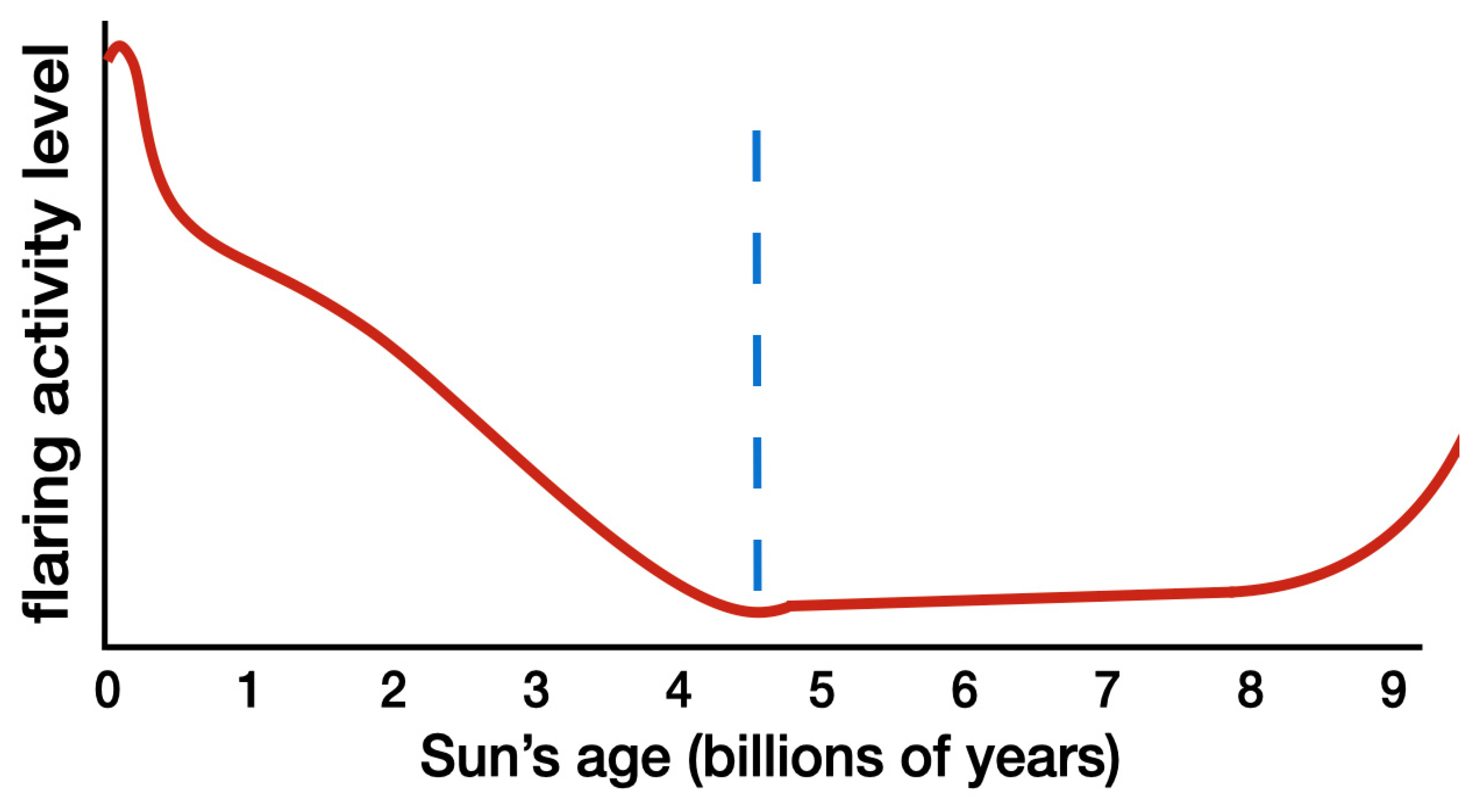
Figure 5.
Luminosity Variations for the Sun (top) and Three Stars that Represent the Most Luminosity Stable, the Average Luminosity Stable and the Least Luminosity Stable Stars in the Sample of the 369 Most Sun-Like Stars. adapted from Figure 2, ref citation: (Reinhold et al. 2020).
Figure 5.
Luminosity Variations for the Sun (top) and Three Stars that Represent the Most Luminosity Stable, the Average Luminosity Stable and the Least Luminosity Stable Stars in the Sample of the 369 Most Sun-Like Stars. adapted from Figure 2, ref citation: (Reinhold et al. 2020).
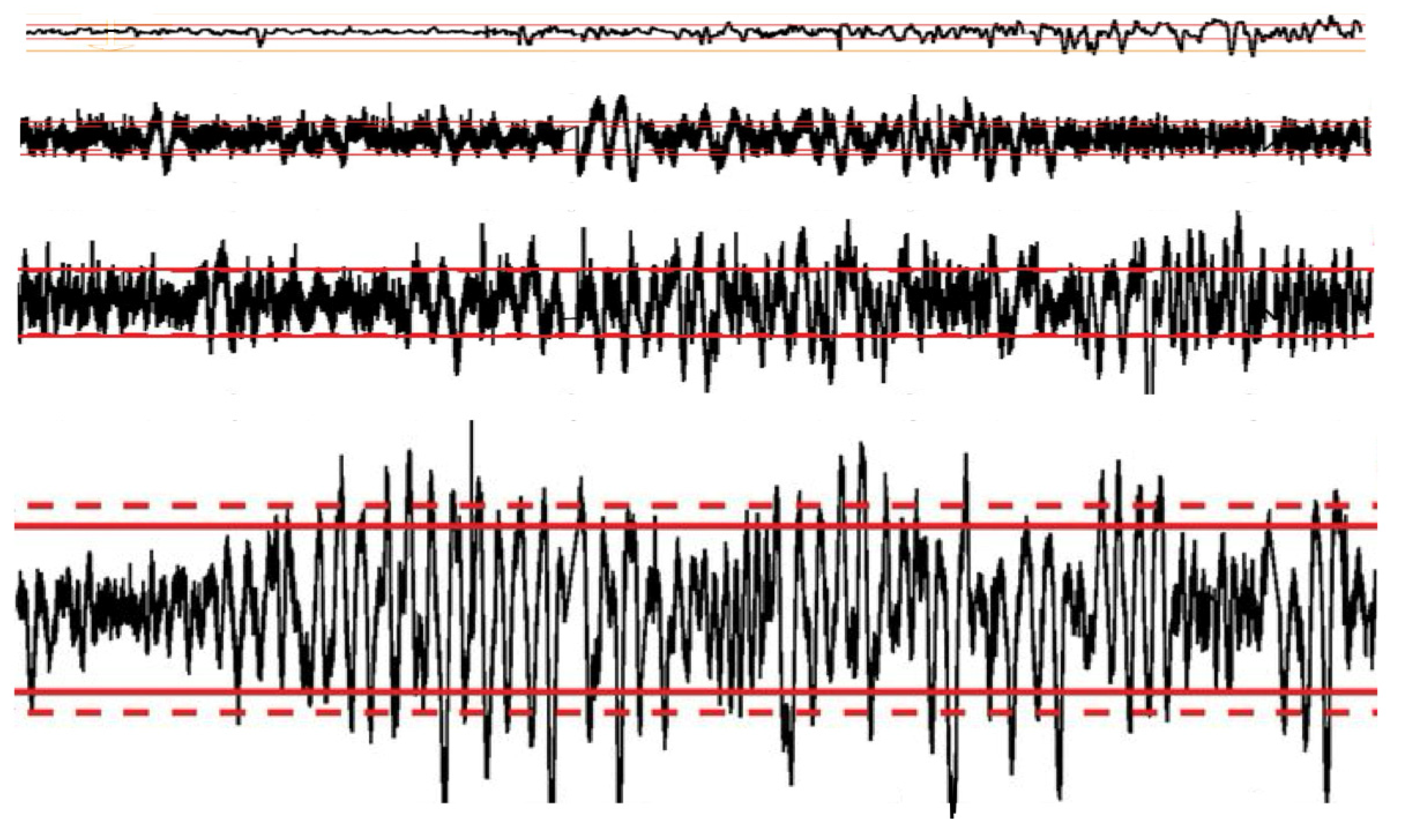
Figure 6.
Water World Cross Section. Credit: Author.


Table 1.
Relative Abundances of Vital Poison Elements in Earth’s Crust. The fractional abundance of magnesium, by mass, in Earth’s crust is nearly identical to the fractional abundance of magnesium in the entire Milky Way Galaxy. Thus, magnesium provides a helpful measuring stick for comparison purposes. For each vital poison element listed below, the number indicates how much more or less abundant it is in Earth’s crust, relative to magnesium’s abundance, as compared to its average abundance throughout the Milky Way Galaxy, relative to magnesium’s abundance.
Table 1.
Relative Abundances of Vital Poison Elements in Earth’s Crust. The fractional abundance of magnesium, by mass, in Earth’s crust is nearly identical to the fractional abundance of magnesium in the entire Milky Way Galaxy. Thus, magnesium provides a helpful measuring stick for comparison purposes. For each vital poison element listed below, the number indicates how much more or less abundant it is in Earth’s crust, relative to magnesium’s abundance, as compared to its average abundance throughout the Milky Way Galaxy, relative to magnesium’s abundance.
| Element | Relative Abundance |
|---|---|
| carbon | 1200 times less |
| nitrogen | 2400 times less |
| fluorine | 50 times more |
| sodium | 20 times more |
| phosphorus | 4 times more |
| sulfur | 60 times less |
| chlorine | 3 times more |
| potassium | 90 times more |
| calcium | 20 times more |
| vanadium | 9 times more |
| chromium | 5 times less |
| manganese | 3 times more |
| nickel | 20 times less |
| cobalt | 6 times less |
| copper | 21 times more |
| zinc | 6 times more |
| arsenic | 5 times more |
| selenium | 30 times less |
| molybdenum | 5 times more |
| tin | 3 times more |
| iodine | 4 times more |
Table 2.
Necessary Hard Steps for Physical Intelligent Life to Arise.
| The steps are listed in chronological order. |
|
Disclaimer/Publisher’s Note: The statements, opinions and data contained in all publications are solely those of the individual author(s) and contributor(s) and not of MDPI and/or the editor(s). MDPI and/or the editor(s) disclaim responsibility for any injury to people or property resulting from any ideas, methods, instructions or products referred to in the content. |
© 2025 by the author. Licensee MDPI, Basel, Switzerland. This article is an open access article distributed under the terms and conditions of the Creative Commons Attribution (CC BY) license (https://creativecommons.org/licenses/by/4.0/).
Share and Cite
MDPI and ACS Style
Ross, H.N. Are Humans Alone in the Cosmos? Religions 2025, 16, 1589. https://doi.org/10.3390/rel16121589
AMA Style
Ross HN. Are Humans Alone in the Cosmos? Religions. 2025; 16(12):1589. https://doi.org/10.3390/rel16121589
Chicago/Turabian StyleRoss, Hugh Norman. 2025. "Are Humans Alone in the Cosmos?" Religions 16, no. 12: 1589. https://doi.org/10.3390/rel16121589
APA StyleRoss, H. N. (2025). Are Humans Alone in the Cosmos? Religions, 16(12), 1589. https://doi.org/10.3390/rel16121589
Note that from the first issue of 2016, this journal uses article numbers instead of page numbers. See further details here.