


Abstract
This article combines computational analysis and historical interpretation to reassess the genre of the Gospel of Mark. Drawing on prototype theory and J. Z. Smith’s comparative method, we model Mark’s linguistic and stylistic profile against a large corpus of ancient Greek texts—including tragedies, biographies, historiographies, novels, and Septuagint (LXX) single-person narratives. Using supervised and unsupervised clustering, the study shows that Mark consistently aligns with the LXX corpus rather than with the Greco-Roman genres traditionally proposed. Even when segmented into smaller textual units (prologues, epilogues, or 1000-word chunks), the Gospel remains anchored in the scriptural prototype of divinely commissioned figures such as Moses, Joseph, or Esther. The results suggest that Mark’s genre is best described as a scriptural narrative of divine agency: a continuation of Israel’s storytelling tradition reimagined within the Greek-speaking world of the first century.
1. Introduction
Few interpretive questions touch as deeply on the theological, political, and rhetorical dimensions of the Gospel of Mark as the question of its genre. Whether we understand Mark as a tragic narrative meant for performance, a popular novel of entertainment, a historiographical account of Jesus’ life, or a philosophical biography written for moral and educational formation, the genre we assign to the text decisively shapes its meaning. Genre is not a neutral classification; it is an interpretive act that frames how we read, what we expect, and how we situate a text within its cultural world.
This is especially true for ancient texts where information about author, audience, and context is fragmentary or wholly lost. In such cases, genre becomes a crucial heuristic—a tool for reconstructing the communicative situation and socio-political stakes of a text. Far from being a static set of formal criteria, genre is a dynamic and context-sensitive framework. It mediates between authorial intent and audience reception, between tradition and innovation, and between literary form and ideological function. Modern genre theory highlights that genre is less about rigid taxonomy and more about culturally embedded conventions of discourse. Genres may be said to function as “structuring structures,” meaning that they are shaped by previous use but actively shape present meaning. Genres evolve through interaction, negotiation, and social embeddedness. Thus, genre is never only about what a text is; it is also about what a text does—rhetorically, politically, and theologically.
From this perspective, the Gospel of Mark emerges not just as a narrative about Jesus but as a communicative intervention in a world marked by ethnic subjugation, contested leadership, and fractured national identity. Its use of intertexts from the scriptures of Israel and other traditions is not merely literary imitation but ideological alignment—an evocation of a shared worldview shaped by longing for restoration. The way Mark frames its depiction of the Temple, its treatment of Jewish leadership, and its allusions to destruction or renewal all suggest a genre deeply entangled with historical realities.
While some scholars have argued for abandoning genre categories in favour of looser models based on hybridity, networks, or intertextual webs (Rosenmeyer 1985; Robertson 2025), such moves risk neglecting what genre helps preserve: an account of rhetorical purpose, audience expectation, and socially situated meaning. Especially for a text like Mark, genre comes both first and last: it shapes our initial reception and is reshaped through the reading process. The present article contributes to this ongoing conversation by applying a new method to an old question. Using clustering algorithms across a range of textual units—including full texts, 1000-token chunks, prologues and epilogues—this study compares the Gospel of Mark to a broad set of ancient texts, including Greco-Roman biographies, historiographies, tragedies, novels, and LXX single-person narratives.1 The goal is not merely to classify Mark but to explore how it positions itself in relation to ancient genres, and how its genre signals contribute to its narrative, theological and ideological work.
1.1. State-of-the-Art on the Genre of Mark
Recent scholarship on the genre of the Gospel of Mark has witnessed a significant resurgence, reflecting ongoing attempts to situate the text more precisely within ancient literary traditions (see, e.g., Becker 2017; Bond 2020; Adams 2020; Calhoun et al. 2020). A central reference point in these discussions remains Richard Burridge’s seminal work, What Are the Gospels?, whose influence continues to shape the field. In his retrospective article marking the 25th anniversary of the book’s republication, Burridge offers a valuable overview of shifting scholarly trends (Burridge 2020). While his original argument identified the Gospels—Mark included—as examples of Greco-Roman biography (bios), more recent studies have both refined and contested this position.2
On one side, many scholars still affirm that Mark exhibits key biographical features: a focus on a single main character, a broadly chronological narrative structure, and an emphasis on words and deeds. On the other side, critics have pointed out Mark’s distinctive theological concerns as different from other bioi, its abrupt narrative pacing, and its dense intertextuality with Jewish scriptures, arguing that these elements push the text beyond the conventional boundaries of bios (see Edwards 2006; Freyne 2006; Konstan and Walsh 2016; Hagg 2012, pp. 148–86). As a result, a more nuanced consensus has emerged, in which Mark is viewed as both participating in and transforming inherited literary forms.
Further developments have been fuelled by interdisciplinary approaches that incorporate rhetorical criticism, narrative theory, performance studies, and postcolonial analysis. These perspectives have underscored the Gospel’s hybridity and its capacity to mediate between oral and written traditions (see, for example, Larsen 2018; Elder 2019, 2024; Huebenthal 2014, 2023; Winn 2008; Kirk 2016). Additionally, close attention has been given to both the micro- and macro-structures of the text. Scholars have explored how individual episodes—such as miracle stories, controversies, and parables—contribute to the broader narrative arc and theological message (Mortensen 2023). This micro-level focus is complemented by macro-level investigations that place Mark in dialogue with Jewish literary genres and symbolic worldviews.3
Of particular interest is the role of intertextuality in shaping Mark’s generic identity. Scholars have increasingly recognised how the Gospel’s allusive engagement with the scriptures of Israel anchors it within a Jewish literary horizon, even as its communicative strategy remains legible to a broader Greco-Roman audience. In this light, genre becomes not merely a matter of classification but a dynamic mode of negotiation—between texts, traditions, audiences, and ideological commitments.4
In sum, the current state of research portrays Mark as a generically complex and ideologically charged text. Rather than seeking to assign it a single literary label, recent scholarship tends to emphasise its composite nature and its rhetorical function as a vehicle for theological persuasion, cultural memory, and political imagination.
1.2. How to Define Genre—A Wealth of Approaches
Defining genre is a notoriously complex undertaking, not least because the term itself has been theorised in markedly different ways across disciplines. In antiquity, the concept of genre was rarely subject to explicit theoretical reflection and was largely limited to broad distinctions between poetry and prose (Fowler 1982; Halliwell 1987, pp. xxiv–xxvi, commentary on chaps. 1–3; Russell and Winterbottom 1972). As Thomas Rosenmeyer has argued, the very notion of genre may be anachronistic when applied to the ancient world; rather than thinking in abstract literary categories, ancient authors were more concerned with the practical emulation of exemplary predecessors (Rosenmeyer 1985). As a result, modern approaches must often supply the conceptual tools needed to analyse ancient texts, whose generic signals were culturally embedded but seldom formally codified. Far from being a stable or universally agreed-upon category, genre has been understood variously as a set of formal features, a social contract, a mode of discourse, or a cognitive construct. This conceptual plurality has given rise to a range of theoretical models, each emphasising different aspects of what genre is and how it functions. Rather than adopting a single theoretical framework, the following section draws on the broader landscape of modern genre theory, offering a brief overview of some of its most influential positions and perspectives.
1.2.1. Todorov, Fowler, and Bakhtin
One of the foundational contributions to modern genre theory comes from Tzvetan Todorov (1939–2017), who approached genre from a structuralist perspective.5 Far from viewing genres as fixed or static categories, Todorov understood them as dynamic systems defined by shared narrative structures and stylistic conventions (Todorov 1990, pp. 15–16). These codified features, he argued, function not only as a guide for interpretation but also as a set of generative rules for the production of new texts (Todorov 1990, p. 17). Importantly, Todorov maintained that genres evolve over time through a dialectical process: new works both conform to and deviate from existing conventions, thereby reshaping the genre itself (Todorov 1990, pp. 17–18). This tension between repetition and innovation highlights the intertextual and historical embeddedness of genre, situating it within a literary system that is responsive to broader cultural and social forces. Todorov’s approach thus combines formal analysis with an emphasis on genre’s capacity for transformation. In contrast to more rigid formalist theories that prioritise textual autonomy, Todorov allows for a genre theory that recognises literary development and cultural dialogue. While Marxist genre theorists tend to anchor genre in ideological and economic structures, and reader-response critics shift attention to the subjective experience of genre recognition, Todorov retains a focus on textual systems while acknowledging their historical situatedness.
Expanding the genre category further, Alastair Fowler (1930–2022) builds on the philosophical concept of “family resemblance” introduced by Ludwig Wittgenstein (1889–1951).6 Rather than defining genres by a set of necessary and sufficient features, Fowler argues that genres resemble one another through overlapping traits—a network of similarities rather than a fixed essence. In this view, genre is not a classification imposed on a text but a flexible constellation of characteristics that cluster around certain patterns (Fowler 1982, pp. 38–41). Works may therefore participate in multiple genres simultaneously, drawing on a variety of conventions to form hybrid and innovative expressions. Fowler’s model shifts genre theory toward an open-ended and inclusive framework. By allowing for the coexistence of heterogeneity within a genre, and by recognising the interpenetration of genres across historical and textual contexts, Fowler resists reductionist accounts that seek to constrain texts within rigid boundaries. The notion of family resemblance offers a powerful tool for understanding how texts relate to one another across genre lines—especially in the case of ancient literature, where generic boundaries are often blurred or reinterpreted.7
While Todorov and Fowler are primarily concerned with how genres evolve within literary traditions, Mikhail Bakhtin (1895–1975) offers a more radical reorientation by foregrounding genres’ social embeddedness (Bakhtin 2000). For Bakhtin, genre is not limited to literary typologies but applies to all forms of speech and utterance (Bakhtin 1986, 2000). His concept of speech genres includes everyday conversation, bureaucratic forms, and artistic discourse alike—each shaped by communicative context and social function. In this sense, genre becomes inseparable from the dialogic interaction between speakers and from the ideological forces that shape language use.
Another key contribution from Bakhtin is the notion of the chronotope—the fusion of time and space within narrative.8 Chronotopes define how events, identities, and values are organised within a text, embedding literary forms within culturally specific worldviews. For Bakhtin, genres are not only linguistic or structural systems but modes of participating in history, society, and ideology. This perspective is especially pertinent for interpreting ancient texts like Mark’s Gospel, because they operate simultaneously as narrative, proclamation, and social intervention.9 Bakhtin’s theory thus challenges genre theories that treat texts as internally coherent and autonomous. Instead, he presents genre as a social and ideological performance—a site where worldviews are articulated, contested, and transformed.
While Todorov, Fowler, and Bakhtin all offer models that seek to define and historicise genre as a meaningful and productive category—whether through structure, resemblance, or dialogic sociality—poststructuralist thinkers have raised more fundamental questions about whether genre can be defined at all. Nowhere is this challenge more sharply formulated than in the work of Jacques Derrida (1930–2004).
1.2.2. Derrida
Derrida challenges the traditional understanding of genre by emphasising that genres are neither fixed nor closed categories but rather fluid and porous. In his essay “La Loi du Genre” (The Law of Genre) (Derrida 1992, pp. 221–53), Derrida argues that any text paradoxically belongs to a genre while simultaneously transgressing it—a condition he describes as “the law of genre.” (Derrida 1992, pp. 230–31). According to Derrida, this implies that genre boundaries are always unstable, as a text’s identification with a specific genre simultaneously alters and expands the genre’s parameters (Derrida 1992, pp. 230–32). This creates a fundamental aporia: how can a text adhere to the rules of a genre without simultaneously exceeding them? The problem with this understanding of genre lies in its radical openness, which undermines any firm categorisation. For Derrida, however, this dynamic is not a deficiency but a productive tension that reveals the inherent heterogeneity of language and literature. Thus, Derrida challenges the idea of genre systems as strictly definable and stable, opening a new dialogue on the limitless potential of the text. Derrida’s insight is especially pertinent in the case of Mark, where every proposed genre label—biography, tragedy, historiography, or novel—captures certain features but fails to contain the whole. The Gospel itself seems to resist closure, drawing on multiple traditions while simultaneously reconfiguring them so that any act of classification must reckon with precisely the instability that Derrida describes.
1.2.3. Prototype Theory
Following the structuralist, dialogic, and deconstructive models of genre proposed by Todorov, Fowler, Bakhtin and Derrida, other developments in cognitive linguistics have introduced an alternative: prototype theory. Initially developed by Eleanor Rosch (1938–) in the field of cognitive psychology and later extended by George Lakoff (1941–), this approach challenges classical definitions of categories based on fixed sets of necessary and sufficient features (E. H. Rosch 1973; E. Rosch 1975, 1978; Lakoff 1987). Instead, it posits that categories—including literary genres—are organised around central examples or “prototypes,” which serve as cognitive reference points for inclusion and recognition.10
Rosch demonstrated that human categorisation is graded and hierarchical (E. H. Rosch 1973). Within a given category, certain members are perceived as more typical than others: a robin, for instance, is more prototypical of the category “bird” than a penguin. Applied to literary genres, this insight suggests that genres are not defined by rigid boundaries but by family resemblances and degrees of proximity to prototypical texts (E. Rosch 1978, p. 36). A work need not meet every convention of a genre to be recognisable as part of it; instead, it may exhibit enough similarity to be situated near its cognitive centre. Lakoff’s elaboration, particularly in Women, Fire, and Dangerous Things, further destabilises fixed genre categories by highlighting the role of metaphor, embodied experience, and cultural context in shaping our mental classifications.11 This perspective reveals that prototypes are not universal but historically and culturally situated. A prototypical tragedy in Elizabethan England may differ significantly from one in 20th-century America or postcolonial Africa, reflecting divergent cultural expectations and narrative conventions. In this way, prototype theory accommodates both diachronic development and cross-cultural variation—aspects that more rigid theories often struggle to address.
Unlike earlier models, prototype theory also foregrounds the reader’s role in genre recognition. It decentralises authority from the text alone and situates genre classification within interpretive communities shaped by familiarity, expectation, and context (Lakoff 1987, pp. 45, 57). This makes it especially useful for analysing complex or hybrid works that defy easy categorisation. Where structuralist and formalist models may exclude such texts for lacking definitional features, prototype-based approaches recognise them as peripheral but legitimate members of a genre. In sum, prototype theory offers a flexible, cognitively grounded framework for understanding literary genres as dynamic, evolving, and contextually embedded categories. It enables a more inclusive and realistic account of how genres function in practice—especially in traditions like ancient literature, where genre boundaries are fluid, and texts often participate in multiple literary systems. For a text like the Gospel of Mark, which straddles narrative, theological, historiographic, and performative dimensions, prototype theory provides a nuanced lens through which its literary affiliations may be explored—especially when paired with empirical methods such as computational clustering that quantify proximity to genre exemplars.
1.2.4. Richard Burridge
Richard A. Burridge’s influential contribution to gospel genre analysis lies in his sustained argument that the canonical gospels—especially the Gospel of Mark—should be classified as Greco-Roman bioi (biographies) (Burridge 2018, 2020). Rejecting earlier views that treated the gospels as either sui generis or purely theological documents, Burridge proposes that they share substantial formal and thematic features with ancient biographical texts. His approach is rooted in a family-resemblance model, whereby genre is not defined by strict boundaries or necessary and sufficient conditions but by a constellation of overlapping characteristics. To support this claim, Burridge develops a diagnostic set of genre-identifying features, drawing from a corpus of representative ancient biographies (e.g., Xenophon, Suetonius, Plutarch, Philostratus).
Burridge’s model for identifying Graeco-Roman biography is organised into four main categories: (1) external features, (2) subject focus, (3) purpose and function, and (4) linguistic and stylistic characteristics. External features include title and paratext, opening and closing conventions, and the overall length and shape of the narrative. Subject focus refers to the centrality of a single figure, the narrative arc from birth through deeds to death, and characterisation through words and actions. Purpose and function encompass the moral or exemplary function of the text, as well as its theological or philosophical framing. Finally, linguistic and stylistic characteristics include narrative prose, the use of direct speech, and clear temporal and geographical anchoring.
Burridge argues that the gospels, and particularly Mark, align with these features in ways that are quantitatively and qualitatively comparable to established bioi. His conclusion is not that the gospels are identical to classical biographies but that they belong recognisably within the ancient biographical tradition.
In our analysis, we take Burridge’s set of generic features as a methodological starting point, albeit with certain qualifications. This decision serves to position our contribution within the broader consensus that has emerged in recent decades concerning gospel genre, while not committing us to Burridge’s conclusions or those of similar biographical approaches. Several of the features he identifies—such as narrative prose under linguistic and stylistic characteristics, as well as opening and closing conventions—can be operationalised computationally. In this article, we analyse full texts and texts “chopped up” into chunks of 1000 words, and we also analyse prologues and epilogues, given their paradigmatic and often genre-signalling function. As Burridge himself notes, titles are typically absent from ancient biographies, but initial sentences frequently serve as functional surrogates. Regarding subject focus, we broadly agree that the centrality of a single figure, the structuring of the narrative around birth, deeds, and death, and the characterisation of the protagonist through words and actions are recurrent features, and these are reflected in our analysis of either the full texts or the segmented textual units (“chunks”) used in our comparisons.
Elements such as purpose and function are more difficult to quantify. We will address these in our concluding discussion, particularly in light of modern genre theory’s emphasis on reader expectations and the social realisation of genre. We agree with Burridge and modern genre theorists that purpose and function remain crucial to any understanding of genre, as they shape both the communicative aims of a text and its reception within a given cultural context. At the same time, they are not determined in isolation: they shift significantly depending on the literary company in which a text is placed. To read Mark alongside Greco-Roman biographies, for instance, foregrounds moral exemplarity and character, whereas comparison with LXX narratives accentuates communal identity, divine intervention, and eschatological hope. Thus, alongside historical context—however fragmentary—generic purpose is equally conditioned by the intertextual horizon within which Mark is interpreted.
Precisely here lies the difficulty: these very dimensions of purpose and function are among the most elusive aspects of genre, particularly when dealing with ancient texts. The historical distance, combined with the fragmentary nature of our knowledge concerning the author’s intentions, the social setting of composition, the identity of the intended audience, and the broader cultural traditions at play, renders full reconstruction virtually impossible. If, as modern genre theory suggests, genre arises at the intersection of authorial intention, socio-historical conditions, discursive tradition, and reader expectations, then genre both precedes and follows our engagement with the text—it frames our reading and is also reconstituted by it. In the case of the Gospel of Mark, this means that genre can only ever be approximated through a set of historically plausible hypotheses.
This recognition shapes our methodological stance. Our analysis does not seek to recover genre with certainty but to model its contours through comparative and context-sensitive approximations. In this sense, we proceed from the working assumption that Burridge’s features offer a viable framework for identifying genre-related tendencies. Yet these tendencies only take on interpretive significance within the literary company in which Mark is placed. By situating the Gospel computationally alongside a range of ancient corpora, we aim not only to test family resemblances but also to explore how such affiliations may illuminate Mark’s communicative aims—how purpose and function emerge precisely from the textual networks within which the Gospel is read.
1.3. Which Genres to Compare with?
In the analyses below, the Gospel of Mark is compared to four established ancient genres—historiography, biography, novel, and tragedy—as well as a fifth, constructed category: LXX single-person narratives (see Appendix A Figure A1 for a list of all texts).12 These genres have been repeatedly highlighted in scholarly literature as relevant comparanda for the gospels, and they therefore represent established points of reference within the broader academic discussion of gospel genre.13 Each of the four recognised genres represents a dominant literary form in the Greco-Roman world, with clear conventions regarding structure, characterisation, and narrative purpose.14 Historiographies and biographies are particularly relevant given their shared focus on real or quasi-historical figures, while novels and tragedies provide important comparanda in terms of plot dynamics, emotional appeal, and narrative closure. LXX single-person narratives, though not a formally recognised genre and not exclusively made up of LXX stories, form a substantial corpus of approximately 25 texts that centre on the life and mission of a single, Jewish protagonist from the scriptures of Israel. These narratives frequently appear as embedded units within larger historiographic frameworks and share stylistic and structural features with both ancient novels and biblical literature. Including this category allows for a culturally and linguistically proximate comparison, especially in view of the Gospel’s intertextual engagement with Jewish scripture. At the same time, it should be noted that some scholars have argued that the gospels constitute a sui generis genre—one effectively inaugurated by Mark and subsequently adapted by the later evangelists (Watson 2013, 2022; Hamilton and Willitts 2019; Morgan 2015). If this is the case, the analyses below should demonstrate that the Gospel of Mark does not cluster closely with any of the established genres, thereby warranting the creation of a distinct category labelled sui generis.
1.4. Method of Comparison
Our method of comparison is drawn from the work of J.Z. Smith, particularly his seminal work, Drudgery Divine (1990) (J. Z. Smith 1990; see also J. Z. Smith 1978, 1982, 2020). Smith’s method of comparison in religious studies is a critical and innovative approach that challenges traditional comparative frameworks by emphasising the constructive and imaginative aspects of the comparative process. Smith rejected the notion that comparison is a neutral act of discovering inherent similarities between religions or cultural phenomena (J. Z. Smith 1990, p. 36). Instead, he argued that comparison is an intellectual tool deliberately employed by scholars to generate new insights and frameworks for understanding. For Smith, comparison is not about uncovering universal truths but about creating a productive dialogue between disparate elements, enabling scholars to question assumptions, highlight differences, and reveal the contingent and contextual nature of religious traditions. This method underscores the active role of the scholar in shaping the comparative process, framing it as an interpretive and analytical exercise rather than a purely descriptive one. In practical terms, Smith famously framed comparison as “x is like y in respect to z” (J. Z. Smith 1990, p. 52), where the third term (z) is not an objective given but the critical locus of scholarly construction. This structure reveals the interpretive nature of comparison and demands transparency regarding the basis upon which similarities and differences are asserted. It also underscores that comparison involves acts of selection, redescription, and judgement, rather than neutral observation. The tripartite structure foregrounds the interpretive choices involved and allows for a more transparent and reflexive analytical process. It is particularly well suited to the study of genre, where formal resemblance must be assessed in relation to historical, cultural, and rhetorical dimensions, rather than assumed a priori.
2. Computational Methods and Textual Preprocessing
2.1. Computational Methods
We designed the computational approach for this study to complement historical and philological interpretation with a transparent and replicable form of quantitative evidence. At its core, the method is simple: we represent each text as a pattern of word usage and ask how similar or dissimilar these patterns are across different works. By translating linguistic style and vocabulary use into numerical form, we can measure proximity between texts and observe how they group together. This approach takes the question of genre from an empirical angle, asking how a text behaves in relation to other texts.
In practice, we converted each work in our corpus, including the Gospel of Mark, into a numerical “fingerprint” based on the frequency and distribution of its words. Common function words (such as articles or particles) tend to capture aspects of grammar and style, while rarer lexical items can signal thematic or topical specificity. These profiles form a high-dimensional model of a text’s linguistic habits. To make the texts comparable despite differences in length or vocabulary size, we used a standard weighting scheme known as TF–IDF (“term frequency–inverse document frequency”), which balances the weight of frequent and distinctive words. The result is a single matrix that positions every text within the same coordinate space.
Within this shared space, we applied two main types of analysis. We trained supervised models to predict texts’ genres (such as tragedies, biographies, or LXX narratives) so that the algorithm can learn the linguistic features that distinguish genres, if there are any. Once trained, the model can classify an unknown text, in our case, the Gospel of Mark, and show which genre it resembles most. This approach is analogous to teaching a student by example: after reading representative specimens of each genre, the student can make an informed judgement about a new work. Unsupervised models, by contrast, receive no prior information about genre. They simply examine the linguistic profiles and group texts based on word-use resemblance. If the resulting clusters correspond to known genres, it confirms that those categories have measurable linguistic coherence. If unexpected clusters appear, they may reveal alternative or overlapping structures ignored by conventional labels. In both cases, the goal is to make visible patterns that can enrich traditional interpretations.
The computational analyses were performed on normalised and tokenised Greek texts. We analysed each text both as a whole and in smaller segments (such as 1000-word chunks, prologues, and epilogues) to capture possible internal variation. To visualise the results, we projected the high-dimensional data into two-dimensional maps using techniques that preserve relative distances, so that proximity on the page reflects linguistic similarity in the underlying corpus. By combining these procedures, we can observe how Mark positions itself within the broader landscape of ancient Greek prose. These methods create a sort of cartography of linguistic affinities. In this way, computational modelling serves as a form of comparison in the spirit of J. Z. Smith’s dictum that comparison is a scholarly craft: a deliberate construction that, if made explicit, can illuminate the distinctiveness and connectedness of texts.
2.2. Preprocessing of Texts
Preprocessing is crucial for ensuring a reliable base text and a common set of conventions to perform a comparison. We normalised the texts to standardise spelling and diacritics. Normalisation ensures that equivalent forms such as Ἰησοῦς and Ιησους are treated as the same word, rather than as two separate tokens. We then tokenised the texts, removing punctuation and keeping all words in lowercase to avoid counting orthographic variants as distinct. We performed no lemmatisation (reduction of words to their dictionary forms), since inflected forms can carry stylistic and genre-specific information.
We divided each work into manageable units: full texts, 1000-word segments (“chunks”), and shorter sections corresponding to prologues and epilogues. These divisions allowed us to study both the overall linguistic profile of a work and its local variations.
3. Analyses and Interpretation
3.1. Supervised
In what follows, we begin with a set of supervised experiments. In computational terms, “supervised” means that the model is trained on examples whose genre labels are already known so that it can learn to recognise the characteristic linguistic patterns of each category. Once this training is complete, the model can then be asked to classify new or “unlabelled” texts, and we can observe where they fall in relation to the established groups. In our case, the five labels under consideration are tragedy, historiography, biography, novel, and LXX single-person narratives, while the Gospel of Mark is deliberately held back as a test case. This approach allows us to measure how closely Mark resembles these genres according to features that can be quantified, while still leaving space for interpretive discussion of what such proximity might mean. Supervised learning is particularly useful for establishing baselines of separability—how reliably the genres can be told apart and how consistently Mark gravitates toward one cluster rather than another. At the same time, we are aware that this method is not neutral: it presupposes the categories against which Mark is tested, and its results reflect both the strengths and limits of that design. Precisely for this reason, the supervised section is followed by unsupervised analyses (see below), where the models are not given genre labels in advance but allowed to discover patterns of clustering on their own. Taken together, the two approaches provide complementary perspectives: one showing how Mark behaves in relation to predefined categories/genres, the other testing whether similar structures emerge when no such labels/genres are imposed.
3.1.1. Models and Features
In practical terms, we treated genre prediction as a classification task, asking the model to distinguish between five possible labels: tragedy, historiography, biography, novel, and LXX single-person narratives. The Gospel of Mark was kept aside as a test case so we could see where it would be placed when compared to the others. To represent the texts, we relied on word-frequency profiles (TF–IDF vectors, capped at around 50,000 terms after standard normalisation and tokenisation of the Greek). For the actual modelling, we tested three widely used approaches—Logistic Regression, Support Vector Machines, and Random Forest—evaluated through repeated cross-validation, with performance measured by standard metrics of accuracy, precision, recall, and F1.15 Given the similarity of results and the simplicity of the first, we will report on Logistic Regression results.
| Component | Description |
| Model family | Multinomial Logistic Regression. |
| Vectorization | Word-level TF-IDF representation (≈50,000 features) trained on the combined corpus; Unicode NFC normalization; Greek tokenization (CLTK); rare-term trimming with a minimum document-frequency threshold. |
| Evaluation metrics | Overall accuracy, and per-class precision, recall, and F1-score; macro-averaged F1 used for model comparison. |
| Feature space | Unified TF-IDF matrix used across all analyses (full texts, 1000-token chunks, prologues, and epilogues). |
| Visualization | Dimensionality reduction via PCA + UMAP. |
3.1.2. Combined Features in One Space
To maximise genre separability, we relied on a single, consistent feature space across all experiments (full books, chunks, prologues and epilogues). This approach ensures that all datapoints can be compared directly, avoiding bias from separate vocabularies or scaling. Feature construction relied on token-level representations in which Greek words were normalised using NFC and tokenised. Term frequencies were then transformed into TF–IDF weights, computed over the entire combined corpus, resulting in a sparse high-dimensional vector of approximately 50,000 features. Extremely rare features were trimmed using a minimum document-frequency threshold, allowing the feature matrix to retain only the most informative terms. For the main model, a multinomial Logistic Regression, L2 regularisation was applied to balance sparsity with stability.
Having established this unified feature space and modelling framework, it remains to explain why this particular combination was adopted. TF–IDF offers interpretability, as the top-weighted features for each class can be inspected directly—a crucial requirement for philological analysis. Training a single vectoriser on the entire dataset further ensures comparability, aligning books, chunks, and pericopes within a single geometric space. Finally, regularised linear classifiers are well suited to the task: they are robust to collinearity and high dimensionality while at the same time producing stable probability estimates across cross-validation folds. In sum, our setup was designed to create a single, transparent space in which all texts could be compared on equal terms. By using TF–IDF features and a regularised linear model, we ensured both interpretability for philological purposes and stability across a highly diverse dataset. This combination allows us to move beyond technical detail to a framework where the literary proximity of Mark to other corpora can be assessed with both precision and clarity.
3.1.3. Full-Book Classification
Using Logistic Regression, the results for whole texts were consistently strong, as long as the genres had enough full texts to meaningfully train on. In practice, this means that part or half of the corpus of each genre is used to “teach” the model what characterises each genre, while the remaining texts are held back to test afterwards whether the model has actually learned those patterns. If the model can correctly identify the genre of texts it has never seen before, it indicates that its training has captured genuine linguistic distinctions rather than just memorised examples. Because some categories in our dataset were represented by few examples—particularly historiographies (9) and novels (6)—we excluded them from full-scale testing; there were simply not enough data points to draw conclusions from. On the remaining three genres, the algorithm correctly identified a book’s genre on average more than nine times out of ten (see Table 1). For Precision, F1 and Recall scores, see Figure 1 and Figure 2.
Table 1.
Classification results for the three largest genres.
Figure 1.
Precision, Recall and F1 score for the three largest genres.
Figure 2.
Per-genre F1-scores for the five-category model. While biographies, tragedies, and LXX stories achieve high accuracy, genres with fewer training examples (historiographies and novels) show lower F1 values. The dashed red line indicates the macro-average F1.
When training and testing the model on all genres, Tragedy, Biography and LXX stories remained highly recognisable, each forming a clearly distinct profile (Figure 3 left). The main area of overlap was between Biography and Historiographies, which often share vocabulary and structure (Figure 3 right). Biographies also sometimes drifted toward Novels, reflecting the common narrative idioms the traditions employ (Figure 3 right). However, Tragedy was one of the easiest to detect: its linguistic features were so distinctive that the model never hesitated. The LXX single-person stories proved to be the most internally cohesive category: their features clustered so tightly that the model could recognise them with remarkable consistency even when it was exposed to a relatively low number of exemplars.
Figure 3.
Comparison of Confusion Matrices. (left) Model performance on well-represented genres. (right) Performance across all genres, including those with limited data.
And what about Mark’s Gospel itself? When introduced into the model as an “unknown” text, Mark was categorised as an exemplar of LXX single-person narratives. At no point did the model align Mark with any other genre. This suggests that, at the level of whole-book analysis, Mark’s closest literary kin are to be found among the scriptural LXX stories of a single, divinely chosen figure.16
Since we are particularly interested in Mark’s performance, we also asked the full-book model to classify not only Mark as a whole document but also each part of it independently, dividing it into equal-sized chunks of 1000 tokens each (see the division of Mark in Appendix A, Figure A2). Even at this finer-grained level, almost all segments of Mark were classified as belonging to the LXX prototype, reinforcing the dominant interpretation already identified in full-book classification. At the same time, one single passage—most notably, the part including the final part of the Passion Narrative—belonged to the space of Tragedy when classified by a full-text trained model (Figure 4). In this way, the computational results lend support to longstanding narratological claims that Mark’s ending carries a distinctive tragic colouring. Naturally, a full-text model can draw on rare words or stylistic features to define a genre because it analyses an entire work as a single data point. At the same time, however, this approach faces an opposite limitation: with only a few complete texts available, the model must operate on very limited data, which makes its performance less stable. In the next paragraph, we therefore divided the corpus into smaller segments and trained the model to classify individual chunks by genre.
Figure 4.
Classification result for each 1000 tokens segment of Mark, from a full-text trained model.
3.1.4. Chunk-Level Classification (1000-Word Windows)
To test for internal variation, we repeated the analysis on smaller 1000-token segments drawn from each work, including the Gospel of Mark (see Appendix A Figure A2 for the division of Mark). Performance at this “chunk level” remained consistently high, and the overall distribution of genres closely mirrored what we had observed for whole books, with the important difference that we can now also train and test for Novels and Historiographies, as using chunks gives us a larger number of data points. As Table 2 shows, performance is very strong on all genres, with the relative exception of the Novels, which display a low recall (the model tends to confuse segments belonging to other genres as possibly Novels).
Table 2.
Classification results.
Most segments of Mark gravitated again toward the LXX prototype (Figure 5), with the exception of two segments, both misclassified as Historiography (Figure 6). Two things can be remarkable here: first, that both a full-book-based model and a chunk-based model misclassified the ending of Mark; secondly, that a model trained to look for more ubiquitous linguistic signals (the chunk-based model, which has to classify smaller portions of text) found traces of Historiography in the final part of Mark, while a model able to look at rare, sparser genre signals (the full-book model) found the ending of Mark most similar to a Tragedy. The ending of Mark seems to display lexical marks that are highly diffused in Historiography, and few relevant marks that are rare but highly specific to Tragedy. Overall, this drift reflects local shifts in vocabulary and style, yet without altering the text’s overall profile: Mark remains anchored in the orbit of the LXX narratives, even as certain episodes shade into neighbouring genres.
Figure 5.
Token-wise genre classification for Mark, in total numbers.
Figure 6.
Token-wise genre classification for Mark, sequential visualization.
3.1.5. Prologues and Epilogues
For a more focused perspective, we isolated the prologues and epilogues of each work, drawing on established scholarly consensus and philological criteria rather than relying on arbitrary token counts. This ensured that the chosen segments genuinely represented the loci in which ancient texts most often signalled their genre—through programmatic openings and through the shaping of narrative closure. In doing so, we also remained within the methodological horizon outlined by Burridge, who highlighted precisely such external and structural signals as key indicators of generic orientation. Prologues were defined as the initial sections leading up to the first major narrative break, typically including the introduction of key characters or the transition into the main plot. Epilogues were identified as the closing sections of each text, beginning with the resolution of the central conflict and extending to the end of the work.
These shorter units were then processed in the same way as the larger analyses: each segment was embedded in the shared TF–IDF feature space, allowing direct comparison with whole books and intermediate chunks. When we restricted the analysis to the prologues and epilogues, the model still achieved clear separability between the classes, even with reduced textual material. As we show in Table 3 and Table 4, genres were still fairly recognisable, with the partial exception of LXX prologues. We again excluded Novel and Historiography due to data scarcity.
Table 3.
Prologue classification results.
Table 4.
Epilogue classification results.
When presented to the models as an unknown datapoint, Mark’s prologue was classified consistently as belonging to the LXX prototype, suggesting that the Gospel signals its literary identity from the very first lines. The epilogue, too, remained firmly within the LXX orbit. Both tables show that, with few points of difference, our simple classifiers are able to predict the genre of a prologue and an epilogue, across all three genres, with quite high performance (with the partial exception of LXX prologues). Taken together, these results indicate that Mark’s genre affiliation is not only a property of the work as a whole but is inscribed at its boundaries: from beginning to end, the Gospel gravitates toward the LXX narrative prototype and resists alignment with alternative models.17
3.1.6. Summary of Supervised Evidence
The supervised experiments show that the models were generally able to distinguish the five genres with a high degree of reliability, even across different configurations and levels of granularity. Within this framework, the Gospel of Mark aligned consistently with the LXX single-person narratives. This result did not emerge as a marginal or accidental tendency but as a dominant and recurring signal: whether the Gospel was treated as a whole book, divided into 1000-word segments, or reduced to its prologue and epilogue, the gravitational pull was always toward the LXX prototype.
The chunk-level analysis further reinforced this picture by making visible the Gospel’s internal variation. Certain sections, especially those belonging to the Passion Narrative, drifted momentarily toward the orbit of Tragedy or Biography. Yet these excursions did not alter the larger generic profile of the text. Rather, they illustrate what prototype theory would predict: a work may shade toward neighbouring categories in certain respects without thereby ceasing to belong to its primary prototype. In Mark’s case, these local shifts only underscore the overall coherence of the Gospel within the LXX cluster.
The boundary-segment analysis pointed in the same direction. Prologues and epilogues are often the most revealing sites of genre signalling in antiquity, where texts announce their affiliations and situate themselves within established literary traditions. Mark’s prologue, from the opening words, was consistently drawn into the orbit of the LXX narratives, and its ending—whether read at 16:8 or extended with later additions—remained within that same gravitational field. This persistence across the very edges of the Gospel confirms that its generic identity is not merely a product of the narrative middle but is inscribed into the work’s structure from beginning to end.
Taken together, these findings draw a profile of Mark that is difficult to reconcile with the dominant bios paradigm. Mark does not align with Greek historiography or the ancient novel, and its proximity to Greco-Roman biography appears largely peripheral. More consistently, it leans toward the prototype of LXX single-person narratives. This indicates that Mark’s literary profile is best modelled with reference to the scriptural narrative tradition—even as it remains fully at home in the Greco-Roman linguistic and educational milieu in which it was composed. This does not invalidate Burridge’s influential framework, which highlighted important formal resemblances, but it does call into question whether those resemblances should be treated as determinative. If genre is best understood in terms of prototypes rather than rigid boundaries, then Mark’s prototype lies above all in the LXX stories of deliverance and divine commissioning, even if at points it shades toward neighbouring forms.18
3.2. Unsupervised
In addition to the supervised experiments, we ran unsupervised analyses. Unlike supervised learning, which relies on predefined labels, unsupervised approaches allow the corpus to organise itself, revealing clusters and affinities without prior instruction. This shows whether recognised genres emerge naturally from the data or whether alternative structures appear when texts are grouped by linguistic features. For our purposes, the method provides a different perspective on Mark’s place within the ancient literary landscape. Rather than asking how closely Mark fits into externally imposed categories/genres, unsupervised analysis shows where the Gospel situates itself in relation to its literary peers, complementing the supervised results and confirming their reliability.
3.2.1. Methodological Overview
In the unsupervised stage, the analysis proceeded without supplying the models with any genre labels. Instead, the texts were projected into a shared space where their positions were determined solely by linguistic features. This made it possible to observe how clusters emerged naturally and to compare their internal consistency. Within this framework, Mark’s position could be examined not in relation to categories imposed in advance but in terms of the affinities it displayed when placed alongside the other texts.
To carry out the visual projections, the first step was to apply Principal Component Analysis (PCA), which compressed the data and reduced noise. PCA simplifies the very large set of features (tens of thousands of word frequencies) into a smaller set of dimensions that still preserves most of the variation across the texts. Building on this, we then applied Uniform Manifold Approximation and Projection (UMAP), which produces a two-dimensional “map” of the corpus. Unlike PCA, UMAP retains both the broader, global structure (how genres relate in general) and the finer, local structure (the closeness of individual texts to one another). This made it possible to create visualisations in which genre clusters could be inspected directly. Throughout these steps, the input space remained the same TF–IDF matrix used in the supervised experiments. By keeping a single vocabulary for full books, chunks, and prologues or epilogues, we ensured that all data points were positioned within one and the same geometric space, allowing direct comparison across different textual units. To evaluate how well the clusters aligned with the genres recognised by scholarship, we relied on two standard metrics. The Adjusted Rand Index (ARI)19 measures how the discovered clusters correspond to the true labels, while the Normalised Mutual Information (NMI)20 quantifies how much information about the real categories is captured by the clustering solution.
3.2.2. Whole Texts
For the whole-book analysis, each text was entered into the model as a single unit and compared within the same linguistic space. To make the data manageable and highlight the most important contrasts, we first reduced the complexity of the features before projecting them into a two-dimensional map where the relative position of each work could be visualised. Within this space, clusters of texts began to form, and we could then compare how closely they matched the genres already identified by scholarship.
The results showed a strong, though not flawless, separation between genres (see Figure 7 below). Overall alignment was high, reflecting that the models were able to distinguish the categories with considerable accuracy but also that certain overlaps were to be expected. Biography, Novel and Historiography, for instance, shared features that sometimes brought them close together. Specifically, Biography remained tightly grouped, while Novels and Historiographies appeared relatively more scattered. Tragedy and LXX narratives emerged as compact and unmistakably distinct clusters.
Figure 7.
PCA clustering of full texts by genre. Each point represents one text; colors indicate genre. “Mark” (red cross) is projected into the same embedding space for visual comparison only.
Against this backdrop, the Gospel of Mark consistently located itself within, or directly beside, the cluster of LXX narratives rather than near either biography or novel.
Each point in the figure represents one text; colours indicate genre. “Mark” (red cross) is projected into the same embedding space for visual comparison only. Taken as a whole, the analysis of complete books points clearly to one conclusion: the Gospel of Mark gravitates most strongly toward the prototype formed by the LXX single-person narratives. This suggests that Mark’s primary generic orientation is not toward the Greco-Roman prototypes of historiography or biography but toward the scriptural narrative tradition that shaped Jewish memory and identity. In terms of its “global footprint,” the Gospel positions itself nearest to a scriptural prototype within the wider classical (Greek-language) literary ecosystem.
From this perspective, Mark’s literary imagination appears to take as its nearest prototypes the figures of Joseph, Moses, or Esther—single protagonists whose fate becomes inseparable from the destiny of Israel. By comparison, the investigative stance of Greek historiography or the moral exemplarity associated with Greco-Roman biography remain peripheral signals, too distant from Mark’s centre of gravity to define his work. While the Gospel shares with biography a focus on a central figure, the way that figure is presented—through fulfilment of prophecy, enactment of divine power, and anticipation of eschatological renewal—locates it closer to the prototype of LXX deliverance stories than to that of classical bioi.
3.2.3. Chunks of 1000 Words
For the next step, the corpus was divided into non-overlapping 1000-word units, with every segment treated as its own datapoint in the same linguistic space used for the whole-book analysis. This procedure had several advantages. It increased the overall number of observations, and it made it possible to examine genre signals at a finer level of detail within each work. The resulting matrix of segments was then processed through the same dimensionality reduction techniques—PCA followed by UMAP—to project the data into a two-dimensional map.
When the texts were divided into 1000-word segments, the resulting clusters became noticeably tighter (see Figure 8). Within- and between-genre variation remained similar to the previous experiment, and the major categories stood out clearly, with Tragedies and LXX narratives in particular forming especially compact groupings, and Novels, Historiographies and Biographies showing a much closer profile. Against this background, the distribution of Mark’s segments closely mirrored the tendencies already observed at the whole-book level. The majority of Markan chunks fell within, or immediately adjacent to, the cluster of LXX single-person narratives.
Figure 8.
PCA projection of text chunks by genre. Each point represents a text segment; color denotes genre. Red crosses mark the Gospel of Mark, embedded in the same space for comparative analysis.
Not all portions of the text, however, behaved in the same way. A small number of passages, while still being closer to the LXX cluster’s centroid than to any other genre, leaned toward the Historiography–Biography cluster (see Figure 9).21 Visualisations of the UMAP embedding made these tendencies visible at a glance: Mark appeared not as a single point but as a dispersed “cloud” of observations, overlapping heavily with the LXX cluster yet stretching slightly toward the biographic–historiographic zone. Note that the variation in the distances between the centroids for Mark is not huge, but it is consistent across all segments—except for the epilogue, which appears to be the “strangest” part. Rather than looking at them in absolute value, the distances are most meaningfully read as relative to each other: Mark is never at the “ideal” or “prototypical” example of any of the genres, of course, but remains consistently closer to the LXX group and furthest from the tragic population. In other words, Figure 9 shows that Mark is not a perfect or central element of any of the discussed genres but has a stronger “air of familiarity” with the LXX stories.
Figure 9.
Average Euclidean distance of each segment from each genre centroid, plotted across text progression. Lower values indicate larger distance from the genre, while higher values suggest greater proximity.
The chunk-level analysis reinforces the picture already established by the whole-book comparisons: Mark’s Gospel aligns most consistently with the prototype of LXX single-person narratives. Yet by zooming in on smaller sections, the analysis also brings to light the text’s internal diversity. Most of the Gospel remains firmly anchored within the LXX orbit, its language and narrative rhythm echoing the scriptural stories of divinely chosen figures. At the same time, not all segments behave alike: the Gospel remains recognisably LXX-like in its overall footprint, while individual episodes reveal the textured interplay of styles that gives Mark’s narrative its distinctive voice.
3.2.4. Prologues and Epilogues
The clustering of prologues and epilogues produced results that were both consistent and revealing. The prologues and epilogues of tragedies were highly clustered, forming a cohesive genre group. Prologues and epilogues of the other four genres showed a slightly wider spread, yet they too remained recognisably grouped in broader “clouds.” Against this backdrop, Mark’s prologue fell close to the cluster of LXX openings, indicating that from its very first lines the Gospel situates itself within the narrative world of Israel’s scriptures, rather than adopting the openings characteristic of Greco-Roman biography or historiography. The ending of the Gospel apparently told a less clear-cut story: distance-wise, the epilogue remained close to the LXX cluster, but it showed a much more evident drift towards a “grey-zone area” between other genres (see Figure 9 for similar results based on full embeddings and not just visualisations).
Especially the positioning of Mark’s epilogue in Figure 10 warrants further comment. Mark’s prologue appears firmly embedded among the LXX openings, confirming that the Gospel signals its scriptural orientation from its first lines. However, Mark’s epilogue lies somewhat nearer to several Greco-Roman clusters, especially historiography and biography, a drift already visible in the previous experiments. This proximity suggests stylistic overlap at the Gospel’s conclusion, where Mark’s language momentarily resonates with classical narrative idioms. It should be noted, however, that Figure 10 offers a simplified two-dimensional projection of a far more complex dataset. When the data are examined in their full-dimensional structure, the underlying pattern indicates that Mark’s epilogue still aligns most closely with the LXX group, even if the visualisation accentuates its peripheral contact with Greco-Roman genres. This can be seen in Table 5.
Figure 10.
Prologues and epilogues in the same feature space. Mark in large red triangles.
Table 5.
Classification results.
In general, ARI and NMI of prologues and epilogues signalled the highest overall agreement with formal genre profiles (Table 5), showing how the “edges” of most texts encode very strong genre information. These peritextual boundaries are often where ancient works signalled their generic identity most explicitly. This can also be seen mirrored in the results of the classified supervision, notably high, given both the smallness and scarcity of the data.
3.2.5. Summary of Unsupervised Evidence
The unsupervised experiments provide a complementary perspective on Mark’s generic profile, confirming and deepening the patterns already suggested by the supervised models (above). When the corpus was allowed to cluster without predefined labels, the main genres still emerged with clarity: tragedies formed a compact and unmistakable group, biographies held together tightly, and historiographies again occupied an intermediate position, shading toward both novels and biographies. In most cases, Mark’s Gospel consistently located itself inside, or directly adjacent to, the LXX cluster. This global footprint reinforces the conclusion that Mark is best understood in relation to the scriptural prototypes of divinely appointed figures whose lives are bound up with the destiny of Israel, rather than to the prototypes of Greco-Roman biography or historiography.
Taken together, the unsupervised evidence shows that Mark’s Gospel is not merely placed within the LXX prototype by external criteria but gravitates there even when the corpus is allowed to organise itself without guidance. The analysis suggests that Mark’s literary voice, like that of other Jewish authors of his time, is fully at home in the Greek-speaking world—shaped by its language, its schooling, and its literary conventions—while also drawing deeply on the scriptural traditions of Israel. What emerges, then, is not a stark contrast between “Jewish” and “Greek” identities but a creative synthesis in which Mark’s Gospel takes its place within the shared cultural and linguistic environment of the first century. Within this environment, the text leans most clearly toward the prototype of the LXX single-person narratives, even as it shows moments of tragic or biographic resonance that complicate and enrich its profile. In this way, the unsupervised analyses both confirm the robustness of the supervised results and highlight the subtle interplay of prototypes that together give Mark his distinctive literary voice.
4. Discussion
The following discussion draws together the theoretical and empirical strands of the study. It first addresses the problem of how modern interpreters can describe ancient genres without imposing anachronistic categories, distinguishing between emic and etic perspectives. It then considers how Mark’s genre emerges through processes of continuation and adaptation rather than invention. Finally, the discussion turns to the question of purpose and function—the point at which the comparative and computational evidence converge—showing that, while Mark may occasionally echo neighbouring literary idioms, his Gospel coheres most clearly within the scriptural mode of the LXX single-person narratives, where genre, theology, and communal identity form a unified horizon.
4.1. Genre Between Worlds: Negotiating Emic and Etic Horizons of Mark
One of the most pressing questions that arises from our analyses is how we, as modern interpreters, can speak meaningfully about genre in relation to texts that did not themselves operate with the same categories. Can we describe ancient texts by means of the categories their own authors and audiences might have recognised, or do we risk slipping into modern terminology that would have been wholly foreign to them? Ancient writers could and did speak about their works in emic terms—drawing on notions of poetry and prose, style, imitatio, exampla, or genre-marking conventions—yet they could not have framed their narratives within the conceptual grids of modern literary theory. The challenge for us is to acknowledge this distinction: to remain attentive to the categories that made sense within antiquity, while also recognising that the etic language we bring to the table is interpretive and therefore always at risk of obscuring as much as it reveals.22 This problem is not limited to theoretical reflection; it has practical implications for how we read texts like Mark’s Gospel, whose literary identity resists modern genre grids.
Piotr Michalowski, in his important essay on commemoration, writing, and genre in Mesopotamia, has drawn attention to the dangers of this etic imposition (Michalowski 1999). He demonstrates how modern observers can easily misread Mesopotamian textual culture when they approach its texts through modern conceptual categories rather than the distinctions that made sense within that world. What appears to us as “literary,” “historical,” or “religious” may, from an emic perspective, have belonged to entirely different spheres of meaning, so that without attention to the culture’s own taxonomies and logic, we risk misunderstanding both the form and the function of its writings.
A similar point is pressed by Thomas M. Bolin in his discussion of historiography and the Hebrew Bible (Bolin 1999). This issue is all the more pressing for our purposes, since the narrative conventions of the Hebrew Bible share many of the same rhetorical and theological dynamics that later reappear in the Gospels. Yet while the Hebrew Bible itself belongs to a Semitic literary milieu, these traditions entered the Greek-speaking world through the Septuagint, where they were rearticulated within the forms and stylistic conventions of Hellenistic prose. Mark thus stands at the intersection of these currents: his work participates in the Greek literary culture of the Roman world while continuing the narrative and theological impulses of Israel’s scriptures. Understanding how genre operates in the Hebrew Bible—where narrative, theology, and communal memory are inseparable—therefore provides a crucial analogue for approaching Mark’s own literary practice. Failing to take this emic perspective seriously entails more than a minor anachronism; it risks a fundamental distortion of what ancient texts sought to do and say. The same danger faces the interpretation of Mark: if we analyse his Gospel solely through modern categories or strictly classical frameworks, we risk mistaking its communicative logic and misconstruing its literary voice.
Bolin argues, first, that it is inappropriate simply to label Hebrew Bible narratives as “historiography” in the Greco-Roman or modern sense. Such a label imposes an etic framework that privileges modern assumptions about documentation and evidence, obscuring the ways these texts represented the past through remembrance, not reconstruction. From an emic perspective, their concern with memory, identity, and divine action differs fundamentally from the explanatory and empirical aims of Greek or modern historiography. The same caution applies to Mark. When the Gospel is compared computationally with classical historiography, its linguistic and structural profile shows little affinity to that corpus, suggesting that it participates in a different narrative tradition and serves different communicative purposes.
Second, Bolin insists that some of the texts from the Hebrew Bible nevertheless do engage with the past and construct meaningful relations to it, a feature likewise visible in Mark’s continuous negotiation of collective memory and fulfilment, where the past of Israel is reactivated within a narrative that is both retrospective and anticipatory. Yet this engagement with the past does not in itself determine genre. Mark, like the Hebrew Bible narratives it echoes, uses memory and history theologically rather than historiographically. If those earlier texts are not best understood within the Greek or modern genre of historiography—as Bolin has argued—it becomes equally unlikely that Mark should be read as a work of historiography in the Greco-Roman sense, since his linguistic and structural profile aligns closely with the prototypical examples of the scriptural, LXX-based narratives identified in our computational analyses. What both Bolin’s analysis and our results underscore is that engagement with the past can be central to a text’s purpose without defining its genre.
Third, Bolin points out that earlier generations of scholars often described the texts from the Hebrew Bible as “history-writing” in a way that amounted to cultural appropriation: an attempt, framed within a Christian cultural horizon, to cast ancient Israel as unique and proto-modern. Just as biblical texts were once reframed through Christian lenses that rendered ancient Israel proto-modern, Mark has often been read as proto-Christian—interpreted through theological categories that belong to later doctrinal horizons rather than to the scriptural and cultural world in which the Gospel itself was composed. Our results likewise caution against this anachronism: they indicate that Mark is best understood within the continuum of Israel’s scriptural tradition, as a text that reimagines the past through theological conviction and communal memory, rather than through interpretive frameworks that arose in later ecclesial or doctrinal settings.
Finally, Bolin suggests that a more suitable term for these biblical engagements with the past might be “antiquarian writing,” a label that avoids the ideological freight carried by “historiography” while acknowledging the texts’ interest in memory and origins. Seen in this light, Mark’s Gospel—though written in Greek and part of the broader literary culture of the early Roman world—shares this antiquarian impulse in the story of Jesus: it gathers, reframes, and reinterprets inherited traditions to orient its community’s understanding of divine action in time. In this sense, Mark’s treatment of the past is continuous with that of Israel’s scriptures: it is not the work of a historian but of a theologian who writes through narrative. His engagement with memory and origins serves not to record events but to interpret them, transforming Israel’s remembered history into a medium of revelation and renewal. Thus, Bolin’s discussion is a timely reminder that our generic categories are not innocent; they are interpretive acts that can illuminate but also distort—and our computational results confirm that such illumination is best achieved when we allow the data themselves to show where a text like Mark most naturally belongs. Recognising this emic horizon does not preclude modern analysis; on the contrary, it clarifies what our methods can measure. In this way, computational modelling becomes an empirical means of negotiating the emic–etic divide, enabling modern analysis to recover something of the ancient logic by which genre, purpose, and function cohered.
4.2. From Taxonomy to Continuation: Modelling Genre and Purpose in Mark
In light of these considerations, our approach moves beyond static taxonomies, resisting the tendency to treat genre as a rigid classificatory grid whose sole function is to assign texts to predefined categories. Following Todorov’s insight that genres evolve through repetition and transformation and Fowler’s emphasis on overlapping family resemblances rather than fixed essences, we take genre to be a dynamic and meaning-generating phenomenon—something that mediates between style, form, structure, content, purpose, and social setting. In line with Bakhtin’s view of genre as a socially embedded and dialogic practice, texts are not neutral containers of meaning but rhetorical interventions embedded in specific contexts, responding to prior utterances and anticipating future ones. At the same time, the indeterminacy Derrida observed—the constant tension between belonging and transgression—reminds us that genre boundaries are always porous and provisional. They shape, and are shaped by, the expectations of their audiences—expectations concerning form, register, length, style, truth claims, and function. Genre, in this sense, comes both first and last: it frames the initial orientation of the reader or hearer, but it is reconstituted in the very act of interpretation.
This recognition also explains why our reconstructions must remain hypothetical. The historical distance is too great, and our access to the intentions of the author, the social conditions of production, and the expectations of the first audiences is too fragmentary for us ever to recover genre with certainty. Yet the text itself offers strong clues—linguistic, structural, intertextual, and thematic—that allow us to model plausible contours. The reader we envisage as historically most plausible is one situated in the cultural world of first-century Judaea and Galilee: a world marked by familiarity with Israel’s scriptures but also by political transformations such as the Hasmonean civil war, Pompey’s conquest of Judaea in 63 BCE, the reign of the Herodian dynasty, the tetrarchic division of the kingdom, the re-establishment of Roman Judaea in 6 CE, and the brief territorial reunification under Agrippa I, whose apparent restoration of Jewish rule soon dissolved into renewed provincial fragmentation and the mounting tensions that culminated in the war of 66–70 CE. A reader within this environment would have been best placed to discern the generic signals encoded in the Gospel and to engage with its purpose as both continuation and transformation of prior discursive forms.
Ancient literary cultures, moreover, habitually developed genres through such continuations. In Greek historiography, Herodotus, Thucydides, Xenophon, and Theopompus stand in a sequence of response and redefinition, each reshaping the narrative strategies of their predecessors. As Christopher Pelling memorably observes, the “continuing dynamic” resembles that of spouses finishing one another’s sentences—sometimes tactfully, sometimes in explicit correction but always in the context of a continuing exchange about how history should be written (Pelling 1999, p. 327). The same pattern holds in tragedy, where Sophocles reworked Aeschylean forms, and Euripides in turn reinterpreted Sophocles. It can also be observed in the epic tradition with Homer as its quintessential prototype, and in the Greek novel, scholars widely regard Chariton’s Chaereas and Callirhoë as the generative prototype, which later writers such as Xenophon of Ephesus, Longus, and Achilles Tatius expanded and reshaped. A similar dynamic may well be at work in the Gospel of Mark, which engages inherited narrative patterns not by simple imitation but through creative reconfiguration—precisely the kind of process our analyses have shown to characterise Mark’s relationship to its literary prototypes. In doing so, the evangelist both recalls and renews the conventions of earlier traditions, suggesting that its genre, too, emerged through dialogue rather than invention ex nihilo.
The question for the Gospel of Mark is therefore not simply whether it should be filed under biography, tragedy, historiography, or novel, but which prototypes it most closely gravitates toward within the literary field of its time. Our analyses indicate that, while Mark shares certain surface features with Greco-Roman biography, its dominant signals place it nearer to the LXX single-person stories: extended narratives of a divinely appointed figure whose mission is inseparable from the destiny of God’s people and shaped by the theological and narrative logic characteristic of its Semitic predecessors. In this respect, Mark does not so much resist classification as align itself with a recognisable prototype—one rooted in the Greek-language world of the LXX yet carrying the theological and communal weight of Israel’s scriptures that the LXX itself transmitted. To read Mark in this way is to move beyond static taxonomies and to consider how its generic identity emerges from proximity and resonance rather than from rigid boundaries. And it is precisely here that the pivotal question of purpose and function comes into sharper focus: if Mark situates itself most clearly within the company of the LXX stories, then its communicative aims are best understood in light of that tradition—identity formation, divine commissioning, and the reimagining of Israel’s destiny—rather than in terms borrowed from the moralising or commemorative functions of Greco-Roman biography. In what follows, this issue will be explored through a closer examination of how Mark’s narrative resonates with, yet remains distinct from, the major literary forms of his cultural world—reflecting occasional echoes of Greco-Roman genres while adhering most closely to the narrative logic and style of the LXX scriptural tradition.
4.3. Mark and the Function of Ancient Genres
4.3.1. Tragedy
When Mark’s Gospel is compared with the corpus of ancient Greek tragedy, the results are at once illuminating and limiting. At first glance, the parallels are striking. Like Aeschylus, Sophocles, and Euripides—and, in a Jewish adaptation of the form, Ezekiel the Tragedian—Mark presents a central protagonist whose story moves toward a climactic act that defines the fate of God’s people. Our computational analyses confirm that this proximity is not imaginary: segments of the Passion Narrative drift toward the tragic cluster, registering stylistic and lexical echoes of the tragic mode.
Yet the most decisive difference is located precisely at the point where tragedy reaches its telos. In the tragic tradition, the plot reaches its irreversible resolution through the destruction or downfall of the hero—most often in death but at times through exile, disgrace, or another form of irrevocable loss. The audience’s foreknowledge of this ending heightens the dramatic tension, while the actual death brings about the cathartic release of pity and fear. In Mark, by contrast, the death of Jesus is not a resolution but a turning point. The resurrection reframes the entire narrative, situating the Passion within an eschatological horizon that transforms finality into continuation and closure into anticipation. This divergence explains why, even with local resonances, Mark consistently resists classification as tragedy in our clustering: the global profile does not align with the tragic prototype.
The tragedies themselves also differ at the level of form and reception. They are marked by stylised and often metrical language, a performative setting before a civic audience, a dramatised engagement with canonical myths, and a carefully staged alternation of prologue, episodes, and choral odes. Their thematic preoccupations—fate, divine justice, and the limits of human agency—are embedded in a mode of reception that presupposes a civic ritual context. Mark, by contrast, draws on prose narrative, is transmitted as written discourse, and reorients motifs of suffering and betrayal away from catharsis and toward proclamation of divine action in a Jewish cultural tradition.
Placed within J. Z. Smith’s comparative framework—x is like y in respect to z—Mark (x) resembles tragedy (y) insofar as both structure the protagonist’s suffering and death (z) as the dramatic climax of the narrative. But it differs radically in the resolution: where tragedy ends in death, Mark redefines death through resurrection. In this respect, the Gospel parallels the tragic mode in its portrayal of suffering, yet reorients that pattern toward theological revelation rather than dramatic finality.
From a methodological perspective, this comparison demonstrates both the value and the limits of computational evidence. The models highlight partial and domain-specific similarities, forcing us to specify exactly where the text aligns and where it diverges. At the same time, they remind us that socio-historical and performative contexts—civic theatre on the one hand, early Messianic proclamation on the other—cannot be reduced to lexical signals alone. In the end, the distance revealed by the models confirms the interpretive conclusion: Mark can adopt tragic colouring in the Passion, but it ultimately reorients that register toward a radically different horizon, where the end is not catharsis through death but hope through resurrection.
From the perspective of purpose and function, the tragic register in Mark is best understood not as a generic framework but as a parallel mode of expression that momentarily resonates with the tragic tradition while serving a different end. The Gospel does not aim at catharsis or moral reflection, as tragedy does, but at revelation: the unveiling of divine purpose through suffering. The tragic tone of the Passion Narrative thus serves a theological, not a theatrical, function.23 It heightens the sense of human vulnerability only to expose its transformation by divine agency. In this respect, the affinities between Mark and tragedy reflect a shared concern with suffering and resolution rather than direct dependence or imitation. The motifs of betrayal, death, and lament therefore find analogous expression in both forms, but their resolution in Mark follows the logic of the LXX stories, where divine intervention overturns despair and restores purpose. The tragic mode, in other words, is not adopted but paralleled—its emotional pattern briefly echoed within a larger narrative design shaped by scriptural theology and communal memory.
4.3.2. Historiography
When Mark is compared computationally to the corpus of ancient Greek historiography—represented here, e.g., by Thucydides and Herodotus—the differences quickly outweigh the similarities. Classical historiography is marked by an explicit concern for critical enquiry, chronological precision, and empirical investigation; it integrates ethnographic observations with political and military analysis, aiming to provide a coherent explanatory account of past events. By contrast, Mark exhibits little interest in these aims or methods. His Gospel neither presents a sustained chronological framework nor pursues the kind of critical evaluation of sources that defines Greek historiographic practice. While certain elements—occasional ethnographic detail or reference to political powers—are present, these are incidental rather than constitutive of the narrative’s purpose. This explains why, in our computational clustering, Mark consistently maintains a substantial distance from the Greek historiographic corpus. This initial comparison, however, also highlights what is at stake: the concept of historiography itself and whether its etic use can meaningfully describe ancient narrative forms that engage the past in other, non-empirical ways.
The comparison gains nuance when we reconsider what is meant by “historiography,” drawing on Bolin’s observation above that the term itself can conceal a different kind of narrative logic—one more akin to the identity-creating storytelling found in the scriptures of Israel. As Bolin has shown, such narratives engage deeply with the past, yet they do so within a conceptual world very different from that of Greco-Roman or modern historiography. Their purpose is not to document events empirically but to interpret them theologically, shaping communal memory and collective identity through narrative. The Hebrew Bible thus offers stories that recount the emergence, consolidation, and territorial definition of Israel as a people, often within a loose chronological frame but embedded in a wholly different literary ecology. It contains no “pure” historiographic books, nor identifiable “authors” in the Greek or modern sense. The Pentateuch, for example, is an amalgam of narrative, poetry, law, cultic instruction, and mythic reflection—woven together for theological persuasion and communal formation rather than factual reconstruction. From Bolin’s perspective, such writing is better described as “antiquarian” than historiographical: it seeks to remember origins and interpret divine purpose rather than to explain the past by empirical or causal analysis. In this light, to label these works as “historiography” without qualification is to commit the same etic error Bolin warns against—imposing modern taxonomies on ancient texts and thereby obscuring their emic logic. The same caution applies to Mark. Although the Gospel engages with the past and situates its narrative within Israel’s history, it does so not as a historian compiling evidence but as a theologian constructing meaning. Its form and function align more closely with the scriptural mode of memory and revelation than with the analytical discourse of Greek historiography.
Seen against this background, the comparison can now be refined through J. Z. Smith’s principle of analogy—x is like y in respect to z: our x is Mark, our y the corpus of Greek historiographic texts, and our z the use of the past to shape collective identity. In this respect, Mark shows certain affinities with historiography: his narrative incorporates ancestral memory, prophetic fulfilment, and territorial motifs to define a community’s place in time. Yet these features function differently from their counterparts in Greek historiography. Rather than documenting events or establishing causal explanations, Mark’s treatment of the past operates through recollection and interpretation—it is theological and communal rather than empirical and analytical. What our computational comparisons make visible is precisely this distinction: Mark shows certain structural parallels to the outward form of history-telling, yet the purpose of his narrative operates in a different register. The Gospel’s engagement with origins and destiny is not historiographic in the classical sense but closer to what might be called antiquarian or identity-creating writing—a narrative mode that remembers the past to construct meaning for the present. Rather than adopting historiographic form, Mark’s narrative simply converges with it at the level of outward pattern, while its underlying logic points in another direction: a rearticulation of history as revelation, grounded in a distinct literary and theological horizon.
From the perspective of purpose and function, Mark’s relationship to the historiographic mode is best understood in terms of surface resemblance rather than conscious adaptation. The Gospel displays familiar references to the past, to rulers and regions, and to public events, which create a surface of historical depth; yet their function is not to document the past but to interpret it. What may initially appear as a historiographic gesture thus parallels, rather than imitates, the explanatory stance of classical history-writing, while serving a distinct theological purpose: the past is not recorded but understood through divine action within time. In this sense, these historiographic echoes in Mark point to a theological aim—they define communal identity through memory, not through chronology or empiricism.24 Mark therefore belongs not within historiographic discourse but within the scriptural practice of remembering the past as the sphere of divine disclosure—a mode of writing where history is not recorded but interpreted, and where memory itself becomes revelation.
4.3.3. Biography
When the Gospel of Mark is compared computationally to ancient biographical literature—especially Greco-Roman bioi—certain surface similarities emerge. Both Mark and the bioi are centred on a named protagonist whose words and deeds dominate the narrative. Ancient biography typically seeks to present the life of its subject in a way that reveals his character and the values he embodies, often integrating formative episodes, exemplary actions, and moral instruction. Yet here the parallels between Mark and biography become strained. Mark shows little interest in Jesus’ life as a private individual, his upbringing, or the cultivation of personal virtues in the manner of Plutarch or Xenophon. Instead, the Gospel focuses on the public activity of Jesus—his works of healing, teaching, and exorcism—not as expressions of a moral philosophy but as acts that disclose the nature of God, manifest divine authority, and fulfil the eschatological promises embedded in the scriptures of Israel.
The thematic centre of Mark’s narrative is thus not the personality of Jesus as a moral exemplar but his identity and mission as the decisive agent in God’s redemptive plan. From a computational perspective, these differences are borne out in measurable ways. Lexical and structural features that dominate bioi—extended character portraits, moralising commentary, and balanced coverage of different life stages—are largely absent in Mark. The Gospel instead exhibits patterns more characteristic of proclamation, eschatological urgency, and scriptural argumentation. This explains why, in our clustering, Mark occasionally approaches the biographical corpus at a superficial level, yet diverges sharply in its deeper narrative logic. This is underscored by the Gospel’s dense network of scriptural allusions, which portray Jesus as the one who fulfils, reinscribes, and reinterprets the prophetic hopes of Israel. In this respect, the “life” presented in Mark is not a biographical life in the Greek sense but a theologically framed mission narrative. Yet because the narrative remains organised around a single, named protagonist whose actions reveal his importance, it inevitably invites comparison with ancient forms of “life writing.” Understanding what this resemblance does—and does not—entail requires a more precise framework for comparison.
Applying J. Z. Smith’s comparative model—x is like y in respect to z—our x is Mark, our y the corpus of ancient bioi, and our z the structuring of a narrative around a central figure’s actions as the expression of his significance. In this respect, Mark resembles ancient bioi insofar as he organises the story around a single protagonist whose actions disclose his importance. Yet the resemblance is only formal. The Gospel does not, like the bioi described by Burridge and others, construct a moral portrait or offer the reader an exemplar of virtue. Instead, it defines significance in theological rather than ethical terms: the protagonist’s deeds reveal divine authority, not human excellence; his death is the moment of fulfilment, not of tragic closure; and his resurrection transforms the narrative into proclamation rather than commemoration. What creates the superficial impression of biographical form is therefore not dependence on bios conventions but the shared narrative impulse—found also in Israel’s scriptures—to tell the story of a single, divinely chosen figure, whose life determines the fate of the community. Mark stands within this broader ancient tradition of single-protagonist storytelling, yet within a scriptural and eschatological horizon rather than a moral–philosophical one. The familiar shape of “a life” finds a loose parallel in his narrative, but its organising logic differs fundamentally: not the cultivation of character but the revelation of divine purpose through mission and fulfilment. The Gospel therefore parallels the outward form of a biography while operating within a distinct theological framework, where the focus lies on identity, vocation, and hope rather than moral exemplarity.
From the perspective of purpose and function, the resemblances between Mark and ancient biography point not to dependence but to distinction: they reflect shared narrative conventions yet ultimately serve divergent aims. Both centre their narratives on a single, consequential life, yet in Mark, this life is not primarily the object of moral contemplation but the vehicle of divine revelation. What looks, at first sight, like the pattern of a bios—a sequence of deeds leading toward a climactic end—belongs to a literary world in which the portrayal of a life served an ethical and philosophical end. In the Greco-Roman tradition, the bios offered a paradeigma, a moral exemplum virtutis to be contemplated and imitated. The telling of a life was not a neutral record but an act of moral pedagogy, shaping the reader’s disposition through the spectacle of virtue embodied in action. Such narratives sought to impress a typos or charaktēr upon their audience—a moral imprint through which the ideal of the good life could be discerned and internalised. Nowhere is this more evident than in the works of Plutarch, whose Parallel Lives epitomise the biographical ideal: by pairing Greek and Roman figures, he turned the genre into a mirror of moral reflection and cultural mediation, constructing virtue as a shared measure between moral and political traditions. Seen against this background, the distinctive purpose of Mark’s narrative becomes clear. Its coherence arises not from the cultivation of character but from the unfolding of vocation; its protagonist acts not only as a moral paradigm but also as the agent through whom divine purpose is disclosed. Yet Mark’s narrative does not abolish the ethical altogether: it reframes it. The call to follow, serve, and share in the path of its central figure remains, but this ethic is grounded in revelation and covenant rather than in moral self-formation. What seems on the surface to trace the contours of a life instead reveals the shape of a mission—the movement of divine purpose within history. In this sense, Mark reorients what might appear biographical into a theology of vocation and fulfilment, where imitation is transformed by revelation, and moral example becomes participation in God’s redemptive design.
4.3.4. Novel
When the Gospel of Mark is compared computationally to the corpus of ancient Greek novels—Chariton, Xenophon of Ephesus, Achilles Tatius, Longus, Heliodorus, and the anonymous Life of Aesop—the results show only limited alignment. The Greek novels are, at their core, literary works designed to entertain: they are marked by erotic intrigue, improbable adventures, shipwrecks, recognitions, and reversals; they operate within a world of aesthetic polish and elite cultural amusement. Their narrative structures sustain suspense and delight, offering the reader a sequence of imaginative and often fantastic episodes in which virtue and love are tested, threatened, and ultimately vindicated. Mark, by contrast, exhibits little interest in entertainment in this sense. His Gospel neither cultivates the ornamental style nor the leisurely pace of the Greek novel; its urgency, abrupt transitions, and focus on the fulfilment of divine purpose stand in sharp contrast to the novels’ cultivated artifice. If Mark may be called “elitist,” it is not because it participates in the Greco-Roman tradition of refined literary amusement but because it presupposes a different form of paideia altogether. In the Hellenistic world, paideia denoted education as a marker of status—an aesthetic and rhetorical accomplishment that distinguished the socially privileged from the untrained many. In Mark, by contrast, intellectual and spiritual distinction lies in mastery of a different economy of knowledge: literacy in the scriptures, fluency in inherited traditions, and the capacity to discern divine meaning in their reinterpretation. His Gospel assumes a readership capable of reading symbolically rather than ornamentally, attuned to parables, prophecy, and fulfilment. The “elite” implied here is not a Greco-Roman cultural class but an interpretive community—those formed by scriptural paideia, grounded in what later rabbinic idiom would call the “tradition of the elders.” This paideia operated through its own hermeneutical logics, often opaque to (ethnic) outsiders: the use of repetition and synonymous balance (parallellismus membrorum) that could appear pleonastic to Hellenistic taste; the weaving of citation and commentary into a single discursive fabric; and the conviction that wisdom was transmitted through preservation rather than invention. Within this horizon, true education is marked not by rhetorical polish but by knowledge of God’s acts in history. What defines the learned is not cultural refinement but interpretive wisdom—the ability to discern meaning within the scriptural tradition.
Applying J. Z. Smith’s comparative model—x is like y in respect to z—helps to clarify both the reach and the limits of this comparison. Our x is Mark; our y is the corpus of Greek novels; and our z is the use of a continuous narrative centred on the testing and vindication of virtue and love through peril and reversal. In this respect, Mark shares with the novels a narrative concern for conflict and resolution, but the resemblance is only formal. The Greek novels employ such patterns for entertainment and emotional engagement, whereas in Mark the sequence of peril and restoration serves a theological purpose: it dramatises divine agency rather than human fortune. What in the Greek novel offers delight in improbable adventure becomes, in Mark, a proclamation of divine action unfolding within history. If the Greek novels use adventure to delight and entertain, the Jewish counterparts deploy similar narrative energies toward markedly different ends—identity formation, communal reassurance, and the interpretation of divine purpose in history.
This contrast with the Greek novels also highlights the need to reconsider how modern scholarship has framed the relationship between Hellenistic and Jewish narrative traditions. The comparison acquires further nuance when we turn to what Lawrence Wills and others have called “Jewish novels”—a label applied, somewhat anachronistically, to certain Second Temple and post-biblical narratives that share structural features with the Greek novel yet differ radically in function and purpose (e.g., Joseph, Daniel, Jonah, Esther, Judith, Joseph and Aseneth, etc.) (Wills 1995, 1997, 2011, 2021). These texts, like the Greek novels, are often adventure-driven and plot-centred, but their aims are markedly different. They are not designed for leisure reading or aesthetic pleasure; instead, their narrative form is harnessed for theological and communal ends—identity formation, reassurance amid crisis, and the reinforcement of covenantal values. Their protagonists are not lovers or wanderers but agents through whom divine justice, covenant fidelity, and providential reversal are revealed. The label “Jewish novel,” however, is itself problematic: it is a modern, etic construct that imposes Greek and modern generic nomenclature on Semitic literary traditions with distinct emic logics—different conceptions of coherence, authority, and purpose. Some of the most sophisticated examples—such as the Joseph or Moses narratives—are embedded within larger literary wholes like Genesis or the Pentateuch and therefore lack the discrete, “closed” form of the Greek novels, whose structures were designed for reading pleasure and resolution. This difference in literary ecology raises an important methodological question: what, precisely, is being compared when Mark is placed alongside them?
Applying J. Z. Smith’s comparative model—x is like y in respect to z—as a heuristic rather than an empirical exercise helps to illustrate the stakes of such comparison. Our x is Mark; our y the so-called “Jewish novels”; and our z the use of adventure-driven storytelling to negotiate divine purpose, identity, and communal destiny. Mark shares with these narratives an emphasis on peril and deliverance, divine oversight amid crisis, and the testing of faith through trial. The similarity lies less in literary type than in a shared theological grammar—a narrative logic in which suspense and reversal become means of articulating how God acts on behalf of his people. What modern scholarship terms the “Jewish novel” thus approximates the narrative world of Mark but only as an etic construct—revealing in its analogies, yet limited in scope. It gestures toward, without fully capturing, the recurrent patterns of theological storytelling that, for analytical purposes, we describe as the LXX single-person narratives.
If we accept the category of Jewish novel, its thematic core diverges sharply from that of the Greek novel. Such works tend to emphasise adherence to the Law, loyalty to covenant and kinship, the theological centrality of the land—its conquest, inheritance, protection, and restoration—and the motif of the divinely chosen or specially gifted individual whose vocation serves the fulfilment of God’s plan. These emphases align closely with much of Mark’s thematic repertoire, but to acknowledge this already brings us to the threshold of a different generic horizon: the LXX single-person narratives, where such patterns are more consistently codified, and the comparison becomes genuinely illuminating. Recognising these convergences thus requires a shift in analytical focus: from the modern construct of the “Jewish novel” to the scriptural narratives whose theological grammar—here described analytically as the LXX single-person narratives—offers the most coherent framework for situating Mark’s storytelling within its broader Second Temple horizon.
4.3.5. LXX Person-Oriented Stories
Among the various literary groupings considered so far, none captures the distinctive texture of Mark’s Gospel as fully as what may be termed the LXX single-person narratives. This category marks the point of culmination in our investigation: it brings into focus a corpus of scriptural stories whose formal design, thematic preoccupations, and theological outlook most closely mirror those of the Gospel. Unlike tragedy, historiography, biography, or the Greek novel, these narratives speak from within the same ethnic, conceptual and religious world as Mark and therefore offer the most coherent frame of comparison. The term itself is not ancient but analytic—a construct developed for the purposes of this study to describe a cluster of texts in the Septuagint and related traditions, diverse in setting yet unified by their focus on a single, divinely commissioned protagonist. Its foundation is heuristic rather than theoretical, assembled inductively from recurrent features in the texts rather than from any inherited taxonomy. Yet because it is drawn directly from the scriptural corpus itself, the category approaches an emic level of description: it names what ancient readers would have recognised intuitively, even if they lacked a formal term for it. In this sense, the LXX single-person narratives are best understood not as an artificial construct imposed upon the data but as a retrospective gathering of patterns already latent within the biblical tradition—a grouping that clarifies, rather than distorts, the literary and theological matrix from which Mark’s Gospel emerged.
Stylistically, these narratives take the form of extended prose accounts centred on a single protagonist whose life unfolds in a continuous sequence of divine commission, conflict, and resolution. Thematically, they revolve around a figure chosen and empowered by God—often distinguished by fidelity to the Law and exemplary piety—through whom the covenant people are preserved or delivered. Most crucially, they differ from the genres considered earlier in their social setting, function, and purpose. Where Greek tragedy offered spectacle to the theatre-going elite, historiography sought to instruct civic leaders through examples of political prudence, biography modelled virtue for the morally ambitious, and the novel entertained readers formed by the leisure of empire, these scriptural narratives belong to a different world. They speak to communities living under foreign domination, sustained not by cultural prestige but by faith in divine intervention. Their purpose is not aesthetic pleasure or moral refinement but survival, remembrance, and hope—the theological maintenance of identity through the retelling of God’s acts in history. In this, they are not merely stories about deliverance; they are acts of deliverance, narrative spaces where a threatened people rehearses its conviction that God will again raise a deliverer on their behalf. In this, they are not opposed to the Hellenistic world from which they emerged but participate in it on their own terms—adapting its narrative conventions to articulate a scriptural understanding of history, agency, and hope.
Applying J. Z. Smith’s formula—x is like y in respect to z—our x is Mark, our y the corpus of LXX single-person narratives, and our z the convergence of narrative form, theological content, and socio-historical function within contexts of oppression and divine intervention. In this comparison, both Mark and these scriptural stories organise their plots around the actions of a divinely commissioned protagonist whose faithfulness under trial secures the deliverance of God’s people. Each is animated by the conviction that divine power is revealed not in stability or prestige but in crisis, reversal, and restoration. The resemblance lies in the shared conviction that history itself is the arena of God’s redemptive agency and that narrative is the medium through which that agency is discerned. Mark’s Gospel thus participates directly in this scriptural mode of storytelling: it employs the same narrative grammar to interpret divine action in history and to express renewed hope for God’s intervention on behalf of Israel.
The socio-historical horizon assumed by these narratives is one of longing for restoration—the gathering of God’s people, the return to the land, the re-establishment of temple worship and priestly service, and renewed observance of the Law, often accompanied by the expectation that surrounding nations will be judged and overthrown. Read within this framework, Mark’s Gospel shares not only their formal and thematic contours but also their ideological horizon. Like the Exodus, the conquest traditions in Joshua, the rise of kingship in Samuel and Kings, and the prophetic responses to exile, Mark’s story turns on the conviction that God will again act decisively to liberate and restore his people. In this sense, the LXX single-person narratives provide the most compelling analytic framework for understanding Mark’s literary identity: they reveal how his Gospel translates the language of deliverance and restoration into a narrative of divine action within history.
From the perspective of purpose and function, the LXX single-person narratives illuminate not only the literary matrix of Mark’s Gospel but also its self-understanding. The patterns observed in these scriptural stories—divine commissioning, testing through suffering, vindication, and the restoration of God’s people—are not merely parallel to Mark’s narrative design; they appear to constitute the very logic through which the evangelist conceives his work. If Mark is read within this scriptural continuum, his Gospel emerges not as an innovation that departs from Israel’s literary traditions but as their renewal under eschatological pressure: the same God who acted through Joseph, Moses, Elijah, or Esther now acts again through the anointed one. It is therefore plausible to imagine that Mark himself, or at least his earliest readers, would have recognised his account as belonging to this same lineage of sacred storytelling—a continuation of Israel’s narrative history rather than the creation of a new genre.
Were we to describe Mark’s work in ancient rather than modern terms, we might speak of it as a graphē of divine deliverance or, in the idiom of the LXX itself, a logion peri tou Theou ergou—a narrative of God’s decisive act through a chosen servant. In contemporary terms, one might simply call it a scriptural narrative of divine agency: a text that reconfigures Israel’s literary past in order to proclaim God’s intervention in the present. However we name it, this analytic grouping—rooted in the scriptural tradition itself—provides the clearest vantage point from which to grasp both the literary coherence and the theological intention of Mark’s Gospel: it situates the evangelist precisely where he belongs—within the living continuum of Israel’s scriptures.
5. Conclusions
The analyses undertaken in this study have sought to bring new clarity to one of the most enduring questions in New Testament scholarship: how should we understand the genre of the Gospel of Mark? Rather than approaching this problem through purely formal analogies or through modern, etic categories, we combined computational analysis with close philological and historical interpretation to test, refine, and contextualise Mark’s literary identity. Central to this approach is the recognition—drawn from prototype theory—that genre is not defined by necessary and sufficient features but by degrees of proximity within a network of resemblances. In this sense, genre is always relational: how a text appears depends on the company it keeps—on the corpus placed alongside it for comparison. The strength of our experiment lies precisely in its scope: by positioning Mark within a wide array of literary environments, from Greek tragedy and historiography to biography, the novel, and the LXX narratives, we were able to measure its affinities and boundaries across a broad spectrum of possible prototypes. The results demonstrate that genre, properly understood, is not a matter of taxonomy but of interaction—an intersection of form, function, purpose, and cultural horizon. When measured across both supervised and unsupervised experiments and subsequently interpreted through theoretical and historical comparison, Mark’s Gospel consistently gravitates toward a distinctive cluster of scriptural narratives: the LXX single-person stories of deliverance, vocation, and divine agency.
The study began by revisiting the state of research on gospel genre and the theoretical frameworks that inform it. We surveyed the major trajectories of modern genre theory—from structuralism and family resemblance to Bakhtin’s dialogic sociality and Derrida’s deconstructive scepticism—and showed how each model illuminates aspects of the gospel problem while also underscoring its complexity. Against this background, Burridge’s bios paradigm remains an indispensable point of departure but no longer a sufficient explanation. His framework captures significant formal parallels between Mark and Greco-Roman biography, yet its focus on external resemblance does not account for the Gospel’s distinct theological and rhetorical purpose. Building on Burridge’s insight but extending beyond his conclusions, we treated genre as a dynamic, historically situated process rather than a fixed label—something continually reconstituted in the interplay between author, audience, and tradition.
The computational results confirmed that Mark does not align neatly with any of the major Greco-Roman genres. In the supervised experiments, where the models were trained on known categories, Mark clustered most consistently with the LXX single-person narratives, while only marginally overlapping with Greco-Roman biography. In the unsupervised analyses, where the corpus was allowed to self-organise, the same pattern emerged spontaneously: Mark’s linguistic and structural profile grouped itself alongside the LXX narratives, with tragedy and biography appearing only as peripheral affinities. These findings are significant not because they replace interpretation with data but because they reveal textual patterns that have not been visible through traditional qualitative approaches. The Gospel’s vocabulary, sentence rhythm, and narrative transitions reveal a discourse world much closer to the scriptural idiom of deliverance and divine intervention than to the moralising or aesthetic concerns of the classical genres.
The interpretive discussion then explored how these computational results align with the social, rhetorical, and theological purposes of the text. When viewed alongside the major literary forms of antiquity, Mark’s narrative shows points of structural and thematic convergence but differs markedly in purpose and function. In relation to tragedy, the Gospel’s pattern of suffering and resolution parallels the tragic arc yet moves toward a different outcome: where Greek tragedy ends in death, Mark redefines death as the beginning of restoration. Likewise, when compared to historiography, the Gospel exhibits a similar interest in the past but frames it theologically rather than empirically—constructing meaning through memory rather than documentation. In its focus on a central figure, Mark’s narrative structure bears a loose resemblance to ancient biography, though its organising logic is theological rather than moral: significance arises from divine agency, not exemplarity. Even the broad narrative rhythm, sometimes compared with the Greek novel—its movement through peril and resolution—finds an analogue only at the level of structure, since the Gospel’s purpose is not entertainment or pathos but theological proclamation.
These successive analyses led to the final and most illuminating comparison: the LXX single-person narratives. This corpus—comprising stories such as Joseph, Moses, Elijah, and Esther—shares with Mark the same compositional grammar: a divinely commissioned protagonist acting within crisis, bringing deliverance to God’s people through faithfulness, suffering, and vindication. Both operate within the same social and theological horizon: communities under pressure, sustained by the conviction that God’s agency is manifest in history. The resemblance here is not superficial but structural; it concerns the deep logic of narrative purpose and communal identity. Mark’s Gospel does not imitate these stories externally but participates in their mode of storytelling—writing from within the same conceptual and religious world that produced them.
From the perspective of purpose and function, then, Mark’s Gospel emerges as a work written in and for a scriptural community. Its aim is not entertainment, moral reflection, or political instruction but the renewal of faith and identity through narrative. The Gospel proclaims divine action under historical duress and translates Israel’s past patterns of deliverance into the horizon of eschatological expectation. Far from inventing a new genre, Mark contributes to a living scriptural continuum: the same God who acted through Joseph, Moses, Elijah, and Esther acts again through the anointed one. In this light, the term “Gospel” is not a generic innovation but a theological inflection of this older mode of storytelling. Were we to describe Mark’s work in broader literary terms, we might call it a scriptural narrative of divine agency—a form that interprets the history of God’s people through the life of a chosen servant, narrating redemption as both memory and anticipation.
Methodologically, the study demonstrates the interpretive potential of computational analysis when anchored in philological and historical expertise. Quantitative modelling, properly contextualised, does not flatten interpretation but sharpens it: it forces clarity about where textual affinities lie and how patterns of language and form correspond to social and theological functions. The combination of prototype theory, Smith’s comparative method, and computational evidence allows us to move beyond assertion toward a more transparent and reproducible description of literary relationships.
In conclusion, the Gospel of Mark is best understood not as biography, history, novel, or tragedy but as a scriptural narrative of deliverance—a work that stands within the Greek-speaking world of the first century yet remains deeply rooted in Israel’s theological imagination. Its genre is not an invention but a continuation, not a break but a renewal. It belongs to that stream of storytelling through which ancient Israel narrated divine action in the midst of crisis, and through which Hellenistic Judaism expressed its hope for restoration under empire. Within that continuum, Mark’s Gospel finds both its literary form and its theological purpose: a proclamation that God acts in history, through a chosen servant, to redeem his people once again.
Author Contributions
Conceptualization, J.P.B.M. and Y.B.; Methodology, J.P.B.M. and Y.B.; Software, Y.B.; Validation, Y.B.; Formal analysis, J.P.B.M. and Y.B.; Investigation, J.P.B.M. and Y.B.; Resources, J.P.B.M.; Data curation, Y.B.; Writing—original draft, J.P.B.M. and Y.B.; Writing—review & editing, J.P.B.M. and Y.B.; Visualization, Y.B. All authors have read and agreed to the published version of the manuscript.
Funding
This research was funded by the Independent Research Fund Denmark (0132-00021B) and the Carlsberg Foundation (CF21-0407).
Institutional Review Board Statement
Not applicable.
Informed Consent Statement
Not applicable.
Data Availability Statement
The data will be available on Yuri Bizzoni’s Github.
Conflicts of Interest
The authors declare no conflicts of interest.
Appendix A
Figure A1.
Group of texts.
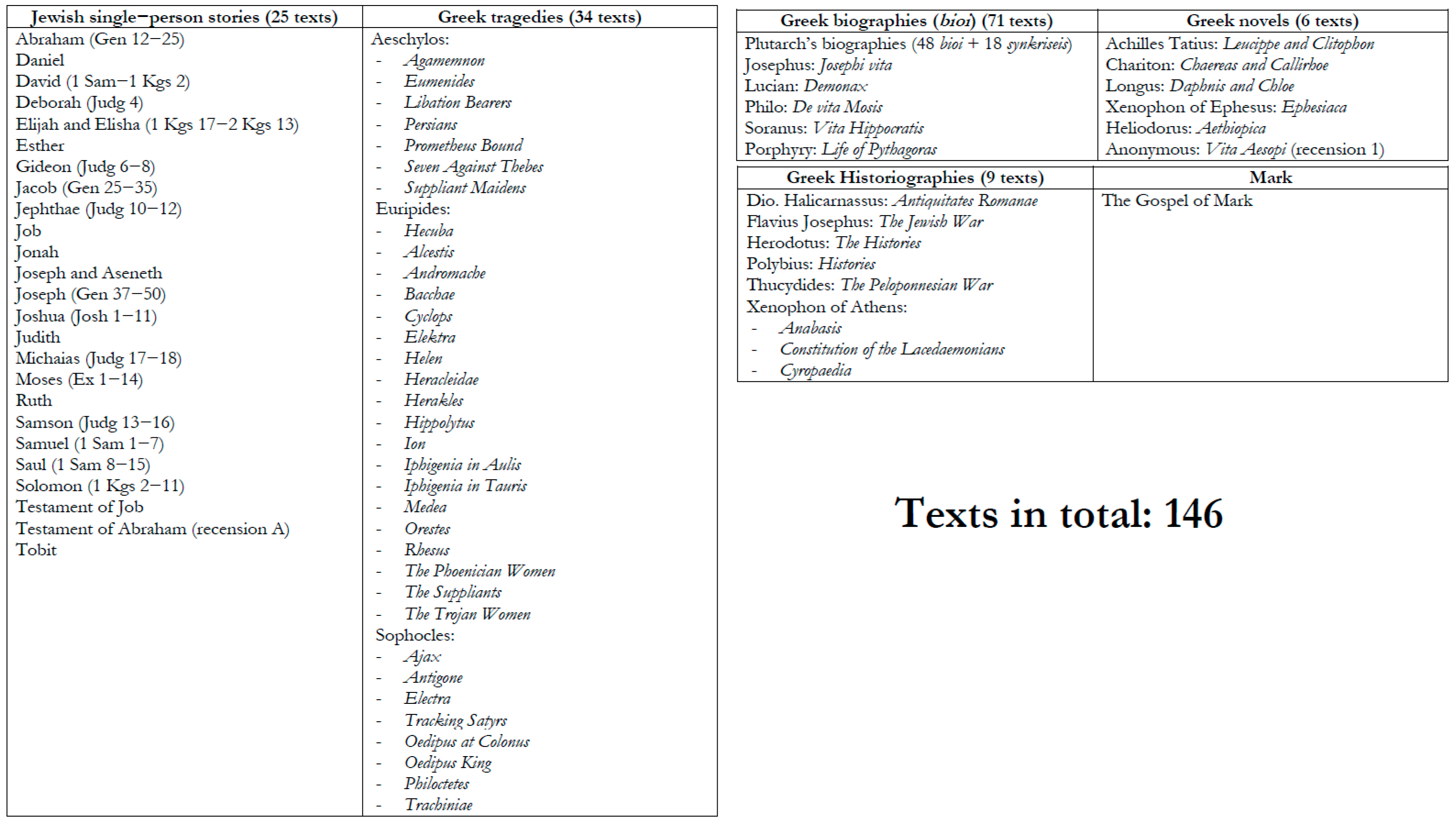
Figure A2.
1000-word chunks of Mark.
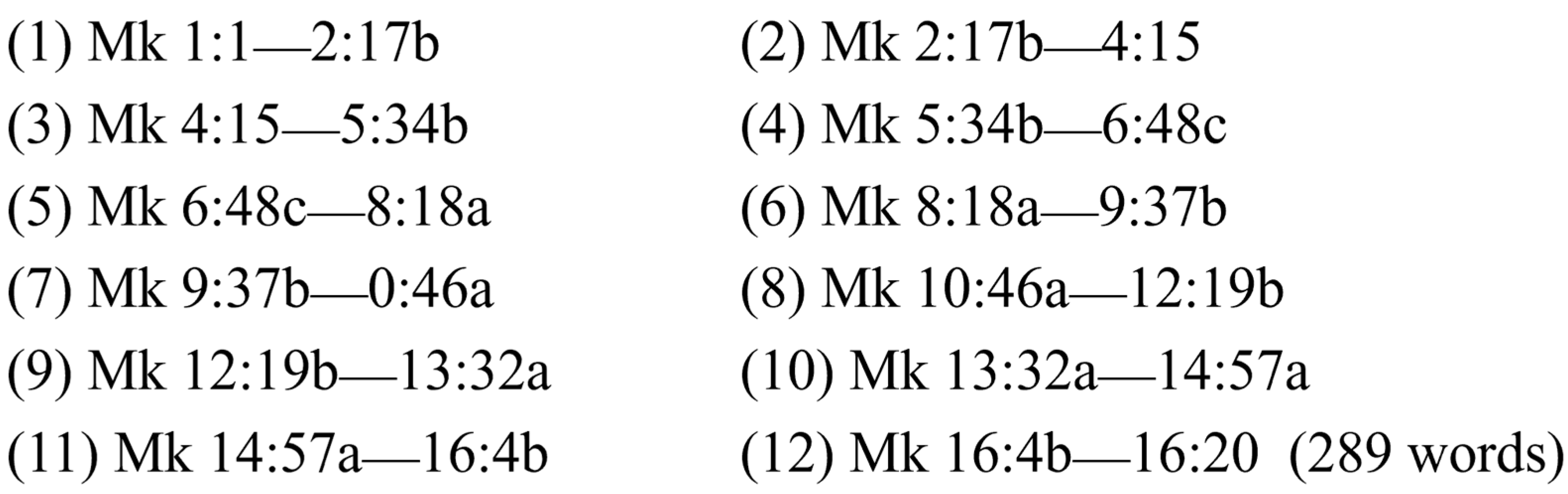
Notes
| 1 | We are aware that the category of “LXX single-person narratives” does not correspond to a formally recognised or established literary group. It is, rather, a heuristic construct devised for the purposes of this study. However, it has been formed on the basis of scholarly judgement and subject-matter expertise. One of the primary motivations behind this grouping stems from a stylistic observation: which texts does Mark appear to imitate in terms of language and narrative texture? Given that Mark’s vocabulary and style bear notable affinities to a range of LXX narratives centred on individual figures, we have constructed the group “LXX single-person stories” to provide a meaningful and contextually appropriate basis for comparison. For analyses of Mark’s style, see (Delgado Gómez 2020, 2021). |
| 2 | Especially the first part of the recent book, Modern and Ancient Literary Criticism of the Gospels (2020), and the articles following Burridge’s own article, present valuable corrections and improvements to Burridge’s position; see (Kelber 2020; Dinkler 2020; Shively 2020). |
| 3 | Burridge lists many of the macro-genre suggestions and evaluates their potential in relation to his own position, see (Burridge 2020). |
| 4 | For recent analyses of intertextuality in Mark, though without a focus on the question of genre, see (Sloan 2019; Shively 2023; Watts 2007; O’Brien 2010; Ahearne-Kroll 2007; Winn 2010; Hays 2016; Vette 2022). |
| 5 | For the best general introduction to Todorov’s genre theory, see (Todorov 1990). Besides this, the most important works on the question of genre are Todorov (1973, 1977). |
| 6 | Wittgenstein (2001, §§ 65–71). For Fowler’s development of Wittgenstein’s notion, see (Fowler 1982, p. 41). For a discussion of “family resemblance” with respect to the genre of Mark’s Gospel, see (Vines 2002). |
| 7 | For a critique of the use of family resemblance in genre discussions, see (Fishelov 1991, 1993). |
| 8 | See especially the fourth and final essay in (Bakhtin 1981). For chronotopic analyses, see (Bakhtin 1984). |
| 9 | Bakhtin argues that different literary forms possess their own characteristic chronotopes—for example, the fairy tale, the Bildungsroman, the ancient novel, and the travel narrative, see (Bakhtin 1981, pp. 84–85, 111–36). |
| 10 | In the context of ancient texts and genres, Sean A. Adams applies a prototype approach in his highly praised study (Adams 2020). |
| 11 | Lakoff (1987, pp. 6–12, 91–100). For Lakoff’s other work on metaphors, see (Lakoff and Johnson 1980; Lakoff and Turner 1989). |
| 12 | Although we employ the label “LXX single-person stories,” we are fully aware that the designation is a modern construct and that the group, as used here, includes texts not contained in the Septuagint. We retain the term nonetheless—despite its imprecision—because the majority of the texts do derive from the LXX and because the label provides a more manageable shorthand than a fully descriptive alternative. |
| 13 | For a representative selection of the respective genres, see: Historiography: (Becker 2006, 2017). Biography: (Burridge 2018; Bond 2020; Adams 2020). Novel: (Tolbert 1989; Beavis 1989; Wills 1997). Tragedy: (Wright 2020; S. Smith 1995; Berube 2003). |
| 14 | In selecting texts for the comparative corpora, we have relied exclusively on works available in fully digital, machine-readable form through the computing-antiquity.au.dk database. The datasets therefore comprise all Greek texts we were able to obtain in this format. This constraint explains both the limited number of novels and the inclusion of certain historiographies (e.g., Herodotus, Thucydides, Diodorus) as representative prototypes within the available material, rather than as expressions of temporal proximity to Mark. Fragmentary texts fall outside the scope of the present analysis for the same reason. |
| 15 | For explanations on precision, recall and F-score, see (Powers 2020). |
| 16 | Because Mark was deliberately excluded from the training data and treated as a stand-alone test case, it cannot appear within the multi-genre visualisations, which only display the texts used to train and compare the model’s internal categories. |
| 17 | Because Mark was deliberately excluded from the training data and treated as a stand-alone test case, it cannot appear in the tables, which only display the texts used to train and compare the model’s internal categories. |
| 18 | Detailed robustness analyses (including stratified cross-validation, repeated runs, and model-family stability tests) are available upon request. |
| 19 | For an explanation of ARI, see (Hubert and Arabie 1985). |
| 20 | For an explanation of NMI, see (Vinh et al. 2009). |
| 21 | The chart shows the average Euclidean distance of each segment from each genre centroid, plotted across text progression. Lower values indicate greater distance from the genre, while higher values suggest greater proximity. |
| 22 | For the emic/etic discussion in modern anthropology, see the essay “From the Native’s Point of View” in (Geertz 2008). See also (Geertz 1993). |
| 23 | In this discussion of purpose and function, terms such as “history,” “theology,” and “ethics” are used as etic and heuristic categories. They are not intended as emic genre labels but as analytical tools for describing the purpose and function of the respective genres. This usage aligns with Smith’s distinction between emic and etic modes of analysis and is not meant to imply that ancient authors themselves operated with these classifications. |
| 24 | See Note 23 above. |
References
- Adams, Sean A. 2020. Greek Genres and Jewish Authors: Negotiating Literary Culture in the Greco-Roman Era. Waco: Baylor University Press. [Google Scholar]
- Ahearne-Kroll, Stephen P. 2007. The Psalms of Lament in Mark’s Passion: Jesus’ Davidic Suffering. Camdridge: Cambridge University Press. [Google Scholar]
- Bakhtin, Mikhail. 1981. The Dialogic Imagination: Four Essays. Translated by Caryl Emerson, and Michael Holquest. Austin: University of Texas Press. [Google Scholar]
- Bakhtin, Mikhail. 1984. Rabelais and His World. Translated by Helen Iswolsky. Bloomington: Indiana University Press. [Google Scholar]
- Bakhtin, Mikhail. 1986. Speech Genres and Other Late Essays. Translated by Vern W. McGee. Austin: University of Texas. [Google Scholar]
- Bakhtin, Mikhail. 2000. The Problem of Speech Genres. In Modern Genre Theory. Edited by David Duff. London: Routledge. [Google Scholar]
- Beavis, Mary Ann. 1989. Mark’s Audience: The Literary and Social Setting of Mark 4.11-12. Sheffield: Sheffield Academic. [Google Scholar]
- Becker, Eve-Marie. 2006. Das Markus-Evangelium Im Rahmen Antiker Historiographie. Tübingen: Mohr Siebeck. [Google Scholar]
- Becker, Eve-Marie. 2017. The Birth of Christian History: Memory and Time from Mark to Luke-Acts. New Haven: Yale University Press. [Google Scholar]
- Berube, Amelinde. 2003. Tragedy in the Gospel of Mark. Ph.D. thesis, McGill University, Montreal, QC, Canada. [Google Scholar]
- Bolin, Thomas M. 1999. History, Historiography, and the Use of the Past in the Hebrew Bible. In The Limits of Historiography: Genre and Narrative in Ancient Historical Texts. Edited by Christina S. Kraus. Leiden: Brill. [Google Scholar]
- Bond, Helen K. 2020. The First Biography of Jesus: Genre and Meaning in Mark’s Gospel. Grand Rapids: Eerdmans. [Google Scholar]
- Burridge, Richard A. 2018. What Are the Gospels?: A Comparison with Graeco-Roman Biography. Waco: Baylor University Press. [Google Scholar]
- Burridge, Richard A. 2020. The Gospels and Ancient Biography: 25 Years On, 1993–2018. In Modern and Ancient Literary Criticism of the Gospels. Edited by Robert M. Calhoun, David P. Moessner and Tobias Nicklas. Tübingen: Mohr Siebeck. [Google Scholar]
- Calhoun, Robert Matthew, David P. Moessner, and Tobias Nicklas, eds. 2020. Modern and Ancient Literary Criticism of the Gospels: Continuing the Debate on Gospel Genre(s), WUNT. Tübingen: Mohr Siebeck. [Google Scholar]
- Delgado Gómez, Alfredo. 2020. Get up! Be Opened!: Code-switching and Loanwords in the Gospel of Mark. Journal for the Study of the New Testament 42: 390–427. [Google Scholar] [CrossRef] [Scilit]
- Delgado Gómez, Alfredo. 2021. The Vocabulary of Mark’s Gospel, the LXX, and the Greek of its Time. Biblica 102: 356–85. [Google Scholar]
- Derrida, Jacques. 1992. Acts of Literature. New York: Routledge. [Google Scholar]
- Dinkler, Michal Beth. 2020. What is a Genre? Contemporary Genre Theory and the Gospels. In Modern and Ancient Literary Criticism of the Gospels. Edited by David P. Moessner, Tobias Niklas and Robert M. Calhoun. Tübingen: Mohr Siebeck. [Google Scholar]
- Edwards, Mark. 2006. Gospel and Genre: Some Reservations. In The Limits of Ancient Biography. Edited by Brian McGing and Judith Mossman. Swansea: The Classical Press of Wales. [Google Scholar]
- Elder, Nicholas A. 2019. The Media Matrix of Early Jewish and Christian Narrative. New York: T&T Clark. [Google Scholar]
- Elder, Nicholas A. 2024. Gospel Media: Reading, Writing, and Circulating Jesus Traditions. Bielefeld: Eerdmans. [Google Scholar]
- Fishelov, David. 1991. Genre Theory and Family Resemblance—Revisited. Poetics 20: 123–38. [Google Scholar] [CrossRef] [Scilit]
- Fishelov, David. 1993. Metaphors of Genre: The Role of Analogies in Genre Theory. University Park: Pennsylvania State University Press. [Google Scholar]
- Fowler, Alastair. 1982. Kinds of Literature: An Introduction to the Theory of Genres and Modes. Oxford: Clarendon Press, pp. 20–36. [Google Scholar]
- Freyne, Sean. 2006. Mark’s Gospel and Ancient Biography. In The Limits of Ancient Biography. Edited by Brian McGing and Judith Mossman. Swansea: Classical Press of Wales. [Google Scholar]
- Geertz, Clifford. 1993. The Interpretation of Cultures: Selected Essays. London: Fontana Press. [Google Scholar]
- Geertz, Clifford. 2008. Local Knowledge: Further Essays in Interpretive Anthropology. New York: Basic Books. [Google Scholar]
- Hagg, Tomas. 2012. The Art of Biography in Antiquity. New York: Cambridge University Press. [Google Scholar]
- Halliwell, Stephen. 1987. The Poetics of Aristotle: Translation and Commentary. London: Duckworth. [Google Scholar]
- Hamilton, Catherine Sider, and Joel Willitts, eds. 2019. Writing the Gospels: A Dialogue with Francis Watson, 1st ed. London: T&T CLARK. [Google Scholar]
- Hays, Richard B. 2016. Echoes of Scripture in the Gospels. Waco: Baylor University Press. [Google Scholar]
- Hubert, Lawrence, and Phipps Arabie. 1985. Comparing Partitions. Journal of Classification 2: 193–218. [Google Scholar] [CrossRef] [Scilit]
- Huebenthal, Sandra. 2014. Das Markusevangelium Als kollektives Gedachtnis. Göttingen: Vandenhoeck & Ruprecht. [Google Scholar]
- Huebenthal, Sandra. 2023. Memory Theory in New Testament Studies: Exploring New Perspectives. Boston: Brill. [Google Scholar]
- Kelber, Werner H. 2020. On “Mastering the Genre”. In Modern and Ancient Literary Criticism of the Gospels. Edited by David P. Moessner, Tobias Niklas and Robert M. Calhoun. Tübingen: Mohr Siebeck. [Google Scholar]
- Kirk, J. R. Daniel. 2016. A Man Attested by God: The Human Jesus of the Synoptic Gospels. Grand Rapids: William B. Eerdmans Publishing Company. [Google Scholar]
- Konstan, David, and Robyn Walsh. 2016. Civic and Subversive Biography in Antiquity. In Writing Biography in Greece and Rome: Narrative Technique and Fictionalization. Edited by Koen De Temmerman and Kristoffel Demoen. Cambridge: Cambridge University Press. [Google Scholar]
- Lakoff, George. 1987. Women, Fire, and Dangerous Things: What Categories Reveal about the Mind. Chicago: University of Chicago Press. [Google Scholar]
- Lakoff, George, and Mark Johnson. 1980. Metaphors We Live By. Chicago: The University of Chicago Press. [Google Scholar]
- Lakoff, George, and Mark Turner. 1989. More than Cool Reason: A Field Guide to Poetic Metaphor. Chicago: University of Chicago Press. [Google Scholar]
- Larsen, Matthew D. C. 2018. Gospels Before the Book. New York: Oxford University Press. [Google Scholar]
- Michalowski, Piotr. 1999. Commemoration, Writing, and Genre in Ancient Mesopotamia. In The Limits of Historiography: Genre and Narrative in Ancient Historical Texts. Edited by Christina S. Kraus. Leiden: Brill. [Google Scholar]
- Morgan, Teresa. 2015. Roman Faith and Christian Faith: Pistis and Fides in the Early Roman Empire and Early Churches. Oxford: Oxford University Press. [Google Scholar]
- Mortensen, Jacob P. B., ed. 2023. Genres of Mark-Reading Mark’s Gospel from Micro and Macro Perspectives, SANt. Göttingen: Vandenhoeck & Ruprecht. [Google Scholar]
- O’Brien, Kelli S. 2010. The Use of Scripture in the Markan Passion Narrative. London: T & T Clark. [Google Scholar]
- Pelling, Christopher. 1999. Epilogue. In The Limits of Historiography. Edited by Christina S. Kraus. Leiden: Brill. [Google Scholar]
- Powers, David M. W. 2020. Evaluation: From Precision, Recall and F-measure to ROC, Informedness, Markedness and Correlation. arXiv arXiv:2010.16061. [Google Scholar] [CrossRef] [Scilit]
- Robertson, Paul. 2025. Statistical Approaches to Paul’s Letters. Leiden/Boston: Brill. [Google Scholar]
- Rosch, Eleanor. 1975. Cognitive Representations of Semantic Categories. Journal of Experimental Psychology 104: 192. [Google Scholar] [CrossRef]
- Rosch, Eleanor. 1978. Principles of Categorization. In Cognition and Categorization. Edited by Eleanor Rosch and Barbara B. Lloyd. Hillsdale: Lawrence Erlbaum. [Google Scholar]
- Rosch, Eleanor H. 1973. Natural Categories. Cognitive Psychology 4: 328–50. [Google Scholar] [CrossRef] [Scilit]
- Rosenmeyer, Thomas G. 1985. Ancient Literary Genres: A Mirrage? In Yearbook of Comparative and General Literature. Bloomington: Indiana University, vol. 34. [Google Scholar]
- Russell, Donald Andrew, and Michael Winterbottom. 1972. Ancient Literary Criticism: The Principal Texts in New Translations. Oxford: Clarendon. [Google Scholar]
- Shively, Elizabeth E. 2020. A Critique of Richard Burridge’s Genre Theory: From a One-Dimensional to a Multi-Dimensional Approach to Gospel Genre. In Modern and Ancient Literary Criticism of the Gospels. Edited by David P. Moessner, Tobias Niklas and Robert M. Calhoun. Tübingen: Mohr Siebeck. [Google Scholar]
- Shively, Elizabeth E. 2023. Israel’s Scriptures in Mark. In Israel’s Scriptures in Early Christian Writings. Edited by Matthias Henze and David Lincicum. Chicago: Eerdmans. [Google Scholar]
- Sloan, Paul T. 2019. Mark 13 and the Return of the Shepherd: The Narrative Logic of Zechariah in Mark. London: T & T Clark. [Google Scholar]
- Smith, Jonathan Z. 1978. Map Is Not Territory: Studies in the History of Religions. Leiden: BRILL. [Google Scholar]
- Smith, Jonathan Z. 1982. Imagining Religion: From Babylon to Jonestown. Chicago: University of Chicago Press. [Google Scholar]
- Smith, Jonathan Z. 1990. Drudgery Divine: On the Comparison of Early Christianities and the Religions of Late Antiquity. Chicago: The University of Chicago Press. [Google Scholar]
- Smith, Jonathan Z. 2020. Relating Religion: Essays in the Study of Religion. Chicago: University of Chicago Press. [Google Scholar]
- Smith, Stephen. 1995. A Divine Tragedy: Some Observations on the Dramatic Structure of Mark’s Gospel. Novum Testamentum 37: 209–31. [Google Scholar] [CrossRef] [Scilit]
- Todorov, Tzvetan. 1973. The Fantastic: A Structural Approach to a Literary Genre. Translated by Richard Howard. Cleveland: The Press of Case Western Reserve University. [Google Scholar]
- Todorov, Tzvetan. 1977. The Poetics of Prose. Translated by Richard Howard. Oxford: Basil Blackwell. [Google Scholar]
- Todorov, Tzvetan. 1990. Genres in Discourse. Translated by Catherine Porter. Cambridge: Cambridge University Press. [Google Scholar]
- Tolbert, Mary Ann. 1989. Sowing the Gospel: Mark’s World in Literary-Historical Perspective. Minneapolis: Augsburg. [Google Scholar]
- Vette, Nathanael. 2022. Writing with Scripture: Scripturalized Narrative in the Gospel of Mark. London: T&T Clark. [Google Scholar]
- Vines, Michael E. 2002. The Problem of Markan Genre: The Gospel of Mark and the Jewish Novel. Atlanta: SBL Press. [Google Scholar]
- Vinh, Nguyen Xuan, Julien Epps, and James Bailey. 2009. Information Theoretic Measures for Clusterings Comparison: Is a Correction for Chance Necessary? Paper presented at 26th Annual International Conference on Machine Learning, Montreal, QC, Canada, June 14–18. [Google Scholar]
- Watson, Francis. 2013. Gospel Writing: A Canonical Perspective. Chicago: William B. Eerdmans Publishing Company. [Google Scholar]
- Watson, Francis. 2022. What Is a Gospel? Chicago: William B. Eerdmans Publishing Company. [Google Scholar]
- Watts, Rikki E. 2007. Mark. In Commentary on the New Testament Use of the Old Testament. Edited by Gregory K. Beale and Donald Arthur Carson. Grand Rapids: Baker Academic. [Google Scholar]
- Wills, Lawrence M. 1995. The Jewish Novel in the Ancient World. Ithaca: Cornell University Press. [Google Scholar]
- Wills, Lawrence M. 1997. The Quest of the Historical Gospel: Mark, John and the Origins of the Gospel Genre. London: Routledge. [Google Scholar]
- Wills, Lawrence M. 2011. Jewish Novellas in a Greek and Roman Age: Fiction and Identity. Journal for the Study of Judaism in the Persian, Hellenistic, and Roman Period 42: 141–65. [Google Scholar] [CrossRef] [Scilit]
- Wills, Lawrence M. 2021. The Hellenistic and Jewish novel. In The Biblical World. Edited by Katharine J. Dell. London: Routledge. [Google Scholar]
- Winn, Adam. 2008. The Purpose of Mark’s Gospel: An Early Christian Response to Roman Imperial Propaganda. Tübingen: Mohr Siebeck. [Google Scholar]
- Winn, Adam. 2010. Mark and the Elijah-Elisha Narrative: Considering the Practice of Greco-Roman Imitation in the Search for Markan Source Material. Eugene: Pickwick. [Google Scholar]
- Wittgenstein, Ludwig. 2001. Philosophical Investigations, 3rd ed. Translated by Gertrude E. M. Anscombe. Oxford: Blackwell. [Google Scholar]
- Wright, Adam Z. 2020. Of Conflict and Concealment: The Gospel of Mark as Tragedy. Eugene: Pickwick. [Google Scholar]
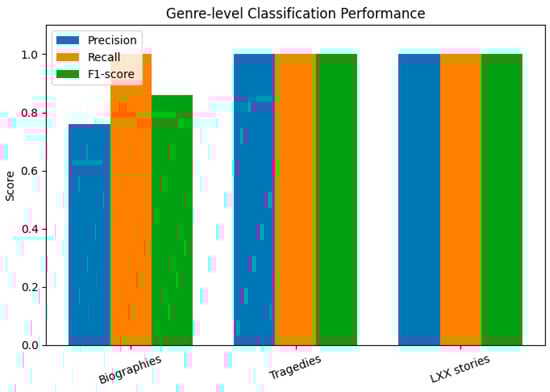
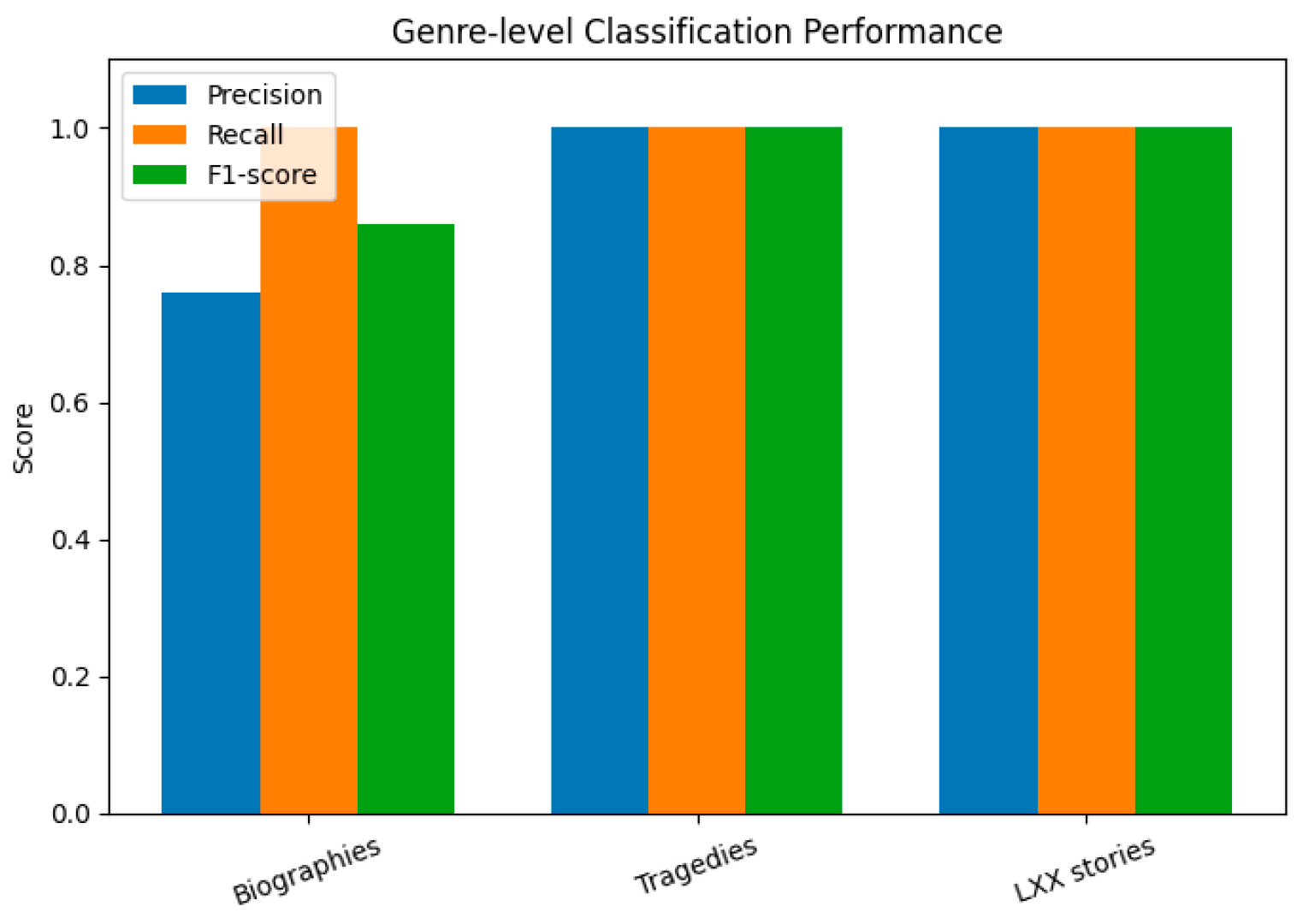
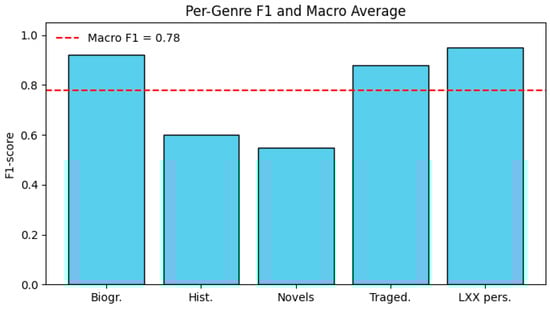
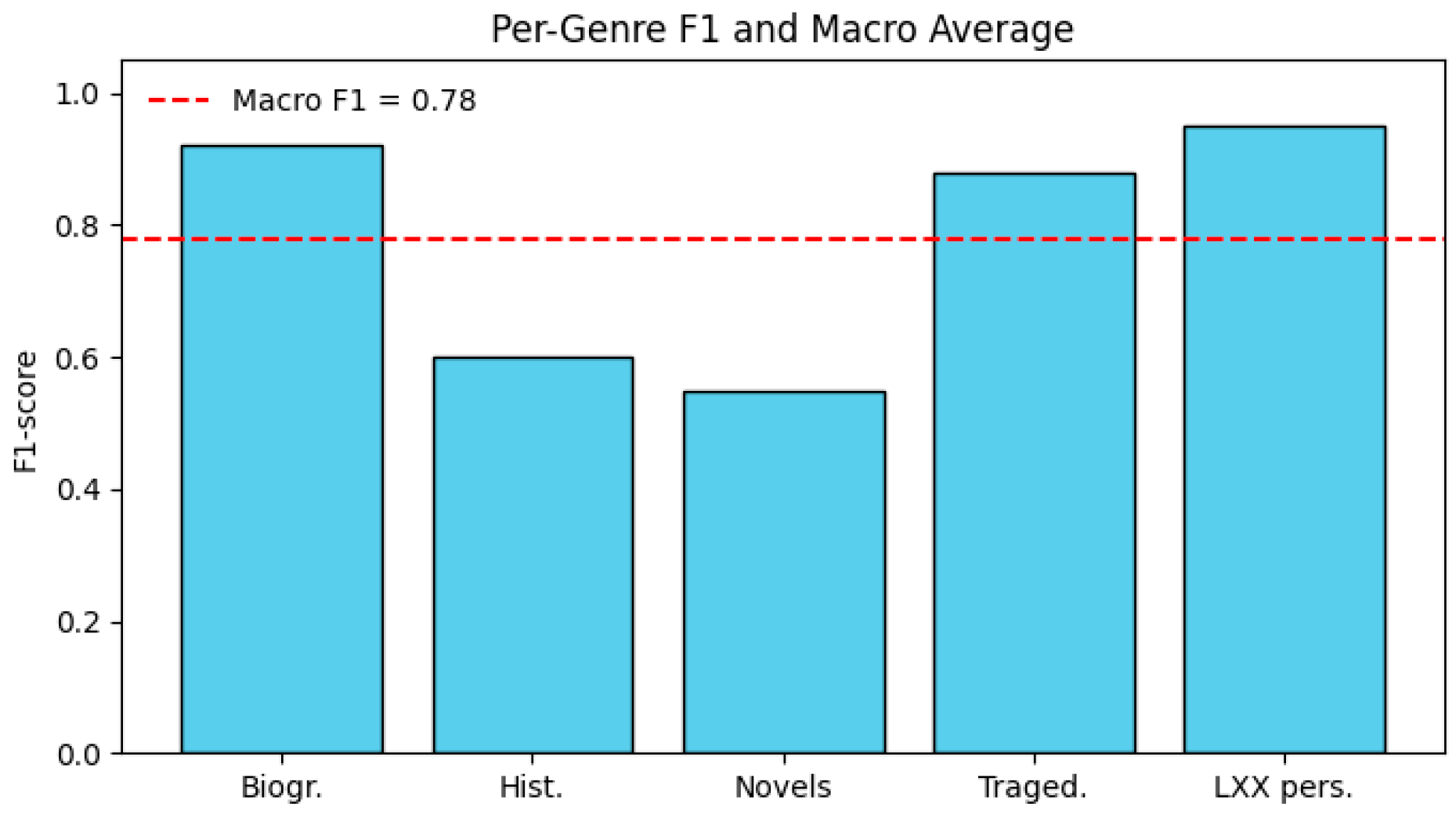
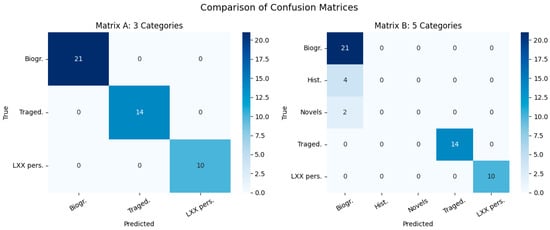
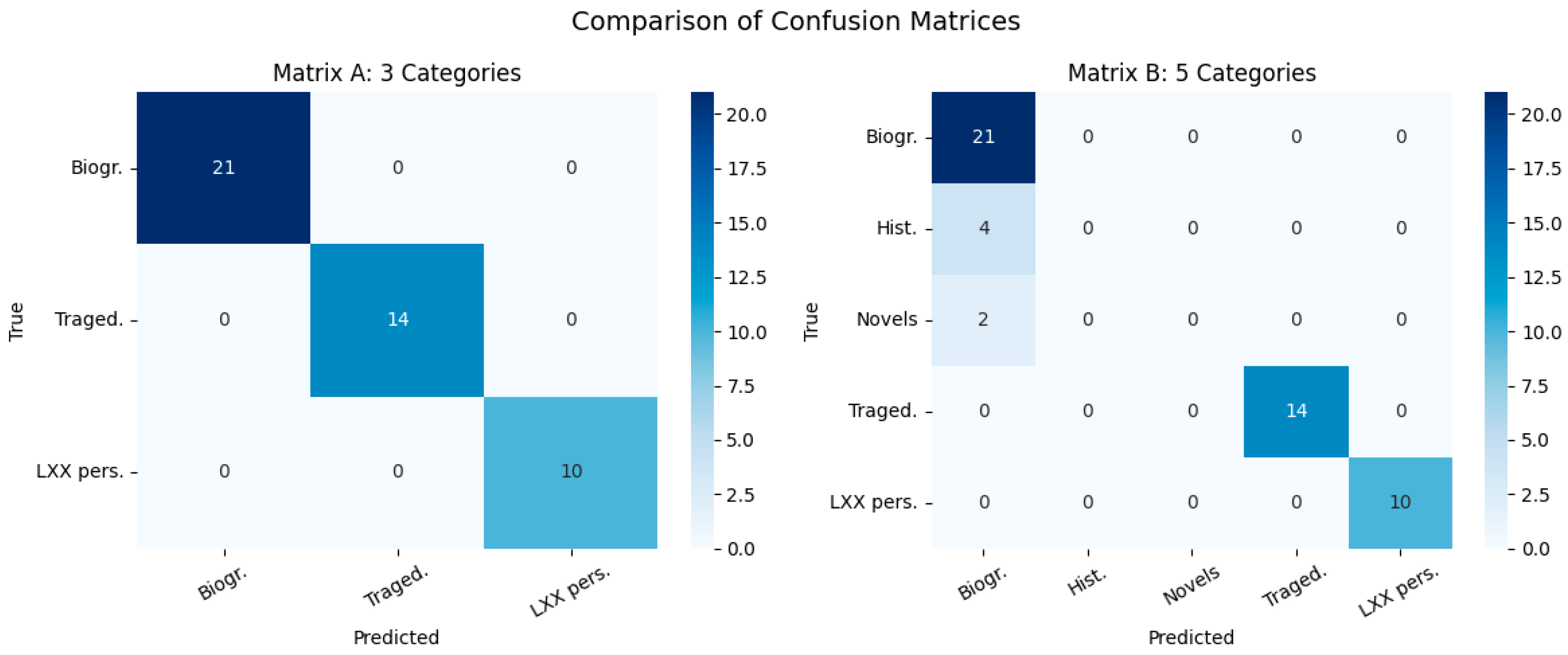


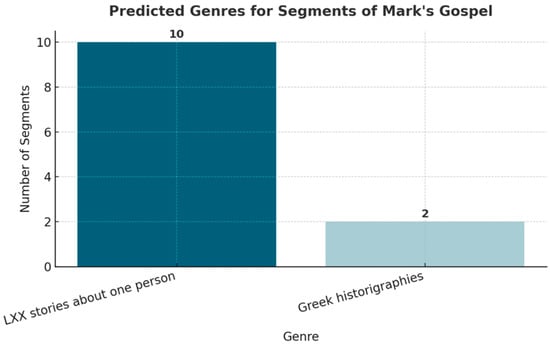
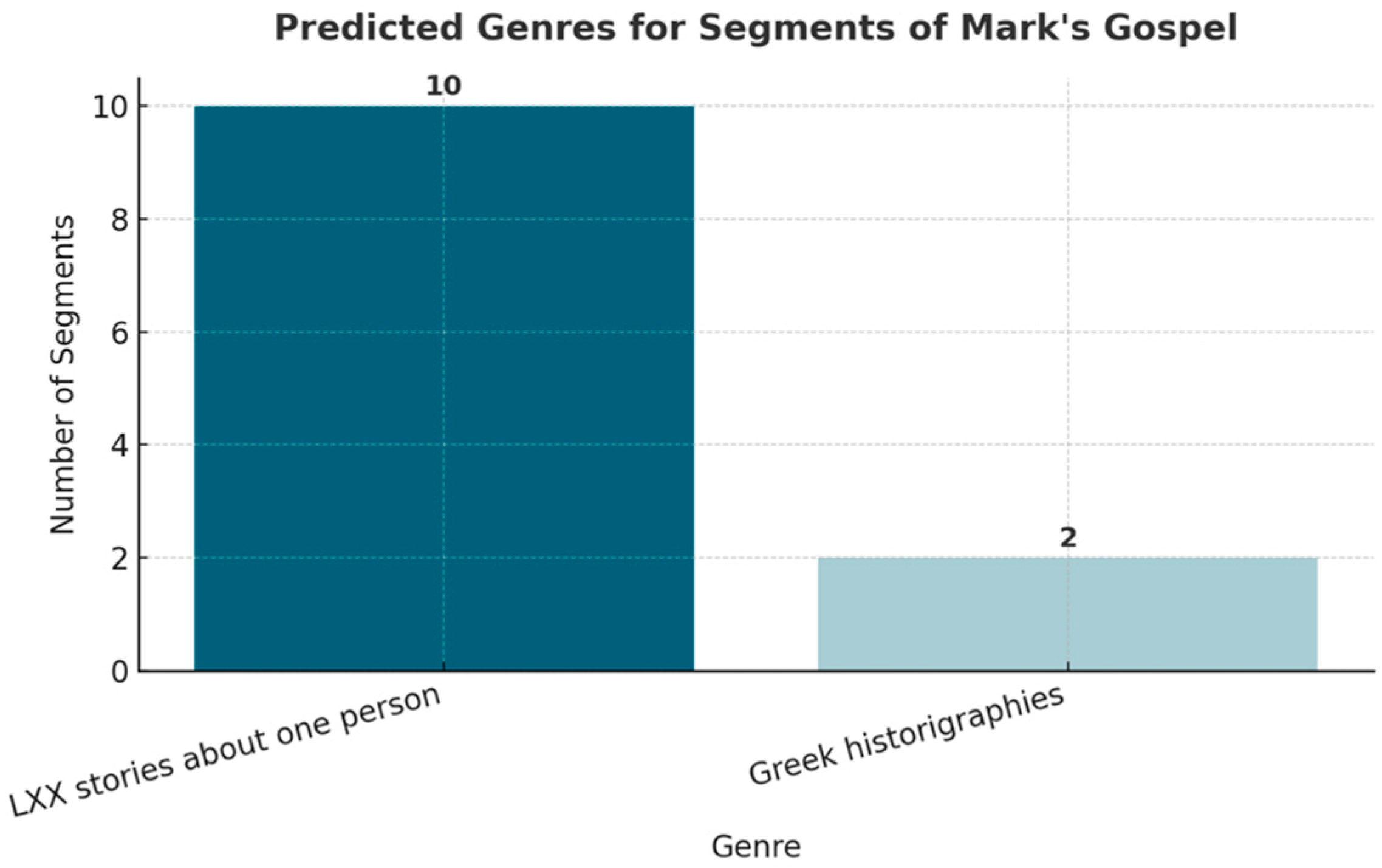


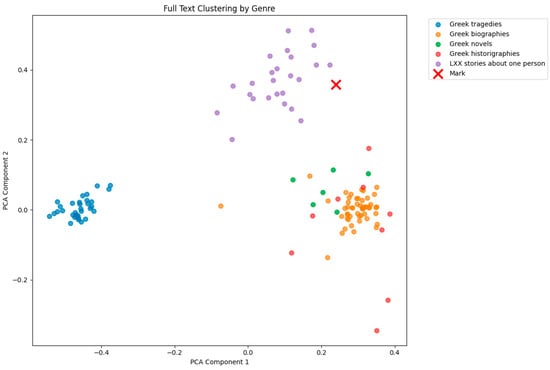
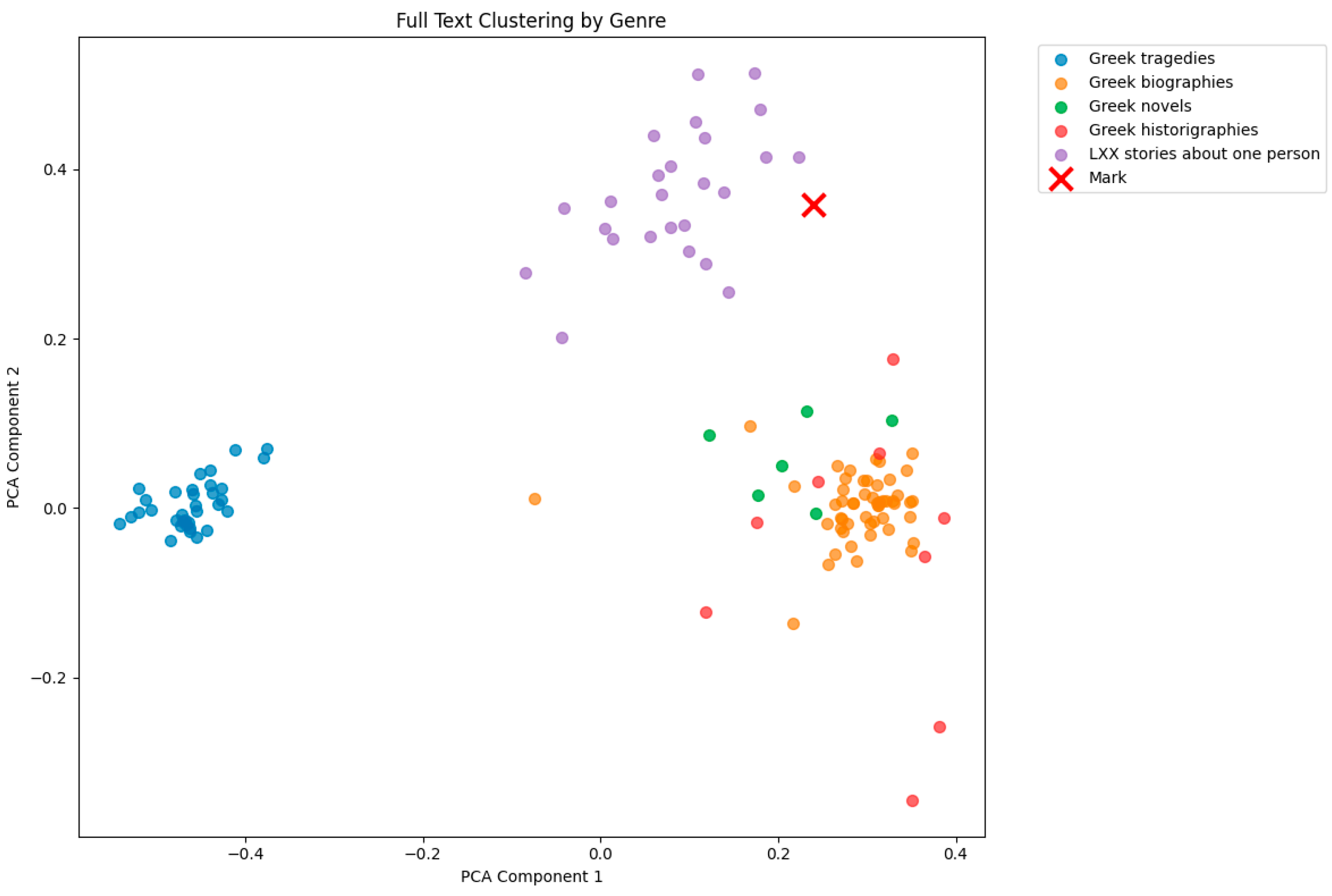
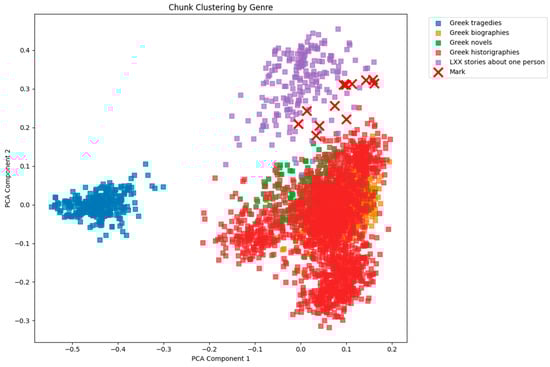
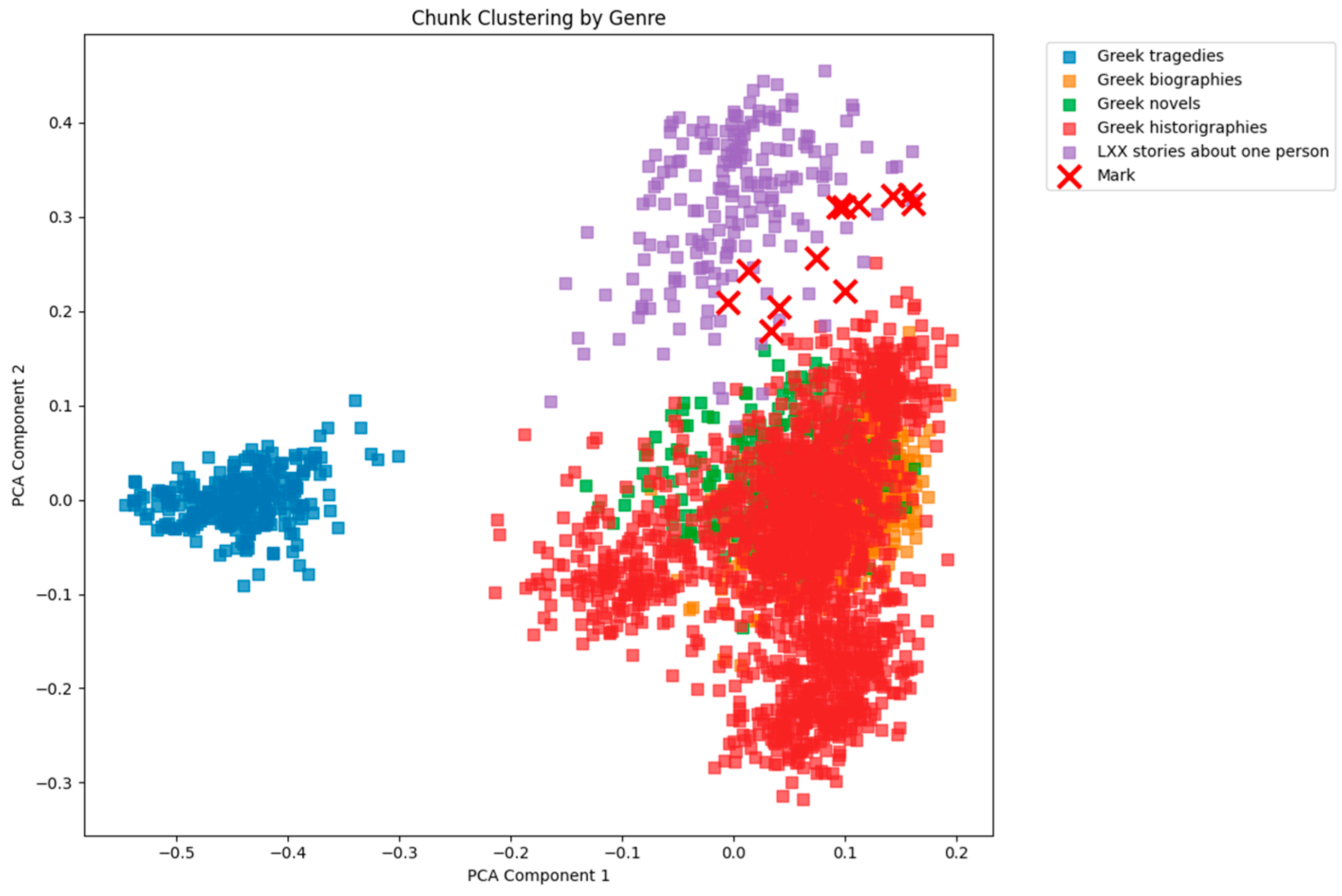
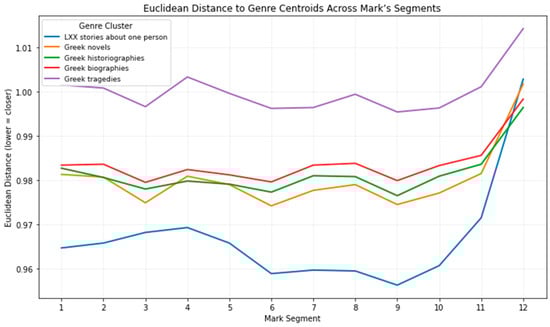
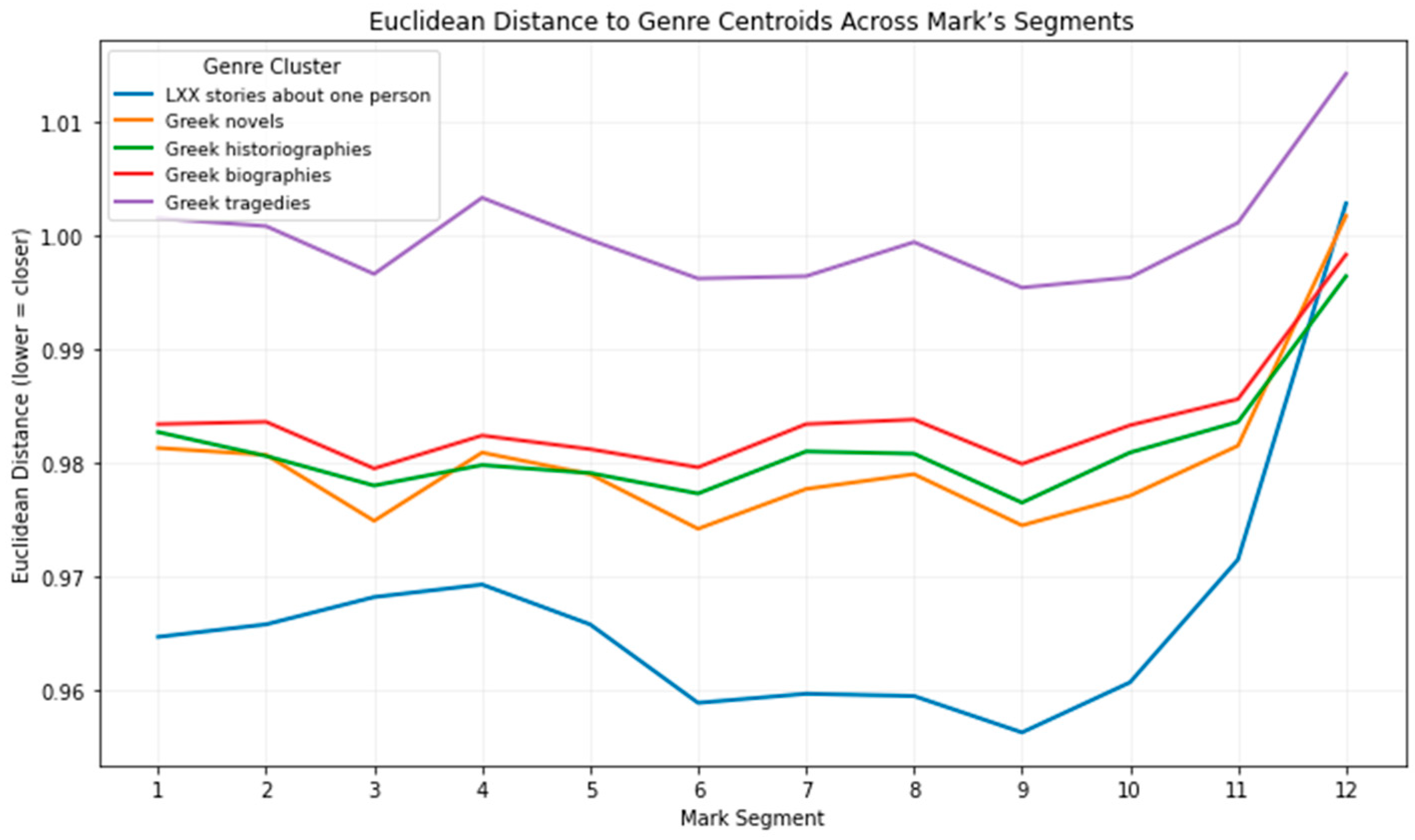
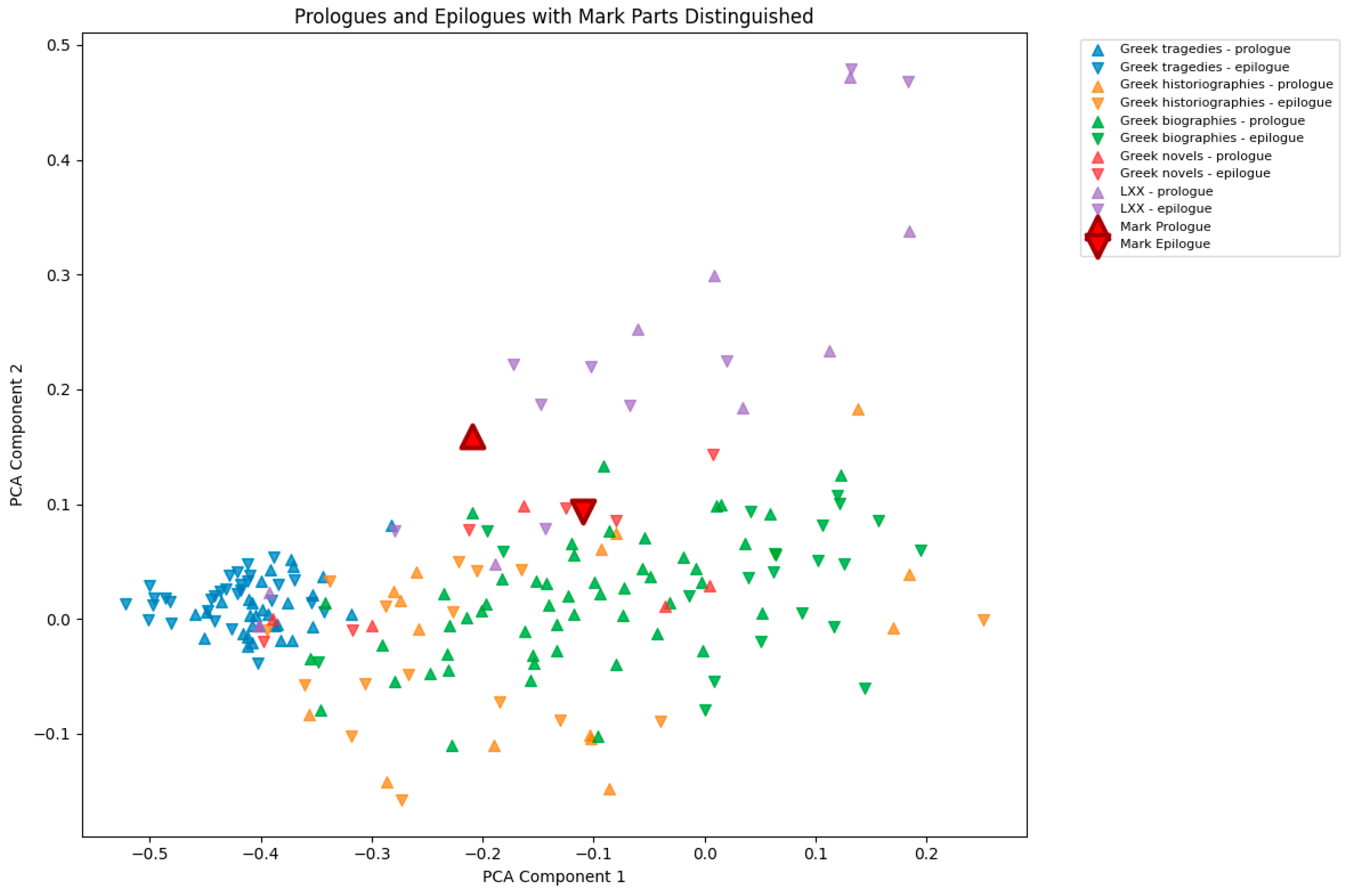

Disclaimer/Publisher’s Note: The statements, opinions and data contained in all publications are solely those of the individual author(s) and contributor(s) and not of MDPI and/or the editor(s). MDPI and/or the editor(s) disclaim responsibility for any injury to people or property resulting from any ideas, methods, instructions or products referred to in the content. |
© 2025 by the authors. Licensee MDPI, Basel, Switzerland. This article is an open access article distributed under the terms and conditions of the Creative Commons Attribution (CC BY) license (https://creativecommons.org/licenses/by/4.0/).