Automatic Detection of Disaster-Causing Organisms near the Waters of Nuclear Power Plant Based on LiveScope Scanning Sonar Images

 ,
, 

Abstract
1. Introduction
2. Materials and Methods
2.1. Dataset
2.2. Detection and Identification Model Based on YOLOv7
2.2.1. Preprocessing Stage
2.2.2. Model Optimization
- (1)
- Attention Module
- (2)
- Anchor Box Optimization
2.2.3. Light Spot Area Statistics
2.2.4. Model Training
2.2.5. Performance Metrics
2.3. Classification of Underwater Environments in Multiple Scenarios
3. Results
3.1. Model Detection Performance
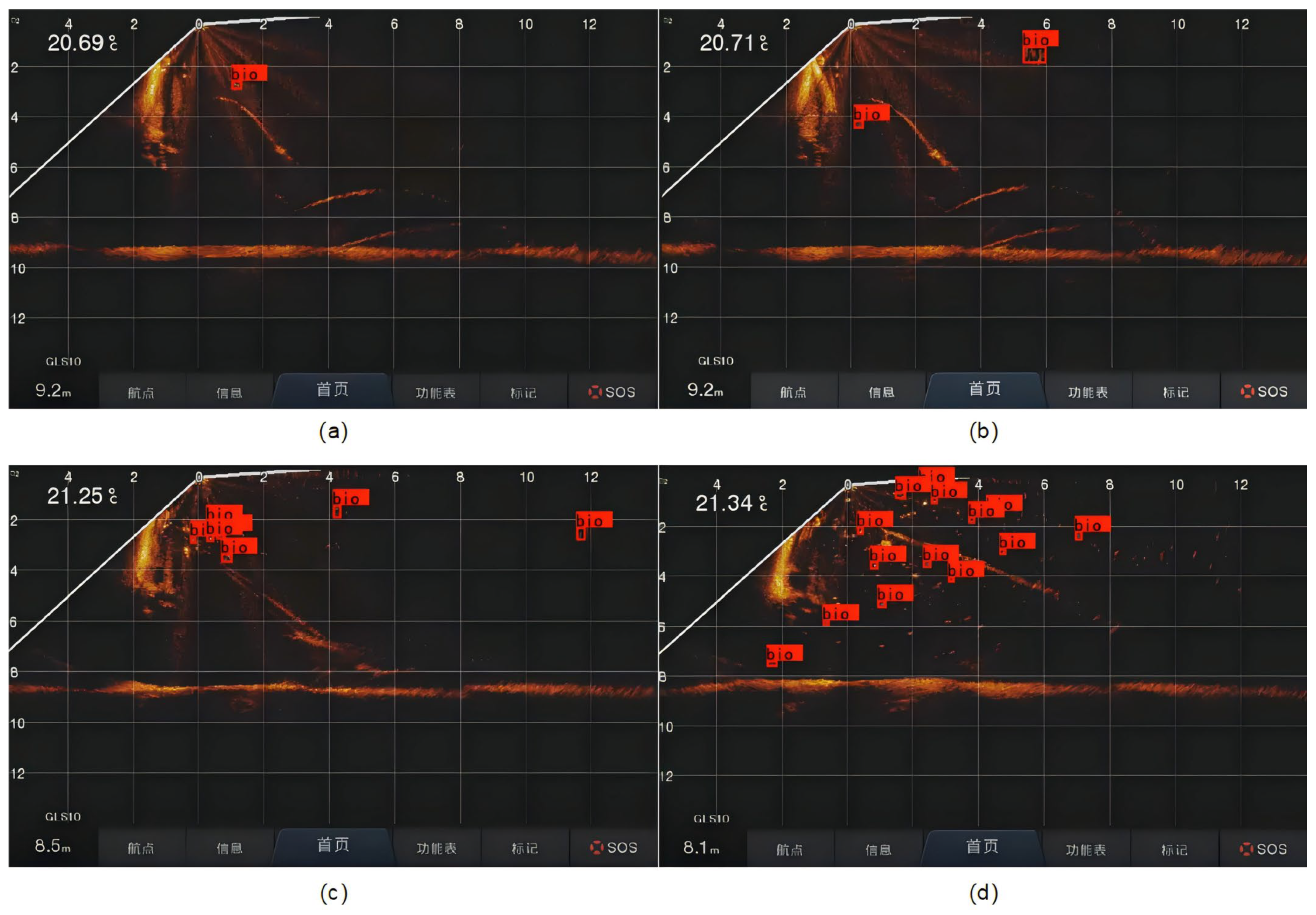
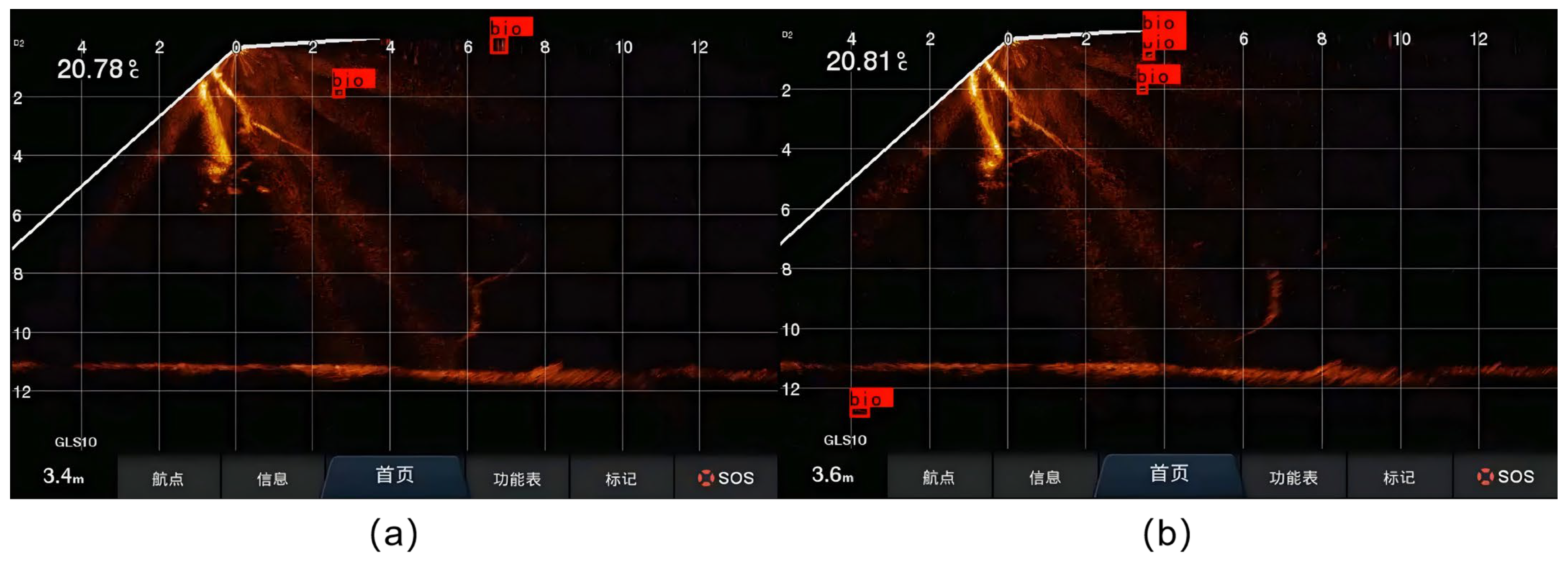
3.2. Multi-Scenario Classification and Detection in Underwater Environments
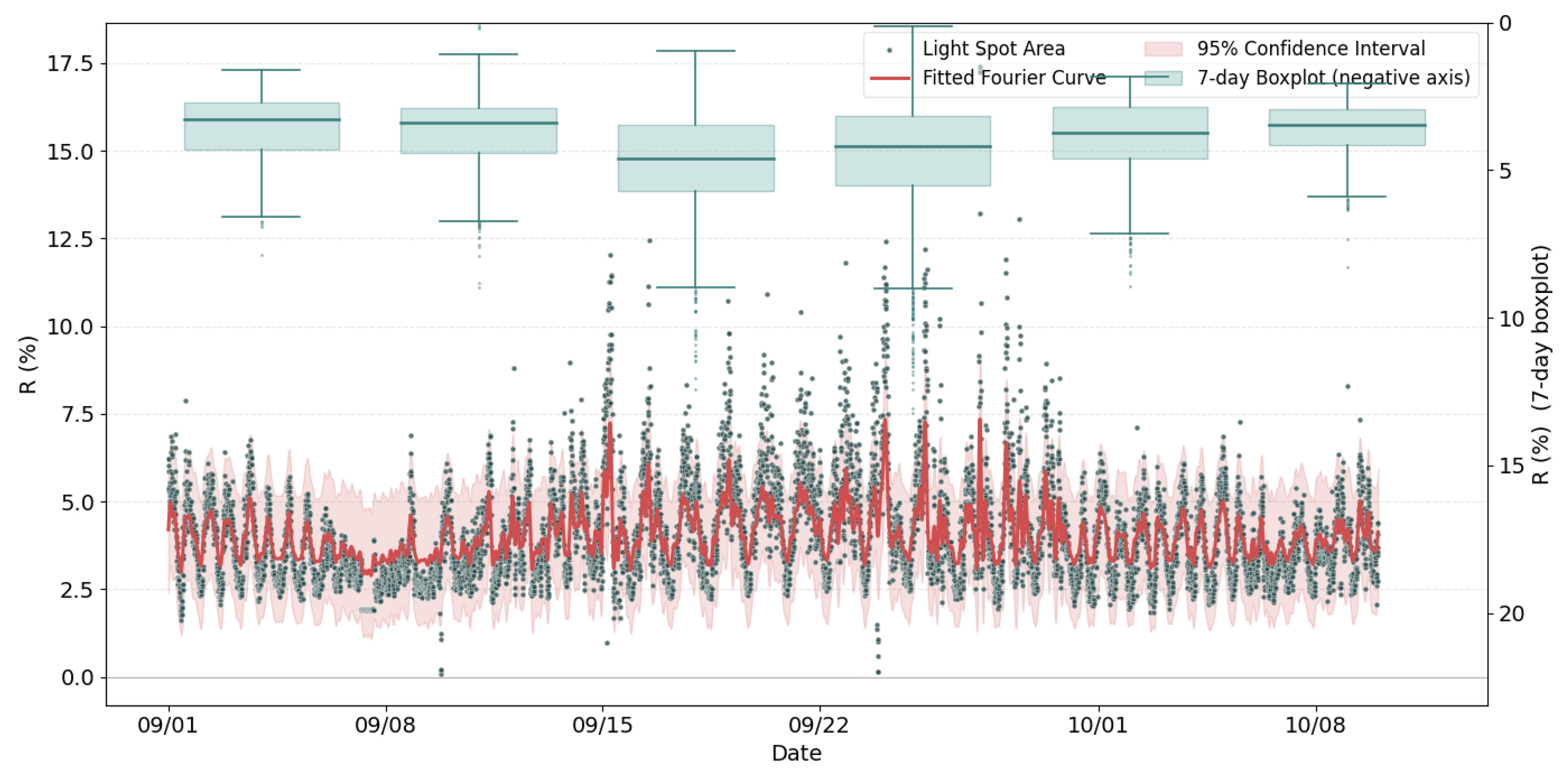
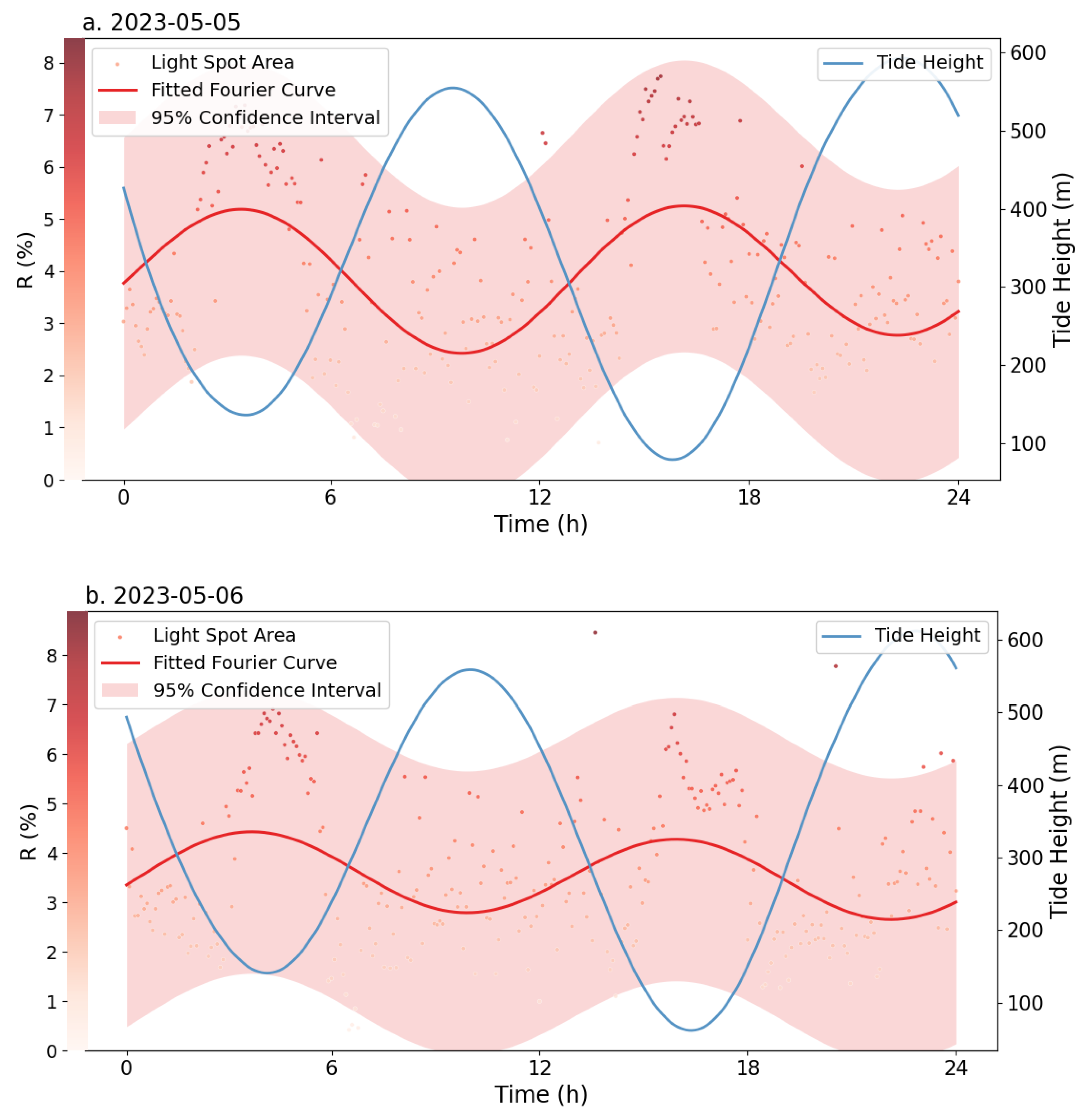
3.3. Dynamic Changes in Underwater Disaster-Causing Organism Biological Abundance
4. Discussion
4.1. Discussion on Model Performance
4.2. Discussion on Scenario-Dependent Behavior and Model Generalization
4.3. Discussion on Periodicity and Early Warning Implications
5. Conclusions and Outlook
Author Contributions
Funding
Data Availability Statement
Acknowledgments
Conflicts of Interest
Appendix A. Loss Functions and Evaluation Metrics
Appendix A.1. Loss Functions Used in Training
Appendix A.1.1. Intersection over Union (IoU)
Appendix A.1.2. Complete IoU (CIoU) and CIoU Loss
Appendix A.1.3. Binary Cross-Entropy Loss (BCE)
Appendix A.1.4. Mean Squared Error Loss (MSE)
Appendix A.1.5. Overall Training Objective
Appendix A.2. Evaluation Metrics
Appendix A.2.1. Precision and Recall
Appendix A.2.2. F1 Score
Appendix A.2.3. Average Precision (AP)
Appendix A.2.4. Frames per Second (FPS)
References
- Dassonville, C.; Siemen, T. Nuclear Energy: The Arguments for the Debate; Competence Centre Just Climate: Brussels, Belgium, 2022. [Google Scholar]
- Plackett, B. Why France’s Nuclear Industry Faces Uncertainty. Nature 2022, 22, 2817. [Google Scholar] [CrossRef] [PubMed]
- International Energy Agency (IEA). World Energy Outlook 2024; IEA: Paris, France, 2024; Available online: https://iea.blob.core.windows.net/assets/140a0470-5b90-4922-a0e9-838b3ac6918c/WorldEnergyOutlook2024.pdf (accessed on 10 November 2025).
- Tauseef Hassan, S.; Danish; Awais Baloch, M.; Bui, Q.; Hashim Khan, N. The heterogeneous impact of geopolitical risk and environment-related innovations on greenhouse gas emissions: The role of nuclear and renewable energy in the circular economy. Gondwana Res. 2024, 127, 144–155. [Google Scholar] [CrossRef]
- China Nuclear Energy Association (CNEA); China Institute of Strategic Studies (CISS); China Institute of Science and Technology Evaluation (CISTE). China Nuclear Energy Development Report (2025); Social Science Literature Publishing House: Beijing, China, 2025. [Google Scholar]
- Huo, J.; Li, C.; Liu, S.; Sun, L.; Yang, L.; Song, Y.; Li, J. Biomass prediction method of nuclear power cold source disaster based on deep learning. Front. Mar. Sci. 2023, 10, 1100396. [Google Scholar] [CrossRef]
- Han, F.; Yao, J.; Zhu, H.; Wang, C. Marine organism detection and classification from underwater vision based on the deep CNN method. Math. Probl. Eng. 2020, 2020, 3937580. [Google Scholar] [CrossRef]
- Li, D.; Du, Z.; Wang, Q.; Wang, J.; Du, L. Recent advances in acoustic technology for aquaculture: A review. Rev. Aquac. 2024, 16, 357–381. [Google Scholar] [CrossRef]
- Chai, Y.; Yu, H.; Xu, L.; Li, D.; Chen, Y. Deep learning algorithms for sonar imagery analysis and its application in aquaculture: A review. IEEE Sens. J. 2023, 23, 28549–28563. [Google Scholar] [CrossRef]
- Shahrestani, S.; Bi, H.; Lyubchich, V.; Boswell, K.M. Detecting a nearshore fish parade using the adaptive resolution imaging sonar (ARIS): An automated procedure for data analysis. Fish. Res. 2017, 191, 190–199. [Google Scholar] [CrossRef]
- Eggleston, M.R.; Milne, S.W.; Ramsay, M.; Kowalski, K.P. Improved fish counting method accurately quantifies high-density fish movement in dual-frequency identification sonar data files from a coastal wetland environment. N. Am. J. Fish. Manag. 2020, 40, 883–892. [Google Scholar] [CrossRef]
- Li, Q.; Wang, Z.; Li, G.; Zhou, C.; Chen, P.; Yang, C. An accurate and adaptable deep learning-based solution to floating litter cleaning up and its effectiveness on environmental recovery. J. Clean. Prod. 2023, 388, 135816. [Google Scholar] [CrossRef]
- Liu, L.; Wu, M.; Zhao, J.; Bing, L.; Zheng, L.; Luan, S.; Mao, Y.; Xue, M.; Liu, J.; Liu, B. Deep learning-based monitoring of offshore wind turbines in Shandong Sea of China and their location analysis. J. Clean. Prod. 2024, 434, 140415. [Google Scholar] [CrossRef]
- Li, J.; Xu, W.; Deng, L.; Xiao, Y.; Han, Z.; Zheng, H. Deep learning for visual recognition and detection of aquatic animals: A review. Rev. Aquac. 2023, 15, 409–433. [Google Scholar] [CrossRef]
- Wang, J.; Feng, C.; Wang, L.; Li, G.; He, B. Detection of weak and small targets in forward-looking sonar image using multi-branch shuttle neural network. IEEE Sens. J. 2022, 22, 6772–6783. [Google Scholar] [CrossRef]
- Connolly, R.M.; Jinks, K.I.; Shand, A.; Taylor, M.D.; Gaston, T.F.; Becker, A.; Jinks, E.L. Out of the shadows: Automatic fish detection from acoustic cameras. Aquat. Ecol. 2023, 57, 833–844. [Google Scholar] [CrossRef]
- Shen, W.; Liu, M.; Lu, Q.; Yin, Z.; Zhang, J. A fish target identification and counting method based on DIDSON sonar and YOLOv5 model. Fishes 2024, 9, 346. [Google Scholar] [CrossRef]
- Huang, T.; Zang, X.; Kondyukov, G.; Hou, Z.; Peng, G.; Pander, J.; Knott, J.; Geist, J.; Melesse, M.B.; Jacobson, P.; et al. Towards Automated and Real-Time Multi-Object Detection of Anguilliform Fishes from Sonar Data Using YOLOv8 Deep Learning Algorithm. Ecol. Inform. 2025, 91, 103381. [Google Scholar] [CrossRef]
- Wang, Z.; Guo, J.; Zhang, S.; Xu, N. Marine Object Detection in Forward-Looking Sonar Images via Semantic-Spatial Feature Enhancement. Front. Mar. Sci. 2025, 12, 1539210. [Google Scholar] [CrossRef]
- Xu, Z.; Cheng, X.E. Zebrafish tracking using convolutional neural networks. Sci. Rep. 2017, 7, 42815. [Google Scholar] [CrossRef]
- Wei, Y.; Ji, L.; An, D. Review on quantitative methods of fish school behaviors. Rev. Aquac. 2025, 17, e70023. [Google Scholar] [CrossRef]
- Mao, W.-L.; Chen, W.-C.; Fathurrahman, H.I.K.; Lin, Y.-H. Deep learning networks for real-time regional domestic waste detection. J. Clean. Prod. 2022, 344, 131096. [Google Scholar] [CrossRef]
- Chen, Y.; Luo, A.; Cheng, M.; Wu, Y.; Zhu, J.; Meng, Y.; Tan, W. Classification and recycling of recyclable garbage based on deep learning. J. Clean. Prod. 2023, 414, 137558. [Google Scholar] [CrossRef]
- Vijayalakshmi, M.; Sasithradevi, A. AquaYOLO: Advanced YOLO-based fish detection for optimized aquaculture pond monitoring. Sci. Rep. 2025, 15, 6151. [Google Scholar] [CrossRef] [PubMed]
- Zhou, C.; Wang, C.; Sun, D.; Hu, J.; Ye, H. An automated lightweight approach for detecting dead fish in a recirculating aquaculture system. Aquaculture 2025, 594, 741433. [Google Scholar] [CrossRef]
- Wang, C.-Y.; Bochkovskiy, A.; Liao, H.-Y.M. YOLOv7: Trainable Bag-of-Freebies Sets New State-of-the-Art for Real-Time Object Detectors. arXiv 2022, arXiv:2207.02696. [Google Scholar]
- Liu, F.; Xu, X.; Qing, C.; Jin, J. Probability Matrix SVM+ Learning for Complex Action Recognition. In Proceedings of the International Conference on Internet Multimedia Computing and Service (IMCS), Nanjing, China, 17 August 2018; Springer: Singapore, 2018; pp. 403–410. [Google Scholar] [CrossRef]
- Meng, L.; Hirayama, T.; Oyanagi, S. Underwater-drone with panoramic camera for automatic fish recognition based on deep learning. IEEE Access 2018, 6, 17880–17886. [Google Scholar] [CrossRef]
- Woo, S.; Park, J.; Lee, J.-Y.; Kweon, I.S. CBAM: Convolutional block attention module. In Computer Vision—ECCV 2018; Springer: Cham, Switzerland, 2018; pp. 3–19. [Google Scholar] [CrossRef]
- Hu, J.; Zhao, D.; Zhang, Y.; Zhou, C.; Chen, W. Real-time nondestructive fish behavior detecting in mixed polyculture system using deep-learning and low-cost devices. Expert Syst. Appl. 2021, 178, 115051. [Google Scholar] [CrossRef]
- Xiao, Y.; Yang, H.; Dai, D.; Wang, H.; Shan, Z.; Wu, H. CKAN-YOLOv8: A lightweight multi-task network for underwater target detection and segmentation in side-scan sonar. J. Mar. Sci. Eng. 2025, 13, 936. [Google Scholar] [CrossRef]
- Huang, Z.; Sui, B.; Wen, J.; Jiang, G. An intelligent ship image/video detection and classification method with improved regressive deep convolutional neural network. Complexity 2020, 2020, 1520872. [Google Scholar] [CrossRef]
- Xu, W.; Yang, R.; Karthikeyan, R.; Shi, Y.; Su, Q. GBiDC-PEST: A novel lightweight model for real-time multiclass tiny pest detection and mobile platform deployment. J. Integr. Agric. 2024, 24, 2749–2769. [Google Scholar] [CrossRef]
- Huang, J.; Rathod, V.; Sun, C.; Zhu, M.; Korattikara, A.; Fathi, A.; Fischer, I.; Wojna, Z.; Song, Y.; Guadarrama, S.; et al. Speed/Accuracy Trade-Offs for Modern Convolutional Object Detectors. In Proceedings of the 2017 IEEE Conference on Computer Vision and Pattern Recognition (CVPR), Honolulu, HI, USA, 21–26 July 2017; IEEE: Honolulu, HI, USA, 2017; pp. 3296–3297. [Google Scholar]
- Liu, Z.; Han, W.; Xu, H.; Gong, K.; Zeng, Q.; Zhao, X. Research on Vehicle Detection Based on Improved YOLOX_S. Sci. Rep. 2023, 13, 23081. [Google Scholar] [CrossRef]
- Zi, N.; Li, X.-M.; Gade, M.; Fu, H.; Min, S. Ocean eddy detection based on YOLO deep learning algorithm by synthetic aperture radar data. Remote Sens. Environ. 2024, 307, 114139. [Google Scholar] [CrossRef]
- Shen, W.; Peng, Z.; Zhang, J. Identification and counting of fish targets using adaptive resolution imaging sonar. J. Fish Biol. 2024; early view. [Google Scholar] [CrossRef] [PubMed]
- Pala, A.; Oleynik, A.; Malde, K.; Handegard, N.O. Self-supervised feature learning for acoustic data analysis. Ecol. Inform. 2024, 84, 102878. [Google Scholar] [CrossRef]
- Baletaud, F.; Villon, S.; Gilbert, A.; Come, J.-M.; Fiat, S.; Iovan, C.; Vigliola, L. Automatic detection, identification and counting of deep-water snappers on underwater baited video using deep learning. Front. Mar. Sci. 2025, 12, 1476616. [Google Scholar] [CrossRef]
- Zhang, Z.; Han, Q.; Liu, W.; Zhao, Y. A lightweight network based on SCMYOLO for accurate and efficient underwater fish detection. ICES J. Mar. Sci. 2025, 82, fsaf038. [Google Scholar] [CrossRef]
- Córdova, M.; Sokolova, M.; van Helmond, A.; Mencarelli, A.; Kootstra, G. Multi-stage image-based approach for fish detection and weight estimation. Biosyst. Eng. 2025, 257, 104239. [Google Scholar] [CrossRef]
- Duan, R.; Wang, Y.; Chen, X.; Li, S. An enhanced algorithm for cell-level anomaly segmentation in photovoltaic solar panels using electroluminescence imaging. Energy 2025, 331, 136711. [Google Scholar] [CrossRef]
- Yoo, K.B.; Edelmann, G.F. Low Complexity Multipath and Doppler Compensation for Direct-Sequence Spread Spectrum Signals in Underwater Acoustic Communication. Appl. Acoust. 2021, 180, 108094. [Google Scholar] [CrossRef]
- Guo, H.; Abdi, A.; Song, A.; Badiey, M. Delay and Doppler Spreads in Underwater Acoustic Particle Velocity Channels. J. Acoust. Soc. Am. 2011, 129, 2015–2025. [Google Scholar] [CrossRef]
- Xia, W.; Miao, Z.; Wang, S.; Chen, K.; Liu, Y.; Xie, S. Influence of tidal and diurnal rhythms on fish assemblages in the surf zone of sandy beaches. Fish. Oceanogr. 2023, 32, 448–460. [Google Scholar] [CrossRef]
- Robinson, E.; Hosegood, P.; Bolton, A. Dynamical oceanographic processes impact on reef manta ray behaviour: Extreme Indian Ocean Dipole influence on local internal wave dynamics at a remote tropical atoll. Prog. Oceanogr. 2023, 218, 103129. [Google Scholar] [CrossRef]
- Krumme, U.; Liang, T.-H. Tidal-induced changes in a copepod-dominated zooplankton community in a macrotidal mangrove channel in Northern Brazil. Zool. Stud. 2004, 43, 404–414. [Google Scholar]



| YOLO v7 | Bio-YOLO v7 | |
|---|---|---|
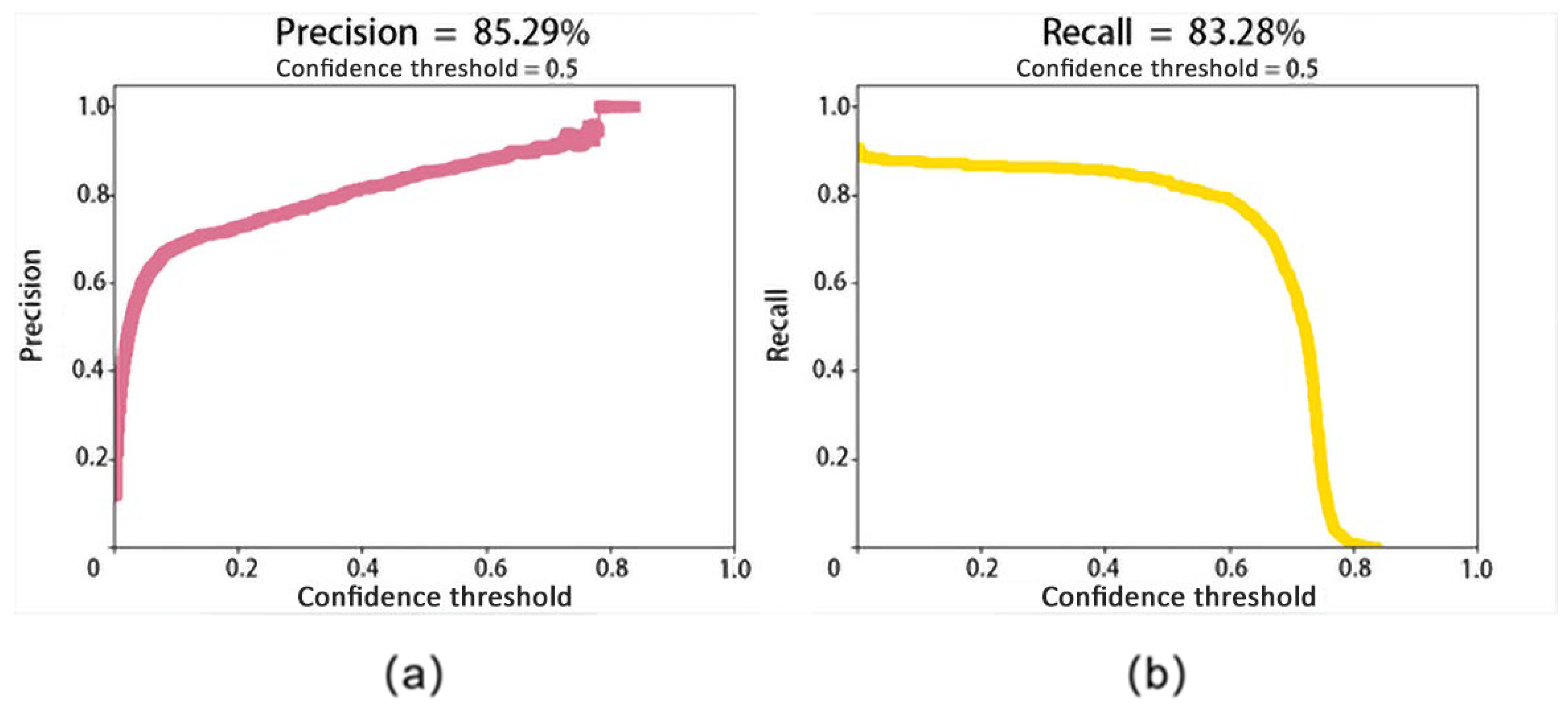
| Precision | 91.03% | 85.29% |
| Recall | 61.00% | 83.28% |
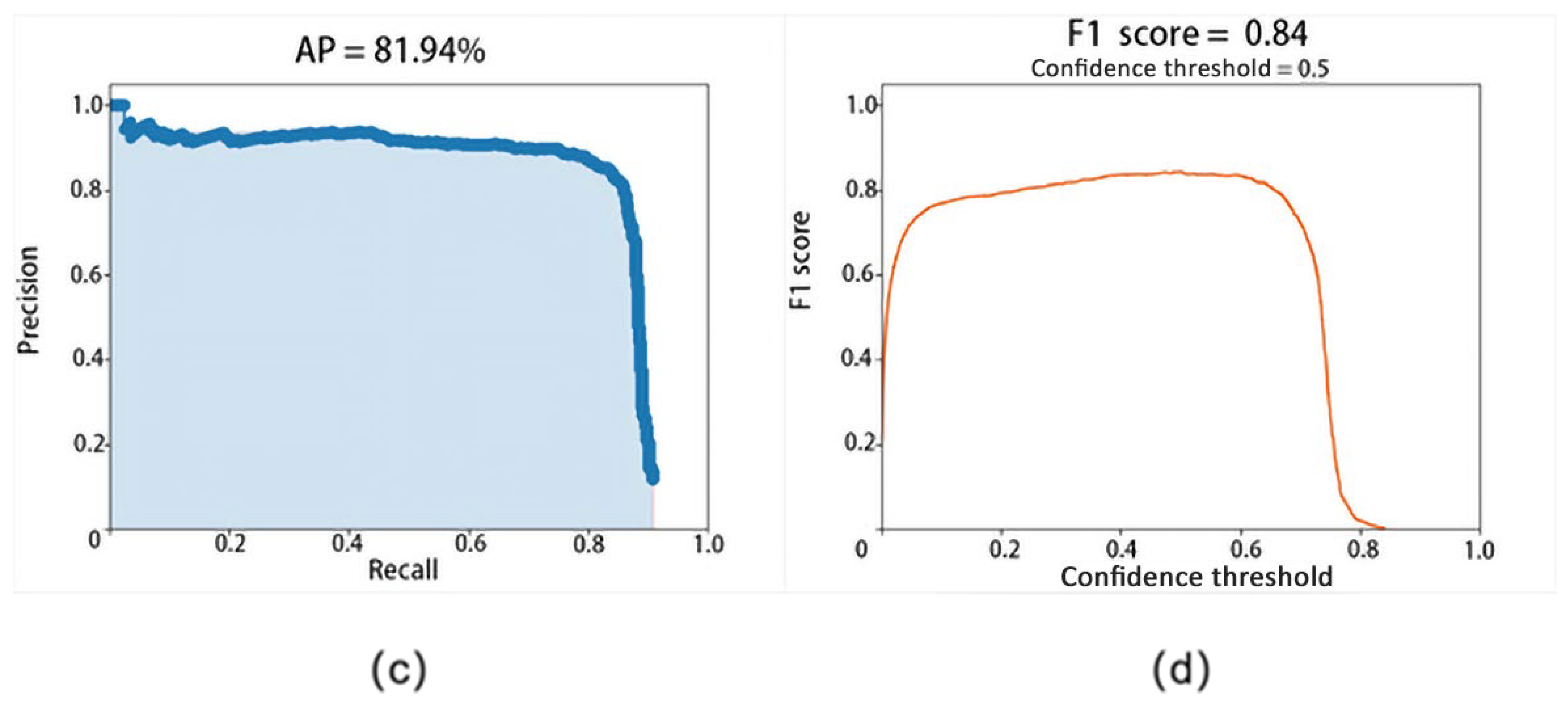
| AP | 57.37% | 81.49% |
| F1 score | 0.73 | 0.84 |
| FPS | 70.42 | 63.82 |
Disclaimer/Publisher’s Note: The statements, opinions and data contained in all publications are solely those of the individual author(s) and contributor(s) and not of MDPI and/or the editor(s). MDPI and/or the editor(s) disclaim responsibility for any injury to people or property resulting from any ideas, methods, instructions or products referred to in the content. |
© 2026 by the authors. Licensee MDPI, Basel, Switzerland. This article is an open access article distributed under the terms and conditions of the Creative Commons Attribution (CC BY) license.
Share and Cite
Yu, G.; Wang, S.; Liu, W.; Xia, Y.; Guo, Y.; Chen, X.; Wei, X.; Chen, A.; Lv, Z.; Lu, C.; et al. Automatic Detection of Disaster-Causing Organisms near the Waters of Nuclear Power Plant Based on LiveScope Scanning Sonar Images. J. Mar. Sci. Eng. 2026, 14, 347. https://doi.org/10.3390/jmse14040347
Yu G, Wang S, Liu W, Xia Y, Guo Y, Chen X, Wei X, Chen A, Lv Z, Lu C, et al. Automatic Detection of Disaster-Causing Organisms near the Waters of Nuclear Power Plant Based on LiveScope Scanning Sonar Images. Journal of Marine Science and Engineering. 2026; 14(4):347. https://doi.org/10.3390/jmse14040347
Chicago/Turabian StyleYu, Gangyi, Shuo Wang, Wei Liu, Yongjian Xia, Yuchen Guo, Xiaolu Chen, Xueping Wei, Ao Chen, Zehua Lv, Chao Lu, and et al. 2026. "Automatic Detection of Disaster-Causing Organisms near the Waters of Nuclear Power Plant Based on LiveScope Scanning Sonar Images" Journal of Marine Science and Engineering 14, no. 4: 347. https://doi.org/10.3390/jmse14040347
APA StyleYu, G., Wang, S., Liu, W., Xia, Y., Guo, Y., Chen, X., Wei, X., Chen, A., Lv, Z., Lu, C., Zhang, J., & Wan, R. (2026). Automatic Detection of Disaster-Causing Organisms near the Waters of Nuclear Power Plant Based on LiveScope Scanning Sonar Images. Journal of Marine Science and Engineering, 14(4), 347. https://doi.org/10.3390/jmse14040347