Safety Operation for Large Deck Cargo Barge at a U-Shaped Basin in Complex Port Areas

 ,
,  and
and
Abstract
1. Introduction
1.1. Background
1.2. Literature Review
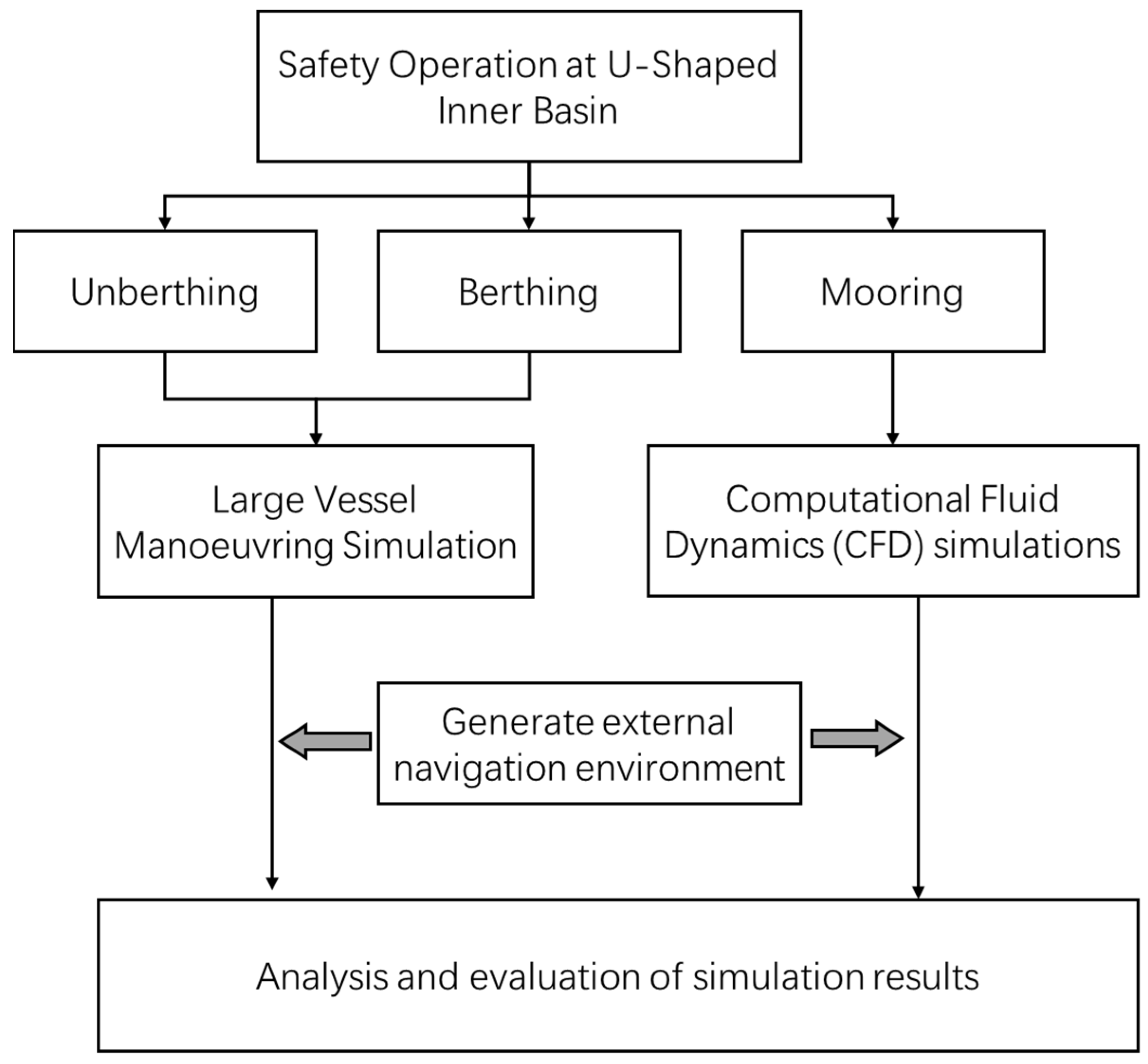
2. Methodology
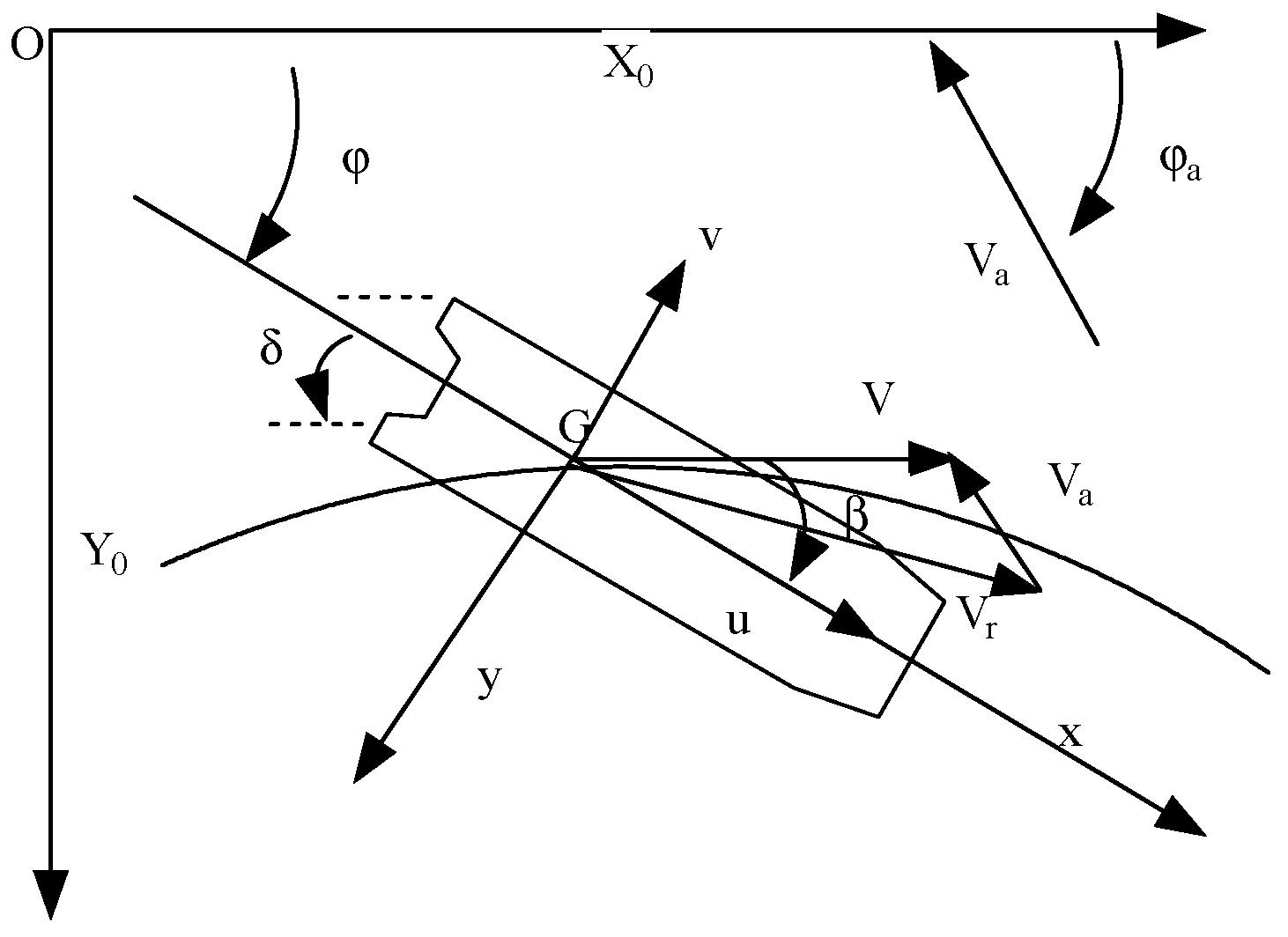
2.1. Mathematical Model for Ship Motion Simulation
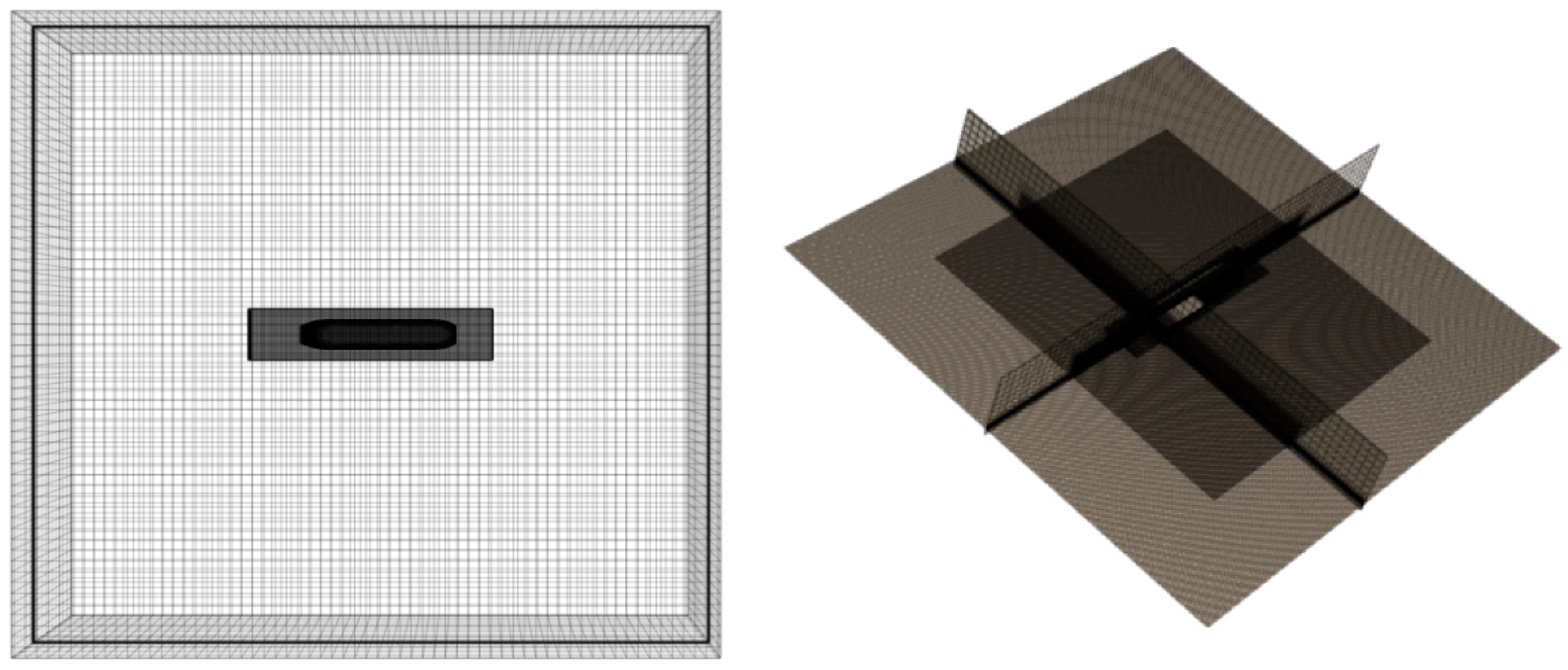
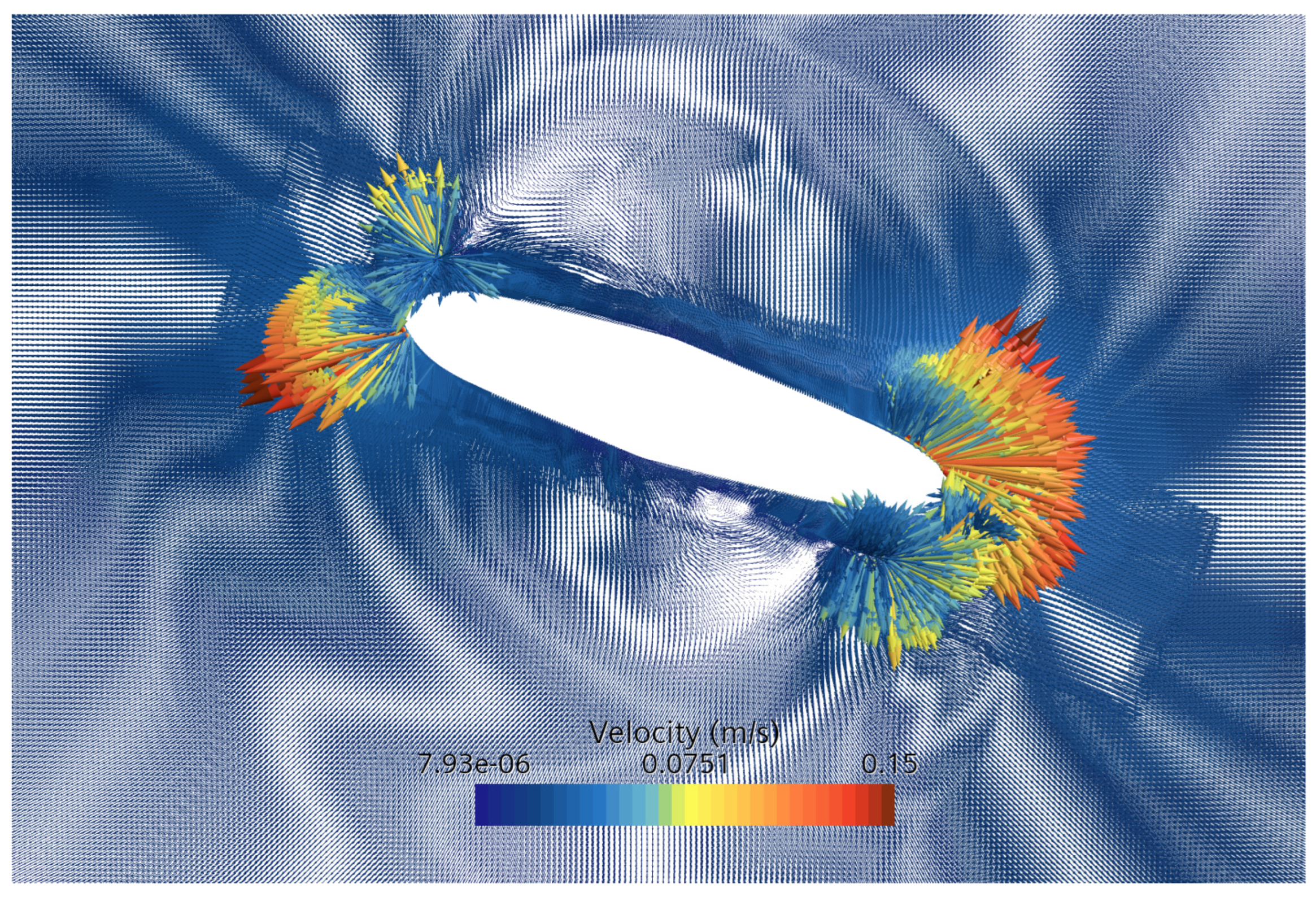
2.2. Numerical Analysis on Tug Assistance Under Critical Condition
2.3. Numerical Simulation Method for Mooring
3. Case Study
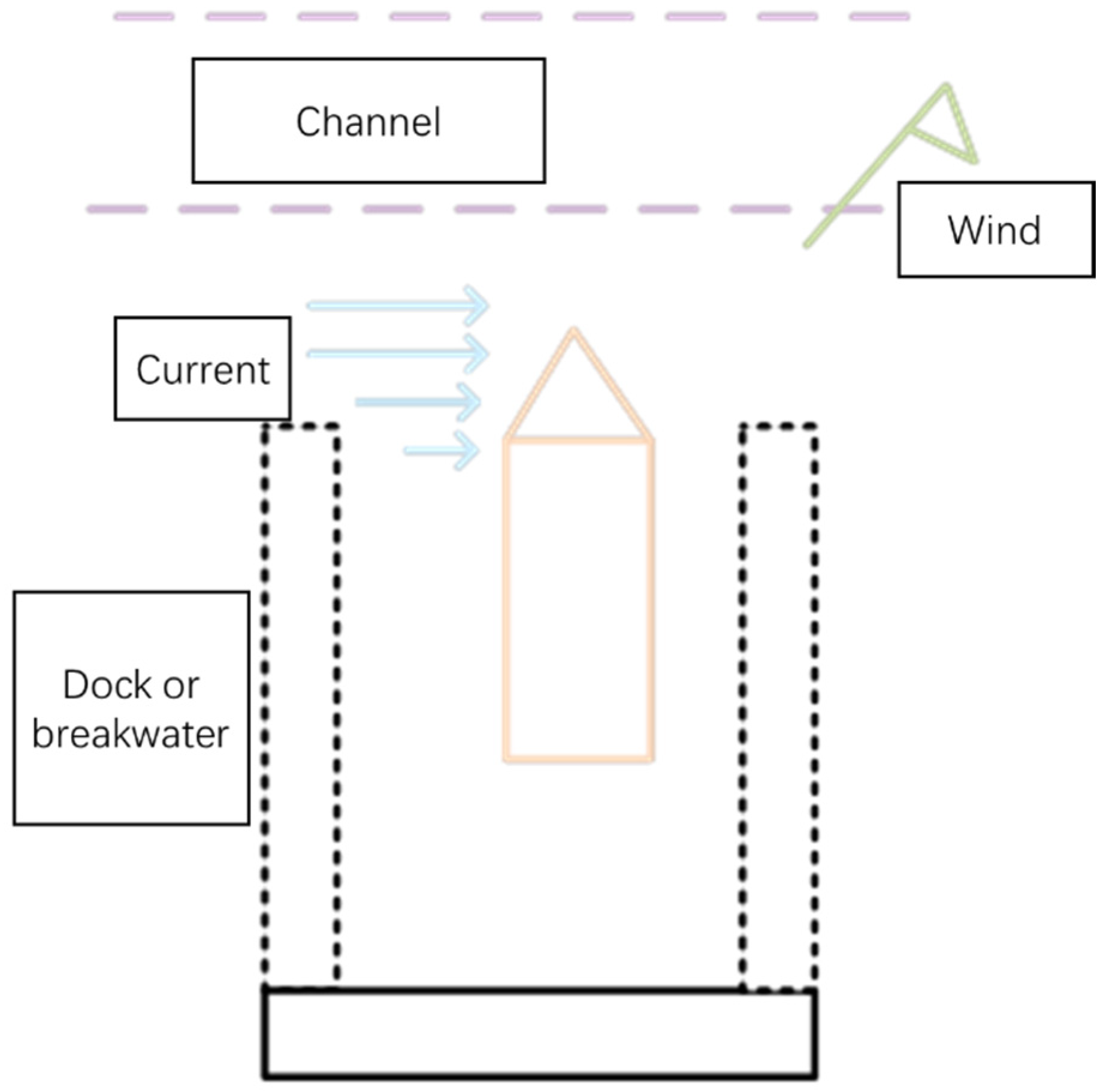
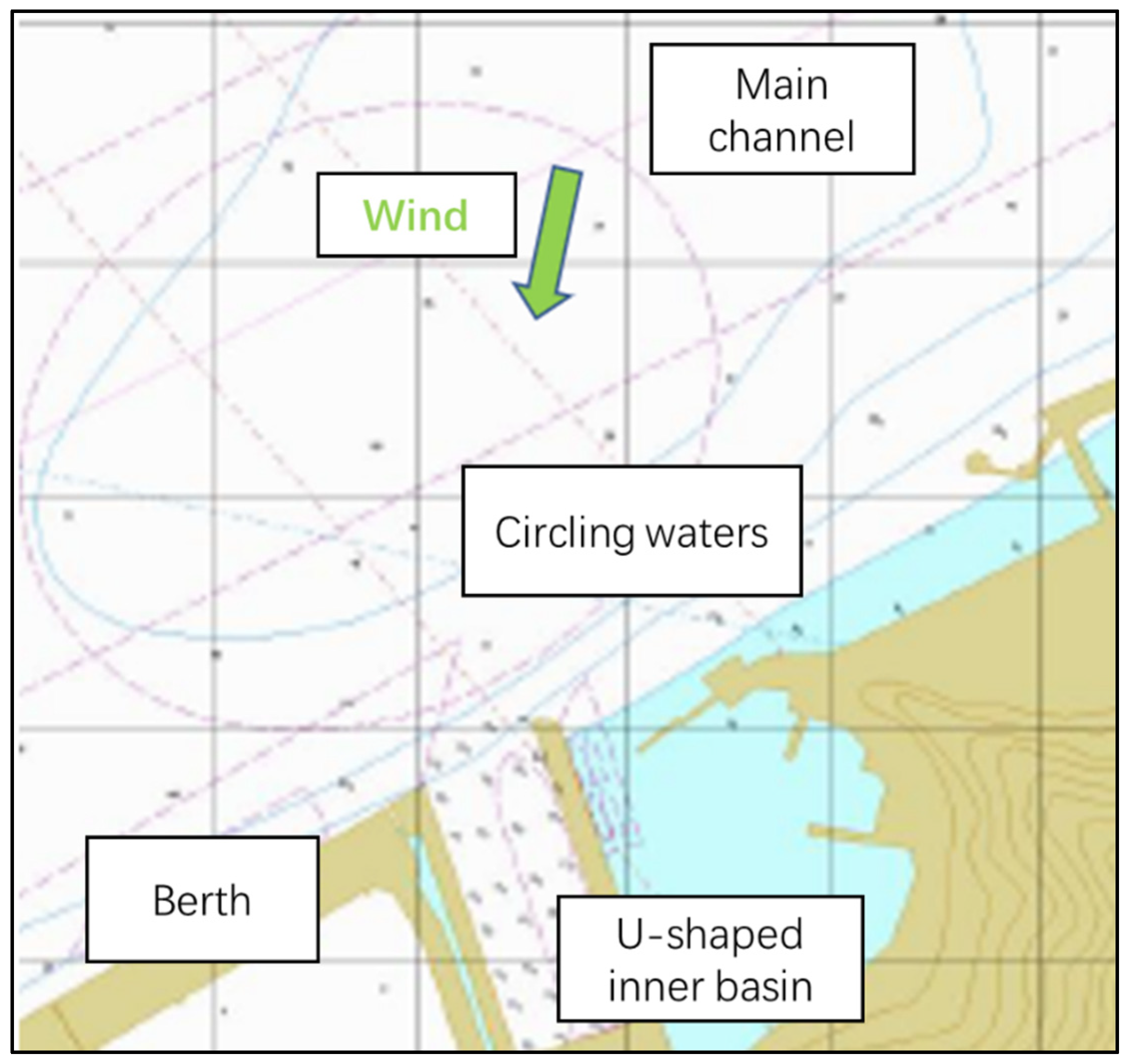
3.1. Water Area Overview
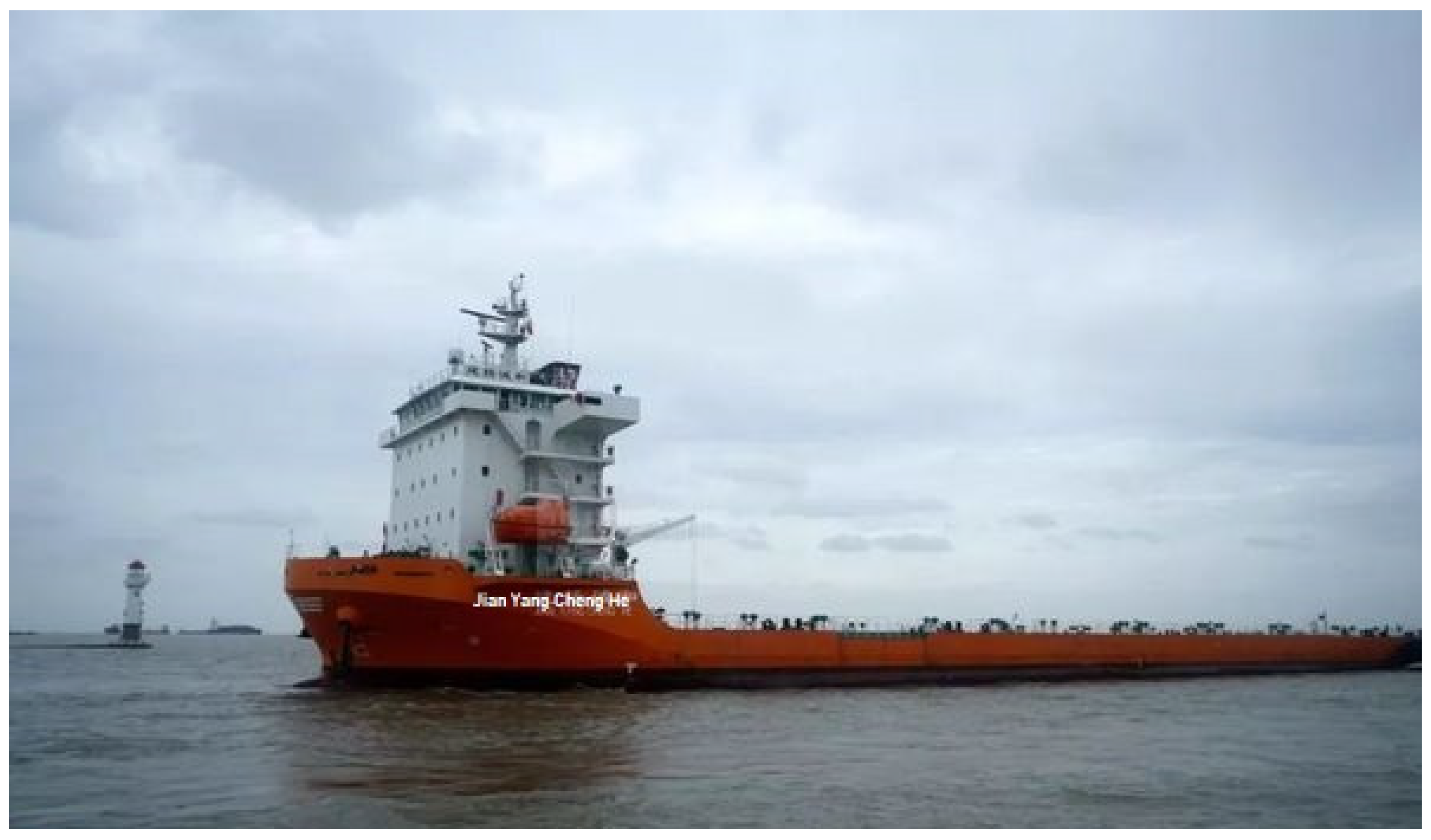
3.2. The Design Ship and Tug Deployment
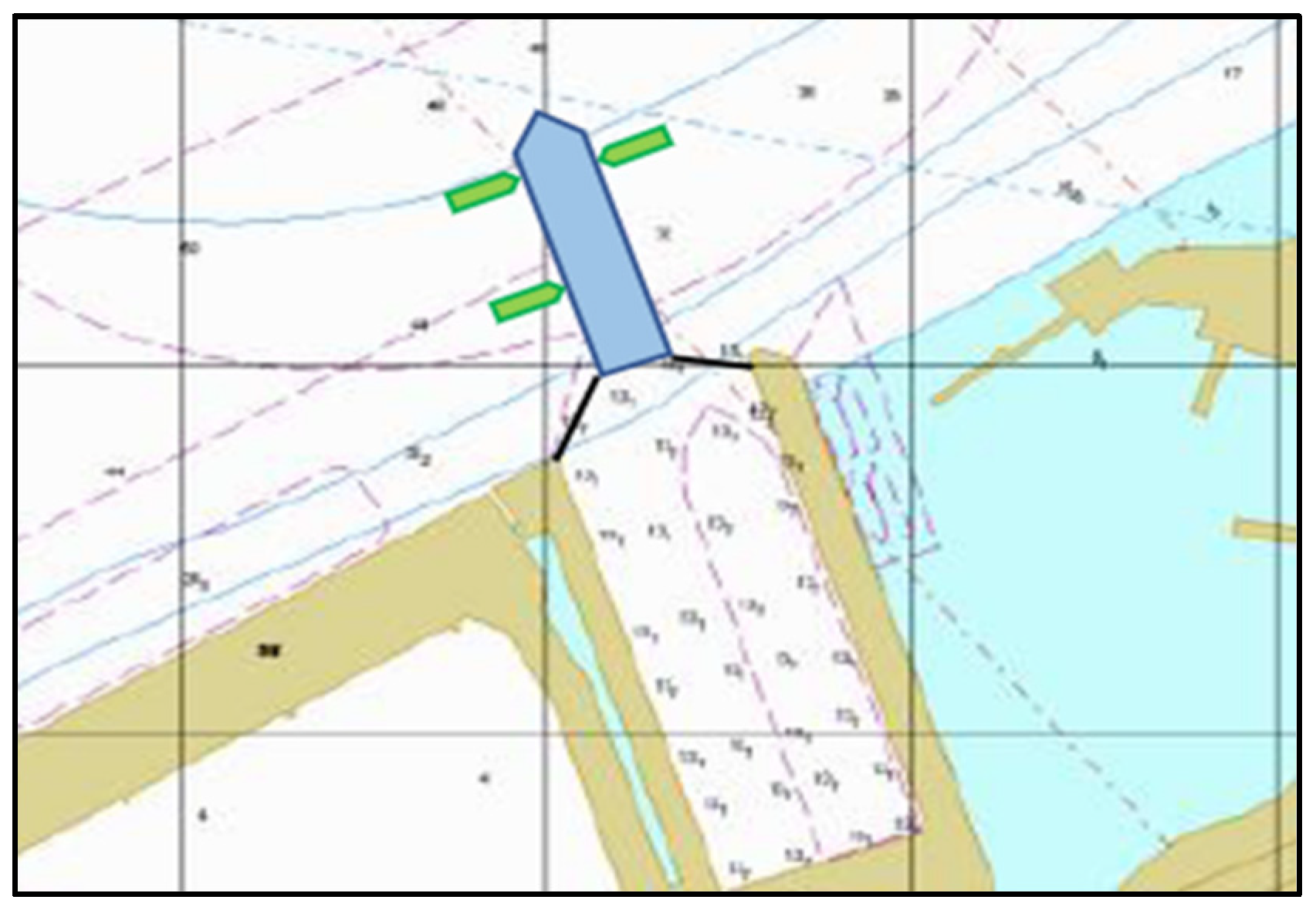
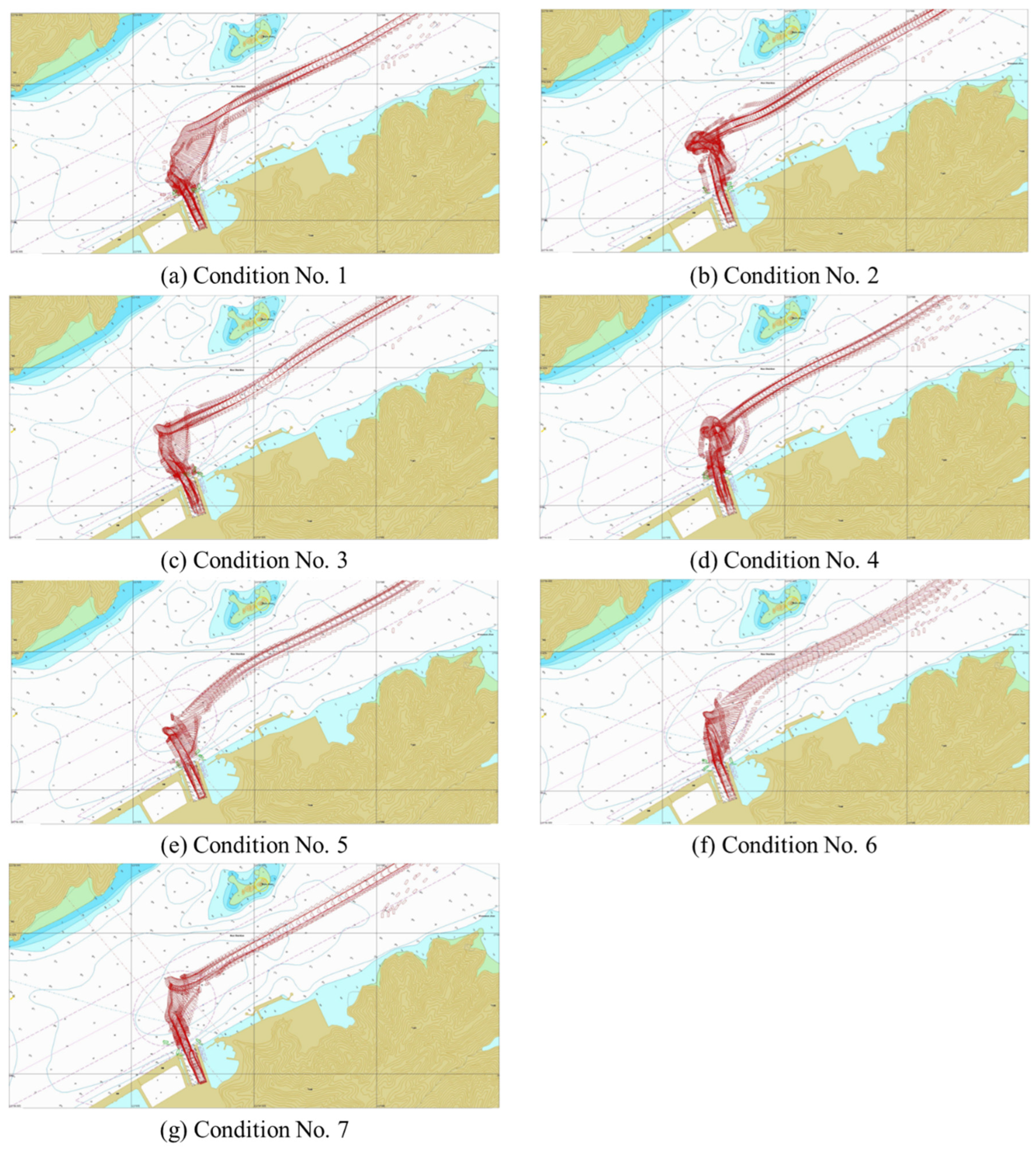
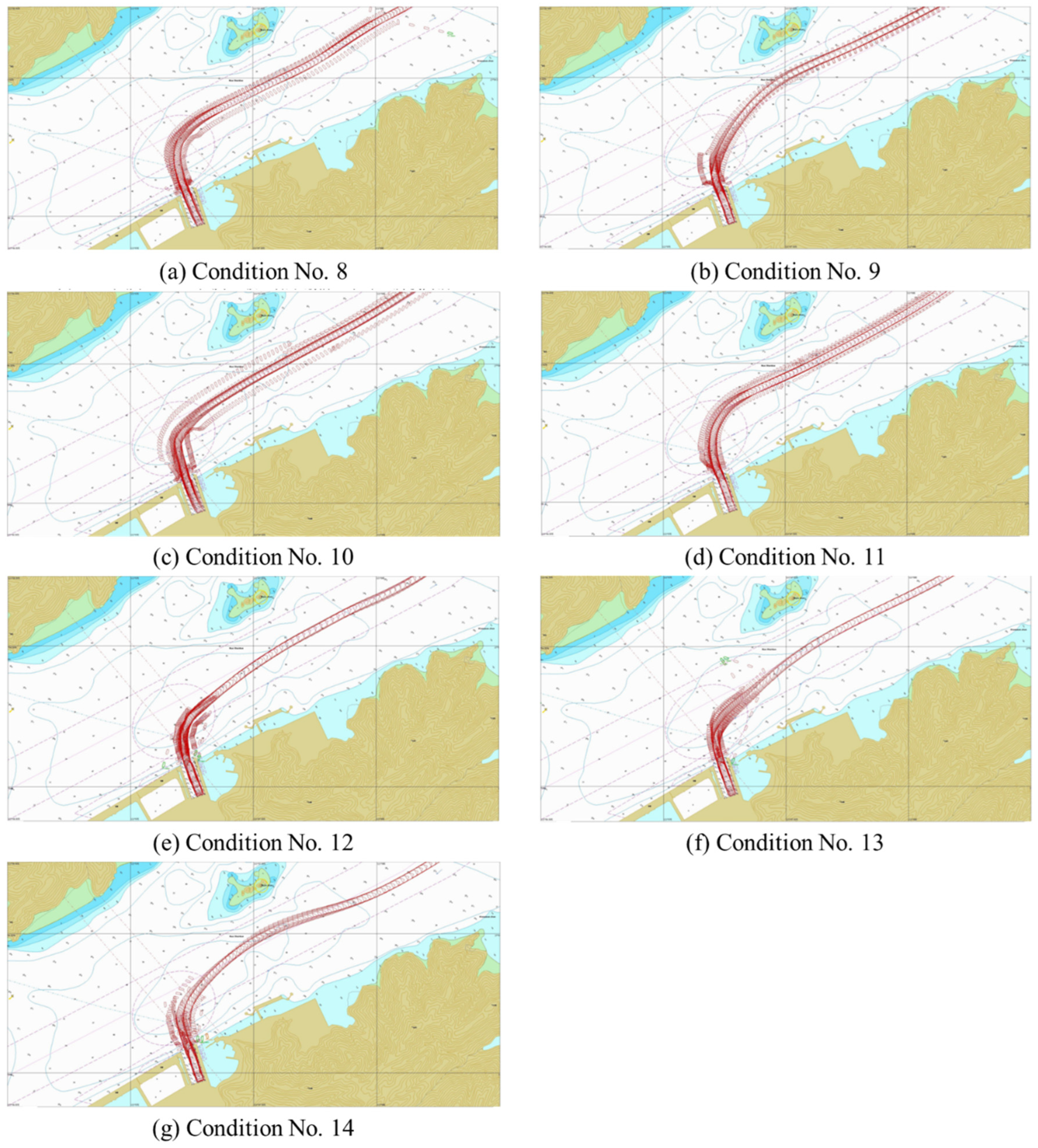
3.3. Simulation of Berthing and Unberthing

| Simulation Tests for Representative Ship Berthing Operations | ||||
| No. | Wind Direction | Wind Speed (m/s) | Tidal Current (Full Flow Field) | Figure 9 |
| 1 | ENE | 13.8 | One hour before low tide | a |
| 2 | One hour after low tide | b | ||
| 3 | WSW | 13.8 | One hour before low tide | c |
| 4 | One hour after low tide | d | ||
| 5 | N | 13.8 | One hour before low tide | e |
| 6 | One hour after low tide | f | ||
| 7 | ENE | 13.8 | Reversing current | g |
| Simulation Tests for Representative Ship Unberthing Operations | ||||
| No. | Wind Direction | Wind Speed (m/s) | Tidal Current (Full Flow Field) | Figure 10 |
| 8 | ENE | 13.8 | Flood tide | a |
| 9 | Ebb tide | b | ||
| 10 | WSW | 13.8 | Flood tide | c |
| 11 | Ebb tide | d | ||
| 12 | N | 13.8 | Flood tide | e |
| 13 | Ebb tide | f | ||
| 14 | WSW | 13.8 | Ebb tide, 0.7 m/s | g |


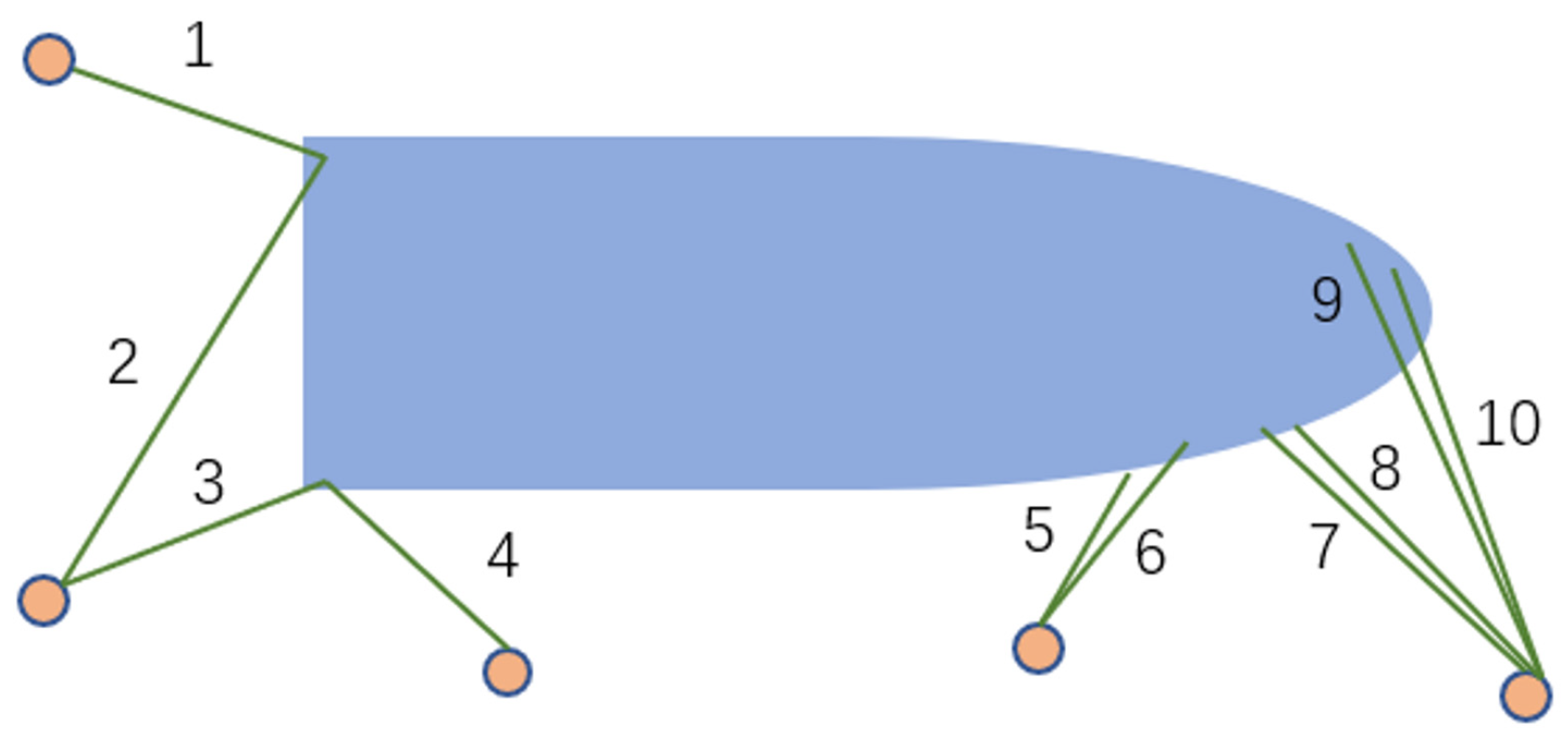
3.4. Mooring Simulation
4. Analysis and Discussion
4.1. Risk Analysis
- (1)
- Berthing Phase
- (2)
- Unberthing Phase
4.2. Countermeasures for Berthing and Unberthing Phases
- (1)
- Strict compliance with safe operational limitations. Based on the results, the following limitations are suggested: Under wind force 7, current speed 0.7 m/s (approx. 70% of the maximum speed in the channel, at least 2 tug assistance and one reserve for emergency response in critical situation.
- (2)
- Selection of Appropriate Operational Windows: Berthing and unberthing operations should be conducted during periods of weak currents and minimal crosswinds. When necessary, tidal window control can be employed to avoid operations under strong winds or during rapid ebb or flood currents.
- (3)
- Optimisation of Tug Arrangement: Tug deployment plans and specific operational tasks should be prearranged in advance, with designated standby positions reserved for tugs.
- (4)
- Control of Speed and Attitude: During berthing, maintain low speeds and make small-angle adjustments to avoid sudden changes in bank suction caused by rapid acceleration or deceleration. During unberthing, gradually release mooring lines and depart slowly. Coordinated control between tugs and pilot cars should be employed to ensure the vessel moves along the central axis, thereby minimising lateral drift.
- (5)
- Real-Time Monitoring of Key Parameters: Parameters to be monitored include bow-stern offset angles, lateral velocity, minimum distance to the quay, and variations in mooring-line tension.
- (6)
- Communication and Coordination: A unified command system should be maintained during berthing and unberthing operations to ensure consistent communication among the vessel, tugs, and shore-based control systems.
4.3. Mooring Phase
- (1)
- Normal operating conditions
- (2)
- Severe wind–wave scenarios
5. Conclusions
- (1)
- The safety operation can be reached for a barge with DWT class of 50,000 tons under normal situation.
- (2)
- These operations are subject to the following conditions: under wind force 7, current speed 0.7 m/s, wave under 2 m, and period within 8 s.
- (3)
- At least 2 tug assistance with capacity of 4000 HP and one reserved for emergency response in critical situation.
- (4)
- Ten mooring line configurations is enough to secure the vessel ashore, accommodating non-standard bollard arrangements.
- (5)
- The manoeuvring simulation indicate the trajectories and the ship clearance to channel and the breakwaters.
- (6)
- The numerical result for the barge yaw moment, calculated under critical situation of rotation tide, indicates that the arrangement of tug is reasonable.
- (7)
- Although the arrangement of mooring lines is enough to counter the environmental effects; under the extreme condition, the tension of some lines will reach its safe work loading. Therefore, good management and deliberation for mooring line is still urged.
Author Contributions
Funding
Data Availability Statement
Conflicts of Interest
References
- Aborgela, T.; Shehata, A.S.; Kotb, M.A.; Radwan, A. Heavy lift semi-submersible ships utilization in offshore wind turbines industry. Energy Rep. 2022, 8, 834–847. [Google Scholar] [CrossRef]
- Ahn, D.; Shin, S.-C.; Kim, S.-Y.; Kharoufi, H.; Kim, H.-C. Comparative evaluation of different offshore wind turbine installation vessels for Korean west–south wind farm. Int. J. Nav. Archit. Ocean. Eng. 2017, 9, 45–54. [Google Scholar] [CrossRef]
- Hu, M.; Shi, J.; Yang, S.; Chen, M.; Tang, Y.; Liu, S. Current Status and Future Trends in Installation, Operation and Maintenance of Offshore Floating Wind Turbines. J. Mar. Sci. Eng. 2024, 12, 2155. [Google Scholar] [CrossRef]
- Abdussamie, N.; Zaghwan, A.; Daboos, M.; Elferjani, I.; Mehanna, A.; Su, W. Operational risk assessment of offshore transport barges. Ocean Eng. 2018, 156, 333–346. [Google Scholar] [CrossRef]
- Jiang, Z. Installation of offshore wind turbines: A technical review. Renew. Sustain. Energy Rev. 2021, 139, 110576. [Google Scholar] [CrossRef]
- el Moctar, O.; Schellin, T.E.; Neugebauer, J. Wind and Current Loads on Barges and Ships. In Proceedings of the International Conference on Offshore Mechanics and Arctic Engineering, Glasgow, UK, 9–14 June 2019; p. V002T008A041. [Google Scholar]
- Kanotra, R.; Aboumalwa, M.; Joe-Joe, C.; Nair, S.; Koottungal, V. Dynamics of Heavy Deck Lift-off from Transportation Barge. In Proceedings of the International Conference on Offshore Mechanics and Arctic Engineering, Rio de Janeiro, Brazil, 1–6 July 2012; pp. 391–399. [Google Scholar]
- Kim, D.; Tezdogan, T.; Incecik, A. Hydrodynamic analysis of ship manoeuvrability in shallow water using high-fidelity URANS computations. Appl. Ocean Res. 2022, 123, 103176. [Google Scholar] [CrossRef]
- Xu, H.-F.; Zou, Z.-J.; Wu, S.-W.; Liu, X.-Y.; Zou, L. Bank effects on ship–ship hydrodynamic interaction in shallow water based on high-order panel method. Ships Offshore Struct. 2017, 12, 843–861. [Google Scholar] [CrossRef]
- Delefortrie, G.; Verwilligen, J.; Eloot, K.; Lataire, E. Bank interaction effects on ships in 6 DOF. Ocean Eng. 2024, 310, 118614. [Google Scholar] [CrossRef]
- Villa, D.; Viviani, M.; Gaggero, S.; Vantorre, M.; Eloot, K.; Delefortrie, G. CFD-based analyses for a slow speed manoeuvrability model. J. Mar. Sci. Technol. 2018, 24, 871–883. [Google Scholar] [CrossRef]
- Kim, D.; Yim, J.; Song, S.; Demirel, Y.K.; Tezdogan, T. A systematic investigation on the manoeuvring performance of a ship performing low-speed manoeuvres in adverse weather conditions using CFD. Ocean Eng. 2022, 263, 112364. [Google Scholar] [CrossRef]
- Liu, J.; Hekkenberg, R. Sixty years of research on ship rudders: Effects of design choices on rudder performance. Ships Offshore Struct. 2016, 12, 495–512. [Google Scholar] [CrossRef]
- Zou, L.; Zou, Z.-J.; Liu, Y. CFD-based predictions of hydrodynamic forces in ship-tug boat interactions. Ships Offshore Struct. 2019, 14, 300–310. [Google Scholar] [CrossRef]
- Mauro, F. A flexible method for the initial prediction of tugs escort capability. Ocean Eng. 2022, 246, 110585. [Google Scholar] [CrossRef]
- Barrera, R.D.; Schiaveto Neto, L.A.; Vieira, D.P.; Mesquita, E.S.; Tannuri, E.A. Azimuth stern drive (ASD) vector tugs positioning and towing force prediction during docking, steering and braking maneuvers. Appl. Ocean Res. 2021, 110, 102611. [Google Scholar] [CrossRef]
- Jayarathne, N.; Ranmuthugala, D.; Leong, Z. Safe Tug Operations during Ship-Assist Manoeuvres. J. Navig. 2019, 72, 813–831. [Google Scholar] [CrossRef]
- Abdelghafor, Z.; Taimuri, G.; Kujala, P.; Wang, Y.; Hirdaris, S. Numerical studies on tugboat performance during pushing operations. In Proceedings of the IOP Conference Series: Materials Science and Engineering, Espoo, Finland, 28 August–1 September 2023; p. 012003. [Google Scholar]
- Lee, K.-H.; Han, H.-S.; Park, S. Failure analysis of naval vessel’s mooring system and suggestion of reducing mooring line tension under ocean wave excitation. Eng. Fail. Anal. 2015, 57, 296–309. [Google Scholar] [CrossRef]
- Shen, W.; Hu, J.; Liu, L.; Chen, H. Operability analysis and line failure risk assessment for a tanker moored at berth. Ocean Eng. 2024, 300, 117439. [Google Scholar] [CrossRef]
- Pan, J.; Witter, S.; Cardaun, M.; Reichartz, T.; Schelenz, R.; Jacobs, G. Dynamic behavior and damping effects of catenary mooring lines for a floating offshore wind turbine. Ocean Eng. 2025, 339, 122017. [Google Scholar] [CrossRef]
- Yang, J.; Hu, Z. Dynamic modelling of mooring system for integrated analysis of floating offshore wind turbines. Ocean Eng. 2025, 342, 122916. [Google Scholar] [CrossRef]
- Villa-Caro, R.; Carral, J.C.; Fraguela, J.Á.; López, M.; Carral, L. A Review of Ship Mooring Systems. Brodogradnja 2018, 69, 123–149. [Google Scholar] [CrossRef]
- Sáenz, S.S.; Diaz-Hernandez, G.; Schweter, L.; Nordbeck, P. Analysis of the Mooring Effects of Future Ultra-Large Container Vessels (ULCV) on Port Infrastructures. J. Mar. Sci. Eng. 2023, 11, 856. [Google Scholar] [CrossRef]
- Das, S.N.; Kulkarni, S.; Kudale, M.D. Design of Safe Mooring Arrangement for Large Oil Tankers. Procedia Eng. 2015, 116, 528–534. [Google Scholar] [CrossRef][Green Version]
- Yang, Y.; Xi, R.; Li, M.; Shi, J.; Li, Y.; Wang, X.; Shang, W.; Li, H. Study on Mooring Design and Hydrodynamic Performance of Floating Offshore Wind Turbines with CFRP Mooring Lines. Buildings 2025, 15, 3734. [Google Scholar] [CrossRef]
- Jiang, Z. Mooring design for floating wind turbines: A review. Renew. Sustain. Energy Rev. 2025, 212, 115231. [Google Scholar] [CrossRef]
- van der Molen, W.; Wenneker, I. Time-domain calculation of moored ship motions in nonlinear waves. Coast. Eng. 2008, 55, 409–422. [Google Scholar] [CrossRef]
- Chen, C.; Luo, B.; Wang, F.; Shi, Y. Analysis of large-scale ship’s mooring load based on time domain method. In Proceedings of the ISOPE International Ocean and Polar Engineering Conference, Rhodes, Greece, 20–25 June 2021. [Google Scholar]
- Chen, M.; Yang, L.; Sun, X.; Pan, J.; Zhang, K.; Lin, L.; Yun, Q.; Chen, Z. Dynamic Analysis of a Barge-Type Floating Wind Turbine Subjected to Failure of the Mooring System. J. Mar. Sci. Eng. 2024, 12, 617. [Google Scholar] [CrossRef]
- Já’e, I.A.; Ali, M.O.A.; Yenduri, A. Numerical validation of hydrodynamic responses and mooring top tension of a turret moored fpso using simulation and experimental results. In Proceedings of the International Conference on Architecture and Civil Engineering (ICACE2021), Kuala Lumpur, Malaysia, 4–5 January 2021; pp. 173–192. [Google Scholar]
- Zhao, X.; Li, M.; Lyu, H.; Chen, Z.; Mou, J. Study on the deployment of emergency tugs for large liquefied natural gas vessels under restricted terminal waters. Navig. China 2025, 48, 9–17+25. [Google Scholar]


| Category | Parameter Type | Description |
|---|---|---|
| Input | Vessel | Three-dimensional geometry of underwater hull; |
| vessel draft, weight, centre of gravity, local coordinate system; projected areas under different wind directions | ||
| Mooring Posts | Coordinates of mooring posts; mooring stiffness | |
| Mooring Lines | Coordinates of both ends of each mooring line; breaking strength; material stiffness coefficients K1~K5 (depending on breaking load); elongation ratio | |
| Fenders | Coordinates of fenders | |
| Environmental Parameters | Water depth; wave height spectrum and peak period; current speed and direction; wind speed and direction | |
| Output | Vessel | Time histories of six-degree-of-freedom motions |
| Mooring Lines | Time histories of mooring-line tensions |
| Experimental Vessel Model | DWT/(t) | L | B | H | Full-Load Draft/T | Restricted Draft/T |
|---|---|---|---|---|---|---|
| 65,000-ton deck cargo barge | 65,000 | 231.1 | 46 | 14.5 | 10.9 | 9.0 |
| O. | L1 | L2 | L3 | L4 | L5 | L6 | L7 | L8 | L9 | L10 |
|---|---|---|---|---|---|---|---|---|---|---|
| Maximum Tension/t | 21 | 41.3 | 19.5 | 29.7 | 16.4 | 16.8 | 34.6 | 34.7 | 26.8 | 26.6 |
| Scenario 37 | Scenario 38 | |||||
|---|---|---|---|---|---|---|
| No. | Maximum Tension/t | Whether Dangerous | Whether Line Breaks | Maximum Tension/t | Whether Dangerous | Whether Line Breaks |
| L1 | 34.3 | No | No | 78 | No | No |
| L2 | 99.4 | No | No | 52.1 | No | No |
| L3 | 50.6 | No | No | 77.4 | No | No |
| L4 | 42.8 | No | No | 65.7 | No | No |
| L5 | 24.2 | No | No | 47.2 | No | No |
| L6 | 24.8 | No | No | 47 | No | No |
| L7 | 71.8 | No | No | 100 | No | No |
| L8 | 75.2 | No | No | 95.5 | No | No |
| L9 | 53.3 | No | No | 45.3 | No | No |
| L10 | 55.1 | No | No | 44.7 | No | No |
Disclaimer/Publisher’s Note: The statements, opinions and data contained in all publications are solely those of the individual author(s) and contributor(s) and not of MDPI and/or the editor(s). MDPI and/or the editor(s) disclaim responsibility for any injury to people or property resulting from any ideas, methods, instructions or products referred to in the content. |
© 2026 by the authors. Licensee MDPI, Basel, Switzerland. This article is an open access article distributed under the terms and conditions of the Creative Commons Attribution (CC BY) license.
Share and Cite
Zhu, W.; Huang, S.; Wang, B.; Jiang, P.; Chen, P.; Mou, J. Safety Operation for Large Deck Cargo Barge at a U-Shaped Basin in Complex Port Areas. J. Mar. Sci. Eng. 2026, 14, 194. https://doi.org/10.3390/jmse14020194
Zhu W, Huang S, Wang B, Jiang P, Chen P, Mou J. Safety Operation for Large Deck Cargo Barge at a U-Shaped Basin in Complex Port Areas. Journal of Marine Science and Engineering. 2026; 14(2):194. https://doi.org/10.3390/jmse14020194
Chicago/Turabian StyleZhu, Wei, Shiyong Huang, Bing Wang, Peng Jiang, Pengfei Chen, and Junmin Mou. 2026. "Safety Operation for Large Deck Cargo Barge at a U-Shaped Basin in Complex Port Areas" Journal of Marine Science and Engineering 14, no. 2: 194. https://doi.org/10.3390/jmse14020194
APA StyleZhu, W., Huang, S., Wang, B., Jiang, P., Chen, P., & Mou, J. (2026). Safety Operation for Large Deck Cargo Barge at a U-Shaped Basin in Complex Port Areas. Journal of Marine Science and Engineering, 14(2), 194. https://doi.org/10.3390/jmse14020194