Review

Rhodoliths as Global Contributors to a Carbonate Ecosystem Dominated by Coralline Red Algae with an Established Fossil Record


by
Markes E. Johnson
Department of Geosciences, Williams College, Williamstown, MA 01267, USA
J. Mar. Sci. Eng. 2026, 14(2), 169; https://doi.org/10.3390/jmse14020169
Submission received: 15 December 2025 / Revised: 9 January 2026 / Accepted: 10 January 2026 / Published: 13 January 2026
(This article belongs to the Special Issue Feature Review Papers in Geological Oceanography)

Abstract

Rhodoliths (from Greek etymology meaning red + stone) are spheroidal accretions composed of various types of crustose coralline red algae that dwell in relatively shallow waters where sunlight allows for photosynthesis. Unlike most other kinds of algae that are attached to the seabed by a holdfast, rhodoliths are free to roll about by circumrotary movements stimulated mainly by gentle wave action and bottom currents, as well as by disruptions by associated fauna. Frequent movement exposes every part of the algal surface to an equitable amount of sunlight, which generally results in an evenly concentric pattern of growth over time. Individual structures may attain a diameter of 10 to 20 cm, representing 100 years of growth or more. Initiation typically involves encrustation by founder cells on a rock pebble or shell fragment. In life, the functional outer surface is red or pink in complexion, whereas the structure’s inner core amounts to dead weight. Chemically, rhodoliths are composed of high magnesium calcite [(Ca,Mg)CO3], with examples known around many oceanic islands and virtually all continental shelves in the present world. The oldest fossil rhodoliths appeared during the early Cretaceous, 113 million years ago. Geologically, rhodoliths may occur in massive limestone beds composed of densely packed accumulations. Living rhodoliths commonly occur in waters as shallow as −2 to −10 m, as well as seaward in mesophotic waters up to −100 m under exceptional conditions of water clarity. Especially in shallower waters, rhodoliths are vulnerable to transfer by storm waves to supratidal settings, which result in bleaching under direct sunlight and death. Increasingly, marine biologists recognize that rhodolith beds represent a habitat that offers shelter to a community of other algae and diverse marine invertebrates.

1. Introduction

Phycology is the study of the world’s living marine algae, which entails detailed descriptions of species belonging to the major divisions of intertidal to shallow subtidal algae commonly referred to as the green, red, and brown algae. Like land plants, these algae are distant relatives that thrive by the same process of photosynthesis studied more generally by botanists. Paleobotany is concerned with the fossil history of plants through geologic time, and paleophycology is a subdiscipline devoted to the fossil record of marine algae. Early on, during the 1940s, it was thought that studies on fossil algae were slow to gain traction compared with other branches of paleontology due to discouragement by the leading phycologists of that day [1]. A lack of hard parts is the fundamental reason for the poor showing of marine algae as fossils, especially among the foliaceous green and brown algae. Most spectacularly represented by the kelps with their long, fleshy stipes, the preservation of brown algae as fossils might seem unlikely. However, evidence from 38-million-year-old Oligocene strata was reported as late as 2024 on the basis of kelp holdfasts preserved as fossils [2]. Green algae fare somewhat better because some incorporate calcium-carbonate materials for internal skeletal support. The codiacian green alga Halimeda, for example, has articulated skeletal segments that are heavily calcified. Their fossil representatives are known by paleontologists to first occur in upper Jurassic or lower Cretaceous strata [3]. In contrast, the crustose coralline red algae that accrete as rhodoliths are heavily fortified by an amalgam of high magnesium calcite [(Ca,Mg)CO3] and exhibit a robust fossil record.
The rhodoliths (red + stone from Greek etymology) are distinctly spheroidal in construction and capable of circumrotary movement on the seabed under the influence mainly of bottom currents and waves that touch the bottom under normal, fair-weather conditions in subtidal habitats typically at depths between −2 and −10 m [4]. Under conditions of exceptional water clarity, rhodoliths also accumulate in mesophotic waters up to a depth of −100 m [5]. Charles Darwin was among the earliest naturalists to appreciate the rock-forming characteristics of rhodoliths, which he identified as nullipora (without pores), as distinguished from the small exoskeletal openings occupied by polyps in colonial corals. The Pleistocene rhodoliths described by Darwin from Santiago Island in the Cape Verde Archipelago were collected during his famous voyage on the HMS Beagle from 1831 to 1836 [6]. The term rhodolith was not effectively promoted until long afterward [7,8]. That Darwin clearly understood their algal origins is a certainty, because specimens personally collected by him and sent to the Sedgwick Museum at Cambridge University remain available for study [9]. Re-examination of the same localities on Santiago Island first studied by Darwin confirms that the Tertiary age for rhodolith layers reported by him corresponds more precisely to a Late Pleistocene age of about 700,000 years [10]. A formal taxonomy by phycologist W.J. Woelkerling became more widely available in 1988 that incorporates 110 living species of crustose coralline red algae arrayed among 15 genera [11].
In life, rhodoliths appear as thin drapes over relatively shallow flats often referred to as maërl beds in Europe [12]. Recognition by geologists that such marine flats are the source for transferal to thick limestone deposits was slow to develop [13], but the known occurrence of such deposits representing a range of geologic ages continues to expand with ongoing exploration and research. Major storms are linked to the build-up of substantial carbonate formations through before-and-after observations of coastal zones that accumulate rhodoliths in great numbers. Barely a few months after the passing of a Category 3 hurricane along the gulf shores of Mexico’s Baja California peninsula in August 2006, the author witnessed a large accumulation of rhodoliths transferred to a supratidal zone where none existed previously [14]. Storm waves also provide the necessary energy to reduce rhodoliths by frictional agitation into coarse, sand-size particles pushed landward and trapped by embayments, shoved directly onto beaches, and even beyond, to sand dunes, by onshore winds [15]. The study of taphonomy includes the post-mortem disintegration of rhodoliths into byproducts when subjected to such physical agencies. The process may be rephrased: how do living rhodoliths become fossils after death [16,17]? The goals of this review are organized in four parts to: (1) summarize previous work on the global distribution of rhodolith flats or maërl beds, (2) represent the efforts by paleontologists to record the developmental history of crustose coralline red algae through geologic time, (3) offer a digest from the best examples of fossil rhodolith beds and other products from the published literature, and (4) promote further study of rhodolith taphonomy in relationship to physical disturbances caused by storms. Although effectively global in terms of present-day marine realms and across geologic time, parts of Asia remain poorly represented where additional research is sure to yield future results. The ultimate objective of this review is to encourage fresh studies on rhodoliths, especially in the western Pacific Ocean and throughout the islands and borderlands of the Indian Ocean.

2. Background Ecology, Taphonomy, and Geological History

The global range of living rhodoliths found in dense aggregates is identified by numbered triangles (Figure 1) that extend south from subtropical settings around volcanic islands in the northwestern Atlantic Ocean (triangle 1) to the islands in the eastern Indian Ocean off Western Australia (triangle 7) and north to islands above the Arctic Circle off the coasts of Norway and Greenland (triangle 6). Water temperature is not a factor in this regard, although certain genera of crustose coralline red algae appear better adapted to colder than warmer seawater. The controlling factor is more likely the strength of sunlight that is strongest when penetrating water from directly above. Due to the curvature of the Earth, sunlight enters water at ever-greater angles, shifting poleward from latitudes around 30° north or south of the equator.
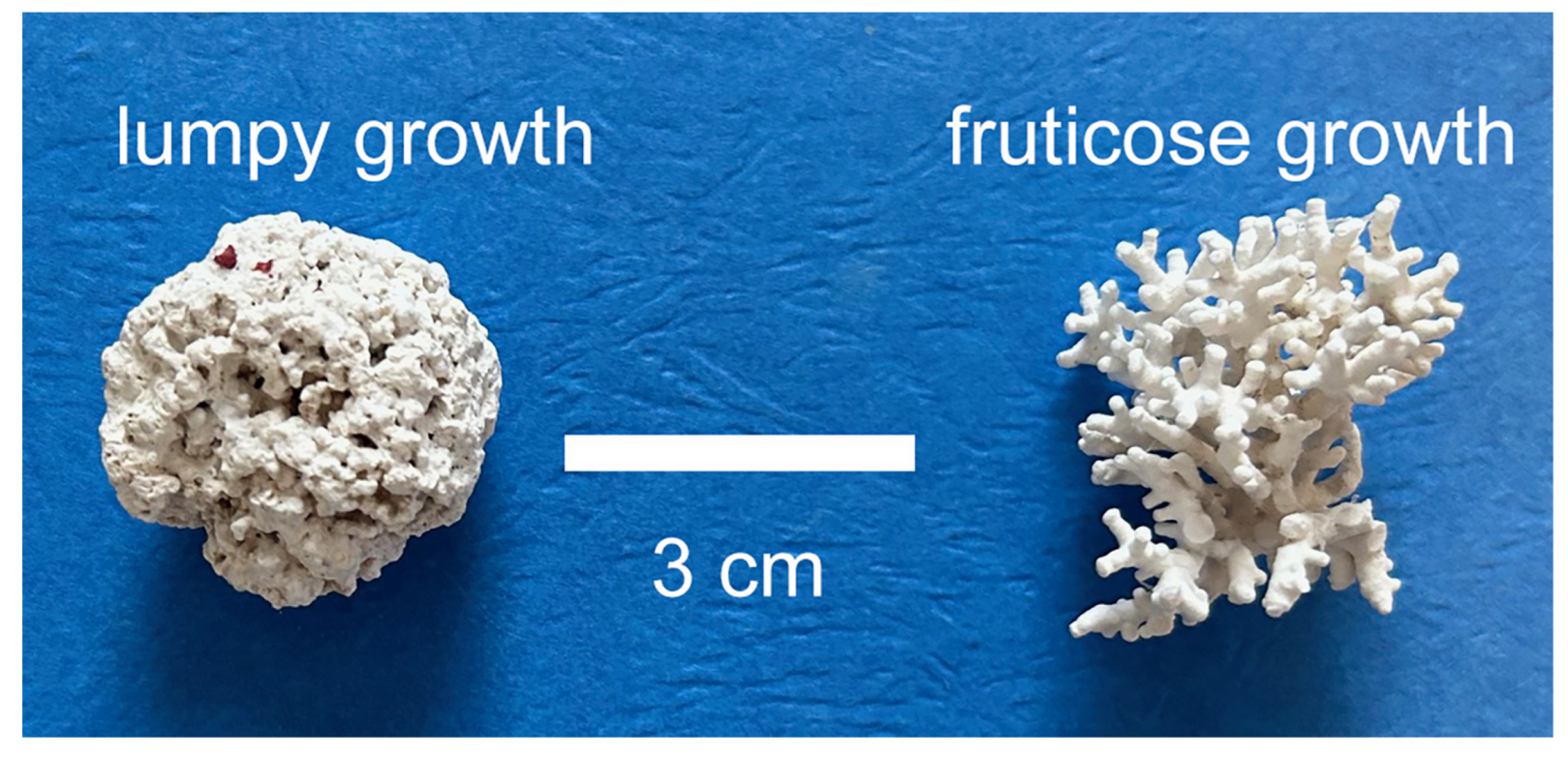
The growth style of rhodoliths varies owing to levels of ambient energy at different water depths [4]. In waters shallower than −10 m, rhodoliths tend to be dense and generally lumpy, whereas in deeper waters below normal wave base, rhodoliths often exhibit more delicate, open branches attributed to a style of fruticose growth (Figure 2).
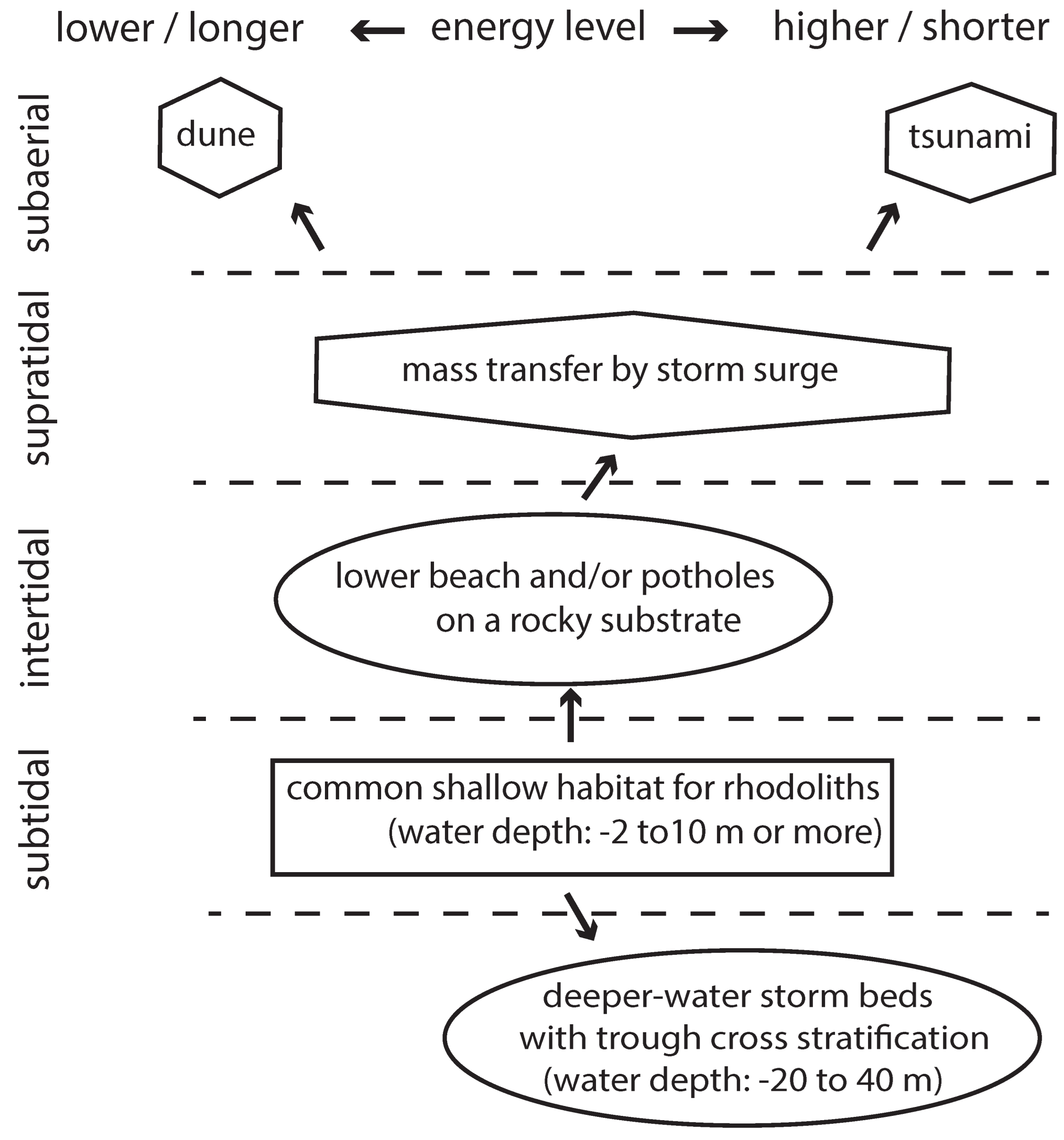
Rhodoliths undergo varied taphonomic transformations after removal by natural agencies from shallow, subtidal conditions at depths often between −2 and −10+ m [18]. The most important variations are summarized in a flow chart (Figure 3).
Sea squalls are sufficient in energy to sweep rhodoliths shoreward where they may be caught in rocky tide pools or stranded on a beach. Storm surge during a hurricane may lift the largest rhodoliths normally immune to lesser waves by mass transfer onto a supratidal flat. The same storm may carry rhodoliths in the opposite direction seaward to water depths between −20 to −40 m. Under intense turbulence, rhodoliths are abraded and pulverized as contributors to sediments characterized by trough cross stratification (Figure 2). On land, stiff onshore winds, often seasonal in nature, may blow across beach sand rich in rhodolith debris and remove the finer sand fraction by deflation to adjacent dunes [15]. Tsunami events triggered by coastal landslides or underwater earthquakes are among the most violent events to disturb coastal settings. By nature, the deposits carried far inland by tsunami events are highly chaotic, bearing a mixture of poorly sorted materials with an enormous range in size, including rhodoliths [19].
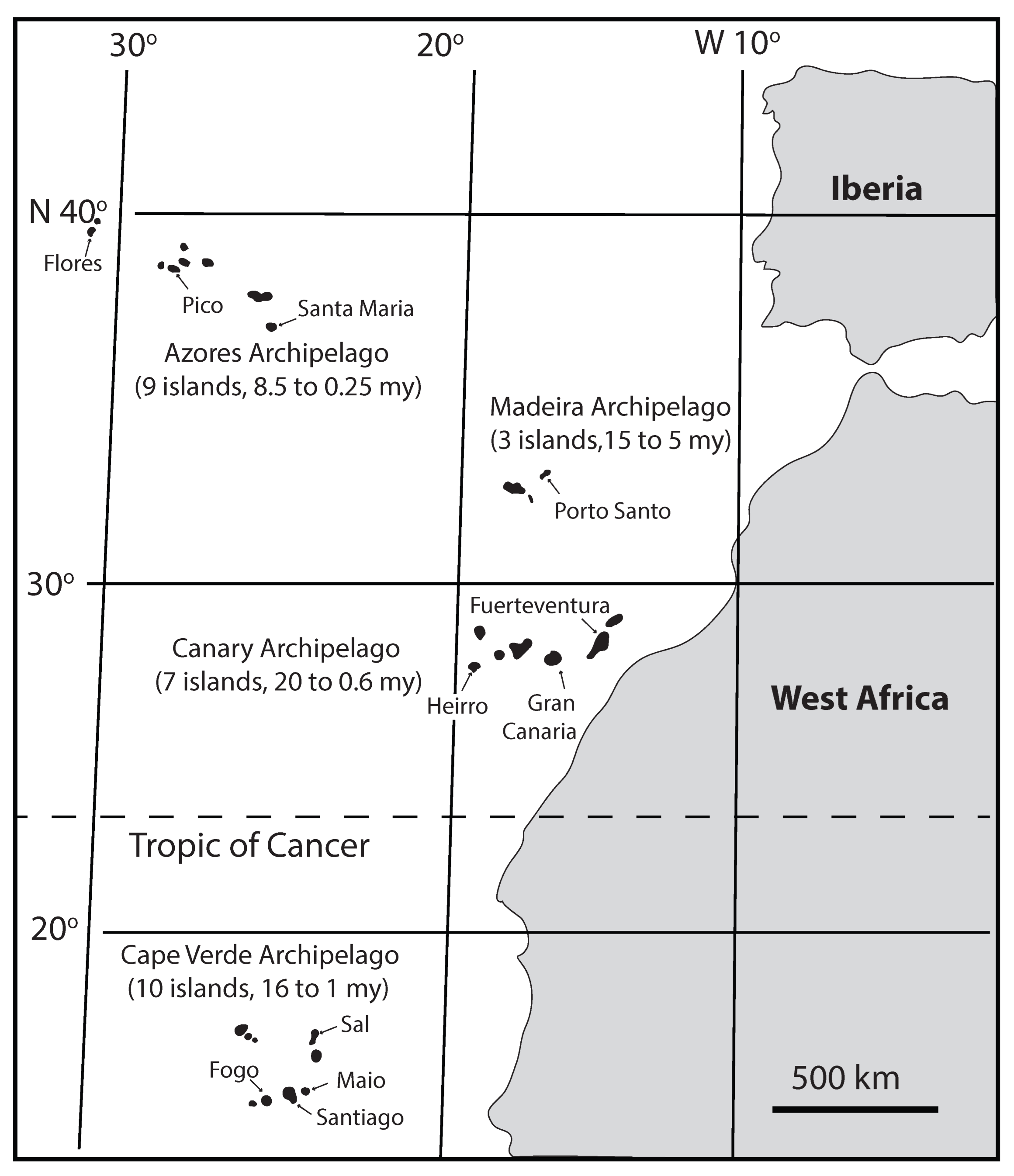
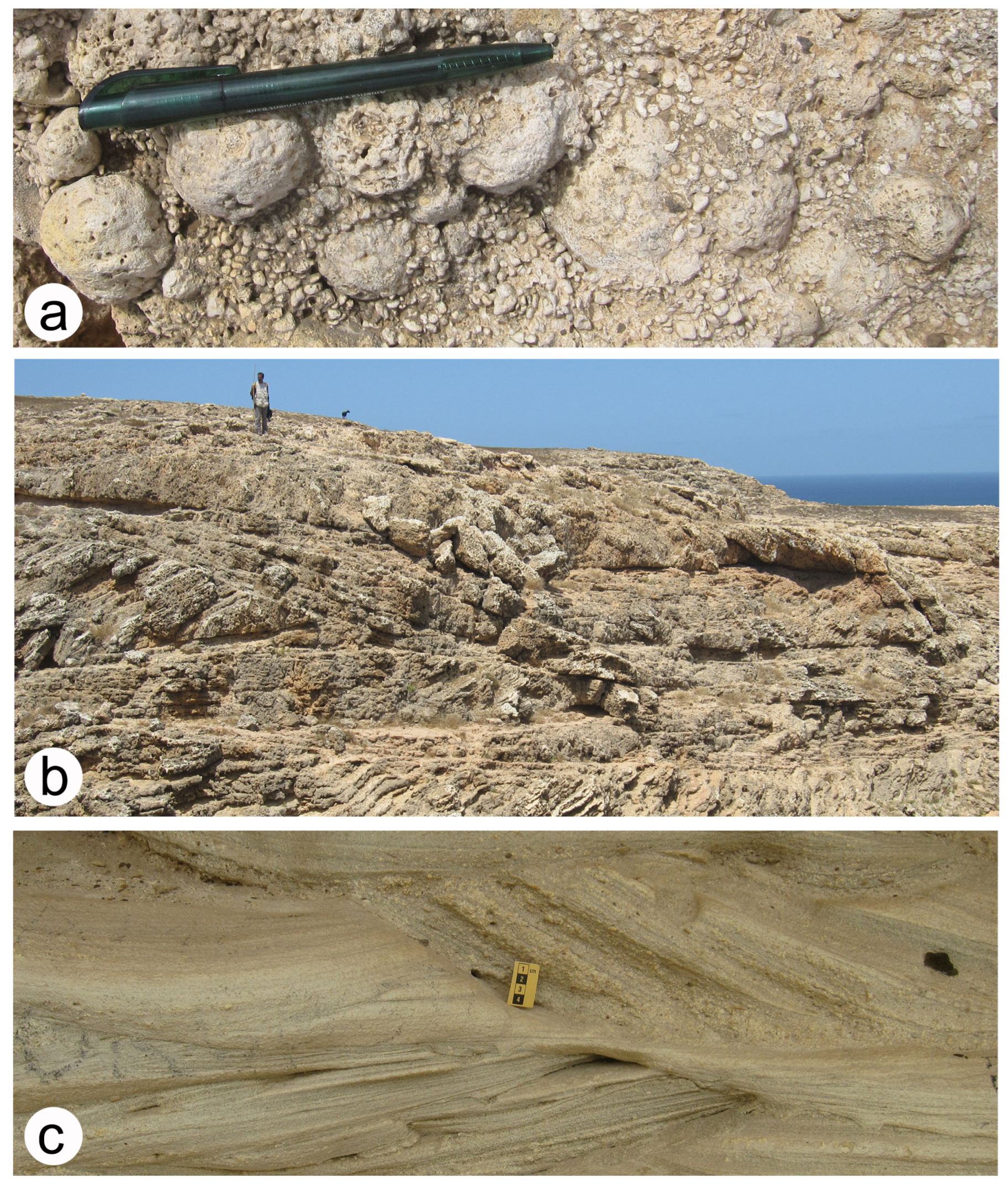
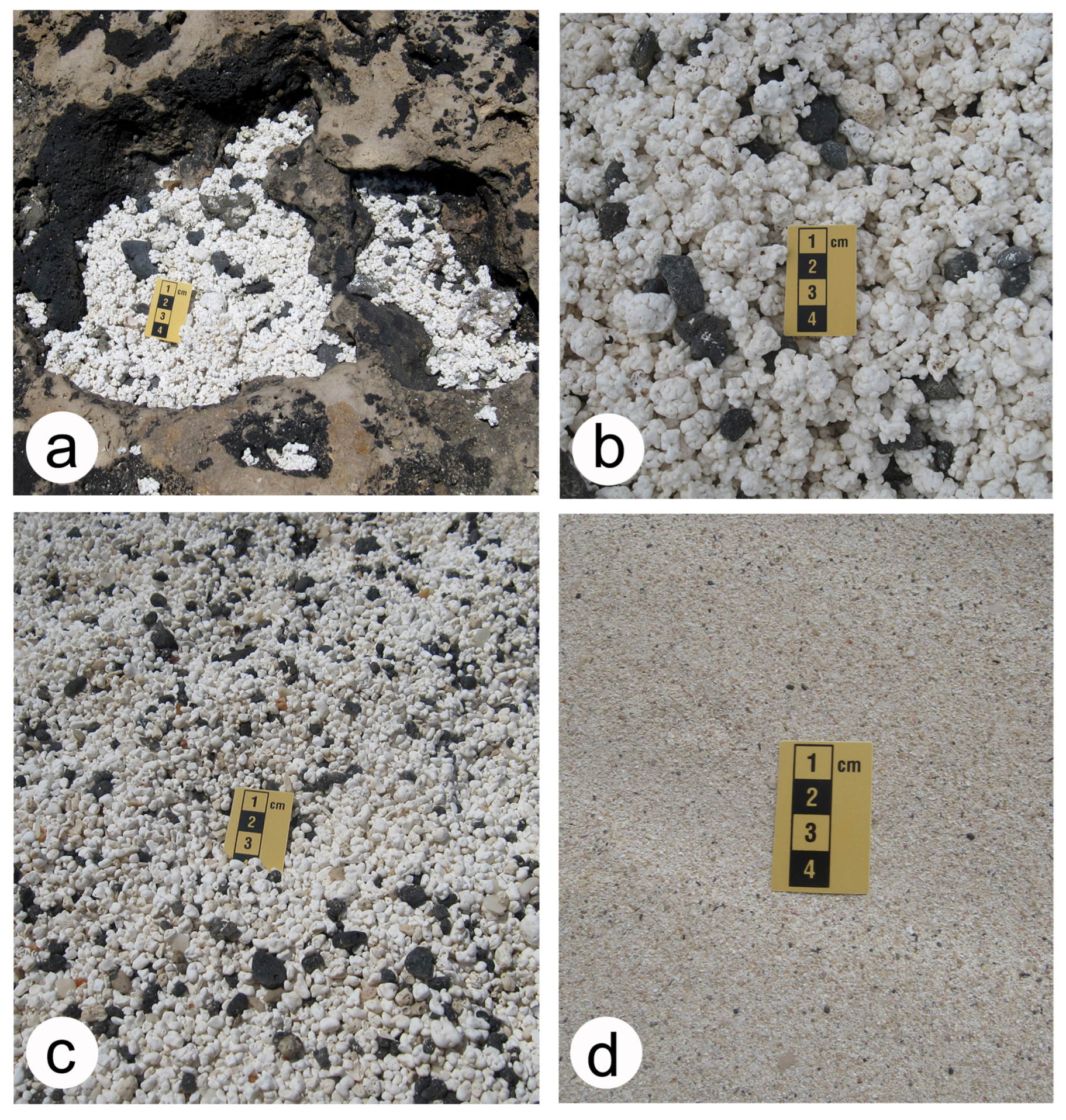
Maio Island is situated close to Santiago Island in the Cape Verde Archipelago (Figure 4), where Darwin first encountered fossil rhodoliths [6]. It is one of the smaller islands in the archipelago and among the most insightful places to view the extreme taphonomic range shown by recent and fossil rhodolith deposits [20,21,22]. Specific examples of rhodolith transfer and mechanical reduction derive from field observations on Maio Island (Figure 4). A vast sheet of recent rhodoliths in a supratidal deposit is draped over an area of 250,000 m2, barely a meter above sea level at Praia Real at the north end of Maio Island [20]. The largest rhodolith was found to have a radius of 20 cm, but the average density with smaller rhodoliths was determined to be 450 rhodoliths/m2. A most unusual specimen was found nucleated around a ceramic fragment, which indicates that the deposit is historic and likely connected in time to the sinking of a supply ship. An image of the surface drape shows a cluster of worn rhodoliths mixed with large grains eroded from what were the distal tips of rhodolith branches (Figure 5a). The ruins of several lime kilns also occur at Praia Real, revealing an aspect of the local economy for the manufacture of mortar as a by-product of slaked lime from rhodoliths [20].
The northeast trade winds that constantly buffet Maio’s windward shores typically register between 5 and 6 on the Beaufort Wind Scale, defined as a moderate to fresh breeze. The resulting wind energy is adequate to lift the finer fraction of beach sand for transport inland to accumulate in dune fields. A large Pleistocene dune at Lomba Greija near Pilão Cão village covers some 330,300 m2, with well-defined stoss slopes that dip 8° to 10° NE and leeward slip faces that dip 28° to 32° SW (Figure 5b). Point counts on thin-section samples reveal that basalt and other non-carbonate materials account for 5% of grains, but bioclasts derived from rhodoliths account for 74%, as differentiated from tiny shell fragments and other carbonate debris [21]. The fossil dune is one of the largest such structures known to be dominated by rhodolith grains that average 0.5 mm in diameter.
Powerful sea storms not only cause over-wash deposits on land, as at Praia Real, but contribute to the offshore mobilization of sand. A classic example of trough cross-stratification preserved in Miocene sandstone is exposed in a gulley at Ribeira de Calhetinha in Vila do Maio on the island’s south shore [22]. Low-angle layers at the center of the image incorporate coarse rhodolith debris (Figure 5c). Overall, the combination of extensive supratidal deposits, sand dunes, and storm beds provides evidence for the existence of living rhodolith banks off the north and east shores of Maio Island today and in the geologic past.
Beyond the geologic history of rhodoliths elsewhere in the Cape Verde Archipelago and others in the Macaronesian Realm (Figure 1, Figure 4 and Figure 5), the earliest confirmed appearance of crustose coralline red algae as rhodoliths traces back to strata dating from the early Cretaceous, about 113 million years ago [23]. Evidence any deeper in geologic time is obscure, although a claim is made for the occurrence of the earliest coralline red algae during the Ordovician Period more than 450 million years ago [24,25].

3. Review of Contemporary Rhodolith Distributions

A thorough review regarding the global distribution of rhodoliths in contemporary marine settings was authored in 2021 by Rebelo et al. [26]. It remains the first such survey to consider the overall diversity of rhodoliths accreted by crustose coralline red algae as well as their biogeography. Analysis is based on a total of 106 species arrayed in 21 genera and 10 families. All twelve ocean realms defined by Spalding [27] register the presence of rhodoliths. Although the Temperate South African Realm was over-looked in the survey, a report on rhodoliths from the Amathole Offshore Marine Protected Area documents rhodoliths recovered from depths of −30 to −65 m [28]. A key finding from the Rebelo survey is that among the 106 species, 57% are geographically restricted to a single biogeographic province [26]. This suggests that the present-day spread of species is limited by biogeographic barriers. The highest diversity is found in the Tropical Southwest Atlantic (TSWA) and the Tropical Eastern Pacific (TEP). A high of 30 species appears in the TSWA as opposed to 23 in the TEP. For example, the Isthmus of Panama is an effective barrier to interchange between the two oceans, but an open passage remained in place until about 3.5 million years ago [29]. In terms of latitudinal range, most of the species among the 13 genera canvassed are limited to tropical settings, whereas the range of species belonging to the genera Lithophyllum and Lithothamnion extends to higher, more temperate latitudes.

3.1. Contemporary Rhodoliths of the Macaronesian Realm

The Macaronesian realm (Figure 1, triangle 1) includes the Cabo Verde, Canary, Madeira, and Azores archipelagos, all of which originated as volcanic islands. Except for Madeira, which remains quiescent, recent volcanic eruptions occurred in all other island groups, including Hierro Island in 2011, Fogo Island in 1995, and Flores Island in 1951 (Figure 3). Except for rare fossil examples on Porto Santo and Sal (see Figure 4) [30,31], modern coral reefs are notably absent around North Atlantic islands. Rhodolith banks commonly occupied eco-space around many such islands as they aged and stabilized. Located in the eastern part of the Canaries Archipelago, Fuerteventura Island provides an ideal example where different stages in the coastal development of subaerial rhodolith deposits are found along a continuous stretch of shoreline [18,32]. In particular, the north shore of Fuerteventura is that part of the island most directly impacted by the northeast trade winds, just the same as Maio Island in the Cape Verde Archipelago. A distance of 10 km from east to west separates the settlements of Majanicho and El Colito, where a complete gradation in rhodolith taphonomy appears on contemporary beaches (Figure 6). Lithothamnion cf. corallioides is the most prominent species throughout [32].
The size of rhodoliths transferred by waves from their life habitat to post-mortem subaerial deposits on Fuerteventura is notably smaller than that found on Maio in the Cape Verde archipelago. On the flats behind Praia Real at the north end of Maio Island [20], rhodoliths are the size of oranges (Figure 5a), whereas on Majanicho at the north end of Fuerteventura Island, rhodoliths are “popcorn”-sized (Figure 6a,b). Given that the size of the spheroid accreted by a crustose coralline red alga is proportional to the time span of development, it follows that the smaller rhodoliths from Fuerteventura were harvested, or removed from their normal habitat, at an earlier stage in their life span than those from Maio Island. In both settings, waves driven by the same persistent trade winds are insufficient to effectively disturb the rhodolith beds that normally live at water depths of −10 m or more. Living rhodoliths occur at a depth of −12 m off the north shores of Fuerteventura Island [32]. There are no comparable reports on the living rhodolith beds around Maio Island, but their average size clearly indicates a longer survival span between sea storms that may vary from rare hurricanes to more frequent gales. Essentially, the deeper the habitat for a living rhodolith bed, the lower the likelihood of a disturbance by storm waves that feel bottom.
Elsewhere in the Azores, investigations on living rhodoliths are reported from Pico Island (Figure 4), involving both a shallow-water habitat and much deeper offshore accumulations [33]. In a lagoonal setting at a depth less than −4 m, the coralline red algae Phymatolithon calcareum encrusts small basalt pebbles and accretes to a diameter of 2.5 cm. Smaller rhodoliths are reported from dredge samples recovered off Pico Island from depths between −64 and −73 m, where an initial encrustation of P. calcareum is succeeded by Lithophyllum incrustans. Rhodoliths from a mid-shelf setting were not detected but are assumed to have been present for transport to a deeper part of the shelf by storm waves.

3.2. Contemporary Rhodoliths off Brazil in the South Atlantic

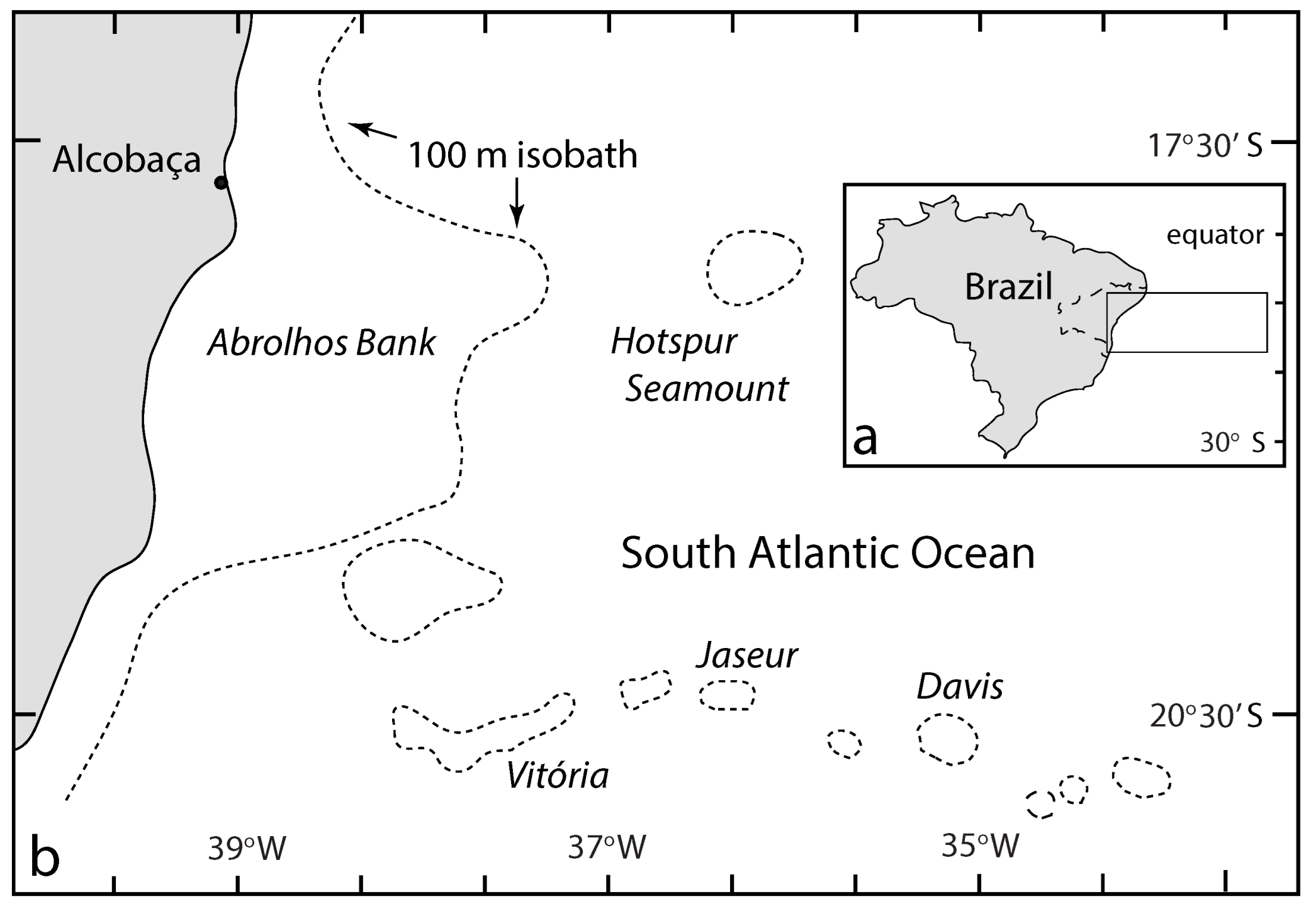
The highest biodiversity of living coralline red algae as rhodoliths occurs on the Abrolhos Bank in the South Atlantic Ocean off Brazil [34]. The region (Figure 1, triangle 2) features the most extensive zone documented for the occurrence of rhodoliths, covering much of the Abrolhos Bank over a vast area of 20,900 km2 at depths up to −80 m in exceptionally clear water within the mesophotic zone (Figure 7).
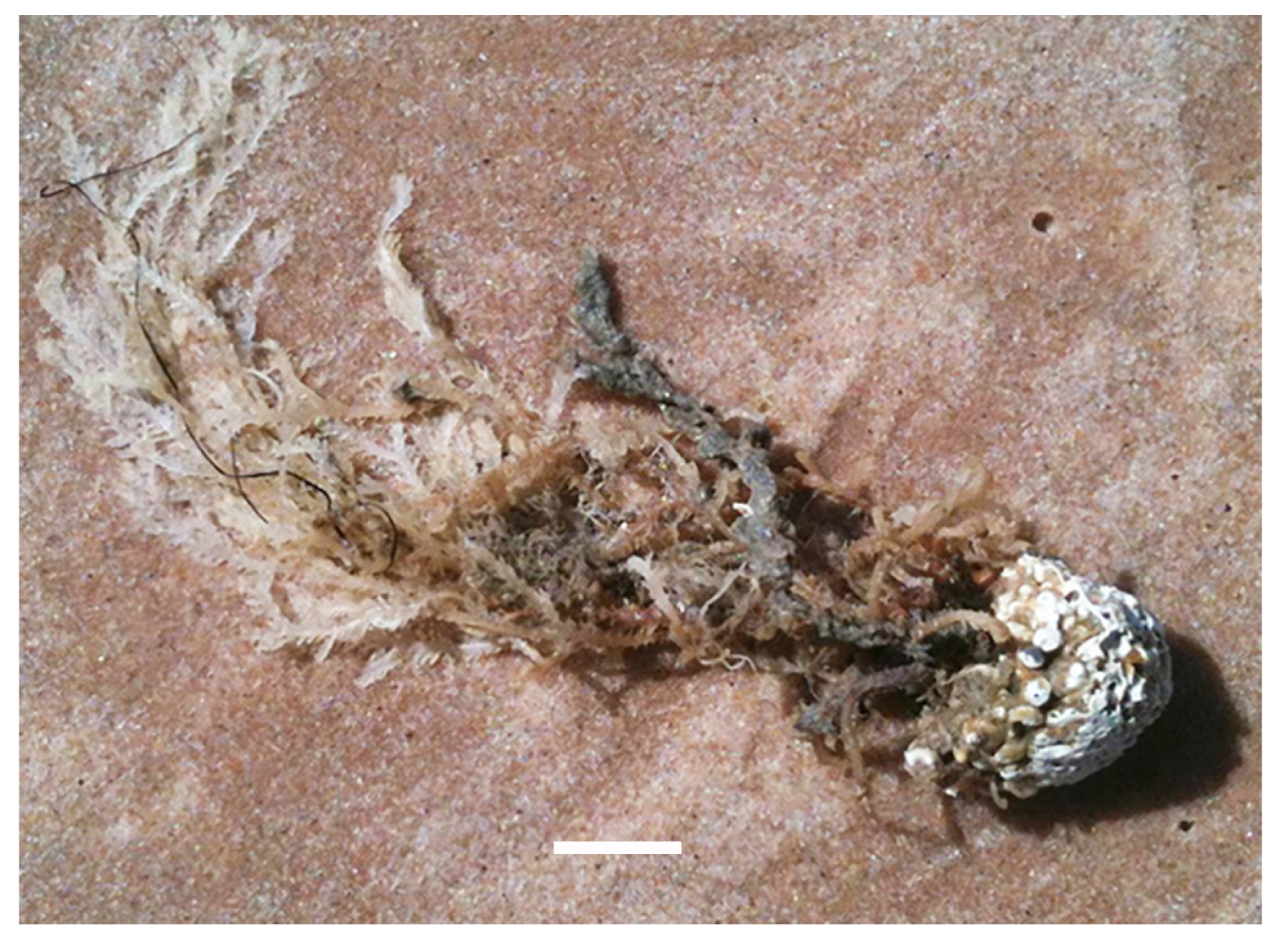
Images recovered from remotely operated vehicles (ROVs) exploring the Abrolhos Bank show the vast extent of densely crowded rhodoliths formed chiefly by Lithothamnion crispatus, attaining an average diameter of 6 cm, but also including other species from the genera Lithophyllum, Hydrolithon, Mesophyllum, Sporolithon, and Neogoniolithon [34]. The biodiversity of other marine algae and marine invertebrates is very high because rhodoliths perform the function of an umbrella organism. At such great depths where storms have no effect on bottom conditions, tilefish are known to plow the bank and heap rhodoliths into mounds. Alternatively, the phenomenon of internal waves due to disruption between water layers of different density may potentially affect deep-water rhodolith banks [35]. Closer to the shorelines of Espirito Santo and Bahia states [36,37], rhodoliths occupy much shallower waters, where various brown algae characteristically attach to them. The foliose growth of brown algae, which has the appearance of plumes, catches onshore winds during storms. The phenomenon is known in Brazil as the arribadas or “the arrived.” It means that the rhodoliths dwelling in well-lighted waters where brown algae co-exist arrive on a seasonal basis when washed ashore (Figure 8).
Seamounts form a discontinuous ridge eastward from the Abrolhos Bank (Figure 7b). The flat tops of several, including Vitória, Jaseur, and Davis, have been mapped remotely by side-scan sonar, explored by ROVs, and even sampled for rhodoliths at depths around −60 m [38]. The size, species composition, and density of rhodoliths are similar to those found on the Abrolhos Bank. Farther to the northeast from the mainland, the Brazilian islands belonging to the tiny Fernando de Noronha Archipelago also yield rhodolith beds at several localities ranging in water depths between −10 m and −100 m [39]. Again, tilefish are reported as active disrupters of rhodolith cover, responsible for turning over individual spheroids. The Rocas Atoll, located near the Fernando de Noronha islands, is the only such feature in the Atlantic Ocean, amounting to 378 km2 as defined by its surrounding 1000 m isobath. A combination of rhodoliths and scattered coral reefs occurs in the mesophotic zone to a depth of −80 m [5]. Around the steep margins of the atoll, the coalescence of rhodoliths is abetted by the inter-connected growth of sponges. In the upper 30 m of waters across the atoll, rhodoliths are free-living and subject to movement. Altogether, the extraordinary size and richness of the Abrolhos Bank, related seamounts, as well as the Fernando de Noronha islands and Rocas Atoll, contribute to making marine scientists from Brazil among the leading experts in the study of rhodoliths and the rhodolith ecosystem [5,34,35,36,37,38,39].

3.3. Contemporary Rhodoliths in the Caribbean Realm

The Caribbean region (Figure 1, triangle 3) is better known for the extensive fringing and barrier reefs developed especially along the windward margins of many islands [40]. Rhodoliths accreted by the coralline red alga Cruoriella armorica are reported from shallow-water, back reef settings in Puerto Rico [41]. In this case, the rhodoliths are nucleated around coral debris, often with a cylindrical shape up to 7 cm in length and with concentric laminations as much as 3 cm in thickness. Elongated fragments of various reef corals, identified as derived from Acropora palmata, A. cervicornis, and Porites furcate, form the core at the center of these rhodoliths. Maximum density was found to exceed 500 rhodoliths per square meter. In September 1998, Hurricane Georges passed directly over one of the study sites as a Category 2 event with wind speeds up to 177 km/h. Visiting after the storm, it was found that the site suffered a nearly complete removal of rhodoliths from lagoon waters less than −1.3 m in depth [41]. The same level of detailed research on rhodoliths in reef settings accomplished on Puerto Rico remains to be replicated elsewhere in the Caribbean region. The author points to personal experience from Aruba off the coast of Venezuela, where rhodoliths were found to occur in a leeward setting as a major contributor to beach sand (see Figure 2).

3.4. Contemporary Rhodoliths in Mexico’s Baja California Peninsula

Mexico’s Gulf of California is a marginal sea covering an area amounting to 210,000 km2 that fits between the Mexican mainland and the 1100 km long Baja California peninsula adjacent to the Pacific Ocean. Due to a subtropical setting and regional hydrodynamics that entail seasonal upwelling, the gulf hosts one of the most productive ecosystems in the world, with rich biotas including diverse marine invertebrates, fish stocks, and marine mammals [42]. It is a young sea, dating back in geologic time to less than 12 million years ago, with initial flooding into a rift zone related to seafloor spreading along the East Pacific Rise. The gulf region has a recorded history of hurricanes that enter the gulf from the south during El Niño years with a periodic frequency of every six to eight years. During such events, the orbital energy generated by storm waves touches bottom at a greater depth beyond fair-weather wave base and has a destructive impact on regional rhodolith banks. Beaches and dunes adjacent to rhodolith banks have a propensity to be enriched by rhodolith sand following major storms [15].
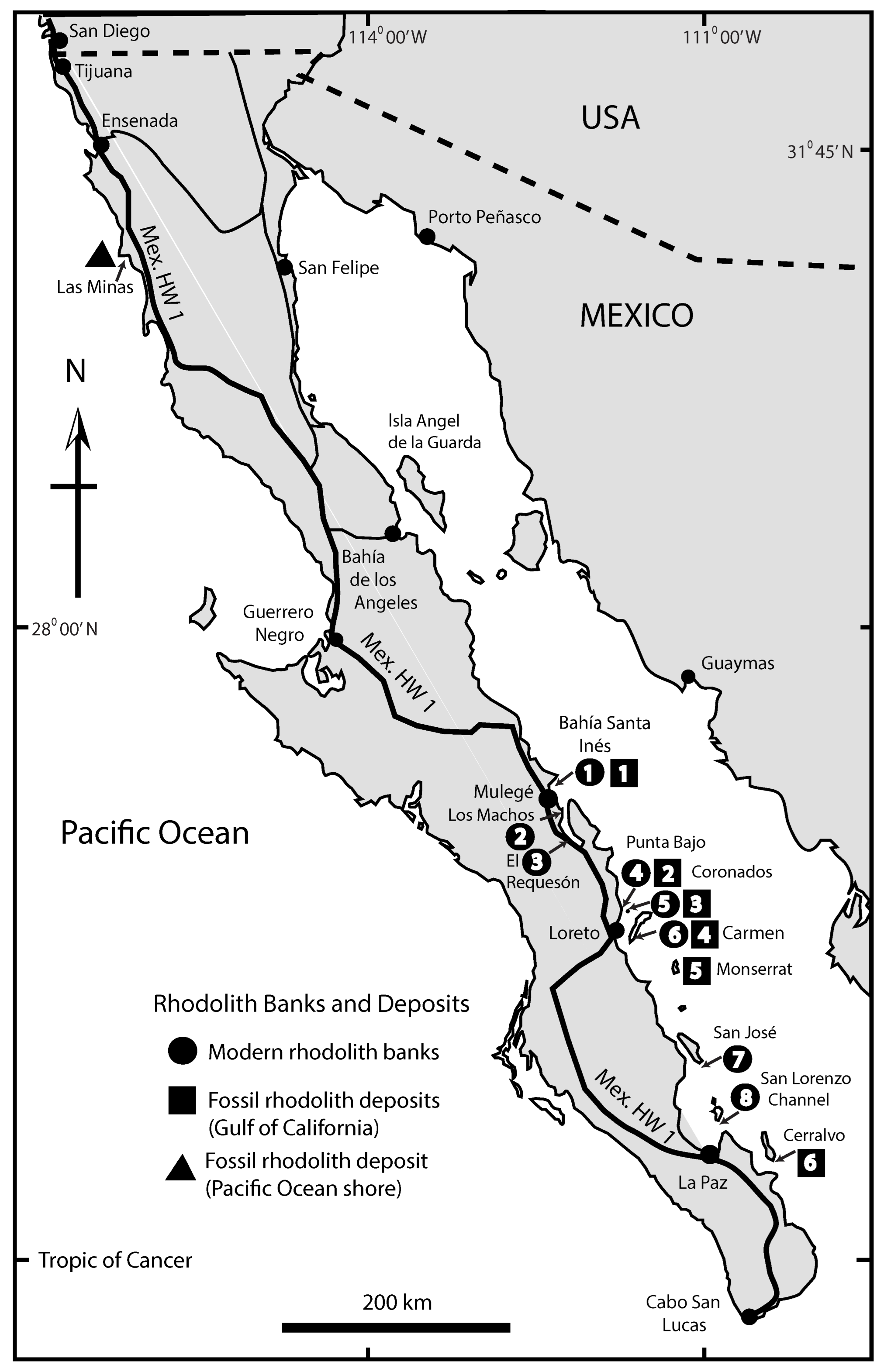
Extensive survey work on modern rhodolith banks was initiated throughout the lower Gulf of California during the 1990s and expanded thereafter during the next decade by phycologists from the Moss Landing Marine Laboratories in southern California [43,44,45,46]. Extensive rhodolith banks typically inhabit the seabed at water depths from −2 to 10+ m and often occur side-by-side with fossil rhodolith deposits exposed along the peninsular coast of Baja California (Figure 9).
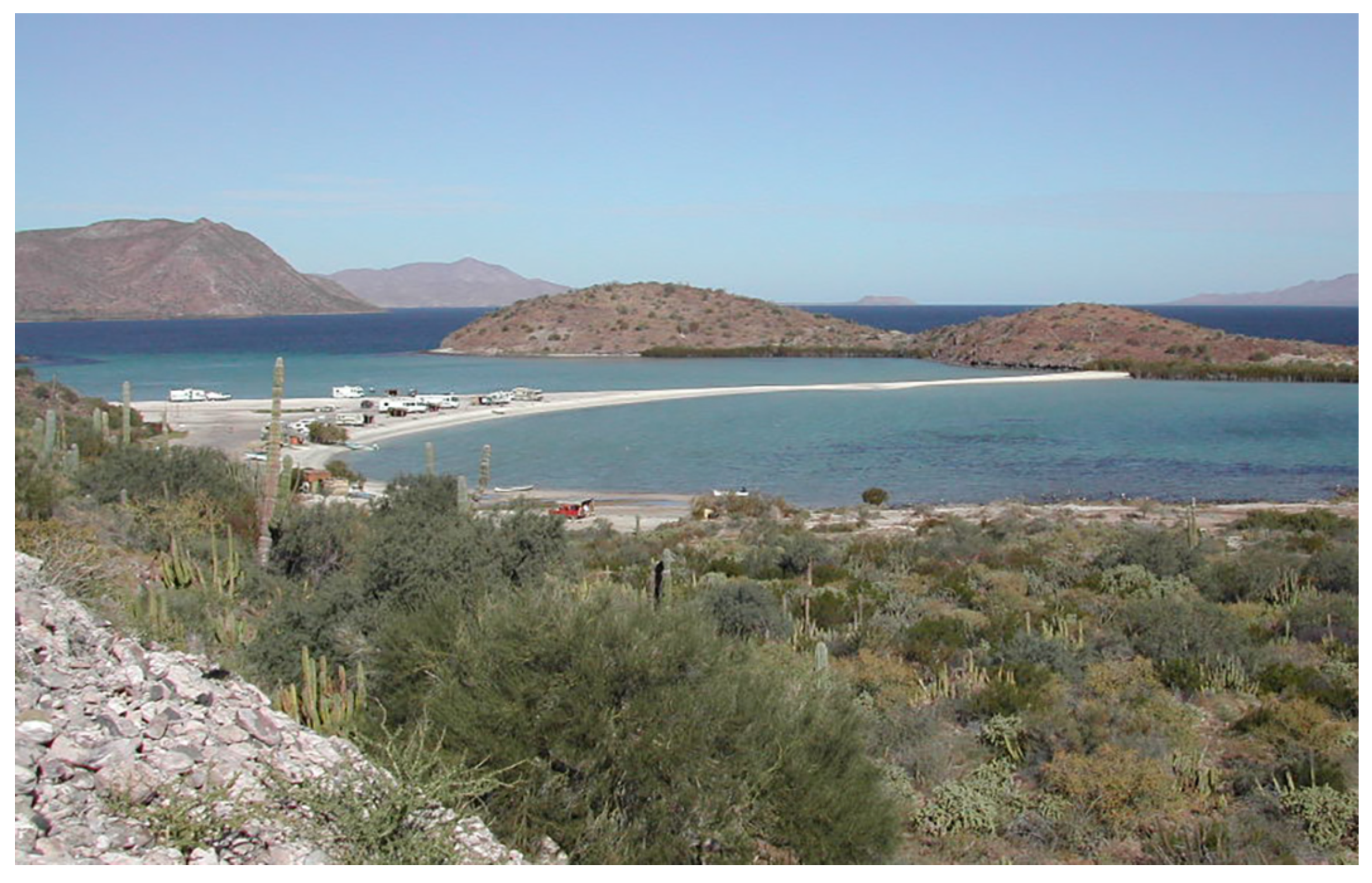
Early studies focused on a locality called El Requeson (Figure 8, circle 3), where a large rhodolith bank sits off Isla Requeson (Figure 9) [44]. Requeson is a small, narrow island less than 1000 m in length, connected to the peninsular mainland by a 350 m long tombolo submerged during high tides (Figure 10).
Concepción Peninsula forms the outer arm of the greater bay. The Spanish name requeson refers to “cheese curds” that mimic the same texture as the broken distal tips of rhodolith branches. Anecdotal history relates that rhodoliths and rhodolith sand are added to the tombolo after major storms.
Based on video surveillance in conjunction with deployment of current meters, movement was monitored on the crescent-shaped rhodolith bank situated off the windward shore of Isla El Requesón [44]. Rhodoliths from this wave-swept bed occur in dense concentrations from 4 m to 12 m below the surface, with 89% of the forms attributed to Lithophyllum margaritae. Recorded at a depth of 5 m, small rhodoliths with a diameter of 2 cm start to roll under the influence of wind-driven waves when the water current reaches speeds of 25–30 cm/second. At higher velocities of 30–35 cm/second, rhodoliths up to 3 cm in diameter start to roll away [44]. The Moss Landing team of phycologists continued to expand studies to other areas, such as Cabo Las Mochas (Figure 9, circle 2), still within Bahía Concepción north of El Requesón [45]. They also produced a major review over the living rhodolith banks at Punta Baja, Isla Coronados, and the San Lorenzo Channel (Figure 9, circles 4, 5, 8) [46].
Other teams have contributed notable observations on major rhodolith banks around Punta Chivato in Bahía Santa Ines (Figure 9, circle 1) [47] and off the southern tip of Isla del Carmen within the refuge of the Loreto Marine Park (Figure 9, circle 6) [48]. A detailed study of carbonates dominated 40% by rhodoliths off the south end of Isla San José (Figure 8, circle 7) features one of the largest banks in the Gulf of California, covering 45 km2 [49].

3.5. Contemporary Rhodoliths off the Scottish Western Isles

High-latitude temperate settings with maërl beds tend to attract less attention and dedicated research than the more extensive rhodolith banks in subtropical settings [34,46]. Even so, some of the largest maërl beds in Europe occur around the Western Isles of Scotland and other parts of the British Isles (Figure 1, triangle 5) [50]. Key factors affecting the disposition of the Scottish maërl beds appear to be tide-generated currents that are typically moderate to strong. These beds consist of living rhodoliths combined with post-mortem debris scattered across shallow, subtidal flats often rippled by wave action. Though growth is slow [51], the interlocking structure of rhodoliths dominated by Lithothamnion glacial and L. corallioides provides a wide range of niches for infaunal and epifaunal invertebrates. A detailed study shows how the role of Scottish maërl beds functions as a nursery for juvenile queen scallops Aequipecten opercularis and other invertebrates [52]. Dunes in what is called the machair ecosystem occur on Scottish coasts inland from maërl beds, which transfer considerable carbonate input to a terrestrial system [53].

3.6. Contemporarhy Rhodoliths off the Coast of Arctic Norway and Greenland

Research on contemporary rhodoliths from high-latitude regions in Norway, Svalbard, and Greenland (Figure 1, triangle 6) is as poorly represented in the phycological literature as the maërl beds of Scotland in the British Isles. Fixed, reef-like buildups formed by crustose coralline red algae are described from the south end of Rebbenesøy in the Troms district at a latitude of North 70° [54]. Different phases of algal development occur over 500 m across the Storvoll shelf, with free rhodoliths dominated by Lithothamnion at depths between −12 and −15 m. A rhodolith pavement and maërl beds occur closer to shore. The process of rhodolith turnover is suggested on the basis of the predator–prey relationship between the brittle star Ophiopholis aculeata and the wolffish Anarhichas lupus, living as members in the ecosystem. Farther north, rhodolith beds are documented in Norway’s Svalbard Archipelago at latitudes close to North 80°, where the coralline red algal flora is dominated by Lithothamnion glaciale and Phymatolithon tenue, living at depths between −27 and −47 m [55].
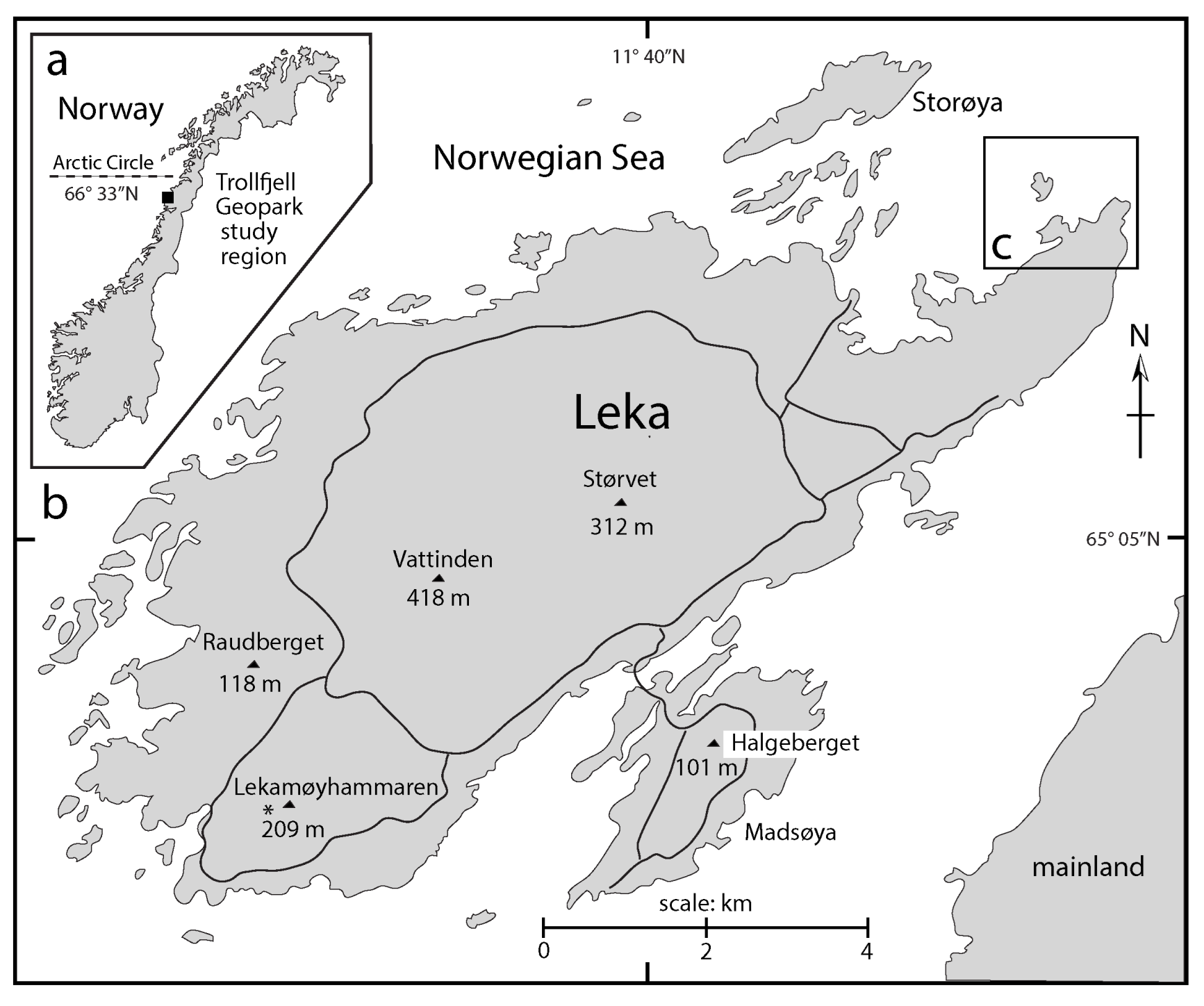
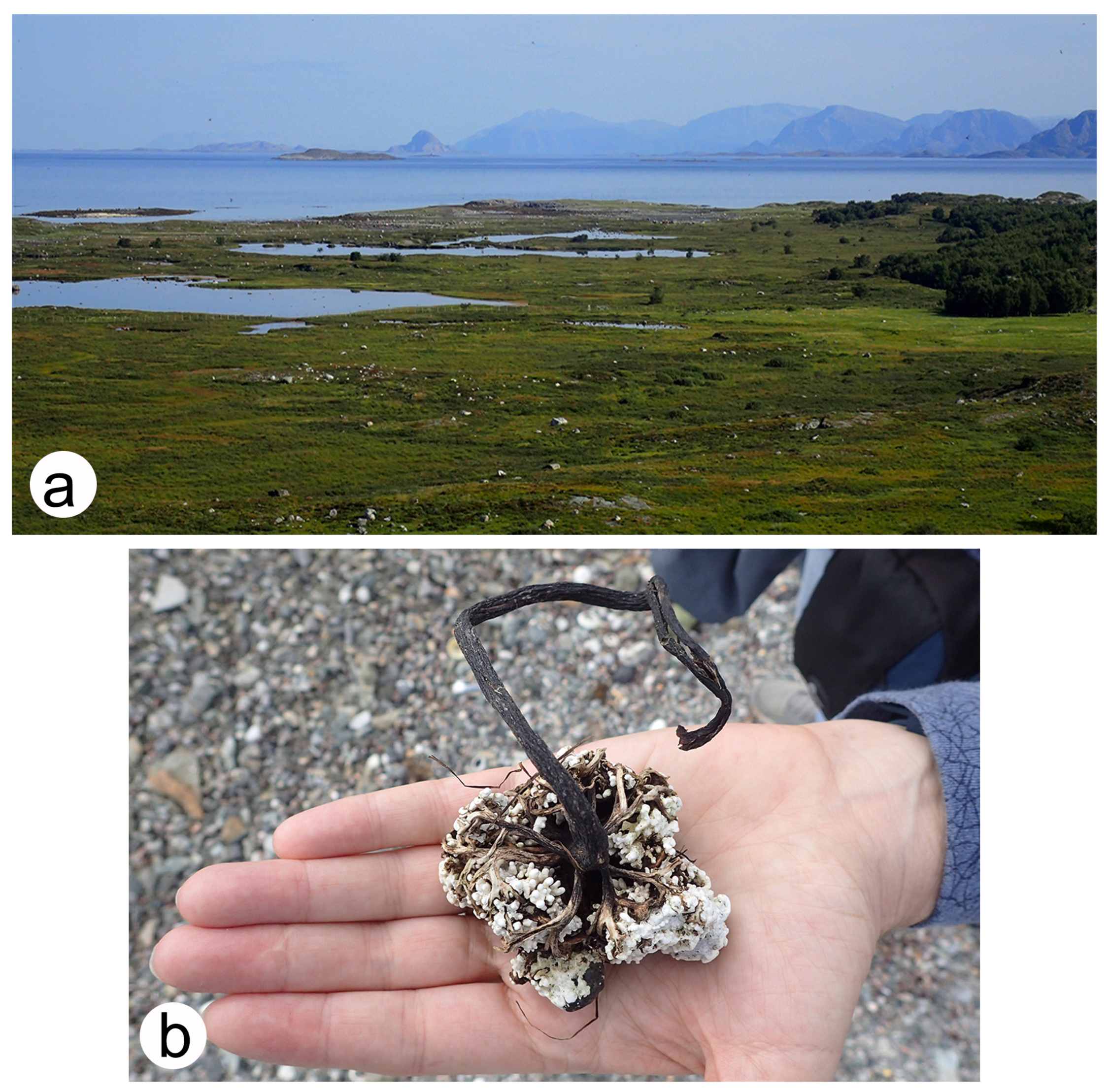
Opportunities for rhodolith studies are open to fresh exploration along the shores of sub-Arctic Norway. This assessment is based on the author’s personal observations along the shores of the National Norwegian Geological Monument on Leka Island within the greater Trollfjell Geopark (Figure 11a,b). Abundant rhodoliths with the same branching structure typical of Lithothamnion occur on the northeast shores of Leka Island (Figure 11c) and are readily collected during low tide.
While the interior of Leka Island exhibits significant topography (Figure 11b), the northeastern end of the island is low and close to sea level (Figure 11a). It is noted that individual rhodoliths may be found along that shore with the remnants of the holdfasts from foliose brown algae (Figure 12).
The crustose coralline red algae are long-lived, but brown algae grow during a single season and die off annually. This temperate example of biological co-existence is much the same in tropical settings as found in the seasonal arribadas of coastal Brazil (see Figure 8). There are clear implications to suggest that a cessation in rhodolith mobility occurs during stabilization during the seasonal overgrowth of brown algae.
Other work on rhodolith banks at multiple localities, many above the Arctic Circle on both the east and west coasts of Greenland, provides details on marine communities dominated by Clathromorphu compactum and Lithothamnion glacial, up to 3 cm in diameter, living at depths of −18 to −25 m with percent coverage on the seabed as much as 40% [56]. Associated faunas typically include as many as 40 species of marine invertebrates, dominated by mollusks, polychaetes, and echinoderms.

3.7. Contemporary Rhodoliths off the Coast of Western Australia

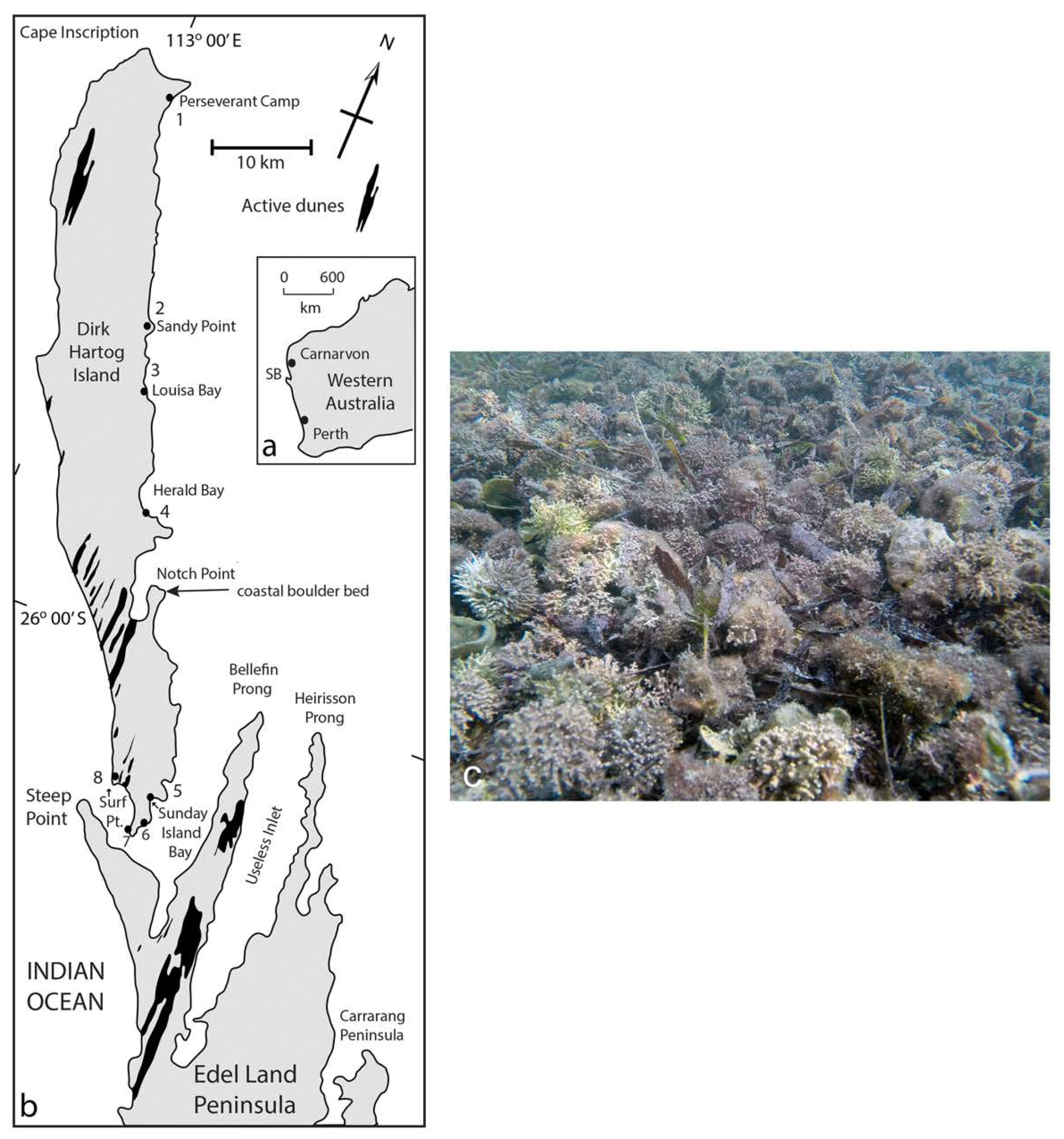
Published information on rhodoliths from Australia remains limited in scope but offers some detailed reporting from the Indian Ocean shores of Western Australia (Figure 1, triangle 7). Areas with substantial rhodolith development commonly are found at depths from −30 to −100 m along the western shores of that province [57]. The greater Shark Bay region, which is famous for its living stromatolites [58], belongs to a World Heritage UNESCO (United Nations Educational Scientific and Cultural Organization) site with full conservation protection. Dirk Hartog Island (Figure 13a,b) is part of a barrier system that shelters Shark Bay from the open Indian Ocean. The island’s east shore and adjacent coastal waters were the location for a preliminary study on contemporary rhodoliths that looked at species composition and density, as well as the contribution of rhodolith detritus to beach and dune sand [59]. Sunday Island Bay at the island’s south end (Figure 13b) hosts a dense concentration of rhodolith-forming species, including Neogoniolithon brassica-florida, Hydrolithon reinboldii, and Lithophyllum (Figure 13c).
The Dirk Hartog project [59] canvassed ten beach and adjacent dune localities mostly on the east shore to assess the scale of rhodolith-derived sediments transferred to those settings. In addition to carbonate grains derived from coralline red algae, categories included fine shell debris, quartz sand, and dark minerals. The highest input from coralline red algae occurred at Sandy Point (Figure 13b, locality 2) with beach sediments enriched by 14% and the adjacent dune at 9%. Quartz sand was the primary constituent at most localities, ranging between 32 and 86% by point counts [59]. The result indicates a more spotty, irregular placement of rhodolith concentrations along the island’s east shore.

3.8. Contemporary Rhodoliths from the Ryukyu Islands of Japan

A chain of islands belonging to the Ryukyu Archipelago is part of Japan, stretching nearly to Taiwan along an arc following a zone of oceanic plate-to-plate subduction from the latitude of N 30° to N 24°. With Okinawa being the largest at 1200 km2 in size (Figure 1, triangle 8), many are known for a combination of marine ecosystems that include seagrass beds, inner coral flats, outer reefs, and coralline red algae occupying the outer reef slope [60]. Okinawa and its many small satellite islands have been the subject of detailed work on rhodoliths that occupy water depths typically between −50 and −135 m [61]. Based on underwater photos, rhodoliths cover 45% to 78% of the seabed, mainly with spherical forms having an average diameter of 8 cm. The most common accretionary species of coralline red algae include Lithothamnion australe and L. pulchrum, but preliminary work also confirms the presence of at least five species belonging to the genus Sporolithon [61].

4. Major Fossil Rhodolith Deposits

Labeled numerically in Figure 1, nine localities provide a sampling of fossil rhodolith deposits from around the world, chosen to reflect substantial thicknesses of whole rhodoliths, as well as the accumulated debris of broken and disintegrated rhodoliths.

4.1. Fossil Deposits from the Macaronnesian Realm in the Northeast Atlantic

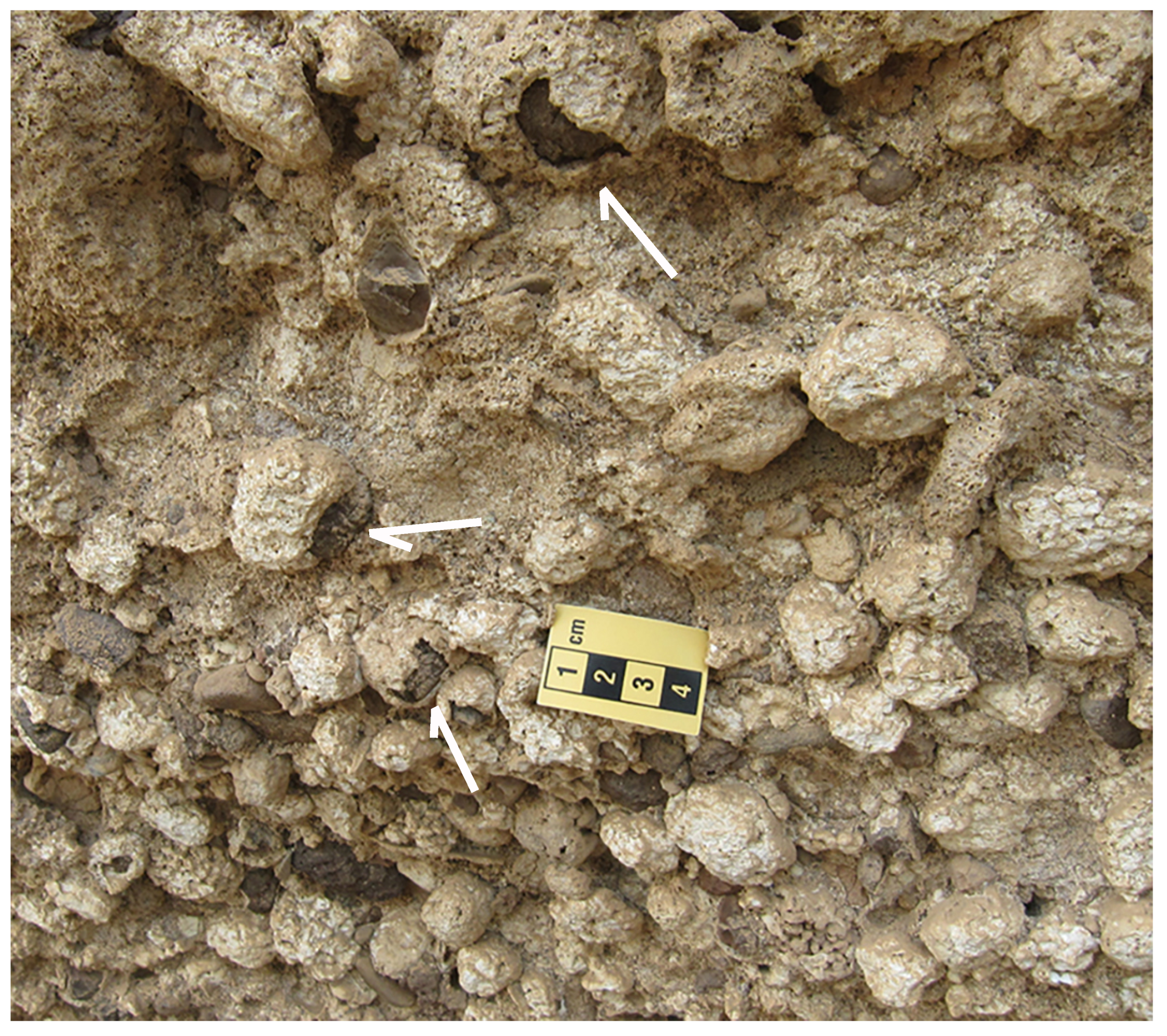
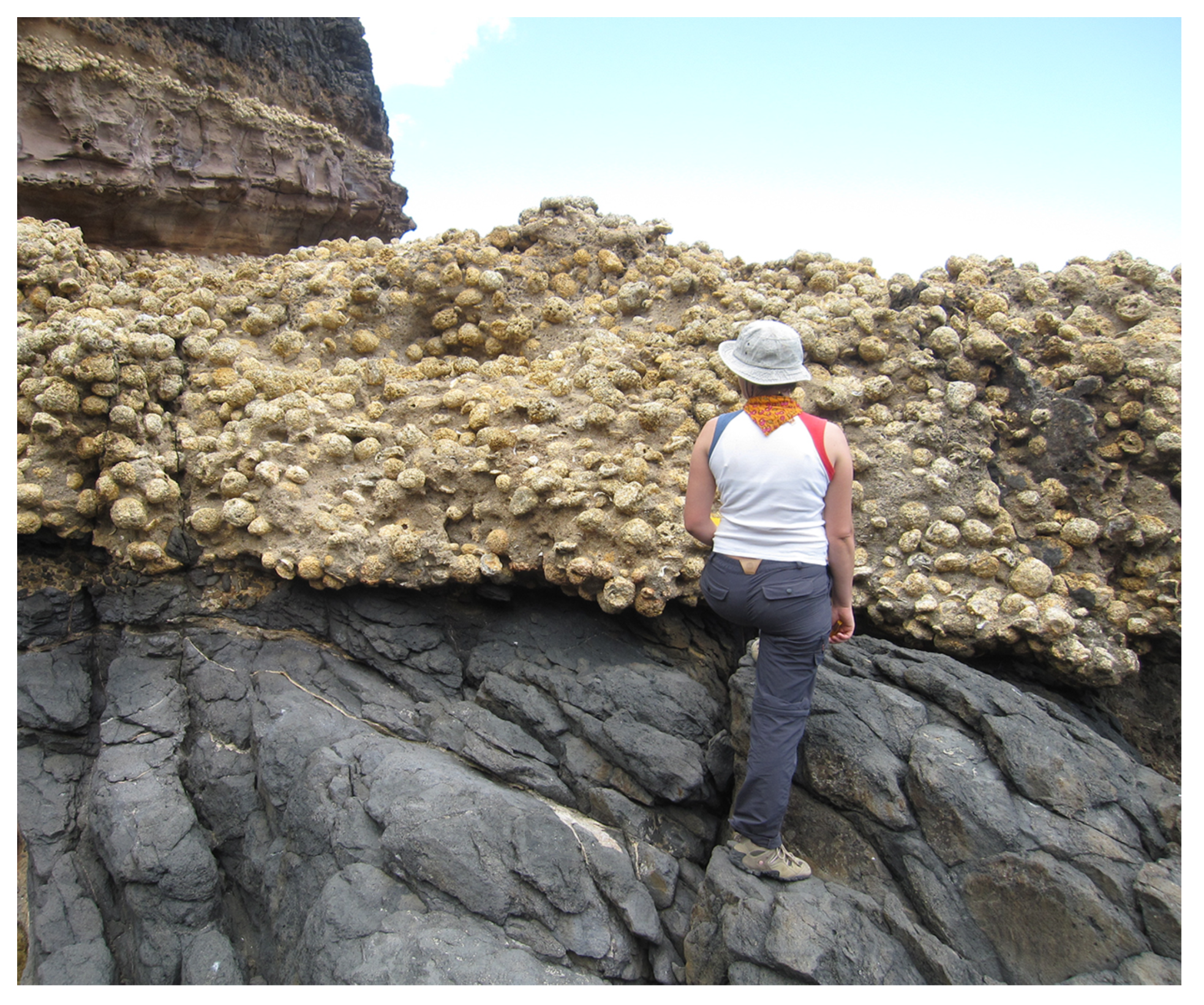
The distinctive rhodolith layer in the harbor area at Praia on Santiago Island (Figure 1, locality 1) was originally described by Darwin as 20 feet (~6 m) in thickness [6]. His observation is accurate, although the actual thickness varies laterally as later measured in a series of stratigraphic profiles from the port toward the island’s southeast end [10]. The variation is about a meter due to uneven erosion of the underlying basalt shelf on which the rhodoliths accumulated in late Pleistocene time. The outcrops studied by Darwin remain largely undisturbed. A typical exposure from the middle of the rhodolith layer on Ilhéu de Santa Maria in Praia harbor shows spheroids from 4 to 6 cm in diameter, some of which are partially eroded to exhibit nucleation around basalt cores (Figure 14).
The Santiago rhodolith layer is sufficiently thick that rhodoliths at the bottom of the deposit had no opportunity to receive the sunlight required for photosynthesis. Hence, the layer is interpreted as a storm deposit that washed rhodoliths closer to land. The basalt layers that followed Darwin’s rhodolith layer arrived about 700,000 years ago, flowing to the sea from nearby volcanic cones [10].
The Canaries Archipelago is centered 1300 km northeast of the Cape Verde Archipelago (Figure 3). Among the fossil rhodolith beds from the Canary Islands, the best documented occurs at Los Rehoyas in urban Las Palmas on Gran Canaria Island (Figure 1, locality 2; Figure 4) [62]. Three separate rhodolith layers are preserved as conglomerate deposits that vary in thickness from 0.25 to 0.5 m and consist of densely packed spheroids from 2.0 to 3.0 cm in diameter. The taxonomy of coralline red algae was found to consist of species in multiple genera, including Lithoporella, Hydrolithon, Sporolithon, Boreolithathamnion, and possibly Lithophyllum. Sample size was sufficient to determine that no single species dominates. Trace fossils from associated layers indicate that deposition occurred within the middle shoreface and shoreface [55]. Scores of rhodoliths were broken open from each layer to reveal none were nucleated around basalt cores. It means that the rhodoliths originated well offshore in waters on the order of −50 m in depth. As in the contemporary “popcorn” rhodoliths from Fuerteventura Island [32], the rhodoliths at Los Rehoyas on Gran Canaria are interpreted as storm deposits. The age of the rhodolith layers is latest Miocene or early Pliocene based on the dating of related basalt flows.
Still within the Macaronesian Realm, the Madeira Archipelago is centered 500 km due north of the Canaries Archipelago (Figure 4), where an islet off the coast of Porto Santo is the site of an extraordinary rhodolith deposit dated to the middle Miocene, from about 15 million years ago, on the basis of microfossils (Figure 1, locality 3) [63]. As at Los Rehoyas in the Canary Islands, multiple rhodolith layers are repeated stratigraphically at Cabeço das Laranjas (Hill of Oranges, so called compared to size and color of the fruit) on Ilhéu de Cima off Porto Santo. The basal rhodolith layer is 2.6 m thick (Figure 15) and occupies what was a former rocky shore, with multiple sea stacks that poke through the rhodolith deposit, forming a stabilizing catchment zone. Approximately 90,000 rhodoliths are exposed on the upper surface of the basal layer, amounting to 450 per square meter. The average diameter of spheroids in the thick basal layer was found to be 10 cm, with many nucleated around basalt cores up to 3 cm in diameter. Thin-section analyses identified three genera of coralline red algae: Sporolithon, Lithothamnion, and Neogoniolithon. The overall depositional setting indicates that a major sea storm was the agency that transferred so many large rhodoliths onto the shore from a deeper, offshore habitat [63].
Centered 1500 km northwest from Madeira, the Azores Archipelago includes several islands, only one of which, Santa Maria Island, hosts extensive fossil deposits (Figure 3). Rhodoliths from basal Pliocene strata dated to 4.25 million years ago are buried in multiple surge channels with 0.8 m or more of relief among pillow basalts traced along 150 m of exposure in the high cliffs of Malbusca on the south coast [64]. The rhodoliths are small, generally less than 3 cm in diameter and include species from the genera Lithophyllum, Spongites, Hydrolithon, and Phymatolithon. The side walls of the surge channels are partially encrusted by barnacles, and in some cases, rhodoliths also are encrusted by barnacles. Many rhodoliths show evidence of abrasion and breakage interpreted as storm-related. Cross-bedding within some channels is a strong indicator that the rhodoliths were introduced from deeper, offshore waters into shallower and higher-energy settings in surge channels. A transgressive trend in Pliocene strata overlying the rhodoliths records a gradual rise in sea level that eventually flooded the island until renewed volcanism and tectonic uplift restored subaerial conditions during later Pliocene and Pleistocene times [64].

4.2. Fossil Deposits from Mexico’s Baja California Peninsula

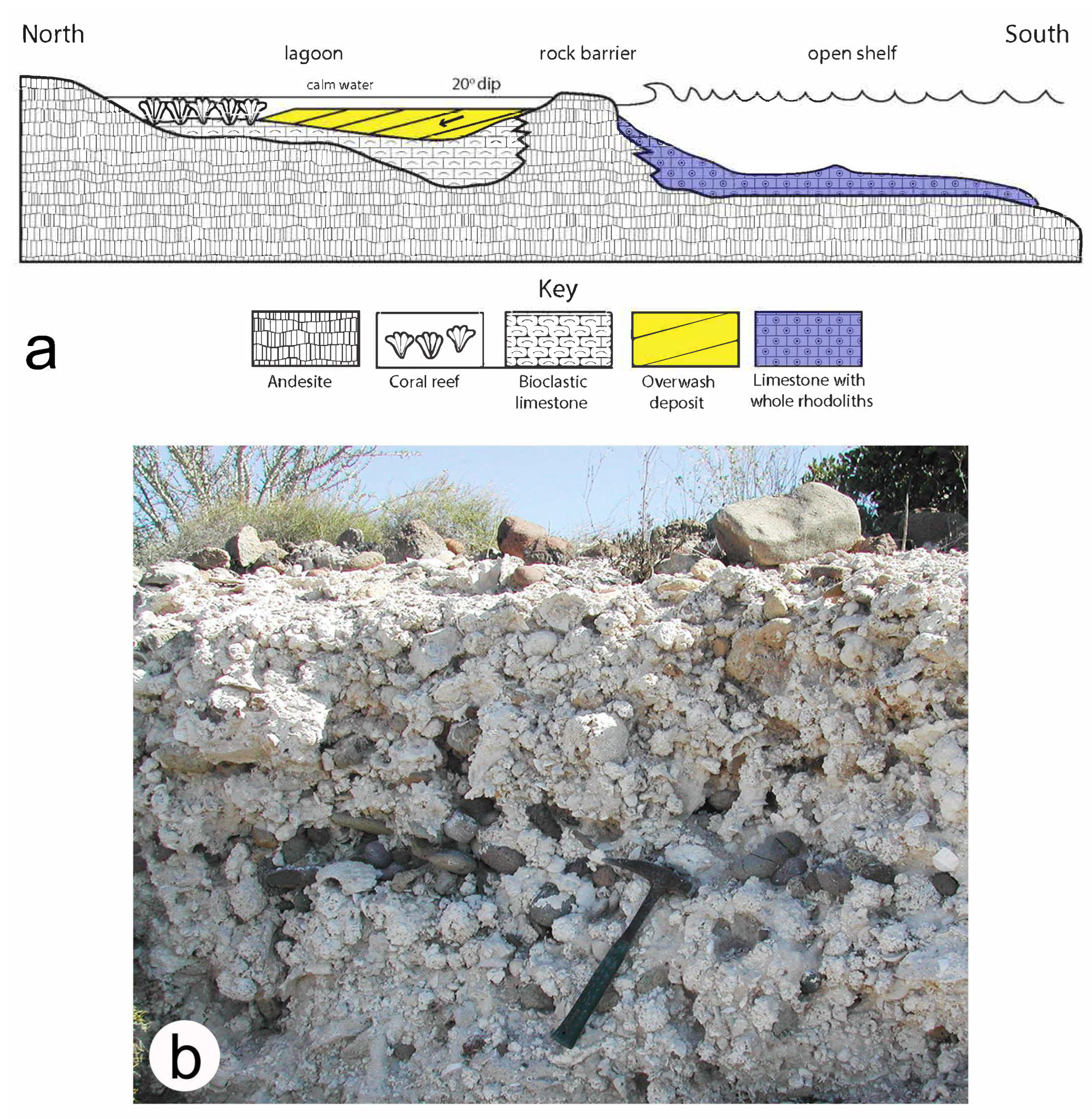
Limestone-forming layers dominated by thick rhodolith deposits are well represented at multiple localities along the shores and islands in Mexico’s Gulf of California, ranging in age from the Pliocene to the late Pleistocene [65]. Located near the town of Loreto in Baja California Sur, Isla Coronados is especially rich in geological features that include fossil rhodoliths (Figure 8, square 3). This small island, 7.5 km2 in area, is crowned by a volcano last active about 600,000 years ago, which continues to influence the dynamics of surrounding marine shores. A modern sand beach on the east shore as well as the adjacent dune field are composed of rhodolith sand [15]. On the south shore, a late Pleistocene lagoon contains a fossil coral reef that grew in place about 121,000 years ago. Covering 3.5 ha, the former lagoon is well exposed in the eroded walls of Cañada Coronados to reveal a fixed outer barrier formed by volcanic basement rocks with only a narrow connection to the sea [66]. From a sedimentological standpoint, part of the lagoon demonstrates the repeated effects of storms relative to the recycling of rhodolith materials. A thick succession of rhodolith sand occurs in discrete layers that dip 20° uniformly off the fixed barrier toward the middle of the lagoon, stopping short of the reef complex (Figure 16a). The immediate source of the rhodolith debris derives from the opposite side of the barrier, where whole rhodoliths mixed with basalt cobbles laid down a cover on the island shelf (Figure 16b). Periodic storms of a similar intensity to hurricanes that today enter the Gulf of California from the south are hypothesized to have caused waves pushing rhodoliths against the barrier and sending their crushed debris upwards and over the top into the sheltered lagoon behind. Calculations that follow the same formula to calculate the number of contemporary rhodoliths feeding the island’s contemporary dune field [15] estimate that the fossil lagoon deposit holds a volume equal to the disintegration of a little less than 50 billion whole rhodoliths [66].
Nearby, the much larger Isla del Carmen is situated across from Loreto and features an almost complete stratigraphic succession through the Pliocene and overlying Pleistocene, exposed at Arroyo Blanco on the island’s east coast (Figure 8, square 4). Traced inland from the shore, the sequence is in the form of a shallow ramp dipping seaward that amounts to a total accumulated thickness of 61 m [67]. The margins of the 3.3 km2 basin are well-defined by border faults and are estimated to be filled 64% by coarse- to sand-sized sediments derived from crushed rhodolith debris. For example, a massive layer easily accessible at the shore measures 9 m in thickness. The unit is fully dominated by rhodolith debris, with few whole rhodoliths preserved intact. Other layers interspersed throughout the sequence are formed by fossil shell beds deposited during calm interludes, but the thick rhodolith limestone layers are interpreted as storm-related [67].
Several other fossil rhodolith deposits are summarized elsewhere in detail; for example, the 3 m thick capstone of Pliocene rhodolith limestone now exposed on the uplifted plateau of Monserrat Island (Figure 8, square 5) [65]. The much-diminished capstone has a present area of 35.6 ha but is interpreted to have formerly covered most of the island’s 18.5 km2 surface at a shallow water depth prior to tectonic uplift. The number of rhodoliths that contributed to the capstone is incalculable, but enormous beyond that estimated for the much smaller basin on Isla Coronados [66].
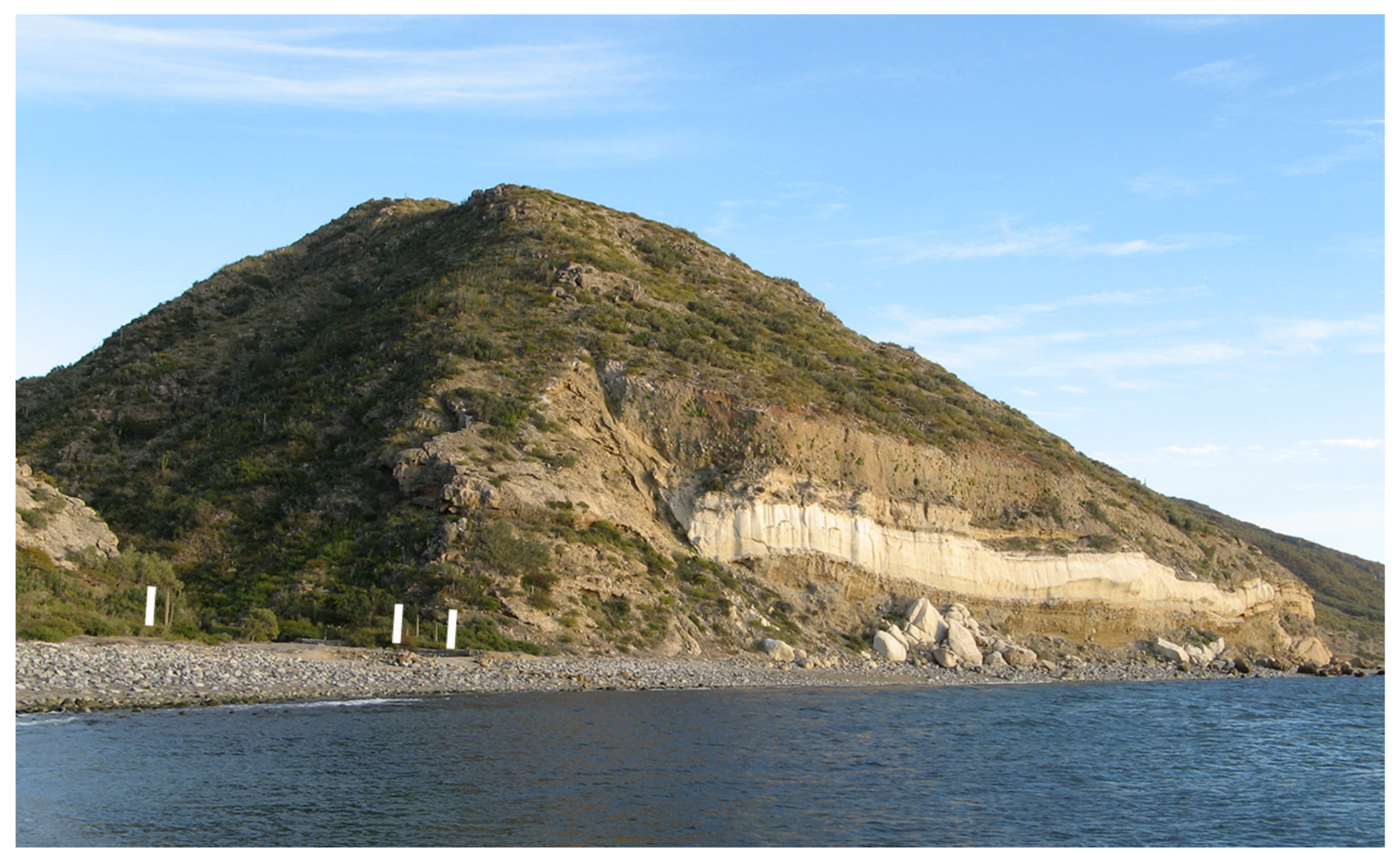
Yet another example of a massive rhodolith limestone occurs at Paredones Blancos on Isla Cerralvo, located in the far southern opening of the Gulf of California (Figure 8, square 5) [68]. The locality name translates from Spanish as “white walls”, an appropriate description for a 10 m thick band of white rocks that extends for three-quarters of a kilometer along the rocky west coast of Isla Cerralvo (Figure 17). Key index fossils from a lineage of echinoids recovered from the base of the limestone date the unit to a mid-Pliocene age. Some few whole rhodoliths are present, but otherwise, crushed rhodolith debris forms a coarse to very coarse carbonate sandstone. Based on point counts from multiple thin sections sampled through the main unit, the rhodolith content peaks at 88.7% against 11.3% for siliciclastic sediments. Local topography suggests that the coastal entrance to a large valley was inundated with rhodolith debris from an offshore bank during a rise in sea level [68].
Older geological formations appear along the Pacific shores of Mexico’s Baja California peninsula, where outcrops belonging to the Upper Cretaceous Rosario formation occur at Las Minas south of Ensenada (Figure 1, locality 9; 8, see triangle marker). A paleoisland formed by a volcanic ridge with a topographic relief of 65 m is flanked by limestone layers containing distinctive fossil components that dip off in opposite directions [69]. These are interpreted as the direct result of a persistent setting against sea swells in one direction and a more sheltered setting in the other direction. Fossil oysters and delicate, rock-encrusting bryozoans are the prominent components in a relatively calm-water environment. The windward setting is dominated by abundant rhodoliths, typically 1.5 to 2.5 cm in diameter, nucleated around volcanic rock cores up to 0.8 cm in diameter. The spherical shapes with algal rinds at a consistent thickness are interpreted as characteristic of a turbulent-water environment. The only coralline red alga identified from thin-section analysis belongs to the genus Sporolithon [69].

4.3. Fossil Deposits from the Western Mediterranean and Southern Europe

Rhodolith-bearing limestone beds deposited during the Miocene and Pliocene epochs are well represented throughout southern Europe and various islands in the western Mediterranean Sea (Figure 1, locality 7). The development and spread of rhodoliths in the genus Sporolithon throughout the Mediterranean realm have been thoroughly reviewed [70]. In particular, Minorca, as part of Spain’s Balearic Archipelago, is the location of a study on a major carbonate ramp with shore-proximal facies formed by foraminifera and mollusks and more distal facies dominated by rhodoliths [71,72]. The adjacent “foramol” and “rhodalgal” facies preserve an exposed Miocene shelf covering roughly the southern third of the island abutted against Miocene land represented by older Triassic and Jurassic rocks. The scenario represents one of the largest, best preserved paleogeographic entities in the western Mediterranean. Subsequent studies elsewhere in the region focused on other Pliocene rhodolith deposits in southeastern Spain [73,74] and the Pliocene of the Monte Cetona region in northern Italy [75], as well as the older Miocene rhodolith deposits at Vitulano in the Southern Apennines of Italy [76]. Rhodolith materials from the Miocene Pietra da Cantoni limestone in the Piedmont area of northwestern Italy are described as a “lost carbonate factory” displaced by transport to a deeper-water setting from its source area [77]. Significant rhodolith deposits from the Eocene of the Colli Berici platform of northeastern Italy also are described as influenced by storm events [78].
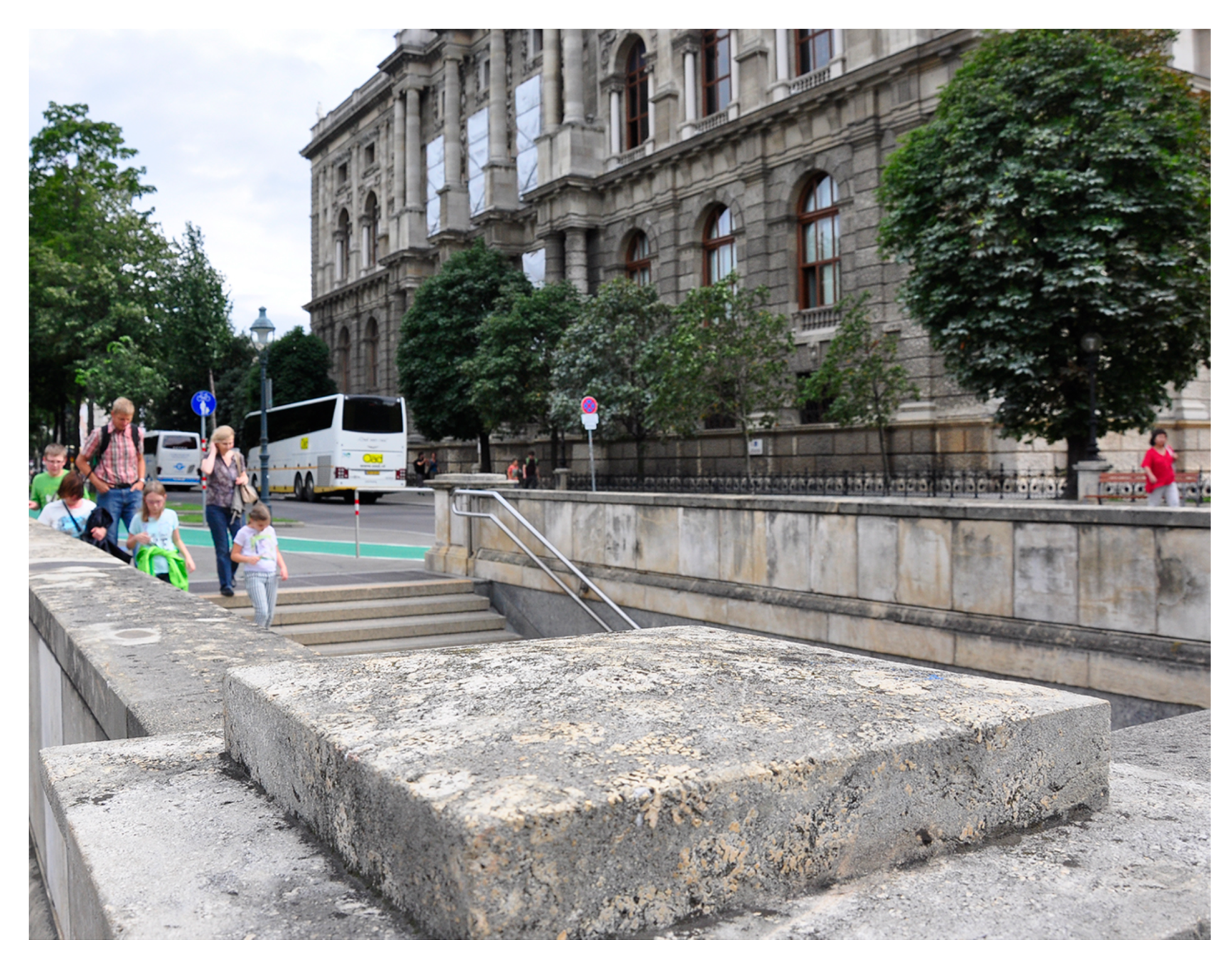
Elsewhere during the Miocene, the Paratethys seaway existed as a more expansive Mediterranean precursor that penetrated deeper into southern and eastern Europe, forming a broader connection to the Atlantic Ocean [79,80]. For example, carbonate banks up to 40 m thick with abundant rhodoliths were deposited around the Leitha Mountains of present-day Styria in southwestern Austria (Figure 1, locality 8). The so-called Leitha Limestone (or Leithakalk) enjoyed a particularly long history as a favored building stone dating back to Roman times, when the cities of Carnuntum and Flavia Solva were constructed [81]. Today, the use of rhodolith limestone continues unabated in Vienna, where the Leitha Limestone is used as facing stone for metro entrances (Figure 18).

4.4. Fossil Deposits from New Zealand

Limestone units rich in rhodoliths occur in several deposits of Oligocene age exposed on New Zealand’s North Island (Figure 1, locality 9). Basal layers in these formations are as much as 5 m in thickness and are recognized as stratigraphically useful marker beds equated with rising sea level [82].

5. Discussion

Consideration of the global significance of rhodolith beds as contributors to the enhancement of biodiversity in the recent world as well as their economic importance based on geological deposits is worthy of further discussion.

5.1. Role of Contemporary Rhodolith Flats as Biodiversity Multipliers

Although rhodolith flats, or maërl beds, constitute relatively thin drapes on the seabed during life, they provide refuge for an extensive community of other algae and marine invertebrates that dwell dispersed among the spheroids, as well as a surprising number of species that are hosted within individual spheroids either nested between branching forms or as borers in more solid forms. Previously cited is the relationship between brittle star populations belonging to the species Ophiopholis aculeata, preyed on by the wolffish Anarhichas lupus, in the maërl beds off Rebbenesøy in the Troms district of Norway [48]. More extensive biological relationships are reported in the deep-water rhodolith beds on Brazil’s great Abrolhos Bank, including an enormous number of species divided between other algae (308 species), invertebrates (469 species), fish (252 species), and foraminifera (24 species) [83]. Considering that less than 5% of Brazil’s ocean shelf is protected for conservation, there is serious concern over the potential loss of biodiversity due to deep-sea mining of rhodoliths for the possible application of lime fertilizer in land-based agriculture. Similar data from Mexico’s Gulf of California are available, showing that mollusk species are the most conspicuous co-inhabitants of the gulf’s rhodolith banks, likely exceeding 200 species [84]. Related work emphasizes the importance of cryptofaunal organisms living within individual rhodoliths, mainly crustaceans and polychaetes [15,85]. The same concern felt in Brazil exists that conservation practice is currently inadequate to protect against the damage of rhodolith beds due to trawling by fishing fleets in Mexico’s Gulf of California [86,87].

5.2. Role of Rhodolith Deposits to the World Economy

Use of rhodolith limestone for construction in southern Europe is well documented; for example, the medieval Papal Palace in Avignon, southern France [80]. Surviving lime kilns scattered throughout many of the volcanic islands in the northeastern Atlantic Ocean testify to a history of economic use during the seventeenth and eighteenth centuries for supply of slaked lime in that region [20]. One of the largest such sites exploited on a commercial scale for slaked lime anywhere in Macaronesia was established on Isla de Lobos off the northeast coast of Fuerteventura in the Canary Islands. Further depletion of European maërl beds for use as agricultural fertilizer is now checked due to regulations by the European Union that list the dominant rhodolith species of Atlantic maërl as a non-renewable resource [86]. Moreover, licensing for maërl extraction has ceased altogether in the United Kingdom. Due to the high porosity of rhodolith limestone, it acts as a superior reservoir rock capable of retaining large volumes of oil and gas. For example, the Asmari Formation in Iran is a rhodolith-rich rock dating from the late Oligocene to early Miocene and it is claimed to be the reservoir for 90% of Iranian oil in production [80]. Likewise, the submarine strata of the Miocene Zujian Formation in the South China Sea may hold a reserve of as much as a billion barrels of oil [80].
Prospects against the commercial over-exploitation of both living and fossil rhodolith beds all around the world depend on the ongoing research efforts by marine biologists and geologists to fully register the extent of those features everywhere. Great strides have been made in this regard by specialists working in Europe, throughout the many islands of Macaronesia in the northeast Atlantic Ocean, and other critical areas such as Mexico’s Gulf of California (Figure 1). Despite progress, the number of marine phycologists and paleobotanists actively doing research on living and fossil rhodoliths is extremely small compared to the number of researchers dedicated to studies on living and fossil coral reefs. Large parts of the world remain poorly represented with regard to rhodolith research, especially in the western Pacific and Indian Oceans. Only a single published report on contemporary and fossil rhodoliths from India is widely available [88]. In regions previously well studied by phycologists, new work is conducted on rhodoliths and the diversity of rhodolith faunal associations off the shores of Malta in the Central Mediterranean [89]. While the fragility of coral reefs due to climate change and overfishing is widely understood by the general public throughout the world, the comparable dangers related to the degradation of rhodolith banks or maërl beds deserve greater publicity.

6. Conclusions

Most often found as spheroidal constructions, rhodoliths embody a peculiar structure for the accretion of crustose, coralline red algae, lacking any kind of holdfast for attachment to the seabed in sunlit waters as shallow as −2 m but as deep as −100 m under conditions of extreme clarity in the water column. Like any other algae, those that grow as rhodoliths require sunlight for photosynthesis. The shape promotes circumrotary movement that provides every part of the curved surface an equal share of sunlight over time due to ongoing turnover stimulated by waves, bottom currents, or disruption by marine animals sharing the same habitat. The following points emphasize the main elements of rhodolith ecology as related to living aggregates (also known as maërl beds) as well as fossil deposits.
  • Rhodoliths occur today in high concentrations on seabeds that cover parts of all continental shelves around the world, as well as the marine shelves of many oceanic islands. The latitudinal range of living rhodoliths extends from tropical settings in equatorial zones to polar zones as extreme as the Svalbard Archipelago at latitudes between N 76° and N 80°, as well as the shores of Greenland. In the Southern Hemisphere, contemporary rhodoliths are reported at a latitude of S 33.5° off the coast of South Africa.
  • Rhodoliths possess an excellent fossil record that began in geological time during the Cretaceous, at least 113 million years ago. Maximum rhodolith development appears to have coincided with the Middle Miocene Climatic Optimum, approximately 15 million years ago, when extensive deposits accumulated in southern Europe and around islands in today’s Western Mediterranean Sea.
  • Today and during the geologic past, rhodoliths are and were vulnerable to major sea storms capable of disturbing the seabed at a considerable depth, whereby great numbers might be pushed onto land in supratidal settings or farther offshore into deeper-water settings. Agitation of rhodoliths against one another during violent storms leads to fragmentation and the development of massive deposits of rhodolith debris. These are useful indicators of storm events. Moreover, rhodoliths in an extreme state of pulverization may contribute to beach and coastal dune deposits.
  • Contemporary rhodolith beds are recognized by marine ecologists as biodiversity multipliers capable of hosting a vast number of associated invertebrates dwelling both among and embedded within individual spheroids. The role is similar to that of reef-forming corals that function as umbrella species to support a more diverse marine community. The concern among marine ecologists is that commercial exploitation for use in agriculture as lime fertilizer will lead to the destruction of an important marine ecosystem, especially in Brazil.
  • The number of phycologists engaged in studies on crustose coralline algae that accrete as rhodoliths is small compared to the community of marine biologists who work on coral reefs. The same is true for paleobotanists studying fossil rhodolith deposits. Much remains to be learned, particularly in continental shelf regions of the Western Pacific Ocean and the Indian Ocean, as well as related oceanic islands.
It is hoped this review may encourage future research and cooperation between marine ecologists and paleoecologists, especially in those parts of Asia where such studies are certain to provide fresh data on rhodoliths and their natural history.

Funding

This research received no external funding.

Data Availability Statement

No new data were created or analyzed in this study.

Acknowledgments

M.E.J. is grateful to B. Gudveig Baarli for assistance in editing the line drawings for this paper. Images provided in Figure 13c and Figure 18 were made available by colleagues Adela Harvey (LaTrobe University, Australia) and Carlos M. da Silva (Lisbon University, Portugal), respectively. Two anonymous readers contributed peer reviews with useful comments that led to the improvement of this manuscript.

Conflicts of Interest

The author declares no conflicts of interest.

References

  1. Elias, M.K. Fossil symbiotic algae in comparison with other fossil and living algae. Am. Midl. Nat. 1946, 36, 282–290. [Google Scholar] [CrossRef]
  2. Kiel, S.; Goedert, J.L.; Huynh, T.L.; Krings, M.; Parkinson, D.; Romero, R.; Looy, C.V. Early Oligocene kelp holdfasts and stepwise evolution of the kelp ecosystem in the North Pacific. Proc. Natl. Acad. Sci. USA 2024, 121, e22317054121. [Google Scholar] [CrossRef] [PubMed]
  3. Wray, J.L. Calcareous algae; Developments in Palaeontology and Stratigraphy; Elsevier Scientific Publication Co.: Amsterdam, The Netherlands, 1977; 185p. [Google Scholar]
  4. Foster, M.S.; Riosmena-Rodríguez, R.; Steller, D.L.; Woelkerling, W. Living rhodolith beds in the Gulf of California and their implications for paleoenvironmenmtal interpretations. In Pliocene Carbonates and Related Facies Flanking the Gulf of California, Baja California; Johnson, M.E., Ledesma-Vázquez, J., Eds.; Geological Society of America Special Paper; Geological Society of America: Washington, DA, USA, 1997; Volume 318, pp. 127–139. [Google Scholar]
  5. Amado-Filho, G.M.; Moura, R.L.; Bastos, A.C.; Francini-Filho, R.B.; Pereira-Filho, G.I.H.; Bahia, R.G.; Moraes, F.C.; Motta, F.S. Mesophotic ecosystems of the unique South Atlantic atoll are composed by rhodolith beds and scattered consolidated reefs. Mar. Biodivers. 2016, 46, 933–936. [Google Scholar] [CrossRef]
  6. Darwin, C. Geological Observations on the Volcanic Islands Visited During the Voyage of the H.M.S. Beagle. Together with Some Brief Notices on the Geology of Australia and the Cape of Good Hope. Being the Second Part of the Geology of the Voyage of the Beagle, Under the Command of Capt. FitzRoy, R.N.N. During the Years 1832 to 1836; Smith, Elder & Co.: London, UK, 1844; 175p. [Google Scholar]
  7. Bosellini, A.; Ginsburg, R.N. Form and internal structure of recent algal nodules (rhodolites) from Bermuda. J. Geol. 1971, 79, 669–682. [Google Scholar] [CrossRef]
  8. Bosence, D.W.I. Description and classification of rhodoliths (Rhodoids, Rhodolites). In Classification of Coated Grains; Peryt, T.M., Ed.; Springer: Berlin/Heidelberg, Germany, 1983; pp. 217–224. [Google Scholar]
  9. Herbert, S. Charles Darwin Geologist; Cornell University Press: Ithica, NY, USA, 2005; 485p. [Google Scholar]
  10. Johnson, M.E.; Baarli, B.G.; Cachão, M.; da Silva, C.M.; Ledesma-Vásquez, J.; Ramalho, R.S.; Mayoral, E.; Santos, A. Rhodoliths, uniformitarianism, and Darwin: Pleistocene and Recent carbonate deposits in the Cape Verde and Canary archipelagos. Palaeogeogr. Palaeoclim. Palaeoecol. 2012, 329–330, 83–100. [Google Scholar] [CrossRef]
  11. Woelkerling, W.J. The Coralline Red Algae: An Analysis of the Genera and Subfamilies of Nongeniculate Corallinacea; British Museum of Natural History Oxford University Press: London, UK, 1988; 268p. [Google Scholar]
  12. Riosmena-Rodríguez, R.; Nelson, W.; Aguirre, J. (Eds.) Rhodolith/Maërl Beds: A Global Perspective; Coastal Research Library 15; Springer International Publishing: Cham, Switzerland, 2017; 368p. [Google Scholar]
  13. Adey, P.I.; Macintyre, I.G. Crustose coralline algae: A re-evaluation in the geological sciences. Bull. Geol. Soc. Am. 1973, 84, 883–904. [Google Scholar] [CrossRef]
  14. Johnson, M.E. Baja California’s Coastal Landscapes Revealed; University Arizona Press: Tucson, AZ, USA, 2021; 239p. [Google Scholar]
  15. Sewell, A.A.; Johnson, M.E.; Backus, D.H.; Ledesma-Vázquez, J. Rhodolith detritus impounded by a coastal dune on Isla Coronados, Gulf California. Cienc. Mar. 2007, 33, 483–494. [Google Scholar] [CrossRef]
  16. Bassi, D.; Iryu, Y.; Nebelsick, J.H. To be or not to be a fossil rhodolith? Analytical methods for studying fossil rhodolith deposits. J. Coast. Resh. 2012, 28, 288–295. [Google Scholar] [CrossRef]
  17. Bassi, D.; Nebelsick, J.H.; Checconi, A.; Hohenegger, J.; Iryu, Y. Present-day and fossil rhodolith pavements compared: Their potential for analyzing shallow-water carbonate deposits. Sediment. Geol. 2009, 214, 74–84. [Google Scholar] [CrossRef]
  18. Johnson, M.E.; Ledesma-Vázquez, J.; Ramalho, R.S.; da Silva, C.M.; Rebelo, A.C.; Santos, A.; Baarli, B.G.; Mayoral, E.; Cachão, M. Taphonomic range and sedimentary dynamics of modern and fossil rholdolith beds (North Atlantic Ocean). In Rhodolith/Maërl “Beds: A Global Perspective; Riosmena-Rodríguez, R., Nelson, W., Aguirre, J., Eds.; Coastal Research Library; Springer International Publishing: Cham, Switzerland, 2017; Volume 15, pp. 221–261. [Google Scholar]
  19. Paris, R.; Ramalho, R.S.; Madeira, J.; Ávila, S.P.; May, S.M.; Rixhon, G.; Engel, M.; Brückner, H.; Herzog, M.; Schukraft, G.; et al. Megatsunami conglomerates and flank collapses of ocean island volcanoes. Mar. Geol. 2018, 395, 168–187. [Google Scholar] [CrossRef]
  20. Johnson, M.E.; Baarli, B.G.; da Silva, C.M.; Cachão, M.; Ramalho, R.S.; Santos, A.; Mayoral, E.J. Recent rhodolith deposits stranded on the windward shores of Maio (Cape Verde Islands): Historical Resource for the Local Economy. J. Coast. Res. 2016, 32, 735–743. [Google Scholar] [CrossRef]
  21. Johnson, M.E.; Baarli, B.G.; da Silva, C.M.; Cachão, M.; Ramalho, R.S.; Ledesma-Vázques, J.; Mayoral, E.J.; Santos, A. Coastal dunes with high content of rhodolith (coralline red algae) bioclasts: Pleistocene formations on Maio and São Nicolau in the Cape Verde archipelago. Aeolian Res. 2013, 8, 1–9. [Google Scholar] [CrossRef]
  22. Mayoral, E.; Ledesma-Vázquez, J.; Baarli, B.G.; Santos, A.; Ramalho, R.; Cachão, M.; da Silva, C.M.; Johnson, M.E. Ichnology in oceanic islands: Case studies from the Cape Verde Archipelago. Palaeogeogr. Palaeoclim. Palaeoecol. 2013, 381–382, 47–66. [Google Scholar] [CrossRef]
  23. Aquirre, J.; Braga, J.C. Rhodolith beds in a shifting world: A palaeontological perspective. Mar. Freshw. Ecosyst. 2024, 34, e70015. [Google Scholar] [CrossRef]
  24. Riding, R.; Braga, J.C. Halysis Hø, 1932—An Ordovician corralline red alga? J. Paleontol. 2005, 79, 835–841. [Google Scholar] [CrossRef]
  25. Teichert, S. Attached and free-living crustose coralline algae and their functional traits in the geological record and today. Facies 2024, 70, 8. [Google Scholar] [CrossRef]
  26. Rebelo, A.C.; Johnson, M.E.; Rasser, M.W.; Silva, L.; Melo, C.S.; Ávila, S.P. Global biodiversity and biogeography of rhodolith-forming species. Front. Biogeogr. 2021, 13, e50646. [Google Scholar] [CrossRef]
  27. Spalding, M.D.; Fox, H.E.; Allen, G.R.; Davidson, N.; Ferdaña, Z.A.; Finlayson, M.; Halpern, B.S.; Jorge, M.A.; Lombana, A.; Lourie, S.A.; et al. Marine ecoregions of the world: A bioregionalization of coastal and shelf areas. BioScience 2007, 57, 573–583. [Google Scholar] [CrossRef]
  28. Adams, L.A.; Maneveldt, G.W.; Green, A.; Karenyi, N.; Parker, D.; Samaai, T.; Kerwath, S. Rhodolith bed discovered off the South African Coast. Diversity 2020, 12, 125. [Google Scholar] [CrossRef]
  29. Coates, A.G.; Stallard, R.F. How old is the Isthmus of Panama? Bull. Mar. Sci. 2013, 89, 801–813. [Google Scholar] [CrossRef]
  30. Baarli, B.G.; Cachão, M.; Da Silva, C.M.; Johnson, M.E.; Mayoral, E.J.; Santos, A. A Middle Miocene carbonate embankment on an active volcanic slope: Ilhéu de Baixo, Madeira Archipelago, Eastern Atlantic. Geol. J. 2014, 49, 90–106. [Google Scholar] [CrossRef]
  31. Johnson, M.E.; Uchman, A.; Ramalho, R.S.; Martín-González, E.; Martins, G.M.; Hipólito, A.; Marques, S.; Ávila, G.C.; Madeira, P.; Doukani, M.A.; et al. Basalt sea stack and related facies from the Middle Pleistocene on Sal Island (Cabo Verde Archipelago, NE Atlantic Ocean). Facies 2025, 71, 20. [Google Scholar] [CrossRef]
  32. Rebelo, A.C.; Martín-González, E.; Melo, C.S.; Johnson, M.E.; González-Rodríguez, A.; Galindo, I.; Quartau, R.; Baptista, L.; Ávila, S.P.; Rasser, M.W. Rhodolith beds and their onshore transport in Fuerteventura Island (Canary Archipelago Spain). Front. Mar. Sci. 2022, 9, 917883. [Google Scholar] [CrossRef]
  33. Rebelo, A.C.; Johnson, M.E.; Quartau, R.; Rasser, M.W.; Melo, C.S.; Neto, A.L.; Temera, R.; Madeira, P.; Ávila, S.P. Modern coralline algal nodules from the insular shelf of Pico in the Azores (northeast Atlantic Ocean). Estuauraine Coast. Shelf Sci. 2018, 210, 7–17. [Google Scholar] [CrossRef]
  34. Amando-Filho, G.M.; Moura, R.L.; Bastos, A.C.; Salgado, L.T.; Sumida, P.Y.; Guth, A.Z.; Francini-Filho, R.B.; Pereira-Filho, G.H.; Abrantes, D.P.; Brasileiro, P.S.; et al. Rhodolith beds are major CaCO3 bio-factories in the tropical South West Atlantic. PLoS ONE 2012, 7, e35171. [Google Scholar] [CrossRef]
  35. Pomar, L.; Morsilli, M.; Hallock, P.; Bádenas, B. Internal waves, an under-explored source of turbulence events in the sedimentary record. Earth-Sci. Rev. 2012, 111, 56–81. [Google Scholar] [CrossRef]
  36. Henriques, M.C.; Villas-Boas, A.; Rodriguez, R.R.; Figueiredo, M.A.O. New records of rhodolith-forming species (Corallinales, Rhodophyta) from deep water in Espírito Santo State, Brazil. Helgol. Mar. Res. 2012, 66, 219–231. [Google Scholar] [CrossRef]
  37. Bahia, R.G.; Abranttes, D.P.; Brasileiro, P.S.; Pereora-Filho, G.H.; Amado-Filho, G.M. Rhodolith bed structure along a depth gradient on the northern coast of Bahia State, Brazil. Braz. J. Oceanog. 2010, 58, 323–337. [Google Scholar] [CrossRef]
  38. Pereira-Filho, G.H.; Amado-Filho, G.M.; de Moura, R.L.; Bastos, A.C.; Guimaraes, S.M.P.B.; Salgado, L.T.; Fracinia-Filho, R.B.; Bahia, R.G.; Abrantes, D.P.; Guth, A.Z.; et al. Extensive rhodolith beds over the summits of southwestern Atlantic Ocean seamounts. J. Coast. Res. 2012, 28, 261–269. [Google Scholar] [CrossRef]
  39. Amado-Filho, G.M.; Pereira-Filho, G.H.; Bahia, R.G.; Abrantes, D.P.; Veras, P.C.; Matheus, Z. Occurrence and distribution of rhodolith beds on the Fernando de Noronha Archipelago of Brazil. Aquat. Bot. 2022, 101, 41–45. [Google Scholar] [CrossRef]
  40. Roberts, H.H.; Wilson, P.A.; Lugo-Fernández, A. Biologic and geologic responses to physical processes: Examples from modern reef systems of the Caribbean-Atlantic region. Cont. Shelf Res. 1992, 12, 809–834. [Google Scholar] [CrossRef]
  41. Ballantine, D.L.; Bowden-Kerby, A.; Aponte, N.E. Cruoriella rhodoliths from shallow-water back reef environments in La Parguera Puerto Rico (Caribbean Sea). Coral Reefs 2000, 19, 75–81. [Google Scholar] [CrossRef]
  42. Ledesma-Vázquez, J.; Johnson, M.E.; Gonzalez-Yajimovich, O.; Santamaria-del-Angel, E. Gulf of California geography, geological origins, oceanography and sedimentation patterns. In Atlas of Coastal Ecosystems in the Western Gulf of California; Johnson, M.E., Ledesma-Vázquez, J., Eds.; University Arizona Press: Tucson, AZ, USA, 2009; pp. 1–10. [Google Scholar]
  43. Steller, D.L.; Foster, M.S. Environmental factors influencing distribution and morphology of rhodoliths in Bahía Concepción, BCS, México. J. Exp. Mar. Biol. Ecol. 1995, 194, 201–212. [Google Scholar] [CrossRef]
  44. Marrack, E.C. The relationship between water motion and living rhodolith beds in the southwestern Gulf of California, Mexico. Palaios 1999, 14, 159–171. [Google Scholar] [CrossRef]
  45. McConnico, L.A.; Foster, M.S.; Steller, D.L.; Riosmena-Rodríguez, R. Population biology of a long-lived rhodolith: The consequences of becoming old and large. Mar. Ecol. Prog. Ser. 2014, 504, 109–118. [Google Scholar] [CrossRef]
  46. Steller, D.L.; Riosmena-Rodríguez, R.; Foster, M.S. Living rhodolith bed ecosytems in the Gulf of California. In Atlas of Coastal Ecosystems in the Western Gulf of California; Johnson, M.E., Ledesma-Vázquez, J., Eds.; University Arizona Press: Tucson, AZ, USA, 2009; pp. 71–82. [Google Scholar]
  47. Halfar, J.; Eisele, M.; Riegl, B.; Hetzinger, S.; Godinez-Orta, L. Modern rhodolith-dominated carbonates at Punta Chivato, Mexico. Geodiversitas 2012, 34, 99–113. [Google Scholar] [CrossRef]
  48. Riosmena-Rodríguez, R.; López-Calderón, J.M.; Mariano-Meléndez, E.; Sánchez-Rodrígues, A.; Fernández-Garcia, C. Size and distribution of rhodolith beds in the Loreto Marine Park: Their role in coastal processes. J. Coast. Res. 2012, 28, 255–260. [Google Scholar] [CrossRef]
  49. Hetzinger, S.; Halfar, J.; Riegl, B.; Godinez-Orta, L. Sedimentology and acoustic mapping of modern rhodolith facies on a non-tropical carbonate shelf (Gulf of California, Mexico). J. Sediment. Res. 2006, 76, 670–682. [Google Scholar] [CrossRef]
  50. Birkett, D.A.; Maggs, C.A.; Dring, M.J. Maerl: An overview of dynamic and sensitivity characteristics for conservation management of marine SCAs. Scott. Assoc. Mar. Sci. 1998, 5, 116. [Google Scholar]
  51. Kamenos, N.A.; Law, A. Temperature controls on coralline algal skeletal growth. J. Phycol. 2009, 46, 331–335. [Google Scholar] [CrossRef]
  52. Kamenos, N.A.; Moore, P.G.; Hall-Spencer, J.M. Nursery-area function of maerl grounds for juvenile queen scallops Aequipecten opercularis and other invertebrates. Mar. Ecol. Prog. Ser. 2004, 274, 183–189. [Google Scholar] [CrossRef]
  53. Backus, D.H. Contemporary issues and advancements in coastal eolianite research. J. Mar. Sci. Eng. 2025, 13, 321. [Google Scholar] [CrossRef]
  54. Freiwwald, A. Sedimentological and biological aspects in the formation of branched rhodoliths in northern Norway. Beir. Paläont. 1995, 20, 7–19. [Google Scholar]
  55. Teichert, S.; Woelkerling, W.; Rüggeberg, A.; Wisshak, M.; Piepenburg, D.; Meyerhöfer, M.; Form, A.; Freiwald, A. Arctic rhodolith beds and their environmental controls (Spitsbergen, Norway). Facies 2014, 60, 15–37. [Google Scholar] [CrossRef]
  56. Jørgensbye, H.I.; Halfar, J. Overview of coralline red algal crusts and rhodolith beds (Corallinales, Rhodophyta) and their possible ecological importance in Greenland. Polar Biol. 2017, 40, 517–531. [Google Scholar] [CrossRef]
  57. Harvey, A.S.; Harvey, R.M.; Merton, E. The distribution significance and vulnerability of Australian rhodolith bds: A review. Mar. Freshw. Res. 2017, 68, 411–428. [Google Scholar] [CrossRef]
  58. Landing, E.; Johnson, M.E. Stromatolites and their “kin”as living microbialites in contemporary settings linked to a long fossil record. J. Mar. Sci. Eng. 2024, 12, 2127. [Google Scholar] [CrossRef]
  59. Harvey, A.; Johnson, M.E.; Harvey, R. Heterozoan carbonate enriched beach sand and coastal dunes: Dirk Hartog Island, Shark Bay, Western Australia. Facies 2018, 64, 23. [Google Scholar] [CrossRef]
  60. Iryu, Y.; Nakamori, T.; Matsuda, S.; Abe, O. Distribution of marine organisms and its geological significance in the modern reef complex of the Ryukyu Islands. Sediment. Geol. 1995, 99, 243–258. [Google Scholar] [CrossRef]
  61. Matuda, S.; Iryu, Y. Rhodloliths from deep fore-reef to shelf areas around Okinawa-jima, Ryukyu Islands, Japan. Mar. Geol. 2011, 282, 215–230. [Google Scholar] [CrossRef]
  62. Rebelo, A.C.; Uchman, A.; Johnson, M.E.; Melo, C.S.; Vegas, J.; Galindo, I.; Mayoral, E.J.; Santos, A.; González-Rodríguez, A.; Afonso-Carrillo, J.; et al. Rhodoliths and trace fossils record stabilization of a fan-delta system: An example from the Mio-Pliocene deposits of Gran Canaria (Canary Islands, Spain). J. Paleogeog. 2025, 14, 100266. [Google Scholar] [CrossRef]
  63. Johnson, M.E.; da Silva, C.M.; Santos, A.; Baarli, B.G.; Cachão, M.; Mayoral, E.J.; Rebelo, A.C.; Ledesma-Vázquez, J. Rhodolith transport and immobilization on a volcanically active rocky shore: Middle Miocene at Cabeço das Laranjas on Ilhéu de Cima (Madeira Archipelago Portugal. Palaeogeogr. Palaeoclim. Palaeoecol. 2011, 300, 113–127. [Google Scholar] [CrossRef]
  64. Rebelo, A.C.; Rasser, M.W.; Kroh, A.; Johnson, M.E.; Ramalho, R.S.; Melo, C.; Uchman, A.; Berning, B.; Silva, L.; Zanon, V.; et al. Rocking around a volcanic island shelf: Pliocene rhodolith beds from Malbusca, Santa Maria Island (Azores, NE Atlantic). Facies 2016, 62, 22. [Google Scholar] [CrossRef]
  65. Johnson, M.E.; Backus, D.H.; Riosmena-Rodríguez, R. Contribution of rhodoliths to the generation of Pliocene-Pleistocene limestone in the Gulf of California. In Atlas of Coastal Ecosystems in the Western Gulf of California; Johnson, M.E., Ledesma-Vázquez, J., Eds.; University Arizona Press: Tucson, AZ, USA, 2009; pp. 83–94. [Google Scholar]
  66. Ledesma-Vázquez, J.; Johnson, M.E.; Backus, D.H.; Mirabal-Davila, C. Coastal evolution from transgressive barrier deposit to marine terrace on Isla Coronados, Baja California Sur, Mexico. Cienc. Mar. 2007, 33, 335–351. [Google Scholar] [CrossRef]
  67. Eros, J.M.; Johnson, M.E.; Backus, D.H. Rocky shores and development of the Pliocene-Pleistocene Arroyo Blanco Basin on Isla Carmen in the gulf of California Mexico. Can. J. Earth Sci. 2006, 43, 1149–1164. [Google Scholar] [CrossRef]
  68. Emhoff, K.F.; Johnson, M.E.; Backus, D.H.; Ledesma-Vázquez, J. Pliocene stratigraphy at Paredones Blancos: Significance of a massive crushed-rhodolith deposit on Isla Cerralvo Baja California Sur (Mexico). J. Coast. Res. 2012, 28, 234–243. [Google Scholar] [CrossRef]
  69. Johnson, M.E.; Hayes, M.L. Dichotomous facies on a Late Cretaceous rocky island as related to wind and wave patterns (Baja California, Mexico. Palaios 1993, 8, 385–395. [Google Scholar] [CrossRef]
  70. Braga, J.C.; Bassi, D. Neogene history of Sporolithon Heydrich (Corallnales Rhodphyta) in the Mediterranean region. Palaeogeogr. Palaeoclim. Palaeoecol. 2007, 243, 189–203. [Google Scholar] [CrossRef]
  71. Pomar, L. Ecological control of sedimentary accommodation: Evolution from a carbonate ramp to rimmed shelf Upper Miocene Balearic Islands. Palaeogeogr. Palaeoclim. Palaeoecol. 2001, 175, 249–272. [Google Scholar] [CrossRef]
  72. Brandano, M.; Vannucci, G.; Pomar, L.; Obrador, A. Rhodolith assemblages from the lower Tortonian carbonate ramp of Menorca (Spain): Environmental and paleoclimatic implications. Palaeogeogr. Palaeoclim. Palaeoecol. 2005, 226, 307–323. [Google Scholar] [CrossRef]
  73. Aguirre, J.; Braga, J.; Martín, J. Algal nodules in the Upper Pliocene deposits at the coast of Cadiz (S Spain). In Studies on Fossil Benthic Algae; Barattolo, F., De Castro, P., Parente, M., Eds.; Bollettino della Società Paleontologica Italiana: Modena, Italy, 1993; Volume 1, pp. 1–7. ISBN 9788870002171. [Google Scholar]
  74. Aguirre, J.; Braga, J.C.; Martín, J.M.; Betzler, C. Palaeoenvironmental and stratigraphic significance of Pliocene rhodolith beds and coralline algal bioconstructions from the Caroneras Basin (SE Spain). Geodiversitas 2012, 34, 115–136. [Google Scholar] [CrossRef]
  75. Checconi, A.; Bassi, D.; Passeri, L.; Rettori, R. Corallline red algal assemblage from the Middle Pliocene shallow-water temperate carbonates of the Monte Cetona (Northrn Apennines Italy). Facies 2007, 53, 57–66. [Google Scholar] [CrossRef]
  76. Checconi, A.; Bassi, D.; Monaco, P.; Carannante, G. Re-deposited rhodoliths in the Middle Miocene hemipelagic deposits of Vitulano (Southern Apennines, Italy): Coralline assemblage characterization and related trace fossils. Sediment. Geol. 2020, 225, 50–66. [Google Scholar] [CrossRef]
  77. Coletti, G.; Basso, D.; Frixa, A.; Corselli, C. Transported rhodoliths witness the lost carbonate factory: A case history from the Miocene Pietra da Cantoni limestone (NW Italy). Riv. Ital. Paleontol. Stratigr. 2015, 121, 345–368. [Google Scholar]
  78. Bassi, D. Larger foraminiferal and coralline algal facies in an Upper Eocene storm-influenced, shallow-water carbonate platform (Colli Berici, north-eastern Italy). Palaeogeogr. Palaeoclim. Palaeoecol. 2005, 226, 17–35. [Google Scholar] [CrossRef]
  79. Harzhauser, M.; Landau, B.; Mandic, O.; Neubauer, T.A. The Central Paratethys Sea–Part of the tropical eastern Atlantic rather than gate into the Indian Ocean. Glob. Planet. Change 2024, 243, 104595. [Google Scholar] [CrossRef]
  80. Moshammer, B.; Uhlir, C.; Rohatsch, A.; Unterwurzacher, M. Adnet ‘Marble’, Untersberg ‘Marble’ and Leitha Limestone—Best examples expressing Austria’s physical cultural heritage. In Engineering Geology for Society and Territory; Lollino, G., Manconi, A., Guzzetti, F., Culshaw, M., Bobrowsky, P., Luino, F., Eds.; Springer: Berlin/Heidelberg, Germany, 2014; Volume 5, pp. 253–257. [Google Scholar]
  81. Coletti, G.; Basso, D.; Frixa, A. Economic importance of coralline carbonates. In Rhodolith/Maërl Beds: A Global Perspective; Riosmena-Rodríguez, R., Nelson, W., Aguirre, J., Eds.; Coastal Research Library; Springer International Publishing: Cham, Switzerland, 2017; pp. 87–101. [Google Scholar]
  82. Nalin, R.; Nelson, C.S.; Basso, D.; Massari, F. Rhodolith-bearing limestones as transgressive marker beds; fossil and modern examples from North Island New Zealand. Sedimentology 2008, 55, 249–274. [Google Scholar] [CrossRef]
  83. Schubert, N.; Magris, R.A.; Berchez, F.; Bernardino, A.F.; Ferreira, C.E.; Francini-Filho, R.B.; Gaspar, T.L.; Pereira-Filho, G.H.; Rossi, S.; Silva, J.; et al. Rhodolith beds in Brazil—A Natural Heritage in need of Conservation. Divers. Distrib. 2025, 31, e13960. [Google Scholar] [CrossRef]
  84. Cintra-Buenrostro, C.E.; Foster, M.S.; Meldahl, K.H. Response of nearshore marine assemblages to global change: A comparison of molluscan assemblages in Pleistocene and modern rhodolith beds in the southwestern Gulf of California, México. Palaeogeogr. Palaeoclim. Palaeoecol. 2002, 183, 299–320. [Google Scholar] [CrossRef]
  85. Steller, D.L.; Riosmena-Rodríguez, R.; Foster, M.S.; Roberts, C.A. Rhodolith bed diversity in the Gulf of California: The importance of rhodolith structure and consequences of disturbance. Aquat. Conserv. Mar. Freshw. Ecosyst. 2003, 13, S5–S20. [Google Scholar] [CrossRef]
  86. de Los Ángles Carvajal, M.; Robles, A.; Ezcurra, E. Ecological conservation in the Gulf of California. In The Gulf of California Biodiversity and Conservation; Brusca, R.C., Ed.; University Arizona Press: Tucson, AZ, USA, 2010; pp. 219–250. [Google Scholar]
  87. Barbera, C.; Bordehore, C.; Borg, J.A.; Glémarec, M.; Grall, J.; Hall-Spencer, J.M.; De La Huz, C.H.; Lanfranco, E.; Lastra, M.; Moore, P.G.; et al. Conservation and management of northeast Atlantic and Mediterranean maerl beds. Aquat. Conserv. Mar. Freshw. Ecosyst. 2003, 13, S65–S76. [Google Scholar] [CrossRef]
  88. Sarkar, S. Ecology of coralline red algae and their fossil evidences from India. Thalassas 2016, 33, 15–28. [Google Scholar] [CrossRef]
  89. Tabone, L.; Knittweis, L.; Aguilar, R.; Alvarez, H.; Borg, J.A.; Garcia, S. Habitat characterization, anthropogenic impacts and conservation of rhodolith beds off southeastern Malta. Aquat. Conserv. Mar. Freshw. Ecosyst. 2024, 34, e4148. [Google Scholar] [CrossRef]
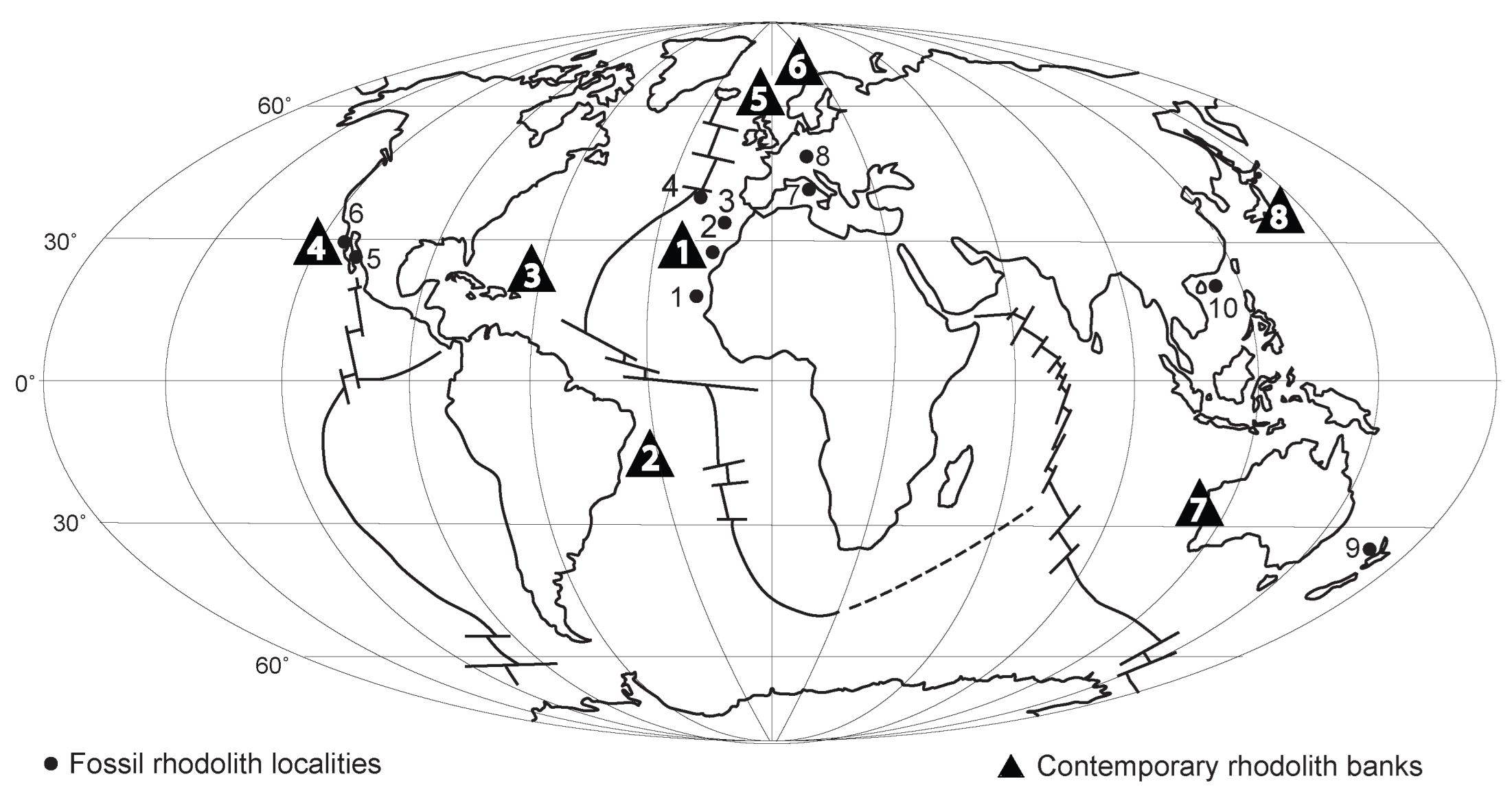
Figure 1. Global representation of today’s continents and oceans on a Mollweide projection showing major ocean spreading zones. Numerals on black triangles denote the locations of shelf regions with contemporary rhodolith banks. The numbered black dots mark the location of selected sites rich in fossil rhodoliths, ranging in age from the late Cretaceous to the late Pleistocene.
Jmse 14 00169 g001
Figure 2. Two different growth styles commonly acquired by rhodoliths living at water depths that reflect different levels of ambient energy relative to normal wave base. Also fragile in composition, a third style known as foliose growth [12] is not illustrated. Examples come from the author’s collection, represented here from a beach on the Caribbean Island of Aruba.
Jmse 14 00169 g002
Figure 3. Schematic flow chart summarizing the post-mortem transition from the common habitat of crustose coralline red algae, where rhodoliths typically accrue under life conditions, to the various kinds of deposits where they are buried as geological formations.
Jmse 14 00169 g003
Figure 4. Map of the Macaronesian Realm in the northeast Atlantic Ocean off the west coast of Africa.
Jmse 14 00169 g004
Figure 5. Examples of extreme transfer and mechanical reduction of rhodoliths found on Maio Island in the Cape Verde Archipelago: (a) Recent rhodoliths redeposited in a huge supratidal setting around Praia Real at the north end of the island (pen for scale); (b) Massive Pleistocene dune formation near Pilão Cão constructed by rhodolith sand in the eastern part of the island (person for scale); and (c) Miocene strata with characteristic trough cross-stratification including rhodolith debris at Ribeira de Calhetinha at the south end of the island (scale bar: 3 cm).
Jmse 14 00169 g005
Figure 6. Subaerial variations in rhodolith taphonomy on north-facing beaches of Fuerteventura Island in the Canary Archipelago (same scale card): (a) Small rhodoliths captured in a tide pool eroded in a basalt shelf at Majanicho; (b) Same “popcorn”-sized rhodoliths deposited in a berm on the landward side of the same platform; (c) Crushed rhodoliths forming coarse beach sand west of Majanicho; (d) Dune sand dominated by rhodolith debris at El Colito.
Jmse 14 00169 g006
Figure 7. Maps for Brazil and seamounts off the South Atlantic coast: (a) Brazil with dashed line outlining the State of Bahia and rectangular box outlining location of seamounts, (b) Detailed map showing the extent of the Abrolhos Bank off the State of Bahia and several of the seamounts that extend over five degrees of longitude across the South Atlantic.
Jmse 14 00169 g007
Figure 8. Example of a rhodolith carried onto a Brazilian beach in Bahia State by the hydrodynamics of attached brown algae during an arribadas event (scale bar = 1 cm).
Jmse 14 00169 g008
Figure 9. Map over the Gulf of California between Mexico’s mainland and the Baja California peninsula, showing multiple localities where contemporary rhodolith banks occur (numbered circles) as well as localities with fossil rhodolith deposits (numbered squares) from the Pliocene and Pleistocene. Localities in each category are numbered from north to south. A triangle marks the occurrence of Cretaceous rhodoliths at Las Minas.
Jmse 14 00169 g009
Figure 10. View over Isla Requeson and the tombolo, exposed only during low tide, that connects the island with the peninsular mainland in Bahía Concepción.
Jmse 14 00169 g010
Figure 11. The west coast of Norway and Leka Island: (a) Norway, marking the Arctic Circle and Trollfjell Geopark (black box); (b) Leka Island showing roads and highland peaks; (c) Area with rhodoliths stranded in the intertidal zone.
Jmse 14 00169 g011
Figure 12. Coastal landscape on Leka Island and typical rhodolith: (a) View to the northeast on Leka Island showing low terrain at the side of a sheltered embayment (see Figure 11c), (b) Example of a branching-type rhodolith characteristic of Lithothamnion with the intact holdfast from a foliose brown alga.
Jmse 14 00169 g012
Figure 13. Maps over Western Australia and Dirk Hartog Island on the outer edge of Western Australia’s Shark Bay and subtidal image: (a) Western Australia (note: SB marks the location of Shark Bay); (b) Dirk Hartog Island study site for contemporary rhodoliths and detrital contributions to beach and dune sand; (c) Dense accumulation of rhodoliths formed by Neogoniolithon brassica-florida occurs at a water depth of −1.5 m in Sunday Island Bay (locality 5 in (b)).
Jmse 14 00169 g013
Figure 14. Darwin’s rhodolith layer from Ilhéu de Santa Maria in Praia harbor on Santiago, Cape Verde Archipelago. Some are eroded to show nucleation around a basalt core (white arrows).
Jmse 14 00169 g014
Figure 15. View in cross section showing the maximum thickness of the basal rhodolith layer sitting on a basalt shelf at Cabeço das Laranjas (Hill of Oranges) on Ilhéu de Cima off Porto Santo in the Madeira Archipelago of Portugal.
Jmse 14 00169 g015
Figure 16. Aspects of a Pleistocene lagoon on Isla Corondos in Mexico’s Gulf of California: (a) Cross section through the lagoon showing different environments including an outer shelf with whole rhodoliths forming a limestone layer, a rock barrier, and extensive deposits of crushed rhodoliths that washed over the rock barrier during storms; (b) View showing the limestone accumulation outside the lagoon (rock hammer for scale).
Jmse 14 00169 g016
Figure 17. View showing the massive white walls at Paredones Blancos on the western rocky coast of Isla Cerralvo in Mexico’s lower Gulf of California. Enormous boulders of rhodolith limestone eroded from the cliff face line the shore. Cardon cacti, which appear as match sticks at the mouth of the nearby canyon, are 8 m in height (marked by adjacent white lines).
Jmse 14 00169 g017
Figure 18. Entrance to the Volkstheater metro station on Vienna’s Ringstrasse, faced with the rhodolith-rich Leitha Limestone. Individual rhodoliths are up to 8 cm in diameter.
Jmse 14 00169 g018
Disclaimer/Publisher’s Note: The statements, opinions and data contained in all publications are solely those of the individual author(s) and contributor(s) and not of MDPI and/or the editor(s). MDPI and/or the editor(s) disclaim responsibility for any injury to people or property resulting from any ideas, methods, instructions or products referred to in the content.