Artificial Light at Night Affects Microbiota and Growth in the Oyster Crassostrea gigas: Correlations with the Daily Rhythm Robustness


Abstract
1. Introduction
2. Materials and Methods
2.1. Experimental Protocol
2.2. Oysters’ Valve Behavior
2.3. Chronobiological Analyses of Oysters’ Valve Behavior
2.4. Oysters’ Shell Growth
2.5. Oysters’ Gene Expression by Real Time qPCR
2.6. Oysters’ Gills and Water Bacterial Diversity Measured by Illumina MiSeq
2.7. Bioinformatics Data Processing of Illumina MiSeq Results
2.8. Microbiota Analysis
2.9. Statistical Analyses
3. Results
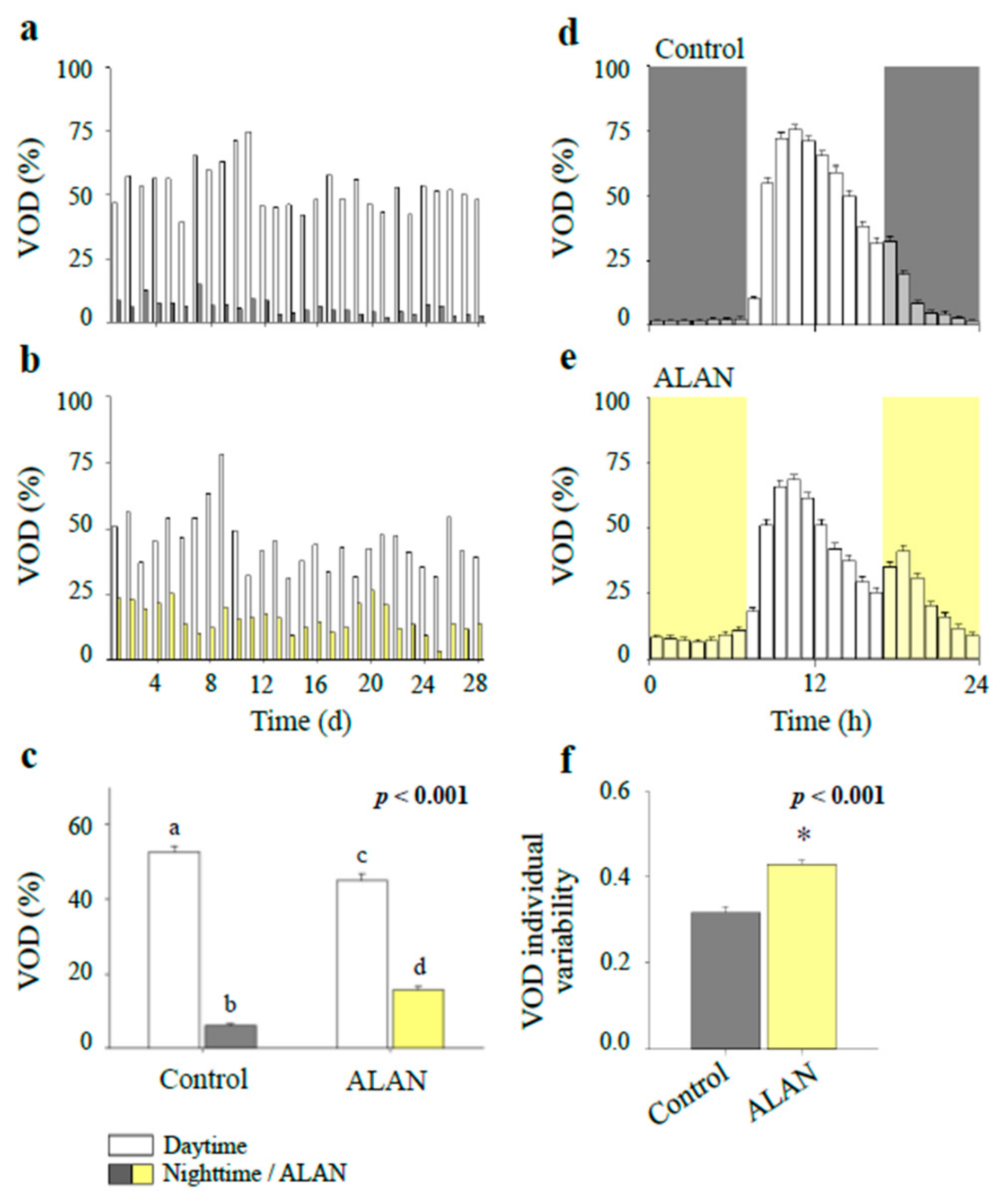
3.1. Oysters’ Behavior
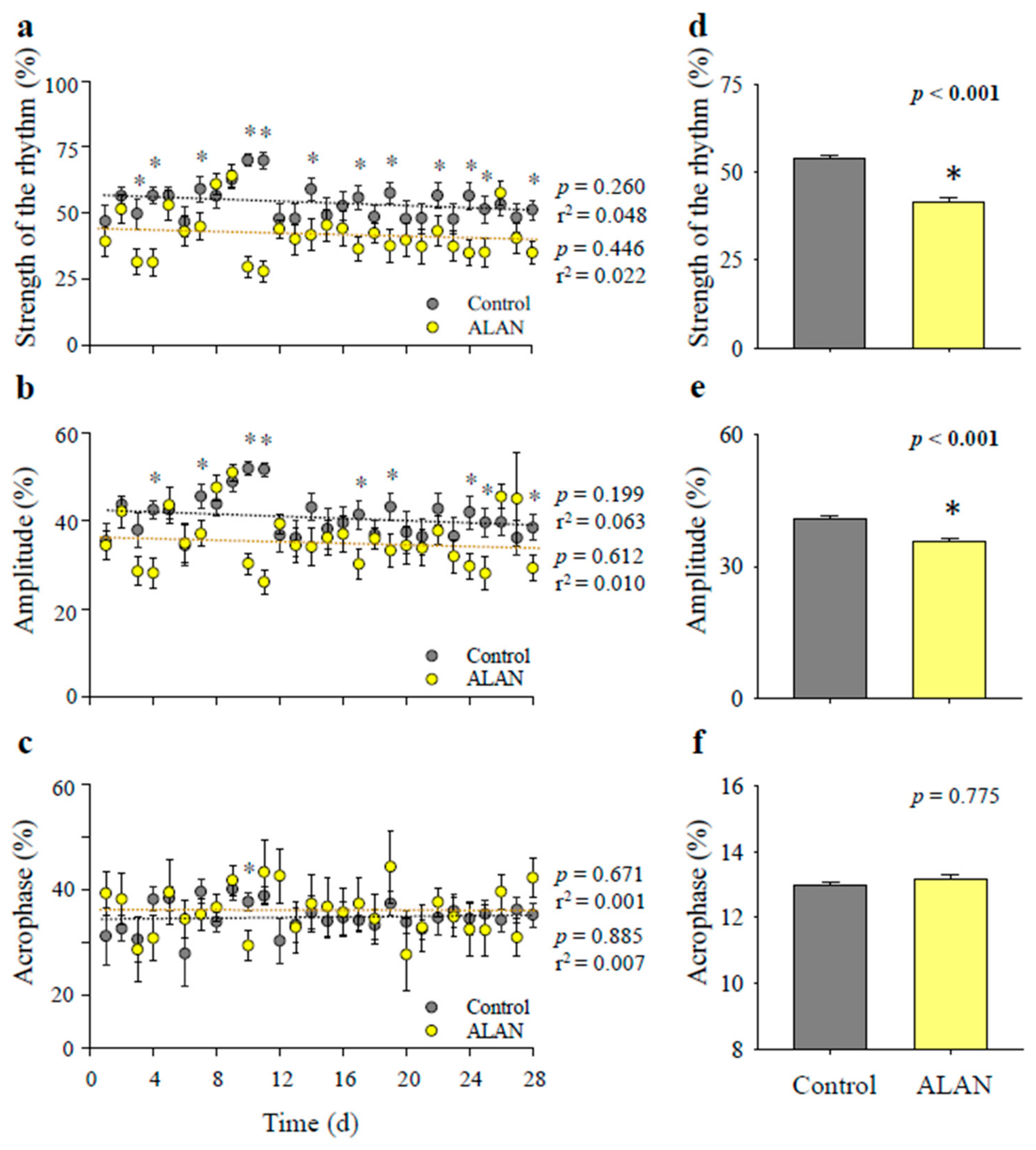
3.2. Behavioral Daily Rhythm
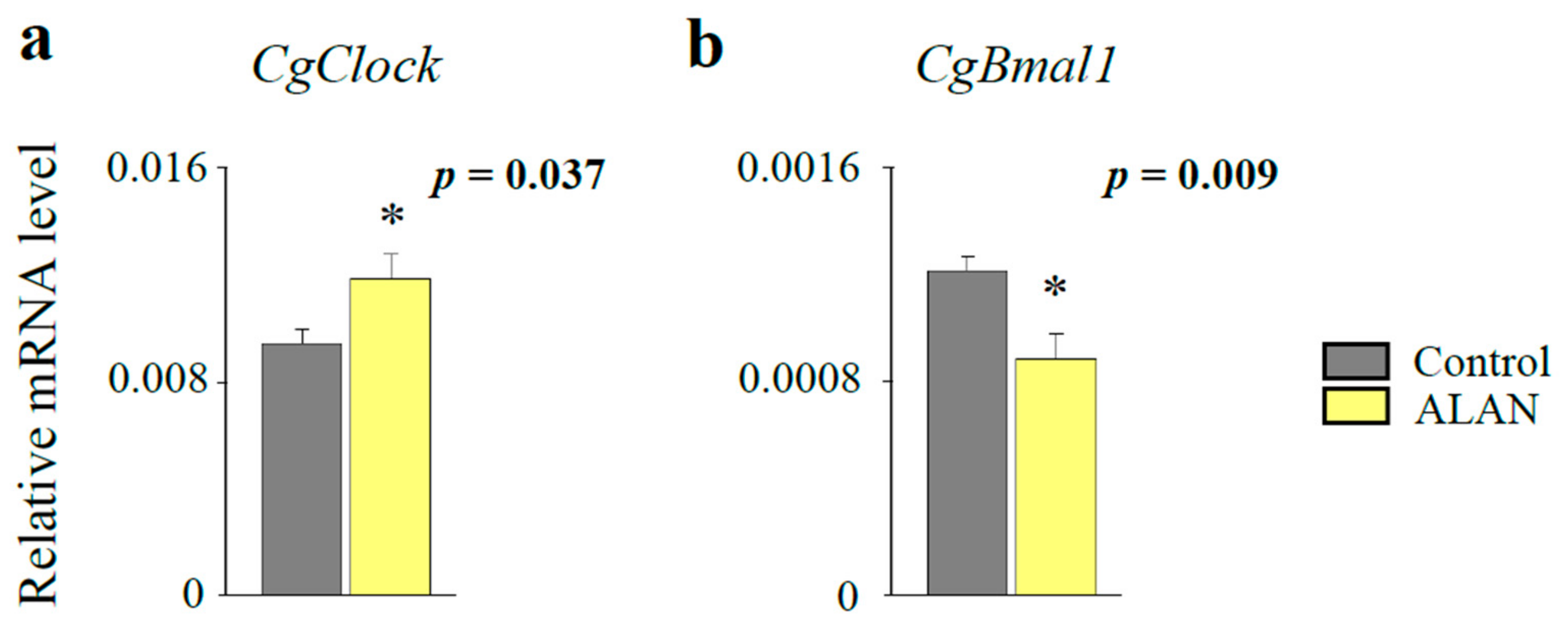
3.3. Circadian Clock Gene Expression
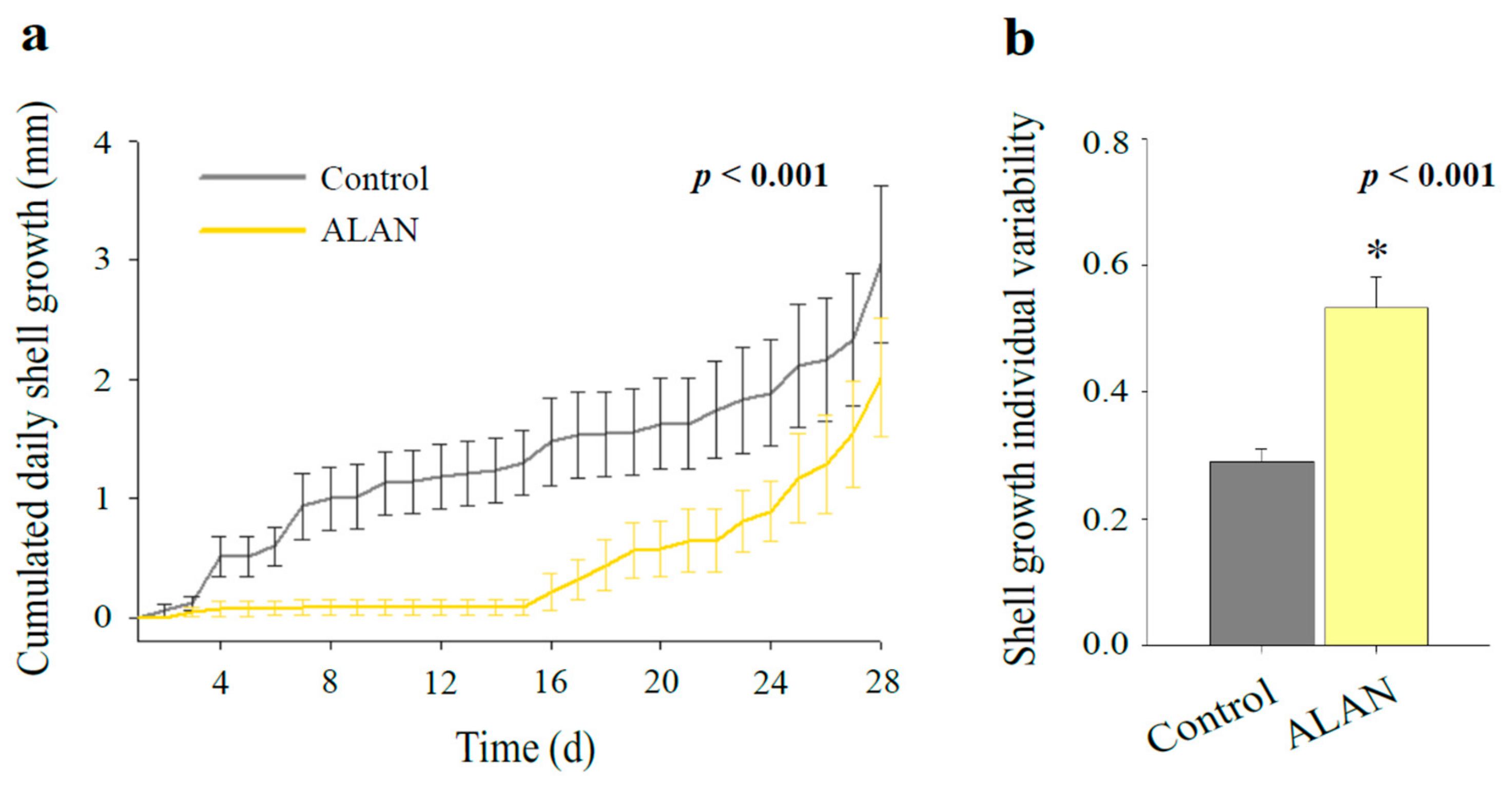
3.4. Daily Shell Growth
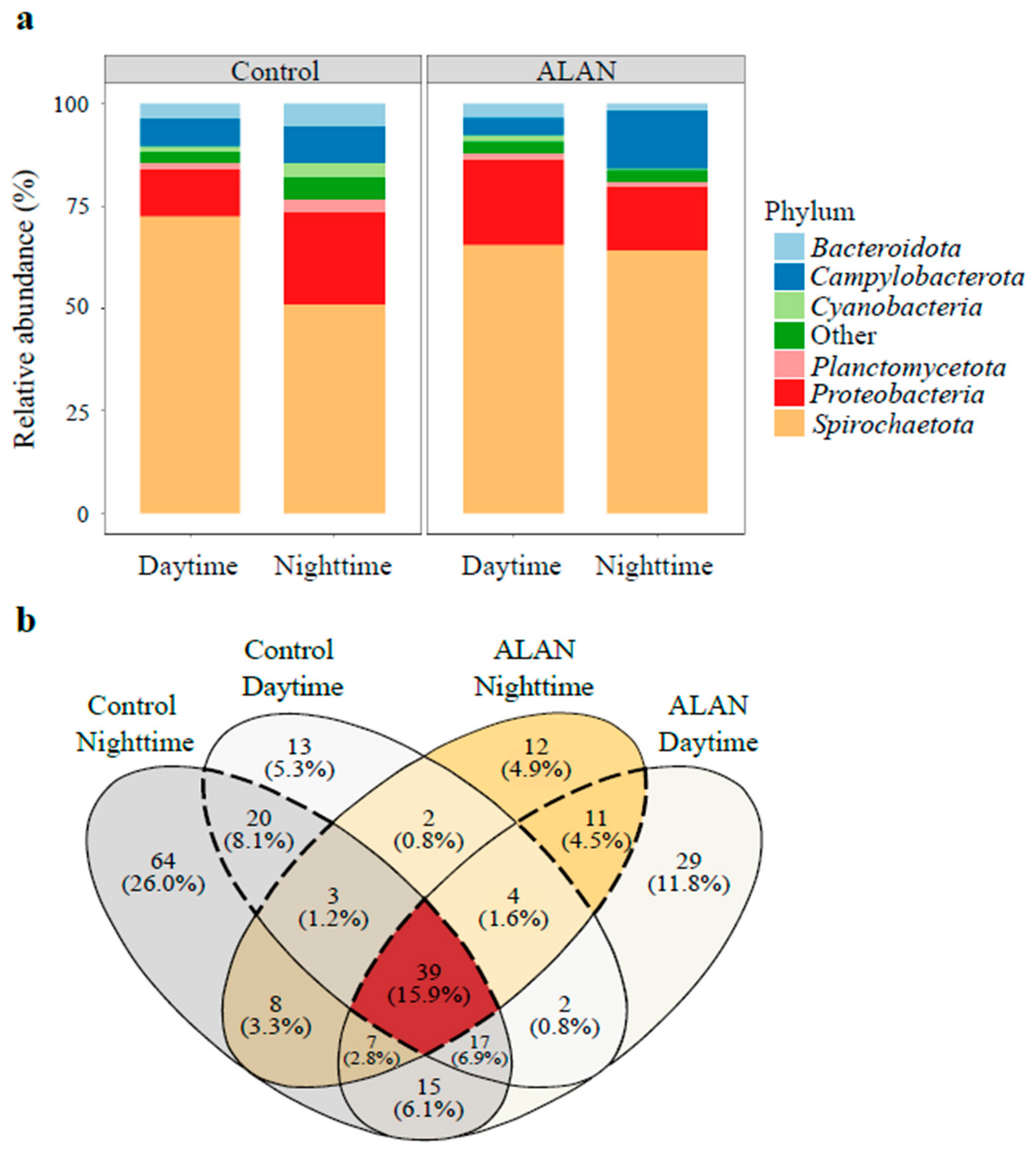
3.5. Bacterial Community Composition
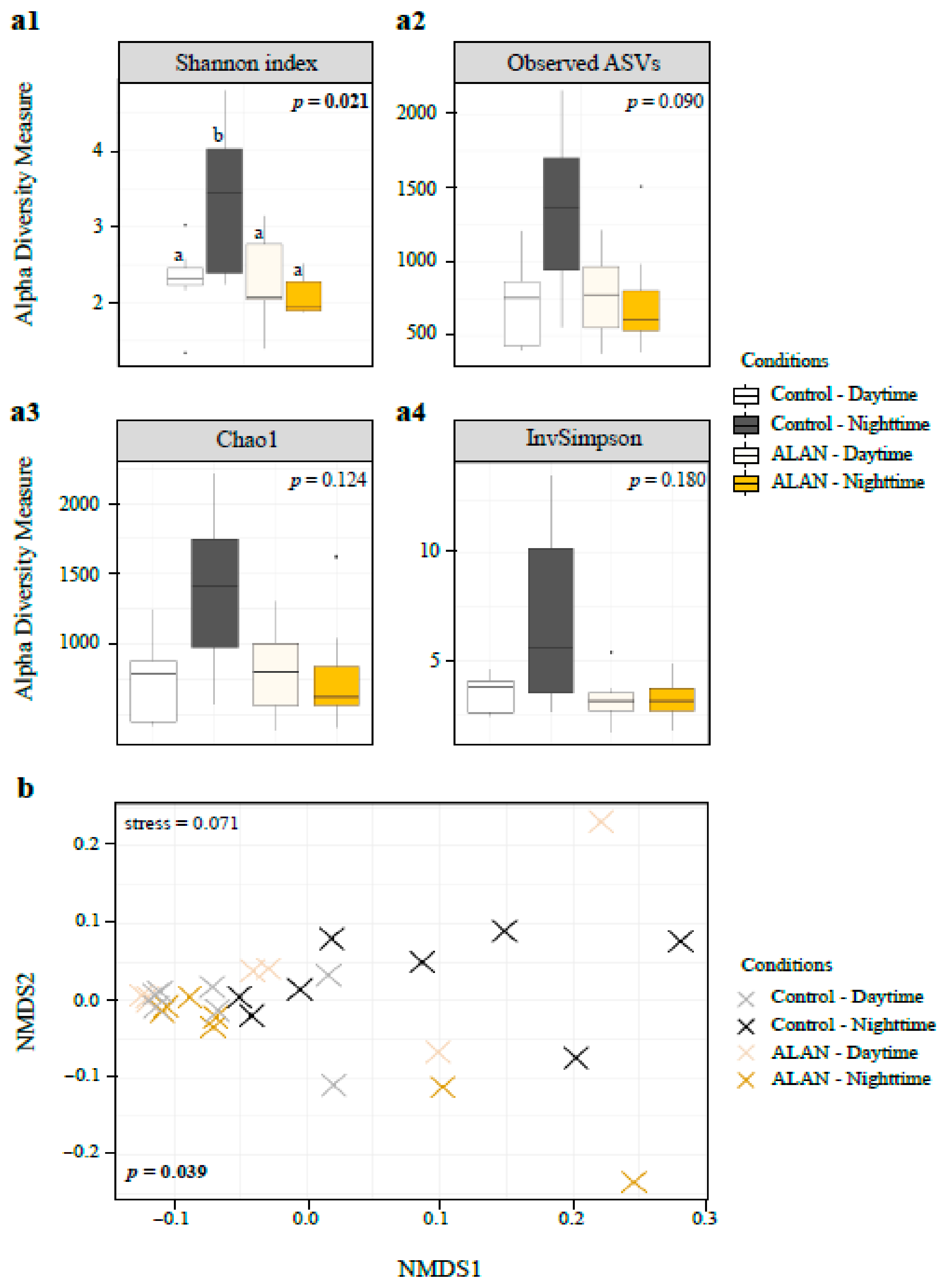
3.6. Bacterial Diversity
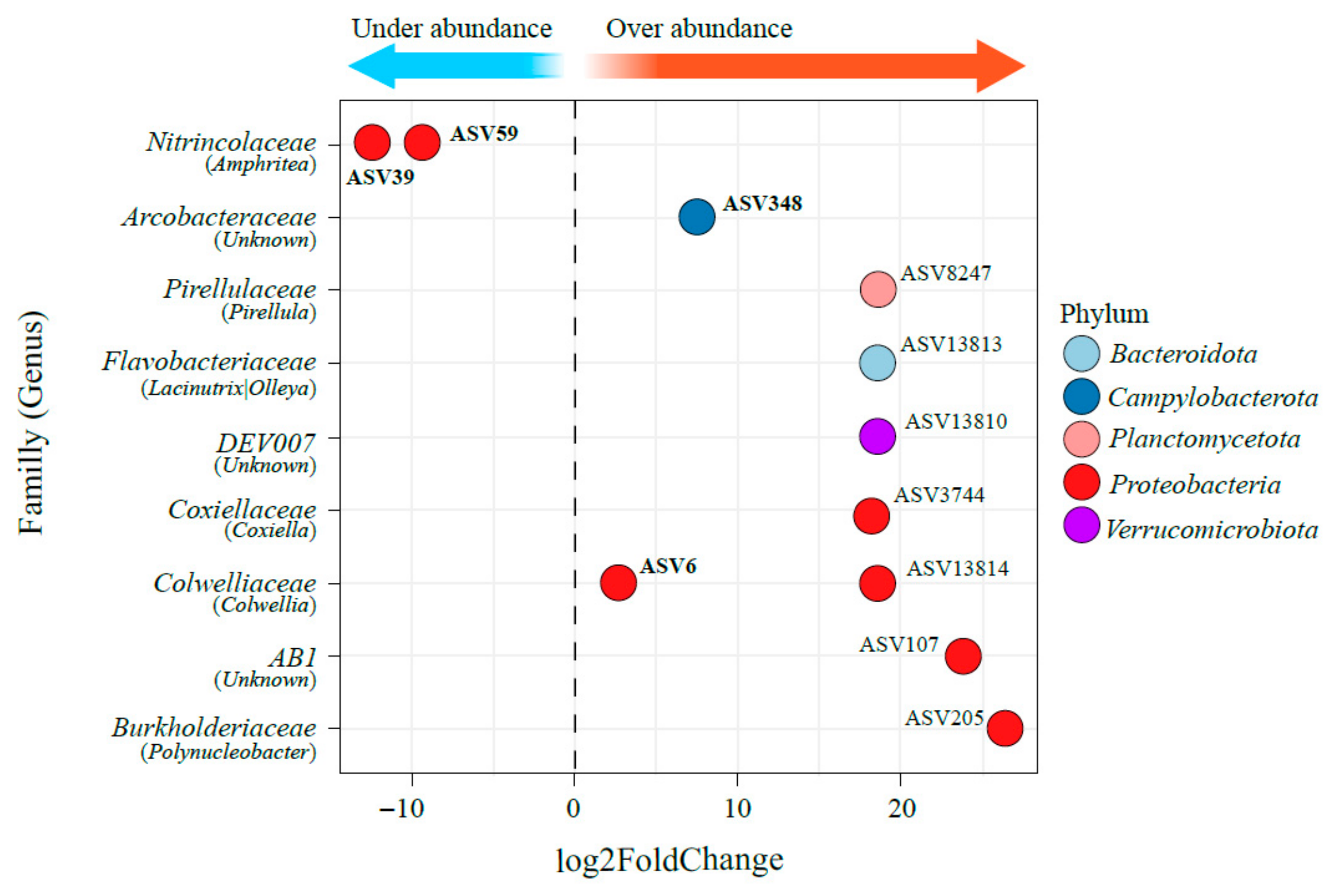
3.7. Bacterial Differential Relative Abundance
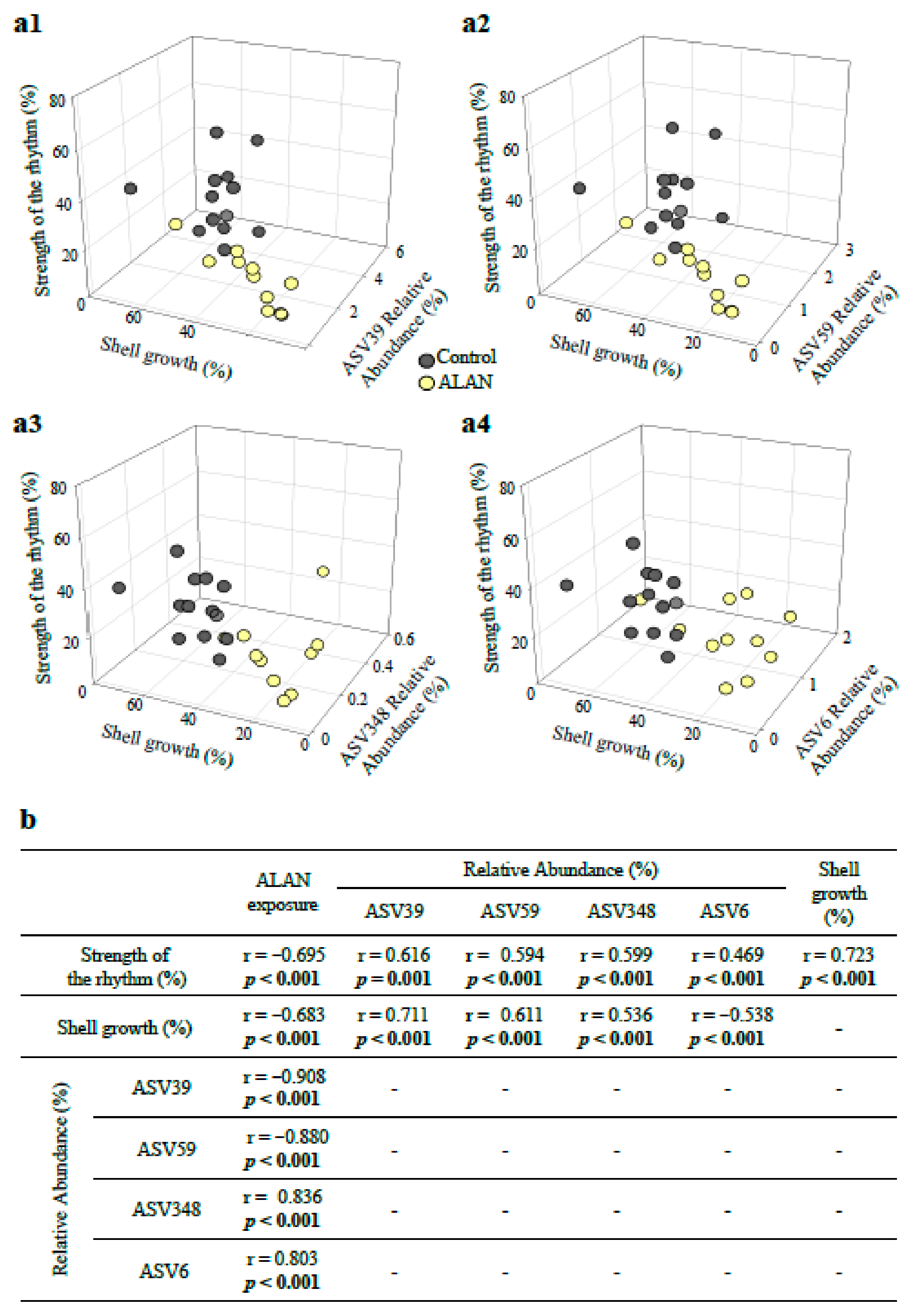
3.8. Individual Data-Based Correlations Between ALAN Exposure, Strength of the Daily Rhythm, Shell Growth, and Differentially Abundant ASVs
4. Discussion
Supplementary Materials
Author Contributions
Funding
Data Availability Statement
Acknowledgments
Conflicts of Interest
References
- Partch, C.L.; Green, C.B.; Takahashi, J.S. Molecular architecture of the mammalian circadian clock. Trends Cell Biol. 2014, 24, 90–99. [Google Scholar] [CrossRef] [Scilit]
- Gaston, K.J.; Davies, T.W.; Nedelec, S.L.; Holt, L.A. Impacts of Artificial Light at Night on Biological Timings. Annu. Rev. Ecol. Evol. Syst. 2017, 48, 49–68. [Google Scholar] [CrossRef] [Scilit]
- Golombek, D.A.; Rosenstein, R.E. Physiology of circadian entrainment. Physiol. Rev. 2010, 90, 1063–1102. [Google Scholar] [CrossRef] [Scilit]
- Falchi, F.; Cinzano, P.; Duriscoe, D.; Kyba, C.C.M.; Elvidge, C.D.; Baugh, K.; Portnov, B.A.; Rybnikova, N.A.; Furgoni, R. The new world atlas of artificial night sky brightness. Sci. Adv. 2016, 2, e1600377. [Google Scholar] [CrossRef] [Scilit]
- Gaston, K.J.; Bennie, J. Demographic effects of artificial nighttime lighting on animal populations. Environ. Rev. 2014, 22, 323–330. [Google Scholar] [CrossRef] [Scilit]
- Brayley, O.; How, D.M.; Wakefield, D.A. Biological Effects of Light Pollution on Terrestrial and Marine Organisms. Int. J. Sustain. Light. 2022, 24, 13–38. [Google Scholar] [CrossRef] [Scilit]
- Sanders, D.; Gaston, K.J. How ecological communities respond to artificial light at night. J. Exp. Zool. Part A Ecol. Integr. Physiol. 2018, 329, 394–400. [Google Scholar] [CrossRef] [Scilit]
- Svechkina, A.; Portnov, B.A.; Trop, T. The impact of artificial light at night on human and ecosystem health: A systematic literature review. Landsc. Ecol. 2020, 35, 1725–1742. [Google Scholar] [CrossRef] [Scilit]
- Jiang, J.; He, Y.; Kou, H.; Ju, Z.; Gao, X.; Zhao, H. The effects of artificial light at night on Eurasian tree sparrow (Passer montanus): Behavioral rhythm disruption, melatonin suppression and intestinal microbiota alterations. Ecol. Indic. 2020, 108, 105702. [Google Scholar] [CrossRef] [Scilit]
- O’Connor, J.J.; Fobert, E.K.; Besson, M.; Jacob, H.; Lecchini, D. Live fast, die young: Behavioural and physiological impacts of light pollution on a marine fish during larval recruitment. Mar. Pollut. Bull. 2019, 146, 908–914. [Google Scholar] [CrossRef] [Scilit]
- Kyba, C.C.M.; Altintas, Y.O.; Walker, C.E.; Newhouse, M. Citizen scientists report global rapid reductions in the visibility of stars from 2011 to 2022. Science 2023, 379, 265–268. [Google Scholar] [CrossRef] [Scilit]
- Davies, T.W.; Smyth, T. Why artificial light at night should be a focus for global change research in the 21st century. Glob. Change Biol. 2018, 24, 872–882. [Google Scholar] [CrossRef] [Scilit]
- Smyth, T.J.; Wright, A.E.; McKee, D.; Tidau, S.; Tamir, R.; Dubinsky, Z.; Iluz, D.; Davies, T.W. A global atlas of artificial light at night under the sea. Elem. Sci. Anthr. 2021, 9, 00049. [Google Scholar] [CrossRef] [Scilit]
- Kummu, M.; de Moel, H.; Salvucci, G.; Viviroli, D.; Ward, P.J.; Varis, O. Over the hills and further away from coast: Global geospatial patterns of human and environment over the 20th–21st centuries. Environ. Res. Lett. 2016, 11, 034010. [Google Scholar] [CrossRef] [Scilit]
- FAO (Food and Agriculture Organization of the United Nations). Cultured Aquatic Species Information Programme Crassostrea gigas (Thunberg, 1793); FAO: Rome, Italy, 2016. [Google Scholar]
- Miossec, L.; Le Deuff, R.-m.; Goulletquer, P. Alien Species Alert: Crassostrea gigas (Pacific oyster); 42 ICES Cooperative Research Report; ICES: Copenhagen, Denmark, 2009. [Google Scholar]
- Mat, A.M.; Perrigault, M.; Massabuau, J.C.; Tran, D. Role and expression of cry1 in the adductor muscle of the oyster Crassostrea gigas during daily and tidal valve activity rhythms. Chronobiol. Int. 2016, 33, 949–963. [Google Scholar] [CrossRef] [Scilit]
- Perrigault, M.; Tran, D. Identification of the Molecular Clockwork of the Oyster Crassostrea gigas. PLoS ONE 2017, 12, e0169790. [Google Scholar] [CrossRef] [Scilit]
- Tran, D.; Perrigault, M.; Ciret, P.; Payton, L. Bivalve mollusc circadian clock genes can run at tidal frequency. Proc. Biol. Sci. 2020, 287, 20192440. [Google Scholar] [CrossRef] [Scilit]
- Payton, L.; Sow, M.; Massabuau, J.C.; Ciret, P.; Tran, D. How annual course of photoperiod shapes seasonal behavior of diploid and triploid oysters, Crassostrea gigas. PLoS ONE 2017, 12, e0185918. [Google Scholar] [CrossRef] [Scilit]
- Mat, A.M.; Massabuau, J.C.; Ciret, P.; Tran, D. Evidence for a plastic dual circadian rhythm in the oyster Crassostrea gigas. Chronobiol. Int. 2012, 29, 857–867. [Google Scholar] [CrossRef] [Scilit]
- Payton, L.; Perrigault, M.; Hoede, C.; Massabuau, J.C.; Sow, M.; Huvet, A.; Boullot, F.; Fabioux, C.; Hegaret, H.; Tran, D. Remodeling of the cycling transcriptome of the oyster Crassostrea gigas by the harmful algae Alexandrium minutum. Sci. Rep. 2017, 7, 3480. [Google Scholar] [CrossRef] [Scilit]
- Botté, A.; Payton, L.; Tran, D. Artificial light at night at environmental intensities disrupts daily rhythm of the oyster Crassostrea gigas. Mar. Pollut. Bull. 2023, 191, 114850. [Google Scholar] [CrossRef] [Scilit]
- Botté, A.; Payton, L.; Lefeuvre, E.; Tran, D. Is part-night lighting a suitable mitigation strategy to limit ALAN’s effects on the biological rhythm at the behavioral and molecular scales of the oyster Crassostrea gigas? Sci. Total Environ. 2023, 905, 167052. [Google Scholar] [CrossRef] [Scilit]
- Botté, A.; Payton, L.; Tran, D. The effects of artificial light at night on behavioral rhythm and related gene expression are wavelength dependent in the oyster Crassostrea gigas. Environ. Sci. Pollut. Res. Int. 2023, 30, 120375–120386. [Google Scholar] [CrossRef] [Scilit]
- Louis, V.; Besseau, L.; Lartaud, F. Step in Time: Biomineralisation of Bivalve’s Shell. Front. Mar. Sci. 2022, 9, 906085. [Google Scholar] [CrossRef] [Scilit]
- de Winter, N.J.; Killam, D.; Fröhlich, L.; de Nooijer, L.; Boer, W.; Schöne, B.R.; Thébault, J.; Reichart, G.J. Ultradian rhythms in shell composition of photosymbiotic and non-photosymbiotic mollusks. Biogeosciences 2023, 20, 3027–3052. [Google Scholar] [CrossRef] [Scilit]
- Liang, X.; Bushman, F.D.; FitzGerald, G.A. Rhythmicity of the intestinal microbiota is regulated by gender and the host circadian clock. Proc. Natl. Acad. Sci. USA 2015, 112, 10479–10484. [Google Scholar] [CrossRef] [Scilit]
- Voigt, R.M.; Summa, K.C.; Forsyth, C.B.; Green, S.J.; Engen, P.; Naqib, A.; Vitaterna, M.H.; Turek, F.W.; Keshavarzian, A. The Circadian Clock Mutation Promotes Intestinal Dysbiosis. Alcohol Clin. Exp. Res. 2016, 40, 335–347. [Google Scholar] [CrossRef] [Scilit]
- McFall-Ngai, M.; Hadfield, M.G.; Bosch, T.C.G.; Wernegreen, J.J. Animals in a bacterial world, a new imperative for the life sciences. Proc. Natl. Acad. Sci. USA 2013, 110, 3229–3236. [Google Scholar] [CrossRef] [Scilit]
- Hou, K.; Wu, Z.X.; Chen, X.Y.; Wang, J.Q.; Zhang, D.; Xiao, C.; Zhu, D.; Koya, J.B.; Wei, L.; Li, J.; et al. Microbiota in health and diseases. Signal Transduct. Target. Ther. 2022, 7, 135. [Google Scholar] [CrossRef] [Scilit]
- Tran, D.; Nadau, A.; Durrieu, G.; Ciret, P.; Parisot, J.P.; Massabuau, J.C. Field chronobiology of a molluscan bivalve: How the moon and sun cycles interact to drive oyster activity rhythms. Chronobiol. Int. 2011, 28, 307–317. [Google Scholar] [CrossRef] [Scilit]
- Tran, D.; Ciutat, A.; Mat, A.; Massabuau, J.C.; Hégaret, H.; Lambert, C.; Le Goic, N.; Soudant, P. The toxic dinoflagellate Alexandrium minutum disrupts daily rhythmic activities at gene transcription, physiological and behavioral levels in the oyster Crassostrea gigas. Aquat. Toxicol. 2015, 158, 41–49. [Google Scholar] [CrossRef] [Scilit]
- García-March, J.R.; Sanchís Solsona, M.Á.; García-Carrascosa, A.M. Shell gaping behaviour of Pinna nobilis L., 1758: Circadian and circalunar rhythms revealed by in situ monitoring. Mar. Biol. 2007, 153, 689–698. [Google Scholar] [CrossRef] [Scilit]
- Gouthiere, L.; Mauvieux, B.; Davenne, D.; Waterhouse, J. Complementary methodology in the analysis of rhythmic data, using examples from a complex situation, the rhythmicity of temperature in night shift workers. Biol. Rhythm Res. 2005, 36, 177–193. [Google Scholar] [CrossRef] [Scilit]
- Bingham, C.; Arbogast, B.; Guillaume, G.C.; Lee, J.K.; Halberg, F. Inferential statistical methods for estimating and comparing cosinor parameters. Chronobiologia 1982, 9, 397–439. [Google Scholar]
- Scargle, J.D. Studies in astronomical time series analysis. II—Statistical aspects of spectral analysis of unevenly spaced data. Astrophys. J. 1982, 263, 835–853. [Google Scholar] [CrossRef] [Scilit]
- Tran, D.; Andrade, H.; Durier, G.; Ciret, P.; Leopold, P.; Sow, M.; Ballantine, C.; Camus, L.; Berge, J.; Perrigault, M. Growth and behaviour of blue mussels, a re-emerging polar resident, follow a strong annual rhythm shaped by the extreme high Arctic light regime. R. Soc. Open Sci. 2020, 7, 200889. [Google Scholar] [CrossRef] [Scilit] [PubMed]
- Livak, K.J.; Schmittgen, T.D. Analysis of relative gene expression data using real-time quantitative PCR and the 2−ΔΔCT Method. Methods 2001, 25, 402–408. [Google Scholar] [CrossRef] [Scilit]
- Xie, F.; Xiao, P.; Chen, D.; Xu, L.; Zhang, B. miRDeepFinder: A miRNA analysis tool for deep sequencing of plant small RNAs. Plant. Mol. Biol. 2012, 80, 75–84. [Google Scholar] [CrossRef] [Scilit] [PubMed]
- Klindworth, A.; Pruesse, E.; Schweer, T.; Peplies, J.; Quast, C.; Horn, M.; Glöckner, F.O. Evaluation of general 16S ribosomal RNA gene PCR primers for classical and next-generation sequencing-based diversity studies. Nucleic Acids Res. 2013, 41, e1. [Google Scholar] [CrossRef] [Scilit]
- Fadrosh, D.W.; Ma, B.; Gajer, P.; Sengamalay, N.; Ott, S.; Brotman, R.M.; Ravel, J. An improved dual-indexing approach for multiplexed 16S rRNA gene sequencing on the Illumina MiSeq platform. Microbiome 2014, 2, 6. [Google Scholar] [CrossRef] [Scilit] [PubMed]
- Martin, M. Cutadapt removes adapter sequences from high-throughput sequencing reads. EMBnet J. 2011, 17, 10–12. [Google Scholar] [CrossRef] [Scilit]
- Callahan, B.J.; McMurdie, P.J.; Rosen, M.J.; Han, A.W.; Johnson, A.J.A.; Holmes, S.P. DADA2: High-resolution sample inference from Illumina amplicon data. Nat. Methods 2016, 13, 581–583. [Google Scholar] [CrossRef] [Scilit] [PubMed]
- Quast, C.; Pruesse, E.; Yilmaz, P.; Gerken, J.; Schweer, T.; Yarza, P.; Peplies, J.; Glöckner, F.O. The SILVA ribosomal RNA gene database project: Improved data processing and web-based tools. Nucleic Acids Res. 2013, 41, D590–D596. [Google Scholar] [CrossRef] [Scilit] [PubMed]
- Love, M.I.; Huber, W.; Anders, S. Moderated estimation of fold change and dispersion for RNA-seq data with DESeq2. Genome Biol. 2014, 15, 550. [Google Scholar] [CrossRef] [Scilit]
- McMurdie, P.J.; Holmes, S. phyloseq: An R package for reproducible interactive analysis and graphics of microbiome census data. PLoS ONE 2013, 8, e61217. [Google Scholar] [CrossRef] [Scilit]
- Oksanen, J.; Simpson, G.L.; Blanchet, F.G.; Kindt, R.; Legendre, P.; Minchin, P.R.; O’Hara, R.B.; Solymos, P.; Stevens, M.H.H.; Szoecs, E.; et al. The Vegan Package: Community Ecology Package, Version 1.13-1. Available online: https://vegandevs.github.io/vegan/ (accessed on 1 January 2024).
- Kers, J.G.; Saccenti, E. The Power of Microbiome Studies: Some Considerations on Which Alpha and Beta Metrics to Use and How to Report Results. Front. Microbiol. 2021, 12, 796025. [Google Scholar] [CrossRef] [Scilit]
- Lozupone, C.A.; Hamady, M.; Kelley, S.T.; Knight, R. Quantitative and qualitative beta diversity measures lead to different insights into factors that structure microbial communities. Appl. Environ. Microbiol. 2007, 73, 1576–1585. [Google Scholar] [CrossRef] [Scilit] [PubMed]
- Martinez Arbizu, P. R Package Version 00 1. pairwiseAdonis: Pairwise Multilevel Comparison Using Adonis. 2017. Available online: https://cran.r-project.org/ (accessed on 1 January 2024).
- Huang, N.; Chelliah, Y.; Shan, Y.; Taylor, C.A.; Yoo, S.H.; Partch, C.; Green, C.B.; Zhang, H.; Takahashi, J.S. Crystal structure of the heterodimeric CLOCK:BMAL1 transcriptional activator complex. Science 2012, 337, 189–194. [Google Scholar] [CrossRef] [Scilit]
- McConnell, A.; Routledge, R.; Connors, B.M. Effect of artificial light on marine invertebrate and fish abundance in an area of salmon farming. Mar. Ecol. Prog. Ser. 2010, 419, 147–156. [Google Scholar] [CrossRef] [Scilit]
- Stanton, D.L.; Cowart, J.R. The effects of artificial light at night (ALAN) on the circadian biology of marine animals. Front. Mar. Sci. 2024, 11, 1372889. [Google Scholar] [CrossRef] [Scilit]
- Duarte, C.; Quintanilla-Ahumada, D.; Anguita, C.; Manríquez, P.H.; Widdicombe, S.; Pulgar, J.; Silva-Rodríguez, E.A.; Miranda, C.; Manríquez, K.; Quijón, P.A. Artificial light pollution at night (ALAN) disrupts the distribution and circadian rhythm of a sandy beach isopod. Environ. Pollut. 2019, 248, 565–573. [Google Scholar] [CrossRef] [Scilit]
- Pulgar, J.; Zeballos, D.; Vargas, J.; Aldana, M.; Manríquez, P.H.; Manríquez, K.; Quijón, P.A.; Widdicombe, S.; Anguita, C.; Quintanilla, D.; et al. Endogenous cycles, activity patterns and energy expenditure of an intertidal fish is modified by artificial light pollution at night (ALAN). Environ. Pollut. 2019, 244, 361–366. [Google Scholar] [CrossRef] [Scilit]
- Helm, B.; Visser, M.E.; Schwartz, W.; Kronfeld-Schor, N.; Gerkema, M.; Piersma, T.; Bloch, G. Two sides of a coin: Ecological and chronobiological perspectives of timing in the wild. Philos. Trans. R. Soc. B Biol. Sci. 2017, 372, 20160246. [Google Scholar] [CrossRef] [Scilit] [PubMed]
- Andrade, H.; Massabuau, J.C.; Cochrane, S.; Ciret, P.; Tran, D.; Sow, M.; Camus, L. High Frequency Non-invasive (HFNI) Bio-Sensors As a Potential Tool for Marine Monitoring and Assessments. Front. Mar. Sci. 2016, 3, 187. [Google Scholar] [CrossRef] [Scilit]
- Ray, N.E.; Fulweiler, R.W. Meta-analysis of oyster impacts on coastal biogeochemistry. Nat. Sustain. 2020, 4, 261–269. [Google Scholar] [CrossRef] [Scilit]
- Louis, V.; Desbordes, F.; Besseau, L.; Lartaud, F. Bivalve shell growth from molecular to sclerochronological scale: Environment and intrinsic factors control increment deposition. Mar. Environ. Res. 2024, 202, 106730. [Google Scholar] [CrossRef] [Scilit]
- Farre, E.M. The regulation of plant growth by the circadian clock. Plant Biol. 2012, 14, 401–410. [Google Scholar] [CrossRef] [Scilit] [PubMed]
- Vakili, H.; Jin, Y.; Cattini, P.A. Evidence for a Circadian Effect on the Reduction of Human Growth Hormone Gene Expression in Response to Excess Caloric Intake. J. Biol. Chem. 2016, 291, 13823–13833. [Google Scholar] [CrossRef] [Scilit]
- Czarnecka, M.; Kobak, J.; Grubisic, M.; Kakareko, T. Disruptive effect of artificial light at night on leaf litter consumption, growth and activity of freshwater shredders. Sci. Total Environ. 2021, 786, 147407. [Google Scholar] [CrossRef] [Scilit] [PubMed]
- Dananay, K.L.; Benard, M.F. Artificial light at night decreases metamorphic duration and juvenile growth in a widespread amphibian. Proc. Biol. Sci. 2018, 285, 20180367. [Google Scholar] [CrossRef] [Scilit]
- Luarte, T.; Bonta, C.C.; Silva-Rodriguez, E.A.; Quijón, P.A.; Miranda, C.; Farias, A.A.; Duarte, C. Light pollution reduces activity, food consumption and growth rates in a sandy beach invertebrate. Environ. Pollut. 2016, 218, 1147–1153. [Google Scholar] [CrossRef] [Scilit] [PubMed]
- Weger, B.D.; Rawashdeh, O.; Gachon, F. At the Intersection of Microbiota and Circadian Clock: Are Sexual Dimorphism and Growth Hormones the Missing Link to Pathology? Bioessays 2019, 41, e1900059. [Google Scholar] [CrossRef] [Scilit]
- Shade, A.; Handelsman, J. Beyond the Venn diagram: The hunt for a core microbiome. Environ. Microbiol. 2012, 14, 4–12. [Google Scholar] [CrossRef] [Scilit]
- Ma, Y.; He, J.; Sieber, M.; von Frieling, J.; Bruchhaus, I.; Baines, J.F.; Bickmeyer, U.; Roeder, T. The microbiome of the marine flatworm Macrostomum lignano provides fitness advantages and exhibits circadian rhythmicity. Commun. Biol. 2023, 6, 289. [Google Scholar] [CrossRef] [Scilit] [PubMed]
- Leach, W.B.; Carrier, T.J.; Reitzel, A.M. Diel patterning in the bacterial community associated with the sea anemone Nematostella vectensis. Ecol. Evol. 2019, 9, 9935–9947. [Google Scholar] [CrossRef] [Scilit] [PubMed]
- Gonzalez, R.; Henríquez-Castillo, C.; Lohrmann, K.B.; Soledad Romero, M.; Ramajo, L.; Schmitt, P.; Brokordt, K. The Gill Microbiota of Argopecten purpuratus Scallop Is Dominated by Symbiotic Campylobacterota and Upwelling Intensification Differentially Affects Their Abundance. Microorganisms 2022, 10, 2330. [Google Scholar] [CrossRef] [Scilit]
- Sun, Y.; Wang, M.; Zhong, Z.; Chen, H.; Wang, H.; Zhou, L.; Cao, L.; Fu, L.; Zhang, H.; Lian, C.; et al. Adaption to hydrogen sulfide-rich environments: Strategies for active detoxification in deep-sea symbiotic mussels, Gigantidas platifrons. Sci. Total Environ. 2022, 804, 150054. [Google Scholar] [CrossRef] [Scilit]
- King, W.L.; Siboni, N.; Kahlke, T.; Dove, M.; O’Connor, W.; Mahbub, K.R.; Jenkins, C.; Seymour, J.R.; Labbate, M. Regional and oyster microenvironmental scale heterogeneity in the Pacific oyster bacterial community. FEMS Microbiol. Ecol. 2020, 96, fiaa054. [Google Scholar] [CrossRef] [Scilit]
- Pathirana, E.; McPherson, A.; Whittington, R.; Hick, P. The role of tissue type, sampling and nucleic acid purification methodology on the inferred composition of Pacific oyster (Crassostrea gigas) microbiome. J. Appl. Microbiol. 2019, 127, 429–444. [Google Scholar] [CrossRef] [Scilit]
- Clerissi, C.; De Lorgeril, J.; Petton, B.; Lucasson, A.; Escoubas, J.M.; Gueguen, Y.; Dégremont, L.; Mitta, G.; Toulza, E. Microbiota Composition and Evenness Predict Survival Rate of Oysters Confronted to Pacific Oyster Mortality Syndrome. Front. Microbiol. 2020, 11, 311. [Google Scholar] [CrossRef] [Scilit]
- de Lorgeril, J.; Lucasson, A.; Petton, B.; Toulza, E.; Montagnani, C.; Clerissi, C.; Vidal-Dupiol, J.; Chaparro, C.; Galanier, R.; Escoubas, J.M.; et al. Immune-suppression by OsHV-1 viral infection causes fatal bacteraemia in Pacific oysters. Nat. Commun. 2018, 9, 4215. [Google Scholar] [CrossRef] [Scilit] [PubMed]
- Paillard, C.; Gueguen, Y.; Wegner, K.M.; Bass, D.; Pallavicini, A.; Vezzulli, L.; Arzul, I. Recent advances in bivalve-microbiota interactions for disease prevention in aquaculture. Curr. Opin. Biotechnol. 2022, 73, 225–232. [Google Scholar] [CrossRef] [Scilit] [PubMed]
- Offret, C.; Desriac, F.; Le Chevalier, P.; Mounier, J.; Jégou, C.; Fleury, Y. Spotlight on Antimicrobial Metabolites from the Marine Bacteria Pseudoalteromonas: Chemodiversity and Ecological Significance. Mar. Drugs 2016, 14, 129. [Google Scholar] [CrossRef] [Scilit] [PubMed]
- Vezzulli, L.; Stagnaro, L.; Grande, C.; Tassistro, G.; Canesi, L.; Pruzzo, C. Comparative 16SrDNA Gene-Based Microbiota Profiles of the Pacific Oyster (Crassostrea gigas) and the Mediterranean Mussel (Mytilus galloprovincialis) from a Shellfish Farm (Ligurian Sea, Italy). Microb. Ecol. 2018, 75, 495–504. [Google Scholar] [CrossRef] [Scilit]


Disclaimer/Publisher’s Note: The statements, opinions and data contained in all publications are solely those of the individual author(s) and contributor(s) and not of MDPI and/or the editor(s). MDPI and/or the editor(s) disclaim responsibility for any injury to people or property resulting from any ideas, methods, instructions or products referred to in the content. |
© 2026 by the authors. Licensee MDPI, Basel, Switzerland. This article is an open access article distributed under the terms and conditions of the Creative Commons Attribution (CC BY) license.
Share and Cite
Botté, A.; Bellec, L.; Payton, L.; Tran, D. Artificial Light at Night Affects Microbiota and Growth in the Oyster Crassostrea gigas: Correlations with the Daily Rhythm Robustness. J. Mar. Sci. Eng. 2026, 14, 163. https://doi.org/10.3390/jmse14020163
Botté A, Bellec L, Payton L, Tran D. Artificial Light at Night Affects Microbiota and Growth in the Oyster Crassostrea gigas: Correlations with the Daily Rhythm Robustness. Journal of Marine Science and Engineering. 2026; 14(2):163. https://doi.org/10.3390/jmse14020163
Chicago/Turabian StyleBotté, Audrey, Laure Bellec, Laura Payton, and Damien Tran. 2026. "Artificial Light at Night Affects Microbiota and Growth in the Oyster Crassostrea gigas: Correlations with the Daily Rhythm Robustness" Journal of Marine Science and Engineering 14, no. 2: 163. https://doi.org/10.3390/jmse14020163
APA StyleBotté, A., Bellec, L., Payton, L., & Tran, D. (2026). Artificial Light at Night Affects Microbiota and Growth in the Oyster Crassostrea gigas: Correlations with the Daily Rhythm Robustness. Journal of Marine Science and Engineering, 14(2), 163. https://doi.org/10.3390/jmse14020163