1. Introduction
Limpets (Patellogastropoda) are marine benthic mollusks belonging to the phylum
Mollusca and the class
Gastropoda. They are considered keystone species with high ecological value, primarily inhabiting rocky intertidal zones [
1,
2,
3]. Utilizing their hard shells and strong muscular foot, limpets have effectively adapted to the harsh physical stresses of the intertidal environment, such as strong waves and desiccation and heat stress due to tidal fluctuations [
1,
4]. They are herbivores that graze on benthic microalgae and macroalgae [
3], serving as trophic mediators that transfer energy to higher predators, including marine mammals, birds, fish and crustaceans such as crabs [
5]. In addition, limpets are widely used as pollution indicators and biomarkers for assessing heavy metal and organic contamination, highlighting their ecological and environmental research importance [
6,
7]. Although the shells of limpets generally possess a simple, single conical (patelliform) structure [
8,
9,
10], they exhibit a high degree of phenotypic plasticity, resulting in pronounced morphological diversity both within and among species [
11,
12]. Such morphological variation arises as an adaptive response to environmental conditions: individuals inhabiting wave-exposed regions tend to have flatter and broader shells that enhance attachment strength and resistance to dislodgement [
13,
14], whereas those living in upper intertidal zones with high thermal and desiccation stress develop taller and narrower shells, which are advantageous for heat dissipation and water retention [
11,
15,
16].
Shell morphology can be quantitatively evaluated using parameters such as length, width, and height [
17,
18], and recent studies employing geometric morphometrics have enabled precise analysis of curvature and surface patterns [
19,
20]. Beyond serving as a mere external covering, the limpet shell functions as a biological armor that protects the soft body from crushing attacks by predators and from physical impacts caused by waves and debris during storms [
15,
21]. Compression tests, which measure the mechanical strength of shells, provide valuable insights into how evolutionary predator–prey interactions, habitat conditions influence the functional morphology of shells [
21,
22].
The mechanical properties of shells are typically evaluated through maximum load or compressive strength—the maximum force the shell can withstand before failure—which serves as a quantitative indicator of defense efficiency against crushing predators [
21,
23,
24]. The morphological and mechanical characteristics of limpet shells are key factors in understanding their functional adaptation to the diverse physical stresses of the intertidal environment [
21,
25]. However, previous studies have often focused on single species or restricted local populations, typically examining morphological plasticity or mechanical resistance independently [
11,
12,
13,
14,
17,
18,
21,
22]. As a result, integrative comparative analyses linking shell morphology and mechanical performance across multiple limpet species remain limited. To address this gap, our study focuses on three main questions: (1) Do shell morphological and mechanical traits differ significantly among the seven limpet species? (2) Which morphological factors (e.g., size, shape, thickness) are the primary determinants of shell compressive strength? (3) How does the integration of morphology and mechanical performance reflect functional adaptation across species? We hypothesized that dome-shaped species with higher shell height and greater shell thickness would exhibit the highest compressive strength, consistent with established thin-shell mechanics.
In this study, we comprehensively analyzed the morphological indices and mechanical strength of shells from seven limpet species inhabiting the coastal regions of Korea. Specifically, we quantified shell shape parameters, measured compressive strength and maximum load to identify interspecific differences, and investigated correlations between morphological indices and compressive strength to determine the major morphological factors influencing shell robustness. This approach aims to elucidate the functional adaptation mechanisms of limpets and contribute to an integrated understanding of their ecological and evolutionary strategies in intertidal environments.
2. Materials and Methods
2.1. Sampling Sites and Specimens
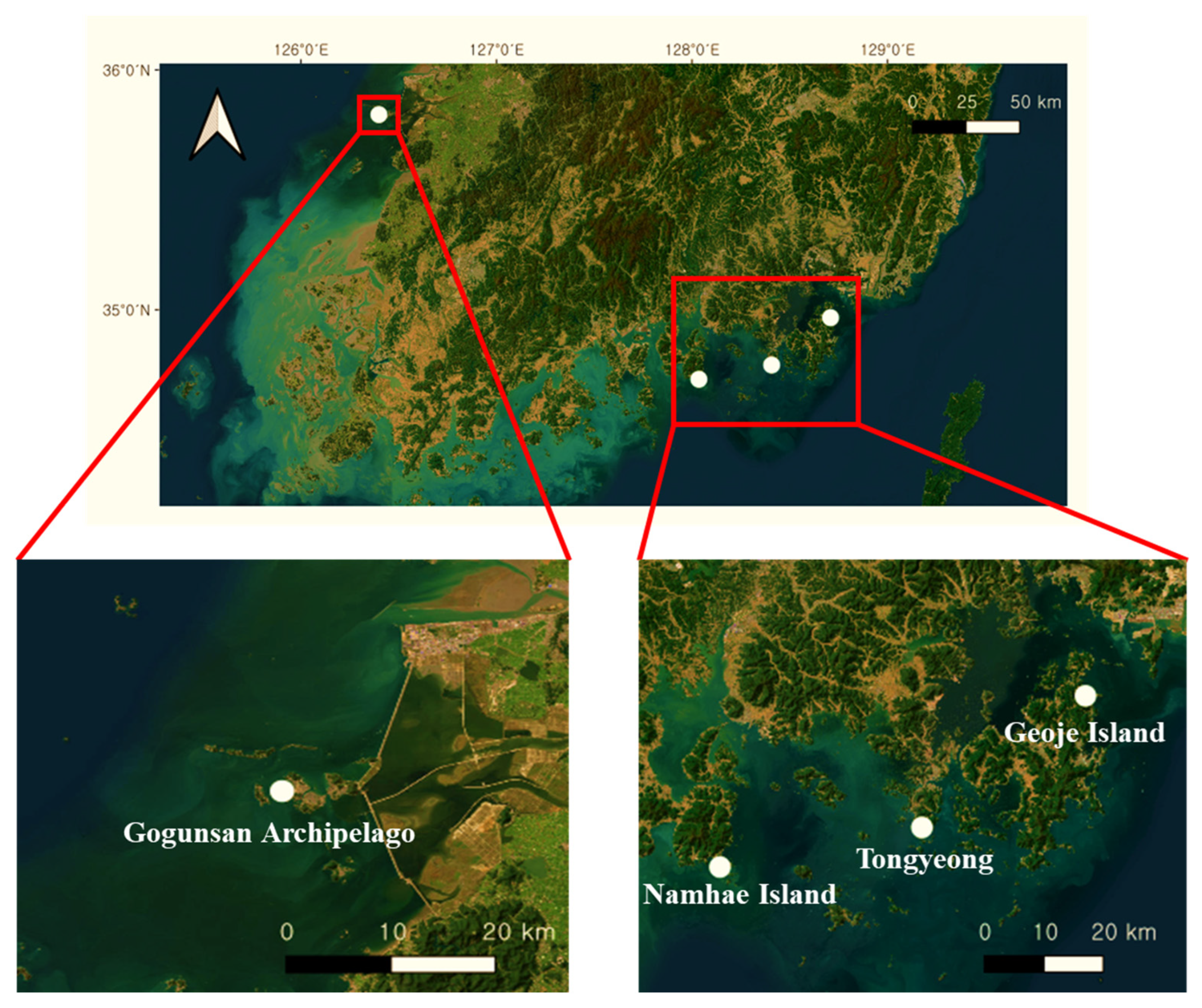
Field surveys and sampling were conducted during five independent survey periods from 14 March to 22 July 2025, along the western and southern coasts of Korea; however, individual sites were sampled 3–5 times depending on site accessibility and environmental conditions. On the west coast, surveys were carried out on Daejangdo (35°48′53.39″ N, 126°23′47.41″ E) Island in the Gogunsan Archipelago, Gunsan, and on the south coast, in Geojedo Island (34°57′57.99″ N, 128°42′23.24″ E), Tongyeong (128°42′23.24″ E, 128°24′18.45″ E), and Namhaedo Island (34°42′28.52″ N, 128°1′42.83″ E). All of these sites are islands or promontories located away from the mainland but connected by bridges, ensuring accessibility while minimizing anthropogenic disturbance and pollution. The four study areas span approximately 2° in longitude and 1° in latitude (
Figure 1). The sampling location map was produced using QGIS (v.3.40.13) [
26], based on coordinates collected during field surveys. According to data from the Korea Marine Environment Monitoring Network, water salinity remained generally stable during the sampling period. The environmental conditions at the sampling sites during the collection period (March–July) are summarized as follows. Mean water temperatures were 15.30 ± 6.83 °C in the Gogunsan Archipelago, 16.32 ± 6.13 °C in Namhaedo, 15.05 ± 4.66 °C in Tongyeong, and 17.33 ± 6.90 °C in Geojedo. Mean wave heights were 0.24 ± 0.20 m in the Gogunsan Archipelago, 0.30 ± 0.18 m in Namhaedo, 0.34 ± 0.21 m in Tongyeong, and 0.28 ± 0.31 m in Geojedo. Mean tidal ranges were 5.12 ± 1.20 m in the Gogunsan Archipelago, 1.81 ± 0.59 m in Tongyeong, and 1.38 ± 0.45 m in Geojedo. Because the Namhaedo site lacks a dedicated tidal observation station, tidal range data from the nearest station, Tongyeong, were used as representative values. Salinity ranged from 31.71 ± 0.29 PSU in the Gogunsan Archipelago to 33.99 ± 0.13 PSU in Geojedo, with values of 33.96 ± 0.13 PSU in Tongyeong and 33.77 ± 0.09 PSU in Namhaedo. Environmental data were obtained from the Korea Meteorological Administration Weather Data Open Portal and the Korea Hydrographic and Oceanographic Agency Badanu-ri Ocean Information Service.
Sampling was conducted on rocky shores exposed during low tide. Each sampling session lasted four hours, including two hours before and after the lowest tide, specifically to ensure access to and coverage of the entire range from the upper to the lower intertidal zone. Sampling was conducted randomly across the upper, middle, and lower intertidal zones during each of the five independent field surveys. This random approach, spanning the full vertical gradient, was critical for securing individuals representing the widest possible size and morphological variation, while excluding unusually small or juvenile specimens compared to the general collected population to focus on mature individuals. These five surveys served as temporal replicates, and individuals collected during each survey were treated as independent samples for subsequent morphological and mechanical analyses, regardless of differences in sampling frequency among sites. Limpets were carefully detached using a stainless steel spatula to avoid shell damage, and the collected specimens were placed in containers filled with seawater and transported to the laboratory. Site-specific sample sizes and size ranges (minimum–maximum values) of morphological and mass-related traits are summarized in
Appendix A.2. For species collected from multiple sites, these data allow assessment of within-species size variation across locations and evaluation of potential site-related effects.
In the laboratory, attached materials such as algae and barnacles were gently removed using tweezers and a soft brush solely for species identification, after which identification was performed. Identification was based on morphological characteristics of the shells using a stereomicroscope (M205C, Leica, Wetzlar, Germany), and final confirmation followed the reference materials of the National Institute of Biological Resources [
27]. A total of 420 individuals belonging to nine species were identified. However, two species—
Cellana nigrolineata (with very few individuals) and
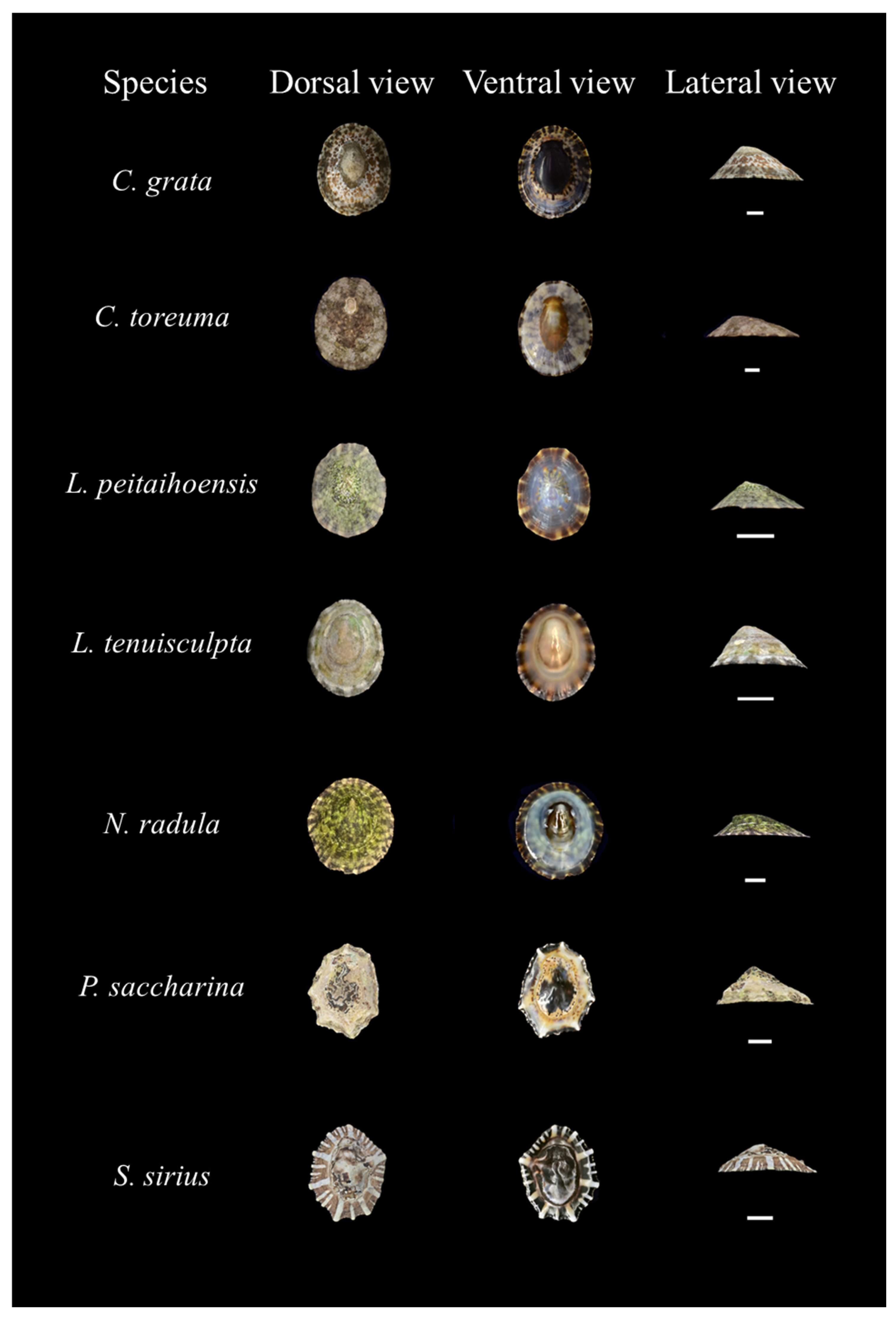
Siphonaria japonica (with extremely fragile shells)—were excluded from the analysis, leaving seven species and 389 individuals selected for experiments (
Figure 2). The number of individuals per species was as follows:
Cellana grata (
n = 112),
Cellana toreuma (
n = 41),
Lottia peitaihoensis (
n = 40),
Lottia tenuisculpta (
n = 49),
Nipponacmea radula (
n = 66),
Patelloida saccharina (
n = 40), and
Siphonaria sirius (
n = 41).
Although all seven species were collected across the upper, middle, and lower intertidal zones, they did not exhibit clear vertical zonation. Instead, their distributions were associated with distinct microhabitat types. C. grata and N. radula were primarily found on sun-exposed rock surfaces in the upper intertidal zone. C. toreuma, P. saccharina, and S. sirius were commonly associated with tide pools and consistently moist rock surfaces. In contrast, L. peitaihoensis and L. tenuisculpta were mainly observed in sheltered and humid rock crevices. These microhabitat observations were recorded during field surveys and were considered when interpreting species-specific morphological and mechanical characteristics.
2.2. Morphological Measurements
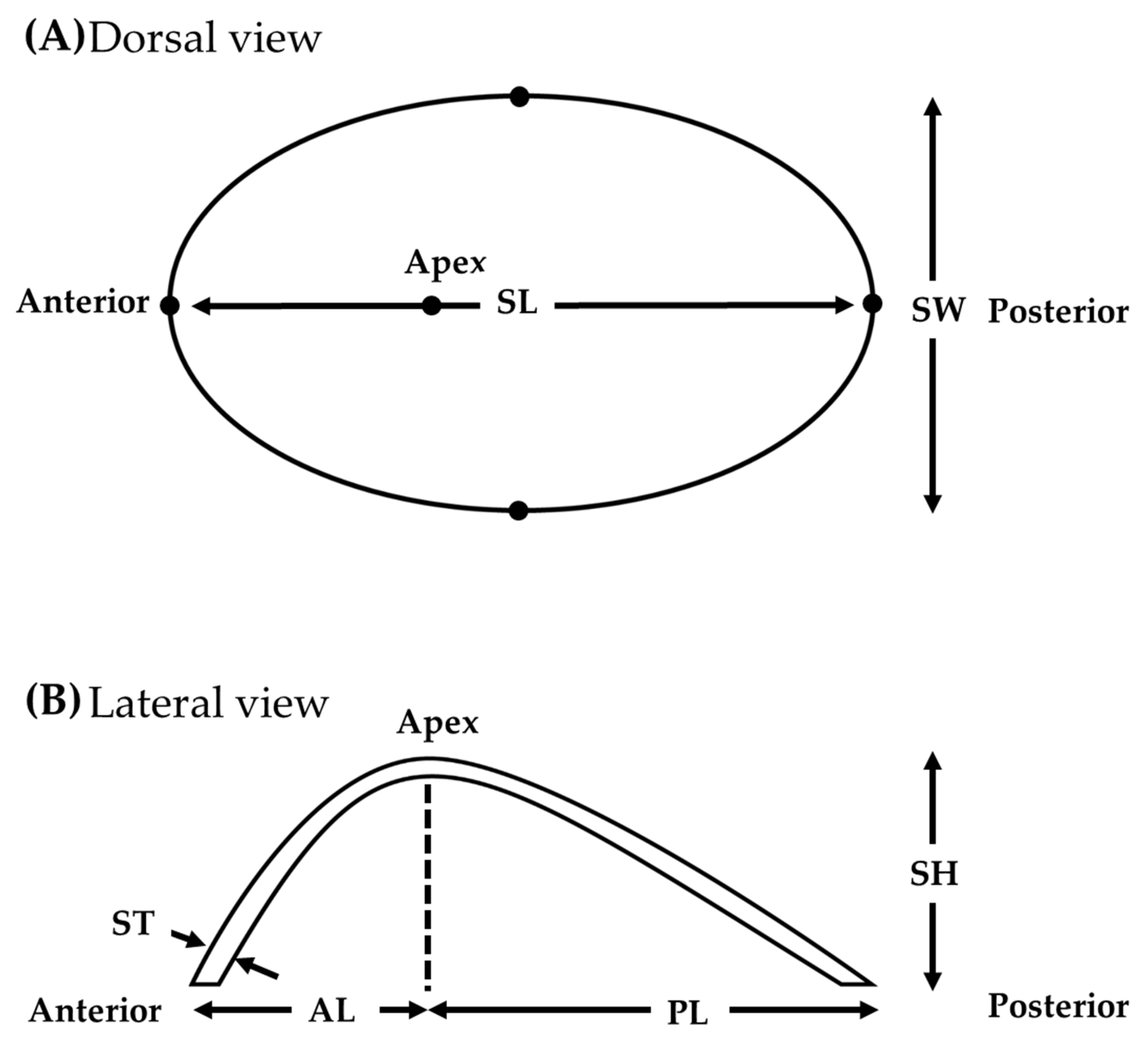
The limpets were then weighed for wet weight (Wwt) using an electronic balance (MWII-300H, CAS, Yangju, Republic of Korea). After separating the soft body from the shell using forceps, the shells were rinsed with 95% ethanol and then washed with a mild solution of anionic and nonionic surfactants commonly used in laboratory sample preparation. To prevent an increase in shell brittleness, the shells were air-dried for more than 24 h at ambient temperature in the dark, without the use of a drying oven. Morphometric measurements were taken using a digital caliper (CD-15AX, Mitutoyo, Kawasaki, Japan) with a measurement resolution of 0.01 mm, and all measurements were performed by a single investigator to minimize inter-observer variability. A total of ten morphological and mass-related parameters were measured: wet weight (Wwt), shell weight (Swt), shell length (SL), anterior length (AL), posterior length (PL), shell width (SW), shell height (SH), and shell thickness (ST). ST was measured once per individual at the lateral margin near the anterior edge to represent marginal shell thickness, with particular care taken to ensure consistent caliper positioning along the curved shell margin.
This point was chosen as the most advantageous for accurate, non-destructive measurement, while simultaneously representing the region subjected to the highest compressive load during mechanical testing. In addition, three derived indices were calculated: anterior length ratio (ALR), shell weight ratio (SwtR), and elliptical area (EA). ALR represents the proportion of AL within SL, and SwtR represents the proportion of Swt within Wwt. The EA, used for compressive strength analysis, was calculated as π × (SL/2) × (SW/2) (
Figure 3). Linear morphometric measurements were used because apex position, anterior–posterior elongation, and shell curvature vary among species, making it difficult to define reliable homologous landmarks required for geometric morphometric analyses.
2.3. Compressive Strength Test
Compression tests were conducted using a universal testing machine (TW-D100, TaewonTech, Bucheon, Republic of Korea) equipped with a load cell capable of measuring forces ranging from 1 g to 50 kg with a resolution of 1 g. Samples were prepared by removing the soft tissue, followed by cleaning and drying. Each shell was positioned with the apex facing upward, and the load was applied vertically to the longitudinal axis of the shell. The load was increased at a crosshead speed of 5 mm/min until the shell was completely fractured or the applied force dropped below 80% of its maximum value. The maximum load (N) recorded during the test was divided by the shell’s elliptical area to calculate compressive strength (MPa). Crack initiation points and fracture patterns were also observed and recorded during the tests.
2.4. Statistical Analysis
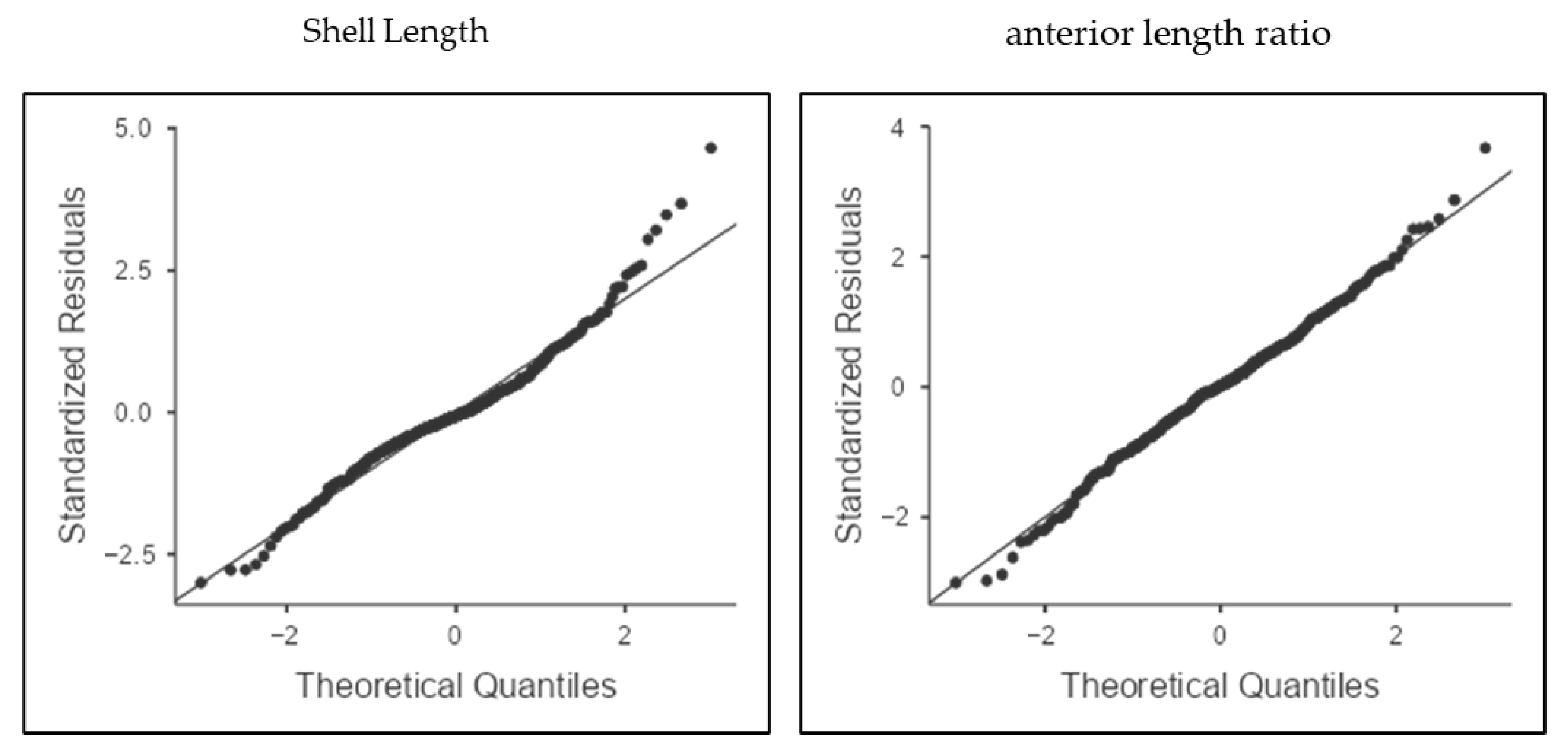
To evaluate interspecific differences in the morphological indices and mechanical properties of limpet shells, several statistical analyses were performed. First, Welch’s ANOVA was applied to test for differences in the mean values of each morphological and compressive strength variable among species; this method is appropriate when the assumption of homogeneity of variances among groups is not met. All statistical tests were evaluated at a significance level of α = 0.05. When Welch’s ANOVA indicated significant interspecific differences, pairwise post hoc comparisons were conducted using the Games–Howell test. Normality assumptions for the morphological ANOVA were evaluated using Shapiro–Wilk tests and visual inspection of Q–Q plots (
Table A4;
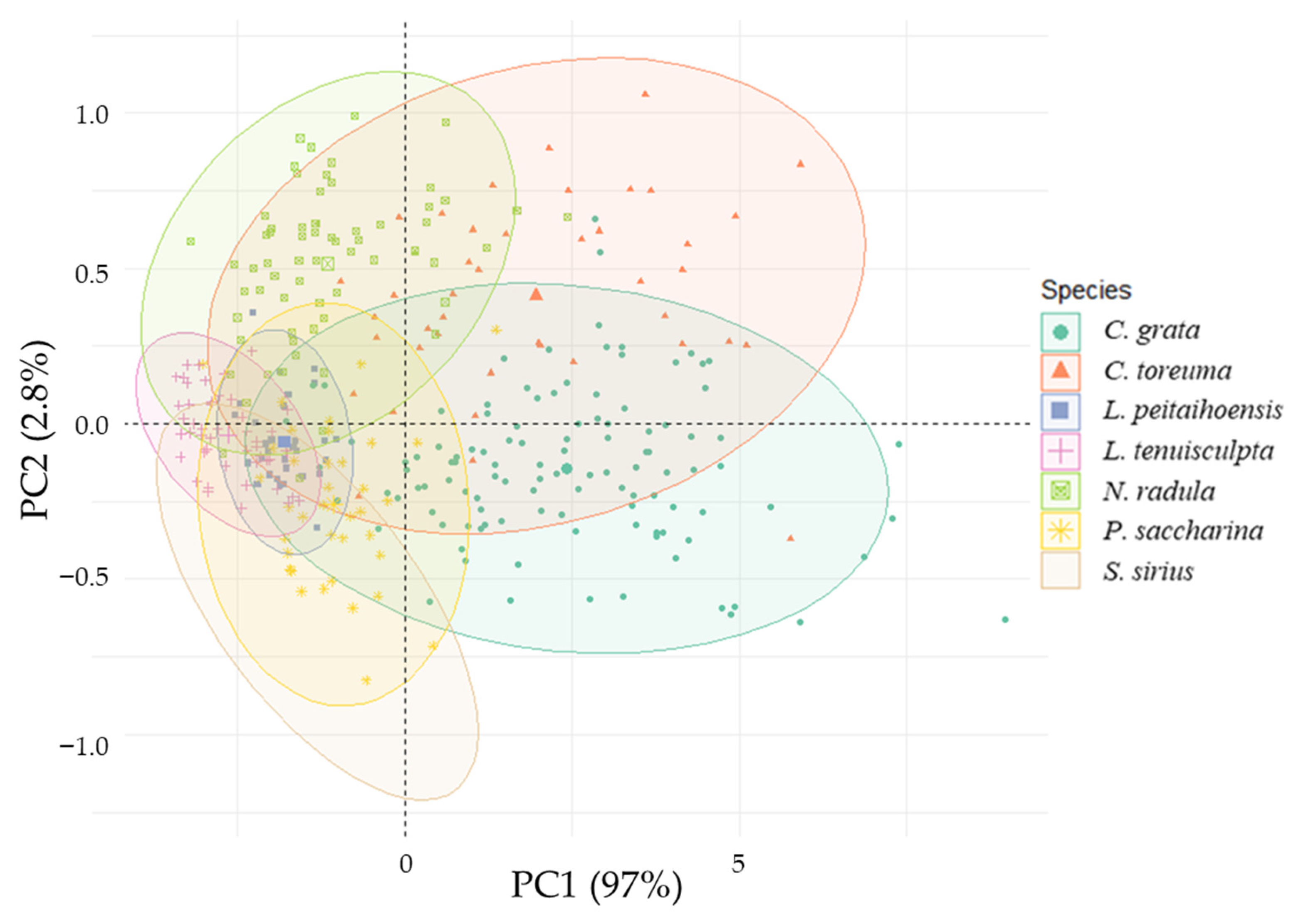
Figure A1). Because several traits deviated from strict normality, Welch’s ANOVA was applied due to its robustness to violations of normality and heterogeneity of variances. A full factorial analysis including ‘Site’ as a factor was not conducted because species composition differed markedly among sampling locations, resulting in a strongly unbalanced design with limited species overlap. Consequently, species and site effects were highly confounded, making it statistically infeasible to disentangle site-specific variation from interspecific differences. Therefore, the analyses were restricted to interspecific comparisons, which were the primary focus of this study. To summarize and visualize interspecific variation in morphological traits, Principal Component Analysis (PCA) was conducted to extract the major axes of morphological variation based on the coordinates of the anterior, posterior, lateral margins, and the apex of the shell (
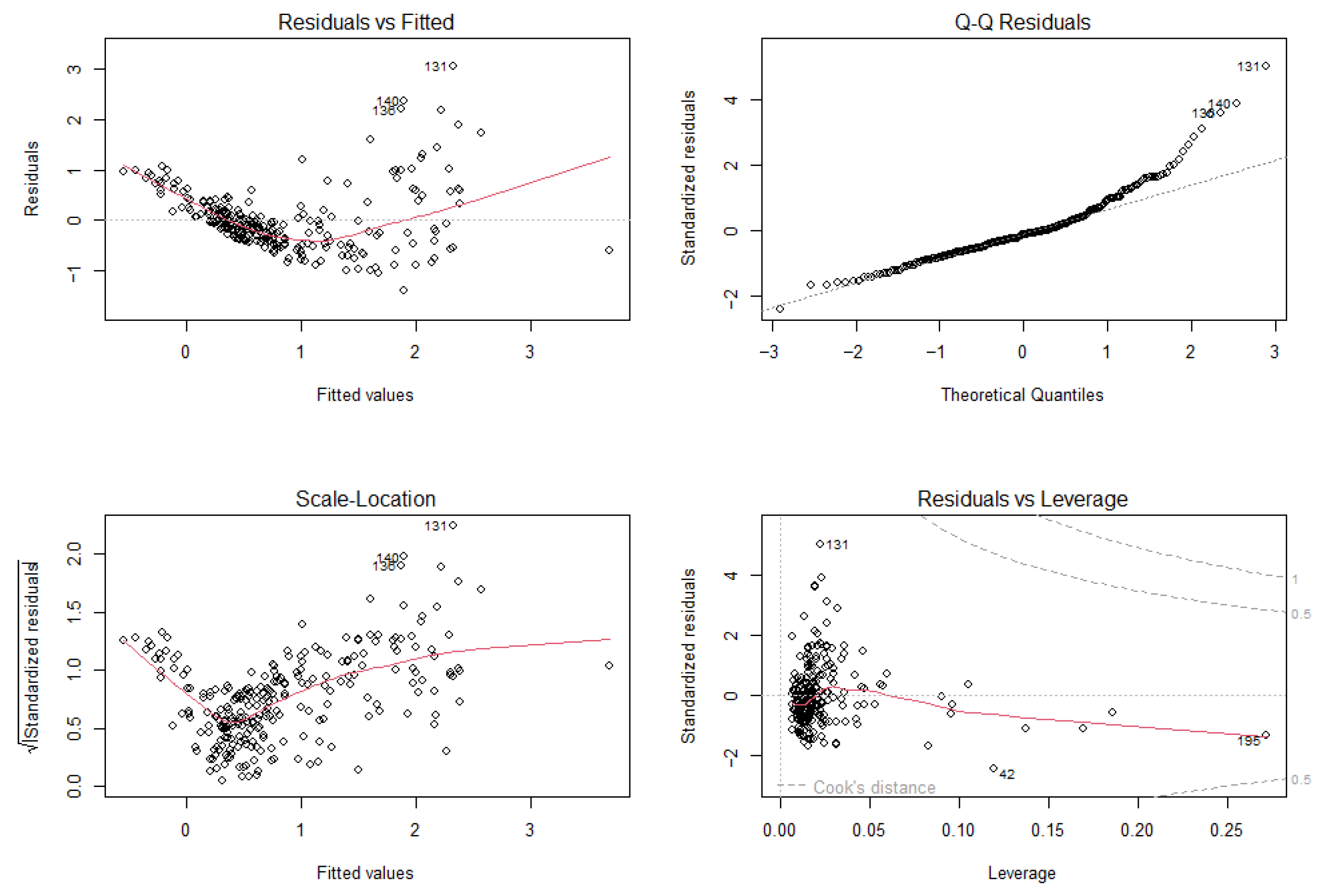
Figure 3). The selection of these five landmarks was sufficient because the primary goal was to capture and differentiate the major axes of morphological variation necessary for interspecific comparison across the seven species, rather than analyzing fine-scale intraspecific variation. To verify whether morphological variation was independent of size effects, a Multivariate Analysis of Covariance (MANCOVA) was performed, followed by univariate ANCOVAs with SL as a covariate. This analysis allowed assessment of whether interspecific differences remained significant after controlling for size effects. To identify the determinants of compressive strength, a Multiple Linear Regression Analysis was conducted using five morphological indices SL, SW, SH, ST and EA as independent variables. The model fit was evaluated using the coefficient of determination (R
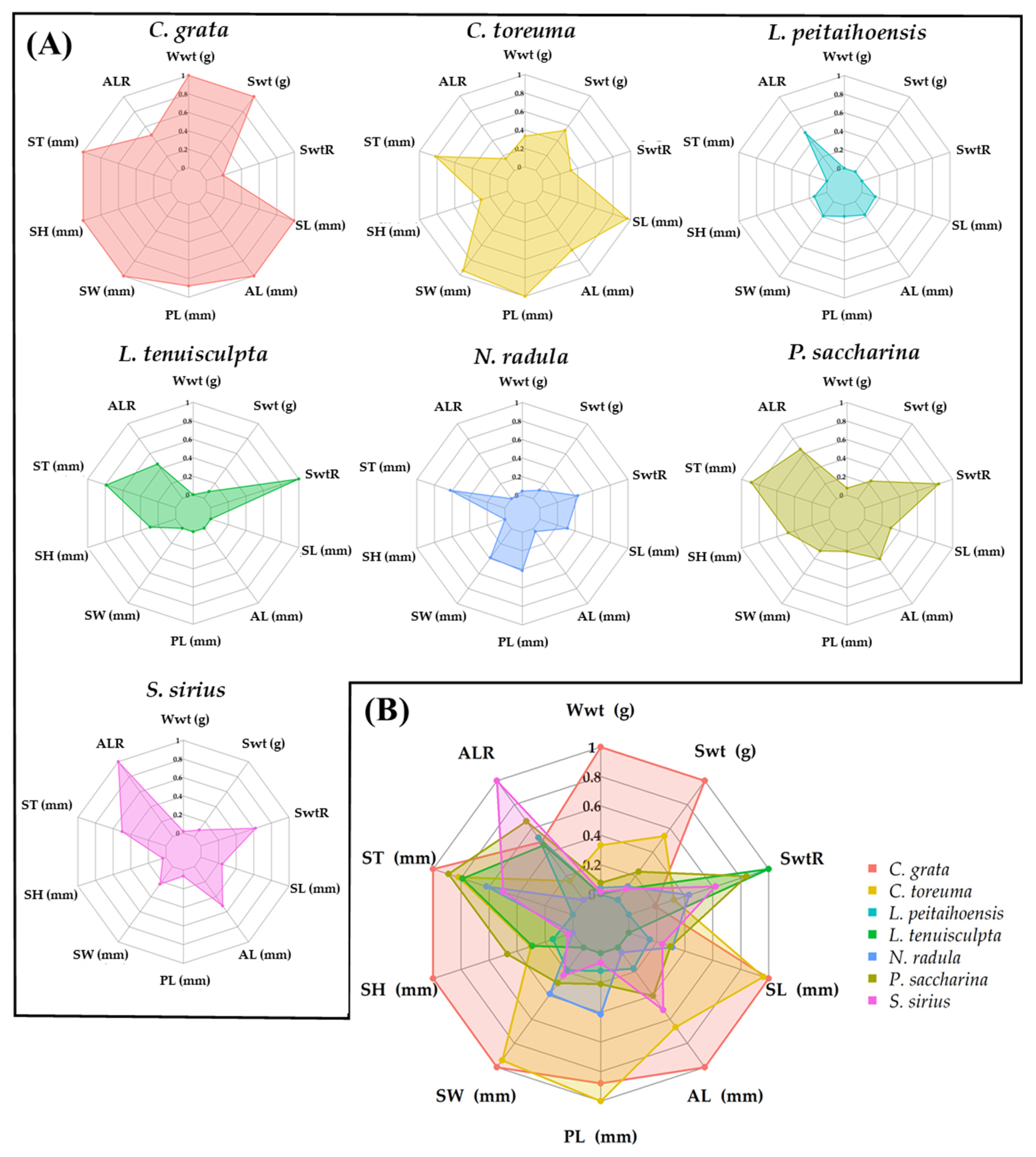
2), ANOVA table, and residual analysis to confirm explanatory power and the validity of model assumptions. For data visualization, radar charts were used to intuitively compare relative differences in morphological indices among species [
28]. All statistical analyses were performed using Jamovi (v.2.2.5) and R (v.4.2.3).
4. Discussion
We compared the morphological characteristics of seven limpet species inhabiting various intertidal zones along the Korean coast. Welch’s one-way ANOVA revealed significant interspecific differences across all ten morphological and weight-related parameters, indicating that each species exhibited distinct shell characteristics (
Table 1). These differences were also evident in the radar chart (
Figure 4) and PCA (
Figure 5), In particular, species such as
C. toreuma and
N. radula tended to exhibit relatively elongated and flattened shells, whereas
L. tenuisculpta and
P. saccharina represented the contrasting group with taller and thicker forms.
C. toreuma exhibited an anteriorly positioned apex, producing a shape with a higher anterior margin and a more gradual posterior slope, whereas
S. sirius had a centrally located apex, forming a more dome-shaped profile with radial flattening. Previous studies have examined shell shape variation and relative growth patterns in limpets, but these works often focused on only a few species or populations, or emphasized environmentally induced intraspecific variation rather than broad interspecific comparisons [
12,
18,
29]. In contrast, the present study evaluates seven species within a unified analytical framework and identifies ALR as a size-independent morphological discriminator. This distinction highlights that the major shape differences observed here are not merely the result of overall size scaling, but reflect species-specific shell architectures that provide a quantitative basis for taxonomic and morphological classification. Our results show that species and SL have the greatest impact on morphological parameters, and confirm that ALR is independent of size.
It is important to note that the specific, individual-level microhabitat factors (such as precise wave force or localized desiccation stress) were not directly quantified in this study. However, the general habitat distributions of the species are known, and our ecological interpretations are well-grounded in existing literature demonstrating microhabitat-driven morphological and biomechanical variation in intertidal limpets [
9,
11,
16]. In addition, for species collected from multiple sites, size ranges showed substantial overlap among sites (
Appendix A.2), indicating comparable within-species size structures across locations. This overlap suggests that interspecific comparisons involving these species are unlikely to be strongly confounded by site-related size variation. Moreover, previous studies have shown that limpet shell morphology can also vary within species in response to physical stressors such as wave exposure and desiccation [
11,
14]. These findings suggest that while ALR represents a species-specific morphological trait, it may also be fine-tuned by environmental factors, reflecting both interspecific differentiation and intraspecific plasticity [
11,
30].
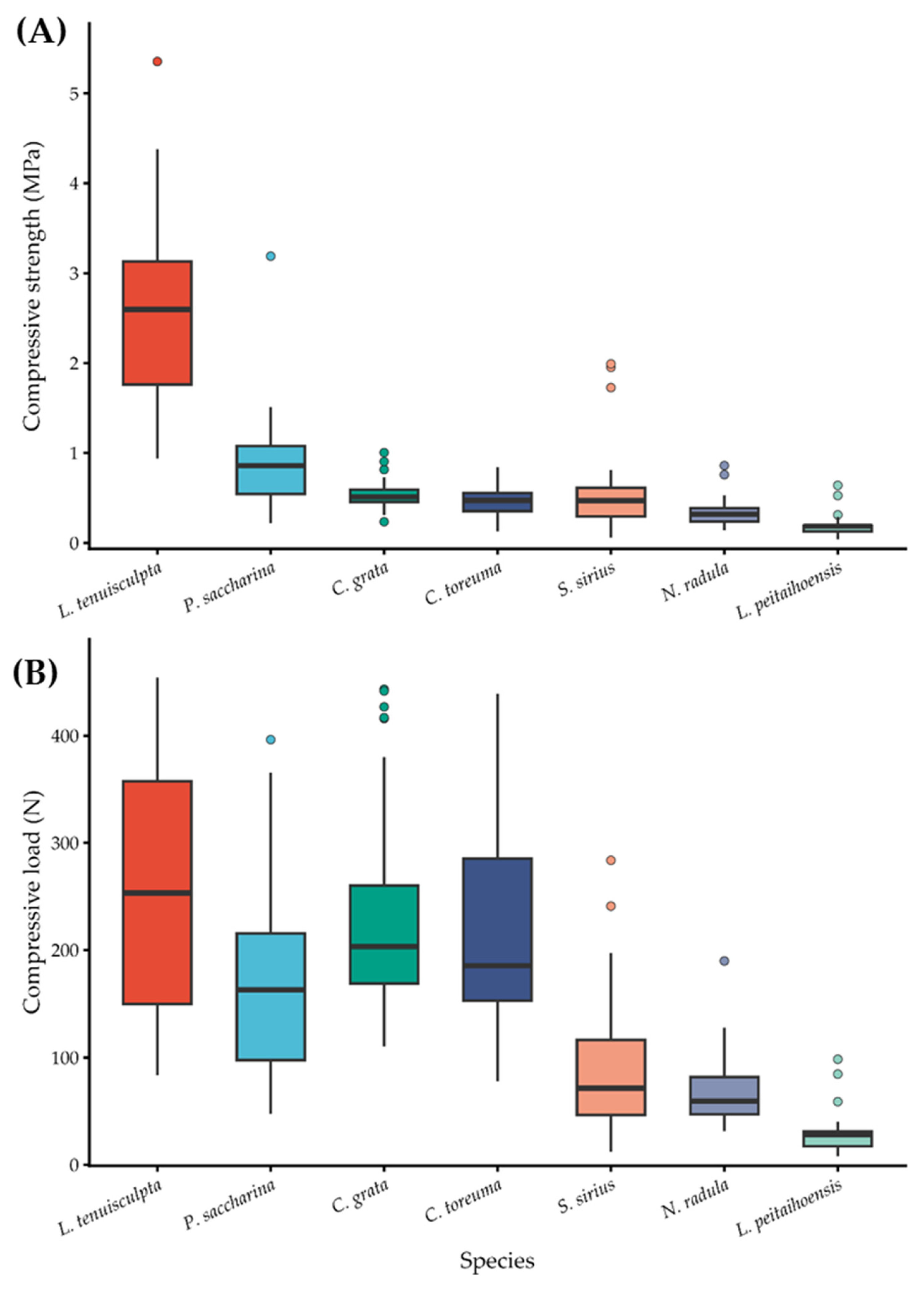
These patterns indicate that mechanical resistance emerges from the integrated contribution of shell geometry and thickness, highlighting the functional importance of structural reinforcement rather than individual linear dimensions. Species with thicker and higher shells such as
L. tenuisculpta and
P. saccharina exhibited greater compressive strength, whereas flatter morphotypes such as
N. radula and
L. peitaihoensis showed lower values. These mechanical differences are broadly consistent with the microhabitat associations observed in our field surveys, where dome-like, structurally reinforced shells are common in sheltered or persistently moist substrates, while flatter shells more frequently occur on exposed rock surfaces. Although previous studies have examined shell strength, microstructure, and stress-response mechanisms in limpets and other gastropods, most focused on single species or environmental stressors such as wave impact, thermal stress, or impact damage, rather than interspecific comparisons [
21,
22,
31,
32,
33]. Although overall size dominates morphological variation, secondary, size-independent geometric features (e.g., apex orientation and ALR) may still affect stress redistribution and contribute to compressive performance. The mismatch between strength and load observed in several species, particularly
C. toreuma, can be explained by the combined effects of size (SL, SW), shape (apex position, outline geometry, and ST), and EA. Load increases primarily with overall size, whereas strength decreases when force is normalized by EA. In
C. toreuma, the anteriorly shifted apex, elongated outline, and relatively wide base enlarge EA and modify stress distribution, producing low strength despite moderate load capacity. These factors collectively explain why the two mechanical metrics do not follow the same interspecific pattern.
L. tenuisculpta and
P. saccharina, which possess relatively high curvature, greater thickness, and dome-like shells, exhibited the strongest compressive resistance, consistent with thin-shell mechanics predicting higher structural stability with increasing curvature and thickness (
) [
34]. In contrast, the lower curvature and thinner shells of
L. peitaihoensis and
N. radula resulted in substantially weaker resistance. Taken together, the findings demonstrate that limpet shell resistance is governed by species-specific combinations of morphological traits, reflecting integrated structural strategies rather than any single dimension. This trend also suggests that morphological strategies may have evolved in response to microhabitat-level variation, such as localized wave exposure or desiccation stress, within the same intertidal zone [
11,
14,
30].
Importantly, the overall morphological patterns identified through both PCA and univariate analyses are mirrored by mechanical performance. The regression model revealed that not only ST and EA, but also height-to-length proportions significantly influenced compressive strength (
Table 5). Species characterized by compact, dome-shaped shells consistently exhibited higher strength, while flatter morphotypes showed reduced resistance to load (
Figure 6). This consistency across multivariate and direct measurements indicates that mechanical robustness is an emergent property of integrated shell geometry rather than any single dimension [
35,
36]. The integrated interpretation of morphology and compressive strength suggests that limpet shells represent a functional integration between form and mechanical performance, rather than a simple morphological variation. The combinations of SL, SH, SW, and ST were closely related to load distribution efficiency, indicating that structural proportions contribute directly to stress resistance. These findings are consistent with previous research linking shell geometry and strength to environmental stressors such as wave impact and desiccation [
11,
14,
29,
37].
Although our study focuses on macroscopic shell morphology, it is well established that shell microstructure also influences mechanical performance. Mollusk shells, including limpets, commonly possess hierarchical crossed-lamellar aragonitic structures, in which oriented lamellae and minor organic matrices enhance fracture resistance compared with purely mineral material [
38]. Such structures are widely reported in gastropods and are known to improve toughness through mechanisms such as crack deflection and microcracking resistance [
39]. Although detailed microstructural data for the seven patellogastropod species examined here are not available, broadly similar crossed-lamellar architectures have been described in many gastropods, supporting the use of external morphology as a primary comparative variable [
38]. Nonetheless, subtle interspecific microstructural differences—such as lamellar arrangement or organic–mineral interface properties—may contribute to variation in compressive strength. Future studies incorporating SEM- or EBSD-based microstructural characterization will be important for clarifying how hierarchical shell features influence species-specific mechanical responses.
From a broader structural perspective, the performance of dome-shaped limpet shells reflects general principles of efficient shell design that extend beyond biological systems. The integration between morphology and mechanical performance observed in this study indicates that shell form is not only shaped by ecological and evolutionary processes within intertidal microhabitats, but also optimized to achieve high structural efficiency under mechanical constraints. Curved thin-shell structures are known to enhance load-bearing capacity through geometry-driven stress redistribution, allowing substantial gains in mechanical stability without proportional increases in material volume. The limpet shells examined here exemplify how modest modifications in curvature, thickness, and overall geometry can markedly enhance compressive resistance, illustrating a naturally evolved solution to lightweight yet robust load-bearing design. These principles are broadly applicable across taxa exhibiting curved protective shells and provide a biologically grounded framework for biomimetic applications, including lightweight dome architectures, impact-resistant casings, and wave-resistant structural surfaces that rely on geometric optimization rather than increased material investment.