1. Introduction
Driven by the dual carbon goal, offshore wind power has become a core field in the global development of new energy [
1,
2]. As the only energy transmission carrier connecting offshore wind farms to onshore power grids, submarine cable has its service stability directly determining the power generation efficiency, grid-connection reliability, and full-life-cycle benefits of wind power projects [
3,
4]. Existing studies have shown that the core causes of submarine cable failures include the cable’s own instability driven by environmental loads [
5], the instability of the protective structures [
6], and local seabed liquefaction [
7]. Particularly, in flat hard seabed environments, the back-and-forth friction between the submarine cable and seabed causes severe sheath wear, which seriously affects the safe operation of the cable [
8]. Therefore, revealing the stability regulation mechanism of submarine cables and improving the design level of protective measures have become research hotspots in the field of marine engineering [
9].
To enhance the lateral stability of submarine cables, the engineering community commonly adopts the following measures: installing cast iron sleeves to form local rigid protection while increasing the cable’s self-weight [
10]; and using trench burial to place the cable in soil to resist the direct action of waves and currents [
11]. In addition, other stabilization methods include anchoring, overweight clamps, ACMs, and rock dumping [
12,
13]. Existing studies have verified the effectiveness of trench burial through numerical models and laboratory tests: Sudhan et al. [
14] found that, when a pipeline is laid with a specific burial depth ratio, the wave-induced pressure on the pipeline is significantly reduced; Sun et al. [
15] further confirmed through tests that, when the trenching depth exceeds 1.5 times the cable diameter, the impact of the wave-current drag force on the submarine cable can be neglected. However, the compressive strength of rock masses in the flat hard seabed (such as reefs and weathered rocks) generally exceeds 30 MPa, making it difficult for traditional trenching equipment to excavate, and an effective burial depth cannot even be achieved. Moreover, protrusions on the rock surface easily form point-contact friction with the cable body, and the wear rate is 4–6 times higher than that of soft soil foundations [
16]. Thus, there is an urgent need to develop targeted alternative protection technologies.
To address the challenges of the high strength and difficult trenching in the flat hard seabed, the engineering sector often adopts the basic scheme of “direct submarine cable laying with local cast iron sleeve protection”, where the sleeve resists direct wear from reef protrusions [
17]. However, water flow loads cause the periodic oscillation of the exposed cable segments, leading to relative slip between the sleeve and the cable body and accelerating secondary wear of the sheath [
5]. Meanwhile, the cable body lacking planar constraints is prone to lateral displacement under strong currents—an offshore wind power project in the East China Sea once suffered a 500 m deviation of the submarine cable from its designed path due to this issue, triggering a safety hazard of collision with anchor chains [
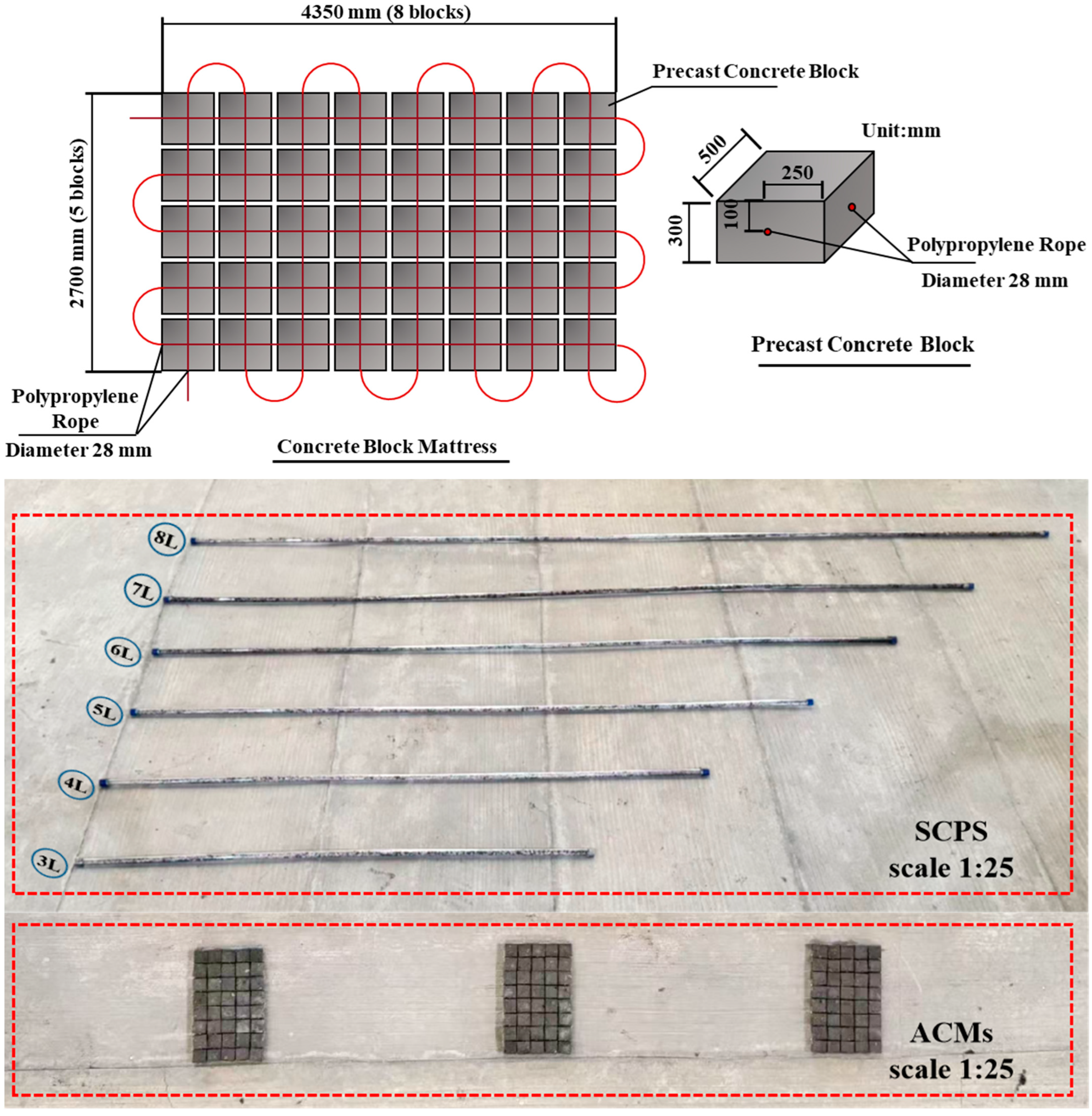
8]. To make up for the shortcomings of the basic scheme, the ACMs technology has been introduced as a secondary stabilization measure: it is a flexible planar structure formed by hinging concrete blocks with steel cables, which can cover the surface of the submarine cable to form integral protection [
18].
Existing studies have initially revealed the mechanical properties and failure laws of ACMs: Gaeta et al. [
19] obtained the drag coefficient and lift coefficient of ACMs through 1:20 scale model tests, providing the basic parameters for the stability calculation; McLaren et al. [
20] conducted flow field tests on ACMs with different block sizes and found that a 20% increase in the block side length can improve the anti-slip capacity by 35%; Godbold et al. [
21] clarified that the core failure mechanism of ACMs is the rolling instability of the edge blocks caused by the water flow lift, which further leads to overall rolling. Due to the conservative design considerations, the full-length coverage of submarine cables with ACMs is commonly used in engineering practice, resulting in high protection costs. However, the feasibility of the spaced covering mode lacks systematic theoretical support [
22]. At the same time, for the special boundary of the flat hard seabed, the synergistic mechanism of SCPS–ACMs and the influence law of the cover spacing on the stability of the SCPS–ACMs have not been clarified, which restricts the economical application of this technology. This indicates that the current ACMs protection design not only has room for cost optimization but also lacks targeted theoretical support.
This study mainly focuses on the stability of uncovered submarine cable on the flat hard seabed under the action of currents. Therefore, the local scour and the actions of the combined waves and currents [
23] are not considered. Based on physical model experiment and theoretical analysis methods, the stability of SCPS covered by ACMs is investigated. The core contents include the following: revealing the synergistic force transfer and instability mechanism between ACMs and SCPS; and establishing a quantitative relationship between the cover spacing and the critical instability velocity of SCPS-ACMs. This study aims to fill the research gap in the stability of SCPS covered by ACMs at intervals on the flat hard seabed.
3. Results
3.1. Instability Mode
We found that, on a flat hard seabed, the SCPS covered by ACMs at intervals exhibited a consistent instability mode of overall slip.
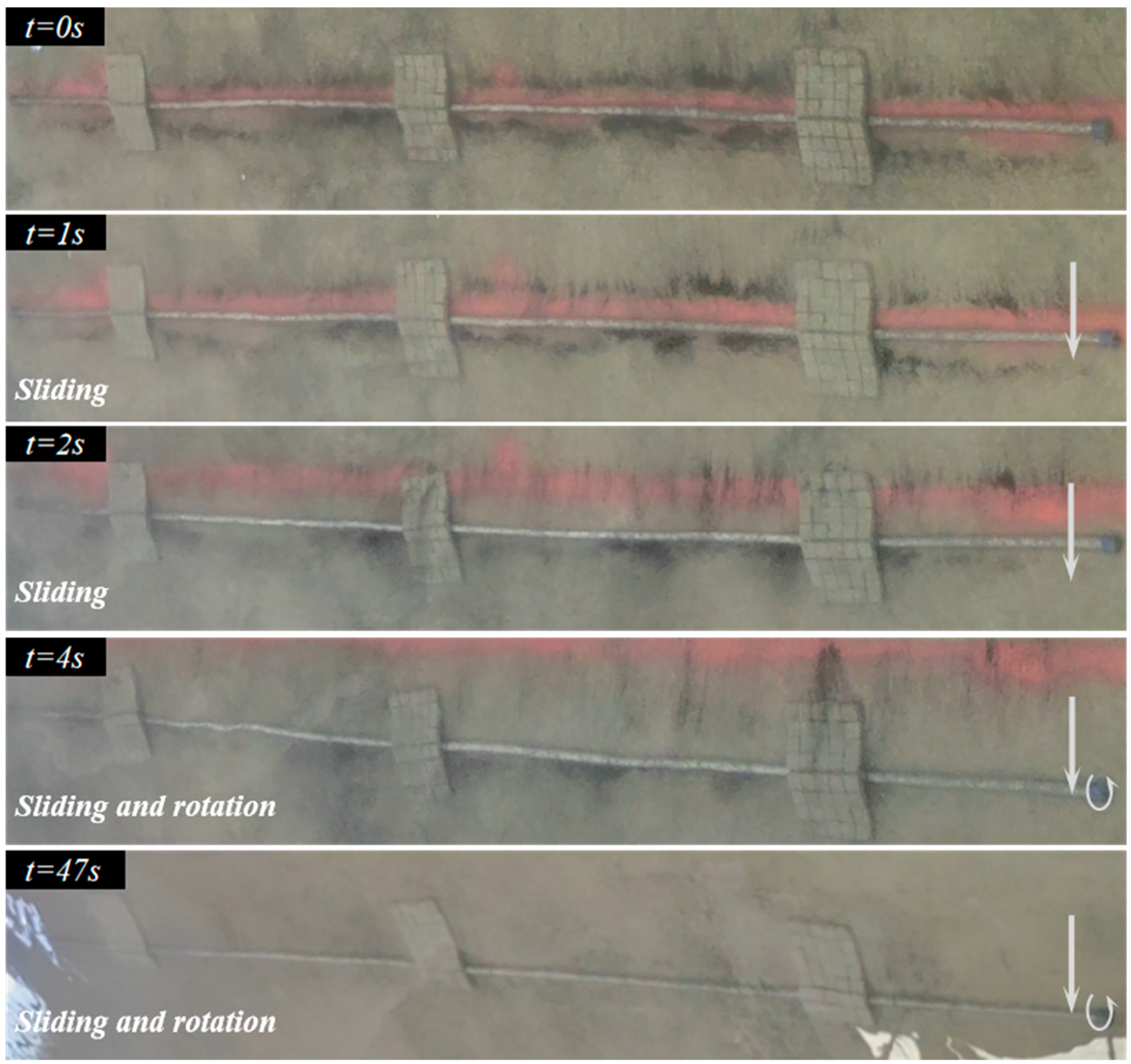
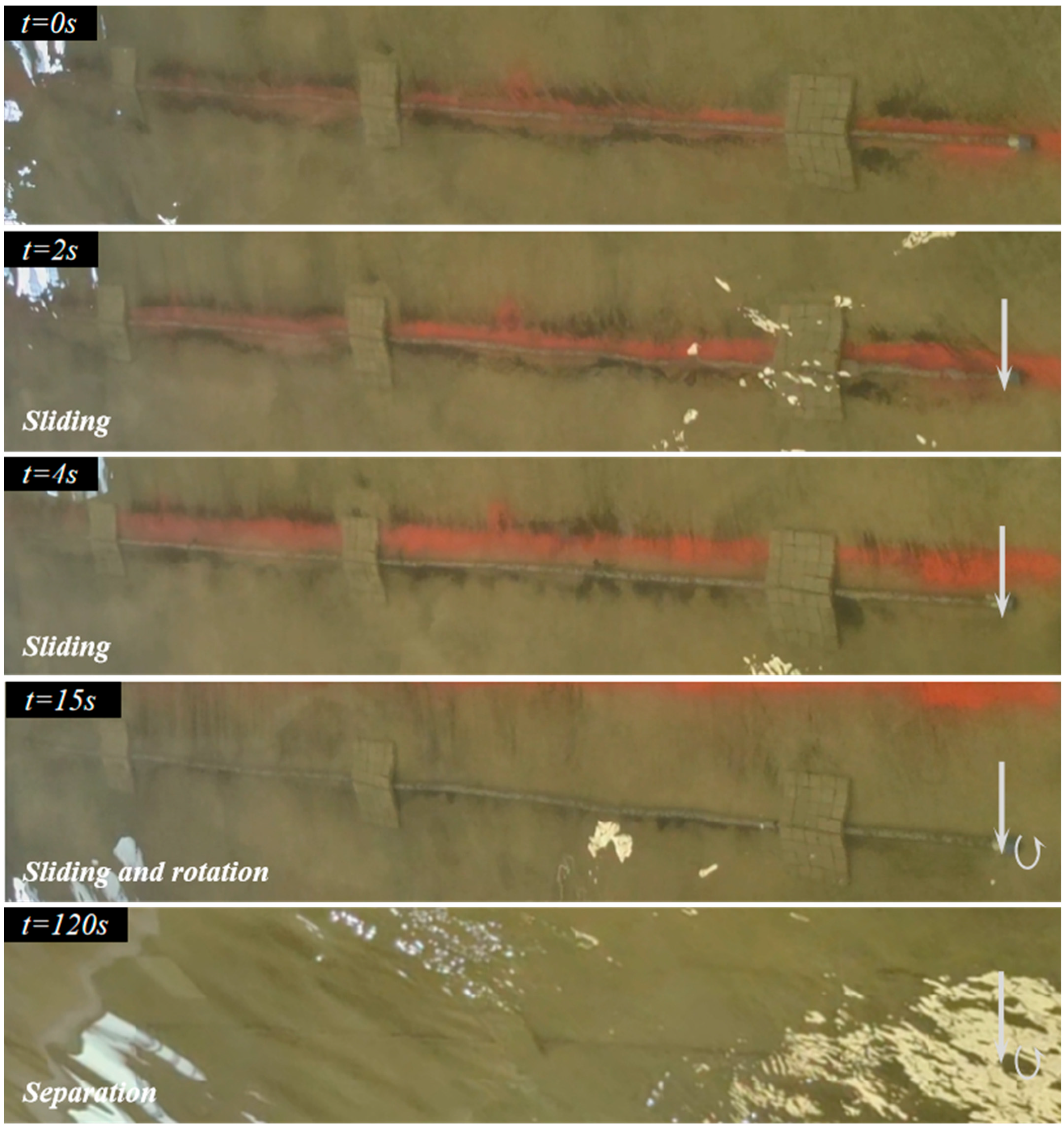
Figure 4 presents the instability process of the SCPS covered by ACMs at intervals under currents, for the representative working condition (cover spacing
d = 6
Lm, and covering pattern -L-L-L-). At the initial stage of the experiment, as the incoming flow velocity increased slowly from 0, the overall structure remained stable throughout. However, when the flow velocity approached the critical velocity, the SCPS and ACMs slid forward slowly and synchronously—this indicates that the total constraint force exerted on the SCPS by the ACMs and hard seabed was greater than the frictional force between the ACMs and flat hard seabed. Shortly after that, however, the movement mode of the SCPS shifted from translation to a combination of translation and rotation. The occurrence of rotation significantly reduced the frictional resistance exerted by the flat hard seabed on the SCPS, causing its moving speed to accelerate and, subsequently, exceed the sliding velocity of the ACMs—in other words, the SCPS attempted to break away from the bottom of the ACMs. Nevertheless, after a brief force adjustment, the SCPS and ACMs resumed the mode of synchronous forward movement.
Figure 5 presents the instability process of the SCPS covered by ACMs at intervals under the action of currents, for the representative working condition (cover spacing
d = 7
Lm, and covering pattern -L-L-L-). The instability mode was similar to the above scenario, with the difference that the SCPS eventually broke away from the bottom of the ACMs. The reason lies in the fact that, as the exposed length of the SCPS increased, the fluid rotational moment grew, the rotation speed accelerated, and the SCPS could more easily break free from the constraint of the ACMs.
3.2. Number of Spans
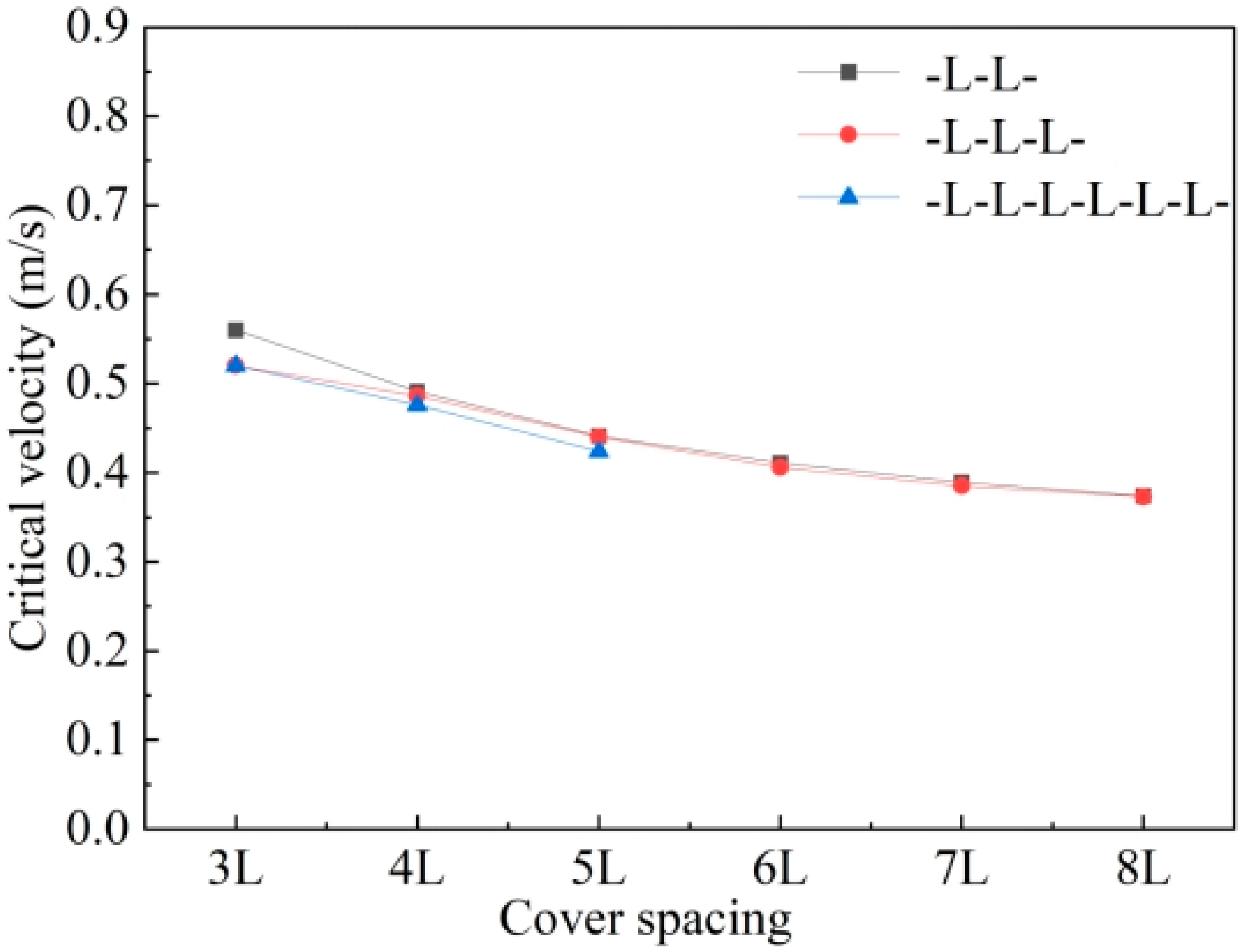
Figure 6 presents the variation in the critical velocity of SCPS covered by ACMs at intervals with a cover spacing for different number of spans.
The results show that, when the number of spans ≥ 2, the critical velocity is not sensitive to the number of spans. As the number of spans increases, the critical velocity only decreases slightly. Overall, the results of the two-span configuration are relatively close to those of the five-span configuration, with a maximum deviation of 3.8. When the cover spacing d ≥ 4Lm, the results of the one-span configuration are almost consistent with those of the two-span configuration; however, in the case of a small spacing (d = 3Lm), the flow past the cable at both ends of the SCPS has a significant effect on reducing the total flow drag force, resulting in a relatively higher critical velocity.
3.3. Mattress Row Length
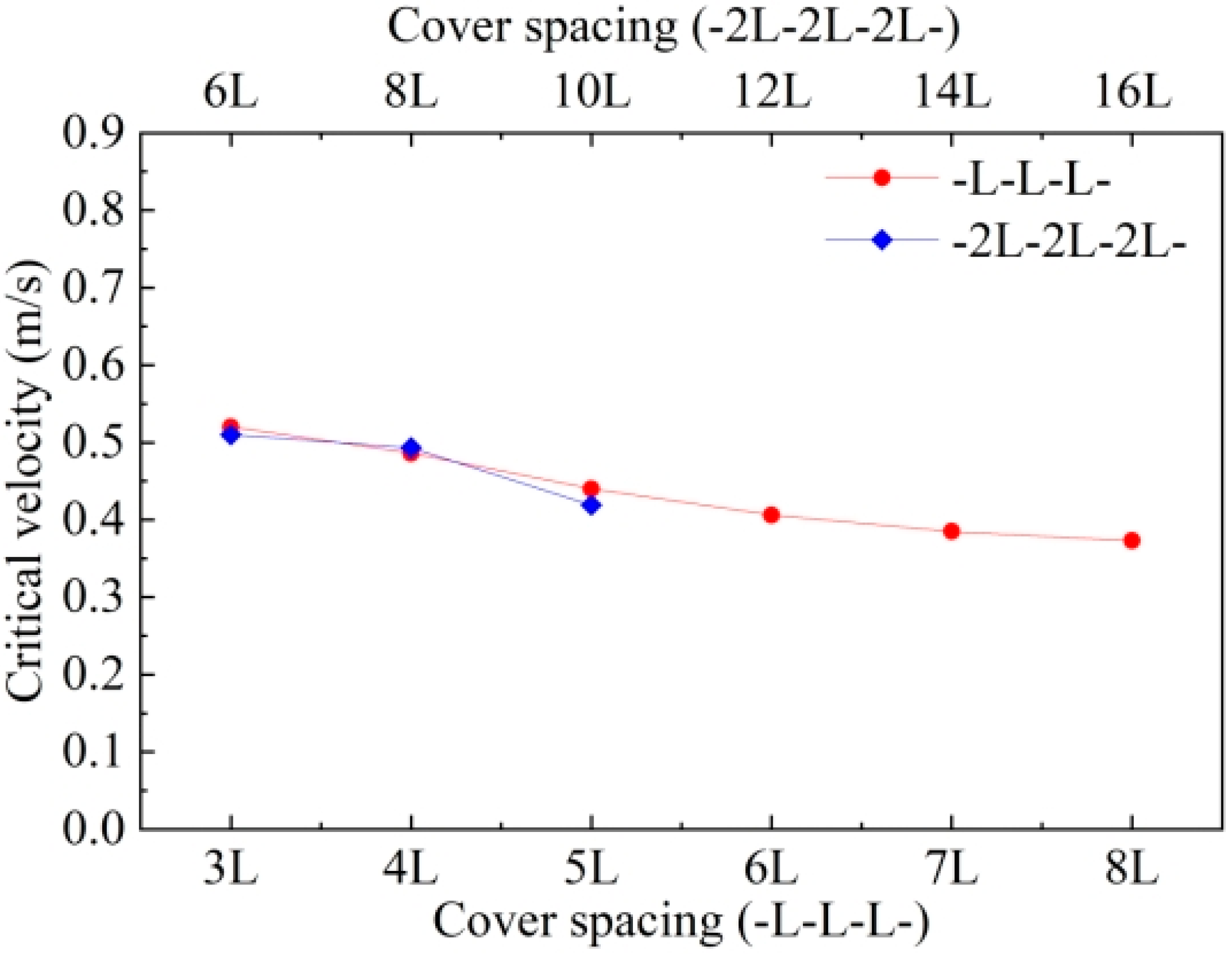
Figure 7 presents the variation in the critical velocity of SCPS covered by ACMs at intervals with a cover spacing for different ACMs lengths.
It can be observed from the figure that, if the mattress length and cover spacing are increased to twice their original sizes simultaneously, the critical velocity of the SCPS remains essentially unchanged. This phenomenon indicates that the mechanical properties of the SCPS covered by ACMs at intervals—more specifically, its hydrodynamic properties—are basically unaffected by the mattress length.
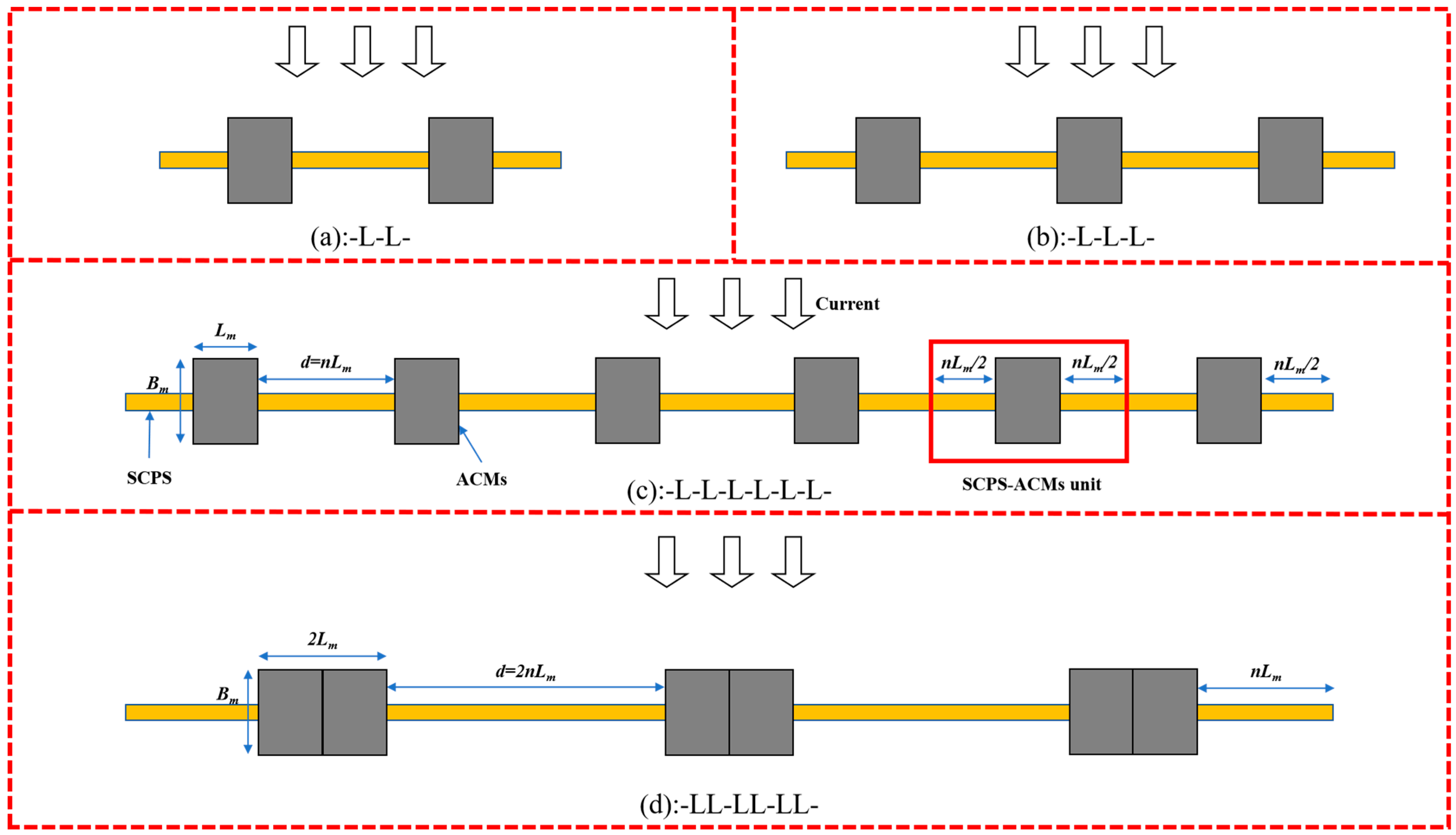
In addition, the magnitude of the cover spacing mainly depends on the ACMs coverage ratio (a parameter defined as ρc = Lm/(d + Lm), where Lm is the length of a piece of ACMs and d is the cover spacing). Under the condition of the same ACMs coverage ratio, the test results of the two covering patterns (-2L-2L-2L- and -L-L-L-) show little difference; within the entire test parameter range, the maximum deviation between the two does not exceed 4.8%.
The above conclusions provide a scientific basis for the rational formulation of mattress installation technology and the improvement of construction efficiency in practical engineering.
4. Theoretical Research
4.1. Establishment of Theoretical Model
According to the lateral stability design standard for submarine pipelines based on a static analysis in DNV-RP-F109 [
25], the SCPS under current action must satisfy the following condition to maintain absolute static stability:
where
γ is the safety factor;
Gc is the underwater weight of the SCPS;
FR is the passive resistance due to lateral movement, which is zero for the flat hard seabed; and
μc is the friction coefficient between the SCPS and the flat hard seabed, obtained from tests as
μc = 0.334.
FDc and
FLc represent the maximum flow drag and lift on the SCPS, calculated as follows:
Here,
ρ is the water density;
uc is the mean perpendicular current velocity over the diameter of a SCPS, approximated at
Dc/2;
Dc and
Lc are the SCPS diameter and length; and
cD and
cL are the drag and lift coefficients, with
cD = 1.0 and
cL = 0.9 per DNV-RP-F109 [
25]. For
γ = 1, Equation (1) is reduced to the force balance equation of the SCPS, which can be used to calculate the critical instability velocity theoretically:
The velocity at the reference point is determined from the velocity profile. According to DNVGL-RP-F109 [
26], the profile is expressed as follows:
where
zr is the reference point, taken as 0.1
h to match the experimental setup;
z0 is the flat hard seabed roughness, which is minimal for the concrete seabed; and
θc is the angle between the flow and SCPS axis, taken as 90°.
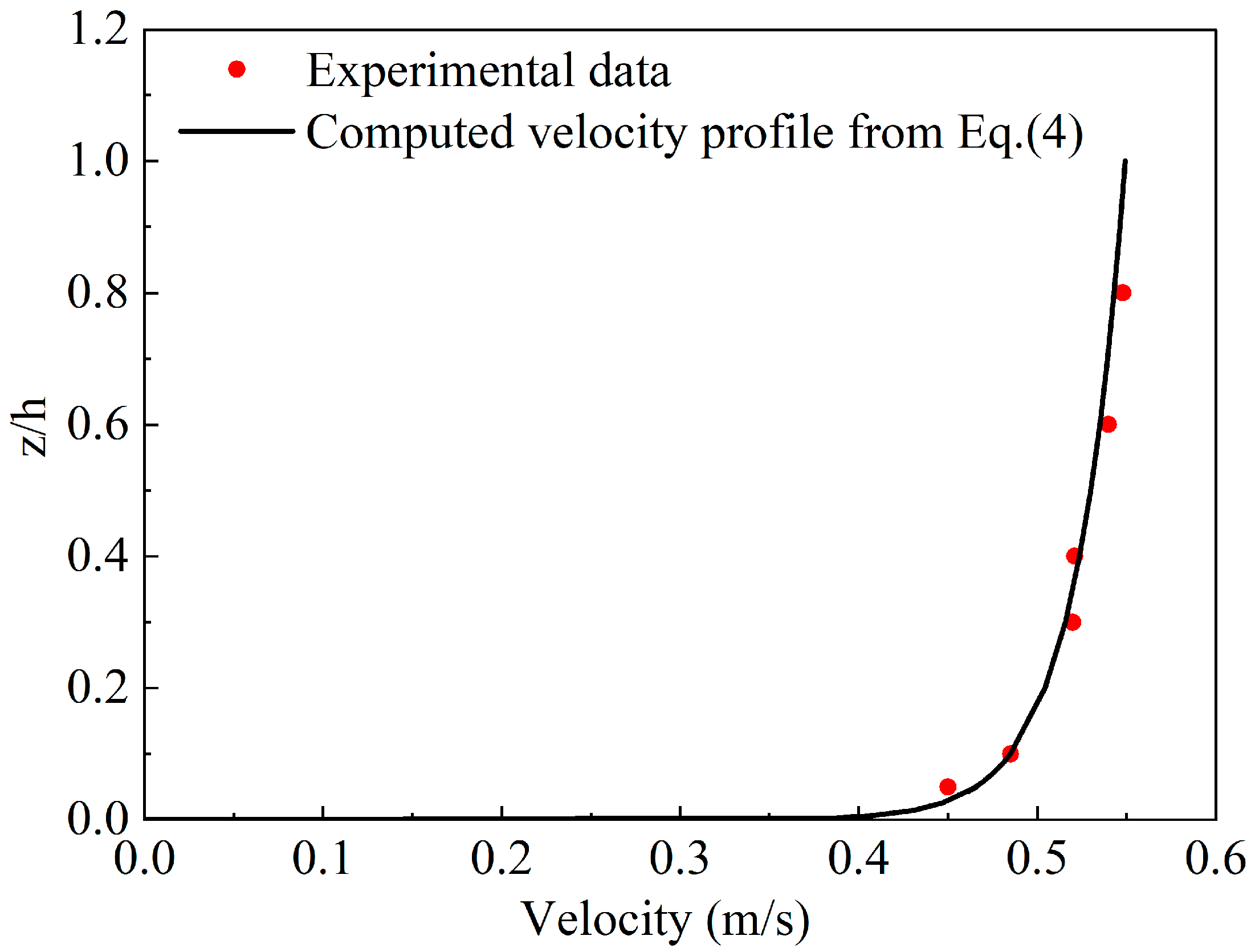
Figure 8 shows a good agreement between a typical measured profile (
u(
zr) = 0.48 m/s) and a calculated profile, validating the reliability for estimating the velocity profile from Equation (4).
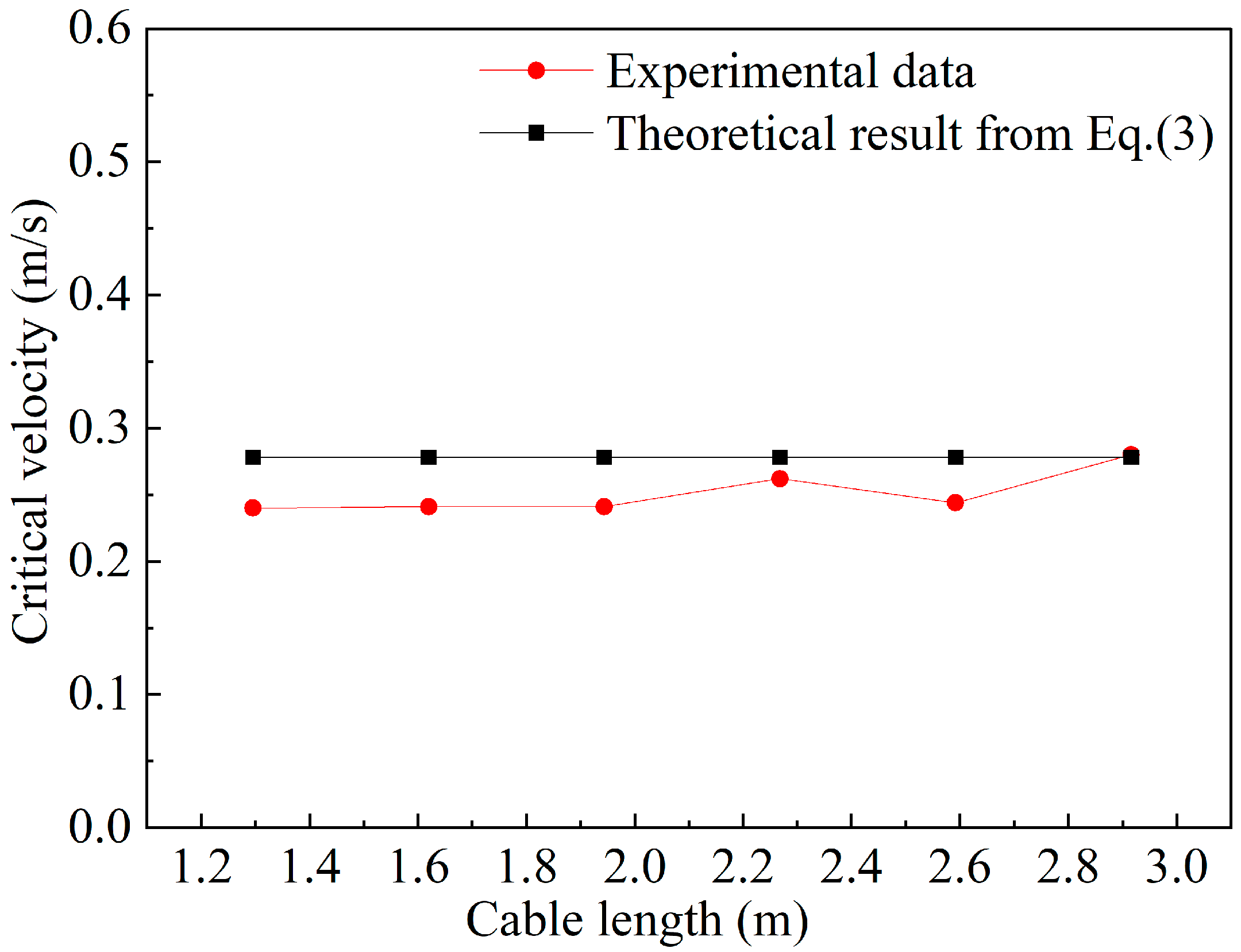
A stability experiment was conducted for SCPS (without ACMs), and the measured critical instability velocity was compared with the theoretical prediction, using
u(
zr) as the unified reference velocity. As shown in
Figure 9, the measured values are slightly lower than the theoretical results. This deviation is attributed to the instability mode observed in the experiment: the cable rapidly transitions from the initial minor translation to rolling. The rolling motion changes the contact form between the SCPS and the hard seabed from “line contact” to “surface contact”, resulting in a significant reduction in static friction resistance; at this time, the resistance that the SCPS needs to overcome to transition from the static stable state to the moving state decreases, and the corresponding hydrodynamic force threshold decreases, thereby reducing the critical velocity.
Based on the force analysis of the single SCPS, a further force-balance analysis was performed for the SCPS–ACM unit. Since the critical instability mode of this system is the overall slip mode, the concrete articulated mattress and SCPS can be regarded as a single unit, and the contact forces between them are internal forces that can be omitted in the equilibrium analysis. As illustrated in
Figure 10, the unit is subjected to gravity (
Gm,
Gc), flow drag force (
FDm,
FDc), lift force (
FLm,
FLc), flat hard seabed friction resistance (
FRm,
FRc), and flat hard seabed support force (
FSm,
FSc).
As the flow velocity increases, the SCPS–ACM unit reaches the critical instability condition when the total hydrodynamic force equals the total frictional resistance. Based on the force balance, Equation (5) is obtained:
By substituting Equations (6) and (7) into Equation (5), the latter can be rewritten as follows:
where
μm is the friction coefficient between the ACMs and the seabed, obtained from tests as
μm = 0.481; and
βmc and
βmb are the weight distribution coefficients of the ACMs acting on the SCPS and on the flat hard seabed, respectively. The flow drag force
FDm and lift force
FLm acting on the ACMs are calculated as follows:
where
λD and
λL are the drag and lift coefficients of the ACMs, and
um is the characteristic velocity at half the arch height (
Hm/2). The flow drag
FDc and lift
FLc acting on the SCPS are still computed using Equation (2). For a basic force unit,
Lc =
d, where
d is the cover spacing between the ACMs. The hydrodynamic forces on the SCPS beneath the ACMs are neglected due to shielding.
4.2. Determination of Key Coefficients
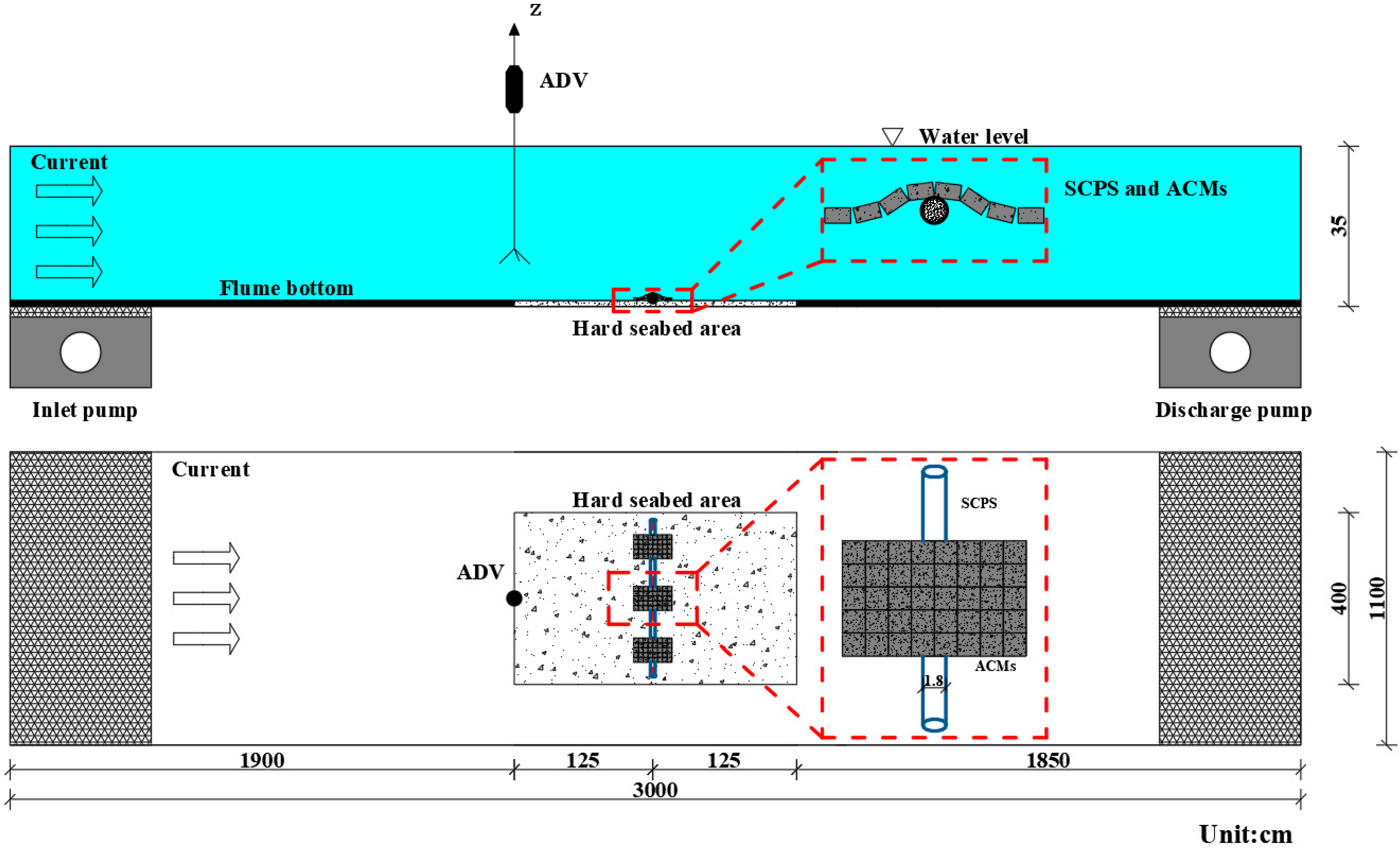
The hydrodynamic forces acting on the ACMs were determined through a computational fluid dynamics simulation of the flow past the SCPS–ACMs unit. The computational fluid dynamics (CFD) model of the SCPS–ACMs unit was developed based on the unsteady Reynolds-averaged Navier–Stokes (URANS) equations. The Transition SST turbulence model was employed to close the URANS equations. For the solver configuration, the pressure–velocity coupling was handled using the Coupled algorithm, and the flux type was set to the Rie–Chow scheme based on the distance weighting. In terms of spatial discretization, the gradient was computed using the Least-Squares Cell-Based method; the pressure term was discretized with a second-order scheme, the momentum equations with a second-order upwind scheme, and both the turbulent kinetic energy and dissipation rate with first-order upwind schemes.
In the numerical model, a velocity inlet was applied at the upstream boundary, while a pressure outlet was set downstream. Symmetry boundary conditions were imposed on both lateral sides, and the bottom of the computational domain was treated as a no-slip wall. The scaled model domain measured 1.6 m × 1.0 m × 0.3 m, with the SCPS–ACMs unit positioned at the center of the bottom boundary. In the scaled model, the base mesh size was 0.01 m, while local mesh refinement was applied around the SCPS–ACMs unit, with a minimum cell size of 5 × 10
−4 m to ensure the adequate resolution of near-wall flows and local pressure gradients. And mesh sensitivity analysis was performed using three mesh configurations with different refinement sizes (refinement regions centered on the SCPS–ACM unit). The influence of the mesh refinement size on the numerical results was assessed as shown in
Table 3.
Based on the three mesh configurations described above, Grid-2 and Grid-3 performed well overall, yielding drag (λD) and lift (λL) coefficients that are in close agreement, whereas Grid-1 exhibited relatively larger computational errors. Considering both the accuracy of the numerical results and computational efficiency, Grid-2 was selected as the computational mesh for the present mathematical model.
A uniform inlet velocity condition was applied, with the flow velocity ranging from 0.36 m/s to 1.0 m/s.
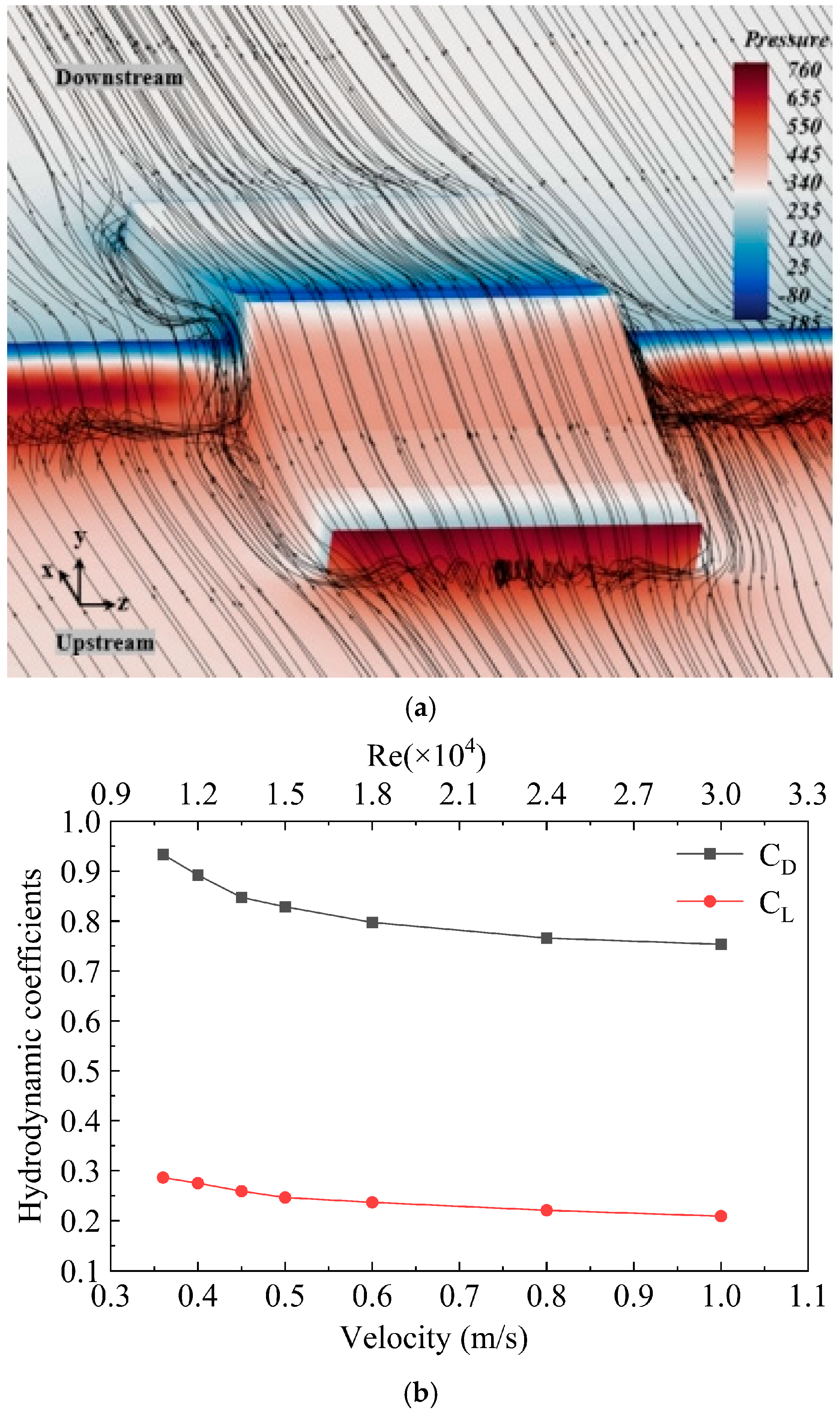
Figure 11a presents the typical pressure and streamline distribution under an incoming velocity of 0.5 m/s. On the upstream face of the ACMs, the incoming flow converges rapidly, forming dense streamlines that closely follow the surfaces before diverging downstream. The lower upstream face forms the impingement zone, which exhibits the highest pressure in the flow field. The pressure distribution varies with the angle between the structural surface and the incoming flow, reaching a peak where direct impact occurs. As the flow passes over the ACMs crest, the adverse pressure gradient causes rapid kinetic energy loss, leading to boundary-layer separation. The separated region exhibits a gradual pressure reduction, forming a transition from upstream high pressure to downstream low pressure. A reverse flow forms on the downstream surface, creating a pronounced low-pressure zone that induces suction toward the downstream direction, which is unfavorable for the stability of the system.
Using
um as the characteristic velocity, the calculated drag coefficient and lift coefficient of the ACMs are shown in
Figure 11b. These coefficients decrease slightly with increasing flow velocity and gradually reach stable level. For theoretical analysis, the average values within the experimental velocity range are adopted: drag coefficient
λD = 0.86 and lift coefficient
λL = 0.26.
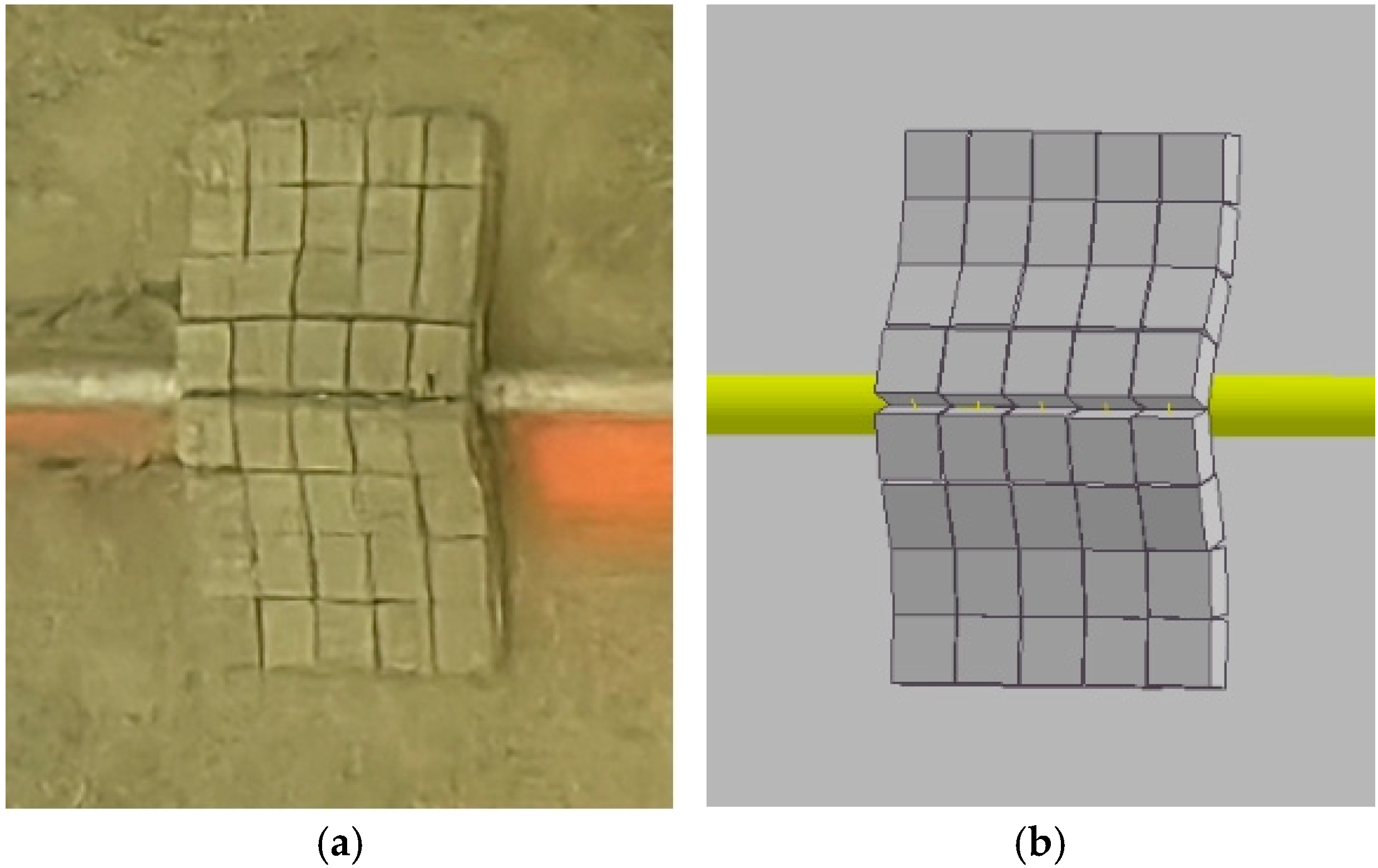
To determine the weight distribution coefficients, the interaction among the ACMs, submarine SCPS, and seabed was analyzed using the finite element method. Solid elements were used for the ACMs, SCPS, and seabed, and cable elements were used to model the lashing ropes. Contact algorithms were applied between the ACMs and the SCPS, ACMs and seabed, and SCPS and seabed, and between adjacent blocks, and the underwater weight of the ACMs was applied in the model. Under gravity, the ACMs adaptively adjusted their posture and reached an equilibrium configuration (
Figure 12) consistent with the actual installation.
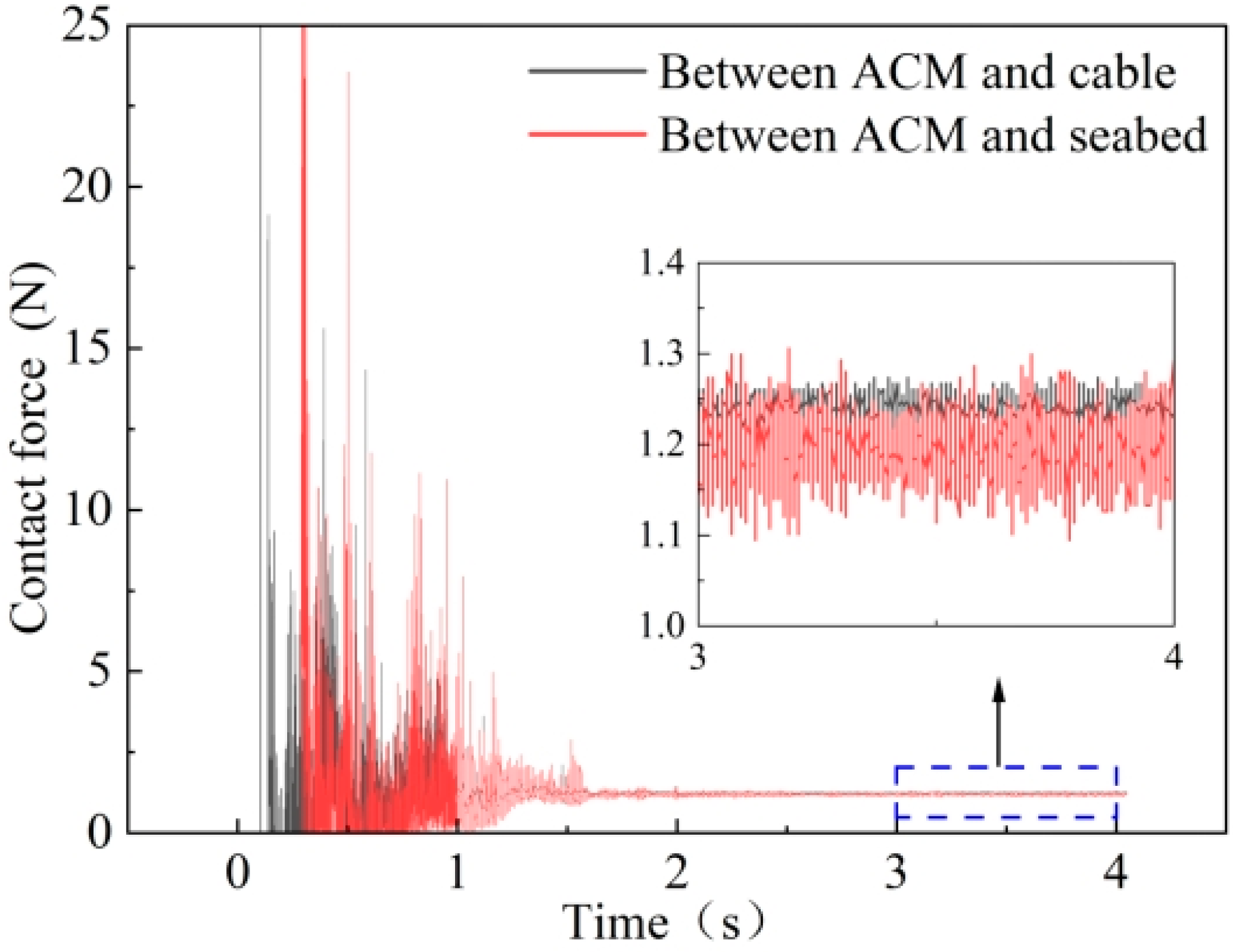
Figure 13 shows the contact forces between a single ACMs and the SCPS (1.24 N) and between the ACMs and the seabed (1.19 N). Their sum equals the underwater weight of the ACMs (2.43 N). Thus, the weight distribution coefficients are
βmc = 0.51 and
βmb = 0.49.
4.3. Verification of Theoretical Equations
Based on Equation (8) and the determined key coefficients, the quantitative relationship between the critical instability velocity of the submarine SCPS and the cover spacing of the ACMs can be obtained. Since this study has systematically carried out stability tests on three core covering forms (-L-L-L-, -L-L-L-L-L-L-, and -2L-2L-2L-) in
Section 3.2 and
Section 3.3, it is confirmed that the variation trends of their critical velocities with a cover spacing are completely consistent, and the maximum deviation of the values under the same coverage ratio does not exceed 4.8% (much smaller than the test repeatability error), indicating that the stability control mechanism of different covering forms is uniformly dominated by the ACMs coverage ratio. Therefore, we select the representative -L-L-L- mode in engineering applications as the validation dataset of the theoretical model, which can not only accurately reflect the prediction reliability of the model but also avoid content redundancy caused by multi-form repeated validation.
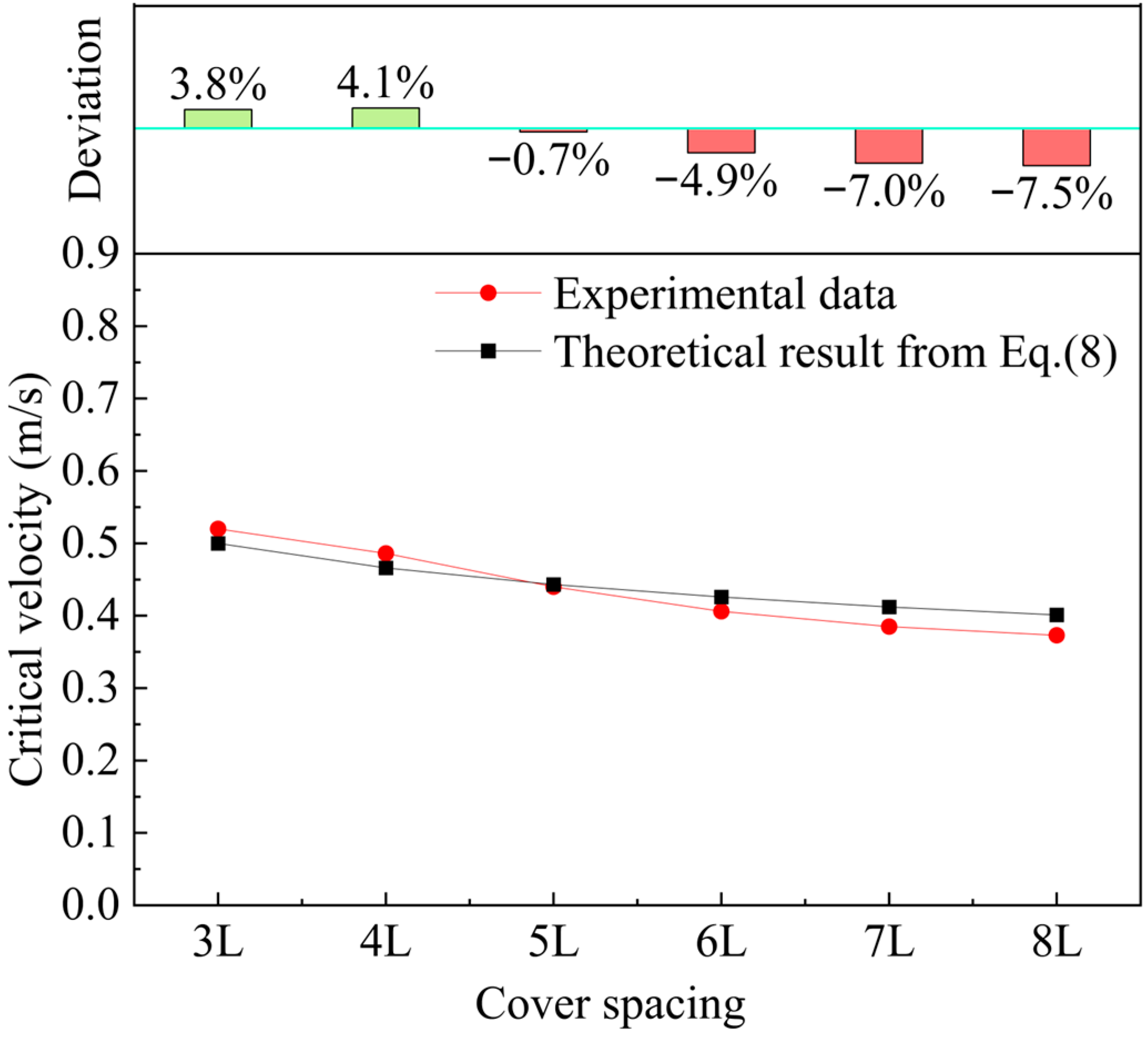
Figure 14 presents the theoretical results for the representative -L-L-L- condition, compared with the experimental measurements. The theoretical predictions show a good agreement with the experimental data, exhibiting similar trends with a maximum deviation below 8%. This comparison verifies the reliability of the theoretical model and provides technical support for extending the laboratory findings to engineering applications.
4.4. Applicability of Theoretical Model
The wave-induced effect and high-velocity tidal environment are not within the scope of this study. The experimental results are derived from idealized low-energy currents. However, the theoretical equations are derived based on the force equilibrium and adhere to objective physical principles, thus possessing a certain degree of universality. It not only is applicable to the experiments but can also be extended to high-velocity current conditions in actual engineering, where the drag and lift coefficients of the ACMs need to be re-determined through reliable CFD methods.
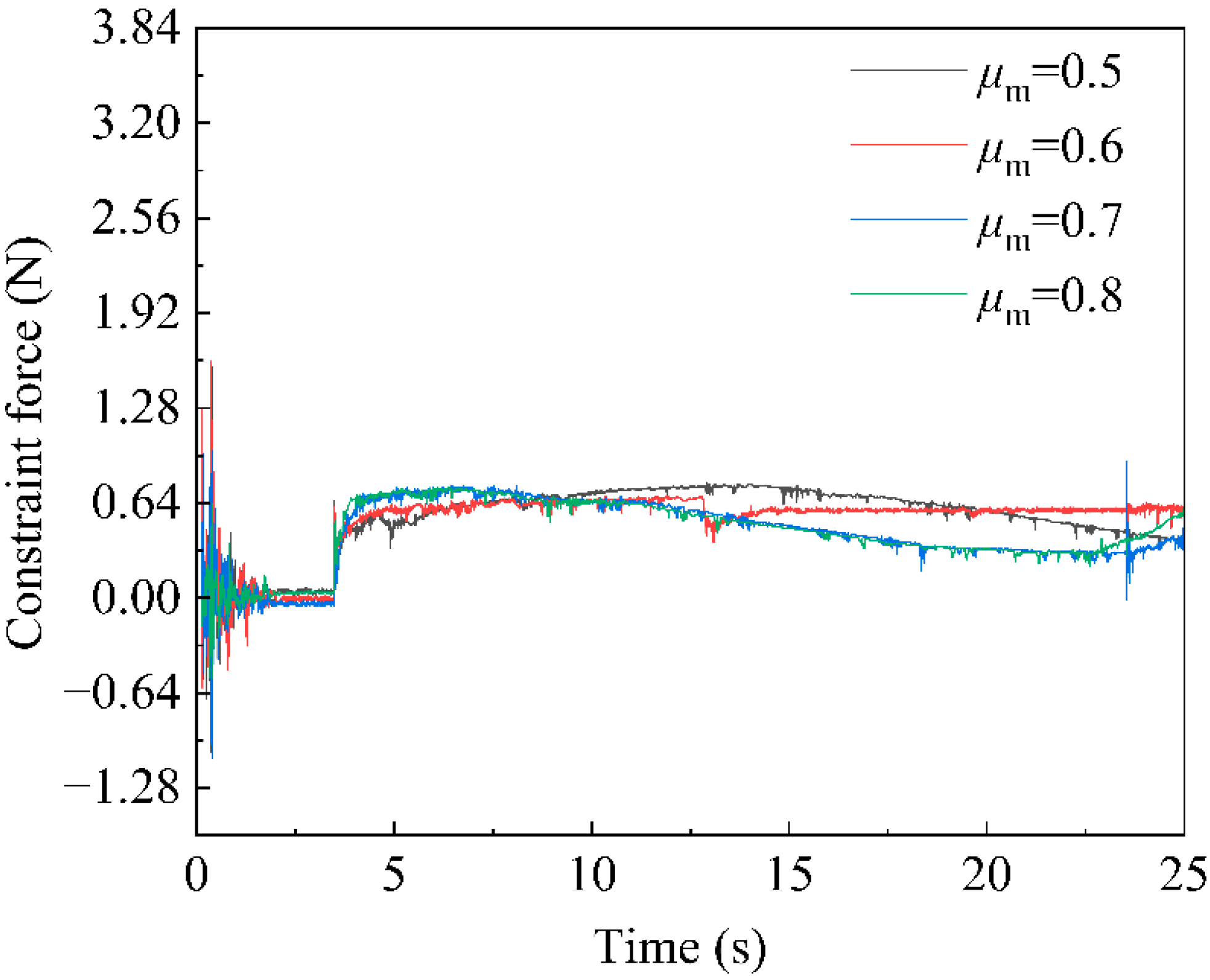
On the other hand, the theoretical model is applicable to the overall slip mode of the SCPS–ACMs, which occurs on a flat hard seabed with a relatively small friction coefficient. However, an actual hard seabed is usually composed of weathered rocks and reef limestone, with an irregular surface and a larger friction coefficient, so the instability mode of the SCPS–ACMs may change. Considering the site-specificity, finite element simulations are performed to capture the transformation of the instability mode under different friction coefficients. Firstly, the ACMs are laid on the SCPS under gravity and allowed to reach an equilibrium configuration. Then, a constant velocity is applied to the SCPS to make it slide forward slowly, and the ACMs are forced to move accordingly. The instability mode mainly depends on the constraint force (
FCo) of the ACMs on the SCPS and the friction force (
FRm) between the ACMs and the seabed.
Figure 15 presents the variations in
FCo with different friction coefficients
μm. It can be calculated that, in the initial stage of movement,
FCo ≈ 0.73 N. If
μm ≤ 0.6, we can see that
FRm ≤ 0.72 N and
FCo >
FRm; in this case, the SCPS–ACMs undergo overall slip. On the contrary, if
μm ≥ 0.7, we can see that
FRm ≥ 0.83 N and
FCo <
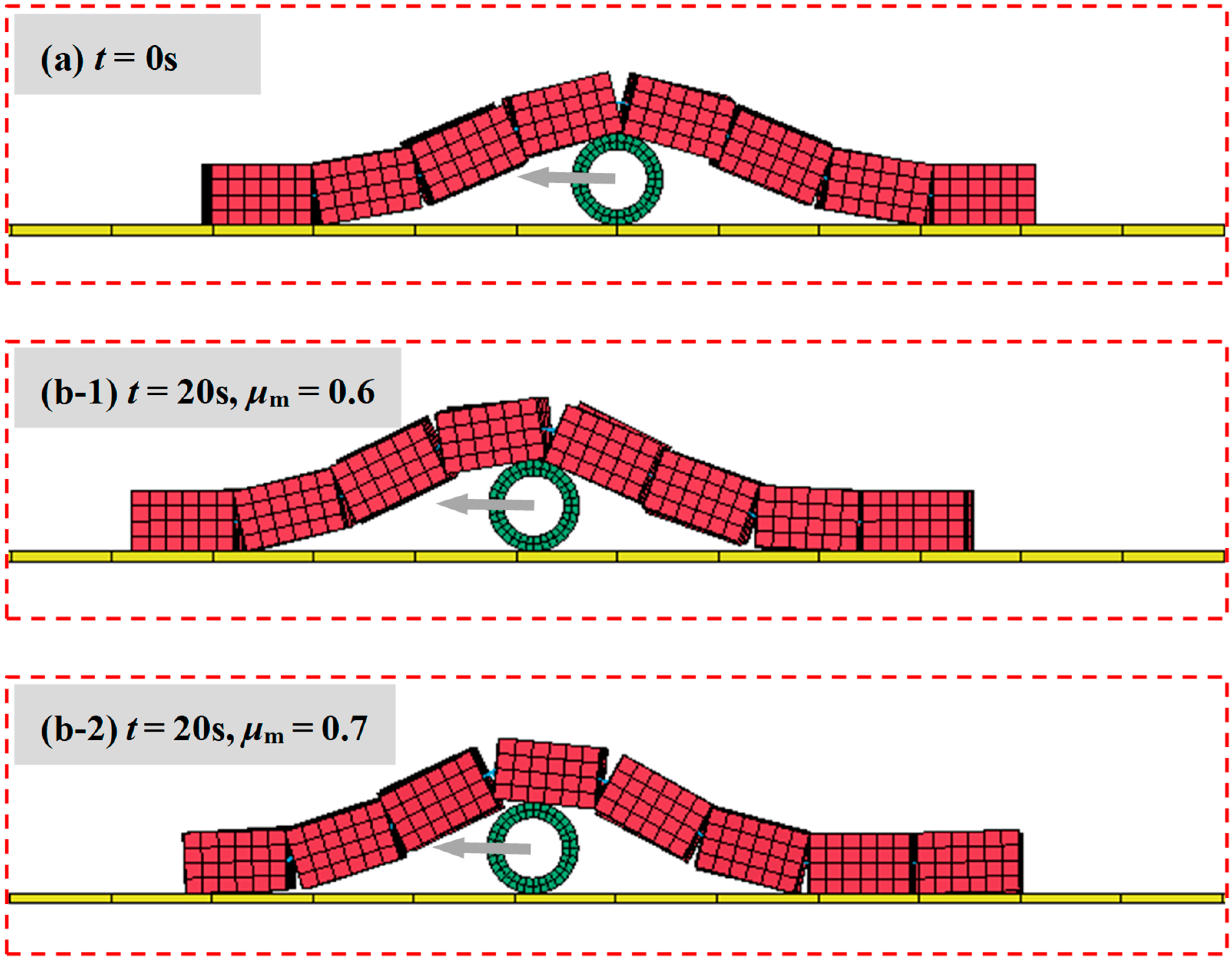
FRm; in this case, the SCPS slides under the ACMs. Representative motion modes are shown in
Figure 16.
Experimental and theoretical research on the slip instability of the SCPS under the ACMs will be further conducted in our future work.





 ,
,