
Study on Combustion Characteristics of Compression Ignition Marine Methanol/Diesel Dual-Fuel Engine


Abstract
1. Introduction
2. Numerical Model and Validation
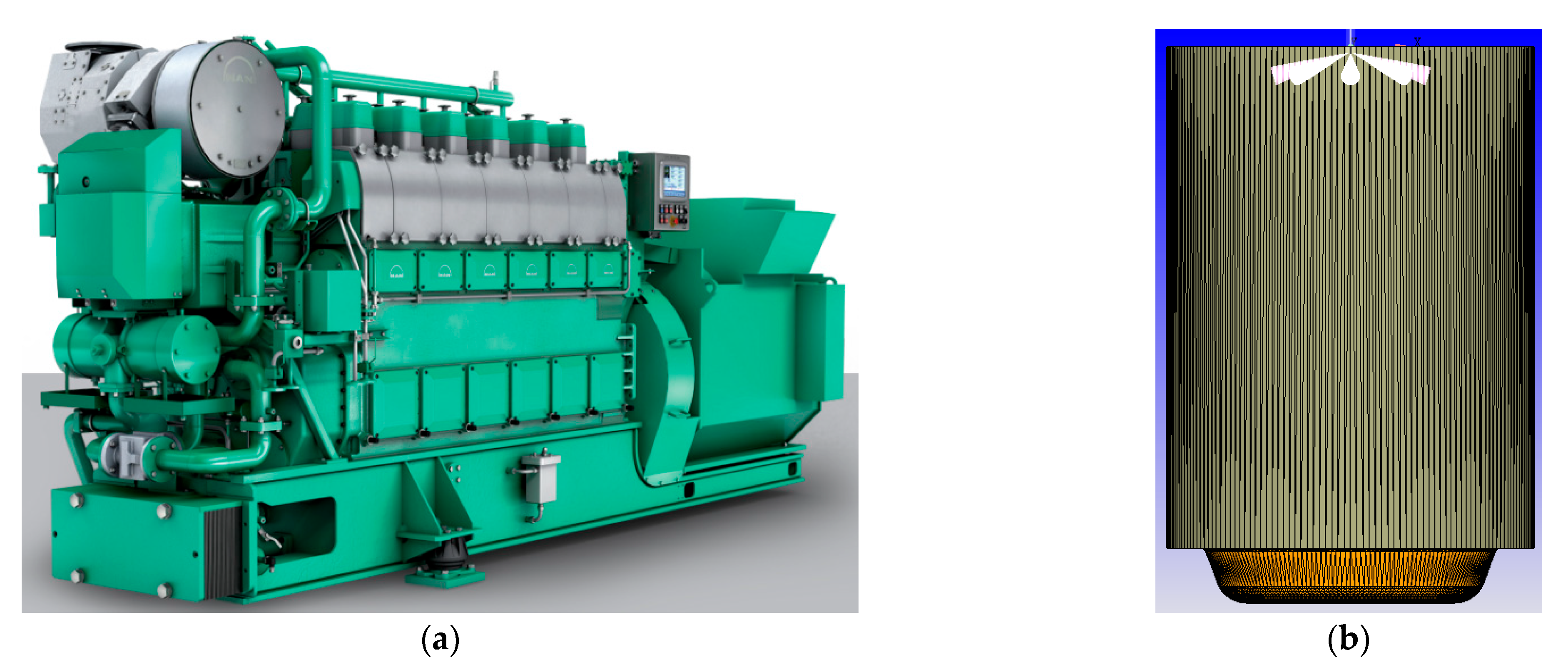
2.1. Engine Operating Parameters
2.2. Setup of Initial and Boundary Conditions
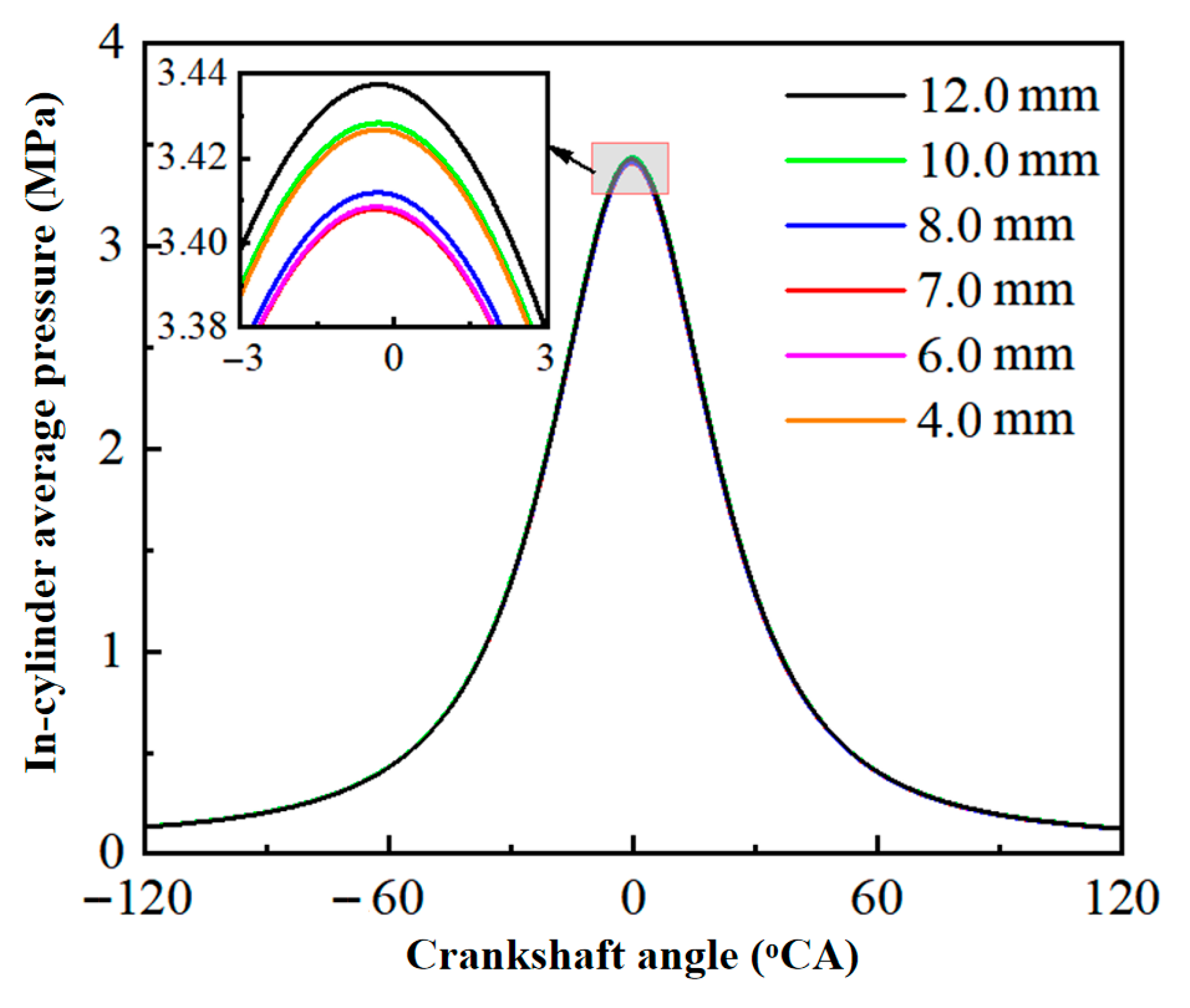
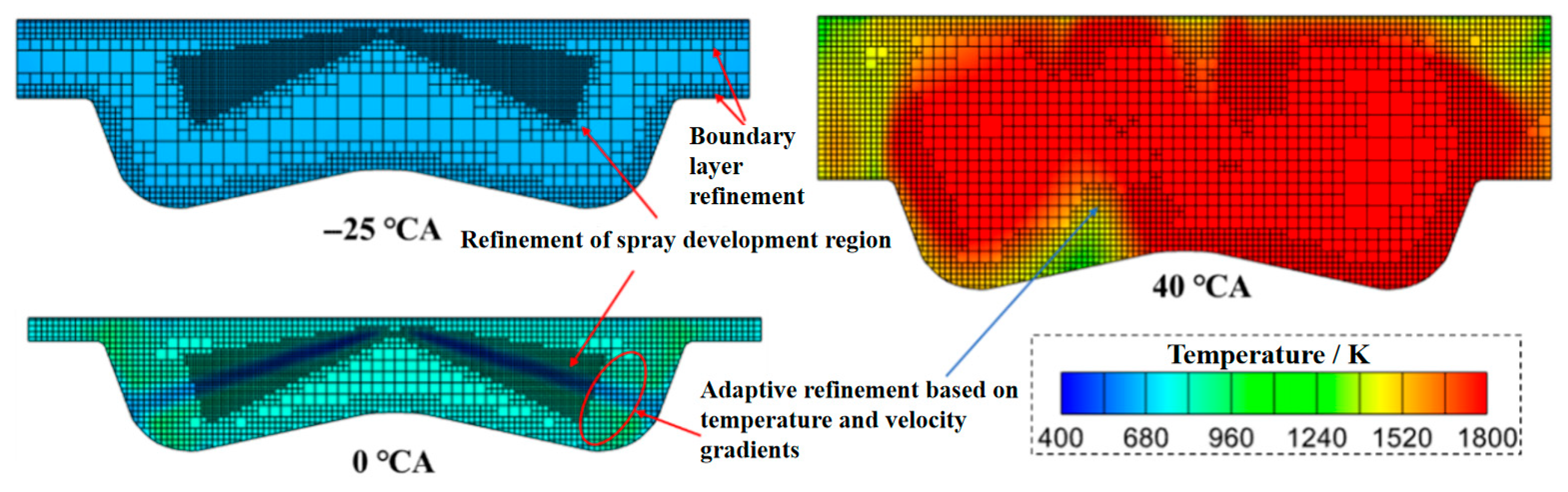
2.3. Verification of Grid Independence for Geometric Model
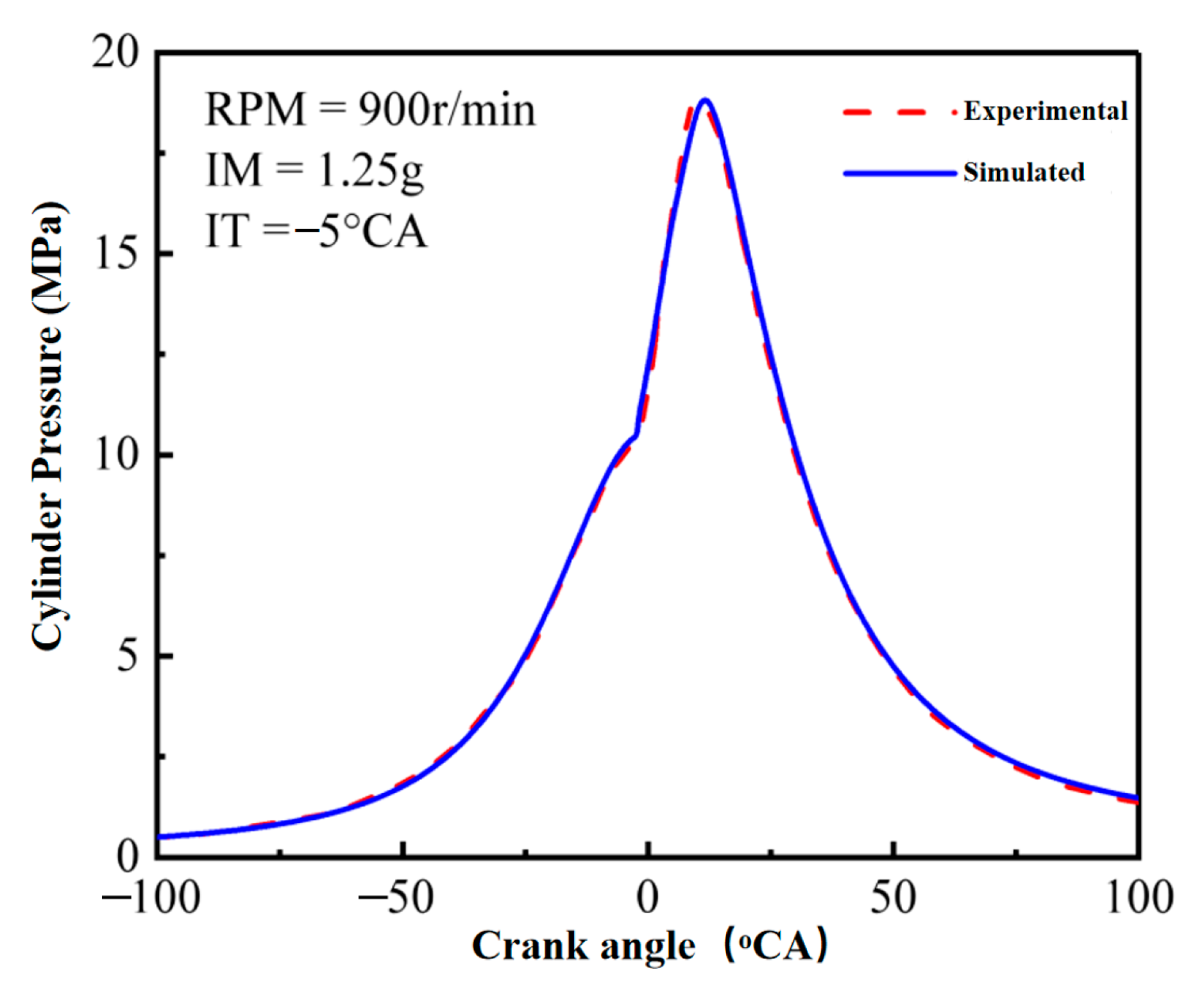
2.4. Original Machine Cylinder Pressure Verification
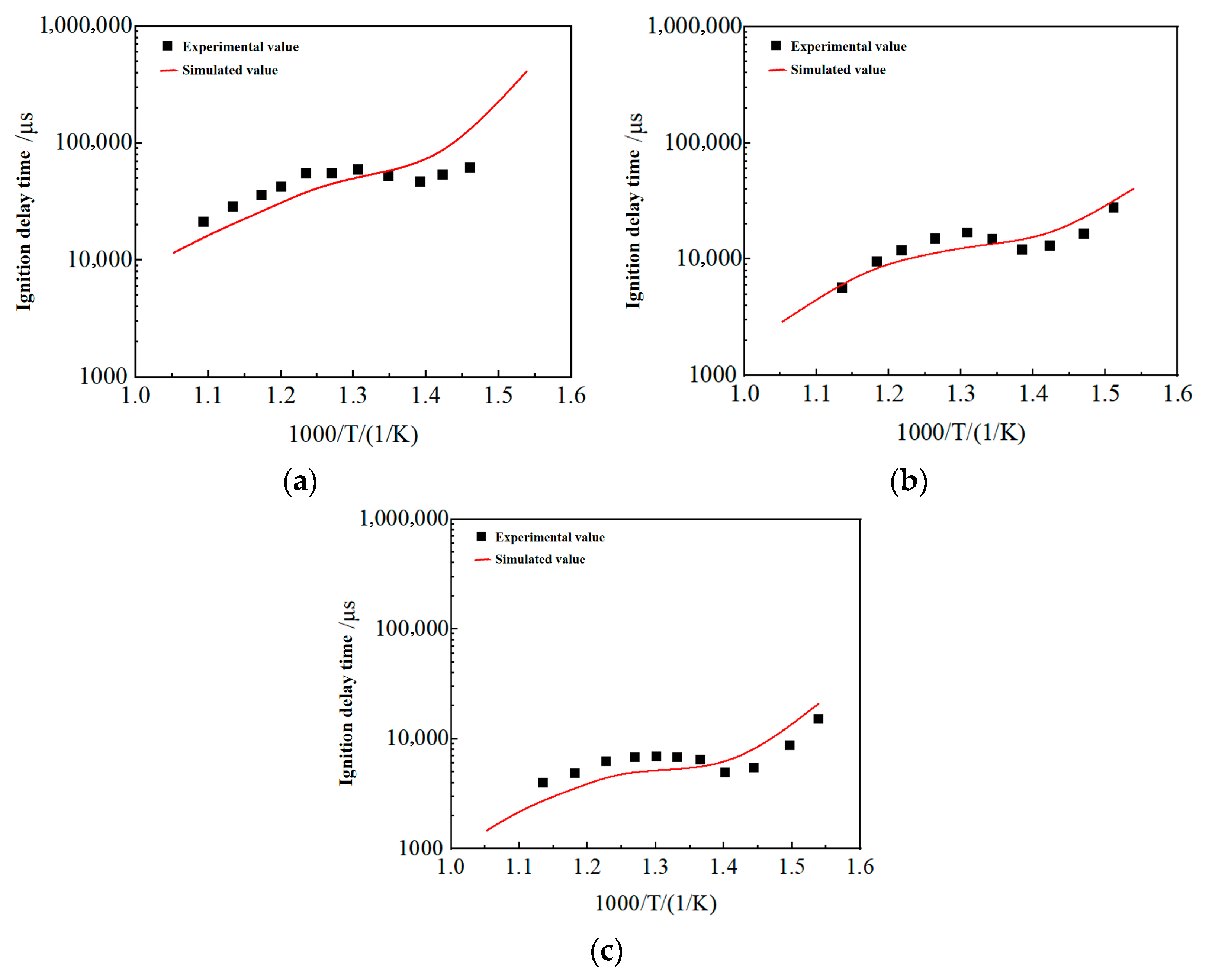
2.5. Construction and Validation of Methanol/Diesel Dual-Fuel Chemical Reaction Kinetic Mechanism
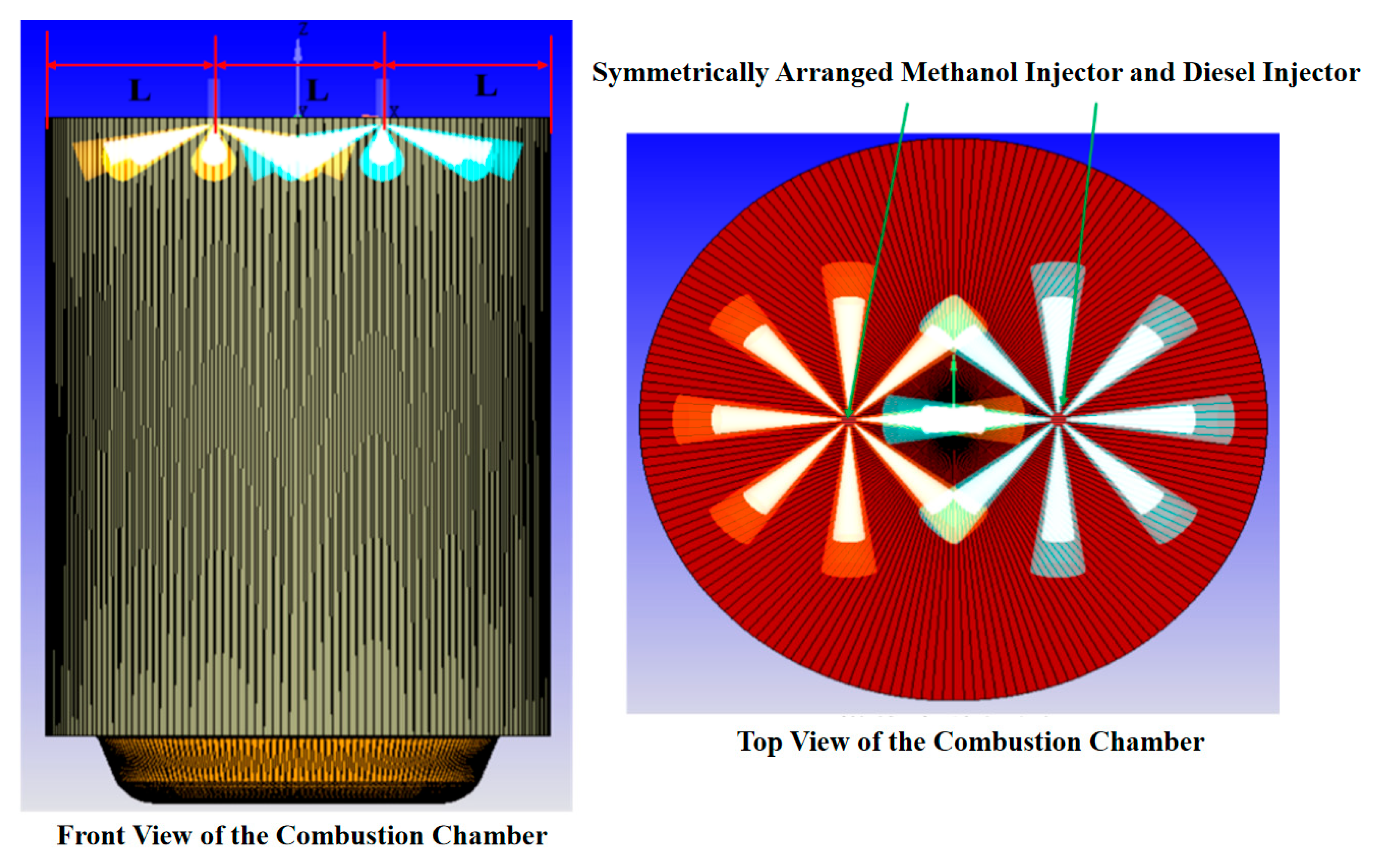
2.6. Establishment of Simulation Model for Methanol-Diesel Dual-Fuel Engine
3. Results and Discussion
3.1. Comparison of Engine Performance Under Different Operating Modes
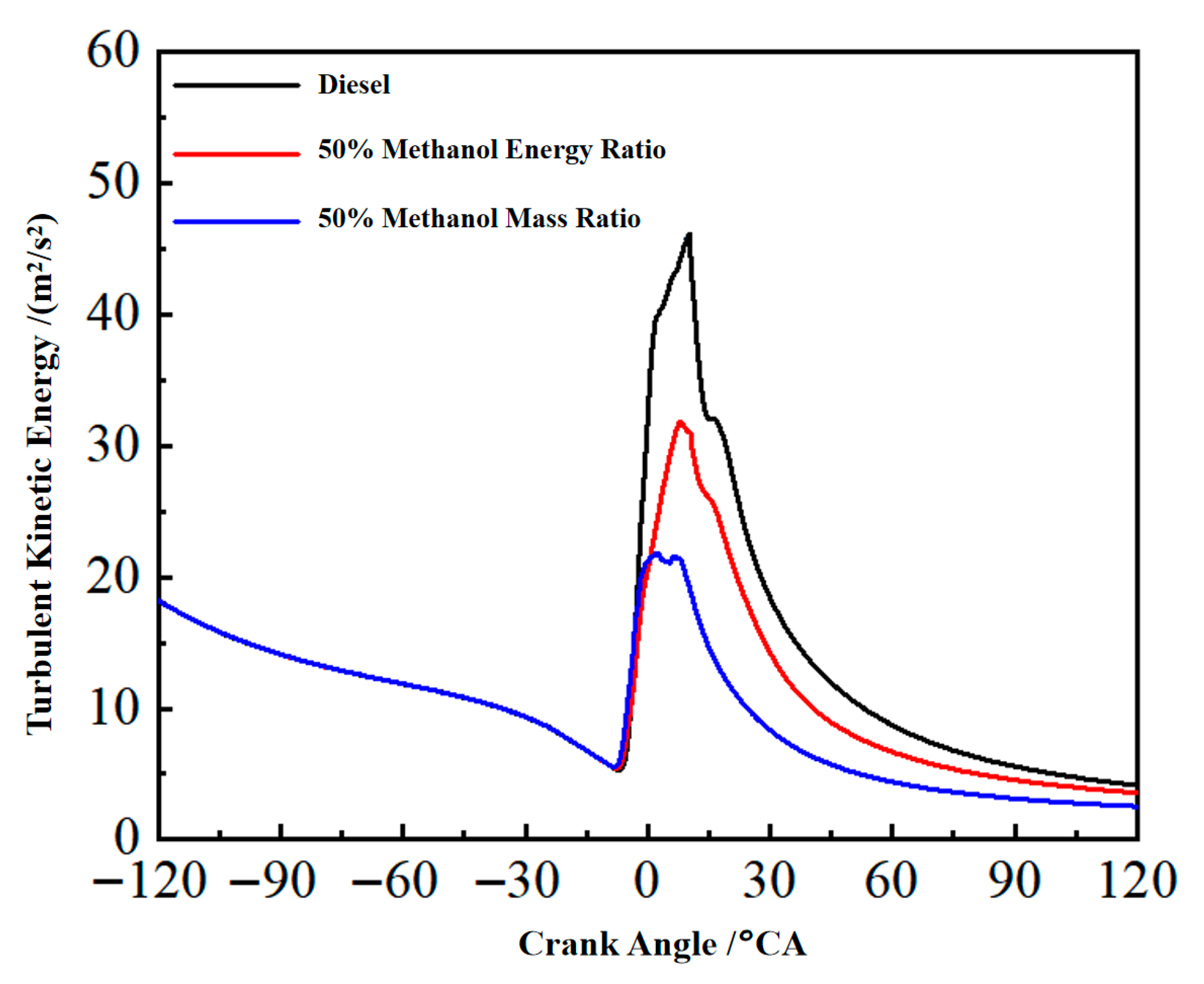
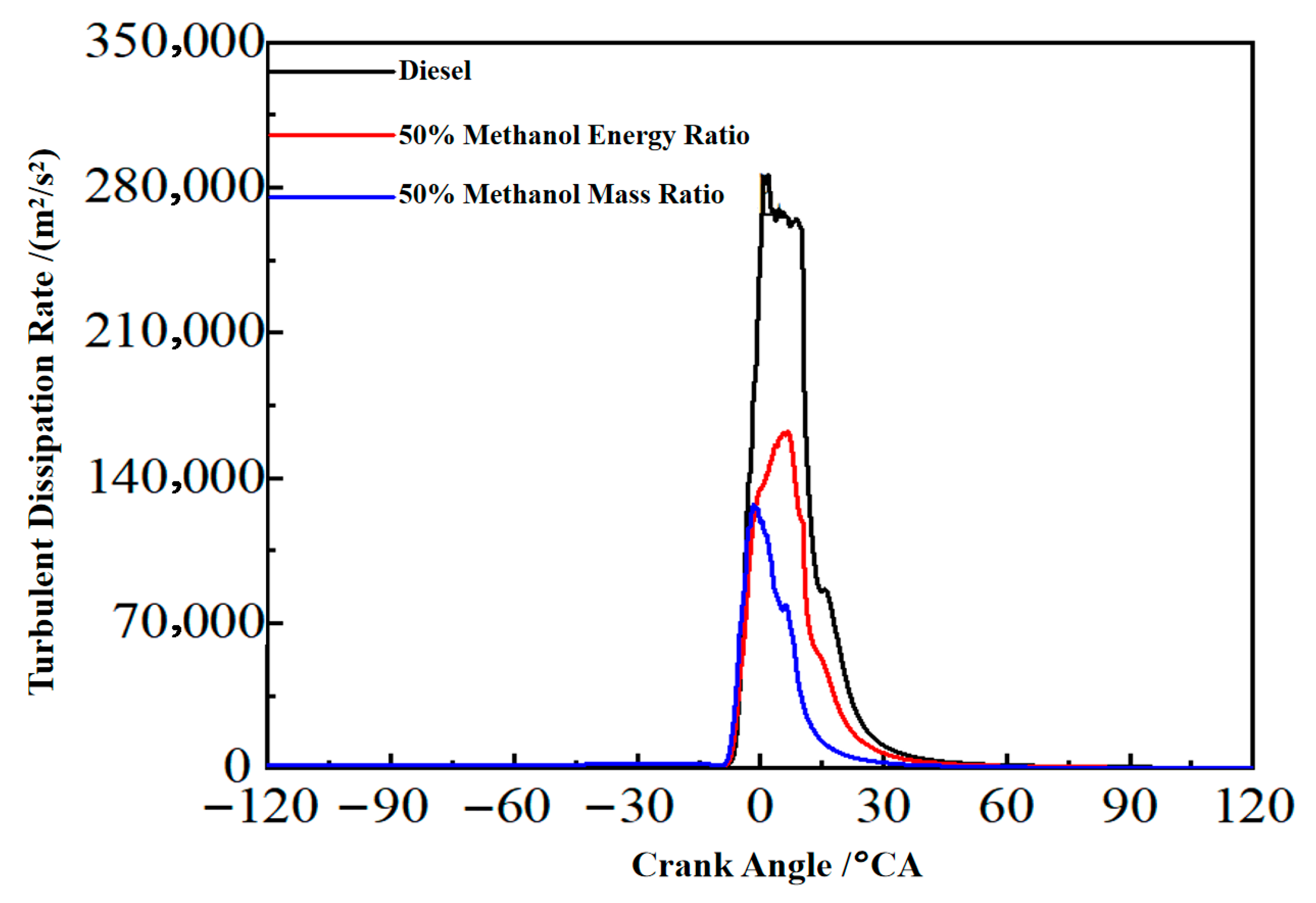
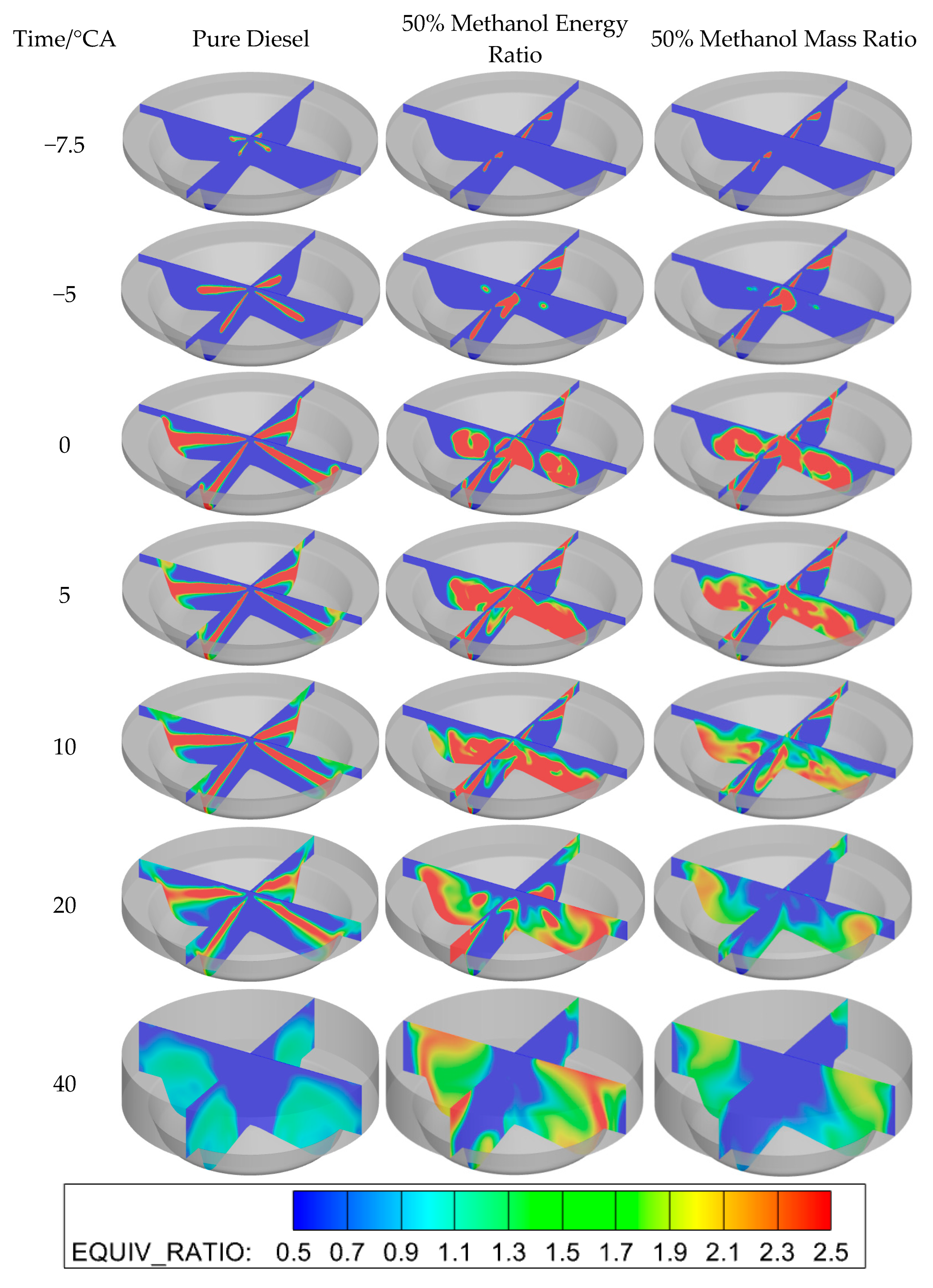
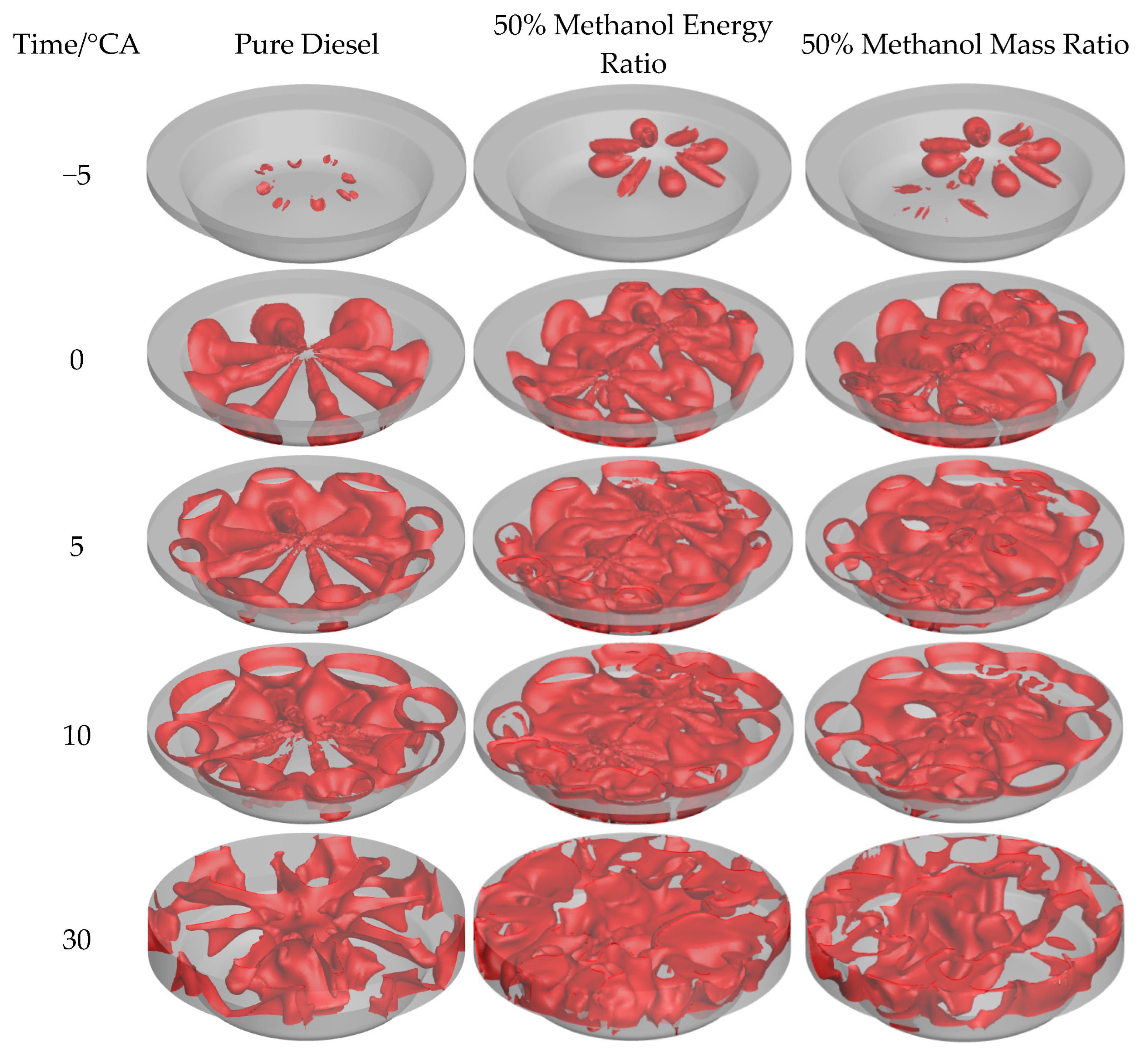
3.1.1. Mixture Formation Process
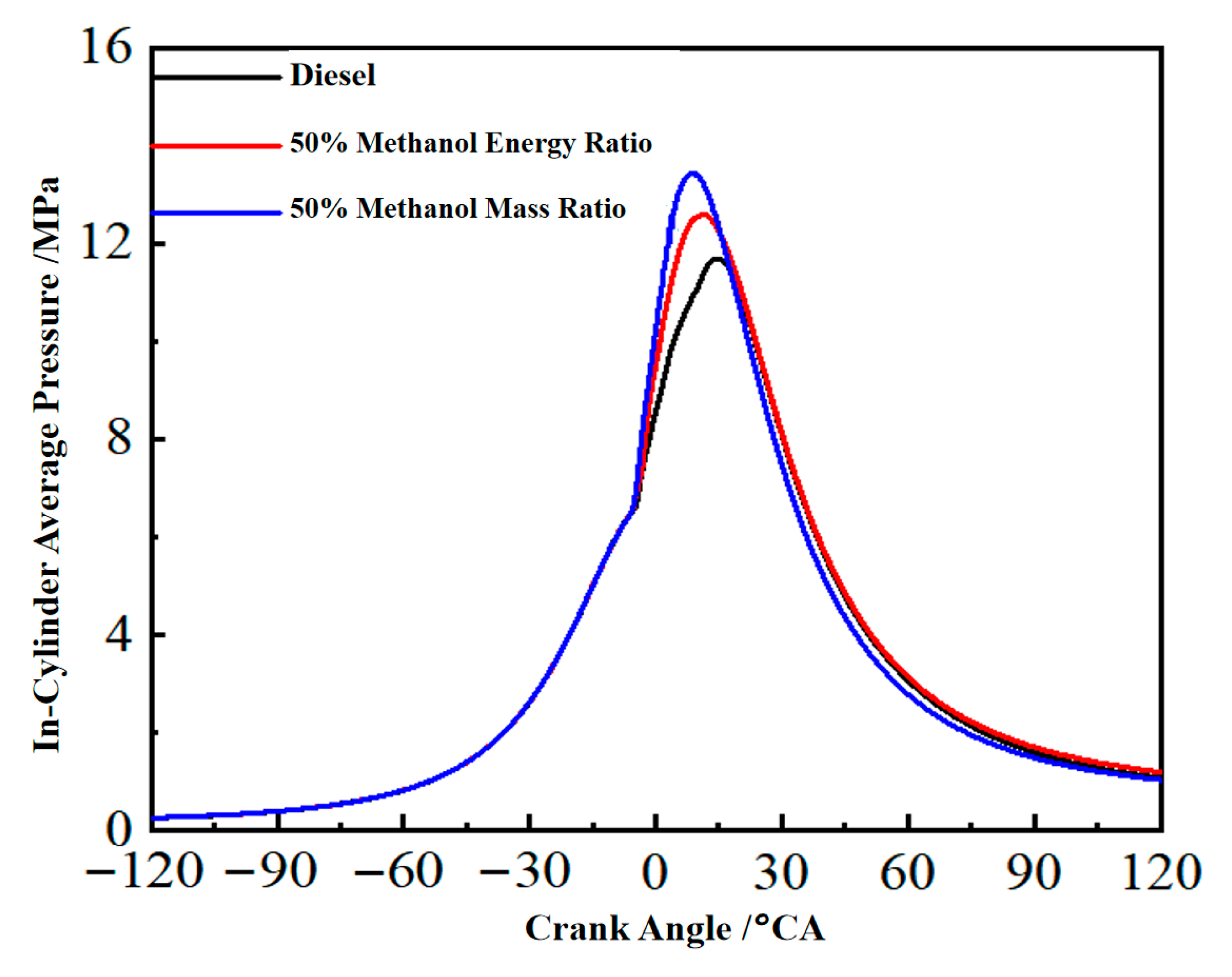
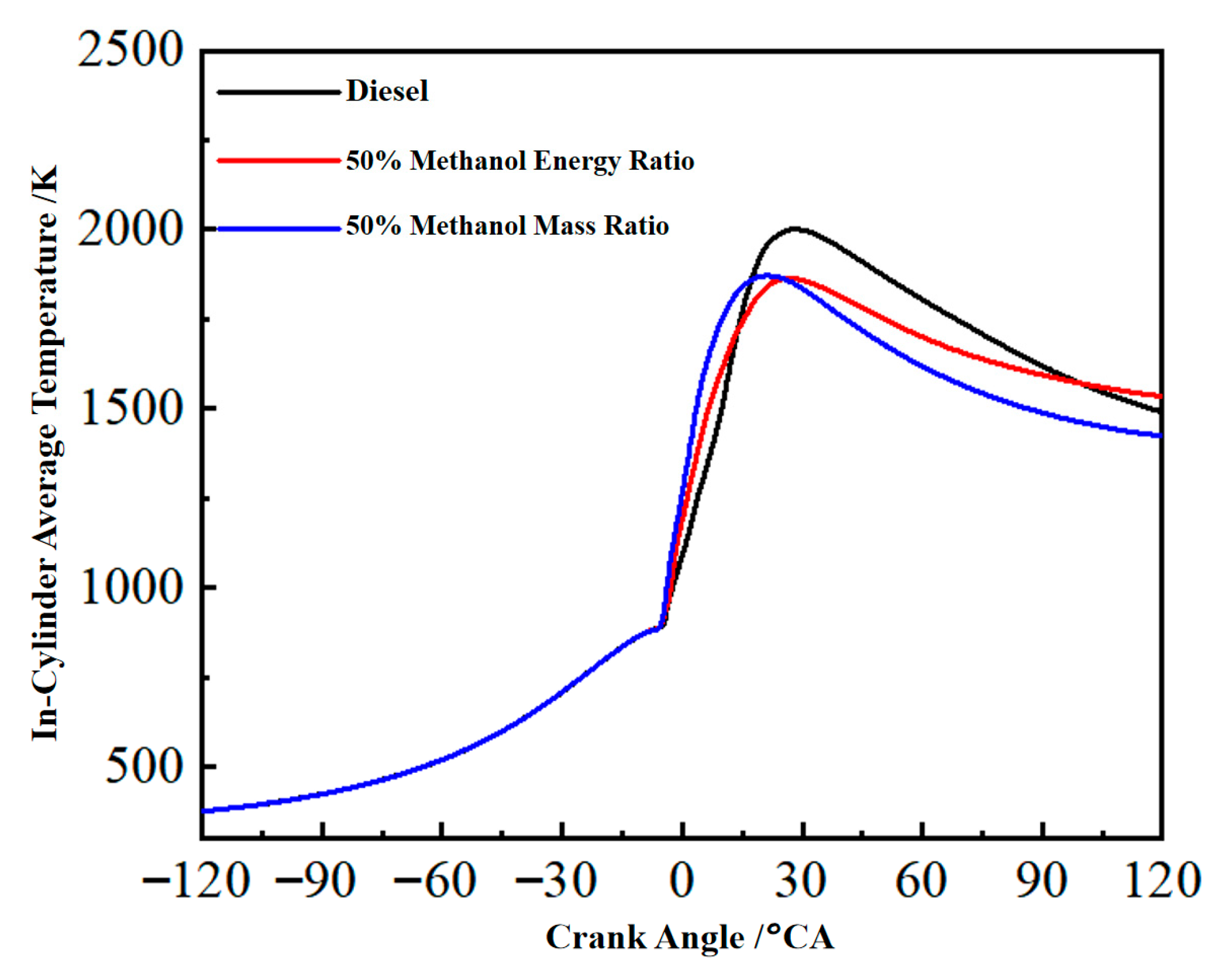
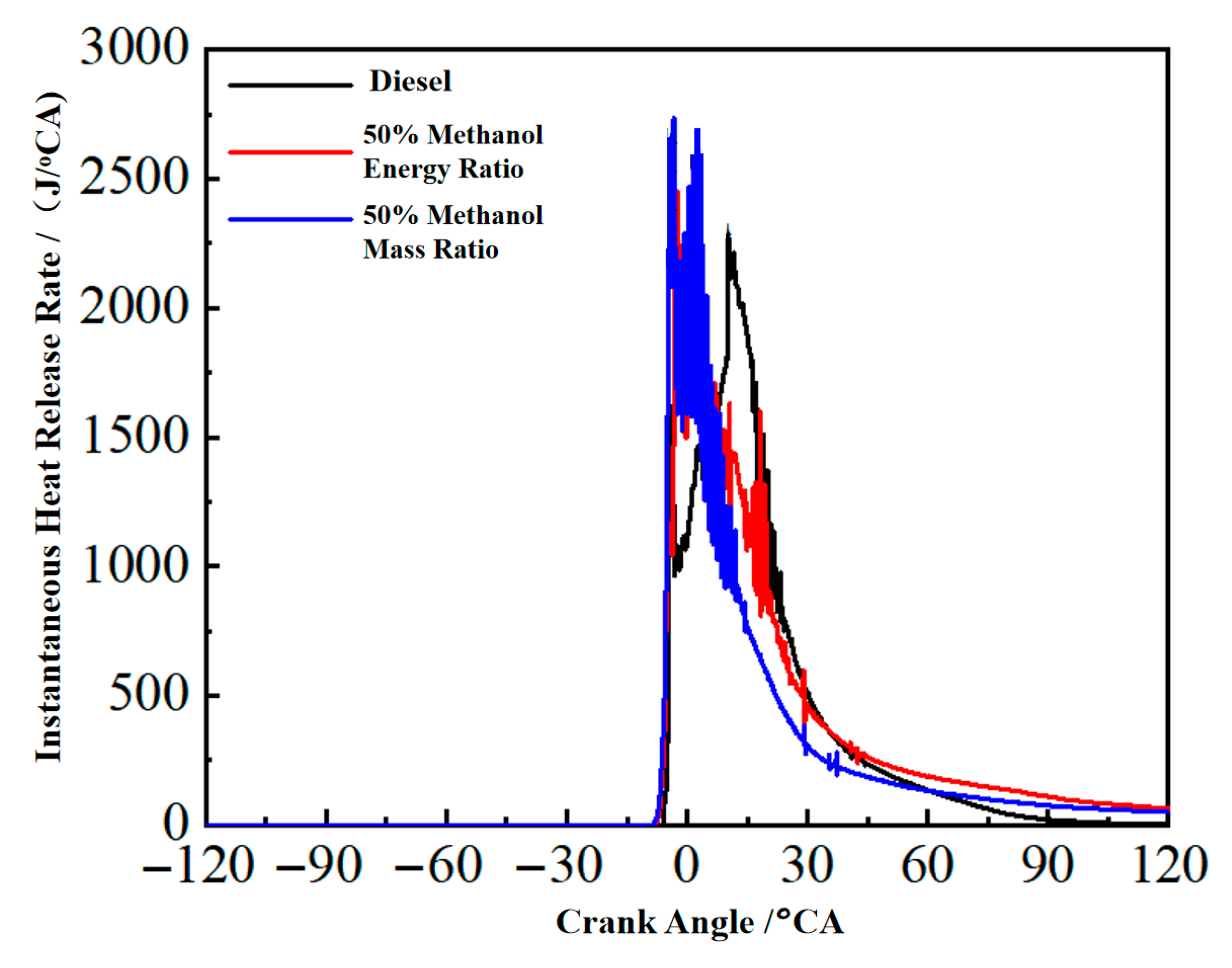
3.1.2. Combustion Characteristics
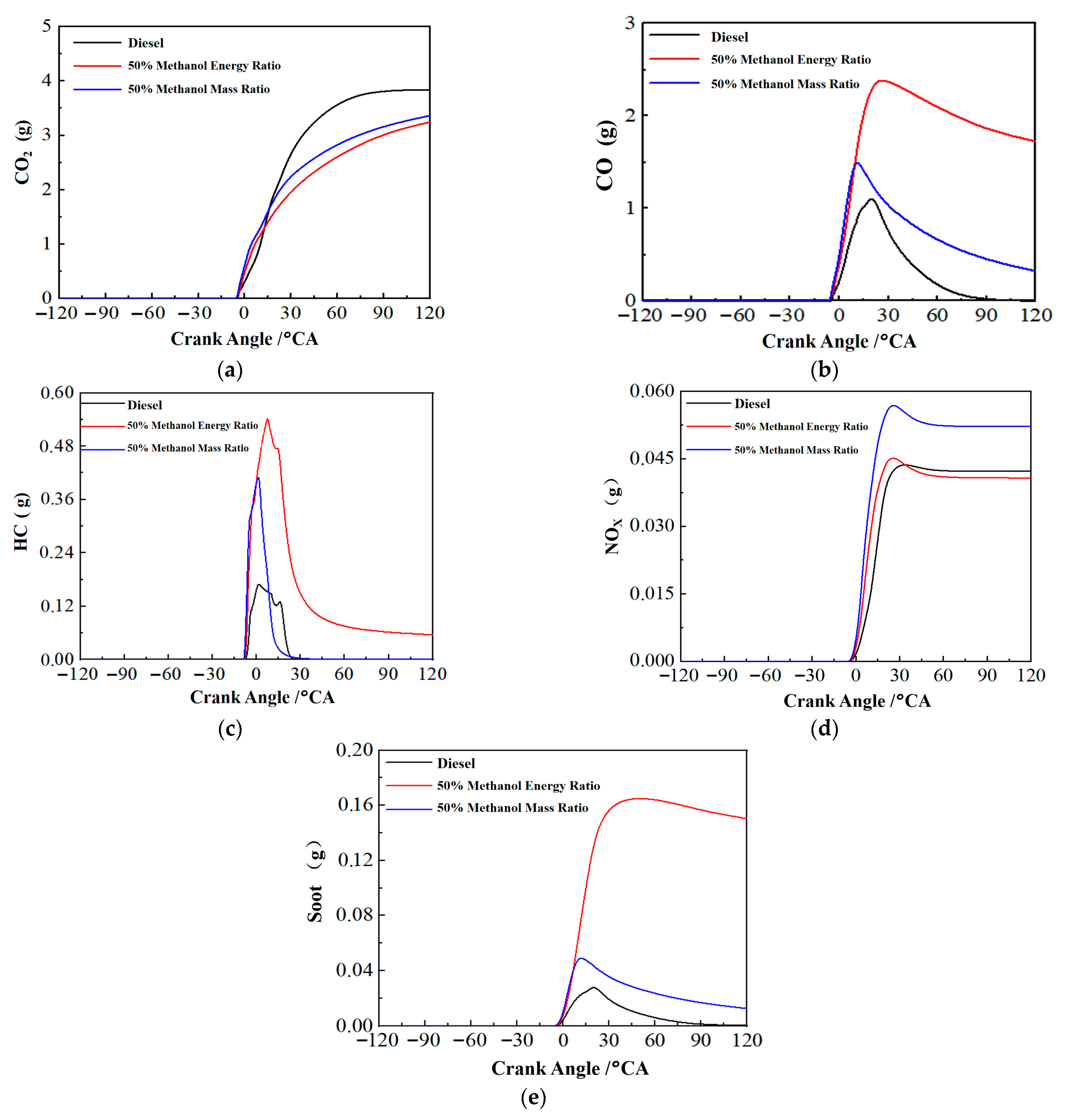
3.1.3. Emission Characteristics
3.2. Comparison of Engine Performance Under Different Spray Development Modes
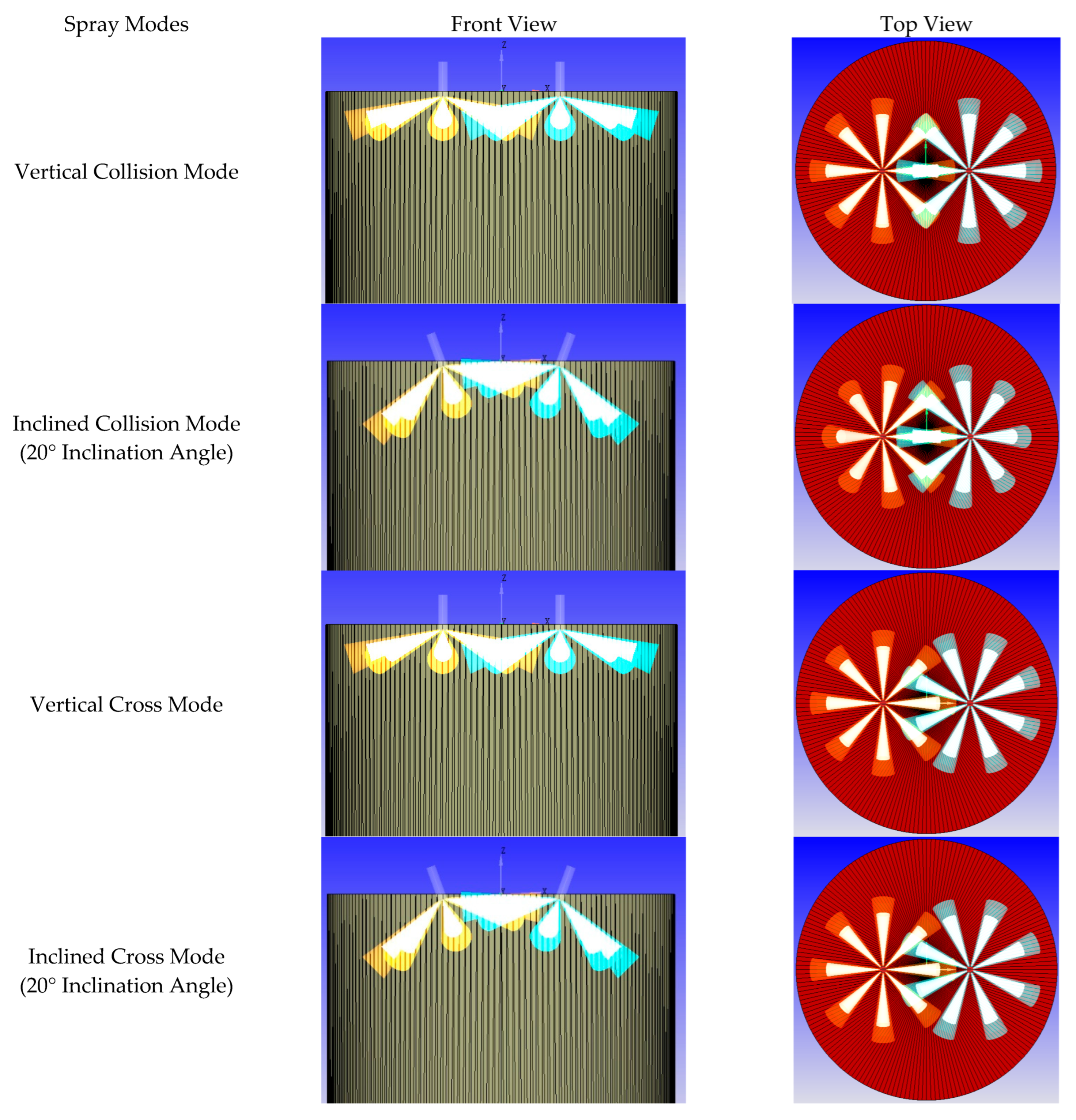
3.2.1. Spray Development Modes
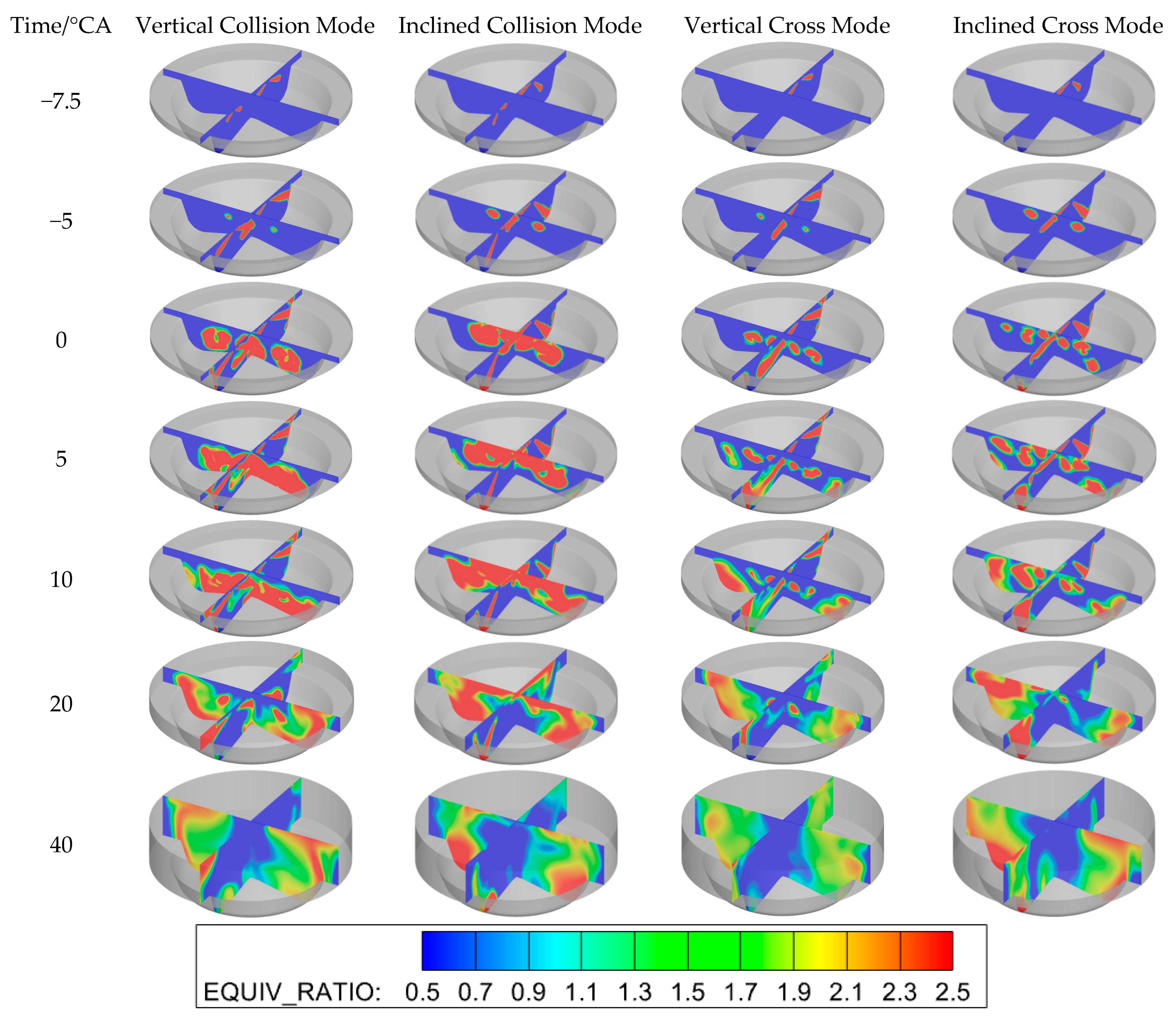
3.2.2. The Influence of the Fuel Injection Interval on the Air-Fuel Mixture Formation Process
3.2.3. The Influence of the Fuel Injection Interval on Engine Combustion Characteristics
3.3. Influence of Fuel Injection Interval on Engine Combustion Characteristics
3.3.1. Influence on the Mixture Formation Process
3.3.2. Influence on Engine Combustion Characteristics
3.4. Influence of Injection Timing on Engine Combustion Characteristics
3.4.1. Influence on the Mixture Formation Process
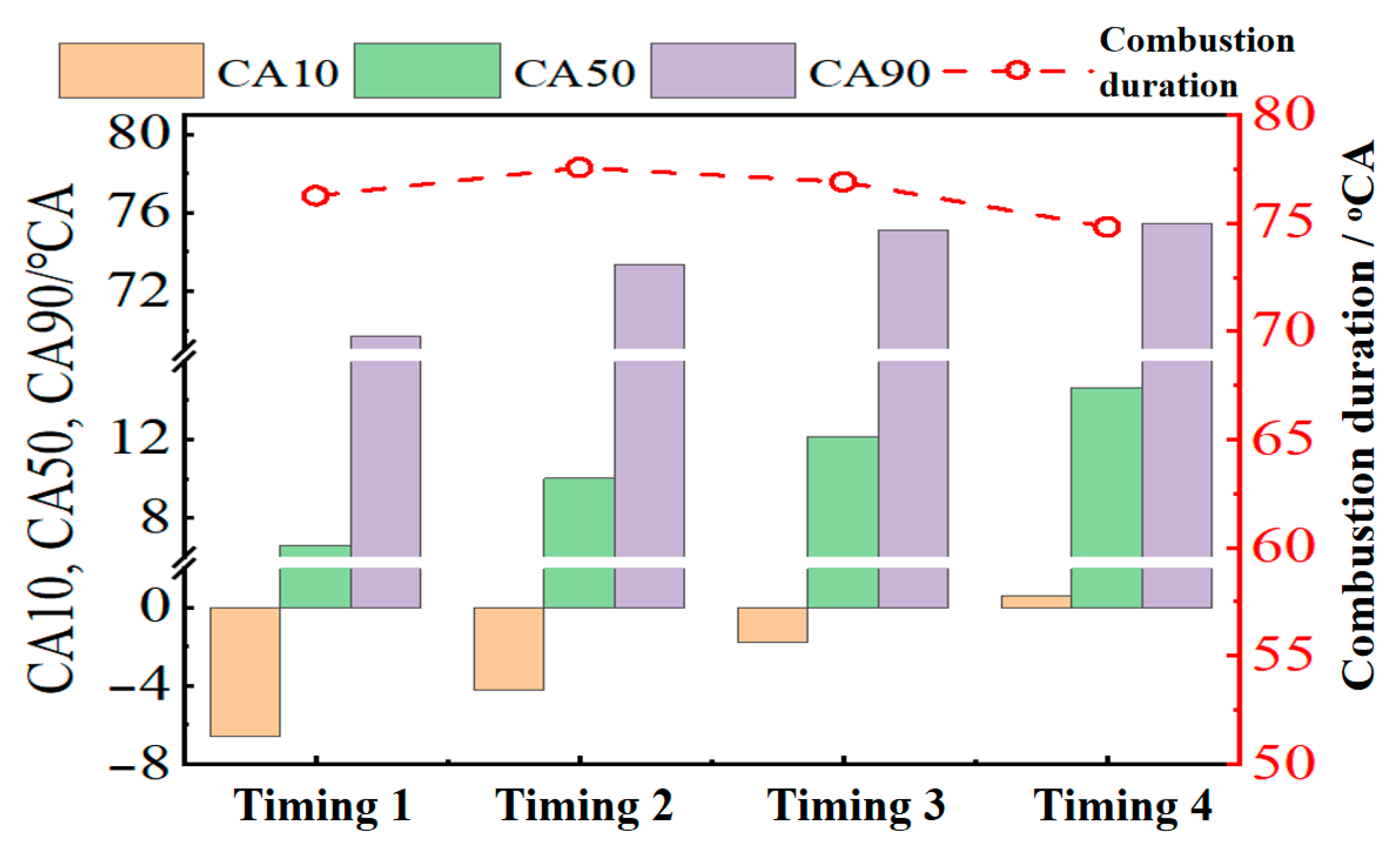
3.4.2. Influence on Engine Combustion Characteristics
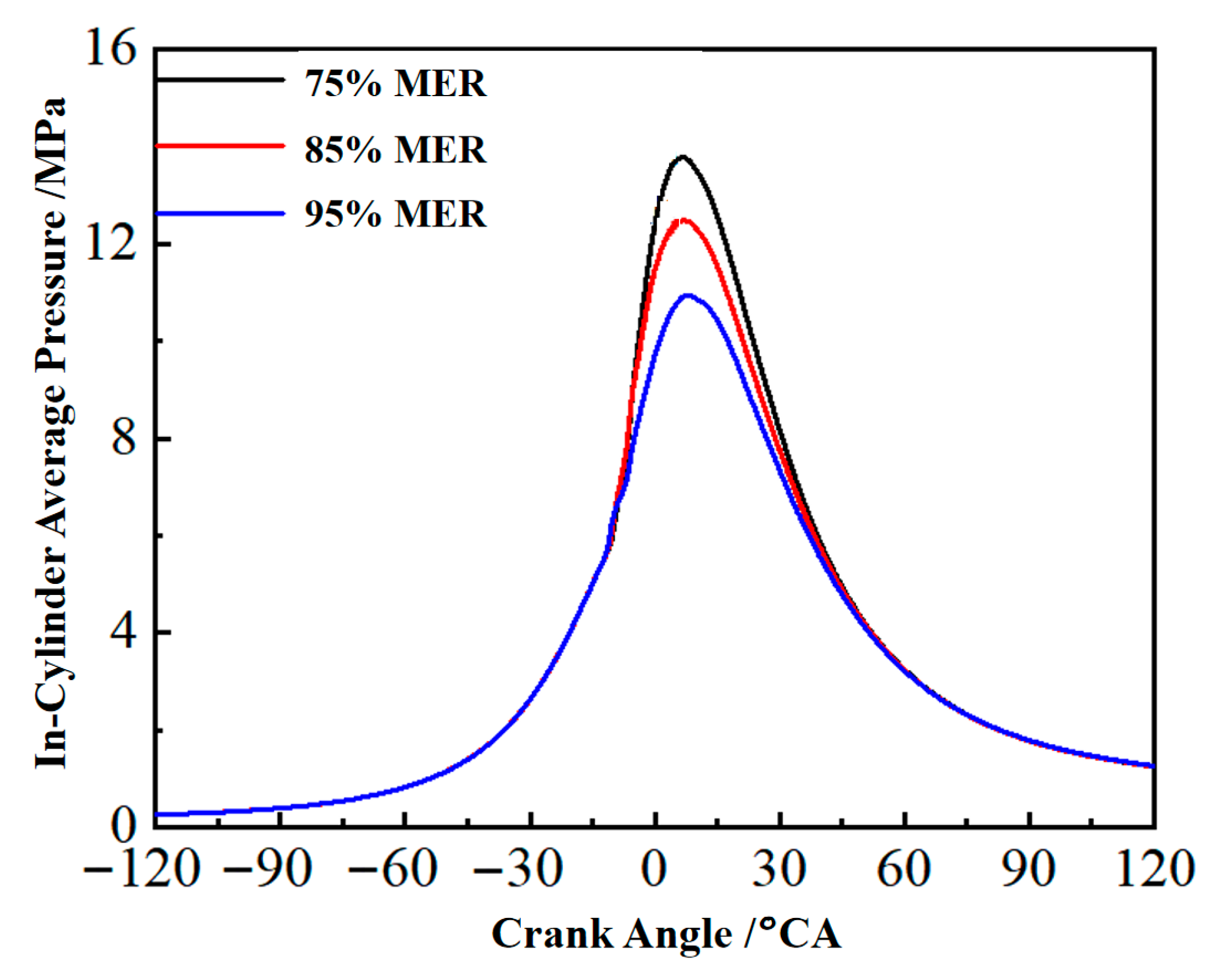
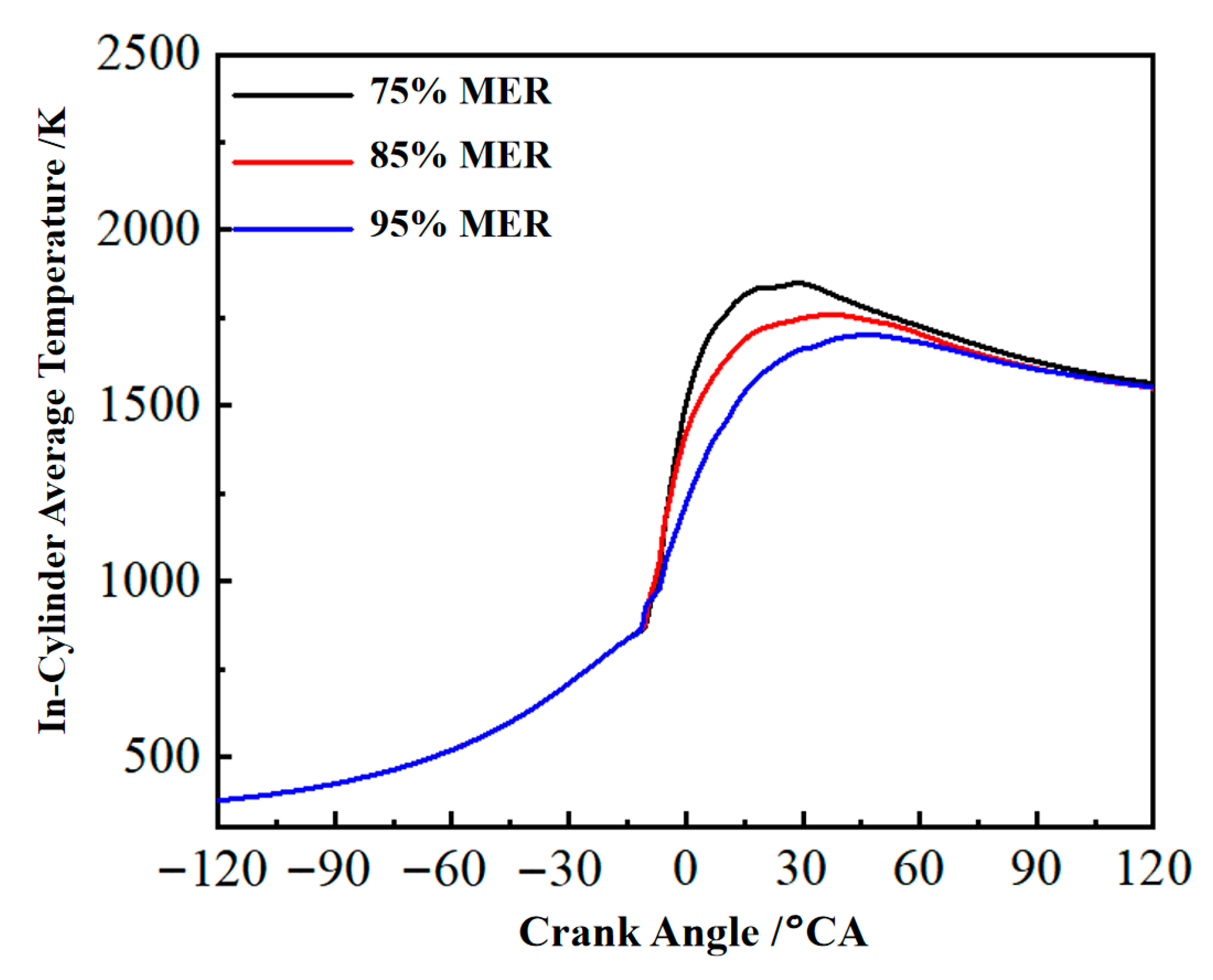
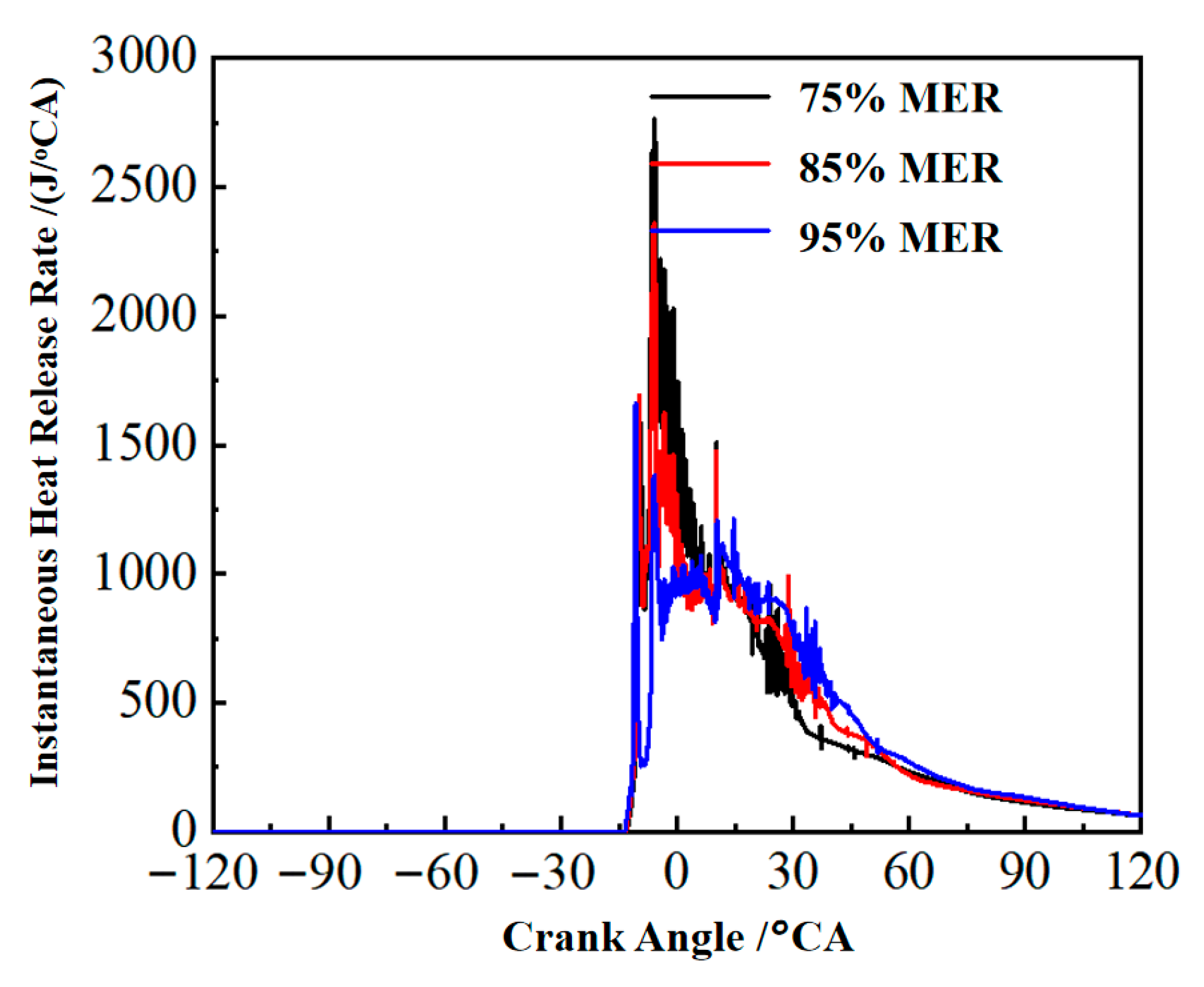
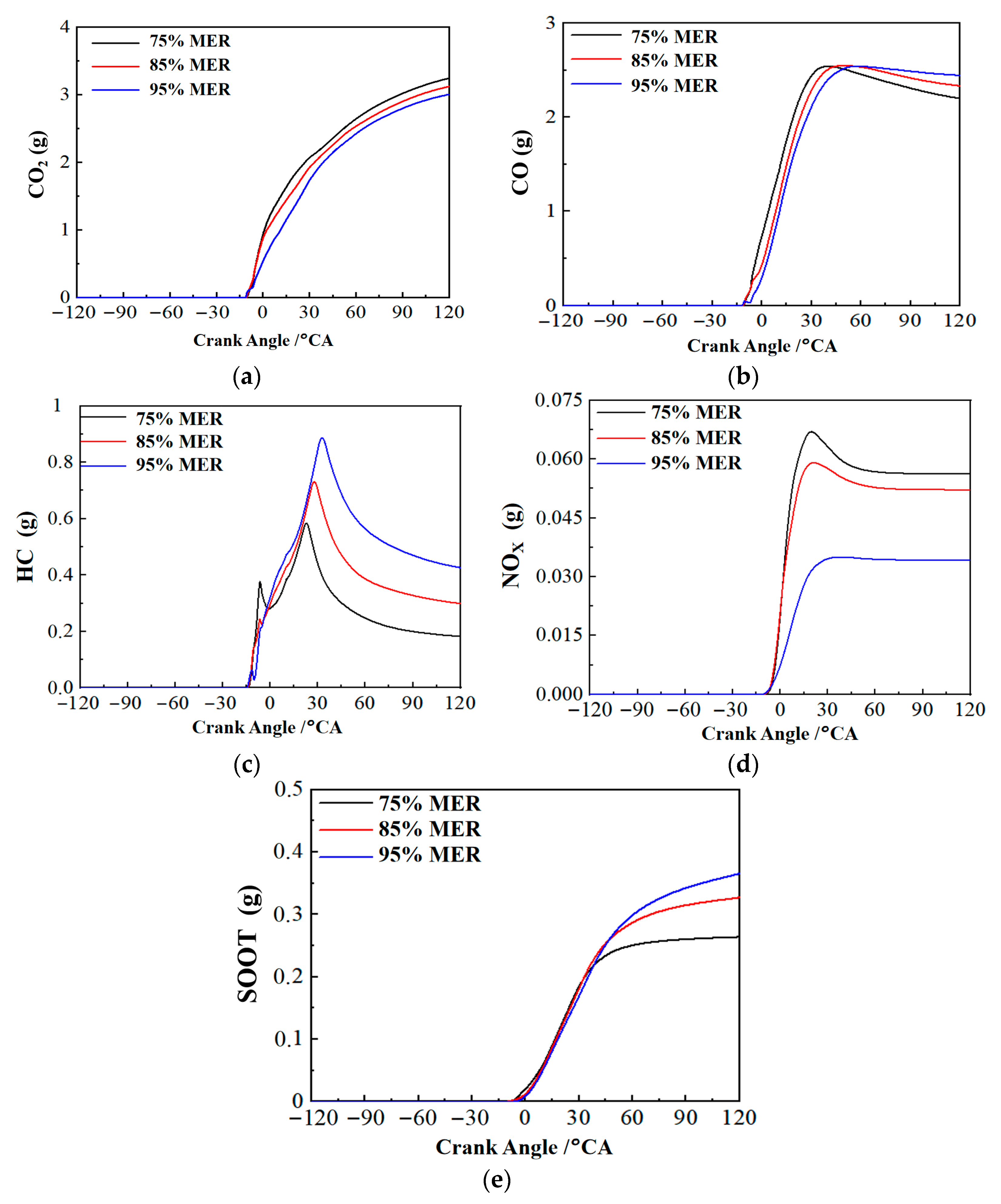
3.5. Influence of Methanol Energy Ratio on Combustion and Emission Characteristics
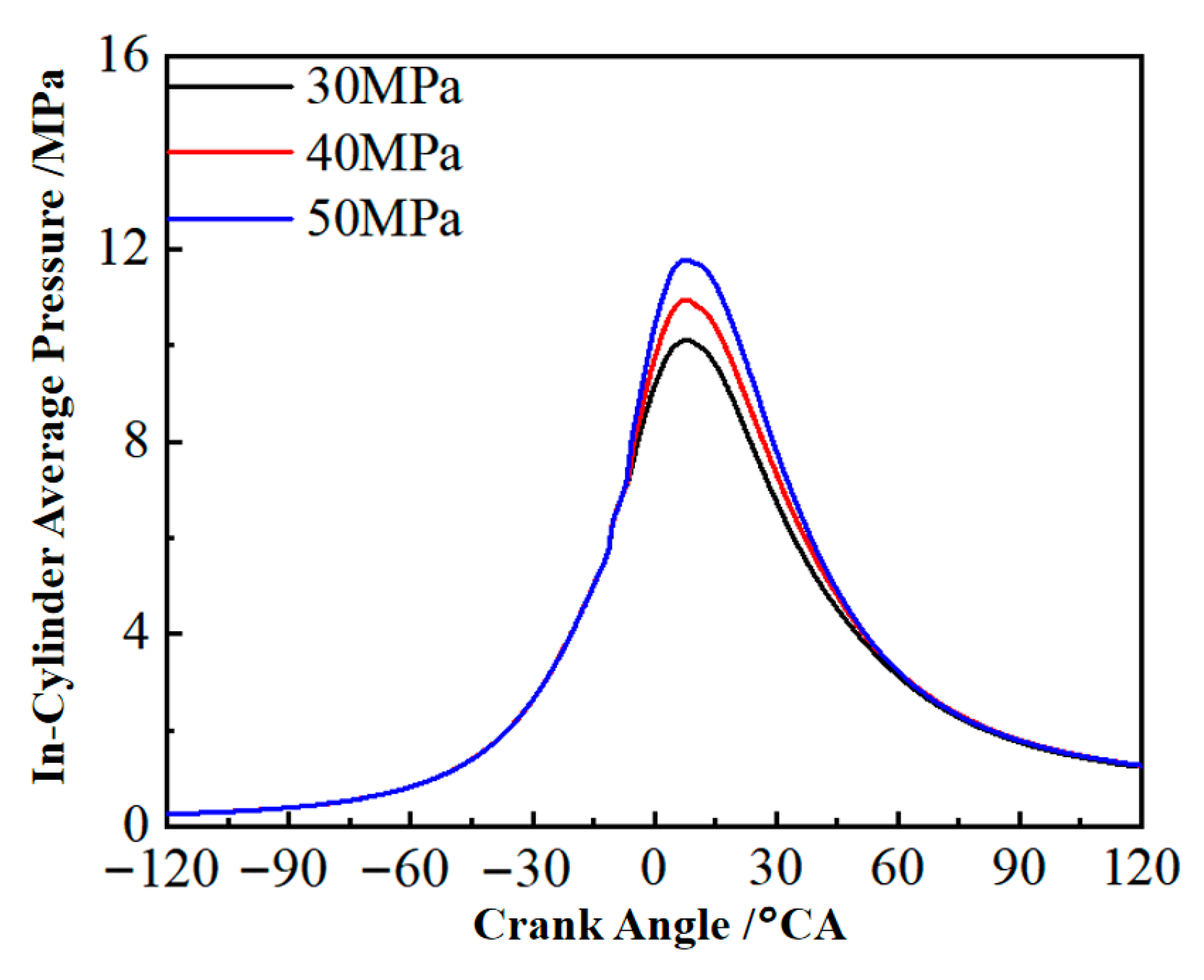
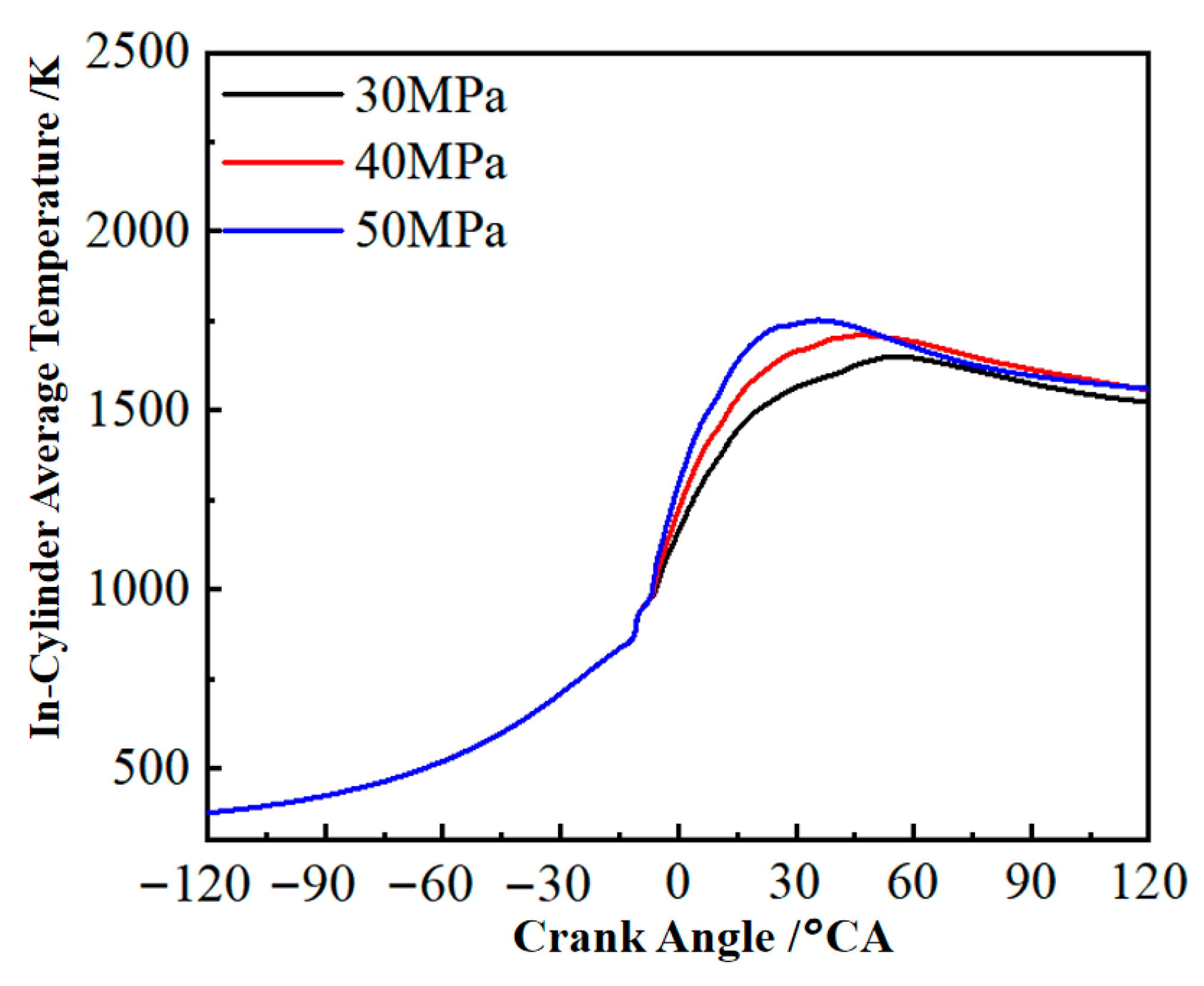
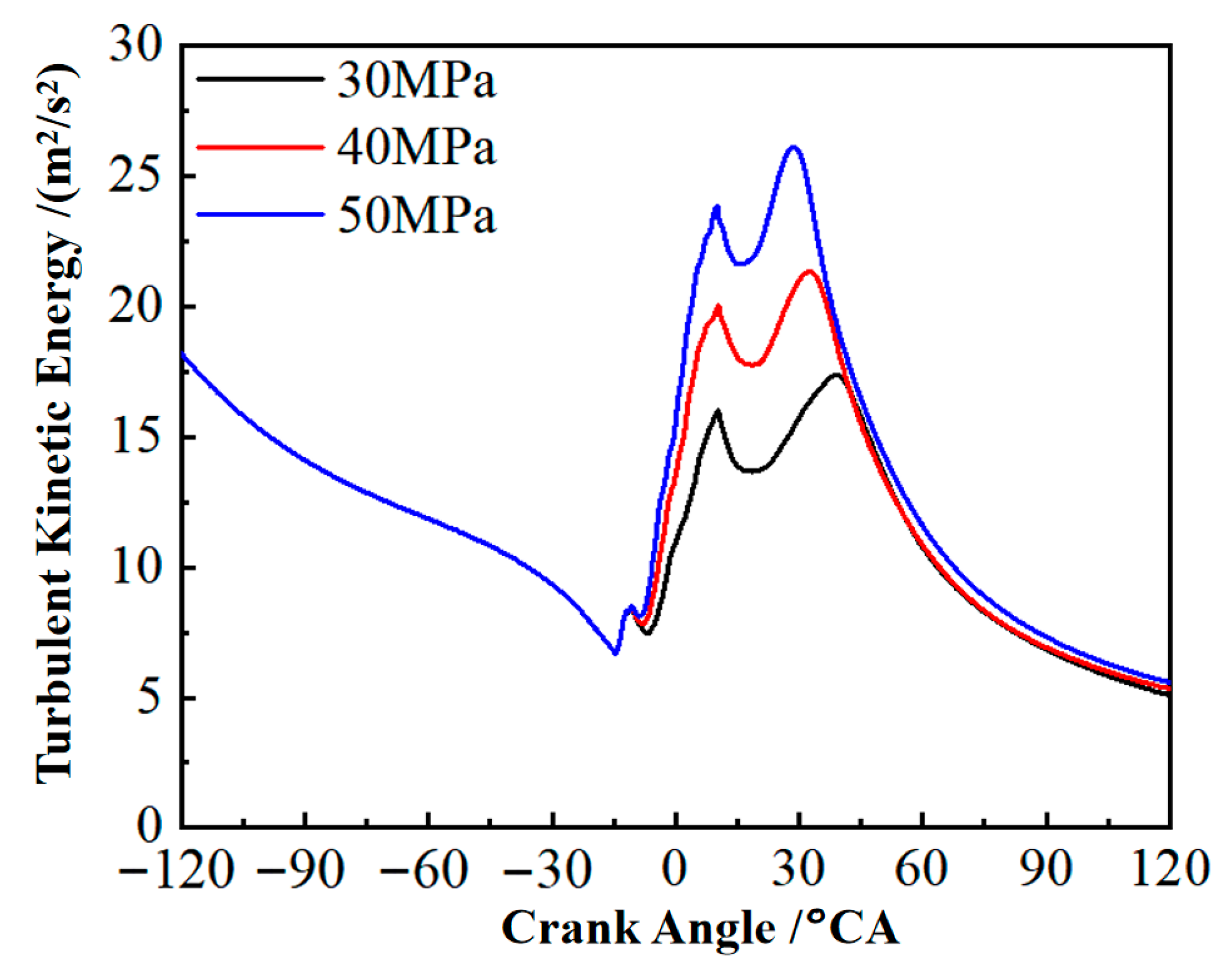
3.6. Influence of Methanol Injection Pressure on Combustion and Emission Characteristics
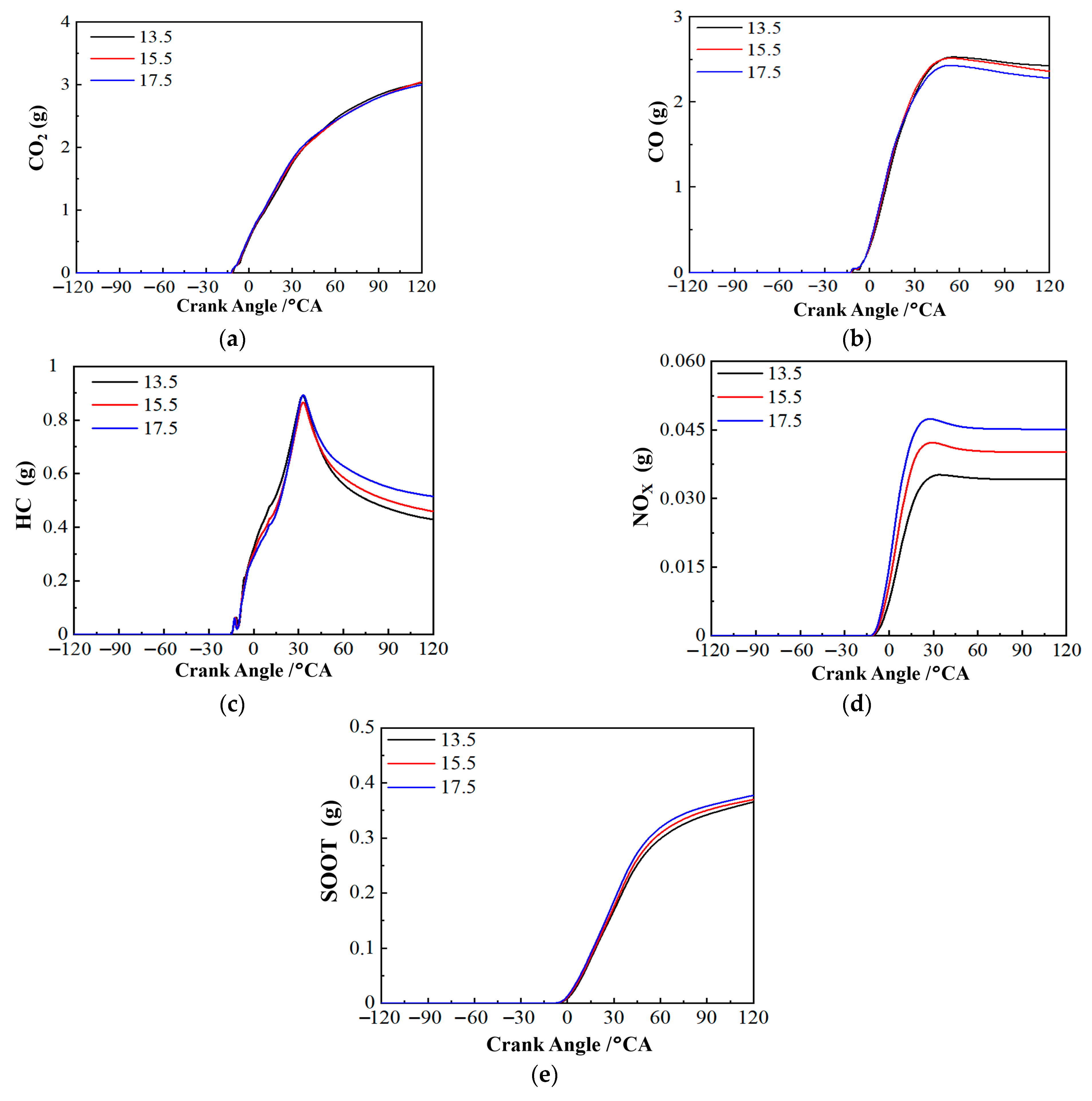
3.7. Influence of Compression Ratio on Combustion and Emission Characteristics
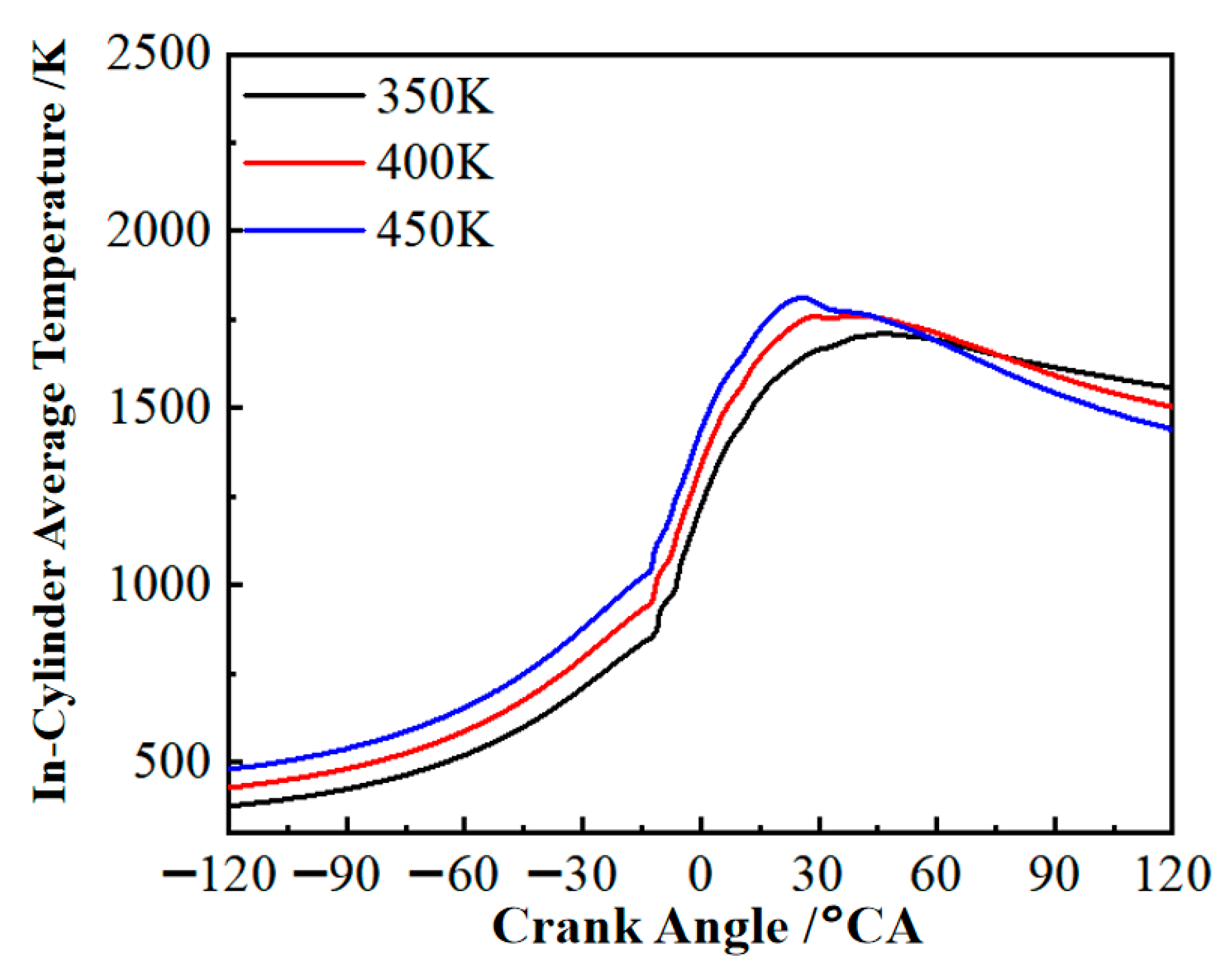
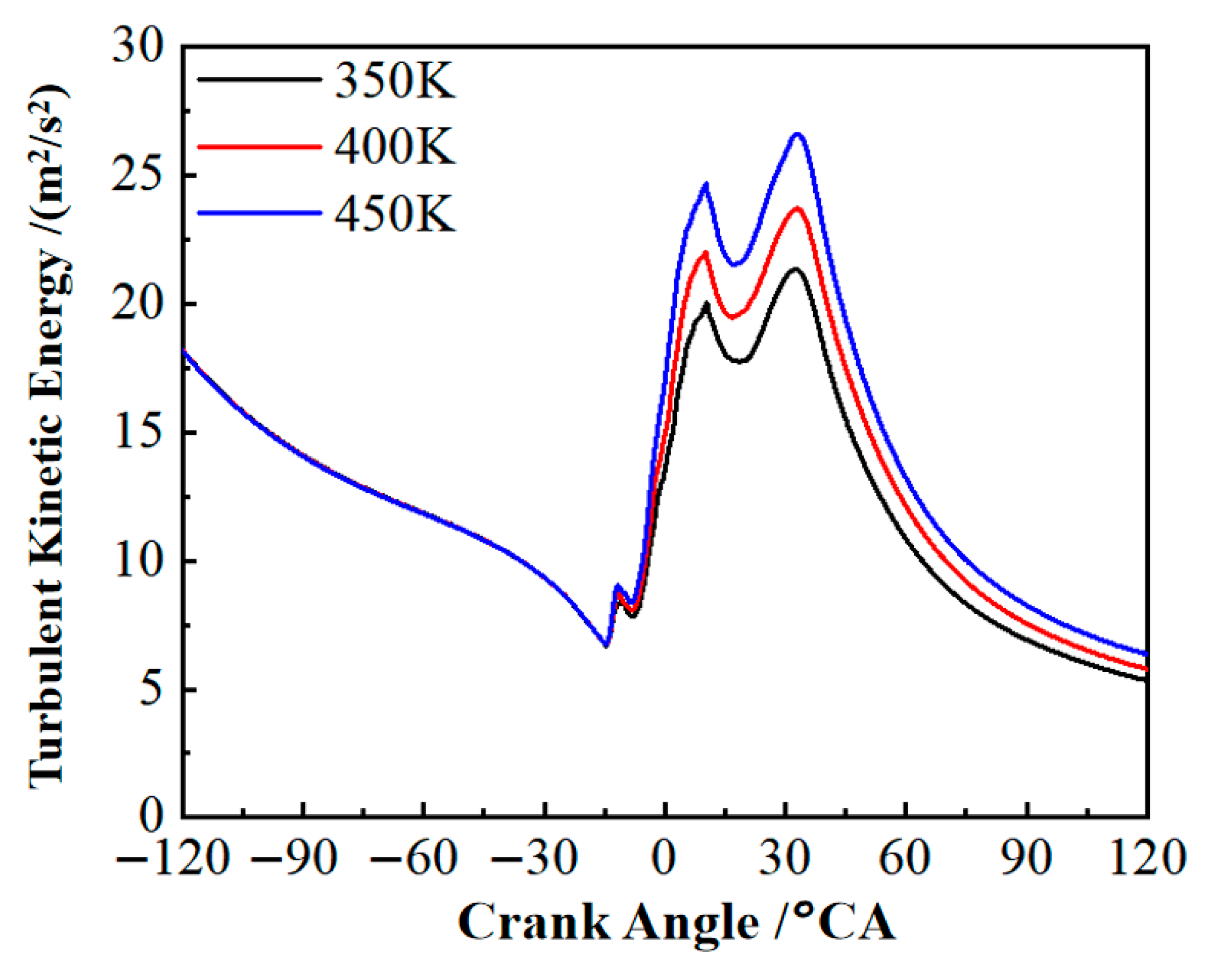
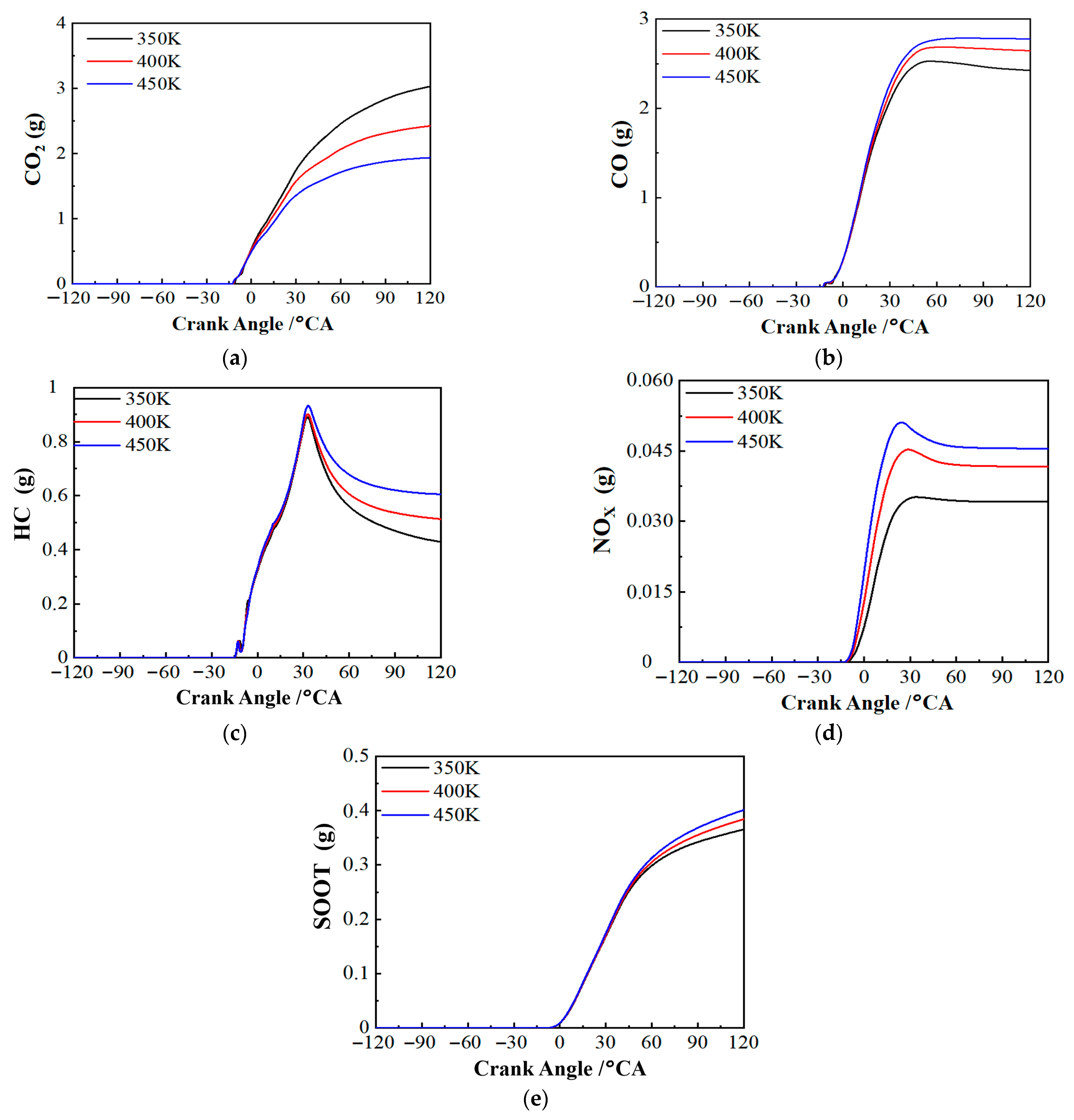
3.8. Influence of Initial Temperature on Combustion and Emission Characteristics
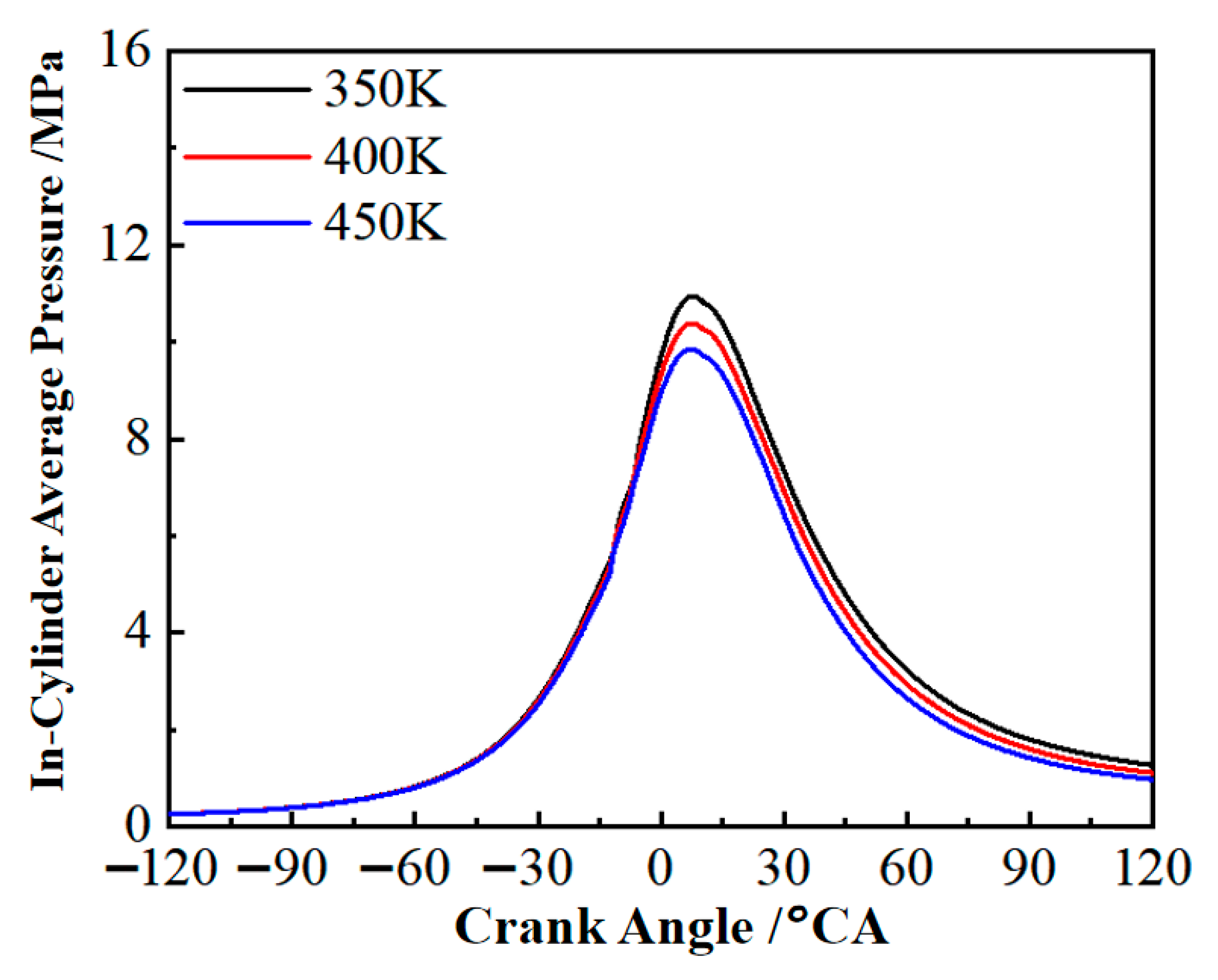
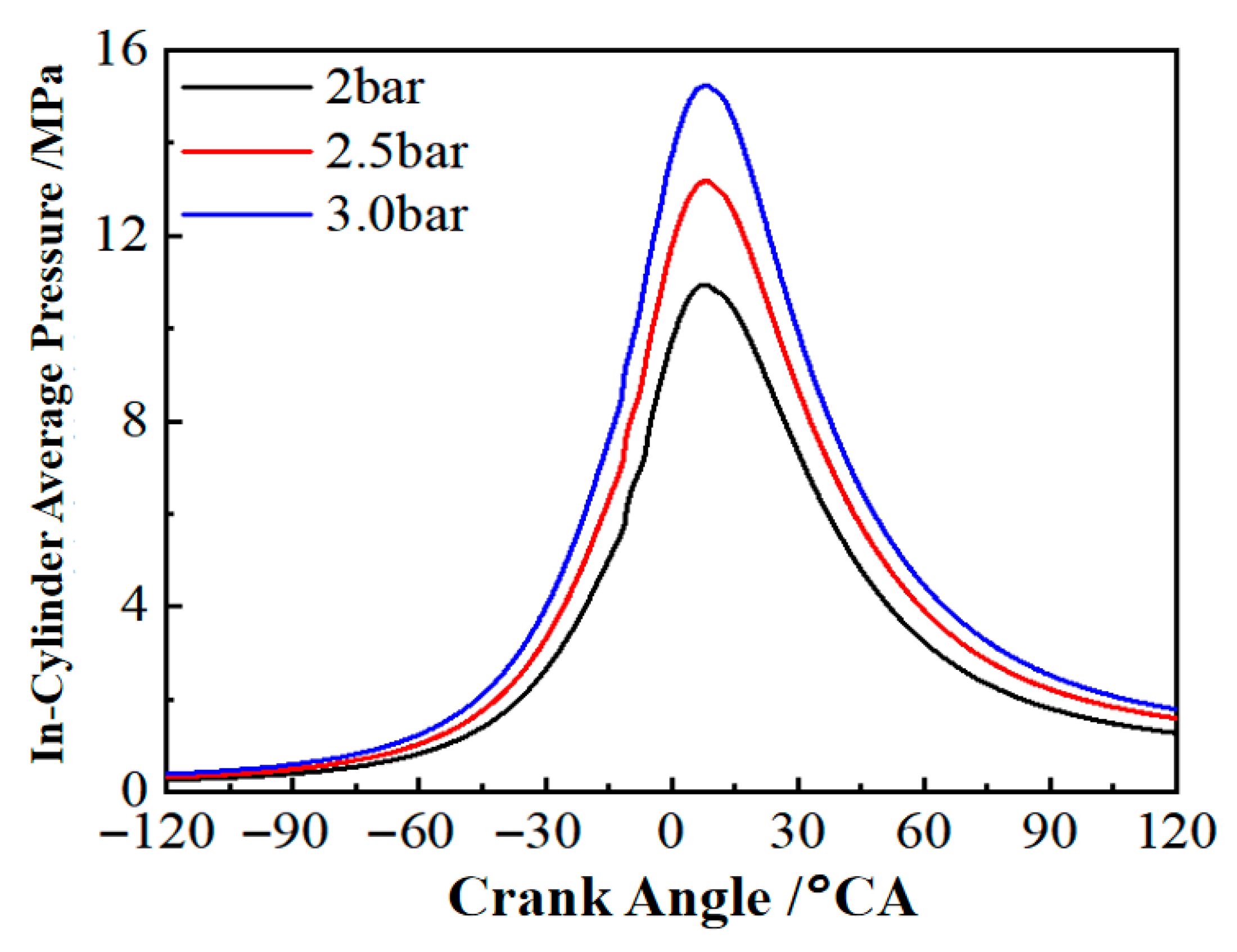
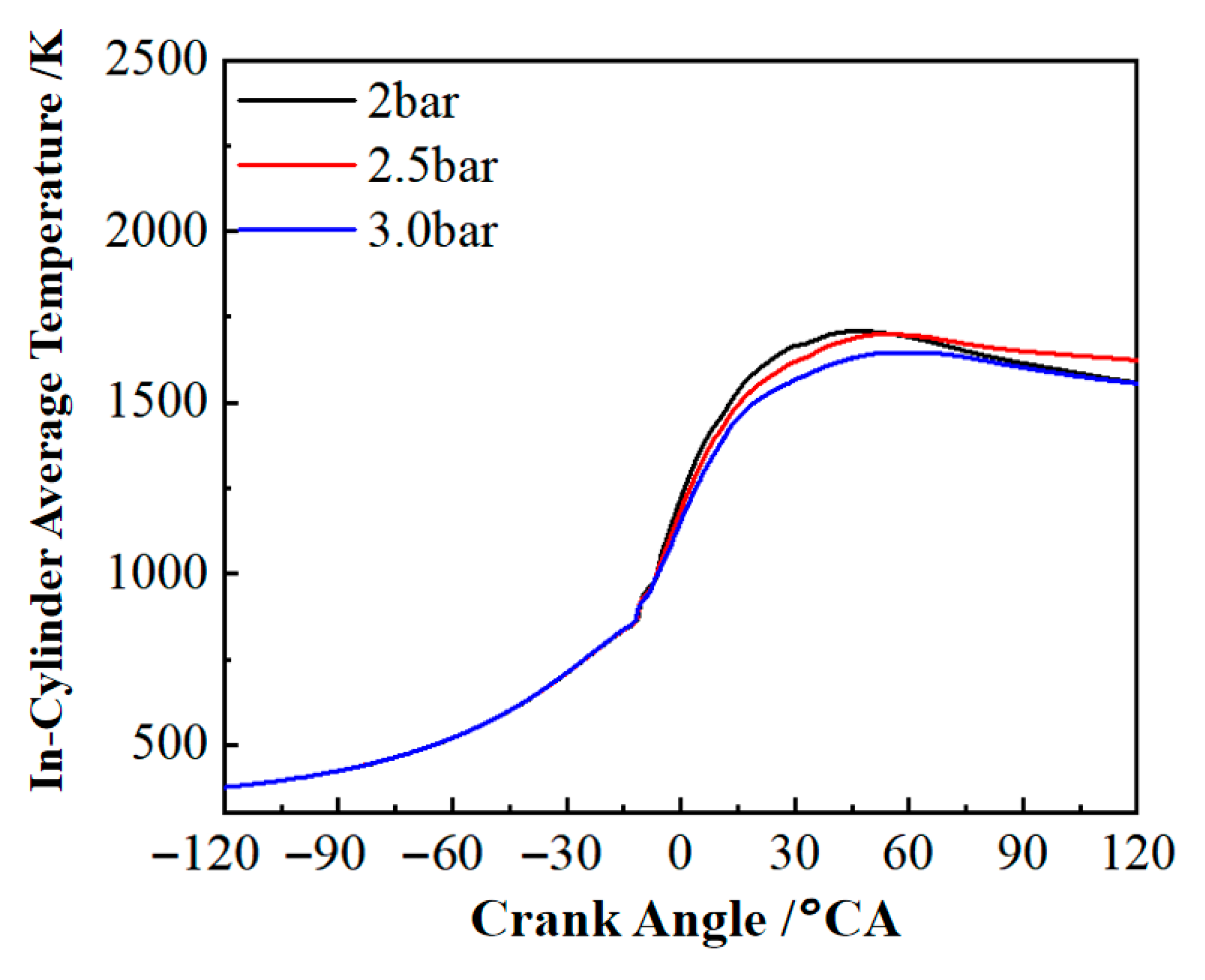
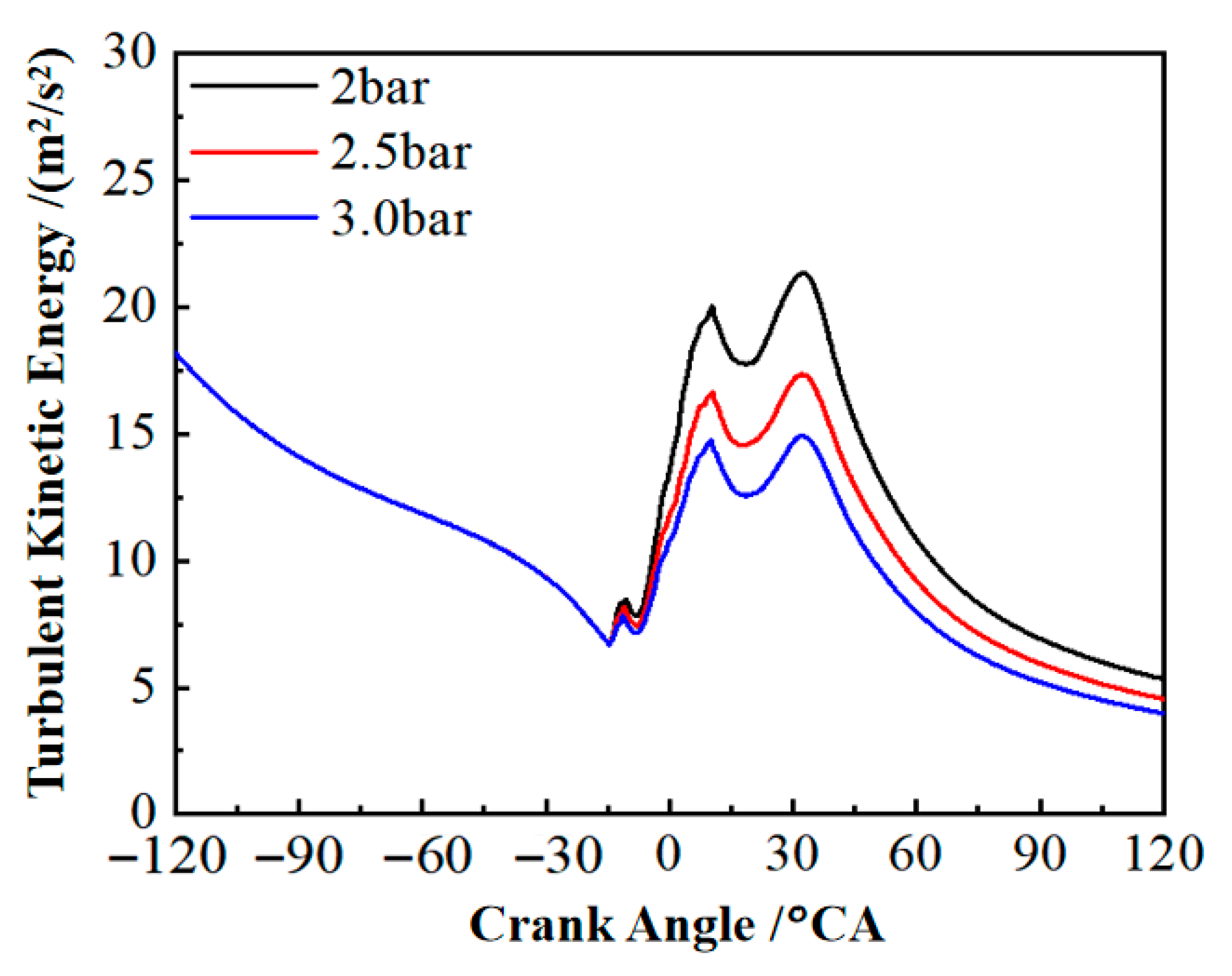
3.9. Influence of Initial Pressure on Combustion and Emission Characteristics
3.10. Optimization of Combustion Performance for Dual-Fuel Engines
4. Conclusions
- (1)
- Based on the efficient mesh generation technology and multi-physics field coupling advantages of Converge software 3.0, a 3D simulation model for in-cylinder combustion of the MAN23/30H diesel engine was successfully established. Through grid independence verification, the basic grid size was determined as 7.0 mm. Combined with fixed encryption and adaptive encryption strategies, the reliability of grid division and computational efficiency were balanced. Finally, the methanol/diesel dual-fuel chemical reaction kinetic mechanism constructed by coupling the methanol mechanism and the simplified diesel mechanism includes 126 species and 711 elementary reactions, which can accurately simulate the ignition process of dual fuels.
- (2)
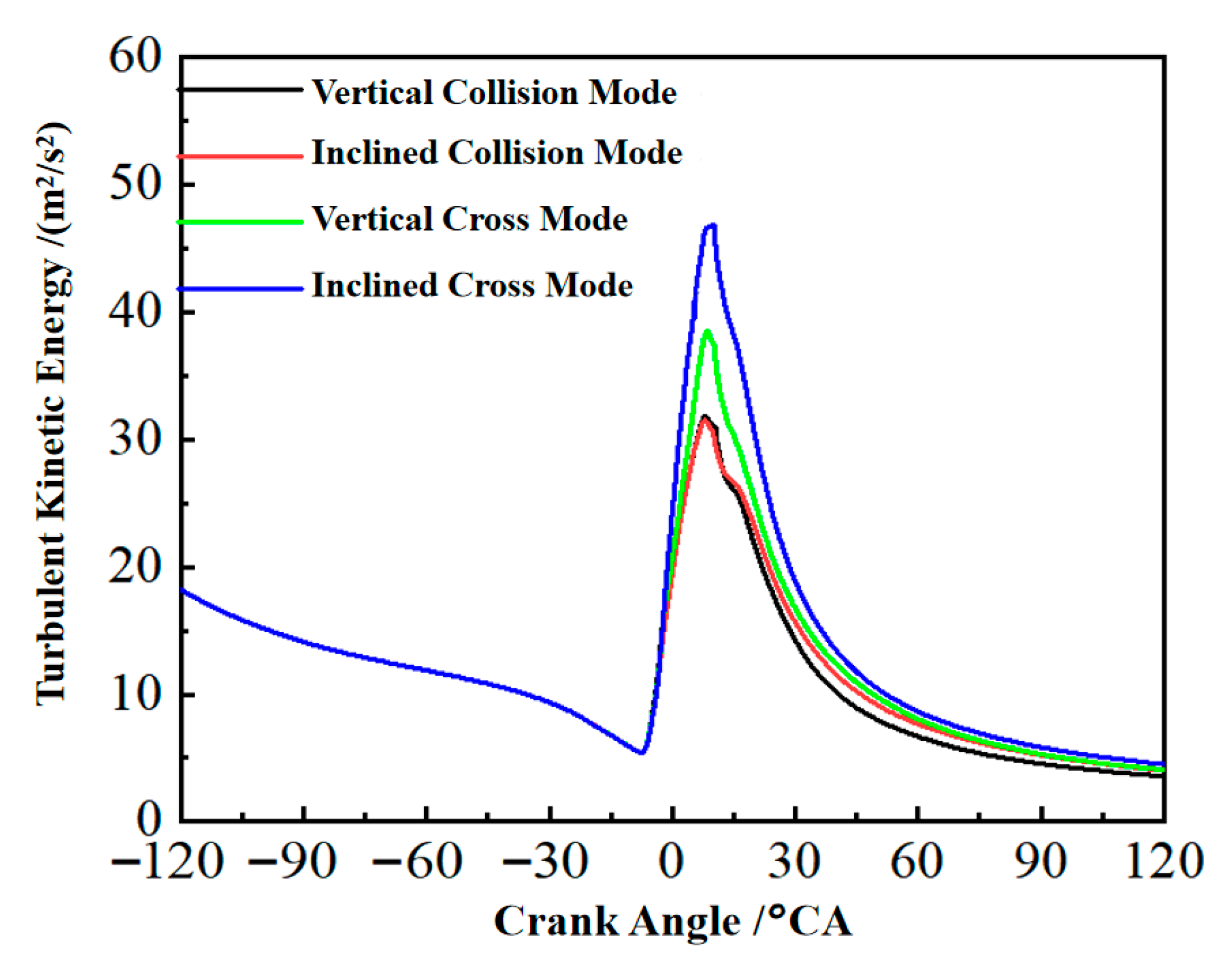
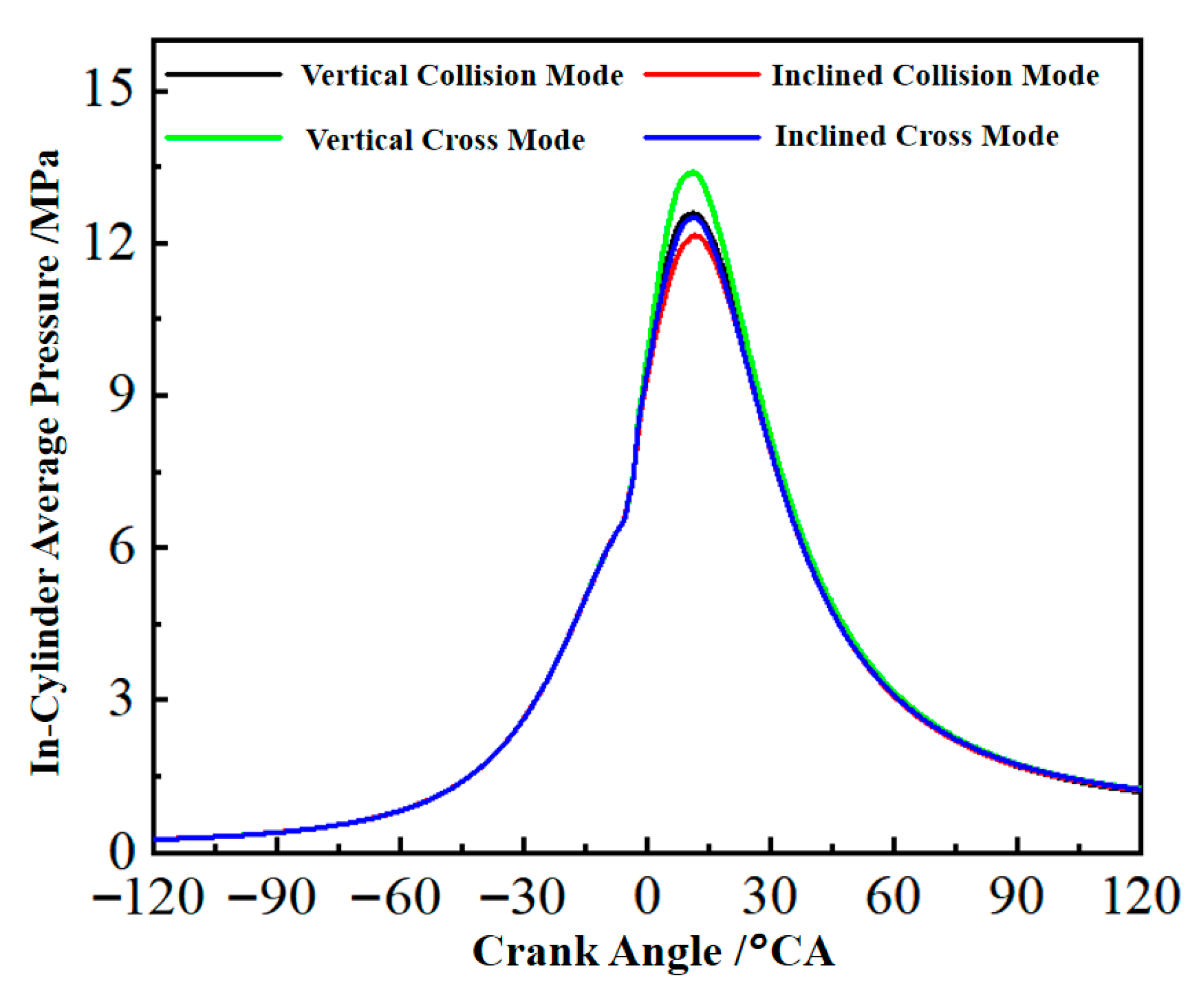
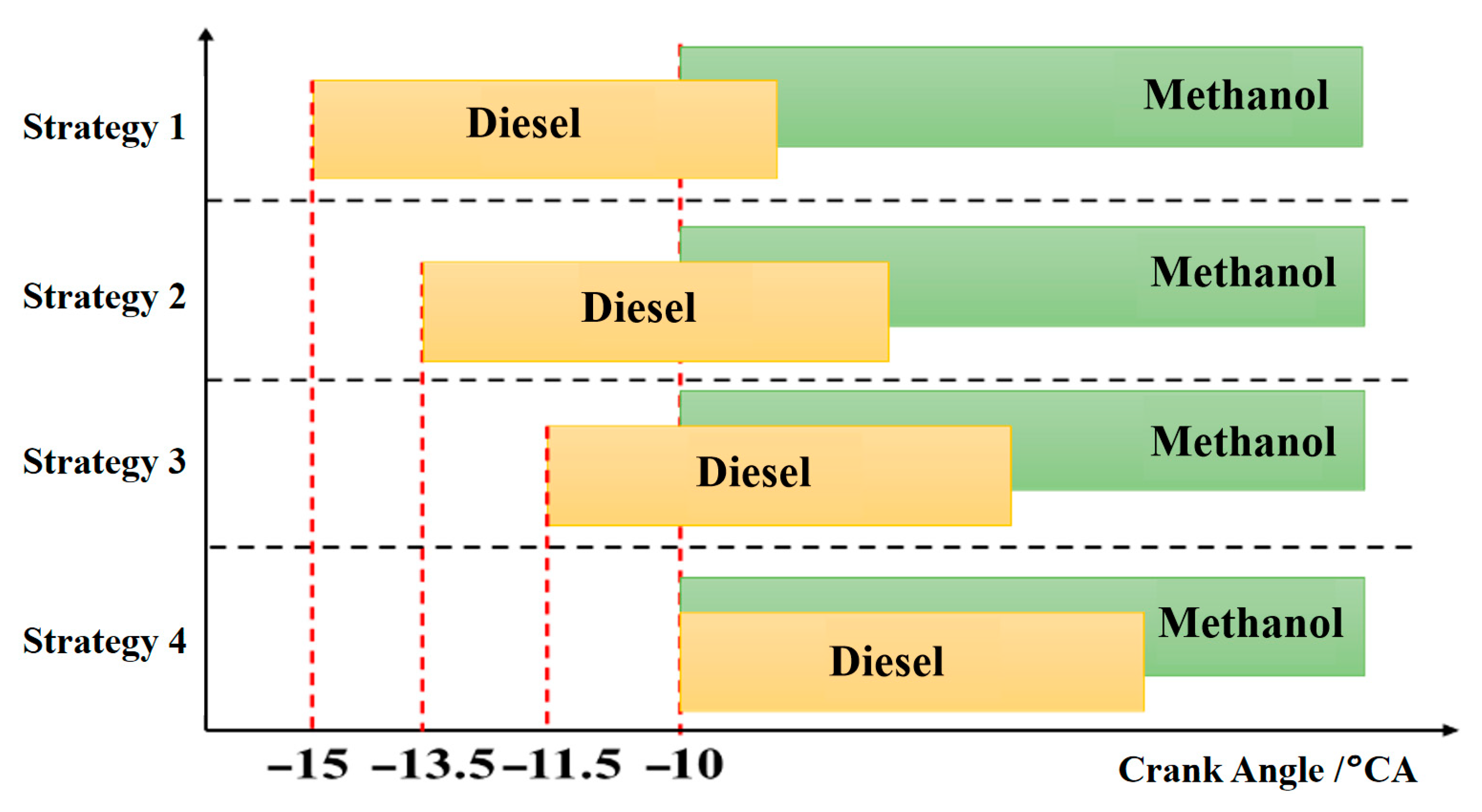
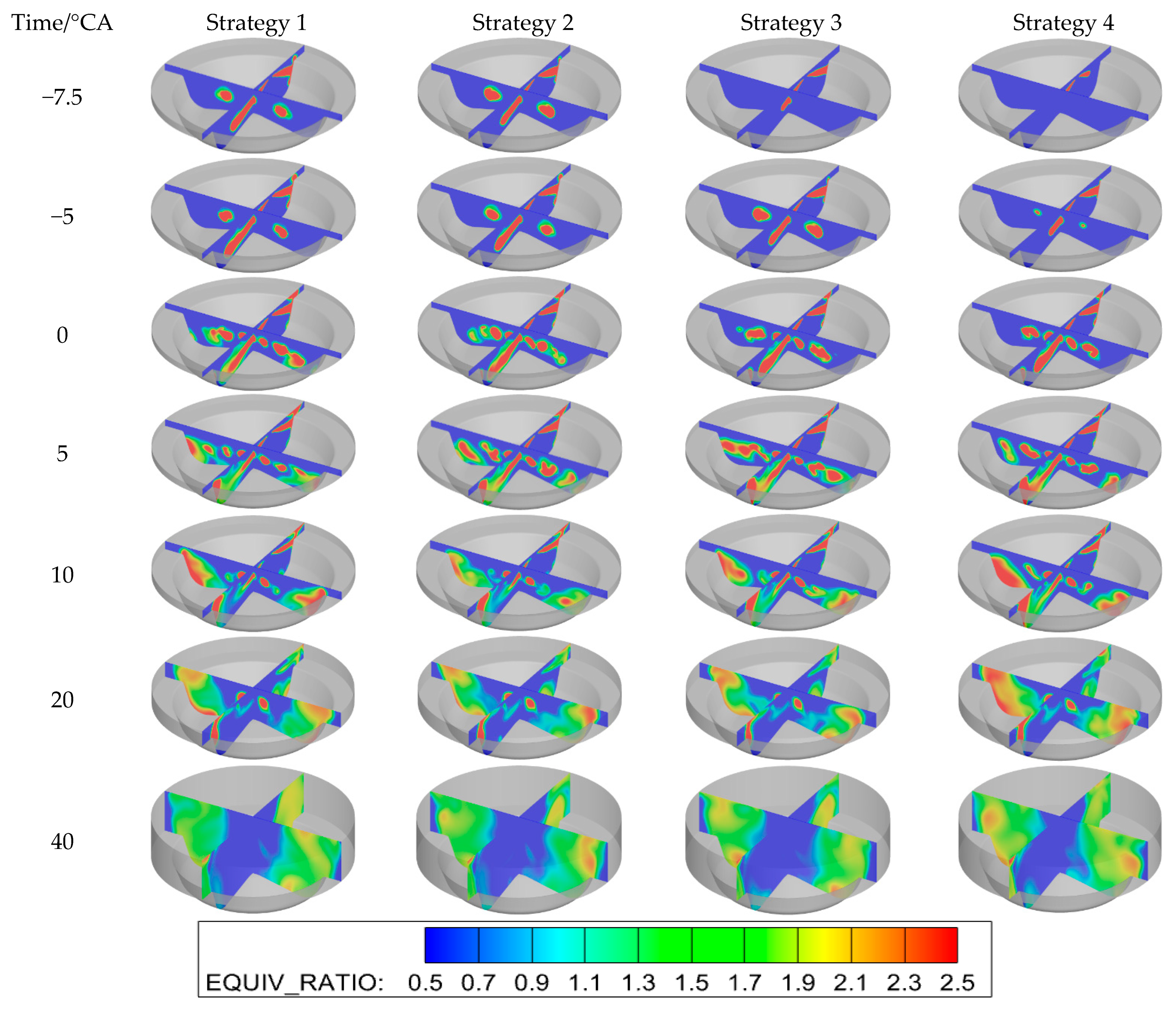
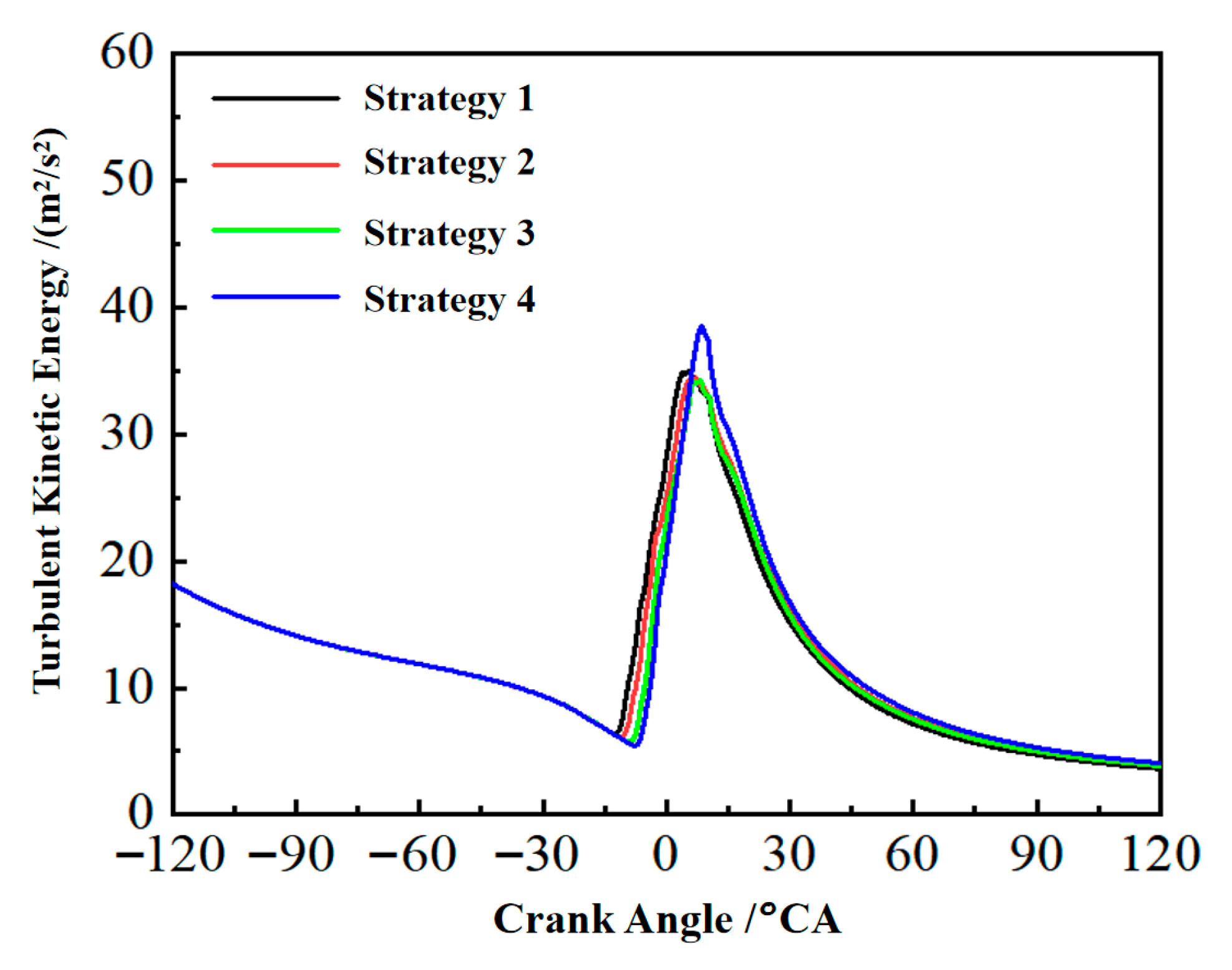
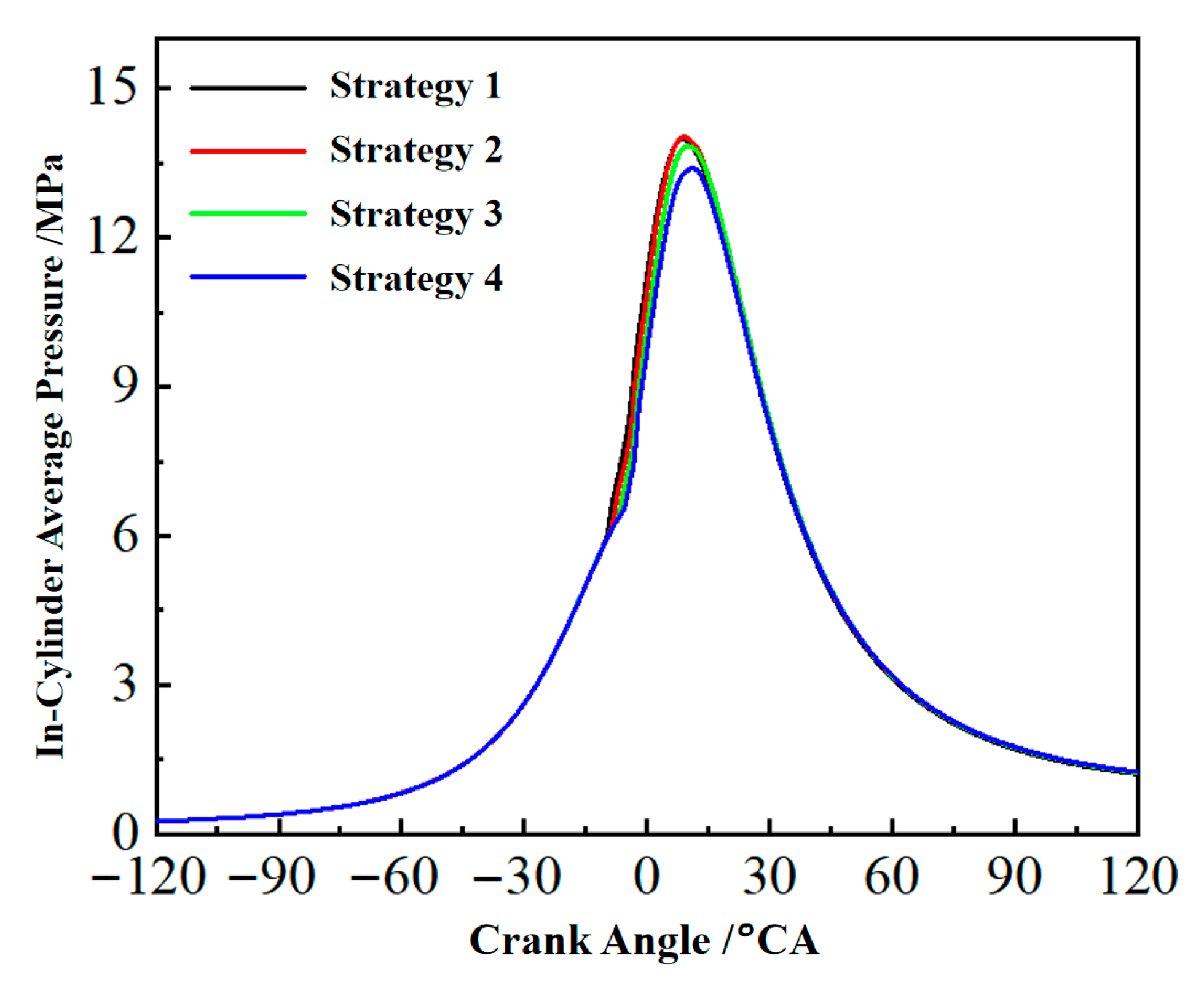
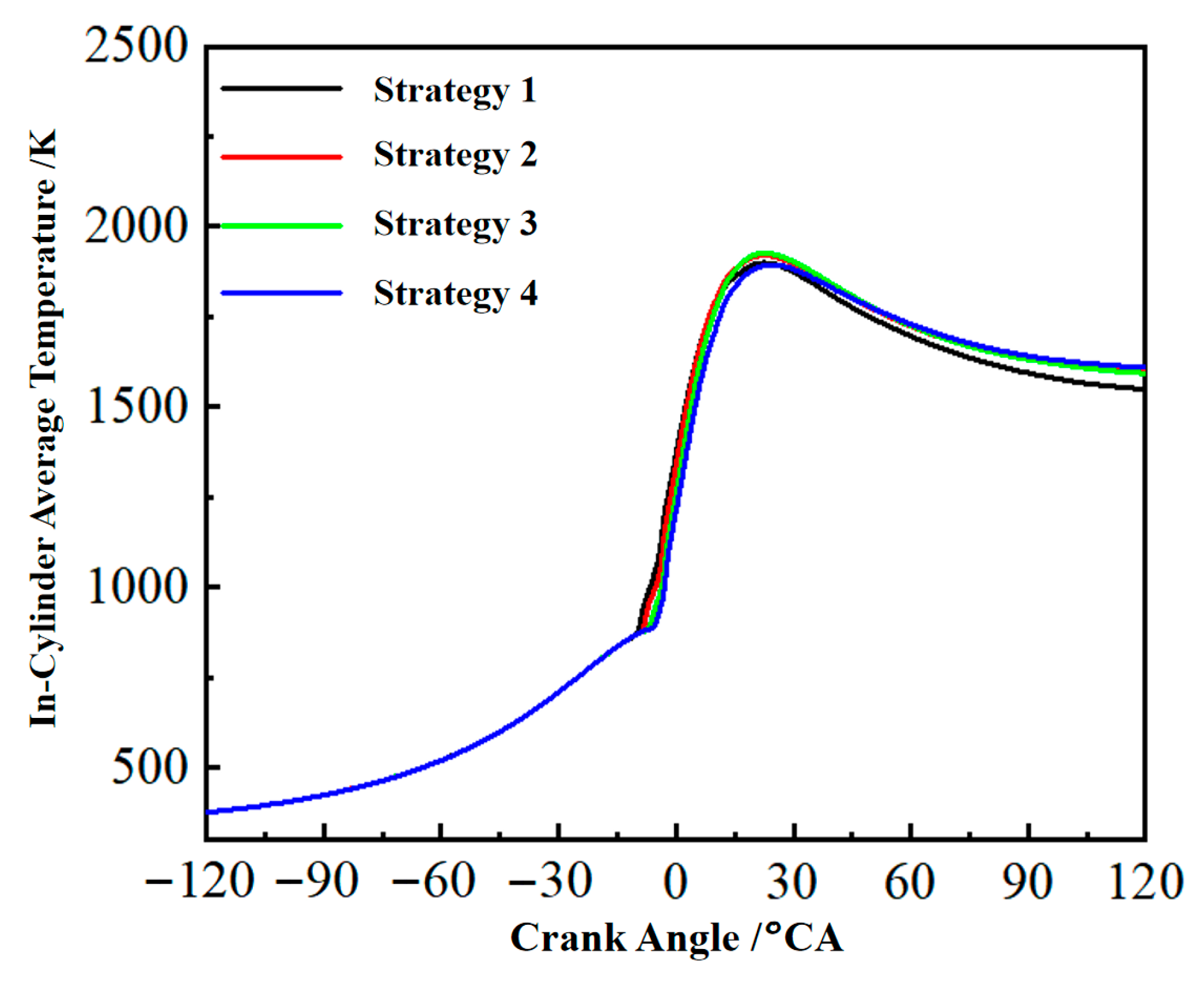
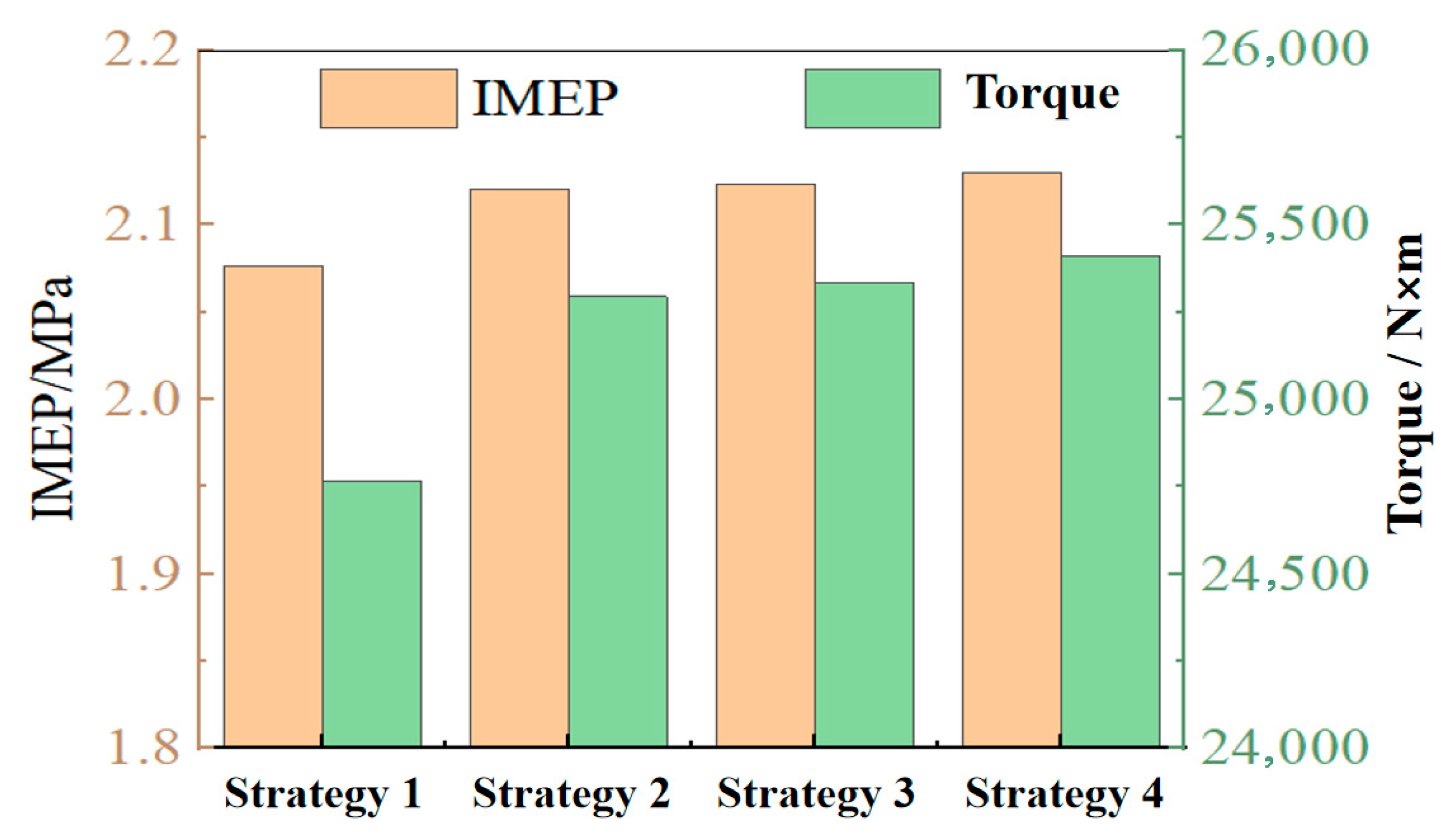
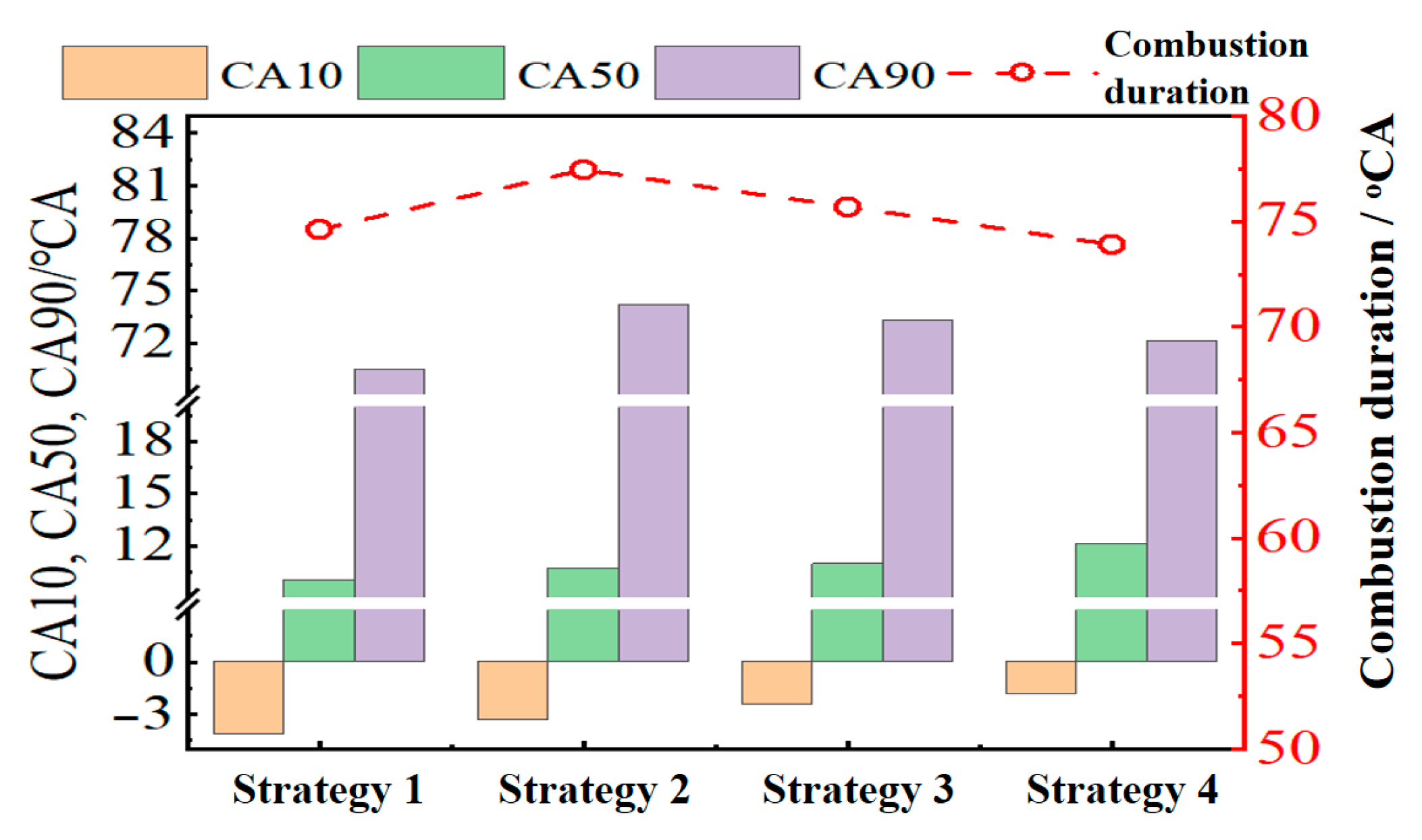
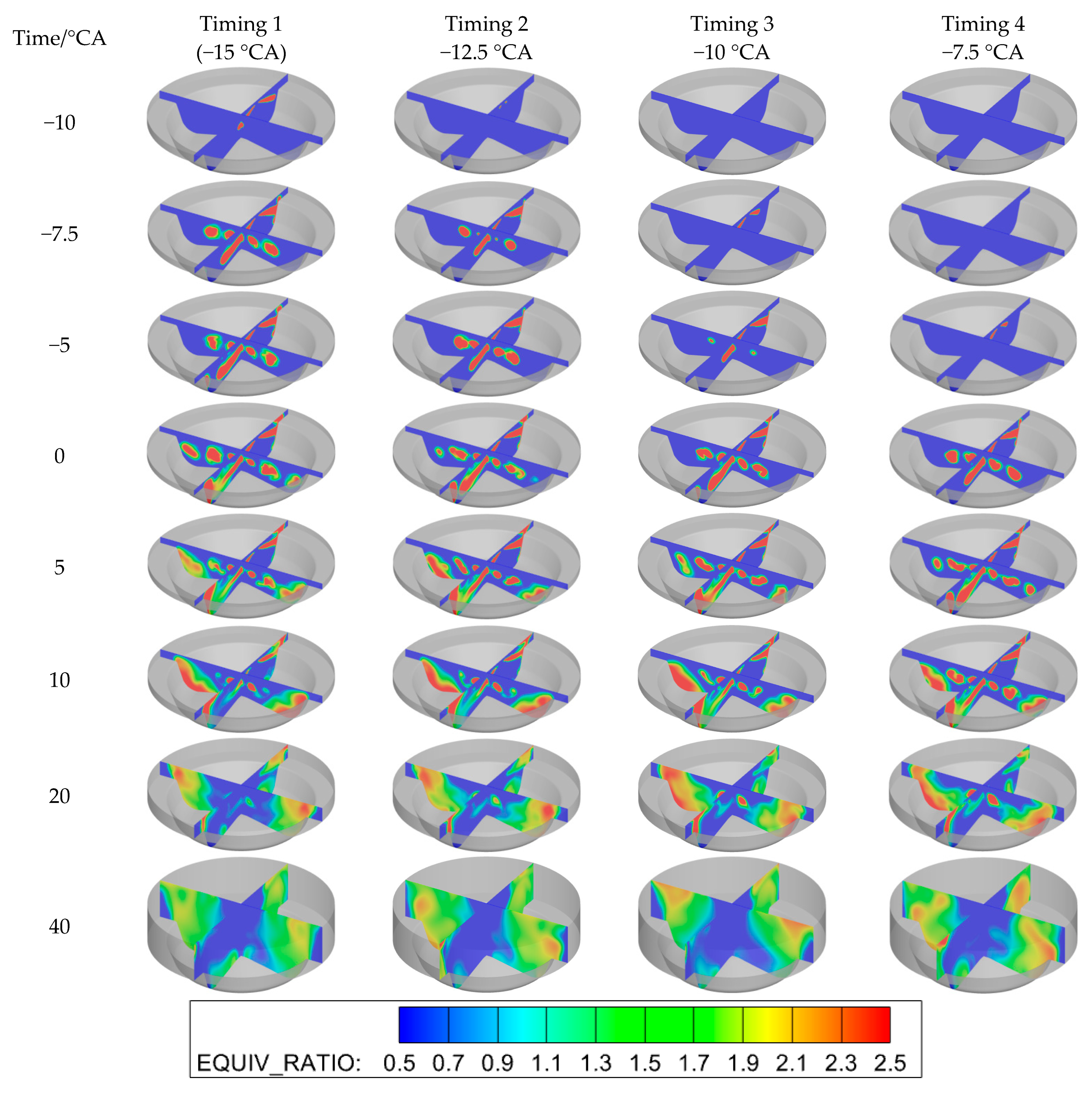
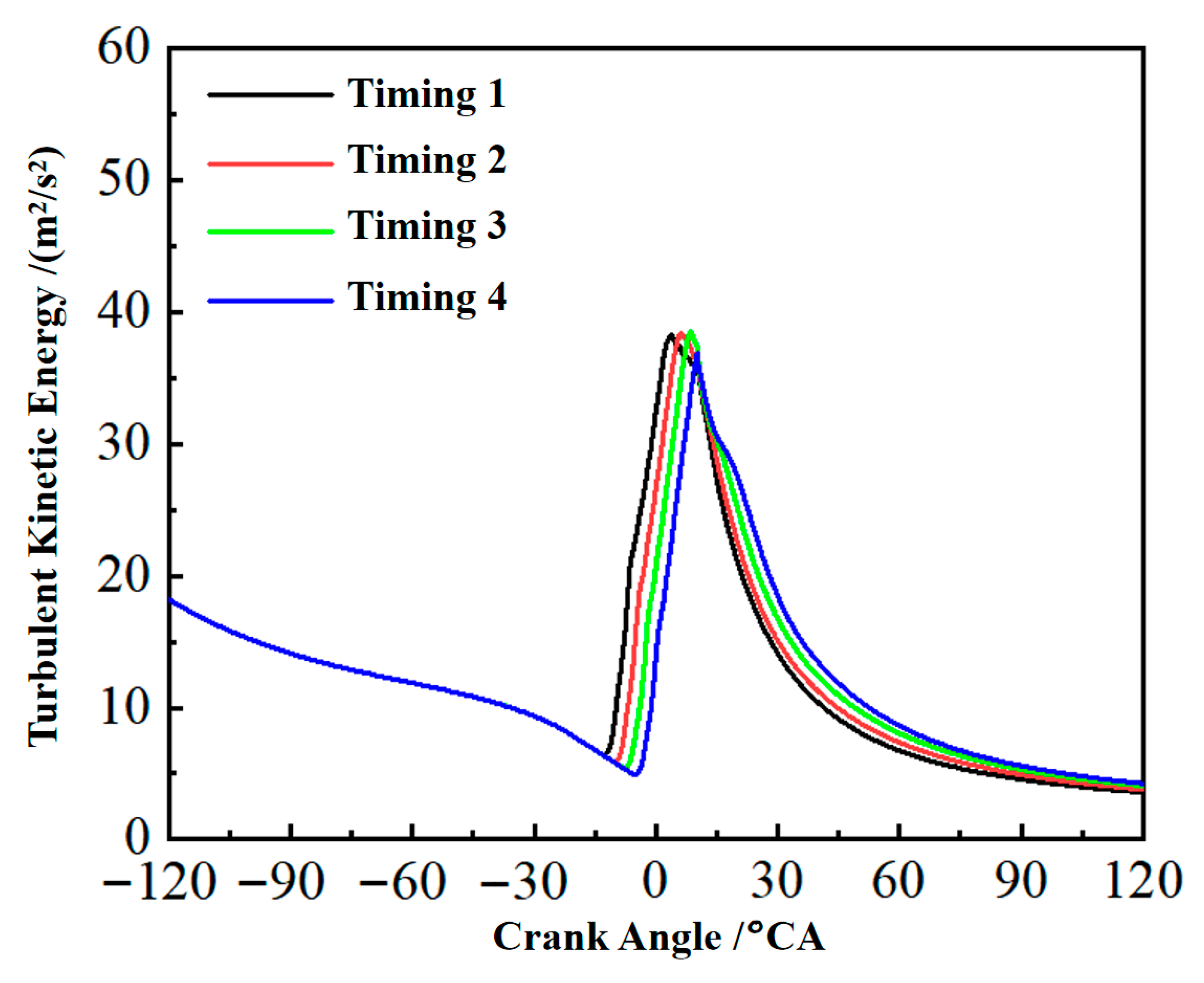
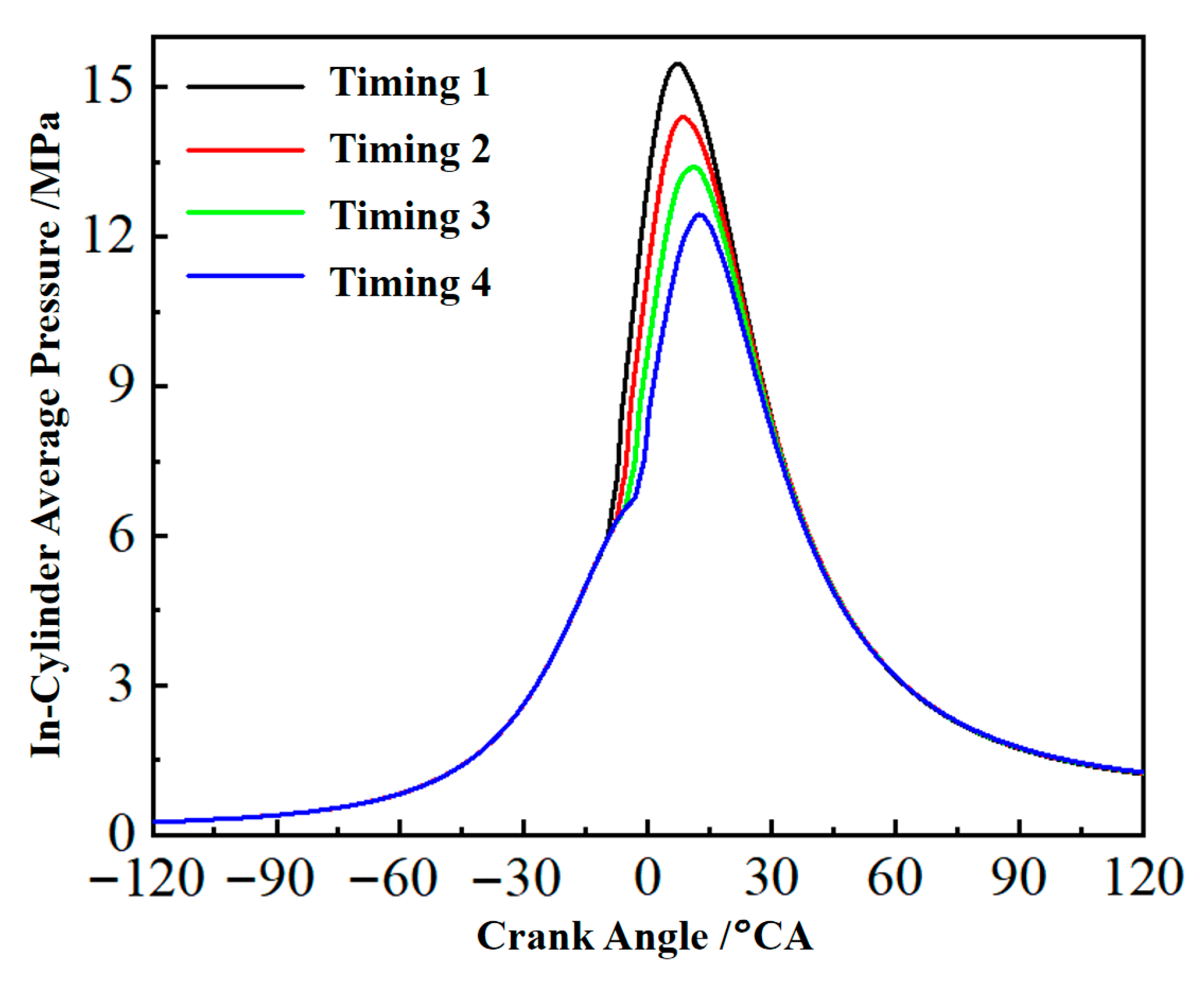
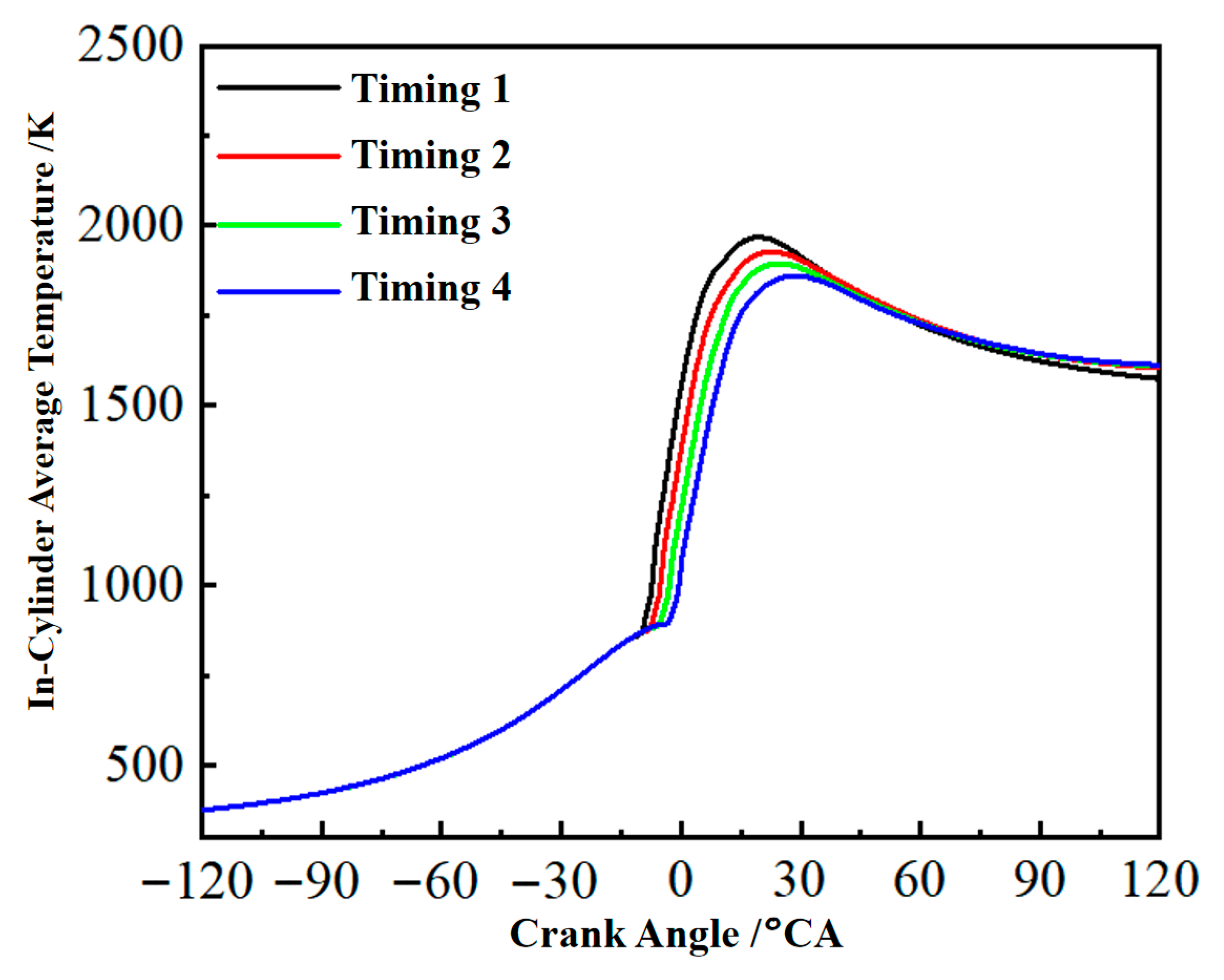
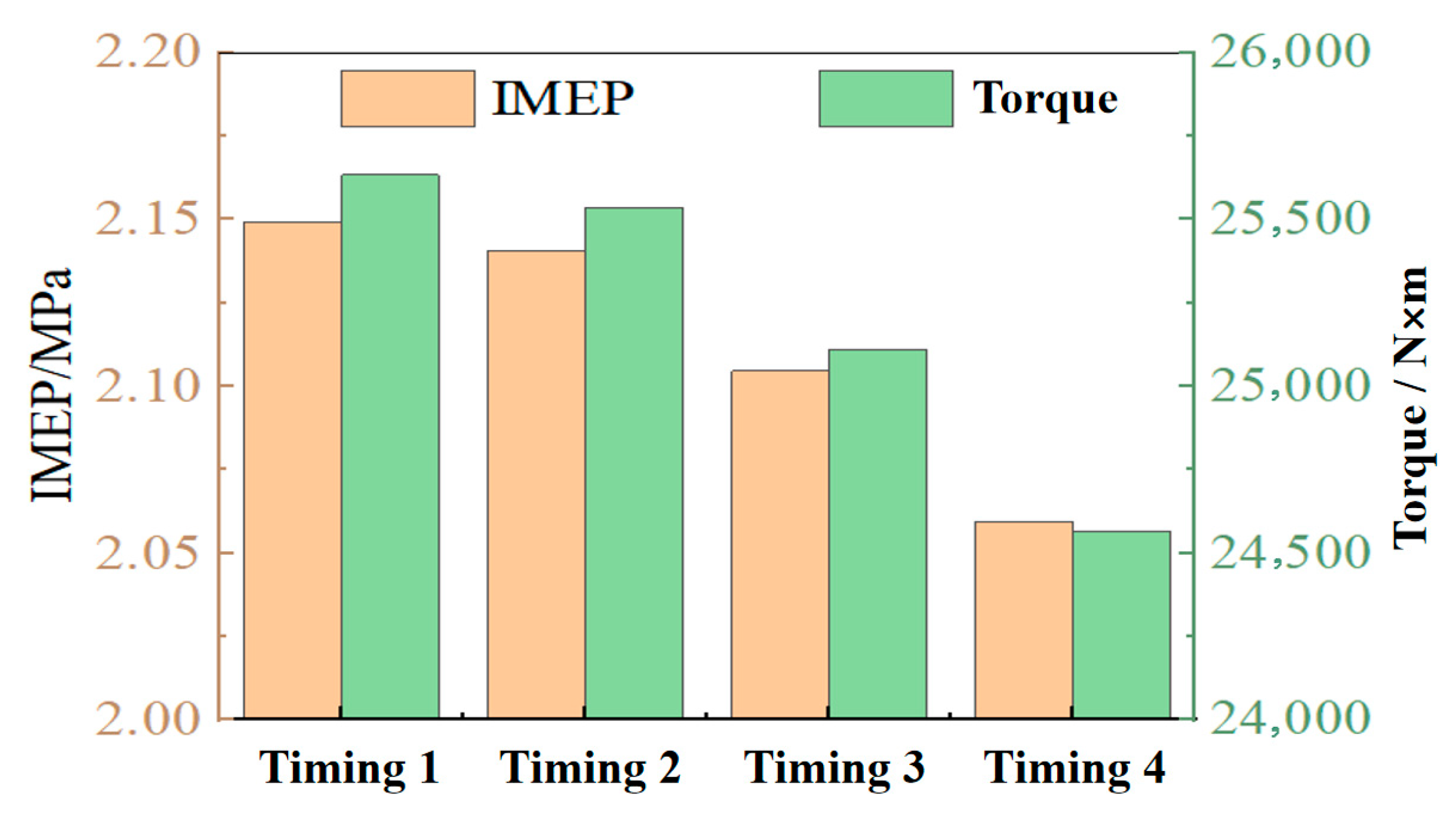
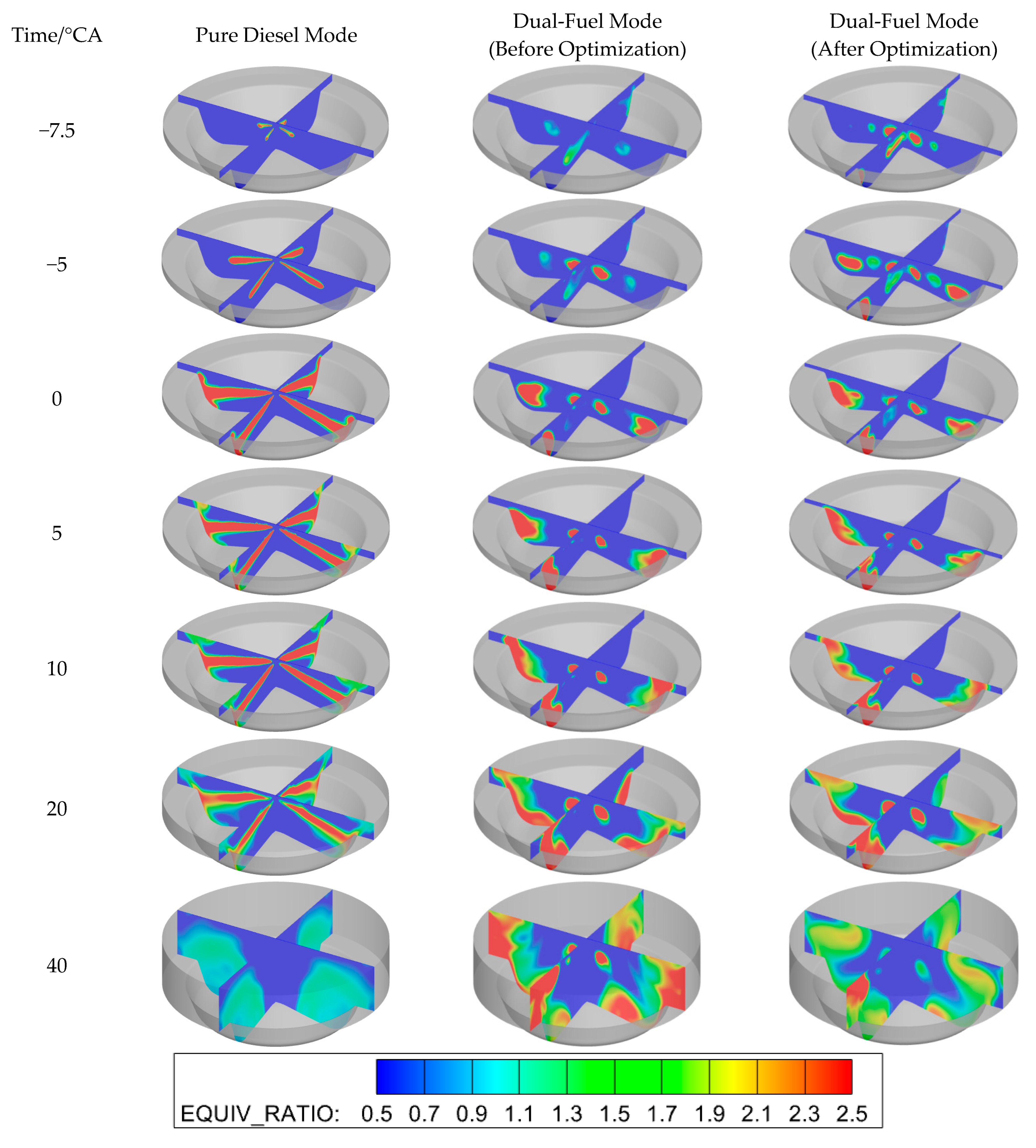
- The influence of different injection strategies on the combustion characteristics of methanol/diesel engines was thoroughly explored. Research results show that the dual-fuel mode is superior to the pure diesel mode in terms of mixture formation, combustion rate and combustion efficiency. Comparative analysis of different injection timings reveals that when the injection timing is advanced to −15 °CA, the peak in-cylinder average pressure reaches approximately 14 MPa, which is about 10% higher than that at the injection timing of −7.5 °CA. The peak turbulent kinetic energy under the vertical cross spray mode is higher than that of other spray modes, indicating that this mode can more effectively promote mixture formation and combustion. In addition, when diesel and methanol are injected simultaneously, the Indicated Mean Effective Pressure (IMEP) reaches about 2.12 MPa and the torque reaches approximately 25,430 N·m. Compared with other injection strategies, the engine performance is significantly improved, proving the advantage of this strategy in enhancing engine power performance.
- (3)
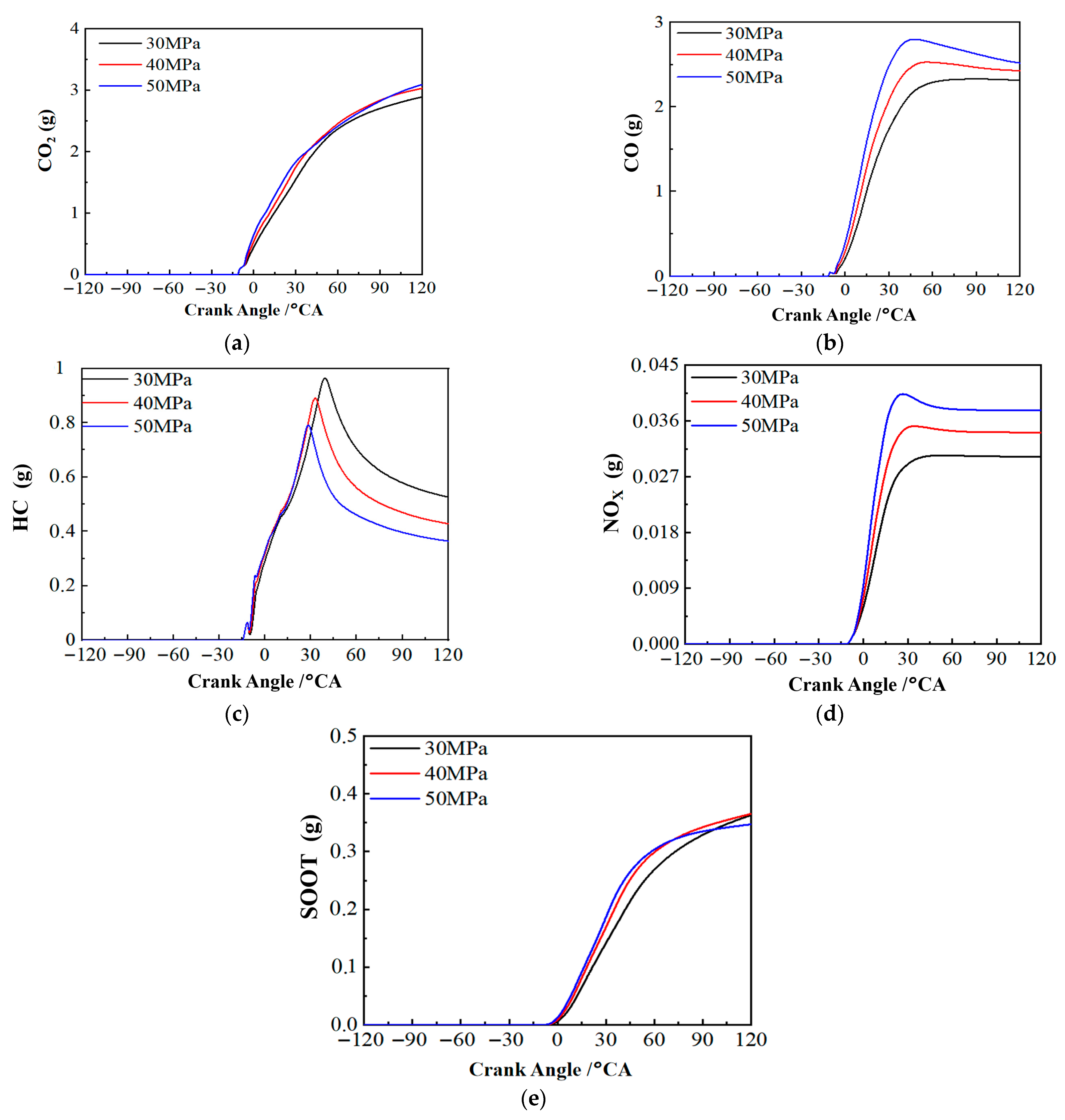
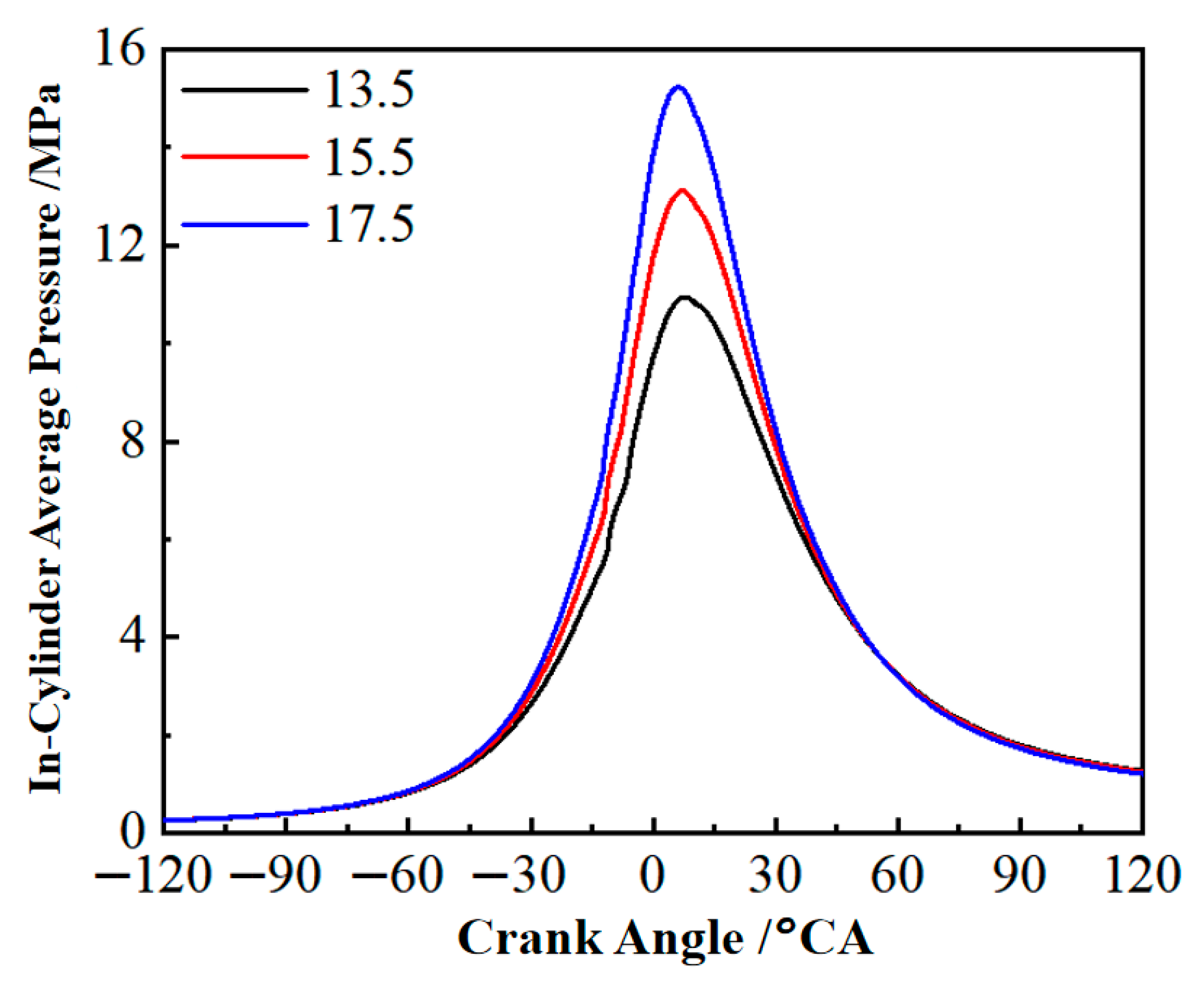
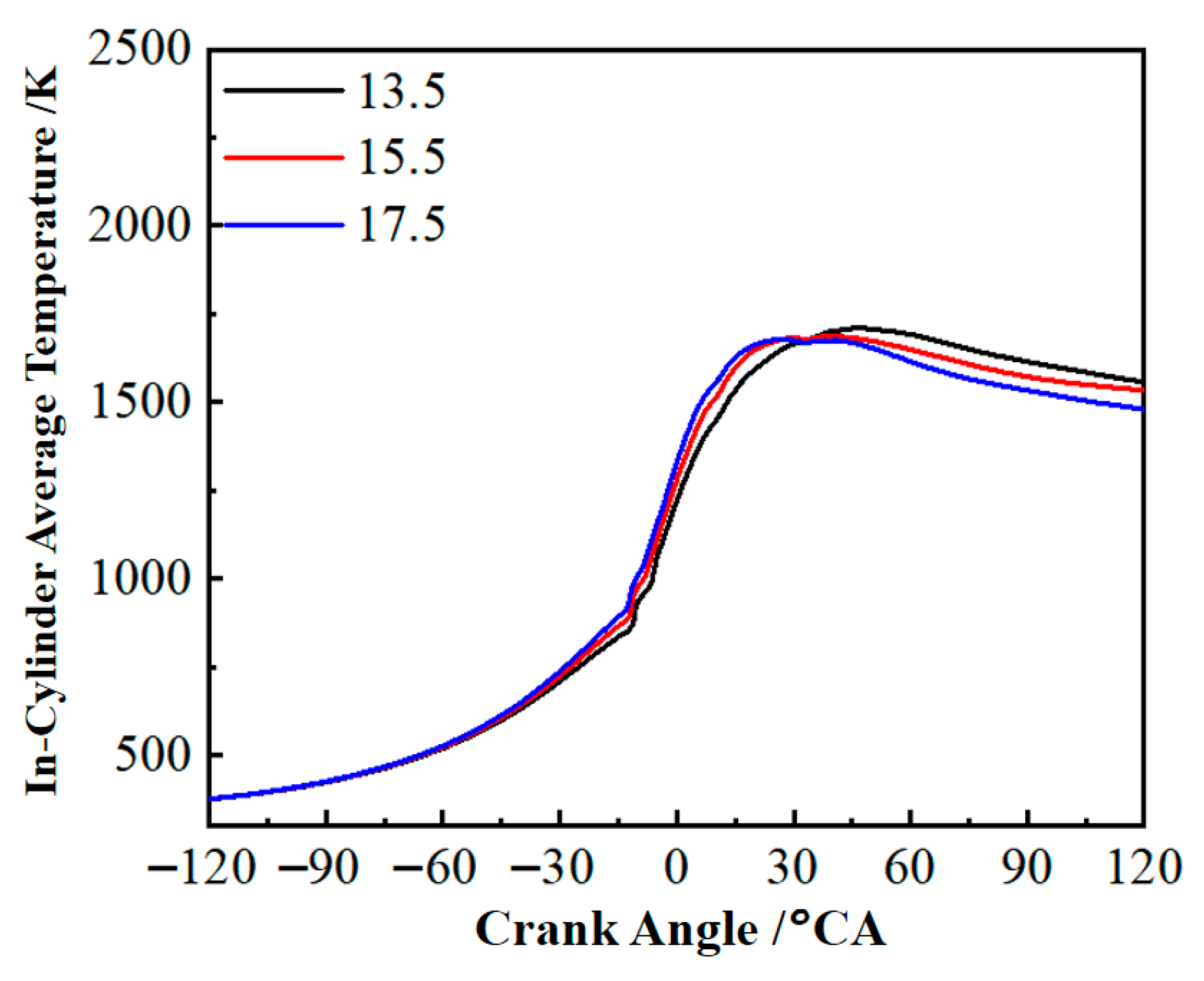
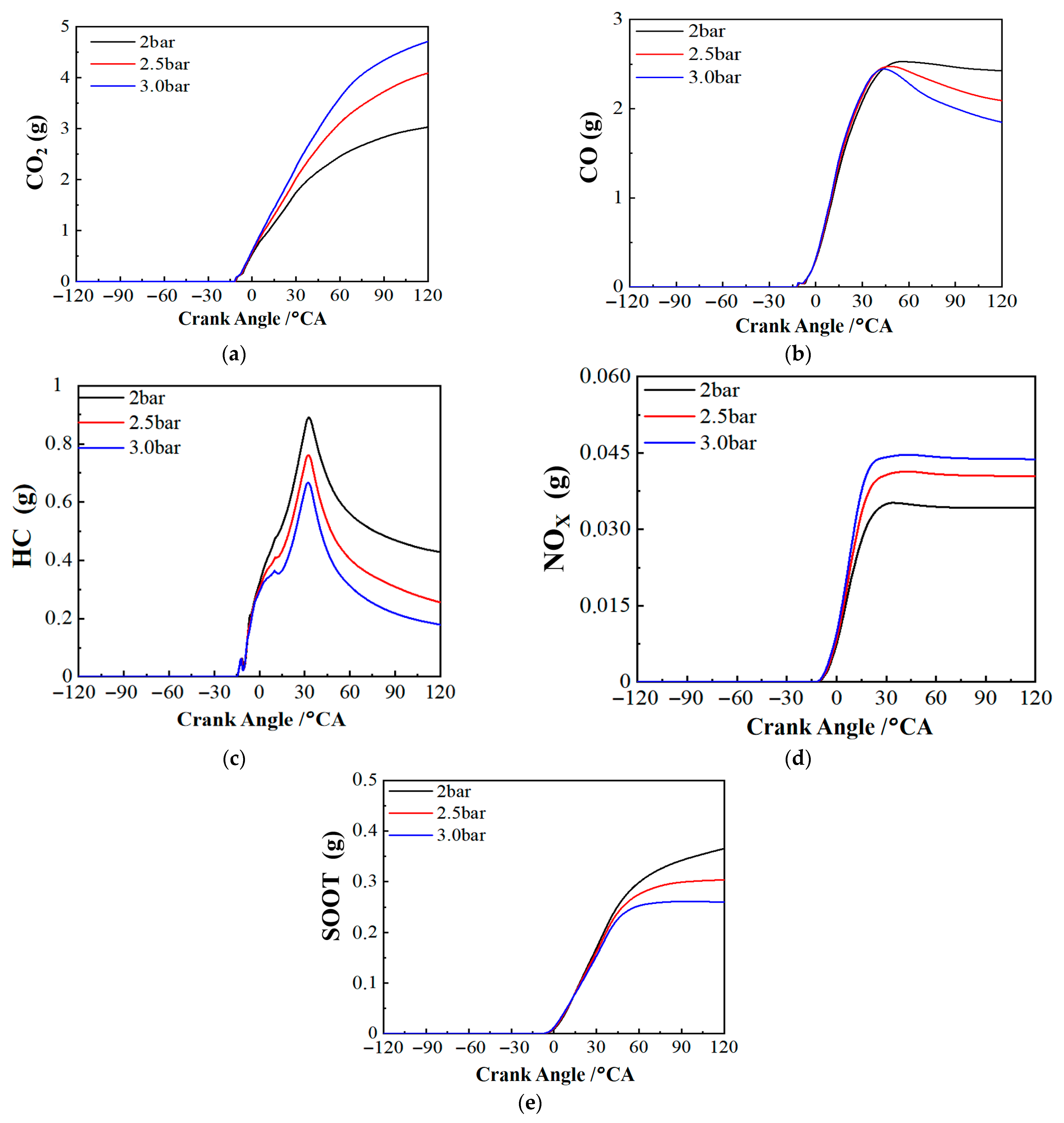
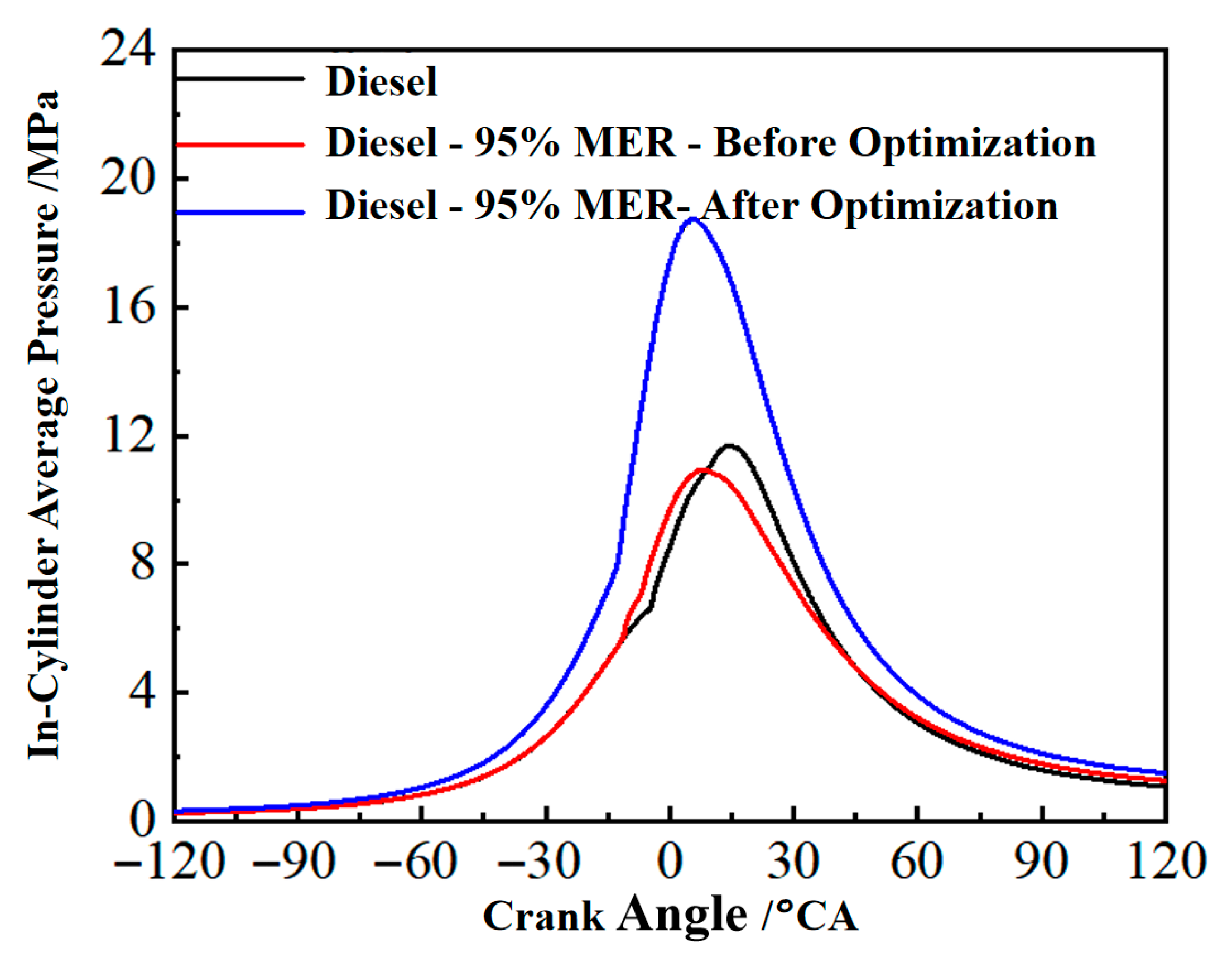
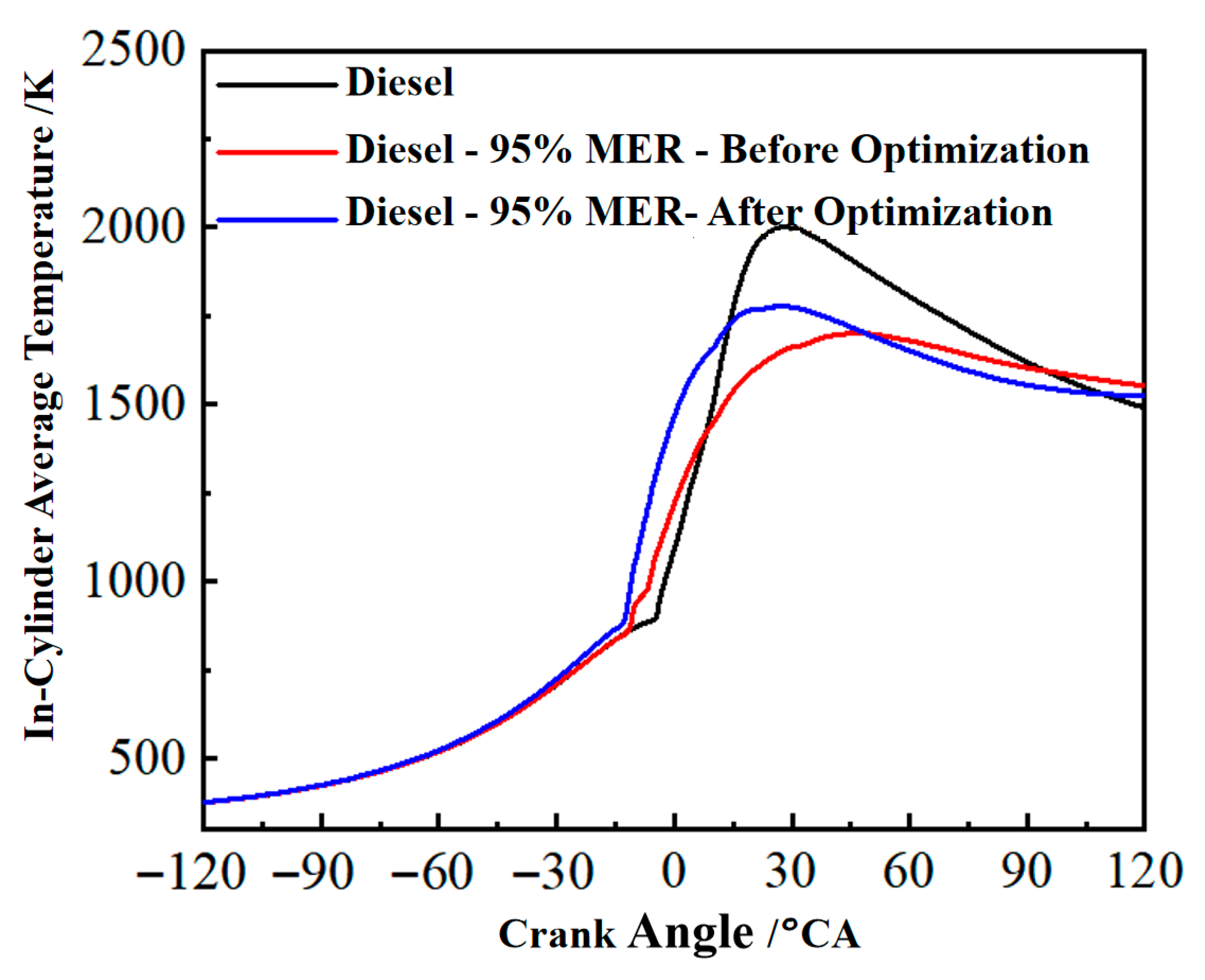
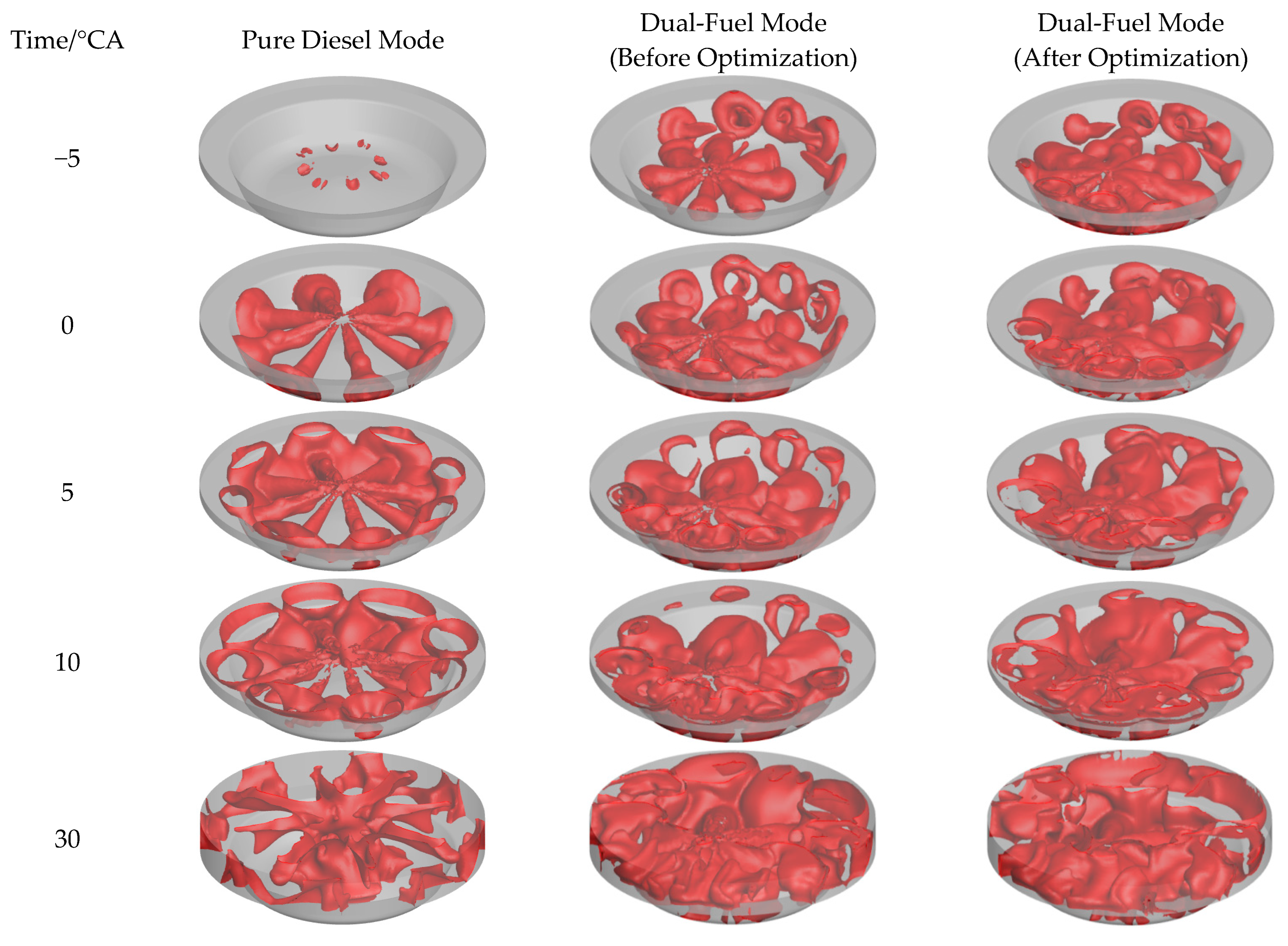
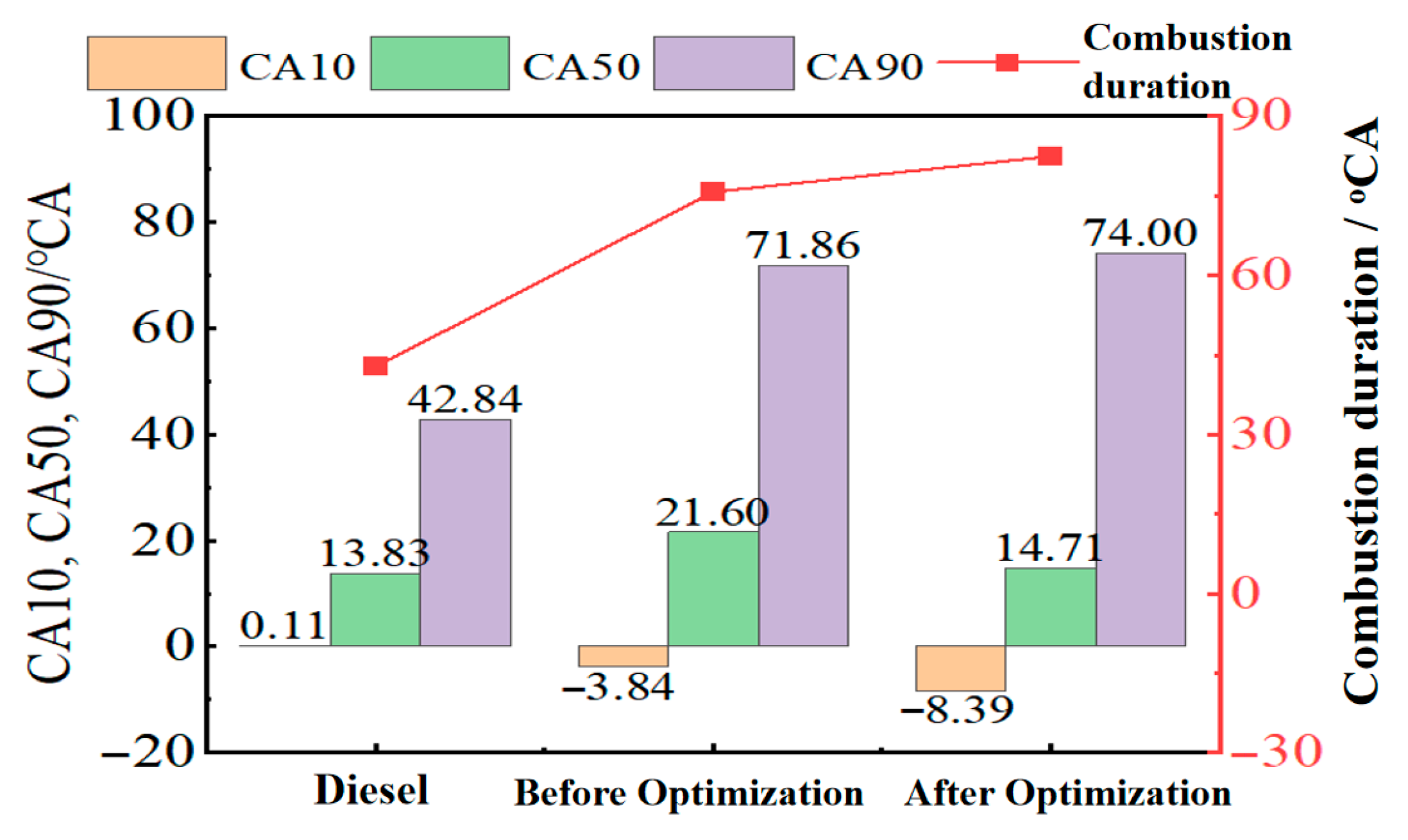
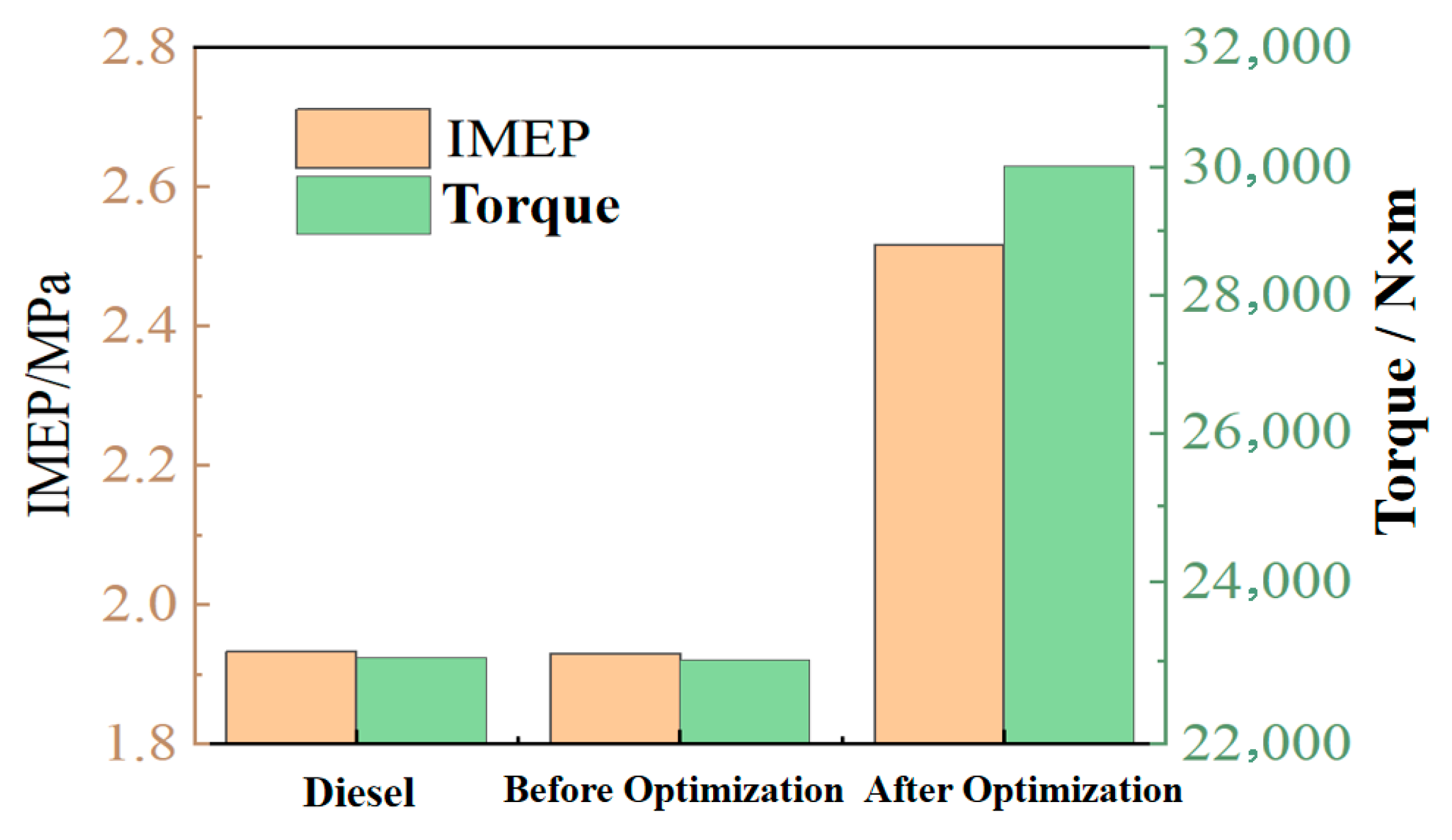
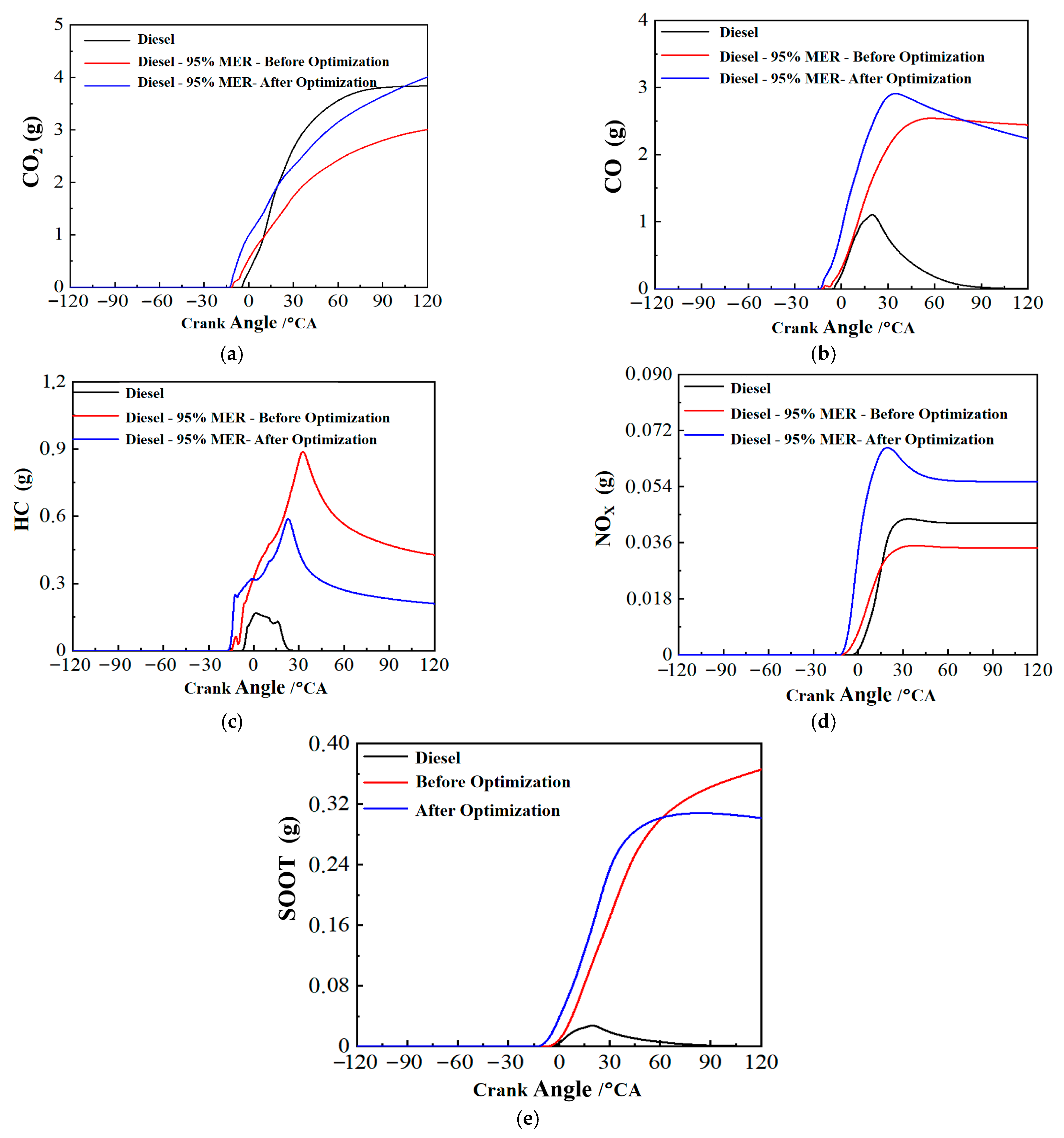
- By comparing combustion performance and emission characteristics under different conditions, it is found that when the methanol injection pressure is increased to 50 MPa, the peak in-cylinder average pressure increases by about 15%, the peak in-cylinder average temperature rises by approximately 10%, and Soot emissions decrease by around 30%. When the compression ratio is increased from the original 13.5 to 15.5, the combustion efficiency is improved by about 12%, while NOx emissions increase by roughly 15%, indicating that further coordination with aftertreatment technology is required to reduce pollutant emissions. When the initial pressure is increased to 2.5 bar, CO2 emissions increase significantly in the late combustion stage, while CO and HC emissions decrease to a certain extent. The simulation results show that the NOx emission concentration of the optimized dual-fuel mode is 8.2 g/kWh. Compared with the Tier III emission standard (≤3.4 g/kWh) and Tier II emission standard (≤14.4 g/kWh), this emission level meets the requirements of the Tier II standard but does not reach the limit of the Tier III standard. To meet the Tier III emission standard, it is necessary to integrate post-treatment technologies such as selective catalytic reduction (SCR) and implement a “synergy between injection parameter optimization and post-treatment” strategy to achieve coordinated control of NOx and soot emissions. Through the comprehensive optimization of key parameters such as methanol injection pressure, compression ratio and initial pressure, the IMEP of the dual-fuel mode is significantly increased from about 1.95 MPa to approximately 2.5 MPa, and the torque is increased from around 23,000 N·m to about 30,000 N·m, improving by about 28% and 30%, respectively. This provides a feasible technical path for achieving efficient and clean combustion under high methanol substitution rate.
- (4)
- Although the simulation model of this study can reveal the basic laws of diesel-methanol dual direct injection combustion, it still has the following core limitations: At the level of simulation assumptions, the model is established based on ideal injection conditions, without considering practical engineering factors such as injector wear after long-term operation and uneven fuel atomization. Additionally, combustion stability analysis has not been conducted for variable operating conditions such as low load and transient conditions, which may lead to certain deviations from the actual operating environment. At the level of experimental verification, the current support is only provided through bench tests under diesel mode and indirect cross-validation under dual-fuel conditions (e.g., comparison with research results of similar fuel characteristics). Direct bench test data of diesel-methanol dual direct injection is lacking, and the accuracy of the simulation results needs further verification and correction. At the level of boundary condition setting, a constant value assumption is adopted for the cylinder liner temperature, without considering the temperature gradient distribution along the piston stroke during actual operation, which may slightly affect the prediction accuracy of key processes such as spray wall-impingement probability and combustion heat release rate.
Author Contributions
Funding
Data Availability Statement
Conflicts of Interest
References
- Bilgili, L.; Ölçer, A.I. IMO 2023 strategy-Where are we and what’s next? Mar. Policy 2024, 160, 105953. [Google Scholar] [CrossRef]
- International Maritime Organization. 2023 IMO Strategy on Reduction of GHG Emissions from Ships. 2023. Available online: https://www.imo.org/en/ourwork/environment/pages/2023-imo-strategy-on-reduction-of-ghg-emissions-from-ships.aspx (accessed on 29 November 2024).
- International Energy Agency. Global Energy Review: CO2 Emissions in 2020. 2021. Available online: https://www.iea.org/articles/global-energy-review-co2-emissions-in-2020 (accessed on 29 November 2024).
- Fedi, L.; Faury, O.; Etienne, L.; Cheaitou, A.; Rigot-Muller, P. Application of the IMO taxonomy on casualty investigation: Analysis of 20 years of marine accidents along the North-East Passage. Mar. Policy 2024, 162, 106061. [Google Scholar] [CrossRef]
- Wang, J.; Zhang, Y. The area-based management tools coordination between IMO and BBNJ agreement regimes and its implications on vessel pollution control. Front. Mar. Sci. 2024, 11, 1341222. [Google Scholar] [CrossRef]
- Poulsen, R.T.; Sornn-Friese, H. Achieving energy efficient ship operations under third party management: How do ship management models influence energy efficiency? Res. Transp. Bus. Manag. 2015, 17, 41–52. [Google Scholar] [CrossRef]
- Dewan, M.H.; Godina, R. Roles and challenges of seafarers for implementation of energy efficiency operational measures onboard ships. Mar. Policy 2023, 155, 105746. [Google Scholar] [CrossRef]
- Li, Y.; Yao, M.; Liang, H.; Liu, H.; Wang, H.; Zheng, Z.; Zhang, Z. Energy analysis during cold start and warm up period of a methanol engine hybrid power system under several novel energy conversion strategies. Energy 2024, 308, 132960. [Google Scholar] [CrossRef]
- Suijs, W.; De Graeve, R.; Verhelst, S. An exploratory study of knock intensity in a large-bore heavy-duty methanol engine. Energy Convers. Manag. 2024, 302, 118089. [Google Scholar] [CrossRef]
- Bayraktar, M.; Yuksel, O.; Pamik, M. An evaluation of methanol engine utilization regarding economic and upcoming regulatory requirements for a container ship. Sustain. Prod. Consum. 2023, 39, 345–356. [Google Scholar] [CrossRef]
- Duan, Q.; Kou, H.; Li, T.; Yin, X.; Zeng, K.; Wang, L. Effects of injection and spark timings on combustion, performance and emissions (regulated and unregulated) characteristics in a direct injection methanol engine. Fuel Process. Technol. 2023, 247, 107758. [Google Scholar] [CrossRef]
- Wang, X.; Liu, Y.; Han, L.; Gong, Y.; Ma, H.; Qian, D.; Liu, M.; Xie, F. Influence of blending dissociated methanol gas and optimizing dilution working fluid on improving performance of methanol engine. Int. J. Hydrogen Energy 2024, 91, 1442–1451. [Google Scholar]
- Zhou, F.; Yu, J.; Wu, C.; Fu, J.; Liu, J.; Duan, X. The application prospect and challenge of the alternative methanol fuel in the internal combustion engine. Sci. Total Environ. 2024, 913, 169708. [Google Scholar] [CrossRef] [PubMed]
- Zhang, B.; Chen, Y.; Jiang, Y.; Lu, W.; Liu, W. Effect of compression ratio and Miller cycle on performance of methanol engine under medium and low loads. Fuel 2023, 351, 128985. [Google Scholar] [CrossRef]
- Li, Y.; Cai, Y.; Jia, M.; Wang, Y.; Su, X.; Li, L. A full-parameter computational optimization of both injection parameters and injector layouts for a methanol/diesel dual-fuel direct injection compression ignition engine. Fuel 2024, 369, 131733. [Google Scholar] [CrossRef]
- Cung, K.D.; Wallace, J.; Kalaskar, V.; Smith, E.M., III; Briggs, T.; Bitsis, D.C., Jr. Experimental study on engine and emissions performance of renewable diesel methanol dual fuel (RMDF) combustion. Fuel 2024, 357, 129664. [Google Scholar] [CrossRef]
- Cesur, I.; Uysal, F. Experimental investigation and artificial neural network-based modelling of thermal barrier engine performance and exhaust emissions for methanol-gasoline blends. Energy 2024, 291, 130393. [Google Scholar] [CrossRef]
- Yang, C.; Wang, B.; Wang, H.; Hu, D.; Duan, B.; Wang, Y. The effect of changing EGR rate on engine performance under different ammonia/methanol ratios. J. Energy Inst. 2024, 113, 101546. [Google Scholar] [CrossRef]
- Yu, Y.; Wen, H. Investigation on efficient and clean combustion pre-injection strategy of a diesel/methanol dual direct-injection marine engine under full load. Case Stud. Therm. Eng. 2024, 59, 104472. [Google Scholar] [CrossRef]
- Purayil, S.T.P.; Hamdan, M.O.; Al-Omari, S.A.B.; Selim, M.Y.; Elnajjar, E. Influence of ethanol–gasoline–hydrogen and methanol–gasoline–hydrogen blends on the performance and hydrogen knock limit of a lean-burn spark ignition engine. Fuel 2024, 377, 132825. [Google Scholar] [CrossRef]
- Sun, W.; Jiang, M.; Guo, L.; Zhang, H.; Jia, Z.; Qin, Z.; Zeng, W.; Lin, S.; Zhu, G.; Ji, S.; et al. Numerical study of injection strategies for marine methanol/diesel direct dual fuel stratification engine. J. Clean. Prod. 2023, 421, 138505. [Google Scholar] [CrossRef]
- Tan, D.; Meng, Y.; Tian, J.; Zhang, C.; Zhang, Z.; Yang, G.; Cui, S.; Hu, J.; Zhao, Z. Utilization of renewable and sustainable diesel/methanol/n-butanol (DMB) blends for reducing the engine emissions in a diesel engine with different pre-injection strategies. Energy 2023, 269, 126785. [Google Scholar] [CrossRef]
- Yousefi, A.; Guo, H.; Dev, S.; Liko, B.; Lafrance, S. Effect of pre-main-post diesel injection strategy on greenhouse gas and nitrogen oxide emissions of natural gas/diesel dual-fuel engine at high load conditions. Fuel 2021, 302, 121110. [Google Scholar] [CrossRef]
- Yin, X.; Li, W.; Duan, H.; Duan, Q.; Kou, H.; Wang, Y.; Yang, B.; Zeng, K. A comparative study on operating range and combustion characteristics of methanol/diesel dual direct injection engine with different methanol injection timings. Fuel 2023, 334, 126646. [Google Scholar] [CrossRef]
- Dimitriou, P.; Javaid, R. A review of ammonia as a compression ignition engine fuel. Int. J. Hydrogen Energy 2020, 45, 7098–7118. [Google Scholar] [CrossRef]
- Li, Y.; Chen, H.; Zhang, C.; Chen, H. Effects of diesel pre-injection on the combustion and emission characteristics of a common-rail diesel engine fueled with diesel-methanol dual-fuel. Fuel 2021, 290, 119824. [Google Scholar] [CrossRef]
- Güdden, A.; Pischinger, S.; Geiger, J.; Heuser, B.; Müther, M. An experimental study on methanol as a fuel in large bore high speed engine applications–Port fuel injected spark ignited combustion. Fuel 2021, 303, 121292. [Google Scholar] [CrossRef]
- Tian, Z.; Wang, Y.; Zhen, X.; Liu, Z. The effect of methanol production and application in internal combustion engines on emissions in the context of carbon neutrality: A review. Fuel 2022, 320, 123902. [Google Scholar] [CrossRef]
- Sun, W.; Zeng, W.; Guo, L.; Zhang, H.; Yan, Y.; Lin, S.; Zhu, G.; Jiang, M.; Yu, C.; Wu, F. An optical study of the combustion and flame development of ammonia-diesel dual-fuel engine based on flame chemiluminescence. Fuel 2023, 349, 128507. [Google Scholar] [CrossRef]
- Yousefi, A.; Guo, H.; Dev, S.; Liko, B.; Lafrance, S. Effects of ammonia energy fraction and diesel injection timing on combustion and emissions of an ammonia/diesel dual-fuel engine. Fuel 2022, 314, 122723. [Google Scholar] [CrossRef]
- Pei, Y.; Wang, D.; Jin, S.; Gu, Y.; Wu, C.; Wu, B. A quantitative study on the combustion and emission characteristics of an Ammonia-Diesel Dual-fuel (ADDF) engine. Fuel Process. Technol. 2023, 250, 107906. [Google Scholar] [CrossRef]
- Wang, H.; Wang, B.; Yang, C.; Hu, D.; Duan, B.; Wang, Y. Study on dual injection strategy of diesel ignition ammonia/hydrogen mixture fuel engine. Fuel 2023, 348, 128526. [Google Scholar] [CrossRef]
- Mi, S.; Wu, H.; Pei, X.; Liu, C.; Zheng, L.; Zhao, W.; Qian, Y.; Lu, X. Potential of ammonia energy fraction and diesel pilot-injection strategy on improving combustion and emission performance in an ammonia-diesel dual fuel engine. Fuel 2023, 343, 127889. [Google Scholar] [CrossRef]
- Li, T.; Zhou, X.; Wang, N.; Wang, X.; Chen, R.; Li, S.; Yi, P. A comparison between low-and high-pressure injection dual-fuel modes of diesel-pilot-ignition ammonia combustion engines. J. Energy Inst. 2022, 102, 362–373. [Google Scholar] [CrossRef]
- Shin, J.; Park, S. Numerical analysis for optimizing combustion strategy in an ammonia-diesel dual-fuel engine. Energy Convers. Manag. 2023, 284, 116980. [Google Scholar] [CrossRef]
- Han, Z.; Reitz, R.D. Turbulence modeling of internal combustion engines using RNG k-ε models. Combust. Sci. Technol. 1995, 106, 267–295. [Google Scholar]
- Dec, J.E.; Reltz, R.D. Comparisons of diesel spray liquid penetration and vapor fuel distributions with in-cylinder optical measurements. J. Eng. Gas Turb. Power 2000, 122, 588–595. [Google Scholar]
- Schmidt, D.P.; Rutland, C.J. A new droplet collision algorithm. J. Comput. Phys. 2000, 164, 62–80. [Google Scholar] [CrossRef]
- Han, Z.; Reitz, R.D. A temperature wall function formulation for variable-density turbulent flows with application to engine convective heat transfer modeling. Int. J. Heat Mass Tran. 1997, 40, 613–625. [Google Scholar] [CrossRef]
- O’Rourke, P.J.; Amsden, A.A. A spray/wall interaction submodel for the KIVA-3 wall film model. J. Engines 2000, 109, 281–298. [Google Scholar]
- Senecal, P.K.; Pomraning, E.; Richards, K.J.; Briggs, T.E.; Choi, C.Y.; McDavid, R.M.; Patterson, M.A. Multi-dimensional modeling of direct-injection diesel spray liquid length and flame lift-off length using cfd and parallel detailed chemistry. J. Engines 2003, 112, 1331–1351. [Google Scholar]
- Li, Z.; Wang, Y.; Yin, Z.; Gao, Z.; Wang, Y.; Zhen, X. Parametric study of a single-channel diesel/methanol dual-fuel injector on a diesel engine fueled with directly injected methanol and pilot diesel. Fuel 2021, 302, 121156. [Google Scholar] [CrossRef]
- Maroteaux, F.; Saad, C. Combined mean value engine model and crank angle resolved in-cylinder modeling with NOx emissions model for real-time diesel engine simulations at high engine speed. Energy 2015, 88, 515–527. [Google Scholar] [CrossRef]
- Zhu, J.; Wang, S.; Raza, M.; Feng, Y.; Li, J.; Mao, Y.; Yu, L.; Qian, Y.; Lu, X. Autoignition behavior of methanol/diesel mixtures: Experiments and kinetic modeling. Combust. Flame 2021, 228, 1–12. [Google Scholar] [CrossRef]



| Parameter | Value |
|---|---|
| Cylinder diameter | 225 mm |
| Piston stroke | 300 mm |
| Nominal Engine Speed | 900 r/min |
| Cylinder Number | 6 |
| IMEP (Indicated Mean Effective Pressure) | 19.6 bar |
| MCP (Maximum Cylinder Pressure) | 150 bar |
| Compression Ratio | 13.5 |
| Single Cylinder Rated Output | 175 kW |
| Pilot Fuel Injection Timing | −5 °CA |
| Condition | Value | |
|---|---|---|
| Boundary condition | Temperature of cylinder head bottom surface/K | 550 |
| Temperature of piston top surface/K | 450 | |
| Temperature of liner surface/K | 500 | |
| Initial conditions of computational domain | Pressure [bar] | 2.0 |
| Temperature [k] | 350 | |
| Turbulent kinetic energy [m2/s2] | 30.4 | |
| Turbulent dissipation rate [m2/s2] | 1375.4 | |
| Items | Models |
|---|---|
| Turbulence | RNGκ-ε model [36] |
| Droplet breakup | KH-RT model [37] |
| Droplet collision | NTC collision model [38] |
| Wall heat transfer | Han and Reitz model [39] |
| Spray collision | Wall film model [40] |
| Combustion | SAGE model [41] |
| NOx emissions | Extend Zeldovich model [42] |
| Soot emissions | Hiroyasu soot model [43] |
| Mechanism of chemical reaction | Diesel/methanol skeleton mechanism |
| Mode | Pure Diesel | 50% Methanol Mass Ratio | 50% Methanol Energy Ratio |
|---|---|---|---|
| Diesel Mass/g | 1.25 | 0.625 | 0.625 |
| Theoretical Heat Release of Diesel/kJ | 53.125 | 26.5625 | 26.5625 |
| Methanol Mass/g | 0 | 0.625 | 1.351094 |
| Theoretical Heat Release of Methanol/kJ | 0 | 12.2875 | 26.5625 |
| Total Theoretical Heat Release/kJ | 53.125 | 38.850 | 53.125 |
| Mode | Pure Diesel | 50% Methanol Mass Ratio | 50% Methanol Energy Ratio |
|---|---|---|---|
| Diesel Injection Pressure/MPa | 140 | 80 | 80 |
| Methanol Injection Pressure/MPa | - | 40 | 40 |
| Diesel Injection Duration/°CA | 30 | 19.5 | 19.5 |
| Methanol Injection Duration/°CA | - | 13 | 28 |
| Diesel Injection Start Timing/°CA | −10 | −10 | −10 |
| Methanol Injection Start Timing/°CA | - | −10 | −10 |
| Methanol Energy Ratio | Methanol Mass/g | Methanol Theoretical Heat Release/kJ | Diesel Mass/g | Diesel Theoretical Heat Release/kJ | Total Theoretical Heat Release/kJ |
|---|---|---|---|---|---|
| 75% | 2.02664 | 39.84375 | 0.3125 | 13.28125 | 53.125 |
| 85% | 2.296859 | 45.15625 | 0.1875 | 7.96875 | 53.125 |
| 95% | 2.567078 | 50.46875 | 0.0625 | 2.65625 | 53.125 |
| Pure Diesel Mode | Dual-Fuel Mode (Before Optimization) | Dual-Fuel Mode (After Optimization) | |
|---|---|---|---|
| Methanol Energy Ratio | 0 | 95% | 95% |
| Theoretical Heat Release | 53.125 KJ | 53.125 KJ | 53.125 KJ |
| Methanol Injection Pressure | 0 | 40 MPa | 50 MPa |
| Diesel Injection Pressure | 80 MPa | 80 MPa | 80 MPa |
| Compression Ratio | 13.5 | 13.5 | 15.5 |
| Initial Pressure | 2 bar | 2 bar | 2.5 bar |
| Initial Temperature | 350 K | 350 K | 350 K |
Disclaimer/Publisher’s Note: The statements, opinions and data contained in all publications are solely those of the individual author(s) and contributor(s) and not of MDPI and/or the editor(s). MDPI and/or the editor(s) disclaim responsibility for any injury to people or property resulting from any ideas, methods, instructions or products referred to in the content. |
© 2025 by the authors. Licensee MDPI, Basel, Switzerland. This article is an open access article distributed under the terms and conditions of the Creative Commons Attribution (CC BY) license (https://creativecommons.org/licenses/by/4.0/).
Share and Cite
Wang, Z.; Zhu, J.; Liu, X.; Zhong, J.; Jiang, X. Study on Combustion Characteristics of Compression Ignition Marine Methanol/Diesel Dual-Fuel Engine. J. Mar. Sci. Eng. 2025, 13, 2213. https://doi.org/10.3390/jmse13112213
Wang Z, Zhu J, Liu X, Zhong J, Jiang X. Study on Combustion Characteristics of Compression Ignition Marine Methanol/Diesel Dual-Fuel Engine. Journal of Marine Science and Engineering. 2025; 13(11):2213. https://doi.org/10.3390/jmse13112213
Chicago/Turabian StyleWang, Zhongcheng, Jie Zhu, Xiaoyu Liu, Jingjun Zhong, and Xin Jiang. 2025. "Study on Combustion Characteristics of Compression Ignition Marine Methanol/Diesel Dual-Fuel Engine" Journal of Marine Science and Engineering 13, no. 11: 2213. https://doi.org/10.3390/jmse13112213
APA StyleWang, Z., Zhu, J., Liu, X., Zhong, J., & Jiang, X. (2025). Study on Combustion Characteristics of Compression Ignition Marine Methanol/Diesel Dual-Fuel Engine. Journal of Marine Science and Engineering, 13(11), 2213. https://doi.org/10.3390/jmse13112213