Abstract
As ship collisions and grounding accidents lead to human injury and damage to the environment and property, more accurate predictions of structural damage to ships under impact loads are needed. Currently, to determine structural behaviors, finite element analysis (FEA) is frequently adopted. However, it is recommended to pay attention to material properties in FEA because structural damage is sensitive to material properties such as yield strength, fracture strain, etc. While the strain rate (impact speed) is automatically considered for dynamic yield stress using the Cowper–Symonds equation or other methods, the pre-defined fracture strain is generally used as the dynamic fracture strain (DFS), which is not dependent on strain rate during the simulation. This assigned value of fracture strain may affect the extent of damage and structural response. In this study, the effect of the DFS on the structural damage from collisions was investigated to determine the relationship between the DFS and damage. Empirical formulas based on predictions of damage by various events were developed as a function of the DFS and initial impact speed. The results of this study explained the effect of the DFS on the structural damage and determined the upper and lower bounds of damage by collisions.
1. Introduction
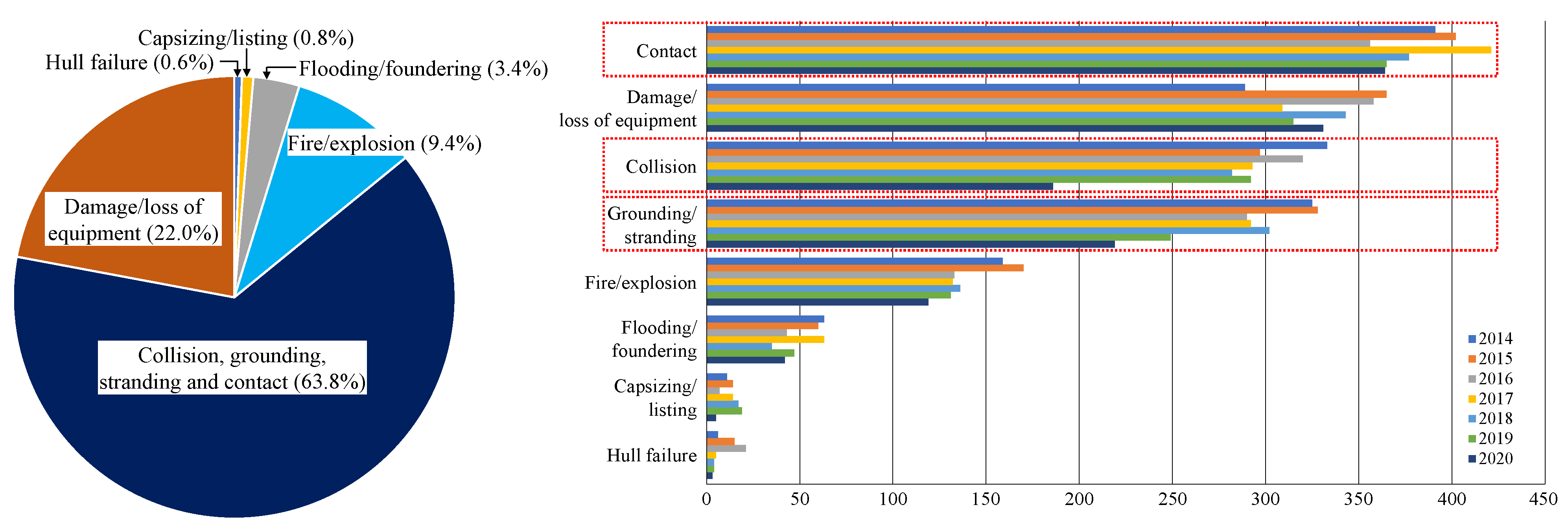
Ship structures (not only merchant ships but also battle ships) are exposed to various accidents during operations. According to the European Maritime Safety Agency (EMSA), 2000 incidents are reported annually, and more than 13,000 accidents were recorded for 2014–2020 [1]. In addition, around 27% of reported accidents accompanied serious or very serious human injury or damage to the environment and structures [1]. Figure 1 shows the distribution of accidents during the past seven years, and there are many events, even though the annual number of accidents has slightly decreased. Navigational accidents such as collision, grounding, and contact, which are related to structural impact loads, were recorded in around 64% of all events.
Figure 1.
Distribution of maritime casualty accidents over 2014–2020 (reproduced from [1], with permission from EMSA 2022).
To save lives and the environment, accidental navigational risks should be reduced. Risks can be controlled by decreasing their frequency and consequence. Proactive approaches such as planning, radar, and watch-keeping can reduce the frequency of collisions. Goerlandt and Kujala [2,3] presented an approach to estimate a ship collision probability (frequency) using dynamic traffic simulation. Paik et al. [4] introduced a method for calculating frequencies by considering randomly selected scenarios, and Kim et al. [5] applied a practical method for calculating frequencies of ship–ship and offshore–ship collisions. Recently, Nangung and Kim [6] developed a regional collision prediction approach using a fuzzy inference system for reducing the collision frequency.
In contrast, the damage (consequence) may depend on factors such as structural layout, impact location, impact speed, etc., when a striking ship is defined. There are ways of reducing the consequences, as follows:
- Reinforce an expected impact location (damage zone),
- Change the route of a striking (grounded) ship to collide (grounding) at a stronger structural part of the struck (grounded) ship.
As the structural damage can be controlled based on the damages predicted by a specified collision scenario, it is important to accurately predict the collision damage. Hong and Amdahl [7], Lui et al. [8], and Zeng et al. [9] performed experimental tests for obtaining the responses of the structural members (girder, plate, stiffened panel) of a ship under impact loads. Large-scale experimental tests accounting for the effect of the added mass were conducted by Ehlers et al. [10] for validating ship collision mechanics. Hong and Amdahl [7], Pedersen and Zhang [11,12], and Paik and Seo [13] developed empirical formulas to rapidly predict the structural response and crashworthiness by collisions and groundings. Regarding the finite element analysis (FEA), Glykas and Das [14], Zhang and Suzuki [15], Haris and Amdahl [16], and Nauyen et al. [17] introduced finite element (FE) modeling procedures/techniques and performed sensitivity analyses under impact accidents. Sohn and Jung [18] selected 50 credible scenarios with different displacement, speed and heading angle of the striking ship based on the marine traffic data of the coastal area in South Korea. In addition, Buldgen et al. [19] presented a super element and simplified analytical methods for analyzing structural response in collision events. To consider the effects of the surrounding water, Ferry and Le Sourne [20] developed a subroutine program called MCOL to reflect the effect of water instead of structural boundary conditions in FEA. Kim et al. [21] demonstrated the effects of the surrounding water such as the restoring force, added mass, damping force, resistance force, etc., on the structural damage. Recently, Kim et al. [22] performed a benchmark study for comparing and validating the structural response by different approaches considering both collisions and groundings. In addition, Kim et al. [23] introduced a practical method using spring elements for predicting the damage by impact conditions.
It is well-known that the structural response to navigational (impact) accidents is closely related to the fracture mechanism. Fracture strain under the impact loads depends on the strain rate, which is velocity-dependent. When dynamic FEAs are performed, the dynamic fracture strain (DFS) depending on several factors should be considered. Lehmann et al. [24] provided element size- and thickness-dependent DFSs for collision. Ko et al. [25] suggested the strain-rate-dependent DFS by considering the initial impact velocity of the striking ship. Generally, the DFS of mild steel subjected to collisions and groundings is in the range of 0.8 to 1.2 [24,25]. However, it is still difficult to define an exact value of DFS and apply it to the FEA. Moreover, running multiple scenarios with several DFSs to find the range of damage wastes time. Therefore, it needs factors that can revise the structural response with a pre-used DFS for approximately predicting the damage with other DFS values.
Once ships encounter navigational accidents, environmental pollution and structural damage are the inevitable consequences. In particular, the follow-up after collisions is more difficult than after groundings because collisions can occur not only on the shore but also offshore, while grounding events mainly occur around the shore. For this reason, this study mainly investigated the effect of the DFS on the structural damage in collision accidents, which lead to wider structural damage than groundings. Five DFS values were considered to observe DFS-dependent damage (penetration and absorbed energy). Additionally, five kinds of initial impact speeds () of the striking ship and two hardening tangent moduli () were also considered to examine the effect of the DFS under various collision conditions. Finally, empirical formulas were developed using the results of analysis to approximately calculate the structural response based on the damage predicted by the reference scenario.
In this paper, Section 2 presents a target structure and FE model for the dynamic FEA. Section 3 demonstrates the effects of the extent of analysis and boundary conditions. Section 4 introduces collision scenarios for a case study. Section 5 summarizes the results of simulations, and Section 6 introduces the development of empirical formulations to analytically predict the structural damage using the initial impact speed and DFS. Section 7 presents the application of a developed equation to a practical exercise. Finally, Section 8 includes the findings of the present study.
2. Finite Element Model
2.1. Target Structure
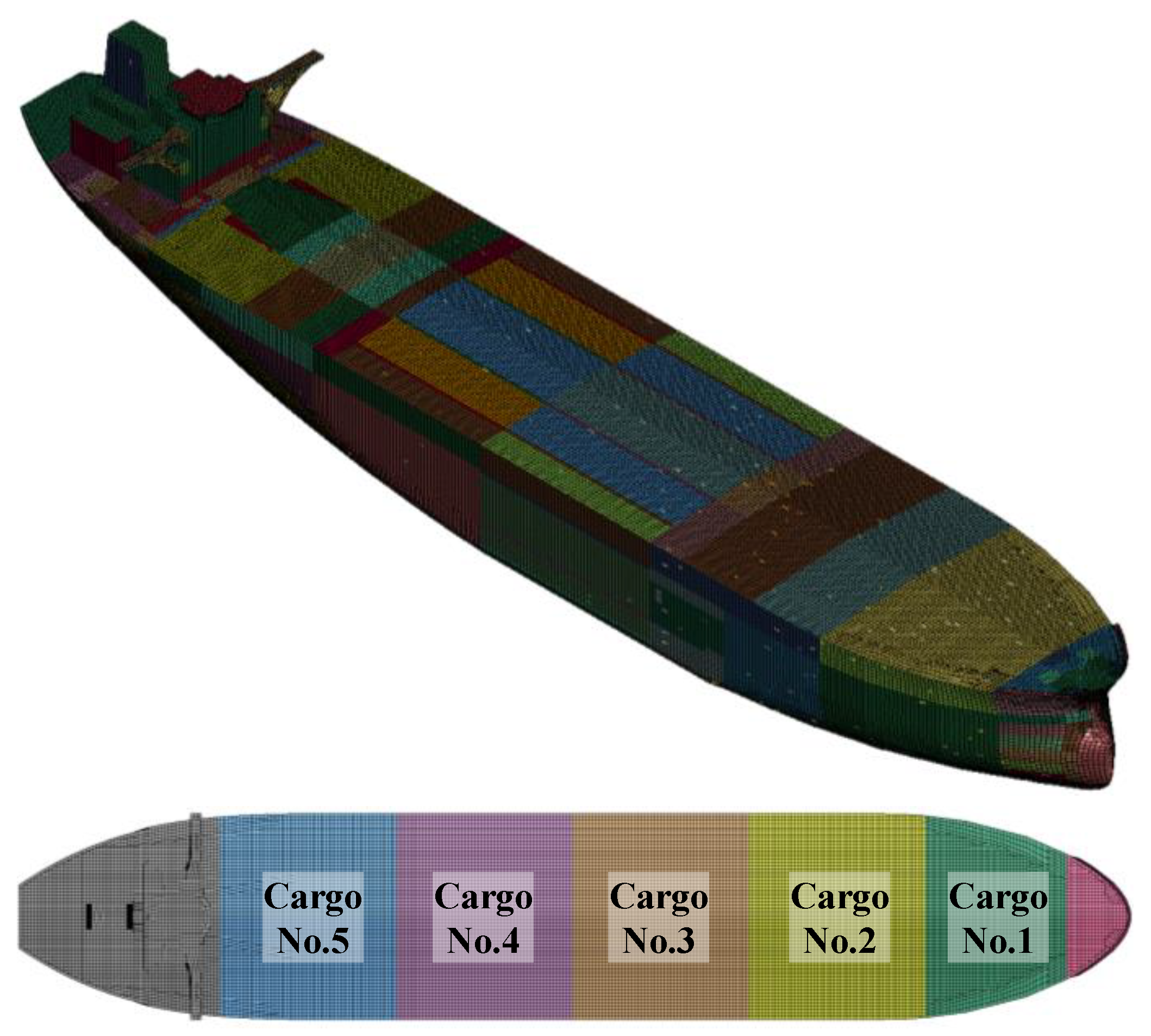
In this study, a 320 k very large crude oil carrier (VLCC) class double hull oil tanker, which can cause the most serious environmental damage in collisions, was selected as a target struck vessel, as shown in Figure 2. Table 1 presents the principal dimensions of the target structure. The target structure was modeled in the form of an FE using ANSYS/LS-DYNA explicit solver [26] to analyze the dynamic structural response.
Figure 2.
Target structure: 320 k VLCC class double hull oil tanker.
Table 1.
Principal particular of the target structure.
2.2. Material Modeling
It was assumed that all structural parts of the target ship in this study were made of the mild steel as presented in Table 2. Even if a true stress–strain curve is multi-linear, it gives very different results depending on impact scenarios because the dynamic structural capacity (strength and energy) depends on the strain rate (impact speed) during accidents [22]. Thus, this study considered the material to have bi-linear (elastic-plastic) material behavior using ‘Piecewise linear plasticity’ in ANSYS/LS-DYNA simulations [26]. To investigate the hardening effect, two kinds of hardening tangent moduli (0% and 10% of elastic moduli) were employed to compare the influence of material behavior after the yielding.
Table 2.
Material properties applied to the target ship.
During the simulations, the dynamic (strain rate) effect was considered using the Cowper–Symonds equation (see Equation (1)) for considering the dynamic yield strength [26,27]:
where and are the yield strength in static and dynamic loads, is the strain rate, and and are material-related (Cowper–Symonds) coefficients.
2.3. Element Type and Size
Two-dimensional plate structures were modeled by shell elements, and beam elements were applied to the 1D structural members such as stiffeners. In the simulations using ANSYS/LS-DYNA, the shell element took the Belytchko–Tsay formulation, which accounted for the translational and rotational velocity of nodes in six degrees of freedom [26]. The Hughes–Liu model with user-defined cross-section integration was employed for beam elements [26].
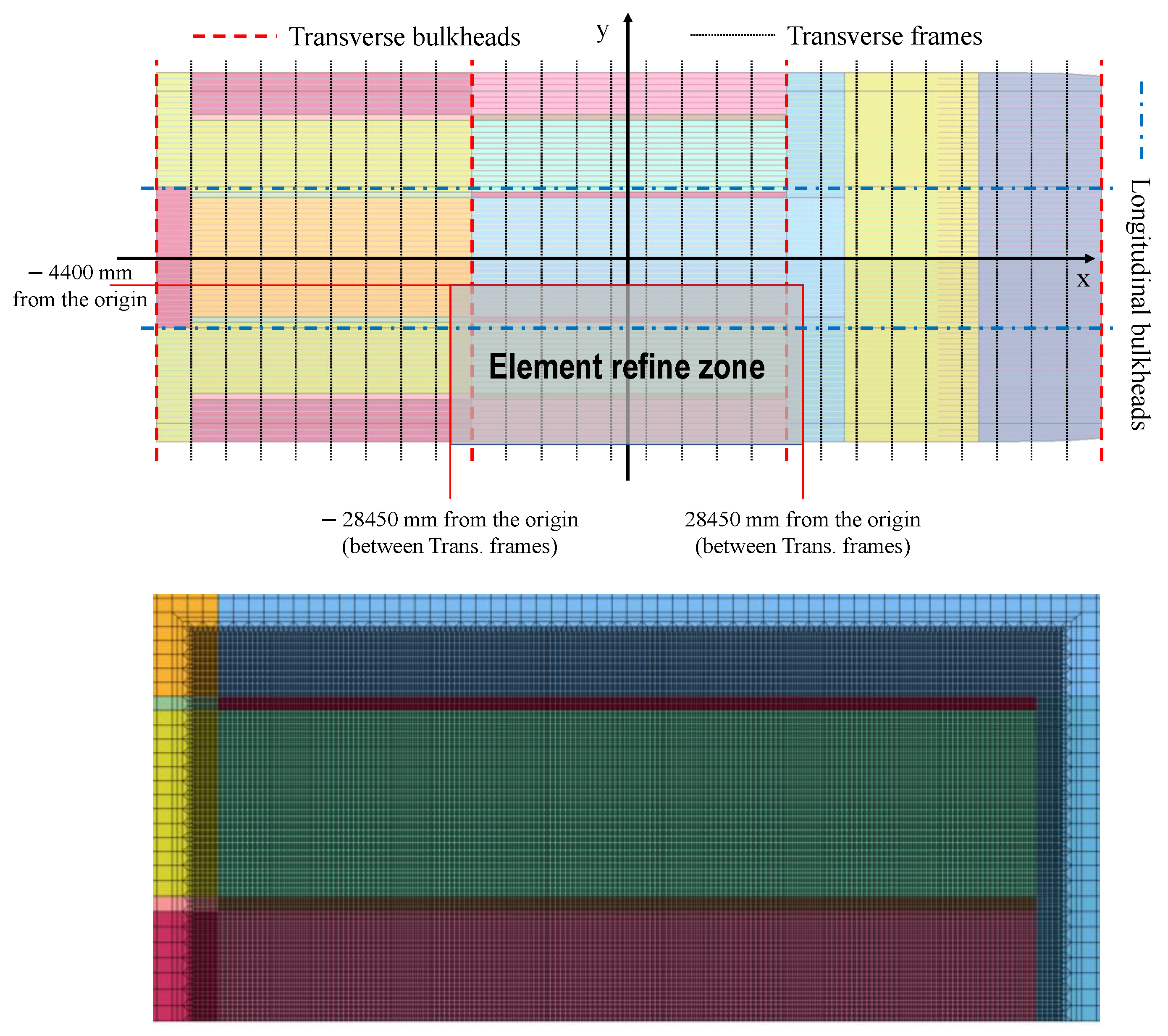
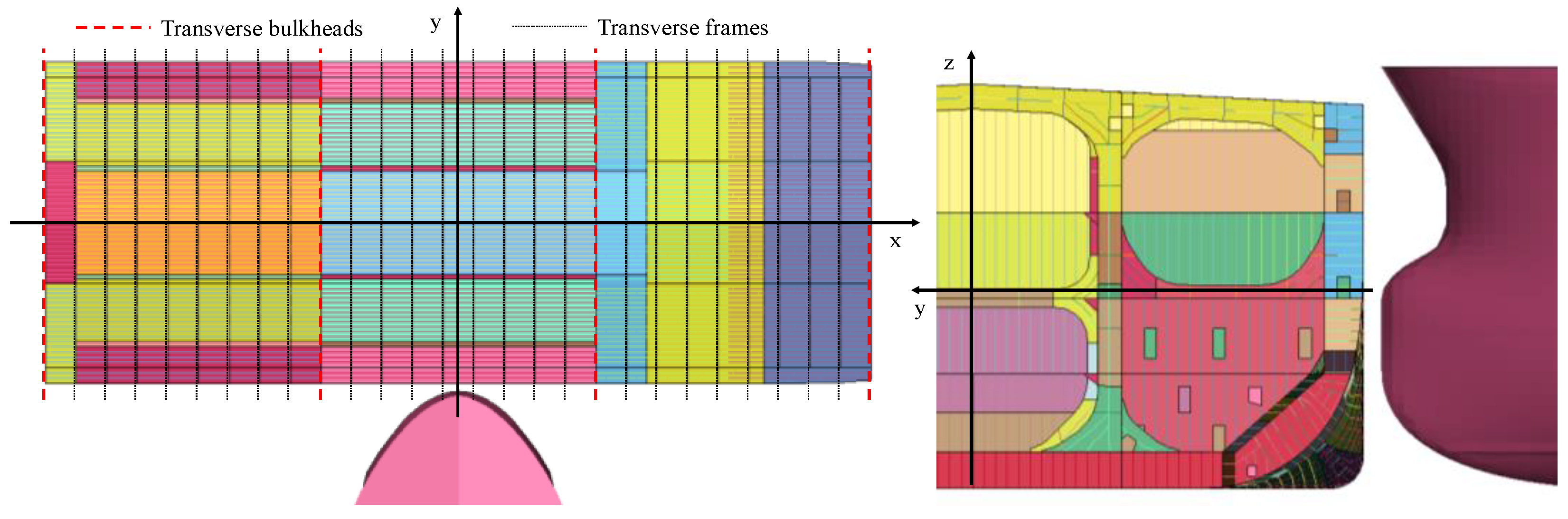
It was necessary to narrow a zone for the refined elements as much as possible because the simulation running time increases with increasing the total number of elements. This study assumed the collision at a center of the struck ship and selected the zone for applying the fine elements at the expected impact area as presented in Figure 3. Measurements of 100 × 100 (mm) elements for shells and 100 mm for beams were applied at the element refine (expected impact) zone, referring to studies that performed the mesh convergence study considering both collisions and groundings [21,22]. Other elements were around 950 × 950 (mm).
Figure 3.
Element refine zone (upper) and refined elements (lower) (top view).
3. Effect of Boundary Conditions and Extent of Analysis
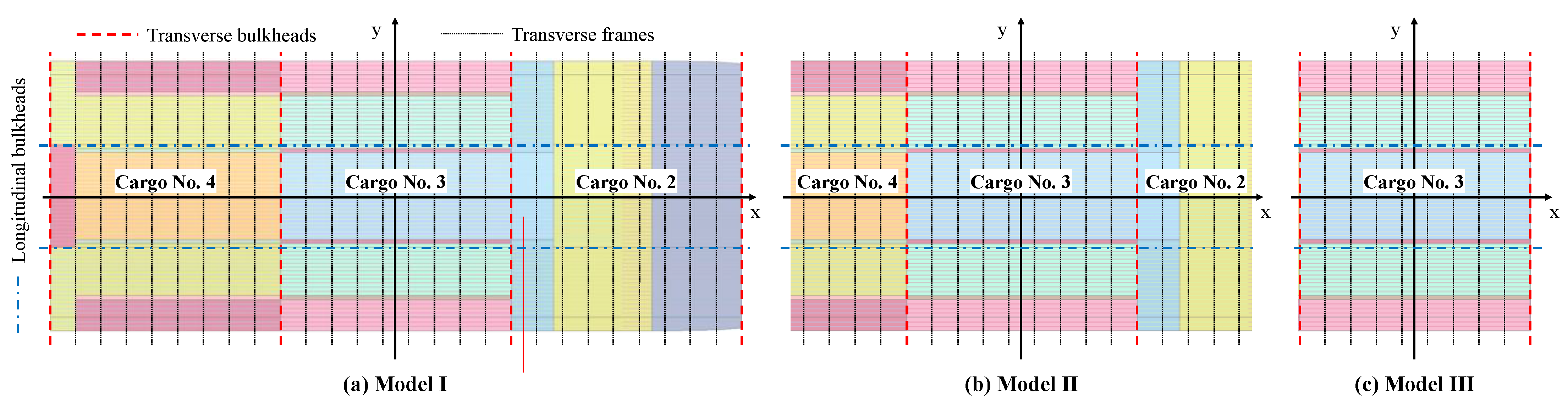
As is well-known, it is best to consider the entire vessel in the extent of analysis to reduce the boundary effect from structural members. However, sometimes it may be possible to apply a partial structure if there is no difference in the results between the entire and partial structure. To select an efficient extent of analysis, this study investigated and compared the structural behaviors of three kinds of extents as follows:
- Model I: 3 cargo holds (cargo No. 2–No.4);
- Model II: 1/2 + 1 + 1/2 cargo holds (half of cargo No. 2 + cargo No. 3 + half of cargo No. 4);
- Model III: 1 cargo hold (cargo No. 3).
Two kinds of boundary conditions (simply supported and fixed) at the ends of the model were adopted to compare the boundary effect. Figure 4 illustrates extents of the analysis to obtain their effects on structural responses. Details of the boundary conditions were
Figure 4.
Three kinds of extent of the analysis.
- Simply supported (SS): dx, dy, and dz are fixed at the left end, and dy and dz are fixed at the right end. The rotational displacements are acceptable;
- Fixed supported (FS): All the translational and rotational displacements are fixed at both ends.
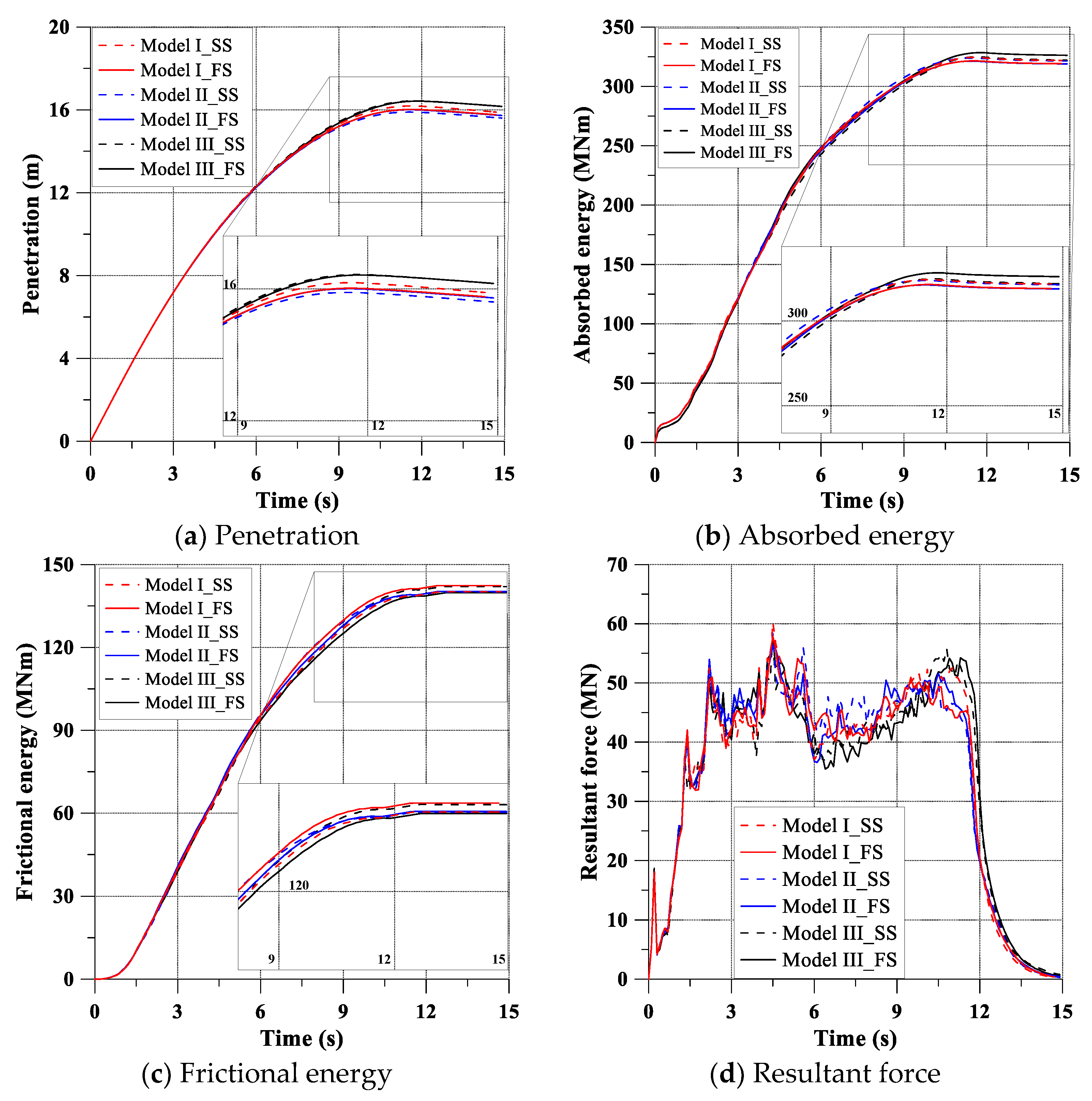
Figure 5 presents the effects of boundary conditions and extents of analysis on structural behavior considering the reference scenario in Section 4. It shows that structural responses (penetration, absorbed energy and resultant force) were slightly larger with the smaller extent of analysis, but the differences were minor. On the other hand, the wider models (Model I) gave larger frictional energy than the other models because Model I was more flexible. Table 3 summarizes the maximum structural response.
Figure 5.
Effects of the extent of analysis and boundary conditions on the structural responses.
Table 3.
Summary of the maximum structural response for different models and boundaries.
At both ends of Models II, there was no strong structural member in the breadth direction, such as a bulkhead and transverse frame. Thus, Model II was not stiffened and resulted in shorter penetration than the others. To perform the case study in Section 4, Model I was adopted after considering the simply supported condition that presented the average structural responses.
4. Case Study
According to Paik et al. [4], who conducted a statistical analysis of collision accidents, the mean and standard deviations of relative speed between struck and striking ships were 0.712 (struck/striking) and 0.443, respectively. Based on this research, initial impact speeds between 2 and 7.5 knots were considered, with 5 knots the initial reference collision speed [21,22]. Furthermore, 0.1 of DFS for mild steel is applied to define the reference scenario [24,25]. In addition, hardening tangent moduli, which were 0.0 (elastic-perfectly plastic) and 0.1 times the elastic modulus, were considered. The parameters used in this case study were as follows:
- Dynamic fracture strain, (-): 0.06, 0.08, 0.1 (Ref.), 0.12, 0.14;
- Initial impact speed, (knots): 2.5, 4, 5 (Ref.), 6, 7.5;
- Hardening tangent moduli (MPa): 0.0, 20580.
In the present study, it was assumed that the rigid striking ship collided at the middle of the struck ship to reduce the influences from impact locations, as shown in Figure 6. Both ships were under half-loading conditions (204,000 tons), which can cause a level of damage midway between those of very serious and less serious events.
Figure 6.
Collision location.
5. Results of Analysis
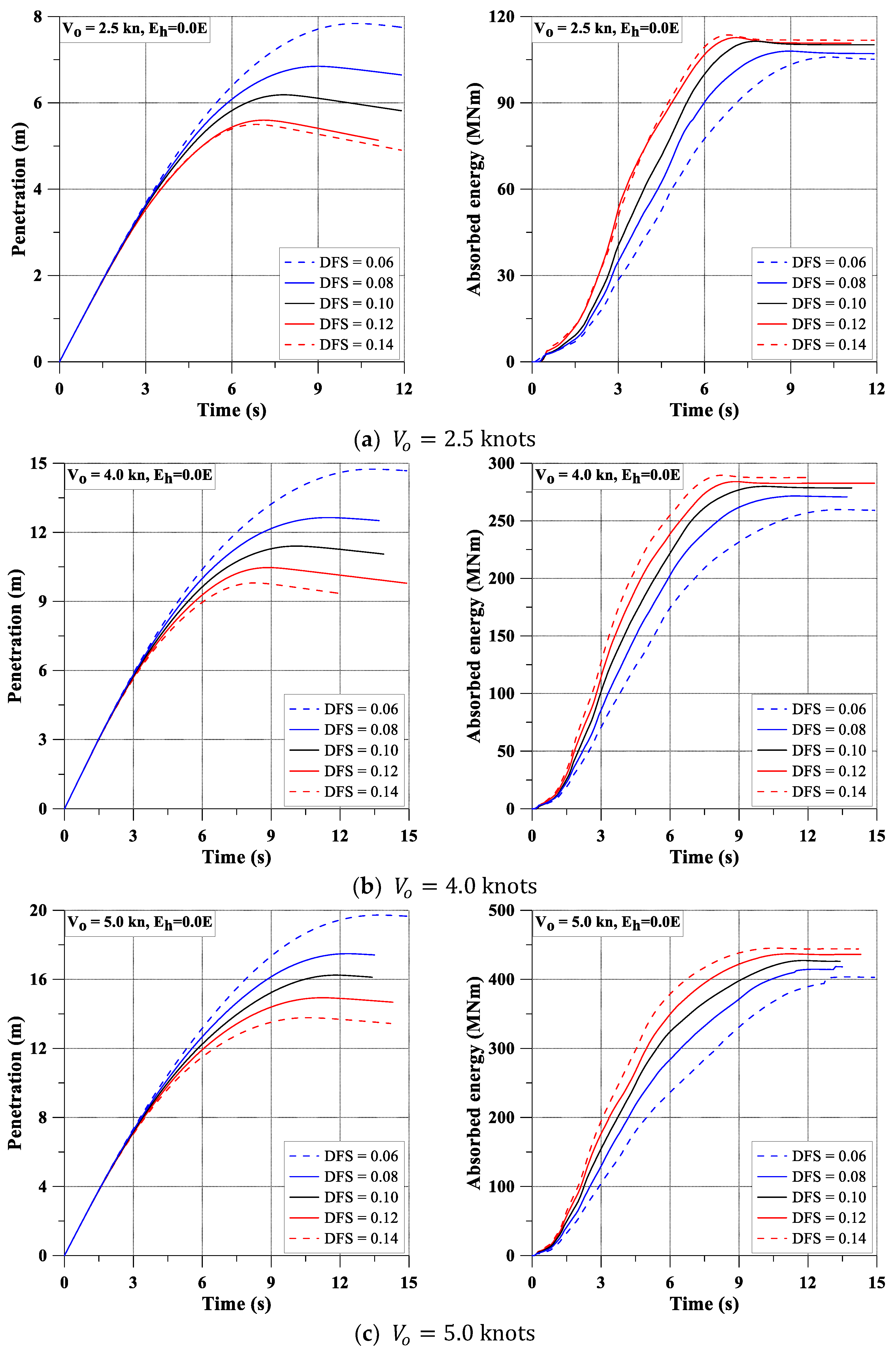
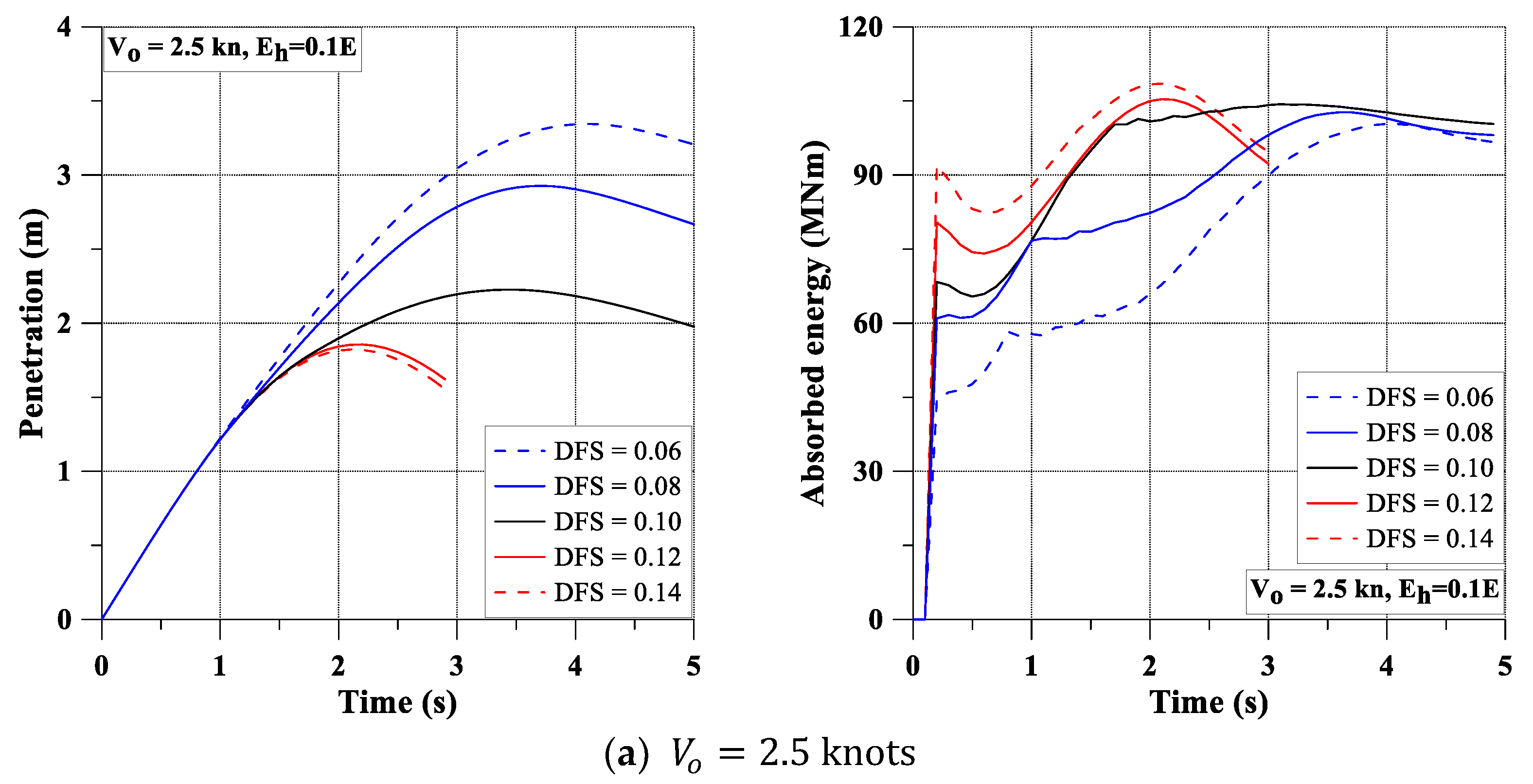
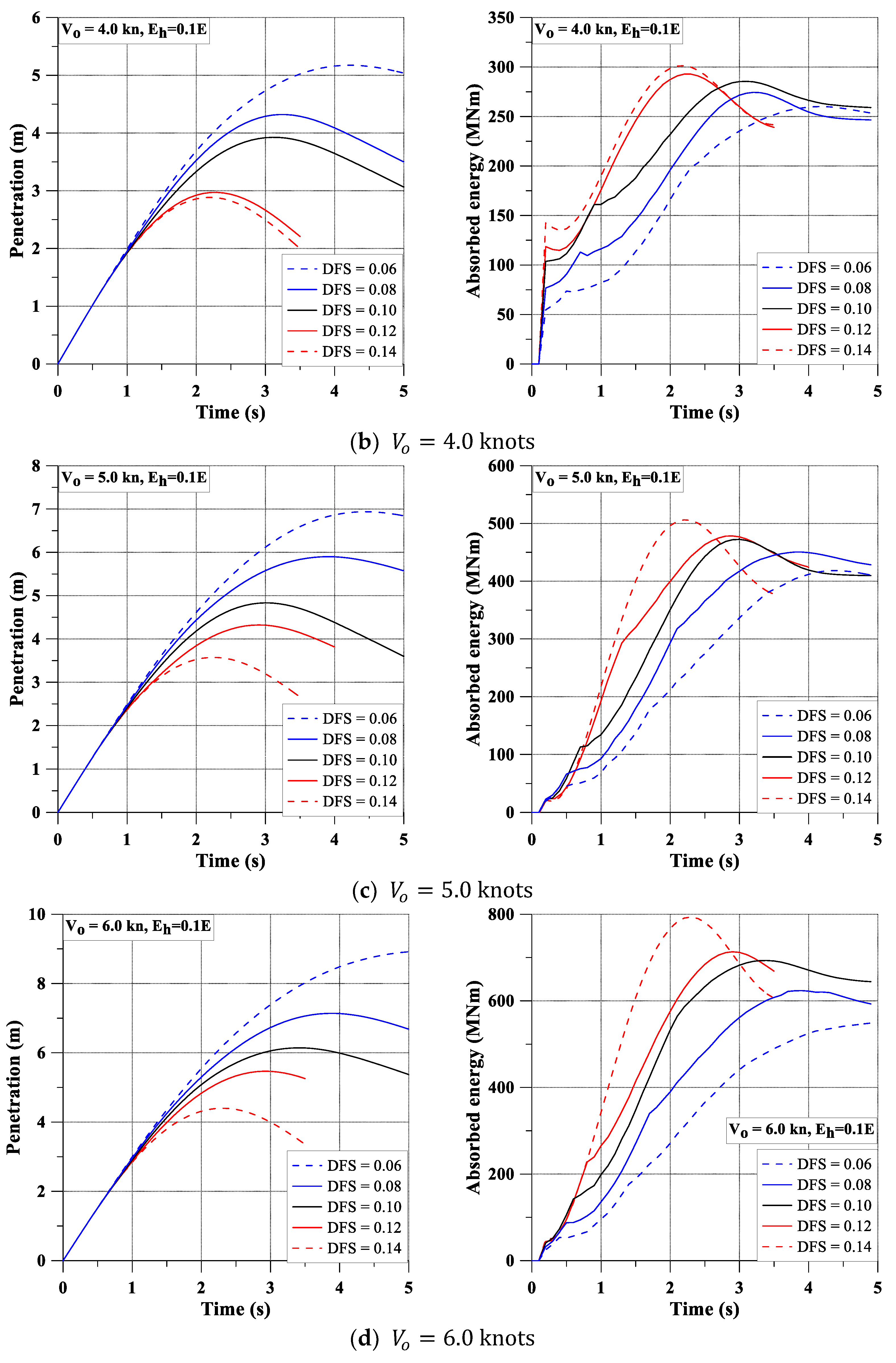
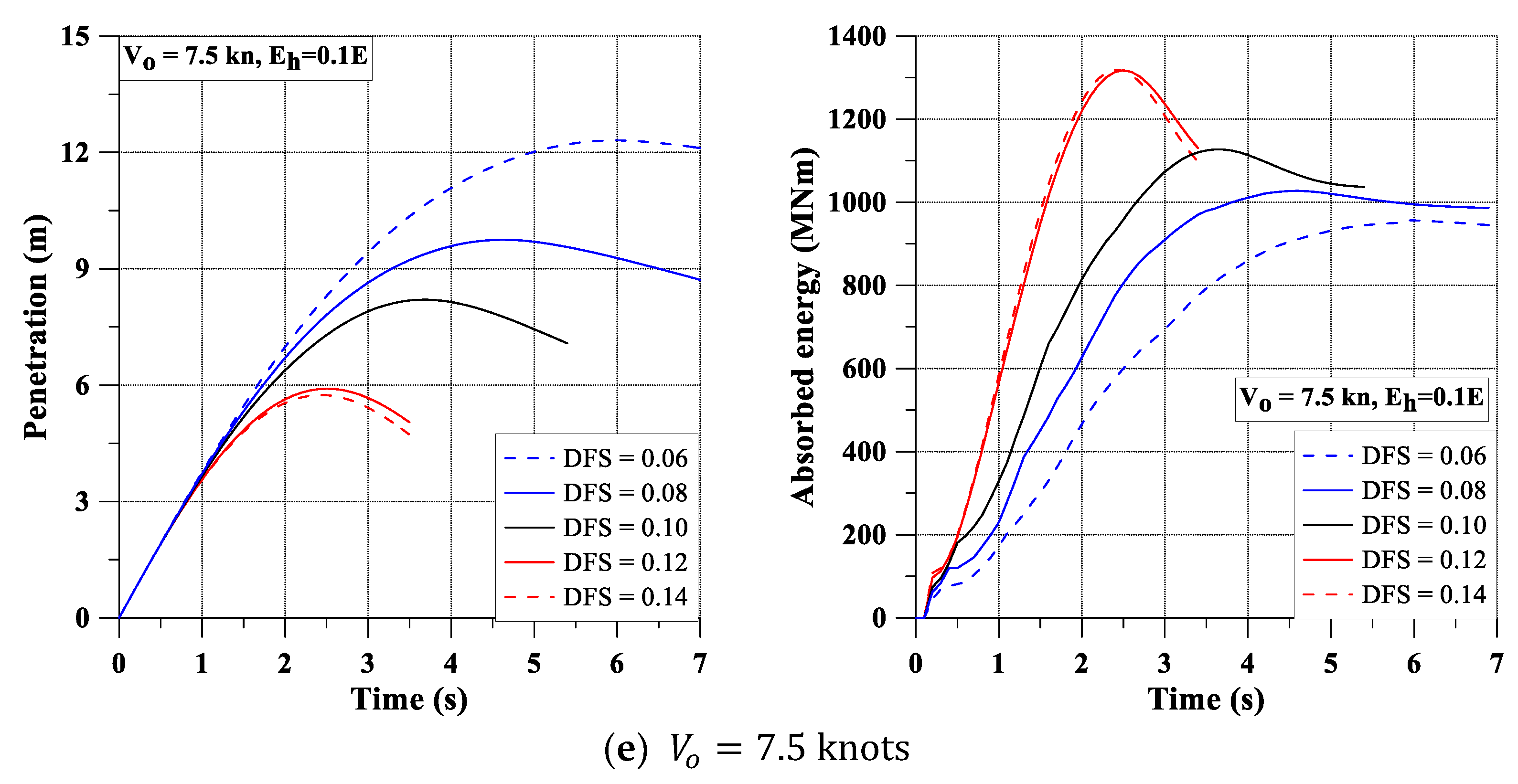
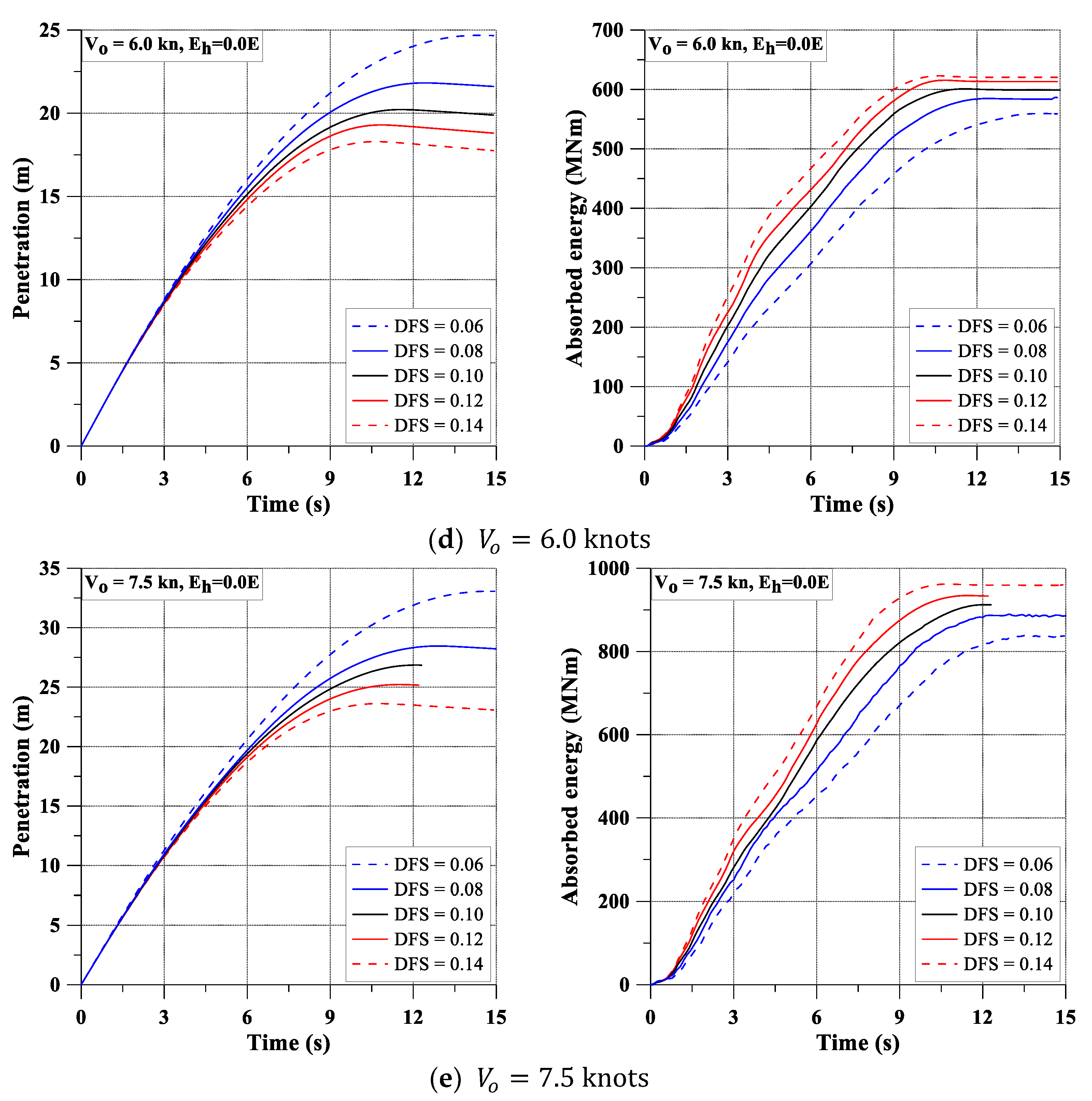
With various DFSs, initial impact velocities, and hardening tangent moduli, 50 collision scenarios were analyzed using dynamic FEA. Figure 7 and Figure 8 illustrate the results of analyses that included time-penetration and time-absorbed energy. The frictional energy and resultant force were excluded because they are not directly related to structural damage. The penetration was observed at the tip of the striking ship’s bow, and the absorbed energy included only the strain energy in the structure excluding the frictional energy between two bodies.

Figure 7.
Effect of on dynamic structural responses depending on with .


Figure 8.
Effect of on dynamic structural responses depending on with .
Overall, it was discovered that the penetration became shorter and the structure absorbed more energy when increasing the DFS. The time of maximum penetration was faster when a larger DFS was considered. This was because the fracture of the structural members was delayed, and the capacity of energy absorption was improved.
Figure 7 presents the influence of the DFS on the structural responses depending on the initial impact speeds without the hardening effect. It shows that the difference in absorbed energy was minor when the ship collided with lower impact speed, while there was a distinct difference in energy with a higher velocity. It can be found that the energy after the maximum value was constant because all the structures damaged during accidents were under the perfectly plastic behavior. While the hardening effect was considered, the structure was partially recovered, as illustrated in Figure 8 (absorbed energy), when it had a larger DFS. More structural members were affected by impact loads from the collision because they became tough when increasing the DFS. The striking ship moved backward after reaching the maximum penetration owing to the structural recovering force in the opposite direction of the initial velocity.
For a similar reason, the absorbed energy increased until the maximum penetration, but it decreased owing to the recovery of the structural members in the elastic region after the maximum response. In addition, the rebounding event was remarkably observed when the structure involved larger and larger DFSs.
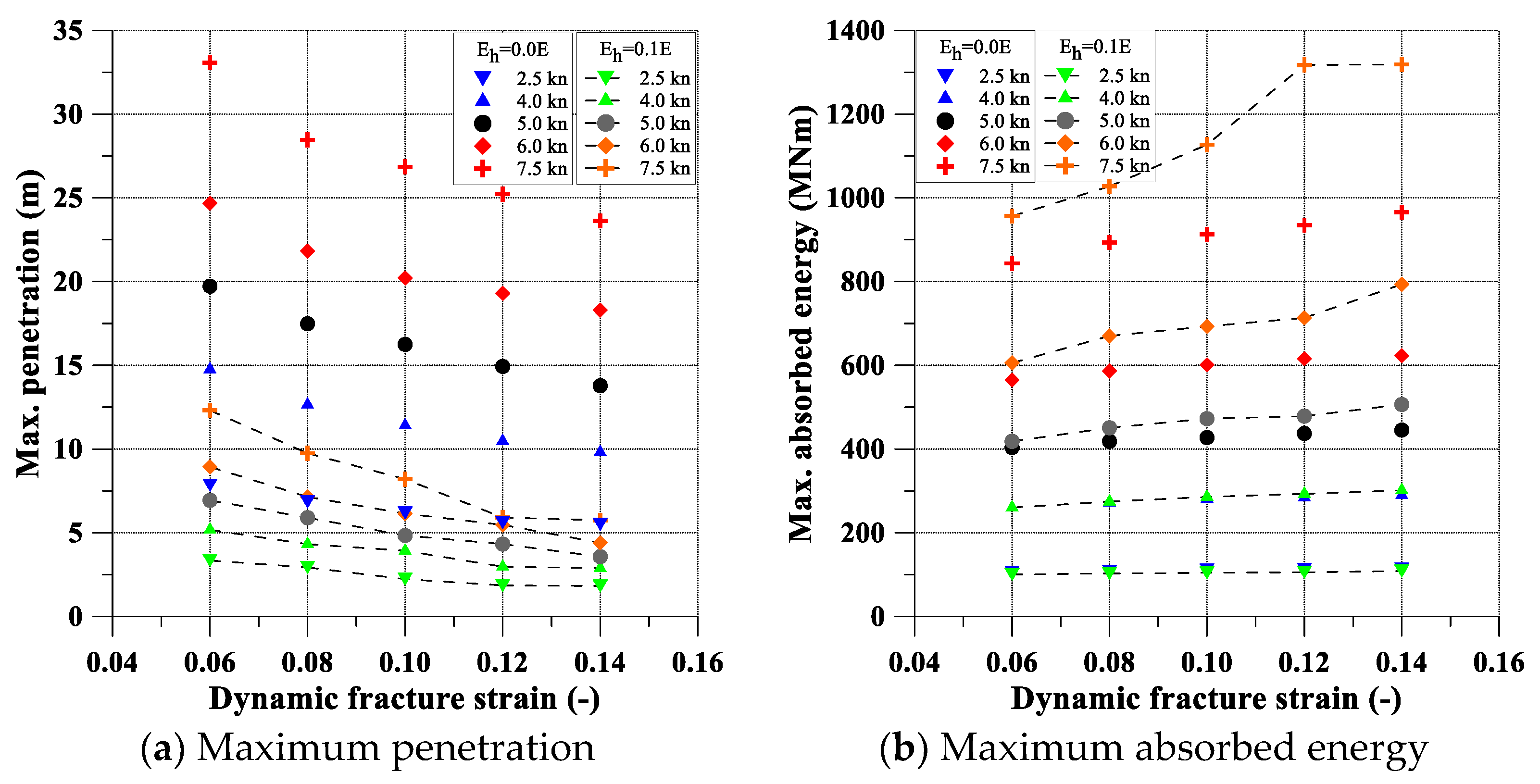
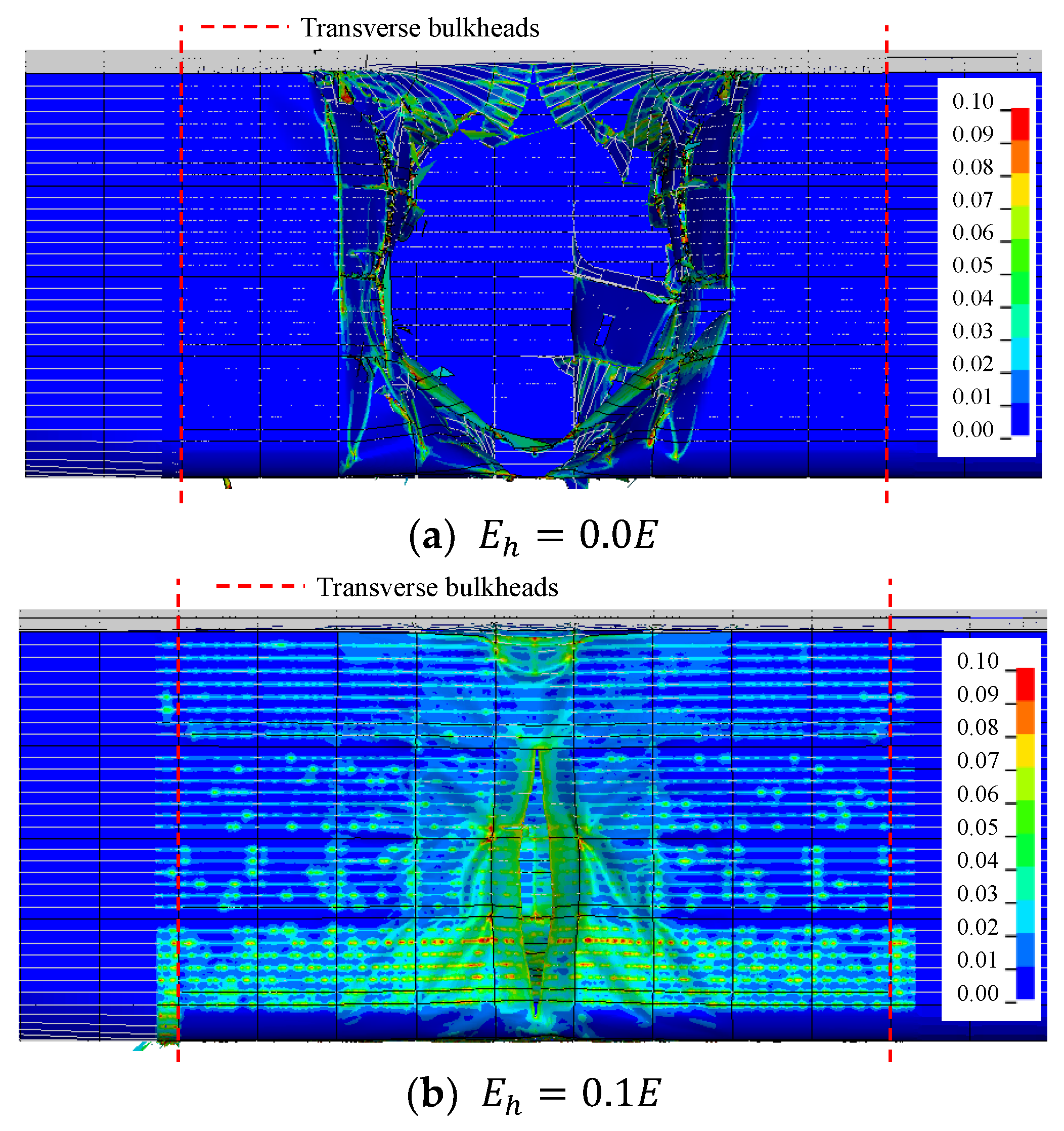
Figure 9 and Table 4 present the maximum penetration and absorbed energy depending on parameters. Scenarios that considered the hardening effects generally resulted in smaller penetration and higher absorbed energy than scenarios without the effect. It presents that much more kinetic energy of the striking ship was consumed by structures surrounding the damaged area before rebounding from the struck ship. However, when the speed was very slow (2.5 knots), the effect led to smaller absorbed energy owing to the rebounding. When the hardening effect was considered, the plastic strain was much more widely distributed than the elastic-perfectly plastic material (), as shown in Figure 10.
Figure 9.
Comparison of the maximum structural responses.
Table 4.
Summary of effects of the case study on the maximum penetration (Pen.) and absorbed energy (Ab. E.).
Figure 10.
The effect of hardening moduli on the plastic strain distribution (0.1 of and 5 knots of ).
In the comparison of the results depending on the hardening moduli, it was also observed that the hardening effect on the maximum structural damage (both penetration and energy) was greater with a relatively larger DFS, regardless of the speed, owing to the amount of energy absorption. In addition, the frictional energy of was smaller than because of the smaller contact area (see Figure 10).
6. Development of an Empirical Formula
The ratio of the damages (penetration and absorbed energy) of the desired and reference scenarios can be expressed as a function of the DFS and initial impact velocity as shown in Equation (2):
where = maximum damage by the desired scenario, and = maximum damage by the reference scenario with 0.1 of DFS and 5 knots of impact speed.
Based on the simulation results, empirical formulas were developed as expressed in Equations (3) and (4). Table 5 presents the coefficients of equations depending on the initial impact speed and hardening moduli. When considering results depending on DFS with fixed impact speed, it shows the relationship in a quadratic polynomial form. In addition, coefficients of the Equations (3) and (4) are proportional to the speed:
where and = the Max. penetration and absorbed energy by collision scenario, and = the Max. damage by the reference scenario with 0.1 of DFS and 5 knots of impact speed, respectively.
Table 5.
Coefficients for Equations (3) and (4).
Finally, Equations (3) and (4) can be combined as a function of both and in knots (Equation (2)) as Equations (5)–(8):
For = 0.0E
For = 0.1E
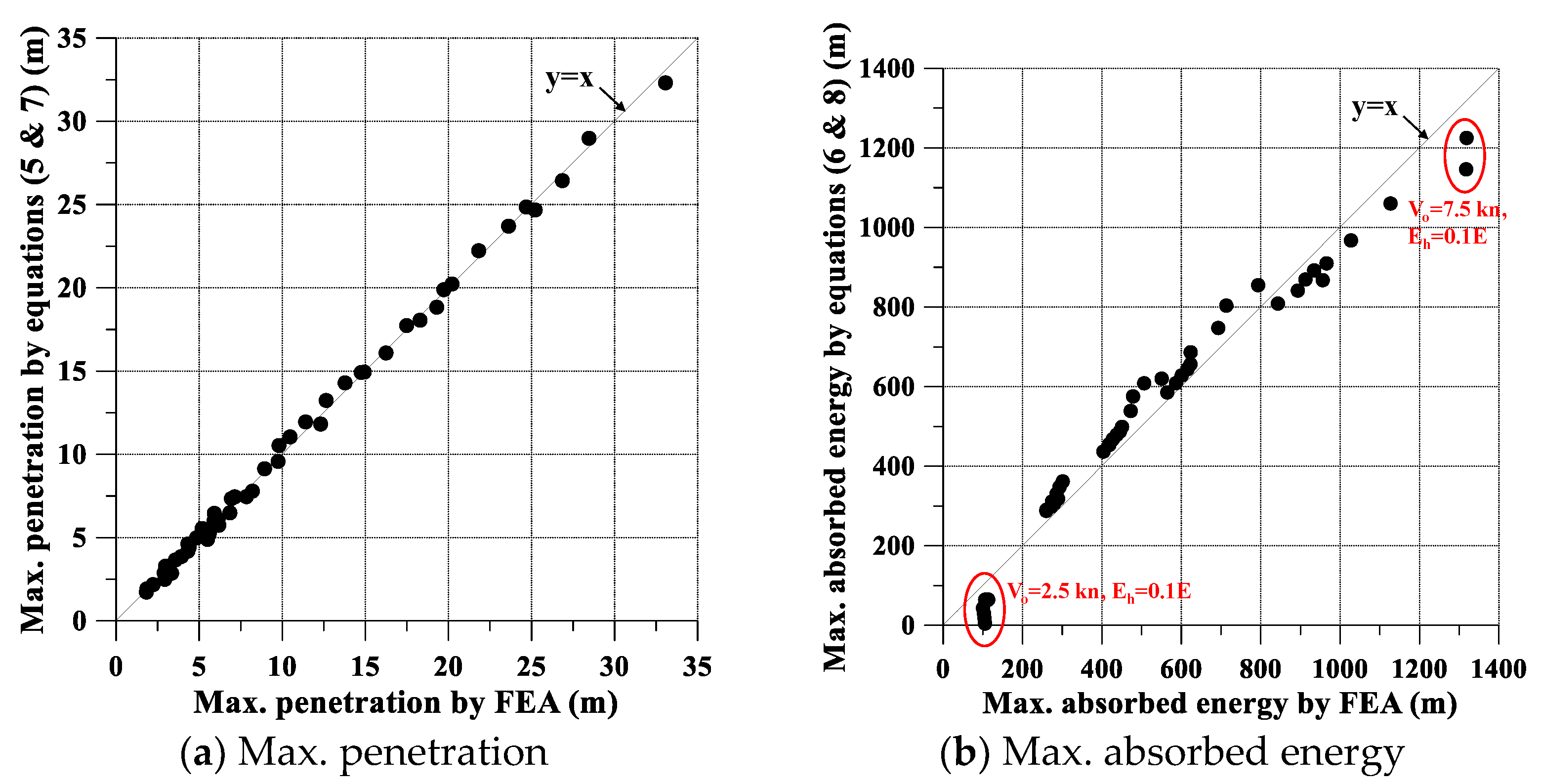
Structural damages calculated from the developed equations (Equations (5)–(8)) were compared with the results of 50 FE simulations. Maximum penetrations of the formula were in a good agreement. However, the formula (Equation (8)) underestimated the absorbed energy when the lowest and highest impact speeds (2.5 and 7.5 knots) were applied with the hardening effect, as illustrated in Figure 11b. This may have been caused by an error of high nonlinearity of the hardening effect and the interpolation at the boundary of the equation. Thus, it is not recommended to use Equation (8) when the impact speed is slower than 4.0 knots and faster than 6.0 knots.
Figure 11.
Comparison of structural response by FEA and developed empirical formula.
7. Application to Practical Exercise
In the research by Kim et al. [21], the damage to a passenger ship from a collision was introduced. Table 6 presents the details of the collision scenario and the maximum structural response obtained by Kim et al. [21].
Table 6.
Collision scenario and maximum structural response obtained by Kim et al. (reproduced from [21], with permission from Elsevier 2022).
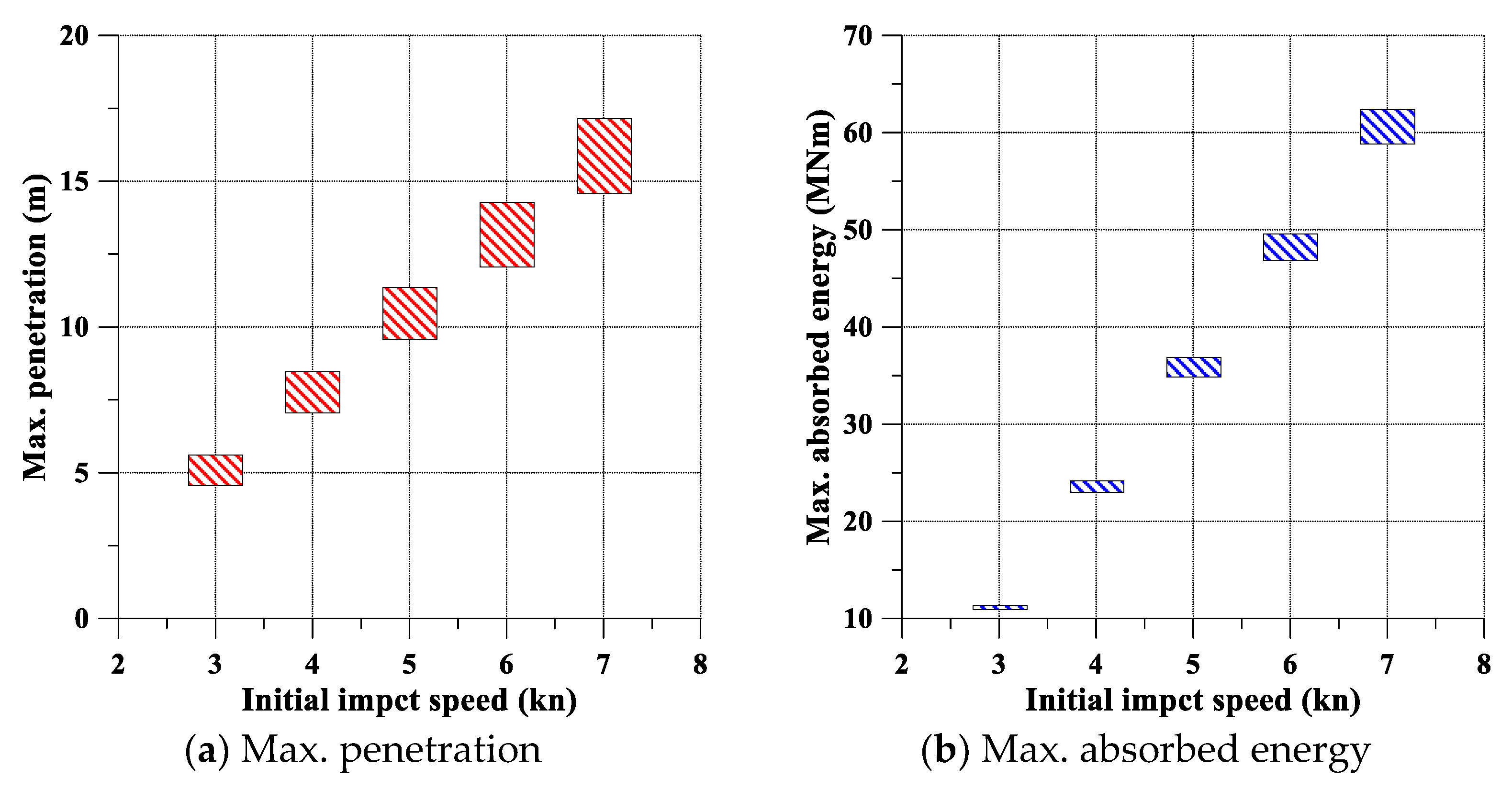
By applying the scenario in Table 6 as the reference scenario to Equations (5) and (6), it was possible to predict the upper and lower bounds of the maximum structural response considering the design conditions. Figure 12 presents an example of application using the developed formulas. In this example, it was assumed that the collision speed was from 3 to 7 knots, and the expected DFS was 0.08–0.12. This might be useful when designing the initial structural members.
Figure 12.
Upper and lower bounds of maximum damage obtained by the formula.
8. Conclusions
The aim of this study was to investigate the effect of dynamic fracture strain and initial impact speed on the structural responses of ships subject to collisions. The structural damages (penetration and absorbed energy) were obtained depending on the parameters. In addition, the influence of hardening tangent moduli was presented to determine their combined effects. Based on the results of the FEA, empirical formulas were developed to analytically predict damages using the structural response of the reference scenario. The equations provided the boundary of maximum penetration and absorbed energy when considering various accidental conditions.
From this study, some conclusions can be drawn as follows:
- As the dynamic fracture strain increases, the penetration becomes shorter, but the amount of absorbed energy increases.
- When the structure is tougher (larger dynamic fracture strain), the energy consumption becomes faster.
- The effect of the dynamic fracture strain is minor under lower impact velocity when the hardening effect is not considered.
- The structure considering the hardening effect partially recovers owing to the elasticity. More structural members are affected by the impact load than in the results without the tangent moduli.
- The hardening effect is remarkable. The effect leads to smaller penetration and higher absorbed energy owing to the energy consumption by the structures around the damaged area. The effect results in widely distributed plastic strain.
- The tangent moduli have more of an impact on the responses when a relatively larger dynamic fracture strain is adopted.
- Maximum damage determined by the developed formula was in a good agreement with the FEA. It might be helpful to provide the upper and lower bounds of damage when considering various dynamic fracture strains for double sided oil tankers. However, it is recommended to use the formula for 4.0–6.0 knots of velocity when the hardening effect is considered.
Author Contributions
Conceptualization, S.J.K. and J.M.S.; methodology, S.J.K. and J.M.S.; software, S.J.K. and J.M.S.; writing—original draft preparation, S.J.K.; writing—review and editing, S.J.K. and J.M.S.; visualization, S.J.K. and J.M.S.; All authors have read and agreed to the published version of the manuscript.
Funding
The research was funded by the National Science and Technology Council, Taiwan (No. NSTC 111-2222-E-110-003).
Institutional Review Board Statement
Not applicable.
Informed Consent Statement
Not applicable.
Data Availability Statement
Not applicable.
Conflicts of Interest
The authors declare no conflict of interest.
References
- EMSA. Annual Overview of Marine Casualties and Incidents 2021; European Maritime Safety Agency: Lisbon, Portugal, 2021. [Google Scholar]
- Goerlandt, F.; Kujala, P. Modeling of Ship Collision Probability using Dynamic Traffic Simulation. Reliab. Risk Saf. 2010, 10, 440–447. [Google Scholar]
- Goerlandt, F.; Kujala, P. Traffic Simulation based Ship Collision Probability Modeling. Reliab. Eng. Syst. Saf. 2011, 96, 91–107. [Google Scholar] [CrossRef]
- Paik, J.K.; Kim, S.J.; Ko, Y.G.; Youssef, S.A.M. Collision Risk Assessment of a VLCC Class Tanker. In Proceedings of the Society of Naval Architects and Marine Engineers Maritime Convention, Houston, TX, USA, 23–28 October 2017. [Google Scholar]
- Kim, S.J.; Seo, J.K.; Ma, K.Y.; Park, J.S. Methodology for Collision-frequency Analysis of Wind-turbine Installation vessels. Ships Offshore Struct. 2021, 16, 423–439. [Google Scholar] [CrossRef]
- Namgung, H.; Kim, J.S. Regional Collision Risk Prediction System at a Collision Area Considering Spatial Pattern. J. Mar. Sci. Eng. 2021, 9, 1365. [Google Scholar] [CrossRef]
- Hong, L.; Amdahl, J. Plastic Mechanism Analysis of the Resistance of Ship Longitudinal Girders in Grounding and Collision. Ships Offshore Struct. 2008, 3, 159–171. [Google Scholar] [CrossRef]
- Liu, B.; Villavicencio, R.; Soares, C.G. Simplified Analytical Method to Evaluate Tanker Side Panels during Minor Collision Incidents. Int. J. Impact Eng. 2015, 78, 20–33. [Google Scholar] [CrossRef]
- Zeng, J.; Hu, Z.; Chen, G. A Steady-state Plate Tearing Model for Ship Grounding over a Cone-shaped Rock. Ships Offshore Struct. 2016, 11, 245–257. [Google Scholar] [CrossRef]
- Ehlers, S.; Tabri, K.; Romanoff, J.; Varsta, P. Numerical and Experimental Investigation on the Collision Resistance of the X-core Structure. Ships Offshore Struct. 2010, 7, 21–29. [Google Scholar] [CrossRef]
- Pedersen, T.P.; Zhang, S. Absorbed Energy in Ship Collisions and Groundings: Revising Minorsky’s Empirical Method. J. Ship Res. 2000, 44, 140–154. [Google Scholar] [CrossRef]
- Pedersen, T.P.; Zhang, S. Effect of Ship Structure and Size on Grounding and Collision Damage Distributions. Ocean Eng. 2000, 27, 1161–1179. [Google Scholar] [CrossRef]
- Paik, J.K.; Seo, J.K. A Method for Progressive Structural Crachworthiness Analysis under Collision and Grounding. Thin-Walled Struct. 2007, 45, 15–23. [Google Scholar] [CrossRef]
- Glykas, J.A.; Das, K.P. Energy Conservation during Grounding with Rigid Slopes. Ocean Eng. 2001, 28, 397–415. [Google Scholar] [CrossRef]
- Zhang, A.; Suzuki, K. Dynamic FE Simulations of the Effect of Selected Parameters on Grounding Test Results of Bottom Structures. Ships Offshore Struct. 2006, 1, 117–125. [Google Scholar] [CrossRef]
- Haris, S.; Amdahl, J. Crushing Resistance of a Cruciform and its Application to Ship Collision and Grounding. Ships Offshore Struct. 2012, 7, 185–195. [Google Scholar] [CrossRef]
- Nguyen, T.H.; Garré, L.; Amdahl, J.; Leira, B.J. Benchmark Study on the Assessment of Ship Damage Conditions during Stranding. Ships Offshore Struct. 2012, 7, 197–213. [Google Scholar] [CrossRef]
- Sohn, J.M.; Jung, D. Structural Assessment of a 500-Cbm Liquefied Natural Gas Bunker Ship during Bunkering and Marine Operation under Collision Accidents. Ships Offshore Struct. 2021. [Google Scholar] [CrossRef]
- Buldgen, L.; Le Sourne, H.; Rigo, P. A Simplified Analytical Method for Estimating the Crushing Resistance of an Inclined Ship Side. Mar. Struct. 2013, 33, 265–296. [Google Scholar] [CrossRef]
- Ferry, M.; Le Sourne, H.; Besnier, F. MCOL Theoretical Manual; Principia Marine: Nantes, France, 2002. [Google Scholar]
- Kim, S.J.; Kõrgersaar, M.; Ahmadi, N.; Taimuri, G.; Kujala, P.; Hirdaris, S. The Influence of Fluid Structure Interaction Modelling on the Dynamic Response of Ships Subject to Collision and Grounding. Mar. Struct. 2021, 75, 102875. [Google Scholar] [CrossRef]
- Kim, S.J.; Taimuri, G.; Kujala, P.; Conti, F.; Le Sourne, H.; Pineau, J.P.; Looten, T.; Bae, H.; Mujeeb-Ahmed, M.P.; Vassalos, D.; et al. Comparison of Numerical Approaches for Structural Response Analysis of Passenger Ships in Collisions and Groundings. Mar. Struct. 2022, 81, 103125. [Google Scholar] [CrossRef]
- Kim, S.J.; Sohn, J.M.; Kujala, P.; Hirdaris, S. A Simplifed Fluid Structure Interaction Model for the Assessment of Ship Hard Grouding. J. Mar. Sci. Technol. 2022, 27, 695–711. [Google Scholar] [CrossRef]
- Lehmann, E.; Egge, E.D.; Sharrer, M.; Zhang, L. Calculation of Collision with the Aid of Linear FE models. In Proceedings of the International Conference on Practical Design of Ships and Mobile Units, Shanghai, China, 16–21 September 2001. [Google Scholar]
- Ko, Y.G.; Kim, S.J.; Sohn, J.M.; Paik, J.K. A Practical Method to Determine the Dynamic Fracture Strain for the Nonlinear Finite Element Analysis of Structural Crashworthiness in Ship-ship Collisions. Ships Offshore Struct. 2018, 13, 412–422. [Google Scholar] [CrossRef]
- ANSYS/LS-DYNA. User’s Manual for ANSYS/LS-DYNA, Version 2020R1; ANSYS Inc.: Canonsburg, PA, USA, 2020. [Google Scholar]
- Jones, N. Structural Impact, 2nd ed.; Cambridge University Press: Cambridge, UK, 2012. [Google Scholar]
Publisher’s Note: MDPI stays neutral with regard to jurisdictional claims in published maps and institutional affiliations. |
© 2022 by the authors. Licensee MDPI, Basel, Switzerland. This article is an open access article distributed under the terms and conditions of the Creative Commons Attribution (CC BY) license (https://creativecommons.org/licenses/by/4.0/).