


Abstract
Precision agriculture has become a major direction of agricultural technological development in recent decades, addressing efficiency, environmental, and economic challenges simultaneously. Input optimization based on site-specific data collection—particularly variable-rate nutrient application, precision irrigation systems, and targeted crop protection—has been shown to generate measurable cost and resource savings. The aim of the study is to explore and systematically evaluate the economic impacts influencing precision technology in crop production. Although the technical and environmental benefits of precision technologies are widely documented, their economic performance and farm-level profitability remain inconsistently interpreted. The study is based on a systematic literature review of peer-reviewed English-language journal articles retrieved from the Web of Science, Scopus, ScienceDirect, and JSTOR databases. Study selection and evaluation were conducted in accordance with the PRISMA 2020 methodological framework. The literature indicates that precision technologies achieve average input savings of 8–20% and yield increases of 2–6%, while reported return on investment (ROI) values typically range between 5% and 15%. Economic viability is strongly dependent on farm size, with most studies identifying profitability above 100–200 ha. Additional benefits include improved management of soil heterogeneity, enhanced nutrient-use efficiency, and reduced excess input application, although adoption remains constrained by high investment costs and technological complexity.
1. Introduction
Agriculture is undergoing a major technological transformation in the twenty-first century, driven primarily by digitalization and the adoption of precision farming. Increasing production efficiency, reducing costs, and promoting the sustainable use of environmental resources have become key objectives in both developed and developing agricultural systems [1,2,3,4]. Precision agriculture is based on the integration of spatial and temporal information, enabling site-specific and georeferenced interventions in crop production, including nutrient management, irrigation, crop protection, and soil management [5]. These approaches allow the optimization of input use while simultaneously reducing environmental impacts.
Recent technological innovations, such as global positioning systems (GPS), remote sensing, drone-based monitoring, and automated or robotic machinery, have introduced a data-driven production paradigm in agriculture [6,7,8,9]. Digitalization enables real-time monitoring and optimization of farming operations through decision-support systems [10]. Precision farming therefore represents not only a technological development but also an economic decision-making framework in which investment costs, operational expenditures, risk, and return on investment are critical factors [11,12,13,14,15,16].
The literature generally agrees that the economic benefits of precision technologies emerge over the long term, while adoption is influenced by several constraints. High initial investment costs, limited technological and informational knowledge, and market uncertainty are frequently identified barriers [17,18,19]. Smaller farms often face financial and human capital limitations, whereas larger farms benefit from economies of scale that improve investment feasibility. In addition, the implementation of precision farming requires organizational adaptation and changes in managerial attitudes, as effective data collection, analysis, and utilization demand new competencies [9,20,21].
From a sustainability perspective, georeferenced crop production contributes to reducing environmental pressure, improving nutrient-use efficiency, and stabilizing farm profitability. Integrating economic and ecological considerations may therefore support both competitiveness and long-term sustainability. Consequently, further research is required to identify the factors influencing the economic performance of precision technologies, to assess appropriate evaluation methodologies, and to examine differences across farm sizes and production environments [22,23,24,25,26,27,28].
The aim of this study is to systematically synthesize the economic impacts associated with the adoption of precision technology in crop production through a structured literature review in order to assess whether precision agriculture can be considered economically viable, competitive, and sustainable in the long term. Although technological and environmental benefits are well documented, economic outcomes—particularly input-specific cost structures and farm-level returns—remain inconsistently reported. The analysis therefore focuses on assessing how different input categories affect economic performance. Specifically, this study examines the economic effects of precision agriculture across input types and identifies which input domains provide the greatest cost-efficiency or profitability advantages compared to conventional technologies. Empirical findings are evaluated across machinery and technological inputs, land and capital inputs, and material inputs, with particular attention to fertilizer use, precision seeding, crop protection, and irrigation. In addition, the role of management practices is examined, focusing on data-driven decision-making, managerial capabilities, and the degree of technological integration.
2. Materials and Methods
2.1. Research Design and Data Collection
As part of the secondary data collection, a comprehensive and methodologically rigorous systematic literature review was conducted to explore scientific evidence related to precision cultivation of soil and plants. Systematic literature reviews are increasingly applied across scientific disciplines, as they enable the structured synthesis and critical evaluation of complex and interdisciplinary research topics. This approach facilitates the identification, synthesis, and critical assessment of relevant and up-to-date scientific publications within a defined thematic scope [29,30].
2.2. Data Sources and Search Strategy
The literature search was performed using four internationally recognized scientific databases: Web of Science, Scopus, ScienceDirect, and JSTOR. Preliminary searches indicated that the terms “precision agriculture” and “precision farming” are frequently used interchangeably in the literature. Accordingly, both terms were included in the search strategy, together with keywords related to crop production, to ensure comprehensive coverage.
An advanced search strategy was applied consistently across all databases. Publications were required to include the terms “precision agriculture” or “precision farming” in combination with “crop production” in the title, keywords, or abstract. To ensure conceptual consistency, the primary search strategy focused on the terms “precision agriculture” and “precision farming,” which represent the most established terminology in economic analyses. The analysis was limited to peer-reviewed journal articles published in English. The applied filters were as follows: Document type: Article; Language: English. No temporal limitations were imposed during the literature search. All relevant peer-reviewed articles published up to 2025 were screened in accordance with the predefined inclusion criteria. The temporal distribution of the identified publications reveals a marked increase in scholarly output over the past decade. In particular, studies examining precision technologies and their economic dimensions have expanded substantially, reflecting the growing importance of economic performance, investment efficiency, and sustainability considerations within precision agriculture research.
Search strategy applied in the Web of Science database [31]:
((TS = (“precision agriculture”)) OR TS = (“precision farming”)) AND TS = (“crop production”)
Search strategy applied in the Scopus database [32]:
TITLE-ABS-KEY (“precision agriculture” OR “precision farming” AND “crop production”)
Search strategy applied in the Science Direct database [33]:
(“precision agriculture” OR “precision farming”) AND “crop production”
Search strategy applied in the JSTOR database JSTOR [34]:
(((“precision farming”) OR (“precision agriculture”)) AND (“crop production”))
2.3. Study Selection and Screening Procedure
The identification, screening, and selection of publications followed the PRISMA 2020 (Preferred Reporting Items for Systematic Reviews and Meta-Analyses) methodological framework (Figure 1). The PRISMA guideline was first introduced in 2009 and has since undergone continuous methodological refinement. In accordance with recent advances in evidence synthesis, the PRISMA 2020 framework was applied as the most current standard [30,35,36,37].
Figure 1.
PRISMA 2020 flow diagram illustrating the identification, screening, eligibility assessment, and inclusion of studies in the systematic literature review on the economic impacts of precision crop production. Source: own editing.
Following the combined database search, a total of 1086 publications were identified. During data cleaning, 218 duplicate records were removed. The titles and abstracts of the remaining 868 publications were screened to assess their relevance to the research objectives. As a result of this screening process, 782 publications were excluded.
2.4. Inclusion and Exclusion Criteria
Publications were excluded primarily for the following reasons:
- (i)
- the study consisted exclusively of a literature review;
- (ii)
- the analysis focused solely on technological development without economic evaluation;
- (iii)
- the research examined agronomic, soil-related, or environmental impacts (e.g., yield, nutrient supply, sensor accuracy, nitrogen emissions, water use, pesticide load) without providing economic calculations;
- (iv)
- the study addressed sociological or attitudinal aspects (e.g., farmer technology adoption or social impacts);
- (v)
- the publication did not primarily focus on precision crop production and referred to it only marginally.
After the screening process, 86 publications remained for full-text assessment.
2.5. Critical Appraisal and Data Synthesis
The systematic review process followed four predefined phases:
- (1)
- formulation of a clearly defined research question;
- (2)
- identification and preliminary selection of relevant studies based on title and abstract screening;
- (3)
- identification of publications directly contributing to the research objectives and categorization based on predefined keywords;
- (4)
- critical appraisal and comparison of results and implications using predefined evaluation criteria [36,38].
The screening process was conducted by a single reviewer, and a predefined and structured methodological framework (PRISMA 2020) was applied to ensure transparency and reproducibility. The inclusion and exclusion criteria were consistently implemented throughout the entire review process, and during the full-text assessment stage, borderline cases were re-evaluated to reduce potential selection bias. In addition, to further enhance methodological rigor, a subset of the included studies (approximately 10%) was independently reviewed by a second author.
Following detailed full-text analysis, 32 journal articles were identified as providing sufficient analytical depth and relevance to form the empirical foundation of the study. These publications included explicit economic analyses and quantified economic outcomes related to precision crop production.
During the systematic screening process, a total of 86 studies were assessed at the full-text level, of which 32 were ultimately included in the analysis. The 54 excluded studies shared a common limitation: although they qualitatively referred to the economic benefits of precision agriculture (e.g., profitability, cost-efficiency, or economic sustainability), they did not provide quantitative economic analyses or calculations. To ensure methodological rigor, only studies that explicitly reported quantified economic outcomes were included in the final sample.
The Results section does not include grey literature in order to avoid potential sources of bias; it is exclusively based on the detailed analysis of the 32 studies included in the systematic review. Grey literature refers to scientific or professional outputs that are not published in traditional peer-reviewed journals (e.g., reports, policy documents, conference proceedings, or preprints). While such sources may provide valuable and timely insights, their methodological quality and level of validation can vary considerably. Consequently, their inclusion may introduce bias; therefore, grey literature was deliberately excluded from the present analysis.
In addition to the screening process, a qualitative critical appraisal of the included studies was conducted based on predefined evaluation criteria. These criteria included (1) the availability of quantified economic indicators, (2) the transparency of the methodological approach, (3) the type of validation (empirical vs. model-based), and (4) the relevance of the analysis at the farm level.
Rather than applying a formal scoring system, the appraisal was used to ensure minimum quality standards and consistency across the included studies. This approach allowed for a structured evaluation of the reliability of the reported economic outcomes.
To enhance the comparability of economic outcomes across the reviewed studies, a normalization procedure was applied. Financial values reported in different currencies (USD, EUR, HUF) and referring to different time periods were converted into a common reference currency (EUR). Exchange rates corresponding to the respective year of publication were used, and all monetary values were subsequently adjusted for inflation and expressed in constant 2025 EUR terms. This approach allows for a more consistent cross-study comparison of key economic indicators—particularly direct cost savings per hectare—while mitigating distortions related to currency differences and temporal variability. As such, the normalization procedure strengthens the methodological rigor and supports a more reliable synthesis of economic evidence.
3. Results and Discussion
3.1. Economic Impacts of Precision Technology and Machinery Inputs
The economic impacts of technology and machinery inputs represent one of the earliest and most intensively examined areas within the literature on precision agriculture [39,40,41,42]. Studies classified within this category primarily focus on identifying how precision technologies—including satellite-based guidance systems, automated and autonomous machinery, and integrated precision systems—affect production cost structures, operational efficiency, and farm profitability [39,41,42,43]. In most cases, the central research question does not concern the technical feasibility of these technologies, but rather whether cost savings and efficiency gains generated by machinery and technology investments are sufficient to offset increased capital requirements [39,44].
The economic indicators applied in the literature can be grouped into clearly distinguishable categories. One of the most frequently used indicator groups measures direct cost savings, typically expressed on a per-hectare basis or at the farm level [39,40]. These indicators primarily capture savings resulting from reduced overlaps, including lower fuel consumption, labor requirements, and input use, particularly in seeding, fertilization, and crop protection operations [40]. Studies focusing on technology and machinery inputs consistently report that precision guidance and automation solutions generate immediate and measurable economic benefits at this level [40,42]. However, the magnitude of these savings exhibits considerable variability depending on field size, working width, number of operations, and field geometry [39,40].
A second prominent group of indicators evaluates cost efficiency and profitability, extending beyond short-term operational savings to assess overall economic performance [43,44]. These analyses include cost–revenue ratios, changes in income, and long-term profitability measures [43,44]. System-level and long-term approaches indicate that the economic impacts of precision technologies do not materialize uniformly across years; however, when appropriately integrated and consistently applied, these technologies are reported to contribute to income stabilization, particularly under variable environmental and market conditions [43]. These findings indicate that the evaluation of technology and machinery inputs cannot be reduced solely to short-term cost savings [39,44].
A third analytical approach applies efficiency and productivity assessments to evaluate the economic role of technology and machinery inputs [45]. In this context, precision technology is not treated as a direct cost factor but as an element influencing the extent to which farms approach the best attainable performance under a given input–output structure [45]. These analyses examine whether farms adopting precision technologies operate with higher technical and economic efficiency than those using conventional systems. Results indicate that precision technologies may contribute to improved efficiency; however, the effect is not automatic and is strongly influenced by farm size, capital availability, and the degree of technology adoption [39,45].
More recent strands of the literature interpret technology and machinery inputs not merely as cost factors but as elements capable of reshaping production structures [42]. Economic analyses of autonomous and highly automated machinery emphasize that these technologies may affect not only unit costs but also optimal farm size, labor demand, and work organization [42]. Within this framework, it is reported that precision and autonomous machinery technologies may, under certain conditions, reduce scale-related constraints, enabling smaller or medium-sized farms to achieve competitive cost levels [39,42].
Overall, the literature focusing on technology and machinery inputs presents a consistent pattern, indicating that the economic benefits of precision solutions primarily arise from efficiency improvements, overlap reduction, and optimized labor organization. Most studies report input savings in the range of 8–20% and yield increases of 2–10%, typically resulting in return on investment (ROI) values of 5–15% and payback periods of 4–8 years. A recurring finding is that economic performance is strongly dependent on farm size, with most technologies becoming clearly profitable above approximately 100–300 ha. Numerous studies further report that site-specific soil, topographic, and yield variability significantly influence performance outcomes, indicating that precision systems are most effective when decision-support tools adequately capture within-field heterogeneity. In large-scale farming environments (e.g., operations exceeding 30,000 ha), precision systems are associated with substantial cost savings and efficiency gains, whereas smaller farms continue to face constraints related to investment costs, limited technological expertise, and perceived innovation risks [40,41,42,43]. At the same time, the reviewed studies consistently indicate that these benefits are not universal, as their magnitude is highly context-dependent and can be fully realized only when technological investments are closely aligned with farm structure and management decision-making systems [39,44,45]. Consequently, the economic evaluation of technology and machinery inputs requires an integrated, whole-farm-level perspective [42,43].
The scale-related economic constraints identified for smaller farms are typically discussed within the context of traditional ownership-based models. However, this perspective may overlook alternative organizational arrangements such as Precision Agriculture-as-a-Service (PaaS) or cooperative investment schemes. These models allow farmers to access advanced technologies without bearing the full capital costs, potentially reducing the minimum economically viable farm size. While the reviewed literature provides only limited direct evidence on such arrangements, their increasing relevance suggests that they may represent a viable pathway to overcome scale-related barriers. Future research should therefore explicitly examine the economic implications of service-based and shared investment models in precision agriculture.
Table 1 summarizes the implicit research hypotheses identified in the literature, organized according to the applied economic indicators. The purpose of this classification is to assess the extent to which reported empirical results support economic expectations associated with precision technologies.
Table 1.
Summary of key economic indicators used to evaluate technology and machinery inputs in precision crop production. Source: authors’ own work.
The economic impacts of technology and machinery inputs are assessed in the literature using several recurring key indicators (Table 2), which collectively capture the short- and long-term economic implications of precision technologies.
Table 2.
Key economic indicators used to assess the economic impacts of technology and machinery inputs. Source: authors’ own work.
Table 3 summarizes the main quantitative findings reported in the literature examining the economic impacts of technology and machinery inputs, on a study-by-study basis. The table presents the methodological approaches applied by individual authors as well as the economic effects identified on the basis of these approaches.
Table 3.
Summary of the literature examining the economic impacts of technology and machinery inputs. Source: authors’ own work.
3.2. Economic Aspects of Land and Capital Inputs in Precision Crop Production
The literature on precision agriculture focusing on land and capital inputs primarily addresses the extent to which the economic efficiency of land use and capital allocation can be improved by accounting for within-field heterogeneity in yield potential and profitability. The reviewed studies consistently assume that uniform management practices may result in suboptimal capital use and low or even negative margins across substantial portions of cultivated land [46,47,48].
Among the approaches aimed at the economic optimization of land use, quantitative results derived from normative modeling clearly demonstrate the potential of precision land management. In a farm-level integer programming model, differentiated land-use decisions increased net profit by 6.7% on a 400 ha representative farm, while substantially reducing production-related environmental externalities [46]. According to the model outcomes, precision land-use allocation generated an average net income increase of EUR 66 per ha at the whole-farm level, accompanied by reductions of 18.5% in nitrate leaching and 12.2% in soil erosion [46]. These findings indicate that differentiated allocation of land and capital may yield not only agronomic but also clearly measurable economic benefits [46].
Empirical analyses, however, provide a more nuanced view of the economic performance of land use. Multi-year studies based on data from 2018 to 2020 reveal substantial spatial variation in within-field yield stability and gross margin that remains hidden when farm-level averages are applied [47]. In the analyzed maize fields, approximately 57% of the area was classified into zones characterized by high interannual yield variability, while an additional 29% was identified as persistently below-average yield areas with low stability [47]. In these zones, gross margins ranged from −616 to +689 EUR/ha, indicating that certain field segments regularly generate losses while requiring significant capital inputs [47].
Analyses examining the relationship between within-field spatial variability and profitability further reinforce these findings. Studies evaluating the economic potential of variable rate application (VRA) report substantial differences in contribution margins across fields, with margins associated with VRA ranging between 1060 and 8600 EUR/ha across different sites [48]. A positive relationship was identified between within-field fertility variability, measured using a modified Cambardella Index (CI), and margin increases, suggesting that greater heterogeneity is associated with higher economic potential from precision management [48]. However, it is also emphasized that this potential does not translate automatically into realized profit, as fixed costs related to technological investments and temporal reductions in variability may reduce actual income gains [48].
An important point of convergence across the reviewed studies is the recognition of a trade-off between profitability and stability. Empirical evidence indicates that higher average gross margins are not necessarily associated with greater yield stability, which increases production risk, particularly under capital-intensive land-use strategies [47,48]. In contrast, optimization models implicitly assume stable conditions and address temporal uncertainty to a lesser extent, representing a limitation with respect to practical applicability [46].
Figure 2 illustrates the economic positioning of within-field land-use zones along the dimensions of profitability (gross margin) and yield or income stability. The four quadrants represent distinct land-use decision strategies that can be interpreted within the framework of precision land management, ranging from areas characterized by high profitability and high stability (intensive production) to zones with negative margins and unstable yields (de-intensification and conservation). The conceptual framework is grounded in empirical evidence on spatial variability in profitability and stability [47,48]; as well as in optimization modeling approaches [46]. Table 4 provides a summary of the economic characteristics and decision implications associated with the four quadrants.
Figure 2.
Economic positioning of within-field land-use zones based on profitability and yield stability. Source: authors’ own work.
Table 4.
Economic interpretation of the four quadrants in within-field land-use analysis. Source: authors’ own work.
Overall, the quantitative evidence reported in the literature focusing on land and capital inputs clearly indicates that precision land use represents a substantial economic reallocation rather than a marginal fine-tuning of production practices. Increases in net profit ranging from 5% to 10%, marginal differences amounting to several tens to hundreds of EUR per hectare, and the identification of loss-generating field zones all suggest that land management as an input fundamentally determines capital efficiency [46,47,48]. At the same time, the reviewed studies consistently emphasize that these benefits can be sustained only if precision land management integrates economic, agronomic, and risk-related factors in a coordinated manner. The main findings of the literature on the economic impacts of land and capital inputs are summarized in Table 5.
Table 5.
Summary of the literature on the economic impacts of land and capital inputs. Source: authors’ own work.
Results derived from modeled or simulation-based analyses should be interpreted with caution, as they rely on a set of predefined assumptions and controlled conditions that may not fully reflect real-world farming environments. While such approaches are valuable for exploring potential outcomes and system-level interactions, they may overestimate economic benefits due to the omission of practical constraints such as weather variability, operational inefficiencies, and behavioral factors. Consequently, modeled results should be considered as indicative rather than definitive, and their generalizability to actual farm conditions requires validation through empirical evidence.
3.3. Economic Aspects of Material Inputs in Precision Crop Production
3.3.1. Economic Evaluation of Fertilizer Use
The precision agriculture literature focusing on material inputs—primarily fertilizers and, in particular, nitrogen—addresses a central research problem related to homogeneous field management. Under conditions of within-field heterogeneity, uniform application practices may result in both over- and under-application. These inefficiencies simultaneously reduce profitability and increase environmental pressures. Accordingly, the reviewed studies aim to quantify the economic and environmental consequences of variable-rate fertilization approaches (VRF—Variable Rate Fertilization; VRN—Variable Rate Nitrogen; VRT—Variable Rate Technology; VRS—Variable Rate Seeding) as well as sensor- or zone-based application methods, and to identify the conditions under which input optimization becomes economically viable [48,49,50,51,52,53]. Table 6 summarizes the principal economic and environmental indicators applied in the precision farming literature focusing on material inputs—particularly nitrogen management—along with the dominant methodological approaches associated with these indicators. The table highlights that the joint selection of indicators and methodological frameworks fundamentally determines the interpretability and comparability of reported results.
Table 6.
Key indicators and methodological frameworks used to evaluate the economic performance of material (nitrogen) input management. Source: authors’ own work.
Early empirical studies on VRF/VRN report relatively consistent magnitudes of economic effects. Variable-rate fertilization typically results in input savings of 7–12%, while yield increases of approximately 1–3% are observed [49,50]. When expressed in terms of net revenue, these changes correspond to gains of 31–60 EUR/ha compared with conventional uniform application (31–50 EUR/ha [49]; 40–60 EUR/ha [50]). However, reported returns on investment are moderate. ROI values typically range between 4% and 12%, with payback periods of 6–9 years. Economic performance is strongly influenced by soil heterogeneity, nitrogen prices, and farm size [49,50].
Analyses based on longer time series partly confirm these findings but place greater emphasis on risk and year-to-year variability. Using data from nine years and 18 field plots, site-specific nitrogen application resulted in an average nitrogen reduction of approximately 11% and a yield increase of 3.5%, while net revenue increased by an average of 63 EUR/ha [51]. Within the same analytical framework, ROI values ranged from approximately 6% to 14%, and payback periods from 4 to 6 years. At the same time, substantial interannual variation in yield responses was reported, leading to more volatile economic outcomes [51]. The importance of the risk dimension is also evident in sensor-based VRN applications in wheat. In this context, nitrogen use was reduced by 2.37 kg/ha, yields increased by 60–120 kg/ha, and average net revenue gains amounted to +15 EUR/ha. However, annual variability was high, indicating pronounced sensitivity to market conditions and weather variability [52]. It was emphasized that positive returns do not occur in every year and that economically viable operation may require larger farm sizes, for example, those exceeding 500 ha [52].
Subsequent comparative experiments have examined whether more complex zone-based, sensor-based, or combined variable-rate strategies generate additional economic benefits compared to simpler VRT approaches. Subsequent comparative experiments evaluating different application strategies indicate that the economic advantage of VRT depends strongly on the underlying decision rules, particularly whether zone-based, sensor-based, or combined approaches are applied. Multi-year, multi-field analyses show that zone-based variable-rate management zone (VR-MZ) increased yields from 12.7 to 13.4 t/ha (5.5%). Net income above nitrogen costs (RANC—return above nitrogen cost) represents the net income remaining after nitrogen fertilizer costs are deducted, allowing for a partial economic assessment of nitrogen management strategies) ranged between 133 and 223 EUR/ha, with an average gain of +66 EUR/ha relative to uniform application [53]. In contrast, sensor-integrated strategies (VR-PSMZ—variable rate-proximal sensor and management zones) led to excessive nitrogen savings and yield losses of 3–5% in certain years. These results demonstrate that more complex strategies do not automatically lead to superior economic outcomes [53]. It is also noted that practical thresholds related to the spatial scale of variability are relevant. When spatial variability extends beyond approximately 100 m, variable-rate approaches are more likely to provide both income and stability advantages [53].
The optimal nitrogen range varied between 110 and 180 kg/ha, while the optimal seeding density was identified at 8–9 seeds/m2. Adjustments in seeding density exhibited a smaller impact on ROI, for example a cost reduction of 63 EUR/ha associated with a decrease of 5 seeds/m2 [54]. These results indicate that material inputs—particularly nitrogen—offer greater economic flexibility than other agronomic interventions. At the same time, outcomes remain strongly dependent on model assumptions and site-specific conditions [54].
Within the context of material inputs, it is particularly important to highlight that economic and environmental effects are aligned in several studies. Under optimal conditions, nitrogen management reduced nitrate leaching by 2.5 kg/ha and N2O emissions by 7.6 kg/ha in a model-based analysis [54]. At the national scale, simulation results indicate that a 20% improvement in nitrogen use efficiency (NUE) corresponds to an annual reduction of approximately 1.4 million tons of nitrogen demand and a net profit increase of about 1.6%, equivalent to 641 million EUR per year by 2026. These national-scale estimates should be interpreted with caution, as they implicitly rely on assumptions regarding adoption rates and implementation efficiency. In practice, partial adoption, heterogeneous farm conditions, and operational constraints may significantly limit the realization of such aggregated benefits. In parallel, changes in crop prices and land use remained below 2%, while water quality benefits included a projected 5.72% reduction in nitrate loads [55]. From both farm-level and life-cycle perspectives, variable-rate technology (VRT) was shown to improve energy efficiency by 13.3% and reduce energy inputs by 11.7%. In addition, environmental external costs decreased by 6.6% per ton of output and by 7.7% per hectare [56]. These results support the interpretation that material input optimization represents not only a cost-reduction strategy but also an effective approach to reducing externalities [56].
In the existing literature, the economic viability of precision technologies has been shown to be strongly influenced by context-dependent and adaptive factors, including farm size, sampling resolution, and behavioral characteristics. Studies addressing context and adaptation effects emphasize that the conditions for economic viability are often determined not by technical factors alone but by organizational and structural characteristics. Early VRF/VRN studies indicate that economic performance improves under conditions of pronounced soil heterogeneity and is typically more favorable at larger farm sizes, for example above 150 ha [49]. In other cropping systems, such as wheat, the threshold may be substantially higher, exceeding 500 ha [52]. Evidence from regional case studies further supports the importance of practical adaptation. The introduction of precision components reduced wheat production costs by 2.9 EUR/ha, corresponding to approximately 4% of total costs, while the modeled payback period was estimated at 4.4 years. The resolution of the sampling grid was identified as a critical factor, with finer grids (1 ha versus 5 ha) yielding more favorable outcomes [56,57,58]. Finally, the integration of technological effects into agricultural systems is also conditional at the policy level. Results-based payment schemes were found to be 1.5 times more cost-effective than alternative approaches when targeting identical nitrogen reduction objectives. Moreover, neglecting behavioral factors may lead to overestimations of policy impacts by up to 20% [59]. This finding represents an important complement to the material inputs section, as economic impacts are shaped not only by reductions in nitrogen use but also by the likelihood that farmers adopt and sustain the application of precision systems over time [59].
Based on the reviewed literature, the economic impacts of precision nitrogen-based material input management typically manifest as input savings of 7–12%, yield increases of 1–3.5%, and net revenue gains ranging from 31–63 EUR/ha [49,50,51]. At the same time, reported returns on investment are often moderate, with ROI values between 3% and 14% and payback periods extending over several years, most commonly between 4 and 9 years. These outcomes are strongly context-dependent [49,50,51,52]. More recent studies applying complex strategies and modeling approaches indicate that additional income gains can be achieved; however, superior performance is not automatically guaranteed by more advanced algorithms. In many cases, the economic optimum deviates from the agronomic optimum [53,54]. In parallel, environmental outcomes are substantial across multiple dimensions, including reductions in nitrate leaching and N2O emissions, improvements in energy efficiency, mitigation of external costs, and positive effects at the national scale. These findings support a dual interpretation of material input precision, encompassing both economic and environmental benefits [54,55,56].
Table 7 summarizes the literature on the economic impacts of fertilizer inputs within material inputs on an author-by-author basis, highlighting the main findings identified in each study.
Table 7.
Economic impacts of material (nitrogen) input management in precision crop production. Source: authors’ own work.
3.3.2. Economic Evaluation of Precision Crop Protection and Seeding Technologies
The economic evaluation of precision technologies related to seeding and spraying within arable material inputs primarily addresses the extent to which conventional uniform application leads to input waste and efficiency losses under heterogeneous field conditions. The reviewed studies share a common objective of assessing how site-specific seeding and crop protection solutions—such as precision weed control, automatic section control, row- or nozzle-level control, and targeted (spot) spraying—affect cost savings, income generation, and investment returns under different farm-level and spatial conditions [61,62,63,64].
In the economic assessment of seeding and spraying technologies, the literature typically focuses on direct input savings (seed, crop protection products, fuel), net cost reductions (EUR/ha), and investment performance indicators, including return on investment (ROI) and payback period. The methodological framework is most often based on farm-level cost–benefit analysis, complemented by scenario and sensitivity analyses. These approaches allow the effects of farm size, field geometry, input prices, and utilization intensity to be quantified [61,63]. In more recent studies, increasing emphasis has been placed on the economic interpretation of environmental effects, particularly through reductions in pesticide use [64].
Analyses focusing on input savings and direct cost effects consistently report substantial reductions in crop protection product use as one of the most robust outcomes of precision weed control and spraying systems. Based on studies conducted in Hungary and Central Europe, precision weed control resulted in average herbicide savings of 15–30%, corresponding to direct cost reductions of 23–47 EUR/ha compared to conventional technologies [61,65,66]. These savings were further reinforced by reductions in fuel consumption of 8–12% and labor requirements of 6–8%, attributable to the rationalization of spraying operations [65,66].
For precision seeding technologies, the most significant economic effect is associated with the avoidance of double seeding and the resulting seed savings. The application of automatic section control led to seed savings of 3.3–4.3%, corresponding to direct cost reductions of 8–12 EUR/ha. In irregularly shaped fields, savings reached up to 21 EUR/ha [62].
With respect to investment performance and farm size effects, the economic outcomes of precision seeding and spraying technologies are strongly dependent on scale and utilization intensity. In the case of precision weed control systems in Hungary, ROI values typically ranged between 10% and 18%, with payback periods of 3–6 years. On farms exceeding 200 ha, payback periods were reduced to as little as 2–3 years [61]. Similar magnitudes were reported in subsequent analyses, where ROI values for precision crop protection fell within a 2–5-year range and were found to be consistently profitable, particularly on farms between 100 and 300 ha [66].
For seeding technologies, the investment cost of automatic section control ranged between 17,850–23,800 EUR, with annual maintenance costs of approximately 595 EUR. Average ROI values ranged from 15% to 35%, and payback periods from 3 to 6 years, while farms larger than 400 ha experienced payback periods as short as 2–3 years [62]. These results indicate that economic viability depends not solely on the magnitude of per-hectare savings, but also on their scale and consistent utilization.
The level of technological control—defined by the spatial and functional resolution of interventions—and its marginal return provide important insights for the economic evaluation of investments. According to Smith and Dhuyvetter [63] nozzle-level control in sprayers generated additional annual benefits of only 1–3 EUR/ha, corresponding to ROI values below 8% in most regions. Under specific conditions, however, including small and irregularly shaped fields combined with high annual coverage, marginal ROI values increased substantially, reaching 23–104% and, when combined with non-quantified qualitative benefits, up to 63–206% [63]. In contrast, finer row-level control in seeding machinery was found to be particularly profitable in many cases. In maize production, additional income of 14–39 EUR ha was reported, alongside ROI values of 97–215% and payback periods of 0.7–1.3 years [63].
The most recent studies emphasize the economic potential of site-specific, targeted pesticide applications. Research conducted in northern Germany indicates that direct-injection, site-specific spraying systems achieved cost savings of 26–66% compared to conventional full-field treatments. The average “extended gross margin” reached 860 EUR ha, compared to 690 EUR ha under conventional practices, indicating a clear economic advantage [64]. These findings demonstrate that precision spraying can function not only as a cost-reduction measure but also as an income-stabilizing tool, while simultaneously delivering substantial environmental benefits. Several studies indicate diminishing marginal returns to increasingly fine technological control in precision seeding and spraying systems. Beyond a certain level of spatial or functional refinement, additional gains in input efficiency may be outweighed by higher capital and operating expenditures. This non-linear relationship is conceptually summarized in Figure 3.
Figure 3.
Relationship between the level of technological control and net economic benefits in precision seeding and spraying technologies. Source: authors’ own work.
Based on the economic evaluation of precision technologies related to seeding and spraying, site-specific input application is consistently associated with substantial cost savings and positive returns. At the same time, the magnitude of these effects is strongly context-dependent. In the case of crop protection technologies, input reductions of 15–30% and payback periods of 2–6 years can be considered typical outcomes [61,65,66].
Precision seeding technologies tend to be particularly profitable when finer control directly reduces waste and yield losses. In contrast, in spraying applications, excessive technological refinement generates economic returns only under specific conditions [63]. Overall, the literature indicates that the economic success of precision seeding and spraying solutions is primarily determined by farm size, field geometry complexity, input price dynamics, and the actual utilization intensity of the technology.
Table 8 summarizes the quantitative findings reported in the literature on the economic impacts of crop protection and seeding technologies within material inputs, on an author-by-author basis, highlighting the main results identified in each study.
Table 8.
Economic impacts of crop protection and seeding technology inputs. Source: authors’ own work.
3.3.3. Economic Evaluation of Precision Irrigation
The economic evaluation of precision technologies related to irrigation occupies a distinct position among arable material inputs, as irrigation water represents not only a production factor but also an increasingly scarce and valuable resource. The central research question addressed in the reviewed literature concerns the extent to which spatially and temporally differentiated irrigation decisions—implemented either through technological solutions such as variable rate irrigation (VRI) or through decision-support and modeling tools—can improve water use efficiency, profitability, and yield stability under conditions of environmental uncertainty [67,68].
Empirical studies examining the economic impacts of variable rate irrigation (VRI) consistently demonstrate that this technology enables substantial water savings compared with conventional uniform irrigation systems. Based on field experiments conducted in maize production in the southeastern United States, the application of VRI resulted in reductions in water use of 15–20%, while yields increased by 2.5–6% [67]. This combined effect translated into net revenue gains of 99–158 EUR/ha, corresponding to ROI values of 10–18% and payback periods of 4–6 years in the analyzed context [67]. Economic benefits were particularly pronounced in environments characterized by substantial spatial heterogeneity in soil moisture and yield potential, where uniform irrigation practices generated structural inefficiencies.
A different approach to the economic optimization of irrigation is represented by decision-support, model-based analyses. Li and Hu [68] applied a multistage stochastic programming model to evaluate the economic benefits of adapting irrigation decisions over time while accounting for uncertainty in precipitation, water availability constraints, and crop prices. Using a representative maize-producing farm in Nebraska as a case study, it was shown that the stochastic approach generated, on average, 13% higher profits than conventional deterministic models, particularly under conditions of limited irrigation water availability [68]. These findings indicate that the economic efficiency of irrigation depends not only on optimizing the volume of applied water but also on the timing and flexibility of irrigation decisions. Both studies emphasize that the economic viability of the technology is strongly dependent on farm size. Investments become clearly profitable primarily on farms exceeding 100 ha, where fixed costs can be distributed over larger areas and where water prices or environmental constraints are high [67,68] (Table 9).
Table 9.
Economic impacts of irrigation inputs in precision crop production. Source: authors’ own work.
The findings related to precision irrigation should be interpreted with caution, as they are based on a limited number of studies. In contrast to other technological categories, only two studies were identified, one of which is based on simulation. Therefore, the presented results should not be considered as a comprehensive systematic synthesis, but rather as indicative case-based insights highlighting potential economic effects. Further empirical research is needed to draw robust conclusions regarding the economic performance of precision irrigation.
3.4. Management Philosophy and Decision-Making in Precision Crop Production
The literature adopting a management philosophy perspective clearly indicates that the economic benefits of precision farming do not stem from the technology itself, but from the decision-support use of data. The GIS-based farm planning model developed by Yule et al. [69] already demonstrated at an early stage that economic optima in heterogeneous environments are achieved through the spatial integration of yield, soil, and cost data rather than through uniform management practices. Under such conditions, cost savings of 12–18%, yield increases of 4–6%, and ROI of 10–15% were reported. The key implication of this approach lies not in the absolute magnitude of these results, but in the recognition that precision farming was conceptualized as a management problem rather than merely a technological issue. This perspective is further reinforced by the empirical findings of Takács-György and Takács [70]. Their results indicate that, although precision crop protection can generate input savings of 10–20% and payback periods of 3–5 years, technology adoption is not an automatic consequence of economic rationality. Investment costs, critical farm size thresholds (150–200 ha), and perceived technological risk often exert a stronger influence on decision-making than expected ROI. These findings suggest that the economic potential of precision farming can be realized only when farmers possess adequate management and data interpretation capacities, supported by appropriate institutional frameworks and knowledge transfer mechanisms. Complementary evidence is provided by Tsiboe et al. [71] who extend the management-oriented interpretation to the market level. Their simulation-based analysis of corn futures markets shows that higher-frequency yield information can improve price discovery yet simultaneously increase short-term volatility. Public information was found to be incorporated into prices within 1–2 days, indicating moderate market efficiency. However, the introduction of weekly yield forecasts during the harvest period would likely increase daily price fluctuations and reduce futures prices by the end of the marketing season.
However, an often overlooked aspect of precision agriculture is that reductions in manual labor requirements may be partially offset by an increased demand for high-skilled human capital. Data collection, processing, and decision-making require advanced technical and analytical competencies, which may involve higher labor costs or additional training investments. These “shadow costs” of data management are not always explicitly accounted for in economic evaluations, potentially leading to an overestimation of net benefits. Consequently, the transition from manual to knowledge-intensive labor should be considered when assessing the overall economic performance of precision agriculture at the farm level.
Overall, these studies support the conclusion that the success of precision crop production depends less on increasing technological “intensity” than on improving the quality of decision-making. Precision farming can therefore be interpreted as a knowledge-intensive management philosophy in which economic performance emerges from the interaction of technology, data, and human decision-making. As such, it cannot be separated from issues related to risk management, learning processes, and adaptive strategy development [69,70,71].
Table 10 provides a synthesis of the literature addressing management philosophy and decision-making in precision farming.
Table 10.
Summary of management and decision-making aspects of precision farming. Source: authors’ own work.
In conclusion, a key conceptual insight emerging from this review is that the economic optimum does not necessarily coincide with the agronomic optimum. While agronomic management typically aims to maximize yield, economic optimization focuses on maximizing profitability, often implying lower input intensity. The reviewed studies suggest that the difference in return on investment between these optima can reach approximately 7.2% on average.
4. Conclusions
Based on the systematic review of the literature addressing the economic aspects of precision crop production, it can be concluded that the application of precision technologies generally offers measurable economic benefits. At the same time, these benefits are strongly context-dependent and cannot be regarded as universal. Most international empirical studies report input savings typically ranging between 8–20%, while yield increases usually fall within the 2–6% range. Together, these effects result in moderate but relatively stable income improvements. Reported ROI commonly range between 5–15%, with payback periods of approximately 4–8 years. The heterogeneity of reported return on investment (ROI) values across the reviewed studies can be largely explained by differences in field-specific and environmental conditions. Higher ROI values are consistently associated with fields characterized by high spatial variability and soil heterogeneity, where precision technologies can effectively optimize input allocation. In contrast, in more homogeneous fields, the economic benefits tend to be limited due to lower potential for input optimization. Farm size also plays a critical role, as larger operations benefit from economies of scale, while smaller farms often face constraints related to high fixed costs. In addition, climatic variability and input price levels significantly influence economic outcomes, with greater benefits observed under conditions of higher uncertainty and elevated input costs. These findings suggest that the economic viability of precision agriculture is highly context-dependent, and that variability in ROI should be interpreted as a function of underlying agronomic and economic conditions rather than technological performance alone.
One of the most consistent conclusions across the reviewed studies is that the economic viability of precision technologies is fundamentally influenced by farm size, within-field heterogeneity, and the depth of technological implementation. A substantial body of evidence indicates that profitability is typically achieved only above farm sizes of approximately 100–200 ha, where high fixed investment costs can be more effectively distributed. Variable-rate nutrient application and precision seeding technologies tend to exhibit relatively stable economic returns. In contrast, spraying and irrigation technologies are associated with greater uncertainty and are more strongly affected by weather conditions and market volatility.
The reviewed literature further demonstrates that the economic optimum does not necessarily coincide with the highest level of technological control. Several studies indicate that increasing technological complexity may lead to diminishing marginal returns and heightened economic risk, particularly under heterogeneous seasonal conditions and volatile input and output prices. These findings support the conclusion that the economic evaluation of precision farming cannot be reduced to isolated technology comparisons. Instead, an integrated, system-level perspective is required.
The synthesis of management-oriented studies highlights that the success of precision farming depends not solely on technology adoption but on the quality of data-driven decision-making and managerial capacity. Investment decisions are shaped not only by expected returns but also by risk perception, information constraints, learning costs, and the institutional environment. These factors contribute to the relatively slow adoption of economically viable precision technologies, especially among small and medium-sized farms.
The relatively slow adoption of precision agriculture technologies should be interpreted primarily in light of the economic constraints identified in this review. High initial investment costs, scale-related limitations, and uncertainty regarding return on investment represent significant barriers, particularly for small and medium-sized farms. Given that sociological and behavioral factors were beyond the scope of this study, the observed adoption patterns should be understood as economically driven rather than as a comprehensive explanation of adoption dynamics.
Several research gaps are identified by the systematic review. A key limitation of the existing literature is the scarcity of long-term, dynamic economic assessments, particularly with respect to income stabilization and risk-reduction effects. Closely related to this issue is the underrepresentation of studies that explicitly account for uncertainty, despite the central role of yield, price, and weather risks in determining the economic outcomes of precision farming decisions.
Another notable gap is that most studies focus on individual technologies in isolation, whereas precision solutions are implemented as integrated systems in practice. Empirical evidence on technological synergies and diminishing marginal returns remains limited. Integrated bio-economic and life cycle-based analytical frameworks appear particularly promising for addressing these limitations.
A limitation of the present review is the geographical concentration of the analyzed studies, with a strong predominance of evidence from Central Europe and North America. As a result, the reported economic outcomes reflect production systems characterized by relatively high input costs, advanced technological infrastructure, and capital-intensive farming models. In contrast, the economic performance of precision agriculture in developing agricultural systems may differ substantially due to lower labor costs, limited access to technology, and different risk structures. Consequently, the transferability of the reported results to the Global South remains uncertain. Future research should therefore aim to expand the geographical scope of economic analyses in precision agriculture to ensure a more globally representative evidence base.
A limitation of the present review is the inclusion of studies covering a wide temporal range, which may introduce potential bias related to technological obsolescence. Earlier studies reflect different cost structures, technological maturity, and market conditions compared to more recent analyses. While a formal sensitivity analysis was beyond the scope of this study, the findings suggest that economic performance indicators—particularly investment costs and return on investment—are likely to have evolved over time due to declining technology costs and changing market environments. Future research should therefore explicitly compare economic outcomes across different time periods to assess temporal trends in the profitability of precision agriculture.
An important implication emerging from this review is the potential presence of the Jevons effect in precision agriculture systems. The Jevons paradox refers to a situation where efficiency improvements lead to increased overall resource use due to behavioral or economic responses. While improvements in input-use efficiency—particularly in nitrogen management—can enhance profitability and reduce per-unit environmental impacts, they may also incentivize the expansion or intensification of production. This creates a fundamental economic–environmental trade-off, where efficiency gains at the field level may not necessarily translate into overall environmental benefits at larger scales. As a result, the sustainability outcomes of precision agriculture cannot be assessed solely on the basis of technical efficiency improvements. This paradox highlights the need for policy frameworks that align economic incentives with environmental objectives, ensuring that efficiency gains do not lead to unintended increases in resource use. The reduction in environmental external costs also has important policy implications. If these externalities are internalized through instruments such as carbon pricing or results-based payment schemes, the economic performance of precision agriculture may be further improved. In this context, precision farming could generate additional value streams beyond direct cost savings, particularly for smaller farms, highlighting the role of policy in enhancing profitability and adoption.
Overall, the systematic literature review indicates that the economic advantages of precision farming are well substantiated. However, these benefits should not be interpreted as purely technology-driven. Rather, the future of precision agriculture lies in data-driven decision-making, managerial capabilities, and adaptive, risk-oriented strategies.
A limitation of this review is the exclusion of studies without quantified economic outcomes. While this ensures methodological consistency, it may omit cases where technologies do not lead to measurable yield responses. Such “non-response” situations can be considered hidden economic costs, highlighting the need for future research to incorporate agronomic response variability into economic evaluations.
Finally, the market-level and institutional implications of precision data remain insufficiently explored. Increasing data density, yield forecasting, big data-driven information flows, and digital decision-support systems may influence not only farm-level outcomes but also price formation, market volatility, and risk-sharing mechanisms. These effects are likely to become increasingly relevant under conditions of climate change and growing market uncertainty.
5. Future Directions
A key methodological implication emerging from these findings is that precision agriculture technologies should be analysed jointly rather than in isolation. In practice, these technologies are implemented as integrated systems, and their economic effects are unlikely to be purely additive; instead, interaction effects may arise, potentially leading to diminishing marginal returns as technological intensity increases. For example, the return on investment of variable-rate seeding may depend on the concurrent application of variable-rate nitrogen or irrigation. Accordingly, future research should adopt integrative modelling approaches that explicitly account for such system-level interactions and enable the estimation of marginal economic effects under heterogeneous farm-level and environmental conditions, thereby conceptualising precision agriculture as a system-level decision-support framework rather than a set of independent technologies.
An additional research gap concerns the temporal stability of within-field yield zones under changing climatic conditions. While existing studies identify relatively stable and unstable zones based on historical data, these patterns may shift over time due to increasing climate variability and extreme weather events. Future research should therefore adopt longitudinal approaches that account for climate-induced changes in yield stability, enabling a more robust assessment of the long-term effectiveness of precision management strategies.
A further important research direction concerns the role of uncertainty and risk in the economic evaluation of precision agriculture. Although precision farming is frequently described as a risk-management tool, most existing studies rely on models assuming stable environmental and market conditions. As a result, the income-stabilizing effects of precision technologies remain insufficiently quantified under conditions of extreme weather events and market volatility. Future research should therefore adopt stochastic modeling approaches that explicitly incorporate climatic variability and price uncertainty, enabling a more robust assessment of income variability and economic resilience at the farm level.
A critical review of the methodological approaches applied in the included studies reveals a clear predominance of model-based and simulation-driven analyses, while empirical, field-based investigations remain comparatively underrepresented. In addition, only a limited number of studies incorporate advanced analytical techniques such as sensitivity analysis or stochastic modeling to explicitly address uncertainty. As a result, many reported economic outcomes are derived under simplified or deterministic assumptions, which may not fully capture real-world variability. This methodological imbalance highlights an important research gap and suggests that future studies should place greater emphasis on empirical validation and uncertainty-aware approaches to provide more robust and realistic assessments of the economic performance of precision agriculture.
Author Contributions
Conceptualization, E.K. and L.S.; methodology, E.K. and L.S.; formal analysis, E.K.; investigation, E.K.; data curation, E.K.; writing—original draft preparation, E.K.; writing—review and editing, E.K. and L.S.; visualization, E.K.; supervision, L.S. All authors have read and agreed to the published version of the manuscript.
Funding
This research received no external funding.
Institutional Review Board Statement
Not applicable.
Data Availability Statement
The original contributions presented in the study are included in the article.
Conflicts of Interest
The authors declare no conflicts of interest.
References
- Balogh, P.; Bai, A.; Czibere, I.; Kovách, I.; Fodor, L.; Bujdos, Á.; Sulyok, D.; Gabnai, Z.; Birkner, Z. Economic and social barriers of precision farming in Hungary. Agronomy 2021, 11, 1112. [Google Scholar] [CrossRef] [Scilit]
- Wolfert, S.; Ge, L.; Verdouw, C.; Bogaardt, M.-J. Big data in smart farming—A review. Agric. Syst. 2017, 153, 69–80. [Google Scholar] [CrossRef] [Scilit]
- Klerkx, L.; Jakku, E.; Labarthe, P. A review of social science on digital agriculture, smart farming and Agriculture 4.0: New contributions and a future research agenda. NJAS Wagening. J. Life Sci. 2019, 90–91, 100315. [Google Scholar] [CrossRef] [Scilit]
- OECD. Digital Opportunities for Better Agricultural Policies; OECD Publishing: Paris, France, 2019. [Google Scholar] [CrossRef] [Scilit]
- Gebbers, R.; Adamchuk, V.I. Precision agriculture and food security. Science 2010, 327, 828–831. [Google Scholar] [CrossRef] [Scilit] [PubMed]
- Pierce, F.J.; Nowak, P. Aspects of precision agriculture. Adv. Agron. 1999, 67, 1–85. [Google Scholar] [CrossRef] [Scilit]
- Jeppesen, J.H.; Hylsberg Jacobsen, R.; Nyholm Jorgensen, R.; Skjodeberg Toftegaard, T. Towards data-driven precision agriculture using open data and open source software. arXiv 2022, arXiv:2204.05582. [Google Scholar] [CrossRef] [Scilit]
- Zhang, N.; Wang, M.; Wang, N. Precision agriculture—A worldwide overview. Comput. Electron. Agric. 2002, 36, 113–132. [Google Scholar] [CrossRef] [Scilit]
- Eastwood, C.; Klerkx, L.; Nettle, R. Dynamics and distribution of public and private research and extension roles for technological innovation and diffusion: Case studies of the implementation and adaptation of precision farming technologies. J. Rural Stud. 2017, 49, 1–12. [Google Scholar] [CrossRef] [Scilit]
- Lowenberg-DeBoer, J.; Erickson, B. Setting the record straight on precision agriculture adoption. Agron. J. 2019, 111, 1552–1569. [Google Scholar] [CrossRef] [Scilit]
- Marra, M.; Pannell, D.J.; Ghadim, A.A. The economics of risk, uncertainty and learning in the adoption of new agricultural technologies: Where are we on the learning curve? Agric. Syst. 2003, 75, 215–234. [Google Scholar] [CrossRef] [Scilit]
- Bullock, D.S.; Lowenberg-DeBoer, J.; Swinton, S.M. Adding value to spatially managed inputs by understanding site-specific yield response. Agric. Econ. 2002, 27, 233–245. [Google Scholar] [CrossRef] [Scilit]
- Pierpaoli, E.; Carli, G.; Pignatti, E.; Canavari, M. Drivers of precision agriculture technologies adoption: A literature review. Procedia Technol. 2013, 8, 61–69. [Google Scholar] [CrossRef] [Scilit]
- Schimmelpfennig, D. Farm Profits and Adoption of Precision Agriculture; Economic Research Report; United States Department of Agriculture (USDA-ERS): Washington, DC, USA, 2016; p. 217. [CrossRef]
- Sanyaolu, M.; Sadowski, A. The role of precision agriculture technologies in enhancing sustainable agriculture. Sustainability 2024, 16, 6668. [Google Scholar] [CrossRef] [Scilit]
- Yatribí, T. Factors affecting precision agriculture technology adoption: A systematic review. Econ. Bus. 2020, 8, 103–121. [Google Scholar] [CrossRef] [Scilit]
- Barnes, A.P.; Soto, I.; Eory, V.; Beck, B.; Balafoutis, A.; Sánchez, B.; Vangeyte, J.; Fountas, S. Exploring the adoption of precision agricultural technologies: A cross-regional study of EU farmers. Land Use Policy 2019, 80, 163–174. [Google Scholar] [CrossRef] [Scilit]
- Tey, Y.S.; Brindal, M. Factors influencing the adoption of precision agricultural technologies: A review for policy implications. Precis. Agric. 2012, 13, 713–730. [Google Scholar] [CrossRef] [Scilit]
- Scown, M.W.; Brady, M.V.; Nicholas, K.A. Billions in misspent EU agricultural subsidies could support the Sustainable Development Goals. One Earth 2020, 3, 237–250. [Google Scholar] [CrossRef] [Scilit]
- Ferencz, Á.; Komarek, L.; Csiba, A.; Deák, Z. The effect of precision agriculture tender on the efficiency of sunflower cultivation. Rev. Agric. Rural Dev. 2024, 13, 17–23. [Google Scholar] [CrossRef] [Scilit]
- Lindblom, J.; Lundström, C.; Ljung, M.; Jonsson, A. Promoting sustainable intensification in precision agriculture: Review of decision support systems development and strategies. Precis. Agriculture 2017, 18, 309–331. [Google Scholar] [CrossRef] [Scilit]
- Gabriel, A.; Gandofer, M. Adoption of digital technologies in agriculture—An inventory in a European small-scale farming region. Precis. Agric. 2022, 24, 68–91. [Google Scholar] [CrossRef] [Scilit]
- Figurek, A.; Semenov, A.V.; Ronzhin, A.; Semenova, E.I. Smart land use for territorial restructuring: Digital agriculture as a tool for rural revitalization and spatial integration in Cyprus. Land 2025, 14, 2409. [Google Scholar] [CrossRef] [Scilit]
- Antle, J.M.; Capalbo, S.M. Econometric-process models for integrated assessment of agricultural production systems. Am. J. Agric. Econ. 2001, 83, 389–401. [Google Scholar] [CrossRef] [Scilit]
- Pretty, J.; Benton, T.G.; Bharucha, Z.P.; Dicks, L.V.; Flora, C.B.; Godfray, H.C.J.; Goulson, D.; Hartley, S.; Lampkin, N.; Lampkin, C.; et al. Global assessment of agricultural system redesign for sustainable intensification. Nat. Sustain. 2018, 1, 441–446. [Google Scholar] [CrossRef] [Scilit]
- Finger, R.; Swinton, S.M.; Benni, N.E.; Walter, A. Precision farming at the nexus of agricultural production and the environment. Annu. Rev. Resour. Econ. 2019, 11, 313–335. [Google Scholar] [CrossRef] [Scilit]
- Antle, J.M.; Jones, J.W.; Rosenzweig, C. Next generation agricultural system models and knowledge products: Synthesis and strategy. Agric. Syst. 2014, 125, 179–185. [Google Scholar] [CrossRef] [Scilit]
- Jones, J.W.; Antle, J.M.; Basso, B.; Boote, K.J.; Conant, R.T.; Foster, I.; Godfray, H.C.J.; Herrero, M.; Howitt, R.E.; Janssen, S.; et al. Toward a new generation of agricultural system data, models, and knowledge products: State of agricultural systems science. Agric. Syst. 2017, 155, 269–288. [Google Scholar] [CrossRef] [Scilit]
- Hornyacsek, J. A Tudományos Kutatás Elmélete És Módszertana; Nemzeti Közszolgálati Egyetem Hadtudományi és Honvédtisztképző Kar: Budapest, Hungary, 2014. [Google Scholar]
- Page, M.J.; McKenzie, J.E.; Bossuyt, P.M.; Boutron, I.; Hoffmann, T.C.; Mulrow, C.D.; Shamseer, L.; Tetzlaff, J.M.; Moher, D. Updating guidance for reporting systematic reviews: Development of the PRISMA 2020 statement. J. Clin. Epidemiol. 2021, 134, 103–112. [Google Scholar] [CrossRef] [Scilit]
- Clarivate Analytics. Web of Science. Available online: https://www.webofscience.com/wos/woscc/advanced-search (accessed on 13 February 2025).
- Elsevier. Scopus. Available online: https://www.scopus.com/search/form.uri?display=basic#basic (accessed on 13 February 2025).
- Elsevier. ScienceDirect. Available online: https://www.sciencedirect.com/search (accessed on 13 February 2025).
- JSTOR. Advanced Search. Available online: https://www.jstor.org/action/showAdvancedSearch (accessed on 13 February 2025).
- Sarkis-Onofre, R.; Catalá-López, F.; Aromataris, E.; Lockwood, C. How to properly use the PRISMA statement. Syst. Rev. 2021, 10, 117. [Google Scholar] [CrossRef] [Scilit] [PubMed]
- PRISMA. PRISMA Statement Website. Available online: https://www.prisma-statement.org/ (accessed on 13 February 2025).
- Rayyan Systems Inc. Rayyan. Available online: https://www.rayyan.ai/ (accessed on 13 February 2025).
- Burgers, C.; Brugman, B.C.; Boeynaems, A. Systematic literature reviews: Four applications for interdisciplinary research. J. Pragmat. 2019, 145, 102–109. [Google Scholar] [CrossRef] [Scilit]
- Takács-György, K. Economic aspects of chemical reduction on farming: Role of precision farming—Will the production structure change? Cereal Res. Commun. 2008, 36, 519–522. [Google Scholar]
- Marković, D.; Veljić, M.; Simonović, V.; Marković, I. Economic indicators of precision guidance in crop production in Agricultural Corporation Belgrade (PKB). FME Trans. 2011, 39, 185–189. [Google Scholar]
- Meng, N.; McConnell, M.D.; Burger, L.W., Jr. Economically targeting conservation practices to optimize conservation and net revenue using precision agriculture tools. Precis. Agric. 2022, 23, 1375–1393. [Google Scholar] [CrossRef] [Scilit]
- Lowenberg-DeBoer, J.; Franklin, K.; Behrendt, K.; Godwin, R. Economics of autonomous equipment for arable farms. Precis. Agric. 2021, 22, 1992–2006. [Google Scholar] [CrossRef] [Scilit]
- Yost, M.A.; Kitchen, N.R.; Sudduth, K.A.; Massey, R.E.; Sadler, E.J.; Drummond, S.T.; Volkmann, M.R. A long-term precision agriculture system sustains grain profitability. Precis. Agric. 2019, 20, 1177–1198. [Google Scholar] [CrossRef] [Scilit]
- Pánková, L.; Aulová, R.; Jarolímek, J. Economic aspects of precision agriculture systems. AGRIS On-line Pap. Econ. Inform. 2020, 12, 59–67. [Google Scholar] [CrossRef] [Scilit]
- Čechura, L.; Žáková Kroupová, Z.; Kostlivý, V.; Lekešová, M. Productivity and efficiency of precision farming: The case of Czech cereal production. AGRIS On-line Pap. Econ. Inform. 2021, 13, 15–24. [Google Scholar] [CrossRef] [Scilit]
- Li, Q.; Hu, G.; Jubery, T.Z.; Ganapathysubramanian, B. A farm-level precision land management framework based on integer programming. PLoS ONE 2017, 12, e0174680. [Google Scholar] [CrossRef] [Scilit] [PubMed]
- Adhikari, K.; Smith, D.R.; Hajda, C.; Kharel, T.P. Within-field yield stability and gross margin variations across corn fields and implications for precision conservation. Precis. Agric. 2023, 24, 1401–1416. [Google Scholar] [CrossRef] [Scilit]
- Zhao, M.; Guerrero, A.; Munnaf, M.A.; Lauwers, L.; Mouazen, A.M. Within-field spatial variability and potential for profitability of variable rate applications. Precis. Agric. 2023, 24, 2248–2263. [Google Scholar] [CrossRef] [Scilit]
- Babcock, B.A.; Pautsch, G.R. Moving from uniform to variable fertilizer rates on Iowa corn: Effects on rates and returns. J. Agric. Resour. Econ. 1998, 23, 385–400. [Google Scholar] [CrossRef]
- Thrikawala, S.; Weersink, A.; Kachanoski, G.; Fox, G. Economic feasibility of variable-rate technology for nitrogen on corn. Am. J. Agric. Econ. 1999, 81, 914–927. [Google Scholar] [CrossRef] [Scilit]
- Liu, Y.; Swinton, S.M.; Miller, N.R. Is site-specific yield response consistent over time? Does it pay? Am. J. Agric. Econ. 2006, 88, 471–483. [Google Scholar] [CrossRef] [Scilit]
- Boyer, C.N.; Brorsen, B.W.; Solie, J.B.; Raun, W.R. Profitability of variable rate nitrogen application in wheat production. Precis. Agric. 2011, 12, 473–487. [Google Scholar] [CrossRef] [Scilit]
- Cordero, E.; Longchamps, L.; Khosla, R.; Sacco, D. Spatial management strategies for nitrogen in maize production based on soil and crop data. Sci. Total Environ. 2019, 697, 133854. [Google Scholar] [CrossRef] [Scilit]
- McNunn, G.; Heaton, E.; Archontoulis, S.; Licht, M.; VanLoocke, A. Using a crop modeling framework for precision cost-benefit analysis of variable seeding and nitrogen application rates. Front. Sustain. Food Syst. 2019, 3, 108. [Google Scholar] [CrossRef] [Scilit]
- Langholtz, M.; Davison, B.H.; Jager, H.I.; Eaton, L.; Baskaran, L.M.; Davis, M.; Brandt, C.C. Increased nitrogen use efficiency in crop production can provide economic and environmental benefits. Sci. Total Environ. 2021, 758, 143602. [Google Scholar] [CrossRef] [Scilit] [PubMed]
- Denora, M.; Candido, V.; D’Antonio, P.; Perniola, M.; Mehmeti, A. Precision nitrogen management in rainfed durum wheat cultivation: Exploring synergies and trade-offs via energy analysis, life cycle assessment, and monetization. Precis. Agric. 2023, 24, 2566–2591. [Google Scholar] [CrossRef] [Scilit]
- Hegedus, P.B.; Maxwell, B.D. Rationale for field-specific on-farm precision experimentation. Agric. Ecosyst. Environ. 2022, 338, 108088. [Google Scholar] [CrossRef] [Scilit]
- Abuova, A.B.; Tulkubayeva, S.A.; Tulayev, Y.V.; Somova, S.V.; Kizatova, M.Z. Sustainable development of crop production with elements of precision agriculture in Northern Kazakhstan. Entrep. Sustain. Issues 2020, 7, 3200–3214. [Google Scholar] [CrossRef] [Scilit]
- Huber, R.; Späti, K.; Finger, R. A behavioural agent-based model to assess nitrogen reduction policies in agriculture. Ecol. Econ. 2023, 212, 107970. [Google Scholar] [CrossRef] [Scilit]
- Hertel, T.W. Global Change and the Environmental Impacts of Agricultural Land Use; Oxford University Press: Oxford, UK, 2014. [Google Scholar]
- Takács-György, K.; Takács, I. Economic analysis of precision weed management. Cereal Res. Commun. 2009, 37, 585–593. [Google Scholar] [CrossRef] [Scilit]
- Velandia, M.; Buschermohle, M.; Larson, J.A.; Thompson, N.M.; Jernigan, B.M. The economics of automatic section control technology for planters: A case study of middle and west Tennessee farms. Comput. Electron. Agric. 2013, 95, 1–10. [Google Scholar] [CrossRef] [Scilit]
- Smith, C.M.; Dhuyvetter, K.C. Determining the economically optimal level of control on sprayers and planters. J. ASFMRA 2016, 2015, 1–21. [Google Scholar] [CrossRef]
- Rajmis, S.; Karpinski, I.; Pohl, J.P.; Herrmann, M.; Kehlenbeck, H. Economic potential of site specific pesticide application scenarios with direct injection and automatic application assistant in northern Germany. Precis. Agric. 2022, 23, 2063–2088. [Google Scholar] [CrossRef] [Scilit]
- Takács-György, K.; Lencsés, E.; Takács, I. Economic benefits of precision weed control and why its uptake is so slow. Stud. Agric. Econ. 2013, 115, 40–46. [Google Scholar] [CrossRef] [Scilit]
- Takács-György, K.; Rahoveanu, T.; Magdalena, M.; Takács, I. Sustainable new agricultural technology—Economic aspects. Procedia Econ. Financ. 2014, 8, 729–736. [Google Scholar] [CrossRef] [Scilit]
- Lu, Y.C.; Sadler, E.J.; Camp, C.R. Economic feasibility study of variable irrigation of corn production in southeast coastal plain. J. Sustain. Agric. 2005, 26, 69–81. [Google Scholar] [CrossRef] [Scilit]
- Li, Q.; Hu, G. Multistage stochastic programming modeling for farmland irrigation management under uncertainty. PLoS ONE 2020, 15, e0233723. [Google Scholar] [CrossRef] [Scilit]
- Yule, I.J.; Cain, P.J.; Evans, E.J.; Venus, C. A spatial inventory approach to farm planning. Comput. Electron. Agric. 1996, 14, 151–161. [Google Scholar] [CrossRef] [Scilit]
- Takács-György, K.; Takács, I. Analysis of farm-level decision criteria of introducing precision plant protection. Cereal Res. Commun. 2009, 37, 573–576. [Google Scholar]
- Tsiboe, F.; Tack, J.B.; Coble, K.; Harri, A.; Cooper, J.C. Simulating corn futures market reaction and prices under weekly yield forecasts. Agric. Finance Rev. 2023, 83, 655–674. [Google Scholar] [CrossRef] [Scilit]
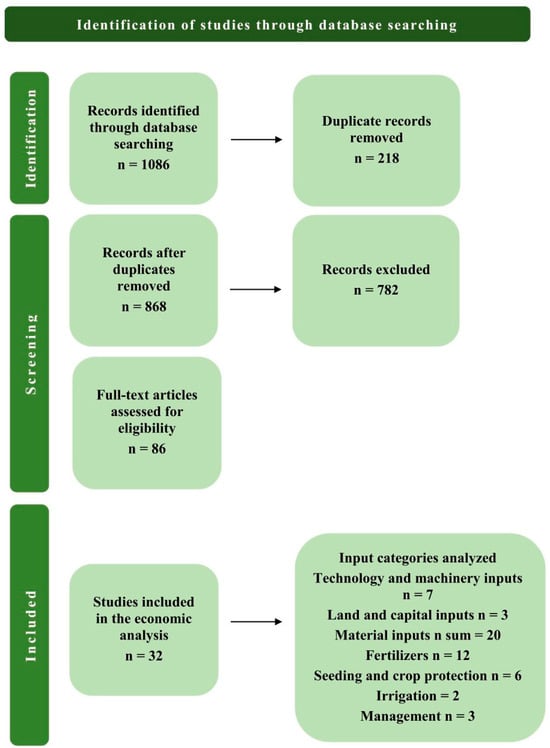
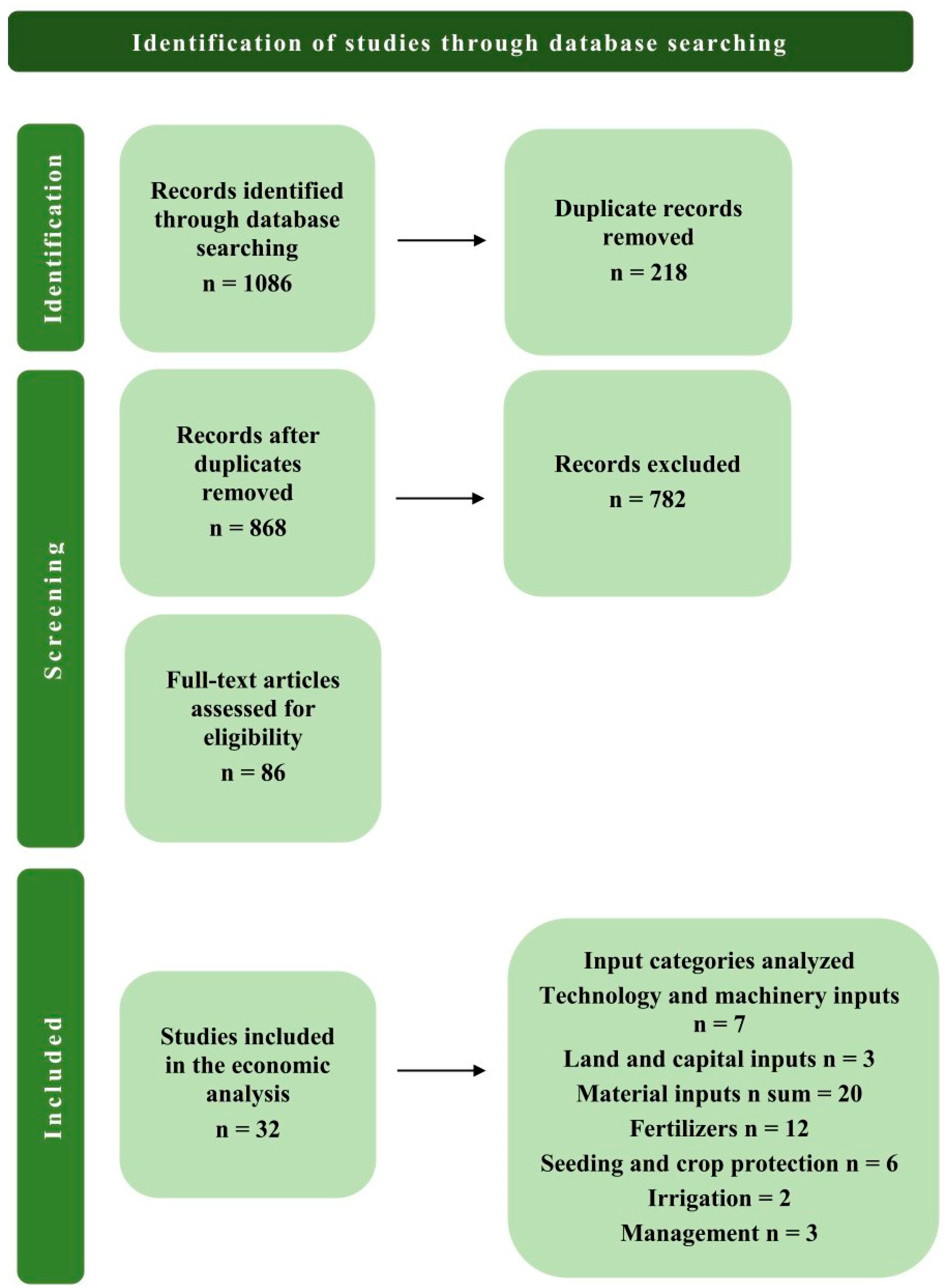
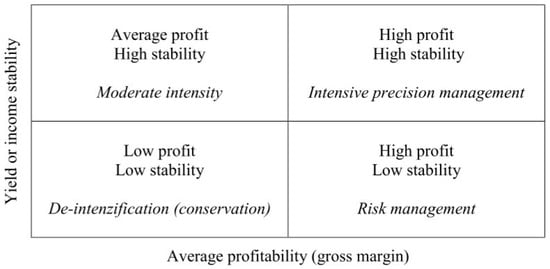
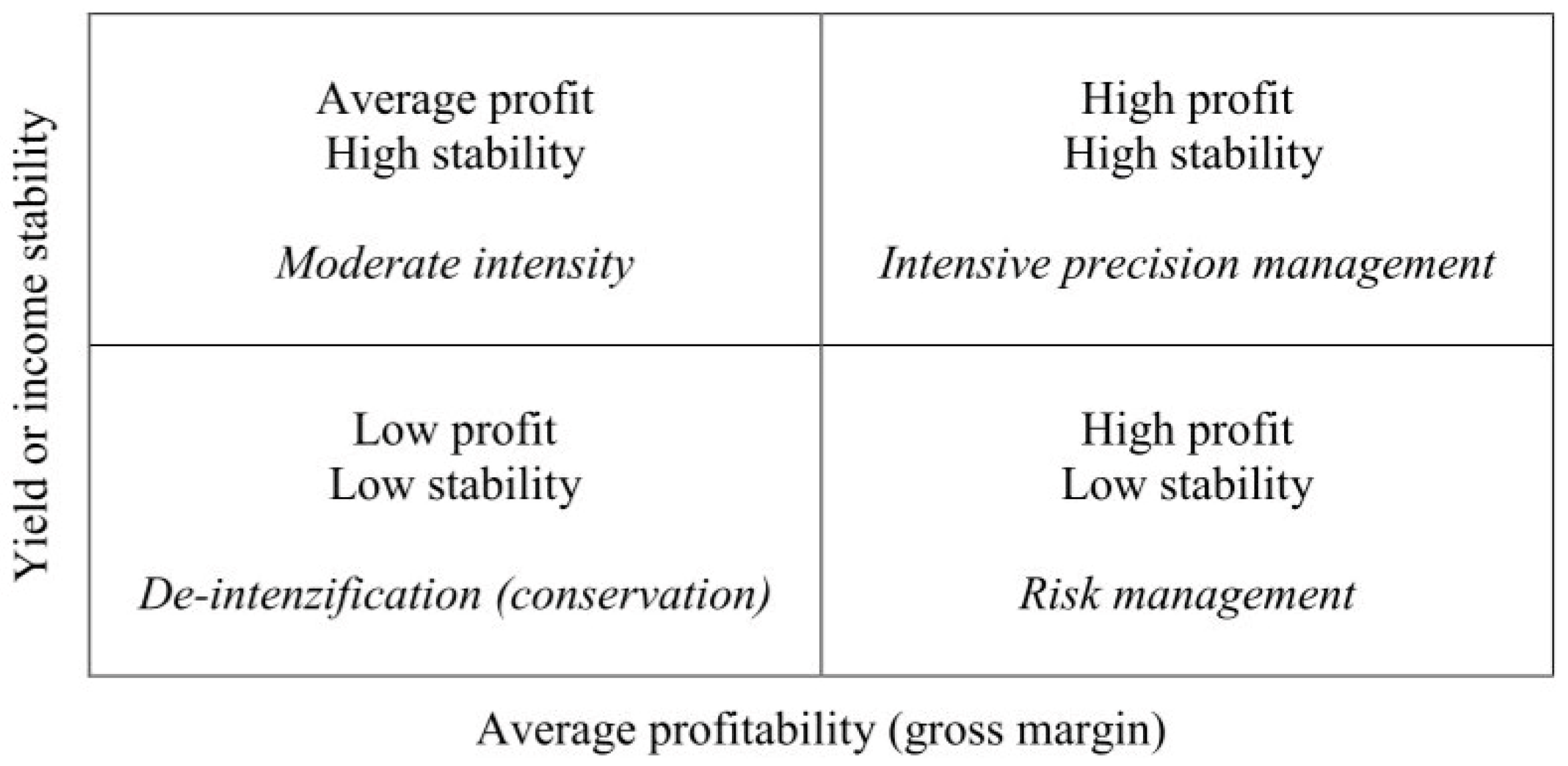
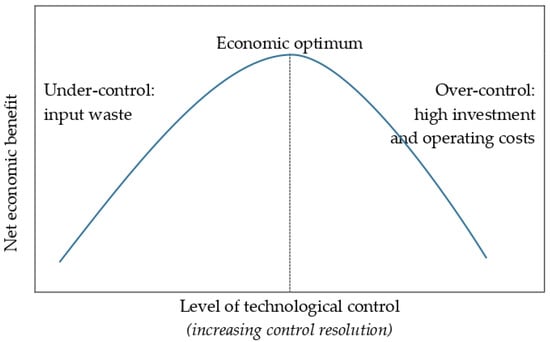
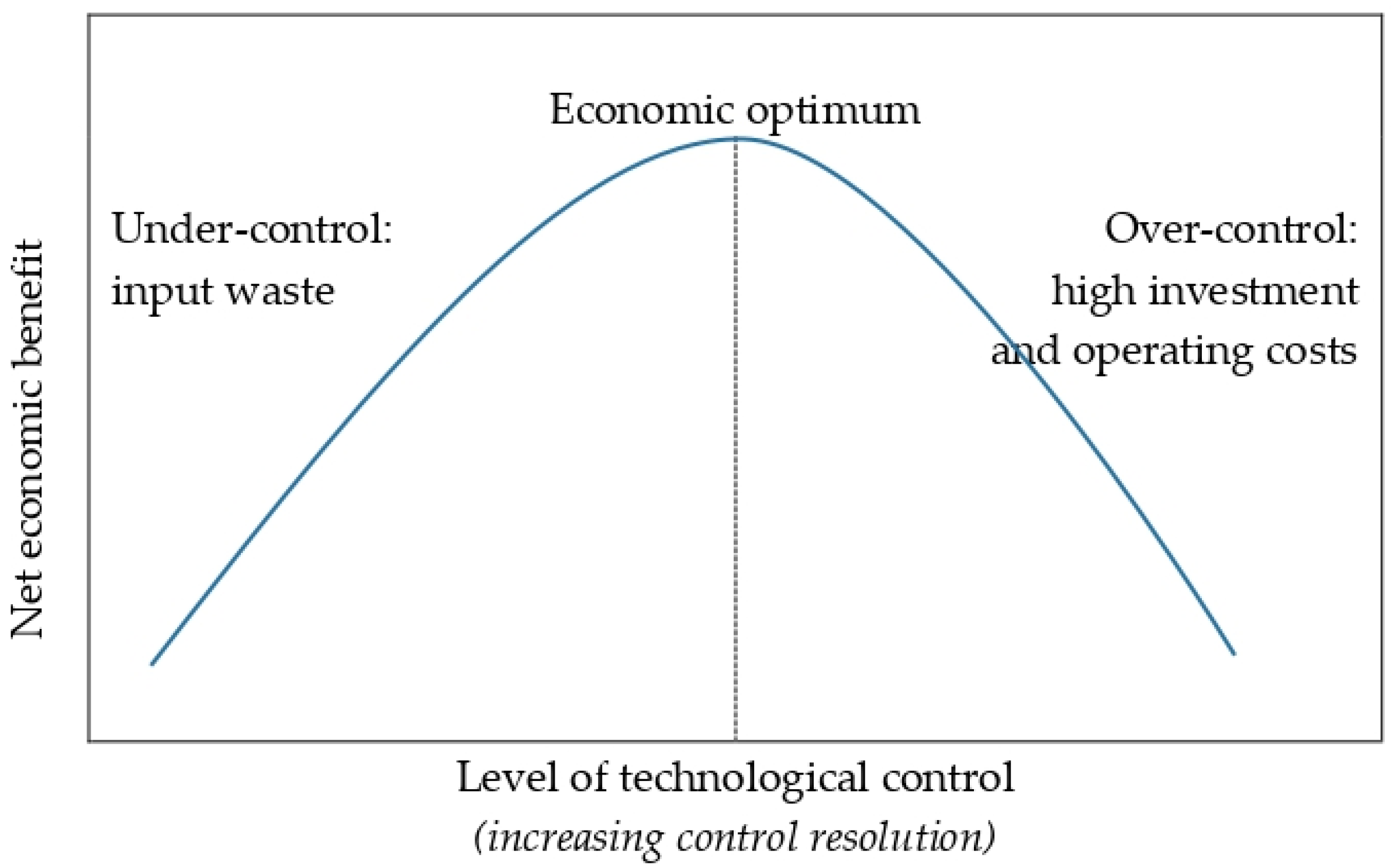

Disclaimer/Publisher’s Note: The statements, opinions and data contained in all publications are solely those of the individual author(s) and contributor(s) and not of MDPI and/or the editor(s). MDPI and/or the editor(s) disclaim responsibility for any injury to people or property resulting from any ideas, methods, instructions or products referred to in the content. |
© 2026 by the authors. Licensee MDPI, Basel, Switzerland. This article is an open access article distributed under the terms and conditions of the Creative Commons Attribution (CC BY) license.