1. Introduction
Plastic film mulching technology can effectively enhance the hydrothermal conditions for crop growth, mitigate the impacts of adverse external environments, and thus promote crop growth and development, significantly contributing to crop yield increase and income growth [
1,
2]. As the world’s largest producer and consumer of agricultural plastic film, China has an annual consumption exceeding 1.4 million tons, accounting for more than 70% of the global total [
3]. Furthermore, the application rate of agricultural plastic film has continued to increase steadily in recent years. The widespread use of plastic films has significantly enhanced agricultural productivity and efficiency; however, it has also led to a critical challenge: the recovery of residual films, which poses a threat to sustainable agricultural development [
4,
5,
6]. Compared with those used in developed countries, agricultural plastic films in China are typically thinner and exhibit substantially lower tensile strength after a single growing season, rendering them unsuitable for direct mechanical rolling–a common recovery method employed by foreign recycling machinery [
7,
8]. To address this issue, Chinese scholars have conducted extensive research over the past three decades, developing over 100 types of residual film recovery machines. As a result, the recovery rate of residual film in major farming regions has reached 90% [
9,
10]. However, due to the reduced mechanical strength of plastic film after a single growing season, a portion of it remains in the farmland soil each year, precluding complete recovery [
11,
12,
13].
Agricultural plastic films in China are primarily made of low-density polyethylene (LDPE), which exhibits a long degradation period [
14]. When residual film persists in farmland soil for extended periods, it adversely affects multiple soil functions. Specifically, it impedes water and nutrient movement, inhibits microbial activity, and restricts crop root development. Furthermore, it degrades plough layer structure, compromises the efficiency of agricultural machinery, and ultimately leads to a marked decline in soil fertility and water retention capacity. In severe cases, these effects may even induce secondary salinization of farmland soils [
15,
16]. Beyond these direct impacts, the continuous accumulation of residual film in farmland soils contributes to a growing environmental burden. Over time, residual film retained in the field undergoes fragmentation through mechanical abrasion, ultraviolet photodegradation, and microbial mineralization, becoming a major source of soil microplastics [
17]. Once introduced into the soil, microplastics are readily adsorbed onto organic matter and, through plant uptake and microbial metabolic pathways, can enter the food chain, potentially affecting animal and human health [
18,
19]. In addition to their inherent hazards, microplastics can interact with coexisting contaminants in the soil, forming composite pollutants that pose compounded risks to farmland ecosystems [
20,
21]. As the duration of plastic film application increases, the severity of residual plastic pollution in the plough layer is expected to escalate. The Xinjiang Uygur Autonomous Region, representing the most severe case of agricultural plastic film pollution in China, exhibits an average residual film content of 2.06 × 10
−5 g∙m
-2 in farmland soils—substantially exceeding the national limit. This makes the region’s residual film pollution particularly acute [
22,
23,
24]. Consequently, soil remediation by removing residual plastic film has emerged as a critical environmental constraint on the sustainable development of agriculture in Xinjiang.
However, residual film in the plough layer is mixed, compacted, and entangled with soil, root stubble, and other impurities, which greatly increases the difficulty of separation and recovery. Achieving efficient separation between residual film and soil in the plough layer has become one of the bottlenecks restricting the control of residual film pollution in farmland plough layers in China [
25]. To address this technical challenge, Chinese researchers have developed various mechanical mechanisms for film–soil separation tailored to the requirements of residual film recovery in the plough layer. For instance, Zhang et al. designed a device that achieves reverse film–soil separation by exploiting differences in frictional characteristics among residual film, soil, and the conveyor belt [
26]. Guo et al. proposed a method combining comb-tooth digging with pneumatic adsorption to facilitate film–soil separation [
27]. Zhang employed high-frequency, low-amplitude vibration screening to separate residual film from soil [
28]. More recently, Zhou et al. developed a film lifting separation conveying device of a stripper plate type residual film recovery machine [
29]. Shen et al. designed a “vibrating conveyor+roller extrusion+transportation” film–soil separation device suitable for the recovery of residual film [
30]. At present, mechanical screening is the main method of film–soil separation. Limited by the spatial structure of residual film recovery machinery, the driving stroke of the film–soil separation device is restricted, and the field operating conditions are challenging, resulting in high requirements for the reliability of the mechanism. Consequently, the separation efficiency of residual film and soil remains relatively low [
31].
Addressing the urgent need to mitigate farmland soil pollution caused by residual film accumulation in the plough layer, this study developed a multistage sieving roller film–soil separation device specifically for residual film recovery in farmland in Xinjiang. This structure can reduce the soil content in the film collection box and ensure the quality of residual film recovered from the plough layer. On this basis, through the kinematic analysis of the film–soil mixture, the effects of the structural parameters and motion parameters of the device on film–soil separation were discussed. The properties of the film–soil mixture during the crushing and separation process were further studied, and the impact crushing mechanism was analyzed. In this study, a physical prototype of the test platform for plough layer film–soil separation was manufactured and tested. Taking the soil content and film leakage rate as evaluation objectives, field experiments were carried out on the film–soil separation device to further optimize the structural parameters and determine the optimal parameter combination. This study aims to enhance the separation performance of film–soil mixtures in the plough layer, thereby mitigating farmland soil pollution at its source. It is expected to provide technical support for the development of residual film recovery machinery tailored to farmlands in Xinjiang, and to contribute to the advancement of soil pollution control and the integrated management of agricultural non-point source pollution.
2. Materials and Methods
2.1. Structure Composition and Working Principle
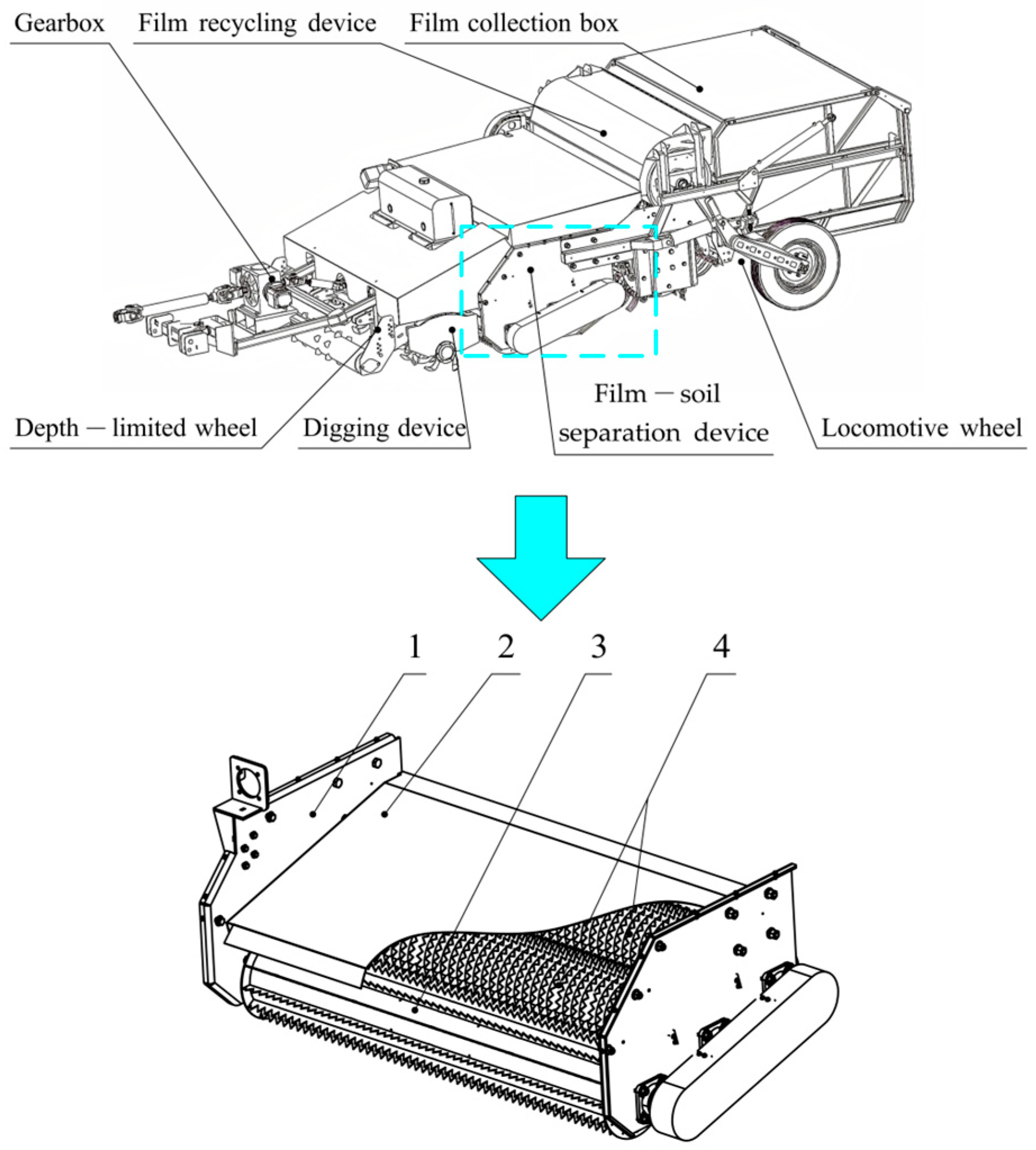
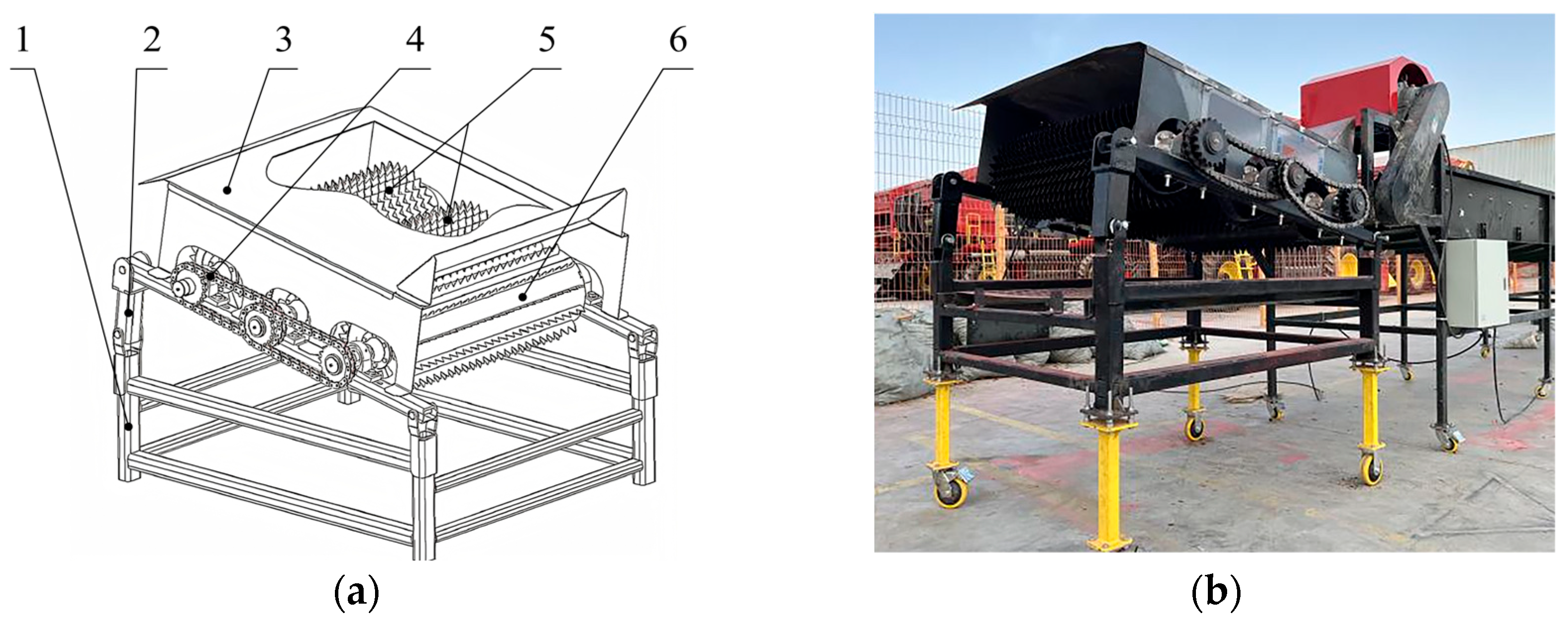
To address the problem of residual film pollution caused by the difficult separation of residual film and soil in the farmland plough layer, a multistage sieving roller-type device for film–soil separation was designed in this paper. The device is designed to be integrated with a residual film recovery machine for cooperative operation. A digging device is positioned at the front end to perform the preliminary excavation and collection of residual film and soil in the plough layer, and a film recycling device is equipped at the rear end to collect the separated residual film. The power of the device is provided by a hydraulic motor in the transmission system. The device is mainly composed of side plates, a top plate, sieving rollers with sawtooth blades, sieving rollers with toothed-disc blades, and a transmission mechanism. Among them, the sieving rollers with sawtooth blades are typically installed at the front end of the device, and the sieving rollers with toothed-disc blades are arranged along the rear row. The toothed-disc blades on adjacent sieving rollers are staggered. Meanwhile, the plane formed by the axes of all sieving rollers is inclined at a certain angle to the horizontal plane. The detailed structure is shown in
Figure 1.
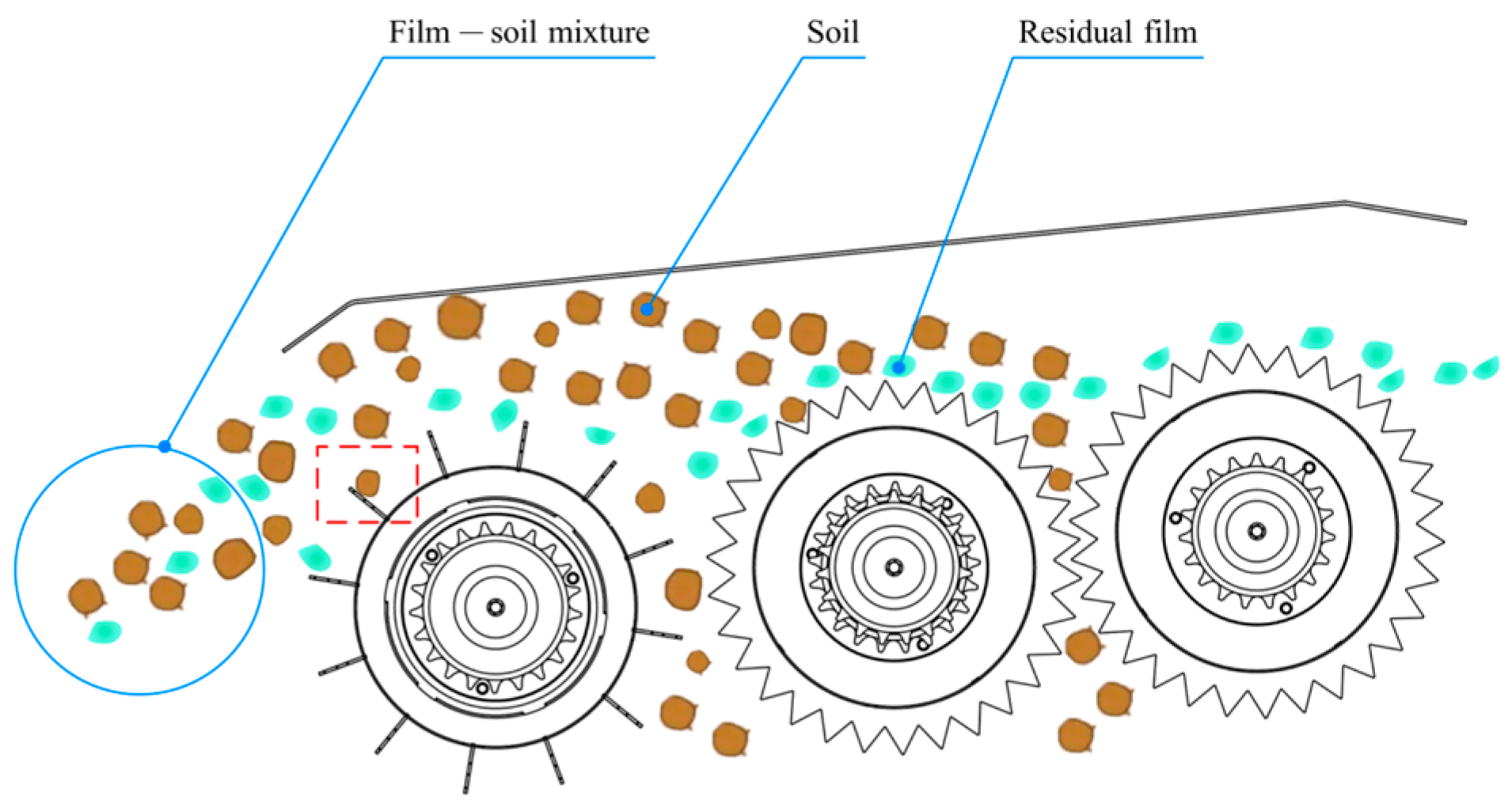
The working principle of the multistage sieving roller-type device for film–soil separation is shown in
Figure 2. The hydraulic motor transmits power to the middle sieving roller through a coupling. A sprocket is installed at the other shaft end of the middle sieving roller, which drives the adjacent sieving rollers to rotate through a transmission chain respectively, so that each row of sieving rollers rotates around its own axis. During operation, the digging device adopted rotary cutting curved blades to shear and crush the soil in the plough layer and threw the film–soil mixture backward under the action of rotation until the mixture was fed into the film–soil separation device. In the film–soil separation device, the sieving roller with sawtooth blades continuously propels the film–soil mixture backward through rotary motion until it falls onto the sieving roller with toothed-disc blades at the rear. Due to the differences in physical characteristics between residual film and soil particles, the residual film moves backward continuously under the hooking action of the tooth tips of the toothed discs, while the soil particles are difficult to be driven by the toothed discs and fall through the gaps between adjacent toothed discs back to the field under the action of gravity. However, due to the rotary digging mode, the excavated and thrown mixture contains not only granular soil particles and residual film, but also a small amount of film–soil composite formed by the adhesion of residual film and soil. After being thrown into the device, the film–soil composite is impacted and crushed by the sawtooth blades under the action of the continuously rotating sieving rollers. The impacted and crushed film–soil composite can no longer move backward as a whole, which further promotes the separation of residual film and soil. Finally, with the assistance of the film recycling device, the separated residual film fragments are conveyed into the film collection box.
2.2. Determination of Physical Characteristic Parameters of the Film–Soil Mixture
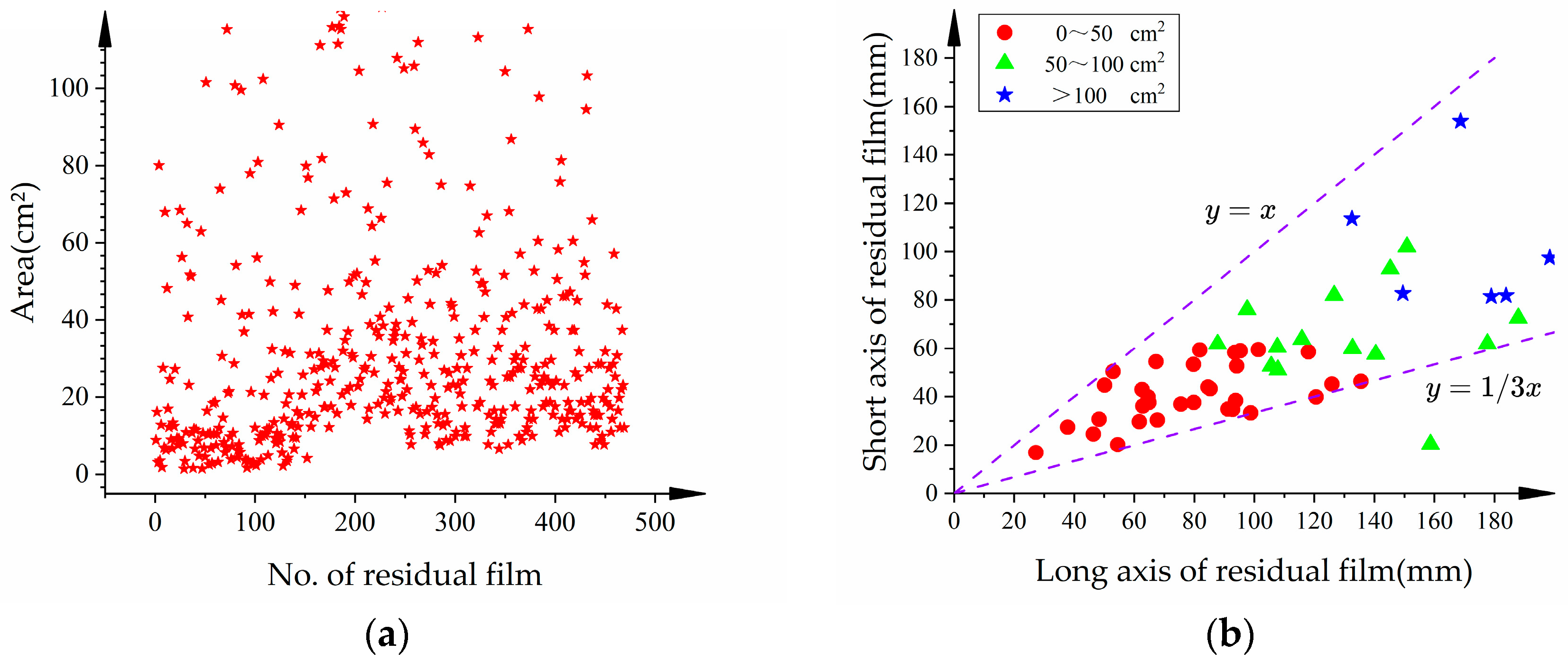
To investigate the physical characteristics of the residual film–soil mixture in the plough layer, a farmland with more than 10 consecutive years of plastic film mulching in Aoyimatekuotan Village, Shaya County, Aksu Prefecture, Xinjiang (82°41′ E, 41°9′ N) was selected as the sampling site. Field sampling was carried out in March 2025. Five sampling points were established using the five-point sampling method, and a 1 m × 1 m quadrat was set at each point as the sampling unit [
32]. Soil and residual film samples were collected to a total depth of 200 mm and divided into four layers: 0–50 mm, 50–100 mm, 100–150 mm, and 150–200 mm. Residual film from the five sampling points was combined by depth, packaged, and labelled accordingly. Subsequently, the collected residual film samples were sorted, cleaned, and air-dried, and their mass was measured with an electronic balance.
2.3. Motion Analysis of the Film–Soil Mixture
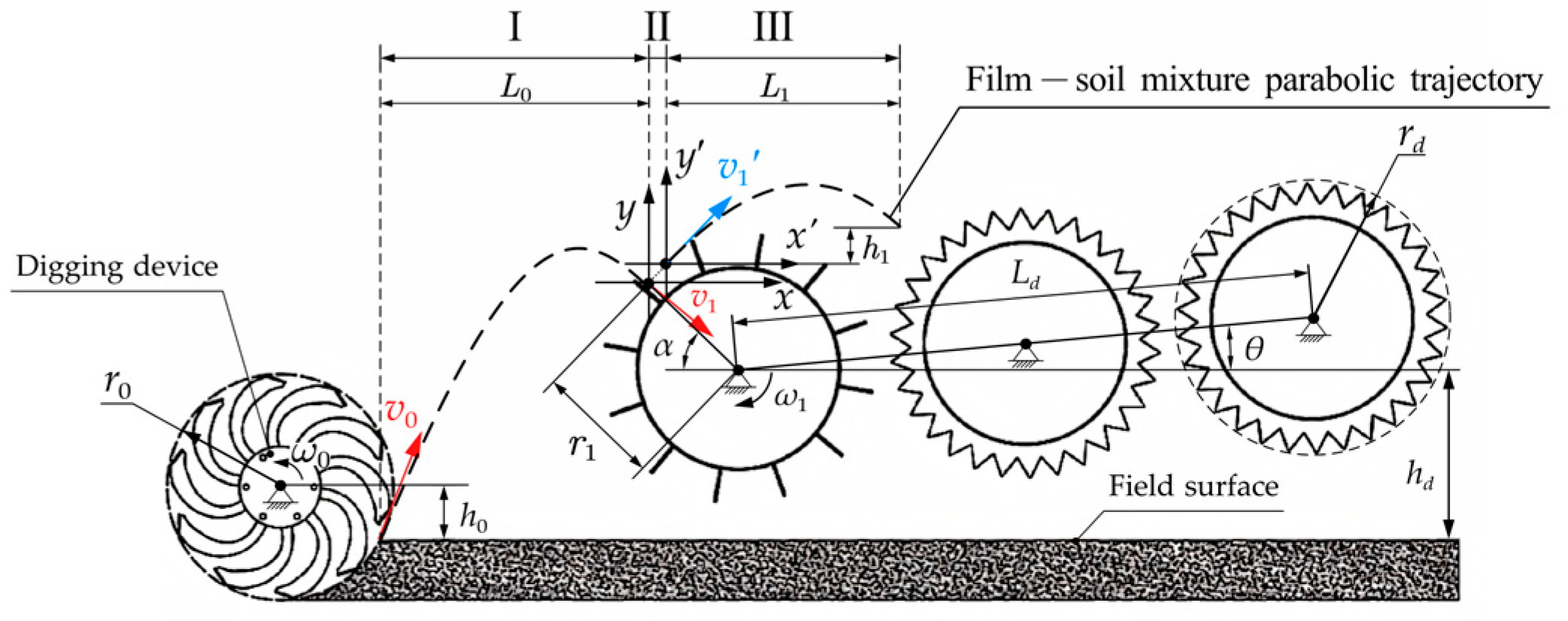
During machine operation, the digging device uses rotary cutting curved blades to throw the film–soil mixture from the field. The film–soil mixture detaches from the digging device with an initial velocity and undergoes oblique projectile motion under gravity after being thrown. After a certain period, it collides with the sawtooth blades of the sieving roller. Following the collision, the film–soil mixture initiates a new oblique projectile motion with a renewed initial velocity. Owing to the effect of the sieving roller with toothed-disc blades, the soil falls back to the field through the gaps between the toothed discs during the oblique projectile motion. Meanwhile, the residual film moves backward along the staggered toothed discs of the sieving roller and is ultimately ejected from the terminal end. The division of material movement stages is presented in
Table 1.
In the study of material movement, the material flow formed by the film–soil mixture was taken as the research object. To simplify the analysis, the following assumptions were proposed: (1) The collision between the material flow and the sawtooth blades of the sieving roller during the ejection process is assumed to be inelastic. (2) The displacement during the collision is assumed to be zero. Given the short collision time between the film–soil mixture and the sieving roller, the positional change on the sawtooth blades from the start to the end of the collision is negligible. Therefore, only the velocity change before and after the collision is considered. (3) Air resistance is neglected. The velocity analysis of the film–soil mixture is illustrated in
Figure 3.
In
Figure 3,
ω0 is the angular velocity of the digging device (rad·s
−1),
r0 is the radius of gyration of the digging device (m),
h0 is the height from the centre of gyration of the digging device to the ground (m),
v0 is the initial velocity at which the film–soil mixture is ejected by the digging device (m·s
−1),
L0 is the horizontal displacement of the film–soil mixture before collision (m),
ω1 is the angular velocity of the sieving roller (rad·s
−1),
r1 is the distance from the collision point to the centre of the sieving roller (m),
α is the angle between the line connecting the collision point and the centre of gyration of the sieving roller and the horizontal plane (rad),
v1 is the velocity of the film–soil mixture before collision (m·s
−1),
v1′ is the velocity of the film–soil mixture after collision (m·s
−1),
L1 is the horizontal displacement of the film–soil mixture after collision (m),
h1 is the vertical displacement of the film–soil mixture after collision (m),
LD is the centre distance between the front and rear ends of the sieving roller (m),
θ is the angle between the centre line of the sieving roller and the horizontal plane, i.e., the inclination angle of the sieving roller (rad),
Rd is the outer radius of the toothed-disc blades (m).
As illustrated in
Figure 3, the film–soil mixture is ejected by the digging device, acquiring an initial velocity
v0 from its rotational motion. It follows that:
According to the geometric relationship, the velocity components of
v0 in the horizontal and vertical directions are as follows:
where,
v0, x is the component of
v0 along the horizontal direction (m∙s
−1), and
v0, y is the component of
v0 along the vertical direction (m∙s
−1).
Once ejected by the digging device, the film–soil mixture undergoes oblique projectile motion subject only to gravity prior to colliding with the sieving roller. It follows that:
where
t0 is the motion time of the film–soil mixture before collision (s),
v1, x is the component of
v1 along the horizontal direction (m∙s
−1), and
v1, y is the component of
v1 along the vertical direction (m∙s
−1),
g is the gravitational acceleration (m∙s
−2).
As shown in
Figure 3, when the sawtooth blades of sieving roller with a constant angular velocity
ω1 in uniform circular motion, the tangential velocity at the collision point on the roller blade is
ω1r1, it follows that:
where,
vr is the tangential velocity of the sawtooth blades of sieving roller at the collision point (m∙s
−1),
vr, x is the horizontal component of
vr (m∙s
−1),
vr, y is the vertical component of
vr (m∙s
−1).
Assuming that a perfectly elastic collision occurs between the film–soil mixture and the sieving roller blades, and the mass of the sieving roller blades is much larger than that of the mixture, that is, the influence on the movement of the sieving roller blades after the collision can be neglected, then the velocity
v1′ of the film–soil mixture after the collision is given by:
where
v1, x′ is the component of the velocity of the film–soil mixture along the horizontal direction after the collision (m∙s
−1), and
v1, y′ is the component of the velocity of the film–soil mixture along the vertical direction after the collision (m∙s
−1).
At this time, the film–soil mixture after the collision will undergo an oblique projectile motion with an initial velocity of
v1′ under the action of gravity, and the horizontal throwing distance
L1 and the falling height
h1 satisfy the following relationship:
where
t1 is any moment during the migration process of the film–soil mixture (s).
According to Equation (5), the post-collision velocity of the film–soil mixture depends not only on its initial velocity upon entering the device but also on factors such as the angular velocity of the sieving roller and the collision position—specifically, the distance from the collision point to the rotation centre of the sieving roller and the angle between the line connecting these two points and the horizontal plane. Under given initial conditions, the post-collision velocity increases with the angular velocity of the sieving roller and with the distance from the collision point to the rotation centre. When the initial velocity and collision position are fixed, both the horizontal and vertical components of the post-collision velocity exhibit a linear relationship with the angular velocity of the sieving roller.
2.4. Crushing and Separation Mechanisms of the Film–Soil Composite
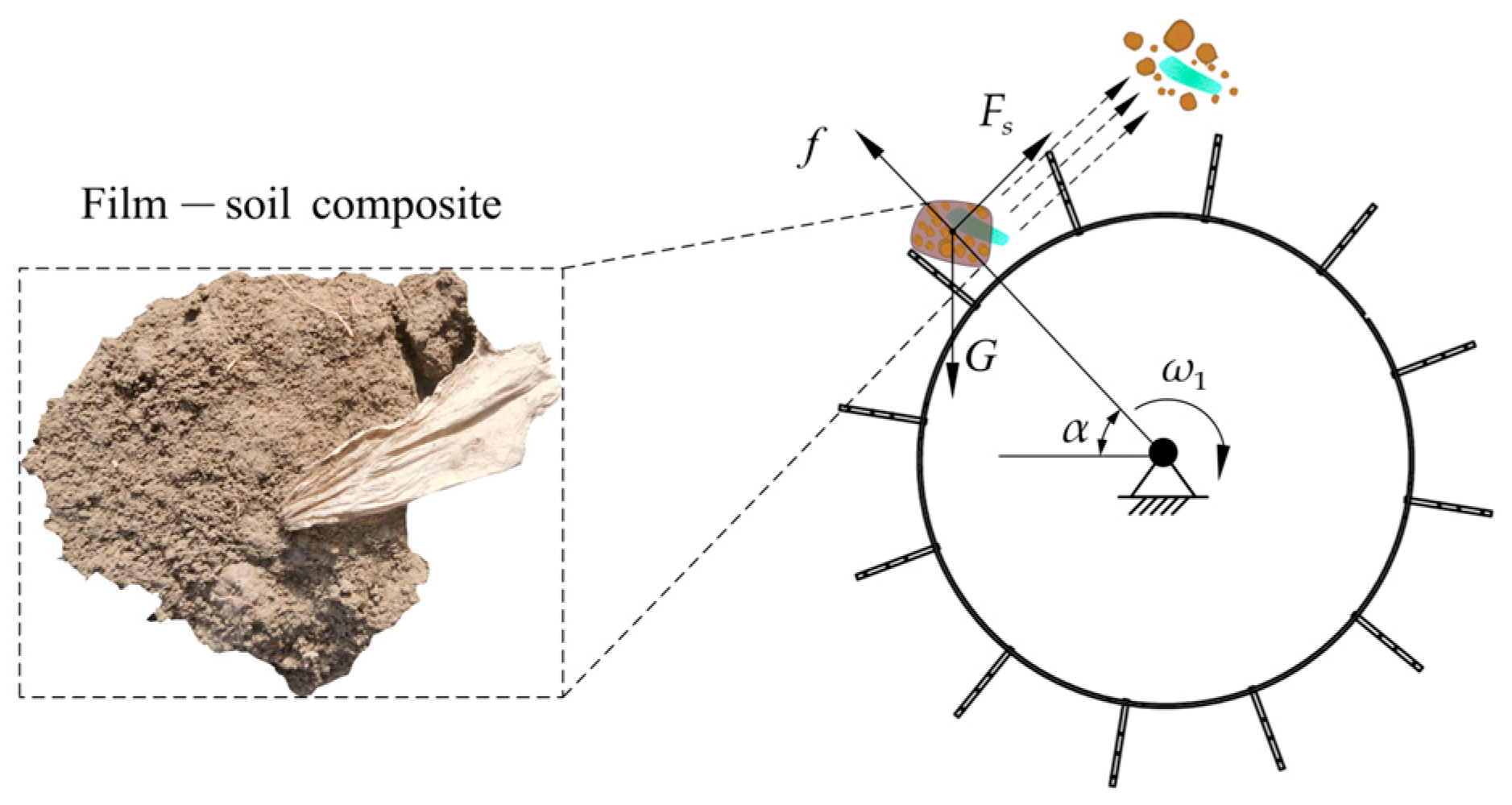
In addition to the already separated soil and residual film, the film–soil mixture excavated and thrown by the digging device also contains a certain amount of film–soil composite formed by the mutual adhesion between residual film and soil. In addition to completing the throwing action of the soil and residual film mixture, the sieving roller with sawtooth blades can also impact and crush the film–soil composite through its rotational movement, and the force analysis is illustrated in
Figure 4.
According to Newton’s second law, the film–soil composite, at the instant of collision, is subjected to three forces: an impulsive force
Fs perpendicular to the sawtooth blades of the sieving roller, a frictional force
f parallel to the sawtooth blades, and its gravity
G. These forces satisfy the following equation:
where,
Fn is the resultant external force perpendicular to the contact surface acting on the film–soil composite at the moment of collision (N),
Ft is the resultant external force parallel to the contact surface acting on the film–soil composite at the moment of collision (N),
mc is the mass of the film–soil composite (kg).
According to the analysis in the previous section, the sieving roller blades rotate at a constant speed around the axis with an angular velocity
ω1. Assuming that an ideal perfectly elastic impact occurs between the blades and the film–soil composite, the normal relative velocity
vrel,n between the film–soil composite and the sieving roller blades can be expressed as follows:
Given that the mass of the sieving roller is considerably larger than that of the film–soil composite, and that the normal impulsive force
Fs far exceeds the gravitational component
mgcos
α, the latter is neglected in the calculation. According to the impulse-momentum theorem, the normal impulse
J experienced by the film–soil composite during collision with the contact surface can be obtained from the following equation:
According to the Hertz elastic contact theory [
33,
34,
35], the contact stress
σ exerted on the film–soil composite is given by:
where,
k is the material characteristic coefficient,
∆t is the duration of impact contact (s).
When the contact stress exceeds the failure threshold of the film–soil composite, its internal structure rapidly reaches the strength limit, causing the composite to break under the instantaneous impact. This condition can be expressed as:
where, [
σ] is the compressive strength of the film–soil composite (kPa).
The analysis indicates that the impact crushing of the film–soil composite is primarily caused by the normal compressive force generated upon contact between the sieving roller blades and the film–soil composite. This compressive force compresses and fragments the composite. At the moment of collision, the contact stress is determined by the normal relative velocity between the film–soil composite and the sieving roller blades, and its magnitude is positively related to the angular velocity of the sieving roller. When the angular velocity reaches the critical value, the cohesive forces within the film–soil composite are rapidly overcome at the moment of collision, thereby completing the separation of residual film and soil.
2.5. Parameter Design of Key Components
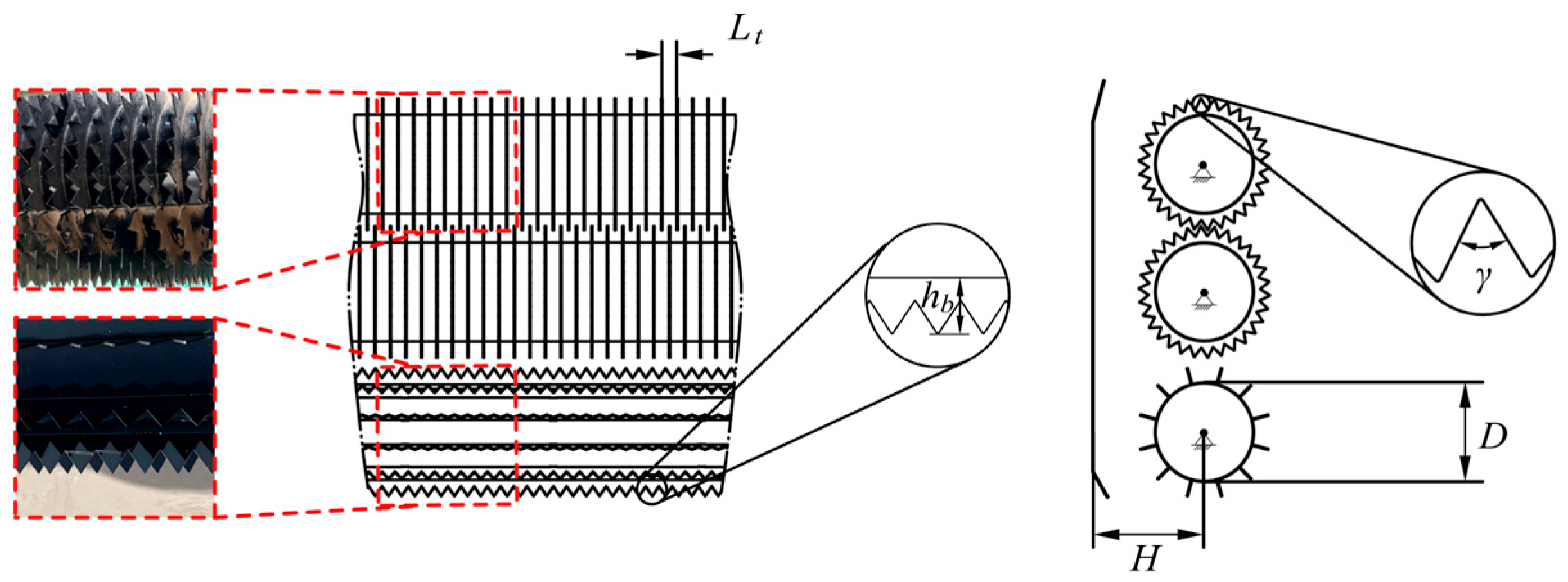
As a key component determining the film–soil separation performance in the plough layer, the design of the geometric structural parameters of the sieving roller is crucial. According to the structural characteristics of the sieving roller, the key structural parameters mainly include the sieving roller diameter
D, the distance between two adjacent toothed discs on the toothed-disc sieving roller
Lt, the distance between the sieving roller and the top plate
H, the width of the sawtooth blades of the sieving roller
hb, and the tooth tip angle of the toothed disc
γ. The specific structure is shown in
Figure 5.
Since the sieving roller primarily performs rotational motion during operation, an excessively small sieving roller diameter can cause large pieces of residual film to wind around and wrap the sieving roller, resulting in device failure. Conversely, an excessively large diameter increases the energy consumption of the device. To prevent the residual film from wrapping around the shaft, the sieving roller diameter should satisfy:
where
LF is the long-axis dimension of the residual film fragments (mm). Based on the above analysis, the diameter
D of the sieving roller was determined to be 300 mm.
The distance between two adjacent toothed discs on the toothed-disk sieving roller directly affects the separation of residual film and soil. If this parameter is too small, the probability of soil falling back into the field will be greatly reduced. If it is too large, some residual film may inevitably fall back into the field together with the soil, affecting the recovery effect of the residual film. Based on the principle of probability theory, optimal separation of residual film and soil can be achieved when this value satisfies the following condition:
where,
mmax is the maximum mass of soil that can pass through the gap in the device (kg),
mT is the total mass of soil entering the device (kg),
kp is the probability of soil particles passing through the gap (%),
nmin is the number of residual films with geometric dimensions smaller than the gap,
nT is the total number of residual films entering the device. Based on the measurement results of the physical parameters of residual film and soil, this parameter was determined to be 46 mm.
Based on preliminary tests, when the distance between the top plate and the sieving roller is too small, soil accumulation occurs at the front end of the film–soil separation device, which is detrimental to the subsequent film–soil separation operation. When the distance is too large, some small soil particles are struck and thrown out of the device by the sieving roller equipped with racks, thereby increasing the soil content in the separated residual film. Therefore, this parameter was initially set to 120 mm.
The width of the sawtooth blades of the sieving roller is one of the key structural parameters affecting the fragmentation of the film–soil composite and the separation of the film–soil mixture. An excessively small blade width significantly weakens the conveying and throwing capacity of the film–soil mixture, which tends to cause soil accumulation and retention at the front end of the sieving roller. Consequently, part of the film–soil mixture cannot enter the device smoothly, thereby impairing the film–soil separation performance. Conversely, an excessively large blade width increases the moment of inertia and mass of the sieving roller, leading to higher driving power consumption. Meanwhile, as the blade width increases, the space between adjacent blades becomes larger, which may cause small-sized residual film to accumulate, increase the difficulty of backward transportation, and hinder the film–soil separation effect. According to the measured physical properties of the plough layer soil, the proportion of soil particles smaller than 10 mm accounts for more than 90%, while the area of residual film is mostly concentrated at 5 × 10⁻³ m2. Therefore, controlling the blade width within the range of 40 mm to 60 mm can achieve a balance between film–soil separation quality and energy consumption, provided that smooth material movement along the sieving roller surface is ensured. On this basis, this study preliminarily determines the width of the sieving roller sawtooth blades as 50 mm.
The tooth tip angle of the toothed disc determines whether the toothed-disc sieving roller can effectively convey the residual film out of the device. Effective conveyance requires that the residual film be transported by the friction between the teeth and the residual film. According to relevant studies, to prevent sliding between the teeth and the residual film, this parameter should satisfy:
where
μF is the friction coefficient between the residual film and the tooth tip of the toothed disc. Based on these studies,
γ was set to 58° to ensure no slippage between the residual film and the tooth tip [
36,
37].
2.6. Field Experimental
2.6.1. Experimental Materials
To verify the accuracy of the theoretical analysis, evaluate the performance of the device, and determine the optimal parameter combination, a test platform for film–soil separation in the plough layer was fabricated. Its structure is shown in
Figure 6a. The physical experiment was conducted in April 2025 at the facilities of Shaya Boshiran Intelligent Agricultural Machinery Co., Ltd. The source of test samples was consistent with that described in
Section 2.2. The test equipment included a TCS-60 electronic platform scale (Shanghai Yousheng Weighing Apparatus Co., Ltd., Shanghai, China, measuring range 60 kg, precision 0.01 kg), a ZZ-C5003 high-precision electronic balance (Wuxin Weighing Apparatus Co., Ltd., Yongkang, Zhejiang, China, measuring range 0.5 kg, precision 10
−6 kg), a tape measure, a digital display vernier calliper (Delixi Electric Co., Ltd., Yueqing, Zhejiang, China, precision 0.02 mm), a tachometer, plastic bags and label paper, among others. A photograph of the field operation is shown in
Figure 6b.
2.6.2. Experimental Methods
This experiment employed a similar simulation method. According to previous research results, the plough layer film–soil mixture collected from the field was weighed and divided into groups of 20 kg each. To simulate the throwing and moving trajectory of the plough layer film–soil mixture, a conveying device was used to spread the mixture into the test device. After all samples were processed, the residual film from each test was manually collected, bagged, labeled, and weighed. The soil removal rate
Y1 and film leakage rate
Y2 were calculated using the following formulas, respectively.
where,
Mout is the mass of the film–soil mixture discharged at the end of the device (kg),
Min is the mass of the film–soil mixture entering the device (kg),
m1 is the mass of residual film in the film–soil mixture discharged at the end of the device (kg),
m2 is the mass of residual film sieved out under the device (kg).
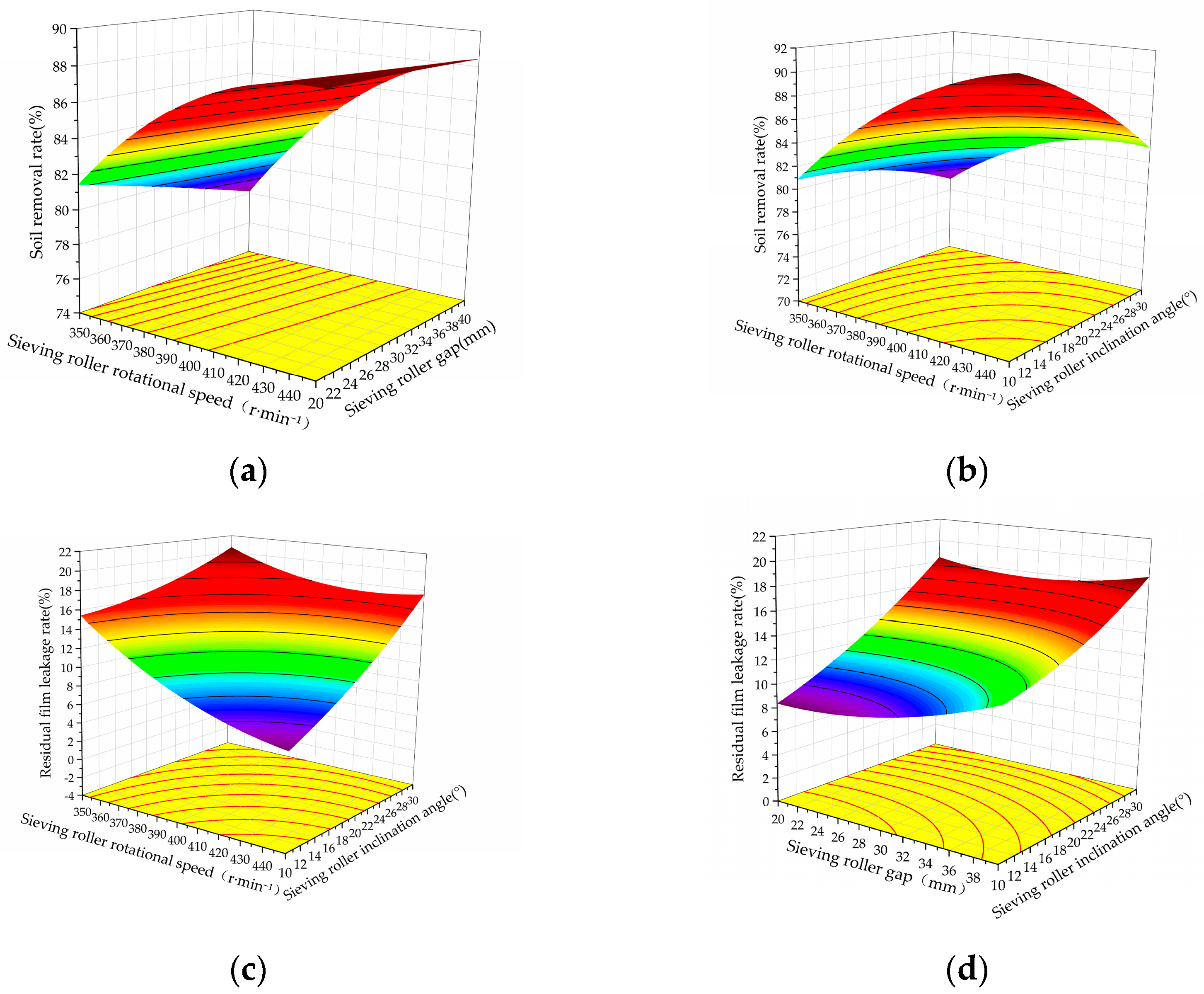
Based on the theoretical analysis of the conveying and separation processes, the sieving roller rotational speed, the sieving roller gap, and the sieving roller inclination angle were selected as experimental factors. The sieving roller rotational speed was controlled by adjusting the motor speed via a frequency converter. The sieving roller gap was adjusted by varying the distance between the sieving roller mandrels through repositioning the bearing housing of the sieving roller. The sieving roller inclination angle was adjusted by changing the length of the angle-adjusting rod. According to the results of preliminary experiments and related literature, when the sieving roller rotational speed ranges from 350 r∙min
−1 to 450 r∙min
−1, soil separation is most effective; therefore, this range was adopted for this factor. Based on the analysis in
Section 2.3, the sieving roller gap was set from 20 mm to 40 mm, and the sieving roller inclination angle was set from 10° to 30°. A three-factor, three-level Box–Behnken response surface methodology was employed in this experiment [
38,
39]. Each experimental group was repeated three times, and the average values of the soil removal rate and residual film leakage rate were calculated. The factor coding is presented in
Table 2.
4. Discussion
4.1. Discussion of Measured Residual Film in the Plough Layer
Based on the field sampling results presented in
Section 2.2, the residual film content in Xinjiang’s farmland soil substantially exceeds the national standard, a threshold that signals an urgent pollution crisis. This accumulation originates from the existing production model: current recovery strategies focus on surface films from a single growing season [
25], but after one season, the film’s mechanical properties degrade, making complete recovery impossible, and the fragmented residues that remain in the plough layer progressively impair the efficiency of subsequent recovery operations, leading to nonlinear accumulation over time. Such accumulation is not merely a physical presence; it disrupts soil pore continuity by forming hydrophobic barriers and physical obstructions, thereby impeding aeration, water infiltration, and gas exchange, which in turn constrains root development and can reduce crop yields by 5–15% depending on crop type and accumulation level. Beyond agronomic losses, this progressive degradation threatens the long-term material cycling and energy flow functions of the farmland ecosystem. Consistent with observations in Gansu, Inner Mongolia, and other regions, similar patterns of residual film accumulation have been documented in film-mulched planting areas. However, the accumulation rate in Xinjiang is significantly higher, which may be attributed to the regional climatic conditions driving the large-scale and widespread use of plastic film. Collectively, these findings demonstrate that effective remediation must extend beyond seasonal surface recovery to address the legacy fraction of residual films, making the development of scientifically sound strategies an urgent priority for sustaining agricultural productivity and agro-ecosystem health.
4.2. Discussion of Field Experimental Results
The film–soil separation device designed in this study achieves satisfactory performance in separating residual film from plough layer soil. However, field experiments reveal that complete separation is not achievable; a small amount of fragmented film remains in the soil after operation. This is not merely a technical shortcoming, but rather reflects an inherent contradiction between the mechanical operating mode and the complex physical characteristics of residual film. Specifically, after a single growing season, residual film exhibits irregular fragmentation, variable tensile strength, and heterogeneous spatial distribution within the plough layer. This finding is significant because achieving near-complete recovery may require integrated strategies that combine mechanical separation with complementary approaches, such as biochemical degradation or multi-mechanism synergistic operation.
Another critical issue concerns operational costs. Because residual film accumulates primarily within the 150–200 mm plough layer, effective recovery necessitates deep-soil tillage, which inherently incurs high energy consumption and elevated operational costs. From a practical standpoint, this creates a dilemma: the more thoroughly the recovery is pursued, the higher the economic burden on farmers, potentially undermining the adoption of remediation technologies. This challenge, however, also points toward a viable optimization pathway. Follow-up research can focus on multi-process combined operations, such as recovering residual film from the plough layer simultaneously with tillage and land preparation, thereby effectively reducing the additional costs associated with residual film recovery. Meanwhile, since the majority of residual film in the plough layer can be removed in a single pass, the recovery cycle for plough layer residual film can be appropriately adjusted by adopting a batch recovery approach, thus further lowering the operational cost of residual film recovery. Such a strategy aligns with the principle of cost-effectiveness in agricultural engineering and offers a practical direction for balancing recovery efficacy with economic feasibility.
Collectively, these findings indicate that the key to advancing the management of residual film pollution in farmland lies not only in improving the performance of mechanical equipment, but also in addressing the systemic coupling between operational patterns and economic constraints. Therefore, future research should focus on developing integrated operational regimes that combine mechanical design with process optimization, thereby enabling sustainable and scalable remediation solutions for residual film pollution in farmland.