Article

Spatial Distribution and Oviposition Traits of Spodoptera eridania (Lepidoptera: Noctuidae) on Potato Plants Mediated by Chlorfenapyr

by
Jhon Noel Gonzales Linares
1,
José Bruno Malaquias
2,
Jardel Lopes Pereira
3,
João Batista Coelho Sobrinho
1,
Luciana Barboza Silva
4,
Luiz Leonardo Ferreira
5,
José Magno Queiroz Luz
6 and
Alexandre Igor Azevedo Pereira
1,*
1
Programa de Pós-Graduação em Proteção de Plantas, Campus Urutaí, Instituto Federal Goiano, Rodovia Prof. Geraldo Silva Nascimento, Km 2,5—Zona Rural, Urutaí 75790-000, GO, Brazil
2
Faculdade Centro de Ciências Agrárias (CCA), Departamento de Fitotecnia e Ciências Ambientais (DFCA), Universidade Federal da Paraíba, Rua Major José Silvestre, S/N, Centro, Areia 58397-000, PB, Brazil
3
Programa de Pós-Graduação em Bioenergia e Grãos, Campus Rio Verde, Instituto Federal Goiano, Rodovia Sul Goiana, Km 1, Zona Rural, Rio Verde 75901-970, GO, Brazil
4
Campus Professora Cinobelina Elvas, (CPCE)—Programa de Pós-Graduação em Ciências Agrárias, Universidade Federal do Piauí, BR 135, Km 3—Planalto Horizonte, Bom Jesus 64900-000, PI, Brazil
5
Centro Universitário de Mineiros (UNIFIMES), Departamento de Biociências, Campus Mineiros, Rua 22 Esq. C/Av. 21—St. Aeroporto, Mineiros 75833-130, GO, Brazil
6
Instituto de Ciências Agrárias, Universidade Federal de Uberlândia, BR 050, Km 78, Rodovia BR 0-50, KM 78, Gloria Campus, Uberlândia 38410-337, MG, Brazil
*
Author to whom correspondence should be addressed.
Agriculture 2026, 16(2), 266; https://doi.org/10.3390/agriculture16020266
Submission received: 20 September 2025 / Revised: 22 October 2025 / Accepted: 23 October 2025 / Published: 21 January 2026
(This article belongs to the Section Crop Protection, Diseases, Pests and Weeds)

Abstract

Spodoptera eridania (Cramer, 1792) is increasingly reported from potato (Solanum tuberosum L., Solanaceae) in the Brazilian Cerrado, where infestations can cause substantial yield losses. Insecticides may alter the behavioral ecology of agricultural pests. The adaptability of S. eridania mediated by insecticides, especially regarding oviposition behavior, remains poorly understood. This study aimed to evaluate the spatial distribution and oviposition traits of S. eridania on potato plants under chlorfenapyr spraying. Egg masses were collected weekly, day after planting (DAP), totaling 322 collections up to the 91st DAP. Evaluations included the vertical plant strata (upper, middle and lower thirds), leaf surface (adaxial vs. abaxial), and density of scales covering egg masses (high, low, or absent). Results showed that nearly 90% of egg masses were deposited in the upper and middle thirds of the plants. Insecticide spraying modulated oviposition behavior because females preferred the middle third in treated plants, whereas oviposition predominated in the upper third of untreated plants. Moreover, under chlorfenapyr, 93.0 ± 1.2% of egg masses were placed on the abaxial surface. These findings highlight the role of insecticide-mediated behavioral shifts in shaping host-pest interactions and provide relevant insights for integrated pest management of S. eridania in potato field systems.

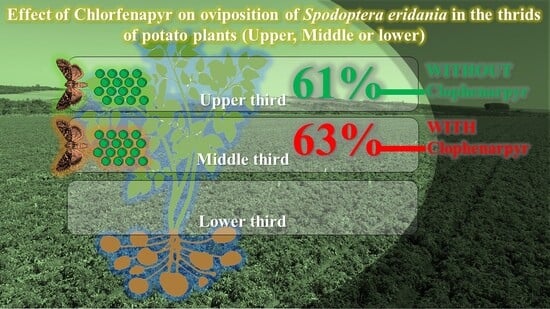
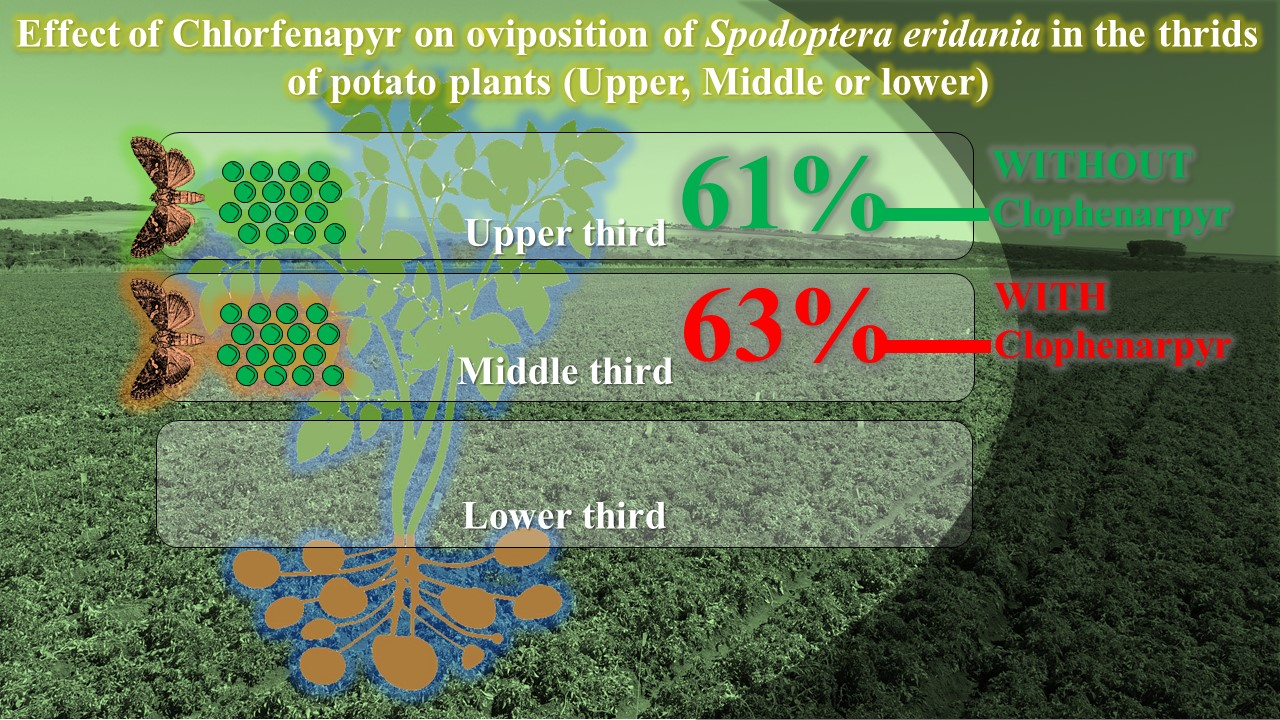
Graphical Abstract

1. Introduction

Potato, Solanum tuberosum L., (Solanaceae) plants exhibit traits that make them favorable hosts for herbivorous insects across tropical, subtropical, and temperate regions [1]. These insect pests cause direct damage to tubers and indirect damage to the aerial parts of the plant, both in the field and during storage of seed tubers. Due to its wide global distribution, potato accounts for nearly 50% of the world’s plant-derived energy needs, alongside rice, wheat, and maize [2].
In Brazil, pest incidence is common in the main commercial potato cultivars, regardless of their final destination for fresh consumption or industrial processing. In this context, we hypothesize that potato cultivation in intensively managed systems (e.g., two to three harvests per year) may facilitate adaptation by generalist insect herbivores, particularly in tropical agroecosystems. A classic example is the fall armyworm, Spodoptera frugiperda (Cramer, 1792) (Lepidoptera: Noctuidae), which has become a key pest in maize–cotton rotations [3]. Similarly, Chrysodeixis includens (Walker, 1858) and leafworm, Spodoptera eridania (Cramer, 1792) have shown significant occurrence in successive soybean–potato plantings [4].
Spodoptera eridania moth has been reported as a pest in both Bt and conventional soybean crops, even during reproductive stages [5]. It is part of the complex of lepidopteran species occurring in Brazilian soybean fields, along with S. frugiperda, Spodoptera cosmioides (Walker, 1858), Chloridea virescens (Fabricius, 1781), Anticarsia gemmatalis Hübner, 1818, C. includens, and Helicoverpa spp. [6]. The increased incidence and damage caused by S. eridania have led to significant losses in states such as Goiás and Minas Gerais, both major potato-producing regions in Brazil [7].
Despite its growing importance, little is known about the behavior and management of S. eridania in potato crops. As a consequence, control has been primarily based on insecticides recommended for lepidopteran management in soybean, such as chlorfenapyr, a pyrazole insecticide with contact and ingestion activity [8]. Although widely used in potato due to its efficacy and ease of application, few studies have addressed the behavioral selectivity of S. eridania, particularly regarding oviposition.
For each egg mass, the leaf surface (adaxial vs. abaxial) was recorded to test the hypothesis of behavioral avoidance to insecticide exposure, more likely on the adaxial side. Insecticide exposure mediates host selection and oviposition behavior in S. eridania by altering the sensory cues and microenvironmental conditions perceived by females during egg laying.
Chemical residues, such as chlorfenapyr, may act as repellents or stressors, inducing females to select specific plant strata or leaf surfaces that minimize offspring exposure. Thus, insecticide-mediated behavioral changes can influence pest population dynamics and the efficiency of monitoring strategies, requiring adjustments to Integrated Pest Management (IPM) programs targeting S. eridania in diversified agricultural systems.
Emerging pests such as S. eridania in regions where intensive agricultural practices are common may display poorly understood behaviors potentially modulated by insecticide use. Such modulation may occur through the selection of resistant populations [9], reduction in natural enemies [6], adjustments in gene expression enabling adaptation to novel hosts [10], or more fundamentally, through behavioral changes that reduce exposure risk.
Given the increasing presence of S. eridania in potato fields located at Brazilian Cerrado agricultural areas, this study aimed to: (i) fill knowledge gaps regarding oviposition-site selection, and (ii) analyze the spatial distribution and oviposition traits of S. eridania on potato plants under chlorfenapyr spraying and untreated conditions.

2. Materials and Methods

2.1. Experimental Site and Potato Cultivar

The study was conducted in the commercial potato production field owned by Grupo Paineiras, located in Campo Alegre de Goiás, southeastern Goiás State, Brazil (17°17′18″ S, 47°48′10″ W and 937 m form sea level) in 2022. The seeds used belonged to the cultivar Ágata, with an average cycle of 100–110 days, classified as type I (diameter 51–60 mm) and category G2 (second year of propagation), obtained from certified nurseries in Sacramento, Minas Gerais, Brazil.

2.2. Experimental Design and Treatments

A completely randomized design with five replicates per treatment was adopted. Each experimental plot had a useful area of 300 m2 (30 m × 10 m), comprising approximately 60 potato rows with ~200 plants per row, totaling 12,000 plants per plot. A 20 m buffer was maintained between adjacent plots. During the sampling period, potato plants were randomly selected within each experimental plot to assess the occurrence and distribution of egg masses of the moths (S. eridania).
Treatments consisted of the application or absence of the insecticide chlorfenapyr, formulated as a suspension concentrate (SC), at the rate of 1.2 L c.p. ha−1. Applications were carried out at the onset of infestation by moths (one larva per plant, as the spraying threshold), with weekly reapplications up to a maximum of three sprays during the crop cycle, following manufacturer recommendations (BASF S.A., São Paulo, Brazil).
The insecticide was applied foliarly using a CO2-pressurized sprayer (2 L) (Manufacturer R A Borges Agricultural Equipment, Ribeirão Preto, SP, Brazil), directed exclusively to the upper third of the potato canopy, in accordance with common field practices [11]. Sprays were performed in the late afternoon (~17:00 h). The untreated control plots received only irrigation via central pivot, without insecticide application.

2.3. Evaluated Parameters

Egg masses of S. eridania were manually collected from potato plants, evaluating the upper, middle, and lower thirds of the main stem, following [9], totaling 322 collections up to the 91st DAP, with adaptations for cultivar Ágata (excluding the longest apical stem). Egg masses were searched weekly from 7 to 91 days after planting (DAP), with a maximum sampling effort of 30 min per plot. After 91 DAP, sampling was terminated due to crop desiccation with the herbicide paraquat (bipyridyl group), applied at 2 L ha−1 (MAPA registration no. 014507, Syngenta Crop Protection Ltd.a., Paulínia, SP, Brazil), to facilitate mechanical harvesting.
Egg masses were also categorized according to the presence and density of scales covering the eggs (high, low, or absent). Collected egg masses were individually placed in sterile, transparent Petri dishes (9 cm diameter × 1.5 cm height), previously disinfected with 70% ethanol and air-dried under sterile conditions. Each dish contained a layer of cotton moistened with distilled water, kept consistently hydrated to prevent egg desiccation. The dishes were sealed and labeled with the sample code and collection date, then transported in ventilated thermal boxes to the Prosperarie Group laboratory, at Instituto Federal Goiano, Urutaí Campus, Goiás, Brazil. After hatching, neonate larvae were reared on fresh potato leaves, replaced daily until species confirmation, using appropriate taxonomic keys. Since S. eridania predominated in the collections, the influence of interspecific competition on oviposition-site selection was disregarded, as discussed by [12].

2.4. Statistical Analysis

The proportions of egg masses across plant strata (upper, middle, and lower thirds) were compared using 95% confidence intervals obtained via a multinomial distribution model, following the Sisonglaz method, with the MultinomCI function from the DescTools package [13] in R [14].
Proportions of egg masses on leaf surfaces and the absence of scales were analyzed by deviance analysis using generalized linear models with binomial distribution. Model fit quality was verified with half-normal plots [15]. Treatment contrasts were performed with the glht function from the multcomp package [16]. All analyses were conducted in R [14], and graphs were generated using SigmaPlot® v.12 (Systat Software Inc., San Jose, CA, USA).

3. Results

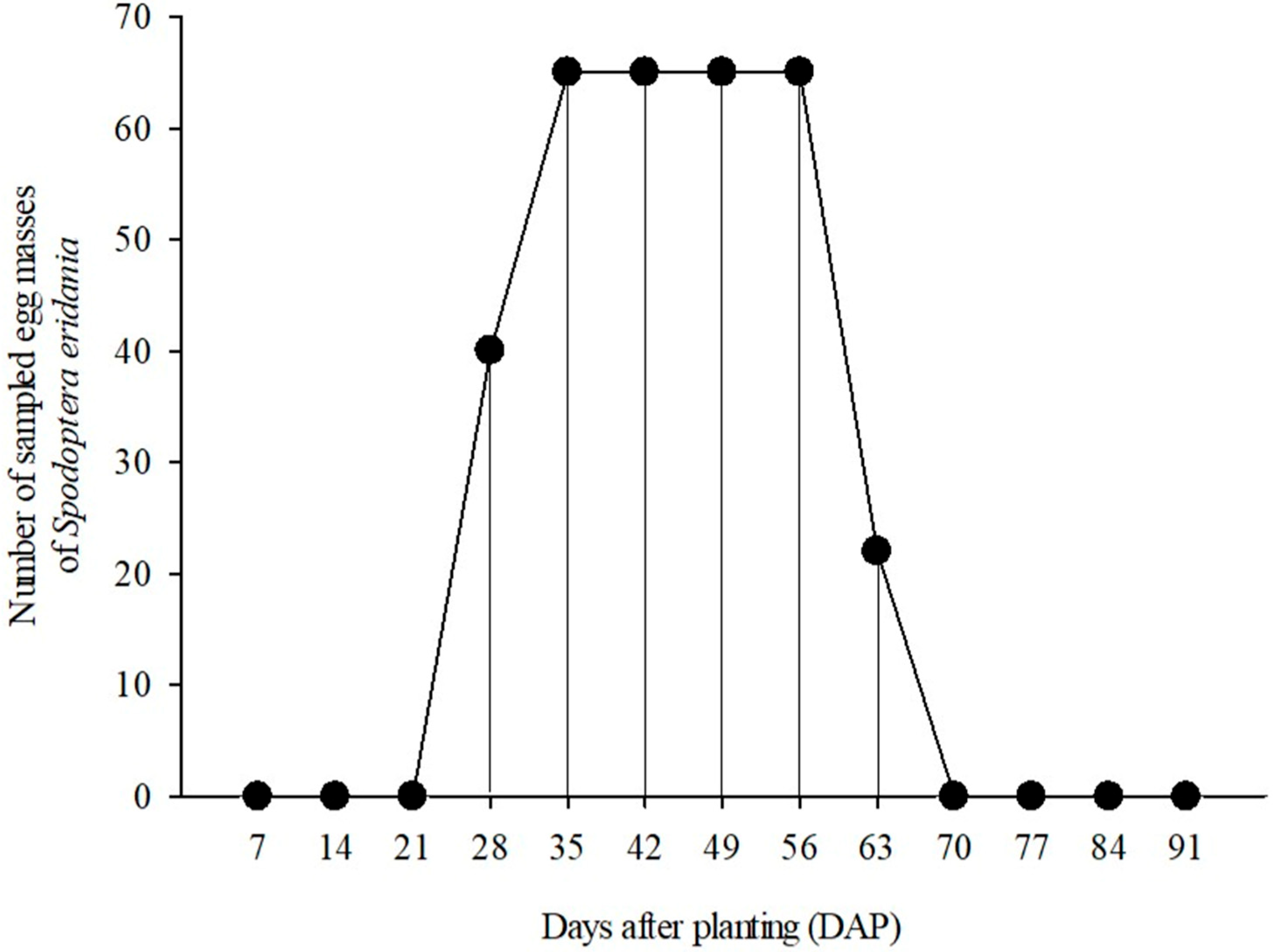
A total of 322 egg masses of Spodoptera eridania were manually collected across all experimental plots, across both treatments. Up to 21 days after planting (DAP), no oviposition was recorded. The first egg masses were observed from 28 DAP onward, with a peak between 35 and 56 DAP. After this period, no additional egg masses were recorded until 91 DAP, when crop desiccation was carried out for harvest (Figure 1).
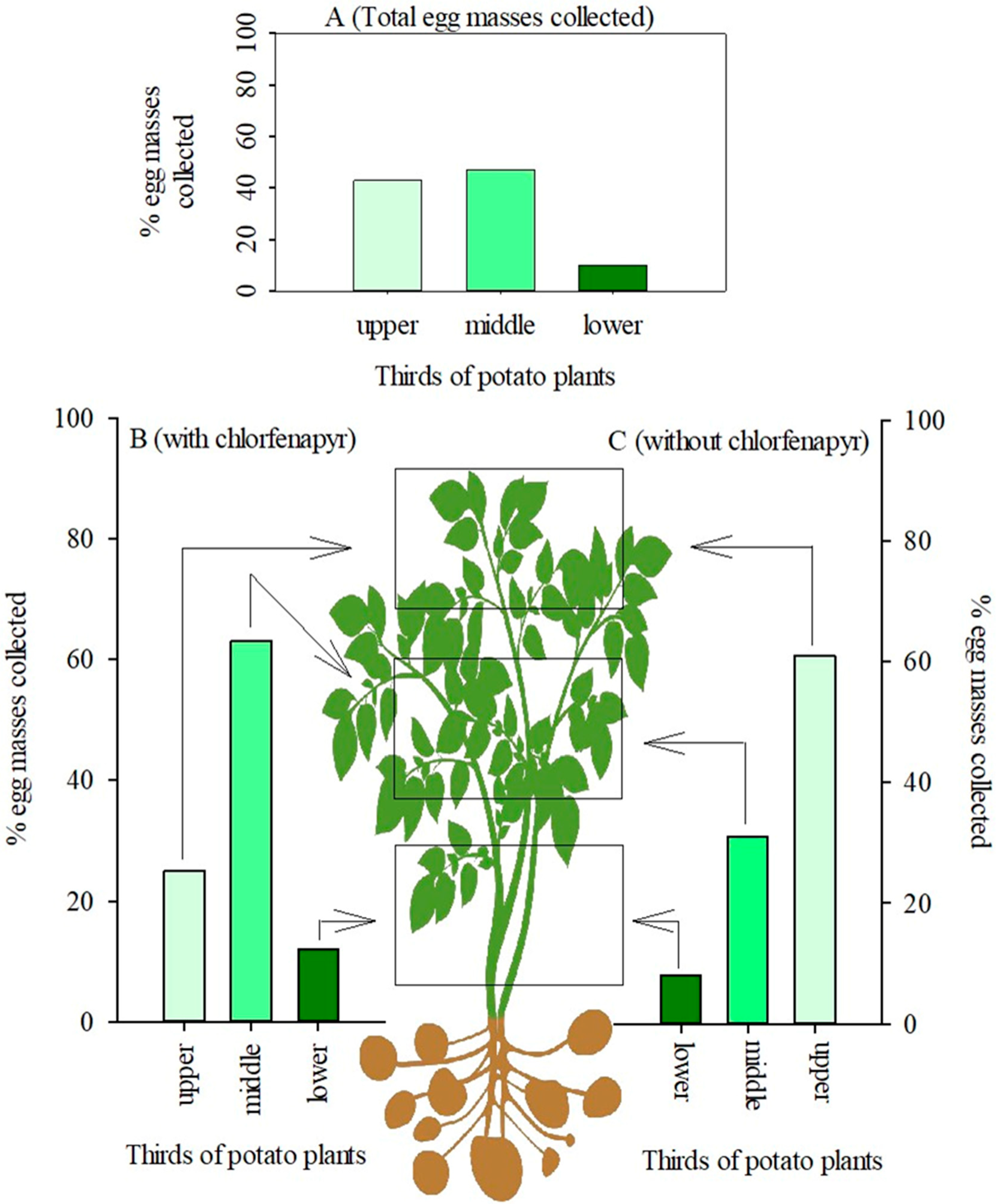
Regarding spatial distribution, 43% of egg masses were deposited in the upper third and 47% in the middle third, totaling 90% of collections. Only 10% were found in the lower third (Figure 2A). Chlorfenapyr spraying influenced this distribution in treated plants, with 63% of egg masses concentrated in the middle third, whereas in untreated plants, 61% were deposited in the upper third (Figure 2B,C).
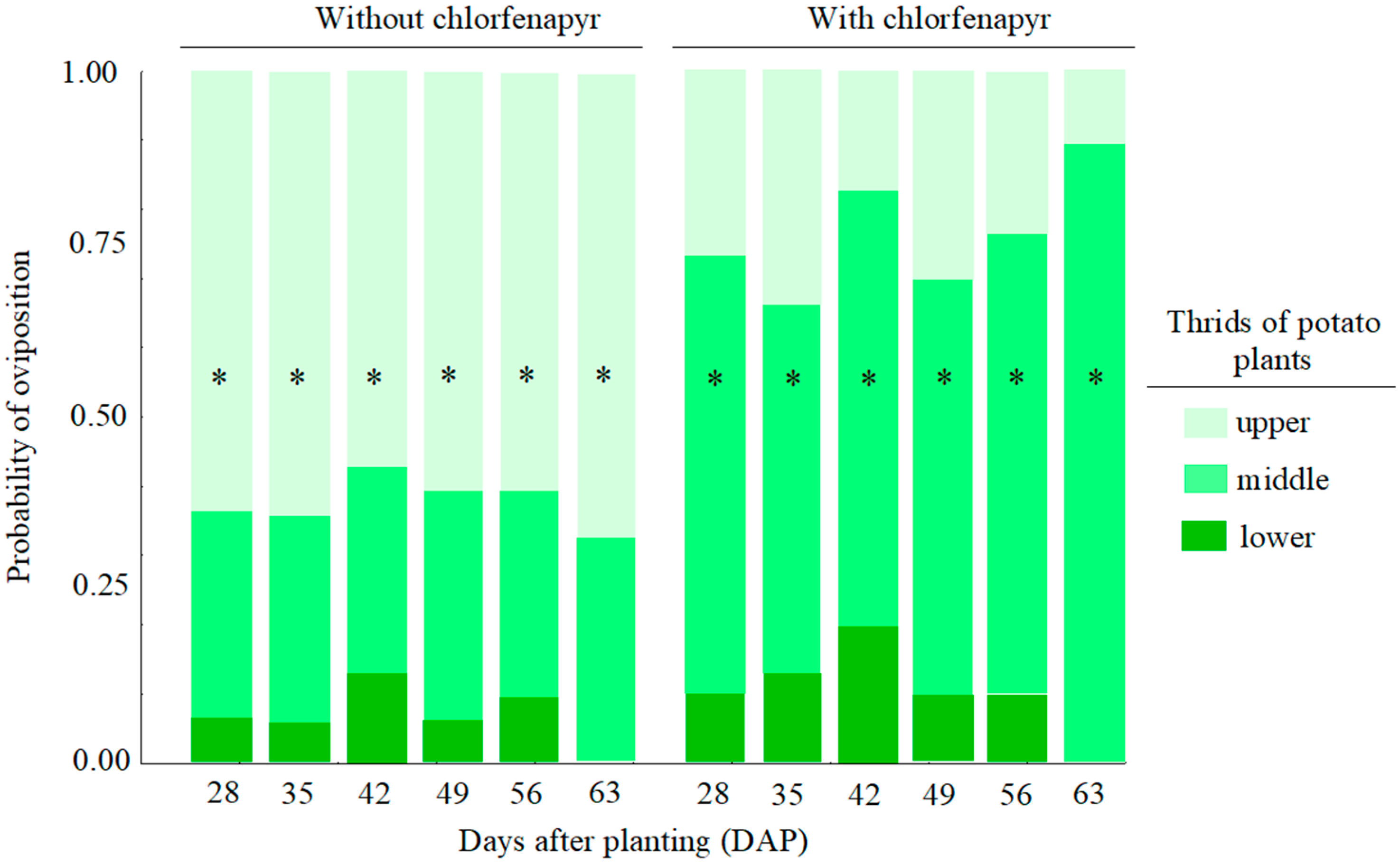
Significant differences were detected between upper and middle thirds across weekly sampling intervals, depending on insecticide application (Table 1). No differences were observed for the lower third. Oviposition in the upper canopy was consistently higher in untreated plots, while in treated plots egg deposition was predominantly concentrated in the middle third, with marked differences from 42 DAP onward.
The probability of oviposition in the thirds of the potato (upper, middle, and lower) for each treatment and sampling interval is shown in (Figure 3). Significant differences were detected between the upper and middle thirds, while the lower third exhibited no differences between treatments. At 65 DAP, oviposition probability in the lower third was null under both treatments.
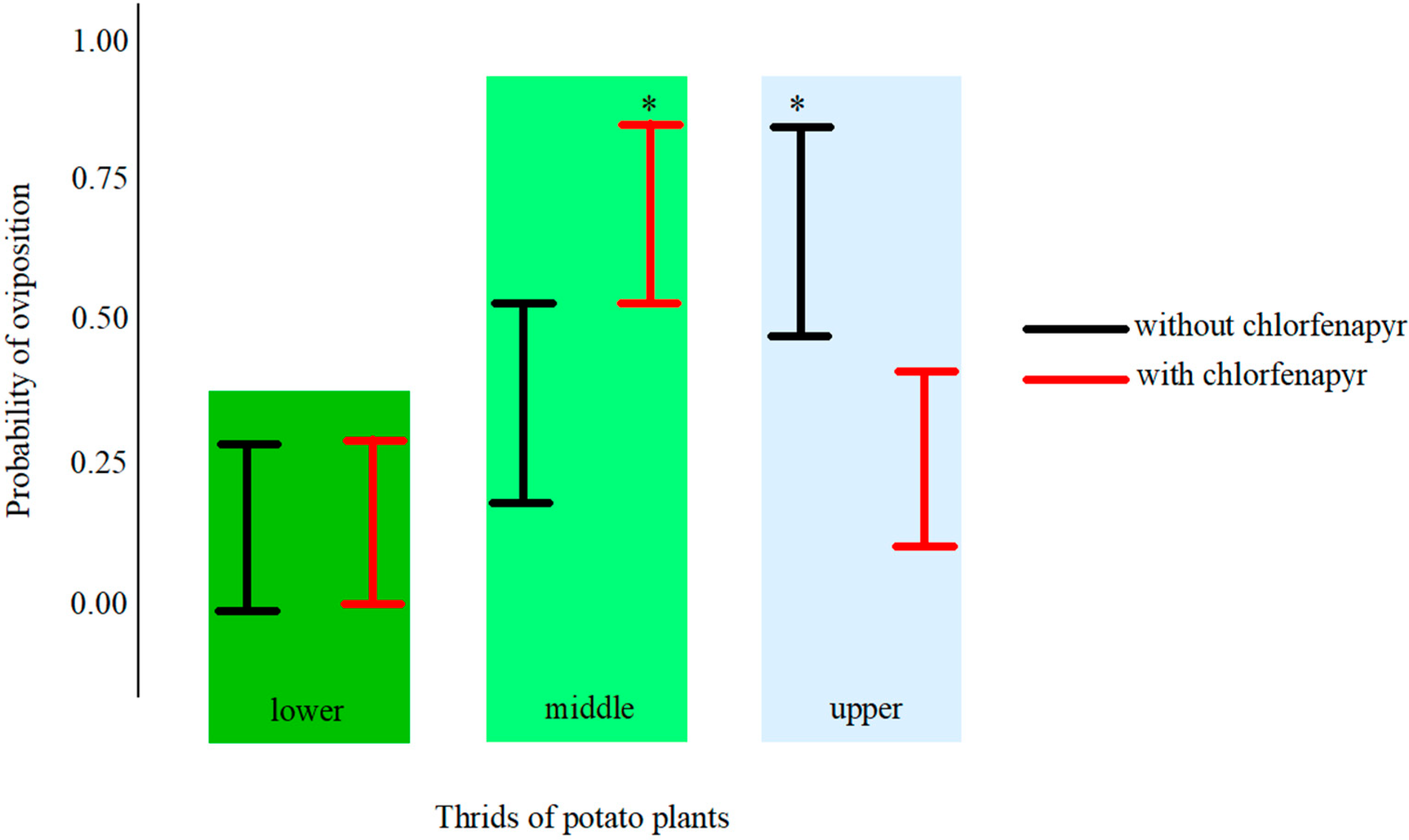
Female S. eridania moths preferred to oviposit in the middle third of potato plants when these were exposed to the insecticide chlorfenapyr. Without exposure to the insecticide (control treatment), the preference for oviposition occurred in the upper third of potato plants (Figure 4).
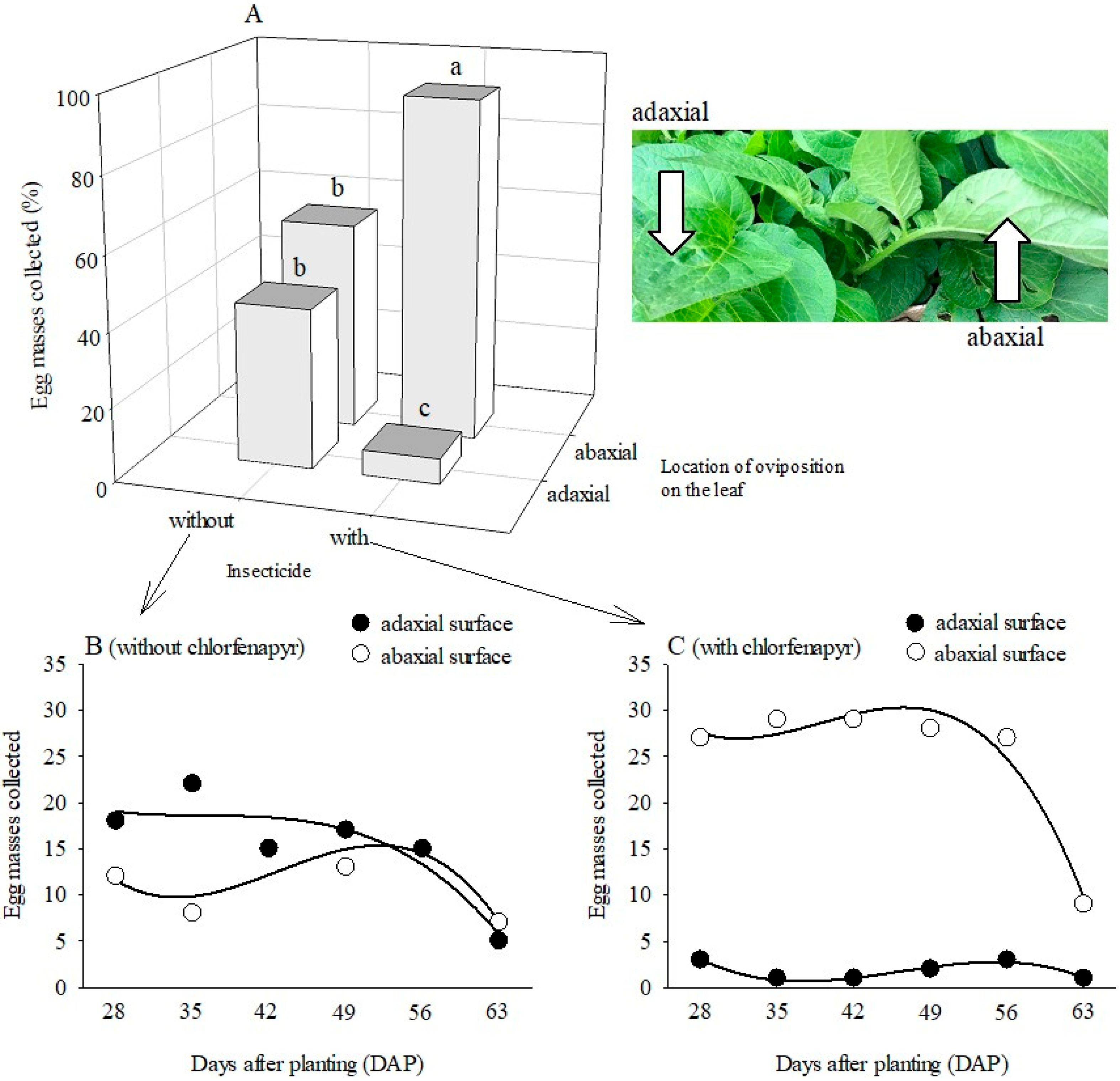
Spodoptera eridania moths altered their oviposition preference between the adaxial and abaxial leaf surfaces of potato in response to the evaluated treatments (Figure 5). In the treatments with chlorfenapyr application, the majority of eggs (93.00 ± 1.20%) were deposited on the abaxial surface, while only 7.00 ± 0.90% were laid on the adaxial surface (Figure 5A). In the untreated plots, no statistically significant difference was observed between the adaxial (43.20 ± 0.80%) and abaxial (56.80 ± 0.75%) leaf surfaces (Figure 5A). To evaluate the influence of time on oviposition preference, the temporal factor was included, and the results are presented (Figure 5B,C). The cubic polynomial model provided the best fit for all analyzed combinations, indicating a general trend of decreasing egg deposition over time.
In the untreated plots, an initial preference for the adaxial surface was observed between 28 and 35 days after planting (DAP), which gradually decreased between 49 and 63 DAP (Figure 5B). In contrast, in the plots treated with chlorfenapyr, the preference for oviposition on the abaxial surface was evident and persistent throughout the evaluated period (Figure 5C).
The regression equations for each combination evaluated, together with the respective adjusted r2 values, significance (p), and F statistic, were as follows: Untreated—abaxial surface: y = 132.4524 − 9.3226x + 0.2286x2 − 0.0018x3; adjusted r2 = 0.8588; p = 0.03; F = 15.22. Untreated—adaxial surface: y = 49.5476 − 2.5482x + 0.0702x2 − 0.0006x3; adjusted r2 = 0.8291; p = 0.02; F = 13.32. Treated—abaxial surface: y = 67.8889 − 4.6523x + 0.1046x2 − 0.0008x3; adjusted r2 = 0.9179; p = 0.04; F = 19.63. Treated—adaxial surface: y = 131.0000 − 8.5374x + 0.2274x2 − 0.0019x3; adjusted r2 = 0.9846; p = 0.03; F = 15.13. These results demonstrate that chlorfenapyr application significantly alters S. eridania oviposition preference, consistently shifting egg deposition toward the abaxial surface of potato leaves.
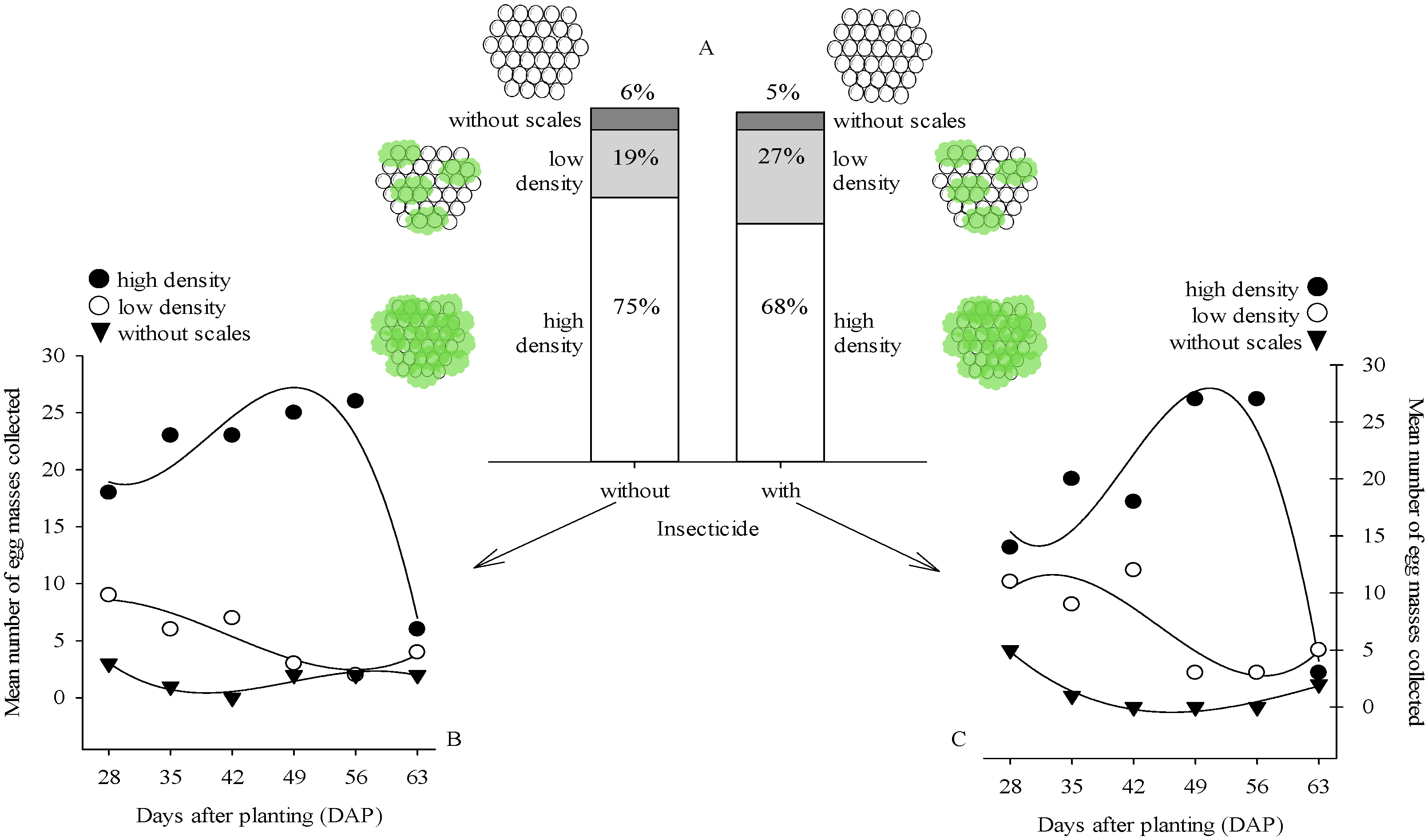
The proportion of S. eridania egg masses with high, low, or no scale density did not differ significantly between treatments with or without chlorfenapyr application (Figure 6A). Regardless of the treatment, most egg masses exhibited a high scale density covering the eggs, followed by egg masses with low density, and finally those without scales (Figure 6A). Temporal analysis, using regression models that included the DAP factor (days after planting), indicated that third-order polynomial (cubic) models best described the variation in the three scale density categories over time (Figure 6B,C).
Deposition of egg masses with high scale density peaked between 42 and 56 DAP, followed by a decline, irrespective of insecticide application. Conversely, egg masses with low scale density were more frequent during the early sampling days and gradually decreased over time. Egg masses without scales showed a general decreasing trend over time, except for a slight increase during the final days of collection.
The regression equations, along with the respective adjusted coefficients of determination (r2), significance values (p), and F-statistics for each combination of treatment and scale density, were as follows: Untreated—high scale density: y = 143.5397 − 10.5144x + 0.2839x2 − 0.0024x3; adjusted r2 = 0.9054; p = 0.03; F = 16.42. Untreated—low scale density: y = –17.8175 + 2.3275x − 0.0638x2 − 0.0005x3; adjusted r2 = 0.8458; p = 0.02; F = 13.65. Untreated—no scales: y = 52.2778 − 3.6839x + 0.0788x2 − 0.0005x3; adjusted r2 = 0.8542; p = 0.02; F = 13.90. Treated—high scale density: y = 236.5159 − 17.9299x + 0.4641x2 − 0.0038x3; adjusted r2 = 0.8796; p = 0.03; F = 14.87. Treated—low scale density: y = –84.0952 + 7.2290x − 0.1740x2 + 0.0013x3; adjusted r2 = 0.8614; p = 0.03; F = 19.17. Treated—no scales: y = 46.4683 − 2.4889x + 0.0419x2 − 0.0002x3; adjusted r2 = 0.9241; p = 0.04; F = 21.27.

4. Discussion

The presence of the insecticide chlorfenapyr in potato plants (cv. Ágata) induced alterations in the oviposition behavior of Spodoptera eridania, with eggs being redistributed to the middle third of the plants at the expense of the upper third. Changes in the choice of leaf surface (adaxial or abaxial) for oviposition further highlight the influence of the insecticide on the reproductive behavior of the species. These alterations suggest an adaptive strategy to increase egg survival in environments with potential insecticide exposure.
These behavioral shifts observed in S. eridania are consistent with principles of ecological and evolutionary theory, particularly regarding adaptive plasticity and behavioral resistance. According to life-history and behavioral ecology frameworks, environmental stressors such as insecticide exposure impose selective pressures that favor oviposition strategies maximizing offspring survival. The relocation of egg masses to the middle canopy and abaxial surfaces reflects a form of adaptive avoidance, minimizing egg exposure to lethal agents. Such plastic behavioral responses, as described by [17,18] may precede genetic resistance, illustrating an early-stage evolutionary adjustment to anthropogenic selective forces within agricultural ecosystems.
Egg masses with high scale density did not vary between treatments, indicating that the presence of the insecticide does not interfere with this pattern. This result suggests that the primary function of the scale covering is protection against parasitism rather than insecticides. In Brazil, applications targeting the upper third of plants with droplet volumes between 150 and 250 µL cm−2 are common practices, regardless of the crop or type of application (ground or aerial) [11]. This indicates greater selective pressure in this plant region, favoring oviposition strategies that reduce exposure. In this context, application technologies should aim to overcome the so-called umbrella effect [19], which reduces insecticide efficacy in the lower plant layers. Our results reinforce the importance of adjusting sampling protocols in Integrated Pest Management (IPM) programs for potato, particularly in areas treated with insecticides.
The arrangement of scales over eggs in overlapping layers is common in Spodoptera spp. [20]. In this study, scale density was evaluated only on the outer layer of the egg masses. These scales, derived from the female abdomen, act as a physical barrier with an important ecological function [21].
The number of S. eridania egg masses collected peaked between 35 and 56 days after planting (DAP), a behavior typical of polyphagous insects during periods of abundant food availability (crop season), followed by a decline during periods of lower availability (off-season) [22]. The highest incidence coincided with specific potato phenological stages favorable to larval development, such as stage II (from 21 to 35 DAP), characterized by abundant leaf and stem production, and stage III (from 35 to 49 DAP), marked by the onset of tuberization and high photosynthetic activity. Between 56 and 77 DAP (stage IV), maximum foliar development occurs, associated with peaks in carbohydrate production and nitrogen concentration, as reported by [23] in wild and transgenic genotypes. This synchrony underscores the high adaptability of S. eridania to cultivated potato in Cerrado-based agricultural areas, highlighting its origin as a soybean pest capable of adapting to this Solanaceae.
Potato hosts key pests in many regions worldwide, such as Phthorimaea operculella (Zeller, 1873) (Lepidoptera: Gelechiidae), and Leptinotarsa decemlineata Say, 1824 (Coleoptera: Chrysomelidae), which also show synchrony with increased leaf area, photosynthesis, and foliar nitrogen content [17, 24]. In this study, 90% of egg masses were collected from the upper and middle thirds of the plants, regardless of treatment, while only 10% occurred in the lower third. Chrysodeixis includens, which also feeds on potato and originates from previous soybean crops, often concentrates eggs and larvae in the lower third, as observed by [4]. This pattern may be associated with seeking shelter, natural enemy pressure, or abiotic factors such as lower temperature and higher humidity in the lower plant layers.
The change in the spatial distribution of S. eridania eggs in response to chlorfenapyr appears to reflect behavioral selectivity characterized by escape, a basic and low-cost defensive strategy [25]. Similar insecticide-mediated behavioral shifts have been reported across diverse taxa. Likewise, Helicoverpa armigera (Hübner, 1809) and Plutella xylostella (L.,1758) show avoidance of insecticide-treated foliage, consistent with adaptive behaioral resistance [26,27].
Such changes are often mediated by gustatory and olfactory receptors associated with antennal neurons capable of detecting volatile or contact chemical cues [28]. These mechanisms illustrate that insecticide exposure can act as an ecological filter, favoring behavioral phenotypes that minimize fitness costs, as seen in Bemisia tabaci (Gennadius, 1889), where neonicotinoid exposure modifies feeding and settlement behavior [29].
Oviposition site selection in polyphagous insects such as Spodoptera spp. is influenced by multiple factors; host nutritional quality may enhance offspring performance [30], while morphological and chemical leaf traits such as trichomes, volatiles, and exudates may drive selective oviposition [31]. A fourth mechanism, aligning with our results, relates to reducing egg mortality risk from predation, parasitism, or insecticide exposure.
The egg stage is considered the most susceptible to insecticides in Spodoptera species because eggs are immobile and lack detoxifying enzymes such as cytochrome P450 monooxygenases [32,33]. These enzymes are mainly present in the larval midgut, Malpighian tubules, and fat body [34]. The middle third of potato plants, particularly in tuberosum cultivars like Ágata and Granola, presents higher leaf and stem biomass, potentially providing physical shelter from insecticide droplets [33].
Preference for oviposition on the abaxial leaf surface in chlorfenapyr-treated plants indicates selective behavior by S. eridania. While untreated plants showed similar distribution between adaxial and abaxial surfaces, because more than 90% of egg masses in treated plants occurred on the lower surface. Leaf surfaces are ecologically important for phytophagous insects as they influence thermoregulation, shelter, mobility, and nutritional composition [24,35]. However, our results suggest that protection against insecticide exposure is the predominant factor in this choice. The thermoregulation hypothesis does not appear applicable here, as no significant differences between surfaces were observed in the absence of insecticides.
Scale density on egg masses was not affected by insecticide treatment. Most egg masses had high scale density, suggesting a protective role against predation and parasitism [36]. In laboratory tests, Trichogrammatoidea sp. (Hymenoptera: Trichogrammatidae) parasitized only 25% of S. frugiperda eggs covered by scales, preferentially targeting unprotected eggs [21]. Conversely, Telenomus remus (Hymenoptera: Platygastridae) achieved over 70% parasitism, demonstrating the ability to overcome this barrier [36]. Egg masses with low or absent scales may be more exposed to insecticides due to reduced physical protection. Approximately 25% and 33% of egg masses were classified as low density or without scales in untreated and treated plots, respectively. A significant reduction in high-density egg masses was observed after 53 DAP, possibly associated with depletion of abdominal scales in females following multiple ovipositions, a phenomenon also described in S. frugiperda [37].
The results and observations of this study advance understanding of the adaptability of generalist herbivores such as S. eridania in potato crops. These data may inform adjustments in sampling procedures for IPM programs and elucidate the role of behaviorally induced selectivity resulting from insecticide use, particularly in systems with intensive land use, such as soybean-potato succession.

5. Conclusions

In the treatments evaluated with the insecticide chlorfenapyr exposure altered the oviposition pattern of Spodoptera eridania, leading females to concentrate egg masses in the middle plant stratum and on the abaxial leaf surface.
These behavioral adjustments indicate an adaptive response that reduces egg exposure to insecticide residues. Understanding such insecticide-mediated shifts is essential for refining pest monitoring protocols and optimizing sampling strategies in potato fields.
Incorporating behavioral responses into IPM frameworks will enhance the precision of control measures and the sustainability of chemical applications in diversified cropping systems.

Supplementary Materials

The following supporting information can be downloaded at https://www.mdpi.com/article/10.3390/agriculture16020266/s1: Table S1: Statistical analysis.

Author Contributions

Conceptualization, J.N.G.L., J.B.M., J.L.P., J.B.C.S. and J.M.Q.L.; Data curation, L.L.F., J.M.Q.L. and A.I.A.P.; Formal analysis, L.L.F. and A.I.A.P.; Funding acquisition, A.I.A.P.; Investigation, J.N.G.L., J.B.M. and J.L.P.; Methodology, J.N.G.L., J.B.M., J.L.P. and L.B.S.; Project administration, A.I.A.P.; Resources, A.I.A.P.; Software, L.L.F. and A.I.A.P.; Supervision, J.M.Q.L. and A.I.A.P.; Validation, J.N.G.L., J.B.M., J.L.P., J.B.C.S. and L.B.S.; Visualization, J.N.G.L., J.B.M., J.L.P. and J.B.C.S.; Writing—original draft, J.N.G.L. and A.I.A.P.; Writing—review & editing, J.B.C.S., L.B.S. and A.I.A.P. All authors have read and agreed to the published version of the manuscript.

Funding

The research received financial support from Centro de Excelência em Bioinsumos (CEBIO) and the Fundação de Amparo à Pesquisa de Goiás (FAPEG). José Bruno Malaquias is supported by a grant from the Brazilian National Council for Scientific and Technological Development (CNPq) (Process numbers: 420064/2023-0 and 308296/2025-7).

Institutional Review Board Statement

Not applicable.

Informed Consent Statement

Not applicable.

Data Availability Statement

Data is contained within the article or Supplementary Material.

Acknowledgments

We thank CNPq and the “Instituto Federal Goiano (Campus Urutaí)”, for providing financial support in the form of scholarships. We also acknowledge the “Programa de Pós-Graduação em Proteção Plantas” for the opportunity to conduct this research. Additionally, we appreciate the support from the “Centro de Excelência em Bioinsumos (CEBIO)” and the “Fundação de Amparo à Pesquisa do Estado de Goiás (FAPEG)”.

Conflicts of Interest

The authors declare no conflicts of interest.

References

  1. Kroschel, J.; Mujica, N.; Okonya, J.; Alyokhin, A. Insect pests affecting potatoes in tropical, subtropical, and temperate regions. In The Potato Crop: Its Agricultural, Nutritional and Social Contribution to Humankind, 1st ed.; Campos, H., Ortiz, O., Eds.; Springer International Publishing: Cham, Switzerland; Lima, Peru, 2020; pp. 251–306. [Google Scholar] [CrossRef]
  2. Wijesinha-Bettoni, R.; Mouillé, B. The Contribution of potatoes to global food security, nutrition and healthy diets. Am. J. Potato Res. 2019, 96, 139–149. [Google Scholar] [CrossRef]
  3. Barros, E.M.; Torres, J.B.; Ruberson, J.R.; Oliveira, M.D. Development of Spodoptera frugiperda on different hosts and damage to reproductive structures in cotton. Entomol. Exp. Appl. 2010, 137, 237–245. [Google Scholar] [CrossRef]
  4. Salas, F.J.S.; Müller, C.; Jocys, T. Pragas da cultura de batata. In Cultura da Batata: Pragas e Doenças, 1st ed.; Salas, F.J.S., Töfoli, J.G., Eds.; Instituto Biológico: São Paulo, Brazil, 2017; pp. 1–43. Available online: http://repositoriobiologico.com.br//jspui/handle/123456789/324 (accessed on 27 September 2025).
  5. Horikoshi, R.J.; Dourado, P.M.; Berger, G.U.; Fernandes, D.S.; Omoto, C.; Willse, A.; Martinelli, S.; Head, G.P.; Corrêa, A.S. Large-scale assessment of lepidopteran soybean pests and efficacy of Cry1Ac soybean in Brazil. Sci. Rep. 2021, 11, 15956. [Google Scholar] [CrossRef]
  6. Bortolotto, O.C.; Pomari-Fernandes, A.; de Freitas Bueno, R.C.O.; de Freitas Bueno, A.; da Cruz, Y.K.; Sanzovo, A.; Ferreira, R.B. The use of soybean integrated pest management in Brazil: A review. Agron. Sci. Biotechnol. 2015, 1, 25. [Google Scholar] [CrossRef]
  7. Camargo Filho, W.P.; Camargo, F.P. A quick review of the production and commercialization of the main vegetables in Brazil and the world from 1970 to 2015. Hortic. Bras. 2017, 35, 160–166. [Google Scholar] [CrossRef]
  8. AGROFIT. Ministério da Agricultura, Pecuária e Abastecimento. Disponível em. Available online: http://agrofit.agricultura.gov.br/agrofit_cons/principal_agrofit_cons (accessed on 2 February 2022).
  9. Malaquias, J.B.; Santana, D.R.S.; Degrande, P.E.; Ferreira, C.P.; Melo, E.P.; Godoy, W.A.C.; Pachú, J.K.S.; Ramalho, F.S.; Omoto, C.; Pereira, A.I.A.; et al. Shifts in ecological dominance between two lepidopteran species in refuge areas of Bt Cotton. Insects 2021, 12, 157. [Google Scholar] [CrossRef]
  10. Pym, A.; Singh, K.S.; Nordgren, A.; Davies, T.G.E.; Zimmer, C.T.; Elias, J.; Slater, R.; Bass, C. Host plant adaptation in the polyphagous whitefly, Trialeurodes vaporariorum, is associated with transcriptional plasticity and altered sensitivity to insecticides. BMC Genom. 2019, 20, 996. [Google Scholar] [CrossRef] [PubMed]
  11. Paredes-Sánchez, F.A.; Rivera, G.; Bocanegra-García, V.; Martínez-Padrón, H.Y.; Berrones-Morales, M.; Niño-García, N.; Herrera-Mayorga, V. Advances in control strategies against Spodoptera frugiperda. A review. Molecules 2021, 26, 5587. [Google Scholar] [CrossRef]
  12. Nascimento, P.T.; Von Pinho, R.G.; Fadini, M.A.M.; Souza, C.S.F.; Valicente, F.H. Does singular and stacked corn affect choice behavior for oviposition and feed in Spodoptera frugiperda (Lepidoptera: Noctuidae)? Neotrop. Entomol. 2020, 49, 302–310. [Google Scholar] [CrossRef]
  13. Signorell, A. DescTools: Tools for Descriptive Statistics. R Package Version 0.99.60. 2025. Available online: https://CRAN.R-project.org/package=DescTools (accessed on 27 September 2025).
  14. R Core Team. R: A Language and Environment for Statistical Computing; R Foundation for Statistical Computing: Vienna, Austria, 2024; Available online: https://www.R-project.org/ (accessed on 24 January 2025).
  15. Moral, R.A.; Hinde, J.; Demétrio, C.G.B. Half-Normal plots and overdispersed models in R: The hnp package. J. Stat. Softw. 2017, 81, 1–23. [Google Scholar] [CrossRef]
  16. Hothorn, T.; Bretz, F.; Westfall, P. Simultaneous inference in general parametric models. Biom J. 2008, 50, 346–363. [Google Scholar] [CrossRef]
  17. Tryjanowski, P.; Sparks, T.H.; Blecharczyk, A.; Małecka-Jankowiak, I.; Switek, S.; Sawinska, Z. Changing phenology of potato and of the treatment for its major pest (Colorado Potato Beetle)—A long-term analysis. Am. J. Potato Res. 2017, 95, 26–32. [Google Scholar] [CrossRef]
  18. West-Eberhard, M.J. Developmental Plasticity and Evolution; Oxford University Press: New York, NY, USA, 2003; 816p. [Google Scholar]
  19. Ali, M.A.; Nasir, A.; Khan, F.H.; Khan, M.A. Fabrication of ultra-low volume (ULV) pesticide sprayer test bench. Pak. J. Agric. Sci. 2011, 48, 135–140. [Google Scholar]
  20. Liao, Y.L.; Yang, B.; Xu, M.F.; Lin, W.; Wang, D.S.; Chen, K.W.; Chen, H.Y. First report of Telenomus remus parasitizing Spodoptera frugiperda and its field parasitism in southern China. J. Hymenopt. Res. 2019, 73, 95–102. [Google Scholar] [CrossRef]
  21. Laminou, S.A.; Ba, M.N.; Karimoune, L.; Doumma, A.; Muniappan, R. Parasitism of locally recruited egg parasitoids of the fall armyworm in Africa. Insects 2020, 11, 430. [Google Scholar] [CrossRef]
  22. Santos, S.R.; Specht, A.; Carneiroa, E.; Paula-Moraes, X.V.; Casagrande, M.M. Interseasonal variation of Chrysodeixis includens (Walker, 1858) (Lepidoptera: Noctuidae) populations in the Brazilian Savanna. Rev. Bras. Entomol. 2017, 61, 294–299. [Google Scholar] [CrossRef]
  23. Bautista, H.F.; Ramírez, W.L.; Torres, J. Nutrient uptake of the diploid potato (Solanum phureja) variety criolla Colombia, as a reference point to determine critical nutritional levels. Agron. Colomb. 2012, 30, 436–447. [Google Scholar]
  24. Kroschel, J.; Sporleder, M.; Tonnang, H.E.Z.; Juarez, H.; Carhuapoma, P.; Gonzales, J.C.; Simon, R. Predicting climate change caused changes in global temperature on potato tuber moth Phthorimaea operculella (Zeller) distribution and abundance using phenology modeling and GIS mapping. Agric. For. Meteorol. 2013, 170, 228–241. [Google Scholar] [CrossRef]
  25. Zalucki, M.P.; Furlong, M.J. Behavior as a mechanism of insecticide resistance: Evaluation of the evidence. Cur. Opin. Insect Sci. 2017, 21, 19–25. [Google Scholar] [CrossRef]
  26. Desneux, N.; Decourtye, A.; Delpuech, J.M. The sublethal effects of pesticides on beneficial arthropods. Ann. Rev. Entomol. 2007, 52, 81–106. [Google Scholar] [CrossRef]
  27. Jia, B.; Zhang, J.; Hong, S.; Chang, X.; Li, X. Sublethal effects of chlorfenapyr on Plutella xylostella (Lepidoptera: Plutellidae). Pest. Manag. Sci. 2023, 79, 88–96. [Google Scholar] [CrossRef]
  28. Hafeez, M.; Li, X.; Ullah, F.; Zhang, Z.; Zhang, J.; Huang, J.; Khan, M.M.; Chen, L.; Ren, X.; Zhou, S.; et al. Behavioral and physiological plasticity provides insights into molecular based adaptation mechanism to strain shift in Spodoptera frugiperda. Int. J. Mol. Sci. 2021, 22, 10284. [Google Scholar] [CrossRef]
  29. Nauen, R.; Denholm, I. Resistance of insect pests to neonicotinoid insecticides: Current status and future prospects. Arch. Insect Biochem. Physiol. 2005, 58, 200–215. [Google Scholar] [CrossRef]
  30. Refsnider, J.M.; Janzen, F.J. Putting eggs in one basket: Ecological and evolutionary hypotheses for variation in oviposition-site choice. Annu. Rev. Ecol. Evol. Syst. 2010, 41, 39–57. [Google Scholar] [CrossRef]
  31. Sotelo-Cardona, P.; Chuang, W.P.; Lin, M.Y.; Chiang, M.Y.; Ramasamy, S. Oviposition preference not necessarily predicts offspring performance in the fall armyworm, Spodoptera frugiperda (Lepidoptera: Noctuidae) on vegetable crops. Sci. Rep. 2021, 11, 15885. [Google Scholar] [CrossRef]
  32. Demkovich, M.R.; Calla, B.; Ngumbi, E.; Higbee, B.S.; Siegel, J.P.; Berenbaum, M.R. Differential regulation of cytochrome P450 genes associated with biosynthesis and detoxification in bifenthrin-resistant populations of navel orangewom (Amyelois transitella). PLoS ONE 2021, 16, e0245803. [Google Scholar] [CrossRef] [PubMed]
  33. Villa, P.M.; Sarmiento, L.; Rada, F.J.; Machado, D.; Rodrigues, A.C. Leaf area index of potato (Solanum tuberosum L.) crop under three nitrogen fertilization treatments. Agron. Colomb. 2017, 35, 171–175. [Google Scholar] [CrossRef]
  34. Giraudo, M.; Hilliou, F.; Fricaux, T.; Audant, P.; Feyereisen, R.; Le Goff, G. Cytochrome P450s from the fall armyworm (Spodoptera frugiperda): Responses to plant allelochemicals and pesticides. Insect Mol. Biol. 2015, 24, 115–128. [Google Scholar] [CrossRef] [PubMed]
  35. Salerno, G.; Rebora, M.; Gorb, E.; Gorb, s. Attachment ability of the polyphagous bug Nezara viridula (Heteroptera: Pentatomidae) to different host plant surfaces. Sci. Rep. 2018, 8, 10975. [Google Scholar] [CrossRef]
  36. Dong, H.; Zhu, K.H.; Zhao, Q.; Bai, X.P.; Zhou, J.C.; Zhang, L.S. Morphological defense of the egg mass of Spodoptera frugiperda (Lepidoptera: Noctuidae) affects parasitic capacity and alters behaviors of egg parasitoid wasps. J. Asia-Pac. Entomol. 2021, 24, 671–678. [Google Scholar] [CrossRef]
  37. Peñaflor, M.F.G.V.; de Moraes Sarmento, M.M.; Da Silva, C.S.B.; Werneburg, A.G.; Bento, J.M.S. Effect of host egg age on preference, development and arrestment of Telenomus remus (Hymenoptera: Scelionidae). Eur. J. Entomol. 2012, 109, 15–20. [Google Scholar] [CrossRef]
Figure 1. Absolute number of egg masses of Spodoptera eridania (Lepidoptera: Noctuidae) manually sampled from 7 to 91 days after planting in potato (Solanum tuberosum, cv. Ágata). Campo Alegre de Goiás, Brazil.
Agriculture 16 00266 g001
Figure 2. Percentage distribution of Spodoptera eridania (Lepidoptera: Noctuidae) egg masses (322) among the upper, middle, and lower thirds of potato plants (Solanum tuberosum, cv. Ágata), independent of treatment (A), in treated (B) or untreated plants (C). Campo Alegre de Goiás, Brazil. Illustrative potato plant diagram from “www.dreamstime (accessed on 19 October 2025)”.
Agriculture 16 00266 g002
Figure 3. Probability of oviposition of Spodoptera eridania (Lepidoptera: Noctuidae) females among canopy strata of potato plants (Solanum tuberosum, cv. Ágata), with or without chlorfenapyr spraying, across six sampling intervals (DAP, days after planting). Campo Alegre de Goiás, Brazil. Asterisks indicate significantly higher probabilities (Monte Carlo multinomial test).
Agriculture 16 00266 g003
Figure 4. Probability of oviposition of Spodoptera eridania (Lepidoptera: Noctuidae) females in potato canopy strata (Solanum tuberosum, cv. Ágata), with or without chlorfenapyr spraying. Campo Alegre de Goiás, Brazil. Asterisks indicate significantly higher probabilities (Monte Carlo multinomial test).
Agriculture 16 00266 g004
Figure 5. Percentage of Spodoptera eridania (Lepidoptera: Noctuidae) egg masses on adaxial vs. abaxial leaf surfaces of potato (Solanum tuberosum, cv. Ágata), with or without chlorfenapyr spraying (A), and regression analyses of oviposition over time (B,C). Campo Alegre de Goiás, Brazil. Identical lowercase letters in (A) indicate no significant differences (Kruskal–Wallis test, p > 0.05).
Agriculture 16 00266 g005
Figure 6. Percentage of Spodoptera eridania (Lepidoptera: Noctuidae) egg masses with high, low, or absent scale density on potato (Solanum tuberosum, cv. Ágata), with or without chlorfenapyr spraying (A), and regression analyses of temporal dynamics (B,C). Campo Alegre de Goiás, Brazil.
Agriculture 16 00266 g006
Table 1. Proportion (mean) of Spodoptera eridania (Lepidoptera: Noctuidae) egg masses collected in the upper, middle, and lower thirds of potato plants (Solanum tuberosum, cv. Ágata), with or without chlorfenapyr spraying, across six sampling intervals (DAP, days after planting). Campo Alegre de Goiás, Brazil.
Thirds of Potato PlantsDAPWithout ChlorfenapyrWith Chlorfenapyr
Upper
third
286333 ± 16a2667 ± 16b
356333 ± 16a3000 ± 15b
425667 ± 17a1667 ± 16b
496000 ± 16a3000 ± 16b
566000 ± 16a2333 ± 15b
636667 ± 23a1000 ± 13b
Middle
third
283000 ± 16b6333 ± 16a
353000 ± 16a5333 ± 17a
423000 ± 17b6333 ± 16a
493333 ± 17a6000 ± 17a
563000 ± 17b6667 ± 16a
633333 ± 24b9000 ± 10a
Lower
third
280667 ± 13a1000 ± 15a
350667 ± 13a1333 ± 16a
421333 ± 15a2000 ± 16a
490667 ± 13a1000 ± 15a
561000 ± 15a1000 ± 14a
630000 ± 00a0000 ± 00a
Mean = means followed by the same letter within a row are not significantly different according to the overlap of confidence intervals generated by the Sisonglaz method for multinomial proportions.
Disclaimer/Publisher’s Note: The statements, opinions and data contained in all publications are solely those of the individual author(s) and contributor(s) and not of MDPI and/or the editor(s). MDPI and/or the editor(s) disclaim responsibility for any injury to people or property resulting from any ideas, methods, instructions or products referred to in the content.