Article

The Effect of Potato Seed Treatment on the Chemical Composition of Tubers and the Processing Quality of Chips Assessed Immediately After Harvest and After Long-Term Storage of Tubers


by
Katarzyna Brążkiewicz
1,
Elżbieta Wszelaczyńska
1,
Bożena Bogucka
2 and
Jarosław Pobereżny
1,*
1
Department of Agronomy and Food Processing, Faculty of Agriculture and Biotechnology, Bydgoszcz University of Science and Technology, 7 Prof. S. Kaliskiego Str, 85-796 Bydgoszcz, Poland
2
Department of Agrotechnology and Agribusiness, University of Warmia and Mazury in Olsztyn, 8 Oczapowskiego St, 10-719 Olsztyn, Poland
*
Author to whom correspondence should be addressed.
Agriculture 2026, 16(2), 199; https://doi.org/10.3390/agriculture16020199
Submission received: 1 December 2025 / Revised: 6 January 2026 / Accepted: 7 January 2026 / Published: 13 January 2026

Abstract

Potatoes intended for chip production must meet strict quality requirements. The objective of the study was to determine the optimal cultivation approach most favorable for chip potato cultivars (Beo, Picus, Pirol) through the application of various agronomic treatments, including a biostimulant and a fungicide. In the fresh tuber mass, the following components were determined: dry matter, starch, total and reducing sugars, as well as carotenoid and chlorophyll pigments. The chips were evaluated in terms of organoleptic traits: color, taste, aroma and consistency. All analyses were carried out directly after harvest and after 6 months of storage under constant temperature (8 °C) and relative air humidity (95%). In general, all experimental factors had a significant effect on the parameters studied. The potato cultivars differed significantly in the chemical composition of their tubers. The cultivar ‘Beo’ was characterized by the highest dry matter and starch content and, at the same time, the lowest content of total and reducing sugars (respectively, : 23.9%, 18.4%, 5.77 g kg−1 f.m., 459 mg kg−1 f.m.). The cultivar ‘Pirol’, on the other hand, contained the highest amounts of carotenoid and chlorophyll pigments (a, b and total): 10.31, 1.87, 0.927, 2.80 mg kg−1 f.m., respectively. The preparations Moncut 460 SC (MC) and Supporter® (SP) used in potato production showed a positive effect on the chemical composition of the cultivars studied. It was demonstrated that the combined use of both agents proved to be the most beneficial in this regard. The chips produced were characterized by high overall quality, averaging 4.6 points after harvest and 4.5 points after storage, fully meeting the standards required for this type of product. Chips fried from the tubers of the ‘Beo’ cultivar received the highest organoleptic scores: color—4.9, consistency—4.6, and taste—4.6 points. Regardless of the experimental factors, the chips were characterized by a very good aroma (5.0 points). The studies conducted generally demonstrated a positive effect of the potato seed treatments used in cultivation on the individual quality traits of the chips. The combined application of the preparations (MC and SP) generally had a significantly positive effect on the organoleptic characteristics of the chips. After long-term storage, the quality of tubers and chips slightly decreased overall, which indicates that appropriate conditions were maintained throughout the storage period and that proper handling of the tubers immediately after harvest was ensured.

1. Introduction

The potato (Solanum tuberosum L.) is one of the key crop plants worldwide, due to the high nutritional value of its tubers, wide availability, and good storability. Owing to these features, the species plays an important role in ensuring global food and nutritional security [1,2,3]. The strong position of the potato on the agricultural market also results from the versatile and multi-directional use of its tubers. In addition to direct consumption and use in the starch industry, a significant part of production is directed to food processing, particularly for fried products such as French fries and potato chips [4]. It is worth emphasizing that potato chips occupy an important position in the snack segment, being among the most frequently consumed products of this type on the market [5].
Potato tubers intended for chip processing must meet a range of strict quality requirements aimed at obtaining a final product with high sensory value, in line with consumer expectations. The key traits determining chip quality are taste, aroma, color and consistency. These properties largely depend on the technological parameters of the tubers, such as dry matter, starch, total sugars and reducing sugar content, as well as the presence of natural pigments [6,7,8,9]. The chemical composition of the tubers is genetically determined; however, environmental factors also have a significant influence—particularly soil conditions, weather during the growing season, and the cultivation technology applied. Efficient cultivation of potatoes intended for food processing requires not only appropriately selected mineral fertilizers and plant protection measures but also chemical agents that support plant growth and enhance and develop their physiological performance [6,7,8,9]. Among the products supporting potato production are biostimulants and growth regulators. Biostimulants, through the activation of natural physiological and biochemical mechanisms, contribute to enhancing plant tolerance to abiotic stresses such as drought, low temperature, soil salinity, or nutrient deficiencies. Moreover, they can support plant defense responses to biotic stresses, including pathogens and pests, by inducing systemic resistance or increasing the activity of natural defense mechanisms. Growth regulators, on the other hand, accelerate the growth and development of young plants, thus shortening the period of highest sensitivity to environmental stress. Additionally, these preparations support physiological processes such as photosynthesis and nutrient transport, which directly affect the yield and quality of potato tubers [10,11,12,13].
In this study, an amino acid-based biostimulant was applied to potato seed tubers in order to enhance plant productivity and increase the content of bioactive compounds and nutrients. In particular, tuber starch content influences the quality of potatoes used for food processing [12,13].
It is also important to note that potato cultivars differ significantly in their sugar content and related chemical composition, which can directly affect the quality of processed products such as chips. Investigating multiple cultivars provides a broader understanding of how different genetic backgrounds influence tuber chemical composition and processing traits [7,9,14]. Potatoes most desirable for chip production are those with tubers characterized by a high dry matter content (20–25%), of which 16–21% should be starch, and low contents of total and reducing sugars. Dry matter, whose main component is starch, greatly affects crispness, flavor, and consistency of chips. Higher levels of these components in the tubers reduce excessive oil absorption during frying [9,14]. Sugars, in turn, are the main factors determining the taste and color of fried products. Therefore, the total sugar content in potato tubers should not exceed 1%, while reducing sugars should account for less than 0.1% of the fresh weight [15]. Compliance with these guidelines prevents surface degradation (browning) during frying and ensures the desired, uniform golden color of chips [9,16,17].
The storage period is a stage in potato production that affects both the quality of tubers and the processed products derived from them, including chips [18,19,20]. During storage, changes occur in the chemical composition of the tubers that can significantly influence the sensory and technological properties of the final product. The content of reducing sugars may increase, leading to a deterioration of chip sensory quality—particularly in taste (bitterness) and color (browning) after frying. The color change results from the Maillard reaction, in which reducing sugars react with free amino acids to form melanoidin pigments and also produce undesirable and potentially harmful acrylamide [20,21]. In addition, tubers may show an increase in dry matter and starch content due to transpiration during storage. To minimize unfavorable quality changes, it is necessary to maintain stable and properly adjusted storage conditions throughout the storage period. Potatoes intended for food processing should be stored at a temperature of 6–8 °C, which limits undesirable biochemical processes and helps preserve raw material quality [18].
Despite existing studies on factors affecting potato tuber quality, such as fertilization, cultivar selection, and storage conditions, the effects of pre-planting growth-promoting preparations and plant protection agents on processing quality remain insufficiently documented. In particular, limited information is available on their influence on different potato cultivars under long-term storage conditions.
The aim of the present study was to determine the effect of selected agronomic factors—including the application of growth-promoting preparations before planting and long-term storage—on the chemical composition of potato tubers and the quality of chips produced from them.

2. Materials and Methods

2.1. Research Material

The material for the research consisted of tubers from three potato varieties (Solanum tuberosum L.): ‘Beo’ (early), ‘Picus’ (medium late), and ‘Pirol’ (medium early), intended for chip production, as described by the authors [22]. The research was conducted over a period of 3 years (2021, 2022, 2023). The method of conducting the field experiments—field factors in 2021 and 2022, as well as the applied agricultural techniques and the soil and weather conditions during that period, were described in the paper Brążkiewicz et al. [22].
The field experiment in 2023 was established using the randomized sub-blocks method in three replications and was conducted in the same location (Tomaszkowo), maintaining the same factors: potato variety (3 levels: Beo, Picus, Pirol) and potato seed treatment application (4 levels: Control—no application of treatments, Moncut 460 SC, Supporter®, combined application of Moncut 460 SC and Suporter®).
Moncut 460 SC is a systemic fungicide formulated as a suspension concentrate for potato seed treatment. The active substance is flutolanil, a benzamide compound, at a concentration of 460 g·L−1. The product was applied to protect potato seed tubers against Rhizoctonia solani, at a recommended dose of 0.2 dm3 t− 1 of seed tubers, in each year of the study: on 7 May 2021, 6 May 2022, and 4 May 2023.
Supporter® is a plant growth regulator and yield modulator whose main active components are synthetic amino acids. The product stimulates early root system development and enhances plant growth by promoting beneficial interactions between soil microorganisms and the rhizosphere, particularly under suboptimal environmental conditions such as low temperature or limited nutrient availability. Supporter® was applied as an additive to potato seed treatment during potato planting at a rate of 0.3 dm3 ha− 1 in each year of the study on the same dates as the application of Moncut 460 SC.
The substances used in the study provide disease protection and stimulate plant physiology, supporting uniform growth and maintaining stable tuber quality [22].
Pre-planting treatments were applied to potato seed tubers, as these organs remain metabolically active, allowing for effective modulation of their chemical composition, primarily reducing sugar content, in developing tubers. In contrast, mature postharvest tubers are physiologically dormant, limiting the effectiveness of sugar reduction and potentially compromising chip quality [10,12,13,15,22].
The characteristics of the soil and weather conditions in 2023 are presented in Table 1, Table 2 and Table 3, while those for 2021 and 2022 were described in the manuscript [22].
In 2023, the soil had a slightly acidic reaction and was characterized by a high level of phosphorus (P), and medium levels of potassium (K) and magnesium (Mg). The soil properties were determined according to the description by Brążkiewicz et al. [22]. The potato forecrop in 2023 was winter triticale. Potatoes were planted in the first decade of May.
Of all the years in the experiment, 2023 was the most favorable in terms of average daily temperature (16.3 °C)—Table 2. Conversely, considering the total precipitation (Table 3), 2023 was the least favorable (254.1 mm). The warmest month in 2023 was August (18.5 °C), which also had the highest total precipitation (131.7 mm), exceeding the water requirements, even for late-maturing varieties. In both May and June (2023), there was a deficit of atmospheric precipitation at the level of 40–65% compared to the requirements for all earliness groups. A particularly significant precipitation deficit occurred in June—the month of tuber initiation. However, air temperatures, excluding May, during the potato growing season (Table 2), were optimal for tuber initiation and growth.
All agronomic practices and pesticide applications were performed in accordance with the principles of proper agricultural practice. To minimize weed infestation, hilling (ridging) was performed twice [22].
Tubers were harvested at full maturity according to the earliness group of each cultivar, based on physiological indicators such as foliage senescence and cessation of tuber growth. Samples of 20 kg of similarly sized tubers were randomly collected from each experimental plot. Of the collected mass, 10 kg were allocated for laboratory analyses immediately after harvest. The remaining 10 kg were stored for 6 months (October–March) in storage chambers (Thermolux Chłodnictwo Klimatyzacja, Raszyn, Poland). During the long-term storage, the thermo-humidity conditions were maintained at a constant level appropriate for varieties used for chip production, i.e., at a temperature of +8 °C and relative air humidity of 95%.

2.2. Dry Matter Content in Potato Tubers

The dry matter content in potato tubers was determined according to the AACC method [23]. The tubers were washed, dried, shredded, and homogenized in a laboratory mill Retsch 169 ZM 100 Ultra-Centuge (Retsch, Haan, Germany) to obtain a homogeneous mass. A mass of 10 g was weighed onto a Petri dish and dried in a laboratory dryer (WAMED, model SUP-100, Warsaw, Poland) at an air temperature of 60 °C for 24 h. Subsequently, the temperature in the dryer was raised to 105 °C for 1 h. After the drying process was complete, the samples were cooled to room temperature and weighed. The total dry matter content in the potato tubers was calculated based on the weight difference and expressed as a percentage (%).
Calculation:
D M = S W A S W B   ×   100
  • DM—dry matter content (%)
  • SWB—sample weight before drying (g)
  • SWA—sample weight after drying (g)

2.3. Starch Content in Potato Tubers

The starch content was determined according to ICC Standard No. 123 [24]. Ten grams of shredded potato tubers were weighed into an Erlenmeyer flask. 50 mL of 1.124% HCl solution (Chempur, Piekary Śląskie, Poland) was then added, and the flask contents were mixed. To carry out the starch hydrolysis process, the mixture was heated in a water bath for 25 min. The samples were then cooled to room temperature, and the suspension was transferred to a 100 mL volumetric flask; 1.5 mL of a 14.4% ammonium molybdate solution (Roth, Karlsruhe, Germany) was added. After mixing, the flasks were made up to volume with distilled water. The resulting mixture was filtered using filter paper No. 593 1/2 (Schleicher & Schuell, Taufkirchen, Germany). The filtrate was placed in a polarimeter tube (Krüss, type P 1000, Hamburg, Germany), which was used to determine the optical rotation of the solution. The starch content in the potato tubers was calculated as a percentage (%) according to Biot’s formula, assuming the specific rotation of starch dissolved in HCl is 183.7°.
Calculation:
SC   =   513   ×   α   L × a
  • SC—starch content (g kg−1 f.m.)
  • a—weight of analyzed material (g)
  • L—length of polarimeter tube (dm)
  • α—measured rotation in degrees

2.4. Total and Reducing Sugars Content in Potato Tubers

The content of total and reducing sugars was determined using the spectrophotometric method [25]. A uniform 10 g sample of shredded potato was placed in a 250 mL volumetric flask and distilled water was added. The entire sample was shaken for 60 min and then filtered through Whatman filter paper (International Limited, Kent, UK). To determine reducing sugars, 1 mL of the filtrate was taken and placed in a glass test tube to which 3 mL of DNP [Dinitrophenol (Sigma Aldrich, St. Louis, MO, USA)] was added. The test tube was shaken on a Vortex (Grand-bio, Shepreth Cambridgeshire, UK) and then heated for 6 min in a boiling water bath. After cooling the tube and its contents, absorbance was measured at 600 nm in 1 × 1 cm cuvettes using a SHIMADZU UV-1800 spectrophotometer (Nishinokyo Kuwabara-cho, Nakagyo-ku, Kyoto, Japan). The measured absorbance value of the tested sample was read from the glucose standard curve, and the results were reported in g kg−1 f. m. (fresh matter). To determine total sugars, 40 mL of the filtrate was measured into an Erlenmeyer flask, and the filtrate was acidified with 36% HCl (Chempur, Piekary Śląskie, Poland). The flasks with the solution were heated and covered in a boiling water bath for 30 min. After cooling, the contents in the flasks were neutralized with 30% NaOH (POCH S.A., Gliwice, Poland). To determine total sugars, 1 mL of the neutralized solution was taken into glass test tubes. The procedure then followed the same steps as the determination of reducing sugars described above. The results were reported in mg kg−1 f. m. (fresh matter).

2.5. Carotenoid and Chlorophyll Content in Potato Tubers

For the determination of chlorophyll pigments (chlorophyll a—Chla and chlorophyll b—Chlb) and carotenoid pigments (total carotenoids—Ctot), potato tubers were subjected to freeze-drying. The tubers were washed, dried, and cut into 1 × 1 × 1 cm cubes. The material prepared in this way was frozen at −22 °C (Whirpool AFG 6402 E-B, Comerio, Italy). The frozen material was then subjected to sublimation drying (freeze-drying) until a constant mass was achieved. The lyophilization process was performed using a CHRIST ALPHA 1–4 LSC apparatus (Osterode am Harz, Germany). The operating parameters of the lyophilizer were: condenser temperature: −55 °C, vacuum: 4 kPa at 20 °C. The final moisture content of the material was below 2% and the drying time was 24 h.
To determine the pigments, 1.0 g of the lyophilized material was weighed and then quantitatively transferred to a plastic tube. Three ml of MeOH (methanol) was added to the dried sample and shaken on a Vortex for 1 min. Subsequently, the samples were placed in a laboratory shaker and shaken for 30 min. Next, the samples were centrifuged in a laboratory centrifuge (Hettina Zentrifugen, Rotina 420 R, Tuttlingen, Germany) for 15 min with cooling to 6 °C at 3500 revolutions/minute. From the obtained supernatant, the clear fraction was transferred to a 10 mL volumetric flask. This step was repeated twice, combining the resulting solutions. The volumetric flasks containing the clear supernatants were topped up with MeOH. The content of plant pigments was determined using a SHIMADZU UV-1800 spectrophotometer (Nishinokyo Kuwabara-cho, Nakagyo-ku, Kyoto, Japan) at the following absorbances: 470 (Ctot), 653 (Chla), and 666 (Chlb) nm. Formulas were applied to calculate the pigment content, and the results were converted to mg kg−1 f.m.:
Content in Solution (µL ml−1)
Ca = 15.65 A666 − 7.34 A653
Cb = 27.05 A653 − 11.21 A666
Cc = (1000 A470 − 2.86 Ca − 129.2 Cb)/221
Content in sample (µg g−1 d.m.)
Chla = (25 × Ca)/sample weight [g]
Chlb = (25 × Cb)/sample weight [g]
Chltot = Chla + Chlb
Ctot = (25 × Cc)/sample weight [g]

2.6. Sensory Evaluation of Chips

The potato tubers were washed and cut into 1.2 mm thick slices using a vegetable slicer (Robot Coupe, type CL50 E, Vincennes, France). The slices were rinsed in cold water and dried on filter paper. They were then subjected to frying at a temperature of 175 °C in rapeseed oil for 3 min in three replications. Frying was carried out in deep fat fryers with a capacity of up to 14 dm3 (Royal Deep Fat Fryer, Model RCBG-18STHB, Zielona Góra, Poland), applying a charge consistent with the volume of the fat used.
The sensory attributes of the potato chip samples were determined according to the ISO 11136:2014 standard [26]. A 30-person panel from the university campus was selected and trained before the sensory tests to evaluate the characteristics of the potato chips. Chip samples were placed on disposable white plates with randomly assigned three-digit codes and presented to the panel members in random order. A specific time interval was maintained between the evaluation of each sample, and cold water was provided for rinsing the mouth before testing each sample. Panel members were asked to perform a hedonic evaluation of the following attributes: color, taste, aroma, consistency and overall acceptability on a five-point structured scale (1—poor, 2—insufficient, 3—sufficient, 4—good, 5—very good) according to Baryłko-Pikielna [27]. The same procedure was repeated with every panel member.

2.7. Statistics

The results obtained from the 3-year study were subjected to statistical calculations, and significant differences were assessed using Tukey’s confidence interval at a significance level of p < 0.05. The factorial structure was 2 (evaluation date) × 3 (cultivars) × 4 (biostimulants) × 3 (years). This factorial arrangement was used for the ANOVA model, and the F-tests were based on the interaction and main effects accordingly.
The field experiment was originally designed as a two-factor experiment, including cultivar and biostimulant as fixed factors. Therefore, a two-way analysis of variance was initially applied to reflect the experimental layout.
Subsequently, to evaluate the effect of storage and temporal changes in the measured traits, the evaluation date (after harvest and after storage) was incorporated as an additional factor. Consequently, the data were analyzed using a multifactor mixed-effects ANOVA, with evaluation date treated as a repeated measure. To determine whether the response of varieties and biostimulants depended on the evaluation date, the analysis of variance included the interaction terms A × B, A × C, and B × C. Analysis of variance (ANOVA) was performed using Statistica 13.1 software (StatSoft, Tulsa, OK, USA).
Prior to the analysis, the normality of residuals was assessed using the Shapiro–Wilk test. Residuals were normally distributed, permitting the use of ANOVA.
Mean results and standard deviation were presented in tables and figures. To obtain a synthetic picture of the overlapping dependencies between the characteristics studied, linear correlation analysis (Pearson’s) was performed.

3. Results and Discussion

3.1. Dry Matter and Starch

The dry matter and starch content of potato raw material are key quality indicators in the potato processing industry, as they are the main factors determining the crispness, color, oil absorption, taste, and consistency of potato chips [9,28]. In our study, regardless of the year of research, the dry matter and starch contents ranged, respectively, from 23.1 to 24.8% and from 16.8 to 19.6% directly after harvest, and from 22.4 to 24.5% and from 16.3 to 19.3% after storage (Table 4, Tables S1 and S2).
The conducted study demonstrated that the dry matter and starch contents in the tubers of the tested potato cultivars were significantly affected by the applied experimental factors. Significant differences in dry matter and starch contents were found between cultivars, both immediately after harvest and after storage (p < 0.05) (Table 4, Tables S1 and S2). The ‘Beo’ cultivar generally showed the highest dry matter and starch contents, both immediately after harvest and after storage, followed by ‘Picus’ and ‘Pirol’. According to reports by Cătuna Petra et al. [29], Grudzińska et al. [30], Islam et al. [9], Ezekiel and Rani [31], Gościnna et al. [32], Koch et al. [33], and Zarzecka et al. [8], the dry matter and starch contents are largely determined by cultivar. However, cultivation technology and storage conditions also have a notable influence. This was confirmed by Das et al. [7], who observed significant differences among seven potato cultivars intended for chip production. Similarly, Mohamed [34], who cultivated 17 processing potato cultivars in three different locations, also reported significant differences in dry matter and starch contents between cultivars. In comparison, the dry matter and starch contents obtained by Mohamed [34] varied within a much wider range, from 19.08 to 27.1% and 10.0 to 17.6%, respectively, than those obtained in our study. This discrepancy results from the fact that Mohamed [34] analyzed a larger number of potato genotypes.
In the present study, considerable differences in dry matter and starch contents in potato tubers were observed between the research years. This variation could be attributed to the markedly diverse meteorological conditions during the growing seasons (Table 2 and Table 3). The most favorable year proved to be 2021, when optimal temperature and precipitation levels for potato growth and development were recorded. These findings are consistent with those of Zarzecka et al. [8], who obtained the highest dry matter and starch yields in a year characterized by the most favorable meteorological conditions for potato cultivation. Similar conclusions were reported by other authors [8,35,36,37], who confirmed the influence of weather conditions on the dry matter and starch contents of potato tubers. Dahal et al. [35] emphasized that unfavorable weather conditions, such as water deficit and excessively high temperatures, inhibit physiological processes in potatoes, leading to a substantial reduction in yield, deterioration of tuber quality, and limited growth, ultimately decreasing overall crop productivity. Our study also confirms the generally accepted view that starch is the main component of dry matter [7], as indicated by the highly significant correlation coefficients calculated for dry matter and starch contents both after harvest and after storage: r = 0.794 and r = 0.822, respectively (Table 5 and Table 6).
In the present study, the least effect (p < 0.05) of the applied treatments, namely MC and SP, on the dry matter and starch contents was observed (Table 4, Tables S1 and S2). Each of the tested variants had a positive effect. The application of the growth modulator SP slightly increased the dry matter and starch contents by an average of 0.18 pp and 0.25 pp, respectively. In turn, the application of the fungicide MC resulted in an average increase of 0.40 pp and 0.70 pp, respectively. It was also noted that the highest increase in the components studied was obtained when both preparations were applied together, resulting in increases of 0.55 pp and 1.1 pp, respectively. The positive influence of growth stimulators on the chemical composition of potato tubers has been reported by many authors [8,38,39]. Their beneficial effect is attributed to their ability to reduce nutrient losses from the soil and to improve the efficiency of nutrient uptake and utilization, especially of macronutrients (N, P, K), which are crucial for potato growth [8,38,39]. It is worth noting that, although genotype, environmental factors, and storage had a stronger influence on the measured parameters than the applied treatments, the applied treatments still affected quality traits of potato tubers (Table 4).
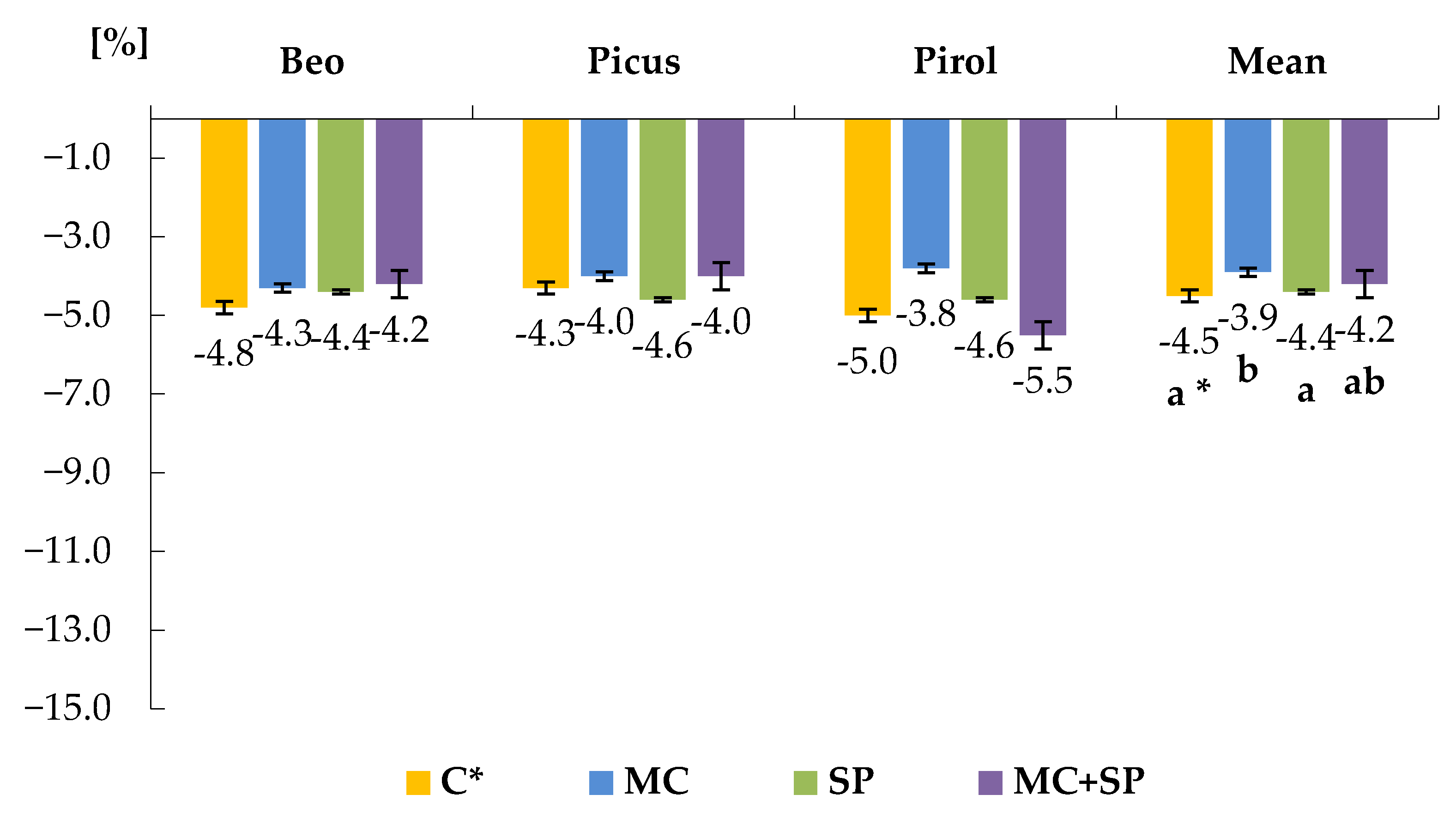
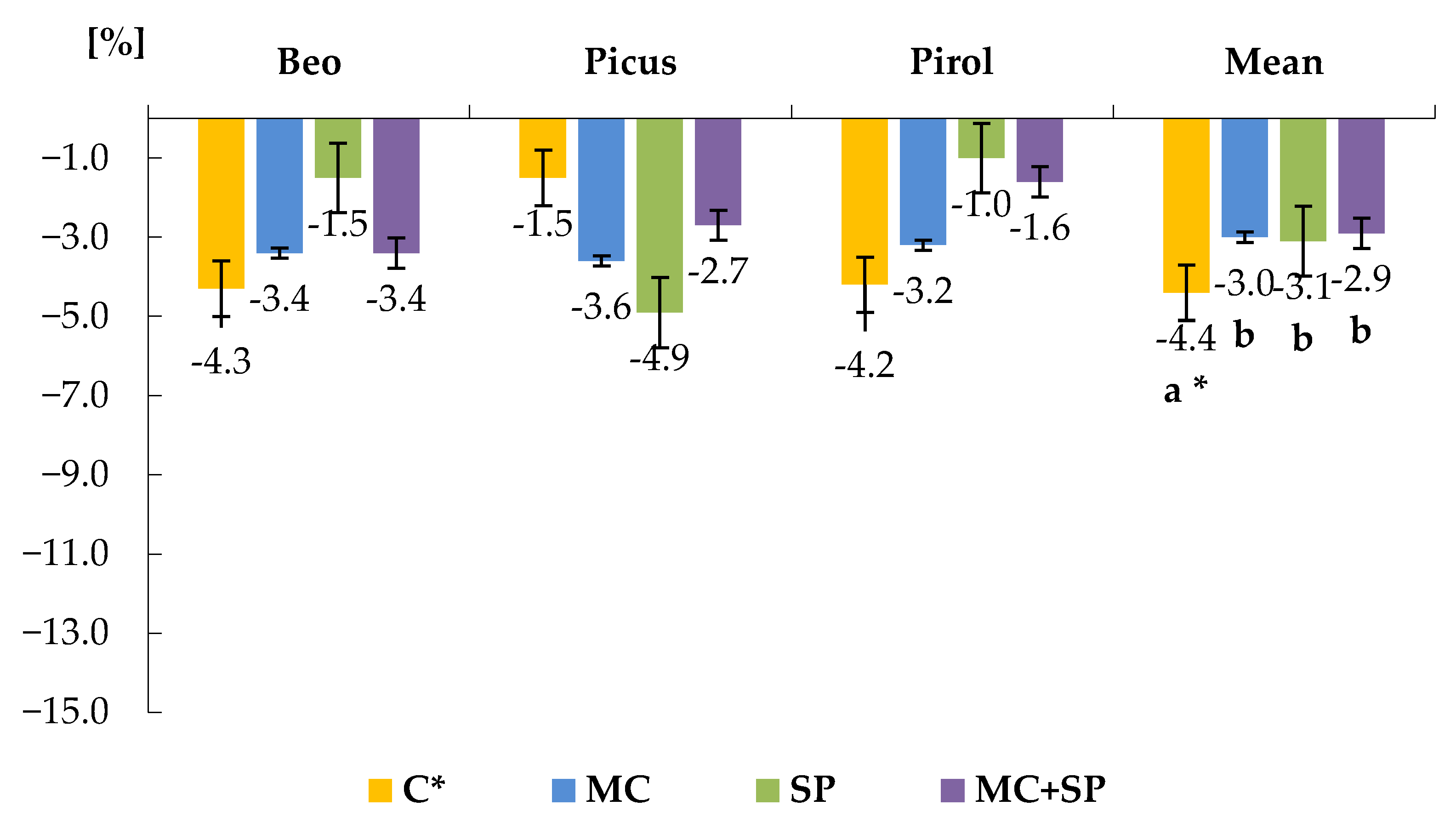
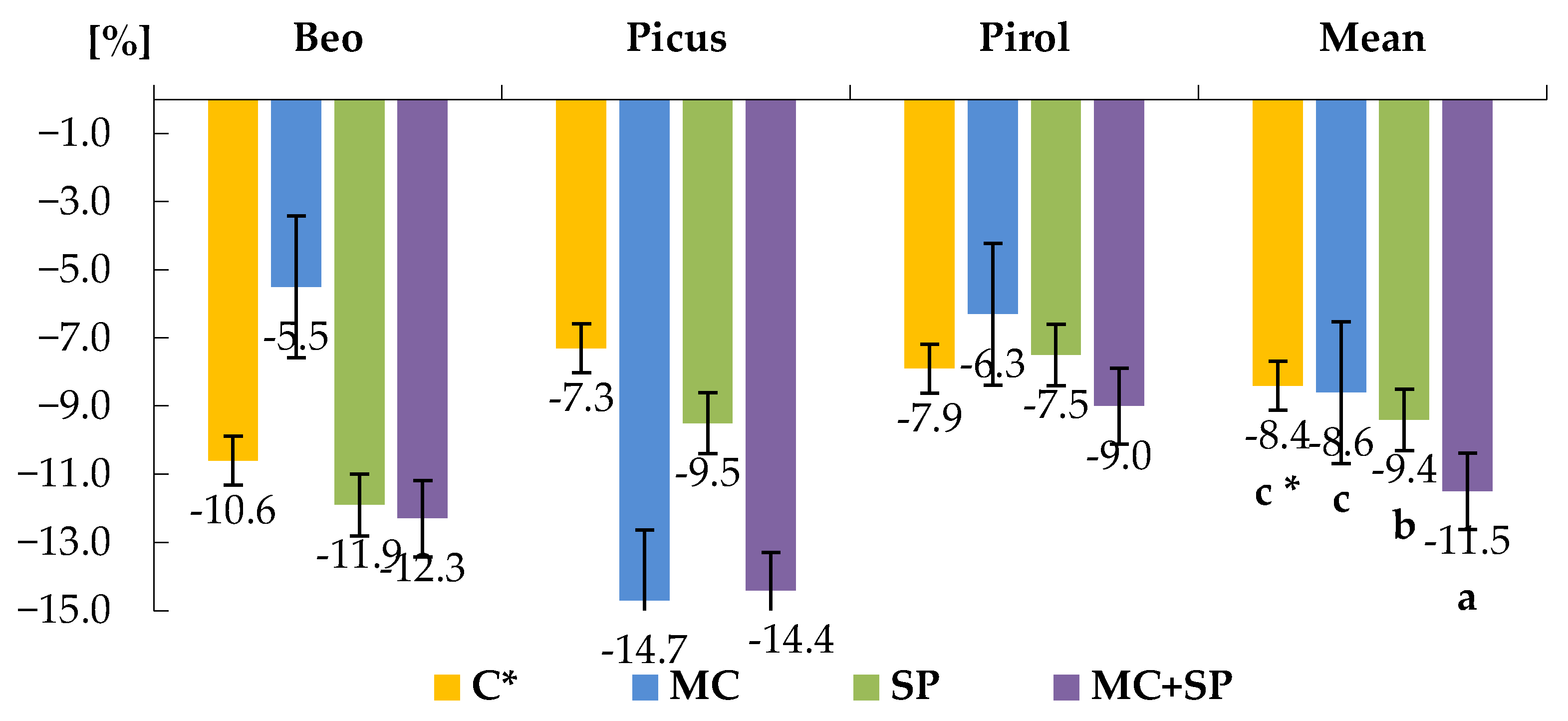
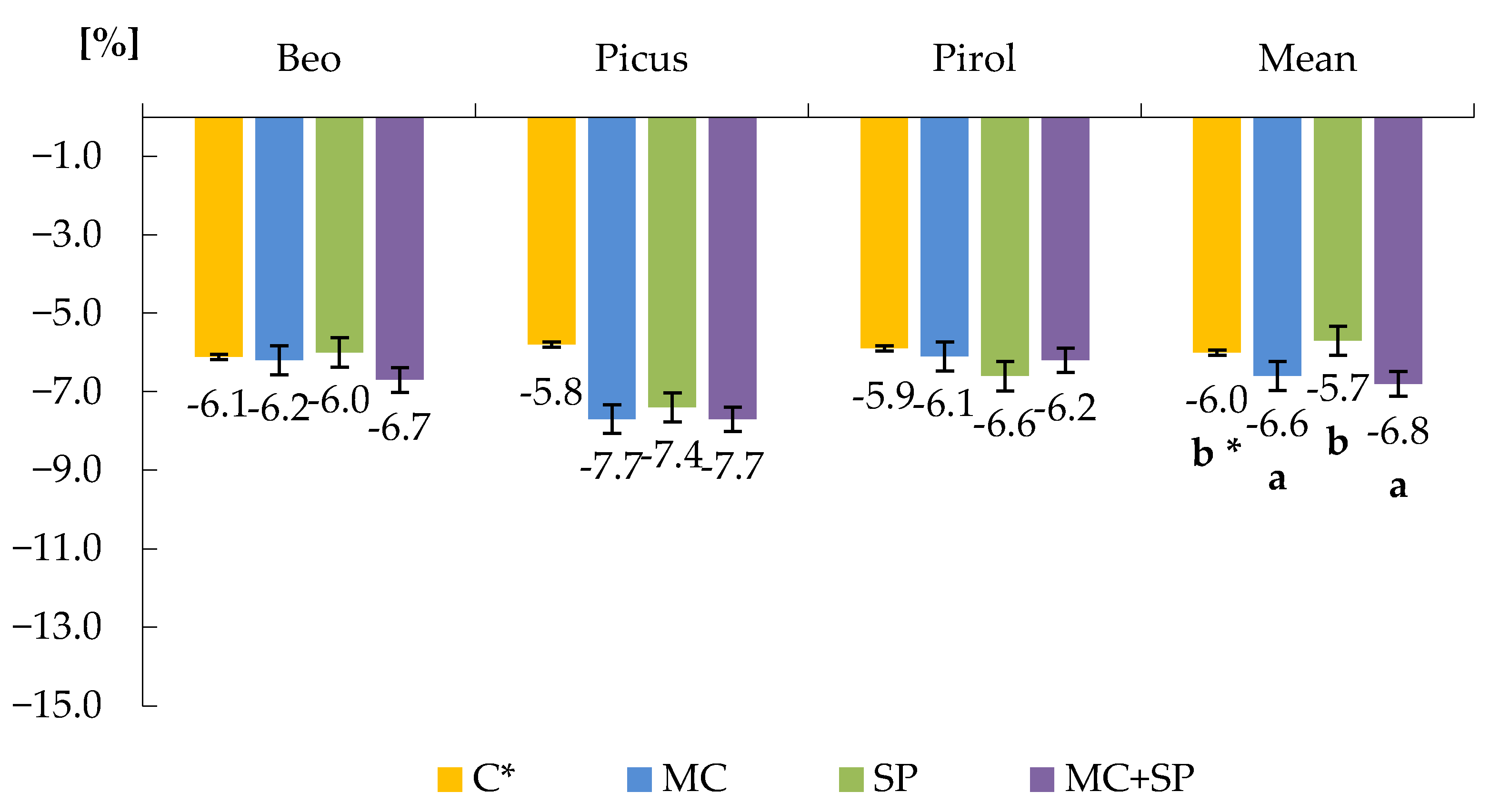
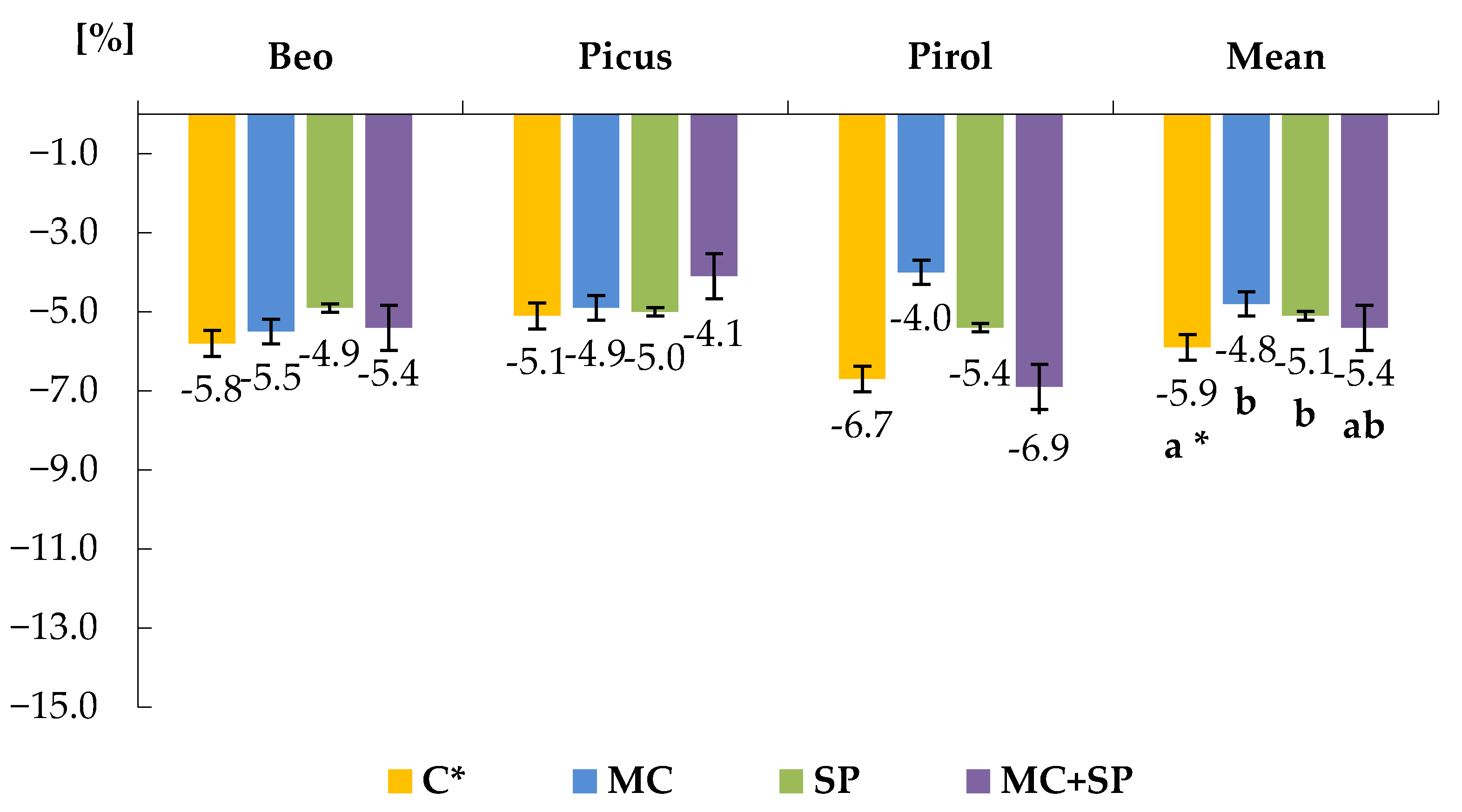
Long-term storage of potato tubers always leads to a reduction in dry matter and starch contents [40]. This is a consequence of physiological processes occurring in the tubers, such as respiration, transpiration, and the conversion of starch into sugars and sucrose into reducing sugars. In the study conducted, a slight, but significant (p < 0.05) decrease in the contents of these components was observed after long-term storage, amounting to 0.40 pp for both dry matter and starch (Table 4, Tables S1 and S2, Figure 1 and Figure 2). Such a small loss indicates that the storage conditions were properly maintained and consistent with recommendations for cultivars intended for food processing. Some researchers have reported that the intensity of changes in dry matter and starch contents during storage depends not only on the storage conditions but also on the genetic characteristics of the potato, which vary in periderm thickness and the amount of suberin, a compound that limits water migration [41,42,43]. It was also noted that among the preparations applied during the potato growing season, the smallest decrease in dry matter and starch contents (−1.4 and −2.0%, respectively) was obtained following the application of the SP preparation.

3.2. Total and Reducing Sugars

Sugars are an important component of potato tubers, directly determining the quality of chips, in particular their color. Due to the key importance of sugars in the chips production process, desirable levels of sugars in tubers have been determined [9,44]. In our studies, the total sugars content and simple sugars content in tubers were not exceeded (Table 7, Tables S3 and S4). In addition, a significant influence of all the factors used on the sugars content was demonstrated. However, the greatest influence (p < 0.05) on the content of these traits was exerted by the cultivar, the year of the study, and the storage (Table 7).
The tested varieties differed significantly (p < 0.05) in the content of these compounds. Their highest average content, regardless of the year and date of the tests, was characterized by the ‘Pirol’ variety, followed by ‘Picus’ and ‘Beo’. The influence of genetic factors on the sugars content of potato tubers has also been reported by other authors [9,32,45,46]. Islam et al. [9], who analyzed six potato cultivars intended for processing, obtained reducing sugars content ranging from 591 to 809 mg kg−1 fresh matter, which is similar to the results of our study, where reducing sugars content ranged from 330 to 828 mg kg−1 f.m. According to Islam et al. [9], apart from genotype, sugars content in potato tubers is also influenced by agronomic, environmental, and weather factors. This thesis is confirmed by our research, in which significant differences in total sugars content and reducing sugars content were observed within the same cultivar across the individual years of the study (Table 7, Tables S3 and S4), which differed in meteorological conditions (Table 2 and Table 3). The most favorable period for potato cultivation in terms of tuber sugars content proved to be the first year of the study. In that year, the average temperature was 15.8 °C with a high total precipitation (494.6 mm). The least favorable was the third year, during which a substantial precipitation deficit occurred. In our study, the average total sugars content and reducing sugars content after harvest in the first year amounted to 5.86 g kg−1 f.m. and 470 mg kg−1 f.m., respectively. In contrast, in the third year they were 6.20 g kg−1 f.m. and 564 mg kg−1 f.m., respectively. This results from the fact that water deficiency during the growing season increases plant stress, which may lead to the accumulation of reducing sugars. As reported by Khorramifar and Rasekh [45], the soil type on which the crop is grown, as well as the mineral fertilization and the type of plant growth–supporting products used, may also have an impact. The significant influence (p < 0.05) of agronomic conditions on sugars content is confirmed by our own study results. The applied products MC and SP least significantly altered sugars content (Table 7, Tables S3 and S4). Each of the applied agents, regardless of timing or year of study, reduced the concentration of total and reducing sugars. The most beneficial effect in this regard was observed after the combined application of MC and SP. The observed changes may result from the indirect effect of the applied preparations on plant condition, through the reduction in biotic stress and the support of physiological processes, which favors an improvement in the chemical composition of the tubers. When judiciously applied to crops, biostimulants exhibit the ability to enhance plant metabolism, increase productivity, and improve resilience to adverse environmental conditions. By modulating molecular mechanisms and inducing epigenetic changes, biostimulants influence key signaling molecules, transcription factors, and hormone levels, which collectively contribute to stress tolerance [12,13].
A significantly positive effect of growth promoters on sugar content in potato tubers is also reported by Zarzecka and Gugała [47], Głosek-Sobieraj et al. [48] and Cortiello et al. [49].
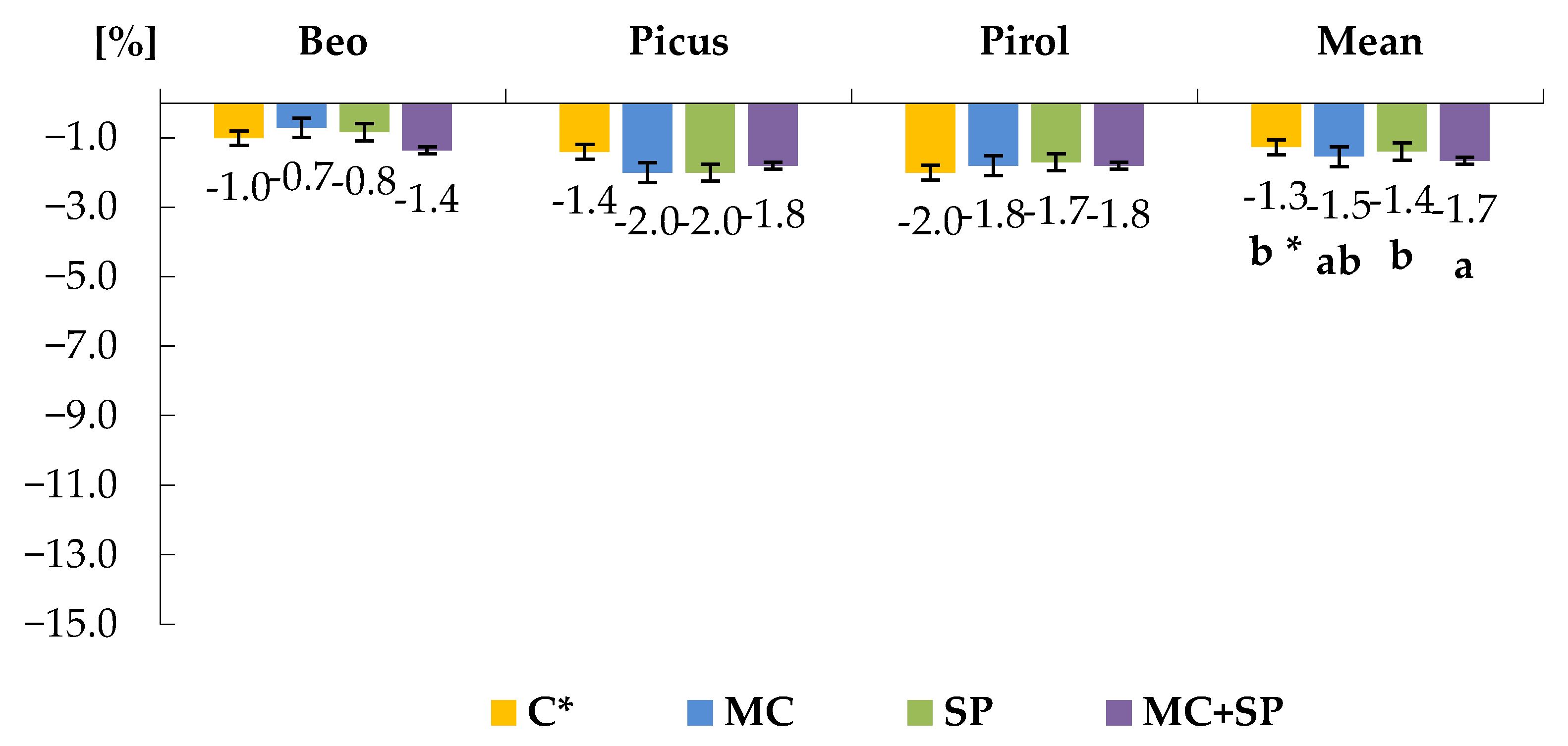
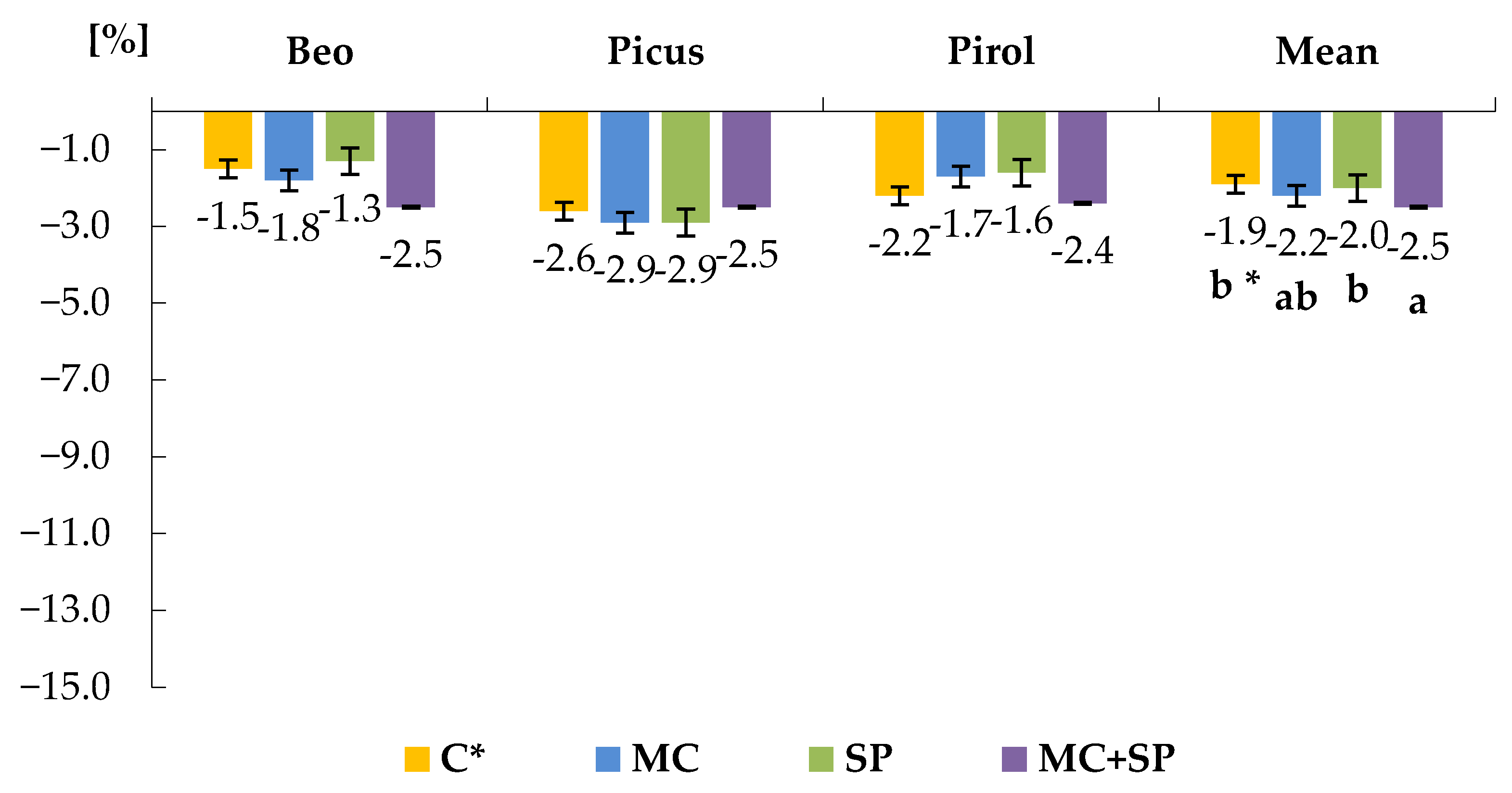
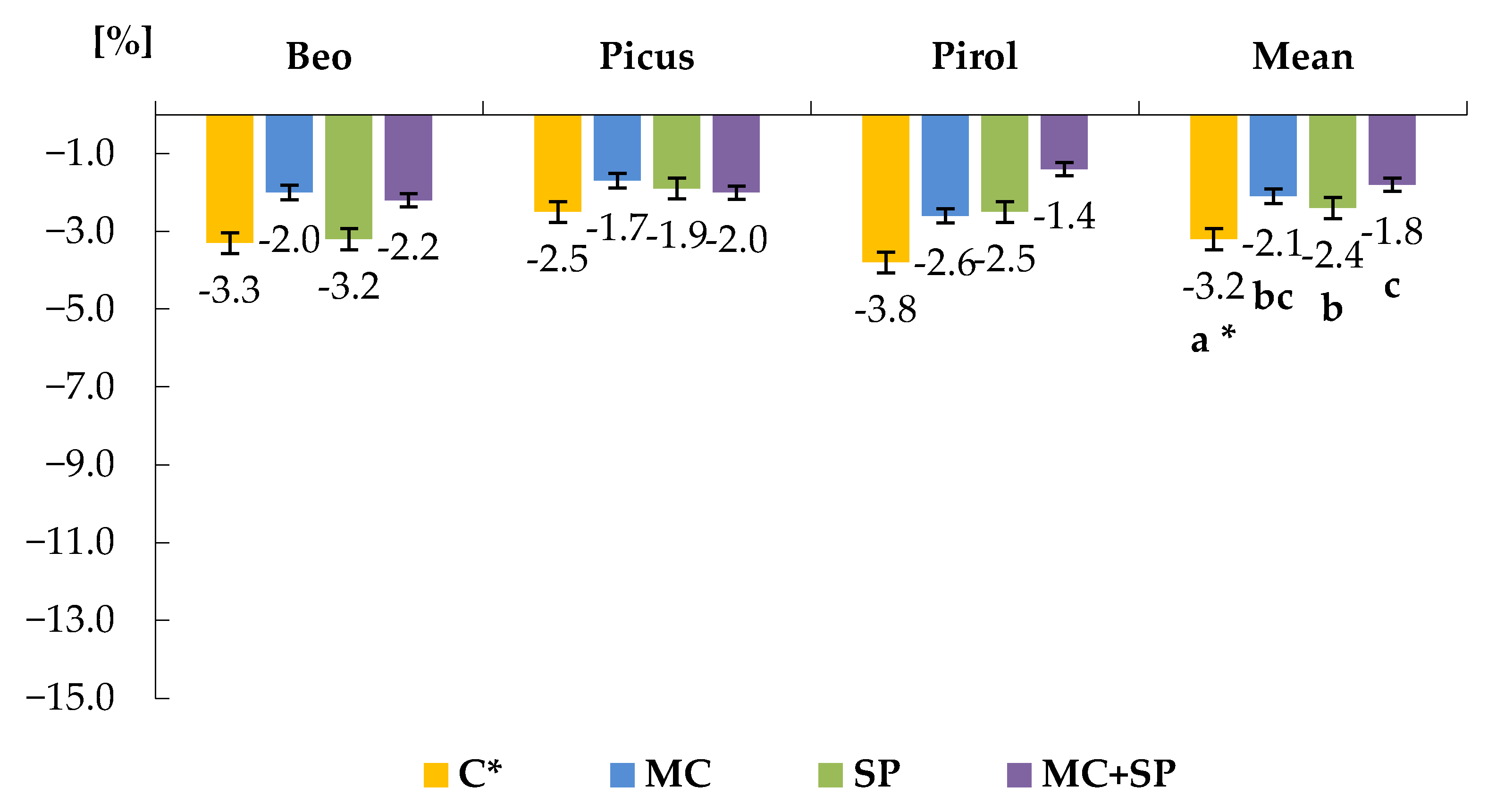
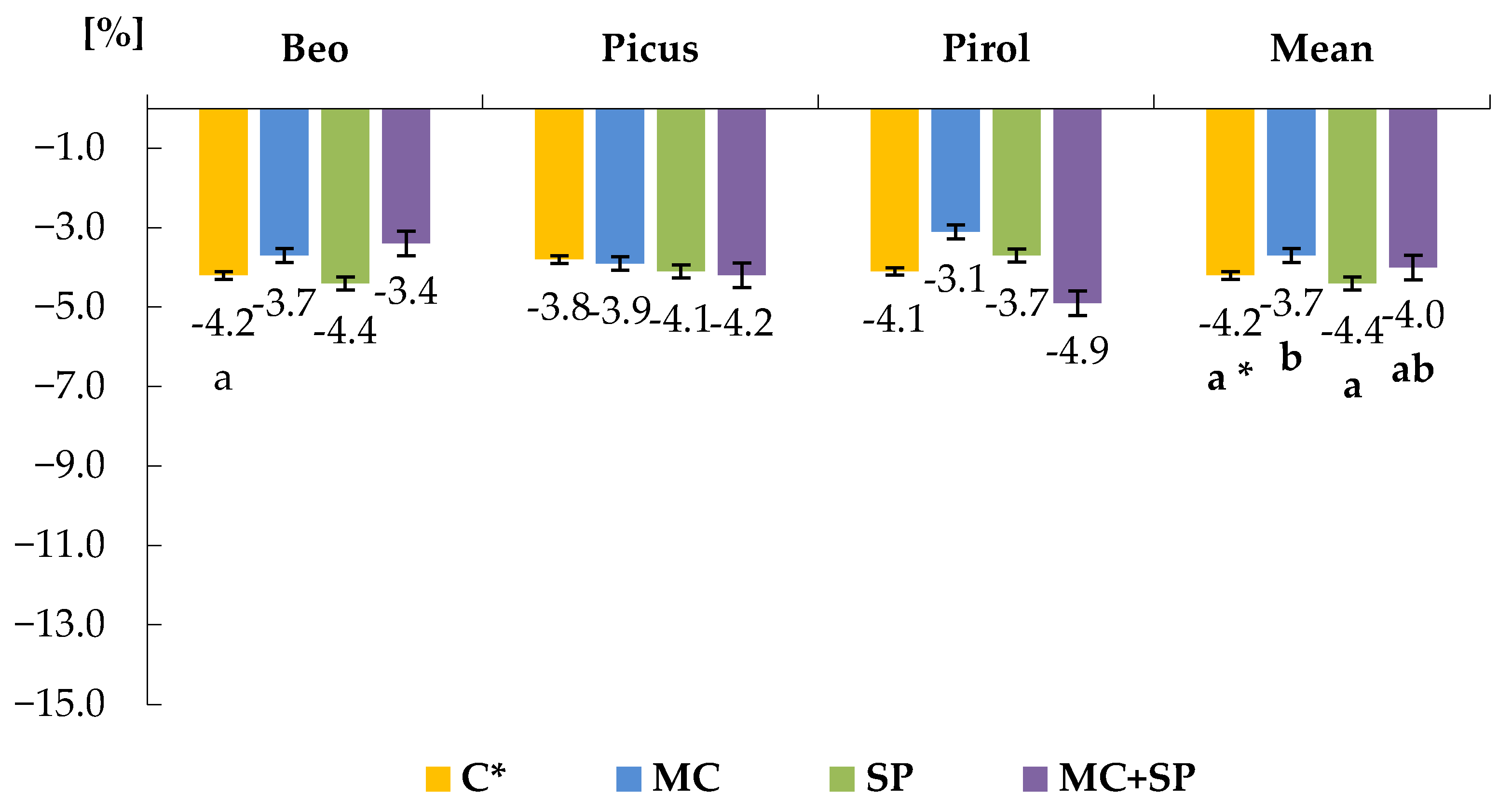
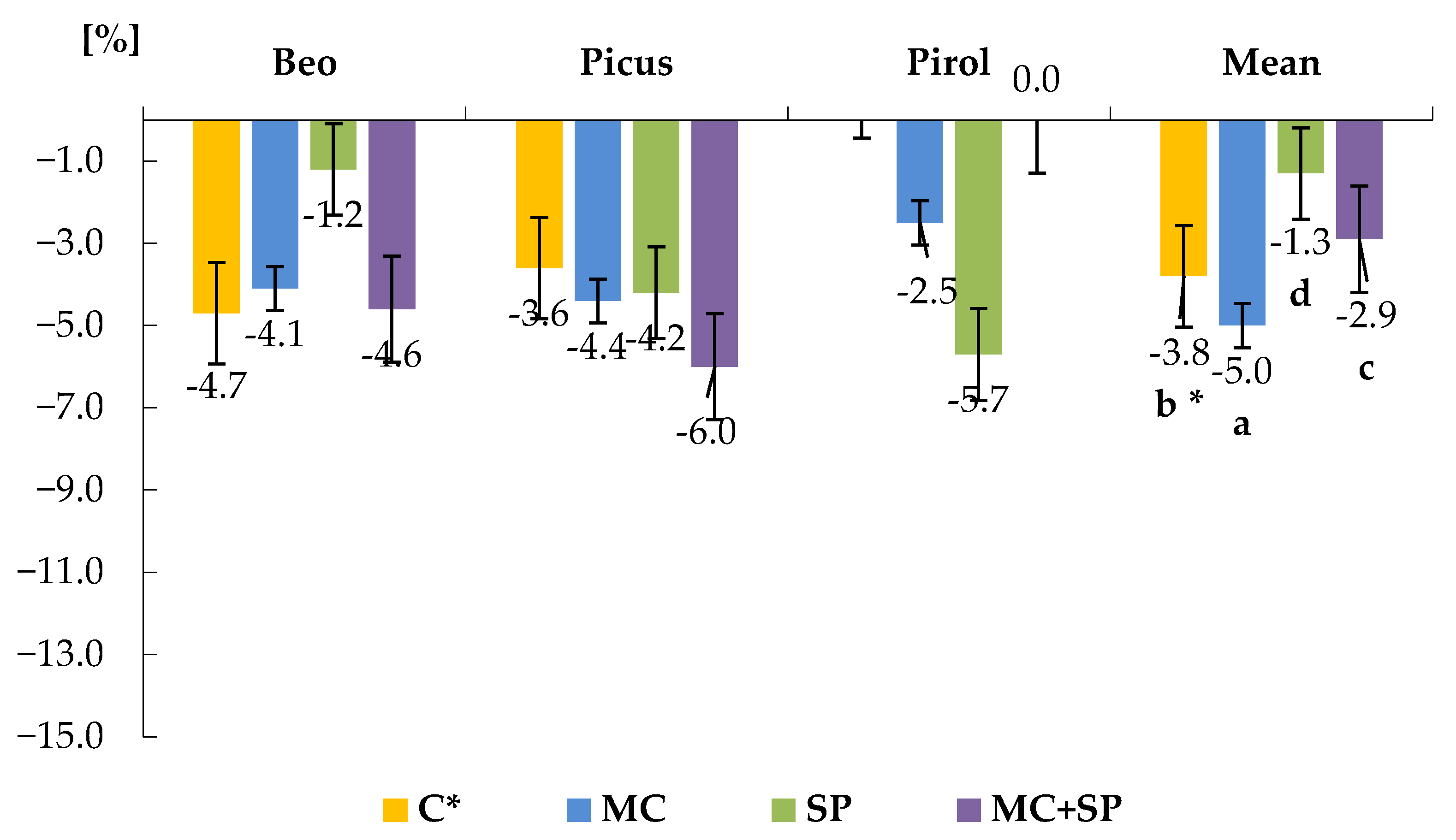
It is known that during storage, there is an increase in the concentration of total sugars and reducing sugars [32,50,51]. After long-term storage, each year saw a significant (p < 0.05) increase in total sugars and reducing sugars content of 6.5 and 6.0%, 6.1 and 12.2%, and 6.5 and 9.2%, respectively (Figure 3 and Figure 4). Genetic factors have a significant impact on sugars content during storage [9,16,52]. It should also be remembered that improper storage conditions for tubers, especially for varieties intended for food processing, such as sudden temperature fluctuations and inadequate oxygen and humidity levels, can lead to starch hydrolysis, resulting in its conversion into sugars [15,30]. Pobereżny et al. [53] disagree, showing that the increase in sugars content during storage is associated with increased activity of invertase, an enzyme responsible for the breakdown (hydrolysis) of sucrose into simple sugars. These processes can significantly affect the quality of fried products, leading to changes in their organoleptic properties, including taste, consistency and color [15,30].

3.3. Carotenoids

Pigments, mainly carotenoids, are a component that has a significant impact on quality, particularly on the color of potato tubers and the chips produced from them. The carotenoid pigments found in potatoes are primarily xanthophylls [54,55]. In our study, the total carotenoid content depended significantly on all factors of the experiment. It should be noted, however, that among the factors studied, the cultivar had the greatest influence on carotenoid content (p < 0.05). The tested varieties differed significantly (p < 0.05) in carotenoid content, which ranged from 7.22 to 11.0 mg kg −1 f.m. immediately after harvest and from 6.93 to 10.9 mg kg −1 f.m. after six months of storage (Table 8 and Table S5).
Among the tested varieties, the highest average carotenoid content, regardless of the date and year of the study, was found in the ‘Pirol’ variety (10.31 mg kg −1 f.m.), followed by ‘Picus’ (9.42 mg kg −1 f.m.) and ‘Beo’ (7.49 mg kg −1 f.m.). This had a direct impact on the color of the flesh of raw tubers, which translated into the color of fried chips. This is confirmed by the highly significant (p < 0.01) correlation coefficients obtained between the carotenoid content and the color of the fried chips both immediately after harvest and after storage, respectively: r = −0.650 and r = −0.559 (Table 5 and Table 6). Among the many factors that directly influence the total carotenoid content in potato tubers, genotype is considered to be the most important [54,56,57,58,59,60]. This is due to the fact that different potato varieties differ in the color of their flesh and skin. Potatoes with white and yellow flesh have a similar carotenoid composition, and the yellow color is only due to higher levels of certain xanthophylls [61]. Brown et al. [62] report that the color of tuber flesh is correlated with specific carotenoid content. For white-fleshed varieties, the carotenoid content ranges from 0.50 to 3.50 mg kg −1 f.m., while yellow-fleshed varieties contain from 8.00 to 20.00 mg kg −1 f.m. [63]. Our own research confirms the results of Brown et al. [63], as the carotenoid content for yellow and light-yellow varieties ranged from 7.24 to 10.6 mg kg −1 f.m. (Table 8 and Table S5). This is also confirmed by the results obtained by Tatarowska et al. [54]. The authors, studying three potato varieties and seven tetraploid breeding lines with white and yellow flesh, showed a total carotenoid content in tubers ranging from 5.57 to 20.20 mg kg −1 f.m. Higher carotenoid contents were found for varieties with yellow flesh. However, it should be remembered that, apart from varietal characteristics, the location of cultivation, agrotechnology used, production systems, and meteorological conditions also have a significant impact on the carotenoid content in potato tubers [54,55,58,60,64,65]. Weather conditions are particularly important in the context of carotenoid content. Hamouz et al. [66], studying 12 potato varieties, proved that higher carotenoid content was found in tubers from a growing year characterized by higher air temperatures. The same trends were observed in our own research, as the highest total carotenoid content was obtained in the third year of the study, which was characterized by the highest average temperature. Cuéllar-Cepeda et al. [67] also report on the significant impact of meteorological conditions. Furthermore, Tatarowska et al. [54] emphasize that the concentration of carotenoids in potato tubers is highly dependent on environmental factors that cannot be controlled, as they vary depending on the year of cultivation.
The plant growth and development promoters used in the studies, i.e., MC and SP, slightly (p < 0.05) increased the total carotenoid content in tubers (Table 8 and Table S5). Each of the agents used, regardless of the date and year of the study, increased the carotenoid content. This increase averaged 2.09% for SP and 5.04% for MC. However, the combined use of the preparations proved to be the most beneficial, as the carotenoid content increased by an average of 7.75%. Application of the treatments resulted in higher carotenoid accumulation in tubers, likely due to the positive influence of the preparations on plant health and metabolic processes. Biostimulants influence the balance of endogenous hormones, alter the expression of genes involved in nutrient transport across cell membranes, promote photosynthesis, and reduce stress-related responses [12,13].
The positive effect of plant growth and development stimulants on the concentration of carotenoids in potato tubers is also noted by Mystkowska et al. [65]. The authors, using the biostimulants Agro-Sorb Folium, Aminoplant, and PlonoStart together with the herbicide Avatar 293 ZC, obtained a significant increase in the carotenoid content in potato tubers, by 10.8, 8.2, and 6.4%, respectively. In contrast, Vaitkevičienė et al. [68] showed the highest increase in carotenoid concentration in tubers when growing potatoes using a biodynamic system with the use of preparations supporting plant growth and development.
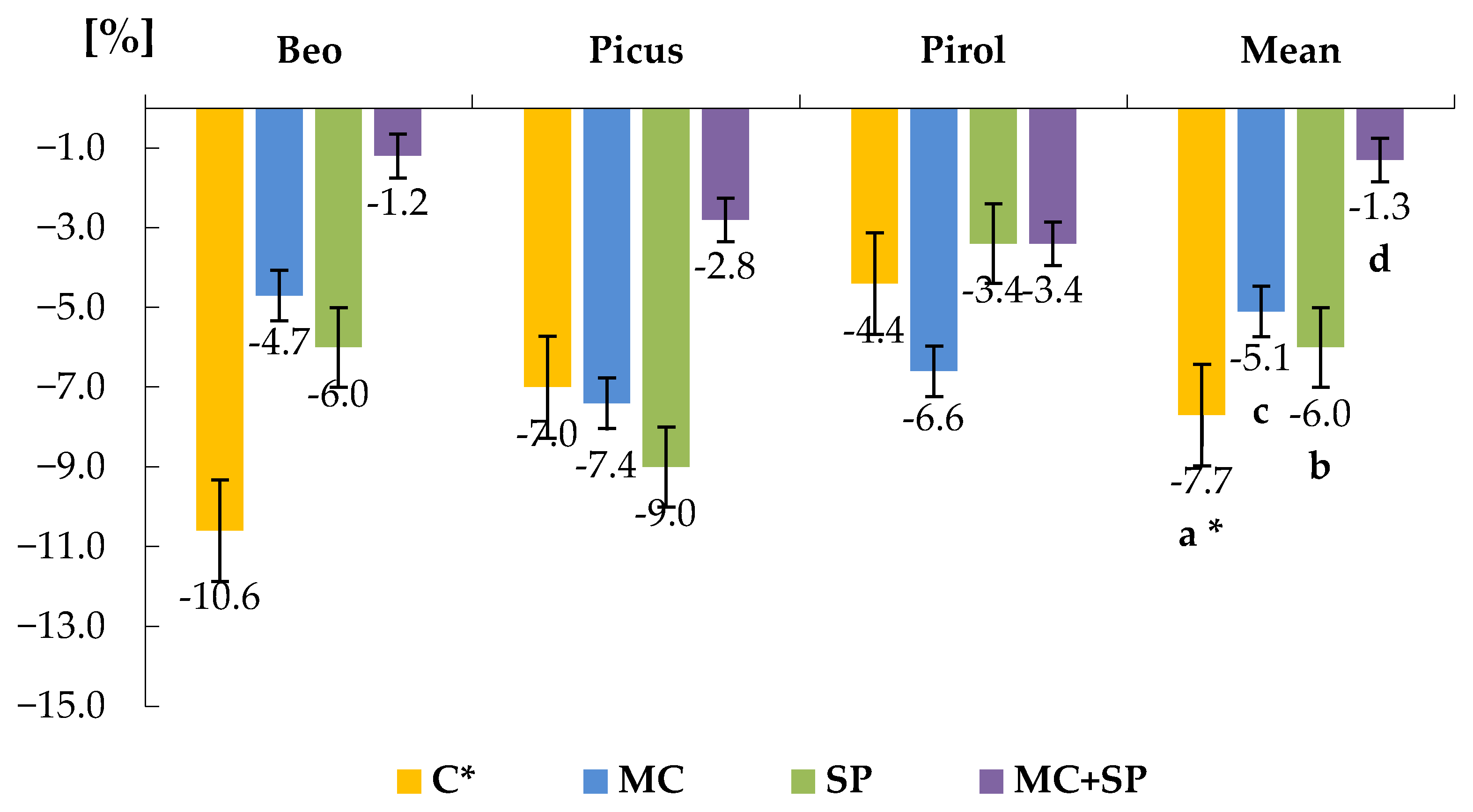
Many authors [60,69,70,71] indicate that the results concerning carotenoid content after storage are inconclusive. The discrepancies may result from varying storage conditions for the tubers. In our study, after 6 months of storage, a significant, albeit slight decrease (p < 0.05) in carotenoid content was observed in the tubers of the potato varieties tested (Table 8 and Table S5, Figure 5). On average, the smallest losses were observed in the ‘Picus’ variety (2.0%), followed by Pirol (2.3%) and Beo (2.5%). Slight decreases in carotenoid content in edible potato tubers after storage were also observed by Morris et al. [72] and Sturaro [60]. The authors emphasize that the carotenoid content during storage is characterized by high stability. The authors also report that during storage, there is a change in the type of carotenoids.

3.4. Chlorophylls

Chlorophyll pigments are present in small amounts in potato tubers. Chlorophyll biosynthesis occurs mainly when tubers are exposed to light, which can lead to their greening. This phenomenon occurs as a result of the transformation of amyloplasts into chloroplasts and the formation of a photosynthetic apparatus [73,74]. The content of Chla, Chlb, and Chltot in tubers analyzed immediately after harvest ranged from 1.63 to 2.01 mg kg −1 f.m., from 0.853 to 1.036 mg kg −1 f.m., and from 2.49 to 3.04 mg kg −1 f.m., respectively. This is consistent with the results of Zgórska et al. [73]. However, after six months of storage, the values ranged from 1.59 to 1.92 mg kg −1 f.m., from 0.821 to 0.984 mg kg −1 f.m. and from 2.41 to 2.91 mg kg −1 f.m., respectively (Table 9 and Table 10, Tables S6–S8).
In the studies conducted, the chlorophyll content in potato tubers depended significantly on all factors of the experiment. The varieties tested differed significantly (p < 0.05) in terms of chlorophyll content in tubers. The highest average content of these components, regardless of the year and date of the study, was found in the ‘Pirol’ variety, and the lowest in the ‘Picus’ variety. Zgórska et al. [73] and Tanios et al. [74] share a similar opinion, stating that genetic factors have the greatest impact on the chlorophyll content in potato tubers, followed by environmental factors such as planting depth, physiological age of tubers, temperature, atmospheric oxygen level, and lighting conditions. The literature on the subject shows that the chlorophyll content in potatoes, especially those intended for processing, is correlated with the earliness group of varieties [73,75]. Early varieties contain significantly more chlorophyll than late varieties. This thesis is confirmed by the results of our own research, as the ‘Picus’ variety had the lowest chlorophyll content and the longest growing season among the varieties studied.
The studies also showed a significant effect (p < 0.05) of the applied treatments on chlorophyll a, b and total content (Table 9 and Table 10, Tables S6–S8). There are few studies in the literature devoted to the effect of biostimulants on chlorophyll content in potato tubers, which suggests that this biochemical aspect has not yet been analyzed in detail or taken into account in the context of the physiology of this plant. In our studies, each of the preparations used caused a decrease in chlorophyll content in potato tubers both after harvest and after storage. The largest decrease, regardless of the year and date, was obtained after the simultaneous application of MC and SP (8.7%), while MC reduced the content by an average of 5.8% and SP by 2.7% compared to the control (Table 9 and Table 10, Tables S6–S8). Observed decrease may reflect a shift in plant metabolism towards the accumulation of compounds important for tuber quality.
In addition, the use of biostimulants may have a positive impact on various plant processes, such as cell division and elongation, resulting in increased leaf area and ultimately more photosynthesis. The authors [12,13] commented on the importance and involvement of amino acids in the tolerance to abiotic stress, mentioning that this class of molecules comprises certain amino acids (particularly proline) and quaternary ammonium compounds. These substances are believed to be essential for plants to change their cytoplasmic osmotic balance in response to osmotic stress.
Hara [76], using the biostimulating preparations Kelpak SL and Aminoplant, obtained a decrease in chlorophyll a and b content in potato leaves compared to the control by 8.4% and 14.7%, respectively. The author points out that the chlorophyll content depends on the type of preparation used, which is confirmed by the results of our research.
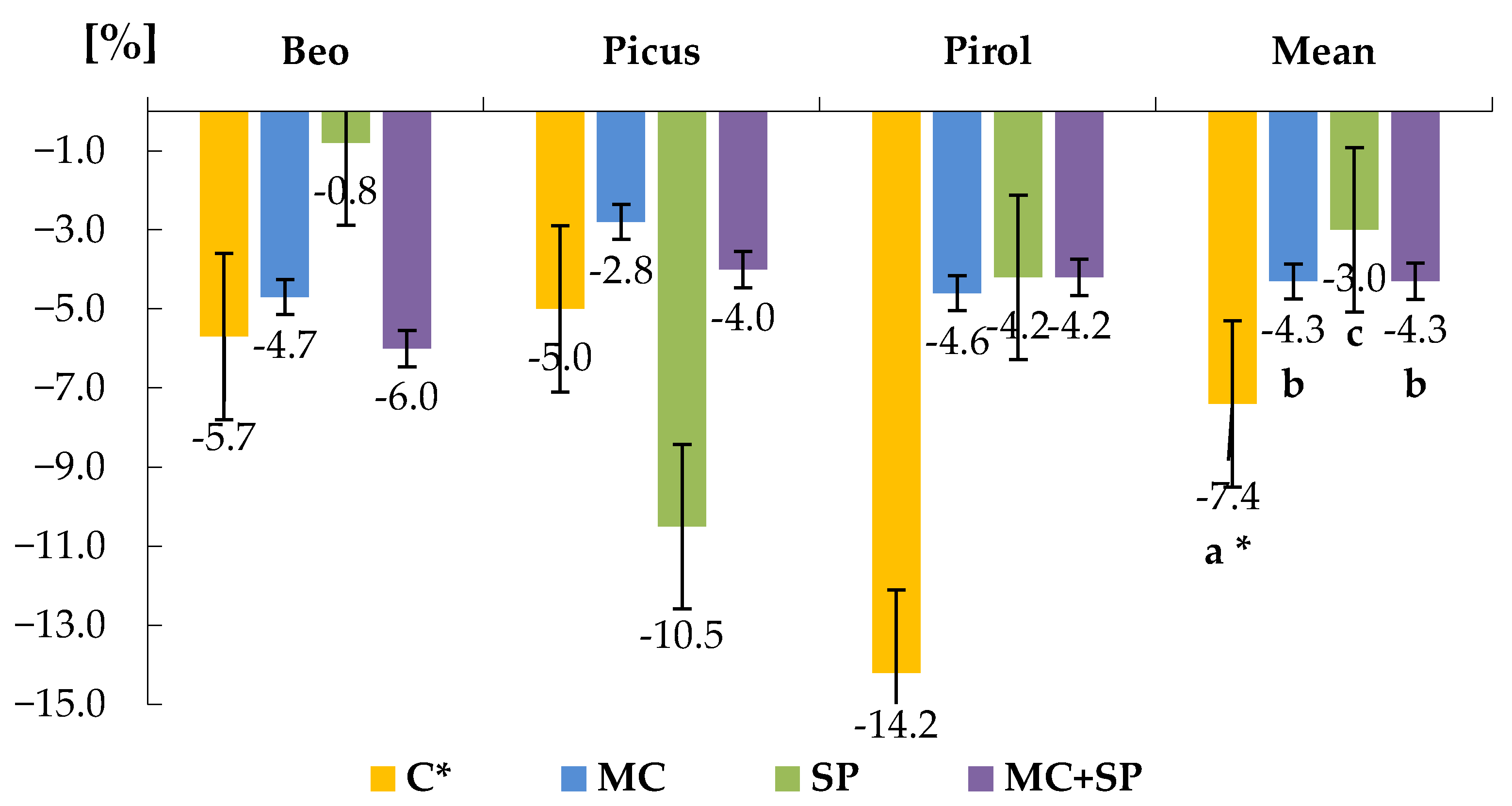
After long-term storage of tubers, there was a slight but significant decrease (p < 0.05) in Chla, Chlb, and Chltot content (Table 9 and Table 10, Tables S6–S8, Figure 6, Figure 7 and Figure 8). Wang et al. [77] showed that tubers exposed to light during storage contained as much as 25.5 times more chlorophyll than potatoes stored in the dark. However, they did not find any difference in chlorophyll content in potatoes stored in the dark. Therefore, the slight decrease in chlorophyll content after 6 months of storage obtained in our own research may indicate that the technological regime was maintained during the storage of tubers for chip production and that the tubers were handled properly immediately after harvesting.

3.5. Chips Quality

3.5.1. Total Sensory Quality and Color

The most important quality characteristics of potato chips include color, taste, aroma, and consistency. The studies conducted showed a varied impact of the tested factors on individual quality characteristics of potato chips. Nevertheless, all chips produced were characterized by generally good sensory quality (an average of 4.6 points immediately after harvesting and 4.5 points after storage), meeting the requirements for this type of refined product (Table 11 and Table S9, Figure 9).
The desired color of the chips should be light, evenly golden, without brown discoloration or spots [78,79]. In the studies conducted, the color rating of fried chips ranged between 3.5 and 5.0 points (five-point scale) both after harvesting and after storage (Table 12 and Table S10).
The highest color rating was given to chips fried from the ‘Beo’ variety (4.9 points), followed by the ‘Picus’ variety (4.7 points) and the ‘Pirol’ variety (4.1 points). The component that has a key influence on the color of chips is sugars, mainly reducing sugars [9,59,80,81]. This is confirmed by the highly significant (p < 0.01) correlation coefficients obtained in the studies between the color of chips and total sugar content, amounting to r = −0.745 after harvesting and r = −0.658 after storage, and reducing sugars r = −0.808 immediately after harvesting and r = −0.627 after storage (Table 5 and Table 6). This indicates that chips containing lower amounts of total and reducing sugars generally had better color. Considering that color is the first visual aspect influencing consumer choice in the case of fried products, it is therefore extremely important to select the right variety for their production. Too high a content of sugars, which react with free amino acids during heat treatment, can result in a darker, brown color [82,83]. The dark color of chips, as an indicator of the Maillard reaction, may indicate the formation of harmful acrylamide. In addition, it should be emphasized that refined products with a lighter color are perceived as safer. Darker products indicate a higher degree of acrylamide formation, which may raise concerns about consumer safety [79,84].
The significant impact of the preparations used and long-term storage of tubers on the color of chips was also demonstrated (Table 11 and Table S10). The most favorable effect on this characteristic was achieved by the combined use of MC and SP preparations during the growing season (an average of 4.7 points). After long-term storage of the tubers, there was generally a slight deterioration in the color of the chips, by an average of 0.1 points (Figure 10). This is due to the fact that sugars are largely responsible for the color of fried products. This is confirmed by the higher correlation coefficients obtained between the color of the chips and sugars compared to the coefficients between the color of the chips and pigments (carotenoids and total chlorophyll, as well as chlorophyll a and b), both after harvest and after storage (Table 5 and Table 6). It is worth recalling here that the lowest content was obtained after the combined use of MC and SP and that an increase in sugar content was observed after storage, as described above. The influence of sugars on the color of fried products, both after harvest and after storage, is reported by Pobereżny et al. [53].

3.5.2. Consistency and Taste

In the studies conducted, the consistency and taste of the chips depended significantly on all factors of the experiment. However, the greatest influence (p < 0.05) on consistency and taste of chips from all factors was exerted by the evaluation date, while the applied treatments had the least effect (Table 13 and Table 14, Tables S11 and S12).
The varieties tested differed in their consistency ratings, which ranged from 3.7 to 5.0 points both after harvest and after storage. In contrast, the taste rating ranged from 3.5 to 5.0 points after harvest and from 3.2 to 4.8 points after long-term storage. Among the varieties tested, the best consistency was found in the ‘Beo’ (4.7 points), ‘Picus’ (4.4 points) and ‘Pirol’ (3.9 points), respectively. (Table 13 and Table S11). In the case of taste assessment, the trend generally remained the same as for consistency assessment (‘Beo’—4.6 points, ‘Picus’—4.6 points, ‘Pirol’—3.9 points). However, it was noted that the taste ratings for the ‘Beo’ and ‘Picus’ varieties were similar (Table 14 and Table S12). According to Vaitkevičienė et al. [59], the taste of chips depends largely on their consistency. This is confirmed by the highly significant (p < 0.01) correlation coefficients between taste and consistency obtained in these studies, amounting to r = 0.613 immediately after harvesting and r = 0.513 after 6 months of storage (Table 5 and Table 6). According to many authors [9,59,85], the dry matter and starch content in tubers have the greatest impact on the consistency and crispness of fried chips. This is confirmed by the highly significant positive (p < 0.01) correlation coefficients obtained between consistency and dry matter and starch immediately after harvest and after storage, respectively: r = 0.621 and r = 0.719, and r = 0.579 and r = 0.695 (Table 5 and Table 6). Chips made from potatoes with a high dry matter content have a hard consistency, which translates into the desired crispness of the chips. On the other hand, chips made from potatoes with a low dry matter content contain more oil, have a greasy appearance and a sticky consistency [9]. This is confirmed by the results obtained in the studies conducted, as the best consistency was found in chips made from varieties with the highest dry matter and starch content (Table 4 and Table 13, Tables S1, S2 and S11). Similar results were obtained in the studies by Islam et al. [9], as when testing six potato varieties, the crispiest chips were those produced from varieties with the highest dry matter content. Properly fried chips should have a crispy and delicate consistency.
Sugars and amino acids contained in potatoes play an important role in shaping the taste of chips [86,87]. This thesis is confirmed by studies that have shown significant negative correlation coefficients between the discussed characteristics (Table 5 and Table 6). However, it should be remembered that the sugar content in fried snacks cannot be too high, as this may result in a bitter taste [82]. According to the requirements of the Polish standard PN-A-74780:1996, potato chips should have a specific, fresh taste with a distinct sensation of the spices used [87]. According to this standard, chips that receive a score below three points on a five-point scale for any sensory quality characteristic are classified as unsuitable for sale on the market. Taking this classification into account, it can be concluded that the tested chips had an appropriate taste and met the necessary quality requirements.
The MC and SP preparations used in the experiment had a significant positive effect (p < 0.05) on the tested quality characteristics of the chips (taste and consistency). However, it was noted that their effect was ambiguous. For the taste and consistency of the chips, the most favorable results were achieved with the combined application of MC + SP (an average of 4.6 points and 4.5 points, respectively). This indicates that these characteristics depend not only on the reaction of the variety to the treatment preparations used in the study.
After long-term storage of the tubers, a significant decline (p < 0.05) in the quality of the chips was observed, mainly due to a lower rating for taste and consistency in each year of the study (Table 13, Tables S11 and S12, Figure 11 and Figure 12). The decline was 6.5, 4.5, and 4.7%, respectively. These changes were caused by a deterioration in the chemical composition of the tubers during long-term storage, mainly dry matter, starch, and sugars, as described above. The preparations used to treat the tubers had the same effect on the taste and consistency of the chips, both after harvesting and storage. It is worth noting that storage had the most significant (p < 0.05) impact on the texture and taste (Figure 11).

3.5.3. Aroma

The aroma of the tested chips was consistently natural, pleasant, and typical for this type of product, and showed high stability regardless of the test factors used (Table 15 and Table S13). All analyzed samples met the aroma requirements, showing no deviations from the norm. This indicates that the quality requirements for the analyzed potato varieties are consistent with their use in chips.

4. Conclusions

Studies have shown that both the potato genotype and the chemical treatments applied before planting significantly shape the chemical composition of the tubers and the quality of the resulting chips. The early variety ‘Beo’ was distinguished by the most favorable quality parameters of the tubers. The cultivar was characterized by the highest dry matter (23.9%) and starch content (18.4%), while showing the lowest total and reducing sugars (5.77 g kg−1 f.m. and 459 mg kg−1 f.m.). The cv. ‘Pirol’ contained the highest levels of carotenoid and chlorophyll pigments (a, b and total): 10.31; 1.87; 0.927; 2.80 mg kg−1 f.m. The combined application of the preparations MC and SP improved the technological characteristics of the tubers and positively influenced the color (mean 4.7 points), consistency (mean 4.5 points), and taste (mean 4.6 points) of the refined products. The quality of tubers and chips experienced a slight deterioration after long-term storage, which proves that the storage conditions were maintained in line with the intended use of the tested varieties. Produced chips were of high overall quality (averaging 4.6 points after harvest and 4.5 points after storage). Chips from the cv. ‘Beo’ received the highest organoleptic scores: color 4.9, consistency 4.7, taste 4.6, and a very good aroma 5.0, regardless of experimental factors.
This also indicates well-chosen agricultural techniques during cultivation and proper handling of the potatoes immediately after harvest. Furthermore, it was shown that the influence of the factors applied during cultivation was maintained even after long-term storage. The key elements ensuring high raw material quality are primarily the selection of the variety and the rational use of preparations applied directly before planting the tubers. Due to the dynamic development of the market for fried potato products and the growing expectations of consumers regarding food quality and safety, it is essential to conduct successive and systematic research on tuber quality and the factors determining the quality parameters of chips. Continuous improvement of knowledge in this area will not only allow for the enhancement of raw material parameters but will also help increase the competitiveness of the final product.

Supplementary Materials

The following supporting information can be downloaded at: https://www.mdpi.com/article/10.3390/agriculture16020199/s1, Table S1: Dry matter content in potato tubers [% f.m.] in the individual years of the study; Table S2: Starch content in potato tubers [% f.m.] in the individual years of the study; Table S3: Total sugars content in potato tubers [g kg−1 f.m.] in the individual years of the study; Table S4: Reducing sugars content in potato tubers [mg kg−1 f.m.] in the individual years of the study; Table S5: Total carotenoids content in potato tubers [mg kg−1 f.m.] in the individual years of the study; Table S6: Chlorophyll a content in potato tubers [mg kg−1 f.m.] in the individual years of the study; Table S7: Chlorophyll b content in potato tubers [mg kg−1 f.m.] in the individual years of the study; Table S8: Total chlorophyll content in potato tubers [mg kg−1 f.m.] in the individual years of the study; Table S9: Total sensory quality of chips (5-point scale) fried from the examined potato tubers in the individual years of the study; Table S10: Color assessment of fried chips from the examined potato tubers in the individual years of the study; Table S11: Consistency assessment of fried chips from the examined potato tubers in the individual years of the study; Table S12: Taste assessment of fried chips from the examined potato tubers in the individual years of the study; Table S13: Aroma assessment of fried chips from the examined potato tubers in the individual years of the study.

Author Contributions

Conceptualization, K.B. and B.B.; methodology, K.B., E.W. and J.P.; software, K.B., E.W., J.P. and B.B.; validation, K.B., E.W., J.P. and B.B.; formal analysis, K.B., E.W. and J.P.; investigation, K.B., E.W., J.P. and B.B.; resources, K.B., E.W., J.P. and B.B.; data curation, K.B., E.W. and J.P.; writing—original draft preparation, K.B., E.W. and J.P.; writing—review and editing, K.B., E.W. and J.P.; visualization, K.B., E.W. and J.P.; supervision, K.B., E.W. and J.P.; project administration, K.B., E.W., J.P. and B.B. All authors have read and agreed to the published version of the manuscript.

Funding

The results presented in this paper were obtained as part of a comprehensive study financed by the University of Warmia and Mazury in Olsztyn, Faculty of Agriculture and Forestry, Department of Agrotechnology and Agribusiness (grant No. 30.610.013-110).

Institutional Review Board Statement

Not applicable.

Informed Consent Statement

Not applicable.

Data Availability Statement

The original contributions presented in this study are included in the article/Supplementary Material. Further inquiries can be directed to the corresponding author.

Conflicts of Interest

The authors declare no conflicts of interest.

References

  1. Dramićanin, A.M.; Andrić, F.L.; Poštić, D.Ž.; Momirović, N.M.; Milojković-Opsenica, D.M. Sugar profiles as a promising tool in tracing differences between potato cultivation systems, botanical origin and climate conditions. J. Food Compos. Anal. 2018, 72, 57–65. [Google Scholar] [CrossRef]
  2. Devaux, A.; Goffart, J.P.; Petsakos, A.; Kromann, P.; Gatto, M.; Okello, J.; Hareau, G. Global food security, contributions from sustainable potato agri-food systems. In The Potato Crop: Its Agricultural, Nutritional and Social Contribution to Humankind; Campos, H., Ortiz, O., Eds.; Springer: New York, NY, USA, 2020; pp. 3–35. [Google Scholar] [CrossRef]
  3. Zarzecka, K.; Ginter, A.; Gugała, M.; Durakiewicz, W. Nutritional Value of Coloured Flesh Potato Tubers in Terms of Their Micronutrient Content. Agronomy 2024, 14, 1537. [Google Scholar] [CrossRef]
  4. Sampaio, S.L.; Petropoulos, S.A.; Alexopoulos, A.; Heleno, S.A.; Santos-Buelga, C.; Barros, L.; Ferreira, I.C. Potato peels as sources of functional compounds for the food industry: A review. Trends Food Sci. 2020, 103, 118–129. [Google Scholar] [CrossRef]
  5. Ostermeier, R.; Hill, K.; Dingis, A.; Töpfl, S.; Jäger, H. Influence of pulsed electric field (PEF) and ultrasound treatment on the frying behavior and quality of potato chips. Innov. Food Sci. Emerg. Technol. 2021, 67, 102553. [Google Scholar] [CrossRef]
  6. Leonel, M.; do Carmo, E.L.; Fernandes, A.M.; Soratto, R.P.; Ebúrneo, J.A.M.; Garcia, E.L.; dos Santos, T.P.R. Chemical composition of potato tubers: The effect of cultivars and growth conditions. J. Food Sci. Technol. 2017, 54, 2372–2378. [Google Scholar] [CrossRef]
  7. Das, S.; Mitra, B.; Saha, A.; Mandal, S.; Paul, P.K.; El-Sharnouby, M.; Hassan, M.M.; Maitra, S.; Hossain, A. Evaluation of Quality Parameters of Seven Processing Type Potato (Solanum tuberosum L.) Cultivars in the Eastern Sub-Himalayan Plains. Foods 2021, 10, 1138. [Google Scholar] [CrossRef]
  8. Zarzecka, K.; Gugała, M.; Mystkowska, I.; Sikorska, A. Changes in dry weight and starch content in potato under the effect of herbicides and biostimulants. Plant Soil Environ. 2021, 67, 202–207. [Google Scholar] [CrossRef]
  9. Islam, M.M.; Naznin, S.; Naznin, A.; Uddin, M.N.; Amin, M.N.; Rahman, M.M.; Tipu, M.M.H.; Alsuhaibani, A.M.; Gaber, A.; Ahmed, S. Dry matter, starch content, reducing sugar, color and crispiness are key parameters of potatoes required for chip processing. Horticulturae 2022, 8, 362. [Google Scholar] [CrossRef]
  10. Mystkowska, I. The effect of the use of biostimulators on dry matter and starch content of tuber potatoes. Fragm. Agron. 2019, 36, 45–53. (In Polish) [Google Scholar] [CrossRef]
  11. Trawczyński, C. The effect of biostimulators on the yield and quality of potato tubers grown in drought and high temperature conditions. Bull. Plant Breed. Acclim. Inst. 2020, 289, 11–19. [Google Scholar] [CrossRef]
  12. Caradonia, F.; Ronga, D.; Tava, A.; Francia, E. Plant biostimulants in sustainable potato production: An overview. Potato Res. 2022, 65, 83–104. [Google Scholar] [CrossRef]
  13. Johnson, R.; Joel, J.M.; Puthur, J.T. Biostimulants: The futuristic sustainable approach for alleviating crop productivity and abiotic stress tolerance. J. Plant Growth Regul. 2024, 43, 659–674. [Google Scholar] [CrossRef]
  14. Zgórska, K. Quality requirements for potato cultivars intended for food processing. Ziemn. Pol. 2004, 14, 26–28. [Google Scholar]
  15. Kumar, D.; Singh, B.P.; Kumar, P. An overview of the factors affecting sugar content of potatoes. Ann. Appl. Biol. 2004, 145, 247–256. [Google Scholar] [CrossRef]
  16. Amjad, A.; Javed, M.S.; Hameed, A.; Hussain, M.; Ismail, A. Changes in sugar contents and invertase activity during low temperature storage of various chipping potato cultivars. Food Sci. Technol. 2019, 40, 340–345. [Google Scholar] [CrossRef]
  17. Dourado, C.; Pinto, C.; Barba, F.J.; Lorenzo, J.M.; Delgadillo, I.; Saraiva, J.A. Innovative non-thermal technologies affecting potato tuber and fried potato quality. Trends Food Sci. Technol. 2019, 88, 274–289. [Google Scholar] [CrossRef]
  18. Krzysztofik, B.; Sułkowski, K. Changes of the chemical composition of potato tubers during storage and their impact on the selected properties of crisps. Agric Eng. 2013, 17, 161–169. [Google Scholar]
  19. Jakubowski, T.; Królczyk, J.B. Method for the Reduction of Natural Losses of Potato Tubers During their Long-Term Storage. Sustainability 2020, 12, 1048. [Google Scholar] [CrossRef]
  20. Pobereżny, J.; Wszelaczyńska, E.; Gościnna, K.; Spychaj-Fabisiak, E. Effect of potato storage and reconditioning parameters on physico–chemical characteristics of isolated starch. Starch-Stärke 2021, 73, 2000019. [Google Scholar] [CrossRef]
  21. Han, J.W.; Boo, H.; Chung, M.S. Effects of extraction conditions on acrylamide/furan content, antioxidant activity, and sensory properties of cold brew coffee. Food Sci Biotechnol. 2020, 29, 1071–1080. [Google Scholar] [CrossRef]
  22. Brążkiewicz, K.; Pobereżny, J.; Wszelaczyńska, E.; Bogucka, B. Potato starch quality in relation to the treatments and long-term storage of tubers. Sci. Rep. 2025, 15, 4144. [Google Scholar] [CrossRef]
  23. American Association of Cereal Chemistry (AACC). Approved Method 44-15 A (Moisture-Air Oven Methods); AACC: St. Paul, MN, USA, 1993. [Google Scholar]
  24. Arbeitsgemeinschaft Getreideforschung, e.V. Standard Methoden Für Getreide Mehl Und Brot, 7th ed.; Verlag Moritz Schäfer: Detmold, Germany, 1994. [Google Scholar]
  25. Talburt, W.; Smith, O. Potato Processing (No 6648 T3 1987); Van Nostrand Reinhold: New York, NY, USA, 1987; pp. 371–474. [Google Scholar]
  26. Sensory analysis—Methodology—General Guidance for Conducting Hedonic Tests with Consumers in a Controlled Area. ISO: Geneva, Switzerland, 2014. Available online: https://www.iso.org/ics/67.240/x/ (accessed on 1 December 2024).
  27. Baryłko-Pikielna, N. Outline of Sensory Analysis of Food; WNT: Warszawa, Poland, 1975. [Google Scholar]
  28. Zarzecka, K.; Gugała, M.J.; Ginter, A.; Durakiewicz, W. Formation of starch and dry matter content in tubers potato with colored flesh. Fragm. Agron. 2024, 41, 32–45. (In Polish) [Google Scholar] [CrossRef]
  29. Cătuna Petrar, T.M.; Brașovean, I.; Racz, C.-P.; Mîrza, C.M.; Burduhos, P.D.; Mălinaș, C.; Moldovan, B.M.; Odagiu, A.C.M. The Impact of Agricultural Inputs and Environmental Factors on Potato Yields and Traits. Sustainability 2024, 16, 8759. [Google Scholar] [CrossRef]
  30. Grudzińska, M.; Boguszewska-Mańkowska, D.; Zarzyńska, K. Drought stress during the growing season: Changes in reducing sugars, starch content and respiration rate during storage of two potato cultivars differing in drought sensitivity. J. Agron. Crop Sci. 2022, 208, 609–620. [Google Scholar] [CrossRef]
  31. Ezekiel, R.; Rani, M. Oil content of potato chips: Relationship with dry matter and starch contents, and rancidity during storage at room temperature. Potato J. 2006, 33, 44–49. [Google Scholar]
  32. Gościnna, K.; Retmańska, K.; Wszelaczyńska, E.; Pobereżny, J. Influence of Edible Potato Production Technologies with the Use of Soil Conditioner on the Nutritional Value of Tubers. Agronomy 2024, 14, 549. [Google Scholar] [CrossRef]
  33. Koch, M.; Naumann, M.; Pawelzik, E. Cracking and fracture properties of potato (Solanum tuberosum L.) tubers and their relation to dry matter, starch, and mineral distribution. J. Sci. Food Agric. 2019, 99, 3149–3156. [Google Scholar] [CrossRef]
  34. Mohammed, W. Specific gravity, dry matter content, and starch content of potato (Solanum tuberosum L.) varieties cultivated in Eastern Ethiopia. East Afr. J. Sci. 2016, 10, 87–102. [Google Scholar] [CrossRef]
  35. Dahal, K.; Li, X.Q.; Tai, H.; Creelman, A.; Bizimungu, B. Improving potato stress tolerance and tuber yield under a climate change scenario—A current overview. Front. Plant. Sci. 2019, 10, 563. [Google Scholar] [CrossRef]
  36. Rymuza, K.; Radzka, E.; Lenartowicz, T. Influence of precipitation and thermal conditions on starch content in potato tubers from medium-early cultivars group. J. Ecol. Eng. 2015, 16, 176–179. [Google Scholar] [CrossRef]
  37. Baranowska, A.J. Yield of dry matter and starch of edible potato tubers in conditions of application of growth biostimulators and herbicide. Acta Agrophys. 2018, 25, 397–407. [Google Scholar] [CrossRef]
  38. Karak, S.; Thapa, U.; Hansda, N.N. Impact of biostimulant on growth, yield and quality of potato (Solanum tuberosum L.). Biol. Forum–Int. J. 2023, 15, 297–302. [Google Scholar]
  39. Medina Avendaño, J.D.; Pinzón-Sandoval, E.H.; Torres-Hernández, D.F. Improvement of growth and productivity in potato (Solanum tuberosum L.) crop by using biostimulants. Agron. Colomb. 2024, 42, e114683. [Google Scholar] [CrossRef]
  40. Pobereżny, J.; Wszelaczyńska, E. Effect of bioelements (N, K, Mg) and long-term storage of potato tubers on quantitative and qualitative losses Part II. Content of dry matter and starch. J. Elem. 2011, 16, 237–246. [Google Scholar] [CrossRef]
  41. Pandey, V.; Kumar, V.A.; Brar, A. Biochemical behaviour of potato tubers during storage. Chem. Sci. Rev. Lett. 2017, 6, 1818–1822. [Google Scholar]
  42. Siddiqui, S.; Ahmed, N.; Phogat, N. Potato Starch as Affected by Varieties, Storage Treatments and Conditions of Tubers. In Starch-Evolution and Recent Advances; Ochubiojo Emeje, M., Ed.; IntechOpen: Bristol, UK, 2021. [Google Scholar]
  43. Niu, S.; Li, X.Q.; Tang, R.; Zhang, G.; Li, X.; Cui, B.; Mikitzel, L.; Haroon, M. Starch granule sizes and degradation in sweet potatoes during storage. Postharvest Biol. Technol. 2019, 150, 137–147. [Google Scholar] [CrossRef]
  44. Sharkar, M.; Ahmed, J.U.; Hoque, M.A.; Mohi-Ud-Din, M. Influence of harvesting date on chemical maturity for processing quality of potatoes. Ann. Bangladesh Agric. 2019, 23, 89–103. [Google Scholar] [CrossRef]
  45. Khorramifar, A.; Rasekh, M. Changes in sugar and carbohydrate content of different potato cultivars during storage. J. Environ. Sci. Stud. 2022, 7, 4643–4650. [Google Scholar]
  46. Gikundi, E.N.; Sila, D.N.; Orina, I.N.; Buzera, A.K. Physico-chemical properties of selected Irish potato varieties grown in Kenya. Afr. J. Food Sci. 2021, 15, 10–19. [Google Scholar] [CrossRef]
  47. Zarzecka, K.; Gugała, M. The effect of herbicides and biostimulants on sugars content in potato tubers. Plant Soil Environ. 2018, 64, 82–87. [Google Scholar] [CrossRef]
  48. Głosek-Sobieraj, M.; Wierzbowska, J.; Cwalina-Ambroziak, B.; Waśkiewicz, A. Protein and sugar content of tubers in potato plants treated with biostimulants. J. Plant Prot. Res. 2022, 62, 370–384. [Google Scholar]
  49. Cortiello, M.; Milc, J.; Sanfelici, A.; Martini, S.; Tagliazucchi, D.; Caccialupi, G.; Ben Hassine, M.; Giovanardi, D.; Francia, E.; Caradonia, F. Genotype and Plant Biostimulant Treatments Influence Tuber Size and Quality of Potato Grown in the Pedoclimatic Conditions in Northern Apennines in Italy. Int. J. Plant Prod. 2024, 18, 579–599. [Google Scholar] [CrossRef]
  50. Wszelaczyńska, E.; Pobereżny, J.; Gościnna, K.; Szczepanek, M.; Tomaszewska-Sowa, M.; Lemańczyk, G.; Lisiecki, K.; Trawczyński, C.; Boguszewska-Mańkowska, D.; Pietraszko, M. Determination of the effect of abiotic stress on the oxidative potential of edible potato tubers. Sci. Rep. 2023, 13, 9999. [Google Scholar] [CrossRef]
  51. Alamar, M.C.; Tosetti, R.; Landahl, S.; Bermejo, A.; Terry, L.A. Assuring potato tuber quality during storage: A future perspective. Front. Plant Sci. 2017, 8, 2034. [Google Scholar] [CrossRef]
  52. Zhang, Y.; Zhen-Xiang, L. Effects of storage temperature and duration on carbohydrate metabolism and physicochemical properties of potato tubers. J. Food Nutr. 2021, 7, 1–8. [Google Scholar]
  53. Pobereżny, J.; Wszelaczyńska, E.; Mozolewski, W. Quality of French fries depending on the potato storage technology. Inż. Ap. Chem. 2016, 55, 156–157. (In Polish) [Google Scholar]
  54. Tatarowska, B.; Milczarek, D.; Wszelaczyńska, E. Carotenoids Variability of Potato Tubers in Relation to Genotype, Growing Location and Year. Am. J. Potato Res. 2019, 96, 493–504. [Google Scholar] [CrossRef]
  55. Lachman, J.; Hamouz, K.; Orsák, M.; Kotíková, Z. Carotenoids in potatoes—A short overview. Plant Soil Environ. 2016, 62, 474–481. [Google Scholar] [CrossRef]
  56. Sulli, M.; Mandolino, G.; Sturaro, M.; Onofri, C.; Diretto, G.; Parisi, B.; Giuliano, G. Molecular and biochemical characterization of a potato collection with contrasting tuber carotenoid content. PLoS ONE 2017, 12, e0184143. [Google Scholar] [CrossRef]
  57. Fogelman, E.; Oren-Shamir, M.; Hirschberg, J.; Mandolino, G.; Parisi, B.; Ovadia, R.; Tanami, Z.; Faigenboim, A.; Ginzberg, I. Nutritional value of potato (Solanum tuberosum) in hot climates: Anthocyanins, carotenoids, and steroidal glycoalkaloids. Planta 2019, 249, 1143–1155. [Google Scholar] [CrossRef]
  58. Changan, S.S.; Taylor, M.A.; Raigond, P.; Dutt, S.; Kumar, D.; Lal, M.K.; Kumar, M.; Tomar, M.; Singh, B. Potato Carotenoids. In Potato Nutrition and Food Security; Raigond, P., Singh, B., Dutt, S., Chakrabarti, S.K., Eds.; Springer: Singapore, 2020; pp. 151–171. [Google Scholar] [CrossRef]
  59. Vaitkevičienė, N.; Jarienė, E.; Kulaitienė, J.; Levickienė, D. The Physico-Chemical and Sensory Characteristics of Coloured-Flesh Potato Chips: Influence of Cultivar, Slice Thickness and Frying Temperature. Appl. Sci. 2022, 12, 1211. [Google Scholar] [CrossRef]
  60. Sturaro, M. Carotenoids in Potato Tubers: A Bright Yellow Future Ahead. Plants 2025, 14, 272. [Google Scholar] [CrossRef] [PubMed]
  61. Perla, V.; Holm, D.G.; Jayanty, S.S. Effects of cooking methods on polyphenols, pigments and antioxidant activity in potato tubers. LWT–Food Sci. Technol. 2012, 45, 161–171. [Google Scholar] [CrossRef]
  62. Brown, C.R.; Culley, D.; Yang, C.P.; Durst, R.; Wrolstad, R. Variation of anthocyanin and carotenoid contents and associated antioxidant values in potato breeding lines. J. Am. Soc. Hortic. Sci. 2005, 130, 174–180. [Google Scholar] [CrossRef]
  63. Brown, C.R.; Durst, R.W.; Wrolstad, R.; De Jong, W. Variability of phytonutrient content of potato in relation to growing location and cooking method. Potato Res. 2008, 51, 259–270. [Google Scholar] [CrossRef]
  64. Valcarcel, J.; Reilly, K.; Gaffney, M.; O’Brien, N. Total Carotenoids and l-Ascorbic Acid Content in 60 Varieties of Potato (Solanum tuberosum L.) Grown in Ireland. Potato Res. 2015, 58, 29–41. [Google Scholar] [CrossRef]
  65. Mystkowska, I.; Zarzecka, K.; Gugała, M.; Ginter, A. Changes in the content of carotenoids in edible potato cultivated with the application of biostimulants and herbicide. J. Plant Prot. Res. 2023, 63, 263–270. [Google Scholar] [CrossRef]
  66. Hamouz, K.; Pazderů, K.; Lachman, J.; Čepl, J.; Kotíková, Z. Effect of cultivar, flesh colour, locality and year on carotenoid content in potato tubers. Plant Soil Environ. 2016, 62, 86–91. [Google Scholar] [CrossRef]
  67. Cuéllar-Cepeda, F.A.; Parra-Galindo, M.A.; Urquijo, J.; Restrepo-Sánchez, L.P.; Mosquera-Vásquez, T.; Narváez-Cuenca, C.E. Influence of genotype, agro-climatic conditions, cooking method, and their interactions on individual carotenoids and hydroxycinnamic acids contents in tubers of diploid potatoes. Food Chem. 2019, 288, 127–138. [Google Scholar] [CrossRef]
  68. Vaitkevičienė, N.; Kulaitienė, J.; Jarienė, E.; Levickienė, D.; Danillčenko, H.; Średnicka-Tober, D.; Rembiałkowska, E.; Hallmann, E. Characterization of Bioactive Compounds in Colored Potato (Solanum tuberosum L.) Cultivars Grown with Conventional, Organic, and Biodynamic Methods. Sustainability 2020, 12, 2701. [Google Scholar] [CrossRef]
  69. Griffiths, D.W.; Dale, M.F.; Morris, W.L.; Ramsay, G. Effects of season and postharvest storage on the carotenoid content of Solanum phureja potato tubers. J. Agric. Food Chem. 2007, 55, 379–385. [Google Scholar] [CrossRef]
  70. Andre, C.M.; Schafleitner, R.; Guignard, C.; Oufir, M.; Aliaga, C.A.; Nomberto, G.; Hoffmann, L.; Hausman, J.F.; Evers, D.; Larondelle, Y. Modification of the health-promoting value of potato tubers field grown under drought stress: Emphasis on dietary antioxidant and glycoalkaloid contents in five native andean cultivars (Solanum tuberosum L.). J. Agric. Food Chem. 2009, 57, 599–609. [Google Scholar] [CrossRef]
  71. Campbell, R.; Morris, W.L.; Mortimer, C.L.; Misawa, N.; Ducreux, L.J.; Morris, J.A.; Hedley, P.E.; Fraser, P.D.; Taylor, M.A. Optimising ketocarotenoid production in potato tubers: Effect of genetic background, transgene combinations and environment. Plant Sci. 2015, 234, 27–37. [Google Scholar] [CrossRef]
  72. Morris, W.L.; Ducreux, L.; Griffiths, D.W.; Stewart, D.; Davies, H.V.; Taylor, M.A. Carotenogenesis during tuber development and storage in potato. J. Exp. Bot. 2004, 55, 975–982. [Google Scholar] [CrossRef]
  73. Zgórska, K.; Czerko, Z.; Grudzińska, M. The Effect of Light Exposure on Greening and Accumulation of Chlorophyll & Glycoalkaloids in Potato Tubers. Food Sci.–Technol.–Qual. 2006, 13, 222–228. (In Polish) [Google Scholar]
  74. Tanios, S.; Eyles, A.; Tegg, R.; Wilson, C. Potato Tuber Greening: A Review of Predisposing Factors, Management and Future Challenges. Am. J. Potato Res. 2018, 95, 248–257. [Google Scholar] [CrossRef]
  75. Kluszczyńska, D. Toxic substances in potato plant. Technol. Prog. Food Process. 2009, 2, 98–102. (In Polish) [Google Scholar]
  76. Hara, P. Effect of the application of biostimulators under controlled conditions on selected biochemical characteristics of potato plants. Ziemn. Pol. 2020, 4, 3–8. (In Polish) [Google Scholar]
  77. Wang, J.; Li, J.; Chen, W.; Yang, Z.; Li, X.; Wang, L.; Cao, S.; Shi, L. The changes in chlorophyll, solanine, and phytohormones during light-induced greening in postharvest potatoes. Postharvest Biol. Technol. 2025, 219, 113291. [Google Scholar] [CrossRef]
  78. Nairfana, I.; Nikmatullah, A.; Sarjan, M. Tuber and Organoleptic Characteristics of Four Potato Varieties Grown Off-season in Sajang Village, Sembalun. IOP Conf. Ser. Earth Environ. Sci. 2021, 913, 012044. [Google Scholar] [CrossRef]
  79. Gikundi, E.N.; Buzera, A.; Orina, I.; Sila, D. Impact of the Temperature Reconditioning of Cold-Stored Potatoes on the Color of Potato Chips and French Fries. Foods 2024, 13, 652. [Google Scholar] [CrossRef]
  80. Aniołowska, M.; Kita, A. Effect of frying temperature and the degree of degradation of the frying medium on the quality of potato chips. Bull. Plant Breed. Acclim. Inst. 2014, 272, 63–72. (In Polish) [Google Scholar]
  81. Mamo, T. Nutritional and sensory property of chips made from Potato (ST). Adv. Res. 2008, 14, 1–8. [Google Scholar] [CrossRef]
  82. Grudzińska, M.; Zgórska, K. Effect of S-carvone applied as natural inhibitor of potato sprouts on colour brightness of potato chips. Food Sci. Technol. Qual. 2013, 4, 161–169. [Google Scholar] [CrossRef]
  83. Kathuria, D.; Gautam, S.; Thakur, A. Maillard reaction in different food products: Effect on product quality, human health and mitigation strategies. Food Control 2023, 153, 109911. [Google Scholar] [CrossRef]
  84. Yang, Y.; Achaerandio, I.; Pujolà, M. Influence of the frying process and potato cultivar on acrylamide formation in French fries. Food Control 2016, 62, 216–223. [Google Scholar] [CrossRef]
  85. Grudzińska, M.; Czerko, Z.; Jankowska, J. Changes of dry matter and starch content in potato tubers during storage and their influence on weight losses of raw material in chips frying process. Inż. Ap. Chem. 2015, 54, 243–246. (In Polish) [Google Scholar]
  86. Mozolewski, W.; Wieczorek, J.; Pomianowski, J.F. Sensory analysis of salted potato chips. Inż. Ap. Chem. 2011, 50, 53–54. (In Polish) [Google Scholar]
  87. Pyryt, B.; Rybicka, J. Quality Assessment Of Selected Potato Crisps Available For Retail Sale. Sci. J. Gdyn. Marit. Univ. 2017, 99, 141–148. (In Polish) [Google Scholar]
Figure 1. Percentage changes in dry matter content resulting from the difference between test dates. * Different small letters indicate differences among treatment applications (factor) at p = 0.05: C*—Control, MC—Moncut 460 SC, SP—Supporter®.
Agriculture 16 00199 g001
Figure 2. Percentage changes in starch content resulting from the difference between test dates. * Different small letters indicate differences among treatment applications (factor) at p = 0.05: C*—Control, MC—Moncut 460 SC, SP—Supporter®.
Agriculture 16 00199 g002
Figure 3. Percentage changes in reducing sugars content resulting from the difference between test dates. * Different small letters indicate differences among treatment applications (factor) at p = 0.05: C*—Control, MC—Moncut 460 SC, SP—Supporter®.
Agriculture 16 00199 g003
Figure 4. Percentage changes in total sugars content resulting from the difference between test dates. * Different small letters indicate differences among treatment applications (factor) at p = 0.05: C*—Control, MC—Moncut 460 SC, SP—Supporter®.
Agriculture 16 00199 g004
Figure 5. Percentage changes in carotenoids content resulting from the difference between test dates. * Different small letters indicate differences among treatment applications (factor) at p = 0.05: C*—Control, MC—Moncut 460 SC, SP—Supporter®.
Agriculture 16 00199 g005
Figure 6. Percentage changes in chlorophyll a content resulting from the difference between test dates. * Different small letters indicate differences among treatment applications (factor) at p = 0.05: C*—Control, MC—Moncut 460 SC, SP—Supporter®.
Agriculture 16 00199 g006
Figure 7. Percentage changes in chlorophyll b content resulting from the difference between test dates. * Different small letters indicate differences among treatment applications (factor) at p = 0.05: C*—Control, MC—Moncut 460 SC, SP—Supporter®.
Agriculture 16 00199 g007
Figure 8. Percentage changes in total chlorophyll content resulting from the difference between test dates. * Different small letters indicate differences among treatment applications (factor) at p = 0.05: C*—Control, MC—Moncut 460 SC, SP—Supporter®.
Agriculture 16 00199 g008
Figure 9. Percentage changes in total sensory quality of chips resulting from the difference between test dates. * Different small letters indicate differences among treatment applications (factor) at p = 0.05: C*—Control, MC—Moncut 460 SC, SP—Supporter®.
Agriculture 16 00199 g009
Figure 10. Percentage changes in color of chips resulting from the difference between test dates. * Different small letters indicate differences among treatment applications (factor) at p = 0.05: C*—Control, MC—Moncut 460 SC, SP—Supporter®.
Agriculture 16 00199 g010
Figure 11. Percentage changes in consistency of chips resulting from the difference between test dates. * Different small letters indicate differences among treatment applications (factor) at p = 0.05: C*—Control, MC—Moncut 460 SC, SP—Supporter®.
Agriculture 16 00199 g011
Figure 12. Percentage changes in the taste of chips resulting from the difference between test dates. * Different small letters indicate differences among treatment applications (factor) at p = 0.05: C*—Control, MC—Moncut 460 SC, SP—Supporter®.
Agriculture 16 00199 g012
Table 1. Chemical properties of soil in 2023.
Growing SeasonpHCorg (g kg−1)Available Macroelements (mg kg−1)
PKMg
20235.910.0115.5416.8539
Table 2. Thermal conditions during the potato growing period in 2023.
MonthDecadeMonthly Average
IIIIII
Mean Daily Air Temperature (°C)
May8.812.114.211.8
June15.716.218.416.8
July17.818.717.217.9
August17.319.918.318.5
September16.716.216.116.3
Average16.3
Table 3. Total precipitation during the potato growing period in 2023.
MonthDecadeMonthly Sum
IIIIII
Total Monthly Precipitation (mm)
May0.016.30.016.3
June0.020.128.848.9
July1.49.722.934.0
August64.31.665.8131.7
September0.09.014.223.2
Total precipitation during the growing season254.1
Table 4. Dry matter and starch content in potato tubers depending on the research date, genotype, and growth- and development-stimulating preparations (average of 3 years of research).
Variety Dry Matter [%]Starch [% f.m.]
Treatment 4AH *AS **AverageAHASAverage
BEOCL23.7 ± 0.323.4 ± 0.323.6 ± 0.418.1 ± 0.417.8 ± 0.418.0 ± 0.4
MC24.0 ± 0.523.8 ± 0.423.9 ± 0.518.7 ± 0.518.3 ± 0.418.5 ± 0.5
SP23.8 ± 0.323.6 ± 0.523.7 ± 0.518.3 ± 0.418.1 ± 0.518.2 ± 0.4
MC + SP24.3 ± 0.424.0 ± 0.424.2 ± 0.419.2 ± 0.418.7 ± 0.618.9 ± 0.5
Average 524.0 ± 0.523.7 ± 0.523.9 ± 0.518.6 ± 0.618.3 ± 0.518.4 ± 0.6
PICUSCL23.6 ± 0.223.3 ± 0.523.4 ± 0.517.8 ± 0.217.3 ± 0.217.6 ± 0.3
MC24.1 ± 0.323.6 ± 0.423.9 ± 0.418.4 ± 0.317.9 ± 0.218.1 ± 0.4
SP23.9 ± 0.323.4 ± 0.423.6 ± 0.418.1 ± 0.217.6 ± 0.217.8 ± 0.3
MC + SP24.2 ± 0.323.8 ± 0.424.0 ± 0.518.9 ± 0.318.4 ± 0.218.7 ± 0.3
Average23.9 ± 0.523.6 ± 0.423.8 ± 0.518.3 ± 0.517.8 ± 0.518.1 ± 0.5
PIROLCL23.3 ± 0.422.9 ± 0.323.1 ± 0.416.9 ± 0.116.5 ± 0.216.7 ± 0.3
MC23.7 ± 0.523.3 ± 0.423.5 ± 0.517.8 ± 0.417.5 ± 0.417.7 ± 0.4
SP23.5 ± 0.323.1 ± 0.323.3 ± 0.417.1 ± 0.216.8 ± 0.217.0 ± 0.2
MC + SP23.8 ± 0.423.4 ± 0.423.6 ± 0.518.1 ± 0.217.7 ± 0.317.9 ± 0.3
Average23.6 ± 0.323.2 ± 0.523.4 ± 0.517.5 ± 0.617.1 ± 0.517.3 ± 0.6
AVERAGES FOR TREATMENTSCL23.5 ± 0.423.2 ± 0.423.4 ± 0.417.6 ± 0.617.2 ± 0.617.4 ± 0.7
MC24.0 ± 0.423.6 ± 0.523.8 ± 0.618.3 ± 0.517.9 ± 0.418.1 ± 0.5
SP23.7 ± 0.623.4 ± 0.523.6 ± 0.517.8 ± 0.717.5 ± 0.617.7 ± 0.6
MC + SP24.1 ± 0.523.7 ± 0.623.9 ± 0.518.7 ± 0.518.3 ± 0.518.5 ± 0.6
AVERAGE FOR THE EXPERIMENT23.8 ± 0.523.5 ± 0.523.7 ± 0.518.0 ± 0.717.7 ± 0.817.9 ± 0.7
LSD 1 α = 0.05A 2 = 0.197 B = 0.221 C = 0.085
B/A = N.S. 3 A/B = N.S. C/A = N.S.
A/C = N.S. C/B = N.S. B/C = N.S.
A = 0.095 B = 0.230 C = 0.080
B/A = N.S. A/B = N.S. C/A = N.S.
A/C = N.S. C/B = 0.139 B/C = 0.259
* AH—Directly after harvest, ** AS—After 6 months of storage. 1 LSD—least significant difference, 3 N.S.—no significant, 2 Experimental factors: A—Evaluation date, B—Variety, 4 C—Treatment application (CL—Control, MC—Moncut 460 SC, SP—Supporter®), 5 Bold font indicates mean values for easier identification and comparison within the table.
Table 5. The correlation coefficients (r) according to the rank order of Pearson between the parameters studied directly after harvest.
ParametersDry
Matter
StarchTotal
Sugars
Reducing
Sugars
CtotChlaChlbChltotColor
of Chips
Taste
of Chips
Consistency of Chips
Starch** 0.794
Total sugars** −0.697** −0.681
Reducing sugars** −0.649** −0.637** 0.894
Ctotn.s. 1** −0.485** 0.544** 0.539
Chlan.s.** −0.551* 0.370** 0.555n.s.
Chlbn.s.** −0.604* 0.378** 0.553n.s.** 0.837
Chltotn.s.** −0.589* 0.386** 0.575n.s.** 0.983** 0.923
Color of chips** 0.535** 0.745** −0.745** −0.808** −0.650** −0.481** −0.451** −0.488
Taste of chips** 0.591** 0.743** −0.720** −0.752* −0.424** −0.533** −0.501** −0.541** 0.712
Aroma of chipsn.s.n.s.n.s.n.s.n.s.n.s.n.s.n.s.n.s.n.s.
Consistency of chips** 0.621** 0.719** −0.787** −0.748** −0.708n.s.n.s.n.s.** 0.736** 0.885n.s.
Total quality of chips** 0.653** 0.827** −0.841** −0.865** −0.657** −0.499** −0.472** −0.501** 0.918** 0.613** 0.864
Significance levels are represented as * p ≤ 0.05; ** p ≤ 0.01; 1 n.s.—no significant.
Table 6. The correlation coefficients (r) according to the rank order of Pearson between the parameters studied after 6 months of storage.
ParametersDry
Matter
StarchTotal
Sugars
Reducing
Sugars
CtotChlaChlbChltotColor
of Chips
Taste
of Chips
Consistency of Chips
Starch** 0.822
Total sugars** −0.573** −0.700
Reducing sugars** −0.605** −0.647** 0.888
Ctot* −0.428** −0.512** 0.746** 0.529
Chlan.s. 1** −0.453* 0.336** 0.528n.s.
Chlbn.s.** −0.476* 0.336** 0.494n.s.** 0.849
Chltotn.s.** −0.475** 0.347** 0.535n.s.** 0.987** 0.924
Color of chips** 0.498** 0.614** −0.658** −0.627** −0.559* −0.371** −0.452* −0.408
Taste of chips** 0.571** 0.709** −0.676** −0.710* −0.382** −0.468** −0.481** −0.487** 0.505
Aroma of chipsn.s.n.s.n.s.n.s.n.s.n.s.n.s.n.s.n.s.n.s.
Consistency of chips** 0.579** 0.695** −0.737** −0.679* −0.521* −0.341n.s.* −0.345** 0.466** 0.513n.s.
Total quality of chips** 0.675** 0.828** −0.843** −0.827* −0.584−0.489** −0.517** −0.514** 0.783** 0.861** 0.794
Significance levels are represented as * p ≤ 0.05; ** p ≤ 0.01; 1 n.s.—no significant.
Table 7. Total and reducing sugars content in potato tubers depending on the research date, genotype, and growth- and development-stimulating preparations (average of 3 years of research).
Variety Total Sugars [g kg−1 f.m.]Reducing Sugars [mg kg−1 f.m.]
Treatment 4AH *AS **AverageAHASAverage
BEOCL5.89 ± 0.36.25 ± 0.26.07 ± 0.2492 ± 81.544 ± 33518 ± 67
MC5.49 ± 0.35.83 ± 0.15.66 ± 0.2421 ± 53444 ± 83433 ± 64
SP5.63 ± 0.35.97 ± 0.15.80 ± 0.3454 ± 76508 ± 33481 ± 63
MC + SP5.36 ± 0.35.72 ± 0.15.54 ± 0.2381 ± 62428 ± 46405 ± 55
Average 55.59 ± 0.25.94 ± 0.25.77 ± 0.3437 ± 6481 ± 80459 ± 73
PICUSCL6.40 ± 0.36.77 ± 0.16.59 ± 0.3602 ± 55646 ± 48624 ± 51
MC5.99 ± 0.46.43 ± 0.26.21 ± 0.2429 ± 64492 ± 45461 ± 54
SP6.25 ± 0.36.61 ± 0.16.43 ± 0.3496 ± 56543 ± 42520 ± 50
MC + SP5.72 ± 0.36.16 ± 0.05.94 ± 0.3367 ± 52420 ± 41394 ± 47
Average6.09 ± 0.36.49 ± 0.36.29 ± 0.4473 ± 97525 ± 97499 ± 99
PIROLCL6.60 ± 0.47.03 ± 0.16.82 ± 0.3720 ± 76777 ± 52749 ± 67
MC6.36 ± 0.36.78 ± 0.16.57 ± 0.1618 ± 48657 ± 34638 ± 42
SP6.50 ± 0.46.88 ± 0.36.69 ± 0.3678 ± 50729 ± 39704 ± 47
MC + SP6.21 ± 0.36.59 ± 0.16.40 ± 0.2533 ± 82581 ± 51557 ± 74
Average6.42 ± 0.26.82 ± 0.26.62 ± 0.3641 ± 89686 ± 93664 ± 92
AVERAGES FOR TREATMENTSCL6.30 ± 0.46.68 ± 0.46.29 ± 0.4605 ± 111656 ± 116631 ± 113
MC5.95 ± 0.46.34 ± 0.46.31 ± 0.5489 ± 101531 ± 113510 ± 106
SP6.13 ± 0.56.48 ± 0.46.49 ± 0.6543 ± 111594 ± 113569 ± 112
MC + SP5.77 ± 0.46.16 ± 0.46.15 ± 0.4427 ± 93476 ± 96452 ± 95
AVERAGE FOR THE EXPERIMENT6.03 ± 0.56.42 ± 0.46.23 ± 0.5516 ± 129564 ± 125540 ± 124
LSD 1 α = 0.05A 2 = 0.046 B = 0.057 C = 0.039
B/A = N.S. 3 A/B = N.S. C/A = N.S.
A/C = N.S. C/B = 0.067 B/C = 0.081
A = 43.46 B = 21.14 C = 15.45
B/A = N.S. A/B = N.S. C/A = N.S.
A/C = N.S. C/B = 26.76 B/C = 31.35
* AH—Directly after harvest, ** AS—After 6 months of storage. 1 LSD—least significant difference, 3 N.S.—no significant, 2 Experimental factors: A—Evaluation date, B—Variety, 4 C—Treatment application (CL—Control, MC—Moncut 460 SC, SP—Supporter®), 5 Bold font indicates mean values for easier identification and comparison within the table.
Table 8. Carotenoid content in potato tubers depending on the research date, genotype, and growth- and development-stimulating preparations (average of 3 years of research).
Variety Ctot [mg kg −1 f.m.]
Treatment 4AH *AS **Average
BEOCL7.29 ± 0.067.05 ± 0.097.17 ± 0.15
MC7.70 ± 0.127.55 ± 0.197.63 ± 0.19
SP7.45 ± 0.097.21 ± 0.117.33 ± 0.17
MC + SP7.90 ± 0.087.73 ± 0.077.82 ± 0.12
Average 57.58 ± 0.267.39 ± 0.317.49 ± 0.30
PICUSCL9.28 ± 0.619.05 ± 0.659.17 ± 0.69
MC9.53 ± 0.559.37 ± 0.549.45 ± 0.58
SP9.48 ± 0.579.30 ± 0.549.39 ± 0.59
MC + SP9.75 ± 0.619.56 ± 0.599.66 ± 0.66
Average9.51 ± 0.629.32 ± 0.629.42 ± 0.61
PIROLCL10.09 ± 0.229.71 ± 0.159.90 ± 0.29
MC10.60 ± 0.2010.33 ± 0.2610.47 ± 0.29
SP10.17 ± 0.169.92 ± 0.1310.05 ± 0.20
MC + SP10.87 ± 0.1810.72 ± 0.1210.80 ± 0.19
Average10.43 ± 0.3910.19 ± 0.4410.31 ± 0.43
AVERAGES FOR TREATMENTSCL8.88 ± 1.308.60 ± 1.268.74 ± 1.25
MC9.28 ± 1.329.09 ± 1.289.19 ± 1.27
SP9.03 ± 1.278.81 ± 1.278.92 ± 1.24
MC + SP9.50 ± 1.369.33 ± 1.389.42 ± 1.32
AVERAGE FOR THE EXPERIMENT9.17 ± 1.278.96 ± 1.239.07 ± 1.27
LSD 1 α = 0.05A 2 = 0.054 B = 0.522 C = 0.074
B/A = N.S. 3 A/B = N.S. C/A = N.S.
A/C = N.S. C/B = 0.128 B/C = 0.534
* AH—Directly after harvest, ** AS—After 6 months of storage. 1 LSD—least significant difference, 3 N.S.—no significant, 2 Experimental factors: A—Evaluation date, B—Variety, 4 C—Treatment application (CL—Control, MC—Moncut 460 SC, SP—Supporter®), 5 Bold font indicates mean values for easier identification and comparison within the table.
Table 9. Chlorophyll a and chlorophyll b content in potato tubers depending on the research date, genotype, and growth- and development-stimulating preparations (average of 3 years of research).
Variety Chla [mg kg−1 f.m.]Chlb [mg kg−1 f.m.]
Treatment 4AH *AS **AverageAHASAverage
BEOCL1.93 ± 0.051.85 ± 0.061.89 ± 0.070.969 ± 0.0340.913 ± 0.0000.941 ± 0.031
MC1.87 ± 0.031.8 ± 0.021.84 ± 0.050.938 ± 0.0390.886 ± 0.0000.912 ± 0.031
SP1.80 ± 0.071.72 ± 0.041.76 ± 0.080.909 ± 0.0330.865 ± 0.0010.887 ± 0.026
MC + SP1.75 ± 0.051.69 ± 0.031.72 ± 0.050.889 ± 0.0310.841 ± 0.0020.865 ± 0.027
Average 51.84 ± 0.081.77 ± 0.081.81 ± 0.090.926 ± 0.0330.876 ± 0.0290.901 ± 0.040
PICUSCL1.85 ± 0.041.78 ± 0.031.82 ± 0.060.918 ± 0.0750.871 ± 0.0040.895 ± 0.060
MC1.8 ± 0.051.73 ± 0.031.77 ± 0.060.922 ± 0.0310.877 ± 0.0140.900 ± 0.027
SP1.73 ± 0.051.66 ± 0.021.70 ± 0.060.896 ± 0.0300.851 ± 0.0040.874 ± 0.026
MC + SP1.67 ± 0.051.6 ± 0.031.64 ± 0.050.862 ± 0.0240.827 ± 0.0080.845 ± 0.021
Average1.76 ± 0.081.69 ± 0.081.73 ± 0.090.900 ± 0.0380.857 ± 0.0330.879 ± 0.041
PIROLCL1.97 ± 0.041.89 ± 0.021.93 ± 0.051.029 ± 0.0460.960 ± 0.0170.995 ± 0.041
MC1.94 ± 0.041.88 ± 0.041.91 ± 0.050.947 ± 0.0280.909 ± 0.090.928 ± 0.023
SP1.88 ± 0.031.81 ± 0.011.85 ± 0.050.937 ± 0.0410.886 ± 0.0140.912 ± 0.032
MC + SP1.84 ± 0.041.75 ± 0.041.80 ± 0.050.902 ± 0.0380.84 ± 0.010.871 ± 0.034
Average1.91 ± 0.061.83 ± 0.071.87 ± 0.080.954 ± 0.0490.899 ± 0.0470.927 ± 0.055
AVERAGES FOR TREATMENTSCL1.92 ± 0.061.84 ± 0.061.88 ± 0.070.972 ± 0.0580.915 ± 0.0490.944 ± 0.060
MC1.87 ± 0.071.8 ± 0.071.84 ± 0.080.936 ± 0.01230.891 ± 0.0200.914 ± 0.028
SP1.81 ± 0.081.73 ± 0.081.77 ± 0.090.914 ± 0.0200.867 ± 0.0200.891 ± 0.031
MC + SP1.75 ± 0.081.68 ± 0.071.72 ± 0.080.884 ± 0.0200.836 ± 0.0100.860 ± 0.029
AVERAGE FOR THE EXPERIMENT1.84 ± 0.111.76 ± 0.091.80 ± 0.100.927 ± 0.0540.877 ± 0.0390.902 ± 0.050
1 LSD α = 0.05 A 2 = 0.008 B = 0.014 C = 0.016
B/A = N.S. 3 A/B = N.S. C/A = N.S.
A/C = N.S. C/B = 0.028 B/C = 0.028
A = 0.007 B = 0.012 C = 0.015
B/A = N.S. A/B = N.S. C/A = N.S.
A/C = N.S. C/B = 0.025 B/C = 0.025
* AH—Directly after harvest, ** AS—After 6 months of storage. 1 LSD—least significant difference, 3 N.S.—no significant, 2 Experimental factors: A—Evaluation date, B—Variety, 4 C—Treatment application (CL—Control, MC—Moncut 460 SC, SP—Supporter®), 5 Bold font indicates mean values for easier identification and comparison within the table.
Table 10. Total chlorophyll content in potato tubers depending on the research date, genotype, and growth- and development-stimulating preparations (average of 3 years of research).
Variety Chltot [mg kg−1 f.m.]
Treatment 4AH *AS **Average
BEOCL2.90 ± 0.122.76 ± 0.052.83 ± 0.09
MC2.81 ± 0.112.69 ± 0.022.75 ± 0.08
SP2.71 ± 0.142.59 ± 0.042.65 ± 0.11
MC + SP2.64 ± 0.102.53 ± 0.032.59 ± 0.08
Average 52.76 ± 0.122.64 ± 0.112.70 ± 0.13
PICUSCL2.77 ± 0.152.65 ± 0.032.71 ± 0.11
MC2.72 ± 0.112.61 ± 0.042.67 ± 0.08
SP2.63 ± 0.112.51 ± 0.032.57 ± 0.08
MC + SP2.53 ± 0.072.43 ± 0.012.48 ± 0.06
Average2.66 ± 0.112.55 ± 0.132.61 ± 0.11
PIROLCL3.00 ± 0.122.85 ± 0.032.93 ± 0.09
MC2.89 ± 0.092.78 ± 0.052.84 ± 0.07
SP2.82 ± 0.122.69 ± 0.022.76 ± 0.08
MC + SP2.74 ± 0.112.59 ± 0.042.67 ± 0.09
Average2.86 ± 0.112.72 ± 0.132.80 ± 0.11
AVERAGES FOR TREATMENTSCL2.89 ± 0.122.76 ± 0.112.83 ± 0.13
MC2.80 ± 0.082.69 ± 0.092.75 ± 0.10
SP2.72 ± 0.102.60 ± 0.102.66 ± 0.12
MC + SP2.63 ± 0.102.52 ± 0.082.58 ± 0.11
AVERAGE FOR THE EXPERIMENT2.76 ± 0.162.64 ± 0.132.70 ± 0.15
LSD 1 α = 0.05A 2 = 0.012 B = 0.013 C = 0.022
B/A = N.S. 3 A/B = N.S. C/A= 0.031
A/C = 0.029 C/B = N.S. B/C = N.S.
* AH—Directly after harvest, ** AS—After 6 months of storage. 1 LSD—least significant difference, 3 N.S.—no significant, 2 Experimental factors: A—Evaluation date, B—Variety, 4 C—Treatment application (CL—Control, MC—Moncut 460 SC, SP—Supporter®), 5 Bold font indicates mean values for easier identification and comparison within the table.
Table 11. The total sensory quality of chips fried from the analyzed potato tubers, depending on the research date, genotype, and growth- and development-stimulating preparations (average of 3 years of research).
Variety Total Sensory Quality [5-Point Scale]
Treatment 4AH *AS **Average
BEOCL4.7 ± 0.14.5 ± 0.04.6 ± 0.2
MC5.0 ± 0.14.8 ± 0.14.9 ± 0.1
SP4.8 ± 0.14.7 ± 0.14.8 ± 0.1
MC + SP5.0 ± 0.04.8 ± 0.04.9 ± 0.1
Average 54.9 ± 0.24.7 ± 0.24.8 ± 0.2
PICUSCL4.7 ± 0.14.6 ± 0.24.6 ± 0.1
MC4.7 ± 0.24.5 ± 0.14.6 ± 0.2
SP4.7 ± 0.14.5 ± 0.14.6 ± 0.1
MC + SP4.9 ± 0.14.8 ± 0.14.8 ± 0.1
Average4.8 ± 0.24.6 ± 0.24.7 ± 0.2
PIROLCL4.1 ± 0.23.9 ± 0.14.0 ± 0.2
MC4.4 ± 0.14.2 ± 0.14.3 ± 0.1
SP4.2 ± 0.24.3 ± 0.14.3 ± 0.1
MC + SP4.4 ± 0.24.3 ± 0.04.3 ± 0.1
Average4.3 ± 0.34.2 ± 0.24.2 ± 0.1
AVERAGES FOR TREATMENTSCL4.5 ± 0.84.3 ± 0.74.4 ± 0.3
MC4.7 ± 0.34.5 ± 0.34.6 ± 0.3
SP4.6 ± 0.34.4 ± 0.24.5 ± 0.3
MC + SP4.8 ± 0.34.6 ± 0.34.7 ± 0.3
AVERAGE FOR THE EXPERIMENT4.6 ± 0.44.5 ± 0.44.5 ± 0.3
LSD 1 α = 0.05A 2 = 0.080 B = 0.055 C = 0.066
B/A = N.S. 3 A/B = N.S. C/A =N.S.
A/C =N.S. C/B = 0.114 B/C = 0.113
* AH—Directly after harvest, ** AS—After 6 months of storage. 1 LSD—least significant difference, 3 N.S.—no significant, 2 Experimental factors: A—Evaluation date, B—Variety, 4 C—Treatment application (CL—Control, MC—Moncut 460 SC, SP—Supporter®), 5 Bold font indicates mean values for easier identification and comparison within the table.
Table 12. Assessment of the color of chips fried from the analyzed potato tubers depending on the research date, genotype, and growth- and development-stimulating preparations (average of 3 years of research).
Variety COLOR [5-Point Scale]
Treatment 4AH *AS **Average
BEOCL5.0 ± 0.14.7 ± 0.24.8 ± 0.2
MC4.9 ± 0.14.7 ± 0.14.8 ± 0.1
SP4.8 ± 0.34.8 ± 0.34.8 ± 0.2
MC + SP5.0 ± 0.04.8 ± 0.14.9 ± 0.1
Average 54.9 ± 0.24.8 ± 0.24.9 ± 0.2
PICUSCL4.8 ± 0.14.6 ± 0.34.7 ± 0.2
MC4.6 ± 0.24.4 ± 0.34.5 ± 0.2
SP4.8 ± 0.34.6 ± 0.44.7 ± 0.3
MC + SP5.0 ± 0.04.7 ± 0.04.9 ± 0.2
Average4.8 ± 0.24.6 ± 0.24.7 ± 0.3
PIROLCL3.7 ± 0.33.7 ± 0.23.7 ± 0.2
MC4.0 ± 0.33.9 ± 0.24.0 ± 0.2
SP4.1 ± 0.34.3 ± 0.04.2 ± 0.3
MC + SP4.3 ± 0.24.3 ± 0.04.3 ± 0.1
Average4.0 ± 0.34.1 ± 0.34.1 ± 0.3
AVERAGES FOR TREATMENTSCL4.5 ± 3.14.3 ± 0.14.4 ± 0.6
MC4.6 ± 0.44.4 ± 0.44.5 ± 0.4
SP4.6 ± 0.54.6 ± 0.34.6 ± 0.4
MC + SP4.8 ± 0.44.6 ± 0.24.7 ± 0.3
AVERAGE FOR THE EXPERIMENT4.6 ± 0.24.5 ± 0.34.5 ± 0.4
LSD 1 α = 0.05A 2 = N.S. B = 0.108 C = 0.154
B/A = N.S. 3 A/B = N.S. C/A = N.S.
A/C = N.S. C/B = 0.267 B/C = 0.255
* AH—Directly after harvest, ** AS—After 6 months of storage. 1 LSD—least significant difference, 3 N.S.—no significant, 2 Experimental factors: A—Evaluation date, B—Variety, 4 C—Treatment application (CL—Control, MC—Moncut 460 SC, SP—Supporter®), 5 Bold font indicates mean values for easier identification and comparison within the table.
Table 13. Assessment of the consistency of chips fried from the analyzed potato tubers depending on the research date, genotype, and growth- and development-stimulating preparations (average of 3 years of research).
Variety Consistency [5-Point Scale]
Treatment 4AH *AS **Average
BEOCL4.7 ± 0.24.2 ± 0.04.5 ± 0.3
MC4.9 ± 0.14.7 ± 0.34.8 ± 0.3
SP4.5 ± 0.24.2 ± 0.14.4 ± 0.2
MC + SP4.9 ± 0.14.9 ± 0.14.9 ± 0.1
Average 54.8 ± 0.24.5 ± 0.24.7 ± 0.2
PICUSCL4.3 ± 0.24.0 ± 0.24.2 ± 0.2
MC4.6 ± 0.34.2 ± 0.34.4 ± 0.3
SP4.5 ± 0.34.1 ± 0.14.3 ± 0.3
MC + SP4.6 ± 0.44.5 ± 0.34.6 ± 0.3
Average4.5 ± 0.24.2 ± 0.24.4 ± 0.3
PIROLCL3.9 ± 0.33.7 ± 0.13.8 ± 0.2
MC4.1 ± 0.13.8 ± 0.03.9 ± 0.1
SP4.1 ± 0.13.9 ± 0.14.0 ± 0.1
MC + SP4.1 ± 0.13.9 ± 0.24.0 ± 0.1
Average4.1 ± 0.33.8 ± 0.33.9 ± 0.2
AVERAGES FOR TREATMENTSCL4.3 ± 1.34.0 ± 0.44.1 ± 0.4
MC4.5 ± 0.44.3 ± 0.44.4 ± 0.4
SP4.3 ± 0.34.1 ± 0.14.2 ± 0.3
MC + SP4.5 ± 0.44.5 ± 0.54.5 ± 0.3
AVERAGE FOR THE EXPERIMENT4.4 ± 0.44.2 ± 0.44.3 ± 0.4
LSD 1 α = 0.05A 2 = 0.210 B = 0.203 C = 0.120
B/A = N.S. 3 A/B = N.S. C/A = 0.169
A/C = 0.249 C/B = 0.207 B/C = 0.271
* AH—Directly after harvest, ** AS—After 6 months of storage. 1 LSD—least significant difference, 3 N.S.—no significant, 2 Experimental factors: A—Evaluation date, B—Variety, 4 C—Treatment application (CL—Control, MC—Moncut 460 SC, SP—Supporter®), 5 Bold font indicates mean values for easier identification and comparison within the table.
Table 14. Assessment of the taste of chips fried from the analyzed potato tubers depending on the research date, genotype, and growth- and development-stimulating preparations (average of 3 years of research).
Variety Taste [5-Point Scale]
Treatment 4AH *AS **Average
BEOCL4.0 ± 0.33.8 ± 0.03.9 ± 0.2
MC4.9 ± 0.14.7 ± 0.04.8 ± 0.2
SP4.9 ± 0.14.8 ± 0.34.9 ± 0.2
MC + SP5.0 ± 0.04.7 ± 0.04.9 ± 0.2
Average 54.7 ± 0.24.5 ± 0.44.6 ± 0.4
PICUSCL4.6 ± 0.14.4 ± 0.44.5 ± 0.2
MC4.7 ± 0.04.6 ± 0.24.6 ± 0.2
SP4.5 ± 0.44.0 ± 0.24.2 ± 0.3
MC + SP5.0 ± 0.04.8 ± 0.04.9 ± 0.2
Average4.7 ± 0.24.5 ± 0.34.6 ± 0.4
PIROLCL3.7 ± 0.33.2 ± 0.03.5 ± 0.3
MC4.3 ± 0.24.1 ± 0.14.2 ± 0.2
SP3.8 ± 0.43.7 ± 0.23.8 ± 0.3
MC + SP4.1 ± 0.33.9 ± 0.24.0 ± 0.3
Average4.0 ± 0.33.7 ± 0.43.9 ± 0.4
AVERAGES FOR TREATMENTSCL4.1 ± 1.53.8 ± 2.53.9 ± 0.5
MC4.6 ± 0.34.4 ± 0.34.5 ± 0.3
SP4.3 ± 0.54.2 ± 0.64.2 ± 0.5
MC + SP4.7 ± 0.54.5 ± 0.44.6 ± 0.5
AVERAGE FOR THE EXPERIMENT4.4 ± 0.44.2 ± 0.34.3 ± 0.5
LSD 1 α = 0.05A 2 = 0.156 B = 0.090 C = 0.146
B/A = N.S. 3 A/B = N.S. C/A = N.S.
A/C = N.S. C/B = 0.252 B/C = 0.236
* AH—Directly after harvest, ** AS—After 6 months of storage. 1 LSD—least significant difference, 3 N.S.—no significant, 2 Experimental factors: A—Evaluation date, B—Variety, 4 C—Treatment application (CL—Control, MC—Moncut 460 SC, SP—Supporter®), 5 Bold font indicates mean values for easier identification and comparison within the table.
Table 15. Assessment of the aroma of chips fried from the analyzed potato tubers depending on the research date, genotype, and growth- and development-stimulating preparations (average of 3 years of research).
Variety Aroma [5-Point Scale]
Treatment 4AH *AS **Average
BEOCL5.0 ± 0.05.0 ± 0.05.0 ± 0.0
MC5.0 ± 0.05.0 ± 0.05.0 ± 0.0
SP5.0 ± 0.05.0 ± 0.05.0 ± 0.0
MC + SP5.0 ± 0.05.0 ± 0.05.0 ± 0.0
Average 55.0 ± 0.05.0 ± 0.05.0 ± 0.0
PICUSCL5.0 ± 0.05.0 ± 0.05.0 ± 0.0
MC5.0 ± 0.05.0 ± 0.05.0 ± 0.0
SP5.0 ± 0.05.0 ± 0.05.0 ± 0.0
MC + SP5.0 ± 0.05.0 ± 0.05.0 ± 0.0
Average5.0 ± 0.05.0 ± 0.05.0 ± 0.0
PIROLCL5.0 ± 0.05.0 ± 0.05.0 ± 0.0
MC5.0 ± 0.05.0 ± 0.05.0 ± 0.0
SP5.0 ± 0.05.0 ± 0.05.0 ± 0.0
MC + SP5.0 ± 0.05.0 ± 0.05.0 ± 0.0
Average5.0 ± 0.05.0 ± 0.05.0 ± 0.0
AVERAGES FOR TREATMENTSCL5.0 ± 0.05.0 ± 0.05.0 ± 0.0
MC5.0 ± 0.05.0 ± 0.05.0 ± 0.0
SP5.0 ± 0.05.0 ± 0.05.0 ± 0.0
MC + SP5.0 ± 0.05.0 ± 0.05.0 ± 0.0
AVERAGE FOR THE EXPERIMENT5.0 ± 0.05.0 ± 0.05.0 ± 0.0
LSD 1 α = 0.05A 2 = N.S. 3 B = N.S. C = N.S.
B/A = N.S. A/B = N.S. C/A = N.S.
A/C = N.S. C/B = N.S. B/C = N.S.
* AH—Directly after harvest, ** AS—After 6 months of storage. 1 LSD—least significant difference, 3 N.S.—no significant, 2 Experimental factors: A—Evaluation date, B—Variety, 4 C—Treatment application (CL—Control, MC—Moncut 460 SC, SP—Supporter®), 5 Bold font indicates mean values for easier identification and comparison within the table.
Disclaimer/Publisher’s Note: The statements, opinions and data contained in all publications are solely those of the individual author(s) and contributor(s) and not of MDPI and/or the editor(s). MDPI and/or the editor(s) disclaim responsibility for any injury to people or property resulting from any ideas, methods, instructions or products referred to in the content.