Next Article in Journal
YOLOv11n-DSU: A Study on Grading and Detection of Multiple Cucumber Diseases in Complex Field Backgrounds
Previous Article in Journal
Evolution of Urban–Agricultural–Ecological Spatial Structure Driven by Irrigation and Drainage Projects and Water–Heat–Vegetation Response
error_outline You can access the new MDPI.com website here. Explore and share your feedback with us.
 
 
Article

Effects of Contact and Non-Contact Application of Exogenous Nitrogen on Nodulation and Nitrogen Fixation of Soybean


1
College of Agriculture, Northeast Agricultural University, Harbin 150030, China
2
Institute of Crop Cultivation and Tillage, Heilongjiang Academy of Agricultural Sciences, Harbin 150086, China
*
Authors to whom correspondence should be addressed.
Agriculture 2026, 16(2), 139; https://doi.org/10.3390/agriculture16020139
Submission received: 7 November 2025 / Revised: 19 December 2025 / Accepted: 26 December 2025 / Published: 6 January 2026
(This article belongs to the Section Crop Production)

Abstract

Nitrogen (N) fertilizers can promote soybean growth, nodulation, and nitrogen fixation to a certain extent. However, excessive nitrogen application inhibits the nitrogen fixation capacity of soybean nodules. In this study, three experimental materials were used to investigate the direct and indirect effects of localized exogenous nitrogen (Ammonium Nitrate, NH4NO3) on nodule nitrogen fixation in soybean. Three nitrogen supply methods were applied: bilateral nodulation dual-root soybeans, unilateral nodulation dual-root soybeans, and upper- and lower-layered soybeans. The root nitrogen accumulation of direct contact with exogenous nitrogen reached 72.61 mg/plant, 30.59 mg/plant, and 88.48 mg/plant, respectively, and its nitrogen accumulation ability was higher. Exogenous nitrogen inhibited nodule growth and nitrogen accumulation. Nodule development and nitrogenase activity were regulated both directly and indirectly by exogenous nitrogen, with a more pronounced inhibitory effect observed in the roots directly exposed to nitrogen. Experiment I demonstrated that the number and dry weight of nodules on the nitrogen supply side decreased by 35.04% and 40.00%, respectively, while the difference was not significant on the non-nitrogen supply side. Furthermore, the nodule system exhibited a substantial buffering effect on exogenous nitrogen. In Experiment I, no significant differences were observed in the number, dry weight, or nitrogenase activity of nodules on the non-nitrogen-supplying side. The number and dry weight of nodules in Experiment II decreased by 61.55% and 35.91%, respectively. The specific nitrogenase activity (SNA) and acetylene reduction assay (ARA) also decreased by 32.28% and 67.20%, respectively, showing significant differences. In Experiment III, the number and dry weight of nodules in the upper layers decreased by 23.70% and 15.12%, respectively. Furthermore, significant differences in nitrogenase activity were detected, indicating that the nodules exposed to exogenous nitrogen spontaneously initiated the nitrogen regulation mechanism. This partially offsets the inhibitory effect on the nitrogen fixation function of nodules on the indirectly exposed side. This study revealed that exogenous nitrogen supply significantly affected the growth efficiency and nodule nitrogen fixation function of soybean plants by regulating nitrogen absorption and resource allocation. The use of deep unilateral fertilization can ensure the nitrogen fixation capacity of nodules and nitrogen accumulation in soybean plants and provide theoretical support for improving nitrogen use efficiency and realizing scientific fertilization.

1. Introduction

Soybean (Glycine max (L.) Merr.) is one of the most important crops in the world, widely used in food, feed, and industry [1]. As the largest consumer of soybeans globally, China faces a significant shortfall in domestic production. Despite a notable increase in global soybean production over the past two decades, the domestic supply in China remains insufficient [2]. As a typical symbiotic nitrogen-fixing crop, soybean can supply 50–70% of its nitrogen requirements through nodule nitrogen fixation during its life cycle [3,4]. However, nodule nitrogen fixation alone is insufficient to fully meet the nitrogen demand of plants, making it challenging to achieve high and stable yields by solely relying on this mechanism. Therefore, the scientific and effective application of nitrogen fertilizers has become an essential strategy for increasing soybean yield. The first 15-day soybean growth represents the initial stage of nodule formation, during which nitrogen fixation has not commenced and cannot provide adequate nitrogen for plant development [5]. During this critical period, the availability of soil and exogenous nitrogen is crucial for supporting early seedling growth [6,7]. Owing to the interactions and mutual constraints among exogenous nitrogen, soil nitrogen, and nodule nitrogen fixation, excessive nitrogen fertilization has an inhibitory effect on nodule development and nitrogenase activity. Thus, a comprehensive investigation of the effects of exogenous nitrogen on soybean growth is of both theoretical and practical significance for enhancing the utilization efficiency of nitrogen fertilizers in soybean production.
Studies have suggested that the application of exogenous nitrogen significantly inhibits soybean nodule growth and reduces the nitrogen fixation capacity, resulting in inefficient utilization of nitrogen [8]. Although exogenous nitrogen application can promote soybean growth and increase shoot biomass and nitrogen accumulation [9,10], the exposure of legume crop roots to exogenous nitrogen suppresses nodule number, dry weight, and development, and the degree of inhibition intensifies as the nitrogen application increases [11,12]. Jiang et al. (2020) also reported that the treatment with 10 mM nitrate significantly inhibited the nodule growth in common bean (Phaseolus vulgaris L.), with both nodule number and dry weight showing a negative correlation with nitrogen application [13].
In field production, nitrogen fertilizer is typically applied deep to the sides of soybean seeds. This fertilization strategy results in the formation of a localized zone with high nutrient concentrations near the application site. As soybean roots develop, only those near the fertilization point can directly absorb nitrogen from the fertilizer [14]. Consequently, the impact of nitrogen fertilizer on nodule nitrogen fixation under field conditions involves both direct and systemic mechanisms. Exogenous nitrogen exerts dual effects on soybean nodulation and nitrogen fixation, including contact inhibition [15] and systemic regulation [16,17]. In split-root experiments involving 15N-labeled fertilizers (15NO3 or 15NH4) applied to one side of the root system, 15N enrichment was detected on the opposite side, confirming the transport and distribution of exogenous nitrogen throughout the soybean plant [18,19]. Yashima et al. (2003, 2005) [20,21] employed a two-layer hydroponic system to divide soybean roots into upper and lower segments and supplied either nitrogen-free or 5 mM nitrate. Their findings demonstrated that nitrate nitrogen affected nodule growth and nitrogenase activity in a rapid and reversible manner [20,21]. Moreover, in a split-root experiment with peanut (Arachis hypogaea L.), Daimon et al. (2001) reported that nitrogen application on one side of the root system for 30 d significantly inhibited the number, dry weight, and nitrogenase activity of nodules on the treated side, while the untreated side was also slightly inhibited [22]. These results suggest that unilateral nitrogen application can inhibit nodule development both locally and systemically via nitrogen redistribution and regulatory signaling. In production, a single nitrogen application method is often used to explore the effect on soybean nodulation and nitrogen fixation; however, there is still a lack of in-depth study on how different nitrogen application methods regulate nitrogen accumulation and nitrogen fixation function of soybean nodules, and further stimulate the spontaneous regulation mechanism of nodules through nitrogen transport and system signal transduction.
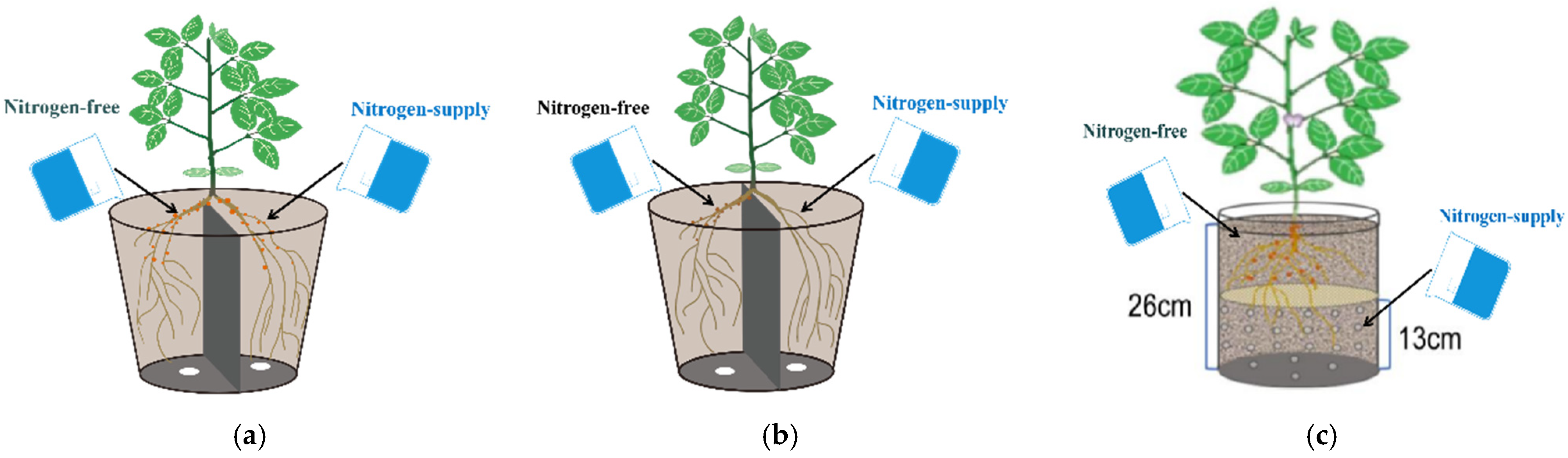
In this study, three types of experimental materials were prepared: bilateral nodulation dual-root soybean, unilateral nodulation dual-root soybean, and vertically stratified soybean roots. Three nitrogen supply strategies were employed. The bilateral nodulation dual-root soybean material was supplied with a 100 mg/L nitrogen nutrient solution (NH4NO3 concentration of 285.6 mg/L) on one side of the root system, while the other side received no nitrogen (0 mg/L nitrogen nutrient solution). The unilateral nodulating dual-root soybean material was supplied with a 100 mg/L nitrogen nutrient solution (NH4NO3 concentration of 285.6 mg/L) on the non-nodulating side of the root system, while the nodulating side received no nitrogen (0 mg/L nitrogen nutrient solution). For the vertically stratified soybean plants, the lower root system was supplied with a 100 mg/L nitrogen nutrient solution (NH4NO3 concentration of 285.6 mg/L) for nitrogen provision (Figure 1). In the present study, we employed three nitrogen supply strategies to explore the specific effects of exogenous nitrogen on soybean plant growth. This study analyzed the differences in nitrogen accumulation, nodules, and nitrogenase activity between direct and non-contact nitrogen nutrition. Concurrently, the effects of exogenous nitrogen on soybean nodulation and nitrogen fixation were further clarified, and nodules played a regulatory role in the absorption of nitrogen to avoid plant damage. This study provides theoretical support and practical guidance for the scientific application of nitrogen fertilizers.

2. Materials and Methods

This experiment was conducted at the Northeast Agricultural University Experimental Station from May 2023 to November 2023 (Heilongjiang Province, Harbin City, Northeast Agricultural University, 126°43′ E, 45°44′ N. Two types of dual-root soybean materials, bilateral and unilateral nodulation, were prepared using a grafting method, whereas root-layered soybean materials were established using a layered nitrogen supply system. The soybean seed varieties used in the experiment included nodulating varieties (HeiNong 40) provided by Soybean Research Institute of Heilongjiang Academy of Agricultural Sciences and non-nodulating varieties (WDD01795 and L8-4858) provided by the Institute of Crop Sciences, Chinese Academy of Agricultural Sciences. The nitrogen source used in the experiment was Ammonium Nitrate (NH4NO3).
Dual-root soybean seedlings were prepared using a grafting method. In the bilateral nodulation configuration, both the left and right root systems were derived from the nodulating varieties (Figure 1a). In the unilateral nodulation configuration, one side was a nodulating variety, and the other was a non-nodulating variety (Figure 1b). When the soybean root length reached 7 cm, two seedlings were grafted. Seven days after grafting, the shoots of the seedlings with the downward-facing opening were removed, resulting in plants with two root systems and one shoot. Seedlings were subsequently cultivated and tested under field conditions.
Upper and lower root soybean materials were prepared using a layered pot system. Thirty holes, each approximately 1 cm in diameter, 30 holes were drilled into the lower wall and base of the pot to allow nutrient solution infiltration. Sand was added to a height of 13 cm in the lower layer, covered with gauze, and then an additional layer of sand was filled to a height of 26 cm, thereby creating a two-layered sand culture environment (Figure 1c). The sand used in this study was first rinsed with tap water and then with distilled water. Each pot was filled with approximately 20 kg of sand.
The specific material preparation method is shown in Supplementary Material File S1, and the nutrient solution preparation and inoculation methods are as follows:
Seedlings were soaked with distilled water once a day before the opposite true leaves were fully expanded, and with the prepared nutrient solution once a day after the opposite true leaves had expanded, as well as once in the morning and once in the evening after the flowering stage. When the opposite true leaves of soybean plants were fully expanded, field soybean nodules frozen and preserved from the previous year were crushed and added to the nutrient solution, which contained about 5 g of nodules per liter, and inoculated for five consecutive days.
The nutrient composition and concentration (mg/L) of the nitrogen-free nutrient solution are listed in Table 1, and nitrogen-containing nutrient solutions were added as a source of nitrogen for the different experimental treatments.

2.1. Experimental Design and Treatment

  • Experiment I: Effect of unilateral nitrogen supply on nodulation and nitrogen fixation of dual-root soybean
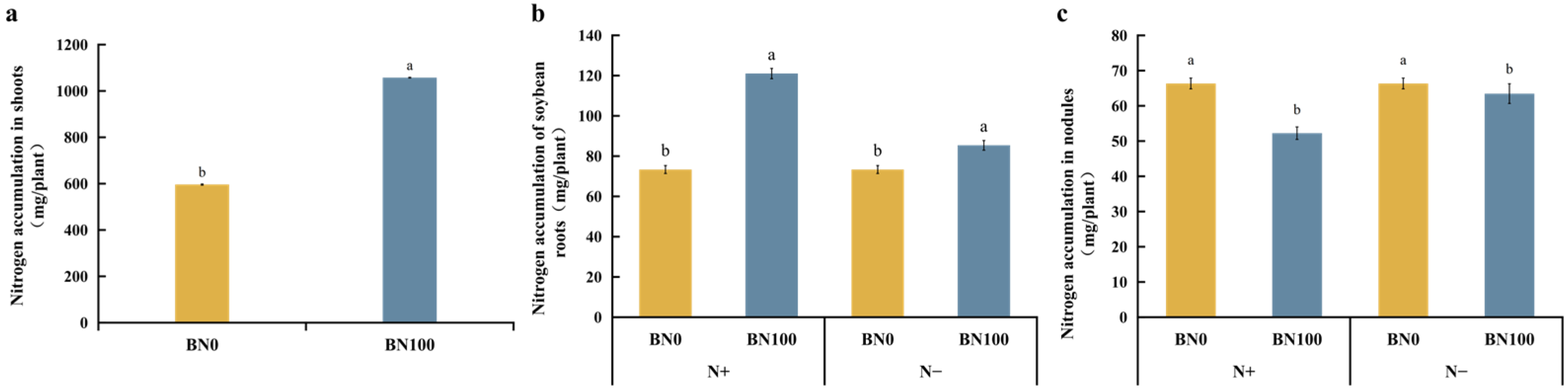
The experiment was conducted using dual-root soybean plants with bilateral nodulation. Treatments were applied when the opposite true leaves were fully unfolded. For the BN0 (Bilateral 0 mg/L nitrogen nutrient solution) treatment, both sides of the root system were irrigated with a nitrogen-free nutrient solution. In the BN100 (Bilateral 100 mg/L nitrogen nutrient solution, NH4NO3 concentration of 285.6 mg/L) treatment, one side of the root system received a nitrogen-free nutrient solution, whereas the other side was supplied with a nutrient solution containing 100 mg/L of nitrogen. Sampling was performed at the R4 (full podding) growth stage, and each treatment was replicated four times.
  • Experiment II: Effect of nitrogen supply from non-nodulating roots on nodulation and nitrogen fixation of dual-root soybean
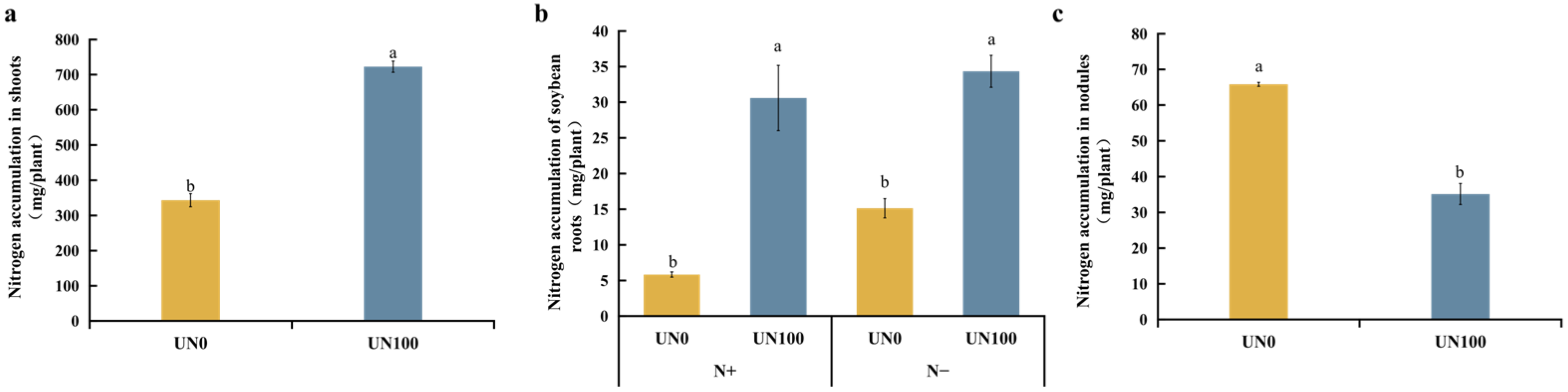
The experiment was conducted using unilateral nodulation dual-root soybean materials. The treatments were applied when the opposite true leaves were fully unfolded. For the UN0 (Unilateral 0 mg/L nitrogen nutrient solution) treatment, both sides of the root system were irrigated with a nitrogen-free nutrient solution. In the UN100 (unilateral 100 mg/L nitrogen nutrient solution, NH4NO3 concentration of 285.6 mg/L) treatment, the nodulation side received a nitrogen-free nutrient solution, whereas the non-nodulation side was supplied with a nutrient solution containing 100 mg/L nitrogen. Sampling was conducted at the R4 growth stage, and each treatment was replicated four times.
  • Experiment III: Effect of lower root nitrogen supply on soybean nodulation and nitrogen fixation
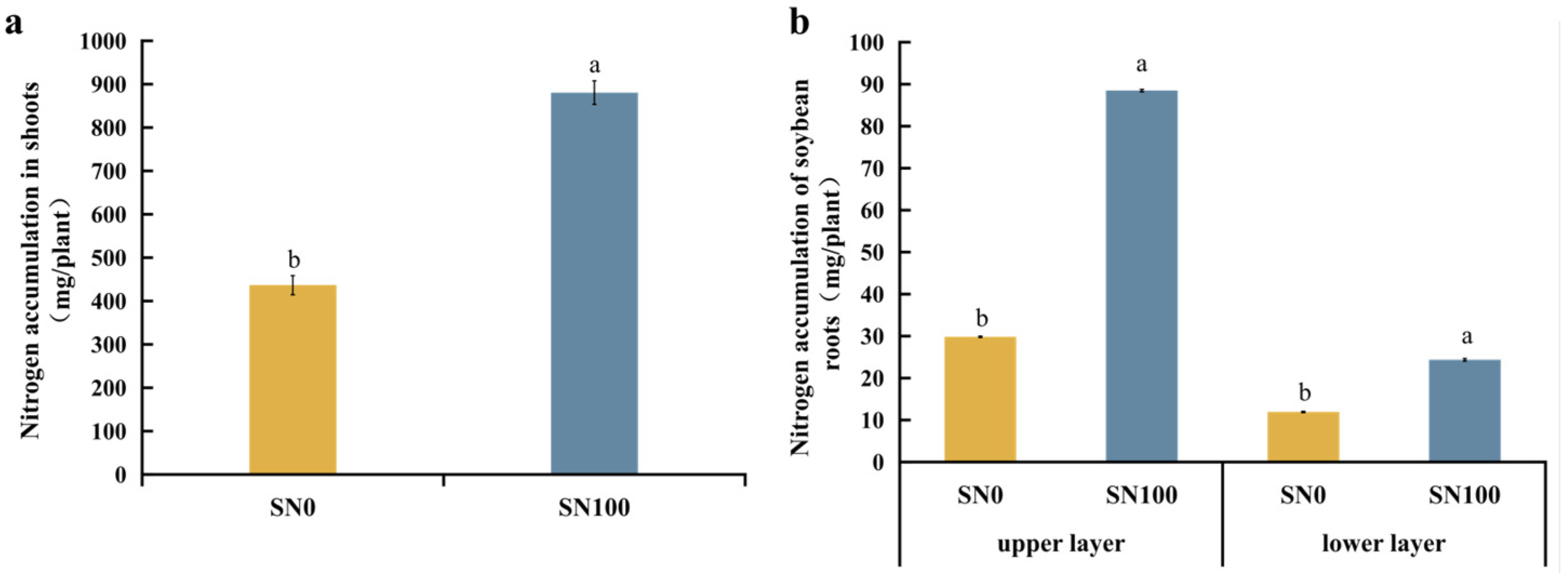
The experiment was conducted on soybean plants with stratified upper and lower root systems. Treatments were applied when the opposite true leaves were fully unfolded. Two treatment groups were established. In the SN0 (Stratification 0 mg/L nitrogen nutrient solution) treatment, both upper and lower roots received a nitrogen-free nutrient solution. In the SN100 (Stratification 100 mg/L nitrogen nutrient solution, NH4NO3 concentration of 285.6 mg/L) treatment, the upper roots were supplied with a nitrogen-free nutrient solution, whereas the lower roots received a nutrient solution containing 100 mg/L nitrogen. After applying the nutrient solution to the upper roots, the pot was placed in a larger container filled with the corresponding nitrogen solution, allowing the solution to infiltrate the lower layer through pre-drilled holes. The experiment was concluded, and samples were collected at the R4 growth stage. Each treatment was replicated four times.

2.2. Sampling Method

The experiment was completed, and samples were collected at the R4 stage. Four pots of plants with consistent growth were selected as replicates for each treatment. On sunny days, the root systems were excavated along their natural growth direction between 08:00 and 10:00. The aboveground parts of the stem, leaf, and stalk were placed in envelopes. The roots were washed with distilled water to remove sand and dried using absorbent paper. The nitrogenase activity of nodules was determined. After determination, the nodules were removed, and the number of nodules was recorded. All samples were dried and stored in an oven at 65 °C. The dry weight of each part was measured, and the nitrogen content of the plant was determined after grinding.

2.3. Index Determination Method

Determination of nodule nitrogenase activity (SNA, ARA): Acetylene reduction activity was determined using the method described by Xia et al. (2017) [23]. The roots were washed with distilled water and dried using absorbent paper. The roots and nodules of each pot were placed in a 500 mL wide-mouthed brown glass bottle. The bottle was sealed with a perforated rubber stopper, and 50 mL of air was extracted from the syringe and replaced with 50 mL of acetylene (C2H2, concentration: 99.9%). After 2 h of reaction, the ethylene concentration in the bottle was determined using gas chromatography (model GC7900, Shanghai Tianmei Scientific Instrument Co., Ltd., Shanghai, China).
Specific Nitrogenase Activity (SNA): expressed as the number of micromoles of ethylene produced per gram of nodule dry weight per hour (μmol C2H4·g−1 DW·h−1).
Acetylene Reductase Activity (ARA): expressed as the number of ethylene micromoles per plant per hour (μmol C2H4·plant−1·h−1).
Unit nodule weight nitrogenase activity (SNA) = The amount of reduced ethylene/(nodule dry weight × time)
Nitrogenase activity per plant (ARA) = The amount of reduced ethylene/(time × number of plants)
Determination of plant nitrogen content: An automatic Kjeldahl nitrogen analyzer (model B324, Shanghai Shengsheng Automatic Analysis Instrument Co., Ltd., Shanghai, China) was used to determine the plant nitrogen content. The dried and crushed plant samples were heated and cooked with concentrated sulfuric acid and a catalyst to convert nitrogen into ammonium sulfate. The digestion solution was added to an automatic Kjeldahl nitrogen analyzer, and alkali was added for distillation to release ammonia gas. After the ammonia gas was absorbed by the boric acid solution, the nitrogen content was calculated using standard acid titration.
Calculation method for plant nitrogen accumulation: The method described by Lyu et al. (2019) was used to determine plant nitrogen accumulation [24].
Naccumulation = dry matter accumulation × nitrogen content

2.4. Data Analysis

SPSS (version 21.0; IBM, Inc., Armonk, NY, USA) and Origin 2021 (OriginLab Corp., Northampton, MA, USA) were used for statistical analysis and plotting. All data were tested for normality before performing the Student’s t-test.

3. Results

3.1. Effects of Exogenous Nitrogen on Nitrogen Accumulation in Soybean Plants

Figure 2 illustrates the changes in nitrogen accumulation in different parts of dual-root soybean plants under unilateral nitrogen supply. Nitrogen accumulation in the shoots of the BN100 treatment was significantly higher than that in the BN0 treatment. In the BN100 treatment, nitrogen accumulation in the roots on both the nitrogen-supplied and non-supplied sides was significantly higher than that in the BN0 treatment, with increases of 64.99% and 16.40%, respectively. However, the results of nitrogen accumulation in nodules were the opposite. The nitrogen accumulation of nodules on both sides of the BN100 treatment was 52.23 and 63.45 mg/plant, respectively, which was lower than 66.35 mg/plant in the BN0 treatment, and decreased by 21.28% and 4.37% on both sides, respectively. The difference in nodules on the nitrogen supply side was more pronounced. The change in nitrogen accumulation in nodules was mainly affected by the dry weight of the nodules. The results indicated that exogenous nitrogen application significantly increased nitrogen accumulation in the shoots and roots but inhibited nitrogen accumulation in the nodules, including those on the non-nitrogen-supplied side.
Figure 3 shows the changes in nitrogen accumulation in different parts of unilateral nodulation dual-root soybean plants with nitrogen supplied to the non-nodulation side of the root system. The shoot nitrogen accumulation of UN100 was 722.61 mg/plant, which was significantly higher than that of UN0 (343.30 mg/plant). In the UN100 treatment, nitrogen accumulation in the non-nodulating root system (with nitrogen supply) and the nodulating root system (without nitrogen supply) was 4.23-fold and 1.26-fold higher, respectively. The difference between treatments was evident, as affected by the change in dry weight of shoots and roots (Table S1). Conversely, the nitrogen accumulation of the non-nitrogen-supplied side nodule UN0 treatment was 55.86% lower than that of the UN100 treatment. These results indicate that exogenous nitrogen significantly increased nitrogen accumulation in shoots and both root systems, with a more substantial increase observed in the root system directly exposed to the nitrogen source. In contrast, the nitrogen content in nodules without direct nitrogen contact did not differ significantly. The variation in nitrogen accumulation was mainly attributed to differences in nodule weight.
Figure 4 illustrates the changes in nitrogen accumulation in the shoots and roots of soybean plants following nitrogen application to the lower root system. Nitrogen accumulation in the shoots of SN100 treatment (nitrogen supplied to the lower root system) and SN0 treatment was 880.54 and 436.52 mg/plant, respectively, and SN100 treatment was significantly higher than that in the SN0 treatment. In the SN100 treatment, nitrogen accumulation in the upper root system (without nitrogen supply) and lower root system (with nitrogen supply) increased by 1.96-fold and 1.04-fold, respectively, compared to that in the SN0 treatment. These findings indicate that exogenous nitrogen applied to the lower root system enhanced nitrogen accumulation in both shoots and roots. Notably, the upper root system, which did not directly contact the nitrogen source, exhibited a more pronounced increase, which could be due to the combined effects of increased root biomass and nitrogen content on nodule nitrogen fixation. The elevated nitrogen accumulation in the upper roots may also be attributed to the concentration of nodules in the upper root layer, resulting in higher nitrogen accumulation in the non-nitrogen-supplied layer than in the lower layers.

3.2. Effects of Exogenous Nitrogen on Nodule Number and Dry Weight of Soybean Plants

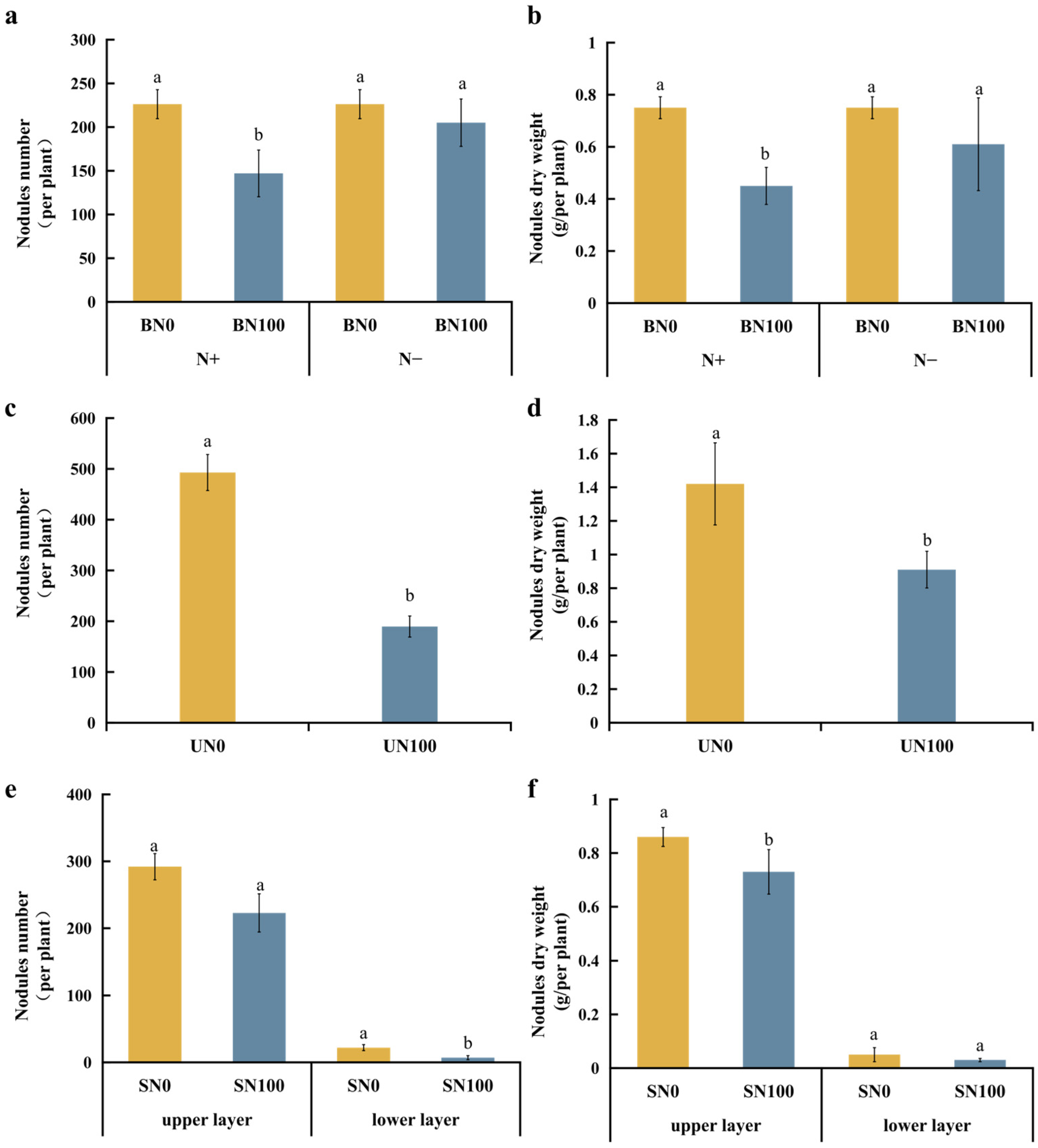
Figure 5 shows the changes in nodule number and dry weight following the nitrogen supply treatments across the three experimental groups. Figure 5a,b illustrate the effects of unilateral nitrogen supply on dual-root soybean plants. After nitrogen application, the number and dry weight of nodules in BN100 treatment were 35.04% and 40.00% lower than those in BN0 treatment. The data showed that the number and dry weight of nodules on the side of direct contact with the nitrogen source were significantly reduced after nitrogen supply, and the number and dry weight of nodules on the side without nitrogen supply tended to decrease after nitrogen supply, but the differences were not significant.
Figure 5c,d show the changes in nodule number and dry weight in dual-root soybean under nitrogen supply to the non-nodulation side of the root system. In the UN100 treatment, the number and dry weight of nodules on the side without nitrogen supply were significantly lower than those in the UN0 treatment, with reductions of 61.5% and 35.9%, respectively. These results indicate that when nitrogen was applied to one side of the root system, nodule growth on the side directly exposed to the nitrogen source was significantly inhibited. The extent of inhibition on the non-contact side was influenced by whether the contacted root system had nodules, with the presence of nodules mitigating this inhibitory effect.
As shown in Figure 5e,f, the number of nodules in both the upper and lower layers under the SN100 treatment (with nitrogen supplied to the lower root system) was lower than that in the SN0 treatment (without nitrogen supply), with reductions of 23.70% and 67.59%, respectively. The dry weight of nodules in SN100 treatment was 0.03 g/plant, and the dry weight of nodules in SN0 treatment was 0.05 g/plant. The difference between the two treatments was not significant. The nodule dry weight of the upper roots without a nitrogen source was 0.73 g/plant, which was significantly lower than that of SN0 treatment (0.86 g/plant). These results indicate that nitrogen supply to the lower root system not only affects the number of nodules directly exposed to the nitrogen source but also reduces the nodule number and dry weight in the upper root system, where the nodules are predominantly located. Although a decrease in dry weight was also observed in the lower root system, the effect was minor, likely because of the relatively low number of nodules in this area.

3.3. Effects of Exogenous Nitrogen on Nitrogenase Activity in Nodules of Soybean Plants

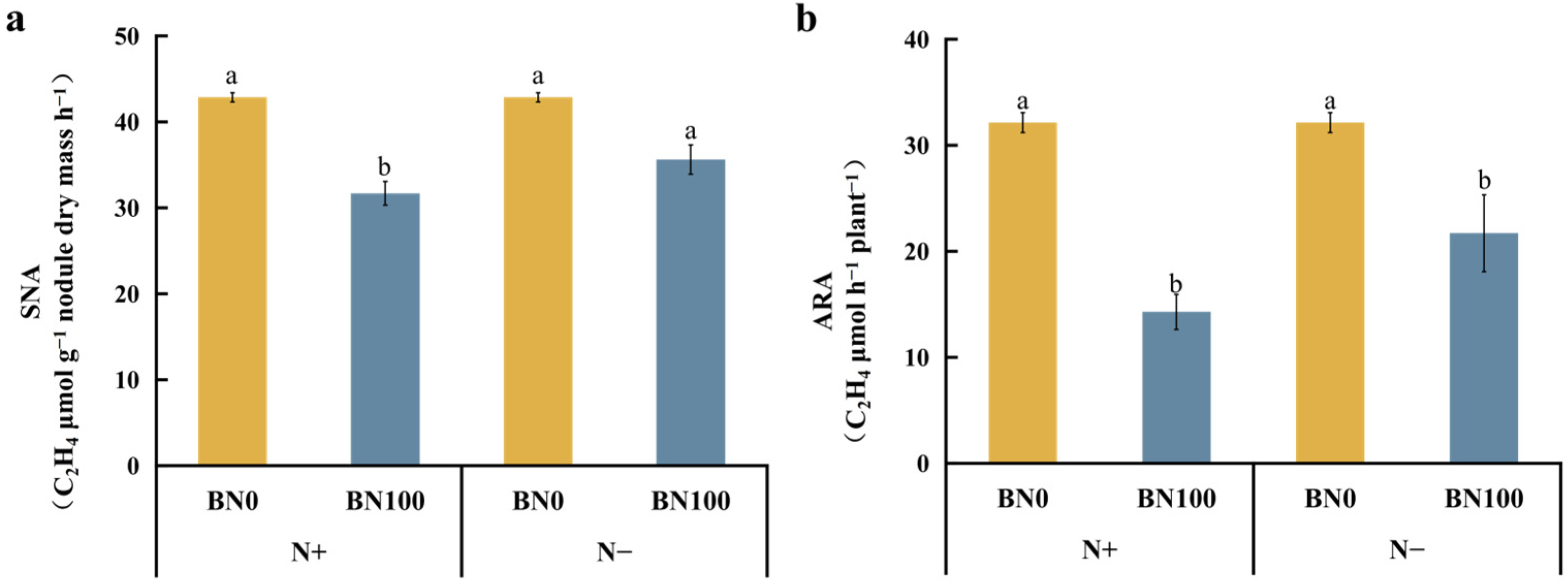
Figure 6 illustrates the changes in nitrogenase activity in dual-root soybean plants with bilateral nodules under unilateral nitrogen supply. The specific nitrogenase activity (SNA) per nodule on the nitrogen-supplied side of the BN100 treatment decreased by 26.04%, which was significantly lower than that of the BN0 treatment. On the non-nitrogen-supplied side, SNA was also reduced compared with BN0, but the difference was not significant. Additionally, the acetylene reduction assay (ARA) results showed that the total nitrogenase activity of nodules in the BN100 treatment decreased by 55.57% on the nitrogen-supplied side and by 32.48% on the non-supplied side compared with BN0. These findings indicate that exogenous nitrogen application significantly inhibits nitrogenase activity, with a more pronounced effect on nodules in direct contact with the nitrogen source, while nodules not exposed to nitrogen also experience reduced activity.
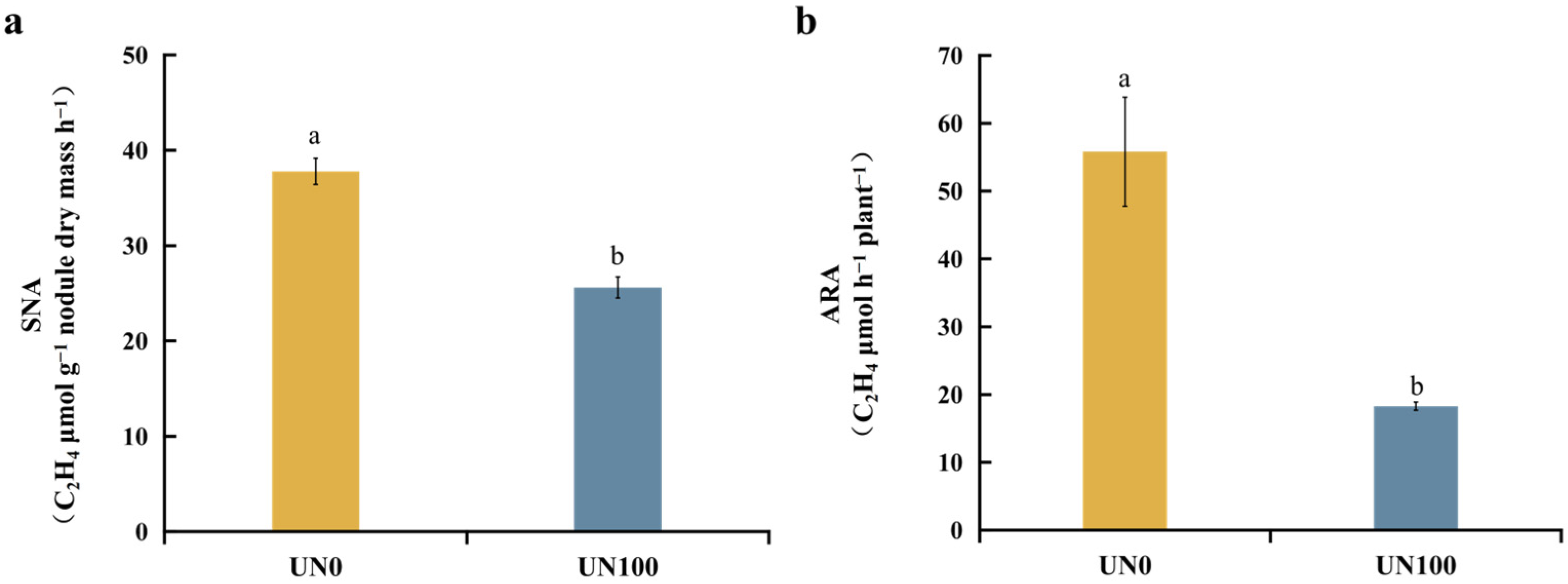
Figure 7 shows the changes in the nitrogenase activity of soybean nodules following nitrogen supply to the non-nodulated side of the root system. In the UN100 treatment, the SNA and ARA of nodules on the nodulation side were reduced by 32.28% and 67.20%, respectively, compared with those of the UN0 treatment. These results indicate that nitrogen application to the non-nodulating root system led to a decline in the nitrogen fixation capacity of nodules not directly exposed to the nitrogen source. The reduction in SNA was less pronounced than the decrease in ARA, suggesting that exogenous nitrogen inhibited not only the nitrogen fixation efficiency per unit nodule mass but also overall nodule growth.
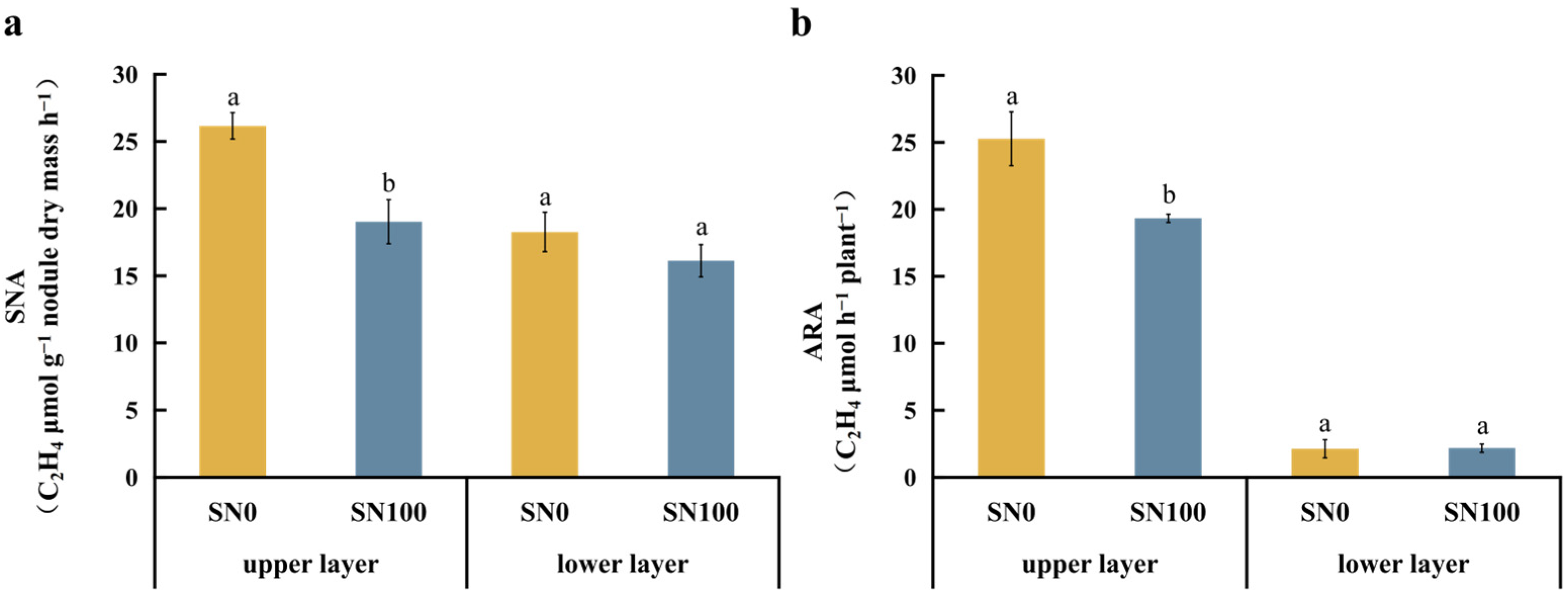
Figure 8 shows the changes in nitrogenase activity in soybean nodules after nitrogen was supplied to the lower roots. The nitrogenase activity SNA and ARA in the upper nodules of the SN0 treatment were significantly higher than those of the SN100 treatment, which decreased by 27.29% and 23.43%, respectively. There was no significant difference in the nitrogen-fixing activity of root nodules SNA and ARA between the SN100 and SN0 treatments in the lower roots. This showed that the application of exogenous nitrogen to the lower roots significantly affected the nitrogenase activity in the upper roots, and the lower effect in the lower roots is related to the lower distribution of nodules.

4. Discussion

4.1. Relationship Between Non-Contact Supply of Exogenous Nitrogen and Nitrogen Accumulation in Soybean Plants

Nitrogen is a critical nutrient for crop growth, and changes in its concentration have significant effects on the growth and nitrogen accumulation of soybean plants in different aspects. Kubar et al. (2021) reported that the nitrogen fertilizer application significantly increased the dry matter production and the leaf nitrogen content in soybean at all growth stages [25]. Similarly, Pannecoucque et al. (2022) found that applying 140 kg ha−1 of nitrogen fertilizer significantly enhanced shoot biomass and total nitrogen content, thereby promoting nitrogen accumulation in the shoots [9]. Yong et al. (2018) observed that nitrogen application markedly increased nitrogen accumulation in soybean shoot organs [26]. In this study, all three nitrogen supply methods promoted the growth and nitrogen accumulation in soybean shoots and roots (Tables S1–S3; Figure 2, Figure 3 and Figure 4). In the two dual-root experiments, roots directly exposed to exogenous nitrogen exhibited greater nitrogen accumulation capacity (Figure 2b and Figure 3b), regardless of the presence or absence of nodules. This observation is consistent with the findings of Lyu (2019, 2020) [24,27]. Under exogenous nitrogen supply, soybean plants preferentially absorb nitrogen in the soil without biological nitrogen fixation, which may reduce energy loss [28]. The localized accumulation of nitrogen may be attributed to the chemotactic response of roots to nitrogen. Exogenous nitrogen more effectively promoted nitrogen accumulation in directly exposed roots, and this effect was more pronounced than that on dry matter accumulation. The nitrogen accumulation of roots without nitrogen supply was significantly higher than that without nitrogen supply (BN0, UN0), indicating that the roots maintained the nutrient balance of the whole roots by transporting nitrogen through the epidermis, avoiding the effect of low local nitrogen concentration, and coordinating the supply balance of soil nitrogen and biological nitrogen fixation. However, the application of exogenous nitrogen inhibited nitrogen accumulation in the nodules, primarily due to the suppression of nodule growth, resulting in a significant reduction in nodule dry weight.
Deep application of nitrogen fertilizer can synchronize the nitrogen supply and plant demand for nitrogen and improve the utilization efficiency of nitrogen fertilizer [29]. Miyatake et al. (2019) found that deep application of nitrogen fertilizer at different sulfur concentrations increased the nitrogen concentration and nitrogen accumulation in the aboveground part of soybean during the vegetative growth period, and the deep application of nitrogen fertilizer could provide the required nitrogen nutrition in the later stage of growth [30]. In the upper and lower layers of the nitrogen supply experiment, nitrogen supply to the lower roots significantly enhanced nitrogen accumulation in both the shoots and roots of soybean (Figure 4), with a more pronounced increase observed in the upper roots. This result is consistent with the findings of Hiroyuki Yashima et al. (2003) [20]. Although the upper roots were not directly exposed to nitrogen, the absorbed nitrogen fertilizer contributed to increased nitrogen accumulation throughout the plant. These results suggest that deep fertilization may enhance nitrogen use efficiency by facilitating nitrogen transport to the upper root systems.

4.2. Relationship Between Non-Contact Supply of Exogenous Nitrogen and Nitrogen Fixation Capacity of Soybean Nodules

As a typical legume crop, soybean growth and development rely on the synergistic effects of nodule nitrogen fixation and exogenous nitrogen supply [31]. Exogenous nitrogen affects nodule development in a dose-dependent manner: moderate nitrogen fertilizer promotes nodule formation, while high nitrogen levels significantly inhibit both nodule growth and nitrogenase activity [32,33,34]. Amante et al. (2024) demonstrated through field experiments that an appropriate amount of nitrogen fertilizer significantly increased the number and dry weight of nodules, as well as the shoot dry matter [12]. However, nitrogen application rates exceeding 18 kg ha−1 suppressed nodule nitrogen fixation, with higher concentrations resulting in fewer nodules than in lower concentrations. Similarly, Gebrehana et al. (2020) found a significant decline in nodule number when nitrogen application surpassed 18 kg ha−1 [11]. Jiang et al. (2020) further confirmed this trend in common bean (Phaseolus vulgaris L.), where 10 mM nitrate treatment significantly inhibited the nodule growth, resulting in the concurrent reductions in nodule number and weight [13].
In this study, three independent experiments confirmed that exogenous nitrogen supply inhibited the normal growth and development of root nodules, with both nodule number and dry weight being significantly reduced. In dual-root soybean with bilateral nodulation, the roots directly exposed to exogenous nitrogen exhibited a stronger inhibitory effect on nodule formation, while the uncontacted fertilizer side also showed inhibition, albeit to a lesser extent (Figure 5a,b). High concentrations of exogenous nitrogen inhibited both growth and nitrogenase activity of root nodules on the nitrogen-donating side in a dose-dependent manner. As the exogenous nitrogen concentration increased, the root nodules on the non-nitrogen-donating side partially alleviated the inhibition but also showed a corresponding reduction in nitrogenase activity. When nitrogen was applied to the non-nodulation side of unilateral nodulation dual-root soybean, the number of nodules on the nodulation side decreased to twice the extent observed in the bilateral nodulation single-side nitrogen supply treatment (Experiment I), indicating that the presence of nodules provided a notable buffering effect against exogenous nitrogen (Figure 5c). In the upper and lower root stratification experiments (Experiment III), the upper root system exhibited a stronger buffering capacity and maintained a higher number of nodules.
Liu et al. (2023) demonstrated that when the urea application rate exceeded 15 kg hm−2, the nitrogenase activity of peanut (Arachis hypogaea L.) nodules decreased significantly, thereby affecting the biological nitrogen fixation potential [35]. Similarly, Yamashita et al. (2019) reported that nitrate treatment significantly reduced nitrogenase activity in soybean nodules [36]. This study further confirmed that both direct contact of nodules with exogenous nitrogen and the indirect effect of nitrogen conduction through roots would significantly inhibit the activity of nitrogenase in nodules. By comparing the two experiments of unilateral nitrogen supply (Experiment I) and unilateral nodulation dual-root soybean non-nodulation side nitrogen supply (Experiment II), we found that although the ARA of the nodules without fertilizer nitrogen application showed a downward trend (Figure 6b and Figure 7b), the ARA decreased by about 67.2% in the non-nodulation side nitrogen application treatment, which was much lower than the former. This difference may be due to the nitrogen regulation mechanism spontaneously initiated by the nodule on the nitrogen application side, which partially offsets the inhibitory effect of exogenous nitrogen on the nitrogen fixation function of the nodule through system signal transduction, thus showing a relatively weak ARA decline.

5. Conclusions

1. Roots directly exposed to exogenous nitrogen exhibited a stronger nitrogen accumulation ability. Exogenous nitrogen inhibits nitrogen accumulation in nodules. The main reason for this is that exogenous nitrogen inhibits the growth of nodules. When the supply of exogenous nitrogen is sufficient, plants preferentially absorb and utilize nitrogen from the environment, thereby reducing their dependence on nodule nitrogen fixation.
2. Nodule growth and nitrogenase activity were directly or indirectly affected by exogenous nitrogen. Direct exposure of roots to exogenous nitrogen has a more obvious inhibitory effect on nodules. The nodule system has a significant buffering effect on exogenous nitrogen, thereby reducing the negative effect of root nodules on nitrogen on the non-direct nitrogen-supplying side.
In summary, exogenous nitrogen supply significantly affected the growth efficiency and nodule nitrogen fixation function of soybean plants by regulating plant nitrogen uptake and resource allocation. The application of deep unilateral fertilization can not only ensure the nitrogen fixation ability of nodules but also ensure nitrogen accumulation in soybean plants.

Supplementary Materials

The following supporting information can be downloaded at: https://www.mdpi.com/article/10.3390/agriculture16020139/s1, Figure S1: Bilateral nodulation double root soybean pot schematic diagram; Figure S2: Schematic diagram of unilateral nodulation of dual root soybean; Figure S3. Schematic diagram of the layered nitrogen supply experiment; Table S1: Dry matter weight of dual root soybeans with bilateral nodulation unilateral nitrogen supply; Table S2. Dry matter weight of dual root soybeans with non-nodulated root nitrogen supply. Table S3. Dry matter weight of soybean shoots and roots with lower layered nitrogen supply.

Author Contributions

Conceptualization, K.L. and X.L.; methodology, K.L.; validation, K.L. and S.S.; formal analysis, K.L.; investigation, K.L. and S.S.; resources, Z.G. and X.L.; writing—original draft preparation, K.L.; writing—review and editing, Z.G. and X.L.; visualization, S.S.; supervision, Z.G.; project administration, X.L.; funding acquisition, Q.S. All authors have read and agreed to the published version of the manuscript.

Funding

This research was funded by the National Key R&D Program of China (grant number 2023YFD1501600) and the Natural Science Foundation of Heilongjiang Province (grant number YQ2022C031).

Data Availability Statement

All data are included in the main text.

Conflicts of Interest

The authors declare no conflicts of interest. The funders had no role in the design of the study; in the collection, analyses, or interpretation of data; in the writing of the manuscript; or in the decision to publish the results.

Abbreviations

The following abbreviations are used in this manuscript:
SNASpecific Nitrogenase Activity
ARAAcetylene Reductase Activity

References

  1. Obua, T.; Sserumaga, J.P.; Tukamuhabwa, P.; Namara, M.; Awio, B.; Mugarra, J.; Tusiime, G.; Chigeza, G. Unravelling Yield and Yield-Related Traits in Soybean Using GGE Biplot and Path Analysis. Agronomy 2024, 14, 2826. [Google Scholar] [CrossRef]
  2. Wu, Y.; Wang, E.; Gong, W.; Xu, L.; Zhao, Z.; He, D.; Yang, F.; Wang, X.; Yong, T.; Liu, J.; et al. Soybean Yield Variations and the Potential of Intercropping to Increase Production in China. Field Crops Res. 2023, 291, 108771. [Google Scholar] [CrossRef]
  3. Collino, D.J.; Salvagiotti, F.; Perticari, A.; Piccinetti, C.; Ovando, G.; Urquiaga, S.; Racca, R.W. Biological Nitrogen Fixation in Soybean in Argentina: Relationships with Crop, Soil, and Meteorological Factors. Plant Soil 2015, 392, 239–252. [Google Scholar] [CrossRef]
  4. Barbosa, M.A.; Cassim, B.M.A.R.; Esper Neto, M.; Minato, E.A.; Camparoto, R.d.O.; Inoue, T.T.; Batista, M.A. Nitrogen Fertilization in Soybean: Influence on Nutritional Status, Yield Components and Yield. Commun. Soil Sci. Plant Anal. 2021, 52, 2715–2723. [Google Scholar] [CrossRef]
  5. Lu, W.; Wang, X.; Jia, W. Characterization of Root Hair Curling and Nodule Development in Soybean–Rhizobia Symbiosis. Sensors 2024, 24, 5726. [Google Scholar] [CrossRef]
  6. Werner, F.; Balbinot Junior, A.A.; Ferreira, A.S.; Franchini, J.C.; Debiasi, H.; Silva, M.A.D.A.E. Soybean Growth and Nitrogen Accumulation by Soybeans in Response to Desiccation Times of Urochloa Brizantha Pasture and Nitrogen Fertilization. Sem. Ci. Agric. 2023, 44, 237–256. [Google Scholar] [CrossRef]
  7. Cafaro La Menza, N.; Monzon, J.P.; Lindquist, J.L.; Arkebauer, T.J.; Knops, J.M.H.; Unkovich, M.; Specht, J.E.; Grassini, P. Insufficient Nitrogen Supply from Symbiotic Fixation Reduces Seasonal Crop Growth and Nitrogen Mobilization to Seed in Highly Productive Soybean Crops. Plant Cell Environ. 2020, 43, 1958–1972. [Google Scholar] [CrossRef]
  8. Xu, Y.; Gao, Q.; Xue, L.; Zhang, J.; Wang, C. Optimized Nitrogen Fertilizer Management Enhances Soybean (Glycine max (L.) Merril.) Yield and Nitrogen Use Efficiency by Promoting Symbiotic Nitrogen Fixation Capacity. Front. Plant Sci. 2025, 16, 1604251. [Google Scholar] [CrossRef]
  9. Pannecoucque, J.; Goormachtigh, S.; Ceusters, N.; Bode, S.; Boeckx, P.; Roldan-Ruiz, I. Soybean Response and Profitability upon Inoculation and Nitrogen Fertilisation in Belgium. Eur. J. Agron. 2022, 132, 126390. [Google Scholar] [CrossRef]
  10. Zhou, H.; Zhao, Q.; He, R.; Zhang, W.; Zhang, H.; Wang, H.; Ao, X.; Yao, X.; Xie, F. Rapid Effect of Enriched Nitrogen on Soybean Nitrogen Uptake, Distribution, and Assimilation During Early Flowering Stage. J. Soil. Sci. Plant Nutr. 2022, 22, 3798–3810. [Google Scholar] [CrossRef]
  11. Getachew Gebrehana, Z.; Abeble Dagnaw, L. Response of Soybean to Rhizobial Inoculation and Starter N Fertilizer on Nitisols of Assosa and Begi Areas, Western Ethiopia. Environ. Syst. Res. 2020, 9, 14. [Google Scholar] [CrossRef]
  12. Amante, G.; Wedajo, M.; Temteme, S. Soybean (Glycine max (L.) Merr.) Response to Application of Mineral Nitrogen and Bradyrhizobia on Nitisols of Teppi, Southwest Ethiopia. Heliyon 2024, 10, e30540. [Google Scholar] [CrossRef]
  13. Jiang, Y.; MacLean, D.E.; Perry, G.E.; Marsolais, F.; Hill, B.; Pauls, K.P. Evaluation of Beneficial and Inhibitory Effects of Nitrate on Nodulation and Nitrogen Fixation in Common Bean (Phaseolus vulgaris). Legume Sci. 2020, 2, e45. [Google Scholar] [CrossRef]
  14. Ohyama, T.; Tanabata, S.; Ohtake, N.; Sato, T.; Sueyoshi, K.; Takahashi, Y.; Ishikawa, S.; Ono, Y.; Yamashita, N.; Saito, A. Effects of Application of Various Forms of Nitrogen on the Growth of Soybean Nodules and Roots Related to the Carbon and Nitrogen Metabolism. In Soybean—Recent Advances in Research and Applications; Ohyama, T., Takahashi, Y., Ohtake, N., Sato, T., Tanabata, S., Eds.; IntechOpen: London, UK, 2022; ISBN 978-1-80355-699-4. [Google Scholar]
  15. Du, M.; Gao, Z.; Li, X.; Liao, H. Excess Nitrate Induces Nodule Greening and Reduces Transcript and Protein Expression Levels of Soybean Leghaemoglobins. Ann. Bot. 2020, 126, 61–72. [Google Scholar] [CrossRef] [PubMed]
  16. Larrainzar, E.; Gil-Quintana, E.; Arrese-Igor, C.; González, E.M.; Marino, D. Split-root Systems Applied to the Study of the Legume-rhizobial Symbiosis: What Have We Learned? J. Integr. Plant Biol. 2014, 56, 1118–1124. [Google Scholar] [CrossRef]
  17. Ohyama, T.; Fujikake, H.; Yashima, H.; Tanabata, S.; Ishikawa, S.; Sato, T.; Nishiwaki, T.; Ohtake, N.; Sueyoshi, K.; Ishii, S.; et al. Effect of Nitrate on Nodulation and Nitrogen Fixation of Soybean. In Soybean Physiology and Biochemistry; El-Shemy, H., Ed.; IntechOpen: London, UK, 2011; ISBN 978-953-307-534-1. [Google Scholar]
  18. Mahieu, S.; Fustec, J.; Faure, M.-L.; Corre-Hellou, G.; Crozat, Y. Comparison of Two 15N Labelling Methods for Assessing Nitrogen Rhizodeposition of Pea. Plant Soil. 2007, 295, 193–205. [Google Scholar] [CrossRef]
  19. Génard, T.; Etienne, P.; Laîné, P.; Yvin, J.-C.; Diquélou, S. Nitrogen Transfer from Lupinus albus L., Trifolium incarnatum L. and Vicia sativa L. Contribute Differently to Rapeseed (Brassica napus L.) Nitrogen Nutrition. Heliyon 2016, 2, e00150. [Google Scholar] [CrossRef]
  20. Yashima, H.; Fujikake, H.; Sato, T.; Ohtake, N.; Sueyoshi, K.; Ohyama, T. Systemic and Local Effects of Long-Term Application of Nitrate on Nodule Growth and N2 Fixation in Soybean (Glycine max [L.] Merr.). Soil Sci. Plant Nutr. 2003, 49, 825–834. [Google Scholar] [CrossRef]
  21. Yashima, H.; Fujikake, H.; Yamazaki, A.; Ito, S.; Sato, T.; Tewari, K.; Ohtake, N.; Sueyoshi, K.; Takahashi, Y.; Ohyama, T. Long-Term Effect of Nitrate Application from Lower Part of Roots on Nodulation and N2 Fixation in Upper Part of Roots of Soybean (Glycine max (L.) Merr.) in Two-Layered Pot Experiment. Soil Sci. Plant Nutr. 2005, 51, 981–990. [Google Scholar] [CrossRef]
  22. Daimon, H.; Yoshioka, M. Responses of Root Nodule Formation and Nitrogen Fixation Activity to Nitrate in a Split-Root System in Peanut (Arachis hypogaea L.). J. Agron. Crop Sci. 2001, 187, 89–95. [Google Scholar] [CrossRef]
  23. Xia, X.; Ma, C.; Dong, S.; Xu, Y.; Gong, Z. Effects of Nitrogen Concentrations on Nodulation and Nitrogenase Activity in Dual Root Systems of Soybean Plants. Soil Sci. Plant Nutr. 2017, 63, 470–482. [Google Scholar] [CrossRef]
  24. Lyu, X.; Xia, X.; Wang, C.; Ma, C.; Dong, S.; Gong, Z. Effects of Changes in Applied Nitrogen Concentrations on Nodulation, Nitrogen Fixation, and Nitrogen Accumulation during the Soybean Growth Period. Soil Sci. Plant Nutr. 2019, 65, 479–489. [Google Scholar] [CrossRef]
  25. Kubar, M.S.; Shar, A.H.; Kubar, K.A.; Rind, N.A.; Ullah, H.; Kalhoro, S.A.; Wang, C.; Feng, M.; Gujar, A.; Sun, H.; et al. Optimizing Nitrogen Supply Promotes Biomass, Physiological Characteristics, and Yield Components of Soybean (Glycine max L. Merr.). Saudi J. Biol. Sci. 2021, 28, 6209–6217. [Google Scholar] [CrossRef] [PubMed]
  26. Yong, T.; Chen, P.; Dong, Q.; Du, Q.; Yang, F.; Wang, X.; Liu, W.; Yang, W. Optimized Nitrogen Application Methods to Improve Nitrogen Use Efficiency and Nodule Nitrogen Fixation in a Maize-Soybean Relay Intercropping System. J. Integr. Agric. 2018, 17, 664–676. [Google Scholar] [CrossRef]
  27. Lyu, X.; Li, M.; Li, X.; Li, S.; Yan, C.; Ma, C.; Gong, Z. Assessing the Systematic Effects of the Concentration of Nitrogen Supplied to Dual-Root Systems of Soybean Plants on Nodulation and Nitrogen Fixation. Agronomy 2020, 10, 763. [Google Scholar] [CrossRef]
  28. Albornoz, F. Crop Responses to Nitrogen Overfertilization: A Review. Sci. Hortic. 2016, 205, 79–83. [Google Scholar] [CrossRef]
  29. Yaseen, M.; Ahmad, A.; Naveed, M.; Ali, M.A.; Shah, S.S.H.; Hasnain, M.; Ali, H.M.; Siddiqui, M.H.; Salem, M.Z.M.; Mustafa, A. Subsurface-Applied Coated Nitrogen Fertilizer Enhanced Wheat Production by Improving Nutrient-Use Efficiency with Less Ammonia Volatilization. Agronomy 2021, 11, 2396. [Google Scholar] [CrossRef]
  30. Miyatake, M.; Ohyama, T.; Yokoyama, T.; Sugihara, S.; Motobayashi, T.; Kamiya, T.; Fujiwara, T.; Yuan, K.; Bellingrath-Kimura, S.D.; Ohkama-Ohtsu, N. Effects of Deep Placement of Controlled-Release Nitrogen Fertilizer on Soybean Growth and Yield under Sulfur Deficiency. Soil Sci. Plant Nutr. 2019, 65, 259–266. [Google Scholar] [CrossRef]
  31. Thorburn, P.J.; Biggs, J.S.; Puntel, L.A.; Sawyer, J.E.; Everingham, Y.L.; Archontoulis, S.V. The Nitrogen Fertilizer Conundrum: Why Is Yield a Poor Determinant of Crops’ Nitrogen Fertilizer Requirements? Agron. Sustain. Dev. 2024, 44, 18. [Google Scholar] [CrossRef]
  32. Gan, Y.; Stulen, I.; Van Keulen, H.; Kuiper, P.J.C. Low Concentrations of Nitrate and Ammonium Stimulate Nodulation and N2 Fixation While Inhibiting Specific Nodulation (Nodule DW g−1 Root Dry Weight) and Specific N2 Fixation (N2 Fixed g−1 Root Dry Weight) in Soybean. Plant Soil 2004, 258, 281–292. [Google Scholar] [CrossRef]
  33. McCoy, J.M.; Kaur, G.; Golden, B.R.; Orlowski, J.M.; Cook, D.R.; Bond, J.A.; Cox, M.S. Nitrogen Fertilization of Soybean Affects Root Growth and Nodulation on Two Soil Types in Mississippi. Commun. Soil Sci. Plant Anal. 2018, 49, 181–187. [Google Scholar] [CrossRef]
  34. Wysokinski, A.; Wysokińska, A.; Noulas, C.; Wysokińska, A. Optimal Nitrogen Fertilizer Rates for Soybean Cultivation. Agronomy 2024, 14, 1375. [Google Scholar] [CrossRef]
  35. Liu, Y.; Yan, Z.; Wang, J.; Zhao, J.; Liu, Y.; Zou, J.; Li, L.; Zhang, J.; Wan, S. Optimizing Initial Nitrogen Application Rates to Improve Peanut (Arachis hypogaea L.) Biological Nitrogen Fixation. Agronomy 2023, 13, 3020. [Google Scholar] [CrossRef]
  36. Yamashita, N.; Tanabata, S.; Ohtake, N.; Sueyoshi, K.; Sato, T.; Higuchi, K.; Saito, A.; Ohyama, T. Effects of Different Chemical Forms of Nitrogen on the Quick and Reversible Inhibition of Soybean Nodule Growth and Nitrogen Fixation Activity. Front. Plant Sci. 2019, 10, 131. [Google Scholar] [CrossRef]
Figure 1. Nitrogen supply diagram of the three experimental treatments. (a) In Experiment I: unilateral nitrogen supply on dual-root soybean nodulation nitrogen fixation effect test of nitrogen supply diagram, (b) In Experiment II: nodulation root nitrogen supply on dual-root soybean nodulation nitrogen fixation effect test of nitrogen supply diagram, (c) In Experiment III: the lower root nitrogen supply on soybean nodulation nitrogen fixation effect test of nitrogen supply diagram.
Agriculture 16 00139 g001
Figure 2. Effects of unilateral nitrogen supply on nitrogen accumulation in different parts of bilateral nodulation dual-root soybean plants. (a) Nitrogen accumulation in shoots, (b) nitrogen accumulation in roots, and (c) nitrogen accumulation in nodules of bilateral nodulation dual-root soybean plants under unilateral nitrogen supply. Different lowercase letters indicate significant differences between treatments at the 5% level.
Agriculture 16 00139 g002
Figure 3. Effects of nitrogen supply from non-nodulating lateral roots on nitrogen accumulation in different parts of unilateral nodulation dual-root soybean plants. (a) Nitrogen accumulation in shoots, (b) nitrogen accumulation in soybean roots, and (c) nitrogen accumulation in nodules of unilateral nodulation dual-root soybean plants under nitrogen supply from non-nodulating lateral roots. Different lowercase letters indicate significant differences between treatments at the 5% level.
Agriculture 16 00139 g003
Figure 4. Effects of lower root nitrogen supply on nitrogen accumulation in different parts of soybean plants. (a) Nitrogen accumulation in shoots and (b) nitrogen accumulation in soybean roots of stratified soybean plants under lower root nitrogen supply. The median represents the mean ± standard error (n = 4). Different lowercase letters indicate significant differences between treatments at the 5% level.
Agriculture 16 00139 g004
Figure 5. Effects of different nitrogen supply methods on nodule number and dry weight of bilateral nodulation dual-root soybean (a,b), unilateral nodulation dual-root soybean (c,d), and upper and lower layers normal soybean (e,f). Different lowercase letters indicate significant differences between treatments at the 5% level.
Agriculture 16 00139 g005
Figure 6. Effects of unilateral nitrogen supply on nitrogenase activity in nodules of dual-root soybean with bilateral nodulation. (a) Specific nitrogenase activity (SNA) and (b) acetylene reduction activity (ARA) in nodules of bilateral nodulation dual-root soybean plants under unilateral nitrogen supply. Different lowercase letters indicate significant differences between treatments at the 5% level.
Agriculture 16 00139 g006
Figure 7. Effects of nitrogen supply from non-nodulating lateral roots on nitrogenase activity in nodules of dual-root soybean with unilateral nodulation. (a) Specific nitrogenase activity (SNA) and (b) acetylene reduction activity (ARA) in nodules of unilateral nodulation dual-root soybean plants under nitrogen supply from non-nodulating lateral roots. Different lowercase letters indicate significant differences between treatments at the 5% level.
Agriculture 16 00139 g007
Figure 8. Effects of nitrogen supply from lower roots on nitrogenase activity in soybean nodules. (a) Specific nitrogenase activity (SNA) and (b) acetylene reduction activity (ARA) in nodules of stratified soybean plants under lower root nitrogen supply. Different lowercase letters indicate significant differences between treatments at the 5% level.
Agriculture 16 00139 g008
Table 1. Composition and concentration (mg/L) of the nitrogen-free nutrient solution.
Inorganic SaltsConcentration
(mg/L)
Inorganic SaltsConcentration
(mg/L)
KH2PO4136.00ZnSO4∙7H2O0.22
MgSO4240.00MnCl2∙4H2O4.90
CaCl2220.00H3BO32.86
Na2MoO4∙H2O0.03FeSO4∙7H2O5.57
CuSO4∙5H2O0.08Na2EDTA7.45
Disclaimer/Publisher’s Note: The statements, opinions and data contained in all publications are solely those of the individual author(s) and contributor(s) and not of MDPI and/or the editor(s). MDPI and/or the editor(s) disclaim responsibility for any injury to people or property resulting from any ideas, methods, instructions or products referred to in the content.