
Article

Effective Long-Term Strategies for Reducing Cyperus esculentus Tuber Banks
1
Department of Plants & Crops, Faculty of Bioscience Engineering, Ghent University, 9000 Ghent, Belgium
2
Research and Advice Centre for Agriculture and Horticulture (INAGRO VZW), 8800 Roeselare, Belgium
3
Research Station HoGent-UGent, University College Ghent, 9820 Bottelare, Belgium
4
Experimental Farm Hooibeekhoeve, 2440 Geel, Belgium
5
Educational Research Center (PVL), 3950 Bocholt, Belgium
6
Laboratory for Chemical Analysis (LCA), Department of Green Chemistry and Technology, Faculty of Bioscience Engineering, Ghent University, 9000 Ghent, Belgium
*
Author to whom correspondence should be addressed.
Agriculture 2025, 15(19), 2040; https://doi.org/10.3390/agriculture15192040
Submission received: 26 August 2025 / Revised: 27 September 2025 / Accepted: 27 September 2025 / Published: 29 September 2025
(This article belongs to the Special Issue Innovative Conservation Cropping Systems and Practices—2nd Edition)

Abstract

Cyperus esculentus is a very destructive perennial weed, rapidly propagating and spreading through large amounts of daughter tubers. Successful control relies on depleting the soil tuber bank. This study investigated the effect of different control measures, applied across several cropping systems, on tuber bank dynamics over time. Therefore, 52 infested fields were monitored over 3 consecutive years, with annual quantification of the C. esculentus tuber bank. In maize monocropping systems, substantial 3-year tuber bank reductions (>90%) are achievable with preplant incorporation of dimethenamid-P or S-metolachlor, followed by a post-emergence application of mesotrione and pyridate at the 4–5 leaf stage, combined with delayed sowing (after 20 May) or mechanical measures (e.g., hoeing, harrowing). On non-maize fields, effective strategies (median tuber bank reductions of 57–70%) include intensive black fallow with at least four control timings or winter cereal cropping followed by intensive control (at least three measures) during the stubble phase. Established, fertilized grasslands also offer moderate reductions (17–67%) via intensive grazing or mowing. These results demonstrate that significant C. esculentus reductions are possible across different crops, but control remains challenging, requiring intensive, repeated strategies over multiple years. Less intensive approaches may undermine previous efforts.

1. Introduction

Cyperus esculentus L., commonly known as yellow nutsedge, is considered one of the most problematic weeds worldwide. For example, the Weed Science Society of America (WSSA) included the species in its top ten ranking of most problematic weeds in broadleaf crops, fruits, and vegetables [1]. It poses a serious challenge to crop production due to its aggressive vegetative growth and difficulty in controlling, often leading to substantial losses in agricultural yields. In maize (Zea mays L.), yield declines by approximately 8% for every 100 shoots per square meter [2]. In sugar beet (Beta vulgaris L. subsp. vulgaris var. altissima Döll) and potato (Solanum tuberosum L.), yield losses up to 60% and 40% were observed, respectively [3].
The plant primarily spreads vegetatively, mainly via underground tubers formed at the ends of rhizomes [4]. Yellow nutsedge can produce huge amounts of these daughter tubers. Depending on the clone, a single plant (developed from one mother tuber) grown in a 10 L pot can produce between 29 and 91 shoots, and between 187 and 638 daughter tubers during one growing season [5]. Some mother tubers are highly persistent and can remain viable for 10 years [6]. The plant is capable of producing seeds, though only a small percentage successfully germinates under field conditions, as observed by De Ryck et al. [7]. Their study on C. esculentus seeds under Belgian outdoor conditions found that germination rates ranged from 0.19% to 5.13%, depending on soil texture (sand, sandy loam, or clay) and moisture availability.
In Belgium, over 50,000 hectares of cropland are infected with C. esculentus, and the infested area keeps increasing (J Feys pers. comm.). Successful control of C. esculentus tuber banks is very challenging and requires years of intensive control. To achieve complete control of C. esculentus, the underground tuber bank should be depleted. Nowadays, Belgian farmers are advised to grow maize on infested fields, as maize is a moderately good competitor (except for the early growth stages) and the deployment of selective herbicides against C. esculentus is allowed in the crop. De Ryck et al. [8] evaluated the effectiveness of various maize herbicide sequences through pot experiments, including three genetically distinct C. esculentus clones to account for potential differences in herbicide sensitivity. Herbicides were applied either separately or in tank mixes at different maize growth stages. Averaged over the three clones included in the experiment, the lowest numbers of tubers per pot were recorded with preplanting dimethenamid-P (1008 g ha−1), followed by two post-emergence applications of mesotrione (2 × 75 g ha−1) and pyridate (2 × 480 g ha−1) at the 5–6 and 8–9 leaf stages, respectively.
Apart from the deployment of selective herbicides in maize, cultural, mechanical, or biological measures can also be applied against C. esculentus. These measures are becoming more important, as farmers in the EU are encouraged to implement more non-chemical alternatives. One cultural measure is to grow highly competitive crops. Lotz et al. [9] counted the number of tubers per C. esculentus plant after cultivation of various crops. After the cultivation of hemp (Cannabis sativa L.), winter barley (Hordeum vulgare L.) followed by fallow (no control measures), and winter barley, followed by forage radish (Raphanus sativus L.), the number of tubers per plant was 0.2, 46.2, and 17.8, respectively. In the absence of a crop, 171.2 tubers per plant were counted. Furthermore, other authors showed the positive effects of mechanical techniques, such as hoeing or intensive mowing [10,11,12]. For example, Summerlin et al. [12] observed complete inhibition of tuber production when season-long mowing (once per week) was applied at a height of 3.8 cm. In addition, certain biological agents, such as Puccinia canaliculata [13], can negatively affect C. esculentus growth. However, up to now, no biological control methods have been applied on a large scale. Lastly, the interest in thermal methods (e.g., steaming, electrocution) is increasing. However, the implementation of these methods on a large scale remains challenging due to relatively high costs, large energy consumption, and low working speeds [14].
Other authors have investigated the effect of combined measures against C. esculentus. According to Johnson et al. [15], a combination of solarization during the summer (for at least 90 days) and repeated fallow tillage can effectively reduce C. esculentus populations. Their findings were based on field experiments in Georgia (USA). In Switzerland, Bohren and Wirth [16] postponed maize sowing until the end of May, allowing emerged Cyperus esculentus shoots to be controlled by harrowing in mid-May. Additionally, S-metolachlor (1920 g ha−1) was applied just before maize sowing. As a result, the C. esculentus tuber bank decreased from 4.04 tubers per liter of soil in spring to 1.58 tubers per liter of soil in autumn.
Tuber bank depletion is a key component of any C. esculentus control strategy, yet few studies quantify its dynamics. Tuber bank evolution provides a more reliable indicator of control efficacy than aboveground plant parameters, which may misrepresent actual infestation levels. This is due to poor correlation between aboveground plant growth and the number of viable tubers, influenced by tuber dormancy patterns and the weak relationship between the number of shoots and tubers [5,17]. According to farmers and agronomists, complete eradication of the C. esculentus tuber bank is very difficult to achieve, despite the clear effects of certain applied strategies on aboveground plant parts. Despite the negative effect of certain measures on C. esculentus growth (as described before), the infested area continues to expand in Belgium, highlighting the need to further optimize control strategies and evaluate their robustness. The effectiveness of these strategies should be assessed through long-term monitoring of tuber bank evolution across multiple sites, considering the influence of pedo-hydrological and climatic conditions. Based on this, the following hypothesis and research questions were formulated.
H1: 
Combinations of cultural, mechanical, thermal, and chemical control methods exist that are effective and consistently reduce the C. esculentus tuber bank across multiple years and sites.
RQ1: 
What are the expected reductions in the C. esculentus tuber bank when cultural, mechanical, thermal, and chemical control methods, or their combinations, are applied under diverse agricultural environments?
To test this hypothesis, 52 infested fields (51 in Belgium and 1 in The Netherlands) were monitored over three consecutive growing seasons. Each year, the C. esculentus tuber bank was quantified through soil sampling. The fields were managed either by farmers or research centers. At the end of each season, farmers were asked to report the control strategies they had applied against C. esculentus. This allowed the identification of successful strategies associated with decreasing tuber banks.

2. Materials and Methods

2.1. General Concept

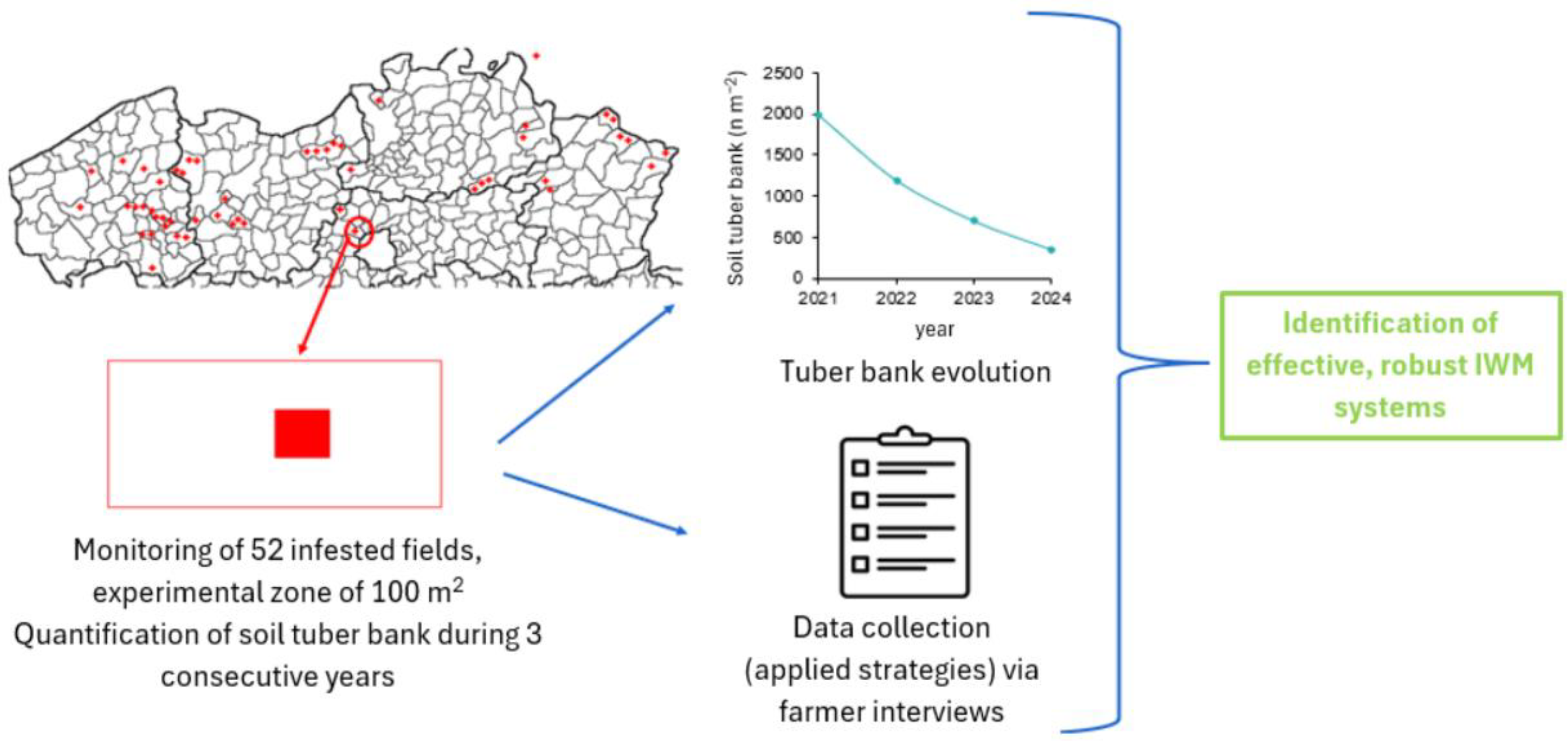
The aim of this research was to identify effective strategies against C. esculentus. Therefore, 52 infested fields (selected in 2021, see Section 2.2) were monitored over three years. In the autumns of 2021, 2022, 2023, and 2024, the C. esculentus tuber bank was quantified by collecting soil samples followed by tuber extraction (see Section 2.3). Each year, soil samples were collected from the same 100 m2 plot in each field using GPS coordinates. Thus, for each field, the tuber bank evolution over time could be determined. Furthermore, farmers were asked yearly for their applied strategies against C. esculentus (see Section 2.6). As a result, the successful strategies, causing a strongly decreasing tuber bank, could be identified. Figure 1 gives an overview of this concept.

2.2. Choice of Experimental Fields

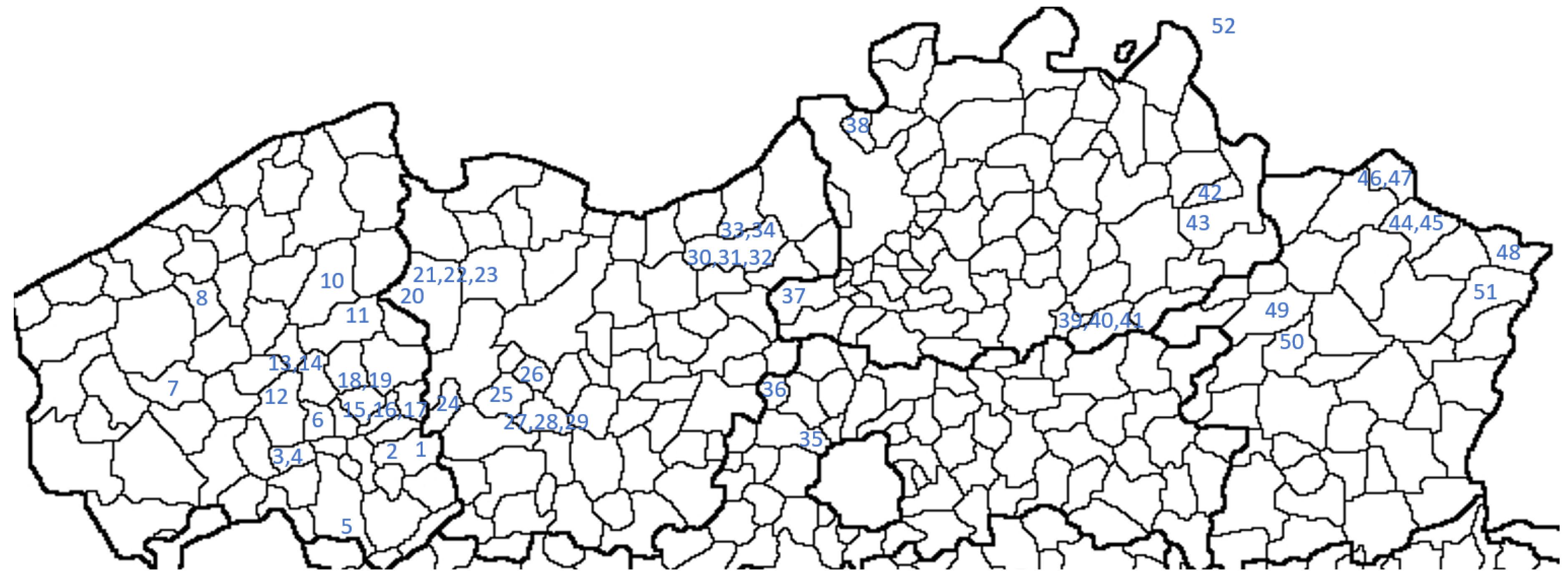
In the summer of 2021, 52 infested fields (51 in Belgium, 1 in The Netherlands) were chosen to be included in our study. The infested patches on the fields had to be clearly visible and exceed 100 m2 in size. The fields were selected from different regions to ensure a sufficient variety in soil type and water status (see Figure 2 and Table 1). Furthermore, farmers were asked about their willingness to share their management data during the project. Different types of farming systems were included in our study (e.g., conventional vs. organic, maize monoculture vs. broad arable crop rotations; see Table 1).

2.3. Soil Sampling

In 2021, 2022, 2023, and 2024, soil samples were taken on each of the 52 infested fields. Every year, the sampling took place between 15 October and 30 November. On each field, an infested zone of 100 m2 was demarcated. Depending on the infestation pattern in the field, this zone was a square of 10 m × 10 m or a rectangle of 20 m × 5 m. The GNSS coordinates of the corner points of the 100 m2 zones (square or rectangle) were saved. Using an RTK GNSS module, the same corner points could be precisely demarcated each year.
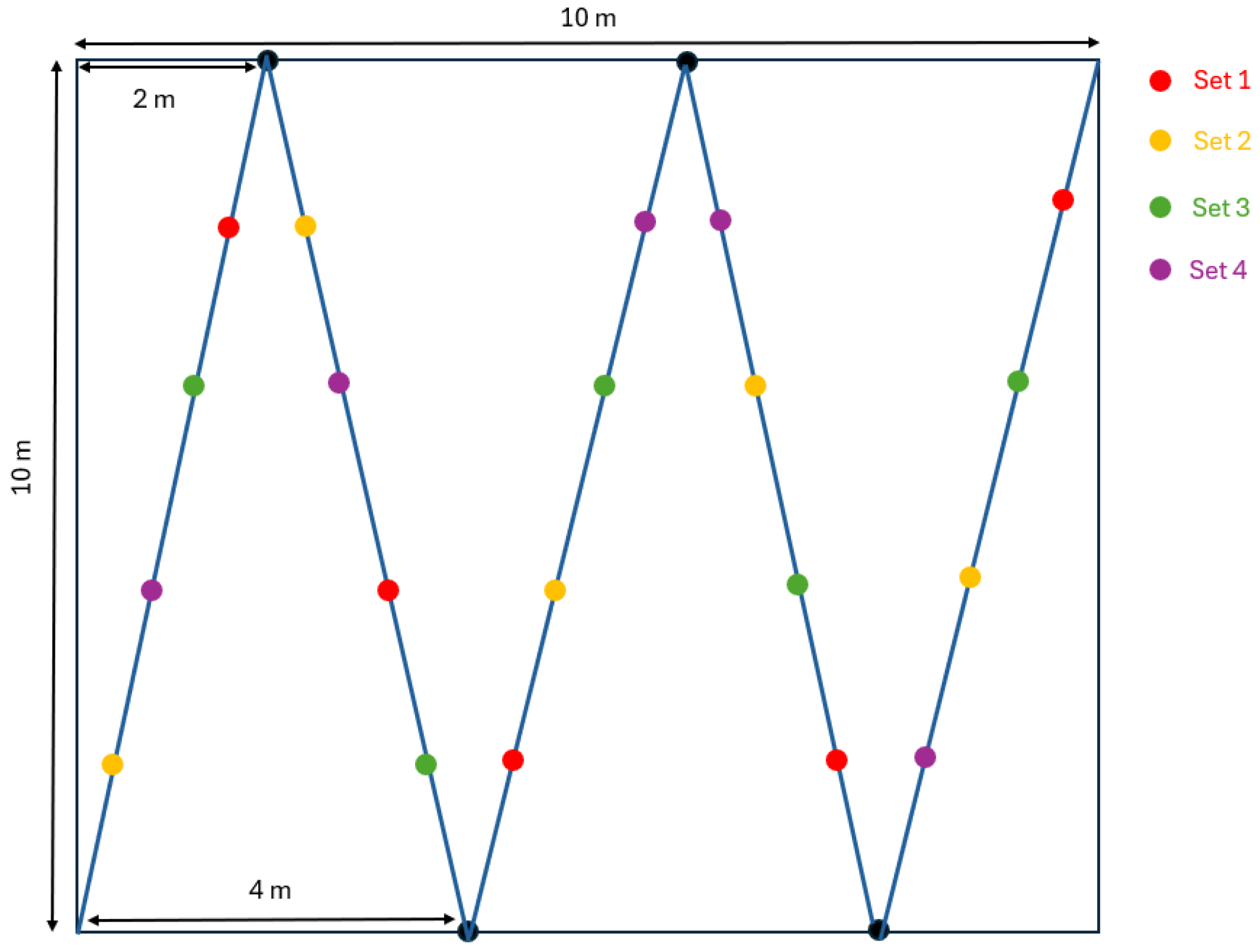
After demarcating the 100 m2 zone, soil samples were collected using a soil auger with an 8 cm diameter and a depth of 15 cm. By sampling twice at the same spot, a sampling depth of 30 cm was achieved. Soil samples were collected from 20 spots across the entire 100 m2 zone at a depth of 30 cm. These 20 spots were divided into 4 replicates (each replicate collected in a plastic bag) of 5 spots each, following the fixed scheme shown in Figure 3. During tuber extraction and vitality tests, each plastic bag was treated as one replicate.

2.4. Tuber Extraction and Viability Assessment

2.4.1. Tuber Extraction

After soil sampling, tuber extraction was performed within 15 days. In the meantime, the plastic bags containing the sampled soil were stored in an unheated shed. Tuber extraction was performed by wet sieving using 3 mm meshes. After extraction, tubers were stored in a fridge at 5 °C for 4 weeks to break tuber dormancy. Prior to tuber storage and the tetrazolium test, tubers were soaked in a fungicide solution containing 2.0 g thiram L−1 (Pomarsol WG ®, 80% thiram, WG, Bayer Crop Science, Monheim am Rhein, Germany) to prevent fungal cross-contamination and slow the onset and progression of deterioration, particularly in weak tubers, as recommended by ISTA [18].

2.4.2. Viability Assessment

After storage in the fridge, the tubers were laid on a Copenhagen germination table. On the Copenhagen table, a regime of alternating day/night temperatures (25/18 °C) under a 16 h light/8 h dark cycle was selected. Tubers were laid on a set of two filter papers, which were moistened by paper strips. Tuber sprouting was monitored over a period of 10 days. After this period, non-sprouted tubers were subjected to a tetrazolium test to assess dormancy. Thereby, tubers were cut longitudinally, and one-half of each tuber section was placed on a filter paper moistened with 4 mL of a solution containing 1% 2,3,5-triphenyltetrazoliumchloride solution. After 24 h of dark incubation at 20 °C, the tuber halves were evaluated. Tubers were considered dormant if at least 50% of the cut surface was stained red. Finally, for each experimental unit, the number of viable tubers was calculated as the sum of the number of germinated tubers (germination test) and the number of dormant tubers (tetrazolium test).

2.5. Statistical Analysis

2.5.1. Comparison of Tuber Banks Among Years

For each monitored field, the mean tuber bank (expressed per m2, 0–30 cm depth) was calculated by averaging the viable tuber counts from the 4 replicates and dividing the result by 0.025132 m2, the total sampled area per replicate (i.e., five 8 cm diameter sampling spots). After calculating the C. esculentus soil tuber bank for 2021, 2022, 2023, and 2024, the values could be plotted over time.
For each field, differences in soil tuber banks among years were assessed using a one-way ANOVA followed by a Tukey HSD test. This approach was used because each field was analyzed independently, and no hierarchical or repeated-measures structure was present that would require a mixed model. The assumptions of normality and homoscedasticity were assessed using a Q–Q plot and Levene’s test, respectively. Sometimes, the assumption of homoscedasticity was not met. In that case, the Welch’s ANOVA test was used to detect significant differences in the soil tuber bank across years. All forementioned analyses were run at the 5% significance level. All analyses were performed using RStudio, version 4.1.3 [19].

2.5.2. Boxplots of Annual Tuber Bank Evolutions

Tuber banks were determined in the autumn (October–November) of 2021, 2022, 2023, and 2024. For each of the 52 infested fields, the annual tuber bank evolution (expressed in %) was calculated over three periods: October 2021–October 2022, October 2022–October 2023, and October 2023–October 2024. To assess the effect of farmers’ control measures against C. esculentus, strategies were categorized into major control strategies, as outlined in Table 2. Boxplots were constructed to show the range of annual tuber bank reductions (%) for each strategy. Given that strategies could vary annually within the same field, the focus was on annual reductions. Strategies were included in the boxplots only if they were applied at least once per year on at least one of the 52 fields (not necessarily every year on the same field). Boxplots were created separately for strategies applied in maize fields and non-maize fields (Table 2). Additionally, the median tuber bank reductions were compared among strategies using a Wilcoxon test. Measures in maize fields were also compared between 2023 and 2024 to assess year effects. Both the creation of the boxplots and the statistical analyses (performed at a 5% significance level) were conducted in RStudio, version 4.1.3 [19].

2.6. Farmer Interviews

During the first weeks of 2023, 2024, and 2025, farmers were surveyed about the measures and strategies they applied against C. esculentus during the growing seasons of 2022, 2023, and 2024. These data were collected through visits, phone calls, or emails. Each year, the following information was recorded:
  • Cultivated crop: seed or plant density, sowing or planting date, harvest date;
  • Organic fertilization: type, dose, timing;
  • Soil cultivation: type (inversion/non-inversion), timing;
  • Weed management: type (chemical, mechanical, thermal, others), timing, dose (if chemical), driving speed (if mechanical or thermal), crop stage;
  • Cover crops: species, seed density, sowing date.
The reliability and accuracy of the collected data were ensured by including only fields managed by motivated farmers committed to recording their field history, complemented by regular in situ visits for periodic measurements. Additionally, there is a legal requirement for pesticide use documentation in Flanders.

2.7. Climatic Conditions

Climatic conditions are important to consider, as they may influence both C. esculentus growth and the effectiveness of various control strategies. Table 3 presents the climatic conditions for the 2022, 2023, and 2024 seasons. These data were recorded in Ukkel, located in the central part of Belgium.

3. Results

3.1. Tuber Bank Dynamics over Time: A Three-Year Analysis

3.1.1. General Overview

Each year, and for each field, the mean C. esculentus tuber bank (and associated standard error) was calculated as described in Section 2.5.1. Additionally, it was investigated whether the C. esculentus tuber banks differ significantly from year to year. Table A1 shows the results. During the 3-year analysis, a significant decrease in C. esculentus tuber bank was observed on 11 of the 52 fields. On another nine fields, the C. esculentus tuber bank significantly increased. On the remaining 32 fields, the evolution in C. esculentus tuber bank was not statistically significant. These results illustrate the difficulty of controlling C. esculentus infestations. However, a complete eradication of the C. esculentus tuber bank was achieved on two fields, namely the ‘Ginste’ field and the ‘Bornem’ field.

3.1.2. Fields with Complete Tuber Bank Eradication

On the Ginste field (field 17, Appendix A), the initial soil tuber bank in October 2021 was 418 ± 108.4 tubers m−2. Each year, a maize crop was sown after ploughing. Yearly, a few days after harvest, ryegrass was sown as a cover crop.
In addition, the following chemical treatments (doses expressed in g ha−1) were applied to the maize crops:
  • In 2022, a single post-emergence (POST) application was made at the 5–6 leaf stage, consisting of 80 g mesotrione, 750 g pethoxamid, 25 g tritosulfuron, 125 g dicamba, and 20 g nicosulfuron.
  • In 2023, two POST applications were carried out. The first, at the 3–4 leaf stage, included 99 g mesotrione, 26 g tembotrione, 480 g pyridate, 200 g nicosulfuron, and 900 g dimethenamid-P. The second, at the 6–7 leaf stage, consisted of 36 g mesotrione and 240 g pyridate.
  • In 2024, two POST applications were again applied. The first, at the 3–4 leaf stage, consisted of 900 g dimethenamid-P, 26 g tembotrione, 54 g mesotrione, 180 g pyridate, and 20 g nicosulfuron. The second, at the 6–7 leaf stage, included 216 g dimethenamid-P, 99 g mesotrione, and 510 g pyridate.
Also, the Bornem field (field 37, Appendix A) achieved complete eradication of the C. esculentus tuber bank after three years. The initial tuber bank was 627 ± 99.3 tubers m2. Cauliflower was grown annually, planted in late February or early March and harvested in late May or early June. After harvest, crop residues were incorporated into the soil, and no crop was grown during the summer. Instead, C. esculentus shoots were regularly removed using a spring-tooth harrow (5–7 passes). In mid- to late August, phacelia (Phacelia tanacetifolia var. cinerea) was sown as a cover crop following ploughing.

3.1.3. Characterization of the Top 10 Fields

In Appendix A, the 52 fields are ranked based on their 3-year tuber bank evolution. Table 4 presents the 10 fields with the greatest reduction in tuber bank over the three-year period.
On five of the 10 fields, maize was cultivated during all three consecutive years. In these cases, chemical control measures—based on a combination of the active ingredients dimethenamid-P, S-metolachlor, mesotrione, pyridate, or pethoxamid—were consistently applied. In certain years, these chemical treatments were combined with mechanical control (e.g., harrowing on the Hamont-Achel 1 field) or cultural control (e.g., delayed sowing after 20 May on the Maria-Aalter and Waregem fields).
On three of the ten fields, no crop was grown during the summer months over the three-year period. Instead, black fallowing was applied, with mechanical methods (referred to as mechanical black fallowing) used on the Bornem and Kinrooi fields, and thermal methods (referred to as thermal black fallowing) on the Middelbeers field.
Grassland management also demonstrates potential for C. esculentus control, as evidenced by the Nieuwkerken-Waas 1 field (intensive grazing by horses over three years) and the Knesselare 1 field (intensive mowing in 2023 and 2024).

3.1.4. Fields with Remarkable Results

On the Oostrozebeke 1 field (field 15, Appendix A), a remarkable evolution in C. esculentus tuber bank was observed (see Appendix A). Initially (October 2021), the mean tuber bank was 557 ± 142.5 tubers per m2 of soil. In both 2022 and 2023, two post-emergence treatments, based on mesotrione and pyridate, were applied in a maize crop. As a result, the mean tuber bank decreased to 90 ± 29.8 tubers per m2 by October 2023. However, in 2024, potatoes were grown and no specific measures against C. esculentus were undertaken. As a result, the mean C. esculentus tuber bank increased to 766 ± 263.1 tubers per m2 in October 2024. Thus, growing crops for which no control measures against C. esculentus are possible (such as potatoes or sugar beets) caused the tuber bank to return to levels comparable to those initially observed in October 2021.
On the Meulebeke 1 field (field 18, Appendix A), a similar pattern was observed. After a strong decline in the C. esculentus tuber bank following the first year’s cultivation of Brussels sprouts, the tuber bank returned close to its initial level (557 ± 58.6 tubers per m2 soil) after potatoes were grown in the second year. Similarly, at Maaseik, intensive control measures applied in maize significantly reduced the tuber bank from 179 ± 50.1 to 20 ± 11.5 tubers per m2 soil. However, the following year, sugar beets were cultivated without stringent control measures against C. esculentus, resulting in an increase in the soil tuber bank to 408 ± 163.5 tubers per m2 soil.
On the Aartrijke field (field 9, Appendix A), the C. esculentus tuber bank significantly decreased from 637 ± 90.4 (October 2021) to 209 ± 71.5 tubers per m2 soil (October 2022). Management of C. esculentus in this field was notably different from other fields. Early in the season, spinach (Spinacia oleracea L.) was sown and harvested on 19 April and 26 May, respectively. Later, common beans (Phaseolus vulgaris L.) were sown and harvested on 29 June and 17 September, respectively. Between the spinach harvest and bean sowing, glyphosate (2400 g ha−1) was applied on 20 June. Just before sowing the beans, the soil was ploughed. During the bean crop, the following active ingredients were applied: imazamox (total dose 26.9 g ha−1), ethofumesate (225 g ha−1 in 2 fractions), clethodim (120 g ha−1 in 2 fractions), dimethenamid-P (324 g ha−1 in 2 fractions), and bentazon (1470 g ha−1 in 2 fractions). After the bean harvest, the soil was tilled three times using a disc harrow.

3.2. Boxplots of Annual Tuber Bank Reductions

3.2.1. Non-Maize Fields

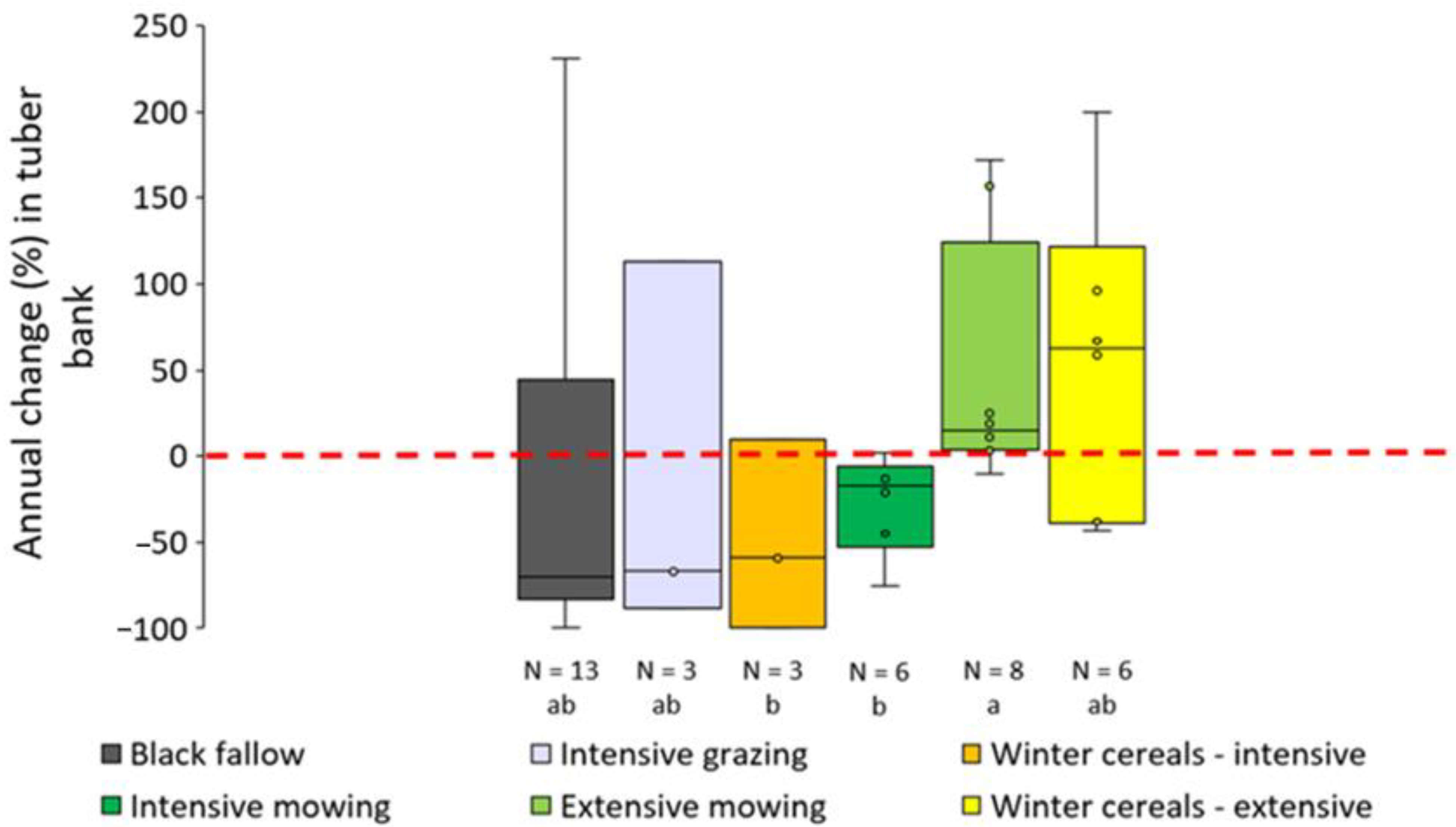
As shown in Figure 4, a black fallow strategy is the most effective strategy for reducing the C. esculentus tuber bank with a median annual tuber bank reduction of 70%, followed by intensive grazing (median reduction of 67%) and intensive control in a grain stubble (median reduction of 59%). Despite these promising results, caution is warranted. Figure 4 also illustrates that increases in tuber bank are possible when these strategies are poorly implemented. Intensive mowing (at least four mowings during the growing season of a well-established, fertilized grassland) resulted in modest reductions, with a median decrease of 17%. However, this median differs significantly from that of an extensive mowing strategy (fewer than four mowings during the growing season), which was associated with increases in the tuber bank. Additionally, cultivating winter cereals followed by limited stubble management leads to a notable annual increase in the C. esculentus tuber bank.

3.2.2. Maize Fields: Comparison of Chemical Strategies

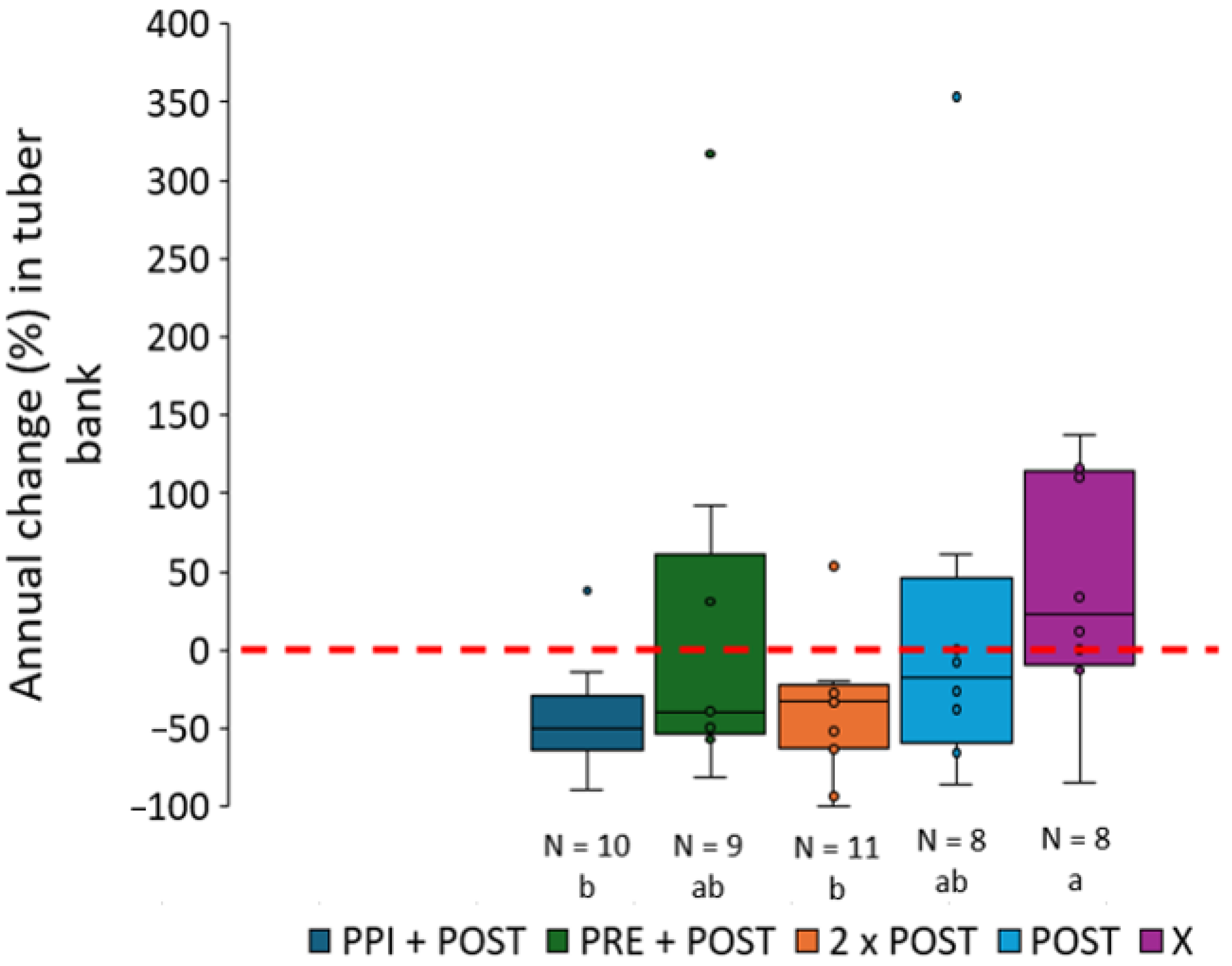
Figure 5 shows the boxplots for the chemical strategies applied on maize fields, where only chemical measures (and no additional mechanical, cultural, or thermal methods) were used against C. esculentus.
As shown in Figure 5, a strategy consisting of a PPI treatment (based S-metolachlor or dimethenamid-P) followed by one post-emergence treatment in maize (using mesotrione and/or pyridate, possibly combined with pethoxamid), can significantly reduce C. esculentus tuber banks with a median annual tuber bank reduction of 49.5%. Other effective strategies included a pre-emergence treatment (based on S-metolachlor or dimethenamid-P), followed by a post-emergence application (based on mesotrione and/or pyridate, sometimes combined with pethoxamid), and two post-emergence applications (based on mesotrione and/or pyridate, sometimes combined with pethoxamid) without a pre-emergence treatment. These approaches resulted in median annual tuber bank reductions of 39.0% and 33.0%, respectively.
Another approach involved a single post-emergence treatment (based on mesotrione and/or pyridate, possibly combined with pethoxamid), which led to a median annual tuber bank reduction of only 17%. When maize was cultivated without the use of any selective herbicide targeting C. esculentus, an increase in the tuber bank was observed.

3.2.3. Maize Fields: Comparison of Years

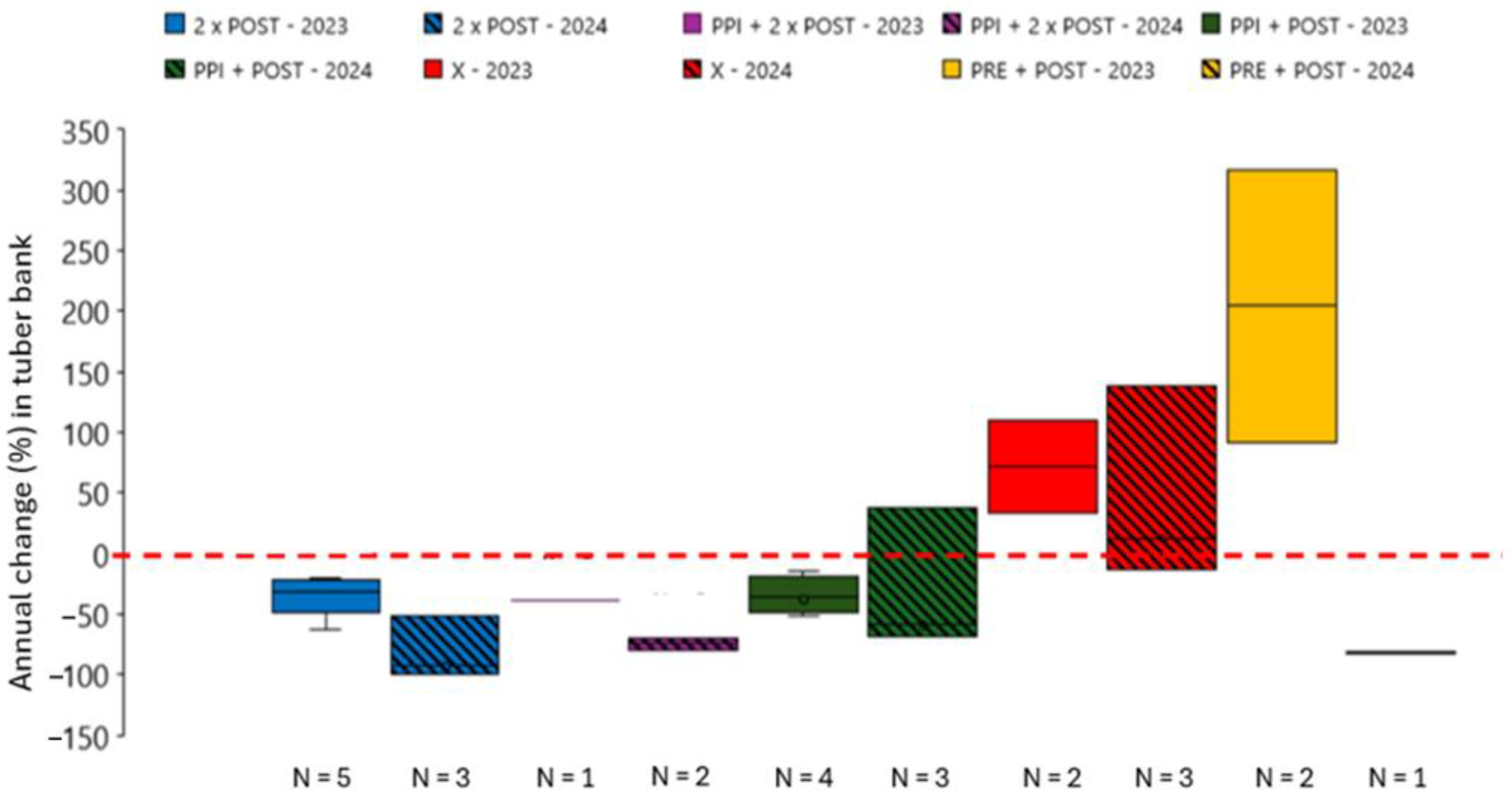
Figure 6 shows the annual changes in tuber bank (%) for different chemical strategies applied in maize fields, presented separately for 2023 and 2024.
As shown in Figure 6, there is a trend towards stronger tuber bank reductions in 2024, compared to 2023. Depending on the strategy, the median tuber bank reduction was 23.0 to 285.5 percentage points higher in 2024 than in 2023.

4. Discussion

Despite stringent control measures, complete depletion of the tuber bank was achieved on only two of the 52 fields. It should be emphasized that the absolute absence of tubers cannot be definitively confirmed, as rare tubers may remain undetected even with intensive sampling. Therefore, a more realistic objective for farmers is not complete eradication, but the adoption of long-term management strategies to gradually reduce tuber banks.
As mentioned in the previous section, maize cultivation offers some potential for reducing the C. esculentus tuber bank. Based on our 3-year study, the most effective and consistent strategies were (1) a PPI treatment (using S-metolachlor or dimethenamid-P) followed by a post-emergence treatment with mesotrione and/or pyridate, possibly combined with pethoxamid, and (2) two post-emergence applications of mesotrione plus pyridate, eventually combined with pethoxamid (Figure 5). The control efficacies of the previous PPI treatments and post-emergence treatments have also been demonstrated in other studies. For example, Grichar et al. [20] observed the effect of PPI S-metolachlor applications on C. esculentus control via visual ratings. Six to eight weeks after a PPI application of 1.5 kg ha−1, C. esculentus shoot control was 70 to 90%. De Ryck et al. [8] found that among several tested maize herbicides, the highest efficacy was achieved with a PPI application of dimethenamid-P (1008 g ha−1), followed by two post-emergence treatments based on mesotrione (2 × 75 g ha−1) and pyridate (2 × 480 g ha−1), applied at the 5–6 and 8–9 leaf stages of maize. Strategies involving a single post-emergence application of mesotrione plus pyridate exhibit inconsistent effectiveness unless preceded by preplanting applications that incorporated the soil-acting herbicides dimethenamid-P or S-metolachlor. Pre-emergence application of these soil herbicides does not improve consistency as the activity of soil-acting herbicides largely depends on the soil water status and its redistribution in the topsoil layer [21]. The relatively low consistency of pre-emergence treatments was also observed by Grichar et al. [22], who applied dimethenamid-P (1.3 kg ha−1) on two experimental fields in Texas, USA, over two years. Four weeks after treatment, C. esculentus shoot control, determined via visual ratings, ranged from 31% to 97%, depending on the year and location.
By repeating the previous strategy over the years, substantial reductions in the C. esculentus tuber bank can be achieved in maize fields, as demonstrated in Wingene (PPI followed by one post-emergence application) and Ginste (two post-emergence applications). Both fields ranked among the top 10 with the greatest 3-year tuber bank reductions (Table 4). However, not all measures are currently permitted in Belgium. For instance, the European Union banned S-metolachlor in 2024 [23], and dimethenamid-P is prohibited for preplant incorporation (PPI) applications in Belgium [24]. Therefore, farmers should be advised to apply two post-emergence treatments in maize, using mesotrione, pyridate, and pethoxamid, which are still permitted. Furthermore, as shown in Figure 6, the effects of chemical strategies may vary across years due to differing climatic conditions. Tuber bank reductions were generally more pronounced in 2024 compared to 2023, likely due to variations in weather during the chemical weed control period (May to early June). While both years experienced relatively wet spring and summer seasons (see Table 3), closer inspection reveals significant differences during the weed control period. From May 1 to June 15, precipitation in Ukkel (central Belgium) was 49 mm in 2023 and 106 mm in 2024. Furthermore, in 2023, dry east-to-northeast winds were dominant. In 2024, west-to-southwest winds were dominant. Presumably, the relatively wet soil conditions and high relative humidity in 2024 stimulated the effect of both soil-applied and foliar herbicides. Indeed, for soil-applied herbicides, soil moisture is critical as they must be present in the soil solution in order to be absorbed by plant parts [21]. For foliar herbicides, such as mesotrione, better weed control had been observed when applied at high relative humidity [25].
As shown in Table 4, maize monocropping, sometimes combined with grass or spinach cultivation in winter and early spring, was practiced on five of the 10 fields with the strongest 3-year tuber bank reduction. As noted previously, the use of herbicide combinations and sequences targeting C. esculentus contributed to this outcome. However, additional measures, such as hoeing, late ploughing, and delayed sowing, may have also contributed. For example, on the Hamont-Achel 1 field, manual hoeing—performed once, after canopy closure but before flowering—was applied alongside chemical control in 2022, likely contributing to the observed tuber bank reduction that year, from 348 to 159 tubers per m2 (see Appendix A). On the Maria-Aalter and Wingene fields, the soil was ploughed relatively late in the growing season—on 12 June for Maria-Aalter (after spinach) and on 28 May for Wingene—just before maize sowing. This late ploughing may have disrupted early C. esculentus development, contributing to the substantial tuber bank reductions observed on both fields (Maria-Aalter in 2024: from 657 to 40 tubers per m2; Wingene in 2024: from 318 to 60 tubers per m2). The contribution of mechanical and cultural measures to C. esculentus management in maize crops has been demonstrated by several studies. Keeley and Thullen [10] observed a clear effect of (manual) hoeing intensity on C. esculentus tuber bank evolution in cotton planting beds. Bohren and Wirth [16] observed a significant tuber bank reduction when maize sowing was delayed until the end of May. Thereby, emerging C. esculentus plants were physically disrupted by harrowing in mid-May and the incorporation of S-metolachlor just before sowing. A delayed sowing may also promote faster vegetative growth and hence maize canopy closure due to the higher soil temperatures [26]. As indicated by Riemens et al. [27], the shading effect of a closed canopy strongly reduces the number of tubers produced per plant.
Despite the viable options for managing C. esculentus tuber banks in maize monocultures, effective strategies are also needed for non-maize fields. Maize cannot be cultivated in all areas, such as buffer strips, and maintaining a continuous maize monoculture is generally not considered good agricultural practice [28]. In our 3-year study, significant tuber bank reductions were achieved by a season-long black fallow, a temporary black fallow in a grain stubble, and intensive control management in grassland (mowing or grazing). Applying a season-long black fallow strategy yielded the best results on these non-maize fields (median tuber bank reduction of 70%, see Figure 4). This aligns closely with findings by Fuchs and Wirth [29], who reported a 60% annual reduction following season-long repeated soil tillage every two to four weeks using rotary and spring-tooth harrows. Among the 10 fields with the strongest 3-year tuber bank reductions (Table 4), three fields (Bornem, Kinrooi, and Middelbeers) applied mechanical (soil tillage) or thermal (electrocution) black fallowing throughout the 3 years, with Bornem achieving complete tuber bank eradication. Despite these promising results, tuber bank increases occurred in two of the 13 observations, where the black fallow strategy involved an insufficient number of passes (less than four, resulting in too long treatment intervals) to remove C. esculentus shoots. Because some mother tubers can remain dormant for long periods or resprout multiple times (depending on tuber size and clone) [30], multiple shoot removals are necessary to exhaust mother tubers and prevent new tuber formation, indeed.
Grasslands (temporary or permanent) may provide additional options for controlling C. esculentus. An intensive grazing and mowing strategy (as defined in Table 2) resulted in a median annual tuber bank reduction of 67% and 17%, respectively. For example, these strategies were successfully applied on the Nieuwkerken-Waas 1 and Knesselare 1 fields (see Section 3.1.3). Previous research by De Ryck et al. [11] and Summerlin et al. [12] supports the potential of intensive mowing and grazing, demonstrating complete inhibition of C. esculentus tuber formation when mowing is conducted at frequent intervals (weekly or less) and at a low height (<5 cm). If cutting heights are higher, less C. esculentus control can be expected. Li et al. [31] weekly mowed C. esculentus plants at a height of 7.6 cm. Compared to the untreated control, this resulted in a tuber number reduction of only 63%. Furthermore, it should be stressed that these tools (mowing and grazing) in grassland carry minimal risk of tuber dispersal, unlike soil-disturbing strategies.
The negative effects of growing potatoes and sugar beets were described in Section 3.1.4. This result is unsurprising given the lack of effective control measures for C. esculentus in these crops. Additionally, growing these crops carries a high risk of tuber dispersal. Unlike grasslands, fields planted with bulb, tuber, and root crops are associated with a significant risk of tuber spread, mainly due to harvesting equipment retaining large amounts of soil after use [32]. Consequently, in Belgium, cultivation of bulb, tuber, and root crops is prohibited when the infested area exceeds 10 m2, as outlined in both the IPM framework and CAP regulations [33,34].
On infested fields, another interesting option is to grow cereals. Cereals, especially winter cereals, are generally considered highly competitive crops. Additionally, their early harvest provides opportunities for control measures in the stubble. In our 3-year study, a median annual tuber bank reduction of 59% was achieved when an intensive control strategy was applied in the stubble (Figure 4). This strategy involved applying at least three measures between cereal harvest and 1 September (Table 2), including chemical (glyphosate application), mechanical (soil tillage) or cultural (installation of a competitive cover crop) interventions. The application of these measures in the stubble is crucial for reducing C. esculentus infestations. For example, Lotz et al. [9] reported a 61.5% reduction in the number of tubers per plant when winter barley was followed by leaf radish, compared to winter barley alone. To be effective, the post-harvest control strategy in the stubble must be intensive. Indeed, where fewer than three control measures were applied in the grain stubble, C. esculentus tuber bank increased (Table 2, Figure 4).
Lastly, crops with a short growing cycle allow control measures against C. esculentus to be implemented before sowing/planting or after harvest. This strategy was successfully applied on the Bornem and Aartrijke fields (see Section 3.1.2 and Section 3.1.4).
Overall, viable robust strategies exist for reducing C. esculentus tuber banks in both maize and non-maize fields. However, implementing these strategies may be challenging due to legislative constraints. For instance, in regions like Flanders (Belgium), farmers are required to establish a cover crop by September 15 (if the main crop is harvested before August 31) to comply with the Flemish Manure Decree [35]. As a result, black fallow strategies might be terminated prematurely, leading to relatively low tuber bank reductions. Furthermore, under the CAP regulations, 80% of a farmer’s arable land must remain covered after harvest, either by establishing a cover crop or retaining crop residues on the soil surface [34]. These regulations reduce the feasibility of implementing black fallow-based strategies. Furthermore, the Flemish Manure Decree mandates a 3-to-5 m buffer strip along watercourses, where soil tillage is restricted, herbicides are prohibited, and mowing is limited between 15 March and 15 July [35]. As a result, intensive mowing, mechanical black fallowing and chemical strategies cannot be applied in these zones.

5. Conclusions

Overall, in maize, the most effective and robust strategies for reducing C. esculentus tuber banks were complex herbicide combinations or sequences. These included sequences with preplant incorporated (PPI) dimethenamid-P/S-metolachlor followed by a single post-emergence application (mesotrione and/or pyridate, sometimes combined with pethoxamid), achieving a 49.5% annual median reduction, and strategies with two post-emergence applications of previously mentioned herbicides, resulting in a 33% reduction. On other arable fields, the most effective and robust approaches were a season-long black fallow (involving at least four interventions) or a winter cereal cultivation followed by intensive stubble control (involving at least three interventions). These strategies resulted in a median annual tuber bank reduction of 59 to 70%. In grasslands, intensive mowing (at least four cuts per season) resulted in consistent but moderate reductions in tuber banks (17%), whereas intensive grazing by horses produced greater reductions (67%), albeit with lower consistency. This study demonstrates that viable strategies exist for reducing C. esculentus tuber banks across diverse cropping systems. However, their widespread implementation may be constrained by regulatory restrictions and practical considerations. Because the most effective strategies rely on frequent or intensive mechanical, chemical, or thermal interventions, their long-term economic feasibility and potential environmental impacts remain uncertain. Future research should therefore focus on optimizing these approaches and evaluating their sustainability under different farming conditions.

Author Contributions

J.F.: Methodology (equal), project administration, investigation, data curation, formal analysis (lead), writing—original draft preparation, writing—review and editing. F.W.: Investigation, methodology, formal analysis. D.C.: Conceptualization, methodology, project administration (lead). J.L.: Conceptualization, methodology. G.V.d.V.: Conceptualization, methodology. S.C.: Conceptualization, methodology. S.P.: Conceptualization, methodology. P.V.: Methodology. D.R.: Writing: review and editing. B.D.C.: Conceptualization (lead), methodology (equal), investigation, project administration, supervision, writing: review and editing (lead). All authors have read and agreed to the published version of the manuscript.

Funding

This research was funded by Flanders Innovation and Entrepreneurship (VLAIO), grant number AIO.LAN.2021.0003.01.

Data Availability Statement

The data presented in this study are available upon request from the corresponding author. The data are not publicly available due to privacy concerns.

Acknowledgments

The authors are grateful to the technical staff of Ghent University, Research Center Inagro, University College of Ghent, Experimental farm Hooibeekhoeve, Educational Research Center (PVL), and the Laboratory for Chemical Analysis (LCA) for their technical assistance during the experiments. Furthermore, the authors want to express their gratitude to the farmers who participated in the project. During the preparation of this manuscript/study, the authors used ChatGPT (OpenAI, ChatGPT, GPT-5) for assistance with writing some paragraphs of the introduction section. The authors have reviewed and edited the output and take full responsibility for the content of this publication.

Conflicts of Interest

The authors declare that they have no conflicts of interest.

Appendix A

Table A1. Mean C. esculentus tuber bank (MTB) and standard error (SE) were calculated annually for each of the 52 infested fields. Significance groups (within fields) are indicated in the ‘Sig’ columns; means sharing a letter are not significantly different. The penultimate column shows the 3-year tuber bank change (%) from October 2021 to October 2024, with statistically significant changes marked by an asterisk (*). The final column ranks fields based on 3-year tuber bank evolution (1 = greatest reduction; 52 = greatest increase).
NumberName2021202220232024Change (%) 2024 vs. 2021Rank
MTBSESigMTBSESigMTBSESigMTBSESig
1Waregem1790450.7a607105.7a398123.7a309.9b−98.3 *4
2Desselgem587151.0a9044.1b7025.0b28844.1ab−50.818
3Lendelede 1557116.0a61761.9a16973.3b76649.7a+37.537
4Lendelede 24028.1a4023.0a9934.5a318131.0a+700.051
5Aalbeke27939.8a21950.1a14941.0a10937.7a−60.717
6Izegem1651481.5a1601280.1a2139317.2a885211.4a−46.419
7Houthulst26919.0ab15932.5ab527196.5a5029.8b−81.511
8Koekelare1552593.1a73641.4a796134.9a388212.6a−75.013
9Aartrijke 63790.4a20971.5b12959.4b20941.0b−67.2 *15
10Hertsberge23970.8a12919.0a24961.6a8053.9a−66.716
11Wingene1263127.3a66695.2b31823.0c6025.7c−95.3 *6
12Roeselare-Beveren3034557.1a1900260.6ab1403397.4b191077.9ab−37.023
13Ardooie 1597158.3b20929.8b1174151.1a47723.0b−20.027
14Ardooie 21750167.2a1512344.2a2397273.4a1522234.5a−13.030
15Oostrozebeke 1557142.5ab23956.3ab9029.8b766263.1a+37.538
16Oostrozebeke 227916.2a279105.3a23943.0a18961.6a−32.124
17Ginste418108.4a6025.7b4016.2b00.0b−100.0 *1
18Meulebeke 1 55758.6a3019.0b49711.5a438151.5a−21.426
19Meulebeke 2103586.0b706165.2b776156.2b1850193.9a+78.8 *40
20Maria-Aalter4009349.3a597117.1b657147.5b4028.1b−99.0 *3
21Knesselare 11790411.9a1293328.7ab1174224.2ab28865.7b−83.9 *10
22Knesselare 21403352.7a1442183.3a1253413.7a1273273.3a−9.231
23Knesselare 336841.0b796382.8ab1724351.0a199132.0b−45.920
24Zulte378115.4b1383242.2b4775400.5a5968739.4a+1478.9 *52
25Nazareth1074281.8ab40875.1b162175.1a1413376.2ab+31.535
26Deurle1542303.6ab1044198.5b2188331.7ab2447260.2a+58.739
27Gavere 1428222.4a00.0a607238.4a12980.2a−69.814
28Gavere 22011.5a8048.7a10954.8a9941.4a+400.049
29Gavere 36025.7a9911.5a12941.0a17992.6a+200.047
30Sinaai136319.0ab935173.8b1960422.5a826160.3ab−39.421
31Belsele358134.9a14941.0a448179.0a8043.0a−77.812
32Sint-Niklaas428203.1b507136.3b1303219.4ab2716753.1a+534.9 *50
33Nieuwkerken-Waas 123979.6a8016.2ab16934.0ab2011.5b−91.7 *7
34Nieuwkerken-waas 210959.4b16957.1b43862.9a23967.0ab+118.242
35Asse24971.5b11958.6b49795.4ab44854.8a+80.0 *41
36Opwijk487188.3a44895.2a875136.9a497118.8a+2.033
37Bornem62799.3a9025.0bc28878.5b00.0c−100.0 *2
38Stabroek438128.9a487116.4a27962.9a448169.9a+2.334
39Herselt 1637104.0ab388108.2b1144173.7a846163.5ab+32.836
40Herselt 2408183.3b269136.3b746159.5ab1064137.2a+161.0 *45
41Herselt 365761.9c1164133.3bc2208318.5a1920184.8ab+192.4 *46
42Retie686123.0b955200.9b1025281.5b2785662.0a+305.8 *48
43Mol547207.6a398106.5a31881.2a4489.9a−18.228
44Bocholt 118999.3a9941.4a25994.0a15958.6a−15.829
45Bocholt 2855211.5b438188.7b1711218.5a537122.1ab−37.222
46Hamont-Achel 134857.1a15928.1b9952.6b3019.0b−91.4 *8
47Hamont-Achel 253783.6a22925.0a428107.0a39898.8a−25.925
48Kinrooi2954258.1a577197.9b19970.8b6034.5b−98.0 *5
49Beringen1492361.2b76689.5b2795301.9a3432197.2a+130.0 *44
50Heusden-Zolder408105.7b53795.4ab24981.8b895134.4a+119.5 *43
51Maaseik17950.1a2011.5b408163.5a16952.3ab−5.632
52Middelbeers125361.9a408329.5b9052.3b15981.2b−87.3 *9

References

  1. Weed Science Society of America. WSSA Survey Ranks Most Common and Most Troublesome Weeds in Broadleaf Crops, Fruits and Vegetables. Available online: https://wssa.net/2017/05/wssa-survey-ranks-most-common-and-most-troublesome-weeds-in-broadleaf-crops-fruits-and-vegetables/ (accessed on 18 September 2025).
  2. Stoller, E.W.; Wax, L.M.; Slife, F.W. Yellow nutsedge (Cyperus esculentus) competition and control in corn (Zea mays). Weed Sci. 1979, 27, 32–37. [Google Scholar] [CrossRef]
  3. Bohren, C.; Wirth, J. Souchet comestible (Cyperus esculentus L.): Situation actuelle en Suisse. Rech. Agron. Suisse 2016, 4, 460–467. [Google Scholar]
  4. Stoller, E.W. Yellow Nut Sedge: A Menace in the Corn Belt (No. 1642); US Department of Agriculture; Agricultural Research Service: Washington, DC, USA, 1981. [Google Scholar]
  5. De Cauwer, B.; De Ryck, S.; Claerhout, S.; Biesemans, N.; Reheul, D. Differences in growth and herbicide sensitivity among Cyperus esculentus clones found in Belgian maize fields. Weed Res. 2017, 57, 234–246. [Google Scholar] [CrossRef]
  6. Demeyere, A. Praktijkgids Gewasbescherming. Module IPM Akkerbouw. Departement Landbouw en Visserij. Available online: https://www.vlaanderen.be/publicaties/praktijkgids-gewasbescherming-module-ipm-akkerbouw (accessed on 25 July 2025).
  7. De Ryck, S.; Steylaerts, E.; Fort, B.; Reheul, D.; De Cauwer, B. In situ seedling establishment and performance of Cyperus esculentus seedlings. Agriculture 2024, 14, 1794. [Google Scholar] [CrossRef]
  8. De Ryck, S.; Reheul, D.; De Cauwer, B. Impacts of herbicide sequences and vertical tuber distribution on the chemical control of yellow nutsedge (Cyperus esculentus L.). Weed Res. 2021, 61, 454–464. [Google Scholar] [CrossRef]
  9. Lotz, L.A.P.; Groeneveld, R.M.W.; Habekotte, B.; Van Oene, H. Reduction of growth and reproduction of Cyperus esculentus by specific crops. Weed Res. 1991, 31, 153–160. [Google Scholar] [CrossRef]
  10. Keeley, P.E.; Thullen, R.J. Influence of yellow nutsedge competition on furrow-irrigated cotton. Weed Sci. 1975, 23, 171–175. [Google Scholar] [CrossRef]
  11. De Ryck, S.; Reheul, D.; De Cauwer, B. Impact of regular mowing, mowing height, and grass competition on tuber number and tuber size of yellow nutsedge clonal populations (Cyperus esculentus L.). Weed Res. 2023, 63, 371–381. [Google Scholar] [CrossRef]
  12. Summerlin, J.R.; Coble, H.D.; Yelverton, F.H. Effect of mowing on perennial sedges. Weed Sci. 2000, 48, 501–507. [Google Scholar] [CrossRef]
  13. Phatak, S.C.; Sumner, D.R.; Wells, H.D.; Bell, D.K.; Glaze, N.C. Biological control of yellow nutsedge with the indigenous rust fungus Puccinia canaliculata. Science 1983, 219, 1446–1447. [Google Scholar] [CrossRef] [PubMed]
  14. Ascard, J.; Hatcher, P.E.; Melander, B.; Upadhyaya, M.K. Thermal Weed Control. In Non-Chemical Weed Management. Principles, Concepts and Technology; Upadhyaya, M.K., Blackshaw, R.E., Eds.; CABI: Wallingford, UK, 2007; pp. 155–175. [Google Scholar]
  15. Johnson, W.C.; Davis, R.F.; Mullinix, B.G., Jr. An integrated system of summer solarization and fallow tillage for Cyperus esculentus and nematode management in the southeastern coastal plain. Crop Prot. 2007, 26, 1660–1666. [Google Scholar] [CrossRef]
  16. Bohren, C.; Wirth, J. Implementation of control strategies against yellow nutsedge (Cyperus esculentus L.) into practice. Jul.-Kühn-Arch. 2018, 458, 189–197. [Google Scholar]
  17. De Ryck, S. Towards an Integrated Approach for Effective Cyperus esculentus Control. Ph.D. Thesis, Ghent University, Ghent, Belgium, 2024. [Google Scholar]
  18. Moore, R.P. Handbook on Tetrazolium Testing; International Seed Testing Association: Zürich, Switzerland, 1985. [Google Scholar]
  19. R Core Team. R: A Language and Environment for Statistical Computing. Available online: https://www.R-project.org (accessed on 30 July 2025).
  20. Grichar, W.J.; Lemon, R.G.; Brewer, K.D.; Minton, B.W. S-metolachlor compared with metolachlor on yellow nutsedge (Cyperus esculentus L.) and peanut (Arachis hypogaea L.). Weed Technol. 2001, 15, 107–111. [Google Scholar] [CrossRef]
  21. Cudney, D.W. Soil Moisture and Herbicides. University of California, Riverside. Available online: https://my.ucanr.edu/repository/fileaccess.cfm?article=161669&p=JVCQWS (accessed on 21 August 2025).
  22. Grichar, W.J.; Lemon, R.G.; Sestak, D.C.; Brewer, K.D. Comparison of metolachlor and dimethenamid for yellow nutsedge (Cyperus esculentus L.) control and peanut (Arachis hypogaea L.) injury. Peanut Sci. 2000, 27, 26–30. [Google Scholar] [CrossRef]
  23. Official Journal of the European Union. Commission Implementing Regulation EU 2024/20 of 12 December 2023 Concerning the Non-Renewal of the Approval of the Active Substance S-Metolachlor, in Accordance with Regulation (EC) No 1107/2009 of the European Parliament and of the Council, and Amending Commission Implementing Regulation (EU) No 540/2011; Official Journal of the European Union: Luxembourg, 2024; Available online: https://eur-lex.europa.eu/legal-content/EN/TXT/PDF/?uri=OJ:L_202400020 (accessed on 12 August 2025).
  24. Fytoweb. Toelatingen van Gewasbeschermingsmiddelen Raadplegen. Available online: https://fytoweb.be/nl/gewasbeschermingsmiddelen/toelatingen-van-gewasbeschermingsmiddelen-raadplegen (accessed on 12 August 2025).
  25. Johnson, B.C.; Bryan, G.Y. Influence of temperature and relative humidity on the foliar activity of mesotrione. Weed Sci. 2002, 50, 157–161. [Google Scholar] [CrossRef]
  26. Shao, R.; Yu, K.; Li, H.; Jia, S.; Yang, Q.; Zhao, X.; Zhao, Y.; Liu, T. The effect of elevating temperature on the growth and development of reproductive organs and yield of summer maize. J. Integr. Agric. 2021, 20, 1783–1795. [Google Scholar] [CrossRef]
  27. Riemens, M.M.; van der Weide, R.Y.; Runia, W.T. Biology and Control of Cyperus rotundus and Cyperus esculentus, Review of a Literature Survey; Plant Research International B.V.: Wageningen, The Netherlands, 2008. [Google Scholar]
  28. Tissier, M.L.; Handrich, Y.; Robin, J.P.; Weitten, M.; Pevet, P.; Kourkgy, C.; Habold, C. How maize monoculture and increasing winter rainfall have brought the hibernating European hamster to the verge of extinction. Sci. Rep. 2016, 6, 25531. [Google Scholar] [CrossRef] [PubMed]
  29. Fuchs, M.; Wirth, J. Tackling yellow nutsedge with fallow periods and cover crops. In Proceedings of the EWRS Workshop Physical and Cultural Weed Control, Wageningen, The Netherlands, 27–29 May 2024. [Google Scholar]
  30. Matthiesen, R.L. Plant Development and Tuber Composition of Six Biotypes of Yellow Nutsedge (Cyperus esculentus L.); University of Illinois at Urbana-Champaign: Urbana, IL, USA, 1976. [Google Scholar]
  31. Li, L.; Sousek, M.; Reicher, Z.; Gaussoin, R. Strategies for increased yellow nutsedge (Cyperus esculentus) control in turfgrass with halosulfuron, sulfentrazone, and physical removal. Weed Technol. 2021, 35, 894–900. [Google Scholar] [CrossRef]
  32. Hofmeester, Y. Grondverspreiding door machines. In Jaarboek 1987–1992: Verslagen van in 1987–1992 Afgesloten Onderzoekprojecten op Regionale Onderzoek Centra en het PAGV; No. 38-64; Proefstation voor de Akkerbouw en de Groenteteelt in de Vollegrond: Lelystad, The Netherlands, 1990; pp. 288–292. [Google Scholar]
  33. European Parliament (n.d.). Fact Sheets of the European Union: Direct Payments. Available online: https://www.europarl.europa.eu/factsheets/en/sheet/109/direct-payments (accessed on 12 August 2025).
  34. Agentschap Landbouw en Zeevisserij. Conditionaliteit 2023–2027. Available online: https://lv.vlaanderen.be/bedrijfsvoering/conditionaliteit-en-randvoorwaarden/conditionaliteit-2023-2027 (accessed on 12 August 2025).
  35. Vlaamse Landmaatschappij. Nieuwe Mestmaatregelen 2025. Available online: https://www.vlm.be/nl/SiteCollectionDocuments/Mestbank/Algemeen/Nieuwe_maatregelen_Glabbeek.pdf (accessed on 12 August 2025).
Figure 1. General concept of the study.
Agriculture 15 02040 g001
Figure 2. Geographical location of the 52 selected fields: 51 in Flanders, Belgium, and 1 in the Netherlands (Field 52). More details are given in Table 1.
Agriculture 15 02040 g002
Figure 3. Distribution of the 20 sampling spots in a 100 m2 (10 m × 10 m) zone, divided into four sets of five spots. In a 5 m × 20 m zone, spots were similarly distributed. Spot positions were fixed as shown in the figure.
Agriculture 15 02040 g003
Figure 4. Boxplots (N = number of observations) of annual C. esculentus tuber bank change (%) by strategy in non-maize fields (2022–2024). Medians not sharing a common letter differ significantly. See Table 2 for strategy details.
Agriculture 15 02040 g004
Figure 5. Boxplots (N = number of observations) of annual C. esculentus tuber bank change (%) by chemical strategy in maize fields (2022–2024). Medians not sharing a common letter differ significantly. See Table 2 for strategy details.
Agriculture 15 02040 g005
Figure 6. Boxplots (N = number of observations) of annual C. esculentus tuber bank change (%) by chemical strategy and year (2023, 2024) for maize fields. Due to the low number of observations, no statistical tests were performed to compare tuber banks. See Table 2 for strategy details.
Agriculture 15 02040 g006
Table 1. Characteristics of the 52 selected fields: number (Figure 2), province (WFL = West Flanders, EFL = East Flanders, FLBR = Flemish Brabant, ANT = Antwerp, LIM = Limburg, NBR = North Brabant), soil texture and fraction (%) of sand, silt and clay particles, organic matter content (%), organic management (yes/no), and crops cultivated in 2022, 2023, and 2024. Crop abbreviations: bf = Black fallow, bs = Brussels sprouts (Brassica oleracea convar. oleracea var. gemmifera), ca = cauliflower (Brassica oleracea convar. botrytis var. botrytis), cb = common bean (Phaseolus vulgaris L.), fm = fauna mixture, gc = grass-clover, gp = permanent grassland, gt = temporary grassland, lr = leaf radish (Raphanus sativus subsp. oleiferus [DC.] Metzg.) and/or yellow mustard (Sinapis alba L.), m = maize (grain or silage, Zea mays L.), mc = mixed cropping (no grass-clover), o = other, p = potato (Solanum tuberosum L.), ph = phacelia (Phacelia tanacetifolia var. cinerea Brand), ry = winter rye (Secale cereale L.), sb = sugar beet (Beta vulgaris L.), sp = spinach (Spinacia oleracea L.), sw = spring wheat (Triticum aestivum L.), tr = winter triticale (× Triticosecale Wittmack ex A. Camus), wb = winter barley (Hordeum vulgare L.), ww = winter wheat (Triticum aestivum L.). ‘+’ denotes a subsequent crop in the same year, while ‘/’ indicates a crop in the following year.
Number (Figure 2)Name ProvinceSoil Texture (Sand %, Silt %, Clay %)Organic Matter (%)Crop Rotation (2022/2023/2024)Organic?
1WaregemWFLsandy loam (63.8, 26.9, 9.3)1.5m+gt/gt+m+gt/gt+mNo
2DesselgemWFLsandy loam (67.5, 24.2, 8.3)2.4m/ww+ph/cbNo
3Lendelede 1WFLsandy loam (59.5, 30.3, 10.2)1.5bf/bf/mNo
4Lendelede 2WFLsandy loam (60.8, 30.9, 8.4)0.9gt+m+gt/gt+m+gt/gt+m+gtNo
5AalbekeWFLloam (13.9, 73.0, 13.1)0.8wb+lr/m/mNo
6IzegemWFLsandy loam (60.3, 30.9, 8.8)1.2p/m/oNo
7HouthulstWFLsandy loam (61.1, 30.3, 8.6)1.3bf/bf/bfNo
8KoekelareWFLloamy sand (92.1, 4.9, 3.0)3.0m/m/m+wwNo
9Aartrijke WFLloamy sand (76.1, 17.7, 6.2)3.9sp+cb/m/sp+cbNo
10HertsbergeWFLsand (73.3, 23.5, 3.1)1.7m/m+gt/gt+mNo
11WingeneWFLsandy loam (77.5, 17.8, 4.8)1.9m/m/mNo
12Roeselare-BeverenWFLsandy loam (61.6, 29.0, 9.3)2.9m/p/mNo
13Ardooie 1WFLsandy loam (71.3, 21.0, 7.7)2.2m/cb+ww/ww+lrNo
14Ardooie 2WFLsandy loam (67.4, 24.8, 7.8)2.9p/ww/wb+mNo
15Oostrozebeke 1WFLloamy sand (72.4, 20.4, 7.2)3.2gt+m+gt/gt+m/pNo
16Oostrozebeke 2WFLloamy sand (79.6, 15.2, 5.2)3.7gt+m+gt/gt+m+gt/gtNo
17GinsteWFLloamy sand (83.5, 11.5, 5.0)3.2gt+m+gt/gt+m+gt/gt+m+gtNo
18Meulebeke 1 WFLsandy loam (69.5, 24.8, 5.7)3.7bs/p/bsNo
19Meulebeke 2WFLloamy sand (71.1, 22.3, 6.6)2.8m+ww/ww+gt/gt+mNo
20Maria-AalterEFLsand (88.5, 8.8, 2.8)2.1sp+m/sp+m/sp+mNo
21Knesselare 1EFLloamy sand (72.3, 20.6, 7.11)3.0mc+gt/gt/gtNo
22Knesselare 2EFLloamy sand (72.4, 20.0, 7.6)2.6gt/gt/gtNo
23Knesselare 3EFLloamy sand (91.1, 6.7, 2.2)1.7m+mc/mc+gt/gtNo
24ZulteEFLsandy loam (79.0, 15.8, 5.2)3.5m+mc/mc+gt/gtYes
25NazarethEFLsand (93.3, 4.3, 2.4)3.2m+ry/ry+m/m+gtNo
26DeurleEFLloamy sand (84.7, 11.0, 4.3)3.9m+ry/ry+m/m+gtNo
27Gavere 1EFLsandy loam (65.4, 29.2, 5.4)2.1wb+lr/m/mNo
28Gavere 2EFLsandy loam (80.1, 15.9, 4.0)1.6ww+wb/wb/mNo
29Gavere 3EFLsandy loam (64.4, 30.2, 5.4)2.3ww/m+wb/wb+ryNo
30SinaaiEFLsand (92.7, 5.3, 2.1)2.6m/m+tr/m+trNo
31BelseleEFLloamy sand (84.0, 10.2, 5.8)2.4m/wb+mc+ww/ww+fmYes
32Sint-NiklaasEFLloamy sand (77.1, 18.2, 4.7)4.1gt/gt/gt+mNo
33Nieuwkerken-Waas 1EFLloamy sand (76.1, 17.7, 6.2)2.7gp/gp/gpNo
34Nieuwkerken-waas 2EFLsand (74.8, 20.0, 5.2)2.7m+mc/mc+gt/gtNo
35AsseFLBRloam (15.5, 72.7, 11.8)3.4m/m/gtNo
36OpwijkFLBRsandy loam (41.9, 49.2, 8.8)2.5m/ww+wb/wb+lrNo
37BornemANTloamy sand (75.1, 21.8, 3.1)2.2ca+bf+ph/ca+bf+ph/ca+bf+phYes
38StabroekANTsand (84.9, 9.8, 5.3)5.8gt/gt/gt+mNo
39Herselt 1ANTloamy sand (84.2, 8.2, 7.6)3.7m/m/mNo
40Herselt 2ANTloamy sand (85.9, 12.5, 1.5)3.5m/m/fmNo
41Herselt 3ANTsand (85.4, 10.3, 4.2)3.5m/gt/fmNo
42RetieANTsand (95.5, 3.4, 1.1)4.2gt/gt/gtNo
43MolANTsand (96.8, 2.3, 1.0)2.2m/m/gtNo
44Bocholt 1LIMloamy sand (79.7, 15.3, 5.0)3.2m/m/wb+lrNo
45Bocholt 2LIMloamy sand (87.1, 8.4, 4.6)3.1m+gt/gt+m+ry/ry+m+gtNo
46Hamont-Achel 1LIMloamy sand (90.1, 6.0, 3.9)2.5m+gt/gt+m+gt/gt+mNo
47Hamont-Achel 2LIMsand (90.0, 6.4, 4.0)3.0m+gc/gc/gcNo
48KinrooiLIMloamy sand (81.3, 14.4, 4.3)3.0bf+gt/gt+bf+gt/gt+bf+gtNo
49BeringenLIMsand (91.5, 3.6, 4.9)4.2m/m/sw+lrNo
50Heusden-ZolderLIMsand (83.7, 8.7, 7.6)4.7m/m/fmNo
51MaaseikLIMloamy sand (67.4, 21.1, 5.5)3.6m/sb/mNo
52MiddelbeersNBRsand (/, /, /)/bf/bf/bfNo
Table 2. Overview of control strategies against C. esculentus in maize and non-maize fields. The last column indicates the years and corresponding field numbers (see Table 1) where the strategy was applied.
Maize/Non-Maize StrategyDescriptionApplications (Year and Fields)
MaizeChemical—POSTPost-emergence treatment based on mesotrione + pyridate (+pethoxamid) 2022: 1, 12, 17, 16, 36, 11, 25, 51, 39, 40, 47, 49, 50
2023: 1, 9, 11, 16, 10, 35
2024: 10, 51, 28, 3, 38, 11
MaizeChemical—2 × POSTTwo post-emergence treatments based on mesotrione + pyridate (+pethoxamid)2022: 43, 35, 34
2023: 43, 15, 17, 2, 5
2024: 1, 8, 17
MaizeChemical—PPIPreplant incorporation of S-metolachlor or dimethenamid-P2022: 26, 11, 25, 51
2023: 26, 25, 46, 1, 9, 11
2024: 27, 46, 10, 51, 28
MaizeChemical—PREPre-emergence treatment based on dimethenamid-P or S-metolachlor2022: 10, 44, 39, 40, 47, 45, 49, 50
2023: 10, 35
2024: 11
MaizeChemical—XTreatment not specifically targeting C. esculentus2022: 2, 4, 23
2023: 30, 6
2024: 19, 25, 26
Non-maizeBlack fallowBlack fallow throughout the entire growing season, with (combined) application of thermal, mechanical, or chemical methods2022: 37, 3, 48, 52, 7
2023: 37, 3, 7, 52
2024: 37, 48, 52, 7
Non-maizeIntensive grazingIntensive grazing by horses, possibly combined with mowing2022: 33
2023: 33
2024: 33
Non-maizeIntensive mowingAt least 4 mowings in a well-established and fertilized grassland2022: 22
2023: 22, 23
2024: 16, 23, 34
Non-maizeExtensive mowingLess than 3 mowings in grassland2022: 38, 32, 22
2023: 32, 42
2024: 24, 42, 35
Non-maizeWinter cereals—intensiveAt least three measures applied between cereal harvest and 1 September, such as mechanical tools (spring tooth harrow, ploughing, etc.), glyphosate application, or establishment of a competitive cover crop.2022: 27
2023: 19
2024: 13
Non-maizeWinter cereals—extensiveLess than 3 measures applied between cereal harvest and 1 September2022: 28
2023: 14, 31, 36
2024: 29, 36
Table 3. The mean temperature (Tmean) and total precipitation (mm) during the winter, spring, summer, and autumn seasons of 2022, 2023, and 2024. Furthermore, the average values (based on the data from 1991 to 2020) are given. All the observations were performed in Ukkel, located in the central part of Belgium. The data were derived from the Royal Meteorological Institute of Belgium.
ParameterYearWinter
(December–February)
Spring
(March–May)
Summer (June–August)Autumn (September–November)
Tmean (°C)20225.511.319.612.8
20235.010.218.913.4
20246.311.618.311.8
Avg. 1991–20204.110.517.911.2
Precipitation (mm)2022259.0108.8110.6210.1
2023214.9241.6279.5283.7
2024310.7285.2323.8275.9
Avg. 1991–2020228.6165.6234.2209.3
Table 4. List of the 10 fields with the greatest reduction in tuber bank over three years, including field number (see Table 1, name, 3-year tuber bank change (%), crop rotation, and control measures against C. esculentus. Control methods: chemical = combination of dimethenamid-P, S-metolachlor, mesotrione, pyridate, or pethoxamid; cultural = maize sown after 20 May; mechanical = hoeing or harrowing. Crop rotation codes: bf = black fallow, ca = cauliflower, gp = permanent grassland, gt = temporary grassland, m = maize, mc = mixed cropping, ph = phacelia, sp = spinach. ‘+’ indicates same-year crop, ‘/’ indicates crop in the following year.
Field Number Name3-Year Tuber Bank Change (%)Crop Rotation (2022/2023/2024)Strategy Applied Against C. esculentus
17Ginste−100.0gt+m+gt/gt+m+gt/gt+m+gtAnnual chemical treatments in maize
37Bornem−100.0ca+bf+ph/ca+bf+ph/ca+bf+phAnnual mechanical black fallow
20Maria-Aalter−99.0sp+m/sp+m/sp+mAnnual chemical treatments in maize combined with cultural control in 2023 and 2024
1Waregem−98.3m+gt/gt+m+gt/gt+mAnnual chemical treatments in maize, combined with delayed maize sowing in 2023
5Kinrooi−98.0bf+gt/gt+bf+gt/gt+bf+gtAnnual mechanical black fallow
11Wingene−95.3m/m/mAnnual chemical treatments in maize) combined with cultural control in 2024
33Nieuwkerken-Waas 1−91.7gp/gp/gpAnnual intensive grazing by horses
46Hamont-Achel 1−91.4m+gt/gt+m+gt/gt+mAnnual chemical treatments in maize combined with mechanical control in 2022
52Middelbeers−87.3bf/bf/bfAnnual thermal black fallow
21Knesselare 1−83.9mc+gt/gt/gtIntensive mowing (at least 4 mowings on a well-established grassland) in 2023 and 2024
Disclaimer/Publisher’s Note: The statements, opinions and data contained in all publications are solely those of the individual author(s) and contributor(s) and not of MDPI and/or the editor(s). MDPI and/or the editor(s) disclaim responsibility for any injury to people or property resulting from any ideas, methods, instructions or products referred to in the content.