A Nerve Injury After Total Hip Arthroplasty from Etiology to Treatment: A Narrative Review

 ,
,  , , ,
, , , 
Abstract
1. Introduction
2. Incidence
3. Clinical Presentation
4. Risk Factors
4.1. Clinical Factors
- Female gender is considered a risk factor for nerve injury after THA because of two principal reasons: First, females tend to have less soft tissue mass, predisposing them to nerve injury. Second, they are associated with a higher incidence of DDH [15,21,26]; in patients with DDH, the lower limb is often shortened before surgery and a significant elongation and offset modification is observed after THA. Additional factors that contribute to increasing the risk of nerve injury in females are a narrower pelvis and shorter stature, pregnancy, the presence of an insufficient or dysplastic hip, and previous pelvis or acetabular fractures [17,27,28].
- Patients below 50 years of age show a higher risk of nerve injury after THA compared with their older counterparts. The risk is approximately 7 times higher in younger patients; reasons include the longer average operative time because of the greater forces required to achieve an adequate surgical exposure with retractors. Furthermore, younger patients require THA because of secondary arthritis, encountered after DDH, Perthes’ disease, slipped capital femoral epiphysis, and post-traumatic arthritis in most cases.
- Patients under treatment with anticoagulant or platelet anti-aggregate treatment are susceptible to the formation of a psoas hematoma, which, in turn, may lead to compression of the FN. Some patients may develop postoperative hematomas because of an unrecognized coagulative disorder [29].
- The presence of a pre-existing spinal disease represents an independent factor increasing the risk of developing a nerve injury after THA [14,15,21,26]. The “double-crush” theory, according to which nerves become less tolerant to compression or stretching at a second anatomical site if they have pre-existing compression somewhere else along their course, determines an increased risk: classical examples include lumbar disc herniation and spinal stenosis [11], posing a question about the correct timing of surgery in patients affected by lumbar spine and hip diseases [30,31].
4.2. Anatomy-Associated Factors
- Anatomical variations or severe deformities at the pelvis and hip can significantly increase the risk of nerve injury during THA procedures [25]. The proximity of the sciatic, femoral, and obturator nerves to the surgical field makes them vulnerable to damage, especially when there are deviations from the typical anatomy. Variations in the course, branching patterns, or location of these nerves can make them more susceptible to inadvertent traction, compression, or direct injury during the procedure by retractors. For instance, an unusually high or low bifurcation of the SN places it closer to the operative field, increasing the likelihood of intraoperative nerve entrapment or stretching. Similarly, the Fan-Type anatomical variant of LFCN is most prone to injury [32]; in fact, because of the fanning of the branches, damage to the nerve is almost unavoidable. Unfortunately, no routinary diagnostic tool allows altered anatomical patterns to be determined preoperatively; therefore, surgeons cannot anticipate potential challenges and adjust the surgical technique accordingly, minimizing the risk of nerve injury.
- Anatomical bone and soft tissue pathology, including DDH, is associated with 4 times higher odds of nerve injury; this factor could be due to the altered anatomy and nerve course but also to the increased surgical time and difficulty of the surgery. Similarly, patients affected by post-traumatic arthritis show 3.4 higher odds of nerve injury. Similarly, variations in the orientation or depth of the acetabulum can alter the exposure requirements, potentially leading to increased manipulation of close nerves.
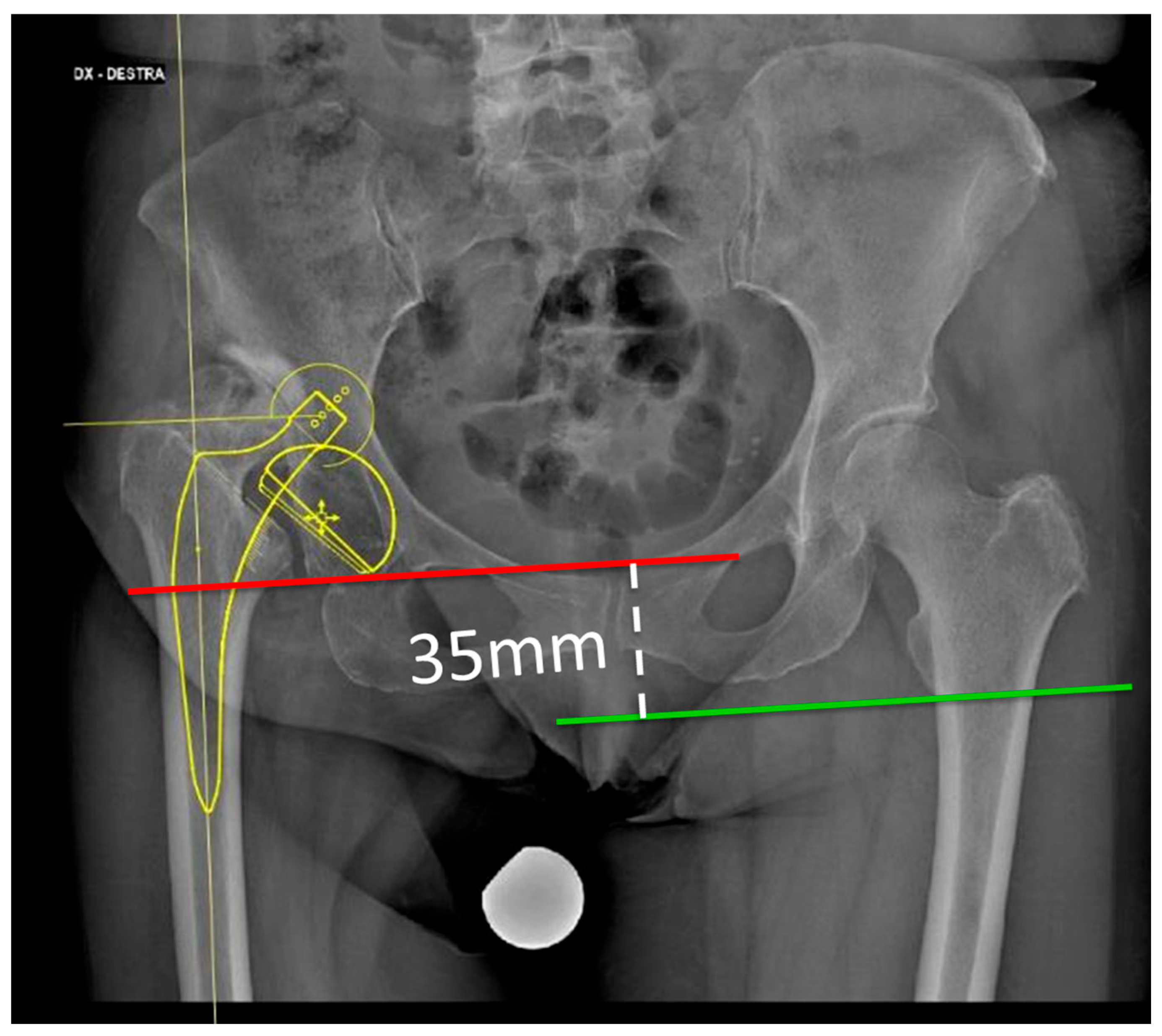
- Limb length discrepancy, either preoperative or after THA surgery, is associated with increased risk of postoperative nerve injury. It is reported that an overall lengthening greater than 3–4 cm after THA increases the risk of nerve injury in the patient by 28%, the damage being caused by traction over the neural structures [33] (Figure 1).
4.3. Surgery-Associated Factors
- Experience of the surgeon: The operative volume of the operating surgeon influences the incidence of postoperative complications, including nerve injuries. It has been demonstrated that for every 50 THAs performed in the preceding year, there is a 13% decrease in the risk of injury. This may partially be explained by the shorter duration of surgery as the surgeon’s experience grows in the performance of both primary and revision THAs [10]. There are several factors related to surgeon inexperience that can increase the likelihood of neural injury developing. Among the most important are the following: improper retractor placement; improper patient positioning; excessive traction over the nerve; increased duration of surgery or the requirement of additional procedures including iliac harvest of bone grafting, implantation of wires, and screw fixation at the inner acetabulum; leakage of bone cement; and pelvic osteotomy performance [11,12,14,16,24,27,28].
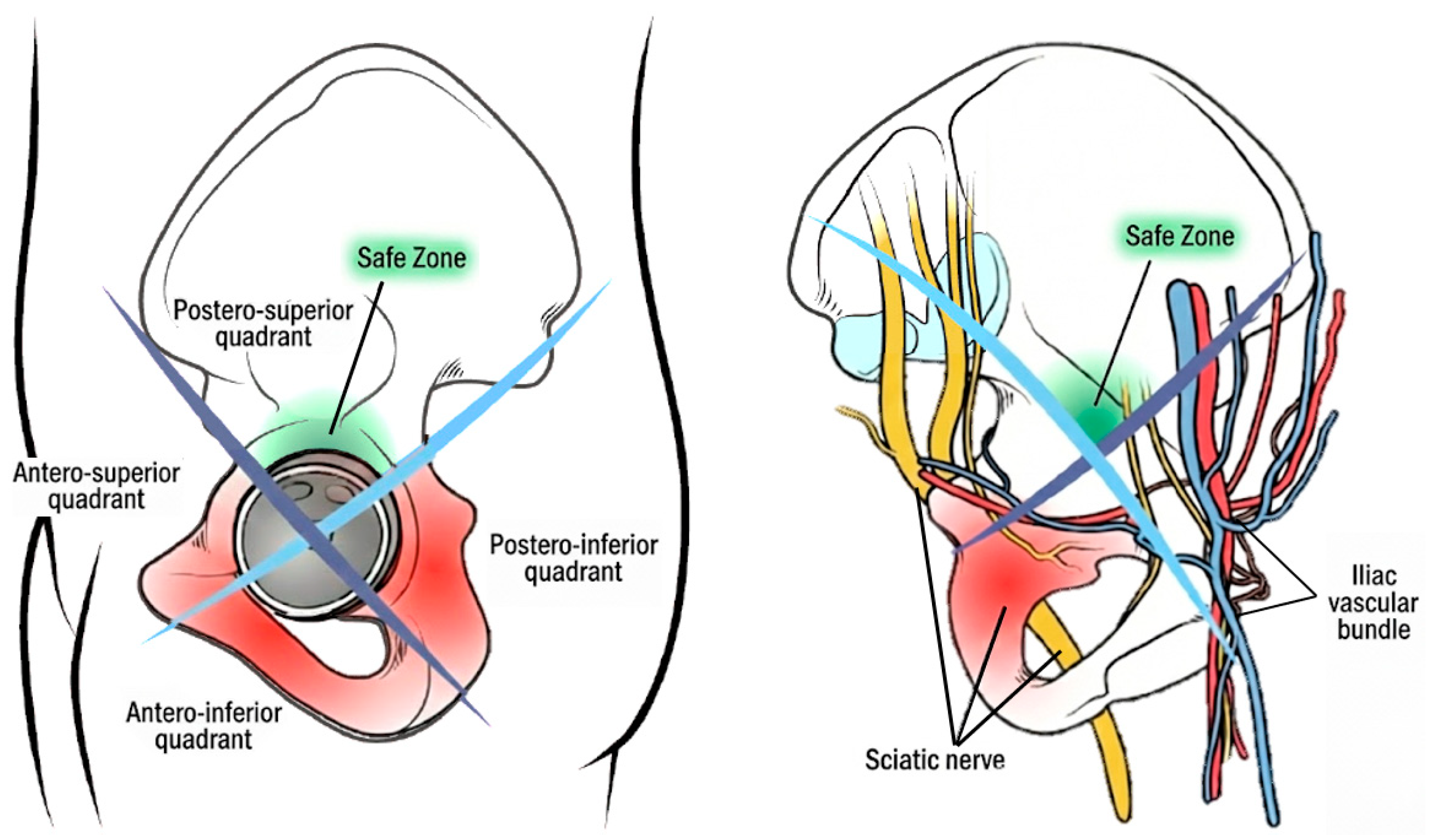
- Revision total hip arthroplasty (rTHA): This is a significant risk factor for the development of a nerve injury compared to primary THA. The incidence of nerve injury in revision THA is considerably higher, with studies reporting rates as high as 7.6%, compared with 0.6–3.7% in primary procedures [12,16,17]. This increased risk is largely attributed to the complex surgical environment encountered during rTHAs, in which the presence of an altered local anatomy and scar tissue surrounding nerves, compromising their blood supply, make the nerves more vulnerable to traction [12,16,17]. Moreover, a larger postoperative hematoma is typically related to rTHA because of wider surgical exposure and soft tissue severance [8,24,28]. Additionally, these procedures usually last longer compared to primary THAs, and time is an independent risk factor for neural injury. Finally, the use of screws in atypical Wasielewski zones exposes the patient to an increased risk of neural injury because of the potential direct conflict with the tip of the screw [12,16,17], which is more common in revision cases compared to primary THAs [34] (Figure 2).
- Surgical approaches: Nerve injuries show a direct correlation with the surgical approach used in THA surgery; in fact, each approach is associated with particular nerve lesions because of the direct relationships encountered during the procedure.
- ○
- Direct Anterior: The DAA is mainly associated with LFCN and FN lesions during THA surgery. FN injury can occur after the prolonged hip hyperextension required for the preparation of the femoral canal, because the nerve is particularly vulnerable in this position [11,15,17]. The mechanisms of injury may be due to nerve section, compression, and prolonged ischemia secondary to nerve retraction, leading to trauma, stretching, or compression. Less cumbersome, but frequent, are lesions of the LFCN. These can occur at different levels and through several mechanisms, including stretching, compression, laceration, involvement of scar tissue formation, or entrapment during suturing of the fascia at the end of surgery. DAA, especially with the bikini incision [35], puts the nerve at risk because of the proximity of the nerve to the surgical distance between the tensor fascia latae and sartorius muscles [12,13,14,18,19]. Rarely, SGN and SN lesions can also occur during the DAA: a lateral circumflex femoral artery injury could, directly and indirectly, lead to injury of the terminal branches of the SGN during DAA THA [16]. Moreover, especially in the anterior minimally invasive technique, SN injury may take place during trial and final hip reduction, as the nerve could possibly be compressed or strangled by the intact external hip rotators [11].
- ○
- Direct Lateral: This approach is associated with the risk of injury to the FN in a manner similar to the DAA. Moreover, the DL approach is particularly associated with injury to the SGN, which innervates the hip abductors: lesions may occur if the gluteus medius is dissected 5 cm proximally to the greater trochanter; typically, the inferior branch is involved in up to 80% of cases. Nerve lesion may occur during gluteus medius splitting but also during muscle retraction to expose the acetabulum or during femoral elevation by retractors for implantation of the femoral stem.
- ○
- Posterolateral: In the PL approach, the most commonly injured neural structure is the SN, accounting for 90% of all neural lesions with this approach. Due to its superficial course, which lies closer to the surgical wound, the common peroneal nerve component is at an increased risk of injury compared to the tibial nerve component. The common peroneal nerve consists of tightly packed fascicles, unlike the tibial nerve, and it has an abundance of connective tissue, which makes it more susceptible to transection and compression. There are several intraoperative or periprocedural causes that could harm the SN, including direct sharp or blunt trauma, compression by surgical clips, bony wires, direct compression or thermal lesion by cement extrusion, intraneural or perineural hematoma, vascular issues, and excessive leg lengthening [11]. However, in more than 50% of cases, the exact mechanism of injury cannot be identified.
5. Diagnosis
6. Prevention
- Surgical Approach Selection: Selecting the optimal surgical approach is crucial in minimizing the risk of SN injury. Surgeons should carefully evaluate the patient’s specific anatomy and risk factors to determine the most suitable approach. Preoperative imaging studies, such as MRI or CT scans, can help identify anatomical variations or abnormalities that may influence the choice of surgical approach, allowing for tailored strategies that reduce the likelihood of nerve damage [16,38]. The DAA is associated with higher incidence rates of the LFCN, FN, and SGN and its muscular branch entering the tensor fasciae latae due to their proximity to the surgical field [11,12,13,14,18,19,39]. For patients identified as high-risk for SN injury, the direct anterior or anterolateral approaches are often preferred because these typically involve less manipulation close to the SN compared to the PL approach. In patients suitable for the PL approach, it is essential to take additional precautions to protect the SN: these include precise dissection techniques to avoid unnecessary traction, including combined hip extension and knee flexion during exposure, minimizing the retraction required during surgery [8,24]. Depending on the patient’s anatomy and the complexity of the case, approaches like the DA or LA may offer better visibility and control, reducing the likelihood of nerve damage compared to the PL approach [25].
- Patient Positioning: Proper positioning of the patient on the operating table may contribute to a decrease in excessive traction, flexion, extension, rotation, or compression to critical regions (lateral thigh, ischial tuberosity, and fibular head) [21,24]. Tsurumi et al. [37], by analyzing the effects of leg position on femoral neurovascular bundle location using MRI, demonstrated that the external rotation and extension of the hip affects the femoral artery, vein, and nerve locations; these factors could decrease the risk of direct injury or traction on the nerves. Proper padding during patient positioning and careful alignment of the limbs can help avoid positioning-related nerve injuries. The patient should be positioned to keep neutral alignment of the hip joint; the surgical team should regularly check and adjust the patient’s position throughout the procedure to maintain optimal alignment [38]. Additionally, minimizing the time in which the patient stays in any position could further decrease the likelihood of prolonged nerve compression.
- Surgical Technique and Intraoperative Care: In THA surgery, the first precaution is careful incision performance. For example, in the DAA, it is important to keep the incision as minimal as possible, avoiding an extension in the zone of the LFCN course [39]: incision of the fascia over the belly of the tensor fascia latae muscle decreases the risk of direct nerve injury, as the nerve lies more medial and often runs alongside the sartorius muscle [40,41]. Furthermore, during surgery, gentle handling of tissues is required: meticulous retractor placement and avoiding prolonged traction and hyperextension on the hip joint are crucial to minimize compression or ischemia on the nerve [27,42]. It is important to avoid placing retractors or applying pressure near the anterior superior iliac spine (ASIS), which the LFCN lies close to [12]. Intraoperative monitoring, such as the use of electromyography (EMG), is not routinely performed, even though it can guide and provide real-time feedback on nerve integrity, allowing the surgical team to promptly address any signs of nerve compromise [22,23,38,42]. Ishimatsu et al. [20] demonstrated that 77% of the patients undergoing THA surgery with the DAA had reduced amplitude at the FN after the anterior retractor was placed on the anterior wall of the acetabulum, and the cause could be the retractor itself compressing the FN through the iliopsoas muscle bulk. Fortunately, all the patients showed complete strength preservation of knee extension without numbness of the FN in the postoperative period. Although the reduction in potential appeared clinically not significant, placement of the anterior retractor should be performed with careful attention to the FN. Similarly, the study by Satcher et al. [42], which used motor-evoked potential (MEP) monitoring, showed that hip flexion during posterior acetabular retraction was a cause of SN damage, demonstrating the importance of nerve isolation and proper retraction placement before distraction and implant placement. Moreover, cement positioning requires SN protection to decrease the risk of intraoperative damage [24].
7. Treatment
- Pain Management: This is a critical component of the initial conservative approach of patients with nerve injury. Patients may experience significant neuropathic pain, which can be managed by a combination of nonsteroidal anti-inflammatory drugs (NSAIDs), gabapentinoids, or tricyclic antidepressants. These medications help to alleviate pain and improve patient comfort, promoting engagement in rehabilitation protocols [18].
- Physical Therapy: A structured physical therapy program is essential for promoting recovery and preventing long-term disability; it should begin as early as possible to prevent secondary complications such as joint stiffness, muscle atrophy, and loss of function. Therapy may include exercises to alleviate discomfort and to improve limb strength [18]; these focus on the strengthening of the quadriceps muscle to improve knee extension in the case of FN compromise, on the strengthening of gluteal muscles in the case of SGN lesion, or on empowerment of the calf or anterior tibialis muscle in the case of SN compromise [15,21]. Moreover, as the patient improves, therapy may be adjusted to include more advanced exercises aimed at restoring normal function and mobility [36]. Finally, techniques such as neuromuscular re-education and proprioceptive training are particularly beneficial in restoring function and preventing long-term deficits [43]. In this context, the use of muscle trans-cutaneous electrical stimulation is extremely important to promote nerve recovery. The duration of stimulation is recommended to be 3 to 6 months to obtain a clinical reduction in the pain [44].
- Follow-Up and Monitoring: Continuous follow-up is necessary to monitor patient recovery and to adapt treatment plans as needed. Regular neurological assessments (EMG and nerve conduction studies) and functional evaluations should be conducted to track improvements in muscle strength, gait, functional capacity, and sensory function or to detect any signs of ongoing nerve compression or deterioration [15,20,21,45].
- Pharmacological Therapy: Several experimental drugs showed promising results in enhancing peripheral nerve regeneration and in reducing scar formation. Hyaluronic acid (HA), a glycosaminoglycan, acts as an anti-adhesion agent by inhibiting lymphocyte and macrophage migration, reducing fibroblast proliferation and improving axonal growth, and it is often used in gel or film. Tacrolimus (FK506), an immunosuppressant, promotes axonal regeneration by binding to FKBP12/52, stimulating growth-associated protein GAP-43, and reducing fibroblast proliferation via apoptosis. Cyclosporin A shares similar immunosuppressive properties, inhibiting T-cell activation via calcineurin blockage, with additional anti-fibrotic effects. Melatonin, a pineal hormone, provides antioxidant and neuroprotective benefits by scavenging free radicals, enhancing Schwann cell proliferation, and potentially limiting neuroma formation. Methylprednisolone, a glucocorticoid, reduces inflammation by blocking cytokines like TNF-α and IL-1β, inhibiting macrophage recruitment and lipid peroxidation. Vitamin B12 (methylcobalamin) is crucial for myelin synthesis, axonal transport, Schwann cell proliferation, and DNA methylation, and it also exhibits antioxidant effects. Riluzole, a sodium channel blocker, protects neurons by preventing calcium influx and excitotoxicity, promoting neurite outgrowth. 4-Aminopyridine, a potassium channel blocker, restores action potentials in demyelinated axons, enhancing functional recovery. Verapamil, a calcium channel blocker, limits scar tissue by inhibiting fibroblast collagen production and inflammatory signaling, aiding nerve regeneration when applied topically [46].
- Surgical Exploration: In rare cases in which there is no improvement with conservative or less invasive treatments, surgical exploration may be necessary. This may involve decompression of the nerve in the case of entrapment or surgical repair if other structural issues are identified [14].
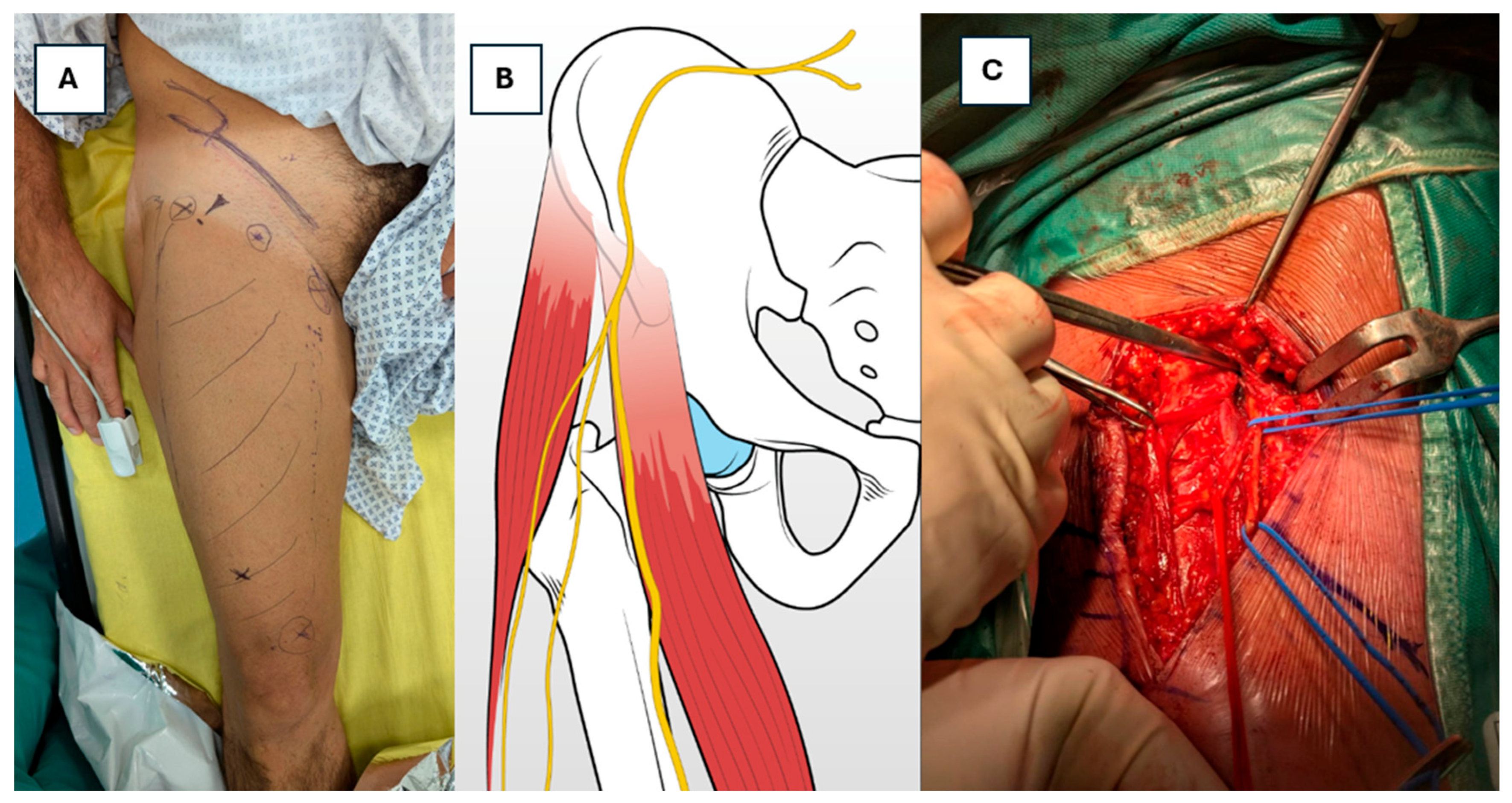
- Nerve Decompression: If diagnostic tests suggest that nerve injury is due to compression—either from scar tissue, hematoma, or other surgical complications—surgical nerve decompression may be necessary [21,36]. This procedure involves relieving the pressure on the nerve to restore its function and alleviate symptoms (Figure 3).
- Nerve Repair or Grafting: In the case of severe nerve damage, procedures like nerve repair or grafting may be required [24,36]. These surgical interventions are technically challenging and carry variable outcomes, with success rates depending on the extent of the nerve damage and on the timing of the intervention [36].
- Tendon Transfers: When conservative management does not yield sufficient recovery and chronic nerve damage is encountered, or when there are significant functional deficits that impair patients’ mobility and quality of life, tendon transfer procedures may be considered [21]. Most techniques were developed for poliomyelitis patients, and these can be applied to different districts. Tendons of the medial thigh, typically the adductor magnus [47], are transferred to contribute to knee extension, crucial for walking and weight-bearing activities. With functional surgery, at 6–12 months after surgery, the patient’s knee extension is partly restored, and ambulation is significantly improved [47]. Another frequent transfer is the posterior tibialis tendon for anterior tibialis, to contrast footdrop.
8. Prognosis
9. Conclusions
Author Contributions
Funding
Data Availability Statement
Conflicts of Interest
Abbreviations
| THA | Total Hip Arthroplasty |
| LFCN | Lateral Femoral Cutaneous Nerve |
| DAA | Direct Anterior Approach |
| DL | Direct Lateral Approach |
| PL | Posterolateral Approach |
| FN | Femoral Nerve |
| SGN | Superior Gluteal Nerve |
| SN | Sciatic Nerve |
| rTHA | Revision Total Hip Arthroplasty |
| DDH | Developmental Dysplasia of the Hip |
| ASIS | Anterior Superior Iliac Spine |
| EMG | Electromyography |
| NCS | Nerve Conduction Studies |
| MEP | Motor-Evoked Potential |
| NSAIDs | Nonsteroidal Anti-Inflammatory Drugs |
| HA | Hyaluronic Acid |
| GAP-43 | Growth-Associated Protein 43 |
| TNF-α | Tumor Necrosis Factor-alpha |
| IL-1β | Interleukin-1 beta |
References
- Fazio, A.; Di Martino, A.; Brunello, M.; Traina, F.; Marvi, M.V.; Mazzotti, A.; Faldini, C.; Manzoli, L.; Evangelisti, C.; Ratti, S. The involvement of signaling pathways in the pathogenesis of osteoarthritis: An update. J. Orthop. Transl. 2024, 47, 116–124. [Google Scholar] [CrossRef] [Scilit]
- Bhandari, M.; Swiontkowski, M. Management of Acute Hip Fracture. N. Engl. J. Med. 2017, 377, 2053–2062. [Google Scholar] [CrossRef] [Scilit]
- Di Martino, A.; Stefanini, N.; Brunello, M.; Bordini, B.; Pilla, F.; Geraci, G.; D’Agostino, C.; Ruta, F.; Faldini, C. Is the Direct Anterior Approach for Total Hip Arthroplasty Effective in Obese Patients? Early Clinical and Radiographic Results from a Retrospective Comparative Study. Medicina 2023, 59, 769. [Google Scholar] [CrossRef] [Scilit] [PubMed]
- Grosso, M.J.; Danoff, J.R.; Murtaugh, T.S.; Trofa, D.P.; Sawires, A.N.; Macaulay, W.B. Hemiarthroplasty for Displaced Femoral Neck Fractures in the Elderly Has a Low Conversion Rate. J. Arthroplast. 2017, 32, 150–154. [Google Scholar] [CrossRef] [Scilit] [PubMed]
- Di Martino, A.; Keating, C.; Butsick, M.J.; Platano, D.; Berti, L.; Hunter, L.N.; Faldini, C. Enhancing recovery: Surgical techniques and rehabilitation strategies after direct anterior hip arthroplasty. J. Orthop. Traumatol. 2024, 25, 45. [Google Scholar] [CrossRef] [Scilit]
- Viamont-Guerra, M.-R.; Saffarini, M.; Laude, F. Surgical Technique and Case Series of Total Hip Arthroplasty with the Hueter Anterior Approach for Crowe Type-IV Dysplasia. J. Bone Jt. Surg. Am. 2020, 102 (Suppl. S2), 99–106. [Google Scholar] [CrossRef] [Scilit]
- Petis, S.; Howard, J.L.; Lanting, B.L.; Vasarhelyi, E.M. Surgical approach in primary total hip arthroplasty: Anatomy, technique and clinical outcomes. Can. J. Surg. J. Can. Chir. 2015, 58, 128–139. [Google Scholar] [CrossRef] [Scilit] [PubMed]
- Shemesh, S.S.; Robinson, J.; Overley, S.; Bronson, M.J.; Moucha, C.S.; Chen, D. Novel technique for intraoperative sciatic nerve assessment in complex primary total hip arthroplasty: A pilot study. Hip Int. J. Clin. Exp. Res. Hip Pathol. Ther. 2018, 28, 210–217. [Google Scholar] [CrossRef] [Scilit]
- Christ, A.B.; Chiu, Y.; Joseph, A.; Westrich, G.H.; Lyman, S. Risk Factors for Peripheral Nerve Injury After 207,000 Total Hip Arthroplasties Using a New York State Database (Statewide Planning and Research Cooperative System). J. Arthroplast. 2019, 34, 1787–1792. [Google Scholar] [CrossRef] [Scilit]
- Shetty, T.; Nguyen, J.T.; Wu, A.; Sasaki, M.; Bogner, E.; Burge, A.; Cogsil, T.; Kim, E.U.; Cummings, K.; Su, E.P.; et al. Risk Factors for Nerve Injury After Total Hip Arthroplasty: A Case-Control Study. J. Arthroplast. 2019, 34, 151–156. [Google Scholar] [CrossRef] [Scilit]
- Macheras, G.A.; Christofilopoulos, P.; Lepetsos, P.; Leonidou, A.O.; Anastasopoulos, P.P.; Galanakos, S.P. Nerve injuries in total hip arthroplasty with a mini invasive anterior approach. Hip Int. J. Clin. Exp. Res. Hip Pathol. Ther. 2016, 26, 338–343. [Google Scholar] [CrossRef] [Scilit]
- Gala, L.; Kim, P.R.; Beaulé, P.E. Natural history of lateral femoral cutaneous nerve neuropraxia after anterior approach total hip arthroplasty. Hip Int. J. Clin. Exp. Res. Hip Pathol. Ther. 2019, 29, 161–165. [Google Scholar] [CrossRef] [Scilit]
- Phruetthiphat, O.-A.; Sangthumprateep, V.; Trakulngernthai, S.; Aegakkatajit, N.; Chotanaphuti, T.; Chanpoo, M. Functional outcome and complication following THA through modified direct anterior approach correlated to cadaveric study: Are there any differences in Asian hip? J. Orthop. Surg. 2021, 16, 513. [Google Scholar] [CrossRef] [Scilit]
- Almasi, J.; Ambrus, R.; Steno, B. Meralgia Paresthetica-An Approach Specific Neurological Complication in Patients Undergoing DAA Total Hip Replacement: Anatomical and Clinical Considerations. Life 2024, 14, 151. [Google Scholar] [CrossRef] [Scilit]
- Fleischman, A.N.; Rothman, R.H.; Parvizi, J. Femoral Nerve Palsy Following Total Hip Arthroplasty: Incidence and Course of Recovery. J. Arthroplast. 2018, 33, 1194–1199. [Google Scholar] [CrossRef] [Scilit] [PubMed]
- Starke, V.; Stofferin, H.; Mannschatz, S.; Hörmann, R.; Dammerer, D.; Thaler, M. The Anatomical Course of the Superior Gluteal Nerve With Regard to the Direct Anterior Approach for Primary and Revision Total Hip Arthroplasty. J. Arthroplast. 2021, 36, 1138–1142. [Google Scholar] [CrossRef] [Scilit] [PubMed]
- Yang, I.-H. Neurovascular Injury in Hip Arthroplasty. Hip Pelvis 2014, 26, 74–78. [Google Scholar] [CrossRef] [Scilit]
- Patton, R.S.; Runner, R.P.; Lyons, R.J.; Bradbury, T.L. Clinical Outcomes of Patients With Lateral Femoral Cutaneous Nerve Injury After Direct Anterior Total Hip Arthroplasty. J. Arthroplast. 2018, 33, 2919–2926.e1. [Google Scholar] [CrossRef] [Scilit]
- Ozaki, Y.; Homma, Y.; Baba, T.; Sano, K.; Desroches, A.; Kaneko, K. Spontaneous healing of lateral femoral cutaneous nerve injury and improved quality of life after total hip arthroplasty via a direct anterior approach. J. Orthop. Surg. 2017, 25, 2309499016684750. [Google Scholar] [CrossRef] [Scilit] [PubMed]
- Ishimatsu, T.; Kinoshita, K.; Nishio, J.; Tanaka, J.; Ishii, S.; Yamamoto, T. Motor-Evoked Potential Analysis of Femoral Nerve Status During the Direct Anterior Approach for Total Hip Arthroplasty. J. Bone Jt. Surg. Am. 2018, 100, 572–577. [Google Scholar] [CrossRef] [Scilit]
- Hasija, R.; Kelly, J.J.; Shah, N.V.; Newman, J.M.; Chan, J.J.; Robinson, J.; Maheshwari, A.V. Nerve injuries associated with total hip arthroplasty. J. Clin. Orthop. Trauma 2018, 9, 81–86. [Google Scholar] [CrossRef] [Scilit] [PubMed]
- Takada, R.; Jinno, T.; Miyatake, K.; Hirao, M.; Kimura, A.; Koga, D.; Yagishita, K.; Okawa, A. Direct anterior versus anterolateral approach in one-stage supine total hip arthroplasty. Focused on nerve injury: A prospective, randomized, controlled trial. J. Orthop. Sci. 2018, 23, 783–787. [Google Scholar] [CrossRef] [Scilit]
- van Oldenrijk, J.; Hoogland, P.V.J.M.; Tuijthof, G.J.M.; Corveleijn, R.; Noordenbos, T.W.H.; Schafroth, M.U. Soft tissue damage after minimally invasive THA. Acta Orthop. 2010, 81, 696–702. [Google Scholar] [CrossRef] [Scilit] [PubMed]
- Papalia, G.F.; Zampogna, B.; Torre, G.; Albo, E.; Villari, E.; Papalia, R.; Denaro, V. The role of patient surgical positioning on hip arthroplasty component placement and clinical outcomes: A systematic re-view and meta-analysis. Orthop. Rev. 2023, 15, 74116. [Google Scholar] [CrossRef] [Scilit]
- Kassolik, K.; Kurpas, D.; Wilk, I.; Uchmanowicz, I.; Hyży, J.; Andrzejewski, W. The effectiveness of massage in therapy for obturator nerve dysfunction as complication of hip joint alloplasty-case report. Rehabil. Nurs. Off. J. Assoc. Rehabil. Nurses 2014, 39, 311–320. [Google Scholar] [CrossRef] [Scilit] [PubMed]
- Zappe, B.; Glauser, P.M.; Majewski, M.; Stöckli, H.R.; Ochsner, P.E. Long-term prognosis of nerve palsy after total hip arthroplasty: Results of two-year-follow-ups and long-term results after a mean time of 8 years. Arch. Orthop. Trauma Surg. 2014, 134, 1477–1482. [Google Scholar] [CrossRef] [Scilit]
- Shubert, D.; Madoff, S.; Milillo, R.; Nandi, S. Neurovascular structure proximity to acetabular retractors in total hip arthroplasty. J. Arthroplast. 2015, 30, 145–148. [Google Scholar] [CrossRef] [Scilit]
- Ahmed, E.; Ibrahim, E.-G.; Ayman, B. Total hip arthroplasty with subtrochanteric osteotomy in neglected dysplastic hip. Int. Orthop. 2015, 39, 27–33. [Google Scholar] [CrossRef] [Scilit]
- Brunello, M.; Di Martino, A.; Ruta, F.; Ferri, R.; Rossomando, V.; D’Agostino, C.; Pederiva, D.; Schilardi, F.; Faldini, C. Which patient benefit most from minimally invasive direct anterior approach total hip arthroplasty in terms of perioperative blood loss? A retrospective comparative study from a cohort of patients with primary degenerative hips. Musculoskelet. Surg. 2023, 107, 431–437. [Google Scholar] [CrossRef] [Scilit]
- Di Martino, A.; Bordini, B.; Geraci, G.; Ancarani, C.; D’Agostino, C.; Brunello, M.; Guidotti, C.; Viceconti, M.; Faldini, C. Impact of previous lumbar spine surgery on total hip arthroplasty and vice versa: How long should we be concerned about mechanical failure? Eur. Spine J. 2023, 32, 2949–2958. [Google Scholar] [CrossRef] [Scilit]
- Di Martino, A.; Geraci, G.; Brunello, M.; D’Agostino, C.; Davico, G.; Curreli, C.; Traina, F.; Faldini, C. Hip-spine relationship: Clinical evidence and biomechanical issues. Arch. Orthop. Trauma Surg. 2024, 144, 1821–1833. [Google Scholar] [CrossRef] [Scilit]
- Rudin, D.; Manestar, M.; Ullrich, O.; Erhardt, J.; Grob, K. The Anatomical Course of the Lateral Femoral Cutaneous Nerve with Special Attention to the Anterior Approach to the Hip Joint. J. Bone Jt. Surg. Am. 2016, 98, 561–567. [Google Scholar] [CrossRef] [Scilit]
- Zechmann, J.P.; Reckling, F.W. Association of preoperative hip motion and sciatic nerve palsy following total hip arthroplasty. Clin. Orthop. Relat. Res. 1989, 241, 197–199. [Google Scholar] [CrossRef] [Scilit]
- Stefanini, N.; Pederiva, D.; Brunello, M.; Geraci, G.; Pilla, F.; Capozzi, E.; Di Martino, A.; Faldini, C. Acetabular screws placement in primary and revision total hip arthroplasty: A narrative review. Arch. Orthop. Trauma Surg. 2025, 145, 354. [Google Scholar] [CrossRef] [Scilit] [PubMed]
- Butler, J.; Singleton, A.; Miller, R.; Morse, B.; Naylor, B.; DeCook, C. Bikini Incision vs Longitudinal Incision for Anterior Total Hip Arthroplasty: A Systematic Review. Arthroplast. Today 2022, 17, 1–8. [Google Scholar] [CrossRef] [Scilit]
- Chughtai, M.; Khlopas, A.; Gwam, C.U.; Elmallah, R.K.; Thomas, M.; Nace, J.; Mont, M.A. Nerve Decompression Surgery After Total Hip Arthroplasty: What Are the Outcomes? J. Arthroplast. 2017, 32, 1335–1339. [Google Scholar] [CrossRef] [Scilit] [PubMed]
- Tsurumi, Y.; Hagiwara, S.; Horikoshi, T.; Yokota, H.; Kurosawa, R.; Matsumoto, K.; Masuda, Y.; Kawarai, Y.; Nakamura, J.; Eguchi, Y.; et al. Leg position effects on the femoral neurovascular bundle location during a direct anterior approach total hip arthroplasty: A radiographic study. BMC Musculoskelet. Disord. 2023, 24, 824. [Google Scholar] [CrossRef] [Scilit]
- Unis, D.B.; Hawkins, E.J.; Alapatt, M.F.; Benitez, C.L. Postoperative changes in the tensor fascia lata muscle after using the modified anterolateral approach for total hip arthroplasty. J. Arthroplast. 2013, 28, 663–665. [Google Scholar] [CrossRef] [Scilit]
- Yi, C.; Agudelo, J.F.; Dayton, M.R.; Morgan, S.J. Early complications of anterior supine intermuscular total hip arthroplasty. Orthopedics 2013, 36, e276–e281. [Google Scholar] [CrossRef] [Scilit]
- Faldini, C.; Traina, F.; Pilla, F.; D’Agostino, C.; Brunello, M.; Morandi Guaitoli, M.; Di Martino, A. For many but not for all: The bikini incision direct anterior approach for total hip arthroplasty. A narrative review. J. Orthop. Traumatol. 2024, 25, 66. [Google Scholar] [CrossRef] [Scilit]
- Di Martino, A.; Brunello, M.; Rossomando, V.; Pederiva, D.; Schilardi, F.; Stefanini, N.; Geraci, G.; Faldini, C. Aesthetic Results, Functional Outcome and Radiographic Analysis in THA by Direct Anterior, Bikini and Postero-Lateral Approach: Is It Worth the Hassle? J. Clin. Med. 2023, 12, 1072. [Google Scholar] [CrossRef] [Scilit] [PubMed]
- Satcher, R.L.; Noss, R.S.; Yingling, C.D.; Ressler, J.; Ries, M. The use of motor-evoked potentials to monitor sciatic nerve status during revision total hip arthroplasty. J. Arthroplast. 2003, 18, 329–332. [Google Scholar] [CrossRef] [Scilit] [PubMed]
- Pritchett, J.W. Outcome of surgery for nerve injury following total hip arthroplasty. Int. Orthop. 2018, 42, 289–295. [Google Scholar] [CrossRef] [Scilit] [PubMed]
- Ni, L.; Yao, Z.; Zhao, Y.; Zhang, T.; Wang, J.; Li, S.; Chen, Z. Electrical stimulation therapy for peripheral nerve injury. Front. Neurol. 2023, 14, 1081458. [Google Scholar] [CrossRef] [Scilit]
- Oldenburg, M.; Müller, R.T. The frequency, prognosis and significance of nerve injuries in total hip arthroplasty. Int. Orthop. 1997, 21, 1–3. [Google Scholar] [CrossRef] [Scilit]
- Mekaj, A.; Mekaj, Y.; Mekaj, A.; Mekaj, Y. The Role of Pharmacological Agents in Nerve Regeneration after Peripheral Nerve Repair. In Peripheral Nerve Regeneration—From Surgery to New Therapeutic Approaches Including Biomaterials and Cell-Based Therapies Development; IntechOpen: London, UK, 2017. [Google Scholar] [CrossRef] [Scilit]
- Siotos, C.; Rezania, N.; Karas, V.; Fontes, R.B.; Kurlander, D.E. Tendon Transfers for Knee Extension Following Femoral Nerve Injury After Hip Arthroplasty. Arthroplast. Today 2024, 27, 101427. [Google Scholar] [CrossRef] [Scilit]



| Involved Nerve | Surgical Approach | Clinical Complications | ||
|---|---|---|---|---|
| DAA | DL | PL | ||
| Lateral femoral cutaneous nerve [12,13,14] | 2–81% | Low | Rare | Meralgia paresthetica |
| Femoral nerve [15] | 0.01–2.3% | 0.01–2.3% | Rare | Quadriceps weakness, anterior thigh pain |
| Superior gluteal nerve [16] | 0.3–1% | 0.3–1% | Rare | Trendelenburg gait, abductor weakness |
| Sciatic nerve [11,17] | Low | Low-to-Moderate | 0.2–2.8% | Foot drop, posterior leg paresthesia |
| Obturator nerve | Rare | Rare | Rare | Weakness in adduction, gait instability |
| Category | Risk Factor | Approximate Proportion/Reported Measure | Relative Impact |
|---|---|---|---|
| Clinical factors | Female sex | Increased incidence compared to males | Low |
| Age < 50 years | ≈7-fold higher risk | High | |
| Obesity | Increased technical difficulty | Moderate | |
| Pre-existing spinal disease (double-crush phenomenon) | Qualitative increase | Moderate | |
| Anatomy-associated factors | Developmental dysplasia of the hip (DDH) | ≈4-fold increased odds | High |
| Post-traumatic arthritis | ≈3.4-fold increased odds | High | |
| Limb lengthening > 3–4 cm | ≈28% increased risk | Moderate–High | |
| Aberrant nerve course/anatomical variations | Not quantifiable | Moderate | |
| Surgery-associated factors | Revision total hip arthroplasty | Incidence up to 7.6% | High |
| Prolonged surgical time | Qualitative increase | Moderate | |
| Low surgeon volume | Risk reduction ≈ 13% for every 50 THAs/year increase | Moderate | |
| Surgical approach | Variable according to nerve at risk | Low–Moderate |
| Nerve Involved | Main Clinical Features | Clinical Examination (Bedside Assessment) | Electrophysiological Studies (NCS/EMG) | Imaging and Additional Tests |
|---|---|---|---|---|
| Lateral femoral cutaneous nerve (LFCN) | Paresthesia, numbness, or burning pain over the anterolateral thigh (meralgia paresthetica) | Sensory mapping of the anterolateral thigh; palpation near the ASIS; symptom reproduction with hip extension | Often normal; may support diagnosis in selected cases | High-resolution ultrasound to assess entrapment or scar tissue |
| Femoral nerve | Quadriceps weakness, reduced or absent patellar reflex, anterior thigh sensory loss | Manual muscle testing of knee extension; patellar reflex evaluation | NCS/EMG to confirm injury and assess axonal loss (optimal ≥3–4 weeks after injury) | MRI or ultrasound to exclude psoas or iliacus hematoma |
| Sciatic nerve | Foot drop, posterior leg pain or sensory loss, weakness of ankle dorsiflexion or plantarflexion | Strength testing of ankle and toe movements; sensory examination; gait assessment | NCS/EMG for localization and severity assessment | MRI or ultrasound to identify compressive lesions or entrapment |
| Superior gluteal nerve | Hip abductor weakness, Trendelenburg gait | Trendelenburg test; hip abductor strength testing | EMG of gluteus medius and minimus muscles | MRI to evaluate muscle denervation or atrophy |
| Obturator nerve | Medial thigh sensory deficit, adductor muscle weakness | Manual testing of hip adduction; gait analysis | EMG of adductor muscles | MRI or ultrasound if compression is suspected |
| Treatment | Clinical Indication | Prognosis/Expected Outcome |
|---|---|---|
| Conservative Management | First-line option for most nerve injuries | High success in mild cases; symptoms often resolve within 3–6 months (especially LFCN) |
| Targeted Physical Therapy | Muscle strengthening, mobility recovery, prevention of contractures | Improved functional outcomes with adherence; tailored to nerve affected |
| Neuroregenerative Pharmacotherapy | Support axonal regeneration and reduce fibrosis (e.g., tacrolimus, B12) | Promising results in preclinical and early clinical studies |
| Neuromuscular Stimulation | Enhance muscle reinnervation, reduce pain | Moderate improvement in strength and pain over 3–6 months |
| Interventional Pain Management/Decompression | Persistent pain or compression; failure of conservative treatment > 12 months | Good prognosis with early surgical decompression |
| Surgical Repair/Grafting/Tendon Transfers | Severe axonal loss, irreversible deficits | Variable outcomes: tendon transfer may restore key functions (e.g., knee extension, foot dorsiflexion) |
Disclaimer/Publisher’s Note: The statements, opinions and data contained in all publications are solely those of the individual author(s) and contributor(s) and not of MDPI and/or the editor(s). MDPI and/or the editor(s) disclaim responsibility for any injury to people or property resulting from any ideas, methods, instructions or products referred to in the content. |
© 2026 by the authors. Licensee MDPI, Basel, Switzerland. This article is an open access article distributed under the terms and conditions of the Creative Commons Attribution (CC BY) license.
Share and Cite
Di Martino, A.; Brunello, M.; Giannini, I.; Morandi Guaitoli, M.; Di Censo, C.; Pilla, F.; Faldini, C. A Nerve Injury After Total Hip Arthroplasty from Etiology to Treatment: A Narrative Review. J. Clin. Med. 2026, 15, 563. https://doi.org/10.3390/jcm15020563
Di Martino A, Brunello M, Giannini I, Morandi Guaitoli M, Di Censo C, Pilla F, Faldini C. A Nerve Injury After Total Hip Arthroplasty from Etiology to Treatment: A Narrative Review. Journal of Clinical Medicine. 2026; 15(2):563. https://doi.org/10.3390/jcm15020563
Chicago/Turabian StyleDi Martino, Alberto, Matteo Brunello, Isabella Giannini, Manuele Morandi Guaitoli, Chiara Di Censo, Federico Pilla, and Cesare Faldini. 2026. "A Nerve Injury After Total Hip Arthroplasty from Etiology to Treatment: A Narrative Review" Journal of Clinical Medicine 15, no. 2: 563. https://doi.org/10.3390/jcm15020563
APA StyleDi Martino, A., Brunello, M., Giannini, I., Morandi Guaitoli, M., Di Censo, C., Pilla, F., & Faldini, C. (2026). A Nerve Injury After Total Hip Arthroplasty from Etiology to Treatment: A Narrative Review. Journal of Clinical Medicine, 15(2), 563. https://doi.org/10.3390/jcm15020563