“Demanding, but Worth It”: The Parental Experience of Home-Based Vojta Therapy for Children Presenting Global Developmental Delay—A Qualitative Study Using Photo-Elicitation

 ,
,  ,
,  , ,
, ,  ,
,  and
and
Abstract
1. Introduction
2. Materials and Methods
2.1. Design
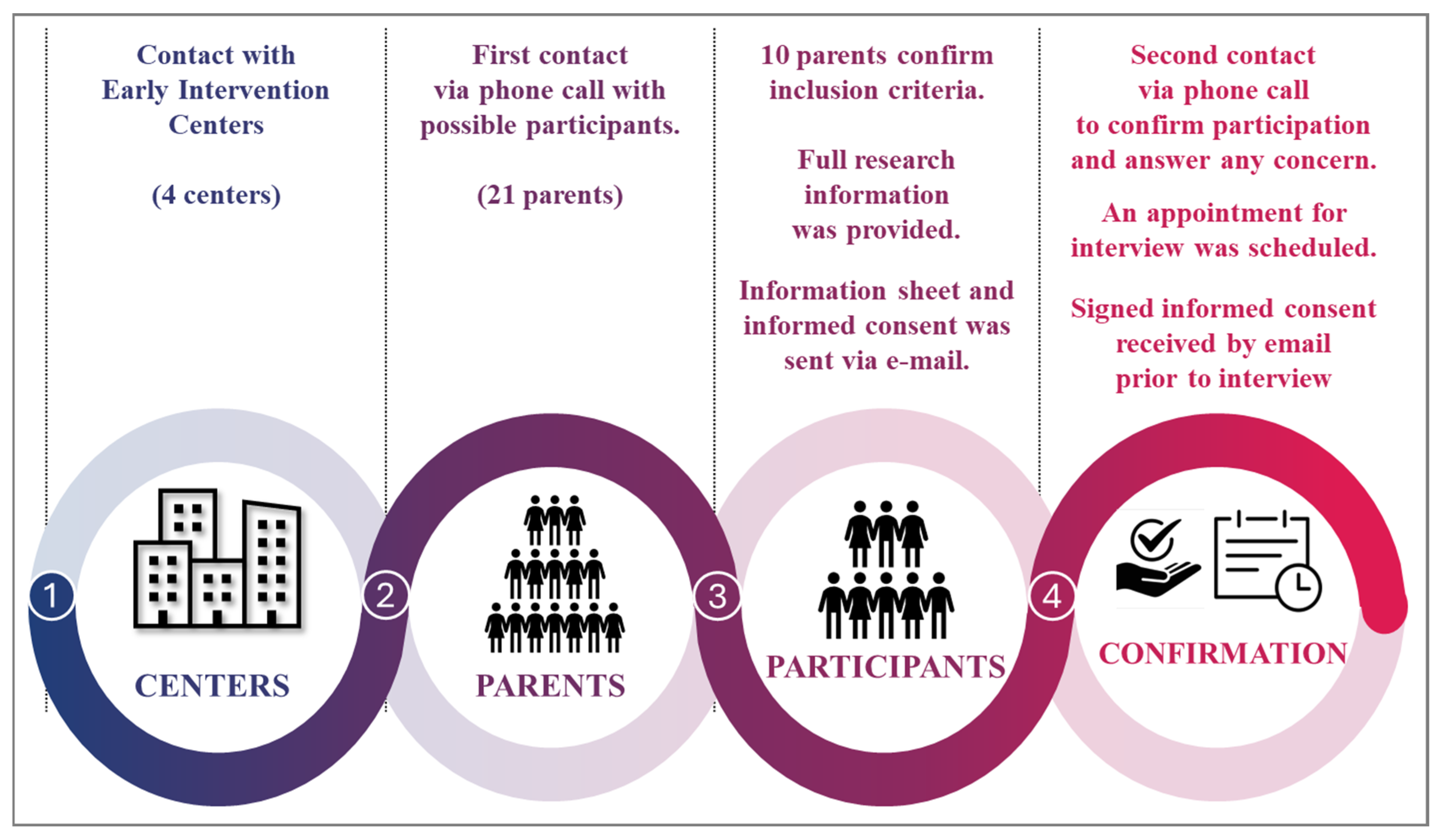
2.2. Participants, Sampling Strategies and Recruitment Procedure
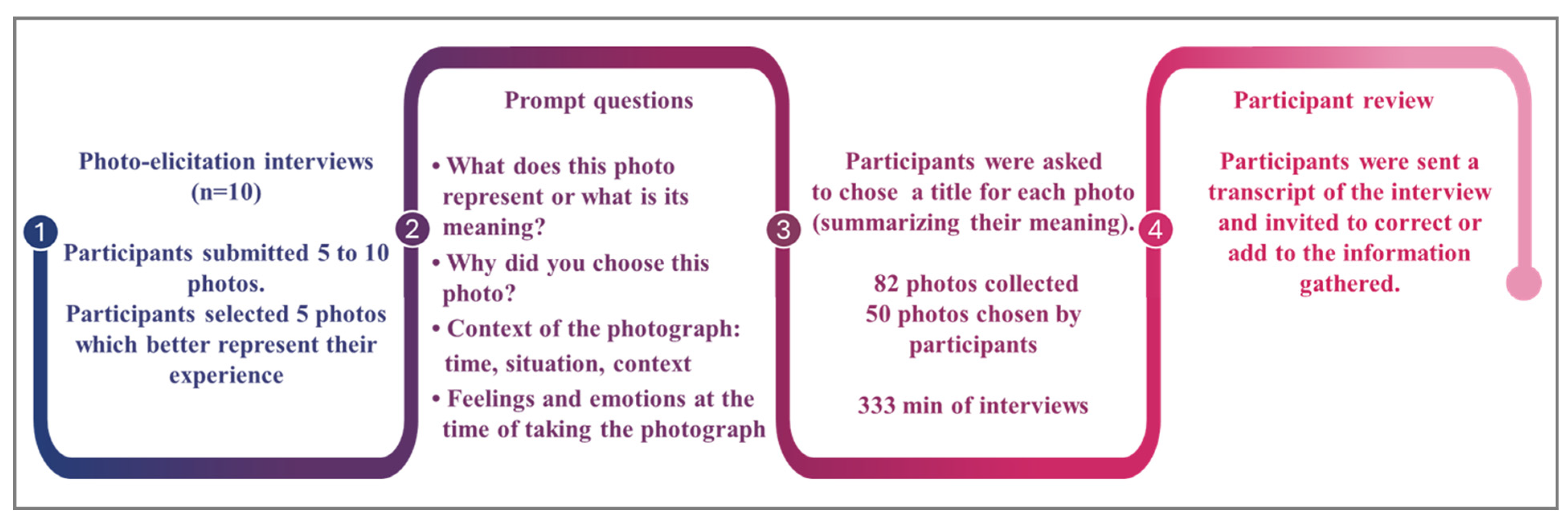
2.3. Data Collection and Procedures
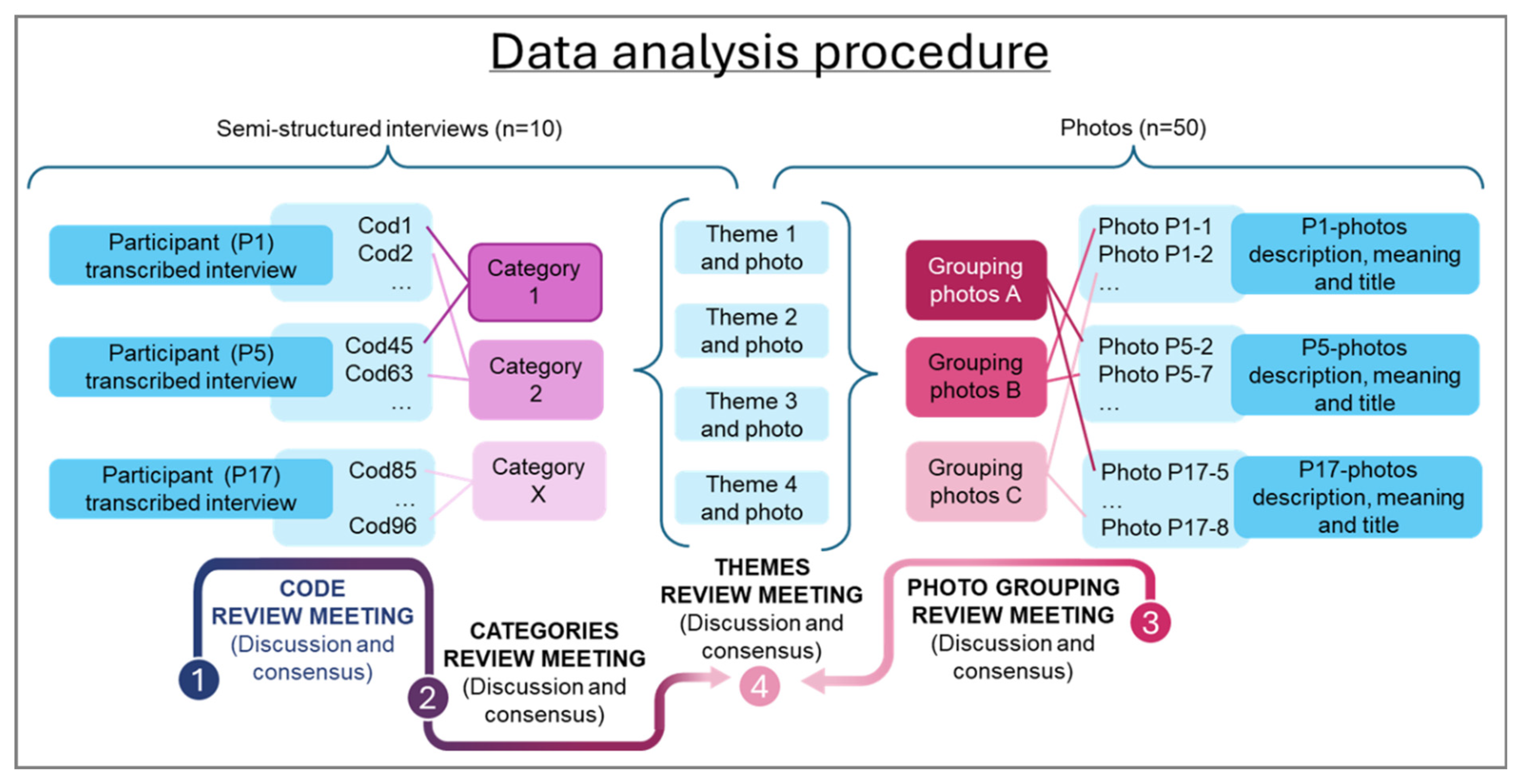
2.4. Data Analysis
2.5. Rigor
2.6. Ethics
3. Results
3.1. Crying During Therapy
3.2. Emotional Rollercoaster
3.3. The Effort Is Worthwhile
3.4. Hope
4. Discussion
4.1. Limitations and Strengths
4.2. Implications for Practice
5. Conclusions
Supplementary Materials
Author Contributions
Funding
Institutional Review Board Statement
Informed Consent Statement
Data Availability Statement
Conflicts of Interest
Abbreviations
| EIC | Early Intervention Centers |
| GDD | Global developmental delay |
| HBP | Home Based Program |
| VT | Vojta Therapy |
| PE | Photo-elicitation |
References
- American Psychiatric Association. Diagnostic and Statistical Manual of Mental Disorders; American Psychiatric Association Publishing: Washington, DC, USA, 2022. [Google Scholar]
- Taboada, E.M.; Iglesias, P.M.; López, S.; Rivas, R.M. Neurodevelopmental Difficulties as a Comprehensive Construct of Learning Disabilities in Children with Developmental Delay: A Systematic Review. An. Psicol. 2020, 36, 271–282. [Google Scholar]
- Armstrong, R.; Pieterse, M. The Development and Feasibility of a Manualised Therapeutic Playgroup for Children with Developmental Delay. J. Child Fam. Stud. 2021, 30, 1–16. [Google Scholar] [CrossRef]
- Hsu, Y.; Kang, J. Effects of Therapeutic Exercise Intensity on Cerebral Palsy Outcomes: A Systematic Review with Meta-Regression of Randomized Clinical Trials. Front. Neurol. 2019, 10, 657. [Google Scholar] [CrossRef]
- Tinderholt Myrhaug, H.; Østensjø, S. Intensive Training of Motor Function and Functional Skills Among Young Children with Cerebral Palsy: A Systematic Review and Meta-Analysis. BMC Pediatr. 2014, 14, 292. [Google Scholar] [CrossRef]
- Maier, M.; Ballester, B. Principles of Neurorehabilitation After Stroke Based on Motor Learning and Brain Plasticity Mechanisms. Front. Syst. Neurosci. 2019, 13, 74. [Google Scholar] [CrossRef]
- Aaron, C.; Chiarello, L. Relationships Among Family Participation, Team Support, and Intensity of Early Intervention Services. Phys. Occup. Ther. Pediatr. 2014, 34, 343–355. [Google Scholar] [CrossRef]
- Novak, I.; Berry, J. Home Program Intervention Effectiveness Evidence. Phys. Occup. Ther. Pediatr. 2014, 34, 384–389. [Google Scholar] [CrossRef] [PubMed]
- Beckers, L.; Geijen, M. Feasibility and Effectiveness of Home-Based Therapy Programmes for Children with Cerebral Palsy: A Systematic Review. BMJ Open 2020, 10, e035454. [Google Scholar] [CrossRef] [PubMed]
- Novak, I.; Cusick, A. Home Programmes in Paediatric Occupational Therapy for Children with Cerebral Palsy: Where to Start? Aust. Occup. Ther. J. 2006, 53, 251–264. [Google Scholar] [CrossRef]
- Sakzewski, L.; Ziviani, J. Delivering Evidence-Based Upper Limb Rehabilitation for Children with Cerebral Palsy: Barriers and Enablers Identified by Three Pediatric Teams. Phys. Occup. Ther. Pediatr. 2014, 34, 368–383. [Google Scholar] [CrossRef]
- Sánchez-González, J.; Sanz-Esteban, I. Critical Review of the Evidence for Vojta Therapy: A Systematic Review and Meta-Analysis. Front. Neurol. 2024, 15, 1391448. [Google Scholar] [CrossRef] [PubMed]
- Ptak, M.; Dębiec-Bąk, A. Assessment of Viscoelastic Parameters of Muscles in Children Aged 4–9 Months with Minor Qualitative Impairment of the Motor Pattern after Vojta Therapy Implementation. Int. J. Environ. Res. Public Health 2022, 19, 10448. [Google Scholar] [CrossRef]
- Ha, S.Y.; Sung, Y.H. Changes of Neural Pathways after Vojta Approach in a Child with Developmental Delay. Children 2021, 8, 918. [Google Scholar] [CrossRef]
- Qian, X.; Perzanowska, A. Exploring the Impact of Home-Based Vojta Therapy on Gait Performance in Individuals with Down Syndrome: A Preliminary Feasibility Study. Front. Neurol. 2025, 16, 1537635. [Google Scholar] [CrossRef]
- Juárez-Albuixech, M.; Redondo-González, J. Feasibility and Efficacy of the Vojta Therapy in Subacromial Impingement Syndrome: A Randomized Controlled Trial. J. Exerc. Rehabil. 2021, 17, 256. [Google Scholar] [CrossRef] [PubMed]
- Trafalska, A.; Paprocka-Borowicz, M. The Role of the Vojta Method in Diagnosing and Enhancing Motor Skills in Preterm Infants: A Prospective Open-Label Controlled Study. Med. Sci. Monit. 2025, 31, e945495. [Google Scholar] [CrossRef]
- Strojek, K.; Wójtowicz, M. Assessment of the Emotional State of Parents of Children Starting the Vojta Therapy in the Context of the Physical Activity—A Pilot Study. Int. J. Environ. Res. Public Health 2022, 19, 10691. [Google Scholar] [CrossRef]
- Jung, T.; Landenberger, M. Vojta Therapy and Neurodevelopmental Treatment in Children with Infantile Postural Asymmetry: A Randomised Controlled Trial. J. Phys. Ther. Sci. 2016, 29, 301–306. [Google Scholar] [CrossRef]
- Vojta, V. The Basic Elements of Treatment According to Vojta. In Management of the Motor Disorders of Children with Cerebral Palsy; Mac Keith Press: London, UK, 1984; pp. 128–160. [Google Scholar]
- García-Bravo, C.; Martínez-Piédrola, R. Living with and Managing Seizures Among Parents of Children Diagnosed with Phelan-McDermid Syndrome: A Qualitative Study Using In-Depth Interviews. Eur. J. Pediatr. 2023, 183, 253. [Google Scholar] [CrossRef]
- Materula, A.; Currie, J. Needs of Children with Neurodevelopmental Disorders and Medical Complexity: Caregiver Perspectives. Res. Dev. Disabil. 2024, 153, 104815. [Google Scholar] [CrossRef] [PubMed]
- King, G.; Pozniak, K. The Experiences of Parents of Children with Disabilities Receiving Healthcare Services: Negative Emotions and Associated Situations. Res. Dev. Disabil. 2024, 156, 104896. [Google Scholar] [CrossRef]
- Øberg, G.; Sørvoll, M. A Systematic Synthesis of Qualitative Studies on Parents’ Experiences of Participating in Early Intervention Programs with Their Infant Born Preterm. Front. Psychol. 2023, 14, 1172578. [Google Scholar] [CrossRef]
- Ochandorena-Acha, M.; Noell-Boix, R. Experiences and Coping Strategies of Preterm Infants’ Parents and Parental Competences After Early Physiotherapy Intervention: Qualitative Study. Physiother. Theory Pract. 2020, 38, 1174. [Google Scholar] [CrossRef] [PubMed]
- Demeke, T.; Assefa, N. Home-Based Therapy and Its Determinants for Children with Cerebral Palsy, Exploration of Parents’ and Physiotherapists’ Perspective, a Qualitative Study, Ethiopia. PLoS ONE 2023, 18, e0282328. [Google Scholar] [CrossRef] [PubMed]
- Pérez-De La Cruz, S.; Ramírez, A. Parents’ Perceptions Regarding the Implementation of a Physical Therapy Stimulation Program for Children with Disabilities in Bolivia: A Qualitative Study. Int. J. Environ. Res. Public Health 2020, 17, 6409. [Google Scholar] [CrossRef]
- Medina-Mirapeix, F.; Lillo-Navarro, C. Predictors of Parents’ Adherence to Home Exercise Programs for Children with Developmental Disabilities, Regarding Both Exercise Frequency and Duration: A Survey Design. Eur. J. Phys. Rehabil. Med. 2017, 53, 545. [Google Scholar] [CrossRef]
- Lillo-Navarro, C.; Montilla-Herrador, J. Factors Associated with Parents’ Adherence to Different Types of Exercises in Home Programs for Children with Disabilities. J. Clin. Med. 2019, 8, 456. [Google Scholar] [CrossRef]
- Kim, H.; Tuck, A. Caregivers’ Perceptions on Caregiver-Implemented Intervention and Coaching. Early Child. Res. Q. 2025, 70, 264–273. [Google Scholar] [CrossRef]
- Verhaegh, J.; Nuijen, M. Parents’ Experiences with a Home-Based Upper Limb Training Program Using a Video Coaching Approach for Infants and Toddlers with Unilateral Cerebral Palsy: A Qualitative Interview Study. BMC Pediatr. 2022, 22, 3432. [Google Scholar] [CrossRef]
- Fàbregues, S.; Fetters, M. Fundamentals of Case Study Research in Family Medicine and Community Health. Fam. Med. Com. Health 2019, 7, e000074. [Google Scholar] [CrossRef]
- Fraser, S.; Mays, N. Case Studies; Qualitative Research in Health Care; John Wiley & Sons, Ltd.: Chichester, UK, 2020; pp. 181–191. [Google Scholar]
- Miles, M.B.; Huberman, A.M. Qualitative Data Analysis: A Methods Sourcebook; Sage Publications: Thousand Oaks, CA, USA, 2014. [Google Scholar]
- Moser, A.; Korstjens, I. Series: Practical Guidance to Qualitative Research. Part 3: Sampling, Data Collection and Analysis. Eur. J. Gen. Pract. 2018, 24, 9–18. [Google Scholar] [CrossRef]
- Vasileiou, K.; Barnett, J. Characterising and Justifying Sample Size Sufficiency in Interview-Based Studies: Systematic Analysis of Qualitative Health Research Over a 15-Year Period. BMC Med. Res. Methodol. 2018, 18, 148. [Google Scholar] [CrossRef]
- Braun, V.; Clarke, V. Conceptual and Design Thinking for Thematic Analysis. Qual. Psychol. 2022, 9, 3–26. [Google Scholar] [CrossRef]
- Hennink, M.M.; Kaiser, B.N. Sample Sizes for Saturation in Qualitative Research: A Systematic Review of Empirical Tests. Soc. Sci. Med. 2021, 292, 114523. [Google Scholar] [CrossRef] [PubMed]
- Bogetz, J.; Oslin, D. A Photo-Narrative Intervention for Children with Severe Neurological Impairment in the PICU. J. Pain Symptom Manag. 2024, 69, 319. [Google Scholar] [CrossRef] [PubMed]
- Hepperlen, R.; Rabaey, P. Caring for a Child with a Disability in a Zambian Community: A Study Using Photo-Elicitation. Child Care Health Dev. 2021, 47, 422–434. [Google Scholar] [CrossRef]
- Eisen, S.; Cunningham, C. Conducting Participatory Photography with Children with Disabilities: A Literature Review. Disabil. Rehabil. 2018, 41, 1943. [Google Scholar] [CrossRef]
- Frith, H.; Harcourt, D. Using Photographs to Capture Women’s Experiences of Chemotherapy: Reflecting on the Method. Qual. Health Res. 2014, 17, 1340. [Google Scholar] [CrossRef]
- Gill, S. About Research-Qualitative Data Collection: Photo Elicitation. J. Hum. Lact. 2024, 40, 503. [Google Scholar] [CrossRef]
- Oliffe, J.; Bottorff, J. Further Than the Eye Can See? Photo Elicitation and Research with Men. Qual. Health Res. 2007, 17, 850. [Google Scholar] [CrossRef]
- Padgett, D.; Smith, B. A Picture Is Worth…? Photo Elicitation Interviewing with Formerly Homeless Adults. Qual. Health Res. 2013, 23, 1435–1444. [Google Scholar] [CrossRef]
- Church, S.; Quilter, J. Consideration of Methodological Issues When Using Photo-Elicitation in Qualitative Research. Nurse Res. 2021, 29, 25–32. [Google Scholar]
- Creswell, J.W.; Creswell Baez, J. 30 Essential Skills for the Qualitative Researcher, 2nd ed.; Sage: Thousand Oaks, CA, USA, 2021. [Google Scholar]
- Jack, A.; Phoenix, C. Qualitative Health Research in the Fields of Developmental Medicine and Child Neurology. Dev. Med. Child Neurol. 2022, 64, 830. [Google Scholar] [CrossRef]
- Korstjens, I.; Moser, A. Series: Practical Guidance to Qualitative Research. Part 4: Trustworthiness and Publishing. Eur. J. Gen. Pract. 2017, 24, 120. [Google Scholar] [CrossRef]
- O’Brien, B.; Harris, I. Standards for Reporting Qualitative Research. Acad. Med. 2014, 89, 1245. [Google Scholar] [CrossRef]
- Tong, A.; Sainsbury, P. Consolidated Criteria for Reporting Qualitative Research (COREQ): A 32-Item Checklist for Interviews and Focus Groups. Int. J. Qual. Health Care 2007, 19, 349. [Google Scholar] [CrossRef]
- Lillo-Navarro, C.; Medina-Mirapeix, F. Parents of Children with Physical Disabilities Perceive That Characteristics of Home Exercise Programs and Physiotherapists’ Teaching Styles Influence Adherence: A Qualitative Study. J. Physiother. 2015, 61, 81. [Google Scholar] [CrossRef] [PubMed]
- Gustafsson, E.; Levréro, F. Fathers Are Just as Good as Mothers at Recognizing the Cries of Their Baby. Nat. Commun. 2013, 4, 2713. [Google Scholar] [CrossRef] [PubMed]
- Gmmash, A.; Effgen, S. Parental Adherence to Home Activities in Early Intervention for Young Children With Delayed Motor Development. Phys. Ther. 2021, 101, pzab023. [Google Scholar] [CrossRef] [PubMed]
- Menéndez-Pardiñas, C.; Alonso-Bidegaín, M. Effects of Vojta Therapy on the Motor Function of Children with Neuromotor Disorders: Study Protocol for a Randomized Controlled Trial. J. Clin. Med. 2023, 12, 7373. [Google Scholar] [CrossRef]
- Lee, Y.; Lee, S. Experiences of Family Resource Utilization Among Taiwanese Parents of Children with Developmental Delay. J. Pediatr. Nurs. 2020, 53, e204. [Google Scholar] [CrossRef] [PubMed]
- Thompson-Hodgetts, S.; Ortega, A. “It Makes Me a Better Person”: The Unique Experiences of Parenting Multiple Children Who Experience Neurodevelopmental Disability. Res. Dev. Disabil. 2024, 147, 104697. [Google Scholar] [CrossRef] [PubMed]
- Fäldt, J.; Fängström, K. “Of Course You Crash”: Parenting a Young Child with Neurodevelopmental Difficulties. Res. Dev. Disabil. 2024, 153, 104825. [Google Scholar] [CrossRef]
- Buckley, L.; Harford, J. Parent Perspectives of Engaging with a Community Paediatric Clinic with Linked Child Development Supports in a Disadvantaged Area of Ireland. J. Child Health Care 2025, 29, 424–443. [Google Scholar] [CrossRef]
- Zahle, J. Bias and Debiasing Strategies in Qualitative Data Collection. Philos. Sci. 2025, 92, 606–623. [Google Scholar] [CrossRef]
- Lim, W.M. What Is Qualitative Research? An Overview and Guidelines. Australas. Mark. J. 2024, 33, 199–229. [Google Scholar] [CrossRef]
- Hagaman, A.; Rhodes, E.C.; Aloe, C.F.; Hennein, R.; Peng, M.L.; Deyling, M.; Georgescu, M.; Nyhan, K.; Schwartz, A.; Zhou, K.; et al. How Are Qualitative Methods Used in Implementation Science Research? Results From a Systematic Scoping Review. Implement. Res. Pract. 2025, 6, 26334895251367470. [Google Scholar] [CrossRef]
- Meuleman, Y.; Schade van Westrum, E.; Bos, W.J.W.; Mooijaart, S.P.; van Buren, M.; Tripepi, G.; Stel, V.S.; Jager, K.J.; Zoccali, C.; Dekker, F.W. Designing qualitative research with value in the clinical and epidemiological context: What, why and how. Clin. Kidney J. 2024, 18, sfae422. [Google Scholar] [CrossRef] [PubMed]



| Criteria | Techniques Performed |
|---|---|
| Credibility | Researcher triangulation: each interview was analysed by two researchers. Subsequently, interdisciplinary team meetings were held in which the analyses were compared and themes identified. |
| Triangulation of data collection methods: information from PE interviews was compared with researchers’ field notes. | |
| Participant checking: all participants were offered the opportunity to review the transcripts to confirm their content. None of the participants made any corrections or additional comments. | |
| Transferability | In-depth descriptions of the study were made, detailing the characteristics of the researchers, participants, sampling strategies and data collection and analysis procedures. |
| Dependability | Audit by an external researcher: an external researcher evaluated the study’s research protocol, focusing on aspects related to the methods applied and the study design. |
| Confirmability | Researcher and data collection triangulation: Researcher reflexivity was encouraged through reflective reporting. |
| Participants | 10 Participants (3 Fathers, 7 Mothers) |
|---|---|
| Age of participants | Mean: 42.40 years (SD 4.93) |
| Work situation | Active: n = 5 Leave of absence: n = 3 Parental leave: n = 2 |
| Number of children | Only child: n = 5 More than one child: n = 5 |
| Educational status | College education: n = 10 |
| Time in Vojta Therapy | Between 2 and 3 months: n = 5 Between 3 months and 1 year: n = 5 |
| Child’s age | Less than 6 months old: n = 2 More than 6 months and less than a year old: n = 5 Older than a year: n = 3 |
 |
| Title: “Prevent crying from being heard” PE9-Photo5 “We close the door to perform the exercise because….well, ….he cries a lot” (PE9) “It was a cry of (makes crying sound) like a protest, it was a cry of «leave me alone», it was not a loud cry” (PE3) “He cries….as you force him to do a certain movement that is difficult for him, so that he gets better...heals” (PE5) “Yes, yes, the guy fights, he fights it, because he doesn’t like it, well, he cries as much as he can” (PE6) “Well, it bothers him, because... like everyone when we go to the gym, it bothers us, you see, nobody likes it. I understand him. It’s like going to the gym to do 500 sit-ups. When you’ve already done 100, you say, «look, screw it, I’m going home to have a coffee»“ (PE7). “Yes, it stops, it stops right away, I mean, right away… a few seconds after you stop doing it, [he] stops [crying]” (PE8) “The child cries a lot. It is true that we know that he only cries during the exercise; when you release him, he stops crying” (PE9) “Look, it is supposed to be normal for it not to hurt, he has to feel uncomfortable to achieve results, but it doesn’t have to hurt” (PE10) |
 |
| Title: “Emotional roller coaster” PE8-Photo 5 “Well, it’s an emotional roller coaster, with therapy, with its ups and downs. With its moments of hope and its moments of discouragement. It depends a lot on the results you get, because sometimes it’s rewarding, and other times you think it’s not worth much.” (PE8) “Emotional cyclogenesis, is like a contradiction between ideas and emotions, right? You get a lump in your throat when you go there. You know it is going to be a bad time, but you go because you know it is going to do good. It is contradictory” (PE5) “Well, I have a bad time (lowers her tone), I don’t like seeing her cry, I DON’T LIKE seeing her cry. But I accept that it’s something that’s good for my daughter and that it must be that way.” (PE10) “Being exhausted in the morning and then seeing her reach a new milestone, makes me want to keep fighting” (PE2) “VT hit the nail on the head” (PE7) |
 |
| Title: “The effort of everyday life” PE7-Photo4 “I look at my daughter with pride. She is working, even if she doesn’t like it. Her effort is leading her to grow, to move more and better, to improve little by little every day. She makes me proud” (PE7-Photo4). “It represents my daughter’s effort, and also the effort we make as a family. But above all, it represents the girl’s, who at the end is the one who has shown us this. With help, with the right help, she has managed to walk, and she’s progressing, and quite quickly, according to what the physiotherapists tell me.” (PE7) “Well (Name of his son)’s work, perseverance, dedication, effort, and discipline every day.” (PE8). “For me, this represents progress. I’m seeing that the child is making progress in the work we’re doing. We’re achieving significant improvements. The photo was a way of representing the progress.” (PE6) “We struggle to perform VT outside the home environment, it is an effort, it is not as natural, you lose your routine” (PE3) “Prepare yourself for VT, because it is not easy at all. It is extremely hard work which exhausted me” (PE2) “I realize how much effort it requires. When he gets up and you see all the sweat he produces on the stretcher and I see him sweating, I realize how much effort it takes and how willing my son is to exercise.” (PE4). “Well, it is not as easy as it seems! then you must do it at home. If you don’t know how to do it, you are lost” (PE10) “Even though the journey is difficult, in the end, you reap the fruits of your labour” (PE5) “On the first day of therapy, the child cried a lot. But as he was on his tummy, the improvement became evident immediately. He stood up much more. He had a hard time, but it was worth it” (PE9) |
 |
| Title: “The end of the road” PE5-Photo7 “I took this photo a while ago after finishing a hike, a steep and difficult path, but with a rainbow at the end. The end is worth it! Right? You know? Especially with a view to when I finish the therapy. Even though the path is difficult, in the end, you’ll get your reward. Uh...the fruits of labour.” (PE5-photo7) “[VT] has given us hope, because we have seen its effectiveness. It is the hope that someone gives you when they say, -come on, I will help you--“ (PE7) “We are inside the room where we do therapy, this is the window of that room, outside there is the school, where normal everyday life takes place, which is what we want, for my son to be able to run, jump, have a job….That window is our goal for the future.” (PE8) |
Disclaimer/Publisher’s Note: The statements, opinions and data contained in all publications are solely those of the individual author(s) and contributor(s) and not of MDPI and/or the editor(s). MDPI and/or the editor(s) disclaim responsibility for any injury to people or property resulting from any ideas, methods, instructions or products referred to in the content. |
© 2025 by the authors. Licensee MDPI, Basel, Switzerland. This article is an open access article distributed under the terms and conditions of the Creative Commons Attribution (CC BY) license.
Share and Cite
San-Martín-Gómez, A.; Cano-de-la-Cuerda, R.; Jiménez-Antona, C.; Viana-Meireles, L.G.; Salcedo-Perez-Juana, M.; Pérez-Corrales, J.; Palacios-Ceña, D. “Demanding, but Worth It”: The Parental Experience of Home-Based Vojta Therapy for Children Presenting Global Developmental Delay—A Qualitative Study Using Photo-Elicitation. J. Clin. Med. 2026, 15, 45. https://doi.org/10.3390/jcm15010045
San-Martín-Gómez A, Cano-de-la-Cuerda R, Jiménez-Antona C, Viana-Meireles LG, Salcedo-Perez-Juana M, Pérez-Corrales J, Palacios-Ceña D. “Demanding, but Worth It”: The Parental Experience of Home-Based Vojta Therapy for Children Presenting Global Developmental Delay—A Qualitative Study Using Photo-Elicitation. Journal of Clinical Medicine. 2026; 15(1):45. https://doi.org/10.3390/jcm15010045
Chicago/Turabian StyleSan-Martín-Gómez, Ana, Roberto Cano-de-la-Cuerda, Carmen Jiménez-Antona, Livia Gomes Viana-Meireles, María Salcedo-Perez-Juana, Jorge Pérez-Corrales, and Domingo Palacios-Ceña. 2026. "“Demanding, but Worth It”: The Parental Experience of Home-Based Vojta Therapy for Children Presenting Global Developmental Delay—A Qualitative Study Using Photo-Elicitation" Journal of Clinical Medicine 15, no. 1: 45. https://doi.org/10.3390/jcm15010045
APA StyleSan-Martín-Gómez, A., Cano-de-la-Cuerda, R., Jiménez-Antona, C., Viana-Meireles, L. G., Salcedo-Perez-Juana, M., Pérez-Corrales, J., & Palacios-Ceña, D. (2026). “Demanding, but Worth It”: The Parental Experience of Home-Based Vojta Therapy for Children Presenting Global Developmental Delay—A Qualitative Study Using Photo-Elicitation. Journal of Clinical Medicine, 15(1), 45. https://doi.org/10.3390/jcm15010045