Graduated Compression Stockings for Thromboprophylaxis in Orthopaedic and Trauma Surgery: A Rapid Review and Meta-Analysis



Abstract
1. Introduction
2. Materials and Methods
2.1. Search Methods
2.2. Primary Endpoint
2.3. Secondary Endpoints
2.4. Data Abstraction
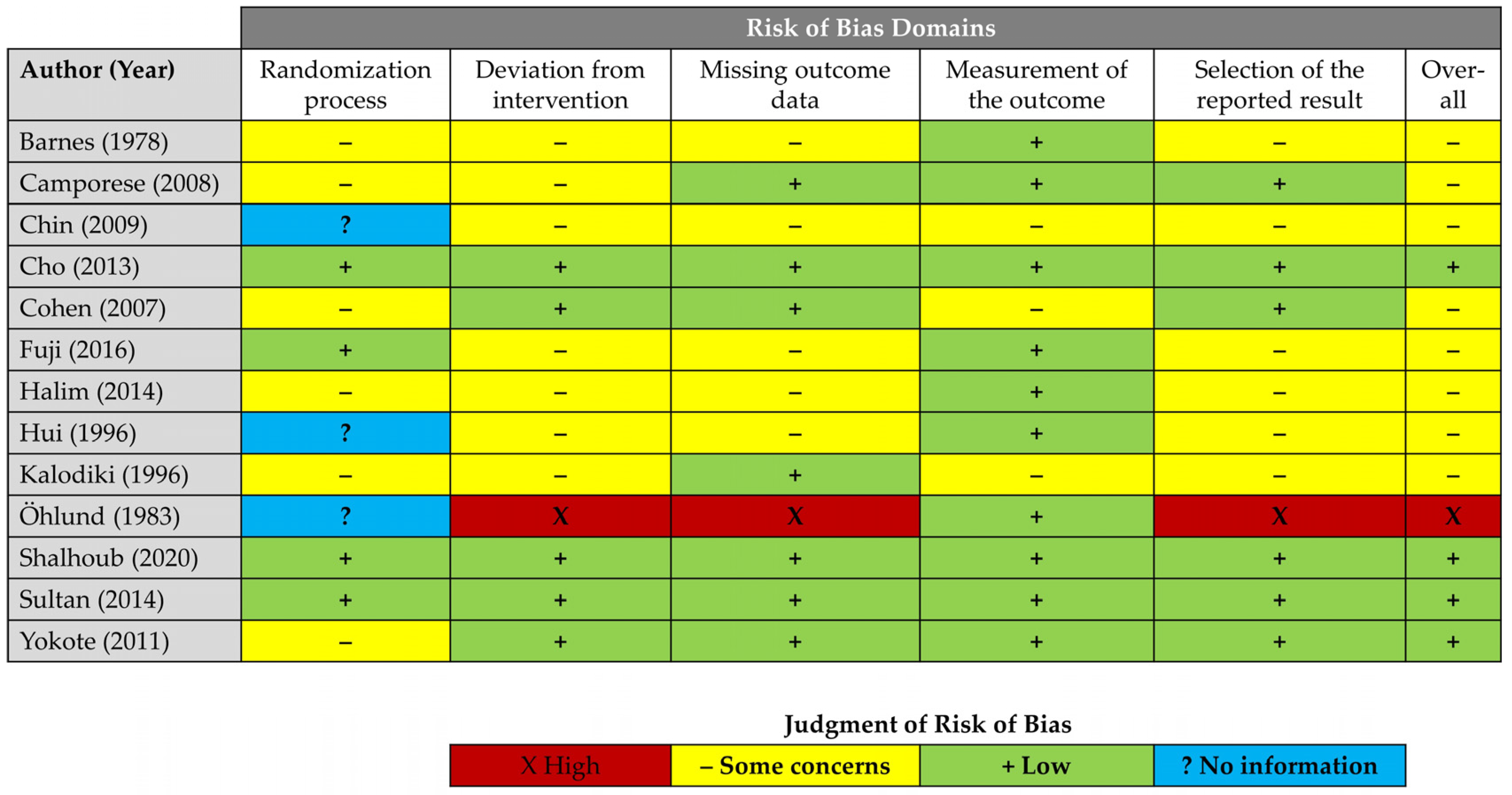
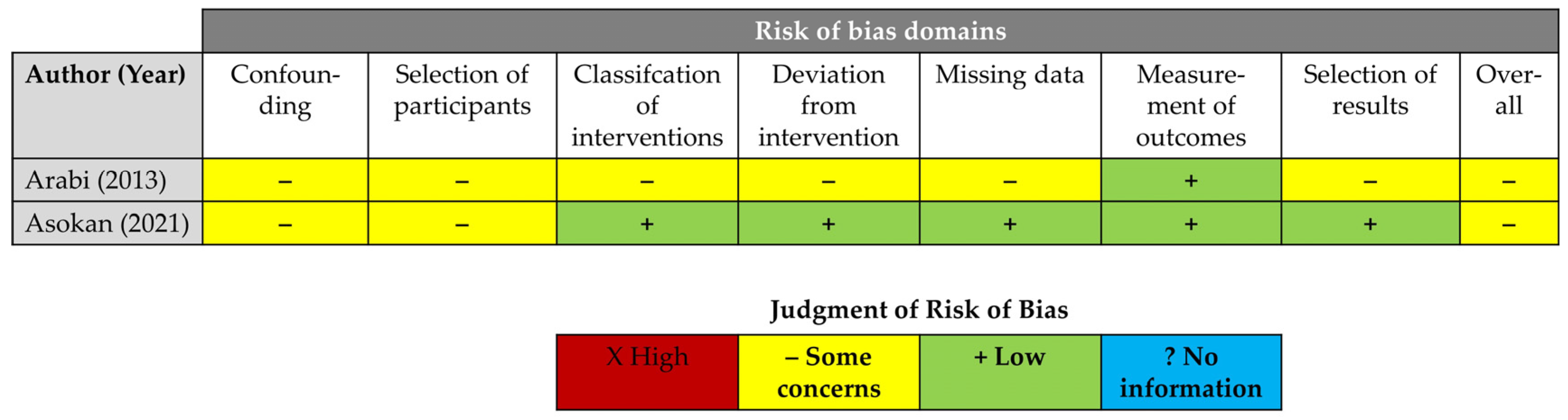
2.5. Grading of Methodological Quality
2.6. Statistical Analysis
- The trial profile was tabulated in detail, including sample sizes, demographic information (i.e., age and gender), the condition of interest (i.e., general trauma, fractures, total joint arthroplasty, arthroscopy, spine surgery, and others), individual interventions, and primary and secondary endpoints.
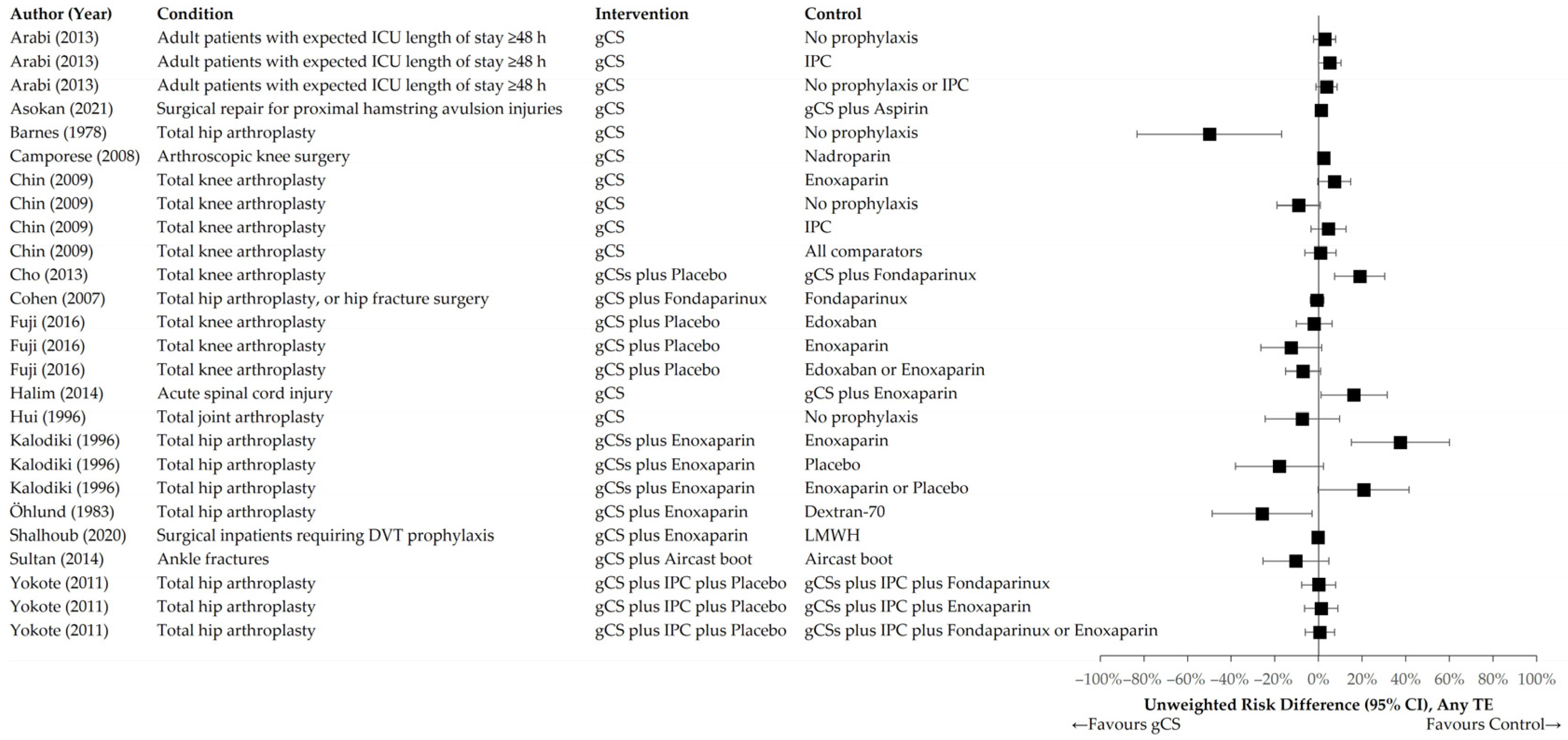
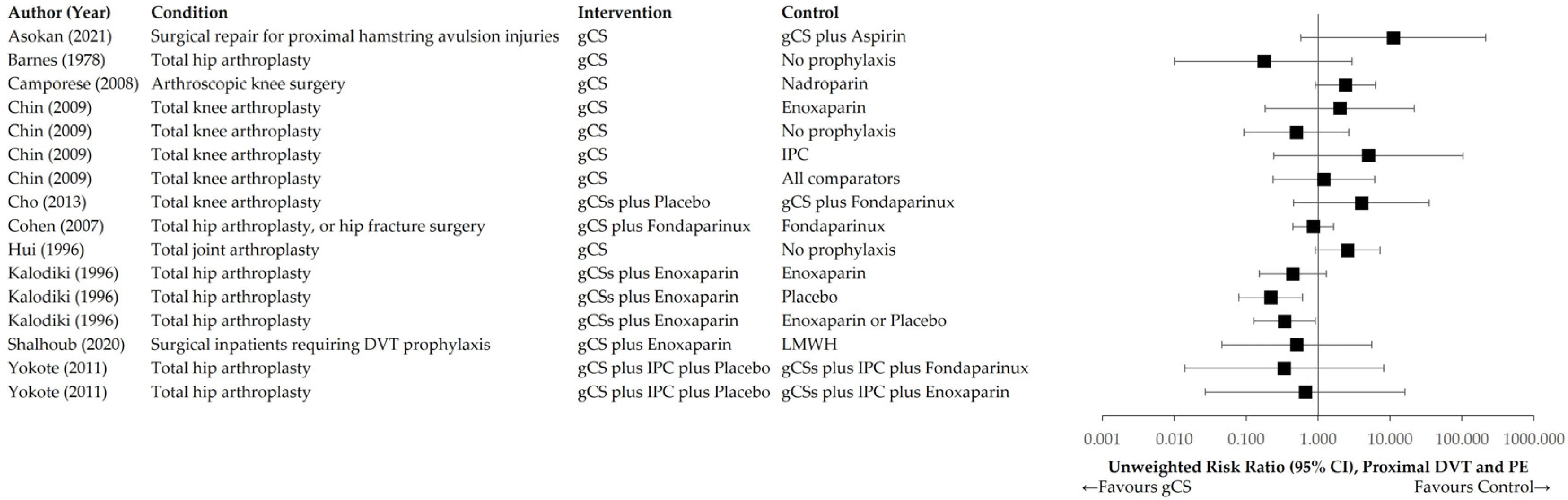
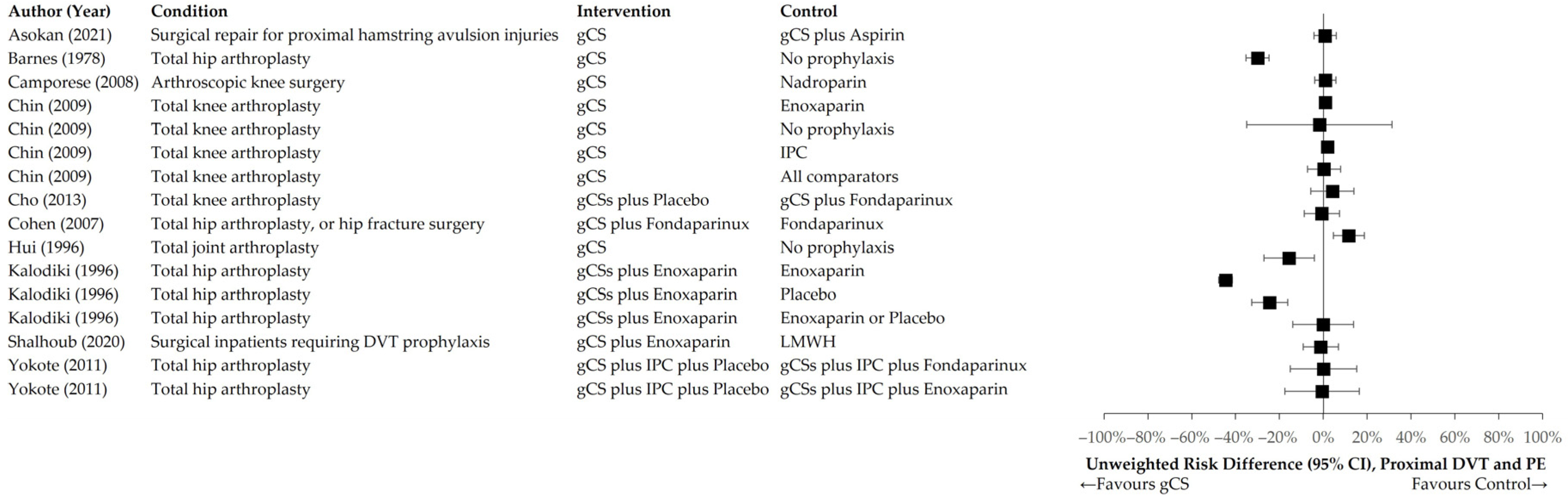
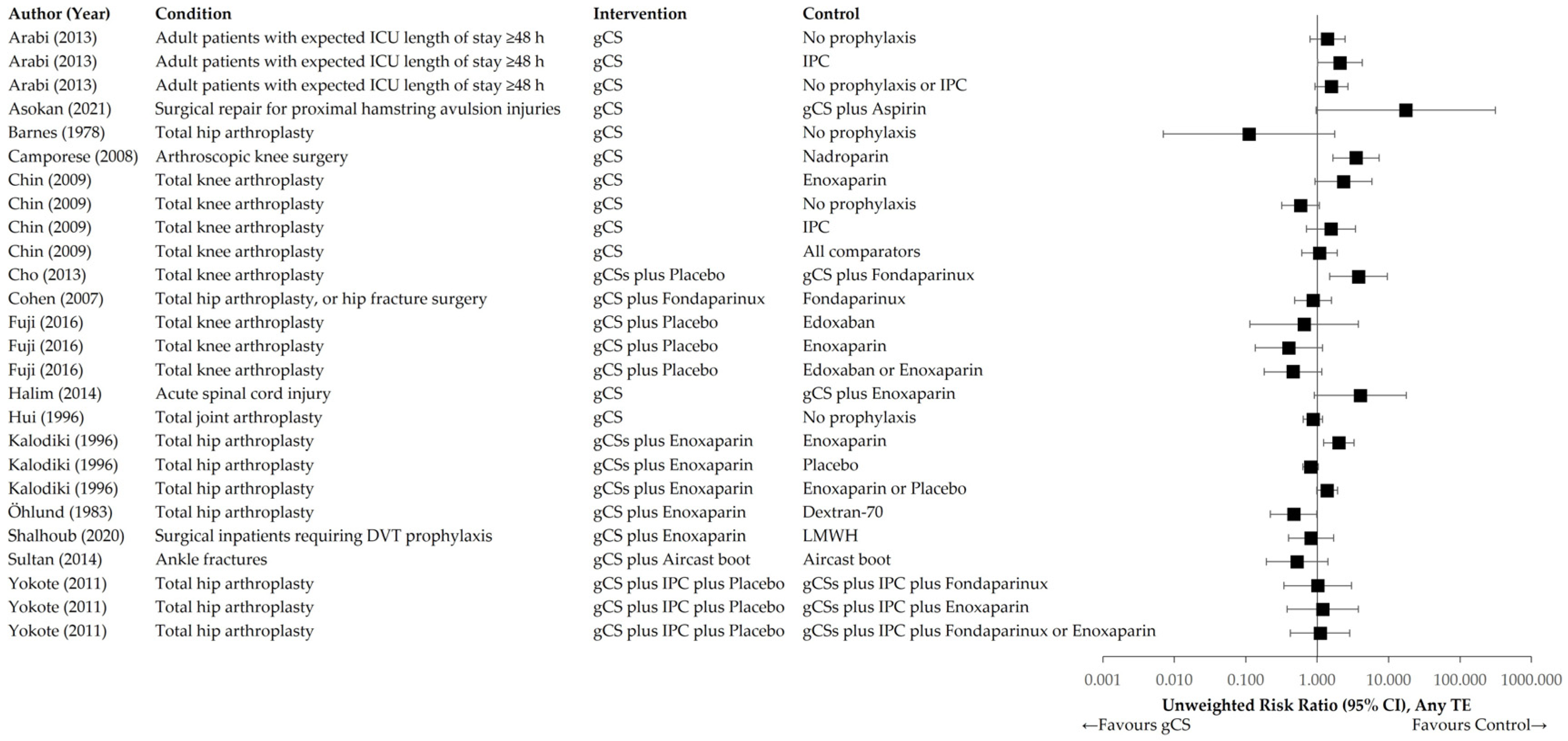
- Unweighted individual risk ratios (RR) and risk differences (RD) were illustrated by forest plots for each study and each comparison (as some trials had three or four arms or comparators, e.g., gCS only, LMWH, Fondaparinux, and placebo, and even intermittent pneumatic compression or a combination of methods), and for both the primary endpoint (i.e., any TE), and the secondary endpoint of proximal DVT and/or PE. This was carried out to provide readers with a comprehensive overview of the distribution of effects.
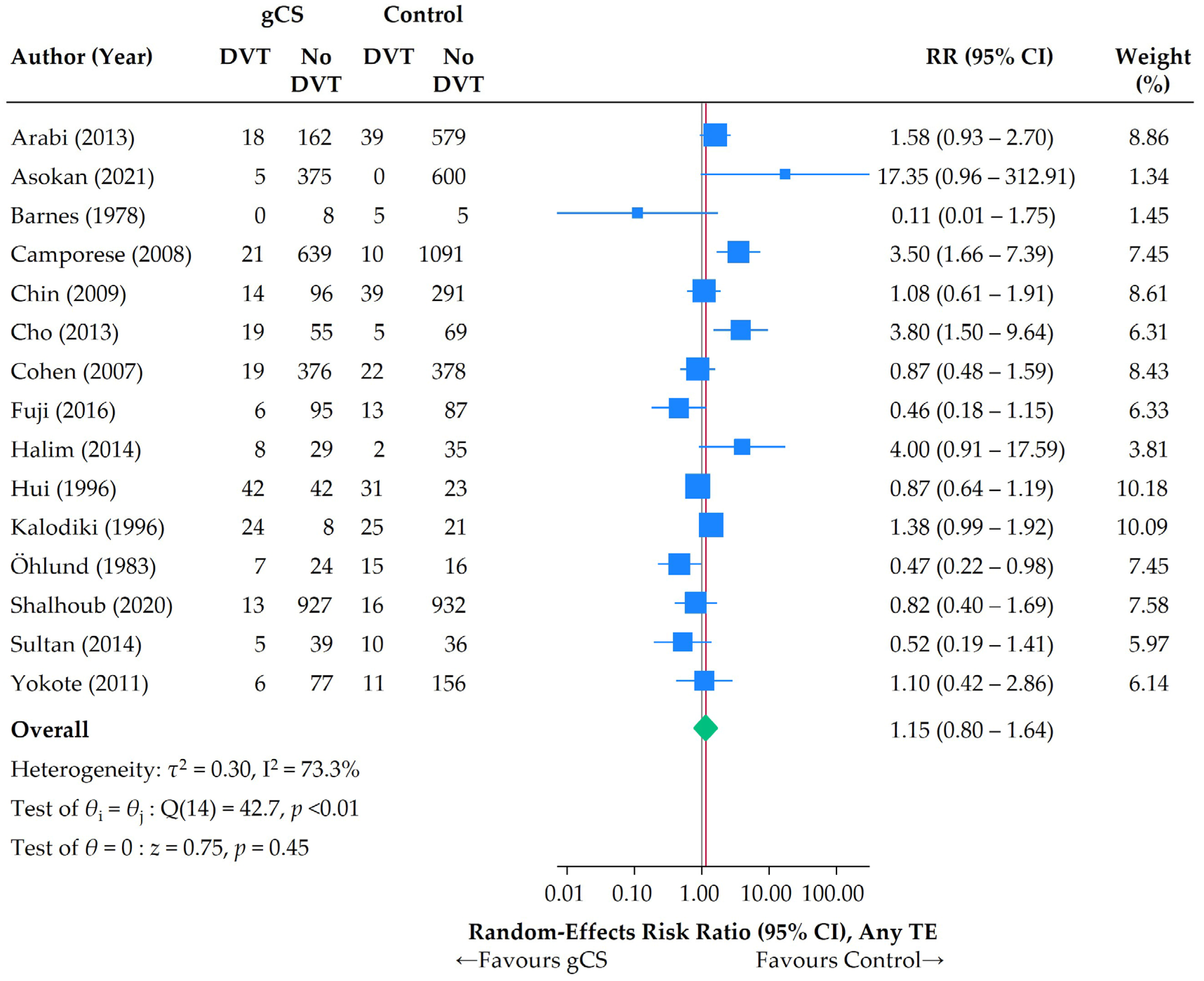
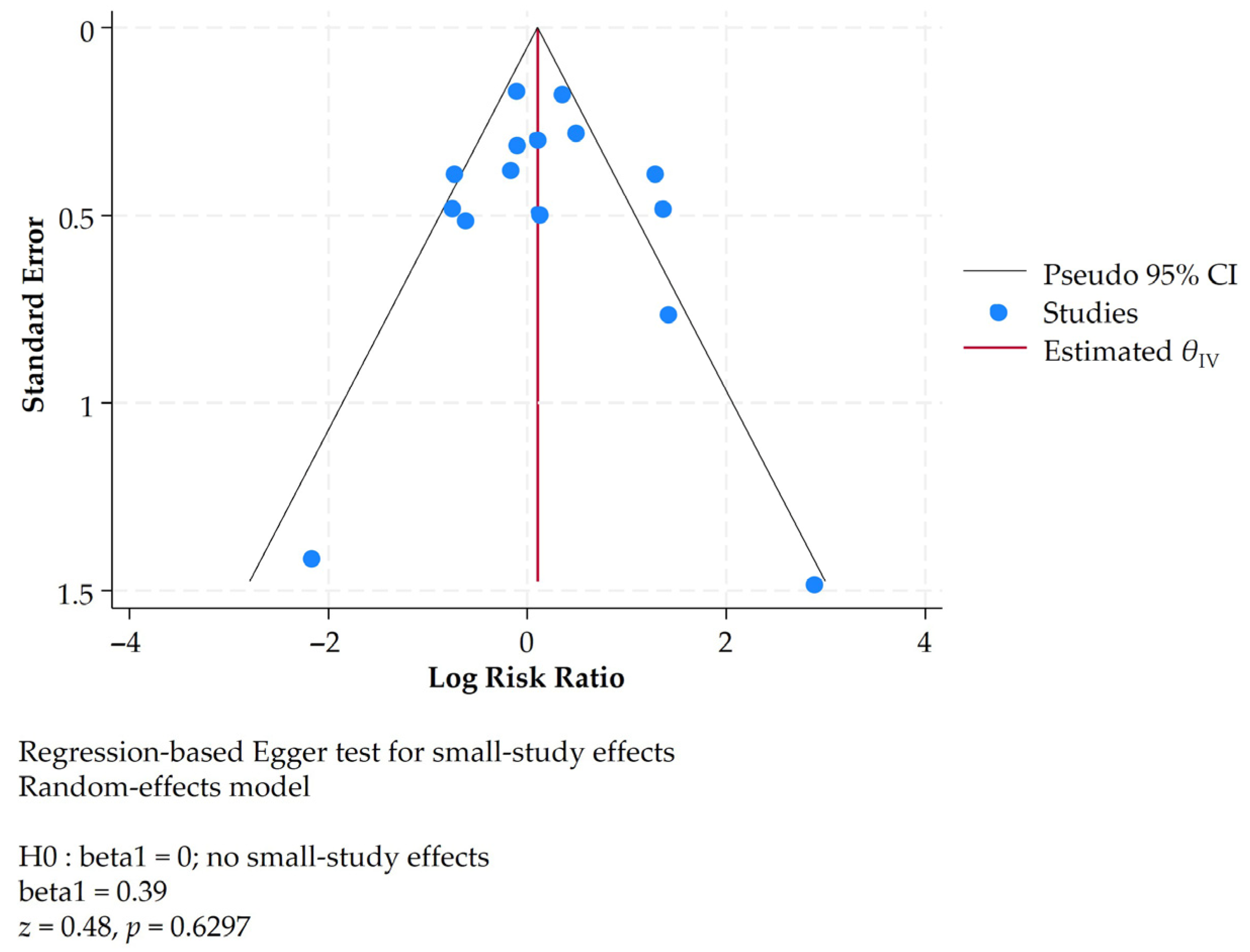
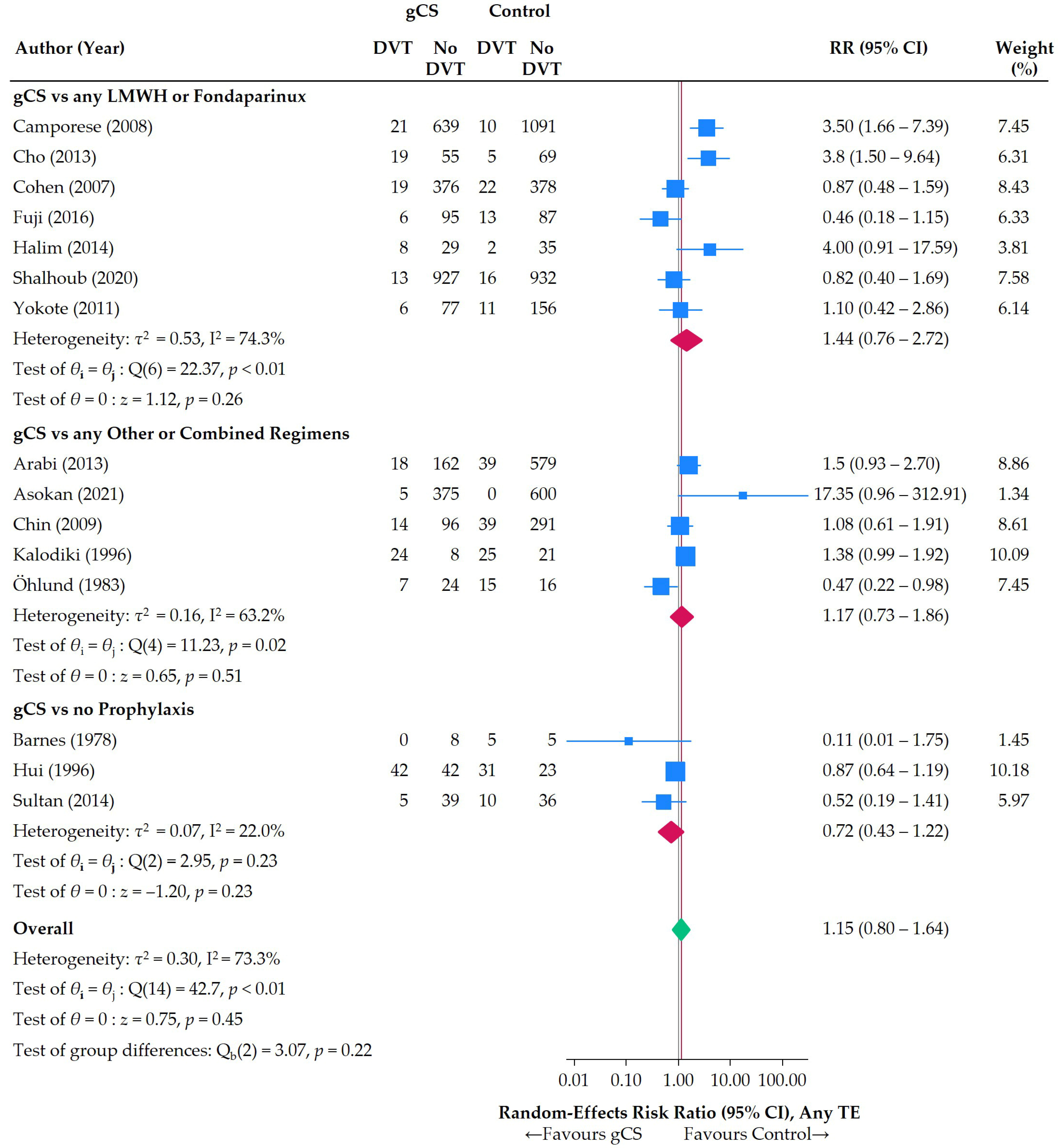
- A complete random-effects meta-analysis using RR as the effect size was conducted only on the full sample of trials and studies for the primary endpoint of any TE. This included forest plots of individual and pooled RR with 95% confidence intervals (CI), funnel plots to illustrate potential publication bias, and Egger’s tests. We reasoned that for both clinically and healthcare system-relevant decisions, this was the most crucial analysis. We added pooled RR estimates for secondary endpoints and RD estimates to calculate the Numbers Needed to Treat (NNT) without further analyses of possible publication bias.
- The results from the subgroup mentioned above and the sensitivity analyses were reported in a tabular format.
2.7. Use of AI
3. Results
3.1. Search Results, Risk of Bias, and Study Profile
- Are gCS superior to no prophylaxis in preventing TE (a situation that is almost absent today)?
- Are gCS, as a mechanical method, not inferior to pharmacological TE prophylaxis (we considered this to be unlikely based on the data and clinical experience)?
- Do gCS provide any additional benefit to anticoagulants in reducing the risk of TE?
3.2. Quantitative Findings
3.3. Further Analyses
4. Discussion
4.1. General Findings
4.2. Limitations
5. Conclusions
Author Contributions
Funding
Institutional Review Board Statement
Informed Consent Statement
Data Availability Statement
Conflicts of Interest
Abbreviations
| CI | Confidence Interval |
| DVT | Deep Vein Thrombosis |
| gCS | Graduated Compression Stockings |
| LMWH | Low-Molecular-Weight Heparins |
| RD | Risk Difference |
| RR | Risk Ratio |
| TE | Thromboembolism |
Appendix A

| 1 | (thromb$ or embol$).mp. [mp = ti, ab, hw, tn, ot, dm, mf, dv, kf, fx, dq, bt, nm, ox, px, rx, ui, sy, ux, mx] | 2,319,193 |
| 2 | (orthop$ or trauma$ or injur$ or fracture$ or arthrosc$ or total joint or arthroplast$ or replace$ or spin$ or pelv$).mp. [mp = ti, ab, hw, tn, ot, dm, mf, dv, kf, fx, dq, bt, nm, ox, px, rx, ui, sy, ux, mx] | 8,488,434 |
| 3 | 1 and 2 | 384,931 |
| 4 | (prophyla$ or prevent$ or protect$).mp. [mp = ti, ab, hw, tn, ot, dm, mf, dv, kf, fx, dq, bt, nm, ox, px, rx, an, ui, sy, ux, mx] | 9,015,694 |
| 5 | 3 and 4 | 97,143 |
| 6 | (stocking$ or compress$ or pneumat$).mp. [mp = ti, ab, hw, tn, ot, dm, mf, dv, kf, fx, dq, bt, nm, ox, px, rx, an, ui, sy, ux, mx] | 621,766 |
| 7 | 5 and 6 | 5773 |
| 8 | (random$ or cohort$ or systematic review or meta-analys$).mp. [mp = ti, ab, hw, tn, ot, dm, mf, dv, kf, fx, dq, bt, nm, ox, px, rx, an, ui, sy, ux, mx] | 7,900,443 |
| 9 | 7 and 8 | 1506 |
| 1 | Search: thromb* OR embol* “thromb*” [All Fields] OR “embol*” [All Fields] | 790,768 |
| 2 | Search: orthop* OR trauma* OR injur* OR fracture* OR arthrosc* OR total joint OR arthroplast* OR replace* OR spin* OR pelv* | 3,883,794 |
| 3 | Search: #1 AND #2 | 121,318 |
| 4 | Search: prophyla* OR prevent* OR protect* “prophyla*” [All Fields] OR “prevent*” [All Fields] OR “protect*” [All Fields] | 4,387,714 |
| 5 | Search: #3 AND #4 | 32,749 |
| 6 | Search: stocking* OR compress* OR pneumat* | 256,356 |
| 7 | Search: #5 AND #6 | 1654 |
| 8 | Search: random* OR cohort* OR systematic review OR meta-analys* | 3,177,775 |
| 9 | Search: #7 AND #8 | 474 |
| 1 | thromb* OR embol* | 1,214,501 |
| 2 | orthop* OR trauma* OR injur* OR fracture* OR arthrosc* OR total joint OR arthroplast* OR replace* OR spin* OR pelv* | 8,561,023 |
| 3 | S1 AND S2 | 183,582 |
| 4 | prophyla* OR prevent* OR protect* | 1,1754,644 |
| 5 | S3 AND S4 | 49,786 |
| 6 | stocking* OR compress* OR pneumat* | 851,096 |
| 7 | S5 AND S6 | 2700 |
| 8 | random* OR cohort* OR systematic review OR meta-analys* | 7,066,515 |
| 9 | S7 AND S8 | 741 |
| 1 | thromb* OR embol* | 79,484 |
| 2 | orthop* OR trauma* OR injur* OR fracture* OR arthrosc* OR total joint OR arthroplast* OR replace* OR spin* OR pelv* | 276,399 |
| 3 | #1 AND #2 | 14,631 |
| 4 | prophyla* OR prevent* OR protect* | 371,697 |
| 5 | #3 AND #4 | 7169 |
| 6 | stocking* OR compress* OR pneumat* | 19,192 |
| 7 | #5 AND #6 | 771 |
| 8 | random* OR cohort* OR systematic review OR meta-analys* | 1,521,002 |
| 9 | #7 AND #8 | 685 |
| 10 | Trials | 413 |
| 11 | Cochrane Reviews | 8 |
Appendix B
| Section and Topic | Item # | Checklist Item | Location Where Item Is Reported |
| Title | |||
| Title | 1 | Identify the report as a systematic review. | Line 1 |
| Abstract | |||
| Abstract | 2 | See the PRISMA 2020 for Abstracts checklist. | Lines 14 ff |
| Introduction | |||
| Rationale | 3 | Describe the rationale for the review in the context of existing knowledge. | Lines 43 ff |
| Objectives | 4 | Provide an explicit statement of the objective(s) or question(s) the review addresses. | Lines 73 ff |
| Methods | |||
| Eligibility criteria | 5 | Specify the inclusion and exclusion criteria for the review and how studies were grouped for the syntheses. | Lines 79 ff |
| Information sources | 6 | Specify all databases, registers, websites, organisations, reference lists and other sources searched or consulted to identify studies. Specify the date when each source was last searched or consulted. | Lines 89 ff |
| Search strategy | 7 | Present the full search strategies for all databases, registers and websites, including any filters and limits used. | Table A1, Table A2, Table A3 and Table A4 |
| Selection process | 8 | Specify the methods used to decide whether a study met the inclusion criteria of the review, including how many reviewers screened each record and each report retrieved, whether they worked independently, and if applicable, details of automation tools used in the process. | Lines 96 ff |
| Data collection process | 9 | Specify the methods used to collect data from reports, including how many reviewers collected data from each report, whether they worked independently, any processes for obtaining or confirming data from study investigators, and if applicable, details of automation tools used in the process. | Lines 96 ff |
| Data items | 10a | List and define all outcomes for which data were sought. Specify whether all results that were compatible with each outcome domain in each study were sought (e.g., for all measures, time points, analyses), and if not, the methods used to decide which results to collect. | Lines 96 ff |
| 10b | List and define all other variables for which data were sought (e.g., participant and intervention characteristics, funding sources). Describe any assumptions made about any missing or unclear information. | Lines 96 ff | |
| Study risk of bias assessment | 11 | Specify the methods used to assess risk of bias in the included studies, including details of the tool(s) used, how many reviewers assessed each study and whether they worked independently, and if applicable, details of automation tools used in the process. | Lines 109 ff |
| Effect measures | 12 | Specify for each outcome the effect measure(s) (e.g., risk ratio, mean difference) used in the synthesis or presentation of results. | Lines 136 ff |
| Synthesis methods | 13a | Describe the processes used to decide which studies were eligible for each synthesis (e.g., tabulating the study intervention characteristics and comparing against the planned groups for each synthesis (item #5)). | Lines 129 ff |
| 13b | Describe any methods required to prepare the data for presentation or synthesis, such as handling of missing summary statistics, or data conversions. | Lines 129 ff | |
| 13c | Describe any methods used to tabulate or visually display results of individual studies and syntheses. | Table 1 | |
| 13d | Describe any methods used to synthesize results and provide a rationale for the choice(s). If meta-analysis was performed, describe the model(s), method(s) to identify the presence and extent of statistical heterogeneity, and software package(s) used. | Lines 136 ff | |
| 13e | Describe any methods used to explore possible causes of heterogeneity among study results (e.g., subgroup analysis, meta-regression). | Line 164 ff | |
| 13f | Describe any sensitivity analyses conducted to assess robustness of the synthesized results. | Lines 173 ff | |
| Reporting bias assessment | 14 | Describe any methods used to assess risk of bias due to missing results in a synthesis (arising from reporting biases). | Figure 2 and Figure 3 |
| Certainty | 15 | Describe any methods used to assess certainty (or confidence) in the body of evidence for an outcome. | Lines 195 ff |
| Results | |||
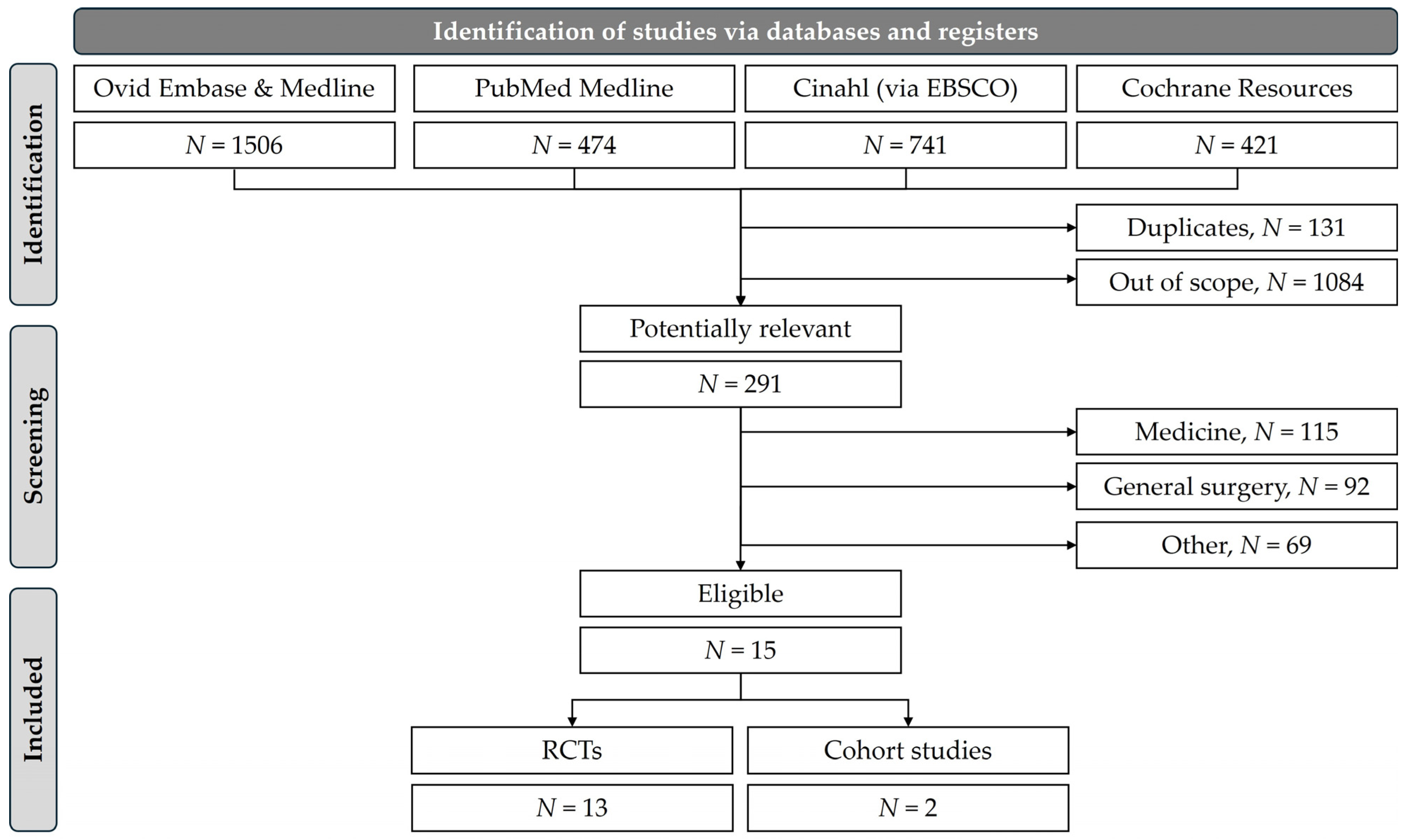
| Study selection | 16a | Describe the results of the search and selection process, from the number of records identified in the search to the number of studies included in the review, ideally using a flow diagram. | Figure 1 |
| 16b | Cite studies that might appear to meet the inclusion criteria, but which were excluded, and explain why they were excluded. | N/A | |
| Study characteristics | 17 | Cite each included study and present its characteristics. | Table 1 |
| Risk of bias in studies | 18 | Present assessments of risk of bias for each included study. | Figure 2 and Figure 3 |
| Results of individual studies | 19 | For all outcomes, present, for each study: (a) summary statistics for each group (where appropriate) and (b) an effect estimate and its precision (e.g., confidence/credible interval), ideally using structured tables or plots. | Figure 4 |
| Results of syntheses | 20a | For each synthesis, briefly summarise the characteristics and risk of bias among contributing studies. | Figure 5 |
| 20b | Present results of all statistical syntheses conducted. If meta-analysis was done, present for each the summary estimate and its precision (e.g., confidence/credible interval) and measures of statistical heterogeneity. If comparing groups, describe the direction of the effect. | Figure 5 | |
| 20c | Present results of all investigations of possible causes of heterogeneity among study results. | Lines 204 ff | |
| 20d | Present results of all sensitivity analyses conducted to assess the robustness of the synthesized results. | Lines 204 ff | |
| Reporting biases | 21 | Present assessments of risk of bias due to missing results (arising from reporting biases) for each synthesis assessed. | N/A |
| Certainty of evidence | 22 | Present assessments of certainty (or confidence) in the body of evidence for each outcome assessed. | Figure 4 and Figure 5 |
| Discussion | |||
| Discussion | 23a | Provide a general interpretation of the results in the context of other evidence. | Lines 217 ff |
| 23b | Discuss any limitations of the evidence included in the review. | Lines 230 ff | |
| 23c | Discuss any limitations of the review processes used. | Lines 234 ff | |
| 23d | Discuss implications of the results for practice, policy, and future research. | Lines 248 ff | |
| Other Information | |||
| Registration and protocol | 24a | Provide registration information for the review, including register name and registration number, or state that the review was not registered. | Line 92 |
| 24b | Indicate where the review protocol can be accessed, or state that a protocol was not prepared. | N/A | |
| 24c | Describe and explain any amendments to information provided at registration or in the protocol. | N/A | |
| Support | 25 | Describe sources of financial or non-financial support for the review, and the role of the funders or sponsors in the review. | None |
| Competing interests | 26 | Declare any competing interests of review authors. | None |
| Availability of data, code and other materials | 27 | Report which of the following are publicly available and where they can be found: template data collection forms; data extracted from included studies; data used for all analyses; analytic code; any other materials used in the review. | Submitted to Editorial Office |
| From: [45]. This work is licensed under CC BY 4.0. To view a copy of this license, visit https://creativecommons.org/licenses/by/4.0/. | |||
References
- El Barbari, J.S.; Schnetzke, M.; Bergmann, M.B.; Baumann, L.; Vetter, S.Y.; Swartman, B.; Grutzner, P.A.; Franke, J. Vascular impulse technology versus elevation for reducing the swelling of upper and lower extremity joint fractures. Sci. Rep. 2023, 13, 661. [Google Scholar] [CrossRef] [PubMed]
- Hu, Y.; Zhu, L.; Tian, X.; Duan, F. Prevalence of preoperative deep vein thrombosis in long bone fractures of lower limbs: A systematic review and meta-analysis. J. Orthop. Traumatol. 2023, 24, 19. [Google Scholar] [CrossRef] [PubMed]
- Mosher, H.; Remer, H.B.; Osondu, C.U.; Smidt, K.; van der Ven, A.; Suarez, J.C. Current Rates and Trends of Venous Thromboembolism After Total Hip and Knee Arthroplasty: An Updated Analysis Utilizing the NSQIP Database. Arthroplast. Today 2025, 33, 101737. [Google Scholar] [CrossRef] [PubMed]
- Qian, X.; Ge, Y.; Luo, J. Risk factors for deep vein thrombosis after traumatic lower extremity fracture: A systematic review and meta-analysis. Medicine 2024, 103, e38439. [Google Scholar] [CrossRef]
- Park, Y.U.; Kim, H.N.; Cho, J.H.; Kim, T.; Kang, G.; Seo, Y.W. Incidence and Risk Factors of Deep Vein Thrombosis after Foot and Ankle Surgery. Clin. Orthop. Surg. 2024, 16, 994–1000. [Google Scholar] [CrossRef]
- Keller, K.; Hobohm, L.; Barco, S.; Schmidtmann, I.; Münzel, T.; Engelhardt, M.; Eckhard, L.; Konstantinides, S.V.; Drees, P. Venous thromboembolism in patients hospitalized for knee joint replacement surgery. Sci. Rep. 2020, 10, 22440. [Google Scholar] [CrossRef]
- Riehl, J.T.; Embry, N.J.; Zeter, D.G.; Potgieter, C.J.; Box, M.W. Incidence of venous thromboembolism in fracture below the knee with and without chemical thromboprophylaxis: A systematic review and meta-analysis. Arch. Orthop. Trauma Surg. 2024, 145, 86. [Google Scholar] [CrossRef]
- Shang, Z.; Wanyan, P.; Zhang, B.; Wang, M.; Wang, X. Incidence and risk factors of deep vein thrombosis in patients with spinal cord injury: A systematic review with meta-analysis. Front. Cardiovasc. Med. 2023, 10, 1153432. [Google Scholar] [CrossRef]
- Simon, S.J.; Patell, R.; Zwicker, J.I.; Kazi, D.S.; Hollenbeck, B.L. Venous Thromboembolism in Total Hip and Total Knee Arthroplasty. JAMA Netw. Open 2023, 6, e2345883. [Google Scholar] [CrossRef]
- Delegates, T.I.-V.T. Recommendations from the ICM-VTE: Trauma. J. Bone Jt. Surg. 2022, 104, 280–308. [Google Scholar] [CrossRef]
- O’Toole, R.V.; Stein, D.M.; O’Hara, N.N.; Frey, K.P.; Taylor, T.J.; Scharfstein, D.O.; Carlini, A.R.; Sudini, K.; Degani, Y.; Slobogean, G.P.; et al. Aspirin or Low-Molecular-Weight Heparin for Thromboprophylaxis after a Fracture. N. Engl. J. Med. 2023, 388, 203–213. [Google Scholar] [CrossRef]
- Stengel, D.; Renkawitz, T. Low-dose aspirin vs. low molecular weight heparin for thromboprophylaxis after fractures. Critical appraisal of the multicenter PREVENT CLOT trial conducted by the Major Extremity Trauma Research Consortium (METRC). Die Unfallchirurgie 2023, 126, 326–331. [Google Scholar] [CrossRef]
- Milinis, K.; Shalhoub, J.; Coupland, A.P.; Salciccioli, J.D.; Thapar, A.; Davies, A.H. The effectiveness of graduated compression stockings for prevention of venous thromboembolism in orthopedic and abdominal surgery patients requiring extended pharmacologic thromboprophylaxis. J. Vasc. Surg. Venous Lymphat. Disord. 2018, 6, 766–777. [Google Scholar] [CrossRef]
- Wong, S.Y.W.; Ler, F.L.S.; Sultana, R.; Bin Abd Razak, H.R. What is the best prophylaxis against venous thromboembolism in Asians following total knee arthroplasty? A systematic review and network meta-analysis. Knee Surg. Relat. Res. 2022, 34, 37. [Google Scholar] [CrossRef]
- Dave, U.; Lewis, E.G.; Ierulli, V.K.; Saraf, S.M.; Mulcahey, M.K. Deep vein thrombosis prophylaxis in patients who undergo knee arthroscopy: A systematic review. Knee Surg. Relat. Res. 2024, 36, 44. [Google Scholar] [CrossRef] [PubMed]
- Smela, B.; Toumi, M.; Świerk, K.; Francois, C.; Biernikiewicz, M.; Clay, E.; Boyer, L. Rapid literature review: Definition and methodology. J. Mark. Access Health Policy 2023, 11, 2241234. [Google Scholar] [CrossRef]
- Garritty, C.; Gartlehner, G.; Nussbaumer-Streit, B.; King, V.J.; Hamel, C.; Kamel, C.; Affengruber, L.; Stevens, A. Cochrane Rapid Reviews Methods Group offers evidence-informed guidance to conduct rapid reviews. J. Clin. Epidemiol. 2021, 130, 13–22. [Google Scholar] [CrossRef] [PubMed]
- Sterne, J.A.C.; Savović, J.; Page, M.J.; Elbers, R.G.; Blencowe, N.S.; Boutron, I.; Cates, C.J.; Cheng, H.-Y.; Corbett, M.S.; Eldridge, S.M.; et al. RoB 2: A revised tool for assessing risk of bias in randomised trials. BMJ 2019, 366, l4898. [Google Scholar] [CrossRef] [PubMed]
- Hopewell, S.; Chan, A.-W.; Collins, G.S.; Hróbjartsson, A.; Moher, D.; Schulz, K.F.; Tunn, R.; Aggarwal, R.; Berkwits, M.; Berlin, J.A.; et al. CONSORT 2025 statement: Updated guideline for reporting randomised trials. BMJ 2025, 389, e081123. [Google Scholar] [CrossRef]
- Sterne, J.A.; Hernán, M.A.; Reeves, B.C.; Savović, J.; Berkman, N.D.; Viswanathan, M.; Henry, D.; Altman, D.G.; Ansari, M.T.; Boutron, I.; et al. ROBINS-I: A tool for assessing risk of bias in non-randomised studies of interventions. BMJ 2016, 355, i4919. [Google Scholar] [CrossRef]
- McGuinness, L.A.; Higgins, J.P.T. Risk-of-bias VISualization (robvis): An R package and Shiny web app for visualizing risk-of-bias assessments. Res. Synth. Methods 2021, 12, 55–61. [Google Scholar] [CrossRef]
- Casjens, S.; Taeger, D.; Bruning, T.; Behrens, T. Altered Mental Distress Among Employees From Different Occupational Groups and Industries During the COVID-19 Pandemic in Germany. J. Occup. Environ. Med. 2022, 64, 874–880. [Google Scholar] [CrossRef] [PubMed]
- Brennan, S.E.; Johnston, R.V. Research Note: Interpreting findings of a systematic review using GRADE methods. J. Physiother. 2023, 69, 198–202. [Google Scholar] [CrossRef] [PubMed]
- Barnes, R.W.; Brand, R.A.; Clarke, W.; Hartley, N.; Hoak, J.C. Efficacy of graded-compression antiembolism stockings in patients undergoing total hip arthroplasty. Clin. Orthop. Relat. Res. 1978, 132, 61–67. [Google Scholar] [CrossRef]
- Camporese, G.; Bernardi, E.; Prandoni, P.; Noventa, F.; Verlato, F.; Simioni, P.; Ntita, K.; Salmistraro, G.; Frangos, C.; Rossi, F.; et al. Low-molecular-weight heparin versus compression stockings for thromboprophylaxis after knee arthroscopy: A randomized trial. Ann. Intern. Med. 2008, 149, 73–82. [Google Scholar] [CrossRef]
- Chin, P.L.; Amin, M.S.; Yang, K.Y.; Yeo, S.J.; Lo, N.N. Thromboembolic prophylaxis for total knee arthroplasty in Asian patients: A randomised controlled trial. J. Orthop. Surg. 2009, 17, 1–5. [Google Scholar] [CrossRef]
- Cho, K.Y.; Kim, K.I.; Khurana, S.; Bae, D.K.; Jin, W. Is routine chemoprophylaxis necessary for prevention of venous thromboembolism following knee arthroplasty in a low incidence population? Arch. Orthop. Trauma Surg. 2013, 133, 551–559. [Google Scholar] [CrossRef]
- Fuji, T.; Fujita, S.; Kimura, T.; Ibusuki, K.; Abe, K.; Tachibana, S.; Nakamura, M. Clinical benefit of graduated compression stockings for prevention of venous thromboembolism after total knee arthroplasty: Post hoc analysis of a phase 3 clinical study of edoxaban. Thromb. J. 2016, 14, 13. [Google Scholar] [CrossRef]
- Halim, T.A.; Chhabra, H.S.; Arora, M.; Kumar, S. Pharmacological prophylaxis for deep vein thrombosis in acute spinal cord injury: An Indian perspective. Spinal Cord 2014, 52, 547–550. [Google Scholar] [CrossRef]
- Hui, A.C.; Heras-Palou, C.; Dunn, I.; Triffitt, P.D.; Crozier, A.; Imeson, J.; Gregg, P.J. Graded compression stockings for prevention of deep-vein thrombosis after hip and knee replacement. J. Bone Jt. Surg. Br. 1996, 78, 550–554. [Google Scholar] [CrossRef]
- Kalodiki, E.P.; Hoppensteadt, D.A.; Nicolaides, A.N.; Fareed, J.; Gill, K.; Regan, F.; al-Kutoubi, A.; Cunningham, D.A.; Birch, R.; Harris, N.; et al. Deep venous thrombosis prophylaxis with low molecular weight heparin and elastic compression in patients having total hip replacement. A randomised controlled trial. Int. Angiol. 1996, 15, 162–168. [Google Scholar]
- Ohlund, C.; Fransson, S.G.; Starck, S.A. Calf compression for prevention of thromboembolism following hip surgery. Acta Orthop. Scand. 1983, 54, 896–899. [Google Scholar] [CrossRef] [PubMed]
- Shalhoub, J.; Lawton, R.; Hudson, J.; Baker, C.; Bradbury, A.; Dhillon, K.; Everington, T.; Gohel, M.S.; Hamady, Z.; Hunt, B.J.; et al. Compression stockings in addition to low-molecular-weight heparin to prevent venous thromboembolism in surgical inpatients requiring pharmacoprophylaxis: The GAPS non-inferiority RCT. Health Technol. Assess. 2020, 24, 1–80. [Google Scholar] [CrossRef] [PubMed]
- Sultan, M.J.; Zhing, T.; Morris, J.; Kurdy, N.; McCollum, C.N. Compression stockings in the management of fractures of the ankle: A randomised controlled trial. Bone Jt. J. 2014, 96-b, 1062–1069. [Google Scholar] [CrossRef] [PubMed]
- Yokote, R.; Matsubara, M.; Hirasawa, N.; Hagio, S.; Ishii, K.; Takata, C. Is routine chemical thromboprophylaxis after total hip replacement really necessary in a Japanese population? J. Bone Jt. Surg. Br. 2011, 93, 251–256. [Google Scholar] [CrossRef] [PubMed]
- Cohen, A.T.; Skinner, J.A.; Warwick, D.; Brenkel, I. The use of graduated compression stockings in association with fondaparinux in surgery of the hip. A multicentre, multinational, randomised, open-label, parallel-group comparative study. J. Bone Jt. Surg. Br. 2007, 89, 887–892. [Google Scholar] [CrossRef]
- Arabi, Y.M.; Khedr, M.; Dara, S.I.; Dhar, G.S.; Bhat, S.A.; Tamim, H.M.; Afesh, L.Y. Use of intermittent pneumatic compression and not graduated compression stockings is associated with lower incident VTE in critically ill patients: A multiple propensity scores adjusted analysis. Chest 2013, 144, 152–159. [Google Scholar] [CrossRef]
- Asokan, A.; Plastow, R.; Chang, J.S.; Kayani, B.; Moriarty, P.; Thompson, J.W.; Haddad, F.S. Incidence of Symptomatic Venous Thromboembolism in Proximal Hamstring Repair: A Prospective Cohort Study. Orthop. J. Sports Med. 2021, 9, 23259671211012420. [Google Scholar] [CrossRef]
- Shalhoub, J.; Lawton, R.; Hudson, J.; Baker, C.; Bradbury, A.; Dhillon, K.; Everington, T.; Gohel, M.S.; Hamady, Z.; Hunt, B.J.; et al. Graduated compression stockings as adjuvant to pharmaco-thromboprophylaxis in elective surgical patients (GAPS study): Randomised controlled trial. BMJ 2020, 369, m1309. [Google Scholar] [CrossRef]
- Kim, N.Y.; Ryu, S.; Kim, Y.H. Effects of intermittent pneumatic compression devices interventions to prevent deep vein thrombosis in surgical patients: A systematic review and meta-analysis of randomized controlled trials. PLoS ONE 2024, 19, e0307602. [Google Scholar] [CrossRef]
- Ntalouka, M.P.; Koutalos, A.; Angelis, F.; Bareka, M.; Hantes, M.; Karachalios, T.; Arnaoutoglou, E. Appraisal of the clinical practice guidelines on thromboprophylaxis in orthopaedic procedures; Do we AGREE (II)? Injury 2024, 55, 111517. [Google Scholar] [CrossRef]
- Peng, S.; Zhang, M.; Jin, J.; MacCormick, A.D. The effectiveness of venous thromboembolism prophylaxis interventions in trauma patients: A systematic review and network meta-analysis. Injury 2023, 54, 111078. [Google Scholar] [CrossRef]
- Kalyani, B.S.; Craig, S.R. Low Molecular Weight Heparin: Current Evidence for Its Application in Orthopaedic Surgery. Curr. Vasc. Pharmacol. 2011, 9, 19–23. [Google Scholar] [CrossRef]
- Dawoud, D.M.; Wonderling, D.; Glen, J.; Lewis, S.; Griffin, X.L.; Hunt, B.J.; Stansby, G.; Reed, M.; Rossiter, N.; Chahal, J.K.; et al. Cost-Utility Analysis of Venous Thromboembolism Prophylaxis Strategies for People Undergoing Elective Total Hip and Total Knee Replacement Surgeries in the English National Health Service. Front. Pharmacol. 2018, 9, 1370. [Google Scholar] [CrossRef]
- Page, M.J.; McKenzie, J.E.; Bossuyt, P.M.; Boutron, I.; Hoffmann, T.C.; Mulrow, C.D.; Shamseer, L.; Tetzlaff, J.M.; Akl, E.A.; Brennan, S.E.; et al. The PRISMA 2020 statement: An updated guideline for reporting systematic reviews. BMJ 2021, 372, n71. [Google Scholar] [CrossRef]




| Should Graduated Compression Stockings Be Described to Lower the Incidence of Thromboembolic Events in Orthopaedic and/or Trauma Surgery? | |||||||||
|---|---|---|---|---|---|---|---|---|---|
| Outcome | Risk with gCS and/or Pharmacological Prophylaxis | Risk Without gCS and/or Pharmacological Prophylaxis | Relative Effect (RR, 95% CI) | No. of Participants Included | Certainty of the Evidence (GRADE) | Comments | |||
| Any event of TE | 66 per 1000 (0.66%, 95% CI 0.57 to 0.75%) | 53 per 1000 (0.53%, 95% CI 0.47 to 0.60%) | 1.15 (95% CI, 0.80 to 1.64) | N = 7721 | ⊕ | ⊕ | ⊕ | ◯ | Heterogeneity of interventions and diagnostic procedures 1,2,3, risk of partial verification bias 4 |
| Moderate | |||||||||
| Proximal DVT or PE | 20 per 1000 (0.20%, 95% CI 0.15 to 0.26%) | 16 per 1000 (0.16%, 95% CI 0.12 to 0.20%) | 1.17 (95% CI, 0.62 to 2.21) | N = 6496 | ⊕ | ⊕ | ⊕ | ◯ | Heterogeneity of interventions and diagnostic procedures 1,2,3, risk of partial verification bias 4 |
| Moderate | |||||||||
| Mortality | Inconsistent or insufficient data | ||||||||
| AE/SAE | Inconsistent or insufficient data | ||||||||
| HRQoL | Inconsistent or insufficient data | ||||||||
| Function | Inconsistent or insufficient data | ||||||||
| Study | Country | Design | Condition | Diagnosis of TE | Proportion of Orthopaedic or Trauma Patients | Description of Modalities | Recruitment Period | N | Mean Age, Years | Males | ||||
|---|---|---|---|---|---|---|---|---|---|---|---|---|---|---|
| Intervention | Control | Intervention | Control | Intervention | Control | Intervention | Control | |||||||
| Arabi (2013) [37] | Saudi Arabia | Prospective cohort with Propensity-score matching | Adult patients admitted to the ICU at King Abdulaziz Medical City in Riyadh, Saudi Arabia, with an expected length of stay of ≥48 h (trauma N = 141; pelvic or femur fractures N = 41) | At team’s discretion, Doppler ultrasonography, chest CT and/or ventilation perfusion scan | 0.35 | gCS | Intermittent pneumatic compression (N = 229) or no prophylaxis (N = 389) | 07/2006–01/2008 | 180 | 618 | 49 | 52 | 130 (72%) | 405 (63%) |
| Asokan (2021) [38] | UK | Prospective cohort | Complete or partial proximal hamstring avulsion injuries treated by tendon debridement and osseous re-attachment using 5.5 mm HEALIX Suture Anchors (DePuy Synthes) | Radiological investigation for VTE due to clinical suspicion | 1.00 | gCS | gCS plus aspirin: 150 mg once daily for 6 weeks | 01/2000–12/2020 | 380 | 600 | 29 | 27 | 287 (76%) | 479 (80%) |
| Barnes (1978) [24] | USA | RCT | Total hip arthroplasty (Charnley–Müller) via a modified Harris anterolateral approach | Screening Doppler ultrasonography | 1.00 | gCS | No prophylaxis | NS | 8 | 10 | 64 | 68 | 2 (25%) | 5 (50%) |
| Camporese (2008) [25] | Italy | RCT | Arthroscopic knee surgery (ACL reconstruction N = 598; any meniscectomy N = 704) | Screening Duplex ultrasonography | 1.00 | gCS | Nadroparin (3800 anti-Xa IU) for either 7 (N = 657) or 14 days (N = 444) | 03/2002–01/2006 | 660 | 1101 | 42 | 42 | 398 (60%) | 684 (62%) |
| Chin (2009) [26] | Singapore | RCT | Total knee arthroplasty | Screening Duplex ultrasonography | 1.00 | gCS | No prophylaxis (N = 110), intermittent pneumatic compression (N = 110), or Enoxaparin 40 mg once daily (N = 110) | 01/2003–05/2004 | 110 | 330 | 67 | 66 | 14 (13%) | 29 (9%) |
| Cho (2013) [27] | Republic of Korea | RCT | Total knee arthroplasty | Screening Duplex ultrasonography | 1.00 | Placebo (0.25 mL of isotonic saline) for five days, plus gCS | Fondaparinux (2.5 mg daily) for five days, plus gCS | 11/2008–10/2010 | 74 | 74 | 69 | 69 | 7 (9%) | 5 (7%) |
| Cohen (2007) [36] | UK, Brazil, Hong Kong, and Spain | RCT | Primary (N = 714) or revision (N = 42) total hip arthroplasty, or surgery for cervical (N = 26) or trochanteric (N = 13) fractures of the proximal femur | Unclear, ultrasonography, or venography (probably conditional on signs and symptoms) | 1.00 | Fondaparinux (2.5 mg daily) for five to nine days plus gCS for 35 to 49 days | Fondaparinux (2.5 mg daily) for five to nine days | 01/2002–11/2004 | 391 | 404 | 65 | 65 | 163 (42%) | 180 (45%) |
| Fuji (2016) [28] | Japan | RCT | Total knee arthroplasty | Screening venography | 1.00 | Edoxaban 30 mg orally once daily (N = 53) or Enoxaparin 20 mg subcutaneously twice daily (N = 48) plus gCS | Edoxaban 30 mg orally once daily (N = 52) or Enoxaparin 20 mg subcutaneously twice daily (N = 48) | 10/2008–01/2010 | 101 | 100 | 73 | 71 | 17 (17%) | 20 (20%) |
| Halim (2014) [29] | India | RCT | Acute spinal cord injury | Screening Duplex ultrasonography | 1.00 | gCS | Enoxaparin (40 mg) subcutaneously once a day, starting on the day of admission and continued for 8 weeks, plus gCS | 12/2006–12/2010 | 37 | 37 | NS | NS | 35 (95%) | 25 (68%) |
| Hui (1996) [30] | UK | RCT | Total hip arthroplasty (cemented Charnley, via a lateral approach), or total knee arthroplasty (PFC, Johnson & Johnson, 23% uncemented) | Screening venography | 1.00 | gCS (above knee N = 44, below knee N = 40) | No prophylaxis | NS | 84 | 54 | 70 | 67 | 56 (67%) | 33 (61%) |
| Kalodiki (1996) [31] | UK | RCT | Total hip arthroplasty | Screening venography | 1.00 | Enoxaparin (4000 anti Xa IU once daily) plus gCS | Enoxaparin (4000 anti Xa IU once daily N = 32) only or Placebo (N = 14) | NS | 32 | 46 | 69 | 70 | 19 (59%) | 19 (43%) |
| Öhlund (1983) [32] | Sweden | RCT | Total hip arthroplasty | Fibrinogen uptake test | 1.00 | Dextran-70 plus gCS | Dextran-70 | 11/1978–05/1979 | 31 | 31 | NS | NS | 30/62 males (48%) | |
| Shalhoub (2020) [33] | UK | RCT | Surgical inpatients requiring pharmaco-prophylaxis (orthopaedic surgery N = 28, neurosurgery N = 62, plastic surgery N = 39) | Screening Duplex ultrasonography | 0.07 | gCS plus LMWH | LMWH | 05/2016–01/2019 | 940 | 948 | 58 | 59 | 346 (37%) | 347 (37%) |
| Sultan (2014) [34] | UK | RCT | Ankle fractures (Weber A N = 36, B N = 42, C N = 12, ORIF N = 30) | Screening Duplex ultrasonography | 1.00 | Aircast boot (DJO Global, Vista, California) plus Ankle injury stockings (AIS) | Aircast boot (DJO Global, Vista, California) plus Tubigrip (Mölnlycke Health Care, Gothenburg, Sweden) | 18 months | 44 | 46 | 46 | 47 | 19 (43%) | 17 (37%) |
| Yokote (2011) [35] | Japan | RCT | Total hip arthroplasty via an anterolateral modified Watson–Jones approach (cementless S-ROM-A, DePuy, CentPillar, Stryker, Taperloc, Biomet, or Versys, Zimmer) | Screening Duplex ultrasonography | 1.00 | gCS plus intermittent pneumatic compression plus subcutaneous placebo (0.5 mL of isotonic saline) for ten days | gCS plus intermittent pneumatic compression plus subcutaneous fondaparinux (2.5 mg once daily) or enoxaparin (20 mg twice daily) for ten days | 05/2008–03/2009 | 83 | 167 | 63 | 64 | 16 (19%) | 30 (18%) |
| Primary Endpoint: Any TE | Secondary Endpoint: Proximal DVT or PE | |||||||
|---|---|---|---|---|---|---|---|---|
| Subgroup | k | N | RR (95% CI) | RD (95% CI) | k | N | RR (95% CI) | RD (95% CI) |
| Design | ||||||||
| RCT | 13 | 5943 | 1.07 (0.73–1.57) | −0.5% (−6.6–5.6%) | 9 | 5516 | 1.07 (0.56–2.02) | 0.0% (−0.5–0.6%) |
| Cohort study | 2 | 1778 | 3.38 (0.38–29.94) | 1.4% (0.3–2.6%) | 1 | 980 | 11.04 (0.57–213.17) | 0.8% (−0.1–1.7%) |
| TE diagnosis | ||||||||
| Screening | 12 | 5148 | 1.09 (0.71–1.67) | −0.8% (−8.3–6.7%) | 8 | 4721 | 1.12 (0.51–2.45) | 0.0% (−0.5–0.7%) |
| Discretionary | 3 | 2573 | 1.36 (0.70–2.62) | 1.1% (0.1–2.2%) | 2 | 1775 | 2.01 (0.19–21.44) | 0.1% (−0.1–0.1%) |
| Indication | ||||||||
| Arthroplasty | 9 | 2130 | 0.96 (0.66–1.39) | −2.7% (−13.2–7.7%) | 7 | 1867 | 0.95 (0.45–1.98) | −0.4% (−1.4–0.6%) |
| Other | 6 | 5591 | 1.70 (0.81–3.58) | 1.3% (−0.2–2.7%) | 3 | 4629 | 2.22 (0.95–5.22) | 0.4% (−0.3–1.1%) |
| Publication year | ||||||||
| <2000 | 4 | 296 | 0.81 (0.45–1.46) | −14.2% (−42.4–14.0%) | 3 | 234 | 0.67 (0.13–3.37) | −12.3% (−39.2–14.5%) |
| ≥2000 | 11 | 7425 | 1.35 (0.86–2.13) | 1.0% (−0.3–2.3%) | 7 | 6262 | 1.40 (0.75–2.63) | 0.2% (−0.3–0.8%) |
| Population | ||||||||
| Ortho/Trauma | 13 | 5035 | 1.50 (0.74–1.77) | −0.3% (−6.4–5.8%) | 8 | 6228 | 1.23 (0.63–2.42) | 0.4% (−0.4–1.1%) |
| Mixed | 2 | 2686 | 1.20 (0.63–2.27) | 0.1% (-2.7–4.6%) | 2 | 268 | 0.50 (0.05–5.55) | −0.1% (−0.4–0.3%) |
Disclaimer/Publisher’s Note: The statements, opinions and data contained in all publications are solely those of the individual author(s) and contributor(s) and not of MDPI and/or the editor(s). MDPI and/or the editor(s) disclaim responsibility for any injury to people or property resulting from any ideas, methods, instructions or products referred to in the content. |
© 2025 by the authors. Licensee MDPI, Basel, Switzerland. This article is an open access article distributed under the terms and conditions of the Creative Commons Attribution (CC BY) license (https://creativecommons.org/licenses/by/4.0/).
Share and Cite
Stengel, D.; Schnorbus, D.; Ekkernkamp, A.; Münzberg, M.; Schmucker, B.; El Kassar, L.; Rohrmann, F.; Grützner, P.A. Graduated Compression Stockings for Thromboprophylaxis in Orthopaedic and Trauma Surgery: A Rapid Review and Meta-Analysis. J. Clin. Med. 2025, 14, 8578. https://doi.org/10.3390/jcm14238578
Stengel D, Schnorbus D, Ekkernkamp A, Münzberg M, Schmucker B, El Kassar L, Rohrmann F, Grützner PA. Graduated Compression Stockings for Thromboprophylaxis in Orthopaedic and Trauma Surgery: A Rapid Review and Meta-Analysis. Journal of Clinical Medicine. 2025; 14(23):8578. https://doi.org/10.3390/jcm14238578
Chicago/Turabian StyleStengel, Dirk, Daniela Schnorbus, Axel Ekkernkamp, Matthias Münzberg, Beate Schmucker, Lina El Kassar, Flemming Rohrmann, and Paul A. Grützner. 2025. "Graduated Compression Stockings for Thromboprophylaxis in Orthopaedic and Trauma Surgery: A Rapid Review and Meta-Analysis" Journal of Clinical Medicine 14, no. 23: 8578. https://doi.org/10.3390/jcm14238578
APA StyleStengel, D., Schnorbus, D., Ekkernkamp, A., Münzberg, M., Schmucker, B., El Kassar, L., Rohrmann, F., & Grützner, P. A. (2025). Graduated Compression Stockings for Thromboprophylaxis in Orthopaedic and Trauma Surgery: A Rapid Review and Meta-Analysis. Journal of Clinical Medicine, 14(23), 8578. https://doi.org/10.3390/jcm14238578