Does Adding LEAP to ACL Reconstruction Reduce Graft Failure? A Systematic Review and Meta-Analysis of Comparative Studies with Minimum Two-Year Follow-Up

Abstract
1. Introduction
2. Methods and Materials
2.1. Eligibility Criteria
- (1)
- Cohort studies, Randomized clinical trials, Systematic reviews, Randomized comparative studies, Meta-analyses, Randomized controlled trials, Retrospective comparative studies, Retrospective propensity-matched cohort study, Retrospective cohort studies, Prospective randomized controlled trials, Retrospective cohort; propensity-matched case–control studies;
- (2)
- Studies written in the English language;
- (3)
- Studies on patients who underwent ACL reconstruction, with or without Lateral Extra-articular Procedures (LEAP);
- (4)
- Only studies with patients who underwent ACL reconstruction with a minimum 24 months follow-up were considered;
- (5)
- Only studies presenting graft rupture rate, in percentage (%) or in absolute value;
2.2. Exclusion Criteria
- (1)
- Case reports, reviews, letters to the editor, cadaveric studies, commentaries, and editorials;
- (2)
- All studies with Level of Evidence = 4 or 5;
- (3)
- Mean age < 14 years;
- (4)
- Studies older than 8 years (1 May 2018–1 May 2025);
- (5)
- Revision reconstruction;
2.3. Information Sources and Search Strategy
2.4. Data Items
- (1)
- Study information: author, publication year, title, study type, level of evidence, purpose, and main conclusions;
- (2)
- Population details: sample size, sex distribution (when possible), mean age, and therapeutic protocol (ACL reconstruction, with or without LEAP);
- (3)
- Methodology specifics: type of graft (when possible), graft rupture rate (directly in percentage % or indirectly, as event occurred/number of participants);
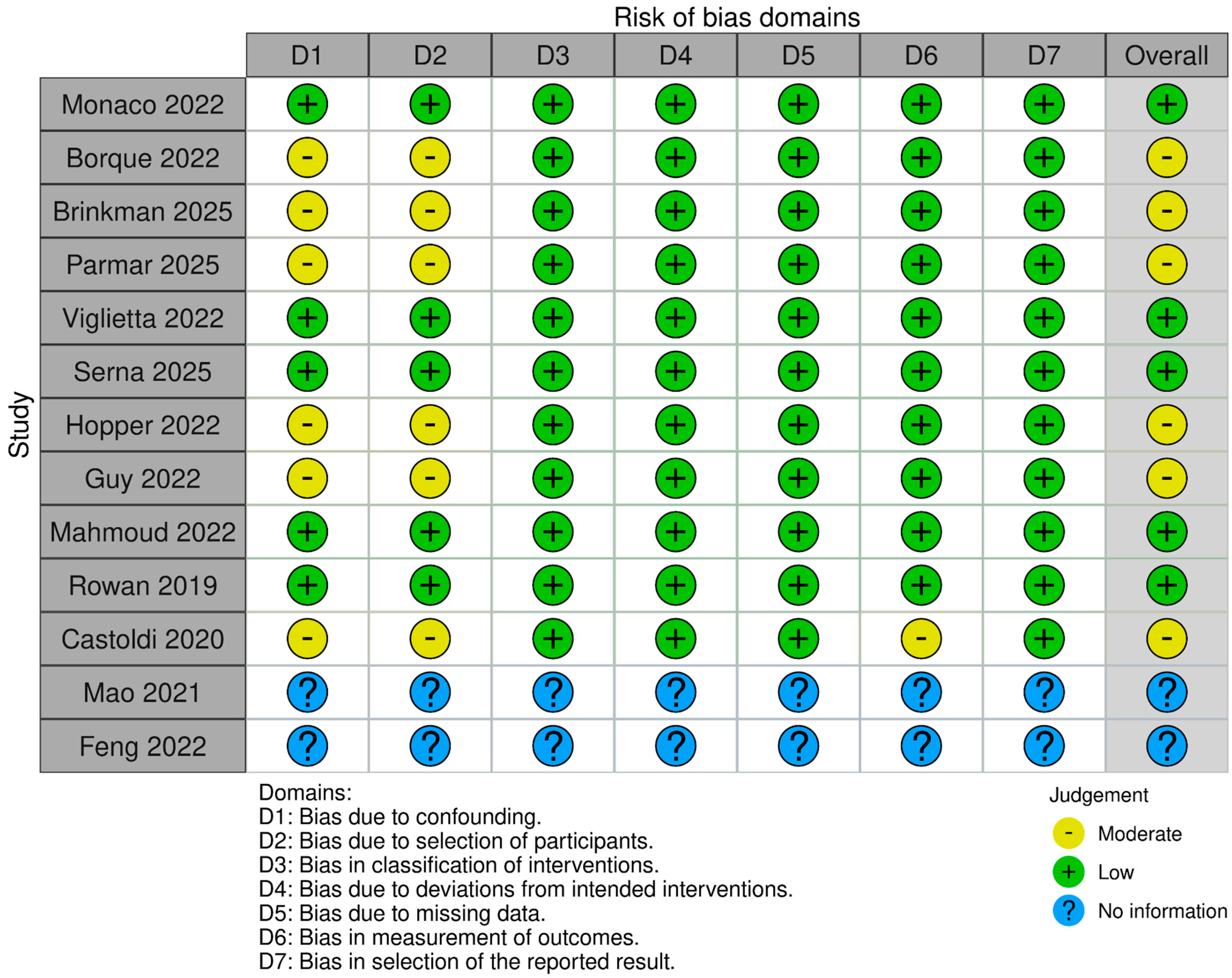
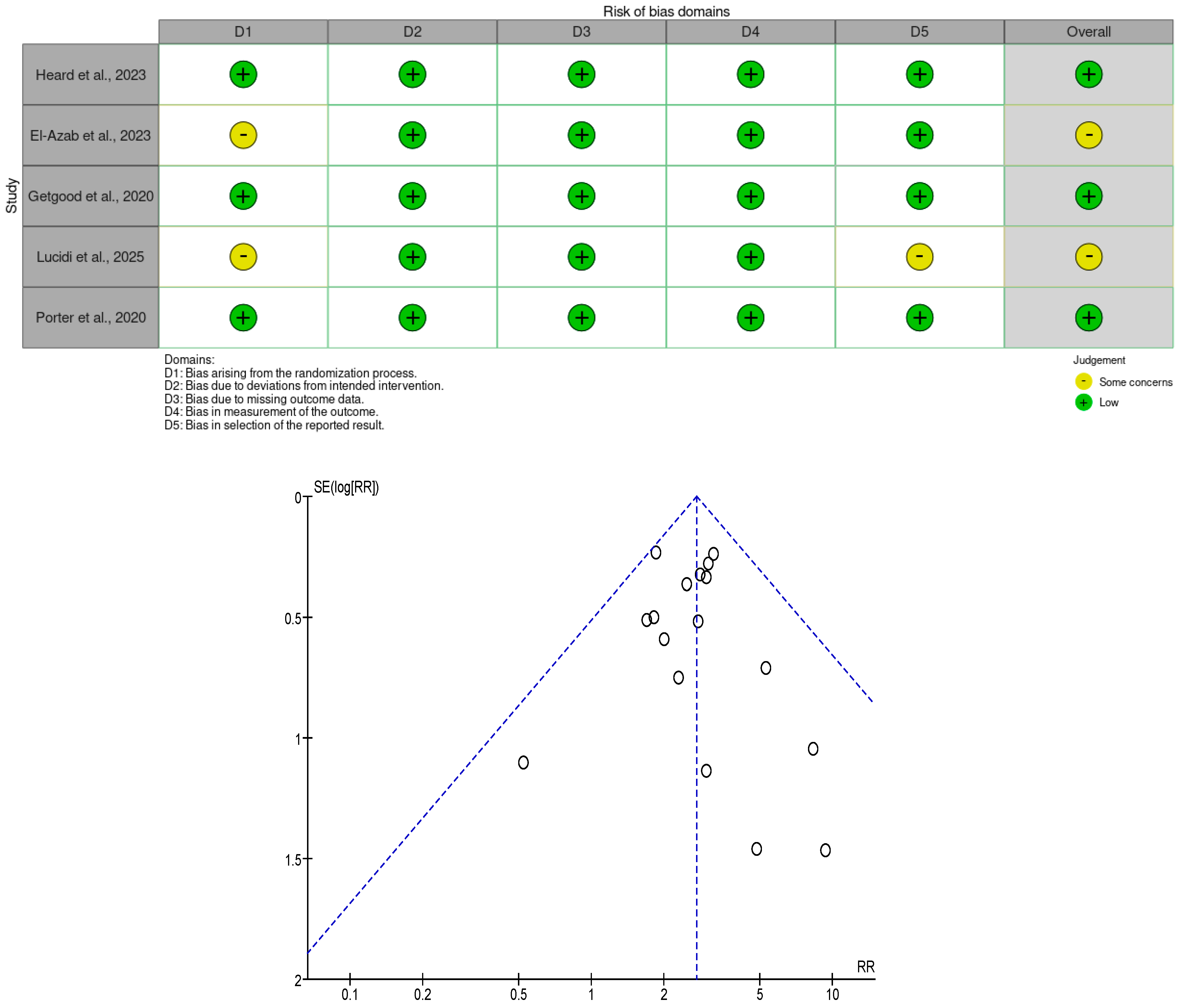
2.5. Risk of Bias
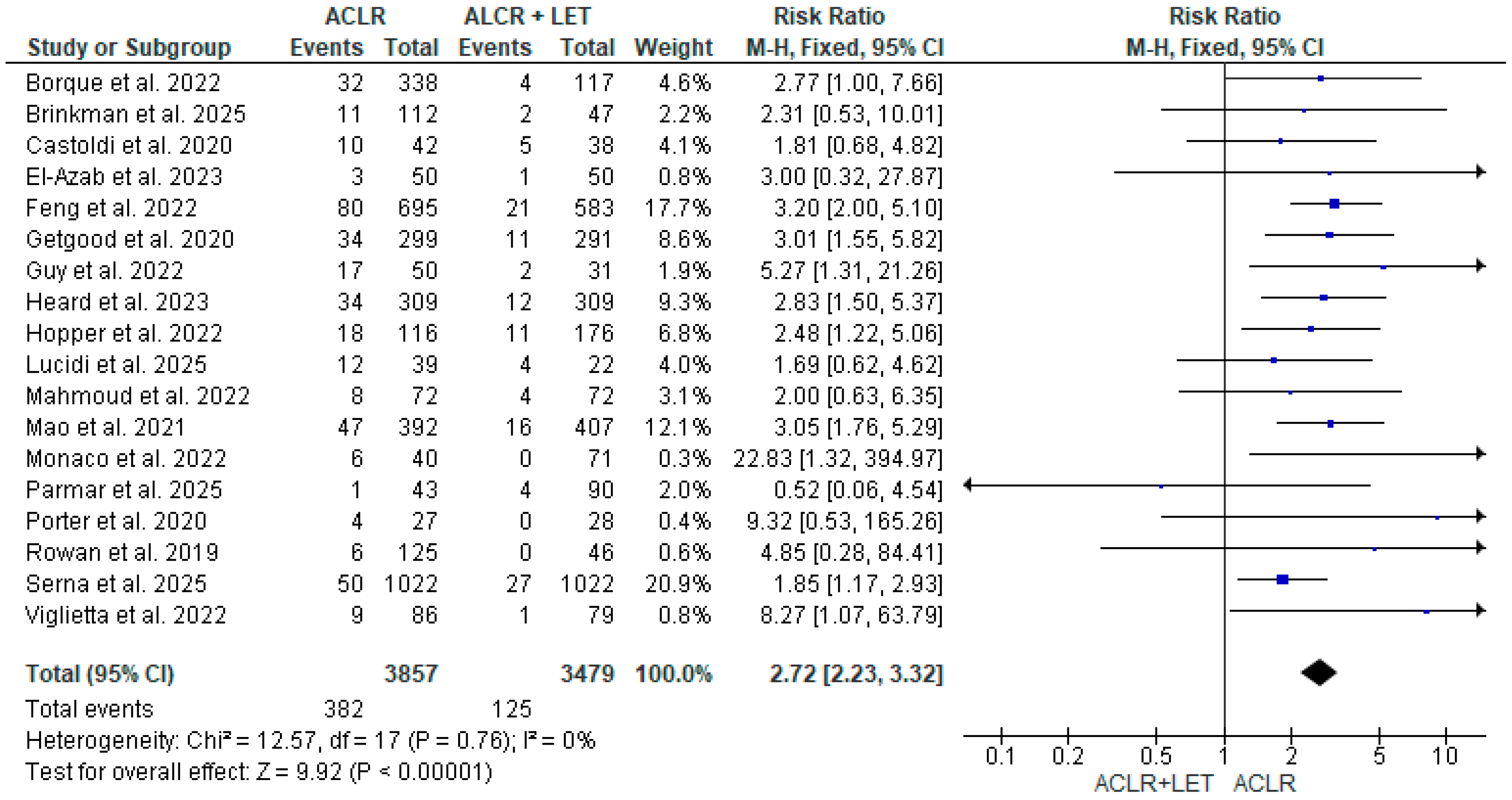
2.6. Data Analysis
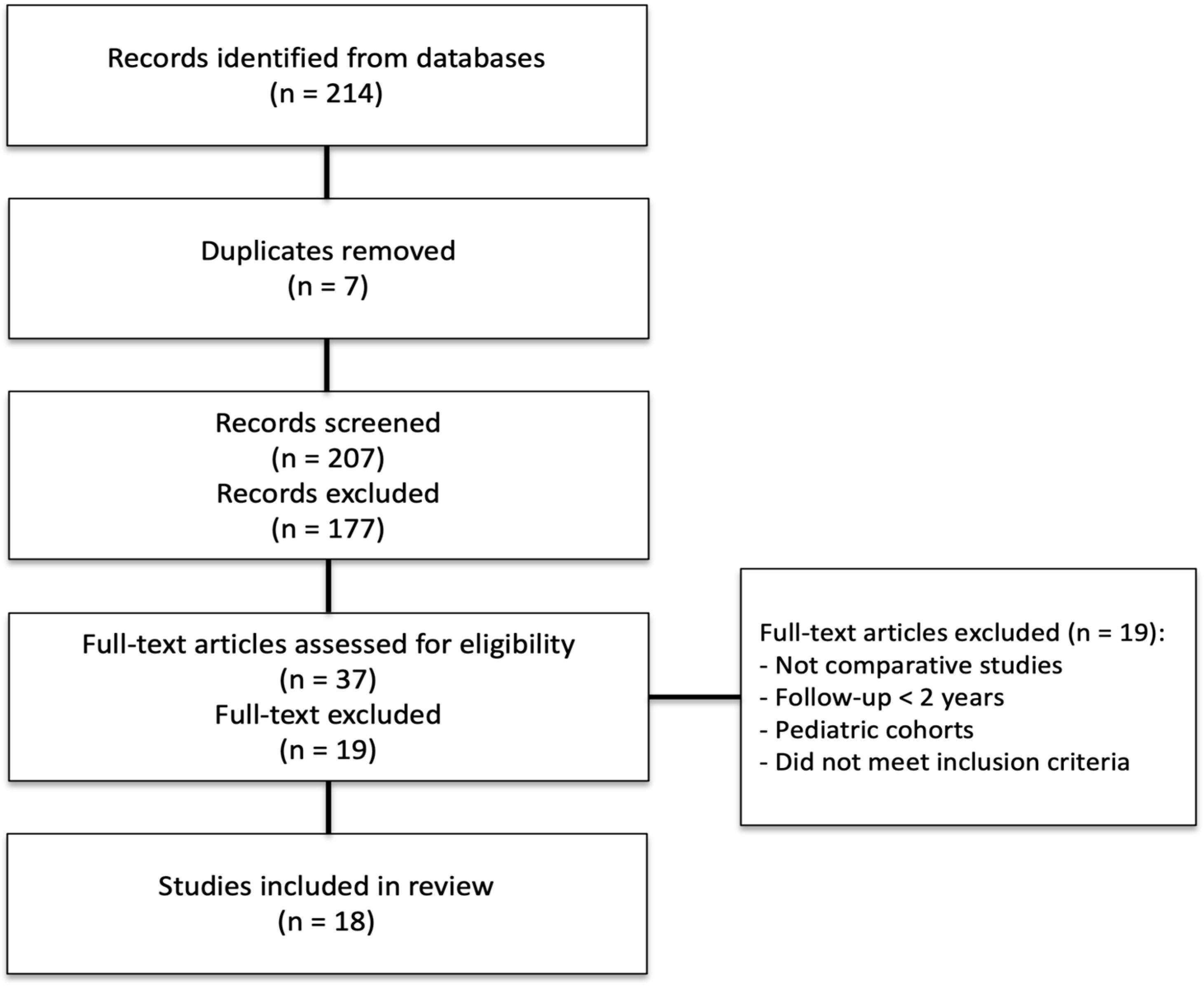
2.7. Study Selection and PRISMA Flow
3. Results
4. Additional Findings
Subgroup Analyses: Risk Populations and Graft Types

| Publication | Study Design and Level of Evidence | Therapeutic Protocol | Outcomes | Patients’ Characteristics | Graft Rupture Rates | Additional Findings | Contra-Lateral YES/NO (Y/N) |
|---|---|---|---|---|---|---|---|
| Monaco et al., 2022 [6] | Cohort study; Level of evidence, 3 | Early adolescent patients who underwent ACLR using a hamstring tendon autograft with (71) or without (40) the Arnold-Coker modification of the MacIntosh procedure; patients with ≥1 additional risk factors for a graft rupture were offered LEAP in addition to ACLR | Graft rupture rates, patient-reported outcome measure scores (KOOS and subjective IKDC), knee stability, return-to-sports rates, reoperation rates, and complications were assessed. | Patients (n): 111 (71 + 40) Age (Y): 16.3 (mean) Follow up: 24–89 months | ACLR: 15% ACLR + LEAP: 0% OR: 15.91 [95% CI, 1.81–139.44]; p = 0.012) | Significantly better knee stability with ACLR + LEAP (pivot-shift grade 3: 0.0% vs. 11.4%, respectively; p = 0.021) (side-to-side anteroposterior laxity difference >5 mm: 0.0% vs. 17.1%, respectively; p = 0.003) and Tegner activity scores (7 vs. 6, respectively; p = 0.010). | N/D (not determined) |
| Borque et al., 2022 [11] | Cohort study; Level of evidence, 3 | A consecutive cohort of elite athletes with an isolated ACL tear undergoing autograft patellar or hamstring tendon reconstruction with (117) or without (338) Lemaire LEAP | Graft rupture rate | Patients (n): 455 (117 + 338) Age (Y): 22.5 (mean) Follow up: 24 months | ACLR: 9.5% ACLR + LEAP: 3.4% | The addition of LEAP reduced the risk of undergoing revision by 2.8 times in elite athletes undergoing primary ACLR. This risk reduction did not differ significantly between the patellar tendon and hamstring tendon autografts. With these results, status as an elite athlete should be included in the indications for a LEAP, as they are at increased risk for ACL graft failure. | N/D |
| Heard et al., 2023 [3] | Randomized clinical trial; Level of evidence, 1 | Stability is a randomized clinical trial comparing hamstring tendon ACLR with and without LEAP. Patients aged 14–25 years with an ACL-deficient knee were included. Patients were followed and adverse events documented (type, actions taken, resolution) with visits at 3, 6, 12, and 24 months postoperatively. | Adverse events were categorized as none, minor medical, minor surgical, contralateral ACL rupture, or graft rupture. Patient-reported outcome measures (PROMs) collected at each visit included the Knee Injury and Osteoarthritis Outcome Score (KOOS), International Knee Documentation Committee Score (IKDC), and ACL Quality of Life Questionnaire (ACL-QOL). | Patients (n): 618 (309 + 309) Age (Y): 18.9 (mean) Follow up: 24 months | ACLR: 11% ACLR + LEAP: 4% | The addition of LEAP to hamstring tendon autograft ACLR in young patients at high risk of re-injury resulted in a statistically significant reduction in graft rupture. While the addition of LEAP may increase rates of hardware irritation, there was no significant increase in overall rates of minor medical adverse events, minor surgical events, or overall re-operation rates. | N/D |
| Mao et al., 2021 [17] | Systematic review; Level of evidence, 2 | PubMed, Embase, and the Cochrane Central Register of Controlled Trials databases were searched between inception and 1 July 2020. Level 1 or 2 randomized controlled trials that compared isolated single-bundle ACLR with (407) or without (392) LEAP with ACLR were included. | Data were meta-analyzed for the primary outcome measure of knee stability and the secondary outcome measures of patient-reported outcome scores, return to sports, and graft failure. Dichotomous variables were presented as relative risks (RRs), and continuous variables were presented as mean differences (MDs) and standardized MDs (SMDs). | Patients (n): 799 (392 + 407) Age (Y): 18.8–31.3 (mean) Follow up: 24 months min | ACLR: 12% ACLR + LEAP: 3.93% | The addition of LEAP to single-bundle ACLR appeared to be associated with a statistically significant, clinically relevant reduction in postoperative ALRI in the long term (>2 years) relative to ACLR alone. The adoption of LEAP may also lead to higher postoperative activity levels and a lower incidence of graft failure. For these reasons, the LEAP procedure should be considered in combination with isolated single-bundle ACLR, particularly in patients involved in strenuous sports. | N/D |
| El-Azab et al., 2023 [19] | Randomized Comparative Study; Level of evidence, 1 | A Prospective Blinded Randomized Controlled study included 100 consecutive patients who underwent ACL-R with hamstring tendon grafts in our Hospital. The patients were allocated into two groups (Group A and B) with randomization; group A received ACL-R with a large-size ACL-graft diameter of 6 strands, and group B received ACL-R of 4 strands combined with lateral extraarticular tenodesis (LEAP) (Modified Lemaire). Each group had fifty patients. | They were examined for graft failure, anterolateral rotatory instability with the pivot shift test, and clinical outcomes, which were evaluated with the International Knee Documentation Committee score (IKDC) both subjective and objective. | Patients (n): 100 (50 + 50) Age (Y): 27.5 (mean) Follow up: 24 months | ACLR: 6.3% ACLR + LEAP: 2.1% | Both groups showed a low ACL-graft failure rate, low anterolateral rotatory instability, and a good clinical outcome. Although there was no significant difference in subjective IKDC score between both groups, the failure rate and anterolateral rotatory instability were significantly lower in the ACL-R (4 strands) with LEAP combination group than in the group with the large-diameter (6 strands) graft. | N/D |
| Feng et al., 2022 [18] | Systematic review and meta-analysis; Level of evidence, 1 | PubMed, Embase, and Cochrane Library were searched by two researchers for clinical studies comparing ACLR with (583) and without LEAP (695). Studies with only evidence levels I and II and studies in which anterior lateral ligament reconstruction was performed with grafts were excluded. The risk of bias of the studies was assessed using the Cochrane risk-of-bias and modified Downs & Black tools. | The outcomes included (1) functional outcomes; (2) knee laxity measures; (3) knee injury osteoarthritis and outcome score; and (4) complications. The outcomes of the two groups were extracted, summarized and compared. | Patients (n): 1278 (583 + 695) Age (Y): 22.8 (mean) Follow up: 30 months | ACLR: 11.5% ACLR + LEAP: 3.6% | ACLR combined with LEAP can effectively reduce rotation laxity of the knee joint and reduce the graft failure rate in high-risk patients. However, the effects on the function and activity level of patients cannot be confirmed. | N/D |
| Castoldi et al., 2020 [16] | Randomized controlled trial; Level of evidence, 2 | This study included 121 consecutive knees (120 patients) presenting to a single center with an ACL rupture between 1998 and 1999. In total, 61 knees were randomized to an isolated BTB ACLR, and 60 knees were randomized to a BTB ACLR with an extra-articular lateral tenodesis with gracilis tendon (modified Lemaire). Eighty knees in 79 patients (66%) were available for follow-up at a postoperative mean of 19.4 years (range, 19–20.2). Of those patients, 43 had a clinical examination and completed patient-reported outcome questionnaires, and the other 37 patients were evaluated through the questionnaires alone. | Standard radiographs were available for 45 patients and laximetry (TELOS) for 42 patients. Mean subjective International Knee Documentation Committee score at last follow-up was 81.8, and no differences were noted between the BTB and BTB-LEAP groups (p = 0.7). Two-thirds of patients were still participating in pivoting sports. | Patients (n): 80 (38 + 42) Age (Y): 26.2 mean Follow up: 19.4 years (mean) | ACLR: 29% ACLR + LEAP: 13% | There were no significant differences in long-term patient-reported outcomes after ACLR with or without an LEAP. LEAP may increase the risk of lateral compartment osteoarthritis at long-term follow-up. There was a trend toward decreased graft failure risk with the addition of LEAP but this study was underpowered to assess this outcome. | N/D |
| Getgood et al., 2020 [4] | Randomized controlled trial; Level of evidence, 1 | This is a multicenter, prospective, randomized clinical trial comparing a single-bundle, hamstring tendon ACLR with (291) or without (299) LEAP performed using a strip of iliotibial band. Patients 25 years or younger with an ACL-deficient knee were included and also had to meet at least 2 of the following 3 criteria: (1) grade 2 pivot shift or greater, (2) a desire to return to high-risk/pivoting sports, (3) and generalized ligamentous laxity (GLL). | The primary outcome was ACLR clinical failure, a composite measure of rotatory laxity or a graft rupture. Secondary outcome measures included the P4 pain scale, Marx Activity Rating Scale, Knee injury Osteoarthritis and Outcome Score (KOOS), International Knee Documentation Committee score, and ACL Quality of Life Questionnaire. Patients were reviewed at 3, 6, 12, and 24 months postoperatively. | Patients (n): 590 (291 + 299) Age (Y): 18.9 years Follow up (m): 24 months | ACLR: 11.3% ACLR + LEAP: 3.7% | The number needed to treat with LEAP to prevent 1 patient from graft rupture was 14.3 over the first 2 postoperative years. At 3 months, patients in the ACLR group had less pain as measured by the P4 (p = 0.003) and KOOS (p = 0.007), with KOOS pain persisting in favor of the ACLR group to 6 months (p = 0.02). No clinically important differences in patient-reported outcome measures were found between groups at other time points. The level of sports activity was similar between groups at 2 years after surgery, as measured by the Marx Activity Rating Scale (p = 0.11). | N/D |
| Brinkman et al., 2025 [12] | Retrospective cohort study; Level of evidence, 3 | A retrospective review was performed comparing high-risk patients undergoing ACL reconstruction with isolated HA (56), isolated QA (56), or HA + LEAP (47) from August 2013 to January 2023. High-risk patients, as determined by high-grade pivot shift or generalized ligament laxity, with at least a 2-year follow-up, were included. | Lysholm and International Knee Documentation Committee scores were compared at 3, 6, 12, and 24 months postoperatively. Retear rate, postoperative pivot-shift grade, return to sport, and complications were recorded. | Patients (n): 173 (56 + 56 + 47) Age (Y): 18.2 min (mean) Follow up: 24 months | ACLR: HA 17.9%, QA 1.8% ACLR + LEAP: 4.3% | The use of an all-soft tissue QA or HA + LEAP for ACL reconstruction resulted in a lower retear rate and postoperative pivot-shift grade compared to an isolated HA graft in high-risk patients at 2 years postoperatively. There was no difference in the rate of achieving the minimal clinically important difference between the cohorts. The QA and HA + LEAP reconstruction options may improve stability and decrease the failure rate compared with HA reconstruction alone. | N/D |
| Parmar et al., 2025 [13] | Retrospective comparative study; Level of evidence, 3 | A retrospective review of female high school and collegiate soccer players who underwent primary ACLR from 2013 to 2021, with a minimum of 2 years of follow-up, was conducted. Participants were divided into 2 groups: those who received ACLR alone (43) and those who received ACLR with LEAP (90). Generalized ligamentous laxity was defined as a Beighton score ≥4 and was not considered an indication for LEAP. Anterior cruciate ligament (ACL) autografts included the quadriceps, bone-patellar tendon-bone, and hamstrings in both groups. | Patient demographics and physical examination findings, including pivot shift results, were collected. Positive pivot-shift refers to a grade ≥2. Patient outcomes included graft failure (defined as ACL retear), International Knee Documentation Committee score, Lysholm score, return to sport, and complications. Independent t tests, χ2 tests, and Mann-Whitney U tests were conducted to compare outcomes between the 2 groups. Minimally clinical important difference was calculated from preoperative to final follow-up. | Patients (n): 133 (43 + 90) Age (Y): 17.8 min (mean) Follow up: 24 months min | ACLR: 3% ACLR + LEAP: 4.7% | The addition of LEAP during ACLR in female soccer players with preoperative generalized ligamentous laxity yields graft retear and return-to-sport rates comparable with those of athletes without ligamentous laxity. | N/D |
| Lucidi et al., 2025 [20] | Randomized controlled trial; Level of evidence, 1 | This study aimed to compare the failure rate, clinical outcomes, and OA incidence of 3 different ACL reconstruction techniques: single-bundle quadrupled hamstring tendon (HT) (20), bone-patellar tendon-bone (BPTB) (19), and over-the-top HT plus LEAP (HT + LEAP) (22). The authors hypothesized that the 3 techniques would have comparable clinical and radiographic outcomes at long-term follow-up. | At the last follow-up (minimum of 20 years), patient-reported outcome measure (PROM) scores, complications, and reoperations were collected, and an objective clinical evaluation was performed, including the measurement of anteroposterior (AP) laxity using an arthrometer and the quantification of the pivot shift (PS) using a triaxial accelerometer. Clinical failure was considered in patients with evidence of a graft rupture or those with a side-to-side difference in AP laxity >5 mm or with a side-to-side difference in the PS >1.5 mm/s2. | Patients (n): 61 (19, 20, 22) Age (Y): 29.3 (mean) Follow up: 22.9 years min | ACLR: 37% (BPTB) 25% (HT) ACLR + LEAP: 19% | The 3 investigated techniques (BPTB, quadrupled HT, and over-the-top HT plus LEAP) provided comparable good clinical and radiographic outcomes at a mean follow-up time of 23 years. The BPTB group showed a greater prevalence of patellofemoral OA than the HT + LEAP group, while no difference was reported for tibiofemoral OA. The BPTB group revealed a slightly lower Tegner score than the HT + LEAP group, while the HT group showed slightly higher AP laxity than the BPTB group. | N/D |
| Viglietta et al., 2022 [7] | Cohort study; Level of evidence, 3 | The study included 165 consecutive patients treated at a single center by ACLR. A total of 86 patients underwent iACLR (iACLR group) and 79 received combined intra- and extra-articular reconstruction (ACLR + LEAP). | The International Knee Documentation Committee (IKDC), Lysholm, and Tegner activity scores were administered. Knee stability was tested through the Lachman test, the pivot-shift test, and the KT-1000 knee arthrometer test. A positive pivot-shift test (++/+++), laxity on the KT-1000, and referred giving-way episodes or revision ACLR were considered failures. Radiographic results were assessed according to the Fairbank, IKDC, and Kellgren-Lawrence scales. Radiographic evaluation included both the overall tibiofemoral joint and the medial and lateral compartments separately. A univariate and a multivariate logistic regression with penalized maximum likelihood was used to identify risk factors associated with long-term OA. | Patients (n): 165 (86 + 79) Age (Y): 26.1 (mean) Follow up: 15.7 years (mean) | ACLR: 10.4% ACLR + LEAP: 1.2% | A significantly higher risk of long-term OA was found with iACLR than with ACLR combined with the Arnold-Coker modification of the McIntosh extra-articular procedure. Knees with combined ACLR also had a significantly lower OA grade after partial lateral meniscectomy. Additionally, those undergoing combined ACLR had better knee stability and lower graft rupture rates at the long-term follow-up. Partial meniscectomy was the main risk factor negatively associated with OA changes. | N/D |
| Serna et al.,, 2025 [8] | Retrospective, propensity-matched cohort; Level III evidence. | ACLR alone (CPT 29888) ACLR + LEAP (CPT 29888 + 27427) | 5—yr cumulative revision; 2—yr cumulative revision; differences in 5—yr in meniscus surgery, lysis of adhesions, manipulation, or 90—day ED visits | Patients (n) = 1022 per group; Mean age 24.2 y (ACLR + LEAP) vs. 30.0 y (ACLR); Female 46.5%; Overweight/obesity 20.1% vs. 24.9%; | 5—yr revision: ACLR + LEAP 2.6% vs. ACLR 4.9%; 2—yr revision: ACLR + LEAP 0.7% vs. ACLR 3.2% | LEAP utilization rose >20% year-on-year after 2017 (except 2020); Only one TKA conversion in ACLR + LEAP group over 5 yrs; No increase in other secondary complications; Coding ensured ipsilateral procedures only. | N/D |
| Hopper et al., 2022 [14] | Retrospective cohort study; Level III evidence. | Isolated ACLR (primary hamstring or patellar tendon autograft); ACLR + LEAP (lateral extra-articular procedure) | Graft failure requiring revision; Contralateral ACL rupture; Ipsilateral secondary surgeries | Patients (n) = 342 (166ACLR + 176 ACLR + ALLR professional athletes; mean follow-up 100.2 ± 51.9 months (range 24–215); age subgroup ≤21 vs. >21 years; graft types: hamstring or patellar tendon. | ACLR:15.5%; ACLR + LEAP: 6.0% (p = 0.0105); HR for isolated ACLR 2.678 (95% CI 1.173–4.837; p = 0.0164) | Athletes ≤21 years at >2-fold risk of failure (HR 2.381; 95% CI 1.313–5.463; p = 0.0068); Sex, sport, graft type aren’t significant risk factors; Contralateral ACL rupture: 13.2%; Ipsilateral secondary surgeries: 18.1% | Y |
| Guy et al., 2022 [15] | Retrospective cohort study; Level of evidence III | Isolated ACLR ACLR + LEAP (modified Lemaire or anterolateral ligament reconstruction) | Graft rupture | n = 81 (50 ACLR + 31 ACLR + LEAP) elite alpine skiers; min follow-up 2 y; | ACLR: 34.0%; ACLR + LEAP 6.5% (p = 0.0412) | Age (HR 1.114; p = 0.1157), sex (HR 1.573; p = 0.3743) and graft type (HR 1.417; p = 0.5394) were not associated with a higher risk of graft rupture. | N/D |
| Mahmoud et al., 2022 [9] | Retrospective matched cohort study; Level III evidence; | ACLR + LEAP (iliotibial band tenodesis via modified Lemaire technique through Kaplan’s fibers); Isolated ACLR (standard semitendinosus–gracilis autograft) | PROMs (Lysholm, IKDC, OKS, Tegner), Graft Rupture Rates | Patients (n) = 144 (72 per group); mean age 25 ± 8.5 y; 76% male; median follow-up 10 y (IQR 6.7) | ACLR-LEAP: 5%; ACLR: 11% | PROMs (Lysholm, IKDC, OKS, Tegner) improved significantly post-op in both groups with no significant between-group differences (e.g., Lysholm Δ p = 0.82, IKDC Δ p = 0.07); Few complications: ACLR-LEAP 3 meniscus re-arthroscopies; ACLR 1 DVT, 1 superficial infection, 4 meniscus re-arthroscopies; PROMs exceeded MCID in majority of patients | N/D |
| Porter et al., 2020 [5] | Prospective randomized controlled trial; Level II evidence; skeletally mature patients with residual pivot shift post-ACLR. | Group A: ACLR alone (no further surgery) Group B: ACLR + Modified Iliotibial Band Tenodesis (MITBT) added intraoperatively | IKDC score; KOOS Sport/Rec; KOOS QoL; Lysholm; Tegner: median; Recurrent ACL ruptures; Meniscal tears; Contralateral ACL ruptures | Patients (n) = 55 randomized (27 A, 28 B); female:male A 15:12, B 17:11; mean age 22.3 ± 3.7 y (A) vs. 21.8 ± 4.1 y (B); pivoting sports; no meniscal repair. | Recurrent ACL ruptures: 14.8% (A) vs. 0% (B); p < 0.001 | IKDC score: 90.9 ± 10.7 (A) vs. 94.2 ± 11.2 (B); p = 0.21; KOOS Sport/Rec: 91.5 ± 6.4 vs. 95.3 ± 4.4; p = 0.02; KOOS QoL: 92.0 ± 4.8 vs. 95.1 ± 4.3; p = 0.14; Lysholm: 92.5 ± 4.8 vs. 96.8 ± 8.0; p = 0.004; Tegner: median 7 [6,7,8] vs. 8 [7,8,9]; p = 0.03; Recurrent ACL ruptures: 14.8% vs. 0%; p < 0.001; Meniscal tears: 14.8% vs. 3.6%; p = 0.14; Contralateral ACL ruptures: 3.7% vs. 3.6%; p = 0.99; MITBT reduced residual pivot shift: Improved KOOS Sport/Rec, Lysholm, Tegner scores; No difference in contralateral ruptures | Y |
| Rowan et al., 2019 [10] | Retrospective cohort; propensity-matched case–control; Level III evidence. | ACL reconstruction alone (single-bundle doubled hamstring graft) ACL reconstruction + LEAT (modified iliotibial band tenodesis) based on high-grade pivot shift or ≥2 minor criteria | Post-op Lysholm score; Tegner activity index; Time to return to sport; ACL re-injury (ipsilateral) | Patients (n) = 171 (125 ACLR alone vs. 46 ACLR + LEAT (matched)) Median age 29 vs. 27 years; 54% vs. 59% male; Sports: football, skiing, rugby, hockey, basketball, others; Elite athletes | ACLR: 5%; ACLR + LEAT: 0% | Post-op Lysholm score: median 90 vs. 98; p = 0.005; Tegner activity index: mean 7.54 vs. 8.04; p = 0.003; Time to return to sport: median 8 vs. 6 months; p < 0.001 | N/D |
5. Discussion
Supplementary Materials
Author Contributions
Funding
Institutional Review Board Statement
Informed Consent Statement
Data Availability Statement
Conflicts of Interest
References
- Sonnery-Cottet, B.; Carrozzo, A.; Saithna, A.; Monaco, E.; Vieira, T.D.; Musahl, V.; Getgood, A.; Helito, C.P.; Bedi, A.; Bryant, D.; et al. Surgical Treatment and Complications of Lateral Extra-Articular Procedures in the Anterior Cruciate Ligament–Reconstructed Knee: Part II of an International Consensus Statement. Arthroscopy 2025, 41, 3313–3321. [Google Scholar] [CrossRef]
- Nazzal, E.M.; Keeling, L.E.; Ryan, P.M.; Herman, Z.J.; Hughes, J.D. The Role of Lateral Extra-Articular Tenodesis in Anterior Cruciate Ligament Reconstruction and Treatment of Rotatory Knee Instability: A Scoping Review. Curr. Rev. Musculoskelet. Med. 2023, 16, 235–245. [Google Scholar] [CrossRef]
- Heard, M.; Marmura, H.; Bryant, D.; Litchfield, R.; McCormack, R.; MacDonald, P.; Spalding, T.; Verdonk, P.; Peterson, D.; Bardana, D.; et al. No Increase in Adverse Events with Lateral Extra-Articular Tenodesis Augmentation of Anterior Cruciate Ligament Reconstruction—Results from the Stability Randomized Trial. J. ISAKOS 2023, 8, 246–254. [Google Scholar] [CrossRef]
- Getgood, A.M.J.; Bryant, D.M.; Litchfield, R.; Heard, M.; McCormack, R.G.; Rezansoff, A.; Peterson, D.; Bardana, D.; MacDonald, P.B.; Verdonk, P.C.M.; et al. Lateral Extra-Articular Tenodesis Reduces Failure of Hamstring Tendon Autograft Anterior Cruciate Ligament Reconstruction: 2-Year Outcomes From the STABILITY Study Randomized Clinical Trial. Am. J. Sports Med. 2020, 48, 285–297. [Google Scholar] [CrossRef]
- Porter, M.; Shadbolt, B. Modified Iliotibial Band Tenodesis Is Indicated to Correct Intraoperative Residual Pivot Shift After Anterior Cruciate Ligament Reconstruction Using an Autologous Hamstring Tendon Graft: A Prospective Randomized Controlled Trial. Am. J. Sports Med. 2020, 48, 1069–1077. [Google Scholar] [CrossRef]
- Monaco, E.; Carrozzo, A.; Saithna, A.; Conteduca, F.; Annibaldi, A.; Marzilli, F.; Minucci, M.; Sonnery-Cottet, B.; Ferretti, A. Isolated ACL Reconstruction Versus ACL Reconstruction Combined With Lateral Extra-Articular Tenodesis: A Comparative Study of Clinical Outcomes in Adolescent Patients. Am. J. Sports Med. 2022, 50, 3244–3255. [Google Scholar] [CrossRef]
- Viglietta, E.; Ponzo, A.; Monaco, E.; Iorio, R.; Drogo, P.; Andreozzi, V.; Conteduca, F.; Ferretti, A. ACL Reconstruction Combined With the Arnold-Coker Modification of the MacIntosh Lateral Extra-Articular Tenodesis: Long-Term Clinical and Radiological Outcomes. Am. J. Sports Med. 2022, 50, 404–414. [Google Scholar] [CrossRef]
- Serna, J.; Kucirek, N.; Terada-Herzer, K.; Lansdown, D.; Ma, C.B.; Zhang, A.L. Anterior Cruciate Ligament Reconstruction With Lateral Extra-Articular Tenodesis Is Associated With Reduced Risk for Revision Anterior Cruciate Ligament Reconstruction in an Insurance Claims Database. Arthroscopy 2025, 41, 3425–3434. [Google Scholar] [CrossRef]
- Mahmoud, A.; Torbey, S.; Honeywill, C.; Myers, P. Lateral Extra-Articular Tenodesis Combined With Anterior Cruciate Ligament Reconstruction Is Effective in Knees With Additional Features of Lateral, Hyperextension, or Increased Rotational Laxity: A Matched Cohort Study. Arthroscopy 2022, 38, 119–124. [Google Scholar] [CrossRef]
- Rowan, F.E.; Huq, S.S.; Haddad, F.S. Lateral Extra-Articular Tenodesis with ACL Reconstruction Demonstrates Better Patient-Reported Outcomes Compared to ACL Reconstruction Alone at 2 Years Minimum Follow-Up. Arch. Orthop. Trauma. Surg. 2019, 139, 1425–1433. [Google Scholar] [CrossRef]
- Borque, K.A.; Jones, M.; Laughlin, M.S.; Balendra, G.; Willinger, L.; Pinheiro, V.H.; Williams, A. Effect of Lateral Extra-Articular Tenodesis on the Rate of Revision Anterior Cruciate Ligament Reconstruction in Elite Athletes. Am. J. Sports Med. 2022, 50, 3487–3492. [Google Scholar] [CrossRef]
- Brinkman, J.C.; McQuivey, K.S.; Braithwaite, C.; Paul, B.R.; Verhey, J.T.; Haglin, J.M.; Hoffer, A.J.; Economopoulos, S.C.; Economopoulos, K.J. Anterior Cruciate Ligament Reconstruction Using Hamstring Autograft Plus Lateral Extra-Articular Tenodesis and All-Soft Tissue Quadriceps Alone Have Lower Retear Rate and Pivot-Shift Grade but Similar Outcome to Hamstring Autograft Alone in High-Risk Patients. Arthroscopy 2025, 41, 2988–2995. [Google Scholar] [CrossRef]
- Parmar, R.; Tummala, S.V.; Brinkman, J.C.; Economopoulos, K.J. Lateral Extra-Articular Tenodesis With Iliotibial Band in Anterior Cruciate Ligament Autograft Reconstruction for Female Soccer Athletes With Generalized Ligamentous Laxity Yields Graft Failure and Return-to-Sport Rates Comparable With Athletes Without Generalized Laxity. Arthroscopy 2025, 41, 4136–4144. [Google Scholar] [CrossRef]
- Hopper, G.P.; Pioger, C.; Philippe, C.; El Helou, A.; Campos, J.P.; Gousopoulos, L.; Carrozzo, A.; Vieira, T.D.; Sonnery-Cottet, B. Risk Factors for Anterior Cruciate Ligament Graft Failure in Professional Athletes: An Analysis of 342 Patients With a Mean Follow-up of 100 Months From the SANTI Study Group. Am. J. Sports Med. 2022, 50, 3218–3227. [Google Scholar] [CrossRef]
- Guy, S.; Fayard, J.-M.; Saithna, A.; Bahroun, S.; Ferreira, A.; Carrozzo, A.; De Jesus, S.; Bulle, S.; Vieira, T.D.; Sonnery-Cottet, B. Risk of Graft Rupture After Adding a Lateral Extra-Articular Procedure at the Time of ACL Reconstruction: A Retrospective Comparative Study of Elite Alpine Skiers From the French National Team. Am. J. Sports Med. 2022, 50, 1609–1617. [Google Scholar] [CrossRef] [PubMed]
- Castoldi, M.; Magnussen, R.A.; Gunst, S.; Batailler, C.; Neyret, P.; Lustig, S.; Servien, E. A Randomized Controlled Trial of Bone–Patellar Tendon–Bone Anterior Cruciate Ligament Reconstruction With and Without Lateral Extra-Articular Tenodesis: 19-Year Clinical and Radiological Follow-Up. Am. J. Sports Med. 2020, 48, 1665–1672. [Google Scholar] [CrossRef]
- Mao, Y.; Zhang, K.; Li, J.; Fu, W. Supplementary Lateral Extra-Articular Tenodesis for Residual Anterolateral Rotatory Instability in Patients Undergoing Single-Bundle Anterior Cruciate Ligament Reconstruction: A Meta-Analysis of Randomized Controlled Trials. Orthop. J. Sports Med. 2021, 9, 23259671211002282. [Google Scholar] [CrossRef]
- Feng, J.; Cao, Y.; Tan, L.; Liang, J.; He, C.; He, J.; Wu, S. Anterior Cruciate Ligament Reconstruction with Lateral Extra-Articular Tenodesis Reduces Knee Rotation Laxity and Graft Failure Rate: A Systematic Review and Meta-Analysis. J. Orthop. Surg. 2022, 30, 10225536221095969. [Google Scholar] [CrossRef]
- El-Azab, H.; Moursy, M.; Mohamed, M.A.; Elsayed, M. A Comparison of the Outcomes of Anterior Curciate Ligament Reconstruction with Large-Size Graft versus Reconstruction with Average-Size Graft Combined with Extraarticular Tenodesis. Injury 2023, 54, 976–982. [Google Scholar] [CrossRef]
- Lucidi, G.A.; Agostinone, P.; Di Paolo, S.; Dal Fabbro, G.; Serra, M.; Viotto, M.; Grassi, A.; Zaffagnini, S. Long-Term Outcomes After Anterior Cruciate Ligament Reconstruction With 3 Different Surgical Techniques: A Prospective Randomized Clinical and Radiographic Evaluation at a Minimum of 20 Years’ Follow-Up. Orthop. J. Sports Med. 2025, 13, 23259671241302348. [Google Scholar] [CrossRef]
- Passaretti, A.; Colò, G.; Bulgheroni, A.; Vulcano, E.; Surace, M.F. Gonarthrosis and ACL Lesion: An Intraoperative Analysis and Correlations in Patients Who Underwent Total Knee Arthroplasty. Minerva Orthop. 2025, 75, 331–336. [Google Scholar] [CrossRef]


| Study | ACLR | ACLR + LEAP |
|---|---|---|
| Monaco et al., 2022 [6] | 15% | 0% |
| Borque et al., 2022 [11] | 9.5% | 3.4% |
| Heard et al., 2023 [3] | 11% | 4% |
| Mao et al., 2021 [17] | 12% | 3.93% |
| El-Azab et al., 2023 [19] | 6.3% | 2.1% |
| Feng et al., 2022 [18] | 11.5% | 3.6% |
| Castoldi et al., 2020 [16] | 29% | 13% |
| Getgood et al., 2020 [4] | 11.3% | 3.7% |
| Brinkman et al., 2025 [12] | HA 17.9%, QA 1.8% | 4.3% |
| Parmar et al., 2025 [13] | 3% | 4.7% |
| Lucidi et al., 2025 [20] | 37% | 19% |
| Viglietta et al., 2022 [7] | 10.4% | 1.2% |
| Serna et al., 2025 [8] | 4.9% | 2.6% |
| Hopper et al., 2022 [14] | 15.5% | 6% |
| Guy et al., 2022 [15] | 34.0% | 6.5% |
| Mahmoud et al., 2022 [9] | 11% | 5% |
| Porter et al., 2020 [5] | 14.8% | 0% |
| Rowan et al., 2019 [10] | 5% | 0% |
Disclaimer/Publisher’s Note: The statements, opinions and data contained in all publications are solely those of the individual author(s) and contributor(s) and not of MDPI and/or the editor(s). MDPI and/or the editor(s) disclaim responsibility for any injury to people or property resulting from any ideas, methods, instructions or products referred to in the content. |
© 2025 by the authors. Licensee MDPI, Basel, Switzerland. This article is an open access article distributed under the terms and conditions of the Creative Commons Attribution (CC BY) license (https://creativecommons.org/licenses/by/4.0/).
Share and Cite
Giusti, S.; Matteucci, A.; Pavone, S.; Mignano, C.; Adriani, E. Does Adding LEAP to ACL Reconstruction Reduce Graft Failure? A Systematic Review and Meta-Analysis of Comparative Studies with Minimum Two-Year Follow-Up. J. Clin. Med. 2025, 14, 8499. https://doi.org/10.3390/jcm14238499
Giusti S, Matteucci A, Pavone S, Mignano C, Adriani E. Does Adding LEAP to ACL Reconstruction Reduce Graft Failure? A Systematic Review and Meta-Analysis of Comparative Studies with Minimum Two-Year Follow-Up. Journal of Clinical Medicine. 2025; 14(23):8499. https://doi.org/10.3390/jcm14238499
Chicago/Turabian StyleGiusti, Simone, Angelo Matteucci, Simone Pavone, Ciro Mignano, and Ezio Adriani. 2025. "Does Adding LEAP to ACL Reconstruction Reduce Graft Failure? A Systematic Review and Meta-Analysis of Comparative Studies with Minimum Two-Year Follow-Up" Journal of Clinical Medicine 14, no. 23: 8499. https://doi.org/10.3390/jcm14238499
APA StyleGiusti, S., Matteucci, A., Pavone, S., Mignano, C., & Adriani, E. (2025). Does Adding LEAP to ACL Reconstruction Reduce Graft Failure? A Systematic Review and Meta-Analysis of Comparative Studies with Minimum Two-Year Follow-Up. Journal of Clinical Medicine, 14(23), 8499. https://doi.org/10.3390/jcm14238499