


Abstract
This article reports on how the length of the alkyl chain influences the morphological properties of thiol-stabilized silver nanoparticles (Ag NPs) and their subsequent effects on the performance and durability of proton exchange membrane fuel cells (PEMFCs). We synthesized thiol-stabilized Ag NPs by varying the alkyl chain length: 1-hexane thiol (C6), 1-octanethiol (C8), 1-decanethiol (C10), 1-dodecanethiol (C12), and 1-tetradecanethiol (C14), which we achieved using the two–phase Brust–Schiffrin method. X-ray Diffraction (XRD) patterns confirm the formation of crystalline Ag NPs. A morphological study conducted using a Transmission Electron Microscope (TEM) demonstrated that smaller alkyl chain length thiols (C6, C8, and C10) tend to coalesce, while C12 shows better uniformity with no agglomeration. C14 produces larger nanoparticles. A distinct pressure-area isotherm was observed when Ag NPs were spread at the water/air interface of a Langmuir–Blodgett (LB) trough. After obtaining the monolayer formation pressure range, we coated the Nafion 117 membrane of a polymer electrolyte membrane fuel cell with these nanoparticles to form monolayers of different Ag NPs (C6, C8, C12, C14) at various surface pressures (2 mN/m, 6 mN/m and 10 mN/m). Maximum power output enhancement was observed for C12, while other nanoparticles (C6, C8, C10, C14) did not exhibit noticeable power enhancement for PEMFCs. C12 Ag NPs deposited at surface pressure 6 mN/m give maximum power density increase (26.5%) at the fuel cell test station. In addition, we examined the carbon monoxide (CO) resistance test by mixing 0.1% CO with hydrogen (H2), and C12 Ag NPs showed the highest resistance to CO poisoning. However, no enhancement in power or CO tolerance was observed when C12 Ag NPs were coated by spray coating. These outcomes showcase that alkyl chain length plays a critical role in controlling the size and distribution of thiol-stabilized nanoparticles, which eventually has a direct impact on the performance and CO resistance of PEMFCs when applied to polymer electrolyte (Nafion 117). In addition, surface pressure during monolayer formation controls the distribution of Ag NPs (the distance between nanoparticles at the membrane interface), which is necessary to achieve catalytic activity for power improvement and to prevent platinum (Pt) poisoning by CO oxidation at ambient conditions.
1. Introduction
PEMFCs are one of the most promising areas in sustainable energy. They have various useful properties, including high energy efficiency, a comparatively low working temperature, their status as a green alternative to fossil fuel-based electricity generation, their flexibility and scalability for various applications, their relative compactness and light weight, easy and fast fueling and start-up options, quiet operation, etc. [1,2,3,4,5,6]. Platinum (Pt) is used as a catalyst in PEMFCs, but it is expensive and susceptible to CO poisoning [7,8,9]. CO forms CO-Pt bonds at catalytic sites that inhibit Pt-H2 catalysis. H2 is the fuel of this technology, primarily produced by steam reforming from hydrocarbons, which have 1–2% CO [10,11,12,13]. A Pt catalyst can be poisoned by the presence of even a minimal amount of CO, which reduces the performance of the PEM fuel cell substantially (the presence of 25 ppm of CO decreases the current density by 50%), and ultra-purification of H2 is complicated and costly [14,15]. Furthermore, the generation of pure H2 gas by electrolysis is not viable due to costs and electricity use, given its environmental impact [16,17]. Green synthesis of H2 via photocatalysis is currently being studied and has yet to be commercialized [18,19]. Although operating temperatures above 100 °C can minimize Pt poisoning caused by CO oxidation, PEMFCs’ performance and durability decrease significantly due to Nafion dehydration, which remains the commercially employed electrolyte in this technology [20]. In addition, several factors contribute to the degradation of PEMFCs during long-term use, including electrode material degradation, catalyst loss, and mechanical damage to the membrane electrode assembly (MEA) [21]. Nafion is the commercial brand name of an ion exchange membrane, which chemically consists of perfluorosulfonic acid (PFSA) copolymer (Figure 1). A tetrafluoroethylene backbone with added sulfonic acid groups exhibits unique properties, including thermal and chemical stability, high proton conduction rates, and longer lifetimes, making it a promising membrane for applications such as hydrogen fuel cells and electrolyzers [22,23]. However, the Nafion electrolyte in PEMFCs loses its lifetime if dehydration occurs due to shape changes caused by crack formation, as the Nafion membrane is confined between the gas diffusion layers. It develops stress patterns in the MEA through plane cracks [24,25].
Figure 1.
Chemical structure of Nafion.
Researchers have investigated alternative solutions to overcome these limitations, including oxygen (O2) bleeding, voltage/current pulsing, and elevated working temperature; however, these strategies have long-term stability issues, are difficult to install, and may pose safety concerns [26,27,28,29]. Consequently, catalyst optimization is necessary to mitigate this CO poisoning drawback by oxidizing CO. Previously, CO oxidation was demonstrated at lower temperatures by leveraging synergistic effects between metal catalysts and metal oxide supports. Haruta et al. first demonstrated that titania (TiO2)-supported gold nanoparticles (Au NPs) can oxidize CO at low temperatures [30]. An explanation for this effect is provided by Neurock and Yates, who suggest that Au NPs have an oblate morphology with a stepped interface at the contact line with TiO2 [31,32]. According to their study, Au NPs are atomically supported by neighboring TiO2, which activates O2 molecules through chemical bonding to both Au and Ti4+ catalytic sites. The apparent activation energy is found to be only 0.16 eV for CO oxidation at 120 K and around 0.2–0.3 eV at higher temperatures of 200–300 K. Subsequently, different metal oxide supports, such as CeO2, Al2O3, or FeOx, were employed to test this [33,34,35]. Although this technology shows promising results for CO oxidation at lower temperatures, it has limitations with regard to its application in PEMFCs because metal oxides require either a high deposition temperature (above 100 °C) or an electrochemical process, both of which can harm the Nafion membrane and increase the risk of film nonuniformity.
In our previous report, we described a novel, easy method for depositing Au NPs with controllable particle spacing onto a Nafion electrolyte at ambient temperature [36]. The LB method was used to deposit a uniform layer of Au NPs at the air–water interface at room temperature. Au NPs were prepared using the Brust–Schiffrin method, where a two-phase synthesis technique is used to develop thiol-stabilized metal NPs [37]. The fuel cell’s performance was enhanced by more than 50% under ambient conditions. We observed that enhancement occurs with a monolayer of Au NPs without a metal oxide (TiO2) layer. In addition, substantial CO resistance was found in these Au particles at room temperature. In this study, we investigated the suitability of silver (Ag) NPs for PEMFCs, focusing on performance and durability. Ag as a catalyst exhibits great promise due to its properties, such as thermal stability, a lack of toxicity, low cost, easy availability, and a high activity level [38,39,40,41]. Moreover, some properties of Ag at the nanoscale differ from its bulk form, including exceptionally high catalytic activity at low temperatures. Therefore, we selected a relatively cheap Ag metal catalyst and synthesized Ag NPs according to the Brust–Schiffrin method [42]. We used five different alkylthiols—C6, C8, C10, C12, and C14—as stabilizing agent for nanoparticles, and their chemical structure and formula are listed in Table 1. We observed that alkyl chain length plays a significant role in preventing nanoparticles from agglomerating. Furthermore, we observed that Ag NPs, free of agglomeration and deposited by the LB method at the monolayer level, possess active catalytic sites for CO oxidation, demonstrating resistance to Pt poisoning during PEMFC operation at ambient temperature and an increase in performance (current density and power density). Moreover, in this report, we sought to unravel the mechanism underlying this phenomenon: the role of alkyl chain length on silver nanoparticles’ morphological characteristics and the subsequent consequences when interface engineering is performed between these particles and the Nafion electrolyte in a PEM fuel cell. Finally, we proposed a catalytic mechanism for the enhancement effect observed with C12 Ag NPs and the significance of nanoscale interface design. According to our research, this is the first report of the Ag NPs/Nafion interface design via LB deposition for PEMFC applications.
Table 1.
Molecular formula and chemical structure of the alkyl-thiols employed in this research.
2. Experimental Design
2.1. Chemicals and Materials
All materials were of analytical grade and were used without further refinement. Silver nitrate (AgNO3), tetraoctylammonium bromide (TOABr), C6, C8, C10, C12, and C14, sodium borohydride (NaBH4), and toluene were bought from Sigma-Aldrich, Burlington, MA, USA. We procured ethanol from PHARMCO-AAPER, Houston, TX, USA; Nafion 117 from Ion Power, Tyrone, PA, USA; Pt/C (40 wt.%) and the electrode with 0.1 mg cm−2 Pt loading from FUEL CELL Store, Bryan, TX, USA. Nafion ionomer solution (15 wt.%) was obtained from Fuel Cell Earth LLC, Woburn, MA, USA. Linde Inc., Danbury, CT, USA supplied H2 (99.999%), N2 (99.9%), O2 (99.8%), and 3.1% CO in H2 (99.98%) gases.
2.2. Fabrication of Ag NPs
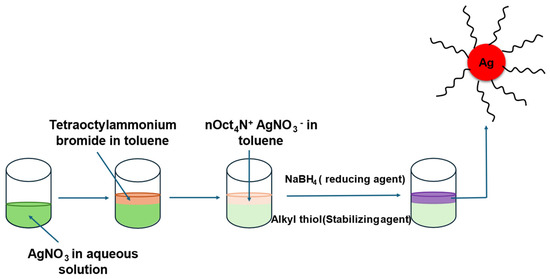
The two-phase Brust–Schiffrin method (Figure 2) was adopted to prepare thiol-stabilized Ag NPs, in which an aqueous solution of AgNO3 (1.0 mmol in 36 mL of H2O) was mixed with a solution of TOABr in toluene (4.8 mmol in 96 mL of toluene). The two-phase mixture was stirred vigorously for 20 min, and 200 microliters of each thiol (C6, C8, C10, C12, and C14, respectively) was then added. Aqueous solution of NaBH4 (11.97 mmol in 30 mL of water) was added slowly under stirring, and the solution turned brown immediately. The mixture was stirred for 3 h, and then the organic phase was concentrated to 5 mL in a rotary evaporator. All the reaction steps mentioned above were executed at ambient conditions (room temperature). Afterwards, 200 mL of ethanol was added to the 5 mL concentrated solution to eliminate excess thiol, and the mixture was kept in a refrigerator at 4 °C overnight. Finally, the precipitate was centrifuged, washed with ethanol three times, and dried in a vacuum desiccator for 2 days. Ag NPs prepared from C6, C8, C10, C12 and C14 are designated as C6, C8, C10, C12 and C14 Ag NPs respectively.
Figure 2.
Synthesis of silver nanoparticles (Ag NPs) by the Brust–Schiffrin method.
2.3. Deposition of Ag NPs
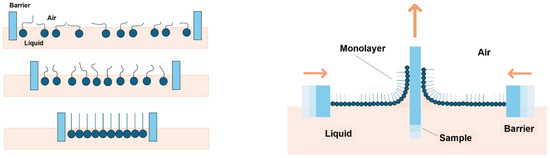
The LB trough (Model KSV NIMA 300, Biolin Scientific, Phoenix, AZ, USA) method was used to deposit Ag NPs. Toluene was used as a solvent to prepare a Ag NPs solution (1 mg/mL), which was sonicated for at least 1 h before use. Nafion 117 membrane was immersed in distilled water (DI) within the LB trough prior to the deposition of Ag NPs. Afterwards, using a glass syringe, 250 μL of the Ag NP solution was dispensed onto the water, and toluene was allowed to evaporate for 15 min. First, from the isothermal curve, the monolayer formation pressure range was determined, and Ag NPs were eventually deposited at different surface pressures within this range. Figure 3 depicts the LB trough principle and coating technique, where nanoparticles are deposited at the air–water interface on the Nafion membrane.
Figure 3.
Langmuir–Blodgett principle and deposition technique.
In addition to the LB technique, we employed the direct spray method with a Ag NP concentration of 0.1 mg cm−2 using an air spray gun.
2.4. Crystal Structure and Morphology Study of Ag NPs
Structural property of Ag NPs was examined by X-ray Diffraction (XRD) (Model MiniFlex, Rigaku, Tokyo, Japan) under Cu Kα radiation (1.54 Å) from 10° to 80° at a scan rate of 5° min−1.
Morphological properties of these Ag NPs were characterized by Transmission Electron Microscope (TEM) (Model JEM 1400, JEOL, Peabody, MA, USA). To determine particle size and inter-particle distance, the ImageJ bundled with 64-bit Java 8 software was used.
2.5. PEMFC Demonstration Kit Performance
Initially, we conducted a fuel cell performance test at room temperature with a kit having a maximum power output of 200 mW. The membrane electrode assembly (MEA) of the demonstration kit system was constructed by Nafion 117 membrane sandwiched between two platinum (Pt) electrodes (Pt loading of 0.1 mg cm−2) with a surface area of 16 cm2. The Nafion membrane was hydrated for 5 min by submersion in DI. Uniform pressure was applied across the MEA using a four-point assembly, and the hydrogen flow rate was maintained at 60 SCCM using a previously optimized flow meter.
2.6. High-Power PEMFC Performance Test
A fuel cell performance test was also conducted at the Fuel Cell Test Station obtained from Fuel Cell Technologies, Inc., Albuquerque, NM, USA. We prepared catalyst ink by stirring a mixture of Pt/C, Nafion ionomer, and 2-propanol. Afterwards, the ink was sprayed onto microporous carbon paper measuring 5 cm2 using a spray gun with N2 gas. 0.01 mg/cm2 Pt loading was applied to both the anode and cathode by drying the gas diffusion electrodes on a hot plate at 85 °C. A performance test was conducted with 99.99% pure H2 flowing at 60 SCCM at the anode and 100 SCCM of O2 at the cathode. Both gases were humidified to 100% relative humidity (RH) and heated to 5 °C above the operating temperature to prevent any condensation at both the cathode and anode. At first, we conducted control tests at three temperatures (30 °C, 60 °C, and 90 °C). After optimizing the temperature, we ran all the samples at the optimized temperature. Table 2 presents an outline of the test conditions at the fuel cell test station.
Table 2.
MEA test parameters at fuel cell test station.
2.7. CO Tolerance Testing for Ag-Modified Catalysts
To evaluate the effect of Ag nanoparticles (Ag NPs) on CO tolerance, a CO resistance test was performed using a PEMFC demonstration kit. A gas mixture containing 3.1% CO in pure H2 was diluted to 0.1% CO in H2, which was then used as the anode feed gas. The test was conducted following the same procedures and operating parameters as those used during the PEMFC kit performance testing.
2.8. Durability Study
An accelerated stress test (AST) was conducted using a potentiostat (Biologic P200, Knoxville, TN, USA) to evaluate MEA durability by cycling the potential between 0.6 and 0.9 V vs. RHE at a scan rate of 50 mV s−1. The AST was performed under an H2/N2 atmosphere at 80 °C, 2 h. stabilization, 100% relative humidity, and atmospheric pressure.
3. Results and Discussion
3.1. XRD Analysis
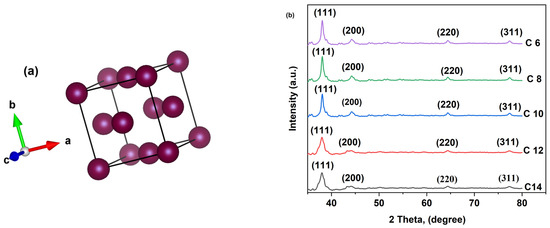
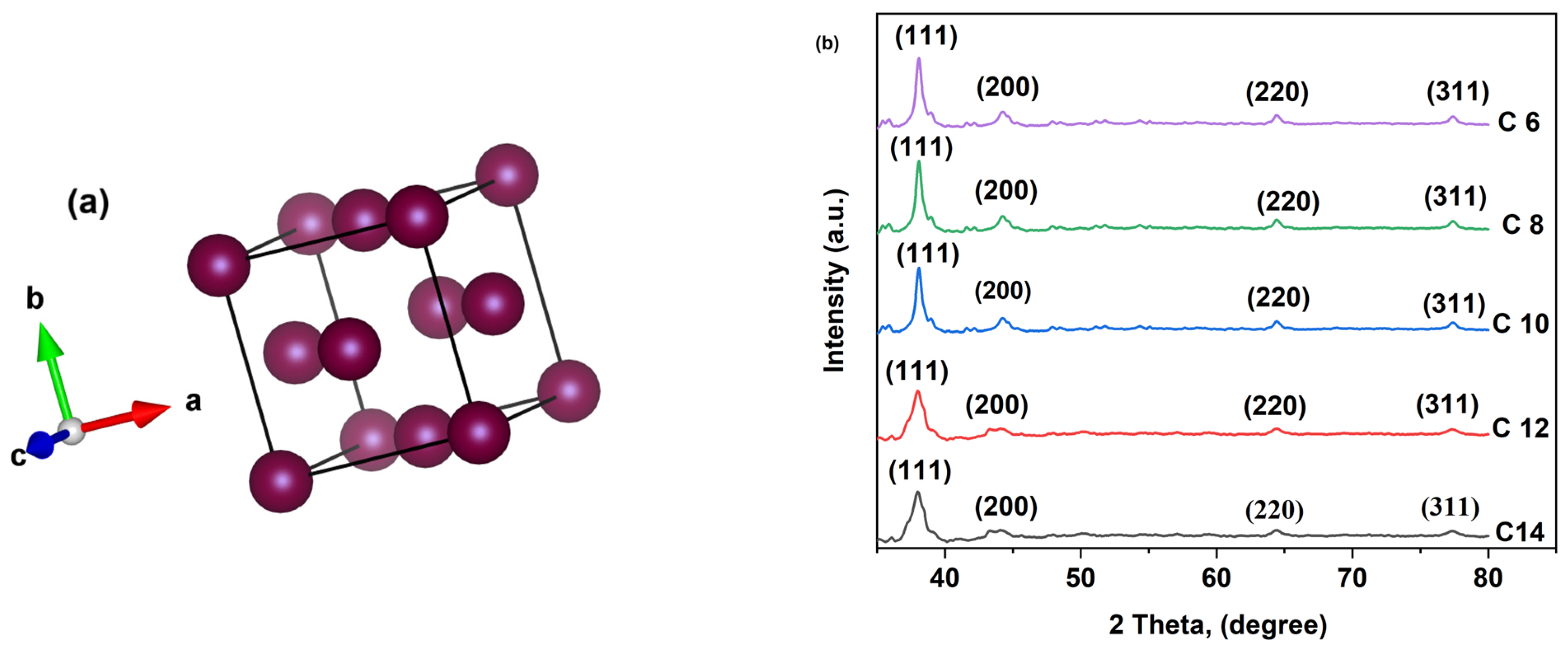
Figure 4 shows the XRD patterns of the prepared nanoparticles; all (C6, C8, C10, C12, C14) indicate polycrystalline Ag NPs with a face-centered cubic (Fcc) phase. The associated diffraction peaks are (111), (200), (220), and (311), and Ag NPs showed a strong preferential orientation towards (111), indicating the polycrystallinity of the samples. However, for C12 and C14 Ag NPs, peak broadening of (111) occurs because of prominent nanocrystallinity compared to other Ag NPs (C6, C8, C10).
Figure 4.
(a) Crystal structure of face-centered cubic (fcc) Ag NPs, (b) XRD patterns of the synthesized Ag NPs.
Furthermore, the crystallographic parameters (crystal system, space group, lattice parameters, unit cell volume) of these nanoparticles are summarized in Table 3.
Table 3.
Crystallographic parameters of the fabricated Ag NPs.
We determined the crystallite size (Scherrer equation) and lattice strain from the (111) peak of the XRD pattern of Ag NPs (Table 4). C12 and C14 Ag NPs have low crystallite sizes owing to their nanocrystallinity, and high lattice strain arises from their low atomic coordination numbers [30].
Table 4.
Crystallite size and lattice strain (%) of the prepared Ag NPs.
3.2. Morphology Study of Ag NPs by TEM
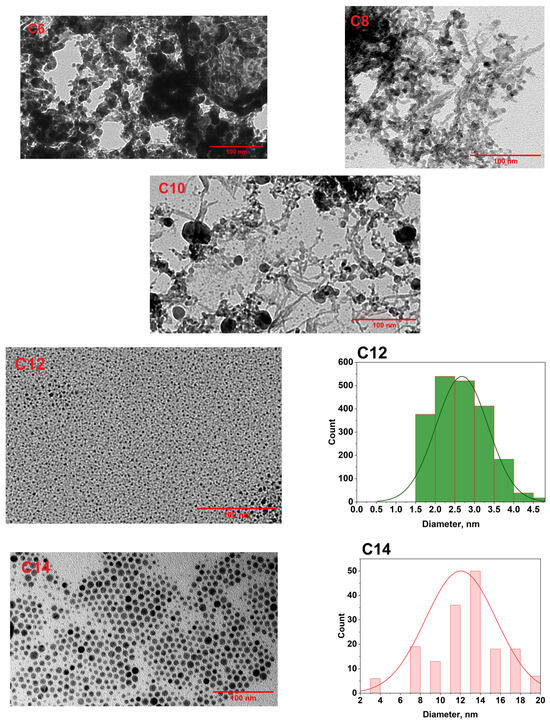
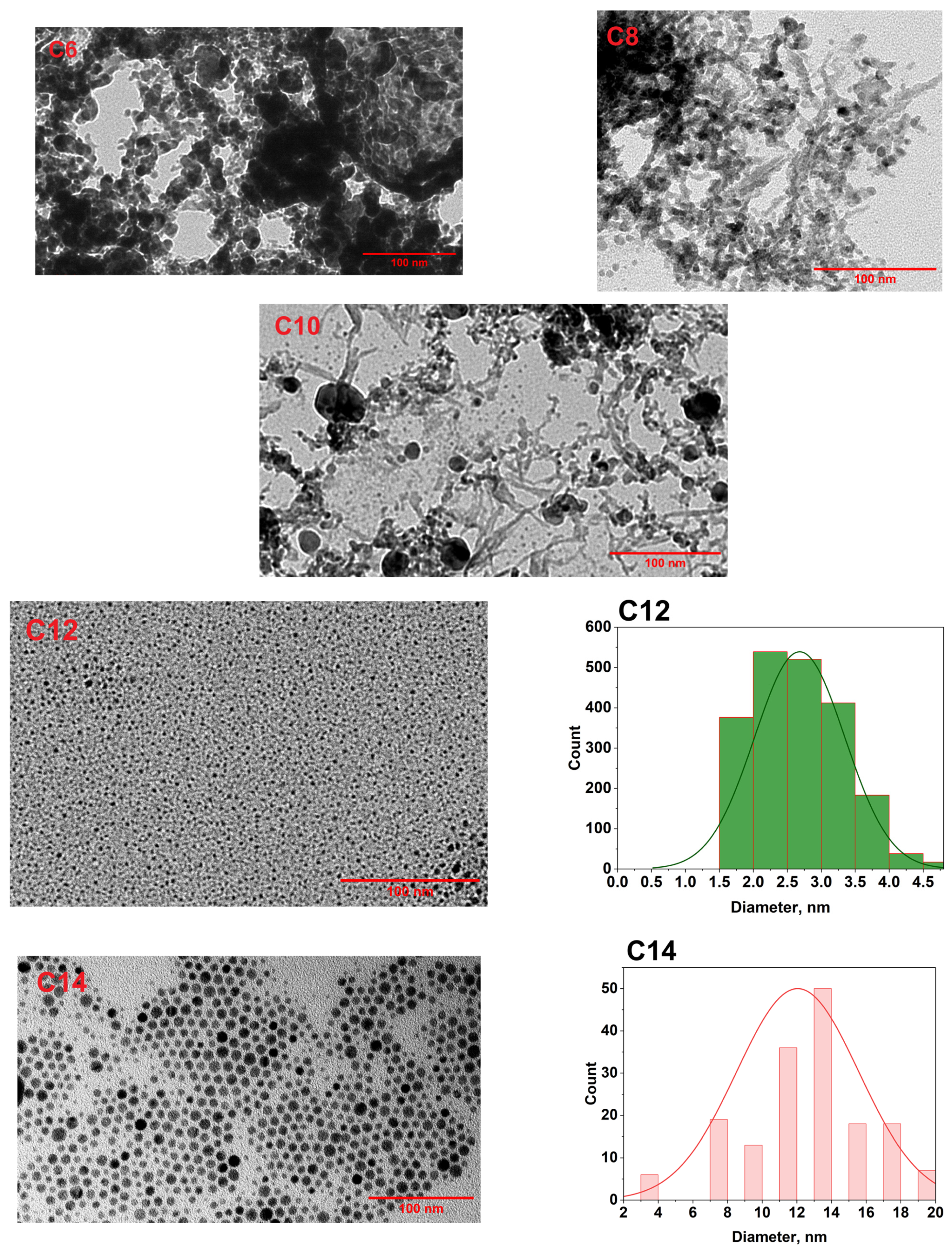
Ag NPs prepared employing five different thiols were examined by TEM to perceive their morphological properties. From Figure 5, it is evident that alkyl chain length has a controlling effect on the morphology of nanoparticles during their synthesis. Low-chain-length alkyl thiols (C6, C8, C10) tend to aggregate; indeed, shorter carbon chains produce a less effective protective layer and closer packing, making metal nanoparticles more vulnerable to coalescence [43,44,45,46]. C12- and C14-Ag NPs exhibit well-dispersed nanoparticles. We measured the size distributions of these two types of nanoparticles, with average particle sizes of 2.68 ± 0.66 nm and 12.04 ± 0.87 nm for the C12 and C14 samples, respectively. A longer alkyl chain on thiol molecules produces a higher steric repulsive force among the nanoparticles, resulting in more dispersed nanoparticles. Furthermore, longer alkyl chains produce larger nanoparticles, and their stability stems from a robust, insulating coating provided by a longer carbon chain [47,48,49].
Figure 5.
TEM images of Ag NPs synthesized using different alkyl thiols and the size distribution of C12 and C14 Ag NPs.
3.3. Ag NP Film Development
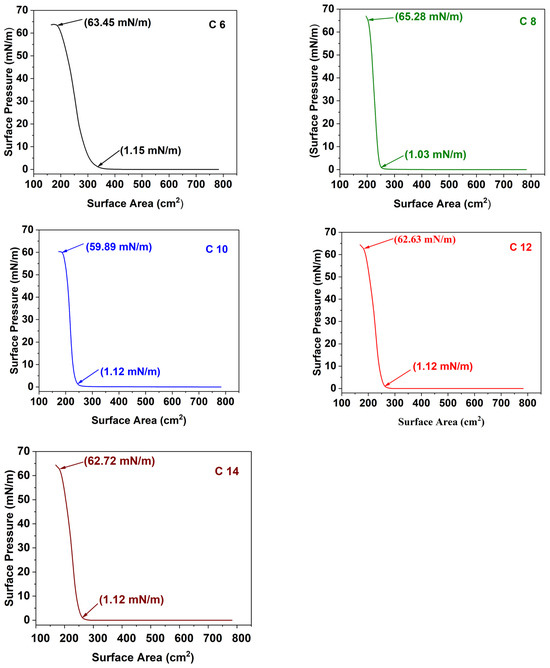
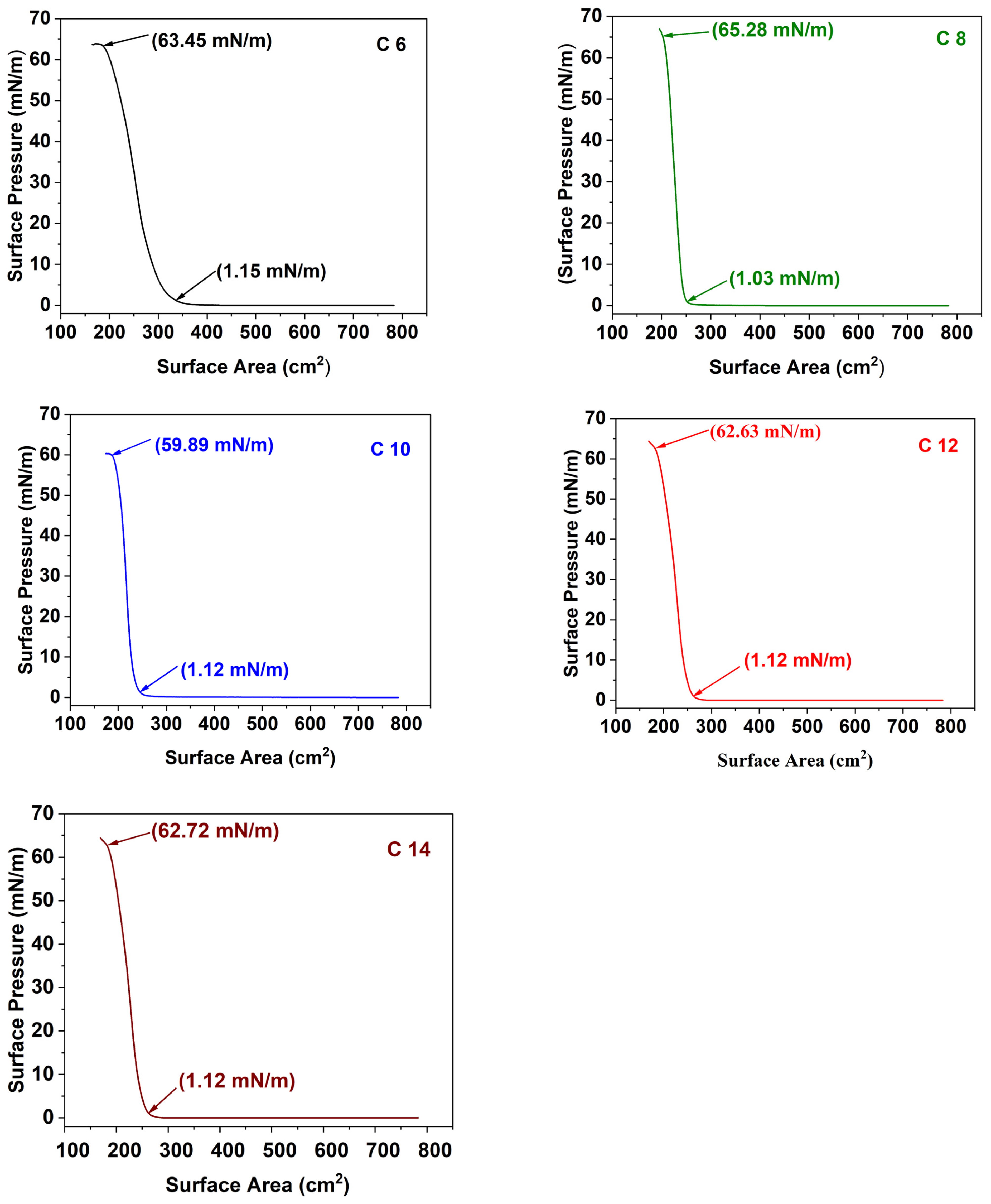
Monolayers of Ag NPs were deposited on the Nafion membrane following the LB trough method. At first, we derived a pressure–area isotherm for all the Ag NPs (Figure 6) when they were spread on the air–water interface in an LB trough system. Figure 6 shows that monolayers form between 1.03 and 1.15 mN/m surface pressure for all five Ag NPs, with a maximum around 60 mN/m. By exploiting this technique, Ag NPs were deposited onto a Nafion membrane at three different surface pressures (2 mN/m, 6 mN/m, and 10 mN/m). By varying surface tension, the number of nanoparticles at the Nafion membrane interface can be tuned to the monolayer level.
Figure 6.
Isothermal curve for alkyl thiol-stabilized (C6, C8, C10, C12, and C14) Ag NPs.
3.4. PEMFC Performance Test
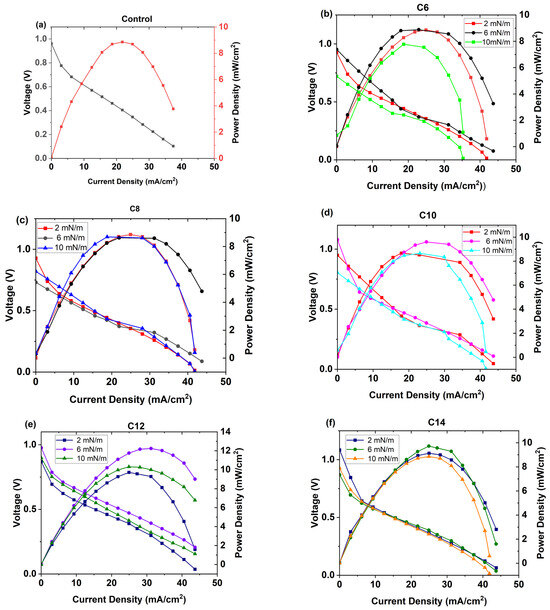
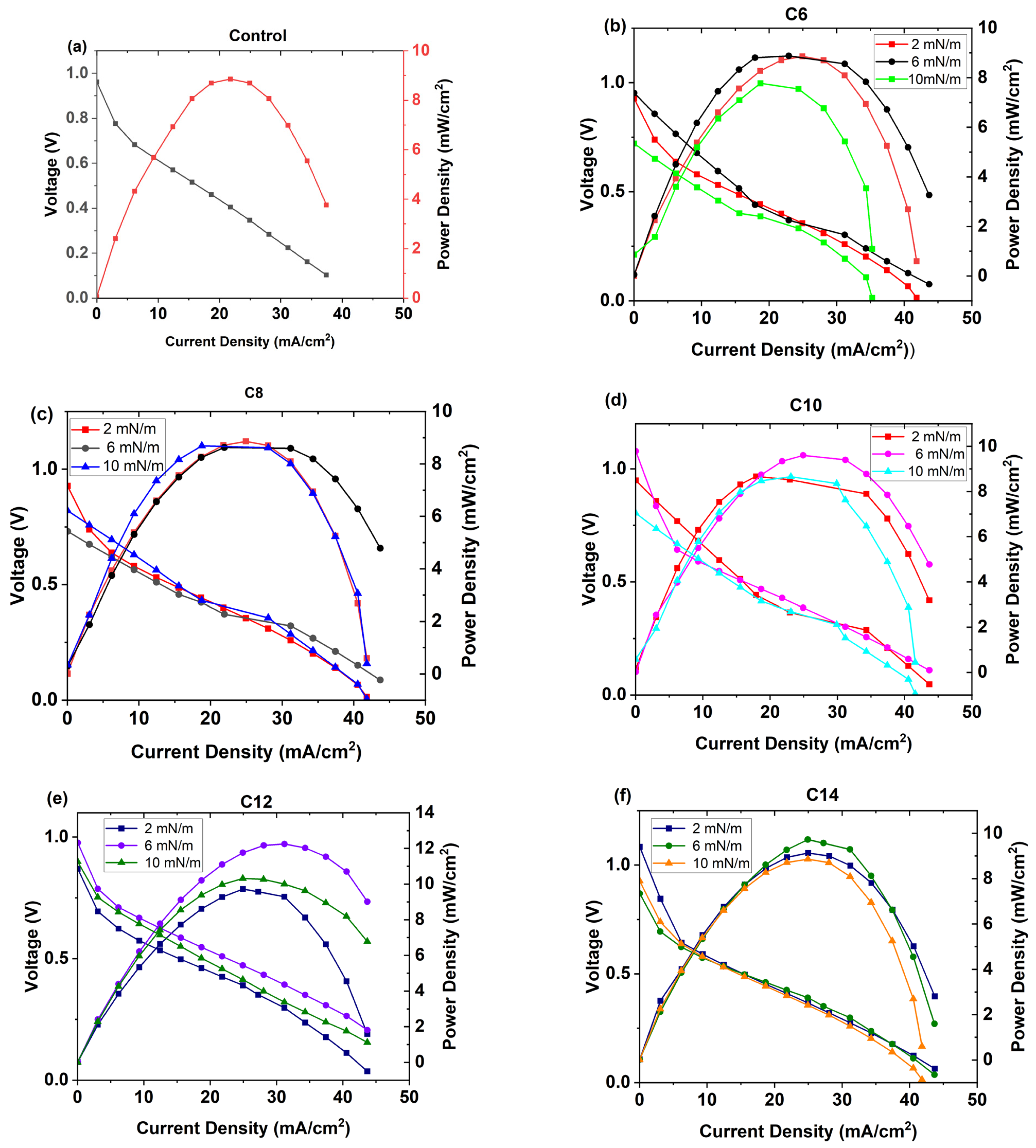
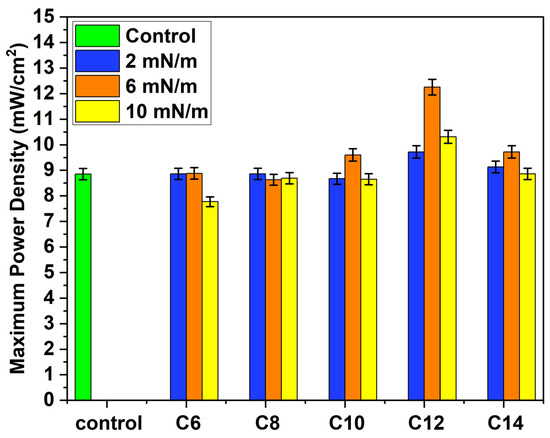
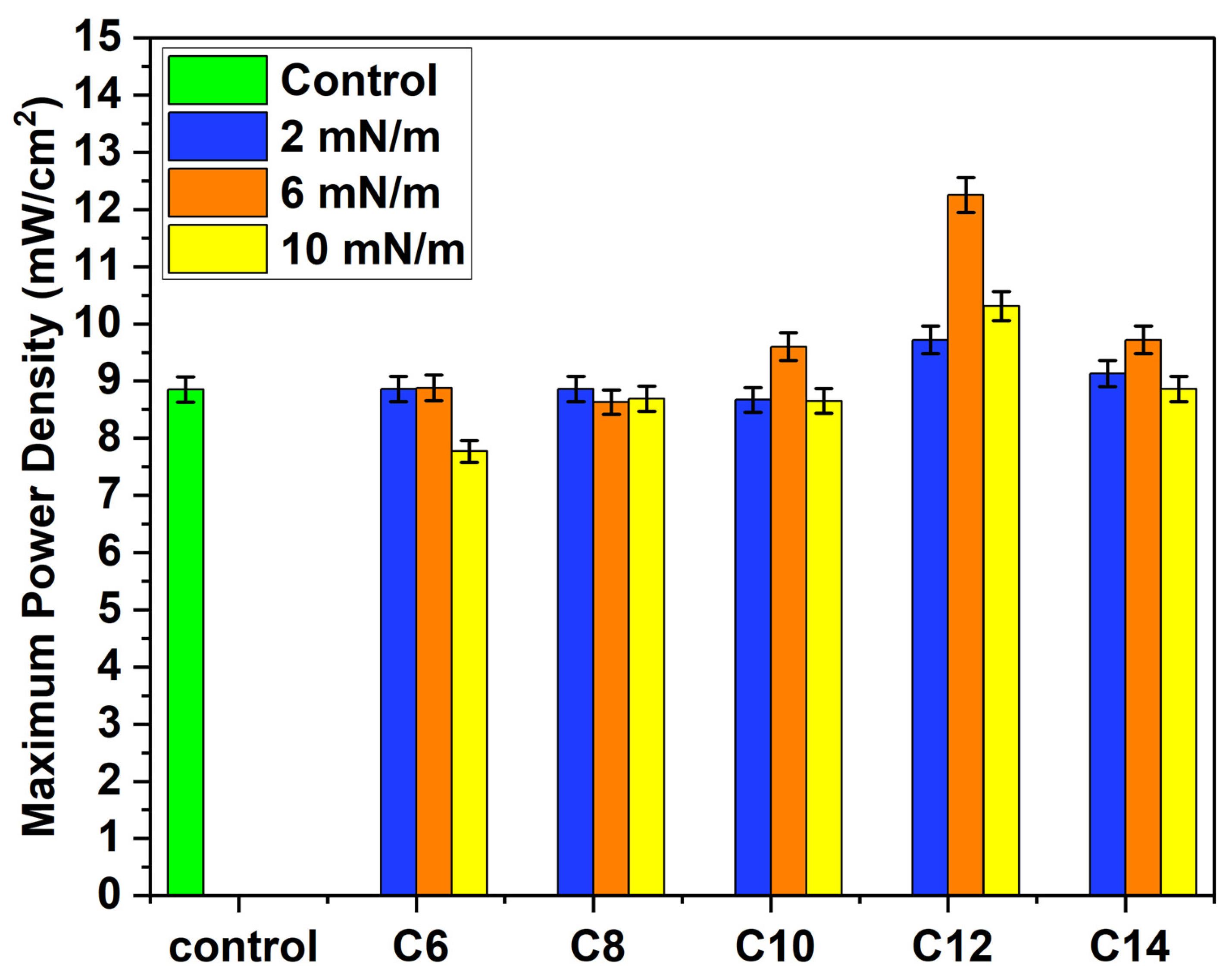
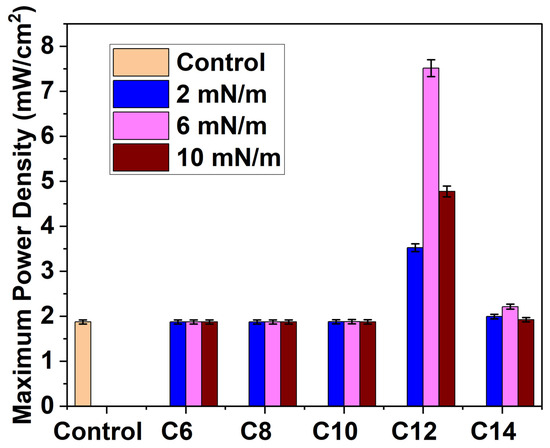
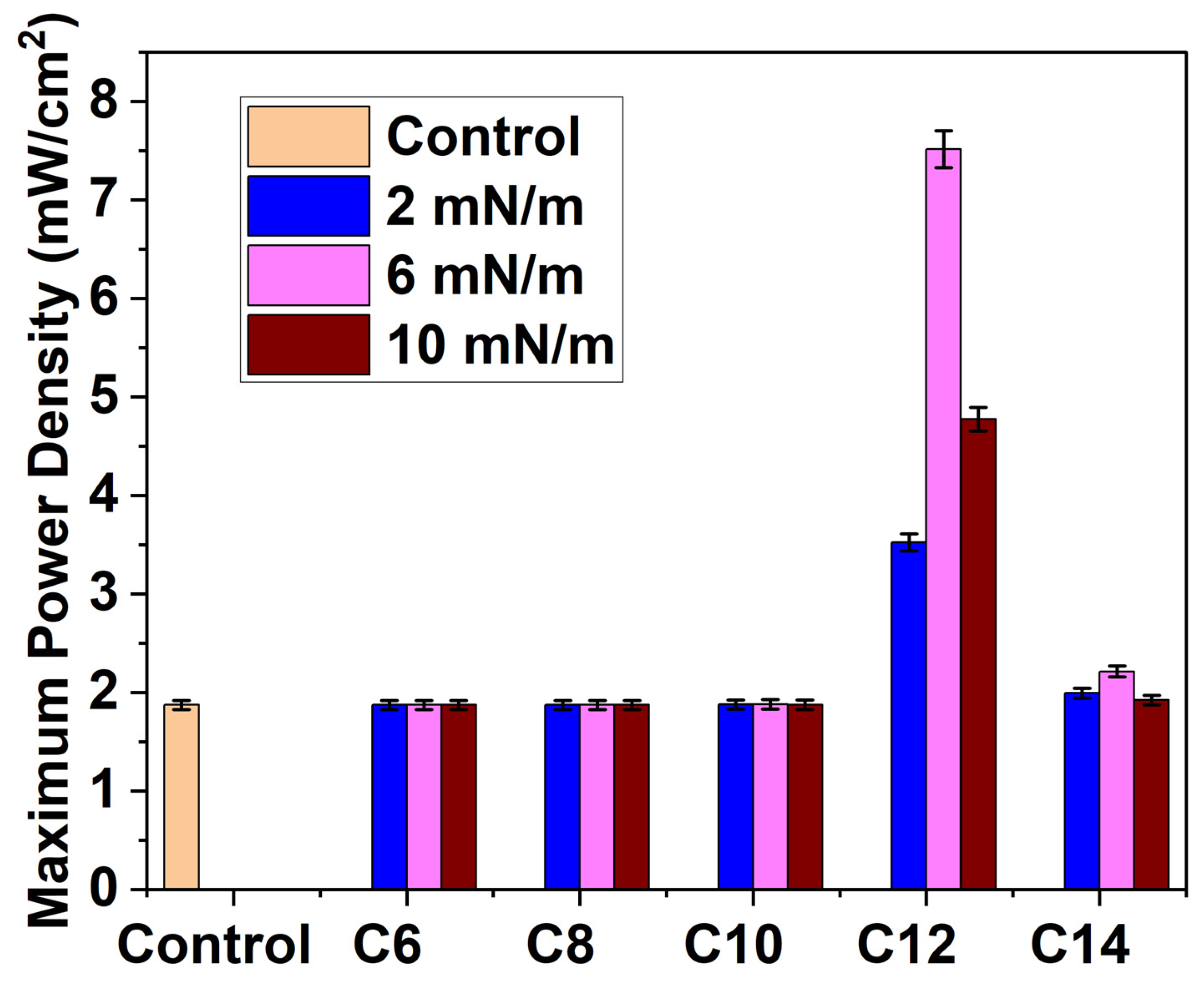
At first, we determined polarization and power curves using a demonstration kit for all Ag NPs (C6, C8, C10, C12, and C14) deposited on a Nafion membrane by the LB method at three different surface pressures (2 mN/m, 6 mN/m, and 10 mN/m). Figure 7 shows that C12 Ag NPs exhibit the most significant power output enhancement. Among C12 samples, Ag NPs deposited at 6 mN/m demonstrate a maximum power density increase of 38.42%, while samples deposited at surface pressures of 2 mN/m and 10 mN/m exhibit maximum power output increases of 9.83% and 16.5%, respectively. Furthermore, C14 samples display a similar enhancement trend: C14 2, 6, and 10 mN/m samples demonstrate maximum power density increases of 3.16%, 14.6%, and 8.86%, respectively. On the contrary, C6, C8, and C10 Ag NPs do not show any noticeable improvement after depositing at similar conditions (surface pressures) on Nafion electrolyte. The maximum power density of all the samples is shown in Figure 8.
Figure 7.
Polarization and power curves for (a) control, (b) C6 samples, (c) C8 samples, (d) C10 samples, (e) C12 samples, and (f) C14 samples were determined based on the fuel cell kit demonstration.
Figure 8.
Maximum power output obtained by the different samples at the demonstration kit fuel cell.
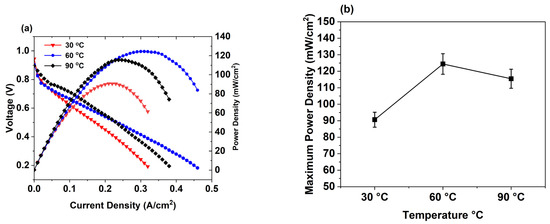
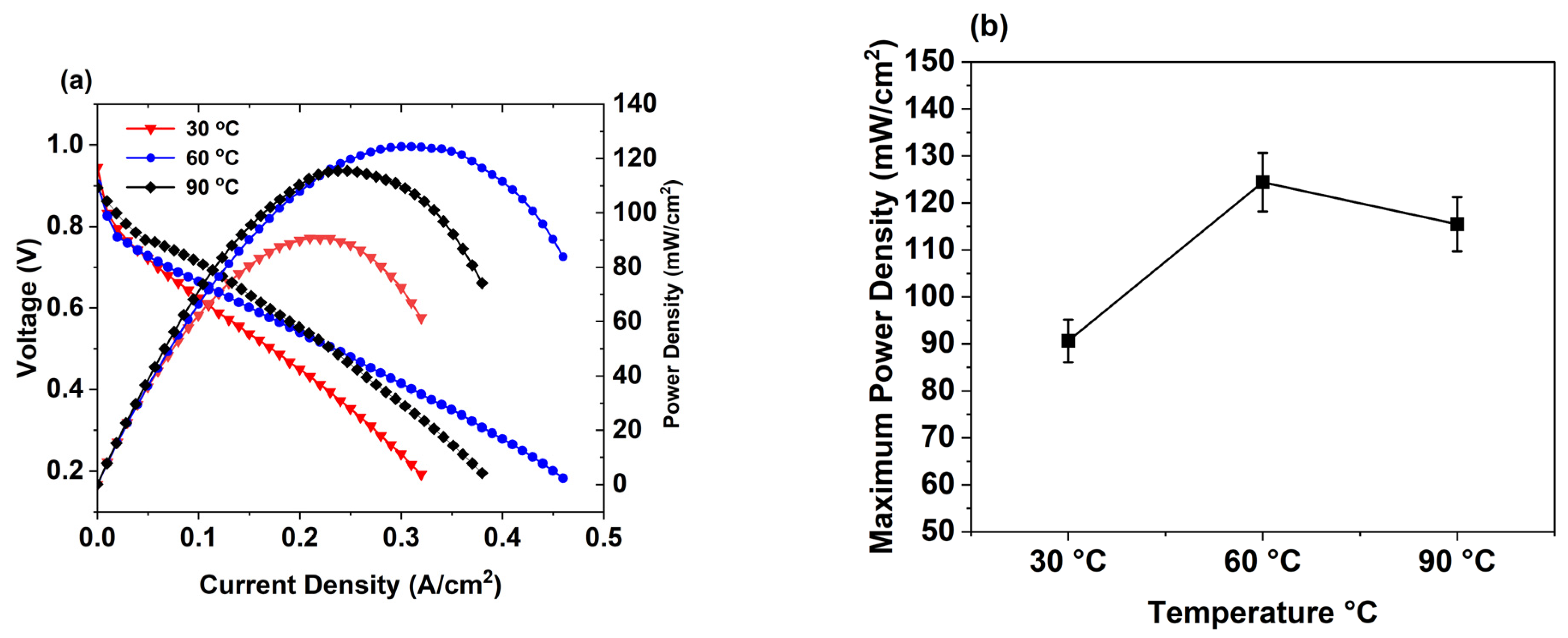
We further conducted MEA test at a professional fuel cell test station to evaluate the results obtained in the demonstration kit cell, which can also be translated there. Initially, we optimized the operating temperature for this fuel cell test station. We performed polarization and power tests with control at three different working temperatures: 30 °C, 60 °C, and 90 °C (Figure 9). At a lower temperature (30 °C), the lowest maximum power output value of the control is observed. This is because at lower temperatures, the Pt catalyst suffers from reduced activity, severe ohmic polarization, and increased proton impedance, which reduces conductivity and durability in the PEMFC [50,51]. At 60 °C, the highest value of maximum power density is obtained, while at 90 °C, the performance of control slightly decreases compared to that at 60 °C owing to dehydration of the Nafion membrane. Nafion begins to lose bulk and loosely bound water above 80 °C, leading to a decrease in proton conductivity and performance [52,53].
Figure 9.
(a) Polarization and power curves for control and (b) maximum power density values at 30 °C, 60 °C, and 90 °C.
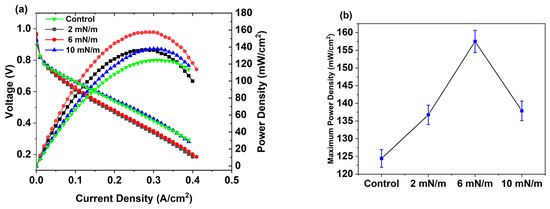
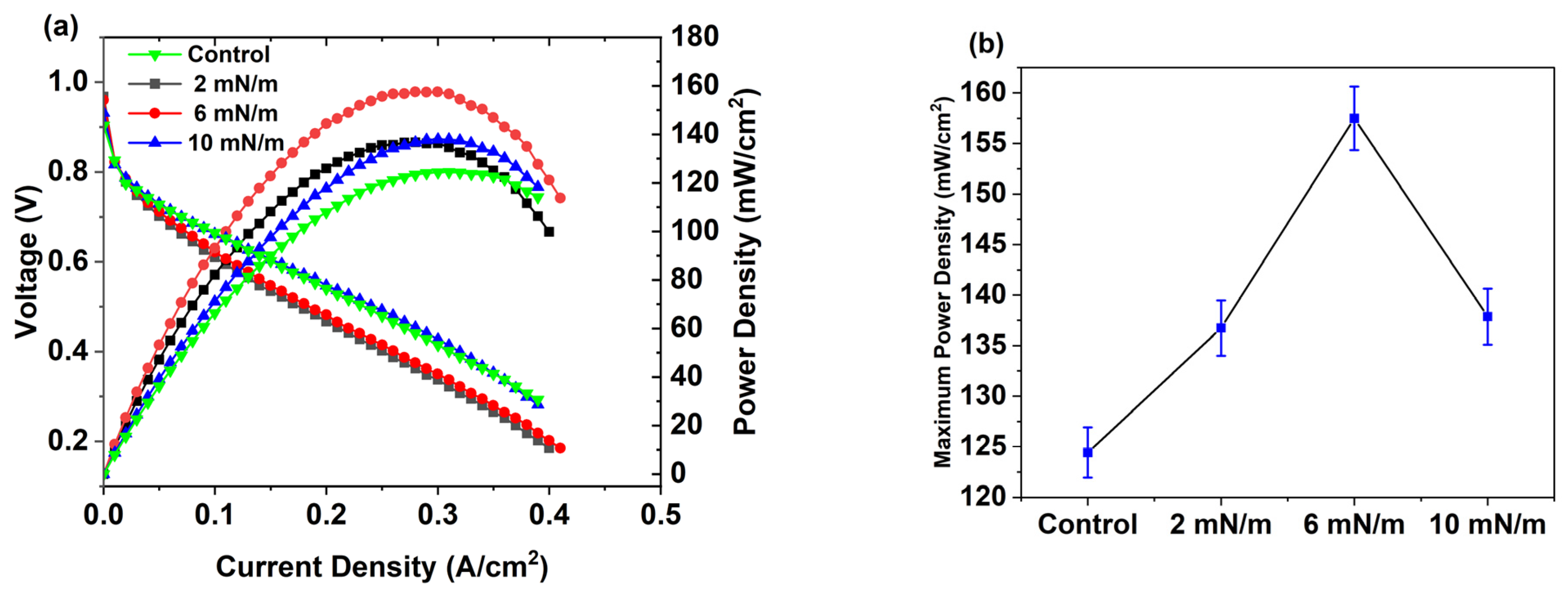
After optimizing the working temperature to 60 °C, we conducted performance (current density and power) tests at the fuel cell test station for C12, with samples prepared at three different surface pressures: 2, 6, and 10 mN/m. The performance graphs are shown in Figure 10. Several substantial differences are noted among the samples. All three C12 Ag NPs samples show enhancement of power: among them, the 6 mN/m sample exhibits the best performance (maximum power enhancement of 26.5%), whereas the 2 mN/m and 10 mN/m samples have 9.89% and 10.8% of power rise, respectively. The same trend is also observed for current density.
Figure 10.
(a) Performance curves (current density and power), (b) comparison of maximum power density of samples prepared from C12 Ag NPs at different surface pressures (2, 6, 10 mN/m) and control at the fuel cell test station.
The above outcome elucidates the significance of Ag NP morphology in controlling PEMFC performance. From TEM images, we observe that alkyl chain length controls the shape and growth of nanoparticles; agglomerated nanoparticles (C6, C18, C10) do not affect PEMFC performance when applied to a Nafion membrane using an LB trough at different surface pressures within the monolayer formation range. On the other hand, C12 Ag NPs are free of agglomeration and showed the most significant increase in power. Furthermore, C14 Ag NPs are larger and exhibit higher current density and power, but at lower levels than those of the C12 samples. Moreover, professional fuel test station data corroborates the findings from our experiments with C12 samples. The outcomes also reveal that Ag NPs have a catalytic effect on performance, boosting it in polymer electrolyte fuel cells when they are free of clustering and have a larger surface area (smaller particles). Moreover, this enhancement is crucial given the polarization losses that develop during PEMFCS operation [54].
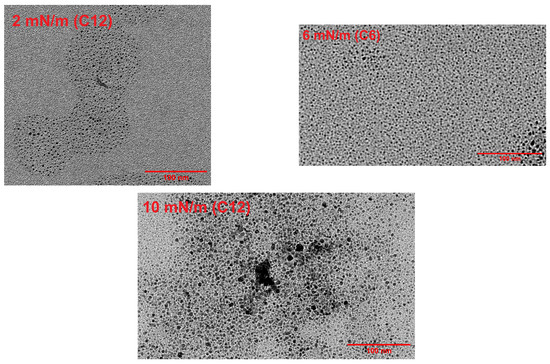
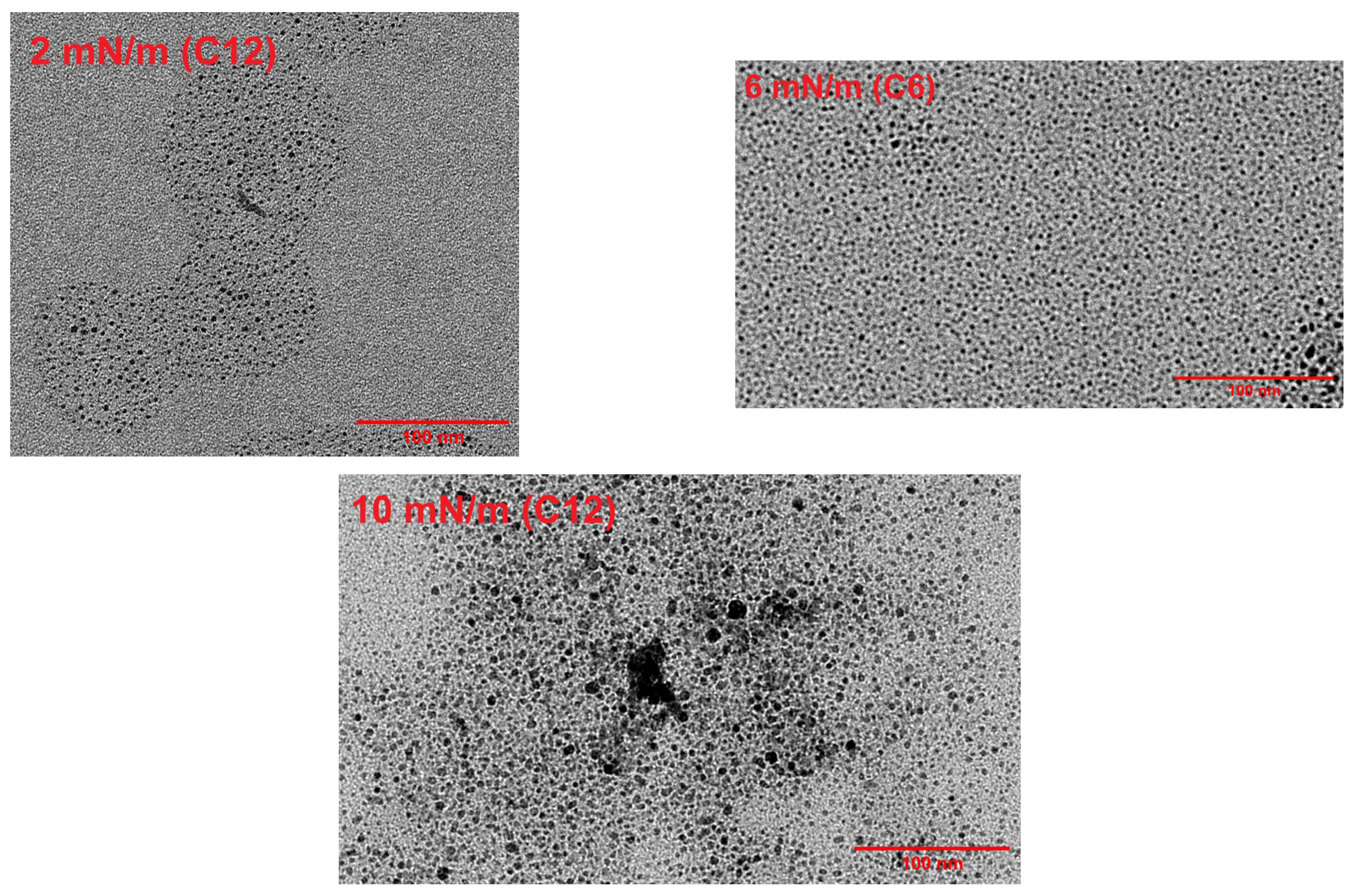
Another important finding to be noted that surface pressure is pivotal in designing the interface between polymer electrolyte (Nafion) and Ag NPs using the LB technique: we observe that among the three (2, 6, 10 mN/m) surface pressures MEA developed from 6 mN/m coated membrane results in the maximum performance advancement. To understand this behavior further, we collected nanoparticles at surface pressures of 2 mN/m, 6 mN/m and 10 mN/m for C12 to appraise the 2D pattern of nanoparticles by lifting TEM grids at those pressures. Figure 11 shows that at low pressure (2 mN/m), the monolayer coverage was incomplete, with vacancies. At a surface pressure of 6 mN/m, the nanoparticles were distributed in a closely packed, homogeneous order. However, the film collapsed at a pressure of 10 mN/m. The interparticle distance was 2.41 ± 0.57 nm at a surface pressure of 6 mN/m. Such a design of C6 Ag NPs at a surface pressure of 6 mN/m at the Nafion interface yielded the highest catalytic activity of Ag NPs due to the high catalytic surface area.
Figure 11.
TEM images of C12 Ag NPs at surface pressures 2, 6, 10 mN/m, respectively, on the LB trough.
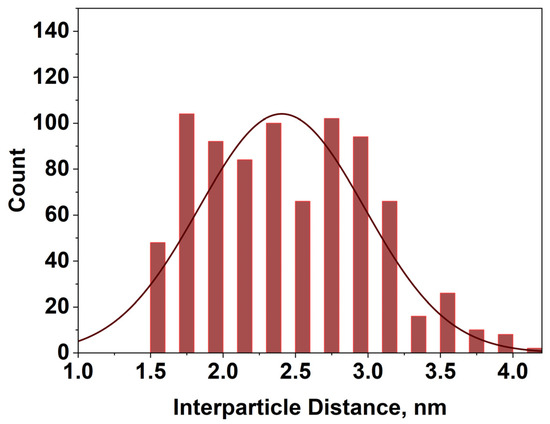
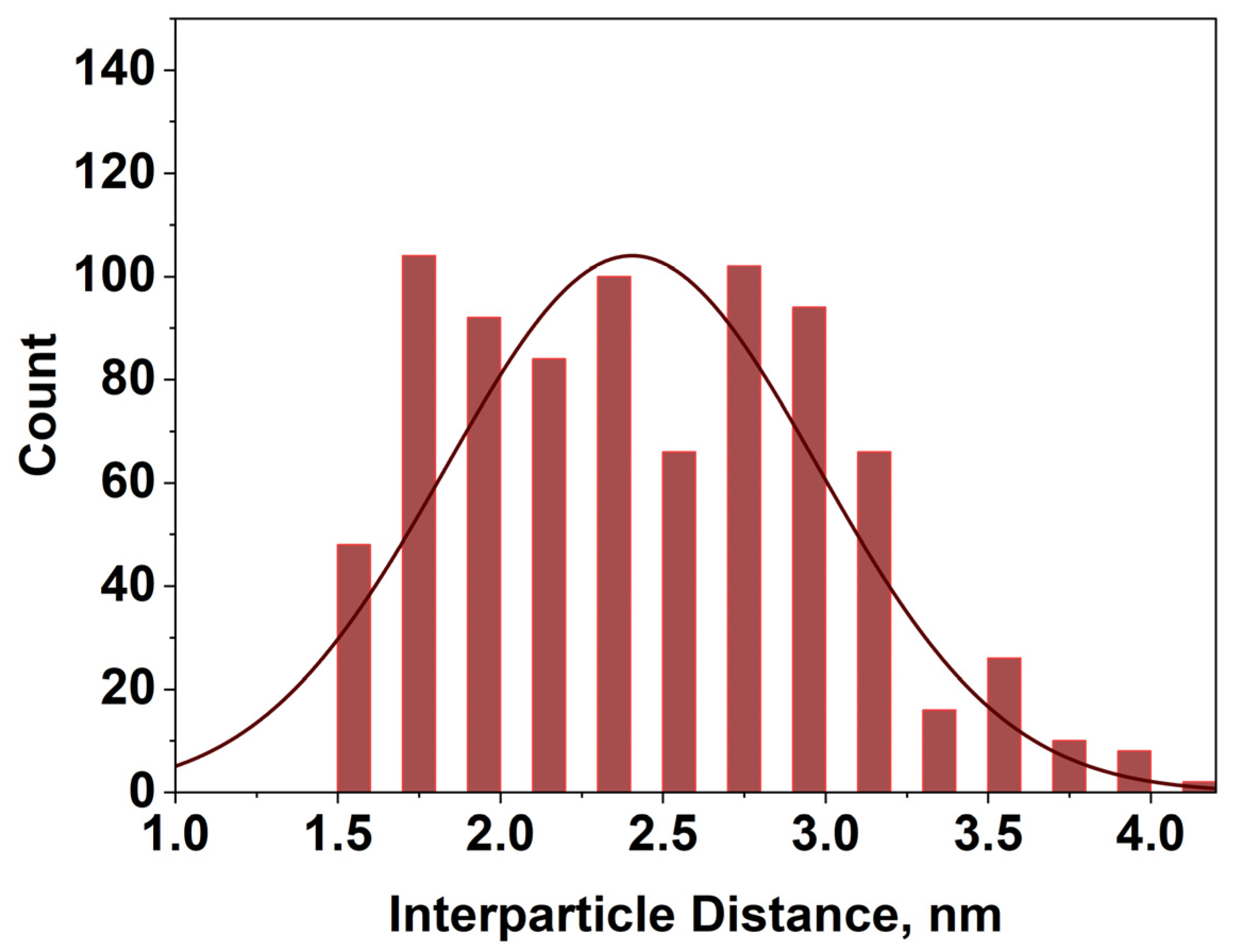
We also determined the edge-to-edge interparticle distance for C12 Ag NPs at a surface pressure of 6 mN/m using ImageJ software. Figure 12 shows that the average interparticle distance was 2.41 ± 0.57 nm.
Figure 12.
Inter-particle distance of C12 Ag NPs at surface pressure 6 mN/m on LB trough.
3.5. CO Resistance Test
We performed a CO tolerance test in which 0.1% CO-containing H2 was fed to the anode. Figure 13 illustrates the maximum power output value under this condition and the corresponding comparison among the samples. The most significant effect of interface engineering between Ag NPs and Nafion membrane is realized in this experiment. Ag C12 NPs coated at 6 mN/m surface pressure show maximum resistance against CO poisoning of a Pt catalyst and the maximum power output escalates to 300% compared to the control, followed by an 88% and 154% improvement in C12 samples deposited at 2 and 10 mN/m surface pressure, respectively. C14 samples show an upward trend, similar to C12, but the values are not significant. On the contrary, lower alkyl chain length thiol-stabilized Ag NPs do not show any resistance against CO. We note that Ag NPs can promote oxidation of CO at ambient temperature when the particles have a larger surface area (which is free from aggregation and smaller in size). In addition, the arrangement of nanoparticles on the membrane surface controls the catalytic activity of Ag NPs. Also, 2 mN/m C12 Ag NPs do not have full coverage on the Nafion interface, and at a higher pressure, with a 10 mN/m distance among the particles, the distance is reduced, and little aggregation occurs. On the other hand, owing to a relatively homogeneous distribution of Ag NPs at surface pressure 6 mN/m, an ideal arrangement of Ag NPs with an interparticle distance of 2.41 ± 0.57 nm is revealed, which leads to CO oxidation and increases the lifetime of the Pt catalyst. Smaller particles have more corner atoms or steps for catalysis, and the interdistance among particles is crucial for allowing CO to become trapped for oxidation. At low nanoparticle coverage (2 mN/m), catalytic activity is lower due to a small number of C12 Ag NPs. At 6 mN/m surface pressure, we achieve complete coverage of C12 Ag NPs with a homogeneous distribution of nanoparticles and an interparticle distance of 2.41 ± 0.57 nm, allowing CO to be trapped and oxidized at low temperature in the presence of C12 Ag NPs. At higher surface pressure (10 mN/m), even though the number of Ag NPs is high, monolayers start to collapse. Moreover, owing to the presence of a high number of Ag NPs, there is not enough room for CO to settle at the surface and oxidize [55].
Figure 13.
Maximum power density bar graph for all samples evaluated at ambient conditions with 0.1% CO in H2.
3.6. Durability Study
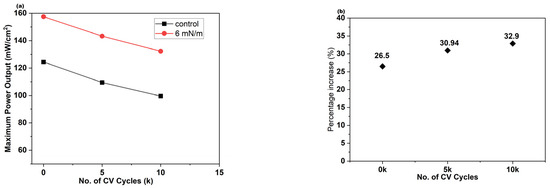
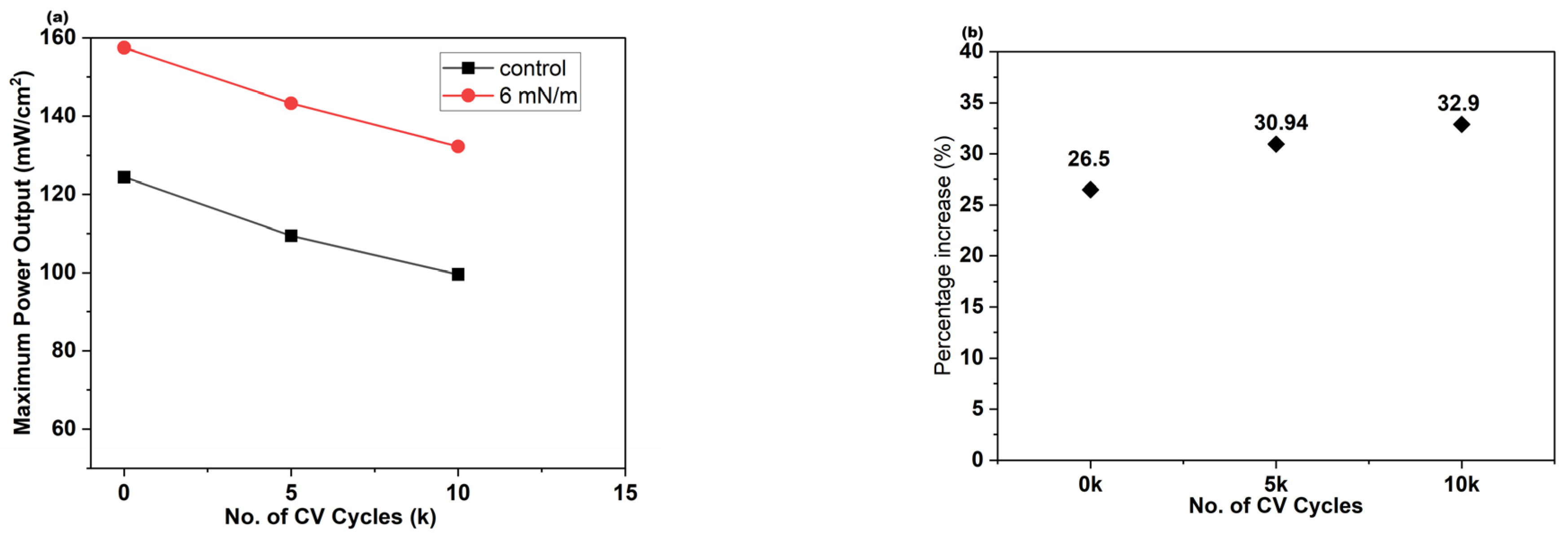
We evaluated the durability of the control and C12 Ag NPs deposited at 6 mN/m using an accelerated stress test (AST) cycling protocol approved by the DOE. As the number of cycles increased, the maximum current density decreased for both MEAs. The decrease in maximum power with cycle number is shown in Figure 14, where the coated MEA exhibits a sustained performance enhancement of approximately 26–33% throughout the test. These outcomes reveal that the performance enhancement associated with the coated membrane is maintained for at least 10 k AST cycles.
Figure 14.
(a) Maximum power output for control and C12 Ag NP deposited at 6 mN/m after 0 k, 5 k, and 10 k cycles. (b) Maximum power density increase (%) of C12 Ag NPs at surface pressure of 6 mN/m with respect to control (uncoated MEA) after 0 k, 5 k, and 10 k cycles in AST.
3.7. Performance and CO Resistance Test of C12 Ag NPs Coated by the Spray Method
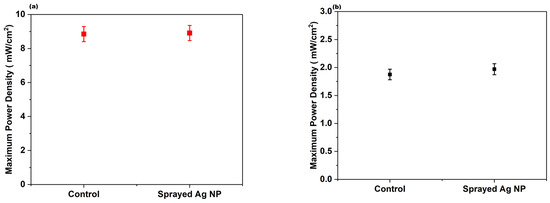
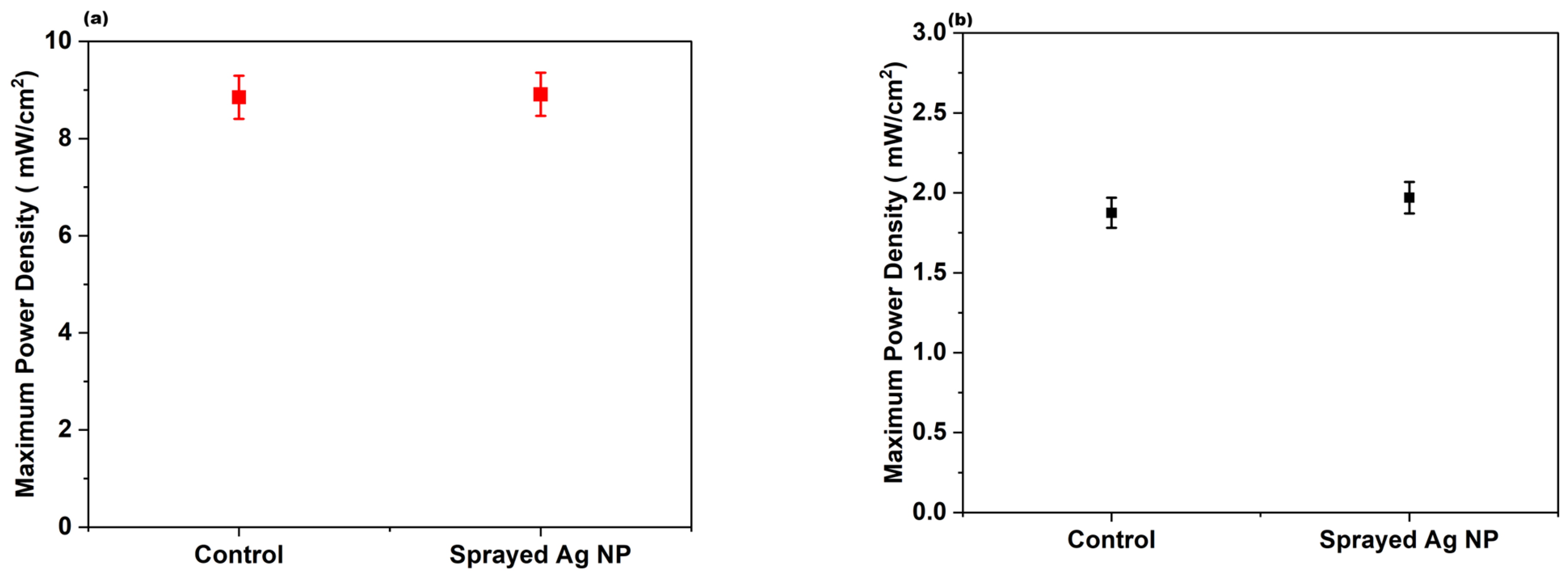
C12 Ag NPs were applied on Nafion membrane by the spray method, and the concentration was 0.1 mg cm−2. Figure 15 shows that no power enhancement occurred and that no CO resistance was observed. Indeed, the significance of LB coating on Nafion at a certain pressure is reflected by this result. In addition to morphology, the arrangement of nanoparticles at the nanoparticle–electrolyte (Nafion) interface is vital to PEMFC performance and CO tolerance.
Figure 15.
(a) Maximum power output for control and C12 Ag NPs deposited by the spray method. (b) Maximum power density when fed with 0.1% CO at the anode for control and C12 Ag NPs coated by the spray method.
3.8. Catalytic Mechanism
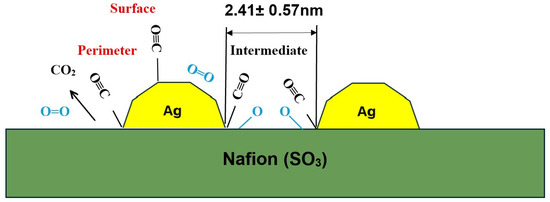
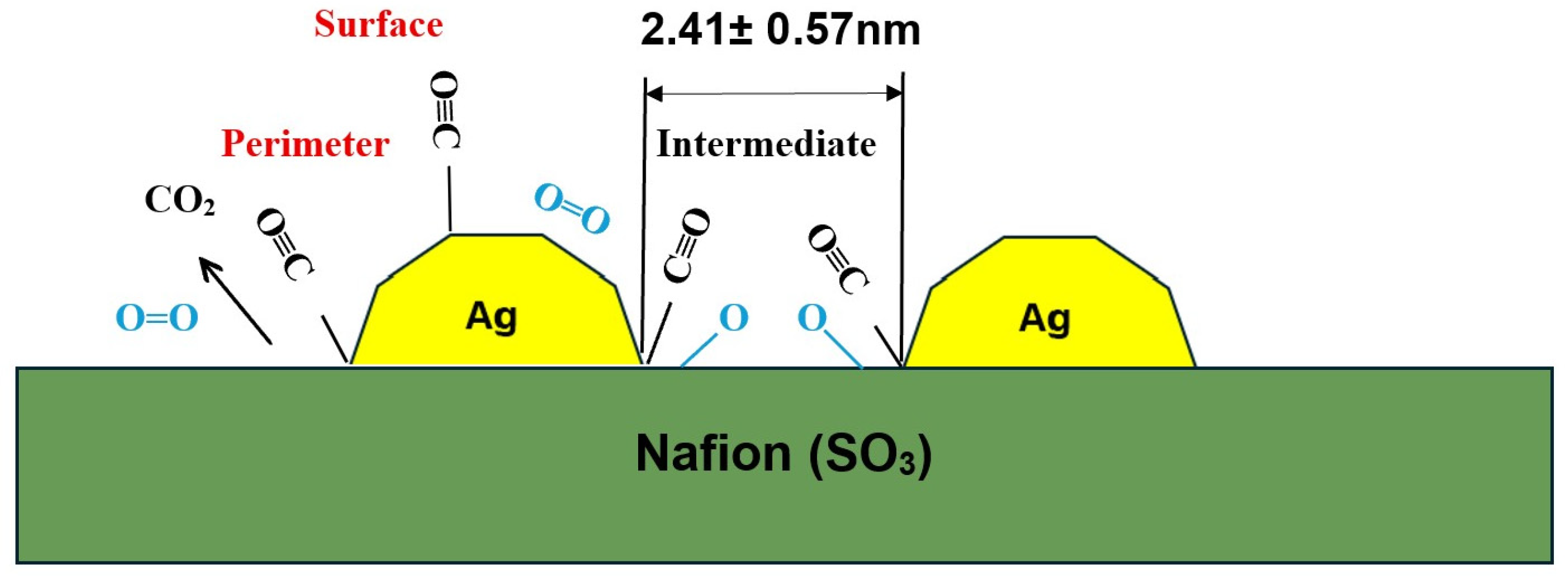
It has been well established that Au nanoparticles (NPs) supported on metal oxides are highly effective catalysts for CO oxidation reactions [30,31]. CO is unavoidably generated during the routine operation of PEMFC, and its oxidation is the rate-limiting step due to CO poisoning of the Pt catalyst. In our previous study, we demonstrated that enhanced power output and improved CO tolerance were observed only when the membrane was coated with oblate Au nanoparticles [36]. This behavior was attributed to the role of the Nafion polymer, which was found to function analogously to adsorbed reactants or metal oxide supports. Smaller nanoparticles (1–5 nm) have low coordination numbers, especially on their edges and corners. The interaction between small Ag nanoparticles and Nafion is modeled by considering the adsorption of an SO3-containing group located at the termini of Nafion side-chains (Figure 16). We consider synthesized C12 Ag NPs to possess an oblate shape with steps, and CO molecules are adsorbed on the edges or corners of the Ag NP surface. The assumption is based on previous research, which concluded that for low-temperature CO oxidation, nanoparticles should be smaller (below 5 nm) and have more corner atoms (oblate shape) [30,36]. Our results indicate that the SO3 species provided by Nafion play a crucial role in facilitating CO oxidation. Specifically, SO3 species are strongly adsorbed at low-coordinated Ag sites via their three terminal oxygen atoms, enabling effective oxidation of CO to CO2 at the nanoparticle perimeter. Consequently, the overall CO concentration is significantly reduced.
Figure 16.
Proposed model for the catalytic mechanism of CO oxidation at the Nafion/Ag NP interface.
The activation barrier for oxidizing adsorbed CO in the presence of SO3 (SO3 + CO → SO2 + CO2) is substantially lower than that for CO removal via the water–gas shift reaction (WGSR, H2O + CO → CO2 + H2), which is energetically unfavorable in the absence of SO3. In our model, SO3 adsorbed on Ag nanoparticles serves as a simplified representation of the Ag–Nafion interaction. Notably, the interaction between SO3 and Ag is relatively weak, allowing facile removal of an oxygen atom from SO3 to oxidize CO. This interaction is expected to be further weakened when the full Nafion side-chain ligands are considered (Ag–SO3–R). In contrast, if SO3 binds too strongly to Ag, CO oxidation by SO3 becomes energetically hindered due to the high stability of the Ag–SO3 complex. Therefore, direct interaction between Ag nanoparticles and Nafion membranes is essential for facilitating CO oxidation and alleviating CO poisoning. In this synergistic system, Ag nanoparticles act as the active oxidation catalyst, while Nafion serves as an efficient oxidant source. The interparticle distance plays a crucial role in CO oxidation: higher interparticle distances lead to fewer available sites for CO oxidation, and particles which are too close together are not suitable for reaching Ag–SO3–R interfaces.
4. Conclusions
In summary, we have demonstrated that, for thiol-stabilized nanoparticles, alkyl chain length acts as a surfactant, controlling nanoparticle morphology. For shorter chain lengths (C6, C8, and C10), our synthesized Ag NPs exhibited instability and agglomeration. All the nanoparticles possessed a typical Ag Fcc crystal structure; however, C12 and C14 Ag NPs exhibited broadening of the (111) XRD peak, reflecting their well-dispersed nanoscale nature. All the fabricated particles spread at the air–water interface in the LB trough, showing a pressure-area isotherm. No significant performance enhancement was observed for any of the C6, C8, C10, and C14 Ag NPs samples when they were deposited in the LB trough in the monolayer formation range. The C12 samples showed substantial performance improvement when coated at 6 mN/m surface pressure, while 2 mN/m and 10 mN/m pressure resulted in growth at a lower scale. We also conducted performance tests on C12 samples at a professional fuel cell test station, where we observed the same performance trend. To achieve the catalytic effect of Ag NPs in PEMFC applications, the particles’ morphology significantly influenced their catalytic activity. The particles should be free of clustering, and their size should not be too large to yield a low surface area. We also investigated CO resistance with Ag NPs and found that C12 samples coated at a surface pressure of 6 mN/m exhibited the highest resistance (a 300% increase in power compared to the control). In addition to the morphology of the Ag NPs, we realized the significance of nanoparticle distribution at the monolayer level on the Nafion electrolyte. At surface pressure 6 mN/m, the Ag NPs were homogeneously distributed on Nafion, and a certain distance among inter-particles (2.41 ± 0.57 nm) was necessary to promote CO oxidation on the Ag NP interface. During the durability study, 6 mN/m C12 Ag NPs showed a similar enhancement compared to the uncoated sample. In addition, C12 Ag NPs, when spray-coated, did not show improved performance or CO resistance. We proposed a model for the catalytic mechanism of CO oxidation, and an HR-TEM study, along with DFT calculations, will reinforce it.
Author Contributions
M.F.R.: conceptualization, data curation, formal analysis, investigation, methodology, validation, writing—original draft. H.F.: investigation. A.R.: methodology. A.S.: methodology. M.R.: conceptualization, formal analysis, supervision, writing—review and editing. All authors have read and agreed to the published version of the manuscript.
Funding
This work was supported by the Department of the Navy award [N00014-29-1-2858] issued by the Office of Naval Research.
Institutional Review Board Statement
Not applicable.
Informed Consent Statement
Not applicable.
Data Availability Statement
The data that support the findings of this study are available from the corresponding author upon reasonable request.
Conflicts of Interest
The authors declare no conflicts of interest.
References
- Kiani, M.; Zhao, Y.; Zhang, R. Proton exchange membrane fuel cells: Recent developments and future perspectives. Chem. Commun. 2025, 61, 9392–9411. [Google Scholar] [CrossRef] [Scilit] [PubMed]
- Hong, J.; Yang, J.; Weng, Z.; Ma, F.; Liang, F.; Zhang, C. Review on proton exchange membrane fuel cells: Safety analysis and fault diagnosis. J. Power Sources 2024, 617, 235118. [Google Scholar] [CrossRef] [Scilit]
- Parekh, A. Recent developments of proton exchange membranes for PEMFC: A review. Front. Energy Res. 2022, 10, 956132. [Google Scholar] [CrossRef] [Scilit]
- Miri, M.; Tolj, I.; Barbir, F. Review of Proton Exchange Membrane Fuel Cell-Powered Systems for Stationary Applications Using Renewable Energy Sources. Energies 2024, 17, 3814. [Google Scholar] [CrossRef] [Scilit]
- Raut, A.; Fang, H.; Lin, Y.-C.; Rahman, M.F.; Fu, S.; Yin, Y.; Fang, Y.; Sprouster, D.; Isseroff, R.; Sharma, S.K.; et al. Designing a micro-cellulose membrane for hydrogen fuel cells. RSC Sustain. 2025, 3, 3025–3035. [Google Scholar] [CrossRef] [Scilit]
- Kahraman, H.; Akın, Y. Recent studies on proton exchange membrane fuel cell components, review of the literature. Energy Convers. Manag. 2024, 304, 118244. [Google Scholar] [CrossRef] [Scilit]
- Shi, X.; Song, W.; Wei, T.; Zhang, K.; Shao, Z. Improved CO tolerance of Pt nanoparticles on polyaniline-modified carbon for PEMFC anode. Fuel 2025, 382, 133239. [Google Scholar] [CrossRef] [Scilit]
- Okonkwo, P.C. Proton Exchange Membrane Fuel Cell Catalyst Layer Degradation Mechanisms: A Succinct Review. Catalysts 2025, 15, 97. [Google Scholar] [CrossRef] [Scilit]
- Ma, H.; Tong, Y.; Hung, Y.M.; Wang, X. Progress on the durability of catalyst layer interfaces in proton-exchange membrane fuel cells. Process Saf. Environ. Prot. 2024, 192, 358–377. [Google Scholar]
- Le Canut, J.-M.; Abouatallah, R.; Harrington, D. Detection of Membrane Drying, Fuel Cell Flooding, and Anode Catalyst Poisoning on PEMFC Stacks by Electrochemical Impedance Spectroscopy. J. Electrochem. Soc. 2006, 153, A857–A864. [Google Scholar] [CrossRef] [Scilit]
- Galletti, C.; Specchia, S.; Saracco, G.; Specchia, V. CO-selective methanation over Ru–γAl2O3 catalysts in H2-rich gas for PEM FC applications. Chem. Eng. Sci. 2010, 65, 590–596. [Google Scholar] [CrossRef] [Scilit]
- Balasubramanian, S.; Weidner, J.W. Analysis of an Electrochemical Filter for Removing Carbon Monoxide from Reformate Hydrogen. J. Electrochem. Soc. 2015, 162, E231–E236. [Google Scholar] [CrossRef] [Scilit]
- Wang, L.; Zhou, Y.; Yang, Y.; Subramanian, A.; Kisslinger, K.; Zuo, X.; Chuang, Y.-C.; Yin, Y.; Nam, C.-Y.; Rafailovich, M.H. Suppression of Carbon Monoxide Poisoning in Proton Exchange Membrane Fuel Cells via Gold Nanoparticle/Titania Ultrathin Film Heterogeneous Catalysts. ACS Appl. Energy Mater. 2019, 2, 3479–3487. [Google Scholar] [CrossRef] [Scilit]
- Rodrigues, A.; Amphlett, J.C.; Mann, R.F.; Peppley, B.A.; Roberge, P.R. Carbon monoxide poisoning of proton-exchange membrane fuel cells. In Proceedings of the IECEC-97 Proceedings of the Thirty-Second Intersociety Energy Conversion Engineering Conference, Honolulu, HI, USA, 27 July–1 August 1997; IEEE: New York, NY, USA, 2002; pp. 768–773. [Google Scholar]
- Becker, H.; Bacquart, T.; Perkins, M.; Moore, N.; Ihonen, J.; Hinds, G.; Smith, G. Operando characterisation of the impact of carbon monoxide on PEMFC performance using isotopic labelling and gas analysis. J. Power Sources Adv. 2020, 6, 100036. [Google Scholar] [CrossRef] [Scilit]
- Rahman, M.F.; Haque, M.S.; Hasan, M.; Hakim, M.A. Fabrication of Bismuth Vanadate (BiVO4) Nanoparticles by a Facile Route. Trans. Electr. Electron. Mater. 2019, 20, 522–529. [Google Scholar] [CrossRef] [Scilit]
- Grigoriev, S.A.; Porembsky, V.I.; Fateev, V.N. Pure hydrogen production by PEM electrolysis for hydrogen energy. Int. J. Hydrogen Energy 2006, 31, 171–175. [Google Scholar] [CrossRef] [Scilit]
- Boettcher, S.W. Introduction to Green Hydrogen. Chem. Rev. 2024, 124, 13095–13098. [Google Scholar] [CrossRef] [Scilit]
- U.S. Department of Energy. Hydrogen Production: Electrolysis. Available online: https://www.energy.gov/eere/fuelcells/hydrogen-production-electrolysis (accessed on 18 November 2025).
- Beck, A.; Yang, A.C.; Leland, A.R.; Riscoe, A.R.; Lopez, F.A.; Goodman, E.D.; Cargnello, M. Understanding the preferential oxidation of carbon monoxide (PrOx) using size-controlled Au nanocrystal catalyst. AIChE J. 2018, 64, 3159–3167. [Google Scholar] [CrossRef] [Scilit]
- Meng, X.; Mei, J.; Tang, X.; Jiang, J.; Sun, C.; Song, K. The Degradation Prediction of Proton Exchange Membrane Fuel Cell Performance Based on a Transformer Model. Energies 2024, 17, 3050. [Google Scholar] [CrossRef] [Scilit]
- Ion Power. Manufacturer of Value-Added Products Containing Nafion™. Available online: https://ion-power.com/nafion-research/ (accessed on 19 November 2025).
- Perma Pure. The Basic Physical and Chemical Properties of Nafion™ Polymer. Available online: https://www.permapure.com/environmental-scientific-old/nafion-tubing/nafion-physical-and-chemical-properties/ (accessed on 19 November 2025).
- Foniok, K.; Drozdova, L.; Prokop, L.; Krupa, F.; Kedron, P.; Blazek, V. Mechanisms and Modelling of Effects on the Degradation Processes of a Proton Exchange Membrane (PEM) Fuel Cell: A Comprehensive Review. Energies 2025, 18, 2117. [Google Scholar] [CrossRef] [Scilit]
- Jun Lim, H.; Kim, G.; Jin Yun, G. Durability and Performance Analysis of Polymer Electrolyte Membranes for Hydrogen Fuel Cells by a Coupled Chemo-mechanical Constitutive Model and Experimental Validation. ACS Appl. Mater. Interfaces 2023, 15, 24257–24270. [Google Scholar] [CrossRef] [Scilit]
- Huang, C.; Jiang, R.; Elbaccouch, M.; Muradov, N.; Fenton, J.M. On-board removal of CO and other impurities in hydrogen for PEM fuel cell applications. J. Power Sources 2006, 162, 563–571. [Google Scholar] [CrossRef] [Scilit]
- Jiménez, S.; Soler, J.; Valenzuela, R.X.; Daza, L. Assessment of the performance of a PEMFC in the presence of CO. J. Power Sources 2005, 151, 69–73. [Google Scholar] [CrossRef] [Scilit]
- Carrette, L.P.L.; Friedrich, K.A.; Hubera, M.; Stimming, U. Improvement of CO tolerance of proton exchange membrane (PEM) fuel cells by a pulsing technique. Phys. Chem. Chem. Phys. 2001, 3, 320–324. [Google Scholar] [CrossRef] [Scilit]
- Lu, H.; Rihko-Struckmann, L.; Sundmacher, K. Spontaneous oscillations of cell voltage, power density, and anode exit CO concentration in a PEM fuel cell. Phys. Chem. Chem. Phys. 2011, 13, 18179–18185. [Google Scholar] [CrossRef] [Scilit]
- Haruta, M. Gold as a novel catalyst in the 21st century: Preparation, working mechanism, and applications. Gold Bull. 2004, 37, 27–36. [Google Scholar] [CrossRef] [Scilit]
- Green, I.X.; Tang, W.; McEntee, M.; Neurock, M.; Yates, J.T., Jr. Inhibition at perimeter sites of Au/TiO2 oxidation catalyst by reactant oxygen. J. Am. Chem. Soc. 2012, 134, 12717–12723. [Google Scholar] [CrossRef] [Scilit]
- Green, I.X.; Tang, W.; Neurock, M.; Yates, J.T., Jr. Insights into Catalytic Oxidation at the Au/TiO2 Dual Perimeter Sites. Acc. Chem. Res. 2013, 47, 805–815. [Google Scholar] [CrossRef] [Scilit]
- Huang, X.-S.; Sun, H.; Wang, L.-C.; Liu, Y.-M.; Fan, K.-N.; Cao, Y. Morphology effects of nanoscale ceria on the activity of Au/CeO2 catalysts for low-temperature CO oxidation. Appl. Catal. B Environ. 2009, 90, 224–232. [Google Scholar] [CrossRef] [Scilit]
- Qiao, B.; Wang, A.; Yang, X.; Allard, L.F.; Jiang, Z.; Cui, Y.; Liu, J.; Li, J.; Zhang, T. Single-atom catalysis of CO oxidation using Pt1/FeOx. Nat. Chem. 2011, 3, 634–641. [Google Scholar] [CrossRef] [Scilit]
- Ivanova, A.S.; Slavinskaya, E.M.; Gulyaev, R.V.; Zaikovskii, V.I.; Stonkus, O.A.; Danilova, I.G.; Plyasova, L.M.; Polukhina, I.A.; Boronin, A.I. Metal–support interactions in Pt/Al2O3 and Pd/Al2O3 catalysts for CO oxidation. Appl. Catal. B Environ. 2010, 97, 57–71. [Google Scholar] [CrossRef] [Scilit]
- Li, H.; Pan, C.; Zhao, S.; Liu, P.; Zhu, Y.; Rafailovich, M.H. Enhancing performance of PEM fuel cells: Using the Au nanoplatelet/Nafion interface to enable CO oxidation under ambient conditions. J. Catal. 2016, 339, 31–37. [Google Scholar] [CrossRef] [Scilit]
- Perala, S.R.K.; Kumar, S. On the Mechanism of Metal Nanoparticle Synthesis in the Brust–Schiffrin Method. Langmuir 2013, 29, 9863–9873. [Google Scholar] [CrossRef] [Scilit] [PubMed]
- Kumar, A.; Savanur, M.R.S.; Singh, S.K.; Singh, J.; Bhattacharya, S.; Asnani, K.; Kumar, B.; Kumar, M.; Kumar, S. Recent Advances in Silver Nanoparticles-Catalyzed Reactions. ChemistrySelect 2025, 10, e202403655. [Google Scholar] [CrossRef] [Scilit]
- Dong, X.-Y.; Gao, Z.-W.; Yang, K.-F.; Zhanga, W.-Q.; Xu, L.-W. Nanosilver: A new generation of silver catalysts for organic transformations in the efficient synthesis of fine chemicals. Catal. Sci. Technol. 2015, 5, 2554–2574. [Google Scholar] [CrossRef] [Scilit]
- Dey, S.; Dhal, G.C. Applications of silver nanocatalysts for low-temperature oxidation of carbon monoxide. Inorg. Chem. Commun. 2019, 110, 107614. [Google Scholar] [CrossRef] [Scilit]
- Al Soubaihi, R.M.; Saoud, K.M.; Dutta, J. Low-temperature CO oxidation by silver nanoparticles in silica aerogel mesoreactors. Chem. Eng. J. 2023, 455, 140576. [Google Scholar] [CrossRef] [Scilit]
- Brust, M.; Walker, M.; Bethell, D.; Schiffrin, D.J.; Whyman, R. Synthesis of thiol-derivatised gold nanoparticles in a two-phase liquid–liquid system. J. Chem. Soc. Chem. Commun. 1994, 7, 801–802. [Google Scholar] [CrossRef] [Scilit]
- Gupta, R.K.; Srinivasan, M.P.; Dharmarajan, R. Synthesis of short-chain thiol-capped gold nanoparticles, their stabilization, and immobilization on silicon surface. Colloids Surf. A Physicochem. Eng. Asp. 2011, 390, 149–156. [Google Scholar] [CrossRef] [Scilit]
- Borsley, S.; Edwards, W.; Mati, I.K.; Poss, G.; Diez-Castellnou, M.; Marro, N.; Kay, E.R. A General One-Step Synthesis of Alkanethiyl-Stabilized Gold Nanoparticles with Control over Core Size and Monolayer Functionality. Chem. Mater. 2023, 35, 6168–6177. [Google Scholar] [CrossRef] [Scilit]
- Motte, L.; Pileni, M.P. Influence of Length of Alkyl Chains Used to Passivate Silver Sulfide Nanoparticles on Two- and Three-Dimensional Self-Organization. J. Phys. Chem. B 1998, 102, 4104–4109. [Google Scholar] [CrossRef] [Scilit]
- Pallipurath, A.; Nicoletti, O.; Skelton, J.M.; Mahajan, S.; Midgley, P.A.; Elliott, S.R. Surfactant-free coating of thiols on gold nanoparticles using sonochemistry: A study of competing processes. Ultrason. Sonochem. 2014, 21, 1886–1892. [Google Scholar] [CrossRef] [Scilit] [PubMed]
- Hock, N.; Racaniello, G.F.; Aspinall, S.; Denora, N.; Khutoryanskiy, V.V.; Bernkop-Schnürch, A. Thiolated Nanoparticles for Biomedical Applications: Mimicking the Workhorses of Our Body. Adv. Sci. 2021, 9, 2102451. [Google Scholar] [CrossRef] [Scilit] [PubMed]
- Hinterwirth, H.; Kappel, S.; Waitz, T.; Prohaska, T.; Lindner, W.; Lämmerhofer, M. Quantifying Thiol Ligand Density of Self-Assembled Monolayers on Gold Nanoparticles by Inductively Coupled Plasma–Mass Spectrometry. ACS Nano 2013, 7, 1129–1136. [Google Scholar] [CrossRef] [Scilit]
- Öztürk, K.; Kaplan, M.; Çalış, S. Effects of nanoparticle size, shape, and zeta potential on drug delivery. Int. J. Pharm. 2024, 666, 124799. [Google Scholar] [CrossRef] [Scilit]
- Fernihough, O.; Ismail, M.S.; El-Kharouf, A. Intermediate Temperature PEFCs with Nafion® 211 Membrane Electrolytes: An Experimental and Numerical Study. Membranes 2022, 12, 430. [Google Scholar] [CrossRef] [Scilit]
- Corti, H.R.; Nores-Pondal, F.; Buera, M.P. Low temperature thermal properties of Nafion 117 membranes in water and methanol-water mixtures. J. Power Sources 2006, 161, 799–805. [Google Scholar] [CrossRef] [Scilit]
- Barique, M.A.; Tsuchida, E.; Ohira, A.; Tashiro, K. Effect of Elevated Temperatures on the States of Water and Their Correlation with the Proton Conductivity of Nafion. ACS Omega 2018, 3, 349–360. [Google Scholar] [CrossRef] [Scilit]
- Tang, X.; Zhang, Y.; Xu, S. Temperature sensitivity characteristics of PEM fuel cell and output performance improvement based on optimal active temperature control. Int. J. Heat Mass Transf. 2023, 206, 123966. [Google Scholar] [CrossRef] [Scilit]
- Meng, X.; Liu, M.; Mei, J.; Li, X.; Grigoriev, S.; Hasanien, H.; Tang, X.; Li, R.; Sun, C. Polarization loss decomposition-based online health state estimation for proton exchange membrane fuel cells. Int. J. Hydrogen Energy 2025, 2, 150162. [Google Scholar] [CrossRef] [Scilit]
- Hvolbæk, B.; Janssens, T.; Clausen, B.; Falsig, H.; Christensen, C.; Nørskov, J. Catalytic activity of Au nanoparticles. Nano Today 2007, 2, 14–18. [Google Scholar] [CrossRef] [Scilit]



Disclaimer/Publisher’s Note: The statements, opinions and data contained in all publications are solely those of the individual author(s) and contributor(s) and not of MDPI and/or the editor(s). MDPI and/or the editor(s) disclaim responsibility for any injury to people or property resulting from any ideas, methods, instructions or products referred to in the content. |
© 2026 by the authors. Licensee MDPI, Basel, Switzerland. This article is an open access article distributed under the terms and conditions of the Creative Commons Attribution (CC BY) license.