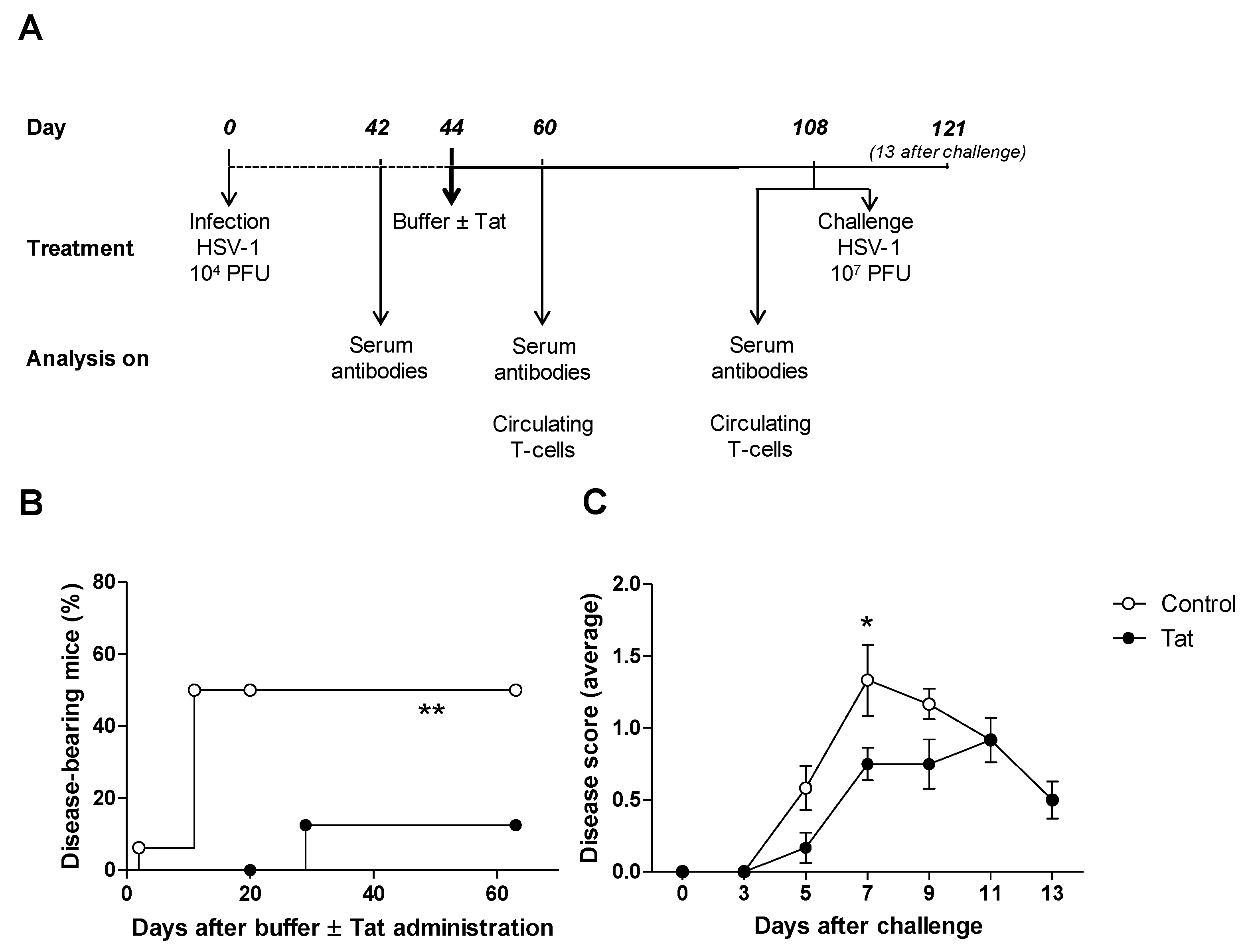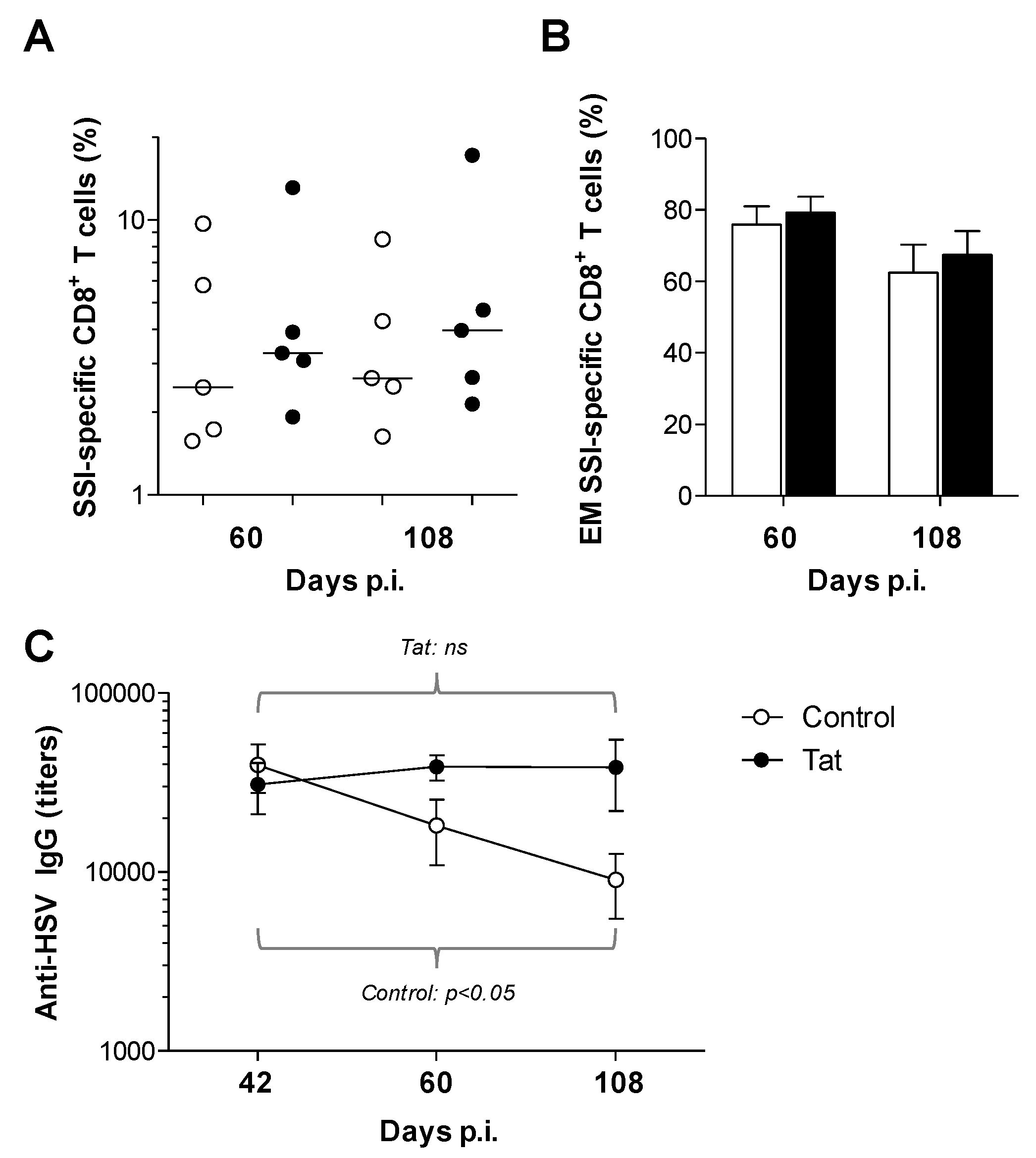
The Tat Protein of HIV-1 Prevents the Loss of HSV-Specific Memory Adaptive Responses and Favors the Control of Viral Reactivation

 , , ,
, , , 
 ,
,  ,
, Abstract
Share and Cite
Nicoli, F.; Gallerani, E.; Sicurella, M.; Pacifico, S.; Cafaro, A.; Ensoli, B.; Marconi, P.; Caputo, A.; Gavioli, R. The Tat Protein of HIV-1 Prevents the Loss of HSV-Specific Memory Adaptive Responses and Favors the Control of Viral Reactivation. Vaccines 2020, 8, 274. https://doi.org/10.3390/vaccines8020274
Nicoli F, Gallerani E, Sicurella M, Pacifico S, Cafaro A, Ensoli B, Marconi P, Caputo A, Gavioli R. The Tat Protein of HIV-1 Prevents the Loss of HSV-Specific Memory Adaptive Responses and Favors the Control of Viral Reactivation. Vaccines. 2020; 8(2):274. https://doi.org/10.3390/vaccines8020274
Chicago/Turabian StyleNicoli, Francesco, Eleonora Gallerani, Mariaconcetta Sicurella, Salvatore Pacifico, Aurelio Cafaro, Barbara Ensoli, Peggy Marconi, Antonella Caputo, and Riccardo Gavioli. 2020. "The Tat Protein of HIV-1 Prevents the Loss of HSV-Specific Memory Adaptive Responses and Favors the Control of Viral Reactivation" Vaccines 8, no. 2: 274. https://doi.org/10.3390/vaccines8020274
APA StyleNicoli, F., Gallerani, E., Sicurella, M., Pacifico, S., Cafaro, A., Ensoli, B., Marconi, P., Caputo, A., & Gavioli, R. (2020). The Tat Protein of HIV-1 Prevents the Loss of HSV-Specific Memory Adaptive Responses and Favors the Control of Viral Reactivation. Vaccines, 8(2), 274. https://doi.org/10.3390/vaccines8020274