
A Multi-State, Cross-Sectional Retrospective Study on Knowledge, Attitude and Practice of Rabies Post-Exposure Prophylaxis Including Rabies Monoclonal Antibody Among Physicians Across India

 and
and
Abstract
1. Introduction
2. Materials and Methods
2.1. Study Design and Setting
2.2. Study Population and Sampling
2.3. Questionnaire Structure
2.4. Questionnaire Validation
2.5. Scoring
2.6. Statistical Analysis
2.7. Ethical Considerations
3. Results
3.1. Participant Characteristics
3.2. Domain-Level Descriptive Statistics
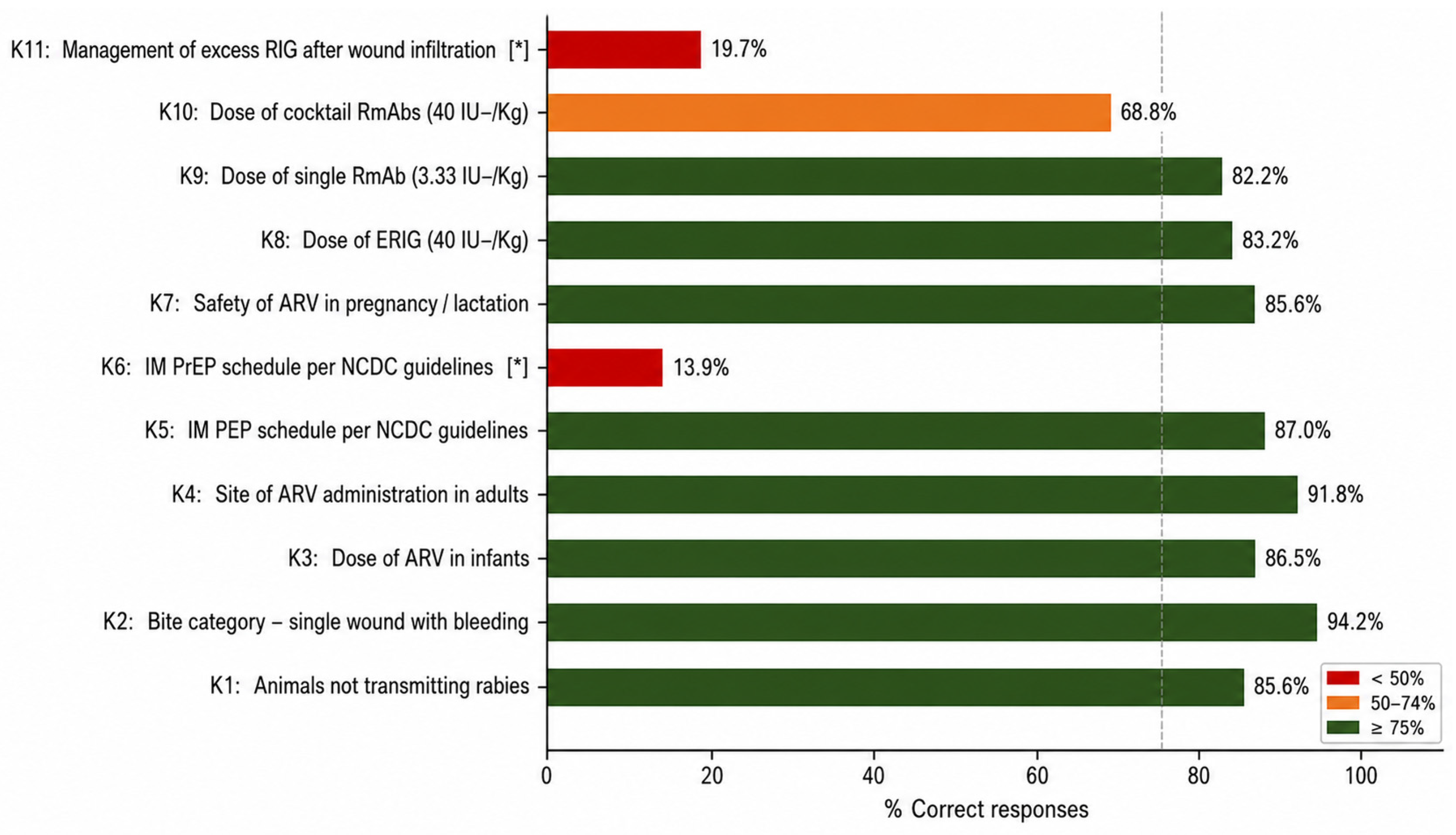
3.3. Knowledge Domain: Item-Level Analysis
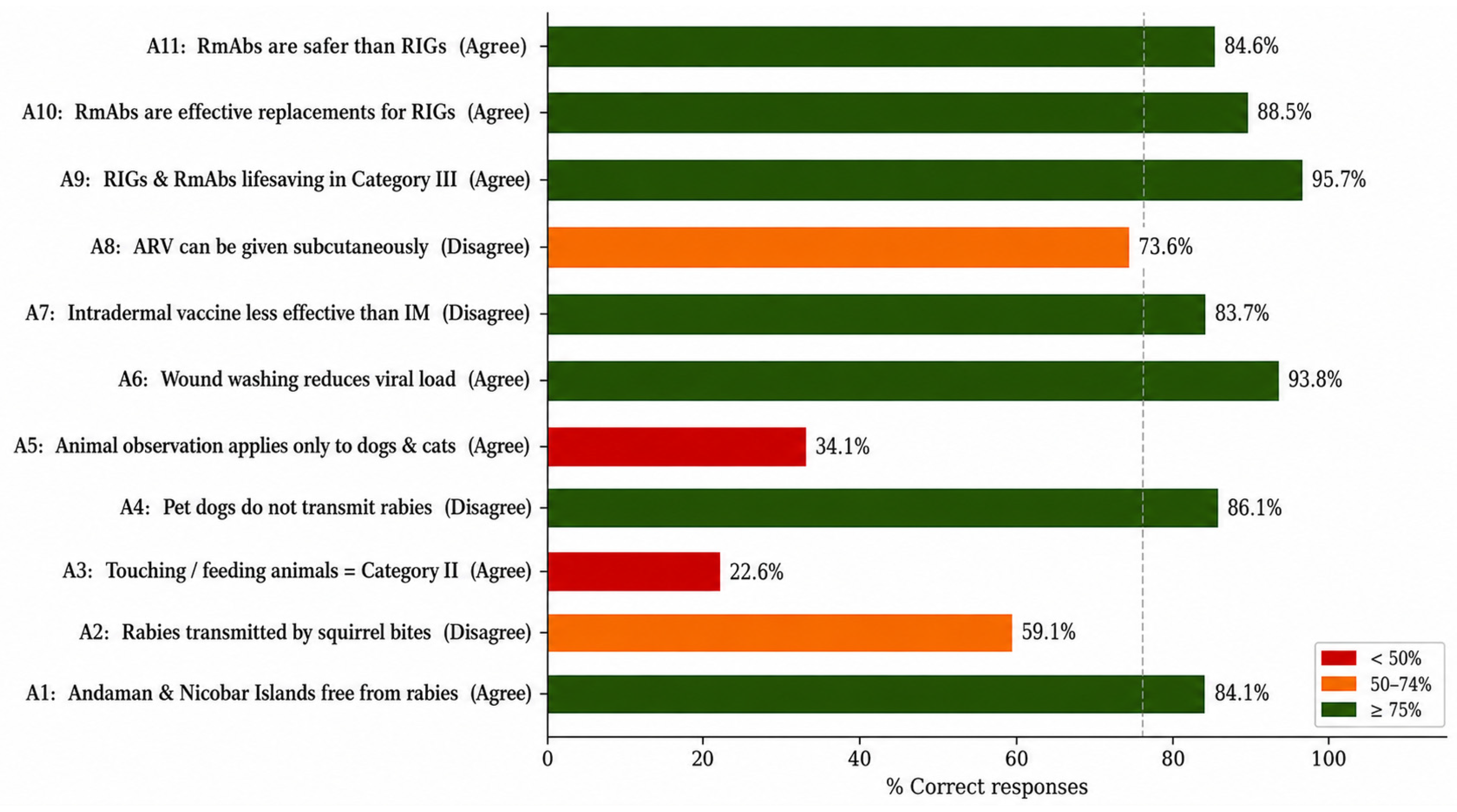
3.4. Attitude Domain—Item-Level Analysis
3.5. Practice Domain—Item-Level Analysis
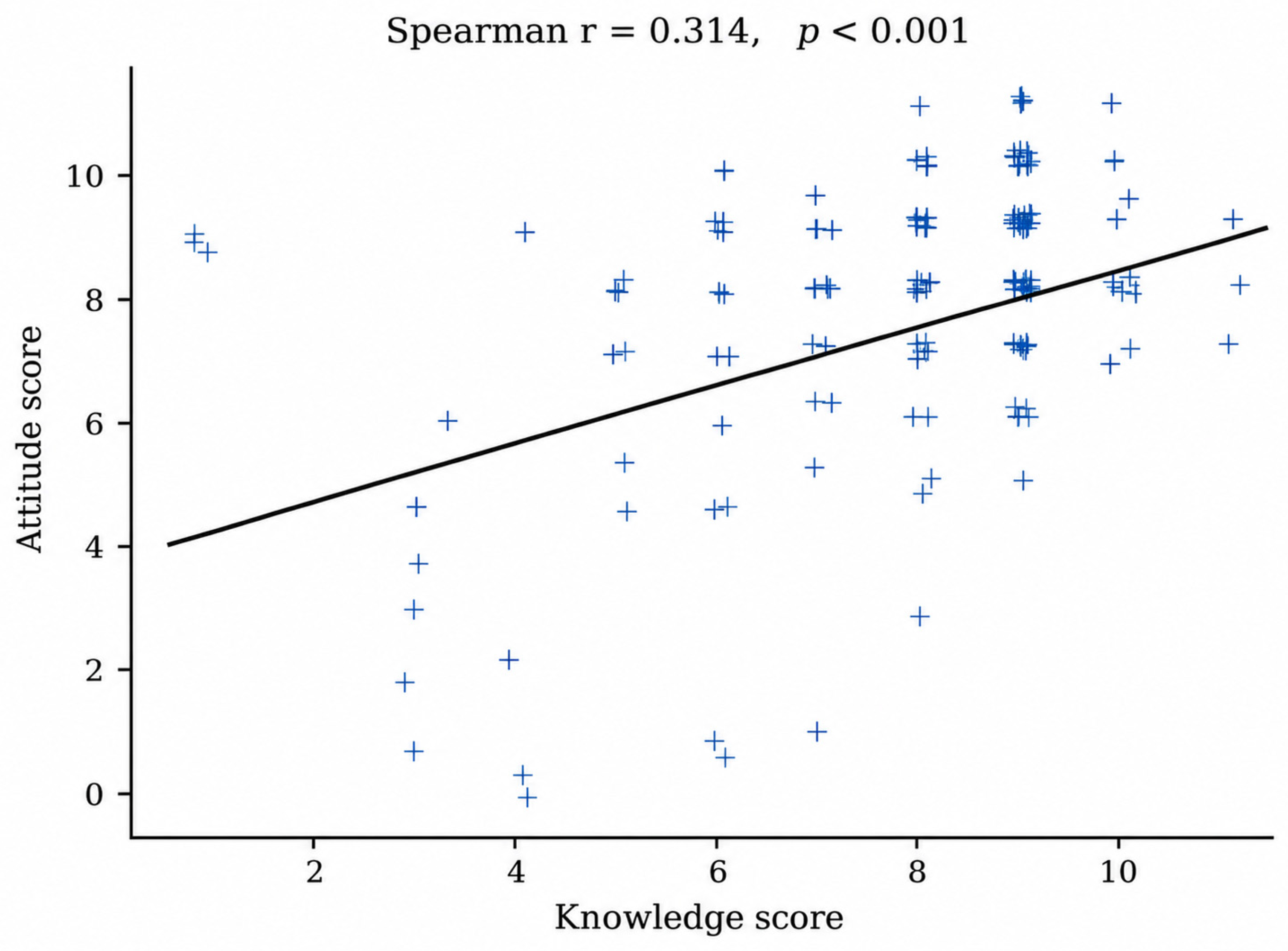
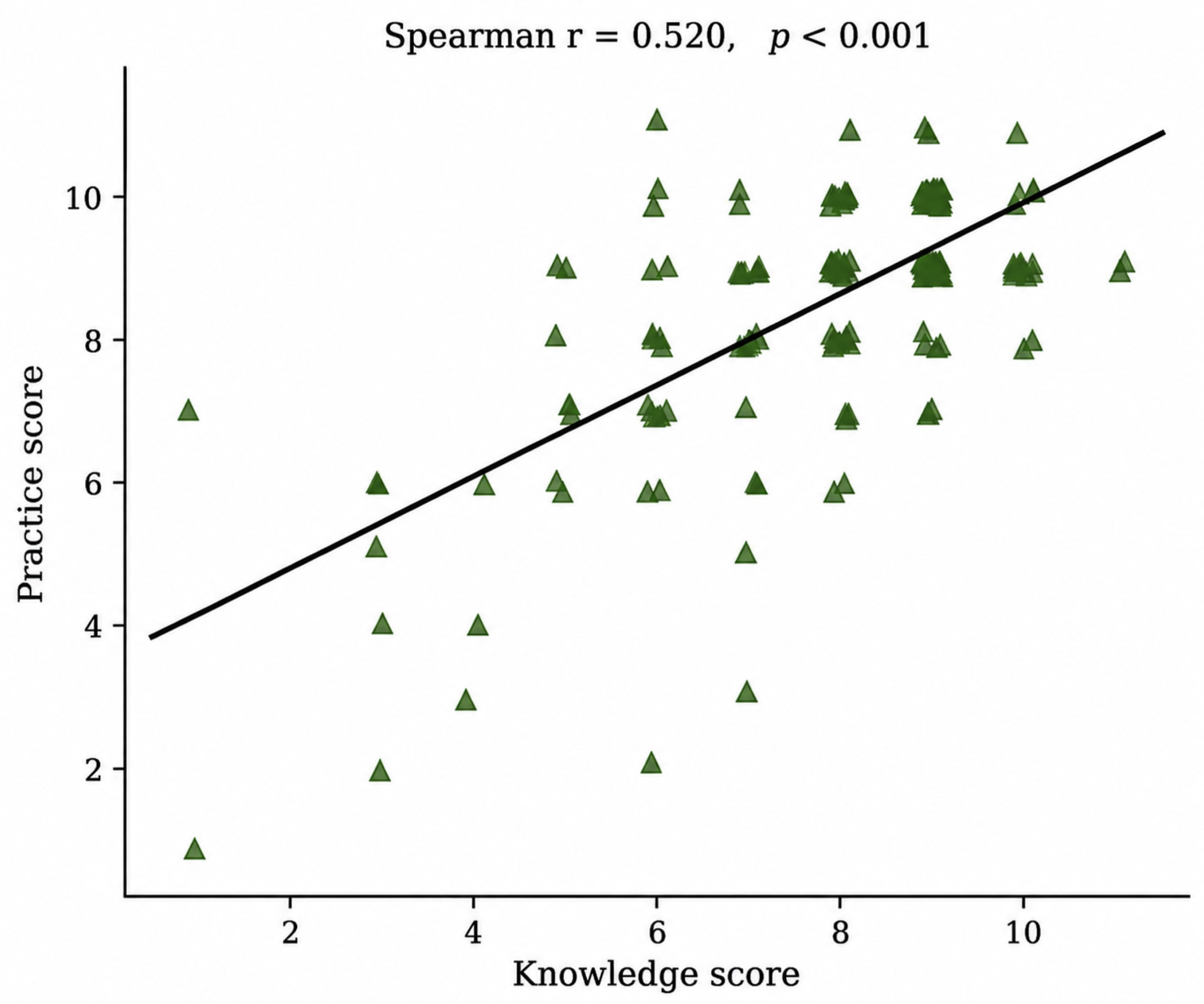
3.6. Spearman Rank-Order Correlations—Overall Cohort
3.7. KAP Scores Stratified by Specialty
3.8. Stratified Spearman Correlations by Speciality
3.9. KAP Scores Stratified by State
3.10. Stratified Spearman Correlations by State (n ≥ 10)
3.11. Comparative Analysis: 2026 Study vs. 2013 Benchmark
3.12. Knowledge Domain Comparison
3.13. Attitude Domain Comparison
3.14. Practice Domain Comparison
3.15. Spearman Correlation Comparison
4. Discussion
5. Conclusions
Author Contributions
Funding
Institutional Review Board Statement
Informed Consent Statement
Data Availability Statement
Acknowledgments
Conflicts of Interest
Abbreviations
| APCRI | Association for Prevention and Control of Rabies in India |
| ARV | Anti-Rabies Vaccine |
| CME | Continuing Medical Education |
| DHSPL | Digicare Health Solutions Private Limited |
| ERIG | Equine Rabies Immunoglobulin |
| GCP | Good Clinical Practice |
| ICMR | Indian Council of Medical Research |
| ID | Intradermal |
| IDRV | Intradermal Rabies Vaccination |
| IM | Intramuscular |
| IU | International Unit |
| KAP | Knowledge, Attitude and Practice |
| NCDC | National Centre for Disease Control |
| NIMHANS | National Institute of Mental Health and Neurosciences |
| NS | Normal Saline |
| PEP | Post-Exposure Prophylaxis |
| PMS | Post-Marketing Surveillance |
| PrEP | Pre-Exposure Prophylaxis |
| RIG | Rabies Immunoglobulin |
| RmAbs | Rabies Monoclonal Antibodies |
| SD | Standard Deviation |
| SPSS | Statistical Package for the Social Sciences |
| WHO | World Health Organization |
References
- Liu, X.; Zha, Y.; Wang, Z.; Jiang, Y.; Zhang, X.; Guo, J.; Li, J.; Zhang, Q.; Tsao, E. The Pharmacokinetics and Safety Comparison of Zamerovimab and Mazorelvimab Monoclonal Antibodies vs. HRIG in Category III Rabies Post-Exposure Prophylaxis: A Stratified Analysis by Wound Characteristics. Biologicals 2025, 92, 101852. [Google Scholar] [CrossRef] [Scilit] [PubMed]
- Sudarshan, M.K.; Madhusudana, S.N.; Mahendra, B.J.; Rao, N.S.N.; Ashwath Narayana, D.H.; Abdul Rahman, S.; Meslin, F.-X.; Lobo, D.; Ravikumar, K. Gangaboraiah Assessing the Burden of Human Rabies in India: Results of a National Multi-Center Epidemiological Survey. Int. J. Infect. Dis. 2007, 11, 29–35. [Google Scholar] [CrossRef] [Scilit] [PubMed]
- Ichhpujani, R.L.; Mala, C.; Veena, M.; Singh, J.; Bhardwaj, M.; Bhattacharya, D.; Pattanaik, S.K.; Balakrishnan, N.; Reddy, A.K.; Sampath, G.; et al. Epidemiology of Animal Bites and Rabies Cases in India: A Multicentric Study. J. Commun. Dis. 2008, 40, 27–36. [Google Scholar] [PubMed]
- World Health Organization. WHO Expert Consultation on Rabies: Third Report; World Health Organization: Geneva, Switzerland, 2018. [Google Scholar]
- Shankaraiah, R.H.; Bilagumba, G.; Narayana, D.; Annadani, R.; Vijayashankar, V. Knowledge, Attitude, and Practice of Rabies Prophylaxis among Physicians at Indian Animal Bite Clinics. Asian Biomed. 2013, 7, 237–242. [Google Scholar]
- Sparrow, E.; Torvaldsen, S.; Newall, A.T.; Wood, J.G.; Sheikh, M.; Kieny, M.P.; Abela-Ridder, B. Recent Advances in the Development of Monoclonal Antibodies for Rabies Post-Exposure Prophylaxis: A Review of the Current Status of the Clinical Development Pipeline. Vaccine 2019, 37, A132–A139. [Google Scholar] [CrossRef] [Scilit] [PubMed]
- Pardeshi, G.; Sharma, P.; Ittiel, A. Rabies Post-Exposure Prophylaxis in India: A SWOT Analysis. Ther. Adv. Vaccines Immunother. 2026, 14, 25151355251410780. [Google Scholar] [CrossRef] [Scilit] [PubMed]
- Kaliyaperumal, K. Guideline for Conducting a Knowledge, Attitude and Practice (KAP) Study. AECS Illum. 2004, 4, 7–9. [Google Scholar]
- Gibson, A.D.; Yale, G.; Corfmat, J.; Appupillai, M.; Gigante, C.M.; Lopes, M.; Betodkar, U.; Costa, N.C.; Fernandes, K.A.; Mathapati, P.; et al. Elimination of Human Rabies in Goa, India through an Integrated One Health Approach. Nat. Commun. 2022, 13, 2788. [Google Scholar] [CrossRef] [Scilit] [PubMed]
- Directorate General of Health Services, Ministry of Health & Family Welfare, Government of India. National Guidelines for Rabies Prophylaxis; NCDC: New Delhi, India, 2019.
- Sudarshan, M.K.; Mahendra, B.J.; Madhusudana, S.N.; Ashwoath Narayana, D.H.; Rahman, A.; Rao, N.S.N.; X-Meslin, F.; Lobo, D.; Ravikumar, K. Gangaboraiah An Epidemiological Study of Animal Bites in India: Results of a WHO Sponsored National Multi-Centric Rabies Survey. J. Commun. Dis. 2006, 38, 32–39. [Google Scholar] [PubMed]
- Festinger, L. A Theory of Cognitive Dissonance; Stanford University Press: Stanford, CA, USA, 1957. [Google Scholar]
- Launiala, A. How Much Can a KAP Survey Tell Us about People’s Knowledge, Attitudes and Practices? Some Observations from Medical Anthropology Research on Malaria in Pregnancy in Malawi. Anthr. Matters J. 2009, 11, 1–13. [Google Scholar] [CrossRef] [Scilit]
- Ajzen, I. The Theory of Planned Behavior. Organ. Behav. Hum. Decis. Process 1991, 50, 179–211. [Google Scholar] [CrossRef] [Scilit]
- Garg, A.; Kumar, R.; Ingle, G.K. Knowledge and Practices Regarding Animal Bite Management and Rabies Prophylaxis among Doctors in Delhi, India. Asia Pac. J. Public Health 2013, 25, 41–47. [Google Scholar] [PubMed]
- Ahmad, A.; Inayat, F.; Ullah, N.; Rasul, S.; Bakhtiar, S.; Shad, Z.; Ahmad, Z. Knowledge, Attitudes, and Practices of Healthcare Professionals Regarding Rabies in Tertiary Care Hospitals: A Cross-Sectional Study in Peshawar, Pakistan. PLoS Negl. Trop. Dis. 2024, 18, e0012238. [Google Scholar] [CrossRef] [Scilit] [PubMed]
- Ba, M.F.; Kane, N.M.; Diallo, M.K.K.; Bassoum, O.; Boh, O.K.; Mboup, F.Z.M.; Faye, E.H.B.; Bedekelabou, A.P.; Dieng, S.D.; Diop, F.N.; et al. Knowledge, Attitudes and Practices on Rabies among Human and Animal Health Professionals in Senegal. Pathogens 2021, 10, 1282. [Google Scholar] [CrossRef] [Scilit] [PubMed]
- Fan, L.; Zhang, L.; Li, J.; Zhu, F. Advances in the Progress of Monoclonal Antibodies for Rabies. Hum. Vaccin. Immunother. 2022, 18, 2026713. [Google Scholar] [CrossRef] [Scilit] [PubMed]
- Kim, P.K.; Ahn, J.S.; Kim, C.M.; Seo, J.M.; Keum, S.J.; Lee, H.J.; Choo, M.J.; Kim, M.S.; Lee, J.Y.; Maeng, K.E.; et al. A Broad-Spectrum and Highly Potent Human Monoclonal Antibody Cocktail for Rabies Prophylaxis. PLoS ONE 2021, 16, e0256779. [Google Scholar] [CrossRef] [Scilit] [PubMed]
- Kang, G.; Lakhkar, A.; Bhamare, C.; Dharmadhikari, A.; Narwadkar, J.; Kanujia, A.; Kapse, D.; Gunale, B.; Poonawalla, C.S.; Kulkarni, P.S. Active Safety Surveillance of Rabies Monoclonal Antibody and Rabies Vaccine in Patients with Category III Potential Rabies Exposure. Lancet Reg. Health Southeast Asia 2023, 14, 100207. [Google Scholar] [CrossRef] [Scilit] [PubMed]
- Manna, A.; Kundu, A.K.; Sharma Sarkar, B.; Maji, B.; Dutta, T.; Mahajan, M. Real-World Safety of TwinRab, the World’s First Novel Cocktail of Rabies Monoclonal Antibodies, in a Clinical Setting. Cureus 2024, 16, e52163. [Google Scholar] [CrossRef] [Scilit] [PubMed]





| Category | n | % |
|---|---|---|
| By Speciality | ||
| Community Medicine | 71 | 34.1 |
| Emergency Medicine Physicians | 58 | 27.9 |
| Pediatricians | 44 | 21.2 |
| General Physicians | 14 | 6.7 |
| Others including Surgery | 21 | 10.1 |
| By State (n ≥ 10) | ||
| Karnataka | 45 | 21.6 |
| Uttar Pradesh | 37 | 17.8 |
| Kerala | 22 | 10.6 |
| Tamil Nadu | 15 | 7.2 |
| Chandigarh | 12 | 5.8 |
| West Bengal | 12 | 5.8 |
| Delhi | 11 | 5.3 |
| Jammu & Kashmir | 10 | 4.8 |
| Other states (n < 10 each) | 44 | 21.1 |
| Domain | Max Score | Mean ± SD | Mean % | W | p (Normality) |
|---|---|---|---|---|---|
| Knowledge | 11 | 8.00 ± 1.69 | 72.7% | 0.835 | <0.0001 |
| Attitude | 11 | 7.22 ± 1.74 | 65.6% | 0.863 | <0.0001 |
| Practice | 11 | 8.64 ± 1.65 | 78.5% | 0.795 | <0.0001 |
| Item | Knowledge Item | Correct (n) | % Correct |
|---|---|---|---|
| K1 | Animals that do not transmit rabies (domestic rodents) | 178 | 86.5% |
| K2 | Category of exposure for a single wound with bleeding (Cat III) | 196 | 94.2% |
| K3 | Dose of anti-rabies vaccine (ARV) in infants (same as adult dose) | 180 | 86.5% |
| K4 | Site of administration of ARV in adults (deltoid) | 191 | 91.8% |
| K5 | IM PEP schedule per NCDC guidelines (Days 0, 3, 7, 14 & 28) | 181 | 87.0% |
| K6 | IM PrEP schedule per NCDC guidelines | 29 | 13.9% |
| K7 | Safety of ARV in pregnancy and lactation (Yes) | 178 | 85.6% |
| K8 | Dose of Equine Rabies Immunoglobulin—ERIG (40 IU/Kg) | 173 | 83.2% |
| K9 | Dose of single rabies monoclonal antibody (3.33 IU/Kg) | 171 | 82.2% |
| K10 | Dose of cocktail of two rabies monoclonal antibodies (40 IU/Kg) | 143 | 68.8% |
| K11 | Management of excess RIG after wound infiltration (Category III) | 41 | 19.7% |
| Item | Attitude Statement | Correct (n) | % Correct |
|---|---|---|---|
| A1 | Andaman & Nicobar Islands are free from rabies (Agree) | 175 | 84.1% |
| A2 | Rabies is transmitted by the bite of squirrels (Disagree) | 123 | 59.1% |
| A3 | Touching/feeding of animals is Category I exposure (Agree) | 47 | 22.6% |
| A4 | Pet dogs do not transmit rabies (Disagree) | 179 | 86.1% |
| A5 | Observation of animals applies only to dogs & cats (Agree) | 71 | 34.1% |
| A6 | Wound washing with soap & water reduces viral load (Agree) | 195 | 93.8% |
| A7 | Intradermal rabies vaccine is less effective than IM (Disagree) | 174 | 83.7% |
| A8 | ARV can also be given subcutaneously (Disagree) | 153 | 73.6% |
| A9 | RIGs & RmAbs are lifesaving in Category III bites (Agree) | 199 | 95.7% |
| A10 | RmAbs are alternative/effective replacements for RIGs (Agree) | 184 | 88.5% |
| A11 | Rabies Monoclonal Antibodies are safer than RIGs (Agree) | 176 | 84.6% |
| Item | Practice Scenario | Correct (n) | % Correct |
|---|---|---|---|
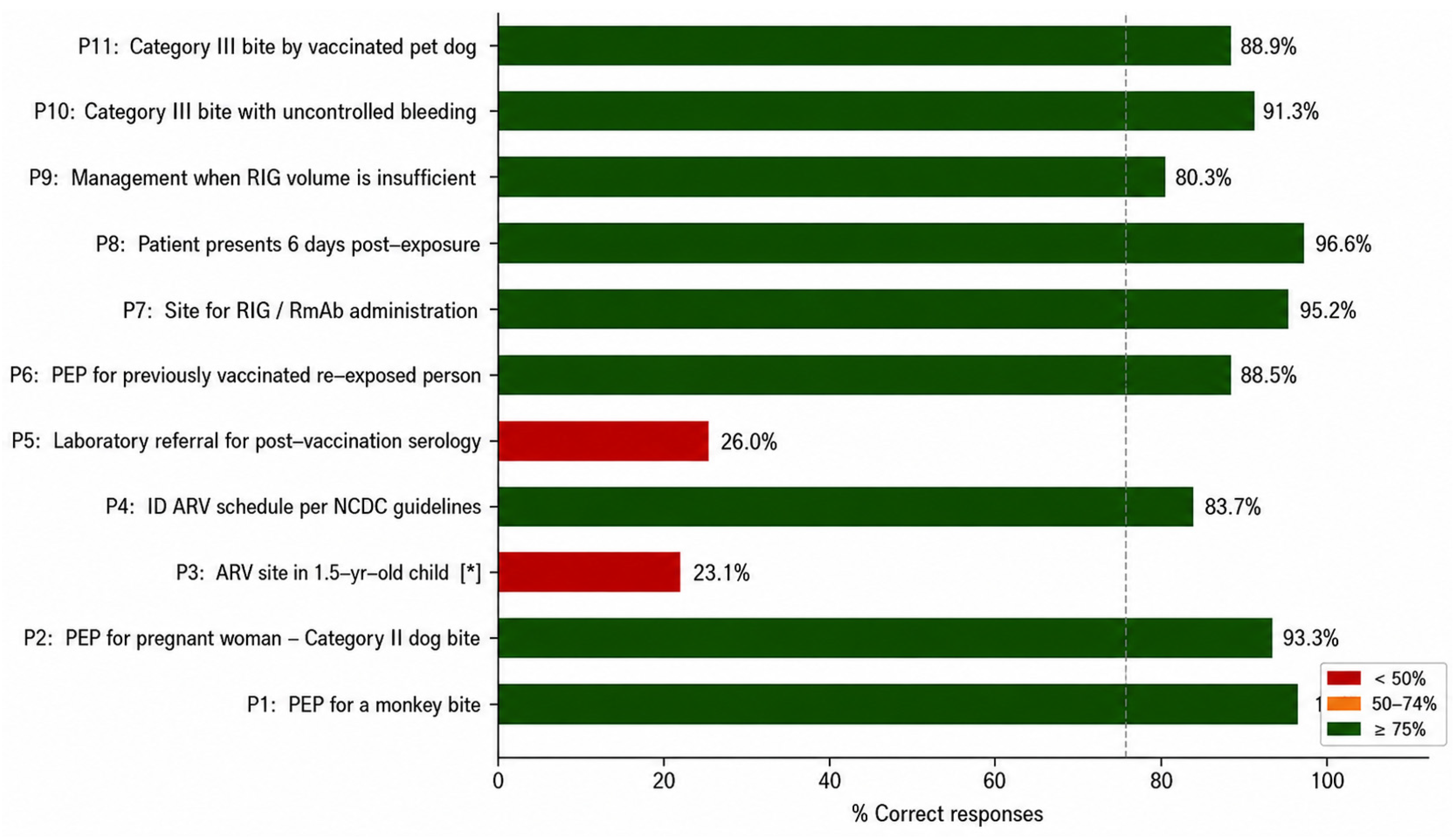
| P1 | PEP management for a monkey bite | 202 | 97.1% |
| P2 | Management of pregnant woman with Category II dog bite | 194 | 93.3% |
| P3 | ARV administration site in a child (anterolateral thigh) | 48 | 23.1% |
| P4 | IDRV schedule per NCDC guidelines (Days 0, 3, 7 & 28) | 174 | 83.7% |
| P5 | Laboratory for serum antibody response to vaccine (NIMHANS, Bangalore) | 54 | 26.0% |
| P6 | PEP for a previously vaccinated person bitten again | 184 | 88.5% |
| P7 | Correct site for RIG/RmAb administration | 198 | 95.2% |
| P8 | Management when patient presents 6 days post-exposure | 201 | 96.6% |
| P9 | Management when RIG volume is insufficient (dilute with NS) | 167 | 80.3% |
| P10 | Management of Category III bite with uncontrolled bleeding | 190 | 91.3% |
| P11 | Category III bite by vaccinated pet dog—recommended prophylaxis | 185 | 88.9% |
| Domain Pair | r | p-Value | Interpretation |
|---|---|---|---|
| Knowledge–Attitude | 0.314; [95% CI: 0.186, 0.432] | <0.001 | Moderate, significant |
| Knowledge–Practice | 0.520; [95% CI: 0.413, 0.613] | <0.001 | Moderately strong, significant |
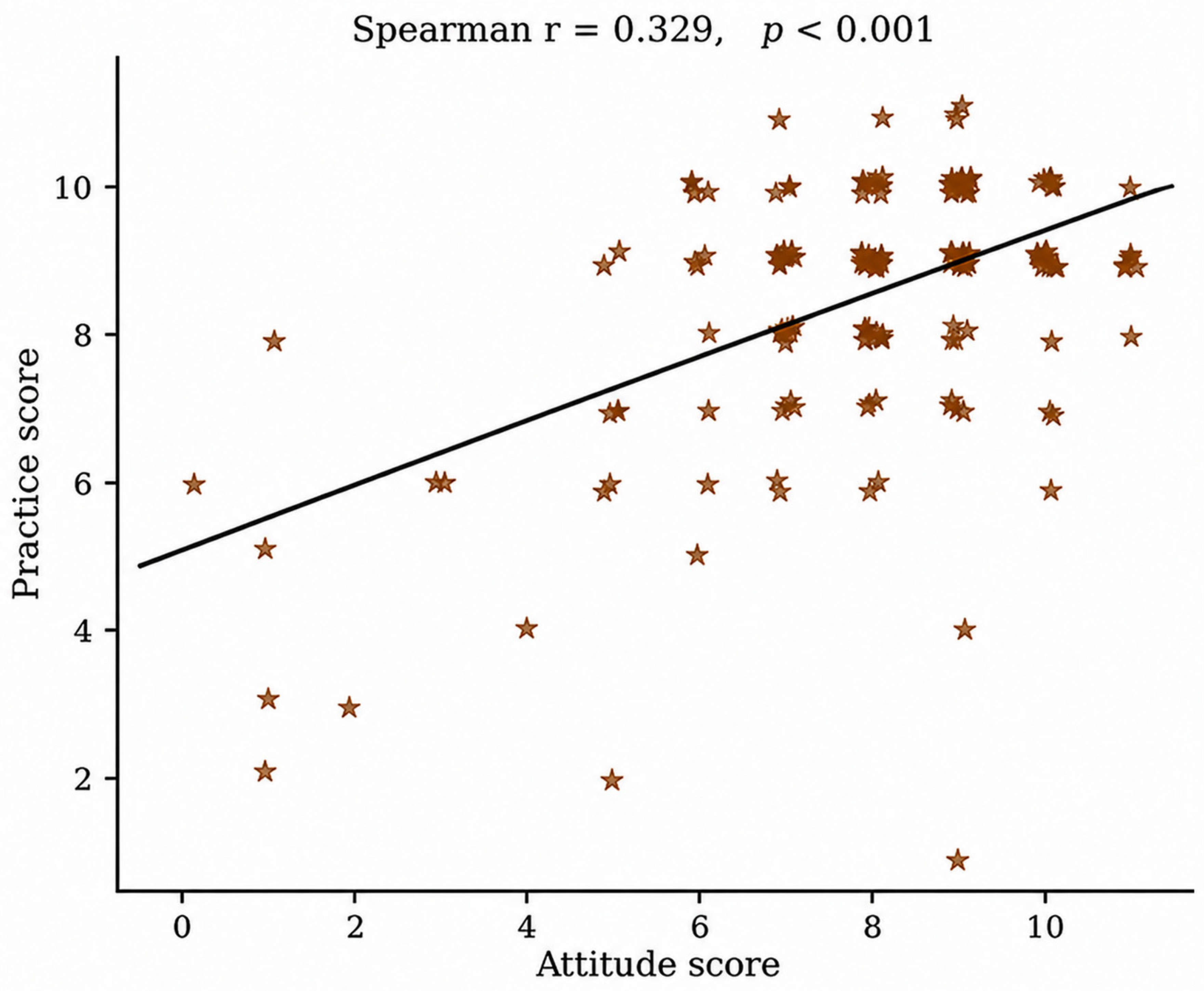
| Attitude–Practice | 0.329; [95% CI: 0.202, 0.445] | <0.001 | Moderate, significant |
| Specialty | n | Knowledge Mean ± SD (%) | Attitude Mean ± SD (%) | Practice Mean ± SD (%) |
|---|---|---|---|---|
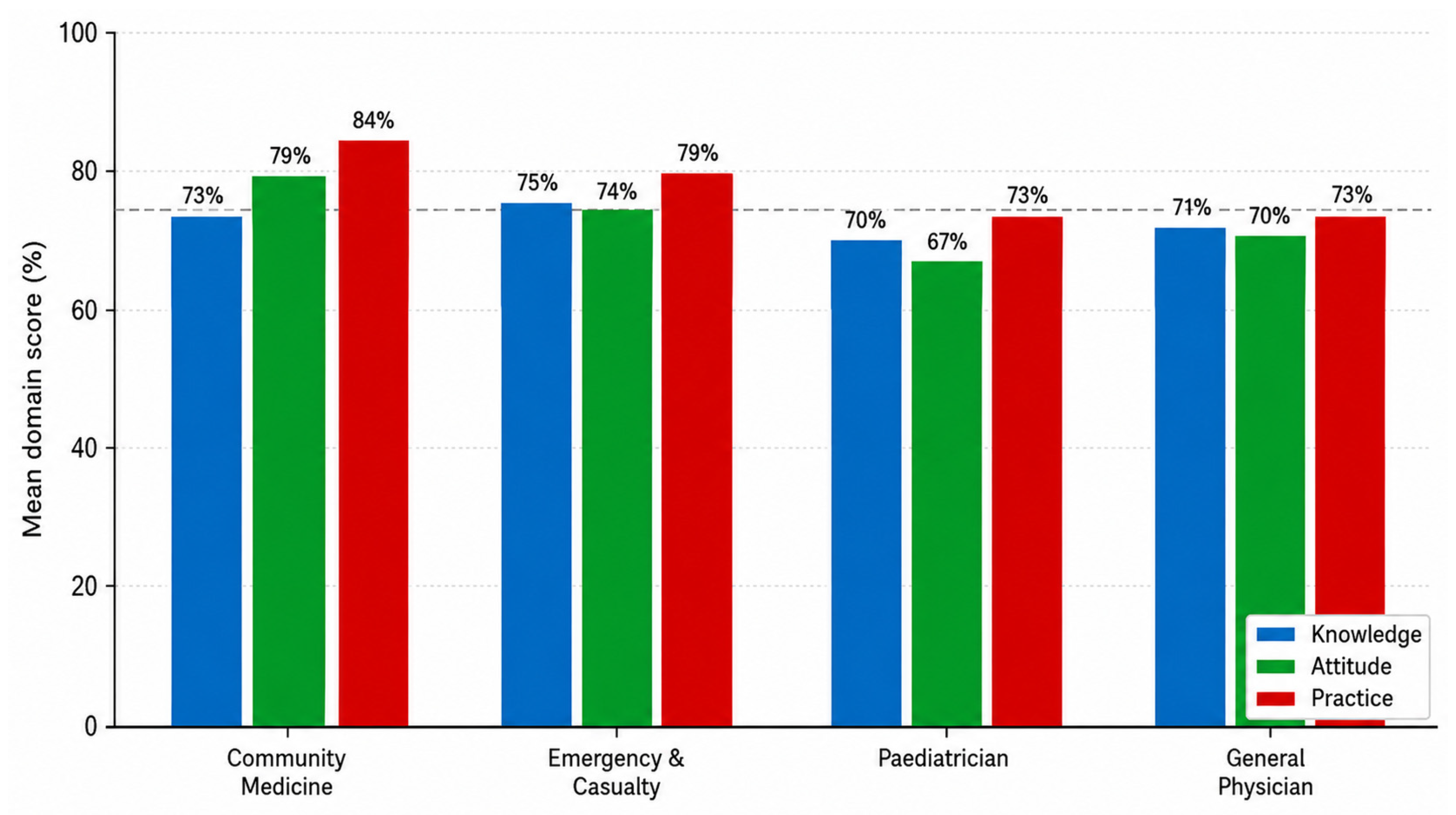
| Community Medicine | 71 | 8.06 ± 1.47 (73.3%) | 8.70 ± 1.09 (79.1%) | 10.03 ± 0.89 (91.2%) |
| Emergency and Casualty | 58 | 8.26 ± 1.74 (75.1%) | 8.10 ± 2.17 (73.7%) | 9.40 ± 1.47 (85.4%) |
| Pediatrician | 44 | 7.76 ± 1.63 (70.5%) | 7.33 ± 1.99 (66.7%) | 8.69 ± 1.89 (79.0%) |
| General Physician | 14 | 7.86 ± 2.60 (71.5%) | 7.64 ± 3.15 (69.5%) | 8.36 ± 2.76 (76.0%) |
| Specialty | n | K–A (r; p) | K–P (r; p) | A–P (r; p) |
|---|---|---|---|---|
| Community Medicine | 71 | 0.179; p = 0.134; 95% CI [−0.057, 0.396] | 0.362; p = 0.002; 95% CI [0.141, 0.549] | 0.065; p = 0.592; 95% CI [−0.171, 0.294] |
| Emergency and Casualty | 58 | 0.437; p = 0.001; 95% CI [0.201, 0.625] | 0.595; p < 0.001; 95% CI [0.398, 0.740] | 0.304; p = 0.020; 95% CI [0.050, 0.521] |
| Pediatrician | 44 | 0.200; p = 0.194; 95% CI [−0.103, 0.469] | 0.516; p < 0.001; 95% CI [0.259, 0.705] | 0.459; p = 0.002; 95% CI [0.188, 0.665] |
| General Physician | 14 | 0.523; p = 0.055; 95% CI [−0.011, 0.825] | 0.553; p = 0.040; 95% CI [0.032, 0.838] | 0.497; p = 0.071; 95% CI [−0.046, 0.813] |
| State | n | Knowledge Mean ± SD | K % | Attitude Mean ± SD | A % | Practice Mean ± SD | P % |
|---|---|---|---|---|---|---|---|
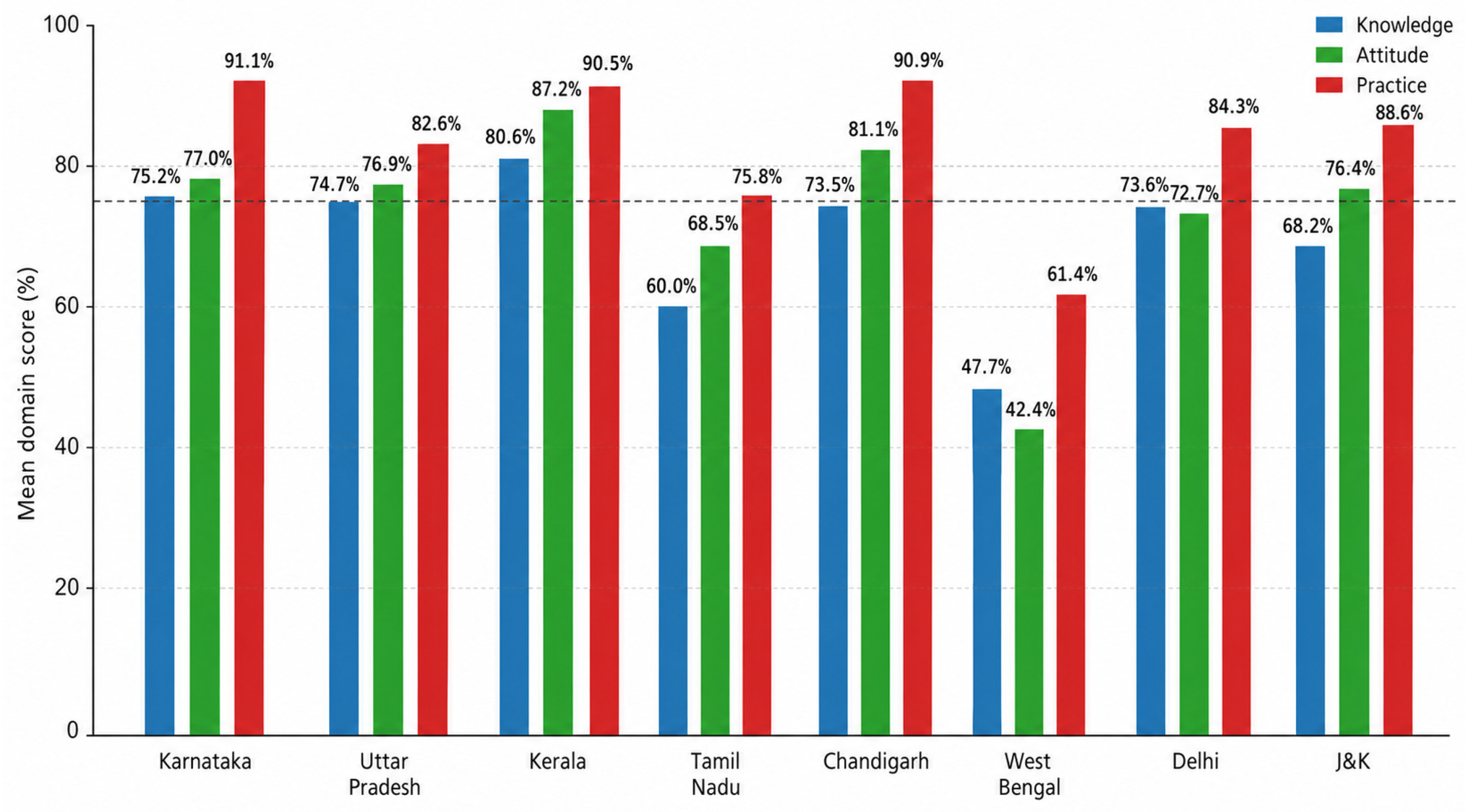
| Karnataka | 45 | 8.27 ± 1.05 | 75.2% | 8.47 ± 1.69 | 77.0% | 10.02 ± 1.50 | 91.1% |
| Uttar Pradesh | 37 | 8.22 ± 1.72 | 74.7% | 8.46 ± 1.30 | 76.9% | 9.08 ± 1.59 | 82.6% |
| Kerala | 22 | 8.86 ± 0.64 | 80.6% | 9.59 ± 1.53 | 87.2% | 9.95 ± 0.38 | 90.5% |
| Tamil Nadu | 15 | 6.60 ± 2.77 | 60.0% | 7.53 ± 1.19 | 68.5% | 8.33 ± 2.32 | 75.8% |
| Chandigarh | 12 | 8.08 ± 0.67 | 73.5% | 8.92 ± 0.29 | 81.1% | 10.00 ± 0.00 | 90.9% |
| West Bengal | 12 | 5.25 ± 2.26 | 47.7% | 4.67 ± 2.74 | 42.4% | 6.75 ± 1.96 | 61.4% |
| Delhi | 11 | 8.09 ± 1.04 | 73.6% | 8.00 ± 1.18 | 72.7% | 9.27 ± 0.90 | 84.3% |
| Jammu & Kashmir | 10 | 7.50 ± 1.43 | 68.2% | 8.40 ± 0.84 | 76.4% | 9.70 ± 1.42 | 88.2% |
| Assam | 9 | 9.00 ± 0.00 | 81.8% | 6.67 ± 0.71 | 60.6% | 10.11 ± 0.60 | 91.9% |
| Punjab | 7 | 8.43 ± 1.62 | 76.6% | 5.57 ± 3.78 | 50.6% | 8.14 ± 2.34 | 74.0% |
| Odisha | 6 | 8.00 ± 1.41 | 72.7% | 8.83 ± 1.17 | 80.3% | 9.83 ± 0.98 | 89.4% |
| Maharashtra | 5 | 8.00 ± 2.00 | 72.7% | 7.80 ± 0.84 | 70.9% | 9.20 ± 1.64 | 83.6% |
| Gujarat | 4 | 7.50 ± 1.73 | 68.2% | 7.00 ± 1.41 | 63.6% | 8.75 ± 1.26 | 79.5% |
| Rajasthan | 4 | 8.00 ± 0.82 | 72.7% | 8.75 ± 0.50 | 79.5% | 9.75 ± 0.50 | 88.6% |
| Telangana | 2 | 9.00 ± 0.00 | 81.8% | 8.00 ± 1.41 | 72.7% | 9.50 ± 2.12 | 86.4% |
| Haryana | 2 | 9.50 ± 0.71 | 86.4% | 8.50 ± 0.71 | 77.3% | 8.50 ± 0.71 | 77.3% |
| * Other states | 5 | 8.40 ± 1.95 | 76.4% | 7.20 ± 1.10 | 65.5% | 10.20 ± 0.45 | 92.7% |
| State | n | K–A (r; p) | K–P (r; p) | A–P (r; p) |
|---|---|---|---|---|
| Karnataka | 45 | 0.363; p = 0.014; 95% CI [0.078, 0.593] | 0.251; p = 0.096; 95% CI [−0.046, 0.507] | 0.204; p = 0.180; 95% CI [−0.095, 0.469] |
| Uttar Pradesh | 37 | 0.580; p < 0.001; 95% CI [0.315, 0.761] | 0.660; p < 0.001; 95% CI [0.427, 0.811] | 0.669; p < 0.001; 95% CI [0.440, 0.816] |
| Kerala | 22 | 0.502; p = 0.017; 95% CI [0.102, 0.762] | 0.061; p = 0.788; 95% CI [−0.370, 0.471] | −0.051; p = 0.823; 95% CI [−0.463, 0.379] |
| Tamil Nadu | 15 | −0.253; p = 0.363; 95% CI [−0.677, 0.298] | 0.527; p = 0.043; 95% CI [0.020, 0.818] | −0.336; p = 0.221; 95% CI [−0.724, 0.213] |
| Chandigarh | 12 | 0.000; p = 1.000; 95% CI [−0.574, 0.574] | 0.000; p = 1.000; 95% CI [−0.574, 0.574] | 0.174; p = 0.588; 95% CI [−0.444, 0.680] |
| West Bengal | 12 | 0.601; p = 0.039; 95% CI [0.041, 0.874] | 0.456; p = 0.136; 95% CI [−0.160, 0.816] | 0.383; p = 0.219; 95% CI [−0.245, 0.784] |
| Delhi | 11 | 0.054; p = 0.875; 95% CI [−0.564, 0.633] | 0.809; p = 0.003; 95% CI [0.406, 0.949] | 0.241; p = 0.476; 95% CI [−0.420, 0.735] |
| Jammu & Kashmir | 10 | 0.042; p = 0.908; 95% CI [−0.604, 0.654] | 0.606; p = 0.063; 95% CI [−0.038, 0.894] | 0.341; p = 0.336; 95% CI [−0.368, 0.799] |
| Item | Question | 2013% | 2026% | Δ | Z | p-Value |
|---|---|---|---|---|---|---|
| K1 | Animals that do not transmit rabies | 66.9 | 86.5 | +19.6 | −4.13 | <0.001 |
| K2 | Category of exposure for a single wound with bleeding | 55.9 | 94.2 | +38.3 | −8.26 | <0.001 |
| K3 | Dose of anti-rabies vaccine (ARV) in infants | 84.4 | 86.5 | +2.1 | −0.51 | 0.611 |
| K4 | Site of administration of ARV in adults | 83.5 | 91.8 | +8.3 | −2.24 | 0.025 |
| K5 | IM PEP schedule per NCDC guidelines | 74.4 | 87.0 | +12.6 | −2.82 | 0.005 |
| K6 | IM PrEP schedule per NCDC guidelines | 68.8 | 13.9 | −54.9 | +9.89 | <0.001 |
| K7 | Safety of ARV in pregnancy and lactation | 85.3 | 85.6 | +0.3 | −0.07 | 0.943 |
| K8 | Dose of Equine Rabies Immunoglobulin (ERIG) | 66.9 | 83.2 | +16.3 | −3.31 | <0.001 |
| Item | Statement (Correct Response) | 2013% | 2026% | Δ | Z | p-Value |
|---|---|---|---|---|---|---|
| A2 | Rabies transmitted by squirrel bites (Disagree) | 75.3 | 59.1 | −16.2 | +2.87 | 0.004 |
| A3 | Touching/feeding animals is Category I (Agree) | 67.8 | 22.6 | −45.2 | +7.87 | <0.001 |
| A4 | Pet dogs do not transmit rabies (Disagree) | 92.7 | 86.1 | −6.6 | +1.74 | 0.082 |
| A5 | Observation applies only to dogs and cats (Agree) | 77.9 | 34.1 | −43.8 | +7.41 | <0.001 |
| A6 | Wound washing reduces virus load (Agree) | 80.7 | 93.8 | +13.1 | −3.58 | <0.001 |
| A7 | ID vaccine less effective than IM (Disagree) | 67.8 | 83.7 | +15.9 | −3.26 | 0.001 |
| A8 | ARV given subcutaneously (Disagree) | 78.9 | 73.6 | −5.3 | +1.04 | 0.298 |
| A9 | RIGs and RmAbs lifesaving in Cat III (Agree) | 73.4 | 95.7 | +22.3 | −5.81 | <0.001 |
| Item | Scenario | 2013% | 2026% | Δ | Z | p-Value |
|---|---|---|---|---|---|---|
| P1 | PEP for a monkey bite | 74.3 | 97.1 | +22.8 | −6.23 | <0.001 |
| P4 | ID ARV schedule | 68.9 | 83.7 | +14.8 | −3.05 | 0.002 |
| P6 | PEP for previously vaccinated re-exposed person | 68.9 | 88.5 | +19.6 | −4.29 | <0.001 |
| P7 | Correct site for RIG/RmAb administration | 73.4 | 95.2 | +21.8 | −5.61 | <0.001 |
| P8 | Management when patient presents 6 days post-exposure | 66.9 | 96.6 | +29.7 | −7.33 | <0.001 |
| P9 | Management when RIG volume is insufficient | 57.7 | 80.3 | +22.6 | −4.28 | <0.001 |
| P10 | Category III bite with uncontrolled bleeding | 88.9 | 91.3 | +2.4 | −0.69 | 0.489 |
| Domain Pair | r (2013) | r (2026) | Δr | Z-Diff | p-Value |
|---|---|---|---|---|---|
| Knowledge–Attitude | 0.667 | 0.314 | −0.353 | 4.02 | 0.0001 |
| Knowledge–Practice | 0.220 | 0.520 | +0.300 | −2.95 | 0.003 |
| Attitude–Practice | 0.334 | 0.329 | −0.005 | 0.05 | 0.963 |
Disclaimer/Publisher’s Note: The statements, opinions and data contained in all publications are solely those of the individual author(s) and contributor(s) and not of MDPI and/or the editor(s). MDPI and/or the editor(s) disclaim responsibility for any injury to people or property resulting from any ideas, methods, instructions or products referred to in the content. |
© 2026 by the authors. Licensee MDPI, Basel, Switzerland. This article is an open access article distributed under the terms and conditions of the Creative Commons Attribution (CC BY) license.
Share and Cite
Shankaraiah, R.H.; N. S., N.; G., D.B.; Dutta, T.; Mahajan, M. A Multi-State, Cross-Sectional Retrospective Study on Knowledge, Attitude and Practice of Rabies Post-Exposure Prophylaxis Including Rabies Monoclonal Antibody Among Physicians Across India. Vaccines 2026, 14, 635. https://doi.org/10.3390/vaccines14070635
Shankaraiah RH, N. S. N, G. DB, Dutta T, Mahajan M. A Multi-State, Cross-Sectional Retrospective Study on Knowledge, Attitude and Practice of Rabies Post-Exposure Prophylaxis Including Rabies Monoclonal Antibody Among Physicians Across India. Vaccines. 2026; 14(7):635. https://doi.org/10.3390/vaccines14070635
Chicago/Turabian StyleShankaraiah, Ravish Haradanahalli, Navyashree N. S., Divya Bharathi G., Trayambak Dutta, and Manish Mahajan. 2026. "A Multi-State, Cross-Sectional Retrospective Study on Knowledge, Attitude and Practice of Rabies Post-Exposure Prophylaxis Including Rabies Monoclonal Antibody Among Physicians Across India" Vaccines 14, no. 7: 635. https://doi.org/10.3390/vaccines14070635
APA StyleShankaraiah, R. H., N. S., N., G., D. B., Dutta, T., & Mahajan, M. (2026). A Multi-State, Cross-Sectional Retrospective Study on Knowledge, Attitude and Practice of Rabies Post-Exposure Prophylaxis Including Rabies Monoclonal Antibody Among Physicians Across India. Vaccines, 14(7), 635. https://doi.org/10.3390/vaccines14070635