
Emerging Viral Zoonoses: Epidemiology, Vaccination Strategies, and Implications for Global Public Health


Abstract
1. Introduction
2. Materials and Methods
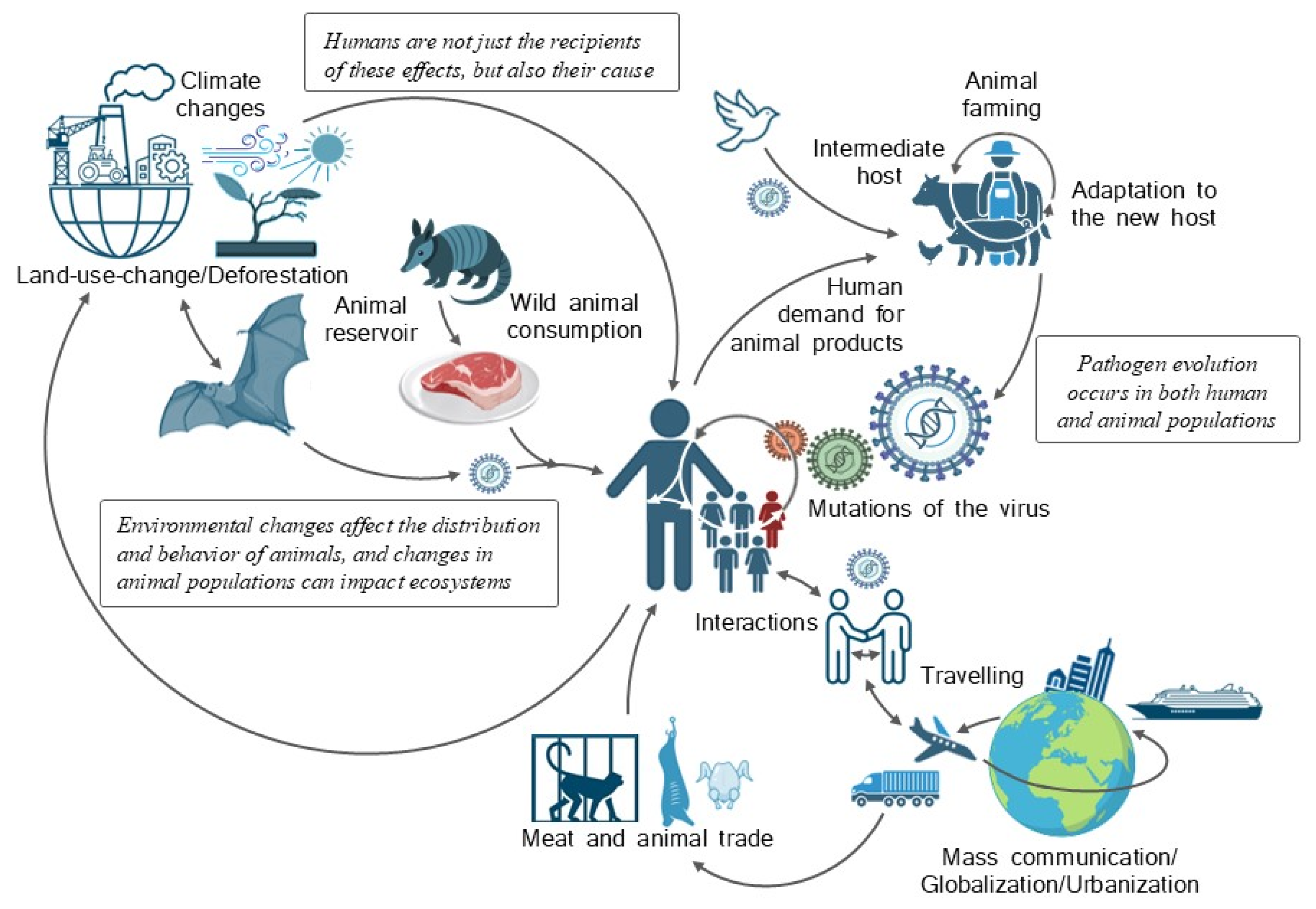
3. Drivers of Viral Zoonotic Emergence
3.1. Animal Reservoirs and Host–Pathogen Interactions
3.2. Environmental and Ecological Determinants
3.3. Human Behavior and Socio-Economic Factors
3.4. Mechanisms of Spillover and Human-to-Human Transmission
3.5. Pathways of Pathogen Transmission
3.6. Risk Factors for Transmission
4. Selected Emerging Viral Zoonoses
4.1. Monkeypox
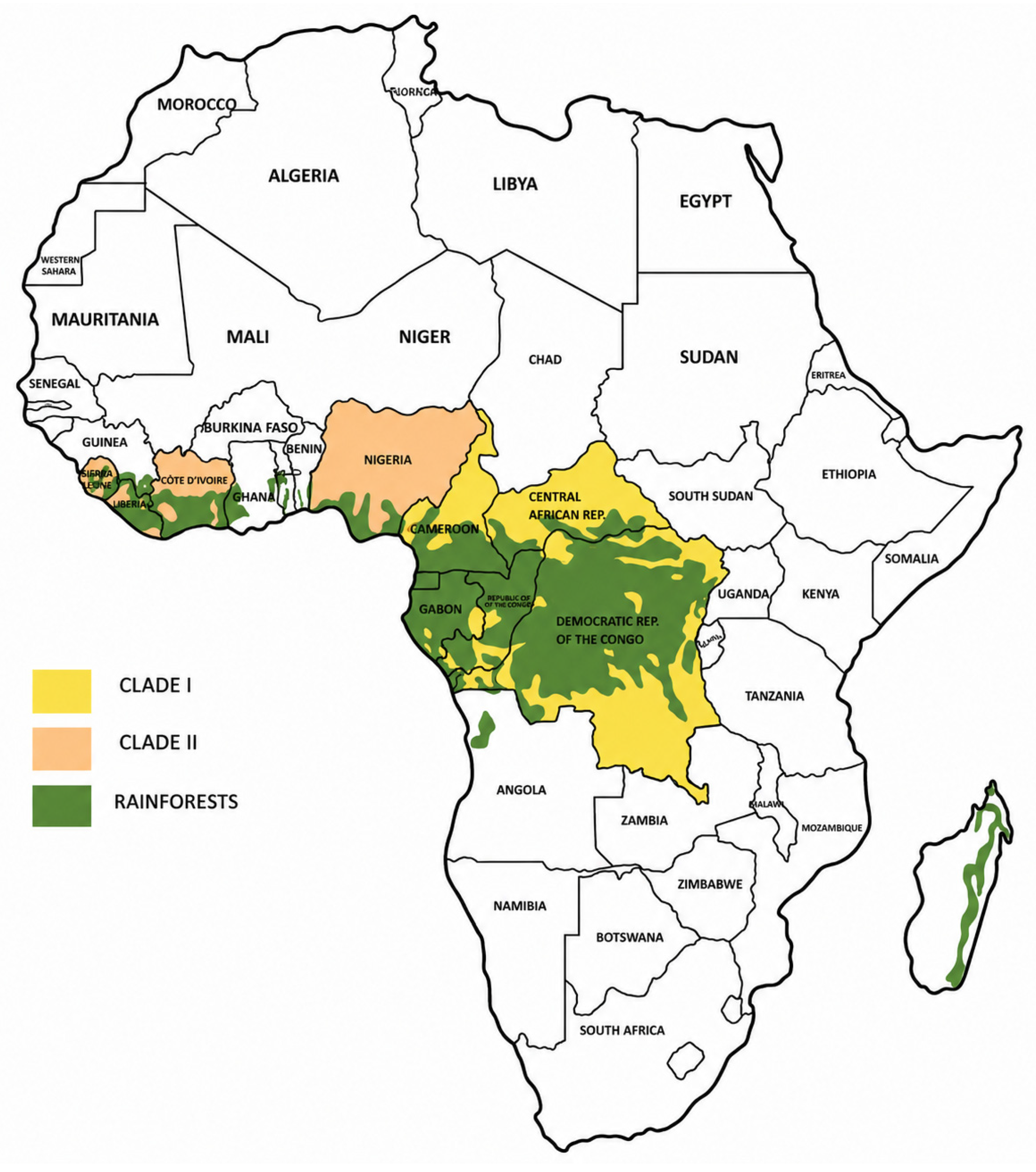
4.1.1. Epidemiology
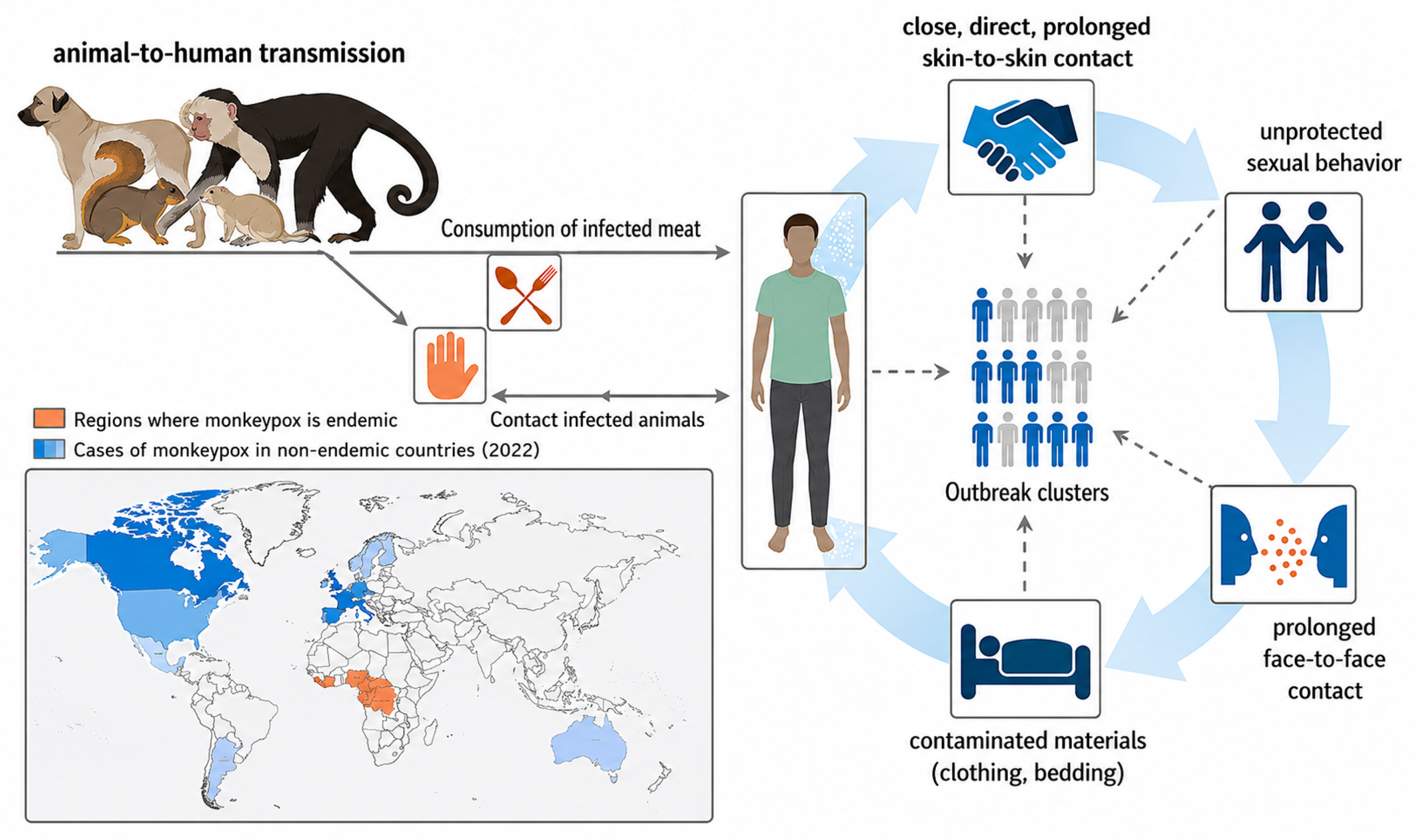
4.1.2. Transmission
4.1.3. Clinical Features
4.1.4. Vaccination and Treatment
4.1.5. Future Challenges
4.2. Avian Influenza
4.2.1. Epidemiology
4.2.2. Transmission
4.2.3. Clinical Features
4.2.4. Vaccination and Prevention
4.2.5. Future Challenges
4.3. Hemorrhagic Fevers—Ebola and Marburg Virus Diseases
4.3.1. Epidemiology
4.3.2. Transmission
4.3.3. Clinical Features
4.3.4. Vaccination and Treatment
4.3.5. Future Challenges
4.4. Rift Valley Fever
4.4.1. Epidemiology
4.4.2. Transmission
4.4.3. Clinical Features
4.4.4. Vaccination and Treatment
4.4.5. Future Challenges
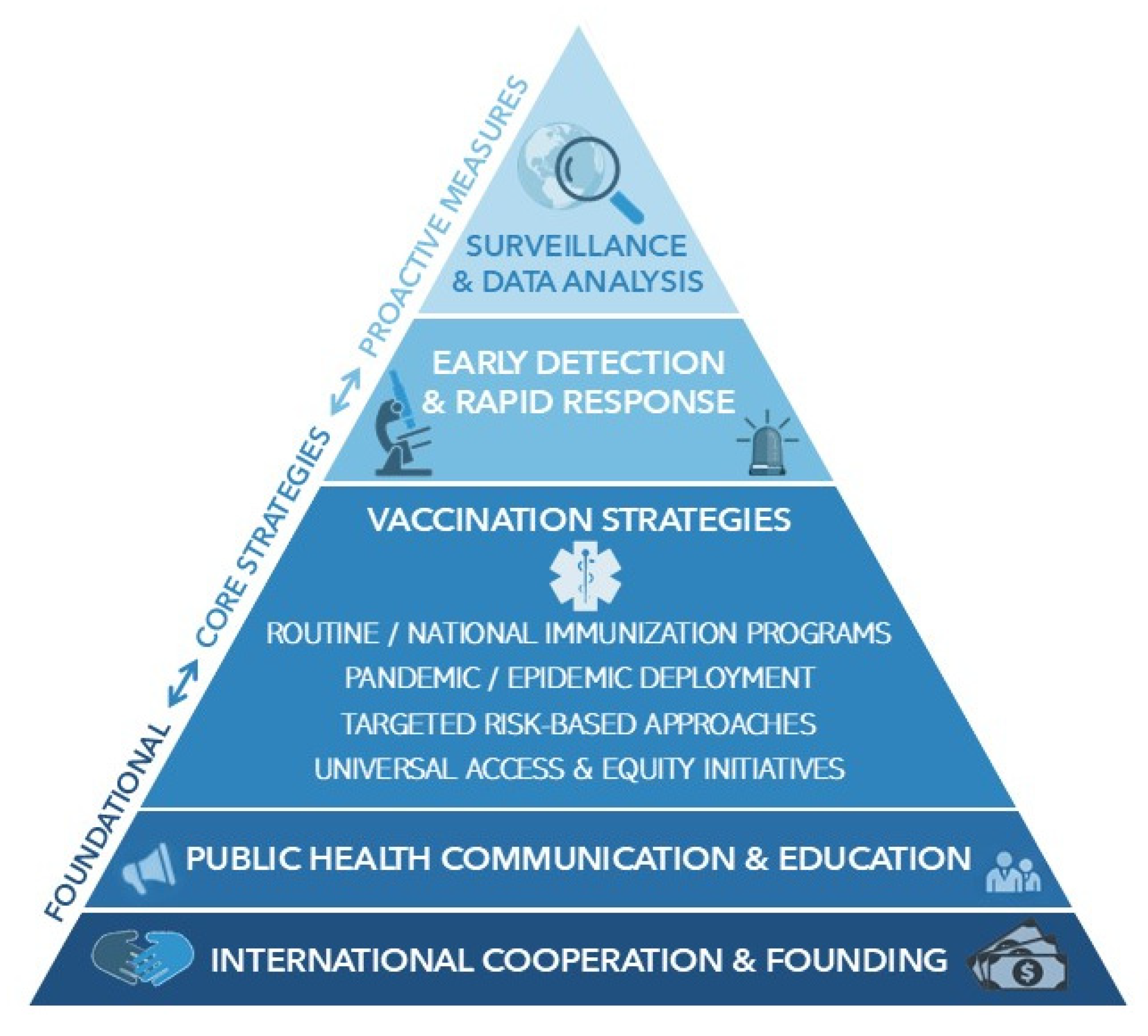
5. Strategies for Preventing Emerging Viral Outbreaks: Surveillance, Immunization, and Education
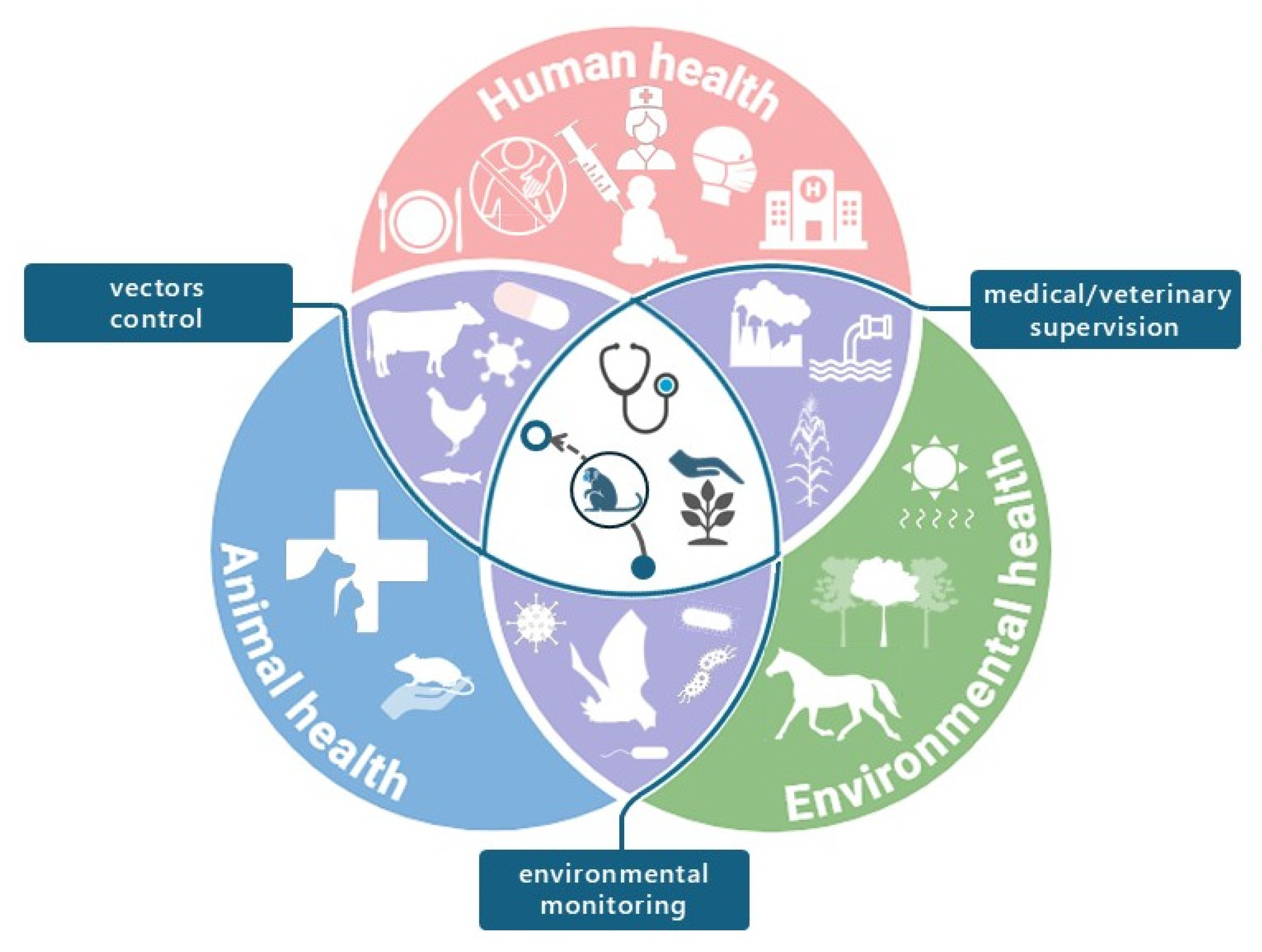
5.1. One Health Framework: Interconnectedness and Policy Strategies for Zoonotic Disease Surveillance
5.2. Integrating Digital Technologies and Genomics for Viral Outbreak Detection
5.3. Community Engagement and Risk Communication in Zoonotic Outbreaks
5.4. Global Vaccine Equity: Policy Approaches and Implementation Strategies
6. Conclusions
Author Contributions
Funding
Institutional Review Board Statement
Informed Consent Statement
Data Availability Statement
Conflicts of Interest
Abbreviations
| rVSV-ZEBOV | recombinant Vesicular Stomatitis Virus-Zaire Ebola Virus |
| SARS-CoV-2 | Severe Acute Respiratory Syndrome Coronavirus 2 |
| MERS-CoV | Middle East Respiratory Syndrome Coronavirus |
| MVA-BN | Modified Vaccinia Ankara-Bavarian Nordic |
| GISRS | Global Influenza Surveillance and Response System |
| LMICs | Low- and Middle- Income Countries |
| EIDs | Emerging Infectious Diseases |
| STEC | Shiga Toxigenic E. coli |
| MPXV | Monkeypox virus |
| MARV | Marburg virus |
| EBOV | Zaire ebolavirus |
| RVFV | Rift Valley Fever Virus |
| Mpox | Monkeypox |
| MSM | Men who have sex with men |
| EMA | European Medicines Agency |
| AIV | Avian Influenza Virus |
| WHO | World Health Organization |
| EVD | Ebola Virus Disease |
| MVD | Marburg Virus Disease |
| RVF | Rift Valley Fever |
| WGS | Whole-Genome Sequencing |
| CDC | Centers for Disease Control and Prevention |
| HA | Hemagglutinin |
| NA | Neuraminidase |
| NK | Natural Killer |
| AI | Artificial Intelligence |
| ML | Machine Learning |
References
- Ellwanger, J.H.; Chies, J.A.B. Zoonotic spillover: Understanding basic aspects for better prevention. Genet. Mol. Biol. 2021, 44, e20200355. [Google Scholar] [CrossRef] [PubMed]
- Rahman, M.T.; Sobur, M.A.; Islam, M.S.; Ievy, S.; Hossain, M.J.; El Zowalaty, M.E.; Rahman, A.T.; Ashour, H.M. Zoonotic Diseases: Etiology, Impact, and Control. Microorganisms 2020, 8, 1405. [Google Scholar] [CrossRef] [PubMed]
- Di Bari, C.; Venkateswaran, N.; Fastl, C.; Gabriël, S.; Grace, D.; Havelaar, A.H.; Huntington, B.; Patterson, G.T.; Rushton, J.; Speybroeck, N.; et al. The global burden of neglected zoonotic diseases: Current state of evidence. One Health 2023, 17, 100595. [Google Scholar] [CrossRef] [PubMed]
- Otte, J.; Pica-Ciamarra, U. Emerging infectious zoonotic diseases: The neglected role of food animals. One Health 2021, 13, 100323. [Google Scholar] [CrossRef] [PubMed]
- Parrish, C.R.; Holmes, E.C.; Morens, D.M.; Park, E.C.; Burke, D.S.; Calisher, C.H.; Laughlin, C.A.; Saif, L.J.; Daszak, P. Cross-species virus transmission and the emergence of new epidemic diseases. Microbiol. Mol. Biol. Rev. 2008, 72, 457–470. [Google Scholar] [CrossRef] [PubMed]
- Wikel, S.K. Zoonoses: Changing, challenging, and increasing global disease threats. Zoonotic Dis. 2024, 4, 8–10. [Google Scholar] [CrossRef]
- Fellag, M.; Loukil, A.; Drancourt, M. The puzzle of the evolutionary natural history of tuberculosis. New Microbes New Infect. 2020, 41, 100712. [Google Scholar] [CrossRef] [PubMed]
- Pérez de Val, B.; Vidal, E.; Stuber, T.; Sáez, J.L.; Tórtola, M.T. Zoonotic tuberculosis in Catalonia, Spain: Phylogenetic insights into Mycobacterium bovis and M. caprae transmission at the human-livestock interface. One Health 2025, 20, 100993. [Google Scholar] [CrossRef] [PubMed]
- Demeure, C.E.; Dussurget, O.; Mas Fiol, G.; Le Guern, A.S.; Savin, C.; Pizarro-Cerdá, J. Yersinia pestis and plague: An updated view on evolution, virulence determinants, immune subversion, vaccination, and diagnostics. Genes Immun. 2019, 20, 357–370. [Google Scholar] [CrossRef] [PubMed]
- Gaul, E.; Spyrou, M.A. Historical plague pandemics: Perspectives from ancient DNA. Trends Microbiol. 2025, 33, 7–10. [Google Scholar] [CrossRef] [PubMed]
- Kim, S.M.; Kim, Y.I.; Pascua, P.N.; Choi, Y.K. Avian Influenza A Viruses: Evolution and Zoonotic Infection. Semin. Respir. Crit. Care Med. 2016, 37, 501–511. [Google Scholar] [CrossRef] [PubMed]
- Uyeki, T.M.; Peiris, M. Novel Avian Influenza A Virus Infections of Humans. Infect. Dis. Clin. N. Am. 2019, 33, 907–932. [Google Scholar] [CrossRef] [PubMed]
- Rodriguez-Morales, A.J.; Hui, D.S.; Ippolito, G.; Traore, T.; Satta, G.; Everett, D.B.; Zumla, A. Avian Influenza—The next travel-associated pandemic? Proactive One Health surveillance is required to reduce the risk of the spread. Travel Med. Infect. Dis. 2025, 65, 102829. [Google Scholar] [CrossRef] [PubMed]
- Chen, S.J.; Rai, C.I.; Wang, S.C.; Chen, Y.C. Infection and Prevention of Rabies Viruses. Microorganisms 2025, 13, 380. [Google Scholar] [CrossRef] [PubMed]
- Khan, G.; Ibrahim, R.K.; Hendy, A.; Mohammed Farghaly Abdelaliem, S.; Hendy, A. Transmission dynamics of rabies through stochastic analysis with the effect of vaccination in dogs population. Eur. Phys. J. Plus 2025, 140, 444. [Google Scholar] [CrossRef]
- Das, M.; Yustyniuk, V.; Perez, A.M.; Aguirreburualde, M.S.P. Global Perspectives on Rabies Control and Elimination: A Scoping Review of Dog Owners’ Knowledge, Attitudes, and Practices. Pathogens 2025, 14, 728. [Google Scholar] [CrossRef] [PubMed]
- Jones, K.E.; Patel, N.G.; Levy, M.A.; Storeygard, A.; Balk, D.; Gittleman, J.L.; Daszak, P. Global trends in emerging infectious diseases. Nature 2008, 451, 990–993. [Google Scholar] [CrossRef] [PubMed]
- Pfenning-Butterworth, A.; Buckley, L.B.; Drake, J.M.; Farner, J.E.; Farrell, M.J.; Gehman, A.M.; Mordecai, E.A.; Stephens, P.R.; Gittleman, J.L.; Davies, T.J. Interconnecting global threats: Climate change, biodiversity loss, and infectious diseases. Lancet Planet. Health 2024, 8, e270–e283. [Google Scholar] [CrossRef] [PubMed]
- Gibb, R.; Redding, D.W.; Chin, K.Q.; Donnelly, C.A.; Blackburn, T.M.; Newbold, T.; Jones, K.E. Zoonotic host diversity increases in human-dominated ecosystems. Nature 2020, 584, 398–402. [Google Scholar] [CrossRef] [PubMed]
- Han, B.A.; Schmidt, J.P.; Bowden, S.E.; Drake, J.M. Rodent reservoirs of future zoonotic diseases. Proc. Natl. Acad. Sci. USA 2015, 112, 7039–7044. [Google Scholar] [CrossRef] [PubMed]
- Wang, L.F.; Anderson, D.E. Viruses in bats and potential spillover to animals and humans. Curr. Opin. Virol. 2019, 34, 79–89. [Google Scholar] [CrossRef] [PubMed]
- Morens, D.M.; Fauci, A.S. Emerging Pandemic Diseases: How We Got to COVID-19. Cell 2020, 182, 1077–1092, Erratum in Cell 2020, 183, 837. https://doi.org/10.1016/j.cell.2020.10.022. [Google Scholar] [CrossRef] [PubMed]
- WHO. Emerging Zoonotic Diseases and the One Health Approach: An Overview; WHO: Geneva, Switzerland, 2023; Available online: https://www.who.int/docs/default-source/coronaviruse/risk-comms-updates/epi_win_digest_4_one-health.pdf?sfvrsn=b9feef83_2 (accessed on 15 January 2026).
- Ghai, R.R.; Wallace, R.M.; Kile, J.C. A generalizable one health framework for the control of zoonotic diseases. Sci. Rep. 2022, 12, 8588. [Google Scholar] [CrossRef] [PubMed]
- ECDC. European Union One Health 2024 Zoonoses Report; ECDC: Stockholm, Sweden, 2025; Available online: https://www.ecdc.europa.eu/en/publications-data/european-union-one-health-2024-zoonoses-report (accessed on 15 February 2026).
- Plotkin, S.A. Vaccines: Past, present and future. Nat. Med. 2005, 11, S5–S11. [Google Scholar] [CrossRef] [PubMed]
- Polack, F.P.; Thomas, S.J.; Kitchin, N.; Absalon, J.; Gurtman, A.; Lockhart, S.; Perez, J.L.; Pérez Marc, G.; Moreira, E.D.; Zerbini, C.; et al. C4591001 Clinical Trial Group. Safety and Efficacy of the BNT162b2 mRNA Covid-19 Vaccine. N. Engl. J. Med. 2020, 383, 2603–2615. [Google Scholar] [CrossRef] [PubMed]
- Krammer, F. SARS-CoV-2 vaccines in development. Nature 2020, 586, 516–527. [Google Scholar] [CrossRef] [PubMed]
- Pardi, N.; Hogan, M.J.; Porter, F.W.; Weissman, D. mRNA vaccines—A new era in vaccinology. Nat. Rev. Drug Discov. 2018, 17, 261–279. [Google Scholar] [CrossRef] [PubMed]
- Brierley, L.; Vonhof, M.J.; Olival, K.J.; Daszak, P.; Jones, K.E. Quantifying Global Drivers of Zoonotic Bat Viruses: A Process-Based Perspective. Am. Nat. 2016, 187, E53–E64. [Google Scholar] [CrossRef] [PubMed]
- Verma, M.; Maan, H.S.; Konatam, S.; Verma, Y.; Kumar, R.; Chaurasia, D.; Dave, L.; Sharma, S. Geographical and Ecological Drivers of Zoonotic Viral Spillover: A Review of Emerging and Re-emerging Outbreaks. Cureus 2025, 17, e99820. [Google Scholar] [CrossRef] [PubMed]
- Tazerji, S.S.; Nardini, R.; Safdar, M.; Shehata, A.A.; Duarte, P.M. An Overview of Anthropogenic Actions as Drivers for Emerging and Re-Emerging Zoonotic Diseases. Pathogens 2022, 11, 1376. [Google Scholar] [CrossRef] [PubMed]
- Olival, K.J.; Hosseini, P.R.; Zambrana-Torrelio, C.; Ross, N.; Bogich, T.L.; Daszak, P. Host and viral traits predict zoonotic spillover from mammals. Nature 2017, 546, 646–650, Erratum in Nature 2017, 548, 612. https://doi.org/10.1038/nature23660. [Google Scholar] [CrossRef] [PubMed]
- Plowright, R.K.; Eby, P.; Hudson, P.J.; Smith, I.L.; Westcott, D.; Bryden, W.L.; Middleton, D.; Reid, P.A.; McFarlane, R.A.; Martin, G.; et al. Ecological dynamics of emerging bat virus spillover. Proc. Biol. Sci. 2015, 282, 20142124. [Google Scholar] [CrossRef] [PubMed]
- Streicker, D.G.; Turmelle, A.S.; Vonhof, M.J.; Kuzmin, I.V.; McCracken, G.F.; Rupprecht, C.E. Host phylogeny constrains cross-species emergence and establishment of rabies virus in bats. Science 2010, 329, 676–679. [Google Scholar] [CrossRef] [PubMed]
- Webster, R.G.; Govorkova, E.A. H5N1 influenza--continuing evolution and spread. N. Engl. J. Med. 2006, 355, 2174–2177. [Google Scholar] [CrossRef] [PubMed]
- Geoghegan, J.L.; Holmes, E.C. Predicting virus emergence amid evolutionary noise. Open Biol. 2017, 7, 170189. [Google Scholar] [CrossRef] [PubMed]
- Morand, S.; Lajaunie, C. Loss of Biological Diversity and Emergence of Infectious Diseases. In Biodiversity and Health; Elsevier: Amsterdam, The Netherlands, 2018; pp. 29–47. [Google Scholar] [CrossRef]
- Carlson, C.J.; Albery, G.F.; Merow, C.; Trisos, C.H.; Zipfel, C.M.; Eskew, E.A.; Olival, K.J.; Ross, N.; Bansal, S. Climate change increases cross-species viral transmission risk. Nature 2022, 607, 555–562. [Google Scholar] [CrossRef] [PubMed]
- Keesing, F.; Belden, L.K.; Daszak, P.; Dobson, A.; Harvell, C.D.; Holt, R.D.; Hudson, P.; Jolles, A.; Jones, K.E.; Mitchell, C.E.; et al. Impacts of biodiversity on the emergence and transmission of infectious diseases. Nature 2010, 468, 647–652. [Google Scholar] [CrossRef] [PubMed]
- Wiethoelter, A.K.; Beltrán-Alcrudo, D.; Kock, R.; Mor, S.M. Global trends in infectious diseases at the wildlife-livestock interface. Proc. Natl. Acad. Sci. USA 2015, 112, 9662–9667. [Google Scholar] [CrossRef] [PubMed]
- Daszak, P.; Cunningham, A.A.; Hyatt, A.D. Emerging infectious diseases of wildlife--threats to biodiversity and human health. Science 2000, 287, 443–449, Erratum in Science 2000, 287, 1756. [Google Scholar] [CrossRef] [PubMed]
- Wu-Chuang, A.; Mateos-Hernandez, L.; Maitre, A.; Rego, R.O.M.; Šíma, R.; Porcelli, S.; Rakotobe, S.; Foucault-Simonin, A.; Moutailler, S.; Palinauskas, V.; et al. Microbiota perturbation by anti-microbiota vaccine reduces the coloni-zation of Borrelia afzelii in Ixodes ricinus. Microbiome 2023, 11, 151. [Google Scholar] [CrossRef] [PubMed]
- Azelyte Aželytė, J.; Wu-Chuang, A.; Žiegytė, R.; Platonova, E.; Mateos-Hernandez, L.; Maye, J.; Obregon, D.; Palinauskas, V.; Cabezas-Cruz, A. Anti-Microbiota Vaccine Reduces Avian Malaria Infection Within Mosquito Vectors. Front. Immunol. 2022, 13, 841835. [Google Scholar] [CrossRef] [PubMed]
- Tatem, A.J.; Rogers, D.J.; Hay, S.I. Global transport networks and infectious disease spread. Adv. Parasitol. 2006, 62, 293–343. [Google Scholar] [CrossRef] [PubMed]
- Patz, J.A.; Graczyk, T.K.; Geller, N.; Vittor, A.Y. Effects of environmental change on emerging parasitic diseases. Int. J. Parasitol. 2000, 30, 1395–1405. [Google Scholar] [CrossRef] [PubMed]
- Karesh, W.B.; Dobson, A.; Lloyd-Smith, J.O.; Lubroth, J.; Dixon, M.A.; Bennett, M.; Aldrich, S.; Harrington, T.; Formenty, P.; Loh, E.H.; et al. Ecology of zoonoses: Natural and unnatural histories. Lancet 2012, 380, 1936–1945. [Google Scholar] [CrossRef] [PubMed]
- Wolfe, N.D.; Daszak, P.; Kilpatrick, A.M.; Burke, D.S. Bushmeat hunting, deforestation, and prediction of zoonoses emergence. Emerg. Infect. Dis. 2005, 11, 1822–1827. [Google Scholar] [CrossRef] [PubMed]
- Holmes, E.C.; Drummond, A.J. The evolutionary genetics of viral emergence. Curr. Top. Microbiol. Immunol. 2007, 315, 51–66. [Google Scholar] [CrossRef] [PubMed]
- Tan, C.C.S.; van Dorp, L.; Balloux, F. The evolutionary drivers and correlates of viral host jumps. Nat. Ecol. Evol. 2024, 8, 960–971. [Google Scholar] [CrossRef] [PubMed]
- Sun, Z.S.; Wan, E.Y.; Agbana, Y.L.; Zhao, H.Q.; Yin, J.X.; Jiang, T.G.; Li, Q.; Fei, S.W.; Wu, L.B.; Li, X.C.; et al. Global One Health index for zoonoses: A performance assessment in 160 countries and territories. iScience 2024, 27, 109297. [Google Scholar] [CrossRef] [PubMed]
- Cleaveland, S.; Laurenson, M.K.; Taylor, L.H. Diseases of humans and their domestic mammals: Pathogen characteristics, host range and the risk of emergence. Philos. Trans. R. Soc. Lond. B Biol. Sci. 2001, 356, 991–999. [Google Scholar] [CrossRef] [PubMed]
- Rohr, J.R.; Barrett, C.B.; Civitello, D.J.; Craft, M.E.; Delius, B.; DeLeo, G.A.; Hudson, P.J.; Jouanard, N.; Nguyen, K.H.; Ostfeld, R.S.; et al. Emerging human infectious diseases and the links to global food production. Nat. Sustain. 2019, 2, 445–456. [Google Scholar] [CrossRef] [PubMed]
- Tan, C.W.; Valkenburg, S.A.; Poon, L.L.M.; Wang, L.F. Broad-spectrum pan-genus and pan-family virus vaccines. Cell Host Microbe 2023, 31, 902–916. [Google Scholar] [CrossRef] [PubMed]
- Touray, M.; Bakirci, S.; Ulug, D.; Gulsen, S.H.; Cimen, H.; Yavasoglu, S.I.; Simsek, F.M.; Ertabaklar, H.; Ozbel, Y.; Hazir, S. Arthropod vectors of disease agents: Their role in public and veterinary health in Turkiye and their control measures. Acta Trop. 2023, 243, 106893. [Google Scholar] [CrossRef] [PubMed]
- Milićević, V.; Mira, F.; Kavran, M. Editorial: Sentinels of health: Advancements in monitoring and surveillance of vector-borne diseases in domestic and wild animals and vectors. Front. Vet. Sci. 2025, 12, 1670316. [Google Scholar] [CrossRef] [PubMed]
- Jánová, E. Emerging and threatening vector-borne zoonoses in the world and in Europe: A brief update. Pathog. Glob. Health 2019, 113, 49–57. [Google Scholar] [CrossRef] [PubMed]
- Yasika, Y.; Shivakumar, M.S. A comprehensive account of functional role of insect gut microbiome in insect orders. J. Nat. Pestic. Res. 2025, 11, 100110. [Google Scholar] [CrossRef]
- Proboste, T.; James, A.; Charette-Castonguay, A.; Chakma, S.; Cortes-Ramirez, J.; Donner, E.; Sly, P.; Magalhães, R.J.S. Research and Innovation Opportunities to Improve Epidemiological Knowledge and Control of Environmentally Driven Zoonoses. Ann. Glob. Health 2022, 88, 93. [Google Scholar] [CrossRef] [PubMed]
- Hopkins, S.R.; Jones, I.J.; Buck, J.C.; LeBoa, C.; Kwong, L.H.; Jacobsen, K.; Rickards, C.; Lund, A.J.; Nova, N.; MacDonald, A.J.; et al. Environmental Persistence of the World’s Most Burdensome Infectious and Parasitic Diseases. Front. Public Health 2022, 10, 892366. [Google Scholar] [CrossRef] [PubMed]
- Hazlett, K.R.; Cirillo, K.A. Environmental adaptation of Francisella tularensis. Microbes Infect. 2009, 11, 828–834. [Google Scholar] [CrossRef] [PubMed]
- Tang, J.W.; Marr, L.C.; Tellier, R.; Dancer, S.J. Airborne transmission of respiratory viruses including severe acute respiratory syndrome coronavirus 2. Curr. Opin. Pulm. Med. 2023, 29, 191–196. [Google Scholar] [CrossRef] [PubMed]
- Abebe, E.; Gugsa, G.; Ahmed, M. Review on Major Food-Borne Zoonotic Bacterial Pathogens. J. Trop. Med. 2020, 4674235. [Google Scholar] [CrossRef] [PubMed]
- Sireci, G.; Badami, G.D.; Di Liberto, D.; Blanda, V.; Grippi, F.; Di Paola, L.; Guercio, A.; de la Fuente, J.; Torina, A. Recent Advances on the Innate Immune Response to Coxiella burnetii. Front. Cell. Infect. Microbiol. 2021, 11, 754455. [Google Scholar] [CrossRef] [PubMed]
- Erkyihun, G.A.; Alemayehu, M.B. One Health Approach for the Control of Zoonotic Diseases. Zoonoses 2022, 2, 37. [Google Scholar] [CrossRef]
- European Food Safety Authority; European Centre for Disease Prevention and Control. The European Union One Health 2021 Zoonoses Report. EFSA J. 2022, 20, e07666. [Google Scholar] [CrossRef] [PubMed]
- Watsa, M. Wildlife Disease Surveillance Focus Group. Rigorous wildlife disease surveillance. Science 2020, 369, 145–147. [Google Scholar] [CrossRef] [PubMed]
- Gamble, A.; Olarte-Castillo, X.A.; Whittaker, G.R. Backyard zoonoses: The roles of companion animals and peri-domestic wildlife. Sci. Transl. Med. 2023, 15, eadj0037. [Google Scholar] [CrossRef] [PubMed]
- Holmes, E.C. COVID-19-lessons for zoonotic disease. Science 2022, 375, 1114–1115. [Google Scholar] [CrossRef] [PubMed]
- Sánchez, C.A.; Venkatachalam-Vaz, J.; Drake, J.M. Spillover of zoonotic pathogens: A review of reviews. Zoonoses Public Health 2021, 68, 563–577. [Google Scholar] [CrossRef] [PubMed]
- Letafati, A.; Sakhavarz, T. Monkeypox virus: A review. Microb. Pathog. 2023, 176, 106027. [Google Scholar] [CrossRef] [PubMed]
- Rabaan, A.A.; Alasiri, N.A.; Aljeldah, M.; Alshukairiis, A.N.; AlMusa, Z.; Alfouzan, W.A.; Abuzaid, A.A.; Alamri, A.A.; Al-Afghani, H.M.; Al-Baghli, N.; et al. An Updated Review on Monkeypox Viral Disease: Emphasis on Genomic Diversity. Biomedicines 2023, 11, 1832. [Google Scholar] [CrossRef] [PubMed]
- Chen, S.; Huang, J.; Chen, J.; Liu, F.; Wang, S.; Wang, N.; Li, M.; Zhang, Z.; Huang, C.; Du, W.; et al. Mpox virus: Virology, molecular epidemiology, and global public health challenges. Front. Microbiol. 2025, 16, 1624110. [Google Scholar] [CrossRef] [PubMed]
- Anwar, F.; Haider, F.; Khan, S.; Ahmad, I.; Ahmed, N.; Imran, M.; Rashid, S.; Ren, Z.-G.; Khattak, S.; Ji, X.-Y. Clinical Manifestation, Transmission, Pathogenesis, and Diagnosis of Monkeypox Virus: A Comprehensive Review. Life 2023, 13, 522. [Google Scholar] [CrossRef] [PubMed]
- Gong, Q.; Wang, C.; Chuai, X.; Chiu, S. Monkeypox virus: A re-emergent threat to humans. Virol. Sin. 2022, 37, 477–482. [Google Scholar] [CrossRef] [PubMed]
- Al-Musa, A.; Chou, J.; LaBere, B. The resurgence of a neglected orthopoxvirus: Immunologic and clinical aspects of monkeypox virus infections over the past six decades. Clin. Immunol. 2022, 243, 109108. [Google Scholar] [CrossRef] [PubMed]
- Ejaz, H.; Junaid, K.; Younas, S.; Abdalla, A.E.; Bukhari, S.N.A.; Abosalif, K.O.A.; Ahmad, N.; Ahmed, Z.; Hamza, M.A.; Anwar, N. Emergence and dissemination of monkeypox, an intimidating global public health problem. J. Infect. Public Health 2022, 15, 1156–1165. [Google Scholar] [CrossRef] [PubMed]
- Luo, Y.H.; Zhang, T.; Cao, J.L.; Hou, W.S.; Wang, A.Q.; Jin, C.H. Monkeypox: An outbreak of a rare viral disease. J. Microbiol. Immunol. Infect. 2024, 57, 1–10. [Google Scholar] [CrossRef] [PubMed]
- Luna, N.; Muñoz, M.; Bonilla-Aldana, D.K.; Patiño, L.H.; Kasminskaya, Y.; Paniz-Mondolfi, A.; Ramírez, J.D. Monkeypox virus (MPXV) genomics: A mutational and phylogenomic analyses of B.1 lineages. Travel Med. Infect. Dis. 2023, 52, 102551. [Google Scholar] [CrossRef] [PubMed]
- Eurosurveillance editorial team. Note from the editors: WHO declares mpox outbreak a public health emergency of international concern. Eurosurveillance 2024, 29, 240815v. [Google Scholar] [CrossRef] [PubMed]
- Vakaniaki, E.H.; Kacita, C.; Kinganda-Lusamaki, E. Sustained human outbreak of a new MPXV clade I lineage in eastern Democratic Republic of the Congo. Nat. Med. 2024, 30, 2791–2795. [Google Scholar] [CrossRef] [PubMed]
- Ochieng, M.; Kiboi, D.; Nasimiyu, C.; Osoro, E.; Omoga, D.C.A.; Kuja, J.O. Phylogenetic Analysis of the Mpox Virus in Sub-Saharan Africa (2022–2024). Biology 2025, 14, 773. [Google Scholar] [CrossRef] [PubMed]
- Srivastava, S.; Sharma, D.; Sridhar, S.B. Comparative analysis of Mpox clades: Epidemiology, trans-mission dynamics, and detection strategies. BMC Infect. Dis. 2025, 25, 1290. [Google Scholar] [CrossRef] [PubMed]
- Bryer, J.; Freeman, E.E.; Rosenbach, M. Monkeypox emerges on a global scale: A historical review and der-matologic primer. J. Am. Acad. Dermatol. 2022, 87, 1069–1074. [Google Scholar] [CrossRef] [PubMed]
- Mauldin, M.R.; McCollum, A.M.; Nakazawa, Y.J.; Mandra, A.; Whitehouse, E.R.; Davidson, W.; Zhao, H.; Gao, J.; Li, Y.; Doty, J.; et al. Exportation of Monkeypox Virus From the African Continent. J. Infect. Dis. 2022, 225, 1367–1376. [Google Scholar] [CrossRef] [PubMed]
- Aljabali, A.A.; Obeid, M.A.; Nusair, M.B.; Hmedat, A.; Tambuwala, M.M. Monkeypox virus: An emerging epidemic. Microb. Pathog. 2022, 173, 105794. [Google Scholar] [CrossRef] [PubMed]
- Schwartz, D.A.; Ha, S.; Dashraath, P.; Baud, D.; Pittman, P.R.; Adams Waldorf, K.M. Mpox Virus in Pregnancy, the Placenta, and Newborn. Arch. Pathol. Lab. Med. 2023, 147, 746–757. [Google Scholar] [CrossRef] [PubMed]
- Huang, Y.; Mu, L.; Wang, W. Monkeypox: Epidemiology, pathogenesis, treatment and prevention. Sig. Transduct. Target. Ther. 2022, 7, 373. [Google Scholar] [CrossRef] [PubMed]
- Sukhdeo, S.; Mishra, S.; Walmsley, S. Human monkeypox: A comparison of the characteristics of the new epidemic to the endemic disease. BMC Infect. Dis. 2022, 22, 928. [Google Scholar] [CrossRef] [PubMed]
- Ilic, I.; Zivanovic Macuzic, I.; Ilic, M. Global Outbreak of Human Monkeypox in 2022: Update of Epidemiology. Trop. Med. Infect. Dis. 2022, 7, 264. [Google Scholar] [CrossRef] [PubMed]
- Kumar, N.; Acharya, A.; Gendelman, H.E.; Byrareddy, S.N. The 2022 outbreak and the pathobiology of the monkeypox virus. J. Autoimmun. 2022, 131, 102855. [Google Scholar] [CrossRef] [PubMed]
- McCollum, A.M.; Damon, I.K. Human monkeypox. Clin. Infect. Dis. 2014, 58, 260–267, Erratum in Clin. Infect. Dis. 2014, 58, 1792. [Google Scholar] [CrossRef] [PubMed]
- Karagoz, A.; Tombuloglu, H.; Alsaeed, M.; Tombuloglu, G.; AlRubaish, A.A.; Mahmoud, A.; Smajlović, S.; Ćordić, S.; Rabaan, A.A.; Alsuhaimi, E. Monkeypox (mpox) virus: Classification, origin, transmission, genome organi-zation, antiviral drugs, and molecular diagnosis. J. Infect. Public Health 2023, 16, 531–541. [Google Scholar] [CrossRef] [PubMed]
- Klein, S.L.; Flanagan, K.L. Sex differences in immune responses. Nat. Rev. Immunol. 2016, 16, 626–638. [Google Scholar] [CrossRef] [PubMed]
- Rio, P.; Caldarelli, M.; Miccoli, E.; Guazzarotti, G.; Gasbarrini, A.; Gambassi, G.; Cianci, R. Sex Differences in Immune Responses to Infectious Diseases: The Role of Genetics, Hormones, and Aging. Diseases 2025, 13, 179. [Google Scholar] [CrossRef] [PubMed]
- Di Giulio, D.B.; Eckburg, P.B. Human monkeypox: An emerging zoonosis. Lancet Infect. Dis. 2004, 4, 15–25, Erratum in Lancet Infect. Dis. 2004, 4, 251. [Google Scholar] [CrossRef] [PubMed]
- Gershon, A.A.; Breuer, J.; Cohen, J.I.; Cohrs, R.J.; Gershon, M.D.; Gilden, D.; Grose, C.; Hambleton, S.; Kennedy, P.G.; Oxman, M.N.; et al. Varicella zoster virus infection. Nat. Rev. Dis. Primers 2015, 1, 15016. [Google Scholar] [CrossRef] [PubMed]
- Cohen, J.I. Clinical practice: Herpes zoster. N. Engl. J. Med. 2013, 369, 255–263. [Google Scholar] [CrossRef] [PubMed]
- Whitley, R.J.; Roizman, B. Herpes simplex virus infections. Lancet 2001, 357, 1513–1518. [Google Scholar] [CrossRef] [PubMed]
- Fang, D.; Liu, Y.; Dou, D.; Su, B. The unique immune evasion mechanisms of the mpox virus and their im-plication for developing new vaccines and immunotherapies. Virol. Sin. 2024, 39, 709–718. [Google Scholar] [CrossRef] [PubMed]
- Singh, P.; Sridhar, S.B.; Shareef, J.; Talath, S.; Mohapatra, P.; Khatib, M.N.; Ballal, S.; Kaur, M.; Nathiya, D.; Sharma, S.; et al. The resurgence of monkeypox: Epidemiology, clinical features, and public health implications in the post-smallpox eradication era. New Microbes New Infect. 2024, 62, 101487. [Google Scholar] [CrossRef] [PubMed]
- Pipitò, L.; Bono, E.; Tolomeo, M. Advances in the Management of MPOX Infection: Therapeutic and Vaccination Perspectives. Curr. Treat. Options Infect. Dis. 2025, 17, 12. [Google Scholar] [CrossRef]
- Byrne, J.; Katoto, P.D.M.C.; Kirenga, B.; Sabiiti, W.; Obuku, A.; Gautier, V.; Mallon, P.W.G.; Feeney, E.R. Immune Response to MVA-BN Vaccination for Mpox: Current Evidence and Future Directions. Vaccines 2025, 13, 930. [Google Scholar] [CrossRef] [PubMed]
- Grabenstein, J.D.; Hacker, A. Vaccines against mpox: MVA-BN and LC16m8. Expert Rev. Vaccines 2024, 23, 796–811. [Google Scholar] [CrossRef] [PubMed]
- Morino, E.; Mine, S.; Tomita, N.; Uemura, Y.; Shimizu, Y.; Saito, S.; Suzuki, T.; Okumura, N.; Iwasaki, H.; Tera-da, J.; et al. Mpox Neutralizing Antibody Response to LC16m8 Vaccine in Healthy Adults. NEJM Evid. 2024, 3, EVIDoa2300290. [Google Scholar] [CrossRef] [PubMed]
- Kennedy, J.S.; Gurwith, M.; Dekker, C.L.; Frey, S.E.; Edwards, K.M.; Kenner, J.; Lock, M.; Empig, C.; Morikawa, S.; Saijo, M.; et al. Safety and immunogenicity of LC16m8, an attenuated smallpox vaccine in vaccinia-naive adults. J. Infect. Dis. 2011, 204, 1395–1402. [Google Scholar] [CrossRef] [PubMed]
- Siegrist, E.A.; Sassine, J. Antivirals with Activity Against Mpox: A Clinically Oriented Review. Clin. Infect. Dis. 2023, 76, 155–164. [Google Scholar] [CrossRef] [PubMed]
- Krammer, F.; Smith, G.J.D.; Fouchier, R.A.M. Influenza. Nat. Rev. Dis. Primers 2018, 4, 3. [Google Scholar] [CrossRef] [PubMed]
- Li, H.; Tong, Q.; Tao, M.; Li, J.; Yu, H.; Han, Q.; Wu, J.; Lan, R.; Han, J.; Chang, H.; et al. Assessment of the public health risk of novel reassortant H3N3 avian influenza viruses that emerged in chickens. mBio 2025, 16, e0067725. [Google Scholar] [CrossRef]
- Gao, R.; Cao, B.; Hu, Y.; Feng, Z.; Wang, D.; Hu, W.; Chen, J.; Jie, Z.; Qiu, H.; Xu, K.; et al. Human infection with a novel avian-origin influenza A (H7N9) virus. N. Engl. J. Med. 2013, 368, 1888–1897. [Google Scholar] [CrossRef] [PubMed]
- Pusch, E.A.; Suarez, D.L. The Multifaceted Zoonotic Risk of H9N2 Avian Influenza. Vet. Sci. 2018, 5, 82. [Google Scholar] [CrossRef] [PubMed]
- Garg, S.; Reed, C.; Davis, C.T.; Uyeki, T.M.; Behravesh, C.B.; Kniss, K.; Budd, A.; Biggerstaff, M.; Adjemian, J.; Barnes, J.R.; et al. Outbreak of Highly Pathogenic Avian Influenza A(H5N1) Viruses in U.S. Dairy Cattle and Detection of Two Human Cases—United States, 2024. Morb. Mortal. Wkly. Rep. 2024, 73, 501–505. [Google Scholar] [CrossRef] [PubMed]
- WHO. Available online: https://www.cdc.gov/bird-flu/situation-summary/mammals.html (accessed on 15 June 2026).
- El-Bidawy, M.H.; Mohammad, I.; Ansari, M.R.; Hajelbashir, M.I.; Khan, M.S.; Poyil, M.M.; Bari, M.N.; Arafah, A.M.R.; Kamal, M.A.; Ahsan, S.T.M. Highly Pathogenic Avian Influenza: Tracking the Progression from IAV (H5N1) to IAV (H7N9) and Preparing for Emerging Challenges. Microorganisms 2025, 14, 12. [Google Scholar] [CrossRef] [PubMed]
- WHO. Available online: https://www.who.int/en/news-room/fact-sheets/detail/influenza-%28avian-and-other-zoonotic%29 (accessed on 3 February 2026).
- Murawski, A.; Fabrizio, T.; Ossiboff, R.; Kackos, C.; Jeevan, T.; Jones, J.C.; Kandeil, A.; Walker, D.; Turner, J.C.M.; Patton, C.; et al. Highly pathogenic avian influenza A(H5N1) virus in a common bottlenose dolphin (Tursiops truncatus) in Florida. Commun. Biol. 2024, 7, 476. [Google Scholar] [CrossRef] [PubMed]
- CDC Factsheet on A(H5N1). Available online: https://www.ecdc.europa.eu/en/zoonotic-influenza/facts/factsheet-h5n1 (accessed on 3 February 2026).
- He, J.; Hou, S.; Xiong, C.; Hu, L.; Gong, L.; Yu, J.; Zhou, X.; Chen, Q.; Yuan, Y.; He, L.; et al. Avian influenza A virus H7N9 in China, a role reversal from reassortment receptor to the donator. J. Med. Virol. 2023, 95, e28392. [Google Scholar] [CrossRef] [PubMed]
- Cargnin Faccin, F.; Perez, D.R. Pandemic preparedness through vaccine development for avian influenza viruses. Hum. Vaccines Immunother. 2024, 20, 2347019. [Google Scholar] [CrossRef] [PubMed]
- European Food Safety Authority; European Centre for Disease Prevention and Control; European Union Reference Laboratory for Avian Influenza; Alexakis, L.; Buczkowski, H.; Ducatez, M.; Fusaro, A.; Gonzales, J.L.; Kuiken, T.; Mirinavičiūtė, G.; et al. Avian influenza overview March–June 2025. EFSA J. 2025, 23, e9520. [Google Scholar] [CrossRef] [PubMed]
- Siegers, J.Y.; Xie, R.; Edwards, K.M.; Byrne, A.M.P.; Hu, S.; Wang, R.; Yann, S.; Sin, S.; Tok, S.; Chea, K.; et al. Resurgence of Zoonotic Highly Pathogenic Avian Influenza A(H5N1) Virus in Cambodia. N. Engl. J. Med. 2025, 393, 1650–1652. [Google Scholar] [CrossRef] [PubMed]
- Gao, F.; Wang, Q.; Qiu, C.; Luo, J.; Li, X. Pandemic preparedness of effective vaccines for the outbreak of newly H5N1 highly pathogenic avian influenza virus. Virol. Sin. 2024, 39, 981–985. [Google Scholar] [CrossRef] [PubMed]
- Wang, Y.; Song, Z.; Ran, P.; Xiang, H.; Xu, Z.; Xu, N.; Deng, M.; Zhu, L.; Yin, Y.; Feng, J.; et al. Serum proteome reveals distinctive molecular features of H7N9- and SARS-CoV-2-infected patients. Cell Rep. 2024, 43, 114900. [Google Scholar] [CrossRef] [PubMed]
- Yu, D.S.; Wu, X.X.; Weng, T.H.; Cheng, L.F.; Liu, F.M.; Wu, H.B.; Lu, X.Y.; Wu, N.P.; Sun, S.L.; Yao, H.P. Host proteins interact with viral elements and affect the life cycle of highly pathogenic avian influenza A virus H7N9. Heliyon 2024, 10, e28218. [Google Scholar] [CrossRef]
- Gu, J.; Yan, Y.; Zeng, Z.; Liu, D.; Hu, J.; Hu, S.; Wang, X.; Gu, M.; Liu, X. Hemagglutinin with a polybasic cleavage site confers high virulence on H7N9 avian influenza viruses. Poult. Sci. 2025, 104, 104832. [Google Scholar] [CrossRef] [PubMed]
- Iwasaki, A.; Pillai, P.S. Innate immunity to influenza virus infection. Nat. Rev. Immunol. 2014, 14, 315–328. [Google Scholar] [CrossRef] [PubMed]
- Chen, X.; Liu, S.; Goraya, M.U.; Maarouf, M.; Huang, S.; Chen, J.L. Host Immune Response to Influenza A Virus Infection. Front. Immunol. 2018, 9, 320. [Google Scholar] [CrossRef] [PubMed]
- Patel, S.M.; Atmar, R.L.; El Sahly, H.M.; Cate, T.R.; Keitel, W.A. A phase I evaluation of inactivated influenza A/H5N1 vaccine administered by the intradermal or the intramuscular route. Vaccine 2010, 28, 3025–3029. [Google Scholar] [CrossRef] [PubMed]
- Zhang, K.; Wu, X.; Shi, Y.; Gou, X.; Huang, J. Immunogenicity of H5N1 influenza vaccines in elderly adults: A systematic review and meta-analysis. Hum. Vaccines Immunother. 2021, 17, 475–484. [Google Scholar] [CrossRef] [PubMed]
- Richards, K.A.; Moritzky, S.; Shannon, I.; Fitzgerald, T.; Yang, H.; Branche, A.; Topham, D.J.; Treanor, J.J.; Nayak, J.; Sant, A.J. Recombinant HA-based vaccine outperforms split and subunit vaccines in elicitation of influenza-specific CD4 T cells and CD4 T cell-dependent antibody responses in humans. npj Vaccines 2020, 5, 77. [Google Scholar] [CrossRef] [PubMed]
- Li, H.; Huang, M.; Feng, S.; Li, W.; Wei, D.; Li, X.; Quan, Y.; Gu, H.; Jiang, T.; Liu, Y.; et al. Preclinical evaluation of an mRNA vaccine developed from the first human isolate of bovine H5N1. Cell Rep. Med. 2026, 7, 102702. [Google Scholar] [CrossRef] [PubMed]
- Hay, A.J.; McCauley, J.W. The WHO global influenza surveillance and response system (GISRS)-A future perspective. Influenza Other Respir. Viruses 2018, 12, 551–557. [Google Scholar] [CrossRef] [PubMed]
- Zheng, D.; Gao, F.; Zhao, C.; Ding, Y.; Cao, Y.; Yang, T.; Xu, X.; Chen, Z. Comparative effectiveness of H7N9 vaccines in healthy individuals. Hum. Vaccines Immunother. 2019, 15, 80–90. [Google Scholar] [CrossRef] [PubMed]
- Rostad, C.A.; Atmar, R.L.; Walter, E.B.; Frey, S.; Meier, J.L.; Sherman, A.C.; Lai, L.; Tsong, R.; Kao, C.M.; Raabe, V.; et al. A Phase 2 Clinical Trial to Evaluate the Safety, Reactogenicity, and Immunogenicity of Different Prime-Boost Vaccination Schedules of 2013 and 2017 A(H7N9) Inactivated Influenza Virus Vaccines Administered With and Without AS03 Adjuvant in Healthy US Adults. Clin. Infect. Dis. 2024, 78, 1757–1768. [Google Scholar] [CrossRef] [PubMed]
- Hu, Z.; Jiao, X.; Liu, X. Antibody Immunity Induced by H7N9 Avian Influenza Vaccines: Evaluation Criteria, Affecting Factors, and Implications for Rational Vaccine Design. Front. Microbiol. 2017, 8, 1898. [Google Scholar] [CrossRef] [PubMed]
- Hatta, M.; Brock, N.; Hauguel, T. Influenza mRNA vaccine reduces pathogenicity and transmission of A(H5N1) virus in a ferret model. npj Vaccines 2025, 10, 263. [Google Scholar] [CrossRef] [PubMed]
- Hatta, M.; Hatta, Y.; Choi, A.; Hossain, J.; Feng, C.; Keller, M.W.; Ritter, J.M.; Huang, Y.; Fang, E.; Pusch, E.A.; et al. An influenza mRNA vaccine protects ferrets from lethal infection with highly pathogenic avian influenza A(H5N1) virus. Sci. Transl. Med. 2024, 16, eads1273. [Google Scholar] [CrossRef] [PubMed]
- Wang, Z.; Tian, C.; Zhu, J.; Wang, S.; Ao, X.; He, Y.; Chen, H.; Liao, X.; Kong, D.; Zhou, Y.; et al. Avian influenza mRNA vaccine encoding hemagglutinin provides complete protection against divergent H5N1 viruses in specific-pathogen-free chickens. J. Nanobiotechnol. 2025, 23, 55. [Google Scholar] [CrossRef] [PubMed]
- de Jong, R.; Zhou, F.; Andersen, T.K.; Stockhofe-Zurwieden, N.; Cox, R.J.; Bogen, B.; Grodeland, G. An HLAII-targeted DNA vaccine against influenza H7N9 protected mice and ferrets from a virus challenge. npj Vaccines 2025, 11, 20. [Google Scholar] [CrossRef] [PubMed]
- Wang, S.; Parker, C.; Taaffe, J.; Solórzano, A.; García-Sastre, A.; Lu, S. Heterologous HA DNA vaccine prime--inactivated influenza vaccine boost is more effective than using DNA or inactivated vaccine alone in eliciting antibody responses against H1 or H3 serotype influenza viruses. Vaccine 2008, 26, 3626–3633. [Google Scholar] [CrossRef] [PubMed]
- Bhatnagar, N.; Kim, K.H.; Subbiah, J.; Muhammad-Worsham, S.; Park, B.R.; Liu, R.; Grovenstein, P.; Wang, B.Z.; Kang, S.M. Heterologous Prime-Boost Vaccination with Inactivated Influenza Viruses Induces More Effective Cross-Protection than Homologous Repeat Vaccination. Vaccines 2023, 11, 1209. [Google Scholar] [CrossRef] [PubMed]
- Thomas, A.; Gokool, S.; Whitlow, H.; Clapp, G.; Moore, P.; Puleston, R.; Smith, L.E.; Pae, R.; Brooks-Pollock, E. Seasonal Influenza Vaccination in People who Have Contact with Birds. Influenza Other Respir. Viruses 2025, 19, e70101. [Google Scholar] [CrossRef] [PubMed]
- Li, H.; Ren, R.; Bai, W.; Li, Z.; Zhang, J.; Liu, Y.; Sun, R.; Wang, F.; Li, D.; Li, C. A Review of Avian Influenza Virus Exposure Patterns and Risks Among Occupational Populations. Vet. Sci. 2025, 12, 704. [Google Scholar] [CrossRef] [PubMed]
- Geisbert, T.W. Marburg and Ebola Hemorrhagic Fevers (Filoviruses). In Mandell, Douglas, and Bennett’s Principles and Practice of Infectious Diseases; Elsevier: Amsterdam, The Netherlands, 2015; pp. 1995–1999.e1. [Google Scholar] [CrossRef]
- Jacob, S.T.; Crozier, I.; Fischer, W.A., II; Hewlett, A.; Kraft, C.S.; Vega, M.A.; Soka, M.J.; Wahl, V.; Griffiths, A.; Bollinger, L.; et al. Ebola virus disease. Nat. Rev. Dis. Primers 2020, 6, 13. [Google Scholar] [CrossRef] [PubMed]
- Ortiz-Prado, E.; Vasconez-Gonzalez, J.; Becerra-Cardona, D.A.; Farfán-Bajaña, M.J.; García-Cañarte, S.; López-Cortés, A.; Izquierdo-Condoy, J.S. Hemorrhagic fevers caused by South American Mammarenaviruses: A comprehensive review of epidemiological and environmental factors related to potential emergence. Travel Med. Infect. Dis. 2025, 64, 102827. [Google Scholar] [CrossRef] [PubMed]
- Brook, C.E.; Dobson, A.P. Bats as ‘special’ reservoirs for emerging zoonotic pathogens. Trends Microbiol. 2015, 23, 172–180. [Google Scholar] [CrossRef] [PubMed]
- Olivero, J.; Fa, J.E.; Farfán, M.Á.; Márquez, A.L.; Real, R.; Juste, F.J.; Leendertz, S.A.; Nasi, R. Human activities link fruit bat presence to Ebola virus disease outbreaks. Mammal Rev. 2020, 50, 1–10. [Google Scholar] [CrossRef]
- Leendertz, S.A.; Gogarten, J.F.; Düx, A.; Calvignac-Spencer, S.; Leendertz, F.H. Assessing the Evidence Supporting Fruit Bats as the Primary Reservoirs for Ebola Viruses. EcoHealth 2016, 13, 18–25. [Google Scholar] [CrossRef] [PubMed]
- WHO. Available online: https://www.who.int/news-room/fact-sheets/detail/ebola-disease (accessed on 25 January 2026).
- WHO. Available online: https://www.who.int/news-room/fact-sheets/detail/marburg-virus-disease (accessed on 25 January 2026).
- Rougeron, V.; Feldmann, H.; Grard, G.; Becker, S.; Leroy, E.M. Ebola and Marburg haemorrhagic fever. J. Clin. Virol. 2015, 64, 111–119. [Google Scholar] [CrossRef] [PubMed]
- Jain, S.; Khaiboullina, S.; Martynova, E.; Morzunov, S.; Baranwal, M. Epi-demiology of Ebolaviruses from an Etiological Perspective. Pathogens 2023, 12, 248. [Google Scholar] [CrossRef] [PubMed]
- Leroy, E.M.; Gonzalez, J.P.; Baize, S. Ebola and Marburg haemorrhagic fever viruses: Major scientific advances, but a relatively minor public health threat for Africa. Clin. Microbiol. Infect. 2011, 17, 964–976. [Google Scholar] [CrossRef] [PubMed]
- Mekibib, B.; Ariën, K.K. Aerosol Transmission of Filoviruses. Viruses 2016, 8, 148. [Google Scholar] [CrossRef] [PubMed]
- Louten, J. Virus Transmission and Epidemiology. Essent. Hum. Virol. 2016, 71–92. [Google Scholar] [CrossRef]
- Normandin, E.; Triana, S.; Raju, S.S.; Lan, T.C.T.; Lagerborg, K.; Rudy, M.; Adams, G.C.; DeRuff, K.C.; Logue, J.; Liu, D.; et al. Natural history of Ebola virus disease in rhesus monkeys shows viral variant emergence dynamics and tissue-specific host responses. Cell Genom. 2023, 3, 100440. [Google Scholar] [CrossRef] [PubMed]
- Hasan, S.; Ahmad, S.A.; Masood, R.; Saeed, S. Ebola virus: A global public health menace: A narrative review. J. Fam. Med. Prim. Care 2019, 8, 2189–2201. [Google Scholar] [CrossRef] [PubMed]
- Pisapia, R.; Fusco, F.M.; Scorzolini, L.; Fontana, L.; Nicastri, E. Clinical features of Marburg virus disease: A review of all reported patients since 1967. eClinicalMedicine 2025, 89, 103581. [Google Scholar] [CrossRef] [PubMed]
- Suu-Ire, R.; Ball, S.; Ziekah, M.Y.; DeMarco, J.; Kain, M.; Agyei, A.S.; Epstein, J.H. Behavioral risk assessment of exposure to wild and domestic animals in response to a Marburg virus disease outbreak, Ghana 2022. One Health 2025, 20, 101010. [Google Scholar] [CrossRef] [PubMed]
- Ahmad, T. Global trends in Marburg virus disease: Another potential threat to global health in the making? J. Virus Erad. 2025, 11, 100582. [Google Scholar] [CrossRef] [PubMed]
- Kuehn, R.; Ryan, H.; Okwaraeke, K.C.; Gould, S.; Chaplin, M.; Riley, M.; Turtle, L.; Jacob, S.T.; Fletcher, T. Vaccines for preventing Ebola virus disease. Cochrane Database Syst. Rev. 2024, 11, CD015828. [Google Scholar] [CrossRef] [PubMed]
- Addetia, A.; Perruzza, L.; Sprouse, K.; Park, Y.J.; McCallum, M.; Stewart, C.; Partini, B.; Brown, J.T.; Donati, A.; Culap, K.; et al. Potent neutralization of Marburg virus by a vaccine-elicited antibody. Nature 2026, 650, 459–469. [Google Scholar] [CrossRef] [PubMed]
- Rghei, A.D.; van Lieshout, L.P.; Santry, L.A.; Guilleman, M.M.; Thomas, S.P.; Susta, L.; Karimi, K.; Bridle, B.W.; Wootton, S.K. AAV Vectored Immunoprophylaxis for Filovirus Infections. Trop. Med. Infect. Dis. 2020, 5, 169. [Google Scholar] [CrossRef] [PubMed]
- Tinto, B.; Quellec, J.; Cêtre-Sossah, C.; Dicko, A.; Salinas, S.; Simonin, Y. Rift Valley fever in West Africa: A zoonotic disease with multiple socio-economic consequences. One Health 2023, 17, 100583. [Google Scholar] [CrossRef] [PubMed]
- Omani, R.; Cavalerie, L.; Daud, A.; Cook, E.A.J.; Nakadio, E.; Fèvre, E.M.; Gitao, G.; Robinson, J.; Nanyingi, M.; Baylis, M.; et al. Goat seropositivity as an indicator of Rift Valley fever (RVF) infection in human populations: A case-control study of the 2018 Rift Valley fever outbreak in Wajir County, Kenya. One Health 2024, 19, 100921. [Google Scholar] [CrossRef] [PubMed]
- Kwaśnik, M.; Rożek, W.; Rola, J. Rift Valley Fever—A Growing Threat To Humans and Animals. J. Vet. Res. 2021, 65, 7–14. [Google Scholar] [CrossRef] [PubMed]
- O’Neill, L.; Gubbins, S.; Reynolds, C.; Limon, G.; Giorgakoudi, K. The socioeconomic impacts of Rift Valley fever: A rapid review. PLoS Negl. Trop. Dis. 2024, 18, e0012347. [Google Scholar] [CrossRef] [PubMed]
- Melo-Silva, C.R.; Sigal, L.J. Innate and adaptive immune responses that control lymph-borne viruses in the draining lymph node. Cell Mol. Immunol. 2024, 21, 999–1007. [Google Scholar] [CrossRef] [PubMed]
- Nair, N.; Osterhaus, A.D.M.E.; Rimmelzwaan, G.F.; Prajeeth, C.K. Rift Valley Fever Virus—Infection, Pathogenesis and Host Immune Responses. Pathogens 2023, 12, 1174. [Google Scholar] [CrossRef] [PubMed]
- Dungu, B.; Lubisi, B.A.; Ikegami, T. Rift Valley fever vaccines: Current and future needs. Curr. Opin. Virol. 2018, 29, 8–15. [Google Scholar] [CrossRef] [PubMed]
- Brown, C. Human-Animal Medicine: Clinical Approaches to Zoonoses, Toxicants and Other Shared Health Risks. Emerg. Infect. Dis. 2010, 16, 1050. [Google Scholar] [CrossRef]
- One Health High-Level Expert Panel (OHHLEP); Adisasmito, W.B.; Almuhairi, S.; Behravesh, C.B.; Bilivogui, P.; Bukachi, S.A. One Health: A new definition for a sustainable and healthy future. PLoS Pathog. 2022, 18, e1010537. [Google Scholar] [CrossRef] [PubMed]
- Zinsstag, J.; Utzinger, J.; Probst-Hensch, N.; Shan, L.; Zhou, X.N. Towards integrated surveillance-response systems for the prevention of future pandemics. Infect. Dis. Poverty 2020, 9, 140. [Google Scholar] [CrossRef] [PubMed]
- Morse, S.S.; Mazet, J.A.; Woolhouse, M.; Parrish, C.R.; Carroll, D.; Karesh, W.B.; Zambrana-Torrelio, C.; Lipkin, W.I.; Daszak, P. Prediction and prevention of the next pandemic zoonosis. Lancet 2012, 380, 1956–1965. [Google Scholar] [CrossRef] [PubMed]
- Altizer, S.; Ostfeld, R.S.; Johnson, P.T.; Kutz, S.; Harvell, C.D. Climate change and infectious diseases: From evidence to a predictive framework. Science 2013, 341, 514–519. [Google Scholar] [CrossRef] [PubMed]
- Alirol, E.; Getaz, L.; Stoll, B.; Chappuis, F.; Loutan, L. Urbanisation and infectious diseases in a globalised world. Lancet Infect. Dis. 2011, 11, 131–141. [Google Scholar] [CrossRef] [PubMed]
- Zayed, D.K.; Momani, S.; Horabi, M.; Alquran, A.; Al-Nawaiseh, F.K.; Tarif, A.B.; Nimri, O.F.; Alyahya, M.S.; Madi, T.; Shatat, A.; et al. Exploring Policies, Strategies, and Legislations Related to the One Health Approach to Zoonoses, Antimicrobial Stewardship, and Climate Change in Jordan: A Multimethod Study with SWOT Analysis. Int. J. Environ. Res. Public Health 2025, 22, 749. [Google Scholar] [CrossRef] [PubMed]
- Cleaveland, S.; Sharp, J.; Abela-Ridder, B.; Allan, K.J.; Buza, J.; Crump, J.A.; Davis, A.; Del Rio Vilas, V.J.; de Glanville, W.A.; Kazwala, R.R.; et al. One Health contributions towards more effective and equitable approaches to health in low- and middle-income countries. Philos. Trans. R. Soc. Lond. B Biol. Sci. 2017, 372, 20160168. [Google Scholar] [CrossRef] [PubMed]
- Butler, C.D. Infectious disease emergence and global change: Thinking systemically in a shrinking world. Infect. Dis. Poverty 2012, 1, 5. [Google Scholar] [CrossRef] [PubMed]
- Dumet, L.; Kenzie, E.S.; Merino, V.; Cruz, V.; Atto, R.; Vilchez, P.; O’Neal, S.; Goodman, J. Applying the One Health approach to study the policy and institutional determinants to control and prevent zoonoses in a low-resource setting. Health Res. Policy Syst. 2025, 23, 148. [Google Scholar] [CrossRef] [PubMed]
- Salathé, M. Digital epidemiology: What is it, and where is it going? Life Sci. Soc. Policy 2018, 14, 1. [Google Scholar] [CrossRef] [PubMed]
- Brownstein, J.S.; Freifeld, C.C.; Madoff, L.C. Digital disease detection--harnessing the Web for public health surveillance. N. Engl. J. Med. 2009, 360, 2153–2157. [Google Scholar] [CrossRef] [PubMed]
- Aarestrup, F.M.; Brown, E.W.; Detter, C.; Gerner-Smidt, P.; Gilmour, M.W.; Harmsen, D.; Hendriksen, R.S.; Hewson, R.; Heymann, D.L.; Johansson, K.; et al. Integrating genome-based informatics to modernize global disease monitoring, information sharing, and response. Emerg. Infect. Dis. 2012, 18, 11. [Google Scholar] [CrossRef] [PubMed]
- Kaur, J.; Butt, Z.A. AI-driven epidemic intelligence: The future of outbreak detection and response. Front. Artif. Intell. 2025, 8, 1645467. [Google Scholar] [CrossRef] [PubMed]
- Carneiro, H.A.; Mylonakis, E. Google trends: A web-based tool for real-time surveillance of disease outbreaks. Clin. Infect. Dis. 2009, 49, 1557–1564. [Google Scholar] [CrossRef] [PubMed]
- Shi, H.; Wang, J.; Cheng, J.; Qi, X.; Ji, H.; Struchiner, C.J.; Villela, D.A.; Karamov, E.V.; Turgiev, A.S. Big data technology in infectious diseases modeling, simulation, and prediction after the COVID-19 outbreak. Intell. Med. 2023, 3, 85–96. [Google Scholar] [CrossRef] [PubMed]
- Borham, A.; Kamal, L.T.; Chun, S. Artificial intelligence in epidemic watch: Revolutionizing infectious diseases surveillance. Front. Digit. Health 2025, 7, 1692617. [Google Scholar] [CrossRef] [PubMed]
- Kamarul Aryffin, H.A.; Bin Sahbudin, M.A.; Ali Pitchay, S.; Abhalim, A.H.; Sahbudin, I. Technological trends in epidemic intelligence for infectious disease surveillance: A systematic literature review. PeerJ Comput. Sci. 2025, 11, e2874. [Google Scholar] [CrossRef] [PubMed]
- Balogh, A.; Harman, A.; Kreuter, F. Real-Time Analysis of Predictors of COVID-19 Infection Spread in Countries in the European Union Through a New Tool. Int. J. Public Health 2022, 67, 1604974. [Google Scholar] [CrossRef] [PubMed]
- Malik, Y.S.; Sircar, S.; Bhat, S.; Ansari, M.I.; Pande, T.; Kumar, P.; Mathapati, B.; Balasubramanian, G.; Kaushik, R.; Natesan, S.; et al. How artificial intelligence may help the Covid-19 pandemic: Pitfalls and lessons for the future. Rev. Med. Virol. 2021, 31, 1–11. [Google Scholar] [CrossRef] [PubMed]
- Branda, F.; Pierini, M.; Mazzoli, S. Monkeypox: EpiMPX Surveillance System and Open Data with a Special Focus on European and Italian Epidemic. J. Clin. Virol. Plus 2022, 2, 100114. [Google Scholar] [CrossRef] [PubMed]
- Kraemer, M.U.G.; Tegally, H.; Pigott, D.M.; Dasgupta, A.; Sheldon, J.; Wilkinson, E.; Schultheiss, M.; Han, A.; Oglia, M.; Marks, S.; et al. Tracking the 2022 monkeypox outbreak with epidemiological data in real-time. Lancet Infect. Dis. 2022, 22, 941–942. [Google Scholar] [CrossRef] [PubMed]
- Gardy, J.L.; Loman, N.J. Towards a genomics-informed, real-time, global pathogen surveillance system. Nat. Rev. Genet. 2018, 19, 9–20. [Google Scholar] [CrossRef] [PubMed]
- Geoghegan, J.L.; Ren, X.; Storey, M.; Hadfield, J.; Jelley, L.; Jefferies, S.; Sherwood, J.; Paine, S.; Huang, S.; Douglas, J.; et al. Genomic epidemiology reveals transmission patterns and dynamics of SARS-CoV-2 in Aotearoa New Zealand. Nat. Commun. 2020, 11, 6351. [Google Scholar] [CrossRef] [PubMed]
- Alhamlan, F.S.; Al-Qahtani, A.A. SARS-CoV-2 Variants: Genetic Insights, Epidemiological Tracking, and Implications for Vaccine Strategies. Int. J. Mol. Sci. 2025, 26, 1263. [Google Scholar] [CrossRef] [PubMed]
- Tosta, S.; Moreno, K.; Schuab, G.; Fonseca, V.; Segovia, F.M.C.; Kashima, S.; Elias, M.C.; Sampaio, S.C.; Ciccozzi, M.; Alcantara, L.C.J.; et al. Global SARS-CoV-2 genomic surveillance: What we have learned (so far). Infect. Genet. Evol. 2023, 108, 105405. [Google Scholar] [CrossRef] [PubMed]
- Arias, A.; Watson, S.J.; Asogun, D. Rapid outbreak sequencing of Ebola virus in Sierra Leone identifies transmission chains linked to sporadic cases. Virus Evol. 2016, 2, vew016. [Google Scholar] [CrossRef] [PubMed]
- Kinganda-Lusamaki, E.; Black, A.; Mukadi, D.B.; Hadfield, J.; Mbala-Kingebeni, P.; Pratt, C.B.; Aziza, A.; Diagne, M.M.; White, B.; Bisento, N.; et al. Integration of genomic sequencing into the response to the Ebola virus outbreak in Nord Kivu, Democratic Republic of the Congo. Nat. Med. 2021, 27, 710–716. [Google Scholar] [CrossRef] [PubMed]
- Mohamed Abdoul-Latif, F.; Ainane, A.; Mohamed, H.; Merito Ali, A.; Houmed Aboubaker, I.; Jutur, P.P.; Ainane, T. Mpox Resurgence: A Multifaceted Analysis for Global Preparedness. Viruses 2024, 16, 1737. [Google Scholar] [CrossRef] [PubMed]
- Otieno, J.R.; Ruis, C.; Onoja, A.B. Global genomic surveillance of monkeypox virus. Nat. Med. 2025, 31, 342–350. [Google Scholar] [CrossRef] [PubMed]
- Chisompola, D.; Luwaya, E.; Nzobokela, J.; Mwansa, P.; Chakulya, M. AI-powered analysis of viral metagenomic sequencing data for rapid outbreak investigation and novel pathogen discovery. Front. Microbiol. 2026, 16, 1717859. [Google Scholar] [CrossRef] [PubMed]
- Yu, S.; Wang, J.; Luo, X.; Zheng, H.; Wang, L.; Yang, X.; Wang, Y. Transmission-Blocking Strategies Against Malaria Parasites During Their Mosquito Stages. Front. Cell. Infect. Microbiol. 2022, 12, 820650. [Google Scholar] [CrossRef] [PubMed]
- Sinden, R.E. Developing transmission-blocking strategies for malaria control. PLoS Pathog. 2017, 13, e1006336. [Google Scholar] [CrossRef] [PubMed]
- Guégan, M.; Zouache, K.; Démichel, C.; Minard, G.; Tran Van, V.; Potier, P.; Mavingui, P.; Valiente Moro, C. The mosquito holobiont: Fresh insight into mosquito-microbiota interactions. Microbiome 2018, 6, 49. [Google Scholar] [CrossRef] [PubMed]
- Strand, M.R. Composition and functional roles of the gut microbiota in mosquitoes. Curr. Opin. Insect Sci. 2018, 28, 59–65. [Google Scholar] [CrossRef] [PubMed]
- Scarpa, F.; Casu, M. Genomics and Bioinformatics in One Health: Transdisciplinary Approaches for Health Promotion and Disease Prevention. Int. J. Environ. Res. Public Health 2024, 21, 1337. [Google Scholar] [CrossRef] [PubMed]
- Tiwari, S.; Dhakal, T.; Kim, B.J.; Jang, G.S.; Oh, Y. Genomics in Epidemiology and Disease Surveillance: An Exploratory Analysis. Life 2025, 15, 1848. [Google Scholar] [CrossRef] [PubMed]
- Vaughan, E.; Tinker, T. Effective health risk communication about pandemic influenza for vulnerable populations. Am. J. Public Health 2009, 99, S324–S332. [Google Scholar] [CrossRef] [PubMed]
- Larson, H.J. The state of vaccine confidence. Lancet 2018, 392, 2244–2246. [Google Scholar] [CrossRef] [PubMed]
- Finset, A.; Bosworth, H.; Butow, P.; Gulbrandsen, P.; Hulsman, R.L.; Pieterse, A.H.; Street, R.; Tschoetschel, R.; van Weert, J. Effective health communication—A key factor in fighting the COVID-19 pandemic. Patient Educ. Couns. 2020, 103, 873–876. [Google Scholar] [CrossRef] [PubMed]
- Cinelli, M.; Quattrociocchi, W.; Galeazzi, A.; Valensise, C.M.; Brugnoli, E.; Schmidt, A.L.; Zola, P.; Zollo, F.; Scala, A. The COVID-19 social media infodemic. Sci. Rep. 2020, 10, 16598. [Google Scholar] [CrossRef] [PubMed]
- Roozenbeek, J.; Schneider, C.R.; Dryhurst, S.; Kerr, J.; Freeman, A.L.J.; Recchia, G.; van der Bles, A.M.; van der Linden, S. Susceptibility to misinformation about COVID-19 around the world. R. Soc. Open Sci. 2020, 7, 201199. [Google Scholar] [CrossRef] [PubMed]
- Chou, W.S.; Oh, A.; Klein, W.M.P. Addressing Health-Related Misinformation on Social Media. JAMA 2018, 320, 2417–2418. [Google Scholar] [CrossRef] [PubMed]
- Ojikutu, B.O.; Stephenson, K.E.; Mayer, K.H.; Emmons, K.M. Building Trust in COVID-19 Vaccines and Beyond Through Authentic Community Investment. Am. J. Public Health 2021, 111, 366–368. [Google Scholar] [CrossRef] [PubMed]
- Sommers, T.; Dockery, M.; Burke, N.; D’Souza, S.; Troupe, B.; Agbonyinma, T.; Raghuram, H.; Hopkins, K.L.; Kohlway, E.; Stojicic, P.; et al. Building trust and equity in vaccine communication through community engagement. Hum. Vaccines Immunother. 2025, 21, 2518636. [Google Scholar] [CrossRef] [PubMed]
- Fawole, A.; Boyer, B.; Shahid, M.; Bharali, I.; McAdams, D.; Yamey, G. What are the key features of an equitable global vaccine strategy for the next pandemic? A qualitative study of pandemic control experts. Vaccine 2025, 61, 127377. [Google Scholar] [CrossRef] [PubMed]
- Sáfadi, M.A.P. The importance of immunization as a public health instrument. J. Pediatr. 2023, 99, S1–S3. [Google Scholar] [CrossRef] [PubMed]
- Rodrigues, C.M.C.; Plotkin, S.A. Impact of Vaccines; Health, Economic and Social Perspectives. Front. Microbiol. 2020, 11, 1526. [Google Scholar] [CrossRef] [PubMed]
- Wouters, O.J.; Shadlen, K.C.; Salcher-Konrad, M.; Pollard, A.J.; Larson, H.J.; Teerawattananon, Y.; Jit, M. Challenges in ensuring global access to COVID-19 vaccines: Production, affordability, allocation, and deployment. Lancet 2021, 397, 1023–1034. [Google Scholar] [CrossRef] [PubMed]
- Rajaonarifara, E.; Bonds, M.H.; Miller, A.C.; Ihantamalala, F.A.; Cordier, L.; Razafinjato, B.; Rafenoarimalala, F.H.; Finnegan, K.E.; Rakotonanahary, R.J.L.; Cowley, G.; et al. Impact of health system strengthening on delivery strategies to improve child immunisation coverage and inequalities in rural Madagascar. BMJ Glob. Health 2022, 7, e006824. [Google Scholar] [CrossRef] [PubMed]
- Machingaidze, S.; Wiysonge, C.S. Understanding COVID-19 vaccine hesitancy. Nat. Med. 2021, 27, 1338–1339. [Google Scholar] [CrossRef] [PubMed]
- Mukherjee, S.; Kalra, K.; Phelan, A.L. Expanding global vaccine manufacturing capacity: Strategic prioritization in small countries. PLoS Glob. Public Health 2023, 3, e0002098. [Google Scholar] [CrossRef] [PubMed]
- Hyder, A.A.; Hyder, M.A.; Nasir, K.; Ndebele, P. Inequitable COVID-19 vaccine distribution and its effects. Bull. World Health Organ. 2021, 99, 406–406A. [Google Scholar] [CrossRef] [PubMed]
- Turyasingura, N.; James, W.G.; Vermund, S.H. COVID-19 vaccine equity in Africa. Trans. R. Soc. Trop. Med. Hyg. 2023, 117, 470–472. [Google Scholar] [CrossRef] [PubMed]
- Jarrett, C.; Wilson, R.; O’Leary, M.; Eckersberger, E.; Larson, H.J.; SAGE Working Group on Vaccine Hesitancy. Strategies for addressing vaccine hesitancy—A systematic review. Vaccine 2015, 33, 4180–4190. [Google Scholar] [CrossRef] [PubMed]
- Larson, H.J.; de Figueiredo, A.; Xiahong, Z.; Schulz, W.S.; Verger, P.; Johnston, I.G.; Cook, A.R.; Jones, N.S. The State of Vaccine Confidence 2016: Global Insights Through a 67-Country Survey. eBioMedicine 2016, 12, 295–301. [Google Scholar] [CrossRef] [PubMed]
- Dubé, E.; Laberge, C.; Guay, M.; Bramadat, P.; Roy, R.; Bettinger, J. Vaccine hesitancy: An overview. Hum. Vaccines Immunother. 2013, 9, 1763–1773. [Google Scholar] [CrossRef] [PubMed]
- Jalilian, H.; Amraei, M.; Javanshir, E.; Jamebozorgi, K.; Faraji-Khiavi, F. Ethical considerations of the vaccine development process and vaccination: A scoping review. BMC Health Serv. Res. 2023, 23, 255. [Google Scholar] [CrossRef] [PubMed]
- Sakr, F.; Dabbous, M.; Rahal, M.; Salameh, P.; Akel, M. Challenges and opportunities to provide immunization services: Analysis of data from a cross-sectional study on a sample of pharmacists in a developing country. Health Sci. Rep. 2023, 6, e1206. [Google Scholar] [CrossRef] [PubMed]
- Equils, O.; Kellogg, C.; Baden, L.; Berger, W.; Connolly, S. Logistical and structural challenges are the major obstacles for family medicine physicians’ ability to administer adult vaccines. Hum. Vaccines Immunother. 2019, 15, 637–642. [Google Scholar] [CrossRef] [PubMed]
- Richman, A.R.; Schwartz, A.J.; Maness, S.B.; Sanchez, L.; Torres, E. Exploring Vaccine Hesitancy, Structural Barriers, and Trust in Vaccine Information Among Populations Living in the Rural Southern United States. Vaccines 2025, 13, 699. [Google Scholar] [CrossRef] [PubMed]
- Santangelo, O.E.; Provenzano, S.; Di Martino, G.; Ferrara, P. COVID-19 Vaccination and Public Health: Addressing Global, Regional, and Within-Country Inequalities. Vaccines 2024, 12, 885. [Google Scholar] [CrossRef] [PubMed]
- Nunes, C.; Mckee, M.; Rushton, S.; Howard, N. I Think From the Beginning, the Ambitions Were Compromised: A Case Study of COVAX as Vaccine Equity Policy Operationalisation. Int. J. Health Plan. Manag. 2026, 41, 59–70. [Google Scholar] [CrossRef] [PubMed]
- Ali, H.A.; Hartner, A.M.; Echeverria-Londono, S.; Roth, J.; Li, X.; Abbas, K.; Portnoy, A.; Vynnycky, E.; Woodruff, K.; Ferguson, N.M.; et al. Vaccine equity in low and middle income countries: A systematic review and meta-analysis. Int. J. Equity Health 2022, 21, 82, Erratum in Int. J. Equity Health 2022, 21, 92. https://doi.org/10.1186/s12939-022-01695-4. [Google Scholar] [CrossRef] [PubMed]
- Chopra, M.; Bhutta, Z.; Chang Blanc, D.; Checchi, F.; Gupta, A.; Lemango, E.T.; Levine, O.S.; Lyimo, D.; Nandy, R.; O’Brien, K.L.; et al. Addressing the persistent inequities in immunization coverage. Bull. World Health Organ. 2020, 98, 146–148. [Google Scholar] [CrossRef] [PubMed]
- Pavia, G.; Branda, F.; Ciccozzi, A.; Romano, C.; Locci, C.; Azzena, I.; Pascale, N.; Marascio, N.; Quirino, A.; Matera, G.; et al. Integrating Digital Health Solutions with Immunization Strategies: Improving Immunization Coverage and Monitoring in the Post-COVID-19 Era. Vaccines 2024, 12, 847. [Google Scholar] [CrossRef] [PubMed]
- Rahman-Shepherd, A.; Aghogho Evaborhene, N.; Berman, A.; Amaya, A.B.; Boro, E.; Dar, O.; Ho, Z.J.M.; Jung, A.S.; Khan, M.; Mohamed-Ahmed, O.; et al. Establishing the value of regional cooperation and a critical role for regional organisations in managing future health emergencies. Lancet Glob. Health 2025, 13, e585–e592. [Google Scholar] [CrossRef] [PubMed]



| Clinical Feature | Monkeypox | Chickenpox | Smallpox | Shingles | Cold Sore |
|---|---|---|---|---|---|
| Etiological factor | Monkeypox virus | Varicella-zoster virus | Variola virus | Varicella-zoster virus | Herpes simplex virus |
| Incubation period | 7–14 days | 10–21 days | 7–17 days | 7–21 days | 2–12 days |
| Prodromal symptoms | fever, muscle pain, lymphadenopathy | fever, weakness | sudden fever, pain, rash | pain in the dermatome, burning sensation | burning sensation, itching |
| Location of lesions | face, limbs, hands, feet, genitals, mucous membranes | face, torso, scalp | face, torso, limbs | usually torso or head (unilateral) | lips, genitals, fingers areas |
| Number of lesions | from a dozen to a several dozen | usually very severe | numerous and densely arranged | usually limited | usually limited, often grouped locally |
| Type of lesions | spots, papules, vesicles, pustules, scabs | spots, papules, vesicles, scabs | papules, blisters, pustules | blisters, pustules, sometimes hemorrhagic | blisters on reddened skin |
| Stages of lesions development | synchronized | non-synchronized | synchronized | synchronized (locally) | synchronized |
| Mucosal lesions | frequent (oral cavity, genitals) | often | rare | sometimes (oral cavity) | very often (oral cavity, genitals) |
| Lymphadenopathy | present | none or mild | usually absent | usually absent | only with primary infection |
| Painfulness of lesions | often painful (especially genitals) | minor | possible | often severe pain, neuralgia | burning, pain, itching |
| Feature | MVA-BN Vaccine | LC16m8 Vaccine |
|---|---|---|
| Virus | live, unable to replicate | live, weakly replicating |
| Multiplication in human cells | no | yes (limited) |
| Safety | very high | very good, but lower than MVA-BN |
| Approval for mpox | yes | not officially registered |
| WHO status | first-choice vaccine | recommended as an alternative in the absence of MVA-BN |
| Subtype | Hosts & Ecology | Human Infection Features | Reassortment & Evolution | Pandemic Risk |
|---|---|---|---|---|
| H5N1 | Wild birds, poultry; widespread globally across Asia, Europe, Africa, Americas | Sporadic human cases via direct/indirect contact; high case fatality; no sustained human-to-human spread reported | Segmented genome enables reassortment with other AIVs; evolving genotypes detected worldwide | Humans lack pre-existing immunity; pandemic potential if sustained transmission evolves; surveillance critical |
| H7N9 | Circulated in poultry in China; first detected in 2013 | Human infections linked to live poultry exposure; severe respiratory disease; no consistent human-to-human transmission | Frequent reassortment with H9N2 internal genes, contributing to human epidemic waves | High virulence in humans; continuing evolution necessitates monitoring |
| H9N2 | Endemic in poultry worldwide | Occasional human infections; typically mild or asymptomatic, linked to poultry exposure (reports continue, including recent cases) | Acts as a gene donor through reassortment to other subtypes, enhancing zoonotic potential of viruses like H7N9 | Low direct human pathogenicity but important contributor to reassortant emergence |
| Other AIVs (e.g., H5N6, H10N3, H3N8) | Detected in birds and occasionally mammals | Sporadic human cases reported (e.g., H5N6, H10N3) | Some reassort with other AIVs; genetic diversity arises through coinfection | Continue to pose sporadic zoonotic risk; require ongoing surveillance (WHO reports) |
| Vaccine Platform/Strategy | Mechanism | Immunogenicity/ Protective Effect | Advantages | Limitations | References |
|---|---|---|---|---|---|
| Inactivated AIV vaccines (e.g., H7N9 IIV) | Killed virus induces antibody response | Induces strain-specific antibodies; phase II trials have evaluated dosing and adjuvant effects | Established technology; relatively safe | Variable immunogenicity, may require adjuvants and booster doses | [133,134,135] |
| mRNA vaccines (H5N1) | Encodes HA (±NA) to stimulate humoral and cellular immunity | Robust neutralizing antibodies, protection in ferrets and reduced transmission; strong immunogenicity in preclinical models | Rapid development; scalable; elicits both humoral and cellular responses | Not yet licensed for AIV in humans; clinical data limited | [136,137] |
| mRNA vaccines (avian strains in poultry) | Encodes HA to protect birds | Complete protection against homologous challenges in chickens, moderate heterologous protection | Useful for animal health and spillover reduction | Efficacy may vary across strains | [138] |
| DNA/HLAII-targeted vaccine (H7N9) | DNA vaccine targets antigen to HLAII to stimulate adaptive immunity | Protective in mice and ferrets in challenge models | Strong T-cell responses; alternative platform | Early experimental stage; human data lacking | [139] |
| Prime-boost regimens | Combinations of platforms (e.g., inactivated + adjuvant or DNA + protein) | Can enhance breadth and durability of immune responses | Potentially stronger protection across subtypes | Complex schedules; not widely implemented | [140,141] |
| Public health strategy: occupational vaccination | Targeted vaccination of high-risk groups | Reduces exposure risk where outbreaks occur | Protects workers in close contact with infected birds | Not general population coverage; relies on risk assessment | [142,143] |
| Feature | Ebola Virus Disease (EVD) | Marburg Virus Disease (MVD) |
|---|---|---|
| Etiological agent | Ebolavirus, mainly Zaire ebolavirus (EBOV) | Marburgvirus, Marburg virus (MARV) |
| Reservoir | Fruit bats (Pteropodidae family), possibly other wildlife | Egyptian rousette bats (Rousettus aegyptiacus), possibly other bats |
| Primary hosts/ecology | Spillover via direct contact with infected animals; human outbreaks primarily in Africa | Spillover via caves/mines inhabited by bats; human outbreaks primarily in Africa |
| Transmission to humans | Direct contact with blood, tissues, or body fluids of infected animals; handling of bushmeat | Direct contact with infected bats, tissues, or body fluids; contaminated surfaces |
| Human-to-human transmission | Contact with blood, body fluids (saliva, urine, sweat, vomit, semen, breast milk), contaminated objects | Contact with blood, body fluids, or contaminated objects; no sustained droplet transmission |
| Incubation period | 2–21 days (commonly 8–10 days) | 2–21 days (commonly 5–10 days) |
| Clinical features | Fever, headache, myalgia, fatigue, gastrointestinal symptoms, rash, hemorrhagic manifestations, multiorgan failure | Fever, headache, myalgia, fatigue, gastrointestinal symptoms, hemorrhage, multiorgan failure |
| Case fatality rate | 25–90% depending on outbreak and strain | ~50–88% depending on outbreak |
| Treatment | Supportive care (fluids, hemodynamic support, oxygen, treat secondary infections); investigational antivirals (remdesivir, monoclonal antibodies) | Supportive care only; investigational antivirals under study |
| Prophylaxis | Licensed vaccines: rVSV-ZEBOV (Ervebo), Zabdeno/Mvabea; used in outbreak response and high-risk populations | No licensed vaccine currently; investigational vaccines in development |
| Pandemic potential | High lethality, potential for local outbreaks; controlled with rapid response, vaccination, infection control | High lethality; low frequency outbreaks; monitoring and rapid containment essential |
| Feature | Rift Valley Fever (RVF) |
|---|---|
| Etiological agent | Phlebovirus, family Phenuiviridae |
| Reservoir | Wild ruminants, possibly other wildlife; maintained in mosquitoes (Aedes, Culex, Anopheles) |
| Primary hosts/ecology | Domestic and wild ruminants act as amplifying hosts; outbreaks associated with heavy rainfall and mosquito population surges |
| Transmission to humans | Direct contact with blood, tissues, or body fluids of infected animals; exposure during slaughter, veterinary care, or handling infected carcasses; mosquito-borne transmission possible |
| Human-to-human transmission | Very rare; primarily limited to laboratory or healthcare settings (aerosol or contaminated surfaces) |
| Incubation period | 2–6 days (commonly 3–5 days) |
| Clinical features | Mild influenza-like illness in most cases; severe complications include hemorrhagic fever, encephalitis, ocular disease, and rare fatal outcomes |
| Case fatality rate | <1% in mild cases; up to 10–20% in severe complications, depending on outbreak and population |
| Treatment | Supportive care only; no specific antivirals licensed for humans |
| Vaccination/prophylaxis | Licensed veterinary vaccines (live-attenuated Smithburn, inactivated vaccines) reduce animal infection; human vaccines under development; prevention relies on vector control, PPE, and safe handling of animals |
| Pandemic potential | Low human-to-human transmission limits pandemic potential; high impact on livestock and food security; climate change, flooding, and host density influence outbreak risk |
| Feature | Barriers | Strategies | References |
|---|---|---|---|
| Vaccine supply | Concentration of production in high-income countries; dependence on global supply chains; limited doses in LMICs | Expand regional manufacturing capacity; technology transfer; collaborative production agreements | [220,223,224] |
| Infrastructure | Limited cold-chain storage; insufficient transportation networks; lack of trained personnel; weak health systems | Investment in cold-chain systems, transportation, workforce training; mobile vaccination units; integrated surveillance and digital registries | [221,225] |
| Socioeconomic and cultural barriers | Low health literacy, transportation limitations, reduced access in rural/remote areas; vaccine hesitancy | Community engagement; culturally tailored education campaigns; targeted outreach to vulnerable populations | [226,227,228] |
| Vaccine hesitancy | Distrust in authorities; misinformation on social media; historical distrust | Transparent communication; trusted local leaders; evidence-based messaging; participatory approaches | [222,228] |
| Global coordination | Fragmented policy approaches; inequitable procurement; export restrictions | Initiatives like COVAX; multilateral partnerships (WHO, Gavi, CEPI, UNICEF); harmonized global policies | [220,224] |
| Ethical allocation | Risk of marginalized groups being overlooked; prioritization challenges | Ethical frameworks prioritizing high-risk and vulnerable populations; equity-focused vaccination policies | [222,229] |
| Pandemic preparedness | Slow response in LMICs; limited surge capacity | Strengthen surveillance and immunization systems; advance planning for rapid deployment; integration with One Health approaches | [221,225] |
Disclaimer/Publisher’s Note: The statements, opinions and data contained in all publications are solely those of the individual author(s) and contributor(s) and not of MDPI and/or the editor(s). MDPI and/or the editor(s) disclaim responsibility for any injury to people or property resulting from any ideas, methods, instructions or products referred to in the content. |
© 2026 by the authors. Licensee MDPI, Basel, Switzerland. This article is an open access article distributed under the terms and conditions of the Creative Commons Attribution (CC BY) license.
Share and Cite
Dulska, J.; Fol, M.; Druszczynska, M. Emerging Viral Zoonoses: Epidemiology, Vaccination Strategies, and Implications for Global Public Health. Vaccines 2026, 14, 560. https://doi.org/10.3390/vaccines14070560
Dulska J, Fol M, Druszczynska M. Emerging Viral Zoonoses: Epidemiology, Vaccination Strategies, and Implications for Global Public Health. Vaccines. 2026; 14(7):560. https://doi.org/10.3390/vaccines14070560
Chicago/Turabian StyleDulska, Julia, Marek Fol, and Magdalena Druszczynska. 2026. "Emerging Viral Zoonoses: Epidemiology, Vaccination Strategies, and Implications for Global Public Health" Vaccines 14, no. 7: 560. https://doi.org/10.3390/vaccines14070560
APA StyleDulska, J., Fol, M., & Druszczynska, M. (2026). Emerging Viral Zoonoses: Epidemiology, Vaccination Strategies, and Implications for Global Public Health. Vaccines, 14(7), 560. https://doi.org/10.3390/vaccines14070560