Article

Cytokine and Lymphocyte Profiles in Dogs with Atopic Dermatitis after Allergen-Specific Immunotherapy

by
Alicja Majewska
1,*,
Kourou Dembele
2,
Katarzyna Dziendzikowska
3,
Adam Prostek
1 and
Małgorzata Gajewska
1
1
Department of Physiological Sciences, Institute of Veterinary Medicine, Warsaw University of Life Sciences (SGGW), Nowoursynowska 159, 02-776 Warsaw, Poland
2
Department of Small Animal Diseases and Clinic, Institute of Veterinary Medicine, Warsaw University of Life Sciences (SGGW), Nowoursynowska 159, 02-776 Warsaw, Poland
3
Department of Dietetics, Institute of Human Nutrition Sciences, Warsaw University of Life Sciences (SGGW), Nowoursynowska 159c, 02-776 Warsaw, Poland
*
Author to whom correspondence should be addressed.
Vaccines 2022, 10(7), 1037; https://doi.org/10.3390/vaccines10071037

Submission received: 19 May 2022 / Revised: 20 June 2022 / Accepted: 24 June 2022 / Published: 28 June 2022
(This article belongs to the Section Veterinary Vaccines)

Abstract

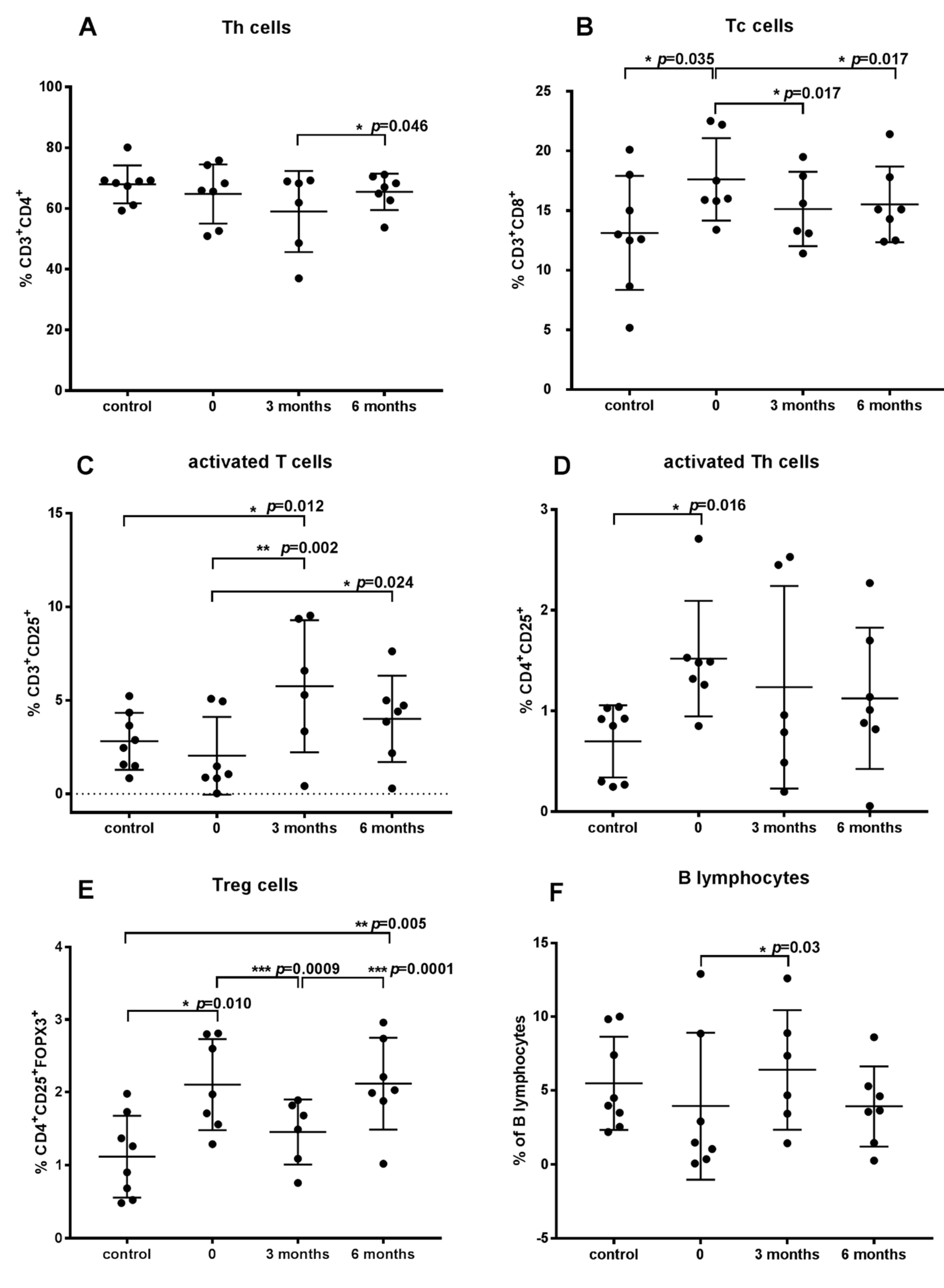
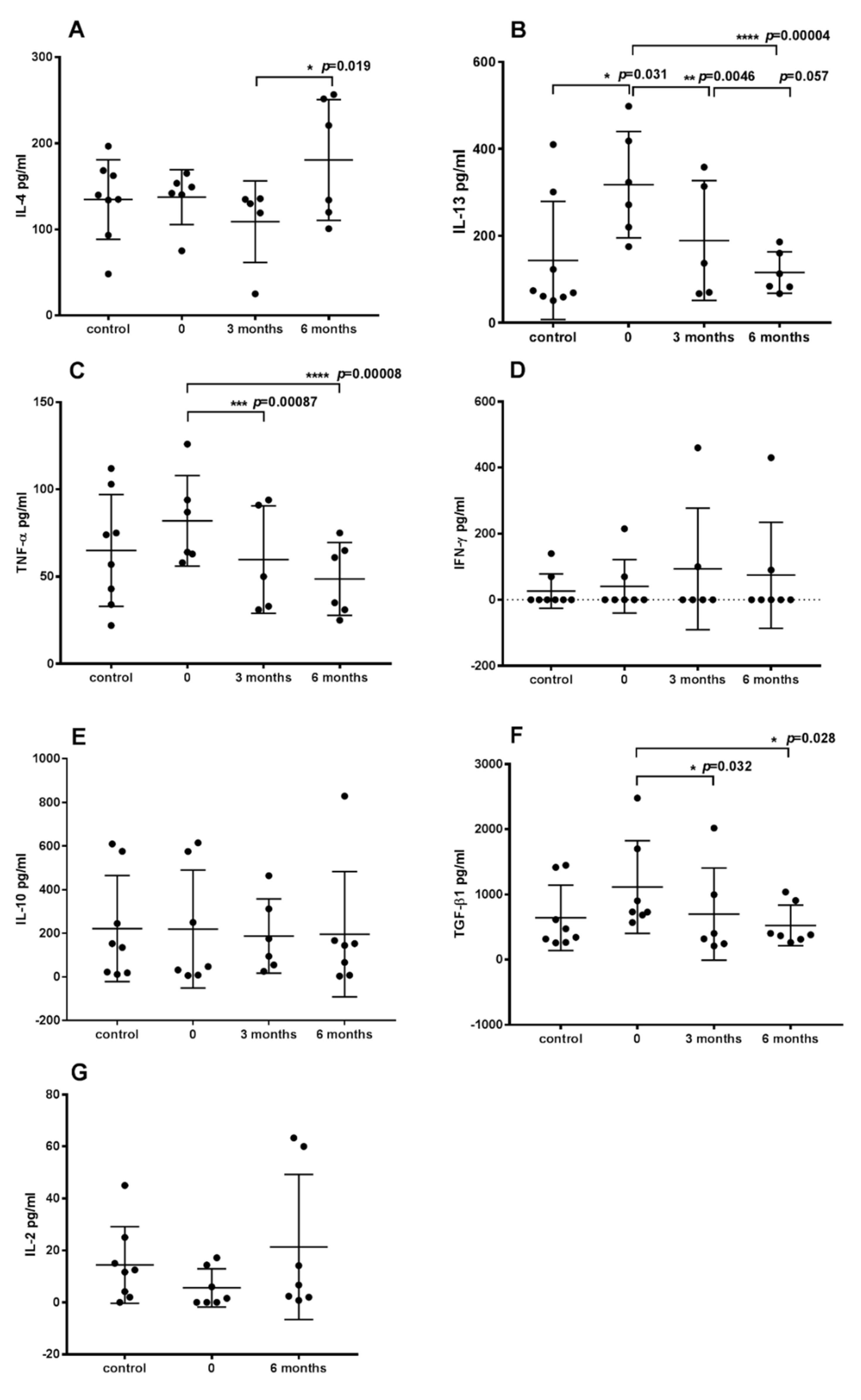
Canine atopic dermatitis (cAD) is a chronic and recurrent inflammatory and pruritic skin disease in dogs. Currently, allergen-specific immunotherapy (ASIT) is the only identified disease-modifying intervention for allergic diseases. It decreases the symptoms triggered by allergens and prevents recurrence of the disease in the long-term. The aim of our research was to determine how immunotherapy changes the proportion of lymphocyte subsets in dog peripheral blood and the levels of cytokines secreted by these cells during therapy. ASIT was applied for 6 months. Blood samples for further analyses were collected from patients in the third and sixth month of immunotherapy. Six out of seven dogs receiving ASIT showed a positive effect. A reduction in cytokine levels (IL-13, TNF-α) in peripheral blood of cAD patients and changes in the number of specific T cell subpopulations—reduction of Tc cells (CD8+) and increase of activated T cells (CD3+CD25+)—confirmed the beneficial effect of the applied ASIT. In addition, a significantly higher percentage of Treg cells (CD4+CD25+FOXP3+) was noted in cAD patients before treatment compared to healthy dogs. After 3 months of therapy, the percentage of Tregs significantly decreased, and after 6 months, it increased significantly again.
Keywords: canine atopic dermatitis; allergen-specific immunotherapy; lymphocytes; T cells; Treg cells; cytokines; PBMC canine atopic dermatitis; allergen-specific immunotherapy; lymphocytes; T cells; Treg cells; cytokines; PBMC