Review

Clinical Application of Antioxidants to Improve Human Oocyte Mitochondrial Function: A Review


by
Cristina Rodríguez-Varela
1,* and
Elena Labarta
1,2
1
IVI Foundation—IIS La Fe, Fernando Abril Martorell 106, Torre A, Planta 1ª, 46026 Valencia, Spain
2
IVIRMA Valencia, Plaza de la Policía Local 3, 46015 Valencia, Spain
*
Author to whom correspondence should be addressed.
Antioxidants 2020, 9(12), 1197; https://doi.org/10.3390/antiox9121197
Submission received: 27 October 2020 / Revised: 24 November 2020 / Accepted: 25 November 2020 / Published: 28 November 2020
(This article belongs to the Special Issue Mitochondria Biology in Reproductive Function)

Abstract

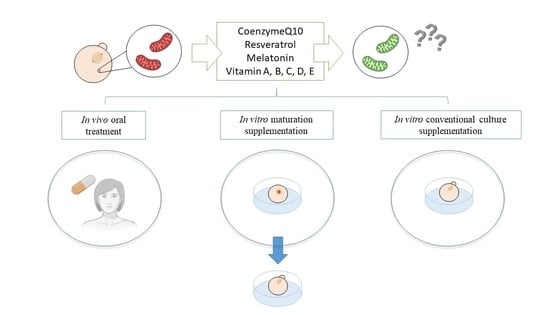
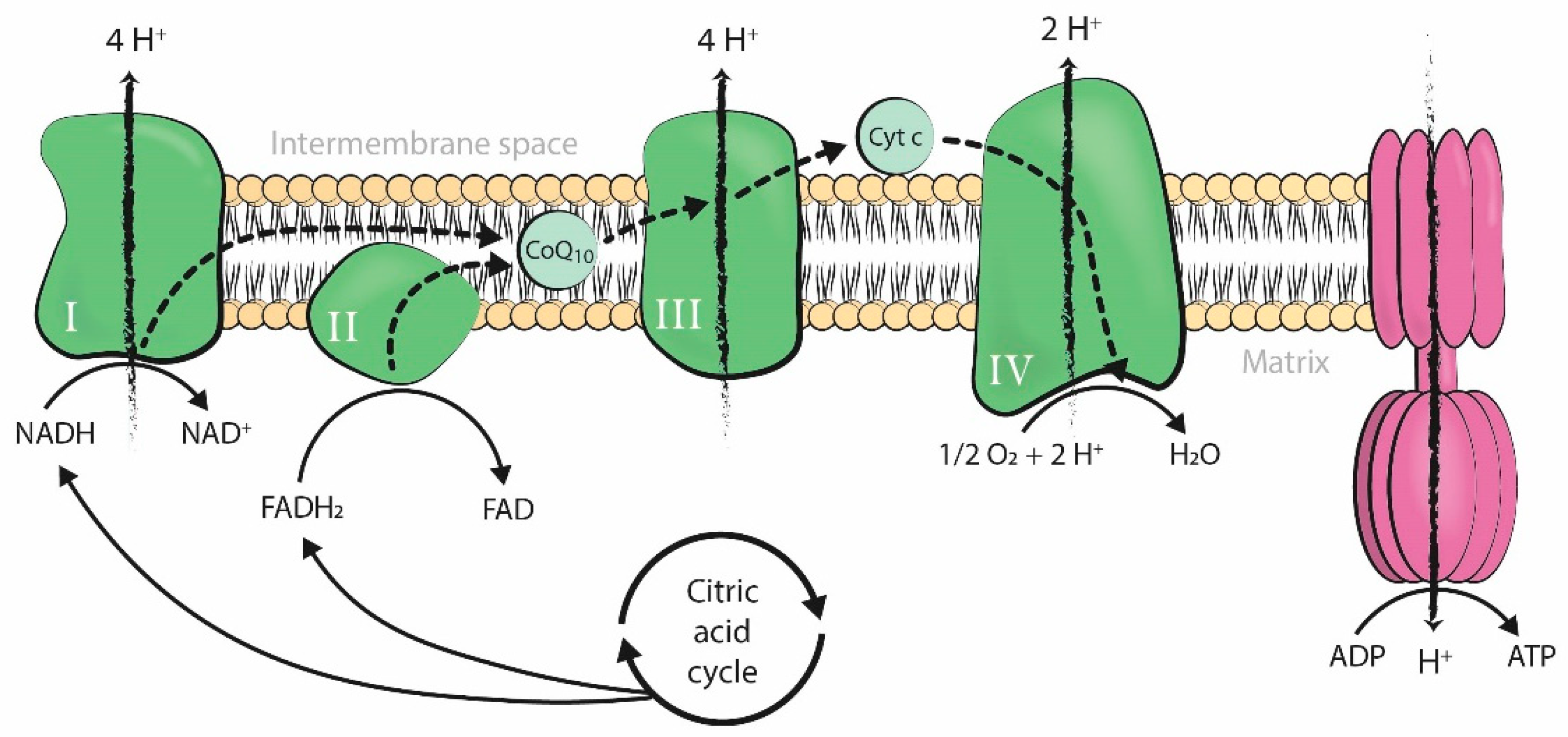
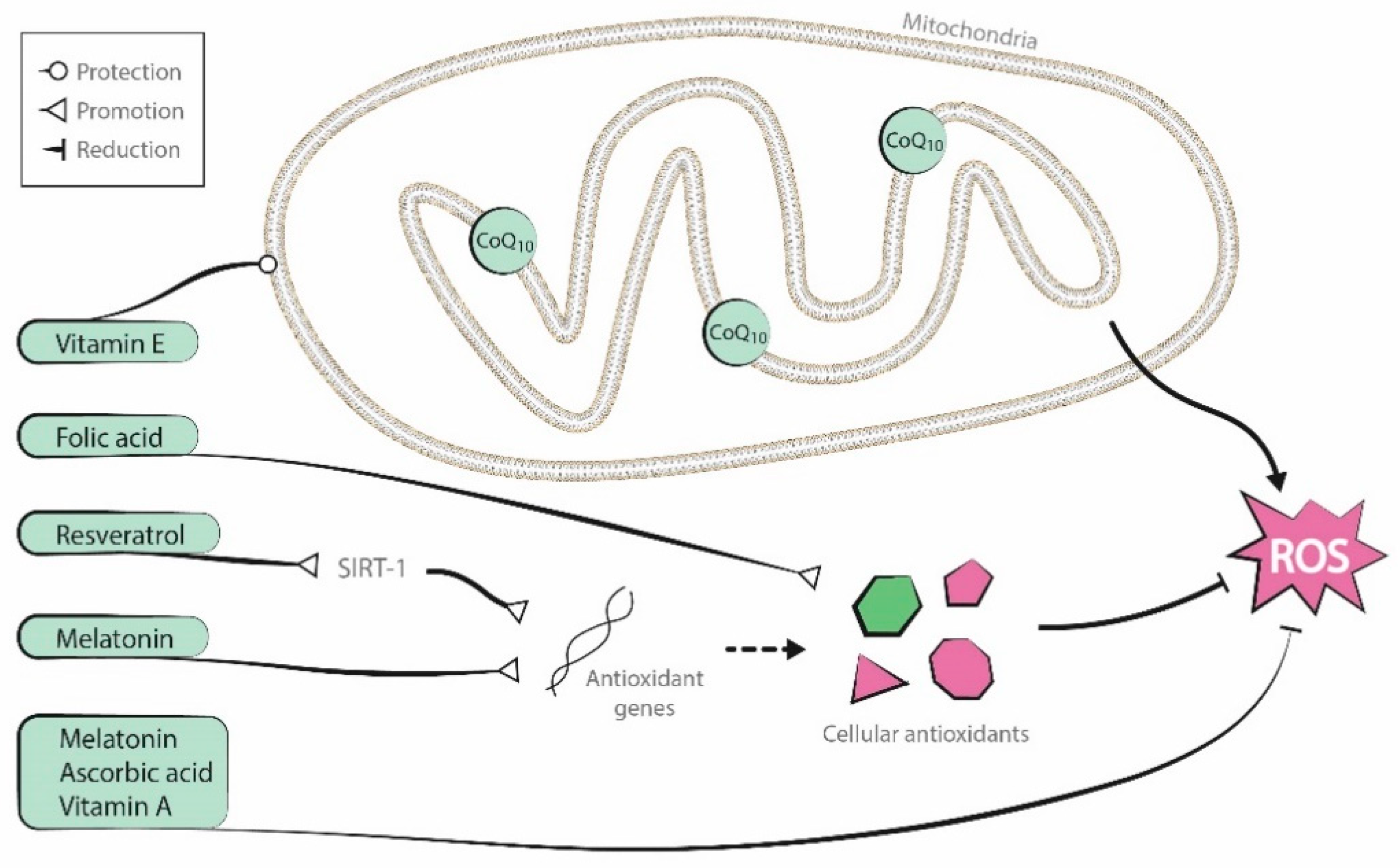
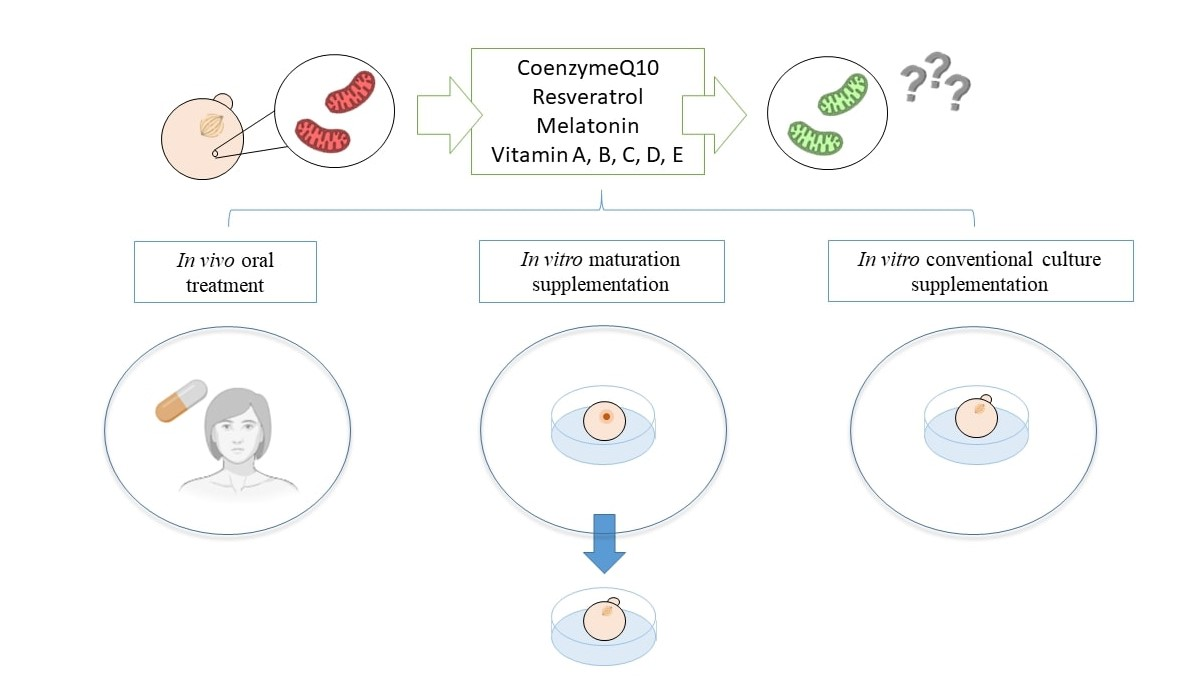
Mitochondria produce adenosine triphosphate (ATP) while also generating high amounts of reactive oxygen species (ROS) derived from oxygen metabolism. ROS are small but highly reactive molecules that can be detrimental if unregulated. While normally functioning mitochondria produce molecules that counteract ROS production, an imbalance between the amount of ROS produced in the mitochondria and the capacity of the cell to counteract them leads to oxidative stress and ultimately to mitochondrial dysfunction. This dysfunction impairs cellular functions through reduced ATP output and/or increased oxidative stress. Mitochondrial dysfunction may also lead to poor oocyte quality and embryo development, ultimately affecting pregnancy outcomes. Improving mitochondrial function through antioxidant supplementation may enhance reproductive performance. Recent studies suggest that antioxidants may treat infertility by restoring mitochondrial function and promoting mitochondrial biogenesis. However, further randomized, controlled trials are needed to determine their clinical efficacy. In this review, we discuss the use of resveratrol, coenzyme-Q10, melatonin, folic acid, and several vitamins as antioxidant treatments to improve human oocyte and embryo quality, focusing on the mitochondria as their main hypothetical target. However, this mechanism of action has not yet been demonstrated in the human oocyte, which highlights the need for further studies in this field.
Keywords: mitochondrial function; antioxidants; oxidative stress; ROS; oocyte quality; embryo quality; oxygen metabolism mitochondrial function; antioxidants; oxidative stress; ROS; oocyte quality; embryo quality; oxygen metabolism
Graphical Abstract