Antioxidant Nanotherapies for Intervertebral Disk Degeneration: Progress and Prospects

Abstract
1. Introduction
2. Literature Search Methodology
2.1. Search Strategy and Data Sources
2.2. Inclusion and Exclusion Criteria
2.3. Screening Strategy
3. IVDD: From Physiology to Pathology
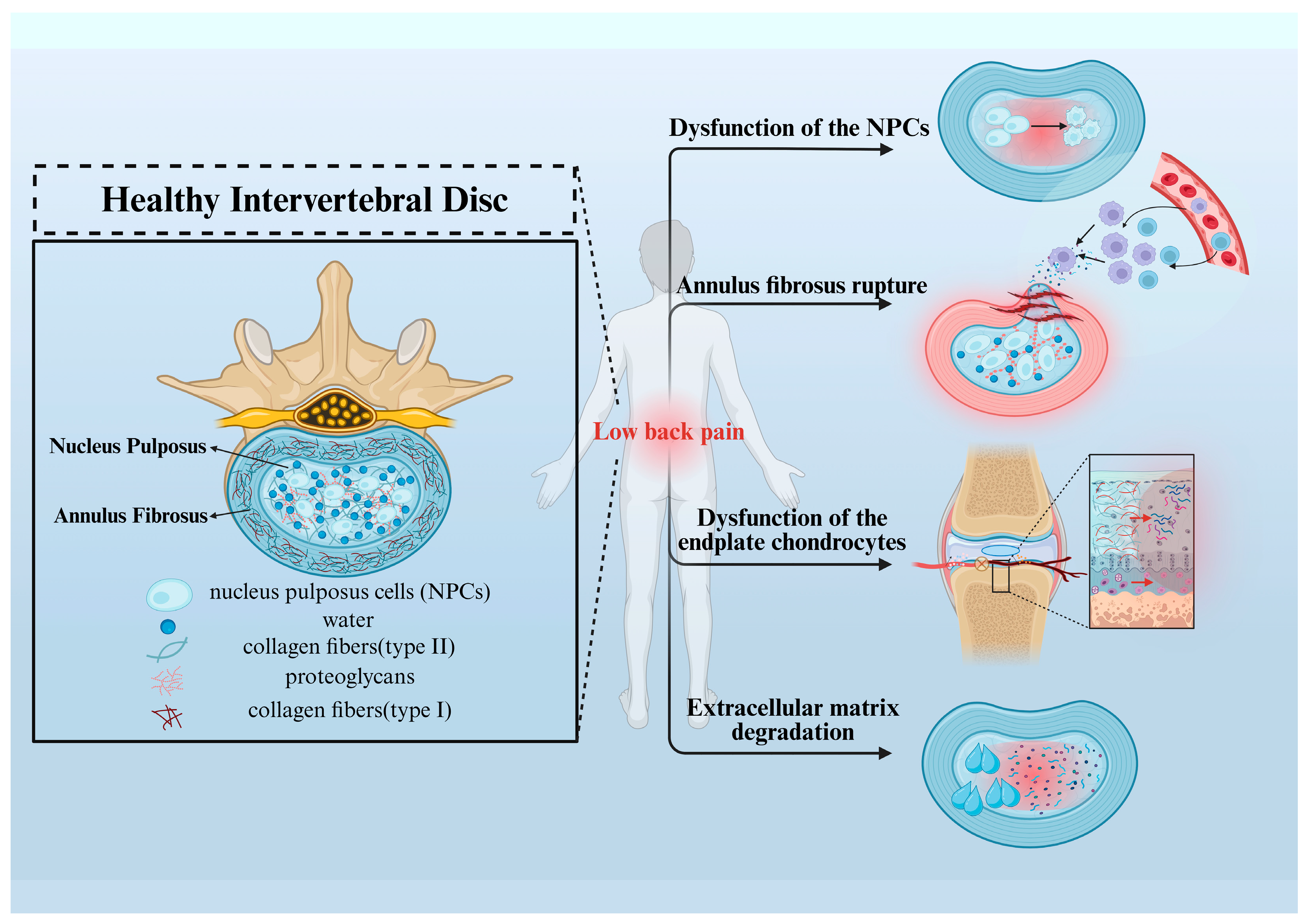
3.1. Normal Structure and Function of the IVD
3.1.1. NP
3.1.2. AF
3.1.3. CEP
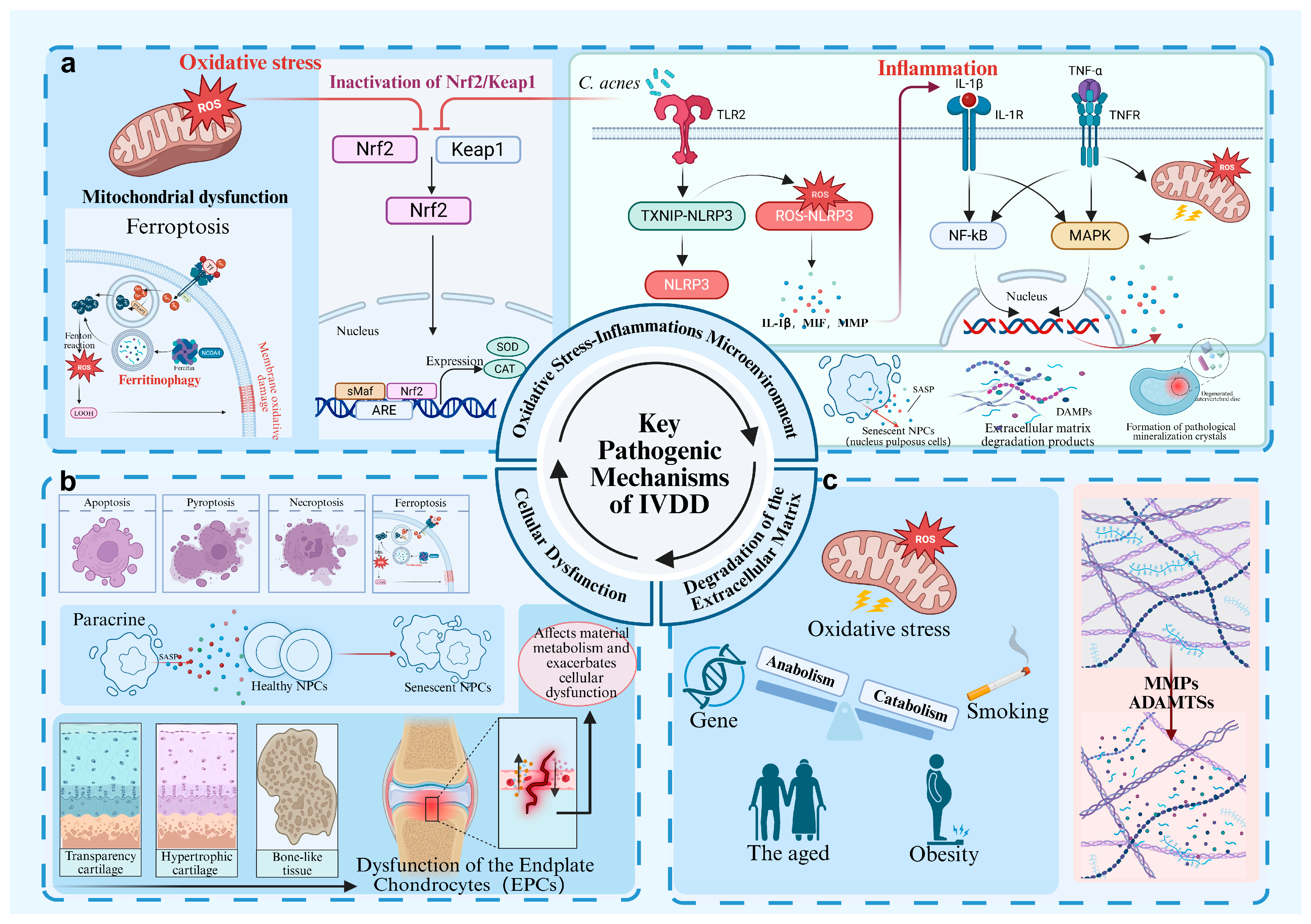
3.2. Key Pathogenic Mechanisms of IVDD
3.2.1. Redox Imbalance and Oxidative Stress: A Major Convergent Hub in IVDD
Mitochondrial Dysfunction: The Cause of Excessive ROS Production
Dysregulation of the Nrf2/Keap1 Signaling Axis and Antioxidant Enzymes
3.2.2. Oxidative Stress and Inflammatory Responses
3.2.3. Oxidative Stress-Mediated Cellular Dysfunction and ECM Degradation
Oxidative Stress-Mediated Cellular Dysfunction
Oxidative Stress-Mediated ECM Degradation
4. Nanotherapeutic Strategies Targeting Redox Homeostasis in the IVD
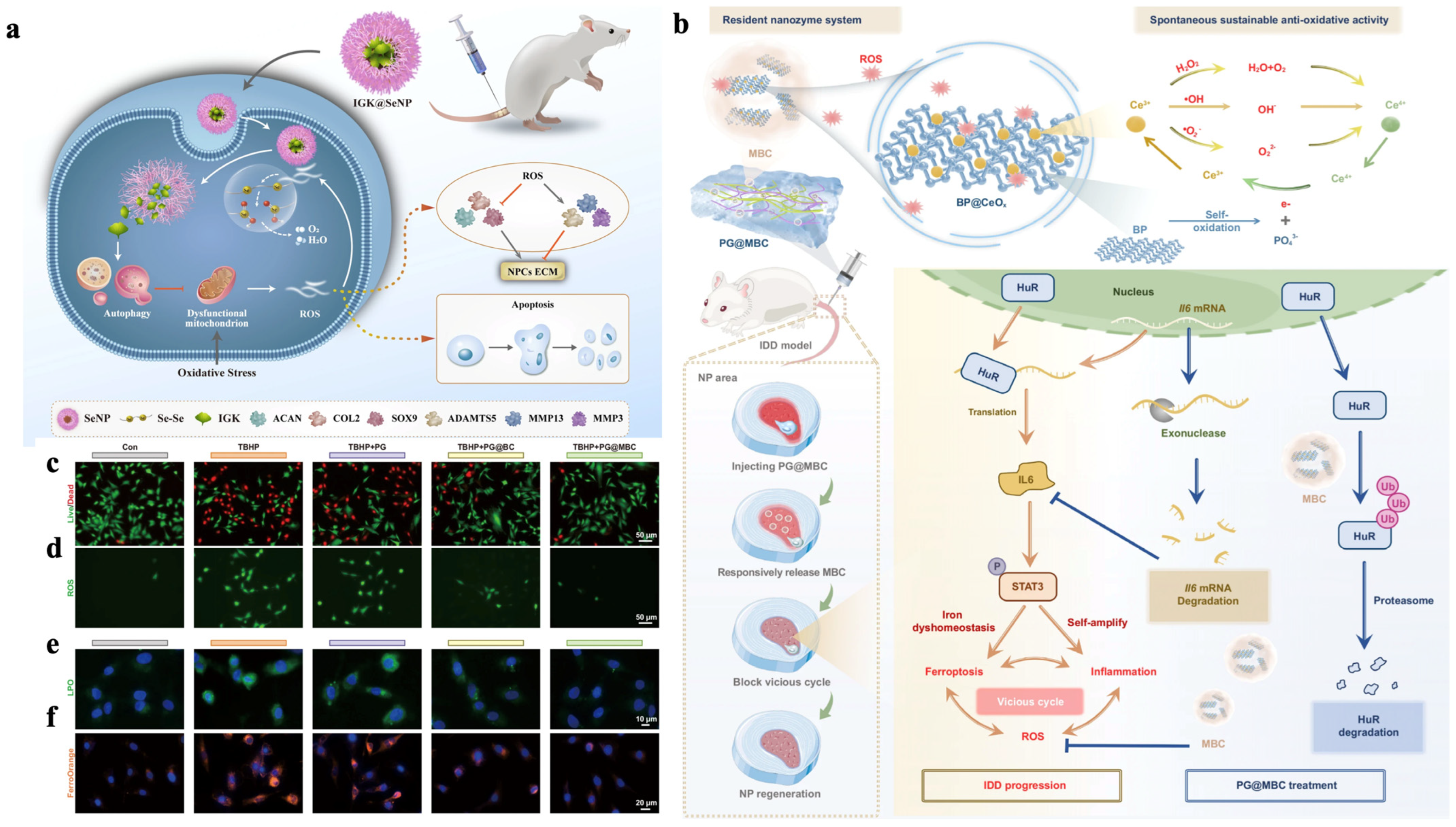
4.1. Inorganic Functional Nanozymes: Direct ROS Scavenging and Redox Regulation
4.2. Bioactive Nanomaterials: Targeted Delivery of Antioxidant Regulators
4.2.1. Bio-Derived Vesicles
4.2.2. Polymeric Carriers
4.3. Stimuli-Responsive Nanosystems: Smart Controlled-Release Systems for Redox Homeostasis Regulation in IVDD
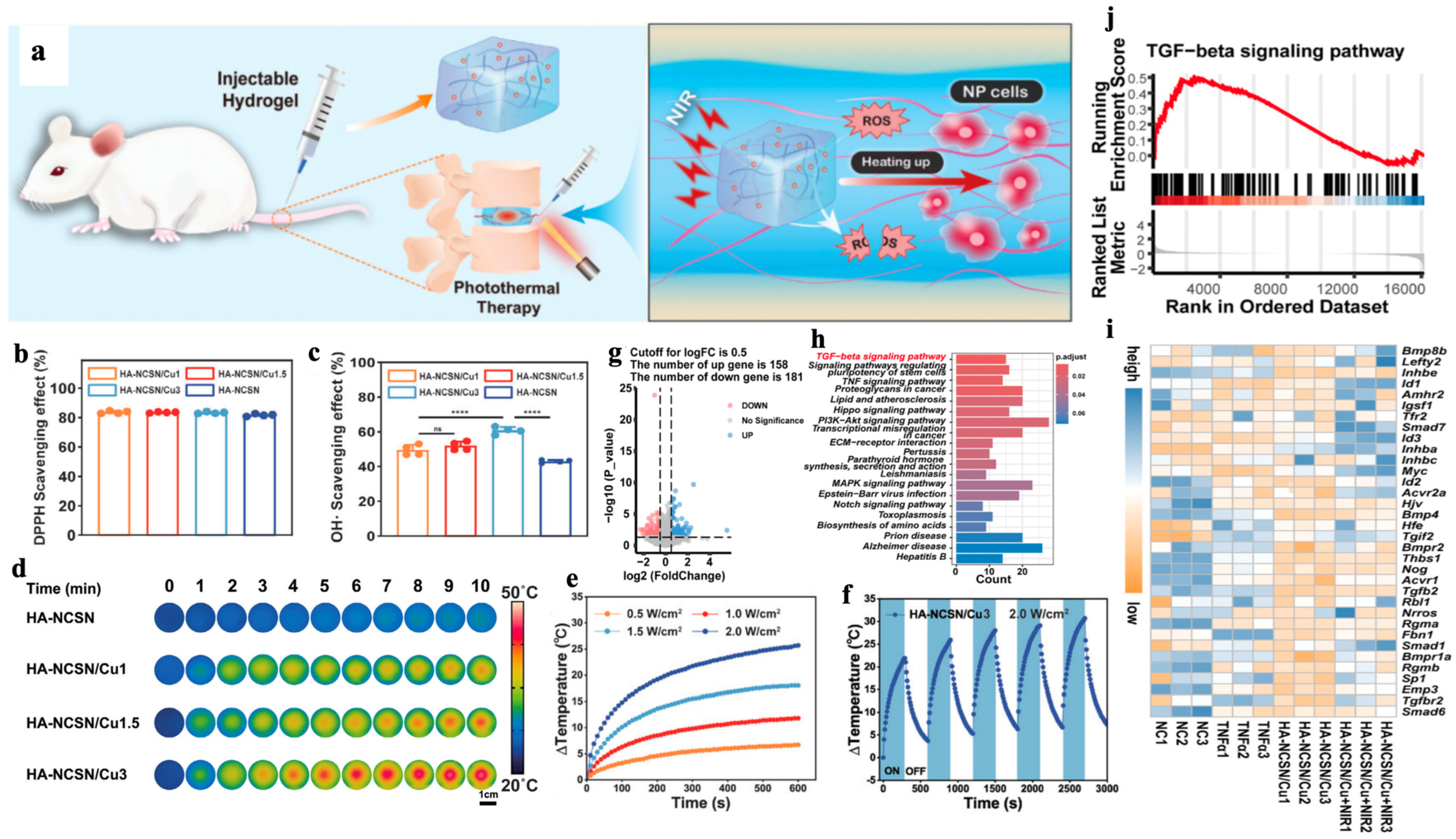
4.4. Nanocomposite Scaffolds: Integrating Antioxidant Function with Biomechanical Restoration
5. Challenges of Nanomaterials in IVDD Treatment
5.1. Process Challenges in Large-Scale Production and Quality Control
5.2. Effectiveness Within the Actual Pathological Environment of IVD Remains Uncertain
5.3. Potential Risks Related to Long-Term Biosafety and Immunogenicity
5.4. Method of Administration Carries a Risk of Exacerbating Disk Damage
5.5. Regulatory Barriers and the Lack of Long-Term Efficacy Monitoring
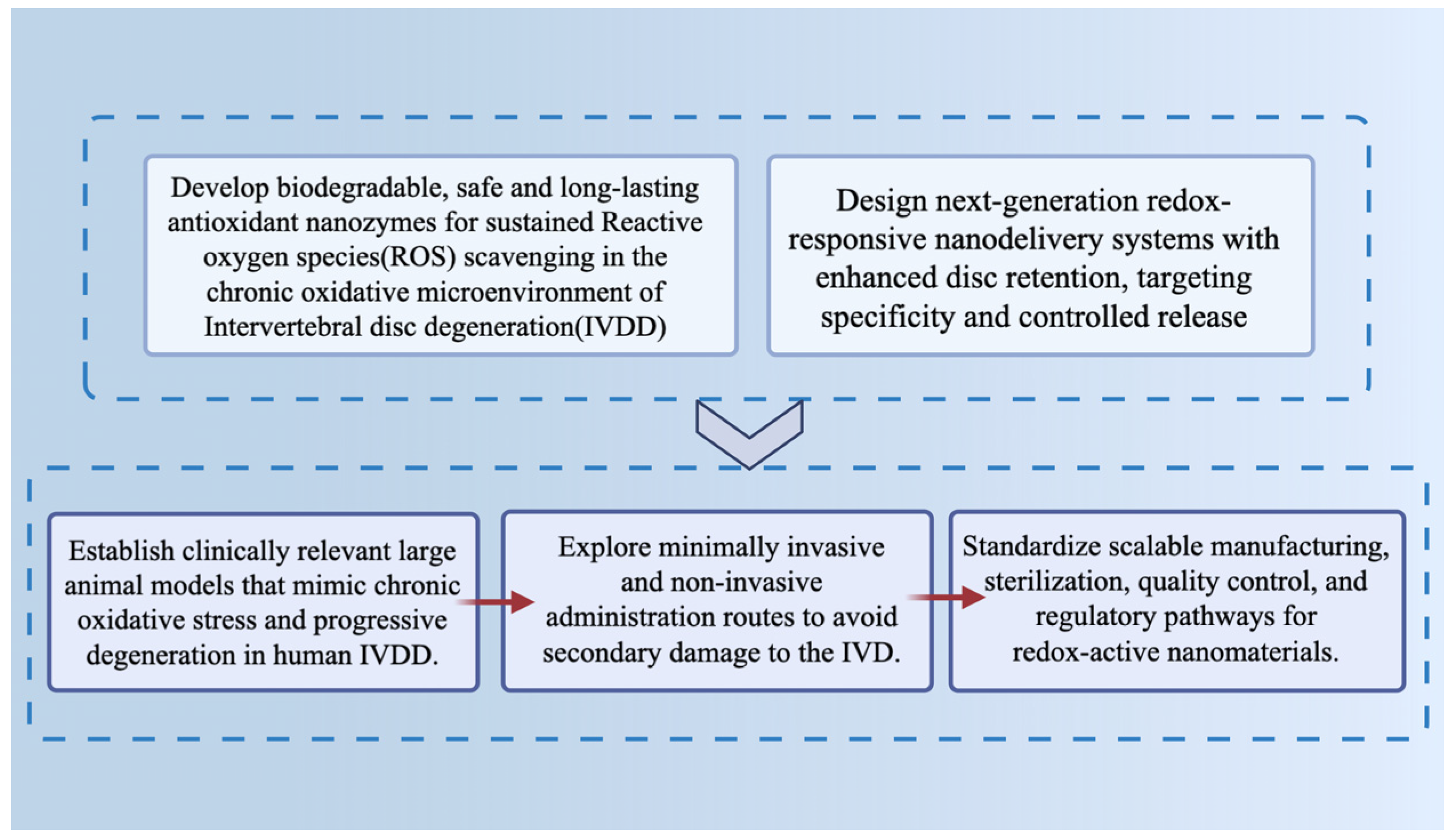
6. Summary and Outlook
Author Contributions
Funding
Institutional Review Board Statement
Informed Consent Statement
Data Availability Statement
Conflicts of Interest
Abbreviations
| ADAMTS | A disintegrin and metalloproteinase with thrombospondin motifs |
| AF | Annulus fibrosus |
| AKG | α-Ketoglutaric acid |
| ARE | Antioxidant response element |
| C. acnes | Cutibacterium acnes |
| CAP | Cartilage-affinity peptide |
| CAT | Catalase |
| CEP | Cartilaginous endplate |
| cGAS | Cyclic GMP-AMP synthase |
| DAMPs | Damage-associated molecular patterns |
| ECM | Extracellular matrix |
| EGCG | Epigallocatechin gallate |
| EPCs | Endplate chondrocytes |
| HA | Hyaluronic acid |
| HIF-2α | Hypoxia-inducible factor-2 alpha |
| IGK | Isoginkgetin |
| IL-1β | Interleukin-1beta |
| IL-6 | Interleukin-6 |
| IVD | Intervertebral disk |
| IVDD | Intervertebral disk degeneration |
| Keap1 | Kelch-like ECH-associated protein 1 |
| LBP | Low back pain |
| Maf | Musculoaponeurotic fibrosarcoma |
| MAPK | Mitogen-activated protein kinase |
| MMPs | Matrix metalloproteinases |
| MSC-derived EXOs | Mesenchymal stem cell-derived exosomes |
| mtROS | Mitochondrial reactive oxygen species |
| NF-κB | Nuclear factor kappa-B |
| NIR | Near-infrared |
| NLRP3 | NLR family pyrin domain containing 3 |
| NP | Nucleus pulposus |
| NPCs | Nucleus pulposus cells |
| Nrf2 | Nuclear factor erythroid 2-related factor 2 |
| OXPHOS | Oxidative phosphorylation |
| PIDE-OPDEA | Poly(idebenone)-poly (2-(N-oxide-N, N-dimethylamino) ethyl methacrylate) |
| PLGA | Poly (lactic-co-glycolic acid) |
| POD | Peroxidase |
| PPAR-γ | Peroxisome proliferator-activated receptor gamma |
| ROS | Reactive oxygen species |
| SASP | Senescence-associated secretory phenotype |
| SOD | Superoxide dismutase |
| STING | Stimulator of interferon genes |
| TCA | Tricarboxylic acid cycle |
| TfR1 | Transferrin receptor 1 |
| TLR | Toll-like receptor |
| TNF-α | Tumor necrosis factor-alpha |
| TXNIP | Thioredoxin-interacting protein |
| UCMSC-Exos | Umbilical cord mesenchymal stem cell-derived exosomes |
| ZIF-8 | Zeolite imidazolate framework-8 |
References
- Zhang, J.; Tian, Y.; Li, Y.; Wang, H.; Yuan, L.; Zeng, Y.; Li, W. Time trends in the burden of low back pain and its associated risk factors in China from 1990 to 2019. J. Orthop. Transl. 2024, 45, 256–265. [Google Scholar] [CrossRef]
- Mohd Isa, I.L.; Teoh, S.L.; Mohd Nor, N.H.; Mokhtar, S.A. Discogenic Low Back Pain: Anatomy, Pathophysiology and Treatments of Intervertebral Disc Degeneration. Int. J. Mol. Sci. 2022, 24, 208. [Google Scholar] [CrossRef]
- Binch, A.L.A.; Fitzgerald, J.C.; Growney, E.A.; Barry, F. Cell-based strategies for IVD repair: Clinical progress and translational obstacles. Nat. Rev. Rheumatol. 2021, 17, 158–175. [Google Scholar] [CrossRef]
- Vergroesen, P.P.; Kingma, I.; Emanuel, K.S.; Hoogendoorn, R.J.; Welting, T.J.; van Royen, B.J.; van Dieën, J.H.; Smit, T.H. Mechanics and biology in intervertebral disc degeneration: A vicious circle. Osteoarthr. Cartil. 2015, 23, 1057–1070. [Google Scholar] [CrossRef]
- Li, Y.; Chen, L.; Gao, Y.; Zou, X.; Wei, F. Oxidative Stress and Intervertebral Disc Degeneration: Pathophysiology, Signaling Pathway, and Therapy. Oxid. Med. Cell Longev. 2022, 2022, 1984742. [Google Scholar] [CrossRef]
- Li, H.; Kelley, J.; Ye, Y.; Ye, Z.W.; Townsend, D.M.; Zhang, J.; Wu, Y. REDOX Imbalance and Oxidative Stress in the Intervertebral Disc: The Effect of Mechanical Stress and Cigarette Smoking on ER Stress and Mitochondrial Dysfunction. Cells 2025, 14, 613. [Google Scholar] [CrossRef]
- Zhang, Y.Y.; Hu, Z.L.; Qi, Y.H.; Li, H.Y.; Chang, X.; Gao, X.X.; Liu, C.H.; Li, Y.Y.; Lou, J.H.; Zhai, Y.; et al. Pretreatment of nucleus pulposus mesenchymal stem cells with appropriate concentration of H(2)O(2) enhances their ability to treat intervertebral disc degeneration. Stem Cell Res. Ther. 2022, 13, 340. [Google Scholar] [CrossRef]
- Ren, Q.; Chen, L.; Ma, Y.; Huang, Y.; Wang, S. Immune microenvironment in intervertebral disc degeneration: Pathophysiology and therapeutic potential. Front. Immunol. 2025, 16, 1563635. [Google Scholar] [CrossRef]
- Francisco, V.; Pino, J.; González-Gay, M.; Lago, F.; Karppinen, J.; Tervonen, O.; Mobasheri, A.; Gualillo, O. A new immunometabolic perspective of intervertebral disc degeneration. Nat. Rev. Rheumatol. 2022, 18, 47–60. [Google Scholar] [CrossRef]
- Wang, Y.; Tan, L.; Yang, Y.; Duan, H.; Liu, C.; Zhao, J.; Zhou, Y.; Li, C.; Liu, M. Targeting the ROS-ferroptosis-inflammation cycle with a nanozyme-functionalized hydrogel for intervertebral disc repair. Nat. Commun. 2025, 16, 11253. [Google Scholar] [CrossRef]
- Liu, W.; Ma, Z.; Wang, Y.; Yang, J. Multiple nano-drug delivery systems for intervertebral disc degeneration: Current status and future perspectives. Bioact. Mater. 2023, 23, 274–299. [Google Scholar] [CrossRef]
- Rannou, F.; Pelletier, J.P.; Martel-Pelletier, J. Efficacy and safety of topical NSAIDs in the management of osteoarthritis: Evidence from real-life setting trials and surveys. Semin. Arthritis Rheum. 2016, 45, S18–S21. [Google Scholar] [CrossRef]
- Colella, F.; Garcia, J.P.; Sorbona, M.; Lolli, A.; Antunes, B.; D’Atri, D.; Barré, F.P.Y.; Oieni, J.; Vainieri, M.L.; Zerrillo, L.; et al. Drug delivery in intervertebral disc degeneration and osteoarthritis: Selecting the optimal platform for the delivery of disease-modifying agents. J. Control. Release 2020, 328, 985–999. [Google Scholar] [CrossRef]
- Lee, Y.C.; Zotti, M.G.; Osti, O.L. Operative Management of Lumbar Degenerative Disc Disease. Asian Spine J. 2016, 10, 801–819. [Google Scholar] [CrossRef]
- Bildik, C.; Kahraman, H.; Saygı, B. Vitamin E-added Highly Cross-Linked Polyethylene Decreases the Risk of Osteolysis in an In Vivo Arthroplasty Model. Cureus 2023, 15, e34955. [Google Scholar] [CrossRef]
- McKinley, K.L.; Longaker, M.T.; Naik, S. Emerging frontiers in regenerative medicine. Science 2023, 380, 796–798. [Google Scholar] [CrossRef]
- Kaneda, G.; Zila, L.; Wechsler, J.T.; Shafi, K.; Cheema, K.; Bae, H.; Kim, S.D.; Tuchman, A.; Li, D.; Sheyn, D. What a pain in the back: Etiology, diagnosis and future treatment directions for discogenic low back pain. Bone Res. 2025, 13, 89. [Google Scholar] [CrossRef]
- Dowdell, J.; Erwin, M.; Choma, T.; Vaccaro, A.; Iatridis, J.; Cho, S.K. Intervertebral Disk Degeneration and Repair. Neurosurgery 2017, 80, S46–S54, Erratum in Neurosurgery 2018, 83, 1084. [Google Scholar] [CrossRef]
- Xia, Q.; Zhao, Y.; Dong, H.; Mao, Q.; Zhu, L.; Xia, J.; Weng, Z.; Liao, W.; Hu, Z.; Yi, J.; et al. Progress in the study of molecular mechanisms of intervertebral disc degeneration. Biomed. Pharmacother. 2024, 174, 116593. [Google Scholar] [CrossRef]
- Peng, X.; Yu, L.; Shi, L.; Dong, H.; Meng, X.; Zhu, B. Polymeric hydrogels and decellularized nucleus pulposus extracellular matrix technology for nucleus pulposus repair and regeneration. Polym. Test. 2023, 117, 107854. [Google Scholar] [CrossRef]
- Molladavoodi, S.; McMorran, J.; Gregory, D. Mechanobiology of annulus fibrosus and nucleus pulposus cells in intervertebral discs. Cell Tissue Res. 2020, 379, 429–444. [Google Scholar] [CrossRef]
- Shi, S.; Kang, X.J.; Zhou, Z.; He, Z.M.; Zheng, S.; He, S.S. Excessive mechanical stress-induced intervertebral disc degeneration is related to Piezo1 overexpression triggering the imbalance of autophagy/apoptosis in human nucleus pulpous. Arthritis Res. Ther. 2022, 24, 119. [Google Scholar] [CrossRef]
- Kirnaz, S.; Capadona, C.; Wong, T.; Goldberg, J.L.; Medary, B.; Sommer, F.; McGrath, L.B., Jr.; Härtl, R. Fundamentals of Intervertebral Disc Degeneration. World Neurosurg. 2022, 157, 264–273. [Google Scholar] [CrossRef]
- Feng, Y.; Egan, B.; Wang, J. Genetic Factors in Intervertebral Disc Degeneration. Genes. Dis. 2016, 3, 178–185. [Google Scholar] [CrossRef] [PubMed]
- Xiang, Q.; Zhao, Y.; Lin, J.; Jiang, S.; Li, W. The Nrf2 antioxidant defense system in intervertebral disc degeneration: Molecular insights. Exp. Mol. Med. 2022, 54, 1067–1075. [Google Scholar] [CrossRef]
- Yao, Q.; Lei, Y.; Zhang, Y.; Chen, H.; Dong, X.; Ye, Z.; Liang, H. EZH2-H3K27me3-Mediated Epigenetic Silencing of DKK1 Induces Nucleus Pulposus Cell Pyroptosis in Intervertebral Disc Degeneration by Activating NLRP3 and NAIP/NLRC4. Inflammation 2025, 48, 902–918. [Google Scholar] [CrossRef]
- Wang, Z.; Hu, X.; Wang, W.; Li, Y.; Cui, P.; Wang, P.; Kong, C.; Chen, X.; Lu, S. Understanding necroptosis and its therapeutic target for intervertebral disc degeneration. Int. Immunopharmacol. 2023, 121, 110400. [Google Scholar] [CrossRef]
- Zhou, H.; Wu, C.; Jin, Y.; Wu, O.; Chen, L.; Guo, Z.; Wang, X.; Chen, Q.; Kwan, K.Y.H.; Li, Y.M.; et al. Role of oxidative stress in mitochondrial dysfunction and their implications in intervertebral disc degeneration: Mechanisms and therapeutic strategies. J. Orthop. Transl. 2024, 49, 181–206. [Google Scholar] [CrossRef]
- Xue, Q.; Li, J.; Qin, R.; Li, M.; Li, Y.; Zhang, J.; Wang, R.; Goltzman, D.; Miao, D.; Yang, R. Nrf2 activation by pyrroloquinoline quinone inhibits natural aging-related intervertebral disk degeneration in mice. Aging Cell 2024, 23, e14202. [Google Scholar] [CrossRef]
- Tang, Z.; Hu, B.; Zang, F.; Wang, J.; Zhang, X.; Chen, H. Nrf2 drives oxidative stress-induced autophagy in nucleus pulposus cells via a Keap1/Nrf2/p62 feedback loop to protect intervertebral disc from degeneration. Cell Death Dis. 2019, 10, 510. [Google Scholar] [CrossRef]
- Kang, L.; Tian, Y.; Guo, X.; Chu, X.; Xue, Y. Long Noncoding RNA ANPODRT Overexpression Protects Nucleus Pulposus Cells from Oxidative Stress and Apoptosis by Activating Keap1-Nrf2 Signaling. Oxid. Med. Cell Longev. 2021, 2021, 6645005. [Google Scholar] [CrossRef]
- Fan, C.; Wang, W.; Yu, Z.; Wang, J.; Xu, W.; Ji, Z.; He, W.; Hua, D.; Wang, W.; Yao, L.; et al. M1 macrophage-derived exosomes promote intervertebral disc degeneration by enhancing nucleus pulposus cell senescence through LCN2/NF-κB signaling axis. J. Nanobiotechnol. 2024, 22, 301. [Google Scholar] [CrossRef]
- Liu, Y.; Dou, Y.; Sun, X.; Yang, Q. Mechanisms and therapeutic strategies for senescence-associated secretory phenotype in the intervertebral disc degeneration microenvironment. J. Orthop. Transl. 2024, 45, 56–65. [Google Scholar] [CrossRef] [PubMed]
- Ye, F.; Lyu, F.J.; Wang, H.; Zheng, Z. The involvement of immune system in intervertebral disc herniation and degeneration. JOR Spine 2022, 5, e1196. [Google Scholar] [CrossRef]
- Yang, W.; Xu, Y.; Tan, Y.; Lin, J.; Chen, H.; Li, S.; Miao, H.; Ye, D. Molecular Mechanisms of Intervertebral Disc Degeneration Induced by Propionibacterium acnes. Biomed. Res. Int. 2025, 2025, 5513856. [Google Scholar] [CrossRef]
- Cao, C.; Chen, S.; Song, Z.; Liu, Z.; Zhang, M.; Ma, Z.; Chen, S.; Ge, Y.; Zheng, J. Inflammatory Stimulation Mediates Nucleus Pulposus Cell Necroptosis Through Mitochondrial Function Disfunction and Oxidative Stress Pathway. Front. Biosci. 2022, 27, 111. [Google Scholar] [CrossRef]
- Liu, Z.; Yao, X.; Sun, B.; Jiang, W.; Liao, C.; Dai, X.; Chen, Y.; Chen, J.; Ding, R. Pretreatment with kaempferol attenuates microglia-mediate neuroinflammation by inhibiting MAPKs-NF-κB signaling pathway and pyroptosis after secondary spinal cord injury. Free Radic. Biol. Med. 2021, 168, 142–154. [Google Scholar] [CrossRef]
- Fine, N.; Lively, S.; Séguin, C.A.; Perruccio, A.V.; Kapoor, M.; Rampersaud, R. Intervertebral disc degeneration and osteoarthritis: A common molecular disease spectrum. Nat. Rev. Rheumatol. 2023, 19, 136–152. [Google Scholar] [CrossRef]
- Ma, W.; Wang, W.; Zhao, L.; Fan, J.; Liu, L.; Huang, L.; Peng, B.; Wang, J.; Xu, B.; Liu, H.; et al. Reprogramming to restore youthful epigenetics of senescent nucleus pulposus cells for mitigating intervertebral disc degeneration and alleviating low back pain. Bone Res. 2025, 13, 35. [Google Scholar] [CrossRef]
- Yang, Y.; Li, H.; Zuo, J.; Lei, F. Mechanistic Interactions Driving Nucleus Pulposus Cell Senescence in Intervertebral Disc Degeneration: A Multi-Axial Perspective of Mechanical, Immune, and Metabolic Pathways. JOR Spine 2025, 8, e70089. [Google Scholar] [CrossRef] [PubMed]
- Wei, P.; Zhang, X.; Yan, C.; Sun, S.; Chen, Z.; Lin, F. Mitochondrial dysfunction and aging: Multidimensional mechanisms and therapeutic strategies. Biogerontology 2025, 26, 142. [Google Scholar] [CrossRef]
- Li, H.; Wang, X.; Pan, H.; Xiao, C.; Wang, C.; Guo, S.; Long, L.; Shi, H.; Chen, H.; Li, S. The mechanisms and functions of IL-1β in intervertebral disc degeneration. Exp. Gerontol. 2023, 177, 112181. [Google Scholar] [CrossRef]
- Chang, H.; Kang, S.; Li, C.; Wu, L.; Liu, H.; Zhang, D.; Chang, Y. The dual effects of iron deficiency on intervertebral disc development and on acute injury-induced disc degeneration. Sci. Rep. 2025, 15, 19323. [Google Scholar] [CrossRef]
- Wang, H.; Liu, X.; Jing, X.; Zhang, B.; Liu, X.; Liu, X.; Jia, F.; Su, C.; Wang, W.; Cui, X. Oxidative stress activates YAP/TEAD1/NCOA4 axis to promote ferroptosis of endplate chondrocytes and aggravate intervertebral disc degeneration. J. Orthop. Transl. 2025, 54, 8–25. [Google Scholar] [CrossRef]
- Jing, X.; Wang, W.; He, X.; Liu, X.; Yang, X.; Su, C.; Shao, Y.; Ge, Z.; Wang, H.; Cui, X. HIF-2α/TFR1 mediated iron homeostasis disruption aggravates cartilage endplate degeneration through ferroptotic damage and mtDNA release: A new mechanism of intervertebral disc degeneration. J. Orthop. Transl. 2024, 46, 65–78. [Google Scholar] [CrossRef]
- Yang, H.; Chen, X.; Chen, J.; Dong, Y.; Huang, Y.; Qin, L.; Tan, J.; Yi, W. The pathogenesis and targeted therapies of intervertebral disc degeneration induced by cartilage endplate inflammation. Front. Cell Dev. Biol. 2024, 12, 1492870. [Google Scholar] [CrossRef]
- Wang, Y.; Zhang, W.; Yang, Y.; Qin, J.; Wang, R.; Wang, S.; Fu, W.; Niu, Q.; Wang, Y.; Li, C.; et al. Osteopontin deficiency promotes cartilaginous endplate degeneration by enhancing the NF-κB signaling to recruit macrophages and activate the NLRP3 inflammasome. Bone Res. 2024, 12, 53. [Google Scholar] [CrossRef]
- Cazzanelli, P.; Wuertz-Kozak, K. MicroRNAs in Intervertebral Disc Degeneration, Apoptosis, Inflammation, and Mechanobiology. Int. J. Mol. Sci. 2020, 21, 3601. [Google Scholar] [CrossRef]
- Kong, C.G.; Park, J.B. Apoptotic Pathway in Intervertebral Disc Degeneration: From Molecular Pathways to Clinical Interventions. Diagnostics 2025, 15, 1510. [Google Scholar] [CrossRef]
- Aripaka, S.S.; Bech-Azeddine, R.; Jørgensen, L.M.; Mikkelsen, J.D. The expression of metalloproteinases in the lumbar disc correlates strongly with Pfirrmann MRI grades in lumbar spinal fusion patients. Brain Spine 2022, 2, 100872. [Google Scholar] [CrossRef]
- Jin, Y.; Wu, O.; Chen, Z.; Chen, L.; Zhang, K.; Chen, Q.; Tian, H.; Wang, X.; Jones, M.; Kwan, K.Y.H.; et al. Exploring extracellular vesicles as novel therapeutic agents for intervertebral disc degeneration: Delivery, applications, and mechanisms. Stem Cell Res. Ther. 2025, 16, 221. [Google Scholar] [CrossRef]
- Song, T.; Chen, H.; Huang, J.; Tian, Y.; Zhang, X.; Chen, H.; Xie, Y.; Chen, L. Engineering Nanomaterials for the Treatment of Intervertebral Disc Degeneration: From Application to Therapeutic Mechanisms. Small 2025, 21, e09806. [Google Scholar] [CrossRef]
- Wu, S.; Shi, Y.; Jiang, L.; Bu, W.; Zhang, K.; Lin, W.; Pan, C.; Xu, Z.; Du, J.; Chen, H.; et al. N-Acetylcysteine-Derived Carbon Dots for Free Radical Scavenging in Intervertebral Disc Degeneration. Adv. Healthc. Mater. 2023, 12, e2300533. [Google Scholar] [CrossRef]
- Shi, S.; Ou, X.; Liu, C.; Li, R.; Zheng, Q.; Hu, L. Nanotechnology-Enhanced Pharmacotherapy for Intervertebral Disc Degeneration Treatment. Int. J. Nanomed. 2024, 19, 14043–14058. [Google Scholar] [CrossRef]
- Chen, Q.; Zheng, Z.; Lin, M.; Guo, Z.; Huang, H.; Xue, Q.; Jiang, S.; Wang, J.; Wu, A. Nanocomposite Hydrogels: A Promising Approach for the Treatment of Degenerative Joint Diseases. Small Sci. 2024, 4, 2400236. [Google Scholar] [CrossRef]
- Kokubun, K.; Matsumura, S.; Yudasaka, M.; Iijima, S.; Shiba, K. Immobilization of a carbon nanomaterial-based localized drug-release system using a bispecific material-binding peptide. Int. J. Nanomed. 2018, 13, 1643–1652. [Google Scholar] [CrossRef]
- Tian, Y.; Sun, D.; Liu, N.; Zhao, J.; Zhao, T.; Liu, X.; Dong, X.; Dong, L.; Wang, W.; Jiao, P.; et al. Biomimetic mesenchymal stem cell membrane-coated nanoparticle delivery of MKP5 inhibits hepatic fibrosis through the IRE/XBP1 pathway. J. Nanobiotechnol. 2024, 22, 741. [Google Scholar] [CrossRef]
- Han, F.; Yu, Q.; Chu, G.; Li, J.; Zhu, Z.; Tu, Z.; Liu, C.; Zhang, W.; Zhao, R.; Mao, H.; et al. Multifunctional Nanofibrous Scaffolds with Angle-Ply Microstructure and Co-Delivery Capacity Promote Partial Repair and Total Replacement of Intervertebral Disc. Adv. Healthc. Mater. 2022, 11, e2200895. [Google Scholar] [CrossRef]
- Wang, S.; Zhai, Y.; Liu, M.; Cheng, Z.; Zhang, J.; Zhang, H.; Wang, H.; Hu, Y.; Li, C.; Luo, Z. A hydrogel-based drug delivery system reduces inflammation and oxidative stress to alleviate intervertebral disc degeneration. Acta Biomater. 2025, 203, 229–244. [Google Scholar] [CrossRef]
- Wang, Z.; Qi, L.; Huang, Y.; Liu, Z.; Wu, R.; Zhao, Y.; Li, H.; Wang, S.; Liu, L.; Zhang, L.; et al. Stem Cell Membrane-Camouflaged Biomimetic Nanoparticles Inhibiting Leptin Pathway for Intervertebral Disc Degeneration Therapy. ACS Appl. Mater. Interfaces 2024, 16, 63333–63344. [Google Scholar] [CrossRef]
- Wang, X.; Liu, Z.; Zou, L.; Shi, Y.; Chen, Y.; Zhang, A.; Liu, X.; Wu, Y.; Gao, M.; Deng, Z.; et al. Size-optimized ceria nanoparticles attenuate intervertebral disc degeneration by rescuing nucleus pulposus cell senescence via reducing oxidative stress and stimulating PI3K/AKT pathway. Mater. Today Bio 2025, 35, 102387. [Google Scholar] [CrossRef]
- Chen, Q.; Qian, Q.; Xu, H.; Zhou, H.; Chen, L.; Shao, N.; Zhang, K.; Chen, T.; Tian, H.; Zhang, Z.; et al. Mitochondrial-Targeted Metal-Phenolic Nanoparticles to Attenuate Intervertebral Disc Degeneration: Alleviating Oxidative Stress and Mitochondrial Dysfunction. ACS Nano 2024, 18, 8885–8905. [Google Scholar] [CrossRef]
- Xu, S.; Chang, L.; Zhao, X.; Hu, Y.; Lin, Y.; Chen, Z.; Ren, X.; Mei, X. Preparation of epigallocatechin gallate decorated Au-Ag nano-heterostructures as NIR-sensitive nano-enzymes for the treatment of osteoarthritis through mitochondrial repair and cartilage protection. Acta Biomater. 2022, 144, 168–182. [Google Scholar] [CrossRef]
- Zhan, J.; Cui, Y.; Zhang, P.; Du, Y.; Hecker, P.; Zhou, S.; Liang, Y.; Zhang, W.; Jin, Z.; Wang, Y.; et al. Cartilage Endplate-Targeted Engineered Exosome Releasing and Acid Neutralizing Hydrogel Reverses Intervertebral Disc Degeneration. Adv. Healthc. Mater. 2025, 14, e2403315. [Google Scholar] [CrossRef]
- Zhou, H.; Liang, C.; Cheng, F.; Wang, K.; Zhang, Y.; Chen, J.; Xu, H.; Yu, C.; Xia, K.; Li, Y.; et al. Mitochondria-Targeting Polymeric Micelles for Intervertebral Disc Degeneration Alleviation via Coordinated Cascade Energetic Intervention. ACS Nano 2025, 19, 41121–41135. [Google Scholar] [CrossRef]
- Yu, H.; Teng, Y.; Ge, J.; Yang, M.; Xie, H.; Wu, T.; Yan, Q.; Jia, M.; Zhu, Q.; Shen, Y.; et al. Isoginkgetin-loaded reactive oxygen species scavenging nanoparticles ameliorate intervertebral disc degeneration via enhancing autophagy in nucleus pulposus cells. J. Nanobiotechnol. 2023, 21, 99. [Google Scholar] [CrossRef]
- Yang, C.; Song, S.; Zhou, X.; Li, D.; Xu, C.; Yu, C.; Sun, G.; Lin, K.; Xie, Y. Controlled releasing melatonin nanoparticles promote restoration of nucleus pulposus cell homeostasis for alleviating intervertebral disc degeneration. Mater. Today Bio 2025, 33, 101994. [Google Scholar] [CrossRef]
- Bu, P.; Peng, R.; Zhang, J.; He, Z.; Gou, S.; Liu, X.; Qiu, X.; Zhou, B.; Meng, W.; Fu, H.; et al. A One-Stone-Two-Birds Strategy for Intervertebral Disc Repair: Constructing a Reductive Chelation Hydrogel to Mitigate Oxidative Stress and Promote Disc Matrix Reconstruction. Adv. Mater. 2025, 37, e2411290. [Google Scholar] [CrossRef]
- Zhou, T.; Yang, X.; Chen, Z.; Yang, Y.; Wang, X.; Cao, X.; Chen, C.; Han, C.; Tian, H.; Qin, A.; et al. Prussian Blue Nanoparticles Stabilize SOD1 from Ubiquitination-Proteasome Degradation to Rescue Intervertebral Disc Degeneration. Adv. Sci. 2022, 9, e2105466. [Google Scholar] [CrossRef]
- Zhang, A.; Gao, H.; Chen, X.; Shi, P.; Cheng, Z.; Chen, Y.; Wu, W.; Wu, W.; Yang, C.; Zhang, Y. Tailorable bimetallic nanozyme mitigates intervertebral disc degeneration by inhibiting oxidative stress and inflammageing. Theranostics 2025, 15, 6957–6982. [Google Scholar] [CrossRef]
- Wang, S.; Yao, Z.; Zhang, X.; Li, J.; Huang, C.; Ouyang, Y.; Qian, Y.; Fan, C. Energy-Supporting Enzyme-Mimic Nanoscaffold Facilitates Tendon Regeneration Based on a Mitochondrial Protection and Microenvironment Remodeling Strategy. Adv. Sci. 2022, 9, e2202542. [Google Scholar] [CrossRef]
- Liu, Q.; Zhang, A.; Wang, R.; Zhang, Q.; Cui, D. A Review on Metal- and Metal Oxide-Based Nanozymes: Properties, Mechanisms, and Applications. Nano-Micro Lett. 2021, 13, 154. [Google Scholar] [CrossRef]
- Chen, X.; Liu, S.; Wang, H.; Liu, Y.; Xiao, Y.; Li, K.; Ni, F.; Wu, W.; Lin, H.; Qing, X.; et al. Extracellular vesicles deliver thioredoxin to rescue stem cells from senescence and intervertebral disc degeneration via a feed-forward circuit of the NRF2/AP-1 composite pathway. Acta Pharm. Sin. B 2025, 15, 1007–1022. [Google Scholar] [CrossRef]
- Wang, W.; Cheng, Z.; Yu, M.; Liu, K.; Duan, H.; Zhang, Y.; Huang, X.; Li, M.; Li, C.; Hu, Y.; et al. Injectable ECM-mimetic dynamic hydrogels abolish ferroptosis-induced post-discectomy herniation through delivering nucleus pulposus progenitor cell-derived exosomes. Nat. Commun. 2025, 16, 3131. [Google Scholar] [CrossRef]
- Mai, Y.; Wu, S.; Zhang, P.; Chen, N.; Wu, J.; Wei, F. The anti-oxidation related bioactive materials for intervertebral disc degeneration regeneration and repair. Bioact. Mater. 2025, 45, 19–40. [Google Scholar] [CrossRef]
- DiStefano, T.J.; Vaso, K.; Danias, G.; Chionuma, H.N.; Weiser, J.R.; Iatridis, J.C. Extracellular Vesicles as an Emerging Treatment Option for Intervertebral Disc Degeneration: Therapeutic Potential, Translational Pathways, and Regulatory Considerations. Adv. Healthc. Mater. 2022, 11, e2100596. [Google Scholar] [CrossRef]
- Li, W.; Zhang, S.; Wang, D.; Zhang, H.; Shi, Q.; Zhang, Y.; Wang, M.; Ding, Z.; Xu, S.; Gao, B.; et al. Exosomes Immunity Strategy: A Novel Approach for Ameliorating Intervertebral Disc Degeneration. Front. Cell Dev. Biol. 2021, 9, 822149. [Google Scholar] [CrossRef]
- Xing, H.; Zhang, Z.; Mao, Q.; Wang, C.; Zhou, Y.; Zhou, X.; Ying, L.; Xu, H.; Hu, S.; Zhang, N. Injectable exosome-functionalized extracellular matrix hydrogel for metabolism balance and pyroptosis regulation in intervertebral disc degeneration. J. Nanobiotechnol. 2021, 19, 264. [Google Scholar] [CrossRef]
- Jia, S.; Yang, T.; Gao, S.; Bai, L.; Zhu, Z.; Zhao, S.; Wang, Y.; Liang, X.; Li, Y.; Gao, L.; et al. Exosomes from umbilical cord mesenchymal stem cells ameliorate intervertebral disc degeneration via repairing mitochondrial dysfunction. J. Orthop. Transl. 2024, 46, 103–115. [Google Scholar] [CrossRef]
- Chen, C.; Wang, X.; Zhao, Y.; Duan, X.; Hu, Y.; Lv, Z.; He, Q.; Yangyang, Z.; Wu, G.; Luo, H.; et al. Exosomes inhibit ferroptosis to alleviate intervertebral disc degeneration via the p62-KEAP1-NRF2 pathway. Free Radic. Biol. Med. 2025, 232, 171–184. [Google Scholar] [CrossRef]
- Xia, C.; Zeng, Z.; Fang, B.; Tao, M.; Gu, C.; Zheng, L.; Wang, Y.; Shi, Y.; Fang, C.; Mei, S.; et al. Mesenchymal stem cell-derived exosomes ameliorate intervertebral disc degeneration via anti-oxidant and anti-inflammatory effects. Free Radic. Biol. Med. 2019, 143, 1–15. [Google Scholar] [CrossRef]
- Chen, J.; Gan, X.; Su, S.; Jiao, S.; Gong, Z.; Liu, Z.; Wu, X.; Jiang, J.; Zhang, J.; Wan, J. Conditional sequential delivery of ginkgetin and rapamycin orchestrates inflammation and autophagy to alleviate intervertebral disc degeneration. J. Control Release 2025, 381, 113556. [Google Scholar] [CrossRef]
- Zhang, W.; Yin, H.; Wang, C.; Ma, X.; Miao, D.; Li, G.; Chen, W.; Hou, Z.; Gao, X.; Zhang, Y.; et al. Controlled release of hypoxic exosomes from PLGA microspheres attenuates IVDD progression through activating PPAR-γ and suppressing oxidative stress-mediated NPCs senescence. Biomed. Pharmacother. 2026, 195, 118940. [Google Scholar] [CrossRef]
- Lee, J.H.; Yeo, Y. Controlled Drug Release from Pharmaceutical Nanocarriers. Chem. Eng. Sci. 2015, 125, 75–84. [Google Scholar] [CrossRef]
- Hu, J.; Zhu, Y.; Li, X.; Pang, Z.; Li, X.; Zhang, H.; Wang, Y.; Li, P.; Zhou, Q. AQP3-liposome@GelMA promotes overloaded-induced degenerated disc regeneration via IBSP/ITG αVβ3/AKT pathway. Int. J. Biol. Macromol. 2025, 292, 139238. [Google Scholar] [CrossRef]
- Khalifeh, M.; Oude Egberink, R.; Roverts, R.; Brock, R. Incorporation of ionizable lipids into the outer shell of lipid-coated calcium phosphate nanoparticles boosts cellular mRNA delivery. Int. J. Pharm. 2025, 670, 125109. [Google Scholar] [CrossRef]
- Tang, J.; Luo, Y.; Wang, Q.; Wu, J.; Wei, Y. Stimuli-Responsive Delivery Systems for Intervertebral Disc Degeneration. Int. J. Nanomed. 2024, 19, 4735–4757. [Google Scholar] [CrossRef]
- Han, S.; Cruz, S.H.; Park, S.; Shin, S.R. Nano-biomaterials and advanced fabrication techniques for engineering skeletal muscle tissue constructs in regenerative medicine. Nano Converg. 2023, 10, 48. [Google Scholar] [CrossRef]
- Feng, G.; Zhang, Z.; Dang, M.; Rambhia, K.J.; Ma, P.X. Nanofibrous spongy microspheres to deliver rabbit mesenchymal stem cells and anti-miR-199a to regenerate nucleus pulposus and prevent calcification. Biomaterials 2020, 256, 120213. [Google Scholar] [CrossRef]
- Yu, J.; Wu, G.; Liu, Z.; Deng, K.; Sun, Q.; He, Y.; Li, S.; Huang, X.; Huang, K.; Tang, B. Strontium alginate hydrogel containing psoralen has superior mechanical properties and immunomodulatory functions to alleviate intervertebral disc degeneration. Int. J. Biol. Macromol. 2025, 309, 142706. [Google Scholar] [CrossRef]
- Rafieian, S.; Mirzadeh, H.; Mahdavi, H.; Masoumi, M.E. A review on nanocomposite hydrogels and their biomedical applications. Sci. Eng. Compos. Mater. 2019, 26, 154–174. [Google Scholar] [CrossRef]
- Chen, Q.; Jin, Y.; Chen, T.; Zhou, H.; Wang, X.; Wu, O.; Chen, L.; Zhang, Z.; Guo, Z.; Sun, J.; et al. Injectable nanocomposite hydrogels with enhanced lubrication and antioxidant properties for the treatment of osteoarthritis. Mater. Today Bio 2024, 25, 100993. [Google Scholar] [CrossRef]
- Guo, X.; Liu, H.; Nail, A.; Meng, D.; Zhu, L.; Li, C.; Li, H. Design and Application of Stimuli-Responsive Nanocomposite Hydrogels: A Review. Macromol. Rapid Commun. 2025, 46, e2401095. [Google Scholar] [CrossRef]
- Lin, Z.; Mai, L.; Luo, H.; Wang, Z.; Lin, Y.; Wang, H.; Chen, S.; Su, G.; Hu, X.; Chen, B.; et al. Smart responsive injectable hydrogel loaded with icariin inhibits ferroptosis and promotes nucleus pulposus repair in intervertebral disc degeneration. Biomater. Adv. 2026, 179, 214513. [Google Scholar] [CrossRef]
- Zhou, L.; Cai, F.; Zhu, H.; Xu, Y.; Tang, J.; Wang, W.; Li, Z.; Wu, J.; Ding, Z.; Xi, K.; et al. Immune-defensive microspheres promote regeneration of the nucleus pulposus by targeted entrapment of the inflammatory cascade during intervertebral disc degeneration. Bioact. Mater. 2024, 37, 132–152. [Google Scholar] [CrossRef]
- Shi, J.; Kantoff, P.W.; Wooster, R.; Farokhzad, O.C. Cancer nanomedicine: Progress, challenges and opportunities. Nat. Rev. Cancer 2017, 17, 20–37. [Google Scholar] [CrossRef]
- Liu, A.; Yang, G.; Liu, Y.; Liu, T. Research progress in membrane fusion-based hybrid exosomes for drug delivery systems. Front. Bioeng. Biotechnol. 2022, 10, 939441. [Google Scholar] [CrossRef]
- Wen, S.; Huang, X.; Ma, J.; Zhao, G.; Ma, T.; Chen, K.; Huang, G.; Chen, J.; Shi, J.; Wang, S. Exosomes derived from MSC as drug system in osteoarthritis therapy. Front. Bioeng. Biotechnol. 2024, 12, 1331218. [Google Scholar] [CrossRef]
- Bernal-Chávez, S.A.; Del Prado-Audelo, M.L.; Caballero-Florán, I.H.; Giraldo-Gomez, D.M.; Figueroa-Gonzalez, G.; Reyes-Hernandez, O.D.; González-Del Carmen, M.; González-Torres, M.; Cortés, H.; Leyva-Gómez, G. Insights into Terminal Sterilization Processes of Nanoparticles for Biomedical Applications. Molecules 2021, 26, 2068. [Google Scholar] [CrossRef]
- Li, H.; Yan, Y.; Lin, M.; Wang, S.; Su, Y.; Guo, J.; Lu, Y.; Chen, X.; Zheng, D. Stability Challenges and Engineering Strategies of Plant-Derived Extracellular Vesicle-Like Particles: A Translational Perspective. Int. J. Nanomed. 2026, 21, 543674. [Google Scholar] [CrossRef]
- Lyu, F.J.; Cui, H.; Pan, H.; Mc Cheung, K.; Cao, X.; Iatridis, J.C.; Zheng, Z. Painful intervertebral disc degeneration and inflammation: From laboratory evidence to clinical interventions. Bone Res. 2021, 9, 7. [Google Scholar] [CrossRef]
- Yao, T.; Gao, J.; You, C.; Xu, Y.; Qiao, D.; Shen, S.; Ma, J. A new animal model of lumbar disc degeneration in rabbits. Spine J. 2024, 24, 1519–1526. [Google Scholar] [CrossRef]
- Ding, X.; Li, D.; Jiang, J. Gold-based Inorganic Nanohybrids for Nanomedicine Applications. Theranostics 2020, 10, 8061–8079. [Google Scholar] [CrossRef]
- Han, C.; Dong, X.; Zhang, W.; Huang, X.; Gong, L.; Su, C. Intelligent Systems for Inorganic Nanomaterial Synthesis. Nanomaterials 2025, 15, 631. [Google Scholar] [CrossRef]
- Li, F.; Hu, J. Direct lineage conversion with pluripotency factors: A risky detour through transient pluripotency? Genes. Dis. 2015, 2, 286–287. [Google Scholar] [CrossRef][Green Version]
- Chen, W.; Li, D.; Chen, L.; Fei, J.; Bian, M.; Zeng, Q.; Jiang, Z.; Wu, J. RTA 408 attenuates TBHP-Induced apoptosis in nucleus pulposus cells via Nrf2/ARE and NF-κB signaling pathways: In vitro and in vivo evidence for mitigating rats’ intervertebral disc degeneration. Arthritis Res. Ther. 2025, 27, 128. [Google Scholar] [CrossRef]
- Xu, H.; Zhang, Y.; Zhang, Y.; Yu, C.; Xia, K.; Cheng, F.; Shi, K.; Huang, X.; Li, Y.; Chen, J.; et al. A novel rat model of annulus fibrosus injury for intervertebral disc degeneration. Spine J. 2024, 24, 373–386. [Google Scholar] [CrossRef]
- Panebianco, C.J.; Rao, S.; Hom, W.W.; Meyers, J.H.; Lim, T.Y.; Laudier, D.M.; Hecht, A.C.; Weir, M.D.; Weiser, J.R.; Iatridis, J.C. Genipin-crosslinked fibrin seeded with oxidized alginate microbeads as a novel composite biomaterial strategy for intervertebral disc cell therapy. Biomaterials 2022, 287, 121641. [Google Scholar] [CrossRef]
- Wang, Y.; Zhang, Y.; Chen, K.; Shao, F.; Wu, Y.; Guo, C.; Wu, H.; Zhang, D.; Li, W.; Kong, Q.; et al. Injectable nanostructured colloidal gels resembling native nucleus pulposus as carriers of mesenchymal stem cells for the repair of degenerated intervertebral discs. Mater. Sci. Eng. C 2021, 128, 112343. [Google Scholar] [CrossRef]
- Buschmann, D.; Mussack, V.; Byrd, J.B. Separation, characterization, and standardization of extracellular vesicles for drug delivery applications. Adv. Drug Deliv. Rev. 2021, 174, 348–368. [Google Scholar] [CrossRef]
- Du, S.; Guan, Y.; Xie, A.; Yan, Z.; Gao, S.; Li, W.; Rao, L.; Chen, X.; Chen, T. Extracellular vesicles: A rising star for therapeutics and drug delivery. J. Nanobiotechnol. 2023, 21, 231. [Google Scholar] [CrossRef]



| Study | Formulation | Experimental Model and Target | Administration Method | Experiment Duration | Main Outcomes | Key Translational Limitations |
|---|---|---|---|---|---|---|
| 4 nm-PEG600-CeNPs [61] | Metal oxide nanomaterial |
| In situ injection (IS) | 8 w | Modulated ROS accumulation triggered NP cell senescence. | High cytotoxicity and inadequate tissue retention. |
| PGA-Mn-TP04 [62] | Mitochondria-targeted nanozyme |
| IS | 8 w | Scavenged mtROS and restored mitochondrial function to alleviate oxidative stress in NPCs. | Unknown long-term metabolism and potential chronic accumulation of manganese ions in the avascular disk. |
| E@Au-Ag NPs + EGCG [63] | Multi-metallic heterostructure inorganic nanozyme |
| IS | 8 w | Scavenged ROS and protected chondrocyte mitochondria. |
|
| CAP-sEXOs@Gel [64] | Engineered exosomes |
| IS | 8 w |
|
|
| AKG@PIDE-OPDEA [65] | Polymer micelles |
| IS | 12 w |
|
|
| IGK@SeNP [66] | ROS-responsive nanosystem |
| IS | 8 w | Synergistically eliminated ROS and enhanced autophagy to protect NPCs. | Lack of in vivo hemocompatibility and long-term systemic toxicity evaluations. |
| MT@ZIF-8 [67] | pH-responsive nanosystem |
| IS | 4 w | Scavenged ROS and suppressed inflammation to protect NPCs. |
|
| HA-NCSN/Cu hydrogel [68] | Nanocomposite hydrogel |
| IS | 8 w | Scavenged ROS and suppressed inflammation to protect NPCs by regulating glutathione metabolism. |
|
Disclaimer/Publisher’s Note: The statements, opinions and data contained in all publications are solely those of the individual author(s) and contributor(s) and not of MDPI and/or the editor(s). MDPI and/or the editor(s) disclaim responsibility for any injury to people or property resulting from any ideas, methods, instructions or products referred to in the content. |
© 2026 by the authors. Licensee MDPI, Basel, Switzerland. This article is an open access article distributed under the terms and conditions of the Creative Commons Attribution (CC BY) license.
Share and Cite
Zhou, Y.; Fan, Y.; Hu, Y.; Wang, H. Antioxidant Nanotherapies for Intervertebral Disk Degeneration: Progress and Prospects. Antioxidants 2026, 15, 745. https://doi.org/10.3390/antiox15060745
Zhou Y, Fan Y, Hu Y, Wang H. Antioxidant Nanotherapies for Intervertebral Disk Degeneration: Progress and Prospects. Antioxidants. 2026; 15(6):745. https://doi.org/10.3390/antiox15060745
Chicago/Turabian StyleZhou, Yingzi, Yihang Fan, Yuxuan Hu, and Huihui Wang. 2026. "Antioxidant Nanotherapies for Intervertebral Disk Degeneration: Progress and Prospects" Antioxidants 15, no. 6: 745. https://doi.org/10.3390/antiox15060745
APA StyleZhou, Y., Fan, Y., Hu, Y., & Wang, H. (2026). Antioxidant Nanotherapies for Intervertebral Disk Degeneration: Progress and Prospects. Antioxidants, 15(6), 745. https://doi.org/10.3390/antiox15060745