Microbial Exopolysaccharides, Redox Modulation, and Antioxidant Activity in Fermented Foods

 ,
, 
 ,
,  and
and
Abstract
1. Introduction
2. Microbial Exopolysaccharides and Their Contribution to Antioxidant Activity in Fermented Foods
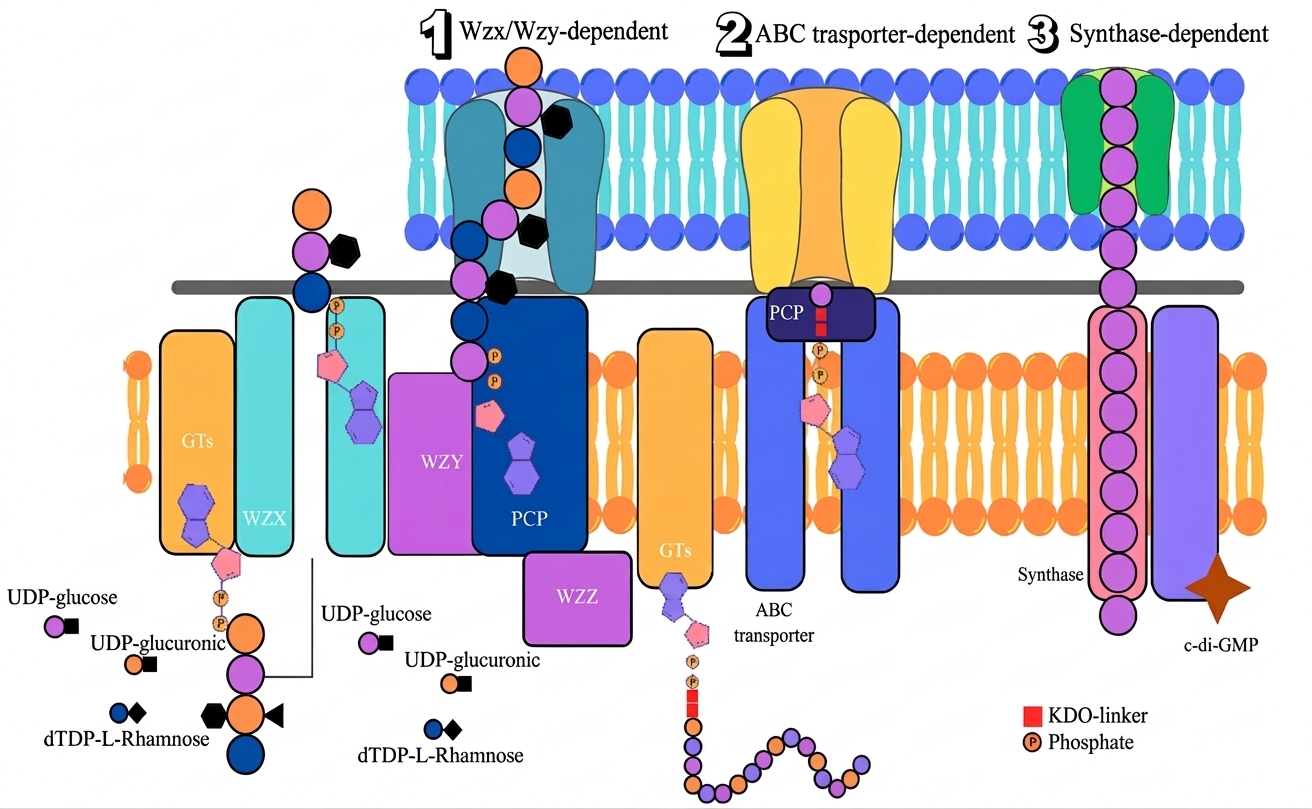
2.1. Exopolysaccharide Biosynthesis
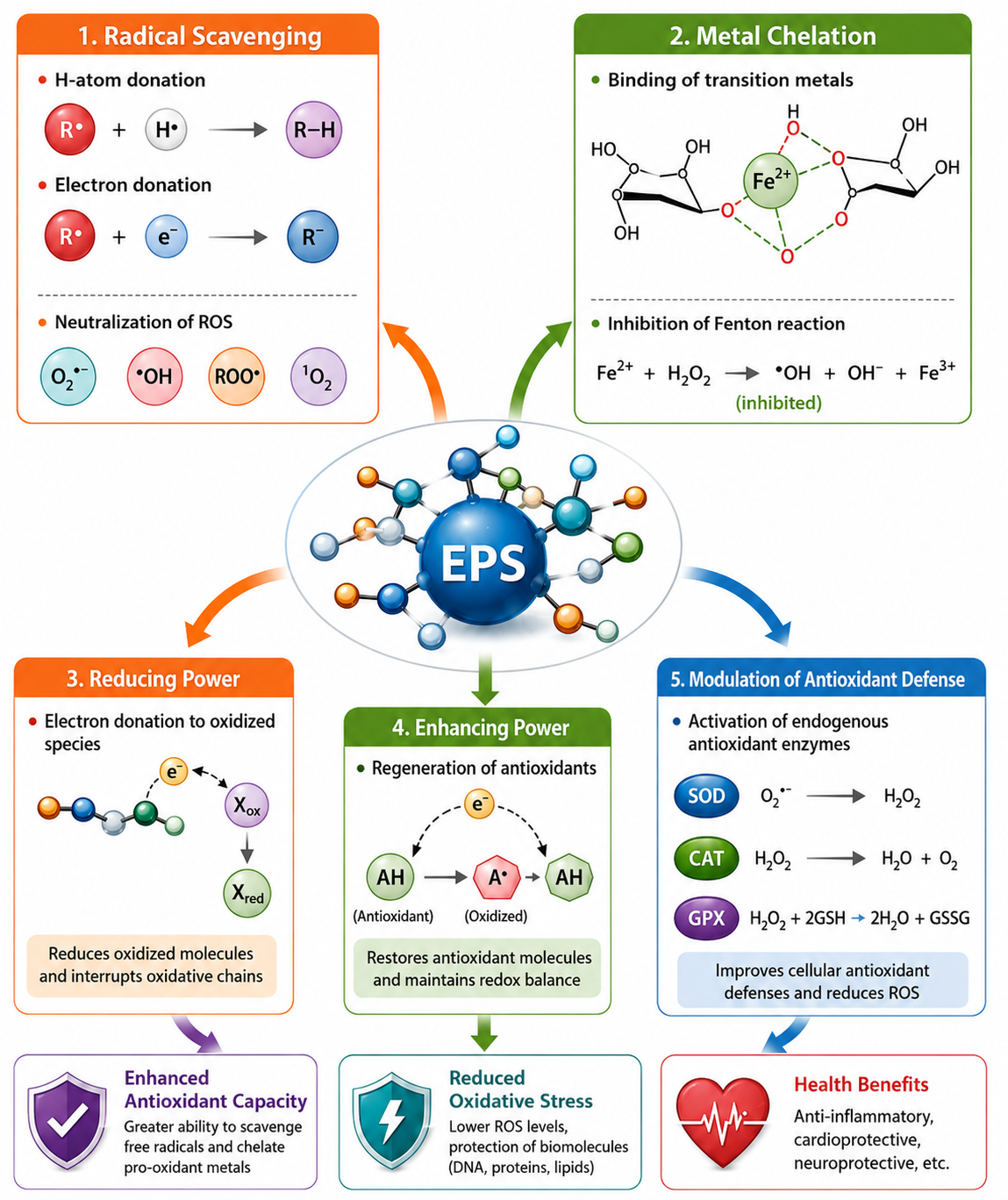
2.2. Exopolysaccharide Antioxidant Potential
2.3. Exopolysaccharides as Contributors to the Antioxidant Potential of Fermented Foods
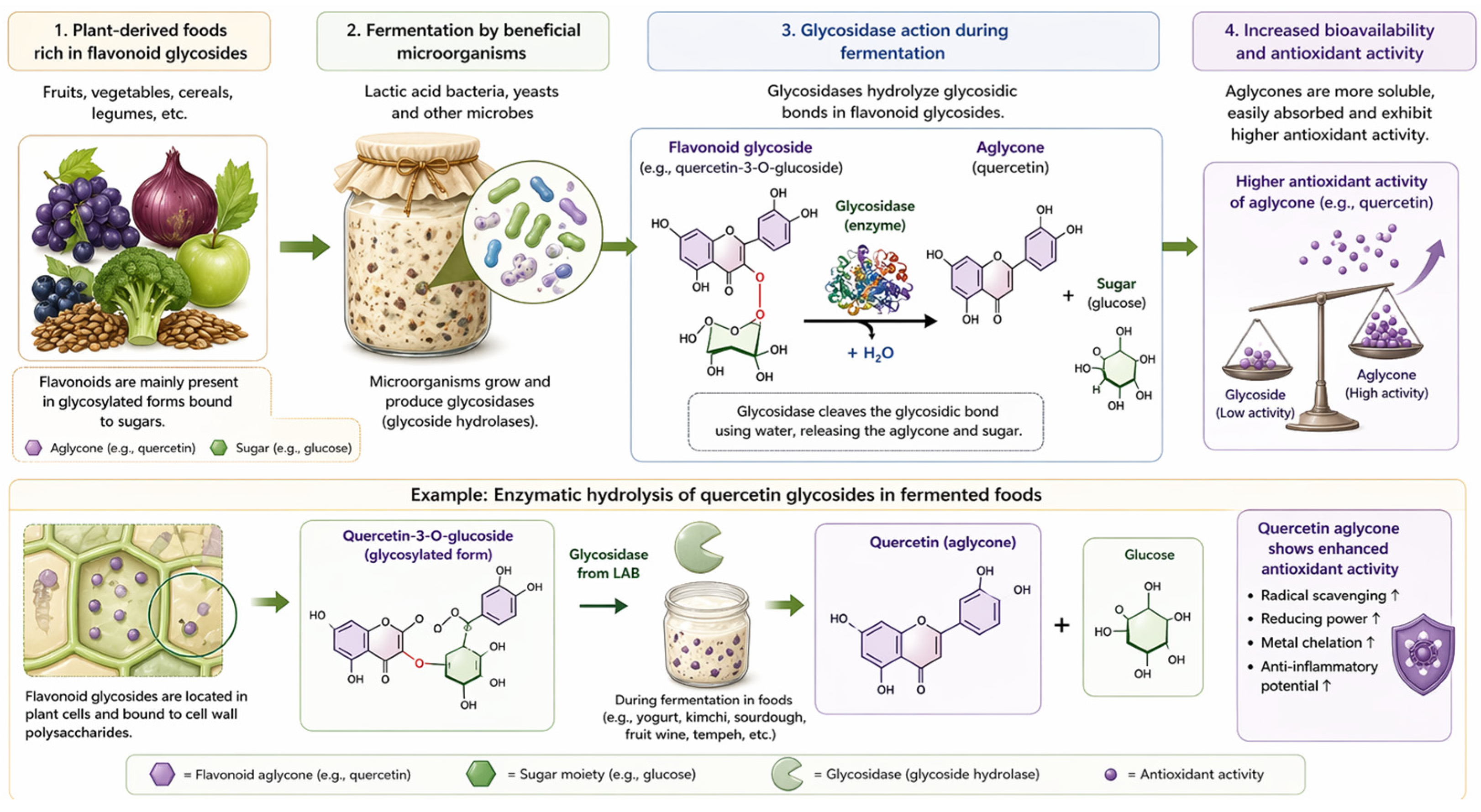
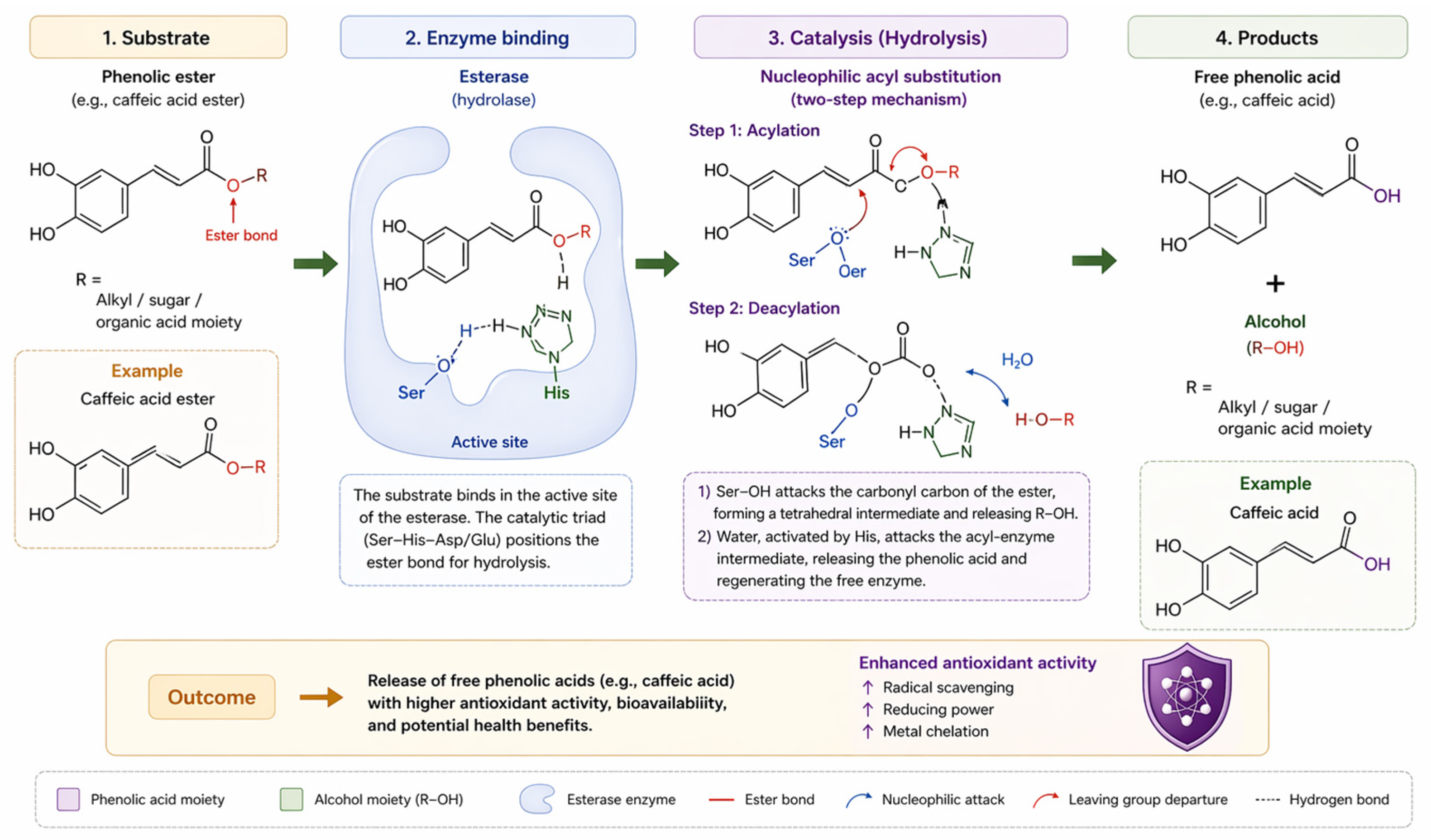
3. Release of Matrix Antioxidants Through Hydrolase Activities
- pH and temperature: Optimal pH and temperature conditions are crucial for maximizing enzyme activity. For instance, many glycosidases exhibit peak activity at neutral pH and moderate temperatures.
- Substrate specificity: Different enzymes have varying substrate specificities, which can affect the efficiency of antioxidant release. The choice of enzyme is critical for targeted applications.
- Matrix composition: The presence of other compounds in plant matrices, such as proteins and polysaccharides, can inhibit or enhance enzyme activity.
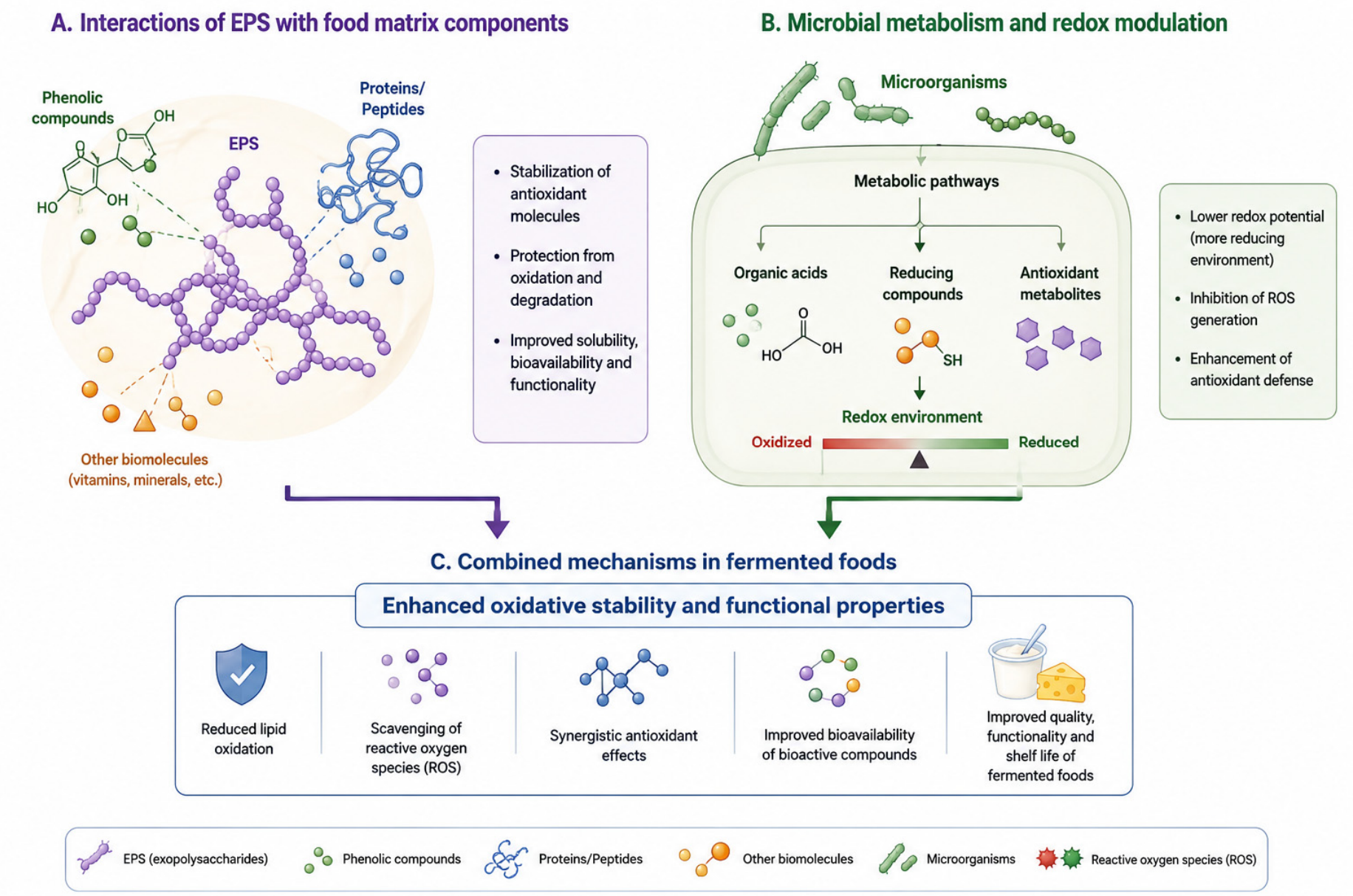
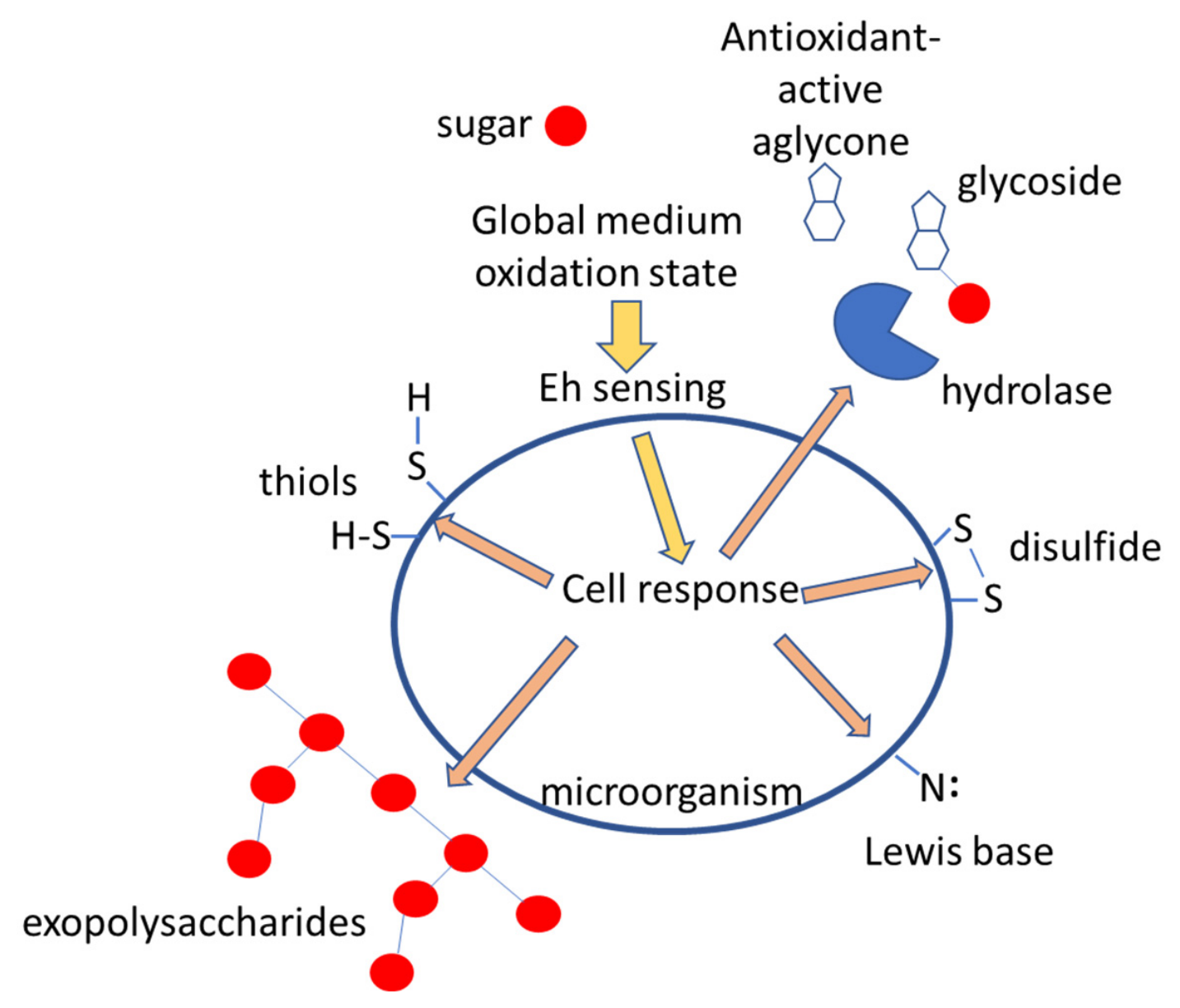
4. Microbial Modulation of Oxidative Process in Fermented Food
5. Current Challenges and Future Perspectives on Microbial Exopolysaccharides as Antioxidants in Fermented Foods
6. Conclusions
Author Contributions
Funding
Institutional Review Board Statement
Informed Consent Statement
Data Availability Statement
Conflicts of Interest
References
- Aranda-Rivera, A.K.; Cruz-Gregorio, A.; Arancibia-Hernández, Y.L.; Hernández-Cruz, E.Y.; Pedraza-Chaverri, J. RONS and Oxidative Stress: An Overview of Basic Concepts. Oxygen 2022, 2, 437–478. [Google Scholar] [CrossRef] [Scilit]
- Chopra, B.; Dhingra, A.K. Natural products: A lead for drug discovery and development. Phytother. Res. 2021, 35, 4660–4702. [Google Scholar] [CrossRef] [Scilit] [PubMed]
- Merry, T.L.; Ristow, M. Do antioxidant supplements interfere with skeletal muscle adaptation to exercise training? J. Physiol. 2016, 594, 5135–5147. [Google Scholar] [CrossRef] [Scilit]
- Siddiqui, S.A.; Erol, Z.; Rugji, J.; Tasci, F.; Kahraman, H.A.; Toppi, V.; Musa, L.; Di Giacinto, G.; Bahmid, N.A.; Mehdizadeh, M.; et al. An overview of fermentation in the food industry—Looking back from a new perspective. Bioresour. Bioprocess. 2023, 10, 85. [Google Scholar] [CrossRef] [Scilit]
- Marco, M.L.; Sanders, M.E.; Gänzle, M.; Arrieta, M.C.; Cotter, P.D.; De Vuyst, L.; Hill, C.; Holzapfel, W.; Lebeer, S.; Merenstein, D.; et al. The International Scientific Association for Probiotics and Prebiotics (ISAPP) consensus statement on fermented foods. Nat. Rev. Gastroenterol. Hepatol. 2021, 18, 196–208. [Google Scholar] [CrossRef] [Scilit]
- Seo, M.J. Fermented Foods and Food Microorganisms: Antioxidant Benefits and Biotechnological Advancements. Antioxidants 2024, 13, 1120. [Google Scholar] [CrossRef] [Scilit] [PubMed]
- Awwad, S.F.; Abdalla, A.; Howarth, F.C.; Stojanovska, L.; Kamal-Eldin, A.; Ayyash, M.M. Invited review: Potential effects of short- and long-term intake of fermented dairy products on prevention and control of type 2 diabetes mellitus. J. Dairy Sci. 2022, 105, 4722–4733. [Google Scholar] [CrossRef] [Scilit] [PubMed]
- Estruch, R.; Lamuela-Raventós, R.M. Cardiovascular benefits of fermented foods and beverages: Still up for debate. Nat. Rev. Cardiol. 2023, 20, 789–790. [Google Scholar] [CrossRef] [Scilit]
- Abedi, E.; Hashemi, S.M.B. Lactic acid production—Producing microorganisms and substrate sources: State of the art. Heliyon 2020, 6, e04974. [Google Scholar] [CrossRef] [Scilit]
- Buckel, W. Energy conservation in fermentations of anaerobic bacteria. Front. Microbiol. 2021, 12, 703525. [Google Scholar] [CrossRef] [Scilit]
- Schmid, J.; Sieber, V.; Rehm, B. Bacterial Exopolysaccharides: Biosynthesis Pathways and Engineering Strategies. Front. Microbiol. 2015, 6, 496. [Google Scholar] [CrossRef] [Scilit]
- Chaisuwan, W.; Jantanasakulwong, K.; Wangtueai, S.; Phimolsiripol, Y.; Chaiyaso, T.; Techapun, C.; Phongthai, S.; You, S.; Regenstein, J.M.; Seesuriyachan, P. Microbial Exopolysaccharides for Immune Enhancement: Fermentation, Modifications and Bioactivities. Food Biosci. 2020, 35, 100564. [Google Scholar] [CrossRef] [Scilit]
- Dong, J.Q.; Chi, Z.X.; Lu, S.Q.; Xie, X.Q.; Gong, P.X.; Li, H.J.; Liu, W. Bacterial Exopolysaccharides: Characteristics and Antioxidant Mechanism. Int. J. Biol. Macromol. 2025, 289, 138849. [Google Scholar] [CrossRef] [Scilit]
- Netrusov, A.I.; Liyaskina, E.V.; Kurgaeva, I.V.; Liyaskina, A.U.; Yang, G.; Revin, V.V. Exopolysaccharides Producing Bacteria: A Review. Microorganisms 2023, 11, 1541. [Google Scholar] [CrossRef] [Scilit] [PubMed]
- Dave, S.R.; Vaishnav, A.M.; Tipre, D.R. Microbial Exopolysaccharide—An Inevitable Product for Living Beings and Environment. J. Bacteriol. Mycol. Open Access 2016, 2, 109–111. [Google Scholar] [CrossRef] [Scilit]
- Donot, F.; Fontana, A.; Baccou, J.C.; Schorr-Galindo, S. Microbial Exopolysaccharides: Main Examples of Synthesis, Excretion, Genetics and Extraction. Carbohydr. Polym. 2012, 87, 951–962. [Google Scholar] [CrossRef] [Scilit]
- Flemming, H.C. EPS—Then and Now. Microorganisms 2016, 4, 41. [Google Scholar] [CrossRef] [Scilit] [PubMed]
- Whitney, J.C.; Howell, P.L. Synthase-Dependent Exopolysaccharide Secretion in Gram-Negative Bacteria. Trends Microbiol. 2013, 21, 63–72. [Google Scholar] [CrossRef] [Scilit]
- Cuthbertson, L.; Kos, V.; Whitfield, C. ABC Transporters Involved in Export of Cell Surface Glycoconjugates. Microbiol. Mol. Biol. Rev. 2010, 74, 341–362. [Google Scholar] [CrossRef] [Scilit]
- Rehm, B.H.A. Bacterial Polymers: Biosynthesis, Modifications and Applications. Nat. Rev. Microbiol. 2010, 8, 578–592. [Google Scholar] [CrossRef] [Scilit]
- Andrew, M.; Jayaraman, G. Structural Features of Microbial Exopolysaccharides in Relation to Their Antioxidant Activity. Carbohydr. Res. 2020, 487, 107881. [Google Scholar] [CrossRef] [Scilit]
- Sharifi-Rad, M.; Kumar, N.V.A.; Zucca, P.; Varoni, E.M.; Dini, L.; Panzarini, E.; Rajkovic, J.; Fokou, P.V.T.; Azzini, E.; Peluso, I.; et al. Lifestyle, Oxidative Stress, and Antioxidants: Back and Forth in the Pathophysiology of Chronic Diseases. Front. Physiol. 2020, 11, 694. [Google Scholar] [CrossRef] [Scilit]
- Bhawal, S.; Kumari, A.; Kapila, S.; Kapila, R. Physicochemical Characteristics of Novel Cell-Bound Exopolysaccharide from Probiotic Limosilactobacillus fermentum (MTCC 5898) and Its Relation to Antioxidative Activity. J. Agric. Food Chem. 2021, 69, 10338–10349. [Google Scholar] [CrossRef] [Scilit]
- Wang, W.; Jiang, Y.; Liu, N.; Shi, S.; Hao, L. Structural Characteristics of Microbial Exopolysaccharides in Association with Their Biological Activities: A Review. Chem. Biol. Technol. Agric. 2023, 10, 137. [Google Scholar] [CrossRef] [Scilit]
- Sun, L.; Cheng, L.F.Y.; Ma, Y.H.; Lei, P.; Wang, R.; Gu, Y.; Li, S.; Zhang, F.H.; Xu, H. Exopolysaccharides from Pantoea alhagi NX-11 Specifically Improve Its Root Colonization and Rice Salt Resistance. Int. J. Biol. Macromol. 2022, 209, 396–404. [Google Scholar] [CrossRef] [Scilit]
- Mathivanan, K.; Chandirika, J.U.; Vinothkanna, A.; Govindarajan, R.K.; Meng, D.L.; Yin, H.Q. Characterization and Biotechnological Functional Activities of Exopolysaccharides Produced by Lysinibacillus fusiformis KMNTT-10. J. Polym. Environ. 2021, 29, 1742–1751. [Google Scholar] [CrossRef] [Scilit]
- Zhang, Q.; Wang, J.; Sun, Q.; Zhang, S.M.; Sun, X.Y.; Li, C.Y.; Zheng, M.X.; Xiang, W.L.; Tang, J. Characterization and Antioxidant Activity of Released Exopolysaccharide from Potential Probiotic Leuconostoc mesenteroides LM187. J. Microbiol. Biotechnol. 2021, 31, 1144–1153. [Google Scholar] [CrossRef] [Scilit] [PubMed]
- Zhao, D.; Jiang, J.; Liu, L.N.; Wang, S.; Ping, W.X.; Ge, J.P. Characterization of Exopolysaccharides Produced by Weissella confusa XG-3 and Their Potential Biotechnological Applications. Int. J. Biol. Macromol. 2021, 178, 306–315. [Google Scholar] [CrossRef] [Scilit]
- Aburas, H.; Ispirli, H.; Taylan, O.; Yilmaz, M.T.; Dertli, E. Structural and Physicochemical Characterisation and Antioxidant Activity of an α-D-Glucan Produced by Sourdough Isolate Weissella cibaria MED17. Int. J. Biol. Macromol. 2020, 161, 648–655. [Google Scholar] [CrossRef] [Scilit]
- Liu, T.; Zhou, K.; Yin, S.; Liu, S.L.; Zhu, Y.T.; Yang, Y.; Wang, C.T. Purification and Characterization of an Exopolysaccharide Produced by Lactobacillus plantarum HY Isolated from Home-Made Sichuan Pickle. Int. J. Biol. Macromol. 2019, 134, 516–526. [Google Scholar] [CrossRef] [Scilit]
- Long, Z.D.; Liu, H.; Li, J.G.; Sun, J.S.; Xue, Y.; Hu, Z.Z.; Su, Z.; Xu, C.P.; Yan, J.K. Preliminary Characterization of Exopolysaccharides Produced by Abortiporus biennis in Submerged Fermentation. Sains Malays. 2019, 48, 2633–2640. [Google Scholar] [CrossRef] [Scilit]
- Min, W.H.; Fang, X.B.; Wu, T.; Fang, L.; Liu, C.L.; Wang, J. Characterization and Antioxidant Activity of an Acidic Exopolysaccharide from Lactobacillus plantarum JLAU103. J. Biosci. Bioeng. 2019, 127, 758–766. [Google Scholar] [CrossRef] [Scilit]
- Nehal, F.; Sahnoun, M.; Smaoui, S.; Jaouadi, B.; Bejar, S.; Mohammed, S. Characterization, High Production and Antimicrobial Activity of Exopolysaccharides from Lactococcus lactis F-Mou. Microb. Pathog. 2019, 132, 10–19. [Google Scholar] [CrossRef] [Scilit]
- Wang, K.; Niu, M.M.; Yao, D.; Zhao, J.; Wu, Y.; Lu, B.X.; Zheng, X.Q. Physicochemical Characteristics and In Vitro and In Vivo Antioxidant Activity of a Cell-Bound Exopolysaccharide Produced by Lactobacillus fermentum S1. Int. J. Biol. Macromol. 2019, 139, 252–261. [Google Scholar] [CrossRef] [Scilit]
- Shah, I.A.; Kavitake, D.; Tiwari, S.; Devi, P.B.; Reddy, G.B.; Jaiswal, K.K.; Jaiswal, A.K.; Shetty, P.H. Chemical Modification of Bacterial Exopolysaccharides: Antioxidant Properties and Health Potentials. Curr. Res. Food Sci. 2024, 9, 100824. [Google Scholar] [CrossRef] [Scilit]
- Abdhul, K.; Ganesh, M.; Shanmughapriya, S.; Kanagavel, M.; Anbarasu, K.; Natarajaseenivasan, K. Antioxidant Activity of Exopolysaccharide from Probiotic Strain Enterococcus faecium (BDU7) from Ngari. Int. J. Biol. Macromol. 2014, 70, 450–454. [Google Scholar] [CrossRef] [Scilit] [PubMed]
- Zhu, Y.; Wang, C.; Jia, S.; Wang, B.; Zhou, K.; Chen, S.; Yang, Y.; Liu, S. Purification, Characterization and Antioxidant Activity of the Exopolysaccharide from Weissella cibaria SJ14 Isolated from Sichuan Paocai. Int. J. Biol. Macromol. 2018, 115, 820–828. [Google Scholar] [CrossRef] [Scilit] [PubMed]
- Yue, Y.; Wang, Y.; Han, Y.; Zhang, Y.; Cao, T.; Huo, G.; Li, B. Genome Analysis of Bifidobacterium bifidum E3, Structural Characteristics, and Antioxidant Properties of Exopolysaccharides. Foods 2023, 12, 2988. [Google Scholar] [CrossRef] [Scilit] [PubMed]
- Li, Q.M.; Chen, Y.; Liu, X.; Li, Y.; Xu, J.; Li, T.; Xiang, W.Z.; Li, A.F. Effect of Salinity on the Biochemical Characteristics and Antioxidant Activity of Exopolysaccharide of FACHB 806. Front. Mar. Sci. 2023, 9, 1097200. [Google Scholar] [CrossRef] [Scilit]
- Adebayo-Tayo, B.; Ishola, R.; Oyewunmi, T. Characterization, Antioxidant and Immunomodulatory Potential on Exopolysaccharide Produced by Wild Type and Mutant Weissella confusa Strains. Biotechnol. Rep. 2018, 19, e00271. [Google Scholar] [CrossRef] [Scilit]
- Jiang, G.; He, J.; Gan, L.; Li, X.; Xu, Z.; Yang, L.; Li, R.; Tian, Y. Exopolysaccharide Produced by Pediococcus pentosaceus E8: Structure, Bioactivities, and Its Potential Application. Front. Microbiol. 2022, 13, 923522. [Google Scholar] [CrossRef] [Scilit] [PubMed]
- Hu, J.; Tian, X.; Wei, T.; Wu, H.; Lu, J.; Lyu, M.; Wang, S. Anti-Helicobacter pylori Activity of a Lactobacillus sp. PW-7 Exopolysaccharide. Foods 2021, 10, 2453. [Google Scholar] [CrossRef] [Scilit] [PubMed]
- Yang, X.; Wu, J.; An, F.; Xu, J.; Bat-Ochir, M.; Wei, L.; Li, M.; Bilige, M.; Wu, R. Structure Characterization, Antioxidant and Emulsifying Capacities of Exopolysaccharide Derived from Tetragenococcus halophilus SNTH-8. Int. J. Biol. Macromol. 2022, 208, 288–298. [Google Scholar] [CrossRef] [Scilit] [PubMed]
- Zhang, M.; Lai, T.; Yao, M.; Zhang, M.; Yang, Z. Interaction of the Exopolysaccharide from Lactobacillus plantarum YW11 with Casein and Bioactivities of the Polymer Complex. Foods 2021, 10, 1153. [Google Scholar] [CrossRef] [Scilit]
- Lin, T.; Chen, C.; Chen, B.; Shaw, J.; Chen, Y. Optimal Economic Productivity of Exopolysaccharides from Lactic Acid Bacteria with Production Possibility Curves. Food Sci. Nutr. 2019, 7, 2336–2344. [Google Scholar] [CrossRef] [Scilit]
- Zhou, Z.; Zeng, X.; Wu, Z.; Guo, Y.; Pan, D. Relationship of Gene–Structure–Antioxidant Ability of Exopolysaccharides Derived from Lactic Acid Bacteria: A Review. J. Agric. Food Chem. 2023, 71, 9187–9200. [Google Scholar] [CrossRef] [Scilit]
- Seol, S.; Yeo, J. Microbial Fermentation as a Tool to Improve the Antioxidant and Functional Value of Milk Products. Foods 2024, 15, 1024. [Google Scholar] [CrossRef] [Scilit]
- Zhang, L.; Liu, C.; Li, D.; Zhao, Y.; Zhang, X.; Zeng, X.; Yang, Z.; Li, S. Antioxidant Activity of an Exopolysaccharide Isolated from Lactobacillus plantarum C88. Int. J. Biol. Macromol. 2013, 54, 270–275. [Google Scholar] [CrossRef] [Scilit]
- Hur, S.J.; Lee, S.Y.; Kim, Y.C.; Choi, I.; Kim, G.B. Effect of Fermentation on the Antioxidant Activity in Plant-Based Foods. Food Chem. 2014, 160, 346–356. [Google Scholar] [CrossRef] [Scilit]
- Filannino, P.; Di Cagno, R.; Gobbetti, M. Metabolic and Functional Paths of Lactic Acid Bacteria in Plant Foods: Get out of the Labyrinth. Curr. Opin. Biotechnol. 2018, 49, 64–72. [Google Scholar] [CrossRef] [Scilit]
- Phelan, M.; Aherne, A.; FitzGerald, R.J.; O’Brien, N.M. Casein-Derived Bioactive Peptides: Biological Effects, Industrial Uses, Safety Aspects and Regulatory Status. Int. Dairy J. 2009, 19, 643–654. [Google Scholar] [CrossRef] [Scilit]
- Delgado-Osorio, A.; Navajas-Porras, B.; Perez-Burillo, S.; Hinojosa-Nogueira, D.; Toledano-Marin, A.; Pastoriza de la Cueva, S.; Paliy, O.; Rufian-Henares, J.A. Cultivar and Harvest Time of Almonds Affect Their Antioxidant and Nutritional Profile through Gut Microbiota Modifications. Antioxidants 2024, 13, 84. [Google Scholar] [CrossRef] [Scilit]
- Bryant, K.L.; Hansen, C.; Hecht, E.E. Fermentation Technology as a Driver of Human Brain Expansion. Commun. Biol. 2023, 6, 1190. [Google Scholar] [CrossRef] [Scilit]
- Verni, M.; Verardo, V.; Rizzello, C.G. How Fermentation Affects the Antioxidant Properties of Cereals and Legumes. Foods 2019, 8, 362. [Google Scholar] [CrossRef] [Scilit]
- Erskine, E.; Ozkan, G.; Lu, B.; Capanoglu, E. Effects of Fermentation Process on the Antioxidant Capacity of Fruit Byproducts. ACS Omega 2023, 8, 4543–4553. [Google Scholar] [CrossRef] [Scilit]
- Garcia-Alonso, A.; Sanchez-Paniagua Lopez, M.; Manzanares-Palenzuela, C.L.; Redondo-Cuenca, A.; Lopez-Ruiz, B. Edible Plant By-Products as Source of Polyphenols: Prebiotic Effect and Analytical Methods. Crit. Rev. Food Sci. Nutr. 2023, 63, 10814–10835. [Google Scholar] [CrossRef] [Scilit]
- Yang, F.; Chen, C.; Ni, D.; Yang, Y.; Tian, J.; Li, Y.; Chen, S.; Ye, X.; Wang, L. Effects of Fermentation on Bioactivity and the Composition of Polyphenols Contained in Polyphenol-Rich Foods: A Review. Foods 2023, 12, 3315. [Google Scholar] [CrossRef] [Scilit]
- Estrela, J.M.; Mena, S.; Obrador, E.; Benlloch, M.; Castellano, G.; Salvador, R.; Dellinger, R.W. Polyphenolic Phytochemicals in Cancer Prevention and Therapy: Bioavailability versus Bioefficacy. J. Med. Chem. 2017, 60, 9413–9436. [Google Scholar] [CrossRef] [Scilit]
- Muradova, M.; Proskura, A.; Canon, F.; Aleksandrova, I.; Schwartz, M.; Heydel, J.M.; Baranenko, D.; Nadtochii, L.; Neiers, F. Unlocking Flavor Potential Using Microbial β-Glucosidases in Food Processing. Foods 2023, 12, 4484. [Google Scholar] [CrossRef] [Scilit] [PubMed]
- Trincone, A. Uncommon Glycosidases for the Enzymatic Preparation of Glycosides. Biomolecules 2015, 5, 2160–2183. [Google Scholar] [CrossRef] [Scilit] [PubMed]
- Shahidi, F.; Yeo, J.D. Insoluble-Bound Phenolics in Food. Molecules 2016, 21, 1216. [Google Scholar] [CrossRef] [Scilit]
- Saritas, S.; Portocarrero, A.C.M.; Miranda Lopez, J.M.; Lombardo, M.; Koch, W.; Raposo, A.; El-Seedi, H.R.; de Brito Alves, J.L.; Esatbeyoglu, T.; Karav, S.; et al. The Impact of Fermentation on the Antioxidant Activity of Food Products. Molecules 2024, 29, 3941. [Google Scholar] [CrossRef] [Scilit] [PubMed]
- Kytidou, K.; Artola, M.; Overkleeft, H.S.; Aerts, J. Plant Glycosides and Glycosidases: A Treasure-Trove for Therapeutics. Front. Plant Sci. 2020, 11, 357. [Google Scholar] [CrossRef] [Scilit]
- Zhang, Y.; Hu, P.; Lou, L.; Zhan, J.; Fan, M.; Li, D.; Liao, Q. Antioxidant Activities of Lactic Acid Bacteria for Quality Improvement of Fermented Sausage. J. Food Sci. 2017, 82, 2960–2967. [Google Scholar] [CrossRef] [Scilit]
- Leeuwendaal, N.K.; Stanton, C.; O’Toole, P.W.; Beresford, T.P. Fermented Foods, Health and the Gut Microbiome. Nutrients 2022, 14, 1527. [Google Scholar] [CrossRef] [Scilit]
- Abraham, S.; Cachon, R.; Colas, B.; Feron, G.; De Coninck, J. Eh and pH Gradients in Camembert Cheese during Ripening: Measurements Using Microelectrodes and Correlations with Texture. Int. Dairy J. 2007, 17, 954–960. [Google Scholar] [CrossRef] [Scilit]
- Abraham, S.; Cachon, R.; Jeanson, S.; Ebel, B.; Michelon, D.; Aubert, C.; Rojas, C.; Feron, G.; Beuvier, E.; Gervais, P.; et al. A Procedure for Reproducible Measurement of Redox Potential (Eh) in Dairy Processes. Dairy Sci. Technol. 2013, 93, 675–690. [Google Scholar] [CrossRef] [Scilit]
- Alwazeer, D.; Delbeau, C.; Divies, C.; Cachon, R. Use of Redox Potential Modification by Gas Improves Microbial Quality, Color Retention, and Ascorbic Acid Stability of Pasteurized Orange Juice. Int. J. Food Microbiol. 2003, 89, 21–29. [Google Scholar] [CrossRef] [Scilit] [PubMed]
- Cachon, R.; Jeanson, S.; Aldarf, M.; Divies, C. Characterisation of Lactic Starters Based on Acidification and Reduction Activities. Lait 2002, 82, 281–288. [Google Scholar] [CrossRef] [Scilit]
- Duwat, P.; Sourice, S.; Cesselin, B.; Lamberet, G.; Vido, K.; Gaudu, P.; Le Loir, Y.; Violet, F.; Loubiere, P.; Gruss, A. Respiration Capacity of the Fermenting Bacterium Lactococcus lactis and Its Positive Effects on Growth and Survival. J. Bacteriol. 2001, 183, 4509–4516. [Google Scholar] [CrossRef] [Scilit]
- Gaudu, P.; Vido, K.; Cesselin, B.; Kulakauskas, S.; Tremblay, J.; Rezaiki, L.; Lamberret, G.; Sourice, S.; Duwat, P.; Gruss, A. Respiration Capacity and Consequences in Lactococcus lactis. Antonie Van Leeuwenhoek 2002, 82, 263–269. [Google Scholar] [CrossRef] [Scilit]
- Rezaiki, L.; Cesselin, B.; Yamamoto, Y.; Vido, K.; van West, E.; Gaudu, P.; Gruss, A. Respiration Metabolism Reduces Oxidative and Acid Stress to Improve Long-Term Survival of Lactococcus lactis. Mol. Microbiol. 2004, 53, 1331–1342. [Google Scholar] [CrossRef] [Scilit]
- Rosenberg, M. Basic and Applied Aspects of Microbial Adhesion at the Hydrocarbon:Water Interface. Crit. Rev. Microbiol. 1991, 18, 159–173. [Google Scholar] [CrossRef] [Scilit]
- Rosenberg, M. Microbial Adhesion to Hydrocarbons: Twenty-Five Years of Doing MATH. FEMS Microbiol. Lett. 2006, 262, 129–134. [Google Scholar] [CrossRef] [Scilit]
- Bellon-Fontaine, M.-N.; Rault, J.; van Oss, C.J. Microbial Adhesion to Solvents: A Novel Method to Determine the Electron-Donor/Electron-Acceptor or Lewis Acid–Base Properties of Microbial Cells. Colloids Surf. B Biointerfaces 1996, 7, 47–53. [Google Scholar] [CrossRef] [Scilit]
- Ly, M.H.; Aguedo, M.; Goudot, S.; Le, M.L.; Cayot, P.; Teixeira, J.A.; Le, T.M.; Belin, J.M.; Waché, Y. Interactions between Bacterial Surfaces and Milk Proteins, Impact on Food Emulsions Stability. Food Hydrocoll. 2008, 22, 742–751. [Google Scholar] [CrossRef] [Scilit]
- Ly, M.H.; Covarrubias-Cervantes, M.; Dury-Brun, C.; Bordet, S.; Voilley, A.; Le, T.; Belin, J.; Waché, Y. Retention of Aroma Compounds by Lactic Acid Bacteria in Model Food Media. Food Hydrocoll. 2008, 22, 211–217. [Google Scholar] [CrossRef] [Scilit]
- Ly, M.H.; Naïtali, M.; Meylheuc, T.; Bellon-Fontaine, M.-N.; Le, T.M.; Belin, J.-M.; Waché, Y. Importance of the Surface Charge of Bacteria to Control the Stability of Emulsions. Int. J. Food Microbiol. 2006, 112, 26–34. [Google Scholar] [CrossRef] [Scilit] [PubMed]
- Ly, M.H.; Vo, N.H.; Le, T.M.; Belin, J.-M.; Waché, Y. Diversity of the Surface Properties of Lactococci and Consequences on Adhesion to Food Components. Colloids Surf. B Biointerfaces 2006, 52, 149–153. [Google Scholar] [CrossRef] [Scilit]
- Ly-Chatain, M.H.; Le, M.L.; Le Thanh, M.; Belin, J.M.; Waché, Y. Cell Surface Properties Affect Colonisation of Raw Milk by Lactic Acid Bacteria at the Microstructure Level. Food Res. Int. 2010, 43, 1594–1602. [Google Scholar] [CrossRef] [Scilit]
- Ly, M.H.; Cavin, J.F.; Cachon, R.; Lê, T.M.; Belin, J.M.; Waché, Y. Relationship between the Presence of the Citrate Permease Plasmid and High Electron-Donor Surface Properties of Lactococcus lactis ssp. lactis biovar. diacetylactis. FEMS Microbiol. Lett. 2007, 268, 166–170. [Google Scholar] [CrossRef] [Scilit]
- Ebel, B.; Martin, F.; Le, L.D.T.; Gervais, P.; Cachon, R. Use of Gases to Improve Survival of Bifidobacterium bifidum by Modifying Redox Potential in Fermented Milk. J. Dairy Sci. 2011, 94, 2185–2191. [Google Scholar] [CrossRef] [Scilit] [PubMed]
- Kieronczyk, A.; Cachon, R.; Feron, G.; Yvon, M. Addition of Oxidizing or Reducing Agents to the Reaction Medium Influences Amino Acid Conversion to Aroma Compounds by Lactococcus lactis. J. Appl. Microbiol. 2006, 101, 1114–1122. [Google Scholar] [CrossRef] [Scilit]
- Martin, F.; Cachon, R.; Pernin, K.; De Coninck, J.; Gervais, P.; Guichard, E.; Cayot, N. Effect of Oxidoreduction Potential on Aroma Biosynthesis by Lactic Acid Bacteria in Nonfat Yogurt. J. Dairy Sci. 2011, 94, 614–622. [Google Scholar] [CrossRef] [Scilit] [PubMed]
- Ouvry, A.; Waché, Y.; Tourdot-Maréchal, R.; Diviès, C.; Cachon, R. Effects of Oxidoreduction Potential Combined with Acetic Acid, NaCl and Temperature on the Growth, Acidification, and Membrane Properties of Lactobacillus plantarum. FEMS Microbiol. Lett. 2002, 214, 257–261. [Google Scholar] [CrossRef]
- Waché, Y.; Riondet, C.; Diviès, C.; Cachon, R. Effect of Reducing Agents on the Acidification Capacity and the Proton Motive Force of Lactococcus lactis ssp. cremoris Resting Cells. Bioelectrochemistry 2002, 57, 113–118. [Google Scholar] [CrossRef] [Scilit]
- Riondet, C.; Cachon, R.; Waché, Y.; Alcaraz, G.; Diviès, C. Changes in the Proton-Motive Force in Escherichia coli in Response to External Oxidoreduction Potential. Eur. J. Biochem. 1999, 262, 595–599. [Google Scholar] [CrossRef] [Scilit]
- Riondet, C.; Cachon, R.; Waché, Y.; Alcaraz, G.; Diviès, C. Extracellular Oxidoreduction Potential Modifies Carbon and Electron Flow in Escherichia coli. J. Bacteriol. 2000, 182, 620–626. [Google Scholar] [CrossRef] [Scilit] [PubMed]
- Riondet, C.; Cachon, R.; Waché, Y.; Bert, E.S.I.; Gbaguidi, P.; Alcaraz, G.; Diviès, C. Combined Action of Redox Potential and pH on Heat Resistance and Growth Recovery of Sublethally Heat-Damaged Escherichia coli. Appl. Microbiol. Biotechnol. 2000, 53, 476–479. [Google Scholar] [CrossRef] [Scilit]
- Michelon, D.; Tachon, S.; Ebel, B.; De Coninck, J.; Feron, G.; Gervais, P.; Yvon, M.; Cachon, R. Screening of Lactic Acid Bacteria for Reducing Power Using a Tetrazolium Salt Reduction Method on Milk Agar. J. Biosci. Bioeng. 2013, 115, 229–232. [Google Scholar] [CrossRef] [Scilit]
- Roussel, C.; Ebel, B.; Munier, E.; Michelon, D.; Martin-Dejardin, F.; Beuvier, E.; De Coninck, J.; Gaudu, P.; Cachon, R. Green Strategies to Control Redox Potential in the Fermented Food Industry. Food Res. Int. 2022, 156, 111154. [Google Scholar] [CrossRef] [Scilit]
- Michelon, D.; Abraham, S.; Ebel, B.; De Coninck, J.; Husson, F.; Feron, G.; Gervais, P.; Cachon, R. Contribution of Exofacial Thiol Groups in the Reducing Activity of Lactococcus lactis. FEBS J. 2010, 277, 2282–2290. [Google Scholar] [CrossRef] [Scilit] [PubMed]
- Kodali, V.P.; Sen, R. Antioxidant and Free Radical Scavenging Activities of an Exopolysaccharide from a Probiotic Bacterium. Biotechnol. J. 2008, 3, 245–251. [Google Scholar] [CrossRef] [Scilit]
- Adesulu-Dahunsi, A.T.; Jeyaram, K.; Sanni, A.I.; Banwo, K. Production of Exopolysaccharide by Strains of Lactobacillus plantarum YO175 and OF101 Isolated from Traditional Fermented Cereal Beverage. PeerJ 2018, 6, e5326. [Google Scholar] [CrossRef] [Scilit]
- Bomfim, V.B.; Pereira Lopes Neto, J.H.; Leite, K.S.; de Andrade Vieira, É.; Iacomini, M.; Silva, C.M.; Olbrich dos Santos, K.M.; Cardarelli, H.R. Partial Characterization and Antioxidant Activity of Exopolysaccharides Produced by Lactobacillus plantarum CNPC003. LWT 2020, 127, 109349. [Google Scholar] [CrossRef] [Scilit]
- Muninathan, C.; Guruchandran, S.; Kalyan, A.J.V.; Ganesan, N.D. Microbial Exopolysaccharides: Role in Functional Food Engineering and Gut-Health Management. Int. J. Food Sci. Technol. 2022, 57, 27–34. [Google Scholar] [CrossRef] [Scilit]
- Bera, K.; Bhattacharya, D.; Mukhopadhyay, M. Microbial Polysaccharide Engineering: The Role of LAB-Derived EPS in Fermented Food Innovation and Nutritional Enhancement. Food Sci. Biotechnol. 2026. [Google Scholar] [CrossRef] [Scilit]
- Ibarlucea-Jerez, M.; Monnoye, M.; Chambon, C.; Gerard, P.; Licandro, H.; Neyraud, E. Fermented Food Consumption Modulates the Oral Microbiota. npj Sci. Food 2024, 8, 55. [Google Scholar] [CrossRef] [Scilit]
- Cheng, F.; Wang, J. Regulation of Reactive Species during Ionizing Radiation by Peroxydisulfate for Enhanced Degradation of Typical Pollutants in Coking Wastewater. Environ. Pollut. 2024, 359, 124581. [Google Scholar] [CrossRef] [Scilit] [PubMed]



| EPS-Producing Microorganism | Monosaccharide Composition | Molecular Weight | Antioxidant Assays | Proposed Antioxidant Mechanism | Reference |
|---|---|---|---|---|---|
| Pantoea alhagi NX-11 | Glucose, galactose, mannose | 1.326 × 10⁶ Da | Plant antioxidant enzyme activity (SOD, CAT, POD); MDA reduction under salt stress | Induction of antioxidant defense system and ROS mitigation in plants | [25] |
| Lysinibacillus fusiformis KMNTT-10 | Xylose, rhamnose, arabinose, galactose, glucose | n.r. | DPPH, ABTS and nitric oxide radical scavenging | Direct free radical scavenging and NO neutralization | [26] |
| Leuconostoc mesenteroides LM187 | Arabinose, galactose, rhamnose | 7.757 × 10⁷ Da | DPPH, hydroxyl radical and superoxide radical scavenging; reducing power | Hydrogen atom donation and electron transfer capacity | [27] |
| Weissella confusa XG-3 | Glucose | 3.19 × 10⁶ Da | DPPH, hydroxyl radical and superoxide radical scavenging | ROS scavenging and electron-donating capacity | [28] |
| Weissella cibaria MED17 | Glucose (α-glucan) | n.r. | DPPH, ABTS and hydroxyl radical scavenging; reducing power | Hydrogen atom donation and radical neutralization | [29] |
| Lactiplantibacillus plantarum HY | Mannose, galactose, glucose | 9.549 × 10⁴ Da | DPPH, hydroxyl radical and superoxide radical scavenging | Direct ROS scavenging and reducing capacity | [30] |
| Abortiporus biennis | Glucose, mannose, galactose | 2.207 × 10⁴ Da | DPPH radical scavenging; reducing power | Electron donation and radical neutralization | [31] |
| Lactiplantibacillus plantarum JLAU103 | Arabinose, rhamnose, fucose, xylose, mannose, fructose, galactose, glucose | 1.24 × 10⁴ kDa | DPPH, hydroxyl radical and superoxide radical scavenging | Radical scavenging and possible metal ion chelation | [32] |
| Limosilactobacillus fermentum S1 | Mannose, rhamnose, glucose, galactose | 7.19 × 10⁵ Da | DPPH, hydroxyl radical and superoxide radical scavenging; reducing power; in vivo antioxidant activity | ROS scavenging and enhancement of antioxidant defense enzymes | [33] |
| Mechanism | Main Microbial Activity | Key Molecules/Processes Involved | Contribution to Antioxidant Activity | Examples of Fermented Foods |
|---|---|---|---|---|
| Microbial exopolysaccharides (EPS) | Production of extracellular polysaccharides by fermenting microorganisms | Radical scavenging, metal chelation, reducing power, stabilization of antioxidant compounds | Neutralization of ROS, protection against oxidative degradation, improvement of oxidative stability | Yogurt, kefir, fermented milk, sourdough |
| Enzymatic release and transformation of bioactive compounds | Microbial hydrolysis and biotransformation of food matrix components | β-glucosidases, esterases, phenolic acid decarboxylases, proteases | Release of phenolic compounds, generation of antioxidant peptides, increased bioavailability of antioxidants | Fermented cereals, vegetables, dairy products |
| Microbial modulation of redox balance | Metabolic and electron-transfer activities influencing redox conditions | Organic acids, reducing metabolites, antioxidant enzymes, thiol groups, electron transfer systems | Lowering redox potential, stabilization of antioxidant molecules, limitation of oxidative reactions | LAB-fermented dairy products, vegetable fermentations |
Disclaimer/Publisher’s Note: The statements, opinions and data contained in all publications are solely those of the individual author(s) and contributor(s) and not of MDPI and/or the editor(s). MDPI and/or the editor(s) disclaim responsibility for any injury to people or property resulting from any ideas, methods, instructions or products referred to in the content. |
© 2026 by the authors. Licensee MDPI, Basel, Switzerland. This article is an open access article distributed under the terms and conditions of the Creative Commons Attribution (CC BY) license.
Share and Cite
Boudjouan, F.; Perpetuini, G.; Tofalo, R.; Waché, Y.; Debbache, N.B. Microbial Exopolysaccharides, Redox Modulation, and Antioxidant Activity in Fermented Foods. Antioxidants 2026, 15, 665. https://doi.org/10.3390/antiox15060665
Boudjouan F, Perpetuini G, Tofalo R, Waché Y, Debbache NB. Microbial Exopolysaccharides, Redox Modulation, and Antioxidant Activity in Fermented Foods. Antioxidants. 2026; 15(6):665. https://doi.org/10.3390/antiox15060665
Chicago/Turabian StyleBoudjouan, Fares, Giorgia Perpetuini, Rosanna Tofalo, Yves Waché, and Nadjet Benaida Debbache. 2026. "Microbial Exopolysaccharides, Redox Modulation, and Antioxidant Activity in Fermented Foods" Antioxidants 15, no. 6: 665. https://doi.org/10.3390/antiox15060665
APA StyleBoudjouan, F., Perpetuini, G., Tofalo, R., Waché, Y., & Debbache, N. B. (2026). Microbial Exopolysaccharides, Redox Modulation, and Antioxidant Activity in Fermented Foods. Antioxidants, 15(6), 665. https://doi.org/10.3390/antiox15060665