Ferroptosis in Vascular Diseases: A Mechanistic and Immunological Perspective on Therapeutic Targeting

Abstract
1. Introduction
2. Mechanisms of Ferroptosis: From Metabolic Priming to Bilateral Circuit Execution
2.1. Upstream Priming: Nutrient Sensing and Metabolic Dysregulation
2.2. Intermediate Hub: Core Execution Machinery and Mitochondrial Sabotage
2.3. Antioxidant Defense Systems: Metabolic and Mitochondrial Checkpoints Against Ferroptosis
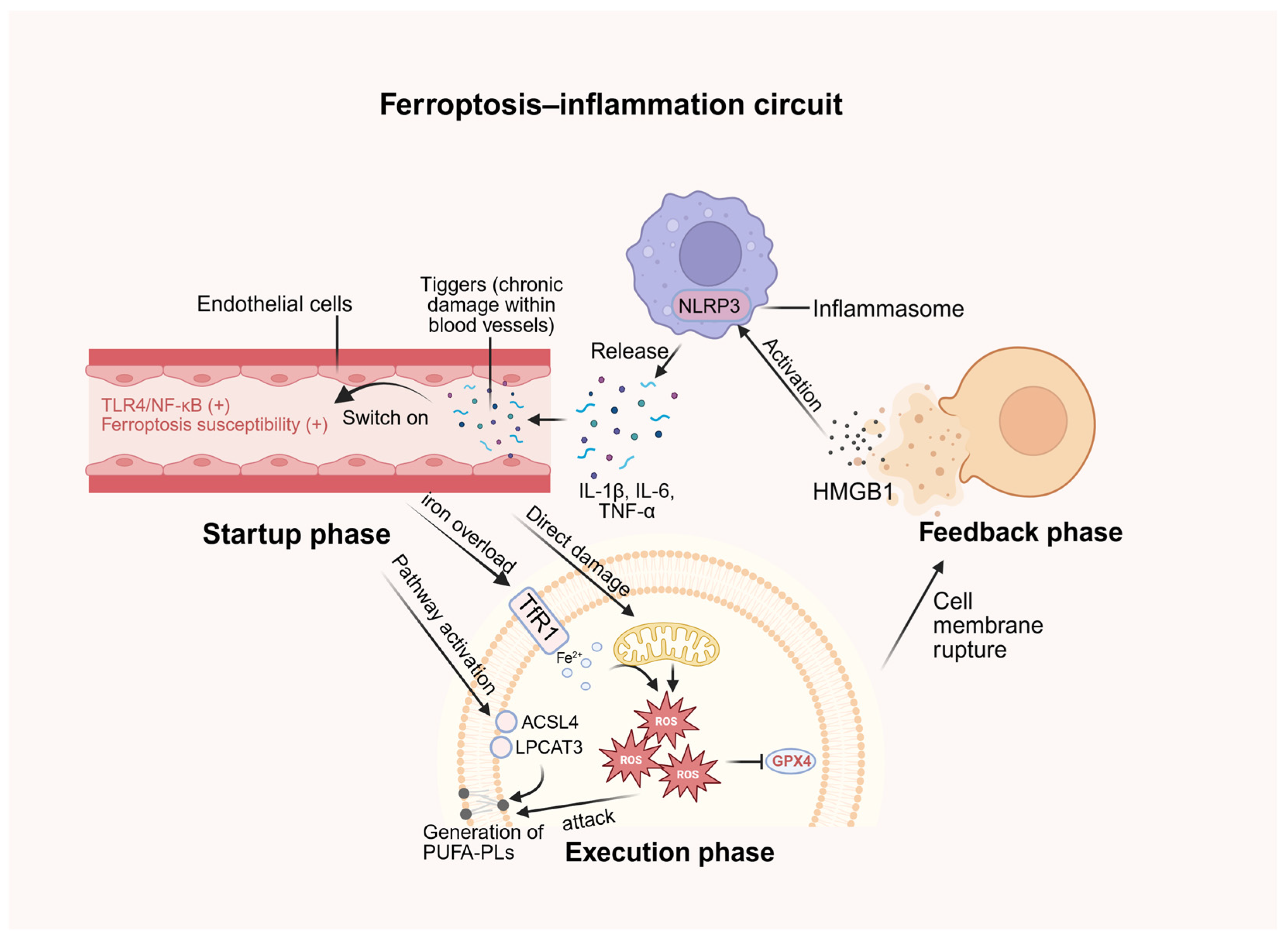
2.4. A Conceptual Framework: The Bilateral Ferroptosis–Inflammation Circuit
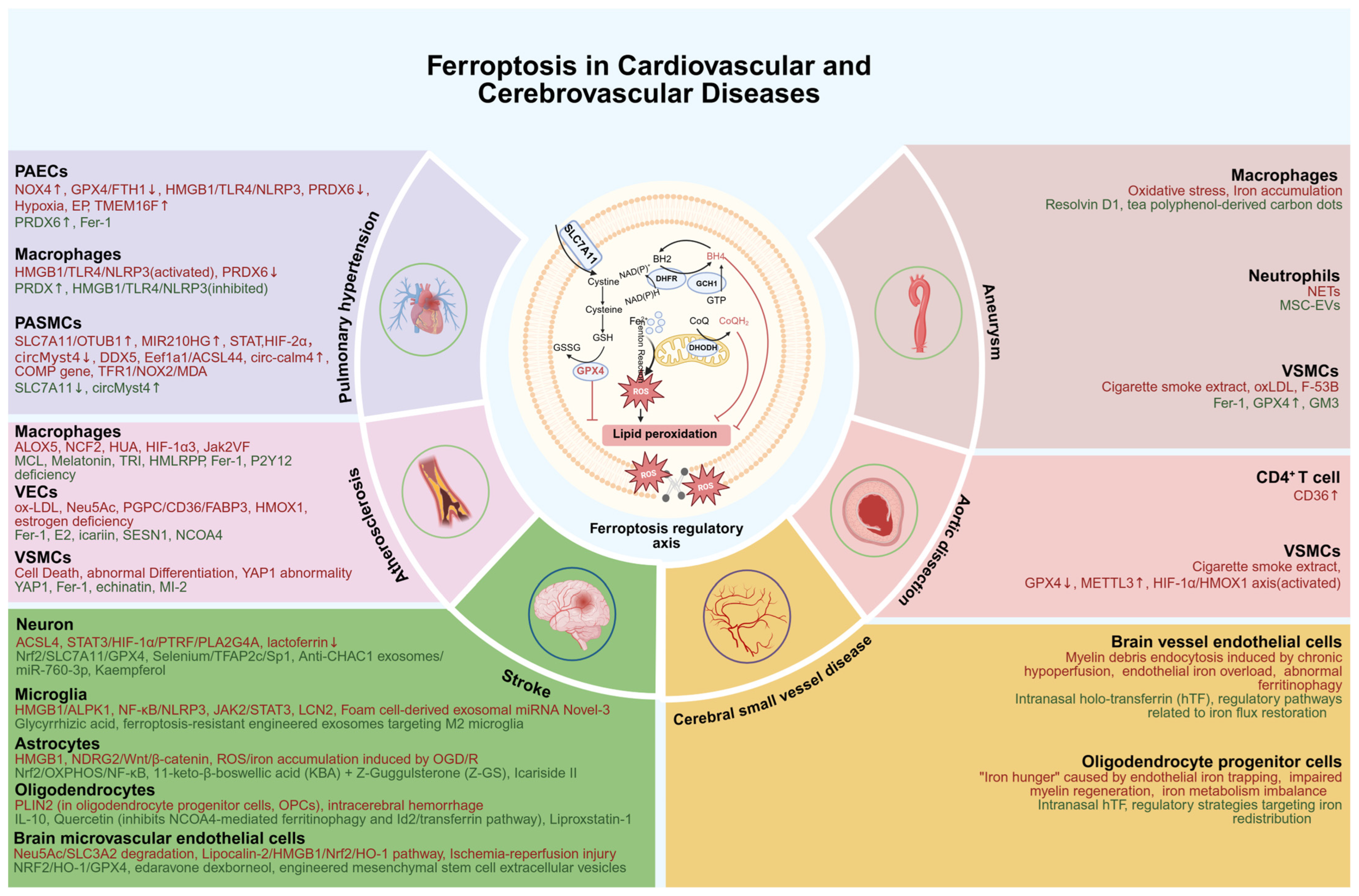
3. Ferroptosis in Cardiovascular Diseases
3.1. The Role of Ferroptosis in Atherosclerosis
3.1.1. Macrophages
3.1.2. Vascular Endothelial Cells
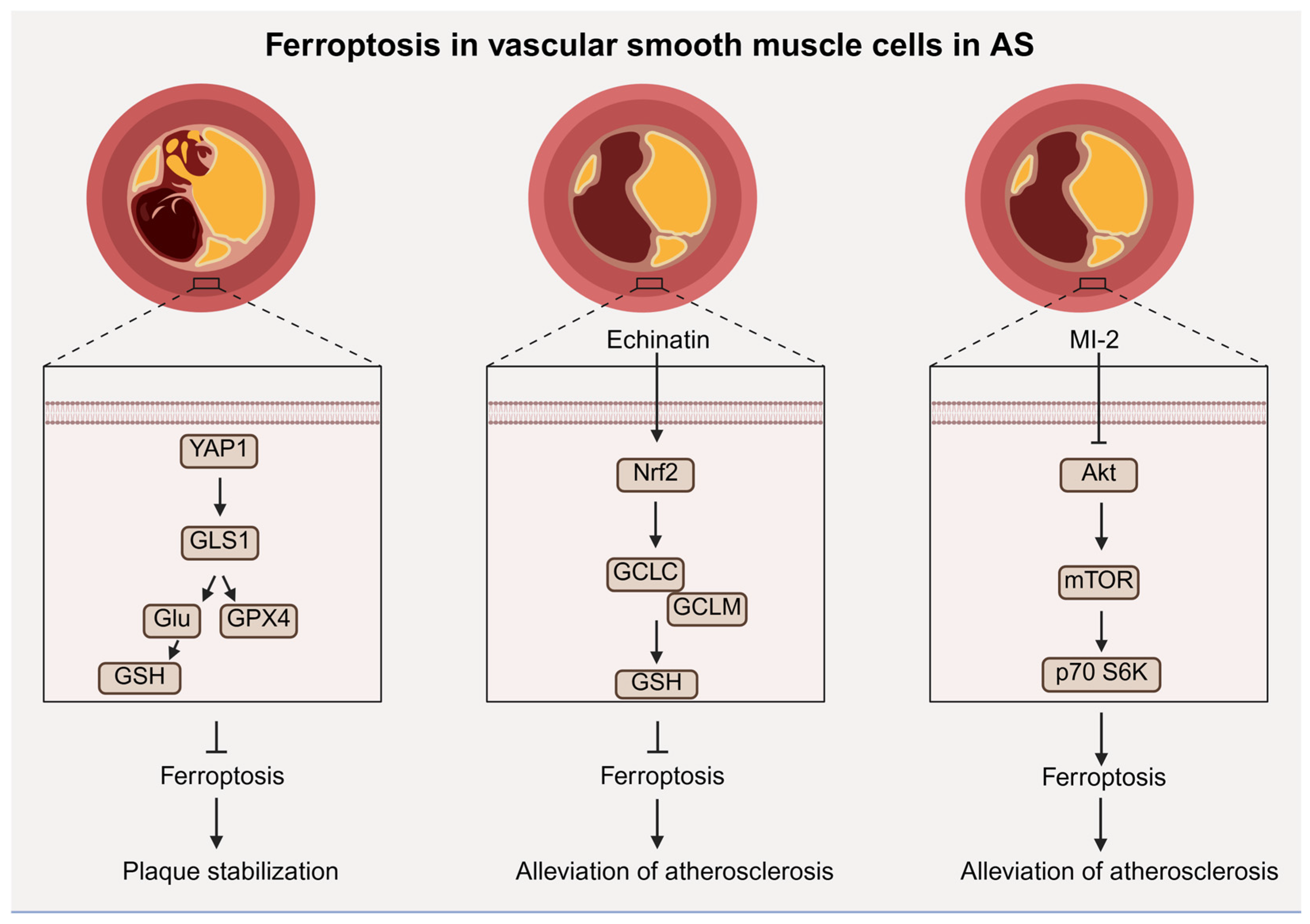
3.1.3. Vascular Smooth Muscle Cells
3.1.4. Conclusions and Perspectives
3.2. The Role of Ferroptosis in Pulmonary Hypertension
3.2.1. Pulmonary Artery Endothelial Cells
3.2.2. Macrophages
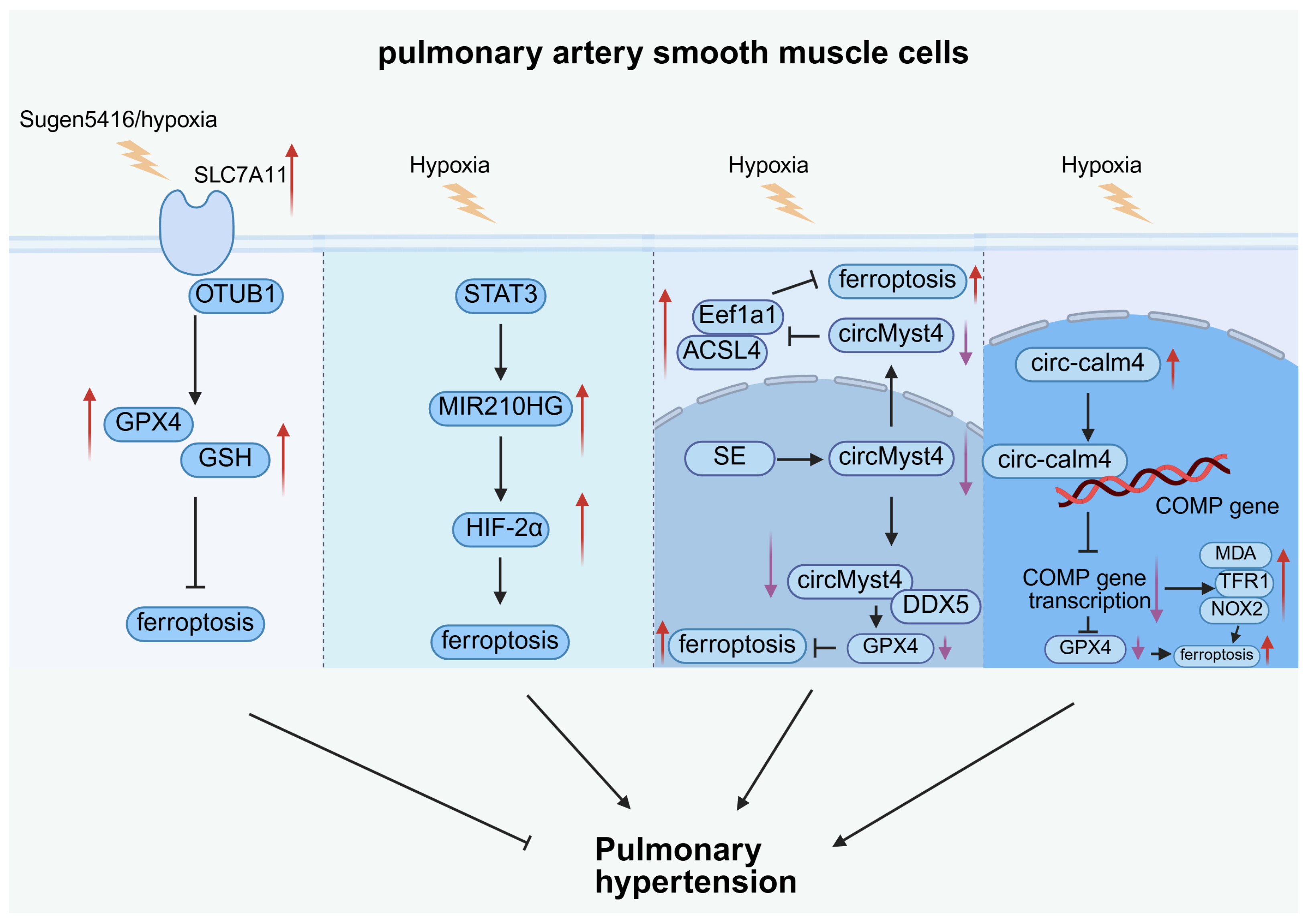
3.2.3. Pulmonary Artery Smooth Muscle Cells
3.2.4. Conclusions and Perspectives
3.3. The Role of Ferroptosis in Aneurysm
3.3.1. Macrophages and Neutrophils
3.3.2. Vascular Smooth Muscle Cells
3.3.3. Conclusions and Perspectives
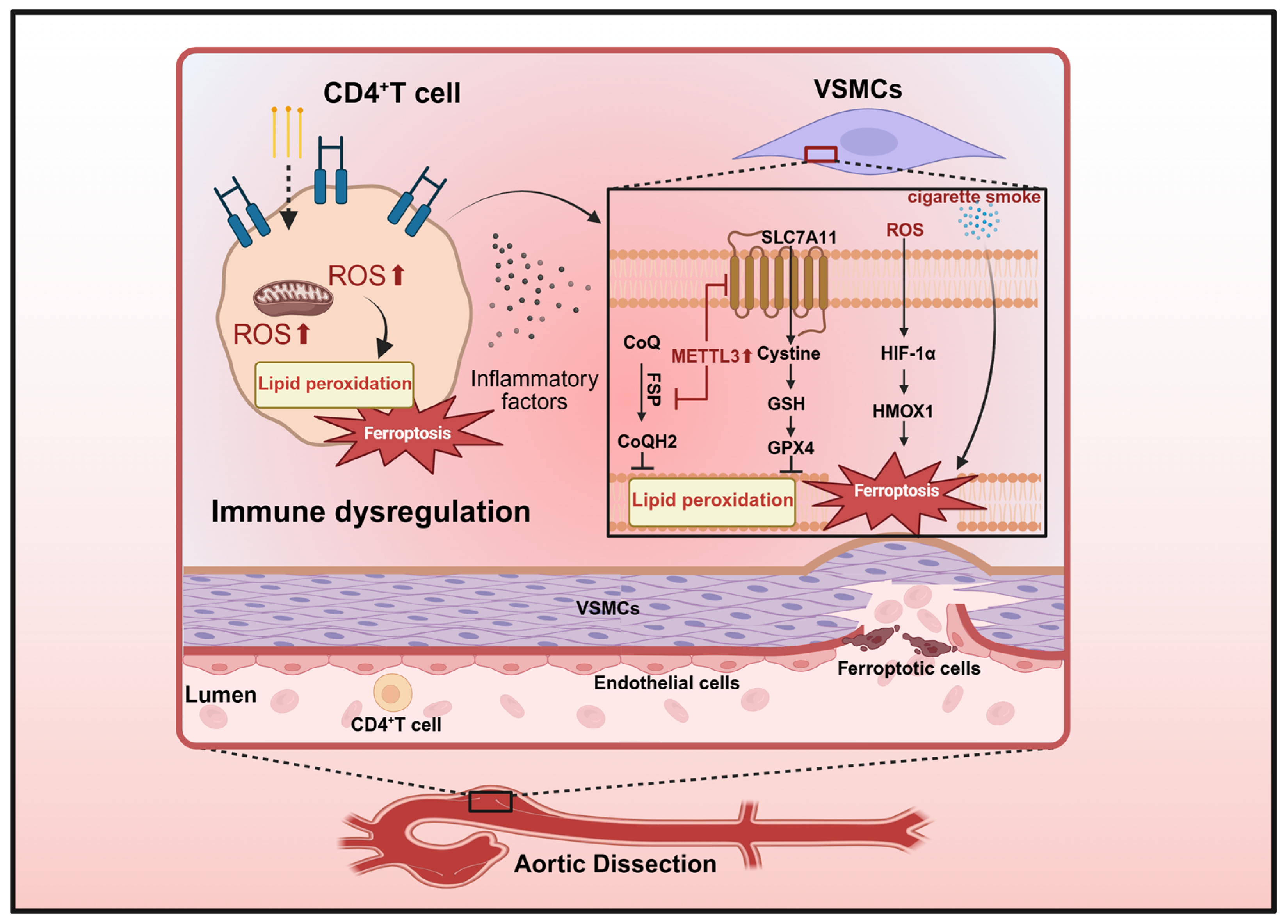
3.4. The Role of Ferroptosis in Aortic Dissection
3.4.1. CD4+ T Cells
3.4.2. Vascular Smooth Muscle Cells
3.4.3. Conclusions and Perspectives
4. Ferroptosis in Cerebrovascular Diseases
4.1. The Role of Ferroptosis in Stroke
4.1.1. Neurons
4.1.2. Glial Cells
4.1.3. Brain Microvascular Endothelial Cells
4.1.4. Conclusions and Perspectives
4.2. The Role of Ferroptosis in Cerebral Small Vessel Disease
4.2.1. Brain Microvascular Endothelial Cells
4.2.2. Neurons and Oligodendroglial Lineage Cells
4.2.3. Conclusions and Perspectives
5. Therapeutic Applications of Ferroptosis in Vascular Diseases
5.1. Synthetic Small-Molecule Ferroptosis Inhibitors
5.1.1. Ferrostatin-1
5.1.2. Liproxstatin-1
5.1.3. UAMC-3203
5.2. Iron Chelation Therapy (Deferoxamine)
5.3. Natural Products
5.3.1. Quercetin
5.3.2. Salvianolic Acid A
5.4. Therapies Targeting the Ferroptosis–Immune Interface
6. Conclusions
Author Contributions
Funding
Data Availability Statement
Acknowledgments
Conflicts of Interest
Abbreviations
| 4-HNE | 4-Hydroxynonenal |
| AA | Aortic aneurysm |
| AAA | Abdominal aortic aneurysm |
| ACSL4 | Acyl-CoA synthetase long-chain family member 4 |
| AD | Aortic dissection |
| ALOX5 | 5-Lipoxygenase |
| ALOXs | Lipoxygenases |
| ALPK1 | Alpha-kinase 1 |
| AS | Atherosclerosis |
| BBB | Blood–brain barrier |
| BVECs | Brain vessel endothelial cells |
| CoQ10 | Ubiquinone |
| CoQ10H2 | Ubiquinol |
| CSE | Cigarette smoke extract |
| cSVD | Cerebral small vessel disease |
| DAMPs | Damage-associated molecular patterns |
| DDX5 | DEAD box helicase 5 |
| DFO | Deferoxamine |
| DHFR | Dihydrofolate reductase |
| DMT1 | Ferrous ion membrane transport protein DMT1 |
| E2 | Estradiol |
| Eef1a1 | Eukaryotic translation elongation factor 1 alpha 1 |
| EP | Erythrophagocytosis |
| Fer-1 | Ferrostatin-1 |
| FPN | Ferroportin |
| FSP1 | Ferroptosis suppressor protein 1 |
| FTH1 | Ferritin heavy chain 1 |
| GCLC | Catalytic subunit of glutamate cysteine ligase |
| GCLM | Modulatory subunit of glutamate cysteine ligase |
| GLS1 | Glutaminase 1 |
| Glu | Glutamate |
| GPX4 | Glutathione peroxidase 4 |
| GSH | Glutathione |
| HA | Hyaluronic acid |
| HFD | High-fat diet |
| HHcy | Hyperhomocysteinemia |
| HIF-1α | Hypoxia-inducible factor-1α |
| HMGB1 | High-mobility group box 1 |
| HPH | Hypoxic pulmonary hypertension |
| HUA | High levels of uric acid |
| HUVECs | Human umbilical vein endothelial cells |
| I/R | Ischemia–reperfusion |
| IL-10 | Interleukin-10 |
| KBA | 11-Keto-β-boswellic acid |
| LIP | Labile iron pool |
| Lipro-1 | Liproxstatin-1 |
| LPCAT3 | Lysophosphatidylcholine acyltransferase 3 |
| MAECs | Mouse aortic endothelial cells |
| MALT1 | Mucosa-associated lymphoid tissue lymphoma translocation protein 1 |
| MCL | Micheliolide |
| MCT | Monocrotaline |
| MDA | Malondialdehyde |
| METTL3 | Methyltransferase-like 3 |
| MJT | Maijitong granule |
| MSC-EVs | Mesenchymal stem cell-derived extracellular vesicles |
| NADPH | Nicotinamide adenine dinucleotide phosphate |
| NCOA4 | Nuclear receptor coactivator 4 |
| NCF2 | P67phox |
| NDRG2 | N-myc downstream-regulated gene 2 |
| NETs | Neutrophil extracellular traps |
| Neu5Ac | N-Acetylneuraminic acid |
| NLRP3 | NOD-like receptor family pyrin domain containing 3 |
| NOXs | NADPH oxidase |
| NPs | Nanoparticles |
| OGD/R | Oxygen–glucose deprivation/reoxygenation |
| OPCs | Oligodendrocyte progenitor cells |
| OTUB1 | Ubiquitin aldehyde binding 1 |
| OVX | Ovariectomized |
| PAECs | Pulmonary artery endothelial cells |
| PASMCs | Pulmonary artery smooth muscle cells |
| PGPC | 1-Palmitoyl-2-glutaroyl-sn-glycero-3-phosphocholine |
| PH | Pulmonary hypertension |
| PLGA | Poly(lactic-co-glycolic) acid |
| PLIN2 | Perilipin-2 |
| PLOOH | Lipid peroxides |
| PMVECs | Pulmonary microvascular endothelial cells |
| PUFA-PLs | Polyunsaturated fatty acid-containing phospholipids |
| PUFAs | Polyunsaturated fatty acids |
| QCT | Quercetin |
| ROS | Reactive oxygen species |
| RvD1 | Resolvin D1 |
| SAL-A | Salvianolic acid A |
| SCARB1 | Scavenger receptor class B member 1 |
| SCI | Spinal cord injury |
| SE | Superenhancer |
| SESN1 | Sestrin 1 |
| TfR | Transferrin receptor |
| TfR1 | Transferrin receptor 1 |
| TLR4 | Toll-like receptor 4 |
| TRI | Tricetin |
| TRPML 1 | Mucolipin 1 |
| VCI | Vascular cognitive impairment |
| VECs | Vascular endothelial cells |
| VSMCs | Vascular smooth muscle cells |
| WMI | White matter injury |
| xCT | Xap5 circadian timekeeper |
| YAP1 | Yes-associated protein 1 |
| Z-GS | Z-Guggulsterone |
References
- Gupta, A.S. Nanomedicine approaches in vascular disease: A review. Nanomedicine 2011, 7, 763–779. [Google Scholar] [CrossRef]
- Dev, R.; Adams, A.M.; Raparelli, V.; Norris, C.M.; Pilote, L.; Investigators, G.-F. Sex and Gender Determinants of Vascular Disease in the Global Context. Can. J. Cardiol. 2022, 38, 1799–1811. [Google Scholar] [CrossRef]
- Elia, L.; Condorelli, G. The involvement of epigenetics in vascular disease development. Int. J. Biochem. Cell. Biol. 2019, 107, 27–31. [Google Scholar] [CrossRef] [PubMed]
- Flores, A.M.; Ye, J.; Jarr, K.U.; Hosseini-Nassab, N.; Smith, B.R.; Leeper, N.J. Nanoparticle Therapy for Vascular Diseases. Arter. Thromb. Vasc. Biol. 2019, 39, 635–646. [Google Scholar] [CrossRef] [PubMed]
- Tu, C.; Das, S.; Baker, A.B.; Zoldan, J.; Suggs, L.J. Nanoscale strategies: Treatment for peripheral vascular disease and critical limb ischemia. ACS Nano 2015, 9, 3436–3452. [Google Scholar] [CrossRef]
- Gupta, R.; Tongers, J.; Losordo, D.W. Human Studies of Angiogenic Gene Therapy. Circ. Res. 2009, 105, 724–736. [Google Scholar] [CrossRef]
- Dixon, S.J.; Lemberg, K.M.; Lamprecht, M.R.; Skouta, R.; Zaitsev, E.M.; Gleason, C.E.; Patel, D.N.; Bauer, A.J.; Cantley, A.M.; Yang, W.S.; et al. Ferroptosis: An iron-dependent form of nonapoptotic cell death. Cell 2012, 149, 1060–1072. [Google Scholar] [CrossRef] [PubMed]
- Svobodova, H.; Kosnac, D.; Balazsiova, Z.; Tanila, H.; Miettinen, P.O.; Sierra, A.; Vitovic, P.; Wagner, A.; Polak, S.; Kopani, M. Elevated age-related cortical iron, ferritin and amyloid plaques in APP(swe)/PS1(deltaE9) transgenic mouse model of Alzheimer’s disease. Physiol. Res. 2019, 68, S445–S451. [Google Scholar] [CrossRef]
- Reichert, C.O.; de Freitas, F.A.; Sampaio-Silva, J.; Rokita-Rosa, L.; Barros, P.L.; Levy, D.; Bydlowski, S.P. Ferroptosis Mechanisms Involved in Neurodegenerative Diseases. Int. J. Mol. Sci. 2020, 21, 8765. [Google Scholar] [CrossRef]
- Wang, Y.; Peng, X.; Zhang, M.; Jia, Y.; Yu, B.; Tian, J. Revisiting Tumors and the Cardiovascular System: Mechanistic Intersections and Divergences in Ferroptosis. Oxid. Med. Cell. Longev. 2020, 2020, 9738143. [Google Scholar]
- Milan, M.; Troyano-Rodriguez, E.; Ihuoma, J.; Negri, S.; Rudraboina, R.; Kosmider, A.; Awasthi, S.; Balasubramanian, P.; Conley, S.; Yabluchanskiy, A.; et al. Fasting as Medicine: Mitochondrial and Endothelial Rejuvenation in Vascular Aging. Aging Cell 2026, 25, e70372. [Google Scholar] [CrossRef] [PubMed]
- Milan, M.; Brown, J.; O’Reilly, C.L.; Bubak, M.P.; Negri, S.; Balasubramanian, P.; Dhanekula, A.S.; Pharaoh, G.; Reyff, Z.; Ballard, C.; et al. Time-restricted feeding improves aortic endothelial relaxation by enhancing mitochondrial function and attenuating oxidative stress in aged mice. Redox Biol. 2024, 73, 103189. [Google Scholar] [CrossRef]
- Noh, B.; Blasco-Conesa, M.P.; Rahman, S.M.; Monga, S.; Ritzel, R.; Guzman, G.; Lai, Y.J.; Ganesh, B.P.; Urayama, A.; McCullough, L.D.; et al. Iron overload induces cerebral endothelial senescence in aged mice and in primary culture in a sex-dependent manner. Aging Cell 2023, 22, e13977. [Google Scholar] [CrossRef] [PubMed]
- Galy, B.; Conrad, M.; Muckenthaler, M. Mechanisms controlling cellular and systemic iron homeostasis. Nat. Rev. Mol. Cell Biol. 2024, 25, 133–155. [Google Scholar] [CrossRef]
- Fang, X.; Ardehali, H.; Min, J.; Wang, F. The molecular and metabolic landscape of iron and ferroptosis in cardiovascular disease. Nat. Rev. Cardiol. 2023, 20, 7–23. [Google Scholar] [CrossRef]
- Tang, D.; Chen, X.; Kang, R.; Kroemer, G. Ferroptosis: Molecular mechanisms and health implications. Cell Res. 2021, 31, 107–125. [Google Scholar] [CrossRef]
- Bell, H.N.; Stockwell, B.R.; Zou, W. Ironing out the role of ferroptosis in immunity. Immunity 2024, 57, 941–956. [Google Scholar] [CrossRef] [PubMed]
- Li, J.; Jia, Y.C.; Ding, Y.X.; Bai, J.; Cao, F.; Li, F. The crosstalk between ferroptosis and mitochondrial dynamic regulatory networks. Int. J. Biol. Sci. 2023, 19, 2756–2771. [Google Scholar] [CrossRef]
- Dixon, S.J.; Olzmann, J.A. The cell biology of ferroptosis. Nat. Rev. Mol. Cell Biol. 2024, 25, 424–442. [Google Scholar] [CrossRef] [PubMed]
- Lyamzaev, K.G.; Panteleeva, A.A.; Simonyan, R.A.; Avetisyan, A.V.; Chernyak, B.V. Mitochondrial Lipid Peroxidation Is Responsible for Ferroptosis. Cells 2023, 12, 611. [Google Scholar] [CrossRef]
- Chen, Y.; Li, S.; Yin, M.; Li, Y.; Chen, C.; Zhang, J.; Sun, K.; Kong, X.; Chen, Z.; Qian, J. Isorhapontigenin Attenuates Cardiac Microvascular Injury in Diabetes via the Inhibition of Mitochondria-Associated Ferroptosis Through PRDX2-MFN2-ACSL4 Pathways. Diabetes 2023, 72, 389–404. [Google Scholar] [CrossRef]
- Bersuker, K.; Hendricks, J.M.; Li, Z.; Magtanong, L.; Ford, B.; Tang, P.H.; Roberts, M.A.; Tong, B.; Maimone, T.J.; Zoncu, R.; et al. The CoQ oxidoreductase FSP1 acts parallel to GPX4 to inhibit ferroptosis. Nature 2019, 575, 688–692. [Google Scholar] [CrossRef]
- Jiang, X.; Stockwell, B.R.; Conrad, M. Ferroptosis: Mechanisms, biology and role in disease. Nat. Rev. Mol. Cell Biol. 2021, 22, 266–282. [Google Scholar] [CrossRef]
- Doll, S.; Freitas, F.P.; Shah, R.; Aldrovandi, M.; da Silva, M.C.; Ingold, I.; Goya Grocin, A.; Xavier da Silva, T.N.; Panzilius, E.; Scheel, C.H.; et al. FSP1 is a glutathione-independent ferroptosis suppressor. Nature 2019, 575, 693–698. [Google Scholar] [CrossRef]
- Kraft, V.A.N.; Bezjian, C.T.; Pfeiffer, S.; Ringelstetter, L.; Müller, C.; Zandkarimi, F.; Merl-Pham, J.; Bao, X.; Anastasov, N.; Kössl, J.; et al. GTP Cyclohydrolase 1/Tetrahydrobiopterin Counteract Ferroptosis through Lipid Remodeling. ACS Cent. Sci. 2020, 6, 41–53. [Google Scholar]
- Soula, M.; Weber, R.A.; Zilka, O.; Alwaseem, H.; La, K.; Yen, F.; Molina, H.; Garcia-Bermudez, J.; Pratt, D.A.; Birsoy, K. Metabolic determinants of cancer cell sensitivity to canonical ferroptosis inducers. Nat. Chem. Biol. 2020, 16, 1351–1360. [Google Scholar] [CrossRef]
- Mishima, E.; Ito, J.; Wu, Z.; Nakamura, T.; Wahida, A.; Doll, S.; Tonnus, W.; Nepachalovich, P.; Eggenhofer, E.; Aldrovandi, M.; et al. A non-canonical vitamin K cycle is a potent ferroptosis suppressor. Nature 2022, 608, 778–783. [Google Scholar] [CrossRef] [PubMed]
- Yang, Y.; Nawabi, A.Q.; Yao, Y.; Liu, N. Ferroptosis of smooth muscle cells in vascular diseases: From basic principles to clinical translation. Cell Death Discov. 2026, 12, 140. [Google Scholar] [CrossRef] [PubMed]
- Libby, P.; Buring, J.E.; Badimon, L.; Hansson, G.K.; Deanfield, J.; Bittencourt, M.S.; Tokgozoglu, L.; Lewis, E.F. Atherosclerosis. Nat. Rev. Dis. Primers 2019, 5, 56. [Google Scholar] [PubMed]
- Virani, S.S.; Alonso, A.; Aparicio, H.J.; Benjamin, E.J.; Bittencourt, M.S.; Callaway, C.W.; Carson, A.P.; Chamberlain, A.M.; Cheng, S.; Delling, F.N.; et al. Heart Disease and Stroke Statistics-2021 Update: A Report From the American Heart Association. Circulation 2021, 143, e254–e743. [Google Scholar] [PubMed]
- Tardif, J.C.; Kouz, S.; Waters, D.D.; Bertrand, O.F.; Diaz, R.; Maggioni, A.P.; Pinto, F.J.; Ibrahim, R.; Gamra, H.; Kiwan, G.S.; et al. Efficacy and Safety of Low-Dose Colchicine after Myocardial Infarction. N. Engl. J. Med. 2019, 381, 2497–2505. [Google Scholar] [CrossRef]
- Wang, Y.; Zhao, Y.; Ye, T.; Yang, L.; Shen, Y.; Li, H. Ferroptosis Signaling and Regulators in Atherosclerosis. Front. Cell Dev. Biol. 2021, 9, 809457. [Google Scholar] [CrossRef]
- Wang, L.; Cai, J.; Qiao, T.; Li, K. Ironing out macrophages in atherosclerosis. Acta Biochim. Biophys. Sin. 2023, 55, 1–10. [Google Scholar] [CrossRef]
- Susser, L.I.; Rayner, K.J. Through the layers: How macrophages drive atherosclerosis across the vessel wall. J. Clin. Investig. 2022, 132, e157011. [Google Scholar] [CrossRef]
- Li, M.; Xin, S.; Gu, R.; Zheng, L.; Hu, J.; Zhang, R.; Dong, H. Novel Diagnostic Biomarkers Related to Oxidative Stress and Macrophage Ferroptosis in Atherosclerosis. Oxid. Med. Cell. Longev. 2022, 2022, 8917947. [Google Scholar] [CrossRef]
- Liu, W.; Östberg, N.; Yalcinkaya, M.; Dou, H.; Endo-Umeda, K.; Tang, Y.; Hou, X.; Xiao, T.; Fidler, T.P.; Abramowicz, S.; et al. Erythroid lineage Jak2V617F expression promotes atherosclerosis through erythrophagocytosis and macrophage ferroptosis. J. Clin. Investig. 2022, 132, e155724. [Google Scholar] [CrossRef] [PubMed]
- Yu, W.; Liu, W.; Xie, D.; Wang, Q.; Xu, C.; Zhao, H.; Lv, J.; He, F.; Chen, B.; Yamamoto, T.; et al. High Level of Uric Acid Promotes Atherosclerosis by Targeting NRF2-Mediated Autophagy Dysfunction and Ferroptosis. Oxid. Med. Cell. Longev. 2022, 2022, 9304383. [Google Scholar] [CrossRef] [PubMed]
- Klaver, D.; Thurnher, M. Control of Macrophage Inflammation by P2Y Purinergic Receptors. Cells 2021, 10, 1098. [Google Scholar] [CrossRef] [PubMed]
- Hu, Y.X.; You, H.M.; Bai, M.R.; Yue, W.H.; Li, F.F.; Hu, B.W.; Chen, Y.S.; Shen, X.Y.; Wu, Y.; Wang, J.M.; et al. Macrophage P2Y12 regulates iron transport and its inhibition protects against atherosclerosis. J. Adv. Res. 2025, 76, 585–603. [Google Scholar] [CrossRef]
- Luo, X.; Wang, Y.; Zhu, X.; Chen, Y.; Xu, B.; Bai, X.; Weng, X.; Xu, J.; Tao, Y.; Yang, D.; et al. MCL attenuates atherosclerosis by suppressing macrophage ferroptosis via targeting KEAP1/NRF2 interaction. Redox Biol. 2024, 69, 102987. [Google Scholar] [CrossRef]
- Lin, Q.; Ding, S.; Shi, M.; Cao, Y.; Liu, J.; Sun, D.; Xu, W.; Pang, S.; Gu, A.; Mingyan, E. Tricetin attenuates atherosclerosis by suppressing macrophage ferroptosis via activation of the NRF2 pathway. Int. Immunopharmacol. 2024, 143, 113418. [Google Scholar] [CrossRef]
- Tao, Y.; Zhao, Q.; Lu, C.; Yong, W.; Xu, M.; Wang, Z.; Leng, X. Melatonin suppresses atherosclerosis by ferroptosis inhibition via activating NRF2 pathway. FASEB J. 2024, 38, e23678. [Google Scholar] [CrossRef]
- Shi, J.; Yang, M.M.; Yang, S.; Fan, F.; Zheng, G.; Miao, Y.; Hua, Y.; Zhang, J.; Cheng, Y.; Liu, S.; et al. MaiJiTong granule attenuates atherosclerosis by reducing ferroptosis via activating STAT6-mediated inhibition of DMT1 and SOCS1/p53 pathways in LDLR−/− mice. Phytomedicine 2024, 128, 155489. [Google Scholar]
- Zang, X.; Wang, Y.; Han, C.; Cui, L.; Liu, H.; Tian, S.; Liu, K.; Li, P.; Sun, C.; Xia, Q.; et al. 2-Acetamidophenol (2-AAP) Suppresses the Progression of Atherosclerosis by Alleviating Hyperlipidemia and Attenuating the Ferroptosis Pathway. Mar. Drugs 2024, 22, 513. [Google Scholar] [CrossRef]
- Yang, A.; Zhang, H.; Zhang, H.; Li, N.; Chen, C.; Yang, X.; Tian, J.; Sun, J.; Li, G.; Sun, Y.; et al. Pitavastatin and resveratrol bio-nanocomplexes against hyperhomocysteinemia-induced atherosclerosis via blocking ferroptosis-related lipid deposition. J. Control. Release 2025, 381, 113598. [Google Scholar] [CrossRef]
- Bu, L.L.; Yuan, H.H.; Xie, L.L.; Guo, M.H.; Liao, D.F.; Zheng, X.L. New Dawn for Atherosclerosis: Vascular Endothelial Cell Senescence and Death. Int. J. Mol. Sci. 2023, 24, 15160. [Google Scholar] [CrossRef] [PubMed]
- Zhang, G.; Qin, Q.; Zhang, C.; Sun, X.; Kazama, K.; Yi, B.; Cheng, F.; Guo, Z.F.; Sun, J. NDRG1 Signaling Is Essential for Endothelial Inflammation and Vascular Remodeling. Circ. Res. 2023, 132, 306–319. [Google Scholar] [CrossRef] [PubMed]
- Bai, T.; Li, M.; Liu, Y.; Qiao, Z.; Wang, Z. Inhibition of ferroptosis alleviates atherosclerosis through attenuating lipid peroxidation and endothelial dysfunction in mouse aortic endothelial cell. Free. Radic. Biol. Med. 2020, 160, 92–102. [Google Scholar] [CrossRef] [PubMed]
- Birukova, A.A.; Starosta, V.; Tian, X.; Higginbotham, K.; Koroniak, L.; Berliner, J.A.; Birukov, K.G. Fragmented oxidation products define barrier disruptive endothelial cell response to OxPAPC. Transl. Res. 2013, 161, 495–504. [Google Scholar] [CrossRef]
- Chen, S.; Gao, J.J.; Liu, Y.J.; Mo, Z.W.; Wu, F.Y.; Hu, Z.J.; Peng, Y.M.; Zhang, X.Q.; Ma, Z.S.; Liu, Z.L.; et al. The oxidized phospholipid PGPC impairs endothelial function by promoting endothelial cell ferroptosis via FABP3. J. Lipid Res. 2024, 65, 100499. [Google Scholar] [CrossRef]
- Meng, Z.; Liang, H.; Zhao, J.; Gao, J.; Liu, C.; Ma, X.; Liu, J.; Liang, B.; Jiao, X.; Cao, J.; et al. HMOX1 upregulation promotes ferroptosis in diabetic atherosclerosis. Life Sci. 2021, 284, 119935. [Google Scholar] [CrossRef] [PubMed]
- Lv, Y.; Zhang, S.; Weng, X.; Huang, J.; Zhao, H.; Dai, X.; Bai, X.; Bao, X.; Zhao, C.; Zeng, M.; et al. Estrogen deficiency accelerates postmenopausal atherosclerosis by inducing endothelial cell ferroptosis through inhibiting NRF2/GPX4 pathway. FASEB J. 2023, 37, e22992. [Google Scholar] [CrossRef]
- Zhu, L.; Liu, Z.; Liu, J.; Li, Z.; Bao, Y.; Sun, X.; Zhao, W.; Zhou, A.; Wu, H. NCOA4 linked to endothelial cell ferritinophagy and ferroptosis:a key regulator aggravate aortic endothelial inflammation and atherosclerosis. Redox Biol. 2025, 79, 103465. [Google Scholar] [CrossRef]
- Xiang, P.; Chen, Q.; Chen, L.; Lei, J.; Yuan, Z.; Hu, H.; Lu, Y.; Wang, X.; Wang, T.; Yu, R.; et al. Metabolite Neu5Ac triggers SLC3A2 degradation promoting vascular endothelial ferroptosis and aggravates atherosclerosis progression in ApoE−/− mice. Theranostics 2023, 13, 4993–5016. [Google Scholar] [CrossRef]
- Wang, X.; Zhang, M.; Mao, C.; Zhang, C.; Ma, W.; Tang, J.; Xiang, D.; Qi, X. Icariin alleviates ferroptosis-related atherosclerosis by promoting autophagy in xo-LDL-induced vascular endothelial cell injury and atherosclerotic mice. Phytother. Res. 2023, 37, 3951–3963. [Google Scholar] [CrossRef]
- Gao, F.; Zhang, B.; Sun, Z.; Gao, Y.; Liu, C.; Dou, X.; Tong, H.; Wang, R. Regulation of endothelial ferroptosis by SESN1 in atherosclerosis and its related mechanism. Aging 2023, 15, 5052–5065. [Google Scholar] [CrossRef]
- Xu, X.D.; Chen, J.X.; Zhu, L.; Xu, S.T.; Jiang, J.; Ren, K. The emerging role of pyroptosis-related inflammasome pathway in atherosclerosis. Mol. Med. 2022, 28, 160. [Google Scholar] [CrossRef] [PubMed]
- Reed, E.; Fellows, A.; Lu, R.; Rienks, M.; Schmidt, L.; Yin, X.; Duregotti, E.; Brandt, M.; Krasemann, S.; Hartmann, K.; et al. Extracellular Matrix Profiling and Disease Modelling in Engineered Vascular Smooth Muscle Cell Tissues. Matrix Biol. Plus 2022, 16, 100122. [Google Scholar] [CrossRef] [PubMed]
- Chen, Y.; Cui, Y.; Li, M.; Xia, M.; Xiang, Q.; Mao, Y.; Li, H.; Chen, J.; Zeng, W.; Zheng, X.; et al. A novel mechanism of ferroptosis inhibition-enhanced atherosclerotic plaque stability: YAP1 suppresses vascular smooth muscle cell ferroptosis through GLS1. FASEB J. 2024, 38, e23850. [Google Scholar] [CrossRef] [PubMed]
- Zhang, J.; Xie, S.A.; Wang, J.; Liu, J.; Liu, Y.; Zhou, S.; Li, X.; Han, L.; Pang, W.; Yao, W.; et al. Echinatin maintains glutathione homeostasis in vascular smooth muscle cells to protect against matrix remodeling and arterial stiffening. Matrix Biol. 2023, 119, 1–18. [Google Scholar] [CrossRef] [PubMed]
- You, J.; Ouyang, S.; Xie, Z.; Zhi, C.; Yu, J.; Tan, X.; Li, P.; Lin, X.; Ma, W.; Liu, Z.; et al. The suppression of hyperlipid diet-induced ferroptosis of vascular smooth muscle cells protests against atherosclerosis independent of p53/SCL7A11/GPX4 axis. J. Cell. Physiol. 2023, 238, 1891–1908. [Google Scholar] [CrossRef]
- Yan, B.; Belke, D.; Gui, Y.; Chen, Y.X.; Jiang, Z.S.; Zheng, X.L. Pharmacological inhibition of MALT1 (mucosa-associated lymphoid tissue lymphoma translocation protein 1) induces ferroptosis in vascular smooth muscle cells. Cell Death Discov. 2023, 9, 456. [Google Scholar] [CrossRef]
- Johnson, S.; Sommer, N.; Cox-Flaherty, K.; Weissmann, N.; Ventetuolo, C.E.; Maron, B.A. Pulmonary Hypertension: A Contemporary Review. Am. J. Respir. Crit. Care Med. 2023, 208, 528–548. [Google Scholar] [CrossRef]
- Hoeper, M.M.; Humbert, M.; Souza, R.; Idrees, M.; Kawut, S.M.; Sliwa-Hahnle, K.; Jing, Z.C.; Gibbs, J.S. A global view of pulmonary hypertension. Lancet Respir. Med. 2016, 4, 306–322. [Google Scholar] [CrossRef]
- Humbert, M.; Kovacs, G.; Hoeper, M.M.; Badagliacca, R.; Berger, R.M.F.; Brida, M.; Carlsen, J.; Coats, A.J.S.; Escribano-Subias, P.; Ferrari, P.; et al. 2022 ESC/ERS Guidelines for the diagnosis and treatment of pulmonary hypertension. Eur. Heart J. 2022, 43, 3618–3731. [Google Scholar] [CrossRef]
- Hoeper, M.M.; Ghofrani, H.A.; Grunig, E.; Klose, H.; Olschewski, H.; Rosenkranz, S. Pulmonary Hypertension. Dtsch. Arztebl. Int. 2017, 114, 73–84. [Google Scholar] [CrossRef] [PubMed]
- Evans, C.E.; Cober, N.D.; Dai, Z.; Stewart, D.J.; Zhao, Y.Y. Endothelial cells in the pathogenesis of pulmonary arterial hypertension. Eur. Respir. J. 2021, 58, 2003957. [Google Scholar] [CrossRef]
- Wang, D.; Uhrin, P.; Mocan, A.; Waltenberger, B.; Breuss, J.M.; Tewari, D.; Mihaly-Bison, J.; Huminiecki, Ł.; Starzyński, R.R.; Tzvetkov, N.T.; et al. Vascular smooth muscle cell proliferation as a therapeutic target. Part 1: Molecular targets and pathways. Biotechnol. Adv. 2018, 36, 1586–1607. [Google Scholar] [CrossRef] [PubMed]
- Xie, S.S.; Deng, Y.; Guo, S.L.; Li, J.Q.; Zhou, Y.C.; Liao, J.; Wu, D.D.; Lan, W.F. Endothelial cell ferroptosis mediates monocrotaline-induced pulmonary hypertension in rats by modulating NLRP3 inflammasome activation. Sci. Rep. 2022, 12, 3056. [Google Scholar] [CrossRef] [PubMed]
- An, Y.; Xu, M.; Yan, M.; Zhang, H.; Li, C.; Wang, L.; Liu, C.; Dong, H.; Chen, L.; Zhang, L.; et al. Erythrophagocytosis-induced ferroptosis contributes to pulmonary microvascular thrombosis and thrombotic vascular remodeling in pulmonary arterial hypertension. J. Thromb. Haemost. 2025, 23, 158–170. [Google Scholar] [CrossRef]
- Liao, J.; Xie, S.S.; Deng, Y.; Wu, D.D.; Meng, H.; Lan, W.F.; Dai, P. PRDX6-mediated pulmonary artery endothelial cell ferroptosis contributes to monocrotaline-induced pulmonary hypertension. Microvasc. Res. 2023, 146, 104471. [Google Scholar]
- Lee, N.; Carlisle, A.E.; Peppers, A.; Park, S.J.; Doshi, M.B.; Spears, M.E.; Kim, D. xCT-Driven Expression of GPX4 Determines Sensitivity of Breast Cancer Cells to Ferroptosis Inducers. Antioxidants 2021, 10, 317. [Google Scholar] [CrossRef] [PubMed]
- Wang, Y.; Tang, M. PM2.5 induces ferroptosis in human endothelial cells through iron overload and redox imbalance. Environ. Pollut. 2019, 254, 112937. [Google Scholar] [CrossRef]
- Hu, P.; Xu, Y.; Jiang, Y.; Huang, J.; Liu, Y.; Wang, D.; Tao, T.; Sun, Z.; Liu, Y. The mechanism of the imbalance between proliferation and ferroptosis in pulmonary artery smooth muscle cells based on the activation of SLC7A11. Eur. J. Pharmacol. 2022, 928, 175093. [Google Scholar] [CrossRef] [PubMed]
- Wang, E.; Zhang, B.; Huang, L.; Li, P.; Han, R.; Zhou, S.; Zeng, D.; Wang, R. LncRNA MIR210HG promotes phenotype switching of pulmonary arterial smooth muscle cells through autophagy-dependent ferroptosis pathway. Apoptosis 2024, 29, 1648–1662. [Google Scholar] [CrossRef]
- He, S.; Bai, J.; Zhang, L.; Yuan, H.; Ma, C.; Wang, X.; Guan, X.; Mei, J.; Zhu, X.; Xin, W.; et al. Superenhancer-driven circRNA Myst4 involves in pulmonary artery smooth muscle cell ferroptosis in pulmonary hypertension. iScience 2024, 27, 110900. [Google Scholar] [CrossRef]
- Liu, A.; Wang, Y.; Zheng, S.; Bao, Z.; Zhu, H.; Yin, L.; Liu, C.; Zhao, X.; Zhao, Z.; Zhu, D.; et al. Endonuclear Circ-calm4 regulates ferroptosis via a circR-Loop of the COMP gene in pulmonary artery smooth muscle cells. Eur. J. Pharmacol. 2024, 982, 176944. [Google Scholar] [CrossRef]
- Zhu, J.; Meganathan, I.; MacAruthur, R.; Kassiri, Z. Inflammation in Abdominal Aortic Aneurysm: Cause or Comorbidity? Can. J. Cardiol. 2024, 40, 2378–2391. [Google Scholar] [CrossRef] [PubMed]
- Sampilvanjil, A.; Karasawa, T.; Yamada, N.; Komada, T.; Higashi, T.; Baatarjav, C.; Watanabe, S.; Kamata, R.; Ohno, N.; Takahashi, M. Cigarette smoke extract induces ferroptosis in vascular smooth muscle cells. Am. J. Physiol. Heart Circ. Physiol. 2020, 318, H508–H518. [Google Scholar] [CrossRef] [PubMed]
- Hu, X.; Hu, L.; Si, X.; Feng, Q.; Ma, Y.; Liu, Z.; He, X.; Shi, B. Comprehensive Bioinformatics Analysis Reveals the Role of Shared Cuproptosis- and Ferroptosis-Related DEG DLD in Abdominal Aortic Aneurysm. J. Cell. Mol. Med. 2025, 29, e70399. [Google Scholar] [CrossRef]
- Zheng, C.; Li, S.; Mueller, J.; Chen, C.; Lyu, H.; Yuan, G.; Zamalloa, A.; Adofina, L.; Srinivasan, P.; Menon, K.; et al. Evidence for alcohol-mediated hemolysis and erythrophagocytosis. Redox Biol. 2025, 85, 103742. [Google Scholar] [CrossRef] [PubMed]
- Packer, M. How can sodium-glucose cotransporter 2 inhibitors stimulate erythrocytosis in patients who are iron-deficient? Implications for understanding iron homeostasis in heart failure. Eur. J. Heart Fail. 2022, 24, 2287–2296. [Google Scholar]
- Krebs, J.R.; Bellotti, P.; Ueland, W.; Valisno, J.A.C.; Joseph Manual Kollareth, D.; Sharma, S.; Su, G.; Hartman, J.B.; Adithan, A.; Spinosa, M.; et al. Pharmacological Inhibition of Ferroptosis Attenuates Experimental Abdominal Aortic Aneurysm Formation. Arter. Thromb. Vasc. Biol. 2025, 45, 2053–2068. [Google Scholar] [CrossRef]
- Qi, Y.; Chen, L.; Ding, S.; Shen, X.; Wang, Z.; Qi, H.; Yang, S. Neutrophil extracellular trap-induced ferroptosis promotes abdominal aortic aneurysm formation via SLC25A11-mediated depletion of mitochondrial glutathione. Free. Radic. Biol. Med. 2024, 221, 215–224. [Google Scholar] [CrossRef]
- Chen, L.; Liu, Y.; Wang, Z.; Zhang, L.; Xu, Y.; Li, Y.; Zhang, L.; Wang, G.; Yang, S.; Xue, G. Mesenchymal stem cell-derived extracellular vesicles protect against abdominal aortic aneurysm formation by inhibiting NET-induced ferroptosis. Exp. Mol. Med. 2023, 55, 939–951. [Google Scholar] [PubMed]
- Filiberto, A.C.; Ladd, Z.; Leroy, V.; Su, G.; Elder, C.T.; Pruitt, E.Y.; Hensley, S.E.; Lu, G.; Hartman, J.B.; Zarrinpar, A.; et al. Resolution of inflammation via RvD1/FPR2 signaling mitigates Nox2 activation and ferroptosis of macrophages in experimental abdominal aortic aneurysms. FASEB J. 2022, 36, e22579. [Google Scholar] [CrossRef]
- Zhang, L.; Chen, S.; Ning, M.; Guo, S.; Wen, D.; Wang, H.; Sun, Y.; Yang, G.; Wang, Y.; Xue, S. Tea Polyphenol-Derived Carbon Dots Alleviate Abdominal Aortic Aneurysm Progression by Mitigating Oxidative Stress and Ferroptosis. ACS Appl. Bio. Mater. 2025, 8, 688–703. [Google Scholar] [PubMed]
- He, H.; Chen, L.; Peng, J.; Guo, J.; Xiao, X.; Dou, C.; Chen, H.; Zhan, S.; Han, X.; Yao, W. ROS-responsive nanoparticles with selenomethionine for ferroptosis modulation in abdominal aortic aneurysm. iScience 2025, 28, 111880. [Google Scholar] [CrossRef]
- Li, Y.; Zhang, L.; Zhang, Q.; Zhang, Y.; Pan, S.; Zhao, H.; Zhang, L. HSPB1 suppresses oxLDL-induced vascular smooth muscle cell ferroptosis by inhibiting DPP4. Arch. Biochem. Biophys. 2025, 768, 110400. [Google Scholar] [CrossRef] [PubMed]
- Zhang, M.; Shi, J.; Pan, H.; Zhu, J.; Wang, X.; Zhou, J.; Deng, H. F-53B stimulated vascular smooth muscle cell phenotypic switch and vascular remodeling via ferroptosis-related pathway. Sci. Total Environ. 2024, 954, 176565. [Google Scholar] [CrossRef]
- Zhang, S.; Bei, Y.; Huang, Y.; Huang, Y.; Hou, L.; Zheng, X.L.; Xu, Y.; Wu, S.; Dai, X. Induction of ferroptosis promotes vascular smooth muscle cell phenotypic switching and aggravates neointimal hyperplasia in mice. Mol. Med. 2022, 28, 121. [Google Scholar] [CrossRef]
- Scarpellini, C.; Klejborowska, G.; Lanthier, C.; Hassannia, B.; Vanden Berghe, T.; Augustyns, K. Beyond ferrostatin-1: A comprehensive review of ferroptosis inhibitors. Trends Pharmacol. Sci. 2023, 44, 902–916. [Google Scholar] [CrossRef]
- Zhang, F.; Li, K.; Zhang, W.; Zhao, Z.; Chang, F.; Du, J.; Zhang, X.; Bao, K.; Zhang, C.; Shi, L.; et al. Ganglioside GM3 Protects Against Abdominal Aortic Aneurysm by Suppressing Ferroptosis. Circulation 2024, 149, 843–859. [Google Scholar] [CrossRef]
- Shih, C.C.; Chen, C.Y.; Chuu, C.P.; Huang, C.Y.; Lu, C.J.; Lu, H.Y. Transcriptome Insights into Protective Mechanisms of Ferroptosis Inhibition in Aortic Dissection. Int. J. Mol. Sci. 2025, 26, 4338. [Google Scholar] [CrossRef]
- Li, H.; Wang, P.F.; Luo, W.; Fu, D.; Shen, W.Y.; Zhang, Y.L.; Zhao, S.; Dai, R.P. CD36-mediated ferroptosis destabilizes CD4(+) T cell homeostasis in acute Stanford type-A aortic dissection. Cell Death Dis. 2024, 15, 669. [Google Scholar] [CrossRef]
- Li, N.; Yi, X.; He, Y.; Huo, B.; Chen, Y.; Zhang, Z.; Wang, Q.; Li, Y.; Zhong, X.; Li, R.; et al. Targeting Ferroptosis as a Novel Approach to Alleviate Aortic Dissection. Int. J. Biol. Sci. 2022, 18, 4118–4134. [Google Scholar] [CrossRef]
- Clément, M.; Chappell, J.; Raffort, J.; Lareyre, F.; Vandestienne, M.; Taylor, A.L.; Finigan, A.; Harrison, J.; Bennett, M.R.; Bruneval, P.; et al. Vascular Smooth Muscle Cell Plasticity and Autophagy in Dissecting Aortic Aneurysms. Arter. Thromb. Vasc. Biol. 2019, 39, 1149–1159. [Google Scholar] [CrossRef] [PubMed]
- Liao, M.; Zou, S.; Wu, J.; Bai, J.; Liu, Y.; Zhi, K.; Qu, L. METTL3-mediated m6A modification of NORAD inhibits the ferroptosis of vascular smooth muscle cells to attenuate the aortic dissection progression in an YTHDF2-dependent manner. Mol. Cell. Biochem. 2024, 479, 3471–3487. [Google Scholar] [CrossRef] [PubMed]
- Shi, J.; Wang, Q.H.; Wei, X.; Huo, B.; Ye, J.N.; Yi, X.; Feng, X.; Fang, Z.M.; Jiang, D.S.; Ma, M.J. Histone acetyltransferase P300 deficiency promotes ferroptosis of vascular smooth muscle cells by activating the HIF-1α/HMOX1 axis. Mol. Med. 2023, 29, 91. [Google Scholar] [CrossRef]
- Song, W.; Chen, Y.; Qin, L.; Xu, X.; Sun, Y.; Zhong, M.; Lu, Y.; Hu, K.; Wei, L.; Chen, J. Oxidative stress drives vascular smooth muscle cell damage in acute Stanford type A aortic dissection through HIF-1α/HO-1 mediated ferroptosis. Heliyon 2023, 9, e22857. [Google Scholar] [CrossRef] [PubMed]
- GBD 2021 Stroke Risk Factor Collaborators. Global, regional, and national burden of stroke and its risk factors, 1990–2021: A systematic analysis for the Global Burden of Disease Study 2021. Lancet Neurol. 2024, 23, 973–1003. [Google Scholar] [CrossRef]
- Powers, W.J.; Rabinstein, A.A.; Ackerson, T.; Adeoye, O.M.; Bambakidis, N.C.; Becker, K.; Biller, J.; Brown, M.; Demaerschalk, B.M.; Hoh, B.; et al. Guidelines for the Early Management of Patients With Acute Ischemic Stroke: 2019 Update to the 2018 Guidelines for the Early Management of Acute Ischemic Stroke: A Guideline for Healthcare Professionals From the American Heart Association/American Stroke Association. Stroke 2019, 50, e344–e418. [Google Scholar]
- Hankey, G.J. Secondary stroke prevention. Lancet Neurol. 2014, 13, 178–194. [Google Scholar] [CrossRef]
- Eltzschig, H.K.; Eckle, T. Ischemia and reperfusion--from mechanism to translation. Nat. Med. 2011, 17, 1391–1401. [Google Scholar] [CrossRef]
- Iadecola, C.; Anrather, J. The immunology of stroke: From mechanisms to translation. Nat. Med. 2011, 17, 796–808. [Google Scholar] [CrossRef] [PubMed]
- Zhang, L.; Luo, Y.L.; Xiang, Y.; Bai, X.Y.; Qiang, R.R.; Zhang, X.; Yang, Y.L.; Liu, X.L. Ferroptosis inhibitors: Past, present and future. Front. Pharmacol. 2024, 15, 1407335. [Google Scholar] [CrossRef]
- Stockwell, B.R.; Friedmann Angeli, J.P.; Bayir, H.; Bush, A.I.; Conrad, M.; Dixon, S.J.; Fulda, S.; Gascón, S.; Hatzios, S.K.; Kagan, V.E.; et al. Ferroptosis: A Regulated Cell Death Nexus Linking Metabolism, Redox Biology, and Disease. Cell 2017, 171, 273–285. [Google Scholar] [CrossRef] [PubMed]
- Tuo, Q.Z.; Zhang, S.T.; Lei, P. Mechanisms of neuronal cell death in ischemic stroke and their therapeutic implications. Med. Res. Rev. 2022, 42, 259–305. [Google Scholar] [CrossRef]
- Tuo, Q.Z.; Lei, P.; Jackman, K.A.; Li, X.L.; Xiong, H.; Li, X.L.; Liuyang, Z.Y.; Roisman, L.; Zhang, S.T.; Ayton, S.; et al. Tau-mediated iron export prevents ferroptotic damage after ischemic stroke. Mol. Psychiatry 2017, 22, 1520–1530. [Google Scholar] [CrossRef] [PubMed]
- Zhang, X.; Du, Q.; Yang, Y.; Wang, J.; Dou, S.; Liu, C.; Duan, J. The protective effect of Luteolin on myocardial ischemia/reperfusion (I/R) injury through TLR4/NF-κB/NLRP3 inflammasome pathway. Biomed. Pharmacother. 2017, 91, 1042–1052. [Google Scholar] [CrossRef]
- Cui, Y.; Zhang, Y.; Zhao, X.; Shao, L.; Liu, G.; Sun, C.; Xu, R.; Zhang, Z. ACSL4 exacerbates ischemic stroke by promoting ferroptosis-induced brain injury and neuroinflammation. Brain Behav. Immun. 2021, 93, 312–321. [Google Scholar] [CrossRef]
- Jin, W.; Zhao, J.; Yang, E.; Wang, Y.; Wang, Q.; Wu, Y.; Tong, F.; Tan, Y.; Zhou, J.; Kang, C. Neuronal STAT3/HIF-1α/PTRF axis-mediated bioenergetic disturbance exacerbates cerebral ischemia-reperfusion injury via PLA2G4A. Theranostics 2022, 12, 3196–3216. [Google Scholar] [CrossRef]
- Xiao, Z.; Shen, D.; Lan, T.; Wei, C.; Wu, W.; Sun, Q.; Luo, Z.; Chen, W.; Zhang, Y.; Hu, L.; et al. Reduction of lactoferrin aggravates neuronal ferroptosis after intracerebral hemorrhagic stroke in hyperglycemic mice. Redox Biol. 2022, 50, 102256. [Google Scholar] [CrossRef] [PubMed]
- Yuan, Y.; Zhai, Y.; Chen, J.; Xu, X.; Wang, H. Kaempferol Ameliorates Oxygen-Glucose Deprivation/Reoxygenation-Induced Neuronal Ferroptosis by Activating Nrf2/SLC7A11/GPX4 Axis. Biomolecules 2021, 11, 923. [Google Scholar] [CrossRef]
- Alim, I.; Caulfield, J.T.; Chen, Y.; Swarup, V.; Geschwind, D.H.; Ivanova, E.; Seravalli, J.; Ai, Y.; Sansing, L.H.; Ste Marie, E.J.; et al. Selenium Drives a Transcriptional Adaptive Program to Block Ferroptosis and Treat Stroke. Cell 2019, 177, 1262–1279.e25. [Google Scholar] [CrossRef]
- Wang, Y.; Niu, H.; Li, L.; Han, J.; Liu, Z.; Chu, M.; Sha, X.; Zhao, J. Anti-CHAC1 exosomes for nose-to-brain delivery of miR-760-3p in cerebral ischemia/reperfusion injury mice inhibiting neuron ferroptosis. J. Nanobiotechnol. 2023, 21, 109. [Google Scholar]
- Wu, W.; Luo, Z.; Shen, D.; Lan, T.; Xiao, Z.; Liu, M.; Hu, L.; Sun, T.; Wang, Y.; Zhang, J.N.; et al. IL-10 protects against OPC ferroptosis by regulating lipid reactive oxygen species levels post stroke. Redox Biol. 2024, 69, 102982. [Google Scholar] [CrossRef] [PubMed]
- Gu, L.; Chen, H.; Geng, R.; Sun, M.; Shi, Q.; Chen, Y.; Chang, J.; Wei, J.; Ma, W.; Xiao, J.; et al. Single-cell and Spatial Transcriptomics Reveals Ferroptosis as The Most Enriched Programmed Cell Death Process in Hemorrhage Stroke-induced Oligodendrocyte-mediated White Matter Injury. Int. J. Biol. Sci. 2024, 20, 3842–3862. [Google Scholar] [PubMed]
- Yang, J.; Wu, J.; Xie, X.; Xia, P.; Lu, J.; Liu, J.; Bai, L.; Li, X.; Yu, Z.; Li, H. Perilipin-2 mediates ferroptosis in oligodendrocyte progenitor cells and myelin injury after ischemic stroke. Neural Regen. Res. 2025, 20, 2015–2028. [Google Scholar]
- Cheng, J.; Zheng, Y.; Cheng, F.; Wang, C.; Han, J.; Zhang, H.; Lan, X.; Zhang, C.; Wang, X.; Wang, Q.; et al. Different roles of astrocytes in the blood-brain barrier during the acute and recovery phases of stroke. Neural Regen. Res. 2026, 21, 1359–1372. [Google Scholar] [PubMed]
- Wu, L.; Cheng, Y.; Wang, R.; Sun, S.; Ma, B.; Zhang, Z. NDRG2 regulates glucose metabolism and ferroptosis of OGD/R-treated astrocytes by the Wnt/β-catenin signaling. J. Biochem. Mol. Toxicol. 2024, 38, e23827. [Google Scholar]
- Gao, J.; Ma, C.; Xia, D.; Chen, N.; Zhang, J.; Xu, F.; Li, F.; He, Y.; Gong, Q. Icariside II preconditioning evokes robust neuroprotection against ischaemic stroke, by targeting Nrf2 and the OXPHOS/NF-κB/ferroptosis pathway. Br. J. Pharmacol. 2023, 180, 308–329. [Google Scholar] [CrossRef]
- Liu, T.; Bai, M.; Liu, M.; Li, T.; Liao, Y.; Zhao, C.; Yao, M.; Wang, J.; Wen, A.; Ding, Y. Novel synergistic mechanism of 11-keto-β-boswellic acid and Z-Guggulsterone on ischemic stroke revealed by single-cell transcriptomics. Pharmacol. Res. 2023, 193, 106803. [Google Scholar] [CrossRef] [PubMed]
- Zhang, Y.; Li, H.; Li, X.; Wu, J.; Xue, T.; Wu, J.; Shen, H.; Li, X.; Shen, M.; Chen, G. TMEM16F Aggravates Neuronal Loss by Mediating Microglial Phagocytosis of Neurons in a Rat Experimental Cerebral Ischemia and Reperfusion Model. Front. Immunol. 2020, 11, 1144. [Google Scholar] [CrossRef]
- Du, O.; Yan, Y.L.; Yang, H.Y.; Yang, Y.X.; Wu, A.G.; Guo, Y.K.; Li, K.; Qiao, G.; Du, J.R.; Long, F.Y. ALPK1 signaling pathway activation by HMGB1 drives microglial pyroptosis and ferroptosis and brain injury after acute ischemic stroke. Int. Immunopharmacol. 2025, 149, 114229. [Google Scholar] [CrossRef]
- Qin, C.; Dong, M.H.; Tang, Y.; Chu, Y.H.; Zhou, L.Q.; Zhang, H.; Yang, S.; Zhang, L.Y.; Pang, X.W.; Zhu, L.F.; et al. The foam cell-derived exosomal miRNA Novel-3 drives neuroinflammation and ferroptosis during ischemic stroke. Nat. Aging 2024, 4, 1845–1861. [Google Scholar]
- Wang, Y.; Liu, Z.; Li, L.; Zhang, Z.; Zhang, K.; Chu, M.; Liu, Y.; Mao, X.; Wu, D.; Xu, D.; et al. Anti-ferroptosis exosomes engineered for targeting M2 microglia to improve neurological function in ischemic stroke. J. Nanobiotechnol. 2024, 22, 291. [Google Scholar]
- Li, S.; Lv, W.; Xu, J.; Yin, J.; Chen, Y.; Liu, L.; Cao, X.; Li, W.; Li, Z.; Chen, H.; et al. Artificial mesenchymal stem cell extracellular vesicles enhanced ischemic stroke treatment through targeted remodeling brain microvascular endothelial cells. Acta Pharm. Sin. B 2025, 15, 4248–4264. [Google Scholar] [CrossRef] [PubMed]
- Liu, J.; Pang, S.Y.; Zhou, S.Y.; He, Q.Y.; Zhao, R.Y.; Qu, Y.; Yang, Y.; Guo, Z.N. Lipocalin-2 aggravates blood-brain barrier dysfunction after intravenous thrombolysis by promoting endothelial cell ferroptosis via regulating the HMGB1/Nrf2/HO-1 pathway. Redox Biol. 2024, 76, 103342. [Google Scholar] [CrossRef] [PubMed]
- Xiao, P.; Huang, H.; Zhao, H.; Liu, R.; Sun, Z.; Liu, Y.; Chen, N.; Zhang, Z. Edaravone dexborneol protects against cerebral ischemia/reperfusion-induced blood-brain barrier damage by inhibiting ferroptosis via activation of nrf-2/HO-1/GPX4 signaling. Free Radic. Biol. Med. 2024, 217, 116–125. [Google Scholar] [CrossRef] [PubMed]
- Liu, Y.; Kang, X.; Lin, J.; Liu, Y.; Liu, S.; Li, C.; Deng, X.; Huang, H.; Li, T.; Wang, S.; et al. Myelin endocytosis by brain endothelial cells causes endothelial iron overload and oligodendroglial iron hunger in hypoperfusion-induced white matter injury. CNS Neurosci. Ther. 2024, 30, e14925. [Google Scholar] [CrossRef]
- Liu, Y.; Ma, Y.Q.; Sun, L.; Zhang, J.Y.; Du, H.; Xu, Y.; Fang, Q.; Zhang, H.L. A Novel Mutation in Exon 10 of the NOTCH3 Gene in Human Cerebral Microvascular Endothelial Cells Induces CADASIL-Like Pathology and the Therapeutic Effect of Edaravone Dexborneol on Hereditary and Non-hereditary Cerebral Small Vessel Disease. Neurochem. Res. 2025, 50, 356. [Google Scholar] [CrossRef]
- Sun, R.; Xie, X.; Meng, Y.; Xu, J.; Lyu, P.; Dong, Y. A nomogram including serum iron metabolism-related indicator and cerebral microbleeds for predicting vascular cognitive impairment in patients. J. Alzheimers Dis. 2025, 106, 1321–1336. [Google Scholar] [CrossRef]
- Yang, Y.; Chen, Z.; Song, D.; Wu, J.; Wang, J.; Yan, Y. Inhibition of ferroptosis alleviates atherosclerosis and foam cell formation by regulating lipid metabolism via AMPK activation. Int. Immunopharmacol. 2025, 153, 114553. [Google Scholar] [CrossRef] [PubMed]
- Tuo, Q.Z.; Liu, Y.; Xiang, Z.; Yan, H.F.; Zou, T.; Shu, Y.; Ding, X.L.; Zou, J.J.; Xu, S.; Tang, F.; et al. Thrombin induces ACSL4-dependent ferroptosis during cerebral ischemia/reperfusion. Signal Transduct. Target. Ther. 2022, 7, 59. [Google Scholar] [CrossRef] [PubMed]
- Zhang, Z.; Wu, Y.; Yuan, S.; Zhang, P.; Zhang, J.; Li, H.; Li, X.; Shen, H.; Wang, Z.; Chen, G. Glutathione peroxidase 4 participates in secondary brain injury through mediating ferroptosis in a rat model of intracerebral hemorrhage. Brain Res. 2018, 1701, 112–125. [Google Scholar] [CrossRef] [PubMed]
- Hanson, L.R.; Roeytenberg, A.; Martinez, P.M.; Coppes, V.G.; Sweet, D.C.; Rao, R.J.; Marti, D.L.; Hoekman, J.D.; Matthews, R.B.; Frey, W.H., 2nd; et al. Intranasal deferoxamine provides increased brain exposure and significant protection in rat ischemic stroke. J. Pharmacol. Exp. Ther. 2009, 330, 679–686. [Google Scholar] [CrossRef]
- Zhao, K.; Li, J.; Zhang, Q.; Yang, M. Efficacy of desferrioxamine mesylate in intracerebral hematoma: A systemic review and meta-analysis. Neurol. Sci. 2022, 43, 6771–6782. [Google Scholar] [CrossRef] [PubMed]
- Lv, Y.; Weng, X.; Zhu, Y.; Zhang, X.; Ma, Y.; Dai, X.; Bai, X.; Zhang, S.; Qi, J.; Zhu, X.; et al. Quercetin alleviates postmenopausal atherosclerosis by suppressing endothelial cell ferroptosis via regulating the KEAP1/NRF2/GPX4 signalling pathway. Br. J. Pharmacol. 2026, 183, 620–643. [Google Scholar] [CrossRef] [PubMed]
- Shang, Y.F.; Feng, W.D.; Liu, D.N.; Zhang, W.F.; Xu, S.; Feng, D.H.; Du, G.H.; Wang, Y.H. Salvianolic Acid A Activates Nrf2-Related Signaling Pathways to Inhibit Ferroptosis to Improve Ischemic Stroke. Molecules 2025, 30, 3266. [Google Scholar] [CrossRef] [PubMed]
- Shi, Y.; Yan, D.; Nan, C.; Sun, Z.; Zhuo, Y.; Huo, H.; Jin, Q.; Yan, H.; Zhao, Z. Salvianolic acid A inhibits ferroptosis and protects against intracerebral hemorrhage. Sci. Rep. 2024, 14, 12427. [Google Scholar] [CrossRef]
- Kim, J.W.; Lee, J.Y.; Oh, M.; Lee, E.W. An integrated view of lipid metabolism in ferroptosis revisited via lipidomic analysis. Exp. Mol. Med. 2023, 55, 1620–1631. [Google Scholar] [CrossRef] [PubMed]
- Fan, B.Y.; Pang, Y.L.; Li, W.X.; Zhao, C.X.; Zhang, Y.; Wang, X.; Ning, G.Z.; Kong, X.H.; Liu, C.; Yao, X.; et al. Liproxstatin-1 is an effective inhibitor of oligodendrocyte ferroptosis induced by inhibition of glutathione peroxidase 4. Neural Regen. Res. 2021, 16, 561–566. [Google Scholar] [CrossRef] [PubMed]
- Kan, S.; Feng, S.; Zhao, X.; Chen, Z.; Zhou, M.; Liu, L.; Zhu, H.; Cheng, Y.; Fu, X.; Hu, W.; et al. UAMC-3203 inhibits ferroptosis and promotes functional recovery in rats with spinal cord injury. Sci. Rep. 2024, 14, 20180. [Google Scholar] [CrossRef]
- Maremonti, F.; Tonnus, W.; Gavali, S.; Bornstein, S.; Shah, A.; Giacca, M.; Linkermann, A. Ferroptosis-based advanced therapies as treatment approaches for metabolic and cardiovascular diseases. Cell Death Differ. 2024, 31, 1104–1112. [Google Scholar] [CrossRef]
- Millan, M.; DeGregorio-Rocasolano, N.; Perez de la Ossa, N.; Reverte, S.; Costa, J.; Giner, P.; Silva, Y.; Sobrino, T.; Rodriguez-Yanez, M.; Nombela, F.; et al. Targeting Pro-Oxidant Iron with Deferoxamine as a Treatment for Ischemic Stroke: Safety and Optimal Dose Selection in a Randomized Clinical Trial. Antioxidants 2021, 10, 1270. [Google Scholar] [CrossRef] [PubMed]
- Wang, P.; Lv, X.; Tian, S.; Yang, W.; Feng, M.; Chang, S.; You, L.; Chang, Y.Z. Platelet Membrane-Based Nanoparticles for Targeted Delivery of Deferoxamine to Alleviate Brain Injury Induced by Ischemic Stroke. Int. J. Nanomed. 2025, 20, 7533–7548. [Google Scholar] [CrossRef]
- Wang, Z.; Xiang, S.; Qiu, Y.; Yu, F.; Li, S.; Zhang, S.; Song, G.; Xu, Y.; Meng, T.; Yuan, H.; et al. An "Iron-phagy" nanoparticle inducing irreversible mitochondrial damages for antitumor therapy. J. Control. Release 2024, 374, 400–414. [Google Scholar] [CrossRef] [PubMed]
- Xiong, M.; Wang, M.; Liu, X.; Luo, S.; Wang, X.; Yang, L.; Li, K.; Li, Y.; Wei, W.; Chen, H.; et al. Quercetin inhibits oligodendrocytes ferroptosis by blocking NCOA4-mediated ferritinophagy. Int. Immunopharmacol. 2025, 150, 114152. [Google Scholar] [CrossRef]
- Wang, Y.; Li, W.; Wang, M.; Chen, H.; Li, Y.; Wei, W.; Liu, X.; Wu, Y.; Luo, S.; Liu, X.; et al. Quercetin prevents the ferroptosis of OPCs by inhibiting the Id2/transferrin pathway. Chem. Biol. Interact. 2023, 381, 110556. [Google Scholar]
- Yu, X.; Zhu, D.; Luo, B.; Kou, W.; Cheng, Y.; Zhu, Y. IFNγ enhances ferroptosis by increasing JAK-STAT pathway activation to suppress SLCA711 expression in adrenocortical carcinoma. Oncol. Rep. 2022, 47, 97. [Google Scholar] [CrossRef] [PubMed]
- Dai, Y.; Cui, C.; Jiao, D.; Zhu, X. JAK/STAT signaling as a key regulator of ferroptosis: Mechanisms and therapeutic potentials in cancer and diseases. Cancer Cell Int. 2025, 25, 83. [Google Scholar] [CrossRef] [PubMed]
- Ma, X.H.; Liu, J.H.; Liu, C.Y.; Sun, W.Y.; Duan, W.J.; Wang, G.; Kurihara, H.; He, R.R.; Li, Y.F.; Chen, Y.; et al. ALOX15-launched PUFA-phospholipids peroxidation increases the susceptibility of ferroptosis in ischemia-induced myocardial damage. Signal Transduct Target. Ther. 2022, 7, 288. [Google Scholar] [CrossRef]
- Hutchins, A.P.; Diez, D.; Miranda-Saavedra, D. The IL-10/STAT3-mediated anti-inflammatory response: Recent developments and future challenges. Brief. Funct. Genom. 2013, 12, 489–498. [Google Scholar] [CrossRef]
- Lv, L.; Wang, Y.; Lv, X.; Miao, Q. Involvement of HMGB1-mediated ferroptosis in systemic diseases. Front. Cell Dev. Biol. 2025, 13, 1676941. [Google Scholar] [CrossRef]
- Lei, G.; Zhuang, L.; Gan, B. Targeting ferroptosis as a vulnerability in cancer. Nat. Rev. Cancer 2022, 22, 381–396. [Google Scholar] [CrossRef]
- Chu, Z.; Huang, Q.; Ma, K.; Liu, X.; Zhang, W.; Cui, S.; Wei, Q.; Gao, H.; Hu, W.; Wang, Z.; et al. Novel neutrophil extracellular trap-related mechanisms in diabetic wounds inspire a promising treatment strategy with hypoxia-challenged small extracellular vesicles. Bioact. Mater. 2023, 27, 257–270. [Google Scholar] [CrossRef] [PubMed]



| Disease | Target Cells | Antioxidant Defense Axis | Iron Metabolism | Lipid Peroxidation | Immune/Inflammatory Response |
|---|---|---|---|---|---|
| AS | Macrophages | (+F) HUA suppresses NRF2/SLC7A11/GPX4 [37] (−F) MCL releases NRF2 from KEAP1/NRF2 complex to increase GPX4 and xCT expression [40] (−F) Tricetin activates NRF2/GPX4 and NRF2/xCT [41] (−F) Melatonin activates NRF2/SLC7A11/GPX4 [42] (−F) MJT activates the SLC7A11/GSH pathway [43] | (−F) MJT decreases DMT1 expression via STAT6 to inhibit iron uptake [43] (−F) MJT increases FTH1 levels to bind free ferrous iron [43] | (+F) ALOX5 and NCF2 upregulation induce ROS generation [35] (+F) Jak2VF erythrophagocytosis delivers lipid hydroperoxides [36] (−F) MJT decreases ACSL4 and LPCAT3 levels [43] | - |
| VECs | (+F) PGPC decreases GPX4 and GSH levels via the CD36 receptor [50] (+F) LOX-1 activates cGAS-STING signaling to increase the expression of NCOA4, which suppresses GPX4 and SLC7A11 [53] (−F) Estradiol activates the NRF2/GPX4 pathway [52] (+F) Neu5Ac inhibits the XC-/GSH/GPX4 pathway and promotes SLC3A2 ubiquitination and degradation [54] | (+F) HMOX1 upregulation promotes ferroptosis by releasing free iron [51] (+F) OVX mice show iron accumulation [52] | (−F) The inhibition of ferroptosis by ox-LDL reduces lipid peroxidation [48] | (+F) Ferroptosis increases adhesion molecule expression [48] | |
| VSMCs | (−F) YAP1 stimulates GLS1 to promote Glu production for GSH synthesis and increases GPX4 activity [59] (−F) Echinatin activates Nrf2 to increase GCLC and GCLM levels for GSH synthesis [60] | - | - | - | |
| PH | PAECs | (+F) NOX4 expression is increased and GPX4 expression is decreased [69] (+F) Erythrophagocytosis decreases GPX4 and SLC7A11 levels [70] | (+F) FTH1 expression is decreased [69] | (+F) Erythrophagocytosis increases lipid peroxidation [70] | PAEC ferroptosis activates the HMGB1/TLR4/NLRP3 pathway [69] (−F) PRDX6 overexpression inhibits HMGB1/TLR4/NLRP3 inflammasome [71] |
| Macrophages | - | - | - | (−F) PRDX6 inhibits HMGB1/TLR4/NLRP3 inflammasome and inflammatory cytokine secretion [71] | |
| PASMCs | (−F) SLC7A11 binds OTUB1 to stabilize itself, increasing GPX4 and GSH levels [74] (−F) circMyst4 combines with DDX5 to promote GPX4 mRNA processing [76] (+F) Circ-calm4 inhibits GPX4 expression [77] | (+F) The circ-calm4/COMP axis increases TFR1 and ferrous iron levels [77] | (−F) circMyst4 suppresses the Eef1a1/ACSL4 interaction [76] | - | |
| AA | Macrophages and Neutrophils | (+F) NETs deplete mitochondrial GSH via SLC25A11 inhibition [84,85] | (+F) Accumulation of labile iron [81,82] | - | |
| VSMCs | (−F) Ferrostatin-1 alleviates AAA by activating the SLC7A11/GPX4 axis [92] | (−F) Ganglioside GM3 restricts iron uptake [93] (−F) miR-361-5p adjusts iron-handling proteins [94] | (+) PUFA-PL peroxidation [91] | - | |
| AD | CD4+ T cells | SLC7A11/GPX4 axis [95] | - | - | The hypofunctional phenotype of T cells [95] |
| VSMCs | (+F) METTL3 upregulation promotes the m6A modification and then the inhibition of SLC7A11 and FSP1 [96,98] | (+F) HIF-1α/HMOX1 releases labile iron [99] | - | - | |
| Stroke | Neurons | (−F) Kaempferol and selenium activates the Nrf2/SLC7A11/GPX4 axis [114,115] | - | (+F) ACSL4 accelerates lipid peroxidation [111] | (+F) I/R triggers the TLR4/NF-κB pathway, causing an ROS burst [110] |
| Microglia | - | - | - | (+F) ALPK1 drives ferroptosis via JAK2/STAT3 [125] | |
| Astrocyte | (+F) NDRG2 upregulation depletes SLC7A11/GSH/GPX4 [121] | (−F) KBA/Z-GS synergistically restore the Fth1 levels [123] | - | Inhibition of the Wnt/β-catenin pathway in the initiation phase [121] | |
| Oligodendrocytes | The inhibition of the SLC7A11/GSH/GPX4 pathway | - | (+F) PLIN2-mediated lipid remodeling [119] (−F) IL-10 reduces lipid reactive oxygen levels [117] | - | |
| BMECs | (+F) Nrf2/HO-1 pathway inhibition by HMGB1-mediated LCN2 [129] | - | - | ||
| cSVD | BVECs | (+F) VEGF/VEGFR impairment reduces GR and ASS1 activities, causing GSH depletion [119] | - | - | - |
| OPC | - | OPCs suffer iron deprivation due to BVEC exhaustion [131] | - | - |
| Category | Agent | Role of the Agent | Application | KEY Findings | Model System | Targeted Pathway | Translational Stage | Ref. |
|---|---|---|---|---|---|---|---|---|
| Synthetic ferroptosis inhibitors | Fer-1 | protective | atherosclerosis | alleviates lesion progression and foam cell formation; reduces the iron content and lipid accumulation via AMPK activation | ox-LDL-treated macrophages/foam cells | AMPK | preclinical (in vitro) | [134] |
| protective | stroke | reduces iron accumulation; prevents neuronal loss; improves neurological outcomes; crosses the blood–brain barrier; inhibits lipid peroxidation | mouse model of cerebral ischemia/reperfusion injury | ACSL4 | preclinical (in vitro) | [135] | ||
| protective | aortic aneurysm/dissection | preserves aortic wall integrity via MEF2C/KDM5A modulation; alters miRNA expression | aortic dissection mouse model | MEF2C/KDM5A | preclinical (in vitro) | [94] | ||
| Lipro-1 | protective | intracerebral hemorrhage | GPX4 restoration during ferroptosis; potential therapeutic application | rat model of intracerebral hemorrhage | GPX4 | preclinical (in vitro) | [136] | |
| Iron chelation therapy | DFO | protective | ischemic stroke | intranasal administration reduces infarct volume; chelates free iron; attenuates lipid peroxidation | rat model of ischemic stroke | iron chelation (Fenton reaction) | preclinical (in vitro) | [137] |
| protective | intracerebral hematoma | accelerates recovery; reduces hematoma volume | human patients (meta-analysis) | iron chelation | clinical (meta-analysis) | [138] | ||
| Natural products | QCT | protective | postmenopausal atherosclerosis | activates NRF2/GPX4 signaling via KEAP1 ubiquitination; inhibits endothelial cell ferroptosis | ovariectomized mouse models of atherosclerosis and endothelial cells | KEAP1/NRF2/GPX4 | preclinical (in vivo & in vitro) | [139] |
| SAL-A | protective | ischemic stroke | inhibits ferroptosis via Nrf2-related pathways | ischemic stroke animal model | Nrf2 | preclinical (in vivo) | [140] | |
| protective | intracerebral hemorrhage | inhibits ferroptosis via the Akt/GSK-3β/Nrf2 signaling pathway | intracerebral hemorrhage animal model | Akt/GSK-3β/Nrf2 | preclinical (in vivo) | [141] |
Disclaimer/Publisher’s Note: The statements, opinions and data contained in all publications are solely those of the individual author(s) and contributor(s) and not of MDPI and/or the editor(s). MDPI and/or the editor(s) disclaim responsibility for any injury to people or property resulting from any ideas, methods, instructions or products referred to in the content. |
© 2026 by the authors. Licensee MDPI, Basel, Switzerland. This article is an open access article distributed under the terms and conditions of the Creative Commons Attribution (CC BY) license.
Share and Cite
Cui, Y.; Zhu, P.; Jiang, M. Ferroptosis in Vascular Diseases: A Mechanistic and Immunological Perspective on Therapeutic Targeting. Antioxidants 2026, 15, 502. https://doi.org/10.3390/antiox15040502
Cui Y, Zhu P, Jiang M. Ferroptosis in Vascular Diseases: A Mechanistic and Immunological Perspective on Therapeutic Targeting. Antioxidants. 2026; 15(4):502. https://doi.org/10.3390/antiox15040502
Chicago/Turabian StyleCui, Yiyang, Pengyan Zhu, and Meixiu Jiang. 2026. "Ferroptosis in Vascular Diseases: A Mechanistic and Immunological Perspective on Therapeutic Targeting" Antioxidants 15, no. 4: 502. https://doi.org/10.3390/antiox15040502
APA StyleCui, Y., Zhu, P., & Jiang, M. (2026). Ferroptosis in Vascular Diseases: A Mechanistic and Immunological Perspective on Therapeutic Targeting. Antioxidants, 15(4), 502. https://doi.org/10.3390/antiox15040502