Radiomitigators: Breakthroughs in Post-Radiation Recovery

 ,
,  , ,
, ,  and
and
Abstract
1. Introduction
2. Pathophysiological Mechanisms of Radiation Damage
2.1. DNA Damage
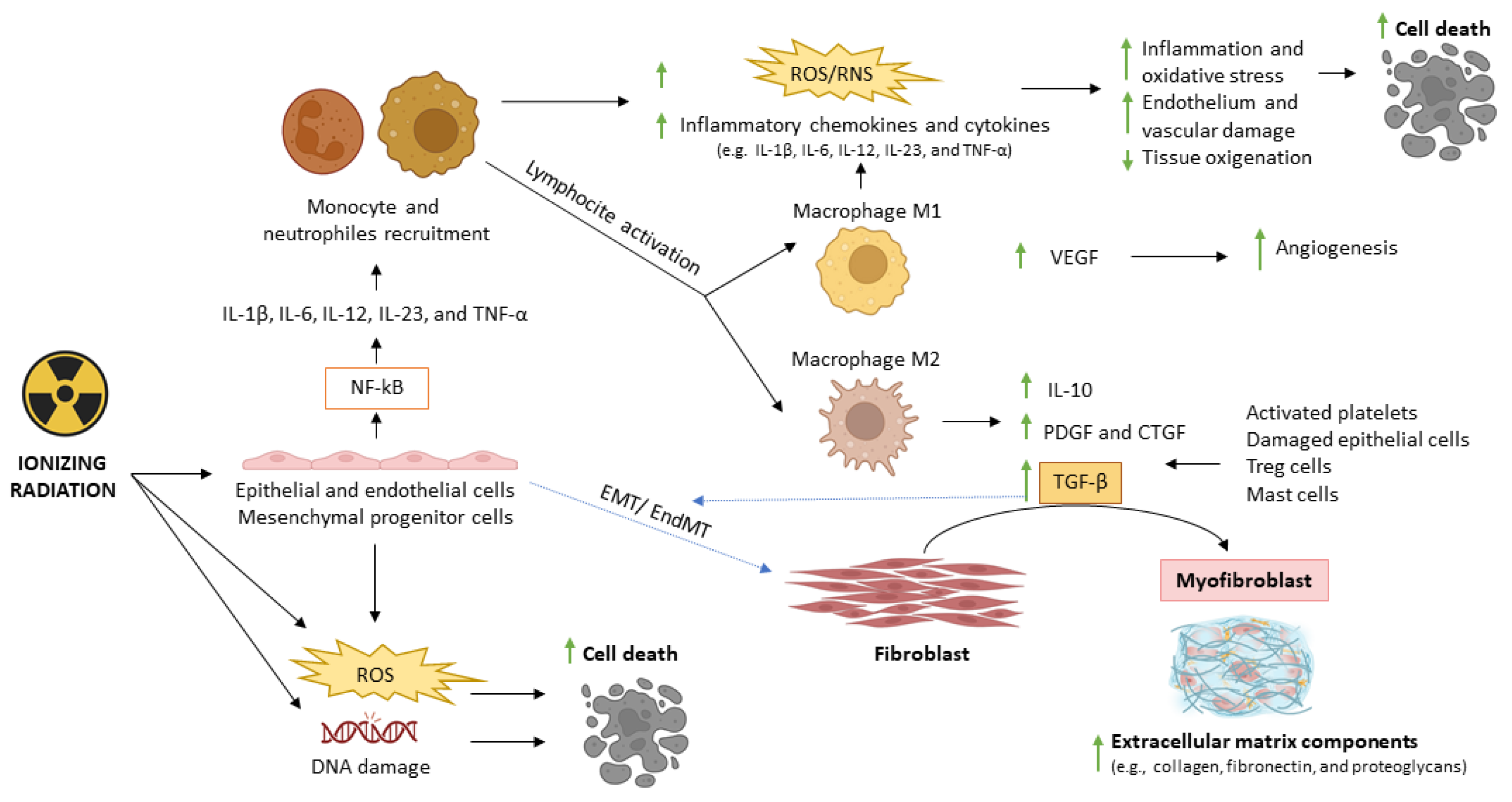
2.2. Oxidative/Nitrosative Stress and Inflammation
2.3. Bystander and Abscopal Ionizing Radiation Effects
2.4. Acute Radiation Syndrome
2.4.1. Hematopoietic Acute Radiation Syndrome
2.4.2. Gastrointestinal Acute Radiation Syndrome
2.4.3. Neurovascular Acute Radiation Syndrome
2.4.4. Cutaneous Acute Radiation Syndrome
2.4.5. Additional Tissues Involved in ARS
2.5. Delayed Effects of Acute Radiation Exposure
3. Approved MCM for Radiation Emergencies: From FDA Standards to a Global Perspective
3.1. Potassium Iodide (KI)
3.2. Prussian Blue
3.3. Ca-DTPA and Zn-DTPA
3.4. H-ARS Radiomitigators
3.5. Silverlon®
3.6. Global Research Contributions to Radiation MCM Development
4. Radiomitigators in Focus: In Vivo Preclinical Success and Clinical Trial Results
4.1. Thrombopoietin Mimetics or Receptor Agonists
4.2. Thrombomodulin
4.3. Growth Factors and Interleukins
4.3.1. Palifermin
4.3.2. IL-11, Neumega® and BBT-059®
4.3.3. IL-12 and HemaMax™
4.4. Stem Cell and Extracellular Vesicle-Based Therapies
4.5. SOD, SOD Mimetics and Nitroxides
4.6. COX Inhibitors and Benzydamine
4.7. Bevacizumab
4.8. Trace Elements
4.8.1. Selenium
4.8.2. Zinc
4.9. Vitamins
4.9.1. Vitamin A
4.9.2. Vitamin C
4.9.3. NAD+ Precursors
4.9.4. Vitamin E Family Members
4.10. Pentoxifylline Alone or in Combination with Vitamin E
4.11. Amino Acids and Amino Acid Precursors
4.11.1. Glutamine
4.11.2. Arginine
4.11.3. N-Acetylcysteine
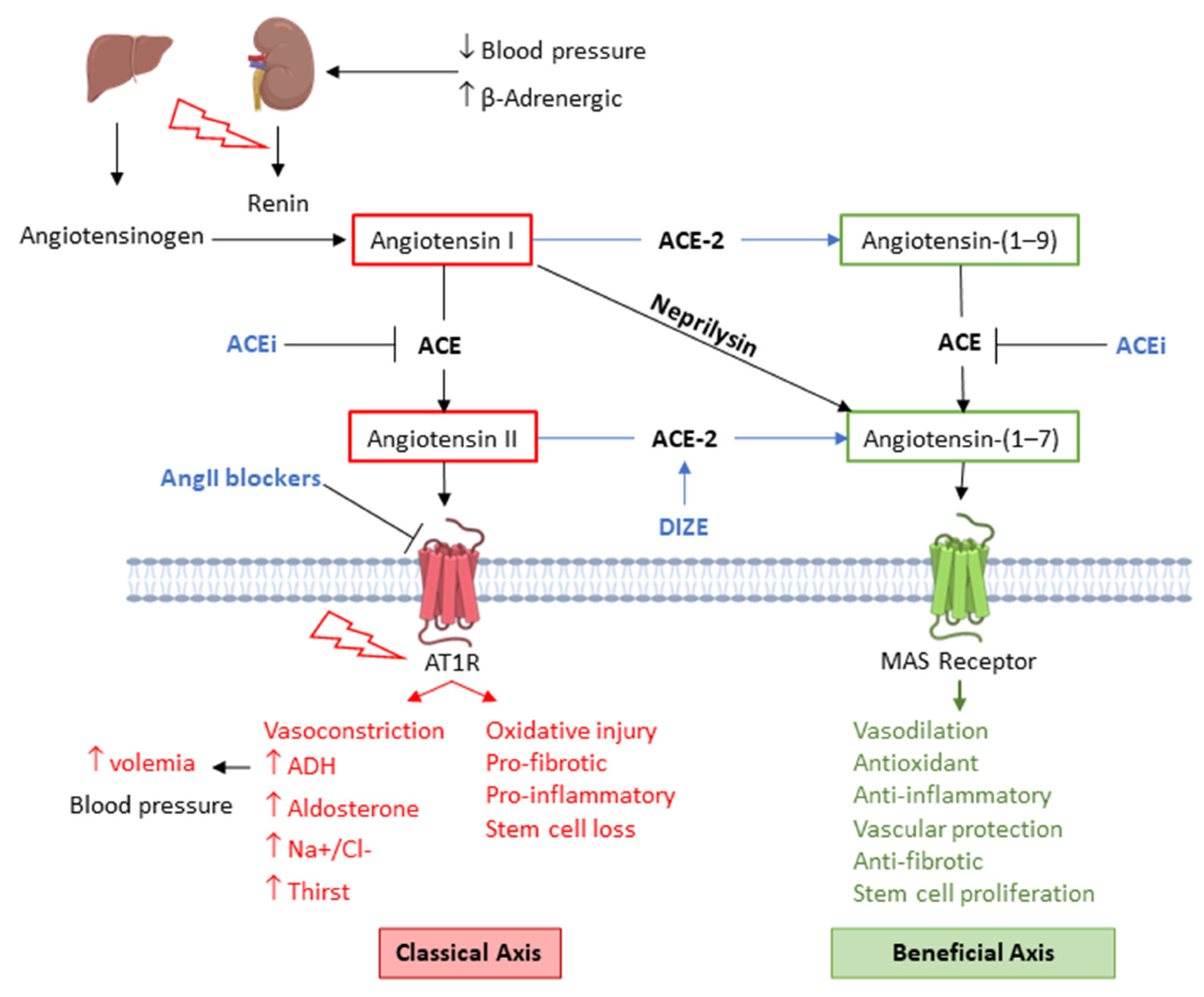
4.12. ACE Inhibitors, Angiotensin II Antagonist and Ang-(1–7) Agonists
4.13. Statins
4.14. Antifibrotic Agents
4.15. Hormones and Hormone Analogs
4.15.1. 5-Androstenediol
4.15.2. GH and IGF-1
4.15.3. Ghrelin
4.15.4. Somatostatin Analogs: Octreotide and Pasireotide
4.15.5. Melatonin
4.16. Metformin
4.17. Toll-like Receptor Agonists
4.18. Polyphenols
4.18.1. Isoflavones
4.18.2. Epigallocatechin-3-gallate
4.18.3. Grape Seed Proanthocyanidins
4.18.4. Curcumin
4.18.5. Silymarin
4.18.6. Resveratrol
4.19. Probiotics, Prebiotics, Synbiotics and Fecal Microbiota Transplantation
4.19.1. Probiotics
4.19.2. Prebiotics
4.19.3. Synbiotics
4.19.4. Fecal Microbiota Transplantation
4.20. Other Topical Interventions for RID Prevention and Mitigation
5. Conclusions and Future Directions
Author Contributions
Funding
Institutional Review Board Statement
Informed Consent Statement
Data Availability Statement
Acknowledgments
Conflicts of Interest
Abbreviations
| 5-AED | 5-androstenediol |
| ACEi | angiotensin-converting enzyme inhibitor |
| Ang II | angiotensin II |
| aPC | activated protein C |
| ARB | angiotensin II blocker |
| Arg | arginine |
| ARS | acute radiation syndrome |
| AT-MSCs | adipose tissue–derived MSCs |
| AT1R | angiotensin ii receptor type 1 |
| BBB | blood–brain barrier |
| BM | bone marrow |
| BM-MSCs | bone marrow–derived mesenchymal stromal cells |
| BMT | bone marrow transplantation |
| C-ARS | cutaneous acute radiation syndrome |
| CAT | catalase |
| CCN2 | (CTGF) connective tissue growth factor |
| CNS | central nervous system |
| COX | cyclooxygenase |
| CRT | chemoradiotherapy |
| CT | chemotherapy |
| CTGF | connective tissue growth factor |
| CURC | curcumin |
| DAMPs | damage-associated molecular patterns |
| DEARE | delayed effects of acute radiation exposure |
| DRF | dose-reduction fraction |
| DSBs | double-strand breaks |
| DTPA | diethylenetriaminepentaacetate |
| ECM | extracellular matrix |
| EGCG | epigallocatechin-3-gallate |
| EGF | epidermal growth factor |
| EMT/EndoMT | epithelial-to-mesenchymal/endothelial-to-mesenchymal transitions |
| EVs | extracellular vesicles |
| FDA | U.S. Food and Drug Administration |
| FMT | fecal microbiota transplantation |
| GB | glioblastoma |
| G-CSF | granulocyte colony-stimulating factor |
| GI | gastrointestinal |
| GI-ARS | gastrointestinal acute radiation syndrome |
| Gln | glutamine |
| GM-CSF | granulocyte/macrophage colony-stimulating factor |
| GPx | glutathione peroxidase |
| GSH | reduced glutathione |
| GT3 | gamma-tocotrienol |
| H-ARS | hematopoietic acute radiation syndrome |
| HNC | head and neck cancer |
| HR | homologous recombination |
| HSC | hematopoietic stem cells |
| HSCT | hematopoietic stem cell transplantation |
| IGF-1 | insulin-like growth factor I |
| IM | intramuscular |
| IR | ionizing radiation |
| ISOO | International Society of Oral Oncology |
| IV | intravenous |
| KGF | keratinocyte growth factor |
| LD | lethal dose |
| MAPK | mitogen-activated protein kinase |
| MASCC | Multinational Association of Supportive Care |
| MCM | medical countermeasures |
| MDA | malondialdehyde |
| mOS | median overall survival |
| MRI | magnetic resonance imaging |
| MSCs | mesenchymal stromal cells |
| NAC | N-acetylcysteine |
| NAD+ | nicotinamide adenine dinucleotide |
| NHP | non-human primates |
| NIS | sodium/iodide symporter |
| NP | nanoparticle |
| NOX | NADPH oxidase |
| NR | nicotinamide riboside |
| NSCLC | non-small cell lung carcinoma |
| NV-ARS | neurovascular acute radiation syndrome |
| OM | oral mucositis |
| OS | overall survival |
| PAI-1 | plasminogen activator inhibitor-1 |
| PB | prussian blue |
| PBI | partial-body irradiation |
| PDGF | platelet-derived growth factor |
| PFD | pirfenidone |
| PFS | progression-free survival |
| PTX | pentoxifylline |
| PSA | prostate-specific antigen |
| QoL | quality of life |
| RAS | renin–angiotensin system |
| RCI | radiation combined injury |
| RCT | randomized controlled trial |
| rh | recombinant human |
| RIBE | radiation bystander effect |
| RID | radiation-induced dermatitis |
| RIF | radiation-induced fibrosis |
| RILI | radiation-induced pulmonary injury |
| RILF | radiation-induced lung fibrosis/radiation-induced pulmonary fibrosis |
| RIOM | radiation-induced oral mucositis |
| RN | radiation-induced necrosis |
| RNS | reactive nitrogen species |
| ROS | reactive oxygen species |
| RT | radiotherapy |
| RTOG | radiation therapy oncology group |
| SASP | senescence-associated secretory phenotype |
| SC | subcutaneous |
| SCFA | short-chain fatty acids |
| SCT | stem cell transplantation |
| SOD | superoxide dismutase |
| Se | selenium |
| SSBs | single-strand breaks |
| TBI | total body irradiation |
| TLRs | toll-like receptors |
| TM | thrombomodulin |
| TPO | thrombopoietin |
| VEGF | vascular endothelial growth factor |
| WTI | whole-thorax irradiation |
References
- Azzam, E.I.; Jay-Gerin, J.-P.; Pain, D. Ionizing Radiation-Induced Metabolic Oxidative Stress and Prolonged Cell Injury. Cancer Lett. 2012, 327, 48–60. [Google Scholar] [CrossRef]
- Zhou, H.; Ivanov, V.N.; Lien, Y.-C.; Davidson, M.; Hei, T.K. Mitochondrial Function and Nuclear Factor-κB–Mediated Signaling in Radiation-Induced Bystander Effects. Cancer Res. 2008, 68, 2233–2240. [Google Scholar] [CrossRef]
- Yakovlev, V.A. Role of Nitric Oxide in the Radiation-Induced Bystander Effect. Redox Biol. 2015, 6, 396–400. [Google Scholar] [CrossRef] [PubMed]
- Jella, K.K.; Moriarty, R.; McClean, B.; Byrne, H.J.; Lyng, F.M. Reactive Oxygen Species and Nitric Oxide Signaling in Bystander Cells. PLoS ONE 2018, 13, e0195371. [Google Scholar] [CrossRef] [PubMed]
- Reindl, J.; Abrantes, A.M.; Ahire, V.; Azimzadeh, O.; Baatout, S.; Baeyens, A.; Baselet, B.; Chauhan, V.; Da Pieve, F.; Delbart, W.; et al. Molecular Radiation Biology. In Radiobiology Textbook; Baatout, S., Ed.; Springer International Publishing: Cham, Switzerland, 2023; pp. 83–189. [Google Scholar]
- Christensen, D.M.; Iddins, C.J.; Parrillo, S.J.; Glassman, E.S.; Goans, R.E. Management of Ionizing Radiation Injuries and Illnesses, Part 4: Acute Radiation Syndrome. J. Osteopath. Med. 2014, 114, 702–711. [Google Scholar] [CrossRef]
- Obrador, E.; Salvador-Palmer, R.; Villaescusa, J.I.; Gallego, E.; Pellicer, B.; Estrela, J.M.; Montoro, A. Nuclear and Radiological Emergencies: Biological Effects, Countermeasures and Biodosimetry. Antioxidants 2022, 11, 1098. [Google Scholar] [CrossRef] [PubMed]
- Kazzi, Z.; Buzzell, J.; Bertelli, L.; Christensen, D. Emergency Department Management of Patients Internally Contaminated with Radioactive Material. Emerg. Med. Clin. N. Am. 2015, 33, 179–196. [Google Scholar] [CrossRef]
- Ibáñez, B.; Melero, A.; Montoro, A.; Onofre, N.S.; Soriano, J.M. Molecular Insights into Radiation Effects and Protective Mechanisms: A Focus on Cellular Damage and Radioprotectors. Curr. Issues Mol. Biol. 2024, 46, 12718–12732. [Google Scholar] [CrossRef]
- Winters, T.A.; Cassatt, D.R.; Harrison-Peters, J.R.; Hollingsworth, B.A.; Rios, C.I.; Satyamitra, M.M.; Taliaferro, L.P.; DiCarlo, A.L. Considerations of Medical Preparedness to Assess and Treat Various Populations During a Radiation Public Health Emergency. Radiat. Res. 2023, 199, 301–318. [Google Scholar] [CrossRef]
- Thomas, G.A.; Symonds, P. Radiation Exposure and Health Effects—Is It Time to Reassess the Real Consequences? Clin. Oncol. (R. Coll. Radiol.) 2016, 28, 231–236. [Google Scholar] [CrossRef]
- Baudin, C.; Bernier, M.-O.; Klokov, D.; Andreassi, M.G. Biomarkers of Genotoxicity in Medical Workers Exposed to Low-Dose Ionizing Radiation: Systematic Review and Meta-Analyses. Int. J. Mol. Sci. 2021, 22, 7504. [Google Scholar] [CrossRef]
- Little, M.P.; Wakeford, R.; Bouffler, S.D.; Abalo, K.; Hauptmann, M.; Hamada, N.; Kendall, G.M. Cancer Risks Among Studies of Medical Diagnostic Radiation Exposure in Early Life Without Quantitative Estimates of Dose. Sci. Total Environ. 2022, 832, 154723. [Google Scholar] [CrossRef]
- Hou, N.; Wang, Z.; Ling, Y.; Hou, G.; Zhang, B.; Zhang, X.; Shi, M.; Chu, Z.; Wang, Y.; Hu, J.; et al. Radiotherapy and Increased Risk of Second Primary Cancers in Breast Cancer Survivors: An Epidemiological and Large Cohort Study. Breast 2024, 78, 103824. [Google Scholar] [CrossRef] [PubMed]
- Rump, A.; Becker, B.; Eder, S.; Lamkowski, A.; Abend, M.; Port, M. Medical Management of Victims Contaminated with Radionuclides After a “Dirty Bomb” Attack. Mil. Med. Res. 2018, 5, 27. [Google Scholar] [CrossRef] [PubMed]
- Li, C.; Alves dos Reis, A.; Ansari, A.; Bertelli, L.; Carr, Z.; Dainiak, N.; Degteva, M.; Efimov, A.; Kalinich, J.; Kryuchkov, V.; et al. Public Health Response and Medical Management of Internal Contamination in Past Radiological or Nuclear Incidents: A Narrative Review. Environ. Int. 2022, 163, 107222. [Google Scholar] [CrossRef] [PubMed]
- Gasperetti, T.; Miller, T.; Gao, F.; Narayanan, J.; Jacobs, E.R.; Szabo, A.; Cox, G.N.; Orschell, C.M.; Fish, B.L.; Medhora, M. Polypharmacy to Mitigate Acute and Delayed Radiation Syndromes. Front. Pharmacol. 2021, 12, 634477. [Google Scholar] [CrossRef]
- Obrador, E.; Salvador, R.; Villaescusa, J.I.; Soriano, J.M.; Estrela, J.M.; Montoro, A. Radioprotection and Radiomitigation: From the Bench to Clinical Practice. Biomedicines 2020, 8, 461. [Google Scholar] [CrossRef]
- Liu, L.; Liang, Z.; Ma, S.; Li, L.; Liu, X. Radioprotective Countermeasures for Radiation Injury (Review). Mol. Med. Rep. 2023, 27, 66. [Google Scholar] [CrossRef]
- Liu, R.; Bian, Y.; Liu, L.; Liu, L.; Liu, X.; Ma, S. Molecular Pathways Associated with Oxidative Stress and Their Potential Applications in Radiotherapy (Review). Int. J. Mol. Med. 2022, 49, 65. [Google Scholar] [CrossRef]
- DiCarlo, A.L.; Horta, Z.P.; Aldrich, J.T.; Jakubowski, A.A.; Skinner, W.K.; Case, C.M. Use of Growth Factors and Other Cytokines for Treatment of Injuries During a Radiation Public Health Emergency. Radiat. Res. 2019, 192, 99–120. [Google Scholar] [CrossRef]
- Singh, V.K.; Seed, T.M. Radiation Countermeasures for Hematopoietic Acute Radiation Syndrome: Growth Factors, Cytokines and Beyond. Int. J. Radiat. Biol. 2021, 97, 1526–1547. [Google Scholar] [CrossRef]
- Dainiak, N. Medical Management of Acute Radiation Syndrome and Associated Infections in a High-Casualty Incident. J. Radiat. Res. 2018, 59, ii54–ii64. [Google Scholar] [CrossRef] [PubMed]
- Dainiak, N.; Albanese, J. Medical Management of Acute Radiation Syndrome. J. Radiol. Prot. 2022, 42, 031002. [Google Scholar] [CrossRef] [PubMed]
- Arnautou, P.; Garnier, G.; Maillot, J.; Konopacki, J.; Brachet, M.; Bonnin, A.; Amabile, J.-C.; Malfuson, J.-V. Management of Acute Radiation Syndrome. Transfus. Clin. Biol. 2024, 31, 253–259. [Google Scholar] [CrossRef] [PubMed]
- Plett, P.A.; Chua, H.L.; Sampson, C.H.; Katz, B.P.; Fam, C.M.; Anderson, L.J.; Cox, G.; Orschell, C.M. PEGylated G-CSF (BBT-015), GM-CSF (BBT-007), and IL-11 (BBT-059) Analogs Enhance Survival and Hematopoietic Cell Recovery in a Mouse Model of the Hematopoietic Syndrome of the Acute Radiation Syndrome. Health Phys. 2014, 106, 7–20. [Google Scholar] [CrossRef]
- Wong, K.; Chang, P.Y.; Fielden, M.; Downey, A.M.; Bunin, D.; Bakke, J.; Gahagen, J.; Iyer, L.; Doshi, S.; Wierzbicki, W.; et al. Pharmacodynamics of Romiplostim Alone and in Combination with Pegfilgrastim on Acute Radiation-Induced Thrombocytopenia and Neutropenia in Non-Human Primates. Int. J. Radiat. Biol. 2020, 96, 155–166. [Google Scholar] [CrossRef]
- López, M.; Martín, M. Medical Management of the Acute Radiation Syndrome. Rep. Pract. Oncol. Radiother. 2011, 16, 138–146. [Google Scholar] [CrossRef]
- Al-Ibraheem, A.; Moghrabi, S.; Abdlkadir, A.; Safi, H.; Kazzi, Z.; Al-Balooshi, B.; Salman, K.; Khalaf, A.; Zein, M.; Al Naemi, H.; et al. An Overview of Appropriate Medical Practice and Preparedness in Radiation Emergency Response. Cureus 2024, 16, e61627. [Google Scholar] [CrossRef]
- Vellayappan, B.; Lim-Fat, M.J.; Kotecha, R.; De Salles, A.; Fariselli, L.; Levivier, M.; Ma, L.; Paddick, I.; Pollock, B.E.; Regis, J.; et al. A Systematic Review Informing the Management of Symptomatic Brain Radiation Necrosis After Stereotactic Radiosurgery and International Stereotactic Radiosurgery Society Recommendations. Int. J. Radiat. Oncol. Biol. Phys. 2024, 118, 14–28. [Google Scholar] [CrossRef]
- Zakeri, K.; Narayanan, D.; Vikram, B.; Evans, G.; Coleman, C.N.; Prasanna, P.G.S. Decreasing the Toxicity of Radiation Therapy: Radioprotectors and Radiomitigators Being Developed by the National Cancer Institute Through Small Business Innovation Research Contracts. Int. J. Radiat. Oncol. Biol. Phys. 2019, 104, 188–196. [Google Scholar] [CrossRef]
- Stasiłowicz-Krzemień, A.; Gościniak, A.; Formanowicz, D.; Cielecka-Piontek, J. Natural Guardians: Natural Compounds as Radioprotectors in Cancer Therapy. Int. J. Mol. Sci. 2024, 25, 6937. [Google Scholar] [CrossRef] [PubMed]
- Citrin, D.; Cotrim, A.P.; Hyodo, F.; Baum, B.J.; Krishna, M.C.; Mitchell, J.B. Radioprotectors and Mitigators of Radiation-Induced Normal Tissue Injury. Oncologist 2010, 15, 360–371. [Google Scholar] [CrossRef] [PubMed]
- Singh, V.K.; Seed, T.M. A Review of Radiation Countermeasures Focusing on Injury-Specific Medicinals and Regulatory Approval Status: Part I. Radiation Sub-Syndromes, Animal Models and FDA-Approved Countermeasures. Int. J. Radiat. Biol. 2017, 93, 851–869. [Google Scholar] [CrossRef] [PubMed]
- Montoro, A.; Obrador, E.; Mistry, D.; Forte, G.I.; Bravatà, V.; Minafra, L.; Calvaruso, M.; Cammarata, F.P.; Falk, M.; Schettino, G.; et al. Radioprotectors, Radiomitigators, and Radiosensitizers. In Radiobiology Textbook; Baatout, S., Ed.; Springer International Publishing: Cham, Switzerland, 2023; pp. 571–628. [Google Scholar]
- Lledó, I.; Ibáñez, B.; Melero, A.; Montoro, A.; Merino-Torres, J.F.; San Onofre, N.; Soriano, J.M. Vitamins and Radioprotective Effect: A Review. Antioxidants 2023, 12, 611. [Google Scholar] [CrossRef]
- Prades-Sagarra, È.; Yaromina, A.; Dubois, L.J. Polyphenols as Potential Protectors Against Radiation-Induced Adverse Effects in Patients with Thoracic Cancer. Cancers 2023, 15, 2412. [Google Scholar] [CrossRef]
- Ji, L.; Cui, P.; Zhou, S.; Qiu, L.; Huang, H.; Wang, C.; Wang, J. Advances of Amifostine in Radiation Protection: Administration and Delivery. Mol. Pharm. 2023, 20, 5383–5395. [Google Scholar] [CrossRef]
- Singh, V.K.; Seed, T.M. New Pharmaceutical-Based Strategies That Foster the Development and Promulgation of Globally Effective Medical Countermeasures for Radiation Exposure Injuries. Expert Opin. Pharmacother. 2024, 25, 1579–1583. [Google Scholar] [CrossRef]
- Singh, V.K.; Seed, T.M. The Efficacy and Safety of Amifostine for the Acute Radiation Syndrome. Expert Opin. Drug Saf. 2019, 18, 1077–1090. [Google Scholar] [CrossRef]
- Brizel, D.M.; Wasserman, T.H.; Henke, M.; Strnad, V.; Rudat, V.; Monnier, A.; Eschwege, F.; Zhang, J.; Russell, L.; Oster, W.; et al. Phase III Randomized Trial of Amifostine as a Radioprotector in Head and Neck Cancer. J. Clin. Oncol. 2000, 18, 3339–3345. [Google Scholar] [CrossRef]
- FDA U.S. Food and Drug Administration Radiological and Nuclear Emergency Preparedness Information from FDA. Available online: https://www.fda.gov/emergency-preparedness-and-response/mcm-issues/radiological-and-nuclear-emergency-preparedness-information-fda (accessed on 31 December 2025).
- Legeza, V.; Grebenyuk, A.; Drachev, I. Radiomitigators: Classification, Pharmacological Properties, and Application Prospects. Biol. Bull. 2019, 46, 1625–1632. [Google Scholar] [CrossRef]
- Vasin, M.V.; Ushakov, I.B. Potential Ways to Increase Body Resistance to Damaging Action of Ionizing Radiation with Radiomitigators. Biol. Bull. Rev. 2019, 9, 503–519. [Google Scholar] [CrossRef]
- Yu, Z.; Xu, C.; Song, B.; Zhang, S.; Chen, C.; Li, C.; Zhang, S. Tissue Fibrosis Induced by Radiotherapy: Current Understanding of the Molecular Mechanisms, Diagnosis and Therapeutic Advances. J. Transl. Med. 2023, 21, 708. [Google Scholar] [CrossRef] [PubMed]
- Turnquist, C.; Harris, B.T.; Harris, C.C. Radiation-Induced Brain Injury: Current Concepts and Therapeutic Strategies Targeting Neuroinflammation. Neuro-Oncol. Adv. 2020, 2, vdaa057. [Google Scholar] [CrossRef] [PubMed]
- Wang, B.; Wei, J.; Meng, L.; Wang, H.; Qu, C.; Chen, X.; Xin, Y.; Jiang, X. Advances in Pathogenic Mechanisms and Management of Radiation-Induced Fibrosis. Biomed. Pharmacother. 2020, 121, 109560. [Google Scholar] [CrossRef]
- MacVittie, T.J. Where Are the Medical Countermeasures Against the ARS and DEARE? A Current Topic Relative to an Animal Model Research Platform, Radiation Exposure Context, the Acute and Delayed Effects of Acute Exposure, and the FDA Animal Rule. Int. J. Radiat. Biol. 2023, 99, 994–1008. [Google Scholar] [CrossRef]
- Winters, T.A.; Marzella, L.; Molinar-Inglis, O.; Price, P.W.; Han, N.C.; Cohen, J.E.; Wang, S.-J.; Fotenos, A.F.; Sullivan, J.M.; Esker, J.I.; et al. Gastrointestinal Acute Radiation Syndrome: Mechanisms, Models, Markers, and Medical Countermeasures. Radiat. Res. 2024, 201, 628–646. [Google Scholar] [CrossRef]
- Yahyapour, R.; Amini, P.; Rezapour, S.; Cheki, M.; Rezaeyan, A.; Farhood, B.; Shabeeb, D.; Musa, A.E.; Fallah, H.; Najafi, M. Radiation-Induced Inflammation and Autoimmune Diseases. Mil. Med. Res. 2018, 5, 9. [Google Scholar] [CrossRef]
- Wei, J.; Wang, B.; Wang, H.; Meng, L.; Zhao, Q.; Li, X.; Xin, Y.; Jiang, X. Radiation-Induced Normal Tissue Damage: Oxidative Stress and Epigenetic Mechanisms. Oxidative Med. Cell. Longev. 2019, 2019, 3010342. [Google Scholar] [CrossRef]
- Munro, T.R. The Relative Radiosensitivity of the Nucleus and Cytoplasm of Chinese Hamster Fibroblasts. Radiat. Res. 1970, 42, 451–470. [Google Scholar] [CrossRef]
- Thompson, L.H. Recognition, Signaling, and Repair of DNA Double-Strand Breaks Produced by Ionizing Radiation in Mammalian Cells: The Molecular Choreography. Mutat. Res. Rev. Mutat. Res. 2012, 751, 158–246. [Google Scholar] [CrossRef]
- Melia, E.; Parsons, J.L. DNA Damage and Repair Dependencies of Ionising Radiation Modalities. Biosci. Rep. 2023, 43, BSR20222586. [Google Scholar] [CrossRef] [PubMed]
- Lomax, M.E.; Folkes, L.K.; O’Neill, P. Biological Consequences of Radiation-Induced DNA Damage: Relevance to Radiotherapy. Clin. Oncol. (R. Coll. Radiol.) 2013, 25, 578–585. [Google Scholar] [CrossRef] [PubMed]
- Zhou, L.; Zhu, J.; Liu, Y.; Zhou, P.-K.; Gu, Y. Mechanisms of Radiation-Induced Tissue Damage and Response. MedComm 2024, 5, e725. [Google Scholar] [CrossRef] [PubMed]
- Jayakumar, S.; Pal, D.; Sandur, S.K. Nrf2 Facilitates Repair of Radiation Induced DNA Damage Through Homologous Recombination Repair Pathway in a ROS Independent Manner in Cancer Cells. Mutat. Res. Fundam. Mol. Mech. Mutagen. 2015, 779, 33–45. [Google Scholar] [CrossRef]
- Huang, R.-X.; Zhou, P.-K. DNA Damage Response Signaling Pathways and Targets for Radiotherapy Sensitization in Cancer. Signal Transduct. Target. Ther. 2020, 5, 60. [Google Scholar] [CrossRef]
- Nie, S.; He, X.; Sun, Z.; Zhang, Y.; Liu, T.; Chen, T.; Zhao, J. Selenium Speciation-Dependent Cancer Radiosensitization by Induction of G2/M Cell Cycle Arrest and Apoptosis. Front. Bioeng. Biotechnol. 2023, 11, 1168827. [Google Scholar] [CrossRef]
- Reisz, J.A.; Bansal, N.; Qian, J.; Zhao, W.; Furdui, C.M. Effects of Ionizing Radiation on Biological Molecules—Mechanisms of Damage and Emerging Methods of Detection. Antioxid. Redox Signal. 2014, 21, 260–292. [Google Scholar] [CrossRef]
- Vasin, M.V. Comments on the Mechanisms of Action of Radiation Protective Agents: Basis Components and Their Polyvalence. SpringerPlus 2014, 3, 414. [Google Scholar] [CrossRef]
- Halliwell, B.; Gutteridge, J.M. Biologically Relevant Metal Ion-Dependent Hydroxyl Radical Generation. An Update. FEBS Lett. 1992, 307, 108–112. [Google Scholar] [CrossRef]
- Qian, W.; Zhang, C.; He, L.; Jin, S.; Suo, R.; Li, Y.; Li, S.; Zhu, L.; Deng, K.; Wu, B.; et al. X-Ray Induced in-Situ Ferroptosis Through the Fenton Reaction of Iron Supplements for the Cancer Therapy. Bioorg. Chem. 2025, 154, 108021. [Google Scholar] [CrossRef]
- Mortezaee, K.; Goradel, N.H.; Amini, P.; Shabeeb, D.; Musa, A.E.; Najafi, M.; Farhood, B. NADPH Oxidase as a Target for Modulation of Radiation Response; Implications to Carcinogenesis and Radiotherapy. Curr. Mol. Pharmacol. 2019, 12, 50–60. [Google Scholar] [CrossRef] [PubMed]
- Pahl, H.L. Activators and Target Genes of Rel/NF-κB Transcription Factors. Oncogene 1999, 18, 6853–6866. [Google Scholar] [CrossRef] [PubMed]
- Pradere, J.-P.; Dapito, D.H.; Schwabe, R.F. The Yin and Yang of Toll-like Receptors in Cancer. Oncogene 2014, 33, 3485–3495. [Google Scholar] [CrossRef] [PubMed]
- Venkata Narayanan, I.; Paulsen, M.T.; Bedi, K.; Berg, N.; Ljungman, E.A.; Francia, S.; Veloso, A.; Magnuson, B.; di Fagagna, F.d.; Wilson, T.E.; et al. Transcriptional and Post-Transcriptional Regulation of the Ionizing Radiation Response by ATM and P53. Sci. Rep. 2017, 7, 43598. [Google Scholar] [CrossRef]
- Kim, J.H.; Brown, S.L.; Gordon, M.N. Radiation-Induced Senescence: Therapeutic Opportunities. Radiat. Oncol. 2023, 18, 10. [Google Scholar] [CrossRef]
- Kim, J.-S.; Rhim, K.-J.; Jang, W.-S.; Lee, S.-J.; Son, Y.; Lee, S.-S.; Park, S.; Lim, S.M. β-Irradiation (166Ho Patch)-Induced Skin Injury in Mini-Pigs: Effects on NF-κB and COX-2 Expression in the Skin. J. Vet. Sci. 2015, 16, 1–9. [Google Scholar] [CrossRef]
- Kiang, J.G.; Smith, J.T.; Cannon, G.; Anderson, M.N.; Ho, C.; Zhai, M.; Cui, W.; Xiao, M. Ghrelin, a Novel Therapy, Corrects Cytokine and NF-κB-AKT-MAPK Network and Mitigates Intestinal Injury Induced by Combined Radiation and Skin-Wound Trauma. Cell Biosci. 2020, 10, 63. [Google Scholar] [CrossRef]
- Molteni, A.; Wolfe, L.F.; Ward, W.F.; Ts’ao, C.H.; Molteni, L.B.; Veno, P.; Fish, B.L.; Taylor, J.M.; Quintanilla, N.; Herndon, B.; et al. Effect of an Angiotensin II Receptor Blocker and Two Angiotensin Converting Enzyme Inhibitors on Transforming Growth Factor-Beta (TGF-Beta) and Alpha-Actomyosin (Alpha SMA), Important Mediators of Radiation-Induced Pneumopathy and Lung Fibrosis. Curr. Pharm. Des. 2007, 13, 1307–1316. [Google Scholar] [CrossRef]
- Khayyal, M.T.; El-Ghazaly, M.A.; El-Hazek, R.M.; Nada, A.S. The Effects of Celecoxib, a COX-2 Selective Inhibitor, on Acute Inflammation Induced in Irradiated Rats. Inflammopharmacology 2009, 17, 255–266. [Google Scholar] [CrossRef]
- Shadyro, O.I.; Yurkova, I.L.; Kisel, M.A. Radiation-Induced Peroxidation and Fragmentation of Lipids in a Model Membrane. Int. J. Radiat. Biol. 2002, 78, 211–217. [Google Scholar] [CrossRef]
- Rosen, E.; Kryndushkin, D.; Aryal, B.; Gonzalez, Y.; Chehab, L.; Dickey, J.; Rao, V.A. Acute Total Body Ionizing Gamma Radiation Induces Long-Term Adverse Effects and Immediate Changes in Cardiac Protein Oxidative Carbonylation in the Rat. PLoS ONE 2020, 15, e0233967. [Google Scholar] [CrossRef] [PubMed]
- Möller, M.N.; Denicola, A. Diffusion of Peroxynitrite, Its Precursors, and Derived Reactive Species, and the Effect of Cell Membranes. Redox Biochem. Chem. 2024, 9, 100033. [Google Scholar] [CrossRef]
- Reuter, S.; Gupta, S.C.; Chaturvedi, M.M.; Aggarwal, B.B. Oxidative Stress, Inflammation, and Cancer: How Are They Linked? Free Radic. Biol. Med. 2010, 49, 1603–1616. [Google Scholar] [CrossRef]
- Hayes, J.D.; Dinkova-Kostova, A.T.; Tew, K.D. Oxidative Stress in Cancer. Cancer Cell 2020, 38, 167–197. [Google Scholar] [CrossRef]
- Li, C.; Xue, Y.; Ba, X.; Wang, R. The Role of 8-oxoG Repair Systems in Tumorigenesis and Cancer Therapy. Cells 2022, 11, 3798. [Google Scholar] [CrossRef]
- Yakes, F.M.; Van Houten, B. Mitochondrial DNA Damage Is More Extensive and Persists Longer than Nuclear DNA Damage in Human Cells Following Oxidative Stress. Proc. Natl. Acad. Sci. USA 1997, 94, 514–519. [Google Scholar] [CrossRef]
- Kim, Y.-C.; Barshishat-Kupper, M.; McCart, E.A.; Mueller, G.P.; Day, R.M. Bone Marrow Protein Oxidation in Response to Ionizing Radiation in C57BL/6J Mice. Proteomes 2014, 2, 291–302. [Google Scholar] [CrossRef]
- Ayala, A.; Muñoz, M.F.; Argüelles, S. Lipid Peroxidation: Production, Metabolism, and Signaling Mechanisms of Malondialdehyde and 4-Hydroxy-2-Nonenal. Oxidative Med. Cell. Longev. 2014, 2014, 360438. [Google Scholar] [CrossRef]
- Marnett, L.J. Lipid Peroxidation-DNA Damage by Malondialdehyde. Mutat. Res. 1999, 424, 83–95. [Google Scholar] [CrossRef]
- Edwards, J.C.; Chapman, D.; Cramp, W.A.; Yatvin, M.B. The Effects of Ionizing Radiation on Biomembrane Structure and Function. Prog. Biophys. Mol. Biol. 1984, 43, 71–93. [Google Scholar] [CrossRef]
- Milkovic, L.; Zarkovic, N.; Marusic, Z.; Zarkovic, K.; Jaganjac, M. The 4-Hydroxynonenal–Protein Adducts and Their Biological Relevance: Are Some Proteins Preferred Targets? Antioxidants 2023, 12, 856. [Google Scholar] [CrossRef] [PubMed]
- Dalleau, S.; Baradat, M.; Guéraud, F.; Huc, L. Cell Death and Diseases Related to Oxidative Stress: 4-Hydroxynonenal (HNE) in the Balance. Cell Death Differ. 2013, 20, 1615–1630. [Google Scholar] [CrossRef] [PubMed]
- Livingston, K.; Schlaak, R.A.; Puckett, L.L.; Bergom, C. The Role of Mitochondrial Dysfunction in Radiation-Induced Heart Disease: From Bench to Bedside. Front. Cardiovasc. Med. 2020, 7, 20. [Google Scholar] [CrossRef] [PubMed]
- Yamamori, T.; Yasui, H.; Yamazumi, M.; Wada, Y.; Nakamura, Y.; Nakamura, H.; Inanami, O. Ionizing Radiation Induces Mitochondrial Reactive Oxygen Species Production Accompanied by Upregulation of Mitochondrial Electron Transport Chain Function and Mitochondrial Content Under Control of the Cell Cycle Checkpoint. Free Radic. Biol. Med. 2012, 53, 260–270. [Google Scholar] [CrossRef]
- Lafargue, A.; Degorre, C.; Corre, I.; Alves-Guerra, M.-C.; Gaugler, M.-H.; Vallette, F.; Pecqueur, C.; Paris, F. Ionizing Radiation Induces Long-Term Senescence in Endothelial Cells Through Mitochondrial Respiratory Complex II Dysfunction and Superoxide Generation. Free Radic. Biol. Med. 2017, 108, 750–759. [Google Scholar] [CrossRef]
- Paris, F.; Fuks, Z.; Kang, A.; Capodieci, P.; Juan, G.; Ehleiter, D.; Haimovitz-Friedman, A.; Cordon-Cardo, C.; Kolesnick, R. Endothelial Apoptosis as the Primary Lesion Initiating Intestinal Radiation Damage in Mice. Science 2001, 293, 293–297. [Google Scholar] [CrossRef]
- Cao, X.; Wen, P.; Fu, Y.; Gao, Y.; Qi, X.; Chen, B.; Tao, Y.; Wu, L.; Xu, A.; Lu, H.; et al. Radiation Induces Apoptosis Primarily Through the Intrinsic Pathway in Mammalian Cells. Cell. Signal. 2019, 62, 109337. [Google Scholar] [CrossRef]
- Jomova, K.; Alomar, S.Y.; Alwasel, S.H.; Nepovimova, E.; Kuca, K.; Valko, M. Several Lines of Antioxidant Defense Against Oxidative Stress: Antioxidant Enzymes, Nanomaterials with Multiple Enzyme-Mimicking Activities, and Low-Molecular-Weight Antioxidants. Arch. Toxicol. 2024, 98, 1323–1367. [Google Scholar] [CrossRef]
- Gao, F.; Fish, B.L.; Szabo, A.; Doctrow, S.R.; Kma, L.; Molthen, R.C.; Moulder, J.E.; Jacobs, E.R.; Medhora, M. Short-Term Treatment with a SOD/Catalase Mimetic, EUK-207, Mitigates Pneumonitis and Fibrosis After Single-Dose Total-Body or Whole-Thoracic Irradiation. Radiat. Res. 2012, 178, 468–480. [Google Scholar] [CrossRef]
- Shrishrimal, S.; Chatterjee, A.; Kosmacek, E.A.; Davis, P.J.; McDonald, J.T.; Oberley-Deegan, R.E. Manganese Porphyrin, MnTE-2-PyP, Treatment Protects the Prostate from Radiation-Induced Fibrosis (RIF) by Activating the NRF2 Signaling Pathway and Enhancing SOD2 and Sirtuin Activity. Free Radic. Biol. Med. 2020, 152, 255–270. [Google Scholar] [CrossRef]
- Atia, A.; Alrawaiq, N.S.; Abdullah, A. Tocotrienols Activate Nrf2 Nuclear Translocation and Increase the Antioxidant- Related Hepatoprotective Mechanism in Mice Liver. Curr. Pharm. Biotechnol. 2021, 22, 1085–1098. [Google Scholar] [CrossRef]
- Guan, C.; Zhou, X.; Li, H.; Ma, X.; Zhuang, J. NF-κB Inhibitors Gifted by Nature: The Anticancer Promise of Polyphenol Compounds. Biomed. Pharmacother. 2022, 156, 113951. [Google Scholar] [CrossRef]
- Liu, Z.; Deng, P.; Liu, S.; Bian, Y.; Xu, Y.; Zhang, Q.; Wang, H.; Pi, J. Is Nuclear Factor Erythroid 2-Related Factor 2 a Target for the Intervention of Cytokine Storms? Antioxidants 2023, 12, 172. [Google Scholar] [CrossRef] [PubMed]
- Kim, J.-H.; Thimmulappa, R.K.; Kumar, V.; Cui, W.; Kumar, S.; Kombairaju, P.; Zhang, H.; Margolick, J.; Matsui, W.; Macvittie, T.; et al. NRF2-Mediated Notch Pathway Activation Enhances Hematopoietic Reconstitution Following Myelosuppressive Radiation. J. Clin. Investig. 2014, 124, 730–741. [Google Scholar] [CrossRef] [PubMed]
- Adjemian, S.; Oltean, T.; Martens, S.; Wiernicki, B.; Goossens, V.; Vanden Berghe, T.; Cappe, B.; Ladik, M.; Riquet, F.B.; Heyndrickx, L.; et al. Ionizing Radiation Results in a Mixture of Cellular Outcomes Including Mitotic Catastrophe, Senescence, Methuosis, and Iron-Dependent Cell Death. Cell Death Dis. 2020, 11, 1003. [Google Scholar] [CrossRef] [PubMed]
- Steinman, J.; Epperly, M.; Hou, W.; Willis, J.; Wang, H.; Fisher, R.; Liu, B.; Bahar, I.; McCaw, T.; Kagan, V.; et al. Improved Total-Body Irradiation Survival by Delivery of Two Radiation Mitigators That Target Distinct Cell Death Pathways. Radiat. Res. 2017, 189, 68–83. [Google Scholar] [CrossRef]
- Koturbash, I.; Loree, J.; Kutanzi, K.; Koganow, C.; Pogribny, I.; Kovalchuk, O. In Vivo Bystander Effect: Cranial X-Irradiation Leads to Elevated DNA Damage, Altered Cellular Proliferation and Apoptosis, and Increased P53 Levels in Shielded Spleen. Int. J. Radiat. Oncol. Biol. Phys. 2008, 70, 554–562. [Google Scholar] [CrossRef]
- Yang, H.; Huang, F.; Tao, Y.; Zhao, X.; Liao, L.; Tao, X. Simvastatin Ameliorates Ionizing Radiation-Induced Apoptosis in the Thymus by Activating the AKT/Sirtuin 1 Pathway in Mice. Int. J. Mol. Med. 2017, 40, 762–770. [Google Scholar] [CrossRef]
- Erpolat, O.P.; Demircan, N.V.; Sarıbas, G.S.; Kuzucu, P.; Senturk, E.; Elmas, C.; Borcek, A.; Kurt, G. A Comparison of Ramipril and Bevacizumab to Mitigate Radiation-Induced Brain Necrosis: An Experimental Study. World Neurosurg. 2020, 144, e210–e220. [Google Scholar] [CrossRef]
- Wei, M.-F.; Cheng, C.-H.; Wen, S.-Y.; Lin, J.-C.; Chen, Y.-H.; Wang, C.-W.; Lee, Y.-H.; Kuo, S.-H. Atorvastatin Attenuates Radiotherapy-Induced Intestinal Damage Through Activation of Autophagy and Antioxidant Effects. Oxidative Med. Cell. Longev. 2022, 2022, 7957255. [Google Scholar] [CrossRef]
- Kim, H.J.; Kang, S.U.; Lee, Y.S.; Jang, J.Y.; Kang, H.; Kim, C.-H. Protective Effects of N-Acetylcysteine Against Radiation-Induced Oral Mucositis In Vitro and In Vivo. Cancer Res. Treat. 2020, 52, 1019–1030. [Google Scholar] [CrossRef]
- Citrin, D.E.; Shankavaram, U.; Horton, J.A.; Shield, W.; Zhao, S.; Asano, H.; White, A.; Sowers, A.; Thetford, A.; Chung, E.J. Role of Type II Pneumocyte Senescence in Radiation-Induced Lung Fibrosis. J. Natl. Cancer Inst. 2013, 105, 1474–1484. [Google Scholar] [CrossRef] [PubMed]
- Nagane, M.; Yasui, H.; Kuppusamy, P.; Yamashita, T.; Inanami, O. DNA Damage Response in Vascular Endothelial Senescence: Implication for Radiation-Induced Cardiovascular Diseases. J. Radiat. Res. 2021, 62, 564–573. [Google Scholar] [CrossRef] [PubMed]
- Yue, T.; Dong, Y.; Huo, Q.; Li, W.; Wang, X.; Zhang, S.; Fan, H.; Wu, X.; He, X.; Zhao, Y.; et al. Nicotinamide Riboside Alleviates Ionizing Radiation-Induced Intestinal Senescence by Alleviating Oxidative Damage and Regulating Intestinal Metabolism. J. Adv. Res. 2024, 72, 421–432. [Google Scholar] [CrossRef] [PubMed]
- Nakano, T.; Xu, X.; Salem, A.M.H.; Shoulkamy, M.I.; Ide, H. Radiation-Induced DNA–Protein Cross-Links: Mechanisms and Biological Significance. Free Radic. Biol. Med. 2017, 107, 136–145. [Google Scholar] [CrossRef] [PubMed]
- Liu, C.; Wei, J.; Wang, X.; Zhao, Q.; Lv, J.; Tan, Z.; Xin, Y.; Jiang, X. Radiation-Induced Skin Reactions: Oxidative Damage Mechanism and Antioxidant Protection. Front. Cell Dev. Biol. 2024, 12, 1480571. [Google Scholar] [CrossRef]
- Daguenet, E.; Louati, S.; Wozny, A.-S.; Vial, N.; Gras, M.; Guy, J.-B.; Vallard, A.; Rodriguez-Lafrasse, C.; Magné, N. Radiation-Induced Bystander and Abscopal Effects: Important Lessons from Preclinical Models. Br. J. Cancer 2020, 123, 339–348. [Google Scholar] [CrossRef]
- Siva, S.; Lobachevsky, P.; MacManus, M.P.; Kron, T.; Möller, A.; Lobb, R.J.; Ventura, J.; Best, N.; Smith, J.; Ball, D.; et al. Radiotherapy for Non–Small Cell Lung Cancer Induces DNA Damage Response in Both Irradiated and Out-of-Field Normal Tissues. Clin. Cancer Res. 2016, 22, 4817–4826. [Google Scholar] [CrossRef]
- Burdak-Rothkamm, S.; Rothkamm, K. Radiation-Induced Bystander and Systemic Effects Serve as a Unifying Model System for Genotoxic Stress Responses. Mutat. Res. Rev. Mutat. Res. 2018, 778, 13–22. [Google Scholar] [CrossRef]
- Tang, H.; Cai, L.; He, X.; Niu, Z.; Huang, H.; Hu, W.; Bian, H.; Huang, H. Radiation-Induced Bystander Effect and Its Clinical Implications. Front. Oncol. 2023, 13, 1124412. [Google Scholar] [CrossRef]
- Geras’kin, S.A.; Fesenko, S.V.; Alexakhin, R.M. Effects of Non-Human Species Irradiation After the Chernobyl NPP Accident. Environ. Int. 2008, 34, 880–897. [Google Scholar] [CrossRef] [PubMed]
- Mancuso, M.; Pasquali, E.; Leonardi, S.; Tanori, M.; Rebessi, S.; Di Majo, V.; Pazzaglia, S.; Toni, M.P.; Pimpinella, M.; Covelli, V.; et al. Oncogenic Bystander Radiation Effects in Patched Heterozygous Mouse Cerebellum. Proc. Natl. Acad. Sci. USA 2008, 105, 12445–12450. [Google Scholar] [CrossRef] [PubMed]
- Grant, E.J.; Brenner, A.; Sugiyama, H.; Sakata, R.; Sadakane, A.; Utada, M.; Cahoon, E.K.; Milder, C.M.; Soda, M.; Cullings, H.M.; et al. Solid Cancer Incidence Among the Life Span Study of Atomic Bomb Survivors: 1958–2009. Radiat. Res. 2017, 187, 513–537. [Google Scholar] [CrossRef] [PubMed]
- Guan, X.; Wei, R.; Yang, R.; Lu, Z.; Liu, E.; Zhao, Z.; Chen, H.; Yang, M.; Liu, Z.; Jiang, Z.; et al. Association of Radiotherapy for Rectal Cancer and Second Gynecological Malignant Neoplasms. JAMA Netw. Open 2021, 4, e2031661. [Google Scholar] [CrossRef]
- Chai, Y.; Calaf, G.M.; Zhou, H.; Ghandhi, S.A.; Elliston, C.D.; Wen, G.; Nohmi, T.; Amundson, S.A.; Hei, T.K. Radiation Induced COX-2 Expression and Mutagenesis at Non-Targeted Lung Tissues of Gpt Delta Transgenic Mice. Br. J. Cancer 2013, 108, 91–98. [Google Scholar] [CrossRef]
- Kaminaga, K.; Noguchi, M.; Narita, A.; Hattori, Y.; Usami, N.; Yokoya, A. Cell Cycle Tracking for Irradiated and Unirradiated Bystander Cells in a Single Colony with Exposure to a Soft X-Ray Microbeam. Int. J. Radiat. Biol. 2016, 92, 739–744. [Google Scholar] [CrossRef]
- Xu, S.; Wang, J.; Ding, N.; Hu, W.; Zhang, X.; Wang, B.; Hua, J.; Wei, W.; Zhu, Q. Exosome-Mediated microRNA Transfer Plays a Role in Radiation-Induced Bystander Effect. RNA Biol. 2015, 12, 1355–1363. [Google Scholar] [CrossRef]
- Zhou, H.; Ivanov, V.N.; Gillespie, J.; Geard, C.R.; Amundson, S.A.; Brenner, D.J.; Yu, Z.; Lieberman, H.B.; Hei, T.K. Mechanism of Radiation-Induced Bystander Effect: Role of the Cyclooxygenase-2 Signaling Pathway. Proc. Natl. Acad. Sci. USA 2005, 102, 14641–14646. [Google Scholar] [CrossRef]
- Belloni, P.; Latini, P.; Palitti, F. Radiation-Induced Bystander Effect in Healthy G(o) Human Lymphocytes: Biological and Clinical Significance. Mutat. Res. 2011, 713, 32–38. [Google Scholar] [CrossRef]
- Peter, C.; Wesselborg, S.; Herrmann, M.; Lauber, K. Dangerous Attraction: Phagocyte Recruitment and Danger Signals of Apoptotic and Necrotic Cells. Apoptosis 2010, 15, 1007–1028. [Google Scholar] [CrossRef]
- Hu, Z.I.; Ho, A.Y.; McArthur, H.L. Combined Radiation Therapy and Immune Checkpoint Blockade Therapy for Breast Cancer. Int. J. Radiat. Oncol. Biol. Phys. 2017, 99, 153–164. [Google Scholar] [CrossRef] [PubMed]
- Pouget, J.-P.; Georgakilas, A.G.; Ravanat, J.-L. Targeted and Off-Target (Bystander and Abscopal) Effects of Radiation Therapy: Redox Mechanisms and Risk/Benefit Analysis. Antioxid. Redox Signal. 2018, 29, 1447–1487. [Google Scholar] [CrossRef]
- Mole, R.H. Whole Body Irradiation; Radiobiology or Medicine? Br. J. Radiol. 1953, 26, 234–241. [Google Scholar] [CrossRef] [PubMed]
- Chakraborty, M.; Abrams, S.I.; Camphausen, K.; Liu, K.; Scott, T.; Coleman, C.N.; Hodge, J.W. Irradiation of Tumor Cells Up-Regulates Fas and Enhances CTL Lytic Activity and CTL Adoptive Immunotherapy. J. Immunol. 2003, 170, 6338–6347. [Google Scholar] [CrossRef] [PubMed]
- Reits, E.A.; Hodge, J.W.; Herberts, C.A.; Groothuis, T.A.; Chakraborty, M.; K.Wansley, E.; Camphausen, K.; Luiten, R.M.; de Ru, A.H.; Neijssen, J.; et al. Radiation Modulates the Peptide Repertoire, Enhances MHC Class I Expression, and Induces Successful Antitumor Immunotherapy. J. Exp. Med. 2006, 203, 1259–1271. [Google Scholar] [CrossRef]
- Frey, B.; Rubner, Y.; Kulzer, L.; Werthmöller, N.; Weiss, E.-M.; Fietkau, R.; Gaipl, U.S. Antitumor Immune Responses Induced by Ionizing Irradiation and Further Immune Stimulation. Cancer Immunol. Immunother. 2014, 63, 29–36. [Google Scholar] [CrossRef]
- Nabrinsky, E.; Macklis, J.; Bitran, J. A Review of the Abscopal Effect in the Era of Immunotherapy. Cureus 2022, 14, e29620. [Google Scholar] [CrossRef]
- Demaria, S.; Ng, B.; Devitt, M.L.; Babb, J.S.; Kawashima, N.; Liebes, L.; Formenti, S.C. Ionizing Radiation Inhibition of Distant Untreated Tumors (Abscopal Effect) Is Immune Mediated. Int. J. Radiat. Oncol. Biol. Phys. 2004, 58, 862–870. [Google Scholar] [CrossRef]
- Rodríguez-Ruiz, M.E.; Vanpouille-Box, C.; Melero, I.; Formenti, S.C.; Demaria, S. Immunological Mechanisms Responsible for Radiation-Induced Abscopal Effect. Trends Immunol. 2018, 39, 644–655. [Google Scholar] [CrossRef]
- Abuodeh, Y.; Venkat, P.; Kim, S. Systematic Review of Case Reports on the Abscopal Effect. Curr. Probl. Cancer 2016, 40, 25–37. [Google Scholar] [CrossRef]
- Formenti, S.C.; Demaria, S. Systemic Effects of Local Radiotherapy. Lancet Oncol. 2009, 10, 718–726. [Google Scholar] [CrossRef] [PubMed]
- von Essen, C.F. Radiation Enhancement of Metastasis: A Review. Clin. Exp. Metastasis 1991, 9, 77–104. [Google Scholar] [CrossRef] [PubMed]
- Siva, S.; MacManus, M.P.; Martin, R.F.; Martin, O.A. Abscopal Effects of Radiation Therapy: A Clinical Review for the Radiobiologist. Cancer Lett. 2015, 356, 82–90. [Google Scholar] [CrossRef] [PubMed]
- Soukup, K.; Wang, X. Radiation Meets Immunotherapy—A Perfect Match in the Era of Combination Therapy? Int. J. Radiat. Biol. 2015, 91, 299–305. [Google Scholar] [CrossRef]
- Hatten, S.J.; Lehrer, E.J.; Liao, J.; Sha, C.M.; Trifiletti, D.M.; Siva, S.; McBride, S.M.; Palma, D.; Holder, S.L.; Zaorsky, N.G. A Patient-Level Data Meta-Analysis of the Abscopal Effect. Adv. Radiat. Oncol. 2022, 7, 100909. [Google Scholar] [CrossRef]
- Ngwa, W.; Irabor, O.C.; Schoenfeld, J.D.; Hesser, J.; Demaria, S.; Formenti, S.C. Using Immunotherapy to Boost the Abscopal Effect. Nat. Rev. Cancer 2018, 18, 313–322. [Google Scholar] [CrossRef]
- Wang, X.; Zhang, H.; Zhang, X.; Liu, Y. Abscopal Effect: From a Rare Phenomenon to a New Frontier in Cancer Therapy. Biomark. Res. 2024, 12, 98. [Google Scholar] [CrossRef]
- Ng, J.; Dai, T. Radiation Therapy and the Abscopal Effect: A Concept Comes of Age. Ann. Transl. Med. 2016, 4, 118. [Google Scholar] [CrossRef]
- Postow, M.A.; Callahan, M.K.; Barker, C.A.; Yamada, Y.; Yuan, J.; Kitano, S.; Mu, Z.; Rasalan, T.; Adamow, M.; Ritter, E.; et al. Immunologic Correlates of the Abscopal Effect in a Patient with Melanoma. N. Engl. J. Med. 2012, 366, 925–931. [Google Scholar] [CrossRef]
- Liu, Y.; Dong, Y.; Kong, L.; Shi, F.; Zhu, H.; Yu, J. Abscopal Effect of Radiotherapy Combined with Immune Checkpoint Inhibitors. J. Hematol. Oncol. 2018, 11, 104. [Google Scholar] [CrossRef]
- Zhao, X.; Shao, C. Radiotherapy-Mediated Immunomodulation and Anti-Tumor Abscopal Effect Combining Immune Checkpoint Blockade. Cancers 2020, 12, 2762. [Google Scholar] [CrossRef] [PubMed]
- Golden, E.B.; Chhabra, A.; Chachoua, A.; Adams, S.; Donach, M.; Fenton-Kerimian, M.; Friedman, K.; Ponzo, F.; Babb, J.S.; Goldberg, J.; et al. Local Radiotherapy and Granulocyte-Macrophage Colony-Stimulating Factor to Generate Abscopal Responses in Patients with Metastatic Solid Tumours: A Proof-of-Principle Trial. Lancet Oncol. 2015, 16, 795–803. [Google Scholar] [CrossRef] [PubMed]
- Talapko, J.; Talapko, D.; Katalinić, D.; Kotris, I.; Erić, I.; Belić, D.; Vasilj Mihaljević, M.; Vasilj, A.; Erić, S.; Flam, J.; et al. Health Effects of Ionizing Radiation on the Human Body. Medicina 2024, 60, 653. [Google Scholar] [CrossRef] [PubMed]
- Paganetti, H. A Review on Lymphocyte Radiosensitivity and Its Impact on Radiotherapy. Front. Oncol. 2023, 13, 1201500. [Google Scholar] [CrossRef]
- Blakely, W.F.; Port, M.; Abend, M. Early-Response Multiple-Parameter Biodosimetry and Dosimetry: Risk Predictions. J. Radiol. Prot. 2021, 41, R152. [Google Scholar] [CrossRef]
- DiCarlo, A.L.; Kaminski, J.M.; Hatchett, R.J.; Maidment, B.W. Role of Thrombocytopenia in Radiation-Induced Mortality and Review of Therapeutic Approaches Targeting Platelet Regeneration After Radiation Exposure. J. Radiat. Oncol. 2016, 5, 19–32. [Google Scholar] [CrossRef]
- Waselenko, J.K.; MacVittie, T.J.; Blakely, W.F.; Pesik, N.; Wiley, A.L.; Dickerson, W.E.; Tsu, H.; Confer, D.L.; Coleman, C.N.; Seed, T.; et al. Medical Management of the Acute Radiation Syndrome: Recommendations of the Strategic National Stockpile Radiation Working Group. Ann. Intern. Med. 2004, 140, 1037–1051. [Google Scholar] [CrossRef]
- Damen, P.J.J.; Kroese, T.E.; van Hillegersberg, R.; Schuit, E.; Peters, M.; Verhoeff, J.J.C.; Lin, S.H.; van Rossum, P.S.N. The Influence of Severe Radiation-Induced Lymphopenia on Overall Survival in Solid Tumors: A Systematic Review and Meta-Analysis. Int. J. Radiat. Oncol. Biol. Phys. 2021, 111, 936–948. [Google Scholar] [CrossRef]
- Carr, K.E. Effects of Radiation Damage on Intestinal Morphology. Int. Rev. Cytol. 2001, 208, 1–119. [Google Scholar] [CrossRef]
- Freeman, M.L. Gastrointestinal Acute Radiation Syndrome: Current Knowledge and Perspectives. Cell Death Discov. 2025, 11, 235. [Google Scholar] [CrossRef]
- Schuette, W.; Krzakowski, M.J.; Massuti, B.; Otterson, G.A.; Lizambri, R.; Wei, H.; Berger, D.P.; Chen, Y. Randomized Phase II Study of Palifermin for Reducing Dysphagia in Patients Receiving Concurrent Chemoradiotherapy for Locally Advanced Unresectable Non-Small Cell Lung Cancer. J. Thorac. Oncol. 2012, 7, 157–164. [Google Scholar] [CrossRef] [PubMed]
- Zheng, Z.; Zhao, X.; Zhao, Q.; Zhang, Y.; Liu, S.; Liu, Z.; Meng, L.; Xin, Y.; Jiang, X. The Effects of Early Nutritional Intervention on Oral Mucositis and Nutritional Status of Patients with Head and Neck Cancer Treated with Radiotherapy. Front. Oncol. 2021, 10, 595632. [Google Scholar] [CrossRef] [PubMed]
- Xia, J.; Tao, X.; Hu, Q.; Luo, W.; Tong, X.; Zhou, G.; Zhou, H.; Hua, H.; Tang, G.; Wu, T.; et al. Expert Consensus on the Prevention and Treatment of Radiochemotherapy-Induced Oral Mucositis. Int. J. Oral Sci. 2025, 17, 54. [Google Scholar] [CrossRef] [PubMed]
- Peterson, D.E.; Boers-Doets, C.B.; Bensadoun, R.J.; Herrstedt, J. Management of Oral and Gastrointestinal Mucosal Injury: ESMO Clinical Practice Guidelines for Diagnosis, Treatment, and Follow-Up. Ann. Oncol. 2015, 26, v139–v151. [Google Scholar] [CrossRef]
- Ibrahim, S.S.; Hassanein, F.E.A.; Zaky, H.W.; Gamal, H. Clinical and Biochemical Assessment of the Effect of Glutamine in Management of Radiation Induced Oral Mucositis in Patients with Head and Neck Cancer: Randomized Controlled Clinical Trial. J. Stomatol. Oral Maxillofac. Surg. 2024, 125, 101827. [Google Scholar] [CrossRef]
- Cotrim, A.P.; Sowers, A.L.; Lodde, B.M.; Vitolo, J.M.; Kingman, A.; Russo, A.; Mitchell, J.B.; Baum, B.J. Kinetics of Tempol for Prevention of Xerostomia Following Head and Neck Irradiation in a Mouse Model. Clin. Cancer Res. 2005, 11, 7564–7568. [Google Scholar] [CrossRef]
- Chung, M.K.; Kim, D.H.; Ahn, Y.C.; Choi, J.Y.; Kim, E.H.; Son, Y.-I. Randomized Trial of Vitamin C/E Complex for Prevention of Radiation-Induced Xerostomia in Patients with Head and Neck Cancer. Otolaryngol. Head Neck Surg. 2016, 155, 423–430. [Google Scholar] [CrossRef]
- Kim, S.; Kim, J.; Jeon, E.; Park, S.; Park, J.; Choi, J. Preventive Effect of Metformin in Radiation-Induced Xerostomia. Adv. Biol. 2025, 9, 2400458. [Google Scholar] [CrossRef]
- Pathak, S.; Soni, T.P.; Sharma, L.M.; Patni, N.; Gupta, A.K. A Randomized Controlled Trial to Evaluate the Role and Efficacy of Oral Glutamine in the Treatment of Chemo-Radiotherapy-Induced Oral Mucositis and Dysphagia in Patients with Oropharynx and Larynx Carcinoma. Cureus 2019, 11, e4855. [Google Scholar] [CrossRef]
- Sayed, R.; El Wakeel, L.; Saad, A.S.; Kelany, M.; El-Hamamsy, M. Pentoxifylline and Vitamin E Reduce the Severity of Radiotherapy-Induced Oral Mucositis and Dysphagia in Head and Neck Cancer Patients: A Randomized, Controlled Study. Med. Oncol. 2019, 37, 8. [Google Scholar] [CrossRef]
- Gorbunov, N.V.; Kiang, J.G. Brain Damage and Patterns of Neurovascular Disorder After Ionizing Irradiation. Complications in Radiotherapy and Radiation Combined Injury. Radiat. Res. 2021, 196, 1–16. [Google Scholar] [CrossRef] [PubMed]
- Singh, V.K.; Seed, T.M. Pharmacological Management of Ionizing Radiation Injuries: Current and Prospective Agents and Targeted Organ Systems. Expert Opin. Pharmacother. 2020, 21, 317–337. [Google Scholar] [CrossRef]
- Baselet, B.; Sonveaux, P.; Baatout, S.; Aerts, A. Pathological Effects of Ionizing Radiation: Endothelial Activation and Dysfunction. Cell. Mol. Life Sci. 2018, 76, 699–728. [Google Scholar] [CrossRef] [PubMed]
- Zhuang, H.; Shi, S.; Yuan, Z.; Chang, J.Y. Bevacizumab Treatment for Radiation Brain Necrosis: Mechanism, Efficacy and Issues. Mol. Cancer 2019, 18, 21. [Google Scholar] [CrossRef] [PubMed]
- Shi, L.; Du, F.-L.; Sun, Z.-W.; Zhang, L.; Chen, Y.-Y.; Xie, T.-M.; Li, P.-J.; Huang, S.; Dong, B.-Q.; Zhang, M.-M. Radiation-Induced Gray Matter Atrophy in Patients with Nasopharyngeal Carcinoma After Intensity Modulated Radiotherapy: A MRI Magnetic Resonance Imaging Voxel-Based Morphometry Study. Quant. Imaging Med. Surg. 2018, 8, 902–909. [Google Scholar] [CrossRef]
- Jaschke, W.; Schmuth, M.; Trianni, A.; Bartal, G. Radiation-Induced Skin Injuries to Patients: What the Interventional Radiologist Needs to Know. Cardiovasc. Interv. Radiol. 2017, 40, 1131–1140. [Google Scholar] [CrossRef]
- Iddins, C.J.; DiCarlo, A.L.; Ervin, M.D.; Herrera-Reyes, E.; Goans, R.E. Cutaneous and Local Radiation Injuries. J. Radiol. Prot. 2022, 42, 011001. [Google Scholar] [CrossRef]
- Peter, R.U.; Braun-Falco, O.; Birioukov, A.; Hacker, N.; Kerscher, M.; Peterseim, U.; Ruzicka, T.; Konz, B.; Plewig, G. Chronic Cutaneous Damage After Accidental Exposure to Ionizing Radiation: The Chernobyl Experience. J. Am. Acad. Dermatol. 1994, 30, 719–723. [Google Scholar] [CrossRef]
- Fuzissaki, M.d.A.; Paiva, C.E.; Oliveira, M.A.d.; Lajolo Canto, P.P.; Paiva Maia, Y.C. de The Impact of Radiodermatitis on Breast Cancer Patients’ Quality of Life During Radiotherapy: A Prospective Cohort Study. J. Pain Symptom Manag. 2019, 58, 92–99.e1. [Google Scholar] [CrossRef]
- Ryan Wolf, J.; Gewandter, J.S.; Bautista, J.; Heckler, C.E.; Strasser, J.; Dyk, P.; Anderson, T.; Gross, H.; Speer, T.; Dolohanty, L.; et al. Utility of Topical Agents for Radiation Dermatitis and Pain: A Randomized Clinical Trial. Support. Care Cancer 2020, 28, 3303–3311. [Google Scholar] [CrossRef]
- Rübe, C.E.; Freyter, B.M.; Tewary, G.; Roemer, K.; Hecht, M.; Rübe, C. Radiation Dermatitis: Radiation-Induced Effects on the Structural and Immunological Barrier Function of the Epidermis. Int. J. Mol. Sci. 2024, 25, 3320. [Google Scholar] [CrossRef] [PubMed]
- Kao, Y.-S.; Ma, K.S.-K.; Wu, M.-Y.; Wu, Y.-C.; Tu, Y.-K.; Hung, C.-H. Topical Prevention of Radiation Dermatitis in Head and Neck Cancer Patients: A Network Meta-Analysis. In Vivo 2022, 36, 1453–1460. [Google Scholar] [CrossRef] [PubMed]
- Cui, J.; Wang, T.-J.; Zhang, Y.-X.; She, L.-Z.; Zhao, Y.-C. Molecular Biological Mechanisms of Radiotherapy-Induced Skin Injury Occurrence and Treatment. Biomed. Pharmacother. 2024, 180, 117470. [Google Scholar] [CrossRef] [PubMed]
- Goertz, O.; Poettgen, C.; Akbari, A.; Kolbenschlag, J.; Langer, S.; Lehnhardt, M.; Stuschke, M.; von der Lohe, L. New Model for Long-Term Investigations of Cutaneous Microcirculatory and Inflammatory Changes Following Irradiation. J. Radiat. Res. 2015, 56, 456–461. [Google Scholar] [CrossRef]
- Behroozian, T.; Bonomo, P.; Patel, P.; Kanee, L.; Finkelstein, S.; van den Hurk, C.; Chow, E.; Wolf, J.R.; Multinational Association of Supportive Care in Cancer (MASCC) Oncodermatology Study Group Radiation Dermatitis Guidelines Working Group. Multinational Association of Supportive Care in Cancer (MASCC) Clinical Practice Guidelines for the Prevention and Management of Acute Radiation Dermatitis: International Delphi Consensus-Based Recommendations. Lancet Oncol. 2023, 24, e172–e185. [Google Scholar] [CrossRef]
- Tam, S.; Zhou, G.; Trombetta, M.; Caini, S.; Ryan Wolf, J.; van den Hurk, C.; Beveridge, M.; Lam, H.; Bonomo, P.; Chow, E.; et al. Topical Corticosteroids for the Prevention of Severe Radiation Dermatitis: A Systematic Review and Meta-Analysis. Support. Care Cancer 2023, 31, 382. [Google Scholar] [CrossRef]
- Dainiak, N.; Albanese, J. Assessment and Clinical Management of Internal Contamination. J. Radiol. Prot. 2022, 42, 41001. [Google Scholar] [CrossRef]
- MacVittie, T.J.; Farese, A.M.; Parker, G.A.; Jackson, W. The Time Course of Radiation-Induced Lung Injury in a Nonhuman Primate Model of Partial-Body Irradiation with Minimal Bone Marrow Sparing: Clinical and Radiographic Evidence and the Effect of Neupogen Administration. Health Phys. 2019, 116, 366–382. [Google Scholar] [CrossRef]
- Arroyo-Hernández, M.; Maldonado, F.; Lozano-Ruiz, F.; Muñoz-Montaño, W.; Nuñez-Baez, M.; Arrieta, O. Radiation-Induced Lung Injury: Current Evidence. BMC Pulm. Med. 2021, 21, 9. [Google Scholar] [CrossRef]
- Mettler, F.A.; Gus’kova, A.K.; Gusev, I. Health Effects in Those with Acute Radiation Sickness from the Chernobyl Accident. Health Phys. 2007, 93, 462–469. [Google Scholar] [CrossRef]
- Palma, D.A.; Senan, S.; Tsujino, K.; Barriger, R.B.; Rengan, R.; Moreno, M.; Bradley, J.D.; Kim, T.H.; Ramella, S.; Marks, L.B.; et al. Predicting Radiation Pneumonitis After Chemoradiation Therapy for Lung Cancer: An International Individual Patient Data Meta-Analysis. Int. J. Radiat. Oncol. Biol. Phys. 2013, 85, 444–450. [Google Scholar] [CrossRef] [PubMed]
- Medhora, M.; Gao, F.; Fish, B.L.; Jacobs, E.R.; Moulder, J.E.; Szabo, A. Dose-Modifying Factor for Captopril for Mitigation of Radiation Injury to Normal Lung. J. Radiat. Res. 2012, 53, 633–640. [Google Scholar] [CrossRef] [PubMed]
- Fleckenstein, K.; Zgonjanin, L.; Chen, L.; Rabbani, Z.; Jackson, I.L.; Thrasher, B.; Kirkpatrick, J.; Foster, W.M.; Vujaskovic, Z. Temporal Onset of Hypoxia and Oxidative Stress After Pulmonary Irradiation. Int. J. Radiat. Oncol. Biol. Phys. 2007, 68, 196–204. [Google Scholar] [CrossRef] [PubMed]
- Käsmann, L.; Dietrich, A.; Staab-Weijnitz, C.A.; Manapov, F.; Behr, J.; Rimner, A.; Jeremic, B.; Senan, S.; De Ruysscher, D.; Lauber, K.; et al. Radiation-Induced Lung Toxicity—Cellular and Molecular Mechanisms of Pathogenesis, Management, and Literature Review. Radiat. Oncol. 2020, 15, 214. [Google Scholar] [CrossRef]
- Arpin, D.; Perol, D.; Blay, J.-Y.; Falchero, L.; Claude, L.; Vuillermoz-Blas, S.; Martel-Lafay, I.; Ginestet, C.; Alberti, L.; Nosov, D.; et al. Early Variations of Circulating Interleukin-6 and Interleukin-10 Levels During Thoracic Radiotherapy Are Predictive for Radiation Pneumonitis. J. Clin. Oncol. 2005, 23, 8748–8756. [Google Scholar] [CrossRef]
- Mungunsukh, O.; George, J.; McCart, E.A.; Snow, A.L.; Mattapallil, J.J.; Mog, S.R.; Panganiban, R.A.M.; Bolduc, D.L.; Rittase, W.B.; Bouten, R.M.; et al. Captopril Reduces Lung Inflammation and Accelerated Senescence in Response to Thoracic Radiation in Mice. J. Radiat. Res. 2021, 62, 236–248. [Google Scholar] [CrossRef]
- Xu, Y.; Huang, Y.; Chen, Y.; Cao, K.; Liu, Z.; Wan, Z.; Liao, Z.; Li, B.; Cui, J.; Yang, Y.; et al. Grape Seed Proanthocyanidins Play the Roles of Radioprotection on Normal Lung and Radiosensitization on Lung Cancer via Differential Regulation of the MAPK Signaling Pathway. J. Cancer 2021, 12, 2844–2854. [Google Scholar] [CrossRef]
- Fijardo, M.; Kwan, J.Y.Y.; Bissey, P.-A.; Citrin, D.E.; Yip, K.W.; Liu, F.-F. The Clinical Manifestations and Molecular Pathogenesis of Radiation Fibrosis. eBioMedicine 2024, 103, 105089. [Google Scholar] [CrossRef]
- Chen, Z.; Wu, Z.; Ning, W. Advances in Molecular Mechanisms and Treatment of Radiation-Induced Pulmonary Fibrosis. Transl. Oncol. 2018, 12, 162–169. [Google Scholar] [CrossRef]
- Ruysscher, D.D.; Wauters, E.; Jendrossek, V.; Filippi, A.R.; Revel, M.-P.; Faivre-Finn, C.; Naidoo, J.; Ramella, S.; Guckenberger, M.; Ricardi, U.; et al. Diagnosis and Treatment of Radiation Induced Pneumonitis in Patients with Lung Cancer: An ESTRO Clinical Practice Guideline. Radiother. Oncol. 2025, 207, 110837. [Google Scholar] [CrossRef]
- Ran, X.-Z.; Shi, C.-M.; Zheng, H.-E.; Su, Y.-P.; Cheng, T.-M. Experimental Research on the Management of Combined Radiation-Burn Injury in China. Radiat. Res. 2011, 175, 382–389. [Google Scholar] [CrossRef] [PubMed]
- Williams, J.P.; McBride, W.H. After the Bomb Drops: A New Look at Radiation-Induced Multiple Organ Dysfunction Syndrome (MODS). Int. J. Radiat. Biol. 2011, 87, 851–868. [Google Scholar] [CrossRef] [PubMed]
- Molinar-Inglis, O.; DiCarlo, A.L.; Lapinskas, P.J.; Rios, C.I.; Satyamitra, M.M.; Silverman, T.A.; Winters, T.A.; Cassatt, D.R. Radiation-Induced Multi-Organ Injury. Int. J. Radiat. Biol. 2024, 100, 486–504. [Google Scholar] [CrossRef] [PubMed]
- Wu, T.; Orschell, C.M. The Delayed Effects of Acute Radiation Exposure (DEARE): Characteristics, Mechanisms, Animal Models, and Promising Medical Countermeasures. Int. J. Radiat. Biol. 2023, 99, 1066–1079. [Google Scholar] [CrossRef]
- Preston, D.L.; Shimizu, Y.; Pierce, D.A.; Suyama, A.; Mabuchi, K. Studies of Mortality of Atomic Bomb Survivors. Report 13: Solid Cancer and Noncancer Disease Mortality: 1950-1997. Radiat. Res. 2003, 160, 381–407. [Google Scholar] [CrossRef]
- Little, M.P. Cancer and Non-Cancer Effects in Japanese Atomic Bomb Survivors. J. Radiol. Prot. 2009, 29, A43–A59. [Google Scholar] [CrossRef]
- Ozasa, K.; Shimizu, Y.; Suyama, A.; Kasagi, F.; Soda, M.; Grant, E.J.; Sakata, R.; Sugiyama, H.; Kodama, K. Studies of the Mortality of Atomic Bomb Survivors, Report 14, 1950-2003: An Overview of Cancer and Noncancer Diseases. Radiat. Res. 2012, 177, 229–243. [Google Scholar] [CrossRef]
- Berrington de Gonzalez, A.; Gilbert, E.; Curtis, R.; Inskip, P.; Kleinerman, R.; Morton, L.; Rajaraman, P.; Little, M.P. Second Solid Cancers After Radiation Therapy: A Systematic Review of the Epidemiologic Studies of the Radiation Dose-Response Relationship. Int. J. Radiat. Oncol. Biol. Phys. 2013, 86, 224–233. [Google Scholar] [CrossRef]
- Kamiya, K.; Ozasa, K.; Akiba, S.; Niwa, O.; Kodama, K.; Takamura, N.; Zaharieva, E.K.; Kimura, Y.; Wakeford, R. Long-Term Effects of Radiation Exposure on Health. Lancet 2015, 386, 469–478. [Google Scholar] [CrossRef]
- Duane, F.K.; Boekel, N.B.; Jacobse, J.N.; Wang, Z.; Aleman, B.M.P.; Darby, S.C.; Schaapveld, M.; van Leeuwen, F.E.; Baaijens, M.H.A.; Warren, S.; et al. Exposure of the Heart and Cardiac Valves in Women Irradiated for Breast Cancer 1970–2009. Clin. Transl. Radiat. Oncol. 2022, 36, 132–139. [Google Scholar] [CrossRef]
- Hauptmann, M.; Byrnes, G.; Cardis, E.; Bernier, M.-O.; Blettner, M.; Dabin, J.; Engels, H.; Istad, T.S.; Johansen, C.; Kaijser, M.; et al. Brain Cancer After Radiation Exposure from CT Examinations of Children and Young Adults: Results from the EPI-CT Cohort Study. Lancet Oncol. 2023, 24, 45–53. [Google Scholar] [CrossRef] [PubMed]
- Preston, D.L.; Cullings, H.; Suyama, A.; Funamoto, S.; Nishi, N.; Soda, M.; Mabuchi, K.; Kodama, K.; Kasagi, F.; Shore, R.E. Solid Cancer Incidence in Atomic Bomb Survivors Exposed in Utero or as Young Children. J. Natl. Cancer Inst. 2008, 100, 428–436. [Google Scholar] [CrossRef] [PubMed]
- Saada, M.; Sanchez-Jimenez, E.; Roguin, A. Risk of Ionizing Radiation in Pregnancy: Just a Myth or a Real Concern? Europace 2023, 25, 270–276. [Google Scholar] [CrossRef] [PubMed]
- Williams, P.M.; Fletcher, S. Health Effects of Prenatal Radiation Exposure. Am. Fam. Physician 2010, 82, 488–493. [Google Scholar]
- Tsou, M.-W.; Liu, J.-T.; Hammitt, J.K.; Lu, C.-H.; Kao, S.-Y.Z. The Effect of Prenatal Exposure to Radiation on Birth Outcomes: Exploiting a Natural Experiment in Taiwan. Jpn. Econ. Rev. 2020, 71, 379–403. [Google Scholar] [CrossRef]
- van Heijst, J.W.J.; Ceberio, I.; Lipuma, L.B.; Samilo, D.W.; Wasilewski, G.D.; Gonzales, A.M.R.; Nieves, J.L.; van den Brink, M.R.M.; Perales, M.A.; Pamer, E.G. Quantitative Assessment of T Cell Repertoire Recovery After Hematopoietic Stem Cell Transplantation. Nat. Med. 2013, 19, 372–377. [Google Scholar] [CrossRef]
- Chua, H.L.; Plett, P.A.; Fisher, A.; Sampson, C.H.; Vemula, S.; Feng, H.; Sellamuthu, R.; Wu, T.; MacVittie, T.J.; Orschell, C.M. Lifelong Residual Bone Marrow Damage in Murine Survivors of the Hematopoietic Acute Radiation Syndrome (H-ARS): A Compilation of Studies Comprising the Indiana University Experience. Health Phys. 2019, 116, 546. [Google Scholar] [CrossRef]
- Fike, J.R.; Rosi, S.; Limoli, C.L. Neural Precursor Cells and Central Nervous System Radiation Sensitivity. Semin. Radiat. Oncol. 2009, 19, 122–132. [Google Scholar] [CrossRef]
- Gondi, V.; Hermann, B.P.; Mehta, M.P.; Tomé, W.A. Hippocampal Dosimetry Predicts Neurocognitive Function Impairment After Fractionated Stereotactic Radiotherapy for Benign or Low-Grade Adult Brain Tumors. Int. J. Radiat. Oncol. Biol. Phys. 2012, 83, e487–e493. [Google Scholar] [CrossRef]
- Ma, T.M.; Grimm, J.; McIntyre, R.; Anderson-Keightly, H.; Kleinberg, L.R.; Hales, R.K.; Moore, J.; Vannorsdall, T.; Redmond, K.J. A Prospective Evaluation of Hippocampal Radiation Dose Volume Effects and Memory Deficits Following Cranial Irradiation. Radiother. Oncol. 2017, 125, 234–240. [Google Scholar] [CrossRef]
- Chakraborti, A.; Allen, A.; Allen, B.; Rosi, S.; Fike, J.R. Cranial Irradiation Alters Dendritic Spine Density and Morphology in the Hippocampus. PLoS ONE 2012, 7, e40844. [Google Scholar] [CrossRef] [PubMed]
- Ashpole, N.M.; Warrington, J.P.; Mitschelen, M.C.; Yan, H.; Sosnowska, D.; Gautam, T.; Farley, J.A.; Csiszar, A.; Ungvari, Z.; Sonntag, W.E. Systemic Influences Contribute to Prolonged Microvascular Rarefaction After Brain Irradiation: A Role for Endothelial Progenitor Cells. Am. J. Physiol. Heart Circ. Physiol. 2014, 307, H858–H868. [Google Scholar] [CrossRef] [PubMed]
- Chen, H.; Chong, Z.Z.; De Toledo, S.M.; Azzam, E.I.; Elkabes, S.; Souayah, N. Delayed Activation of Human Microglial Cells by High Dose Ionizing Radiation. Brain Res. 2016, 1646, 193–198. [Google Scholar] [CrossRef] [PubMed]
- Andrews, R.N.; Caudell, D.L.; Metheny-Barlow, L.J.; Peiffer, A.M.; Tooze, J.A.; Bourland, J.D.; Hampson, R.E.; Deadwyler, S.A.; Cline, J.M. Fibronectin Produced by Cerebral Endothelial and Vascular Smooth Muscle Cells Contributes to Perivascular Extracellular Matrix in Late-Delayed Radiation-Induced Brain Injury. Radiat. Res. 2018, 190, 361–373. [Google Scholar] [CrossRef]
- Hart, E.; Odé, Z.; Derieppe, M.P.P.; Groenink, L.; Heymans, M.W.; Otten, R.; Lequin, M.H.; Janssens, G.O.R.; Hoving, E.W.; van Vuurden, D.G. Blood-Brain Barrier Permeability Following Conventional Photon Radiotherapy—A Systematic Review and Meta-Analysis of Clinical and Preclinical Studies. Clin. Transl. Radiat. Oncol. 2022, 35, 44–55. [Google Scholar] [CrossRef]
- Liu, C.-W.; Yang, H.-C.; Chiang, C.-L.; Shen, C.-I.; Wu, H.-M.; Luo, Y.-H.; Hu, Y.-S.; Lin, C.-J.; Chung, W.-Y.; Shiau, C.-Y.; et al. Leukoencephalopathy in Patients with Brain Metastases Who Received Radiosurgery with or Without Whole Brain Radiotherapy. J. Neuro-Oncol. 2023, 161, 85–95. [Google Scholar] [CrossRef]
- Pospisil, P.; Hynkova, L.; Hnidakova, L.; Maistryszinova, J.; Slampa, P.; Kazda, T. Unilateral Hippocampal Sparing During Whole Brain Radiotherapy for Multiple Brain Metastases: Narrative and Critical Review. Front. Oncol. 2024, 14, 1298605. [Google Scholar] [CrossRef]
- Monje, M.L.; Toda, H.; Palmer, T.D. Inflammatory Blockade Restores Adult Hippocampal Neurogenesis. Science 2003, 302, 1760–1765. [Google Scholar] [CrossRef]
- Robbins, M.E.; Payne, V.; Tommasi, E.; Diz, D.I.; Hsu, F.-C.; Brown, W.R.; Wheeler, K.T.; Olson, J.; Zhao, W. The AT1 Receptor Antagonist, L-158,809, Prevents or Ameliorates Fractionated Whole-Brain Irradiation–Induced Cognitive Impairment. Int. J. Radiat. Oncol. Biol. Phys. 2009, 73, 499–505. [Google Scholar] [CrossRef]
- Acharya, M.M.; Rosi, S.; Jopson, T.; Limoli, C.L. Human Neural Stem Cell Transplantation Provides Long-Term Restoration of Neuronal Plasticity in the Irradiated Hippocampus. Cell Transplant. 2015, 24, 691–702. [Google Scholar] [CrossRef]
- Baulch, J.E.; Acharya, M.M.; Allen, B.D.; Ru, N.; Chmielewski, N.N.; Martirosian, V.; Giedzinski, E.; Syage, A.; Park, A.L.; Benke, S.N.; et al. Cranial Grafting of Stem Cell-Derived Microvesicles Improves Cognition and Reduces Neuropathology in the Irradiated Brain. Proc. Natl. Acad. Sci. USA 2016, 113, 4836–4841. [Google Scholar] [CrossRef] [PubMed]
- Raber, J.; Davis, M.J.; Pfankuch, T.; Rosenthal, R.; Doctrow, S.R.; Moulder, J.E. Mitigating Effect of EUK-207 on Radiation-Induced Cognitive Impairments. Behav. Brain Res. 2017, 320, 457–463. [Google Scholar] [CrossRef] [PubMed]
- Zhang, Y.; Gao, L.; Cheng, Z.; Cai, J.; Niu, Y.; Meng, W.; Zhao, Q. Kukoamine A Prevents Radiation-Induced Neuroinflammation and Preserves Hippocampal Neurogenesis in Rats by Inhibiting Activation of NF-κB and AP-1. Neurotox. Res. 2017, 31, 259–268. [Google Scholar] [CrossRef] [PubMed]
- Xu, X.; Huang, H.; Tu, Y.; Sun, J.; Xiong, Y.; Ma, C.; Qin, S.; Hu, W.; Zhou, J. Celecoxib Alleviates Radiation-Induced Brain Injury in Rats by Maintaining the Integrity of Blood-Brain Barrier. Dose-Response 2021, 19, 15593258211024393. [Google Scholar] [CrossRef]
- Cheng, J.; Jiang, J.; He, B.; Lin, W.-J.; Li, Y.; Duan, J.; Li, H.; Huang, X.; Cai, J.; Xie, J.; et al. A Phase 2 Study of Thalidomide for the Treatment of Radiation-Induced Blood-Brain Barrier Injury. Sci. Transl. Med. 2023, 15, eabm6543. [Google Scholar] [CrossRef]
- Goetz, A.; Smith, S.; Dressler, E.; Page, B.R.; Wefel, J.S.; Rapp, S.R.; Ip, E.; Gilbert, M.; Pugh, S.; Sumrall, A.L.; et al. WF-1801: Cognitive Outcomes of a Single Arm Pilot Study of Ramipril for Prevention of Radiation-Induced Cognitive Decline in Glioblastoma Patients Receiving Chemoradiotherapy. Int. J. Radiat. Oncol. Biol. Phys. 2025, 123, S128. [Google Scholar] [CrossRef]
- Zhang, H.; Han, G.; Liu, H.; Chen, J.; Ji, X.; Zhou, F.; Zhou, Y.; Xie, C. The Development of Classically and Alternatively Activated Macrophages Has Different Effects on the Varied Stages of Radiation-Induced Pulmonary Injury in Mice. J. Radiat. Res. 2011, 52, 717–726. [Google Scholar] [CrossRef]
- Venkatesulu, B.P.; Mahadevan, L.S.; Aliru, M.L.; Yang, X.; Bodd, M.H.; Singh, P.K.; Yusuf, S.W.; Abe, J.-I.; Krishnan, S. Radiation-Induced Endothelial Vascular Injury: A Review of Possible Mechanisms. JACC Basic Transl. Sci. 2018, 3, 563–572. [Google Scholar] [CrossRef]
- Beach, C.; MacLean, D.; Majorova, D.; Arnold, J.N.; Olcina, M.M. The Effects of Radiation Therapy on the Macrophage Response in Cancer. Front. Oncol. 2022, 12, 1020606. [Google Scholar] [CrossRef]
- Damm, R.; Pech, M.; Haag, F.; Cavalli, P.; Gylstorff, S.; Omari, J.; Seidensticker, R.; Ricke, J.; Seidensticker, M.; Relja, B. TNF-α Indicates Radiation-Induced Liver Injury After Interstitial High Dose-Rate Brachytherapy. In Vivo 2022, 36, 2265–2274. [Google Scholar] [CrossRef]
- Rube, C.E.; Uthe, D.; Schmid, K.W.; Richter, K.D.; Wessel, J.; Schuck, A.; Willich, N.; Rube, C. Dose-Dependent Induction of Transforming Growth Factor Beta (TGF-Beta) in the Lung Tissue of Fibrosis-Prone Mice After Thoracic Irradiation. Int. J. Radiat. Oncol. Biol. Phys. 2000, 47, 1033–1042. [Google Scholar] [CrossRef] [PubMed]
- Park, H.-R.; Jo, S.-K.; Jung, U. Ionizing Radiation Promotes Epithelial–to–Mesenchymal Transition in Lung Epithelial Cells by TGF-β-Producing M2 Macrophages. In Vivo 2019, 33, 1773–1784. [Google Scholar] [CrossRef] [PubMed]
- Zhang, S.-M.; Wei, C.-Y.; Wang, Q.; Wang, L.; Lu, L.; Qi, F.-Z. M2-Polarized Macrophages Mediate Wound Healing by Regulating Connective Tissue Growth Factor via AKT, ERK1/2, and STAT3 Signaling Pathways. Mol. Biol. Rep. 2021, 48, 6443–6456. [Google Scholar] [CrossRef] [PubMed]
- Sheng, Y.; Zhang, B.; Xing, B.; Liu, Z.; Chang, Y.; Wu, G.; Zhao, Y. Cancer-Associated Fibroblasts Exposed to High-Dose Ionizing Radiation Promote M2 Polarization of Macrophages, Which Induce Radiosensitivity in Cervical Cancer. Cancers 2023, 15, 1620. [Google Scholar] [CrossRef]
- Lee, W.H.; Cho, H.J.; Sonntag, W.E.; Lee, Y.W. Radiation Attenuates Physiological Angiogenesis by Differential Expression of VEGF, Ang-1, Tie-2 and Ang-2 in Rat Brain. Radiat. Res. 2011, 176, 753–760. [Google Scholar] [CrossRef]
- Dadrich, M.; Nicolay, N.H.; Flechsig, P.; Bickelhaupt, S.; Hoeltgen, L.; Roeder, F.; Hauser, K.; Tietz, A.; Jenne, J.; Lopez, R.; et al. Combined Inhibition of TGFβ and PDGF Signaling Attenuates Radiation-Induced Pulmonary Fibrosis. Oncoimmunology 2016, 5, e1123366. [Google Scholar] [CrossRef]
- Ahamed, J.; Laurence, J. Role of Platelet-Derived Transforming Growth Factor-Β1 and Reactive Oxygen Species in Radiation-Induced Organ Fibrosis. Antioxid. Redox Signal. 2017, 27, 977–988. [Google Scholar] [CrossRef]
- Bickelhaupt, S.; Erbel, C.; Timke, C.; Wirkner, U.; Dadrich, M.; Flechsig, P.; Tietz, A.; Pföhler, J.; Gross, W.; Peschke, P.; et al. Effects of CTGF Blockade on Attenuation and Reversal of Radiation-Induced Pulmonary Fibrosis. J. Natl. Cancer Inst. 2017, 109, 339. [Google Scholar] [CrossRef]
- Ip, W.K.E.; Hoshi, N.; Shouval, D.S.; Snapper, S.; Medzhitov, R. Anti-Inflammatory Effect of IL-10 Mediated by Metabolic Reprogramming of Macrophages. Science 2017, 356, 513–519. [Google Scholar] [CrossRef]
- de Andrade, C.B.V.; Ramos, I.P.R.; de Moraes, A.C.N.; do Nascimento, A.L.R.; Salata, C.; Goldenberg, R.C.d.S.; de Carvalho, J.J.; de Almeida, C.E.V. Radiotherapy-Induced Skin Reactions Induce Fibrosis Mediated by TGF-Β1 Cytokine. Dose-Response 2017, 15, 1559325817705019. [Google Scholar] [CrossRef]
- Gauldie, J.; Bonniaud, P.; Sime, P.; Ask, K.; Kolb, M. TGF-β, Smad3 and the Process of Progressive Fibrosis. Biochem. Soc. Trans. 2007, 35, 661–664. [Google Scholar] [CrossRef] [PubMed]
- Finnson, K.W.; Almadani, Y.; Philip, A. Non-Canonical (Non-SMAD2/3) TGF-β Signaling in Fibrosis: Mechanisms and Targets. Semin. Cell Dev. Biol. 2020, 101, 115–122. [Google Scholar] [CrossRef] [PubMed]
- Richter, K.; Konzack, A.; Pihlajaniemi, T.; Heljasvaara, R.; Kietzmann, T. Redox-Fibrosis: Impact of TGFβ1 on ROS Generators, Mediators and Functional Consequences. Redox Biol. 2015, 6, 344–352. [Google Scholar] [CrossRef] [PubMed]
- Meng, X.; Nikolic-Paterson, D.J.; Lan, H.Y. TGF-β: The Master Regulator of Fibrosis. Nat. Rev. Nephrol. 2016, 12, 325–338. [Google Scholar] [CrossRef]
- Ying, H.; Fang, M.; Hang, Q.Q.; Chen, Y.; Qian, X.; Chen, M. Pirfenidone Modulates Macrophage Polarization and Ameliorates Radiation-Induced Lung Fibrosis by Inhibiting the TGF-Β1/Smad3 Pathway. J. Cell. Mol. Med. 2021, 25, 8662–8675. [Google Scholar] [CrossRef]
- Piera-Velazquez, S.; Mendoza, F.A.; Jimenez, S.A. Endothelial to Mesenchymal Transition (EndoMT) in the Pathogenesis of Human Fibrotic Diseases. J. Clin. Med. 2016, 5, 45. [Google Scholar] [CrossRef]
- López-Antona, I.; Contreras-Jurado, C.; Luque-Martín, L.; Carpintero-Leyva, A.; González-Méndez, P.; Palmero, I. Dynamic Regulation of Myofibroblast Phenotype in Cellular Senescence. Aging Cell 2022, 21, e13580. [Google Scholar] [CrossRef]
- Chang, S.; Lv, J.; Wang, X.; Su, J.; Bian, C.; Zheng, Z.; Yu, H.; Bao, J.; Xin, Y.; Jiang, X. Pathogenic Mechanisms and Latest Therapeutic Approaches for Radiation-Induced Lung Injury: A Narrative Review. Crit. Rev. Oncol. Hematol. 2024, 202, 104461. [Google Scholar] [CrossRef]
- Sternlicht, M.D.; Wirkner, U.; Bickelhaupt, S.; Lopez Perez, R.; Tietz, A.; Lipson, K.E.; Seeley, T.W.; Huber, P.E. Radiation-Induced Pulmonary Gene Expression Changes Are Attenuated by the CTGF Antibody Pamrevlumab. Respir. Res. 2018, 19, 14. [Google Scholar] [CrossRef]
- Yanagihara, T.; Tsubouchi, K.; Gholiof, M.; Chong, S.G.; Lipson, K.E.; Zhou, Q.; Scallan, C.; Upagupta, C.; Tikkanen, J.; Keshavjee, S.; et al. Connective-Tissue Growth Factor Contributes to TGF-Β1-Induced Lung Fibrosis. Am. J. Respir. Cell Mol. Biol. 2022, 66, 260–270. [Google Scholar] [CrossRef]
- Su, L.; Dong, Y.; Wang, Y.; Wang, Y.; Guan, B.; Lu, Y.; Wu, J.; Wang, X.; Li, D.; Meng, A.; et al. Potential Role of Senescent Macrophages in Radiation-Induced Pulmonary Fibrosis. Cell Death Dis. 2021, 12, 527. [Google Scholar] [CrossRef] [PubMed]
- Overstreet, J.M.; Samarakoon, R.; Meldrum, K.K.; Higgins, P.J. Redox Control of P53 in the Transcriptional Regulation of TGF-Β1 Target Genes Through SMAD Cooperativity. Cell. Signal. 2014, 26, 1427–1436. [Google Scholar] [CrossRef] [PubMed]
- Weigel, C.; Schmezer, P.; Plass, C.; Popanda, O. Epigenetics in Radiation-Induced Fibrosis. Oncogene 2015, 34, 2145–2155. [Google Scholar] [CrossRef] [PubMed]
- Duru, N.; Wolfson, B.; Zhou, Q. Mechanisms of the Alternative Activation of Macrophages and Non-Coding RNAs in the Development of Radiation-Induced Lung Fibrosis. World J. Biol. Chem. 2016, 7, 231–239. [Google Scholar] [CrossRef]
- Rzeszowska-Wolny, J.; Hudy, D.; Biernacki, K.; Ciesielska, S.; Jaksik, R. Involvement of miRNAs in Cellular Responses to Radiation. Int. J. Radiat. Biol. 2022, 98, 479–488. [Google Scholar] [CrossRef]
- Yamazaki, T.; Yamashita, N.; Izumi, Y.; Nakamura, Y.; Shiota, M.; Hanatani, A.; Shimada, K.; Muro, T.; Iwao, H.; Yoshiyama, M. The Antifibrotic Agent Pirfenidone Inhibits Angiotensin II-Induced Cardiac Hypertrophy in Mice. Hypertens. Res. 2012, 35, 34–40. [Google Scholar] [CrossRef]
- Flechsig, P.; Dadrich, M.; Bickelhaupt, S.; Jenne, J.; Hauser, K.; Timke, C.; Peschke, P.; Hahn, E.W.; Gröne, H.-J.; Yingling, J.; et al. LY2109761 Attenuates Radiation-Induced Pulmonary Murine Fibrosis via Reversal of TGF-β and BMP-Associated Proinflammatory and Proangiogenic Signals. Clin. Cancer Res. 2012, 18, 3616–3627. [Google Scholar] [CrossRef]
- Mahmood, J.; Jelveh, S.; Zaidi, A.; Doctrow, S.R.; Medhora, M.; Hill, R.P. Targeting the Renin-Angiotensin System Combined with an Antioxidant Is Highly Effective in Mitigating Radiation-Induced Lung Damage. Int. J. Radiat. Oncol. Biol. Phys. 2014, 89, 722–728. [Google Scholar] [CrossRef]
- Hauer-Jensen, M.; Denham, J.W.; Andreyev, H.J.N. Radiation Enteropathy—Pathogenesis, Treatment, and Prevention. Nat. Rev. Gastroenterol. Hepatol. 2014, 11, 470–479. [Google Scholar] [CrossRef]
- Husebye, E.; Hauer-Jensen, M.; Kjørstad, K.; Skar, V. Severe Late Radiation Enteropathy Is Characterized by Impaired Motility of Proximal Small Intestine. Dig. Dis. Sci. 1994, 39, 2341–2349. [Google Scholar] [CrossRef]
- Larsen, A.; Reitan, J.B.; Aase, S.T.; Hauer-Jensen, M. Long-Term Prognosis in Patients with Severe Late Radiation Enteropathy: A Prospective Cohort Study. World J. Gastroenterol. 2007, 13, 3610–3613. [Google Scholar] [CrossRef]
- Takemura, N.; Kurashima, Y.; Mori, Y.; Okada, K.; Ogino, T.; Osawa, H.; Matsuno, H.; Aayam, L.; Kaneto, S.; Park, E.J.; et al. Eosinophil Depletion Suppresses Radiation-Induced Small Intestinal Fibrosis. Sci. Transl. Med. 2018, 10, eaan0333. [Google Scholar] [CrossRef] [PubMed]
- Yeh, M.-H.; Chang, Y.-H.; Tsai, Y.-C.; Chen, S.-L.; Huang, T.-S.; Chiu, J.-F.; Ch’ang, H.-J. Bone Marrow Derived Macrophages Fuse with Intestine Stromal Cells and Contribute to Chronic Fibrosis After Radiation. Radiother. Oncol. 2016, 119, 250–258. [Google Scholar] [CrossRef] [PubMed]
- Haydont, V.; Gilliot, O.; Rivera, S.; Bourgier, C.; François, A.; Aigueperse, J.; Bourhis, J.; Vozenin-Brotons, M.-C. Successful Mitigation of Delayed Intestinal Radiation Injury Using Pravastatin Is Not Associated with Acute Injury Improvement or Tumor Protection. Int. J. Radiat. Oncol. Biol. Phys. 2007, 68, 1471–1482. [Google Scholar] [CrossRef] [PubMed]
- Shvayko, L.I. Influence of Emergency Origin Ionizing Radiation on Development of Lung Diseases and Preventing Measures (Chernobyl NPP Accident). Eur. Respir. J. 2017, 50, PA3920. [Google Scholar] [CrossRef]
- Sárközy, M.; Varga, Z.; Gáspár, R.; Szűcs, G.; Kovács, M.G.; Kovács, Z.Z.A.; Dux, L.; Kahán, Z.; Csont, T. Pathomechanisms and Therapeutic Opportunities in Radiation-Induced Heart Disease: From Bench to Bedside. Clin. Res. Cardiol. 2021, 110, 507–531. [Google Scholar] [CrossRef]
- Díaz-Gavela, A.A.; Figueiras-Graillet, L.; Luis, Á.M.; Salas Segura, J.; Ciérvide, R.; del Cerro Peñalver, E.; Couñago, F.; Arenas, M.; López-Fernández, T. Breast Radiotherapy-Related Cardiotoxicity. When, How, Why. Risk Prevention and Control Strategies. Cancers 2021, 13, 1712. [Google Scholar] [CrossRef]
- Tapio, S.; Little, M.P.; Kaiser, J.C.; Impens, N.; Hamada, N.; Georgakilas, A.G.; Simar, D.; Salomaa, S. Ionizing Radiation-Induced Circulatory and Metabolic Diseases. Environ. Int. 2021, 146, 106235. [Google Scholar] [CrossRef]
- Wijerathne, H.; Langston, J.C.; Yang, Q.; Sun, S.; Miyamoto, C.; Kilpatrick, L.E.; Kiani, M.F. Mechanisms of Radiation-Induced Endothelium Damage: Emerging Models and Technologies. Radiother. Oncol. 2021, 158, 21–32. [Google Scholar] [CrossRef]
- Borghini, A.; Gianicolo, E.A.L.; Picano, E.; Andreassi, M.G. Ionizing Radiation and Atherosclerosis: Current Knowledge and Future Challenges. Atherosclerosis 2013, 230, 40–47. [Google Scholar] [CrossRef]
- Baker, J.E.; Fish, B.L.; Su, J.; Haworth, S.T.; Strande, J.L.; Komorowski, R.A.; Migrino, R.Q.; Doppalapudi, A.; Harmann, L.; Allen Li, X.; et al. 10 Gy Total Body Irradiation Increases Risk of Coronary Sclerosis, Degeneration of Heart Structure and Function in a Rat Model. Int. J. Radiat. Biol. 2009, 85, 1089–1100. [Google Scholar] [CrossRef]
- Shimizu, Y.; Kodama, K.; Nishi, N.; Kasagi, F.; Suyama, A.; Soda, M.; Grant, E.J.; Sugiyama, H.; Sakata, R.; Moriwaki, H.; et al. Radiation Exposure and Circulatory Disease Risk: Hiroshima and Nagasaki Atomic Bomb Survivor Data, 1950-2003. BMJ 2010, 340, b5349. [Google Scholar] [CrossRef]
- Walls, G.M.; O’Connor, J.; Harbinson, M.; McCarron, E.P.; Duane, F.; McCann, C.; McKavanagh, P.; Johnston, D.I.; Erekkath, J.; Giacometti, V.; et al. Association Between Statin Therapy Dose Intensity and Radiation Cardiotoxicity in Non-Small Cell Lung Cancer: Results from the NI-HEART Study. Radiother. Oncol. 2023, 186, 109762. [Google Scholar] [CrossRef] [PubMed]
- Wang, B.; Wang, H.; Zhang, M.; Ji, R.; Wei, J.; Xin, Y.; Jiang, X. Radiation-Induced Myocardial Fibrosis: Mechanisms Underlying Its Pathogenesis and Therapeutic Strategies. J. Cell. Mol. Med. 2020, 24, 7717–7729. [Google Scholar] [CrossRef] [PubMed]
- Moulder, J.E.; Cohen, E.P.; Fish, B.L. Captopril and Losartan for Mitigation of Renal Injury Caused by Single-Dose Total-Body Irradiation. Radiat. Res. 2011, 175, 29–36. [Google Scholar] [CrossRef] [PubMed]
- Klaus, R.; Niyazi, M.; Lange-Sperandio, B. Radiation-Induced Kidney Toxicity: Molecular and Cellular Pathogenesis. Radiat. Oncol. 2021, 16, 43. [Google Scholar] [CrossRef]
- Rump, A.; Stricklin, D.; Lamkowski, A.; Eder, S.; Abend, M.; Port, M. Reconsidering Current Decorporation Strategies After Incorporation of Radionuclides. Health Phys. 2016, 111, 204–211. [Google Scholar] [CrossRef]
- Cohen, E.P.; Fish, B.L.; Moulder, J.E. Mitigation of Radiation Injuries via Suppression of the Renin-Angiotensin System: Emphasis on Radiation Nephropathy. Curr. Drug Targets 2010, 11, 1423–1429. [Google Scholar] [CrossRef]
- Moulder, J.E.; Cohen, E.P.; Fish, B.L. Mitigation of Experimental Radiation Nephropathy by Renin-Equivalent Doses of Angiotensin Converting Enzyme Inhibitors. Int. J. Radiat. Biol. 2014, 90, 762–768. [Google Scholar] [CrossRef]
- Kiang, J.G.; Cannon, G.; Singh, V.K. An Overview of Radiation Countermeasure Development in Radiation Research from 1954 to 2024. Radiat. Res. 2024, 202, 420–431. [Google Scholar] [CrossRef]
- World Health Organization. National Stockpiles for Radiological and Nuclear Emergencies: Policy Advice; World Health Organization: Geneve, Switzerland, 2023. [Google Scholar]
- Crook, J.; Patil, N.; Wallace, K.; Borg, J.; Zhou, D.; Ma, C.; Pond, G. A Phase III Randomized Trial of the Timing of Meloxicam with Iodine-125 Prostate Brachytherapy. Int. J. Radiat. Oncol. Biol. Phys. 2010, 77, 496–501. [Google Scholar] [CrossRef]
- Upadhyaya, A.; Zhou, P.; Meng, Z.; Wang, P.; Zhang, G.; Jia, Q.; Tan, J.; Li, X.; Hu, T.; Liu, N.; et al. Radioprotective Effect of Vitamin E on Salivary Glands After Radioiodine Therapy for Differentiated Thyroid Cancer: A Randomized-Controlled Trial. Nucl. Med. Commun. 2017, 38, 891–903. [Google Scholar] [CrossRef] [PubMed]
- Jafari, E.; Alavi, M.; Zal, F. The Evaluation of Protective and Mitigating Effects of Vitamin C Against Side Effects Induced by Radioiodine Therapy. Radiat. Environ. Biophys. 2018, 57, 233–240. [Google Scholar] [CrossRef]
- Calcaterra, V.; Mameli, C.; Rossi, V.; Massini, G.; Gambino, M.; Baldassarre, P.; Zuccotti, G. The Iodine Rush: Over- or Under-Iodination Risk in the Prophylactic Use of Iodine for Thyroid Blocking in the Event of a Nuclear Disaster. Front. Endocrinol. 2022, 13, 901620. [Google Scholar] [CrossRef] [PubMed]
- Zaletel, K.; Mihovec, A.; Gaberscek, S. Characteristics of Exposure to Radioactive Iodine During a Nuclear Incident. Radiol. Oncol. 2024, 58, 459–468. [Google Scholar] [CrossRef] [PubMed]
- Reiners, C.; Drozd, V.; Yamashita, S. Hypothyroidism After Radiation Exposure: Brief Narrative Review. J. Neural Transm. 2020, 127, 1455–1466. [Google Scholar] [CrossRef]
- Jing, L.; Zhang, Q. Intrathyroidal Feedforward and Feedback Network Regulating Thyroid Hormone Synthesis and Secretion. Front. Endocrinol. 2022, 13, 992883. [Google Scholar] [CrossRef]
- World Health Organization (WHO). Iodine Thyroid Blocking: Guidelines for Use in Planning for and Responding to Radiological and Nuclear Emergencies; WHO Guidelines Approved by the Guidelines Review Committee; World Health Organization: Geneva, Switzerland, 2017. [Google Scholar]
- Zanzonico, P.B.; Becker, D.V. Effects of Time of Administration and Dietary Iodine Levels on Potassium Iodide (KI) Blockade of Thyroid Irradiation by 131I from Radioactive Fallout. Health Phys. 2000, 78, 660–667. [Google Scholar] [CrossRef]
- Eder, S.; Hermann, C.; Lamkowski, A.; Kinoshita, M.; Yamamoto, T.; Abend, M.; Shinomiya, N.; Port, M.; Rump, A. A Comparison of Thyroidal Protection by Stable Iodine or Perchlorate in the Case of Acute or Prolonged Radioiodine Exposure. Arch. Toxicol. 2020, 94, 3231–3247. [Google Scholar] [CrossRef]
- Rump, A.; Eder, S.; Hermann, C.; Lamkowski, A.; Kinoshita, M.; Yamamoto, T.; Abend, M.; Shinomiya, N.; Port, M. A Comparison of Thyroidal Protection by Iodine and Perchlorate Against Radioiodine Exposure in Caucasians and Japanese. Arch. Toxicol. 2021, 95, 2335–2350. [Google Scholar] [CrossRef]
- Ilias, I.; Rizzo, M.; Meristoudis, G. Potassium Iodide in Nuclear Accidents: Give It Timely, Swiftly and Judiciously. Endocr. Metab. Immune Disord. Drug Targets 2023, 23, 873–875. [Google Scholar] [CrossRef]
- Martin, J.-C.; Pourcher, T.; Phan, G.; Guglielmi, J.; Crambes, C.; Caire-Maurisier, F.; Lebsir, D.; Cohen, D.; Rosique, C.; Jing, L.; et al. Review of the PRIODAC Project on Thyroid Protection from Radioactive Iodine by Repeated Iodine Intake in Individuals Aged 12. Eur. Thyroid J. 2024, 13, e230139. [Google Scholar] [CrossRef] [PubMed]
- Wolff, J. Perchlorate and the Thyroid Gland. Pharmacol. Rev. 1998, 50, 89–105. [Google Scholar] [CrossRef] [PubMed]
- Dohán, O.; Portulano, C.; Basquin, C.; Reyna-Neyra, A.; Amzel, L.M.; Carrasco, N. The Na+/I− Symporter (NIS) Mediates Electroneutral Active Transport of the Environmental Pollutant Perchlorate. Proc. Natl. Acad. Sci. USA 2007, 104, 20250–20255. [Google Scholar] [CrossRef] [PubMed]
- Cardis, E.; Howe, G.; Ron, E.; Bebeshko, V.; Bogdanova, T.; Bouville, A.; Carr, Z.; Chumak, V.; Davis, S.; Demidchik, Y.; et al. Cancer Consequences of the Chernobyl Accident: 20 Years On. J. Radiol. Prot. 2006, 26, 127. [Google Scholar] [CrossRef]
- Altagracia-Martínez, M.; Kravzov-Jinich, J.; Martínez-Núñez, J.M.; Ríos-Castañeda, C.; López-Naranjo, F. Prussian Blue as an Antidote for Radioactive Thallium and Cesium Poisoning. Orphan Drugs Res. Rev. 2012, 2, 13–21. [Google Scholar] [CrossRef]
- Mahar, R.; Sandal, N. Decorporation Dilemma: Interplay of Prussian Blue and Potassium Iodide in Radioactive Contamination. J. Environ. Radioact. 2024, 277, 107458. [Google Scholar] [CrossRef]
- Nielsen, C.E.; Wang, X.; Robinson, R.J.; Brooks, A.L.; Lovaglio, J.; Patton, K.M.; McComish, S.L.; Tolmachev, S.Y.; Morgan, W.F. Carcinogenic and Inflammatory Effects of Plutonium-Nitrate Retention in an Exposed Nuclear Worker and Beagle Dogs. Int. J. Radiat. Biol. 2014, 90, 60–70. [Google Scholar] [CrossRef]
- Azizova, T.; Moseeva, M.; Grigoryeva, E.; Zhuntova, G.; Bannikova, M.; Sychugov, G.; Kazachkov, E. Registry of Plutonium-Induced Lung Fibrosis in a Russian Nuclear Worker Cohort. Health Phys. 2020, 118, 185. [Google Scholar] [CrossRef]
- Li, C.; Kenbayeva, Z.; Dainiak, N.; Yepes-Nuñez, J.J.; Zeeb, H.; Gill, S.; Akashi, M.; Alves, A.; Chang, A.; DiCarlo, A.; et al. Development of Evidence-Based Guidelines on Assessment and Management of Internal Contamination with Transuranic Actinides. Disaster Med. Public Health Prep. 2025, 19, e156. [Google Scholar] [CrossRef]
- Griffiths, N.M.; Van der Meeren, A.; Grémy, O. Comparison of Local and Systemic DTPA Treatment Efficacy According to Actinide Physicochemical Properties Following Lung or Wound Contamination in the Rat. Front. Pharmacol. 2021, 12, 635792. [Google Scholar] [CrossRef] [PubMed]
- Sandal, N.; Mahar, R.; Sharma, P. Optimizing Ca-DTPA/Zn-DTPA Therapy for Internal Decorporation: Transitioning from Intravenous to Oral Route with Insights on Safety and Toxicity. J. Radiol. Prot. 2025, 45, 11002. [Google Scholar] [CrossRef] [PubMed]
- Li, Y.; Li, B.; Chen, L.; Dong, J.; Xia, Z.; Tian, Y. Chelating Decorporation Agents for Internal Contamination by Actinides: Designs, Mechanisms, and Advances. J. Inorg. Biochem. 2023, 238, 112034. [Google Scholar] [CrossRef] [PubMed]
- DiCarlo, A.; Button, J.; Cassatt, D.; Chang, A.; Finklea, L.; Iyer, N.; Moroni, M.; Rios, C.; Rudokas, M.; Satyamitra, M.; et al. Advanced Medical Countermeasures and Devices for Use During a Radiological or Nuclear Emergency. Disaster Med. Public Health Prep. 2025, 19, e199. [Google Scholar] [CrossRef]
- Farese, A.M.; Cohen, M.V.; Katz, B.P.; Smith, C.P.; Gibbs, A.; Cohen, D.M.; MacVittie, T.J. Filgrastim Improves Survival in Lethally Irradiated Nonhuman Primates. Radiat. Res. 2013, 179, 89–100. [Google Scholar] [CrossRef]
- Hankey, K.G.; Farese, A.M.; Blaauw, E.C.; Gibbs, A.M.; Smith, C.P.; Katz, B.P.; Tong, Y.; Prado, K.L.; MacVittie, T.J. Pegfilgrastim Improves Survival of Lethally Irradiated Nonhuman Primates. Rare 2015, 183, 643–655. [Google Scholar] [CrossRef]
- MacVittie, T.J.; Bennett, A.W.; Farese, A.M.; Howell, C.-T.; Smith, C.P.; Gibbs, A.M.; Prado, K.; Jackson, W. The Effect of Radiation Dose and Variation in Neupogen® Initiation Schedule on the Mitigation of Myelosuppression During the Concomitant GI-ARS and H-ARS in a Nonhuman Primate Model of High-Dose Exposure with Marrow Sparing. Health Phys. 2015, 109, 427–439. [Google Scholar] [CrossRef]
- Zhang, Y.; Chen, X.; Wang, X.; Chen, J.; Du, C.; Wang, J.; Liao, W. Insights into Ionizing Radiation-Induced Bone Marrow Hematopoietic Stem Cell Injury. Stem Cell Res. Ther. 2024, 15, 222. [Google Scholar] [CrossRef]
- Farese, A.M.; Brown, C.R.; Smith, C.P.; Gibbs, A.M.; Katz, B.P.; Johnson, C.S.; Prado, K.L.; MacVittie, T.J. The Ability of Filgrastim to Mitigate Mortality Following LD50/60 Total-Body Irradiation Is Administration Time-Dependent. Health Phys. 2014, 106, 39–47. [Google Scholar] [CrossRef]
- Farese, A.M.; Bennett, A.W.; Gibbs, A.M.; Hankey, K.G.; Prado, K.; Jackson, W.; MacVittie, T.J. Efficacy of Neulasta or Neupogen on H-ARS and GI-ARS Mortality and Hematopoietic Recovery in Nonhuman Primates After 10-Gy Irradiation with 2.5% Bone Marrow Sparing. Health Phys. 2019, 116, 339–353. [Google Scholar] [CrossRef]
- Patel, D.R.; Fonseca, X.; Patel, A.M. Filgrastim-Associated Pneumonitis in Cancer Patient Undergoing Hematopoietic Stem Cell (HSC) Mobilization for Autologous-HSC Transplantation. Cureus 2020, 12, e12114. [Google Scholar] [CrossRef] [PubMed]
- Secreto, C.; Morel, B.; Bisbal, M.; Pennors, W.; Pouliquen, C.; Albanese, J.; Leone, M.; Cerrano, M.; Servan, L.; Gonzalez, F.; et al. Prognostic Impact of Neutropenia Recovery and G-CSF Use in Onco-Hematological Neutropenic Patients Admitted to Intensive Care Unit for Acute Respiratory Failure: A Retrospective, Real World Analysis. Adv. Ther. 2025, 42, 280–292. [Google Scholar] [CrossRef] [PubMed]
- Clayton, N.P.; Khan-Malek, R.C.; Dangler, C.A.; Zhang, D.; Ascah, A.; Gains, M.; Gardner, B.; Mockbee, C.; Keutzer, J.M.; McManus, J.; et al. Sargramostim (Rhu GM-CSF) Improves Survival of Non-Human Primates with Severe Bone Marrow Suppression After Acute, High-Dose, Whole-Body Irradiation. Radiat. Res. 2021, 195, 191–199. [Google Scholar] [CrossRef] [PubMed]
- Zhong, Y.; Pouliot, M.; Downey, A.-M.; Mockbee, C.; Roychowdhury, D.; Wierzbicki, W.; Authier, S. Efficacy of Delayed Administration of Sargramostim up to 120 Hours Post Exposure in a Nonhuman Primate Total Body Radiation Model. Int. J. Radiat. Biol. 2021, 97, S100–S116. [Google Scholar] [CrossRef]
- Lazarus, H.M.; McManus, J.; Gale, R.P. Sargramostim in Acute Radiation Syndrome. Expert Opin. Biol. Ther. 2022, 22, 1345–1352. [Google Scholar] [CrossRef]
- Gale, R.P.; Armitage, J.O. Use of Molecularly-Cloned Haematopoietic Growth Factors in Persons Exposed to Acute High-Dose, High-Dose Rate Whole-Body Ionizing Radiations. Blood Rev. 2021, 45, 100690. [Google Scholar] [CrossRef]
- Singh, V.K.; Seed, T.M. Repurposing Pharmaceuticals Previously Approved by Regulatory Agencies to Medically Counter Injuries Arising Either Early or Late Following Radiation Exposure. Front. Pharmacol. 2021, 12, 624844. [Google Scholar] [CrossRef]
- Braunstein, S.; Kaplan, G.; Gottlieb, A.B.; Schwartz, M.; Walsh, G.; Abalos, R.M.; Fajardo, T.T.; Guido, L.S.; Krueger, J.G. GM-CSF Activates Regenerative Epidermal Growth and Stimulates Keratinocyte Proliferation in Human Skin in Vivo. J. Investig. Dermatol. 1994, 103, 601–604. [Google Scholar] [CrossRef]
- Saarilahti, K.; Kajanti, M.; Joensuu, T.; Kouri, M.; Joensuu, H. Comparison of Granulocyte-Macrophage Colony-Stimulating Factor and Sucralfate Mouthwashes in the Prevention of Radiation-Induced Mucositis: A Double-Blind Prospective Randomized Phase III Study. Int. J. Radiat. Oncol. Biol. Phys. 2002, 54, 479–485. [Google Scholar] [CrossRef]
- Liang, G.; Du, W.; Ke, Q.; Huang, B.; Yang, J. The Effects of Recombinant Human Granulocyte Colony-Stimulating Factor Mouthwash on Radiotherapy-Induced Oral Mucositis in Locally Advanced Nasopharyngeal Carcinoma Patients. Adv. Clin. Exp. Med. 2017, 26, 409–413. [Google Scholar] [CrossRef]
- Qiao, Q. 1340P Effects of GM-CSF on Prevention and Treatment of Oral Mucositis in Patients Receiving Radiotherapy for Head and Neck Cancer: A Randomized Controlled Trial (ChiCTR2300068457). Ann. Oncol. 2025, 36, S836–S837. [Google Scholar] [CrossRef]
- McAleese, J.J.; Bishop, K.M.; A’Hern, R.; Henk, J.M. Randomized Phase II Study of GM-CSF to Reduce Mucositis Caused by Accelerated Radiotherapy of Laryngeal Cancer. Br. J. Radiol. 2006, 79, 608–613. [Google Scholar] [CrossRef] [PubMed]
- Ryu, J.K.; Swann, S.; LeVeque, F.; Scarantino, C.W.; Johnson, D.; Chen, A.; Fortin, A.; Pollock, J.; Kim, H.; Ang, K.K. The Impact of Concurrent Granulocyte Macrophage-Colony Stimulating Factor on Radiation-Induced Mucositis in Head and Neck Cancer Patients: A Double-Blind Placebo-Controlled Prospective Phase III Study by Radiation Therapy Oncology Group 9901. Int. J. Radiat. Oncol. Biol. Phys. 2007, 67, 643–650. [Google Scholar] [CrossRef] [PubMed]
- Hoffman, K.E.; Pugh, S.L.; James, J.L.; Scarantino, C.; Movsas, B.; Valicenti, R.K.; Fortin, A.; Pollock, J.; Kim, H.; Brachman, D.G.; et al. The Impact of Concurrent Granulocyte-Macrophage Colony-Stimulating Factor on Quality of Life in Head and Neck Cancer Patients: Results of the Randomized, Placebo-Controlled Radiation Therapy Oncology Group 9901 Trial. Qual. Life Res. 2014, 23, 1841–1858. [Google Scholar] [CrossRef]
- Yamaguchi, M.; Hirouchi, T.; Yokoyama, K.; Nishiyama, A.; Murakami, S.; Kashiwakura, I. The Thrombopoietin Mimetic Romiplostim Leads to the Complete Rescue of Mice Exposed to Lethal Ionizing Radiation. Sci. Rep. 2018, 8, 10659. [Google Scholar] [CrossRef]
- Bunin, D.I.; Bakke, J.; Green, C.E.; Javitz, H.S.; Fielden, M.; Chang, P.Y. Romiplostim (Nplate®) as an Effective Radiation Countermeasure to Improve Survival and Platelet Recovery in Mice. Int. J. Radiat. Biol. 2020, 96, 145–154. [Google Scholar] [CrossRef]
- Yamaguchi, M.; Hirouchi, T.; Yoshioka, H.; Watanabe, J.; Kashiwakura, I. Diverse Functions of the Thrombopoietin Receptor Agonist Romiplostim Rescue Individuals Exposed to Lethal Radiation. Free Radic. Biol. Med. 2019, 136, 60–75. [Google Scholar] [CrossRef]
- Yamaguchi, M.; Suzuki, M.; Funaba, M.; Chiba, A.; Kashiwakura, I. Mitigative Efficacy of the Clinical Dosage Administration of Granulocyte Colony-Stimulating Factor and Romiplostim in Mice with Severe Acute Radiation Syndrome. Stem Cell Res. Ther. 2020, 11, 339. [Google Scholar] [CrossRef]
- Hirouchi, T.; Ito, K.; Nakano, M.; Monzen, S.; Yoshino, H.; Chiba, M.; Hazawa, M.; Nakano, A.; Ishikawa, J.; Yamaguchi, M.; et al. Mitigative Effects of a Combination of Multiple Pharmaceutical Drugs on the Survival of Mice Exposed to Lethal Ionizing Radiation. Curr. Pharm. Biotechnol. 2015, 17, 190–199. [Google Scholar] [CrossRef]
- Aquino-Parsons, C.; Lomas, S.; Smith, K.; Hayes, J.; Lew, S.; Bates, A.T.; Macdonald, A.G. Phase III Study of Silver Leaf Nylon Dressing vs Standard Care for Reduction of Inframammary Moist Desquamation in Patients Undergoing Adjuvant Whole Breast Radiation Therapy. J. Med. Imaging Radiat. Sci. 2010, 41, 215–221. [Google Scholar] [CrossRef]
- Niazi, T.M.; Vuong, T.; Azoulay, L.; Marijnen, C.; Bujko, K.; Nasr, E.; Lambert, C.; Duclos, M.; Faria, S.; David, M.; et al. Silver Clear Nylon Dressing Is Effective in Preventing Radiation-Induced Dermatitis in Patients with Lower Gastrointestinal Cancer: Results from a Phase III Study. Int. J. Radiat. Oncol. Biol. Phys. 2012, 84, e305–e310. [Google Scholar] [CrossRef] [PubMed]
- Hemati, S.; Asnaashari, O.; Sarvizadeh, M.; Motlagh, B.N.; Akbari, M.; Tajvidi, M.; Gookizadeh, A. Topical Silver Sulfadiazine for the Prevention of Acute Dermatitis During Irradiation for Breast Cancer. Support. Care Cancer 2012, 20, 1613–1618. [Google Scholar] [CrossRef] [PubMed]
- Il’in, L.A.; Samoilov, A.S. The Role of Radiobiology and Nuclear Medicine in Protection from the Effects of Ionizing Radiation (Domestic Experience). Her. Russ. Acad. Sci. 2021, 91, 355–363. [Google Scholar] [CrossRef] [PubMed]
- Vinnikov, V.; Belyakov, O. Clinical Applications of Biological Dosimetry in Patients Exposed to Low Dose Radiation Due to Radiological, Imaging or Nuclear Medicine Procedures. Semin. Nucl. Med. 2022, 52, 114–139. [Google Scholar] [CrossRef]
- Grebenyuk, A.N.; Gladkikh, V.D. Modern Condition and Prospects for the Development of Medicines Towards Prevention and Early Treatment of Radiation Damage. Biol. Bull. 2019, 46, 1540–1555. [Google Scholar] [CrossRef]
- Vasin, M.V.; Antipov, V.V.; Chernov, G.A.; Abramov, M.M.; Gavriliuk, D.N.; L’vova, T.S.; Suvorov, N.N. The role of the vasoconstrictor effect in realizing the radioprotective properties of indralin in experiments on dogs. Radiatsionnaia Biol. Radioecol. 1997, 37, 46–55. [Google Scholar]
- Vasin, M.V.; Semenov, L.F.; Suvorov, N.N.; Antipov, V.V.; Ushakov, I.B.; Ilyin, L.A.; Lapin, B.A. Protective Effect and the Therapeutic Index of Indralin in Juvenile Rhesus Monkeys. J. Radiat. Res. 2014, 55, 1048–1055. [Google Scholar] [CrossRef]
- Vasin, M.V.; Ushakov, I.B. Comparative Efficacy and the Window of Radioprotection for Adrenergic and Serotoninergic Agents and Aminothiols in Experiments with Small and Large Animals. J. Radiat. Res. 2015, 56, 1–10. [Google Scholar] [CrossRef]
- Vasin, M.V.; Antipov, V.V.; Komarova, S.N.; Semenova, L.A.; Galkin, A.A. Radioprotective properties of indralin combined with cystamine and mexamine. Radiatsionnaia Biol. Radioecol. 2011, 51, 243–246. [Google Scholar] [CrossRef]
- Vasin, M.V.; Ushakov, I.B.; Kovtun, V.Y.; Semenova, L.A.; Komarova, S.N.; Galkin, A.A.; Afanas’ev, R.V. Radioprotective Properties of Indralin in Combination with Monizol in the Treatment of Local Acute and Delayed Radiation Injuries Caused by Local Skin γ-Irradiation. Bull. Exp. Biol. Med. 2015, 159, 747–749. [Google Scholar] [CrossRef]
- Vasin, M.M.; Ushakov, I.B.; Kovtun, V.Y. Radioprotector Indralin at Early and Late Manifestations of Local Radiation Injuries. Vopr. Onkol. 2016, 62, 406–412. [Google Scholar] [PubMed]
- Rozhdestvenskiĭ, L.M.; Korovkina, E.P.; Deshevoĭ, I.B. Recombinant human interleukine-1beta (betaleukine) usage for acute radiation sickness of severe degree treatment at canines. Radiatsionnaia Biol. Radioecol. 2008, 48, 185–194. [Google Scholar]
- Grebeniuk, A.N.; Zatsepin, V.V.; Aksenova, N.V.; Nazarov, V.B.; Vlasenko, T.N. The influence of consecutive application of B-190 preparation and interleukin-1beta on survival rate and bone marrow hematopoiesis of irradiated mice. Radiatsionnaia Biol. Radioecol. 2010, 50, 475–480. [Google Scholar]
- Ilyin, L.; Ushakov, I.; Vasin, M. Radioprotective Drugs in the System of Radiation Protection of Exposed Radiation Workers and Population in the Case of Nuclear Accidents. In Proceedings of the 13th International Congress of the International Radiation Protection Association (IRPA-13), Glasgow, UK, 14–18 May 2012; Poster P09.06. Available online: https://www.irpa.net/members/P09.06fp.pdf (accessed on 25 December 2025).
- Zhang, Y.; Huang, Y.; Li, Z.; Wu, H.; Zou, B.; Xu, Y. Exploring Natural Products as Radioprotective Agents for Cancer Therapy: Mechanisms, Challenges, and Opportunities. Cancers 2023, 15, 3585. [Google Scholar] [CrossRef] [PubMed]
- He, L.; Edi, S.; Ma, J.; Kong, Z.; Dai, C.; Huang, L.; Zeng, R.; Gou, K. Prevention and Treatment of Radiation Injury by Traditional Chinese Medicine: A Review. Chin. Herb. Med. 2024, 17, 220–234. [Google Scholar] [CrossRef]
- Yoshida, S.; Ojino, M.; Ozaki, T.; Hatanaka, T.; Nomura, K.; Ishii, M.; Koriyama, K.; Akashi, M. Guidelines for Iodine Prophylaxis as a Protective Measure: Information for Physicians. Jpn. Med. Assoc. J. 2014, 57, 113–123. [Google Scholar]
- Nagata, T.; Arishima, T.; Yamaguchi, Y.; Hirohashi, N.; Usa, T.; Hasegawa, A.; Hanada, H.; Yamamoto, N.; Okamoto, T.; Akahoshi, T.; et al. Radiation Emergency Medical Preparedness in Japan: A Survey of Nuclear Emergency Core Hospitals. Disaster Med. Public Health Prep. 2022, 17, e78. [Google Scholar] [CrossRef]
- Ishii, K.; Takashima, Y.; Akiyama, M.; Tominaga, T.; Kawai, H.; Suto, Y. Harmonization and Strengthening of Japan’s Biodosimetry Network to Support Medical Triage in the Event of a Nuclear Disaster. Int. J. Radiat. Biol. 2025, 21, 1–6. [Google Scholar] [CrossRef]
- Yamada, Y.; Imaoka, T.; Iwasaki, T.; Kobayashi, J.; Misumi, M.; Sakai, K.; Sugihara, T.; Suzuki, K.; Tauchi, H.; Yasuda, H.; et al. Establishment and Activity of the Planning and Acting Network for Low Dose Radiation Research in Japan (PLANET): 2016–2023. J. Radiat. Res. 2024, 65, 561–574. [Google Scholar] [CrossRef]
- Jiao, W.; Kiang, J.G.; Cary, L.; Elliott, T.B.; Pellmar, T.C.; Ledney, G.D. COX-2 Inhibitors Are Contraindicated for Treatment of Combined Injury. Radiat. Res. 2009, 172, 686–697. [Google Scholar] [CrossRef]
- Liu, H.; Ma, X.; Pan, D.; Cao, M.; Han, Z.; Wang, H. Efficacy and Safety of Hetrombopag for Thrombocytopenia in Patients with Advanced Solid Tumors: A Retrospective Study. J. Clin. Pharm. Ther. 2023, 2023, 2859670. [Google Scholar] [CrossRef]
- Li, J.-D.; Han, X.-L.; Wu, S. Effect of recombinant human interleukin 11 on recovery of platelets After peripheral blood hematopoietic stem cell transplantation. Zhongguo Shi Yan Xue Ye Xue Za Zhi 2009, 17, 226–228. [Google Scholar] [PubMed]
- Vercellino, J.; Małachowska, B.; Kulkarni, S.; Bell, B.I.; Shajahan, S.; Shinoda, K.; Eichenbaum, G.; Verma, A.K.; Ghosh, S.P.; Yang, W.-L.; et al. Thrombopoietin Mimetic Stimulates Bone Marrow Vascular and Stromal Niches to Mitigate Acute Radiation Syndrome. Stem Cell Res. Ther. 2024, 15, 123. [Google Scholar] [CrossRef] [PubMed]
- Duic, J.P.; Grewal, J.; McConie, K.; Staszewski, H.; Haas, J.; Kesari, S. Eltrombopag for Radiation-Induced Thrombocytopenia in a Glioblastoma Patient. J. Neuro-Oncol. 2012, 106, 427–429. [Google Scholar] [CrossRef] [PubMed]
- Liesveld, J.L.; Phillips, G.L.; Becker, M.; Constine, L.S.; Friedberg, J.; Andolina, J.R.; Milner, L.A.; DeBolt, J.; Smudzin, T.; Hyrien, O.; et al. A Phase 1 Trial of Eltrombopag in Patients Undergoing Stem Cell Transplantation After Total Body Irradiation. Biol. Blood Marrow Transplant. 2013, 19, 1745–1752. [Google Scholar] [CrossRef]
- Sakthivel, G.; Nguyen, K.; Yang, H.; Liesveld, J.; Chen, Y. Impact of Eltrombopag, a Thrombopoietin Mimetic on Hematopoietic Recovery After Total Body Irradiation for Stem Cell Transplantation. Int. J. Radiat. Oncol. Biol. Phys. 2022, 114, e355. [Google Scholar] [CrossRef]
- Ahmed, S.; Bashir, Q.; Bassett, R.L.; Ullah, F.; Aung, F.; Valdez, B.; Alousi, A.M.; Hosing, C.; Kebriaei, P.; Khouri, I.; et al. Eltrombopag Improves Platelet Engraftment After Haploidentical Bone Marrow Transplantation: Results of a Phase II Study. Am. J. Hematol. 2024, 99, 562–569. [Google Scholar] [CrossRef]
- Chi, Y.; Hu, Q.; Yang, C.; Chen, M.; Han, B. Avatrombopag Is Effective in Patients with Chemoradiotherapy-Induced Aplastic Anemia: A Single-Center, Retrospective Study. Exp. Hematol. 2023, 117, 62–68. [Google Scholar] [CrossRef]
- Feng, Y.; Wang, L.; Ren, M.; Wang, D.; Lang, T.; Deng, J.; Lou, S.; Yi, H.; Ma, L.; Xing, H.; et al. Efficacy and Safety of Hetrombopag Versus Thrombopoietin in Promoting Platelet Engraftment After Allogeneic Hematopoietic Stem Cell Transplantation: A Prospective, Multicenter, Randomized Controlled Clinical Trial. Am. J. Hematol. 2025, 100, 1533–1542. [Google Scholar] [CrossRef]
- Ni, J.; Hong, J.; Liang, X.; Dai, J.; Long, Z.; Luan, C.; Yang, M.; Li, Q. Efficacy and Safety of Hetrombopag in the Treatment of Recombinant Human Thrombopoietin–Resistant Thrombocytopenia After Allogeneic Hematopoietic Stem Cell Transplantation. Res. Pract. Thromb. Haemost. 2024, 8, 102578. [Google Scholar] [CrossRef]
- Zhou, W.; Jin, Y.; Xie, X.; Shi, L.; Sun, X. 1862P A Single-Arm, Phase II Trial of Hetrombopag for the Treatment of Concurrent Chemoradiotherapy-Induced Thrombocytopenia in Patients with Advanced Solid Tumors. Ann. Oncol. 2024, 35, S1095. [Google Scholar] [CrossRef]
- Li, G.; Huang, A.; Yang, Q.; Chen, Y.; Jiang, Y.; Liu, Z. Effectiveness and Safety of Hetrombopag in the Management of Radiotherapy-Induced Thrombocytopenia in Patients with Gynecological Malignancies. Blood 2023, 142, 5431. [Google Scholar] [CrossRef]
- Samtani, M.N.; Perez-Ruixo, J.J.; Brown, K.H.; Cerneus, D.; Molloy, C.J. Pharmacokinetic and Pharmacodynamic Modeling of Pegylated Thrombopoietin Mimetic Peptide (PEG-TPOm) After Single Intravenous Dose Administration in Healthy Subjects. J. Clin. Pharmacol. 2009, 49, 336–350. [Google Scholar] [CrossRef] [PubMed]
- Kumar, V.P.; Holmes-Hampton, G.P.; Biswas, S.; Stone, S.; Sharma, N.K.; Hritzo, B.; Guilfoyle, M.; Eichenbaum, G.; Guha, C.; Ghosh, S.P. Mitigation of Total Body Irradiation-Induced Mortality and Hematopoietic Injury of Mice by a Thrombopoietin Mimetic (JNJ-26366821). Sci. Rep. 2022, 12, 3485. [Google Scholar] [CrossRef]
- Holmes-Hampton, G.P.; Kumar, V.P.; Biswas, S.; Stone, S.; Sharma, N.K.; Legesse, B.; Vercellino, J.; Guha, C.; Eichenbaum, G.; Ghosh, S.P. PEGylated Thrombopoietin Mimetic, JNJ-26366821 a Novel Prophylactic Radiation Countermeasure for Acute Radiation Injury. Sci. Rep. 2023, 13, 15211. [Google Scholar] [CrossRef]
- English, J.; Dhanikonda, S.; Tanaka, K.E.; Koba, W.; Eichenbaum, G.; Yang, W.-L.; Guha, C. Thrombopoietin Mimetic Reduces Mouse Lung Inflammation and Fibrosis After Radiation by Attenuating Activated Endothelial Phenotypes. JCI Insight 2024, 9, e181330. [Google Scholar] [CrossRef]
- Adrianzen-Herrera, D.; Choudhary, G.; Gordon-Mitchell, S.; Ramachandra, N.; Bhagat, T.; Zhang, H.; Aluri, S.; Shastri, A.; Steidl, U.; Will, B.; et al. The Thrombopoietin Mimetic JNJ-26366821 Increases Megakaryopoiesis Without Affecting Malignant Myeloid Proliferation. Leuk. Lymphoma 2020, 61, 2453–2465. [Google Scholar] [CrossRef]
- Zeidler, C.; Kanz, L.; Hurkuck, F.; Rittmann, K.L.; Wildfang, I.; Kadoya, T.; Mikayama, T.; Souza, L.; Welte, K. In Vivo Effects of Interleukin-6 on Thrombopoiesis in Healthy and Irradiated Primates. Blood 1992, 80, 2740–2745. [Google Scholar] [CrossRef]
- Hao, J.; Sun, L.; Huang, H.; Xiong, G.; Liu, X.; Qiu, L.; Chen, G.; Dong, B.; Li, Y.; Chen, W.; et al. Effects of Recombinant Human Interleukin 11 on Thrombocytopenia and Neutropenia in Irradiated Rhesus Monkeys. Radiat. Res. 2004, 162, 157–163. [Google Scholar] [CrossRef]
- Gluzman-Poltorak, Z.; Vainstein, V.; Basile, L.A. Recombinant Interleukin-12, but Not Granulocyte-Colony Stimulating Factor, Improves Survival in Lethally Irradiated Nonhuman Primates in the Absence of Supportive Care: Evidence for the Development of a Frontline Radiation Medical Countermeasure. Am. J. Hematol. 2014, 89, 868–873. [Google Scholar] [CrossRef]
- Chen, B.J.; Deoliveira, D.; Spasojevic, I.; Sempowski, G.D.; Jiang, C.; Owzar, K.; Wang, X.; Gesty-Palmer, D.; Cline, J.M.; Bourland, J.D.; et al. Growth Hormone Mitigates Against Lethal Irradiation and Enhances Hematologic and Immune Recovery in Mice and Nonhuman Primates. PLoS ONE 2010, 5, e11056. [Google Scholar] [CrossRef]
- Suzuki, K. Thrombomodulin: A Key Regulator of Intravascular Blood Coagulation, Fibrinolysis, and Inflammation, and a Treatment for Disseminated Intravascular Coagulation. Proc. Jpn. Acad. Ser. B Phys. Biol. Sci. 2025, 101, 75–97. [Google Scholar] [CrossRef] [PubMed]
- Richter, K.K.; Fink, L.M.; Hughes, B.M.; Sung, C.C.; Hauer-Jensen, M. Is the Loss of Endothelial Thrombomodulin Involved in the Mechanism of Chronicity in Late Radiation Enteropathy? Radiother. Oncol. 1997, 44, 65–71. [Google Scholar] [CrossRef] [PubMed]
- El-Benhawy, S.A.; Sadek, N.A.; Kamel, M.M.; Sharaf, A.M.; Abderhman, I.G.; Morsi, M.I.; Abobakr, A. Study the Relationship of Endothelial Damage/Dysfunction Due to Occupational Exposure to Low Dose Ionizing Radiation versus High Dose Exposure During Radiotherapy. Cancer Treat. Res. Commun. 2020, 25, 100215. [Google Scholar] [CrossRef] [PubMed]
- Wang, J.; Zheng, H.; Ou, X.; Fink, L.M.; Hauer-Jensen, M. Deficiency of Microvascular Thrombomodulin and Up-Regulation of Protease-Activated Receptor-1 in Irradiated Rat Intestine: Possible Link Between Endothelial Dysfunction and Chronic Radiation Fibrosis. Am. J. Pathol. 2002, 160, 2063–2072. [Google Scholar] [CrossRef]
- Wang, J.; Boerma, M.; Fu, Q.; Hauer-Jensen, M. Significance of Endothelial Dysfunction in the Pathogenesis of Early and Delayed Radiation Enteropathy. World J. Gastroenterol. 2007, 13, 3047–3055. [Google Scholar] [CrossRef]
- Milliat, F.; Sabourin, J.-C.; Tarlet, G.; Holler, V.; Deutsch, E.; Buard, V.; Tamarat, R.; Atfi, A.; Benderitter, M.; François, A. Essential Role of Plasminogen Activator Inhibitor Type-1 in Radiation Enteropathy. Am. J. Pathol. 2008, 172, 691–701. [Google Scholar] [CrossRef]
- Pathak, R.; Wang, J.; Garg, S.; Aykin-Burns, N.; Petersen, K.-U.; Hauer-Jensen, M. Recombinant Thrombomodulin (Solulin) Ameliorates Early Intestinal Radiation Toxicity in a Preclinical Rat Model. Radiat. Res. 2016, 186, 112–120. [Google Scholar] [CrossRef]
- Pathak, R.; Shao, L.; Ghosh, S.P.; Zhou, D.; Boerma, M.; Weiler, H.; Hauer-Jensen, M. Thrombomodulin Contributes to Gamma Tocotrienol-Mediated Lethality Protection and Hematopoietic Cell Recovery in Irradiated Mice. PLoS ONE 2015, 10, e0122511. [Google Scholar] [CrossRef]
- Shrum, S.A.; Nukala, U.; Shrimali, S.; Pineda, E.N.; Krager, K.J.; Thakkar, S.; Jones, D.E.; Pathak, R.; Breen, P.J.; Aykin-Burns, N.; et al. Tocotrienols Provide Radioprotection to Multiple Organ Systems Through Complementary Mechanisms of Antioxidant and Signaling Effects. Antioxidants 2023, 12, 1987. [Google Scholar] [CrossRef]
- Pathak, R.; Kumar, V.P.; Hauer-Jensen, M.; Ghosh, S.P. Enhanced Survival in Mice Exposed to Ionizing Radiation by Combination of Gamma-Tocotrienol and Simvastatin. Mil. Med. 2019, 184, 644–651. [Google Scholar] [CrossRef] [PubMed]
- Jang, H.; Kwak, S.-Y.; Park, S.; Kim, K.; Kim, Y.; Na, J.; Kim, H.; Jang, W.-S.; Lee, S.-J.; Kim, M.J.; et al. Pravastatin Alleviates Radiation Proctitis by Regulating Thrombomodulin in Irradiated Endothelial Cells. Int. J. Mol. Sci. 2020, 21, 1897. [Google Scholar] [CrossRef] [PubMed]
- Kwak, S.Y.; Park, S.; Kim, H.; Lee, S.-J.; Jang, W.-S.; Kim, M.-J.; Lee, S.; Jang, W.I.; Kim, A.R.; Kim, E.H.; et al. Atorvastatin Inhibits Endothelial PAI-1-Mediated Monocyte Migration and Alleviates Radiation-Induced Enteropathy. Int. J. Mol. Sci. 2021, 22, 1828. [Google Scholar] [CrossRef] [PubMed]
- Farrell, C.L.; Bready, J.V.; Rex, K.L.; Chen, J.N.; DiPalma, C.R.; Whitcomb, K.L.; Yin, S.; Hill, D.C.; Wiemann, B.; Starnes, C.O.; et al. Keratinocyte Growth Factor Protects Mice from Chemotherapy and Radiation-Induced Gastrointestinal Injury and Mortality. Cancer Res. 1998, 58, 933–939. [Google Scholar]
- Zhang, L.; Sun, W.; Wang, J.; Zhang, M.; Yang, S.; Tian, Y.; Vidyasagar, S.; Peña, L.A.; Zhang, K.; Cao, Y.; et al. Mitigation Effect of an FGF-2 Peptide on Acute Gastrointestinal Syndrome After High-Dose Ionizing Radiation. Int. J. Radiat. Oncol. Biol. Phys. 2010, 77, 261–268. [Google Scholar] [CrossRef]
- Zhang, K.; Tian, Y.; Yin, L.; Zhang, M.; Beck, L.A.; Zhang, B.; Okunieff, P.; Zhang, L.; Vidyasagar, S. Fibroblast Growth Factor-Peptide Improves Barrier Function and Proliferation in Human Keratinocytes After Radiation. Int. J. Radiat. Oncol. Biol. Phys. 2011, 81, 248–254. [Google Scholar] [CrossRef]
- Farrell, C.L.; Rex, K.L.; Kaufman, S.A.; Dipalma, C.R.; Chen, J.N.; Scully, S.; Lacey, D.L. Effects of Keratinocyte Growth Factor in the Squamous Epithelium of the Upper Aerodigestive Tract of Normal and Irradiated Mice. Int. J. Radiat. Biol. 1999, 75, 609–620. [Google Scholar] [CrossRef]
- Chen, L.; Brizel, D.M.; Rabbani, Z.N.; Samulski, T.V.; Farrell, C.L.; Larrier, N.; Anscher, M.S.; Vujaskovic, Z. The Protective Effect of Recombinant Human Keratinocyte Growth Factor on Radiation-Induced Pulmonary Toxicity in Rats. Int. J. Radiat. Oncol. Biol. Phys. 2004, 60, 1520–1529. [Google Scholar] [CrossRef]
- Beaven, A.W.; Shea, T.C. The Effect of Palifermin on Chemotherapyand Radiation Therapy-Induced Mucositis: A Review of the Current Literature. Support. Cancer Ther. 2007, 4, 188–197. [Google Scholar] [CrossRef]
- Choi, J.-S.; Shin, H.-S.; An, H.-Y.; Kim, Y.-M.; Lim, J.-Y. Radioprotective Effects of Keratinocyte Growth Factor-1 Against Irradiation-Induced Salivary Gland Hypofunction. Oncotarget 2017, 8, 13496–13508. [Google Scholar] [CrossRef]
- Min, D.; Taylor, P.A.; Panoskaltsis-Mortari, A.; Chung, B.; Danilenko, D.M.; Farrell, C.; Lacey, D.L.; Blazar, B.R.; Weinberg, K.I. Protection from Thymic Epithelial Cell Injury by Keratinocyte Growth Factor: A New Approach to Improve Thymic and Peripheral T-Cell Reconstitution After Bone Marrow Transplantation. Blood 2002, 99, 4592–4600. [Google Scholar] [CrossRef] [PubMed]
- Seggewiss, R.; Loré, K.; Guenaga, F.J.; Pittaluga, S.; Mattapallil, J.; Chow, C.K.; Koup, R.A.; Camphausen, K.; Nason, M.C.; Meier-Schellersheim, M.; et al. Keratinocyte Growth Factor Augments Immune Reconstitution After Autologous Hematopoietic Progenitor Cell Transplantation in Rhesus Macaques. Blood 2007, 110, 441–449. [Google Scholar] [CrossRef] [PubMed]
- Spielberger, R.; Stiff, P.; Bensinger, W.; Gentile, T.; Weisdorf, D.; Kewalramani, T.; Shea, T.; Yanovich, S.; Hansen, K.; Noga, S.; et al. Palifermin for Oral Mucositis After Intensive Therapy for Hematologic Cancers. N. Engl. J. Med. 2004, 351, 2590–2598. [Google Scholar] [CrossRef] [PubMed]
- Stiff, P.J.; Leinonen, M.; Kullenberg, T.; Rudebeck, M.; de Chateau, M.; Spielberger, R. Long-Term Safety Outcomes in Patients with Hematological Malignancies Undergoing Autologous Hematopoietic Stem Cell Transplantation Treated with Palifermin to Prevent Oral Mucositis. Biol. Blood Marrow Transplant. 2016, 22, 164–169. [Google Scholar] [CrossRef]
- Goldberg, J.D.; Zheng, J.; Castro-Malaspina, H.; Jakubowski, A.A.; Heller, G.; van den Brink, M.R.M.; Perales, M.-A. Palifermin Is Efficacious in Recipients of TBI-Based but Not Chemotherapy-Based Allogeneic Hematopoietic Stem Cell Transplants. Bone Marrow Transplant. 2013, 48, 99–104. [Google Scholar] [CrossRef]
- Lucchese, A.; Matarese, G.; Ghislanzoni, L.H.; Gastaldi, G.; Manuelli, M.; Gherlone, E. Efficacy and Effects of Palifermin for the Treatment of Oral Mucositis in Patients Affected by Acute Lymphoblastic Leukemia. Leuk. Lymphoma 2016, 57, 820–827. [Google Scholar] [CrossRef]
- Lucchese, A.; Matarese, G.; Manuelli, M.; Ciuffreda, C.; Bassani, L.; Isola, G.; Cordasco, G.; Gherlone, E. Reliability and Efficacy of Palifermin in Prevention and Management of Oral Mucositis in Patients with Acute Lymphoblastic Leukemia: A Randomized, Double-Blind Controlled Clinical Trial. Minerva Stomatol. 2016, 65, 43–50. [Google Scholar]
- Schmidt, V.; Niederwieser, D.; Schenk, T.; Behre, G.; Klink, A.; Pfrepper, C.; Hinke, A.; Beelen, D.W.; Junghanss, C.; Uharek, L.; et al. Efficacy and Safety of Keratinocyte Growth Factor (Palifermin) for Prevention of Oral Mucositis in TBI-Based Allogeneic Hematopoietic Stem Cell Transplantation. Bone Marrow Transplant. 2018, 53, 1188–1192. [Google Scholar] [CrossRef]
- Nguyen, D.T.; Shayani, S.; Palmer, J.; Dagis, A.; Forman, S.J.; Epstein, J.; Spielberger, R. Palifermin for Prevention of Oral Mucositis in Allogeneic Hematopoietic Stem Cell Transplantation: A Single-Institution Retrospective Evaluation. Support. Care Cancer 2015, 23, 3141–3147. [Google Scholar] [CrossRef]
- Elad, S.; Cheng, K.K.F.; Lalla, R.V.; Yarom, N.; Hong, C.; Logan, R.M.; Bowen, J.; Gibson, R.; Saunders, D.P.; Zadik, Y.; et al. MASCC/ISOO Clinical Practice Guidelines for the Management of Mucositis Secondary to Cancer Therapy. Cancer 2020, 126, 4423–4431. [Google Scholar] [CrossRef]
- Brizel, D.M.; Murphy, B.A.; Rosenthal, D.I.; Pandya, K.J.; Glück, S.; Brizel, H.E.; Meredith, R.F.; Berger, D.; Chen, M.-G.; Mendenhall, W. Phase II Study of Palifermin and Concurrent Chemoradiation in Head and Neck Squamous Cell Carcinoma. J. Clin. Oncol. 2008, 26, 2489–2496. [Google Scholar] [CrossRef] [PubMed]
- Le, Q.-T.; Kim, H.E.; Schneider, C.J.; Muraközy, G.; Skladowski, K.; Reinisch, S.; Chen, Y.; Hickey, M.; Mo, M.; Chen, M.-G.; et al. Palifermin Reduces Severe Mucositis in Definitive Chemoradiotherapy of Locally Advanced Head and Neck Cancer: A Randomized, Placebo-Controlled Study. J. Clin. Oncol. 2011, 29, 2808–2814. [Google Scholar] [CrossRef] [PubMed]
- Henke, M.; Alfonsi, M.; Foa, P.; Giralt, J.; Bardet, E.; Cerezo, L.; Salzwimmer, M.; Lizambri, R.; Emmerson, L.; Chen, M.-G.; et al. Palifermin Decreases Severe Oral Mucositis of Patients Undergoing Postoperative Radiochemotherapy for Head and Neck Cancer: A Randomized, Placebo-Controlled Trial. J. Clin. Oncol. 2011, 29, 2815–2820. [Google Scholar] [CrossRef] [PubMed]
- Hamzi, H.; Binhassan, A.; Najmeldin, A.; Alhariri, E.; Elhussein, B.; Althibani, N.; Alenazi, A.; Alsharif, S.; Alshahrani, M.; Alsharif, O.; et al. Efficacy of Palifermin in the Treatment of Oral Mucositis in Non-Hematopoietic Stem Cell Transplant Pediatric Patients: Experience of a Single Tertiary Hospital. J. Egypt. Natl. Cancer Inst. 2024, 36, 38. [Google Scholar] [CrossRef]
- Coutsouvelis, J.; Corallo, C.; Spencer, A.; Avery, S.; Dooley, M.; Kirkpatrick, C.M. A Meta-Analysis of Palifermin Efficacy for the Management of Oral Mucositis in Patients with Solid Tumours and Haematological Malignancy. Crit. Rev. Oncol. Hematol. 2022, 172, 103606. [Google Scholar] [CrossRef]
- Schwertschlag, U.S.; Trepicchio, W.L.; Dykstra, K.H.; Keith, J.C.; Turner, K.J.; Dorner, A.J. Hematopoietic, Immunomodulatory and Epithelial Effects of Interleukin-11. Leukemia 1999, 13, 1307–1315. [Google Scholar] [CrossRef]
- Singh, V.K.; Seed, T.M. The Safety and Efficacy of Interleukin 11 for Radiation Injury. Expert Opin. Drug Saf. 2023, 22, 105–109. [Google Scholar] [CrossRef]
- Sonis, S.T.; Peterson, R.L.; Edwards, L.J.; Lucey, C.A.; Wang, L.; Mason, L.; Login, G.; Ymamkawa, M.; Moses, G.; Bouchard, P.; et al. Defining Mechanisms of Action of Interleukin-11 on the Progression of Radiation-Induced Oral Mucositis in Hamsters. Oral Oncol. 2000, 36, 373–381. [Google Scholar] [CrossRef]
- Du, X.X.; Doerschuk, C.M.; Orazi, A.; Williams, D.A. A Bone Marrow Stromal-Derived Growth Factor, Interleukin-11, Stimulates Recovery of Small Intestinal Mucosal Cells After Cytoablative Therapy. Blood 1994, 83, 33–37. [Google Scholar] [CrossRef]
- Burnett, A.F.; Biju, P.G.; Lui, H.; Hauer-Jensen, M. Oral Interleukin 11 as a Countermeasure to Lethal Total-Body Irradiation in a Murine Model. Radiat. Res. 2013, 180, 595–602. [Google Scholar] [CrossRef]
- Pan, Y.; Wu, H.; Li, Y. Effect of recombinant human interleukin-11 treatment on prognosis of patients with radiochemoradiotherapy in the treatment of nasopharyngeal carcinoma. Lin Chuang Er Bi Yan Hou Tou Jing Wai Ke Za Zhi 2017, 31, 945–948. [Google Scholar] [CrossRef]
- Cook, S.A. Understanding Interleukin 11 as a Disease Gene and Therapeutic Target. Biochem. J. 2023, 480, 1987–2008. [Google Scholar] [CrossRef] [PubMed]
- Kumar, V.P.; Biswas, S.; Sharma, N.K.; Stone, S.; Fam, C.M.; Cox, G.N.; Ghosh, S.P. PEGylated IL-11 (BBT-059): A Novel Radiation Countermeasure for Hematopoietic Acute Radiation Syndrome. Health Phys. 2018, 115, 65–76. [Google Scholar] [CrossRef] [PubMed]
- Taliaferro, L.P.; Cassatt, D.R.; Horta, Z.P.; Satyamitra, M.M. Meeting Report: A Poly-Pharmacy Approach to Mitigate Acute Radiation Syndrome. Radiat. Res. 2021, 196, 436–446. [Google Scholar] [CrossRef] [PubMed]
- Chen, T.; Burke, K.A.; Zhan, Y.; Wang, X.; Shibata, D.; Zhao, Y. IL-12 Facilitates Both the Recovery of Endogenous Hematopoiesis and the Engraftment of Stem Cells After Ionizing Radiation. Exp. Hematol. 2007, 35, 203–213. [Google Scholar] [CrossRef] [PubMed]
- Li, P.; Zhang, H.; Ji, L.; Wang, Z. A Review of Clinical and Preclinical Studies on Therapeutic Strategies Using Interleukin-12 in Cancer Therapy and the Protective Role of Interleukin-12 in Hematological Recovery in Chemoradiotherapy. Med. Sci. Monit. 2020, 26, e923855-1–e923855-5. [Google Scholar] [CrossRef]
- Gerber, S.A.; Cummings, R.J.; Judge, J.L.; Barlow, M.L.; Nanduri, J.; Milano Johnson, D.E.; Palis, J.; Pentland, A.P.; Lord, E.M.; Ryan, J.L. Interleukin-12 Preserves the Cutaneous Physical and Immunological Barrier After Radiation Exposure. Radiat. Res. 2015, 183, 72–81. [Google Scholar] [CrossRef]
- Basile, L.A.; Ellefson, D.; Gluzman-Poltorak, Z.; Junes-Gill, K.; Mar, V.; Mendonca, S.; Miller, J.D.; Tom, J.; Trinh, A.; Gallaher, T.K. HemaMaxTM, a Recombinant Human Interleukin-12, Is a Potent Mitigator of Acute Radiation Injury in Mice and Non-Human Primates. PLoS ONE 2012, 7, e30434. [Google Scholar] [CrossRef]
- Gluzman-Poltorak, Z.; Mendonca, S.R.; Vainstein, V.; Kha, H.; Basile, L.A. Randomized Comparison of Single Dose of Recombinant Human IL-12 versus Placebo for Restoration of Hematopoiesis and Improved Survival in Rhesus Monkeys Exposed to Lethal Radiation. J. Hematol. Oncol. 2014, 7, 31. [Google Scholar] [CrossRef]
- Gokhale, M.S.; Vainstein, V.; Tom, J.; Thomas, S.; Lawrence, C.E.; Gluzman-Poltorak, Z.; Siebers, N.; Basile, L.A. Single Low-Dose rHuIL-12 Safely Triggers Multilineage Hematopoietic and Immune-Mediated Effects. Exp. Hematol. Oncol. 2014, 3, 11. [Google Scholar] [CrossRef]
- Qian, L.; Cen, J. Hematopoietic Stem Cells and Mesenchymal Stromal Cells in Acute Radiation Syndrome. Oxidative Med. Cell. Longev. 2020, 2020, 8340756. [Google Scholar] [CrossRef]
- Wang, K.-X.; Cui, W.-W.; Yang, X.; Tao, A.-B.; Lan, T.; Li, T.-S.; Luo, L. Mesenchymal Stem Cells for Mitigating Radiotherapy Side Effects. Cells 2021, 10, 294. [Google Scholar] [CrossRef] [PubMed]
- François, S.; Bensidhoum, M.; Mouiseddine, M.; Mazurier, C.; Allenet, B.; Semont, A.; Frick, J.; Saché, A.; Bouchet, S.; Thierry, D.; et al. Local Irradiation Not Only Induces Homing of Human Mesenchymal Stem Cells at Exposed Sites but Promotes Their Widespread Engraftment to Multiple Organs: A Study of Their Quantitative Distribution After Irradiation Damage. Stem Cells 2006, 24, 1020–1029. [Google Scholar] [CrossRef] [PubMed]
- Christy, B.A.; Herzig, M.C.; Wu, X.; Mohammadipoor, A.; McDaniel, J.S.; Bynum, J.A. Cell Therapies for Acute Radiation Syndrome. Int. J. Mol. Sci. 2024, 25, 6973. [Google Scholar] [CrossRef] [PubMed]
- Hu, K.X.; Sun, Q.Y.; Guo, M.; Ai, H.S. The Radiation Protection and Therapy Effects of Mesenchymal Stem Cells in Mice with Acute Radiation Injury. Br. J. Radiol. 2010, 83, 52–58. [Google Scholar] [CrossRef]
- Lange, C.; Brunswig-Spickenheier, B.; Cappallo-Obermann, H.; Eggert, K.; Gehling, U.M.; Rudolph, C.; Schlegelberger, B.; Cornils, K.; Zustin, J.; Spiess, A.-N.; et al. Radiation Rescue: Mesenchymal Stromal Cells Protect from Lethal Irradiation. PLoS ONE 2011, 6, e14486. [Google Scholar] [CrossRef]
- François, M.; Birman, E.; Forner, K.-A.; Gaboury, L.; Galipeau, J. Adoptive Transfer of Mesenchymal Stromal Cells Accelerates Intestinal Epithelium Recovery of Irradiated Mice in an Interleukin-6-Dependent Manner. Cytotherapy 2012, 14, 1164–1170. [Google Scholar] [CrossRef]
- Shim, S.; Lee, S.B.; Lee, J.; Jang, W.-S.; Lee, S.-J.; Park, S.; Lee, S.-S. Mitigating Effects of hUCB-MSCs on the Hematopoietic Syndrome Resulting from Total Body Irradiation. Exp. Hematol. 2013, 41, 346–353.e2. [Google Scholar] [CrossRef]
- Kim, M.-J.; Moon, W.; Heo, J.; Lim, S.; Lee, S.-H.; Jeong, J.-Y.; Lee, S.J. Optimization of Adipose Tissue-Derived Mesenchymal Stromal Cells Transplantation for Bone Marrow Repopulation Following Irradiation. World J. Stem Cells 2022, 14, 245–263. [Google Scholar] [CrossRef]
- Pinzur, L.; Akyuez, L.; Levdansky, L.; Blumenfeld, M.; Volinsky, E.; Aberman, Z.; Reinke, P.; Ofir, R.; Volk, H.-D.; Gorodetsky, R. Rescue from Lethal Acute Radiation Syndrome (ARS) with Severe Weight Loss by Secretome of Intramuscularly Injected Human Placental Stromal Cells. J. Cachexia Sarcopenia Muscle 2018, 9, 1079–1092. [Google Scholar] [CrossRef]
- Bernardo, M.E.; Cometa, A.M.; Locatelli, F. Mesenchymal Stromal Cells: A Novel and Effective Strategy for Facilitating Engraftment and Accelerating Hematopoietic Recovery After Transplantation? Bone Marrow Transplant. 2012, 47, 323–329. [Google Scholar] [CrossRef]
- Chen, X.; Wang, C.; Yin, J.; Xu, J.; Wei, J.; Zhang, Y. Efficacy of Mesenchymal Stem Cell Therapy for Steroid-Refractory Acute Graft-Versus-Host Disease Following Allogeneic Hematopoietic Stem Cell Transplantation: A Systematic Review and Meta-Analysis. PLoS ONE 2015, 10, e0136991. [Google Scholar] [CrossRef] [PubMed]
- Jiang, E.; Qian, K.; Wang, L.; Yang, D.; Shao, Y.; Hu, L.; Li, Y.; Yao, C.; Han, M.; Hou, X.; et al. Efficacy and Safety of Human Umbilical Cord-Derived Mesenchymal Stem Cells versus Placebo Added to Second-Line Therapy in Patients with Steroid-Refractory Acute Graft-versus-Host Disease: A Multicentre, Randomized, Double-Blind, Phase 2 Trial. BMC Med. 2024, 22, 555. [Google Scholar] [CrossRef] [PubMed]
- Saha, S.; Bhanja, P.; Kabarriti, R.; Liu, L.; Alfieri, A.A.; Guha, C. Bone Marrow Stromal Cell Transplantation Mitigates Radiation-Induced Gastrointestinal Syndrome in Mice. PLoS ONE 2011, 6, e24072. [Google Scholar] [CrossRef] [PubMed]
- Sémont, A.; Demarquay, C.; Bessout, R.; Durand, C.; Benderitter, M.; Mathieu, N. Mesenchymal Stem Cell Therapy Stimulates Endogenous Host Progenitor Cells to Improve Colonic Epithelial Regeneration. PLoS ONE 2013, 8, e70170. [Google Scholar] [CrossRef]
- Gong, W.; Guo, M.; Han, Z.; Wang, Y.; Yang, P.; Xu, C.; Wang, Q.; Du, L.; Li, Q.; Zhao, H.; et al. Mesenchymal Stem Cells Stimulate Intestinal Stem Cells to Repair Radiation-Induced Intestinal Injury. Cell Death Dis. 2016, 7, e2387. [Google Scholar] [CrossRef]
- Accarie, A.; l’Homme, B.; Benadjaoud, M.A.; Lim, S.K.; Guha, C.; Benderitter, M.; Tamarat, R.; Sémont, A. Extracellular Vesicles Derived from Mesenchymal Stromal Cells Mitigate Intestinal Toxicity in a Mouse Model of Acute Radiation Syndrome. Stem Cell Res. Ther. 2020, 11, 371. [Google Scholar] [CrossRef]
- Bandekar, M.; Maurya, D.K.; Sharma, D.; Checker, R.; Gota, V.; Mishra, N.; Sandur, S.K. Xenogeneic Transplantation of Human WJ-MSCs Rescues Mice from Acute Radiation Syndrome via Nrf-2-Dependent Regeneration of Damaged Tissues. Am. J. Transplant. 2020, 20, 2044–2057. [Google Scholar] [CrossRef]
- Maria, O.M.; Shalaby, M.; Syme, A.; Eliopoulos, N.; Muanza, T. Adipose Mesenchymal Stromal Cells Minimize and Repair Radiation-Induced Oral Mucositis. Cytotherapy 2016, 18, 1129–1145. [Google Scholar] [CrossRef]
- Gundestrup, A.K.; Lynggaard, C.D.; Forner, L.; Heino, T.J.; Jakobsen, K.K.; Fischer-Nielsen, A.; Grønhøj, C.; von Buchwald, C. Mesenchymal Stem Cell Therapy for Osteoradionecrosis of the Mandible: A Systematic Review of Preclinical and Human Studies. Stem Cell Rev. Rep. 2020, 16, 1208–1221. [Google Scholar] [CrossRef]
- Chen, Y.; Liu, X.; Tong, Z. Mesenchymal Stem Cells in Radiation-Induced Pulmonary Fibrosis: Future Prospects. Cells 2022, 12, 6. [Google Scholar] [CrossRef] [PubMed]
- Wang, R.; Zhu, C.; Qiao, P.; Liu, J.; Zhao, Q.; Wang, K.; Zhao, T. Experimental Treatment of Radiation Pneumonitis with Human Umbilical Cord Mesenchymal Stem Cells. Asian Pac. J. Trop. Med. 2014, 7, 262–266. [Google Scholar] [CrossRef] [PubMed]
- Jiang, X.; Jiang, X.; Qu, C.; Chang, P.; Zhang, C.; Qu, Y.; Liu, Y. Intravenous Delivery of Adipose-Derived Mesenchymal Stromal Cells Attenuates Acute Radiation-Induced Lung Injury in Rats. Cytotherapy 2015, 17, 560–570. [Google Scholar] [CrossRef] [PubMed]
- Zanoni, M.; Cortesi, M.; Zamagni, A.; Tesei, A. The Role of Mesenchymal Stem Cells in Radiation-Induced Lung Fibrosis. Int. J. Mol. Sci. 2019, 20, 3876. [Google Scholar] [CrossRef]
- Wang, G.-H.; Liu, Y.; Wu, X.-B.; Lu, Y.; Liu, J.; Qin, Y.-R.; Li, T.; Duan, H.-F. Neuroprotective Effects of Human Umbilical Cord-Derived Mesenchymal Stromal Cells Combined with Nimodipine Against Radiation-Induced Brain Injury Through Inhibition of Apoptosis. Cytotherapy 2016, 18, 53–64. [Google Scholar] [CrossRef]
- Soria, B.; Martin-Montalvo, A.; Aguilera, Y.; Mellado-Damas, N.; López-Beas, J.; Herrera-Herrera, I.; López, E.; Barcia, J.A.; Alvarez-Dolado, M.; Hmadcha, A.; et al. Human Mesenchymal Stem Cells Prevent Neurological Complications of Radiotherapy. Front. Cell. Neurosci. 2019, 13, 204. [Google Scholar] [CrossRef]
- Wang, G.; Ren, X.; Yan, H.; Gui, Y.; Guo, Z.; Song, J.; Zhang, P. Neuroprotective Effects of Umbilical Cord-Derived Mesenchymal Stem Cells on Radiation-Induced Brain Injury in Mice. Ann. Clin. Lab. Sci. 2020, 50, 57–64. [Google Scholar]
- Mouiseddine, M.; François, S.; Souidi, M.; Chapel, A. Intravenous Human Mesenchymal Stem Cells Transplantation in NOD/SCID Mice Preserve Liver Integrity of Irradiation Damage. Methods Mol. Biol. 2012, 826, 179–188. [Google Scholar] [CrossRef]
- Francois, S.; Mouiseddine, M.; Allenet-Lepage, B.; Voswinkel, J.; Douay, L.; Benderitter, M.; Chapel, A. Human Mesenchymal Stem Cells Provide Protection Against Radiation-Induced Liver Injury by Antioxidative Process, Vasculature Protection, Hepatocyte Differentiation, and Trophic Effects. BioMed Res. Int. 2013, 2013, 151679. [Google Scholar] [CrossRef]
- Horton, J.A.; Hudak, K.E.; Chung, E.J.; White, A.O.; Scroggins, B.T.; Burkeen, J.F.; Citrin, D.E. Mesenchymal Stem Cells Inhibit Cutaneous Radiation-Induced Fibrosis by Suppressing Chronic Inflammation. Stem Cells 2013, 31, 2231–2241. [Google Scholar] [CrossRef]
- Zheng, K.; Wu, W.; Yang, S.; Huang, L.; Chen, J.; Gong, C.; Fu, Z.; Zhang, L.; Tan, J. Bone Marrow Mesenchymal Stem Cell Implantation for the Treatment of Radioactivity-induced Acute Skin Damage in Rats. Mol. Med. Rep. 2015, 12, 7065–7071. [Google Scholar] [CrossRef]
- Sproull, M.; Jackson, L.R.; Citrin, D.E.; Camphausen, K. Mesenchymal Stem Cell Treatment of Cutaneous Radiation Injury. Int. J. Radiat. Oncol. Biol. Phys. 2025; Epub ahead of print. [Google Scholar] [CrossRef]
- Uchiki, T.; Hamada, N.; Fujita, A.; Kawano, K.; Hirota, S.; Maeda, M.; Sasaki, A.; Nagamatsu, S.; Yoshinaga, S.; Nakashima, A.; et al. Mesenchymal Stem Cell Implantation Mitigates Ionizing Radiation-Induced Vascular Damage in the Murine Aorta. Sci. Rep. 2025, 15, 35708. [Google Scholar] [CrossRef]
- Kotenko, K.; Moroz, B.; Nadezhina, N.; Galstyan, I.; Eremin, I.; Deshevoy, J.; Lebedev, V.; Slobodina, T.; Grinakovskaya, D.; Zhgutov, Y.; et al. Successful Treatment of Localised Radiation Lesions in Rats and Humans by Mesenchymal Stem Cell Transplantation. Radiat. Prot. Dosim. 2012, 151, 661–665. [Google Scholar] [CrossRef] [PubMed]
- Foubert, P.; Doyle-Eisele, M.; Gonzalez, A.; Berard, F.; Weber, W.; Zafra, D.; Alfonso, Z.; Zhao, S.; Tenenhaus, M.; Fraser, J.K. Development of a Combined Radiation and Full Thickness Burn Injury Minipig Model to Study the Effects of Uncultured Adipose-Derived Regenerative Cell Therapy in Wound Healing. Int. J. Radiat. Biol. 2017, 93, 340–350. [Google Scholar] [CrossRef] [PubMed]
- Klein, D.; Steens, J.; Wiesemann, A.; Schulz, F.; Kaschani, F.; Röck, K.; Yamaguchi, M.; Wirsdörfer, F.; Kaiser, M.; Fischer, J.W.; et al. Mesenchymal Stem Cell Therapy Protects Lungs from Radiation-Induced Endothelial Cell Loss by Restoring Superoxide Dismutase 1 Expression. Antioxid. Redox Signal. 2017, 26, 563–582. [Google Scholar] [CrossRef] [PubMed]
- Ejaz, A.; Epperly, M.W.; Hou, W.; Greenberger, J.S.; Rubin, J.P. Adipose-Derived Stem Cell Therapy Ameliorates Ionizing Irradiation Fibrosis via Hepatocyte Growth Factor-Mediated Transforming Growth Factor-β Downregulation and Recruitment of Bone Marrow Cells. Stem Cells 2019, 37, 791–802. [Google Scholar] [CrossRef]
- Miura, Y.; Fujii, S.; Ichinohe, T. Cell-Based and Extracellular Vesicle-Based MSC Therapies for Acute Radiation Syndrome Affecting Organ Systems. J. Radiat. Res. 2024, 65, i80–i87. [Google Scholar] [CrossRef]
- Huang, C.; Li, H.; Zhang, Z.; Mou, T.; Wang, D.; Li, C.; Tian, L.; Zong, C. From Mechanism to Therapy: The Role of MSC-EVs in Alleviating Radiation-Induced Injuries. Pharmaceutics 2025, 17, 652. [Google Scholar] [CrossRef]
- Wen, S.; Dooner, M.; Cheng, Y.; Papa, E.; Del Tatto, M.; Pereira, M.; Deng, Y.; Goldberg, L.; Aliotta, J.; Chatterjee, D.; et al. Mesenchymal Stromal Cell-Derived Extracellular Vesicles Rescue Radiation Damage to Murine Marrow Hematopoietic Cells. Leukemia 2016, 30, 2221–2231. [Google Scholar] [CrossRef]
- Wen, S.; Dooner, M.; Pereira, M.; Del Tatto, M.; Quesenberry, P. Mesenchymal Stem Cell-Derived Extracellular Vesicles Improve Survival and Enhance Hematopoietic Recovery in Mice Exposed to High-Dose Irradiation. Stem Cells Dev. 2025, 34, 189–200. [Google Scholar] [CrossRef]
- Zuo, R.; Liu, M.; Wang, Y.; Li, J.; Wang, W.; Wu, J.; Sun, C.; Li, B.; Wang, Z.; Lan, W.; et al. BM-MSC-Derived Exosomes Alleviate Radiation-Induced Bone Loss by Restoring the Function of Recipient BM-MSCs and Activating Wnt/β-Catenin Signaling. Stem Cell Res. Ther. 2019, 10, 30. [Google Scholar] [CrossRef] [PubMed]
- He, N.; Dong, M.; Sun, Y.; Yang, M.; Wang, Y.; Du, L.; Ji, K.; Wang, J.; Zhang, M.; Gu, Y.; et al. Mesenchymal Stem Cell-Derived Extracellular Vesicles Targeting Irradiated Intestine Exert Therapeutic Effects. Theranostics 2024, 14, 5492–5511. [Google Scholar] [CrossRef] [PubMed]
- Lei, X.; He, N.; Zhu, L.; Zhou, M.; Zhang, K.; Wang, C.; Huang, H.; Chen, S.; Li, Y.; Liu, Q.; et al. Mesenchymal Stem Cell-Derived Extracellular Vesicles Attenuate Radiation-Induced Lung Injury via miRNA-214-3p. Antioxid. Redox Signal. 2021, 35, 849–862. [Google Scholar] [CrossRef] [PubMed]
- Lynggaard, C.D.; Grønhøj, C.; Jensen, S.B.; Christensen, R.; Specht, L.; Andersen, E.; Andersen, T.T.; Ciochon, U.M.; Rathje, G.S.; Hansen, A.E.; et al. Long-Term Safety of Treatment with Autologous Mesenchymal Stem Cells in Patients with Radiation-Induced Xerostomia: Primary Results of the MESRIX Phase I/II Randomized Trial. Clin. Cancer Res. 2022, 28, 2890–2897. [Google Scholar] [CrossRef]
- Fenger Carlander, A.-L.; Jakobsen, K.K.; Todsen, T.; Paaske, N.; Østergaard Madsen, A.K.; Bendtsen, S.K.; Kastrup, J.; Friborg, J.; Duch Lynggaard, C.; Hauge, A.W.; et al. Long-Term Effectiveness and Safety of Mesenchymal Stromal Cell Therapy for Radiation-Induced Hyposalivation in Head and Neck Cancer Survivors: A Randomized Phase II Trial. Clin. Cancer Res. 2025, 31, 824–831. [Google Scholar] [CrossRef]
- Blitzer, G.C.; Glazer, T.; Burr, A.; Gustafson, S.; Ganz, O.; Meyers, R.; McDowell, K.A.; Nickel, K.P.; Mattison, R.J.; Weiss, M.; et al. Marrow-Derived Autologous Stromal Cells for the Restoration of Salivary Hypofunction (MARSH): A Pilot, First-in-Human Study of Interferon Gamma-Stimulated Marrow Mesenchymal Stromal Cells for Treatment of Radiation-Induced Xerostomia. Cytotherapy 2023, 25, 1139–1144. [Google Scholar] [CrossRef]
- Lynggaard, C.D.; Jersie-Christensen, R.; Juhl, M.; Jensen, S.B.; Grønhøj, C.; Melchiors, J.; Jacobsen, S.; Møller-Hansen, M.; Herly, M.; Ekblond, A.; et al. Intraglandular Mesenchymal Stem Cell Treatment Induces Changes in the Salivary Proteome of Irradiated Patients. Commun. Med. 2022, 2, 160. [Google Scholar] [CrossRef]
- Kursova, L.V.; Konoplyannikov, A.G.; Pasov, V.V.; Ivanova, I.N.; Poluektova, M.V.; Konoplyannikova, O.A. Possibilities for the Use of Autologous Mesenchymal Stem Cells in the Therapy of Radiation-Induced Lung Injuries. Bull. Exp. Biol. Med. 2009, 147, 542–546. [Google Scholar] [CrossRef]
- Voswinkel, J.; Francois, S.; Simon, J.-M.; Benderitter, M.; Gorin, N.-C.; Mohty, M.; Fouillard, L.; Chapel, A. Use of Mesenchymal Stem Cells (MSC) in Chronic Inflammatory Fistulizing and Fibrotic Diseases: A Comprehensive Review. Clin. Rev. Allergy Immunol. 2013, 45, 180–192. [Google Scholar] [CrossRef]
- Gan, J.; Meng, F.; Zhou, X.; Li, C.; He, Y.; Zeng, X.; Jiang, X.; Liu, J.; Zeng, G.; Tang, Y.; et al. Hematopoietic Recovery of Acute Radiation Syndrome by Human Superoxide Dismutase-Expressing Umbilical Cord Mesenchymal Stromal Cells. Cytotherapy 2015, 17, 403–417. [Google Scholar] [CrossRef]
- Chen, H.-X.; Xiang, H.; Xu, W.-H.; Li, M.; Yuan, J.; Liu, J.; Sun, W.-J.; Zhang, R.; Li, J.; Ren, Z.-Q.; et al. Manganese Superoxide Dismutase Gene-Modified Mesenchymal Stem Cells Attenuate Acute Radiation-Induced Lung Injury. Hum. Gene Ther. 2017, 28, 523–532. [Google Scholar] [CrossRef] [PubMed]
- Ghani, F.; Huang, P.; Zhang, C.; Zubair, A.C. EGFR mRNA-Engineered Mesenchymal Stem Cells (MSCs) Demonstrate Radioresistance to Moderate Dose of Simulated Cosmic Radiation. Cells 2025, 14, 1719. [Google Scholar] [CrossRef] [PubMed]
- Rühle, A.; Lies, M.; Strack, M.; Perez, R.L.; Bieber, B.; Thomsen, A.R.; Bronsert, P.; Huber, P.E.; Hess, J.; Knopf, A.; et al. Human Mesenchymal Stromal Cells Do Not Cause Radioprotection of Head-and-Neck Squamous Cell Carcinoma. Int. J. Mol. Sci. 2022, 23, 7689. [Google Scholar] [CrossRef] [PubMed]
- Emerit, J.; Michelson, A.M.; Robert, H.G.; Chomette, G.; Guérin, R.A.; Blondon, J.; Bertrand, M. Superoxide dismutase treatment of 2 cases of radiation-induced sclerosis. Sem. Hop. 1983, 59, 277–281. [Google Scholar]
- Yücel, S.; Şahin, B.; Güral, Z.; Olgaç, V.; Aksu, G.; Ağaoğlu, F.; Sağlam, E.; Aslay, I.; Darendeliler, E. Impact of Superoxide Dismutase-Gliadin on Radiation-Induced Fibrosis: An Experimental Study. In Vivo 2016, 30, 451–456. [Google Scholar]
- Delanian, S.; Baillet, F.; Huart, J.; Lefaix, J.L.; Maulard, C.; Housset, M. Successful Treatment of Radiation-Induced Fibrosis Using Liposomal Cu/Zn Superoxide Dismutase: Clinical Trial. Radiother. Oncol. 1994, 32, 12–20. [Google Scholar] [CrossRef]
- Vujaskovic, Z.; Batinic-Haberle, I.; Rabbani, Z.N.; Feng, Q.; Kang, S.K.; Spasojevic, I.; Samulski, T.V.; Fridovich, I.; Dewhirst, M.W.; Anscher, M.S. A Small Molecular Weight Catalytic Metalloporphyrin Antioxidant with Superoxide Dismutase (SOD) Mimetic Properties Protects Lungs from Radiation-Induced Injury. Free Radic. Biol. Med. 2002, 33, 857–863. [Google Scholar] [CrossRef]
- Campana, F.; Zervoudis, S.; Perdereau, B.; Gez, E.; Fourquet, A.; Badiu, C.; Tsakiris, G.; Koulaloglou, S. Topical Superoxide Dismutase Reduces Post-Irradiation Breast Cancer Fibrosis. J. Cell. Mol. Med. 2004, 8, 109–116. [Google Scholar] [CrossRef]
- Rabbani, Z.N.; Salahuddin, F.K.; Yarmolenko, P.; Batinic-Haberle, I.; Thrasher, B.A.; Gauter-Fleckenstein, B.; Dewhirst, M.W.; Anscher, M.S.; Vujaskovic, Z. Low Molecular Weight Catalytic Metalloporphyrin Antioxidant AEOL 10150 Protects Lungs from Fractionated Radiation. Free Radic. Res. 2007, 41, 1273–1282. [Google Scholar] [CrossRef]
- Yan, S.; Brown, S.L.; Kolozsvary, A.; Freytag, S.O.; Lu, M.; Kim, J.H. Mitigation of Radiation-Induced Skin Injury by AAV2-Mediated MnSOD Gene Therapy. J. Gene Med. 2008, 10, 1012–1018. [Google Scholar] [CrossRef]
- Gauter-Fleckenstein, B.; Fleckenstein, K.; Owzar, K.; Jian, C.; Batinic-Haberle, I.; Vujaskovic, Z. Comparison of Two Mn Porphyrin-Based Mimics of Superoxide Dismutase (SOD) in Pulmonary Radioprotection. Free Radic. Biol. Med. 2008, 44, 982–989. [Google Scholar] [CrossRef] [PubMed]
- Gauter-Fleckenstein, B.; Fleckenstein, K.; Owzar, K.; Jiang, C.; Rebouças, J.S.; Batinic-Haberle, I.; Vujaskovic, Z. Early and Late Administration of MnTE-2-PyP5+ in Mitigation and Treatment of Radiation-Induced Lung Damage. Free Radic. Biol. Med. 2010, 48, 1034–1043. [Google Scholar] [CrossRef]
- Li, H.; Wang, Y.; Pazhanisamy, S.K.; Shao, L.; Batinic-Haberle, I.; Meng, A.; Zhou, D. Mn(III) Meso-Tetrakis-(N-Ethylpyridinium-2-Yl) Porphyrin Mitigates Total Body Irradiation-Induced Long-Term Bone Marrow Suppression. Free Radic. Biol. Med. 2011, 51, 30–37. [Google Scholar] [CrossRef] [PubMed]
- Archambeau, J.O.; Tovmasyan, A.; Pearlstein, R.D.; Crapo, J.D.; Batinic-Haberle, I. Superoxide Dismutase Mimic, MnTE-2-PyP(5+) Ameliorates Acute and Chronic Proctitis Following Focal Proton Irradiation of the Rat Rectum. Redox Biol. 2013, 1, 599–607. [Google Scholar] [CrossRef] [PubMed]
- Doctrow, S.R.; Lopez, A.; Schock, A.M.; Duncan, N.E.; Jourdan, M.M.; Olasz, E.B.; Moulder, J.E.; Fish, B.L.; Mäder, M.; Lazar, J.; et al. A Synthetic Superoxide Dismutase/Catalase Mimetic EUK-207 Mitigates Radiation Dermatitis and Promotes Wound Healing in Irradiated Rat Skin. J. Investig. Dermatol. 2013, 133, 1088–1096. [Google Scholar] [CrossRef] [PubMed]
- Mahmood, J.; Jelveh, S.; Zaidi, A.; Doctrow, S.R.; Hill, R.P. Mitigation of Radiation-Induced Lung Injury with EUK-207 and Genistein: Effects in Adolescent Rats. Radiat. Res. 2013, 179, 125–134. [Google Scholar] [CrossRef]
- Garofalo, M.C.; Ward, A.A.; Farese, A.M.; Bennett, A.; Taylor-Howell, C.; Cui, W.; Gibbs, A.; Prado, K.L.; MacVittie, T.J. A Pilot Study in Rhesus Macaques to Assess the Treatment Efficacy of a Small Molecular Weight Catalytic Metalloporphyrin Antioxidant (AEOL 10150) in Mitigating Radiation-Induced Lung Damage. Health Phys. 2014, 106, 73–83. [Google Scholar] [CrossRef]
- Gauter-Fleckenstein, B.; Reboucas, J.S.; Fleckenstein, K.; Tovmasyan, A.; Owzar, K.; Jiang, C.; Batinic-Haberle, I.; Vujaskovic, Z. Robust Rat Pulmonary Radioprotection by a Lipophilic Mn N-Alkylpyridylporphyrin, MnTnHex-2-PyP5+. Redox Biol. 2014, 2, 400–410. [Google Scholar] [CrossRef]
- Murigi, F.N.; Mohindra, P.; Hung, C.; Salimi, S.; Goetz, W.; Pavlovic, R.; Jackson, I.L.; Vujaskovic, Z. Dose Optimization Study of AEOL 10150 as a Mitigator of Radiation-Induced Lung Injury in CBA/J Mice. Radiat. Res. 2015, 184, 422–432. [Google Scholar] [CrossRef]
- MacVittie, T.J.; Gibbs, A.; Farese, A.M.; Barrow, K.; Bennett, A.; Taylor-Howell, C.; Kazi, A.; Prado, K.; Parker, G.; Jackson, W. AEOL 10150 Mitigates Radiation-Induced Lung Injury in the Nonhuman Primate: Morbidity and Mortality Are Administration Schedule-Dependent. Radiat. Res. 2017, 187, 298–318. [Google Scholar] [CrossRef]
- Shrishrimal, S.; Kosmacek, E.A.; Chatterjee, A.; Tyson, M.J.; Oberley-Deegan, R.E. The SOD Mimic, MnTE-2-PyP, Protects from Chronic Fibrosis and Inflammation in Irradiated Normal Pelvic Tissues. Antioxidants 2017, 6, 87. [Google Scholar] [CrossRef]
- Cline, J.M.; Dugan, G.; Bourland, J.D.; Perry, D.L.; Stitzel, J.D.; Weaver, A.A.; Jiang, C.; Tovmasyan, A.; Owzar, K.; Spasojevic, I.; et al. Post-Irradiation Treatment with a Superoxide Dismutase Mimic, MnTnHex-2-PyP5+, Mitigates Radiation Injury in the Lungs of Non-Human Primates After Whole-Thorax Exposure to Ionizing Radiation. Antioxidants 2018, 7, 40. [Google Scholar] [CrossRef]
- Mapuskar, K.A.; Anderson, C.M.; Spitz, D.R.; Batinic-Haberle, I.; Allen, B.G.; Oberley-Deegan, R. Utilizing Superoxide Dismutase Mimetics to Enhance Radiation Therapy Response While Protecting Normal Tissues. Semin. Radiat. Oncol. 2019, 29, 72–80. [Google Scholar] [CrossRef] [PubMed]
- Ciuba, D.F.; Curtis, A.; Dunlap, N.; Siegel, R.D.; Biswas, T.; Wisbeck, W.M.; Berk, L.; Miller, D.A.; Holmlund, J.; Allen, B.G. AESOP: Phase 2 Open-Label Trial of Avasopasem Manganese (GC4419) for Reduction of Esophagitis in Patients Receiving Chemoradiotherapy for Nonmetastatic Lung Cancer. Int. J. Radiat. Oncol. Biol. Phys. 2022, 114, S165. [Google Scholar] [CrossRef]
- Anderson, C.M.; Lee, C.M.; Kelley, J.R.; Walker, G.V.; Dunlap, N.E.; Bar-Ad, V.C.; Miller, D.A.; King, V.J.; Peddada, A.V.; Ciuba, D.F.; et al. ROMAN: Phase 3 Trial of Avasopasem Manganese (GC4419) for Severe Oral Mucositis (SOM) in Patients Receiving Chemoradiotherapy (CRT) for Locally Advanced, Nonmetastatic Head and Neck Cancer (LAHNC). J. Clin. Oncol. 2022, 40, 6005. [Google Scholar] [CrossRef]
- Brizel, D.M.; Mowery, Y.M.; Zhen, W.; Chan, J.; Macleod, D.; Yom, S.S. A Phase 1-2 Trial of Concurrent Radiation Therapy, Cisplatin and BMX-001 in Locally Advanced Head and Neck Cancer. Int. J. Radiat. Oncol. Biol. Phys. 2021, 111, S145. [Google Scholar] [CrossRef]
- Peters, K.; Cohen, A.; Butowski, N.; Villano, J.; Mendez, J.; Giglio, P.; McGranahan, T.; Zhang, C.; Smeltzer, J.; Raza, S.; et al. LTBK-09. Results of BMX-HGG Study: A Multi-Institutional, Randomized Phase 2 Clinical Trial of Concurrent Chemoradiation with or Without BMX-001 in Patients with Newly Diagnosed High Grade Glioma. Neuro-oncology 2023, 25, v311. [Google Scholar] [CrossRef]
- Lin, C.; Grem, J.; Klute, K.; Crapo, J.; Filler-Katz, A.; Doherty, E.; Penchev, S.; Chatterjee, A.; Kosmacek, E.A.; Oberley-Deegan, R.E. The Phase I Results of a Phase 1/2 Trial for Patients with Newly Diagnosed Anal Cancer Treated with Concurrent Radiation Therapy, 5-Fluorouracil, Mitomycin and BMX-001. Int. J. Radiat. Oncol. Biol. Phys. 2021, 111, S103. [Google Scholar] [CrossRef]
- Landeen, K.C.; Spanos, W.C.; Gromer, L. Topical Superoxide Dismutase in Posttreatment Fibrosis in Patients with Head and Neck Cancer. Head Neck 2018, 40, 1400–1405. [Google Scholar] [CrossRef]
- Anderson, C.; Lee, C.M.; Kelley, J.R.; Walker, G.V.; Dunlap, N.E.; Bar-Ad, V.C.; Miller, D.A.; King, V.J.; Peddada, A.V.; Ciuba, D.F.; et al. Avasopasem Manganese Treatment for Severe Oral Mucositis from Chemoradiotherapy for Locally Advanced Head and Neck Cancer: Phase 3 Randomized Controlled Trial (ROMAN). eClinicalMedicine 2025, 89, 103539. [Google Scholar] [CrossRef]
- Metz, J.M.; Smith, D.; Mick, R.; Lustig, R.; Mitchell, J.; Cherakuri, M.; Glatstein, E.; Hahn, S.M. A Phase I Study of Topical Tempol for the Prevention of Alopecia Induced by Whole Brain Radiotherapy. Clin. Cancer Res. 2004, 10, 6411–6417. [Google Scholar] [CrossRef]
- Citrin, D.; Valle, L.; Camphausen, K.; Cooley-Zgela, T.; Smart, D.; Yao, M.; Mitchell, J.B.; Thompson, W.; Sereti, I.; Uldrick, T. Pilot Trial of Topical MTS-01 Application to Reduce Dermatitis in Patients Receiving Chemoradiotherapy for Stage I–III Carcinoma of the Anal Canal. Int. J. Oncol. 2022, 60, 68. [Google Scholar] [CrossRef]
- Gu, Q.; Feng, T.; Cao, H.; Tang, Y.; Ge, X.; Luo, J.; Xue, J.; Wu, J.; Yang, H.; Zhang, S.; et al. HIV-TAT Mediated Protein Transduction of Cu/Zn-Superoxide Dismutase-1 (SOD1) Protects Skin Cells from Ionizing Radiation. Radiat. Oncol. 2013, 8, 253. [Google Scholar] [CrossRef]
- Vozenin-Brotons, M.-C.; Sivan, V.; Gault, N.; Renard, C.; Geffrotin, C.; Delanian, S.; Lefaix, J.-L.; Martin, M. Antifibrotic Action of Cu/Zn SOD Is Mediated by TGF-Β1 Repression and Phenotypic Reversion of Myofibroblasts. Free Radic. Biol. Med. 2001, 30, 30–42. [Google Scholar] [CrossRef]
- Batinic-Haberle, I.; Tovmasyan, A.; Spasojevic, I. Mn Porphyrin-Based Redox-Active Drugs: Differential Effects as Cancer Therapeutics and Protectors of Normal Tissue Against Oxidative Injury. Antioxid. Redox Signal. 2018, 29, 1691–1724. [Google Scholar] [CrossRef] [PubMed]
- Oberley-Deegan, R.E.; Steffan, J.J.; Rove, K.O.; Pate, K.M.; Weaver, M.W.; Spasojevic, I.; Frederick, B.; Raben, D.; Meacham, R.B.; Crapo, J.D.; et al. The Antioxidant, MnTE-2-PyP, Prevents Side-Effects Incurred by Prostate Cancer Irradiation. PLoS ONE 2012, 7, e44178. [Google Scholar] [CrossRef] [PubMed]
- Chatterjee, A.; Kosmacek, E.A.; Shrishrimal, S.; McDonald, J.T.; Oberley-Deegan, R.E. MnTE-2-PyP, a Manganese Porphyrin, Reduces Cytotoxicity Caused by Irradiation in a Diabetic Environment Through the Induction of Endogenous Antioxidant Defenses. Redox Biol. 2020, 34, 101542. [Google Scholar] [CrossRef] [PubMed]
- Coudriet, G.M.; Delmastro-Greenwood, M.M.; Previte, D.M.; Marré, M.L.; O’Connor, E.C.; Novak, E.A.; Vincent, G.; Mollen, K.P.; Lee, S.; Dong, H.H.; et al. Treatment with a Catalytic Superoxide Dismutase (SOD) Mimetic Improves Liver Steatosis, Insulin Sensitivity, and Inflammation in Obesity-Induced Type 2 Diabetes. Antioxidants 2017, 6, 85. [Google Scholar] [CrossRef]
- Chatterjee, A.; Zhu, Y.; Tong, Q.; Kosmacek, E.A.; Lichter, E.Z.; Oberley-Deegan, R.E. The Addition of Manganese Porphyrins During Radiation Inhibits Prostate Cancer Growth and Simultaneously Protects Normal Prostate Tissue from Radiation Damage. Antioxidants 2018, 7, 21. [Google Scholar] [CrossRef]
- Cui, W.; Zhang, P.; Hankey, K.G.; Xiao, M.; Farese, A.M.; MacVittie, T.J. AEOL 10150 Alleviates Radiation-Induced Innate Immune Responses in Non-Human Primate Lung Tissue. Health Phys. 2021, 121, 331–344. [Google Scholar] [CrossRef]
- Zhao, Y.; Carroll, D.W.; You, Y.; Chaiswing, L.; Wen, R.; Batinic-Haberle, I.; Bondada, S.; Liang, Y.; St Clair, D.K. A Novel Redox Regulator, MnTnBuOE-2-PyP5+, Enhances Normal Hematopoietic Stem/Progenitor Cell Function. Redox Biol. 2017, 12, 129–138. [Google Scholar] [CrossRef]
- Ashcraft, K.A.; Boss, M.-K.; Tovmasyan, A.; Roy Choudhury, K.; Fontanella, A.N.; Young, K.H.; Palmer, G.M.; Birer, S.R.; Landon, C.D.; Park, W.; et al. Novel Manganese-Porphyrin Superoxide Dismutase-Mimetic Widens the Therapeutic Margin in a Preclinical Head and Neck Cancer Model. Int. J. Radiat. Oncol. Biol. Phys. 2015, 93, 892–900. [Google Scholar] [CrossRef]
- Birer, S.R.; Lee, C.-T.; Choudhury, K.R.; Young, K.H.; Spasojevic, I.; Batinic-Haberle, I.; Crapo, J.D.; Dewhirst, M.W.; Ashcraft, K.A. Inhibition of the Continuum of Radiation-Induced Normal Tissue Injury by a Redox-Active Mn Porphyrin. Radiat. Res. 2017, 188, 94–104. [Google Scholar] [CrossRef]
- Leu, D.; Spasojevic, I.; Nguyen, H.; Deng, B.; Tovmasyan, A.; Weitner, T.; Sampaio, R.S.; Batinic-Haberle, I.; Huang, T.-T. CNS Bioavailability and Radiation Protection of Normal Hippocampal Neurogenesis by a Lipophilic Mn Porphyrin-Based Superoxide Dismutase Mimic, MnTnBuOE-2-PyP5. Redox Biol. 2017, 12, 864–871. [Google Scholar] [CrossRef] [PubMed]
- Weitzel, D.H.; Tovmasyan, A.; Ashcraft, K.A.; Rajic, Z.; Weitner, T.; Liu, C.; Li, W.; Buckley, A.F.; Prasad, M.R.; Young, K.H.; et al. Radioprotection of the Brain White Matter by Mn(III) n-Butoxyethylpyridylporphyrin-Based Superoxide Dismutase Mimic MnTnBuOE-2-PyP5+. Mol. Cancer Ther. 2015, 14, 70–79. [Google Scholar] [CrossRef] [PubMed]
- Weitzel, D.H.; Tovmasyan, A.; Ashcraft, K.A.; Boico, A.; Birer, S.R.; Roy Choudhury, K.; Herndon, J.; Rodriguiz, R.M.; Wetsel, W.C.; Peters, K.B.; et al. Neurobehavioral Radiation Mitigation to Standard Brain Cancer Therapy Regimens by Mn(III) n-Butoxyethylpyridylporphyrin-Based Redox Modifier. Environ. Mol. Mutagen. 2016, 57, 372–381. [Google Scholar] [CrossRef]
- Kosmacek, E.A.; Chatterjee, A.; Tong, Q.; Lin, C.; Oberley-Deegan, R.E. MnTnBuOE-2-PyP Protects Normal Colorectal Fibroblasts from Radiation Damage and Simultaneously Enhances Radio/Chemotherapeutic Killing of Colorectal Cancer Cells. Oncotarget 2016, 7, 34532–34545. [Google Scholar] [CrossRef] [PubMed]
- Patel, A.; Kosmacek, E.A.; Fisher, K.W.; Goldner, W.; Oberley-Deegan, R.E. MnTnBuOE-2-PyP Treatment Protects from Radioactive Iodine (I-131) Treatment-Related Side Effects in Thyroid Cancer. Radiat. Environ. Biophys. 2020, 59, 99–109. [Google Scholar] [CrossRef]
- Schlichte, S.L.; Romanova, S.; Katsurada, K.; Kosmacek, E.A.; Bronich, T.K.; Patel, K.P.; Oberley-Deegan, R.E.; Zimmerman, M.C. Nanoformulation of the Superoxide Dismutase Mimic, MnTnBuOE-2-PyP5+, Prevents Its Acute Hypotensive Response. Redox Biol. 2020, 36, 101610. [Google Scholar] [CrossRef]
- El-Mahdy, M.A.; Alzarie, Y.A.; Hemann, C.; Badary, O.A.; Nofal, S.; Zweier, J.L. The Novel SOD Mimetic GC4419 Increases Cancer Cell Killing with Sensitization to Ionizing Radiation While Protecting Normal Cells. Free Radic. Biol. Med. 2020, 160, 630–642. [Google Scholar] [CrossRef]
- Sishc, B.J.; Polsdofer, E.; Bloom, D.A.; Heer, C.; Spitz, D.R.; Saha, D.; Story, M.D. Abstract 667: The Radioprotector GC4419 Ameliorates Radiation Induced Lung Fibrosis While Enhancing the Response of Non-Small Cell Lung Cancer Tumors to High Dose per Fraction Radiation Exposures. Cancer Res. 2018, 78, 667. [Google Scholar] [CrossRef]
- Sishc, B.J.; Ramnarain, D.; Shang, Z.; Alves, E.M.; Bloom, D.A.; Hughes, K.; Saha, D.; Riley, D.P.; Keene, J.L.; Beardsley, R.A.; et al. Avasopasem Manganese Acts as Both a Radioprotector and a Radiomitigator of Radiation-Induced Acute or Late Effects. Front. Oncol. 2026, 16, 1761003. [Google Scholar] [CrossRef]
- Anderson, C.M.; Lee, C.M.; Saunders, D.P.; Curtis, A.; Dunlap, N.; Nangia, C.; Lee, A.S.; Gordon, S.M.; Kovoor, P.; Arevalo-Araujo, R.; et al. Phase IIb, Randomized, Double-Blind Trial of GC4419 Versus Placebo to Reduce Severe Oral Mucositis Due to Concurrent Radiotherapy and Cisplatin For Head and Neck Cancer. J. Clin. Oncol. 2019, 37, 3256–3265. [Google Scholar] [CrossRef] [PubMed]
- Anderson, C.M.; Lee, C.M.; Saunders, D.; Curtis, A.E.; Dunlap, N.E.; Nangia, C.; Lee, A.S.; Kovoor, P.; Bar-Ad, V.; Pedadda, A.V.; et al. Two-Year Tumor Outcomes of a Phase 2B, Randomized, Double-Blind Trial of Avasopasem Manganese (GC4419) Versus Placebo to Reduce Severe Oral Mucositis Owing to Concurrent Radiation Therapy and Cisplatin for Head and Neck Cancer. Int. J. Radiat. Oncol. Biol. Phys. 2022, 114, 416–421. [Google Scholar] [CrossRef]
- Anderson, C.; Salvaggio, S.; De Backer, M.; Chiem, J.-C.; Walker, G.; Saunders, D.; Lee, C.M.; Dunlap, N.; Kennedy, E.; Beardsley, R.; et al. Benefit of Avasopasem Manganese on Severe Oral Mucositis in Head and Neck Cancer in the ROMAN Trial: Unplanned Secondary Analysis. Adv. Radiat. Oncol. 2025, 10, 101674. [Google Scholar] [CrossRef] [PubMed]
- Anderson, C.M.; Lee, C.M.; Kelley, J.R.; Walker, G.V.; Dunlap, N.; Bar-Ad, V.; Miller, D.A.; King, V.J.; Peddada, A.; Ciuba, D.F.; et al. Tumor Outcomes for ROMAN: Phase 3 Trial of Avasopasem Manganese (GC4419) for Severe Oral Mucositis (SOM) in Patients Receiving Chemoradiotherapy (CRT) for Locally Advanced Head and Neck Cancer (LAHNC). Int. J. Radiat. Oncol. Biol. Phys. 2022, 114, S97–S98. [Google Scholar] [CrossRef]
- Sishc, B.J.; Ding, L.; Nam, T.-K.; Heer, C.D.; Rodman, S.N.; Schoenfeld, J.D.; Fath, M.A.; Saha, D.; Pulliam, C.F.; Langen, B.; et al. Avasopasem Manganese Synergizes with Hypofractionated Radiation to Ablate Tumors Through the Generation of Hydrogen Peroxide. Sci. Transl. Med. 2021, 13, eabb3768. [Google Scholar] [CrossRef]
- Taniguchi, C.M.; Frakes, J.M.; Aguilera, T.A.; Palta, M.; Czito, B.; Bhutani, M.S.; Colbert, L.E.; Abi Jaoude, J.; Bernard, V.; Pant, S.; et al. Stereotactic Body Radiotherapy with or Without Selective Dismutase Mimetic in Pancreatic Adenocarcinoma: An Adaptive, Randomised, Double-Blind, Placebo-Controlled, Phase 1b/2 Trial. Lancet Oncol. 2023, 24, 1387–1398. [Google Scholar] [CrossRef]
- Zaher, A.; Mapuskar, K.A.; Petronek, M.S.; Tanas, M.R.; Isaacson, A.L.; Dodd, R.D.; Milhem, M.; Furqan, M.; Spitz, D.R.; Miller, B.J.; et al. Superoxide Dismutase Mimetic Avasopasem Manganese Enhances Radiation Therapy Effectiveness in Soft Tissue Sarcomas and Accelerates Wound Healing. Antioxidants 2024, 13, 587. [Google Scholar] [CrossRef]
- Batinic-Haberle, I.; Tovmasyan, A.; Huang, Z.; Duan, W.; Du, L.; Siamakpour-Reihani, S.; Cao, Z.; Sheng, H.; Spasojevic, I.; Alvarez Secord, A. H2O2-Driven Anticancer Activity of Mn Porphyrins and the Underlying Molecular Pathways. Oxidative Med. Cell. Longev. 2021, 2021, 6653790. [Google Scholar] [CrossRef]
- Borrelli, A.; Schiattarella, A.; Mancini, R.; Morrica, B.; Cerciello, V.; Mormile, M.; d’Alesio, V.; Bottalico, L.; Morelli, F.; D’Armiento, M.; et al. A Recombinant MnSOD Is Radioprotective for Normal Cells and Radiosensitizing for Tumor Cells. Free Radic. Biol. Med. 2009, 46, 110–116. [Google Scholar] [CrossRef]
- Cuscela, D.; Coffin, D.; Lupton, G.P.; Cook, J.A.; Krishna, M.C.; Bonner, R.F.; Mitchell, J.B. Protection from Radiation-Induced Alopecia with Topical Application of Nitroxides: Fractionated Studies. Cancer J. Sci. Am. 1996, 2, 273–278. [Google Scholar] [PubMed]
- Ramachandran, L.; Nair, C.K.K. Prevention of γ-Radiation Induced Cellular Genotoxicity by Tempol: Protection of Hematopoietic System. Environ. Toxicol. Pharmacol. 2012, 34, 253–262. [Google Scholar] [CrossRef] [PubMed]
- Goff, J.P.; Epperly, M.W.; Dixon, T.; Wang, H.; Franicola, D.; Shields, D.; Wipf, P.; Li, S.; Gao, X.; Greenberger, J.S. Radiobiologic Effects of GS-Nitroxide (JP4-039) on the Hematopoietic Syndrome. In Vivo 2011, 25, 315–323. [Google Scholar] [PubMed]
- Epperly, M.W.; Sacher, J.R.; Krainz, T.; Zhang, X.; Wipf, P.; Liang, M.; Fisher, R.; Li, S.; Wang, H.; Greenberger, J.S. Effectiveness of Analogs of the GS-Nitroxide, JP4-039, as Total Body Irradiation Mitigators. In Vivo 2017, 31, 39–44. [Google Scholar] [CrossRef]
- Wei, L.; Leibowitz, B.J.; Epperly, M.; Bi, C.; Li, A.; Steinman, J.; Wipf, P.; Li, S.; Zhang, L.; Greenberger, J.; et al. The GS-Nitroxide JP4-039 Improves Intestinal Barrier and Stem Cell Recovery in Irradiated Mice. Sci. Rep. 2018, 8, 2072. [Google Scholar] [CrossRef]
- Wu, Y.L.; Christodoulou, A.G.; Beumer, J.H.; Rigatti, L.H.; Fisher, R.; Ross, M.; Watkins, S.; Cortes, D.R.E.; Ruck, C.; Manzoor, S.; et al. Mitigation of Fetal Radiation Injury from Mid-Gestation Total-Body Irradiation by Maternal Administration of Mitochondrial-Targeted GS-Nitroxide JP4-039. Radiat. Res. 2024, 202, 565–579. [Google Scholar] [CrossRef]
- Soule, B.P.; Hyodo, F.; Matsumoto, K.; Simone, N.L.; Cook, J.A.; Krishna, M.C.; Mitchell, J.B. The Chemistry and Biology of Nitroxide Compounds. Free Radic. Biol. Med. 2007, 42, 1632–1650. [Google Scholar] [CrossRef]
- Mitchell, J.B.; Anver, M.R.; Sowers, A.L.; Rosenberg, P.S.; Figueroa, M.; Thetford, A.; Krishna, M.C.; Albert, P.S.; Cook, J.A. The Antioxidant Tempol Reduces Carcinogenesis and Enhances Survival in Mice When Administered After Non-Lethal Total Body Radiation. Cancer Res. 2012, 72, 4846–4855. [Google Scholar] [CrossRef]
- Georgakilas, A.G.; Redon, C.E.; Ferguson, N.F.; Kryston, T.B.; Parekh, P.; Dickey, J.S.; Nakamura, A.J.; Mitchell, J.B.; Bonner, W.M.; Martin, O.A. Systemic DNA Damage Accumulation Under in Vivo Tumor Growth Can Be Inhibited by the Antioxidant Tempol. Cancer Lett. 2014, 353, 248–257. [Google Scholar] [CrossRef]
- Brand, R.M.; Epperly, M.W.; Stottlemyer, J.M.; Skoda, E.M.; Gao, X.; Li, S.; Huq, S.; Wipf, P.; Kagan, V.E.; Greenberger, J.S.; et al. A Topical Mitochondria-Targeted Redox Cycling Nitroxide Mitigates Oxidative Stress Induced Skin Damage. J. Investig. Dermatol. 2017, 137, 576–586. [Google Scholar] [CrossRef]
- Hofer, M.; Hoferová, Z.; Falk, M. Brief Story on Prostaglandins, Inhibitors of Their Synthesis, Hematopoiesis, and Acute Radiation Syndrome. Molecules 2019, 24, 4019. [Google Scholar] [CrossRef]
- Pospísil, M.; Netíková, J.; Kozubík, A.; Pipalová, I. Effect of Indomethacin, Diclofenac Sodium and Sodium Salicylate on Peripheral Blood Cell Counts in Sublethally Gamma-Irradiated Mice. Strahlenther. Onkol. 1989, 165, 627–631. [Google Scholar]
- Hofer, M.; Pospísil, M.; Pipalová, I.; Holá, J. Modulation of Haemopoietic Radiation Response of Mice by Diclofenac in Fractionated Treatment. Physiol. Res. 1996, 45, 213–220. [Google Scholar] [PubMed]
- Alok, A.; Adhikari, J.S.; Chaudhury, N.K. Radioprotective Role of Clinical Drug Diclofenac Sodium. Mutat. Res. Genet. Toxicol. Environ. Mutagen. 2013, 755, 156–162. [Google Scholar] [CrossRef]
- Gilman, K.E.; Camden, J.M.; Woods, L.T.; Weisman, G.A.; Limesand, K.H. Indomethacin Treatment Post-Irradiation Improves Mouse Parotid Salivary Gland Function via Modulation of Prostaglandin E2 Signaling. Front. Bioeng. Biotechnol. 2021, 9, 697671. [Google Scholar] [CrossRef] [PubMed]
- Pillsbury, H.C.; Webster, W.P.; Rosenman, J. Prostaglandin Inhibitor and Radiotherapy in Advanced Head and Neck Cancers. Arch. Otolaryngol. Head Neck Surg. 1986, 112, 552–553. [Google Scholar] [CrossRef]
- Nagaoka, H.; Momo, K.; Hamano, J.; Miyaji, T.; Oyamada, S.; Kawaguchi, T.; Homma, M.; Yamaguchi, T.; Morita, T.; Kizawa, Y. Effects of an Indomethacin Oral Spray on Pain Due to Oral Mucositis in Cancer Patients Treated with Radiotherapy and Chemotherapy: A Double-Blind, Randomized, Placebo-Controlled Trial (JORTC-PAL04). J. Pain Symptom Manag. 2021, 62, 537–544. [Google Scholar] [CrossRef]
- Epstein, J.B.; Silverman, S.; Paggiarino, D.A.; Crockett, S.; Schubert, M.M.; Senzer, N.N.; Lockhart, P.B.; Gallagher, M.J.; Peterson, D.E.; Leveque, F.G. Benzydamine HCl for Prophylaxis of Radiation-Induced Oral Mucositis: Results from a Multicenter, Randomized, Double-Blind, Placebo-Controlled Clinical Trial. Cancer 2001, 92, 875–885. [Google Scholar] [CrossRef]
- Kazemian, A.; Kamian, S.; Aghili, M.; Hashemi, F.A.; Haddad, P. Benzydamine for Prophylaxis of Radiation-Induced Oral Mucositis in Head and Neck Cancers: A Double-Blind Placebo-Controlled Randomized Clinical Trial. Eur. J. Cancer Care 2009, 18, 174–178. [Google Scholar] [CrossRef]
- Sheibani, K.M.; Mafi, A.R.; Moghaddam, S.; Taslimi, F.; Amiran, A.; Ameri, A. Efficacy of Benzydamine Oral Rinse in Prevention and Management of Radiation-Induced Oral Mucositis: A Double-Blind Placebo-Controlled Randomized Clinical Trial. Asia-Pac. J. Clin. Oncol. 2015, 11, 22–27. [Google Scholar] [CrossRef]
- Chitapanarux, I.; Tungkasamit, T.; Petsuksiri, J.; Kannarunimit, D.; Katanyoo, K.; Chakkabat, C.; Setakornnukul, J.; Wongsrita, S.; Jirawatwarakul, N.; Lertbusayanukul, C.; et al. Randomized Control Trial of Benzydamine HCl versus Sodium Bicarbonate for Prophylaxis of Concurrent Chemoradiation-Induced Oral Mucositis. Support. Care Cancer 2018, 26, 879–886. [Google Scholar] [CrossRef] [PubMed]
- Elsaadany, B.; Anayb, S.M.; Mashhour, K.; Yossif, M.; Zahran, F. Rebamipide Gargle and Benzydamine Gargle in Prevention and Management of Chemo-Radiotherapy and Radiotherapy-Induced Oral Mucositis in Head and Neck Cancer Patients (Randomized Clinical Trial). BMC Oral Health 2024, 24, 645. [Google Scholar] [CrossRef] [PubMed]
- Wang, L.-W.; Hsiao, C.-F.; Chen, W.T.-L.; Lee, H.-H.; Lin, T.-C.; Chen, H.-C.; Chen, H.-H.; Chien, C.-R.; Lin, T.-Y.; Liu, T.-W. Celecoxib plus Chemoradiotherapy for Locally Advanced Rectal Cancer: A Phase II TCOG Study. J. Surg. Oncol. 2014, 109, 580–585. [Google Scholar] [CrossRef] [PubMed]
- Araujo-Mino, E.P.; Patt, Y.Z.; Murray-Krezan, C.; Hanson, J.A.; Bansal, P.; Liem, B.J.; Rajput, A.; Fekrazad, M.H.; Heywood, G.; Lee, F.C. Phase II Trial Using a Combination of Oxaliplatin, Capecitabine, and Celecoxib with Concurrent Radiation for Newly Diagnosed Resectable Rectal Cancer. Oncologist 2018, 23, 2-e5. [Google Scholar] [CrossRef]
- Gaber Ayad, K.A.; Azmy, A.M.; Ezz El Din, M.M.A.; Mosalam, N.A.; Saleh El-Sayed, M.E. A Phase II Trial of Celecoxib with Neoadjuvant Concurrent Chemoradiation for Patients with Localized Rectal Adenocarcinoma Stage II and III. QJM 2024, 117, hcae070.367. [Google Scholar] [CrossRef]
- Ghasemi, A.; Danesh, B.; Yazdani-Charati, J.; Hosseinimehr, S.J. Randomized Double-Blind Placebo-Controlled Trial of Celecoxib for the Prevention of Skin Toxicity in Patients Receiving Radiation Therapy for Breast Cancer. Anti-Inflamm. Anti-Allergy Agents Med. Chem. 2018, 17, 57–67. [Google Scholar] [CrossRef]
- Bi, N.; Liang, J.; Zhou, Z.; Chen, D.; Fu, Z.; Yang, X.; Feng, Q.; Hui, Z.; Xiao, Z.; Lv, J.; et al. Effect of Concurrent Chemoradiation with Celecoxib vs Concurrent Chemoradiation Alone on Survival Among Patients with Non-Small Cell Lung Cancer with and Without Cyclooxygenase 2 Genetic Variants: A Phase 2 Randomized Clinical Trial. JAMA Netw. Open 2019, 2, e1918070. [Google Scholar] [CrossRef]
- Lalla, R.V.; Choquette, L.E.; Curley, K.F.; Dowsett, R.J.; Feinn, R.S.; Hegde, U.P.; Pilbeam, C.C.; Salner, A.L.; Sonis, S.T.; Peterson, D.E. Randomized Double-Blind Placebo-Controlled Trial of Celecoxib for Oral Mucositis in Patients Receiving Radiation Therapy for Head and Neck Cancer. Oral Oncol. 2014, 50, 1098–1103. [Google Scholar] [CrossRef]
- Aghili, M.; Ghalehtaki, R.; Rayzan, E.; Farzin, M.; Mojahed, M.M.; Izadi, S.; Kazemian, A. The Efficacy of Celecoxib During Chemoradiation in Locally Advanced Head and Neck Carcinoma; A Phase 2 Randomized Placebo-Controlled Clinical Trial. Int. J. Cancer Manag. 2021, 14, e103653. [Google Scholar] [CrossRef]
- Dajani, E.Z.; Islam, K. Cardiovascular and Gastrointestinal Toxicity of Selective Cyclo-Oxygenase-2 Inhibitors in Man. J. Physiol. Pharmacol. 2008, 59, 117–133. [Google Scholar]
- Hofer, M.; Pospíšil, M.; Znojil, V.; Holá, J.; Vacek, A.; Weiterová, L.; Štreitová, D.; Kozubík, A. Meloxicam, a Cyclooxygenase 2 Inhibitor, Supports Hematopoietic Recovery in Gamma-Irradiated Mice. Radiat. Res. 2006, 166, 556–560. [Google Scholar] [CrossRef] [PubMed]
- Hofer, M.; Pospíšil, M.; Znojil, V.; Holá, J.; Vacek, A.; Štreitová, D. Meloxicam, an Inhibitor of Cyclooxygenase-2, Increases the Level of Serum G-CSF and Might Be Usable as an Auxiliary Means in G-CSF Therapy. Physiol. Res. 2008, 57, 307–310. [Google Scholar] [CrossRef] [PubMed]
- Hofer, M.; Pospíšil, M.; Dušek, L.; Hoferová, Z.; Weiterová, L. A Single Dose of an Inhibitor of Cyclooxygenase 2, Meloxicam, Administered Shortly After Irradiation Increases Survival of Lethally Irradiated Mice. Radiat. Res. 2011, 176, 269–272. [Google Scholar] [CrossRef] [PubMed]
- Hoggatt, J.; Singh, P.; Stilger, K.N.; Plett, P.A.; Sampson, C.H.; Chua, H.L.; Orschell, C.M.; Pelus, L.M. Recovery from Hematopoietic Injury by Modulating Prostaglandin E(2) Signaling Post-Irradiation. Blood Cells Mol. Dis. 2013, 50, 147–153. [Google Scholar] [CrossRef]
- Hofer, M.; Pospíšil, M.; Dušek, L.; Hoferová, Z.; Komůrková, D. Agonist of the Adenosine A3 Receptor, IB-MECA, and Inhibitor of Cyclooxygenase-2, Meloxicam, given Alone or in a Combination Early After Total Body Irradiation Enhance Survival of γ-Irradiated Mice. Radiat. Environ. Biophys. 2014, 53, 211–215. [Google Scholar] [CrossRef]
- Scripcariu, D.V.; Caratașu, C.C.; Ciorpac, M.; Alexa-Stratulat, T.; Szilagyi, A.; Buga, C.R.; Dobrovăț, B.I.; Eva, L.; Timofte, A.D.; Lozneanu, L.; et al. Comparative Efficacy of Pirfenidone and Meloxicam on Early Radiotherapy-Induced Anal Sphincter Dysfunction in Rats. Front. Pharmacol. 2025, 16, 1441011. [Google Scholar] [CrossRef]
- Han, L.; Ren, Q. Protective effect of meloxicam against acute radiation-induced brain injury in rats. Xi Bao Yu Fen Zi Mian Yi Xue Za Zhi 2014, 30, 375–378. [Google Scholar]
- Liang, L.; Hu, D.; Liu, W.; Williams, J.P.; Okunieff, P.; Ding, I. Celecoxib Reduces Skin Damage After Radiation: Selective Reduction of Chemokine and Receptor mRNA Expression in Irradiated Skin but Not in Irradiated Mammary Tumor. Am. J. Clin. Oncol. 2003, 26, S114–S121. [Google Scholar] [CrossRef]
- Hunter, N.R.; Valdecanas, D.; Liao, Z.; Milas, L.; Thames, H.D.; Mason, K.A. Mitigation and Treatment of Radiation-Induced Thoracic Injury with a Cyclooxygenase-2 Inhibitor, Celecoxib. Int. J. Radiat. Oncol. Biol. Phys. 2013, 85, 472–476. [Google Scholar] [CrossRef]
- Feigenberg, S.J.; Wolk, K.L.; Yang, C.-H.; Morris, C.G.; Zlotecki, R.A. Celecoxib to Decrease Urinary Retention Associated with Prostate Brachytherapy. Brachytherapy 2003, 2, 103–107. [Google Scholar] [CrossRef] [PubMed]
- Mohammadianpanah, M.; Razmjou-Ghalaei, S.; Shafizad, A.; Ashouri-Taziani, Y.; Khademi, B.; Ahmadloo, N.; Ansari, M.; Omidvari, S.; Mosalaei, A.; Mosleh-Shirazi, M.A. Efficacy and Safety of Concurrent Chemoradiation with Weekly Cisplatin ± Low-Dose Celecoxib in Locally Advanced Undifferentiated Nasopharyngeal Carcinoma: A Phase II-III Clinical Trial. J. Cancer Res. Ther. 2011, 7, 442. [Google Scholar] [CrossRef] [PubMed]
- Cheki, M.; Yahyapour, R.; Farhood, B.; Rezaeyan, A.; Shabeeb, D.; Amini, P.; Rezapoor, S.; Najafi, M. COX-2 in Radiotherapy: A Potential Target for Radioprotection and Radiosensitization. Curr. Mol. Pharmacol. 2018, 11, 173–183. [Google Scholar] [CrossRef] [PubMed]
- Rosas, C.; Sinning, M.; Ferreira, A.; Fuenzalida, M.; Lemus, D. Celecoxib Decreases Growth and Angiogenesis and Promotes Apoptosis in a Tumor Cell Line Resistant to Chemotherapy. Biol. Res. 2014, 47, 27. [Google Scholar] [CrossRef]
- Zhang, P.; He, D.; Song, E.; Jiang, M.; Song, Y. Celecoxib Enhances the Sensitivity of Non-Small-Cell Lung Cancer Cells to Radiation-Induced Apoptosis Through Downregulation of the Akt/mTOR Signaling Pathway and COX-2 Expression. PLoS ONE 2019, 14, e0223760. [Google Scholar] [CrossRef]
- Nikolaeva-Koleva, M.; Espinosa, A.; Vergassola, M.; Polenzani, L.; Mangano, G.; Ragni, L.; Zucchi, S.; Ferrer-Montiel, A.; Devesa, I. Benzydamine Plays a Role in Limiting Inflammatory Pain Induced by Neuronal Sensitization. Mol. Pain 2023, 19, 17448069231204191. [Google Scholar] [CrossRef]
- Shah, S.; Rath, H.; Sharma, G.; Senapati, S.N.; Mishra, E. Effectiveness of Curcumin Mouthwash on Radiation-Induced Oral Mucositis Among Head and Neck Cancer Patients: A Triple-Blind, Pilot Randomised Controlled Trial. Indian J. Dent. Res. 2020, 31, 718–727. [Google Scholar] [CrossRef]
- Thomas, P.L.; Kang, H.K.; Rishi, K.S. Randomized Control Study of the Effects of Turmeric Mouthwash on Oral Health Status, Treatment-Induced Mucositis, and Associated Oral Dysfunctions Among Patients with Head and Neck Cancer. Cancer Nurs. 2023, 46, 36–44. [Google Scholar] [CrossRef]
- Mohandas, R.; Mohapatra, S. Comparative Evaluation of the Efficacy of Herbal and Benzydamine Mouthwashes in Preventing Radiation-Induced Oral Mucositis Among Head and Neck Cancer Patients: A Systematic Review and Network Meta-Analysis. Evid. Based Dent. 2025, 26, 118. [Google Scholar] [CrossRef]
- Xu, Y.; Rong, X.; Hu, W.; Huang, X.; Li, Y.; Zheng, D.; Cai, Z.; Zuo, Z.; Tang, Y. Bevacizumab Monotherapy Reduces Radiation-Induced Brain Necrosis in Nasopharyngeal Carcinoma Patients: A Randomized Controlled Trial. Int. J. Radiat. Oncol. Biol. Phys. 2018, 101, 1087–1095. [Google Scholar] [CrossRef]
- Kroon, L.L.; Dieleman, E.M.T.; Keil, V.C.; van Barreveld, M.; Dijkgraaf, M.G.W.; Topff, L.; Wagemakers, S.N.; Snijders, T.J.; Vos, M.J.; Koekkoek, J.A.F.; et al. Bevacizumab for Symptomatic Cerebral Radiation Necrosis After Radiation of High-Grade Glioma or Brain Metastases—When and for Whom? Neuro-Oncol. Pract. 2025, 12, 747–762. [Google Scholar] [CrossRef] [PubMed]
- Aslan, A.; Kaya, Z.B.; Bulduk, E.B.; Ocal, O.; Ucar, M.; Erpolat, O.P.; Kaymaz, F.; Borcek, A.O. Prophylactic Bevacizumab May Mitigate Radiation Injury: An Experimental Study. World Neurosurg. 2018, 116, e791–e800. [Google Scholar] [CrossRef] [PubMed]
- Zhang, J.; Yu, J.; Yang, D.; Jiang, L.; Dong, X.; Liu, Z.; Yu, R.; Yu, H.; Shi, A. Bevacizumab Reduces Cerebral Radiation Necrosis Due to Stereotactic Radiotherapy in Non-Small Cell Lung Cancer Patients with Brain Metastases: An Inverse Probability of Treatment Weighting Analysis. Front. Immunol. 2024, 15, 1399613. [Google Scholar] [CrossRef] [PubMed]
- Handa, E.; Puspitasari, I.M.; Abdulah, R.; Yamazaki, C.; Kameo, S.; Nakano, T.; Koyama, H. Recent Advances in Clinical Studies of Selenium Supplementation in Radiotherapy. J. Trace Elem. Med. Biol. 2020, 62, 126653. [Google Scholar] [CrossRef]
- Sieber, F.; Muir, S.A.; Cohen, E.P.; North, P.E.; Fish, B.L.; Irving, A.A.; Mäder, M.; Moulder, J.E. High-Dose Selenium for the Mitigation of Radiation Injury: A Pilot Study in a Rat Model. Radiat. Res. 2009, 171, 368–373. [Google Scholar] [CrossRef]
- Sieber, F.; Muir, S.A.; Cohen, E.P.; Fish, B.L.; Mäder, M.; Schock, A.M.; Althouse, B.J.; Moulder, J.E. Dietary Selenium for the Mitigation of Radiation Injury: Effects of Selenium Dose Escalation and Timing of Supplementation. Radiat. Res. 2011, 176, 366–374. [Google Scholar] [CrossRef]
- Kolivand, S.; Amini, P.; Saffar, H.; Rezapoor, S.; Najafi, M.; Motevaseli, E.; Nouruzi, F.; Shabeeb, D.; Eleojo Musa, A. Selenium-L-Methionine Modulates Radiation Injury and Duox1 and Duox2 Upregulation in Rat’s Heart Tissues. J. Cardiovasc. Thorac. Res. 2019, 11, 121–126. [Google Scholar] [CrossRef]
- Amini, P.; Kolivand, S.; Saffar, H.; Rezapoor, S.; Motevaseli, E.; Najafi, M.; Nouruzi, F.; Shabeeb, D.; Musa, A.E. Protective Effect of Selenium-L-Methionine on Radiation-Induced Acute Pneumonitis and Lung Fibrosis in Rat. Curr. Clin. Pharmacol. 2019, 14, 157–164. [Google Scholar] [CrossRef]
- Yazdi, M.H.; Masoudifar, M.; Varastehmoradi, B.; Mohammadi, E.; Kheradmand, E.; Homayouni, S.; Shahverdi, A.R. Effect of Oral Supplementation of Biogenic Selenium Nanoparticles on White Blood Cell Profile of BALB/c Mice and Mice Exposed to X-Ray Radiation. Avicenna J. Med. Biotechnol. 2013, 5, 158–167. [Google Scholar]
- Karami, M.; Asri-Rezaei, S.; Dormanesh, B.; Nazarizadeh, A. Comparative Study of Radioprotective Effects of Selenium Nanoparticles and Sodium Selenite in Irradiation-Induced Nephropathy of Mice Model. Int. J. Radiat. Biol. 2018, 94, 17–27. [Google Scholar] [CrossRef]
- Sohrabi, A.; Tehrani, A.A.; Asri-Rezaei, S.; Zeinali, A.; Norouzi, M. Histopathological Assessment of Protective Effects of Selenium Nanoparticles on Rat Hepatocytes Exposed to Gamma Radiation. Vet. Res. Forum 2020, 11, 347–353. [Google Scholar] [CrossRef]
- Azmoonfar, R.; Moslehi, M.; Shahbazi-Gahrouei, D. Radioprotective Effect of Selenium Nanoparticles: A Mini Review. IET Nanobiotechnol. 2024, 2024, 5538107. [Google Scholar] [CrossRef] [PubMed]
- Büntzel, J.; Riesenbeck, D.; Glatzel, M.; Berndt-Skorka, R.; Riedel, T.; Mücke, R.; Kisters, K.; Schönekaes, K.G.; Schäfer, U.; Bruns, F.; et al. Limited Effects of Selenium Substitution in the Prevention of Radiation-Associated Toxicities. Results of a Randomized Study in Head and Neck Cancer Patients. Anticancer. Res. 2010, 30, 1829–1832. [Google Scholar] [PubMed]
- Muecke, R.; Micke, O.; Schomburg, L.; Glatzel, M.; Reichl, B.; Kisters, K.; Schaefer, U.; Huebner, J.; Eich, H.T.; Fakhrian, K.; et al. Multicenter, Phase III Trial Comparing Selenium Supplementation with Observation in Gynecologic Radiation Oncology: Follow-up Analysis of the Survival Data 6 Years After Cessation of Randomization. Integr. Cancer Ther. 2014, 13, 463–467. [Google Scholar] [CrossRef] [PubMed]
- Muecke, R.; Micke, O.; Schomburg, L.; Buentzel, J.; Kisters, K.; Adamietz, I.A. AKTE Selenium in Radiation Oncology—15 Years of Experiences in Germany. Nutrients 2018, 10, 483. [Google Scholar] [CrossRef]
- Micke, O.; Bruns, F.; Mücke, R.; Schäfer, U.; Glatzel, M.; DeVries, A.F.; Schönekaes, K.; Kisters, K.; Büntzel, J. Selenium in the Treatment of Radiation-Associated Secondary Lymphedema. Int. J. Radiat. Oncol. Biol. Phys. 2003, 56, 40–49. [Google Scholar] [CrossRef]
- Muecke, R.; Schomburg, L.; Glatzel, M.; Berndt-Skorka, R.; Baaske, D.; Reichl, B.; Buentzel, J.; Kundt, G.; Prott, F.J.; Devries, A.; et al. Multicenter, Phase 3 Trial Comparing Selenium Supplementation with Observation in Gynecologic Radiation Oncology. Int. J. Radiat. Oncol. Biol. Phys. 2010, 78, 828–835. [Google Scholar] [CrossRef]
- Jahangard-Rafsanjani, Z.; Gholami, K.; Hadjibabaie, M.; Shamshiri, A.R.; Alimoghadam, K.; Sarayani, A.; Mojtahedzadeh, M.; Ostadali-Dehaghi, M.; Ghavamzadeh, A. The Efficacy of Selenium in Prevention of Oral Mucositis in Patients Undergoing Hematopoietic SCT: A Randomized Clinical Trial. Bone Marrow Transplant. 2013, 48, 832–836. [Google Scholar] [CrossRef]
- Elango, S.; Subbiah, U. Influence of Selenium on Radiogenic Collagen Destruction and the Degree of Collagen Tissue Maturation in Stage III Oral Squamous Cell Carcinoma Patients Undergoing Therapeutic Irradiation. J. Cancer Res. Ther. 2015, 11, 181–190. [Google Scholar] [CrossRef]
- Son, H.; Lee, S.M.; Yoon, R.G.; Lee, H.; Lee, I.; Kim, S.; Chung, W.Y.; Lee, J.W. Effect of Selenium Supplementation for Protection of Salivary Glands from Iodine-131 Radiation Damage in Patients with Differentiated Thyroid Cancer. Hell. J. Nucl. Med. 2017, 20, 62–70. [Google Scholar]
- Pakdaman, A. Symptomatic Treatment of Brain Tumor Patients with Sodium Selenite, Oxygen, and Other Supportive Measures. Biol. Trace Elem. Res. 1998, 62, 1–6. [Google Scholar] [CrossRef] [PubMed]
- Mix, M.; Singh, A.K.; Tills, M.; Dibaj, S.; Groman, A.; Jaggernauth, W.; Rustum, Y.; Jameson, M.B. Randomized Phase II Trial of Selenomethionine as a Modulator of Efficacy and Toxicity of Chemoradiation in Squamous Cell Carcinoma of the Head and Neck. World J. Clin. Oncol. 2015, 6, 166–173. [Google Scholar] [CrossRef] [PubMed]
- Mix, M.; Ramnath, N.; Gomez, J.; de Groot, C.; Rajan, S.; Dibaj, S.; Tan, W.; Rustum, Y.; Jameson, M.B.; Singh, A.K. Effects of Selenomethionine on Acute Toxicities from Concurrent Chemoradiation for Inoperable Stage III Non-Small Cell Lung Cancer. World J. Clin. Oncol. 2015, 6, 156–165. [Google Scholar] [CrossRef] [PubMed]
- Laali, E.; Manifar, S.; Kazemian, A.; Jahangard-Rafsanjani, Z.; Gholami, K. Effect of Selenium on Incidence and Severity of Mucositis During Radiotherapy in Patients with Head and Neck Cancer. Oral Health Prev. Dent. 2020, 18, 765–771. [Google Scholar] [CrossRef]
- Ripamonti, C.; Zecca, E.; Brunelli, C.; Fulfaro, F.; Villa, S.; Balzarini, A.; Bombardieri, E.; De Conno, F. A Randomized, Controlled Clinical Trial to Evaluate the Effects of Zinc Sulfate on Cancer Patients with Taste Alterations Caused by Head and Neck Irradiation. Cancer 1998, 82, 1938–1945. [Google Scholar] [CrossRef]
- Ertekin, M.V.; Koç, M.; Karslioglu, I.; Sezen, O. Zinc Sulfate in the Prevention of Radiation-Induced Oropharyngeal Mucositis: A Prospective, Placebo-Controlled, Randomized Study. Int. J. Radiat. Oncol. Biol. Phys. 2004, 58, 167–174. [Google Scholar] [CrossRef]
- Halyard, M.Y.; Jatoi, A.; Sloan, J.A.; Bearden, J.D.; Vora, S.A.; Atherton, P.J.; Perez, E.A.; Soori, G.; Zalduendo, A.C.; Zhu, A.; et al. Does Zinc Sulfate Prevent Therapy-Induced Taste Alterations in Head and Neck Cancer Patients? Results of Phase III Double-Blind, Placebo-Controlled Trial from the North Central Cancer Treatment Group (N01C4). Int. J. Radiat. Oncol. Biol. Phys. 2007, 67, 1318–1322. [Google Scholar] [CrossRef]
- Mosalaei, A.; Nasrolahi, H.; Shafizad, A.; Ahmadloo, N.; Ansari, M.; Mosleh-Shirazi, M.A.; Omidvari, S.; Mohammadianpanah, M. Effect of Oral Zinc Sulphate in Prevention of Radiation Induced Oropharyngeal Mucositis During and After Radiotherapy in Patients with Head and Neck Cancers. Middle East J. Cancer 2010, 1, 69–76. [Google Scholar]
- Gorgu, S.Z.; Ilknur, A.F.; Sercan, O.; Rahsan, H.; Nalan, A. The Effect of Zinc Sulphate in the Prevention of Radiation Induced Oral Mucositis in Patents with Head and Neck Cancer. Int. J. Radiat. Res. 2013, 11, 111–116. [Google Scholar]
- Najafizade, N.; Hemati, S.; Gookizade, A.; Berjis, N.; Hashemi, M.; Vejdani, S.; Ghannadi, A.; Shahsanaee, A.; Arbab, N. Preventive Effects of Zinc Sulfate on Taste Alterations in Patients Under Irradiation for Head and Neck Cancers: A Randomized Placebo-Controlled Trial. J. Res. Med. Sci. 2013, 18, 123–126. [Google Scholar]
- Sangthawan, D.; Phungrassami, T.; Sinkitjarurnchai, W. A Randomized Double-Blind, Placebo-Controlled Trial of Zinc Sulfate Supplementation for Alleviation of Radiation-Induced Oral Mucositis and Pharyngitis in Head and Neck Cancer Patients. J. Med. Assoc. Thai 2013, 96, 69–76. [Google Scholar] [PubMed]
- Anandhi, P.; Sharief, R.M.; Rahila, C. The Benefit of Zinc Sulfate in Oropharyngeal Mucositis During Hyperfractionated Accelerated Concomitant Boost Radiotherapy with Concurrent Cisplatin for Advanced-Stage Oropharyngeal and Hypopharyngeal Cancers. Indian J. Palliat. Care 2020, 26, 437–443. [Google Scholar] [CrossRef] [PubMed]
- Sahebnasagh, M.; Aksi, V.; Eslami, F.; Lashkardoost, H.; Kasaian, J.; Golmohammadzadeh, S.; Parkam, B.; Negarandeh, R.; Saghafi, F.; Sahebnasagh, A. Prevention of Radiotherapy-Related Oral Mucositis with Zinc and Polyherbal Mouthwash: A Double-Blind, Randomized Clinical Trial. Eur. J. Med. Res. 2023, 28, 109. [Google Scholar] [CrossRef] [PubMed]
- Aflatoonian, S.; Shamsi, S.; Ilaghi, M.; Yazdani, S.; Eghbalian, M.; Bahador, M. Zinc Sulphate for Prevention of Breast Cancer Radiation Therapy-Induced Dermatitis: A Three-Arm Triple-Blinded Randomized Clinical Trial. Iran. J. Blood Cancer 2025, 17, 24–33. [Google Scholar]
- Moslemi, D.; Babaee, N.; Damavandi, M.; Pourghasem, M.; Moghadamnia, A.A. Oral Zinc Sulphate and Prevention of Radiation-Induced Oropharyngealmucositis in Patients with Head and Neck Cancers: A Double Blind, Randomized Controlled Clinical Trial. Int. J. Radiat. Res. 2014, 12, 235–241. [Google Scholar]
- Watanabe, T.; Ishihara, M.; Matsuura, K.; Mizuta, K.; Itoh, Y. Polaprezinc Prevents Oral Mucositis Associated with Radiochemotherapy in Patients with Head and Neck Cancer. Int. J. Cancer 2010, 127, 1984–1990. [Google Scholar] [CrossRef]
- Doi, H.; Fujiwara, M.; Suzuki, H.; Niwa, Y.; Nakayama, M.; Shikata, T.; Odawara, S.; Takada, Y.; Kimura, T.; Kamikonya, N.; et al. Polaprezinc Reduces the Severity of Radiation-Induced Mucositis in Head and Neck Cancer Patients. Mol. Clin. Oncol. 2015, 3, 381–386. [Google Scholar] [CrossRef]
- Suzuki, A.; Kobayashi, R.; Shakui, T.; Kubota, Y.; Fukita, M.; Kuze, B.; Aoki, M.; Sugiyama, T.; Mizuta, K.; Itoh, Y. Effect of Polaprezinc on Oral Mucositis, Irradiation Period, and Time to Discharge in Patients with Head and Neck Cancer. Head Neck 2016, 38, 1387–1392. [Google Scholar] [CrossRef]
- Yanase, K.; Funaguchi, N.; Iihara, H.; Yamada, M.; Kaito, D.; Endo, J.; Ito, F.; Ohno, Y.; Tanaka, H.; Itoh, Y.; et al. Prevention of Radiation Esophagitis by Polaprezinc (Zinc L-Carnosine) in Patients with Non-Small Cell Lung Cancer Who Received Chemoradiotherapy. Int. J. Clin. Exp. Med. 2015, 8, 16215–16222. [Google Scholar]
- Saldi, S.; Perrucci, E.; Fulcheri, C.P.L.; Mariucci, C.; Chierchini, S.; Ingrosso, G.; Falcinelli, L.; Podlesko, A.M.; Merluzzi, M.; Bini, V.; et al. Zinc-L-Carnosine Prevented Dysphagia in Breast Cancer Patients Undergoing Adjuvant Radiotherapy: Results of a Phase III Randomized Trial. Breast J. 2020, 26, 1882–1884. [Google Scholar] [CrossRef]
- Nakagaki, M.; Kennedy, G.A.; Gavin, N.C.; Butler, J.; Clavarino, A.; Whitfield, K. A Randomised Trial of Topical Polaprezinc to Prevent Oral Mucositis in Patients Undergoing Haematopoietic Stem Cell Transplantation (ToPaZ Study). Support. Care Cancer 2023, 32, 44. [Google Scholar] [CrossRef] [PubMed]
- Lin, L.-C.; Que, J.; Lin, L.-K.; Lin, F.-C. Zinc Supplementation to Improve Mucositis and Dermatitis in Patients After Radiotherapy for Head-and-Neck Cancers: A Double-Blind, Randomized Study. Int. J. Radiat. Oncol. Biol. Phys. 2006, 65, 745–750. [Google Scholar] [CrossRef] [PubMed]
- Chaitanya, N.; Badam, R.; Aryasri, A.S.; Pallarla, S.; Garlpati, K.; Akhila, M.; Soni, P.; Gali, S.; Inamdar, P.; Parinita, B.; et al. Efficacy of Improvised Topical Zinc (1%) Ora-Base on Oral Mucositis During Cancer Chemo-Radiation-A Randomized Study. J. Nutr. Sci. Vitaminol. 2020, 66, 93–97. [Google Scholar] [CrossRef] [PubMed]
- Ehudin, M.A.; Golla, U.; Trivedi, D.; Potlakayala, S.D.; Rudrabhatla, S.V.; Desai, D.; Dovat, S.; Claxton, D.; Sharma, A. Therapeutic Benefits of Selenium in Hematological Malignancies. Int. J. Mol. Sci. 2022, 23, 7972. [Google Scholar] [CrossRef]
- Tayal, S.; Kaur, N.; Kaur, T.; Chadha, V.D. Zinc as an Adjunct in Radiation-Based Therapies: Evidences of Radioprotection and Mechanistic Insights. Nutr. Health 2025, 31, 851–866. [Google Scholar] [CrossRef]
- Prasad, A.S. Zinc Is an Antioxidant and Anti-Inflammatory Agent: Its Role in Human Health. Front. Nutr. 2014, 1, 14. [Google Scholar] [CrossRef]
- Jarosz, M.; Olbert, M.; Wyszogrodzka, G.; Młyniec, K.; Librowski, T. Antioxidant and Anti-Inflammatory Effects of Zinc. Zinc-Dependent NF-κB Signaling. Inflammopharmacology 2017, 25, 11–24. [Google Scholar] [CrossRef]
- Saadat, I.; Shakibaie, M.; Jomehzadeh, A.; Salimi, A.; Rahimi, H.-R.; Torabizadeh, S.A. Radioprotective Effect of Zinc Nanoparticles on Ionizing Radiation-Induced Nephrotoxicity in Mice. Pharmacology 2023, 108, 101–110. [Google Scholar] [CrossRef]
- Cai, L.; Cherian, M.G. Zinc-Metallothionein Protects from DNA Damage Induced by Radiation Better than Glutathione and Copper- or Cadmium-Metallothioneins. Toxicol. Lett. 2003, 136, 193–198. [Google Scholar] [CrossRef]
- Marreiro, D.d.N.; Cruz, K.J.C.; Morais, J.B.S.; Beserra, J.B.; Severo, J.S.; de Oliveira, A.R.S. Zinc and Oxidative Stress: Current Mechanisms. Antioxidants 2017, 6, 24. [Google Scholar] [CrossRef]
- Zhang, Y.; Wei, X.; Xu, Y.; Xia, W.; Zheng, C.; Zhang, H.; Chen, W.; Xu, K.; Huang, Q. Zinc Sulfate Gel Reshapes the Wound Microenvironment to Promote Full-Thickness Wound Healing in Mice. Regen. Ther. 2025, 28, 582–590. [Google Scholar] [CrossRef] [PubMed]
- Ertekin, M.V.; Tekin, S.B.; Erdogan, F.; Karslioglu, I.; Gepdiremen, A.; Sezen, O.; Balci, E.; Gündogdu, C. The Effect of Zinc Sulphate in the Prevention of Radiation-Induced Dermatitis. J. Radiat. Res. 2004, 45, 543–548. [Google Scholar] [CrossRef] [PubMed]
- Dhawan, D.; Singh Baweja, M.; Dani, V. Zinc Sulphate Following the Administration of Iodine-131 on the Regulation of Thyroid Function, in Rats. Hell. J. Nucl. Med. 2007, 10, 167–171. [Google Scholar] [PubMed]
- Doi, H.; Kamikonya, N.; Takada, Y.; Fujiwara, M.; Tsuboi, K.; Inoue, H.; Tanooka, M.; Nakamura, T.; Shikata, T.; Tsujimura, T.; et al. Efficacy of Polaprezinc for Acute Radiation Proctitis in a Rat Model. Int. J. Radiat. Oncol. Biol. Phys. 2011, 80, 877–884. [Google Scholar] [CrossRef]
- Taysi, S.; Okumus, S.; Akyuz, M.; Uzun, N.; Aksoy, A.; Demir, E.; Orkmez, M.; Tarakcioglu, M.; Adli, M. Zinc Administration Modulates Radiation-Induced Oxidative Injury in Lens of Rat. Pharmacogn. Mag. 2012, 8, 245–249. [Google Scholar] [CrossRef]
- Kandaz, M.; Ertekin, M.V.; Karslıoğlu, İ.; Erdoğan, F.; Sezen, O.; Gepdiremen, A.; Gündoğdu, C. Zinc Sulfate and/or Growth Hormone Administration for the Prevention of Radiation-Induced Dermatitis: A Placebo-Controlled Rat Model Study. Biol. Trace Elem. Res. 2017, 179, 110–116. [Google Scholar] [CrossRef]
- Sharma, P.; Singla, N.; Dhawan, D.K. Evidence of Zinc in Affording Protection Against X-Ray-Induced Brain Injury in Rats. Biol. Trace Elem. Res. 2017, 179, 247–258. [Google Scholar] [CrossRef]
- Askar, M.A.; Guida, M.S.; AbuNour, S.M.; Ragab, E.A.; Ali, E.N.; Abdel-Magied, N.; Mansour, N.A.; Elmasry, S.A. Nanoparticles for Active Combination Radio Mitigating Agents of Zinc Coumarate and Zinc Caffeinate in a Rat Model. Environ. Sci. Pollut. Res. 2022, 29, 30233–30248. [Google Scholar] [CrossRef]
- Ertekin, M.V.; Karslioğlu, I.; Erdem, F.; Sezen, O.; Gepdiremen, A.; Serifoğlu, K. Zinc Sulfate in the Prevention of Total-Body Irradiation-Induced Early Hematopoietic Toxicity: A Controlled Study in a Rat Model. Biol. Trace Elem. Res. 2004, 100, 63–73. [Google Scholar] [CrossRef]
- Odawara, S.; Doi, H.; Shikata, T.; Kitajima, K.; Suzuki, H.; Niwa, Y.; Kosaka, K.; Tarutani, K.; Tsujimura, T.; Kamikonya, N.; et al. Polaprezinc Protects Normal Intestinal Epithelium Against Exposure to Ionizing Radiation in Mice. Mol. Clin. Oncol. 2016, 5, 377–381. [Google Scholar] [CrossRef]
- Abdel-Magied, N.; Shedid, S.M. Impact of Zinc Oxide Nanoparticles on Thioredoxin-Interacting Protein and Asymmetric Dimethylarginine as Biochemical Indicators of Cardiovascular Disorders in Gamma-Irradiated Rats. Environ. Toxicol. 2020, 35, 430–442. [Google Scholar] [CrossRef] [PubMed]
- Abd Elmonem, H.A.; Mahmoud, A.H.; Abbas, M.M. Ameliorative Effect of Zinc Oxide Nanoparticles and Vitamin E on Some Biochemical and Histological Changes in Irradiated Albino Rats. Egypt. J. Radiat. Sci. Appl. 2021, 34, 1–10. [Google Scholar] [CrossRef]
- Ceballos-Gutiérrez, A.; Rodríguez-Hernández, A.; Álvarez-Valadez, M.D.R.; Limón-Miranda, S.; Andrade, F.; Figueroa-Gutiérrez, A.; Díaz-Reval, I.; Apolinar-Iribe, A.; Castro-Sánchez, L.; Alamilla, J.; et al. ZnO Nanoparticles Induce Dyslipidemia and Atherosclerotic Lesions Leading to Changes in Vascular Contractility and Cannabinoid Receptors Expression as Well as Increased Blood Pressure. Nanomaterials 2021, 11, 2319. [Google Scholar] [CrossRef] [PubMed]
- Ishihama, H.; Sayo, S.; Yokoyama, T.; Ueno, M.; Ebihara, N.; Doi, Y.; Asano, K.; Kawamata, H.; Imai, H.; Ueki, K. Preventive and Therapeutic Effects of Polaprezinc Suspension on Oral Mucosal Injury. Ann. Oncol. 2013, 24, ix68. [Google Scholar] [CrossRef]
- Agare, G.I.; Chidike Ezeorba, T.P.; Michael, D.C.; Agbamu, E.; Aghoja, O.C.; Alalor, C.A. Zinc Supplementation for Mitigating Oral Mucositis in Head and Neck Cancer Patients Undergoing Radiotherapy and Chemoradiotherapy—A Systematic Review. Clin. Nutr. ESPEN 2025, 67, 8–24. [Google Scholar] [CrossRef]
- Hayashi, H.; Kobayashi, R.; Suzuki, A.; Ishihara, M.; Nakamura, N.; Kitagawa, J.; Kanemura, N.; Kasahara, S.; Kitaichi, K.; Hara, T.; et al. Polaprezinc Prevents Oral Mucositis in Patients Treated with High-Dose Chemotherapy Followed by Hematopoietic Stem Cell Transplantation. Anticancer Res. 2014, 34, 7271–7277. [Google Scholar]
- Yamaguchi, S. Clinical Outcome of Sodium Alginate Therapy in Radiation-Induced Pharyngeal Mucositis: Experience of a Single Japanese Institution. Appl. Cancer Res. 2019, 39, 4. [Google Scholar] [CrossRef]
- Yu, J.; Huang, W.; Liu, T.; Defnet, A.E.; Zalesak-Kravec, S.; Farese, A.M.; MacVittie, T.J.; Kane, M.A. Effect of Radiation on the Essential Nutrient Homeostasis and Signaling of Retinoids in a Non-Human Primate Model with Minimal Bone Marrow Sparing. Health Phys. 2021, 121, 406–418. [Google Scholar] [CrossRef]
- Levenson, S.M.; Gruber, C.A.; Rettura, G.; Gruber, D.K.; Demetriou, A.A.; Seifter, E. Supplemental Vitamin A Prevents the Acute Radiation-Induced Defect in Wound Healing. Ann. Surg. 1984, 200, 494–512. [Google Scholar] [CrossRef]
- Beyzadeoğlu, M.; Balkan, M.; Demiriz, M.; Tibet, H.; Dirican, B.; Oner, K.; Pak, Y. Protective Effect of Vitamin A on Acute Radiation Injury in the Small Intestine. Radiat. Med. 1997, 15, 1–5. [Google Scholar]
- Okoshi, K.; Kubo, H.; Nagayama, S.; Tabata, C.; Kadokawa, Y.; Hisamori, S.; Yonenaga, Y.; Fujimoto, A.; Mori, A.; Onodera, H.; et al. All-Trans-Retinoic Acid Attenuates Radiation-Induced Intestinal Fibrosis in Mice. J. Surg. Res. 2008, 150, 53–59. [Google Scholar] [CrossRef] [PubMed]
- Tabata, C.; Kadokawa, Y.; Tabata, R.; Takahashi, M.; Okoshi, K.; Sakai, Y.; Mishima, M.; Kubo, H. All-Trans-Retinoic Acid Prevents Radiation- or Bleomycin-Induced Pulmonary Fibrosis. Am. J. Respir. Crit. Care Med. 2006, 174, 1352–1360. [Google Scholar] [CrossRef] [PubMed]
- Cohen, G.; Elad, S.; Or, R.; Galili, D.; Garfunkel, A. The Use of Tretinoin as Oral Mucositis Prophylaxis in Bone Marrow Transplantation Patients: A Preliminary Study. Oral Dis. 1997, 3, 243–246. [Google Scholar] [CrossRef] [PubMed]
- Gebicki, J.M.; Nauser, T.; Domazou, A.; Steinmann, D.; Bounds, P.L.; Koppenol, W.H. Reduction of Protein Radicals by GSH and Ascorbate: Potential Biological Significance. Amino Acids 2010, 39, 1131–1137. [Google Scholar] [CrossRef] [PubMed]
- Sato, T.; Kinoshita, M.; Yamamoto, T.; Ito, M.; Nishida, T.; Takeuchi, M.; Saitoh, D.; Seki, S.; Mukai, Y. Treatment of Irradiated Mice with High-Dose Ascorbic Acid Reduced Lethality. PLoS ONE 2015, 10, e0117020. [Google Scholar] [CrossRef]
- Ito, Y.; Kinoshita, M.; Yamamoto, T.; Sato, T.; Obara, T.; Saitoh, D.; Seki, S.; Takahashi, Y. A Combination of Pre- and Post-Exposure Ascorbic Acid Rescues Mice from Radiation-Induced Lethal Gastrointestinal Damage. Int. J. Mol. Sci. 2013, 14, 19618–19635. [Google Scholar] [CrossRef]
- Jagetia, G.C.; Rajanikant, G.K.; Baliga, M.S.; Rao, K.V.N.M.; Kumar, P. Augmentation of Wound Healing by Ascorbic Acid Treatment in Mice Exposed to Gamma-Radiation. Int. J. Radiat. Biol. 2004, 80, 347–354. [Google Scholar] [CrossRef]
- Schoenfeld, J.D.; Alexander, M.S.; Waldron, T.J.; Sibenaller, Z.A.; Spitz, D.R.; Buettner, G.R.; Allen, B.G.; Cullen, J.J. Pharmacological Ascorbate as a Means of Sensitizing Cancer Cells to Radio-Chemotherapy While Protecting Normal Tissue. Semin. Radiat. Oncol. 2019, 29, 25–32. [Google Scholar] [CrossRef]
- Rawal, M.; Schroeder, S.R.; Wagner, B.A.; Cushing, C.M.; Welsh, J.L.; Button, A.M.; Du, J.; Sibenaller, Z.A.; Buettner, G.R.; Cullen, J.J. Manganoporphyrins Increase Ascorbate-Induced Cytotoxicity by Enhancing H2O2 Generation. Cancer Res. 2013, 73, 5232–5241. [Google Scholar] [CrossRef]
- Evans, M.K.; Tovmasyan, A.; Batinic-Haberle, I.; Devi, G.R. Mn Porphyrin in Combination with Ascorbate Acts as a Pro-Oxidant and Mediates Caspase-Independent Cancer Cell Death. Free Radic. Biol. Med. 2014, 68, 302–314. [Google Scholar] [CrossRef]
- Alexander, M.S.; Wilkes, J.G.; Schroeder, S.R.; Buettner, G.R.; Wagner, B.A.; Du, J.; Gibson-Corley, K.; O’Leary, B.R.; Spitz, D.R.; Buatti, J.M.; et al. Pharmacologic Ascorbate Reduces Radiation-Induced Normal Tissue Toxicity and Enhances Tumor Radiosensitization in Pancreatic Cancer. Cancer Res. 2018, 78, 6838–6851. [Google Scholar] [CrossRef] [PubMed]
- Welsh, J.L.; Wagner, B.A.; van’t Erve, T.J.; Zehr, P.S.; Berg, D.J.; Halfdanarson, T.R.; Yee, N.S.; Bodeker, K.L.; Du, J.; Roberts, L.J.; et al. Pharmacological Ascorbate with Gemcitabine for the Control of Metastatic and Node-Positive Pancreatic Cancer (PACMAN): Results from a Phase I Clinical Trial. Cancer Chemother. Pharmacol. 2013, 71, 765–775. [Google Scholar] [CrossRef] [PubMed]
- Rosário, P.W.; Batista, K.C.S.; Calsolari, M.R. Radioiodine-Induced Oxidative Stress in Patients with Differentiated Thyroid Carcinoma and Effect of Supplementation with Vitamins C and E and Selenium (Antioxidants). Arch. Endocrinol. Metab. 2016, 60, 328–332. [Google Scholar] [CrossRef] [PubMed]
- Tao, S.M.; Zhou, F.; Joseph Schoepf, U.; Fischer, A.M.; Giovagnoli, D.; Lin, Z.X.; Zhou, C.S.; Lu, G.M.; Zhang, L.J. The Effect of Prophylactic Oral Vitamin C Use on DNA Double-Strand Breaks After Abdominal Contrast-Enhanced CT: A Preliminary Study. Eur. J. Radiol. 2019, 117, 69–74. [Google Scholar] [CrossRef] [PubMed]
- Vollbracht, C.; Schneider, B.; Leendert, V.; Weiss, G.; Auerbach, L.; Beuth, J. Intravenous Vitamin C Administration Improves Quality of Life in Breast Cancer Patients During Chemo-/Radiotherapy and Aftercare: Results of a Retrospective, Multicentre, Epidemiological Cohort Study in Germany. In Vivo 2011, 25, 983–990. [Google Scholar]
- Chaitanya, N.C.; Muthukrishnan, A.; Rao, K.P.; Priyanka, D.R.; Ujwala, P.; Abhijeeth, H.; Kovur, A.; Kumar, A.N. Oral Mucositis Severity Assessment by Supplementation of High Dose Ascorbic Acid During Chemo and/or Radiotherapy of Oro-Pharyngeal Cancers—A Pilot Project. Indian J. Pharm. Educ. Res. 2018, 52, 532–539. [Google Scholar] [CrossRef]
- Abdel-Latif, M.M.M.; Babar, M.; Kelleher, D.; Reynolds, J.V. A Pilot Study of the Impact of Vitamin C Supplementation with Neoadjuvant Chemoradiation on Regulators of Inflammation and Carcinogenesis in Esophageal Cancer Patients. J. Cancer Res. Ther. 2019, 15, 185–191. [Google Scholar] [CrossRef]
- Lawenda, B.D.; Kelly, K.M.; Ladas, E.J.; Sagar, S.M.; Vickers, A.; Blumberg, J.B. Should Supplemental Antioxidant Administration Be Avoided During Chemotherapy and Radiation Therapy? J. Natl. Cancer Inst. 2008, 100, 773–783. [Google Scholar] [CrossRef]
- Khazaei, S.; Nilsson, L.; Adrian, G.; Tryggvadottir, H.; Konradsson, E.; Borgquist, S.; Isaksson, K.; Ceberg, C.; Jernström, H. Impact of Combining Vitamin C with Radiation Therapy in Human Breast Cancer: Does It Matter? Oncotarget 2022, 13, 439–453. [Google Scholar] [CrossRef]
- Li, W.; Wang, X.; Dong, Y.; Huo, Q.; Yue, T.; Wu, X.; Lu, L.; Zhang, J.; Zhao, Y.; Dong, H.; et al. Nicotinamide Riboside Intervention Alleviates Hematopoietic System Injury of Ionizing Radiation-induced Premature Aging Mice. Aging Cell 2023, 22, e13976. [Google Scholar] [CrossRef]
- Obrador, E.; Salvador-Palmer, R.; Pellicer, B.; López-Blanch, R.; Sirerol, J.A.; Villaescusa, J.I.; Montoro, A.; Dellinger, R.W.; Estrela, J.M. Combination of Natural Polyphenols with a Precursor of NAD+ and a TLR2/6 Ligand Lipopeptide Protects Mice Against Lethal γ Radiation. J. Adv. Res. 2023, 45, 73–86. [Google Scholar] [CrossRef] [PubMed]
- Zhou, Q.; Liu, L.; Lin, X.; Shen, B.; Huang, W.; Zhang, Y.; Li, Y.; Yang, Y.; Liu, H.; Zhang, W.; et al. Nicotinamide Riboside Attenuates Radiation-Induced Intestinal Injury by Suppressing Gasdermin E-Mediated Pyroptosis in Intestinal Epithelial Cells. J. Transl. Med. 2025, 23, 1126. [Google Scholar] [CrossRef] [PubMed]
- Zhao, X.; Ji, K.; Zhang, M.; Huang, H.; Wang, F.; Liu, Y.; Liu, Q. NMN Alleviates Radiation-Induced Intestinal Fibrosis by Modulating Gut Microbiota. Int. J. Radiat. Biol. 2023, 99, 823–834. [Google Scholar] [CrossRef] [PubMed]
- Singh, V.K.; Kulkarni, S.; Fatanmi, O.O.; Wise, S.Y.; Newman, V.L.; Romaine, P.L.P.; Hendrickson, H.; Gulani, J.; Ghosh, S.P.; Kumar, K.S.; et al. Radioprotective Efficacy of Gamma-Tocotrienol in Nonhuman Primates. Radiat. Res. 2016, 185, 285–298. [Google Scholar] [CrossRef]
- Garg, S.; Sadhukhan, R.; Banerjee, S.; Savenka, A.V.; Basnakian, A.G.; McHargue, V.; Wang, J.; Pawar, S.A.; Ghosh, S.P.; Ware, J.; et al. Gamma-Tocotrienol Protects the Intestine from Radiation Potentially by Accelerating Mesenchymal Immune Cell Recovery. Antioxidants 2019, 8, 57. [Google Scholar] [CrossRef]
- Garg, T.K.; Garg, S.; Miousse, I.R.; Wise, S.Y.; Carpenter, A.D.; Fatanmi, O.O.; van Rhee, F.; Singh, V.K.; Hauer-Jensen, M. Gamma-Tocotrienol Modulates Total-Body Irradiation-Induced Hematopoietic Injury in a Nonhuman Primate Model. Int. J. Mol. Sci. 2022, 23, 16170. [Google Scholar] [CrossRef]
- Roy, R.M.; Petrella, M.; Shateri, H. Effects of Administering Tocopherol After Irradiation on Survival and Proliferation of Murine Lymphocytes. Pharmacol. Ther. 1988, 39, 393–395. [Google Scholar] [CrossRef]
- Sarma, L.; Kesavan, P.C. Protective Effects of Vitamins C and E Against Gamma-Ray-Induced Chromosomal Damage in Mouse. Int. J. Radiat. Biol. 1993, 63, 759–764. [Google Scholar] [CrossRef]
- Bese, N.S.; Munzuroglu, F.; Uslu, B.; Arbak, S.; Yesiladali, G.; Sut, N.; Altug, T.; Ober, A. Vitamin E Protects Against the Development of Radiation-Induced Pulmonary Fibrosis in Rats. Clin. Oncol. 2007, 19, 260–264. [Google Scholar] [CrossRef]
- Li, X.H.; Fu, D.; Latif, N.H.; Mullaney, C.P.; Ney, P.H.; Mog, S.R.; Whitnall, M.H.; Srinivasan, V.; Xiao, M. Delta-Tocotrienol Protects Mouse and Human Hematopoietic Progenitors from Gamma-Irradiation Through Extracellular Signal-Regulated Kinase/Mammalian Target of Rapamycin Signaling. Haematologica 2010, 95, 1996–2004. [Google Scholar] [CrossRef]
- Satyamitra, M.M.; Kulkarni, S.; Ghosh, S.P.; Mullaney, C.P.; Condliffe, D.; Srinivasan, V. Hematopoietic Recovery and Amelioration of Radiation-Induced Lethality by the Vitamin E Isoform δ-Tocotrienol. Radiat. Res. 2011, 175, 736–745. [Google Scholar] [CrossRef]
- Satyamitra, M.; Ney, P.; Graves, J.; Mullaney, C.; Srinivasan, V. Mechanism of Radioprotection by δ-Tocotrienol: Pharmacokinetics, Pharmacodynamics and Modulation of Signalling Pathways. Br. J. Radiol. 2012, 85, e1093–e1103. [Google Scholar] [CrossRef]
- Lee, S.; Kalidindi, T.M.; Lou, H.; Gangangari, K.; Punzalan, B.; Bitton, A.; Lee, C.J.; Vargas, H.A.; Park, S.; Bodei, L.; et al. γ-Tocotrienol–Loaded Liposomes for Radioprotection from Hematopoietic Side Effects Caused by Radiotherapeutic Drugs. J. Nucl. Med. 2021, 62, 584–590. [Google Scholar] [CrossRef]
- Nemec-Bakk, A.S.; Sridharan, V.; Landes, R.D.; Singh, P.; Cao, M.; Seawright, J.W.; Liu, X.; Zheng, G.; Dominic, P.; Pathak, R.; et al. Mitigation of Late Cardiovascular Effects of Oxygen Ion Radiation by γ-Tocotrienol in a Mouse Model. Life Sci. Space Res. 2021, 31, 43–50. [Google Scholar] [CrossRef] [PubMed]
- Wiegman, E.M.; van Gameren, M.M.; Kampinga, H.H.; Szabó, B.G.; Coppes, R.P. Post-Irradiation Dietary Vitamin E Does Not Affect the Development of Radiation-Induced Lung Damage in Rats. Radiother. Oncol. 2004, 72, 67–70. [Google Scholar] [CrossRef]
- Redlich, C.A.; Rockwell, S.; Chung, J.S.; Sikora, A.G.; Kelley, M.; Mayne, S.T. Vitamin A Inhibits Radiation-Induced Pneumonitis in Rats. J. Nutr. 1998, 128, 1661–1664. [Google Scholar] [CrossRef] [PubMed]
- Nukala, U.; Thakkar, S.; Krager, K.J.; Breen, P.J.; Compadre, C.M.; Aykin-Burns, N. Antioxidant Tocols as Radiation Countermeasures (Challenges to Be Addressed to Use Tocols as Radiation Countermeasures in Humans). Antioxidants 2018, 7, 33. [Google Scholar] [CrossRef] [PubMed]
- Ahsan, H.; Ahad, A.; Iqbal, J.; Siddiqui, W.A. Pharmacological Potential of Tocotrienols: A Review. Nutr. Metab. 2014, 11, 52. [Google Scholar] [CrossRef]
- Berbée, M.; Fu, Q.; Boerma, M.; Wang, J.; Kumar, K.S.; Hauer-Jensen, M. Gamma-Tocotrienol Ameliorates Intestinal Radiation Injury and Reduces Vascular Oxidative Stress After Total-Body Irradiation by an HMG-CoA Reductase-Dependent Mechanism. Radiat. Res. 2009, 171, 596–605. [Google Scholar] [CrossRef]
- Suman, S.; Datta, K.; Chakraborty, K.; Kulkarni, S.S.; Doiron, K.; Fornace, A.J.; Sree Kumar, K.; Hauer-Jensen, M.; Ghosh, S.P. Gamma Tocotrienol, a Potent Radioprotector, Preferentially Upregulates Expression of Anti-Apoptotic Genes to Promote Intestinal Cell Survival. Food Chem. Toxicol. 2013, 60, 488–496. [Google Scholar] [CrossRef]
- Berbée, M.; Fu, Q.; Boerma, M.; Sree Kumar, K.; Loose, D.S.; Hauer-Jensen, M. Mechanisms Underlying the Radioprotective Properties of γ-Tocotrienol: Comparative Gene Expression Profiling in Tocol-Treated Endothelial Cells. Genes Nutr. 2012, 7, 75–81. [Google Scholar] [CrossRef] [PubMed]
- Pathak, R.; Bachri, A.; Ghosh, S.P.; Koturbash, I.; Boerma, M.; Binz, R.K.; Sawyer, J.R.; Hauer-Jensen, M. The Vitamin E Analog Gamma-Tocotrienol (GT3) Suppresses Radiation-Induced Cytogenetic Damage. Pharm. Res. 2016, 33, 2117–2125. [Google Scholar] [CrossRef] [PubMed]
- Tasanarong, A.; Kongkham, S.; Duangchana, S.; Thitiarchakul, S.; Eiam-Ong, S. Vitamin E Ameliorates Renal Fibrosis by Inhibition of TGF-Beta/Smad2/3 Signaling Pathway in UUO Mice. J. Med. Assoc. Thail. 2011, 94, S1–S9. [Google Scholar]
- Li, X.H.; Ghosh, S.P.; Ha, C.T.; Fu, D.; Elliott, T.B.; Bolduc, D.L.; Villa, V.; Whitnall, M.H.; Landauer, M.R.; Xiao, M. Delta-Tocotrienol Protects Mice from Radiation-Induced Gastrointestinal Injury. Radiat. Res. 2013, 180, 649–657. [Google Scholar] [CrossRef]
- Singh, V.K.; Wise, S.Y.; Scott, J.R.; Romaine, P.L.P.; Newman, V.L.; Fatanmi, O.O. Radioprotective Efficacy of Delta-Tocotrienol, a Vitamin E Isoform, Is Mediated Through Granulocyte Colony-Stimulating Factor. Life Sci. 2014, 98, 113–122. [Google Scholar] [CrossRef]
- Kulkarni, S.S.; Cary, L.H.; Gambles, K.; Hauer-Jensen, M.; Kumar, K.S.; Ghosh, S.P. Gamma-Tocotrienol, a Radiation Prophylaxis Agent, Induces High Levels of Granulocyte Colony-Stimulating Factor. Int. Immunopharmacol. 2012, 14, 495–503. [Google Scholar] [CrossRef]
- Singh, V.K.; Hauer-Jensen, M. γ-Tocotrienol as a Promising Countermeasure for Acute Radiation Syndrome: Current Status. Int. J. Mol. Sci. 2016, 17, 663. [Google Scholar] [CrossRef]
- Ferreira, P.R.; Fleck, J.F.; Diehl, A.; Barletta, D.; Braga-Filho, A.; Barletta, A.; Ilha, L. Protective Effect of Alpha-Tocopherol in Head and Neck Cancer Radiation-Induced Mucositis: A Double-Blind Randomized Trial. Head Neck 2004, 26, 313–321. [Google Scholar] [CrossRef]
- Kumar, D.D.; Aggarwal, D.A.K.; Shukla, D.D.K.; Thimothy, G.; Rani, S. To Study and Evaluation of Role of Gamma and Delta Tocotrienol in Radiation Induced Fibrosis. Pharma Innov. 2017, 6, 91–94. [Google Scholar]
- Solduzian, M.; Hadji Babaei, M.; Goodarzi, N.; Honarmand, H.; Shabanir, N.; Labbani Motlagh, Z.; Taghvaye-Masoumi, H.; Jahangard-Rafsanjani, Z.; Kamran Zadeh, H.; Sadeghi, K. Effects of Topical Vitamin E Mouthwash in Preventing Oral Mucositis in Allogenic Hematopoietic Stem Cell Transplant Patients: A Double-Blind, Placebo-Controlled Trial. Iran. J. Blood Cancer 2021, 13, 92–97. [Google Scholar]
- Fallahi, B.; Beiki, D.; Abedi, S.M.; Saghari, M.; Fard-Esfahani, A.; Akhzari, F.; Mokarami, B.; Eftekhari, M. Does Vitamin E Protect Salivary Glands from I-131 Radiation Damage in Patients with Thyroid Cancer? Nucl. Med. Commun. 2013, 34, 777–786. [Google Scholar] [CrossRef] [PubMed]
- Bairati, I.; Meyer, F.; Gélinas, M.; Fortin, A.; Nabid, A.; Brochet, F.; Mercier, J.-P.; Têtu, B.; Harel, F.; Abdous, B.; et al. Randomized Trial of Antioxidant Vitamins to Prevent Acute Adverse Effects of Radiation Therapy in Head and Neck Cancer Patients. J. Clin. Oncol. 2005, 23, 5805–5813. [Google Scholar] [CrossRef] [PubMed]
- Bjelakovic, G.; Nikolova, D.; Gluud, L.L.; Simonetti, R.G.; Gluud, C. Antioxidant Supplements for Prevention of Mortality in Healthy Participants and Patients with Various Diseases. Cochrane Database Syst. Rev. 2012, 2012, CD007176. [Google Scholar] [CrossRef] [PubMed]
- Queiroz Schmidt, F.M.; Serna González, C.V.; Mattar, R.C.; Lopes, L.B.; Santos, M.F.; Santos, V.L.C.d.G. Topical Application of a Cream Containing Nanoparticles with Vitamin E for Radiodermatitis Prevention in Women with Breast Cancer: A Randomized, Triple-Blind, Controlled Pilot Trial. Eur. J. Oncol. Nurs. 2022, 61, 102230. [Google Scholar] [CrossRef]
- Futran, N.D.; Trotti, A.; Gwede, C. Pentoxifylline in the Treatment of Radiation-Related Soft Tissue Injury: Preliminary Observations. Laryngoscope 1997, 107, 391–395. [Google Scholar] [CrossRef]
- Chua, D.T.; Lo, C.; Yuen, J.; Foo, Y.C. A Pilot Study of Pentoxifylline in the Treatment of Radiation-Induced Trismus. Am. J. Clin. Oncol. 2001, 24, 366–369. [Google Scholar] [CrossRef]
- Ozturk, B.; Egehan, I.; Atavci, S.; Kitapci, M. Pentoxifylline in Prevention of Radiation-Induced Lung Toxicity in Patients with Breast and Lung Cancer: A Double-Blind Randomized Trial. Int. J. Radiat. Oncol. Biol. Phys. 2004, 58, 213–219. [Google Scholar] [CrossRef]
- Okunieff, P.; Augustine, E.; Hicks, J.E.; Cornelison, T.L.; Altemus, R.M.; Naydich, B.G.; Ding, I.; Huser, A.K.; Abraham, E.H.; Smith, J.J.; et al. Pentoxifylline in the Treatment of Radiation-Induced Fibrosis. J. Clin. Oncol. 2004, 22, 2207–2213. [Google Scholar] [CrossRef]
- Delanian, S.; Porcher, R.; Balla-Mekias, S.; Lefaix, J.-L. Randomized, Placebo-Controlled Trial of Combined Pentoxifylline and Tocopherol for Regression of Superficial Radiation-Induced Fibrosis. J. Clin. Oncol. 2003, 21, 2545–2550. [Google Scholar] [CrossRef]
- Delanian, S.; Porcher, R.; Rudant, J.; Lefaix, J.-L. Kinetics of Response to Long-Term Treatment Combining Pentoxifylline and Tocopherol in Patients with Superficial Radiation-Induced Fibrosis. J. Clin. Oncol. 2005, 23, 8570–8579. [Google Scholar] [CrossRef]
- Haddad, P.; Kalaghchi, B.; Amouzegar-Hashemi, F. Pentoxifylline and Vitamin E Combination for Superficial Radiation-Induced Fibrosis: A Phase II Clinical Trial. Radiother. Oncol. 2005, 77, 324–326. [Google Scholar] [CrossRef] [PubMed]
- Magnusson, M.; Höglund, P.; Johansson, K.; Jönsson, C.; Killander, F.; Malmström, P.; Weddig, A.; Kjellén, E. Pentoxifylline and Vitamin E Treatment for Prevention of Radiation-Induced Side-Effects in Women with Breast Cancer: A Phase Two, Double-Blind, Placebo-Controlled Randomised Clinical Trial (Ptx-5). Eur. J. Cancer 2009, 45, 2488–2495. [Google Scholar] [CrossRef] [PubMed]
- Jacobson, G.; Bhatia, S.; Smith, B.J.; Button, A.M.; Bodeker, K.; Buatti, J. Randomized Trial of Pentoxifylline and Vitamin E vs Standard Follow-up After Breast Irradiation to Prevent Breast Fibrosis, Evaluated by Tissue Compliance Meter. Int. J. Radiat. Oncol. Biol. Phys. 2013, 85, 604–608. [Google Scholar] [CrossRef] [PubMed]
- Misirlioglu, C.H.; Demirkasimoglu, T.; Kucukplakci, B.; Sanri, E.; Altundag, K. Pentoxifylline and Alpha-Tocopherol in Prevention of Radiation-Induced Lung Toxicity in Patients with Lung Cancer. Med. Oncol. 2007, 24, 308–311. [Google Scholar] [CrossRef]
- Willett, A.; Silverman, C.; Woo, S.; Gaskins, J.T.; Dunlap, N. The Effect of Pentoxifylline and Vitamin E in Preventing Grade 3 Radiation Pneumonitis: A Single-Arm, Phase II Prospective Study. Appl. Radiat. Oncol. 2025, 14, 1–9. [Google Scholar] [CrossRef]
- Gothard, L.; Cornes, P.; Earl, J.; Hall, E.; MacLaren, J.; Mortimer, P.; Peacock, J.; Peckitt, C.; Woods, M.; Yarnold, J. Double-Blind Placebo-Controlled Randomised Trial of Vitamin E and Pentoxifylline in Patients with Chronic Arm Lymphoedema and Fibrosis After Surgery and Radiotherapy for Breast Cancer. Radiother. Oncol. 2004, 73, 133–139. [Google Scholar] [CrossRef]
- Gothard, L.; Cornes, P.; Brooker, S.; Earl, J.; Glees, J.; Hall, E.; Peckitt, C.; Tait, D.; Yarnold, J. Phase II Study of Vitamin E and Pentoxifylline in Patients with Late Side Effects of Pelvic Radiotherapy. Radiother. Oncol. 2005, 75, 334–341. [Google Scholar] [CrossRef]
- Andreyev, H.J.N.; Matthews, J.; Adams, C.; Gothard, L.; Lucy, C.; Tovey, H.; Boyle, S.; Anbalagan, S.; Musallam, A.; Yarnold, J.; et al. Randomised Single Centre Double-Blind Placebo Controlled Phase II Trial of Tocovid SupraBio in Combination with Pentoxifylline in Patients Suffering Long-Term Gastrointestinal Adverse Effects of Radiotherapy for Pelvic Cancer: The PPALM Study. Radiother. Oncol. 2022, 168, 130–137. [Google Scholar] [CrossRef]
- Delanian, S.; Chatel, C.; Porcher, R.; Depondt, J.; Lefaix, J.-L. Complete Restoration of Refractory Mandibular Osteoradionecrosis by Prolonged Treatment with a Pentoxifylline-Tocopherol-Clodronate Combination (PENTOCLO): A Phase II Trial. Int. J. Radiat. Oncol. Biol. Phys. 2011, 80, 832–839. [Google Scholar] [CrossRef]
- Robard, L.; Louis, M.-Y.; Blanchard, D.; Babin, E.; Delanian, S. Medical Treatment of Osteoradionecrosis of the Mandible by PENTOCLO: Preliminary Results. Eur. Ann. Otorhinolaryngol. Head Neck Dis. 2014, 131, 333–338. [Google Scholar] [CrossRef]
- Aggarwal, K.; Goutam, M.; Singh, M.; Kharat, N.; Singh, V.; Vyas, S.; Singh, H.P. Prophylactic Use of Pentoxifylline and Tocopherol in Patients Undergoing Dental Extractions Following Radiotherapy for Head and Neck Cancer. Niger. J. Surg. 2017, 23, 130–133. [Google Scholar] [CrossRef] [PubMed]
- Delanian, S.E.; Lenglet, T.; Maisonobe, T.; Resche-Rigon, M.; Pradat, P.-F. Randomized, Placebo-Controlled Clinical Trial Combining Pentoxifylline-Tocopherol and Clodronate in the Treatment of Radiation-Induced Plexopathy. Int. J. Radiat. Oncol. Biol. Phys. 2020, 107, 154–162. [Google Scholar] [CrossRef] [PubMed]
- Rübe, C.E.; Wilfert, F.; Uthe, D.; Schmid, K.W.; Knoop, R.; Willich, N.; Schuck, A.; Rübe, C. Modulation of Radiation-Induced Tumour Necrosis Factor Alpha (TNF-Alpha) Expression in the Lung Tissue by Pentoxifylline. Radiother. Oncol. 2002, 64, 177–187. [Google Scholar] [CrossRef] [PubMed]
- Lee, J.-G.; Shim, S.; Kim, M.-J.; Myung, J.K.; Jang, W.-S.; Bae, C.-H.; Lee, S.-J.; Kim, K.M.; Jin, Y.-W.; Lee, S.-S.; et al. Pentoxifylline Regulates Plasminogen Activator Inhibitor-1 Expression and Protein Kinase A Phosphorylation in Radiation-Induced Lung Fibrosis. Biomed. Res. Int. 2017, 2017, 1279280. [Google Scholar] [CrossRef]
- Stelzer, K.J.; Koh, W.J.; Peterson, L.M.; Griffin, T.W. Effect of High-Dose Pentoxifylline on Acute Radiation-Induced Lung Toxicity in a Rat Lung Perfusion Model. Int. J. Radiat. Oncol. Biol. Phys. 1996, 34, 111–115. [Google Scholar] [CrossRef]
- Hepgül, G.; Tanrikulu, S.; Unalp, H.R.; Akguner, T.; Erbil, Y.; Olgaç, V.; Ademoğlu, E. Preventive Effect of Pentoxifylline on Acute Radiation Damage via Antioxidant and Anti-Inflammatory Pathways. Dig. Dis. Sci. 2010, 55, 617–625. [Google Scholar] [CrossRef]
- Patel, V.; McGurk, M. Use of Pentoxifylline and Tocopherol in Radiation-Induced Fibrosis and Fibroatrophy. Br. J. Oral Maxillofac. Surg. 2017, 55, 235–241. [Google Scholar] [CrossRef]
- Lefaix, J.L.; Delanian, S.; Vozenin, M.C.; Leplat, J.J.; Tricaud, Y.; Martin, M. Striking Regression of Subcutaneous Fibrosis Induced by High Doses of Gamma Rays Using a Combination of Pentoxifylline and Alpha-Tocopherol: An Experimental Study. Int. J. Radiat. Oncol. Biol. Phys. 1999, 43, 839–847. [Google Scholar] [CrossRef]
- Liu, H.; Xiong, M.; Xia, Y.-F.; Cui, N.-J.; Lu, R.-B.; Deng, L.; Lin, Y.-H.; Rong, T.-H. Studies on Pentoxifylline and Tocopherol Combination for Radiation-Induced Heart Disease in Rats. Int. J. Radiat. Oncol. Biol. Phys. 2009, 73, 1552–1559. [Google Scholar] [CrossRef]
- Berbée, M.; Fu, Q.; Garg, S.; Kulkarni, S.; Kumar, K.S.; Hauer-Jensen, M. Pentoxifylline Enhances the Radioprotective Properties of γ-Tocotrienol: Differential Effects on the Hematopoietic, Gastrointestinal and Vascular Systems. Radiat. Res. 2011, 175, 297–306. [Google Scholar] [CrossRef]
- Boerma, M.; Roberto, K.A.; Hauer-Jensen, M. Prevention and Treatment of Functional and Structural Radiation Injury in the Rat Heart by Pentoxifylline and Alpha-Tocopherol. Int. J. Radiat. Oncol. Biol. Phys. 2008, 72, 170–177. [Google Scholar] [CrossRef] [PubMed]
- Demircan, V.; Guzel, C.; Sarıbas, G.S.; Dinc, S.C.; Cetin, S.; Gulbahar, O.; Erpolat, P.; Elmas, C.; Bora, H. Evaluation of Therapeutic Use of a Combination of Pentoxifylline and Vitamin E in Radiation-Induced Renal Fibrosis. Sci. Rep. 2024, 14, 6977. [Google Scholar] [CrossRef]
- Hayashi, M.; Pellecer, M.; Chung, E.; Sung, E. The Efficacy of Pentoxifylline/Tocopherol Combination in the Treatment of Osteoradionecrosis. Spec. Care Dent. 2015, 35, 268–271. [Google Scholar] [CrossRef] [PubMed]
- Delanian, S.; Lefaix, J.-L.; Maisonobe, T.; Salachas, F.; Pradat, P.-F. Significant Clinical Improvement in Radiation-Induced Lumbosacral Polyradiculopathy by a Treatment Combining Pentoxifylline, Tocopherol, and Clodronate (Pentoclo). J. Neurol. Sci. 2008, 275, 164–166. [Google Scholar] [CrossRef] [PubMed]
- Hille, A.; Schmidberger, H.; Christiansen, H.; Pradier, O.; Weiss, E.; Hess, C.F. Effect of Pentoxifylline and Tocopherol on Chronic Radiation Proctitis/Enteritis. Strahlenther. Onkol. 2004, 181, 606–614. [Google Scholar] [CrossRef]
- Averill-Bates, D.A. The Antioxidant Glutathione. Vitam. Horm. 2023, 121, 109–141. [Google Scholar] [CrossRef]
- Muranaka, H.; Akinsola, R.; Billet, S.; Pandol, S.J.; Hendifar, A.E.; Bhowmick, N.A.; Gong, J. Glutamine Supplementation as an Anticancer Strategy: A Potential Therapeutic Alternative to the Convention. Cancers 2024, 16, 1057. [Google Scholar] [CrossRef]
- Newsholme, P. Why Is L-Glutamine Metabolism Important to Cells of the Immune System in Health, Postinjury, Surgery or Infection? J. Nutr. 2001, 131, 2515S–2522S; discussion 2523S–2524S. [Google Scholar] [CrossRef]
- Anderson, P.M.; Lalla, R.V. Glutamine for Amelioration of Radiation and Chemotherapy Associated Mucositis During Cancer Therapy. Nutrients 2020, 12, 1675. [Google Scholar] [CrossRef]
- Kozelsky, T.F.; Meyers, G.E.; Sloan, J.A.; Shanahan, T.G.; Dick, S.J.; Moore, R.L.; Engeler, G.P.; Frank, A.R.; McKone, T.K.; Urias, R.E.; et al. Phase III Double-Blind Study of Glutamine versus Placebo for the Prevention of Acute Diarrhea in Patients Receiving Pelvic Radiation Therapy. J. Clin. Oncol. 2003, 21, 1669–1674. [Google Scholar] [CrossRef]
- Rotovnik Kozjek, N.; Kompan, L.; Soeters, P.; Oblak, I.; Mlakar Mastnak, D.; Možina, B.; Zadnik, V.; Anderluh, F.; Velenik, V. Oral Glutamine Supplementation During Preoperative Radiochemotherapy in Patients with Rectal Cancer: A Randomised Double Blinded, Placebo Controlled Pilot Study. Clin. Nutr. 2011, 30, 567–570. [Google Scholar] [CrossRef] [PubMed]
- Vidal-Casariego, A.; Calleja-Fernández, A.; de Urbina-González, J.J.O.; Cano-Rodríguez, I.; Cordido, F.; Ballesteros-Pomar, M.D. Efficacy of Glutamine in the Prevention of Acute Radiation Enteritis: A Randomized Controlled Trial. JPEN J. Parenter. Enter. Nutr. 2014, 38, 205–213. [Google Scholar] [CrossRef] [PubMed]
- Cao, D.; Xu, H.; Xu, M.; Qian, X.; Yin, Z.; Ge, W. Therapeutic Role of Glutamine in Management of Radiation Enteritis: A Meta-Analysis of 13 Randomized Controlled Trials. Oncotarget 2017, 8, 30595–30605. [Google Scholar] [CrossRef] [PubMed]
- Yuce Sari, S.; Yazici, G.; Yuce, D.; Karabulut, E.; Cengiz, M.; Ozyigit, G. The Effect of Glutamine and Arginine-Enriched Nutritional Support on Quality of Life in Head and Neck Cancer Patients Treated with IMRT. Clin. Nutr. ESPEN 2016, 16, 30–35. [Google Scholar] [CrossRef]
- Hassanein, F.E.A.; Mikhail, C.; Elkot, S.; Abou-Bakr, A. L-Arginine vs. L-Glutamine Oral Suspensions for Radiation-Induced Oral Mucositis: A Triple-Blind Randomized Trial. J. Cancer Res. Clin. Oncol. 2025, 151, 198. [Google Scholar] [CrossRef]
- Imai, T.; Matsuura, K.; Asada, Y.; Sagai, S.; Katagiri, K.; Ishida, E.; Saito, D.; Sadayasu, R.; Wada, H.; Saijo, S. Effect of HMB/Arg/Gln on the Prevention of Radiation Dermatitis in Head and Neck Cancer Patients Treated with Concurrent Chemoradiotherapy. Jpn. J. Clin. Oncol. 2014, 44, 422–427. [Google Scholar] [CrossRef]
- Yokota, T.; Hamauchi, S.; Yoshida, Y.; Yurikusa, T.; Suzuki, M.; Yamashita, A.; Ogawa, H.; Onoe, T.; Mori, K.; Onitsuka, T. A Phase II Study of HMB/Arg/Gln Against Oral Mucositis Induced by Chemoradiotherapy for Patients with Head and Neck Cancer. Support. Care Cancer 2018, 26, 3241–3248. [Google Scholar] [CrossRef]
- Kuroki, K.; Rikimaru, F.; Kunitake, N.; Toh, S.; Higaki, Y.; Masuda, M. Efficacy of Beta-Hydroxy-Beta-Methylbutyrate, Arginine, and Glutamine for the Prevention of Mucositis Induced by Platinum-Based Chemoradiation in Head and Neck Cancer: A Phase II Study. Clin. Nutr. ESPEN 2023, 57, 730–734. [Google Scholar] [CrossRef]
- Huang, E.Y.; Leung, S.W.; Wang, C.J.; Chen, H.C.; Sun, L.M.; Fang, F.M.; Yeh, S.A.; Hsu, H.C.; Hsiung, C.Y. Oral Glutamine to Alleviate Radiation-Induced Oral Mucositis: A Pilot Randomized Trial. Int. J. Radiat. Oncol. Biol. Phys. 2000, 46, 535–539. [Google Scholar] [CrossRef]
- Cerchietti, L.C.A.; Navigante, A.H.; Lutteral, M.A.; Castro, M.A.; Kirchuk, R.; Bonomi, M.; Cabalar, M.E.; Roth, B.; Negretti, G.; Sheinker, B.; et al. Double-Blinded, Placebo-Controlled Trial on Intravenous l-Alanyl-l-Glutamine in the Incidence of Oral Mucositis Following Chemoradiotherapy in Patients with Head-and-Neck Cancer. Int. J. Radiat. Oncol. Biol. Phys. 2006, 65, 1330–1337. [Google Scholar] [CrossRef]
- Chattopadhyay, S.; Saha, A.; Azam, M.; Mukherjee, A.; Sur, P.K. Role of Oral Glutamine in Alleviation and Prevention of Radiation-Induced Oral Mucositis: A Prospective Randomized Study. South Asian J. Cancer 2014, 3, 8–12. [Google Scholar] [CrossRef] [PubMed]
- Tsujimoto, T.; Yamamoto, Y.; Wasa, M.; Takenaka, Y.; Nakahara, S.; Takagi, T.; Tsugane, M.; Hayashi, N.; Maeda, K.; Inohara, H.; et al. L-Glutamine Decreases the Severity of Mucositis Induced by Chemoradiotherapy in Patients with Locally Advanced Head and Neck Cancer: A Double-Blind, Randomized, Placebo-Controlled Trial. Oncol. Rep. 2015, 33, 33–39. [Google Scholar] [CrossRef] [PubMed]
- Pachón Ibáñez, J.; Pereira Cunill, J.L.; Osorio Gómez, G.F.; Irles Rocamora, J.A.; Serrano Aguayo, P.; Quintana Ángel, B.; Fuentes Pradera, J.; Chaves Conde, M.; Ortiz Gordillo, M.J.; García Luna, P.P. Prevention of Oral Mucositis Secondary to Antineoplastic Treatments in Head and Neck Cancer by Supplementation with Oral Glutamine. Nutr. Hosp. 2018, 35, 428–433. [Google Scholar] [CrossRef] [PubMed]
- Harada, K.; Minami, H.; Ferdous, T.; Kato, Y.; Umeda, H.; Horinaga, D.; Uchida, K.; Park, S.C.; Hanazawa, H.; Takahashi, S.; et al. The Elental® Elemental Diet for Chemoradiotherapy-induced Oral Mucositis: A Prospective Study in Patients with Oral Squamous Cell Carcinoma. Mol. Clin. Oncol. 2019, 10, 159–167. [Google Scholar] [CrossRef]
- Lopez-Vaquero, D.; Gutierrez-Bayard, L.; Rodriguez-Ruiz, J.-A.; Saldaña-Valderas, M.; Infante-Cossio, P. Double-Blind Randomized Study of Oral Glutamine on the Management of Radio/Chemotherapy-Induced Mucositis and Dermatitis in Head and Neck Cancer. Mol. Clin. Oncol. 2017, 6, 931–936. [Google Scholar] [CrossRef]
- Huang, C.-J.; Huang, M.-Y.; Fang, P.-T.; Chen, F.; Wang, Y.-T.; Chen, C.-H.; Yuan, S.-S.; Huang, C.-M.; Luo, K.-H.; Chuang, H.-Y.; et al. Randomized Double-Blind, Placebo-Controlled Trial Evaluating Oral Glutamine on Radiation-Induced Oral Mucositis and Dermatitis in Head and Neck Cancer Patients. Am. J. Clin. Nutr. 2019, 109, 606–614. [Google Scholar] [CrossRef]
- Anderson, P.M.; Ramsay, N.K.; Shu, X.O.; Rydholm, N.; Rogosheske, J.; Nicklow, R.; Weisdorf, D.J.; Skubitz, K.M. Effect of Low-Dose Oral Glutamine on Painful Stomatitis During Bone Marrow Transplantation. Bone Marrow Transplant. 1998, 22, 339–344. [Google Scholar] [CrossRef]
- Schloerb, P.R.; Skikne, B.S. Oral and Parenteral Glutamine in Bone Marrow Transplantation: A Randomized, Double-Blind Study. JPEN J. Parenter. Enter. Nutr. 1999, 23, 117–122. [Google Scholar] [CrossRef]
- Blijlevens, N.M.A.; Donnelly, J.P.; Naber, A.H.J.; Schattenberg, A.V.M.B.; DePauw, B.E. A Randomised, Double-Blinded, Placebo-Controlled, Pilot Study of Parenteral Glutamine for Allogeneic Stem Cell Transplant Patients. Support. Care Cancer 2005, 13, 790–796. [Google Scholar] [CrossRef]
- Pytlík, R.; Benes, P.; Patorková, M.; Chocenská, E.; Gregora, E.; Procházka, B.; Kozák, T. Standardized Parenteral Alanyl-Glutamine Dipeptide Supplementation Is Not Beneficial in Autologous Transplant Patients: A Randomized, Double-Blind, Placebo Controlled Study. Bone Marrow Transplant. 2002, 30, 953–961. [Google Scholar] [CrossRef]
- Aquino, V.M.; Harvey, A.R.; Garvin, J.H.; Godder, K.T.; Nieder, M.L.; Adams, R.H.; Jackson, G.B.; Sandler, E.S. A Double-Blind Randomized Placebo-Controlled Study of Oral Glutamine in the Prevention of Mucositis in Children Undergoing Hematopoietic Stem Cell Transplantation: A Pediatric Blood and Marrow Transplant Consortium Study. Bone Marrow Transplant. 2005, 36, 611–616. [Google Scholar] [CrossRef]
- Uderzo, C.; Rebora, P.; Marrocco, E.; Varotto, S.; Cichello, F.; Bonetti, M.; Maximova, N.; Zanon, D.; Fagioli, F.; Nesi, F.; et al. Glutamine-Enriched Nutrition Does Not Reduce Mucosal Morbidity or Complications After Stem-Cell Transplantation for Childhood Malignancies: A Prospective Randomized Study. Transplantation 2011, 91, 1321–1325. [Google Scholar] [CrossRef] [PubMed]
- Yoshida, S.; Matsui, M.; Shirouzu, Y.; Fujita, H.; Yamana, H.; Shirouzu, K. Effects of Glutamine Supplements and Radiochemotherapy on Systemic Immune and Gut Barrier Function in Patients with Advanced Esophageal Cancer. Ann. Surg. 1998, 227, 485–491. [Google Scholar] [CrossRef] [PubMed]
- Chang, S.-C.; Lai, Y.-C.; Hung, J.-C.; Chang, C.-Y. Oral Glutamine Supplements Reduce Concurrent Chemoradiotherapy-Induced Esophagitis in Patients with Advanced Non-Small Cell Lung Cancer. Medicine 2019, 98, e14463. [Google Scholar] [CrossRef] [PubMed]
- Alshawa, A.; Cadena, A.P.; Stephen, B.; Reddy, A.; Mendoza, T.R.; McQuinn, L.; Lawhorn, K.; Zarifa, A.; Bernhardt, A.M.; Fessaheye, S.; et al. Effects of Glutamine for Prevention of Radiation-Induced Esophagitis: A Double-Blind Placebo-Controlled Trial. Investig. New Drugs 2021, 39, 1113–1122. [Google Scholar] [CrossRef]
- Papanikolopoulou, A.; Syrigos, N.; Vini, L.; Papasavva, M.; Lazopoulos, G.; Kteniadakis, S.; Spandidos, D.A.; Charpidou, A.; Drakoulis, N. Use of Oral Glutamine in Radiation-Induced Adverse Effects in Patients with Thoracic and Upper Aerodigestive Malignancies: Results of a Prospective Observational Study. Oncol. Lett. 2022, 23, 19. [Google Scholar] [CrossRef]
- Rubio, I.; Suva, L.J.; Todorova, V.; Bhattacharyya, S.; Kaufmann, Y.; Maners, A.; Smith, M.; Klimberg, V.S. Oral Glutamine Reduces Radiation Morbidity in Breast Conservation Surgery. J. Parenter. Enter. Nutr. 2013, 37, 623–630. [Google Scholar] [CrossRef]
- Eda, K.; Uzer, K.; Murat, T.; Cenk, U. The Effects of Enteral Glutamine on Radiotherapy Induced Dermatitis in Breast Cancer. Clin. Nutr. 2016, 35, 436–439. [Google Scholar] [CrossRef]
- Peña Vivas, J.d.C.; Orduz Arena, A.C.; Alonso García, A.; Carrascal Gordillo, C.F.; Martínez Gutiérrez, R.; Rodríguez-Acosta Caballero, C.; Fernández Freije, I.; Paino Martínez, A.B.; Belloso Cuesta, T.; Juan Rijo, G.; et al. Clinical, Functional, and Nutritional Efficacy of a Glutamine-Enriched Oligomeric Diet in Patients with Rectal Cancer. Nutr. Cancer 2024, 76, 128–136. [Google Scholar] [CrossRef]
- Salas-Salas, B.G.; Ferrera-Alayón, L.; Calleja-Fernández, A.; Chicas-Sett, R.; Nogués-Ramia, E.; Zafra-Martín, J.; Lloret, M. Impact of a Glutamine-Enriched Peptide Formula on Gastrointestinal Toxicity and on the Interruption of Oncologic Treatment in Patients with Adenocarcinoma of the Rectum. Front. Nutr. 2024, 11, 1414367. [Google Scholar] [CrossRef]
- Chambers, M.S.; Welsh, D.V.; Scrimger, R.A.; Zehn, W.; Epstein, J.B.; Troha, J.; Sonis, S.T. RK-0202 for Radiation-Induced Oral Mucositis. J. Clin. Oncol. 2006, 24, 5523. [Google Scholar] [CrossRef]
- Sio, T.T.; Blanchard, M.J.; Novotny, P.J.; Patel, S.H.; Rwigema, J.-C.M.; Pederson, L.D.; McGee, L.A.; Gamez, M.E.; Seeger, G.R.; Martenson, J.A.; et al. N-Acetylcysteine Rinse for Thick Secretion and Mucositis of Head and Neck Chemoradiotherapy (Alliance MC13C2): A Double-Blind Randomized Clinical Trial. Mayo Clin. Proc. 2019, 94, 1814–1824. [Google Scholar] [CrossRef] [PubMed]
- Won, H.-R.; ho Lee, G.; Kim, J.H.; Lee, S.H.; Kwon, S.Y.; Baek, S.-K.; Ryu, C.H.; Lee, S.J.; Park, I.-S.; Shin, S.-C.; et al. Effects of N-Acetylcysteine Inhalation Therapy on the Quality of Life of Patients with Head and Neck Cancer Who Are Receiving Radiation Therapy: A Prospective Non-Randomized Controlled Multi-Center Study. J. Cancer Res. Clin. Oncol. 2021, 147, 539–547. [Google Scholar] [CrossRef] [PubMed]
- Yoshida, S.; Kaibara, A.; Ishibashi, N.; Shirouzu, K. Glutamine Supplementation in Cancer Patients. Nutrition 2001, 17, 766–768. [Google Scholar] [CrossRef]
- Nan, D.; Yao, W.; Huang, L.; Liu, R.; Chen, X.; Xia, W.; Sheng, H.; Zhang, H.; Liang, X.; Lu, Y. Glutamine and Cancer: Metabolism, Immune Microenvironment, and Therapeutic Targets. Cell Commun. Signal. 2025, 23, 45. [Google Scholar] [CrossRef]
- Wang, C.-C.; Hwang, T.-Z.; Yang, C.-C.; Lien, C.-F.; Wang, C.-C.; Shih, Y.-C.; Yeh, S.-A.; Hsieh, M.-C. Impact of Parenteral Glutamine Supplement on Oncologic Outcomes in Patients with Nasopharyngeal Cancer Treated with Concurrent Chemoradiotherapy. Nutrients 2022, 14, 997. [Google Scholar] [CrossRef]
- Chang, H.-C.; Huang, W.-Y.; Chen, P.-H.; Huang, T.-W.; Gautama, M.S.N. Effectiveness of Glutamine for the Treatment of Radiodermatitis in Cancer Patients: A Meta-Analysis of Randomized Controlled Trials. Support. Care Cancer 2024, 32, 201. [Google Scholar] [CrossRef]
- Topkan, E.; Parlak, C.; Topuk, S.; Pehlivan, B. Influence of Oral Glutamine Supplementation on Survival Outcomes of Patients Treated with Concurrent Chemoradiotherapy for Locally Advanced Non-Small Cell Lung Cancer. BMC Cancer 2012, 12, 502. [Google Scholar] [CrossRef]
- Alsubaie, H.M.; Alsini, A.Y.; Alsubaie, K.M.; Abu-Zaid, A.; Alzahrani, F.R.; Sayed, S.; Pathak, A.K.; Alqahtani, K.H. Glutamine for Prevention and Alleviation of Radiation-Induced Oral Mucositis in Patients with Head and Neck Squamous Cell Cancer: Systematic Review and Meta-Analysis of Controlled Trials. Head Neck 2021, 43, 3199–3213. [Google Scholar] [CrossRef]
- Yarom, N.; Hovan, A.; Bossi, P.; Ariyawardana, A.; Jensen, S.B.; Gobbo, M.; Saca-Hazboun, H.; Kandwal, A.; Majorana, A.; Ottaviani, G.; et al. Systematic Review of Natural and Miscellaneous Agents for the Management of Oral Mucositis in Cancer Patients and Clinical Practice Guidelines—Part 1: Vitamins, Minerals, and Nutritional Supplements. Support. Care Cancer 2019, 27, 3997–4010. [Google Scholar] [CrossRef]
- Tang, G.; Huang, W.; Zhang, L.; Wei, Z. Role of Glutamine in the Management of Oral Mucositis in Patients with Cancer: A Meta-Analysis of Randomized Controlled Trials. Nutr. Cancer 2022, 74, 482–495. [Google Scholar] [CrossRef] [PubMed]
- Wang, D.; Duan, J.-J.; Guo, Y.-F.; Chen, J.-J.; Chen, T.-Q.; Wang, J.; Yu, S.-C. Targeting the Glutamine-Arginine-Proline Metabolism Axis in Cancer. J. Enzym. Inhib. Med. Chem. 2024, 39, 2367129. [Google Scholar] [CrossRef] [PubMed]
- Carretero, J.; Obrador, E.; Pellicer, J.A.; Pascual, A.; Estrela, J.M. Mitochondrial Glutathione Depletion by Glutamine in Growing Tumor Cells. Free Radic. Biol. Med. 2000, 29, 913–923. [Google Scholar] [CrossRef] [PubMed]
- Obrador, E.; Carretero, J.; Esteve, J.M.; Pellicer, J.A.; Pascual, A.; Petschen, I.; Estrela, J.M. Glutamine Potentiates TNF-Alpha-Induced Tumor Cytotoxicity. Free Radic. Biol. Med. 2001, 31, 642–650. [Google Scholar] [CrossRef]
- Benlloch, M.; Mena, S.; Ferrer, P.; Obrador, E.; Asensi, M.; Pellicer, J.A.; Carretero, J.; Ortega, A.; Estrela, J.M. Bcl-2 and Mn-SOD Antisense Oligodeoxynucleotides and a Glutamine-Enriched Diet Facilitate Elimination of Highly Resistant B16 Melanoma Cells by Tumor Necrosis Factor-Alpha and Chemotherapy. J. Biol. Chem. 2006, 281, 69–79. [Google Scholar] [CrossRef]
- Ishak Gabra, M.B.; Yang, Y.; Li, H.; Senapati, P.; Hanse, E.A.; Lowman, X.H.; Tran, T.Q.; Zhang, L.; Doan, L.T.; Xu, X.; et al. Dietary Glutamine Supplementation Suppresses Epigenetically-Activated Oncogenic Pathways to Inhibit Melanoma Tumour Growth. Nat. Commun. 2020, 11, 3326. [Google Scholar] [CrossRef]
- Jia, D.; Koonce, N.A.; Griffin, R.J.; Jackson, C.; Corry, P.M. Prevention and Mitigation of Acute Death of Mice After Abdominal Irradiation by the Antioxidant N-Acetyl-Cysteine (NAC). Radiat. Res. 2010, 173, 579–589. [Google Scholar] [CrossRef]
- Wang, Y.; Zhang, Z.; Chen, S.; Zou, Z.; Tu, X.; Wang, L. Protective effect of N-acetylcysteine on the intestinal barrier dysfunction After radiation injury in rats. Zhonghua Wei Chang Wai Ke Za Zhi 2010, 13, 219–222. [Google Scholar]
- Li, J.; Meng, Z.; Zhang, G.; Xing, Y.; Feng, L.; Fan, S.; Fan, F.; Buren, B.; Liu, Q. N-Acetylcysteine Relieves Oxidative Stress and Protects Hippocampus of Rat from Radiation-Induced Apoptosis by Inhibiting Caspase-3. Biomed. Pharmacother. 2015, 70, 1–6. [Google Scholar] [CrossRef]
- Gao, W.; Liang, J.-X.; Ma, C.; Dong, J.-Y.; Yan, Q. The Protective Effect of N-Acetylcysteine on Ionizing Radiation Induced Ovarian Failure and Loss of Ovarian Reserve in Female Mouse. BioMed Res. Int. 2017, 2017, 4176170. [Google Scholar] [CrossRef]
- Mercantepe, F.; Topcu, A.; Rakici, S.; Tumkaya, L.; Yilmaz, A. The Effects of N-Acetylcysteine on Radiotherapy-Induced Small Intestinal Damage in Rats. Exp. Biol. Med. 2019, 244, 372–379. [Google Scholar] [CrossRef]
- Barlaz Us, S.; Vezir, O.; Yildirim, M.; Bayrak, G.; Yalin, S.; Balli, E.; Yalin, A.E.; Çömelekoğlu, Ü. Protective Effect of N-Acetyl Cysteine Against Radiotherapy-Induced Cardiac Damage. Int. J. Radiat. Biol. 2020, 96, 661–670. [Google Scholar] [CrossRef] [PubMed]
- Motallebzadeh, E.; Suliman Maashi, M.; Mahmoud, M.Z.; Aliasgharzedeh, A.; Vakili, Z.; Talaei, S.A.; Mohseni, M. Radioprotective Effects of N-Acetylcysteine on Rats’ Brainstem Following Megavoltage X-Irradiations. Appl. Radiat. Isot. 2022, 187, 110348. [Google Scholar] [CrossRef] [PubMed]
- Demirel, C.; Kilciksiz, S.; Evirgen-Ayhan, S.; Gurgul, S.; Erdal, N. The Preventive Effect of N-Acetylcysteine on Radiation-Induced Dermatitis in a Rat Model. J. BUON 2010, 15, 577–582. [Google Scholar] [PubMed]
- Demirel, C.; Kilciksiz, S.; Gurgul, S.; Erdal, N.; Yildiz, A. N-Acetylcysteine Ameliorates γ-Radiation-Induced Deterioration of Bone Quality in the Rat Femur. J. Int. Med. Res. 2011, 39, 2393–2401. [Google Scholar] [CrossRef]
- Brown, S.L.; Kolozsvary, A.; Liu, J.; Jenrow, K.A.; Ryu, S.; Kim, J.H. Antioxidant Diet Supplementation Starting 24 Hours After Exposure Reduces Radiation Lethality. Radiat. Res. 2010, 173, 462–468. [Google Scholar] [CrossRef]
- Demir, E.O.; Cakmak, G.K.; Bakkal, H.; Turkcu, U.O.; Kandemir, N.; Demir, A.S.; Tascılar, O. N-Acetyl-Cysteine Improves Anastomotic Wound Healing After Radiotherapy in Rats. J. Investig. Surg. 2011, 24, 151–158. [Google Scholar] [CrossRef]
- Tascilar, O.; Cakmak, G.; Emre, A.; Bakkal, H.; Kandemir, N.; Turkcu, U.; Demir, E. N-Acetylcycsteine Attenuates the Deleterious Effects of Radiation Therapy on Inci-Sional Wound Healing in Rats. Hippokratia 2014, 18, 17–23. [Google Scholar]
- Catto, V.; Stronati, G.; Porro, B.; Fiorelli, S.; Ricci, V.; Vavassori, C.; Russo, E.; Guerra, F.; Gasperetti, A.; Ribatti, V.; et al. Cardiac Arrhythmia Catheter Ablation Procedures Guided by X-Ray Imaging: N-Acetylcysteine Protection Against Radiation-Induced Cellular Damage (CARAPACE Study): Study Design. J. Interv. Card. Electrophysiol. 2021, 61, 577–582. [Google Scholar] [CrossRef]
- Sayin, V.I.; Ibrahim, M.X.; Larsson, E.; Nilsson, J.A.; Lindahl, P.; Bergo, M.O. Antioxidants Accelerate Lung Cancer Progression in Mice. Sci. Transl. Med. 2014, 6, 221ra15. [Google Scholar] [CrossRef]
- Kalyanaraman, B. NAC, NAC, Knockin’ on Heaven’s Door: Interpreting the Mechanism of Action of N-Acetylcysteine in Tumor and Immune Cells. Redox Biol. 2022, 57, 102497. [Google Scholar] [CrossRef]
- Obrador, E.; Salvador-Palmer, R.; López-Blanch, R.; Oriol-Caballo, M.; Moreno-Murciano, P.; Estrela, J.M. N-Acetylcysteine Promotes Metastatic Spread of Melanoma in Mice. Cancers 2022, 14, 3614. [Google Scholar] [CrossRef] [PubMed]
- Sharma, G.P.; Fish, B.L.; Frei, A.C.; Narayanan, J.; Gasperetti, T.; Scholler, D.; Pierce, L.; Szalewski, N.; Blue, N.; Medhora, M.; et al. Pharmacologic ACE-Inhibition Mitigates Radiation-Induced Pneumonitis by Suppressing ACE-Expressing Lung Myeloid Cells. Int. J. Radiat. Oncol. Biol. Phys. 2022, 113, 177–191. [Google Scholar] [CrossRef] [PubMed]
- Molteni, A.; Moulder, J.E.; Cohen, E.F.; Ward, W.F.; Fish, B.L.; Taylor, J.M.; Wolfe, L.F.; Brizio-Molteni, L.; Veno, P. Control of Radiation-Induced Pneumopathy and Lung Fibrosis by Angiotensin-Converting Enzyme Inhibitors and an Angiotensin II Type 1 Receptor Blocker. Int. J. Radiat. Biol. 2000, 76, 523–532. [Google Scholar] [CrossRef] [PubMed]
- Ghosh, S.N.; Zhang, R.; Fish, B.L.; Semenenko, V.A.; Li, X.A.; Moulder, J.E.; Jacobs, E.R.; Medhora, M. Renin-Angiotensin System Suppression Mitigates Experimental Radiation Pneumonitis. Int. J. Radiat. Oncol. Biol. Phys. 2009, 75, 1528–1536. [Google Scholar] [CrossRef]
- Medhora, M.; Gao, F.; Jacobs, E.R.; Moulder, J.E. Radiation Damage to the Lung: Mitigation by Angiotensin-Converting Enzyme (ACE) Inhibitors. Respirology 2012, 17, 66–71. [Google Scholar] [CrossRef]
- Kma, L.; Gao, F.; Fish, B.L.; Moulder, J.E.; Jacobs, E.R.; Medhora, M. Angiotensin Converting Enzyme Inhibitors Mitigate Collagen Synthesis Induced by a Single Dose of Radiation to the Whole Thorax. J. Radiat. Res. 2012, 53, 10–17. [Google Scholar] [CrossRef]
- Gao, F.; Fish, B.L.; Moulder, J.E.; Jacobs, E.R.; Medhora, M. Enalapril Mitigates Radiation-Induced Pneumonitis and Pulmonary Fibrosis If Started 35 Days After Whole-Thorax Irradiation. Radiat. Res. 2013, 180, 546–552. [Google Scholar] [CrossRef]
- Moulder, J.E.; Cohen, E.P.; Medhora, M.; Fish, B.L. Angiotensin Converting Enzyme (ACE) Inhibitors as Radiation Countermeasures for Long-Duration Space Flights. Life Sci. Space Res. 2022, 35, 60–68. [Google Scholar] [CrossRef]
- Kanugula, A.K.; Kaur, J.; Batra, J.; Ankireddypalli, A.R.; Velagapudi, R. Renin-Angiotensin System: Updated Understanding and Role in Physiological and Pathophysiological States. Cureus 2023, 15, e40725. [Google Scholar] [CrossRef]
- Liao, W.-C.; Shokr, H.; Faivre-Finn, C.; Dempsey, C.; Williams, K.J.; Chen, L.-C. The Effect of the Concurrent Use of Angiotensin-Converting Enzyme Inhibitors or Receptor Blockers on Toxicity and Outcomes in Patients Treated with Radiotherapy: A Systematic Review and Meta-Analysis. Pharmaceuticals 2025, 18, 105. [Google Scholar] [CrossRef] [PubMed]
- Cong, C.; Niu, S.; Jiang, Y.; Zhang, X.; Jing, W.; Zheng, Y.; Zhang, X.; Su, G.; Zhang, Y.; Sun, M. Renin-Angiotensin System Inhibitors Mitigate Radiation Pneumonitis by Activating ACE2-Angiotensin-(1-7) Axis via NF-κB/MAPK Pathway. Sci. Rep. 2023, 13, 8324. [Google Scholar] [CrossRef] [PubMed]
- Sharma, G.P.; Frei, A.; Fish, B.; Gasperetti, T.; Veley, D.; Szalewski, N.; Nissen, A.; Himburg, H.A. Biological Sex Differences in Renin Angiotensin System Enzymes ACE and ACE2 Regulate Normal Tissue Response to Radiation Injury. Front. Physiol. 2023, 14, 1191237. [Google Scholar] [CrossRef] [PubMed]
- Hasan, H.F.; Elgazzar, E.M.; Mostafa, D.M. Diminazene Aceturate Extenuate the Renal Deleterious Consequences of Angiotensin-II Induced by γ-Irradiation Through Boosting ACE2 Signaling Cascade. Life Sci. 2020, 253, 117749. [Google Scholar] [CrossRef]
- Gasperetti, T.; Prasad Sharma, G.; Frei, A.C.; Pierce, L.; Veley, D.; Szalewski, N.; Narayanan, J.; Fish, B.L.; Himburg, H.A. Mitigation of Multi-Organ Radiation Injury with ACE2 Agonist Diminazene Aceturate. Radiat. Res. 2022, 198, 325–335. [Google Scholar] [CrossRef]
- Wang, H.; Liao, Z.; Zhuang, Y.; Xu, T.; Nguyen, Q.-N.; Levy, L.B.; O’Reilly, M.; Gold, K.A.; Gomez, D.R. Do Angiotensin-Converting Enzyme Inhibitors Reduce the Risk of Symptomatic Radiation Pneumonitis in Patients with Non-Small Cell Lung Cancer After Definitive Radiation Therapy? Analysis of a Single-Institution Database. Int. J. Radiat. Oncol. Biol. Phys. 2013, 87, 1071–1077. [Google Scholar] [CrossRef]
- Harder, E.M.; Park, H.S.; Nath, S.K.; Mancini, B.R.; Decker, R.H. Angiotensin-Converting Enzyme Inhibitors Decrease the Risk of Radiation Pneumonitis After Stereotactic Body Radiation Therapy. Pract. Radiat. Oncol. 2015, 5, e643–e649. [Google Scholar] [CrossRef]
- Bracci, S.; Valeriani, M.; Agolli, L.; De Sanctis, V.; Maurizi Enrici, R.; Osti, M.F. Renin-Angiotensin System Inhibitors Might Help to Reduce the Development of Symptomatic Radiation Pneumonitis After Stereotactic Body Radiotherapy for Lung Cancer. Clin. Lung Cancer 2016, 17, 189–197. [Google Scholar] [CrossRef]
- Alite, F.; Balasubramanian, N.; Adams, W.; Surucu, M.; Mescioglu, I.; Harkenrider, M.M. Decreased Risk of Radiation Pneumonitis with Coincident Concurrent Use of Angiotensin-Converting Enzyme Inhibitors in Patients Receiving Lung Stereotactic Body Radiation Therapy. Am. J. Clin. Oncol. 2018, 41, 576–580. [Google Scholar] [CrossRef]
- Zheng, Y.; Cong, C.; Wang, Z.; Liu, Y.; Zhang, M.; Zhou, H.; Su, C.; Sun, M. Decreased Risk of Radiation Pneumonitis with Concurrent Use of Renin-Angiotensin System Inhibitors in Thoracic Radiation Therapy of Lung Cancer. Front. Med. 2023, 10, 1255786. [Google Scholar] [CrossRef]
- Carpentier, A.F.; Ferrari, D.; Bailon, O.; Ursu, R.; Banissi, C.; Dubessy, A.-L.; Belin, C.; Levy, C. Steroid-Sparing Effects of Angiotensin-II Inhibitors in Glioblastoma Patients. Eur. J. Neurol. 2012, 19, 1337–1342. [Google Scholar] [CrossRef]
- Januel, E.; Ursu, R.; Alkhafaji, A.; Marantidou, A.; Doridam, J.; Belin, C.; Levy-Piedbois, C.; Carpentier, A.F. Impact of Renin-Angiotensin System Blockade on Clinical Outcome in Glioblastoma. Eur. J. Neurol. 2015, 22, 1304–1309. [Google Scholar] [CrossRef] [PubMed]
- Kourilsky, A.; Bertrand, G.; Ursu, R.; Doridam, J.; Barlog, C.; Faillot, T.; Mandonnet, E.; Belin, C.; Levy, C.; Carpentier, A.F. Impact of Angiotensin-II Receptor Blockers on Vasogenic Edema in Glioblastoma Patients. J. Neurol. 2016, 263, 524–530. [Google Scholar] [CrossRef] [PubMed]
- Chowdhary, M.; Okwan-Duodu, D.; Switchenko, J.M.; Press, R.H.; Jhaveri, J.; Buchwald, Z.S.; Zhong, J.; Chapman, B.V.; Bindra, R.S.; Contessa, J.N.; et al. Angiotensin Receptor Blockade: A Novel Approach for Symptomatic Radiation Necrosis After Stereotactic Radiosurgery. J. Neuro-Oncol. 2018, 136, 289–298. [Google Scholar] [CrossRef] [PubMed]
- Wang, L.W.; Fu, X.L.; Clough, R.; Sibley, G.; Fan, M.; Bentel, G.C.; Marks, L.B.; Anscher, M.S. Can Angiotensin-Converting Enzyme Inhibitors Protect Against Symptomatic Radiation Pneumonitis? Radiat. Res. 2000, 153, 405–410. [Google Scholar] [CrossRef]
- Kharofa, J.; Cohen, E.P.; Tomic, R.; Xiang, Q.; Gore, E. Decreased Risk of Radiation Pneumonitis with Incidental Concurrent Use of Angiotensin-Converting Enzyme Inhibitors and Thoracic Radiation Therapy. Int. J. Radiat. Oncol. Biol. Phys. 2012, 84, 238–243. [Google Scholar] [CrossRef]
- Maloney, L.T.; Latour, E.; Chen, Y.; Rice, D.; Grossblatt-Wait, A.; Nabavizadeh, N.; Thomas, C.R.; Young, K.H.; Walker, J.M.; Holland, J.; et al. Angiotensin Receptor Blockade and Stereotactic Body Radiation Therapy for Early Stage Lung Cancer ARB & SBRT for Early Stage Lung Cancer. Cancer Biol. Ther. 2022, 23, 1–8. [Google Scholar] [CrossRef]
- Wedlake, L.J.; Silia, F.; Benton, B.; Lalji, A.; Thomas, K.; Dearnaley, D.P.; Blake, P.; Tait, D.; Khoo, V.S.; Andreyev, H.J.N. Evaluating the Efficacy of Statins and ACE-Inhibitors in Reducing Gastrointestinal Toxicity in Patients Receiving Radiotherapy for Pelvic Malignancies. Eur. J. Cancer 2012, 48, 2117–2124. [Google Scholar] [CrossRef]
- Alashkham, A.; Paterson, C.; Rauchhaus, P.; Nabi, G. Can Angiotensin-Converting Enzyme Inhibitors Reduce the Incidence, Severity, and Duration of Radiation Proctitis? Int. J. Radiat. Oncol. Biol. Phys. 2016, 94, 93–101. [Google Scholar] [CrossRef]
- Kerns, S.L.; Amidon Morlang, A.; Lee, S.M.; Peterson, D.R.; Marples, B.; Zhang, H.; Bylund, K.; Rosenzweig, D.; Hall, W.; De Ruyck, K.; et al. Use of Angiotensin Converting Enzyme Inhibitors Is Associated with Reduced Risk of Late Bladder Toxicity Following Radiotherapy for Prostate Cancer. Radiother. Oncol. 2022, 168, 75–82. [Google Scholar] [CrossRef]
- Ward, W.F.; Molteni, A.; Ts’ao, C.-h.; Hinz, J.M. Captopril Reduces Collagen and Mast Cell Accumulation in Irradiated Rat Lung. Int. J. Radiat. Oncol. Biol. Phys. 1990, 19, 1405–1409. [Google Scholar] [CrossRef] [PubMed]
- Medhora, M.; Gao, F.; Wu, Q.; Molthen, R.C.; Jacobs, E.R.; Moulder, J.E.; Fish, B.L. Model Development and Use of ACE Inhibitors for Preclinical Mitigation of Radiation-Induced Injury to Multiple Organs. Radiat. Res. 2014, 182, 545–555. [Google Scholar] [CrossRef] [PubMed]
- Molthen, R.C.; Wu, Q.; Fish, B.L.; Moulder, J.E.; Jacobs, E.R.; Medhora, M.M. Mitigation of Radiation Induced Pulmonary Vascular Injury by Delayed Treatment with Captopril. Respirology 2012, 17, 1261–1268. [Google Scholar] [CrossRef] [PubMed]
- van der Veen, S.J.; Ghobadi, G.; de Boer, R.A.; Faber, H.; Cannon, M.V.; Nagle, P.W.; Brandenburg, S.; Langendijk, J.A.; van Luijk, P.; Coppes, R.P. ACE Inhibition Attenuates Radiation-Induced Cardiopulmonary Damage. Radiother. Oncol. 2015, 114, 96–103. [Google Scholar] [CrossRef]
- Fish, B.L.; Gao, F.; Narayanan, J.; Bergom, C.; Jacobs, E.R.; Cohen, E.P.; Moulder, J.E.; Orschell, C.M.; Medhora, M. Combined Hydration and Antibiotics with Lisinopril to Mitigate Acute and Delayed High-Dose Radiation Injuries to Multiple Organs. Health Phys. 2016, 111, 410–419. [Google Scholar] [CrossRef]
- Jacobs, E.R.; Narayanan, J.; Fish, B.L.; Gao, F.; Harmann, L.M.; Bergom, C.; Gasperetti, T.; Strande, J.L.; Medhora, M. Cardiac Remodeling and Reversible Pulmonary Hypertension During Pneumonitis in Rats After 13-Gy Partial-Body Irradiation with Minimal Bone Marrow Sparing: Effect of Lisinopril. Health Phys. 2019, 116, 558–565. [Google Scholar] [CrossRef]
- Medhora, M.; Gao, F.; Gasperetti, T.; Narayanan, J.; Khan, A.H.; Jacobs, E.R.; Fish, B.L. Delayed Effects of Acute Radiation Exposure (Deare) in Juvenile and Old Rats: Mitigation by Lisinopril. Health Phys. 2019, 116, 529–545. [Google Scholar] [CrossRef]
- Small, W.; James, J.L.; Moore, T.D.; Fintel, D.J.; Lutz, S.T.; Movsas, B.; Suntharalingam, M.; Garces, Y.I.; Ivker, R.; Moulder, J.; et al. Utility of the ACE Inhibitor Captopril in Mitigating Radiation-Associated Pulmonary Toxicity in Lung Cancer: Results From NRG Oncology RTOG 0123. Am. J. Clin. Oncol. 2018, 41, 396–401. [Google Scholar] [CrossRef]
- Sio, T.T.; Atherton, P.J.; Pederson, L.D.; Zhen, W.K.; Mutter, R.W.; Garces, Y.I.; Ma, D.J.; Leenstra, J.L.; Rwigema, J.-C.M.; Dakhil, S.; et al. Daily Lisinopril vs Placebo for Prevention of Chemoradiation-Induced Pulmonary Distress in Patients with Lung Cancer (Alliance MC1221): A Pilot Double-Blind Randomized Trial. Int. J. Radiat. Oncol. Biol. Phys. 2019, 103, 686–696. [Google Scholar] [CrossRef]
- Cohen, E.P.; Bedi, M.; Irving, A.A.; Jacobs, E.; Tomic, R.; Klein, J.; Lawton, C.A.; Moulder, J.E. Mitigation of Late Renal and Pulmonary Injury After Hematopoietic Stem Cell Transplantation. Int. J. Radiat. Oncol. Biol. Phys. 2012, 83, 292–296. [Google Scholar] [CrossRef]
- Cohen, E.P.; Irving, A.A.; Drobyski, W.R.; Klein, J.P.; Passweg, J.; Talano, J.-A.M.; Juckett, M.B.; Moulder, J.E. Captopril to Mitigate Chronic Renal Failure After Hematopoietic Stem Cell Transplantation: A Randomized Controlled Trial. Int. J. Radiat. Oncol. Biol. Phys. 2008, 70, 1546–1551. [Google Scholar] [CrossRef]
- Moulder, J.E.; Fish, B.L.; Cohen, E.P. Treatment of Radiation Nephropathy with ACE Inhibitors and AII Type-1 and Type-2 Receptor Antagonists. Curr. Pharm. Des. 2007, 13, 1317–1325. [Google Scholar] [CrossRef]
- Ilhan, H.; Wang, H.; Gildehaus, F.J.; Wängler, C.; Herrler, T.; Todica, A.; Schlichtiger, J.; Cumming, P.; Bartenstein, P.; Hacker, M.; et al. Nephroprotective Effects of Enalapril After [177Lu]-DOTATATE Therapy Using Serial Renal Scintigraphies in a Murine Model of Radiation-Induced Nephropathy. EJNMMI Res. 2016, 6, 64. [Google Scholar] [CrossRef]
- Cohen, E.P.; Fish, B.L.; Sharma, M.; Li, X.A.; Moulder, J.E. Role of the Angiotensin II Type-2 Receptor in Radiation Nephropathy. Transl. Res. 2007, 150, 106–115. [Google Scholar] [CrossRef]
- Davis, T.A.; Landauer, M.R.; Mog, S.R.; Barshishat-Kupper, M.; Zins, S.R.; Amare, M.F.; Day, R.M. Timing of Captopril Administration Determines Radiation Protection or Radiation Sensitization in a Murine Model of Total Body Irradiation. Exp. Hematol. 2010, 38, 270–281. [Google Scholar] [CrossRef]
- Day, R.M.; Davis, T.A.; Barshishat-Kupper, M.; McCart, E.A.; Tipton, A.J.; Landauer, M.R. Enhanced Hematopoietic Protection from Radiation by the Combination of Genistein and Captopril. Int. Immunopharmacol. 2013, 15, 348–356. [Google Scholar] [CrossRef]
- McCart, E.A.; Lee, Y.H.; Jha, J.; Mungunsukh, O.; Rittase, W.B.; Summers, T.A.; Muir, J.; Day, R.M. Delayed Captopril Administration Mitigates Hematopoietic Injury in a Murine Model of Total Body Irradiation. Sci. Rep. 2019, 9, 2198. [Google Scholar] [CrossRef]
- Rittase, W.B.; McCart, E.A.; Muir, J.M.; Bouten, R.M.; Slaven, J.E.; Mungunsukh, O.; Bylicky, M.A.; Wilkins, W.L.; Lee, S.-H.; Gudmundsson, K.O.; et al. Effects of Captopril Against Radiation Injuries in the Göttingen Minipig Model of Hematopoietic-Acute Radiation Syndrome. PLoS ONE 2021, 16, e0256208. [Google Scholar] [CrossRef]
- Ward, W.F.; Molteni, A.; Ts’ao, C.; Hinz, J.M. The Effect of Captopril on Benign and Malignant Reactions in Irradiated Rat Skin. Br. J. Radiol. 1990, 63, 349–354. [Google Scholar] [CrossRef]
- Ryu, S.; Kolozsvary, A.; Jenrow, K.A.; Brown, S.L.; Kim, J.H. Mitigation of Radiation-Induced Optic Neuropathy in Rats by ACE Inhibitor Ramipril: Importance of Ramipril Dose and Treatment Time. J. Neuro-Oncol. 2007, 82, 119–124. [Google Scholar] [CrossRef]
- Lee, T.C.; Greene-Schloesser, D.; Payne, V.; Diz, D.I.; Hsu, F.-C.; Kooshki, M.; Mustafa, R.; Riddle, D.R.; Zhao, W.; Chan, M.D.; et al. Chronic Administration of the Angiotensin-Converting Enzyme Inhibitor, Ramipril, Prevents Fractionated Whole-Brain Irradiation-Induced Perirhinal Cortex-Dependent Cognitive Impairment. Radiat. Res. 2012, 178, 46–56. [Google Scholar] [CrossRef] [PubMed]
- Jenrow, K.A.; Liu, J.; Brown, S.L.; Kolozsvary, A.; Lapanowski, K.; Kim, J.H. Combined Atorvastatin and Ramipril Mitigate Radiation-Induced Impairment of Dentate Gyrus Neurogenesis. J. Neuro-Oncol. 2011, 101, 449–456. [Google Scholar] [CrossRef] [PubMed]
- Saager, M.; Hahn, E.W.; Peschke, P.; Brons, S.; Huber, P.E.; Debus, J.; Karger, C.P. Ramipril Reduces Incidence and Prolongates Latency Time of Radiation-Induced Rat Myelopathy After Photon and Carbon Ion Irradiation. J. Radiat. Res. 2020, 61, 791–798. [Google Scholar] [CrossRef] [PubMed]
- Jenrow, K.A.; Brown, S.L.; Liu, J.; Kolozsvary, A.; Lapanowski, K.; Kim, J.H. Ramipril Mitigates Radiation-Induced Impairment of Neurogenesis in the Rat Dentate Gyrus. Radiat. Oncol. 2010, 5, 6. [Google Scholar] [CrossRef]
- Robbins, M.E.; Zhao, W.; Garcia-Espinosa, M.A.; Diz, D.I. Renin-Angiotensin System Blockers and Modulation of Radiation-Induced Brain Injury. Curr. Drug Targets 2010, 11, 1413–1422. [Google Scholar] [CrossRef]
- Moore, E.D.; Kooshki, M.; Metheny-Barlow, L.J.; Gallagher, P.E.; Robbins, M.E. Angiotensin-(1–7) Prevents Radiation-Induced Inflammation in Rat Primary Astrocytes Through Regulation of MAP Kinase Signaling. Free Radic. Biol. Med. 2013, 65, 1060–1068. [Google Scholar] [CrossRef]
- Dixon, S.; O’connor, A.T.; Brooks-Noreiga, C.; Clark, M.A.; Levy, A.; Castejon, A.M. Role of Renin Angiotensin System Inhibitors and Metformin in Glioblastoma Therapy: A Review. Cancer Chemother. Pharmacol. 2024, 94, 1–23. [Google Scholar] [CrossRef]
- Ursu, R.; Thomas, L.; Psimaras, D.; Chinot, O.; Le Rhun, E.; Ricard, D.; Charissoux, M.; Cuzzubbo, S.; Sejalon, F.; Quillien, V.; et al. Angiotensin II Receptor Blockers, Steroids and Radiotherapy in Glioblastoma—A Randomised Multicentre Trial (ASTER Trial). An ANOCEF Study. Eur. J. Cancer 2019, 109, 129–136. [Google Scholar] [CrossRef]
- Rodgers, K.E.; Espinoza, T.; Roda, N.; Meeks, C.J.; Hill, C.; Louie, S.G.; Dizerega, G.S. Accelerated Hematopoietic Recovery with Angiotensin-(1–7) After Total Body Radiation. Int. J. Radiat. Biol. 2012, 88, 466–476. [Google Scholar] [CrossRef]
- Willey, J.S.; Bracey, D.N.; Gallagher, P.E.; Tallant, E.A.; Wiggins, W.F.; Callahan, M.F.; Smith, T.L.; Emory, C.L. Angiotensin-(1-7) Attenuates Skeletal Muscle Fibrosis and Stiffening in a Mouse Model of Extremity Sarcoma Radiation Therapy. JBJS 2016, 98, 48–55. [Google Scholar] [CrossRef]
- McFall, A.; Nicklin, S.A.; Work, L.M. The Counter Regulatory Axis of the Renin Angiotensin System in the Brain and Ischaemic Stroke: Insight from Preclinical Stroke Studies and Therapeutic Potential. Cell. Signal. 2020, 76, 109809. [Google Scholar] [CrossRef] [PubMed]
- Sharma, G.P.; Nissen, A.; Gasperetti, T.; Foeckler, J.; Frei, A.C.; Kuehn, R.; Gerhartz, M.; Heinzelman, P.; Romero, P.A.; Zenga, J.; et al. Activation of Angiotensin-Converting Enzyme 2 Mitigates Gastrointestinal Acute Radiation Syndrome. Int. J. Radiat. Oncol. Biol. Phys. 2025, 124, 488–503. [Google Scholar] [CrossRef] [PubMed]
- Gaugler, M.-H.; Vereycken-Holler, V.; Squiban, C.; Vandamme, M.; Vozenin-Brotons, M.-C.; Benderitter, M. Pravastatin Limits Endothelial Activation After Irradiation and Decreases the Resulting Inflammatory and Thrombotic Responses. Radiat. Res. 2005, 163, 479–487. [Google Scholar] [CrossRef] [PubMed]
- Holler, V.; Buard, V.; Gaugler, M.-H.; Guipaud, O.; Baudelin, C.; Sache, A.; Perez, M.d.R.; Squiban, C.; Tamarat, R.; Milliat, F.; et al. Pravastatin Limits Radiation-Induced Vascular Dysfunction in the Skin. J. Investig. Dermatol. 2009, 129, 1280–1291. [Google Scholar] [CrossRef]
- Doi, H.; Matsumoto, S.; Odawara, S.; Shikata, T.; Kitajima, K.; Tanooka, M.; Takada, Y.; Tsujimura, T.; Kamikonya, N.; Hirota, S. Pravastatin Reduces Radiation-Induced Damage in Normal Tissues. Exp. Ther. Med. 2017, 13, 1765–1772. [Google Scholar] [CrossRef]
- Ait-Aissa, K.; Guo, X.; Klemmensen, M.; Juhr, D.; Leng, L.N.; Koval, O.M.; Grumbach, I.M. Short-Term Statin Treatment Reduces, and Long-Term Statin Treatment Abolishes, Chronic Vascular Injury by Radiation Therapy. J. Am. Heart Assoc. 2024, 13, e033558. [Google Scholar] [CrossRef]
- Bourgier, C.; Auperin, A.; Rivera, S.; Boisselier, P.; Petit, B.; Lang, P.; Lassau, N.; Taourel, P.; Tetreau, R.; Azria, D.; et al. Pravastatin Reverses Established Radiation-Induced Cutaneous and Subcutaneous Fibrosis in Patients with Head and Neck Cancer: Results of the Biology-Driven Phase 2 Clinical Trial Pravacur. Int. J. Radiat. Oncol. Biol. Phys. 2019, 104, 365–373. [Google Scholar] [CrossRef]
- Zhang, K.; He, X.; Zhou, Y.; Gao, L.; Qi, Z.; Chen, J.; Gao, X. Atorvastatin Ameliorates Radiation-Induced Cardiac Fibrosis in Rats. Radiat. Res. 2015, 184, 611–620. [Google Scholar] [CrossRef]
- Haydont, V.; Bourgier, C.; Pocard, M.; Lusinchi, A.; Aigueperse, J.; Mathé, D.; Bourhis, J.; Vozenin-Brotons, M.-C. Pravastatin Inhibits the Rho/CCN2/Extracellular Matrix Cascade in Human Fibrosis Explants and Improves Radiation-Induced Intestinal Fibrosis in Rats. Clin. Cancer Res. 2007, 13, 5331–5340. [Google Scholar] [CrossRef]
- Monceau, V.; Pasinetti, N.; Schupp, C.; Pouzoulet, F.; Opolon, P.; Vozenin, M.-C. Modulation of the Rho/ROCK Pathway in Heart and Lung After Thorax Irradiation Reveals Targets to Improve Normal Tissue Toxicity. Curr. Drug Targets 2010, 11, 1395–1404. [Google Scholar] [CrossRef]
- Williams, J.P.; Hernady, E.; Johnston, C.J.; Reed, C.M.; Fenton, B.; Okunieff, P.; Finkelstein, J.N. Effect of Administration of Lovastatin on the Development of Late Pulmonary Effects After Whole-Lung Irradiation in a Murine Model. Radiat. Res. 2004, 161, 560–567. [Google Scholar] [CrossRef]
- Lenarczyk, M.; Su, J.; Haworth, S.T.; Komorowski, R.; Fish, B.L.; Migrino, R.Q.; Harmann, L.; Hopewell, J.W.; Kronenberg, A.; Patel, S.; et al. Simvastatin Mitigates Increases in Risk Factors for and the Occurrence of Cardiac Disease Following 10 Gy Total Body Irradiation. Pharmacol. Res. Perspect. 2015, 3, e00145. [Google Scholar] [CrossRef] [PubMed]
- Walls, G.M.; Ghita, M.; Herron, B.; Edgar, K.S.; Kuburas, R.; Watson, C.J.; Grieve, D.J.; Cole, A.J.; Jain, S.; Butterworth, K.T. A Multimodality Assessment of the Protective Capacity of Statin Therapy in a Mouse Model of Radiation Cardiotoxicity. Radiother. Oncol. 2024, 190, 110004. [Google Scholar] [CrossRef] [PubMed]
- Ziegler, V.; Henninger, C.; Simiantonakis, I.; Buchholzer, M.; Ahmadian, M.R.; Budach, W.; Fritz, G. Rho Inhibition by Lovastatin Affects Apoptosis and DSB Repair of Primary Human Lung Cells in Vitro and Lung Tissue in Vivo Following Fractionated Irradiation. Cell Death Dis. 2017, 8, e2978. [Google Scholar] [CrossRef] [PubMed]
- Boulet, J.; Peña, J.; Hulten, E.A.; Neilan, T.G.; Dragomir, A.; Freeman, C.; Lambert, C.; Hijal, T.; Nadeau, L.; Brophy, J.M.; et al. Statin Use and Risk of Vascular Events Among Cancer Patients After Radiotherapy to the Thorax, Head, and Neck. J. Am. Heart Assoc. 2019, 8, e005996. [Google Scholar] [CrossRef]
- Atkins, K.M.; Bitterman, D.S.; Chaunzwa, T.L.; Williams, C.L.; Rahman, R.; Kozono, D.E.; Baldini, E.H.; Aerts, H.J.W.L.; Tamarappoo, B.K.; Hoffmann, U.; et al. Statin Use, Heart Radiation Dose, and Survival in Locally Advanced Lung Cancer. Pract. Radiat. Oncol. 2021, 11, e459–e467. [Google Scholar] [CrossRef]
- Huang, Y.; Lin, J.; Chen, W.; Shia, B.; Wu, S. Statin Therapy Reduces Radiation-Induced Cardiotoxicity in Patients With Breast Cancer Receiving Adjuvant Radiotherapy. J. Am. Heart Assoc. 2024, 13, e036411. [Google Scholar] [CrossRef]
- Lin, C.-Y.; Chang, C.-L.; Lin, K.-C.; Chen, W.-M.; Shia, B.-C.; Kuo, P.-H.; Wu, S.-Y. Statin Use Reduces Radiation-Induced Stroke Risk in Advanced Nasopharyngeal Carcinoma Patients. Radiother. Oncol. 2024, 191, 110067. [Google Scholar] [CrossRef]
- Yu, J.-M.; Chang, C.-L.; Lin, K.-C.; Chen, W.-M.; Shia, B.-C.; Wu, S.-Y. Statin Use During Concurrent Chemoradiotherapy for Advanced Nasopharyngeal Cancer. J. Natl. Compr. Cancer Netw. 2024, 22, e247046. [Google Scholar] [CrossRef]
- Jang, H.; Lee, J.; Park, S.; Myung, H.; Kang, J.; Kim, K.; Kim, H.; Jang, W.-S.; Lee, S.-J.; Shim, S.; et al. Pravastatin Attenuates Acute Radiation-Induced Enteropathy and Improves Epithelial Cell Function. Front. Pharmacol. 2018, 9, 1215. [Google Scholar] [CrossRef]
- Kim, J.M.; Kim, H.; Oh, S.H.; Jang, W.I.; Lee, S.B.; Park, M.; Kim, S.; Park, S.; Shim, S.; Jang, H. Combined Administration of Pravastatin and Metformin Attenuates Acute Radiation-Induced Intestinal Injury in Mouse and Minipig Models. Int. J. Mol. Sci. 2022, 23, 14827. [Google Scholar] [CrossRef] [PubMed]
- Cui, M.; Xiao, H.; Li, Y.; Zhang, S.; Dong, J.; Wang, B.; Zhu, C.; Jiang, M.; Zhu, T.; He, J.; et al. Sexual Dimorphism of Gut Microbiota Dictates Therapeutics Efficacy of Radiation Injuries. Adv. Sci. 2019, 6, 1901048. [Google Scholar] [CrossRef] [PubMed]
- Ghasemi, A.; Ghashghai, Z.; Akbari, J.; Yazdani-Charati, J.; Salehifar, E.; Hosseinimehr, S.J. Topical Atorvastatin 1% for Prevention of Skin Toxicity in Patients Receiving Radiation Therapy for Breast Cancer: A Randomized, Double-Blind, Placebo-Controlled Trial. Eur. J. Clin. Pharmacol. 2019, 75, 171–178. [Google Scholar] [CrossRef] [PubMed]
- Danesh, M.; Ghasemi, A.; Hamzehgardeshi, Z.; Charati, J.Y.; Hosseinimehr, S.J. The Efficacy of Oral Atorvastatin for Skin Toxicity in Breast Cancer Patients Undergoing Radiotherapy: A Randomized, Double-Blind, Placebo-Controlled Trial. Curr. Pharm. Des. 2025, 31, 1733–1742. [Google Scholar] [CrossRef]
- Anscher, M.S.; Chang, M.G.; Moghanaki, D.; Rosu, M.; Mikkelsen, R.B.; Holdford, D.; Skinner, V.; Grob, B.M.; Sanyal, A.; Wang, A.; et al. A Phase II Study to Prevent Radiation-Induced Rectal Injury with Lovastatin. Am. J. Clin. Oncol. 2018, 41, 544–548. [Google Scholar] [CrossRef]
- Ricco, N.; Kron, S.J. Statins in Cancer Prevention and Therapy. Cancers 2023, 15, 3948. [Google Scholar] [CrossRef]
- Rabbani, Z.N.; Anscher, M.S.; Zhang, X.; Chen, L.; Samulski, T.V.; Li, C.-Y.; Vujaskovic, Z. Soluble TGFbeta Type II Receptor Gene Therapy Ameliorates Acute Radiation-Induced Pulmonary Injury in Rats. Int. J. Radiat. Oncol. Biol. Phys. 2003, 57, 563–572. [Google Scholar] [CrossRef]
- Du, S.-S.; Qiang, M.; Zeng, Z.-C.; Zhou, J.; Tan, Y.-S.; Zhang, Z.-Y.; Zeng, H.-Y.; Liu, Z.-S. Radiation-Induced Liver Fibrosis Is Mitigated by Gene Therapy Inhibiting Transforming Growth Factor-β Signaling in the Rat. Int. J. Radiat. Oncol. Biol. Phys. 2010, 78, 1513–1523. [Google Scholar] [CrossRef]
- Anscher, M.S.; Thrasher, B.; Zgonjanin, L.; Rabbani, Z.N.; Corbley, M.J.; Fu, K.; Sun, L.; Lee, W.-C.; Ling, L.E.; Vujaskovic, Z. Small Molecular Inhibitor of Transforming Growth Factor-β Protects Against Development of Radiation-Induced Lung Injury. Int. J. Radiat. Oncol. Biol. Phys. 2008, 71, 829–837. [Google Scholar] [CrossRef]
- Park, J.; Ryu, S.-H.; Choi, E.K.; Ahn, S.D.; Park, E.; Choi, K.-C.; Lee, S. SKI2162, an Inhibitor of the TGF-β Type I Receptor (ALK5), Inhibits Radiation-Induced Fibrosis in Mice. Oncotarget 2015, 6, 4171–4179. [Google Scholar] [CrossRef]
- Park, J.; Choi, J.; Cho, I.; Sheen, Y.Y. Radiotherapy-Induced Oxidative Stress and Fibrosis in Breast Cancer Are Suppressed by Vactosertib, a Novel, Orally Bioavailable TGF-β/ALK5 Inhibitor. Sci. Rep. 2022, 12, 16104. [Google Scholar] [CrossRef]
- Cruz-Morande, S.; Dotor, J.; San-Julian, M. P144 a Transforming Growth Factor Beta Inhibitor Peptide, Generates Antifibrogenic Effects in a Radiotherapy Induced Fibrosis Model. Curr. Oncol. 2022, 29, 2650–2661. [Google Scholar] [CrossRef]
- Rabender, C.; Mezzaroma, E.; Mauro, A.G.; Mullangi, R.; Abbate, A.; Anscher, M.; Hart, B.; Mikkelsen, R. IPW-5371 Proves Effective as a Radiation Countermeasure by Mitigating Radiation-Induced Late Effects. Radiat. Res. 2016, 186, 478–488. [Google Scholar] [CrossRef]
- Fish, B.L.; Hart, B.; Gasperetti, T.; Narayanan, J.; Gao, F.; Veley, D.; Pierce, L.; Himburg, H.A.; MacVittie, T.; Medhora, M. IPW-5371 Mitigates the Delayed Effects of Acute Radiation Exposure in WAG/RijCmcr Rats When Started 15 Days After PBI with Bone Marrow Sparing. Int. J. Radiat. Biol. 2023, 99, 1119–1129. [Google Scholar] [CrossRef] [PubMed]
- Nicolay, N.H.; Bickelhaupt, S.; Perez, R.L.; Bostel, T.; Roeder, F.; Debus, J.; Peschke, P.; Huber, P.E. Multi-Pathway Inhibition as a Novel Strategy to Attenuate Radiation-Induced Pulmonary Fibrosis. Int. J. Radiat. Oncol. Biol. Phys. 2014, 90, S799. [Google Scholar] [CrossRef]
- Xavier, S.; Piek, E.; Fujii, M.; Javelaud, D.; Mauviel, A.; Flanders, K.C.; Samuni, A.M.; Felici, A.; Reiss, M.; Yarkoni, S.; et al. Amelioration of Radiation-Induced Fibrosis: Inhibition of Transforming Growth Factor-Beta Signaling by Halofuginone. J. Biol. Chem. 2004, 279, 15167–15176. [Google Scholar] [CrossRef] [PubMed]
- Calik, M.; Yavas, G.; Calik, S.; Yavas, C.; Celik, Z.; Sargon, M.; Esme, H. Amelioration of Radiation-Induced Lung Injury by Halofuginone: An Experimental Study in Wistar–Albino Rats. Hum. Exp. Toxicol. 2017, 36, 638–647. [Google Scholar] [CrossRef]
- Aimo, A.; Spitaleri, G.; Panichella, G.; Lupón, J.; Emdin, M.; Bayes-Genis, A. Pirfenidone as a Novel Cardiac Protective Treatment. Heart Fail. Rev. 2022, 27, 525–532. [Google Scholar] [CrossRef]
- Qin, W.; Liu, B.; Yi, M.; Li, L.; Tang, Y.; Wu, B.; Yuan, X. Antifibrotic Agent Pirfenidone Protects Against Development of Radiation-Induced Pulmonary Fibrosis in a Murine Model. Radiat. Res. 2018, 190, 396–403. [Google Scholar] [CrossRef]
- Sun, Y.-W.; Zhang, Y.-Y.; Ke, X.-J.; Wu, X.-J.; Chen, Z.-F.; Chi, P. Pirfenidone Prevents Radiation-Induced Intestinal Fibrosis in Rats by Inhibiting Fibroblast Proliferation and Differentiation and Suppressing the TGF-Β1/Smad/CTGF Signaling Pathway. Eur. J. Pharmacol. 2018, 822, 199–206. [Google Scholar] [CrossRef]
- Simone, N.L.; Soule, B.P.; Gerber, L.; Augustine, E.; Smith, S.; Altemus, R.M.; Mitchell, J.B.; Camphausen, K.A. Oral Pirfenidone in Patients with Chronic Fibrosis Resulting from Radiotherapy: A Pilot Study. Radiat. Oncol. 2007, 2, 19. [Google Scholar] [CrossRef] [PubMed]
- Chen, C.; Zeng, B.; Xue, D.; Cao, R.; Liao, S.; Yang, Y.; Li, Z.; Kang, M.; Chen, C.; Xu, B. Pirfenidone for the Prevention of Radiation-Induced Lung Injury in Patients with Locally Advanced Oesophageal Squamous Cell Carcinoma: A Protocol for a Randomised Controlled Trial. BMJ Open 2022, 12, e060619. [Google Scholar] [CrossRef]
- Chen, M.; Hou, Z.; Yao, Q.; Chen, H.; Shao, Q.; Li, M.; Wang, J.; Zhu, Z.; Peng, F.; Wei, S.; et al. Pirfenidone in the Treatment of Radiation-Induced Lung Injury: A Randomized, Controlled, Multicenter Clinical Trial. Int. J. Radiat. Oncol. Biol. Phys. 2024, 120, S14. [Google Scholar] [CrossRef]
- Tu, J.; Chen, X.; Li, C.; Liu, C.; Huang, Y.; Wang, X.; Liang, H.; Yuan, X. Nintedanib Mitigates Radiation-Induced Pulmonary Fibrosis by Suppressing Epithelial Cell Inflammatory Response and Inhibiting Fibroblast-to-Myofibroblast Transition. Int. J. Biol. Sci. 2024, 20, 3353–3371. [Google Scholar] [CrossRef] [PubMed]
- Zhang, K.; Ren, L.; Zhai, Y. Effect and Mechanism of Nintedanib on Acute and Chronic Radiation-Induced Lung Injury in Mice. PLoS ONE 2025, 20, e0324339. [Google Scholar] [CrossRef]
- Dy, G.K.; Prasad, D.; Kumar, P.; Attwood, K.; Adjei, A.A. A Phase 2 Randomized, Double-Blind, Placebo-Controlled Study Evaluating Nintedanib Versus Placebo as Prophylaxis Against Radiation Pneumonitis in Patients with Unresectable NSCLC Undergoing Chemoradiation Therapy. J. Thorac. Oncol. 2021, 16, e19–e20. [Google Scholar] [CrossRef]
- Rimner, A.; Moore, Z.R.; Lobaugh, S.; Geyer, A.; Gelblum, D.Y.; Abdulnour, R.-E.E.; Shepherd, A.F.; Shaverdian, N.; Wu, A.J.; Cuaron, J.; et al. Randomized Phase 2 Placebo-Controlled Trial of Nintedanib for the Treatment of Radiation Pneumonitis. Int. J. Radiat. Oncol. Biol. Phys. 2023, 116, 1091–1099. [Google Scholar] [CrossRef]
- Lipson, K.; Moustafa, M.; Akbarpour, M.; Fouse, S.; Kriegsmann, M.; Zhou, C.; Liu, K.; Lasitschka, F.; Weichert, W.; Seeley, T.; et al. Therapeutic Pamrevlumab (FG-3019) Is More Effective than Pirfenidone or Nintedanib in a Mouse Radiation-Induced Lung Fibrosis Model. Eur. Respir. J. 2017, 50, PA908. [Google Scholar] [CrossRef]
- Wang, J.; Zheng, H.; Hauer-Jensen, M. Influence of Short-Term Octreotide Administration on Chronic Tissue Injury, Transforming Growth Factor Beta (TGF-Beta) Overexpression, and Collagen Accumulation in Irradiated Rat Intestine. J. Pharmacol. Exp. Ther. 2001, 297, 35–42. [Google Scholar]
- Young, K.H.; Gough, M.J.; Crittenden, M. Tumor Immune Remodeling by TGFβ Inhibition Improves the Efficacy of Radiation Therapy. Oncoimmunology 2015, 4, e955696. [Google Scholar] [CrossRef]
- Kim, B.-G.; Malek, E.; Choi, S.H.; Ignatz-Hoover, J.J.; Driscoll, J.J. Novel Therapies Emerging in Oncology to Target the TGF-β Pathway. J. Hematol. Oncol. 2021, 14, 55. [Google Scholar] [CrossRef]
- Yamazaki, T.; Gunderson, A.J.; Gilchrist, M.; Whiteford, M.; Kiely, M.X.; Hayman, A.; O’Brien, D.; Ahmad, R.; Manchio, J.V.; Fox, N.; et al. Galunisertib plus Neoadjuvant Chemoradiotherapy in Patients with Locally Advanced Rectal Cancer: A Single-Arm, Phase 2 Trial. Lancet Oncol. 2022, 23, 1189–1200. [Google Scholar] [CrossRef] [PubMed]
- Whitnall, M.H.; Elliott, T.B.; Harding, R.A.; Inal, C.E.; Landauer, M.R.; Wilhelmsen, C.L.; McKinney, L.; Miner, V.L.; Jackson, W.E., 3rd; Loria, R.M.; et al. Androstenediol Stimulates Myelopoiesis and Enhances Resistance to Infection in Gamma-Irradiated Mice. Int. J. Immunopharmacol. 2000, 22, 1–14. [Google Scholar] [CrossRef] [PubMed]
- Singh, V.K.; Shafran, R.L.; Inal, C.E.; Jackson, W.E.; Whitnall, M.H. Effects of Whole-Body Gamma Irradiation and 5-Androstenediol Administration on Serum G-CSF. Immunopharmacol. Immunotoxicol. 2005, 27, 521–534. [Google Scholar] [CrossRef] [PubMed]
- Stickney, D.R.; Dowding, C.; Authier, S.; Garsd, A.; Onizuka-Handa, N.; Frincke, J. Novel Hormone HE2100 Protects Rhesus Macaques From Lethal Total Body Irradiation (TBI)- Induced Severe Neutropenia and Thrombocytopenia. Int. J. Radiat. Oncol. Biol. Phys. 2005, 63, S84–S85. [Google Scholar] [CrossRef]
- Stickney, D.R.; Dowding, C.; Garsd, A.; Ahlem, C.; Whitnall, M.; McKeon, M.; Reading, C.; Frincke, J. 5-Androstenediol Stimulates Multilineage Hematopoiesis in Rhesus Monkeys with Radiation-Induced Myelosuppression. Int. Immunopharmacol. 2006, 6, 1706–1713. [Google Scholar] [CrossRef]
- Stickney, D.R.; Dowding, C.; Authier, S.; Garsd, A.; Onizuka-Handa, N.; Reading, C.; Frincke, J.M. 5-Androstenediol Improves Survival in Clinically Unsupported Rhesus Monkeys with Radiation-Induced Myelosuppression. Int. Immunopharmacol. 2007, 7, 500–505. [Google Scholar] [CrossRef]
- Kim, J.S.; Jang, W.S.; Lee, S.; Son, Y.; Park, S.; Lee, S.S. A Study of the Effect of Sequential Injection of 5-Androstenediol on Irradiation-Induced Myelosuppression in Mice. Arch. Pharmacal Res. 2015, 38, 1213–1222. [Google Scholar] [CrossRef]
- Wu, T.; Liu, W.; Fan, T.; Zhong, H.; Zhou, H.; Guo, W.; Zhu, X. 5-Androstenediol Prevents Radiation Injury in Mice by Promoting NF-κB Signaling and Inhibiting AIM2 Inflammasome Activation. Biomed. Pharmacother. 2020, 121, 109597. [Google Scholar] [CrossRef]
- Singh, V.K.; Seed, T.M. The Potential Value of 5-Androstenediol in Countering Acute Radiation Syndrome. Drug Discov. Today 2024, 29, 103856. [Google Scholar] [CrossRef]
- Grace, M.B.; Singh, V.K.; Rhee, J.G.; Jackson, W.E., III; Kao, T.-C.; Whitnall, M.H. 5-AED Enhances Survival of Irradiated Mice in a G-CSF-Dependent Manner, Stimulates Innate Immune Cell Function, Reduces Radiation-Induced DNA Damage and Induces Genes That Modulate Cell Cycle Progression and Apoptosis. J. Radiat. Res. 2012, 53, 840–853. [Google Scholar] [CrossRef] [PubMed]
- Aerts-Kaya, F.S.F.; Visser, T.P.; Arshad, S.; Frincke, J.; Stickney, D.R.; Reading, C.L.; Wagemaker, G. 5-Androstene-3β,17β-Diol Promotes Recovery of Immature Hematopoietic Cells Following Myelosuppressive Radiation and Synergizes with Thrombopoietin. Int. J. Radiat. Oncol. Biol. Phys. 2012, 84, e401–e407. [Google Scholar] [CrossRef] [PubMed]
- Stickney, D.R.; Groothuis, J.R.; Ahlem, C.; Kennedy, M.; Miller, B.S.; Onizuka-Handa, N.; Schlangen, K.M.; Destiche, D.; Reading, C.; Garsd, A.; et al. Preliminary Clinical Findings on NEUMUNE as a Potential Treatment for Acute Radiation Syndrome. J. Radiol. Prot. 2010, 30, 687–698. [Google Scholar] [CrossRef] [PubMed]
- Cheng, Y.; Li, W.; Gui, R.; Wang, C.; Song, J.; Wang, Z.; Wang, X.; Shen, Y.; Wang, Z.; Hao, L. Dual Characters of GH-IGF1 Signaling Pathways in Radiotherapy and Post-Radiotherapy Repair of Cancers. Front. Cell Dev. Biol. 2021, 9, 671247. [Google Scholar] [CrossRef]
- Boguszewski, M.C.S.; Boguszewski, C.L.; Chemaitilly, W.; Cohen, L.E.; Gebauer, J.; Higham, C.; Hoffman, A.R.; Polak, M.; Yuen, K.C.J.; Alos, N.; et al. Safety of Growth Hormone Replacement in Survivors of Cancer and Intracranial and Pituitary Tumours: A Consensus Statement. Eur. J. Endocrinol. 2022, 186, P35–P52. [Google Scholar] [CrossRef]
- Carlo-Stella, C.; Di Nicola, M.; Milani, R.; Longoni, P.; Milanesi, M.; Bifulco, C.; Stucchi, C.; Guidetti, A.; Cleris, L.; Formelli, F.; et al. Age- and Irradiation-Associated Loss of Bone Marrow Hematopoietic Function in Mice Is Reversed by Recombinant Human Growth Hormone. Exp. Hematol. 2004, 32, 171–178. [Google Scholar] [CrossRef]
- Chen, S.; Xu, Y.; Wang, S.; Shen, M.; Chen, F.; Chen, M.; Wang, A.; Cheng, T.; Su, Y.; Wang, J. Subcutaneous Administration of rhIGF-I Post Irradiation Exposure Enhances Hematopoietic Recovery and Survival in BALB/c Mice. J. Radiat. Res. 2012, 53, 581–587. [Google Scholar] [CrossRef]
- Valenciano, A.; Henríquez-Hernández, L.A.; Moreno, M.; Lloret, M.; Lara, P.C. Role of IGF-1 Receptor in Radiation Response. Transl. Oncol. 2012, 5, 1–9. [Google Scholar] [CrossRef]
- Caz, V.; Elvira, M.; Tabernero, M.; Grande, A.G.; Lopez-Plaza, B.; de Miguel, E.; Largo, C.; Santamaria, M. Growth Hormone Protects the Intestine Preserving Radiotherapy Efficacy on Tumors: A Short-Term Study. PLoS ONE 2015, 10, e0144537. [Google Scholar] [CrossRef]
- Chen, B.J.; Cui, X.; Sempowski, G.D.; Chao, N.J. Growth Hormone Accelerates Immune Recovery Following Allogeneic T-Cell–Depleted Bone Marrow Transplantation in Mice. Exp. Hematol. 2003, 31, 953–958. [Google Scholar] [CrossRef]
- Mylonas, P.G.; Matsouka, P.T.; Papandoniou, E.V.; Vagianos, C.; Kalfarentzos, F.; Alexandrides, T.K. Growth Hormone and Insulin-like Growth Factor I Protect Intestinal Cells from Radiation Induced Apoptosis. Mol. Cell. Endocrinol. 2000, 160, 115–122. [Google Scholar] [CrossRef] [PubMed]
- Raguso, C.A.; Leverve, X.; Pichard, C. Protective Effects of Recombinant Growth Hormone on Intestinal Mucosa in Rats Receiving Abdominal Radiotherapy. Clin. Nutr. 2002, 21, 487–490. [Google Scholar] [CrossRef] [PubMed]
- Tekin, S.B.; Ertekin, M.V.; Erdogan, F.; Sezen, O.; Karslioglu, I.; Gepdiremen, A.; Serifoglu, K.; Altas, S. Is Growth Hormone a Radioprotective Agent? J. Eur. Acad. Dermatol. Venereol. 2006, 20, 293–298. [Google Scholar] [CrossRef] [PubMed]
- Zhou, D.; Deoliveira, D.; Kang, Y.; Choi, S.S.; Li, Z.; Chao, N.J.; Chen, B.J. Insulin-like Growth Factor 1 Mitigates Hematopoietic Toxicity After Lethal Total Body Irradiation. Int. J. Radiat. Oncol. Biol. Phys. 2013, 85, 1141–1148. [Google Scholar] [CrossRef]
- Pejchal, J.; Tichy, A.; Kmochova, A.; Fikejzlova, L.; Kubelkova, K.; Milanova, M.; Lierova, A.; Filipova, A.; Muckova, L.; Cizkova, J. Mitigation of Ionizing Radiation-Induced Gastrointestinal Damage by Insulin-Like Growth Factor-1 in Mice. Front. Pharmacol. 2022, 13, 663855. [Google Scholar] [CrossRef]
- Chitnis, M.M.; Lodhia, K.A.; Aleksic, T.; Gao, S.; Protheroe, A.S.; Macaulay, V.M. IGF-1R Inhibition Enhances Radiosensitivity and Delays Double-Strand Break Repair by Both Non-Homologous End-Joining and Homologous Recombination. Oncogene 2014, 33, 5262–5273. [Google Scholar] [CrossRef]
- Qiu, W.; Leibowitz, B.; Zhang, L.; Yu, J. Growth Factors Protect Intestinal Stem Cells from Radiation-Induced Apoptosis by Suppressing PUMA Through the PI3K/AKT/P53 Axis. Oncogene 2010, 29, 1622–1632. [Google Scholar] [CrossRef]
- Liao, W.; Chen, X.; Zhang, S.; Chen, J.; Liu, C.; Yu, K.; Zhang, Y.; Chen, M.; Chen, F.; Shen, M.; et al. Megakaryocytic IGF1 Coordinates Activation and Ferroptosis to Safeguard Hematopoietic Stem Cell Regeneration After Radiation Injury. Cell Commun. Signal. 2024, 22, 292. [Google Scholar] [CrossRef]
- Bohin, N.; McGowan, K.P.; Keeley, T.M.; Carlson, E.A.; Yan, K.S.; Samuelson, L.C. Insulin-like Growth Factor-1 and mTORC1 Signaling Promote the Intestinal Regenerative Response After Irradiation Injury. Cell. Mol. Gastroenterol. Hepatol. 2020, 10, 797–810. [Google Scholar] [CrossRef]
- Yang, S.Y.; Hoy, M.; Fuller, B.; Sales, K.M.; Seifalian, A.M.; Winslet, M.C. Pretreatment with Insulin-like Growth Factor I Protects Skeletal Muscle Cells Against Oxidative Damage via PI3K/Akt and ERK1/2 MAPK Pathways. Lab. Investig. 2010, 90, 391–401. [Google Scholar] [CrossRef]
- Grundmann, O.; Fillinger, J.L.; Victory, K.R.; Burd, R.; Limesand, K.H. Restoration of Radiation Therapy-Induced Salivary Gland Dysfunction in Mice by Post Therapy IGF-1 Administration. BMC Cancer 2010, 10, 417. [Google Scholar] [CrossRef] [PubMed]
- Gunning, J.A.; Gilman, K.E.; Zúñiga, T.M.; Simpson, R.J.; Limesand, K.H. Parotid Glands Have a Dysregulated Immune Response Following Radiation Therapy. PLoS ONE 2024, 19, e0297387. [Google Scholar] [CrossRef] [PubMed]
- Bahamondes Lorca, V.A.; Wu, S. Growth Hormone and Radiation Therapy: Friend, Foe, or Both? Endocr. Relat. Cancer 2024, 31, e220371. [Google Scholar] [CrossRef] [PubMed]
- Kiang, J.G.; Zhai, M.; Liao, P.-J.; Elliott, T.B.; Gorbunov, N.V. Ghrelin Therapy Improves Survival After Whole-Body Ionizing Irradiation or Combined with Burn or Wound: Amelioration of Leukocytopenia, Thrombocytopenia, Splenomegaly, and Bone Marrow Injury. Oxidative Med. Cell. Longev. 2014, 2014, 215858. [Google Scholar] [CrossRef]
- Wang, Z.; Yang, W.L.; Jacob, A.; Aziz, M.; Wang, P. Human Ghrelin Mitigates Intestinal Injury and Mortality After Whole Body Irradiation in Rats. PLoS ONE 2015, 10, e0118213. [Google Scholar] [CrossRef]
- Kiang, J.G.; Anderson, M.N.; Smith, J.T. Ghrelin Therapy Mitigates Bone Marrow Injury and Splenocytopenia by Sustaining Circulating G-CSF and KC Increases After Irradiation Combined with Wound. Cell Biosci. 2018, 8, 27. [Google Scholar] [CrossRef]
- Kwak, S.-Y.; Shim, S.; Park, S.; Kim, H.; Lee, S.-J.; Kim, M.-J.; Jang, W.-S.; Kim, Y.; Jang, H. Ghrelin Reverts Intestinal Stem Cell Loss Associated with Radiation-Induced Enteropathy by Activating Notch Signaling. Phytomedicine 2021, 81, 153424. [Google Scholar] [CrossRef]
- Yamaga, S.; Murao, A.; Chaung, W.; Lapin, D.; Lee, Y.; Wang, P.; Brenner, M. Ghrelin Mitigates Partial Body Irradiation-Induced Gastrointestinal Acute Radiation Syndrome by Promoting Intestinal Stem Cell Regeneration. Mol. Med. 2025, 31, 337. [Google Scholar] [CrossRef]
- Shah, K.G.; Wu, R.; Jacob, A.; Blau, S.A.; Ji, Y.; Dong, W.; Marini, C.P.; Ravikumar, T.S.; Coppa, G.F.; Wang, P. Human Ghrelin Ameliorates Organ Injury and Improves Survival After Radiation Injury Combined with Severe Sepsis. Mol. Med. 2009, 15, 407–414. [Google Scholar] [CrossRef]
- Gorbunov, N.V.; Kiang, J.G. Ghrelin Therapy Decreases Incidents of Intracranial Hemorrhage in Mice After Whole-Body Ionizing Irradiation Combined with Burn Trauma. Int. J. Mol. Sci. 2017, 18, 1693. [Google Scholar] [CrossRef]
- Kiang, J.G.; Smith, J.T.; Anderson, M.N.; Umali, M.V.; Ho, C.; Zhai, M.; Lin, B.; Jiang, S. A Novel Therapy, Using Ghrelin with Pegylated G-CSF, Inhibits Brain Hemorrhage from Ionizing Radiation or Combined Radiation Injury. Pharm. Pharmacol. Int. J. 2019, 7, 133–145. [Google Scholar] [CrossRef]
- Morgenstern, L.; Patin, C.S.; Krohn, H.L.; Hiatt, N. Prolongation of Survival in Lethally Irradiated Dogs by Pancreatic Duct Ligation. Arch. Surg. 1970, 101, 586–589. [Google Scholar] [CrossRef] [PubMed]
- Hauer Jensen, M.; Sauer, T.; Berstad, T.; Nygaard, K. Influence of Pancreatic Secretion on Late Radiation Enteropathy in the Rat. Acta Radiol. Oncol. 1985, 24, 555–560. [Google Scholar] [CrossRef] [PubMed]
- Fu, Q.; Berbée, M.; Wang, W.; Boerma, M.; Wang, J.; Schmid, H.A.; Hauer-Jensen, M. Preclinical Evaluation of Som230 as a Radiation Mitigator in a Mouse Model: Postexposure Time Window and Mechanisms of Action. Radiat. Res. 2011, 175, 728–735. [Google Scholar] [CrossRef] [PubMed]
- Fu, Q.; Berbée, M.; Boerma, M.; Wang, J.; Schmid, H.A.; Hauer-Jensen, M. The Somatostatin Analog SOM230 (Pasireotide) Ameliorates Injury of the Intestinal Mucosa and Increases Survival After Total-Body Irradiation by Inhibiting Exocrine Pancreatic Secretion. Radiat. Res. 2009, 171, 698–707. [Google Scholar] [CrossRef]
- Martenson, J.A.; Halyard, M.Y.; Sloan, J.A.; Proulx, G.M.; Miller, R.C.; Deming, R.L.; Dick, S.J.; Johnson, H.A.; Tai, T.H.P.; Zhu, A.W.; et al. Phase III, Double-Blind Study of Depot Octreotide versus Placebo in the Prevention of Acute Diarrhea in Patients Receiving Pelvic Radiation Therapy: Results of North Central Cancer Treatment Group N00CA. J. Clin. Oncol. 2008, 26, 5248–5253. [Google Scholar] [CrossRef]
- Yavuz, M.N.; Yavuz, A.A.; Aydin, F.; Can, G.; Kavgaci, H. The Efficacy of Octreotide in the Therapy of Acute Radiation-Induced Diarrhea: A Randomized Controlled Study. Int. J. Radiat. Oncol. Biol. Phys. 2002, 54, 195–202. [Google Scholar] [CrossRef]
- Zachariah, B.; Gwede, C.K.; James, J.; Ajani, J.; Chin, L.J.; Donath, D.; Rosenthal, S.A.; Kane, B.L.; Rotman, M.; Berk, L.; et al. Octreotide Acetate in Prevention of Chemoradiation-Induced Diarrhea in Anorectal Cancer: Randomized RTOG Trial 0315. J. Natl. Cancer Inst. 2010, 102, 547–556. [Google Scholar] [CrossRef]
- Ma, D.-J.; Li, Z.-J.; Wang, X.-Y.; Zhu, X.-J.; Sun, Y.-L. Octreotide Treatment of Cancer Chemoradiotherapy-Induced Diarrhoea: A Meta-Analysis of Randomized Controlled Trials. Transl. Cancer Res. 2019, 8, 2284–2294. [Google Scholar] [CrossRef]
- Sun, J.-X.; Yang, N. Role of Octreotide in Post Chemotherapy and/or Radiotherapy Diarrhea: Prophylaxis or Therapy? Asia-Pac. J. Clin. Oncol. 2014, 10, e108–e113. [Google Scholar] [CrossRef]
- Foster, R.G. Melatonin. Curr. Biol. 2021, 31, R1456–R1458. [Google Scholar] [CrossRef] [PubMed]
- Amini, P.; Mirtavoos-Mahyari, H.; Motevaseli, E.; Shabeeb, D.; Musa, A.E.; Cheki, M.; Farhood, B.; Yahyapour, R.; Shirazi, A.; Goushbolagh, N.A.; et al. Mechanisms for Radioprotection by Melatonin; Can It Be Used as a Radiation Countermeasure? Curr. Mol. Pharmacol. 2019, 12, 2–11. [Google Scholar] [CrossRef] [PubMed]
- Motallebzadeh, E.; Tameh, A.A.; Zavareh, S.A.T.; Farhood, B.; Aliasgharzedeh, A.; Mohseni, M. Neuroprotective Effect of Melatonin on Radiation-Induced Oxidative Stress and Apoptosis in the Brainstem of Rats. J. Cell. Physiol. 2020, 235, 8791–8798. [Google Scholar] [CrossRef] [PubMed]
- Tripathi, A.M.; Khan, S.; Chaudhury, N.K. Radiomitigation by Melatonin in C57BL/6 Mice: Possible Implications as Adjuvant in Radiotherapy and Chemotherapy. In Vivo 2022, 36, 1203–1221. [Google Scholar] [CrossRef]
- Eskandari, A.; Mahmoudzadeh, A.; Shirazi, A.; Esmaely, F.; Carnovale, C.; Cheki, M. Melatonin a Promising Candidate for DNA Double-Stranded Breaks Reduction in Patients Undergoing Abdomen-Pelvis Computed Tomography Examinations. Anti-Cancer Agents Med. Chem. 2020, 20, 859–864. [Google Scholar] [CrossRef]
- Fernández-Gil, B.; Moneim, A.E.A.; Ortiz, F.; Shen, Y.-Q.; Soto-Mercado, V.; Mendivil-Perez, M.; Guerra-Librero, A.; Acuña-Castroviejo, D.; Molina-Navarro, M.M.; García-Verdugo, J.M.; et al. Melatonin Protects Rats from Radiotherapy-Induced Small Intestine Toxicity. PLoS ONE 2017, 12, e0174474. [Google Scholar] [CrossRef]
- Rezapoor, S.; Shirazi, A.; Abbasi, S.; Bazzaz, J.T.; Izadi, P.; Rezaeejam, H.; Valizadeh, M.; Soleimani-Mohammadi, F.; Najafi, M. Modulation of Radiation-Induced Base Excision Repair Pathway Gene Expression by Melatonin. J. Med. Phys. 2017, 42, 245–250. [Google Scholar] [CrossRef]
- Esmaely, F.; Mahmoudzadeh, A.; Cheki, M.; Shirazi, A. The Radioprotective Effect of Melatonin Against Radiation-Induced DNA Double-Strand Breaks in Radiology. J. Cancer Res. Ther. 2020, 16, S59–S63. [Google Scholar] [CrossRef]
- Dehdari Ebrahimi, N.; Sadeghi, A.; Falamarzi, K.; Shahlaee, M.A.; Azarpira, N. Radio-Protective Effects of Melatonin Therapy Against Testicular Oxidative Stress: A Systematic Review and Meta-Analysis of Rodent Models. Ann. Med. Surg. 2024, 86, 7062–7071. [Google Scholar] [CrossRef]
- Shedid, S.M.; Abdel-Aziz, N.; Algeda, F.R.; Saada, H.N. The Mitigating Effect of Melatonin Against Radiation-Induced Inflammation and Disturbance of Reproductive Hormones in Female Albino Rats. Dose Response 2025, 23, 15593258251323796. [Google Scholar] [CrossRef]
- Erol, F.S.; Topsakal, C.; Ozveren, M.F.; Kaplan, M.; Ilhan, N.; Ozercan, I.H.; Yildiz, O.G. Protective Effects of Melatonin and Vitamin E in Brain Damage Due to Gamma Radiation: An Experimental Study. Neurosurg. Rev. 2004, 27, 65–69. [Google Scholar] [CrossRef]
- Karslioglu, I.; Ertekin, M.V.; Taysi, S.; Koçer, I.; Sezen, O.; Gepdiremen, A.; Koç, M.; Bakan, N. Radioprotective Effects of Melatonin on Radiation-Induced Cataract. J. Radiat. Res. 2005, 46, 277–282. [Google Scholar] [CrossRef] [PubMed]
- Amini, P.; Ashrafizadeh, M.; Motevaseli, E.; Najafi, M.; Shirazi, A. Mitigation of Radiation-Induced Hematopoietic System Injury by Melatonin. Environ. Toxicol. 2020, 35, 815–821. [Google Scholar] [CrossRef]
- Sadeghi, H.; Bagheri, H.; Shekarchi, B.; Javadi, A.; Najafi, M. Mitigation of Radiation-Induced Gastrointestinal System Injury by Melatonin: A Histopathological Study. Curr. Drug Res. Rev. 2020, 12, 72–79. [Google Scholar] [CrossRef]
- Farhood, B.; Aliasgharzadeh, A.; Amini, P.; Rezaeyan, A.; Tavassoli, A.; Motevaseli, E.; Shabeeb, D.; Eleojo Musa, A.; Najafi, M. Mitigation of Radiation-Induced Lung Pneumonitis and Fibrosis Using Metformin and Melatonin: A Histopathological Study. Medicina 2019, 55, 417. [Google Scholar] [CrossRef] [PubMed]
- Wu, X.; Ji, H.; Wang, Y.; Gu, C.; Gu, W.; Hu, L.; Zhu, L. Melatonin Alleviates Radiation-Induced Lung Injury via Regulation of miR-30e/NLRP3 Axis. Oxidative Med. Cell. Longev. 2019, 2019, 4087298. [Google Scholar] [CrossRef]
- Ortiz, F.; Acuña-Castroviejo, D.; Doerrier, C.; Dayoub, J.C.; López, L.C.; Venegas, C.; García, J.A.; López, A.; Volt, H.; Luna-Sánchez, M.; et al. Melatonin Blunts the Mitochondrial/NLRP3 Connection and Protects Against Radiation-Induced Oral Mucositis. J. Pineal Res. 2015, 58, 34–49. [Google Scholar] [CrossRef] [PubMed]
- Vijayalaxmi; Meltz, M.L.; Reiter, R.J.; Herman, T.S. Melatonin and Protection from Genetic Damage in Blood and Bone Marrow: Whole-Body Irradiation Studies in Mice. J. Pineal Res. 1999, 27, 221–225. [Google Scholar] [CrossRef]
- Khan, S.; Adhikari, J.S.; Rizvi, M.A.; Chaudhury, N.K. Melatonin Attenuates 60 Co γ-Ray-Induced Hematopoietic, Immunological and Gastrointestinal Injuries in C57BL/6 Male Mice. Environ. Toxicol. 2017, 32, 501–518. [Google Scholar] [CrossRef]
- Vasin, M.V.; Ushakov, I.B.; Kovtun, V.Y.; Semenova, L.A.; Koroleva, L.V.; Galkin, A.A.; Afanas’ev, R.V. Therapeutic Effect of Long-Term Melatonin Treatment on the Course and Fatal Outcome of Modeled Acute Radiation Sickness. Bull. Exp. Biol. Med. 2014, 156, 776–777. [Google Scholar] [CrossRef]
- Abdullaev, S.A.; Glukhov, S.I.; Gaziev, A.I. Radioprotective and Radiomitigative Effects of Melatonin in Tissues with Different Proliferative Activity. Antioxidants 2021, 10, 1885. [Google Scholar] [CrossRef]
- Lissoni, P.; Meregalli, S.; Nosetto, L.; Barni, S.; Tancini, G.; Fossati, V.; Maestroni, G. Increased Survival Time in Brain Glioblastomas by a Radioneuroendocrine Strategy with Radiotherapy plus Melatonin Compared to Radiotherapy Alone. Oncology 1996, 53, 43–46. [Google Scholar] [CrossRef] [PubMed]
- Lissoni, P.; Rovelli, F.; Brivio, F.; Fumagalli, L.; Brera, G. A Study of Immunoendocrine Strategies with Pineal Indoles and Interleukin-2 to Prevent Radiotherapy-Induced Lymphocytopenia in Cancer Patients. In Vivo 2008, 22, 397–400. [Google Scholar] [PubMed]
- Ben-David, M.A.; Elkayam, R.; Gelernter, I.; Pfeffer, R.M. Melatonin for Prevention of Breast Radiation Dermatitis: A Phase II, Prospective, Double-Blind Randomized Trial. Isr. Med. Assoc. J. 2016, 18, 188–192. [Google Scholar] [PubMed]
- Onseng, K.; Johns, N.P.; Khuayjarernpanishk, T.; Subongkot, S.; Priprem, A.; Hurst, C.; Johns, J. Beneficial Effects of Adjuvant Melatonin in Minimizing Oral Mucositis Complications in Head and Neck Cancer Patients Receiving Concurrent Chemoradiation. J. Altern. Complement. Med. 2017, 23, 957–963. [Google Scholar] [CrossRef]
- Elsabagh, H.H.; Moussa, E.; Mahmoud, S.A.; Elsaka, R.O.; Abdelrahman, H. Efficacy of Melatonin in Prevention of Radiation-Induced Oral Mucositis: A Randomized Clinical Trial. Oral Dis. 2020, 26, 566–572. [Google Scholar] [CrossRef]
- Lozano, A.; Marruecos, J.; Rubió, J.; Farré, N.; Gómez-Millán, J.; Morera, R.; Planas, I.; Lanzuela, M.; Vázquez-Masedo, M.G.; Cascallar, L.; et al. Randomized Placebo-Controlled Phase II Trial of High-Dose Melatonin Mucoadhesive Oral Gel for the Prevention and Treatment of Oral Mucositis in Patients with Head and Neck Cancer Undergoing Radiation Therapy Concurrent with Systemic Treatment. Clin. Transl. Oncol. 2021, 23, 1801–1810. [Google Scholar] [CrossRef]
- Kouhi Habibi, N.; Shabestani Monfared, A.; Ebrahimnejad Gorji, K.; Karimi, M.; Moghadamnia, A.A.; Tourani, M.; Borzoueisileh, S.; Niksirat, F. The Protective Effects of Melatonin on Blood Cell Counts of Rectal Cancer Patients Following Radio-Chemotherapy: A Randomized Controlled Trial. Clin. Transl. Oncol. 2019, 21, 745–752. [Google Scholar] [CrossRef]
- Alidadi, S.; Shabestani Monfared, A.; Amiri, M.; Zabihi, E.; Assadollahi, E.; Gholami, A.; Moazezi, Z.; Abedian, Z. The Efficacy of Melatonin Against Radiotoxicity of Iodine-131 and Its Response to Treatment in Hyperthyroid Patients: A Randomized Controlled Trial. Nucl. Med. Rev. Cent. East. Eur. 2022, 25, 31–36. [Google Scholar] [CrossRef]
- Zetner, D.; Kamby, C.; Christophersen, C.; Gülen, S.; Paulsen, C.B.; Piga, E.; Hoffmeyer, B.; Mahmood, F.; Rosenberg, J. Effect of Melatonin Cream on Acute Radiation Dermatitis in Patients with Primary Breast Cancer: A Double-Blind, Randomized, Placebo-Controlled Trial. J. Pineal Res. 2023, 75, e12873. [Google Scholar] [CrossRef]
- Cakmak Karaer, I.; Simsek, G.; Yildiz, A.; Vardi, N.; Polat, A.; Tanbek, K.; Gurocak, S.; Parlakpinar, H. Melatonin’s Protective Effect on the Salivary Gland Against Ionized Radiation Damage in Rats. J. Oral Pathol. Med. 2016, 45, 444–449. [Google Scholar] [CrossRef] [PubMed]
- Sedighi Pashaki, A.; Sheida, F.; Moaddab Shoar, L.; Hashem, T.; Fazilat-Panah, D.; Nemati Motehaver, A.; Ghanbari Motlagh, A.; Nikzad, S.; Bakhtiari, M.; Tapak, L.; et al. A Randomized, Controlled, Parallel-Group, Trial on the Long-Term Effects of Melatonin on Fatigue Associated with Breast Cancer and Its Adjuvant Treatments. Integr. Cancer Ther. 2023, 22, 15347354231168624. [Google Scholar] [CrossRef]
- Sadeghi Yazdankhah, S.; Javadinia, S.A.; Welsh, J.S.; Mosalaei, A. Efficacy of Melatonin in Alleviating Radiotherapy-Induced Fatigue, Anxiety, and Depression in Breast Cancer Patients: A Randomized, Triple-Blind, Placebo-Controlled Trial. Integr. Cancer Ther. 2025, 24, 15347354251371705. [Google Scholar] [CrossRef] [PubMed]
- Mukhopadhyay, N.D.; Khorasanchi, A.; Pandey, S.; Nemani, S.; Parker, G.; Deng, X.; Arthur, D.W.; Urdaneta, A.; Del Fabbro, E. Melatonin Supplementation for Cancer-Related Fatigue in Patients with Early Stage Breast Cancer Receiving Radiotherapy: A Double-Blind Placebo-Controlled Trial. Oncologist 2024, 29, e206–e212. [Google Scholar] [CrossRef]
- Farhood, B.; Goradel, N.H.; Mortezaee, K.; Khanlarkhani, N.; Salehi, E.; Nashtaei, M.S.; Mirtavoos-mahyari, H.; Motevaseli, E.; Shabeeb, D.; Musa, A.E.; et al. Melatonin as an Adjuvant in Radiotherapy for Radioprotection and Radiosensitization. Clin. Transl. Oncol. 2019, 21, 268–279. [Google Scholar] [CrossRef] [PubMed]
- Talib, W.H.; Alsayed, A.R.; Abuawad, A.; Daoud, S.; Mahmod, A.I. Melatonin in Cancer Treatment: Current Knowledge and Future Opportunities. Molecules 2021, 26, 2506. [Google Scholar] [CrossRef]
- Wang, Y.; Jin, B.; Ai, F.; Duan, C.; Lu, Y.; Dong, T.; Fu, Q. The Efficacy and Safety of Melatonin in Concurrent Chemotherapy or Radiotherapy for Solid Tumors: A Meta-Analysis of Randomized Controlled Trials. Cancer Chemother. Pharmacol. 2012, 69, 1213–1220. [Google Scholar] [CrossRef]
- Zharinov, G.M.; Bogomolov, O.A.; Chepurnaya, I.V.; Neklasova, N.Y.; Anisimov, V.N. Melatonin Increases Overall Survival of Prostate Cancer Patients with Poor Prognosis After Combined Hormone Radiation Treatment. Oncotarget 2020, 11, 3723–3729. [Google Scholar] [CrossRef]
- Hrushesky, W.J.M.; Lis, C.G.; Levin, R.D.; Grutsch, J.F.; Birdsall, T.; Wood, P.A.; Huff, D.F.Q.; Reynolds, J.L.; Pearl, D.K.; Shen, X.; et al. Daily Evening Melatonin Prolongs Survival Among Patients with Advanced Non-Small-Cell Lung Cancer. Biol. Rhythm Res. 2022, 53, 1043–1057. [Google Scholar] [CrossRef]
- Sookprasert, A.; Johns, N.P.; Phunmanee, A.; Pongthai, P.; Cheawchanwattana, A.; Johns, J.; Konsil, J.; Plaimee, P.; Porasuphatana, S.; Jitpimolmard, S. Melatonin in Patients with Cancer Receiving Chemotherapy: A Randomized, Double-Blind, Placebo-Controlled Trial. Anticancer Res. 2014, 34, 7327–7337. [Google Scholar]
- Xu, G.; Wu, H.; Zhang, J.; Li, D.; Wang, Y.; Wang, Y.; Zhang, H.; Lu, L.; Li, C.; Huang, S.; et al. Metformin Ameliorates Ionizing Irradiation-Induced Long-Term Hematopoietic Stem Cell Injury in Mice. Free Radic. Biol. Med. 2015, 87, 15–25. [Google Scholar] [CrossRef] [PubMed]
- Karmanova, E.; Chernikov, A.; Usacheva, A.; Ivanov, V.; Bruskov, V. Metformin Counters Oxidative Stress and Mitigates Adverse Effects of Radiation Exposure: An Overview. Fundam. Clin. Pharmacol. 2023, 37, 713–725. [Google Scholar] [CrossRef] [PubMed]
- Abdullaev, S.; Minkabirova, G.; Karmanova, E.; Bruskov, V.; Gaziev, A. Metformin Prolongs Survival Rate in Mice and Causes Increased Excretion of Cell-Free DNA in the Urine of X-Irradiated Rats. Mutat. Res. Genet. Toxicol. Environ. Mutagen. 2018, 831, 13–18. [Google Scholar] [CrossRef] [PubMed]
- Mortezaee, K.; Shabeeb, D.; Musa, A.E.; Najafi, M.; Farhood, B. Metformin as a Radiation Modifier; Implications to Normal Tissue Protection and Tumor Sensitization. Curr. Clin. Pharmacol. 2019, 14, 41–53. [Google Scholar] [CrossRef]
- Jang, H.; Kim, S.; Kim, H.; Oh, S.H.; Kwak, S.Y.; Joo, H.-W.; Lee, S.B.; Jang, W.I.; Park, S.; Shim, S. Metformin Protects the Intestinal Barrier by Activating Goblet Cell Maturation and Epithelial Proliferation in Radiation-Induced Enteropathy. Int. J. Mol. Sci. 2022, 23, 5929. [Google Scholar] [CrossRef]
- Karmanova, E.E.; Chernikov, A.V.; Popova, N.R.; Sharapov, M.G.; Ivanov, V.E.; Bruskov, V.I. Metformin Mitigates Radiation Toxicity Exerting Antioxidant and Genoprotective Properties. Naunyn Schmiedeb. Arch. Pharmacol. 2023, 396, 2449–2460. [Google Scholar] [CrossRef]
- Malekzadeh, H.; Surucu, Y.; Chinnapaka, S.; Yang, K.S.; Arellano, J.A.; Samadi, Y.; Epperly, M.W.; Greenberger, J.S.; Rubin, J.P.; Ejaz, A. Metformin and Adipose-Derived Stem Cell Combination Therapy Alleviates Radiation-Induced Skin Fibrosis in Mice. Stem Cell Res. Ther. 2024, 15, 13. [Google Scholar] [CrossRef]
- Siteni, S.; Barron, S.; Luitel, K.; Shay, J.W. Radioprotective Effect of the Anti-Diabetic Drug Metformin. PLoS ONE 2024, 19, e0307598. [Google Scholar] [CrossRef]
- Da, F.; Guo, J.; Yao, L.; Gao, Q.; Jiao, S.; Miao, X.; Liu, J. Pretreatment with Metformin Protects Mice from Whole-Body Irradiation. J. Radiat. Res. 2021, 62, 618–625. [Google Scholar] [CrossRef]
- Miller, R.C.; Murley, J.S.; Grdina, D.J. Metformin Exhibits Radiation Countermeasures Efficacy When Used Alone or in Combination with Sulfhydryl Containing Drugs. Radiat. Res. 2014, 181, 464–470. [Google Scholar] [CrossRef]
- Yang, J.-Y.; Liu, M.-J.; Lv, L.; Guo, J.-R.; He, K.-Y.; Zhang, H.; Wang, K.-K.; Cui, C.-Y.; Yan, B.-Z.; Du, D.-D.; et al. Metformin Alleviates Irradiation-Induced Intestinal Injury by Activation of FXR in Intestinal Epithelia. Front. Microbiol. 2022, 13, 932294. [Google Scholar] [CrossRef] [PubMed]
- Wang, J.; Wang, Y.; Han, J.; Mei, H.; Yu, D.; Ding, Q.; Zhang, T.; Wu, G.; Peng, G.; Lin, Z. Metformin Attenuates Radiation-Induced Pulmonary Fibrosis in a Murine Model. Radiat. Res. 2017, 188, 105–113. [Google Scholar] [CrossRef] [PubMed]
- Kim, J.-M.; Yoo, H.; Kim, J.-Y.; Oh, S.H.; Kang, J.W.; Yoo, B.R.; Han, S.Y.; Kim, C.S.; Choi, W.H.; Lee, E.-J.; et al. Metformin Alleviates Radiation-Induced Skin Fibrosis via the Downregulation of FOXO3. Cell Physiol. Biochem. 2018, 48, 959–970. [Google Scholar] [CrossRef] [PubMed]
- Cao, J.; Liu, H.; An, Q.; Han, F. Metformin alleviates pathologic pain in mice with radiation dermatitis by inhibiting p38MAPK/NF-κB signaling pathway. Nan Fang Yi Ke Da Xue Xue Bao 2023, 43, 1815–1820. [Google Scholar] [CrossRef]
- Ayoub, R.; Ruddy, R.M.; Cox, E.; Oyefiade, A.; Derkach, D.; Laughlin, S.; Ades-aron, B.; Shirzadi, Z.; Fieremans, E.; Macintosh, B.J.; et al. Assessment of Cognitive and Neural Recovery in Survivors of Pediatric Brain Tumors in a Pilot Clinical Trial Using Metformin. Nat. Med. 2020, 26, 1285–1294. [Google Scholar] [CrossRef]
- Jang, W.I.; Kim, M.-S.; Lim, J.S.; Yoo, H.J.; Seo, Y.S.; Han, C.J.; Park, S.C.; Kay, C.S.; Kim, M.; Jang, H.S.; et al. Survival Advantage Associated with Metformin Usage in Hepatocellular Carcinoma Patients Receiving Radiotherapy: A Propensity Score Matching Analysis. Anticancer. Res. 2015, 35, 5047–5054. [Google Scholar]
- Bikas, A.; Van Nostrand, D.; Jensen, K.; Desale, S.; Mete, M.; Patel, A.; Wartofsky, L.; Vasko, V.; Burman, K.D. Metformin Attenuates 131I-Induced Decrease in Peripheral Blood Cells in Patients with Differentiated Thyroid Cancer. Thyroid 2016, 26, 280–286. [Google Scholar] [CrossRef]
- Yu, J.-M.; Hsieh, M.-C.; Qin, L.; Zhang, J.; Wu, S.-Y. Metformin Reduces Radiation-Induced Cardiac Toxicity Risk in Patients Having Breast Cancer. Am. J. Cancer Res. 2019, 9, 1017–1026. [Google Scholar]
- Razmjoo, S.; Cheki, M.; Hosseini, M.; Bagheri, A.; Razaghi, S.; Hosseini, S. Investigation of the Radiation Protection Effect of Metformin Against Complications Caused by Radiation Therapy in Patients with Prostate Cancer: Randomized Clinical Trial. J. Iran. Med. Counc. 2025, 8, 117–128. [Google Scholar] [CrossRef]
- Kim, J.O.; McDonald, M.O.; Ong, A.; Koul, R.; Dubey, A.; Hunter, W.; Ahmed, S.; Quon, H.; Yee, D.; Parliament, M.; et al. Gastrointestinal and Genitourinary Toxicity Profiles of Metformin versus Placebo in Men with Prostate Cancer Receiving Prostate Radiotherapy: Interim Toxicity Results of a Double-Blinded, Multicenter, Phase II Randomized Controlled Trial. Radiat. Oncol. 2021, 16, 212. [Google Scholar] [CrossRef]
- Tsakiridis, T.; Pond, G.R.; Wright, J.; Ellis, P.M.; Ahmed, N.; Abdulkarim, B.; Roa, W.; Robinson, A.; Swaminath, A.; Okawara, G.; et al. Metformin in Combination with Chemoradiotherapy in Locally Advanced Non-Small Cell Lung Cancer: The OCOG-ALMERA Randomized Clinical Trial. JAMA Oncol. 2021, 7, 1333–1341. [Google Scholar] [CrossRef] [PubMed]
- Wheaton, W.W.; Weinberg, S.E.; Hamanaka, R.B.; Soberanes, S.; Sullivan, L.B.; Anso, E.; Glasauer, A.; Dufour, E.; Mutlu, G.M.; Budigner, G.S.; et al. Metformin Inhibits Mitochondrial Complex I of Cancer Cells to Reduce Tumorigenesis. Elife 2014, 3, e02242. [Google Scholar] [CrossRef] [PubMed]
- Galal, M.A.; Al-Rimawi, M.; Hajeer, A.; Dahman, H.; Alouch, S.; Aljada, A. Metformin: A Dual-Role Player in Cancer Treatment and Prevention. Int. J. Mol. Sci. 2024, 25, 4083. [Google Scholar] [CrossRef] [PubMed]
- Skinner, H.; Hu, C.; Tsakiridis, T.; Santana-Davila, R.; Lu, B.; Erasmus, J.J.; Doemer, A.J.; Videtic, G.M.M.; Coster, J.; Yang, A.X.; et al. Addition of Metformin to Concurrent Chemoradiation in Patients with Locally Advanced Non-Small Cell Lung Cancer: The NRG-LU001 Phase 2 Randomized Clinical Trial. JAMA Oncol. 2021, 7, 1324–1332. [Google Scholar] [CrossRef]
- Liu, Z.; Lei, X.; Li, X.; Cai, J.-M.; Gao, F.; Yang, Y.-Y. Toll-like Receptors and Radiation Protection. Eur. Rev. Med. Pharmacol. Sci. 2018, 22, 31–39. [Google Scholar] [CrossRef]
- Wang, Z.-D.; Qiao, Y.-L.; Tian, X.-F.; Zhang, X.-Q.; Zhou, S.-X.; Liu, H.-X.; Chen, Y. Toll-like Receptor 5 Agonism Protects Mice from Radiation Pneumonitis and Pulmonary Fibrosis. Asian Pac. J. Cancer Prev. 2012, 13, 4763–4767. [Google Scholar] [CrossRef]
- Bai, H.; Sun, F.; Yang, G.; Wang, L.; Zhang, Q.; Zhang, Q.; Zhan, Y.; Chen, J.; Yu, M.; Li, C.; et al. CBLB502, a Toll-like Receptor 5 Agonist, Offers Protection Against Radiation-Induced Male Reproductive System Damage in Mice. Biol. Reprod. 2019, 100, 281–291. [Google Scholar] [CrossRef]
- Kim, J.-Y.; Park, J.-H.; Seo, S.-M.; Park, J.-I.; Jeon, H.-Y.; Lee, H.-K.; Yoo, R.-J.; Lee, Y.-J.; Woo, S.-K.; Lee, W.-J.; et al. Radioprotective Effect of Newly Synthesized Toll-like Receptor 5 Agonist, KMRC011, in Mice Exposed to Total-Body Irradiation. J. Radiat. Res. 2019, 60, 432–441. [Google Scholar] [CrossRef]
- Burdelya, L.G.; Krivokrysenko, V.I.; Tallant, T.C.; Strom, E.; Gleiberman, A.S.; Gupta, D.; Kurnasov, O.V.; Fort, F.L.; Osterman, A.L.; DiDonato, J.A.; et al. An Agonist of Toll-Like Receptor 5 Has Radioprotective Activity in Mouse and Primate Models. Science 2008, 320, 226–230. [Google Scholar] [CrossRef]
- Burdelya, L.G.; Gleiberman, A.S.; Toshkov, I.; Aygun-Sunar, S.; Bapardekar, M.; Manderscheid-Kern, P.; Bellnier, D.; Krivokrysenko, V.I.; Feinstein, E.; Gudkov, A.V. Toll-like Receptor 5 Agonist Protects Mice from Dermatitis and Oral Mucositis Caused by Local Radiation: Implications for Head and Neck Cancer Radiotherapy. Int. J. Radiat. Oncol. Biol. Phys. 2012, 83, 228–234. [Google Scholar] [CrossRef]
- Krivokrysenko, V.I.; Toshkov, I.A.; Gleiberman, A.S.; Krasnov, P.; Shyshynova, I.; Bespalov, I.; Maitra, R.K.; Narizhneva, N.V.; Singh, V.K.; Whitnall, M.H.; et al. The Toll-Like Receptor 5 Agonist Entolimod Mitigates Lethal Acute Radiation Syndrome in Non-Human Primates. PLoS ONE 2015, 10, e0135388. [Google Scholar] [CrossRef] [PubMed]
- Krivokrysenko, V.I.; Shakhov, A.N.; Singh, V.K.; Bone, F.; Kononov, Y.; Shyshynova, I.; Cheney, A.; Maitra, R.K.; Purmal, A.; Whitnall, M.H.; et al. Identification of Granulocyte Colony-Stimulating Factor and Interleukin-6 as Candidate Biomarkers of CBLB502 Efficacy as a Medical Radiation Countermeasure. J. Pharmacol. Exp. Ther. 2012, 343, 497–508. [Google Scholar] [CrossRef] [PubMed]
- Brackett, C.M.; Greene, K.F.; Aldrich, A.R.; Trageser, N.H.; Pal, S.; Molodtsov, I.; Kandar, B.M.; Burdelya, L.G.; Abrams, S.I.; Gudkov, A.V. Signaling Through TLR5 Mitigates Lethal Radiation Damage by Neutrophil-Dependent Release of MMP-9. Cell Death Discov. 2021, 7, 266. [Google Scholar] [CrossRef] [PubMed]
- Wang, Q.; Duan, J.; Hong, J.; Ding, K.; Tai, F.; Zhu, J.; Fu, H.; Zheng, X.; Ge, C. Toll-like Receptor Agonist CBLB502 Protects Against Radiation-Induced Intestinal Injury in Mice. In Vivo 2024, 38, 1636–1648. [Google Scholar] [CrossRef] [PubMed]
- Toshkov, I.A.; Gleiberman, A.S.; Mett, V.L.; Hutson, A.D.; Singh, A.K.; Gudkov, A.V.; Burdelya, L.G. Mitigation of Radiation-Induced Epithelial Damage by the TLR5 Agonist Entolimod in a Mouse Model of Fractionated Head and Neck Irradiation. Radiat. Res. 2017, 187, 570–580. [Google Scholar] [CrossRef]
- Burdelya, L.G.; Brackett, C.M.; Kojouharov, B.; Gitlin, I.I.; Leonova, K.I.; Gleiberman, A.S.; Aygun-Sunar, S.; Veith, J.; Johnson, C.; Haderski, G.J.; et al. Central Role of Liver in Anticancer and Radioprotective Activities of Toll-like Receptor 5 Agonist. Proc. Natl. Acad. Sci. USA 2013, 110, E1857–E1866. [Google Scholar] [CrossRef]
- Howell, B.A.; Siler, S.Q.; Shoda, L.K.M.; Yang, Y.; Woodhead, J.L.; Watkins, P.B. A Mechanistic Model of Drug-Induced Liver Injury AIDS the Interpretation of Elevated Liver Transaminase Levels in a Phase I Clinical Trial. CPT Pharmacomet. Syst. Pharmacol. 2014, 3, e98. [Google Scholar] [CrossRef]
- Lee, H.-S.; Cho, D.-W.; Han, J.-S.; Han, S.-C.; Woo, S.K.; Jun, S.-Y.; Lee, W.-J.; Yoon, S.; Pak, S.-I.; Lee, S.-J.; et al. KMRC011, an Agonist of Toll-like Receptor 5, Mitigates Irradiation-Induced Tissue Damage and Mortality in Cynomolgus Monkeys. J. Immunotoxicol. 2020, 17, 31–42. [Google Scholar] [CrossRef]
- Ko, J.; Kim, J.; Choi, Y.-K.; Nahm, S.-S.; Kim, J.; Seo, S.-M.; Seo, J.-S.; Lee, W.; Chung, W.K.; Eom, K. Clinical Evaluation of Toll-like Receptor-5 Agonist for Radiation-Induced Oral Mucositis in Beagle Dogs. Front. Vet. Sci. 2022, 9, 839467. [Google Scholar] [CrossRef]
- Yang, E.; Choi, H.; Park, J.-S.; Noh, Y.-W.; Choi, C.-M.; Lee, W.-J.; Ko, J.-W.; Kim, J. A First-in-Human Study of KMRC011, a Potential Treatment for Acute Radiation Syndrome, to Explore Tolerability, Pharmacokinetics, and Pharmacodynamics. Clin. Transl. Sci. 2021, 14, 2161–2170. [Google Scholar] [CrossRef]
- Saha, S.; Bhanja, P.; Liu, L.; Alfieri, A.A.; Yu, D.; Kandimalla, E.R.; Agrawal, S.; Guha, C. TLR9 Agonist Protects Mice from Radiation-Induced Gastrointestinal Syndrome. PLoS ONE 2012, 7, e29357. [Google Scholar] [CrossRef]
- Kurkjian, C.J.; Guo, H.; Montgomery, N.D.; Cheng, N.; Yuan, H.; Merrill, J.R.; Sempowski, G.D.; Brickey, W.J.; Ting, J.P.-Y. The Toll–Like Receptor 2/6 Agonist, FSL–1 Lipopeptide, Therapeutically Mitigates Acute Radiation Syndrome. Sci. Rep. 2017, 7, 17355. [Google Scholar] [CrossRef] [PubMed]
- Brickey, W.J.; Caudell, D.L.; Macintyre, A.N.; Olson, J.D.; Dai, Y.; Li, S.; Dugan, G.O.; Bourland, J.D.; O’Donnell, L.M.; Tooze, J.A.; et al. The TLR2/TLR6 Ligand FSL-1 Mitigates Radiation-Induced Hematopoietic Injury in Mice and Nonhuman Primates. Proc. Natl. Acad. Sci. USA 2023, 120, e2122178120. [Google Scholar] [CrossRef] [PubMed]
- Holmes-Hampton, G.P.; Kumar, V.P.; Valenzia, K.; Ghosh, S.P. FSL-1: A Synthetic Peptide Increases Survival in a Murine Model of Hematopoietic Acute Radiation Syndrome. Radiat. Res. 2024, 201, 449–459. [Google Scholar] [CrossRef]
- Estrela, J.M.; Mena, S.; Obrador, E.; Benlloch, M.; Castellano, G.; Salvador, R.; Dellinger, R.W. Polyphenolic Phytochemicals in Cancer Prevention and Therapy: Bioavailability versus Bioefficacy. J. Med. Chem. 2017, 60, 9413–9436. [Google Scholar] [CrossRef]
- Li, K.; Ji, M.; Sun, X.; Shan, J.; Su, G. Food Polyphenols in Radiation-Related Diseases: The Roles and Possible Mechanisms. Curr. Nutr. Rep. 2024, 13, 884–895. [Google Scholar] [CrossRef]
- Pradeep, K.; Park, S.H.; Ko, K.C. Hesperidin a Flavanoglycone Protects Against Gamma-Irradiation Induced Hepatocellular Damage and Oxidative Stress in Sprague-Dawley Rats. Eur. J. Pharmacol. 2008, 587, 273–280. [Google Scholar] [CrossRef]
- Singh, V.K.; Grace, M.B.; Parekh, V.I.; Whitnall, M.H.; Landauer, M.R. Effects of Genistein Administration on Cytokine Induction in Whole-Body Gamma Irradiated Mice. Int. Immunopharmacol. 2009, 9, 1401–1410. [Google Scholar] [CrossRef]
- Ozgen, S.Ç.; Dökmeci, D.; Akpolat, M.; Karadağ, C.H.; Gündüz, O.; Erbaş, H.; Benian, O.; Uzal, C.; Turan, F.N. The Protective Effect of Curcumin on Ionizing Radiation-Induced Cataractogenesis in Rats. Balk. Med. J. 2012, 29, 358–363. [Google Scholar] [CrossRef]
- Abernathy, L.M.; Fountain, M.D.; Rothstein, S.E.; David, J.M.; Yunker, C.K.; Rakowski, J.; Lonardo, F.; Joiner, M.C.; Hillman, G.G. Soy Isoflavones Promote Radioprotection of Normal Lung Tissue by Inhibition of Radiation-Induced Activation of Macrophages and Neutrophils. J. Thorac. Oncol. 2015, 10, 1703–1712. [Google Scholar] [CrossRef]
- Zhang, H.; Yan, H.; Zhou, X.; Wang, H.; Yang, Y.; Zhang, J.; Wang, H. The Protective Effects of Resveratrol Against Radiation-Induced Intestinal Injury. BMC Complement. Altern. Med. 2017, 17, 410. [Google Scholar] [CrossRef] [PubMed]
- Xie, L.-W.; Cai, S.; Zhao, T.-S.; Li, M.; Tian, Y. Green Tea Derivative (-)-Epigallocatechin-3-Gallate (EGCG) Confers Protection Against Ionizing Radiation-Induced Intestinal Epithelial Cell Death Both in Vitro and in Vivo. Free Radic. Biol. Med. 2020, 161, 175–186. [Google Scholar] [CrossRef] [PubMed]
- Miko Enomoto, T.; Johnson, T.; Peterson, N.; Homer, L.; Walts, D.; Johnson, N. Combination Glutathione and Anthocyanins as an Alternative for Skin Care During External-Beam Radiation. Am. J. Surg. 2005, 189, 627–630; discussion 630–631. [Google Scholar] [CrossRef] [PubMed]
- Brooker, S.; Martin, S.; Pearson, A.; Bagchi, D.; Earl, J.; Gothard, L.; Hall, E.; Porter, L.; Yarnold, J. Double-Blind, Placebo-Controlled, Randomised Phase II Trial of IH636 Grape Seed Proanthocyanidin Extract (GSPE) in Patients with Radiation-Induced Breast Induration. Radiother. Oncol. 2006, 79, 45–51. [Google Scholar] [CrossRef]
- Rao, S.; Dinkar, C.; Vaishnav, L.K.; Rao, P.; Rai, M.P.; Fayad, R.; Baliga, M.S. The Indian Spice Turmeric Delays and Mitigates Radiation-Induced Oral Mucositis in Patients Undergoing Treatment for Head and Neck Cancer: An Investigational Study. Integr. Cancer Ther. 2014, 13, 201–210. [Google Scholar] [CrossRef]
- Belcaro, G.; Hosoi, M.; Pellegrini, L.; Appendino, G.; Ippolito, E.; Ricci, A.; Ledda, A.; Dugall, M.; Cesarone, M.R.; Maione, C.; et al. A Controlled Study of a Lecithinized Delivery System of Curcumin (Meriva®) to Alleviate the Adverse Effects of Cancer Treatment. Phytotherapy Res. 2014, 28, 444–450. [Google Scholar] [CrossRef]
- Patil, K.; Guledgud, M.V.; Kulkarni, P.K.; Keshari, D.; Tayal, S. Use of Curcumin Mouthrinse in Radio-Chemotherapy Induced Oral Mucositis Patients: A Pilot Study. J. Clin. Diagn. Res. 2015, 9, ZC59–ZC62. [Google Scholar] [CrossRef]
- Mansourian, A.; Amanlou, M.; Shirazian, S.; Moosavian Jahromi, Z.; Amirian, A. The Effect of “Curcuma Longa” Topical Gel on Radiation-Induced Oral Mucositis in Patients with Head and Neck Cancer. Int. J. Radiat. Res. 2015, 13, 269–274. [Google Scholar] [CrossRef]
- Charantimath, S. Use of Curcumin in Radiochemotherapy Induced Oral Mucositis Patients: A Control Trial Study. World Acad. Sci. Eng. Technol. 2016, 10, 147–152. [Google Scholar] [CrossRef]
- Rao, S.; Hegde, S.K.; Baliga-Rao, M.P.; Lobo, J.; Palatty, P.L.; George, T.; Baliga, M.S. Sandalwood Oil and Turmeric-Based Cream Prevents Ionizing Radiation-Induced Dermatitis in Breast Cancer Patients: Clinical Study. Medicines 2017, 4, 43. [Google Scholar] [CrossRef]
- Vakharia, B.; Adhvaryu, M.; Reddy, N. Curcumin Prevents Mucositis and Improves Patient Compliance in Head & Neck Cancer Patients Undergoing Radio-Chemotherapy. Ann. Med. Chem. Res. 2018, 4, 1–9. [Google Scholar]
- Alsalim, S.A.; Diajil, A.R. The Effect of Curcumin Oral Gel on Radiation-Induced Oral Mucositis in Relation to Salivary Epidermal Growth Factor. J. Emerg. Med. Trauma Acute Care 2024, 2024, 4. [Google Scholar] [CrossRef]
- Delavarian, Z.; Pakfetrat, A.; Ghazi, A.; Jaafari, M.R.; Homaei Shandiz, F.; Dalirsani, Z.; Mohammadpour, A.H.; Rahimi, H.R. Oral Administration of Nanomicelle Curcumin in the Prevention of Radiotherapy-Induced Mucositis in Head and Neck Cancers. Spec. Care Dent. 2019, 39, 166–172. [Google Scholar] [CrossRef]
- Arun, P.; Sagayaraj, A.; Azeem Mohiyuddin, S.M.; Santosh, D. Role of Turmeric Extract in Minimising Mucositis in Patients Receiving Radiotherapy for Head and Neck Squamous Cell Cancer: A Randomised, Placebo-Controlled Trial. J. Laryngol. Otol. 2020, 134, 159–164. [Google Scholar] [CrossRef] [PubMed]
- Soni, T.P.; Gupta, A.K.; Sharma, L.M.; Singhal, H.; Sharma, S.; Gothwal, R.S. A Randomized, Placebo-Controlled Study to Evaluate the Effect of Bio-Enhanced Turmeric Formulation on Radiation-Induced Oral Mucositis. ORL 2021, 84, 103–113. [Google Scholar] [CrossRef] [PubMed]
- Kia, S.J.; Basirat, M.; Saedi, H.S.; Arab, S.A. Effects of Nanomicelle Curcumin Capsules on Prevention and Treatment of Oral Mucosits in Patients Under Chemotherapy with or Without Head and Neck Radiotherapy: A Randomized Clinical Trial. BMC Complement. Med. Ther. 2021, 21, 232. [Google Scholar] [CrossRef]
- Ramezani, V.; Ghadirian, S.; Shabani, M.; Boroumand, M.A.; Daneshvar, R.; Saghafi, F. Efficacy of Curcumin for Amelioration of Radiotherapy-Induced Oral Mucositis: A Preliminary Randomized Controlled Clinical Trial. BMC Cancer 2023, 23, 354. [Google Scholar] [CrossRef]
- Ryan, J.L.; Heckler, C.E.; Ling, M.; Katz, A.; Williams, J.P.; Pentland, A.P.; Morrow, G.R. Curcumin for Radiation Dermatitis: A Randomized, Double-Blind, Placebo-Controlled Clinical Trial of Thirty Breast Cancer Patients. Radiat. Res. 2013, 180, 34–43. [Google Scholar] [CrossRef]
- Ryan Wolf, J.; Heckler, C.E.; Guido, J.J.; Peoples, A.R.; Gewandter, J.S.; Ling, M.; Vinciguerra, V.P.; Anderson, T.; Evans, L.; Wade, J.; et al. Oral Curcumin for Radiation Dermatitis: A URCC NCORP Study of 686 Breast Cancer Patients. Support. Care Cancer 2018, 26, 1543–1552. [Google Scholar] [CrossRef]
- Palatty, P.L.; Azmidah, A.; Rao, S.; Jayachander, D.; Thilakchand, K.R.; Rai, M.P.; Haniadka, R.; Simon, P.; Ravi, R.; Jimmy, R.; et al. Topical Application of a Sandal Wood Oil and Turmeric Based Cream Prevents Radiodermatitis in Head and Neck Cancer Patients Undergoing External Beam Radiotherapy: A Pilot Study. Br. J. Radiol. 2014, 87, 20130490. [Google Scholar] [CrossRef]
- Talakesh, T.; Tabatabaee, N.; Atoof, F.; Aliasgharzadeh, A.; Sarvizade, M.; Farhood, B.; Najafi, M. Effect of Nano-Curcumin on Radiotherapy-Induced Skin Reaction in Breast Cancer Patients: A Randomized, Triple-Blind, Placebo-Controlled Trial. Curr. Radiopharm. 2022, 15, 332–340. [Google Scholar] [CrossRef] [PubMed]
- Heydari, B.; Sheikhalishahi, S.; Hoseinzade, F.; Shabani, M.; Ramezani, V.; Saghafi, F. Topical Curcumin for Prevention of Radiation-Induced Dermatitis: A Pilot Double-Blind, Placebo-Controlled Trial. Cancer Investig. 2025, 43, 173–182. [Google Scholar] [CrossRef]
- Hejazi, J.; Rastmanesh, R.; Taleban, F.-A.; Molana, S.-H.; Hejazi, E.; Ehtejab, G.; Hara, N. Effect of Curcumin Supplementation During Radiotherapy on Oxidative Status of Patients with Prostate Cancer: A Double Blinded, Randomized, Placebo-Controlled Study. Nutr. Cancer 2016, 68, 77–85. [Google Scholar] [CrossRef] [PubMed]
- Saadipoor, A.; Razzaghdoust, A.; Simforoosh, N.; Mahdavi, A.; Bakhshandeh, M.; Moghadam, M.; Abdollahi, H.; Mofid, B. Randomized, Double-Blind, Placebo-Controlled Phase II Trial of Nanocurcumin in Prostate Cancer Patients Undergoing Radiotherapy. Phytotherapy Res. 2019, 33, 370–378. [Google Scholar] [CrossRef] [PubMed]
- Najafizade, N.; Ebrahimi, A.; Hemati, S. A Randomized, Double-Blinded, Placebo-Controlled Study on the Protective Effects of Curcumin Against Chemoradiotherapy-Induced Enteritis. Middle East J. Cancer 2024, 15, 199–206. [Google Scholar] [CrossRef]
- Zhao, H.; Xie, P.; Li, X.; Zhu, W.; Sun, X.; Sun, X.; Chen, X.; Xing, L.; Yu, J. A Prospective Phase II Trial of EGCG in Treatment of Acute Radiation-Induced Esophagitis for Stage III Lung Cancer. Radiother. Oncol. 2015, 114, 351–356. [Google Scholar] [CrossRef]
- Zhao, H.; Jia, L.; Chen, G.; Li, X.; Meng, X.; Zhao, X.; Xing, L.; Zhu, W. A Prospective, Three-Arm, Randomized Trial of EGCG for Preventing Radiation-Induced Esophagitis in Lung Cancer Patients Receiving Radiotherapy. Radiother. Oncol. 2019, 137, 186–191. [Google Scholar] [CrossRef]
- Zhu, W.; Zhao, Y.; Zhang, S.; Li, X.; Xing, L.; Zhao, H.; Yu, J. Evaluation of Epigallocatechin-3-Gallate as a Radioprotective Agent During Radiotherapy of Lung Cancer Patients: A 5-Year Survival Analysis of a Phase 2 Study. Front. Oncol. 2021, 11, 686950. [Google Scholar] [CrossRef]
- Li, X.; Xing, L.; Zhang, Y.; Xie, P.; Zhu, W.; Meng, X.; Wang, Y.; Kong, L.; Zhao, H.; Yu, J. Phase II Trial of Epigallocatechin-3-Gallate in Acute Radiation-Induced Esophagitis for Esophagus Cancer. J. Med. Food 2020, 23, 43–49. [Google Scholar] [CrossRef]
- Zhu, W.; Jia, L.; Chen, G.; Zhao, H.; Sun, X.; Meng, X.; Zhao, X.; Xing, L.; Yu, J.; Zheng, M. Epigallocatechin-3-Gallate Ameliorates Radiation-Induced Acute Skin Damage in Breast Cancer Patients Undergoing Adjuvant Radiotherapy. Oncotarget 2016, 7, 48607–48613. [Google Scholar] [CrossRef]
- Zhao, H.; Zhu, W.; Zhao, X.; Li, X.; Zhou, Z.; Zheng, M.; Meng, X.; Kong, L.; Zhang, S.; He, D.; et al. Efficacy of Epigallocatechin-3-Gallate in Preventing Dermatitis in Patients with Breast Cancer Receiving Postoperative Radiotherapy: A Double-Blind, Placebo-Controlled, Phase 2 Randomized Clinical Trial. JAMA Dermatol. 2022, 158, 779–786. [Google Scholar] [CrossRef] [PubMed]
- Xie, J.; Jia, L.; Xie, P.; Yin, X.; Zhu, W.; Zhao, H.; Wang, X.; Meng, X.; Xing, L.; Zhao, H.; et al. Efficacy and Safety of Epigallocatechin-3-Gallate in Treatment Acute Severe Dermatitis in Patients with Cancer Receiving Radiotherapy: A Phase I Clinical Trial. Sci. Rep. 2023, 13, 13865. [Google Scholar] [CrossRef] [PubMed]
- Zhu, W.; Mei, H.; Jia, L.; Zhao, H.; Li, X.; Meng, X.; Zhao, X.; Xing, L.; Yu, J. Epigallocatechin-3-Gallate Mouthwash Protects Mucosa from Radiation-Induced Mucositis in Head and Neck Cancer Patients: A Prospective, Non-Randomised, Phase 1 Trial. Investig. New Drugs 2020, 38, 1129–1136. [Google Scholar] [CrossRef] [PubMed]
- Lu, H.; Xie, L.; Guo, L.; Gu, X.; Zhu, R.; Yang, Y.; Tang, F.; Li, M.; Liu, C.; Wang, D.; et al. EGCG Protects Intestines of Mice and Pelvic Cancer Patients Against Radiation Injury via the Gut Microbiota/D-Tagatose/AMPK Axis. Radiother. Oncol. 2025, 202, 110608. [Google Scholar] [CrossRef]
- Emami, H.; Nikoobin, F.; Roayaei, M.; Ziya, H.R. Double-Blinded, Randomized, Placebo-Controlled Study to Evaluate the Effectiveness of Green Tea in Preventing Acute Gastrointestinal Complications Due to Radiotherapy. J. Res. Med. Sci. 2014, 19, 445–450. [Google Scholar]
- Di Franco, R.; Calvanese, M.; Murino, P.; Manzo, R.; Guida, C.; Di Gennaro, D.; Anania, C.; Ravo, V. Skin Toxicity from External Beam Radiation Therapy in Breast Cancer Patients: Protective Effects of Resveratrol, Lycopene, Vitamin C and Anthocianin (Ixor®). Radiat. Oncol. 2012, 7, 12. [Google Scholar] [CrossRef]
- Becker-Schiebe, M.; Mengs, U.; Schaefer, M.; Bulitta, M.; Hoffmann, W. Topical Use of a Silymarin-Based Preparation to Prevent Radiodermatitis: Results of a Prospective Study in Breast Cancer Patients. Strahlenther. Onkol. 2011, 187, 485–491. [Google Scholar] [CrossRef]
- Karbasforooshan, H.; Hosseini, S.; Elyasi, S.; Fani Pakdel, A.; Karimi, G. Topical Silymarin Administration for Prevention of Acute Radiodermatitis in Breast Cancer Patients: A Randomized, Double-Blind, Placebo-Controlled Clinical Trial. Phytother. Res. 2019, 33, 379–386. [Google Scholar] [CrossRef]
- Elyasi, S.; Hosseini, S.; Niazi Moghadam, M.R.; Aledavood, S.A.; Karimi, G. Effect of Oral Silymarin Administration on Prevention of Radiotherapy Induced Mucositis: A Randomized, Double-Blinded, Placebo-Controlled Clinical Trial. Phytother. Res. 2016, 30, 1879–1885. [Google Scholar] [CrossRef]
- Ahmad, I.U.; Forman, J.D.; Sarkar, F.H.; Hillman, G.G.; Heath, E.; Vaishampayan, U.; Cher, M.L.; Andic, F.; Rossi, P.J.; Kucuk, O. Soy Isoflavones in Conjunction with Radiation Therapy in Patients with Prostate Cancer. Nutr. Cancer 2010, 62, 996–1000. [Google Scholar] [CrossRef]
- Hillman, G.G.; Singh-Gupta, V.; Runyan, L.; Yunker, C.K.; Rakowski, J.T.; Sarkar, F.H.; Miller, S.; Gadgeel, S.M.; Sethi, S.; Joiner, M.C.; et al. Soy Isoflavones Radiosensitize Lung Cancer While Mitigating Normal Tissue Injury. Radiother. Oncol. 2011, 101, 329–336. [Google Scholar] [CrossRef] [PubMed]
- Hillman, G.G.; Singh-Gupta, V.; Hoogstra, D.J.; Abernathy, L.; Rakowski, J.; Yunker, C.K.; Rothstein, S.E.; Sarkar, F.H.; Gadgeel, S.; Konski, A.A.; et al. Differential Effect of Soy Isoflavones in Enhancing High Intensity Radiotherapy and Protecting Lung Tissue in a Pre-Clinical Model of Lung Carcinoma. Radiother. Oncol. 2013, 109, 117–125. [Google Scholar] [CrossRef] [PubMed]
- Fountain, M.D.; McLellan, L.A.; Smith, N.L.; Loughery, B.F.; Rakowski, J.T.; Tse, H.Y.; Hillman, G.G. Isoflavone-Mediated Radioprotection Involves Regulation of Early Endothelial Cell Death and Inflammatory Signaling in Radiation-Induced Lung Injury. Int. J. Radiat. Biol. 2020, 96, 245–256. [Google Scholar] [CrossRef]
- Dominello, M.M.; Fountain, M.D.; Rothstein, S.E.; Cannon, A.C.; Abernathy, L.M.; Hoogstra, D.; Chen, W.; Joiner, M.C.; Hillman, G.G. Radiation Injury to Cardiac Arteries and Myocardium Is Reduced by Soy Isoflavones. J. Radiat. Oncol. 2017, 6, 307–315. [Google Scholar] [CrossRef] [PubMed]
- Hillman, G.G.; Singh-Gupta, V.; Lonardo, F.; Hoogstra, D.J.; Abernathy, L.M.; Yunker, C.K.; Rothstein, S.E.; Rakowski, J.; Sarkar, F.H.; Gadgeel, S.; et al. Radioprotection of Lung Tissue by Soy Isoflavones. J. Thorac. Oncol. 2013, 8, 1356–1364. [Google Scholar] [CrossRef]
- Fountain, M.D.; Abernathy, L.M.; Lonardo, F.; Rothstein, S.E.; Dominello, M.M.; Yunker, C.K.; Chen, W.; Gadgeel, S.; Joiner, M.C.; Hillman, G.G. Radiation-Induced Esophagitis Is Mitigated by Soy Isoflavones. Front. Oncol. 2015, 5, 238. [Google Scholar] [CrossRef]
- Calveley, V.L.; Jelveh, S.; Langan, A.; Mahmood, J.; Yeung, I.W.T.; Van Dyk, J.; Hill, R.P. Genistein Can Mitigate the Effect of Radiation on Rat Lung Tissue. Radiat. Res. 2010, 173, 602–611. [Google Scholar] [CrossRef]
- Davis, T.A.; Clarke, T.K.; Mog, S.R.; Landauer, M.R. Subcutaneous Administration of Genistein Prior to Lethal Irradiation Supports Multilineage, Hematopoietic Progenitor Cell Recovery and Survival. Int. J. Radiat. Biol. 2007, 83, 141–151. [Google Scholar] [CrossRef]
- Para, A.E.; Bezjak, A.; Yeung, I.W.T.; Van Dyk, J.; Hill, R.P. Effects of Genistein Following Fractionated Lung Irradiation in Mice. Radiother. Oncol. 2009, 92, 500–510. [Google Scholar] [CrossRef]
- Son, T.G.; Gong, E.J.; Bae, M.J.; Kim, S.D.; Heo, K.; Moon, C.; Yang, K.; Kim, J.S. Protective Effect of Genistein on Radiation-Induced Intestinal Injury in Tumor Bearing Mice. BMC Complement. Altern. Med. 2013, 13, 103. [Google Scholar] [CrossRef]
- Landauer, M.R.; Harvey, A.J.; Kaytor, M.D.; Day, R.M. Mechanism and Therapeutic Window of a Genistein Nanosuspension to Protect Against Hematopoietic-Acute Radiation Syndrome. J. Radiat. Res. 2019, 60, 308–317. [Google Scholar] [CrossRef] [PubMed]
- Singh, V.K.; Fatanmi, O.O.; Wise, S.Y.; Carpenter, A.; Nakamura-Peek, S.; Serebrenik, A.A.; Kaytor, M.D. A Novel Oral Formulation of BIO 300 Confers Prophylactic Radioprotection from Acute Radiation Syndrome in Mice. Int. J. Radiat. Biol. 2022, 98, 958–967. [Google Scholar] [CrossRef]
- Jackson, I.L.; Pavlovic, R.; Alexander, A.A.; Connors, C.Q.; Newman, D.; Mahmood, J.; Eley, J.; Harvey, A.J.; Kaytor, M.D.; Vujaskovic, Z. BIO 300, a Nanosuspension of Genistein, Mitigates Radiation-Induced Erectile Dysfunction and Sensitizes Human Prostate Cancer Xenografts to Radiation Therapy. Int. J. Radiat. Oncol. Biol. Phys. 2019, 105, 400–409. [Google Scholar] [CrossRef] [PubMed]
- Kaytor, M.D.; Serebrenik, A.A.; Lapanowski, K.; McFall, D.; Jones, M.; Movsas, B.; Simone, C.B.; Brown, S.L. The Radioprotectant Nano-Genistein Enhances Radiotherapy Efficacy of Lung Tumors in Mice. Transl. Lung Cancer Res. 2023, 12, 999–1010. [Google Scholar] [CrossRef]
- Singh, V.K.; Serebrenik, A.A.; Wise, S.Y.; Petrus, S.A.; Fatanmi, O.O.; Kaytor, M.D. BIO 300: A Prophylactic Radiation Countermeasure for Acute Radiation Syndrome. Mil. Med. 2024, 189, 390–398. [Google Scholar] [CrossRef] [PubMed]
- Fatanmi, O.O.; Wise, S.Y.; Petrus, S.A.; Melendez-Miranda, I.; Carpenter, A.D.; Olson, H.M.; Serebrenik, A.A.; Lugo-Roman, L.A.; Kaytor, M.D.; Singh, V.K. Prophylactic Administration of BIO 300, A Radiation Medical Countermeasure, Improves Erythrocyte-Associated Parameters in the Rhesus Macaque Model. Mil. Med. 2025, 190, 746–754. [Google Scholar] [CrossRef]
- Tiwari, M.; Dixit, B.; Parvez, S.; Agrawala, P.K. EGCG, a Tea Polyphenol, as a Potential Mitigator of Hematopoietic Radiation Injury in Mice. Biomed. Pharmacother. 2017, 88, 203–209. [Google Scholar] [CrossRef]
- López-Burillo, S.; Tan, D.-X.; Mayo, J.C.; Sainz, R.M.; Manchester, L.C.; Reiter, R.J. Melatonin, Xanthurenic Acid, Resveratrol, EGCG, Vitamin C and Alpha-Lipoic Acid Differentially Reduce Oxidative DNA Damage Induced by Fenton Reagents: A Study of Their Individual and Synergistic Actions. J. Pineal Res. 2003, 34, 269–277. [Google Scholar] [CrossRef]
- Cai, S.; Xie, L.-W.; Xu, J.-Y.; Zhou, H.; Yang, C.; Tang, L.-F.; Tian, Y.; Li, M. (-)-Epigallocatechin-3-Gallate (EGCG) Modulates the Composition of the Gut Microbiota to Protect Against Radiation-Induced Intestinal Injury in Mice. Front. Oncol. 2022, 12, 848107. [Google Scholar] [CrossRef]
- You, H.; Wei, L.; Sun, W.-L.; Wang, L.; Yang, Z.-L.; Liu, Y.; Zheng, K.; Wang, Y.; Zhang, W.-J. The Green Tea Extract Epigallocatechin-3-Gallate Inhibits Irradiation-Induced Pulmonary Fibrosis in Adult Rats. Int. J. Mol. Med. 2014, 34, 92–102. [Google Scholar] [CrossRef]
- Han, X.; Xu, R.; Xia, Y.; Liu, Y.; Chen, S.; Shi, M.; Zou, Z.; Liang, Y.; Chen, T.; Tang, Y.; et al. Self-Assembled EGCG Nanoparticles with Enhanced Intracellular ROS Scavenging for Skin Radioprotection. Int. J. Nanomed. 2024, 19, 13135–13148. [Google Scholar] [CrossRef] [PubMed]
- Bagchi, D.; Bagchi, M.; Stohs, S.J.; Ray, S.D.; Sen, C.K.; Preuss, H.G. Cellular Protection with Proanthocyanidins Derived from Grape Seeds. Ann. N. Y. Acad. Sci. 2002, 957, 260–270. [Google Scholar] [CrossRef] [PubMed]
- Said, U.Z.; Soliman, S.M.; Azab, K.S.; El-Tahawy, N.A. Oligomeric Proanthocyanidins (OPCs) Modulating Radiation-Induced Oxidative Stress on Functional and Structural Performance of Eye in Male Rats. Isot. Radiat. Res. 2005, 37, 395–412. [Google Scholar]
- Huang, Y.; Zhao, H.; Cao, K.; Sun, D.; Yang, Y.; Liu, C.; Cui, J.; Cheng, Y.; Li, B.; Cai, J.; et al. Radioprotective Effect of Grape Seed Proanthocyanidins In Vitro and In Vivo. Oxidative Med. Cell. Longev. 2016, 2016, 5706751. [Google Scholar] [CrossRef]
- Shen, H.; Han, J.; Liu, C.; Cao, F.; Huang, Y. Grape Seed Proanthocyanidins Exert a Radioprotective Effect on the Testes and Intestines Through Antioxidant Effects and Inhibition of MAPK Signal Pathways. Front. Med. 2022, 8, 836528. [Google Scholar] [CrossRef]
- Okunieff, P.; Xu, J.; Hu, D.; Liu, W.; Zhang, L.; Morrow, G.; Pentland, A.; Ryan, J.L.; Ding, I. Curcumin Protects Against Radiation-Induced Acute and Chronic Cutaneous Toxicity in Mice and Decreases mRNA Expression of Inflammatory and Fibrogenic Cytokines. Int. J. Radiat. Oncol. Biol. Phys. 2006, 65, 890–898. [Google Scholar] [CrossRef]
- Jagetia, G.C.; Rajanikant, G.K. Acceleration of Wound Repair by Curcumin in the Excision Wound of Mice Exposed to Different Doses of Fractionated γ Radiation. Int. Wound J. 2012, 9, 76–92. [Google Scholar] [CrossRef]
- Cho, Y.J.; Yi, C.O.; Jeon, B.T.; Jeong, Y.Y.; Kang, G.M.; Lee, J.E.; Roh, G.S.; Lee, J.D. Curcumin Attenuates Radiation-Induced Inflammation and Fibrosis in Rat Lungs. Korean J. Physiol. Pharmacol. 2013, 17, 267–274. [Google Scholar] [CrossRef]
- Farhood, B.; Mortezaee, K.; Goradel, N.H.; Khanlarkhani, N.; Salehi, E.; Nashtaei, M.S.; Najafi, M.; Sahebkar, A. Curcumin as an Anti-Inflammatory Agent: Implications to Radiotherapy and Chemotherapy. J. Cell. Physiol. 2019, 234, 5728–5740. [Google Scholar] [CrossRef]
- Ghanbarzadeh, A.; Farhood, B.; Noodeh, F.A.; Mosaed, R.; Hassanzadeh, G.; Bagheri, H.; Najafi, M. Histopathological Evaluation of Nanocurcumin for Mitigation of Radiation- Induced Small Intestine Injury. Curr. Radiopharm. 2023, 16, 57–63. [Google Scholar] [CrossRef]
- Shen, J.; Jiao, W.; Yuan, B.; Xie, H.; Chen, Z.; Wei, M.; Sun, Y.; Wu, Y.; Zhang, F.; Li, Z.; et al. Oral Curcumin-Thioketal-Inulin Conjugate Micelles Against Radiation-Induced Enteritis. Antioxidants 2024, 13, 417. [Google Scholar] [CrossRef] [PubMed]
- Hajimirzaei, P.; Eyni, H.; Razmgir, M.; Abolfazli, S.; Pirzadeh, S.; Ahmadi Tabatabaei, F.S.; Vasigh, A.; Yazdanian, N.; Ramezani, F.; Janzadeh, A.; et al. The Analgesic Effect of Curcumin and Nano-Curcumin in Clinical and Preclinical Studies: A Systematic Review and Meta-Analysis. Naunyn Schmiedeb. Arch. Pharmacol. 2025, 398, 393–416. [Google Scholar] [CrossRef] [PubMed]
- Amini, P.; Saffar, H.; Nourani, M.R.; Motevaseli, E.; Najafi, M.; Ali Taheri, R.; Qazvini, A. Curcumin Mitigates Radiation-Induced Lung Pneumonitis and Fibrosis in Rats. Int. J. Mol. Cell. Med. 2018, 7, 212–219. [Google Scholar] [CrossRef] [PubMed]
- Kolivand, S.; Amini, P.; Saffar, H.; Rezapoor, S.; Motevaseli, E.; Najafi, M.; Nouruzi, F.; Shabeeb, D.; Musa, A.E. Evaluating the Radioprotective Effect of Curcumin on Rat’s Heart Tissues. Curr. Radiopharm. 2019, 12, 23–28. [Google Scholar] [CrossRef]
- Shi, H.; Gao, X.; Li, D.; Zhang, Q.; Wang, Y.; Zheng, Y.; Cai, L.; Zhong, R.; Rui, A.; Li, Z.; et al. A Systemic Administration of Liposomal Curcumin Inhibits Radiation Pneumonitis and Sensitizes Lung Carcinoma to Radiation. Int. J. Nanomed. 2012, 7, 2601–2611. [Google Scholar] [CrossRef]
- Li, W.; Jiang, L.; Lu, X.; Liu, X.; Ling, M. Curcumin Protects Radiation-Induced Liver Damage in Rats Through the NF-κB Signaling Pathway. BMC Complement. Med. Ther. 2021, 21, 10. [Google Scholar] [CrossRef]
- Chen, T.; Zhuang, B.; Huang, Y.; Liu, Y.; Yuan, B.; Wang, W.; Yuan, T.; Du, L.; Jin, Y. Inhaled Curcumin Mesoporous Polydopamine Nanoparticles Against Radiation Pneumonitis. Acta Pharm. Sin. B 2022, 12, 2522–2532. [Google Scholar] [CrossRef]
- Abdel-Magied, N.; Elkady, A.A. Possible Curative Role of Curcumin and Silymarin Against Nephrotoxicity Induced by Gamma-Rays in Rats. Exp. Mol. Pathol. 2019, 111, 104299. [Google Scholar] [CrossRef]
- Kim, J.; Park, S.; Jeon, B.-S.; Jang, W.-S.; Lee, S.-J.; Son, Y.; Rhim, K.-J.; Lee, S.I.; Lee, S.-S. Therapeutic Effect of Topical Application of Curcumin During Treatment of Radiation Burns in a Mini-Pig Model. J. Vet. Sci. 2016, 17, 435–444. [Google Scholar] [CrossRef]
- Dvoretskiy, S.; Pereira, S.L.; Das, T. Efficacy of Nutrients in Reducing the Symptoms of Radiation Induced Oral Mucositis in a Hamster Model. Nutr. Cancer 2022, 74, 1079–1089. [Google Scholar] [CrossRef]
- Dipalma, G.; Inchingolo, A.M.; Latini, G.; Ferrante, L.; Nardelli, P.; Malcangi, G.; Trilli, I.; Inchingolo, F.; Palermo, A.; Inchingolo, A.D. The Effectiveness of Curcumin in Treating Oral Mucositis Related to Radiation and Chemotherapy: A Systematic Review. Antioxidants 2024, 13, 1160. [Google Scholar] [CrossRef] [PubMed]
- Chen, Z.-X.; Qin, Y.-S.; Shi, B.-H.; Gao, B.-Y.; Tao, R.-C.; Yong, X.-Z. Effects of Curcumin on Radiation/Chemotherapy-Induced Oral Mucositis: Combined Meta-Analysis, Network Pharmacology, Molecular Docking, and Molecular Dynamics Simulation. Curr. Issues Mol. Biol. 2024, 46, 10545–10569. [Google Scholar] [CrossRef] [PubMed]
- Wu, C.-F.; Wu, H.-J.; Shih, C.-L.; Yeh, T.-P.; Ma, W.-F. Efficacy of Turmeric in the Treatment of Oral Mucositis in Patients with Head and Neck Cancer After Radiotherapy or Chemoradiotherapy: A Systematic Review and Meta-Analysis. Front. Pharmacol. 2024, 15, 1363202. [Google Scholar] [CrossRef] [PubMed]
- Amatto, P.d.P.G.; Chaves, L.; França, S.d.C.; Carvalho, J.C.T.; Carmona, F.; Pereira, A.M.S. Efficacy of Different Pharmaceutical Forms of Curcuma Longa or Curcumin in Reducing Oral Mucositis Severity and Incidence in Cancer Patients: A Systematic Review and Meta-Analysis. Front. Pharmacol. 2025, 16, 1560729. [Google Scholar] [CrossRef]
- Son, Y.; Lee, H.J.; Rho, J.K.; Chung, S.Y.; Lee, C.G.; Yang, K.; Kim, S.H.; Lee, M.; Shin, I.S.; Kim, J.S. The Ameliorative Effect of Silibinin Against Radiation-Induced Lung Injury: Protection of Normal Tissue Without Decreasing Therapeutic Efficacy in Lung Cancer. BMC Pulm. Med. 2015, 15, 68. [Google Scholar] [CrossRef]
- Arghidash, F.; Gheybi, F.; Gholamhosseinian, H.; Kesharwani, P.; Sahebkar, A. Radioprotective and Radiosensitizing Properties of Silymarin/Silibinin in Response to Ionizing Radiation. Pathol. Res. Pract. 2025, 270, 156002. [Google Scholar] [CrossRef]
- Ramadan, L.A.; Roushdy, H.M.; Abu Senna, G.M.; Amin, N.E.; El-Deshw, O.A. Radioprotective Effect of Silymarin Against Radiation Induced Hepatotoxicity. Pharmacol. Res. 2002, 45, 447–454. [Google Scholar] [CrossRef]
- Adhikari, M.; Arora, R. The Flavonolignan-Silymarin Protects Enzymatic, Hematological, and Immune System Against γ-Radiation-Induced Toxicity. Environ. Toxicol. 2016, 31, 641–654. [Google Scholar] [CrossRef]
- Marzban, M.; Anjamshoa, M.; Jafari, P.; Masoumi, H.; Ahadi, R.; Fatehi, D. Effects of Gamma Rays on Rat Testis Tissue According to the Morphological Parameters and Immunohistochemistry: Radioprotective Role of Silymarin. Electron. Physician 2017, 9, 4524–4532. [Google Scholar] [CrossRef]
- Mahmoud, A.Z.; Ibrahim, H.A.; El-Sawi, M.R.; Habza, M.N. Effects of Silymarin and Mesenchymal Stem Cells on Hematological and Some Biochemical Changes Induced by Gamma Radiation in Albino Rats. Int. J. Radiat. Biol. 2020, 96, 220–227. [Google Scholar] [CrossRef]
- Kim, J.S.; Han, N.-K.; Kim, S.-H.; Lee, H.-J. Silibinin Attenuates Radiation-Induced Intestinal Fibrosis and Reverses Epithelial-to-Mesenchymal Transition. Oncotarget 2017, 8, 69386–69397. [Google Scholar] [CrossRef] [PubMed]
- Agbele, A.T.; Fasoro, O.J.; Fabamise, O.M.; Oluyide, O.O.; Idolor, O.R.; Bamise, E.A. Protection Against Ionizing Radiation-Induced Normal Tissue Damage by Resveratrol: A Systematic Review. Eurasian J. Med. 2020, 52, 298–303. [Google Scholar] [CrossRef] [PubMed]
- Dobrzyńska, M.M.; Gajowik, A.; Radzikowska, J. The Effect of in Vivo Resveratrol Supplementation in Irradiated Mice on the Induction of Micronuclei in Peripheral Blood and Bone Marrow Reticulocytes. Mutagenesis 2016, 31, 393–399. [Google Scholar] [CrossRef]
- Farhood, B.; Hassanzadeh, G.; Amini, P.; Shabeeb, D.; Musa, A.E.; Khodamoradi, E.; Mohseni, M.; Aliasgharzadeh, A.; Moradi, H.; Najafi, M. Mitigation of Radiation-Induced Gastrointestinal System Injury Using Resveratrol or Alpha-Lipoic Acid: A Pilot Histopathological Study. Anti-Inflamm. Anti-Allergy Agents Med. Chem. 2020, 19, 413–424. [Google Scholar] [CrossRef]
- Radwan, R.R.; Karam, H.M. Resveratrol Attenuates Intestinal Injury in Irradiated Rats via PI3K/Akt/mTOR Signaling Pathway. Environ. Toxicol. 2020, 35, 223–230. [Google Scholar] [CrossRef]
- Mohammadi, M.; Kiani, A.; Aghaz, F.; Arkan, E.; Rashidi, K.; Najafi, M. Mitigation of Radiation-Induced Acute Hematopoietic System and Intestine Injury by Resveratrol-Loaded Polymeric Nanoparticles After Whole Body Irradiation in Mice. Curr. Radiopharm. 2025, 18, 182–200. [Google Scholar] [CrossRef]
- Zhang, H.; Zhai, Z.; Wang, Y.; Zhang, J.; Wu, H.; Wang, Y.; Li, C.; Li, D.; Lu, L.; Wang, X.; et al. Resveratrol Ameliorates Ionizing Irradiation-Induced Long-Term Hematopoietic Stem Cell Injury in Mice. Free Radic. Biol. Med. 2013, 54, 40–50. [Google Scholar] [CrossRef]
- Qin, H.; Zhang, H.; Zhang, X.; Zhang, S.; Zhu, S.; Wang, H. Resveratrol Attenuates Radiation Enteritis Through the SIRT1/FOXO3a and PI3K/AKT Signaling Pathways. Biochem. Biophys. Res. Commun. 2021, 554, 199–205. [Google Scholar] [CrossRef]
- Said, R.S.; El-Demerdash, E.; Nada, A.S.; Kamal, M.M. Resveratrol Inhibits Inflammatory Signaling Implicated in Ionizing Radiation-Induced Premature Ovarian Failure Through Antagonistic Crosstalk Between Silencing Information Regulator 1 (SIRT1) and Poly(ADP-Ribose) Polymerase 1 (PARP-1). Biochem. Pharmacol. 2016, 103, 140–150. [Google Scholar] [CrossRef]
- Yahyapour, R.; Amini, P.; Saffar, H.; Motevaseli, E.; Farhood, B.; Pooladvand, V.; Shabeeb, D.; Musa, A.E.; Najafi, M. Protective Effect of Metformin, Resveratrol and Alpha-Lipoic Acid on Radiation- Induced Pneumonitis and Fibrosis: A Histopathological Study. Curr. Drug Res. Rev. 2019, 11, 111–117. [Google Scholar] [CrossRef]
- Azmoonfar, R.; Amini, P.; Yahyapour, R.; Rezaeyan, A.; Tavassoli, A.; Motevaseli, E.; Khodamoradi, E.; Shabeeb, D.; Musa, A.E.; Najafi, M. Mitigation of Radiation-Induced Pneumonitis and Lung Fibrosis Using Alpha-Lipoic Acid and Resveratrol. Anti-Inflamm. Anti-Allergy Agents Med. Chem. 2020, 19, 149–157. [Google Scholar] [CrossRef] [PubMed]
- Sheikholeslami, S.; Khodaverdian, S.; Dorri-Giv, M.; Mohammad Hosseini, S.; Souri, S.; Abedi-Firouzjah, R.; Zamani, H.; Dastranj, L.; Farhood, B. The Radioprotective Effects of Alpha-Lipoic Acid on Radiotherapy-Induced Toxicities: A Systematic Review. Int. Immunopharmacol. 2021, 96, 107741. [Google Scholar] [CrossRef] [PubMed]
- Peng, R.-M.; Lin, G.-R.; Ting, Y.; Hu, J.-Y. Oral Delivery System Enhanced the Bioavailability of Stilbenes: Resveratrol and Pterostilbene. Biofactors 2018, 44, 5–15. [Google Scholar] [CrossRef] [PubMed]
- Garcia-Peris, P.; Velasco, C.; Hernandez, M.; Lozano, M.A.; Paron, L.; de la Cuerda, C.; Breton, I.; Camblor, M.; Guarner, F. Effect of Inulin and Fructo-Oligosaccharide on the Prevention of Acute Radiation Enteritis in Patients with Gynecological Cancer and Impact on Quality-of-Life: A Randomized, Double-Blind, Placebo-Controlled Trial. Eur. J. Clin. Nutr. 2016, 70, 170–174. [Google Scholar] [CrossRef]
- Zhao, T.-S.; Xie, L.-W.; Cai, S.; Xu, J.-Y.; Zhou, H.; Tang, L.-F.; Yang, C.; Fang, S.; Li, M.; Tian, Y. Dysbiosis of Gut Microbiota Is Associated with the Progression of Radiation-Induced Intestinal Injury and Is Alleviated by Oral Compound Probiotics in Mouse Model. Front. Cell. Infect. Microbiol. 2021, 11, 717636. [Google Scholar] [CrossRef]
- Lu, L.; Li, F.; Gao, Y.; Kang, S.; Li, J.; Guo, J. Microbiome in Radiotherapy: An Emerging Approach to Enhance Treatment Efficacy and Reduce Tissue Injury. Mol. Med. 2024, 30, 105. [Google Scholar] [CrossRef]
- Ferreira, M.R.; Andreyev, H.J.N.; Mohammed, K.; Truelove, L.; Gowan, S.M.; Li, J.; Gulliford, S.L.; Marchesi, J.R.; Dearnaley, D.P. Microbiota- and Radiotherapy-Induced Gastrointestinal Side-Effects (MARS) Study: A Large Pilot Study of the Microbiome in Acute and Late-Radiation Enteropathy. Clin. Cancer Res. 2019, 25, 6487–6500. [Google Scholar] [CrossRef]
- Yi, Y.; Lu, W.; Shen, L.; Wu, Y.; Zhang, Z. The Gut Microbiota as a Booster for Radiotherapy: Novel Insights into Radio-Protection and Radiation Injury. Exp. Hematol. Oncol. 2023, 12, 48. [Google Scholar] [CrossRef]
- Wang, W.; Cui, B.; Nie, Y.; Sun, L.; Zhang, F. Radiation Injury and Gut Microbiota-Based Treatment. Protein Cell 2023, 15, 83–97. [Google Scholar] [CrossRef]
- Sharma, A.; Rath, G.K.; Chaudhary, S.P.; Thakar, A.; Mohanti, B.K.; Bahadur, S. Lactobacillus Brevis CD2 Lozenges Reduce Radiation- and Chemotherapy-Induced Mucositis in Patients with Head and Neck Cancer: A Randomized Double-Blind Placebo-Controlled Study. Eur. J. Cancer 2012, 48, 875–881. [Google Scholar] [CrossRef]
- DE Sanctis, V.; Belgioia, L.; Cante, D.; LA Porta, M.R.; Caspiani, O.; Guarnaccia, R.; Argenone, A.; Muto, P.; Musio, D.; DE Felice, F.; et al. Lactobacillus Brevis CD2 for Prevention of Oral Mucositis in Patients with Head and Neck Tumors: A Multicentric Randomized Study. Anticancer Res. 2019, 39, 1935–1942. [Google Scholar] [CrossRef] [PubMed]
- Jiang, C.; Wang, H.; Xia, C.; Dong, Q.; Chen, E.; Qiu, Y.; Su, Y.; Xie, H.; Zeng, L.; Kuang, J.; et al. A Randomized, Double-Blind, Placebo-Controlled Trial of Probiotics to Reduce the Severity of Oral Mucositis Induced by Chemoradiotherapy for Patients with Nasopharyngeal Carcinoma. Cancer 2019, 125, 1081–1090. [Google Scholar] [CrossRef] [PubMed]
- Xia, C.; Jiang, C.; Li, W.; Wei, J.; Hong, H.; Li, J.; Feng, L.; Wei, H.; Xin, H.; Chen, T. A Phase II Randomized Clinical Trial and Mechanistic Studies Using Improved Probiotics to Prevent Oral Mucositis Induced by Concurrent Radiotherapy and Chemotherapy in Nasopharyngeal Carcinoma. Front. Immunol. 2021, 12, 618150. [Google Scholar] [CrossRef] [PubMed]
- Doppalapudi, R.; Vundavalli, S.; Prabhat, M.P.V. Effect of Probiotic Bacteria on Oral Candida in Head- and Neck-Radiotherapy Patients: A Randomized Clinical Trial. J. Cancer Res. Ther. 2020, 16, 470. [Google Scholar] [CrossRef]
- Mirza, M.A.; Aruna, D.; Irukulla, M. Efficacy of Bacillus Clausii UBBC-07 Spores in the Amelioration of Oral Mucositis in Head and Neck Cancer Patients Undergoing Radiation Therapy. Cancer Treat. Res. Commun. 2022, 31, 100523. [Google Scholar] [CrossRef]
- Peng, X.; Li, Z.; Pei, Y.; Zheng, S.; Liu, J.; Wang, J.; Li, R.; Xu, X. Streptococcus Salivarius K12 Alleviates Oral Mucositis in Patients Undergoing Radiotherapy for Malignant Head and Neck Tumors: A Randomized Controlled Trial. J. Clin. Oncol. 2024, 42, 1426–1435. [Google Scholar] [CrossRef]
- Li, Z.; He, D.; Zhang, Y.; Shi, Z.; Tang, Q.; Li, Z.; Peng, X.; Li, D.; Zhou, D. Targeted Prevention of Radiation-Induced Oral Mucositis by Glutathione-Modified Liposome Coated K12 Probiotics and Clinical Study. Mater. Today Bio 2025, 34, 102142. [Google Scholar] [CrossRef]
- Goh, C.E.; Williams, R.; Gupta, N.; Ho, F.; Islam, I.; Lai, C.W.M.; Tan, K.S.; Hong, C.H.L. Effect of Limosilactobacillus Reuteri Probiotic on Oral Mucositis in Patients Undergoing Head and Neck Radiation: A Randomised Trial. Oral Dis. 2025; Online ahead of print. [Google Scholar] [CrossRef]
- Urbancsek, H.; Kazar, T.; Mezes, I.; Neumann, K. Results of a Double-Blind, Randomized Study to Evaluate the Efficacy and Safety of Antibiophilus® in Patients with Radiation-Induced Diarrhoea. Eur. J. Gastroenterol. Hepatol. 2001, 13, 391–396. [Google Scholar]
- Delia, P.; Sansotta, G.; Donato, V.; Frosina, P.; Messina, G.; De Renzis, C.; Famularo, G. Use of Probiotics for Prevention of Radiation-Induced Diarrhea. World J. Gastroenterol. 2007, 13, 912–915. [Google Scholar] [CrossRef]
- Giralt, J.; Regadera, J.P.; Verges, R.; Romero, J.; de la Fuente, I.; Biete, A.; Villoria, J.; Cobo, J.M.; Guarner, F. Effects of Probiotic Lactobacillus Casei DN-114 001 in Prevention of Radiation-Induced Diarrhea: Results From Multicenter, Randomized, Placebo-Controlled Nutritional Trial. Int. J. Radiat. Oncol. Biol. Phys. 2008, 71, 1213–1219. [Google Scholar] [CrossRef]
- Chitapanarux, I.; Chitapanarux, T.; Traisathit, P.; Kudumpee, S.; Tharavichitkul, E.; Lorvidhaya, V. Randomized Controlled Trial of Live Lactobacillus Acidophilus plus Bifidobacterium Bifidum in Prophylaxis of Diarrhea During Radiotherapy in Cervical Cancer Patients. Radiat. Oncol. 2010, 5, 31. [Google Scholar] [CrossRef]
- Demers, M.; Dagnault, A.; Desjardins, J. A Randomized Double-Blind Controlled Trial: Impact of Probiotics on Diarrhea in Patients Treated with Pelvic Radiation. Clin. Nutr. 2014, 33, 761–767. [Google Scholar] [CrossRef] [PubMed]
- Linn, Y.H.; Thu, K.K.; Win, N.H.H. Effect of Probiotics for the Prevention of Acute Radiation-Induced Diarrhoea Among Cervical Cancer Patients: A Randomized Double-Blind Placebo-Controlled Study. Probiotics Antimicrob. Proteins 2019, 11, 638–647. [Google Scholar] [CrossRef] [PubMed]
- Ahrén, I.L.; Bjurberg, M.; Steineck, G.; Bergmark, K.; Jeppsson, B. Decreasing the Adverse Effects in Pelvic Radiation Therapy: A Randomized Controlled Trial Evaluating the Use of Probiotics. Adv. Radiat. Oncol. 2022, 8, 101089. [Google Scholar] [CrossRef] [PubMed]
- Du, S.-X.; Jia, Y.-R.; Ren, S.-Q.; Gong, X.-J.; Tang, H.; Wan-Shui, W.; Li-Ming, S. The Protective Effects of Bacillus Licheniformis Preparation on Gastrointestinal Disorders and Inflammation Induced by Radiotherapy in Pediatric Patients with Central Nervous System Tumor. Adv. Med. Sci. 2018, 63, 134–139. [Google Scholar] [CrossRef]
- Murphy, J.; Stacey, D.; Crook, J.; Thompson, B.; Panetta, D. Testing Control of Radiation-Induced Diarrhea with a Psyllium Bulking Agent: A Pilot Study. Can. Oncol. Nurs. J. 2000, 10, 96–100. [Google Scholar] [CrossRef]
- Itoh, Y.; Mizuno, M.; Ikeda, M.; Nakahara, R.; Kubota, S.; Ito, J.; Okada, T.; Kawamura, M.; Kikkawa, F.; Naganawa, S. A Randomized, Double-Blind Pilot Trial of Hydrolyzed Rice Bran versus Placebo for Radioprotective Effect on Acute Gastroenteritis Secondary to Chemoradiotherapy in Patients with Cervical Cancer. Evid.-Based Complement. Altern. Med. 2015, 2015, 974390. [Google Scholar] [CrossRef]
- Sasidharan, B.K.; Ramadass, B.; Viswanathan, P.N.; Samuel, P.; Gowri, M.; Pugazhendhi, S.; Ramakrishna, B.S. A Phase 2 Randomized Controlled Trial of Oral Resistant Starch Supplements in the Prevention of Acute Radiation Proctitis in Patients Treated for Cervical Cancer. J. Cancer Res. Ther. 2019, 15, 1383–1391. [Google Scholar] [CrossRef]
- Wedlake, L.; Shaw, C.; McNair, H.; Lalji, A.; Mohammed, K.; Klopper, T.; Allan, L.; Tait, D.; Hawkins, M.; Somaiah, N.; et al. Randomized Controlled Trial of Dietary Fiber for the Prevention of Radiation-Induced Gastrointestinal Toxicity During Pelvic Radiotherapy. Am. J. Clin. Nutr. 2017, 106, 849–857. [Google Scholar] [CrossRef]
- Rosli, D.; Shahar, S.; Manaf, Z.A.; Lau, H.J.; Yusof, N.Y.M.; Haron, M.R.; Majid, H.A. Randomized Controlled Trial on the Effect of Partially Hydrolyzed Guar Gum Supplementation on Diarrhea Frequency and Gut Microbiome Count Among Pelvic Radiation Patients. J. Parenter. Enter. Nutr. 2021, 45, 277–286. [Google Scholar] [CrossRef]
- Forslund, M.; Ottenblad, A.; Ginman, C.; Johansson, S.; Nygren, P.; Johansson, B. Effects of a Nutrition Intervention on Acute and Late Bowel Symptoms and Health-Related Quality of Life up to 24 Months Post Radiotherapy in Patients with Prostate Cancer: A Multicentre Randomised Controlled Trial. Support. Care Cancer 2020, 28, 3331–3342. [Google Scholar] [CrossRef] [PubMed]
- García-Peris, P.; Velasco, C.; Lozano, M.A.; Moreno, Y.; Paron, L.; de la Cuerda, C.; Bretón, I.; Camblor, M.; García-Hernández, J.; Guarner, F.; et al. Effect of a Mixture of Inulin and Fructo-Oligosaccharide on Lactobacillus and Bifidobacterium Intestinal Microbiota of Patients Receiving Radiotherapy: A Randomised, Double-Blind, Placebo-Controlled Trial. Nutr. Hosp. 2012, 27, 1908–1915. [Google Scholar] [CrossRef] [PubMed]
- Yoshifuji, K.; Inamoto, K.; Kiridoshi, Y.; Takeshita, K.; Sasajima, S.; Shiraishi, Y.; Yamashita, Y.; Nisaka, Y.; Ogura, Y.; Takeuchi, R.; et al. Prebiotics Protect Against Acute Graft-versus-Host Disease and Preserve the Gut Microbiota in Stem Cell Transplantation. Blood Adv. 2020, 4, 4607–4617. [Google Scholar] [CrossRef] [PubMed]
- Salminen, E.; Elomaa, I.; Minkkinen, J.; Vapaatalo, H.; Salminen, S. Preservation of Intestinal Integrity During Radiotherapy Using Live Lactobacillus Acidophilus Cultures. Clin. Radiol. 1988, 39, 435–437. [Google Scholar] [CrossRef] [PubMed]
- Nascimento, M.; Caporossi, C.; Eduardo Aguilar-Nascimento, J.; Michelon Castro-Barcellos, H.; Teixeira Motta, R.; Reis Lima, S. Efficacy of Synbiotics to Reduce Symptoms and Rectal Inflammatory Response in Acute Radiation Proctitis: A Randomized, Double-Blind, Placebo-Controlled Pilot Trial. Nutr. Cancer 2020, 72, 602–609. [Google Scholar] [CrossRef]
- Scartoni, D.; Desideri, I.; Giacomelli, I.; Cataldo, V.D.; Brina, L.D.; Mancuso, A.; Furfaro, I.; Bonomo, P.; Simontacchi, G.; Livi, L. Nutritional Supplement Based on Zinc, Prebiotics, Probiotics and Vitamins to Prevent Radiation-Related Gastrointestinal Disorders. Anticancer Res. 2015, 35, 5687–5692. [Google Scholar]
- Farshi Radvar, F.; Mohammad-Zadeh, M.; Mahdavi, R.; Andersen, V.; Nasirimotlagh, B.; Faramarzi, E.; Lotfi Yagin, N. Effect of Synbiotic Supplementation on Matrix Metalloproteinase Enzymes, Quality of Life and Dietary Intake and Weight Changes in Rectal Cancer Patients Undergoing Neoadjuvant Chemoradiotherapy. Mediterr. J. Nutr. Metab. 2020, 13, 225–235. [Google Scholar] [CrossRef]
- Manifar, S.; Koopaie, M.; Jahromi, Z.M.; Kolahdooz, S. Effect of Synbiotic Mouthwash on Oral Mucositis Induced by Radiotherapy in Oral Cancer Patients: A Double-Blind Randomized Clinical Trial. Support. Care Cancer 2022, 31, 31. [Google Scholar] [CrossRef]
- Mortazavi, S.M.J.; Nowroozi, S.; Haghani, M.; Zarrini-Monfared, Z.; Gheisari, F.; Sihver, L. Probiotic Bacteria Cannot Mitigate the Adverse Effects of Radioactive Iodine-131 Treatment. Cancers 2023, 15, 740. [Google Scholar] [CrossRef]
- Koopaie, M.; Vaziri, S.; Manifar, S.; Younespour, S.; Kolahdooz, S. Efficacy of Synbiotic Mouthwash on Salivary TLR2 Levels and Oral Mucositis in Head and Neck Cancer Patients Undergoing Radiotherapy: A Randomized Clinical Trial. Support. Care Cancer 2025, 33, 481. [Google Scholar] [CrossRef]
- Stene, C.; Xu, J.; Andrade, S.F.d.; Palmquist, I.; Molin, G.; Ahrné, S.; Thorlacius, H.; Johnson, L.B.; Jeppsson, B. Synbiotics Protected Radiation-Induced Tissue Damage in Rectal Cancer Patients: A Controlled Trial. Clin. Nutr. 2025, 49, 33–41. [Google Scholar] [CrossRef]
- Wang, Z.; Wang, Q.; Wang, X.; Zhu, L.; Chen, J.; Zhang, B.; Chen, Y.; Yuan, Z. Gut Microbial Dysbiosis Is Associated with Development and Progression of Radiation Enteritis During Pelvic Radiotherapy. J. Cell. Mol. Med. 2019, 23, 3747–3756. [Google Scholar] [CrossRef]
- Liu, J.; Liu, C.; Yue, J. Radiotherapy and the Gut Microbiome: Facts and Fiction. Radiat. Oncol. 2021, 16, 9. [Google Scholar] [CrossRef] [PubMed]
- Liu, Q.; Nobaek, S.; Adawi, D.; Mao, Y.; Wang, M.; Molin, G.; Ekelund, M.; Jeppsson, B. Administration of Lactobacillus Plantarum 299v Reduces Side-Effects of External Radiation on Colon Anastomotic Healing in an Experimental Model. Color. Dis. 2001, 3, 245–252. [Google Scholar] [CrossRef] [PubMed]
- Demirer, S.; Ulusu, N.N.; Aslim, B.; Kepenekci, I.; Ulusoy, C.; Andrieu, M.N.; Erkek, B.; Aydintug, S. Protective Effects of Lactobacillus Delbrueckii Subsp Bulgaricus B3 on Intestinal Enzyme Activities After Abdominal Irradiation in Rats. Nutr. Res. 2007, 27, 300–305. [Google Scholar] [CrossRef]
- Espinal, A.; Epperly, M.W.; Mukherjee, A.; Fisher, R.; Shields, D.; Wang, H.; Huq, M.S.; Hamade, D.F.; Vlad, A.M.; Coffman, L.; et al. Intestinal Radiation Protection and Mitigation by Second-Generation Probiotic Lactobacillus-Reuteri Engineered to Deliver Interleukin-22. Int. J. Mol. Sci. 2022, 23, 5616. [Google Scholar] [CrossRef]
- Jian, Y.-P.; Yang, G.; Zhang, L.-H.; Liang, J.-Y.; Zhou, H.-L.; Wang, Y.-S.; Xu, Z.-X. Lactobacillus Plantarum Alleviates Irradiation-Induced Intestinal Injury by Activation of FXR-FGF15 Signaling in Intestinal Epithelia. J. Cell Physiol. 2022, 237, 1845–1856. [Google Scholar] [CrossRef]
- Riehl, T.E.; Alvarado, D.; Ee, X.; Zuckerman, A.; Foster, L.; Kapoor, V.; Thotala, D.; Ciorba, M.A.; Stenson, W.F. Lactobacillus Rhamnosus GG Protects the Intestinal Epithelium from Radiation Injury Through Release of Lipoteichoic Acid, Macrophage Activation, and the Migration of Mesenchymal Stem Cells. Gut 2019, 68, 1003–1013. [Google Scholar] [CrossRef]
- Wang, B.; Jin, Y.; Dong, J.; Xiao, H.; Zhang, S.; Li, Y.; Chen, Z.; Yang, X.; Fan, S.; Cui, M. Low-Intensity Exercise Modulates Gut Microbiota to Fight Against Radiation-Induced Gut Toxicity in Mouse Models. Front. Cell Dev. Biol. 2021, 9, 706755. [Google Scholar] [CrossRef]
- He, K.-Y.; Lei, X.-Y.; Wu, D.-H.; Zhang, L.; Li, J.-Q.; Li, Q.-T.; Yin, W.-T.; Zhao, Z.-L.; Liu, H.; Xiang, X.-Y.; et al. Akkermansia Muciniphila Protects the Intestine from Irradiation-Induced Injury by Secretion of Propionic Acid. Gut Microbes 2023, 15, 2293312. [Google Scholar] [CrossRef]
- Rodríguez-Daza, M.C.; de Vos, W.M. Polyphenols as Drivers of a Homeostatic Gut Microecology and Immuno-Metabolic Traits of Akkermansia Muciniphila: From Mouse to Man. Int. J. Mol. Sci. 2023, 24, 45. [Google Scholar] [CrossRef] [PubMed]
- Zhang, X.; Cui, Q.; Yin, L.; Zhu, J.; Mao, Y.; Yin, R.; Shao, H.; Wang, W.; Sun, X.; Zhang, Z.; et al. Ginger-Derived Vesicle-like Nanoparticles Loaded with Curcumin to Alleviate Ionizing Radiation-Induced Intestinal Damage via Gut Microbiota Regulation. Gut Microbes 2025, 17, 2531210. [Google Scholar] [CrossRef] [PubMed]
- Devaraj, N.K.; Suppiah, S.; Veettil, S.K.; Ching, S.M.; Lee, K.W.; Menon, R.K.; Soo, M.J.; Deuraseh, I.; Hoo, F.K.; Sivaratnam, D. The Effects of Probiotic Supplementation on the Incidence of Diarrhea in Cancer Patients Receiving Radiation Therapy: A Systematic Review with Meta-Analysis and Trial Sequential Analysis of Randomized Controlled Trials. Nutrients 2019, 11, 2886. [Google Scholar] [CrossRef] [PubMed]
- Venkidesh, B.S.; Shankar, S.R.; Narasimhamurthy, R.K.; Rao, S.B.S.; Mumbrekar, K.D. Radioprotective Potential of Probiotics Against Gastrointestinal and Neuronal Toxicity: A Preclinical Study. Clin. Transl. Oncol. 2023, 25, 3165–3173. [Google Scholar] [CrossRef]
- Zhang, X.; Fisher, R.; Hou, W.; Shields, D.; Epperly, M.W.; Wang, H.; Wei, L.; Leibowitz, B.J.; Yu, J.; Alexander, L.M.; et al. Second-Generation Probiotics Producing IL-22 Increase Survival of Mice After Total Body Irradiation. In Vivo 2020, 34, 39–50. [Google Scholar] [CrossRef]
- Hamade, D.F.; Espinal, A.; Yu, J.; Leibowitz, B.J.; Fisher, R.; Hou, W.; Shields, D.; van Pijkeren, J.-P.; Mukherjee, A.; Epperly, M.W.; et al. Lactobacillus Reuteri Releasing IL-22 (LR-IL-22) Facilitates Intestinal Radioprotection for Whole-Abdomen Irradiation (WAI) of Ovarian Cancer. Radiat. Res. 2022, 198, 89–105. [Google Scholar] [CrossRef]
- Minervini, G.; Franco, R.; Marrapodi, M.M.; Fiorillo, L.; Badnjević, A.; Cervino, G.; Cicciù, M. Probiotics in the Treatment of Radiotherapy-Induced Oral Mucositis: Systematic Review with Meta-Analysis. Pharmaceuticals 2023, 16, 654. [Google Scholar] [CrossRef]
- Wang, Y.; Li, J.; Zhang, H.; Zheng, X.; Wang, J.; Jia, X.; Peng, X.; Xie, Q.; Zou, J.; Zheng, L.; et al. Probiotic Streptococcus Salivarius K12 Alleviates Radiation-Induced Oral Mucositis in Mice. Front. Immunol. 2021, 12, 684824. [Google Scholar] [CrossRef]
- Yang, J.; Ding, C.; Dai, X.; Lv, T.; Xie, T.; Zhang, T.; Gao, W.; Gong, J.; Zhu, W.; Li, N.; et al. Soluble Dietary Fiber Ameliorates Radiation-Induced Intestinal Epithelial-to-Mesenchymal Transition and Fibrosis. J. Parenter. Enter. Nutr. 2017, 41, 1399–1410. [Google Scholar] [CrossRef]
- Eaton, S.E.; Kaczmarek, J.; Mahmood, D.; McDiarmid, A.M.; Norarfan, A.N.; Scott, E.G.; Then, C.K.; Tsui, H.Y.; Kiltie, A.E. Exploiting Dietary Fibre and the Gut Microbiota in Pelvic Radiotherapy Patients. Br. J. Cancer 2022, 127, 2087–2098. [Google Scholar] [CrossRef]
- Liu, D.; Zhuang, B.; Wei, M.; Yuan, T.; Li, J.; Deng, P.; Du, L.; Yuan, B.; Jin, Y. Oral Konjac Glucomannan for Prevention of Ionizing Radiation-Induced Injury by Regulating Gut Microbiota and Increasing Short Chain Fatty Acids. Int. J. Biol. Macromol. 2023, 240, 124402. [Google Scholar] [CrossRef] [PubMed]
- Sanguri, S.; Gupta, D. Prebiotic Mannan Oligosaccharide Pretreatment Improves Mice Survival Against Lethal Effects of Gamma Radiation by Protecting GI Tract and Hematopoietic Systems. Front. Oncol. 2021, 11, 677781. [Google Scholar] [CrossRef] [PubMed]
- Sureban, S.M.; May, R.; Qu, D.; Chandrakesan, P.; Weygant, N.; Ali, N.; Lightfoot, S.A.; Ding, K.; Umar, S.; Schlosser, M.J.; et al. Dietary Pectin Increases Intestinal Crypt Stem Cell Survival Following Radiation Injury. PLoS ONE 2015, 10, e0135561. [Google Scholar] [CrossRef] [PubMed]
- Then, C.K.; Paillas, S.; Moomin, A.; Misheva, M.D.; Moir, R.A.; Hay, S.M.; Bremner, D.; Roberts (nee Nellany), K.S.; Smith, E.E.; Heidari, Z.; et al. Dietary Fibre Supplementation Enhances Radiotherapy Tumour Control and Alleviates Intestinal Radiation Toxicity. Microbiome 2024, 12, 89. [Google Scholar] [CrossRef]
- Iyama, S.; Sato, T.; Tatsumi, H.; Hashimoto, A.; Tatekoshi, A.; Kamihara, Y.; Horiguchi, H.; Ibata, S.; Ono, K.; Murase, K.; et al. Efficacy of Enteral Supplementation Enriched with Glutamine, Fiber, and Oligosaccharide on Mucosal Injury Following Hematopoietic Stem Cell Transplantation. Case Rep. Oncol. 2014, 7, 692–699. [Google Scholar] [CrossRef]
- Akmansu, M.; Dincer, S.; Saglam, E.K.; Akgun, Z. Probiotic-Prebiotic Usage Effects on Acute Inflammation Parameters Receiving Pelvic Radiotherapy Patients: A Prospective Multicentric Study. Clin. Nutr. ESPEN 2023, 58, 446. [Google Scholar] [CrossRef]
- Cui, M.; Xiao, H.; Li, Y.; Zhou, L.; Zhao, S.; Luo, D.; Zheng, Q.; Dong, J.; Zhao, Y.; Zhang, X.; et al. Faecal Microbiota Transplantation Protects Against Radiation-Induced Toxicity. EMBO Mol. Med. 2017, 9, 448–461. [Google Scholar] [CrossRef]
- Guo, H.; Chou, W.-C.; Lai, Y.; Liang, K.; Tam, J.W.; Brickey, W.J.; Chen, L.; Montgomery, N.D.; Li, X.; Bohannon, L.M.; et al. Multi-Omics Analyses of Radiation Survivors Identify Radioprotective Microbes and Metabolites. Science 2020, 370, eaay9097. [Google Scholar] [CrossRef]
- Xiao, H.-W.; Cui, M.; Li, Y.; Dong, J.-L.; Zhang, S.-Q.; Zhu, C.-C.; Jiang, M.; Zhu, T.; Wang, B.; Wang, H.-C.; et al. Gut Microbiota-Derived Indole 3-Propionic Acid Protects Against Radiation Toxicity via Retaining Acyl-CoA-Binding Protein. Microbiome 2020, 8, 69. [Google Scholar] [CrossRef]
- Ding, X.; Li, Q.; Li, P.; Chen, X.; Xiang, L.; Bi, L.; Zhu, J.; Huang, X.; Cui, B.; Zhang, F. Fecal Microbiota Transplantation: A Promising Treatment for Radiation Enteritis? Radiother. Oncol. 2020, 143, 12–18. [Google Scholar] [CrossRef]
- Liu, T.; Su, D.; Lei, C.; Liu, Z. Treatment of Radiation Enteritis with Fecal Transplantation. Am. Surg. 2023, 89, 2999–3001. [Google Scholar] [CrossRef] [PubMed]
- Cui, J.Q.; Tian, H.L.; Wang, X.J.; Wang, L.; Liu, Y.K.; Ye, C.; Ding, L.F.; Li, N.; Chen, Q.Y. Analysis of short-term efficacy of perioperative fecal microbiota transplantation combined with nutritional support in patients with radiation-induced enteritis complicated by intestinal obstruction. Zhonghua Wei Chang Wai Ke Za Zhi 2023, 26, 955–962. [Google Scholar] [CrossRef] [PubMed]
- Menêses, A.G.d.; Reis, P.E.D.D.; Guerra, E.N.S.; Canto, G.D.L.; Ferreira, E.B. Use of trolamine to prevent and treat acute radiation dermatitis: A systematic review and meta-analysis. Rev. Lat. Am. Enferm. 2018, 26, e2929. [Google Scholar] [CrossRef] [PubMed]
- Lee, C.-J.; Fang, H.-F.; Wang, C.-Y.; Chou, K.-R.; Huang, T.-W. Effect of Hyaluronic Acid on Radiodermatitis in Patients with Breast Cancer: A Meta-Analysis of Randomized Controlled Trials. Support. Care Cancer 2022, 30, 3965–3975. [Google Scholar] [CrossRef]
- Wang, T.; Liao, J.; Zheng, L.; Zhou, Y.; Jin, Q.; Wu, Y. Aloe Vera for Prevention of Radiation-Induced Dermatitis: A Systematic Review and Cumulative Analysis of Randomized Controlled Trials. Front. Pharmacol. 2022, 13, 976698. [Google Scholar] [CrossRef]
- Behroozian, T.; Goldshtein, D.; Wolf, J.R.; van den Hurk, C.; Finkelstein, S.; Lam, H.; Patel, P.; Kanee, L.; Lee, S.F.; Chan, A.W.; et al. MASCC Clinical Practice Guidelines for the Prevention and Management of Acute Radiation Dermatitis: Part 1) Systematic Review. eClinicalMedicine 2023, 58, 101886. [Google Scholar] [CrossRef]
- Cao, H.; Li, W.; Cai, H. The Effect of Various Interventions on the Prevention of Radiation Dermatitis: A Network Meta-Analysis. Am. J. Transl. Res. 2024, 16, 1859–1879. [Google Scholar] [CrossRef]
- Kuszaj, O.; Day, M.; Tse, S.S.W.; Lee, S.F.; Wang, A.J.; Bayrakdarian, S.; Vesprini, D.; Corbin, K.; Karam, I.; Choi, J.I.; et al. A Critical Review of Randomized Controlled Trials on Topical Corticosteroids for the Prevention of Radiation Dermatitis in Breast Cancer. Support. Care Cancer 2025, 33, 147. [Google Scholar] [CrossRef]
- Deantonio, L.; Borgonovo, G.; Caverzasio, S.; Piliero, M.A.; Canino, P.; Puliatti, A.; Zilli, T.; Valli, M.C.; Richetti, A. Hyaluronic Acid 0.2% Cream for Preventing Radiation Dermatitis in Breast Cancer Patients Treated with Postoperative Radiotherapy: A Randomized, Double-Blind, Placebo-Controlled Study. Breast 2025, 82, 104513. [Google Scholar] [CrossRef]
- Goyal, P.K.; Gehlot, P. Radioprotective Effects of Aloe Vera Leaf Extract on Swiss Albino Mice Against Whole-Body Gamma Irradiation. J. Environ. Pathol. Toxicol. Oncol. 2009, 28, 53–61. [Google Scholar] [CrossRef]
- Bala, S.; Chugh, N.A.; Bansal, S.C.; Garg, M.L.; Koul, A. Radiomodulatory Effects of Aloe Vera on Hepatic and Renal Tissues of X-Ray Irradiated Mice. Mutat. Res. Fundam. Mol. Mech. Mutagen. 2018, 811, 1–15. [Google Scholar] [CrossRef]
- Cui, Z.; Xin, M.; Yin, H.; Zhang, J.; Han, F. Topical Use of Olive Oil Preparation to Prevent Radiodermatitis: Results of a Prospective Study in Nasopharyngeal Carcinoma Patients. Int. J. Clin. Exp. Med. 2015, 8, 11000–11006. [Google Scholar]
- Chitapanarux, I.; Tovanabutra, N.; Chiewchanvit, S.; Sripan, P.; Chumachote, A.; Nobnop, W.; Tippanya, D.; Khamchompoo, D. Emulsion of Olive Oil and Calcium Hydroxide for the Prevention of Radiation Dermatitis in Hypofractionation Post-Mastectomy Radiotherapy: A Randomized Controlled Trial. Breast Care 2019, 14, 394–400. [Google Scholar] [CrossRef] [PubMed]
- Herst, P.M.; Bennett, N.C.; Sutherland, A.E.; Peszynski, R.I.; Paterson, D.B.; Jasperse, M.L. Prophylactic Use of Mepitel Film Prevents Radiation-Induced Moist Desquamation in an Intra-Patient Randomised Controlled Clinical Trial of 78 Breast Cancer Patients. Radiother. Oncol. 2014, 110, 137–143. [Google Scholar] [CrossRef] [PubMed]
- Behroozian, T.; Milton, L.; Karam, I.; Zhang, L.; Ding, K.; Lou, J.; Gallant, F.; Rakovitch, E.; Tran, W.; Soliman, H.; et al. Mepitel Film for the Prevention of Acute Radiation Dermatitis in Breast Cancer: A Randomized Multicenter Open-Label Phase III Trial. J. Clin. Oncol. 2023, 41, 1250–1264. [Google Scholar] [CrossRef]
- Narvaez, C.; Doemer, C.; Idel, C.; Setter, C.; Olbrich, D.; Ujmajuridze, Z.; Carl, J.H.; Rades, D. Radiotherapy Related Skin Toxicity (RAREST-01): Mepitel® Film versus Standard Care in Patients with Locally Advanced Head-and-Neck Cancer. BMC Cancer 2018, 18, 197. [Google Scholar] [CrossRef]
- Yan, J.; Yuan, L.; Wang, J.; Li, S.; Yao, M.; Wang, K.; Herst, P.M. Mepitel Film Is Superior to Biafine Cream in Managing Acute Radiation-Induced Skin Reactions in Head and Neck Cancer Patients: A Randomised Intra-Patient Controlled Clinical Trial. J. Med. Radiat. Sci. 2020, 67, 208–216. [Google Scholar] [CrossRef]
- Kazmierska-Grebowska, P.; Jankowski, M.M.; Obrador, E.; Kolodziejczyk-Czepas, J.; Litwinienko, G.; Grebowski, J. Nanotechnology Meets Radiobiology: Fullerenols and Metallofullerenols as Nano-Shields in Radiotherapy. Biomed. Pharmacother. 2025, 184, 117915. [Google Scholar] [CrossRef]
- Zhao, M.; Wang, C.; Xie, J.; Ji, C.; Gu, Z. Eco-Friendly and Scalable Synthesis of Fullerenols with High Free Radical Scavenging Ability for Skin Radioprotection. Small 2021, 17, e2102035. [Google Scholar] [CrossRef]
- Peng, H.; Jiang, H.; Li, Y.; Wang, X.; Ma, D.; Guo, J.; Li, B.; Wang, H.; Liao, Y.; Gu, C.; et al. A Transdermal Fullerenol Emulsion-Mediated Angiogenesis Mitigates Radiation-Induced Skin Injury. Chem. Eng. J. 2024, 500, 157227. [Google Scholar] [CrossRef]
- Wang, C.; Zhao, M.; Xie, J.; Wang, H.; Gu, Z.; Sun, F. Colon-Targeted Release of Gel Microspheres Loaded with Antioxidative Fullerenol for Relieving Radiation-Induced Colon Injury and Regulating Intestinal Flora. Adv. Healthc. Mater. 2023, 12, 2301758. [Google Scholar] [CrossRef]
- Zhao, M.; Wang, C.; Ji, C.; Liu, R.; Xie, J.; Wang, Y.; Gu, Z. Ascidian-Inspired Temperature-Switchable Hydrogels with Antioxidant Fullerenols for Protecting Radiation-Induced Oral Mucositis and Maintaining the Homeostasis of Oral Microbiota. Small 2023, 19, 2206598. [Google Scholar] [CrossRef] [PubMed]
- Yin, H.; Gao, Y.; Chen, W.; Tang, C.; Zhu, Z.; Li, K.; Xia, S.; Han, C.; Ding, X.; Ruan, F.; et al. Topically Applied Fullerenols Protect Against Radiation Dermatitis by Scavenging Reactive Oxygen Species. Discov. Nano 2023, 18, 101. [Google Scholar] [CrossRef] [PubMed]
- Wang, Q.; Shi, X.; Guo, J.; Gu, Z.; Dong, X.; Qin, Y. Topical EOSSKY Fullerene Moisturizing and Repairing Cream for Preventing Acute Radiation Dermatitis in Breast Cancer Patients Undergoing Radiotherapy: A Randomized Controlled Trial. Front. Med. 2025, 12, 1604012. [Google Scholar] [CrossRef]
- Wang, X.; Li, Y.; Zhuang, W. Safety Analysis of Romiplostim, Eltrombopag, and Avatrombopag Post-Market Approval: A Pharmacovigilance Study Based on the FDA Adverse Event Reporting System. BMC Pharmacol. Toxicol. 2025, 26, 46. [Google Scholar] [CrossRef]
- Akbari, S.; Kariznavi, E.; Jannati, M.; Elyasi, S.; Tayarani-Najaran, Z. Curcumin as a Preventive or Therapeutic Measure for Chemotherapy and Radiotherapy Induced Adverse Reaction: A Comprehensive Review. Food Chem. Toxicol. 2020, 145, 111699. [Google Scholar] [CrossRef]
- Jackson, I.L.; Zodda, A.; Gurung, G.; Pavlovic, R.; Kaytor, M.D.; Kuskowski, M.A.; Vujaskovic, Z. BIO 300, a Nanosuspension of Genistein, Mitigates Pneumonitis/Fibrosis Following High-dose Radiation Exposure in the C57L/J Murine Model. Br. J. Pharmacol. 2017, 174, 4738–4750. [Google Scholar] [CrossRef]
- Faramarzi, S.; Piccolella, S.; Manti, L.; Pacifico, S. Could Polyphenols Really Be a Good Radioprotective Strategy? Molecules 2021, 26, 4969. [Google Scholar] [CrossRef]
- Farhood, B.; Mortezaee, K.; Motevaseli, E.; Mirtavoos-Mahyari, H.; Shabeeb, D.; Eleojo Musa, A.; Sanikhani, N.S.; Najafi, M.; Ahmadi, A. Selenium as an Adjuvant for Modification of Radiation Response. J. Cell. Biochem. 2019, 120, 18559–18571. [Google Scholar] [CrossRef]
- Hewlings, S.; Kalman, D. A Review of Zinc-L-Carnosine and Its Positive Effects on Oral Mucositis, Taste Disorders, and Gastrointestinal Disorders. Nutrients 2020, 12, 665. [Google Scholar] [CrossRef]
- Fish, B.L.; MacVittie, T.J.; Gao, F.; Narayanan, J.; Gasperetti, T.; Scholler, D.; Sheinin, Y.; Himburg, H.A.; Hart, B.; Medhora, M. Rat Models of Partial-Body Irradiation with Bone Marrow-Sparing (Leg-out PBI) Designed for FDA Approval of Countermeasures for Mitigation of Acute and Delayed Injuries by Radiation. Health Phys. 2021, 121, 419–433. [Google Scholar] [CrossRef]
- Orschell, C.M.; Wu, T.; Patterson, A.M. Impact of Age, Sex, and Genetic Diversity in Murine Models of the Hematopoietic Acute Radiation Syndrome (H-ARS) and the Delayed Effects of Acute Radiation Exposure (DEARE). Curr. Stem Cell Rep. 2022, 8, 139–149. [Google Scholar] [CrossRef]
- Patterson, A.M.; Vemula, S.; Plett, P.A.; Sampson, C.H.; Chua, H.L.; Fisher, A.; Wu, T.; Sellamuthu, R.; Feng, H.; Katz, B.P.; et al. Age and Sex Divergence in Hematopoietic Radiosensitivity in Aged Mouse Models of the Hematopoietic Acute Radiation Syndrome. Radiat. Res. 2022, 198, 221–242. [Google Scholar] [CrossRef]
- Andruska, N.; Schlaak, R.A.; Frei, A.; Schottstaedt, A.M.; Lin, C.-Y.; Fish, B.L.; Gasperetti, T.; Mpoy, C.; Pipke, J.L.; Pedersen, L.N.; et al. Differences in Radiation-Induced Heart Dysfunction in Male versus Female Rats. Int. J. Radiat. Biol. 2023, 99, 1096–1108. [Google Scholar] [CrossRef]
- Singh, V.K.; Carpenter, A.D.; Janocha, B.L.; Petrus, S.A.; Fatanmi, O.O.; Wise, S.Y.; Seed, T.M. Radiosensitivity of Rhesus Nonhuman Primates: Consideration of Sex, Supportive Care, Body Weight, and Age at Time of Exposure. Expert Opin. Drug Discov. 2023, 18, 797–814. [Google Scholar] [CrossRef]



| Name | Mechanism of Action | Approval |
|---|---|---|
| Potassium Iodide | Blocks radioactive iodine uptake by the thyroid | December 2001 |
| Radiogardase® (Prussian Blue) | Reduces Cs/Tl intestinal absorption | October 2003 |
| Ca-DTPA or Zn-DTPA | Chelating agents that form hydrophilic complexes with radionuclides (Am, Cm and Pu), thereby enhancing renal elimination | August 2004 |
| Silverlon® | Treatment of cutaneous radiation injury | October 2022 |
| Neupogen® (G-CSF, Filgrastim) | Stimulate granulopoiesis and promote mobilization of granulocytes, particularly neutrophils, thereby enhancing the body’s innate immune response | March 2015 |
| Nypozi® (Filgrastim-txid) | June 2024 | |
| Zarxio® (Filgrastim-sndz) | October 2024 | |
| Releuko® (Filgrastim-ayow) | April 2025 | |
| Neulasta® (Pegfilgrastim) | November 2015 | |
| Udenyca® (Pegfilgrastim-cbqv) | November 2022 | |
| Stimufend® (Pegfilgrastim-fpgk) | September 2023 | |
| Ziextenzo® (Pegfilgrastim-bmez) | February 2024 | |
| Fylnetra® (Pegfilgrastim-pbbk) | April 2025 | |
| Leukine® (Sargramostim, GM-CSF) | Induces the production and mobilization of granulocytes and monocytes, supporting immune function | March 2018 |
| Nplate® (Romiplostim, rhTPO) | Promotes thrombopoiesis, preventing hemorrhages | January 2021 |
| Treatment | Clinical Setting | Key Clinical Outcome | Trial Number | Ref. |
|---|---|---|---|---|
| BMX-001 (SC) | HNC—RT/CRT | Lower rates of severe RIOM and xerostomia; exploratory signal requiring further validation | NCT02990468 | [503] |
| BMX-001 (SC) | High-grade glioma—CRT | Reduced white-matter damage and cognitive decline; increased mOS | NCT02655601 | [504] |
| BMX-001 (SC) | Anal cancer—CRT | Decreased acute CRT-related toxicities compared with historical controls | NCT03386500 | [505] |
| Cu/Zn SOD (IM) | Mixed cancers—RT | Progressive reduction in skin fibrosis beginning week 3 and maximal by 2 months | [483] | |
| Cu/Zn SOD (topical) | Breast cancer—RT | Reduced established radiation-induced skin fibrosis and pain | [485] | |
| SOD (topical) | HNC—RT | No clinical benefit in the treatment of established fibrosis | NCT01771991 | [506] |
| GC4419 (IV) | Lung cancer—CRT | Reduced incidence of grade ≥ 3 esophagitis | NCT04529850 | [501] |
| GC4419 (IV) | HNC—IMRT/CRT | Reductions in severe RIOM incidence and duration | NCT03689712 | [502,507] |
| Tempol (topical) | Cranial RT | Reduced incidence of RT-induced alopecia | NCT00713154 | [508] |
| Tempol (topical) | Anal cancer—CRT | Did not reduce RID severity | NCT01324141 | [509] |
| Treatment | Clinical Setting | Key Clinical Outcome | Trial Number | Ref. |
|---|---|---|---|---|
| Benzydamine (oral rinse) | HNC—RT | Effective and well tolerated for RIOM prophylaxis | [556] | |
| Benzydamine (oral rinse) | HNC—RT | Effective and well tolerated for RIOM prophylaxis | [557] | |
| Benzydamine (oral rinse) | HNC—RT | Effective and well tolerated for RIOM prophylaxis | ISRCTN07033239 | [558] |
| Benzydamine (oral rinse) | HNC—CRT | Reduced OM incidence and severity | [559] | |
| Benzydamine (oral rinse) | HNC—RT | Effective and well tolerated for RIOM prophylaxis | NCT04685395 | [560] |
| Celecoxib (oral) | Rectal cancer—CRT | Reduced pain | NCT00931203 | [561] |
| Celecoxib (oral) | Colorectal cancer—CRT | Reduced incidence of severe CRT-related skin toxicity | NCT00250835 | [562] |
| Celecoxib (oral) | Rectal cancer—CRT | Improved sphincter preservation, CRT compliance, and complete response rates | [563] | |
| Celecoxib (oral) | Breast cancer—RT | Reduced itching and pain without significant reduction in RID severity | IRCT2014100619423N1 | [564] |
| Celecoxib (oral) | NSCLC—CRT | Reduced incidence of symptomatic pneumonitis | NCT01503385 | [565] |
| Celecoxib (oral) | HNC—RT | No attenuation of RIOM severity, dietary compromise, or opioid use | NCT00698204 | [566] |
| Celecoxib (oral) | HNC—CRT | Delayed RIOM onset, reduced severity, and improved local tumor control | NCT00603759 | [567] |
| Treatment | Clinical Setting | Key Clinical Outcome | Trial Number | Ref. |
|---|---|---|---|---|
| Sodium selenite (oral) | Breast cancer—RT | Reduced severity of RT-associated lymphedema | [603] | |
| Sodium selenite (oral) | HNC—RT | Lower rates of ageusia and dysphagia | [600] | |
| Sodium selenite (oral) | Gynecologic cancer—Pelvic RT | Lower diarrhea incidence and severity | [601,604] | |
| Selenium (oral) | HSCT ± TBI | Reduced incidence and duration of severe RIOM | NCT01432873 | [605] |
| Sodium selenite (oral) | HNC—RT | Improved wound healing | [606] | |
| Selenomethionine (oral) | HNC—CRT | No significant reduction in severe RIOM incidence | NCT01682031 | [609] |
| Selenomethionine (oral) | Inoperable stage III NSCLC—CRT | Reduced myelosuppression | NCT00526890 | [610] |
| Selenium (oral) | Thyroid cancer—131I ablation therapy | Reduced salivary gland injury; lower serum amylase levels | IS14OISI0029 | [607] |
| Selenium (oral) | HNC—RT | No effect on RIOM incidence or severity | IRCT2014072718612N1 | [611] |
| ZnSO4 (oral) | HNC—RT | Preserved taste acuity during RT | [612] | |
| ZnSO4 (oral) | HNC—RT | Delayed onset and reduced severity of RIOM | [613] | |
| ZnSO4 (oral) | HNC—RT/CRT | No significant effect on taste alterations | [614] | |
| ZnSO4 (oral) | HNC—RT | Reduced RIOM severity; no significant effect dysphagia | [615] | |
| ZnSO4 (oral) | HNC—RT | No reduction in RIOM or esophagitis incidence | [616] | |
| ZnSO4 (oral) | HNC—RT | Mitigated RT-induced taste alterations | [617] | |
| ZnSO4 (oral) | HNC—RT | No beneficial effect on RIOM or pharyngitis | [618] | |
| ZnSO4 (oral) | Oropharyngeal cancer—CRT | Delayed and attenuated oropharyngeal mucositis | [619] | |
| ZnSO4 (oral) | HNC—RT | Reduced severity of RIOM | IRCT20190123042475N2 | [620] |
| ZnSO4 (oral) | Breast cancer—RT | Reduced severity of RID | IRCT20200621047857N1 | [621] |
| ZnSO4 (oral) | HNC—RT | Delayed oropharyngeal mucositis onset and reduced severity | IRCT201106116734N3 | [622] |
| Polaprezinc (rinsed or swallowed) | HNC—RT/CRT | Reduced incidence and severity of RIOM without compromising RT efficacy | [623] | |
| Polaprezinc (oral rinse) | HNC—CRT | Attenuated OM severity | [624] | |
| Polaprezinc (oral) | HNC—RT | Reduced incidence of severe (grade 3) RIOM | [625] | |
| Polaprezinc (oral) | NSCLC—CRT | Delayed onset and reduced incidence of grade ≥ 2 esophagitis. No impact on tumor response | [626] | |
| Polaprezinc (oral) | Breast cancer—RT | Delayed esophagitis onset, reduced dysphagia and steroid use | NCT03997188 | [627] |
| Polaprezinc (mouthwash) | HSCT + TBI | No benefit in the incidence of severe (grade 3–4) RIOM | ACTRN12320001188921 | [628] |
| Pro-Z (oral) | HNC—RT | Delayed onset and decreased severity of RIOM and RID | [629] | |
| Zinc oxide (topical) | HNC—CRT | Improved RIOM severity | [630] |
| Treatment | Clinical Setting | Key Clinical Outcome | Trial Number | Ref. |
|---|---|---|---|---|
| α-Tocopherol (topical) | HNC—RT | Reduced incidence of symptomatic RIOM | [705] | |
| Vitamin E (oral) | Thyroid cancer—131I | Preserved salivary gland function and reduced xerostomia | [708] | |
| α-Tocopherol + GT3 (oral) | HNC—post-RT fibrosis/trismus | Improved mouth opening. | [706] | |
| α-Tocopherol + β-carotene (oral) | HNC—RT | Reduced severity of acute RT adverse effects; a trend toward higher local recurrence | [709] | |
| Vitamin E (oral) | Thyroid cancer—131I | Preserved parotid/submandibular gland function | [286] | |
| Vitamin E (mouthwash) | HSCT + TBI | Reduced duration of RIOM | IRCT20180416039325N1 | [707] |
| Vitamin E NPs (topical) | Breast cancer—RT | No significant improvement in RID | UTN-U1111-1201-5923 | [711] |
| PTX (oral) | HNC—RT-related RN | Improved soft-tissue RN symptoms | NCT01508221 | [712] |
| PTX (oral) | Nasopharyngeal carcinoma—RT | Modest therapeutic effect in trismus | [713] | |
| PTX (oral) | Breast or lung cancer—RT | Reduced early and late RILI | [714] | |
| PTX (oral) | Mixed—RIF | Improved symptoms of established RIF, reducing edema, pain, and FGF2 | NCT00001437 | [715] |
| PTX + tocopherol (oral) | Breast cancer—RIF | Improved superficial established RIF with gradual maximal response over ~2 years | NCT00188552 | [716,717] |
| PTX + vitamin E (oral) | Mixed—RIF | Reported benefit for established subcutaneous RIF | [718] | |
| PTX + vitamin E (oral) | Breast cancer—RT | Greater reduction in RIF vs. vitamin E alone | ISRCTN39143623 | [719] |
| PTX + vitamin E (oral) | Breast cancer—RT | Attenuated RIF; no difference in OS or DFS | NCT00583700 | [720] |
| PTX + tocopherol (oral) | Lung cancer—RT | Reduced RILI | [721] | |
| PTX + tocopherol (oral) | Lung cancer—RT | Reduced incidence of grade 3 radiation pneumonitis | NCT06634056 | [722] |
| PTX + α-tocopheryl acetate (oral) | Breast cancer after RT | No improvement in lymphedema-associated fibrosis or QoL | NCT00022204 | [723] |
| PTX + α-tocopheryl acetate (oral) | Pelvic RT-late effects | No meaningful changes in functional status or late side-effects | [724] | |
| PTX + vitamin E (oral) | HNC—RT | Reduced RIOM severity and duration, with reduced dysphagia | NCT02397486 | [163] |
| PTX + Tocovid SupraBio (oral) | Pelvic cancer—chronic GI toxicity post-RT | Decreased inflammatory biomarkers without clear clinical benefit | NCT02230800 | [725] |
| PTX + tocopherol + clodronate (oral) | Mandibular osteoradionecrosis | High healing rates within 6–8 months; mucosal ulceration improved by 3–6 months | NCT02368457 | [726,727] |
| PTX + tocopherol (oral) | RT-induced osteoradionecrosis | Reduced incidence of osteoradionecrosis after dental extractions | [728] | |
| PTX + tocopherol + clodronate (oral) | RT-induced brachial plexopathy | No benefit in brachial plexopathy | NCT01291433 | [729] |
| Treatment | Clinical Setting | Key Clinical Outcome | Trial Number | Ref. |
|---|---|---|---|---|
| Arg and Gln (oral) | HNC—IMRT | Reduced severity of stomatitis, pain and dysphagia | [751] | |
| Arg or Gln (oral) | HNC—RT | Both agents significantly reduced RIOM severity, weight loss and improved QoL | NCT06764420 | [752] |
| Arg/Gln/HMB (oral) | HNC—CRT | Reduced incidence and duration of grade 1–2 RID; no effect on grade ≥ 3 RID | [753] | |
| Arg/Gln/HMB (oral) | HNC—CRT | Did not prevent severe OM but accelerated recovery | UMIN000016453 | [754] |
| Arg/Gln/HMB (oral) | HNC—CRT | Prevented progression to grade 3 RIOM and attenuated treatment-related cachexia | UMIN000050011 | [755] |
| Gln (swish solution) | HNC—RT Treatment | Reduced severity and duration of established RIOM | [756] | |
| Gln (IV) | HNC—CRT | Reduced severity and duration of established RIOM | [757] | |
| Gln (oral) | HNC—RT | Delayed onset and reduced incidence and duration of grade 3–4 RIOM | [758] | |
| Gln (oral) | HNC—CRT | Reduced frequency and severity of RIOM | UMIN000003991 | [759] |
| Gln (oral) | HNC—RT/CRT | Reduced odynophagia and mucositis severity; decreased RT interruptions | [760] | |
| Gln (oral) | HNC—CRT | Reduced RIOM and dysphagia incidence; improved treatment compliance | CTRI/2017/02/007772 | [162] |
| Gln (oral) | HNC—RT | Reduced salivary TGF-β1 levels and improved pain | NCT05856188 | [158] |
| Elental® diet containing Gln | HNC—CRT | Reduced RIOM severity and improved CRT completion rates | UMIN000008338 | [761] |
| Gln (oral) | HNC—CRT | Reduced RID; no significant effect on RIOM | 2009-018103-40 | [762] |
| Gln (oral) | HNC—CRT | No significant reduction in RIOM or RID | NCT03015077 | [763] |
| Gln (oral) | BMT | Reduced stomatitis severity in BMT patients | [764] | |
| Gln (parenteral) | BMT | No significant reduction in mucositis, infections, or hospital stay | [765] | |
| Gln (parenteral) | SCT + TBI | No significant reduction in RIOM; limited overall clinical benefit | [766] | |
| Gln (parenteral) | HSCT + TBI | Reduced diarrhea duration but associated with increased mucositis severity and adverse outcomes | [767] | |
| Gln (oral) | Pediatric HSCT + TBI | No significant reduction in RIOM incidence or severity | NCT00003898 | [768] |
| Gln (parenteral) | Pediatric SCT + TBI | No reduction in mucosal morbidity or transplant-related complications | [769] | |
| Gln (oral) | Esophageal cancer—CRT | Preserved lymphocyte counts and mitogenic response during CRT | [770] | |
| Gln (oral) | NSCLC—CRT | Delayed onset and reduced esophagitis severity; limited weight loss | [771] | |
| Gln (oral) | Thoracic malignancies—RT | No significant reduction in acute esophagitis severity | NCT01952847 | [772] |
| Gln (oral) | Thoracic/upper aerodigestive cancers—RT | Reduced stomatitis, esophagitis, and weight loss | NCT05054517 | [773] |
| Gln (oral) | Breast cancer—RT | Reduced radiation-related morbidity during breast RT | [774] | |
| Gln (enteral) | Breast cancer—RT | Reduced severity of RID | [775] | |
| Gln (oral) | Mixed—Pelvic RT | No reduction in acute radiation-induced diarrhea | NCT00003170 | [747] |
| Gln (oral) | Rectal cancer—preoperative CRT | No reduction in CRT-induced diarrhea | [748] | |
| Gln (oral) | Mixed—Pelvic RT | No prophylactic effect on radiation enteritis | NCT00828399 | [749] |
| Gln-oligomeric diet | Rectal cancer—CRT | Reduced GI toxicity | [776] | |
| Gln-enriched diet | Colorectal cancer—CRT | Reduced diarrhea and mucositis; decreased RT interruptions | [777] | |
| NAC polymer (oral rinse) | HNC—RT | Reduced incidence of severe RIOM | NCT00230191 | [778] |
| NAC (oral rinse) | HNC—CRT | Improved xerostomia and secretion scores | NCT02123511 | [779] |
| NAC (inhalation) | HNC—RT | Improved patient-reported QoL during RT | [780] |
| Clinical Setting | Main Clinical Findings | Ref. |
|---|---|---|
| Glioblastoma—CRT | Reduced corticosteroid requirements without impact on OS | [828] |
| Improved 6-month functional independence, PFS, and OS | [829] | |
| Reduced incidence and severity of vasogenic peritumoral edema | [830] | |
| Brain Metastases—RT | Reduced incidence of symptomatic RN | [831] |
| Lung Cancer—Thoracic RT or CRT | No significant reduction in symptomatic pneumonitis | [832] |
| Reduced incidence of grade ≥ 2 pneumonitis, particularly in elderly patients | [833] | |
| No overall pneumonitis reduction | [823] | |
| Reduced incidence of grade ≥ 2 pneumonitis | [827] | |
| Lung Cancer—Thoracic SBRT | Reduced incidence of symptomatic (grade ≥ 2) pneumonitis | [824,825,826] |
| Improved OS and recurrence-free survival with ARB (not ACEi) | [834] | |
| Mixed—Pelvic RT or CRT | Reduced acute GI toxicity with statin use alone or in combination with ACEi | [835] |
| Prostate Cancer—Pelvic RT | Lower incidence of grade ≥ 2 radiation proctitis and a shorter duration of symptoms | [836] |
| Reduction in acute GI toxicity in users of statins (alone) or in combination with ACEi | [837] |
| Treatment | Clinical Setting | Key Clinical Outcome | Trial Number | Ref. |
|---|---|---|---|---|
| Melatonin (oral) | GB—RT | Improved 1-year survival, with fewer infections and alopecia | [989] | |
| Melatonin (oral) | Mixed—Pelvic RT | Did not prevent RT-related lymphocyte decline | [990] | |
| Melatonin (topical) | Breast cancer—RT | Reduced incidence and severity of RID | NCT00840515 | [991] |
| Melatonin (gargle + capsules) | HNC—CRT | Delayed onset and reduced incidence of RIOM; no significant effect on xerostomia | NCT02430298 | [992] |
| Melatonin (oral) | HNC—RT | Reduced RIOM severity and treatment-related pain | NCT03833570 | [993] |
| Melatonin (mucoadhesive gel) | HNC—RT | Reduced RIOM incidence and duration | NCT02630004 | [994] |
| Melatonin (oral) | Abdominopelvic computed tomography | Reduced RT-induced γ-H2AX foci formation in lymphocytes | [972] | |
| Melatonin (oral) | Rectal cancer—CRT | No significant protection against CRT-induced cytopenias | IRCT2016021626586N1 | [995] |
| Melatonin (oral) | Hyperthyroidism—131I therapy | Non-significant decrease in micronuclei frequency; increased therapeutic response rate | IRCT2014090419045N1 | [996] |
| Melatonin (cream) | Breast cancer—RT | No significant reduction in RID | NCT03716583 | [997] |
| Treatment | Clinical Setting | Key Clinical Outcome | Trial Number | Ref. |
|---|---|---|---|---|
| RayGel® (anthocyanins and GSH) | Breast cancer—RT | Provided superior skin protection vs. standard care | NCT00266331 | [1060] |
| Proanthocyanidin grape extract (oral) | Breast cancer—RT | No benefit in RIF reduction or patient-reported outcomes | NCT00041223 | [1061] |
| Turmeric (gargle) | HNC—RT/CRT | Delayed onset and reduced RIOM severity | [1062] | |
| Meriva® (CURC delivery system) | Mixed—RT/CRT | Alleviated RT-associated epithelial damage | [1063] | |
| CURC (mouthwash) | HNC—CRT | Reduced RIOM severity and improved CRT compliance | [1064] | |
| Curcuma longa (oral gel) | HNC—RT | Decreased RIOM severity | IRCT138904064255N1 | [1065] |
| CURC (oral gel) | HNC—RT/CRT | Reduced RIOM severity | [1066] | |
| CURC and sandal wood oil | Breast cancer—RT | Delayed onset and reduced severity of RID | [1067] | |
| CURC (oral) | HNC—RT/CRT | Reduced RIOM incidence, severity, improved RT/CRT compliance | [1068] | |
| CURC (oral gel) | HNC—RT | Reduced RIOM severity and promoted mucosal healing | NCT05982197 | [1069] |
| CURC nanomicelles (oral) | HNC—RT | Reduced incidence and severity of RIOM | IR.mums.sd.REC.1394.14 | [1070] |
| BCM-95® (turmeric extract capsules) | HNC—RT/CRT | Reduced OM severity from week 3 of CRT onward | ISRCTN13817594 | [1071] |
| BCM-95® (turmeric extract capsules) | Oral cancer—CRT | Reduced severe OM and improved CRT-tolerance | CTRI/2015/12/006413 | [1072] |
| SinaCurcumin® (capsules) | HNC—RT/CRT | Delayed RIOM onset but did not reduce incidence/severity | CTRI/2018/04/013362 | [584] |
| SinaCurcumin® (capsules) | HNC—RT/RCT | Effective in the prevention and treatment of RIOM | IRCT20100101002950N6 | [1073] |
| SinaCurcumin® (capsules) or CURC (mouthwash) | HNC—RT | Both treatments reduced RIOM severity | IRCT20190810044500N17 | [1074] |
| Turmeric (mouthwash) | HNC—RT/CRT | Reduced RIOM severity | CTRI/2018/06/014367 | [585] |
| Curcumin C3 Complex® (oral) | Breast cancer—RT | Reduced RID severity | NCT01042938 | [1075] |
| Curcumin C3 Complex® (oral) | Breast cancer—RT | Did not reduce RID severity | NCT01246973 | [1076] |
| Psoria-Gold® (CURC gel) | Breast cancer—RT | Did not attenuate RID but improved severe skin reactions | NCT02536632 | [173] |
| CURC and sandal wood oil (topical) | HNC—RT | Reduced incidence and severity of RID | [1077] | |
| CURC nanomicelles (oral) | Breast cancer—RT | Trend toward reduced RID; not statistically significant | IRCT20200513047427N1 | [1078] |
| CURC (topical) | Breast cancer—RT | Reduced RID and associated pain | IRCT20181208041882N3 | [1079] |
| CURC (oral) | Prostate cancer—Pelvic RT | Reduced proctitis severity | NCT01917890 | [1080] |
| NanoCURC (oral) | Prostate cancer—Pelvic RT | Reduced proctitis severity | NCT02724618 | [1081] |
| CURC (oral) | Colorectal cancer—Pelvic CRT | No benefit for radiation enteritis | IRCT20220429054699N1 | [1082] |
| EGCG (oral) | Lung cancer—RT/CRT | Alleviated acute esophagitis | NCT01481818 | [1083] |
| EGCG (oral) | Lung cancer—RT | Alleviated acute esophagitis. No adverse impact on PFS or OS. | NCT02577393 | [1084,1085] |
| EGCG (oral) | Esophagus cancer—RT | Reduced esophagitis severity | NCT05039983 | [1086] |
| EGCG (topical) | Breast cancer—RT | Reduced severity of RID | [1087] | |
| EGCG (topical) | Breast cancer—RT | Reduced incidence/severity of RID | NCT02580279 | [1088,1089] |
| EGCG (mouthwash) | HNC—RT | Attenuated RIOM and associated pain | [1090] | |
| EGCG (oral) | Mixed—Pelvic RT | Reduction in intestinal adverse effects | ChiCTR2100053703 | [1091] |
| Green tea (oral) | Mixed—Pelvic RT | Lower incidence of diarrhea and some benefit for vomiting | IRCT2013052213433N1 | [1092] |
| Resveratrol, lycopene, vitamin C and anthocyanin (oral) | Breast cancer—CRT | Lower incidence of moderate-severe RID | [1093] | |
| Silymarin-based cream | Breast cancer—RT | Attenuated RID severity | [1094] | |
| Silymarin (topical gel) | Breast cancer—RT | Delayed onset and decreased severity of RID | IRCT2016110730760N1 | [1095] |
| Silymarin (oral) | HNC—RT | Delayed onset and reduced incidence of severe RIOM | IRCT2015050622132N1 | [1096] |
| Soy isoflavones (oral) | Prostate cancer—Pelvic RT | Attenuated urinary, GI, and erectile toxicity with preserved RT efficacy | NCT00243048 | [1097] |
| Probiotics | ||||
|---|---|---|---|---|
| Treatment | Clinical Setting | Key Clinical Outcome | Trial Number | Ref. |
| L. brevis CD2 lozenges (lozenges) | HNC—CRT | Decreased incidence and RIOM severity. Enhanced CRT completion rate | CTRI/2008/091/000117 | [1167] |
| L. brevis CD2 lozenges (lozenges) | HNC—RT/CRT | No difference in grade 3–4 RIOM, pain, dysphagia, weight loss, or QoL | NCT01707641 | [1168] |
| B. longum, L. lactis and Enterococcus faecium (capsules) | Nasopharyngeal carcinoma—CRT | Reduced RIOM by modulating gut microbiota and enhancing immunity | NCT03112837 | [1169] |
| B. animalis, L. plantarum, L. rhamnosus, and L. acidophilus (capsules) | HNC post—RT | Significantly reduced Candida spp. colonization | CTRI/2018/02/011812 | [1170] |
| L. acidophilus, L. rhamnosus, B. longum, and S. boulardii (rinsed and swallowed) | HNC—RT/CRT | Delayed onset and reduced incidence and duration of high-grade RIOM | [1171] | |
| Bacillus clausii UBBC07 spores (oral) | HNC—RT | Reduced severe RIOM incidence and duration | NCT05918224 | [1172] |
| Streptococcus salivarius K12 (lozenges) | HNC—RT | Reduced severe RIOM and opportunistic oral pathogens | NCT06446180 | [1173] |
| K12@Lip@GSH (lozenges) | HNC—RT | Reduced RIOM incidence and severity in HNC patients | NCT03552458 | [1174] |
| Limosilactobacillus reuteri (droplets) | Pelvic malignancies—Pelvic RT | Improved diarrhea grade and stool consistency | [1175] | |
| L. rhamnosus (sachets) | Mixed—Pelvic RT | Reduced diarrhea incidence and severity | [1176] | |
| VSL#3 Probiotic preparation (sachets) | Gynecologic cancers—Pelvic RT | No reduction in diarrhea incidence but improved stool consistency | [1177] | |
| L. casei DN-114 001 (oral) | Cervical cancer—Pelvic CRT | Reduced diarrhea incidence and severity | [1178] | |
| L. acidophilus + B. bifidum (capsules) | Pelvic cancers—Pelvic RT | Reduced diarrhea at end of RT and 2 weeks post-RT, but not throughout RT | NCT01839721 | [1179] |
| L. acidophilus + B. longum (capsules) | Cervical cancer—Pelvic RT | Reduced diarrhea incidence and severity | TCTR20170314001 | [1180] |
| L. acidophilus LA-5 + B. animalis lactis BB-12 (capsules) | Gynecologic cancers—Pelvic RT | Reduced diarrhea incidence and severity | NCT02351089 | [1181] |
| Lactiplantibacillus plantarum HEAL9 and 299 (capsules) | Pediatric CNS tumors—RT | Alleviated RT-related GI symptoms | [1182] | |
| Bacillus licheniformis (capsules) | Pelvic malignancies—Pelvic RT | No preventive effect on RT-induced enteropathy | NCT03978949 | [1183] |
| Prebiotics | ||||
| Treatment | Clinical Setting | Key Clinical Outcome | Trial Number | Ref. |
| Psyllium husk (Metamucil®) (oral) | Pelvic malignancies—Pelvic RT | Reduced diarrhea incidence and severity | [1184] | |
| Water-soluble rice bran fiber (oral) | Cervical cancer—CRT | Trend toward reduction in diarrhea; limited by small sample size | UMIN000004350 | [1185] |
| Resistant starch (oral) | Cervical cancer—Pelvic RT/CRT | No significant benefit for radiation proctitis or diarrhea | CTRI/2010/091/000427 | [1186] |
| High-fiber diet | Pelvic malignancies—Pelvic RT | Reduced acute and 1-year GI toxicity | NCT01170299 | [1187] |
| Partially hydrolyzed guar gum (oral) | Mixed—Pelvic RT | Modestly improved bowel tolerance during RT | ISRCTN17271186 | [1188] |
| Fiber and lactose diet | Prostate cancer—Pelvic RT | Reduced bloody stools, flatulence, and loss of appetite | [1189] | |
| Inulin and fructo-oligosaccharide diet | Mixed—Abdominal RT | Improved microbiome recovery post-RT | NCT01549782 | [1190] |
| Inulin and fructo-oligosaccharide diet | Gynecologic cancer—RT | Reduced number of days with watery stool (Bristol score 7) | NCT01549782 | [1161] |
| Resistant starch, polydextrose, lactosucrose and Gln (oral) | HSCT + TBI | Shortened duration of OM and diarrhea and reduced incidence/severity of acute GVHD | UMIN000027563 | [1191] |
| Synbiotics | ||||
| Treatment | Clinical Setting | Key Clinical Outcome | Trial Number | Ref. |
| L. acidophilus and lactulose (oral) | Mixed—RT | Lower diarrhea rates, increased flatulence attributed to lactulose | [1192] | |
| L. reuteri and soluble fiber (sachets) | Prostate cancer—RT | Reduced proctitis symptoms and rectal inflammation; improved QoL | NCT01901042 | [1193] |
| Dixentil (oral) | Mixed—pelvic RT | Reduced diarrhea incidence and severity | [1194] | |
| Probiotics plus hydroxypropyl methyl cellulose (capsules) | Rectal cancer—CRT | Improved QoL and reduced inflammatory biomarkers | IRCT201503181197N18 | [1195] |
| Synbiotic (mouthwash) | Oral cancer—RT | Prevented RIOM and reduced its severity | IRCT20201106049288N1 | [1196] |
| Streptococcus thermophilus, L. and B. spp. plus fructooligosaccharides (capsules) | Thyroid cancer—131I therapy | Limited improvement in dry mouth/taste | IRCT20220226054126N1 | [1197] |
| Synbiotic (mouthwash) | HNC—RT | Delayed onset and reduced severity of RIOM | IRCT20230624058564N1 | [1198] |
| L. plantarum, blueberry husks and fiber diet | Rectal cancer—RT | Preserved gut microbiota diversity and reduced rectal mucosa inflammation | NCT03420443 | [1199] |
| Radiomitigator | Primary Scenario(s) | Route Feasibility | Human Safety | Risk of Tumor Protection | Preclinical Survival and Clinical Outcomes |
|---|---|---|---|---|---|
| TPO-receptor agonists (rhIL-11, eltrombopag, avatrombopag, hetrombopag, and JNJ-26366821) | ARS; RT-induced myelosuppression (preclinical and clinical) | Oral/SC | High (aligned with Nplate®; potential Animal Rule pathway) | Low | Improved survival in murine models of H-ARS. Except for JNJ-26366821, all are in clinical use for the management of thrombocytopenia in oncology and hematologic settings. |
| MSC/EV-based approaches | ARS; RT toxicity DEARE; (preclinical) | IV/locoregional | Moderate (clinical safety in other indications) | Uncertain | Improved survival in H- and GI-ARS models. Prevention of DEARE, including RILI and RILF. Clinical improvement of RT-induced xerostomia. |
| Melatonin | ARS (preclinical); RT toxicity (clinical) | Oral | Excellent (widely used) | Low (survival benefits in some cancers) | Mitigation of RILI and RILF and improved survival in murine models of H- and GI-ARS. Attenuation of RIOM and RT-induced skin toxicity in clinical studies. |
| Statins (simvastatin and atorvastatin) | RT toxicity (clinical); DEARE (preclinical) | Oral | Excellent (widely used) | Low (survival benefits in some cancers) | No survival benefits in ARS. Attenuation of endothelial and vascular damage, contributing to the prevention of DEARE (pulmonary fibrosis, cardiac dysfunction, and renal injury) with clinical evidence of benefit in RID. |
| Vitamin E ± PTX | ARS and DEARE (preclinical); RT toxicity (clinical) | Oral | Excellent (widely used) | Uncertain (antioxidant may compromise tumor control) | Increased survival in murine models of H-ARS, with mitigation of RILI. Attenuation and partial regression of established RIF (cutaneous, pulmonary, and mandibular) in clinical trials. |
| ACEis (Captopril, Lisinopril and Enalapril) | ARS (preclinical); RT toxicity (clinical); DEARE (preclinical) | Oral | Excellent (widely used) | Low (survival benefits in some cancers) | Increased mouse survival following TBI mainly by mitigating RILI and nephropathy, key contributors to late mortality. Observational studies suggest reduced incidence of RILI. |
Disclaimer/Publisher’s Note: The statements, opinions and data contained in all publications are solely those of the individual author(s) and contributor(s) and not of MDPI and/or the editor(s). MDPI and/or the editor(s) disclaim responsibility for any injury to people or property resulting from any ideas, methods, instructions or products referred to in the content. |
© 2026 by the authors. Licensee MDPI, Basel, Switzerland. This article is an open access article distributed under the terms and conditions of the Creative Commons Attribution (CC BY) license.
Share and Cite
Obrador, E.; Estrela, J.M.; López-Blanch, R.; Moreno-Murciano, P.; Montoro, A.; Oriol-Caballo, M. Radiomitigators: Breakthroughs in Post-Radiation Recovery. Antioxidants 2026, 15, 381. https://doi.org/10.3390/antiox15030381
Obrador E, Estrela JM, López-Blanch R, Moreno-Murciano P, Montoro A, Oriol-Caballo M. Radiomitigators: Breakthroughs in Post-Radiation Recovery. Antioxidants. 2026; 15(3):381. https://doi.org/10.3390/antiox15030381
Chicago/Turabian StyleObrador, Elena, José M. Estrela, Rafael López-Blanch, Paz Moreno-Murciano, Alegría Montoro, and María Oriol-Caballo. 2026. "Radiomitigators: Breakthroughs in Post-Radiation Recovery" Antioxidants 15, no. 3: 381. https://doi.org/10.3390/antiox15030381
APA StyleObrador, E., Estrela, J. M., López-Blanch, R., Moreno-Murciano, P., Montoro, A., & Oriol-Caballo, M. (2026). Radiomitigators: Breakthroughs in Post-Radiation Recovery. Antioxidants, 15(3), 381. https://doi.org/10.3390/antiox15030381