Measuring Communication in Microbial Biofilms in Response to Antibiotics, Phytochemicals and Stressors

 ,
, 
 ,
, 
Abstract
1. Introduction
2. Materials and Methods
2.1. Materials
2.2. Bacteria
2.3. Transformation of Bacteria by Electroporation
2.4. Construction of Novel MWCBs Plasmids
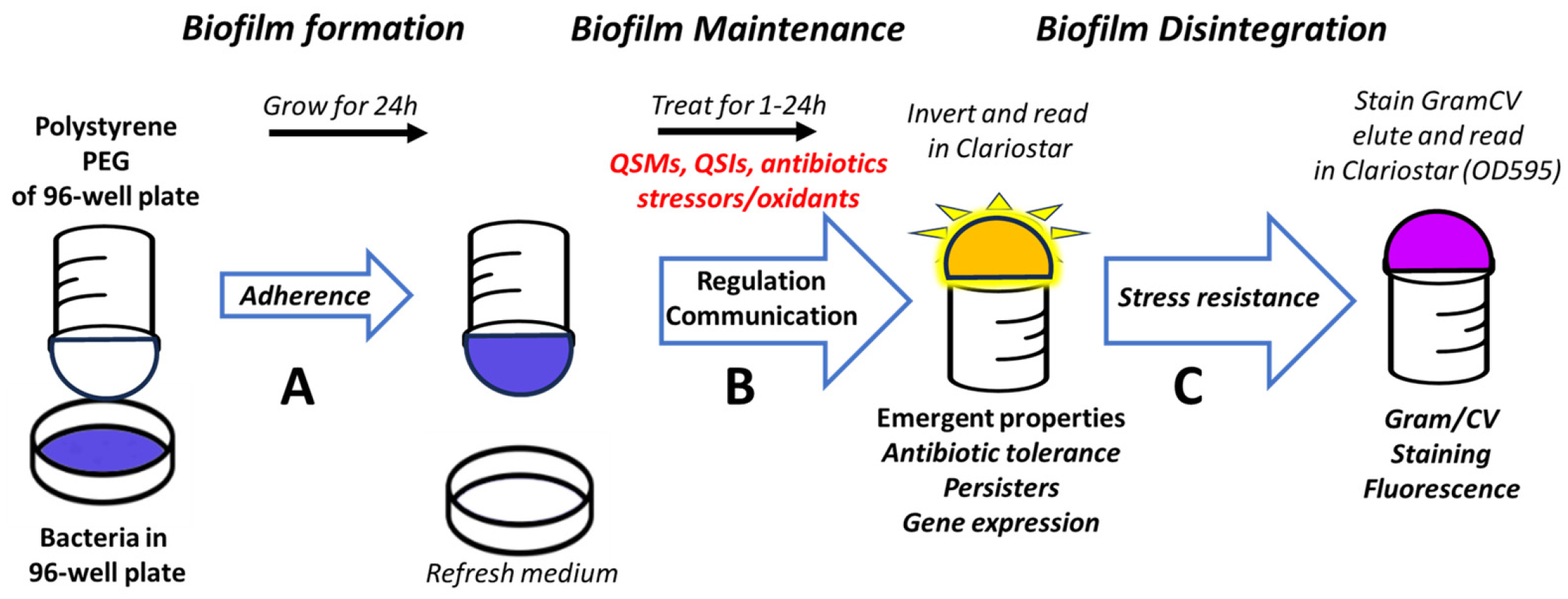
2.5. Assay for Measuring Bacterial Communication in Biofilms
2.6. Gram-Crystal Violet Staining
2.7. Paper Disk and Antibiotic Strips Assays
2.8. Statistics
3. Results
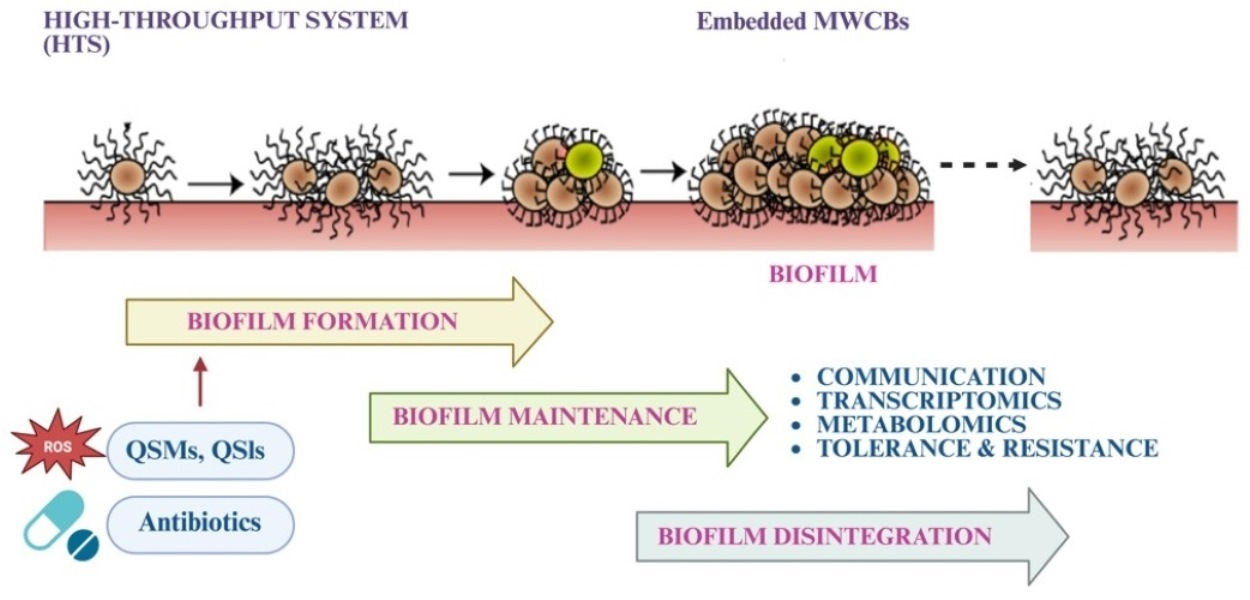
3.1. Development of a High-Throughput Assay for Monitoring Bacterial Communication in Biofilms
3.2. Adaptation of MWCBs Plasmids to Be Embedded into the Biofilms
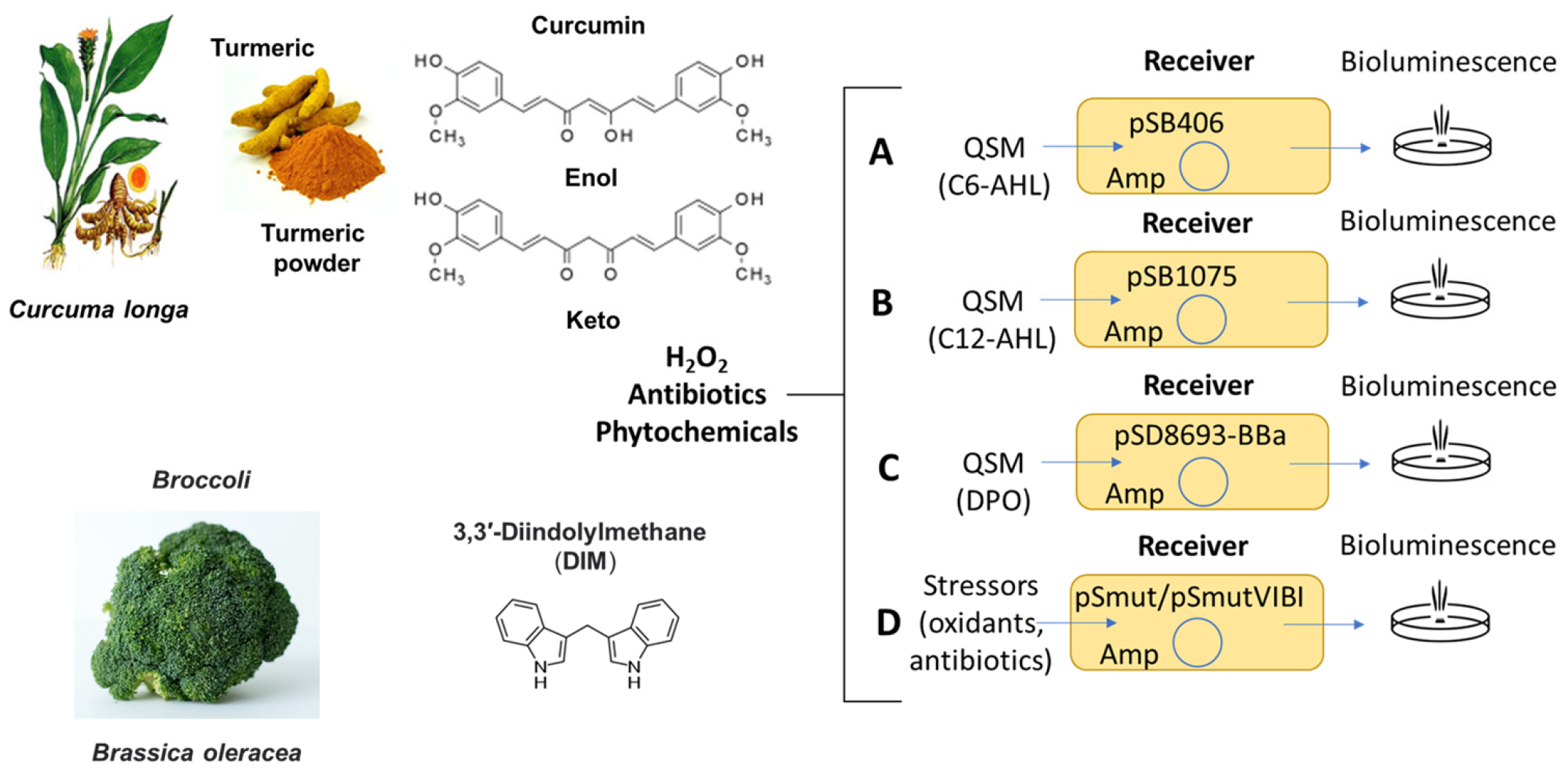
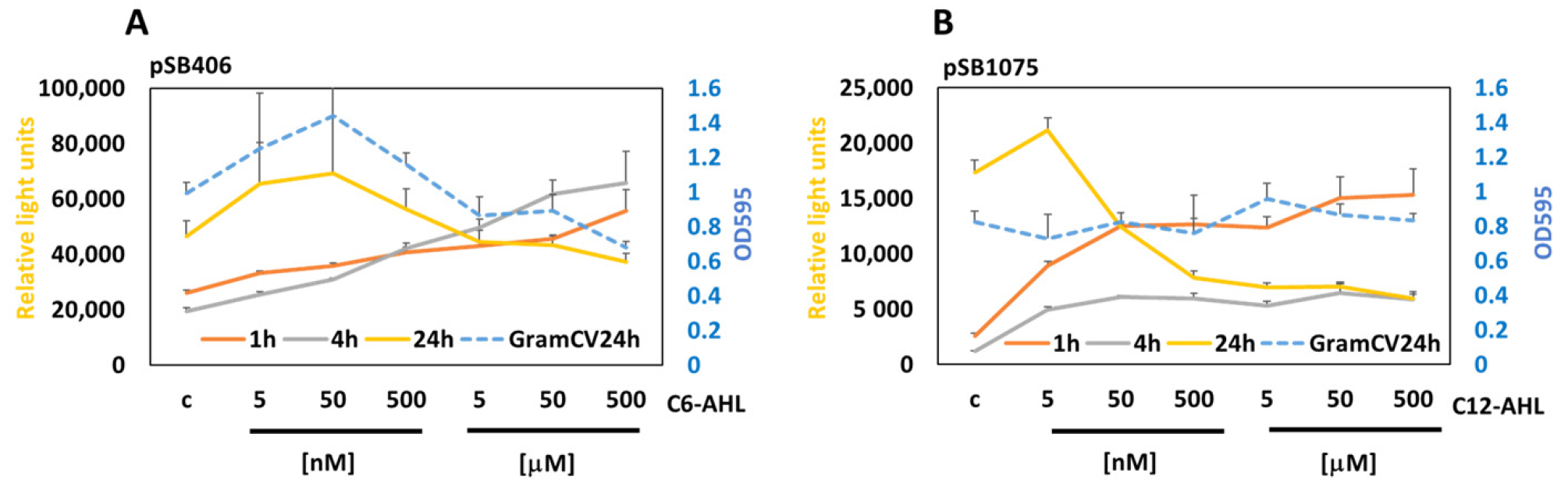
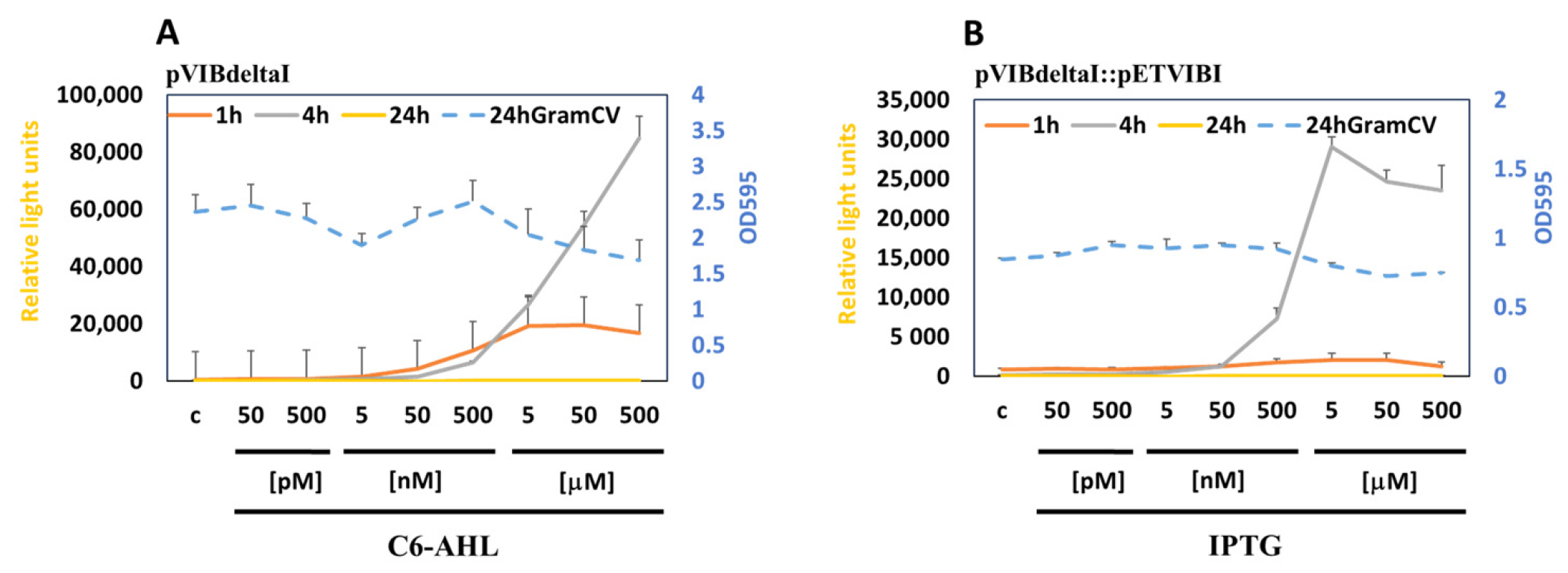
3.3. Response to Treatments with QSMs C6-AHL and C12-AHL
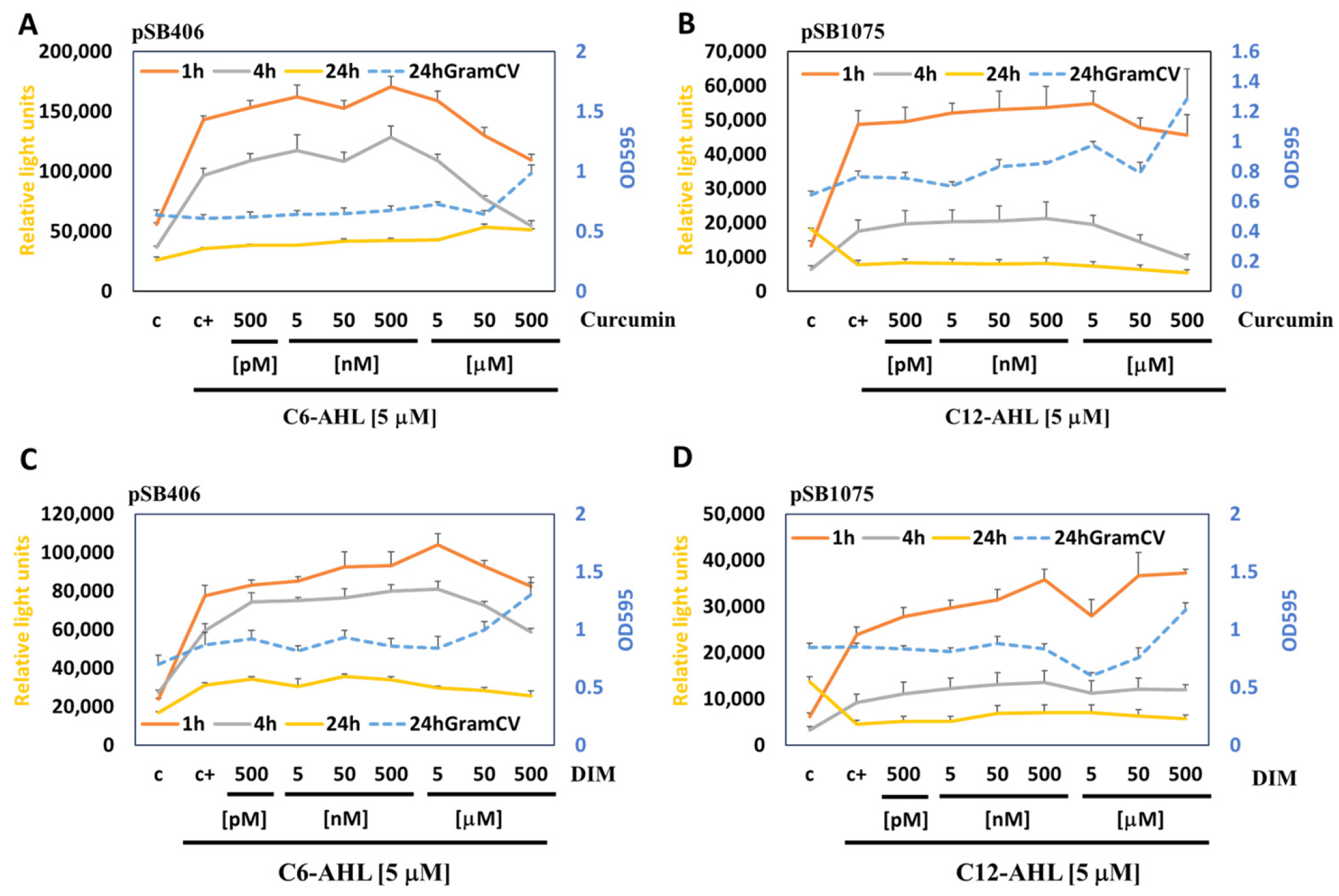
3.4. Response to Treatments with Phytochemicals That Can Act as QSIs
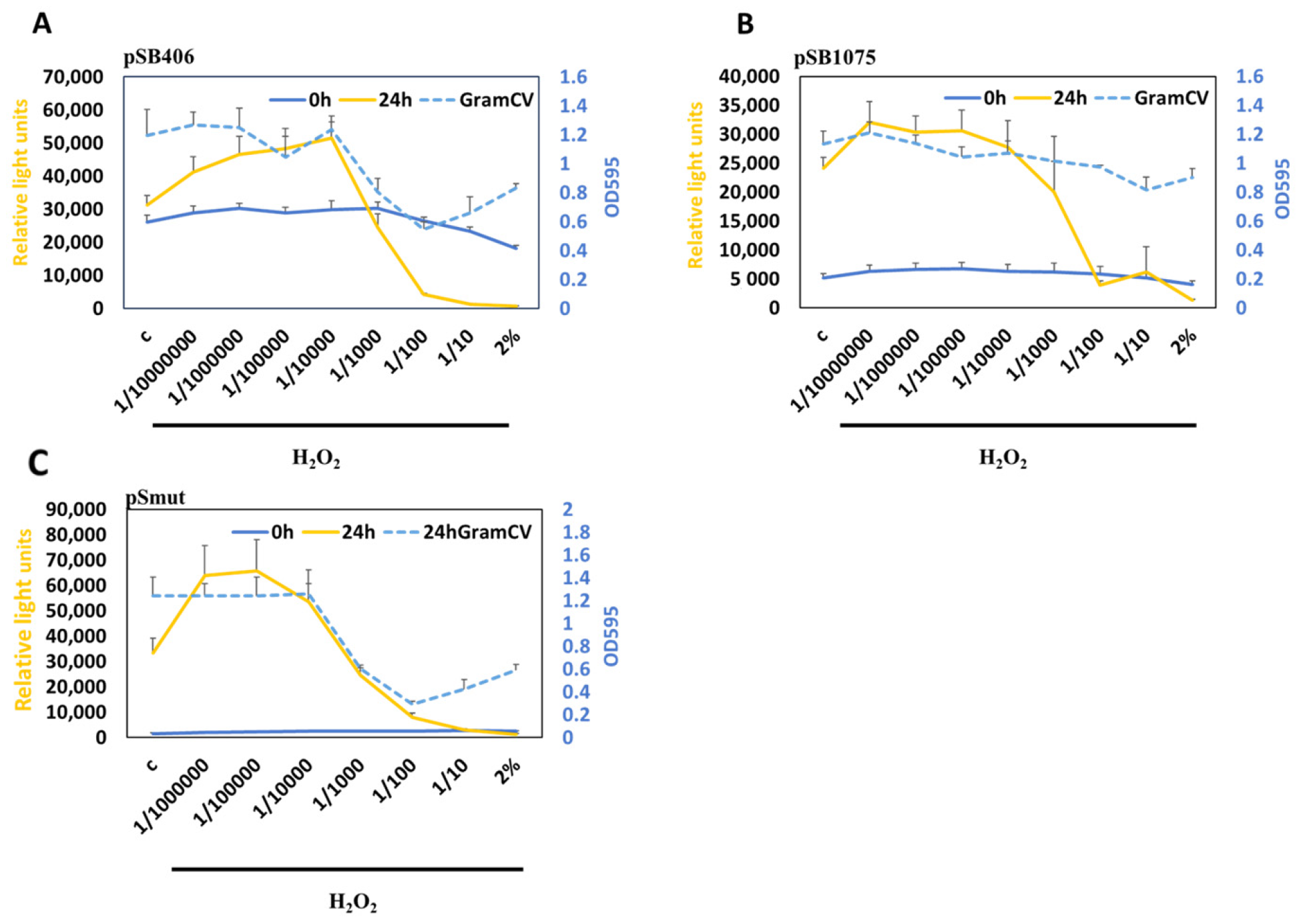
3.5. Monitoring the Response of MWCBs to Stressors (H2O2) in Biofilms
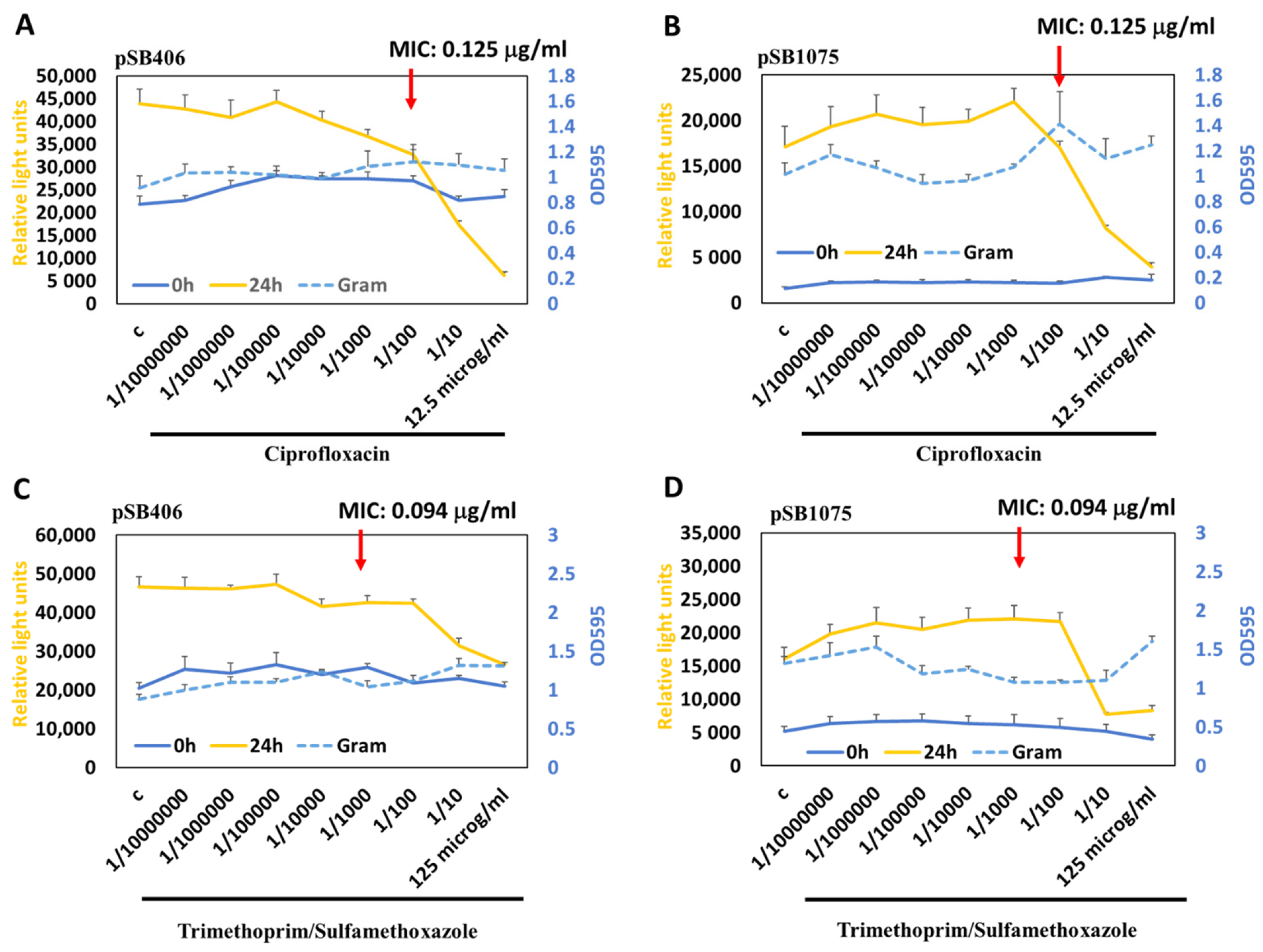
3.6. Monitoring the Response of MWCBs to Stressors (Antibiotics) in Biofilms
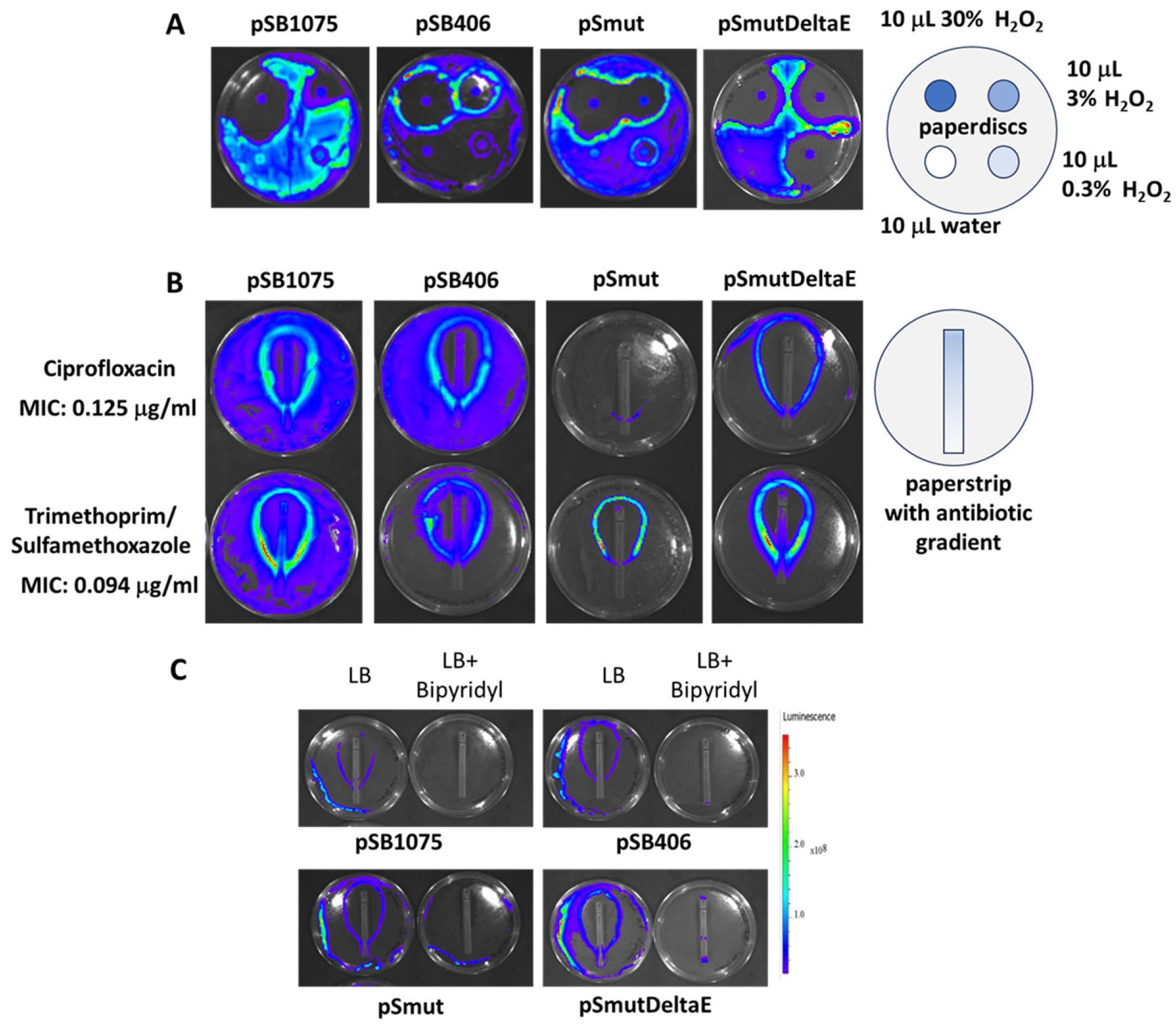
3.7. Monitoring the Response of MWCBs to Stressors (Antibiotics) in Bacterial Lawns
3.8. Communication in Biofilms Between Sender and Receiver MWCBs in E. coli
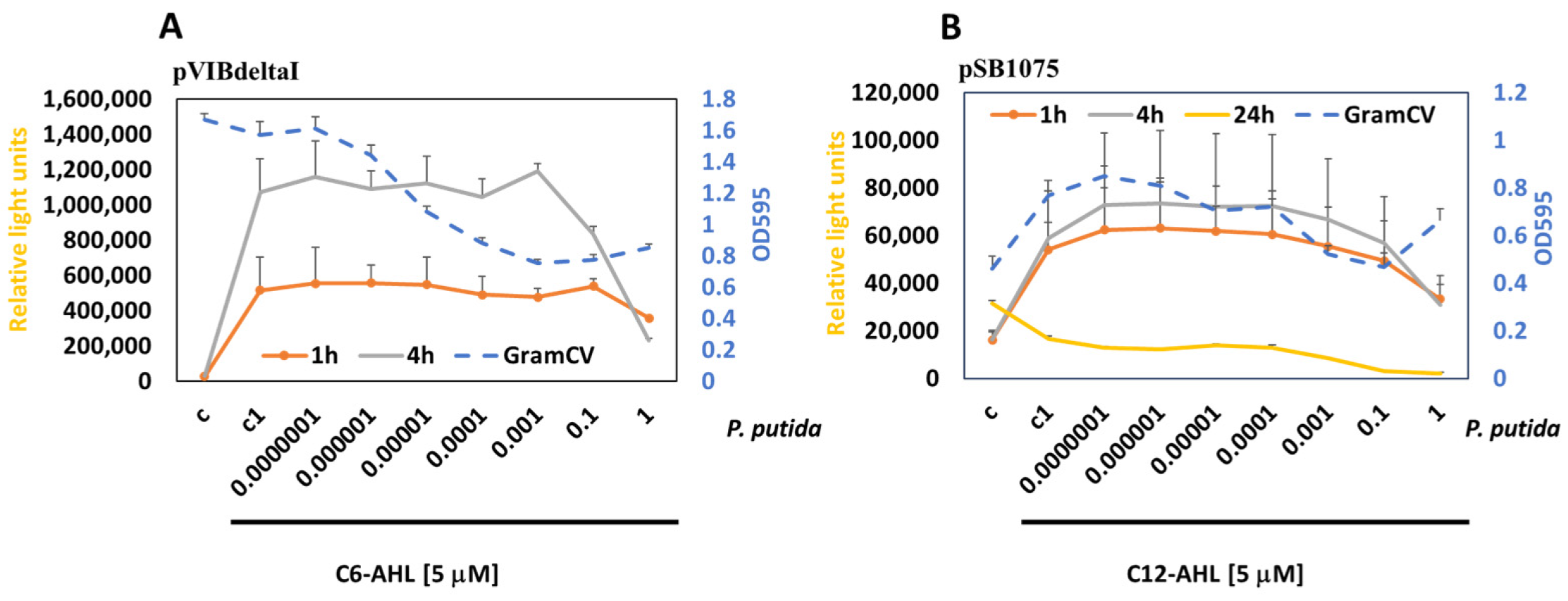
3.9. Communication in Biofilms Between Two Different Types of Bacteria
4. Discussion
5. Conclusions
Supplementary Materials
Author Contributions
Funding
Institutional Review Board Statement
Informed Consent Statement
Data Availability Statement
Acknowledgments
Conflicts of Interest
Abbreviations
| AFM | atomic force microscopy |
| AHLs | N-acetyl-homoserine lactones |
| BBC | biofilm bactericidal concentration |
| BPC | biofilm prevention concentration |
| CLSM | confocal laser scanning microscopy |
| CV | crystal violet |
| DIM | 3,3′-diindolylmethane |
| DPO | 3,5- dimethylpyrazin-2-ol |
| eDNA | extracellular DNA |
| EPS | extracellular polymeric substances |
| GFP | green fluorescent protein |
| IBD | inflammatory bowel disease |
| IPTG | isopropyl-beta-D-thiogalactopyranoside |
| lcAHLs | long-chain AHLs |
| LM | light microscopy |
| LOD | limit of detection |
| MBC | minimum bactericidal concentration |
| MBEC | minimum biofilm eradication concentration |
| MBIC | minimum biofilm inhibitory concentration |
| MIC | minimal inhibitory concentration |
| MWCBs | microbial whole cell biosensors systems |
| QS | quorum sensing |
| QSIs | Quorum-sensing inhibitors |
| QSMs | Quorum-sensing molecules |
| RLUs | relative light units |
| ROS | reactive oxygen species |
| scAHLs | short-chain AHLs |
| sRNA | small RNA |
| SEM | scanning electron microscopy |
References
- Costerton, J.W.; Geesey, G.G.; Cheng, K.J. How bacteria stick. Sci. Am. 1978, 238, 86–95. [Google Scholar] [CrossRef] [Scilit]
- Costerton, J.W.; Stewart, P.S.; Greenberg, E.P. Bacterial biofilms: A common cause of persistent infections. Science 1999, 284, 1318–1322. [Google Scholar] [CrossRef] [Scilit]
- Flemming, H.C.; Wingender, J.; Szewzyk, U.; Steinberg, P.; Rice, S.A.; Kjelleberg, S. Biofilms: An emergent form of bacterial life. Nat. Rev. Microbiol. 2016, 14, 563–575. [Google Scholar] [CrossRef] [Scilit]
- Macia, M.D.; Rojo-Molinero, E.; Oliver, A. Antimicrobial susceptibility testing in biofilm-growing bacteria. Clin. Microbiol. Infect. 2014, 20, 981–990. [Google Scholar] [CrossRef] [Scilit]
- O’Connor, G.; Knecht, L.D.; Salgado, N.; Strobel, S.; Pasini, P.; Daunert, S. Whole-Cell Biosensors as Tools for the Detection of Quorum-Sensing Molecules: Uses in Diagnostics and the Investigation of the Quorum-Sensing Mechanism. Adv. Biochem. Eng. Biotechnol. 2015, 3, 181–200. [Google Scholar] [CrossRef] [Scilit]
- Papenfort, K.; Bassler, B.L. Quorum sensing signal-response systems in Gram-negative bacteria. Nat. Rev. Microbiol. 2016, 14, 576–588. [Google Scholar] [CrossRef] [Scilit]
- Papenfort, K.; Silpe, J.E.; Schramma, K.R.; Cong, J.P.; Seyedsayamdost, M.R.; Bassler, B.L. A Vibrio cholerae autoinducer-receptor pair that controls biofilm formation. Nat. Chem. Biol. 2017, 13, 551–557, Erratum in Nat. Chem. Biol. 2017, 13, 691. Erratum in Nat. Chem. Biol. 2017, 13, 1137. [Google Scholar] [CrossRef] [Scilit]
- Mukherjee, S.; Bassler, B.L. Bacterial quorum sensing in complex and dynamically changing environments. Nat. Rev. Microbiol. 2019, 17, 371–382. [Google Scholar] [CrossRef] [Scilit] [PubMed]
- Whiteley, M.; Diggle, S.P.; Greenberg, E.P. Progress in and promise of bacterial quorum sensing research. Nature 2017, 551, 313–320. [Google Scholar] [CrossRef] [Scilit]
- Chuang, S.K.; Vrla, G.D.; Frohlich, K.S.; Gitai, Z. Surface association sensitizes Pseudomonas aeruginosa to quorum sensing. Nat. Commun. 2019, 10, 4118. [Google Scholar] [CrossRef] [Scilit]
- Monaco, H.; Liu, K.S.; Sereno, T.; Deforet, M.; Taylor, B.P.; Chen, Y.; Reagor, C.C.; Xavier, J.B. Spatial-temporal dynamics of a microbial cooperative behavior resistant to cheating. Nat. Commun. 2022, 13, 721. [Google Scholar] [CrossRef] [Scilit]
- Nguyen, A.N.X.; Thirapanmethee, K.; Audshasai, T.; Khuntayaporn, P.; Chomnawang, M.T. Insights into molecular mechanisms of phytochemicals in quorum sensing modulation for bacterial biofilm control. Arch. Microbiol. 2024, 206, 459. [Google Scholar] [CrossRef] [Scilit]
- Cui, S.; Kim, E. Quorum sensing and antibiotic resistance in polymicrobial infections. Commun. Integr. Biol. 2024, 17, 2415598. [Google Scholar] [CrossRef] [Scilit] [PubMed]
- Patra, S.; Saha, S.; Singh, R.; Tomar, N.; Gulati, P. Biofilm Battleground: Unveiling the hidden challenges, current approaches and future perspectives in combating biofilm associated bacterial infections. Microb. Pathog. 2024, 198, 107155. [Google Scholar] [CrossRef] [Scilit]
- Hense, B.A.; Kuttler, C.; Muller, J.; Rothballer, M.; Hartmann, A.; Kreft, J.U. Does efficiency sensing unify diffusion and quorum sensing? Nat. Rev. Microbiol. 2007, 5, 230–239. [Google Scholar] [CrossRef] [Scilit] [PubMed]
- Charlton, T.S.; de Nys, R.; Netting, A.; Kumar, N.; Hentzer, M.; Givskov, M.; Kjelleberg, S. A novel and sensitive method for the quantification of N-3-oxoacyl homoserine lactones using gas chromatography-mass spectrometry: Application to a model bacterial biofilm. Environ. Microbiol. 2000, 2, 530–541. [Google Scholar] [CrossRef] [Scilit] [PubMed]
- Cremet, L.; Corvec, S.; Batard, E.; Auger, M.; Lopez, I.; Pagniez, F.; Dauvergne, S.; Caroff, N. Comparison of three methods to study biofilm formation by clinical strains of Escherichia coli. Diagn. Microbiol. Infect. Dis. 2013, 75, 252–255. [Google Scholar] [CrossRef] [Scilit]
- Corona-Izquierdo, F.P.; Membrillo-Hernandez, J. Biofilm formation in Escherichia coli is affected by 3-(N-morpholino)propane sulfonate (MOPS). Res. Microbiol. 2002, 153, 181–185. [Google Scholar] [CrossRef] [Scilit]
- Colon-Gonzalez, M.; Mendez-Ortiz, M.M.; Membrillo-Hernandez, J. Anaerobic growth does not support biofilm formation in Escherichia coli K-12. Res. Microbiol. 2004, 155, 514–521. [Google Scholar] [CrossRef] [Scilit]
- DePas, W.H.; Syed, A.K.; Sifuentes, M.; Lee, J.S.; Warshaw, D.; Saggar, V.; Csankovszki, G.; Boles, B.R.; Chapman, M.R. Biofilm formation protects Escherichia coli against killing by Caenorhabditis elegans and Myxococcus xanthus. Appl. Environ. Microbiol. 2014, 80, 7079–7087. [Google Scholar] [CrossRef] [Scilit]
- Schiebel, J.; Bohm, A.; Nitschke, J.; Burdukiewicz, M.; Weinreich, J.; Ali, A.; Roggenbuck, D.; Rodiger, S.; Schierack, P. Genotypic and Phenotypic Characteristics Associated with Biofilm Formation by Human Clinical Escherichia coli Isolates of Different Pathotypes. Appl. Environ. Microbiol. 2017, 83, e01660-17. [Google Scholar] [CrossRef] [Scilit]
- Beloin, C.; Roux, A.; Ghigo, J.M. Escherichia coli biofilms. Curr. Top. Microbiol. Immunol. 2008, 322, 249–289. [Google Scholar] [CrossRef] [Scilit]
- Leech, J.; Golub, S.; Allan, W.; Simmons, M.J.H.; Overton, T.W. Non-pathogenic Escherichia coli biofilms: Effects of growth conditions and surface properties on structure and curli gene expression. Arch. Microbiol. 2020, 202, 1517–1527. [Google Scholar] [CrossRef] [Scilit]
- Azeredo, J.; Azevedo, N.F.; Briandet, R.; Cerca, N.; Coenye, T.; Costa, A.R.; Desvaux, M.; Di Bonaventura, G.; Hebraud, M.; Jaglic, Z.; et al. Critical review on biofilm methods. Crit. Rev. Microbiol. 2017, 43, 313–351. [Google Scholar] [CrossRef] [Scilit]
- Christensen, G.D.; Simpson, W.A.; Younger, J.J.; Baddour, L.M.; Barrett, F.F.; Melton, D.M.; Beachey, E.H. Adherence of coagulase-negative staphylococci to plastic tissue culture plates: A quantitative model for the adherence of staphylococci to medical devices. J. Clin. Microbiol. 1985, 22, 996–1006. [Google Scholar] [CrossRef] [Scilit]
- Mack, D.; Nedelmann, M.; Krokotsch, A.; Schwarzkopf, A.; Heesemann, J.; Laufs, R. Characterization of transposon mutants of biofilm-producing Staphylococcus epidermidis impaired in the accumulative phase of biofilm production: Genetic identification of a hexosamine-containing polysaccharide intercellular adhesin. Infect. Immun. 1994, 62, 3244–3253. [Google Scholar] [CrossRef] [Scilit] [PubMed]
- Andersen, J.B.; Rybtke, M.; Tolker-Nielsen, T. The dynamics of biofilm development and dispersal should be taken into account when quantifying biofilm via the crystal violet microtiter plate assay. Biofilm 2024, 8, 100207. [Google Scholar] [CrossRef] [Scilit]
- Ceri, H.; Olson, M.E.; Stremick, C.; Read, R.R.; Morck, D.; Buret, A. The Calgary Biofilm Device: New technology for rapid determination of antibiotic susceptibilities of bacterial biofilms. J. Clin. Microbiol. 1999, 37, 1771–1776. [Google Scholar] [CrossRef] [Scilit] [PubMed]
- Ali, L.; Khambaty, F.; Diachenko, G. Investigating the suitability of the Calgary Biofilm Device for assessing the antimicrobial efficacy of new agents. Bioresour. Technol. 2006, 97, 1887–1893. [Google Scholar] [CrossRef] [Scilit]
- Peeters, E.; Nelis, H.J.; Coenye, T. Comparison of multiple methods for quantification of microbial biofilms grown in microtiter plates. J. Microbiol. Methods 2008, 72, 157–165. [Google Scholar] [CrossRef] [Scilit] [PubMed]
- Ozturk, F.Y.; Darcan, C.; Kariptas, E. The Determination, Monitoring, Molecular Mechanisms and Formation of Biofilm in E. coli. Braz. J. Microbiol. 2023, 54, 259–277. [Google Scholar] [CrossRef] [Scilit] [PubMed]
- Anton, B.P.; Raleigh, E.A. Complete Genome Sequence of NEB 5-alpha, a Derivative of Escherichia coli K-12 DH5alpha. Genome Announc. 2016, 4, 10–1128. [Google Scholar] [CrossRef] [Scilit] [PubMed]
- Moreno, R.; Fonseca, P.; Rojo, F. The Crc global regulator inhibits the Pseudomonas putida pWW0 toluene/xylene assimilation pathway by repressing the translation of regulatory and structural genes. J. Biol. Chem. 2010, 285, 24412–24419. [Google Scholar] [CrossRef] [Scilit]
- de Las Heras, A.; de Lorenzo, V. Cooperative amino acid changes shift the response of the sigma(5)(4)-dependent regulator XylR from natural m-xylene towards xenobiotic 2,4-dinitrotoluene. Mol. Microbiol. 2011, 79, 1248–1259. [Google Scholar] [CrossRef] [Scilit]
- Zingg, J.M.; Daunert, S. From Quorum Sensing to Positional Sensing. Faseb J. 2020, 34, 1. [Google Scholar] [CrossRef] [Scilit]
- Zingg, J.-M.; Joshi, P.; Zhu, Y.; Deo, S.; Daunert, S. Abstract 1815: Development of Whole Cell Biosensor Systems for Positional Biosensing in Bacterial Biofilms. J. Biol. Chem. 2023, 299, 103118. [Google Scholar] [CrossRef] [Scilit]
- de las Heras, A.; Carreno, C.A.; de Lorenzo, V. Stable implantation of orthogonal sensor circuits in Gram-negative bacteria for environmental release. Environ. Microbiol. 2008, 10, 3305–3316. [Google Scholar] [CrossRef] [Scilit]
- Perez-Martin, J.; De Lorenzo, V. The amino-terminal domain of the prokaryotic enhancer-binding protein XylR is a specific intramolecular repressor. Proc. Natl. Acad. Sci. USA 1995, 92, 9392–9396. [Google Scholar] [CrossRef] [Scilit]
- Engebrecht, J.; Silverman, M. Identification of genes and gene products necessary for bacterial bioluminescence. Proc. Natl. Acad. Sci. USA 1984, 81, 4154–4158. [Google Scholar] [CrossRef] [Scilit]
- Bauer, A.W.; Kirby, W.M.M.; Sherris, J.C.; Turck, M. Antibiotic Susceptibility Testing by a Standardized Single Disk Method. Am. J. Clin. Pathol. 1966, 45, 493–496. [Google Scholar] [CrossRef] [Scilit] [PubMed]
- Bauer, A.W. Single-Disk Antibiotic-Sensitivity Testing of Staphylococci: An Analysis of Technique and Results. A.M.A. Arch. Intern. Med. 1959, 104, 208. [Google Scholar] [CrossRef] [Scilit]
- Dusane, D.H.; Brooks, J.R.; Sindeldecker, D.; Peters, C.W.; Li, A.; Farrar, N.R.; Diamond, S.M.; Knecht, C.S.; Plaut, R.D.; Delury, C.; et al. Complete Killing of Agar Lawn Biofilms by Systematic Spacing of Antibiotic-Loaded Calcium Sulfate Beads. Materials 2019, 12, 4052. [Google Scholar] [CrossRef] [Scilit] [PubMed]
- Moraskie, M.; Roshid, M.H.O.; O’Connor, G.; Artola Zavala, T.; Dikici, E.; Zingg, J.M.; Deo, S.; Daunert, S. Engineered biosensors for the quorum sensing molecule 3,5-dimethyl-pyrazine-2-ol (DPO) reveal its presence in humans, animals, and bacterial species beyond Vibrio cholerae. Biosens. Bioelectron. 2023, 237, 115494. [Google Scholar] [CrossRef] [Scilit] [PubMed]
- Moraskie, M.; Roshid, M.H.O.; O’Connor, G.; Dikici, E.; Zingg, J.M.; Deo, S.; Daunert, S. Microbial whole-cell biosensors: Current applications, challenges, and future perspectives. Biosens. Bioelectron. 2021, 191, 113359. [Google Scholar] [CrossRef] [Scilit]
- Ren, D.; Bedzyk, L.A.; Thomas, S.M.; Ye, R.W.; Wood, T.K. Gene expression in Escherichia coli biofilms. Appl. Microbiol. Biotechnol. 2004, 64, 515–524. [Google Scholar] [CrossRef] [Scilit]
- Abdulkadieva, M.M.; Sysolyatina, E.V.; Vasilieva, E.V.; Gusarov, A.I.; Domnin, P.A.; Slonova, D.A.; Stanishevskiy, Y.M.; Vasiliev, M.M.; Petrov, O.F.; Ermolaeva, S.A. Strain specific motility patterns and surface adhesion of virulent and probiotic Escherichia coli. Sci. Rep. 2022, 12, 614. [Google Scholar] [CrossRef] [Scilit]
- Winson, M.K.; Swift, S.; Fish, L.; Throup, J.P.; Jorgensen, F.; Chhabra, S.R.; Bycroft, B.W.; Williams, P.; Stewart, G.S. Construction and analysis of luxCDABE-based plasmid sensors for investigating N-acyl homoserine lactone-mediated quorum sensing. FEMS Microbiol. Lett. 1998, 163, 185–192. [Google Scholar] [CrossRef]
- Winson, M.K.; Swift, S.; Hill, P.J.; Sims, C.M.; Griesmayr, G.; Bycroft, B.W.; Williams, P.; Stewart, G.S. Engineering the luxCDABE genes from Photorhabdus luminescens to provide a bioluminescent reporter for constitutive and promoter probe plasmids and mini-Tn5 constructs. FEMS Microbiol. Lett. 1998, 163, 193–202. [Google Scholar] [CrossRef]
- Kumari, A.; Pasini, P.; Daunert, S. Detection of bacterial quorum sensing N-acyl homoserine lactones in clinical samples. Anal Bioanal. Chem. 2008, 391, 1619–1627. [Google Scholar] [CrossRef] [Scilit]
- Kumari, A.; Pasini, P.; Deo, S.K.; Flomenhoft, D.; Shashidhar, H.; Daunert, S. Biosensing systems for the detection of bacterial quorum signaling molecules. Anal. Chem. 2006, 78, 7603–7609. [Google Scholar] [CrossRef] [Scilit]
- Michael, B.; Smith, J.N.; Swift, S.; Heffron, F.; Ahmer, B.M. SdiA of Salmonella enterica is a LuxR homolog that detects mixed microbial communities. J. Bacteriol. 2001, 183, 5733–5742. [Google Scholar] [CrossRef] [Scilit]
- Van Houdt, R.; Aertsen, A.; Moons, P.; Vanoirbeek, K.; Michiels, C.W. N-acyl-L-homoserine lactone signal interception by Escherichia coli. FEMS Microbiol. Lett. 2006, 256, 83–89. [Google Scholar] [CrossRef] [Scilit]
- Knecht, L.D.; O’Connor, G.; Mittal, R.; Liu, X.Z.; Daftarian, P.; Deo, S.K.; Daunert, S. Serotonin Activates Bacterial Quorum Sensing and Enhances the Virulence of Pseudomonas aeruginosa in the Host. EBioMedicine 2016, 9, 161–169, Erratum in EBioMedicine 2017, 23, 195. [Google Scholar] [CrossRef] [Scilit] [PubMed]
- O’Connor, G.; Quintero, M.A.; Deo, S.K.; Abreu, M.T.; Daunert, S. Bacterial Quorum-Sensing Molecules in Serum: A Potential Tool for Crohn’s Disease Management. Clin. Transl. Gastroenterol. 2022, 13, e00547. [Google Scholar] [CrossRef] [Scilit]
- Bertoncini-Silva, C.; Vlad, A.; Ricciarelli, R.; Giacomo Fassini, P.; Suen, V.M.M.; Zingg, J.M. Enhancing the Bioavailability and Bioactivity of Curcumin for Disease Prevention and Treatment. Antioxidants 2024, 13, 331. [Google Scholar] [CrossRef] [Scilit]
- Hidalgo, A.; Bravo, D.; Soto, C.; Maturana, G.; Cordero-Machuca, J.; Zuniga-Lopez, M.C.; Oyarzun-Ampuero, F.; Quest, A.F.G. The Anti-Oxidant Curcumin Solubilized as Oil-in-Water Nanoemulsions or Chitosan Nanocapsules Effectively Reduces Helicobacter pylori Growth, Bacterial Biofilm Formation, Gastric Cell Adhesion and Internalization. Antioxidants 2023, 12, 1866. [Google Scholar] [CrossRef] [Scilit]
- Baruch, Y.; Golberg, K.; Sun, Q.; Yew-Hoong Gin, K.; Marks, R.S.; Kushmaro, A. 3,3′-Diindolylmethane (DIM): A Potential Therapeutic Agent against Cariogenic Streptococcus mutans Biofilm. Antibiotics 2023, 12, 1017. [Google Scholar] [CrossRef] [Scilit]
- Golberg, K.; Markus, V.; Kagan, B.E.; Barzanizan, S.; Yaniv, K.; Terali, K.; Kramarsky-Winter, E.; Marks, R.S.; Kushmaro, A. Anti-Virulence Activity of 3,3′-Diindolylmethane (DIM): A Bioactive Cruciferous Phytochemical with Accelerated Wound Healing Benefits. Pharmaceutics 2022, 14, 967. [Google Scholar] [CrossRef] [Scilit] [PubMed]
- Zheng, D.; Huang, C.; Huang, H.; Zhao, Y.; Khan, M.R.U.; Zhao, H.; Huang, L. Antibacterial Mechanism of Curcumin: A Review. Chem. Biodivers. 2020, 17, e2000171. [Google Scholar] [CrossRef] [Scilit]
- Lima, E.M.F.; de Almeida, F.A.; Pinto, U.M. Exploring the antivirulence potential of phenolic compounds to inhibit quorum sensing in Pseudomonas aeruginosa. World J. Microbiol. Biotechnol. 2025, 41, 32. [Google Scholar] [CrossRef] [Scilit] [PubMed]
- Francke, C.; Groot Kormelink, T.; Hagemeijer, Y.; Overmars, L.; Sluijter, V.; Moezelaar, R.; Siezen, R.J. Comparative analyses imply that the enigmatic sigma factor 54 is a central controller of the bacterial exterior. BMC Genom. 2011, 12, 385. [Google Scholar] [CrossRef] [Scilit]
- Riordan, J.T.; Mitra, A. Regulation of Escherichia coli Pathogenesis by Alternative Sigma Factor N. EcoSal. Plus 2017, 7, 10–1128. [Google Scholar] [CrossRef] [Scilit]
- Kohanski, M.A.; Dwyer, D.J.; Hayete, B.; Lawrence, C.A.; Collins, J.J. A common mechanism of cellular death induced by bactericidal antibiotics. Cell 2007, 130, 797–810. [Google Scholar] [CrossRef] [Scilit] [PubMed]
- Kohanski, M.A.; Dwyer, D.J.; Collins, J.J. How antibiotics kill bacteria: From targets to networks. Nat. Rev. Microbiol. 2010, 8, 423–435. [Google Scholar] [CrossRef] [Scilit]
- Brown, A.; Lo, D.C.; Sharpe, C.; Tong, C. Increased intracellular hydrogen peroxide observed in Escherichia coli in the presence of two classes of antibiotics. J. Exp. Microbiol. Immunol. 2012, 16, 17–23. [Google Scholar]
- Sen, A.; Imlay, J.A. How Microbes Defend Themselves From Incoming Hydrogen Peroxide. Front. Immunol. 2021, 12, 667343. [Google Scholar] [CrossRef] [Scilit] [PubMed]
- Reniere, M.L. Reduce, Induce, Thrive: Bacterial Redox Sensing during Pathogenesis. J. Bacteriol. 2018, 200, 10–1128. [Google Scholar] [CrossRef] [Scilit]
- Hong, Y.; Zeng, J.; Wang, X.; Drlica, K.; Zhao, X. Post-stress bacterial cell death mediated by reactive oxygen species. Proc. Natl. Acad. Sci. USA 2019, 116, 10064–10071. [Google Scholar] [CrossRef] [Scilit]
- Bortolotti, D.; Trapella, C.; Bragonzi, A.; Marchetti, P.; Zanirato, V.; Alogna, A.; Gentili, V.; Cervellati, C.; Valacchi, G.; Sicolo, M.; et al. Conjugation of LasR Quorum-Sensing Inhibitors with Ciprofloxacin Decreases the Antibiotic Tolerance of P. aeruginosa Clinical Strains. J. Chem. 2019, 2019, 8143739. [Google Scholar] [CrossRef] [Scilit]
- Struss, A.K.; Pasini, P.; Flomenhoft, D.; Shashidhar, H.; Daunert, S. Investigating the effect of antibiotics on quorum sensing with whole-cell biosensing systems. Anal. Bioanal. Chem. 2012, 402, 3227–3236. [Google Scholar] [CrossRef] [Scilit]
- Ezraty, B.; Barras, F. The ‘liaisons dangereuses’ between iron and antibiotics. FEMS Microbiol. Rev. 2016, 40, 418–435. [Google Scholar] [CrossRef] [Scilit]
- Kokarakis, E.J.; Rillema, R.; Ducat, D.C.; Sakkos, J.K. Developing Cyanobacterial Quorum Sensing Toolkits: Toward Interspecies Coordination in Mixed Autotroph/Heterotroph Communities. ACS Synth. Biol. 2023, 12, 265–276. [Google Scholar] [CrossRef] [Scilit]
- Frey, R.L.; He, L.; Cui, Y.; Decho, A.W.; Kawaguchi, T.; Ferguson, P.L.; Ferry, J.L. Reaction of N-Acylhomoserine Lactones with Hydroxyl Radicals: Rates, Products, and Effects on Signaling Activity. Environ. Sci. Technol. 2010, 44, 7465–7469. [Google Scholar] [CrossRef] [Scilit] [PubMed]
- Watanabe, H.; Nagoshi, T.; Inaba, H. Luminescence of a bacterial luciferase intermediate by reaction with H2O2: The evolutionary origin of luciferase and source of endogenous light emission. Biochim. Biophys. Acta (BBA)-Bioenerg. 1993, 1141, 297–302. [Google Scholar] [CrossRef] [Scilit]
- Katsev, A.M.; Wegrzyn, G.; Szpilewska, H. Effects of hydrogen peroxide on light emission by various strains of marine luminescent bacteria. J. Basic. Microbiol. 2004, 44, 178–184. [Google Scholar] [CrossRef] [Scilit]
- Aguanno, D.; Coquant, G.; Postal, B.G.; Osinski, C.; Wieckowski, M.; Stockholm, D.; Grill, J.-P.; Carrière, V.; Seksik, P.; Thenet, S. The intestinal quorum sensing 3-oxo-C12:2 Acyl homoserine lactone limits cytokine-induced tight junction disruption. Tissue Barriers 2020, 8, 1832877. [Google Scholar] [CrossRef] [Scilit] [PubMed]
- Steidle, A.; Allesen-Holm, M.; Riedel, K.; Berg, G.; Givskov, M.; Molin, S.; Eberl, L. Identification and characterization of an N-acylhomoserine lactone-dependent quorum-sensing system in Pseudomonas putida strain IsoF. Appl. Environ. Microbiol. 2002, 68, 6371–6382. [Google Scholar] [CrossRef] [Scilit]
- Quintieri, L.; Caputo, L.; Brasca, M.; Fanelli, F. Recent Advances in the Mechanisms and Regulation of QS in Dairy Spoilage by Pseudomonas spp. Foods 2021, 10, 3088. [Google Scholar] [CrossRef] [Scilit]
- Xue, Y.M.; Wang, Y.C.; Lin, Y.T.; Jiang, G.Y.; Chen, R.; Qin, R.L.; Jia, X.Q.; Wang, C. Engineering a Pseudomonas putida as living quorum quencher for biofilm formation inhibition, benzenes degradation, and environmental risk evaluation. Water Res. 2023, 246, 120690. [Google Scholar] [CrossRef] [Scilit]
- Campo-Perez, V.; Alcacer-Almansa, J.; Julian, E.; Torrents, E. A High-Throughput Microtiter Plate Screening Assay to Quantify and Differentiate Species in Dual-Species Biofilms. Microorganisms 2023, 11, 2244. [Google Scholar] [CrossRef] [Scilit]
- Filonov, G.S.; Verkhusha, V.V. A near-infrared BiFC reporter for in vivo imaging of protein-protein interactions. Chem. Biol. 2013, 20, 1078–1086. [Google Scholar] [CrossRef] [Scilit]
- Zhao, X.; Drlica, K. Reactive oxygen species and the bacterial response to lethal stress. Curr. Opin. Microbiol. 2014, 21, 1–6. [Google Scholar] [CrossRef] [Scilit] [PubMed]
- Iavicoli, I.; Fontana, L.; Agathokleous, E.; Santocono, C.; Russo, F.; Vetrani, I.; Fedele, M.; Calabrese, E.J. Hormetic dose responses induced by antibiotics in bacteria: A phantom menace to be thoroughly evaluated to address the environmental risk and tackle the antibiotic resistance phenomenon. Sci. Total Environ. 2021, 798, 149255. [Google Scholar] [CrossRef] [Scilit]
- Szomolay, B.; Cogan, N.G. Modelling mechanical and chemical treatment of biofilms with two phenotypic resistance mechanisms. Environ. Microbiol. 2015, 17, 1870–1883. [Google Scholar] [CrossRef] [Scilit]
- Dandapani, H.; Kankaanpaa, P.; Jones, P.R.; Kallio, P. A Plasmid-Based Fluorescence Reporter System for Monitoring Oxidative Damage in E. coli. Sensors 2022, 22, 6334. [Google Scholar] [CrossRef] [Scilit]
- Skindersoe, M.E.; Alhede, M.; Phipps, R.; Yang, L.; Jensen, P.O.; Rasmussen, T.B.; Bjarnsholt, T.; Tolker-Nielsen, T.; Hoiby, N.; Givskov, M. Effects of antibiotics on quorum sensing in Pseudomonas aeruginosa. Antimicrob. Agents Chemother. 2008, 52, 3648–3663. [Google Scholar] [CrossRef] [Scilit]
- Inchingolo, F.; Inchingolo, A.D.; Latini, G.; Trilli, I.; Ferrante, L.; Nardelli, P.; Malcangi, G.; Inchingolo, A.M.; Mancini, A.; Palermo, A.; et al. The Role of Curcumin in Oral Health and Diseases: A Systematic Review. Antioxidants 2024, 13, 660. [Google Scholar] [CrossRef] [Scilit] [PubMed]
- Yan, S.; Wu, G. Can Biofilm Be Reversed Through Quorum Sensing in Pseudomonas aeruginosa? Front. Microbiol. 2019, 10, 1582. [Google Scholar] [CrossRef] [Scilit]
- Solano, C.; Echeverz, M.; Lasa, I. Biofilm dispersion and quorum sensing. Curr. Opin. Microbiol. 2014, 18, 96–104. [Google Scholar] [CrossRef] [Scilit]
- Sikdar, R.; Elias, M.H. Evidence for Complex Interplay between Quorum Sensing and Antibiotic Resistance in Pseudomonas aeruginosa. Microbiol. Spectr. 2022, 10, e01269-22. [Google Scholar] [CrossRef] [Scilit]
- Drescher, K.; Dunkel, J.; Nadell, C.D.; van Teeffelen, S.; Grnja, I.; Wingreen, N.S.; Stone, H.A.; Bassler, B.L. Architectural transitions in Vibrio cholerae biofilms at single-cell resolution. Proc. Natl. Acad. Sci. USA 2016, 113, E2066–E2072. [Google Scholar] [CrossRef] [Scilit]
- Li, J.; Attila, C.; Wang, L.; Wood, T.K.; Valdes, J.J.; Bentley, W.E. Quorum sensing in Escherichia coli is signaled by AI-2/LsrR: Effects on small RNA and biofilm architecture. J. Bacteriol. 2007, 189, 6011–6020. [Google Scholar] [CrossRef] [Scilit]
- Annous, B.A.; Fratamico, P.M.; Smith, J.L. Quorum Sensing in Biofilms: Why Bacteria Behave the Way They Do. J. Food Sci. 2009, 74, 24–37. [Google Scholar] [CrossRef] [Scilit]
- Lee, J.-H.; Wood, T.K.; Lee, J. Roles of Indole as an Interspecies and Interkingdom Signaling Molecule. Trends Microbiol. 2015, 23, 707–718. [Google Scholar] [CrossRef] [Scilit] [PubMed]
- Lade, H.; Paul, D.; Kweon, J.H. Quorum quenching mediated approaches for control of membrane biofouling. Int. J. Biol. Sci. 2014, 10, 550–565. [Google Scholar] [CrossRef] [Scilit]
- Fala, A.K.; Alvarez-Ordonez, A.; Filloux, A.; Gahan, C.G.M.; Cotter, P.D. Quorum sensing in human gut and food microbiomes: Significance and potential for therapeutic targeting. Front. Microbiol. 2022, 13, 1002185. [Google Scholar] [CrossRef] [Scilit] [PubMed]
- Personnic, N.; Striednig, B.; Hilbi, H. Quorum sensing controls persistence, resuscitation, and virulence of Legionella subpopulations in biofilms. ISME J. 2021, 15, 196–210. [Google Scholar] [CrossRef] [Scilit]
- Palla, M.; Battini, F.; Cristani, C.; Giovannetti, M.; Squartini, A.; Agnolucci, M. Quorum sensing in rhizobia isolated from the spores of the mycorrhizal symbiont Rhizophagus intraradices. Mycorrhiza 2018, 28, 773–778. [Google Scholar] [CrossRef] [Scilit]
- Perchat, S.; Talagas, A.; Poncet, S.; Lazar, N.; Li de la Sierra-Gallay, I.; Gohar, M.; Lereclus, D.; Nessler, S. How Quorum Sensing Connects Sporulation to Necrotrophism in Bacillus thuringiensis. PLoS Pathog. 2016, 12, e1005779, Erratum in PLoS Pathog. 2016, 12, e1006009. [Google Scholar] [CrossRef] [Scilit]
- Li, J.; Chen, J.; Vidal, J.E.; McClane, B.A. The Agr-like quorum-sensing system regulates sporulation and production of enterotoxin and beta2 toxin by Clostridium perfringens type A non-food-borne human gastrointestinal disease strain F5603. Infect. Immun. 2011, 79, 2451–2459. [Google Scholar] [CrossRef] [Scilit]
- Zhang, Y.; Zhou, M.; Zhou, Y.; Guan, X. Dietary components regulate chronic diseases through gut microbiota: A review. J Sci Food Agric 2023, 103, 6752–6766. [Google Scholar] [CrossRef] [Scilit] [PubMed]
- Wood, T.K. Insights on Escherichia coli biofilm formation and inhibition from whole-transcriptome profiling. Environ. Microbiol. 2009, 11, 1–15. [Google Scholar] [CrossRef] [Scilit] [PubMed]
- Van Houdt, R.; Michiels, C.W. Role of bacterial cell surface structures in Escherichia coli biofilm formation. Res. Microbiol. 2005, 156, 626–633. [Google Scholar] [CrossRef] [Scilit] [PubMed]
- Bak, G.; Lee, J.; Suk, S.; Kim, D.; Young Lee, J.; Kim, K.S.; Choi, B.S.; Lee, Y. Identification of novel sRNAs involved in biofilm formation, motility, and fimbriae formation in Escherichia coli. Sci. Rep. 2015, 5, 15287. [Google Scholar] [CrossRef] [Scilit]
- Gomes, L.C.; Mergulhao, F.J. Effects of antibiotic concentration and nutrient medium composition on Escherichia coli biofilm formation and green fluorescent protein expression. FEMS Microbiol. Lett. 2017, 364, fnx042. [Google Scholar] [CrossRef] [Scilit]
- Schellhorn, H.E. Function, Evolution, and Composition of the RpoS Regulon in Escherichia coli. Front. Microbiol. 2020, 11, 560099. [Google Scholar] [CrossRef] [Scilit]
- Dong, T.; Yu, R.; Schellhorn, H. Antagonistic regulation of motility and transcriptome expression by RpoN and RpoS in Escherichia coli. Mol. Microbiol. 2011, 79, 375–386. [Google Scholar] [CrossRef] [Scilit]
- Pletnev, P.; Osterman, I.; Sergiev, P.; Bogdanov, A.; Dontsova, O. Survival guide: Escherichia coli in the stationary phase. Acta Naturae 2015, 7, 22–33. [Google Scholar] [CrossRef] [Scilit]
- Silpe, J.E.; Duddy, O.P.; Papenfort, P. Microbial Communication via Pyrazine Signaling: A New Class of Signaling Molecules Identified in Vibrio cholerae. Isr. J. Chem. 2023, 63, e202200063. [Google Scholar] [CrossRef] [Scilit]
- Gatsios, A.; Kim, C.S.; York, A.G.; Flavell, R.A.; Crawford, J.M. Cellular Stress-Induced Metabolites in Escherichia coli. J. Nat. Prod. 2022, 85, 2626–2640. [Google Scholar] [CrossRef] [Scilit]
- Kim, C.S.; Gatsios, A.; Cuesta, S.; Lam, Y.C.; Wei, Z.; Chen, H.; Russell, R.M.; Shine, E.E.; Wang, R.; Wyche, T.P.; et al. Characterization of Autoinducer-3 Structure and Biosynthesis in E. coli. ACS Cent. Sci. 2020, 6, 197–206. [Google Scholar] [CrossRef] [Scilit] [PubMed]
- Mashruwala, A.A.; Bassler, B.L. The Vibrio cholerae Quorum-Sensing Protein VqmA Integrates Cell Density, Environmental, and Host-Derived Cues into the Control of Virulence. mBio 2020, 11, e01572-20. [Google Scholar] [CrossRef] [Scilit] [PubMed]


Disclaimer/Publisher’s Note: The statements, opinions and data contained in all publications are solely those of the individual author(s) and contributor(s) and not of MDPI and/or the editor(s). MDPI and/or the editor(s) disclaim responsibility for any injury to people or property resulting from any ideas, methods, instructions or products referred to in the content. |
© 2026 by the authors. Licensee MDPI, Basel, Switzerland. This article is an open access article distributed under the terms and conditions of the Creative Commons Attribution (CC BY) license.
Share and Cite
Zingg, J.-M.; Joshi, P.; Moraskie, M.; Li, M.; Reyes, S.; Roshid, M.H.O.; Deo, S.; Daunert, S. Measuring Communication in Microbial Biofilms in Response to Antibiotics, Phytochemicals and Stressors. Antioxidants 2026, 15, 361. https://doi.org/10.3390/antiox15030361
Zingg J-M, Joshi P, Moraskie M, Li M, Reyes S, Roshid MHO, Deo S, Daunert S. Measuring Communication in Microbial Biofilms in Response to Antibiotics, Phytochemicals and Stressors. Antioxidants. 2026; 15(3):361. https://doi.org/10.3390/antiox15030361
Chicago/Turabian StyleZingg, Jean-Marc, Pratibha Joshi, Michael Moraskie, Mengrui Li, Sherwin Reyes, Md Harun Or Roshid, Sapna Deo, and Sylvia Daunert. 2026. "Measuring Communication in Microbial Biofilms in Response to Antibiotics, Phytochemicals and Stressors" Antioxidants 15, no. 3: 361. https://doi.org/10.3390/antiox15030361
APA StyleZingg, J.-M., Joshi, P., Moraskie, M., Li, M., Reyes, S., Roshid, M. H. O., Deo, S., & Daunert, S. (2026). Measuring Communication in Microbial Biofilms in Response to Antibiotics, Phytochemicals and Stressors. Antioxidants, 15(3), 361. https://doi.org/10.3390/antiox15030361