Phenolic Characterization and Comparative Antioxidant Profiling of Australian Asparagopsis armata and A. taxiformis Across Their Developmental Stages
 ,
,  and
and 
Abstract
1. Introduction
2. Materials and Methods
2.1. Sample Collection
2.2. Extraction Preparation
2.3. Estimation of Phenolic Content and Antioxidant Activities
2.4. Relative Antioxidant Capacity Index
2.5. Phenolic Compound Characterization Using LC-ESI-QTOF-MS/MS Analysis
2.6. Statistical Analysis
3. Results and Discussion
3.1. Estimation of Phenolic Content
3.2. Estimation of Asparagopsis Antioxidant Potential
3.3. Relative Antioxidant Capacity Index (RACI) of Asparagopsis
3.4. Correlation of Polyphenols and Antioxidant Activities
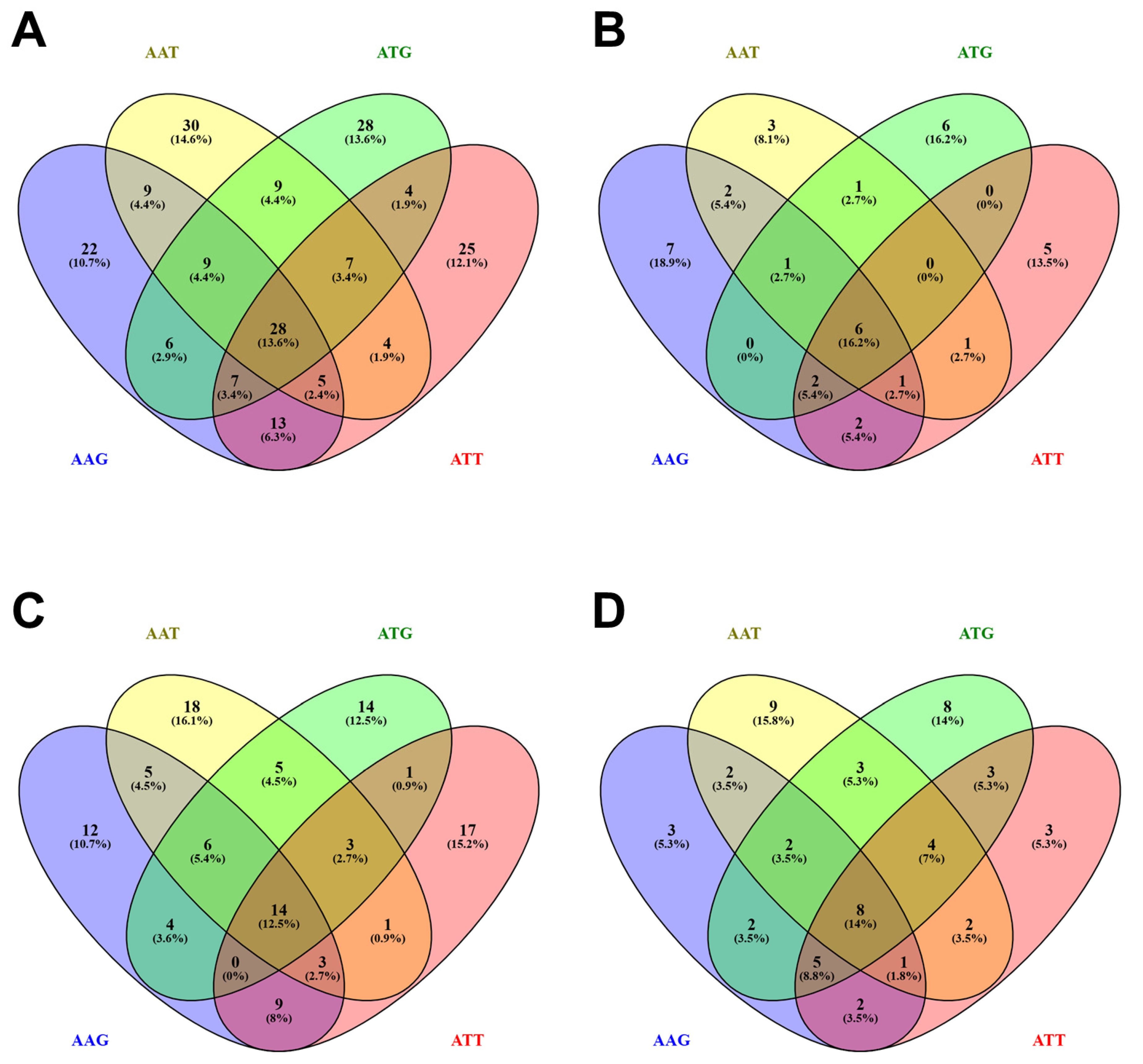
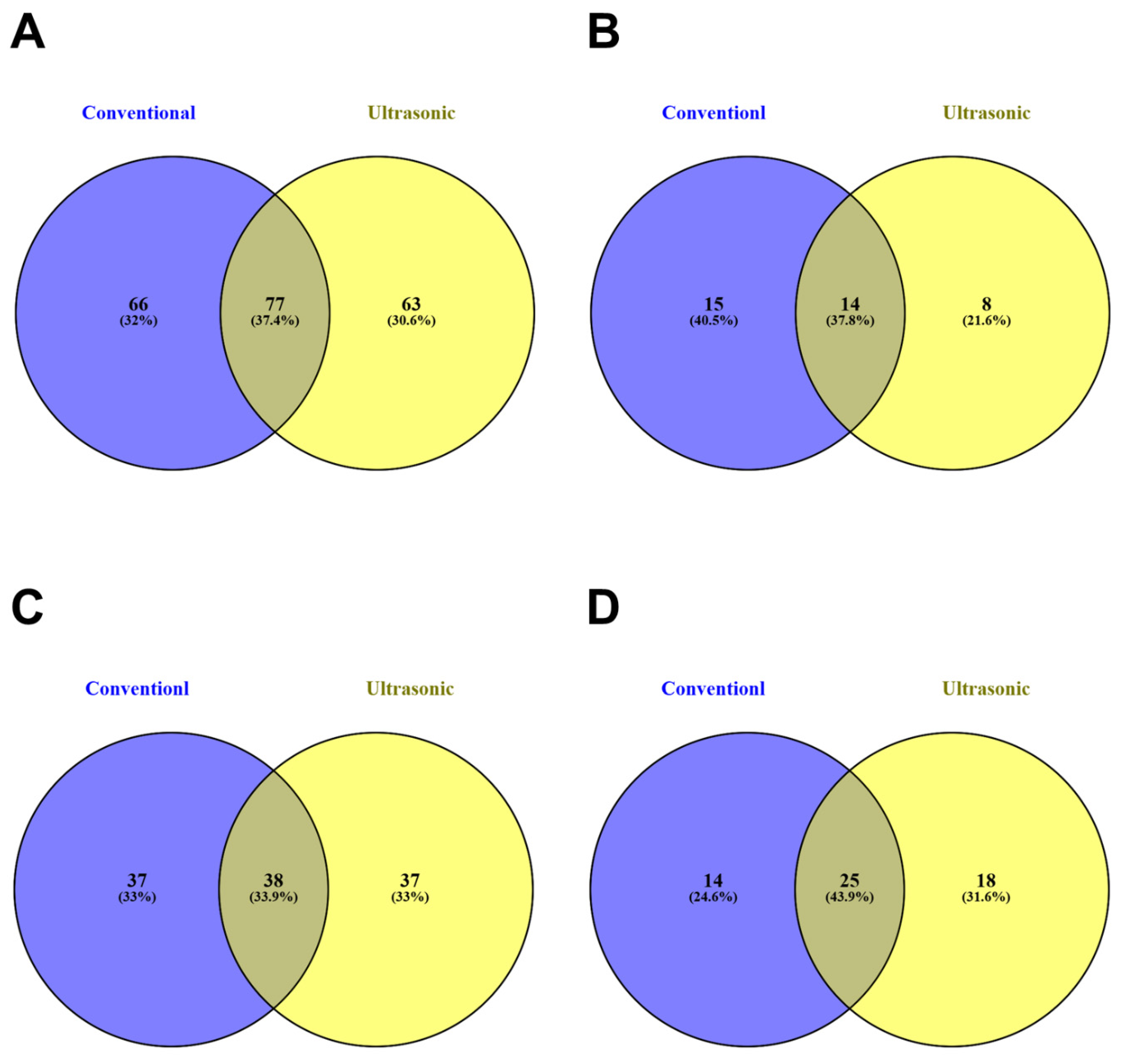
3.5. Distribution of Phenolic Compounds Across Asparagopsis Species, Life Stages, and Extraction Methodology
3.6. LC-ESI-QTOF-MS/MS Characterization of Phenolic Compounds
4. Conclusions
Supplementary Materials
Author Contributions
Funding
Institutional Review Board Statement
Informed Consent Statement
Data Availability Statement
Acknowledgments
Conflicts of Interest
References
- Mouritsen, O.G.; Cornish, M.L.; Critchley, A.T.; Pérez-Lloréns, J.L. History of seaweeds as a food. In Applications of Seaweeds in Food and Nutrition; Hefft, D.I., Adetunji, C.O., Eds.; Elsevier: Amsterdam, The Netherlands, 2024; pp. 1–17. [Google Scholar]
- Thiviya, P.; Gamage, A.; Gama-Arachchige, N.S.; Merah, O.; Madhujith, T. Seaweeds as a source of functional proteins. Phycology 2022, 2, 216–243. [Google Scholar] [CrossRef]
- Zhang, L.; Liao, W.; Huang, Y.; Wen, Y.; Chu, Y.; Zhao, C. Global seaweed farming and processing in the past 20 years. Food Prod. Process. Nutr. 2022, 4, 23. [Google Scholar] [CrossRef]
- Cai, J.; Lovatelli, A.; Aguilar-Manjarrez, J.; Cornish, L.; Dabbadie, L.; Desrochers, A.; Diffey, S.; Garrido Gamarro, E.; Geehan, J.; Hurtado, A. Seaweeds and Microalgae: An Overview for Unlocking their Potential in Global Aquaculture Development; FAO Fisheries and Aquaculture Circular; FAO: Rome, Italy, 2021. [Google Scholar]
- Kelly, J. Australian Seaweed Industry Blueprint—A Blueprint for Growth; Bulletin No. 20-072; AgriFutures Australia: Kingston, Australia, 2020. [Google Scholar]
- Ahmed, E.; Nishida, T. The anti-methanogenic efficacy of Asparagopsis armata: Could it be attributable solely to its bromoform content? Anim. Feed. Sci. Technol. 2024, 318, 116118. [Google Scholar] [CrossRef]
- Januário, A.P.; Félix, C.; Félix, R.; Shiels, K.; Murray, P.; Valentão, P.; Lemos, M.F. Exploring the therapeutical potential of Asparagopsis armata biomass: A novel approach for acne vulgaris treatment. Mar. Drugs 2024, 22, 489. [Google Scholar] [CrossRef]
- Cheong, K.-L.; Li, G.; Wang, M.; Yang, Y.; Zhong, S. Unraveling the chemical identification and biological potential of the genus Asparagopsis: A comprehensive review. Front. Mar. Sci. 2024, 11, 1360425. [Google Scholar] [CrossRef]
- Chowdhary, V.; Alooparampil, S.; Pandya, R.V.; Tank, J.G. Physiological function of phenolic compounds in plant defense system. In Phenolic Compounds: Chemistry, Synthesis, Diversity, Non-Conventional Industrial, Pharmaceutical and Therapeutic Applications; Badria, F.A., Ed.; IntechOpen: London, UK, 2021. [Google Scholar]
- Mellouk, Z.; Benammar, I.; Krouf, D.; Goudjil, M.; Okbi, M.; Malaisse, W. Antioxidant properties of the red alga Asparagopsis taxiformis collected on the North West Algerian coast. Exp. Ther. Med. 2017, 13, 3281–3290. [Google Scholar] [CrossRef]
- Pinto, D.C.; Lesenfants, M.L.; Rosa, G.P.; Barreto, M.C.; Silva, A.M.; Seca, A.M. GC-and UHPLC-MS Profiles as a Tool to Valorize the Red Alga Asparagopsis armata. Appl. Sci. 2022, 12, 892. [Google Scholar] [CrossRef]
- Xu, Z.-Y.; Liu, C.-H.; Chen, B.; Liu, L.-L.; Lo, J.-L.; Kuo, C.-H.; Chiu, K. Metabolomic analysis of methane-reducing seaweed Asparagopsis taxiformis for sustainable production in Taiwan. Sci. Total Environ. 2025, 971, 179045. [Google Scholar] [CrossRef]
- Neethu, P.; Suthindhiran, K.; Jayasri, M. Antioxidant and antiproliferative activity of Asparagopsis taxiformis. Pharmacogn. Res. 2017, 9, 238. [Google Scholar] [CrossRef] [PubMed]
- Yoon, H.-S.; Kim, H.J.; Park, C.-M. Anti-inflammatory activity of various seaweeds in LPS-PG stimulated HGF-1 cells. J. Korean Soc. Oral Health Sci. 2020, 8, 25–30. [Google Scholar] [CrossRef]
- Ruggeri, L.M.; Maffei, C.; Prisa, D.; Crea, F.; Spagnuolo, D. Eco-Friendly Antifouling Coatings Based on Macroalgal Extracts from Ulva ohnoi and Asparagopsis taxiformis. Clean Technol. 2026, 8, 8. [Google Scholar] [CrossRef]
- Maidi, L.; Gouzi, H.; Hammoudi, R. First report on the antibacterial and anti-Fusarium activity of methanolic extract of the red alga Asparagopsis armata. Regul. Mech. Biosyst. 2025, 16, e25107. [Google Scholar] [CrossRef]
- Romero, P.; Huang, R.; Jiménez, E.; Palma-Hidalgo, J.; Ungerfeld, E.M.; Popova, M.; Morgavi, D.P.; Belanche, A.; Yáñez-Ruiz, D.R. Evaluating the effect of phenolic compounds as hydrogen acceptors when ruminal methanogenesis is inhibited in vitro–Part 2. Dairy goats. Animal 2023, 17, 100789. [Google Scholar] [CrossRef]
- Andreakis, N.; Procaccini, G.; Kooistra, W.H. Asparagopsis taxiformis and Asparagopsis armata (Bonnemaisoniales, Rhodophyta): Genetic and morphological identification of Mediterranean populations. Eur. J. Phycol. 2004, 39, 273–283. [Google Scholar] [CrossRef]
- Mihaila, A.A.; Magnusson, M.; Glasson, C.R.; Lawton, R.J. The reproductive phenology of Asparagopsis armata in New Zealand–Potential shifts 35 years later. Algal Res. 2023, 76, 103318. [Google Scholar] [CrossRef]
- Lopes, D.; Rey, F.; Melo, T.; Pinho, M.; Moreira, A.S.; Pes, K.; Mata, L.; Domingues, M.R. Lipidomic fingerprinting of the red seaweed Asparagopsis spp. evidencing specific profiling in gametophyte and tetrasporophyte life stages. Algal Res. 2024, 77, 103353. [Google Scholar] [CrossRef]
- Paul, N.A.; de Nys, R.; Steinberg, P. Chemical defence against bacteria in the red alga Asparagopsis armata: Linking structure with function. Mar. Ecol. Prog. Ser. 2006, 306, 87–101. [Google Scholar] [CrossRef]
- Siddiqa, A.; Khaliq, A.; Sultan, M.T.; Chugthai, M.F.J.; Ahsan, S.; Khalid, W.; Suleria, H. Characterization of Polyphenolic Compounds and Antioxidant Activities of Tagetes Flowers With Varying Treatments Using LC-ESI-QToF-MS/MS. Food Sci. Nutr. 2025, 13, e71047. [Google Scholar] [CrossRef]
- Shi, L.; Liu, Z.; Viejo, C.G.; Ahmadi, F.; Dunshea, F.R.; Suleria, H.A. Comparison of phenolic composition in Australian-grown date fruit (Phoenix dactylifera L.) seeds from different varieties and ripening stages. Food Res. Int. 2024, 181, 114096. [Google Scholar] [CrossRef]
- Duan, X.; Subbiah, V.; Agar, O.T.; Barrow, C.J.; Ashokkumar, M.; Dunshea, F.R.; Suleria, H.A. Optimizing extraction methods by a comprehensive experimental approach and characterizing polyphenol compositions of Ecklonia radiata. Food Chem. 2024, 455, 139926. [Google Scholar] [CrossRef]
- Lee, Z.J.; Xie, C.; Duan, X.; Ng, K.; Suleria, H.A. Optimization of ultrasonic extraction parameters for the recovery of phenolic compounds in Brown seaweed: Comparison with conventional techniques. Antioxidants 2024, 13, 409. [Google Scholar] [CrossRef]
- Imran, A.; Ye, S.; Li, J.A.; Ajaj, R.; Rauf, A.; Ahmad, Z.; Hemeg, H.A.; Al-Awthan, Y.S.M.; Bahattab, O.S.; Quradha, M.M. LC-ESI-QTOF-MS/MS Characterization of Phenolic Compounds in the Stem, Roots, and Leaves of Syzygium cumini and Their Antioxidant Potential. Food Sci. Nutr. 2025, 13, e70112. [Google Scholar] [CrossRef]
- Sun, T.; Tanumihardjo, S. An integrated approach to evaluate food antioxidant capacity. J. Food Sci. 2007, 72, R159–R165. [Google Scholar] [CrossRef] [PubMed]
- Ebrahimi, F.; Subbiah, V.; Agar, O.T.; Legione, A.R.; Ahmadi, F.; Suleria, H.A. Preliminary assessment of the antioxidant, anti-inflammatory, antidiabetic, and anti-carcinogenic attributes of Australian red seaweeds. Algal Res. 2025, 88, 104005. [Google Scholar] [CrossRef]
- Oliveros, J.C. VENNY. An Interactive Tool for Comparing Lists with Venn Diagrams. 2007–2015. Available online: https://bioinfogp.cnb.csic.es/tools/venny/index.html (accessed on 17 February 2026).
- Minitab Statistical Software, (version 21.4). Minitab LLC.: State College, PA, USA, 2021.
- Kéry, M.; Hatfield, J.S. Normality of raw data in general linear models: The most widespread myth in statistics. Bull. Ecol. Soc. Am. 2003, 84, 92–94. [Google Scholar] [CrossRef]
- Gao, H.; Wang, Y.; Guo, Z.; Liu, Y.; Wu, Q.; Xiao, J. Optimization of ultrasound-assisted extraction of phenolics from Asparagopsis taxiformis with deep eutectic solvent and their characterization by ultra-high-performance liquid chromatography-mass spectrometry. Front. Nutr. 2022, 9, 1036436. [Google Scholar] [CrossRef]
- Appiah, A.P. Evaluation of the Antioxidant and Anti-Inflammatory Activity in Macroalgae Asparagopsis armata and Asparagopsis taxiformis. Master’s Thesis, University of Algarve, Faro, Portugal, 2022. [Google Scholar]
- Nunes, N.; Ferraz, S.; Valente, S.; Barreto, M.C.; Pinheiro de Carvalho, M. Biochemical composition, nutritional value, and antioxidant properties of seven seaweed species from the Madeira Archipelago. J. Appl. Phycol. 2017, 29, 2427–2437. [Google Scholar] [CrossRef]
- Nunes, N.; Valente, S.; Ferraz, S.; Barreto, M.C.; De Carvalho, M.P. Nutraceutical potential of Asparagopsis taxiformis (Delile) Trevisan extracts and assessment of a downstream purification strategy. Heliyon 2018, 4, e00957. [Google Scholar] [CrossRef]
- Santos, S.A.; Félix, R.; Pais, A.C.; Rocha, S.M.; Silvestre, A.J. The quest for phenolic compounds from macroalgae: A review of extraction and identification methodologies. Biomolecules 2019, 9, 847. [Google Scholar] [CrossRef]
- Mihaila, A.A.; Glasson, C.R.; Lawton, R.J.; Huerlimann, R.; Magnusson, M. Transcriptomic changes during induction of tetrasporogenesis in the red seaweed Asparagopsis armata. Algal Res. 2025, 87, 103944. [Google Scholar] [CrossRef]
- Ktari, L.; Ismail, A.; Selmi, H.; Hmani, I.; Bour, M.E. Biological potential of the alien red alga Asparagopsis taxiformis and characterization of its culturable associated bacteria. J. Appl. Phycol. 2022, 34, 2769–2782. [Google Scholar] [CrossRef]
- Shohag, S.; Akhter, S.; Alim, M.A.; Munshi, M.F.; Hossain, M.N. Phytochemical Profiling and Investigating of Anti-Diabetic Properties of Asparagopsis taxiformis Collected from the Bay of Bengal Bangladesh. Saudi J. Med. Pharm. Sci. 2024, 10, 238–251. [Google Scholar] [CrossRef]
- Patwary, Z.P.; Zhao, M.; Wang, T.; Paul, N.A.; Cummins, S.F. A proteomic analysis for the red seaweed Asparagopsis taxiformis. Biology 2023, 12, 167. [Google Scholar] [CrossRef]
- Hamza, A.; Gaoutara, M. Activité antioxydante et anti-Candida des extraits des algues rouges Asparagopsis armata. Master’s Thesis, Université de Ghardaia, Ghardaia, Algeria, 2025. [Google Scholar]
- Sahnouni, F.; Debib, A.; Saim, S.; Bouhadi, D.; Menadi, S. Phytochemical content, antioxidant and antibacterial activities of three red macroalgae from Algerian West Coast. Trop. J. Nat. Prod. Res. 2021, 5, 336–341. [Google Scholar]
- Zlatić, N.M.; Stanković, M.S. Variability of secondary metabolites of the species Cichorium intybus L. from different habitats. Plants 2017, 6, 38. [Google Scholar] [CrossRef]
- Ahlawat, Y.K.; Singh, M.; Manorama, K.; Lakra, N.; Zaid, A.; Zulfiqar, F. Plant phenolics: Neglected secondary metabolites in plant stress tolerance. Braz. J. Bot. 2024, 47, 703–721. [Google Scholar] [CrossRef]
- Medina-Torres, N.; Ayora-Talavera, T.; Espinosa-Andrews, H.; Sánchez-Contreras, A.; Pacheco, N. Ultrasound assisted extraction for the recovery of phenolic compounds from vegetable sources. Agronomy 2017, 7, 47. [Google Scholar] [CrossRef]
- Lee, S.-H.; Kang, M.-C.; Moon, S.-H.; Jeon, B.-T.; Jeon, Y.-J. Potential use of ultrasound in antioxidant extraction from Ecklonia cava. Algae 2013, 28, 371–378. [Google Scholar] [CrossRef]
- Guandalini, B.B.V.; Rodrigues, N.P.; Marczak, L.D.F. Sequential extraction of phenolics and pectin from mango peel assisted by ultrasound. Food Res. Int. 2019, 119, 455–461. [Google Scholar] [CrossRef]
- Espada-Bellido, E.; Ferreiro-González, M.; Carrera, C.; Palma, M.; Barroso, C.G.; Barbero, G.F. Optimization of the ultrasound-assisted extraction of anthocyanins and total phenolic compounds in mulberry (Morus nigra) pulp. Food Chem. 2017, 219, 23–32. [Google Scholar] [CrossRef] [PubMed]
- Carreira-Casais, A.; Otero, P.; Garcia-Perez, P.; Garcia-Oliveira, P.; Pereira, A.G.; Carpena, M.; Soria-Lopez, A.; Simal-Gandara, J.; Prieto, M.A. Benefits and drawbacks of ultrasound-assisted extraction for the recovery of bioactive compounds from marine algae. Int. J. Environ. Res. Public Health 2021, 18, 9153. [Google Scholar] [CrossRef]
- Cardoso, C.; Matos, J.; Afonso, C. Extraction of marine bioactive compounds from seaweed: Coupling environmental concerns and high yields. Mar. Drugs 2025, 23, 366. [Google Scholar] [CrossRef]
- Matanjun, P.; Mohamed, S.; Mustapha, N.M.; Muhammad, K.; Ming, C.H. Antioxidant activities and phenolics content of eight species of seaweeds from north Borneo. J. Appl. Phycol. 2008, 20, 367–373. [Google Scholar] [CrossRef]
- Gulcin, İ.; Alwasel, S.H. DPPH radical scavenging assay. Processes 2023, 11, 2248. [Google Scholar] [CrossRef]
- Julião, D.R. The Effect of Drying Process on Undervalued Brown and Red Seaweed Species: Biochemical Characterization. Master’s Thesis, Universidade NOVA de Lisboa, Lisbon, Portugal, 2020. [Google Scholar]
- Regal, A.; Alves, V.; Gomes, R.; Matos, J.; Bandarra, N.; Afonso, C.; Cardoso, C. Drying process, storage conditions, and time alter the biochemical composition and bioactivity of the anti-greenhouse seaweed Asparagopsis taxiformis. Eur. Food Res. Technol. 2020, 246, 781–793. [Google Scholar] [CrossRef]
- Borges, A.; José, H.; Homem, V.; Simões, M. Comparison of Techniques and Solvents on the Antimicrobial and Antioxidant Potential of Extracts from Acacia dealbata and Olea europaea. Antibiotics 2020, 9, 48. [Google Scholar] [CrossRef]
- Rhimou, B.; Hassane, R.; Nathalie, B. Antioxidant activity of Rhodophyceae extracts from Atlantic and Mediterranean Coasts of Morocco. Afr. J. Plant Sci. 2013, 7, 110–117. [Google Scholar] [CrossRef]
- Cano, A.; Arnao, M.B. ABTS/TEAC (2,2′-azino-bis (3-ethylbenzothiazoline-6-sulfonic acid)/Trolox®-Equivalent Antioxidant Capacity) Radical Scavenging Mixed-Mode Assay; Apak, R., Capanoglu, E., Shahidi, F., Eds.; John Wiley & Sons: Hoboken, NJ, USA, 2018; pp. 117–139. [Google Scholar]
- Zhao, Z. Hydroxyl radical generations form the physiologically relevant Fenton-like reactions. Free. Radic. Biol. Med. 2023, 208, 510–515. [Google Scholar] [CrossRef] [PubMed]
- Vijayalakshmi, M.; Ruckmani, K. Ferric reducing antioxidant power assay in plant extract. Bangladesh J. Pharmacol. 2016, 11, 570–572. [Google Scholar] [CrossRef]
- Shahidi, F.; Zhong, Y. Measurement of antioxidant activity. J. Funct. Foods 2015, 18, 757–781. [Google Scholar] [CrossRef]
- Yumita, A.; Hanani, E.; Agustina, A.; Damayanti, F.; Priani, K.N.; Fadila, S.i.N. Total phenolic content and antioxidant activities of leaves and bark extract of Adenanthera pavonina L. Nat. Prod. Sci. 2023, 29, 24–30. [Google Scholar] [CrossRef]
- Gulcin, İ.; Alwasel, S.H. Metal ions, metal chelators and metal chelating assay as antioxidant method. Processes 2022, 10, 132. [Google Scholar] [CrossRef]
- Ye, S.; Imran, A.; Agar, O.T.; Yadav, D.; Moore, C.; Suleria, H.A. Impact of Ripening and Fractions on Phenolic Composition and Antioxidant Capacity in Australian Jackfruit (Artocarpus heterophyllus L.). J. Food Biochem. 2025, 2025, 5212167. [Google Scholar] [CrossRef]
- Cotas, J.; Leandro, A.; Monteiro, P.; Pacheco, D.; Figueirinha, A.; Gonçalves, A.M.; da Silva, G.J.; Pereira, L. Seaweed phenolics: From extraction to applications. Mar. Drugs 2020, 18, 384. [Google Scholar] [CrossRef]
- Derosa, G.; Maffioli, P.; Sahebkar, A. Ellagic acid and its role in chronic diseases. In Anti-Inflammatory Nutraceuticals and Chronic Diseases; Gupta, S.C., Prasad, S., Aggarwal, B.B., Eds.; Springer: Cham, Switzerland, 2016; pp. 473–479. [Google Scholar]
- El-Baroty, G.; Abd El Baky, H.H.; Fahmy, H.A.; Farag, R. Biochemical and Cytotoxicity Evaluation of Marine Algae Sargassum Wightii and Gracilaria Edulis Extracts. Egypt. J. Chem. 2024, 67, 525–534. [Google Scholar]
- Clifford, M.N.; Jaganath, I.B.; Ludwig, I.A.; Crozier, A. Chlorogenic acids and the acyl-quinic acids: Discovery, biosynthesis, bioavailability and bioactivity. Nat. Prod. Rep. 2017, 34, 1391–1421. [Google Scholar] [CrossRef]
- Nićiforović, N.; Abramovič, H. Sinapic acid and its derivatives: Natural sources and bioactivity. Compr. Rev. Food Sci. Food Saf. 2014, 13, 34–51. [Google Scholar] [CrossRef]
- Miketova, P.; Schram, K.H.; Whitney, J.; Kearns, E.H.; Timmermann, B.N. Mass spectrometry of 3, 5-and 4, 5-dicaffeoylquinic acids and selected derivatives. J. Mass Spectrom. 1999, 34, 1240–1252. [Google Scholar] [CrossRef]
- Zhang, J.-Y.; Zhang, Q.; Li, N.; Wang, Z.-J.; Lu, J.-Q.; Qiao, Y.-J. Diagnostic fragment-ion-based and extension strategy coupled to DFIs intensity analysis for identification of chlorogenic acids isomers in Flos Lonicerae Japonicae by HPLC-ESI-MSn. Talanta 2013, 104, 1–9. [Google Scholar] [CrossRef] [PubMed]
- Jang, G.; Lee, S.; Hong, J.; Park, B.; Kim, D.; Kim, C. Anti-inflammatory effect of 4, 5-dicaffeoylquinic acid on RAW264. 7 cells and a rat model of inflammation. Nutrients 2021, 13, 3537. [Google Scholar] [CrossRef] [PubMed]
- Peng, Z.; Wu, Y.; Fu, Q.; Xiao, J. Free and bound phenolic profiles and antioxidant ability of eleven marine macroalgae from the South China Sea. Front. Nutr. 2024, 11, 1459757. [Google Scholar] [CrossRef]
- Qu, Z.; Liu, A.; Li, P.; Liu, C.; Xiao, W.; Huang, J.; Liu, Z.; Zhang, S. Advances in physiological functions and mechanisms of (−)-epicatechin. Crit. Rev. Food Sci. Nutr. 2021, 61, 211–233. [Google Scholar] [CrossRef]
- Zbinden-Foncea, H.; Castro-Sepulveda, M.; Fuentes, J.; Speisky, H. Effect of epicatechin on skeletal muscle. Curr. Med. Chem. 2022, 29, 1110–1123. [Google Scholar] [CrossRef]
- Aghababaei, F.; Hadidi, M. Recent advances in potential health benefits of quercetin. Pharmaceuticals 2023, 16, 1020. [Google Scholar] [CrossRef] [PubMed]
- Rajauria, G. Optimization and validation of reverse phase HPLC method for qualitative and quantitative assessment of polyphenols in seaweed. J. Pharm. Biomed. Anal. 2018, 148, 230–237. [Google Scholar] [CrossRef] [PubMed]
- Olasehinde, T.A.; Olaniran, A.O.; Okoh, A.I. Phenolic composition, antioxidant activity, anticholinesterase potential and modulatory effects of aqueous extracts of some seaweeds on β-amyloid aggregation and disaggregation. Pharm. Biol. 2019, 57, 460–469. [Google Scholar] [CrossRef] [PubMed]



| Sample | Life Stage | TPC mg GAE/g | TFC mg QE/g |
|---|---|---|---|
| Conventional solvent extraction | |||
| A. armata | tetrasporophyte | 2.24 ± 0.05 a | 0.23 ± 0.01 e |
| gametophyte | 1.28 ± 0.03 b | 1.00 ± 0.02 a | |
| A. taxiformis | tetrasporophyte | 0.48 ± 0.02 c,d | 0.54 ± 0.02 c |
| gametophyte | 0.46 ± 0.01 d | 0.74 ± 0.01 b | |
| Ultrasonic-assisted extraction | |||
| A. armata | tetrasporophyte | 2.27 ± 0.13 a | 0.51 ± 0.01 c |
| gametophyte | 1.24 ± 0.01 b | 0.99 ± 0.05 a | |
| A. taxiformis | tetrasporophyte | 0.46 ± 0.03 d | 0.39 ± 0.01 d |
| gametophyte | 0.58 ± 0.05 c | 0.53 ± 0.01 c | |
| Sample | Life Stage | DPPH TE mg/g | ABTS AAE mg/g | OH−RSA AAE mg/g | FRAP TE mg/g | RPA TE mg/g | TAC TE mg/g | FICA EDTAE mg/g | RACI |
|---|---|---|---|---|---|---|---|---|---|
| Conventional solvent extraction | |||||||||
| A. armata | tetrasporophyte | 8.93 ± 0.68 c,d | 12.79 ± 0.64 b,c | 44.69 ± 0.51 a | 1.71 ± 0.15 b | 0.05 ± 0.01 e | 5.62 ± 0.35 a | 0.77 ± 0.02 a | 0.77 |
| gametophyte | 11.33 ± 0.36 a | 13.85 ± 0.76 a,b | 42.88 ± 0.66 a,b | 3.32 ± 0.23 a | 0.19 ± 0.01 b | 3.59 ± 0.15 c | 0.49 ± 0.03 b | 0.64 | |
| A. taxiformis | tetrasporophyte | 6.45 ± 0.29 f | 10.20 ± 0.55 d | 42.89 ± 1.24 a,b | 0.94 ± 0.07 c | 0.07 ± 0.01 d | 3.53 ± 0.24 c | 0.40 ± 0.01 c | −0.72 |
| gametophyte | 7.35 ± 0.26 e,f | 11.65 ± 1.02 c,d | 43.09 ± 0.72 a,b | 0.92 ± 0.09 c | 0.04 ± 0.01 e | 2.55 ± 0.12 d | 0.50 ± 0.05 b | −0.59 | |
| Ultrasonic-assisted extraction | |||||||||
| A. armata | tetrasporophyte | 7.99 ± 0.16 d,e | 10.73 ± 0.30 c,d | 44.52 ± 0.16 a | 1.90 ± 0.11 b | 0.08 ± 0.01 c | 4.88 ± 0.18 b | 0.54 ± 0.04 b | 0.33 |
| gametophyte | 10.85 ± 0.50 a,b | 15.62 ± 0.06 a | 41.90 ± 0.51 b | 3.62 ± 0.37 a | 0.21 ± 0.01 a | 3.46 ± 0.26 c | 0.36 ± 0.01 c | 0.54 | |
| A. taxiformis | tetrasporophyte | 10.04 ± 0.48 b,c | 12.20 ± 1.12 b,c,d | 43.07 ± 0.40 a,b | 0.89 ± 0.16 c | 0.07 ± 0.01 d | 2.07 ± 0.15 e | 0.39 ± 0.02 c | −0.45 |
| gametophyte | 9.14 ± 0.29 c | 11.57 ± 0.78 c,d | 42.44 ± 0.80 b | 0.89 ± 0.06 c | 0.04 ± 0.01 e | 1.94 ± 0.11 e | 0.55 ± 0.04 b | −0.52 | |
| TPC | TFC | DPPH | FRAP | OH | ABTS | FICA | TAC | |
|---|---|---|---|---|---|---|---|---|
| TFC | −0.20 | |||||||
| DPPH | 0.14 | 0.44 * | ||||||
| FRAP | 0.44 * | 0.71 ** | 0.68 ** | |||||
| OH | 0.61 ** | −0.58 ** | −0.24 | −0.23 | ||||
| ABTS | 0.16 | 0.55 ** | 0.76 ** | 0.78 ** | −0.34 | |||
| FICA | 0.60 ** | −0.54 ** | −0.10 | −0.16 | 0.64 ** | −0.16 | ||
| TAC | 0.90 ** | −0.24 | −0.12 | 0.34 | 0.59 ** | 0.04 | 0.57 ** | |
| RPA | 0.16 | 0.81 ** | 0.69 ** | 0.93 ** | −0.41 * | 0.75 ** | −0.45 * | 0.09 |
| No. | Proposed Compounds | Molecular Formula | RT (min) | Mode of Ionization | Molecular Weight | Theoretical (m/z) | Observed (m/z) | Mass Error (ppm) | MS/ MS | Samples |
|---|---|---|---|---|---|---|---|---|---|---|
| Phenolic acids | ||||||||||
| Hydroxybenzoic acid | ||||||||||
| 1 | Ellagic acid | C14H6O8 | 54.797 | [M-H]− | 302.0039 | 300.9966 | 300.9960 | −2.0 | 284, 229, 201 | ATT-U |
| 2 | Ellagic acid acetyl-arabinoside | C21H16O13 | 55.990 | [M-H]− | 476.0572 | 475.0499 | 475.0480 | −4.0 | 301 | ATG-C |
| Hydroxycinnamic acids | ||||||||||
| 3 | p-Coumaric acid 4-O-glucoside | C15H18O8 | 53.675 | [M-H]− | 326.1012 | 325.0939 | 325.0932 | −2.2 | 163 | ATG-C |
| 4 | Ferulic acid 4-O-glucuronide | C16H18O10 | 54.120 | [M-H]− | 370.0901 | 369.0828 | 369.0815 | −3.5 | 178, 193 | AAG-C |
| 5 | 3-Sinapoylquinic acid | C18H22O10 | 54.288 | [M-H]− | 398.1222 | 397.1149 | 397.1134 | −3.8 | 233, 179 | * AAT-C, AAG-C |
| 6 | 5-Feruloylquinic acid | C17H20O9 | 54.609 | [M-H]− | 368.1086 | 367.1013 | 367.1020 | 1.9 | 298, 288, 192, 191 | AAT-U |
| 7 | Rosmarinic acid | C18H16O8 | 54.714 | [M-H]− | 360.0862 | 359.0789 | 359.0796 | 1.9 | 179 | AAT-C |
| 8 | 4,5-Dicaffeoylquinic acid | C25H24O12 | 54.844 | ** [M-H]− | 516.1244 | 515.1171 | 515.1159 | −2.3 | 353, 335, 191, 179 | * AAT-U, AAG-C, ATT-C, AAG-U |
| Hydroxyphenylpropanoic acids | ||||||||||
| 9 | Dihydroferulic acid 4-sulfate | C10H12O7S | 4.045 | [M-H]− | 276.0309 | 275.0236 | 275.0225 | −4.0 | 195, 151, 177 | AAT-U |
| Flavonoids | ||||||||||
| Flavonols | ||||||||||
| 10 | (−)-Epicatechin | C15H14O6 | 4.045 | [M-H]− | 290.0785 | 289.0712 | 289.0714 | 0.7 | 245, 205, 179 | AAT-U |
| 11 | Quercetin 3-O-(6″-malonyl-glucoside) | C24H22O15 | 45.093 | [M+H]+ | 550.0943 | 551.1016 | 551.1019 | 0.5 | 303 | * ATG-C, AAG-C, AAT-C, ATT-C, AAT-U, AAG-U, ATG-U, ATT-U |
| 12 | Quercetin 3-O-xyloside | C20H18O11 | 45.506 | [M-H]− | 434.0840 | 433.0767 | 433.0788 | 4.8 | 301 | ATT-U |
| 13 | Quercetin 3-O-glucosyl-xyloside | C26H28O16 | 53.944 | [M-H]− | 596.1388 | 595.1315 | 595.1312 | −0.5 | 265, 138, 116 | AAG-C |
| 14 | Quercetin 3′-sulfate | C15H10O10S | 54.089 | [M-H]− | 381.9975 | 380.9902 | 380.9892 | −2.6 | 301 | * ATT-C, AAT-C, AAG-U, ATG-U, ATT-U |
| Flavanones | ||||||||||
| 15 | Hesperetin 3′-sulfate | C16H14O9S | 54.717 | [M-H]− | 382.0375 | 381.0302 | 381.0303 | 0.3 | 301, 286, 257, 242 | ATT-U |
| 16 | Hesperetin 5,7-O-diglucuronide | C28H30O18 | 4.045 | [M-H]− | 654.1418 | 653.1345 | 653.1321 | −3.7 | 477, 301, 286, 242 | AAT-U |
| 17 | Hesperetin 3′-O-glucuronide | C22H22O12 | 48.755 | [M-H]− | 478.1128 | 477.1055 | 477.1033 | −4.6 | 301, 175, 113, 85 | ATG-U |
| 18 | Naringin 4′-O-glucoside | C33H42O19 | 54.393 | [M-H]− | 742.2304 | 741.2231 | 741.2229 | −0.3 | 433, 271 | AAG-C |
| Flavones | ||||||||||
| 19 | Nobiletin | C21H22O8 | 53.703 | ** [M+H]+ | 402.1352 | 403.1425 | 403.1428 | 0.7 | 388, 373, 355, 327 | * ATG-U, ATT-U, AAG-U, AAT-U, ATG-C, AAG-C |
| 20 | Luteolin 7-O-(2-apiosyl-glucoside) | C26H28O15 | 55.528 | [M+H]+ | 580.1416 | 581.1489 | 581.1479 | −1.7 | 419, 401, 383 | ATG-C |
| 21 | Apigenin 7-O-(6′’-malonyl-apiosyl-glucoside) | C29H30O17 | 57.684 | [M-H]− | 650.1488 | 649.1415 | 649.1413 | −0.3 | 605 | * AAT-U, ATG-U |
| 22 | Apigenin 7-O-diglucuronide | C27H26O17 | 57.701 | [M-H]− | 622.1184 | 621.1111 | 621.1111 | 0.0 | 269 | * ATT-U, AAG-U |
| Flavonols | ||||||||||
| 23 | (+)-Catechin 3-O-gallate | C22H18O10 | 54.306 | ** [M-H]− | 442.0879 | 441.0806 | 441.0812 | 1.4 | 289, 169, 125 | * AAG-C, AAT-C, ATT-C, ATG-U, ATT-U |
| 24 | Isorhamnetin 4′-O-glucuronide | C22H20O13 | 4.045 | ** [M-H]− | 492.0892 | 491.0819 | 491.0813 | −1.2 | 315, 300, 272, 255 | * AAT-U, AAG-U |
Disclaimer/Publisher’s Note: The statements, opinions and data contained in all publications are solely those of the individual author(s) and contributor(s) and not of MDPI and/or the editor(s). MDPI and/or the editor(s) disclaim responsibility for any injury to people or property resulting from any ideas, methods, instructions or products referred to in the content. |
© 2026 by the authors. Licensee MDPI, Basel, Switzerland. This article is an open access article distributed under the terms and conditions of the Creative Commons Attribution (CC BY) license.
Share and Cite
Sonno, K.; Ebrahimi, F.; Lou, Z.; Nguyen, H.C.; Barrow, C.J.; Suleria, H.A.R. Phenolic Characterization and Comparative Antioxidant Profiling of Australian Asparagopsis armata and A. taxiformis Across Their Developmental Stages. Antioxidants 2026, 15, 273. https://doi.org/10.3390/antiox15020273
Sonno K, Ebrahimi F, Lou Z, Nguyen HC, Barrow CJ, Suleria HAR. Phenolic Characterization and Comparative Antioxidant Profiling of Australian Asparagopsis armata and A. taxiformis Across Their Developmental Stages. Antioxidants. 2026; 15(2):273. https://doi.org/10.3390/antiox15020273
Chicago/Turabian StyleSonno, Kethabile, Faezeh Ebrahimi, Ziqi Lou, Hoang Chinh Nguyen, Colin J. Barrow, and Hafiz A. R. Suleria. 2026. "Phenolic Characterization and Comparative Antioxidant Profiling of Australian Asparagopsis armata and A. taxiformis Across Their Developmental Stages" Antioxidants 15, no. 2: 273. https://doi.org/10.3390/antiox15020273
APA StyleSonno, K., Ebrahimi, F., Lou, Z., Nguyen, H. C., Barrow, C. J., & Suleria, H. A. R. (2026). Phenolic Characterization and Comparative Antioxidant Profiling of Australian Asparagopsis armata and A. taxiformis Across Their Developmental Stages. Antioxidants, 15(2), 273. https://doi.org/10.3390/antiox15020273