The Algal Antioxidant Carotenoid Diatoxanthin as a Modulator of Inflammation and Angiogenesis in Triple-Negative Breast Cancer Cells

 , , , , , and
Abstract
1. Introduction
2. Materials and Methods
2.1. Cell Culture and Reagents
2.2. Viability Assays
2.3. Generation of 3D-Tumor Spheroids
2.4. Boyden Chamber Assay
2.5. Scratch Wound Healing Migration Assay
2.6. RNA Extraction and Gene Expression Profiling by qPCR
2.7. Secretome Analysis
2.8. RNA-Seq
2.9. Statistical Analysis
3. Results
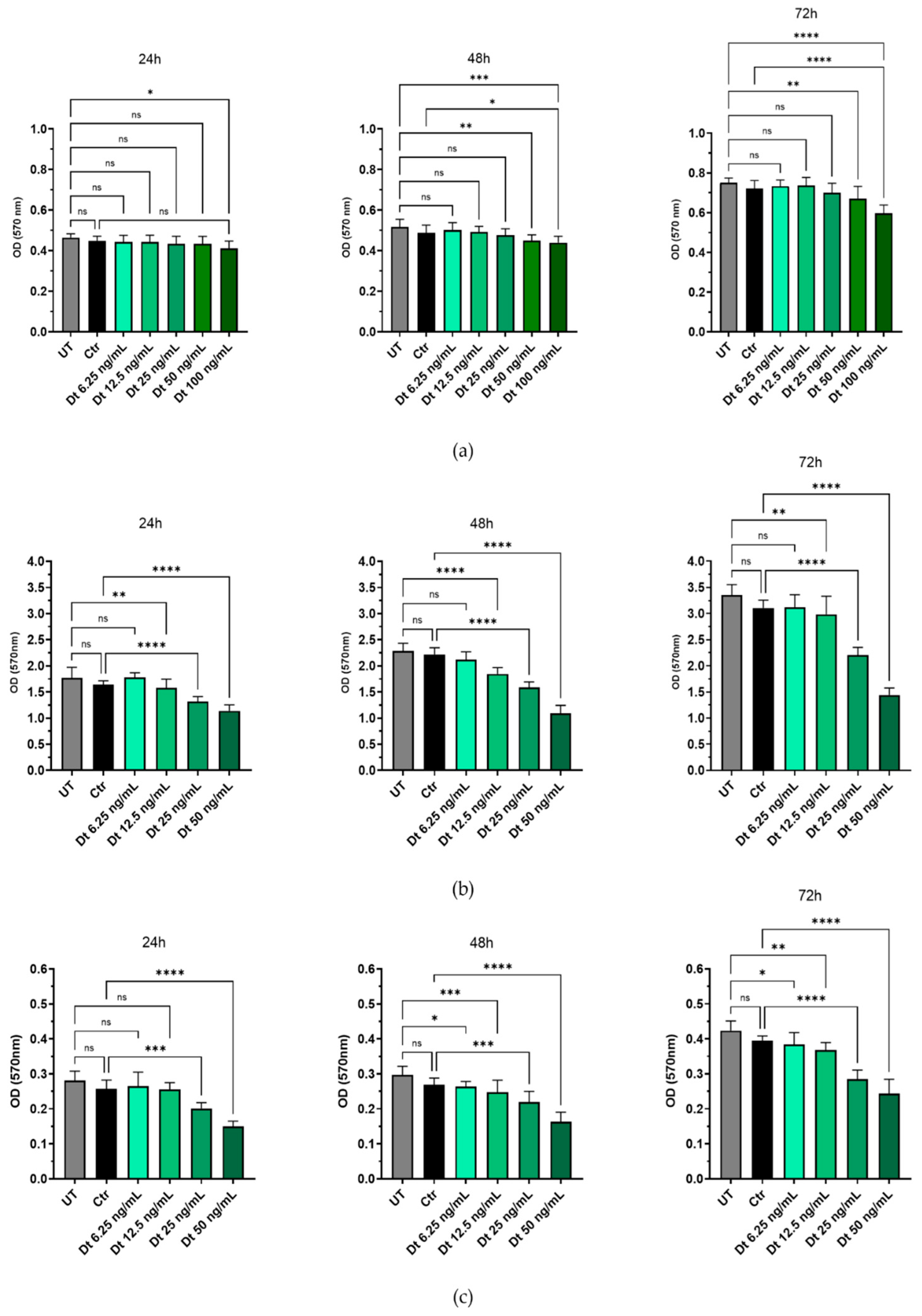
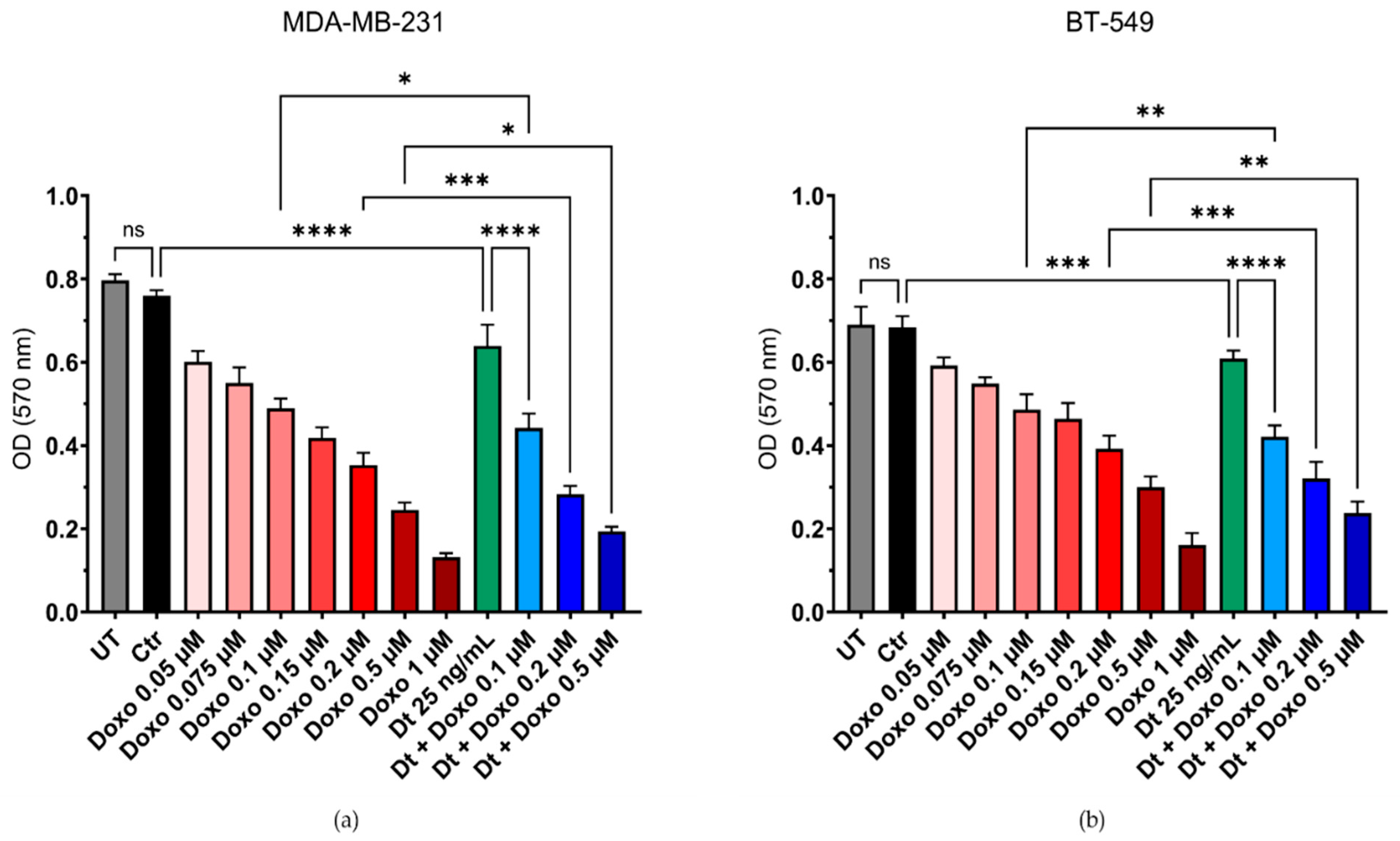
3.1. Dt Selectively Reduces Viability in TNBC Cells
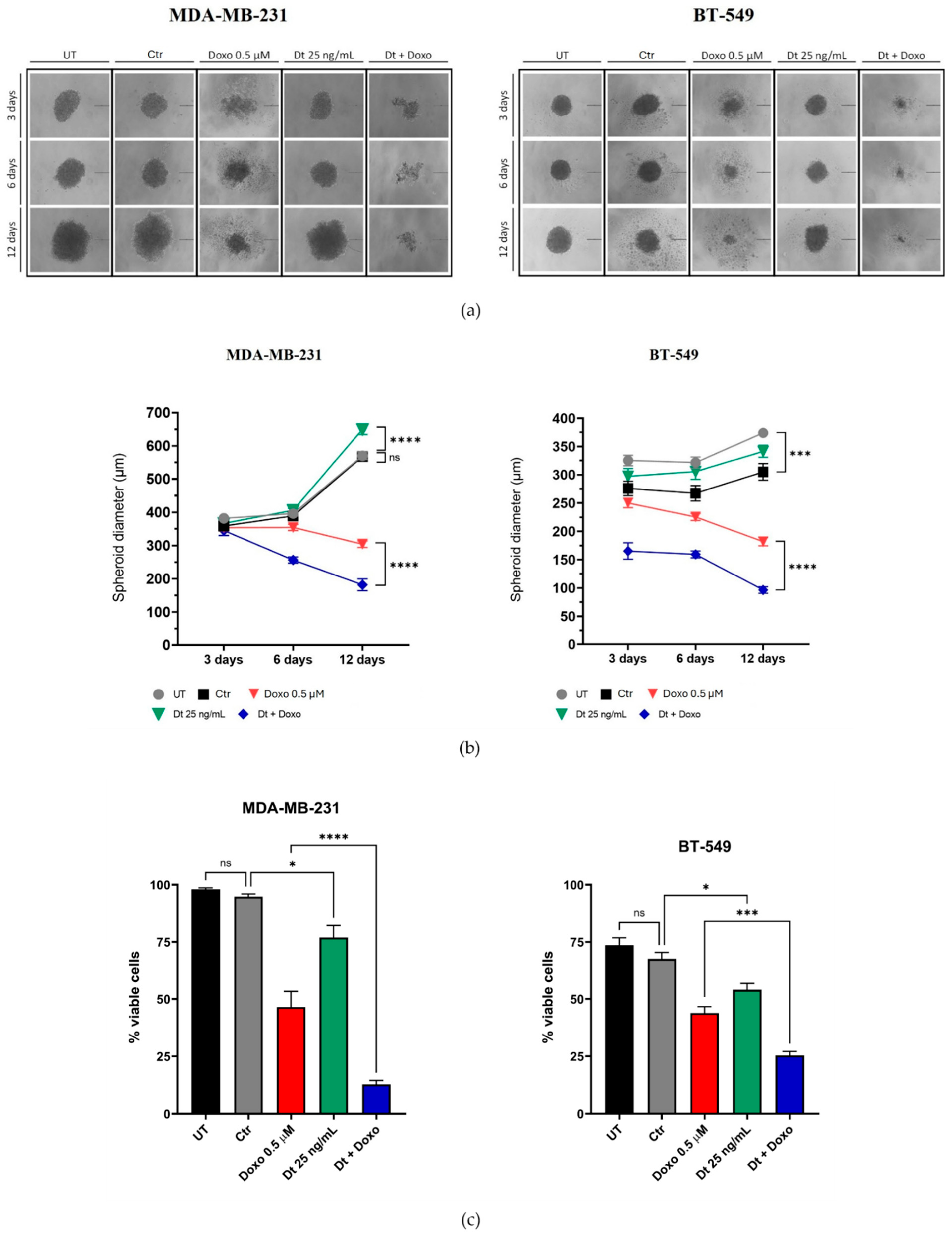
3.2. Analysis of Dt and Doxo Effects on 3D-Tumor Spheroid Growth
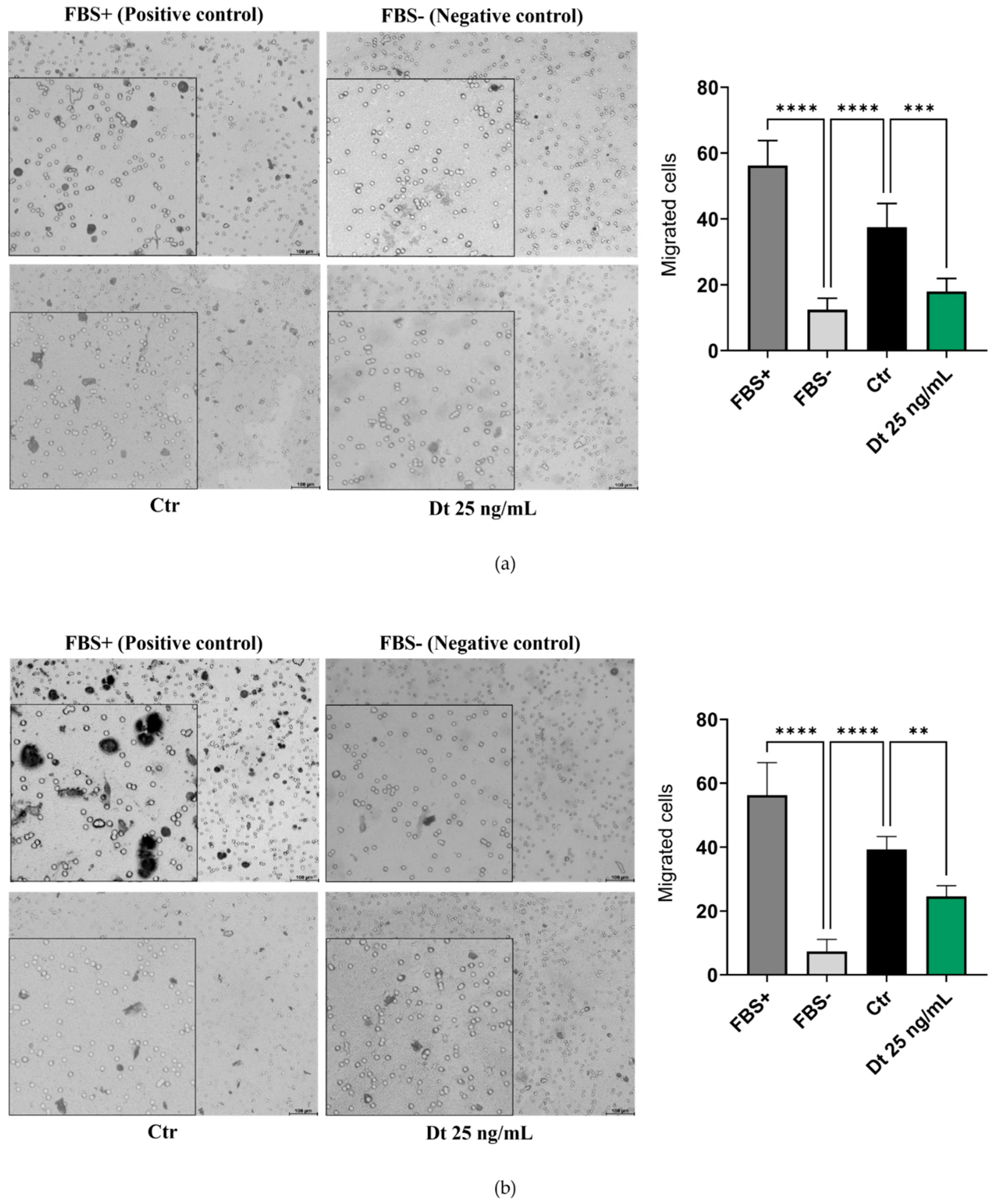
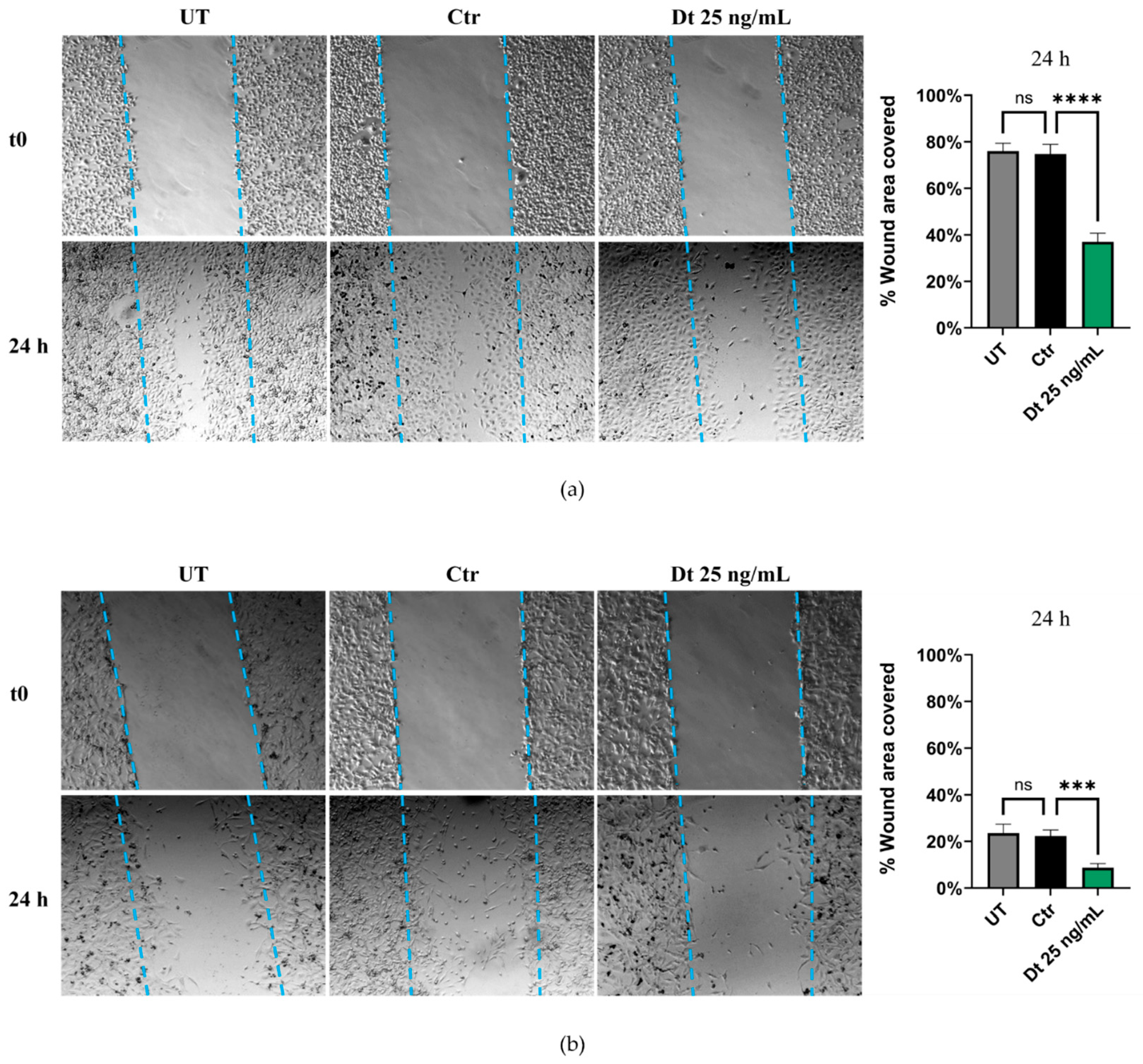
3.3. Dt Reduces TNBC Cell Migration
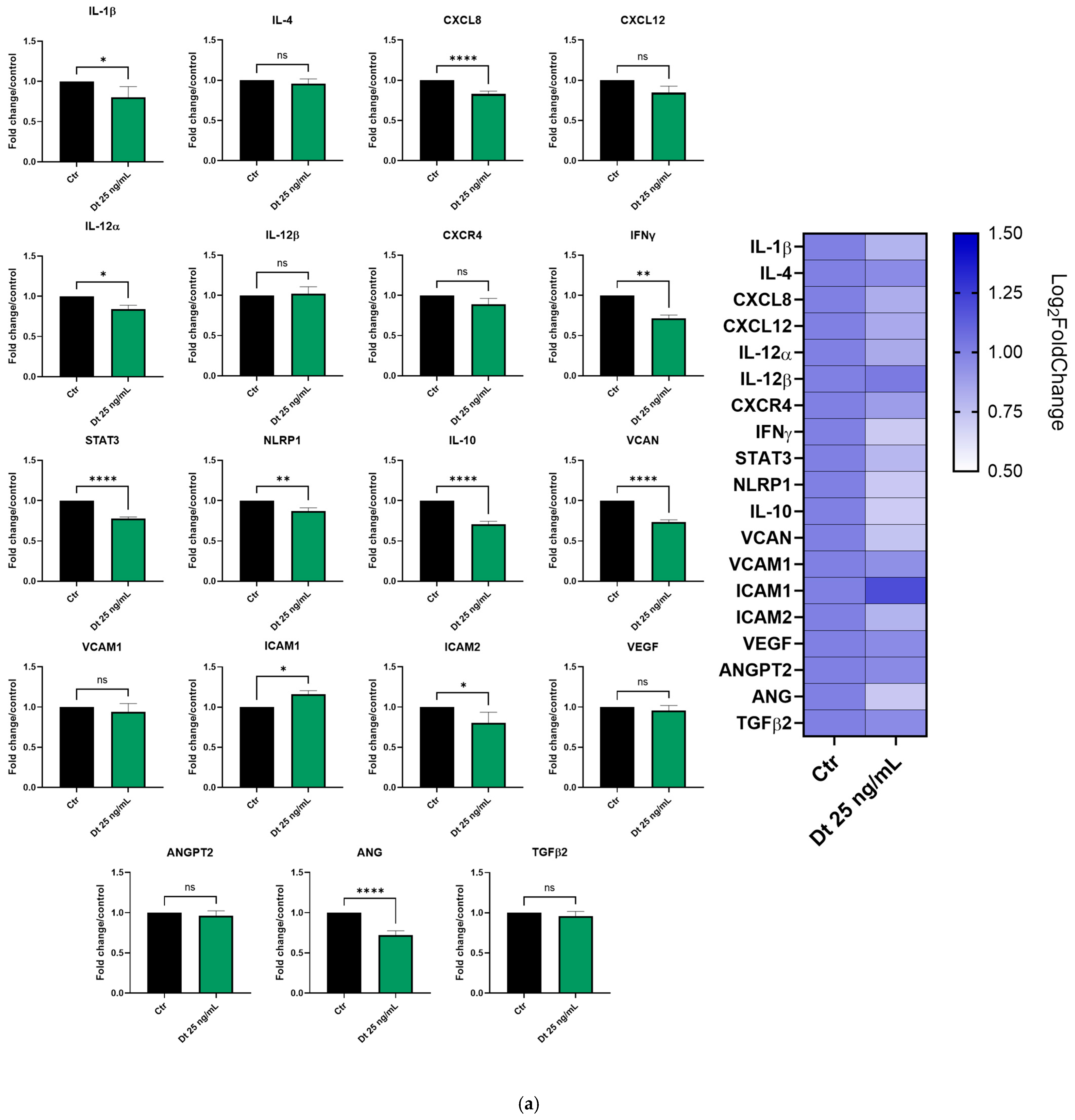
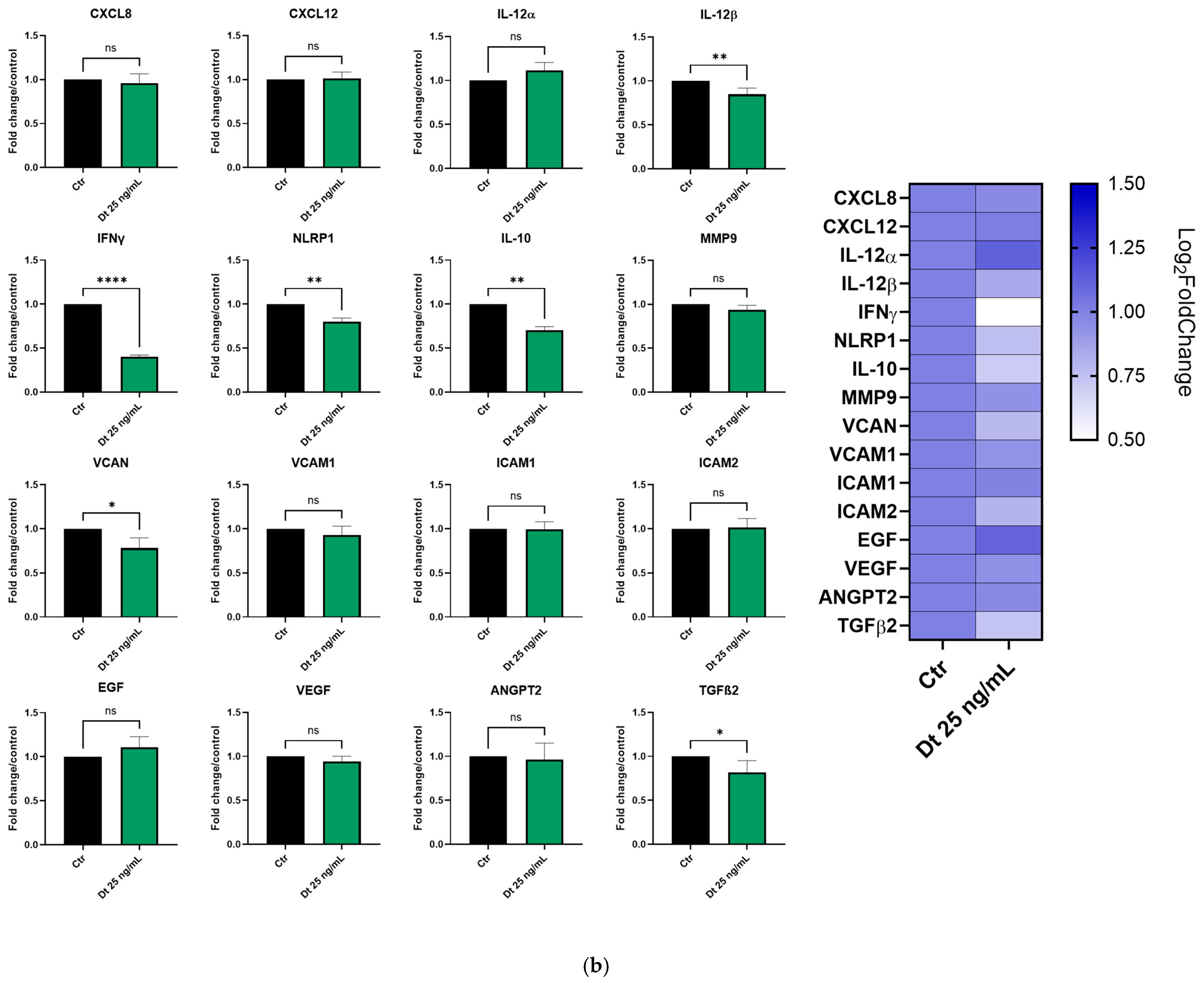
3.4. Effect of Dt on Gene Expression in the MDA-MB-231 and BT-549 TNBC Cell Lines
3.5. RNA-Seq Transcriptome Analysis in MDA-MB-231 Cells
3.6. Secretome Analysis Using RayBiotech® Human Inflammation Antibody Array and Human Angiogenesis Antibody Array
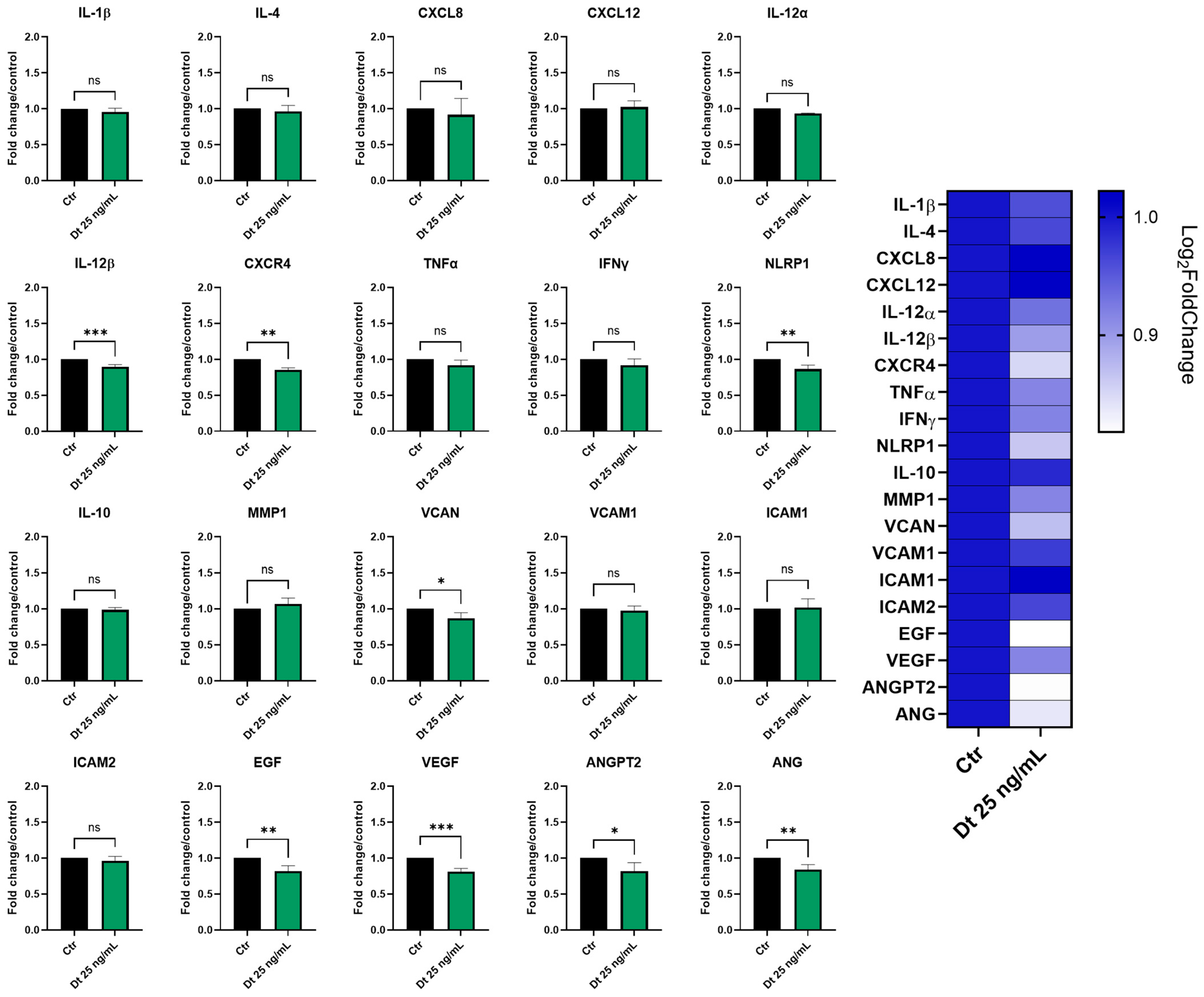
3.7. Effect of Dt on Gene Expression in HUVECs
3.8. RNA-Seq Transcriptome Analysis in HUVECs
4. Discussion
5. Conclusions
Supplementary Materials
Author Contributions
Funding
Institutional Review Board Statement
Informed Consent Statement
Data Availability Statement
Acknowledgments
Conflicts of Interest
References
- Newman, D.J.; Cragg, G.M. Natural products as sources of new drugs over the nearly four decades from 01/1981 to 09/2019. J. Nat. Prod. 2020, 83, 770–803. [Google Scholar] [CrossRef] [Scilit]
- Spagnuolo, L.; Della Posta, S.; Fanali, C.; Dugo, L.; De Gara, L. Antioxidant and antiglycation effects of polyphenol compounds extracted from hazelnut skin on advanced glycation end-products (AGEs) formation. Antioxidants 2021, 10, 424. [Google Scholar] [CrossRef] [Scilit] [PubMed]
- Dias, D.A.; Urban, S.; Roessner, U. A historical overview of natural products in drug discovery. Metabolites 2012, 2, 303–336. [Google Scholar] [CrossRef] [Scilit] [PubMed]
- Nan, Y.; Su, H.; Zhou, B.; Liu, S. The function of natural compounds in important anticancer mechanisms. Front. Oncol. 2023, 12, 1049888. [Google Scholar] [CrossRef] [Scilit] [PubMed]
- Sansone, C.; Bruno, A.; Piscitelli, C.; Baci, D.; Fontana, A.; Brunet, C.; Noonan, D.M.; Albini, A. Natural compounds of marine origin as inducers of immunogenic cell death (ICD): Potential role for cancer interception and therapy. Cells 2021, 10, 231. [Google Scholar] [CrossRef] [Scilit]
- Maoka, T. Carotenoids as natural functional pigments. J. Nat. Med. 2020, 74, 1–16. [Google Scholar] [CrossRef] [Scilit]
- Britton, G.; Liaaen-Jensen, S.; Pfander, H. Main List. In Carotenoids; Britton, G., Liaaen-Jensen, S., Pfander, H., Eds.; Springer: Basel, Switzerland, 2004; pp. 35–545. [Google Scholar]
- Eggersdorfer, M.; Wyss, A. Carotenoids in human nutrition and health. Arch. Biochem. Biophys. 2018, 652, 18–26. [Google Scholar] [CrossRef] [Scilit] [PubMed]
- Pereira, A.G.; Otero, P.; Echave, J.; Carreira-Casais, A.; Chamorro, F.; Collazo, N.; Jaboui, A.; Lourenço-Lopes, C.; Simal-Gandara, J.; Prieto, M.A. Xanthophylls from the sea: Algae as source of bioactive carotenoids. Mar. Drugs 2021, 19, 188. [Google Scholar] [CrossRef] [Scilit]
- Méresse, S.; Fodil, M.; Fleury, F.; Chénais, B. Fucoxanthin, a marine-derived carotenoid from brown seaweeds and microalgae: A promising bioactive compound for cancer therapy. Int. J. Mol. Sci. 2020, 21, 9273. [Google Scholar] [CrossRef] [Scilit]
- Calabrone, L.; Carlini, V.; Noonan, D.M.; Festa, M.; Ferrario, C.; Morelli, D.; Macis, D.; Fontana, A.; Pistelli, L.; Brunet, C.; et al. Skeletonema marinoi extracts and associated carotenoid fucoxanthin downregulate pro-angiogenic mediators on prostate cancer and endothelial cells. Cells 2023, 12, 1053. [Google Scholar] [CrossRef] [Scilit]
- Sansone, C.; Brunet, C. Marine algal antioxidants. Antioxidants 2020, 9, 206. [Google Scholar] [CrossRef] [Scilit]
- Galasso, C.; Gentile, A.; Orefice, I.; Ianora, A.; Bruno, A.; Noonan, D.M.; Sansone, C.; Albini, A.; Brunet, C. Microalgal derivatives as potential nutraceutical and food supplements for human health: A focus on cancer prevention and interception. Nutrients 2019, 11, 1226. [Google Scholar] [CrossRef] [Scilit] [PubMed]
- Smerilli, A.; Orefice, I.; Corato, F.; Gavalás Olea, A.; Ruban, A.V.; Brunet, C. Photoprotective and antioxidant responses to light spectrum and intensity variations in the coastal diatom Skeletonema marinoi. Environ. Microbiol. 2017, 19, 611–627. [Google Scholar] [CrossRef] [Scilit]
- Smerilli, A.; Balzano, S.; Maselli, M.; Blasio, M.; Orefice, I.; Galasso, C.; Sansone, C.; Brunet, C. Antioxidant and Photoprotection Networking in the Coastal Diatom Skeletonema marinoi. Antioxidants 2019, 1, 154. [Google Scholar] [CrossRef] [Scilit]
- Kuczynska, P.; Jemiola-Rzeminska, M.; Nowicka, B.; Jakubowska, A.; Strzalka, W.; Burda, K.; Strzalka, K. The xanthophyll cycle in diatom Phaeodactylum tricornutum in response to light stress Plant Physiol. Biochem. 2020, 152, 125–137. [Google Scholar]
- Beer, A.; Juhas, M.; Büchel, C. Influence of different light intensities and different iron nutrition on the photosynthetic apparatus in the diatom Cyclotella meneghiniana (Bacillariophyceae). J. Phycol. 2011, 47, 1266–1273. [Google Scholar] [CrossRef] [Scilit] [PubMed]
- Llewellyn, C.A.; Evans, C.; Airs, R.L.; Cook, I.; Bale, N.; Wilson, W.H. The response of carotenoids and chlorophylls during virus infection of Emiliania huxleyi (Prymnesiophyceae). J. Exp. Mar. Biol. Ecol. 2007, 344, 101–112. [Google Scholar] [CrossRef] [Scilit]
- Sansone, C.; Pistelli, L.; Del Mondo, A.; Calabrone, L.; Fontana, A.; Noonan, D.M.; Albini, A.; Brunet, C. The microalgal diatoxanthin inflects the cytokine storm in SARS-CoV-2 stimulated ACE2 overexpressing lung cells. Antioxidants 2022, 11, 1515. [Google Scholar] [CrossRef] [Scilit]
- Pistelli, L.; Sansone, C.; Smerilli, A.; Festa, M.; Noonan, D.M.; Albini, A.; Brunet, C. MMP-9 and IL-1β as targets for diatoxanthin and related microalgal pigments: Potential chemopreventive and photoprotective agents. Mar. Drugs 2021, 19, 354. [Google Scholar] [CrossRef] [Scilit]
- Sansone, C.; Pistelli, L.; Brunet, C. The marine xanthophyll diatoxanthin as ferroptosis inducer in MDA-MB-231 breast cancer cells. Sci. Rep. 2025, 15, 8146. [Google Scholar] [CrossRef] [Scilit]
- Sansone, C.; Pistelli, L.; Calabrone, L.; Del Mondo, A.; Fontana, A.; Festa, M.; Noonan, D.M.; Albini, A.; Brunet, C. The carotenoid diatoxanthin modulates inflammatory and angiogenesis pathways in vitro in prostate cancer cells. Antioxidants 2023, 12, 359. [Google Scholar] [CrossRef] [Scilit]
- Łukasiewicz, S.; Czeczelewski, M.; Forma, A.; Baj, J.; Sitarz, R.; Stanisławek, A. Breast cancer-epidemiology, risk factors, classification, prognostic markers, and current treatment strategies—An updated review. Cancers 2021, 13, 4287. [Google Scholar] [CrossRef] [Scilit]
- Wu, Q.; Siddharth, S.; Sharma, D. Triple negative breast cancer: A mountain yet to be scaled despite the triumphs. Cancers 2021, 13, 3697. [Google Scholar] [CrossRef] [Scilit]
- Aysola, K.; Desai, A.; Welch, C.; Xu, J.; Qin, Y.; Reddy, V.; Matthews, R.; Owens, C.; Okoli, J.; Beech, D.J.; et al. Triple negative breast cancer—An overview. Heredit. Genet. 2013, 2013, 001. [Google Scholar]
- Katsura, C.; Ogunmwonyi, I.; Kankam, H.K.; Saha, S. Breast cancer: Presentation, investigation and management. Br. J. Hosp. Med. 2022, 83, 1–7. [Google Scholar] [CrossRef] [Scilit] [PubMed]
- Hubalek, M.; Czech, T.; Müller, H. Biological subtypes of triple-negative breast cancer. Breast Care 2017, 12, 8–14. [Google Scholar] [CrossRef] [Scilit]
- Mandapati, A.; Lukong, K.E. Triple negative breast cancer: Approved treatment options and their mechanisms of action. J. Cancer Res. Clin. Oncol. 2023, 149, 3701–3719. [Google Scholar] [CrossRef] [Scilit] [PubMed]
- Pareja, F.; Geyer, F.C.; Marchiò, C.; Burke, K.A.; Weigelt, B.; Reis-Filho, J.S. Triple-negative breast cancer: The importance of molecular and histologic subtyping, and recognition of low-grade variants. NPJ Breast Cancer 2016, 2, 16036. [Google Scholar] [CrossRef] [Scilit] [PubMed]
- Collignon, J.; Lousberg, L.; Schroeder, H.; Jerusalem, G. Triple-negative breast cancer: Treatment challenges and solutions. Breast Cancer 2016, 8, 93–107. [Google Scholar]
- Schmid, P.; Adams, S.; Rugo, H.S.; Schneeweiss, A.; Barrios, C.H.; Iwata, H.; Diéras, V.; Hegg, R.; Im, S.A.; Shaw Wright, G.; et al. Atezolizumab and nab-paclitaxel in advanced triple-negative breast cancer. N. Engl. J. Med. 2018, 379, 2108–2121. [Google Scholar] [CrossRef] [Scilit]
- Raedler, L.A. Keytruda (Pembrolizumab): First PD-1 inhibitor approved for previously treated unresectable or metastatic melanoma. Am. Health Drug Benefits 2015, 8, 96–100. [Google Scholar]
- Xiong, N.; Wu, H.; Yu, Z. Advancements and challenges in triple-negative breast cancer: A comprehensive review of therapeutic and diagnostic strategies. Front. Oncol. 2024, 14, 1405491. [Google Scholar] [CrossRef] [Scilit]
- Barzaman, K.; Karami, J.; Zarei, Z.; Hosseinzadeh, A.; Kazemi, M.H.; Moradi-Kalbolandi, S.; Safari, E.; Farahmand, L. Breast cancer: Biology, biomarkers, and treatments. Int. Immunopharmacol. 2020, 84, 106535. [Google Scholar] [CrossRef] [Scilit] [PubMed]
- Rejili, M. Synergistic strategies: ADC-PARP inhibitor combinations in triple-negative breast cancer therapy. Pathol Res Pract. 2025, 272, 156075. [Google Scholar] [CrossRef] [Scilit] [PubMed]
- Alonso-Ron, C.; Vethencourt, A.; González-Suárez, E.; Oruezabal, R.I. Triple-negative breast cancer systemic treatment: Disruptive early-stage developments for overcoming stagnation in the advanced pipeline. Cancers 2025, 17, 633. [Google Scholar] [CrossRef] [Scilit] [PubMed]
- Tacar, O.; Sriamornsak, P.; Dass, C.R. Doxorubicin: An update on anticancer molecular action, toxicity and novel drug delivery systems. J. Pharm. Pharmacol. 2013, 65, 157–170. [Google Scholar] [CrossRef] [Scilit]
- Boța, M.; Vlaia, L.; Jîjie, A.R.; Marcovici, I.; Crişan, F.; Oancea, C.; Dehelean, C.A.; Mateescu, T.; Moacă, E.A. Exploring synergistic interactions between natural compounds and conventional chemotherapeutic drugs in preclinical models of lung cancer. Pharmaceuticals 2024, 17, 598. [Google Scholar] [CrossRef] [Scilit]
- van Meerloo, J.; Kaspers, G.J.; Cloos, J. Cell sensitivity assays: The MTT assay. Methods Mol. Biol. 2011, 731, 237–245. [Google Scholar]
- Vinci, M.; Box, C.; Eccles, S.A. Three-dimensional (3D) tumor spheroid invasion assay. J. Vis. Exp. 2015, 99, e52686. [Google Scholar]
- Albini, A.; Benelli, R. The chemoinvasion assay: A method to assess tumor and endothelial cell invasion and its modulation. Nat. Protoc. 2007, 2, 504–511. [Google Scholar] [CrossRef] [Scilit]
- Martinotti, S.; Ranzato, E. Scratch wound healing assay. Methods Mol. Biol. 2020, 2109, 225–229. [Google Scholar] [PubMed]
- Beutgen, V.M.; Shinkevich, V.; Pörschke, J.; Meena, C.; Steitz, A.M.; Pogge von Strandmann, E.; Graumann, J.; Gómez-Serrano, M. Secretome analysis using affinity proteomics and immunoassays: A focus on tumor biology. Mol. Cell. Proteom. 2024, 23, 100830. [Google Scholar] [CrossRef] [Scilit]
- Karthikeyan, A.; Joseph, A.; Nair, B.G. Promising bioactive compounds from the marine environment and their potential effects on various diseases. J. Genet. Eng. Biotechnol. 2022, 20, 14. [Google Scholar] [CrossRef] [Scilit]
- Chénais, B. Algae and microalgae and their bioactive molecules for human health. Molecules 2024, 26, 1185. [Google Scholar] [CrossRef] [Scilit]
- Romano, B.; Maresca, D.C.; Somma, F.; Ahmadi, P.; Putra, M.Y.; Rahmawati, S.I.; Chianese, G.; Formisano, C.; Ianaro, A.; Ercolano, G. Ircinia ramosa sponge extract (iSP) induces apoptosis in human melanoma cells and inhibits melanoma cell migration and invasiveness. Mar. Drugs 2023, 21, 371. [Google Scholar] [CrossRef] [Scilit]
- Akompong, S.K.; Li, Y.; Gong, W.; Ye, L.; Liu, J. Recently reported cell migration inhibitors: Opportunities and challenges for antimetastatic agents. Drug Discov. Today 2024, 29, 103906. [Google Scholar] [CrossRef] [Scilit]
- Nair, N.U.; Das, A.; Rogkoti, V.M.; Fokkelman, M.; Marcotte, R.; de Jong, C.G.; Koedoot, E.; Lee, J.S.; Meilijson, I.; Hannenhalli, S.; et al. Migration rather than proliferation transcriptomic signatures are strongly associated with breast cancer patient survival. Sci. Rep. 2019, 9, 10989. [Google Scholar] [CrossRef] [Scilit]
- Freitas, J.T.; Jozic, I.; Bedogni, B. Wound healing assay for melanoma cell migration. Methods Mol. Biol. 2021, 2265, 65–71. [Google Scholar]
- Chen, M.; Wu, C.; Fu, Z.; Liu, S. ICAM1 promotes bone metastasis via integrin-mediated TGF-β/EMT signaling in triple-negative breast cancer. Cancer Sci. 2022, 113, 3751–3765. [Google Scholar] [CrossRef] [Scilit] [PubMed]
- Yousafzai, N.A.; El Khalki, L.; Wang, W.; Szpendyk, J.; Sossey-Alaoui, K. Kindlin-2 regulates the oncogenic activities of integrins and TGF-β in triple-negative breast cancer progression and metastasis. Oncogene 2024, 43, 3291–3305. [Google Scholar] [CrossRef] [Scilit] [PubMed]
- Liubomirski, Y.; Lerrer, S.; Meshel, T.; Rubinstein-Achiasaf, L.; Morein, D.; Wiemann, S.; Körner, C.; Ben-Baruch, A. Tumor-stroma-inflammation networks promote pro-metastatic chemokines and aggressiveness characteristics in triple-negative breast cancer. Front. Immunol. 2019, 10, 757. [Google Scholar] [CrossRef] [Scilit] [PubMed]
- Qin, J.J.; Yan, L.; Zhang, J.; Zhang, W.D. STAT3 as a potential therapeutic target in triple negative breast cancer: A systematic review. J. Exp. Clin. Cancer Res. 2019, 38, 195. [Google Scholar] [CrossRef] [Scilit] [PubMed]
- Manore, S.G.; Doheny, D.L.; Wong, G.L.; Lo, H.W. IL-6/JAK/STAT3 signaling in breast cancer metastasis: Biology and treatment. Front. Oncol. 2022, 12, 866014. [Google Scholar] [CrossRef] [Scilit]
- Xu, X.; Zhang, L.; He, X.; Zhang, P.; Sun, C.; Xu, X.; Lu, Y.; Li, F. TGF-β plays a vital role in triple-negative breast cancer (TNBC) drug-resistance through regulating stemness, EMT and apoptosis. Biochem. Biophys. Res. Commun. 2018, 502, 160–165. [Google Scholar] [CrossRef] [Scilit]
- Leonard, M.; Maury, J.; Dickerson, B.; Gonzalez, D.E.; Kendra, J.; Jenkins, V.; Nottingham, K.; Yoo, C.; Xing, D.; Ko, J.; et al. Effects of dietary supplementation of a microalgae extract containing fucoxanthin combined with guarana on cognitive function and gaming performance. Nutrients 2023, 15, 1918. [Google Scholar] [CrossRef] [Scilit] [PubMed]



Disclaimer/Publisher’s Note: The statements, opinions and data contained in all publications are solely those of the individual author(s) and contributor(s) and not of MDPI and/or the editor(s). MDPI and/or the editor(s) disclaim responsibility for any injury to people or property resulting from any ideas, methods, instructions or products referred to in the content. |
© 2026 by the authors. Licensee MDPI, Basel, Switzerland. This article is an open access article distributed under the terms and conditions of the Creative Commons Attribution (CC BY) license.
Share and Cite
Morelli, D.; Calabrone, L.; Di Paola, L.; Chiorino, G.; Ostano, P.; Noonan, D.M.; Corso, G.; Albini, A. The Algal Antioxidant Carotenoid Diatoxanthin as a Modulator of Inflammation and Angiogenesis in Triple-Negative Breast Cancer Cells. Antioxidants 2026, 15, 205. https://doi.org/10.3390/antiox15020205
Morelli D, Calabrone L, Di Paola L, Chiorino G, Ostano P, Noonan DM, Corso G, Albini A. The Algal Antioxidant Carotenoid Diatoxanthin as a Modulator of Inflammation and Angiogenesis in Triple-Negative Breast Cancer Cells. Antioxidants. 2026; 15(2):205. https://doi.org/10.3390/antiox15020205
Chicago/Turabian StyleMorelli, Danilo, Luana Calabrone, Luisa Di Paola, Giovanna Chiorino, Paola Ostano, Douglas M. Noonan, Giovanni Corso, and Adriana Albini. 2026. "The Algal Antioxidant Carotenoid Diatoxanthin as a Modulator of Inflammation and Angiogenesis in Triple-Negative Breast Cancer Cells" Antioxidants 15, no. 2: 205. https://doi.org/10.3390/antiox15020205
APA StyleMorelli, D., Calabrone, L., Di Paola, L., Chiorino, G., Ostano, P., Noonan, D. M., Corso, G., & Albini, A. (2026). The Algal Antioxidant Carotenoid Diatoxanthin as a Modulator of Inflammation and Angiogenesis in Triple-Negative Breast Cancer Cells. Antioxidants, 15(2), 205. https://doi.org/10.3390/antiox15020205