Body-Wide Glycolytic Shift, Oxidative Stress, and Sex-Specific Effect of Caloric Restriction in a Mouse Model of Alzheimer’s Disease

 , , and
Abstract
1. Introduction
2. Materials and Methods
2.1. Animals and Experimental Conditions
2.2. Tissue Sampling
2.3. Tissue Homogenization and Determination of Oxidative Stress Markers
2.4. Tissue Homogenization and Determination of the Activities of Antioxidant Enzymes
2.5. Tissue Homogenization and Determination of the Activity of Glycolytic Enzymes
2.6. Analyses of the Plaque Load
2.7. Statistical Analysis
3. Results
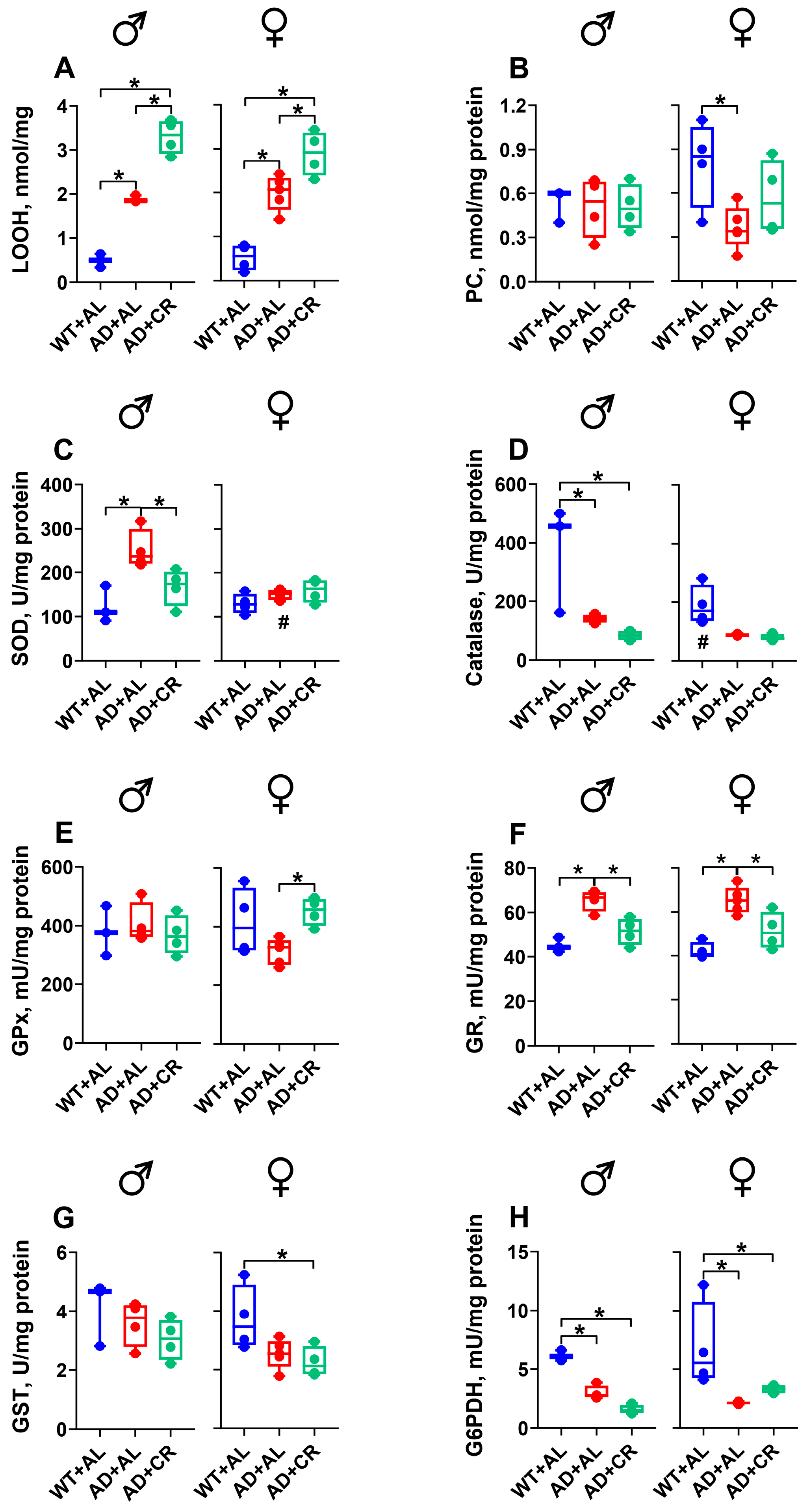
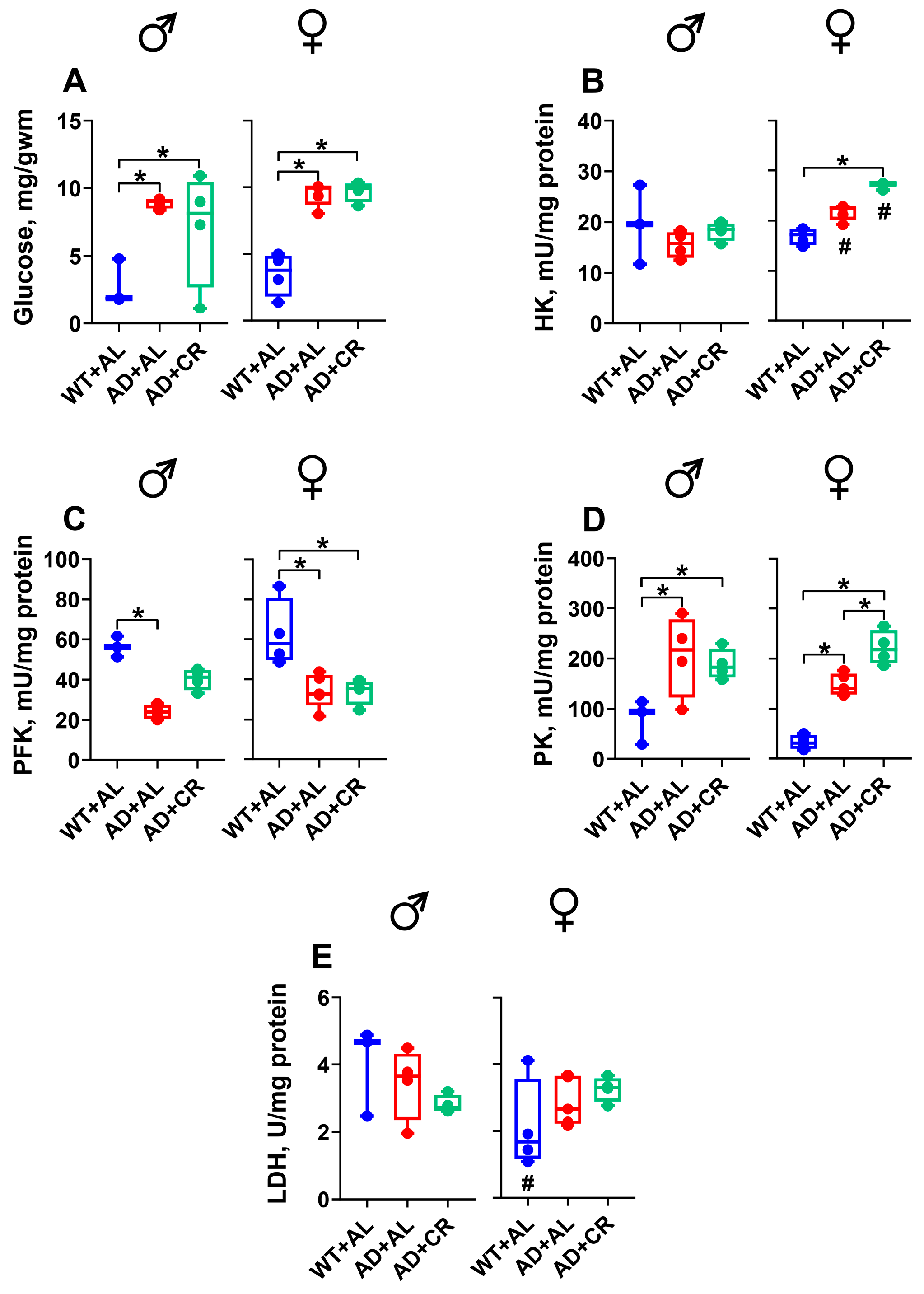
3.1. Lipid Peroxide Levels and Activity of Antioxidant and Glycolytic Enzymes in the Brain
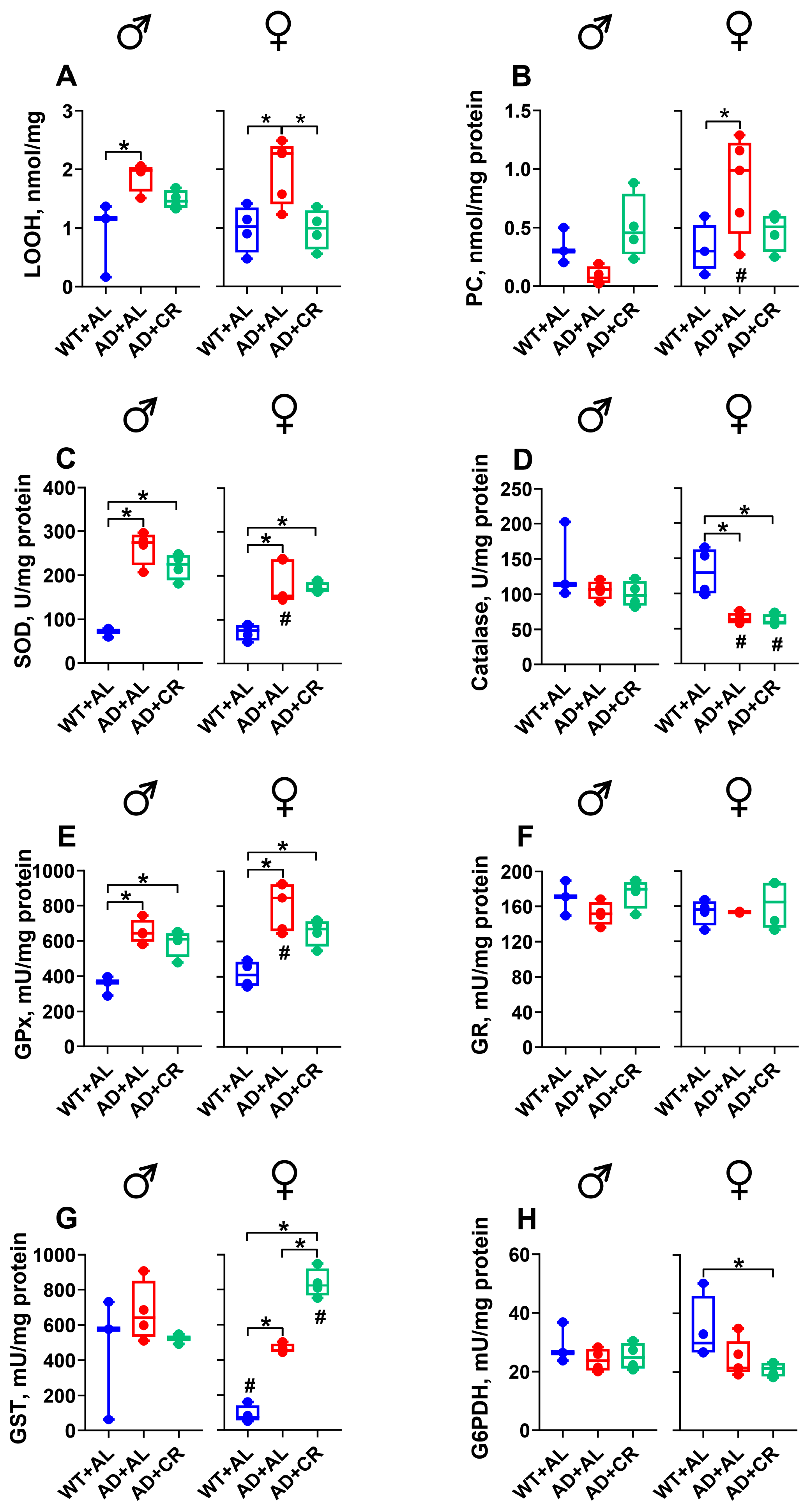
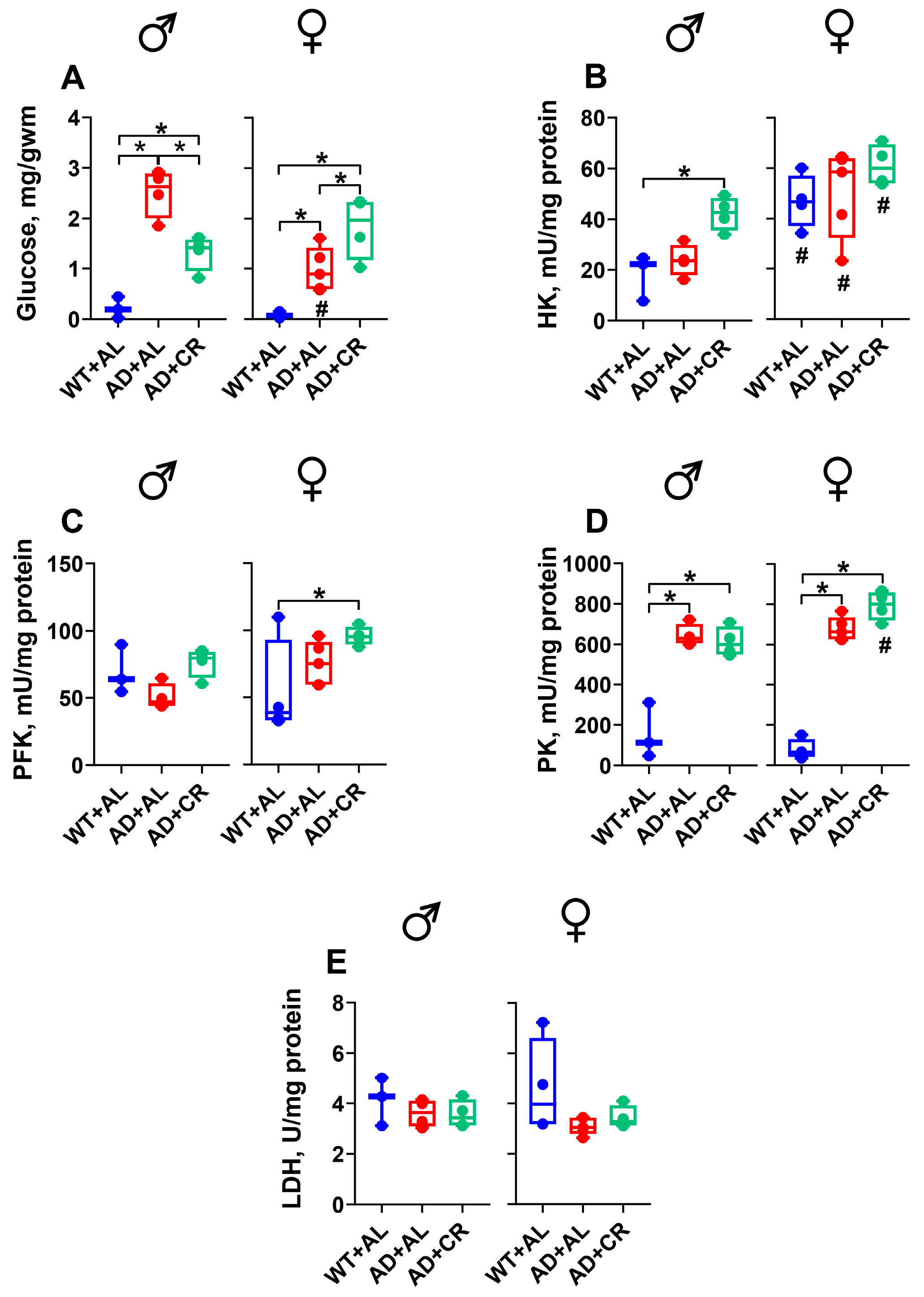
3.2. Oxidative Stress Markers and Activities of Antioxidant and Glycolytic Enzymes in the Liver
3.3. Oxidative Stress Markers, Activities of Antioxidant and Glycolytic Enzymes in the Kidneys
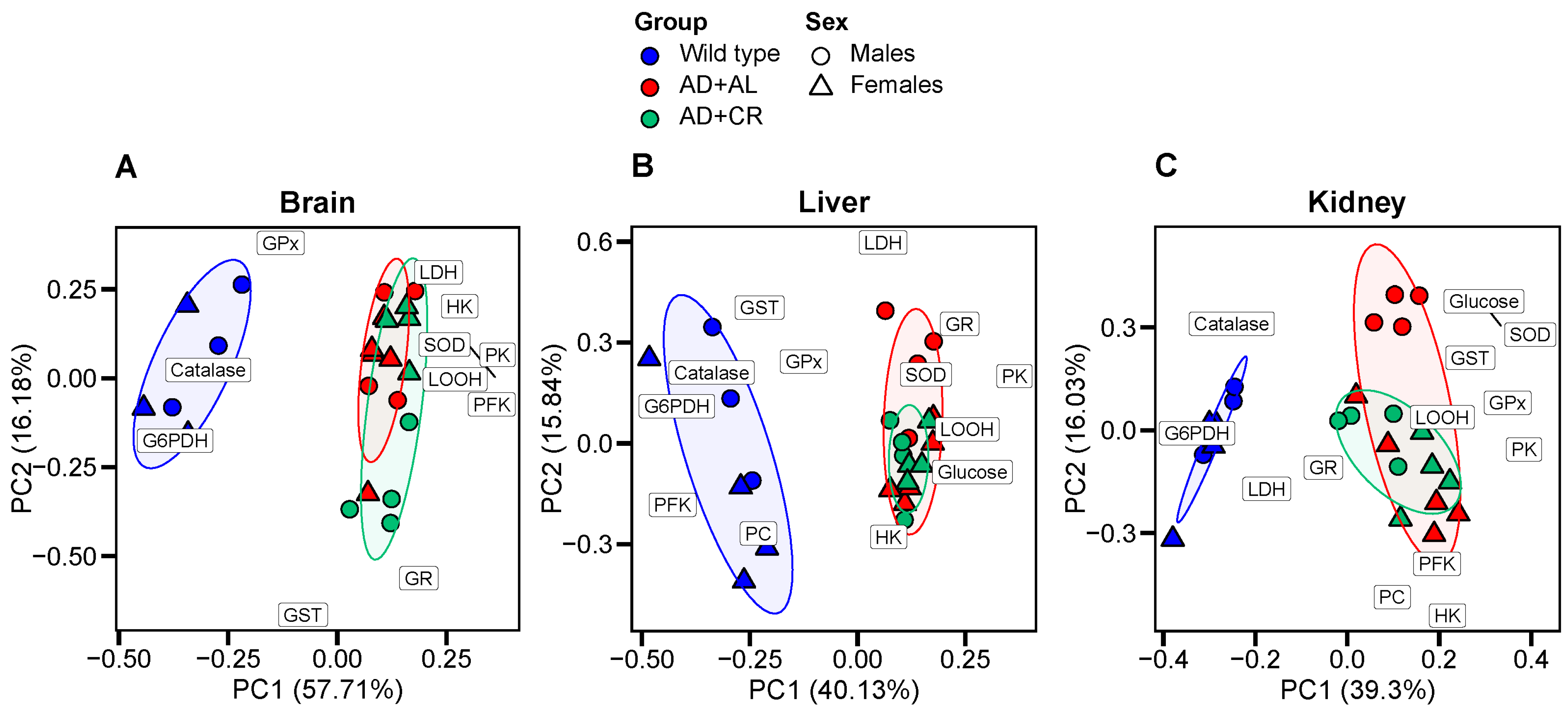
3.4. Principal Component Analyses
4. Discussion
4.1. AD-Induced Body-Wide Metabolic Changes
4.1.1. Oxidative Stress
4.1.2. Enhancement of Glycolytic Capacity
4.2. Sex-Specificity of the AD-Induced Changes
4.3. Impact of Caloric Restriction
5. Strengths and Limitations
6. Conclusions
Supplementary Materials
Author Contributions
Funding
Institutional Review Board Statement
Informed Consent Statement
Data Availability Statement
Acknowledgments
Conflicts of Interest
Abbreviations
| AD | Alzheimer’s disease |
| AL | Ad libitum |
| APP | Amyloid precursor protein |
| ARRIVE | Animal Research: Reporting of In Vivo Experiments |
| Aβ | Amyloid β |
| CR | Caloric restriction |
| EDTA | N,N,N′,N′-Ethylene diamine tetraacetic acid |
| EODF | Every-other-day-feeding |
| G6PDH | Glucose-6-phosphate dehydrogenase |
| GPx | Glutathione peroxidase |
| GR | Glutathione reductase |
| GSH/GSSG | Glutathione reduced/oxidized |
| GST | Glutathione S-transferase |
| HK | Hexokinase |
| 4-HNE | 4-hydroxy-2-nonenal |
| IL-1β | Interleukin 1β |
| Keap1 | Kelch-like ECH-associated protein 1 |
| KPi | Potassium phosphate buffer |
| LDH | Lactate dehydrogenase |
| LOOH | Lipid peroxides |
| mTOR | Mechanistic target of rapamycin |
| NAD+/NADH | Nicotinamide adenine dinucleotide oxidized/reduced |
| NADPH | Nicotinamide adenine dinucleotide phosphate (reduced form) |
| NFAT | Nuclear factor of activated T-cells |
| NF-κB | Nuclear factor kappa-light-chain-enhancer of activated B cells |
| OXPHOS | Oxidative phosphorylation |
| PC | Protein carbonyls |
| PCA | Principal component analysis |
| PFK | Phosphofructokinase |
| PK | Pyruvate kinase |
| PS1 | Presenilin 1 |
| ROS | Reactive oxygen species |
| SIRT3 | Sirtuin-3 |
| SOD | Superoxide dismutase |
| TEMED | N,N,N′,N′-Tetramethylethylenediamine |
| WT | Wild-type |
| Mouse models of AD | 3×Tg-AD, 5XFAD, mAPP, APPswe/PSEN1ΔE9 mice |
References
- Cuyvers, E.; Sleegers, K. Genetic Variations Underlying Alzheimer’s Disease: Evidence from Genome-Wide Association Studies and Beyond. Lancet Neurol. 2016, 15, 857–868. [Google Scholar] [CrossRef] [Scilit]
- Young-Pearse, T.L.; Lee, H.; Hsieh, Y.-C.; Chou, V.; Selkoe, D.J. Moving beyond Amyloid and Tau to Capture the Biological Heterogeneity of Alzheimer’s Disease. Trends Neurosci. 2023, 46, 426–444. [Google Scholar] [CrossRef] [Scilit]
- Mauvais-Jarvis, F.; Bairey Merz, N.; Barnes, P.J.; Brinton, R.D.; Carrero, J.-J.; DeMeo, D.L.; De Vries, G.J.; Epperson, C.N.; Govindan, R.; Klein, S.L.; et al. Sex and Gender: Modifiers of Health, Disease, and Medicine. Lancet 2020, 396, 565–582. [Google Scholar] [CrossRef] [Scilit]
- Brawek, B.; Garaschuk, O. Network-Wide Dysregulation of Calcium Homeostasis in Alzheimer’s Disease. Cell Tissue Res. 2014, 357, 427–438. [Google Scholar] [CrossRef] [Scilit] [PubMed]
- Butterfield, D.A.; Halliwell, B. Oxidative Stress, Dysfunctional Glucose Metabolism and Alzheimer’s Disease. Nat. Rev. Neurosci. 2019, 20, 148–160. [Google Scholar] [CrossRef] [Scilit]
- Lushchak, V.I.; Duszenko, M.; Gospodaryov, D.V.; Garaschuk, O. Oxidative Stress and Energy Metabolism in the Brain: Midlife as a Turning Point. Antioxidants 2021, 10, 1715. [Google Scholar] [CrossRef] [Scilit] [PubMed]
- Liu, N.; Haziyihan, A.; Zhao, W.; Chen, Y.; Chao, H. Trajectory of Brain-Derived Amyloid Beta in Alzheimer’s Disease: Where Is It Coming from and Where Is It Going? Transl. Neurodegener. 2024, 13, 42. [Google Scholar] [CrossRef] [Scilit] [PubMed]
- Bu, X.-L.; Xiang, Y.; Jin, W.-S.; Wang, J.; Shen, L.-L.; Huang, Z.-L.; Zhang, K.; Liu, Y.-H.; Zeng, F.; Liu, J.-H.; et al. Blood-Derived Amyloid-β Protein Induces Alzheimer’s Disease Pathologies. Mol. Psychiatry 2018, 23, 1948–1956. [Google Scholar] [CrossRef] [Scilit]
- Lam, V.; Takechi, R.; Hackett, M.J.; Francis, R.; Bynevelt, M.; Celliers, L.M.; Nesbit, M.; Mamsa, S.; Arfuso, F.; Das, S.; et al. Synthesis of Human Amyloid Restricted to Liver Results in an Alzheimer’s Disease-like Neurodegenerative Phenotype. PLoS Biol. 2021, 19, e3001358. [Google Scholar] [CrossRef] [Scilit]
- Tian, D.-Y.; Cheng, Y.; Zhuang, Z.-Q.; He, C.-Y.; Pan, Q.-G.; Tang, M.-Z.; Hu, X.-L.; Shen, Y.-Y.; Wang, Y.-R.; Chen, S.-H.; et al. Physiological Clearance of Amyloid-Beta by the Kidney and Its Therapeutic Potential for Alzheimer’s Disease. Mol. Psychiatry 2021, 26, 6074–6082. [Google Scholar] [CrossRef] [Scilit]
- Kellar, D.; Craft, S. Brain Insulin Resistance in Alzheimer’s Disease and Related Disorders: Mechanisms and Therapeutic Approaches. Lancet Neurol. 2020, 19, 758–766. [Google Scholar] [CrossRef] [Scilit] [PubMed]
- Davoody, S.; Asgari Taei, A.; Khodabakhsh, P.; Dargahi, L. mTOR Signaling and Alzheimer’s Disease: What We Know and Where We Are? CNS Neurosci. Ther. 2024, 30, e14463. [Google Scholar] [CrossRef] [Scilit]
- Cheng, Y.; Zhao, A.; Li, Y.; Li, C.; Miao, X.; Yang, W.; Wang, Y. Roles of SIRT3 in Cardiovascular and Neurodegenerative Diseases. Ageing Res. Rev. 2025, 104, 102654. [Google Scholar] [CrossRef] [Scilit]
- Elias, A.; Padinjakara, N.; Lautenschlager, N.T. Effects of Intermittent Fasting on Cognitive Health and Alzheimer’s Disease. Nutr. Rev. 2023, 81, 1225–1233. [Google Scholar] [CrossRef] [Scilit]
- Kincaid, B.; Bossy-Wetzel, E. Forever Young: SIRT3 a Shield against Mitochondrial Meltdown, Aging, and Neurodegeneration. Front. Aging Neurosci. 2013, 5, 48. [Google Scholar] [CrossRef] [Scilit]
- Patel, N.V.; Gordon, M.N.; Connor, K.E.; Good, R.A.; Engelman, R.W.; Mason, J.; Morgan, D.G.; Morgan, T.E.; Finch, C.E. Caloric Restriction Attenuates Aβ-Deposition in Alzheimer Transgenic Models. Neurobiol. Aging 2005, 26, 995–1000. [Google Scholar] [CrossRef] [Scilit]
- Van Cauwenberghe, C.; Vandendriessche, C.; Libert, C.; Vandenbroucke, R.E. Caloric Restriction: Beneficial Effects on Brain Aging and Alzheimer’s Disease. Mamm. Genome 2016, 27, 300–319. [Google Scholar] [CrossRef] [Scilit]
- Wang, J.; Ho, L.; Qin, W.; Rocher, A.B.; Seror, I.; Humala, N.; Maniar, K.; Dolios, G.; Wang, R.; Hof, P.R.; et al. Caloric Restriction Attenuates β-amyloid Neuropathology in a Mouse Model of Alzheimer’s Disease. FASEB J. 2005, 19, 1–18. [Google Scholar] [CrossRef] [Scilit] [PubMed]
- Witte, A.V.; Fobker, M.; Gellner, R.; Knecht, S.; Flöel, A. Caloric Restriction Improves Memory in Elderly Humans. Proc. Natl. Acad. Sci. USA 2009, 106, 1255–1260. [Google Scholar] [CrossRef] [Scilit] [PubMed]
- Chen, X.; Kondo, K.; Motoki, K.; Homma, H.; Okazawa, H. Fasting Activates Macroautophagy in Neurons of Alzheimer’s Disease Mouse Model but Is Insufficient to Degrade Amyloid-Beta. Sci. Rep. 2015, 5, 12115. [Google Scholar] [CrossRef] [Scilit]
- Lazic, D.; Tesic, V.; Jovanovic, M.; Brkic, M.; Milanovic, D.; Zlokovic, B.V.; Kanazir, S.; Perovic, M. Every-Other-Day Feeding Exacerbates Inflammation and Neuronal Deficits in 5XFAD Mouse Model of Alzheimer’s Disease. Neurobiol. Dis. 2020, 136, 104745. [Google Scholar] [CrossRef] [Scilit]
- Stonebarger, G.; Urbanski, H.; Woltjer, R.; Vaughan, K.; Ingram, D.; Schultz, P.; Calderazzo, S.; Siedeman, J.; Mattison, J.; Rosene, D.; et al. Amyloidosis Increase Is Not Attenuated by Long-Term Calorie Restriction or Related to Neuron Density in the Prefrontal Cortex of Extremely Aged Rhesus Macaques. GeroScience 2020, 42, 1733–1749. [Google Scholar] [CrossRef] [Scilit]
- Bayliak, M.M.; Sorochynska, O.M.; Kuzniak, O.V.; Gospodaryov, D.V.; Demianchuk, O.I.; Vasylyk, Y.V.; Mosiichuk, N.M.; Storey, K.B.; Garaschuk, O.; Lushchak, V.I. Middle Age as a Turning Point in Mouse Cerebral Cortex Energy and Redox Metabolism: Modulation by Every-Other-Day Fasting. Exp. Gerontol. 2021, 145, 111182. [Google Scholar] [CrossRef] [Scilit] [PubMed]
- Vatashchuk, M.V.; Hurza, V.V.; Stefanyshyn, N.; Bayliak, M.M.; Gospodaryov, D.V.; Garaschuk, O.; Lushchak, V.I. Impact of Caloric Restriction on Oxidative Stress and Key Glycolytic Enzymes in the Cerebral Cortex, Liver and Kidney of Old and Middle-Aged Mice. Neuropharmacology 2024, 247, 109859. [Google Scholar] [CrossRef] [Scilit]
- Radde, R.; Bolmont, T.; Kaeser, S.A.; Coomaraswamy, J.; Lindau, D.; Stoltze, L.; Calhoun, M.E.; Jäggi, F.; Wolburg, H.; Gengler, S.; et al. Aβ42-driven Cerebral Amyloidosis in Transgenic Mice Reveals Early and Robust Pathology. EMBO Rep. 2006, 7, 940–946. [Google Scholar] [CrossRef] [Scilit] [PubMed]
- Lopez-Lee, C.; Torres, E.R.S.; Carling, G.; Gan, L. Mechanisms of Sex Differences in Alzheimer’s Disease. Neuron 2024, 112, 1208–1221. [Google Scholar] [CrossRef] [Scilit]
- Fraile-Ramos, J.; Garrit, A.; Reig-Vilallonga, J.; Giménez-Llort, L. Hepatic Oxi-Inflammation and Neophobia as Potential Liver-Brain Axis Targets for Alzheimer’s Disease and Aging, with Strong Sensitivity to Sex, Isolation, and Obesity. Cells 2023, 12, 1517. [Google Scholar] [CrossRef] [Scilit] [PubMed]
- Fraile-Ramos, J.; Reig-Vilallonga, J.; Giménez-Llort, L. Glomerular Hypertrophy and Splenic Red Pulp Degeneration Concurrent with Oxidative Stress in 3xTg-AD Mice Model for Alzheimer’s Disease and Its Exacerbation with Sex and Social Isolation. Int. J. Mol. Sci. 2024, 25, 6112. [Google Scholar] [CrossRef] [Scilit]
- Cerqueira, F.M.; Kowaltowski, A.J. Commonly Adopted Caloric Restriction Protocols Often Involve Malnutrition. Ageing Res. Rev. 2010, 9, 424–430. [Google Scholar] [CrossRef] [Scilit]
- Turturro, A.; Witt, W.W.; Lewis, S.; Hass, B.S.; Lipman, R.D.; Hart, R.W. Growth Curves and Survival Characteristics of the Animals Used in the Biomarkers of Aging Program. J. Gerontol. Ser. A 1999, 54, B492–B501. [Google Scholar] [CrossRef] [Scilit]
- Olmedillas Del Moral, M.; Fröhlich, N.; Figarella, K.; Mojtahedi, N.; Garaschuk, O. Effect of Caloric Restriction on the in Vivo Functional Properties of Aging Microglia. Front. Immunol. 2020, 11, 750. [Google Scholar] [CrossRef] [Scilit]
- Murphy, M.P.; Bayir, H.; Belousov, V.; Chang, C.J.; Davies, K.J.A.; Davies, M.J.; Dick, T.P.; Finkel, T.; Forman, H.J.; Janssen-Heininger, Y.; et al. Guidelines for Measuring Reactive Oxygen Species and Oxidative Damage in Cells and in Vivo. Nat. Metab. 2022, 4, 651–662. [Google Scholar] [CrossRef] [Scilit] [PubMed]
- Hermes-Lima, M. Quantification of Lipid Peroxidation in Tissue Extracts Based on Fe(III)Xylenol Orange Complex Formation. Free Radic. Biol. Med. 1995, 19, 271–280. [Google Scholar] [CrossRef] [Scilit] [PubMed]
- Lushchak, V.I.; Semchyshyn, H.M.; Lushchak, O.V. The Classic Methods to Measure Oxidative Damage: Lipid Peroxides, Thiobarbituric-Acid Reactive Substances, and Protein Carbonyls. In Oxidative Stress in Aquatic Ecosystems; John Wiley & Sons, Ltd.: Hoboken, NJ, USA, 2011; pp. 420–431. ISBN 978-1-4443-4598-8. [Google Scholar]
- Lushchak, V.; Gospodaryov, D. Catalases Protect Cellular Proteins from Oxidative Modification in Saccharomyces cerevisiae. Cell Biol. Int. 2005, 29, 187–192. [Google Scholar] [CrossRef] [Scilit] [PubMed]
- Semchyshyn, H.; Lushchak, V.; Storey, K. Possible Reasons for Difference in Sensitivity to Oxygen of Two Escherichia Coli Strains. Biochem. Mosc. 2005, 70, 424–431. [Google Scholar] [CrossRef] [Scilit]
- Brooks, S.P. A Simple Computer Program with Statistical Tests for the Analysis of Enzyme Kinetics. BioTechniques 1992, 13, 906–911. [Google Scholar]
- Lushchak, V.I.; Bahnjukova, T.V.; Storey, K.B. Effect of Hypoxia on the Activity and Binding of Glycolytic and Associated Enzymes in Sea Scorpion Tissues. Braz. J. Med. Biol. Res. 1998, 31, 1059–1067. [Google Scholar] [CrossRef] [Scilit]
- Bradford, M.M. A Rapid and Sensitive Method for the Quantitation of Microgram Quantities of Protein Utilizing the Principle of Protein-Dye Binding. Anal. Biochem. 1976, 72, 248–254. [Google Scholar] [CrossRef]
- Harach, T.; Marungruang, N.; Duthilleul, N.; Cheatham, V.; Mc Coy, K.D.; Frisoni, G.; Neher, J.J.; Fåk, F.; Jucker, M.; Lasser, T.; et al. Reduction of Abeta Amyloid Pathology in APPPS1 Transgenic Mice in the Absence of Gut Microbiota. Sci. Rep. 2017, 7, 41802. [Google Scholar] [CrossRef] [Scilit]
- Poxleitner, M.; Hoffmann, S.H.L.; Berezhnoy, G.; Ionescu, T.M.; Gonzalez-Menendez, I.; Maier, F.C.; Seyfried, D.; Ehrlichmann, W.; Quintanilla-Martinez, L.; Schmid, A.M.; et al. Western Diet Increases Brain Metabolism and Adaptive Immune Responses in a Mouse Model of Amyloidosis. J. Neuroinflamm. 2024, 21, 129. [Google Scholar] [CrossRef] [Scilit]
- Buniatian, G.H.; Schwinghammer, U.; Tremmel, R.; Cynis, H.; Weiss, T.S.; Weiskirchen, R.; Lauschke, V.M.; Youhanna, S.; Ramos, I.; Valcarcel, M.; et al. Consequences of Amyloid-β Deficiency for the Liver. Adv. Sci. 2024, 11, e2307734. [Google Scholar] [CrossRef] [Scilit]
- Bassendine, M.F.; Taylor-Robinson, S.D.; Fertleman, M.; Khan, M.; Neely, D. Is Alzheimer’s Disease a Liver Disease of the Brain? J. Alzheimers Dis. 2020, 75, 1–14. [Google Scholar] [CrossRef] [Scilit]
- Estrada, L.D.; Ahumada, P.; Cabrera, D.; Arab, J.P. Liver Dysfunction as a Novel Player in Alzheimer’s Progression: Looking Outside the Brain. Front. Aging Neurosci. 2019, 11, 174. [Google Scholar] [CrossRef] [Scilit] [PubMed]
- Luo, Y.-X.; Yang, L.-L.; Yao, X.-Q. Gut Microbiota-Host Lipid Crosstalk in Alzheimer’s Disease: Implications for Disease Progression and Therapeutics. Mol. Neurodegener. 2024, 19, 35. [Google Scholar] [CrossRef] [Scilit] [PubMed]
- Foret, M.K.; Orciani, C.; Welikovitch, L.A.; Huang, C.; Cuello, A.C.; Do Carmo, S. Early Oxidative Stress and DNA Damage in Aβ-Burdened Hippocampal Neurons in an Alzheimer’s-like Transgenic Rat Model. Commun. Biol. 2024, 7, 861. [Google Scholar] [CrossRef] [Scilit] [PubMed]
- Reed, T.; Perluigi, M.; Sultana, R.; Pierce, W.M.; Klein, J.B.; Turner, D.M.; Coccia, R.; Markesbery, W.R.; Butterfield, D.A. Redox Proteomic Identification of 4-Hydroxy-2-Nonenal-Modified Brain Proteins in Amnestic Mild Cognitive Impairment: Insight into the Role of Lipid Peroxidation in the Progression and Pathogenesis of Alzheimer’s Disease. Neurobiol. Dis. 2008, 30, 107–120. [Google Scholar] [CrossRef] [Scilit]
- Williams, T.I.; Lynn, B.C.; Markesbery, W.R.; Lovell, M.A. Increased Levels of 4-Hydroxynonenal and Acrolein, Neurotoxic Markers of Lipid Peroxidation, in the Brain in Mild Cognitive Impairment and Early Alzheimer’s Disease. Neurobiol. Aging 2006, 27, 1094–1099. [Google Scholar] [CrossRef] [Scilit]
- Marcus, D.L.; Thomas, C.; Rodriguez, C.; Simberkoff, K.; Tsai, J.S.; Strafaci, J.A.; Freedman, M.L. Increased Peroxidation and Reduced Antioxidant Enzyme Activity in Alzheimer’s Disease. Exp. Neurol. 1998, 150, 40–44. [Google Scholar] [CrossRef] [Scilit]
- Nourooz-Zadeh, J.; Liu, E.H.C.; Yhlen, B.; Änggåard, E.E.; Halliwell, B. F4—Isoprostanes as Specific Marker of Docosahexaenoic Acid Peroxidation in Alzheimer’s Disease. J. Neurochem. 1999, 72, 734–740. [Google Scholar] [CrossRef] [Scilit]
- Resende, R.; Moreira, P.I.; Proença, T.; Deshpande, A.; Busciglio, J.; Pereira, C.; Oliveira, C.R. Brain Oxidative Stress in a Triple-Transgenic Mouse Model of Alzheimer’s Disease. Free Radic. Biol. Med. 2008, 44, 2051–2057. [Google Scholar] [CrossRef] [Scilit]
- Lustbader, J.W.; Cirilli, M.; Lin, C.; Xu, H.W.; Takuma, K.; Wang, N.; Caspersen, C.; Chen, X.; Pollak, S.; Chaney, M.; et al. ABAD Directly Links Abeta to Mitochondrial Toxicity in Alzheimer’s Disease. Science 2004, 304, 448–452. [Google Scholar] [CrossRef] [Scilit]
- Tamagno, E.; Guglielmotto, M.; Vasciaveo, V.; Tabaton, M. Oxidative Stress and Beta Amyloid in Alzheimer’s Disease. Which Comes First: The Chicken or the Egg? Antioxidants 2021, 10, 1479. [Google Scholar] [CrossRef] [Scilit]
- Liu, S.; Liu, Y.; Hao, W.; Wolf, L.; Kiliaan, A.J.; Penke, B.; Rübe, C.E.; Walter, J.; Heneka, M.T.; Hartmann, T.; et al. TLR2 Is a Primary Receptor for Alzheimer’s Amyloid β Peptide to Trigger Neuroinflammatory Activation. J. Immunol. 2012, 188, 1098–1107. [Google Scholar] [CrossRef] [Scilit]
- Busche, M.A.; Chen, X.; Henning, H.A.; Reichwald, J.; Staufenbiel, M.; Sakmann, B.; Konnerth, A. Critical Role of Soluble Amyloid-β for Early Hippocampal Hyperactivity in a Mouse Model of Alzheimer’s Disease. Proc. Natl. Acad. Sci. USA 2012, 109, 8740–8745. [Google Scholar] [CrossRef] [Scilit]
- Rossi, A.; Pizzo, P.; Filadi, R. Calcium, Mitochondria and Cell Metabolism: A Functional Triangle in Bioenergetics. Biochim. Biophys. Acta BBA—Mol. Cell Res. 2019, 1866, 1068–1078. [Google Scholar] [CrossRef] [Scilit] [PubMed]
- Chinopoulos, C.; Adam-Vizi, V. Calcium, Mitochondria and Oxidative Stress in Neuronal Pathology: Novel Aspects of an Enduring Theme. FEBS J. 2006, 273, 433–450. [Google Scholar] [CrossRef] [Scilit] [PubMed]
- Atamna, H.; Frey, W.H. A Role for Heme in Alzheimer’s Disease: Heme Binds Amyloid Beta and Has Altered Metabolism. Proc. Natl. Acad. Sci. USA 2004, 101, 11153–11158. [Google Scholar] [CrossRef] [Scilit] [PubMed]
- Semaniuk, U.V.; Gospodaryov, D.V.; Strilbytska, O.M.; Kucharska, A.Z.; Sokół-Łętowska, A.; Burdyliuk, N.I.; Storey, K.B.; Bayliak, M.M.; Lushchak, O. Chili-Supplemented Food Decreases Glutathione-S-Transferase Activity in Drosophila Melanogaster Females without a Change in Other Parameters of Antioxidant System. Redox Rep. 2022, 27, 221–229. [Google Scholar] [CrossRef] [Scilit]
- Reyes, J.S.; Fuentes-Lemus, E.; Fierro, A.; Rivero-Rodríguez, K.; Arenas, F.; Davies, M.J.; López-Alarcón, C. Inactivation of Human Glucose 6-Phosphate Dehydrogenase (G6PDH) by Peroxyl Radicals Is Strongly Modulated by Its Substrate and Cofactor. Free Radic. Biol. Med. 2025, 233, 55–69. [Google Scholar] [CrossRef] [Scilit]
- Harris, R.A.; Tindale, L.; Lone, A.; Singh, O.; Macauley, S.L.; Stanley, M.; Holtzman, D.M.; Bartha, R.; Cumming, R.C. Aerobic Glycolysis in the Frontal Cortex Correlates with Memory Performance in Wild-Type Mice But Not the APP/PS1 Mouse Model of Cerebral Amyloidosis. J. Neurosci. 2016, 36, 1871–1878. [Google Scholar] [CrossRef] [Scilit]
- Bader, J.M.; Geyer, P.E.; Müller, J.B.; Strauss, M.T.; Koch, M.; Leypoldt, F.; Koertvelyessy, P.; Bittner, D.; Schipke, C.G.; Incesoy, E.I.; et al. Proteome Profiling in Cerebrospinal Fluid Reveals Novel Biomarkers of Alzheimer’s Disease. Mol. Syst. Biol. 2020, 16, e9356. [Google Scholar] [CrossRef] [Scilit]
- Bigl, M.; Brückner, M.K.; Arendt, T.; Bigl, V.; Eschrich, K. Activities of Key Glycolytic Enzymes in the Brains of Patients with Alzheimer’s Disease. J. Neural Transm. 1999, 106, 499–511. [Google Scholar] [CrossRef] [Scilit]
- Johnson, E.C.B.; Dammer, E.B.; Duong, D.M.; Ping, L.; Zhou, M.; Yin, L.; Higginbotham, L.A.; Guajardo, A.; White, B.; Troncoso, J.C.; et al. Large-Scale Proteomic Analysis of Alzheimer’s Disease Brain and Cerebrospinal Fluid Reveals Early Changes in Energy Metabolism Associated with Microglia and Astrocyte Activation. Nat. Med. 2020, 26, 769–780. [Google Scholar] [CrossRef] [Scilit] [PubMed]
- Soto-Heredero, G.; Gómez de Las Heras, M.M.; Gabandé-Rodríguez, E.; Oller, J.; Mittelbrunn, M. Glycolysis—A Key Player in the Inflammatory Response. FEBS J. 2020, 287, 3350–3369. [Google Scholar] [CrossRef] [Scilit] [PubMed]
- Jung, E.S.; Choi, H.; Mook-Jung, I. Decoding Microglial Immunometabolism: A New Frontier in Alzheimer’s Disease Research. Mol. Neurodegener. 2025, 20, 37. [Google Scholar] [CrossRef] [Scilit]
- Zhang, X.; Alshakhshir, N.; Zhao, L. Glycolytic Metabolism, Brain Resilience, and Alzheimer’s Disease. Front. Neurosci. 2021, 15, 662242. [Google Scholar] [CrossRef] [Scilit] [PubMed]
- Busche, M.A.; Eichhoff, G.; Adelsberger, H.; Abramowski, D.; Wiederhold, K.-H.; Haass, C.; Staufenbiel, M.; Konnerth, A.; Garaschuk, O. Clusters of Hyperactive Neurons near Amyloid Plaques in a Mouse Model of Alzheimer’s Disease. Science 2008, 321, 1686–1689. [Google Scholar] [CrossRef] [Scilit]
- Palop, J.J.; Mucke, L. Network Abnormalities and Interneuron Dysfunction in Alzheimer’s Disease. Nat. Rev. Neurosci. 2016, 17, 777–792. [Google Scholar] [CrossRef] [Scilit]
- Sadeghdoust, M.; Das, A.; Kaushik, D.K. Fueling Neurodegeneration: Metabolic Insights into Microglia Functions. J. Neuroinflamm. 2024, 21, 300. [Google Scholar] [CrossRef] [Scilit]
- Dienel, G.A.; Rothman, D.L.; Mangia, S. A Bird’s-Eye View of Glycolytic Upregulation in Activated Brain: The Major Fate of Lactate Is Release From Activated Tissue, Not Shuttling to Nearby Neurons. J. Neurochem. 2025, 169, e70111. [Google Scholar] [CrossRef] [Scilit]
- Mattson, M.P.; Arumugam, T.V. Hallmarks of Brain Aging: Adaptive and Pathological Modification by Metabolic States. Cell Metab. 2018, 27, 1176–1199. [Google Scholar] [CrossRef] [Scilit] [PubMed]
- Ryu, W.-I.; Bormann, M.K.; Shen, M.; Kim, D.; Forester, B.; Park, Y.; So, J.; Seo, H.; Sonntag, K.-C.; Cohen, B.M. Brain Cells Derived from Alzheimer’s Disease Patients Have Multiple Specific Innate Abnormalities in Energy Metabolism. Mol. Psychiatry 2021, 26, 5702–5714. [Google Scholar] [CrossRef] [Scilit] [PubMed]
- Dhoundiyal, A.; Goeschl, V.; Boehm, S.; Kubista, H.; Hotka, M. Glycerol-3-Phosphate Shuttle Is a Backup System Securing Metabolic Flexibility in Neurons. J. Neurosci. Off. J. Soc. Neurosci. 2022, 42, 7339–7354. [Google Scholar] [CrossRef] [Scilit] [PubMed]
- González-Domínguez, R.; García-Barrera, T.; Vitorica, J.; Gómez-Ariza, J.L. Metabolomic Investigation of Systemic Manifestations Associated with Alzheimer’s Disease in the APP/PS1 Transgenic Mouse Model. Mol. Biosyst. 2015, 11, 2429–2440. [Google Scholar] [CrossRef] [Scilit]
- An, Y.; Varma, V.R.; Varma, S.; Casanova, R.; Dammer, E.; Pletnikova, O.; Chia, C.W.; Egan, J.M.; Ferrucci, L.; Troncoso, J.; et al. Evidence for Brain Glucose Dysregulation in Alzheimer’s Disease. Alzheimers Dement. J. Alzheimers Assoc. 2018, 14, 318–329. [Google Scholar] [CrossRef] [Scilit]
- Kolahchi, Z.; Henkel, N.; Eladawi, M.A.; Villarreal, E.C.; Kandimalla, P.; Lundh, A.; McCullumsmith, R.E.; Cuevas, E. Sex and Gender Differences in Alzheimer’s Disease: Genetic, Hormonal, and Inflammation Impacts. Int. J. Mol. Sci. 2024, 25, 8485. [Google Scholar] [CrossRef] [Scilit]
- Tzeng, W.-Y.; Figarella, K.; Garaschuk, O. Olfactory Impairment in Men and Mice Related to Aging and Amyloid-Induced Pathology. Pflügers Arch. 2021, 473, 805–821. [Google Scholar] [CrossRef] [Scilit]
- Fontana, L.; Partridge, L.; Longo, V.D. Extending Healthy Life Span--from Yeast to Humans. Science 2010, 328, 321–326. [Google Scholar] [CrossRef] [Scilit]
- Võikar, V.; Polus, A.; Vasar, E.; Rauvala, H. Long-term Individual Housing in C57BL/6J and DBA/2 Mice: Assessment of Behavioral Consequences. Genes Brain Behav. 2005, 4, 240–252. [Google Scholar] [CrossRef] [Scilit]
- Krohn, T.; Sørensen, D.; Ottesen, J.; Hansen, A. The Effects of Individual Housing on Mice and Rats: A Review. Anim. Welf. 2006, 15, 343–352. [Google Scholar] [CrossRef] [Scilit]
- Sun, M.; Choi, E.Y.; Magee, D.J.; Stets, C.W.; During, M.J.; Lin, E.-J.D. Metabolic Effects of Social Isolation in Adult C57BL/6 Mice. Int. Sch. Res. Not. 2014, 2014, 690950. [Google Scholar] [CrossRef] [Scilit]
- Schipper, L.; Harvey, L.; Van Der Beek, E.M.; Van Dijk, G. Home Alone: A Systematic Review and Meta-analysis on the Effects of Individual Housing on Body Weight, Food Intake and Visceral Fat Mass in Rodents. Obes. Rev. 2018, 19, 614–637. [Google Scholar] [CrossRef] [Scilit]
- Balatskyi, V.; Gospodaryov, D.; Abrat, O.; Strilbytska, O.; Demianchuk, O.; Tkachyk, A.; Vasylyshyn, O.; Lushchak, O.; Lushchak, V.I.; Bayliak, M. Differential Long-Term Effects of Physical, Social, and Psychological Stressors in Male Mice: Down-Regulation of Inflammatory Markers and Unresponsiveness of the Antioxidant System. Physiol. Behav. 2025, 301, 115065. [Google Scholar] [CrossRef] [Scilit] [PubMed]
- Love, C.J.; Gubert, C.; Renoir, T.; Hannan, A.J. Environmental Enrichment and Exercise Housing Protocols for Mice. STAR Protoc. 2022, 3, 101689. [Google Scholar] [CrossRef] [Scilit] [PubMed]
- Domínguez-Oliva, A.; Hernández-Avalos, I.; Bueno-Nava, A.; Chávez, C.; Verduzco-Mendoza, A.; Olmos-Hernández, A.; Villanueva-García, D.; Avila-Luna, A.; Mora-Medina, P.; Martínez-Burnes, J.; et al. Environmental Enrichment for Laboratory Rats and Mice: Endocrine, Physiological, and Behavioral Benefits of Meeting Rodents’ Biological Needs. Front. Vet. Sci. 2025, 12, 1622417. [Google Scholar] [CrossRef] [Scilit]
- Li, S.; Wang, H.; Qin, M.; Huang, W.; Gao, H.; Song, X.; Chen, X.; Li, B. Environmental Enrichment Attenuates Social Isolation-Exacerbated Postoperative Cognitive Dysfunction in Aged Mice via Inhibition of RAGE-HMGB1 Proinflammatory Signaling. Brain Res. Bull. 2025, 229, 111462. [Google Scholar] [CrossRef] [Scilit] [PubMed]
- Hohlbaum, K.; Frahm, S.; Rex, A.; Palme, R.; Thöne-Reineke, C.; Ullmann, K. Social Enrichment by Separated Pair Housing of Male C57BL/6JRj Mice. Sci. Rep. 2020, 10, 11165. [Google Scholar] [CrossRef] [Scilit]
- Hohlbaum, K.; Merle, R.; Frahm, S.; Rex, A.; Palme, R.; Thöne-Reineke, C.; Ullmann, K. Effects of Separated Pair Housing of Female C57BL/6JRj Mice on Well-Being. Sci. Rep. 2022, 12, 8819. [Google Scholar] [CrossRef] [Scilit]
- Buckinx, A.; Van Schuerbeek, A.; Bossuyt, J.; Allaoui, W.; Van Den Herrewegen, Y.; Smolders, I.; De Bundel, D. Exploring Refinement Strategies for Single Housing of Male C57BL/6JRj Mice: Effect of Cage Divider on Stress-Related Behavior and Hypothalamic-Pituitary-Adrenal-Axis Activity. Front. Behav. Neurosci. 2021, 15, 743959. [Google Scholar] [CrossRef] [Scilit]
- Westbrook, R.; Bonkowski, M.S.; Arum, O.; Strader, A.D.; Bartke, A. Metabolic Alterations Due to Caloric Restriction and Every Other Day Feeding in Normal and Growth Hormone Receptor Knockout Mice. J. Gerontol. A. Biol. Sci. Med. Sci. 2014, 69, 25–33. [Google Scholar] [CrossRef] [Scilit]
- Anson, R.M.; Guo, Z.; de Cabo, R.; Iyun, T.; Rios, M.; Hagepanos, A.; Ingram, D.K.; Lane, M.A.; Mattson, M.P. Intermittent Fasting Dissociates Beneficial Effects of Dietary Restriction on Glucose Metabolism and Neuronal Resistance to Injury from Calorie Intake. Proc. Natl. Acad. Sci. USA 2003, 100, 6216–6220. [Google Scholar] [CrossRef] [Scilit] [PubMed]
- Hipkiss, A.R. Dietary Restriction, Glycolysis, Hormesis and Ageing. Biogerontology 2007, 8, 221–224. [Google Scholar] [CrossRef] [Scilit] [PubMed]


Disclaimer/Publisher’s Note: The statements, opinions and data contained in all publications are solely those of the individual author(s) and contributor(s) and not of MDPI and/or the editor(s). MDPI and/or the editor(s) disclaim responsibility for any injury to people or property resulting from any ideas, methods, instructions or products referred to in the content. |
© 2026 by the authors. Licensee MDPI, Basel, Switzerland. This article is an open access article distributed under the terms and conditions of the Creative Commons Attribution (CC BY) license.
Share and Cite
Vatashchuk, M.V.; Hurza, V.V.; Pan, K.; Bayliak, M.M.; Gospodaryov, D.V.; Lushchak, V.I.; Garaschuk, O. Body-Wide Glycolytic Shift, Oxidative Stress, and Sex-Specific Effect of Caloric Restriction in a Mouse Model of Alzheimer’s Disease. Antioxidants 2026, 15, 191. https://doi.org/10.3390/antiox15020191
Vatashchuk MV, Hurza VV, Pan K, Bayliak MM, Gospodaryov DV, Lushchak VI, Garaschuk O. Body-Wide Glycolytic Shift, Oxidative Stress, and Sex-Specific Effect of Caloric Restriction in a Mouse Model of Alzheimer’s Disease. Antioxidants. 2026; 15(2):191. https://doi.org/10.3390/antiox15020191
Chicago/Turabian StyleVatashchuk, Myroslava V., Viktoriia V. Hurza, Kuang Pan, Maria M. Bayliak, Dmytro V. Gospodaryov, Volodymyr I. Lushchak, and Olga Garaschuk. 2026. "Body-Wide Glycolytic Shift, Oxidative Stress, and Sex-Specific Effect of Caloric Restriction in a Mouse Model of Alzheimer’s Disease" Antioxidants 15, no. 2: 191. https://doi.org/10.3390/antiox15020191
APA StyleVatashchuk, M. V., Hurza, V. V., Pan, K., Bayliak, M. M., Gospodaryov, D. V., Lushchak, V. I., & Garaschuk, O. (2026). Body-Wide Glycolytic Shift, Oxidative Stress, and Sex-Specific Effect of Caloric Restriction in a Mouse Model of Alzheimer’s Disease. Antioxidants, 15(2), 191. https://doi.org/10.3390/antiox15020191