Progress in the Cross-Organ Biomarker oxLDL in Promoting Pathological Neovascular Diseases

 , and
, and
Abstract
1. Introduction
2. Generation of oxLDL and Its Downstream Lipid Metabolites
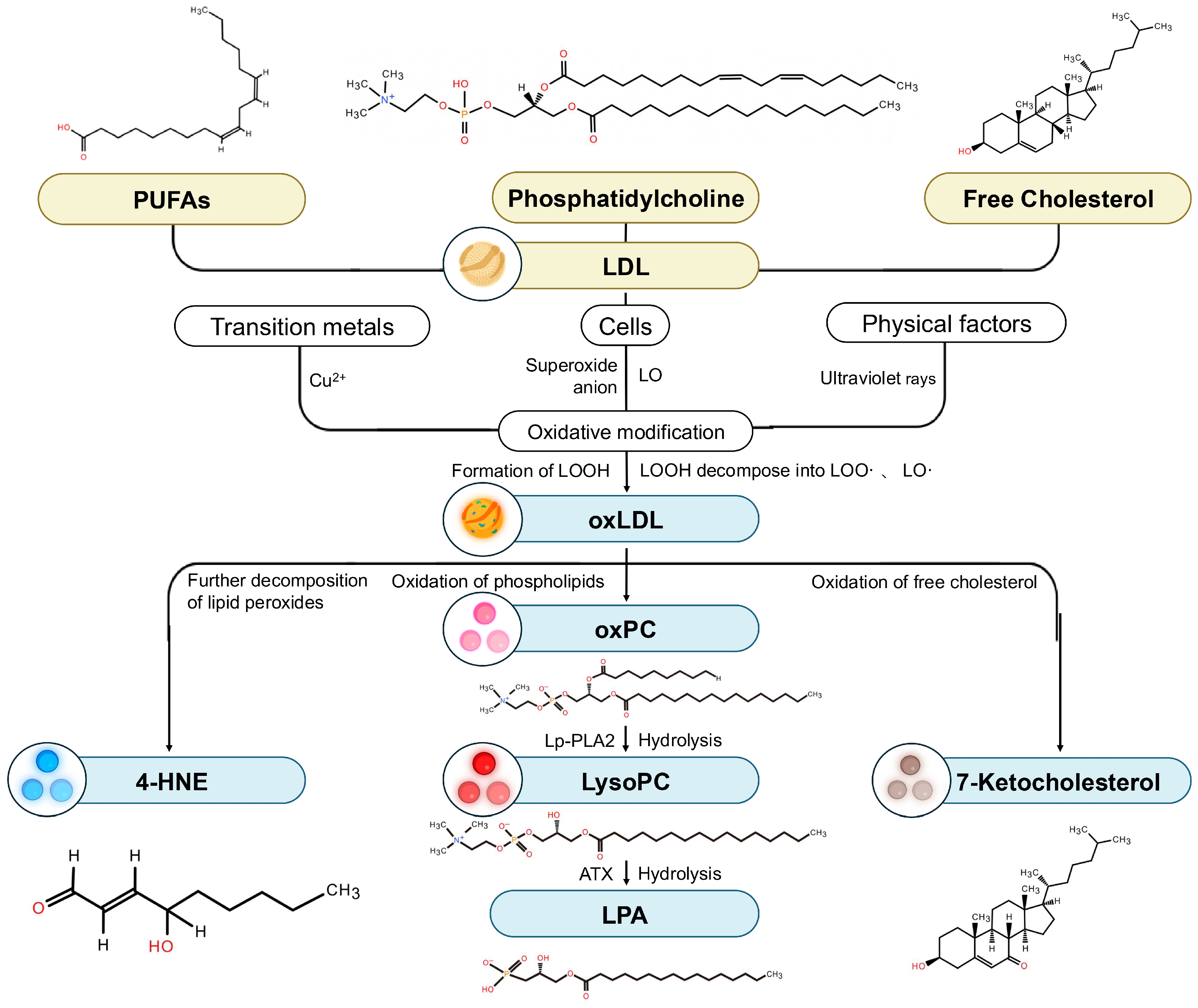
2.1. Generation of oxLDL
2.2. Generation and Biological Properties of Key Downstream Lipid Peroxidation Products of oxLDL
2.2.1. Highly Reactive Aldehydes
2.2.2. Oxidized Phospholipids
2.2.3. Oxysterols
3. Interaction of oxLDL and Its Downstream Lipid Products with Major Receptors
3.1. LOX-1
3.2. CD36
3.3. SR-A
3.4. TLRs
3.5. Major Receptors for Downstream Oxidized Lipids
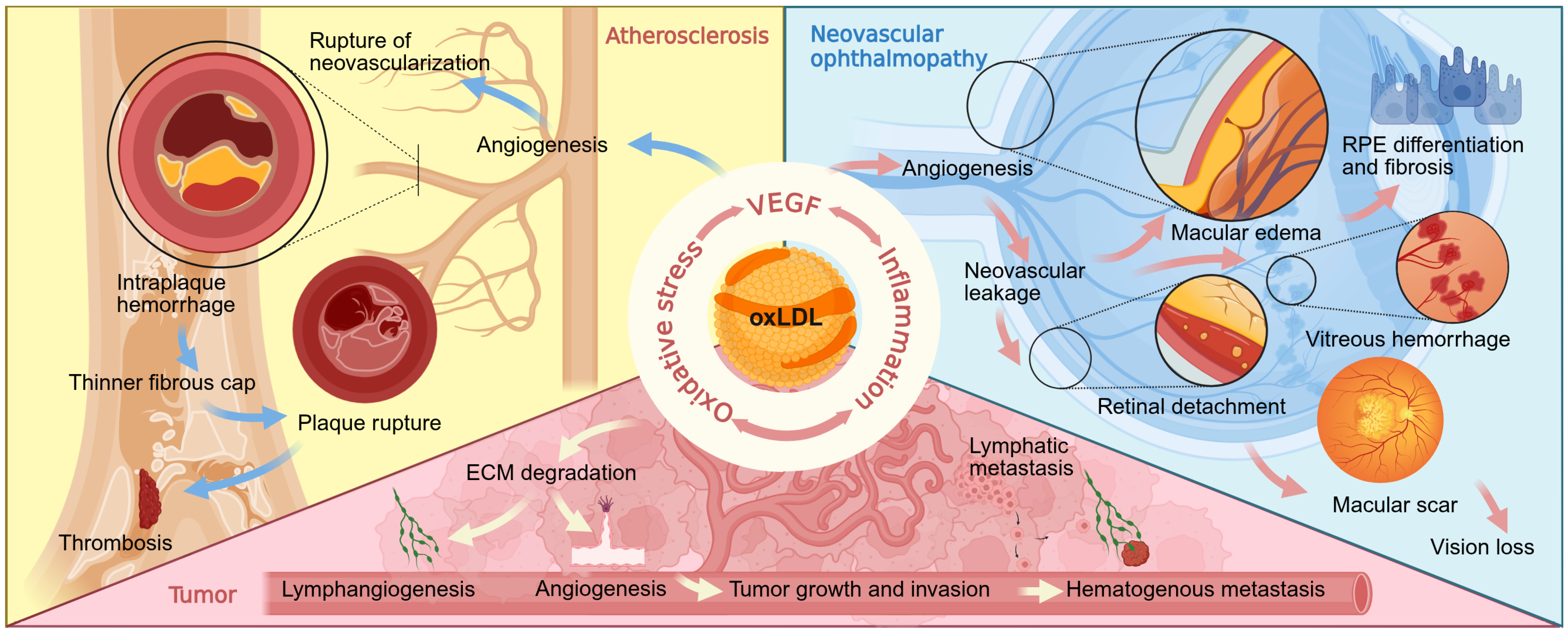
4. The Cross-Organ Angiogenic Effects of oxLDL and Its Downstream Lipid Products in Neovascular Diseases
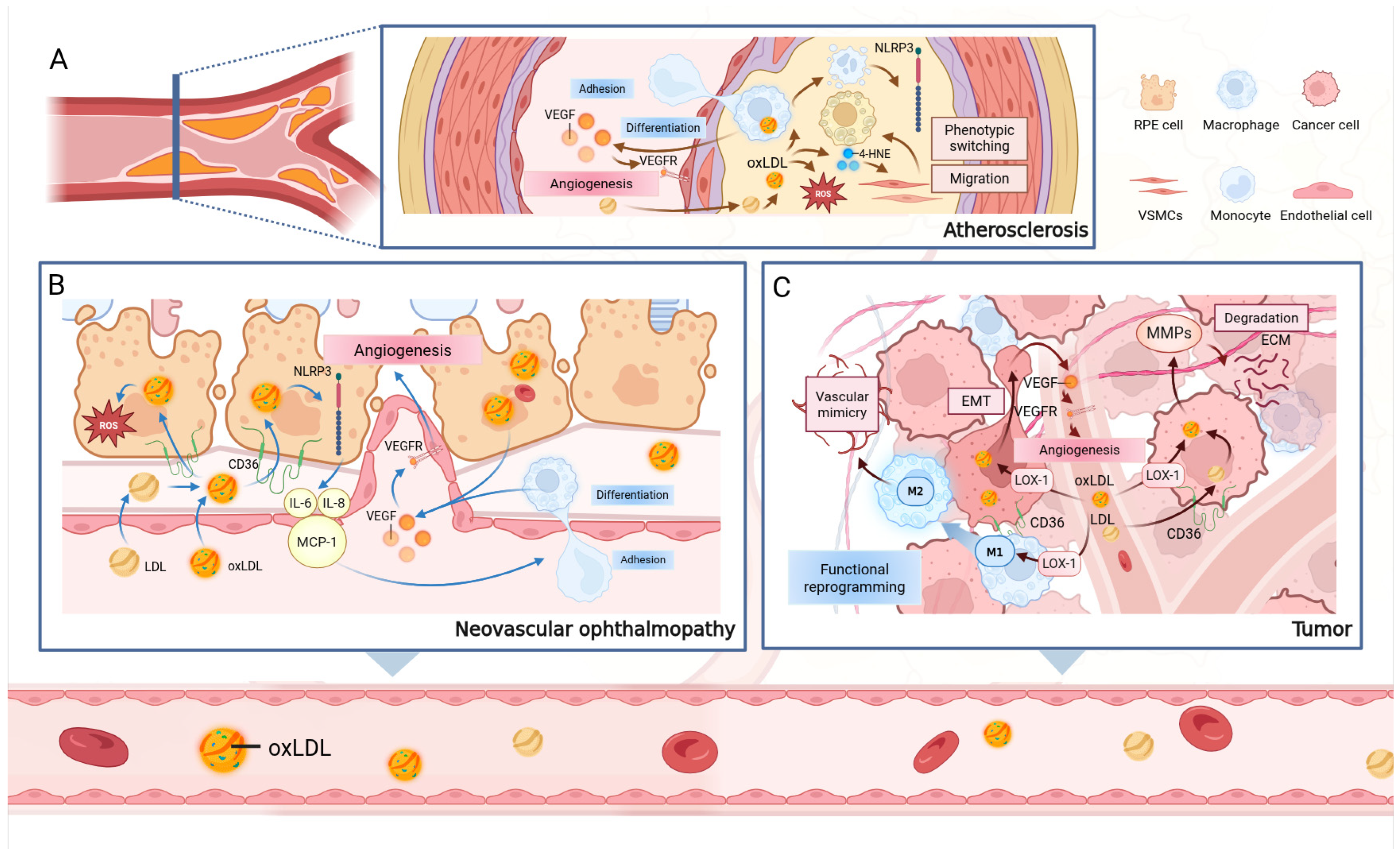
4.1. Neovascular Eye Diseases
4.2. Atherosclerosis
4.3. Tumors
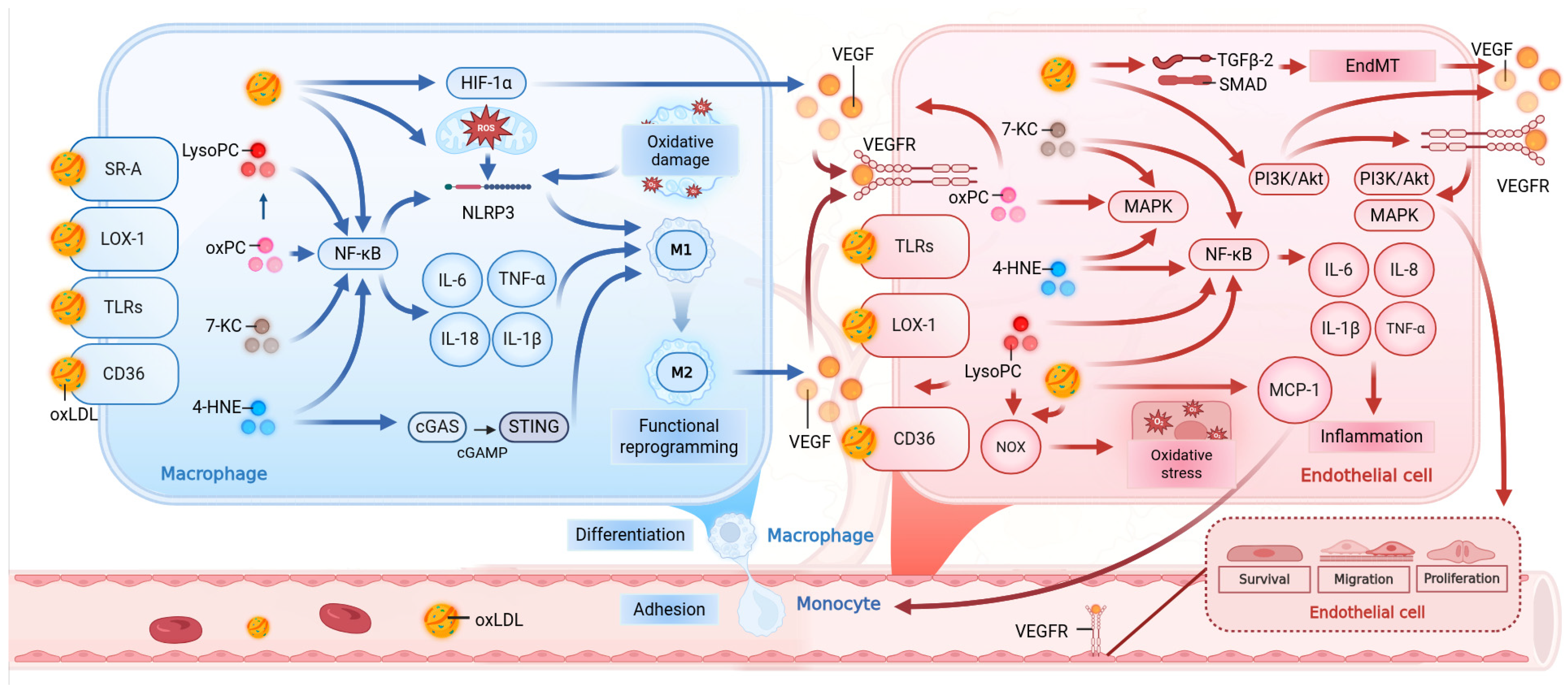
5. Common Molecular Mechanisms of oxLDL-Driven Neovascularization
5.1. Regulation of Macrophage Function by oxLDL
5.2. Regulation of Endothelial Cell Function by oxLDL
6. Advances in Targeting oxLDL for Therapy
6.1. Antioxidant Therapy Targeting LDL Oxidation
6.2. Blocking oxLDL Scavenger Receptors
6.3. Targeting the oxLDL/β2-GPI Complex and Its Ligand oxLig-1
6.4. Emerging Therapeutic Strategies

| Treatment Strategy | Target | Representative Compound/Methods | Refs. |
|---|---|---|---|
| Antioxidant therapy | Reduce ROS/Inhibit oxLDL formation | Vitamin C Vitamin E Alpha lipoic acid Phenylpropanoids Flavonoids Terpenoids Alkaloids Quercetin | [193, 194,195,196,198,199] |
| Targeting oxLDL Signaling | LOX-1 | Curcumin MEDI6570® (AstraZeneca) | [204] [21,205] |
| CD36/SR-A | SSO COS | [206] [207] | |
| oxLDL/β2-GPI complex | rβ2-GPI-DV | [208,212] | |
| MAPK/NF-κB pathways | Saikosaponin Diosgenin | [214] [215] | |
| Enhancing Metabolic Clearance | HDL function | Targeting Lp- PLA2/LCAT activity | [30,219] |
| Non-pharmacological Intervention | Systemic oxLDL levels | Endurance exercise | [222] |
| Immunotherapy & Combination Strategy | oxLDL-driven inflammation | Anti-oxLDL CAR-Tregs | [220] |
| CD36+ CAFs/Lipid peroxidation | Vitamin E + Anti-PD-1 antibody | [221] |
7. Conclusions and Perspectives
Author Contributions
Funding
Institutional Review Board Statement
Informed Consent Statement
Data Availability Statement
Acknowledgments
Conflicts of Interest
Abbreviations
| 4-HNE | 4-hydroxynonenal |
| 7-KC | 7-ketocholesterol |
| ATX | Autotaxin |
| β2-GPI | β2-glycoprotein I |
| CD36 | CD36 (a class B scavenger receptor) |
| CNV | Choroidal neovascularization |
| DAMPs | Damage-associated molecular patterns |
| EndMT | Endothelial-Mesenchymal Transition |
| EMT | Epithelial–mesenchymal transition |
| Epac1 | Exchange protein directly activated by cAMP 1 |
| FC | Free cholesterol |
| HDL | High-density lipoprotein |
| HIF-1α | Hypoxia-inducible factor 1-alpha |
| HO-1 | Heme oxygenase-1 |
| ICAM-1 | Intercellular Adhesion Molecule-1 |
| LDL | Low-density lipoprotein |
| LOOH | Lipid hydroperoxides |
| LOX-1 | Lectin-like oxidized low-density lipoprotein receptor-1 |
| Lp-PLA2 | Lipoprotein-associated phospholipase A2 |
| LPA | Lysophosphatidic acid |
| Lyso-PC | Lysophosphatidylcholine |
| MAPK | Mitogen-activated protein kinase |
| MMPs | Matrix metalloproteinases |
| MCP-1 | Monocyte Chemoattractant Protein-1 |
| nAMD | Neovascular age-related macular degeneration |
| NF-κB | Nuclear factor kappa-B |
| NOX | NADPH oxidase |
| Nrf2 | Nuclear factor erythroid 2-related factor 2 |
| oxLig-1 | 7-ketocholesteryl-9-carboxynonanoate |
| oxLDL | Oxidized low-density lipoprotein |
| oxPC | Oxidized phosphatidylcholines |
| oxPL | Oxidized phospholipids |
| PC | Phosphatidylcholine |
| PDR | Proliferative diabetic retinopathy |
| PI3K/Akt | Phosphoinositide 3-kinase/protein kinase B |
| PPARγ | Peroxisome proliferator-activated receptor gamma |
| PUFAs | Polyunsaturated fatty acids |
| rβ2-GPI-DV | Recombinant β2-GPI-Domain V |
| ROS | Reactive oxygen species |
| RPE | Retinal pigment epithelium |
| SASP | Senescence-associated secretory phenotype |
| SR-A | Scavenger Receptor class A |
| SSO | Sulfo-N-succinimidyl oleate |
| TAMs | Tumor-associated macrophages |
| TLRs | Toll-like Receptors |
| TME | Tumor microenvironment |
| VCAM-1 | Vascular Cell Adhesion Molecule-1 |
| VEGF | Vascular endothelial growth factor |
| VM | Vascular mimicry |
| VSMCs | Vascular smooth muscle cells |
References
- Dudley, A.C.; Griffioen, A.W. Pathological angiogenesis: Mechanisms and therapeutic strategies. Angiogenesis 2023, 26, 313–347. [Google Scholar] [CrossRef]
- Lanzetta, P. Anti-VEGF therapies for age-related macular degeneration: A powerful tactical gear or a blunt weapon? The choice is ours. Graefes Arch. Clin. Exp. Ophthalmol. 2021, 259, 3561–3567. [Google Scholar] [CrossRef] [PubMed]
- Yang, Z.; Tan, T.E.; Shao, Y.; Wong, T.Y.; Li, X. Classification of diabetic retinopathy: Past, present and future. Front. Endocrinol. 2022, 13, 1079217. [Google Scholar] [CrossRef] [PubMed]
- Uludag, G.; Hassan, M.; Matsumiya, W.; Pham, B.H.; Chea, S.; Trong Tuong Than, N.; Doan, H.L.; Akhavanrezayat, A.; Halim, M.S.; Do, D.V.; et al. Efficacy and safety of intravitreal anti-VEGF therapy in diabetic retinopathy: What we have learned and what should we learn further? Expert. Opin. Biol. Ther. 2022, 22, 1275–1291. [Google Scholar] [CrossRef]
- Itou, J.; Furushima, K.; Haruta, M.; Kato, N.; Arai, R.; Mori, K.; Ishikawa, K.; Yoshida, S. Reduced Size of Telangiectatic Capillaries After Intravitreal Injection of Anti-Vascular Endothelial Growth Factor Agents in Diabetic Macular Edema. Clin. Ophthalmol. 2023, 17, 239–245. [Google Scholar] [CrossRef]
- Mettu, P.S.; Allingham, M.J.; Cousins, S.W. Incomplete response to Anti-VEGF therapy in neovascular AMD: Exploring disease mechanisms and therapeutic opportunities. Prog. Retin. Eye Res. 2021, 82, 100906. [Google Scholar] [CrossRef] [PubMed]
- Ugusman, A.; Hisam, N.S.N.; Othman, N.S.; Anuar, N.N.M.; Hamid, A.A.; Kumar, J.; Razmi, M.M.; Aminuddin, A. Pharmacological interventions for intraplaque neovascularization in atherosclerosis. Pharmacol. Ther. 2024, 261, 108685. [Google Scholar] [CrossRef]
- Vimalraj, S. A concise review of VEGF, PDGF, FGF, Notch, angiopoietin, and HGF signalling in tumor angiogenesis with a focus on alternative approaches and future directions. Int. J. Biol. Macromol. 2022, 221, 1428–1438. [Google Scholar] [CrossRef]
- Elebiyo, T.C.; Rotimi, D.; Evbuomwan, I.O.; Maimako, R.F.; Iyobhebhe, M.; Ojo, O.A.; Oluba, O.M.; Adeyemi, O.S. Reassessing vascular endothelial growth factor (VEGF) in anti-angiogenic cancer therapy. Cancer Treat. Res. Commun. 2022, 32, 100620. [Google Scholar] [CrossRef]
- Kim, B.; Arany, Z. Endothelial Lipid Metabolism. Cold Spring Harb. Perspect. Med. 2022, 12, a041162. [Google Scholar] [CrossRef]
- Li, J.; Xiu, Z.; Wang, R.; Yu, C.; Chi, Y.; Qin, J.; Fu, C.; Matsuura, E.; Liu, Q. The lipid moiety 7-ketocholesteryl-9-carboxynonanoate mediates binding interaction of oxLDL to LOX-1 and upregulates ABCA1 expression through PPARγ. Life Sci. 2017, 177, 27–40. [Google Scholar] [CrossRef]
- Li, J.; Yu, C.; Wang, R.; Xu, J.; Chi, Y.; Qin, J.; Liu, Q. The omega-carboxyl group of 7-ketocholesteryl-9-carboxynonanoate mediates the binding of oxLDL to CD36 receptor and enhances caveolin-1 expression in macrophages. Int. J. Biochem. Cell Biol. 2017, 90, 121–135. [Google Scholar] [CrossRef] [PubMed]
- Yang, M.; Silverstein, R.L. CD36 signaling in vascular redox stress. Free Radic. Biol. Med. 2019, 136, 159–171. [Google Scholar] [CrossRef] [PubMed]
- Fu, C.; Xu, J.; Chen, S.L.; Chen, C.B.; Liang, J.J.; Liu, Z.; Huang, C.; Wu, Z.; Ng, T.K.; Zhang, M.; et al. Profile of Lipoprotein Subclasses in Chinese Primary Open-Angle Glaucoma Patients. Int. J. Mol. Sci. 2024, 25, 4544. [Google Scholar] [CrossRef] [PubMed]
- Anderson, A.; Campo, A.; Fulton, E.; Corwin, A.; Jerome, W.G., III; O’Connor, M.S. 7-Ketocholesterol in disease and aging. Redox Biol. 2020, 29, 101380. [Google Scholar] [CrossRef]
- Gao, Y.; Teo, Y.C.K.; Beuerman, R.W.; Wong, T.Y.; Zhou, L.; Cheung, C.M.G. A serum metabolomics study of patients with nAMD in response to anti-VEGF therapy. Sci. Rep. 2020, 10, 1341. [Google Scholar] [CrossRef]
- Xu, J.; Zhou, K.; Fu, C.; Chen, C.B.; Sun, Y.; Wen, X.; Yang, L.; Ng, T.K.; Liu, Q.; Zhang, M. Oxylipins in Aqueous Humor of Primary Open-Angle Glaucoma Patients. Biomolecules 2024, 14, 1127. [Google Scholar] [CrossRef]
- Xu, J.; Fu, C.; Sun, Y.; Wen, X.; Chen, C.B.; Huang, C.; Ng, T.K.; Liu, Q.; Zhang, M. Untargeted and Oxylipin-Targeted Metabolomics Study on the Plasma Samples of Primary Open-Angle Glaucoma Patients. Biomolecules 2024, 14, 307. [Google Scholar] [CrossRef]
- Sun, Y.; Liang, J.J.; Xu, J.; Zhou, K.; Fu, C.; Chen, S.L.; Yang, R.; Ng, T.K.; Liu, Q.; Zhang, M. Oxidized low-density lipoprotein changes the inflammatory status and metabolomics profiles in human and mouse macrophages and microglia. Heliyon 2024, 10, e28806. [Google Scholar] [CrossRef]
- Wu, T.; Xu, W.; Wang, Y.; Tao, M.; Hu, Z.; Lv, B.; Hui, Y.; Du, H. OxLDL enhances choroidal neovascularization lesion through inducing vascular endothelium to mesenchymal transition process and angiogenic factor expression. Cell Signal 2020, 70, 109571. [Google Scholar] [CrossRef]
- Barreto, J.; Karathanasis, S.K.; Remaley, A.; Sposito, A.C. Role of LOX-1 (Lectin-Like Oxidized Low-Density Lipoprotein Receptor 1) as a Cardiovascular Risk Predictor: Mechanistic Insight and Potential Clinical Use. Arterioscler. Thromb. Vasc. Biol. 2021, 41, 153–166. [Google Scholar] [CrossRef] [PubMed]
- Moghadam, S.G.; Ebrahimpour, M.; Alavizadeh, S.H.; Kesharwani, P.; Sahebkar, A. The association between oxidized low-density lipoprotein and cancer: An emerging targeted therapeutic approach? Bioorg Med. Chem. Lett. 2024, 106, 129762. [Google Scholar] [CrossRef]
- Zingg, J.M.; Vlad, A.; Ricciarelli, R. Oxidized LDLs as Signaling Molecules. Antioxidants 2021, 10, 1184. [Google Scholar] [CrossRef]
- Nègre-Salvayre, A.; Garoby-Salom, S.; Swiader, A.; Rouahi, M.; Pucelle, M.; Salvayre, R. Proatherogenic effects of 4-hydroxynonenal. Free Radic. Biol. Med. 2017, 111, 127–139. [Google Scholar] [CrossRef]
- Deng, Y.; Shuai, P.; Wang, H.; Zhang, S.; Li, J.; Du, M.; Huang, P.; Qu, C.; Huang, L. Untargeted metabolomics for uncovering plasma biological markers of wet age-related macular degeneration. Aging 2021, 13, 13968–14000. [Google Scholar] [CrossRef]
- Wu, Z.; Wang, L.; Yin, Z.; Gao, Y.; Song, Y.; Ma, J.; Zhao, M.; Wang, J.; Xue, W.; Pang, X.; et al. Baoyuan decoction inhibits atherosclerosis progression through suppression peroxidized fatty acid and Src/MKK4/JNK pathway-mediated CD 36 expression. Phytomedicine 2024, 130, 155668. [Google Scholar] [CrossRef]
- da Silva, J.F.; Alves, J.V.; Silva-Neto, J.A.; Costa, R.M.; Neves, K.B.; Alves-Lopes, R.; Carmargo, L.L.; Rios, F.J.; Montezano, A.C.; Touyz, R.M.; et al. Lysophosphatidylcholine induces oxidative stress in human endothelial cells via NOX5 activation—Implications in atherosclerosis. Clin. Sci. 2021, 135, 1845–1858. [Google Scholar] [CrossRef]
- Liu, Q.; Kobayashi, K.; Furukawa, J.; Inagaki, J.; Sakairi, N.; Iwado, A.; Yasuda, T.; Koike, T.; Voelker, D.R.; Matsuura, E. Omega-carboxyl variants of 7-ketocholesteryl esters are ligands for beta(2)-glycoprotein I and mediate antibody-dependent uptake of oxidized LDL by macrophages. J. Lipid Res. 2002, 43, 1486–1495. [Google Scholar] [CrossRef] [PubMed]
- Ali, J.; Aziz, M.A.; Rashid, M.M.O.; Basher, M.A.; Islam, M.S. Propagation of age-related diseases due to the changes of lipid peroxide and antioxidant levels in elderly people: A narrative review. Health Sci. Rep. 2022, 5, e650. [Google Scholar] [CrossRef] [PubMed]
- Itabe, H.; Sawada, N.; Makiyama, T.; Obama, T. Structure and Dynamics of Oxidized Lipoproteins In Vivo: Roles of High-Density Lipoprotein. Biomedicines 2021, 9, 655. [Google Scholar] [CrossRef]
- Durrington, P.N.; Bashir, B.; Soran, H. How Does HDL Participate in Atherogenesis? Antioxidant Activity Versus Role in Reverse Cholesterol Transport. Antioxidants 2025, 14, 430. [Google Scholar] [CrossRef]
- Hevonoja, T.; Pentikäinen, M.O.; Hyvönen, M.T.; Kovanen, P.T.; Ala-Korpela, M. Structure of low density lipoprotein (LDL) particles: Basis for understanding molecular changes in modified LDL. Biochim. Biophys. Acta 2000, 1488, 189–210. [Google Scholar] [CrossRef]
- Hasanally, D.; Edel, A.; Chaudhary, R.; Ravandi, A. Identification of Oxidized Phosphatidylinositols Present in OxLDL and Human Atherosclerotic Plaque. Lipids 2017, 52, 11–26. [Google Scholar] [CrossRef] [PubMed]
- Lankin, V.Z.; Tikhaze, A.K.; Sharapov, M.G.; Konovalova, G.G. The Role of Natural Low Molecular Weight Dicarbonyls in Atherogenesis and Diabetogenesis. Rev. Cardiovasc. Med. 2024, 25, 295. [Google Scholar] [CrossRef]
- Boretti, A.; Banik, B.; Castelletto, S. Use of Ultraviolet Blood Irradiation Against Viral Infections. Clin. Rev. Allergy Immunol. 2021, 60, 259–270. [Google Scholar] [CrossRef] [PubMed]
- Li, Y.; Zhao, T.; Li, J.; Xia, M.; Li, Y.; Wang, X.; Liu, C.; Zheng, T.; Chen, R.; Kan, D.; et al. Oxidative Stress and 4-hydroxy-2-nonenal (4-HNE): Implications in the Pathogenesis and Treatment of Aging-related Diseases. J. Immunol. Res. 2022, 2022, 2233906. [Google Scholar] [CrossRef]
- Choi, J.H.; Kagan, J.C. Oxidized phospholipid damage signals as modulators of immunity. Open Biol. 2025, 15, 240391. [Google Scholar] [CrossRef] [PubMed]
- Ioannidis, M.; Tjepkema, J.; Uitbeijerse, M.R.P.; van den Bogaart, G. Immunomodulatory effects of 4-hydroxynonenal. Redox Biol. 2025, 85, 103719. [Google Scholar] [CrossRef]
- Yamashima, T. 4-Hydroxynonenal from Mitochondrial and Dietary Sources Causes Lysosomal Cell Death for Lifestyle-Related Diseases. Nutrients 2024, 16, 4171. [Google Scholar] [CrossRef]
- Gao, D.; Ashraf, M.Z.; Kar, N.S.; Lin, D.; Sayre, L.M.; Podrez, E.A. Structural basis for the recognition of oxidized phospholipids in oxidized low density lipoproteins by class B scavenger receptors CD36 and SR-BI. J. Biol. Chem. 2010, 285, 4447–4454. [Google Scholar] [CrossRef]
- Tan, S.T.; Ramesh, T.; Toh, X.R.; Nguyen, L.N. Emerging roles of lysophospholipids in health and disease. Prog. Lipid Res. 2020, 80, 101068. [Google Scholar] [CrossRef]
- Wang, L.M.; Zhang, W.L.; Lyu, N.; Suo, Y.R.; Yang, L.; Yu, B.; Jiang, X.J. Research Advance of Chinese Medicine in Treating Atherosclerosis: Focus on Lipoprotein-Associated Phospholipase A2. Chin. J. Integr. Med. 2024, 30, 277–288. [Google Scholar] [CrossRef]
- Ahmmed, M.K.; Hachem, M.; Ahmmed, F.; Rashidinejad, A.; Oz, F.; Bekhit, A.A.; Carne, A.; Bekhit, A.E.A. Marine Fish-Derived Lysophosphatidylcholine: Properties, Extraction, Quantification, and Brain Health Application. Molecules 2023, 28, 3088. [Google Scholar] [CrossRef]
- Ben-Zeev, G.; Telias, M.; Nussinovitch, I. Lysophospholipids modulate voltage-gated calcium channel currents in pituitary cells; effects of lipid stress. Cell Calcium 2010, 47, 514–524. [Google Scholar] [CrossRef]
- Tang, X.; Benesch, M.G.K.; Brindley, D.N. Role of the autotaxin-lysophosphatidate axis in the development of resistance to cancer therapy. Biochim. Biophys. Acta Mol. Cell Biol. Lipids 2020, 1865, 158716. [Google Scholar] [CrossRef]
- Benesch, M.G.K.; Tang, X.; Brindley, D.N.; Takabe, K. Autotaxin and Lysophosphatidate Signaling: Prime Targets for Mitigating Therapy Resistance in Breast Cancer. World J. Oncol. 2024, 15, 1–13. [Google Scholar] [CrossRef] [PubMed]
- Terao, R.; Kaneko, H. Lipid Signaling in Ocular Neovascularization. Int. J. Mol. Sci. 2020, 21, 4758. [Google Scholar] [CrossRef]
- Laface, C.; Ricci, A.D.; Vallarelli, S.; Ostuni, C.; Rizzo, A.; Ambrogio, F.; Centonze, M.; Schirizzi, A.; De Leonardis, G.; D’Alessandro, R.; et al. Autotaxin-Lysophosphatidate Axis: Promoter of Cancer Development and Possible Therapeutic Implications. Int. J. Mol. Sci. 2024, 25, 7737. [Google Scholar] [CrossRef] [PubMed]
- Brahmi, F.; Mackrill, J.J.; Ghzaiel, I.; Rezig, L.; Benkhalifa, R.; Zarrouk, A.; Jouanny, P.; Vejux, A.; Lizard, G. Oxysterol-Induced Inflammation in Human Diseases: Strategies for Treatment with Natural Compounds and Synthetic Molecules. Molecules 2025, 30, 2883. [Google Scholar] [CrossRef] [PubMed]
- Brown, A.J.; Dean, R.T.; Jessup, W. Free and esterified oxysterol: Formation during copper-oxidation of low density lipoprotein and uptake by macrophages. J. Lipid Res. 1996, 37, 320–335. [Google Scholar] [CrossRef]
- Gajendran, T.Y.; Ganamurali, N.; Sabarathinam, S. 7-Ketocholesterol: A pathogenic oxysterol in atherosclerosis and lysosomal storage disorders—Molecular insights and clinical implications. J. Steroid Biochem. Mol. Biol. 2025, 252, 106797. [Google Scholar] [CrossRef]
- Rezende, L.; Couto, N.F.D.; Fernandes-Braga, W.; Epshtein, Y.; Alvarez-Leite, J.I.; Levitan, I.; Andrade, L.O. OxLDL induces membrane structure rearrangement leading to biomechanics alteration and migration deficiency in macrophage. Biochim. Biophys. Acta Biomembr. 2022, 1864, 183951. [Google Scholar] [CrossRef]
- Qi, J.; Lv, Y.; Zhong, N.E.; Han, W.Q.; Gou, Q.L.; Sun, C.F. Multi-omics analysis identifies potential mechanisms by which high glucose accelerates macrophage foaming. Mol. Cell Biochem. 2023, 478, 665–678. [Google Scholar] [CrossRef] [PubMed]
- Chen, Y.; Zhang, J.; Cui, W.; Silverstein, R.L. CD36, a signaling receptor and fatty acid transporter that regulates immune cell metabolism and fate. J. Exp. Med. 2022, 219, e20211314. [Google Scholar] [CrossRef]
- Cheng, C.; Zheng, E.; Yu, B.; Zhang, Z.; Wang, Y.; Liu, Y.; He, Y. Recognition of lipoproteins by scavenger receptor class A members. J. Biol. Chem. 2021, 297, 100948. [Google Scholar] [CrossRef] [PubMed]
- Sánchez-León, M.E.; Loaeza-Reyes, K.J.; Matias-Cervantes, C.A.; Mayoral-Andrade, G.; Pérez-Campos, E.L.; Pérez-Campos-Mayoral, L.; Hernández-Huerta, M.T.; Zenteno, E.; Pérez-Cervera, Y.; Pina-Canseco, S. LOX-1 in Cardiovascular Disease: A Comprehensive Molecular and Clinical Review. Int. J. Mol. Sci. 2024, 25, 5276. [Google Scholar] [CrossRef]
- Guo, X.; Guo, Y.; Wang, Z.; Cao, B.; Zheng, C.; Zeng, Z.; Wei, Y. Reducing the Damage of Ox-LDL/LOX-1 Pathway to Vascular Endothelial Barrier Can Inhibit Atherosclerosis. Oxid. Med. Cell Longev. 2022, 2022, 7541411. [Google Scholar] [CrossRef]
- Murdocca, M.; De Masi, C.; Pucci, S.; Mango, R.; Novelli, G.; Di Natale, C.; Sangiuolo, F. LOX-1 and cancer: An indissoluble liaison. Cancer Gene Ther. 2021, 28, 1088–1098. [Google Scholar] [CrossRef] [PubMed]
- Ma, Z.; Xu, R.; Lu, J.; Huang, X.; Jia, H.; Ding, Z.; Yuan, J.; Zou, Y. Mutation within the transmembrane domain of oxidized low-density lipoprotein receptor 1 influences oxidized low-density lipoprotein-induced signal transduction. Innate Immun. 2025, 31, 17534259251350447. [Google Scholar] [CrossRef]
- Kar, N.S.; Ashraf, M.Z.; Valiyaveettil, M.; Podrez, E.A. Mapping and characterization of the binding site for specific oxidized phospholipids and oxidized low density lipoprotein of scavenger receptor CD36. J. Biol. Chem. 2008, 283, 8765–8771. [Google Scholar] [CrossRef]
- Tian, K.; Xu, Y.; Sahebkar, A.; Xu, S. CD36 in Atherosclerosis: Pathophysiological Mechanisms and Therapeutic Implications. Curr. Atheroscler. Rep. 2020, 22, 59. [Google Scholar] [CrossRef]
- Bekkering, S.; Quintin, J.; Joosten, L.A.; van der Meer, J.W.; Netea, M.G.; Riksen, N.P. Oxidized low-density lipoprotein induces long-term proinflammatory cytokine production and foam cell formation via epigenetic reprogramming of monocytes. Arterioscler. Thromb. Vasc. Biol. 2014, 34, 1731–1738. [Google Scholar] [CrossRef]
- Shafeghat, M.; Kazemian, S.; Aminorroaya, A.; Aryan, Z.; Rezaei, N. Toll-like receptor 7 regulates cardiovascular diseases. Int. Immunopharmacol. 2022, 113, 109390. [Google Scholar] [CrossRef]
- Hallam, S.; Escorcio-Correia, M.; Soper, R.; Schultheiss, A.; Hagemann, T. Activated macrophages in the tumour microenvironment-dancing to the tune of TLR and NF-kappaB. J. Pathol. 2009, 219, 143–152. [Google Scholar] [CrossRef] [PubMed]
- Kim, J.; Kim, J.Y.; Byeon, H.E.; Kim, J.W.; Kim, H.A.; Suh, C.H.; Choi, S.; Linton, M.F.; Jung, J.Y. Inhibition of Toll-like Receptors Alters Macrophage Cholesterol Efflux and Foam Cell Formation. Int. J. Mol. Sci. 2024, 25, 6808. [Google Scholar] [CrossRef]
- Chávez-Sánchez, L.; Garza-Reyes, M.G.; Espinosa-Luna, J.E.; Chávez-Rueda, K.; Legorreta-Haquet, M.V.; Blanco-Favela, F. The role of TLR2, TLR4 and CD36 in macrophage activation and foam cell formation in response to oxLDL in humans. Hum. Immunol. 2014, 75, 322–329. [Google Scholar] [CrossRef]
- Kawai, T.; Akira, S. Signaling to NF-kappaB by Toll-like receptors. Trends Mol. Med. 2007, 13, 460–469. [Google Scholar] [CrossRef]
- Ogugofor, M.O.; Holmes, D.; Gieseg, S.P. Review of OxLDL Driven Inflammatory Cell Activation. Curr. Atheroscler. Rep. 2025, 27, 110. [Google Scholar] [CrossRef] [PubMed]
- Biswas, S.; Gao, D.; Altemus, J.B.; Rekhi, U.R.; Chang, E.; Febbraio, M.; Byzova, T.V.; Podrez, E.A. Circulating CD36 is increased in hyperlipidemic mice: Cellular sources and triggers of release. Free Radic. Biol. Med. 2021, 168, 180–188. [Google Scholar] [CrossRef] [PubMed]
- Hoshino, S.; Konishi, M.; Mori, M.; Shimura, M.; Nishitani, C.; Kuroki, Y.; Koyanagi, Y.; Kano, S.; Itabe, H.; Ishizaka, Y. HIV-1 Vpr induces TLR4/MyD88-mediated IL-6 production and reactivates viral production from latency. J. Leukoc. Biol. 2010, 87, 1133–1143. [Google Scholar] [CrossRef]
- Zhao, H.; He, Y. Lysophosphatidylcholine Offsets the Protective Effects of Bone Marrow Mesenchymal Stem Cells on Inflammatory Response and Oxidative Stress Injury of Retinal Endothelial Cells via TLR4/NF-κB Signaling. J. Immunol. Res. 2021, 2021, 2389029. [Google Scholar] [CrossRef]
- George, M.; Lang, M.; Gali, C.C.; Babalola, J.A.; Tam-Amersdorfer, C.; Stracke, A.; Strobl, H.; Zimmermann, R.; Panzenboeck, U.; Wadsack, C. Liver X Receptor Activation Attenuates Oxysterol-Induced Inflammatory Responses in Fetoplacental Endothelial Cells. Cells 2023, 12, 1186. [Google Scholar] [CrossRef] [PubMed]
- Leonarduzzi, G.; Gargiulo, S.; Gamba, P.; Perrelli, M.G.; Castellano, I.; Sapino, A.; Sottero, B.; Poli, G. Molecular signaling operated by a diet-compatible mixture of oxysterols in up-regulating CD36 receptor in CD68 positive cells. Mol. Nutr. Food Res. 2010, 54, S31–S41. [Google Scholar] [CrossRef]
- Reyes-Jiménez, E.; Ramírez-Hernández, A.A.; Santos-Álvarez, J.C.; Velázquez-Enríquez, J.M.; Pina-Canseco, S.; Baltiérrez-Hoyos, R.; Vásquez-Garzón, V.R. Involvement of 4-hydroxy-2-nonenal in the pathogenesis of pulmonary fibrosis. Mol. Cell Biochem. 2021, 476, 4405–4419. [Google Scholar] [CrossRef]
- Gordiyenko, N.; Campos, M.; Lee, J.W.; Fariss, R.N.; Sztein, J.; Rodriguez, I.R. RPE cells internalize low-density lipoprotein (LDL) and oxidized LDL (oxLDL) in large quantities in vitro and in vivo. Investig. Ophthalmol. Vis. Sci. 2004, 45, 2822–2829. [Google Scholar] [CrossRef]
- Picard, E.; Houssier, M.; Bujold, K.; Sapieha, P.; Lubell, W.; Dorfman, A.; Racine, J.; Hardy, P.; Febbraio, M.; Lachapelle, P.; et al. CD36 plays an important role in the clearance of oxLDL and associated age-dependent sub-retinal deposits. Aging 2010, 2, 981–989. [Google Scholar] [CrossRef]
- Kim, J.H.; Lee, S.J.; Kim, K.W.; Yu, Y.S.; Kim, J.H. Oxidized low density lipoprotein-induced senescence of retinal pigment epithelial cells is followed by outer blood-retinal barrier dysfunction. Int. J. Biochem. Cell Biol. 2012, 44, 808–814. [Google Scholar] [CrossRef]
- Yamada, Y.; Tian, J.; Yang, Y.; Cutler, R.G.; Wu, T.; Telljohann, R.S.; Mattson, M.P.; Handa, J.T. Oxidized low density lipoproteins induce a pathologic response by retinal pigmented epithelial cells. J. Neurochem. 2008, 105, 1187–1197. [Google Scholar] [CrossRef]
- AnandBabu, K.; Sen, P.; Angayarkanni, N. Oxidized LDL, homocysteine, homocysteine thiolactone and advanced glycation end products act as pro-oxidant metabolites inducing cytokine release, macrophage infiltration and pro-angiogenic effect in ARPE-19 cells. PLoS ONE 2019, 14, e0216899. [Google Scholar] [CrossRef] [PubMed]
- Gnanaguru, G.; Choi, A.R.; Amarnani, D.; D’Amore, P.A. Oxidized Lipoprotein Uptake Through the CD36 Receptor Activates the NLRP3 Inflammasome in Human Retinal Pigment Epithelial Cells. Investig. Ophthalmol. Vis. Sci. 2016, 57, 4704–4712. [Google Scholar] [CrossRef] [PubMed]
- Li, Y.; Liu, X.; Zhou, T.; Kelley, M.R.; Edwards, P.; Gao, H.; Qiao, X. Inhibition of APE1/Ref-1 redox activity rescues human retinal pigment epithelial cells from oxidative stress and reduces choroidal neovascularization. Redox Biol. 2014, 2, 485–494. [Google Scholar] [CrossRef]
- Wang, H.; Ramshekar, A.; Cung, T.; Wallace-Carrete, C.; Zaugg, C.; Nguyen, J.; Stoddard, G.J.; Hartnett, M.E. 7-Ketocholesterol Promotes Retinal Pigment Epithelium Senescence and Fibrosis of Choroidal Neovascularization via IQGAP1 Phosphorylation-Dependent Signaling. Int. J. Mol. Sci. 2023, 24, 10276. [Google Scholar] [CrossRef] [PubMed]
- Monickaraj, F.; Oruganti, S.R.; McGuire, P.; Das, A. A potential novel therapeutic target in diabetic retinopathy: A chemokine receptor (CCR2/CCR5) inhibitor reduces retinal vascular leakage in an animal model. Graefes Arch. Clin. Exp. Ophthalmol. 2021, 259, 93–100. [Google Scholar] [CrossRef]
- Lu, Z.; Lin, V.; May, A.; Che, B.; Xiao, X.; Shaw, D.H.; Su, F.; Wang, Z.; Du, H.; Shaw, P.X. HTRA1 synergizes with oxidized phospholipids in promoting inflammation and macrophage infiltration essential for ocular VEGF expression. PLoS ONE 2019, 14, e0216808. [Google Scholar] [CrossRef]
- D’Amico, A.G.; Maugeri, G.; Magrì, B.; Lombardo, C.; Saccone, S.; Federico, C.; Cavallaro, P.; Giunta, S.; Bucolo, C.; D’Agata, V. PACAP-ADNP axis prevents outer retinal barrier breakdown and choroidal neovascularization by interfering with VEGF secreted from retinal pigmented epitelium cells. Peptides 2023, 168, 171065. [Google Scholar] [CrossRef]
- Shu, D.Y.; Butcher, E.; Saint-Geniez, M. EMT and EndMT: Emerging Roles in Age-Related Macular Degeneration. Int. J. Mol. Sci. 2020, 21, 4271. [Google Scholar] [CrossRef]
- Thomas, C.J.; Mirza, R.G.; Gill, M.K. Age-Related Macular Degeneration. Med. Clin. North. Am. 2021, 105, 473–491. [Google Scholar] [CrossRef] [PubMed]
- Cheong, K.X.; Cheung, C.M.G.; Teo, K.Y.C. Review of Fibrosis in Neovascular Age-Related Macular Degeneration. Am. J. Ophthalmol. 2023, 246, 192–222. [Google Scholar] [CrossRef]
- Tenbrock, L.; Wolf, J.; Boneva, S.; Schlecht, A.; Agostini, H.; Wieghofer, P.; Schlunck, G.; Lange, C. Subretinal fibrosis in neovascular age-related macular degeneration: Current concepts, therapeutic avenues, and future perspectives. Cell Tissue Res. 2022, 387, 361–375. [Google Scholar] [CrossRef] [PubMed]
- Sivaprasad, S.; Sen, S.; Cunha-Vaz, J. Perspectives of diabetic retinopathy-challenges and opportunities. Eye 2023, 37, 2183–2191. [Google Scholar] [CrossRef]
- Zhu, Y.Y.; Qin, S.Y.; Xie, H.; Liu, Y.P.; Li, X.S.; Zhang, C.Y.; Zhang, Y.C.; Zhang, J.F. Enhancement of retinal Müller glia’s phagocytic activity against hard exudates by conbercept via activation of PPARγ-CD36 axis in diabetic retinopathy. Int. J. Ophthalmol. 2025, 18, 1252–1261. [Google Scholar] [CrossRef]
- Vaz-Pereira, S.; Morais-Sarmento, T.; Esteves Marques, R. Optical coherence tomography features of neovascularization in proliferative diabetic retinopathy: A systematic review. Int. J. Retin. Vitr. 2020, 6, 26. [Google Scholar] [CrossRef] [PubMed]
- Chaudhary, S.; Zaveri, J.; Becker, N. Proliferative diabetic retinopathy (PDR). Dis. Mon. 2021, 67, 101140. [Google Scholar] [CrossRef]
- Stitt, A.W.; Curtis, T.M.; Chen, M.; Medina, R.J.; McKay, G.J.; Jenkins, A.; Gardiner, T.A.; Lyons, T.J.; Hammes, H.P.; Simó, R.; et al. The progress in understanding and treatment of diabetic retinopathy. Prog. Retin. Eye Res. 2016, 51, 156–186. [Google Scholar] [CrossRef]
- Fu, D.; Yu, J.Y.; Connell, A.R.; Hookham, M.B.; McLeese, R.H.; Lyons, T.J. Effects of Modified Low-Density Lipoproteins and Fenofibrate on an Outer Blood-Retina Barrier Model: Implications for Diabetic Retinopathy. J. Ocul. Pharmacol. Ther. 2020, 36, 754–764. [Google Scholar] [CrossRef]
- Huang, H.; Shen, Y. Bezafibrate mitigates oxidized-low density lipoprotein (ox-LDL)-induced the attachment of monocytes to endothelial cells: An implication in atherosclerosis. Fundam. Clin. Pharmacol. 2024, 38, 958–966. [Google Scholar] [CrossRef]
- Attiq, A.; Afzal, S.; Ahmad, W.; Kandeel, M. Hegemony of inflammation in atherosclerosis and coronary artery disease. Eur. J. Pharmacol. 2024, 966, 176338. [Google Scholar] [CrossRef]
- Khatana, C.; Saini, N.K.; Chakrabarti, S.; Saini, V.; Sharma, A.; Saini, R.V.; Saini, A.K. Mechanistic Insights into the Oxidized Low-Density Lipoprotein-Induced Atherosclerosis. Oxid. Med. Cell Longev. 2020, 2020, 5245308. [Google Scholar] [CrossRef] [PubMed]
- Xia, X.; Hu, T.; He, J.; Xu, Q.; Yu, C.; Liu, X.; Shao, Z.; Liao, Y.; Huang, H.; Liu, N. USP10 deletion inhibits macrophage-derived foam cell formation and cellular-oxidized low density lipoprotein uptake by promoting the degradation of CD36. Aging 2020, 12, 22892–22905. [Google Scholar] [CrossRef] [PubMed]
- Li, W.; Xu, X.; Dong, D.; Lei, T.; Ou, H. Up-regulation of thioredoxin system by puerarin inhibits lipid uptake in macrophages. Free Radic. Biol. Med. 2021, 162, 542–554. [Google Scholar] [CrossRef]
- Baumer, Y.; Irei, J.; Boisvert, W.A. Cholesterol crystals in the pathogenesis of atherosclerosis. Nat. Rev. Cardiol. 2025, 22, 315–332. [Google Scholar] [CrossRef]
- Grootaert, M.O.J.; Bennett, M.R. Vascular smooth muscle cells in atherosclerosis: Time for a re-assessment. Cardiovasc. Res. 2021, 117, 2326–2339. [Google Scholar] [CrossRef]
- Pan, H.; Xue, C.; Auerbach, B.J.; Fan, J.; Bashore, A.C.; Cui, J.; Yang, D.Y.; Trignano, S.B.; Liu, W.; Shi, J.; et al. Single-Cell Genomics Reveals a Novel Cell State During Smooth Muscle Cell Phenotypic Switching and Potential Therapeutic Targets for Atherosclerosis in Mouse and Human. Circulation 2020, 142, 2060–2075. [Google Scholar] [CrossRef] [PubMed]
- Chandrasekar, B.; Mummidi, S.; DeMarco, V.G.; Higashi, Y. Empagliflozin Reverses Oxidized LDL-Induced RECK Suppression, Cardiotrophin-1 Expression, MMP Activation, and Human Aortic Smooth Muscle Cell Proliferation and Migration. Mediat. Inflamm. 2023, 2023, 6112301. [Google Scholar] [CrossRef] [PubMed]
- Negre-Salvayre, A.; Vieira, O.; Escargueil-Blanc, I.; Salvayre, R. Oxidized LDL and 4-hydroxynonenal modulate tyrosine kinase receptor activity. Mol. Asp. Med. 2003, 24, 251–261. [Google Scholar] [CrossRef] [PubMed]
- Chen, R.; McVey, D.G.; Shen, D.; Huang, X.; Ye, S. Phenotypic Switching of Vascular Smooth Muscle Cells in Atherosclerosis. J. Am. Heart Assoc. 2023, 12, e031121. [Google Scholar] [CrossRef]
- Allahverdian, S.; Pannu, P.S.; Francis, G.A. Contribution of monocyte-derived macrophages and smooth muscle cells to arterial foam cell formation. Cardiovasc. Res. 2012, 95, 165–172. [Google Scholar] [CrossRef]
- Schnack, L.; Sohrabi, Y.; Lagache, S.M.M.; Kahles, F.; Bruemmer, D.; Waltenberger, J.; Findeisen, H.M. Mechanisms of Trained Innate Immunity in oxLDL Primed Human Coronary Smooth Muscle Cells. Front. Immunol. 2019, 10, 13. [Google Scholar] [CrossRef]
- Mura, M.; Della Schiava, N.; Long, A.; Chirico, E.N.; Pialoux, V.; Millon, A. Carotid intraplaque haemorrhage: Pathogenesis, histological classification, imaging methods and clinical value. Ann. Transl. Med. 2020, 8, 1273. [Google Scholar] [CrossRef]
- Fishbein, M.C. The vulnerable and unstable atherosclerotic plaque. Cardiovasc. Pathol. 2010, 19, 6–11. [Google Scholar] [CrossRef]
- Libby, P. Inflammation during the life cycle of the atherosclerotic plaque. Cardiovasc. Res. 2021, 117, 2525–2536. [Google Scholar] [CrossRef] [PubMed]
- Pucci, S.; Polidoro, C.; Greggi, C.; Amati, F.; Morini, E.; Murdocca, M.; Biancolella, M.; Orlandi, A.; Sangiuolo, F.; Novelli, G. Pro-oncogenic action of LOX-1 and its splice variant LOX-1Δ4 in breast cancer phenotypes. Cell Death Dis. 2019, 10, 53. [Google Scholar] [CrossRef] [PubMed]
- Katayama, C.; Yokobori, T.; Ozawa, N.; Suga, K.; Shiraishi, T.; Okada, T.; Osone, K.; Katoh, R.; Suto, T.; Motegi, Y.; et al. Low level of stromal lectin-like oxidized LDL receptor 1 and CD8+ cytotoxic T-lymphocytes indicate poor prognosis of colorectal cancer. Cancer Rep. 2021, 4, e1364. [Google Scholar] [CrossRef] [PubMed]
- González-Chavarría, I.; Fernandez, E.; Gutierrez, N.; González-Horta, E.E.; Sandoval, F.; Cifuentes, P.; Castillo, C.; Cerro, R.; Sanchez, O.; Toledo, J.R. LOX-1 activation by oxLDL triggers an epithelial mesenchymal transition and promotes tumorigenic potential in prostate cancer cells. Cancer Lett. 2018, 414, 34–43. [Google Scholar] [CrossRef]
- Maeda, H.; Wu, J.; Sawa, T.; Matsumura, Y.; Hori, K. Tumor vascular permeability and the EPR effect in macromolecular therapeutics: A review. J. Control Release 2000, 65, 271–284. [Google Scholar] [CrossRef]
- Cao, S.; Zhang, W.; Pan, H.; Huang, Z.; Guo, M.; Zhang, L.; Xu, X.; Saw, P.E. Bioactive lipid-nanoparticles with inherent self-therapeutic and anti-angiogenic properties for cancer therapy. Acta Biomater. 2023, 157, 500–510. [Google Scholar] [CrossRef]
- Zhang, X.; Ye, X.; Jin, H. Oxidized Low-Density Lipoprotein as a Potential Target for Enhancing Immune Checkpoint Inhibitor Therapy in Microsatellite-Stable Colorectal Cancer. Antioxidants 2025, 14, 726. [Google Scholar] [CrossRef]
- Majima, M.; Hosono, K.; Ito, Y.; Amano, H. Biologically active lipids in the regulation of lymphangiogenesis in disease states. Pharmacol. Ther. 2022, 232, 108011. [Google Scholar] [CrossRef]
- Mu, H.; Calderone, T.L.; Davies, M.A.; Prieto, V.G.; Wang, H.; Mills, G.B.; Bar-Eli, M.; Gershenwald, J.E. Lysophosphatidic acid induces lymphangiogenesis and IL-8 production in vitro in human lymphatic endothelial cells. Am. J. Pathol. 2012, 180, 2170–2181. [Google Scholar] [CrossRef]
- Lin, C.E.; Chen, S.U.; Lin, C.C.; Chang, C.H.; Lin, Y.C.; Tai, Y.L.; Shen, T.L.; Lee, H. Lysophosphatidic acid enhances vascular endothelial growth factor-C expression in human prostate cancer PC-3 cells. PLoS ONE 2012, 7, e41096. [Google Scholar] [CrossRef]
- Zhang, P.; Zhao, Y.; Xia, X.; Mei, S.; Huang, Y.; Zhu, Y.; Yu, S.; Chen, X. Expression of OLR1 gene on tumor-associated macrophages of head and neck squamous cell carcinoma, and its correlation with clinical outcome. Oncoimmunology 2023, 12, 2203073. [Google Scholar] [CrossRef] [PubMed]
- Rong, X.; Huang, B.; Qiu, S.; Li, X.; He, L.; Peng, Y. Tumor-associated macrophages induce vasculogenic mimicry of glioblastoma multiforme through cyclooxygenase-2 activation. Oncotarget 2016, 7, 83976–83986. [Google Scholar] [CrossRef]
- Hutter, R.; Speidl, W.S.; Valdiviezo, C.; Sauter, B.; Corti, R.; Fuster, V.; Badimon, J.J. Macrophages transmit potent proangiogenic effects of oxLDL in vitro and in vivo involving HIF-1α activation: A novel aspect of angiogenesis in atherosclerosis. J. Cardiovasc. Transl. Res. 2013, 6, 558–569. [Google Scholar] [CrossRef]
- Li, Y.; Zhang, L.; Ren, P.; Yang, Y.; Li, S.; Qin, X.; Zhang, M.; Zhou, M.; Liu, W. Qing-Xue-Xiao-Zhi formula attenuates atherosclerosis by inhibiting macrophage lipid accumulation and inflammatory response via TLR4/MyD88/NF-κB pathway regulation. Phytomedicine 2021, 93, 153812. [Google Scholar] [CrossRef]
- Sheedy, F.J.; Grebe, A.; Rayner, K.J.; Kalantari, P.; Ramkhelawon, B.; Carpenter, S.B.; Becker, C.E.; Ediriweera, H.N.; Mullick, A.E.; Golenbock, D.T.; et al. CD36 coordinates NLRP3 inflammasome activation by facilitating intracellular nucleation of soluble ligands into particulate ligands in sterile inflammation. Nat. Immunol. 2013, 14, 812–820. [Google Scholar] [CrossRef]
- Boyanovsky, B.B.; Li, X.; Shridas, P.; Sunkara, M.; Morris, A.J.; Webb, N.R. Bioactive products generated by group V sPLA(2) hydrolysis of LDL activate macrophages to secrete pro-inflammatory cytokines. Cytokine 2010, 50, 50–57. [Google Scholar] [CrossRef][Green Version]
- Han, C.Y.; Park, S.Y.; Pak, Y.K. Role of endocytosis in the transactivation of nuclear factor-kappaB by oxidized low-density lipoprotein. Biochem. J. 2000, 350, 829–837. [Google Scholar] [CrossRef] [PubMed]
- Ismaeel, S.; Qadri, A. ATP Release Drives Inflammation with Lysophosphatidylcholine. Immunohorizons 2021, 5, 219–233. [Google Scholar] [CrossRef]
- Zhivaki, D.; Kagan, J.C. Innate immune detection of lipid oxidation as a threat assessment strategy. Nat. Rev. Immunol. 2022, 22, 322–330. [Google Scholar] [CrossRef] [PubMed]
- Di Gioia, M.; Zanoni, I. Dooming Phagocyte Responses: Inflammatory Effects of Endogenous Oxidized Phospholipids. Front. Endocrinol. 2021, 12, 626842. [Google Scholar] [CrossRef]
- Zanoni, I.; Tan, Y.; Di Gioia, M.; Broggi, A.; Ruan, J.; Shi, J.; Donado, C.A.; Shao, F.; Wu, H.; Springstead, J.R.; et al. An endogenous caspase-11 ligand elicits interleukin-1 release from living dendritic cells. Science 2016, 352, 1232–1236. [Google Scholar] [CrossRef]
- Zanoni, I.; Tan, Y.; Di Gioia, M.; Springstead, J.R.; Kagan, J.C. By Capturing Inflammatory Lipids Released from Dying Cells, the Receptor CD14 Induces Inflammasome-Dependent Phagocyte Hyperactivation. Immunity 2017, 47, 697–709.e3. [Google Scholar] [CrossRef] [PubMed]
- Lara-Guzmán, O.J.; Arango-González, Á.; Rivera, D.A.; Muñoz-Durango, K.; Sierra, J.A. The colonic polyphenol catabolite dihydroferulic acid (DHFA) regulates macrophages activated by oxidized LDL, 7-ketocholesterol, and LPS switching from pro- to anti-inflammatory mediators. Food Funct. 2024, 15, 10399–10413. [Google Scholar] [CrossRef]
- Larrayoz, I.M.; Huang, J.D.; Lee, J.W.; Pascual, I.; Rodríguez, I.R. 7-ketocholesterol-induced inflammation: Involvement of multiple kinase signaling pathways via NFκB but independently of reactive oxygen species formation. Investig. Ophthalmol. Vis. Sci. 2010, 51, 4942–4955. [Google Scholar] [CrossRef]
- Rui, H.; Yu, H.; Chi, K.; Han, Z.; Zhu, W.; Zhang, J.; Guo, H.; Zou, W.; Wang, F.; Xu, P.; et al. ALDH2 deficiency augments atherosclerosis through the USP14-cGAS-dependent polarization of proinflammatory macrophages. Redox Biol. 2024, 76, 103318. [Google Scholar] [CrossRef]
- Böhm, E.W.; Buonfiglio, F.; Voigt, A.M.; Bachmann, P.; Safi, T.; Pfeiffer, N.; Gericke, A. Oxidative stress in the eye and its role in the pathophysiology of ocular diseases. Redox Biol. 2023, 68, 102967. [Google Scholar] [CrossRef]
- Xu, Y.; Yuan, Q.; Cao, S.; Cui, S.; Xue, L.; Song, X.; Li, Z.; Xu, R.; Yuan, Q.; Li, R. Aldehyde dehydrogenase 2 inhibited oxidized LDL-induced NLRP3 inflammasome priming and activation via attenuating oxidative stress. Biochem. Biophys. Res. Commun. 2020, 529, 998–1004. [Google Scholar] [CrossRef]
- Liao, Y.; Zhu, E.; Zhou, W. Ox-LDL Aggravates the Oxidative Stress and Inflammatory Responses of THP-1 Macrophages by Reducing the Inhibition Effect of miR-491-5p on MMP-9. Front. Cardiovasc. Med. 2021, 8, 697236. [Google Scholar] [CrossRef] [PubMed]
- Kong, J.; Liu, L.; Song, L.; Zhao, R.; Feng, Y. MicroRNA miR-34a-5p inhibition restrains oxidative stress injury of macrophages by targeting MDM4. Vascular 2023, 31, 608–618. [Google Scholar] [CrossRef] [PubMed]
- Tao, J.; Qiu, J.; Lu, L.; Zhang, L.; Fu, Y.; Wang, M.; Han, J.; Shi, M.; Li, L.; Zhao, Z.; et al. ZBTB20 Positively Regulates Oxidative Stress, Mitochondrial Fission, and Inflammatory Responses of ox-LDL-Induced Macrophages in Atherosclerosis. Oxid. Med. Cell Longev. 2021, 2021, 5590855. [Google Scholar] [CrossRef]
- Mulumba, M.; Le, C.; Schelsohn, E.; Namkung, Y.; Laporte, S.A.; Febbraio, M.; Servant, M.J.; Chemtob, S.; Lubell, W.D.; Marleau, S.; et al. Selective Azapeptide CD36 Ligand MPE-298 Regulates oxLDL-LOX-1-Mediated Inflammation and Mitochondrial Oxidative Stress in Macrophages. Cells 2025, 14, 385. [Google Scholar] [CrossRef]
- Su, Z.D.; Li, C.Q.; Wang, H.W.; Zheng, M.M.; Chen, Q.W. Inhibition of DRP1-dependent mitochondrial fission by Mdivi-1 alleviates atherosclerosis through the modulation of M1 polarization. J. Transl. Med. 2023, 21, 427. [Google Scholar] [CrossRef]
- Shou, X.; Wang, Y.; Jiang, Q.; Chen, J.; Liu, Q. miR-126 promotes M1 to M2 macrophage phenotype switching via VEGFA and KLF4. PeerJ 2023, 11, e15180. [Google Scholar] [CrossRef]
- He, L.; Jhong, J.H.; Chen, Q.; Huang, K.Y.; Strittmatter, K.; Kreuzer, J.; DeRan, M.; Wu, X.; Lee, T.Y.; Slavov, N.; et al. Global characterization of macrophage polarization mechanisms and identification of M2-type polarization inhibitors. Cell Rep. 2021, 37, 109955. [Google Scholar] [CrossRef]
- Li, W.; Wang, Y.; Zhu, L.; Du, S.; Mao, J.; Wang, Y.; Wang, S.; Bo, Q.; Tu, Y.; Yi, Q. The P300/XBP1s/Herpud1 axis promotes macrophage M2 polarization and the development of choroidal neovascularization. J. Cell Mol. Med. 2021, 25, 6709–6720. [Google Scholar] [CrossRef] [PubMed]
- Catar, R.; Chen, L.; Zhao, H.; Wu, D.; Kamhieh-Milz, J.; Lücht, C.; Zickler, D.; Krug, A.W.; Ziegler, C.G.; Morawietz, H.; et al. Native and Oxidized Low-Density Lipoproteins Increase the Expression of the LDL Receptor and the LOX-1 Receptor, Respectively, in Arterial Endothelial Cells. Cells 2022, 11, 204. [Google Scholar] [CrossRef]
- Feng, Y.; Cai, Z.R.; Tang, Y.; Hu, G.; Lu, J.; He, D.; Wang, S. TLR4/NF-κB signaling pathway-mediated and oxLDL-induced up-regulation of LOX-1, MCP-1, and VCAM-1 expressions in human umbilical vein endothelial cells. Genet. Mol. Res. 2014, 13, 680–695. [Google Scholar] [CrossRef] [PubMed]
- Dandapat, A.; Hu, C.; Sun, L.; Mehta, J.L. Small concentrations of oxLDL induce capillary tube formation from endothelial cells via LOX-1-dependent redox-sensitive pathway. Arterioscler. Thromb. Vasc. Biol. 2007, 27, 2435–2442. [Google Scholar] [CrossRef]
- Li, D.; Mehta, J.L. Antisense to LOX-1 inhibits oxidized LDL-mediated upregulation of monocyte chemoattractant protein-1 and monocyte adhesion to human coronary artery endothelial cells. Circulation 2000, 101, 2889–2895. [Google Scholar] [CrossRef]
- Gong, Y.; Li, Q.; Ma, Z.; Jin, T.; Lin, J.; Lv, Q.; Wang, M.; Fu, G.; Xu, S. Downregulation of activating transcription factor 4 attenuates lysophosphatidycholine-induced inflammation via the NF-κB pathway. Eur. J. Pharmacol. 2021, 911, 174457. [Google Scholar] [CrossRef] [PubMed]
- Dzobo, K.E.; Cupido, A.J.; Mol, B.M.; Stiekema, L.C.A.; Versloot, M.; Winkelmeijer, M.; Peter, J.; Pennekamp, A.M.; Havik, S.R.; Vaz, F.M.; et al. Diacylglycerols and Lysophosphatidic Acid, Enriched on Lipoprotein(a), Contribute to Monocyte Inflammation. Arterioscler. Thromb. Vasc. Biol. 2024, 44, 720–740. [Google Scholar] [CrossRef] [PubMed]
- Karshovska, E.; Mohibullah, R.; Zhu, M.; Zahedi, F.; Thomas, D.; Magkrioti, C.; Geissler, C.; Megens, R.T.A.; Bianchini, M.; Nazari-Jahantigh, M.; et al. Endothelial ENPP2 (Ectonucleotide Pyrophosphatase/Phosphodiesterase 2) Increases Atherosclerosis in Female and Male Mice. Arterioscler. Thromb. Vasc. Biol. 2022, 42, 1023–1036. [Google Scholar] [CrossRef]
- Miyazaki, T.; Taketomi, Y.; Higashi, T.; Ohtaki, H.; Takaki, T.; Ohnishi, K.; Hosonuma, M.; Kono, N.; Akasu, R.; Haraguchi, S.; et al. Hypercholesterolemic Dysregulation of Calpain in Lymphatic Endothelial Cells Interferes with Regulatory T-Cell Stability and Trafficking. Arterioscler. Thromb. Vasc. Biol. 2023, 43, e66–e82. [Google Scholar] [CrossRef] [PubMed]
- Ke, Y.; Karki, P.; Li, Y.; Promnares, K.; Zhang, C.O.; Eggerman, T.L.; Bocharov, A.V.; Birukova, A.A.; Birukov, K.G. Aging-Related Accumulation of Truncated Oxidized Phospholipids Augments Infectious Lung Injury and Endothelial Dysfunction via Cluster of Differentiation 36-Dependent Mechanism. Cells 2023, 12, 1937. [Google Scholar] [CrossRef] [PubMed]
- Hodzic, A.; Gesslbauer, B.; Bochkov, V.; Oskolkova, O.V. Cooperative induction of CXCL chemokines by inflammatory cytokines and oxidized phospholipids. Immunology 2024, 173, 286–295. [Google Scholar] [CrossRef]
- Kuo, X.; Herr, D.R.; Ong, W.Y. Anti-inflammatory and Cytoprotective Effect of Clinacanthus nutans Leaf but Not Stem Extracts on 7-Ketocholesterol Induced Brain Endothelial Cell Injury. Neuromolecular Med. 2021, 23, 176–183. [Google Scholar] [CrossRef]
- Koh, S.S.; Ooi, S.C.; Lui, N.M.; Qiong, C.; Ho, L.T.; Cheah, I.K.; Halliwell, B.; Herr, D.R.; Ong, W.Y. Effect of Ergothioneine on 7-Ketocholesterol-Induced Endothelial Injury. Neuromolecular Med. 2021, 23, 184–198. [Google Scholar] [CrossRef]
- Ross, M.K.; Matthews, A.T.; Mangum, L.C. Chemical Atherogenesis: Role of Endogenous and Exogenous Poisons in Disease Development. Toxics 2014, 2, 17–34. [Google Scholar] [CrossRef]
- Zhao, H.; Cao, N.; Liu, Q.; Zhang, Y.; Jin, R.; Lai, H.; Zheng, L.; Zhang, H.; Zhu, Y.; Ma, Y.; et al. Inhibition of the E3 ligase UBR5 stabilizes TERT and protects vascular organoids from oxidative stress. J. Transl. Med. 2024, 22, 1080. [Google Scholar] [CrossRef]
- Sun, L.; Dou, F.; Chen, J.; Chi, H.; Xing, S.; Liu, T.; Sun, S.; Chen, C. Salidroside slows the progression of EA.hy926 cell senescence by regulating the cell cycle in an atherosclerosis model. Mol. Med. Rep. 2018, 17, 257–263. [Google Scholar] [CrossRef]
- Lankin, V.Z.; Sharapov, M.G.; Tikhaze, A.K.; Goncharov, R.G.; Antonova, O.A.; Konovalova, G.G.; Novoselov, V.I. Dicarbonyl-Modified Low-Density Lipoproteins Are Key Inducers of LOX-1 and NOX1 Gene Expression in the Cultured Human Umbilical Vein Endotheliocytes. Biochemistry 2023, 88, 2125–2136. [Google Scholar] [CrossRef]
- Yan, F.X.; Li, H.M.; Li, S.X.; He, S.H.; Dai, W.P.; Li, Y.; Wang, T.T.; Shi, M.M.; Yuan, H.X.; Xu, Z.; et al. The oxidized phospholipid POVPC impairs endothelial function and vasodilation via uncoupling endothelial nitric oxide synthase. J. Mol. Cell Cardiol. 2017, 112, 40–48. [Google Scholar] [CrossRef]
- Bontor, K.; Gabryel, B. Sulodexide protects endothelial cells against 4-hydroxynonenal-induced oxidative stress and glutathione-dependent redox imbalance by modulation of sestrin2/nuclear factor erythroid 2-related factor 2 pathway. J. Physiol. Pharmacol. 2024, 75, 373–387. [Google Scholar] [CrossRef]
- Ding, H.; Tong, J.; Lin, H.; Ping, F.; Yao, T.; Ye, Z.; Chu, J.; Yuan, D.; Wang, K.; Liu, X.; et al. KLF4 inhibited the senescence-associated secretory phenotype in ox-LDL-treated endothelial cells via PDGFRA/NAMPT/mitochondrial ROS. Aging 2024, 16, 8070–8085. [Google Scholar] [CrossRef]
- Ji, P.; Song, X.; Lv, Z. Knockdown of circ_0004104 Alleviates Oxidized Low-Density Lipoprotein-Induced Vascular Endothelial Cell Injury by Regulating miR-100/TNFAIP8 Axis. J. Cardiovasc. Pharmacol. 2021, 78, 269–279. [Google Scholar] [CrossRef] [PubMed]
- Gajewski, A.; Gawrysiak, M.; Krupa, A.; Rechciński, T.; Chałubiński, M.; Gonciarz, W.; Chmiela, M. Accumulation of Deleterious Effects in Gastric Epithelial Cells and Vascular Endothelial Cells In Vitro in the Milieu of Helicobacter pylori Components, 7-Ketocholesterol and Acetylsalicylic Acid. Int. J. Mol. Sci. 2022, 23, 6355. [Google Scholar] [CrossRef]
- Liu, Y.; Li, Y.; Chen, M.; Liu, Y.; Liang, J.; Zhang, Y.; Qian, Z.J. Mechanism of two alkaloids isolated from coral endophytic fungus for suppressing angiogenesis in atherosclerotic plaque in HUVEC. Int. Immunopharmacol. 2022, 109, 108931. [Google Scholar] [CrossRef]
- Di, M.; Zhang, Y.; Zeng, R.; Liu, X.; Chen, W.; Zhang, M.; Zhang, C.; Li, M.; Zhang, M. The pro-angiogenesis effect of miR33a-5p/Ets-1/DKK1 signaling in ox-LDL induced HUVECs. Int. J. Biol. Sci. 2021, 17, 4122–4139. [Google Scholar] [CrossRef] [PubMed]
- Bochkov, V.N.; Philippova, M.; Oskolkova, O.; Kadl, A.; Furnkranz, A.; Karabeg, E.; Afonyushkin, T.; Gruber, F.; Breuss, J.; Minchenko, A.; et al. Oxidized phospholipids stimulate angiogenesis via autocrine mechanisms, implicating a novel role for lipid oxidation in the evolution of atherosclerotic lesions. Circ. Res. 2006, 99, 900–908. [Google Scholar] [CrossRef]
- Cao, S.J.; Hong, L.; Li, X.Q. Mechanistic studies on the role of TGF-β1 in angiogenesis through EndMT. Vascular 2021, 29, 442–450. [Google Scholar] [CrossRef]
- Liu, Z.L.; Chen, H.H.; Zheng, L.L.; Sun, L.P.; Shi, L. Angiogenic signaling pathways and anti-angiogenic therapy for cancer. Signal Transduct. Target. Ther. 2023, 8, 198. [Google Scholar] [CrossRef] [PubMed]
- Wu, Y.; Ma, Y.; Zhong, W.; Shen, H.; Ye, J.; Du, S.; Li, P. Alleviation of endothelial dysfunction of Pheretima guillemi (Michaelsen)-derived protein DPf3 in ponatinib-induced thrombotic zebrafish and mechanisms explored through ox-LDL-induced HUVECs and TMT-based proteomics. J. Ethnopharmacol. 2024, 323, 117669. [Google Scholar] [CrossRef]
- Wei, M.; Liu, Y.; Zheng, M.; Wang, L.; Ma, F.; Qi, Y.; Liu, G. Upregulation of Protease-Activated Receptor 2 Promotes Proliferation and Migration of Human Vascular Smooth Muscle Cells (VSMCs). Med. Sci. Monit. 2019, 25, 8854–8862. [Google Scholar] [CrossRef]
- Wang, X.; Li, D.; Chen, H.; Wei, X.; Xu, X. Expression of Long Noncoding RNA LIPCAR Promotes Cell Proliferation, Cell Migration, and Change in Phenotype of Vascular Smooth Muscle Cells. Med. Sci. Monit. 2019, 25, 7645–7651. [Google Scholar] [CrossRef]
- Li, R.; Mittelstein, D.; Fang, K.; Beebe, T.; Quigley, K.; Berliner, J.; Hsiai, T.K. Angiopoeitin-2 modulates Survivin expression in OxLDL-induced endothelial cell apoptosis. Biochem. Biophys. Res. Commun. 2012, 417, 619–622. [Google Scholar] [CrossRef]
- Kim, I.; Moon, S.O.; Han, C.Y.; Pak, Y.K.; Moon, S.K.; Kim, J.J.; Koh, G.Y. The angiopoietin-tie2 system in coronary artery endothelium prevents oxidized low-density lipoprotein-induced apoptosis. Cardiovasc. Res. 2001, 49, 872–881. [Google Scholar] [CrossRef]
- Stiko-Rahm, A.; Hultgårdh-Nilsson, A.; Regnström, J.; Hamsten, A.; Nilsson, J. Native and oxidized LDL enhances production of PDGF AA and the surface expression of PDGF receptors in cultured human smooth muscle cells. Arterioscler. Thromb. 1992, 12, 1099–1109. [Google Scholar] [CrossRef]
- Dai, X.D.; Yin, M.; Jing, W.; Du, H.Q.; Ye, H.Y.; Shang, Y.J.; Zhang, L.; Zou, Y.Y.; Qu, Z.P.; Pan, J. Expressions of atherosclerosis-related genes in aorta in young apoE/LDLR double knockout mice. Sheng Li Xue Bao 2008, 60, 43–50. [Google Scholar] [PubMed]
- Absood, A.; Furutani, A.; Kawamura, T.; Graham, L.M. Differential PDGF secretion by graft and aortic SMC in response to oxidized LDL. Am. J. Physiol. Heart Circ. Physiol. 2002, 283, H725–H732. [Google Scholar] [CrossRef] [PubMed]
- Deng, D.X.; Spin, J.M.; Tsalenko, A.; Vailaya, A.; Ben-Dor, A.; Yakhini, Z.; Tsao, P.; Bruhn, L.; Quertermous, T. Molecular signatures determining coronary artery and saphenous vein smooth muscle cell phenotypes: Distinct responses to stimuli. Arterioscler. Thromb. Vasc. Biol. 2006, 26, 1058–1065. [Google Scholar] [CrossRef] [PubMed][Green Version]
- Han, Y.; Jiang, Q.; Wang, Y.; Li, W.; Geng, M.; Han, Z.; Chen, X. The anti-proliferative effects of oleanolic acid on A7r5 cells-Role of UCP2 and downstream FGF-2/p53/TSP-1. Cell Biol. Int. 2017, 41, 1296–1306. [Google Scholar] [CrossRef]
- Chai, Y.C.; Binion, D.G.; Macklis, R.; Chisolm, G.M., III. Smooth muscle cell proliferation induced by oxidized LDL-borne lysophosphatidylcholine. Evidence for FGF-2 release from cells not extracellular matrix. Vasc. Pharmacol. 2002, 38, 229–237. [Google Scholar] [CrossRef] [PubMed]
- Chai, Y.C.; Binion, D.G.; Chisolm, G.M. Relationship of molecular structure to the mechanism of lysophospholipid-induced smooth muscle cell proliferation. Am. J. Physiol. Heart Circ. Physiol. 2000, 279, H1830–H1838. [Google Scholar] [CrossRef][Green Version]
- Ananyeva, N.M.; Tjurmin, A.V.; Berliner, J.A.; Chisolm, G.M.; Liau, G.; Winkles, J.A.; Haudenschild, C.C. Oxidized LDL mediates the release of fibroblast growth factor-1. Arterioscler. Thromb. Vasc. Biol. 1997, 17, 445–453. [Google Scholar] [CrossRef]
- Chen, C.H.; Jiang, W.; Via, D.P.; Luo, S.; Li, T.R.; Lee, Y.T.; Henry, P.D. Oxidized low-density lipoproteins inhibit endothelial cell proliferation by suppressing basic fibroblast growth factor expression. Circulation 2000, 101, 171–177. [Google Scholar] [CrossRef] [PubMed]
- Shimaoka, T.; Nakayama, T.; Kume, N.; Takahashi, S.; Yamaguchi, J.; Minami, M.; Hayashida, K.; Kita, T.; Ohsumi, J.; Yoshie, O.; et al. Cutting edge: SR-PSOX/CXC chemokine ligand 16 mediates bacterial phagocytosis by APCs through its chemokine domain. J. Immunol. 2003, 171, 1647–1651. [Google Scholar] [CrossRef] [PubMed]
- Gough, P.J.; Garton, K.J.; Wille, P.T.; Rychlewski, M.; Dempsey, P.J.; Raines, E.W. A disintegrin and metalloproteinase 10-mediated cleavage and shedding regulates the cell surface expression of CXC chemokine ligand 16. J. Immunol. 2004, 172, 3678–3685. [Google Scholar] [CrossRef]
- Robichaux, W.G., III; Mei, F.C.; Yang, W.; Wang, H.; Sun, H.; Zhou, Z.; Milewicz, D.M.; Teng, B.B.; Cheng, X. Epac1 (Exchange Protein Directly Activated by cAMP 1) Upregulates LOX-1 (Oxidized Low-Density Lipoprotein Receptor 1) to Promote Foam Cell Formation and Atherosclerosis Development. Arterioscler. Thromb. Vasc. Biol. 2020, 40, e322–e335. [Google Scholar] [CrossRef]
- Dunigan-Russell, K.; Yaeger, M.J.; Hodge, M.X.; Kilburg-Basnyat, B.; Reece, S.W.; Birukova, A.; Guttenberg, M.A.; Novak, C.; Chung, S.; Ehrmann, B.M.; et al. Scavenger receptor BI attenuates oxidized phospholipid-induced pulmonary inflammation. Toxicol. Appl. Pharmacol. 2023, 462, 116381. [Google Scholar] [CrossRef]
- Jin, H.; Ko, Y.S.; Park, S.W.; Kim, H.J. P2Y2R activation by ATP induces oxLDL-mediated inflammasome activation through modulation of mitochondrial damage in human endothelial cells. Free Radic. Biol. Med. 2019, 136, 109–117. [Google Scholar] [CrossRef]
- Yang, Y.; Wang, D.; Zhang, C.; Yang, W.; Li, C.; Gao, Z.; Pei, K.; Li, Y. Piezo1 mediates endothelial atherogenic inflammatory responses via regulation of YAP/TAZ activation. Hum. Cell 2022, 35, 51–62. [Google Scholar] [CrossRef]
- Liu, Y.; Li, Q.; Hosen, M.R.; Zietzer, A.; Flender, A.; Levermann, P.; Schmitz, T.; Frühwald, D.; Goody, P.; Nickenig, G.; et al. Atherosclerotic Conditions Promote the Packaging of Functional MicroRNA-92a-3p Into Endothelial Microvesicles. Circ. Res. 2019, 124, 575–587. [Google Scholar] [CrossRef]
- Eatemadyboroujeni, A.; Kargarfard, M.; Alaei, H. Can vitamin C supplementation reverse the effects of exercise training in polluted air on oxidative stress markers? A randomized controlled trial. ARYA Atheroscler. 2021, 17, 1–9. [Google Scholar] [CrossRef]
- Amini, S.; Navab, F.; Rouhani, M.H.; Jamialahmadi, T.; Bagherniya, M.; Kesharwani, P.; Sahebkar, A. The effect of vitamin E supplementation on serum low-density lipoprotein oxidization: A systematic review and meta-analysis of clinical trials. Eur. J. Pharmacol. 2025, 997, 177491. [Google Scholar] [CrossRef]
- Baziar, N.; Nasli-Esfahani, E.; Djafarian, K.; Qorbani, M.; Hedayati, M.; Mishani, M.A.; Faghfoori, Z.; Ahmaripour, N.; Hosseini, S. The Beneficial Effects of Alpha Lipoic Acid Supplementation on Lp-PLA2 Mass and Its Distribution between HDL and apoB-Containing Lipoproteins in Type 2 Diabetic Patients: A Randomized, Double-Blind, Placebo-Controlled Trial. Oxid. Med. Cell Longev. 2020, 2020, 5850865. [Google Scholar] [CrossRef] [PubMed]
- Zhang, Q.; Liu, J.; Duan, H.; Li, R.; Peng, W.; Wu, C. Activation of Nrf2/HO-1 signaling: An important molecular mechanism of herbal medicine in the treatment of atherosclerosis via the protection of vascular endothelial cells from oxidative stress. J. Adv. Res. 2021, 34, 43–63. [Google Scholar] [CrossRef] [PubMed]
- Kulkarni, A.; Kulkarni, C.C.; Pradeep, S.R.; Poyya, J.; Kudva, A.K.; Radhakrishnan, V.; Khandagale, A.S. Role of Anti-Inflammatory and Antioxidant Properties of Natural Products in Curing Cardiovascular Diseases. Curr. Issues Mol. Biol. 2025, 47, 955. [Google Scholar] [CrossRef] [PubMed]
- Chen, B.; Sun, S.; Fu, J.; Ge, L.; Nie, W.; Zhou, P.; Cao, P.; Zhou, Q. Ethanol extract of Portulaca oleracea L. mitigates atherosclerosis through modulation of cholesterol efflux and uptake pathways. Front. Pharmacol. 2025, 16, 1550812. [Google Scholar] [CrossRef]
- Qi, W.; Qi, W.; Xiong, D.; Long, M. Quercetin: Its Antioxidant Mechanism, Antibacterial Properties and Potential Application in Prevention and Control of Toxipathy. Molecules 2022, 27, 6545. [Google Scholar] [CrossRef]
- Ola, M.S.; Ahmed, M.M.; Shams, S.; Al-Rejaie, S.S. Neuroprotective effects of quercetin in diabetic rat retina. Saudi J. Biol. Sci. 2017, 24, 1186–1194. [Google Scholar] [CrossRef]
- Ruotsalainen, A.K.; Inkala, M.; Partanen, M.E.; Lappalainen, J.P.; Kansanen, E.; Mäkinen, P.I.; Heinonen, S.E.; Laitinen, H.M.; Heikkilä, J.; Vatanen, T.; et al. The absence of macrophage Nrf2 promotes early atherogenesis. Cardiovasc. Res. 2013, 98, 107–115. [Google Scholar] [CrossRef] [PubMed]
- Kartal, B.; Alimogullari, E.; Elçi, P.; Fatsa, T.; Ören, S. The effects of Quercetin on wound healing in the human umbilical vein endothelial cells. Cell Tissue Bank. 2024, 25, 851–860. [Google Scholar] [CrossRef] [PubMed]
- Khaidakov, M.; Szwedo, J.; Mitra, S.; Ayyadevara, S.; Dobretsov, M.; Lu, J.; Mehta, J.L. Antiangiogenic and antimitotic effects of aspirin in hypoxia–reoxygenation modulation of the LOX-1-NADPH oxidase axis as a potential mechanism. J. Cardiovasc. Pharmacol. 2010, 56, 635–641. [Google Scholar] [CrossRef]
- Luo, R.; Zhao, L.; Li, S.; Chen, P.; Wang, L.; Yu, H.; Cai, K.; Yu, Q.; Tian, W. Curcumin Alleviates Palmitic Acid-Induced LOX-1 Upregulation by Suppressing Endoplasmic Reticulum Stress in HUVECs. Biomed. Res. Int. 2021, 2021, 9983725. [Google Scholar] [CrossRef]
- Vavere, A.L.; Sinsakul, M.; Ongstad, E.L.; Yang, Y.; Varma, V.; Jones, C.; Goodman, J.; Dubois, V.F.S.; Quartino, A.L.; Karathanasis, S.K.; et al. Lectin-Like Oxidized Low-Density Lipoprotein Receptor 1 Inhibition in Type 2 Diabetes: Phase 1 Results. J. Am. Heart Assoc. 2023, 12, e027540. [Google Scholar] [CrossRef]
- Kuda, O.; Pietka, T.A.; Demianova, Z.; Kudova, E.; Cvacka, J.; Kopecky, J.; Abumrad, N.A. Sulfo-N-succinimidyl oleate (SSO) inhibits fatty acid uptake and signaling for intracellular calcium via binding CD36 lysine 164: SSO also inhibits oxidized low density lipoprotein uptake by macrophages. J. Biol. Chem. 2013, 288, 15547–15555. [Google Scholar] [CrossRef]
- Le, M.P.T.; Marasinghe, C.K.; Je, J.Y. Chitosan oligosaccharides: A potential therapeutic agent for inhibiting foam cell formation in atherosclerosis. Int. J. Biol. Macromol. 2024, 282, 137186. [Google Scholar] [CrossRef]
- Tan, X.W.; Takenaka, F.; Takekawa, H.; Mastuura, E. Rapid and specific detection of oxidized LDL/β2GPI complexes via facile lateral flow immunoassay. Heliyon 2020, 6, e04114. [Google Scholar] [CrossRef]
- Chi, Y.; Wang, L.; Liu, Y.; Ma, Y.; Wang, R.; Han, X.; Qiao, H.; Lin, J.; Matsuura, E.; Liu, S.; et al. 7-ketocholesteryl-9-carboxynonanoate enhances ATP binding cassette transporter A1 expression mediated by PPARγ in THP-1 macrophages. Atherosclerosis 2014, 234, 461–468. [Google Scholar] [CrossRef] [PubMed]
- Fu, C.; Xiang, M.L.; Chen, S.; Dong, G.; Liu, Z.; Chen, C.B.; Liang, J.; Cao, Y.; Zhang, M.; Liu, Q. Molecular Drug Simulation and Experimental Validation of the CD36 Receptor Competitively Binding to Long-Chain Fatty Acids by 7-Ketocholesteryl-9-carboxynonanoate. ACS Omega 2023, 8, 28277–28289. [Google Scholar] [CrossRef]
- Li, J.; Chi, Y.; Liu, S.; Wang, L.; Wang, R.; Han, X.; Matsuura, E.; Liu, Q. Recombinant domain V of β2-glycoprotein I inhibits the formation of atherogenic oxLDL/β2-glycoprotein I complexes. J. Clin. Immunol. 2014, 34, 669–676. [Google Scholar] [CrossRef]
- Zhang, Y.; Li, W.; Chi, Y.; Wang, R.; Wang, D.; Zhang, F.; Liu, Z.; Matsuura, E.; Liu, Q. Recombinant domain V of β2-glycoprotein I inhibits the formation of a 7-ketocholesteryl-9-carboxynonanoate and β2-glycoprotein I complex. J. Biochem. 2011, 149, 35–42. [Google Scholar] [CrossRef] [PubMed]
- Li, W.; Wang, D.; Chi, Y.; Wang, R.; Zhang, F.; Ma, G.; Chen, Z.; Li, J.; Liu, Z.; Matsuura, E.; et al. 7-Ketocholesteryl-9-carboxynonanoate enhances the expression of ATP-binding cassette transporter A1 via CD36. Atherosclerosis 2013, 226, 102–109. [Google Scholar] [CrossRef]
- Yang, L.; Liu, J.; Qi, G. Mechanism of the effect of saikosaponin on atherosclerosis in vitro is based on the MAPK signaling pathway. Mol. Med. Rep. 2017, 16, 8868–8874. [Google Scholar] [CrossRef] [PubMed]
- Binesh, A.; Devaraj, S.N.; Devaraj, H. Expression of chemokines in macrophage polarization and downregulation of NFκB in aorta allow macrophage polarization by diosgenin in atherosclerosis. J. Biochem. Mol. Toxicol. 2020, 34, e22422. [Google Scholar] [CrossRef]
- Cheng, J.; Yang, H.L.; Gu, C.J.; Liu, Y.K.; Shao, J.; Zhu, R.; He, Y.Y.; Zhu, X.Y.; Li, M.Q. Melatonin restricts the viability and angiogenesis of vascular endothelial cells by suppressing HIF-1α/ROS/VEGF. Int. J. Mol. Med. 2019, 43, 945–955. [Google Scholar] [CrossRef]
- Iacobazzi, D.; Convertini, P.; Todisco, S.; Santarsiero, A.; Iacobazzi, V.; Infantino, V. New Insights into NF-κB Signaling in Innate Immunity: Focus on Immunometabolic Crosstalks. Biology 2023, 12, 776. [Google Scholar] [CrossRef] [PubMed]
- Deka, K.; Li, Y. Transcriptional Regulation during Aberrant Activation of NF-κB Signalling in Cancer. Cells 2023, 12, 788. [Google Scholar] [CrossRef]
- Itabe, H.; Obama, T. The Oxidized Lipoproteins In Vivo: Its Diversity and Behavior in the Human Circulation. Int. J. Mol. Sci. 2023, 24, 5747. [Google Scholar] [CrossRef]
- Schwab, R.D.; Degaramo, D.; Hong, S.J.; Bi, X.; Faruqi, A.; Aguilar, W.; Brookens, S.K.; Keane, J.T.; Liu, F.; Musunuru, K.; et al. OxLDL-Targeted Chimeric Antigen Receptor T Regulatory Cells Reduce Atherosclerotic Plaque Development. Circulation 2025. Online ahead of print. [Google Scholar]
- Zeng, A.; Chen, H.; Luo, T.; Chen, W.; Song, Y.; Xu, Y.; Chen, Z.; Tang, Q.; Zhu, X.; Deng, C.; et al. Targeting OxLDL-mediated CD36 + CAF reprogramming potentiates PD-1 immunotherapy in osteosarcoma. Mol. Cancer 2025, 25, 14. [Google Scholar] [CrossRef]
- Fouladi, M.; Mahmoudabady, M.; Gholamnezhad, Z.; Shabab, S.; Niazmand, S.; Salmani, H. Impact of Endurance Exercise Training on Biomarkers of Aortic Endothelial Damage in Diabetic Rats. Cardiovasc. Ther. 2024, 2024, 6025911. [Google Scholar] [CrossRef]
- Abu-Saleh, N.; Yaseen, H.; Kinaneh, S.; Khamaisi, M.; Abassi, Z. Combination of hyperglycaemia and hyperlipidaemia induces endothelial dysfunction: Role of the endothelin and nitric oxide systems. J. Cell Mol. Med. 2021, 25, 1884–1895. [Google Scholar] [CrossRef] [PubMed]
- Wu, Y.W.; Chen, J.W.; Tsai, H.Y.; Leu, H.B.; Chang, C.C.; Chang, T.T. Fatty acid binding protein 3 activates endothelial adhesion of circulating monocytes and impairs endothelial angiogenesis. Br. J. Pharmacol. 2025, 182, 1989–2013. [Google Scholar] [CrossRef]
- Camaré, C.; Vanucci-Bacqué, C.; Augé, N.; Pucelle, M.; Bernis, C.; Swiader, A.; Baltas, M.; Bedos-Belval, F.; Salvayre, R.; Nègre-Salvayre, A. 4-Hydroxynonenal Contributes to Angiogenesis through a Redox-Dependent Sphingolipid Pathway: Prevention by Hydralazine Derivatives. Oxid. Med. Cell Longev. 2017, 2017, 9172741. [Google Scholar] [CrossRef]
- Zhao, H.; He, Y. The Inhibitory Effect of Lysophosphatidylcholine on Proangiogenesis of Human CD34+ Cells Derived Endothelial Progenitor Cells. Front. Mol. Biosci. 2021, 8, 682367. [Google Scholar] [CrossRef] [PubMed]
- Taskinen, J.H.; Holopainen, M.; Ruhanen, H.; van der Stoel, M.; Käkelä, R.; Ikonen, E.; Keskitalo, S.; Varjosalo, M.; Olkkonen, V.M. Functional omics of ORP7 in primary endothelial cells. BMC Biol. 2024, 22, 292. [Google Scholar] [CrossRef] [PubMed]


Disclaimer/Publisher’s Note: The statements, opinions and data contained in all publications are solely those of the individual author(s) and contributor(s) and not of MDPI and/or the editor(s). MDPI and/or the editor(s) disclaim responsibility for any injury to people or property resulting from any ideas, methods, instructions or products referred to in the content. |
© 2026 by the authors. Licensee MDPI, Basel, Switzerland. This article is an open access article distributed under the terms and conditions of the Creative Commons Attribution (CC BY) license.
Share and Cite
Wu, Y.; Lao, X.; Su, X.; Chen, H.; Fu, C.; Liu, Q. Progress in the Cross-Organ Biomarker oxLDL in Promoting Pathological Neovascular Diseases. Antioxidants 2026, 15, 182. https://doi.org/10.3390/antiox15020182
Wu Y, Lao X, Su X, Chen H, Fu C, Liu Q. Progress in the Cross-Organ Biomarker oxLDL in Promoting Pathological Neovascular Diseases. Antioxidants. 2026; 15(2):182. https://doi.org/10.3390/antiox15020182
Chicago/Turabian StyleWu, Yuekai, Xinyi Lao, Xiaoling Su, Haoren Chen, Changzhen Fu, and Qingping Liu. 2026. "Progress in the Cross-Organ Biomarker oxLDL in Promoting Pathological Neovascular Diseases" Antioxidants 15, no. 2: 182. https://doi.org/10.3390/antiox15020182
APA StyleWu, Y., Lao, X., Su, X., Chen, H., Fu, C., & Liu, Q. (2026). Progress in the Cross-Organ Biomarker oxLDL in Promoting Pathological Neovascular Diseases. Antioxidants, 15(2), 182. https://doi.org/10.3390/antiox15020182